Tag Archives: Martin Luther

Going to War: A Reflection so Far, Memories, PTSD and hopes and fears Past and Present

964

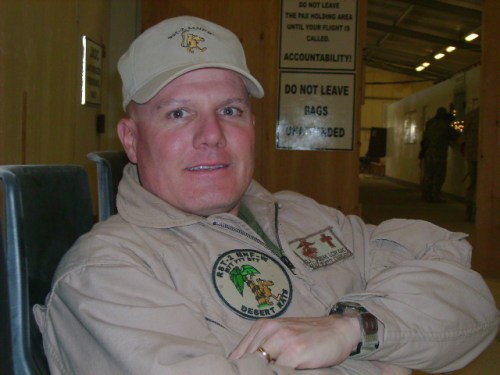
As I have been writing of my experience in Iraq it is amazing to me the amount of emotions that I have experienced.  It is strange to feel like I am back there as I write.  I know that this is necessary but at times it is unnerving especially as I talk to friends who are going through much the same experience that I had coming home and sometimes worse.  I have been in e-mail contact with a friend from a NATO ally who has done a couple of tours in Afghanistan.  I can really feel for him as he is in a smaller military with a lot few resources that the Americans to deal with PTSD and other maladies from this war which seems to drag on without end.  Another friend on the West Coast has been dealing with the ravages of both PTSD and TBI and another Army Chaplain friend who has 2 Bronze Stars to his credit deals with PTSD as well as a very rare and eventually fatal lung and brachia condition.  Friends from my medical center are being deployed, I’ve been told that I am too valuable and needed where I am to deploy.  I do understand that at the same time deep in my heart I want to be with my friends from my ICU as they go to war.

The emotions took a big turn as I actually started writing about being in Iraq, beginning with the C-17 ride in to Baghdad.  In some sense the mirrored what I was going through two years ago.  It kind of came to a head the other night when I wrote about the rocket that went over my head at Camp Victory while waiting for my ride to head to the Camp Liberty heliport.  Then there was the flight to Fallujah and I can remember that flight.  I have never really liked flying in general and ancient helicopters in particular. Thinking that many of the CH-46s that I flew in while in Iraq had been in service in the Vietnam era was none too comforting.  They were almost as old as me.  Marine Helicopters are notorious for hydraulic fluid leaks.  The old joke goes” “How do you know when a Marine helicopter is low on hydraulic fluid?”  “When it stops leaking” is not entirely in jest.  I guess you can say that most of my career flying rotary wing aircraft in the Army and Navy has been just this side of terrifying.  I manage to survive every time but it takes forever to come back down from the anxiety of the preparation for and actual flights themselves it is no wonder that I still have problems sleeping and going on alert any time I hear a helicopter overhead.

Faith at times is an ongoing struggle. While I believe I question God more, especially when I see little kids suffering or read about young men and women killed in action or maimed by combat.  I find that I am less compassionate toward those who have not deployed who make suicide gestures and screw with their friends and families and then blow off help.  It angers me that their narcissism takes time and resources away from people who have been in the shit who need help and have to wait to get help.  I also find that religious people who have trite answers for everything really annoy me, especially those that are constantly talking about “spiritual warfare” when they have no clue about war, suffering and death. They are what Luther called the “theologians of glory” and they have no real answers, just platitudes that work fine until a real crisis comes.  Despite this I believe somehow in the God who is willing to be with me in the middle of the Valley of the Shadow of Death and at the foot of the Cross.

One of the things that tears at me now is the deep division in the United States as the obviously enlightened zealots of the extreme right and left push their agendas so hard that it seems impossible to find and amicable solution.  I wonder if we have entered “Weimar America.”  I guess I can understand how the moderates of the conservatives and socialists in Germany were ground to dust beneath the anvil of the Communists and hammer of the National Socialists in the later years of the Weimar Republic.  I really understand the military men who found both alternatives distasteful and tried in vain to seek the middle ground and maybe restore some sanity to the country.  That article is yet to be written.  I think I will call it “Weimar America?”  What really gets me is that both the right and left have dropped all pretense of civility and are now engaging in physical altercations at political meetings or “town hall” meetings and some have even be brandishing automatic weapons near venues where the President is speaking.  I have seen the results of this type of no-quarter politics in the Balkans and in Iraq.  I wonder what the hell all these demigods on both sides are thinking and if they in their devotion to their alleged “principles” would attempt “to destroy the country in order to save it.”   I have become ashamed of the leadership of both political parties as well as the special interest groups that drive the agendas of both extremes, especially as in the case of some who use the Christian faith to justify their actions.  When I see these people in action my anxiety level often returns to what it was in Iraq and on my return.  I can honestly say that the people on the extremes make me fear for my country.  I feel that they are pushing us to the abyss and that I can’t do a damned thing to stop it.  I’ve matured enough to know it is not simply the fault of one side or the other; as both are at fault and it seems that the most extreme on both sides have actually been wanting this to happen, at least from my viewpoint as a passionate moderate.

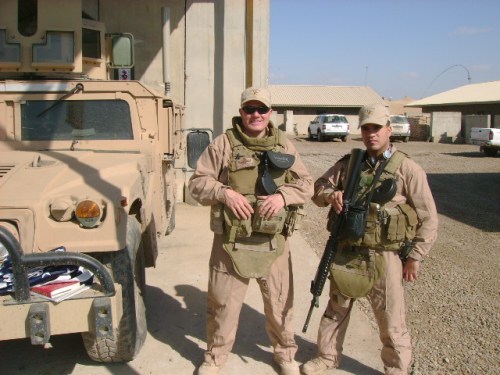
I have come to realize that my true countrymen are those that I have served with to defend this country and protect others abroad, especially as the insanity continues to spread.  Though I struggle and have to deal with emotions as if they were brand new every day just as I think that I am getting better I know that I have to keep going.  I owe it to my brothers and sisters from the current war and wars such as Vietnam.  Sometimes I wonder if all of us PTSD afflicted vets are the only sane people in the country. We are a brotherhood.  “We we happy few, we band of brothers.”
brothers

I’m glad that I have friends, especially vets from Iraq, Afghanistan, the Gulf and Vietnam.  Limey and Barney with the Hue City Vets, Ray and Charlie the Vietnam Veteran of America brothers who man the beer stand on the concourse behind home plate, and so many others like my trusty assistant Nelson Lebron who helped keep me safe and sane in Iraq.

In the middle of all of this I grieve for my Vietnam Vet and retired Navy Chief dad who wastes away in a nursing home with end stage Alzheimer’s which according to his doctor should have killed him months ago.

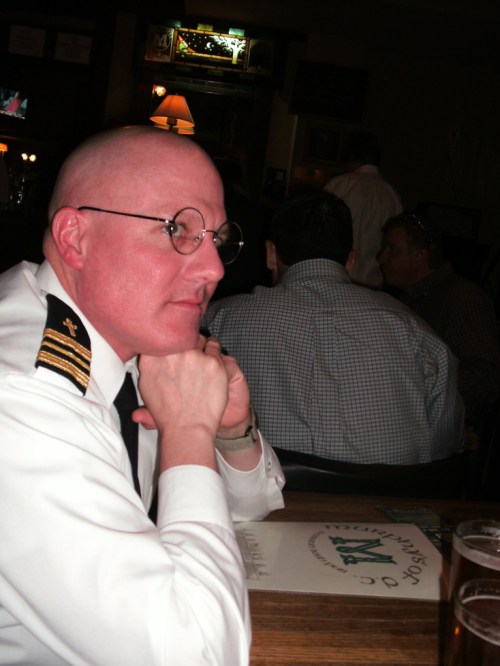
I’d better stop while I’m ahead.  I need to catch myself, maybe have a beer and focus on some baseball for a while before I get ready for work.  I have duty tomorrow and I expect that I will be busy the next couple of days.  I hope when I get off Wednesday afternoon that I will be able to see the Tides play.  I can use the view of the diamond at Harbor Park that helps calm my soul about now. Maybe between no and then I can get in with my buddy Elmer the Shrink.
pub2

Pray for me a sinner,

Peace, Steve+

7 Comments

Filed under alzheimer's disease, Baseball, iraq,afghanistan, Military, Political Commentary, PTSD, Tour in Iraq, vietnam

I Think I Feel a Sermon coming on…How Some Churches Stopped Caring and the Neglect of Pastoral Care

“When they had finished breakfast, Jesus said to Simon Peter, ‘Simon son of John, do you love me more than these?’ He said to him, ‘Yes, Lord; you know that I love you.’ Jesus said to him, ‘Feed my lambs.’ A second time he said to him, ‘Simon son of John, do you love me?’ He said to him, ‘Yes, Lord; you know that I love you.’ Jesus said to him, ‘Tend my sheep.’7He said to him the third time, ‘Simon son of John, do you love me?’ Peter felt hurt because he said to him the third time, ‘Do you love me?’ And he said to him, ‘Lord, you know everything; you know that I love you.’ Jesus said to him, ‘Feed my sheep.” John 21: 15-17

“Take care that you do not despise one of these little ones; for, I tell you, in heaven their angels continually see the face of my Father in heaven.” Matthew 18.10

Back when I was doing my Clinical Pastoral Education Residency at Parkland Memorial Hospital I was astounded to hear my pastor make a comment which I think was one of the most heartless that I have ever heard said from a pulpit.  The church was a large and trendy Evangelical-Charismatic Church which I had attended throughout seminary and had ordained my in October 1991.  The Pastor was recounting an incident where one of our members had been critically ill in hospital and had not been visited by him.  After the parishioner was released from hospital he asked the pastor: “How sick do I have to be for you to visit me in the hospital?”  The pastor told us his response: “Sir, you don’t want to b e that sick.”  The congregation laughed at the pastor’s story and he went on to talk about how he and other senior pastors should not be doing that kind of work because it “distracted them from bigger Kingdom tasks.”  You see according to the pastor the care of sick parishioners did not contribute to the “growth” of the church and thus was a “distraction and better left to others.”  The comment struck a raw nerve now that I was dealing with the suffering and death every day of people who had been abandoned by the churches and pastors.  I lost all respect for him as a man and pastor during that sermon.  The words of my Philosophy of Religion Professor at Southwestern Baptist Seminary Dr. Yandall Woodfin said: “You have not done Christian Theology until you have dealt with suffering and death.”  This pastor had stopped doing Christian Theology in order to be an “Apostle” and CEO.  He was “growing” the church and managing programs, but had for the most part stopped caring as in being a pastoral care giver.

Now this pastor is not alone and nor is the issue confined to Evangelical or Charismatic churches. The trend has has found its way across the denominational spectrum.  Sometimes this is by design as is the case of the Mega-churches.  Pastors of mega-churches are for all practical purposes CEOs of large organizations and have a multiplicity of specialized staff, but often which do little for pastoral care. Sometimes it is by default in cases such as the Roman Catholic Church.  Here the ever worsening shortage of Priests is forcing the closure of smaller parishes and the increase of large parishes with a corresponding decrease in what Priests can do for their people.   Even very good Priests cannot keep pace with the demand of both Sacramental needs as well as pastoral care.  No matter if it is by design or default the result is similar.  The least, the lost and the lonely those “lambs” that Jesus talks about who need care and feeding are shunted aside.  In one case, that of the Catholic Church it is simply a lack of Priests, Deacons and Sisters to provide this care.  The other is more troubling as the focus of the church is growth, sustaining numbers, programs and buildings.  This requires that pastors spend their time with members who can supply the vast financial need that those plans require.  I have seen this in numerous congregations across the spectrum, which sometimes as was the case at a church that I attended in Florida results in a financial meltdown and collapse of the congregation, many of whom gave up and went elsewhere when the extent of the scandal became known.  Likewise the ripple effects that this caused in the denomination were like a Tsunami, it was disastrous and the church is still in recovery mode.  Going back to my pastor back when I was in residency I got the feeling that had he been the shepherd in the Parable of the lost sheep (Luke 15) that he would have let it go as hunting for it might have distracted him from the others.

When I was in seminary there were quite a number of my fellow students who chafed about having to take courses on pastoral care.  I remember friends and fellow students complaining that what they needed were more “practical courses” such as “church growth, evangelism and Sunday School program management.”  Course such as Pastoral Care were seen as a bother and distraction.  Not to mention academic courses such as Systematic Theology, Philosophy of Religion and Church History.  One friend talked about his Master of Divinity only having a “shelf-life of 5 years” because what he learned would be outdated.

Well in a way he was right.  His focus was on classes that dealt with programs and methods of church growth, programs and management.   From that perspective his degree would rapidly be obsolescent as soon as the next trend in church growth came along and everyone jettisoned the last method in favor of the new.  With the ubiquity of the Mega-church which unlike the Leisure Suit is not going away anytime soon.  The rise of the “Superstar” Pastors such as Bill Hybels, Joel Osteen and Rick Warren and the proliferation of massive “Ministry Media” conglomerates and stand-alone television ministries are actually dangerous to the vitality and health of the Christian Church in the United States.  They propagate methods which have the sole intent of getting people into church or giving to a ministry and keeping them there, doctrine, worship, sacraments or ordinances, and pastoral care of the least, lost and lonely be damned.  The methods are pragmatic and impersonal.   Numbers and crowds define expertise, credibility and worth. The bigger the church the better the church, it’s that simple.

Unlike others who pick these ministers apart for their theology or business practices my problem with what is happening is what happens to regular people in these large and often very impersonal churches.  It is easy for people to get lost, forgotten and when they are going through difficulty abandoned when the church stops making a conscious effort to do real pastoral care and focus purely on the programs which lend to growth.  Often the substitute for pastoral care is found in the home cell group, or care group or whatever cute name a church can pin on a meeting at a member’s house.  The cell groups have a noble intention.  They attempt to build community in an otherwise very impersonal organization.  There are some really good things that can come out of healthy home groups as well as long lasting friendships.  We have a couple from our time in San Antonio that is still a very real part of our lives, they showed us genuine love and care and we remain friends.  Of course this couple had an advantage over most home group leaders; he was a Clinical Social Worker by trade who was heading off to seminary.  Most home groups are not that fortunate.  At the same time there are unhealthy groups which are led by people who are poorly trained and equipped to deal with broken people.  The good group leaders recognize their limitations and try to get help for those who are really hurting.  Others who do not know their limitations end up abusing these dear lambs of God. Often this is because sick, depressed or lonely people take too much time, are too needy, or that their problems don’t match up with their church theology.  We know this from personal experience as my wife suffered from a number of ailments throughout seminary and we were going through tremendous health and financial difficulties and in some places we felt cast aside and like we did not matter.  We were fortunate that some people did care and we did make it through, however it was not something that I would ever want to repeat.  I have heard similar stories from hundreds of people that I have come across in my life and work over the years.  Another thing some churches do is to either add a “Christian Counseling” program or refer members to “Christian Counseling” services instead of doing pastoral care.  In a sense it is the outsourcing of one of the most vital missions entrusted to a church, the pastoral care of the flock of God.

I don’t care what you call it, but any church which has multiple services of several thousand or a major service of close to 20,000 as occurs at Osteen’s Lakewood Church is no longer focused on caring for people but sustaining their growth and market share.  I remember reading Charisma Magazine back in the mid-1990s when I still read it regularly about a church in North Dallas that has a period of incredible church growth in which it grew from 1,200 members to well over 7,000.  In the article the pastor touted the church programs which drew people to the church.  What the dirty little secret which was not mentioned was that two exits south of this church a Mega-church of some 10,000 members imploded when the Pastor, one Bob Tilton got caught doing some pretty bad stuff.  This church despite its claims of great programs simple picked up about 6,000 of these people because they were close by and a similar type of church.

All of this is dangerous as to its impact on people.  One only has to look at the latest Barna Polls about what is going on in churches to see that these large churches are alienating people even as they grow.  People come, but others either burn out trying to keep pace with the manic pace of programs proliferated by these churches or they get lost in the crowd and forgotten.  I meet a least a person every day who is a displaced Christian, often hurt, lonely and broken, not only by what they have experienced in life, but by the cold emptiness that they feel when a church surrounded by thousands of people who don’t even know their name.  Some churches do recognize that people have issues that need to be addressed and have in-house “Christian Counseling” programs or refer members to “Christian Counseling” services.   I think that there certainly is a place for clinically trained therapists in the life of a church; however this is not really pastoral care, even when they use “Biblical” methods.   In a sense it is the outsourcing by pastors of one of the most vital missions entrusted to a church, the pastoral care of the flock of God to others, in a sense, “hirelings.”  Again my issue is not with the therapists or Christian counselors, but rather pastors who refuse to do pastoral care as part of their ministry.

Ultimately it is people that are important, even those who are not rich, powerful and who have problems that don’t fit nicely into theological boxes or paradigms promoted by church growth experts. It is high time that churches start reclaiming one of the most vital missions given by Jesus to his Disciples, to care for the least, the lost and the lonely. The onus for this falls on pastors who cannot simply outsource one of their primary missions as given by Jesus himself to others.  If pastors do not set the example of being caring pastoral care givers, it will not matter that they are supposedly “empowering” laypeople to do ministry.  Instead it sends another more ominous message, that if it is not important for the pastor, why should it be important to me?  Every member of the church at some time goes through a crisis when their faith, family, health or vocation.  Sometimes these are not isolated events but rather prolonged periods of anguish, as what Saint John of the Cross described as “the Dark Night of the Soul” where it seems that God has even abandoned the person.  Unfortunately people in this situation are often abandoned by their church as things fail to improve.  Despairing they become the lost sheep whose shepherd has abandoned.  This is the hardest time for pastoral care, the times where we as pastors are called to stand with someone as Mary the Mother of Jesus did at the Cross, just simply being there though nothing else can be done.

Now do I understand that the demands of running a large church can be sometimes become such that pastors have difficulty making time for pastoral care?  Of course I understand this, at the same time pastors, even those who function primarily as pastor-teacher/CEOs still have the responsibility of caring for people, not simply administering programs and preaching.  Pastors need to set the example of care for people, real people, the regular Joes and Jane’s who populate their pews, by their books and give to their ministry, even if it is only in small ways, not just the super-givers or the wealthy and powerful.  James’s “right strawly epistle” (Martin Luther’s words) has much to say about favoring the rich and powerful and neglecting the poor and seemingly insignificant people hanging about the peanut galleries of their large “Worship Centers.”  Even if the pastor has limited time he or she must be about the flock, or they will forget what the needs of the flock really are and instead of the People of God, the lambs who Jesus says to care for they will simply be the consumers of a religious message who we have to keep coming back to keep the operation going.

My sermon is over and I do hope that there will be more “amen’s” than calls for burning me as a heretic.

Peace, Steve+

3 Comments

Filed under Pastoral Care, philosophy, Religion

Love Poverty and War…Suffering and Death… Christian Theology meets Reality in the Intersections of Life

“An antique saying has it that a man’s life is incomplete unless or until he has tasted love, poverty, and war.”  Christopher Hitchens

“You have not done Christian Theology until you have dealt with suffering and death” Yandall Woodfin

I deal with life in the intersection where theology has to deal with uncomfortable and often troubling questions.  When I first heard my Philosophy of Religion Professor at Southwestern Baptist make the statement that “you have not done Christian Theology until you have dealt with suffering and death” I was somewhat offended.  This was back in 1989 when I was still somewhat idealistic and believed what really popular preachers on radio and mega-churches said.  Now I can never say that I was completely in agreement with the “name it claim it, grab it stab it, God owes me and will bless me because I did…” pop-theology of the theological lightweights masquerading as teachers, preachers and prophets.  While I did not espouse it the view was prevalent in the churches that I was part of, in fact I choose Southwestern Baptist as a school because it did not tow that party line.  I just never expected my professors across the board in the School of Theology to be as nuanced and balanced as Dr. Woodfin and the others who helped give me my theological formation.

In seminary I developed a very good theological understanding and life hermeneutic that was far closer to Anglicanism or the reformers of the Second Vatican Council.  In fact it was theologians like Hans Kung, Yves Congar and Alistair McGrath as well as Jurgen Moltmann and Wolfhart Pannenberg who helped me in that.  Additionally the writings of Dietrich Bonheoffer, Emil Brunner and Henri Nouwen were influential as I developed my theological and spiritual life.  I was also thrust into the world of the Ante-Nicene Fathers of the Church, spending a semester of Systematic Theology studying and writing about Polycarp of Smyrna.  It was studying these contemporary theologians as well as the Church Fathers that I discovered Christian Theology at the intersection and it was Dr. Woodfin’s remark that caused me to really question the modern “theologians of glory.”  It is plainly obvious that this was in the day before the Baptist Taliban under Mullah Paige Patterson took the place over.  That was the time when it was a world class seminary and not just a pretty good Bible school.

It was the fact that even though I was in seminary life was really sucky.  Nothing went right.  Instead of the obvious “blessing of God” it seemed that we were cursed.  We had lost our home, cars, and were destitute.  I was working two and three jobs while Judy was sick and unable to work.  We lived in a hell hole on the east side of Fort Worth Texas, frequently featured on the TV show COPS.   One night in desperation I called the Terrible Blonde Network (TBN) for prayer.  For my trouble I was told that it was obvious that God was not calling me to ministry otherwise he would be blessing us.  That was a watershed experience and I rejected that idea on the spot.  It made me mad as hell that a well meaning but ignorant volunteer prayer partner would judge me in such a way.  When I went to work later at a TV ministry doing counseling, especially to broken pastors I never forgot that experience.  I realized that what the lady said and what many people that I knew espoused was God-babble bullshit.  The pastors that I talked to every week were suffering, often at the hands of the alleged people of God and even other ministers.  It was obscene.

So anyway, back to the subject of this article…yes I chased a rabbit there and it was intentional.  I had a New Testament Professor whose “rabbits” were often pastoral and theological gems.  That may not be a gem but it was a rabbit worth chasing.

Hitchens, a pretty strident atheist has some pretty good observations about how some religious people including modern Christian icons have been pretty poor examples.  Now he can be biased but his bias is balanced by the Orthodoxy espoused by his brother Peter.  Hitchens’ comment based on the writings of antiquity is quite true.  Until a man or for that matter a woman has experience love, poverty and war their life experience is incomplete.  As a personal testimony, I can say “AMEN!” I know this to be true.  I am married to the love of my life and our marriage has endured suffering, sickness, death, poverty and war.  We have in baseball terminology “hit for the cycle.”  While I have understood this I had never seen it in writing until I saw Hitchens’ book.  The theme of love, poverty and war is rich in ancient writings including the Bible.  It is also thematic in many cultural rituals around the world.  The warrior who loves his family endures poverty; usually famine or plague induced and then goes out to fight invaders.  If they win they come home to their loved ones victors who have protected home and hearth.  It is much like the movie Braveheart where William Wallace leads a campaign against the English who have invaded Scotland.  If they lose, there is the strong possibility that they will be slaughtered and their families enslaved.  The annals of the Punic Wars are rich in this theme as is the life of King David who knows love, poverty based on being a fugitive on more than one occasion and his life as a warrior.

I think this is true in the modern era as well.  Western culture based on consumerism and material wealth has been insulated from the depths of abject poverty, one only need place a poverty and famine stricken resident of almost any third world country who is deposited in a poor American city or town and ask him if he sees poverty.  If he does it will not be material poverty but one where love and community are missing.  If he goes up the street to the well off part of town he may be dazzled by the opulence but appalled by the loneliness of many people.  Western nations following the end of the Second World War and the recovery from it have not known the depths of poverty.  This may be changing now unless we can pull our economy out of the abyss that it seems perched upon, but even still at least so far the last couple of generations in the west have not known poverty as a whole.

Likewise the question of the experience of war for the modern person is one that is not experiential.  War in the west is now fought largely by military professionals while most of the nation’s population lives in the shadow and protection of their military prowess.  At one time with the draft war was experienced by all parts of the population in the west.  Today it is not and with that lack of experience there is a void, men and women have not discovered either how to live for something or die for something bigger than themselves.  One of the things that chafes my hide is when I hear ministers who have never served a day in uniform don a set of BDUs or Dessert Camouflage and preach a sermon on spiritual warfare. Sorry, that is a sham and the big TV guys who have done this should apologize to men and women who have been in combat and in harm’s way.  I once had a bishop in my church, who is no longer in his communion do an article about spiritual warfare trying to apply “principles” of Carl Von Clausewitz about war without ever really reading or understanding Clausewitz.  The treasure of Clausewitz is in his “principles” but in his understanding of the human condition brought about by his Lutheran faith, the Enlightenment and his experience of Prussia’s defeat and occupation by Napoleon followed by her recovery.  I was appalled by what my ex-bishop wrote and embarrassed for the church should any real soldier or military leader pick it up and read it.  Things like these show how little many religious leaders, or for that matter political leaders understand the human condition, life, love and war.

Dr. Woodfin was more right right than about anyone I have ever heard when he that we have not done Christian Theology until we have dealt with suffering and death. When you see innocents killed, children suffering from famine, war and disease.  When you have seen the bodies of young men and women who have died senseless deaths and when you have looked at a mother who has lost a child you begin to understand.  You begin to see the Cross.  An innocent man executed, a guilty man go free.  When you see friends and companions abandon their teacher and friend, a governor who knows a man is innocent be put to a brutal and agonizing death,  and a mother looking up at a cross where her son hangs and cries “My God my God, why have you forsaken me?” When you see these things you have to deal with the reality of where the Christian faith intersects the cold reality of our world.  It is as Alistair McGrath calls it, “life under the cross.”

I dare any of our modern digital era “theologians of glory” to enter this world, but most will not.  In fact they will continue to sell the sad sack of theological excrement that they call the Gospel to adoring crowds who will eventually discover that they have been sold a lie.  Many leave the faith while others take their place looking for “their” promised miracle, “their” blessing and their health, wealth and fortune.  Like the Catholic indulgence sellers of Martin Luther’s era, such “ministers” are blight on the Christian faith and for all of their “success” power and popularity have done more harm to the faith than benefit.  John Tetzel, Luther’s protagonist would tell people when collecting indulgences “A penny in the coffer rings, a soul from Purgatory springs.”  Today’s modern peddlers of pious poop promise “your prosperity grows when into our ministry you sow” or a “vow you make today God is bound to repay.”

Having seen this in real life when people buy the lie and end up devastated when “God” doesn’t come through for them, or when a well meaning but ignorant person tells them some horse shit about how God is not blessing them because….I want to scream.  I once had a pastor in a large evangelical and charismatic church which believed in “signs and wonders” tell the congregation about a conversation that he had with a parishioner who had been in the hospital and not been visited by him or the staff.  The parishioner, who gave a sizable amount of money to the church asked” “How sick do I have to be to get a hospital visit from you?”  The pastor, a nice guy laughed as he recounted his response.  “You don’t want to be that sick.”  The congregation laughed and I about cried as I was immersed in daily tragedy and trauma and Parkland Memorial Hospital in Dallas.  I knew too many people be abandoned by their pastors in a city consumed with powerful pastors as churches to believe that they were a priority for those suffering.

The truth is that many pastors and for that matter many people want to avoid dealing with suffering and death at any cost. Whole industries are built around the worship of youth and beauty and a culture, including the churches lift their heads to the sky for God’s blessing while avoiding the suffering around them.  There are pastors and parishioners who by the boatload have been thrown from the “Barque of the Church” because they either failed or did not have enough “faith”

Such is not the Gospel nor is it Christian in any way shape or form.  It is no wonder that so many have abandoned the faith when all they see on TV are the modern digital theologians of glory who bask in fame and fortune while adding to the rejection, alienation and despair of those who believed them to actually be telling the truth.

Love, poverty and war, suffering and death, where the Christian faith meets these in the intersection is where new life can begin for it is only through the agony of the Cross that we know the resurrection.

Peace, Steve+

4 Comments

Filed under alzheimer's disease, History, Loose thoughts and musings, philosophy, Religion

Minor Holy Days…The Tapping of the Maibock

pub11

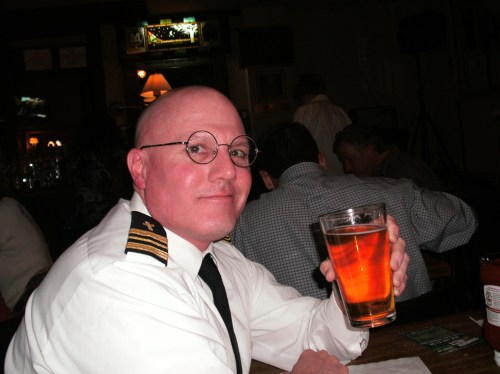
Today was the occasion of a minor feast at the beginning of the Easter season. Of course such things are important.  As Benjamin Franklin said “Beer is living proof that God loves us and wants us to be happy.”

Today was the “tapping of the Maibock” a seasonal Lager at Gordon Biersch here in Virginia Beach.  We always attend the “tapping” of the new seasonal brew.  As I noted in a previous post entitled “the Fellowship of the Pub,” these are important events, especially in a season that is is a festival, such is Easter.  Patently the season of Easter being of course the season of the Resurrection and worthy of celebration.  Lent is over, and it is time to celebrate.  I’m glad that the folks at Gordon Biersch, whether intentionally or unintentionally waited until after Lent was over to re-introduce this seasonal lager.  After all as Martin Luther said: “It is better to think of church in the ale-house than think of the ale-house in church.”

It seems to me that God does indeed care for us, that She would indeed give us such a drink for our edification.  Jesus of course is not quoted about beer, but he did make some good wine, at least according the the chief wine steward at Cana. I’m sure had the Hebrews been more into beer than wine that he would have turned the water into beer.  However, Michael Jackson, a British historian  notes: “in the Saxon account of the Marriage Feast at Cana, where Jesus allegedly turned water into wine, ‘ale vats’ lined the room.”  The question that Jackson asks is “Was this a Saxon misunderstanding? Or did the Greeks introduce ‘wine’ from the Aramaic ‘strong drink”‘? Did Jesus actually turn water into beer?”

Being that my “inner nationality” according to a recent quiz that I answered is German, I have to side with the Saxons on this.  No offense to the Greeks, but obviously this had to be beer.  My logic is this.  God loves us, God made beer, and vats or kegs of beer are more likely to be at at wedding than vats of wine. Wine obviously would have been a more expensive drink and in would have come in wine-skins, not vats, at least not at a wedding. Since it is clear that the hosts of the wedding were obviously trying to cut costs we have to be skeptical of the claim that this was wine.  We also have to note that the stewards said that what Jesus made was better than what they had on hand.  It is patently obvious to me that Jesus produced a really good beer, or possibly an ale and not wine. Since Jesus is fully God and fully man then what Saint Arnold of Metz, the patron saint of brewers said is true: “From man’s sweat and God’s love, beer came into the world.”

Peace and blessings, Steve+

Leave a comment

Filed under beer, Loose thoughts and musings, Religion