Tag Archives: mary chesnut

The Power of Soft Power: Union Diplomacy in the Civil War

iadamsl001p1

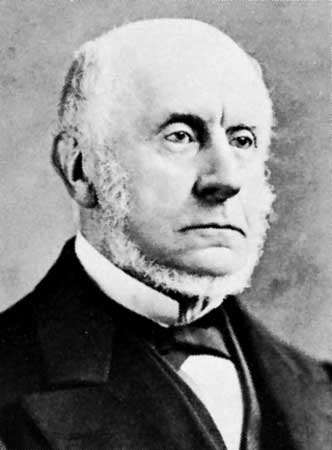
Charles Francis Adams

Friends of Padre Steve’s World,

This is another section of my Gettysburg and Civil War text. For those that have been following my posts on this subject

Diplomacy is a key part of the whole of government, the whole of national power, and the understanding of waging war and winning the peace and it does matter before, during, and after the conclusion of any war. Diplomacy is an essential part of the DIME and Union diplomacy had a major effect on the American Civil War, and during the war it was the Federal government and Union diplomats who understood this far better than their Confederate counterparts and were facing leaders of Britain and France who resented the power of the United States and wanted it to fail. This was particularly the case with the conservative British Tory party, like so many other governments of aristocratic regimes the English aristocracy “sympathized with what they saw as a corresponding plantation aristocracy in the South, and were not sad at the prospect of the American republic demonstrating what they had all along insisted was the fate of all popular democracies – instability, faction, civil war, and dismemberment.” [1]

Early Confederate diplomacy was based on the belief that European trading partners could not do without Southern cotton and would intervene in the war to break the Union blockade. As a result, cotton became “the principle weapon of Southern foreign policy.” [2] England depended on southern cotton to supply its massive textile industry and before the war the South had supplied roughly seventy-five percent of its demand. While the Confederates were able to receive recognition as a belligerent from some European powers, including the British, whose position infuriated Secretary of State Seward, the Confederacy, much to the chagrin of its leaders never received diplomatic recognition as a nation.

The efforts of the Confederacy to secure recognition would be due to Union diplomacy, much of it led by the United States Minister to Great Britain, Charles Francis Adams who “tirelessly represented the Union Cause to the British government and the British people but also financed an active network of spies and agents who relentlessly exposed Confederate violations of the British neutrality laws and hobbled Confederate efforts to raise money and but arms.” [3]

Union diplomats in Europe had to manage a very complex situation at the very outset of the conflict when a Captain Charles Wilkes of the United States Navy, commanding the steam sloop USS San Jacinto, fired on and stopped the British passenger steamer Trent, in international waters during November 1861 and removed two Confederate diplomats, James Mason and John Slidell and their secretaries, who were on their way to Britain. Ignoring the protests of the Trent’s master, Wilkes returned the two Confederates to New York setting of a firestorm of protest. The British Prime Minister, Lord Palmerston, “immediately drafted an ultimate and ordered a squadron of steamers and 7,000 troops readied to send to Canada.” [4]

The incident became known as the Trent affair and provided an early challenge for Union diplomacy, and nearly wrecked the Union war effort. As Charles F. Adams noted in a letter to his son, “Captain Wilkes has not positively shipwrecked us, but he has come as near close to it without succeeding as he could.” [5] Confederates rejoiced, the chief Confederate propagandist in England wrote, “If Commodore Wilkes designed making a sensation he succeeded to his heart’s content…. The usually apathetic Englishmen were roused to a sudden frenzy by this insult to their flag, such as I have never witne4ssed in them before.” [6] Fears of war with Britain dominated the financial markets and “dried up the sale of bonds to finance the war against the Confederacy.” [7]

These fears were not unfounded, as the crisis dragged on into December, Britain made other military preparations some 5,000 Canadian troops trained to British Army standards and 35,000 other Canadian volunteer militia were called up, and “an additional 11,000 British Regulars were soon on their way to Canada.” [8] Additionally the British government placed an embargo on the shipment of saltpeter from India to the United States until the affair was settled. Since India was the largest supplier of this material which was vital to the manufacture of gunpowder, this threatened to cripple the Union war effort, and as soon as the crisis was ended, this vital material was soon on the way to Northern manufacturers who rapidly turned it into gunpowder.

Had it not been for the skilled efforts of Adams, the United States minister to defuse the situation, the affair could have led to British recognition of the Confederacy and intervention in the war. Adams’ efforts to defuse the situation in Britain, and to convince Lincoln to release the Confederates and return them to the British were so successful that they “left Anglo-American relations in better shape than before the crisis.” [9]

Adams also had to deal with Abraham Lincoln and Secretary of State William H. Seward’s indignation of Confederate commissioners meeting with British Foreign Minister Lord Russell. Those meetings sent Seward into a rage, he told Senator Charles Sumner “God damn them, I’ll give them hell” and he wrote Adams instructing the American Minister to “break off relations if the British government had any more dealings with southern envoys. If Britain officially recognized the Confederacy, “we from that hour, shall cease to be friends and become once more, as we have twice before been forced to be, enemies of Great Britain.” [10] Lincoln, knowing how critical the situation was gave Adams the discretion of presenting the substance of the matter verbally rather than hand Seward’s dispatch to Russell. Adams handled the matter deftly, and Russell “conceded that he had twice met with the Southern commissioners, but “had no expectation of seeing them any more.” [11]

In the end the release of the Confederate envoys “improved Anglo-American relations and disappointed Confederate hopes for an Anglo-American war that might assure their independence.” [12] Adams wrote, “The first effect of the surrender of Messrs. Mason and Slidell has been extraordinary. The current which ran against us with such extreme violence six weeks ago now seems to be going with equal fury in our favor.” [13]

This was very import because there was much support for the Confederate cause in the European aristocracy and some in Europe hoped for Confederate success. They were encouraged by Union military defeats at the outset of the war, but Union diplomats helped to keep Europeans out of the war. Confederate diplomacy in Europe was not helped when the Confederates elected to embargo cotton exports in order to force Britain and other powers to recognize them. But despite the fears of the loss of cotton and the negative effects on their economies, European powers, especially the British were resentful of the Confederate attempt to blackmail them through the use of the embargo. The Times of London, a Tory paper sympathetic to the Confederacy declared that if Southerners “thought that they could extort our cooperation by the agency of king cotton… they had better think again. To intervene on the behalf of the South “because they keep cotton from us” said Lord Russell in September 1861, “would be ignominious beyond measure…. No English Parliament could do so base a thing.” [14]

British visitors to the South in 1861 were surprised and how fervently many Southerners believed that cotton would spur European involvement in the war on their behalf. The Southern hubris about their importance to the world economy was and how Britain could not survive without their cotton. One reporter wrote:

“there can be no doubt that the prevalent conviction in the South is that England cannot do without the “king” that all cotton, except American is  too short or too long; and that the medium is the only staple Manchester can have. In vain we tell them that our manufacturers would soon change their machinery, and adapt it to the necessities of the times; that our Government was making great exertions to procure cotton from India and Africa; and that it was our interest to foster our own colonies, and to produce it there if possible; and that if we were deprived of America as a market, the more strenuous would our efforts be to render ourselves independent of it. But it was of no use; they were ineradicably impressed with the conviction that they can command the market at any time; and that the distance from England at which its rivals are placed must always give the Confederacy an advantage.” [15]

By early 1862 the British government had decided to recognize the Union blockade. The cotton embargo had had an effect until Britain turned to Egypt and other cotton producers to make up the difference, and diversified by expanding the manufacture of steel and ships. Likewise, the Confederate had harmed the Southern even worse. Since so little of the cotton could be exported and sold on the foreign market, prices for it dried up and the Confederate economy began to implode. Mary Boykin Chesnut bitterly wrote of the effects in March 1862:

“Cotton is five cents a pound and labor of no value at all; it commands no price whatsoever. People gladly hire out their negroes to have them fed and clothed, which the latter cannot be done. Cotton osnaburg at 37 ½ cents a yard, leaves no chance to clothe them…. We poor fools, who are patriotically ruining ourselves will see our children in the gutter while treacherous dogs of millionaires go rolling by in their coaches – coaches that were acquired by taking advantage of our necessities.” [16]

However, Union diplomats were aided by tensions in Europe regarding the Schleswig-Holstein problem between Prussia and Austria, as well as unrest in Poland, as a result “European realpolitik hindered the Rebel’s diplomatic objectives as well.” [17] The British in particular were loath to risk intervening in a conflict that might be “a disturbance in the precarious balance of power which might be the signal for a general conflagration, they recalled Voltaire’s comment that a torch lighted in 1756 in the forests of the new world had promptly wrapped the old world in flames.” [18] Thus, European leaders and diplomats were very hesitant to allow Southern legations to convince them to intervene. In January 1863 an extremely frustrated Jefferson Davis made mention of the neutral nations of Europe which had refused to recognize the Confederacy as an independent nation.

Another factor in the success of Union diplomacy was the success of Union military operations on the periphery of the Confederacy, many of them spearheaded by joint Army-Navy operations. While the Confederates won many early battles in 1861 and 1862 it was the success of the Union military that altered the diplomatic landscape and helped doom the Confederacy. The joint operations conducted by Ulysses Grant and Flag Officer Foote at Island Number Ten, Fort Henry, Fort Donaldson and Shiloh opened the door to the western Confederacy making it vulnerable to Union invasion. Likewise, the joint operations conducted by the Union Navy and Army against the Confederacy through the blockade and capture of key ports such as New Orleans by 1862; combined with the bloody repulses of Confederate armies at Perryville and Antietam allowed Lincoln to make his Emancipation Proclamation, an act which reverberated across the Atlantic.

These military successes enabled British Prime Minister, Lord Palmerston, to reject a French proposal for France, England and Russia to propose to the warring parties, a “North-South armistice, accompanied by a six month lifting of the blockade. The result, if they had agreed- as they had been in no uncertain terms warned by Seward in private conversations with British representatives overseas- would have been a complete diplomatic rupture, if not an outright declaration of war.” [19]

The issuance of the Emancipation Proclamation ensured that Europe would not recognize the Confederacy.  In part this was because even the most pro-Southern English political leaders could not appear to give the slightest appearance of supporting slavery, especially as both England and France had abolished slavery decades before, while Russia had only recently emancipated its serfs and despite being a less democratic monarchy than Britain “was pro-Union from the start….” [20] Popular sentiment in Britain, France, Russia and other European countries, outside of the ruling class and business elites, was heavily in favor of emancipation, especially among the working classes. The leaders of the workingmen of Manchester England, a major textile producer, who which had been among the “hardest hit by the cotton famine, sent him [Lincoln] an address approved at a meeting on New Year’s Eve, announcing their support of the North in its efforts to “strike off the fetters of the slave” [21] following the Emancipation Proclamation.

The success of the Union blockade was a key factor in the diplomatic efforts. There were many people, especially business leaders and members of the aristocracy in both Britain and France who sympathized with the South and hoped for Southern victory. However they were not impressed by Confederate attempts to subject them to an embargo of all Southern cotton until they recognized the independence of the Confederacy. Confederate commissioners attempted to persuade the British and French that the Union blockade was a “paper blockade” that was not binding on the British. While a good number of Confederate blockade runners got through the Union blockade, they carried very little cotton. While many Englishmen were offended by Seward’s bluster, many “resented even more the Confederacy’s attempt at economic blackmail.” [22] When the Confederates pressured the British Lord Russell announced to Parliament a corollary to the Declaration of Paris which affirmed the effectiveness of the Union blockade and “drove a stake through the heart of the Confederate efforts to convince the European governments of the blockade’s illegitimacy.” [23]

The British especially were keen on not going to war for the sake of the South, as there was far too much at stake for them. This was something that the Southern leaders and representatives did not fully comprehend. Prime Minister Viscount Palmerston and Foreign Minister Lord Russell were concerned about the economic impact of the loss of Southern cotton but also “recognized that any action against the blockade could lead to a conflict with the United States more harmful to England’s interests than the temporary loss of Southern cotton.” [24] Palmerston well remembered the war of 1812 when he served as Minister of War, and the disastrous results for the British Merchant Marine, and he realized that “England could not only afford the risk of a loss in a sideline war; she could not even afford to win one.” [25]

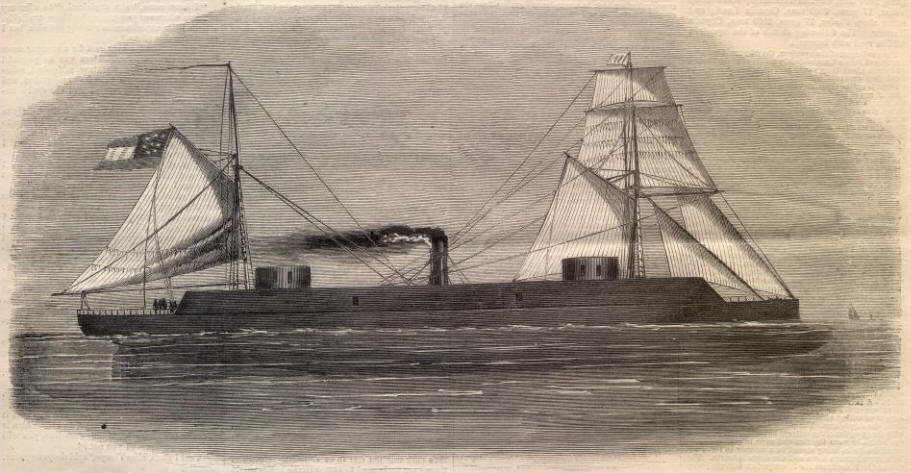
Union diplomats led by Adams scored another major victory against South in September 1863. During the war, Confederate agents working through shadow companies had managed to purchase large fast ships as commerce raiders. While this was not legal, while building the ships were declared by the builders of the Laird Company as merchant ships, and then sailed out of the country to be armed and equipped as Confederate commerce raiders. These include the ships which became the CSS Florida, CSS Georgia, and the most successful Confederate raider of all, the CSS Alabama.
confederate-ram

Laird Ram

The escape of these ships and their use as raiders proved to be a great embarrassment to the British government, and in “March of 1863 the House of Commons had undertaken an investigation of the earlier cases of the Florida and Alabama. Its report condemned the government for laxness in enforcing British neutrality.” [26]   When it was discovered that Confederate agents were contracting with English and French shipyards to build modern oceangoing ironclad rams, frigates and commerce raiders, Union diplomats intervened. The two rams, to be built by Laird’s were to displace 1,800 tons, mount six nine inch guns in rotating turrets and were equipped with a seven foot long submerged bow mounted ram.

The presence of the turrets made them hard to disguise as merchantmen and Adams sent a note to Foreign Secretary Russel a declaration that if these ships were allowed to escape, that “It would be superfluous to me to point out your Lordship, that this is war.” [27] Having been embarrassed by the past incidents and the scrutiny of Parliament, neither Russell or Prime Minister Palmerston were about to let such an event happen again, in fact before he had even received Adam’s protest had already taken steps to detain the vessels over the protests of the Confederate agents and officials, but the British interest in the case was not simply due to the protests, again, realpolitik came into play. Russell did not want Britain to be held liable for Union financial claims of loss after the war due, but even more importantly, that in another war the situation could be reversed. In this case ships were being built for the Confederacy in British shipyards, but in the next war it was quite conceivable that “in the next war that the roles could be reversed, with warships being constructed in American shipyards for use against the British merchant fleet. Britain was generally a belligerent in nineteenth century wars, not a neutral, and it did not want to lose sight of its long term interests.” [28]

Though Palmerston was offended at the brusqueness of Adams’s note, Union diplomacy had won a victory that “Henry Adams described as “a second Vicksburg.” [29] The British eventually bought the two ships for use in the Royal Navy where they became known as the Scorpion Class of which one ship served until 1922. Russell sent a dispatch to Richmond addressed to Jefferson Davis and warned him “against the efforts of the authorities of the so-called Confederate States to build war vessels with Her Majesty’s dominions to be employed against the Government of the United States.” [30]

The efforts of Adams and his counterpart in France, William Drayton were instrumental in hampering Confederate efforts at recognition by exposing Confederate plots and machinations against the laws of England and France won the praise of Confederate propagandists, one who admitted that Adams, “played well his part, and by his singular moderation of language and action… sustained his own dignity and that of the people he represented… and won reluctant admiration from many who loved not the cause or the Government he sustained.” [31]

Notes

[1] Ibid. Guelzo Fateful Lightening p.289

[2] Ibid. McPherson. The Battle Cry of Freedom p.383

[3] Ibid. Guelzo Fateful Lightening p.298

[4] Ibid. Guelzo Fateful Lightening p.287

[5] Adams, Charles F. Letter to Charles F. Adams Jr. in The Civil War and Reconstruction: A Documentary Collection, William E. Gienapp editor, W.W. Norton and Company, New York and London 2001 p.144

[6] Ibid. Guelzo Fateful Lightening p.288

[7] Ibid. McPherson Tried by War p.54

[8] Ibid. Guelzo Fateful Lightening p.288

[9] Ibid. McPherson. The Battle Cry of Freedom p.391

[10] Ibid. McPherson the Battle Cry of Freedom pp.388-389

[11] ibid. McPherson The Battle Cry of Freedom

[12] Ibid. McPherson Tried by War p.54

[13] Ibid. Adams  Letter to Charles F. Adams Jr. p.144

[14] ibid. McPherson The Battle Cry of Freedom pp.384-385

[15] ____________. “A Month With the Rebels,” Blackwood’s Edinburgh Magazine 90 (December 1861): 762-763 in The Civil War and Reconstruction: A Documentary Collection edited by William E. Gienapp, W.W. Norton and Company, New York and London 2001 p.143

[16] Ibid. Mary Chesnut’s Diary p.122

[17] Ibid. Goldfield America Aflame: How the Civil War Created a Nation p.315

[18] Foote, Shelby, The Civil War, A Narrative. Volume Two Fredericksburg to Meridian Random House, New York 1963 p.154

[19] Ibid. Foote The Civil War, A Narrative Volume Two p.153

[20] Ibid. Foote The Civil War, A Narrative Volume Two p.153

[21] Ibid. Foote, The Civil War, A Narrative Volume Two p.155

[22] Ibid. McPherson. The Battle Cry of Freedom p.384

[23] Ibid. McPherson The War that Forged a Nation p. 71

[24] Ibid. McPherson. The Battle Cry of Freedom p.384

[25] Ibid. Foote, The Civil War, A Narrative Volume Two p.154

[26] McPherson, James M. War on the Waters: The Union & Confederate Navies, 1861-1865 University of North Carolina Press, Chapel Hill, 2012 p.202

[27] Ibid. Foote, The Civil War, A Narrative Volume Three p.100

[28] Stahr, Walter Seward: Lincoln’s Indispensable Man Simon and Schuster, New York 2012 p.374

[29] Ibid. McPherson. The Battle Cry of Freedom p.682

[30] Ibid. Foote, The Civil War, A Narrative Volume Three p.100

[31] Ibid. Guelzo Fateful Lightening p.298

1 Comment

Filed under civil war, History

From Limited War to Total War: The American Civil War Pt.2

Friends of Padre Steve’s World,

As always I continue to revise my Gettysburg and Civil War text and it looks like I will have to split the text into at least two volumes. I am posting the second half of a majorly revised section dealing the the nature of the war, and how it changed from a limited war to a total war. This subject may be uncomfortable to many readers, and I admit that. Truthfully I abhor war but I am a realist when it comes to human nature, politics, economics, ideology, religion, and even racism and race hatred play in the world. Truthfully, if the North had continued the war with limited force, and goals, the Confederacy would have either become independent, or it would have been re-admitted to the Union with slavery intact, no Thirteenth, Fourteenth, or Fifteenth Ammendments would have been passed and any concept of civil rights destroyed. You can be sure that with Southern States read mites without change that other things would not have occurred; Women’s sufferage, Native American citizenship, citizenship and civil rights for Asian immigrants, and most recently, LGBT people are directly tied to the constitutional amendments that the war made possible.  Sometimes, as distasteful and repugnant as that may sound, a hard war is necessary to prevent an unjust peace. 

From a point of realpolitik,  the fact is that leaders in the South and the North, like so many other leaders in history and even today, failed to understand what the war that they helped unleash would bring about. War is not to be entered into lightly without connecting the dots between the act of policy that guides the war, as well as having the policy’s ends supported by the ways and means necessary to fulfill it, and not all of those are military. Diplomacy, economic power, and  information all play a part. 

Abraham Lincoln and his advisors came to understand this, maybe better than any presidential administration in United States history. Sadly, Lincoln was assassinated before he could guide the country through reunion, and Andrew Johnson was not up to the task. By the time Ulysses Grant became President, the opportune moment for reunion had passed. Though the South succeeded in rolling back civil rights for another century, they never were able to repeal those three critical amendments. That is why the hard war pursued by the Lincoln administration still matters for everyone with a stake in civil rights. 

Think about that, and have a great weekend,

Peace

Padre Steve+

gburg dead1

While the nature of war remained unchanged, the American Civil war changed the character of war, as it had been known for centuries, since the Peace of Westphalia, and the end of the Thirty Years War changed dramatically. In the American Civil War the character of war changed from the emphasis of the limited wars of the 18th Century and the Napoleonic era where opposing armies dueled each other into a war that encompassed the entire population. It also challenged a generation of military officers who had grown up with Jomini’s principles of war and his emphasis on limited war.

The leading catalyst that convinced Lincoln and other Northern leaders of the need to abandon the strategy of limited war was the fact that the Confederates had “blurred the distinction between combatants and noncombatants in the parts of the Confederacy and border states occupied by Union forces. The crops and livestock of Southern civilians were feeding and clothing Confederate armies. Their slaves were the principle labor force in the Confederate War economy. Thousands of Southern civilians became guerillas who roamed behind Union lines destroying supplies and ambushing unarmed as well as armed Unionists.” [1]

The Union reaction to the Confederate actions would portent a change in the war. And soon, the war bordered on Clausewitz’s definition of absolute or total war, especially in Sherman’s march through the South, and in the actions of Confederate irregulars who used terror against Unionist civilians. The actions of irregular Confederate forces to attack his troops and supply lines caused Sherman, who earlier in the war had taken a conciliatory attitude to Southern civilians, to change his views. They had blurred the lines between combatants and non-combatants, he noted that the Union army must act “on the proper rule that all in the South are enemies of all in the North….. The whole country is full of guerilla bands…. The entire South, man woman, and child, is against us, armed and determined.” [2]

In response Henry Halleck, now backed with the legal authority of General Order 100, also known as The Lieber Code, which for the first time in American history defined the differences between partisans acting in the capacity as soldiers of the enemy army, and those who were not a part of a military unit, but rather men who blended back into the population after conducting armed attacks, [3] wrote to Sherman,

“I am fully of opinion that the nature of your position, the character of the war, the conduct of the enemy (and especially of non-combatants and women of the territory we have heretofore conquered and occupied), will justify you in gathering up all the forage and provisions which your army will require, both for a siege of Atlanta and for your supply in your march farther into the enemy’s country. Let the disloyal families of the country, thus stripped, go to their husbands, fathers, and natural protectors, in the rebel ranks; we have tried three years of conciliation and kindness without any reciprocation; on the contrary, those thus treated have acted as spies and guerillas in our rear and within our lines…. We have fed this class of people long enough. Let them go with their husbands and fathers in the rebel ranks; and if they won’t go, we must send them to their friends and protectors. I would destroy every mill and factory within reach which I did not want for my own use…..” [4]

The strategy of Sherman was to ensure that the Confederate heartland of the Deep South could no longer help to sustain Confederate armies in the field, it was military, economic, political, and diplomatic. He explained:

“I propose to act in such a manner against the material resources of the South as utterly to negative Davis’ boasted …promises of protection. If we can march a well-appointed army right through hiss territory, it is a demonstration to the world, foreign and domestic, that we have a power which Davis cannot resist.” [5]

Sherman was a pioneer of psychological warfare, he was “convinced that not only economic resources but also the will of Southern civilians sustained the Confederate War effort…. Sherman was well aware of the fear that his soldiers inspired among Southern whites. This terror “was a power,” he wrote, “and I intend to utilize it… to humble their pride, to follow them to their innermost recesses, and to make them dread and fear us…” [6]

When Confederate General John Bell Hood elected to fortify Atlanta, the largest and most important industrial city in the Confederacy against a Union attack, thereby making the population of the city a target, Sherman wrote to the Mayor of Atlanta to warn him of the consequences of allowing this:

“The use of Atlanta for warlike purposes is inconsistent with its character as a home for families. There will be no manufactures, commerce, or agriculture here, for the maintenance of families, and sooner or later want will compel the inhabitants to go…. You cannot qualify war in any harsher terms than I will. War is cruelty, and you cannot refine it; and those who brought war into our country deserve all the curses and maledictions a people can pour out…. You might as well appeal against the thunder-storm as against these terrible hardships of war. They are inevitable…” [7]

Sherman’s strategy worked, “it deprived Confederate armies of desperately needed supplies; it also crippled morale both at home front and in the army,” [8] His armies did more than destroy factories and farms in its path, wherever they went “they broke the power of the secessionist government, the slaveholder’s social order, and most of whatever fighting spirit remained among Confederate partisans.” [9] Jefferson Davis understood the effect that Sherman’s army was having, he wrote, “Sherman’s campaign has produced a bad effect on our people, success against his future operations is needed to restore public confidence.” [10] Mary Boykin Chesnut saw the clouds of doom approaching and confided in her diary, “Since Atlanta I have felt as if all were dead in me, forever,” she wrote. “we are going to be wiped off the map.” [11]

The effects of Sherman’s march through Georgia and the Carolinas were felt in the Confederate armies at the front as just as he had predicted. Lee’s artillery chief, Brigadier General Porter Alexander wrote, “The condition of the country at large was one of almost as great deprivation & suffering as that of the army itself; & in many localities even of much greater. North Carolina, South Carolina, & Georgia had been over-run by Sherman’s army carrying off many of the Negroes & most of the stock & destroying all accumulation of provisions which they could not use, & often burning barns & dwellings & all implements of agriculture…. Naturally, the wives & mothers left at home wrote longingly for the return of the husbands & sons who were in the ranks in Virginia. And, naturally, many of them could not resist these appeals, & deserted in order to return & care for their families.” [12]  A member of the 20th Maine noted the effect on Lee’s troops opposing them at Petersburg wrote, “Since Sherman’s victories… we see the affect it is having on Lee’s Army.” They were deserting in groups, “not only privates, but many officers with them.” [13] Lee was so frustrated and angry with the desertion problem that he resorted to summary executions of the men, occasionally without hearing their appeals.

The war was revolutionary in other ways, and brought about a host of social, philosophical, economic, and political changes which continue to impact the lives of people in the United States and around the world even today. Some of these, especially those regarding the abolition of slavery and emancipation, as well as the beginnings of the Women’s Rights movement have had a ripple effect in matters of political and social equality for other previously disenfranchised groups of citizens. One writer noted in regard to the social impacts that “The Civil War uprooted institutions, transformed our politics, influenced social relationships of half a continent, and wrought changes that echo down the generations.” [14] Mark Twain wrote in 1873 that the war “uprooted institutions that were centuries old, changed the politics of a people …and wrought so profoundly upon the national character that cannot be measured short of two or three generations.” [15]

In a sense, when Abraham Lincoln proclaimed  “a new birth of freedom” in his Gettysburg address it served as a watershed moment in American history because it brought to the forefront the understanding of Jefferson and the other signers of the Declaration of Independence that all men are created equal.  That statement, flowing from the Declaration was key to Lincoln’s understanding of human rights and dignity, and from it came the Emancipation Proclamation and the Thirteenth Amendment, which abolished slavery. Those would be followed by the Republican Congresses’ passage of the Fourteenth Amendment, which overturned the Dred Scott Decision, which denied all citizenship to blacks across the country, and by Ulysses S. Grant’s Fifteenth Amendment, which gave African American men to right to vote. These were all revolutionary ideas, and there was a counterrevolutionary backlash after the war “overthrew the fledgling experiment in racial equality” but “did not fully restore the old order. Slavery was not reinstated. The Fourteenth and Fifteenth Amendments were not repealed.” [16]  That is the human and political context by which we have to understand the American Civil War.

Thus it is important to study the Gettysburg campaign in the context of the Civil War because the campaign of 1863 in the east cannot be divorced from what was happening in the west at Vicksburg, nor the Union blockade, nor the diplomatic, economic and informational aspects of the war.  Likewise the Gettysburg campaign cannot be separated from its relationship to the broader understanding of the nature and character of war. To do this one must examine the connection between them and policies made by political leaders; to include the relationship of political to military leaders, diplomats, the leaders of business and industry and not to be forgotten, the press and the people. Likewise we must understand the various contexts of war, to include the social, political, ideological and even the religious components of war, how they impacted Civil War leaders and why civilian policy makers and military leaders must understand them today.

While the essential nature of war remains constant, wars and the manner in which they are fought have changed in their character throughout history, and this distinction matters not only for military professionals, but also policy makers. The changing character of war was something that military leaders as well as policy makers struggled with during the American Civil War much as today’s military leaders and policy makers seek to understand the character of warfare today. British military theorist Colin Gray writes “Since the character of every war is unique in the details of its contexts (political, social-cultural, economic, technological, military strategic, geographical, and historical), the policymaker most probably will struggle of the warfare that is unleashed.” [17]

That was not just an issue for Abraham Lincoln and Jefferson Davis, both of whom struggled with the nature of the war which had been unleashed, but it is an issue for our present and future political leaders, who as civilian politicians are “likely to be challenged by a deficient grasp of both the nature of war as well as its contemporary context-specific character.” [18] This is actually very important in our present context as since “the end of the Cold War, the tendency among civilians – with President Bush as a prime example – has been to confuse strategy with ideology. The president’s freedom agenda, which supposedly provided a blueprint for how to prosecute the global war on terror, expressed grandiose aspirations without serious effort to assess the means required to achieve them.” [19] Strategy is hard and mostly ignored until there is a crisis, “soldiers focus on their professional military duties, while politicians exercise their skill in policymaking. The strategy bridge between the two worlds, the two cultures, generally is left poorly guarded, if it is guarded at all.” [20] In the American Civil War, Abraham Lincoln and his administration as well as military advisers came to develop a realistic strategy to match his political goals, Lincoln understood the contexts of the war far better than his Confederate counterpart Jefferson Davis, whose administration and military leadership was never able to devise a coherent strategy because they did not fully grasp the contexts of the war, never seriously considered the ends, ways, and means to victory.

In addition to being the first modern war, or maybe I should say, the first war of the Industrial Age, the Civil War prefigured the idea of total war written about by Clausewitz that occurred in the World Wars of the Twentieth Century. The war combined a massive number of technological advances, which both preceded and occurred during it, in which the philosophical nature of the Industrial Revolution came to the fore.

Likewise, the enmity of the two sides for one another had been fostered by a half century of relentless and violent propaganda that ushered from the mouths of politicians, the press and even from the pulpit brought the element of hatred to the fore of the conflict; as Clausewitz correctly observed, “Even the most civilized of peoples, in short, can be filled with passionate hatred for each other.”  [21]

As the war went on the feelings of animosity and hatred often boiled over and were reflected in the words and sometimes the actions of the soldiers. A Confederate Captain wrote his wife to teach his children “a bitter and unrelenting hatred of the Yankee race” that had “invaded our country and devastated it… [and] murdered our best citizens…. If any luckless Yank should unfortunately come my way he need not petition for mercy. If he does I will give him lead.” A soldier from a Wisconsin regiment wrote to his fiancée after the assault on Resaca, Georgia that his unit had captured twenty-three Confederates and “or boys asked if they remembered Fort Pillow and killed them all. Where there is no officer with us, we take no prisoners…. We want revenge for our brother soldiers and will have it…. Some of the [rebels] say they will fight as long as there is one of them left. We tell them that is what we want. We want to kill them all off and cleanse the country.” [22]

While this was hatred was not universal and many times the combatants behaved with great chivalry on the battlefield, and Northern and Southern veterans led efforts at reconciliation after the war; such hatred was something that had not been a part of the American military experience.  The deep rooted enmity, especially in the South, would remain a constant over the next one hundred years. “White southerners who retained Confederate loyalties against Federal soldiers and northerners in general…. Confederates defiantly refused to forgive enemies who had inflicted such pain on their society.” [23] Likewise, many Union veterans felt that in their sacrifices to defeat the Confederacy and end slavery would be forgotten as time slipped by and the memory of the war subsided.

This very real hatred meant that there were many times when the American Civil War came close to Clausewitz’s understanding of absolute war in its in character, and it prefigured the great ideological wars of the twentieth century. J.F.C. Fuller noted “for the first time in modern history the aim of war became not only the destruction of the enemy’s armed forces, but also of their foundations- his entire political, social and economic order.” [24] It was the first war where at least some of the commanders, especially Ulysses S. Grant and William Tecumseh Sherman were men of the Industrial Age, in their thought and in the way that they waged war, in strategy, tactics even more importantly, psychologically. Fuller wrote:

“Spiritually and morally they belonged to the age of the Industrial Revolution. Their guiding principle was that of the machine which was fashioning them, namely, efficiency. And as efficiency is governed by a single end- that every means is justified- no moral or spiritual conceptions of traditional behavior must stand in its way.” [25]

President Lincoln, as well as Grant and Sherman realized in early 1864 that “the South was indeed a nation in arms and that the common European practice of having standing armies engaged each other in set-piece battles to determine the outcome of a war was not enough to win this struggle.” [26] Though neither man was a student of Clausewitz, their method of waging war was in agreement with the Prussian who wrote that “the fighting forces must be destroyed; that is, they must be put in such a position that they can no longer carry on the fight” but also that “the animosity and the reciprocal effects of hostile elements, cannot be considered to have ended so long as the enemy’s will has not been broken.”  [27]

Sherman told the mayor of Atlanta after ordering the civilian population expelled that “we are not only fighting hostile armies, but a hostile people, and must make the old and young, the rich and poor, feel the hard hand of war.” [28] Sherman was one of the first American military leaders to understand that a civil war could not be waged according to the limited war doctrines most American officers had been taught. He not only “carried on war against the enemy’s resources more extensively and systematically than anyone else had done, but he developed also a deliberate strategy of terror directed against the enemy’s minds.” [29] While some might find this troubling, the fact remains that it was Sherman’s Southern sweep of all that lay before him that broke the back of the Confederacy.

But Sherman and Grant were not alone in understanding the problem of fighting a limited war against the Confederacy. In the fall of 1862 a twenty-five year volunteer officer, Colonel Strong Vincent serving with McClellan’s army in Virginia understood what had to happen if the Union were to overcome the rebellion of the Confederacy. Vincent who would be instrumental in throwing back Hood’s assault on Little Round Top, and die leading the defense of that edifice, wrote to his wife about the need for harder measures.

“We must fight them more vindictively, or we shall be foiled at every step.  We must desolate the country as we pass through it, and not leave a trace of a doubtful friend or foe behind us; make them believe that we are in earnest, terribly in earnest; that to break this band in twain is monstrous and impossible; that the life of every man, yea, of every weak woman or child in the entire South, is of no value whatever compared with the integrity of the Union.” [30]

Abraham Lincoln came to embrace the eternal nature of war as well as the change in the character of the war over time. Lincoln had gone to war for the preservation of the Union, something that for him was almost spiritual in nature, as is evidenced by the language he used in both of his inaugural addresses and the Gettysburg Address. Instead of a war to re-unite the Union with the Emancipation Proclamation the war became a war for the liberation of enslaved African Americans, After January 1st 1863 when the Emancipation Proclamation went into effect, Lincoln “told an official of the Interior Department, “the character of the war will be changed. It will be one of subjugation…The [old] South is to be destroyed and replaced by new propositions and ideas.” [31] That too was a modern understanding of war.

Of course, the revolution in military affairs that characterized the Civil War took time, but it was the political and military leaders of the North who better adapted themselves and their nation to the kind of war that was being fought. “Lincoln’s remarkable abilities gave him a wide edge over Davis as a war leader, while in Grant and Sherman the North acquired commanders with a concept of total war and the determination to make it succeed.” [32]

At the beginning of the war the leaders and populace of both sides still held a romantic idea of war. The belief that the war would be over in a few months and that would be settled by a few decisive battles was held by most, including many military officers on both sides. There were some naysayers like the venerable and rather corpulent General Winfield Scott, but politicians and the press mocked Scott and those who even suggested that the war would be long, hard, and bloody. Of course those who predicted a short, easy, and relatively bloodless war who were proven wrong, and the war became the bloodiest war ever waged by Americans, and it was against other Americans.

Notes

[1] Ibid. McPherson The War that Forged a Nation: Why the Civil War Still Matters p.35

[2] Ibid. McPherson Drawn With the Sword: Reflections on the American Civil War p.81

[3] Lieber noted in Article 82 of the code that “Men, or squads of men, who commit hostilities, whether by fighting, or inroads for destruction or plunder, or by raids of any kind, without commission, without being part and portion of the organized hostile army, and without sharing continuously in the war, but who do so with intermitting returns to their homes and avocations, or with the occasional assumption of the semblance of peaceful pursuits, divesting themselves of the character or appearance of soldiers – such men, or squads of men, are not public enemies, and, therefore, if captured, are not entitled to the privileges of prisoners of war, but shall be treated summarily as highway robbers or pirates.” And in Article 85 that, “War-rebels are persons within an occupied territory who rise in arms against the occupying or conquering army, or against the authorities established by the same. If captured, they may suffer death, whether they rise singly, in small or large bands, and whether called upon to do so by their own, but expelled, government or not. They are not prisoners of war; nor are they if discovered and secured before their conspiracy has matured to an actual rising or armed violence.” Lieber, Francis, General Orders No. 100 : The Lieber Code INSTRUCTIONS FOR THE GOVERNMENT OF ARMIES OF THE UNITED STATES IN THE FIELD 24 April 1863 Retrieved from The Yale Law School, Lillian Goldman Law Library, The Avalon Project Documents in Law, History and Diplomacy http://avalon.law.yale.edu/19th_century/lieber.asp#sec4 1 June 2016

[4] Ibid. Weigley The American Way of War: A History of United States Military History and Policy p.148

[5] Guelzo Allen C. Fateful Lightening: A New History of the Civil War Era and Reconstruction Oxford University Press, Oxford and New York 2012 p.445

[6] Ibid. McPherson Drawn With the Sword: Reflections on the American Civil War p.82

[7] Sherman, William Tecumseh, Letter to James M. Calhoun, Mayor of Atlanta September 12, 1864 in Perman, Michael and Murrell Taylor, Amy editors The Civil War and Reconstruction Documents and Essays Third Edition Wadsworth Cengage Learning Boston MA 2011 pp.147-148

[8] Ibid. McPherson Drawn With the Sword: Reflections on the American Civil War p.83

[9] Levine, Bruce The Fall of the House of Dixie: The Civil War and the Social Revolution that Transformed the South Random House, New York 2013 p.233

[10] Goldfield, David. America Aflame: How the Civil War Created a Nation Bloomsbury Press, New York 2011 p.348

[11] McPherson, James. The Battle Cry of Freedom: The Civil War Era Oxford University Press, Oxford and New York 1988 p.775

[12] Alexander, Edward Porter. Fighting for the Confederacy: The Personal Recollections of General Edward Porter Alexander edited by Gary Gallagher University of North Carolina Press, Chapel Hill 1989 pp.508-509

[13] Ibid. Guelzo Fateful Lightening p.469

[14] Lowry, Thomas P. The Stories the Soldiers Wouldn’t Tell: Sex in the Civil War Stackpole Books, Mechanicsburg PA 1994 p.176

[15] Ibid. McPherson The War that Forged a Nation: Why the Civil War Still Matters p.48

[16] McPherson, James. The Second American Revolution in Perman, Michael and Murrell Taylor, Amy editors The Civil War and Reconstruction Documents and Essays Third Edition Wadsworth Cengage Learning Boston MA 2011 p.14

[17] Gray, Colin S. Fighting Talk: Forty Maxims on War, Peace, and Strategy Potomac Book, Dulles VA 2009 p.36

[18] Ibid. Gray Fighting Talk p.36

[19] Bacevich, Andrew J. The Limits of Power: The End of American Exceptionalism (The American Empire Project) Metropolitan Books, Henry Holt and Company, New York 2008 Amazon Kindle Edition, Location 2375 of 3875

[20] Ibid. Gray Fighting Talk p.49

[21] Ibid. Clausewitz On War p.76

[22] Ibid. McPherson The War that Forged a Nation pp.49-50

[23] Gallagher, Gary W. The Confederate War: How Popular Will, Nationalism and Military Strategy Could not Stave Off Defeat Harvard University Press, Cambridge MA and London 1999 p.34

[24] Fuller, J.F.C. A Military History of the Modern World, Volume Three: From the Seven Days Battle, 1862,  to the Battle of Leyte Gulf, 1944  Minerva Press 1956 p.88

[25] Ibid. Fuller  A Military History of the Modern World, Volume Three p.88

[26] Flood, Charles Bracelen, Grant and Sherman: The Friendship that Won the War, Harper Perennial, New York 2005 p.238

[27] Ibid. Clausewitz p.90

[28] Ibid. McPherson The Battle Cry of Freedom: The Civil War Era  p.809

[29] Ibid. Weigley  The American Way of War: A History of United States Military History and Policy  p.149

[30]Nevins, James H. and Styple, William B. What death More Glorious: A Biography of General Strong Vincent Belle Grove Publishing Company, Kearney NJ 1997 p.57

[31] Ibid. McPherson The Battle Cry of Freedom p.558

[32] Ibid. McPherson The Battle Cry of Freedom p.857

1 Comment

Filed under civil war, History, Military
