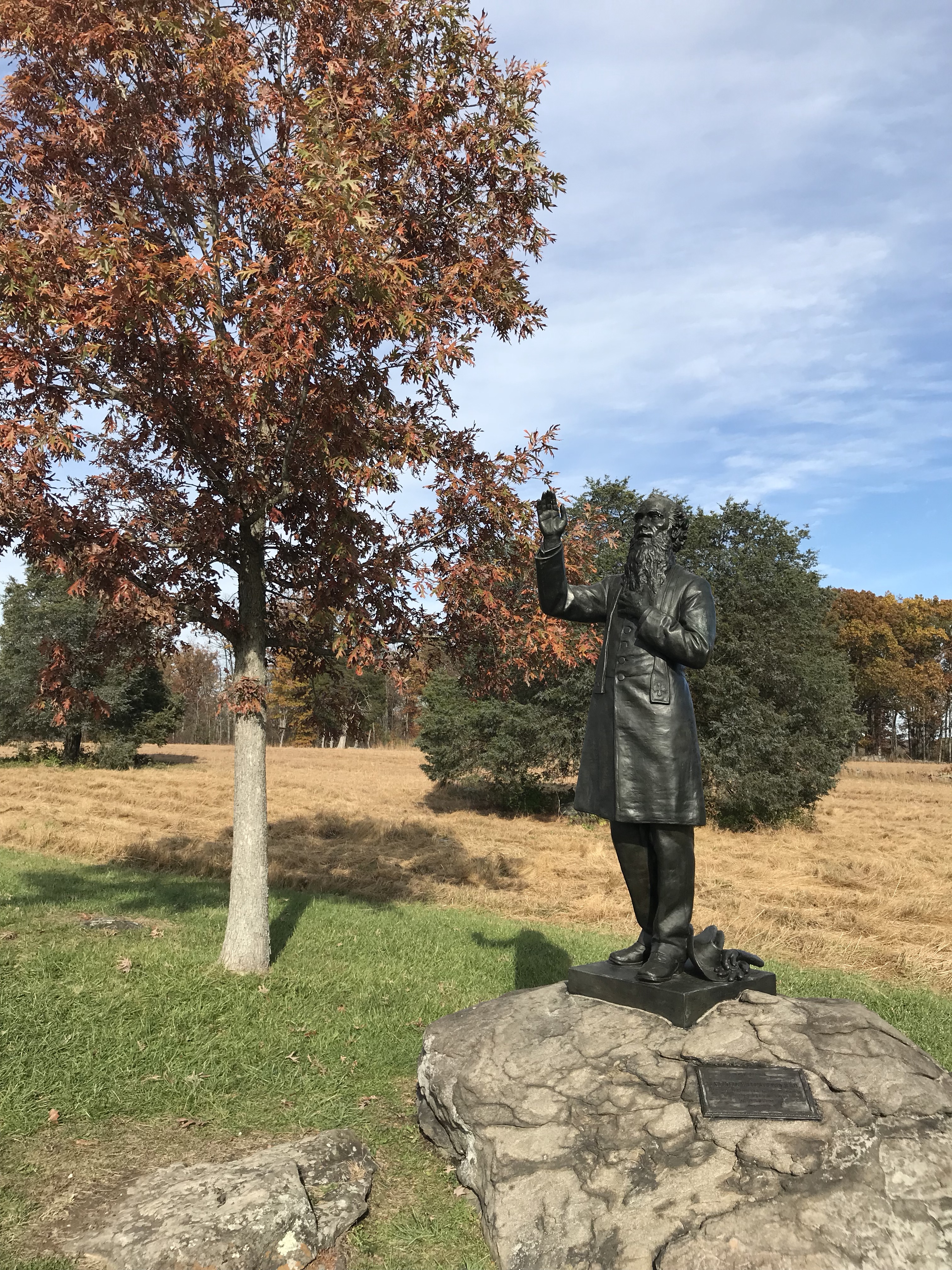
Tag Archives: plum run

Talking About Bad Ground: Walking the Gettysburg Battlefield, Devil’s Den, Little Round Top, the Wheat Field and more…


Friends of Padre Steve’s World,

Yesterday I wrote about my walk around the areas of the Battle of Gettysburg which transpired on the afternoon of July 1st 1863. Today was my crack at doing my best to experience walking the areas of the battlefield that were contested on July 2nd 1863 when Robert E. Lee ordered James Longstreet to assault the Federal left on the basis of Dick Ewell and Jubal Early’s intransigence in ordering a follow up assault on the Federal right, coupled with inaccurate information Lee had about where the end of the Federal line was. The result was the attacks by Longstreet’s divisions which came perilously close to succeeding but which after some of the bloodiest fighting during any three and a half hour period of the war were repulsed by Union troops the Third, Second, and Fifth Corps.

The engagements of that afternoon and evening are etched in our national conscience. Devil’s Den, Little around Top, the Bloody Wheat Field, and the Peach Orchard, not to mention the fights along Rose’s Woods, the Stoney Ridge, Trostle Farm, and Plum Run are each microcosms of the battle, each with heroes, villains, and tactical geniuses and idiots. But my purpose tonight is not to dissect those battles, I am doing that in a text about the Battle of Gettysburg. Instead it is to reflect upon military history and what the men who fought the battle endured.
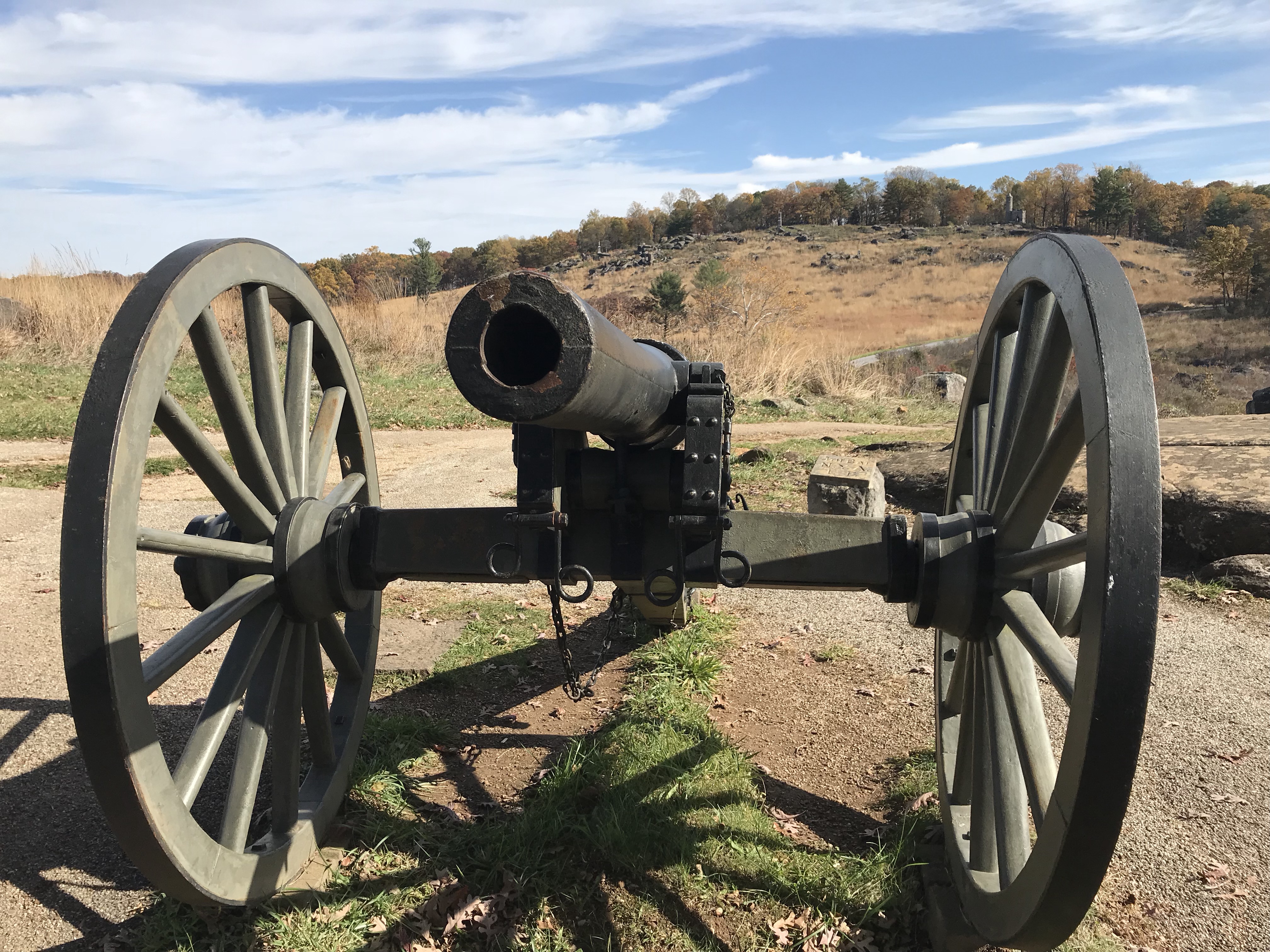
If you want to understand military history and want to do so without having actually been to war or having taken the time to try to see and walk the ground the soldiers trod firsthand make a critical mistake, especially in campaigns where the soldiers had to walk into combat. As Guy Sager, who endured the Russian Front as an infantryman in the Second World War wrote in his book The Forgotten Soldier:

“Too many people learn about war with no inconvenience to themselves. They read about Verdun or Stalingrad without comprehension, sitting in a comfortable armchair, with their feet beside the fire, preparing to go about their business the next day, as usual…One should read about war standing up, late at night, when one is tired, as I am writing about it now, at dawn, while my asthma attack wears off. And even now, in my sleepless exhaustion, how gentle and easy peace seems!”


Like yesterday I walked. I left my car at my hotel and put on my boots and my three-day pack from Iraq. I ate a biscuit with a little bit of gravy, and had a small cup of coffee at the hotel before I set off. Since the hotel didn’t serve hardtack it was the closest I could get to a Civil War breakfast. From the hotel it is about a two mile walk to get to General Lee’s HQ on Seminary Ridge. Since Longstreet’s advanced elements were about that far back from Lee’s HQ on that morning I thought that it would approximate the march of some of his troops while understanding that some of his Corps had to march far more just to get there before beginning their movement to the south part of the battlefield.

Upon reaching Seminary Ridge I began walking down what would have been the areas occupied by A.P. Hill’s Third Corps that Longstreet’s troops would have passed as they moved south. The distance that they covered was about five miles as the crow flies, but due to bad staff work and coordination most of the men of John Bell Hood and Lafayette McLaws divisions had to go further just to get to their start point for the attack. In the case of Evander Law’s brigade of Hood’s division which had the mission of being the furthest south of the attacking Confederates, they had marched over twenty miles before beginning their attack on Little Round Top. When I reached the area that they did I had only walked about seven and a half miles as opposed to the men of Evander Law’s brigade who had marched over twenty miles to get into their attack positions, but as a mater of fact they were almost all a couple of decades or more younger than me.
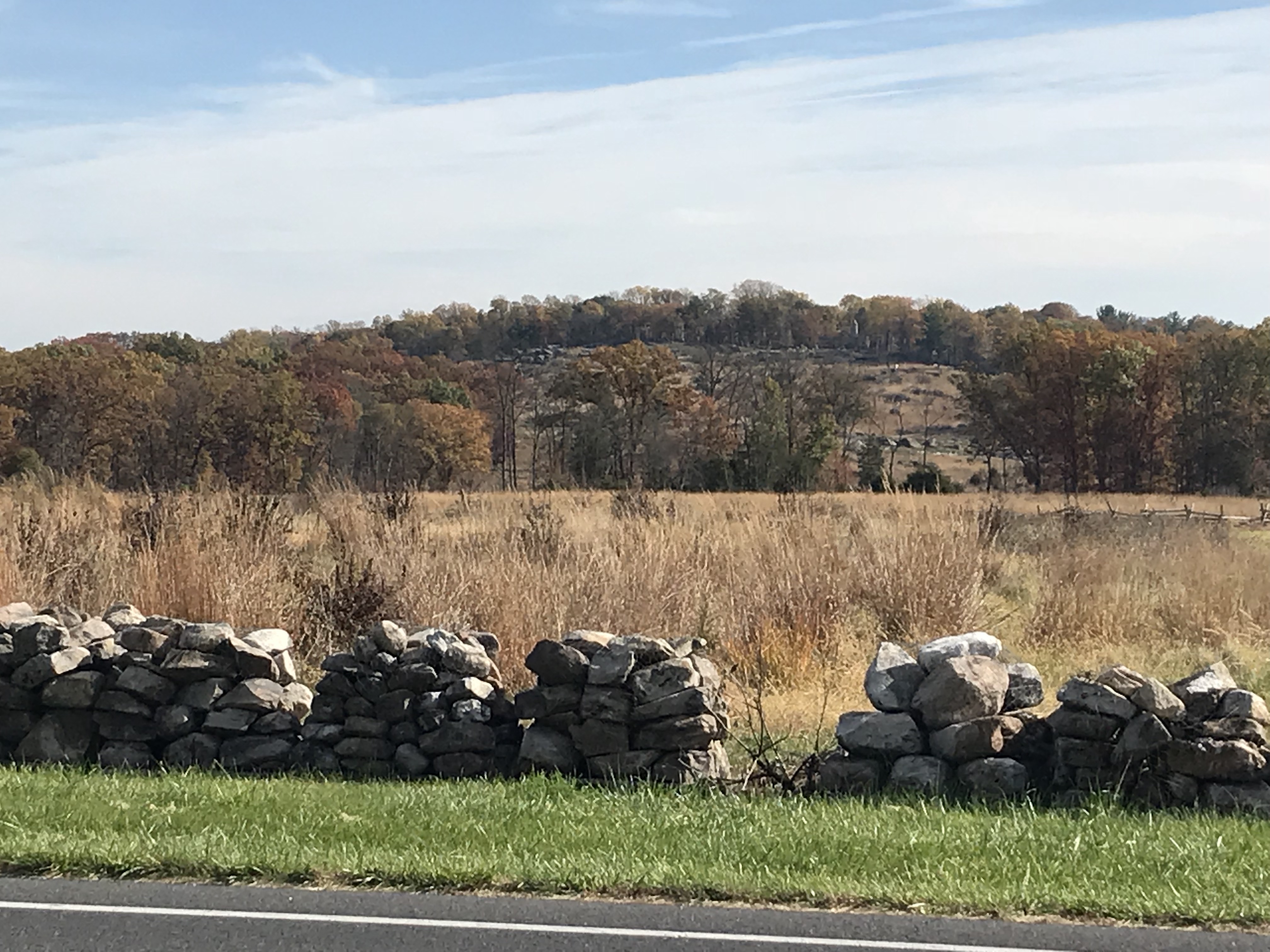

When I got to the point of the Confederate attack I walked a path that intersected with the soldiers of Law’s brigade and Robertson’s Texas brigade, both of Hood’s division. Hood had vigorously protested the attack to Longstreet due to the bad ground that his troops would have to traverse to reach their objectives. As I wrote in my draft book on the battle:

Hood was never one to hesitate to attack, but when he saw the situation that faced First Corps, he objected to the attack. “For the first time in his army career Hood suggested a change of orders to his commanding general,” and pleaded with Longstreet to change it. “From his own observations and those of his scouts he concluded that the attack would be futile and result in wanton wage of life.” The fierce Texan “recognized that the battle order, written more than two miles away on mistaken information…did not fit existing conditions.” His objections included the rocky terrain which he believed would break up his battle formations, as well as “the concave character of the enemy’s line from the north end of Cemetery Ridge to Big Round Top would expose his division to a “destructive fire in flank and rear, as well as in front” if his men attacked it obliquely.” He told Longstreet that it was “unwise to attack up the Emmitsburg Road, as ordered” and requested that he be allowed to “turn Round Top and attack the enemy flank and rear.

Meanwhile, the debate between Longstreet and Hood continued as Hood objected and Longstreet reiterated Lee’s insistence on the planned attack. McLaws noted that Hood “found that the enemy were strongly posted on two rocky hills, with artillery and infantry…” and he pleaded for freedom of maneuver. He believed that an attack up the rocky hills was doomed and later noted “it seemed to me that the enemy occupied a position so strong- I may say impregnable – that independently of their flank fire, they could easily repulse our attack by merely throwing or rolling stones down the mountainside as we approached.”
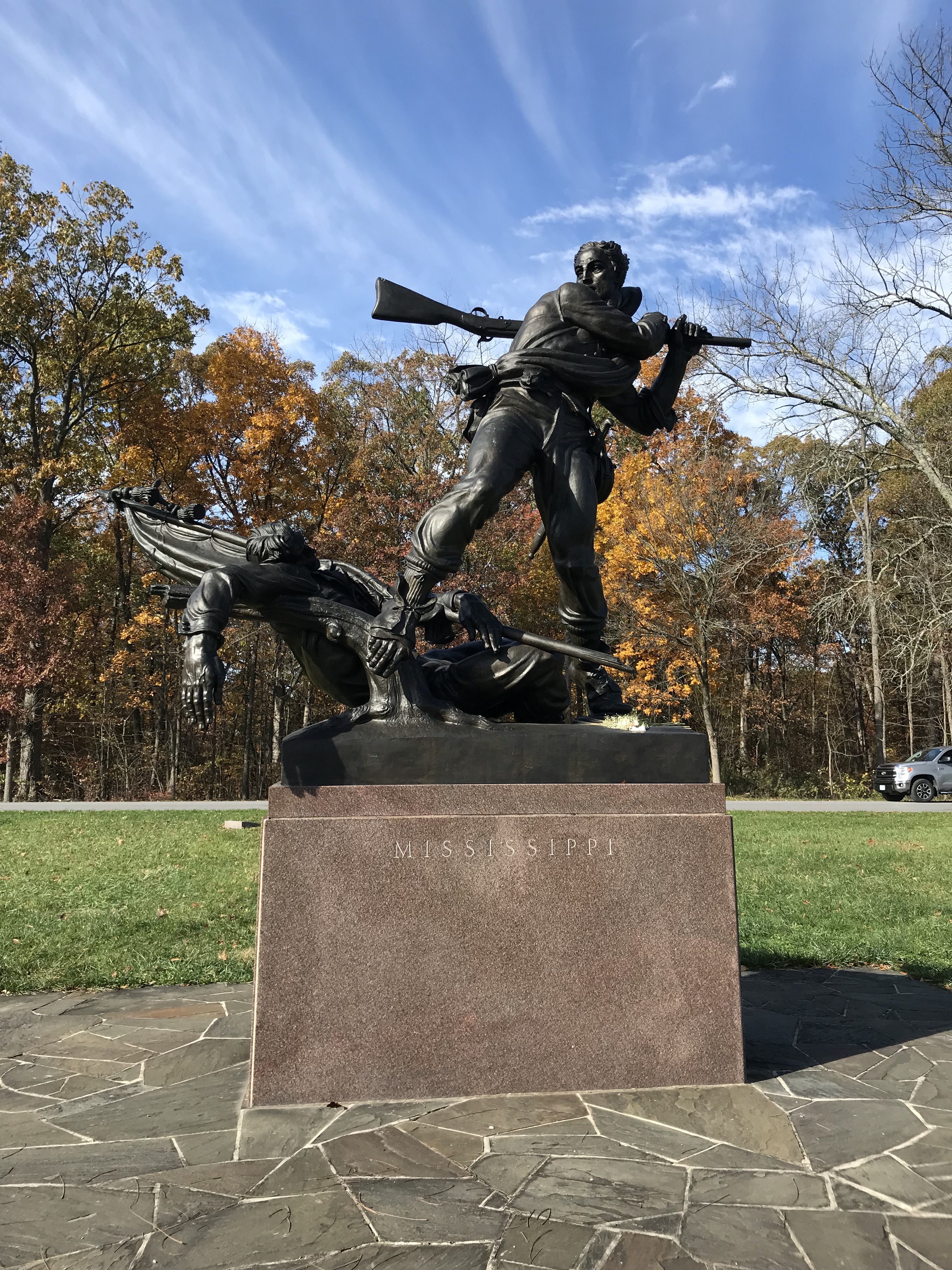

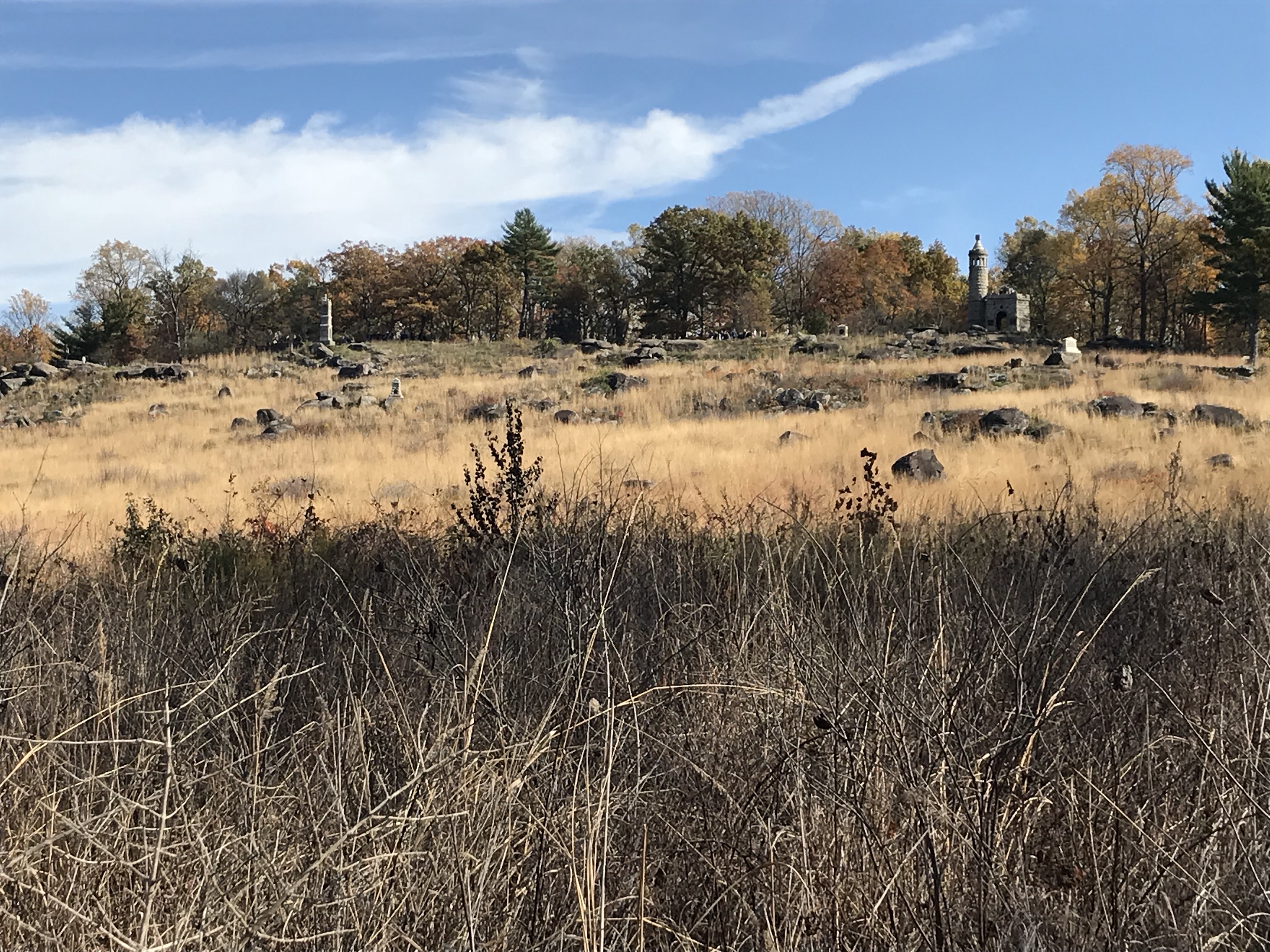
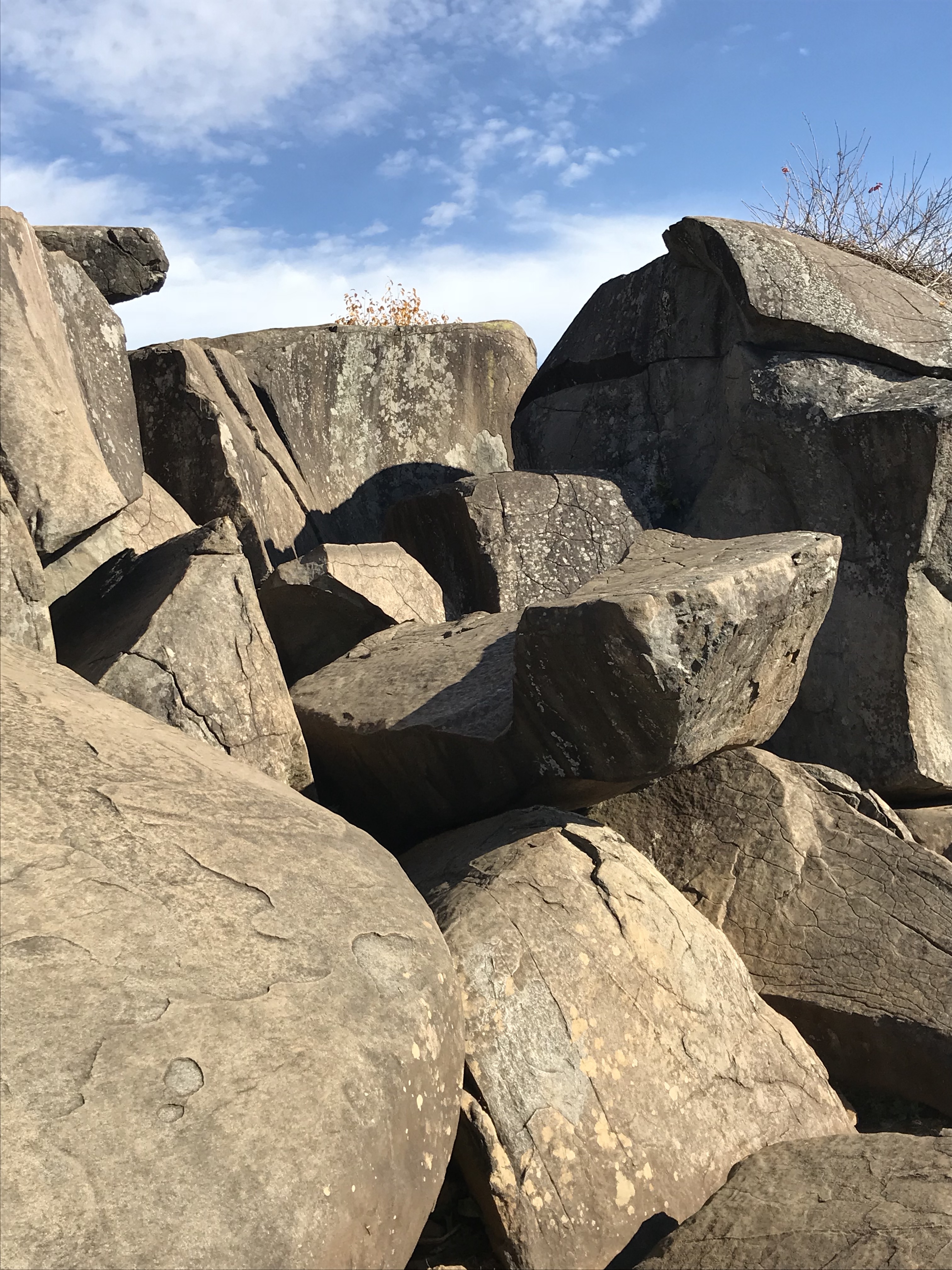
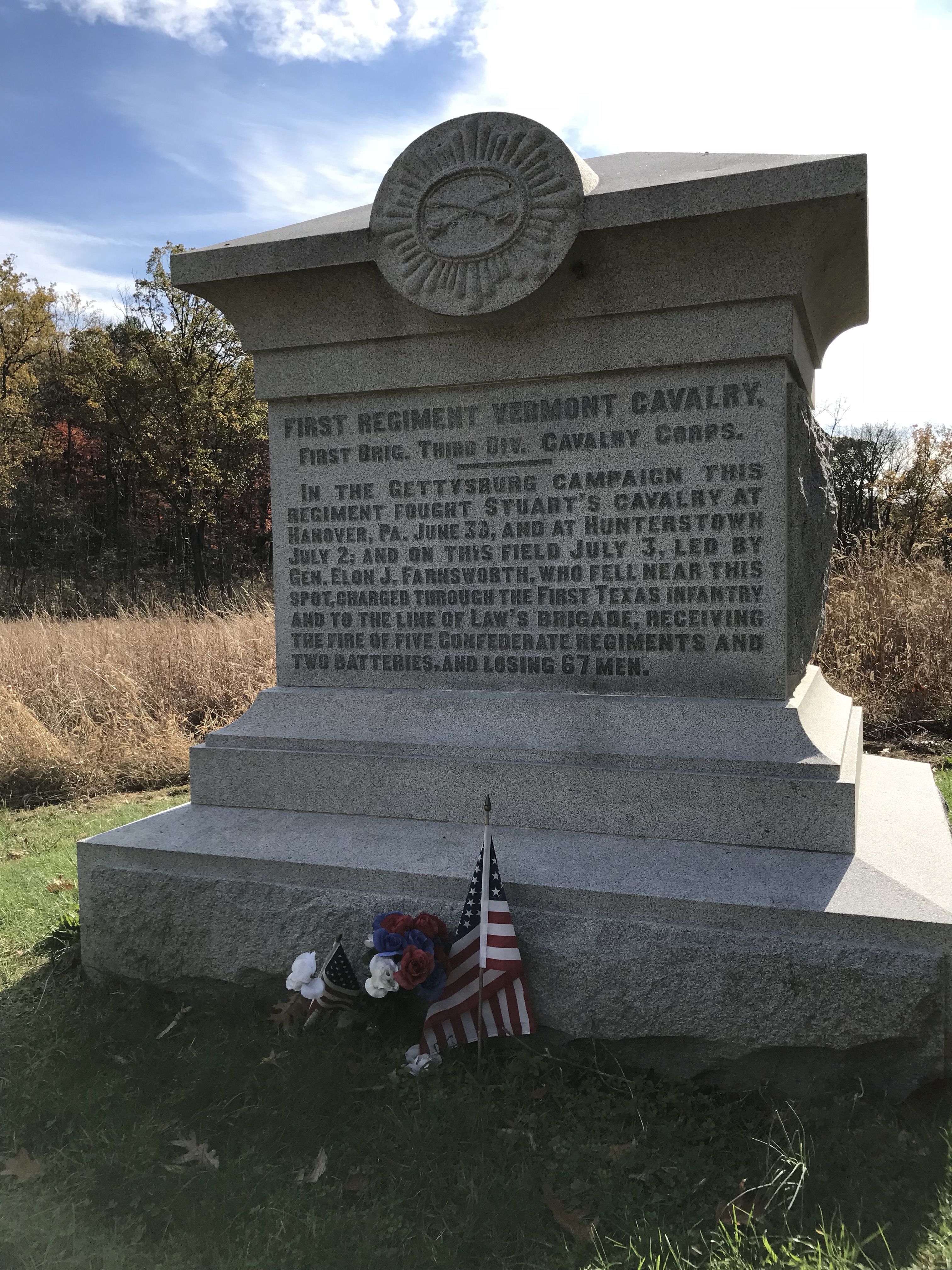
One can look at the ground and one can study it on maps, but until you walk that bad ground, even without doing it while subjected to enemy fire you won’t understand how bad it is. I made my way down a walking path and then tried to move off of it in order to get to Devil’s Den. It was awful, reeds, thrushes, a stream, boulders, and heavy brush prevented me from moving forward. So I went back, followed a trail to Big Round Top and then headed over to Devil’s Den. General Hood was right, the ground to use the words that he spoke to Longstreet after he was wounded “it was the worst ground I ever saw” is not an exaggeration. But the diversion allowed me to find the part of the battle where Brigadier General Elon Farnsworth, after having unsuccessfully resisted orders from Brigadier General Judson Kilpatrick was forced to attack the well dug in Confederate infantry of Lafayette McLaw’s division on July 3rd.

From Devil’s Den I worked my way to Little Round Top. Most of the front slope is inaccessible due to the National Park Service doing a reclamation project, but there is a trail that leads up to it that many of the Confederates would have used. It was steep, and the ground was rugged. By the time I reached the top near the New York Monument I was exhausted. Despite having been in combat and being shot at I cannot imagine how the Confederate soldiers threw themselves up that hill facing small arms and artillery fire at point blank range. Their cause may have been wrong but they were valiant and tough soldiers. The fact that I am 30 to 40 years older than most of them is irrelevant, that ground was a bitch.


After that I went back over to the part of the battlefield occupied by the famous 20th Maine Infantry under the command of Colonel Joshua Chamberlain, and then followed their counter-attack down the hill. From there I went back across the rear slope of Devil’s Den to Houck’s Ridge where heavily outnumbered Union Regulars held their own against Hood and McLaw’s soldiers. From there I went over to the Bloody Wheat Field. Like the Bloody Corn Field at Antietam this was a killing ground which exchanged hands several times during the battle, about 30% of the 20,000 or so soldiers engaged there became casualties. When on looks it the field it is hard to imagine that so many men were killed and wounded in such a short amount of time. Walking across the ground I could not help thinking about the thousands of souls who suffered and died there.
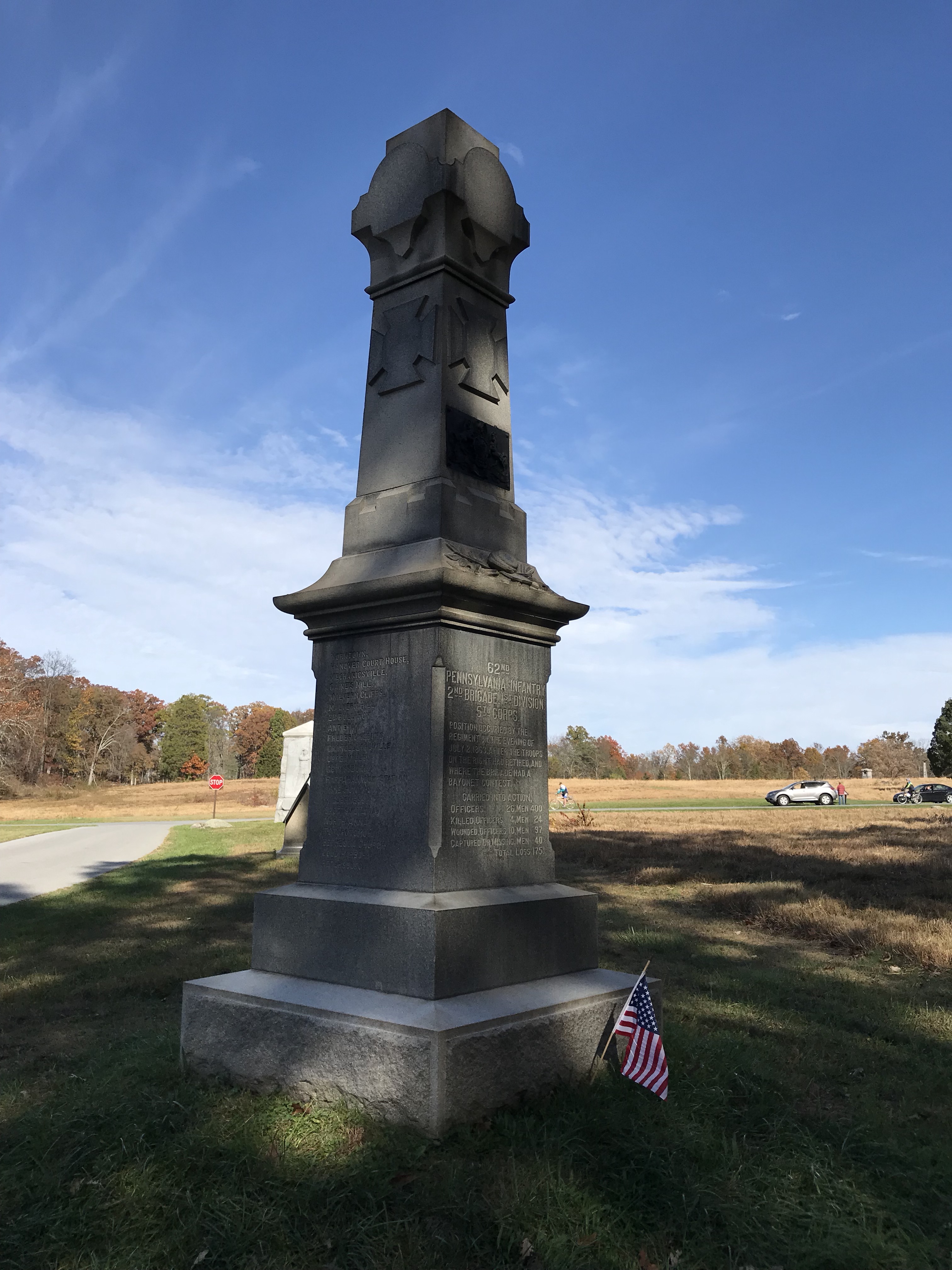

From there I continued through Rose’s Woods and the Stoney Ridge where still more Union and Confederate soldiers fell in desperate fights before walking back west to the Peach Orchard. This was another bloody contest in which General Dan Sickles of the Union Third Corps surprised both the Confederates and his own Commander, General George Meade by moving his corps into an exposed position. The battle there cost many lives and apologists for Sickles, Meade, and the Confederates have used for their own benefit. Sickles is claimed to have nearly lost the battle for the Union, but Longstreet said that his movement and defense of the Peach Orchard was key to the Union victory. Again my purpose in this article is not to take a side in that controversy but to imagine the carnage of the battlefield as well as the bravery of the soldiers on it. It is hard to imagine being a Third Corps Soldier at the Peach Orchard as Confederate artilleryman Porter Alexander’s guns swept their positions, nor being one of McLaw’s infantrymen who were being slaughtered by the experienced Union artillerymen of Third Corps and the Artillery Reserve.


By the time I got to the Peach Orchard I was hungry, thirsty, exhausted, and my feet were hurting. I had a choice. I could simply walk up the Emmitsburg Road and head back to the hotel or I could continue to follow the route of the Confederate advance spearheaded by General Barksdale’s brigade. I went back across Excelsior Field and to the Trostle Farm where Sickles fell wounded, before crossing Plum Run and heading up Cemetery Ridge where the Confederate advance was halted. I then walked back to the hotel via Cemetery Ridge, the Taneytown Road and the Soldiers Cemetery, before making a brief stop on East Cemetery Hill.
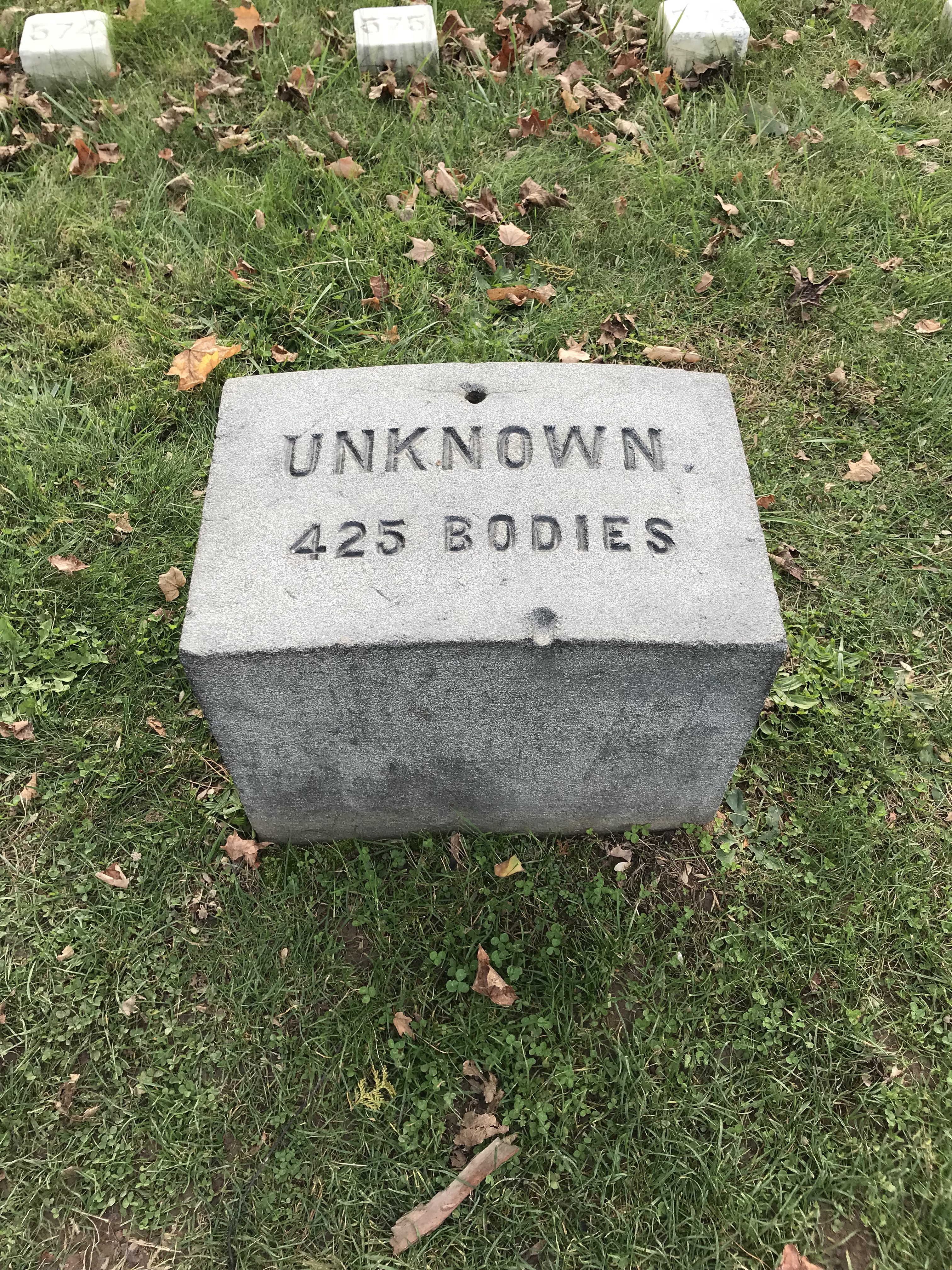
Since I was exhausted and darkness and rain were beginning to close in I decided not to do my walk around the Culp’s Hill battlefield. That will have to wait for another time. Since the rain is expected to continue into the morning and I hate getting wet I’ll put off my walk around Culp’s Hill until another time.

Tomorrow I will head home early to help Judy do some work around our house. My friend Bill who met me last night had take care of a business emergency call from one of his customers in the Shenandoah Valley this morning and since it’s just me I figure I can head back home. Lord willing there is always tomorrow right?


But as a closing commentary:

In the past couple of months I have walked nearly 50 miles across two of the nation’s bloodiest battlefields, Antietam and Gettysburg. Honestly I don’t know a lot of people in policy making positions who do things like that. The tragedy of the American Civil War and the nearly three quarters of a million soldiers of both sides who died during it seems to me to have been forgotten or relegated to the realm of myth by too many Americans, including the President and many of his advisers and supporters. If we forget the cost and meaning of the Civil War, the validation of the proposition of the Declaration of Independence that all men are created equal then we do a grave injustice to those who fell in that war, unless we want to support Confederate Vice President Alexander Stephens who said that slavery was the Cornerstone of the Confederate nation. The costs to our nation are too great to let the the lessons of our Civil War be relegated to myth or exploited to reimagine a recreated Confederacy dominating the rest of the country are too great to allow the President, who has called violent neo-Confederates and White Supremacists “very fine people” or to fail to resist theocratic people from imposing their religious beliefs on others as did the Southern clergy who helped break the bonds of the Union beginning in their own denominations in the 1840s.

Since I have now eaten and had a few beers  I will take my 57 year old body to bed and get ready to head home in the morning.

So until tomorrow,

Peace

Padre Steve+
2 Comments

Filed under civil war, Gettysburg, History, Military, Political Commentary

This Fiery Line: Freeman McGilvery at Plum Run


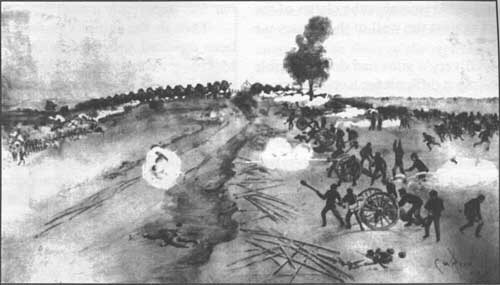
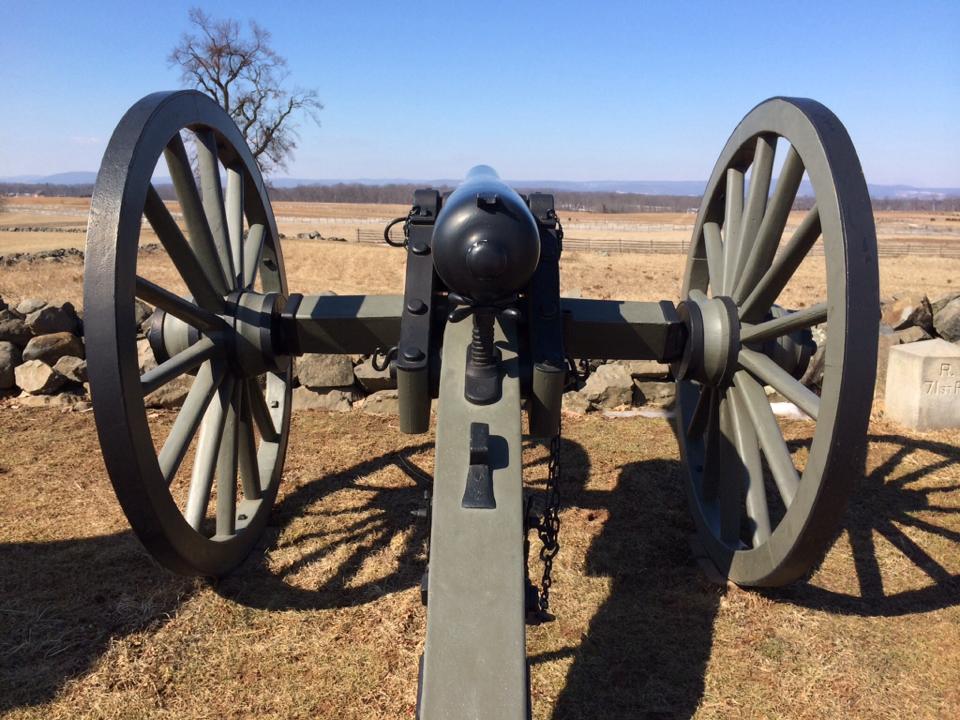
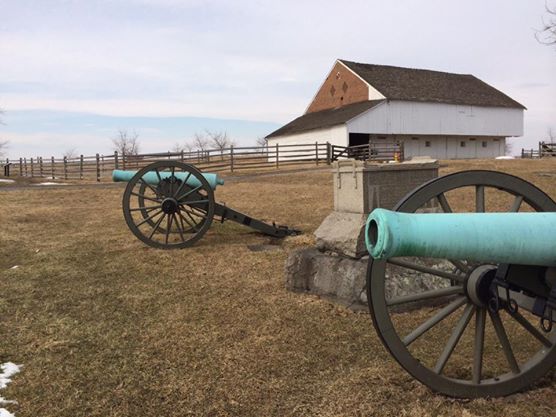
Artillery at the Trostle Farm

Friends of Padre Steve’s World,

Today another excursion into my archives dealing with the Battle of Gettysburg as I muse about my Independence Day article. I hope you enjoy.

Peace

Padre Steve+

The disaster that engulfed Sickles’ III Corps now threatened the Federal center. Meade and Hancock rushed reinforcements in the form of V Corps and much of II Corps. The tip of the Sickle’s salient at Sherfy’s Peach Orchard manned by Graham’s brigade of David Birney’s division was overwhelmed and retreated in disorder. Once “the angle had been breached, the lines connecting to it on the east and north were doomed.” [1] This exposed the left of Humphery’s division and it too was forced to retreat under heavy pressure sustaining heavy casualties. The final collapse of Humphrey’s division a large gap opened in the Federal lines between the elements of V Corps fighting along Devil’s Den and Little Round Top and II Corps along the central portion of Cemetery Ridge.

When Meade realized the seriousness of the situation he gave Sickles’ free reign to call for reinforcements from Harry Hunt’s Artillery Reserve as III Corps had only batteries organic to it. Those five batteries were in the think of the fighting providing invaluable support to Sickles’ hard pressed and outnumbered corps. Firing canister they cut swaths of death and destruction through the massed ranks of wildly cheering Confederates of Kershaw and Semmes and Barkdale’s brigades of McLaws’ division.

The Confederates believed that they had cut the Union line in half and advanced through the Peach Orchard and across the Wheat Field toward Cemetery Ridge.


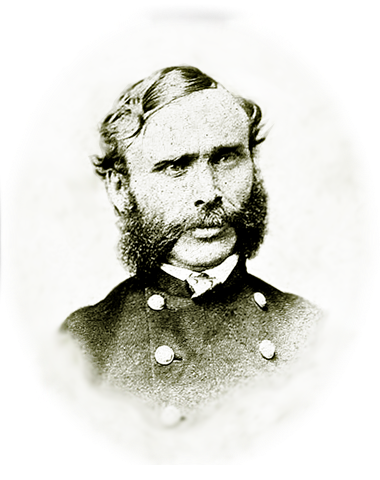
Among the artillery called into action was the First Volunteer Brigade under the command of Lieutenant Colonel Freeman McGilvery. McGilvery, a Maine native was a former sea captain who had organized and commanded the 6th Maine Battery at the beginning of the war. He commanded it with distinction in a number of engagements. Promoted to Major in early 1863 he assumed command of the Brigade and fought at Chancellorsville and was promoted to Lieutenant Colonel in June as the Army of the Potomac pursued Lee’s Army.

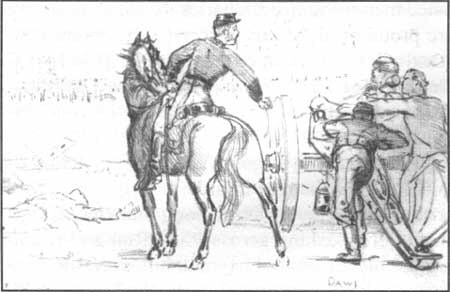
McGilvery rode into the maelstrom of the retreating III Corps soldiers and broken guns. His horse was hit four times but he remained unwounded despite “exposing himself to enemy missiles on all parts of the field from Cemetery Ridge to the Peach Orchard.” [2] He noted that there was no infantry anywhere that could plug the gap and acted instantly on his own authority to make a decision that likely saved the Union line. In the confusion of III Corps disintegration three of his batteries had withdrawn leaving Captain John Bigelow’s 9th Massachusetts battery alone at the Trostle farm telling them they must “hold at all hazards.” [3] Bigelow later explained that McGilvery said that “for 4 or 500 yards in my rear there were no Union troops.” He was then instructed by McGilvery “For heavens [sic] sake hold that line…until he could get some other batteries in position…” [4] In another account Bigelow recorded “Captain Bigelow…there is not an infantryman back of you along the whole line which Sickles moved out; you must remain where you are and hold your position at all hazards, and sacrifice your battery if need be, until at least I can find some batteries to put in position and cover you.” [5]

The order could have been considered suicidal; the 21st Mississippi was nearly upon them and they were but one battery and barely one hundred troops. Bigelow did not hesitate to obey; he brought his guns into line at the Trostle house “facing one section slightly to the southwest and the other two sections directly into the path of the oncoming Confederates.” [6]


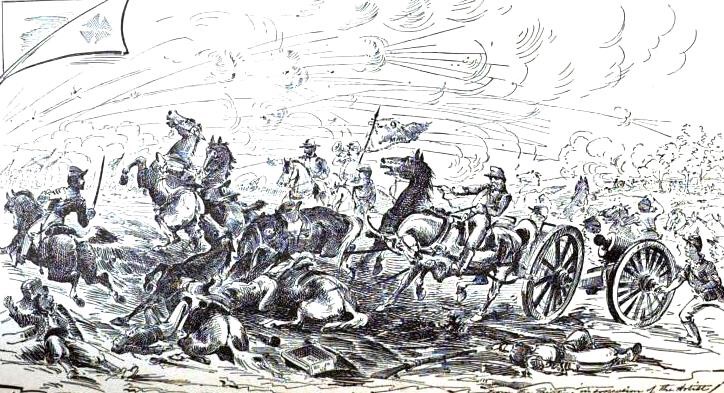
Bigelow’s artillerymen fought like demons he described the effect of his fire on Kershaw’s South Carolinians “the Battery immediately enfiladed them with a rapid fire of canister, which tore through their ranks and sprinkled the field with their dead and wound, until they disappeared in the woods on our left, apparently a mob.” [7] They poured a merciless stream of fire into the advancing Confederates until “they had exhausted their supply of canister and the enemy began to close in on his flanks.” [8] A German born gunner noted “we mowed them down like grass, but they were thick and rushed up.” [9] A hand to hand fight ensued among the guns but the Massachusetts men escaped losing 28 of its 104 men engaged,[10] the brave commander Bigelow was wounded and nearly captured but one of his men helped him to the rear.


Their sacrifice was not in vain. They bought McGilvery an additional 30 minutes to set up a line of guns along Plum Run. Hunt praised the battery “As the battery had sacrificed itself for the safety of the line, its work is specially noticed as typical of the service that artillery is not infrequently called to render, and did render in other instances at Gettysburg besides this one.”[11]

Barksdale’s brigade did not pause and continued in their relentless advance towards Cemetery Ridge, sweeping Union stragglers up as they moved forward led by their irrepressible Colonel. Before them was McGilvery’s new line, hastily cobbled together from any batteries and guns that he could find. Initially composed of 13-15 guns of four different batteries he was joined by two more batteries giving him about 25 guns in all. Subjected to intense Confederate artillery fire and infantry attacks his guns held on even as their numbers were reduced until only six guns remained operational. “Expertly directed by McGilvery a few stouthearted artillerymen continued to blaze away and keep the low bushes in front of them clear of lurking sharpshooters. Although they had no infantry supports, they somehow managed to create the illusion that the woods to their rear were filled with them, and they closed the breach until the Union high command could bring up reinforcements.” [12]

The reinforcements came in the form of Colonel George Willard’s “Harper’s Ferry” Brigade which was looking for revenge and redemption. This unit hit Barksdale’s now disorganized force which had reached its cumulating point hard. Willard was killed and Barksdale mortally wounded and captured in the violent clash which spelled the end of one of the greatest threats to the Union line of the entire battle. Philip Tucker in his book Barksdale’s Charge: The True High Tide of the Confederacy at Gettysburg, July 2, 1863 refers to Barksdale’s charge as the real “high water mark of the Confederacy.”

Plum Run Line

However it was McGilvery who recognized the emergency confronting the line and on his own took responsibility to rectify the situation. He courageously risked “his career in assuming authority beyond his rank” [13] and without his quick action, courage under fire and expert direction of his guns Barksdale’s men might have completed the breakthrough that could have won the battle for General Lee despite all of the mistakes committed by his senior leaders that day.


The action of McGilvery was another example of an officer who had the trust of his superiors who did the right thing at the right time. It is an example of an officer used the principles of what we today call Mission Command to decisively impact a battle. McGilvery rose higher in the Federal service and was promoted to Colonel and command of the artillery of X Corps. He was slightly wounded in a finger at the battle of Deep Bottom in August 1864. The wound did not heal properly so surgeon’s decided to amputate the finger. However they administered a lethal dose of chloroform anesthesia and he died on September 9th, the Union losing one its finest artillerymen. He was buried in his native Maine and the State legislature designated the first Saturday in September as Colonel Freeman McGilvery Day in 2001.

Notes

[1] Trudeau, Noah Andre Gettysburg: A Testing of Courage Harper Collins, New York 2002 p.368

[2] Coco, Gregory A A Concise Guide to the Artillery at Gettysburg Colecraft Industries, Orrtanna PA 1998 p.31

[3] Hunt, Henry I Proceeded to Cemetery Hill in Battles and Leaders of the Civil War Bradford, Ned editor, Meridian Books, New York 1956 p.378

[4] Guelzo, Allen C Gettysburg, The Last Invasion Vintage Books, a Division of Random House, New York 2013 p.314

[5] Ibid. Trudeau p.385

[6] Ibid.

[7] Bigelow, The Peach Orchard, 54; History of the Fifth, 638 retrieved from WE SAVED THE LINE FROM BEING BROKEN: Freeman McGilvery, John Bigelow, Charles Reed and the Battle of Gettysburg by Eric Campbell http://www.nps.gov/history/history/online_books/gett/gettysburg_seminars/5/essay4.htm#52

[8] Coddington, Edwin. The Gettysburg Campaign: A Study in Command Touchstone Books, New York 1960 p.416

[9] Ibid. Guelzo pp.314-315

[10] Ibid Hunt p.379

[11] Ibid. Hunt. P.379

[12] Ibid. Coddington p.417.

[13] Ibid. Coddington.

1 Comment

Filed under civil war, Gettysburg, History, leadership, Military

“We had Nothing to do but to Obey the Orders” Final Confederate Preparations for Pickett’s Charge

10003289_10152329730082059_400175304_n

While James Longstreet was depressed and many Confederate commanders who had seen the carnage of attacking the entrenched Federal army on July 2nd doubted whether any assault could break the Federal line, Robert E. Lee held on to the hope that one more assault would carry the day. It had to, “the importance with which his whole strategy had invested in this battle and the stubbornness which had driven him on at Gaines’s Mill, Malvern Hill, and Antietam, impelled Lee to still try another major attack on July 3.” 1 His partial success on July 2nd also “persuaded Lee that with the proper coordination and support of artillery, it was still possible to assault and break through Meade’s front.” 2 Convinced that his men could conquer the Federal position, and encouraged by the small successes of the second day “the general plan of attack was unchanged.” 3

However the real problem was not breaking through the line, but “how to stay there and exploit the advantage once the enemy’s line was pierced.” 4 Lee’s tactical problem remained the same as it had on July 2nd, when the power of the rifled musket and massed artillery on the defense cut his assaulting troops to ribbons, even though they inflicted heavy casualties on the Federal army, especially Sickles’ badly exposed III Corps in the Wheat Field and the Peach Orchard. His problem was how to break the enemy’s line and then exploit the breakthrough in order to gain not only a victory, but destroy the Army of the Potomac as a fighting force in the process.

As we have already discussed, on the new battlefield of the Civil War where the killing power of entrenched troops on the defense had grown exponentially as compared to the Napoleonic era or even the Mexican War, of which Lee and so many commanders were veterans. As Russell Weigley noted that by the time an attacking force was able to breach a prepared defensive position, “almost invariably, by that time the attacker had lost so heavily, and his reserves were so distant, that he could not hold on against a counterattack by the defending army’s nearby reserves.” 5 And like his assaults at Gaines’s Mill, Malvern Hill and those at Gettysburg on July 2nd, the assault of July 3rd by the divisions of Pickett, Pettigrew and Trimble would meet a similar bloody repulse, only Lee refused to accept it. Colonel Porter Alexander, commanding Longstreet’s corps artillery noted that “even if the attack was “entirely successful, it can be only be at a very bloody cost” 6 while Brigadier General A.R. Wright, whose brigade had actually reached Cemetery Ridge on July 2nd told Alexander “The trouble is not going in there…the problem is to stay there after you get there.” 7

With a fresh army, or perhaps a number of fresh divisions, Lee’s plan might have had a chance to succeed. But Lee had already lost heavily on July 1st and 2nd and in the process shattered the divisions of Heth, Pender, Rodes, Johnson, Hood and McLaws and suffered serious casualties to the divisions of Early and Anderson. As far as infantry he had very little left, only Pickett’s short handed division which was missing two of its five brigades, with which to mount a frontal assault that would further decimate his army and render it incapable of further offensive operations, even if he drove Meade from his positions on Cemetery Hill and Cemetery Ridge.

But Robert E. Lee was not deterred, over the past year of action “Lee had developed extremely high expectations of his enlisted men” 8 He had seen them overcome adversity as well as defeat far larger forces, but this time the open terrain, the superiority of the Federal artillery, the excellent position that Meade’s army occupied and his own lack of fresh troops and scarcity of artillery ammunition, combined with poor staff work and bad organization would ensure that this assault would be more than they could handle. Unlike Longstreet, Lee was never in awe “of the formidable character of the Union position…and he felt sure his incomparable infantry if properly handled could take any height.” 9

But even Porter Alexander, like most in the Army, held Lee in such esteem that regardless of the situation they implicitly trusted his judgment. As the preparations were made in the morning initially “believed that it would come out right, because General Lee had planned it.” 10 As he weighed the matter more fully Alexander told Longstreet “if there is any alternative to this attack, it should be carefully considered before opening our fire, for it will take all the artillery ammunition we have left to test this one thoroughly, and if the result is unfavorable, we will have none left for another effort.” 11

Once again Lee’s lack of clarity and vagueness in his orders and the reluctance of a subordinate to carry them out hindered Lee’s plan. Lee and Longstreet “had not reached a clear understanding on the nature, extent, and direction of his offensive operations” 12 and somehow, in “the strange, undeclared conflict of wills that had begun thirty-six hours before, neither general was thinking clearly. As Longstreet would now do anything to avoid assuming responsibility for a full-scale attack, Lee would do anything to get him to move out.” 13

Pickett’s division had arrived at Marsh Creek was of Gettysburg after a long and tiring forced march from Chambersburg at about 4 p.m. on July 2nd. Lee informed Pickett that he would not be needed that day and to rest his troops, and for whatever reason they remained in that position until about 4 a.m on July 3rd. Neither Lee nor Longstreet ordered them up earlier, where they might have been in position for an earlier assault on the Federal center, an attack that might have been coordinated with Ewell’s attack on Culp’s Hill which went off about 4 a.m.

Some of the blame for this can be laid at the feet of Longstreet, who still determined to find a way to turn the Federal left flank had his staff planning throughout the night for a way to execute that attack, but Lee was remiss in not clearly communicating his intent to his subordinate, to include what he expected him to do as well as when and where he expected him to do it. These questions were not cleared up until after sunrise on July 3rd, when Lee reiterated his plans to Longstreet and A.P. Hill.

Lee decided to attack the Federal center, where Cemetery Ridge was less commanding than Cemetery Hill, or the Round Tops which had been so costly to attack on the first two days of battle. All of Pickett’s division arrived behind Seminary Ridge between 7 a.m. and 9 a.m. on the morning of July 3rd. There it joined the other units assigned to the attack by Lee. Those units, apart from Pickett all came from A.P. Hill’s Third Corps, Longstreet having convinced that the badly cut up divisions of Hood and McLaws remain in place on the south end of the battlefield to protect the flank. Longstreet was of the opinion, and gained Lee’s concurrence that if those units joined the assault that the flank would be exposed to the well dug in and reinforced Federal units on and around the Round Tops, as Longstreet explained, “To have rushed forward with my two divisions, then carrying bloody noses from their terrible conflict the day before, would have been madness.” 14

The decision to leave these two divisions in place resulted in a change of plan as to where the Confederate assault would be directed. Lee initially planned for Longstreet’s corps to continue its push in the south, from the positions they had taken near Little Round Top, Devil’s Den, the Peach Orchard and the Wheat Field. In that attack Hood’s division now lead by Evander Law, would be on the extreme right, McLaws division in the center attacking from the Wheat Field and Peach Orchard and Pickett on the left, supported by some of A.P. Hill’s Third Corps. However, with the change of plan Pickett’s division was now on the left of the attack, while Heth’s division, now commanded by Johnston Pettigrew would be in the center supported by Lane’s and Scales’ brigades of Dorsey Pender’s division, now commanded by Isaac Trimble, who had taken command only that morning. The selection of Heth’s division to join the attack now “provided a focal point for the attack, since it was roughly opposite the Federal center; then, too, there was a concealed position to the right of Heth’s line that offered room enough for Pickett’s men.” 15 This necessitated a change to the intended target of the attack, which Lee now identified as the “small clump of trees” visible in the center of the Federal position.

Lee discounted the terrain as a factor, thinking that the fences that criss-crossed the open field between the two opponents was of little concern. The open ground lent itself to the “massive attack on the scale that Lee visualized” but would “expose his men to a raking fire from enemy muskets and artillery.” 16 Lee hoped to reduce this danger with an overwhelming artillery barrage, but while Longstreet opposed the attack, and other Confederate commanders such as Armistead and Garnett realized the near hopelessness of the attack but maintained a silence, William Mahone, whose brigade was part of Anderson’s division and not assigned to the attack was mortified. Mahone begged Anderson to observe the battlefield and told him his honest opinion of the coming attack: “That no troops ever formed a line of battle that could cross the plain of fire to which the attacking force would be subjected, and…that I could not believe that General Lee would insist on such an assault after he had seen the ground.” 17 But Lee was determined and Anderson refused to confront Lee, saying “in substance, that we had nothing to do but to obey the orders.” 18

Mahone was right both about the ground and the fires that the attacking Confederates would encounter. While the fences along the Emmitsburg road in Pickett’s area were not much of a factor, they were on Pettigrew’s front. The Plum Run Valley which cut across the battlefield was a wide swale which “was truly a valley of death; Union artillery placed on Little Round Top could easily fire up its shallow groove as if it were a bowling alley, and Federal infantry could easily counterattack into it.” 19 In front of Pettigrew the ground formed “a natural glacis. In short, it naturally sloped at a steeper angle, forcing the attacker to literally walk up directly into the muzzles of the defending infantrymen.” 20 Whether Lee recognized it or not the ground itself offered major obstacles that the attacking Confederates would have to negotiate under heavy artillery and musket fire.

From a command, control and coordination aspect there was little to be commended in Lee’s plan. The artillery support, nominally to be conducted by all the Confederate artillery from all three corps was not well coordinated and lacked an overall commander, this ensured that the “corps artillery commanders acted independently, without a firm understanding of the crucial importance of their roles.” 21 Porter Alexander, who had the heaviest responsibility only had operational control of the batteries of First Corps and a few from Third Corps, the rest of the artillery battalions remained under their respective corps artillery commanders. Additionally, the senior artilleryman present, who had no command authority, Brigadier General William Pendleton moved batteries committed to Alexander and the infantry assault without telling him, and removed the artillery trains far to the rear where the ammunition needed to sustain an attack was out of reach when needed. Additionally the batteries of Third Corps did not conserve their limited ammunition and became involved in a long battle over the Bliss farmhouse between the lines, thus limiting their ability to take part in the attack. Likewise the guns of Second Corps, some of which could have had good enfilade fire on Cemetery Hill took little part in the action.

Of the three infantry divisions allotted to the attack, only one, Pickett’s actually belonged to the corps commander leading the attack, and the two divisions from Third Corps were badly cut up from the battle on July 1st and commanded by new commanders, neither who had commanded a division, and one of who, Trimble had never worked with or even met his subordinate commanders until that morning. Additionally, the two brigades assigned from Pender’s division were units that had been heavily engaged, there were two other brigades, those of Mahone and Posey from Anderson’s division, which “yet to see see serious action” and were “just as fresh as Pickett’s division, yet they were overlooked and not even assigned a supporting role.” 22

Despite his objections to it and the challenges posed by the attack, James Longstreet earnestly worked to make it succeed. Longstreet, Pickett and Pettigrew attempted to smooth out communications to “avoid mistakes and secure proper coordination between various units.” 23 However, despite his good intentions, Longstreet made a number of mistakes which could be best described as “lapses of thought.” He failed to “explain the details of the attack to all levels of command in all units…he failed to communicate effectively with anyone outside of First Corps, even though Third Corps troops would make up more than half of the attackers.” He left the artillery plan to Alexander and failed to develop a detailed plan that would determine if the artillery bombardment had weakened the Federals enough “to justify sending in the infantry.” He also did not appreciate the weakened condition of the attached Third Corps units and more importantly seemed to give little thought to the placement of Pickett’s troops in relationship to Pettigrew. This left a 400 yard gap between the Pickett and Pettigrew’s divisions, a gap that would cause problems during the attack, as it necessitated “a significant and difficult left oblique movement by the Virginians across the valley, under artillery fire.” 24

Despite Longstreet’s lapses the fact was that Lee reviewed the plans, and troops dispositions late in the morning. Lee had gone up and down the line inspecting it, but somehow he too “did not detect the hidden flaws in the deployment of his troops and the layout of its batteries.” 25 Likewise he seemed to continue the passive role that he had maintained throughout the battle. Alexander spelled this out in a private letter noting that “The arrangement of all the troops,… must have been apparent to Gen Lee when he was going about the lines between 11 & 12, & his not interfering with it stamps of his approval.” 26

About noon the approximately 13,000 troops in the attacking divisions continued to make their individual preparations for the attack. As they did this “a great stillness came down over the field and over the two armies on their ridges…the Confederates maintaining their mile wide formation along the wooded slope and in the swale, the heat was oppressive.” 27 Pickett wrote his young fiancee “the suffering and waiting are almost unbearable.” 28

Notes

1 Weigley, Russell F. The American Way of War: A History of United States Military Strategy and Policy Indiana University Press, Bloomington and Indianapolis 1973 p.117 

2 Fuller, J.F.C. Grant and Lee: A Study in Command Indiana University Press, Bloomington and Indianapolis 1957 pp. 198-199 

3 Guelzo, Allen C. Gettysburg: The Last Invasion Vintage Books, a Division of Random House, New York 2013 p.375

4 Ibid. Weigley The American Way of War p.117 5 Ibid. Weigley The American Way of War p.117

6 Korda, Michael. Clouds of Glory: The Life and Legend of Robert E Lee Harper Collins Books, New York 2014 p.591

7 Coddington, Edwin B. The Gettysburg Campaign: A Study in Command A Touchstone Book, New York, 1968 p.459

8 Hess, Earl J. Pickett’s Charge: The Last Attack at Gettysburg University of North Carolina Press, Chapel Hill and London 2001 p.13

9 Coddington The Gettysburg Campaign: A Study in Command p.457

10 Golay, Michael To Gettysburg and Beyond: The Parallel Lives of Joshua Lawrence Chamberlain and Edward Porter Alexander Crown Publishers, New York 1994 p.167

11 Freeman, Douglas Southall. Lee’s Lieutenants: A Study in Command One Volume Abridgment by Stephen Sears, Scribner New York 1998 p.592

12 Ibid. Coddington Gettysburg: A Study in Command p.454

13 Dowdy, Clifford Lee and His Men at Gettysburg: The Death of a Nation originally published as Death of a Nation Skyhorse Publishing New York 1958 p.258 

14 Trudeau, Noah Andre Gettysburg a Testing of Courage Harper Collins Publishers, New York 2002 p.441

15 Ibid. Trudeau Gettysburg: A Testing of Courage p.441

16 Ibid. Coddington The Gettysburg Campaign p.459

17 Ibid. Trudeau Gettysburg: A Testing of Courage p.458

18 Ibid. Trudeau Gettysburg: A Testing of Courage p.458

19 Ibid. Hess Pickett’s Charge p.79

20 Ibid. Hess Pickett’s Charge p.81

21 Wert, Jeffery D. Gettysburg Day Three A Touchstone Book, New York 2001 p.126

22 Ibid. Coddington The Gettysburg Campaign p.462

23 Ibid. Coddington The Gettysburg Campaign p.491

24 Ibid. Hess Pickett’s Charge p.32

25 Ibid. Coddington The Gettysburg Campaign p.492

26 Ibid. Wert. Gettysburg Day Three p.128

27 Foote, Shelby The Civil War a Narrative: Fredericksburg to Meridian Vintage Books a Division of Random House, New York 1963 p.539

28 Ibid. Dowdy Lee and His Men at Gettysburg p.281

Leave a comment

Filed under civil war, History, leadership, Military