Tag Archives: star trek the next generation

The Fallacy of Reductionist Fundamentalism: You Cannot be Competent in God

galaxy_universe-normal1

Today is a day for something a bit more theological in nature. A couple of days ago I wrote about the dangers of reductionist fundamentalism. One of the issues that fundamentalists of all stripes wrestle with is the issue of certitude. For them life has to be bounded by certainty. For them, whether in the matter of origins, or how life came about, in the matter of faith and morals, how life is lived in the present; or how the world ends, life must be certain. In fact, fundamentalism in all its forms inculcates believers that there is only one way of thinking, one way of knowing, one way of understanding things that are unknowable. 

Because of this need for certitude, Christians, Moslems, Jews and others of various persuasions have attempted to define the beginning and the end, as well as to dictate what is acceptable to believe, or acceptable behavior. However, this actually says more about their insecurity than reflects the strength of their beliefs. I can speak to this need for certitude from a Christian point of view, and from my study of other faiths make what I think is informed commentary.

But for people who supposedly believe in God, the reality is that in presuming certitude in what we think that we know  is actually a denial of faith. Dietrich Bonhoeffer wrote that “a God who would let us prove his existence is an idol.” Bonhoeffer was right, not only do those that presume to know exactly how creation came about, how the universe will end or say with unrequited certitude what constitutes proper belief or behavior in the eyes of God make an idol of their God, they also, whether they intend to or not, put themselves in the place of God.

According to the writer of the Book of Hebrews, “faith is the essence of things hoped for, the evidence of things unseen.” That writer, who I think is Priscilla (see Acts Priscilla and Aquila) understood that faith was not the same as empirical knowledge, otherwise it would not be faith. To understand faith in a modern sense it means that faith is something that we admittedly cannot prove. That is why it is faith.

I am admittedly a skeptic. I am. Christian, I do believe, but I doubt as much as I believe. In fact for nearly two years I lived as an agnostic, a priest praying that God still existed, thus is believe but even now doubt. That being said I have seen things that cannot be explained by science or anything rational, and there are physicians that I have worked with that can attest to those things. That being said I think there are a lot of events claimed by some as “miraculous” that are explainable and are not miraculous at all.

The fact is, whether it it about creation and the questions of origins, an exact definition by which to judge absolute truth for living or belief, or the manner of how creation will end; every single statement of such absolutes is contradicted by the fact that we live as Bonhoeffer wrote, and I like to call “the uncomfortable middle. Bonhoeffer wrote in his book Creation, Fall and Temptation that:

“Man no longer lives in the beginning–he has lost the beginning. Now he finds he is in the middle, knowing neither the end nor the beginning, and yet knowing that he is in the middle, coming from the beginning and going towards the end. He sees that his life is determined by these two facets, of which he knows only that he does not know them.”  

The reality for Christians is that we have to admit is that our belief is rooted in our faith, faith which is given to us through the witness of very imperfect people influenced by their own culture, history, traditions as well as limitations in terms of scientific knowledge. Even scripture does not make the claim to be inerrant, though some Christian Fundamentalist make that claim. Because of that, the Bible cannot be understood like the Koran or other texts which make the claim to be the infallible compendium of faith delivered by an angel or dictated by God himself. The Bible, of we actually believe it, is a Divine-human collaboration so symbolic of the relationship that God has with his people, often confusing and contradictory yet inspiring. As Hans Kung so rightly wrote:

“Christians are confident that there is a living God and that in the future of this God will also maintain their believing community in life and in truth. Their confidence is based on the promise given with Jesus of Nazareth: he himself is the promise in which God’s fidelity to his people can be read.” 

Does that mean that we fully comprehend the nature of Christ, or the doctrinal formulation of the Hypostatic Union which defines Christ as being fully human and fully God? Or does it mean that we fully comprehend or understand the doctrine of the Trinity encapsulated in either the Nicene or Athanasian Creed? Certainly not, none of those doctrines are provable by science, or for that manner even history, for there were and are people who consider themselves Christians who do not believe and who reject those doctrinal formulations. Thus for Christians to attempt to argue such matters as fact to those who do not believe is not productive at all. We must understand that faith in the living Christ is not in a doctrine but  a promise that we believe, by faith, is given given by God through Jesus of Nazareth.

The real fact of the matter is that fixed doctrines are much more comfortable than living with difficult questions or honestly examining the contradictions that exist within Scripture, history and tradition. The fact is this makes many people uncomfortable and thus the retreat into the fortress of fixed and immutable doctrine found in the various incarnations of Fundamentalism.

The fact is the world is not a safe place, and our best knowledge is always being challenged by new discoveries many of which make people nervous and uncomfortable, especially people who need the safety of certitude. So in reaction “true believers” become even more strident and sometimes even violent when confronted with issues that question immutable doctrine.

I wish it were otherwise but Christianity cannot get away unscathed by such criticism. At various points in our history we have had individuals, churches and Church controlled governments persecute and kill those that have challenged their particular orthodoxy. Since Christian fundamentalists are human they like others have the capacity for violence if they feel threatened, or the cause is “holy” enough. Our history is full of sordid tales of the ignorance of some Christians masquerading as absolute truth and crushing any opposition. Doctrinal certitude is comforting. It is as Eric Hoffer wrote:

“A doctrine insulates the devout not only against the realities around them but also against their own selves. The fanatical believer is not conscious of his envy, malice, pettiness and dishonesty. There is a wall of words between his consciousness and his real self.”

This is the magnetic attraction of fundamentalism in all of its forms, not just Christian fundamentalism.  Yet for me there is a comfort in knowing that no matter how hard and fast we want to be certain of our doctrines, that God has the last say in the matter in the beginning and the end.

But there some Christians who now faced with the eloquence of men like Neil DeGrasse Tyson and Bill Nye who make legitimate challenges respond in the most uncouth and ignorant manners. The sad thing is that their response reveals more about them and their uncertainty and insecurity than it does the faith that they boldly proclaim.

themiddle1

Our doctrines, the way we interpret Scripture and the way we understand God are limited by our humanity and the fact that no matter how clever we think we are that our doctrines are at best expressions of faith. We were not there in the beginning  and we will not be present at the end, at least in this mortal state. We do live in the uncomfortable middle. Our faith is not science, nor is it proof. That is why it is called faith, even in our scriptures where as Paul the Apostle says “If Christ is not raised your faith is worthless”  and we “are to be pitied among men.” (1 Cor. 15:17-18)

We are to always seek clarity and understanding. However it is possible that such understanding and the seeking of truth, be it spiritual, historical, scientific or ethical could well upset our doctrines about God and that is not heresy, it is an admission that God will not allow us to put hi m in our theological box. As Henri Nouwen wrote: “Theological formation is the gradual and often painful discovery of God’s incomprehensibility. You can be competent in many things, but you cannot be competent in God.”

With that I will close for tonight.

Peace

Padre Steve+

Leave a comment

Filed under christian life, faith, philosophy, Religion

The Dangers of the Expanding National Security State: The Drumhead


picard_in_interrogation_room1

Lieutenant Worf: “Sir, the Federation does have enemies. We must seek them out.”


Captain Jean-Luc Picard: “Oh, yes. That’s how it starts. But the road from legitimate suspicion to rampant paranoia is very much shorter than we think. Something is wrong here, Mister Worf. I don’t like what we have become.”

Back in 1991 when I was still in seminary I spent every Saturday evening glued to my television set to watch Star Trek the Next Generation.  Even today I enjoy watching the human drama that Gene Roddenberry and his cohorts created on the small screen.  Of all the Star Trek series my favorites are TNG and Deep Space Nine. Those series often touched on very pertinent social, political, medical, and technological and dare I say national security issues. In fact I have used some Deep Space Nine episodes in my previous posts about the NSA leak situation and the War on Terrorism.

One of the most chilling episodes regarding national security and potential terrorism or sabotage is called “The Drumhead.” In light of the the ever expanding National Security State and the ability of governments, private industry and even individuals to use technology to gather information on almost anyone and to abuse that power, The Drumhead is an episode that remains as relevant today, perhaps even more so, than when it first aired in 1991.

The episode is about an investigation that takes place on the Enterprise following an explosion in its engineering spaces.  Suspicion centers on a Klingon exchange officer. However, the investigator, the retired Starfleet Judge Advocate General, Nora Satie and her Betazed assistant soon casts a wide net which eventually brings charges against a crew member and eventually Captain Picard.

At first Admiral Satie’s investigation seems reasonable. After all the Federation faced danger from the Romulans, who were always trying to use Klingons unhappy with the Federsation-Klingon peace treaty, to further their interests. The initial situation raised the possibility that the Enterprise, was sabotaged and that the Klingons or others might be involved.  Thus as Sati began her investigation she was welcomed by the Captain as well as the Security Chief, Lieutenant Worf, the only Klingon serving as a Starfleet officer.  Satie, assisted by Enterprise security officers then discovered how the Klingon scientist smuggled classified information off the Enterprise.

The Chief Engineer of the Enterprise, Lieutenant Commander LeForge determined in his investigation that the explosion thought to be “sabotage” was caused by a flaw in a recently replaced dilithium chamber.  Although she was convinced that the Klingon was not the saboteur Satie believed that another saboteur was aboard the Enterprise.  Satie and her assistant uncovered a piece of information that a crewman lied about his family background on his enlistment contract. They then used it to connect the crewman to to the Klingon spy by supplying false information about the explosion in an attempt to get the crewman to admit guilt.

As the investigation widened Picard discussed it with Lieutenant Worf. I find this dialogue to be quite relevant to today thirteen years into the war on terror and about the same amount of time since the Patriot Act was passed.

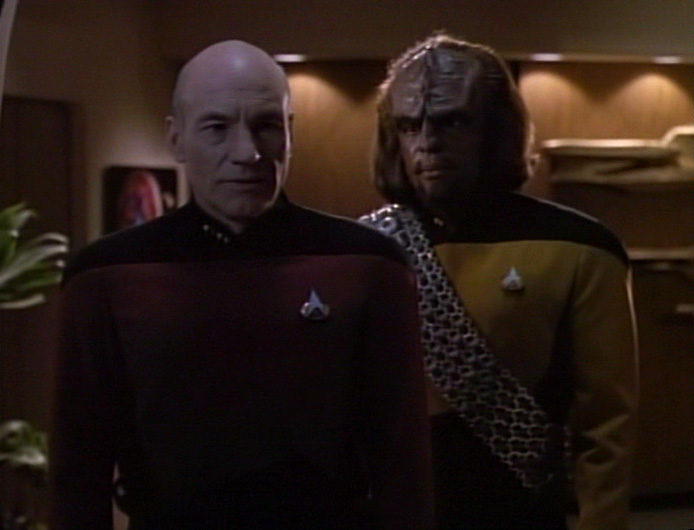
Lieutenant Worf: “Sir, the Federation does have enemies. We must seek them out.”


Captain Jean-Luc Picard: “Oh, yes. That’s how it starts. But the road from legitimate suspicion to rampant paranoia is very much shorter than we think. Something is wrong here, Mister Worf. I don’t like what we have become.”

When Picard objected to the grilling of the crewman, Admiral Satie and her chief assistant began an investigation of Picard.  As she informed him that he was now a subject of the investigation, the normally calm Picard erupted, telling Sati;  “Admiral! What you’re doing here is unethical; it’s immoral. I’ll fight it.” Admiral Sati then laid down the gauntlet, and told Picard, “Do what you must, Captain. And so will I.”

Admiral Satie called on the Director of Starfleet Security, Admiral Henry, to watch her interrogate Picard who she had by now labeled a traitor.

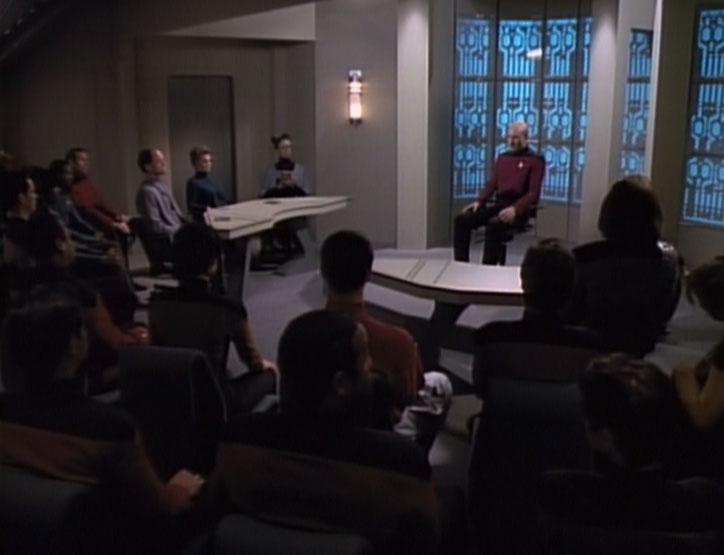
Picard forced to testify at an open hearing where Sati began to attack him. However, the tables are turned during Picard’s testimony. The dialogue is riveting as Sati attempts to use anything that she can to prove Picard a traitor the the Federation.

Admiral Satie: Tell me, Captain, have you completely recovered from your experience with the Borg?
Captain Jean-Luc Picard: Yes, I have completely recovered.
Admiral Satie: It must have been awful for you… actually becoming one of them. Being forced to use your vast knowledge of Starfleet operations to aid the Borg. Just how many of our ships were lost? Thirty-nine? And a loss of life, I believe, measured at nearly 11,000. One wonders how you can sleep at night, having caused so much destruction. I question your actions, Captain; I question your choices, I question your loyalty!
Capt. Picard: You know there are some words I’ve known since I was a schoolboy: “With the first link, the chain is forged. The first speech censured, the first thought forbidden, the first freedom denied, chains us all irrevocably.” Those words were uttered by Judge Aaron Satie, as wisdom and warning. The first time any man’s freedom is trodden on, we’re all damaged. I fear that today…
Admiral Satie: [stands up in anger and interrupts Picard] How dare you! You who consort with Romulans, invoke my father’s name to support your traitorous arguments! It is an offense to everything I hold dear! And to hear those words used to subvert the United Federation of Planets. My father was a great man! His name stands for integrity and principle. You dirty his name when you speak it! He loved the Federation. But you, Captain, corrupt it. You undermine our very way of life. I will expose you for what you are. I’ve brought down bigger men than you, Picard! [Admiral Henry gets up and leaves the room]

With Sati obviously unhinged, Admiral Henry ends the investigation and sends Admiral Satie home.

Of course this is fiction but the mindset and attitude of Admiral Satie seems to have been embraced by some in our government and security agencies, including the TSA and the NSA. But the talk is out there, former Senator and Secretary of Defense William J. Cohen said: “Terrorism is escalating to the point that Americans soon may have to choose between civil liberties and more intrusive means of protection.”

Well the choice has been made and I don’t think that there is any going back despite the posturing of politicians on both sides of the political divide. The fact is that polls show that the majority of Americans are willing to sacrifice freedoms for security.
Sati had become so consumed with “defending liberty” that she was willing to trample the rights of anyone that she suspected of disloyalty to the Federation.  

Sati’s questioning of Picard by is fascinating and thought provoking, because there are people that think and act just her fictional character. People who believe, that they too are defending “freedom.”

Frederick Douglass once said: “Find out just what the people will submit to and you have found out the exact amount of injustice and wrong which will be imposed upon them; and these will continue until they are resisted with either words or blows, or with both. The limits of tyrants are prescribed by the endurance of those whom they oppress.”

The balance has to be found in this effort; right now the pendulum is so far to the security side that it seems freedom is no longer even a concern at least for the vast majority of the population and our political leadership, and not just the Executive Branch, the Congress seems to love making new laws that further limit freedom, local governments have militarized their police forces and the courts don’t seem to mind. Unless we undertake a real debate in the issue it is very likely that it will fade away and the national security state that we have become will grow even stronger with the inevitable loss of even more civil liberties.

One only has to look at what politicians on both sides of the political chasm have said about “protecting the homeland” to realize that this is only the beginning and that if we do not have a spirited public debate that we risk our Constitutional liberties under the 4th Amendment as well as potentially the 1st Amendment. Prosecuting actual wrongdoers is one thing, but prominent legislators on important committees dealing with national security suggest prosecuting reporters for doing their job, something that would be a crushing blow to freedom of speech and freedom of the press. The fact that some suggest this shows how just how close we are to surrendering even more freedom in the name of security.

The last scene of The Drumhead is enlightening. Lieutenant Worf, who had so eagerly embraced the investigation, goes to Picard to let him know that Admiral Satie and Admiral Henry have left the Enterprise. Worf is apologetic about his rather overzealous role in the investigation. He tells Picard about Sati: “after yesterday, people will not be so ready to trust her.” Picard replies “Maybe. But she, or someone like her, will always be with us, waiting for the right climate in which to flourish, spreading fear in the name of righteousness. Vigilance, Mister Worf – that is the price we have to continually pay.”

Eternal vigilance in the face of both terrors from abroad and self imposed tyranny designed to protect us from the terrorists. Yes James Madison, was absolutely right when he said “The means of defense against foreign danger historically have become the instruments of tyranny at home.” However I fear that those that warn of such dangers will themselves be labeled the enemy.

Henry Steele Commager said “Men in authority will always think that criticism of their policies is dangerous. They will always equate their policies with patriotism, and find criticism subversive.” This, my friends is the reality that we live in and the danger that we face.

Peace

Padre Steve+
Leave a comment

Filed under civil rights, ethics, laws and legislation, national security, political commentary

A Song of Souls Changed by War: The Minstrel Boy

corby

Absolution of the Irish Brigade at Gettysburg by Father Corby

Friends of Padre Steve’s World. All the things going on in the world, wars, disasters, plane crashes have all have had me a bit melancholy of late. I wonder about all the tragedy, what is going on in Iraq, where so much of my heart is still invested, the situation in Ukraine and the ongoing, seemingly never ending conflict between the Israelis and Palestinians, and in the midst of it I am reminded that even today thousands of Americans are still in Afghanistan, pretty much forgotten by most Americans.

So today I have re-done a very old article about a song that means much to me; the Irish song The Minstrel Boy. 

The Minstrel Boy (Thomas Moore)

The minstrel boy to the war is gone, In the ranks of death ye will find him; His father’s sword he hath girded on, And his wild harp slung behind him; “Land of Song!” said the warrior bard, “Tho’ all the world betray thee, One sword, at least, thy rights shall guard, One faithful harp shall praise thee!”

The Minstrel fell! But the foeman’s chain Could not bring his proud soul under; The harp he lov’d ne’er spoke again, For he tore its chords asunder; And said “No chains shall sully thee, Thou soul of love and bravery! Thy songs were made for the pure and free They shall never sound in slavery!”

The Minstrel Boy will return we pray When we hear the news we all will cheer it, The minstrel boy will return one day, Torn perhaps in body, not in spirit. Then may he play on his harp in peace, In a world such as heaven intended, For all the bitterness of man must cease, And ev’ry battle must be ended.

(Last verse anonymous Civil War)

In February of 2008 I was in the process of returning home from Iraq spending my last couple of days in country before flying out to Kuwait and then the United States. I was already in a rather melancholy state knowing that the Chaplain incoming higher headquarters had turned off my relief for Al Anbar Province after I had paved the way for him with all of the teams of advisors that I had worked with during my time serving them. My relief a personal friend was diverted to the Army advisors with a different Iraqi Division in the north of the country. I felt that the incoming senior chaplain had betrayed and abandoned the men that I worked so hard to care for. Later I heard that he had disregarded my heavily detailed after action reports and told at least one senior chaplain that he “had heard that I was out there but didn’t know if I had done anything.”

It was at that point that I realized that you could do your job and sacrifice yourself to complete a mission only to have someone with their own agenda do what they could to discredit you.  Where the senior Chaplain that I worked for did all that he could to support my team’s mission and see that we were properly recognized at Multi-National Corps Iraq in Baghdad his successor dismissed our work. It was the first time in my Navy career that I had experienced that.  I think it was the fact that I worked for a non-traditional billet working for an Army led joint command outside the normal Navy-Marine Corps chain was a big part of this. Inter-service rivalries and the distain of those bound by conventional thinking are not new and those that have done such non-conventional work have frequently been treated in a similar manner.

Looking back there are some songs which are particularly meaningful to me after my time in Iraq that send a chill up my spine when I hear them. One of these is the patriotic Irish song The Minstrel Boy written by Thomas Moore while a student in honor of friends killed in the Irish Rebellion of 1798.  The song was very popular among soldiers of Irish descent in the American Civil War as well as soldiers fighting in Irish Regiments in World War One and World War Two.

The song is powerful when you hear it for it speaks of the reality of war, war that changes those, even those that return home are not unchanged by it.  It speaks of the sacrifices required by those that go to war and even the effects on the community, the loss of young people.  The final verse added by an anonymous author during the American Civil War in a sense is a prayer, a prayer of return as well as reconciliation. It has been recorded a number of times including an instrumental during the film Blackhawk Down. Another rendition is in the television mini-series Rough Riders about the 1st U.S. Volunteer Cavalry at the Battle of San Juan Hill.

My life has been changed and faith challenged. When I went to Iraq I still maintained a sense of idealism.   After Iraq and having to deal with PTSD and a psychological, spiritual and physical breakdown as well as a profound sense of abandonment by some senior chaplains, my former church and even God I am a different person. My faith which had been shattered to the point of being a practical agnostic for nearly two years has returned. I don’t regret that and do believe that it is a good thing. If we are not changed by what God allows or by what life brings I don’t think that we grow. As a Priest I wonder if I could work in the environment that I work without having gone through what I did.

minstrel boy TNG

I see many of the “minstrel boys” and girls of our era and having also been to war and come back changed the last lines of the final verse is a prayer that I echo. One of the versions that I particularly like is the one sung in the Star Trek the Next Generation episode “The Wounded.” While it is only the first verse it deals with the lives of two officers whose lives are forever changed by war. http://www.youtube.com/watch?v=RJudJ9S579A

This is dedicated to all those who have served, those still serving in harm’s way and all who have gone through the pain of war, until war shall be no more.

Peace

Padre Steve+
3 Comments

Filed under iraq,afghanistan, Military, music, Tour in Iraq

Distant Origen: The Danger of Doctrinal Certitude While Living in the Uncomfortable Middle

galaxy_universe-normal

“Man no longer lives in the beginning–he has lost the beginning. Now he finds he is in the middle, knowing neither the end nor the beginning, and yet knowing that he is in the middle, coming from the beginning and going towards the end. He sees that his life is determined by these two facets, of which he knows only that he does not know them”  Dietrich Bonhoeffer

There is an episode of Star Trek Voyager called Distant Origin where a scientist of a race in the Delta Quadrant believes that genetic evidence indicated that their race originated on Earth. His thesis is challenged the doctrine of his species and he was accused of “heresy against Doctrine” for positing something different than his people believed. He ends up being persecuted and punished for his beliefs.

Now I want to be diplomatic about this. I am not someone who simply is contrary to established doctrines, be they theological, scientific or even military theories. That being said I think it is only right to question our presuppositions, as Anselm of Canterbury did through faith seeking understanding.

That understanding as a Christian is based on the totality of the message of the Christian faith. Hans Kung said it well:
“Christians are confident that there is a living God and that in the future of this God will also maintain their believing community in life and in truth. Their confidence is based on the promise given with Jesus of Nazareth: he himself is the promise in which God’s fidelity to his people can be read.” 

What we have to admit is that our belief is rooted in our faith, faith which is given to us through the witness of very imperfect people influenced by their own culture, history and traditions. Even scripture does not make the claim to be inerrant, and the Bible cannot be understood like the Koran or other texts which make the claim to be the infallible compendium of faith delivered by an angel or dictated by God himself. It is a Divine-human collaboration so symbolic of the relationship that God has with his people, often confusing and contradictory yet inspiring.

themiddle

There is a certain sense of relationship between God and humanity within scripture and that relationship creates certain tensions between God and those people. The interesting thing is that Scripture is a collection of texts which record often in terrible honesty the lack of perfection of both the writers and their subjects. They likewise record the sometimes unpredictable and seemingly contradictory behavior of God toward humanity in the Old Testament. They bear witness to the weaknesses, limitations and lack of understanding of the people of God of the message of God but even in that those limitations and weaknesses that God is still faithful to humanity in the life death and resurrection of Jesus of Nazareth.

The real fact of the matter is that fixed doctrines are much more comfortable than difficult questions than honestly examining the contradictions that exist within Scripture, history and tradition. The fact is this makes many people uncomfortable and thus the retreat into the fortress of fixed and immutable doctrine found in the various incarnations of Fundamentalism.

The fact is the world is not a safe place, and our best knowledge is always being challenged by new discoveries many of which make people nervous and uncomfortable, especially people who need the safety of certitude. So in reaction the true believers become even more strident and sometimes, in the case of some forms of Islam and Hinduism violent.

Picard

Christianity cannot get away unscathed by such criticism. At various points in our history we have had individuals, churches and Church controlled governments persecute and kill those that have challenged their particular orthodoxy. Since Christian fundamentalists are human they like others have the capacity for violence if they feel threatened, or the cause is “holy” enough. Our history is full of sordid tales of the ignorance of some Christians masquerading as absolute truth and crushing any opposition. It is as Eric Hoffer wrote:

“A doctrine insulates the devout not only against the realities around them but also against their own selves. The fanatical believer is not conscious of his envy, malice, pettiness and dishonesty. There is a wall of words between his consciousness and his real self.”

This is the magnetic attraction of fundamentalism in all of its forms, not just Christian fundamentalism.  Yet for me there is a comfort in knowing that no matter how hard and fast we want to be certain of our doctrines, that God has the last say in the matter in the beginning and the end. We live in the uncomfortable middle but I have hope in the faith that God was in the beginning. Besides as Bonhoeffer well noted “A God who let us prove his existence would be an idol” 

But there some Christians who now faced with the eloquence of men like Neil DeGrasse Tyson and Bill Nye who make legitimate challenges respond in the most uncouth and ignorant manners. The sad thing is that their response reveals more about them and their uncertainty than it does the faith that they boldly proclaim.

Our doctrines, the way we interpret Scripture and the way we understand God are limited by our humanity and the fact that no matter how clever we think we are that our doctrines are expressions of faith. This is because we were not in the beginning as was God and we will not be at the end, at least in this state. We live in the uncomfortable middle, faith is not science, nor is it proof, that is why it is called faith, even in our scriptures.

We are to always seek clarity and understanding but know that it is possible that such understanding and the seeking of truth, be it spiritual, historical, scientific or ethical could well upset our doctrines, but not God himself. As Henri Nouwen wrote: “Theological formation is the gradual and often painful discovery of God’s incomprehensibility. You can be competent in many things, but you cannot be competent in God.” Is that not the point of the various interactions of Jesus with the religious leaders of his day? Men who knew that they knew the truth and even punished people who had been healed by Jesus such as the man born blind in the 9th Chapter of John’s Gospel.

vasily-surikov-christ-healing-the-man-born-blind

“You are that man’s disciple; we are disciples of Moses! We know that God spoke to Moses, but we do not know where this one is from.” The man answered and said to them, “This is what is so amazing, that you do not know where he is from, yet he opened my eyes. We know that God does not listen to sinners, but if one is devout and does his will, he listens to him. It is unheard of that anyone ever opened the eyes of a person born blind. If this man were not from God, he would not be able to do anything.” They answered and said to him, “You were born totally in sin, and are you trying to teach us?” Then they threw him out.”

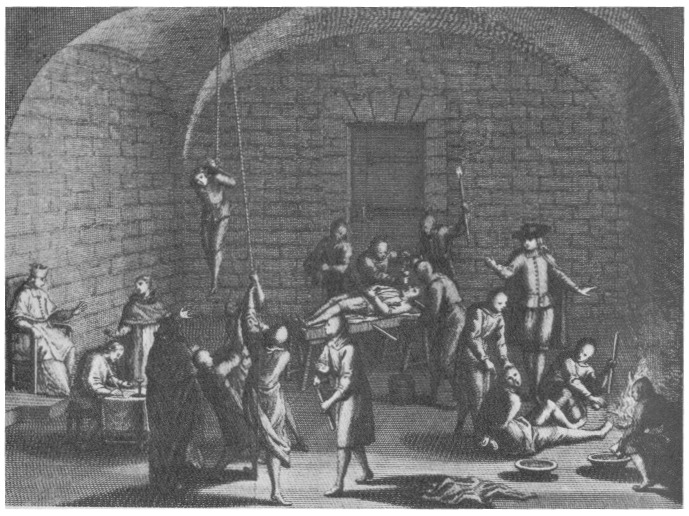
The interchange between the religious leaders and the man is not an indictment on Judaism, but rather on religious certitude in any time or place. The fact is that the Pharisees are no different than those who ran the Inquisition, or those who conducted Witch Trials or those who attempt to crush anyone who questions their immutable doctrine no matter what their religion. They were and are true believers.

In the episode of Star Trek the Next Generation called The Drumhead Captain Picard counsels Lieutenant Worf after their encounter with a special investigator who turned an investigation into a witch hunt on the Enterprise. Picard told Worf, who had initially been taken in by the investigator:

“But she, or someone like her, will always be with us, waiting for the right climate in which to flourish, spreading fear in the name of righteousness. Vigilance, Mister Worf – that is the price we have to continually pay.”

And that is true.

Peace

Padre Steve+

Leave a comment

Filed under faith, philosophy, Religion

Learning to Live with PTSD and Moral Injury through the Lens of Star Trek

CBS_STAR_TREK_TNG_178_thumb_640x360

“So – my brother is a human being after all. This is going to be with you a long time, Jean-Luc. A long time. You have to learn to live with it. You have a simple choice now: live with it below the sea with Louis – or above the clouds with the Enterprise.” Robert Picard to Jean Luc Picard 

http://www.youtube.com/watch?v=SFnxJYLOcus

I am a big fan of the various Star Trek television series for many reasons. Perhaps the biggest reason is how I see the series speak to real issues, including things like PTSD and Moral Injury. That is a wonderful thing about the genre of science fiction, good writers can make a fictionalized future relatable to those that read or watch their creation.  I think this especially valuable because the presentations are realistic, but at the same time because they are science fiction are less threatening.

In Star Trek the Next Generation and Star Trek Deep Space Nine there are a number of episodes that deal with the effects of PTSD, moral injury and combat stress injury.  They include some that deal with Captain Jean Luc Picard, Chief Miles O’Brien, Captain Benjamin Sisko and Ensign Nog. The ones dealing with Picard and Sisko deal with senior leaders, which makes them interesting to me.

The one about O’Brien deals with moral injury in a senior enlisted leader, and the episode about Ensign Nog, the effect of physical and emotional trauma on an idealistic junior officer. Today I am focusing on the senior leader aspect, looking at the experience of Picard after his abduction by the Borg and that of Chief O’Brien when he meets former Cardassian enemies that he fought in a desperate battle at an isolated outpost.

The Wounded

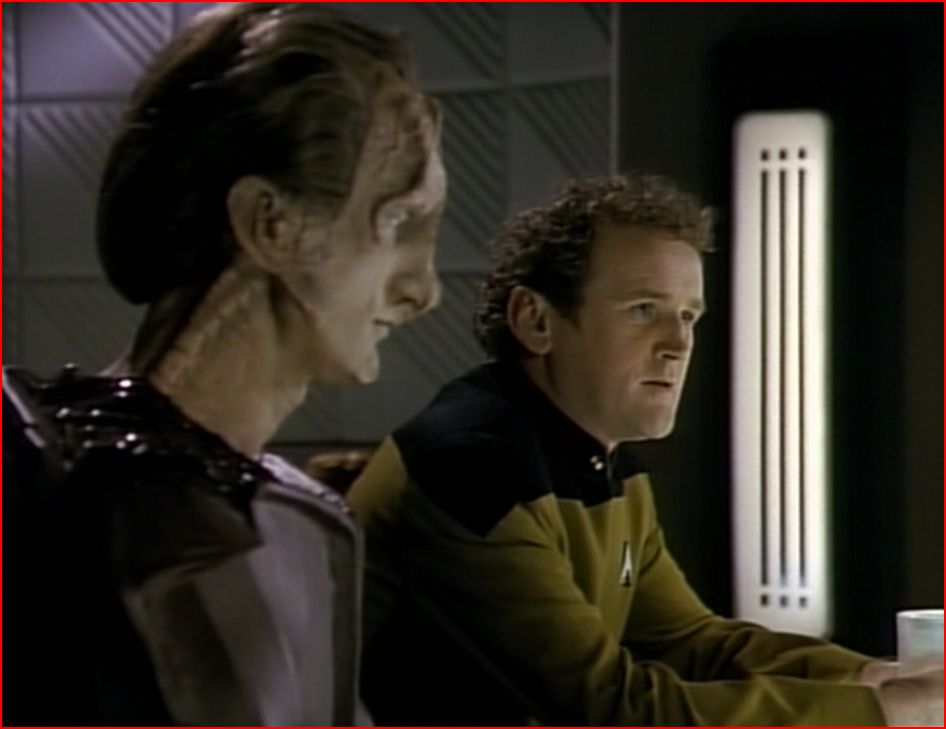
In the episode called The Wounded Chief O’Brien expressed what so many of us know about war, and voices what PTSD and Moral Injury does to us when he says to a Cardassian officer: “It’s not you I hate, Cardassian. I hate what I became, because of you.” It is a sentiment that I have encountered in other veterans, including some that I knew who served in World War II, Korea and Vietnam.

http://www.youtube.com/watch?v=Owyj_5TuHQw 

Senior leaders afflicted with PTSD are among those least likely to seek help for it, even when the effects on them are evident to most.  It is our culture, it is our personality, it is how we do life. Most of us are overachievers who for most of our lives been able to compartmentalize even the worst experiences in order to move ahead in our career and vocation as military leaders.

When we, that is senior leaders experience things that are troubling we seldom have the luxury of dwelling on them. We frequently have to keep things running, take care of our people and move along. So because we are not able to deal with these experiences and the emotions that they engender, we box them up, put them on a shelf and move on. This is important because the mission has to be fulfilled, even if there is a terrible price to be paid later.

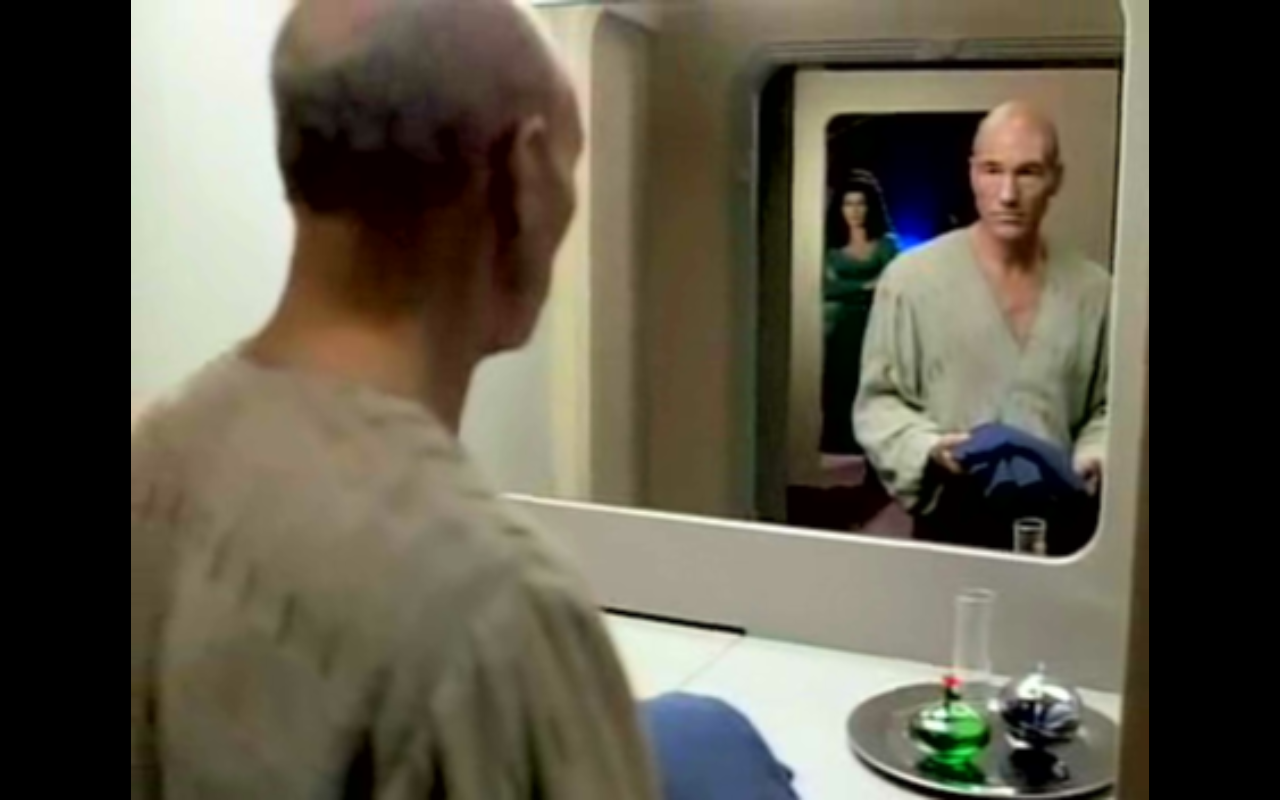
Picard tells counselor Troi before going on leave: “Your help has been invaluable during my recovery, but… look, I’m, uh… I’m better! The injuries are healing.” Of course he is not better, he is simply in denial.

Unfortunately the traumatic experiences that we package and put into storage are often quite toxic. I like to use the term radioactive, it just sounds more sinister. They are corrosive, and like radioactive or other toxic waste quite often breach the containment vessels that we construct in our minds to store them.

Likewise since senior leaders have often spent years, or even decades dealing with trauma the effects are cumulative, it may not be a single incident of trauma, but multiple instances or trauma, and experiences that leave scars on our soul, things that cause us to wonder, and doubt the things that we believe in the most.

I have seen this happen all too often. I know, have known or am personally aware of numerous cases where senior leaders afflicted with PTSD, TBI or Moral Injury continue on, even get promoted to high command and then crash and burn. Sometimes it means the end of their upward mobility, for others the end of their career and for some a condition that eventually destroys them. Unfortunately, most don’t get help because of the stigma associated with it and the fear of what it will do to their career aspirations.

The truth of the matter is that these traumatic injuries remain with us. If we deny them, or try to contain them without dealing with them they are like highly toxic waste that eventually escapes containment. When they do breach containment they create devastation in our lives, careers and of the lives that we care about, our families, and those that we lead.

That help begins with us, we have to admit that we need help and seek it out. We also need colleagues, seniors and subordinates to be honest with us.  But even while getting help we have to decide to go on with life, that is a choice that we must make.

We have to know that even as we get help and even get some relief from the symptoms of PTSD, TBI, Combat Stress Injury or Moral Injury that the memories will remain. Feelings and images of trauma that we think we have gotten through are still lodged deep in our psyche, and sometimes it doesn’t take much for them to return, bigger than life. The memories can be triggered by sights or images, smells, music, or something someone says or does. They can be relived when we experience a new trauma that reminds of us of the past.  That is why trauma experienced even decades before can still be as vivid to soldiers as the day that they were first experienced.

f001

Counselor Deanna Troi told Picard after his encounter with the Borg: “Captain, you do need time. You cannot achieve complete recovery so quickly. And it’s perfectly normal, after what you’ve been through, to spend a great deal of time trying to find yourself again.”

I write in the hopes that all of us who have seen or experienced things in war are able to get the help that we need. But in the words of Robert Picard to his heroic yet traumatized brother; This is going to be with you a long time, Jean-Luc. A long time. You have to learn to live with it. You have a simple choice now: live with it below the sea with Louis – or above the clouds with the Enterprise.” 

Yes, we do have to learn to live with it, but we can. Maybe not easily, but we can, and in doing so still do great things.

Peace

Padre Steve+
2 Comments

Filed under Military, PTSD, star trek

Re-entering Academia

20130906-213735.jpg

Education is the kindling of a flame, not the filling of a vessel. Socrates

I signed in to my new assignment at the Ethics faculty and Command Chaplain at the Joint Forces Staff College today. The JFSC is part of the National Defense University and as such is not a Navy Command. it is a joint command responsible to the joint Chiefs of Staff and the Defense Department. There are faculty members from the Army, Navy, Marine Corps, Air Force, NSA, State Department and other agencies and the student body is composed of US military personnel from all branches, other Federal agencies as well as NATO and other allied nations. To put it succinctly my diverse background seems perfectly tailored for the job.

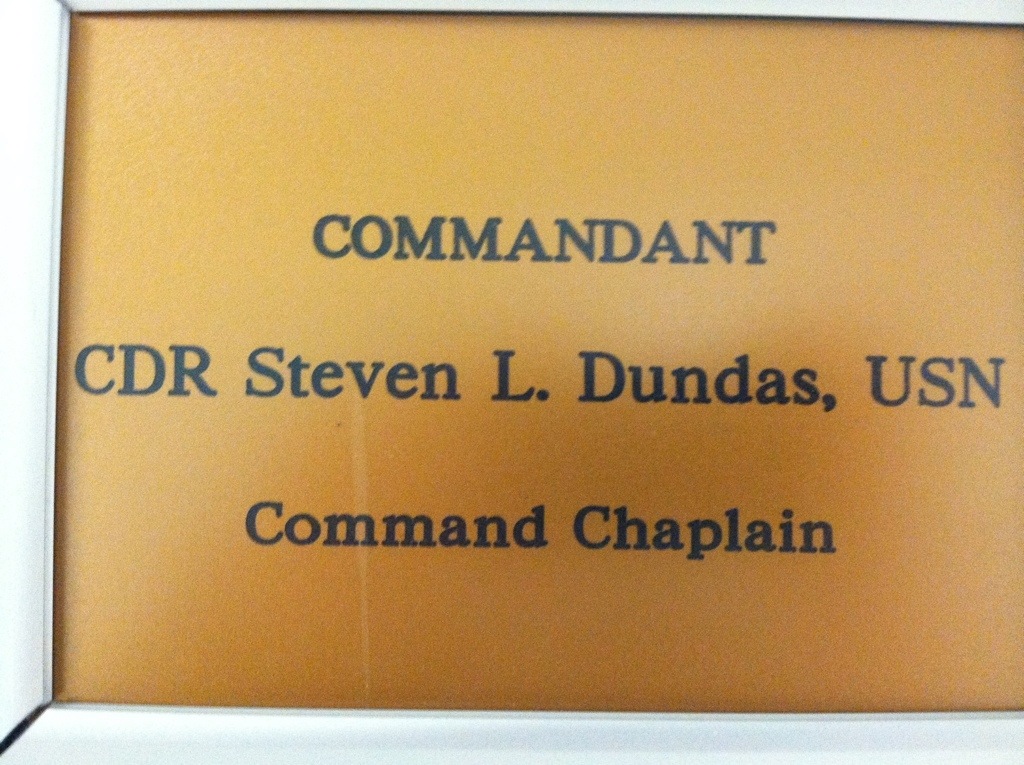
My friend Hal Scott is the outgoing chaplain and has already been a great help during the transition before I reported and today. What was really cool is even the little things were taken care of, right down to the name plate on my office door. Like Denny Crane said in Boston Legalname on the door.” But I digress…

20130906-214943.jpg

It is a good thing to have a friend in the position that you are moving in to. I have had many assignments in the military and had a number of good turnovers as we call them, but when someone who knows you and has your best interests at heart is on deck preparing the way it makes things a lot easier.

I met with the Commandant and Chief of Staff as well as some of the academic deans and professors today. It was really nice. Every single person asked me what “I wanted to do” at the college. Today the door to teaching, learning and deeper academic education was thrown open to me. I was told that I will have the chance to do anything I desire.

Now says my desires are pretty simple. I want to care for the faculty and staff members of the college as well as our students. Many of whom are catching one of our programs between arduous operation assignments and combat deployments. Quite a few I understand suffer from PTSD or some other type of combat stress injury and since they are senior officers many choose not to get help because of the stigma attached to getting it. Hopefully I will be someone who can be an encouragement to those that have not sought help,to get it and to be there for those that suffer in silence.

I also want to teach, not just Ethics, which is incredibly important in our world which appears to have gone mad, but also Military history and theory. Since I have my second Masters Degree in Military History it looks like I will get that chance as well. The doors have been opened.

That being said I do want to continue my own education. I for one do not think that a person should ever stop learning, no matter what their academic field or vocation. Since I lean toward academia it follows that I desire to continue to learn, both in my individual study and in formal education. I am looking at a number of doctoral programs which will,help me do that and help me in the academic world when I eventually retire from the military. Admittedly in that all I want to be is an adjunct professor to keep myself in the game but the additional education will help.

My first 10 weeks will be spent as a student in the Joint Advanced Warfighting School, which focuses on Joint, Multi-National and Inter-Agency operations even as I transition to being the Command Chaplain. I will be in a seminar group composed of a cross section of the student body that i already described. once i complete the course I will be teaching a number of Ethics courses and most likely get to teach other subjects as well. The last time I taught college courses was when I taught Western Civilization for Park University back in 2001.

From what Hal tells me the teaching methods encourage class participation and not doing data dumps of Power Point slides. That is good because I am okay with that and don’t mind chasing a rabbit once in a while if it helps students think more critically, ask hard questions and not be satisfied with easy answers to questions where there either are no easy answers or where multiple answers might be correct. That being said I believe that when we do this we give leaders the chance to do the right thing no matter what kind of situation that they find themselves in be it deployed or supporting combat operations or in garrison.

In this I am reminded of a quote from Star Trek the Next Generation. It is from an episode called “The First Duty.” in it the seasoned Captain Jean Luc Picard confronts his young protege Wesley Crusher after a disastrous accident that leaves a Star Fleet Academy cadet dead. Picard tells the young Crusher that “the first duty of every Starfleet officer is to the truth, whether it’s scientific truth, historical truth or personnel truth… in my book that sums up ethics.

Likewise the pursuit of truth, learning and seeking can never be brushed aside no matter how old we get or who wise that we think that we are. As the late great Hall of Fame Manager of the Baltimore Orioles Earl Weaver put it so well “It’s what you learn after you know it all that counts.”

So on Monday morning I will report to class and also give my first briefing on chaplain services, operational and combat stress issues, suicide prevention and other topics to an incoming class. My own class at that. Since we will have a few German officers in the class I will probably do at least part of my introduction in German. My Arabic or French is not good enough at the present to pull that off in either of those languages, but give me time.

Until tomorrow

Peace

Padre Steve+

20130906-233937.jpg

2 Comments

Filed under ethics, History, leadership, Military

The Inconvenient Truth About Iraq and Benghazi

benghazi_attack_us_politics_2012_09_12

“The first duty of every Starfleet officer is to the truth, whether it’s scientific truth or historical truth or personal truth! It is the guiding principle on which Starfleet is based. And if you can’t find it within yourself to stand up and tell the truth about what happened, you don’t deserve to wear that uniform!” Captain Jean Luc Picard to Wesley Crusher Star Trek the Next Generation “The First Duty” 

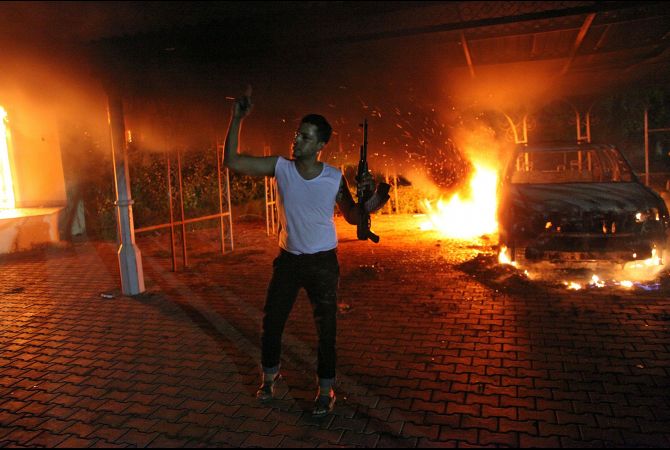
I was talking with a conservative friend the other day and he ended up bring up the subject of Benghazi and the tragic loss of Ambassador Chris Stevens and 3 other State Department personnel at the consulate last September 11th. He was talking about the scandal of this and the political impact that he hoped it would have on Hillary Clinton in 2016.

450_shock_and_awe

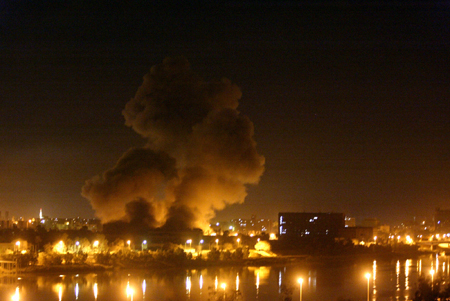
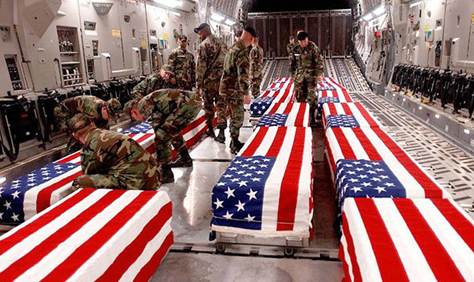
I was actually shocked that he said this so for once I decided to actually say something and mention the 4486 official US military deaths in Iraq. My friend who I really do like and respect commented that they were “the result of what happened in war.”

It stunned me when he said that because he is a military brat, but then I realized that he had bought the lie about Iraq and was so solidly partisan that he could not see the moral, ethical and even legal discrepancy in what he was saying. For me the question was far less about whatever impact it might have on Hillary’s campaign should she decide to run but about the truth.

g-cvr-090217-dover-coffins-3a.grid-6x2

When I confronted him about it I was stunned by how easily he dismissed all of the dead and wounded and other casualties of Iraq but was so insistent on some kind of conspiracy to cover up Benghazi. But this is how so many people think today thanks to the constant bombardment of ignorance on Fox News and other partisan outlets. It is not about the truth, it is about the nastiest kind of politics.

Barracks_bombing_2

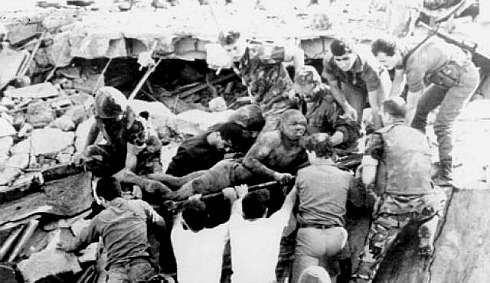
I too am upset about Benghazi, but likewise I am upset about the 241 Marines, Sailors and Soldiers killed at Beirut in October 1983 when the Reagan Administration ignored warnings about putting US troops into Lebanon while taking sizes in that county’s civil war. I am upset about the nearly 3000 killed on 9-11-2001. I am upset about dozens of other terrorist attacks that occurred under both Republican and Democratic administrations in which DOD, the State Department and other agencies made mistakes that cost lives.

Some attacks could have been prevented and others probably not. However they were terrorist attacks committed by our enemies, not an illegal undeclared war of preemptive choice conducted by a United States administration against the will and recommendations of many of our closest allies. That is the inconvenient truth.

What has happened over the past decade is that many on the political right cannot admit that they were wrong about Iraq. This despite the fact that President Bush, Karl Rove and almost every senior member of the the Bush administration have admitted that the reasons that they took us into war with Iraq were wrong. There were no weapons of mass destruction, the nuclear program was a shambles and Iraq was not working with Al Qaida, which like most secular military dictatorships in the Middle East loathed. That is the inconvenient truth.

The fact that so many people on the political right go into a nearly toxic lather about four people lost in Benghazi while shucking off the deaths of nearly 5000 Americans who died in a war that was not only a mistake but violated the very laws that we helped establish at Nuremberg infuriates me. This is no longer about national security to them, it is about politics. This is not about ethics for those that led us into Iraq have none. It is not about justice for if there was justice those who made the decision to attack Iraq would be tried for war crimes.

295_26912097058_4309_n

I served in Iraq and was fortunate that I served with our advisors and the Iraqis in Al Anbar during the time of the Anbar Awakening. I saw a different war than many people observed and for that I am glad because it busted my illusions about what we did in Iraq forever. I needed that. I may have come back thoroughly goofed up with PTSD and at times I am sure certifiably crazy, but I needed it to see the truth.

The fact is that unlike Benghazi the war in Iraq has crippled this country. Nearly 5000 dead, 30,000 wounded and trillions of dollars of national treasure dumped into the abyss. Hundreds of thousands of Iraqis were killed, wounded or driven into exile, many who greeted us as liberators.  Of course that was before the Bush Administration put the kleptocrats of the Chalabi group rape and pillage the country.

Likewise it was after the Coalition Provisional Authority under Paul Bremer, a man who had never in his career served in the Middle East threw out ever carefully orchestrated plan of DOD and CENTCOM for a peaceful transition in the country thus bringing misery to Iraq and triggering the anti US-Coalition insurgency and Iraqi Civil War. The great military theorist Carl Von Clausewitz said: “No one starts a war–or rather, no one in his senses ought to do so–without first being clear in his mind what he intends to achieve by that war and how he intends to conduct it.” The fact is that the Bush Administration was not only not clear, but they were inept and lawless in invading Iraq.

Additionally the invasion cost the United States the goodwill and trust of many allies and friends. No one will ever see us in the same light again. Instead of being a liberating power and “light to the nations” we are seen in much of the world as a rogue, lawless and imperialist state. Otto Von Bismarck put it so well when he said “preventive war is like committing suicide out of fear of death.”

I don’t know about you but I am sure that is not the vision of our founders. I was told on my first day in the Army back in 1981 that “there are attaboys and aww shits and it takes 2000 attaboys to make up for one aww shit.” The Bush Administration’s lawless invasion of Iraq and incredibly inept occupation was a disaster for the United States, Iraq and most of the region, except maybe for Al Qaida and Iran. By the way let us not forget the crippling effects of the Iraq invasion on the campaign in Afghanistan which allowed both the Taliban and Al Qaida time to regroup, consolidate and regain the advantage in that God forsaken land.To the 4486 we can add a couple of thousand more deaths in Afghanistan thanks to the decision to invade Iraq. That is the inconvenient truth.

For people to ignore a war that defies American and International Law as well as common sense which cost us and the world so much while making cheap political points by exploiting the deaths of four men is a disgrace. Had the men who started the invasion of Iraq been tried for by Justice Robert Jackson at Nuremberg they would have been convicted as war criminals and sent to the gallows. That is the inconvenient truth.

Justice Jackson said at those trials:

“If certain acts of violation of treaties are crimes, they are crimes whether the United States does them or whether Germany does them, and we are not prepared to lay down a rule of criminal conduct against others which we would not be willing to have invoked against us.” Justice Robert Jackson International Conference on Military Trials, London, 1945, Dept. of State Pub.No. 3080 (1949), p.330.

My closing thought is that those that want to make political hay out of Benghazi need to take a serious look at Iraq. What’s fair is fair. 4486 dead and over 30,000 wounded not counting another 100,000 or so with PTSD or TBI versus 4 dead and no wounded. I don’t make light of any of the deaths of Americans serving this country at any time or in any place.  I would not dishonor their memory by playing politics with their deaths. But the truth is indeed terribly inconvenient and those who do this must be called out regardless of their political orientation.

If there were mistakes or cover ups by Obama administration officials regarding Benghazi, so be it let them be investigated fairly an impartially not with an eye to political advantage and those that partake of this cup must be willing to drink of the cup of crimes committed by the Bush Administration in Iraq. The same is true when Democrats do the same to Republicans.

Truth matters too much to be sacrificed on the altar of politics even while those doing it ignore far greater crimes of far more epic dimensions committed by members of their political party.

Truth is terribly inconvenient and even when painful should never be sacrificed on the altar of political advantage by partisans of any party.

Peace

Padre Steve+

3 Comments

Filed under ethics, History, iraq,afghanistan, middle east, Military, national security

Letter to a New Military Chaplain: Part Two The Minefields of the Heart

295_27076892058_2637_n-1

This is second part of a response to a question I had from a new Navy Chaplain. I have decided to post it here without any identification of the chaplain because I know that many men and women who are new to the military chaplaincy or who are exploring the possibilities of becoming a chaplain have the same questions. I was fortunate to have had a number of chaplains who at various points in my decision process and formation as a minister, Priest and Chaplain in both the Army and the Navy help me with many of these questions. Likewise I learned far too much the hard way and blew myself up on some of the “land mines” that almost all who serve as chaplains experience in their careers. This is the second of several parts to the letter and is my attempt to systematically explain my understanding of what it is to be a Chaplain serving in the military and in particularly the Navy. The first part is linked here:

Letter to a New Military Chaplain: Part One

“There is a twilight zone in our hearts that we ourselves cannot see. Even when we know quite a lot about ourselves-our gifts and weaknesses, our ambitions and aspirations, our motives and our drives-large parts of ourselves remain in the shadow of consciousness. This is a very good thing. We will always remain partially hidden to ourselves. Other people, especially those who love us, can often see our twilight zones better than we ourselves can. The way we are seen and understood by others is different from the way we see and understand ourselves. We will never fully know the significance of our presence in the lives of our friends. That’s a grace, a grace that calls us not only to humility, but to a deep trust in those who love us. It is the twilight zones of our hearts where true friendships are born.”Henri J. M. Nouwen

Dear Chaplain

The next section of our discussion is about the “minefields” that we so often encounter as Chaplains and to some degree as Ministers, Priests or Rabbis or other religious leaders. As I noted in the first section I am dividing these “minefields” into three major areas; the personal, the behavioral and the professional.

This section is about the “personal” minefields which I call the “Minefields of the Heart.” I call it this because it seems from the Christian and Jewish Scriptures the heart is the figurative locus of what we are, good and bad alike as human beings.

Of course there is always some spillage between the areas personal, behavior and professional areas and our behaviors and professional relationships are certainly influenced by the things that we hide deep in our hearts. As human beings we may try to compartmentalize our life to keep things apart such as keeping our personal life separate from our professional life, or hide behaviors from our friends, families, peers or co-workers; but the cold hard fact is whether we are aware of it or not each area impacts the other. If we are not aware of this fact, if we have little self awareness, if we have self awareness but try to live our lives with the illusion that we can separate our lives into neat little boxes we will most undoubtedly hurt ourselves, and as spiritual leaders harm those that come to us.

q_who

There is a scene of the last episode of Star Trek the Next Generation entitled “All Good Things” that comes to mind.  In it the being known simply as “Q” helps Captain Picard discover how his actions influence human history.

Q: You just don’t get it, do you, Jean-Luc? The trial never ends. We wanted to see if you had the ability to expand your mind and your horizons. And for one brief moment, you did.

Capt. Picard: When I realized the paradox.

Q: Exactly. For that one fraction of a second, you were open to options you had never considered. That is the exploration that awaits you. Not mapping stars and studying nebulae, but charting the unknown possibilities of existence.

You may wonder where I am going with this but it has to do with the personal minefields, those that exist inside of us, those that lurk beneath the surface which if we are unaware wreak havoc on everything else that we do. In the episode of Star Trek that I am referring to Captain Picard is allowed by Q to see the effects of his actions and to see how limited his thinking was.  The challenge for us is chaplains are to be aware of what Nouwen calls “the twilight zone in our hearts” and how what is at the depth of our heart impacts everything else that we do.

Too often though, mostly because of our own personal limitations and serious lack of real theological and pastoral formation involving self reflection and exploration we fail to see them. Like an uncharted minefield we are unaware of them until we either discover their existence through accident and “blow ourselves and others up” or until we listen to those that can see those twilight zones, those minefields better than we ourselves. Of course the latter, especially when it comes from those who love us, care for us and have our best at heart is the preferable method to learn about these things.

943043_10151694525692059_632653331_n

However, that being said part of this can be done through reading. A lot of us simply read “how to” type books when it comes to ministry. We seek direct easy answers in how to run our programs be it in the church, in a para-church ministry or in the chaplaincy. Believe me there are plenty of those kinds of books out there, not only that but a plethora of “self help” books that tell us the “three things we must know” the “five whatever’s to success” or the Seven Habits of Highly Defective People.” The sad thing is, even when these books contain nuggets of truth, they serve it like fast food and reduce it to the lowest common denominator. In a sense, even the most well intentioned of these “how to” or “self help” books promote a reductionist view of faith, spirituality, psychology and in some cases ethics and doctrine.

Reading is important, especially the hard stuff, philosophy, history, moral theology, but also things that you might not expect science fiction for example. In addition classic literature from antiquity and from non-western traditions also sheds light on those personal minefields. Heck we can even find truth in television and film, note my continued references to Star Trek. I find that God can speak to us in many ways.

As Christians we may also find lessons, insights and inspiration from the Bible that can be quite helpful. Unfortunately most of us have so many theological filters in place that we often miss the very things that would be most helpful to us. They can serve as blinders that keep us from sensing what the Spirit of God is trying to teach us. Our church, denominational or theological traditions as well as our hermeneutical methods often cloud our minds to what God is trying so hard to say. It was a problem that the religious establishment of his time had with Jesus, and often with the various prophets that preceded him whose stories we read about in the Old Testament.

1905_50393137058_7454_n

I am sure that others who are not Christians can say similar things about their faith, traditions and holy books. I remember an Iraqi General who I met who took the time to show me his well worn and read Arabic-English Bible. He was a Moslem, but he said that he learned so much from it because it was different than what was in the Koran and he meant no disrespect of his own faith by saying that. He had opened his mind to truth that others turn a blind eye to.

Some of the personal issues that prove to be deadly include what we don’t know about ourselves, usually dating back to childhood, how were raised, how we see God, if we perceive ourselves to be worthy of God’s love or worthy of the love and respect of others.  Those attitudes, especially those created as a result of negative relationships or even physical, emotional or sexual abuse, abandonment and rejection are powerful. Many of us like to pretend that we have gotten past those things but few of us actually do. Unfortunately there is a tendency for those issues to raise their heads in often very ugly ways as we minister as Chaplains.

For example: Let us say that we are distrustful of authority because of having an abuse parent, that we fear that no matter how well we do that there is always someone waiting to take us down. Let us say that we had previous experiences in the church, at work or maybe in prior military service where we were mistreated by those in authority.

I have found that if that condition is not dealt with that in a hierarchical organization such as the Chaplain Corps and the military that it is almost always fatal to the ability of the chaplain to minister in the organization. That is because the military is based on trust, our lives and mission depend on it. We have to trust the chain of command, we have to trust those that serve alongside of us and we have to trust our subordinates. There may be times when the chain of command fails and things don’t go right. There are toxic leaders and there are also toxic chaplains, one has to be aware that they are out there, know how to deal with them or survive under their command but one cannot presume that everyone is like that, trust is essential.

father

I find it interesting that Jesus commended the faith of the Roman Centurion when instead of asking Jesus to come to his house and heal his servant simply said “But just say the word, and my servant will be healed. For I myself am a man under authority, with soldiers under me. I tell this one, ‘Go,’ and he goes; and that one, ‘Come,’ and he comes. I say to my servant, ‘Do this,’ and he does it.”Matthew 8: 8b-9 Jesus told the people around that “he had not seen such faith in all of Israel.” Jesus saw the virtue of the Centurion, a virtue that many of his own people were lacking.

That is just one of a myriad of personal issues that can trip up a Chaplain in the military. The fact is that issues of the heart those things that we don’t like to admit are true about us, things that we are unaware about or in outright denial about in our lives are the things that go to the “heart” of who we are.

As fa as the minefields of my heart, they too are many. However the one that gets me time and time again is my passion for justice and my visceral reaction to those that I believe are bullies. That comes from my childhood. As a Navy brat I was always the new kid in town, and being that I was kind of the short, shy and introverted kid I was also kind of a nerd, or geek. I was not gifted with speed or great athletic abilities and it took me a while to find my academic prowess. That meant that I often didn’t fit in and though I was generally well liked that I would on occasion be bullied and I learned to defend myself, not very well at times but well enough to as the Klingons say “to die an honorable death.”

Jeremiah the prophet, who admittedly was most certainly clinically depressed if you look at his writings did note that “The heart is deceitful above all things and beyond cure. Who can understand it?” Jeremiah 17:9 Depressed or not Jeremiah did seem to understand that what he and many writers of scripture call “the heart” is hard to understand, especially when it is our own.

Thus I go back to Nouwen’s comment about the “twilight zone of the heart” that we cannot see. That it is why as Chaplains we have to develop relationships with people who can help us see what is in the twilight zone of our hearts and lovingly come alongside of us, not just as colleagues but as friends.

Those people may be clergy or other chaplains, but then they may not be. Perhaps they are senior enlisted personnel, long time friends, teachers, spiritual directors, counselors or our God forbid our spouses, I jest about the latter because my wife can see things about things about me that I cannot see, she is incredibly wise.

The minefields that exist in our hearts are so varied, so diverse and so treacherous. They have the potential to affect so many other parts of our lives. Thus for us as chaplains if we are not careful they can be destructive not only to us, but to those that we serve as well as those that we presume to love.

295_26912097058_4309_n

When I look back at my career and I am honest about it, I can say without a doubt that most of the things that hurt me were a direct reflection of the minefields that were already present in my heart. When things that happened that I felt were unjust or threatening I reacted and quite often my reactions caused problems greater than what I was reacting to. All they needed was something to set them off. What I have come to understand is even though I have had a very successful and that I am now a Senior Officer that what lies in my heart can still blow me up and that I need to always be careful of those minefields that exist in the twilight zone of my heart.

Lao Tzu said: “Watch your thoughts; they become words. Watch your words; they become actions. Watch your actions; they become habit. Watch your habits; they become character. Watch your character; it becomes your destiny.”

That is the key, those things that emanate from the deepest recesses of our hearts are full of minefields and we need to guard our hearts and minds in this ministry that we are privileged to have as military chaplains.

Peace

Padre Steve+

 

4 Comments

Filed under christian life, faith, Military, ministry, Pastoral Care, philosophy, Tour in Iraq, US Navy

Muddling Through PTSD Recovery: A Chaplain’s Story of Return from War

400236_10151328400862059_541742014_n

“Captain, you do need time. You cannot achieve complete recovery so quickly. And it’s perfectly normal after what you’ve been through, to spend a great deal of time trying to find yourself again” Counselor Troi to Captain Picard in Star Trek the Next Generation after his encounter with the Borg.

Coming home from war can be harder than going. At least it was for me. I have always been a hard charger. When I was at war in Iraq I was at the top of my game but when I came back I was broken. I experienced things there that changed me forever and it has taken a long time to find myself again.

I came home with chronic, severe PTSD, anxiety and depression. I suffer severe Tinnitus and pathetic speech comprehension. The ringing in my ears is non-stop and in any kind of group setting or conference I struggle to understand what is going on even though my hearing loss measured in decibels is minimal. The loss is neurological and when tested I measured in the third percentile of people, meaning that 97% of people understand speech better than me.

I still suffer from chronic insomnia, vivid nightmares and night terrors. I still struggle with agoraphobia, hyper-vigilance and occasional road rage. Thankfully none of them are as bad as they used to be but they are ever present. I have had my ups and downs with prescription medications that were used by my doctors to manage my PTSD symptoms and sleep disorders.  For a while drank too much just to help me make it through the nights. I am told that this is common for many who return from war.

When I came home I felt abandoned, especially by church leaders and many chaplains, many who I had thought were my friends. That is understandable as I was radioactive.  My faith had collapsed and for two years I was an agnostic desperately hoping to find God. As such I have a certain bond with those that struggle with God or even those that do not believe. This makes a lot of religious people uncomfortable, especially ministers. I think the reason for this is that is scares the hell out of people to think that they too might have a crisis of faith because they too have doubts. 

The first person who asked me about how I was doing spiritually was not anyone from my church or a chaplain, but rather my first shrink, Elmer Maggard. When faith returned around Christmas 2009 it was different and so was I. I tried to express it and began to write about it. For my openness I got in trouble with my old denomination and asked to leave because I was “too liberal.” Thankfully a bishop from the Episcopal Church who knew me recommend that I seek out Bishop Diana Dale of the Apostolic Catholic Orthodox Church. Thanks to that I have a loving new denomination and since we do not have a local parish of the ACOC I have found  St James Episcopal Church in Portsmouth Virginia as a place of refuge. It is the historically African American parish in the area and I love the people there. They helped me when I was in my deepest times of struggle. 

6095_128718107058_2713239_n-1

My struggle was really hard on my wife Judy. Before I deployed I was the strong one. Afterward my contribution to our marriage was minimal and I was often a complete ass. I was in survival mode and and barely making it. I couldn’t reach out to her, I was collapsing on myself and she felt it as rejection. Our marriage suffered terribly and both of us thought that it might not survive. But over the past 18 months or so it has been getting better. I can share with her again and she has become a source of added strength. We enjoy being together again and we recently celebrated our 30th anniversary with many of the friends who helped us make it through the hard times. 

In time I gathered a support network. There are some Chaplains that I can be absolutely honest with, as well as my Command Master Chief, Ed Moreno. Likewise I have friends outside the military, including people I have known for years who still, despite all my flaws care for me. I have found other places of refuge where I have relationships with people, one is Harbor Park, home of the Norfolk Tides Baseball team, another was Grainger Stadium, former home of the Kinston Indians. I have a couple of places as well that are like my real life version of the TV show Cheers

Baseball brings me a great deal of peace, especially when I can go to the ballpark. When I was in dire straits the management of the Tides allowed me to go wander Harbor Park during the off season, just to take it in.  Running on the beach is something that I have come to cherish here in North Carolina, I will miss the easy access that I have here when I return home to Virginia in two weeks. 

Writing on my blog has been good therapy. As an introvert I process information by taking things in. Being constantly around people wears me out. I am good at what I do but it takes a great deal of effort to do it. 

941704_10151661130572059_1706100059_n

My unflappable little dog Molly has been a life saver, she insisted on coming to stay with me about halfway through my tour. She helped me recover my humanity and her presence gave me something outside of me to care for and because of that I ended up seeking out people again instead of holing up in my apartment.

My spiritual life still has its ups and downs and I discovered that I am far from perfect, and I hate that sometimes. However, that being said I do feel more connected with God, people and at peace despite my ongoing struggles.

images-53

Picard breaking down

It has not been an easy road, but it has been worth it. I find it interesting that the Star Trek the Next Generation, Deep Space Nine and Voyager series help me process many of my feelings, thoughts and emotions. I quoted part of a Next Generation episode at the beginning of this article, one where Captain Picard is recovering from the trauma of being abducted by the Borg. I find the episode compelling on many levels. Part of that episode deals with Picard trying to figure out his life again. After a tumultuous visit with his family he and his older brother engage in a fight, during which he breaks down. Picard’s brother realizing the importance of what was happening said to him “So – my brother is a human being after all. This is going to be with you a long time, Jean-Luc. A long time. You have to learn to live with it…”

Peace

Padre Steve+
3 Comments

Filed under faith, iraq,afghanistan, Military, PTSD, Tour in Iraq

The NSA Leaks, Star Trek the Next Generation and the War on Terror: Revisiting the Drumhead

thedrumhead117

“But she, or someone like her, will always be with us, waiting for the right climate in which to flourish, spreading fear in the name of righteousness. Vigilance, Mister Worf – that is the price we have to continually pay.” Captain Lean Luc Picard to LT Worf in “The Drumhead” 

Back in 1991 when I was still in seminary I spent every Saturday evening glued to my television set to watch Star Trek the Next Generation.  Even today I enjoy watching the human drama that Gene Roddenberry and his cohorts created on the small screen.  Of all the Star Trek series my favorites are TNG and Deep Space Nine. Those series often touched on very pertinent social, political, medical, and technological and dare I say national security issues. In fact I have used some Deep Space Nine episodes in my previous posts about the NSA leak situation and the War on Terrorism.

One of the most chilling episodes regarding national security and potential terrorism or sabotage is called “The Drumhead.” In light of the current charges and counter charges around the NSA leaks, Edward Snowden, the Boston Marathon bombing and the overt politicization of the terrorist attack on the US Consulate in Benghazi Libya it is an episode that remains especially pertinent.

StarTrekTNGDrumhead4

The episode is about an investigation that takes place on the Enterprise following an explosion in its engineering spaces.  Suspicion centers on a Klingon exchange officer but the investigator, the retired Starfleet Judge Advocate General a woman named Nora Satie and her Betazed assistant soon casts a wide net which eventually brings charges against a crew member and eventually Captain Picard.

At first Admiral Satie’s investigation seems reasonable. After all the Federation was in danger and there was a possibility that Flagship of Starfleet was sabotaged and there was the possibility that the Klingons or others might be involved.  Thus as she began her investigation she was welcomed by the Captain as well as the Security Chief, Lieutenant Worf, the only Klingon serving as a Starfleet officer.  Satie investigation which is assisted by Enterprise officers find out how the Klingon scientist smuggled classified information off the Enterprise.

Lieutenant Commander LeForge determines in his investigation that the explosion thought to be “sabotage” was caused by a flaw in a recently replaced dilithium chamber.  Although convinced that the Klingon is not the saboteur Satie is convinced that another saboteur is aboard the Enterprise.  Satie and her assistant uncover a piece of information that a crewman lied about his family background on his enlistment contract. They then use it to attempt to connect the crewman to to the Klingon spy by supplying false information about the explosion in an attempt to get the crewman to admit guilt.

tumblr_lqyov5mIxW1qdkbzto1_500

As the investigation widens Picard discusses it with Lieutenant Worf. I find this dialogue to be quite relevant to today in the twelfth year of the War on Terror and the passage of the Patriot Act.

Lieutenant Worf: “Sir, the Federation does have enemies. We must seek them out.”
Captain Jean-Luc Picard: “Oh, yes. That’s how it starts. But the road from legitimate suspicion to rampant paranoia is very much shorter than we think. Something is wrong here, Mister Worf. I don’t like what we have become.” 

When Picard objects to the grilling of the crewman, Admiral Satie and her chief assistant begin an investigation of Picard.  He confronts the admiral saying:  “Admiral! What you’re doing here is unethical; it’s immoral. I’ll fight it.” And the Admiral replies “Do what you must, Captain. And so will I.”

Picard_in_interrogation_room

This brings about the final confrontation where Admiral Satie calls a Senior Admiral from Starfleet to watch her interrogate Picard who she has labeled a traitor. The investigation ends with her interrogating him and in the process revealing that she has become so consumed with “defending liberty” that she is willing to trample the rights of anyone that she suspects of disloyalty to the Federation.  The questioning of Picard by the Admiral is fascinating and thought provoking because there are people that think and act just like the Admiral, believing like her that they are defending the United States or in her case the Federation.

Admiral Satie: Tell me, Captain, have you completely recovered from your experience with the Borg?

Captain Jean-Luc Picard: Yes, I have completely recovered.

Admiral Satie: It must have been awful for you… actually becoming one of them. Being forced to use your vast knowledge of Starfleet operations to aid the Borg. Just how many of our ships were lost? Thirty-nine? And a loss of life, I believe, measured at nearly 11,000. One wonders how you can sleep at night, having caused so much destruction. I question your actions, Captain; I question your choices, I question your loyalty! 

Capt. Picard: You know there are some words I’ve known since I was a schoolboy: “With the first link, the chain is forged. The first speech censured, the first thought forbidden, the first freedom denied, chains us all irrevocably.” Those words were uttered by Judge Aaron Satie, as wisdom and warning. The first time any man’s freedom is trodden on, we’re all damaged. I fear that today…

Admiral Satie: [stands up in anger and interrupts Picard] How dare you! You who consort with Romulans, invoke my father’s name to support your traitorous arguments! It is an offense to everything I hold dear! And to hear those words used to subvert the United Federation of Planets. My father was a great man! His name stands for integrity and principle. You dirty his name when you speak it! He loved the Federation. But you, Captain, corrupt it. You undermine our very way of life. I will expose you for what you are. I’ve brought down bigger men than you, Picard! [Admiral Henry gets up and leaves the room]

Admiral Henry ends the investigation then and there and sends Admiral Satie home.  Of course this is fiction but the mindset and attitude of Admiral Satie seems to have been embraced by some in our government and security agencies, including the TSA and the NSA. But the talk is out there, former Senator and Secretary of Defense William J. Cohen said: “Terrorism is escalating to the point that Americans soon may have to choose between civil liberties and more intrusive means of protection.” Well the choice has been made and I don’t think that there is any going back despite the posturing of politicians on both sides of the political divide. The fact is that polls show that the majority of Americans are willing to sacrifice freedoms for security.

Frederick Douglass once said:Find out just what the people will submit to and you have found out the exact amount of injustice and wrong which will be imposed upon them; and these will continue until they are resisted with either words or blows, or with both. The limits of tyrants are prescribed by the endurance of those whom they oppress.” 

I contend that we must fight this war but in the process not lose who we are as a people and surrender the ideals, principles and freedoms that made us the envy of people everywhere.  While Edward Snowden may have acted illegally and for all we know may now be attempting to work some kind of deal with the Communist Chinese to keep himself out of the United States justice system. Since what he revealed to Glenn Greenwald actually is a matter that needs serious debate by Congress, the administration and the body politic I think it would be better for him and the country if he came back and stood trial rather than hiding out in a country that repeatedly attacks us with cyber warfare. I think that Snowden damages his credibility by fleeing and in the process will derail the debate that is needed on how we balance legitimate security concerns without destroying our political system and hard won freedoms in the process.

The balance has to be found in this effort; right now the pendulum is so far to the security side that it seems freedom is no longer even a concern at least for the vast majority of the population and our political leadership. The current situation has raised the issue but unless we undertake a real debate in the issue it is very likely that it will fade away and the national security state that we have become will grow even stronger with the inevitable loss of even more civil liberties.

One only has to look at what politicians on both sides of the political chasm have said about “protecting the homeland” to realize that this is only the beginning and that if we do not have a spirited public debate that we risk our Constitutional liberties under the 4th Amendment as well as potentially the 1st Amendment.

The latter is a real possibility not in the matter of Snowden, but Greenwald and other reporters who did their job reporting the story. Republican Representative Peter King has urged that charges be brought against the reporters. Prosecuting Snowden is one thing, should we be able to get him back because he did break the law, even if one agrees with his reasoning for doing so. However prosecuting reporters for doing their job is something that would be chilling. I cannot see that happening, but the fact that a prominent legislator on important committees dealing with national security would suggest it shows how close we are to surrendering even more freedom in the name of security.

The-Drumhead-episode-Picard-Worf-observation-lounge

The last lines of “The Drumhead” are interesting. Lieutenant Worf comes to Picard to let him know that Admiral Satie and Admiral Henry have left the Enterprise. Worf is apologetic about his rather overzealous role in the investigation and realizing the danger says: “after yesterday, people will not be so ready to trust her.” To which Picard replies Maybe. But she, or someone like her, will always be with us, waiting for the right climate in which to flourish, spreading fear in the name of righteousness. Vigilance, Mister Worf – that is the price we have to continually pay.” 

Eternal vigilance in the face of both terrors from abroad and self imposed tyranny designed to protect us from the terrorists. Yes James Madison, God bless him was absolutely right when he said The means of defense against foreign danger historically have become the instruments of tyranny at home.” However I fear that those that warn of such dangers will themselves be labeled the enemy.

Henry Steele Commager said Men in authority will always think that criticism of their policies is dangerous. They will always equate their policies with patriotism, and find criticism subversive.” This, my friends is the reality that we live in and the danger that we face.

Peace

Padre Steve+

Leave a comment

Filed under laws and legislation, national security, News and current events, star trek