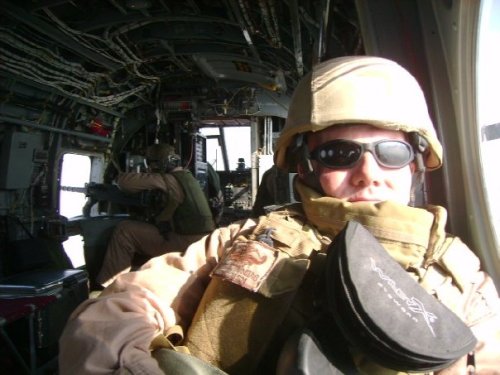
Tag Archives: t e lawrence

Wondering

400236_10151328400862059_541742014_n

‘You wonder what I am doing’? Well, so do I, in truth. Days seem to dawn, suns to shine, evenings to follow, and then I sleep. What I have done, what I am doing, what I am going to do, puzzle me and bewilder me. Have you ever been a leaf and fallen from your tree in autumn and been really puzzled about it? That’s the feeling.” T. E. Lawrence Letter to Eric Kennington 6 May 1935

I always am a bit morose and introspective when I transfer from one duty assignment to another. Since I have done this many times in the course of my 32 year career in the Army and the Navy it is something that I have come to expect. Since my return from Iraq this condition has become more pronounced and my thoughts much deeper and often darker.

Like T. E. Lawrence I wonder what I have done, what I am doing and what I am going to do as day folds into night and each new dawn breaks forth. So many things trigger thoughts that make me wonder.

In a week the I will be done with my current assignment and on to a new one as the Ethics faculty at the Joint Forces Staff College. I believe that I may also get to teach some military history and theory too. That excites me. It is the first assignment that I have really looked forward to since I found out I was going to Iraq. It will be a place where I will be able to do what I do best.

My current assignment at Naval Hospital Camp LeJeune has been good for me in some ways and frustrating in others. But that being said it is part of the tapestry that makes the current me who I am. It is part of my past, still a part of my present and I will carry the experiences, relationships and memories into my future.

But that is normal I think, as William Shakespeare wrote “What’s past is prologue.”

Peace

Padre Steve+

1 Comment

Filed under Loose thoughts and musings, Military, philosophy

Kindred Spirits

400236_10151328400862059_541742014_n

“All men dream: but not equally. Those who dream by night in the dusty recesses of their minds wake in the day to find that it was vanity: but the dreamers of the day are the dangerous men, for they may act their dreams with open eyes, to make it possible. This I did.” T. E. Lawrence

52086880-e1359135444105-620x412

I am an introvert, an academic and a circuitous thinker versus a linear thinker. I am also a dreamer, thinking about possibilities, alternate realities and going beyond the possible. I often discover answers to situations that I face in unrelated subjects. Usually something else that I have read, studied, watched or heard often from history, literature, film, music and sports, especially baseball. I tend to be an outside of the box thinker and I am sure that some that know me consider me quirky or sometimes even off the reservation. I like to ask, ponder and muse about hard questions, sometimes playing Devil’s Advocate.

Frankly I am okay with that.

I love writing and writing has become an extension of me as much as it has been part of my recovery, spirituality and psychological health. In a sense writing has been part of my post Iraq redemption.

I like dealing with people individually and find that I can be as at ease with the a person of most humble means with no power or influence as I can with those of great power, means and influence.

I feel most comfortable teaching and prefer, even as a Naval officer to avoid the limelight. When I was younger that was not the case. I sought promotion and remember hoping to be a Army Colonel or maybe even a General. When I gave up my rank as a Major in the Army Reserve to enter active duty in the Navy in 1999 it was as if that burden was removed. While I have done well in the Navy and have been promoted to the rank of Commander in the Chaplain Corps, I do not seek higher rank. If in a few years I get promoted that is okay, but I almost wonder due to the nature of the jobs at that level if I was promoted if I would be really happy.

I am a Priest and cannot see myself as a Bishop. I am a historian, a teacher, a bit of a counselor, I do ethics well and function very well serving as a chaplain in hospital Intensive Care Units and Trauma departments. While I have served as a company commander in the Army and had other positions where I supervised good numbers of people with a fair amount of responsibility I have found that I prefer to be in less visible positions where my influence is used helping others achieve success.

Thus I really am looking forward to my next assignment at the Joint Forces Staff College where I will be teaching ethics and probably some military history to men and women going to positions of great authority, some of whom will become Generals or Admirals. If I do my job right these men and women may learn something from me that helps them do good things for our nation, their soldiers and even the populations of countries that they be serving in, or occupying.

I think in some ways I am becoming a spiritual director and guide to some people as a Priest and Chaplain. The latter is something that was not sought, nor something that I could ever imagine.  Despite my dual callings as both a Priest and military officer, great experience, education and training I have found that I frequently have felt totally inadequate when people ask me difficult questions.

295_26912097058_4309_n

I am fortunate that I can admit to people that I have questions, doubts and that much of my success is due to other people who took the time to mentor me, teach me and care for me throughout my life and career. Some were teachers, some coaches, some military officers, Navy Chiefs, or NCOs from the Army or Marine Corps, and a few clergymen.

I also have some people that I consider kindred spirits. I think that we all need to have people like that, those that we know personally and those that we know from history, literature, sports, films or whatever. I think that since everyone is different and that we learn in different ways, understand God in different ways that somehow God is not bound to any particular means of speaking to us and reveals himself to us in various ways and that one of those ways is through people that are kindred spirits.

In my case I find such men and women are those that like me march to a different drummer, those that think outside the box and those not threatened by ideas, discoveries or philosophies different than their own. Those who can see the humanity and value in people who are not necessarily like them. Those who in their lives often failed before they succeeded and whose journeys were not easy and those who did not seek the highest office or aspire to be a celebrity even when they had the chance.

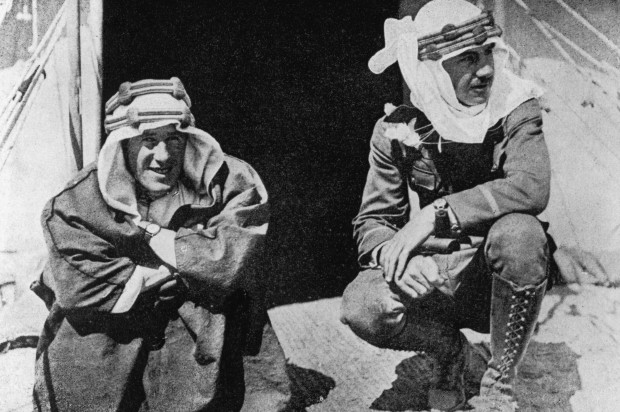
I think that the one man who I can call a kindred spirit is T. E. Lawrence, known as history as Lawrence of Arabia. As I read his autobiography I found a complicated and often contradictory man who after achieving fame laid it down even though he could have held any of a number of great positions of power. He really was an amazing person. Lawrence wrote:

“The rare man who attains wisdom is, by the very clearness of his sight, a better guide in solving practical problems than those, more commonly the leaders of men, whose eyes are misted and minds warped by ambition for success….”

That is what I have been learning since Iraq.

Peace

Padre Steve+

Leave a comment

Filed under History, philosophy

Writing My Way Home: Iraq, Faith PTSD and Life

295_26912012058_78_n

“Many people are looking for an ear that will listen. They do not find it among Christians, because these Christians are talking where they should be listening.But he who can no longer listen to his brother will soon be no longer listening to God, either; he will be doing nothing but prattle in the presence of God, too. This is the beginning of the death of the spiritual life, and in the end there will be nothing left but spiritual chatter and clerical condescension arrayed in pious words… never really speaking to others.” Dietrich Bonhoeffer

Since I returned from Iraq I have grown weary of Christians that have all the answers and are more interested in promoting their agenda than actually listening or caring for those wounded in spirit from various forms of trauma including war. I returned from Iraq and went through what amounted to a crisis in faith, belief and experienced what I felt to be abandonment by God and many Christians.
481801_10151367001287059_1003164983_n

As such I elected to travel down a path that has been one of paradox. I have benefited from this but the path has been filled with much difficulty and pain. I walked through the psychological, spiritual and physical effects of my time in Iraq as well as the moral injuries that I incurred.  Over the years I have seen the effects of these crisis on my life and relationships. It has become important to tell my story, in as sense as a Canadian Chaplain in our Pastoral Care residency said to “write my way home.”

After Iraq I began to write. I did so initially because it was therapeutic and helped me to begin to start sorting out what was going on with me. It also helped me, especially when I went public on this site about my experience to get outside of my normally severely introverted self. As I began to write regularly it became a part of my life as I struggled to deal with PTSD and the spiritual and emotional crises following my tour in Iraq.

I began to understand the importance of my stories, in fact all of our stories in the way that we understand reality what we believe to be true and what really is true about ourselves and the universe that we are a part.

I experienced this to some degree in my own pastoral care residency at Parkland Memorial Hospital in the 1990s. My supervisor challenged be to stop living in the past and begin to imagine a future that was not a prisoner of my past disappointments and failures. That was a watershed experience for me and I began to realize that I did not need to live my life in a constant repetition of the past. That realization did not always find a place in my life but in a gradual process I began to escape that past and begin to live in the moment with an eye to the future.

Iraq changed that to a large degree. What I experienced there and upon my return to the States shook many of my beliefs about the world, faith and life. The images of American Marines wounded by IED attacks, wounded children and destruction of vast areas of cities, towns and villages coupled with having HUMMVs and Helicopters that I traveled on shot at and having rockets fly over my head changed me.  That was magnified when I saw how the war was being covered by both the liberal and conservative media which bore little resemblance to my first hand observations.

Even worse was the feeling of being isolated and abandoned when I returned home.  I experienced a crisis in faith that left me a practical agnostic even as I desperately prayed for God to show up.  In fact my psychotherapist was the first person to even address my spiritual life after my return.

When Elmer Maggard asked me: “How are you and the big guy?” I could only say “I don’t know I don’t even know if he exists.”

For a priest and chaplain that was a harrowing admission. I had entered a world of darkness that I did not believe was possible. I would struggle for another year and a half until during Advent of 2009. It was then, after what I refer to as my “Christmas Miracle” that things began to change and I began to sense the presence of a loving God again.  My faith began to return but it was and is not the same as before I went to Iraq.  I still struggle at times, though not as much. I still question God, the Church and faith in general. I believe and often must pray “Lord help my unbelief.” My faith is still in the realm of Christian orthodoxy but more negotiable.

This might sound confusing so let me explain. I admit that I do not have the answers that I used to think that I had. The late great manager of the Baltimore Orioles, Earl Weaver once said “it’s what you learn after you know it all that counts.”

The fact is I know a whole lot less than I used to. This has made me more apt to actually listen to people when they tell their stories and when they ask questions that I can’t answer I say “I don’t know” or “I struggle with that too” people trust me with their faith struggles or even the existence of God.

dinner-w-bg-sabah

I refuse to pass judgment on someone’s faith journey, even if they question God’s existence because I have been there and it is not a comfortable place to live.  I am far more willing to walk with someone thorough that valley of doubt or unbelief because I lived in that valley for over a a long time and sometimes pay it a return visit.

I don’t like to attribute normal experiences in life to being “God’s will” or “an attack of the Devil.” I recognize that as human beings that we live in a fallen state and that sometimes things just happen. To put in in the vernacular “Shit Happens.”

That being said I believe that the real miracle is that God can give us the grace to go through the most difficult times even when we have no faith at all.  I think that the experience of Jesus on Good Friday and the testimony of many saintly people tells me that this is true. The miracle in my mind is not being “delivered” from crisis or unbelief but making it though the crisis and return to faith, even if that faith takes a different form.

For me the act of writing both about my experiences, writing about history, faith, ethics and even baseball has been therapeutic and forced me out of my comfort zone.  When I  began to tell my story my friend Elmer the Shrink asked me if I was really sure that I wanted to open up and become vulnerable.

I said that I thought that I needed to because people needed to know the reality of what many Iraq and Afghanistan veterans experience.  He told me that what I was doing was risky but let me make the call. Almost 1500 posts later, not all of course dealing with what I and other veterans have gone through I can say that it was the right decision.
295_26912097058_4309_n

My story is paradoxical. I am a man of faith, a Christian and Priest. I believe but I also question and doubt and sometimes still feel a twinge of agnosticism. I am much more prone to give the benefit of the doubt to people who struggle with life, faith and the existence of God. Andrew Greeley wrote that is was possible for a priest to lose their faith “no more often than a couple of times a day.” I figure that God is big enough to handle doubt and unbelief while still loving and caring for the person experiencing them, even those whose beliefs that may not fit the definition of Christian orthodoxy.

I am a passionate introvert in an extroverted world both in ministry and the military. I am an intuitive “out of the box” thinker and somewhat a rebel. Yet in spite of this I willingly volunteer to serve the church and the military. It is interesting because both institutions prize loyalty to the institution, obedience and staying within the lines of prescribed beliefs and traditions. I believe yet question.

I think that there is a healthy tension in this type of life. Though I fully subscribe to the Creeds, the first 7 Ecumenical Councils of the Church an Old Catholic understanding of the Christian faith tempered by some Anglican flavors, I am not a legalist when it comes to faith.

This also applies to the rest of life because I don’t think that faith should influence how we treat people, even in politics. I cannot allow any political ideology to hold my faith captive, nor can I cast aside the essence of the Christian faith even when I doubt. My political views could be described as a moderate progressive liberalism tempered with the demands of the Gospel, the top two commandments that Jesus talked about, the whole love God and love your neighbor thing.

I have discovered that for the most part I can comfortably live in this tension and actually believe that writing about it has been a big part of my recovery. The fact is that I think that it is okay to live life in balance and with a health appreciation of creative tension.

262_29132382058_5961_n

I continue to emerge from the darkness of my post Iraq experience and I know that I am still wounded. I still struggle but I now see this as a gift from God. My faith is not the same as it was and I am not satisfied with simplistic answers or the party lines of people that only care about their agenda especially when they decide that their agenda is God’s will, even if it has nothing to do with the Gospel. That may sound snarky but I really want to be an authentic Christian not some caricature that is more a picture of the American perversion of the faith than anything found in Scripture or the 2000 year history of the Church.

I believe but I struggle. I will listen to other points of view, including those of people that are not Christian. In fact when I was in Iraq I found that my Iraqi Muslim friends were much easier to dialogue with and have deep and respectful theological discussions with than many American Evangelicals. That was a watershed moment.  T. E. Lawrence wrote in Seven Pillars of Wisdom that “The Beduin could not look for God within him: he was too sure that he was within God.” After having been with the Bedouin I think that I understand.

This is the dialogue that has been going on in me since my return from Iraq. I know other Chaplains and other people of faith that have returned from Iraq or Afghanistan who have experienced similar feelings.

Unfortunately many do not have a safe place in their churches to heal and are afforded little time to do self care. I am concerned for our caregivers that care of veterans like me.  I wonder how many can be real in their faith community without having people run away from them as if they were radioactive, a feeling that many veterans and other trauma victims experience when they attempt to tell their story.

6095_128718117058_1466465_n

I just hope that I will be able to be there for others who are wounded and suffering as a result of what they experienced in war. T. E. Lawrence wrote: “The rare man who attains wisdom is, by the very clearness of his sight, a better guide in solving practical problems than those, more commonly the leaders of men, whose eyes are misted and minds warped by ambition for success….”

Maybe that is why I went through what I did in Iraq and after my return. If that is the case it is a good thing and I will continue to write.

That is all for tonight.  Blessings and peace my friends,

Padre Steve+

5 Comments

Filed under christian life, faith, iraq,afghanistan, Military, Pastoral Care, Tour in Iraq

To Iraq and Back: Padre Steve’s War and Return

400236_10151328400862059_541742014_n

“All men dream: but not equally. Those who dream by night in the dusty recesses of their minds wake up in the day to find it was vanity, but the dreamers of the day are dangerous men, for they may act their dreams with open eyes, to make it possible.” ― T.E. Lawrence, Seven Pillars of Wisdom: A Triumph

It is hard to believe that six years ago I was almost ready to deploy to Iraq with my bodyguard and assistant Religious Program Specialist First Class Nelson Lebron. I had been in the military 26 years, 17 1/2 in the Army and at that time almost eight in the Navy. Our mission was to support the American advisors to the Iraq 1st and 7th Divisions, the 2nd Border Brigade, Port of Entry Police, Highway Patrol and Police forces in Al Anbar Province.

I was to be a life changing experience for both of us, no strangers to deployment or danger. In 2008 we returned to the United States changed by our experiences. It was also to test my marriage and even my career in the Navy. Both of which I thought might be lost within a year or two of my return.

To quote Charles Dickens “it was the best of times, it was the worst of times.” I came back diagnosed with a case of severe and chronic PTSD as well as chronic Tinnitus and and severely impaired ability to understand speech. Nightmares, and night terrors chronic insomnia, flashbacks, hyper vigilance, panic attacks and claustrophobia have all been part of my life since then.

The experience left me severely depressed, at times feeling the pain of despair and hopelessness, a loss of faith and it’s restoration.

Despite all of that I consider my time in Iraq to be the high point of my military career. It was a place that I was able to use every gift, talent and skill at my disposal to do a job that took me to places and allowed me to work with people that I could not have imagined. My tour in Iraq, though painful and life changing was also the best of times, it opened my eyes to things that I never thought possible, relationships unimagined and ministry unbound by the constraints of the terrible model of contemporary American Christianity.

Over the next six or seven months I am going to clean up and republish articles about our deployment and then add additional articles that back when I started to write back in 2009 was unable to do because the memories even then were still to fresh and painful to relive.

It is hard to believe just how vivid the memories still are. I found my notebook from my time there and hope that it as well as my memories don’t fail me. Of course I will take time to write about the post-Iraq experience as well.

Hopefully when they are complete I can get them published as a book. The goal, I hope is that others who have been through what I have been through, and those who have been through much worse will be able to know that what happened to them can happen to anyone that goes to war, including Chaplains and other care givers who are by nature of or calling and training supposed to be immune from such experiences.

I will place these articles under a new page tab at the top of the website called To Iraq and Back.

Peace

Padre Steve+

Leave a comment

Filed under faith, iraq,afghanistan, middle east, Military, Tour in Iraq

Padre Steve’s 2013 Down and Dirty Primer on the Muddle East

Free Syrian Army soldiers in Idlib

“When you are up to your arse in alligators it is hard to remember that your mission is to drain the swamp.” Old British Colonial Saying

Note: This is an update to my 2011 Primer on the Muddle East

During the dark days of World War Two when Field Marshal Erwin Rommel was making fools of a series of British commanders in North Africa people including senior British military and government leaders sometimes referred to the theater of operations as “the Muddle East.” Some things never seem to change. The Muddle East today is quite frankly speaking in a real muddled state if there ever was one with world leaders and regional leaders muddling about as if they were the New York Mets.

A large part of the muddle goes back to the fall of the Ottoman Empire at the close of the First World War when the victorious Allied Powers redrew the map of the Middle East and made alliances with various local tribal sheiks who many times were crowned king over other tribes who didn’t necessarily want them as king. This along with heavy handed European military actions such as the British using poison gas dropped from aircraft in Iraq and a real lack of effort to better the lives of the newly “liberated” peoples of the region was just the start. Add to the cesspool a bunch of oil presided over by major oil companies, the anti-colonial movements that flourished in the years after World War Two when the French, British and Italians had to divest themselves of their Middle Eastern holdings. The French had to fight a real war in Algeria but finally withdrew leaving Algeria’s new rulers to goof up the country and oppress their people for decades to come.  In the coming years many of these newly independent nations found that life still sucked so in a number of countries military officers overthrew the despised monarchs promising reforms but oppressing their people while blaming all their problems on the Israelis.  They got their asses kicked by the Israelis in a series of wars which did a number of things that made the Middle East Muddle even worse.

First it ensured that Palestinian Arabs ended up under Israeli rule and were used with great aplomb by the Middle Eastern despots to prop up support for their regimes while doing nothing to help the Palestinians other than to put them in camps in Lebanon.  Even when the Egyptians made a peace deal with Israel most of the Arab World ostracized them.  Then in 1979 the Shah of Iran was sent packing by a bunch of Mullahs and in 1981 Saddam Hussein’s Iraq attacked Iran in one of the bloodier wars of the late 20th Century which finally ended in 1988. Of course the United States was pissed at the Mullahs so Saddam became our favorite Arab despot for a while.  Add to the mix the Soviet Union and the United States arming their favorite Arab dictators who were given carte blanche to continue oppressing their people so long as it didn’t interfere with their support of either party or the oil supply. Finally the Soviets went Tango Uniform in 1989 not long after being forced out of Afghanistan by the U.S. supplied, Pakistani supported and Saudi Arabian fundamentalist financed Mujahideen.

With the Soviets “Tango Uniform” and the Warsaw Pact nations trying to get into NATO the United States was now the uncontested Numero Uno country in the world Saddam presumed upon his late supporters and invaded Kuwait, albeit after thinking that the U.S. Ambassador to Iraq said that we wouldn’t mind.

Well he was wrong we did mind and got a lot of countries from NATO and including a bunch of Arab countries like Egypt, Syria and Saudi Arabia to get on board on a mission to get Saddam’s troops out of Kuwait. It was a kick ass mission and since the United Nations didn’t authorize removing Saddam and because President George H.W. Bush was smart enough to not to drive on Baghdad to kick him out preferring the despot we knew to a quagmire Saddam was left in power.

So we stationed ground and air forces around the Gulf to keep Saddam and Iran in check and even put them in Saudi Arabia which a large number of radicals such as Osama Bin Laden equated to letting the Devil play in Allah’s Holy Sandbox.  So Osama went and set up a base with the Medieval bunch of Pashtun known as the Taliban in Afghanistan stirred up a bunch of shit killing Americans and blowing up stuff including the World Trade Center in 1993, the Khobar Towers barracks complex in 1996, the USS Cole in 2000 and then 2001 another attack on the World Trade Center which took down the towers with hijacked aircraft and also struck the Pentagon triggered an American response against Bin Laden and his Taliban hosts.  The United States then invaded in Iraq in 2003 and succeeded in taking out Saddam but also succeeded in alienating a good many Iraqis who greeted us with open arms because we goofed up the occupation and pissed a lot of them off by dissolving the Army, Police and Civil Service and letting thugs and opportunists take over. Unfortunately since we didn’t go in with enough troops to secure all the Iraqi bases, their weapons depots and actually take control of surrendering Iraqi units these newly unemployed and dishonored people launched an insurgency bolstered by Al Qaeda and other foreign fighters even as Sunni and Shi’a Moslems began to settle scores with each other. Insurgency and civil war, two great tastes that go great together, but what the heck right?

Of course it took years to get control of the situation on the ground and thankfully the United States forces in Iraq were helped when the Sunni Moslems in Al Anbar Province realized that these foreign fighters were a worse enemy than the United States and switched sides. This turned the tables in Iraq and the insurgency was brought under control and an elected government managed to start to get their stuff together and allow us to begin withdrawing from Iraq. Of course the focus on Iraq gave the Taliban a chance to regroup as the Afghani Government proved itself corrupt, incompetent and not to give a shit about the Afghani people. So the Taliban who had been hated made a comeback and made our lives much harder so that now almost 10 years into the fight we are having a really hard time.  Well enough about us there was plenty more going on in the Muddle East besides the Iraq and Afghanistan wars.

Let’s see….there was the law of unintended consequences in that by taking Saddam Down and weakening Iraq we took away Iran’s natural enemy and the key to the balance of power in the region. Iran was strengthened and began a nuclear program that everyone with half a brain knows in intended for military use and expanded its influence in Lebanon where the Iranian backed Hezbollah took power.  Now Hezbollah which actually has an experienced military force and probably owns 40,000 or so rockets and missiles a good number of which can hit deep in Israel seems to be ready for war especially because they fought the Israelis to a stalemate in 2008, the first time an Arab military ever did that. Not only did they take on the Israelis but they are also helping Syrian dictator Bashir Assad turn the tide against the polyglot Syrian rebel forces which are being assisted by Sunni foreign fighters from all over the Middle East and the ever present Al Qaida presence.

Then was the effect that the wars in those countries made things harder for us in many other friendly Arab nations.  Of course there is the problem of a nuclear armed Pakistan which is about as stable as a Japanese nuclear reactor after getting hit by a tsunami and plays both sides of the street in the war on terror.  The Palestinians and Israelis continued their love affair and since Fatah which ran Palestinian Authority was so corrupt and gooned up a more militant group, Hamas took power in the Gaza strip. Hamas is a pretty bloodthirsty lot too but not the same level of threat as Hezbollah to the Israelis.  Of course the Israelis have done little to help the situation by their often heavy handed treatment of Palestinians and Israeli Arabs.

The witches’ cauldron of the Muddle East is getting even more muddled on a daily basis as young Arabs throughout the Muddle East are rising up against their despotic rulers and it doesn’t seem that any are safe, those allied with the United States and the West as well as those that have been a thorn in the side of the United States and the West. It just seems that despots and tyrants are no longer in vogue. The uprisings began in Iran after a disputed election where reformers were cheated of power and the revolt crushed by the Revolutionary Guard and other thugs of the Iranian regime. However with the election of “moderate” whatever that means cleric Hasan Rowhani as President hopes are that Iran, despite the machinations of many other clerics and the Revolutionary Guard might be brought to the negotiating table. That being said Iran is reportedly sending about 4000 troops to go help Assad in Syria so go figure.

Elsewhere in the Middle East things continue to boil. In December 2010 the people of Tunisia rose up and overthrew their President for Life Ben Ali in a peaceful uprising followed shortly after by the Egyptians who tossed out long term President and U.S. ally Hosni Mubarak. In Tunisia a “moderate Islamist” regime has been attempting to maintain control of radicals and keep some semblance of balance in that country while in Egypt the Islamic Brotherhood was able to get majorities elected in the Parliament and elect Mohammed Morsi as President. Needless to say both countries are still in turmoil.

In Iraq the Sunni Shi’a divide is as wide as ever and that country is threatening to become engulfed in yet another civil war as sectarian violence increases and the Kurds make more moves toward independence.

2013-05-31T115012Z_01_IST12_RTRIDSP_3_TURKEY-PROTESTS

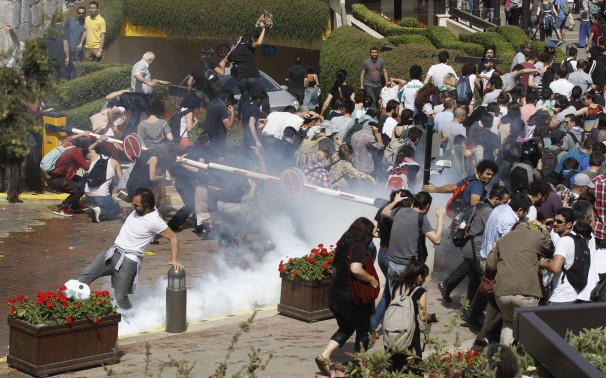
Turkey, the heart of the old Ottoman Empire is now beginning to erupt as secularist elements in the society are protesting the policies of Islamist President Recep Tayyip Erdoğan leading to repeated clashes over the past two weeks between protestors and police.

054

Afghanistan though technically not part of the Middle East continues to be a problem for US and NATO consuming intelligence, economic diplomatic and military resources that could be put to play with better effect elsewhere.  What T.E. Lawrence said of the British occupation of a restive Mesopotamia  in 1920:

“We realise the burden the army in Mesopotamia is to the Imperial Exchequer, but we do not see as clearly the burden it is to Mesopotamia. It has to be fed, and all its animals have to be fed. The fighting forces are now eighty-three thousand strong, but the ration strength is three hundred thousand. There are three labourers to every soldier, to supply and serve him.” ‘France, Britain, and the Arabs’ by Col. T. E. Lawrence The Observer, 8 August 1920

In Libya the Arab Spring claimed the long time pain in the ass Moammar Gaddafi. That conflict center of the action in 2011 until Gaddafi was overthrown and murdered. Since then Libya has remained in turmoil despite elections, militias run amok and the US Ambassador Chris Stevens was killed in an attack on the US Consulate and CIA base in Benghazi on September 11th 2012.

Yemen and Bahrain, Algeria, and Jordan have or are experiencing demonstrations which look to be revolts in the making and even Saudi Arabia is trying to head off a potential popular uprising.

However the real problem now, the problem that threatens to send the region into a regional war is the revolt in Syria which began with peaceful protests by reformers against the Assad regime. However the hard line response of that regime to the protests spawned a civil war which now threatens to overflow the borders of Syria. France, Britain and the US have stated that they believe that there is evidence that the Syria government has used chemical weapons, in particular Sarin nerve agents against the rebels. The conflict has claimed the lives of an estimated 80,000 people with hundreds of thousands more now living as refugees.

The conflict in Syria epitomizes one of the greatest challenges in the Middle East that many in the West are just beginning to recognize, the Sunni Shi’a divide. That divide is becoming more serious with every passing day as Iran continues to lead and assist Shi’a elements in predominantly Sunni Arab countries, as well as in Iraq where the Arab Shi’a are in the majority. The conflict in Syria is predominantly Sunni versus Shi’a though in that patchwork nation of Sunni, Shi’a, Alawite Shi’a tribe of the Assad clan, various Christian and Druse groups. Lebanon which borders Syria is as divided as its larger neighbor and Hezbollah holds tremendous power in that country.

Yes my friends this is a mess and almost everybody that is anybody in the military and economic power houses of the world doesn’t have their handprints all over at least some part of this mess. All of these own some of the blame for what is going on, both the rulers of the nations in the region as well as world powers who all try to influence the nations and peoples for their own diplomatic, intelligence, military or economic gain. Almost no one is unsoiled by their involvement in the Muddle East over the past 90 years or so and so in a way all of great world powers, as well as the despots who ran these countries are to blame.

images-46

The region is more volatile than at any time in recent history and events there could easily ignite a regional war with worldwide implications.  That is why the region has been called the Muddle East for decades.  We all hope and pray for the best and that somehow all of this that the promise of a peaceful and democratic “Arab Spring” will become a reality, but there are better than even odds that things get way worse before they get better. There are just too many wild cards in this deck and the swamp is full of hungry alligators.

With the announcement this week that the US would provide military aid and training to the Syrian rebels and that US forces will remain in Jordan even as US and NATO Patriot missile batteries stand ready in Turkey there is a really good chance that the conflict in Syria will not stay in Syria.

Of course there is always the wild card if what Israel may do in what it perceives to be its security interests against outward foes such as Iran and Syria but also inside its borders and occupied territories, especially if it is attacked or provoked by Iran, Hezbollah or Hamas.

May God help us all and bring about peaceful change, or as my Iraqi friends simply say “Inshallah, God willing.”

Peace

Padre Steve+
Leave a comment

Filed under History, iraq,afghanistan, middle east, Military, national security

The Terrible Costs of Not Learning the Lessons of War: Vietnam, Iraq Afghanistan

481801_10151367001287059_1003164983_nIn 1986 a Army Major working at the Office of the Secretary of Defense wrote a book that was a history of the US Army in the Vietnam War, and as it turns out to be a work of military prophecy. The young officer, Andrew Krepinevich wrote his book, The Army in Vietnam: 

“In the absence of a national security structural framework that address the interdepartmental obligations associated with FID operations, and considering the lack of incentives for organizational change within the Army, it is presumptuous for the political leadership to believe that the Army (or the military) alone will develop the capability to successfully execute U.S. security policy in Third World countries threatened by insurgency. This being the case, America’s Vietnam experience takes on a new and tragic light. For in spite of its anguish in Vietnam, the Army has learned little of value. Yet the nation’s policy makers have endorsed the service’s misconceptions derived from the war while contemplating an increased role in Third World low-intensity conflicts. This represents a very dangerous mixture that in the end may see the Army again attempting to fight a conventional war against a very unconventional enemy.” (The Army in Vietnam, Andrew F Krepinevich Jr., The Johns Hopkins University Press, Baltimore and London, 1986. p.275)

Krepinevich retired from the Army in the 1990s as a Lieutenant Colonel and has been busy in the world of think tanks and national security policy. Unlike his book, which is probably one of the best accounts of the Vietnam War and as I said before a book that is somewhat prophetic his later work has not been as well received. He has his critics. But despite that criticism once cannot deny the accuracy of his predictions concerning the Army’s subsequent operations in low intensity, or counter-insurgency campaigns beginning in Somalia and encompassing the wars in Iraq and Afghanistan.

If Krepinevich had been alone in his criticism, or his book not been widely read one might excuse policy makers of the 1990s and 2000s who sent the Army and the military into counterinsurgency campaigns involving massive numbers of troops and the commitment of blood and treasure that had practically no value to the national security of the United States. Instead thousands of American and Allied lives were sacrificed, tens of thousands wounded and one nation, Iraq that had nothing to do with the attacks of 9-11-2001 left devastated and crippled empowering Iran the sworn enemy of the United States no regional rival.

n671902058_1153793_4043

One cannot say that the Iraq war was worth the lives and treasure spent to cover the lies and hubris of the Bush Administration. Nor can one say that the effort to change the tribal structure of the fiercely independent Afghan peoples after driving Al Qaeda from that “Graveyard of Empires” been worth the expenditure of so many American lives and treasure. In fact the wars in Iraq and Afghanistan damaged the United States in more ways than their proponents could every admit. The military, now drained by years of war is hamstrung and will be hard pressed to meet legitimate threats to our national security around the world because of the vast amounts of blood and treasure expended in these wars.

In 1920 T.E. Lawrence wrote about the follies of the British government in Mesopotamia, what is now Iraq. His words could have been written about the Bush Administrations 2003 war in Iraq. Lawrence wrote in a letter to the Sunday Times:

The people of England have been led in Mesopotamia into a trap from which it will be hard to escape with dignity and honour. They have been tricked into it by a steady withholding of information. The Bagdad communiqués are belated, insincere, incomplete. Things have been far worse than we have been told, our administration more bloody and inefficient than the public knows. It is a disgrace to our imperial record, and may soon be too inflamed for any ordinary cure. We are to-day not far from a disaster.”

Krepinevech, like Lawrence before him was right, but he was not the only one. in 1993 Ronald H Spector in his book wrote:

“Americans dislike problems without solutions. Almost from the beginning of the U.S. involvement in Vietnam they have attempted to find “lessons” in the war. The controversy about the appropriate lessons to be learned continues with the same vigor and lack of coherence as the debates about the war itself.

Lessons are controversial and fleeting but lessons long. The memories of 1968 have remained and served to influence attitudes and expectations well into the 1990s. The ghosts of Vietnam haunted all sides of the recent deliberations about the Gulf War. In the wake of that war, President Bush hastened to announce that “we have kicked the Vietnam syndrome.” 

Doubtless many Americans would like to agree. It is easier to think of the Vietnam War as a strange aberration, a departure from the “normal” kind of war, like World War II and the recent war in the Gulf, where the course of military operations were purposeful and understandable and the results relatively clear cut. Yet the Vietnam War may be less of an aberration than an example of a more common and older type of warfare, reaching back before the Thirty Years’ War and including World War I. A type of warfare in which a decision is long delayed, the purposes of the fighting become unclear, the casualties mount, and the conflict acquires a momentum of its own. In a world which had recently been made safe for conventional, regional and ethnic wars, Vietnam rather than World War II may be the pattern of the future.” (After Tet: The Bloodiest Year in Vietnam, Ronald H Spector Vintage Books, a division of Random House, New York 1993 pp. 315-316

After serving in Iraq with the advisors to the Iraqi 7th and 1st Divisions and 2nd Border Brigade in 2007-2008 and seeing the results of the great misadventure brought upon our nation and Iraq by the Bush administration I cannot help but recognize how disastrous the wars unleashed after 9-11-2001 have been. I have lost friends and comrades in them, I see the human costs in our Navy hospitals every day. I have told too many If they had actually accomplished something it would be another matter. But the human, economic, strategic and even more importantly the moral costs have been so disastrous to our nation to make the loss of the Twin Towers and the victims of 9-11-2001 pale in significance.

sch0-017

The sad thing is that these wars have gone on so long that many of the young Marines and Soldiers fighting them have no understanding of why they deploy and deploy to Iraq and then Afghanistan, and they are far more knowledgeable than the population at large, many of whom are untouched by the personal costs of the war. We as Americans love to say “we support the troops” but most don’t even know one. For the most part big bases from where our troops train and deploy are far from where most Americans live and might as well be on a different planet. We are invisible to most of the country, except when they see a color guard at a sporting event or bump into one of us in uniform at an airport.

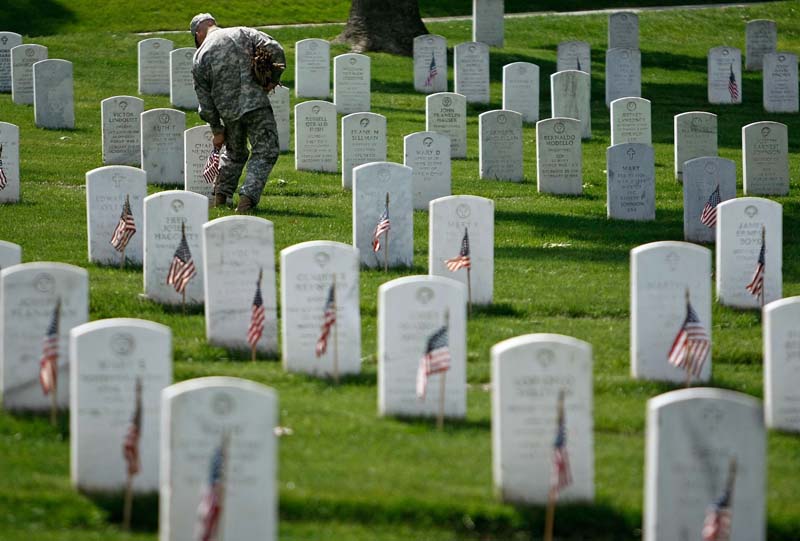
3rd Infantry Places American Flags At The Graves Of U.S. Soldiers

As a result the sacrifices that the under 1% of the population that serve in the military and fight these wars are really not understood, or fully appreciated. I don’t think that this is so much the fault of the people. but rather the product of the post Vietnam era and the “Peace Dividend” of the post Cold War era when the military was reduced, the draft ended and bases in major populations centers closed.

I have written about the effects of these kinds of wars before, not just Iraq or Afghanistan. You can see some of that writing the following articles on this site. They are not comprehensive but they do tell some of the tale of where we have been since 9-11-2001. 

The Anomaly of Operation Desert Storm and Its Consequences Today

Why History Matters: The Disastrous Effects of Long Insurgency Campaigns on the Nations that Wage them and the Armies that Fight Them 

Irrelevant Incidents and Un-winnable Wars: Thoughts on Returning from War 5 Years Later

 349: Active Duty Military Suicides Hit New High in 2012

The Fallacy of “Complete” Victory and the Seeds of Perpetual War and the Way to Peace

Thoughts on Choosing a President and the Results of Not Getting it Right: Lieutenant General Harold Moore at West Point

War is a Racket: Remembering Major General Smedley Butler USMC and Why He Matters

Armed Forces Day 2012: The Disconnection of the Military and Society and the Terrible Result

Failing to Learn from History: The Lesson of the First Anglo-Afghan War and Questions about the US-NATO Campaign

The War that Cannot Be Won: Afghanistan 2012

The 9-11 Generation: The Few

The “Comfortable” Experts and the Real Soldiers

Adjusting Strategy to Reality

No Illusions: The Cost of the Long War and its Potential impact on the United States

The sad thing is that we don’t learn from history. Krepinevech, Spector and Lawrence could have written what they wrote yesterday. Instead they all wrote many years before the 9-11 attacks and our military response to them. As a historian, a career officer and a chaplain I cannot help but think of the terrible costs of such wars and how they do not do anything to make us more secure. The fact is that we do not learn from history much to our detriment despite the great human, spiritual, moral and economic effects of such wars.

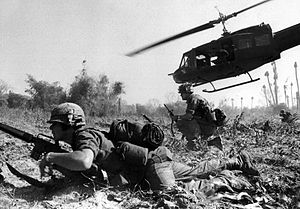
300px-Battle_of_Ia_Drang_Valley-1

What is the cost of war? what is the bill? Major General Smedley Butler wrote: “This bill renders a horrible accounting. Newly placed gravestones. Mangled bodies. Shattered minds. Broken hearts and homes. Economic instability. Depression and all of its attendant miseries. Back -breaking taxation for generations and generations. For a great many years as a soldier I had a suspicion that war was a racket; not only until I retired to civilian life did I fully realize it….”

Peace

Padre Steve+
Leave a comment

Filed under Foreign Policy, History, iraq,afghanistan, Military, national security, News and current events

Reflections on the Invasion of Iraq: 10 Years Later in Light of Nuremberg

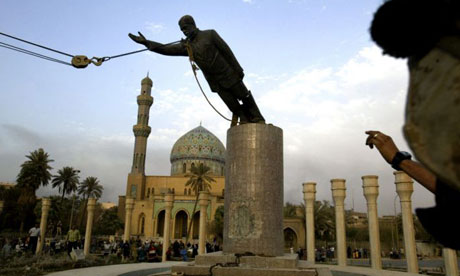
saddam0978

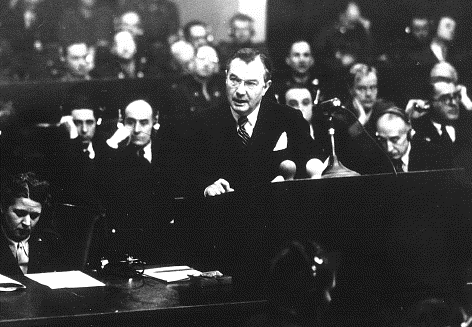
“If certain acts of violation of treaties are crimes, they are crimes whether the United States does them or whether Germany does them, and we are not prepared to lay down a rule of criminal conduct against others which we would not be willing to have invoked against us.” Justice Robert Jackson International Conference on Military Trials, London, 1945, Dept. of State Pub.No. 3080 (1949), p.330.

In March 2003 I like many of us on active duty at the time saw the nation embark on a crusade to overthrow an admittedly thuggish criminal head of state, Saddam Hussein. The images of the hijacked airliners crashing into the Twin Towers of the World Trade Center and the Pentagon were still relatively fresh in our minds. The “evidence” that most of us had “seen,” the same that most Americans and people around the world were shown led many of us to believe that Saddam was involved in those attacks in some manner and that he posed a threat to us.

Now it wasn’t that we didn’t have doubts about it or even the wisdom of invading Iraq. It didn’t matter that there was also credible evidence that maybe what we were being told was not correct, and it didn’t matter that some of our closest allies voted against a mandate to invade Iraq in the United Nations Security Council. We were emotionally charged by the events of 9-11 and “we knew” that Saddam was a “bad guy.” We also believed that we could not be defeated. We had defeated the Iraqis in 1991 and we were stronger and they weaker than that time.

We really didn’t know much about Iraq, its history, people, culture and certainly we paid little attention to the history of countries that had invaded and occupied Iraq in the past. T.E. Lawrence, the legendary Lawrence of Arabia wrote in August of 1920 about his own country’s misbegotten invasion and occupation of Iraq, or as it was known then Mesopotamia.

“The people of England have been led in Mesopotamia into a trap from which it will be hard to escape with dignity and honour. They have been tricked into it by a steady withholding of information. The Bagdad communiqués are belated, insincere, incomplete. Things have been far worse than we have been told, our administration more bloody and inefficient than the public knows. It is a disgrace to our imperial record, and may soon be too inflamed for any ordinary cure. We are to-day not far from a disaster.”

The sad thing is that the same could have been written of the United States occupation by 2004.

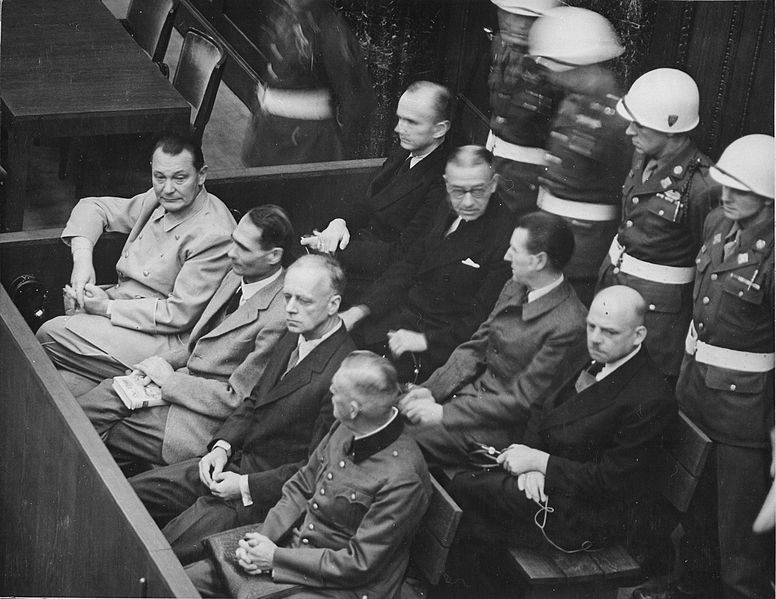
But even more troubling than the words of Lawrence are the Nuremberg War Crimes Trials. Somehow as a historian who has spent a great deal of time studying the Nazi period and its aftermath I cannot help but look back in retrospect and wonder what Supreme Court Justice Robert Jackson and the other Nuremberg prosecutors would have done had they had some of our leaders in the dock instead of the Nazis.

776px-Nuremberg-1-

The indictments against the Nazis at Nuremberg are chilling if we were to be held to the same standard that we held the Nazis leaders at Nuremberg. True, we did not have massive death camps or exterminate millions of defenseless people, nor did we run slave labor factories, but we did like they launched a war of aggression under false pretense against a country that had not attacked us.

At Nuremberg we charged twenty top Nazi political officials, as well as police and high ranking military officers with war crimes. The indictments included:

Count One: Conspiracy to Wage Aggressive War: This count addressed crimes committed before the war began, showing a plan by leaders to commit crimes during the war.

Count Two: Waging Aggressive War, or “Crimes Against Peace” which included “the planning, preparation, initiation, and waging of wars of aggression, which were also wars in violation of international treaties, agreements, and assurances.”

Count Three: War Crimes. This count encompassed the more traditional violations of the law of war already codified in the Geneva and Hague Conventions including treatment of prisoners of war, slave labor, and use of outlawed weapons.

Count Four: Crimes Against Humanity, which covered the actions in concentration camps and other death rampages.

While count four, Crimes Against Humanity would be difficult if not impossible to bring to trial because there was nothing in the US and Coalition war in Iraq that remotely compares to that of what the Nazis were tried, some US and British leaders could probably have been successful prosecuted by Jackson and the other prosecutors under counts one through three.

The fact is that none of the reasons given for the war by the Bush Administration were demonstrated to be true. Senior US and British officials knowing this could be tried and very probably convicted on counts one and two. We also know that some military and intelligence personnel have been convicted of crimes that would fall under count three.

r-SADDAM-HUSSEIN-large570

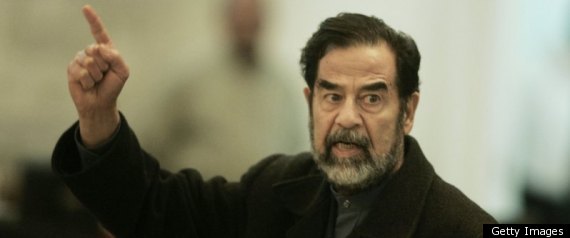
Saddam Hussein was a war criminal. He was also a brutal dictator who terrorized and murdered hundreds of thousands of his own people. But we went to war over his alleged ties to Al Qaeda and WMDs and he had not attacked us. Looking back at history and using the criteria that we established at Nuremberg I have no doubt that had Dick Cheney or Donald Rumsfeld been in the dock that Justice Jackson would have destroyed them and the court would have convicted them.

So 10 years, nearly 5000 US military personnel dead, 32,000 wounded, over 100,000 afflicted with PTSD, and other spiritual and psychological injuries, with an estimated 22 veterans committing suicide every day; somewhere between 1 and 2 trillion dollars spent, hundreds of thousands of Iraqis dead, wounded and displaced from their homes and a country destroyed and still in turmoil. And somehow those that decided to take us to war roam free. They write books defending their actions and appear on “news” programs hosted by their media allies who 10 years ago helped manipulate the American public, still traumatized by the events of 9-11-2001 to support the war.

nuremberg-jackson-10400

http://www.youtube.com/watch?v=No06Lwk_TAg

Saddam and many of his henchmen are dead or rotting in Iraqi prisons for their crimes against the Iraqi people. However good this may be one has to ask if how it happened was legal or justified under US or International Law, if it was worth the cost in blood, treasure or international credibility. Likewise why have none of the men and women who plotted, planned and launched the war been held the standard that we as a nation helped establish and have used against Nazi leaders and others?

If we cannot ask that and wrestle with this then we as a nation become no better than the Germans who sought minimize their responsibility for the actions of their leaders, and in doing so enable future leaders to feel that they can do the same with impunity. That is a terrible precedent.

Peace

Padre Steve+
1 Comment

Filed under History, iraq,afghanistan, middle east

Feet of Clay: The Common Flaw of the Best and Brightest

Charlene and Michel de Carvalho

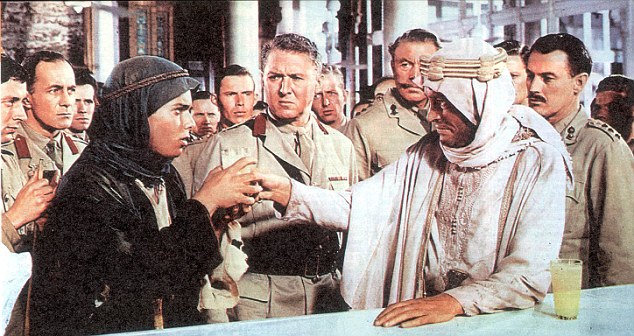
General Allenby: [leafing through Lawrence’s dossier] “Undisciplined… unpunctual… untidy. Knowledge of music… knowledge of literature… knowledge of… knowledge of… you’re an interesting man there’s no doubt about it.” 

Character is a terrible thing to judge. Mostly because those doing the judging also suffer from flaws in their own character.  Yet somehow the temptation is for us to stand as judge, jury and character executioner on those that we find wanting. As a culture we like tearing down those that we at one time built up. It is a rather perverse proclivity that we have as human beings, especially if we can find some kind of religious justification for it.

I think that is part of the complexity of the human condition. As a historian I find that the most exalted heroes, men and women of often great courage both moral and physical, intellect, creativity, humanity and even compassion have feet of clay.

I find that I am attracted to those characters who find themselves off the beaten track. Visionaries often at odds with their superiors, institutions, and sometimes their faith and traditions. Men and women who discovered in themselves visions for what might be and pursued those visions, sometimes at the costs of their families, friends, and in quite a few cases their lives.

Throughout my studies I have been attracted to men as diverse as Peter the Apostle, Martin Luther, T.E. Lawrence, Dietrich Bonhoeffer, Erwin Rommel, Admiral Horatio Nelson, Abraham Lincoln, John F Kennedy, Dwight D Eisenhower, Franklin Roosevelt, Dr Martin Luther King Jr, Jackie Robinson, Teresa of Avila, Nelson Mandela, Vaclav Havel and Emir Feisal Hussein of the Arab Revolt. All had flaws. Some involved fits of temper and violence, others sexual escapades, mistresses, affairs, greed avarice, and maybe some that stretched law and morality in their quest to achieve their goals. But all are considered great men and women.

Feet of clay. Who doesn’t have them? But them I think that I would rather have feet of clay than a heart of stone, an an unchallenged mind, or a lack of courage to do the right thing even if it does not directly benefit me.

Tonight I watched for the first time straight through the cinema classic Lawrence of Arabia. Peter O’Toole plays Lawrence in a most remarkable manner, showing his brilliance, courage, diplomatic ability and understanding of the Arabs with whom he served.

There are many people, leaders and others that we encounter in life or that we study. Even the best of the best are flawed and there is no such thing as a Saint who never sinned. But we love destroying them and their memory when to our “surprise” when we find that their hagiographers built them into an idol.

I am a great believer in redemption and the weight of the whole of a person’s life. Thus I try to put the flaws as they are called in perspective and their impact both positive and negative in history. Studying in this way gives me a greater perspective on what it is to be human and to place my own clay feet in appropriate perspective.

It was an interesting film to watch.

However, speaking of feet of clay I will probably be writing about the Baseball Writers who vote for the inductees for the Hall of Fame. Today for the first time in nearly 4 decades no players were selected for induction, mostly due to the steroid era. But that is a subject for another night.

Peace

Padre Steve+

1 Comment

Filed under faith, film, History

Iraq and the Middle East 2013: Lessons from T. E. Lawrence

295_26912097058_4309_n

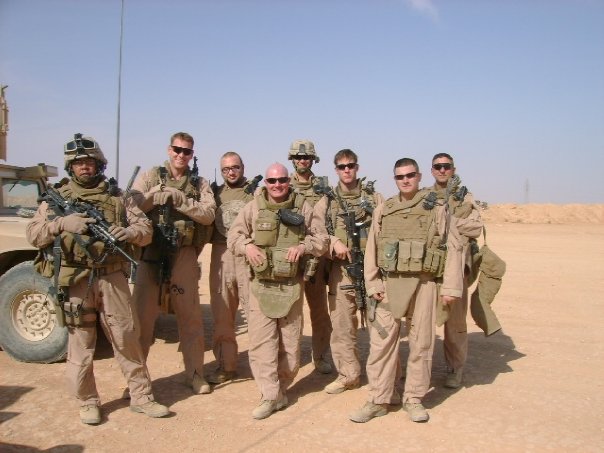
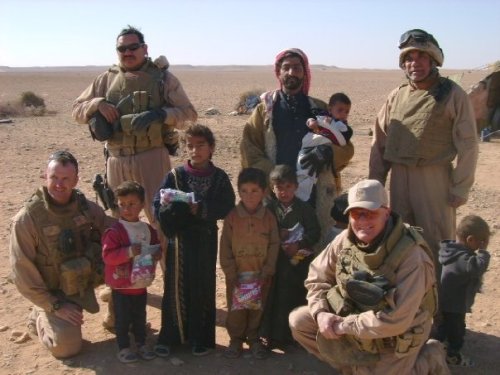
The Author with Advisors and Bedouin on the Iraqi Syrian Border

I left Iraq just under five years ago and in the process left part of me in that long suffering country.  I have written much about my experience there and how even today I have a deep regard for the Iraqi people and their hopes for a better future.

In 2003 the United States invaded Iraq and made short work of that country’s military. Many, if not most Iraqis of all creeds looked upon the US and coalition forces as liberators but within a few months the illusion was over. The US military personnel and leaders who were working with Iraqi officials, both military and civilian to get the country back on its feet were replaced by the Bush administration.

vault.von.saddam.statue.fall.itn.640x360

False Hopes in 2003, believing that US Forces were Liberators 

In their place a new entity, the Coalition Provisional Authority was created and staffed. The first administrator of the entity was retired Army Lieutenant General Jay Garner, who had much experience in Iraq but was replaced quickly for not conducting an immediate purge of members of the Ba’athist Party from key positions in the civil service or security forces.  Led by Ambassador L. Paul Bremer, a man who had no experience in the Arab world, much less in Iraq. Bremer and his staff, most of who had little experience or knowledge of the country created conditions that directly led the the Iraq insurgency, the sacrifice of thousands of American and allied lives and the friendship of the Iraqi people. They also gave a victory to Iraq’s traditional enemy and oppressor Iran to become a dominant regional power without having to worry about the Iraqi threat.

410w-1

Lawrence

rumsfeld-bremerL Paul Bremer (r) with SECDEF Donald Rumsfeld

It was as if Bremer, the leaders of the Bush administration and their neo-conservative allies knew nothing of history. T.E. Lawrence wrote of the British incursion into Turkish Mesopotamia in 1915, managed by the British Indian Office:

“By brute force it marched then into Basra. The enemy troops in Irak were nearly all Arabs in the unenviable predicament of having to fight on behalf of their secular oppressors against a people long envisaged as liberators, but who obstinately refused to play the part.”

The actions of the CPA laid waste pragmatists in the Pentagon and State Department who hoped that existing civil service, police and military forces would be retained and individuals with significant ties to the regime of Saddam removed. Instead Bremer dissolved the Iraqi military, police and civil service within days of his arrival. Since the military invasion had been accomplished with minimal forces most Iraqi weapon sites, arsenals and bases were looted once their Iraqi guardians were banished and left their posts. The embryonic insurgency was in effect given a full arsenal of weapons to use against American forces, many of who were now mobilized Reservists and National Guardsmen that were neither trained or equipped to fight an insurgency or in urban areas.

The reaction of the Iraqi Arabs to US occupation should have been anticipated. Lawrence wrote in 1920 a letter that could have easily been written in 2004:

“It is not astonishing that their patience has broken down after two years. The Government we have set up is English in fashion, and is conducted in the English language. So it has 450 British executive officers running it, and not a single responsible Mesopotamian. In Turkish days 70 per cent of the executive civil service was local. Our 80,000 troops there are occupied in police duties, not in guarding the frontiers. They are holding down the people.”

295_26912047058_2328_n

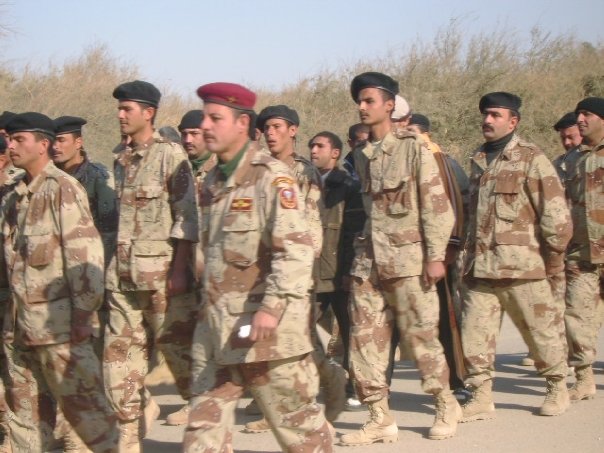
Rebuilding an Army

The actions of Bremer’s incompetent leadership team led to a tragic insurgency that need not have taken place. The now unnumbered US forces had to fight an insurgency while attempting to re-create an army, security forces and civil service from the wreckage created by Bremer’s mistakes and its own often heavy handed tactics in the months following the invasion. Nearly 4500 US troops would die and over 30,000 more wounded in the campaign. Hundreds of thousands of Iraqis were killed, wounded or died of disease during the war.  Lawrence wrote about the British administration of Iraq words that could well have been written about Bremer’s Coalition Provisional Authority: “Meanwhile, our unfortunate troops, Indian and British, under hard conditions of climate and supply, are policing an immense area, paying dearly every day in lives for the wilfully wrong policy of the civil administration in Bagdad.”

It took dramatic efforts in blood and treasure to rebuilt that was only beaten back after the US acted to conduct a surge in conjunction with the revolt of the Sunni of Anbar Province against foreign fighters who had become a dominant force in the insurgency. The surge under the command of General David Petreus achieved the desired result. It gave the Iraqis a chance to stabilize their government and increase their own security forces. Unfortunately many of those that remained in power of the Shi’ite sect refused to  share power in meaningful ways with Iraq’s Sunni and Kurds leading to a political crisis. The US military mission ended in December 2011 and since then Iraq security forces and civil authorities, often divided by tribal or sectarian loyalties have struggled to maintain order. The result is that in 2013 that Iraq is again heading toward the abyss of civil war. Sunni protestors in Anbar and other provinces conduct frequent protests as sectarian violence spreads. Many Iraqis of all sects have mixed feelings about the American invasion and the bloody aftermath and fear the future.

In 1920 Lawrence wrote of the continuing British intervention and occupation of Iraq: “The people of England have been led in Mesopotamia into a trap from which it will be hard to escape with dignity and honour. They have been tricked into it by a steady withholding of information. The Bagdad communiqués are belated, insincere, incomplete. Things have been far worse than we have been told, our administration more bloody and inefficient than the public knows. It is a disgrace to our imperial record, and may soon be too inflamed for any ordinary cure. We are to-day not far from a disaster.”

His words have a sadly familiar tone. The US invasion of Iraq did have a different outcome than we imagined. The Arab Spring erupted and the consequences of it will be far reaching and effect much of the Middle East and the world. However, Lawrence’s words and wisdom concerning the Arabs who rebelled against the Turkish Ottoman Empire are something that we in the West need to heed today.

baghdad1917

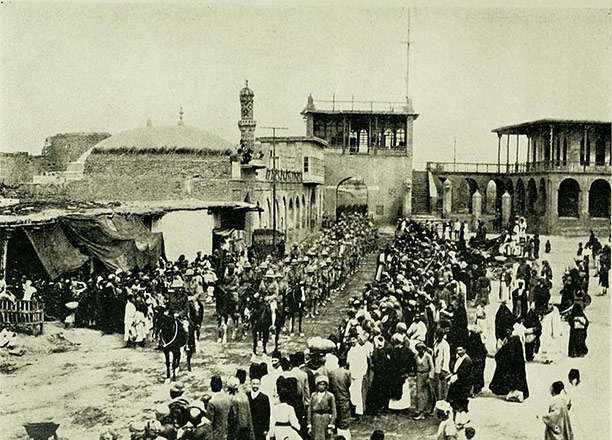
British Troops entering Baghdad

“The Arabs rebelled against the Turks during the war not because the Turk Government was notably bad, but because they wanted independence. They did not risk their lives in battle to change masters, to become British subjects or French citizens, but to win a show of their own.”

481801_10151367001287059_1003164983_n

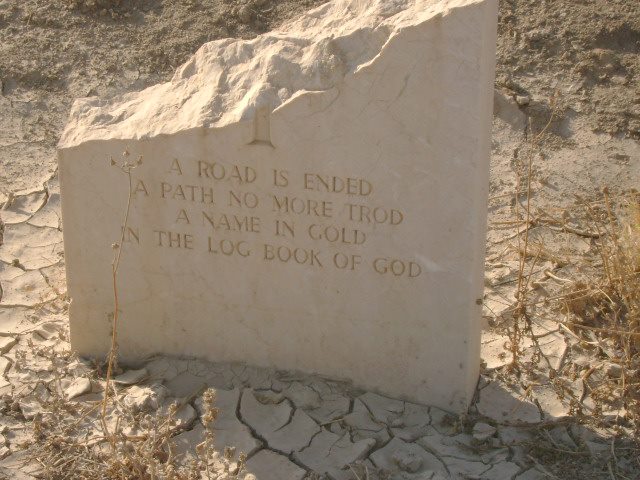
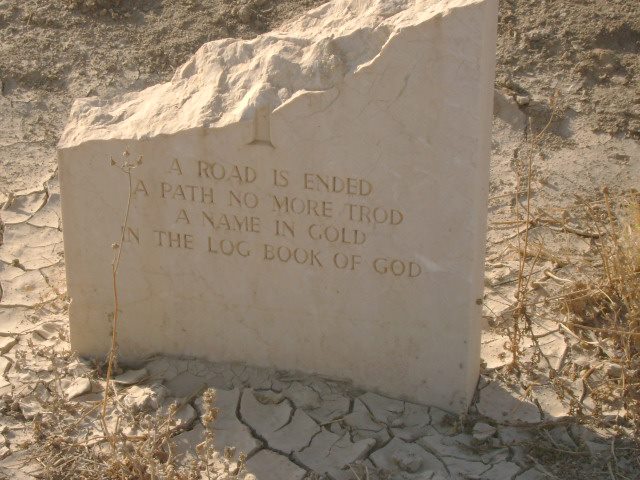
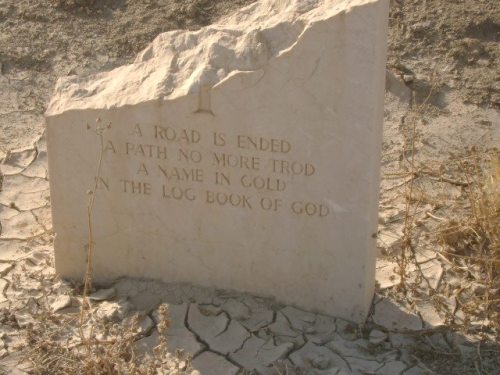
Grave of a British Soldier in Habbaniyah Iraq

That is the case in many Arab countries today. One can only hope that in those countries and in Afghanistan where our troops are embroiled in a war that cannot end well that we will do better.

Peace

Padre Steve+

2 Comments

Filed under Foreign Policy, History, iraq,afghanistan, middle east, national security

Another Year: Politics as Usual but Hope Still Abounds

blazing-saddles-355

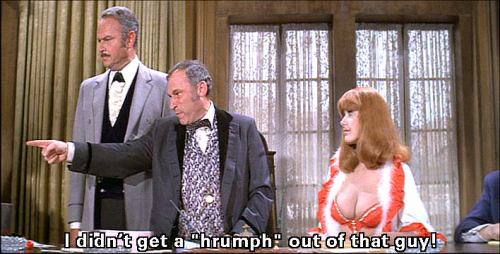
“We have to protect our phoney baloney jobs here, gentlemen! We must do something about this immediately! Immediately! Immediately! Harrumph! Harrumph! Harrumph!” Governor William J. LePetomane (Mel Brooks) in Blazing Saddles

Over the cliff we went last night and like clockwork our politicians finally got a partial deal on the Fiscal Cliff done. At least they did in the Senate. The House is another matter.

8938294_600x338

The deal didn’t make anyone happy, and maybe that is a good thing. If the House passes it this afternoon the one thing it does promise is that these same politicians will be taking us off another cliff at the end of February since this deal simply pushes the hard decisions of budgetary cuts. Of course cuts have to be made as well and some will be painful. However, truth be told the vast majority of these politicians and their backers don’t really care about the deficit so long as their interests remain funded and their special interests satiated.

Unfortunately the bitter and divisive political climate will probably ensure that we will go through at least two months of partisan posturing and struggle, mostly funded by outside special interest groups, political action committees and supported by the lobbying of think tanks.

But in the end I think that far from displaying any moral courage that our elected officials will simply act like Governor LePetomane and o what they can to protect their jobs.

Another year of the same old stuff probably accentuated by diplomatic, military, economic crisis’ as well as natural or man-made disasters. Oh well, we have gotten through times like this before, sometimes not very well but we have muddled through. So I guess that we will again. Thankfully baseball spring training is now but a month and a half away. Until then I have plenty of Star Trek the Next Generation, Boston Legal, Seinfeld and Ken Burns: Baseball to watch. I also have plenty of books to keep me busy. I am currently reading T. E. Lawrence’s Seven Pillars of Wisdom and I have a backlog of other books to get through.

I guess that I will also keep abreast of our political mess and world events. But I won’t let them overwhelm me or cause me to despair as I have too much in my life that is good and see too much in this world that is good and fair. In the words of J.R.R. Tolkien wrote in Lord of the Rings:

“The world is indeed full of peril and in it there are many dark places. But still there is much that is fair. And though in all lands, love is now mingled with grief, it still grows, perhaps, the greater.” 

Peace

Padre Steve+

1 Comment

Filed under News and current events, philosophy, Political Commentary