Tag Archives: us army

Veterans Day 2010: Counting the Cost of War

“It is well that war is so terrible, or we should get too fond of it.” General Robert E. Lee

Veterans Day had become a rather somber occasion for me over the past decade and since returning from Iraq in 2008 has taken on added personal significance.  I have noticed that I have become much more reflective about the sacrifices made by our military and the terrible coasts of war on our Soldiers, Marines, Sailors, Airmen and their families in this age of the all volunteer military.  The military which has about 2,225,000 members including the Reserves and National Guard is just 0.7% of the total population, the lowest percentage of military personnel compared to total population during any war in our history.  As a result this force has borne the brunt of a war that no politicians or bureaucrats figured would last half as long as it has.  As a result the “few” have been asked to do more for longer than and military that this nation has ever fielded during a war.

Thus for me Veterans Day has become a rather somber and reflective occasion as I ponder all the sacrifices made by our military and their families. In Afghanistan the U.S. Military has lost 1378 killed and our allies another 825.  In Iraq 4427 U.S. Military personnel have died along with 318 allied soldiers, not including the Iraqi military losses.  For each of the killed there are about 8 more wounded a total of over 38,000 wounded.  Of course the wounded numbers do not include 170,000+ cases of hearing damage; 130,000+ cases of mild traumatic brain injuries; and 200,000+ cases of serious mental health problems, over 30,000 serious disease cases, including a disfiguring, parasitic disease called Leishmaniasis, which results from bites of sand flies; thousands of cases of respiratory disease linked to exposure to toxic burn pit smoke and hundreds of suicides.  Then there are the injuries related to road and aviation accidents not in direct combat.  In my recent assignments in Iraq and Naval Medical facilities I have seen the human cost of the war.  I have friends who suffer as the result of Traumatic Brain Injury, PTSD and Pulmonary diseases as well as those that have been wounded as the result enemy action.  I have a dear friend with a rare and irreversible pulmonary condition from two tours in Iraq. He is 41 his lungs are those of a 70 year old man.  My best friend, a senior Naval Officer is still suffering from the effects of TBI and PTSD incurred while serving with the Marines in Al Anbar Province.
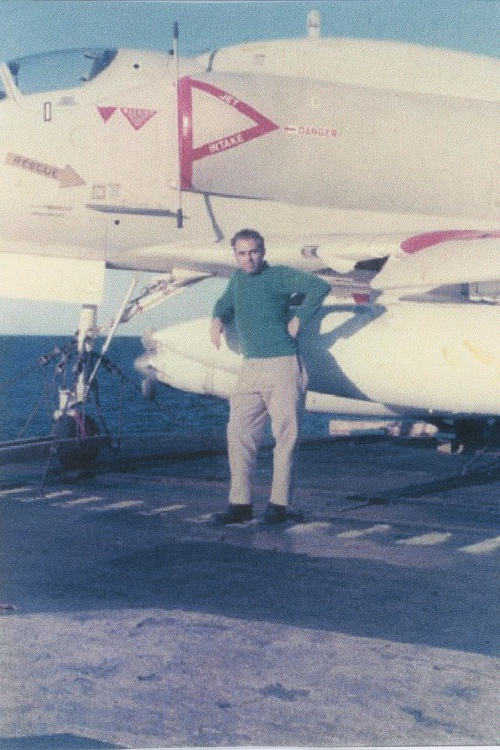
My Dad Aviation Storekeeper Chief Carl Dundas aboard USS Hancock CVA-19 off Vietnam circa 1971-72

A year ago on Veterans Day I was at with my parents in Stockton California to visit my mom and my dad who was then in a nursing facility due to the ravages of Alzheimer’s disease.  It was a terrible visit conflict with my mother due to witches’ brew of my PTSD and grief for my dad and my mother’s struggles with my dad’s condition and her own physical condition.  I visited my dad every day when in two and unfortunately he did not know who I was, Alzheimer’s had robbed him of everything that made him my dad.  He died on June 23rd of this year a day after I found out that I had been selected for promotion to Commander.  My dad was a retired Navy Chief Petty Officer who served in Vietnam on a beach detachment manning an emergency airfield in the besieged city of An Loc in 1972.  He never talked about that tour or what happened there except to tell me that he saw the Communists executing civilians in the city from his observation point.  He came home a changed man.  Thankfully he is now out of his suffering and our family is beginning to find its way back from the abyss of his illness.

I have served for over 29 years in the Army and the Navy and have witnessed many things and been blessed to have my life enriched by many veterans.  Unfortunately many of these brave men have since passed away, some having lived many years and others that have died far too young as a result of service connected injuries.
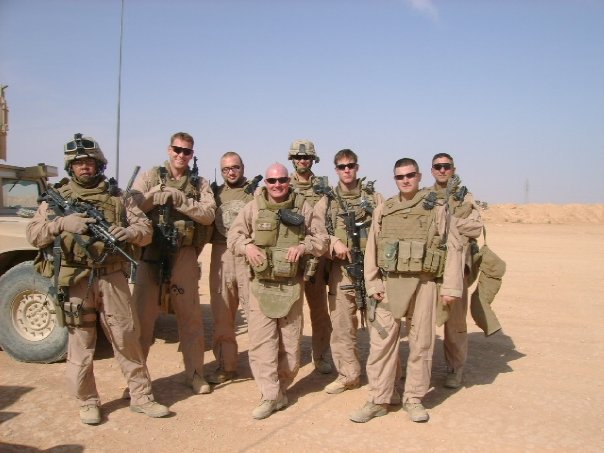
With advisors to the 3rd Bn, 3rd Brigade 7th Iraq Division COP South 2008

In my current work I see many young men that wear the Purple Heart for being wounded in combat. I see those that need assistance to walk, amputees, men with obvious scars from burns and others suffering blindness from their injuries. Our hospital’s Medical Board sees 40-60 Marines and Sailors a day, quite a few of whom that will be medically retired due to their injuries.  There are also those that have died by their own hand suffering from psychological and spiritual injuries too deep to fathom, we had one of our own Corpsman suicide last week.

The cost of war is terrible, as General William Tecumseh Sherman so eloquently put it: “War is Hell.”

Despite this our brave men and women that serve in all branches of the military as well as those that have gone before us in the 235 year history of our military have shouldered the load, for most of that history depending on volunteers who often served in obscurity often derided by their fellow Americans who believed that the military was a place to go if you could not be successful in the civilian world. The pay was low, the duty arduous and benefits few. In the Civil War, the World Wars and up until 1974 the professionals were augmented by draftees who outnumbered the professionals by a huge margin.  Since 1974 the force has been an all volunteer force.

Health and Comfort Board Team USS Hue City, Northern Arabian Gulf May 2002

Regardless of whether our Veterans were draftees or volunteers they have served this country well and on the whole to use the current Navy description are “A Global Force for Good.” The countries liberated from oppressors and helped in humanitarian operations by American Soldiers, Sailors, Marines and Airmen are many and varied.  They have represented the spectrum of our society and represent the best the country has to offer.  Unfortunately they have not always been honored by some of their our countrymen and women and sometimes the children and grandchildren of the peoples that they liberated from Nazi, Fascist or Communist oppressors who often use the wrongdoing of a few military personnel or the decisions or actions of American politicians or businessmen to label American military personnel as criminals.

Unfortunately since the military is such a small part of our population and concentrated in a few large bases it is invisible to most Americans as they live their daily lives. Often in isolated from the bulk of America such as Killeen Texas home of the U.S. III Corps and Jacksonville North Carolina the home of the 2nd Marine Expeditionary Force and Second Marine Division are quintessential military towns but neither are near major population centers and thus the sacrifice of these Soldiers, Marines and Sailors goes unnoticed by most of the nation.  In a sense the human cost of the war falls inordinately upon these military communities where there are few strangers.

In spite of this the current men and women of the American Military train, deploy, fight and return every day as they have since the 9-11-2001 attacks, many if not most have made multiple combat tours.  I have been pleased to see more support of the military in the media, especially sports media and leagues.  Many businesses are taking time to offer things of value to servicemen and women and those businesses should be commended and patronized.  I was touched by many stories that I saw about our veterans on ESPN over the past few days.  http://www.espnmediazone3.com/us/2010/11/espn%E2%80%99s-weeklong-salute-to-veterans-day/

Many of our Reserve component personnel give up civilian employment and chances for promotion to serve in the military, particularly when they are mobilized for service. When they return home most return to towns and cities that have little of the support afforded to active duty members when they return.  I pray that our political leaders in the future will exercise discernment and wisdom before committing us to another war. Otto Von Bismarck said: “Anyone who has ever looked into the glazed eyes of a soldier dying on the battlefield will think hard before starting a war.” Unfortunately the current members of the House, Senate and Executive branch have little connection to the military as very few have served and I wonder if any really comprehend this maxim.  In the 111th Congress 120 members had some form of military service.  The number of veterans in the 111th Congress reflects the trend of a steady decline in the number of Members who have served in the military. For example, there were 298 veterans (240 Representatives, 58 Senators) in the 96th Congress (1979-1981); and 398 veterans (329Representatives, 69 Senators) in the 91st Congress (1969-1971).  Those who have served a full military career are far fewer; the number of congressmen with military careers will remain relatively constant for the 112th Congress. In the Senate there will be one (as compared with two in 2006 and one in 2008) and in the House there will be eight (as compared with four in 2006 and six in 2008).  Some of these Congressional Veterans have been vilified by some broadcasters and pundits of the extreme right wing media most of whom who have never served in the military.  On the positive side nine members of the new Congress will have served in the current wars which hopefully will help promote the sacrifice of our current Veterans and help with programs that will help returning Veterans.

I have seen the cost of war up close and personal in Iraq and back here in the States. I suffer some the afflictions described as a result of my service and see the young men and women many of whom were not yet born when I enlisted in the Army, or when I was commissioned as an Army Officer, when I was a Company Commander or when I was a senior Captain in the Army. These young men and women are heroes.

Please take a moment to thank a Veteran.  If you have time volunteers are always welcome at organizations such as the USO and American Red Cross working with our troops, join or support organizations which promote the causes of Veterans including the Iraq Afghanistan Veteran’s Association www.iava.org the Veterans of Foreign Wars http://www.vfw.org/, American Legion http://www.legion.org/ , Marine Corps League http://www.mcleague.org/, the Fleet Reserve Association http://www.fra.org/, the Association of the U.S. Army http://www.ausa.org and the Disabled American Veterans http://www.dav.org/. There are also many charitable organizations that provide assistance to Veterans and their families’ one of the best being the Fisher House Foundation http://www.fisherhouse.org/ which provides comfortable and free lodging to the families of wounded, injured or sick military personnel on bases adjacent to military hospitals. I found these ten ways that you can help on Yahoo.com:

1. At 11 a.m., observe a moment of silence for those who’ve fought and died while in service to the country

2. Display an American flag

3. Attend a Veterans Day parade

4. Thank a vet for his/her service

5. Send a letter to troops through the U.S. Department of Defense Website

6. Work in a homeless shelter or soup kitchen

7. Visit a veteran’s grave or pick up trash at a veterans cemetery

8. Visit with the family of a veteran who’s serving overseas

9. Visit with a wounded vet at a local VA facility

10. Donate to the USO, the American Legion, Veterans of Foreign Wars USA or other organizations that honor and assist vets

Keep us all in your prayers and please when Veterans Day is past do not forget those of us that serve and our families, especially those men and women serving in harm’s way.  To my friends and comrades I echo the words of the German commander to his troops in captivity at the end of the Band of Brother’s mini-series:

“Men, it’s been a long war, it’s been a tough war. You’ve fought bravely, proudly for your country. You’re a special group. You’ve found in one another a bond that exists only in combat, among brothers. You’ve shared foxholes, held each other in dire moments. You’ve seen death and suffered together. I’m proud to have served with each and every one of you. You all deserve long and happy lives in peace.”

Peace

Padre Steve+
3 Comments

Filed under iraq,afghanistan, Military, PTSD, shipmates and veterans

“Victory” and Reality: Never think that War will be Easy

“No one starts a war-or rather, no one in his senses ought to do so-without first being clear in his mind what he intends to achieve by that war and how he intends to conduct it.” – Karl von Clausewitz

I was talking with a friend recently and the subject came to the support of a certain church for the war in Iraq back in 2003.  My friend, who is very thoughtful, spiritual and circumspect made the comment that “they were even against the war” when we discussed the merits of this particular church.  I thought for a second and said “after the past nine years of war was that wrong?” He paused a moment and said “I see your point.” I think that in the early months and years of this war, where we quickly deposed the Taliban in Afghanistan and Saddam Hussein in Iraq that we made unfounded assumptions about our “successes” with the end result that we have had to fight a much more protracted, bloody and costly series of wars than we had ever imagined. Like so many nations who entered into wars believing that they would have easy victories achieved at a cheap price in blood and treasure we have discovered once again that the serpent of the fog and friction of war coupled with hasty or politically expedient decisions has come to cause us great pain as a nation and after nine years a foreboding sense that we might not win in Afghanistan.

Like most Americans after the attacks of 9-11-2001 on the World Trade Center and the Pentagon I was all in favor of going after those that attacked this country wherever they were to bring those that planned these vile attacks to justice.  Within a month the United States had driven the Taliban out of power in Afghanistan and put the leaders of Al Qaida on the run.  By 2002 the US Government had began making a case against Iraq, one of a trio of nations identified as the “Axis of Evil.”  In 2003 we went to war with Iraq after failing to convince many allies of the necessity of the attack. When the “shock and awe” campaign was launched, Iraq forces defeated, Baghdad captured and Saddam Hussein driven from power there was a heady feeling of success.  Even those opposed to the invasion were amazed at the speed of and apparent ease of the conquest as pictures of cheering Iraqis filled the screen as the statues of Saddam came down.  In May President Bush landed on the USS Abraham Lincoln to proclaim “mission accomplished.” “We support the troops” ribbons and bumper stickers were the rage, victory has many friends and some churches even ascribed the victory to God.  But as the muse would say to the returning Roman conquerors, “victory is fleeting.”

We thought that we had achieved a “revolution in warfare” in the two campaigns but within months the tide had shifted in Iraq as in a colossal mistake of epic proportions a decision was made either in Washington DC or by the head of the Coalition Provisional Authority Ambassador Paul Bremer. A decision was made to disband the Iraqi Military, Police and Civil Service offices without having enough troops in place to police Iraq or civilians including NGOs and the UN available to fill the civil service gaps.  This was in direct contravention to years of CENTCOM plans. To make matters worse we had gone in so light that we had not disarmed or demobilized the Iraqi forces, thus we sent the people who could best help us restore Iraq to working order home. We sent them home and as anyone that knows Arab culture can tell you we dishonored them and created enemies out of potential friends while placing corrupt opportunists in power.  It was if we were making things up as we went rather than thinking things through and the result was a disaster.  By the end of 2004 a full-fledged insurgency had broken out an insurgency that would cost thousands of Americans and Iraqis their lives with tens of thousands of others wounded.  It was not until late 2007 and 2008 that the tides turned in Iraq as Iraqi Sunnis realized that Al Qaida backed insurgents were more of a threat to them than the American forces were.

Over the course of the war the thrill of the early days was forgotten as American Soldiers and Marines engaged a resourceful enemy that was willing to fight us in ways that we had neither expected nor planned.  War loses its luster when the thrill of victory is gone.  With the transition of the mission in Iraq and a renewed focus on Afghanistan where the Taliban had come back with a vengeance we are now moving toward being at war for 10 years.  We have fought the war with a military force that is well under 1% of the US population.  The military has fought well. We have not been defeated in open combat despite losing many troops to IEDs and ambushes; though in Afghanistan there have been a couple of near run events where small bases were nearly overrun by Taliban forces. We should remember General Hans Guderian, the creator of the Blitzkrieg and his words about the German campaign in Russia after the Battle of Kursk in 1943: “We have severely underestimated the Russians, the extent of the country and the treachery of the climate. This is the revenge of reality.” General Heinz Guderian

Nine plus years after 9-11 most of the American public as well as the political class of both parties have soured on the wars even while others seek war with Iran and maybe North Korea. I wonder about the wisdom of taking on even more enemies when the military is stretched to the breaking point and the nation is heading into bankruptcy.

But such things are not new from a historic point of view, if only we would look to history. Back in 1940 after their victories in France and the Low Countries the Germans felt as if they were invincible. By 1941 their troops were bailing out the Italians in North Africa and the Balkans while engaging the British in the air above Great Britain and in the seas around it. That did not stop Hitler from attacking the Soviet Union where as in France and the Balkans the German Army enjoyed amazing success until winter arrived and the Soviets counter-attacked.  Thereafter the German Army would not enjoy the same success and millions of German Soldiers; not to mention at least 20 million Soviet citizens and Red Army Soldiers died. Eventually the Wehrmacht was shattered, defeated and Europe devastated.

I am not saying that this will happen to the US, but it can.  We need to learn from history and look at how good people were enticed by the aphrodisiac of the “victory disease” that accompanied supposedly easy victories.  If one looks at Germany many officers, soldiers and civilians drank the aphrodisiac of victory and had their faith in Germany, their leaders and their cause destroyed as the war turned against them and they experienced defeat even while many times getting the best of their enemies on the battlefield.  Honorable men that had served their country well were either cashiered by the Nazi government and many killed by that instrument of evil because they voiced opposition to the regime.  Initially many had been lured into the trap of easy victory.

Back in 2001 and into 2003 I was like many of those men who served in the German military.  I was excited about the apparent easy victories in both Afghanistan and Iraq.   But like some German officers of that day who realized as the campaign in Russia was going badly into the fall of 1941 by late 2003 I began to sense that something was going terrible wrong in Iraq.  I think it was the moment that I heard that we had disbanded the Iraqi Army, Security forces and Civil Service as I started my course of study with the Marine Command and Staff College program held at the Joint Forces Staff College.  The experience of serving with thoughtful Marines in my unit and my fellow students; Marine, Navy, Coast Guard and Allied officers at the school helped me see the danger that was developing in our campaigns.  By the time I arrived in Iraq in the summer of 2007 the tide was beginning to turn but I saw the devastation of the country, ministered to wounded Marines and Soldiers and seen the affect of the war on Iraqis.  My duties with our advisors and their Iraqi counterparts were enlightening as I travelled about Al Anbar Province.

In the end I think that the Iraqis despite everything will do okay. I believe that most are tired of war and will not succumb again to sectarian violence on a large scale. I do not think that they have an easy road ahead but I believe the words of Brigadier General Ali as I left him for the final time: “You come back to Iraq in five years, as tourist, it will be better then.” I am not so optimistic about Afghanistan or Pakistan and I do not think we have yet seen the worst in those countries, but at least despite all of our mistakes Iraq most likely will do well.

The experience of war coupled with my study of history and military theory at the Command and Staff College as well as in my studies from my Master’s degree in Military History changed my perspective. I still serve faithfully and hope and pray for a conclusion to the wars that leaves us in better shape and brings peace to the lands that we have shed the blood of our Soldiers, Sailors, Marines, Airmen and other Federal intelligence, diplomatic and police agencies and treasure in.  I pray for my friends serving in harm’s way and those preparing to deploy and I pray for the safety of my Iraqi military friends and their families.

I am not a defeatist should someone level that charge at me.  I agree with Ralph Peters who made this comment: “We will not be beaten. But we may be shamed and embarrassed on a needlessly long road to victory.” However, I wonder if this country has the will to win and to make the sacrifices to do so and not just shovel them off on those that serve and have served throughout this war, a war which appears to have no end and which may expand to other countries.

Like the Germans we are engaged in a multi-front and multi-theater war but we have been trying to do so upon the backs of less than one percent of the population. This allows the rest of the country to live under the illusion of peace and prosperity with the bitter losses and memories of 9-11 fade into a yearly remembrance called “Patriot Day” by politicians of all stripes who often mouth empty words to eulogize the victims and thank the troops and then move on to their next fundraiser.  By doing this we have worn out the force without the full support of the nation which is absolutely necessary for the successful prosecution of a war, especially a long drawn out war such as we have now.  Unfortunately most Americans have little patience and while we mythologize a lot about World War Two one has to remember that there was a strong lobby that desired to end the war in 1944 even if victory had not been achieved.

We have a military now composed of many battle hardened and deployment weary soldiers who live in a world that the bulk of the nation does not understand nor really wants to understand.  We have seen the cost of the war multiply to the point that it has drained the ability of the military to prepare for other wars and modernize itself.  What happens if God forbid we are forced into a war with Iran or North Korea?  With what will we fight those wars?

When the Allies were cracking the German front in Normandy and the Red Army was decimating Army Group Center in the East, Field Marshall Gerd Von Rundstedt was asked what needed to be done by a General at Hitler’s military headquarters. The old Prussian warhorse simply said “make peace you idiot.” He was fired shortly thereafter. We certainly have not reached that point but should anything else break out while we are still engaged in Afghanistan and maintain a large number of troops in Iraq that could change.

One always needs to be careful when getting into “easy” and “quick” wars as more often than not they are neither easy nor quick.

Peace

Padre Steve+
Leave a comment

Filed under Foreign Policy, History, iraq,afghanistan, Military, national security

Suicide isn’t Painless: The Epidemic of Suicide in the Military

I leave the Naval Medical Center Portsmouth Virginia tomorrow and toward the end of October report as the Command Chaplain for Naval Hospital Camp LeJeune North Carolina. My last time at Camp LeJeune was as part of the Portsmouth SPRINT (Special Psychiatric Rapid Intervention Team) mission to care for Emergency Department personnel at the Naval Hospital and Base Fire/EMS responders to a particularly gruesome suicide of a young Marine who had recently served in Iraq and was preparing for another tour.

As a Chaplain and in my previous life as a Medical Service Corps officer commanding a Medical Company in Germany and Brigade Adjutant in Texas I have dealt with a lot of suicides, attempted suicides and the lives left shattered by suicide.  Likewise I have seen the results of suicide attempts as a trauma, emergency and critical care chaplain in major medical centers. I have attended the DOD Suicide Prevention Conference on a number of occasions and gotten to know many of the experts working in the field.

As I said I began my career as an officer in the Army Medical Service Corps. We had a close connection to the movie and television series M*A*S*H and the theme music to that movie is emblematic of the feelings of many combat vets who continue to deploy even after making many combat deployments. http://www.metacafe.com/watch/3444418/suicide_is_painless_johnny_mandel/

Through early morning fog I see
visions of the things to be
the pains that are withheld for me
I realize and I can see…
[chorus]:

That suicide is painless
It brings on many changes
and I can take or leave it if I please.

I try to find a way to make
all our little joys relate
without that ever-present hate
but now I know that it’s too late, and…
[Chorus]

The game of life is hard to play
I’m gonna lose it anyway
The losing card I’ll someday lay
so this is all I have to say.
[Chorus]

The only way to win is cheat
And lay it down before I’m beat
and to another give my seat
for that’s the only painless feat.
[Chorus]

The sword of time will pierce our skins
It doesn’t hurt when it begins
But as it works its way on in
The pain grows stronger…watch it grin, but…
[Chorus]

A brave man once requested me
to answer questions that are key
‘is it to be or not to be’
and I replied ‘oh why ask me?’

‘Cause suicide is painless
it brings on many changes
and I can take or leave it if I please.
…and you can do the same thing if you choose.

Last week four soldiers, one a highly decorated senior NCO and all combat veterans are believed to have committed suicide at Fort Hood Texas.  The base which has already seen more than its fair share of tragedy with 14 confirmed suicides this year is stunned that these occurred in one weekend.

Defense Secretary Robert Gates commented about the stress on the all-volunteer force: “No major war in our history has been fought with a smaller percentage of this country’s citizens in uniform full-time — roughly 2.4 million active and reserve service members out of a country of over 300 million, less than 1 percent,” as a result the wars have been fought by a small proportion of the country, for many they are “a distant and unpleasant series of news items that does not affect them personally.” While the distance grows between those that serve and the general population military families are under even more stress, with anxiety and disruption inflicted on children, increased domestic strife and a growing number of suicides. Divorce rates in the Army have doubled since the wars in Afghanistan and Iraq began.

In the years prior to about 2004-2005 the military suicide rate was almost always below civilian rates in all demographics.  This is something that we took legitimate pride in.  That began to change as the war in Iraq shifted from a “Shock and Awe” campaign to a rather nasty and intractable insurgency this began to change as the deployment tempo increased and the Army increased its “boots on ground” time from a year to 15 months with a one year dwell time between deployments. Even as Iraq calmed down and the US role shifted many troops remain and Afghanistan has become a much more difficult war than it was even a few years ago. The Marines retained a 6-7 month deployment schedule but as the war went on and personnel requirements increased many Marine units were doing 6 months in country and 6 months home.  The difficult of what was described as “dwell time” for the Army and Marines was that for all intents and purposes it wasn’t. The units would get a few weeks leave and stand down time on their return home and then begin preparing for their next deployment. These preparations out of necessity entailed much time in the field training including trips to the Fort Irwin National Training Center (NTC) or the Marine Corps Air Ground Combat Training Center at 29 Palms.  Speaking from experience before 9-11 I can say that a Marine battalion going to 29 Palms in reality makes a short but intense deployment which is taxing on the organization even as it sharpens combat skills.  The same can be said for Army units going to NTC.  Thus the time that is nominally considered time at home to recuperate is not that and instead serves to keep the pressure on already stressed units, leaders and soldiers/Marines.  In the intervening time those that present to mental health providers or chaplains are provided with care to get them back in shape for the next deployment but never really get to deal with the deeper psychological and spiritual wounds. These include “moral injury”  which often involves unresolved grief for the loss of comrades and real or imagined guilt for their own actions in war.  Such wounds ultimately create despair, loss of faith and eventually cause some service members to make attempts on their life with varying degrees of “success” in “completing” the suicide.

The result is that those who have experienced the moral injuries that come as a result of combat, seeing comrades killed and wounded, participating in actions where they are directly or indirectly involved in killing the enemy, see the “collateral damage” of civilians, including children killed and maimed go right back into to fight.  Since this war has now gone on longer than any war in US history and we are fighting it with an all volunteer force of limited numbers with many making multiple deployments, some as many as 5 or more these wounds are pushed aside.  The effect of this is a cumulative grinding down of those that serve in harm’s way. Many suffer from some form of psychological, neurological or even spiritual injury that in combination with other life stressors make them particularly vulnerable to taking their lives.  In regard to moral injury “Many of the troops kill themselves because they feel that those kinds of experiences have made them unforgivable,” said Dr. William Nash, a top PTSD researcher. “It’s a lot harder for most people to forgive themselves than to forgive others.”

Unfortunately there is a stigma attached to seeking treatment or admitting that one is suffering from depression, anxiety or any other condition associated with either seeking help on their own or being “command referred” for psychological/psychiatric help.  Since that stigma is real many war fighters don’t seek help and take “refuge” in destructive behaviors such as alcohol abuse, drug abuse (to include prescription drugs) and risky behaviors.  One wonders how many of the single vehicle accident fatalities that occur late at night to combat vets are not accidental at all but are suicides by another more “socially acceptable” means.  If a forensic psychological profile was done on every service member that dies in such events I would guess that the finding would be a lot more suicides not an accidental deaths as we would like to believe. Yes all of these deaths are tragic but it is far easier to rationalize death in an auto accident than death by gunshot, knife wounds, overdose or hanging.

I am not proposing any solutions for this problem.  I do believe that somehow the deployment tempo needs to be slowed down to allow troops to actually recover and get help.  This is one of the suggestions of the DOD Suicide Prevention Task Force.  Their report is linked here: http://www.health.mil/dhb/downloads/Suicide%20Prevention%20Task%20Force%20report%2008-21-10_V4_RLN.pdf

When I go to LeJeune I know that as a Chaplain at the Naval Hospital I will be collaborating with our mental health professionals to provide care to Marines, Sailors and their families that are living this daily.  The Marine situation is poignantly show in this article: http://www.nctimes.com/news/local/military/article_3dc03ec3-6a37-5608-8563-aca88f635271.html

I have served with the Marines almost 6 years and from what I see the Corps has changed.  It is battle hardened but less resilient than it used to be.  The Marine Corps’ suicide rate has reached 24 per 100,000, a rate that surpasses all the other services. The rate was 13 per 100,000 in 2006 when I finished my tour at Marine Security Forces. The latest available figures put the civilian suicide rate at 20 per 100,000.  The problem extends past active duty as Veterans Affairs Secretary Eric Shinseki, the former Army chief of staff, said the suicide rate for men aged 18-29 who have been discharged had gone up by 26% from 2005-07. Likewise, “of the more than 30,000 suicides in this country each year, fully 20% of them are acts by veterans.” This means as Shinseki said “on average 18 veterans commit suicide each day. Five of those veterans are under our care at VA. So losing five veterans who are in treatment every month, and then not having a shot at the other 13 who for some reason haven’t come under our care, means that we have a lot of work to do.”

There is also an effect on military health care providers of all kinds and chaplains. These individuals not only have to deal with their trauma but the trauma and hopelessness that they see in many of their patients or parishioners. These caregivers have no respite between deployments because their reason for being is to care for the Soldiers, Marines, Airmen and Sailors that present to them be they deployed or back in a military hospital or clinic.

The work will be hard and long after the last Marine, Sailor, Soldier or Airman leaves Iraq and Afghanistan we will be dealing with this for years to come.

Peace

Padre Steve+
3 Comments

Filed under healthcare, iraq,afghanistan, Military, Pastoral Care, PTSD

Going to War: The First Mission Flying West in a C-130

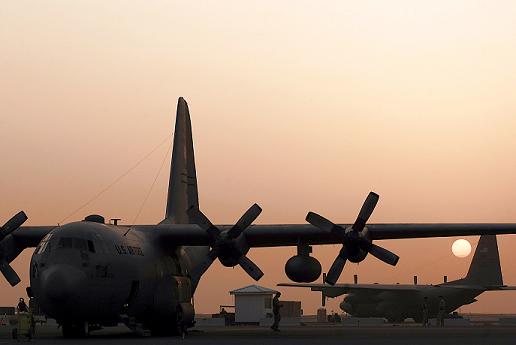
Workhorses: C-130s at an US Base in Iraq

This is another installment of my “Going to War” Series that I began last year.  In the Fall I had to take a break from posting anything more due to issues that I was having dealing with the effects of PTSD. I started this article in the spring but again put it on hold.  I have reached the point that I can again write about this. I will post follow up articles about our operations and experiences supporting our Marine Corps, Army and Joint Service advisor teams in Al Anbar province. The previous posts as well as others dealing with Iraq are filed in the “Tour in Iraq” link on the home page. The direct link to these articles is here: https://padresteve.wordpress.com/category/tour-in-iraq/

Nelson and I continued to prepare in the days leading up to our first mission to the Border Port of Entry at Waleed on the Syrian border with a planned follow on to the teams of the 3rd Brigade, 7th Iraqi Division at Al Qaim about a hundred miles to the north .  Waleed is about 350 miles west of TQ and 70 miles from the nearest FOB with any substantial American presence known as Korean Village or simply KV. We were in constant communication with the team that we to visit via VOIP and SVOIP telephone and secure and non-secure e-mail. The commander of the Border teams, which included Border and Port of Entry adviser teams was Lieutenant Colonel Bien.  Our mission in getting out to the furthest point west was to meet up with an incoming and an outgoing Port of Entry team and see what we could do to get out to other posts along the border.

Nothing in Iraq is easy.  The get out to Waleed we had to make a two day trip from TQ, through Al Asad out to Waleed.  Our flight out was a day flight on an Air Force C-130 to Al Asad.  Our contacts in the G3-Air at 2nd MLG were good in helping me figure out the Air Force flight request which was different than the normal Marine Air Support Request.  For this mission I had to submit two Air Force and three Marine Air Support requests.    Simply submitting a request does not guarantee a flight. Flights are based on precedence dictated by the overall mission.  Religious support was pretty high on the list but there was no telling that your flight would go until you had your approval message and even then things could change.  The actual missions were not known until about midnight the night prior to the flight. So if you were a frequent flyer it meant no sleep the night before a mission as you waited to see if you were approved.  This was my first time actually having to do this for real so I sat at my secure laptop in my office in the back of the TQ plywood Cathedral waiting for the flight list to be posted on the MLG G3 Air Secure Website.  Finally about 0100 the list popped and our first flight was on in.  It was a mid day flight which meant that we needed to be at the passenger terminal about 0930.  This entailed getting our ride from the Chapel to the terminal by 0900.

I told Nelson who was checking his e-mail on a computer in the RP office that it was a go and then headed off to my can to prepare.  Since most of my gear for the 10 day trip was already packed I tried to actually get ready to sleep.  I quickly found that simply being tired because I was up late was not enough to help me go to sleep.  I was really tired but the adrenaline was coursing through my body making it impossible to sleep.  I prayed the office of Compline and then played computer Ma-Jong until at least 0300 before I could finally pass out.  I was up early to shower and get breakfast before lugging my gear over to the chapel.  The weather as usual was about 100 degrees by the time I got back from the chow hall; I gathered my gear and went to the chapel.  I took my back pack, my laptop and a flight bag. I would learn on this mission that I would need to pack lighter the next time around, but live and learn.

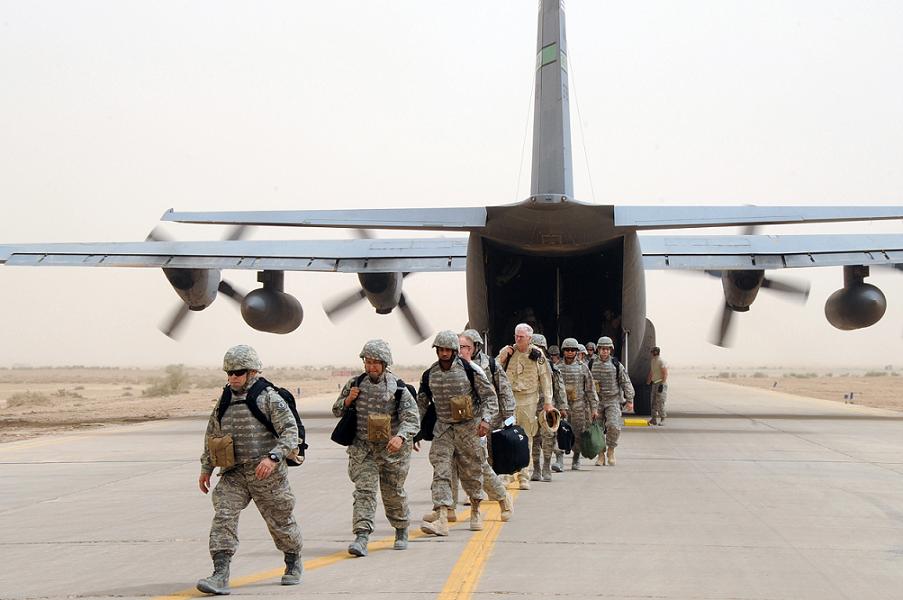
The first leg of our trip was on an Air Force C-130 from TQ to Al Asad which we shared with a large number of previously unknown friends from every branch of service in the US military as well as various civilians and contractors.  All of us had our personal protective equipment as well as our bags. The bags that we did not want to lug were placed on pallets and transported with a large fork lift to the aircraft.  When you make one of these trips you are accounted for a good number of times before ever getting on the aircraft.  This first mission was still in the heat of the Iraqi summer and thus the temperature inside and outside of the aircraft was stifling.  We staged off the tarmac in the sun for a final role call and then in two lines who guided out to our aircraft which had just landed.  As we were trudging out to the aircraft two lines of assorted passengers primarily Soldiers and Marines passed us mid way to the aircraft.  As we neared the aircraft the propeller blast blew the hot air into our faces and I thanked God for the high speed Wiley-X ballistic sunglasses that I had been issued by EOD.  Entering into the aircraft we had to step up onto the cargo ramp and then took our seat in the narrow canvas mesh jump seats that lined both the side of the aircraft and the center.  The rear of the aircraft including the cargo ramp was used for several pallets of cargo including the bags that we elected not to carry.  Sitting in the aircraft and waiting for the pallets to be loaded I thought back to my early career as an Army Officer where I became an air-load planner and embarked my soldiers on six C-130s during Winter REFORGER 1985.  Back then instead of the 130 degree heat of Iraq we faced the coldest winter in 40 years in Europe in which the Rhine froze over.  Although the use of computers has become routine in load plans the principles are the same as they were 25 years ago and everything on the aircraft needs to be properly balanced to ensure the stability and safety of the aircraft and that weight limits are not exceeded.  As the sweat poured off of me I took off my helmet and downed part of the one liter bottle of water that I carried onto the aircraft and threw some on my face, though warm it was refreshing and I reattached my helmet as the aircrew came through the cabin giving a final safety brief.

As the last of the cargo pallets were loaded about the aircraft the cargo ramp was raised, the entire time that the aircraft was on the ground was under 15 minutes, it is amazing what the Marine and Air Force ground crews and cargo handlers can accomplish.  With the ramp raised the aircraft’s air conditioning began to take effect and though not the coolest air conditioning it was better than what we had up to that point. The aircraft began to roll and move down the taxiway and when it reached the end of the taxiway it made a fast turn and began its take off.  Since there was a real and present danger of possible missile or gun attacks on low flying aircraft the C-130 made a steep lift off and banked right over Lake Habbinyah and continued its ascent until it reached its cruise altitude.  The C-130, like any cargo aircraft is extremely loud and because of this hearing protection is worn by passengers and crew and conversation is nearly impossible.

The flight from TQ to Al Asad is only about 30 to 45 minutes depending on the route taken so most of the passengers took the opportunity to grab a bit of sleep or read.  Nelson and I sat together on the starboard side of the aircraft not far from the palletized cargo.  Nelson who can sleep almost anywhere on a moment’s notice was out quickly; and although I was tired I could do little more than close my eyes and try to clear my mind.  When we neared Al Asad the aircraft banking nearly perpendicular to the ground made a steep and fast approach.  As we landed I could see other aircraft on the ground including F-18’s, various transports and rotor wing aircraft.  The C-130 taxied to a spot on the tarmac where the ramp was dropped and we were instructed to exit the aircraft and led to the rear of the aircraft about 50 yards and then led between it and another aircraft to a group of tiny Japanese made Nissan and Mitsubishi buses in which we were loaded until every seat was full including the in aisle jump seats.  Packed into the bus like sardines and smelling almost as bad we sucked in the stench, which was somewhat like a European elevator in the 1980s.

Passengers disembark from a C-130 at Al Asad

After a short ride to the terminal we picked up our gear which had been delivered on the pallets by forklifts.  Another muster was taken and after all personnel were accounted for those of us waiting on follow on flights checked in at the terminal.  After being accounted for we got our temporary billeting in large tents about a hundred yards from the terminal.  The tents were large and poorly lit with plywood floors and several air conditioners built into the sides of the tent.  The bunks were in very poor condition, many broken and even more with dirty worn out mattresses sagging in the middle.  Nelson and I looked at each other and Nelson made some comments about the accommodations and we each found a bunk grounded our gear and settled in for a bit in order to clean up before trying to go get some chow.

Next: Air Travel In Al Anbar: the California Line.

Leave a comment

Filed under iraq,afghanistan, Military, Tour in Iraq

29 Years in the Military and still Going Strong

“It’s a mere moment in a man’s life between the All-Star Game and an old timer’s game.” Vin Scully

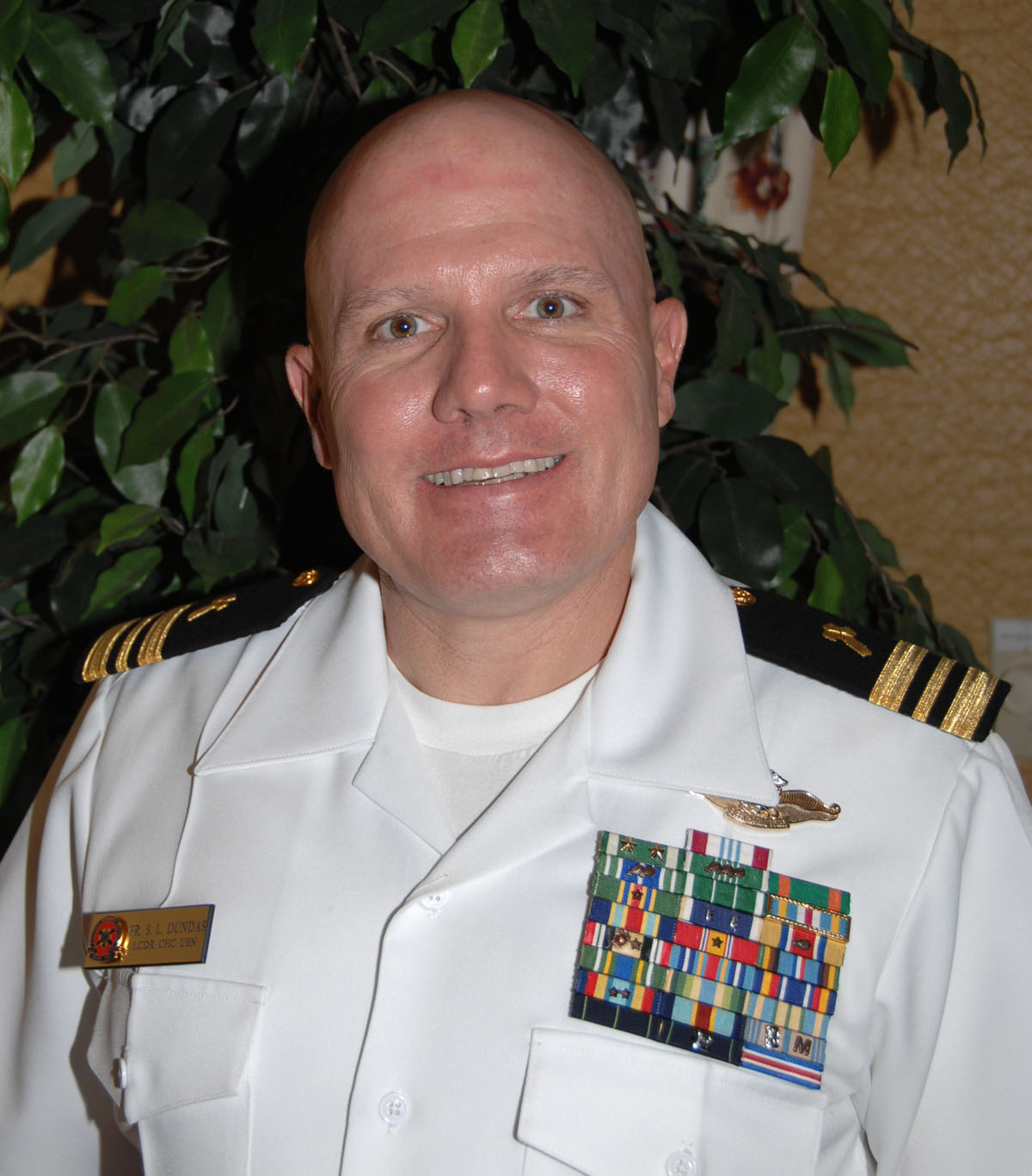
Padre Steve in 1982

They say that “time flies when you’re having fun” and I cannot believe that I have been in the military now for 29 years. On August 25th 1981 a 21 year old college kid with long Southern California “surfer” hair walked into the California Army National Guard Armory on Van Nuys Boulevard to enlist in the National Guard after having just sworn into the Army ROTC program at UCLA.   Back then I enlisted in what was or is called the Simultaneous Membership Program or SMP program.  My initial military training came through the ROTC program as well as on the job training in the National Guard as a Field Artillery Forward Observer and Intelligence Specialist.

Like Cal Ripken Jr commenting about his career “So many good things have happened to me in the game of baseball. When I do allow myself a chance to think about it, it’s almost like a storybook career. You feel so blessed to have been able to compete this long.” I can say the same thing just substituting the words “military career” for “the game of baseball.”

On the day that I enlisted I met with Major Charles Armagost the S-1 of 3rd Battalion 144th Field Artillery and full time advisor for the battalion filled out my enlistment papers and raised my right hand. I still remember the day when I enlisted. It was a hot smoggy Los Angeles day where you could see the air.  I walked down the hall after I swore in to see the supply Sergeant who outfitted me with four sets of Olive Green fatigues and ordered me two sets of the brand new BDUs.  I was issued my TA-50 gear and taken to the motor pool where I was given cursory training on the M151A1 “Jeep” and issued a military drivers license.  The three weeks later I was driving one of those venerable machines to Fort Irwin on a Friday through Sunday drill with the advanced party. It was the beginning of a 29 year career spanning two services, the active and reserve components and now multiple trips to combat zones.

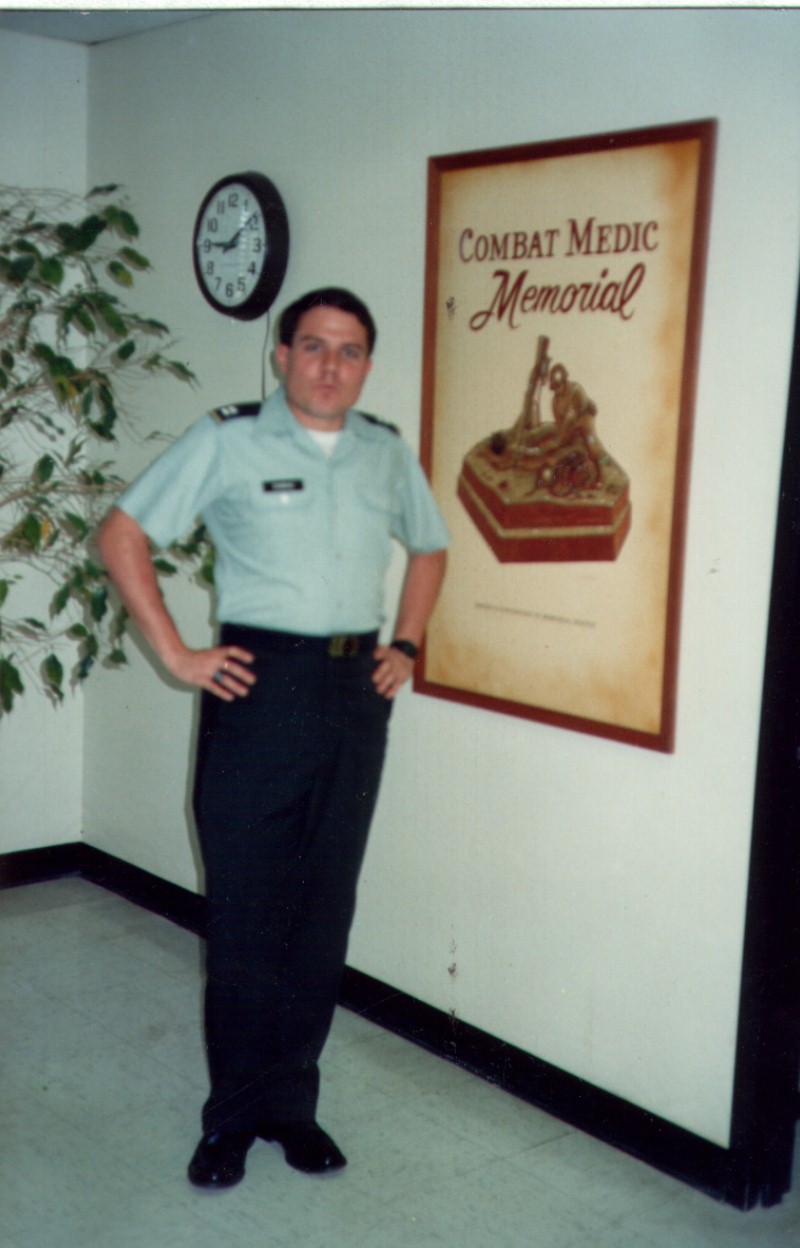
Army Captain 1987

It has to quote Jerry Garcia of the Grateful Dead “a long strange trip” spanning the Army and the Navy, active and reserve components as well as two tours with the Marine Corps while serving in the Navy and the beat goes on with my selection for promotion to Commander and my Senate nomination to that grade on August 21st.  I have served on the Fulda Gap in the Cold War, been to what was then East Berlin driving the Helmstedt-Berlin corridor sharing the road with Soviet armored columns.  I supported the Bosnia Operation in 1996-97 and the Korean DMZ with the Marines in 2001. I served in Operation Enduring Freedom and Southern Watch in 2002 where I was on a boarding team, boarding 75 Iraqi and other country smuggling ships while serving aboard the USS Hue City.  That was followed by multiple trips in and out of theater with the Marine Security Forces from 2003-2006 as well as time on the Cuban fence line at Guantanamo Bay before serving in Iraq with our Marine and Army advisors and their Iraqi Army and Security forces.  I’ve served with Infantry, Armor, Combat Engineer, Artillery, Medical and Ordnance units, Security forces, support elements, bases and training centers, hospitals and ships.

Berlin Wall November 1986

When I enlisted I thought that once I was commissioned that I would serve my entire career in the Army and retire as a Lieutenant Colonel. I did not anticipate becoming a Chaplain nor leaving the Army for the Navy. When I am officially promoted to Commander it will be the first rank since I was an Army First Lieutenant that I have not held twice.  When I first enlisted and had no ribbons I used to look at wonderment at the Korea and Vietnam veterans who had tons of ribbons and tell Judy that I wish I had what they had. Now that I am working on 9 rows of the things I cringe every time I have to remount ribbons and ribbons and my wallet screams in agony.  Judy is quick to remind me of my whininess back then and tell me that I asked for it.

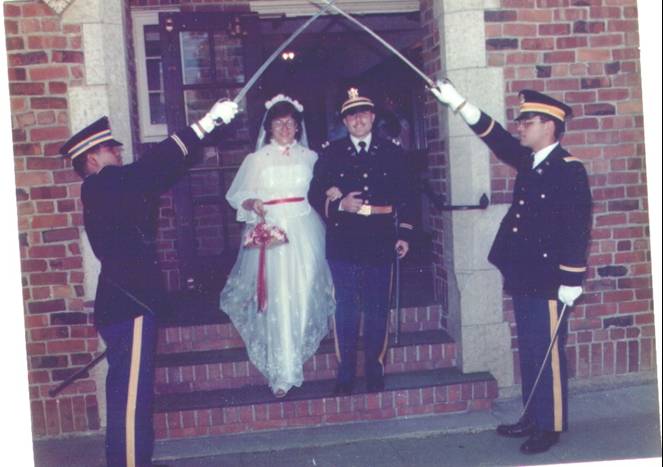
She didn’t know what she was getting into

As an Army and Navy Officer I have served or done some kind of military duty in Germany, France, Great Britain, Greece, Italy, Croatia and Turkey, Spain, Malta, Korea, Japan, Jordan, Bahrain, Kuwait and Iraq.  I’ve done what I call the “Commie Trifecta” the Berlin Wall, Korean DMZ and the Cuban Fence Line. At the same time I have spent 16 of 27 wedding anniversaries away from home and lost count of birthdays and other important occasions that I missed while serving the country.

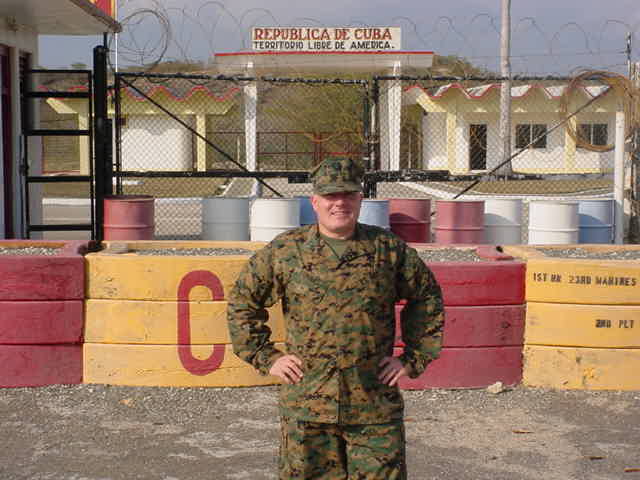
Guantanamo Bay Cuba 2004

I have served 5 different Presidents. In that time I have seen changes in the political, social and economic conditions of the country and the world that I could not have imagined at the time of my enlistment.  The Soviet Union had just invaded Afghanistan and the Iranian hostage crisis had just ended but within the Soviet Union had been defeated the Berlin Wall taken down and collapse of the Soviet Union.  Twenty years after I enlisted the people that defeated the Soviets were attacking us on our own soil.

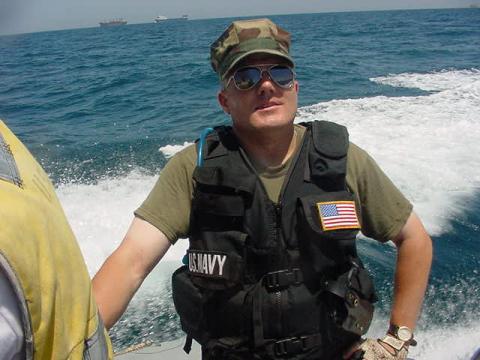
Boarding Party Arabian Gulf May 2002

I lived in Europe and went through the Chernobyl radiation cloud which is obviously the cause of my glowing personality.  While in Europe I ate enough beef to be labeled by the Red Cross as a potential carrier of Mad Cow disease. I worked on military personnel policies at the beginning of the AIDS epidemic and saw the beginning of Don’t Ask Don’t Tell policy.  I saw the Reagan build up and the post Cold War drawdown.  When I was a Company XO and Company Commander we had landlines and typewriters with carbon paper and did not get internet in my office until 1997.  It is hard to believe the changes even in the quantum leaps in computer and communication technology in the past few years where I can check e-mail on my Blackberry and work from almost anywhere with my laptop.

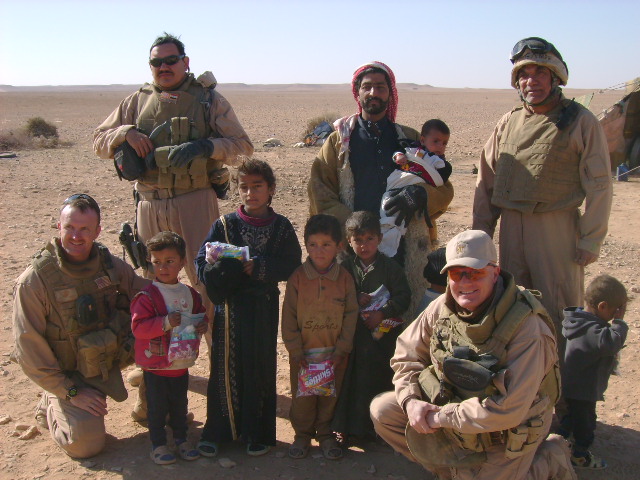
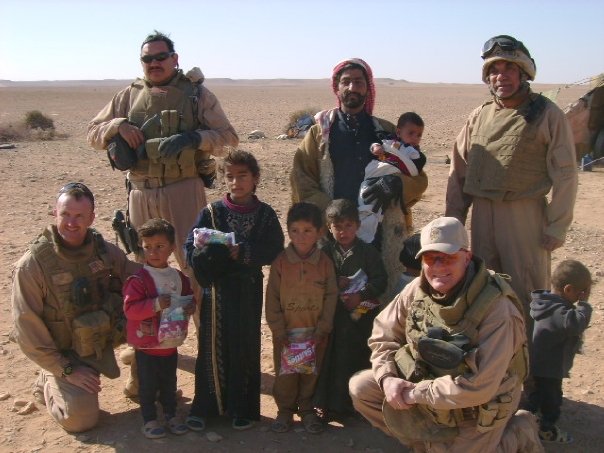
With Advisors and Bedouin on Iraqi-Syrian Border December 2007

Looking back here are some of the things that I have seen since I entered the military:

October 23rd 1983: Beirut Bombing: BLT 1/8 barracks and French 1st Parachute Regiment destroyed by suicide bombers 241 Americans and 58 French Paras killed.  I was at the Junior Officer Maintenance Course at Fort Knox watching CNN late at night when they broke the news.

December 12th 1985:  Arrow Air Charter Boeing 707 crashed in Gander Newfoundland killing 248 American Soldiers returning from Peacekeeping duty in Sinai Peninsula. Among the dead was Sergeant Charles Broncato who had been one of my Squad Leaders in 2nd Platoon 557th Medical Company Ambulance. I was then serving as the Company Commander.

January 28th 1986: The Space Shuttle Challenger blows up 73 seconds into flight killing 7 Astronauts.  I was in my office at the close of the day getting ready to adjudicate an Article 15 when my Charge-of Quarters SPC Lisa Dailey ran into my office and said “Lieutenant Dundas, the Space Shuttle just blew up!” My response was “Come on, Space Shuttles don’t blow up.”

February 15th 1988: The Soviet Union withdraws from Afghanistan. I was a National Guard Officer in Texas attending Seminary and thought this was a good thing.  Now I wish that they had done better and at least killed Osama Bin Laden, then a relatively minor commander.

December 21st 1988: Pan Am 103 downed by Libyan operatives over Lockerbie Scotland killing all 270 passengers and crew. The aircraft a Boeing 747 named the Maid of the Seas was the same aircraft that we had flown home from Germany on December 28th 1986.

October 17th 1989: the Loma Prieta Earthquake causes massive damage in San Francisco and Oakland. I was watching pregame activities of game 3 of the World Series between the A’s and Giants on television when it happened.

November 9th 1989: The Berlin Wall Fell. In November of 1986 we had been to East Berlin and like most Americans never thought that we would see this day.

August 2nd 1990: Iraq Invades Kuwait: At time few people believe it well end in war. I was deputy course leader for Army Chaplain Officer Basic Course, tell my classmates to get ready to go to war.

December 31st 1991: The Soviet Union is dissolved.

April 19th 1993: FBI and other Federal Law Enforcement personnel using Combat Engineering Vehicles from the 111th Engineer Battalion, the unit that I serve as a Chaplain assault the Branch Davidian compound outside Waco Texas. Davidian leader David Koresh and dozens of followers die in fire and shoot out.

June 17th 1994:  Police arrest O. J. Simpson after nationally televised low speed chase charging him with murder in the death of his wife Nicole and Ronald Goldman. NBC splits screen between NBA championship series game between Houston Rockets and New York Knicks and the chase. I watch in back of M577 Command Vehicle on 9 inch television in the field at Fort Hood.

August 12th 1994: Baseball strike cancels season, playoffs and Worlds Series.

April 19th 1995: Timothy McVeigh and Terry Nichols blow up Alfred P. Murrah Federal Building

January 26th 1998: Bill Clinton states that “I want you to listen to me. I’m going to say this again: I did not have sexual relations with that woman, Miss Lewinsky.”

December 31st 1999: The world awaits the end of life as we know it due to the Y2K flaw sthat supposedly causes computers to malfunction and bring calamity to the earth.

January 1st 2000:  People including me wake up from hangovers to find that computers still work.

September 11th 2001: Al Qaeda terrorists hijack four commercial airliners crashing two into the World Trade Center Towers in New York collapsing them and one into the Pentagon. A fourth is brought down by passengers before it can reach Washington DC and its target, the US Capital killing 2976 people and injuring another 6000+. I am at Camp LeJeune North Carolina and remained locked down on base the next 4 days.

March 19th 2003: US and Allies launch attack on Iraq known as Operation Iraqi Freedom to remove Saddam Hussein from power and disarm his stocks of weapons of mass destruction. I am assigned to USS Hue City and the ship is in dry dock. The rest is history.

I also saw a lot of baseball mostly from afar, Pete Rose’s epic hit, Cal Ripken’s consecutive games record, Nolan Ryan’s 5000th strike out and 7th no-hitter as well as all of the now steroid tainted home run records including Barry Bond’s 756th home run which I saw live in a chow hall in Baghdad.

Somehow it is all worth it. Judy has not divorced me although I have probably given her reason on more than one occasion to do so and I love what I do and the people that I get to serve. It really is amazing to look back and think about all the events that I have either witnessed or been a part of in the military as well as all of the great people that I have been associated with. Those friendships and relationships mean more than about anything to me and I am grateful to God and to Judy, my family and all of my friends who have helped me, sometimes in very dark times to go as far and as long as I have in both the Army and Navy.

I was selected for promotion to Commander in June and confirmed by the Senate on August 23rd. I now am about to enter a new phase of life, military service and ministry as the supervisory Chaplain at Naval Hospital Camp LeJeune North Carolina.  Lord knows what the future hold, but whatever happens I feel that things will be fine.

I hope that whatever you do that you will experience good things and be able to look back in life and say “wow that was something else.” So here is to all of us and the long strange trips that we embark upon in life.  In the words of Lou Gehrig, “I am the luckiest man alive.”

Peace,

Padre Steve+

Leave a comment

Filed under Baseball, History, Military, Tour in Iraq, US Navy

The Breakout from Normandy

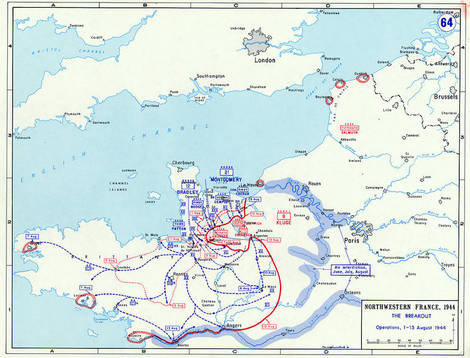
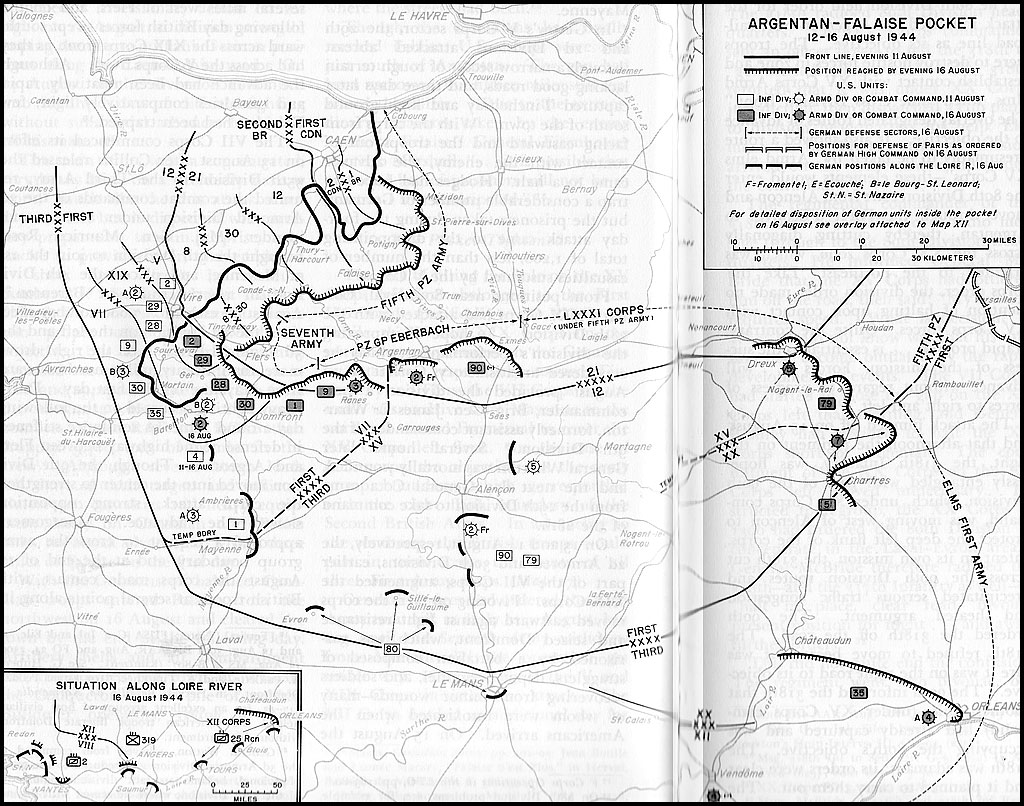
Map of Normandy Breakout

The breakout from Normandy by Bradley’s 12th Army Group at St Lo opened a realm of possibilities for the Allies to defeat the German Army in detail and end the war.  Unfortunately for the Allies the manner that they would exploit their success achieved during Operation COBRA led to their failure to completely destroy the German Army in the west in the late summer of 1944 would ultimately prolong the war.

The Allied and German problem in August 1944 was the sudden change in the nature of the campaign from a nearly static war of attrition in the Norman hedgerows to a campaign of maneuver.  This change brought about a number of opportunities for the Allies to envelope large portions of the German Army in western France as well as in Belgium and southern Holland. Max Hastings notes that the campaign became more of a “commander’s battle” in which it was “the decisions of the generals that determined the manner in which events unfolded in August, their successes and failures which brought about the position that was achieved by September.”[i] This was a major change as Hastings correctly notes in that prior to the breakout success in the hedgerows had been determined on “the ability of British, American and Canadian units to seize ground from their German opponents on the next ridge, the next hedge, beyond the next road.” [ii] In the hedgerows there was not much room for higher level commanders to influence the battle but once the breakout occurred the decisions made by commanders on both sides had greater influence in the following operations. This would become important as the weaknesses in the quality of allied generalship would begin to show, along with logistics management issues and the failure of the Allied High Command to recognize the resiliency of German forces and the resourcefulness of German leaders in their ability to cope with disaster and recover from it.  These were key elements in the campaign that kept the Allies from ending the war by Christmas.[iii]

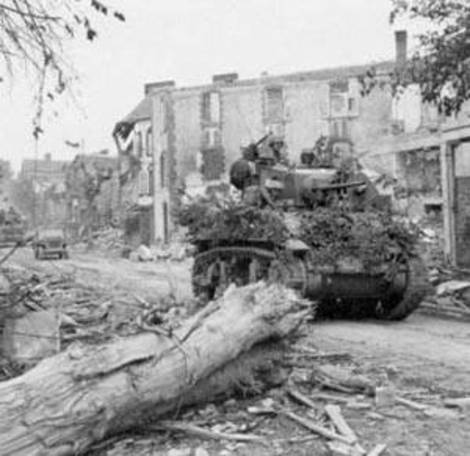
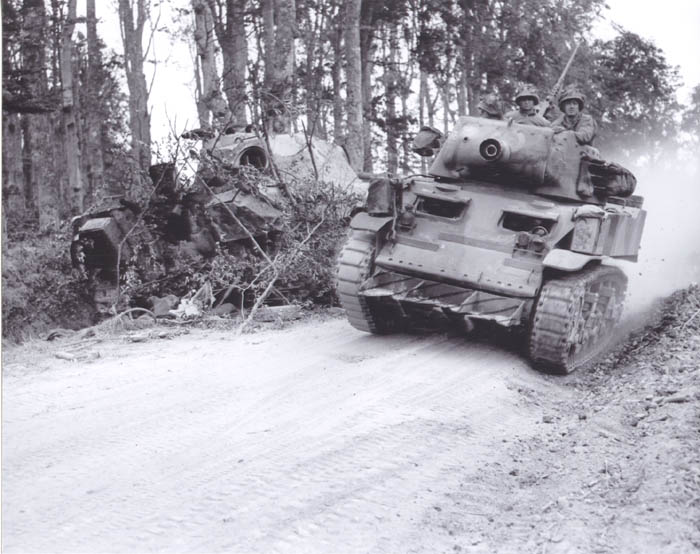
US M5 Light Tank advancing through Coutances

Early in the campaign it was decided that Bradley’s forces needed to capture the Brittany ports, particularly Brest to alleviate shortages of supplies which all still were being delivered across the beaches.  However, the implications of this decision were strategically short sighted and deprived the Allies of a decisive victory in France.  As Third Army exploited the break out from Normandy into the French interior the preponderance of its forces went west which deprived the Americans of the better part of two army corps as well as the logistical assets needed to trap the major part of the German Army in Normandy.  The campaign in Brittany would prove a diversion which did nothing to help the Allied cause.  The divisions committed, casualties taken and supplies expended in an attempt to capture ports that the Germans destroyed before the Americans could capture them. Russell Weigley points this out as a major mistake by Bradley which did little to help the Allied logistical problems and diverted much needed troops away from the focal point of the action in Normandy.[iv] Max Hastings criticized Bradley’s lack of imagination in the initial stages of the breakout by adhering to the original Overlord plan.[v] This is seconded by Patton’s biographer Carlo D’Este.[vi]

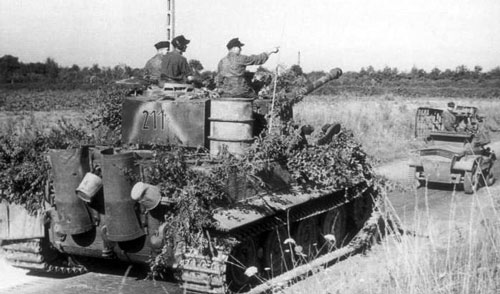
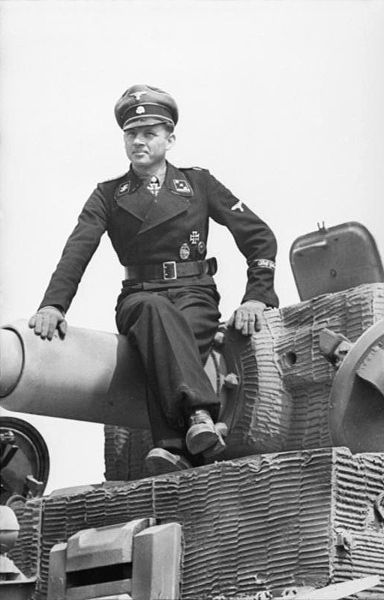
Tiger Tank in Normandy

Patton’s 3rd Army’s weakened eastern push coupled with the continued pressure of the British Army Group toward Falaise put the Germans in a strategic dilemma. With the gate open at Avranches they could attempt to restore the front in Normandy by pinching off the advance or withdraw to the Seine or even further as no “defensive position short of the permanent fortifications of the West Wall on Germany’s frontier offered so many defensive strengths as the Normandy line the Americans had just breached and turned.”[vii] The choice advocated by some senior German commanders was an orderly withdraw to the Seine which would have removed the danger of being enveloped in Normandy as well as make the Allies attack across a major water obstacle defended by still formidable formations.

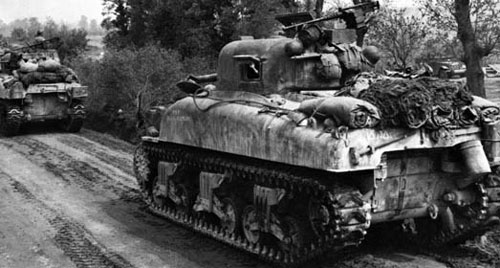
5th Armored Division Shermans near Argentan

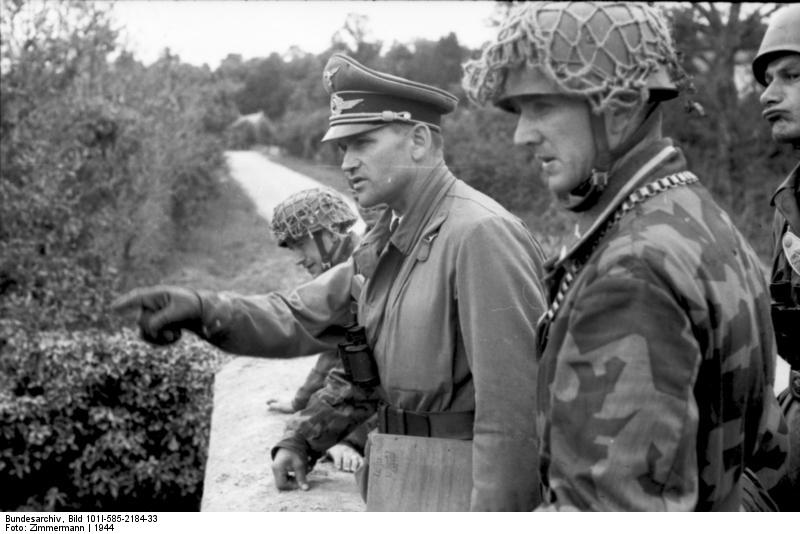
With limited options the Hitler decided on a course of no withdraw and ordered his commanders to marshal their panzer divisions seal the breach and ensnare the allies in the hedgerows.[viii] Hitler and Field Marshal von Kluge disagreed in regard to the offensive which Kluge saw as a limited offensive but which Hitler believed gave the Germans a chance to cut off the American forces in Brittany and possibly even more.  Hitler believed that “once the coast had been reached at Avranches a beginning should be made with rolling up the entire Allied position in Normandy!”[ix] General Eugen Meindl of II Parachute Corps was blunt in his assessment of the attack. Paul Carrel in his book “Invasion! They’re Coming” quotes Meindl speaking with Von Kluge’s son a first lieutenant serving at the front:

“Kindly convey to your father exactly what I’m going to say to you. The time has come when Normandy can no longer be held. It cannot be held because the troops are exhausted. This is the fault mainly of orders to hold out in hopeless positions, but we are still being ordered to hold out even now. The enemy will break through to the west and outflank us. If your father knew what is was to operate against an enemy with downright fabulous command of the air, then he would know that our only hope of doing something useful is by attacking at night. Tomorrow’s tank attack is going to be a failure…and all that’s left for the grenadiers to do is lie down and sacrifice their lives. It’s heartbreaking to have to stand by and watch!”

Grenadiers of the 12th SS Panzer Division “Hitler Jugend”

The German attack, Operation Lüttich was led by XLVII Panzer Corps assisted by elements of 1st SS Panzer Division.  Despite warnings from ULTRA the panzers achieved tactical surprise on the front of the 30th US Division at Mortain on the night of 6-7 August advancing without the customary preparatory artillery bombardment.[x] The Germans initially made progress against the 30th Division which had recently taken over positions at Mortain. However the Americans of the 2nd Battalion 120th Infantry “Old Hickory” Regiment held onto key high ground which enabled them to call artillery fire and air strikes on the German forces attacking toward Avranches which included the elite 2nd, 116th, 2nd SS, and part of the 1st SS Panzer Divisions along with a kampfgruppe cobbled together from the remnants of Panzer Lehr and four battered infantry divisions.[xi] The Americans quickly reinforced 30th Division with elements of 2nd Armored Division, 35th Infantry Division and the veteran 4th Infantry Division to hold the line against the weakened German Panzer divisions.  Bradley and other American commanders viewed Lüttich as “an opportunity, not a threat”[xii] which could enable the Allies to entrap the vast majority of German forces in France.  Bradley was “not merely confident of withstanding them, but expected to destroy them.”[xiii] Bradley attempted to lure more Germans into the potential trap hoping that the Germans would press their attacks around Mortain.[xiv]

On the German side the ground commanders were furious at the failure of the Luftwaffe to shield them from Allied air attacks which devastated the Panzers.  The Luftwaffe and promised that 300 fighters would support the attack to provide protection from Allied close air support.  However the Luftwaffe squadrons were engaged by British and American fighters and so badly mauled that no Luftwaffe units made a appearance over Mortain.[xv] Thus despite their initial success which had promise of cutting off the advancing American spearheads the German Panzers were turned back by the Americans who did not even halt their eastward movement which further imperiled the German forces in Normandy.

With the German Panzer divisions ensnared at Mortain, the 3rd Army drove east while the Canadian army attacked towards Falaise. Bradley suggested that the Allies attempt a short envelopment of German forces at Falaise in which over 100,000 German troops would be trapped between the Patton’s troops advancing north and the Canadians.  The Canadians opened their TOTALIZE offensive from Caen to Falaise on August 8th but as was the case in every part of the campaign against determined German resistance as the XV Corps of 3rd Army advanced east.  Bradley’s plan ended the deep envelopment by XV Corps of 3rd Army designed to entrap the Germans against the Seine crossings, an operation that might promise “still surer results.”[xvi] Bradley told Treasury Henry Morgenthau that he had “an opportunity that comes to a commander not more than once in a century. We’re about to destroy and entire hostile army.”[xvii] Hastings noted that “had the Germans “behaved rationally, recognized the threat of envelopment to their entire front and begun a full-scale retreat east, then Bradley could indeed been accused of losing his armies a great prize.”[xviii]

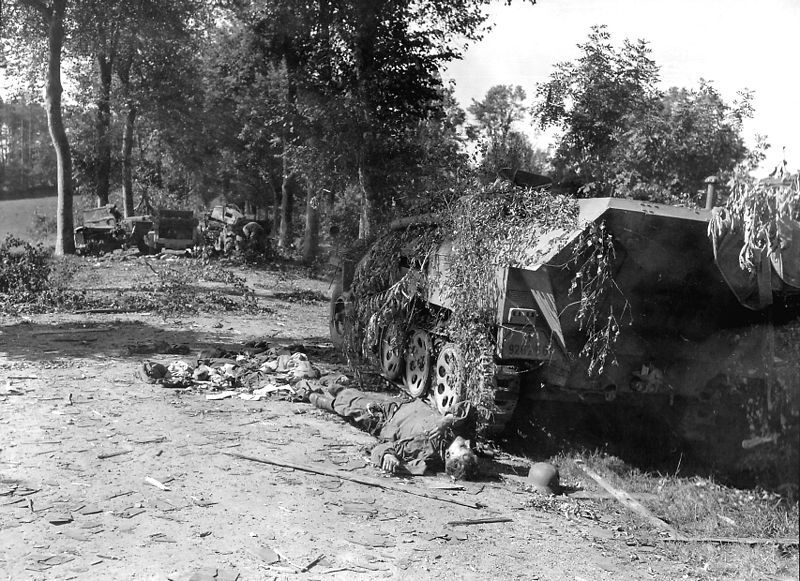
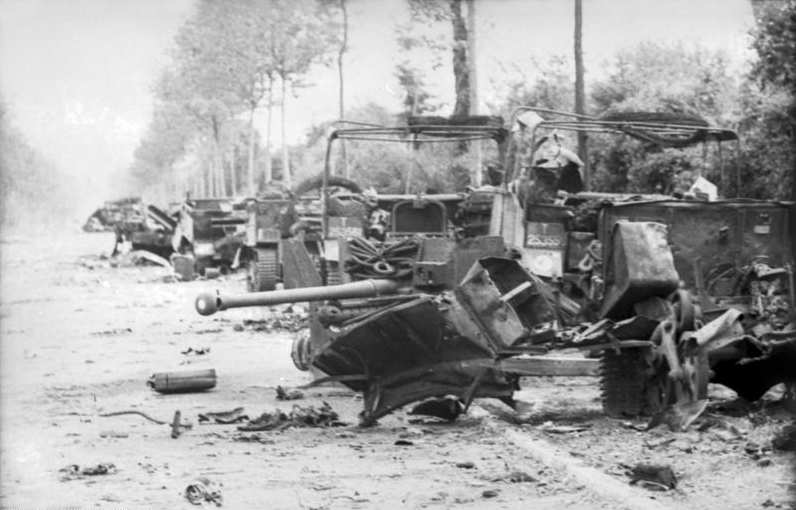
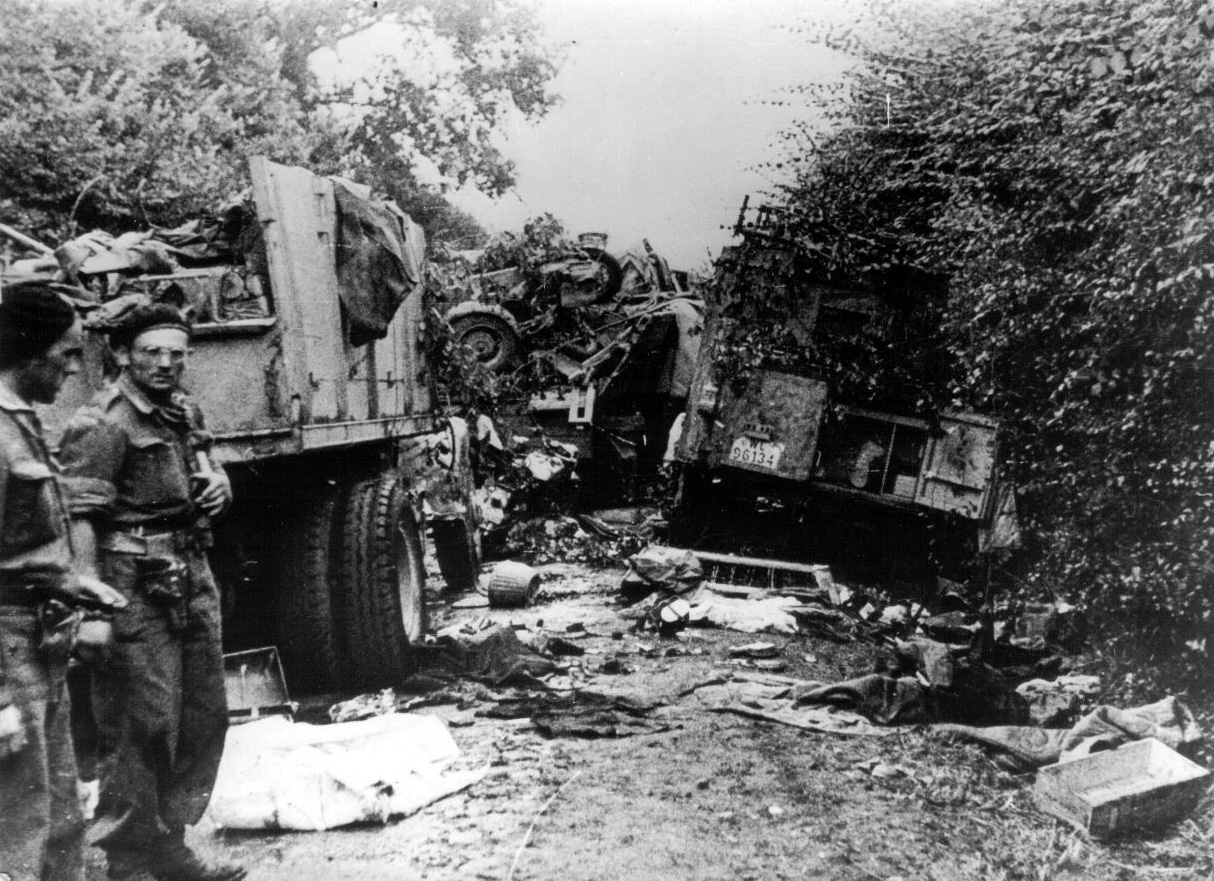
Wrecked German vehicles near Mortain

The decision by Bradley to turn the better part of 3rd Army west into Brittany had deprived him of forces that could have better accomplished mission of entrapping the Germans.  General Wood of 4th Armored Division to his dying day “remained embittered over the lost opportunity”[xix] when his division was turned back into Brittany rather than being allowed to move east toward the Seine.   Weigley points out an even deeper flaw regarding the Brittany decision.  This was that that the OVERLORD planners “had not thought anything resembling the Avranches breakout and pursuit without pause to the Seine likely… stating that it is among the worst forms of generalship that takes counsel of its fears. Yet that was exactly the condition of OVERLORD logistical planning.”[xx] Weigley’s point is well taken, the Allies had not planned for success nor had they anticipated in the OVERLORD planning the full range of possibilities that might open to them once a breakout had occurred.

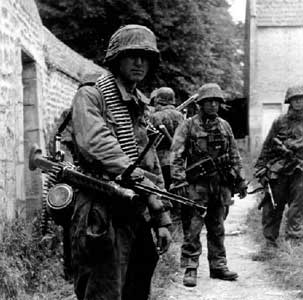
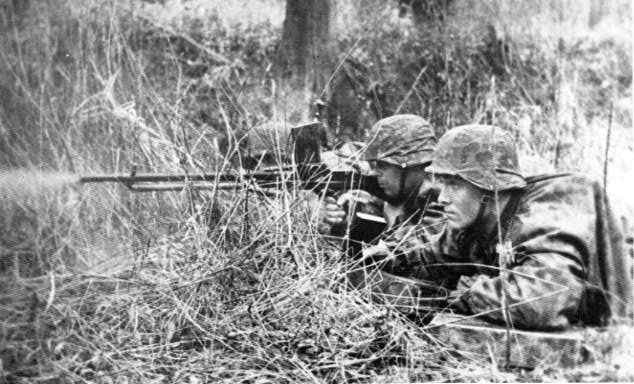
12th SS Panzer Division Machine Gun team

The Allies did have a chance to destroy the German 7th Army.  The LXVII Panzer Corps and II SS Panzer Corps as well as the remnants of II Parachute Corps and other formations battered in Normandy were attempting to withdraw to the east from Mortain. The remnants of I SS Panzer Corps led by 12 SS Panzer Division and Army Panzer divisions such as the 21st Panzer Division offered determined resistance to the Canadians who were attacking toward Falaise.  To the south only scattered Kampfgruppen of divisions shattered in Normandy opposed Patton’s forces at Argentan. The Germans were aided by a fortuitous decision of the commander of the 2nd French Armored Division to move a combat command along a road needed by the American 5th Armored Division delaying it and allowing the Germans to send a battalion into the Argentan which could have “fallen easily a few hours before.”[xxi] The Allies were bedeviled by several other failures which prevented the short double envelopment from occurring and allowing the remnants of 7th Army to escape to fight again despite grievous losses in men, material, and especially armored fighting vehicles, artillery and motor transport.

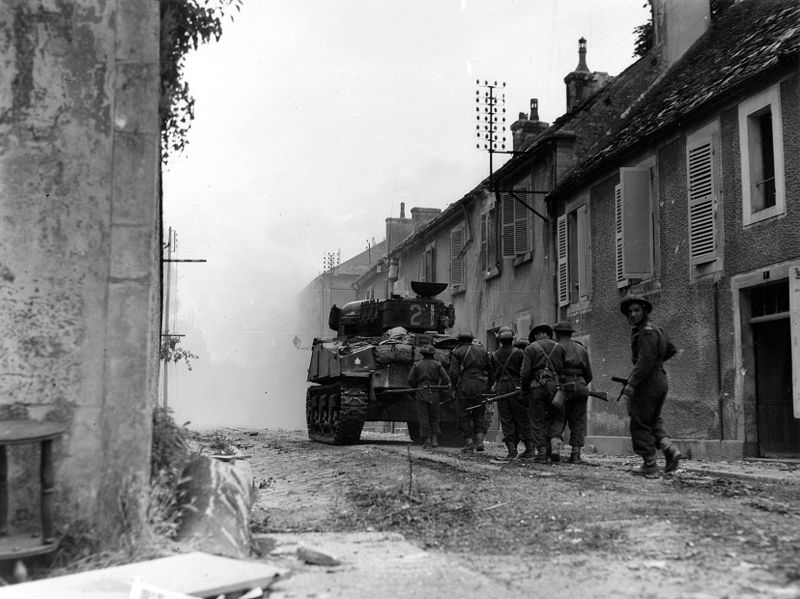
Canadians advance in Falaise

The first of these was the Canadian failure to push the Germans out of Falaise despite overwhelming material and air superiority.  The Canadian offensive Operation TOTALIZE was planned by the best of the Canadian generals, General Simonds. Unfortunately Simonds was not in command of the operation.  Totalize was a promising attack but bogged down halfway to Falaise due to a quick counterattack by 12th SS Panzer kampfgruppen, as well as a misguided bombing attack on the attacking forces by Allied air units, and the inexperience of the attacking units.  The Canadian 4th Armored Division and Polish 1st Armored Divisions paused to eliminate strong points rather than bypass them which allowed the Germans to reform their lines.[xxii] The second failure was that of Montgomery who refused to adjust army group boundaries with Americans and instead ordered the Canadians “renew their drive promptly and vigorously.”[xxiii] This refusal held the Americans advance at Argentan while the Canadians battered themselves against far stronger German opposition.  However, General Crerar of Canadian 1st Army was as bad of Army commander as could be found.  Weigley somewhat sarcastically points out that Crerar spent five days “doing what really battlewise generalship could do by regrouping and making diversionary attacks.”[xxiv] It took over 48 hours for Crerar to launch a determined attack to close the gap despite the weakness of German forces. Even a personal phone call by Montgomery to Crerar urging him to “close the gap between First Canadian Army and 3rd U.S. Army” did nothing to move the Canadian general and Crerar’s dawdling allowed many Germans to escape from Normandy to fight again.[xxv] Despite the vice that had closed around them the Germans successfully withdrew experienced battle groups of elite Wermacht and SS Panzer Divisions as well as the Paratroopers of II Parachute Corps to fight again.  General Meindl himself led a battle group of Falschirmjaeger from his Corps during their breakout through the Allied lines.  Despite the loss of 40,000 soldiers in the Falaise Pocket the Germans had saved a substantial part of their Army.

US Infantry advancing near Argentan

General Kurt Meyer of 12th SS Panzer Division faulted the Canadian leadership with a failure to use imaginative planning, and noted that “none of the Canadian attacks showed the genius of a great commander.”[xxvi] American units which Patton had cautiously advanced north of Argentan towards Falaise were recalled after Bradley was unable to convince Montgomery to alter the army-group boundary in light of the new circumstances.[xxvii] Patton recounted that he believed that his units could have “easily entered Falaise and closed the gap” and that the “halt was a great mistake.”[xxviii]

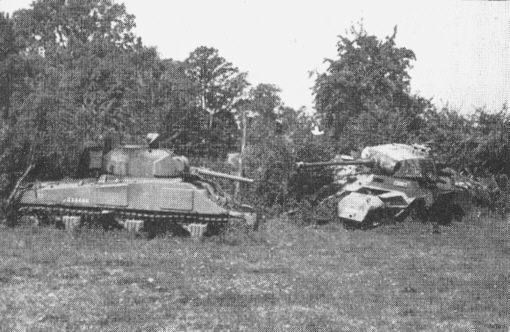
Knocked out Sherman of the Polish Armored Division next to a knocked out Panther

Weigley blames Bradley as much for the halt order as much as Montgomery for “discouraging whatever might have been done to rectify the blunder- even discouraging on August 13th a call from the Supreme Commander to Montgomery about the inter-allied boundary.”[xxix] Thus through a series of Allied mistakes particularly by senior commanders the first opportunity to envelop the Germans passed into history as a great yet incomplete victory.  A victory which though impressive allowed experienced German forces to escape to fight again. As the Germans escaped from Falaise the Allies began a pursuit in conjunction with landings in the south of France that would take them to the borders of Germany.

Polish Soldiers at the Corridor of Death


[i] Hastings, Max. Overlord: D-Day and the Battle for Normandy Vintage Books, New York, 1984 p.280

[ii] Ibid.

[iii] Hastings, Max. Armageddon: The Battle for Germany 1944-1945 Alfred a Knopf, New York, 2004 p.37.  Hastings comments that “British planners threw away it had learned since 1939 about the speed of reaction of Hitler’s army, its brilliance at improvisation, its dogged skill in defense, its readiness always to punish allied mistakes.”

[iv] Weigley, Russell F. Eisenhower’s Lieutenants: The Campaign of France and Germany, 1944-1945, Indiana University Press, Bloomington IN, 1981pp.184-186

[v] Ibid. Hastings. Overlord pp.282-283

[vi] D’Este,  Carlo. Patton: A Genius for War. Harper Collins Publishers New York, 1995 pp.632-633

[vii] Ibid.  p.195

[viii] Ibid. Also

[ix] Warlimont, Walter. Inside Hitler’s Headquarters 1939-45 Presidio Press, Novato CA 1964 pp.449-450.

[x] Ibid pp.195-196. Weigley notes that Montgomery and most other Allied commanders  had been optimistic in not anticipating the German counter attack despite the ULTRA warnings, while Bradley and Patton were cautious in making troop deployments.

[xi] Michael Reynolds in Steel Inferno: The 1st SS Panzer Corps in Normandy notes that the Americans inflicted “astonishing casualties on the northern thrusts of 2nd SS Panzer and remained undefeated when the Germans withdrew 4 days later.”  Reynolds, Michael Steel Inferno: The 1st SS Panzer Corps in Normandy Dell Publishing, New York, 1997 p.264

[xii] Ibid. Hastings Overlord p.283

[xiii] Ibid.

[xiv] Ibid. Weigley p.199.

[xv] Carrell, Paul. Invasion! They’re Coming!” Trans. E. Osers, Originally published as Sie Kommen! Gerhard Stalling Verlag 1960, Bantam Books New York, 1964, 5th Printing June 1984. p. 249

[xvi] Ibid. Weigley p. 199

[xvii] Ibid. p.200

[xviii] Ibid. Hastings. Overlord. pp.282-283

[xix] Ibid. D’Este. p.631

[xx] Ibid. Weigley. p.286  He also points out that the Brittany diversion could have been “worse had it not been for Montgomery’s influence”  p.288

[xxi] Ibid. p. 202

[xxii] Ibid. p.204

[xxiii] Ibid.

[xxiv] Ibid.

[xxv] Reynolds, Michael Steel Inferno: 1st SS Panzer Corps in Normandy Dell Publishing New York, 1997. p.320.

[xxvi] Meyer, Kurt Grenadiers trans. By  Michael Mende and Robert J.  Edwards, J.J. Fedorowicz Publishing, Inc. Winnipeg Manitoba, Canada 2001 p.290.

[xxvii] Ibid. Hastings Overlord pp.288-289.

[xxviii] Patton, George S. War As I Knew It Bantam Books NY  published 1980, originally published by Houghton Mifflin Company 1947. pp.101-102

[xxix] Ibid. Weigley p.209  Weigley quotes Major Hansen, Bradley’s aide in stating that the Falaise halt orde was “the only decision he has ever questioned.”

Leave a comment

Filed under Loose thoughts and musings

D-Day and After: Battling Through the Bocage

US 155mm Howitzer in Normandy. The American artillery was considered the best branch of the American combat arms by the German commanders

It took nearly a week for the American V and VII Corps on Omaha Beach and Utah Beach to link up with each other and secure their beachheads against fierce German resistance.    Elements of the 29th Division and the 90th Division pushed inland from OMAHA to expand the beachhead toward UTAH. Opposed by the 352nd Division, elements of the 91st Airlanding Division and other non-divisional units the American divisions took heavy casualties.  The fighting revealed the inexperience of the American infantry formations and the uneven quality of their leadership as they tackled the Germans in the labyrinth of the Bocage country. However by June13th the link up was solid enabling the Americans to conduct the follow up operations needed to expand the beachhead, secure Cherbourg and clear the Cotentin.

German Falschirmjaeger with 81mm mortar. This simple weapon was one of the most lethal in the German arsenal and accounted for a large number of Allied infantry casualties

The lack of success of the 90th Division, led the VII Corps commander General “Lightening Joe” Collins to relieve the division commander and two of his regimental commanders.   This was a portent of things to come with other American units as they took heavy casualties despite having a vast superiority in firepower over the Germans.[i] As the two corps pushed into the “Bocage” they were followed by a massive build up of troops and equipment delivered to the beaches and to the artificial “Mulberry” harbors.  Despite their numeric superiority, air supremacy and available Naval gunfire support and facing few units of high quality save the 352nd, 91st and the 6th Parachute Regiment, the Americans made painfully slow progress as they expanded the beachhead.[ii]

Poor training and leadership caused many US infantry casualties and many GIs to be captured. Here a Falschirmjaeger accepts a cigarette from a GI of the 29th Infantry Division

Once the beachheads had been consolidated the Americans turned their attention toward Cherbourg. This was the major Naval Port at the far northwest tip of the Cotentin and considered vital to the resupply of the Allied forces as they pushed into the heart of France.  D-Day planners counted on the swift capture of Cherbourg and rehabilitation to serve as a supply port for the Allied forces to lessen the dependency on the artificial Mulberry harbors. The first task was to isolate Cherbourg and to do this the 9th Division drove south from the beaches to the coast near Barneville.  The corps captured Barnville on the 18th of June cutting off the German forces covering the approaches to Cherbourg.[iii] This put the Germans in a bind as the 7th Army “had to split its forces in the peninsula in order to hold the fortress a little longer and thus to gain time for the establishment of the southern front on the Cotentin peninsula.[iv]

General Erich Marcks a one legged veteran of the Eastern Front led a spirited defense until he was killed in action

The German forces arrayed before Cherbourg waged a desperate defense centered on the 243rd Infantry Division and other assorted battle groups of LXXXIV Corps. During the fighting the LXXXIV Corps commander General Marcks was killed in action on 12 June.[v] This was a tough loss for the Germans as Marcks was a resourceful planner and resolute leader and considered one of the best German commanders in Normandy.

Once Cherbourg was cut off from German support Collins and the U.S. VII Corps composed of the 9th, 4th and 79th Divisions pushed up the peninsula capturing Cherbourg on June 29th.  Bradley pushed hard for the capture of the port as the Mulberries had been ravaged by a severe Channel storm greatly diminishing the over the beach logistics support. Cherbourg’s port was thoroughly demolished by German engineers and would not be fully operational for months. The loss of the Mulberries and delay in Cherbourg’s availability meant that few supplies were landed on the beaches.  This would “hinder the escape from the constricting land of the hedgerows into which the Americans had come in search of a port” [vi] and was a setback to allied planning.

US 1st Infantry Division soldiers pause during operations in Normandy

To the east of VII Corps the V Corps under Major General Leonard Gerow made a cautious advance by phase lines toward Caumont, St Lo and Carentan.  The deliberate advance by the Corps toward a line weakly held by the Reconnaissance battalion of the 17th SS Panzer Grenadier Division was directed by Bradley who did not want to divert attention from the effort against Cherbourg.  A more aggressive commander might have tried to push further to expand the beachhead but caution was a hallmark of the American campaign in Normandy up to Operation COBRA.  After capturing Caumont V Corps halted and continued aggressive patrolling to deceive the Germans while digging in.[vii] Bradley’s decision to err on the side of caution had an effect on the broader campaign in Normandy.   Had Bradley directed a strong push against the weak German line it could have led to an opportunity to envelope the German line west of Caen. The opportunity lost through caution helped lead to the bloody and controversial campaign to capture Caen.[viii] Throughout the campaign in the Bocage American units were badly handled by their commanders, especially at lower levels and the experience and initiative shown by German battle groups and small unit leaders constantly stymied to American advance.

German Panzergrenadiers on Hill 112 awaiting a British attack beyond Caen

The Americans were not alone in their struggle against the Germans. Field Marshal Bernard Law Montgomery had ambitious plans to break out of Normandy by capturing Caen on D-Day and driving toward Falaise and Argentan.  The British failed to capture Caen and their plans were frustrated by the rapid reinforcement of the sector by the Germans.   The 21st Panzer, Panzer Lehr, and the 12th SS Panzer Divisions skillfully defended the area taking a fearful toll on the British and Canadians arrayed against Caen.

Captain Michael Wittmann of the 101st SchwererPanzer Battalion (Heavy Tank Battalion) in Normandy

A flanking maneuver at Villers-Bocage was frustrated by a few Tiger tanks of SS Heavy Tank Battalion under the command of Captain Michael Wittmann that destroyed 14 tanks and 15 personnel carriers of the British 7th Armoured Divsion along with 2 anti-tank guns within the space of 15 minutes. [ix]

Vehicles Destroyed by Wittmann’s detachment at Villers-Bocage

Likewise a series of disastrous attacks toward Caen (EPSOM, CHARNWOOD and GOODWOOD) which were strongly supported by air strikes and naval gunfire were mauled by German forces and only finally succeeded in taking the unfortunate city of Caen on July 18th.

British Ammo Carrier goes up in flames after being hit by German fire during Operation Epsom

However the British failed to take the heights beyond the town[x] which led to more attacks against crack well dug in German forces.  In the campaign to take Caen and the hills beyond it the British took heavy casualties in tanks and infantry which seriously strained their ability to conduct high intensity combat operations in the future.[xi] The one benefit, which Montgomery would claim after the war as his original plan was that German forces were fixed before Caen and ground down so they could not be used against Bradley’s breakout in the west at St Lo.[xii]

US M-10 Tank Destroyer firing at German positions in Normandy

The Caumont gap no longer “yawned invitingly in front of V Corps;”[xiii] as the Germans had reinforced the sector while the Americans dug in, yet now Bradley wished to push forward rapidly to achieve a breakthrough in the American sector.[xiv] Facing the most difficult terrain in France amid the Bocage and swamps that limited avenues of approach to the American divisions committed to the offensive.  The Americans now faced their old foe the 352nd division as well various elements of elite II Parachute Corps, the 17th SS Panzer Grenadier and Panzer Lehr Divisions.

German Falschirmjaeger in Normandy

American tanks and infantry made slow progress and incurred high losses as they fought the Germans yard by yard in the Bocage.  The Americans incurred high numbers of casualties and in the VIII Corps sector alone the attack “consumed twelve days and 10,000 casualties to cross eleven kilometers of the Bocage…the achievements of the VII and XIX Corps were no better than comparable.[xv] Such losses incurred so early during the campaign would have far reaching effects when the Americans reached the Alsace-Lorraine and the German border.

M-8 Gun carrier of a reconnaissance battalion advancing in Normandy

In order to break out of the Bocage the town of St Lo had to be captured.  It lay at a vital road juncture and its capture would help open the way into the French interior, thus St. Lo was key to Bradley’s breakout efforts.  His First Army had to capture it and the roads leading of it to launch Operation COBRA along the coast.  The task of capturing St. Lo was assigned to Gerow’s V Corps and Charles “Cowboy Pete” Corlett’s XIX Corps.  They faced opposition from the tough paratroops of the German 3rd Falschirmjaeger (Parachute) Division of II Parachute Corps commanded by General Eugen Meindl a tough veteran paratrooper and resourceful commander who had been shot through the chest at Crete.

General Eugen Meindl of II Falschirmjaeger Corps decorating troops. In contrast to many Allied commanders many senior German officers like Meindl led following the doctrine of “Auftragstaktik” from the front sharing the hardships and dangers of their soldiers

The 2nd, 29th, 30th and 83rd Divisions of XIX Corps fought a tough battle advancing eleven kilometers against the German defenders again taking high numbers of casualties especially among the infantry.  However they were successful and secured St. Lo on 18 July.[xvi]

US Vehicles advancing through the shattered city of St Lo

With St Lo in their possession the Americans had finally cleared the hedgerows of the Bocage and now looked at the open country of the French interior.  St Lo epitomized the struggle that the American Army had to overcome in the Bocage.

B-24’s Bombing St Lo on July 25th an attack that went awry killing many US soldiers near the front

Americans faced hard fighting against heavily outnumbered but superiorly led German troops that occupied excellent defensive country that inflicted heavy casualties on the Americans for every yard of ground given up. The Germans for all of their disadvantages exacted a terrible price in American blood between D-Day and the capture of St Lo despite the Allied control of the skies and the numerical superiority of the American Army.[xvii]

A Panzer IV camouflaged in a Normandy town

With the Bocage behind him Bradley desired to push the Germans hard and moved from a cautious to bold strategy to break the German line.  COBRA was his plan to break out of Normandy.  Bradley ably assisted by Collins realized that the better terrain, road networks past St Lo favored a decisive breakout.  American preparations for the attack included a technical advance that allowed tanks to plow through hedgerows, the “Rhino” device fashioned by American troops which was installed on three of every five First Army Tanks participating in the operation.[xviii] The Rhino device allowed the American Tanks to cut through the thick earthen hedgerows instead of being forced to climb them and expose their unprotected bellies to German anti-tank weapons or limit their movement to the constricted road net.

Sherman Tank equipped with the Rhinoceros device

As the Americans prepared the Germans continued to conduct a spirited active defense but were hampered by a lack of reinforcements.  As it happened they did not receive reinforcements in anywhere close to the numbers needed as the German Replacement Army was hoarding vast numbers of troops in Germany in anticipation of the plot to assassinate Hitler of which several high ranking members of the Replacement Army were leading conspirators. The Germans at the front were being starved of replacement divisions even as the Allies continued to build up their own forces in Normandy.

GI inspecting a knocked out Panzer IV

VII Corps was designated to lead the attack which was to begin on July 24th. American planning, reflecting more experience against the Germans was more advanced than in past operations.  Collins and Bradley planned for exploitation operations once the breakthrough had been made as part of the overall operational plan.  The aircraft of the 8th and 9th Air Forces were designated to conduct a massive air bombardment that would precede the attack. Division, Corps and additional artillery battalions were allotted to pulverize German positions to assist in the breakthrough.   A mistake by the heavy bombers in the 24th resulted in the heavy casualties to forward units which led to a postponement of the attack until the 25th of July.[xix]

German Panzers and Panzer Grenadiers advancing in Normandy

The attack commenced on the 25th and yet another mistake by the bombers led to more American casualties[xx] and the dead included Lieutenant General Leslie McNair.  McNair was the Commander of Army Ground Forces, a position from which he directed the organization and training of American ground forces.

Men of Co D 117th Infantry being dug out after being bomber by “friendly” US Bombers at St Lo

Many of McNair’s decisions were responsible for the lack of adequate training received by American soldiers as individuals and units which had a direct correlation to the less than stellar performance of many American divisions in the European campaign. However the effect of the bombardment on the German forces was profound as men, equipment and fortifications were blasted by a barrage that the Germans had not yet encountered on the western front.  VII Corps units pressed forward against the determined resistance of Panzer Lehr survivors and the remnants of units that had fought the Americans since the invasion began.  Although it was a “slow go” on the 25th Bradley and his commanders were already planning for and beginning to execute the breakout before the Germans could move up reinforcements.  The 26th of June brought renewed attacks accompanied by massive air strikes.

Infantry of the 30th Infantry Division

While not much progress was made on the 26th, the Americans discovered on the 27th that the German forces were retreating.  The capture of Marigny allowed VIII Corps to begin exploitation operations down the coastal highway to Coutances and for the first time since the invasion the campaign entered a phase of maneuver warfare where the mechanization and motorization of US Army forces gave them an advantage that they did not have in the Bocage.

General George S Patton, Omar Bradley and Field Marshal Bernard Law Montgomery in Normandy, in Patton the Allies found a senior officer that understood the importance of strategic maneuver

On the 27th General George S Patton was authorized to take immediate command of VIII Corps a precursor to the activation of his 3rd Army.  COBRA ripped a hole in the German line and inflicted such heavy casualties on the already depleted German 7th Army that it could do little to stop the American push despite heroic performances by many units which were operating at 50% or below of their authorized strength.[xxi] As the American forces pushed forward they reinforced their left flank absorbing the local German counterattacks which were hampered by the Allied close air support.  As the breakthrough was exploited the command of the forces leading it shifted to Patton and the 3rd Army.

German prisoners being escorted to the rear past a Sherman

By the 28th VIII Corps led by the 4th and 6th Armored Divisions had reached Avranches and established bridgeheads over the See River with additional bridges being captured intact on the 30th.[xxii] The capture of Avranches allowed the Americans to begin exploitation operations into Brittany and east toward the Seine. Weigley notes that for the first time in the campaign that in Patton the Americans finally had a commander who understood strategic maneuver and would use it to great effect.[xxiii]

The American campaign in Normandy cost the U.S. Army a great deal. It revealed weaknesses in the infantry, the inferiority of the M4 Sherman tank to most German types, problems in tank-infantry cooperation and also deficiencies in leadership at senior, mid-grade and junior levels.  Numerous officers were relieved including Division and Regimental commanders.  Nonetheless during the campaign the Americans grew in their ability to coordinate air and ground forces and adapt to the conditions imposed on them by their placement in the Cotentin.  The deficiencies in training and leadership would continue to show up in later battles but the American Army learned its trade even impressing some of the German commanders on the ground in Normandy.[xxiv]


[i] Ibid. p.99 Both Weigley and Hastings make note of the failure of both the Americans and British to train their troops to fight in the bocage once they had left the beaches.

[ii] Ibid. Hastings. pp.152-153

[iii] Ibid. Weigley p.101

[iv] Isby, David C., Ed. “Fighting in Normandy: The German Army from D-Day to Villers-Bocage.” Greenhill Books, London,  2001.  p.143

[v] Ibid. Hastings p.173 Allied fighter bombers exacted a fearful toll among German commanders. The Commanders of the 243rd and 77th Divisions fighting in the Cotentin were also killed by air attacks on the 17th and 18th.   Further east facing the British the commander of the 12th SS Panzer Division, Fritz Witt on the 17th.

[vi] Ibid. Weigley. p.108

[vii] Ibid. p.111-112.

[viii] Ibid.

[ix] The efforts of the 51st Highland Division and 7th Armored Division were turned aside by the Germans in the area and were dramatized by the destruction of  a British armored battalion by SS Captain Michael Wittman and his platoon of Tiger tanks.  See Hastings pp.131-135.

[x] The British 8th Corps under General O’Connor lost 270 tanks and 1,500 men on 18 July attempting to crack the German gun line on the ridge beyond Caen. Weigley, pp.145-146.

[xi] Hastings comments about the critical British manpower shortage and the pressures on Montgomery to not take heavy casualties that could not be replaced. Overlord. pp.241-242.

[xii] Ibid. Weigley pp.116-120

[xiii] Ibid. p.122

[xiv] Ibid. p121 Bradley told Eisenhower “when we hit the enemy this time we will hit him with such power that we can keep going and cause a major disaster.”

[xv] Ibid. 134

[xvi] Ibid. Weigley. pp. 138-143.  Weigley notes of 40,000 U.S. casualties in Normandy up to the capture of St. Lo that 90% were concentrated among the infantry.

[xvii] Weigley quotes the 329th Regiment, 83rd Division historian “We won the battle of Normandy, [but] considering the high price in American lives we lost. P.143. This is actually a provocative statement that reflects America’s aversion to massive casualties in any war.

[xviii] Ibid. p.149

[xix] Ibid. p. 152

[xx] Ibid. pp. 152-153.  Among the casualties were the command group of the 9th Division’s 3rd Battalion 47th Infantry and General Leslie McNair who had come to observe the assault.

[xxi] Ibid. pp.161-169. Weigley notes the advances in U.S. tactical air support, the employment of massive numbers of U.S. divisions against the depleted German LXXXIV Corps, and the advantage that the “Rhino” device gave to American tanks by giving them the ability to maneuver off the roads for the first time.

[xxii] Ibid. pp.172-173.

[xxiii] Ibid. p.172

[xxiv] Ibid. Isby, David C. “Fighting in Normandy,” p.184, an officer of the 352nd Division referred to the American soldier “was to prove himself a in this terrain an agile and superior fighter.”

Bibliography

Carell, Paul. “Invasion: They’re Coming!” Translated from the German by E. Osers, Bantam, New York 1964.

Hastings, Max. Overlord: D-Day and the Battle for Normandy Vintage Books, New York, 1984

Isby, David C. Ed. “The German Army at D-Day: Fighting the Invasion.” Greenhill Books, London 2004

Isby, David C., Ed. “Fighting in Normandy: The German Army from D-Day to Villers-Bocage.” Greenhill Books, London, 2001.

Ryan, Cornelius, “The Longest Day” Popular Library Edition, New York 1959

Tsouras, Peter. “Disaster at D-Day: The Germans Defeat the Allies, June 1944,” Greenhill Books, London 1994.

Von Luck, Hans.  “Panzer Commander“ Dell Publishing, New York, 1989

Warlimont, Walter. “Inside Hitler’s Headquarters: 1939-1945.” Translated from theGerman by R.H. Barry. Presidio Press, Novao CA, English Edition Copyright 1964 Wiedenfeld and Nicholson Ltd. Warlimont, Walter. “Inside Hitler’s Headquarters: 1939-1945.” Translated from theGerman by R.H. Barry. Presidio Press, Novao CA, English Edition Copyright 1964 Wiedenfeld and Nicholson Ltd.

Weigley, Russell F. Eisenhower’s Lieutenants: The Campaign of France and Germany, 1944-1945, Indiana University Press, Bloomington IN, 1981

3 Comments

Filed under History, Military, world war two in europe

Memorial Day Weekend 2010: We Happy Few, We Band of Brothers

On May 27th 2010 the US Military experienced the loss of its 1000th KIA in Afghanistan. The young man killed was Corporal Jacob C Leicht of Kerrville Texas.  Corporal Leicht was assigned to 1st Light Armor Reconnaissance Battalion, 1st Marine Division Camp Pendleton California. Corporal Leicht had previously served in Iraq where he had been badly wounded by an Improvised Explosive Device (IED) that hit the HUMMV that he was traveling in.  Pulled to safety by his Iraqi interpreter Leicht spent the two years recovering from those injuries engaged in a letter and phone call campaign to get back into the fight with his fellow Marines.  He was killed when he stepped on a land mine during that desperately sought after second tour. His younger brother Jesse Leicht who just 10 days ago enlisted in the Marines said “He said he always wanted to die for his country and be remembered, he didn’t want to die having a heart attack or just being an old man. He wanted to die for something.”  Please keep his family and his fellow Marines in your prayers this Memorial Day.

Last year I was very melancholy during Memorial Day and stories of young Marines, Soldiers and Sailors killed in the line of duty usually cause me to reflect on the sacrifice that the young men and women who volunteer to serve our country make on a daily basis while most of the country goes about its business often oblivious to the wars being waged by our sons, daughters, brothers and sisters and mothers and fathers in Afghanistan, Iraq and other lesser known fronts in this war.  Last year I was still very much in the midst of my PTSD crash and struggling with depression and faith.  At the same time I was still remembering all of the veterans who made a difference in my life.  That was covered in the posts Memorial Day 2009- Thoughts and Musings and Remembering the Veterans in My Life…Memorial Day 2009.

As we approach Memorial Day 2010 we must remember that while the war in Iraq is drawing down that the war in Afghanistan is heating up even as U.S. and NATO forces prepare to engage the Taliban in their spiritual home of Khandehar.  Likewise there is are rising tensions on the Korean peninsula where the Heavy Combat Brigade and Air Combat Brigade of the 2nd Infantry Division are based in support of Republic of Korea and UN forces in Korea backed up by Marines of the 3rd Marine Division and 3rd Marine Expeditionary Force in Okinawa and Hawaii that are not currently in Afghanistan. At sea U.S. Navy forces patrol strategic choke points including the Straits of Hormuz where an ascendant Iran continues to build up for forces that could threaten the Freedom of the seas.

How am I different this year? To answer the question I can only say that I have regained some measure of faith and community that had been absent in my life after I returned from Iraq.  This has made a lot of difference however it in no way takes the place of remembering those men and women that I have served with in harm’s way as well as the veterans who made an impact in my life and still do today.

Memorial Day, initially known as Decoration Day is a somber holiday in its truest sense however it is as Paul Reikoff of the Iraq Afghanistan Veterans Association notes is “One Country, Two Holidays.” http://www.huffingtonpost.com/paul-rieckhoff/memorial-day-one-holiday_b_592398.html For those that have served in war going back to our WWII veterans but also those of the not so popular wars, Korea, Vietnam and the current conflicts in Iraq and Afghanistan who have lost friends and sacrificed spending months and even years in combat zones and the work-ups and exercises that part and parcel to deployment.  There are the wounded in body, mind and spirit and those whose physical injuries who have killed them in previous wars but now live in tortured bodies somewhere in between life and death.  Likewise there are those whose injuries are invisible, the injuries of PTSD, TBI and other psychiatric or psychological disorders related to their time in combat.  I spent almost two years in PTSD hell and though I am making a good recovery now still am reminded of the fear, anxiety, depression, hopelessness, loneliness and an existential crisis of faith that came with my return.  I know too many Marines, Soldiers and Sailors that suffer much more than I have whose struggles pass unnoticed by most of society.  I am now working with our Substance Abuse Rehabilitation Program and it is hard to see the young men and women that are in the program whose problems either came in part from their combat experience or their experience upon returning home.  Likewise we are now receiving more of our combat wounded at the medical center and thus I am reminded of the sacrifices made by veterans every day.  For those who work to help these young men and women and in many cases have served alongside them in the combat zones it is a continual reminder of the cost of war.

For those of us that have served, not just in the current conflict but our brothers and sisters that served in previous wars, especially Vietnam and Korea there is one Memorial Day.  While we do attempt to do some things with families and friends the holiday is one of sober reflection as we count the cost of war in human terms, both in our lives as well as our families, the soldiers of our Allies that serve alongside of us and the populations of lands devastated by war.

But then there is another country.  A country consumed with materialism and for whom “heroes” are reality television “stars,” actors and actresses and sports figures.  There are those who while they profess to “support the troops” are the first to want to replace military personnel with contractors such as Halliburton and the company formerly known as “Blackwater” with often disastrous results. Political operatives and lobbyists support paying astronomical sums to corporations that often embarrass the country and make the  job in the military harder in Iraq and Afghanistan having done things that alienate those populations.  Then there is the cost for services delivered and the often terrible way that these corporations treat their employees, especially the third country nationals with working hours and living conditions that would be punishable he in the United States, but also Americans who gain employment but serve driving trucks or other hazardous duties that they have little combat training to do and receive little if the are wounded in action nor for their families if they are killed or disabled. That is part of the “other country.” About 1.8 million Americans have served in Iraq or Afghanistan less than 6/10ths of 1 percent. Unlike World War II where the war was truly a national effort this war is waged by a small minority of the population.

I do not have any problems with people enjoying a holiday but hope and pray that Americans will take at least a few minutes to pay their respects to the Veterans of wars past and present the honored dead as well as the living.  Say a prayer, visit a military or veteran cemetery, and pay a visit on a living vet or the family of one of those killed. Donate to reputable veteran organizations or charities and maybe take a vet out for a bite to eat or buy them a cup of coffee, Coke or a beer.  Don’t let the day pass by simply looking at the faded yellow ribbon “I support the troops” on your car but take a few minutes to thank and remember those that have served our country regardless of race, creed or color and pray that the fallen will rest in peace and the living will recover from all wounds.

Unfortunately for the country the President will not be at the wreath laying ceremony at Arlington Cemetery this year. Unlike some who are vehemently criticizing him I can only say that I am disappointed that the Commander-in-Chief will not be present because of what I feel is the tremendous symbolic importance of his presence at the event when we are at war. At the same time the President’s absence in emblematic of how much of the country “celebrates” Memorial Day.  Unfortunately as the number of men and women who have served our nation in time of war goes down in proportion to the population at large the day will become less significant to many, a curiosity that is quaint and nice but does not impact their lives.  I do not mean this in a bad way or with any malice; it is simply a statement of fact as for most the military and the war is not an everyday part of their lives. I think that the Previous President while understanding the significance of this day did not help the nation when after the September 11th attacks did not marshal the energy of the nation for a war which his administration readily acknowledged would be a “long war” but instead told people to “go shopping” to pump up the economy.  I think that was an act that has limited the personal effect of the human cost of these wars to a very limited segment of the population.

At the same time I as well as most veterans do appreciate the fact that we in the military are treated well by our countrymen even if they do not truly understand what we go through.  I for one am thankful to people who go out of their way to thank us in public places, those that take on hateful groups like the crowd at West Baptist Church that protests outside of military funerals and bases invoking God’s wrath on us.  Likewise there are the volunteers who meet returning servicemen and women at airports as the come home from war, the sports that honor the military before games or as in the case of most of Major and Minor League Baseball in the 7th inning stretch.  At the Church of Baseball, Harbor Park Parish in Norfolk they display the photos of servicemen and women currently serving overseas.  The Raley’s grocery store near my parents’ home in Stockton California has a display of hundreds of 8 x 10 photos of military personnel in the front of their store and a wide range of people and groups try to find ways to help.  This in is stark contrast to the treatment of our brothers and sisters who served in Vietnam and the attitudes and treatment of military personnel on college campuses that lingered far into the 1980s.  Thankfully the vast majority of Americans are appreciative of what we do.  At the same time most are not personally effected and as such will simply see Memorial Day as a three day weekend that kicks off the summer vacation season hardly pausing to think of the cost that has been born to ensure that Americans and people around the world have the opportunity to live in freedom.

Band of Brothers, Above Me and RP2 Nelson Lebron, below Foot Patrol Al Waleed Iraq

This weekend I pause to remember the veterans in my life, my father who remains in a nursing facility with dementia brought about by Alzheimer’s disease, men like my NJROTC instructors Senior Chief John Yarro and Buff Rambo who taught me in our FIST or Fire Support Team, SFC Harry Zilkan and CSM John Butler from my UCLA Army ROTC program and SFC Harry Ball my Drill Instructor in ROTC Advanced Camp. All were Vietnam Vets.  Then there were 1SG Jim Koenig of 557th Medical Company who was my 1st Sergeant when I was a new Lieutenant in Germany and Colonel Donald A Johnson the Commander of the 68th Medical Group and his successor Colonel Jim Truscott a high decorated Medevac or “Dustoff” helicopter pilot.  I cannot forget Chaplain (LTC) Rich Whaley a company commander in Vietnam who saved my ass as an aspiring Chaplain at the Chaplain School in 1990 and 1992.

Then there were the WWII and Vietnam Vets in my Chapel at Fort Indiantown Gap PA. USAF Major General Frank Smoker a B-17 pilot, Colonel Walt Swank who served at Normandy and SSG Henry Boyd one of the 101st Airborne Troopers epitomized by “Band of Brothers.” There were the Vietnam Vets in the congregation, Colonel Ray Hawthorne an artillery officer who served several tours in country including an advisor tour.  Charlie Kosko a helicopter pilot and Major Scotty Jenkes who served as a USAF pilot flying close air support in Vietnam.  Then there was Colonel Tom Allmon the Garrison Commander who served in the Gulf War as well as Iraq.

My life more recently has been impacted by others.  My friends of the veterans of the Battle of Hue City including General Peter Pace, Barney Barnes, Tony “Limey Cartilage” Sergeant Major Thomas and so many others have become close over the years, especially after I did my time in Iraq. They and all the Vietnam vets, including the guys from the Vietnam Veterans of America like Ray and Charlie who used man the beer stand behind the plate at Harbor Park until health issues kept them from continuing all mean a lot to me.  Likewise my friends at Marine Security Forces Colonel Mike Paulovich and Sergeant Major Kim Davis both Iraq Vets mean more than almost any people in the world.  We traveled the globe together visiting our Marines.  Both of these men are heroes to me as well as friends.

There are those that I served with at Navy EOD Group II that performed amazing feats in Iraq and Afghanistan and retired Command Master Chief Bill “Two Feathers” Tyrell an EOD tech that I came to know well working family issues and PTSD issues for our EOD sailors.  Bill was a tremendous help as I struggled with PTSD.  Likewise there are my shipmates and friends from the USS HUE CITY that I served with deployed to the Northern Arabian Gulf and Horn of Africa in 2002 including the men of the boarding team that I served as an advisor to on 75 boarding missions aboard impounded Iraqi Oil Smugglers.  Then there are the men that I served with in Iraq especially my assistant and body guard RP2 Nelson Lebron who is getting ready for his 10th deployment this time another trip to Afghanistan.  There are my friends that served in various locations with the Iraqi security forces that I was able to travel to, serve alongside and serve as a chaplain in remote areas of Iraq with the Iraqis. In my current assignment I have had many friends and colleagues deploy to Iraq and Afghanistan in some very “hot” zones caring for our wounded as well as local nationals and allied soldiers.  This is not stopping anytime soon.

These are my brothers and sisters and I remember all of them with fondness.  My thoughts are much the same as Henry V at Agincourt as depicted in Shakespeare’s Henry V:

What’s he that wishes so?
My cousin Westmoreland? No, my fair cousin;
If we are mark’d to die, we are enow
To do our country loss; and if to live,
The fewer men, the greater share of honour.
God’s will! I pray thee, wish not one man more.
By Jove, I am not covetous for gold,
Nor care I who doth feed upon my cost;
It yearns me not if men my garments wear;
Such outward things dwell not in my desires.
But if it be a sin to covet honour,
I am the most offending soul alive.
No, faith, my coz, wish not a man from England.
God’s peace! I would not lose so great an honour
As one man more methinks would share from me
For the best hope I have. O, do not wish one more!
Rather proclaim it, Westmoreland, through my host,
That he which hath no stomach to this fight,
Let him depart; his passport shall be made,
And crowns for convoy put into his purse;
We would not die in that man’s company
That fears his fellowship to die with us.
This day is call’d the feast of Crispian.
He that outlives this day, and comes safe home,
Will stand a tip-toe when this day is nam’d,
And rouse him at the name of Crispian.
He that shall live this day, and see old age,
Will yearly on the vigil feast his neighbours,
And say ‘To-morrow is Saint Crispian.’
Then will he strip his sleeve and show his scars,
And say ‘These wounds I had on Crispian’s day.’
Old men forget; yet all shall be forgot,
But he’ll remember, with advantages,
What feats he did that day. Then shall our names,
Familiar in his mouth as household words-
Harry the King, Bedford and Exeter,
Warwick and Talbot, Salisbury and Gloucester-
Be in their flowing cups freshly rememb’red.
This story shall the good man teach his son;
And Crispin Crispian shall ne’er go by,
From this day to the ending of the world,
But we in it shall be remembered-
We few, we happy few, we band of brothers;
For he to-day that sheds his blood with me
Shall be my brother; be he ne’er so vile,
This day shall gentle his condition;
And gentlemen in England now-a-bed
Shall think themselves accurs’d they were not here,
And hold their manhoods cheap whiles any speaks
That fought with us upon Saint Crispin’s day.

See the Kenneth Branagh’s rendition here: http://www.youtube.com/watch?v=NA3gOST4Pc8&feature=player_embedded

With crucial battles ahead in Afghanistan against the Taliban, the storm clouds of war gathering over Korea and the threat of terrorism and attacks around the world and at home it is indeed a dangerous world that our Soldiers, Sailors, Marines, Airmen and Coastguardsmen serve in.  Never before in our country have so many owed so much to so few.   Unfortunately there are those of us, men and women that have served our country from before Pearl Harbor to the present who who struggle and will spend this day alone and uncared for in isolation, anonymous to nearly everyone. Please, if you see such a man or woman do not let the opportunity pass to thank them and if need be do something to encourage or thank them for their service. Please remember and thank a Veteran this weekend and if somehow the spirit moves you to do more and you are capable of serving and join this new “Band of Brothers” please see a recruiter.  It is a noble profession that we, we happy few are proud to serve despite the cost.

Peace

Padre Steve+
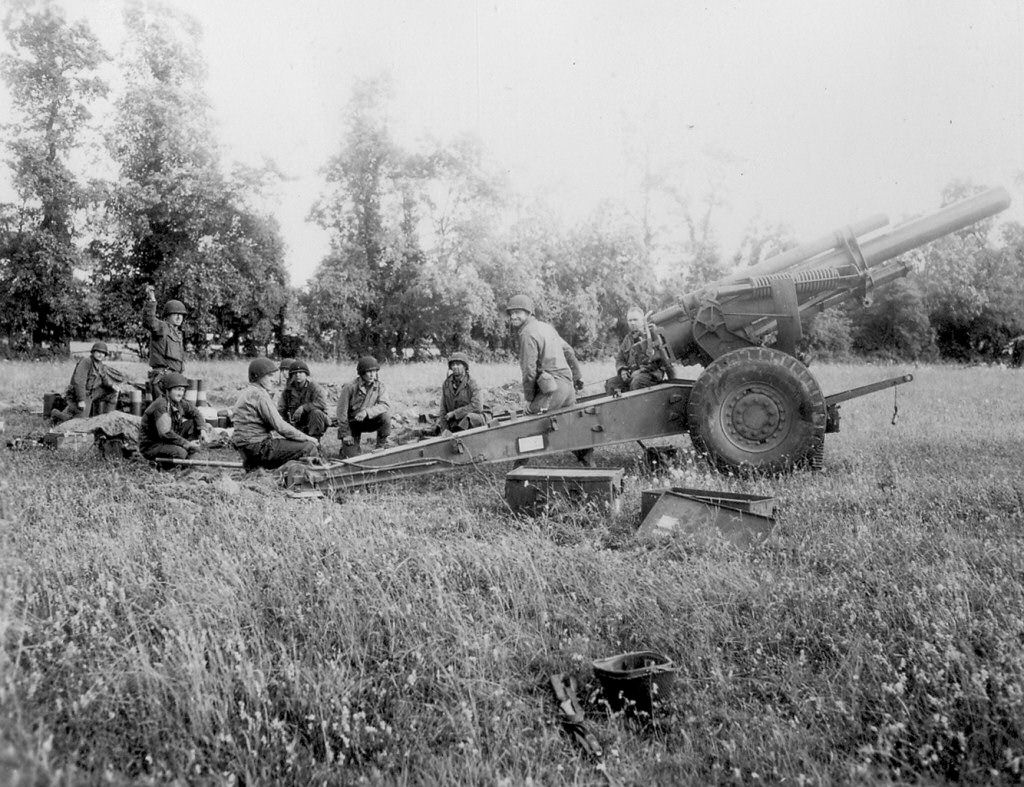
3 Comments

Filed under iraq,afghanistan, Military, PTSD, shipmates and veterans

Padre Steve’s Military History and Theory Articles

I am not normal, ask anyone who knows me.  I am a Priest who is also a military history and theory “wonk.”  I guess part of the reason for this as that I did not begin life as a clergyman. In fact way back when, when I was a young whippersnapper it was my desire to be in the military.  I was a Navy brat who grew up during the height of the Vietnam War and had friends whose fathers did not return from that war.  Likewise when my dad was serving in Vietnam surrounded by the North Vietnamese and Viet Cong in a town called An Loc I had a blessed Sunday school teacher tell me that my dad was a “baby killer.”  When you are an eleven year or twelve year-old and get told that your dad is a baby killer by some hippie wench you grow somewhat cynical about such people early in life.

Even worse than Limbaugh and Hannity is Michael Savage. Savage who despite having an earned PhD in the field of nutrition is so clueless and rude in discussing military issues that I can’t believe my ears whenever I run into his program. His absolute disdain that he shows for military leadership and actual implications of how we wage war in this era is so off base that it isn’t even funny.  For all of their lack of understanding of military strategy and policy at least Limbaugh and Hannity for the most part treat people in the military respectfully.

We no longer live in the World War Two world, warfare has changed and as the 2010 Quadrennial Defense Review notes that the United States must “prevail in today’s wars” while at the same time “prevent and deter conflict” which involves “preventing the rise of threats to U.S. interests requires the integrated use of diplomacy, development, and defense, along with intelligence, law enforcement, and economic tools of statecraft, to help build the capacity of partners to maintain and promote stability.” If deterrence fails we must Prepare to defeat adversaries and succeed in a wide range of contingencies: If deterrence fails and adversaries challenge our interests with the threat or use of force, the United States must be prepared to respond in support of U.S. national interests. Not all contingencies will require the involvement of U.S. military forces, but the Defense Department must be prepared to provide the President with options across a wide range of contingencies, which include supporting a response to an attack or natural disaster at home, defeating aggression by adversary states, supporting and stabilizing fragile states facing serious internal threats, and preventing human suffering due to mass atrocities or large-scale natural disasters abroad.” (2010 QDR Executive Summary pp. v-vi)

So tonight I am highlighting a series of articles that I have written that deal with the kind of war that we are waging in Afghanistan and have done in Iraq as well as a couple of studies from military history that discuss how the diplomatic, intelligence, economic and military resources of a nation are all important in the continuum of conflict and the importance of alliances when waging global warfare. These are the articles that I have produced so far and will as time goes on continue to add to.  They span the spectrum and hopefully will assist the reader in sorting through a lot of the mindless gibberish that is pumped out from the political right and left on TV, radio and the internet.  Some of these are drawn out of military history but have an application today while others are more targeted at what is going on today.  Since this is an ever expanding subject for me I expect to post more articles on a regular basis.

Learning to Apply the Principles of Counterinsurgency Part One: Introduction to the Soviet-Afghan War

Mission Accomplished in Al Anbar: The Marines Turn Over the Mission to the Iraqis

The Anomaly of Operation Desert Storm and Its Consequences Today

War Without Mercy: Race, Religion, Ideology and Total War

Lessons on Coalition Warfare: The Dysfunctional Coalition German and the Axis Partners on the Eastern Front

The Afghan War 2009-2012: Lessons from Algeria 1954-1960 A Review of “A Savage War of Peace

Moslem Allies and Friends

Lessons for the Afghan War: The Effects of Counterinsurgency Warfare on the French Army in Indo-China and Algeria and the United States Military in Vietnam

The most dangerous assignment: 4 More Advisers Die In Afghanistan

Brothers to the End…the Bond between those Who Serve Together in Unpopular Wars

Iran Makes Noise in Persian Gulf: Obama Dispatches Patriots and Ships to Deter

Mission Accomplished in Al Anbar: The Marines Turn Over the Mission to the Iraqis

The Dangerous and Often Thankless Duty of Military Advisers

More on our Unsung Heroes-Military Advisers, Past and Present

The Ideological War: How Hitler’s Racial Theories Influenced German Operations in Poland and Russia

D-Day- Courage, Sacrifice and Luck, the Costs of War and Reconciliation

Dien Bien Phu- Reflections 55 Years Later

God in the Empty Places

I hope that this rather diverse series of articles and my comments will be helpful to the reader in sorting through all the crap that floats about as “truth” from all sides of the media and the various political parties, special interest groups and others more intent on seeing their often divergent and uninformed agendas.

Peace

Padre Steve+
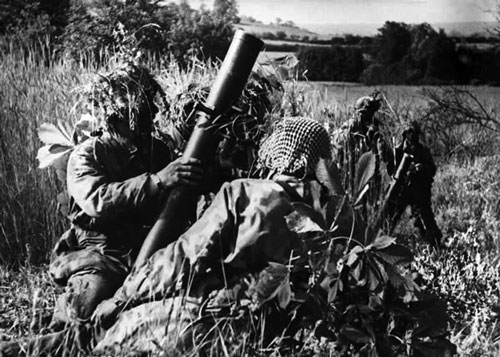
Leave a comment

Filed under counterinsurency in afghanistan, Foreign Policy, hampton roads and tidewater, History, iraq,afghanistan, Military

More Lies and Distortions from WorldNet Daily’s Bob Unruh

Note: It has been a good number of months since I have addressed the Lies of WorldNet Daily and it’s leadership Joe Farah and his designated hit man Bob Unruh. I stumbled across an article yesterday evening when my curser hit the Worldnet Daily link on my “favorites.” I seldom go there unless I think that they might be getting crazy, but this was accidental, or if I was a Calvinist possibly God’s will. Unfortunately late last night I saw an attack on a fellow officer by this influential “Conservative Christian” website.  The attack was gratuitous and directed at an officer currently serving in Afghanistan Major Brian Stuckert who as part of a military education course published a monograph which is in the public domain entitled “Strategic Implications of American Millennialism.” As I mentioned the last time that I wrote against something that Unruh and WND published that I would limit myself to military issues as I do in this article.  I try to ignore the folks at WND but feel in this case that that are again in the process of attempting to stir up opinion against an officer who has done nothing wrong but to disagree with their political-religious ideology. While the folks at WND and those like them have every right to their opinions an beliefs, which are defended by those of us in uniform, they are way out of line in this article and owe Major Stuckert an apology. Unfortunately the WND leadership doesn’t do this as is evidenced in their past treatment of the Commanding Officers of Gordon Klingenschmitt. These men have no honor and stoop to the basest means to attack those that disagree with their narrow point of view. Some will not like what I write. That is fair, I do not claim to be infallible not do I practice censoring those that disagree with me. But I will not let a fellow officer who is serving in a combat zone be the subject of an egregious attack by the folks at WND. If it were an attack by a “liberal” website I would feel the same way. The fact that it is a “conservative” website which claims to “support the troops” that attacks Major Stuckert and other military officers who disagree with their point of view only makes me angry.  Now to my response:

Just when you think it is safe to go in the water and just enjoy the Christmas season Joe Farah and the good folks at Worldnet Daily come out with another whopper to attempt to whip people up against those in the military with differing opinions than that of their own.  Written by noted propagandist Bob Unruh who helped spin the lies of former Navy Chaplain, defrocked Evangelical Episcopal Priest Gordon Klingenschmitt into a frenzy that had many Christians believe that the Navy was attempting to muzzle Klingenschmitt’s religious rights, the article takes aim at an monograph written by Army Major Brian Stuckert ( the link to Stuckert’s monograph is here: http://www.wnd.com/files/Millennial.pdf ) for the Advanced Military Studies program. Officers who attend courses such as this are often required to produce a research paper on a subject that deals with political, military and foreign policy topics to include how social, ideological or religious can impact military operations at the strategic and operational levels including effects on foreign policy and diplomacy.  The Worldnet Daily article is linked here:   http://www.wnd.com/index.php?fa=PAGE.view&pageId=119315

Unruh in his usual manner has manipulated the facts to make it appear that Stuckert and the Army is attempting to silence what Unruh calls “Evangelical beliefs.”  In fact the title of the article U.S. Army Major: Lose evangelical Christian beliefs” is a straw man intentional thrown out by Unruh to chum the waters so to speak.  Unruh takes a research paper which he does not agree with and demonizes the writer.  These papers are akin to any research paper done for a graduate level academic program. They reflect the opinion of the author and not the institution.  Like all papers of this type they have to be evidenced based, in other words the author has to have data to show that his hypothesis and conclusions actually are not simply whims but have impact in the world in which the writer serves and for the topic that he or she addresses.  One does not have to agree with them and in fact in the future other officers might actually write articles to refute what Stuckert says.  This is an academic program and as such differing points of view are sought.

Instead of just leaving this be both Unruh and undoubtedly Joe Farah is using this article to again whip up the faithful against any idea that might contradict their political-religious views.  Stuckert has criticized the foundational philosophy of the Worldnet Daily leadership that of Pre-millennial Dispensationalist theology which does have very real foreign policy implications for the United States.   As such Stuckert’s article is important because it draws attention to how Pre-Millennial Dispensationalist effects how many Americans view the world and international relations to include how such beliefs can influence policy making.  Stuckert’s premise is found in his abstract:

“Since the beginning of the Republic, various forms of millennial religious doctrines, of which dispensational pre-millennialism is the most recent, have shaped U.S. national security strategy. As the dominant form of millennialism in the U.S. evolves, it drives changes in U.S. security policy and subsequent commitment of the instruments of national power. Millennial ideas contribute to a common American understanding of international relations that guide our thinking irrespective of individual religious or political affiliation. Millennialism has great explanatory value, significant policy implications, and creates potential vulnerabilities that adversaries may exploit.”

This is a fair characterization of the effect of pre-millennial dispensational theology on American national thought.  Thus it is fair to examine its effect on current policy both foreign and domestic.

Instead of taking Stuckert’s observations and critiques for what they are Unruh and his co-conspirators turn this into a conspiracy of people in the Army and government against true Christians. In the usual manner Unruh quotes someone that he agrees with on the article: Unruh quotes John McTernan a writer on Biblical Prophecy who says that Stuckert’s article is “the most dangerous document to believers that I have ever read in my entire life” and “After reading this document, it is easy to see the next step would be to eliminate our Constitutional rights and herd us into concentration camps.”

I am sorry, this is beyond reason: “eliminate our Constitutional rights and herd us into concentration camps?  That is nothing more than propaganda. In fact it is delusional paranoia designed implicitly to scare people and move them further into WorldNet Daily’s orbit turning good people against honest and decent military officers.  Unruh did this with Klingenschmitt in grand fashion through character assassination of Captain Carr, Klingenschmitt’s Commanding Officer on USS Anzio and Captain Pyle, the Commanding Officer of Naval Station Norfolk.  This got so bad regarding Captain Pyle, a conservative evangelical Christian of the Assemblies of God denomination that he was ostracized by his own church and demonized by the Christians who were the closest to his theological views.  It was shameful; people still believe the lies about Klingenschmitt spewed by the WorldNet Daily crowd.  Now they attack an Army Major who is serving in combat in Afghanistan.  Such conduct is beyond crude and unseemly, it is dishonest, disingenuous and dishonorable.

Unruh, no stranger to such behavior ends his article with a totally unrelated reference to the terrorist who killed 13 and wounded many others at Fort Hood just a month ago.  Major Stuckert’s article was published in 2008 and has nothing to do with the actions of Major Hasan.  The implication is that Stuckert supports the traitorous terrorist Hasan. This is another disingenuous attempt to link someone who disagrees with them with terrorists or other extremists.  Such behavior by alleged “journalists” is simply dishonest and to use a term from American history is “Yellow Journalism.”

The conduct of WorldNet Daily and in particular Bob Unruh is shameful and shows none of the graces associated with true Christian faith. Lying and mischaracterizing what others say and demonizing them in apocalyptic terms is not Christian behavior. It is crass cynical propaganda and WorldNet Daily is one of the worst offenders around.  Unfortunately these people are vicious in their attacks.  The article talks of “losing evangelical beliefs” however many evangelicals either oppose or have out rightly condemned pre-Millennial Dispensationalist as heresy. Yet many pre-millennial dispensationalists, especially the type found at WorldNet Daily effectively write off all evangelicals who do not hold to one of their several Rapture theories: “All people who believe the Bible believe in a Rapture” Mark Hitchcock “What Jesus Says About Earth’s Final Days” (p. 96).  This is just one example of how this camp views other Christians. If you do not believe in the Rapture as they define it you do not believe the Bible. The deduction is that Christians believe the Bible, you disagree with the Rapture, and you don’t believe the Bible and are thus not a Christian.

Even Prominent Evangelicals such as A. W. Pink (1886-1952) have disagreed with the tenants of Dispensationalism:

“Dispensationalism is a device of the enemy, designed to rob the children of no small part of that bread which their heavenly Father has provided for their souls; a device wherein the wily serpent appears as an angel of light, feigning to “make the Bible a new book” by simplifying much in it which perplexes the spiritually unlearned. It is sad to see how widely successful the devil has been by means of this subtle innovation.”

Many conservative Christian churches and individuals do not hold this position; in fact to take the view of Unruh is to assume that Stuckert is attacking Evangelical Christianity.  Stuckert is not doing so, he is simply critiquing one of several competing Christian Eschatological theories and how its influence helps shape US foreign policy and the worldview of many Americans.  He asserts that such beliefs when not recognized by those that propagate them can leave the United States vulnerable to our enemies, nothing more, nothing less. In fact Stuckert is careful to differentiate the various factions in what is considered by some radical secularists to be a monolithic “Evangelical” movement.

“Millennialism, and especially dispensational pre-millennialism, derives in large part from extraordinary literalism of even the most figurative passages of the Bible. In America, literalism in biblical interpretation is most closely associated with fundamentalism. Theologically, it is best to begin a discussion of American millennialism with a brief review of fundamentalism as the term applies to the contemporary American religious tradition. Fundamentalism is a frequently misunderstood term in America. Although it has connections to each, fundamentalism is distinct from evangelicalism, the charismatic movement or conservative Christianity in general. Fundamentalism is also poorly understood when we attempt to define it as a personality style, a form of militancy, or a particular worldview.” (Stuckert pp. 6-7)

Stuckert is fair in this; to not admit that religious, ideological or philosophical views do not serve is “filters” as McTernan and Unruh seem loathe doing is simply wrong. To understand the prism of how religious, ideological and other beliefs can influence worldview and decision making is important. This is what Stuckert does as pre-millennial dispensationalism is one of the major shapers of American thought; not only for Fundamentalist Christians but anyone who follows the popular fictional writings of Tim LaHaye’s Left Behind series.

Stuckert continues his monograph by discussing the importance of how Christian Fundamentalists view the Bible and the influence of pre-millennial eschatology on American political thought and foreign policy.   Since the popularized version of this eschatology influences the way that many Americans view the world it is appropriate that the effects of it be analyzed by those who study foreign and domestic policy. In his summery and conclusions Stuckert makes an erudite observation that is lost on many people:

“Because religion in America directly impacts policy, military leaders and planners must learn to recognize the tenets and implications of American millennial thought. Millennialism has always been a feature of the American culture and has shaped not only the objectives of U.S. government policy, but also the way in which we interpret the words and actions of other actors on the international stage. Millennial ideas contribute to a common American understanding of international relations that guide our thinking regardless of individual religious or political affiliation. Millennialism has great explanatory value, significant policy implications, and creates potential vulnerabilities that adversaries may exploit. By gaining insight into and embracing intellectual honesty where our own prejudices and proclivities are concerned, we can greatly improve the quality and clarity of our decision-making.” (Stuckert pp. 58-59)

Unruh “cherry picks” what he wants from Stuckert’s monograph in order to paint Stuckert as some kind of anti-Christian officer.  The use of McTernan’s claims to buttress his article shows how biased that Unruh as since McTernan’s livelihood is based on writing books and speaking about Bible prophecy from a pre-millennial dispensational point of view.  He claims to be a “student of American history” but has no academic credentials save a BA from Virginia Commonwealth University in an unnamed field. He has no military experience, no education in military or political theory other than what he may have learned on his own “study” and is in no position to be a legitimate critic of Major Stuckert’s work.  McTernan claims that the “last third (of Stuckert’s work) is an interpretation of Bible belief on world events. “This report blames all the world evils on believers! World peace would break out if it were not for Bible believers in America.” In fact it says no such thing.  It is not a “report” as McTernan calls it, but simply the equivalent of a graduate level thesis. This is nothing but a hit piece on a fellow officer who disagrees with McTernan and the crowd at WorldNet Daily.  McTernan talks about an argument that he had with Colonel Stefan Banack of the School for Advanced Military Studies who McTernan attacks:

“The conversation was extremely heated between us, and he hid behind the freedom of speech to produce it. He refused to let me write an article to refute this attack on Bible believers. He refused to tell me what this study was used for and who within the military was sent copies. I believe that it represents an official military view of Bible believers as Col. Banack said there was no study or article refuting this one.”

The fact that these papers are in the public domain and on the center’s website makes no difference to McTernan. He attempts to paint this is a some kind of conspiracy against Evangelical Christians when in fact it is the equivalent of an academic thesis in a Masters Degree program.  The fact that he says that Colonel Banack “hid behind the freedom of speech to produce it” sends a chilling message. Freedom of speech for McTernan goes only for McTernan not for those who disagree with him. Likewise McTernan uses the refusal of Colonel Banack to allow him to “refute this attack on Bible believers” is a red-herring. The School’s academic publications are for students to publish not for people with no standing in the military to use the platform to propagate their beliefs.  Mr. McTernan to my knowledge is not a student at the Advanced Military Studies program and would not be using the forum for actual academic debate but to advance his own cause which he does on his own website without any restriction.

So once again WorldNet Daily drops a whopper on its readers and attacks the character beliefs and academic thought of a military officer. Their conduct in this is much more like the Taliban and the Iranian Ayatollah’s than anyone who claims to value the right to freedom of speech and religion as they do. Like the early Puritans who came to the New World for “religious freedom” the only religious freedom or freedom of speech that Unruh, Farah and other like them value is their own. Those who dissent from their narrow understanding of eschatology stand condemned as do those who ask legitimate questions about the policy implications of their belief system. If they were ever to be in a position to impose their beliefs in this country men like Major Stuckert and probably yours truly would be persecuted.

Although I am but a “pip-squeak” in comparison to the WorldNet Daily behemoth but I cannot let a fellow officer who is serving in harm’s way be the subject of a gratuitous attack by these people. May God keep Major Stuckert and those he serves with in harm’s way safe and may they accomplish the mission that they have been sent to do.  As far as WorldNet Daily goes…I hope that they continue to have the freedom to speak in the manner that they would deny to those who disagree with them, especially those who serve in the uniform of the United States of America in harm’s way.

Peace,

Padre Steve+
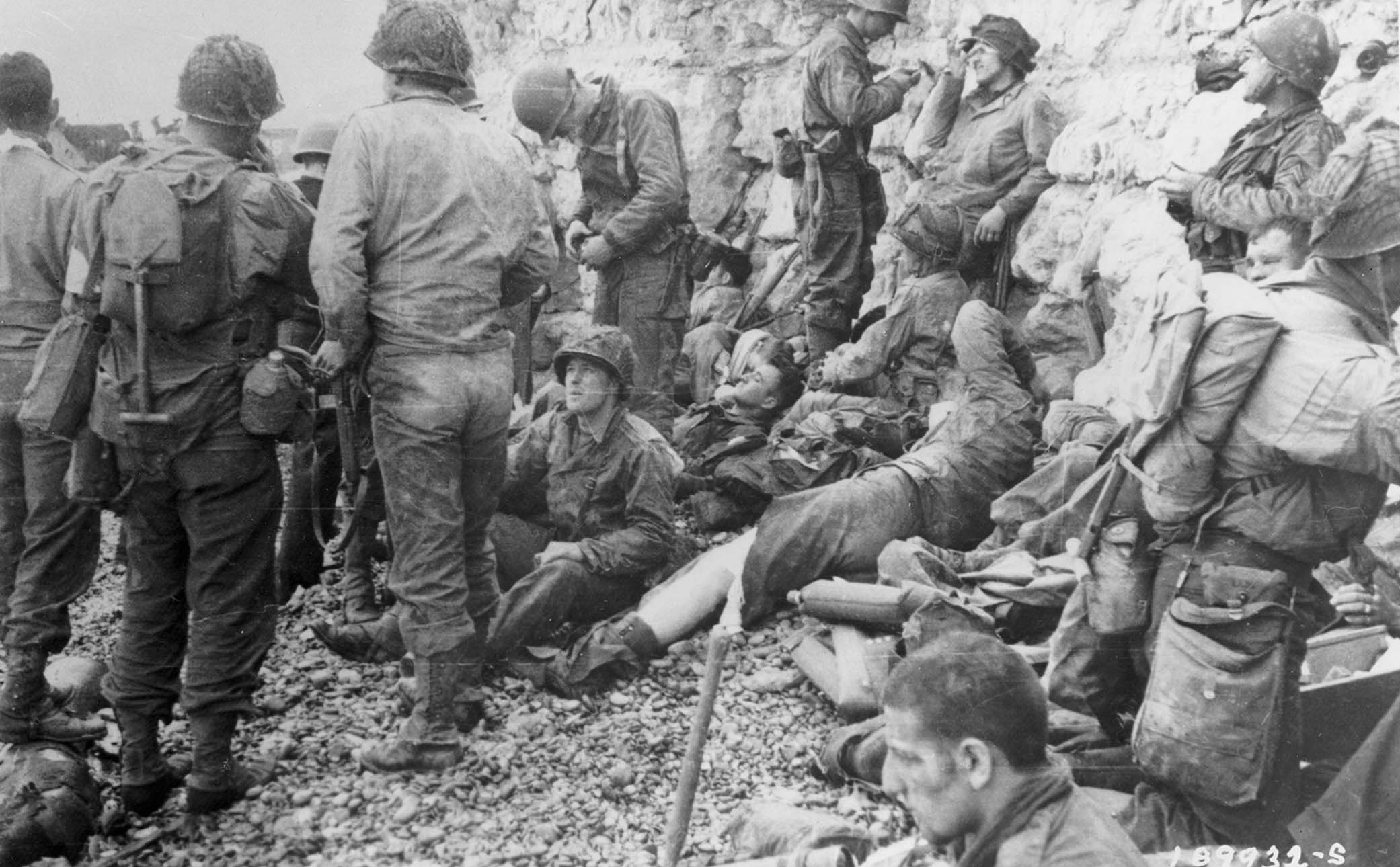
10 Comments

Filed under Foreign Policy, Lies of World Net Daily, Military, national security