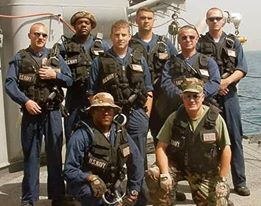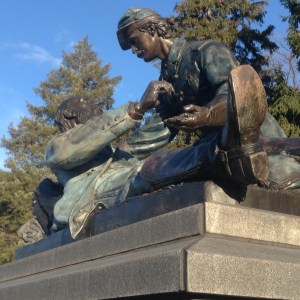
Tag Archives: US Navy

A Retirement and a Mini-Reunion

Friends of Padre Steve’s World,

Today just a few loose thoughts and musings and a number of subjects that while unconnected coalesced to be part of my day yesterday. I will probably write about some of in more detail later but I expect to be pretty busy as Judy and I get ready to fly out to Munich for our religious pilgrimage to the Oktoberfest Friday.

Found from my mom that a friend from 4th grade who lived next to my grandparents died of brain cancer, my age, that really sucks. Very concerned for my friends who are going to be impacted by Irma in Florida. Many have evacuated and know that in some cases when they return there will be nothing to return to. Some cannot evacuate, and one, my friend Mark Ebenhoch, a retired Marine Gunnery Sergeant, as well as LGBTQ and human rights activist has decided to stay in Key West in order to help those who cannot evacuate, even though he could have left Wednesday. But he is a Marine who cares for for others and puts others first. Then there was a blog troll who refused to go away even after I told him to, and a friend and colleague who voiced his support for keeping the Confederate statues by dismissing arguments against them as “historian’s fallacies.” That was a new one to me. But of course in order of importance I am most concerned for my friends in South Florida.

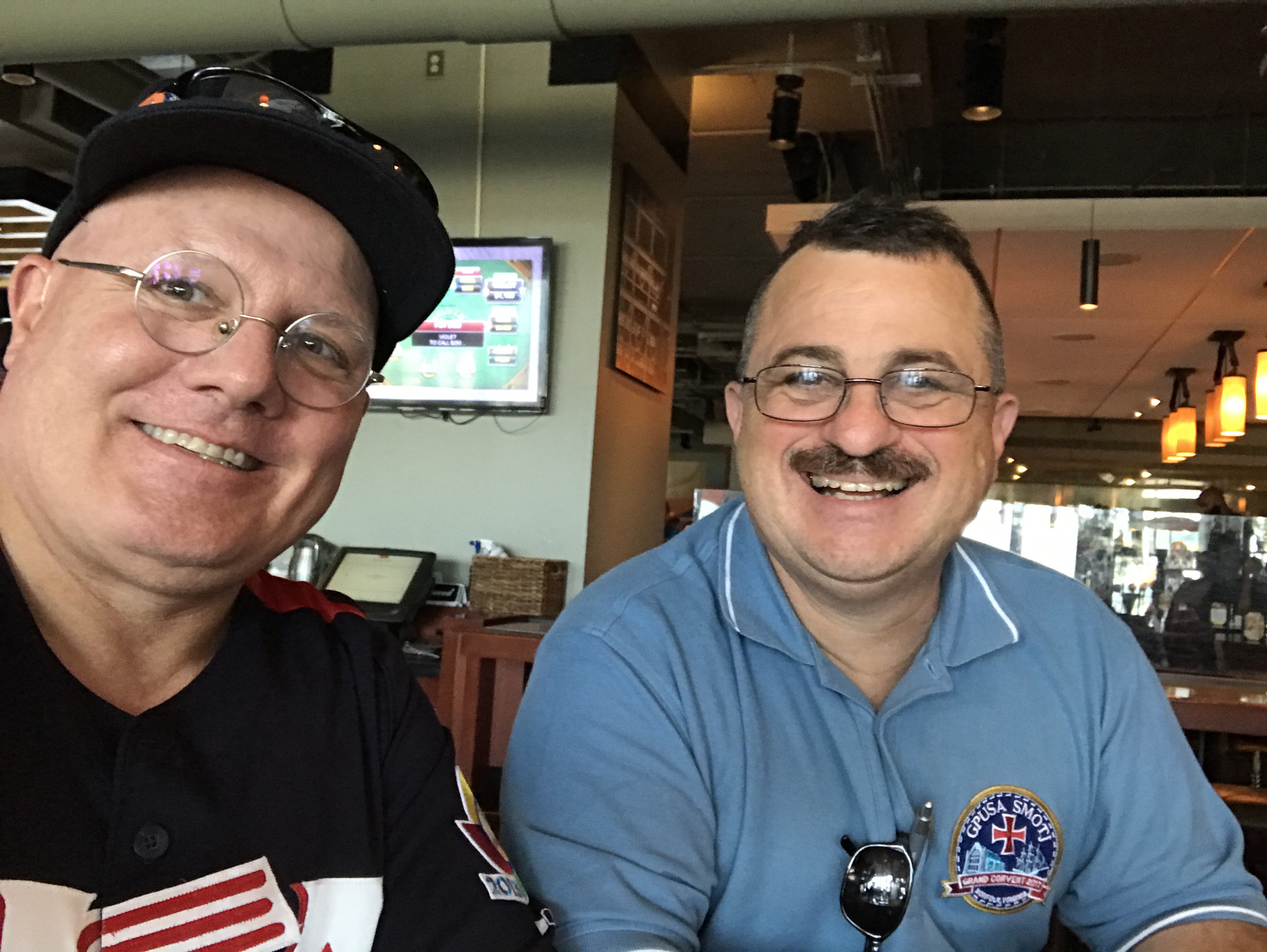
That being said, yesterday I had the honor of being a participant in my friend Vince Miller’s retirement ceremony at Norfolk. It was really nice to see how he organized it and how it focused not so much on him, but on service to others. This was the first retirement ceremony where I have seen an officer have special guest speakers who were of lesser rank than him, including the first time I have seen an enlisted man be one of the speakers at a ceremony for an officer. I appreciated that because it got me to thinking who I might want to speak when I eventually retire from the military with somewhere around forty years combined service between the Army and the Navy. I had the honor of passing the flag of the United States to Vince at the close of the ceremony. Today we’ll got to his post-retirement party.

While I was there I had the chance to see mutual friends, some who I haven’t seen in a few years. It really is amazing the tangled web of friends whose lives seem intersect our lives at different points of time, and for me that is a blessing. Friends matter, and it is wonderful to run across old friends that you have served with at other times who nonetheless are also important to other friends that you had no idea that they knew. I saw quite a few of those mutual friends yesterday, some who I have known for nearly a quarter of a century.

It was a very good day and I wish all of you the same today.

Peace

Padre Steve+

1 Comment

Filed under Loose thoughts and musings

Retirement Honors

Friends of Padre Steve’s World,

William Shakespeare wrote in his play Henry V:

This story shall the good man teach his son;

And Crispin Crispian shall ne’er go by,

From this day to the ending of the world,

But we in it shall be remembered-

We few, we happy few, we band of brothers;

For he to-day that sheds his blood with me

Shall be my brother; be he ne’er so vile,

This day shall gentle his condition;

And gentlemen in England now-a-bed

Shall think themselves accurs’d they were not here,

And hold their manhoods cheap whiles any speaks

That fought with us upon Saint Crispin’s day.

Today I have the honor or participating in the retirement ceremony of my friend Vince Miller at Naval Station Norfolk. He is retiring from the Navy Chaplain Corps as a Commander after 24 years of service. He is a dear friend and a man of great integrity and one of the conscientious men that I know in the Chaplain Corps. He has served with the Marines, as well as at sea, and with the SEALS. He has served in Iraq, and has done much to better the lives of people at a number of shore installations as a base Chaplain and pastor.

I appreciate Vince’s friendship and I am pleased that I will have the honor or participating in his retirement ceremony. Lord willing in not too many years I will be retiring too, but with nearly two full careers between the Army and the Navy spanning nearly 40 years when I retire in 2020 or 2021.

But for those who have never served it is hard to fully appreciate what a man like Vince, and his family, have accomplished and endured in his 24 years of service. This is not a vocation for the faint of heart, or those who are enamored with uniforms and the possibility of having power over the lives of others. To be a chaplain and a naval officer one has to really desire to put others first and be a servant leader. I know that there are officers and including a good number of chaplains who are not that, but in fact are quite toxic, I have served under a number of them in my career, so when a good chaplain like Vince retires there is always a void left.

However, Vince is, and always has been a servant leader who has likewise endured much at the hands of toxic leaders. But that being said he has always remained humble and devoted to caring for the people of God in the military, regardless of their rank, position, race, creed, color, religion, gender, or sexual preference. He sees people as people, created in the image of God who are all worthy of being cared for, respected, and loved.

We lose a fine chaplain tomorrow. I know that Vince will continue to care for and serve people as a minister in his church regardless of what he does next in life, and that he will always be my friend and care about me.

I think Vince would agree with the words of Admiral William McRaven, a Navy SEAL and the former head of U.S. Special Forces Command:

“Remember… start each day with a task completed. Find someone to help you through life. Respect everyone. Know that life is not fair and that you will fail often. But if you take some risks, step up when times are toughest, face down the bullies, life up the downtrodden, and never, ever give up – if you do these things, then you can change your life for the better… and maybe the world!”

I am honored to have a part in his retirement ceremony today, for he is worthy of being honored for his service to God and country. It is an honor to have served with him, for he truly is my brother.

Peace

Padre Steve+

1 Comment

Filed under faith, Loose thoughts and musings, Military, shipmates and veterans, US Navy

“It’s the People Stupid” The Need for Professional Mariners 


Friends of Padre Steve’s World,

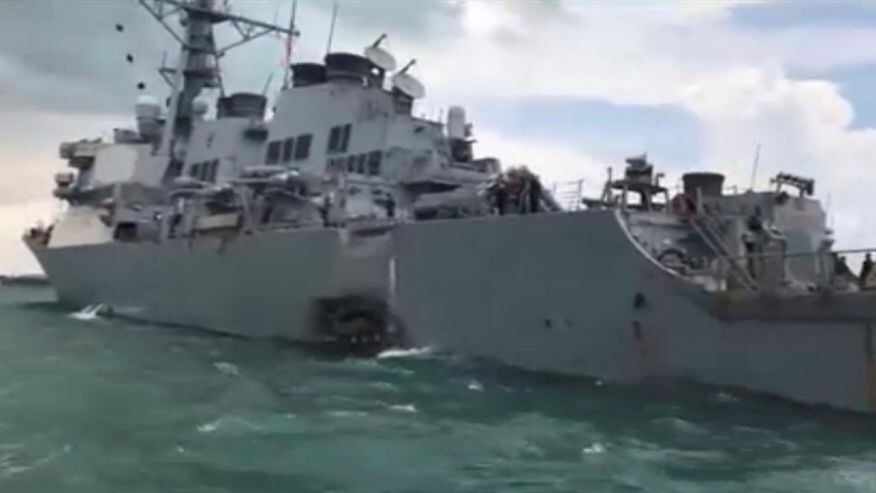
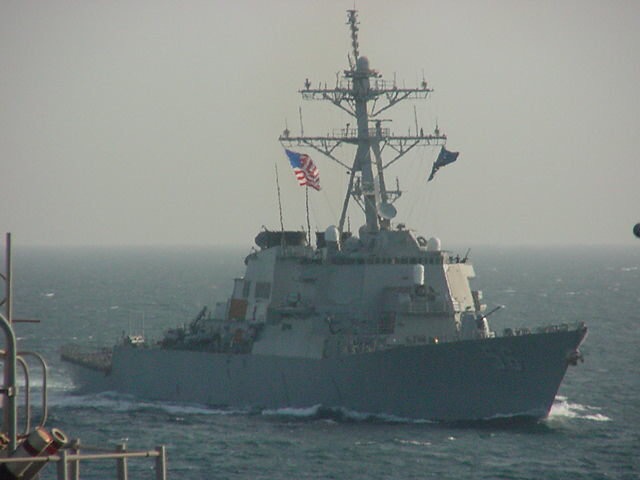
I’m holding off finishing the last part of my series Statues with Limitations until tomorrow. Of the past day I have been consumed with the collision of the USS John S. McCain with a tanker near Singapore that quite likely has claimed the lives of ten U.S. Navy sailors. It was the second fatal collision in less than three weeks involving some of the most technologically advanced warships in the world with merchant ships. The other was that of the USS Fitzgerald which was at fault in a collision with a container ship near Tokyo bay. 

Today I have been in contact with our regional casualty assistance coordinator and chaplains who are already or might be called to go to the home of a sailor’s next of kin to inform them that their sailor is dead. If you have never had to make such a notification you are lucky. They are not easy and they never get easier. Between the military and my time as hospital emergency and trauma department chaplain I have been involved in far too many of them, I lost count around the 350 point, I’ve probably been involved in close to 500 such notifications of all types. 

Frankly there are no words that can adequately convey how hard that news is on the loved ones of those who died, especially when their deaths were most likely preventable. Last week I read the preliminary report on what happened aboard Fitzgerald. It was damning and showed some systemic cultural issues that need to be fixed. I am sure that the Navy will fully investigate the incident involving McCain too, and the report will likely be just as damning. It is bad enough that the Commander of the Navy’s Seventh Fleet, to which Fitzgerald, McCain, and the cruiser Antietam which had a grounding incident near Yokosuka Japan, and the cruiser Lake Champlain which collided with a Korean fishing boat, was relieved of his command just before his scheduled retirement.

But the problem is bigger than simply relieving and replacing officers proved to be at fault in these incidents, the Navy is very good at that. The problem is that about 15 years ago the Navy shut down its Surface Warfare Officer School in Newport, Rhode Island as a cost cutting measure. Instead of going to a school after being commissioned from the Naval Academy, ROTC, or Officer Candidate School, to learn the basics of navigation, seamanship, damage control, engineering, and combats systems operations, these tasks were pushed onto the commanding officers of the ships the new officers were assigned. That began in 2002 and I remember discussing the detrimental effect this would have with fellow officers about the USS Hue City. Some 15 years later these are the officers who are becoming the commanding officers and executive officers of our ships. Most of them don’t spend enough time at sea to be truly professional mariners, and many of them spend years between sea assignments. As such they really don’t know their ships that well, the don’t know the sea that well, and as a result they have become addicted to technology at the expense of doing the basics like looking out the window and taking action to avoid collision. It comes down to in the words of my former Commanding Officer, Captain Rick Hoffman said about these incidents: 

“I am feeling a sense of increasing outrage. The more I write and get replies from so many great shipmates and long time friends, the more I feel a sense of urgency to see if we can’t take these tragedies to force a larger conversation about our SWO culture…or rather the demise of the culture. Help build a path forward that restores the professionalism and focus necessary to have a strong Surface Navy. Perhaps our ships are complex enough to look at the Royal Navy model. Professionals on the bridge, professionals manning the Combat Systems, professionals manning the engineering plant. Not this mongrel program that trains everyone up to the minimum level of competence just long enough to survive your tour and go ashore. Ten years later you go back to sea…in command. I guess I am just feeling frustrated.”

It is not a matter of technology being the answer, we have amazing technology, but as one former officer wrote “Technical solutions don’t solve cultural issues. We need to refocus on our capabilities as mariners.” Captain Hoffman noted: 

“I am pondering the value of sparking a larger discussion about our systemic challenges with basic maritime skills. We are ship drivers, we have technical skills but we are not mariners as a community. We don’t cherish the necessary focus on knowing and feeling the ship, the sea and the larger maritime environment. Just look out the window!!!! The CNO just called for industry to provide more solutions. THAT IS INSANE. It is the people, stupid. We have enough tools, we have forgotten how to use them. Eyeballs and brains. Engage the eyeballs and brains.”

The fact is that for more than a decade the men and women that officer our ships have been pulled many different directions, by various factors, many of our own doing. Quite a few were pulled off of ships at critical points in their career to serve in the sands of Iraq or the mountains of Afghanistan. Our Navy has stopped doing the basics of being professional mariners first so that they can get their ships safely from place to black and be ready to sail into harm’s way at a moment’s notice. 


As Captain Hoffman and so many other men who have commanded ships whose comments I have been reading have noted, the issue is cultural and it is a need to return to the basics. 

Until we do that we are going to keep getting sailors killed, and causing great damage to ships that cost billions of dollars in avoidable incidents. 

As for me, I hope that I don’t have to make another death notification, especially for a death that needn’t happen. 

Until tomorrow,

Peace

Padre Steve+ 

2 Comments

Filed under Military, national security, Navy Ships, News and current events, US Navy

The Bond

img_0602

Friends of Padre Steve’s World,

Today is going to be a busy and sad day as we gather with friends to remember the life of our friend Dave Shaw. I wrote about his unexpected loss over the weekend and as such, since I am not going to have time to write anything new I am going to reach back into the archives an re-post an article that I wrote back in June of 2011 about the bond that is shared by those who go to war. Dave served as a Navy Corpsman aboard various Navy ships, hospitals, and with the Marines. He retired as a Chief Petty Officer, as did my dad. He was a friend and brother, and, like so many others he will be missed.

Peace

Padre Steve+

This story shall the good man teach his son;
And Crispin Crispian shall ne’er go by,
From this day to the ending of the world,
But we in it shall be remembered-
We few, we happy few, we band of brothers;
For he to-day that sheds his blood with me
Shall be my brother; be he ne’er so vile,
This day shall gentle his condition;
And gentlemen in England now-a-bed
Shall think themselves accurs’d they were not here,
And hold their manhoods cheap whiles any speaks
That fought with us upon Saint Crispin’s day.

From the Speech of King Henry V at Agincourt in Shakespeare’s “Henry V” 1599

In the midst of the petty politics surrounding the Afghan War so so ponderously and pompously purveyed by politicians and pundits of all strains I feel the need to speak up for that small band of brothers that has served in these wars. They are to steal a phrase applied to a previous generation the “New Greatest Generation” something that I am loathe to apply to much of the population at large. You see the cost of these wars is finally beginning to sink in, at least the financial cost. I’m not so sure that the human cost factors in for most people because the tiny percentage of the population that serve in the wars. The fact is that the volunteer military is an insular community which for the most part is based on bases away from most of the population. We used to have big bases in or near major cities, the New York Naval Yard, the Presidio of San Francisco, Long Beach Naval Shipyard, Fort Devens Massachusetts near Boston, Fort Benjamin Harrison Indiana at Indianapolis. But after the Cold War they and hundreds of other bases were eliminated and with them a connection to the active duty military. That is not the fault of the people in the big cities it just happened that way, no the military with a few exceptions is based away from most of the population. As a result people may support the troops but most have no idea what they do, how they live and what they suffer.

In spite of that this new Greatest Generation’s accomplishments will largely go unheralded by history. Unlike the “Greatest Generation” of World War Two they will probably not receive the full honors and accolades due them. This brotherhood of war who have served in the current War on Terror, Iraq and Afghanistan campaigns have now been serving in a war that is now twice as long as the American involvement in World War Two. Many, like me have been in this since the beginning and many have made multiple deployments to the combat zones. And many of us, if not most of us would go again. I know that I would because part of me is still in Iraq; for me this war is still un-won and un-finished.

The battles, Fallujah, Ramadi, Haditha, Mosul, Baghdad, Tal Afar, Marjah, Kandahar, Anaconda, Wanat and thousands of other places significant and insignificant are vivid in the minds of those that were there. Unfortunately for most of their countrymen they might as well be on a different planet.

With no disrespect to the Greatest Generation of World War Two, all of the current Soldiers, Sailors, Marines, Airmen and Coast Guardsmen volunteered to serve in time of war. At any given time only about one half of one percent is in uniform. In the three years and ten months of the Second World War about 16.1 Million Americans served in the military, the vast majority being draftees. Likewise the current generation has fought the war alone. The vast bulk of the country has lived in peace untouched by any inconvenience to daily life such as gas and food rationing, requirements to work in war industries and the draft as were citizens in World War Two. In the Second World War Americans shared the burden which in large part has not occurred in this war. While many have pitched in to help and volunteered to help veterans and their families the vast majority of people in this country are untouched by the war, not that there is anything wrong with that. This is simply a comparison of the situation that those who served in World War Two and the present conflicts faced. So I have to say that our current “Greatest Generation” is only a small part of the generation, as the line in Henry V “we few, we happy few who fought together….”

These Soldiers, Sailors, Marines and Airmen from the United States as well as our Allies who serve alongside of us are my brothers and sisters. They too are volunteers and represent a miniscule portion of their countries population. I am friends with military personnel from the UK, Canada and Germany who have served in the various combat zones or at sea and met quite a few others from France, the Netherlands and Australia. Of course my Iraqi friends who I served with while with our advisers in Al Anbar province who are not only trying to bring peace and stability back to their country but have to worry about the possibility that their families become the target of terrorists.

There are a number of things that unite us in this relatively small brotherhood. However, I think that this brotherhood could also be extended to our brothers who fought in Vietnam, French, Vietnamese, Australian, South Korean and American, the French who served in Algeria and the Americans and others that served in Korea. All of these wars were unpopular. All had little support on the home front and often returning veterans found themselves isolated and their sacrifices ignored or disrespected. For those Americans who serve in the current wars I can say that at least to this point the public has been much more supportive than they were to our Vietnam brothers, many of who were even disrespected by World War Two vets who had fought in “a real war.” I cannot count the Gulf War in this list as it was hugely successful and the returning vets were hailed as conquering heroes with ticker tape parades.

Our shared brotherhood includes our scars, physical, psychological, neurological and spiritual. Those who served on the ground in Iraq and Afghanistan as well as those who served in Vietnam, French Indo-China and Algeria have a common shared experience. All fought people who didn’t or don’t like foreigners no matter how noble our intentions and who by the way have a long history of outlasting people that they believe to be invaders or occupiers. We have had to fight wars with no front lines, no major units arrayed against us, but rather asymmetrical threats propagated by creatively devious foes who use low tech easily available technology and a willingness to sacrifice themselves and others to force attempt to kill us. Thus we have cleverly designed and often quite powerful IEDs or Improvised Explosive Devices which can obliterate a HUMMV.

These threats create a situation where there is no front line and thus where every excursion outside of a FOB (Forward Operating Base) or COP (Coalition Outpost) is automatically a trip into a potential danger zone. Enemies can infiltrate bases posing as local nationals in either military uniform or as workers, rockets and mortars can be lobbed onto even the largest and most secure bases at any time and any vehicle driving by you on the road could be loaded with explosives and just waiting to blow you up while insurgents with automatic weapons and Anti-Tank Rocket Propelled Grenades (RPGs) have taken down helicopters. When you have taken fire on the road, in the air and had rockets whiz over your head you this becomes a reality that you never forget.

As a result we many men and women with physical wounds as well as wounds that have damaged the psyche or the soul. PTSD is very common either from a direct encounter or the continual wear and tear of being in a danger zone wondering if you were to get hit that day every day of a tour. I have lost count now of people that I know who have mild to severe symptoms of PTSD. Traumatic Brain injury is another condition men and women attacked by IEDs, mortars and rockets experience. Likewise there are the injuries that shatter the soul. These are the images of ruined buildings, burned out vehicles, wounded bodies, injured children, refugees and wars desolation that can leave a person’s faith in God, or ideals that he or she believes in weakened or even destroyed. There are the smells of smoke, death, diesel, garbage and sewage that when encountered far away from the combat zone send us back.

The wars have been costly in lives and treasure. The “up front” casualty numbers are below; they do not include those with PTSD or mild to moderate TBI. They also do not count those that have died later after their service in VA or other civilian care, those that did not report their injuries and those that have committed suicide.

Iraq KIA US 4463 UK 179 Other 139 Total 4781

Afghanistan KIA US 1637 UK 374 Other 537 Total 2548

US Wounded Iraq 32227 Afghanistan 11191

The financial cost: over 1.2 trillion dollars and counting.

As many idealistic and patriotic military personnel question God, their National Leadership and even themselves because of their experience in Iraq or Afghanistan. I cannot get the image of a refugee camp on the Iraqi Syrian border full of Palestinian refugees who have nowhere to go; they had been invited to Iraq under Saddam and have been sitting on the border trying to get home for years now. The Palestinian authority wants nothing to do with them. I cannot smell smoke or hear a helicopter or pass a freshly fertilized field without being reminded of Iraq.

These men and women are my brothers and sisters. I have seen quite a few of my colleagues at the Naval Medical Center and Naval Hospital deploy and deploy, the medical personnel don’t get much of a break. These are my friends and I do get concerned for them and pray earnestly for their safe return. I wish that I could go with them because I know them and have already walked with them through the dark valley of the shadow of death in the Medical Center ICU or the wards and clinics of the Naval Hospital. We already have a bond that will not be broken.

It is now four years since I was in the process of leaving for Iraq and three years since my PTSD crash. However, I still would do it again in a heartbeat. There is something about doing the job that you were both trained to do and called to do that makes it so. Likewise the bonds of friendship and brotherhood with those who you serve are greater than almost any known in the human experience. Shared danger, suffering and trauma bind soldiers together, even soldiers of different countries and sometimes with enemies. I remember the conversation that I had with an Iraqi Merchant Marine Captain on a ship that we had apprehended for smuggling oil violating the United Nations sanctions. The man was a bit older than me, in his early 60s. He had been educated in Britain and traveled to the US in the 1960s and 1970s. He had the same concerns as any husband and father for his family and had lost his livelihood after Saddam invaded Kuwait in 1990. He was a gentleman who provided for his crew and went out of his way to cooperate with us. In our last meeting he said to me: “Someday I hope that like the Americans, British and the German soldiers at the end of the Second World War can meet after the war is over, share a meal and a drink in a bar and be friends.” That is my hope as well.

In the final episode of the series Band of Brothers there is a scene where one of the American soldiers, Joseph Liebgott who came from a German Jewish family interprets the words of a German General to his men in the prisoner compound. The words sum up what the Americans had felt about themselves and likewise the bond that all soldiers who serve together in war have in common, if you have seen the episode you know how powerful it is, I ended up crying when I heard it the first time and cannot help but do so now that I have been to the badlands of Al Anbar Province.

“Men, it’s been a long war, it’s been a tough war. You’ve fought bravely, proudly for your country. You’re a special group. You’ve found in one another a bond that exists only in combat, among brothers. You’ve shared foxholes, held each other in dire moments. You’ve seen death and suffered together. I’m proud to have served with each and every one of you. You all deserve long and happy lives in peace.”

As do we.

Peace

Padre Steve+

1 Comment

Filed under iraq,afghanistan, Military, remembering friends, shipmates and veterans, US Navy

Blacks in the U.S. Navy: 1798-1917

Friends of Padre Steve’s World

I’m back with something fresh, a short article from my text A Great War in a Revolutionary Age of Change. As I was looking at the text I realized that there were some major gaps to fill in regarding the service of African Americans in the military. So over the past couple of weeks I have been working on covering those gaps in order to smooth out the text and show how the social and political changes that began during the Civil War continued to work their way through our history to the present day. This section is about the African American experience in the U.S. Navy from 1798 until World War One.

There will be more so enjoy and have a great day,

Peace

Padre Steve+

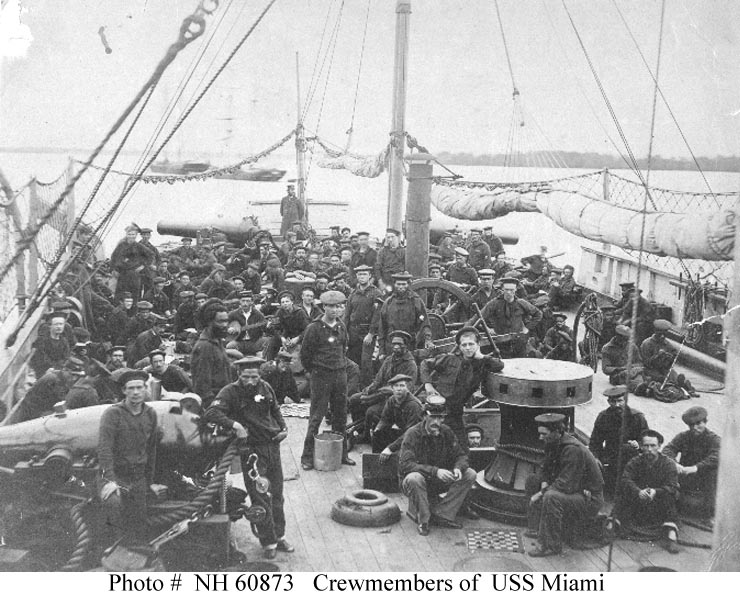
uss-miami-crew

Unlike the Army, African Americans had served aboard United States Naval vessels since the Revolution, and were an important part of ship’s crews all through the age of sail and the Civil War. In 1798, Secretary of the Navy Benjamin Stoddert, a slaveholder “barred “Negroes or Mulattoes” from serving in the new navy, and the Marine Corps did the same. Given the need to fill out their crews, however, captains often took free blacks as crew members. Both free blacks and slaves had served in the Continental Navy, the state navies, and privateers during the revolution, but that precedent had been forgotten.” [1] Even so, the Navy would continue to recruit free African Americans and they would make up a significant percentage of the crews of U.S. Navy ships, part of the reason that since the earliest times in the colonies, free blacks had taken up a seafaring way of life serving on merchantmen or in the Royal Navy. Likewise, “life at sea during the eighteenth century was difficult and dangerous. Therefore navies were forced to enlist practically anyone who was willing to serve.” [2]

During the War of 1812 free blacks comprised between ten and twenty percent of the crews of U.S. Navy ships. Captains like Oliver Hazard Perry who initial complained about having blacks on his ships became believers in their ability. At the Battle of Lake Erie “blacks constituted one-fourth of his 400 man force aboard the 10-vessel fleet.” He was so impressed by their performance under fire that he wrote the Secretary of the Navy “praising their fearlessness in the face of excessive danger.” [3] During the war, the Secretary of the Navy lifted Stoddert’s ban on blacks serving and free blacks responded by joining in increasing numbers.

Unlike the Army, the Navy became a place for free blacks to find a place to serve their country, and when the Civil War erupted these men continued to serve, and they would continue to serve throughout the war, and the Union Navy enlisted a proportionally higher number of its personnel from free blacks, nearly seventeen percent than did the Army, a force of approximately 30,000 sailors. Navy officers like David Dixon Porter praised them. He recruited them for his Mississippi Squadron as “coal heavers, firemen, and even gun crews.” He wrote “They do first rate work, and are far better behaved than their masters,” he declared. “What injustice to these poor people, to say they are only fit for slaves. They are far better than the white people here, who I look upon as brutes.” [4]

In 1862 the Union Navy was facing a manpower shortage the Federal and state governments discouraged whites from serving in the Navy due to the vast manpower needs of the Army. The government did not provide “bounties for those who joined nor counting them in local recruiting quotas.” [5] When confronted with the thousands of escaped slaves, or “contrabands” Secretary of the Navy Gideon Welles authorized their enlistment, and they were treated comparatively well. There were no segregated quarters due to the cramped conditions of shipboard life and as a result the men messed and were quartered in common spaces. Black sailors had complete control of their pay and had the same privileges as their white shipmates.

Most Naval officers had never been abolitionists before the war, and some had been defenders of slavery before the war, but their wartime experiences converted them to the abolitionist cause. Samuel Francis Du Pont wrote “I have never been an abolitionist… on the contrary most of my life a sturdy conservative on the vexed question.” He explained that he had “defended it all over the world, argued for it for it as patriarchal in its tendencies,” he admitted in 1861.“Oh my! What a delusion…. The degradation, the overwork, and ill treatment of the slaves in the cotton states is great than I deemed possible, while the capacity of the Negro for improvement is higher than I believed.” He noted that no officer in his squadron had voted for Lincoln, by April 1862 he wrote “there is not one proslavery man among them.” [6]

Sadly after the war the opportunities for blacks began to decrease in the Navy. They still served but as the Navy became more technological, recruiters began to seek out more educated men to crew the ships of the new steel and steam navy. Increasing segregation and Jim Crow affected naval recruiting and by 1917 only about 7,500 blacks were still in the service. In the 1890s the navy began to exclude blacks from “all but the most undesirable jobs. Moreover, whites still would not tolerate blacks in blacks in positions of authority over them.” As a result promotion was rare, they worked in segregated conditions, and “to avoid friction between the two races,” commanders also segregated their eating and sleeping areas.” [7] With the exception of a successful experiment by Secretary of the Navy to integrate crews of certain auxiliary ships in 1944, these conditions would continue until President Truman ordered to integrate all branches of the military in 1948.

Notes

[1] Daughan, George C. If By Sea: The Forging of the American Navy – From the Revolution to the War of 1812 Basic Books, A Member of the Perseus Books Group, New York 2008 p.320

[2] Fields, Elizabeth Arnett African American Soldiers Before the Civil War in A Historic context for the African American Military Experience – Before the Civil War, Blacks in the Union and Confederate Armies, Buffalo Soldier, Scouts, Spanish American War, World War I and II, U.S. Government, U.S. Department of Defense, U.S. Army Corps of Engineers, Washington D.C. 1998, Amazon Kindle edition Progressive Management location 624  of 11320

[3] Ibid. Fields African American Soldiers Before the Civil War in A Historic context for the African American Military Experience location 668 of 11320

[4] McPherson, James M. War Upon the Waters: The Union and the Confederate Navies, 1861-1865 The University of North Carolina Press, Chapel Hill 2012 p.137

[5] Ibid. Fields African American Soldiers Before the Civil War in A Historic context for the African American Military Experience location 844 of 11320

[6] Ibid. McPherson War Upon the Waters: The Union and the Confederate Navies, 1861-1865 p.137

[7] Kraeczynski, Keith The Spanish American War and After in A Historic context for the African American Military Experience – Before the Civil War, Blacks in the Union and Confederate Armies, Buffalo Soldier, Scouts, Spanish American War, World War I and II, U.S. Government, U.S. Department of Defense, U.S. Army Corps of Engineers, Washington D.C. 1998, Amazon Kindle edition Progressive Management location 2842  of 11320

Leave a comment

Filed under civil rights, civil war, History, Military, US Navy

The Sinking of the USS Juneau and the Loss of the Sullivan Brothers

USS_Juneau_(CL-52)_0405201

Seldom in military history are five brothers killed in action on the same ship or same unit in the same action on the same day. Many families have lost multiple children in military conflicts but they usually are spread out over time. In fact in all of my study I only know if one family that lost five sons in the same action on the same day. That family was the Sullivan family of Waterloo Iowa who lost their sons George, Francis “Frank”, Joseph, Madison “Matt” and Albert aboard the USS Juneau CLAA-52 when that ship was torpedoed and sunk on the morning of November 13th 1942 after being badly damaged at the Naval Battle of Guadalcanal.

The fact that all were lost aboard Juneau was in large part because the brothers refused to serve unless they served together, The two oldest brothers George and Frank had served in the Navy before the war and both had been discharged in May of 1941. When war broke out the older brothers with their three younger siblings Joe, Matt and Al volunteered to serve in the Navy but only if they could serve together. Though the Navy had a policy of separating siblings it was not always followed and the five brothers enlisted to serve together and were assigned to the new Anti-Aircraft Light Cruiser USS Juneau. 

Juneau was an Atlanta Class Light Cruiser, actually designed as an anti-aircraft escort of the fast carrier task forces. Armed with 16 5” 38 caliber dual purpose guns and a large number of smaller anti-aircraft guns as well as 8 21” torpedo tubes as well as depth charge racks and projectors the class was an excellent escort ship, but woefully equipped to fight heavy fleet units in close surface actions.

Juneau and her sister Atlanta were part of Rear Admiral Daniel Callaghan’s Task Force 67.4 when it encountered a Japanese bombardment force comprised of the battleships Hiei and Kirishima Light Cruiser Nagara and 14 destroyers. Callahan’s Task Group was composed of the heavy cruisers USS San Francisco and USS Portland the light cruiser USS Helena the two Atlanta Class ships and 8 destroyers. In a confused and merciless night action the Japanese lost Hiei and two destroyers while the US Navy lost Atlanta and four destroyers. All the surviving US ships except the destroyer USS Fletcher incurred moderate to heavy damage. Among the ships suffering heavy damage was Juneau which suffered a torpedo hit which crippled her. The following day while returning to base Juneau suffered a torpedo hit from the Japanese submarine. I-26 which struck her her in the same spot as the hit from the night engagement. The Juneau exploded and sank in 20 seconds taking with her 600 of her crew of 700 men. Among those killed in the explosion were Frank, Matt and Joe Sullivan.

About 100 men survived the explosion including Al and George Sullivan. Unfortunately because the senior surviving US commander believed there to be no survivors and that his remaining ships could also be sunk by submarines these men were left at the surviving ships steamed away. Reports of possible survivors from a B-17 Bomber crew went unheeded for several days and it was not until 8 days after Juneau was sunk that 10 survivors were rescued by a PBY Catalina flying boat. By then the two remaining brothers had perished.

Sullivanbrothers

It was not until January 12th 1943 that the Sullivan family was notified of the loss of all of their sons. The Fletcher Class destroyer The Sullivans DD-537 was named after the brothers, she is now a museum ship in Buffalo New York.

USS_The_Sullivans_(DD-537)_off_Ponape_1944

USS The Sullivans DD-537 (above) and DDG-68 (below)

05016808

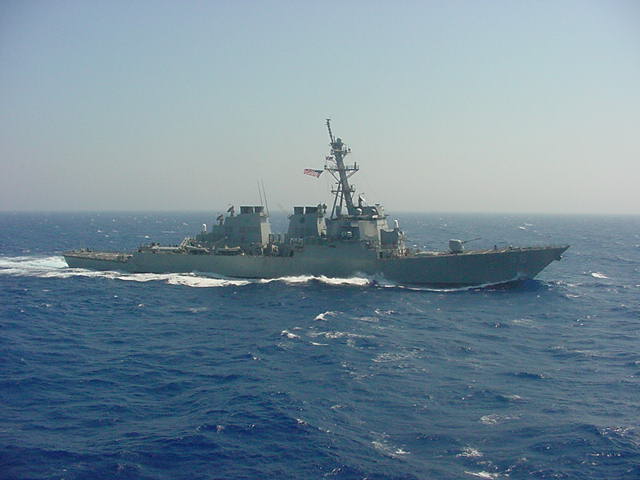
Her successor USS The Sullivans DDG-68 is a Arliegh Burke Class Aegis guided missile destroyer based out of Mayport Naval Station Florida. For many years they were the only ships named after more than one person in the US Navy, something that they now share with the USS Roosevelt DDG-80 named after President Franklin Roosevelt and Brigadier General Theodore Roosevelt Jr, a Medal of Honor winner on D-Day and son of President Theodore Roosevelt.

The loss of the five brothers prompted the War Department to end the assignment of siblings in the same unit and adopt the Sole Survivor Policy which became law in 1948.

Juneau was a good ship with a fine crew but unsuited for the type of battle that out of military necessity she was thrown into. Heavily damaged she had the unfortunate luck to be part of a battered task force which had no ships capable of anti-submarine protection because of damage incurred the previous night. Her sinking at the hands of the I-26 and the subsequent loss of her survivors through was a tragedy of the highest order.

Tonight I remember Juneau her gallant crew and the Sullivan brothers.

May they all rest in peace.

Padre Steve+

5 Comments

Filed under History, Military, Navy Ships, world war two in the pacific

A Global Force for Good: Happy 238th Birthday to the US Navy

Navy Heritage WWII Recruitment Poster

http://www.navy.mil/viewVideo.asp?id=17676

“A good Navy is not a provocation to war. It is the surest guaranty of peace.” Theodore Roosevelt 

For me anything to do with the United States Navy is historical as well as decidedly personal. Sunday is the 238th anniversary of the founding of the United States Navy, actually the founding of the Continental Navy but let’s not get too technical.

The fact is that back in 1775 most people and political leaders in the revolting colonies felt that founding a Navy was quite foolish. After all, who in their right mind would ever dare to challenge the might of the British Royal Navy? Even revolting colonies. But like when King George III was told that “the Colonies are revolting” he reportedly said “tell me something I don’t know.” But I digress…

In fact had General George Washington not sent a letter to the Continental Congress say that he had taken some vessels in hand to disrupt the supplies of the the British Army a Navy might not have ever been established. Timing is everything and in this case it was pretty good timing.

Since that fortuitous day in 1775 the United States Navy went from being a piss ant annoyance to the Royal Navy to the premier naval power in the world. Men like John Paul Jones, Edward Preble Stephen Decatur, Thomas Truxtun, William Bainbridge, Oliver Hazard Perry, David Farragut, David Dixon Porter, George Dewey and many more blazed a path of glory which others, great and small would continue to build on the legacy of the iron men who sailed wooden ships into harm’s way. Men like Arleigh Burke, Howard Gilmore, John C. Waldron, Maxwell Leslie, Bull Halsey, Richard O’Kane, Daniel Callahan, Raymond Spruance, Ernest Evans built upon that legacy in the Second World War. Others would do so in the Cold War, Vietnam and the Global War on Terrorism.

Great ships like the USS Constitution, USS Monitor, USS Kerasarge, USS Olympia, USS Enterprise, USS Hornet, USS Yorktown, USS Growler, USS Tang, USS Hoel, USS Johnston, USS Samuel B Roberts, USS Laffey, USS San Francisco, USS Houston and USS Arizona, USS Nevada, USS West Virginia and USS California helped build a legacy of valiant sacrifice and service often at great cost in the defense of freedom.

But over those 238 years it all it came down to the men and now the men and women who served in every clime and place, many times outnumbered and facing certain defeat who through their courage, honor and commitment helped secure the liberty of their countrymen and others around the world. Most of these men and women served in obscurity in war and peace but all had the distinction of serving in the United States Navy.

As President John F Kennedy said: “I can imagine no more rewarding a career. And any man who may be asked in this century what he did to make his life worthwhile, I think can respond with a good deal of pride and satisfaction: ‘I served in the United States Navy.'”

295_26911932058_5614_n-1

Like my father before me I can say that I am proud to have served and continue to serve in the United States Navy, because we are no matter what some may say or think,  a global force for good.

Peace

Padre Steve+

1 Comment

Filed under History, Navy Ships, US Navy

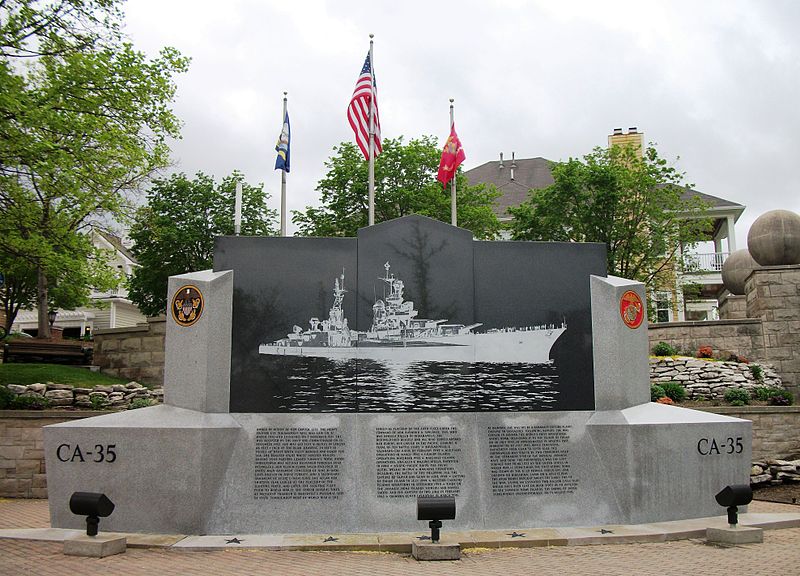
Remembering USS Indianapolis CA-35: Disaster, Dishonor and Redemption

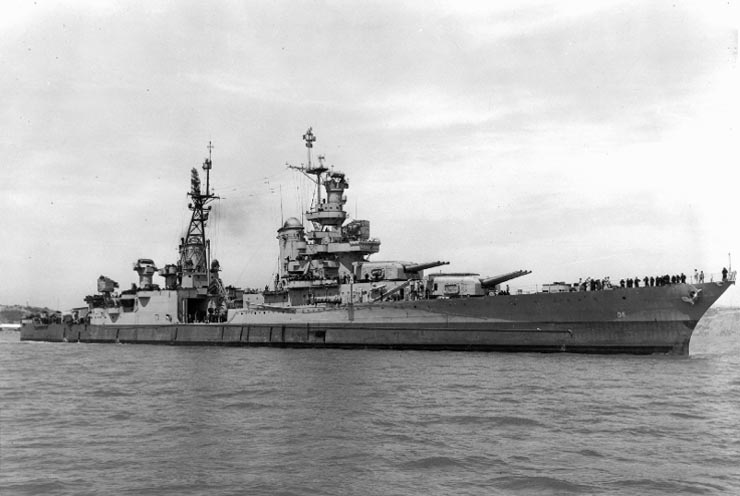
USS_Indianapolis_at_Mare_Island

“Our peoples have forgiven each other for that terrible war and its consequences. Perhaps it is time your peoples forgave Captain McVay for the humiliation of his unjust conviction.” Mochitsura Hashimoto, Captain of the I-58 to Senator John Warner

On July 30th 1945 the USS Indianapolis CA-35 was speeding from the island of Guam where she had made some personnel transfers to Leyte to join other American forces for the final campaign against Japan.

Indianapolis under the command of Captain Charles B McVay III had completed one of the most important secret missions of the war. She had delivered the component parts and enriched Uranium for the the first Atomic Bomb, Little Boy which in less than a week would be detonated over the Japanese City of Hiroshima on August 6th 1945.

Indianapolis was the second ship of the Portland Class heavy cruisers built under the terms of the Washington Naval Conference. Displacing 9800 tons and mounting a main battery of 9 8” guns she typical of the American cruisers of the era. During the 1930s she hosted President Franklin D. Roosevelt three times. When Pearl Harbor was attacked she was on gunnery exercises and from that point played an active role in combat operations in the South Pacific, the Aleutians later served as flagship to Admiral Raymond Spruance, Commander 5th Fleet. After being damaged a Kamikaze off Okinawa on March 31st 1945. She then returned to Mare Island for repairs and a rendezvous with destiny.

With the components for Little Boy aboard Indianapolis sailed unescorted to Pearl Harbor in complete secrecy and then to Tinian where she delivered her deadly cargo. After her brief port call in Guam she made haste to join Vice Admiral Jesse Oldendorf’s Task Force 95 at off Leyte. Her Captain used discretion in his use of a zig-zag course and was not employing it on the night of July 30th.

ce006i58

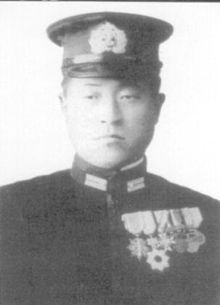
What Captain McVay and his crew did not know was that the Japanese Imperial Navy submarine I-58 under the command of Lieutenant Commander Mochitsura Hashimoto was stalking Indianapolis. At 2300 on the 29th while surfaced the Japanese noted a ship approaching and submerged. At 0014 after he gained firing position Hashimoto launched a spread of 6 Type 95 torpedoes, one of the most powerful type of torpedoes used during the war. Two stuck Indianapolis on her starboard side. The powerful charges caused catastrophic damage and 12 minutes later the cruiser rolled over and sank taking about 300 of her nearly 1200 man crew down with her.

She sank so quickly that few lifeboats or rafts were launched and no distress call issued. It took the Navy nearly three days to even know that she was missing. Finally on August 2d the survivors, now decimated by exposure, dehydration and shark attacks were spotted by a patrol plane. The aircraft sent a message out and other aircraft and the USS Cecil J. Doyle DE-368 as well as a number of other ships which responded to the call. Only 321 crewmen out of the estimated 880 survivors of the sinking lived.

USS_Indianapolis-survivors_on_Guam

The tale of the sinking and the stories of the survivors would be recorded in Fatal Voyage by Daniel Kurzman and All the Drowned Sailors by Raymond Lech. It was also mentioned in the movie Jaws by Robert Shaw’s character, the fishing boat Captain “Quint” who was supposed to be an Indianapolis survivor. The made for television film Mission of the Shark: The Saga of the U.S.S. Indianapolis staring Stacy Keach as Captain McVay brought a renewed interest in the sinking and the story of the survivors.

indy4

Captain McVay would be tried at court-martial and convicted of “hazarding his ship by failing to zig-zag.” The sentence was controversial as McVay was the only commander of a U.S. Navy ship lost during the war to be tried by court-martial. The true fact of the matter was that McVay was a scapegoat for the failure of several systems of reporting and communication that he did not control.

Admiral Nimitz commuted the sentence and restored McVay to active duty. He retired in 1949 after being promote to Rear Admiral. Despite the fact that many of the crew felt that he was innocent many families of those lost at sea took their revenge on McVay. He received much hate mail and was frequently threatened in writing and by phone. On November 6th 1968 McVay, despondent over the death of his wife and the continued harassment committed suicide using his Navy issued revolver in his back yard. In one hand he grasped a toy sailor doll given to him by his father when he was a child.

In the years following many survivors banded together with Captain McVay’s family and others including the commander of I-58, Mochitsura Hashimoto to clear his name. The president of the USS Indianapolis Survivor’s Association testified “Capt. McVay’s court-martial was simply to divert attention from the terrible loss of life caused by procedural mistakes which never alerted anyone that we were missing.” 

220px-Mochitsura_Hashimoto

Hashimoto, who spent much of his time after the war as a Shinto priest sought the forgiveness of survivors. He returned to a survivor reunion in 1991 and said: “I came here to pray with you for your shipmates whose deaths I caused.”   

Hashimoto wrote Senator John Warner on behalf of the late Captain McVay in 1999 when he learned of the efforts being made to clear McVay’s name. The letter is touching in its honesty and speaks of the deep respect that warriors who once fought against each other can maintain for one another. It also speaks to the deep sense of honor of Hashimoto:

“I hear that your legislature is considering resolutions which would clear the name of the late Charles Butler McVay III, captain of the USS Indianapolis which was sunk on July 30, 1945, by torpedoes fired from the submarine which was under my command.

“I do not understand why Captain McVay was court-martialed. I do not understand why he was convicted on the charge of hazarding his ship by failing to zigzag because I would have been able to launch a successful torpedo attack against his ship whether it had been zigzagging or not.

“I have met may of your brave men who survived the sinking of the Indianapolis. I would like to join them in urging that your national legislature clear their captain’s name.

“Our peoples have forgiven each other for that terrible war and its consequences. Perhaps it is time your peoples forgave Captain McVay for the humiliation of his unjust conviction.”

Finally in October 2000 Congress passed a resolution stating of Captain McVay that “he is exonerated for the loss of the USS Indianapolis.” President Clinton signed the resolution and in July 2001 Secretary of the Navy Gordon England order Captain McVay’s record cleared of wrong doing. Hashimoto would die on 25th 2000 at the age of 91.

This year, on the 68th anniversary of the sinking 17 survivors gathered to mark the occasion and pay tribute to their shipmates. The Facebook page of the association has this memorial:

Goodnight and sleep well, crew of the USS Indianapolis. On this night, sixty-eight years ago, you had no way of knowing that a Japanese torpedo would hit your ship in just a few short hours. Your floating home away from home would sink within twelve minutes. Unable to get topside in time, three hundred of you would go to the bottom of the ocean with your ship. Nine hundred of you would find yourselves in the water, about to experience a terrifying existence amid sharks, dehydration, hallucinations, and the elements. 

You were so young, Indy sailors. 

Tonight, like that night, let your minds be free from nightmares and flashbacks. Tonight, like that night, know that your families and friends miss and love you. Tonight, like that night, just be “The Crew of the USS Indianapolis” instead of “Survivors” or “Lost at Sea.”

800px-USS_Indianapolis_(CA-25)_Memorial

I cannot say more.

Peace

Padre Steve+
Leave a comment

Filed under History, Navy Ships, US Navy, world war two in the pacific

To Iraq and Back: Reporting for Duty

183241_1857288917425_1495714_n

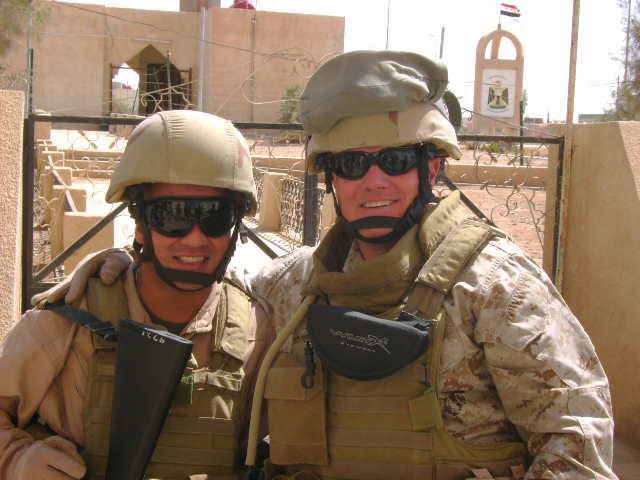
In July 2007 my assistant at EOD Group Two, RP1 Nelson Lebron and I began our Iraq adventure.  This is one of a series of posts which will be published periodically to tell our story.  While they will not be daily posts, they will be sprinkled in on this site on a regular basis.  Hopefully they will be something that will help those who have not been in the remote parts of either Iraq or Afghanistan what it is for Navy personnel to go to war, not as ship’s company, not with their own unit, but as individual augments to other commands.  This is a different way to go to war…this is our story.

July 2nd 2007: I rolled into the parking lot for the Naval Mobilization Processing Site (NMPS) Norfolk.  As usual parking on Norfolk Naval Station was a bitch to find.  It had been a number of months since I had to make this commute.  I transferred from the Marine Security Force Battalion where I had served from 2003 to October 2006 and had not made the trip since. Thankfully I remembered to leave early because traffic was as gooned up as ever going down I-264, I-64 and I-564 to head into the base.

As I looked for a parking space I really missed my designated parking spot back at Security Forces. I drove around for a while and finally found a spot, then after wandering around a found the NMPS offices.

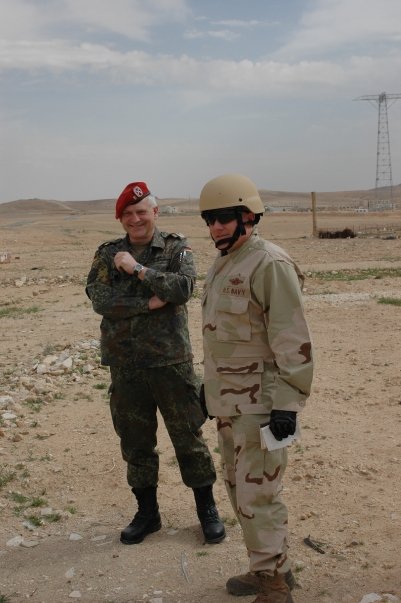
I walked upstairs to the classroom in which we were to meet was located and found it empty, save for a couple of NMPS staff members.  I reported there in my DCU’s, or Dessert Camouflage Uniform issued to me by EOD Group Two. They are an older type uniform similar to the old BDUs and unlike the Marine Pattern Digital Camouflage are not wash and wear. I still have a few sets in my deployment bag but figure that if I every get deployed to such a situation again that I will be wearing whatever Army or Marine Corps uniform the Navy sailors are wearing unless serving with the Seabees, Naval Special Warfare or an actual Navy command.

295_26911967058_7489_n-1

Camp Zarqa Jordan March 2007

I had worn them in March when I went to Jordan for the Jordanian Army/ UN Peace Operations Training Center course on Iraqi Culture, Religion, Politics and Language. Until the Marines came out with their digital uniforms they were common to all of the services. Now in 2013 I think there are 10 different camouflage uniforms in use among the armed forces and Congress is about to force us in the military to find a common uniform again. Not a bad idea if you ask me.

I looked around the empty classroom with every table stacked with folders filled with a huge amount of paperwork.  I found a seat which is not hard to do with so many to empty seats choose from and sat down. I took an aisle seat about three rows back and plunked my EOD issue Blackhawk backpack down, grabbed my Book of Common Prayer and did the morning office before anyone else arrived while drinking the large cup of black coffee I had gotten across the street.

Shortly thereafter other people began to arrive in twos and threes, most enlisted dressed in utilities (the successor to dungarees) while most of the Chiefs and officers were dressed in khakis. A few Seabees had woodland BDUs on and a couple of folks wore DCUs which were obviously from previous deployments to the sandbox.  RP1 Lebron, then an RP2 then showed up and we waited for the orientation and administrative stuff to start moving.  We surveyed the situation and looking upon our fellow sailors realized that this would be a different deployment.

What we noticed as we talked the varying ranks and uniforms really jumped out at both of us.  Most of our fellow sailors had never been deployed even in peacetime in such a manner.  Most of those who had deployed had done so on ship with the exception of the Seabees and a Corpsman or two.

The sailors spanned the spectrum of age, rank and rating. There were the officers, mainly Lieutenants, Lieutenant Commanders and Commanders, Surface Warfare, Aviators, Supply Corps, Civil Engineering Corps and Medical Officers.  The highest ranking officer was a Navy Captain. I was the only Chaplain.

The enlisted sailors also spanned the spectrum of the Navy. Fire Control Technicians, Operations Specialists, Gunners Mates, Boatswains, Yeomen and Storekeepers, Intelligence Specialists, Corpsmen, and even Culinary Specialists.  They had qualifications as Submariners, Enlisted Surface Warfare, Aviation Warfare among others.  Some like me and Nelson had volunteered, others were voluntold. The one that brought us all together was that we were US Navy Sailors and going to war and not with the Navy or our shipmates. We were strangers to each other and would be strangers to Soldiers, Airmen, Marines and Sailors that we would serve with overseas.

Nelson and I have deployed a lot. We had served together in Okinawa and at EOD where I did a “drug deal” with his chaplain and the RP detailer to get him to EOD.  The guy is a hero. I think he has deployed about 10 times in his 20 year career from which he will retire this fall.

The year and a half prior to our deployment Nelson had been deployed to Afghanistan where he as an E-5 was awarded the Defense Meritorious Service Medal.  On his way back from Afghanistan he was pulled off of his flight to the states and sent back to his old ship, the USS Trenton to assist in the evacuation of Americans and others from Beirut.

I think to some extent his frequent deployments actually hurt his career since the biggest part of making rank as a Navy enlisted man is to do well on the advancement exam. Unfortunately there were many times when he was forbidden to test because he was deployed, and when eventually allowed to test during a deployment was not provided the appropriate materials to study. That would happen again during the coming deployment and lead to a pretty funny incident on one of our trips in Iraq, but that story will be told later.

Nelson is a NY Rican and both a New York Golden Gloves boxing champ, a high school valedictorian, a full contact  kick boxer, martial artist, MMA fighter and has fought on Team USA and won the 2005 Arnold Schwarzenegger Classic.   He is the real deal.  Proficient in many weapons systems from his service with the 3rd Recon Battalion, 4th Marine Regiment and Naval Special Warfare he is the ideal body guard for any Chaplain going to do the job we had been given to do, to work with Marine and Army advisers supporting two Iraqi Divisions.  Our mission would evolve and expand once we got there, but we didn’t know that yet.

As people filed in a Chief Petty Officer brought us to attention and the processing site Commanding Officer came. He spoke with us a few minutes and then led us in the Sailors Creed. With that we set down and began to get our orientation to how our mobilization, training and movement would unfold as we got ready to go to Iraq.

Peace

Padre Steve+
Leave a comment

Filed under iraq,afghanistan, Military, to iraq and back, Tour in Iraq, US Navy

To Iraq and Back: Prelude: I was Born for This

295_27076757058_7361_n-1

Me in 1982 

This is the first actual chapter in my series “To Iraq and Back: Padre Steve’s War and Return.” I wrote last night that I was going to be doing this and I figure that there is no time like the present to start. Just about 6 years ago I was preparing to deploy to Iraq as an individual augment supporting the US Marine and Army advisors to Iraqi Army and Security Forces in Al Anbar Province. After 6 years I think I can finally complete my literary account of my experiences in Iraq, my return and subsequent struggle with Post Traumatic Stress Syndrome (PTSD). 

Though I am not certain, I do think that many of us were born for what we feel called to do. As bit of a theologian I can honestly say that I am not a Calvinist or strict Augustinian who believes that we are simply playing out some predetermined role or fate on earth. Neither am I a fatalist but I really do feel, that whether it was something God ordained, something genetic or a product of my environment growing up, that I was born to do what I do.

As one who has some training as well in psychology and pastoral care I also understand that the human mind is a very complicated lump of gray matter. I know that we as human being as products of our genetic make up, our upbringing and environment, education, spiritual formation, relationships ad infinitum, ad nauseum.

So I know what I believe about my calling to serve in the military and the priestly vocation cannot be scientifically proven. That being said, I believe and that belief in my calling survived even in my times of unbelief.  A paradox for sure, belief and unbelief coexisting at the same time in the same person, but Father Andrew Greeley said it well in his novel The Bishop and the Beggar Girl of St Germain: “Most priests, if they have any sense or any imagination, wonder if they truly believe all the things they preach. Like Jean-Claude they both believe and not believe at the same time.”

My tour in Iraq in a sense was the culmination of my calling, a call that I felt at a very early age, to serve in the military and later to be called to serve as a Priest in the military. I have long figured that to have served a full career in the military in time of war and not to have gone forward into danger to do what I have trained all my life to do.

I have a hard time not remembering when I wanted to serve in the military and serve in combat. That may sound strange but for some reason, even though I was not encouraged to follow this path it was something that growing up as the son of a Navy Chief Petty Officer who served at the Battle of An Loc in the Vietnam War that I felt was my destiny. Maybe it is faith, maybe it is some sort of mysticism or even fatalism, but I do believe that for good or for bad that I am doing what I was born to do.

George Patton commented: “A man must know his destiny. if he does not recognize it, then he is lost. By this I mean, once, twice, or at the very most, three times, fate will reach out and tap a man on the shoulder. if he has the imagination, he will turn around and fate will point out to him what fork in the road he should take, if he has the guts, he will take it.”

I am sure that my family and my earliest friends can testify to my love of all things military and the nearly romantic calling that soldiering had on my life. At nearly every turn in life I have responded to the military calling by volunteering for assignments that would place me closest to the action. There were times that my wishes were thwarted and my desires placed on hold, but they never died.

I served on the Fulda Gap in the Cold War and missed serving in ht First Iraq War because I had left active duty to attend seminary and my National Guard unit just missed being mobilized. I did support the Bosnia operation as a mobilized Army Reserve Major and during that mobilized period of service was told that I was not a place for me in the Regular Army. However, a few months after my last active reserve posting I was given the chance to apply for active duty as a Navy Chaplain. Less than 7 weeks after the first talk with the Navy I resigned my Army Reserve commission as a Major and accepted a lower rank, that of a Navy Lieutenant to enter active duty in February 1999.

The Marine unit that I was serving with in 1999 came very close to being sent to the Kosovo crisis and had Slobodan Milosevic not made a last minute peace deal after a 70 day air campaign I am sure I would have ended up there.

555306_316970661755579_1118848704_n

With my Boarding Team, April 2002 aboard USS Hue City

However it was 9-11-2001 that changed everything. I was in Camp LeJeune North Carolina with the 2nd Marine Division when the hijacked aircraft hit the Twin Towers and the Pentagon. Shortly after those attacks I was transferred to the USS Hue City, a Aegis Guided Missile Cruiser. My first wartime deployment was in 2002 aboard Hue City supporting Operation Enduring Freedom and Southern Watch. On that deployment I served as an advisor to one of our boarding teams and took part in over 70 boarding party operations against Iraqi and other oil smugglers who were breaking the United Nations oil sanctions against Iraq.

We were in the yards when Operation Iraqi Freedom began and in the fall of 2003 I was assigned to the Marine Security Force Battalion. In my time at Security Forces I travelled around the world and often to the Middle East and Europe, but not to Iraq or Afghanistan. Because the elements that we sent to Iraq were too small to rate an organic chaplain I did not deploy with them, though I heard about the experiences of many of those Marines and Navy Corpsmen as they came to me for counsel when they came home.

Despite having spent time of the boarding teams and having deployed numerous other places in my career there were times that I felt like William Tecumseh Sherman, who missed the war with Mexico having been sent to California who wrote: “I have felt tempted to send my resignation to Washington and I really feel ashamed to wear epaulettes after having passed through a war without smelling gun-powder.”

In October 2006 I was assigned to Navy EOD Group Two and shortly thereafter my life which had been very active with more time spent away from home than with my wife since my call up in 1996 to support the Bosnia operation became much more complicated. While at EOD I was supporting very skilled sailors most of whom had deployed multiple times in the always dangerous work of defusing and defending against Improvised Explosive Devices, or IEDs, the signature weapon of the wars in Iraq and Afghanistan. I also was called to support sailors either preparing to go to Iraq or Afghanistan as Individual Augments or those that were returning home.  As I heard their stories, especially those serving as advisors with Iraqis or Afghani soldiers I knew that was what I needed to be doing.

In early 2007 a call went out seeking chaplains to serve in Iraq and Afghanistan in various roles that were not supported by unit chaplains. With the permission of my supervisory Chaplain, Captain Deborah McGuire who was at the Navy Expeditionary Combat Command I put my name in the hat and was notified that I would be sent overseas. I explained to Judy that despite her misgivings that I felt that Nelson and I were the most ready, qualified and prepared team to take on the mission. Needless to say that did not assuage her fears and concerns and an emotional distance began to grow between us.

Initially we thought it would be sent to Iraq, then it was Afghanistan, and finally the first week of June 2007 the orders came down for Iraq. My faithful assistant, Religious Program Specialist Nelson Lebron would go with me. It was the first time that an existing Religious Ministry Team had been tagged to take on an independent mission of this nature.

Our orders were to support Marine Corps and Army advisors in Al Anbar Province, a mission that was new because when the advisory teams were first formed no one thought about organic religious or spiritual support. It was assumed that chaplains from nearby units would suffice but the Army and Marines learned that the assumption was wrong and that the advisors needed their own chaplain support.

The next few weeks would be a whirlwind as we prepared to go. They would be weeks that were trying both individually and for our families and neither of us would realize how much we would be impacted by our time in Iraq, but in June of 2007 that was still a part of our yet uncharted future.

Peace

Padre Steve+
Next: The Preparations


Leave a comment

Filed under PTSD, to iraq and back, Tour in Iraq