Tag Archives: US Navy

Looking Back at 30 Years of Commissioned Service

320578_10150433535627059_671902058_10348652_2128805973_n

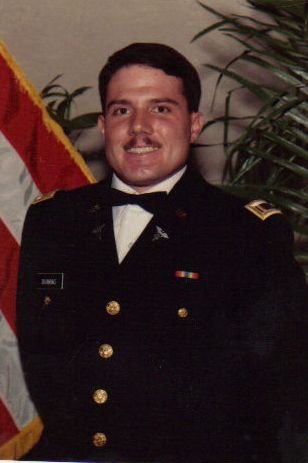
I was going to write about the situation in Syria tonight but that will wait until tomorrow because June 19th is the 30th anniversary of my commissioning as a 2nd Lieutenant in the US Army. That was a long time ago. I had enlisted in the California Army National Guard in August of 1981 at the same time that I entered the Army ROTC program at UCLA.
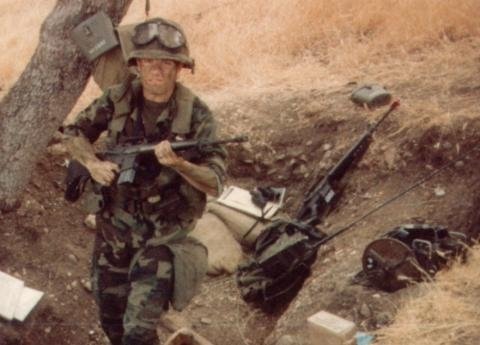
295_27076757058_7361_n-1

California Army National Guard 1982

Like most of my life I can admit that my military career, 17 1/2 years in the Army and another 14 1/2 in the Navy has been to quote Jerry Garcia “a long strange trip.” It has been eventful and it is not over. One interesting thing is because I spent about 10 years of my career in the Army National Guard and Army Reserve in a drill status I still am able to serve, probably until I reach age 58 or maybe even 60. If so my career will span early 40 years. Judy tells me that she doesn’t think I will retire until I am 60 which would be just under another 7 years.  That being said I can still crush the Navy Physical Fitness Test. I am still in the game.
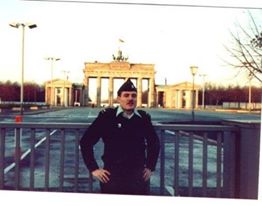
295_27076742058_6685_n-1

Berlin Wall (East Berlin) 1986

It is interesting what I have seen and where I have served. My career began back during the early days of the Reagan build up during the Cold War, not long after the Iranian Hostage Crisis, which was the catalyst for me volunteering even though the truth of the matter was that I wanted to serve in the military since I was a child. I was a Navy brat, my dad was a Chief Petty Officer and I loved that life.

603858_10151664883067059_2000407407_n

Germany 1984

I wanted to join the Navy out of high school but my parents convinced me to try college first, which I did, meeting my wife Judy my freshman year at San Joaquin Delta College in Stockton California. After that it was California State University at Northridge where I began the serious exploration of commissioning programs. I was actually accepted into the Air Force Program but turned it down, Judy told me that she wouldn’t marry me if I joined the Navy and the Navy ROTC program informed me that I would have to change my major to hard science, math or engineering to enter the ROTC program. So I asked who I could work with and they pointed me down the hall to the Army.
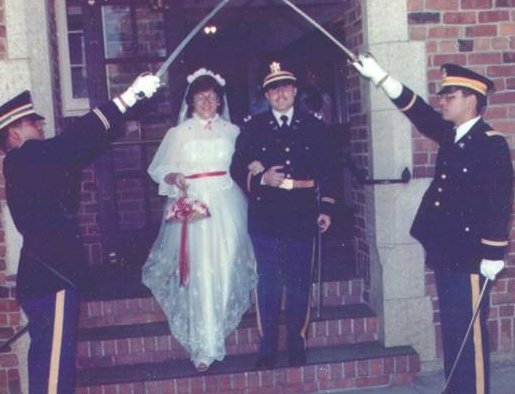
1006172_10151735951292059_1275042886_n-1

Marriage to Judy 25 June 1983

That was the beginning. A long time ago in a galaxy far far away. When I was commissioned in 1983 this college history major was commissioned into the Medical Service Corps, the administrative and operational side of the Army Medical Department. That made a lot of sense, or maybe it didn’t but it did save me from a career as an Ordinance Corps Maintenance Officer or Adjutant General’s Officer Corps paper pusher, both tasks that the Army trained and assigned me to do as a Medical Service Corps officer.

652_55115567058_8786_n

Company Commander 557th Medical Company (Ambulance) 1985

As a Medical Service Corps officer I attended my Medical Officer Basic Course, the Junior Officer Maintenance Corps, the NBC Defense Officer Corps, the Air Force Air Load Planner Course and the Military Personnel Officer course.
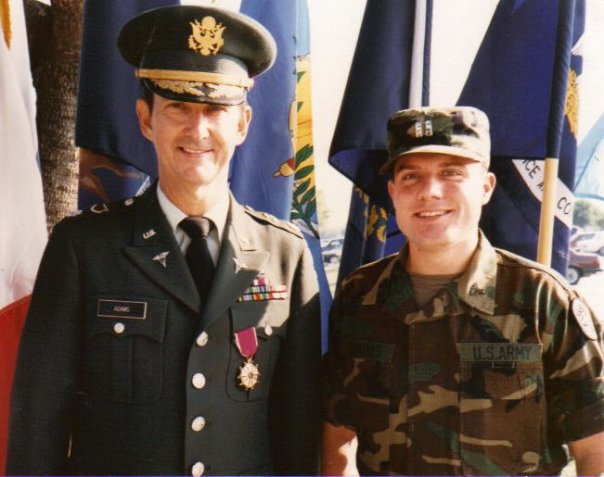
1929_55558982058_3465_n

Academy of Health Sciences 1987 with LTC Ike Adams who was largely responsible for redirecting my career and calling to be a Chaplain

I served as a platoon leader, company XO, company commander and Group level staff officer in Cold Wr Germany. I then served as the Brigade Adjutant for the Academy Brigade of the Academy of Health Sciences, where I also helped draft the personnel instruction regarding personnel infected with the HIV virus.

652_55560577058_1525_n

Army Chaplain School August 1990 with LTC Rich Whaley and CPT Bill Blacky

I left active duty to attend seminary in 1988 and joined the texas Army National Guard, initially as an Armor Corps officer serving as the Adjutant for an Armored battalion, until the State Chaplain found out and demanded that I be transferred to the Chaplain Candidate Program which I entered in 1990. I was at the Chaplain Officer Basic Course in August 1999 when Saddam Hussein invaded Kuwait and the war ended just before our unit was to be mobilized for service. Technically Chaplain candidates can’t be mobilized, but one of the full time Guard personnel technician Warrant Officers in Austin kept me on the rolls for mobilization purposes as a Medical Service officer. But like I said the war ended, I graduated from seminary and was ordained and became a chaplain in 1992. I completed the Chaplain Officer Advanced Course and after completing my Pastoral Care Residency at Parkland Memorial Hospital in 1994 took a chaplain job in Huntington West Virginia where I transferred to the Virginia Army National Guard and once promoted to Major transferred to a local Army Reserve unit.

652_55560597058_3348_n

Exchange Officer with German Army at Panzer School 

That was a turn of events that got me mobilized to support the Bosnia mission in 1996 and allowed me to serve supporting a number of units and military communities in Germany. Upon my return to the states and no civilian employment I served as the final Federal Chaplain at fort Indiantown Gap Pennsylvania. When that assignment ended I went back to West Virginia.

652_55560592058_2987_n

295_27076797058_9175_n

Mt Fuji Japan and Panmunjom Korea 2001

Just before Christmas 1998 I got a call from my bishop telling me that the Navy was willing to consider me for active duty. Remembering Judy’s admonition that she would not marry me if I joined the Navy I did it without asking her. Not a smart thing, she was quite pissed because had I bothered to consult her she probably would have said yes, but the way I did it devalued her. Likewise she was sort of looking forward to the time I hit 20 years in the reserves so she wouldn’t have to lose me all the time to the military.
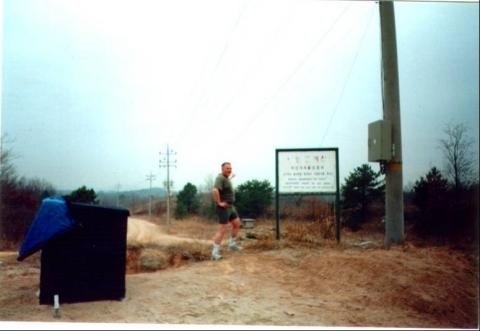
295_27076837058_752_n

Korea DMZ PT Session

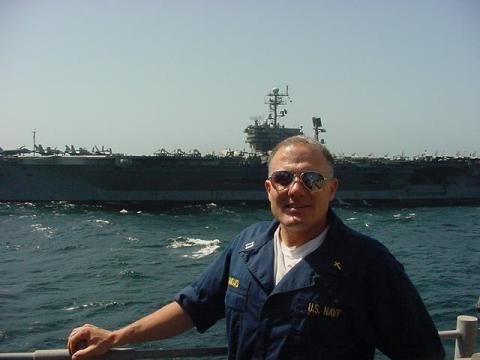
Long story short. The Navy took me and I took a reduction in rank to come on active duty. One day I was a Major in the Army Reserve and the next a Navy Lieutenant. I was given a choice of assignments. I wanted to serve on a ship. I was given the choice of Marines or Marines. So I chose Marines and after completing the Navy Chaplain Office Basic course I reported to the Second Marine Division where I served as the “relief pitcher” for the division Chaplain, whenever someone got in trouble or was transferred without a relief in place I went in like a baseball relief pitcher. I deployed with 3rd Battalion 8th Marines to Okinawa, Japan and Korea. I was at Camp LeJeune on 9-11-2001 and in December 2001 reported to the USS Hue City CG-66 in Mayport Florida deploying shortly thereafter to support Operation Enduring Freedom.

11787_4053256768208_1427277720_n

295_27076892058_2637_n-1

555306_316970661755579_1118848704_n

295_27076832058_495_n

USS Hue City Operation Enduring Freedom

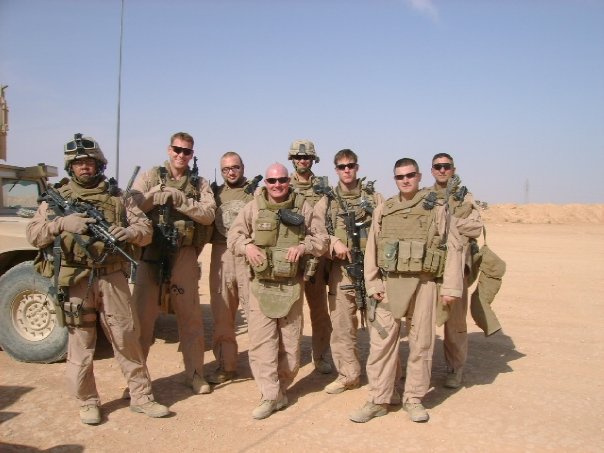
In October 2003 I reported to the Marine Security Force Battalion (now Regiment) and travelled the world in support of those Marines, spending between 1-3 weeks a month on the road. That was an amazing assignment because it gave me a global perspective of the Navy Marine Corps mission traveling frequently to the Middle East, Europe, Asia, Guantanamo Bay Cuba and various locations in the United States. While in that billet I completed the Marine Corps Command and Staff College and my Fleet Marine Force Officer qualification and was promoted to Lieutenant Commander. After that I went to EOD Group 2 and from there was sent to Iraq as an Individual Augment to support advisors to the Iraqi 1st and 7th Divisions, 2nd Border Brigade, Highway Patrol and Police in Al Anbar Province working under the authority of the Iraq Assistance Group and II Marine Expeditionary Force Forward.
943043_10151694525692059_632653331_n

185615_1857288397412_3950321_n

25508_360207007058_7846512_n

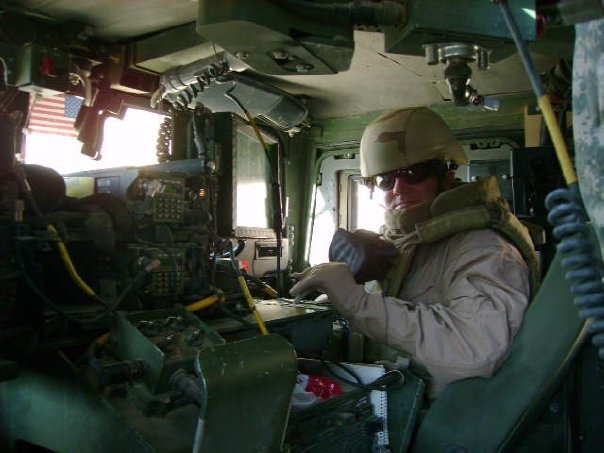
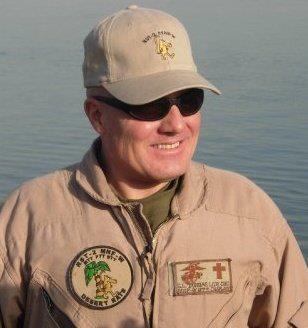
Iraq 2007-2008

I came back from Iraq in pretty bad shape but consider it the pinnacle of my operational ministry as a Chaplain that I would not trade for anything. Since I have written much about it I will not say more about it in this article. From EOD I was transferred to Naval Medical Center Portsmouth and after being selected for Commander in 2010 was transferred to Naval Hospital Camp LeJeune as the command chaplain. This tour was as a geographic bachelor and every couple of weeks I drove back to Virginia.

Now in a couple of months I will be reporting to be the Ethics Faculty and Chaplain at the Joint Forces Staff College in Norfolk.
652_55115572058_9345_n

1905_50393137058_7454_n

2097_58015302058_3658_n

295_26911967058_7489_n

652_55115587058_50_n

295_27076772058_8004_n

1905_50393107058_5924_n

295_27076822058_54_n

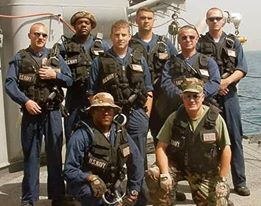
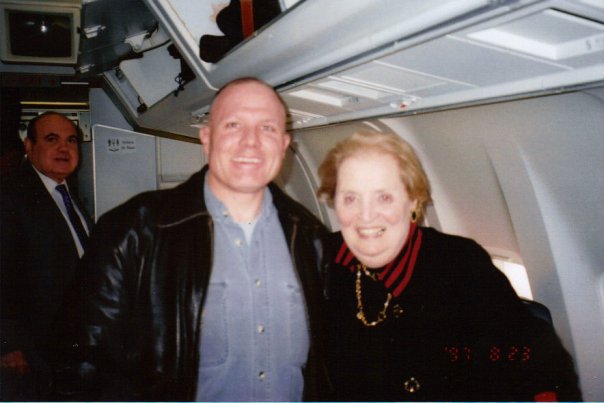
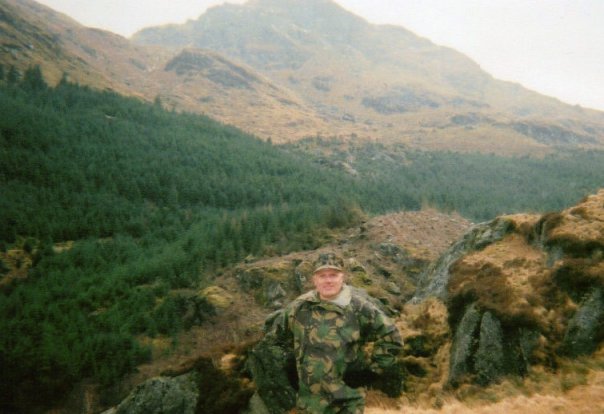
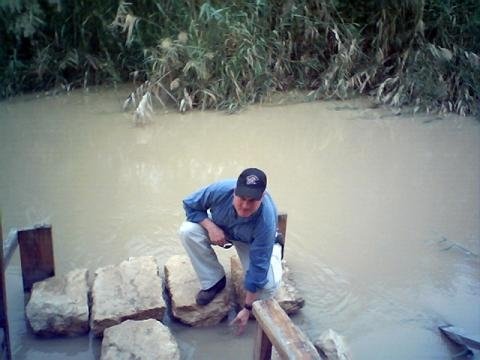
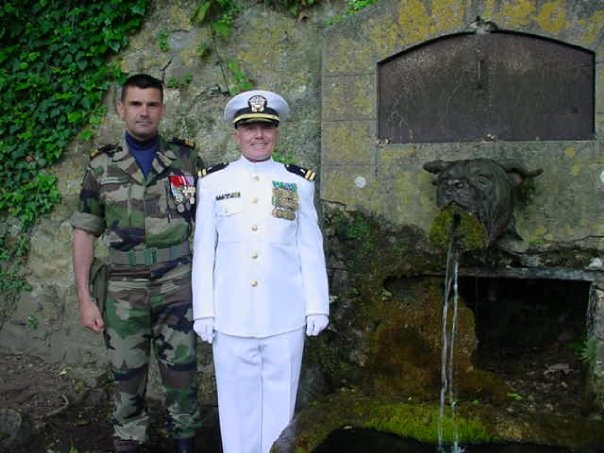
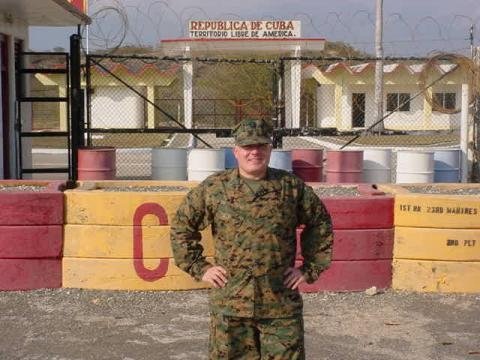
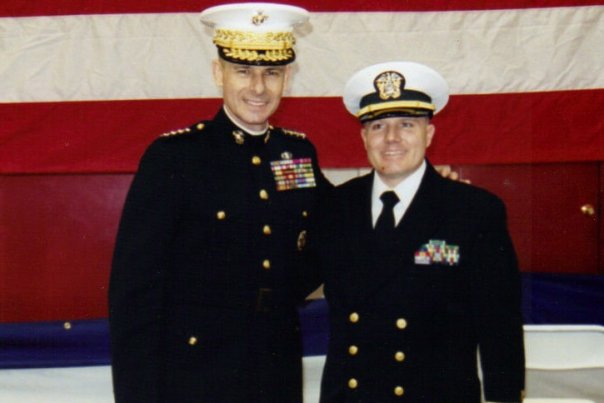
Various scenes top to bottom with General Peter Pace, teaching Marines at Normandy, with Secretary of State Madeline Albright 2005 Spain, with German office in Jordan 2007, Scottish Highlands with US Marines and Royal Marine Commandos 2005, Jordan River 2007, Belleau Wood France 2004, Guantanamo Bay Cuba 2003 or 2004

There have been highs and lows in my career and a few times that I thought that I wasn’t going to survive. But of all the things that I value in serving this country are the people that I have served with, Army, Navy, Marines and others including allied officers. I have met a lot of wonderful people, quite a few of whom I still stay in contact with despite the distance and years.

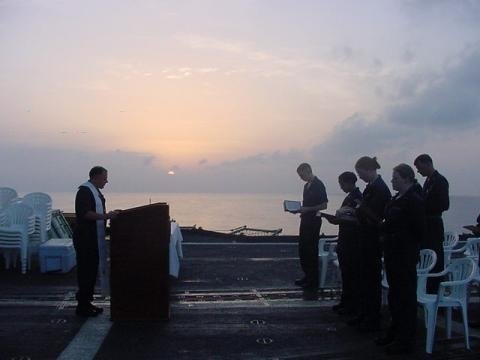
1905_50393027058_1870_n

295_27076762058_7573_n-1

295_27076892058_2637_n-1

With FAST Marines in Bahrain 2004 or 2005, Easter Sunday 2002 aboard USS Hue City and aboard USS Hue City with USS John F Kennedy CV-67 in background.

While I value my service in the Army, because it is a big part of my life I echo President John F Kennedy who said “I can imagine no more rewarding a career. And any man who may be asked in this century what he did to make his life worthwhile, I think can respond with a good deal of pride and satisfaction: ‘I served in the United States Navy.'”

Until tomorrow,

Peace

Padre Steve+

2 Comments

Filed under Military

“A Clear and Present Danger” The Problem of Sexual Assault and Harassment in the Military

111912cover

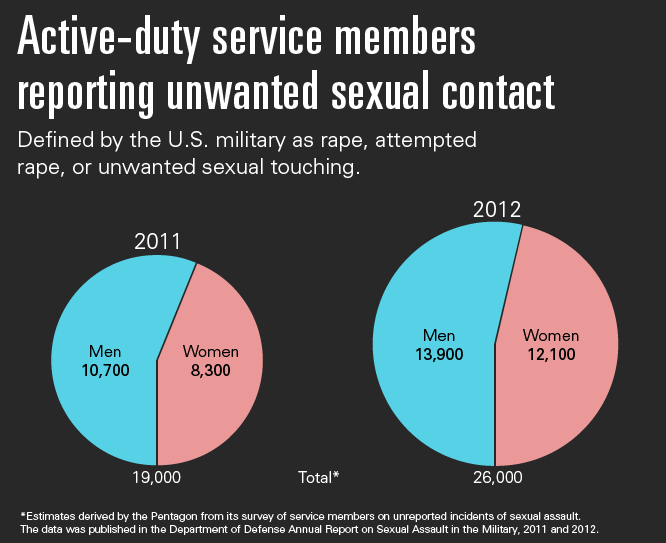
Over the past number of weeks the incessant number of stories regarding incidents of sexual assault and harassment by military members against other military members has reached levels that I have not seen in years. Since I have served in the military continuously in one capacity or another for almost 32 years I have seen this phenomena develop and reach a point that I did not think was possible, which endangers the morale and mission of the military and the trust of our society in our military institutions.

dod-assaults-timeline

When I first entered the military in 1981, enlisting in the California Army National Guard and in the Army ROTC program at UCLA had no idea what would transpire over my career and how I as a man would see the problem of sexual assault. I entered the military not a few years after the changeover from a military built on conscription to an all volunteer force and the integration of women into units, which while not “combat arms” units would certainly be in the fight should we ever go to war.

I guess that the first places that I saw what would now certainly be prohibited behaviors were in my National Guard unit, a Field Artillery Battalion in Southern California which though not authorized any females, had an administrative support section of females who worked for the personnel officer and Command Sergeant Major. When we went to the field they would accompany us and the stories of what went on with them and members of the leadership were infamous. When I attended my ROTC Advanced Pre-Commissioning Camp at Fort Lewis Washington we had three female cadets in my platoon. They lived in a separate barracks with other women but trained with us. They were subjected to some of the most despicable treatment that I had seen in my life. Their looks, motivations and morals were scrutinized in ways that the editors of the National Enquirer would be proud. They had senior instructors appear to give them unwanted favor and for that they ended up being derided by their fellow male cadets.

603858_10151664883067059_2000407407_n

Me early in my career as a Platoon Leader in Germany

After I was commissioned as a Medical Service Corps Officer in 1983 and assigned to a Medical Ambulance Company in Germany I saw the problem grow as more women were assigned to such field units because of the indiscriminate nature of the Army assignment system. My unit eventually had 63% of its assigned strength as females, about 85% of our medics were female. Our sister company was just that, they peaked at 73% female strength. While I was in the unit I served as a Platoon Leader, Company Executive Officer and eventually the Company Commander when our Company Commander, who actively spoke in racist and sexist terms referring to blacks as “the seed of Cain” and women as “unequal to men” using his religion as justification was relieved of command.

I was privileged to serve with some of the finest women soldiers that I have every served alongside while in that unit. My XO retired as a Lieutenant Colonel and my Platoon Sergeant retired as a First Sergeant. Both were hard chargers and as competent or more than most of the men that I served with but were often, usually behind their backs treated with distain for their competence and ability to serve in what until that point had been pretty much a “men’s club.”

While I was serving as a company commander I worked hard, I had only been an officer a little over two years, a very junior First Lieutenant when I took command following the relief of the previous commander. I found though that some things were not simply a matter of individuals but problems in the very institution that since I was a child had idolized.

One of those situations came out when I attempted to prosecute a Sergeant for forcing a very junior female soldier into a sex act in her barrack room after duty hours. His wife was 8 months pregnant and also a Sergeant but at the base medical clinic. He was caught by her and soon the barracks had every member of the chain of command as well as a copious amount of Military Police and CID agents swarming in it. The poor girl was found half undressed under her bed and had to be taken by my former platoon sergeant out of harm’s way after all was said and done while the Sergeant was being read his rights.  As the Company commander I had the primary responsibility to file charges. Since the man was a Sergeant and under I could not reduce him in rank using the Article 15 Non-Judicial Proceedings process and he was to leave the Army in a couple of months so a court martial would have only kept him in the unit longer. So I referred the case to the Group Commander, a full Colonel and decorated Vietnam veteran and aviator.

050913-military-assault

The Colonel had been our senior instructor when I was at the Academy of Health Sciences and he was a man that I admired. However, when the case got to him he did less that I would have been authorized to do and in addition did not revoke the award of the Army Commendation Medal which the Sergeant was being given for the end of his service as he got ready to leave the Army. When I found out I stormed to the Colonel’s office and told him that he, the Colonel had embarrassed the entire Medical Group and my Company in particular because the case was the talk of the entire base. It could not easily be covered up. I was told by him “I have done what I have done.” He then turned his back on me and from that moment on I was treated with contempt by him and his closest staff members. I learned the hard way that honesty can get you in trouble.

My next assignment was as the Adjutant of the Academy of Health Sciences. I was a newly promoted Captain and worked closely with the Brigade Legal Officer who served as the prosecutor. While I was assigned there three major incidents come to mind all of which involved significant sexual assault, harassment or treatment of students or junior enlisted staff members.

One of those was an aggravated rape of a 18 year old female trainee who was raped by a male trainee over concertina wire in a dark area near her barracks when she was walking back from the trainee PX and Snack Bar on a Saturday Night. It was a brutal case and we sent the young soldier to a General Court Martial when he was convicted of assault, battery, rape and a number of other charges and sentenced to 40 years in Leavenworth prison.

military-sexual-abuse-1

The second was the first trial of a soldier that was having unprotected sex with other soldiers while knowingly being HIV positive. He was a player, a good looking man who easily picked up young women. He worked as a personnel sergeant in one of the training battalions and used his looks, his rank and influence to have unprotected sex with a number of the young female clerks that worked in that personnel center without letting them know of his HIV status. He was found out when the Battalion Commander who was walking through the office overheard one of the females talking with another about her date with him and the sex. Since the commander had personally counseled the sergeant of his legal responsibilities being HIV positive, which included informing sexual partners and ensuring that any sex he had was “safe sex” the commander brought him up on charges. Eventually he was tried and convicted at General Court Martial and since he was beginning to show the outward symptoms of the opportunistic infections of fell blown AIDS was sentenced to 6 months confinement and a Dishonorable Discharge. One of the women that he had sex with, a junior soldier as well eventually tested HIV positive.

The last of the major events at the Academy was a Christmas break, sex for grades scandal that eventually encompassed 17 instructors who had a rather large orgy and party at one of the instructor’s off base home. The San Antonio Express News picked up the story and ran with of course and it made front page news. Unfortunately, most of what they reported, with the exception of the use of “whipped creme” at the orgy was contained in police and CID reports. The whipped creme was certainly an interesting twist and needless to say a good number of instructors were disciplined or their actions.

I left active duty in the fall of 1988 to return to the National Guard while attending seminary. While in the Guard I served in all male units that unlike my unit in California did not have its own assigned female administrative detachment and harem. However that doesn’t mean that I still didn’t see cases of sexual indiscretion, but most of what I saw happened happened outside of my command.

Since I go back a long time I do remember the effects of the Navy’s 1991 Tailhook scandal that eventually ended the careers of some 300 officers, including a number of admirals. I was promoted to the rank of Major in December 1995 and transferred to the Army Reserve and was mobilized in July 1996 to support the Bosnia intervention. About that time a major sexual assault and harassment scandal took place at the Army Training Center at the Aberdeen Proving Grounds. It like Tailhook was all over the news and the Army tried to respond by getting tough on offenders and by sending teams around to emphasize what was right and what was wrong. One of these teams showed up at our base in Germany and about 60 chaplains were gathered together to get the training.

Now I was a mobilized reservist who had not only been a chaplain but had seen and or help prosecute these kinds of issues before as a Company Commander and Brigade Adjutant. I was somewhat jaded by what I had seen and during the lecture I raised my hand into the air and uttered something that many of my colleagues were thinking. One of our instructors, acknowledged my upraised hand so I asked the question. I said “Ms so and so, my name is Chaplain Dundas and unlike most of these gentlemen and women I am a mobilized reservist.” She she asked me what my comment was and I said “Ma’am, it seems to me if people would simply treat people as they would want to be treated or have their wives or daughters treated by others none of this training would be necessary.” You could hear the air being sucked out of the room as my active duty colleagues looked in shock to see who uttered such heresy. Even the instructor seemed stunned. I continued “It seems to me that if we took a hard line and punished the offenders severely and stopped treating this like it was a joke as an institution then we wouldn’t need to have this kind of collective training.” My comment was rapidly passed over and after the training a number of more senior chaplains came to me and thanked me for being honest. Not a few months later the Command Sergeant Major of the Army was relieved of his duties for alleged sexual harassment, yet another scandal.

In 2003 there was a major scandal at the Air Force Academy which very few people were ever punished for, despite a massive number of substantiated complaints of unwanted sexual harassment by female cadets. I have lost count of the number of commanders and other senior officers relieved of duties for inappropriate behaviors with junior subordinates many times of the sexual harassment or assault variety. Any casual reader of the Navy, Army, Air Force or Marine Corps Times can testify to how many of these instances happen and unfortunately they are but the tip of the iceberg I am afraid.

ct-sc-nw-military-rape-krusins-jpg-20130507

Lt. Col Jeffrey Krusinski, the chief of the Air ForceSexual Assault Prevention and Response program

Just in the past month the program director of the Air Force Sexual Assault and Prevention program, a Lieutenant Colonel was arrested for drunkenly accosting a women in a parking lot, the director of the Army program at Fort Campbell Kentucky, also a Lieutenant Colonel was charged with violating a protective order put in place by his estranged wife and a Sergeant First Class, the director of a unit Sexual Assault and Prevention program at Fort Hood Texas was charged with running a prostitution ring using of course, junior female soldiers. Brigadier General Jeffery Sinclair, the former Deputy Division Commander of the 82nd Airborne Division is being prosecuted for is accused of having an illicit affair and engaging in wrongful sexual conduct with several women who were under his command.

petraeus-and-broadwell-e13525065677432

General David Petreus and his “biographer mistress” Paula Broadwell

These instances of course do not take into account of the scandal involving former Iraq and Afghanistan Commander and former CIA Director General David Petreus and his relationship with his biographer an Army Reserve Lieutenant Colonel. To make matters worse some General Officers who are the convening authorities for Courts Martial offenses have given clemency or set aside punishments of senior officers convicted by General Court Martial proceedings of sexual assault or harassment crimes.

I could go on and on and on but will not because frankly it is nauseating and is bringing so much discredit to the services that it cannot be joked about. Almost all of these cases involved some form of undo command influence or other criminal behavior. Although the crimes sometimes are committed by male homosexuals or lesbians, the vast majority are heterosexual and often involve high ranking career service men and women who are married heterosexuals both male and female.

460x

When I look at this situation and ask myself what is going on I have to agree that it is a massive problem. You don’t get so many instances involving so many individuals of high rank without it being something systemic in the military culture. While we can point to the fact that the military is composed of people of the broader society we are a very small segment of that society and percentage wise very few people even qualify to enlist in the military. We are very selective as to who we take in and who we keep. Yet we still have these problems at every level of the chain of command in every branch of the Armed Forces. These are magnified in the eyes of the broader society because of our oath to support and defend the Constitution of the United States and because we are entrusted by the larger society of representing the best of what the country stands for and which we are supposed to defend. Our mission, especially in a military where men and women serve together in combat, often enduring the same hardships and separations that previous generations of military personnel did not have to face becomes compromised when men or women abuse their rank, privilege and office to take advantage of other men or women, heterosexual or homosexual in the conduct of those duties. It compromises the chain of command, it compromises the mission and it destroys the trust needed to be mission ready. We cannot use the excuse that it happens in the civilian world so we shouldn’t be surprised by it in the military.

All the services have implemented training designed to get this problem under control. However, it will not change until people in the military decide that such acts are not just senseless, tasteless or offensive but often an violent assault on another person. I was reading an article in the Military Law Review today written about the Tailhook scandal. The author wrote something very profound with which I completely agree:

“The heart of the problem in redressing sexual harassment in the armed forces has not been Congress’s failure to expand the traditional coverage of the UCMJ so that it directly criminalizes specific forms of hostile environment conduct such as sexist remarks, tasteless jokes, and other offensive gestures. Instead, the problem has been the military leadership’s failure to recognize that in many cases, like those arising in Tailhook, sexual mistreatment actually constitutes a serious assaultive crime that must be prosecuted accordingly. Arresting “Tailhook: The Prosecution ofSexual Harassment in the Military. Lieutenant Commander J. Richard Chema MILITARY LAW REVIEW Volume 140 Spring 1993 p.63

The fact is that the law is established, training is conducted at all levels and this still happens far to often. What it demonstrates to me is that like my first attempt to deal with a sexual assault as a Company Commander in 1986 that the military culture itself is to blame. Despite our best attempts there are many who figure that boys will be boys and girls will be girls and it is not a big deal. Well maybe not, until rape, murder occurs, or a baby is born out of wedlock, or a young man or woman commits suicide because of the trauma and shame that they endure from a senior NCO or officer that has great influence over their career and life.

I know that we can do better because I know a lot of good men and women, officers and senior enlisted that are committed to changing the culture. That being said it takes the commitment of everyone to do this right. Since it doesn’t look like we in the military are capable of handling this ourselves it is that members of Congress will change the UCMJ and maybe take these cases out of the hands of military commanders. That could well be the case. You can only give excuses so many times over so many decades as to why you don’t do better as an institution before those that have the civilian oversight decide that you are incapable of change. We just may have reached that point in our military justice system.

Folks, this might be interesting as a lawyer or ethicist, but it is not going to be something that we in the military will enjoy.

Someone did a You Tube video using footage from the German language film Downfall where Hitler takes his commanders to task in the last days of the war. The subtitles have been changed to deal with the recent sexual assault scandals. It is very pointed satire and maybe, just maybe we in the military should take it seriously.

Peace

Padre Steve+
3 Comments

Filed under Military, national security, News and current events

Happy 105th Birthday to the United States Navy Nurse Corps

navy_nurse-1


Last week was National Nurses Week. Today was the 105th Anniversary of the Navy Nurse Corps. Nurses are the lynchpin of medicine. Physicians are incredibly important and as a society we usually ascribe more value to them. However in many case, if not most it is a nurse who is the person that does the heavy lifting in the care of the sick. Before the modern era of nursing was often done by Nuns or by women that volunteered to assist military physicians.

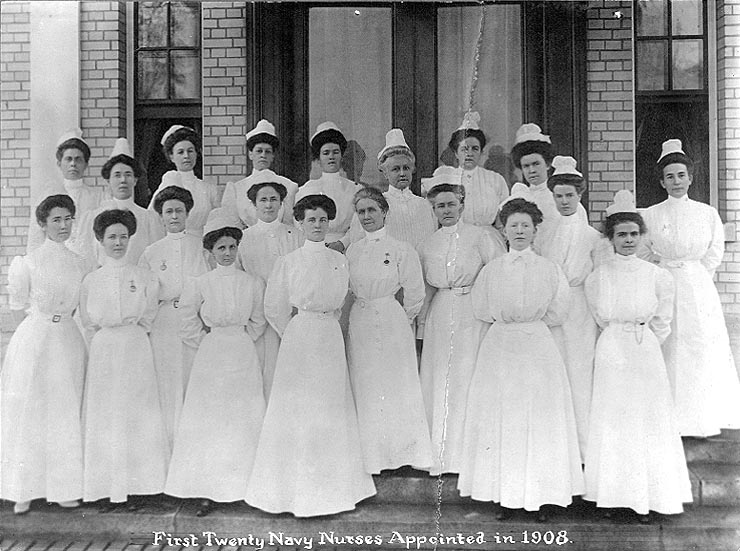
Navy_nurse_corps_1908

The First 20 Navy Nurses “the Sacred 20” 1908

It was in the quagmire of the Crimean War that Florence Nightingale brought about the modern era of nursing, even though physicians and hospitals often saw the women who served as nurses as inexpensive help to care for the sick. Despite this nursing became more and more professional and technical over the years without ever losing that particular calling of ministering to the afflicted that is the essence of their history. In the later 1800s the first nursing schools were established and in 1901 New Zealand was the first country to have Registered Nurses. In 1903 North Carolina became the first US State to require the licensure of nurses.

485px-Lenah_Higbee

Chief Nurse Lena Higbee, Second Superintendent of the Nurse Corps, and first woman awarded the Navy Cross (above) and the ship named after her the USS Higbee DD 806 (below)

USS_Higbee_(DDR-806)_being_refueled_in_1960

The US Navy Nurse Corps was established n 1908 with nurses being commissioned as officers and assigned to Naval Hospitals. However it was the needs of war that brought nursing into the modern age where it is formally recognized as a key component of Health Care. In the World Wars nursing came into its own as a profession. Nurses were among the US personnel that endured the initial onslaught of the war in the Pacific. The Army and Navy Nurses that served and cared for the wounded, starving and emaciated Soldiers, Marines and Sailors on Bataan and Corregidor were heroes in their own right.

Chief_Nurse_Laura_Cobb_and_Dorothy_Still_Danner_among_other_Navy_Nurse_POWs_after_their_release

Navy Nurses released from Japanese Captivity (above) and a Nurse aboard USS Benevolence with a POW released from Japanese Captivity in 1945

733px-Navy_nurse_and_released_POW_on_USS_benevolence,_August_1945_highres

The profession of nursing continues to grow and the women and men who serve as nurses at various levels, from the most highly trained Clinical Nurse Specialists and Nurse Practitioners, or other highly specialized Registered Nurses many of whom have advanced degrees including doctorates down to the most humble Licensed Vocational (or Practical) Nurse and even Certified Nursing Aides. These women and men are the backbone of medicine and despite the long hours, the years of training and certification required of them, many people don’t fully appreciate them until they become sick and are cared for by these wonderful people.

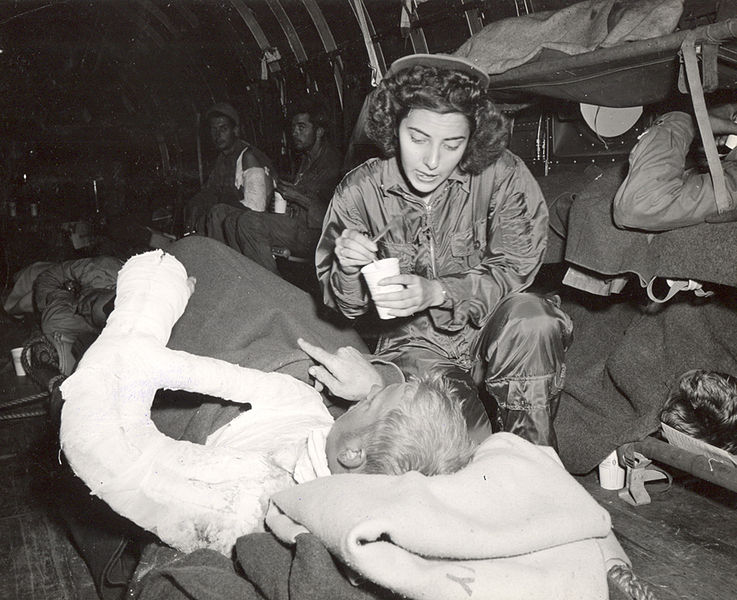
737px-Jane_Kendeigh_USN_Flight_Nurse_1945_a

Ensign Jane “Candy” Kendeigh, the First flight nurse to serve in Iwo Jima and Okinawa Campaigns

Today US Navy Nurses serve in every place one can find a Sailor or Marine. They serve in Hospitals, Medical Centers and other Medical Facilities in the United States and overseas. They serve aboard surface ships, combatants as well as Hospital Ships, with the Fleet Marine Force, in Joint and Multi-National Medical activities deployed in combat zones and in humanitarian operations.

DSCN0066

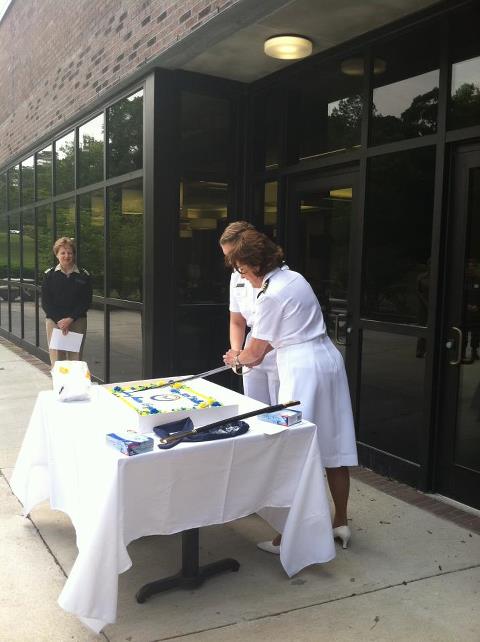
I have been blessed to have known and worked with many amazing nurses in the course of my career as a Medical Service Corps Officer in the Army and as a Chaplain in the military and civilian settings. Today I was present and offered a prayer at the cutting of the Navy Nurse Corps Birthday Cake at Naval Hospital Camp LeJeune. It was my 5th year serving in Navy Medicine and offering this prayer and blessing was an honor that I will always remember. Since I will be transferring out of Navy Medicine in the August-September time frame to assume new duties at the Joint Forces Staff College this will be the last one of these events that I get to officiate at for a few years.

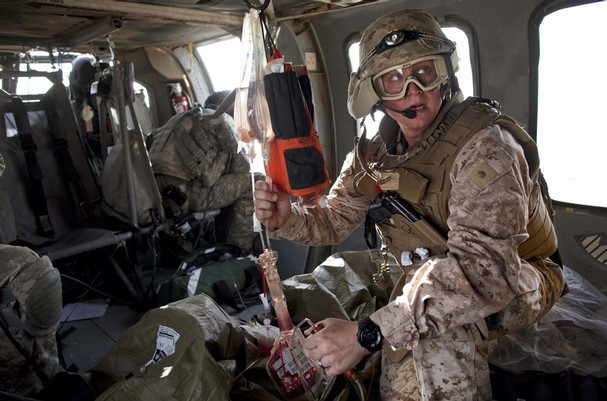
media_db2f5cf3581e4c93b84fbe221904111a_t607


LCDR Eric Gryn in Afghanistan tending a wounded Afghan Soldier on a Medivac flight in 2011, he serves at Naval Hospital Camp LeJeune

5989_10151677233582059_485026871_nCaptain Nancy Pearson cuts the Birthday Cake at Naval Hospital Camp LeJeune

As such I just want to thank all of my friends that serve as Navy Nurses with whom I have shared joys and sorrows the past several years. Blessings on all of you!

God Bless all Nurses tonight, especially those tending the sick, ill and injured and those in harm’s way.

Peace,

Padre Steve+

3 Comments

Filed under healthcare, History, iraq,afghanistan, Military, shipmates and veterans, US Navy

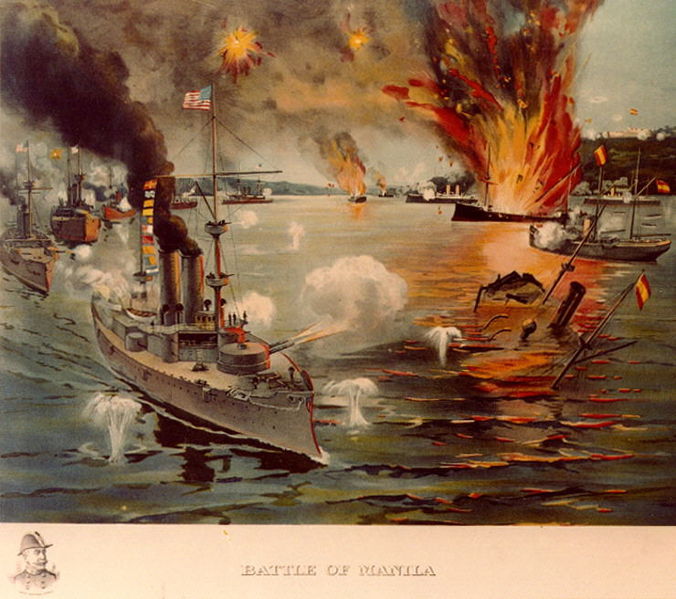
“You May Fire When Ready Gridley” The Battle of Manila Bay 1 May 1898: Victory and Unexpected Consequences

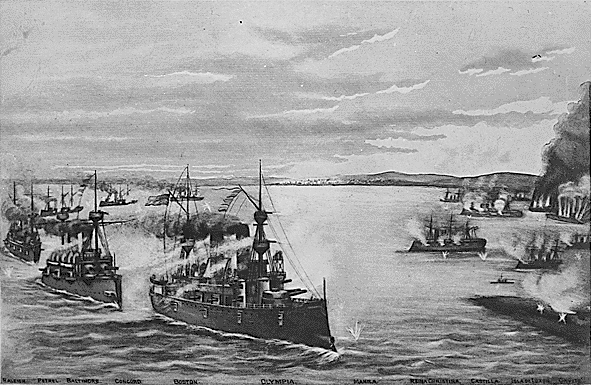
676px-USS_Olympia_art_NH_91881-KN

In 1898 Spain was a weak and declining power with overseas territories which were seething with resentment to Spanish rule and ripe for the pickings of any power that wanted to challenge Spain. The United States was beginning its ascendency to becoming a world power and the Spanish colony of Cuba, which had many American economic interests and the possession of which could allow the United States to dominate the Caribbean was considered by many American political and economic leaders to be ripe for the picking. It was just a short distance from the United States, had a restive population whose cause was being promoted and exploited by the Yellow journalists of the Hearst media empire.

In response to the alleged dangers faced by American citizens in Havana, President McKinley sent the USS Maine to Cuba to safeguard American interests and citizens. The deployment was part of a larger world wide deployment of US Navy forces in the Caribbean, Europe and Asia. On February 15th the Maine blew up and sank. The American press declared it to be an act of terrorism perpetrated by Spanish agents in Havana. A US Navy investigation concluded that such was the case, while Spanish investigators concluded Maine’s loss was due to a magazine explosion. The truth of the matter was that the Maine blew up and the cause is inconclusive with experts, including a commission led by Admiral Hyman Rickover in 1974 determining that the cause could have been an internal ammunition magazine explosion, while others do not rule out the possibility of a Spanish mine.

Regardless of the actual cause tensions rapidly escalated and on April 23rd Spain declared war on the United States. On the 25th Congress declared war on Spain. In the Pacific the US Navy Asiatic Squadron under the command of Commodore George Dewey set sail from Honk Kong to Manila, where a poorly equipped squadron of mostly obsolete ships under the command of Admiral Patricio Montojo awaited them.

USS_Olympia_with_Dewey_at_Battle_of_Manila_bay_DSCN4191_at_Vermont_State

The US Navy forces were modern and well equipped compared to the Spanish. Composed of 4 relatively modern protected cruisers and 2 gunboats led by the Protected Cruiser USS Olympia. Dewey’s force was well trained and its ships superior to anything in the Spanish squadron. The Spanish ships, undermanned and some of which had much of their armament shipped ashore to supplement shore batteries were composed of 4 unprotected cruisers, two small protected cruisers and two gunboats. A number of smaller and even less capable ships were in the area but took no part in the action.

Dewey’s squadron sailed into Manila Bay on the evening of the 30th of April, surprising Montojo who believed that the approaches to the bay were too treacherous to navigate at night for mariners unfamiliar with them. Arriving in Manila Bay in the early morning hours and ineffectively opposed by shore batteries at El Fraile and Cavite and at 0541 Dewey ordered the Captain of the Olympia to open fire using the famous line “You may fire when ready Gridley.”

ManilaBayBattle

Within two and a half hours the Spanish force was destroyed. Dewey lost one man dead and 9 men wounded though some Spanish sources report that Dewey might have lost 13 killed and 30 wounded. The Spanish force lost all of its engaged forces with 77 men killed and 271 wounded. Dewey’s force would destroy the Spanish shore batteries and land Marines taking possession of the Cavite Naval Yard on May 7th.

The action was the first major naval action conducted by the United States overseas in the steam age and helped secure the United States a place in the early 20th Century colonization of Asia by European powers and Japan. As a result of Dewey’s victory other Spanish possessions in the Pacific like Guam would be occupied by the United States. It would also through the American occupation of the Philippines necessitate a campaign against the recently liberated Filipino population who had looked to the United States as liberators, and eventually to the Philippines becoming a major campaign in the Pacific war between Japan and the United States.

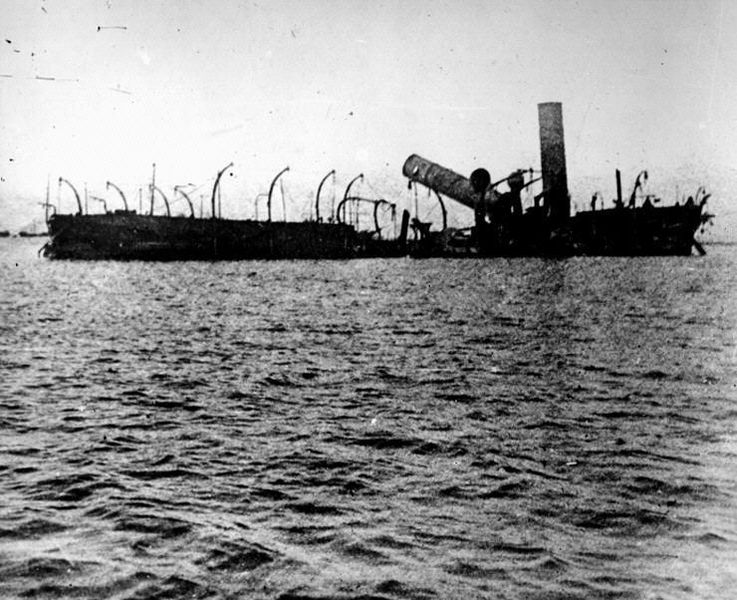
737px-Sunken_Reina_Cristina_3

The wreck of the Spanish Flagship the Cruiser Regina Cristina 

Destroying the Montojo’s Spanish squadron was easy compared to the American counter-insurgency campaign against the Filipinos and the later conflict with the Japanese in the Second World War. However, Dewey’s defeat of Montojo’s squadron would help establish the United States as a world power and help ensure that the United States Navy would become one of the world’s preeminent Naval forces within a decade of the battle. Spain never fully recovered from the battle or the war and declined in influence. eventually succumbing to a violent civil war in the 1930s.

As a so common the initial battle or battles of a war can seem easy compared to the later tasks of occupying and ruling a conquered territory or the unexpected consequences that follow. As such it should serve as a warning for those that see easy conquests and do not calculate what might happen after the initial battle is won.

Peace

Padre Steve+
Leave a comment

Filed under History, Navy Ships, US Navy

Musing on Life as Journeyman on a Lazy Saturday: Billy Chapel, Crash Davis and Padre Steve

163017_10150113444907059_3944470_n

Today is one of those lazy Saturdays where Judy and I, both tired from a long week and watching a winter weather system approach the area have been taking it easy. We have talked, napped, and enjoyed playing with and watching the antics of our dogs Molly and Minnie. Judy has been reading a Kindle book on her I-Pad and I have been sort of puttering around, paying the bills, updating connections on Linked-In and reading the comics online. This afternoon I have been listening to the songs that I linked in my Valentine’s Day article Padre Steve’s Top 25 Lonely Hearts Club Valentine Day Love Songs and musing about life.

Music tends to make be a bit more contemplative and introspective. Some of those songs, as well as the thoughts of the beginning of Baseball Spring Training have led me to muse about my own long strange trip as a long time military officer and chaplain. I’ve always related to the characters in Kevin Costner’s baseball films the classic Bull Durham, the touching and sentimental Field of Dreams and For the Love of the Game.

The main characters in each of the films touch me each in a different way. The character of Billy Chapel in For the Love of the Game helps me remember why I keep going and how I want to leave my military career, at the top of my game and ready to move on with life with Judy. Ray Kinsella, the lead character in Field of Dreams is like my dreamer side, the one that sees possibilities that others do not, even those that most people think are foolish. The character also reminds me of how much I miss my dad but know that he is still with me.

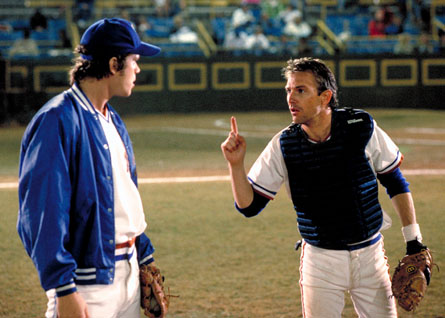
Crash-Davis

However, the character of Crash Davis who Costner played in Bull Durham strikes a particular chord in me. Crash is a journeyman minor league catcher with the dubious distinction of having the most minor league homers. He also spent three weeks “in the show.” I guess what gets me is how much he loves the game and the intensity that he gives it, but also has a sense of humor and knowledge about when to back off the seriousness.

Crash is a consummate professional. He loves the game works hard on his own skills and actually cares about the development of the young guys, even if they try his patience. I can say that his I find a lot of commonality with him.

Crash’s relationship with the young pitcher he is assigned by the organization to help, Ebby Calvin “Nuke” LaLoosh (Tim Robbins) is case in point.  Crash is demoted by the big team from a AAA contract to a single A contract to develop the young bonus baby.  He’s not happy with the job, in fact he is angry at being sent down. Crash is proud, threatens to quit the game but he then takes on the task of dealing with the wild and cocky LaLooshe with a mixture of skill and humor in a manner that benefits not only the young pitcher but motivates the rest of the team, which until his arrival was derided by its fans, manager and announcer as “the worst.”

It does not matter that he is in the minor leagues as Crash still plays his heart out and spends his time teaching the next generation.  He even gets thrown out of a games if it helps motivate his team and let’s his young charge learn the hard way when young “Nuke” decides to ignore his advice.

My life is like a journeyman ball player. I started in the Army, and to use the baseball journeyman analogy I played one position for a number of years and then so to speak left the big team to train for a new position while playing in the minors.

I left active duty as a Medical Service Corps officer for seminary in 1988. It was like going from playing in the Majors to going to learn a new position in an instructional league. In seminary I entered the Army Chaplain Candidate program in the National Guard. When I graduated from seminary and become a National Guard and Reserve Chaplain while doing my hospital residency and first hospital chaplain jobs it was like working my way up through the minors.

The National Guard and Reserve assignments then were the ones that didn’t pay much and involved a lot of travel, long nights and time away from home. The civilian jobs offered little job security or upward as I found out when I lost a contract chaplain job when I was mobilized with Reserves.

When I was promoted to the rank of Major in the Army Reserve it was like moving up to Triple A ball. The assignments were better but I was still like playing in the minors as the active duty, especially then often viewed reservists and National Guardsmen as inferiors.  But when I was mobilized to support the Bosnia operation in 1996 to 1997 and then remain on active duty to serve as the Installation Command Chaplain for Fort Indiantown Gap it was like getting promoted to the Major League, however it was with the knowledge that it was a call up not a career. When that time ended and I returned to the reserve it was like being sent back to the minors.

I honestly thought that I would spend the rest of my career there, maybe getting called up for brief periods of time but knowing that my career, like that of Crash Davis was destined to end in the minor leagues.

for_the_love_of_the_game

That changed when I was given a chance to go into the Navy.  I reduced in rank and came in with no time in grade meaning that I was starting from scratch with a new slate.  Now all of my experience was still there, but I was starting over.  It was like when a player gets traded between from the American League to the National League in mid season, or is called up from the minors to play on the big team with a clean slate. That to me was the beginning of the Billy Chapel side of my career.

After 17 1/2 years in the Army, going up and down the food chain I have been blessed to serve the last 14 years in the Navy. I am now an old veteran, still a journeyman at heart but I got the chance to go back and live my dream serving as an active duty Navy Chaplain.  I’ve gotten to serve on ship and with the Marines and EOD.  I’ve travelled the world and I’ve gone to war.  I’m not the same as I was as when I started.  I have issues, maybe even the full subscription.

400236_10151328400862059_541742014_n

I have streaks where I am hot and when I am not, I have my slumps. The biggest slump was the struggle with PTSD and a faith crisis that engulfed my life for several years. That is pretty much over now, though I have my moments and flashbacks but things are back to my new normal. I know my limitations now, and like Billy Chapel fighting through his near career ending injury to come back and finish well, I want to do the same.

652_53210437058_4925_n

I’m somewhat superstitious at times. I am not the same person that started the journey so long ago, but I make do. I guess now my goal is to help the younger guys and gals that are coming up through the ranks, chaplains as well as others. Sometimes this is difficult, I have had to work with some who are potential superstars and others who struggle greatly either due to lack of skills or bad judgement and decision making. I have had others who have seen their dreams in the military ended my injury, wounds, illness or supervisors or commanders that did not appreciate them.

295_26911932058_5614_n

I know that disappointment but thankfully I can point to several men and women in the course of who have helped me through those times. I have also had men who helped set me up for success through their personal example and the opportunities that they provided me. For all of them I will always be grateful.

The thing is now I’ve been in the military since before many of them were born. In a sense I’m a Crash Davis or Billy Chapel kind of guy.  I love both of those movies and those characters and find inspiration in them.

I hope we can all find something or someone to help connect us to what we do in life.

Peace, Steve+

Leave a comment

Filed under Baseball, Military, movies, PTSD

Vice Admiral Samuel Gravely Jr: Pioneer of Integration and Civil Rights in the U.S. Navy

gravely

“I was sure that I could not afford to fail. I thought that would affect other members of my race if I failed anywhere along the line. I was always conscious of that, particularly in midshipman school and any other schools I went to…I tried to set a record of perfect conduct ashore and at sea.” Vice Admiral Samuel Gravely

Things have changed much since 1942 when following the attack on Pearl Harbor a young black college student from Richmond Virginia enlisted in the Navy. Samuel Gravely Jr. was the son of a postal worker and Pullman porter while his mother worked as a domestic servant for white families in Richmond. His mother died unexpectedly when he was 15 in 1937 and he remained to help care for his siblings as his father continued to work. Balancing the care of his family with his education he enrolled in Virginia Union College, a Baptist school in Richmond.

gravely_young

Fireman Apprentice Samuel Gravely Jr

It is hard to imagine for most of us now to comprehend the world that the young Gravely grew up in. Segregation was the norm. Blacks in the south and many other locations faced personal as well as intrenched institutional racism. Violence against blacks was quite common and the Ku Klux Klan was strong.

The military was still segregated and a great gulf existed between white military personnel and blacks. Though the selective service law of 1940 called for the conscription of people regardless of race, creed or color the services enjoyed much latitude in determining how minorities could serve. The Secretary of the Navy at the time, Frank Knox resisted integration. Knox determined that African Americans would remain segregated and serve only as Mess Stewards to “prevent undermining and disruptive conditions in the Navy.” Knox told President Roosevelt in the presence of black leaders that “because men live in such intimacy aboard ship that we simply can’t enlist Negroes above the rank of messman. “

That sentiment was strong in both the Navy and the Marines the leaders of which resisted attempts to broaden the ability for African Americans to serve and urged that blacks serve in the Army, not the Naval Service.  Marine Corps Commandant Major General Thomas Holcomb agreed with this stance. He commented:

“If we are defeated we must not close our eyes to the fact that once in they [Negroes] will be strengthened in their effort to force themselves into every activity we have. If they are not satisfied to be messmen. they will not be satisfied to go into the constriction or labor battalions. Don’t forger the colleges are turning out a large number of well educated Negroes. I don’t know how long we will be able to keep them out of the V-7 class. I think not very long.”

But Roosevelt was not deterred and by April 1942 changes were announced to allow African Americans to serve in other capacities. Even so African Americans selected for ratings other than messman were to be segregated and commanded by White Officers and Petty Officers.

USS_PC-1264_officers_and_crew

images-18

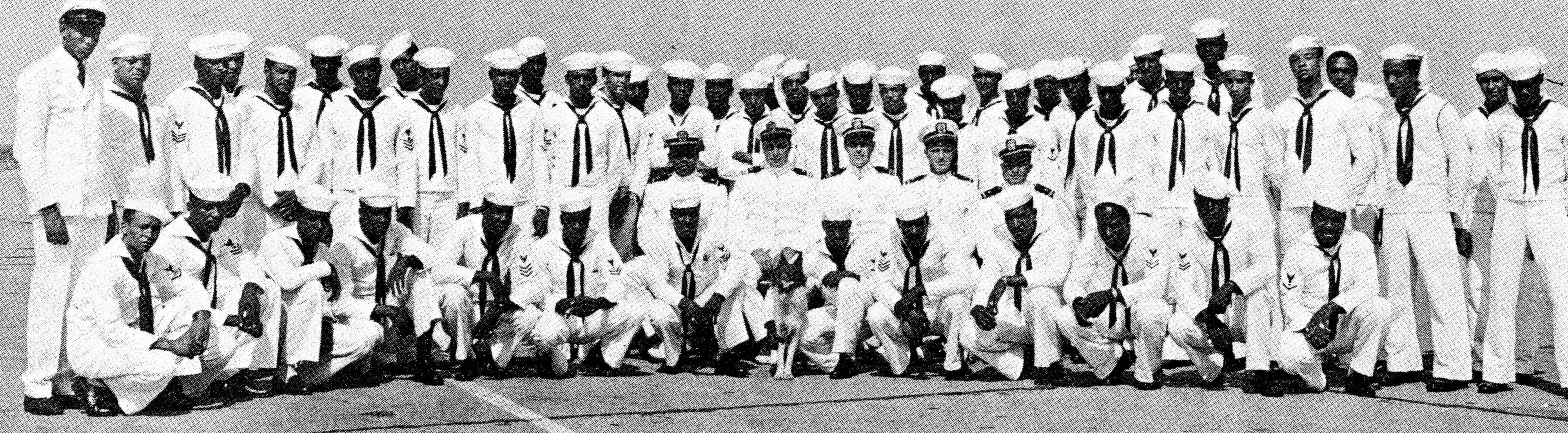
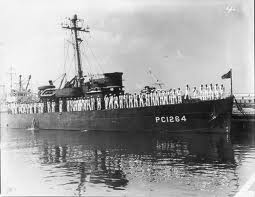
The USS PC-1264 and its crew, Gravely is the lone black officer

Gravely enlisted in the Navy under these conditions. Serving as a Fireman Apprentice after receiving training as a Motor Machinist in San Diego he worked in menial jobs. In 1943 Gravely was one of only three sailors in his unit to be selected for the V-12 officer training program. He was the only black to make the cut. He was commissioned as an Ensign on December 14th 1944 and assigned to train black recruits at Great Lakes though the vast majority of his class went to sea. The was mainly due to the policy set forth by the General Board in 1942 that prescribed:

“(a) the white man will not accept the negro in a position of authority over him; (b) the white man considers that he is of a superior race and will not admit the negro as an equal; and (c) the white man refuses to admit the negro to intimate family relationships leading to marriage. These concepts may not be truly democratic, but it is doubtful if the most ardent lovers of democracy will dispute them, particularly in regard to inter-marriage.”

Despite this by 1945 the Navy was beginning to change. Gravely was chosen to serve on one of two ships assigned to the “experiment” of seeing how blacks in general ratings could serve at sea. The USS Mason (DE 539) and the USS PC-1264 were assigned black crews with majority white officers, except that Gravely was assigned to PC-1264. Though his commander was pleased with his service Gravely, who had been denied admittance to Officer Clubs and many other “white only” facilities resigned from the Navy in 1946. He believed that the inherent discrimination of the Navy left him no place for advancement. He returned to complete his bachelors degree at Virginia Union.

In 1949, following President Truman’s integration of the military Gravely was asked by the Navy to return to active duty. But the end of the old order was foreshadowed by a Navy pamphlet published in 1944 entitled The Guide to the Command of Negro Personnel. That publication included the statement that ”The Navy accepts no theories of racial differences in inborn ability, but expects that every man wearing its uniform be trained and used in accordance with his maximum individual capacity determined on the basis of individual performance.”

images-17

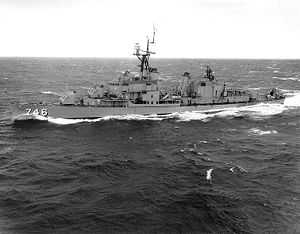
300px-USS_Taussig_(DD-746)_port_side_1965

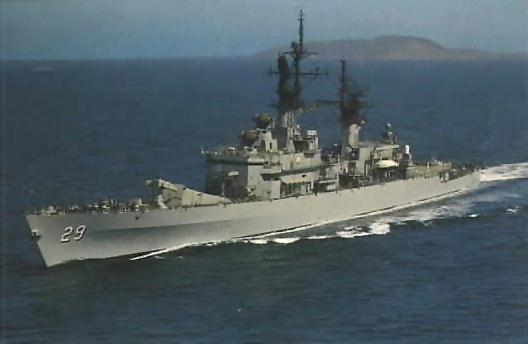
cg29

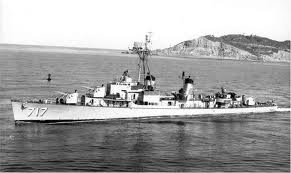
Gravely’s commands (top to bottom) USS Theodore E Chandler, USS Taussig and USS Jouett

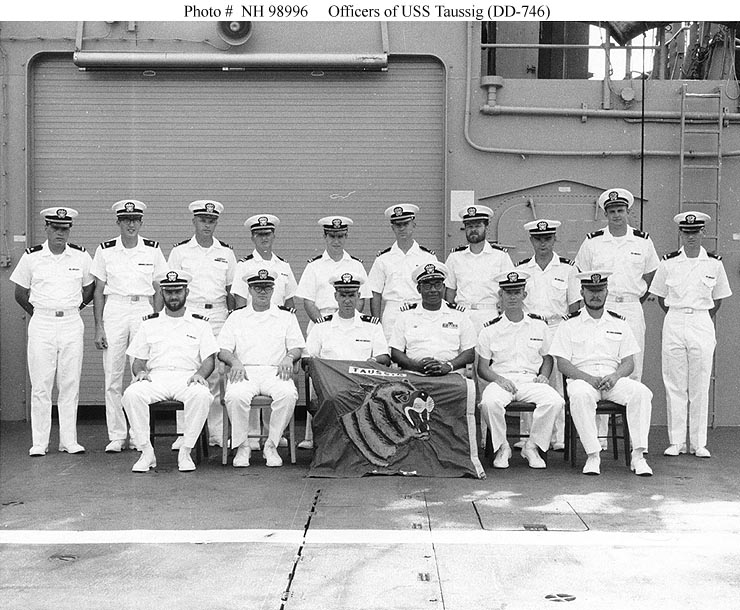
Gravely accepted the offer to return to active duty and never looked back. He worked hard for respect and used his natural talents, personality and size to command respect. He was a man who would blaze the way for other African Americans, and later women and most recently gays to go on to greater things. Gravely would go on to command three ships. He was the first African American Naval Officer to command a Navy warship, the USS Theodore E Chandler (DD 717), the first to command a Navy ship in combat, the USS Taussig (DD 746) and the first to command a major warship, the USS Jouett (CG 29). Promoted to flag rank he eventually became the first to command a Fleet when he took command of 3rd Fleet. He retired in 1980 and passed away in 2004.

h98996

Commander Gravely and his officers on USS Taussig

Gravely gave his parents and conditions of his upbringing much credit for his success. He believed that those conditions which forced him to “capitalize on his strong points, build his weak areas and sustain the positive self-esteem and self-worth that his parents instilled in him as a young child.”

He was a great leader. LCDR Desiree Linson who interviewed him for her Air Command and Staff College project noted that Gravely like many other great military leaders before him learned to manage the image that he presented, be a caretaker for his people, what we would now call a mentor. He said “[If I was CNO] my responsibility would be to make sure enlisted men and families were taken care of. I would do everything in my power to make sure.”

His pursuit of excellence, self confidence and mastery of professional skills empowered him in an institution where he was still an anomaly and where racism still existed. He believed in effective communication, especially verbal communication and in building teams and in being a good follower, listening, learning and proactively anticipating the needs of his superiors. Gravely was also a believer in personal morality and self discipline and preparedness. He said:

“I did everything I could think of to prepare myself. If the opportunity came, I would be prepared for it. [The question would not be] “Why didn’t you prepare for this opportunity.” I would be prepared for whatever opportunity that came. If it came, fine. If it did not, fine, but I would be prepared if it did come.”

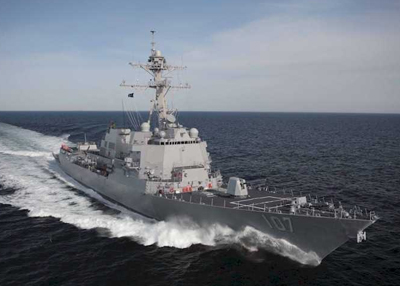
USS_Gravely

The USS Gravely

Vice Admiral Gravely blazed a trail for those that followed him and set an example for all Naval Officers to follow. He did it under conditions that most of us could not imagine. I am proud to serve in the Navy that he helped to make.  His vision, service and memory are carried on in this navy and in the ship that bears his name, the USS Gravely DDG-107.

Peace

Padre Steve+

3 Comments

Filed under History, laws and legislation, leadership, Military, Navy Ships, US Navy

The Paths Taken and Not: The Tapestry of Life, Authenticity and Wisdom Passed Down

n671902058_2044112_2975

Nearly 32 years ago I was getting ready to embark on a military career. It was  the fall of 1980 and I was a junior at California State University Northridge. Within the year I was beginning my first furtive steps in my career by enlisting in the California National Guard and enrolling in the Army ROTC program at UCLA.

It was an interesting time. My imagination of the military back in the days of the Cold War was quite orthodox and founded on what a “normal” Army career should look like. I would get commissioned, serve as a platoon leader, company executive officer, battalion staff officer and company commander. I would attend the appropriate military schools, the officer basic course, the advanced course, specialized courses and Command and General Staff College and then hopefully be promoted to the field grade ranks and after serving 20-30 years would retire as a Major, Lieutenant Colonel or maybe even a Colonel.

If that had been the case I would have had a very different life than I have today. Certainly a good life, but not what I have today. I would be me, but a different me. I would have probably played everything safe and been the perfect servant of the institution while ensuring my own success.

Instead the tapestry of my life and choices have produced something different than I could have ever imagined 32 years ago. Those choices have resulted in successes and failures, blessings and great difficulties as well as trials that honestly I would never want to go through again. However all of those things have helped make me what and who I am today.

I look back at the people in my life who have influenced me at different points, as well as critical junctures where I made decisions I see a tapestry that I could never have thought possible, a tapestry much richer and diverse than I could have thought of back then. It has not been without pain but it has been worth it.

One of the things that I discovered early was that as hard as I tried to fit the mould of the Army, I was a non-comformistby nature.  I thought outside of the box and that in attempting to fit in I was not happy. I had one rater  in his evaluation of me offer the criticism that thought too much of my abilities that “lent me to criticism.” That may have been true to some extent, and my rather blunt and outspoken opinions to criticize higher ranking officers and to take liberties with orders got me in trouble at times.

However I did survive some of my more stupid escapades such as telling my Medical Group Commander that he had embarrassed our command as a very junior Army 1st Lieutenant and in another case banned the two local CID investigators from running amok on a fishing expedition in my barracks without probable cause or a warrant for their investigation. They never returned with probable cause or a warrant. Another time I told the the senior personnel officer in the command I was stationed as a Captain that he could take his spies out of my command, as well as getting thrown out of the Army Chaplain Officer Advanced Course in 1992. It would take too long to explain the details of these incidents here but assuredly they were the fault of a young, opinionated and outside the box thinking officer who dared to voice his opinion to men who were institutional careerists, they were not bad people, just people conformed to and servants of institutional norms. That being said my troubles were troubles brought on me by my own actions because I did not understand what the institution, any institution can do to otherwise well meaning and honorable people.

Despite some black eyes I did make Major in the Army Reserve and finally to get back on active duty reduced in rank to enter the Navy back in 1999. The good thing was that I learned from my experiences and have been able to use them to learn, survive and succeed in my Navy-Marine Corps career.

In the process there were men and women who at various times in my life and career passed along wisdom, not just advice, not just knowledge, but wisdom. It is to them that I owe my successes. Without their sage advice, authentic leadership and honesty I would have certainly crashed and burned a long time ago, a prisoner of my own limited insight and unlimited ambition.

400236_10151328400862059_541742014_n

But more than succeeding in my career I have learned that it is okay to be me, to be authentic and to be honest about who I am and what I do. My goal now as a relatively senior chaplain is to care for, mentor and allow those men and women who work directly for me to succeed, even as well as those that I serve.  It is no longer about my career. I am on the backside of my career regardless of my next assignment or even if I get promoted to Captain in the Navy several years from now when I am eligible. But promotion is not an end to itself, if I have learned anything it is that many times promotion to a higher office can be a prison that some men never escape.

The fact is that I have far fewer years left to serve than I have served to this point. Thus it is far more important to do right for the people that I serve and help them take lessons that I have learned into their futures and if they remain in the military pass them along to others as they become authentic leaders. Johann_von_Staupitz

Johann Von Staupitz

My study of history and more practically in my case military history and to some extent church history and theory shows me quite those who don’t achieve the highest levels of command or institutional power often have a greater influence in the long term than those who do. Without Johann von Stauptiz it is doubtful if the young Martin Luther would have began to study the Bible and hence bring about the Protestant Reformation.

clausewitz2

Carl Von Clausewitz

As the foremost interpreter of Napoleon, a relatively unknown Prussian General Staff Officer, Carl von Clausewitz had a greater impact on warfare and military theory than did Napoleon himself. There are many other examples of such individuals in history, men and women, many times of far lesser estate than Clausewitz or Staupitz who have by their wisdom helped those that eventually held power or influence in thinking outside the bounds of tradition to accomplish things that were not possible to their teachers.

Wisdom comes slowly to most of us, especially people like me. The problematic thing is that is, for the most part wisdom is a commodity that is not highly treasured in a society built upon expediency and crass materialism. It is certainly not something the most men and women that seek power are gifted with, despite their intellectual gifts and often well earned knowledge. But learned knowledge and raw intelligence are different than wisdom. Knowledge and intelligence are quite wonderful but ungoverned by wisdom the ambition that they breed is often the undoing of those that rely on them as well as their physical, economic or even military power.

The key thing is that wisdom, experience and learning was passed along to men and women who, God willing, will be serving long after I retire from the Navy. Today I was approached by one of our wounded warriors stationed at our hospital because of his injuries. He engaged me in a conversation and he said that he would like to spend some time with me, to listen to some of my stories about my life in the military and experience. Evidently a couple of his young friends have told him a bit about me. That meant a lot to me, just as the times that young people have come to me not because of my position, or rank, but because they see me as a real person, approachable and available.  The nice thing for me is that there are many times that I learn from them, for many times it is young people that can see the greatest problems and offer ideas and solutions that elude older and more experienced people in every walk of life.

liddellhart

B. H. Liddell-Hart

I recently read B.H. Liddell-Hart’s biography of T.E. Lawrence, perhaps one of the most gifted military commanders, philosophers and men of the 20th Century. Lawrence and to some extent Liddell-Hart understood something about wisdom that most of their contemporaries and even students miss. Liddell-Hart himself, though a medically retired as a Captain due to wounds suffered in World War One was one of the more influential thinkers of his day. His works had a profound impact on the most successful commanders of the Second World War. He understood that the key to wisdom is self understanding and a recognition of their own knowledge as well as limitations. Liddell-Hart wrote of Lawrence, wisdom and humanity in 1937:

“A study of history, past and in the making, seems to suggest that most of mankind’s troubles are man-made, and arise from the compound effect of decisions taken without knowledge, ambitions uncontrolled by wisdom and judgements that lack understanding.  Their ceaseless repetition is the grimmest jest that destiny plays on the human race. Men are helped to authority by their knowledge continually make decisions on questions beyond their knowledge. Ambition to maintain their authority forbids them from admitting the limits of their knowledge and calling upon the knowledge that is available in other men. Ambition to extend the bounds of their authority leads them to a frustration of others opportunity and interference with others’ liberty that, with monotonous persistency, injures themselves or their successors on the rebound.  

The fate of mankind in all ages has ben the plaything of petty personal ambitions. The blend of wisdom with knowledge would restrain men from contributing to this endless cycle of folly, but understanding can guide them toward progress.” B.H. Liddell-Hart “Lawrence of Arabia” DeCapo Press, Reprint, originally published as “The Man Behind the Legend” Halcyon House 1937 

410w

T. E. Lawrence

It is my hope that no matter what my next assignment is and no matter how long I have left in the military as well as in life that I will be able to be one of those wise old sages who helps the next generations do things that were impossible for my generation, to succeed where we failed and who like Staupitz, Clausewitz, Liddell-Hart and Lawrence inspired others to greatness far beyond their own.

I am coming up for orders soon, order that will take me to my next assignment. I have spent the past two years as a geographic bachelor, apart from my wife, by the time I leave this assignment it will be close to three years. I have been assured that my next assignment will be in the area where our home is, however I do not know what it will be. I know what I want to do but do not know if it is possible based on the needs of the Navy. However, that being said I do know enough that no matter where I am assigned the mission is the same, as well as the pay. That mission is to care for, guide and assist those that work for me as well as those that I have the honor of serving, or possibly simply be the wise old sage.

I think I like that idea.

Peace

Padre Steve+
1 Comment

Filed under faith, History, philosophy, Religion

A Stormy Weekend: Hurricane Sandy, a Larceny and a World Series Game

Sandy Hits the Emerald Island Fishing Pier

Today was one of those days… a working weekend that ended up with a storm and being ripped off by someone other than a professional politician or financier.

This morning I went in early to be present during a training session that was mandatory for our junior enlisted personnel. That, though it forced me out of bed earlier than I would normally be on a soggy windy day when travel was not advised the training was good and I got to see a bunch of our sailors as well as leaders who were there as well.

Since the weather was bad I decided to do my PT session in our little hospital gym. Since I was the only person that I saw around I decided to leave my backpack which has accompanied me everywhere since I went to Jordan before I went to Iraq in 2007 and my change of clothes in the locker room since it wouldn’t fit well in my locker. I worked out for an hour and when I returned it was gone. I had to make a police report and on Monday the hospital communications staff will be able to review the security cameras. The sad thing is that being a weekend and in an area not frequented by hospital visitors the criminal was most likely as sailor. In the military where trust is essential for Sailors, Marines, Airmen or Soldiers to steal from one another. It is betrayal of trust and I do hope for his sake that he decides to turn in the pack. It is not so much what was in it, I had my civilian clothes including my Orioles windbreaker, my Orioles Batting Practice hat, an Orioles long sleeve t-shirt, a pair of cargo shorts, a pair of Sperry Topsiders, a notebook and some underwear but nothing else of any value (my wallet, phone and car keys were with me in the gym).  I can replace all the clothes. But I really don’t want to have to go through the trouble of seeing a career destroyed for something so stupid as this. There was not much traffic and whoever did this had to go out the doors with the cameras.  Actually all that I really care about is the pack as it is like a security blanket for me, much more valuable than anything in it. If I found the pack outside my office door on Monday I would not pursue charges. Like I said I have far better things to do with my time. Hopefully it even could be a redemptive encounter.

After getting back from the base and taking Molly for a drag through the rain I went to the grocery store, picked up a few things and then to a local restaurant’s bar where I had my usual salad and beer and enjoyed visiting a couple of the regulars and the bar tenders. That was a good thing and took some of the edge off of what I was feeling about the pack.

After that I went down to take a look at Tropical Storm/ Hurricane/ Frankenstorm/ Nor’Easter/ Noricane (I made the last one up) Sandy. I got some great pictures and then went home to watch Game 3 of the World Series, which the Giants lead 2-0 right now going to the 5th inning.

So Molly is passed out, it is raining hard, the ball game is on and I am done and since I have taken the duty pager for tomorrow from one of my other chaplains I will finish for now. I will probably write something about the ballgame later tonight or tomorrow.

Peace

Padre Steve+

1 Comment

Filed under Loose thoughts and musings

237 Years of Service: Happy Birthday US Navy!

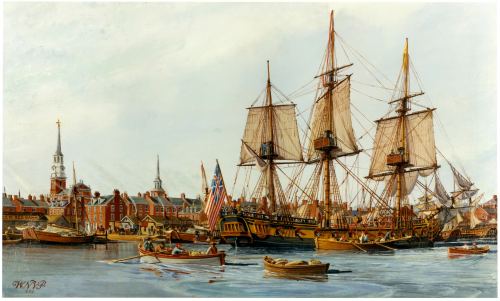
Raising the Flag Aboard the USS Alfred 

“It follows than as certain as that night succeeds the day, that without a decisive naval force we can do nothing definitive, and with it, everything honorable and glorious.” George Washington 15 November 1781 to the Marquis de Lafayette

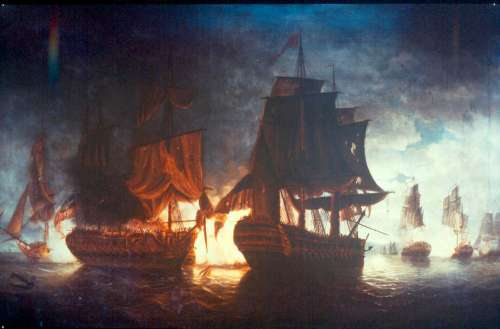
On October 13th 1775 the Continental Congress passed legislation to establish a Navy for a country that did not yet exist.  It was the first was the first in a long line of legislative actions taken by it and subsequent Congresses that helped define the future of American sea power.

The Battle of Flamborough Head

The legislation was the beginning of a proud service that the intrepid founders of our nation could have ever imagined.  Less than two months after it was signed on December 3rd 1775 Lieutenant John Paul Jones raised the Grand Union Flag over the new fleet flagship the Alfred. The fleet set sail and raided the British colony at Nassau in the Bahamas capturing valuable cannon and other military stores.  It was the first amphibious operation ever conducted by the Navy and Marines.

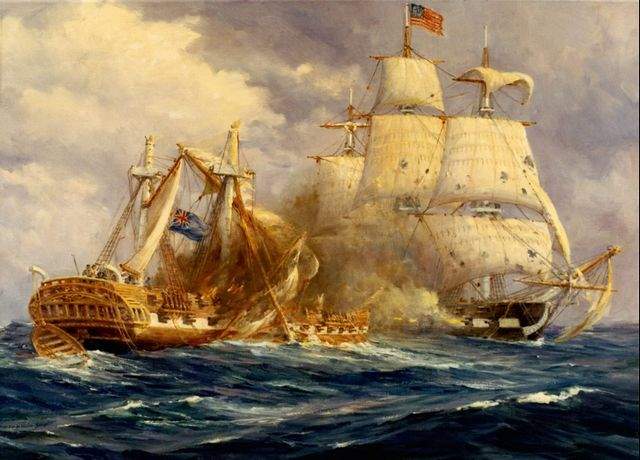
USS Constitution and HMS Guerriere

Jones received the first recognition of the American flag shortly after France recognized the new United States.  In command of the Sloop of War Ranger his ship received a nine-gun salute from the French flagship at Quiberon Bay.

Oliver Hazard Perry at the Battle of Lake Erie

Jones would go on to to greater glory when he in command of the Bonhomme Richard defeated the HMS Serapis at the Battle of Flamborough Head. During the battle when all seemed lost and the colors had been shot away he replied to a British question if he had surrendered replied “I have not yet begun to fight!”

Admiral David Farragut at the Battle of Mobile Bay

When the war ended very few of these ships remained most having been destroyed or captured during the war. But these few ships and the brave Sailors and Marines who manned them blazed a trail which generations of future sailors would build on.  The Navy has served the nation and the world as a “Global Force for Good” for 237 years.

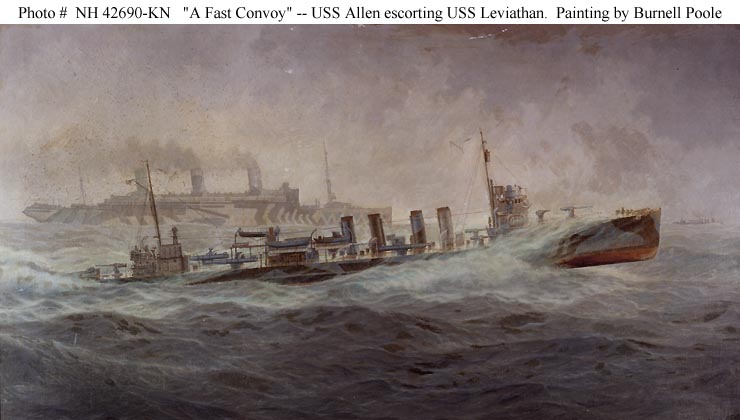
World War One: Convoy Escort USS Allen

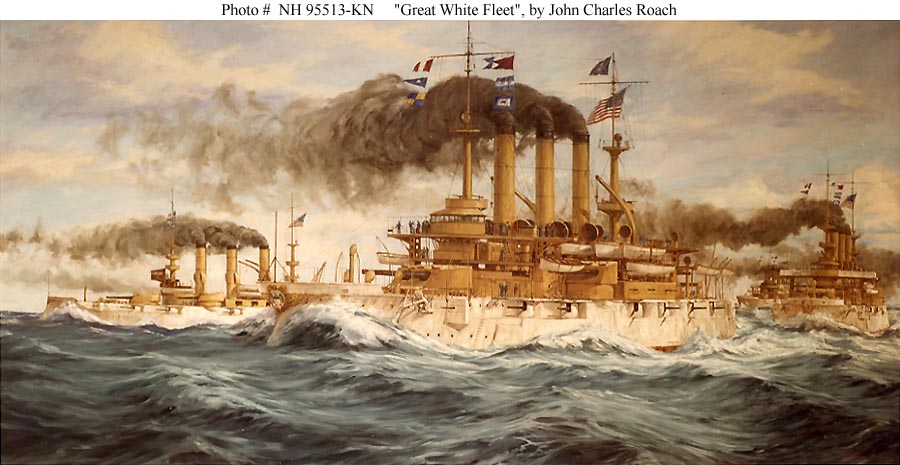
The Great White Fleet

This force for good is on duty today and those that have served over the past 237 years are part of a tradition that is more than honorable. President John F. Kennedy who served as a PT Boat Commander in World War Two remarked:

“I can imagine no more rewarding a career. And any man who may be asked in this century what he did to make his life worthwhile, I think can respond with a good deal of pride and satisfaction: ‘I served in the United States Navy.'”

The Battle of Midway

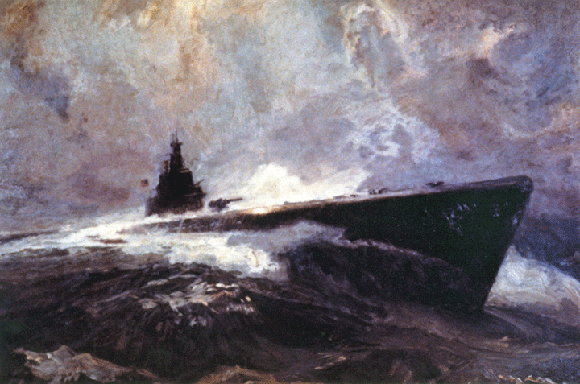
USS Growler

Tonight as you go to bed and sleep soundly after eating well and spending time with family, friends or enjoying some form of entertainment remember those of our Navy who serve at sea at the ready in the Straits of Hormuz, in the mountains and deserts of Afghanistan, the desolation of the Horn of Africa and around the world defending our interests, caring for our military personnel and their families and deploying to serve in harm’s way and in areas of devastation.  They are America’s “Global Force for Good.”  They are my shipmates they are your fellow citizens.  They are the United States Navy.

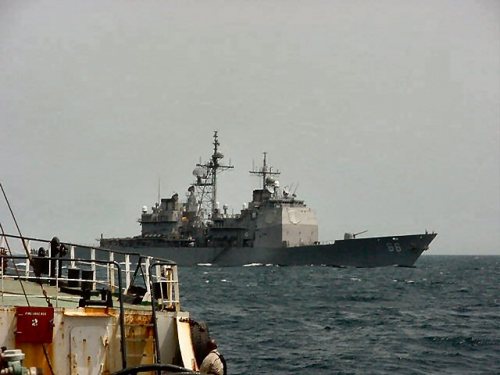
USS Hue City CG-66

Happy Birthday Shipmates.

Peace

Padre Steve+

1 Comment

Filed under History, Military, Navy Ships, US Navy

Persistence: My Motto

Persistence by Calvin Coolidge

“Nothing in the world can take the place of Persistence. 

Talent will not;  Nothing is more common than unsuccessful men with talent. 

Genius will not;  Unrewarded genius is almost a proverb. 

Education will not; The world is full of educated derelicts. 

Persistence and determination alone are omnipotent. 

The slogan ‘Press On’ has solved  and always will solve the problems of the human race.”

If there is anything that I find is true about me it is that I am a persistent person. The motto on the family crest is the French word Esseyez, or in English, “try.” Somehow I can see the chieftain of the clan lining everyone up behind William Wallace, who by the way was executed on this day in 1300 inspiring his troops saying, “just try for once.” My parents used to say “quitters never win and winners never quit.”  I have been inspired by great naval Captains like John Paul Jones who when asked if he had surrendered replied “I have not yet begun to fight” and James Lawrence who when mortally wounded gave his crew the order “Don’t give up the ship.” I am inspired by the words of the legendary manager of the Baltimore Orioles Earl Weaver who said “It’s what you learn after you know it all that counts.”

I love this poem by Calvin Coolidge. In fact I have a small framed copy of it presented by my residency director at Parkland Memorial Hospital in 1994 on my desk today.

I have never been the smartest, fastest, strongest, talented or educated dog in the pack.    I just work hard and don’t quit. I love the journeyman that one finds in baseball. I admire the utility player who can play a lot of different positions, plug holes and fit in well on the team. The same for the pitchers pitchers that pitch in middle relief or are the 5th starter in the rotation. I like the guys that gut it out and hang around long after others have written them off.

I have been having to go through and recount the really significant parts of my life as I get ready for the EMDR and Biofeedback therapy for my PTSD. It has been really amazing to see a couple of threads that are prominent in the tapestry of my life and without which I would not be me. The things that keep coming up again and again are a dogged persistence to succeed and unwillingness to quit and profound dislike of bullies.

My Clinical Pastoral Education residency which followed a brutal seminary process was one of the most pivotal parts of my life. My CPE Supervisor was a man named Steve Ivy. CPE is one of the best training in that anyone working with people in churches, hospitals or the military can have. For me it helped me see areas that I was blind to in my life. It helped me become a better listener and more accepting of others. But even more it helped me, and still helps me integrate me theology and philosophy into life.  Dr Ivy made a comment that was one of the most instrumental in my life since I heard it. That is that I can write my future that I do not have to be condemned to perpetually repeating the past or being stuck in place or being a victim of circumstances or others. It was a revelation of a positive humanity and the grace of God.

But even before that I was a fighter. In seminary when everything that one could imagine to go wrong did and pastors, and people at ministries told me that I should reconsider my call or quit. In the fall of 1989 when everything had gone to complete shit in our lives, Judy was sick, we had lost our home, cars and were living in a horrible house in a horrible neighborhood of Fort Worth, I was working two jobs and was in the National Guard, was a full time student and it looked like my time in seminary was over and that I had failed I called a TV ministry prayer line. I told my story to the prayer partner who told me that I couldn’t be called to ministry because if I was “God would be blessing me.” Somehow that hit me wrong. I just couldn’t imagine Jesus telling anyone that, nor could I reconcile it with Scripture or Church History.

I got mad and kept working despite everything going to hell managed to hang in long enough for things to work out. I didn’t do it all myself because a lot of people came alongside when they saw that I was in this for the long haul and would not quit. I graduated from seminary in 1992 with a 3.5 or 3.7 GPA, I can’t remember which and am not looking at a transcript while working more than full time and being in the National Guard. I worked my ass off and between good people and the grace of God made it through.

That continued after seminary when I was a late addition to the residency program at Parkland, when I got my first hospital chaplain job and when I was rebuffed by a senior chaplain in the Army Chief of Chaplains to return to active duty as a very young Army Reserve Major in 1997. He told me that I wasn’t good enough to bring back.

But despite that things continued to work out. I was helped along the way by great people. I had opportunities that opened up which gave me great experience and provided for my family. This culminated when I was selected for active duty in the Navy and resigned my Army commission to go in the Navy Chaplain Corps at a lower rank in February 1999.

There have been hard times in the Navy especially after my return from Iraq. I went through an emotional and spiritual crisis that I never imagined was possible, but I  I didn’t quit. I am an average guy who worked hard and got a lot of help along the way. But had I quit at any point I wouldn’t be where I am now and there were plenty of opportunities when I was ready to give up but held on just long enough to make it through.

Calvin Coolidge was so right. I am not the most talented person that I know in my field. I am not a genius and though I have a good education there are plenty of other people that know a lot more than me. However, I am persistent. I gain inspiration every day when I look on my desk and read that poem. I am thankful for grace of God and the people that God put in my life and who helped me during the tough times. I hope that I can always be the kind of person that helps people through their tough times and inspires them to keep trying, to keep working and never to quit and then pass that along to others.

The past few weeks have been a blessing because I have had to look back at my life and remember what got me to this point. Some of the memories have been difficult to think about because they were so difficult but at the end of the day I can count myself blessed.

Have a great night and don’t give up your dreams and always stay in the fight.

Peace and Blessings!

Padre Steve+
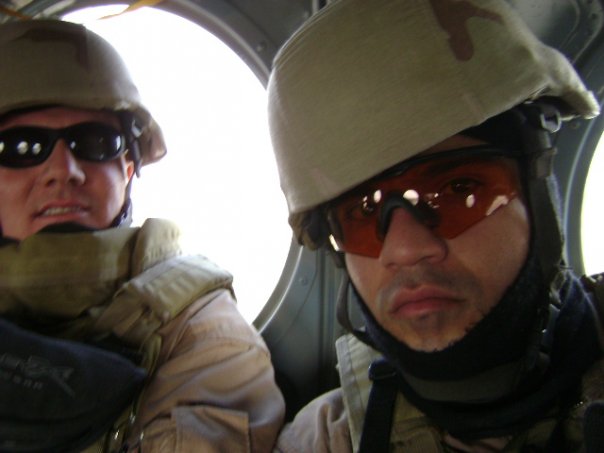
 

2 Comments

Filed under christian life, faith, leadership, Pastoral Care, philosophy