Tag Archives: US Navy

Rumbles in the Old Litter-box: Manifestations of Stress When One Loses a Parent and dealings with the Social Security Administration

I am back in my home town of Mudville aka Stockton California for the funeral of my dad.  I have mentioned the conflicting feelings that have been going on in me since I got the word on Tuesday of selection to promotion and Wednesday of the death of my dad.

I really thought that I would be prepared for his death since he has not been him for the last couple of years becoming really noticeable after I returned from Iraq in February 2008.  The last year and a half especially he has been less than a shadow of his former self barely existing in a nursing home.  Now I would be one that knows a lot about death and grief no matter how well that you think that you have prepared yourself it is like getting kicked in the nuts when it happens. In addition

I made my trip out yesterday, it was smooth and uneventful though quite pricey and have been out and about most of the day working on funeral service issues, particularly ensuring that everything was set for the Memorial Service on Sunday, correcting the obituary and coordinating with the Navy Chaplain that will perform the service and the Military Honors program coordinator  to make sure everything was fine.

I wanted to get info from the Social Security Administration people but their automated system is less than helpful…bad on you Social Security Administration.  Anyway I called the freaking number. At first I thought that I was in luck as the automated service told me that it would be “less than a minute wait” until I spoke to an agent. I was overjoyed, a real person in under a minute certainly the Deity Herself was smiling on me.  The it went to hell…the automated service told me that it was going to ask me six questions, the same six that the real person was going to ask me. It then informed me with great glee how this was in compliance with the Federal Government mandate on reducing paperwork, greenhouse emissions, save the trees, whales and generally safeguard humanity and make sure that earth is inhabitable for at least the next 59 minutes.  That announcement took at least 45 seconds, or so it seemed and then the painfully cheerful automated attendant with an overwhelming sense of self which you would not think that the automated attendant should have started “her” interrogation.  What pissed me off was this computerized and digitally enhanced kept calling itself “Me” and “I.” But I digress. “She” informed me to enter the social security number or say it, so I said it and the automated attendant revealed that she was either hard of hearing, did not understand simple English or just plain stupid. I guess it’s one of those Federal initiatives to hire incompetent automated help.  “She” asked me if the number, which “she” repeated to me was correct, I said no and she did not understand the word no. After a series of failed attempts to communicate with this incompetent but full of it automated attendant I gave up. I asked for a real person. I said the word “attendant” which “she” misunderstood, then “operator” which was also misunderstood and even “get me a f***ing real person.” which was likewise misunderstood by “her.”  I was wondering what the hell, she asks questions that the real person is going to ask anyway and like a cheerful pit bull from cyber hell won’t let me talk to a real person.  The old company commander in me was showing up as I wonder WTF was going on, about that time I was delivered by the call of the Petty Officer that is the military honors coordinator for the area and I hung up on  the overly cheerful automated attendant with an overblown ego and bad hearing.  I will take my mother to the local Social Security Administration Office on Monday morning to deal with this with a flesh and blood human being unless they too have been replaced by holographic images of fake people or wild flesh eating zombies.  Certainly the later would be easier to deal with.

In the midst of this I found that the old litter box was acting up. One of the physical  manifestations of stress is a rumbling litter-box and this morning my old litter-box was certainly rumbling. I delayed my run by about an hour and a half hoping that said rumbling had passed and it appeared that it had. So I put on my running shorts, my orange Norfolk Tides t-shirt and my gray with exceptionally bright orange trim and soles Nike running shoes.  The weather was great, about 60 degrees with clouds and a nice breeze. I felt great and looked to do about six miles until at the 2.2 mile point on on the outbound leg making great time the litter box began to rumble.  I knew that this was not good for unless I wanted to impose on a stranger’s lawn there was no place to go. So I turned around, locked down the sphincter and increased speed to get back to my parents home before sphincter failure set in, which I think would be something like what happens when the Starship Enterprise loses the warp containment field in her engineering plant.   The Deity Herself was smiling on me today my friends as I made excellent time on that back half of the run and with nary a second to spare made it to the head attached to the room that I am staying in.  Stress is such a beautiful thing but thank God for strong sphincters.

So anyway, hopefully things will settle down. My plans are to help my mom with the paperwork and the Social Security People as well as track down my dad’s insurance polices for her and get those paid out to her, or at least start that process.  The memorial service will be at the De Young Shoreline Chapel in Stockton California on Sunday at 1 PM. CAPT Gerald Seely, CHC USN will be the officiant and there will be military honors to include the presentation of our Nations’ colors by either a Navy Chief or Officer, the playing of taps and three rifle volleys from a ceremonial firing squad. I was informed that the the Stockton Police have been notified so they will not think that it is a drive by, Stockton being the home of the ceremonial drive by shooting.

So anyway, I want to hank everyone for their thoughts and prayers and encouragement over the past few days.  I will keep you informed and respond either, by e-mail or Facebook to you if you have or will contact me. I have a lot to catch up on in thanking people and I cannot tell you just how much that your support means and how many times that I have felt tears in my eyes as I have read your kind words.  Those that have called me have been tremendous blessing as have my colleagues at Naval Medical Center Portsmouth and the Navy Chief of Chaplain’s Office.

Peace

Padre Steve+

2 Comments

Filed under alzheimer's disease

Memorial Day Weekend 2010: We Happy Few, We Band of Brothers

On May 27th 2010 the US Military experienced the loss of its 1000th KIA in Afghanistan. The young man killed was Corporal Jacob C Leicht of Kerrville Texas.  Corporal Leicht was assigned to 1st Light Armor Reconnaissance Battalion, 1st Marine Division Camp Pendleton California. Corporal Leicht had previously served in Iraq where he had been badly wounded by an Improvised Explosive Device (IED) that hit the HUMMV that he was traveling in.  Pulled to safety by his Iraqi interpreter Leicht spent the two years recovering from those injuries engaged in a letter and phone call campaign to get back into the fight with his fellow Marines.  He was killed when he stepped on a land mine during that desperately sought after second tour. His younger brother Jesse Leicht who just 10 days ago enlisted in the Marines said “He said he always wanted to die for his country and be remembered, he didn’t want to die having a heart attack or just being an old man. He wanted to die for something.”  Please keep his family and his fellow Marines in your prayers this Memorial Day.

Last year I was very melancholy during Memorial Day and stories of young Marines, Soldiers and Sailors killed in the line of duty usually cause me to reflect on the sacrifice that the young men and women who volunteer to serve our country make on a daily basis while most of the country goes about its business often oblivious to the wars being waged by our sons, daughters, brothers and sisters and mothers and fathers in Afghanistan, Iraq and other lesser known fronts in this war.  Last year I was still very much in the midst of my PTSD crash and struggling with depression and faith.  At the same time I was still remembering all of the veterans who made a difference in my life.  That was covered in the posts Memorial Day 2009- Thoughts and Musings and Remembering the Veterans in My Life…Memorial Day 2009.

As we approach Memorial Day 2010 we must remember that while the war in Iraq is drawing down that the war in Afghanistan is heating up even as U.S. and NATO forces prepare to engage the Taliban in their spiritual home of Khandehar.  Likewise there is are rising tensions on the Korean peninsula where the Heavy Combat Brigade and Air Combat Brigade of the 2nd Infantry Division are based in support of Republic of Korea and UN forces in Korea backed up by Marines of the 3rd Marine Division and 3rd Marine Expeditionary Force in Okinawa and Hawaii that are not currently in Afghanistan. At sea U.S. Navy forces patrol strategic choke points including the Straits of Hormuz where an ascendant Iran continues to build up for forces that could threaten the Freedom of the seas.

How am I different this year? To answer the question I can only say that I have regained some measure of faith and community that had been absent in my life after I returned from Iraq.  This has made a lot of difference however it in no way takes the place of remembering those men and women that I have served with in harm’s way as well as the veterans who made an impact in my life and still do today.

Memorial Day, initially known as Decoration Day is a somber holiday in its truest sense however it is as Paul Reikoff of the Iraq Afghanistan Veterans Association notes is “One Country, Two Holidays.” http://www.huffingtonpost.com/paul-rieckhoff/memorial-day-one-holiday_b_592398.html For those that have served in war going back to our WWII veterans but also those of the not so popular wars, Korea, Vietnam and the current conflicts in Iraq and Afghanistan who have lost friends and sacrificed spending months and even years in combat zones and the work-ups and exercises that part and parcel to deployment.  There are the wounded in body, mind and spirit and those whose physical injuries who have killed them in previous wars but now live in tortured bodies somewhere in between life and death.  Likewise there are those whose injuries are invisible, the injuries of PTSD, TBI and other psychiatric or psychological disorders related to their time in combat.  I spent almost two years in PTSD hell and though I am making a good recovery now still am reminded of the fear, anxiety, depression, hopelessness, loneliness and an existential crisis of faith that came with my return.  I know too many Marines, Soldiers and Sailors that suffer much more than I have whose struggles pass unnoticed by most of society.  I am now working with our Substance Abuse Rehabilitation Program and it is hard to see the young men and women that are in the program whose problems either came in part from their combat experience or their experience upon returning home.  Likewise we are now receiving more of our combat wounded at the medical center and thus I am reminded of the sacrifices made by veterans every day.  For those who work to help these young men and women and in many cases have served alongside them in the combat zones it is a continual reminder of the cost of war.

For those of us that have served, not just in the current conflict but our brothers and sisters that served in previous wars, especially Vietnam and Korea there is one Memorial Day.  While we do attempt to do some things with families and friends the holiday is one of sober reflection as we count the cost of war in human terms, both in our lives as well as our families, the soldiers of our Allies that serve alongside of us and the populations of lands devastated by war.

But then there is another country.  A country consumed with materialism and for whom “heroes” are reality television “stars,” actors and actresses and sports figures.  There are those who while they profess to “support the troops” are the first to want to replace military personnel with contractors such as Halliburton and the company formerly known as “Blackwater” with often disastrous results. Political operatives and lobbyists support paying astronomical sums to corporations that often embarrass the country and make the  job in the military harder in Iraq and Afghanistan having done things that alienate those populations.  Then there is the cost for services delivered and the often terrible way that these corporations treat their employees, especially the third country nationals with working hours and living conditions that would be punishable he in the United States, but also Americans who gain employment but serve driving trucks or other hazardous duties that they have little combat training to do and receive little if the are wounded in action nor for their families if they are killed or disabled. That is part of the “other country.” About 1.8 million Americans have served in Iraq or Afghanistan less than 6/10ths of 1 percent. Unlike World War II where the war was truly a national effort this war is waged by a small minority of the population.

I do not have any problems with people enjoying a holiday but hope and pray that Americans will take at least a few minutes to pay their respects to the Veterans of wars past and present the honored dead as well as the living.  Say a prayer, visit a military or veteran cemetery, and pay a visit on a living vet or the family of one of those killed. Donate to reputable veteran organizations or charities and maybe take a vet out for a bite to eat or buy them a cup of coffee, Coke or a beer.  Don’t let the day pass by simply looking at the faded yellow ribbon “I support the troops” on your car but take a few minutes to thank and remember those that have served our country regardless of race, creed or color and pray that the fallen will rest in peace and the living will recover from all wounds.

Unfortunately for the country the President will not be at the wreath laying ceremony at Arlington Cemetery this year. Unlike some who are vehemently criticizing him I can only say that I am disappointed that the Commander-in-Chief will not be present because of what I feel is the tremendous symbolic importance of his presence at the event when we are at war. At the same time the President’s absence in emblematic of how much of the country “celebrates” Memorial Day.  Unfortunately as the number of men and women who have served our nation in time of war goes down in proportion to the population at large the day will become less significant to many, a curiosity that is quaint and nice but does not impact their lives.  I do not mean this in a bad way or with any malice; it is simply a statement of fact as for most the military and the war is not an everyday part of their lives. I think that the Previous President while understanding the significance of this day did not help the nation when after the September 11th attacks did not marshal the energy of the nation for a war which his administration readily acknowledged would be a “long war” but instead told people to “go shopping” to pump up the economy.  I think that was an act that has limited the personal effect of the human cost of these wars to a very limited segment of the population.

At the same time I as well as most veterans do appreciate the fact that we in the military are treated well by our countrymen even if they do not truly understand what we go through.  I for one am thankful to people who go out of their way to thank us in public places, those that take on hateful groups like the crowd at West Baptist Church that protests outside of military funerals and bases invoking God’s wrath on us.  Likewise there are the volunteers who meet returning servicemen and women at airports as the come home from war, the sports that honor the military before games or as in the case of most of Major and Minor League Baseball in the 7th inning stretch.  At the Church of Baseball, Harbor Park Parish in Norfolk they display the photos of servicemen and women currently serving overseas.  The Raley’s grocery store near my parents’ home in Stockton California has a display of hundreds of 8 x 10 photos of military personnel in the front of their store and a wide range of people and groups try to find ways to help.  This in is stark contrast to the treatment of our brothers and sisters who served in Vietnam and the attitudes and treatment of military personnel on college campuses that lingered far into the 1980s.  Thankfully the vast majority of Americans are appreciative of what we do.  At the same time most are not personally effected and as such will simply see Memorial Day as a three day weekend that kicks off the summer vacation season hardly pausing to think of the cost that has been born to ensure that Americans and people around the world have the opportunity to live in freedom.

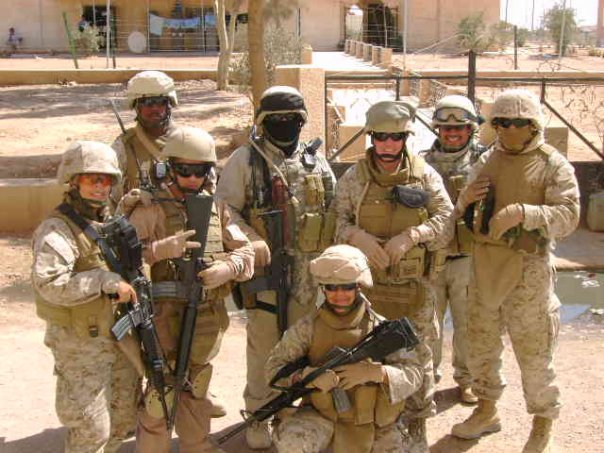
Band of Brothers, Above Me and RP2 Nelson Lebron, below Foot Patrol Al Waleed Iraq

This weekend I pause to remember the veterans in my life, my father who remains in a nursing facility with dementia brought about by Alzheimer’s disease, men like my NJROTC instructors Senior Chief John Yarro and Buff Rambo who taught me in our FIST or Fire Support Team, SFC Harry Zilkan and CSM John Butler from my UCLA Army ROTC program and SFC Harry Ball my Drill Instructor in ROTC Advanced Camp. All were Vietnam Vets.  Then there were 1SG Jim Koenig of 557th Medical Company who was my 1st Sergeant when I was a new Lieutenant in Germany and Colonel Donald A Johnson the Commander of the 68th Medical Group and his successor Colonel Jim Truscott a high decorated Medevac or “Dustoff” helicopter pilot.  I cannot forget Chaplain (LTC) Rich Whaley a company commander in Vietnam who saved my ass as an aspiring Chaplain at the Chaplain School in 1990 and 1992.

Then there were the WWII and Vietnam Vets in my Chapel at Fort Indiantown Gap PA. USAF Major General Frank Smoker a B-17 pilot, Colonel Walt Swank who served at Normandy and SSG Henry Boyd one of the 101st Airborne Troopers epitomized by “Band of Brothers.” There were the Vietnam Vets in the congregation, Colonel Ray Hawthorne an artillery officer who served several tours in country including an advisor tour.  Charlie Kosko a helicopter pilot and Major Scotty Jenkes who served as a USAF pilot flying close air support in Vietnam.  Then there was Colonel Tom Allmon the Garrison Commander who served in the Gulf War as well as Iraq.

My life more recently has been impacted by others.  My friends of the veterans of the Battle of Hue City including General Peter Pace, Barney Barnes, Tony “Limey Cartilage” Sergeant Major Thomas and so many others have become close over the years, especially after I did my time in Iraq. They and all the Vietnam vets, including the guys from the Vietnam Veterans of America like Ray and Charlie who used man the beer stand behind the plate at Harbor Park until health issues kept them from continuing all mean a lot to me.  Likewise my friends at Marine Security Forces Colonel Mike Paulovich and Sergeant Major Kim Davis both Iraq Vets mean more than almost any people in the world.  We traveled the globe together visiting our Marines.  Both of these men are heroes to me as well as friends.

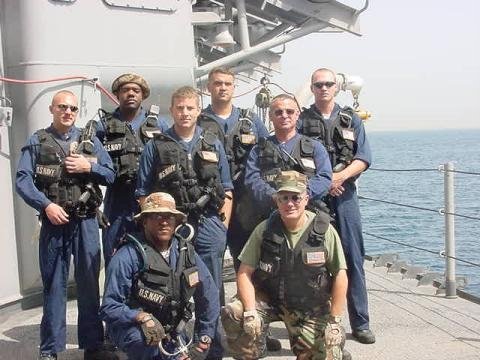
There are those that I served with at Navy EOD Group II that performed amazing feats in Iraq and Afghanistan and retired Command Master Chief Bill “Two Feathers” Tyrell an EOD tech that I came to know well working family issues and PTSD issues for our EOD sailors.  Bill was a tremendous help as I struggled with PTSD.  Likewise there are my shipmates and friends from the USS HUE CITY that I served with deployed to the Northern Arabian Gulf and Horn of Africa in 2002 including the men of the boarding team that I served as an advisor to on 75 boarding missions aboard impounded Iraqi Oil Smugglers.  Then there are the men that I served with in Iraq especially my assistant and body guard RP2 Nelson Lebron who is getting ready for his 10th deployment this time another trip to Afghanistan.  There are my friends that served in various locations with the Iraqi security forces that I was able to travel to, serve alongside and serve as a chaplain in remote areas of Iraq with the Iraqis. In my current assignment I have had many friends and colleagues deploy to Iraq and Afghanistan in some very “hot” zones caring for our wounded as well as local nationals and allied soldiers.  This is not stopping anytime soon.

These are my brothers and sisters and I remember all of them with fondness.  My thoughts are much the same as Henry V at Agincourt as depicted in Shakespeare’s Henry V:

What’s he that wishes so?
My cousin Westmoreland? No, my fair cousin;
If we are mark’d to die, we are enow
To do our country loss; and if to live,
The fewer men, the greater share of honour.
God’s will! I pray thee, wish not one man more.
By Jove, I am not covetous for gold,
Nor care I who doth feed upon my cost;
It yearns me not if men my garments wear;
Such outward things dwell not in my desires.
But if it be a sin to covet honour,
I am the most offending soul alive.
No, faith, my coz, wish not a man from England.
God’s peace! I would not lose so great an honour
As one man more methinks would share from me
For the best hope I have. O, do not wish one more!
Rather proclaim it, Westmoreland, through my host,
That he which hath no stomach to this fight,
Let him depart; his passport shall be made,
And crowns for convoy put into his purse;
We would not die in that man’s company
That fears his fellowship to die with us.
This day is call’d the feast of Crispian.
He that outlives this day, and comes safe home,
Will stand a tip-toe when this day is nam’d,
And rouse him at the name of Crispian.
He that shall live this day, and see old age,
Will yearly on the vigil feast his neighbours,
And say ‘To-morrow is Saint Crispian.’
Then will he strip his sleeve and show his scars,
And say ‘These wounds I had on Crispian’s day.’
Old men forget; yet all shall be forgot,
But he’ll remember, with advantages,
What feats he did that day. Then shall our names,
Familiar in his mouth as household words-
Harry the King, Bedford and Exeter,
Warwick and Talbot, Salisbury and Gloucester-
Be in their flowing cups freshly rememb’red.
This story shall the good man teach his son;
And Crispin Crispian shall ne’er go by,
From this day to the ending of the world,
But we in it shall be remembered-
We few, we happy few, we band of brothers;
For he to-day that sheds his blood with me
Shall be my brother; be he ne’er so vile,
This day shall gentle his condition;
And gentlemen in England now-a-bed
Shall think themselves accurs’d they were not here,
And hold their manhoods cheap whiles any speaks
That fought with us upon Saint Crispin’s day.

See the Kenneth Branagh’s rendition here: http://www.youtube.com/watch?v=NA3gOST4Pc8&feature=player_embedded

With crucial battles ahead in Afghanistan against the Taliban, the storm clouds of war gathering over Korea and the threat of terrorism and attacks around the world and at home it is indeed a dangerous world that our Soldiers, Sailors, Marines, Airmen and Coastguardsmen serve in.  Never before in our country have so many owed so much to so few.   Unfortunately there are those of us, men and women that have served our country from before Pearl Harbor to the present who who struggle and will spend this day alone and uncared for in isolation, anonymous to nearly everyone. Please, if you see such a man or woman do not let the opportunity pass to thank them and if need be do something to encourage or thank them for their service. Please remember and thank a Veteran this weekend and if somehow the spirit moves you to do more and you are capable of serving and join this new “Band of Brothers” please see a recruiter.  It is a noble profession that we, we happy few are proud to serve despite the cost.

Peace

Padre Steve+

3 Comments

Filed under iraq,afghanistan, Military, PTSD, shipmates and veterans

Adjusting Strategy to Reality: The Pacific War- Why the Japanese Lost

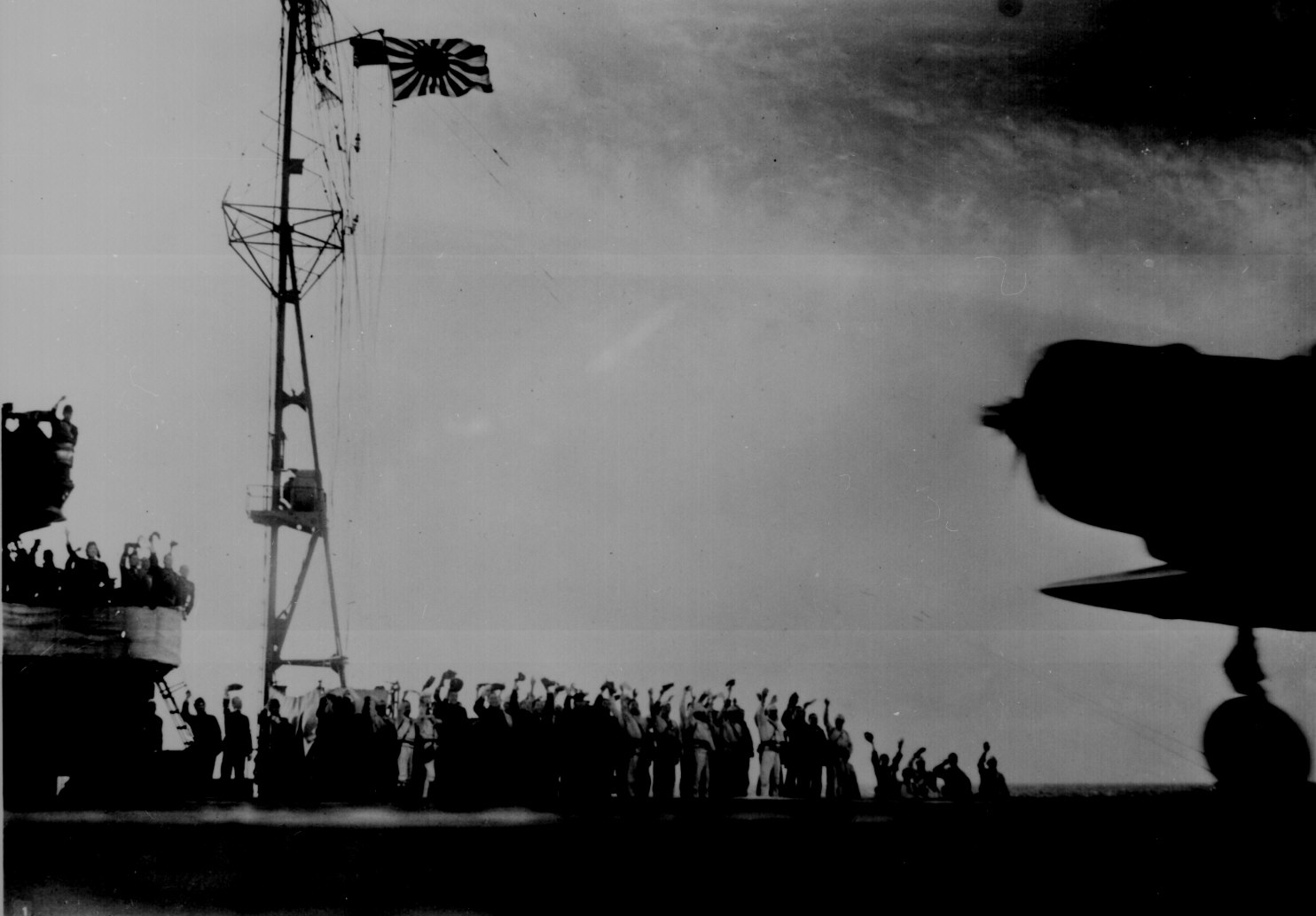
Lead aircraft ready to take off of IJN Carrier Akagi to attack Pearl Harbor beginning a 6 month chain of Japanese victories in the Pacific

The outcome of the Pacific war was directly related to the ability of the Americans to adjust strategy to the realities of the Pacific war, a unity of effort directed by the National Command Authority and superior industrial, technological and logistical capabilities. The Japanese after initial success did little to adapt and were hamstrung by inter-service rivalries and inadequate industrial capacity and limited natural resources.

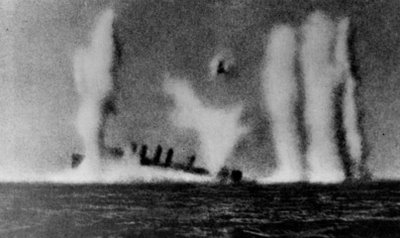
US Destroyer USS Pope being blasted out of the water by Japanese Cruisers at the Battle of Java Sea

The Japanese and the Americans each had war plans in place for the Pacific campaign.  The American plans, Plan Orange had been developed since the early part of the 20th Century after the Spanish-American War and Russo-Japanese War.  Predicated on holding the Philippines until relief could arrive Orange assumed that the US Pacific Fleet would sail across the Pacific and fight the Japanese Navy in a manner written about by Alfred Thayer Mahan; see Weigley in The American Way of War and Ronald Spector in “Eagle Against the Sun: The American War Against Japan.”

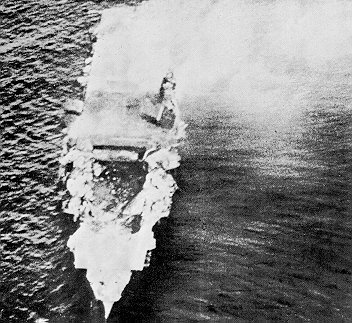
IJN Carrier Hiryu heavily damaged and abandoned at Midway. Hiryu, Akagi, Kaga and Soryu the creme of the Japanese carrier fleet were lost at Midway, the Japanese found it hard to replace them or their decimated air crews

The Japanese were conflicted.  The Navy desired a campaign that would destroy the American Navy and expand the Empire to the East and to Southeast Asia and the Indian Ocean. The Army was fixated on the China strategy having been embroiled on the Asian continent since the early 1930s. John Toland discusses this in good detail in his book “Rising Sun: The Decline and Fall of the Japanese Empire 1936-1945” In addition other Japanese Army leaders had designs on Siberia and fought a brief campaign against the Soviets which ended in a defeat.

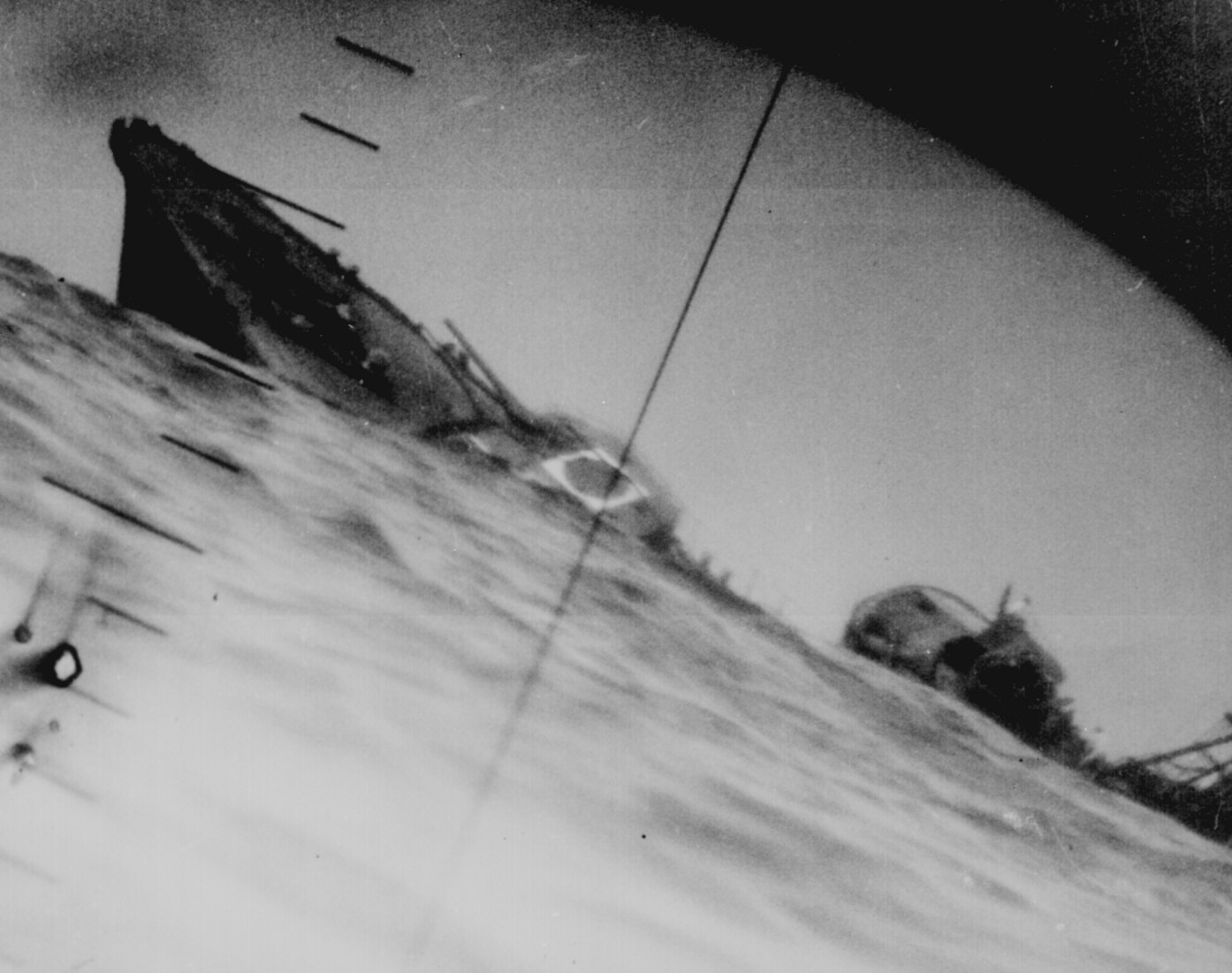
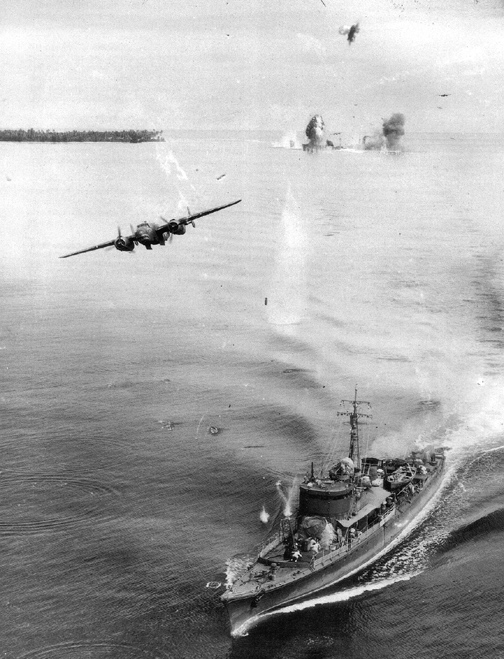
Japanese destroyer shown sinking after being torpedoed by a US submarine

When the Japanese attacked Pearl Harbor as well as the Philippines and Southeast Asia defeating American and Allied forces in detail, crippling the American Navy and dooming the Philippines the Americans were able to adjust strategy to first a defensive one supplemented by raids against the Japanese perimeter by carrier forces and the beginnings of a nascent submarine campaign against Japanese merchant shipping.  The Americans were able to parry the Japanese thrust at the Coral Sea and inflict a major defeat on the Japanese Carrier Forces at Midway prior to launching the first limited offensive by the Navy and the Marines at Guadalcanal.

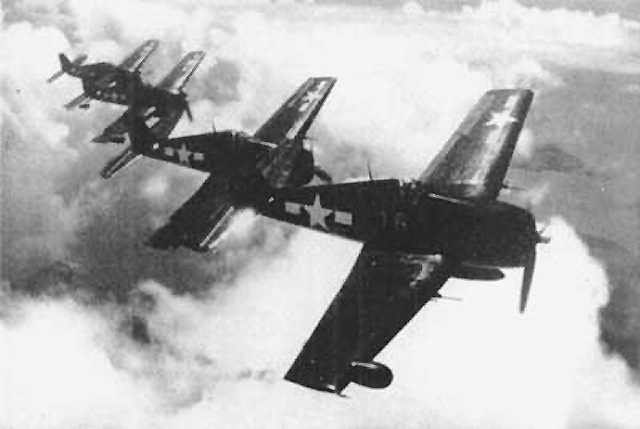
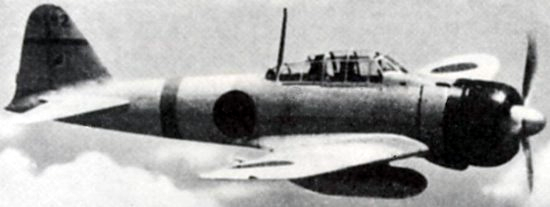
Aircraft like the F6F Hellcat drove Japanese aircraft such as the A6M2 Zero from the skies in the Pacific


The Japanese remained mired in their conflicting strategies with the Navy primarily fighting the Pacific campaign aided by limited Army and Army Air Forces on the islands Japan had occupied or fortified while the bulk of the Army was engaged in China, Southeast Asia or sitting on the Manchurian-Soviet border.

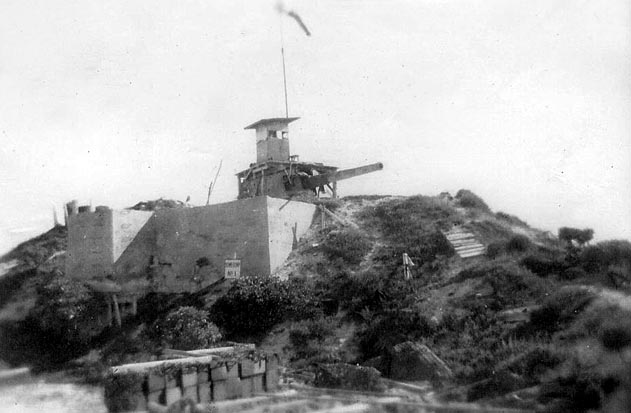
Heavily fortified Japanese islands were either bypassed or taken in bloody assaults, here a 8″ gun on Tarawa

Once the Americans shifted to the offensive a campaign of island hopping coordinated between the Southwest Pacific Area under General MacArthur and the Central Pacific Area under Admiral Nimitz focused on gaining control of islands which contained airbases and anchorages capable of sustaining the American advance while bypassing islands not necessary for this along with their Army garrisons. Both American advances in the South Pacific and Central Pacific focused on retaking the Philippines and cutting the Japanese lines of communication and supply with Southeast Asia. From late 1942 on the Japanese strategy was focused on individual areas of danger versus a overall coordinated defensive effort.

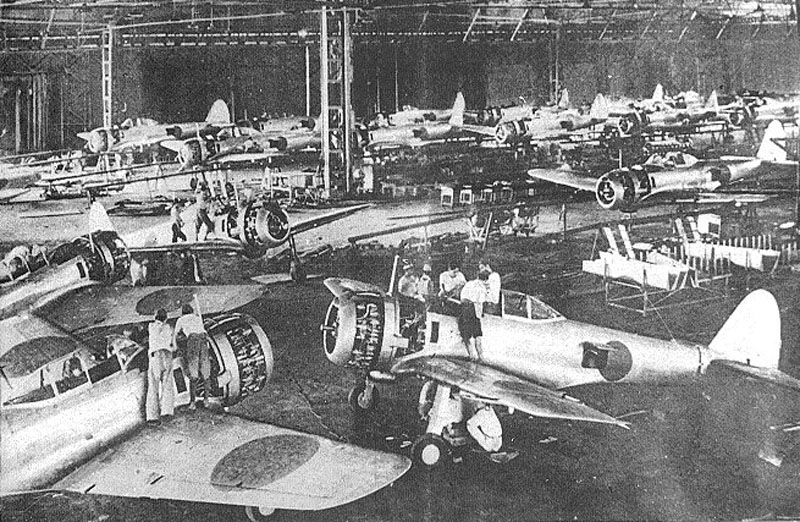
Japanese war industries were woefully ill equipped to match US war production. Here a factory producing Oscar fighter planes

The Japanese were hamstrung from the beginning of the war by limited natural resources, especially oil and oil refining capacities, limited industrial capacity, especially in the realm of the manufacture of steel and machining tools.  All of these were supplied in large part by their opponents and were cut off once the war began.

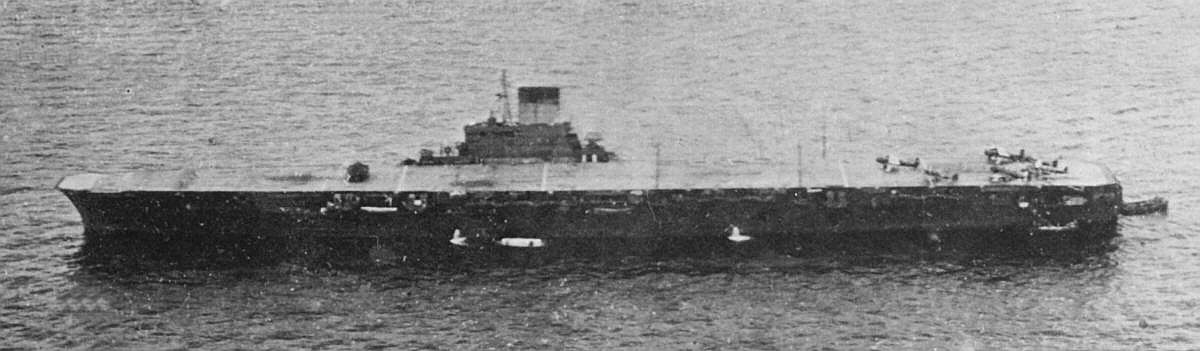
The Carrier Taiho was the equivalent of the Essex Class but the Japanese could only produce one unit

Michael Barnhart in his book Japan Prepares for Total War” has an excellent account of the limitations of Japanese economic, industrial and natural resource capacities, as well as the continual struggle by the Army and the Navy for priority in access to them and the inability of Japanese planners, both civilian and military to resolve this conflict. The Americans had a different situation; although American industrial capacity was enormous it had to be split between to Theaters of Operations and support the needs of American Allies, Britain, the Soviet Union, Canada and China.

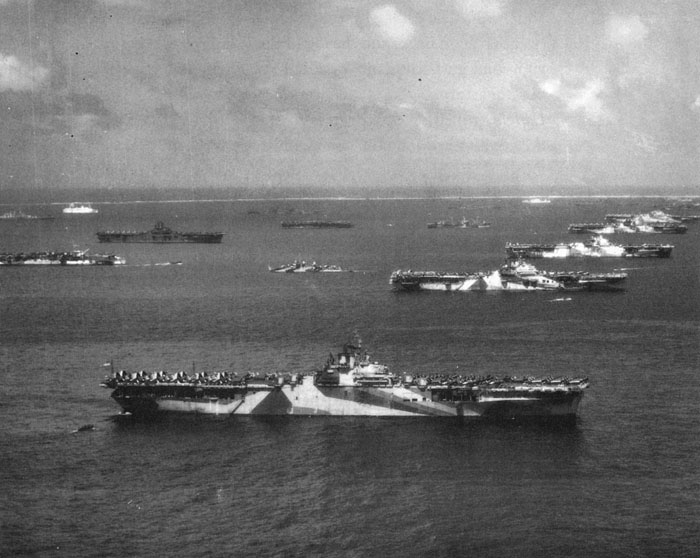
An Armada of US Essex Class Carriers in 1944 the Japanese could not keep pace with US Naval production

Despite this the Americans in a relatively short time were able to amass forces equal to or great than the Japanese who were unable to replace losses in ships, aircraft or the highly trained personnel needed to man them.  At the beginning of the war Japanese Air and Naval forces in the Pacific outmatched everything the Allies could offer, however once they began to experience significant losses at Midway and during the Guadalcanal Campaign their air and naval capabilities diminished to the point that they had to conserve ships and aircraft hoping to be able to gain local advantage in critical defensive areas.

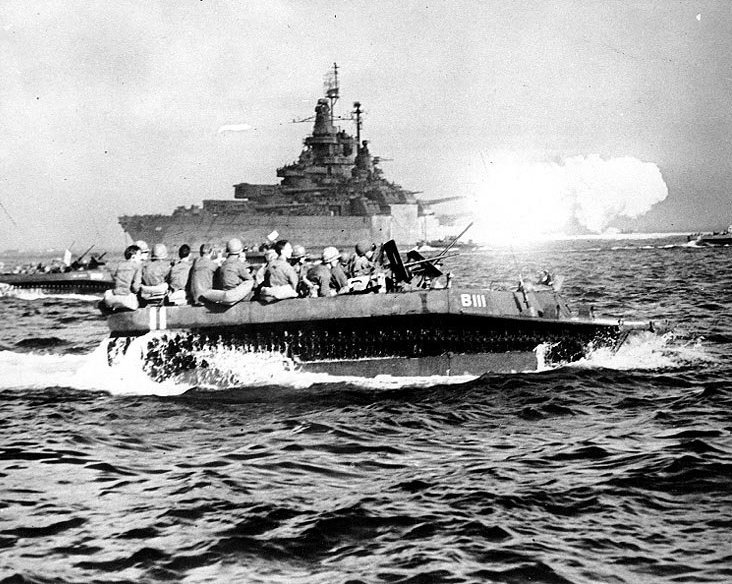
The US Amphibious warfare capacity was a key factor in the ability of the United States to take the war to Japan

New American ships and aircraft introduced during the war were superior to Japanese designs, many of which had reached their apex by 1942.  American advantages in radar, communications equipment added to American advantages throughout the war.  Japanese ground forces in the Pacific were dependant on the Navy and merchant marine for supply and reinforcements. As the American submarine campaign became better organized this became more difficult as the American submarines copying German Wolf pack tactics decimated the Japanese merchant Marine. I particularly like Samuel Elliott Morrison’s account of this in “The Two Ocean War” and “The History of US Navy Operations in World War II” which has a volume devoted to this subject.

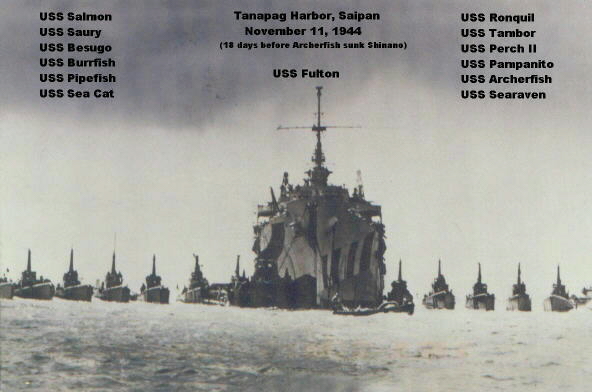
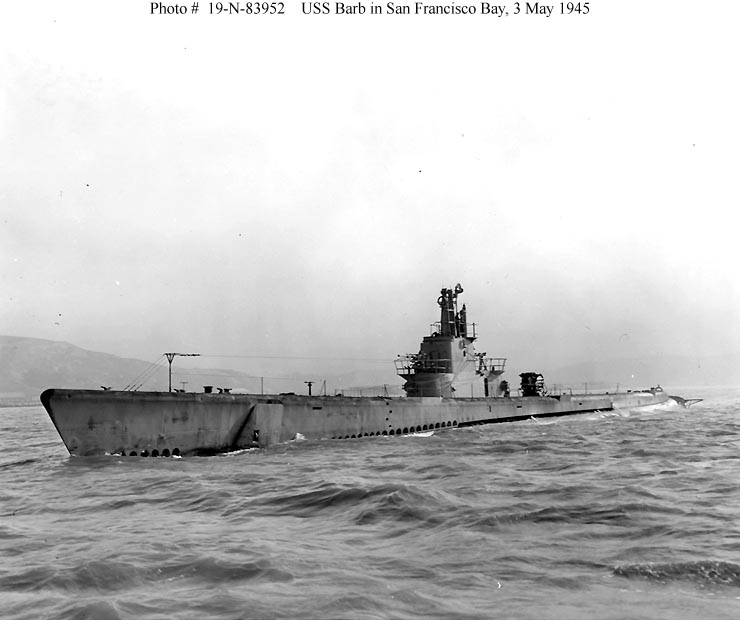
US Navy Submarines cut off Japan from its vital natural resources in Southeast Asia. A Sub Squadron above and USS Barb below

Japanese forces would always fight determined battles but they often expended great amounts of manpower in senseless Banzai charges rather than make the Americans force them out of well prepared positions.  Where the Japanese maintained excellent defense such as at Tarawa and Iwo Jima they made the Americans pay greatly for their gains.  American Marines were apart from the 82nd and 101st Airborne Divisions were the best infantry in the US Military and their skill at amphibious operations and integrated air-ground and naval warfare increased as the war went on.  The Americans were well equipped with modern weapons while the Japanese operated antiquated tanks and often substandard artillery.

Japanese leadership at the strategic and political level was inept throughout the war. They failed to coordinate any strategy with the Germans and failed to enunciate any sort of Grand Strategy.  On the operational and tactical levels the Japanese forces, especially the surface navy performed well, however as the American numeric and technologic advantage increased the Navy became less effective.  After the death of Admiral Yamamoto in 1943 Japanese Naval Leadership became far less effective. The Americans as mentioned before were able to devise a Grand Strategy which not only dealt with Japan but also Germany and coordinated the efforts of forces, war production, planning and logistics to advance their war aims.  At the operational and tactical level American forces, especially the Navy and Marines and later the Army Air Forces and Army became more skilled and than their Japanese counterparts with the possible exception of General Simon Bolívar Buckner at Okinawa. See Spector and Thomas Costello “The Pacific War.” In the air the Americans continued to increase their combat capabilities at the tactical and strategic level and used massed fire bombing raids to devastate the Japanese homeland.  The Japanese in contrast due to inexperienced pilots and fewer competitive aircraft were forced into suicide or Kamikaze missions as the war neared Japan.

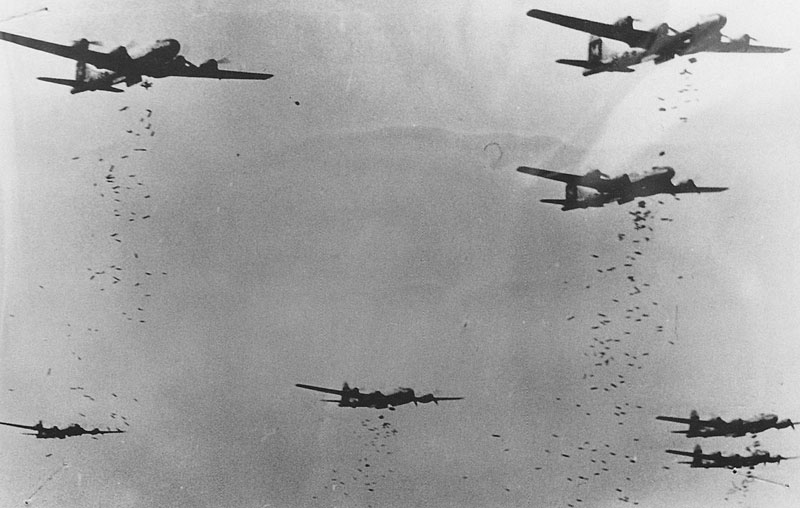
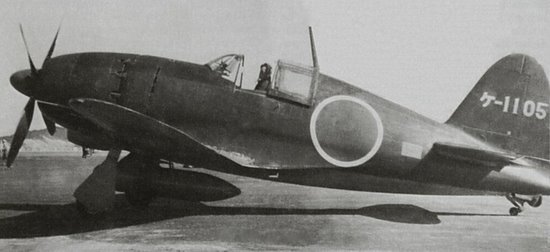
B-29 Super-fortresses leveled Japanese cities and even excellent fighters like the Mitsubishi J2M Raiden could not stop them


The outcome of the Pacific war was directly related to the ability of the Americans to adjust strategy to the realities of the Pacific war as well as the unity of effort which enabled the American superiority in industrial, technological and logistical capabilities to overwhelm the Japanese. The Japanese after initial success did little to adapt and were hamstrung by inter-service rivalries and inadequate industrial capacity and limited natural resources, fell behind in technology and were unable to replace losses among the ships, men and aircraft that they needed to fight an effective war.  Japanese leaders at many levels failed to adapt strategy, tactics or methods to match the reality of the war and the places that they did do so were done by local commanders and never instituted throughout the Japanese military.

2 Comments

Filed under History, Military, world war two in the pacific

The Battle Fleet that Never Was: The USS Washington, the South Dakota Class and the Lexington Class Battle Cruisers

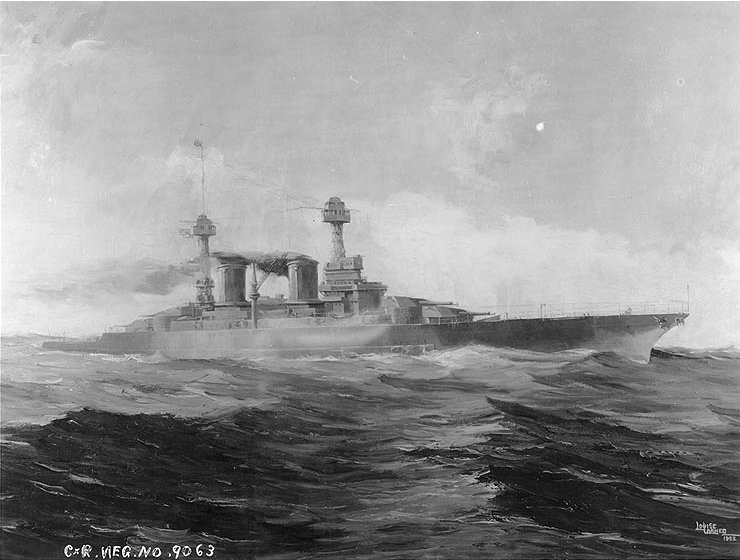
Artist depiction of the Lexington as Battle Cruiser

Note: This is the first of a series of articles on what might have happened if the Washington Naval Treaty had not been signed. This article is a look at the American fleet that never was, the following articles will be in the alternative history genre looking at a war breaking out in the Pacific in 1937.

Historians almost always muse on what might have been.  One of the most significant events of the years following the First World War was the Washington Naval Conference and Treaty. The treaty called by the President Harding and conducted under the auspices of the League of Nations was the first international disarmament conference and attended by none nations having interests in the Pacific. The major players in the conference from the naval power perspective were the British, Americans, Japanese, French and Italians.  Each nation had an agenda for the conference, for the United States it was to break the Anglo-Japanese naval accord and to limit the Japanese naval build up.  The British, exhausted and financially reeling from the effects of the First World War had a number of goals.  Though they had the largest navy and the most Dreadnaught type battleships and battle cruisers of any Navy many of its ships were obsolete or worn out from wartime service.  They had little capital to put into new ship construction, especially considering the vast resources of the United States which was already well into a vast naval buildup including ships that would be among the largest and most heavily armed in the world.  It was in the interest of Britain to limit the both the number, tonnage and armament of these ships.

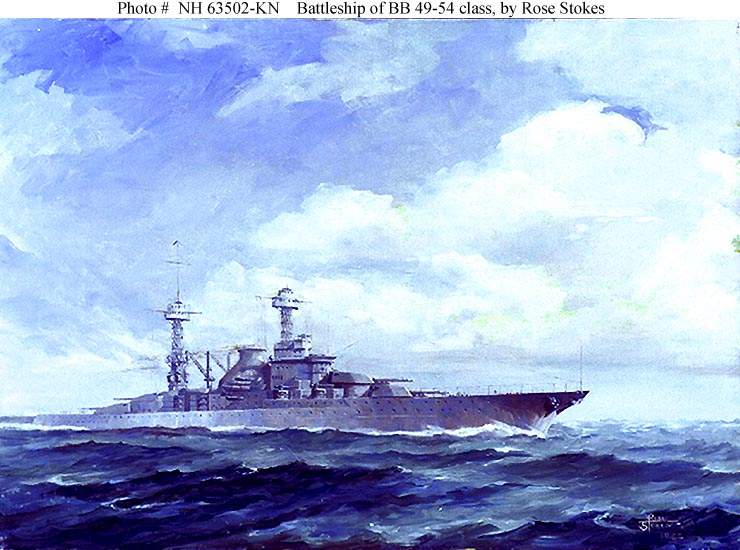
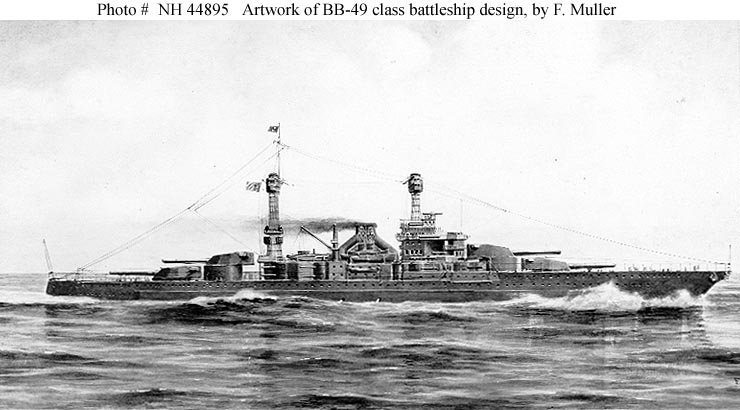
Artist impression of South Dakota Class

The treaty which was ratified in 1922 limited the United States and Great Britain to a maximum of 525,000 tons in their battle ship fleets and 125,000 tons in aircraft carriers.  The Japanese agreed to a limit of 315,000 tons and the French and Italians 175,000 tons each.  Tonnage for battleships was limited to a maximum of 35,000 tons with a limitation on guns size to 16 inches.  Since the bulk of the ships planned or being built by the US and Japan exceeded those limits they would be effected more than the British whose post war shipbuilding program had not begun in earnest. For the US this had a dramatic effect on its planned fleet, which if built would have become the dominant Navy of the 1920s and 1930s.  It is fascinating to think what might have happened if the treaty had not been signed and what the battle fleets of the various nations would have looked like in 1941 had war not come sooner.

Plans for South Dakota Class

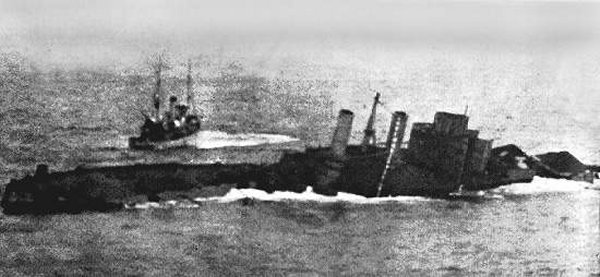
The American Navy went to war in 1941 with 18 battleships, the most modern of which were the new North Carolina and Washington and the rest averaging over 20 years old in 1941. The most modern of these ships were the Colorado class composed of the Colorado, Maryland and West Virginia each mounting eight 16”/50 guns.  The fourth ship of the class the Washington was sunk as a gunnery target when 75% complete under the terms of the Washington Naval Treaty.

The incomplete USS Washington sinking

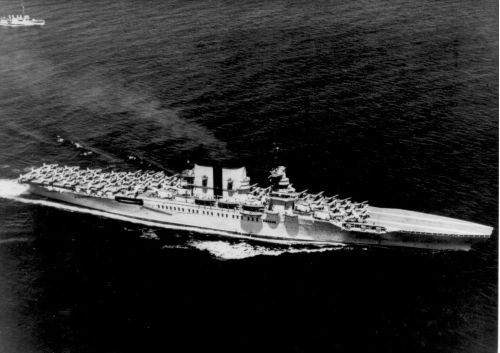
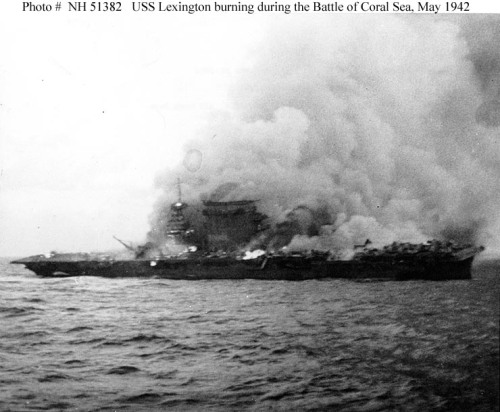
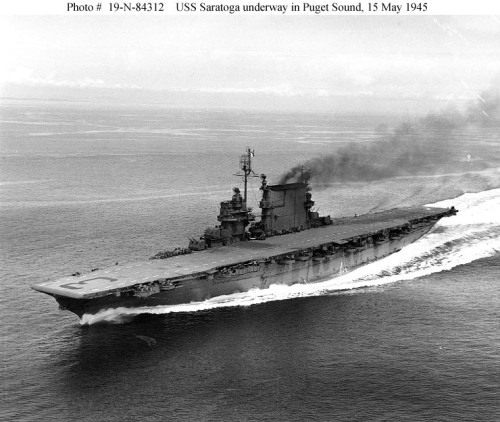
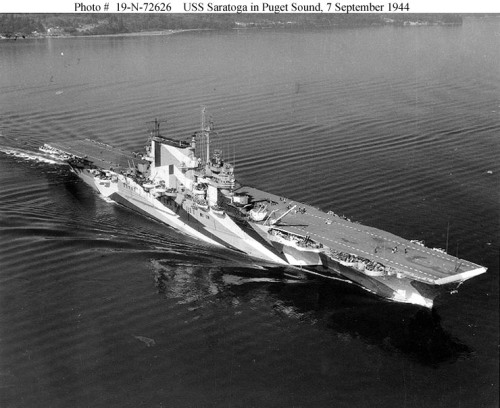
However it was a battle force that could have been much larger and far more capable, a force that may not been regulated to convoy escort duties and shore bombardment but instead may have taken on the Imperial Navy on the high seas in battleship combat not seen since Jutland.  Yet this was not to be, the great fleet of super-battleships was never built and only two hulls completed the Lexington and Saratoga which instead of being completed as battle cruisers were completed as aircraft carriers.

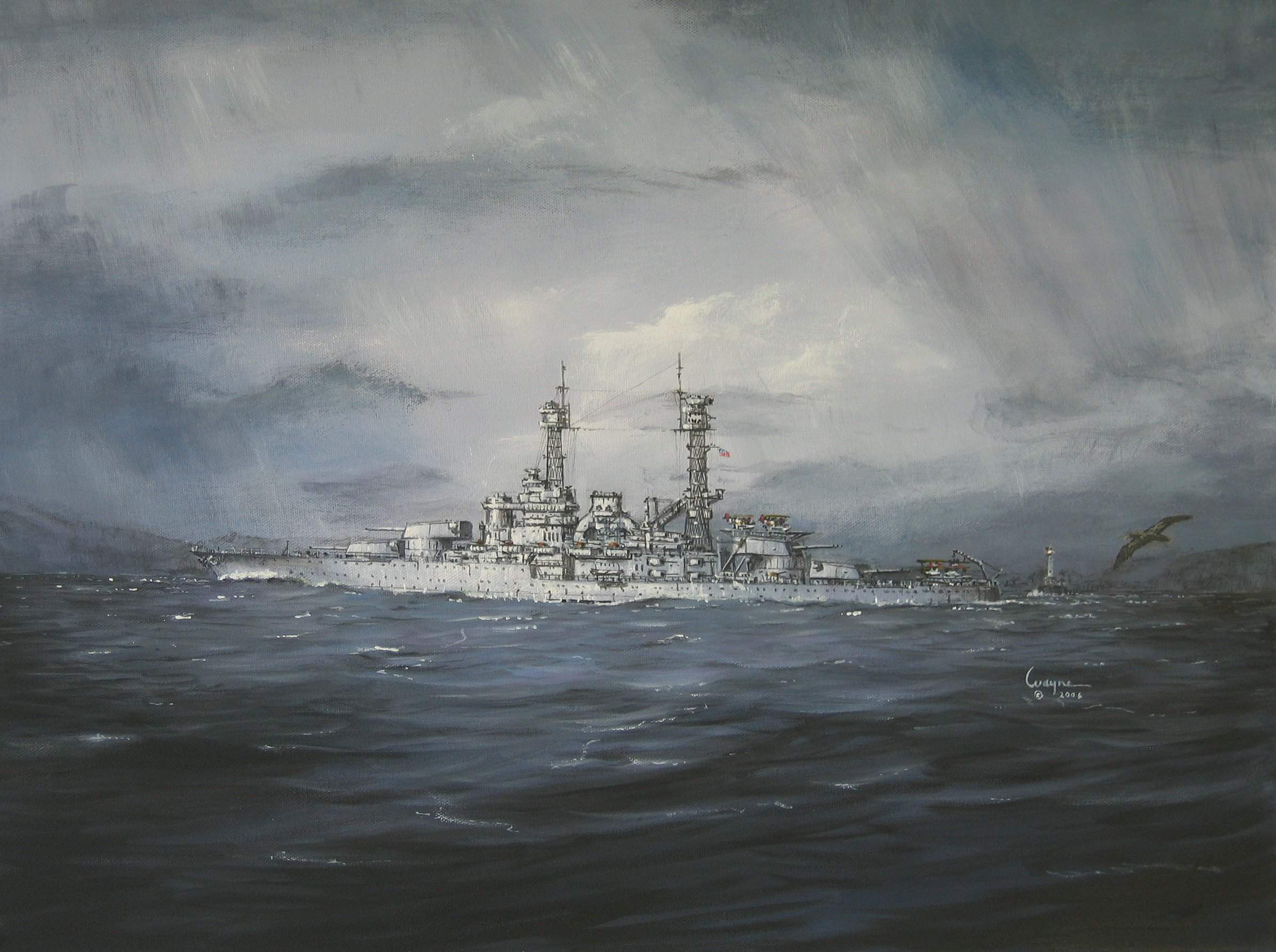
Artist impression of South Dakota Class

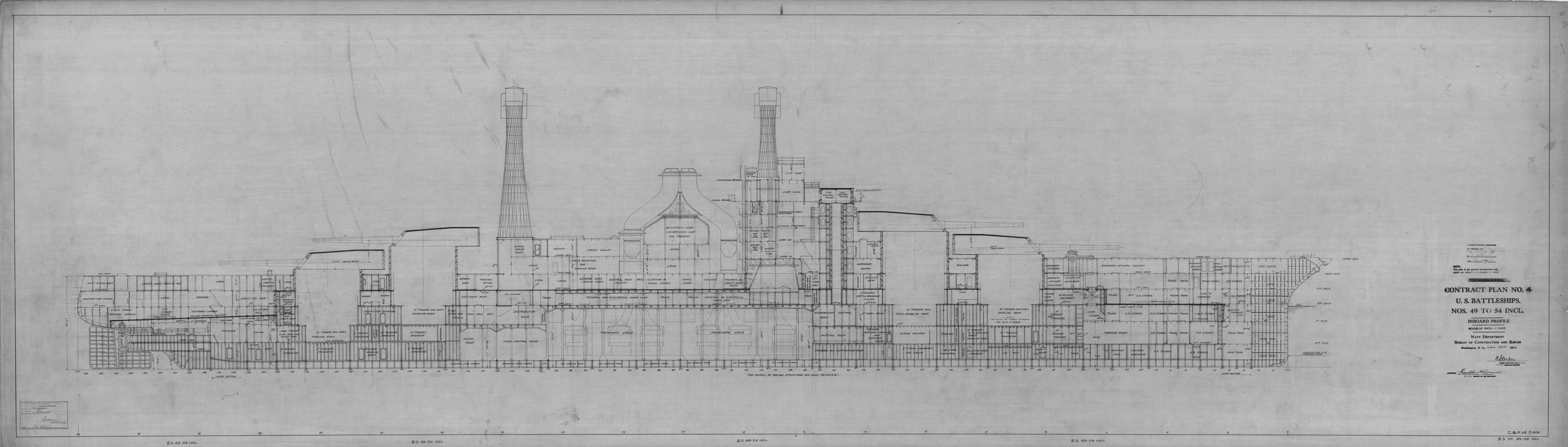
The Americans had set out to build the largest, most modern and powerful battleships and battle cruisers afloat.  The Navy had already produced the Colorado class super-dreadnaughts which were equal to or superior to any battleships of their era.  The Navy planned for a class of six battle cruisers which would be superior to any similar ship afloat, the Lexington class and a class of six battleships, the South Dakota class mounting twelve 16”/50 guns in triple turrets.

Artist impression of South Dakota Class as they might have appeared in 1938

The two classes were leviathans and to counter them the British made plans for a four ship 48,000 ton class of battleships, the N3 project mounting nine 18” guns and a class of battle cruisers mounting nine 16” guns.  The ships of both classes were designed with their main battery mounted forward in order to save weight on armor.  Both classes were canceled with the signing of the treaty and none were laid down.  It is suggested by some that the G3 battle cruiser design was a ploy to get the United States to agree to the cancellation of its capital ship projects. The guns planned for the G3 class were mounted on the Nelson class battleships which complied with treaty limits.  Although powerful ships they suffered from engineering problems which often reduced their speed from what was designed.  Along with the HMS Hood, the sole ship completed of the four ship Admiral class the Nelson and Rodney were the most modern battleships in the Royal Navy until the King George V class entered service in 1941.  The Japanese planned for eight battleships and eight battle cruisers centered on the two existing Nagato class battleships and 4 Kongo class battle cruisers to be joined by the two ship 40,000 ton Tosa class battleships, the Tosa and the Kaga, of which Kaga was completed as an aircraft carrier. They were to be joined by the 4 improved Tosa class or Kii class fast battleships of 42,000 which were ordered but never laid down.  These were to be joined by the four ship Amagi class battle cruiser class.  Amagi was destroyed during the Tokyo earthquake of 1922 and scrapped and Akagi completed as an aircraft carrier.  All of the planned Japanese ships were to mount ten 16” guns in five twin turrets.

Lexington Class final design drawing

The American ships were to be powerful and based on main battery, protection and speed they would have acquitted themselves well had they been built.  The Japanese ships would have had a speed advantage over the South Dakota’s but this would have been offset by the gun power and protection of the latter.  The American Lexington class would have been faster than any of their competitors.

South Dakota Class Design Specifications
Displacement: 43,200 tons normal
Dimensions: 684 x 106 x 33 feet/208.5 x 32.3 x 10.1 meters
Propulsion: Turbo-electric, 12 285 boilers, 4 shafts, 50,000 shp, 23 knots
Crew: 1191
Armor: 8-13.5 inch belt, 3.5 inch deck, 4.5-13.5 inch barbettes, 5-18 inch turrets, 8-16 inch CT
Aviation: none
Armament: 4 triple 16″/50cal, 16 6″/53cal, 8 3″/50cal AA, 2 21 inch torpedo tubes (submerged)

The six ships in the Class, South Dakota, Indiana, Montana, North Carolina, Iowa and Massachusetts were all scrapped in accordance with the treaty when partially complete, the North Carolina being in the most advanced stage of construction, 37.8% when construction was halted.

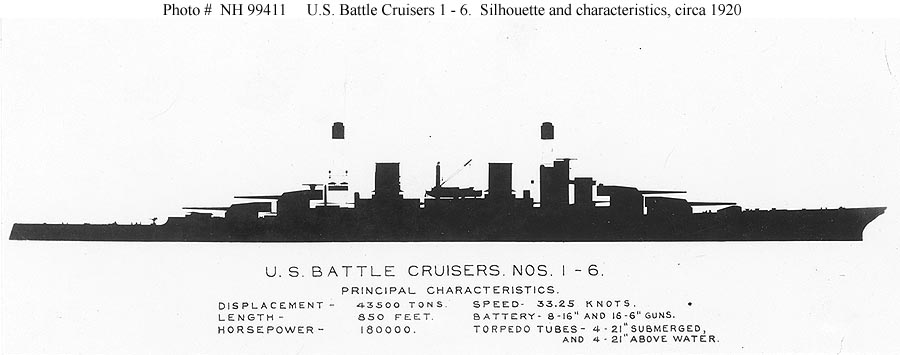
Lexington class Battle Cruiser Design Specifications

Displacement 43,500 Tons, Dimensions, 874′ (oa) x 105′ 5″ x 31′ (max).
Armament 8 x 16″/50 16 x 6″/53 4 x 3″8 x 21″ torpedo tubes
Machinery, 180,000 SHP; G.E. Geared Turbines with Electric Drive, 4 screws
Speed, 35 Knots, Crew 1500

The ships with the exception of the Lexington and Saratoga were scrapped incomplete.  All were to be named after famous warships or battles, and the Constellation, Constitution, Ranger and the United States were to be named after some of the most illustrious ships ever to serve in the US Navy.

If all of the ships, including the Washington of the Colorado class been completed the US Navy would have had eight battleships and six battle cruisers mounting 16 inch guns to compliment the nine battleships of the Nevada, Pennsylvania, New Mexico and California classes which all mounted 14 inch batteries.  The fleet would have been superior to either the Royal Navy or the Imperial Japanese Navy even with the ships planned by those navies.  Economically the United States was the only nation in the world capable of sustaining a naval arms race of this magnitude, the British economy and political will would have been unable to sustain it and the limited industrial capacity and dependence on the United States for raw materials and machine tools needed to construct their ships would have limited their ability to produce such a fleet. Without the conversion of the Lexington, Saratoga and their Japanese counterparts the Akagi and Kaga into aircraft carriers the development of the carrier would likely have gone slower and that type of ship may not have risen to the prominence that they gained during the Second World War.

8 Comments

Filed under History, Military, Navy Ships

Too Young…Naval Medical Center Portsmouth loses another one of Its Own


Lieutenant Eric W Inge, Medical Corps, United States Navy 20 August 1979-13 February 2010

Creator, Father who first breathed

In us the life that we received

By thy power of thy breath restore

The ill, and men with wounds of war

Bless those who give their healing care,

That life and laughter all may share

 From the Navy Hymn, Eternal Father Strong to Save

Today the Staff of Naval Medical Center remembered the life and work of a shipmate, colleague and friend.  LT Eric Inge passed away last week from apparently natural causes. Eric was a junior resident our Psychiatry residency program and I had the pleasure of working with him and spending time in class as well as doing some PT with him. Back in December we took a PT test together.  Though he was quiet we often talked to each other and he had a good heart, sharp wit and obviously cared for people and wanted to do his best to serve our Sailors, Marines, Soldiers, Airmen and their family members that he saw in clinic or on the floor. 

 He was quiet, unassuming and did not draw attention to himself. He was remembered today as a friend, a committed physician who could always be found working with his patients and who was a very good psychiatrist even though he was still early in his residency. 

 He was born at Fitzsimmons Army Medical Center in Denver on August 20th 1979. He graduated with distinction from Duke University earning a degree in Biomedical Engineering. He worked in that field and then attended medical school at the University of South Florida where he graduated with his MD in 2005.  He completed an internship in Internal Medicine at The Ohio State University in 2006 and entered a Neurology program that he withdrew from realizing that his passion in medicine lay in Psychiatry.  Passing up numerous civilian residency programs he entered the Navy and was accepted into the Psychiatry internship program from which he matriculated in June of 2009 and then began his residency at Naval Medical Center Portsmouth.  He served his patients, his shipmates and his country well.  He is typical of so many of our young Naval Physicians and other professionals in Navy Medicine.  Eric will be missed by his friends, colleagues and the patients that he served so well.  Please remember his mother and father, Elsa and Kenneth Inge and sister Tina in your prayers. 

 His death came as another blow to a department that has lost two other staff members in the past 7 months and to a medical center that has said goodbye to far too many shipmates in the past year.  Additionally we have hundreds of our staff deployed in harms way in Afghanistan where they are actively treating US and NATO soldiers and Afghan civilians in places like Khadahar, Camp Bastion and Bagram as well as many places too small to register in this country. Others serve in Iraq, the broader Middle East and the Horn of Africa.  Many were shipped out with only hours notice to deploy on the USNS Comfort to care for victims of the cataclysmic destruction in Haiti, which many veteran and even senior staff who have served in Iraq and Afghanistan find more horrifying than anything that they experienced in combat.  While all of these professionals deploy the staff here picks up the load.  Unlike units that rotate in and out of combat to be rested and refreshed these proud and selfless men and women of Navy Medicine go into the fight or into places of cataclysmic devastation and then return to carry on with the mission of caring for our Navy and broader military family at home. 

 Please keep all of these professionals, caregivers all in your prayers as they serve with dedication and distinction all over the world and even now mourn the death of one of their own.  I do not pretent to understand why young people like Eric die, I trust God yes, but I wonder sometimes and ask the question which has no answer “why?” I will miss Eric and trust that his soul and the souls of all the departed will rest in peace.

 Peace,

Padre Steve+

4 Comments

Filed under Military, Pastoral Care, shipmates and veterans

A Global Force for Good

A Global Force for Good: A Sailor holds the hand of a Haitian Child

The Navy A Global Force For Good TV Spot

http://www.youtube.com/watch?v=6DriBYQvG_4

“I can imagine no more rewarding a career. And any man who may be asked in this century what he did to make his life worthwhile, I think can respond with a good deal of pride and satisfaction: ‘I served in the United States Navy.’” President John F Kennedy 1 August 1963, at the Naval Academy

“It follows than as certain as that night succeeds the day, that without a decisive naval force we can do nothing definitive, and with it, everything honorable and glorious.” George Washington 15 November 1781 to the Marquis de Lafayette

“A good Navy is not a provocation to war. It is the surest guaranty of peace.” President Theodore Roosevelt 2 December 1902, second annual message to Congress

“For in this modern world, the instruments of warfare are not solely for waging war. Far more importantly, they are the means for controlling peace. Naval officers must therefore understand not only how to fight a war, but how to use the tremendous power which they operate to sustain a world of liberty and justice, without unleashing the powerful instruments of destruction and chaos that they have at their command.” Admiral Arleigh Burke CNO 1 August 1961 at the Naval Academy

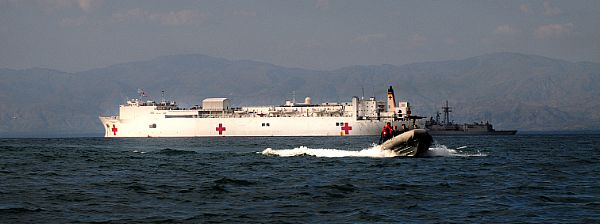
USNS Comfort off of Haiti

The newest Navy recruiting and public relations campaign features a comment “America’s Navy: A Global Force for Good.”  When it first came out some expressed their dislike of the new slogan; however as a Navy and Army veteran as well as a long time “Navy Brat” I found the slogan and the accompanying commercial inspiring and I can be extremely jaded and cynical when it comes to such advertisements and slogans.  See my post Memorable Recruiting Slogans and the All Volunteer Force. http://https://padresteve.wordpress.com/2009/05/03/memorable-recruiting-slogans-and-the-all-volunteer-force/

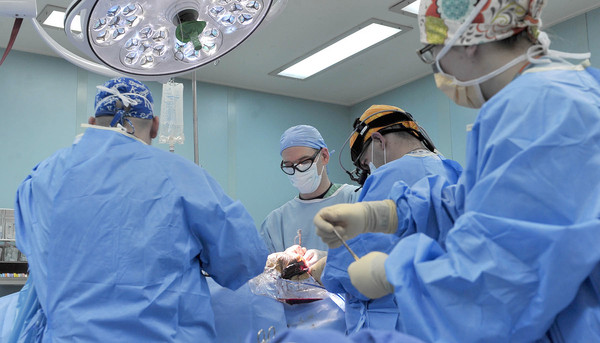
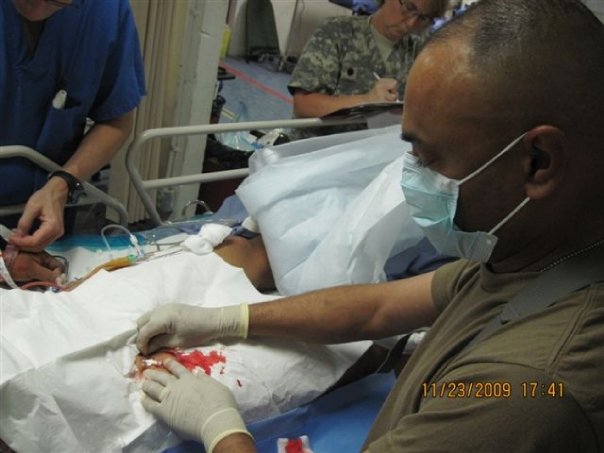
Neurosurgeons from Naval Medical Center Portsmouth operating on a patient aboard the Comfort- Baltimore Sun Photo

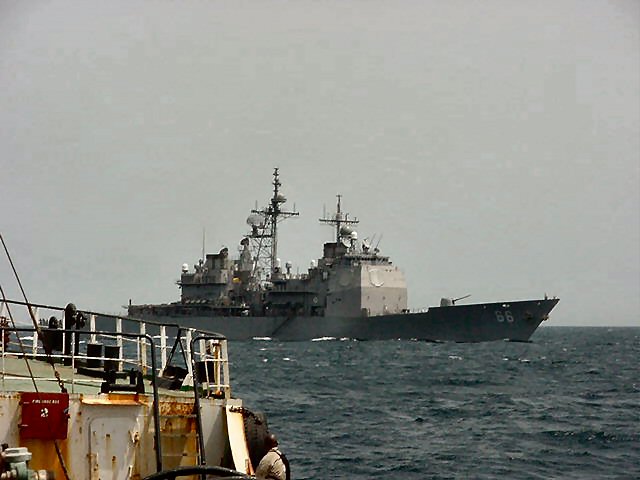
Maybe it is because I serve with a lot of great people who make up the Navy that I think this way. I have served with the brave souls of our EOD force, the Navy Expeditionary Combat Command, the crew of an elite Guided Missile Cruiser, the USS Hue City CG-66 and the professionals of Navy Medicine.  All these professionals be they war-fighters or care givers give so much of themselves to serve this country and protect others while at the same time laying their lives on the line to defend the people of the United States and others around the world.  For me this understanding of the Navy being a global force for good is relational and it goes beyond the crass cynicism of so many in the world who find little good about our nation.  I know that we have our faults but I really do believe that the good that we have done over the years and now outweighs our sins of commission and omission.  I was really offended when I saw some of the comments from some people in other countries condemning our efforts in Haiti.  I know of no other country that will empty itself to care for the people of a devastated and impoverished nation without expecting any form of repayment even while it is still in difficult economic straits.

Comfort receiving casualties- Baltimore Sun Photo

In the forefront of the humanitarian effort are my friends and shipmates in Navy Medicine on the USNS Comfort and ashore who are caring for the injured, sick and dying Haitian people.  These men and women were pulled out of our medical treatment facility and others with as little as 24 hours notice to deploy on a mission of incredible difficulty and undetermined length.  The emotional toll can be difficult as many of these professionals, physicians, nurses, corpsmen and others have deployed at least once if not two or three times to Iraq or Afghanistan.

Navy Pediatric Intensivist performs a procedure on a Afghan child

While the staff of the Comfort and those ashore toils to save lives others serve in Afghanistan running medical facilities often in conjunction with our allies.   These professionals are deployed from 7 months to a year and include some of the finest clinicians in the Navy.  Serving in Afghanistan the care for American wounded and sick, those of our NATO and Afghanistan National Army allies as well as the unfortunate civilians including children who are victims of terrorists acts, IEDs or military action mostly initiated by Taliban or Al Qaida forces.  Serving in harm’s way they see their compounds bombarded by incoming rockets, mortars and occasional artillery fire.  They also know that the vehicles that they travel in and helicopters that they fly in are targeted by Taliban forces and they care for those who are injured by IEDs on the same routes that they travel.  Having experienced this in Iraq I can say that it is a sobering and often eerie feeling that you get after you have been with Marines or Soldiers wounded by IEDs and ambushes on routes that you travel.  These men and women see the worst that humanity can do and still care about the victims.

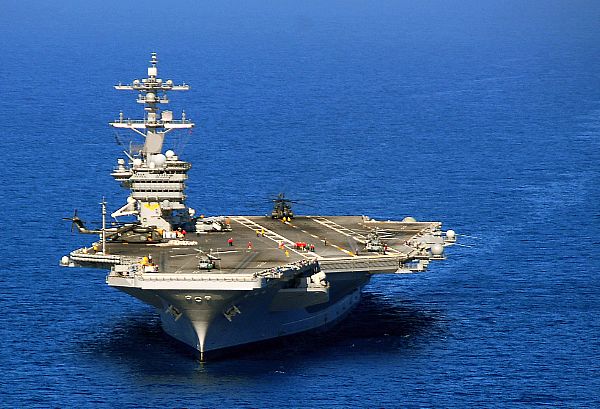
USS Carl Vinson arrived quickly and began relief operations

Others serve in Iraq now supporting our Army troops with medical care working alongside Army and Air Force medical personnel, others are in the Horn of Africa and still others involved with other humanitarian missions or operational support of US Forces abroad.

One has to remember that these medical professionals do not just come out of a vacuum but are normally assigned to medical treatment facilities in the United States. As they depart to serve abroad those left behind continue the mission of caring for our military, their families, and military retirees going back to the Greatest Generation and other combat wounded veterans still entitled to medical care.   The workload back at home does not let up and the professionals back here work harder and longer to provide the quality care that our beneficiaries deserve. Dealing with patients and families I always hear about how much they appreciate the kindness and superior care that they get from our physicians, nurses, corpsmen and other medical professionals.

Boarding Team from USS Hue City

If you do not believe that these men and women are a “global force for good” then I am sorry that you cannot see the labor of love that these men and women provide to those entrusted to their care.  I am ashamed when I hear prominent media personalities call these “meals on wheels” missions. Personally I think it is hateful and demeaning towards the proud professionals who serve in these human tragedies and care for God’s people.  Likewise those that claim that this is being done to further US influence in Haiti are so clueless, in Haiti there is no payback even from a military or strategic point of view and even with our forces stretched thin around the world we still go out and do what no other country can do when we use our military to care for those afflicted by disaster.

In Haiti we are working hand in hand and side by with numerous Non-Governmental Organizations and other military medical professionals from the United States, Canada and other nations who are giving of themselves to serve the Haitian people.

USS Hue City 565 Feet of Naval Power on Patrol

I think that for once a recruiting phrase actually captures the essence of the Navy.  This is not about just being a better individual or improving your life or getting an education and experience.  It is about serving our nation and people as well as others around the world whether that mission is combating terrorists, pirates, protecting our vital interests or like in Haiti, or during the Indonesian Tsunami, Hurricane Katrina or at the World Trade Center and hundreds of other places, this Navy is a global force for good.

Tonight as you go to bed and sleep soundly after eating well and spending time with family, friends or enjoying some form of entertainment remember those of our Navy who serve at sea, in the mountains and deserts of Afghanistan, the cities of Iraq, the desolation of the Horn of Africa and around the world defending our interests, caring for our military personnel and their families and deploying to serve in harm’s way and in areas of devastation.  They are America’s “Global Force for Good.”  They are my shipmates.  They are the United States Navy.

Peace,

Padre Steve+

2 Comments

Filed under Military, national security, US Navy

The Caine Mutiny: A Lesson in Leadership

“Now you’re learning, Willie. You don’t support your captain because you like him; you support because he’s got the job or you’re no good!” Jose Ferrer as Lieutenant Barney Greenwald

I write this after seeing a number of officers do some really dumb things in my 28 year career in the manner in which they supported their commanders or chain of command in trying times.  While none of these incidents could be described as mutiny they were certainly acts which undermined the chain of command, endangered the mission and had they occurred in a combat zone or in emergent conditions could have gotten soldiers or sailors killed.  The Caine Mutiny is a classic on leadership either in book or movie form.  I prefer the book but I am captivated by the performances of Humphrey Bogart and Jose Ferrer. In this essay I go through the movie and book and illustrate my point with quotations from it.

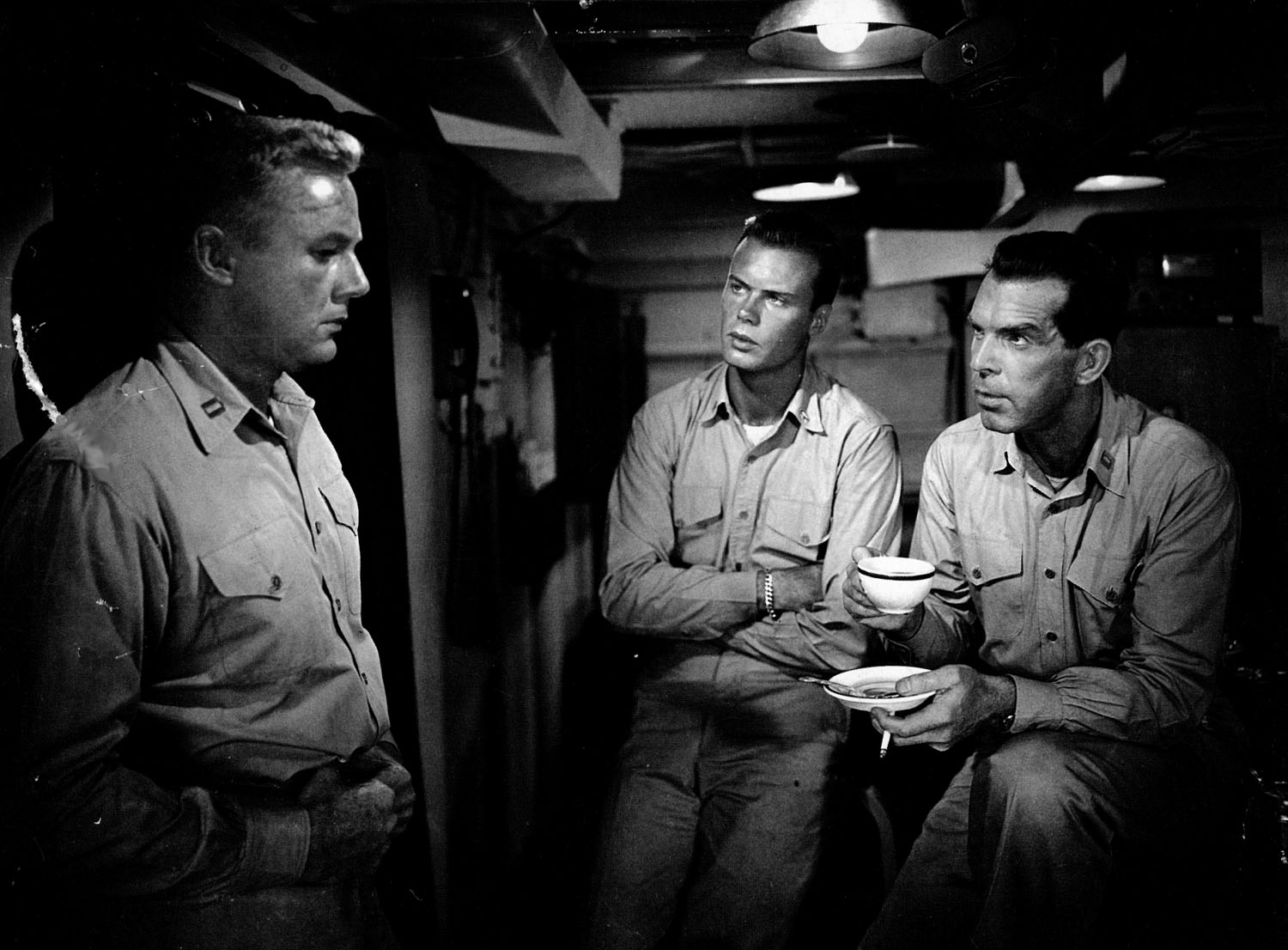
There has never been a mutiny on a United States Navy ship yet the book and later the movie The Caine Mutiny by Herman Wouk is one of the most poignant books on leadership in existence. The book gained popular success and was made into a movie in 1954 starring Humphrey Bogart, Van Johnson and Fred MacMurray, Jose Ferrer and Robert Francis.

The story centers around the officers or the wardroom of the USS Caine, an elderly Destroyer Minesweeper which had been in continuous combat in the South Pacific.  In the book she is a First World War One 1250 ton Wickes or Clemson class four piper.  In the movie she is played by the USS Thompson DD-627/DMS-38 a 2500 ton Gleaves class destroyer converted into a Destroyer Minesweeper since by the time the movie was made no “four pipers” were left in existence.  It took the film’s producers many months to convince the Navy to endorse the film because of the subject matter with the Navy only relenting when the producers agreed to place a disclaimer at the beginning of the film that there has never been a mutiny aboard a US Navy ship.

In the book and film the ship has returned to Pearl Harbor and in the process picked up a couple of newly assigned Ensigns fresh out of Officer Candidate School, what back in World War II were known as “90 Day Wonders.”  The young and impressionable Ensign Willis Seward Keith a Princeton grad and scion of old money and political contacts is one of those officers and while the story focuses on “Willie” Keith the true drama comes with the assignment of a new Commanding Officer, Lieutenant Commander Phillip Francis Queeg, a career officer and Naval Academy graduate.  The Executive officer, Lieutenant Steve Maryk, another OCS officer from humble means is played by Van Johnson while Fred MacMurray plays the ship’s communications officer, Lieutenant Tom Keefer another reservist and a writer by trade who remarks early in the story: “There is no escape from the Caine, save death. We’re all doing penance, sentenced to an outcast ship, manned by outcasts, and named after the greatest outcast of them all.”


Keith is disappointed in his new assignment and his mother and uncle try to pull strings to have him assigned to an Admiral’s staff.  The initial commanding officer, Lieutenant Commander DeVriess questions the new officer on his feelings about being assigned to the Caine:

http://www.youtube.com/watch?v=WTt5iVP8-GM

DeVriess: Disappointed they assigned you to a minesweeper, Keith?
Keith: Well, sir, to be honest, yes, sir.
DeVriess: You saw yourself on a carrier, or a battleship, no doubt.
Keith: Yes, sir, I had hoped…
DeVriess: Well, I only “hope” that you’re good enough for the Caine.
Keith: I shall try to be worthy of this assignment, sir.
DeVriess: She’s not a battleship or a carrier; the Caine is a beaten-up tub. After 18 months of combat it takes 24 hours a day just to keep her in one piece.

Queeg on his arrival insists on strict military discipline on a ship that has little outward appearance of such qualities. He remarks to his officers: “Aboard my ship, excellent performance is standard, standard performance is sub-standard, and sub-standard performance is not permitted to exist – that, I warn you.” Keefer a malcontent with a cynical attitude about the Navy takes an immediate dislike of Queeg and goes out of his way to poison the wardroom against the new Captain and is aided by various quirky and even neurotic actions of the new commander.  In the next few months he creates an air of disrespect, distrust toward Queeg even to plant questions about Queeg’s sanity and emotional stability among his fellow officers, including the Executive Officer who begins a “medical log” on the Captain.  One remark when pushing the Executive Officer demonstrates how far he was willing to go in trying to plant the idea that the Captain is mentally ill: “Will you look at the man? He’s a Freudian delight; he crawls with clues!”


http://www.youtube.com/watch?v=TiGVMshkwrY&feature=PlayList&p=6E5FDB52D2DC4238&index=6

After a number of incidents Queeg attempts to reconcile with his officers who reject him but his words are true: “As I always say, a command is a lonely job. It isn’t easy to make decisions. Sometimes the captain of a ship needs help. And by help, I mean constructive loyalty. What I’m trying to say is, uh, a ship is like a family. We all have our ideas of right and wrong but we have to pitch in for the good of the family. If there was only some way we could help each other.”

http://www.youtube.com/watch?v=vtqf0CCVUek

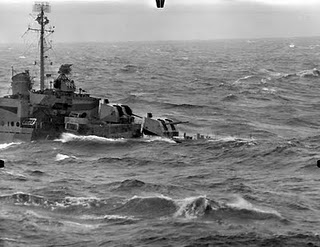
When the ship is caught in the great typhoon, sometimes known as “Halsey’s typhoon” which in actuality caused the loss of three destroyers and heavy damage to numerous ships, Queeg freezes on the bridge in a dispute with his officers over the action that needs to be taken.  Queeg wants to maintain the fleet course and speed while the bridge watch including the Executive Officer and Ensign Keith want him to steer an opposite course.  In the exchange Queeg apparently frozen by fear insists on following fleet course and when Queeg freezes relieve him under Article 184 of Naval Regulations.  The ship survives the storm and upon the ship’s return to San Francisco a Court Martial is convened charging Maryk and Keith with mutiny.

In the trial they are defended by Lieutenant Barney Greenwald, a lawyer in civilian life and Naval Aviator on convalescent leave. While the prosecution breaks Maryk and makes Keith look foolish Keefer aids the prosecution’s case to keep his reputation untarnished and after pushing his shipmates into mutiny leaves them to hang.  Greenwald then gets to work.  He pushes the psychiatrist who certified Queeg as sane and fit for duty hard planting doubts about the diagnosis:

“Doctor. You have testified that the following symptoms exist in Lieutenant-Commander Queeg’s behavior. Rigidity of personality, feelings of persecution, unreasonable suspicion, a mania for perfection, and a neurotic certainty that he is always in the right. Doctor isn’t there one psychiatric term for this illness?”

He then causes Queeg to have a breakdown on the witness stand.  The scene is dramatic as Queeg begins to fall apart:

http://www.youtube.com/watch?v=9esAr7gLapE&feature=PlayList&p=6E5FDB52D2DC4238&index=12

“They were all disloyal. I tried to run the ship properly by the book, but they fought me at every turn. If the crew wanted to walk around with their shirttails hanging out, that’s all right, let them! Take the towline – defective equipment, no more, no less. But they encouraged the crew to go around, scoffing at me and spreading wild rumors about steaming in circles and then ‘Old Yellowstain.’ I was to blame for Lieutenant Maryk’s incompetence and poor seamanship. Lieutenant Maryk was the perfect officer, but not Captain Queeg. Ah, but the strawberries! That’s, that’s where I had them. They laughed at me and made jokes, but I proved beyond the shadow of a doubt, and with, with geometric logic, that, that a duplicate key to the wardroom icebox did exist. And I would have produced that key if they hadn’t pulled the Caine out of action. I, I know now they were only trying to protect some fellow officer. (He pauses – looks at all the questioning faces that stare back at him, and realizes that he has been ranting and raving.) Naturally, I can only cover these things from memory…”

The scene ends with everyone knowing that Maryk and Keith will be acquitted. Greenwald’s clients are exonerated but the story does not end there.  While the officers celebrate the acquittal a drunken Greenwald arrives announces that he feels guilty for “torpedoing Queeg” and excoriates the wardroom and brutally identifies Kiefer as the “author of the Caine mutiny” and makes very pointed comments that any officer would be wise to heed.

http://www.youtube.com/watch?v=EKeISsYKROI

Greenwald: When I was studying law, and Mr. Keefer here was writing his stories, and you, Willie, were tearing up the playing fields of dear old Princeton, who was standing guard over this fat, dumb, happy country of ours, eh? Not us. Oh, no! We knew you couldn’t make any money in the service. So who did the dirty work for us? Queeg did! And a lot of other guys, tough, sharp guys who didn’t crack up like Queeg.
Keith: But no matter what, Captain Queeg endangered the ship and the lives of the men.
Greenwald: He didn’t endanger anybody’s life! You did! All of you! You’re a fine bunch of officers.

Greenwald: Tell me, Steve, after the Yellowstain business, Queeg came to you guys for help and you turned him down, didn’t you?
Maryk: Yes, we did.
Greenwald: You didn’t approve of his conduct as an officer. He wasn’t worthy of your loyalty. So you turned on him. You ragged him. You made up songs about him. If you’d given Queeg the loyalty he needed, do you suppose the whole issue would have come up in the typhoon?

Greenwald: And now we come to the man who should have stood trial. The Caine’s favorite author. The Shakespeare whose testimony nearly sunk us all. Tell ’em, Keefer.
Keefer: No, you go ahead. You’re telling it better.
Greenwald: You ought to read his testimony. He never even HEARD of Captain Queeg!
Maryk: Let’s forget it, Barney.
Greenwald: Queeg was sick, he couldn’t help himself. But you, you’re real healthy. Only you didn’t have one-tenth the guts that he had.
Keefer: Except I never fooled myself, Mr. Greenwald.
Greenwald: I wanna drink a toast to you, Mr. Keefer. From the beginning you hated the Navy. And then you thought up this whole idea and you managed to keep your skirts nice and starched and clean, even in the court martial. Steve Maryk will always be remembered as a mutineer. But you, you’ll publish your novel, you’ll make a million bucks, you’ll marry a big movie star, and for the rest of your life you’ll live with your conscience, if you have any. Here’s to the real author of the Caine mutiny. Here’s to you, Mr. Keefer.
[Splashes wine in Keefer’s face]
Greenwald: If you wanna do anything about it, I’ll be outside. I’m a lot drunker than you are – so it’ll be a fair fight.

The movie ends with Keefer alone as his fellow officer leave the party and Keith receiving orders to a new destroyer commanded by Captain DeVriess.  However the book has another ending.  In it Keefer becomes the commanding officer of the Caine and Keith the XO. The ship is hit by a Kamikaze and Keefer loses his nerve and in a truly cowardly fashion abandons the ship and his crew leaving Keith to save the Caine which he does.

As a leader it is important to support the commanding officer, especially if he or she is going through a difficult time.  While this does not mean that subordinates should ignore illegal actions of a commander as the XO of a ship did recently resulting in his and the CO’s relief for cause, but officers from any service do not have the luxury of subverting their commander or chain of command based on any personal like, dislike or any ideological, political or religious agenda.  A prime example of the latter was former Chaplain Gordon Klingenschmitt who waged a vicious campaign against every Commanding Officer that he worked for and the Navy in order to push his own political-religious views on his sailors and in the media.  There are certainly other examples but no to belabor the point I will end here.

Peace,

Padre Steve+

6 Comments

Filed under History, leadership, world war two in the pacific

A Previous Generation of Sailor Insults the Current Generation of Sailors

A Different Kind of Navy

Today I received an e-mail forwarded by a retired Navy Chief and actually a dear friend of my family.  However the e-mail was so insulting to the present generation of sailors that I sent a very blunt response back to him and everyone in else by replying to all recipients.

As readers of this site know I constantly go out of my way to make sure that the sacrifices of the previous generations of military personnel are recognized, honored and not forgotten.  In fact I am not alone in this, many like me have been touched by these veterans of World War II, Korea, Vietnam, the Cold War, Desert Shield and Storm and the Balkans and honor their service in thought word and deed. In fact I and thousands like me are deeply appreciative of the service and sacrifice of those who have gone before us.  However with the exception of the Vietnam vets I don’t think that this honor and appreciation is shown much to the current generation.

We have been at war coming up on 9 years. This is nearly three times as long as the US involvement in World War II and will certainly go well beyond that.  Unlike that war where the whole nation was mobilized and millions of men and women served in all components of the armed forces all over the world in the current war only a tiny minority of the population has served. In fact if you look around the country we are a nation that doesn’t even act like we are at war unless it benefits someone’s political agenda.  While various individuals and organizations, especially professional sports take time to publicly acknowledge the service of the current generation for most people the war is something abstract that really doesn’t affect them or change how they live in any appreciable manner.

What is even more insulting is getting e-mail and hearing some of the older generation demean those who serve now, while saying “Support our Troops” they then spread horse manure like this:

Then – If you smoked, you had an ashtray on your desk.
Now – If you smoke, you get sent outside and treated like a leper, if you’re lucky.

Then – Mail took weeks to come to the ship.
Now – Every time you get near land, there’s a mob topside to see if their cell phones work.

Then – If you left the ship it was in Blues or Whites, even in home port.
Now – The only time you wear Blues or Whites is for ceremonies..

Then – You wore bell-bottoms everywhere on the ship.
Now – Bell-bottoms are gone and 14 year-old girls wear them everywhere.

Then – You wore a Dixie cup all day, with every uniform.
Now – It’s not required and you have a choice of different hats..

Then – If you said “damn,” people knew you were annoyed and avoided you.
Now – If you say “damn” you’d better be talking about a hydroelectric plant.

Then -The Ships Office Yeoman had a typewriter on his desk for doing daily reports.
Now – Everyone has a computer with Internet access and they wonder why no work is getting done.

Then – We painted pictures of pretty girls on airplanes to remind us of home.
Now – We put the real thing in the cockpit.

Then – Your girlfriend was at home, praying you would return alive.
Now – She is on the same ship, praying your condom worked.

Then – If you got drunk off duty, your buddies would take you back to the ship so you could sleep it off.
Now – If you get drunk off duty, they slap you in rehab and ruin your career.

Then – Canteens were made out of steel and you could heat coffee or hot chocolate in them.
Now – Canteens are made of plastic, you can’t heat them because they’ll melt, and anything inside always tastes like plastic.

Then – Our top officers were professional sailors first.  They commanded respect.
Now – Our top officers are politicians first.  They beg not to be given a wedgie.

Then – They collected enemy intelligence and analyzed it.
Now – They collect our pee and analyze it.

Then – If you didn’t act right, they’d put you on extra duty until you straightened up.
Now – If you don’t act right, they start a paper trail that follows you forever.

Then – Medals were awarded to heroes who saved lives at the risk of their own.
Now – Medals are awarded to people who show up for work most of the time.

Then – You slept in a barracks, like a soldier.
Now – You sleep in a dormitory, like a college kid.

Then – You ate in a Mess Hall or Galley.  It was free and you could have all the food you wanted.
Now – You eat in a Dining Facility.  Every slice of bread or pat of butter costs, and you can only have one.

Then – If you wanted to relax, you went to the Rec Center, played pool, smoked and drank beer.
Now – You go to the Community Center and can still play pool, maybe.

Then – If you wanted a quarter beer and conversation, you could go to the Chief’s or Officers’ Club.
Now – The beer will cost you three dollars and someone is watching to see how much you drink.

Then – The Exchange had bargains for sailors who didn’t make much money.
Now – You can get better merchandise and cheaper at Wal-Mart.

Then – If an Admiral wanted to make a presentation, he scribbled down some notes and a YN3 spent an hour preparing a bunch of charts.
Now – The Admiral has his entire staff spending days preparing a PowerPoint presentation.

Then – We called the enemy things like “Commie Bastards” and “Reds” because we didn’t like them.
Now – We call the enemy things like “Opposing Forces” and “Aggressors” or “Insurgents” so we won’t offend them.

Then – We declared victory when the enemy was dead and all his things were broken.
Now – We declare victory when the enemy says he is sorry and won’t do it again.

Then – A commander would put his butt on the line to protect his people.
Now – A commander will put his people on the line to protect his butt.

ALOHA!

“IN GOD WE TRUST”

Now there are some elements of truth in the e-mail there is also a lot of fiction and patent falsehoods which are cobbled together to insult and put down those who serve now.  Maybe this is done because a lot of the “greatest generation” never got into combat, maybe they resent the changes in society and culture, and maybe the only paradigm of war that they know is World War Two and the Cold War.  In fact if you look at history the Vietnam vets didn’t get the support or respect of the World War II generation.

I don’t want to sound like an ass or ungrateful but my generation has honored and respected those that have gone before us as “the greatest generation” while some who served in that war and during the 1950s and early 1960s run us down.  In fact I imagine that this was written by someone who did little but sit on their ass and complain when they were in the Navy and pretty sure that they didn’t serve in World War II, or see anything more than a hostile coast when they served.

Maybe I should re-write this in this manner, of course just like what was in the e-mail above it is filled with half-truths, it makes the point of what it feels like to have your service made light of by another generation.  Please know that I write this not to put down those who served before us but to show that such ad hominem attacks can go both directions, so let’s try it:

Then: Physical fitness meant if you got to fat you purchased a new uniform to waddle down a passage way.

Now: Physical Fitness standards are such that if you don’t stay in good physical condition and stay within weight standards that your career will be over.

Then: Physical abuse of sailors and hazing was acceptable and even encouraged.

Now: We don’t tolerate assault and battery.

Then: If you didn’t smoke you were forced to inhale the smoke of others in cramped and poorly ventilated spaces ensuring that you had an equal opportunity at sharing in the joys of lung cancer.

Now: If you don’t smoke you can breathe in peace and if you do smoke you still can just not whenever and wherever you want.

Then: Senior leaders both officer and enlisted who did criminal things were quietly removed and allowed to continue in service or retire as if nothing happened.

Now: Senior leaders, especially Commanding Officers and Command Master Chiefs are held to a higher standard and when relieved for cause it is public and the offense is not swept under the rug.

Then: Only a minority of sailors were married.

Now: The majority are married.

Then: Intelligence collection was pretty straight forward; you monitored Soviet communications and movements.

Now:  The bad guys use a multitude of means to communicate that were undreamed of in years past.

Then: Drug abuse was not a big problem in society at large and there was little need to test for them.

Now: The proliferation of drugs throughout society presents risks to our sailors, our security and mission that it is necessary to test for them.

Then: Women had little opportunity in the service and were regulated to support jobs.

Now: Women serve honorably in almost every Navy community at sea, in the air or ashore.

Then: Racial prejudice was pervasive and individual and institutional racism tolerated.

Now: For the most part racism is a thing of the past and sailors of all races have the opportunity not only to serve but to rise to the highest ranks.

Then: Being drunk on duty was okay if your Chief or Divo liked you and your buddies covered it up.

Now: Being drunk on duty is recognized for what it is, endangerment of your shipmates and the mission.

Then: Going on deployment meant being on a ship with regular deployment schedules and plenty for port calls and being on shore duty meant just that.

Now:  Sailors can be deployed at a moment’s notice from shore assignments and rotate from deployment to deployment to deployment with little time in between and up serving with boots on the ground where people are trying to kill you.

Then: Pay was low but since you weren’t married and lived on ship or the barracks you had plenty of disposable income.

Now: Pay is better but since you are married you have to support them and subject them to the uncertain life of being a sailor at war.

Then: Pay and benefits were so low that many in the civilian world believed that “only losers joined the military.”

Now: Pay and benefits are better so we get so of the best professionals in their fields.

Then: Medical care for life was a given and you never paid out of pocket for it for you or your family.

Now: Even with the most affordable health coverage sailors pay something out of pocket for their family’s medical care and sometimes their own.

Then: Navy housing was usually old, dilapidated and substandard and Navy families frequently lived in worse conditions than civilians lived in.

Now: Navy housing is being built to comparable standards of homes and apartments in the civilian community.

Then: There was no “Wal-Mart” or any other discount stores so the Exchange was your best option.

Now: Competition in the civilian world often makes the Exchange less attractive an option.

Then: The Navy was stingy with awards figuring that your paycheck was your award.

Now: Hard work deployed and non-deployed is better recognized and no sailors don’t get personal awards for showing up to work on time.

Then: War was different, we fought actual countries and professional militaries who played by the rules.

Now: War is fought against shadowy groups that use terrorism and other asymmetric means to fight and have no government to end the war and do not follow the rules of conventional warfare.

Then: Education was not encouraged.

Now: Education both military and civilian is encouraged to make better sailors.

Then: A sailor’s only interactions with Soldiers, Airmen or Marines were at bar fights.

Now: Now we serve alongside Soldiers, Marines and Airmen on small isolated outposts in dangerous combat zones.

Need I go on?

Now I am not saying any of this to demean or put down those who served before this generation. However I put it out here to show just how insulting the referenced e-mail was.  My gut reaction is that people who put out stuff like this didn’t do much in their own career and maybe were embarrassed by others of their generation who did. Perhaps the only way they can value their service is to put down others.  If so they are a pitiful and bitter bunch.  Now as I said up front there are plenty of veterans from past wars who honor us who serve today, however the vocal minority who put out crap like this need to be called on it.  If you see such e-mails please register your objection to them by replying to all and maybe, just maybe this will stop.  If you want past my “then and now” into your e-mail to throw it back at them.

Finally as always I thank all who served before us, men and women, especially the Korea and Vietnam vets who had their service ignored or put down by fellow vets as well as society in general. I do not want their service to be forgotten or dishonored and if anyone interprets this essay in that manner they have missed my point entirely.  But moreover I want to thank the new “greatest generation” who though small in number volunteer to serve knowing that they will see action likely in a ground combat zone serving alongside Soldiers, Marines and Airmen in places that would have been impossible for previous generations to imagine serving. It is us, we few, we happy few who fight together that hold the line, not the pundits, not the politicians and not those who sit back under the protection that we provide demean our service and criticize how we do that job.  Such people can kiss my ass, otherwise they can sign up, pick up a weapon, put on a pack or shut the hell up.

Peace

Padre Steve+

3 Comments

Filed under Military, philosophy

The Impact of Technology on the Organization, Strategy and Tactics in the Second World War

Introduction

World War II saw some of most rapid technological advances impacting military forces in history. The advances in technology impacted the organization and tactics of major power military forces, especially those of the United States, Germany, the Soviet Union and Great Britain.  These advances combined to revolutionize the way wars were fought and military forces have been organized to the current day.

Heinz Guderian’s Theories of Mechanized and Combined Arms Warfare and His Organizational Genius Revolutionized  Land Warfare

The technical developments and their relationship to military organization and tactical applications began in the years following World War I as various writers began to analyze that war and formulate ways not to repeat the grist mill of trench warfare that dominated it.  The writers looked at tactical innovations, new technology and enunciated ways that technology and tactics could be combined with organizational changes to revolutionize the ways that wars were fought.  Chief among these writers were General Fuller and Captain B.H. Liddell Hart in Britain, Colonel Heinz Guderian and Erwin Rommel in Germany.  Airpower theories were dominated by the strategic bombing theories of Italy’s Guido Douhet and tactical air theories of American Marine General Roy Geiger as well as the pioneers of tactical air support in the Luftwaffe.   In the United States General George C. Marshall helped initiate doctrinal changes that would change the way that the U.S. Army would fight.

Among the common elements found in the works of these men was the necessity to apply technology to overcome the pitfalls that all of the armies which fought in the First World War found themselves.

The Mechanization of Ground Forces

Mass Speed and Firepower: The Germans Would Pioneer the New Style of Warfare

There were a number of major technological advances between the wars and during the war that helped change the nature of warfare.  One of the earliest was the mechanization of armies which began toward the end of the First World War and continued between the wars to varying degrees in each country.  All the major armies experimented with mechanized forces to one degree or another. In Britain these got the earliest start with some formations being 100% mechanized by the early 1930s.  France was more circumspect about mechanization only slowly converting forces as they were focused on a defensive strategy based on the Maginot Line.  Many in the German high command resisted Guderian and other innovators regarding the mechanization of the Wehrmacht as well as the development of the Panzerwaffe.

The Soviet Union Would Turn the Tables on the Germans using their own Tactics

The Soviet Union had a large number of mechanized and armored formations prior to the war though they were not proficient in their use and had not developed doctrine to match the forces that they controlled.  The Untied States also resisted efforts to mechanize its Army but seeing the results of the German Blitzkrieg quickly overcame years of resistance to become an Army that save for 2 Cavalry Divisions was 100% mechanized.  The development of Airborne formations added the possibility of vertical envelopment to ground operations. These developments impacted nearly every campaign in Europe and North Africa and to a much lesser degree the Pacific theater. German performance in the early Polish, French, North African and Balkan Campaigns as well as the initial foray into the Soviet Union were all successful due to the proficiency of their combined mechanized, Panzer and tactical air forces.  The Soviets would develop and become very effective at this type of warfare on a much large scale than the Germans could have imagined beginning with the Stalingrad counteroffensive and especially in the destruction  of the German Army Group Center in the summer of 1944.

Though Using Lighter Armored Forces the Americans Would become Proficient in the New Type of Warfare by the Summer of 1944

The Americans became proficient at mobile operations during the war, especially during the “dash across France” and the breakout in the Saar-Palatine campaign in 1945,  but many times uninventive commanders squandered the advantage and allowed themselves to be sucked into battles of attrition that their forces were not made for.

Communications

A key development that accompanied and accentuated the mechanization of ground forces were advances in tactical wireless communications which made it possible for commanders to keep up with fast moving formations and react in near real time to changing tactical situations.  The Germans were the first to become very proficient in this as they not only developed communications for ground forces but also for coordination between tactical air forces and ground forces.  This made the German Blitzkrieg the first example of modern air-ground combat cooperation.  The Americans, British and Soviets would follow suit but it was the German Wehrmacht and Luftwaffe that pioneered the communications revolution.  As the war went on communications capabilities increased and armies became more dependent on tactical and long range wireless communications.  The dependency of military forces on communications networks became a major factor in operational planning and the success of the Allies in breaking Japanese and German codes gave them an advantage in anticipating German or Japanese moves.

Armor, Firepower and Mobility: The Tank Comes into its Own

World War Two Saw Tanks become Deadly Instruments of Modern Warfare

Mechanization was a major factor in the war and the most decisive component of the mechanization of ground forces was the development of the tank as well as specialized formations which employed tanks in close cooperation with other arms, such as mechanized infantry and artillery.  The development of such forces really began with the British but the best example of this was the German Panzer Division.  The Panzer Division was a totally mechanized and integrated force of all arms which was employed in mass and capable like all German units to be task organized into Kampfgruppen to optimize tactical flexibility.  British Armored Divisions were tank heavy and infantry light which made them far less flexible organizations.  Soviet Armored forces were slow to develop but they became masters of large level operational maneuver using mechanized and tactical air forces to a deadly effect against the Wehrmacht.  The Americans delivered a light and flexible armored formation and became very proficient in combined arms warfare though the divisional structure often proved too light and not as resilient as German formations.  It was in this environment that the tank truly came into its own to dominate the battlefield in a way that many could not have imagined prior to the war. Firepower, protection and mobility advantages gained through technological advances increased the lethality and survivability of the tank and forced each side to develop better ways of neutralizing tanks through more powerful anti-tank guns, sabot rounds and shaped charges.

Tactical and Strategic Air developments

The Americans and the British Would Develop the Concept of Strategic Bombing against Germany

With the technical revolution came revolution in the skies both at the strategic and tactical levels.  Modern bombers with good navigational gear guided by radar and assisted by modern bombsites such as the Norden developed by the United States would wreak havoc on industrial and civilian centers. Advances in aircraft technology saw fast and more lethal aircraft being fielded by all powers as the war progressed and while Jet propulsion developed during the war would doom piston powered aircraft as first line assets.

The P-47 Thunderbolt Would Serve as both a Long Range Bomber Escort and as Seen Here as an Excellent Ground Attack Aircraft

Tactical air developments would be led by the Germans but as the war went on the Allies developed sophisticate tactical air forces that dominated battlefields when the weather permitted. The Germans pioneered the use of ballistic missiles as well as the cruise missile while the United States and Britain developed the Atomic Bomb.  Specialized types of tactics and organizations were developed for strategic, tactical and naval air forces. At the strategic level there were the dueling schools of precision versus area bombing while at the tactical level the developments were as much predicated on air-ground communications as they were the aircraft flown.  Specialized aircraft were developed or modified as tank-killers while fighter forces became more specialized to into interceptors, bomber escorts and night fighters.

The Obselecent Junkers JU-87 found New Life on the Eastern Front as a Tank Killer armed with 2 37mm FLAK cannon

The influence of air assets, especially at the tactical level would become more pronounced as the war went on.  Allied air superiority ensured that the landings in France and the breakout in Normandy succeeded and tactical air dominance by US Navy and Marine air forces in the Pacific aided ground operations as well as sea battles.

Amphibious Warfare developments

The US Navy and Marine Corps Would Perfect Amphibious Operations in the Pacific

Technology came to the fore in amphibious operations with the development of specialized landing craft, beach clearing equipment and naval gunfire support.  This effort was led by the United States with the most advanced force being the Marines.   The combined use of air, land, sea and naval air forces to include the use of Aircraft Carriers revolutionized how the campaign in the Pacific would be fought to a conclusion long before anyone thought that it could be.

General Naval Developments

At sea ship design advanced new and better classes of warships as technologic advances in radar, sonar, gunnery systems, torpedo and ant-aircraft technology made warships far more formidable than those built only years before the war.  This was nowhere more apparent than in submarine development especially that of Germany’s U-boat arm with the development of streamlined hulls and “schnorkel” technology.  The use of U-Boats and later American submarines in the Pacific into “Wolf Packs” increased the lethality of submarine forces to a near decisive state in the war.  Naval tactics were influenced by the use of air and surface search radar as well as sonar.

US Fast Carrier Task Forces Would Dominate the Pacific War and Naval Warfare to the Present Day

The development of the US Navy into the dominant Naval Power of the next 65 years was built upon the success of the Navy in the Second World War.  The largest and some of the bloodiest sea battles in history were fought in the Pacific with decisive results in that theater of operations.  Operationally the major Navies all were influenced to one degree or another by the theories of Alfred Thayer Mahan.

Summary and Conclusion

The course of World War Two was determined by the strategic and operational theories developed in the inter-war years. These were applied correctly by some powers and not by others.   The use technological advances and more effective organizational structure developed in the inter-war years and refined by the experience of war impacted the war on land, at sea and in the air in every theater of war.  The use of combined arms and joint operations revolutionized the manner in which wars would be fought.  If the technology, theory and force structure had not come together when it did the war might have been fought much as the First World War.  Instead warfare became faster and more lethal than ever and would lead to even more advances in the years to come.

3 Comments

Filed under History, Military, world war two in europe, world war two in the pacific

The First Aircraft Carriers Part One: The First American Flattops- Langley, Lexington and Saratoga

saratoga aircraft approach for landingAircraft over Saratoga

Note: This is the first in a series on the early aircraft carriers.  Two others will follow on the British and Japanese carriers.  My dad was a Chief Petty Officer in Naval Aviation.  As such I grew up around Naval Air Stations, Squadrons and of course Aircraft Carriers.  My dad retired off of the USS Hancock CVA-19 in 1974.  I spent two weeks underway on USS Coral Sea CV-43 as a NJROTC Cadet in the summer of 1976.  It was an experience that I will never forget.  While on the Cruiser USS Hue City CG-66 we deployed with the USS John F Kennedy CV-67 for Operation Enduring Freedom.  There is something about the power and majesty of the modern carriers at the same time there is a sense of timelessness in the first aircraft carriers.  Three of the first four American ships were converted from other platforms.  As a kid, a young adult and even now I am fascinated by all things Navy, especially ships that made history.  Here is my look at the first American Aircraft Carriers.

The United States did not invent the aircraft carrier although Eugene Ely flew an aircraft onto and off of the Armored Cruiser USS Pennsylvania on January 18th 1911.  It was the British Royal Navy which first built and operated aircraft carriers beginning with the HMS Furious which had been converted from a light Battle Cruiser.  The Royal Navy would covert the sister ships of the Furious, the Glorious and Courageous as well as the auxiliary ship the Argus before building their first carrier that was designed from the keel up, the HMS Hermes.     With the British building carriers and the Japanese following suit the United States began a program of aircraft carrier production and operation unmatched in history.

uss langleyUSS Langley CV-1 The “Covered Wagon”

The first US carrier was the USS Langley, CV-1.  Langley was converted from the collier USS Jupiter beginning in July 1919.  She was commissioned as USS Langley CV-1 on 21 April 1920.  Displacing 15,150 tons fully loaded Langley embarked 34 aircraft and had a maximum speed of 15.5 knots.  Langley was primitive but groundbreaking.  She was the first carrier equipped with catapults and on 18 November 1922 achieved the first catapult takeoff by an aircraft.  She served as an invaluable training platform for Naval Aviators and helped provide the fleet with highly skilled flight crews that would operate from the USS Lexington and USS Saratoga.

langley as av-3Langley after conversion to AV-3

Nicknamed the “Covered Wagon” she served initially in the Atlantic until November of 1924 when she was transferred to the Pacific Battle Force.  She served as a carrier in the Pacific until 1936 when she was converted into a Seaplane Tender AV-3 and assigned to the Pacific in September 1939 based in Manila.  She was in the Philippines when the Japanese attacked and was sent south to Australia.  She was assigned to the ABDA forces defending the Netherlands East Indies and was sunk by her escorts after being bombed and disabled by Japanese aircraft while delivering fighter aircraft to Java with the loss of 16 sailors.

uss lexingtonUSS Lexington CV-2

The second two American Aircraft Carriers were also conversions.  Unlike Langley the Lexington and Saratoga were converted from a new class of large and powerful battle cruisers whose construction had been canceled by the restrictions of the Washington Naval Treaty.  Commissioned on December 14th 1927 Lexington was 880 feet long and displaced 38,746 tons.  Saratoga was commissioned on November 16th of the same year and of similar dimensions and displacement.  Both of these ships could steam at 33.25+ knots and had a complement of 90 aircraft.  They were armed with eight 8” guns mounted in 4 turrets at the behest of more traditionally minded officers who felt that the armament might be needed for surface actions.
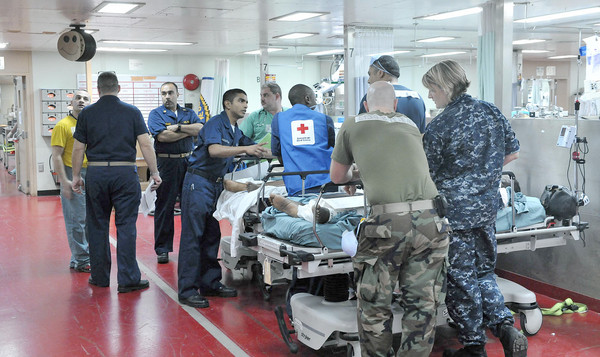
Saratoga underwayUSS Saratoga CV-3

They were the largest American carriers built until the Midway class appeared inin late 1945 and early 1946.  Of other nations pre-war carriers only the Japanese Navy’s Akagi and Kaga, converted from a battle cruiser and battle ship for the same reason as a the Lexington’s were comparable in size, air group capacity, protection and speed. Saratoga’s 8”battery would be replaced by twin 5” 38 caliber mounts in 1942.

lexington sinkingLexington Burning and Sinking

Both ships were used to help develop carrier doctrine and the concept of the carrier task force. Future leaders of Naval Aviation including Marc A. Mitscher trained aboard or flew from these ships.  Of particular note was that during Fleet Problem XIX in 1938 Saratoga launched a surprise air attack on Pearl Harbor from a point 100 miles off Oahu, setting a pattern that the Japanese copied in December 1941.

saratoga 1945Saratoga 1945

During World War II both helped hold the line after Pearl Harbor along with Enterprise, Yorktown and Hornet. Lexington was the flagship of TF-11 during as series of raids on Japanese outposts in the Solomons.  TF-11 joined Admiral Frank “Jack” Fletcher’s TF-17 at the Battle of Coral Sea, the first Naval Battle fought outside of eyesight of the respective forces. Lexington’s aircraft helped sink the Japanese light carrier Shoho on May 7th 1942 and heavily damage the fleet carrier Shokaku the following day. However aircraft from Shokaku and Zuikaku hit Lexington with two torpedoes and 3 bomb hits which her damage control parties seemed to have under control when vapors from ruptured aviation fuel lines were ignited resulting in a series of explosions which ignited uncontrollable fires. Her crew was evacuated by escorts and she was torpedoed by the destroyer USS Phelps.

Saratoga served throughout the war. She engaged in patrols after Pearl Harbor and while enroute to joining Enterprise was hit by a torpedo from the Japanese submarine I-16. After repairs she was rushed to Hawaii to join the American Task Forces at Midway but arrived in Hawaii the day after the battle.  Following this Saratoga operated in the Central Pacific in the first offensive at Guadalcanal.  She participated in the landings as the flagship of Admiral Fletcher and then at the Battle of Eastern Solomons sank the Japanese light carrier Ryujo and damaged the seaplane carrier Chitose.  Following this battle she was hit by a torpedo from the I-26. After repairs she again went to the Solomons joined by the light carrier USS Princeton.  On November 5th the two carriers conducted a brilliant strike on Japanese ships and aircraft facilities at Rabaul which were threatening the landings at Bougainville.

saratoga 1944Saratoga September 1943

Following these operations Saratoga operated in the Gilberts and then with the British in the Indian Ocean.  She then was used as a training carrier for new pilots and aircrews at Pearl Harbor before being brought to Iwo Jima to operate night fighters against Kamikaze raids.  While conducting these operations she was attacked by Japanese aircraft in which 6 Japanese aircraft score 5 hits on her in 3 minutes.  Her forward flight deck was wrecked and she suffered great damage below decks and she lost 123 sailors.

saratoga kamikaze 2Saratoga burning after Kamikaze hits in 1945
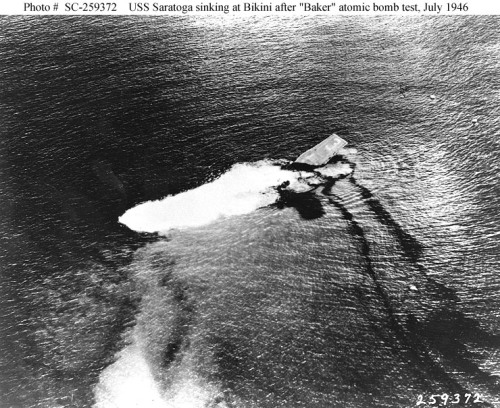
Following repairs she resumed training duties and after the defeat of Japan was involved in Operation Magic Carpet to bring Servicemen back from overseas.  Surplus to Navy needs at the end of the war Saratoga was sunk in Operation Crossroads at Bikini Atoll by an underwater atomic blast in the “Baker” bomb test a mere 500 yards from her position. She sank 7 hours later.

saratoga sinkingThe End of an Era- Saratoga goes down at Bikini

5 Comments

Filed under History, Navy Ships