Tag Archives: uss hue city

Thoughts after a Walk on the Beach: The Tapestry of Navy Life and Relationships

I walked Molly down to the beach tonight as she insists on every night that it is not raining.  In the dark sky the stars twinkled and I pondered the events of the past few days.  The roar of the surf and the phosphorescent waves breaking on the white sands of the beach are comforting and the fact that the dog likes the walk and is funny to watch makes it most enjoyable and relaxing experiences outside of baseball that I know. I am able to do a lot of thinking, and even some praying in the stillness of these night walks. Last night was all about the tapestry of military life and relationships.

Despite its size the US Military is quite small in relationship to the rest of the population. Military life is unpredictable and the relationships that we have with each other are very interconnected in ways that are seldom duplicated in the civilian world. That is especially true of those that serve together overseas, in combat zones or deployed on ships for long periods of time.

Our lives become bound together and even though our service together may be measured in but a few years or in some cases months, the ongoing friendship and relationships go on the rest of our lives. I have seen that growing up as my parents Navy friends and the tapestry is quite amazing.

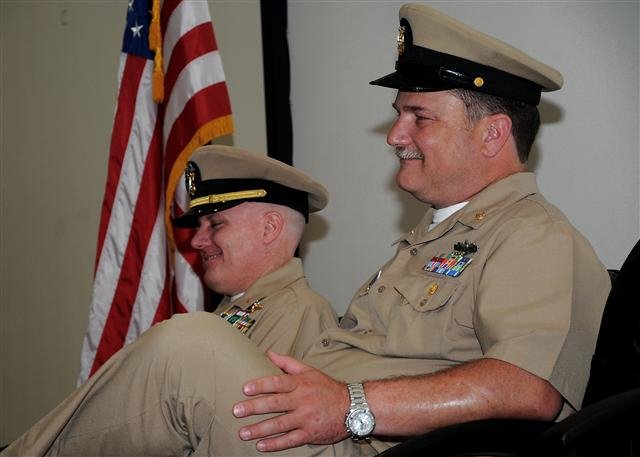
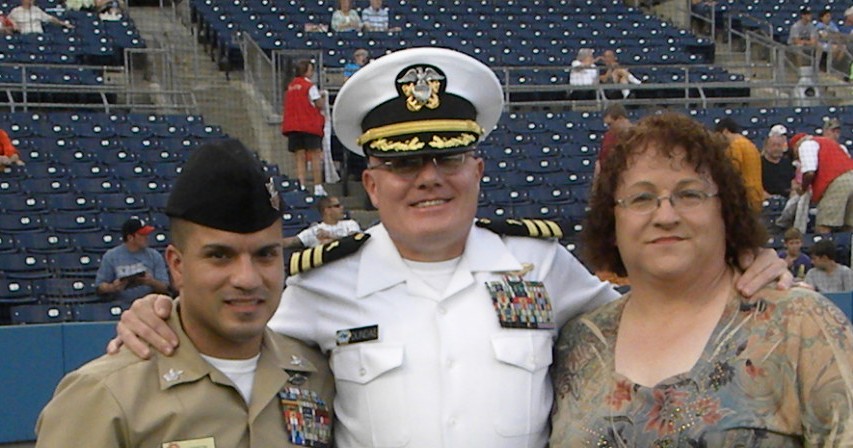
Gerry and I at his Retirement 

Gerry and I go a ways back and have been together through good times and bad, promotions and success, deployments but also difficult times. During those times we have been able to be there for each other, from the unexpected death of his wife from a heart attack to him being there for me after my return from Iraq.  He attended my promotion to Lieutenant Commander and I had the honor of officiating at his retirement ceremony.

Gerry and his family experienced another hard blow when his four year old grandson was critically injured last week. We talked about it but decided to wait for me to travel to Virginia. However late on Saturday night I received a call from the duty chaplain for the Norfolk area asking if I would come to baptize my friend’s grandson. The duty chaplain is another long time friend who responded to the situation and helped support Gerry and his family during the crisis on Saturday.

My command gave me the permission to make the trip which involved me having to pass the on call chaplain duty to one of my subordinate chaplains.  It is amazing how in the Navy more often than not commands will do whatever they can to care for their sailors and families. We tend to look out for each other. Some commands are better than others but I really don’t know any other organization that works as hard to make sure that their people and families get support in crisis situations as the Navy does. It is not perfect and sometimes thing don’t work out but more often than not the people that run the organization know the importance of taking care of the Navy family.

Gerry’s grandson appears to be making his way out of danger and the baptism service at the bedside in the Pediatric ICU was very special.  Please pray for little Evan as he continues to recover and his family as they navigate the difficult times ahead.

Before I drove back to North Carolina Monday morning I had coffee with my friend after doing some more ministry with the family.  We talked of the specialness of the Navy family and the friends that we know that will be there for us.  Having been on the both sides of this equation I can say that it is something special.

Of course I will continue to be in contact with my friend and his family and see them on the times that I visit my own dear wife Judy, who as some many other Navy wives do is spent another Valentine’s day without me.  At least the gift that I ordered got to her on time and she is happy with it even though I could not be there.  I have lost count of the number of special days that we have been apart during my career in both the Army and the Navy. But that is another subject for another time.

The subject is the relationships that our lives our part of an indelible tapestry woven together with the lives of others. The tapestry is not simply composed of the most beautiful or pleasant events, often it is woven out of the tragedy and suffering that brings us together.

On Friday I will be conducting a memorial service for one of our sailors that died just two months before he was to retire. I did not know him well, but he touched many lives and in addition to his family many sailors will be coming in for this memorial service at their own expense from all parts of the country.

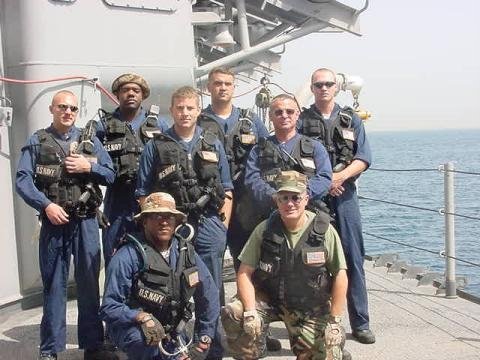
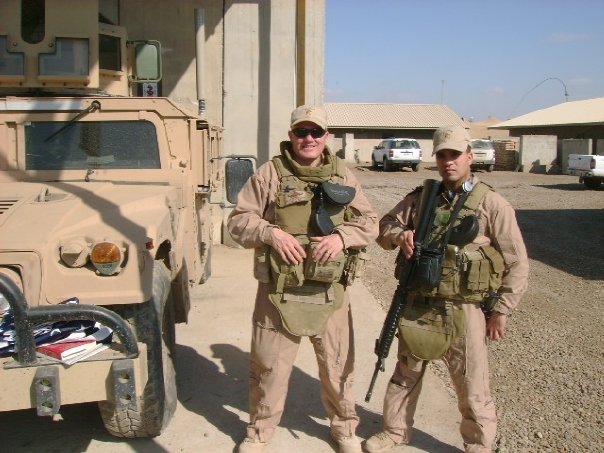
With members of my boarding team on the USS Hue City in the Arabian Gulf 2002

In the Navy and for that matter in the rest of the military we share the dangers and hardships of defending our country, deploying away from our families, and going to war.  Our families share in that as well. Our lives and experiences be they be joyful, triumphal or painful are shared.  It is in reality so much like the words of Henry V in Shakespeare’s play of the same name; “we few, we happy few, we band of brothers….”

Peace

Padre Steve+

1 Comment

Filed under faith, Military, remembering friends, shipmates and veterans

Veterans Day 2011: Giving Thanks for the Veterans in my Life

My Dad Aviation Storekeeper Chief Carl Dundas aboard USS Hancock CVA 19 around 1971 or 1972

I always become a bit more thoughtful around Veterans Day and Memorial Day.  I’ve been in the military for over 30 years now.  I enlisted in the National Guard while in college and entered Army ROTC back on August 25th 1981.  Since then it has been to quote Jerry Garcia “a long strange trip.”  During that trip I learned a lot from the veterans who I am blessed to have encountered on the way.

I come from a Navy family. My dad served twenty years in the Navy.  Growing up in a Navy family in the 1960s and 1970s was an adventure for me and that Navy family that surrounded us then remained part of my family’s life long after.  My mom and dad remained in contact with friends that they served with or were stationed with, and now many of them are elderly and a good number have passed away.  Even so my mom, now a widow stays in regular contact with a number of her Navy wife “sisters.”

My dad retired in 1974 as a Chief Petty Officer and did time surrounded in the South Vietnamese city of An Loc when it was surrounded by the North Vietnamese for 80 days in 1972.  He didn’t talk about it much when he came back; in fact he came back different from the war.  He probably suffered from PTSD.  All the markers were there but we had no idea about it back then, after all he was in the Navy not the Army.  I had friends whose dad’s did not return fromVietnamand saw howVietnamveterans were treated by the country as a whole including some members of the Greatest Generation.  They were not welcomed home and were treated with scorn.  Instead of being depicted a Americans doing their best in a war that few supported they were demonized in the media and in the entertainment industry for many years afterwards.

My dad never made a big deal out of his service but he inspired me to pursue a career in the military by being a man of honor and integrity.

It was the early Navy family experience that shaped much of how I see the world and is why I place such great value on the contributions of veterans to our country and to me.  That was also my introduction to war; the numbers shown in the nightly news “body count” segment were flesh and blood human beings.

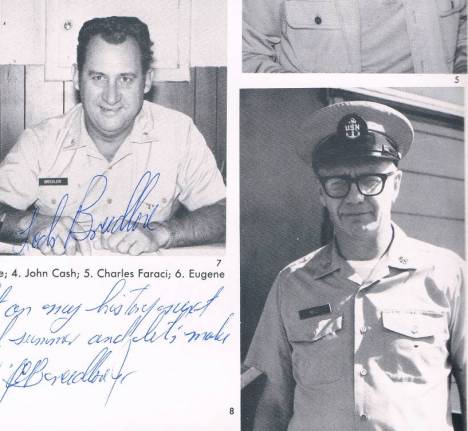
LCDR Jim Breedlove and Senior Chief John Ness

My second view of war came from the Veterans of Vietnam that I served with in the National Guard and the Army.  Some of these men served as teachers and mentors.  LCDR Jim Breedlove and Senior Chief John Ness at the Edison High School Naval Junior ROTC program were the first who helped me along.  Both have passed away but I will never forget them.  Commander Breedlove was someone that I would see every time that I went home as an adult. His sudden death the week before I returned from Iraqshook me.  I have a post dedicated to them at this link.  (In Memorium: Chief John Ness and LCDR Jim Breedlove USN )

Colonel Edgar Morrison was my first battalion commander.  He was the most highly decorated member of the California National Guard at that time and had served multiple tours inVietnam.  He encouraged me as a young specialist and officer cadet and showed a tremendous amount of care for his soldiers.  Staff Sergeant’s Buff Rambo and Mickey Yarro taught me the ropes as a forward observer and shared many of their Vietnam experiences. Buff had been a Marine dog handler on the DMZ and Mickey a Forward Observer.

The Senior NCOs that trained me while in the Army ROTC program at UCLA andFortLewishad a big impact. All were combat veterans that had served inVietnam.  Sergeant First Class Harry Zilkan was my training NCO at the UCLA Army ROTC program.  He was a Special Forces Medic with 7th Group inVietnam.  He still had part of a VC bayonet embedded in his foot.  He received my first salute as a newly commissioned Second Lieutenant as well as a Silver Dollar.  I understand that after the Army he became a fire fighter.  He had a massive heart attack on the scene of a fire and died a few years later from it.  Sergeant Major John Butler was our senior enlisted advisor at UCLA.  An infantryman he served with the 173rd Airborne inVietnam.  Sergeant First Class Harry Ball was my drill sergeant at the ROTC pre-commissioning camp at Fort Lewis Washington in 1982.  He was a veteran of the Special Forces and Rangers and served multiple tours inVietnam.  Though he only had me for a summer he was quite influential in my life, tearing me apart and then building me back up.  He was my version of Drill Sergeant Foley in An Officer and a Gentleman. Like Zack Mayo played by Richard Gere in the movie I can only say: Drill Sergeant “I will never forget you.”

As I progressed through my Army career I encountered others of this generation who also impacted my life. First among them was First Sergeant Jim Koenig who had been a Ranger in the Mekong Delta.  I was the First Sergeant that I would measure all others by.  Once during an ARTEP we were aggressed and all of a sudden he was back in the Delta. This man cared so much for his young soldiers in the 557th Medical Company.   He did so much for them and I’m sure that those who served with him can attest to this as well as me. Jim had a brick on his desk so that when he got pissed he could chew on it.   He was great.  He played guitar for the troops and had a song called “Jane Fonda, Jane Fonda You Communist Slut.” It was a classic.  He retired after he was selected to be a Command Sergeant Major because he valued his wife and family more than the promotion.  It hurt him to do this, but he put them first. Colonel Donald Johnson was the commander of the 68th Medical Group when I got to Germany in January 1984.  Colonel “J” as well all called him was one of the best leaders I have seen in 28 years in the military.  He knew everything about everything and his knowledge forced us all to learn and be better officers and NCOs.  On an inspection visit you could always find him dressed in coveralls and underneath a truck verifying the maintenance done on it.  He served a number ofVietnamtours.  He died of Multiple Myeloma and is buried at Arlington.  Chaplain (LTC) Rich Whaley who had served as a company commander in Vietnam on more than one occasion saved my young ass at the Army Chaplain School.  He remains a friend and is the Endorsing Agent for the Church of Jesus Christ of Latter Day Saints. As a Mormon he was one of the most “Christian” men that I have ever met.  I know some Christians who might have a hard time with that, but Rich demonstrated every trait of a Christian who loved God and his neighbor.

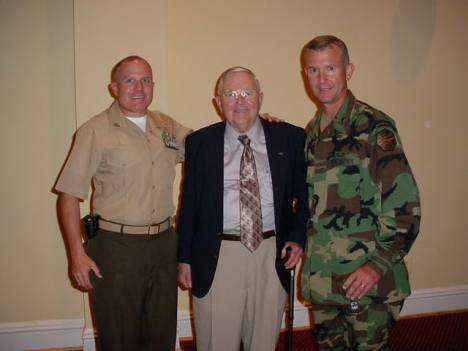
Me with Major General Frank Smoker USAF (ret) and Colonel Tom Allmon US Army at Colonel Allmon’s Change of Command at Ft Myer Virginia 2005 

When I was the Installation Chaplain at Fort Indiantown Gap PA I was blessed to have some great veterans in my Chapel Parish.  Major General Frank Smoker flew 25 missions as a B-17 pilot over Germany during the height of the air war in Europe. He brought his wonderful wife Kate back from England with him and long after his active service was over he remained a vital part of the military community until his death in 2010.  Sergeant Henry Boyd was one of the 101st Airborne soldiers epitomized in Band of Brothers. He had a piece of shrapnel lodged next to his heart from the Battle of the Bulge until the day he died and was honored to conduct his funeral while stationed at Indiantown Gap. Colonel Walt Swank also served in Normandy.  Major Scotty Jenkes was an Air Force pilot in Vietnam flying close air support while Colonel Ray Hawthorne served several tours both in artillery units and as an adviser in 1972 and was with General Smoker a wonderful help to me as I applied to enter the Navy while CWO4 Charlie Kosko flew helicopters in Vietnam.  All these men made a deep impact on me and several contributed to my career in very tangible ways.

Me with my boarding team on USS HUE CITY CG-66 2002

My life more recently has been impacted by others. Since coming into the Navy I have been blessed to serve with the Marines and Sailors of the 2nd Combat Engineer Battalion and Lieutenant Colonel T D Anderson, 1st Battalion 8th Marines and Lieutenant Colonel Desroches, 3rd Battalion 8th Marines and Colonel Lou Rachal and Headquarters Battalion 2nd Marine Division and Colonel, now Major General Richard Lake.   My friends of the veterans of the Battle of Hue City including General Peter Pace, Barney Barnes, Tony “Limey” Cartilage, Sergeant Major Thomas and so many others have become close over the years, especially after I did my time inIraq. They and all theVietnam vets, including the guys from the Vietnam Veterans of America like Ray and John who manned the beer stand behind the plate at HarborPark all mean a lot to me.  My friends at Marine Security Forces Colonel Mike Paulovich and Sergeant Major Kim Davis mean more than almost any people in the world.  We traveled the globe together visiting our Marines.  Both of these men are heroes to me as well as friends, Colonel Paulovich was able to administer the oath of office to me when I was promoted to Commander.

With advisers to 1st Brigade 1st Iraq Army Division, Ramadi Iraq 2007

Finally there are my friends and brothers that I have served with at sea on USS HUE CITY during Operation Enduring Freedom and the advisers on the ground in Al Anbar mean more than anything to me. Perhaps the most important is my RP, RP2 Nelson Lebron who helped keep me safe and accompanied me all over the battlefield.  Nelson who has doneIraq3 times,Afghanistan,Lebanon and the Balkans is a hero.  The men and women of Navy EOD who I served with from 2006-2008 have paid dearly in combating IEDs and other explosive devices used against us in Iraq and Afghanistan are heroes too.  There is no routine mission for EOD technicians.  Then there are the friends that I serve with in Navy Medicine, medical professionals who care for our Sailors, Marines, Soldiers and Airmen, family members and veterans at home and in the thick of the fighting in Afghanistan.

I give thanks for all them men that I mention in this post, especially my dad. For the countless others that are not mentioned by name please know that I thank God for all of you too.

I do hope that people will remember the Veterans that impacted their lives this and every day.  Some may have been the men and women that we served with, perhaps a parent, sibling or other relative, maybe a childhood friend, a teacher, coach or neighbor. As we pause for a moment this Friday let us honor those who gave their lives in the defense of liberty in all of the wars of our nation. They have earned it.

Peace

Padre Steve+

1 Comment

Filed under Loose thoughts and musings

I Just Want to Thank Everyone that made this Night Necessary

I think that Yogi Berra said it the best when thanking people inSt. Louis when the city decided to honor him when the Yankees came into town in 1947.  He meant to say “I just want to thank everyone that made this night possible” but it came out “I just want to thank everyone that made this night necessary.”

Last night I was promoted to the rank of Commander in the United States Navy.  I’ve been in the military 30 years and this is the first rank that I have not held twice since March 1987.  Since March 1st 1987 I served as an Army Captain and Major and then took a reduction in rank to enter the Navy serve as a Navy Lieutenant and Lieutenant Commander.
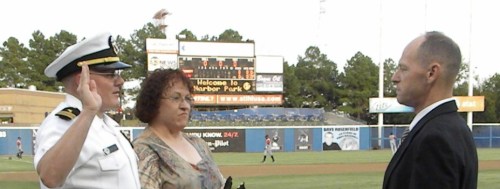
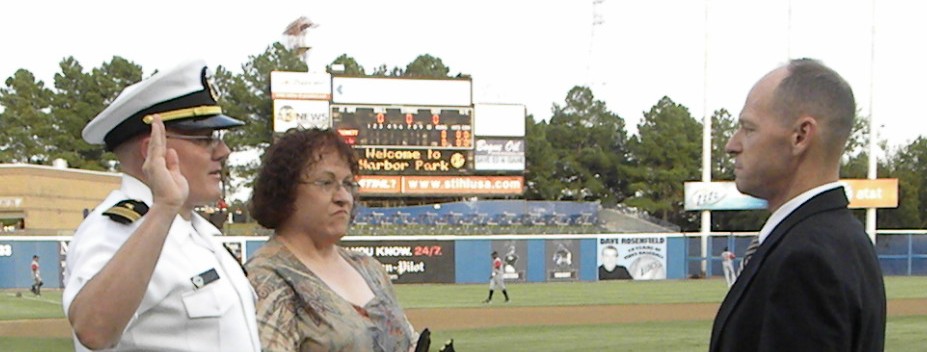
Swearing the Oath of Office

It was a special night. The management of the Norfolk Tides was happy to indulge my desire to do the oath behind home plate and throw out the first pitch.  Dave Rosenfield the General Manager approved it early in the season and his staff led by the Director of Community Relations, Heather McKeating made it happen and Linda Waisanen the Box Office Manager helped get the tickets for my guests in the same section.  It was good to see and talk with some of my friends from the Tides that I haven’t seen for a while, pitchers Chris Tillman and Chris George and catcher Adam Donachie.   Of course there were also my friends Elliott, Chip and Audrey the Ushers, concessionaires and members of the Tide Watchers Booster club.

RP1 Nelson Lebron, me and Judy

I had the honor of having my old commanding officer from Marine Security Force Battalion, Colonel Mike Paulovich USMC (Retired) come down from Washington DC to administer the Oath of Office.  Likewise I had my wife Judy, who has seen me through my entire career and endured many separations due to deployments, field exercises and schools at my side.  For those that have not served in the military the stress that our spouses go through is tremendous and many marriages do not survive.  There is a reason that around many military bases you will see bumper stickers that say “Navy wife, the toughest job in the military” or Marine or Army wife.  I was also honored to have my former assistant from EOD Group Two RP1 Nelson Lebron there. Nelson and I went to Iraq together and he is an amazing Sailor and I count him as a close friend.  He was my trusted body guard and I would go to war with him again any day of the week.  Judy and Nelson switched out my shoulder boards before I took the oath.

I also had some very special friends in attendance at the game, people that I really wanted to be there; LCDR Greg Ostrander USN (Retired), Randy and Sandy Smith, Jerry Channell, Denise Denise Özdemir and Karen Johnson and their significant others.  There were some people that because of military duty or other commitments that could not make it, however I know they were there in spirit due to the notes, messages and phone calls.

With Advisers in Iraq

One problem of living on the opposite coast from your family is that it is difficult to have them with you on occasions like this.  My mom, my brother and his family in California could not be here but hopefully if I make Captain in a few years or when I retire they will be able to come.  My dad passed away the day after the selection list was announced in June of 2010 but I know that he was here in spirit.

Me and RP1 Nelson Lebron in Iraq, there is no better body guard

There are people that were there for me at many points in my career that helped “make this day necessary.”  The late Master Sergeant Harry Zilkan from the UCLA ROTC detachment and Sergeant First Class Harry Ball who broke me down and built me up during my ROTC pre-commissioning “Advanced Camp at Fort Lewis in 1982 were early influences.  SFC Ball a crusty Special Forces type with a lot of Vietnam tours had me blubbering “I got nowhere else to go” like Lewis Gossett Jr. did to Richard Gere in the movie An Officer and a Gentleman. Lieutenant Colonel Bruce Lawson my ROTC advisor at UCLA was also helpful during those two formative years.  First Sergeant Jim Koenig at 557th Medical Company taught me a lot about enlisted leadership and helped mentor me as a young Lieutenant while Colonel Donald A. Johnson the commander of the 68th Medical Group showed me how to get the most out of people and the importance of knowing the details of an operation without getting in the way of people doing the mission.  Master Sergeant (Retired) Cynthia Carter was my Platoon Sergeant at 557th and went through a lot of deep waters with me there.  She was at my promotion to Captain at Fort Sam Houston in 1987.  I am still in contact with a good number of my soldiers from the 557th and each of them was helpful in my career.

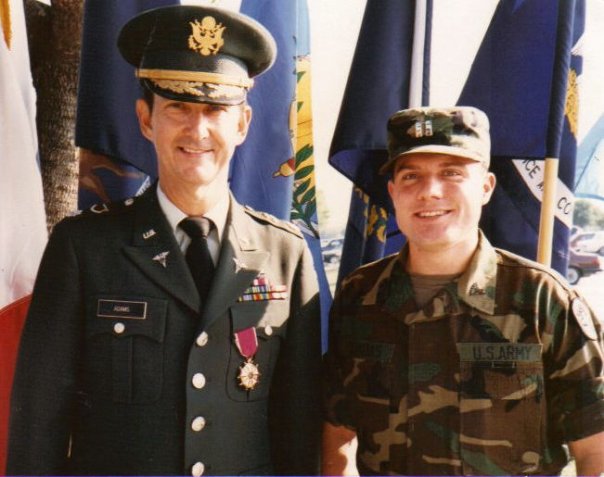
LTC Ike Adams and me 1987

When I started down the road to becoming a chaplain back in 1987, Lieutenant Colonel Ike Adams, my Executive Officer at the Academy Brigade, Academy of Health Sciences was very important in helping me down that road. He is now a professor at Asbury College in Wilmore Kentucky.  Chaplain, Major Wayne Lura (USA Retired) gave me advice that has kept me out of trouble talking to me about the pitfalls of ministry and chaplaincy even before I even went to seminary.  Chaplain, Lieutenant Colonel Rich Whaley saved my ass a number of times at the Army Chaplain school during the Basic and Advanced courses.  I have stayed in contact with Rich, who I believe is one of the finest chaplains that I have ever met and he now is the Endorsing Agent for the Church of Jesus Christ of Latter Day Saints working with LDS Chaplains in both the Military and other Federal Chaplain programs.  Chaplain, Colonel John Price was an Episcopal Priest and the State Chaplain for the Texas Army National Guard and taught me a lot about how to be there for people, especially leaders going through difficult times.  Chaplain, Colonel Paul Howe who I served with in Germany during the Bosnia Operation helped me as a young mobilized Army Reserve Major learn to be a good supervisory Chaplain and look out for the junior chaplains and assistants under my care. He also taught me something important about caring for the sacramental needs of a diverse Christian community.
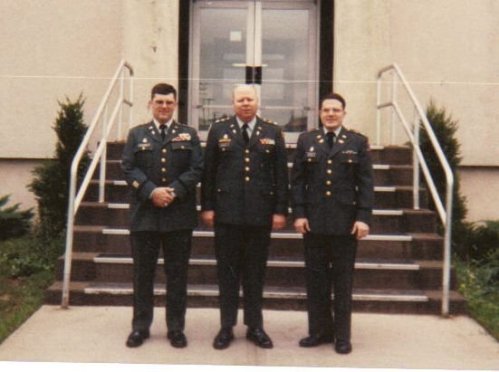
Army Chaplain School 1990 with Chaplain Bill Blackie (L) and Rich Whaley (Center)

There also was my congregation at Fort Indiantown Gap Pennsylvania, where I served from 1997-1998.  My Commanding Officer, Colonel Tom Allmon, his family and my Parish Council including the late Major General Frank Smoker USAF/PAAirNG, Colonel Ray Hawthorne, USA Retired, the late Major Scotty Jenkes (USAF Retired), CWO4 Herman Bolt, (USA Retired), and Sergeant Bill Ward, and my assistant SSG, now Army Chaplain, Major Steve Cantrell were all instrumental in my success there while General Smoker, Colonel Hawthorne and Colonel Allmon wrote letters to help get me into the Navy.

When I came into the Navy I was helped by Captain John Kaul CHC USN, who served as my Division and MEF Chaplain at Camp LeJeune. He became a model for my Chaplain ministry and has been a great encouragement over the years.  Captain Fred Elkin CHC USN, was my first detailer and set me up for success by sending me to the Second Marine Division figuring that my Army background would help me there.  Fred and I later served at Naval Medical Center Portsmouth. Captain, Chaplain Deborah McGuire, CHC USN, was great to work with at the Navy Expeditionary Combat Command.  Captain Mike Langston the II MEF Forward Chaplain who I served with in Iraq set me up for success there and Captain Jesse Tate CHC USN was really good in helping me get through the toughest time of my life after I returned to Iraq and was assigned to Portsmouth.  My fellow Chaplains there, Commander Jeff Seiler, Commander Derek Ross, Commander Kevin Anderson, Lieutenant Albert Cross, Fr. Fred Elkin and Chaplain, Captain Jerry Shields USN (Retired) were amazing in helping me get through that painful time.  Then there is my current staff, Lieutenant Shauna Sanders, Captain, Chaplain Vince Arnold, USN (Retired) and Chaplain, Lieutenant Commander Duke Quarles USN (Retired).  I have had a number of great assistants and Religious Program specialists during my time as a chaplain.  Of course there have been others who have along the way been there for me to give advice, encouragement and assistance that are too numerous to name.

USS HUE CITY Boarding Party

My commanding officers that I have served with in Marine Corps and Navy units have been awesome including Marine Lieutenant Colonel T. D. Anderson, Colonel Louis Rachel,Major General Richard Lake, Colonel Mike Paulovich and Colonel Dan Rogers.  Sergeant Major Kim Davis USMC was an outstanding Sergeant Major to work with, the grandson of Brigadier General Benjamin O. Davis, the first African American General in the U.S. Army, he taught me much in caring for Marines and gave me really helpful advice a number of times.  Captain Rick Hoffman my first skipper on the USS HUE CITY and his Command Master Chief, CMDCM Mark Dubiel were awesome to work for with as are my current Commanding Officer at Naval Hospital Camp LeJeune Captain Dan Zinder, MC USN and my current Command Master Chief CMDCM Terry Prince.  Command Master Chief Gerry Pierce, (USN Retired) has been like family since we served together on HUE CITY.
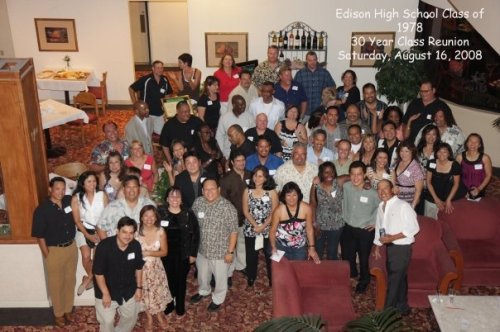
Soul Vikes

Then there are my fellow officers in the Navy, Army and Marine Corps, my shipmates from the HUE CITY and the Sailors, Soldiers and Marines too numerous to mention that have been part of my life for the last 30 years.  Likewise my teachers and professors, LCDR Jim Breedlove and Senior Chief John Ness from the Edison High Navy Junior ROTC program, Gloria Nomura, Coach Duke Pasquini, Dr. Delmar McComb at San Joaquin Delta College, Dr Helmut Heussler at California State University Northridge, Dr. Doyle Young and Doug Dickens at Southwestern Baptist Theological Seminary and Dr. Steve Ivy at Parkland Memorial Hospital. All of these men and women were amazing in my education and formation as an academic and Priest.

Last but certainly not least are those friends that have been there for me for years going back to my “Soul Vikes” from Edison High School and Stockton Junior High. Those that I went to Army ROTC at UCLA, and those that I have served with over the years in the Army, Navy and Marine Corps as well as seminary classmates, and my colleagues in the clergy from my old church and the Apostolic Catholic Orthodox Church where I serve today.  Thank you Bishop Diana Dale, and my old friends Fr Greg Schluter from the Navy and the Charismatic Episcopal Church, Major Marty Grossman who I have known since my first day on active duty, Dr. Rick Herrera, Gary Vassar and Becky Munoz-Smith who were with me at UCLA and so many more friends, shipmates and comrades that I cannot name them all.

Finally there are my readers on this site that have encouraged me with their comments since I started this site in February 2009.

If as Hillary Clinton said it takes a village, I have good sized town that has stood by my side over the years and I am blessed.

Again I just want to thank everyone that made this night necessary.

Peace

Padre Steve+

3 Comments

Filed under Military, shipmates and veterans

From the Sea: The Absolute Need of a Strong Navy, Merchant Marine, Coast Guard and Viable National Maritime Strategy

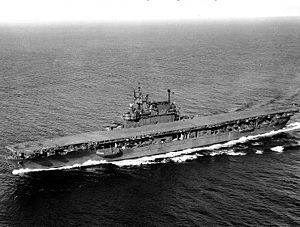
The USS Enterprise CV-6. Ordered in 1933 she was one of the most decorated and battle proven ships ever to fly the flag of the United States

“A good Navy is not a provocation to war. It is the surest guaranty of peace.” Theodore Roosevelt

“A powerful Navy we have always regarded as our proper and natural means of defense; and it has always been of defense that we have thought, never of aggression or of conquest. But who shall tell us now what sort of Navy to build? We shall take leave to be strong upon the seas, in the future as in the past; and there will be no thought of offense or provocation in that. Our ships are our natural bulwarks.” Woodrow Wilson

As the economic crisis continues to envelop the nation there is much talk about the certain reduction in the size and capabilities of the U.S. Military components.  At the present time it seems that politicians of both parties are more interested in the immediate savings that can be derived from cuts.  Regardless of how they are done each service will see force reductions but coming at a time when we are at war those responsible for the cuts must be conscious of the effects on the capabilities that the United States has to defend itself and its interests overseas and to influence world affairs.

The wars in Iraq and Afghanistanhave been ground intensive requiring the strengthening of the Army and Marine Corps to conduct counter insurgency operations. After 9-11 the Navy voluntarily reduced its fleet and personal strength in relatively dramatic fashion intending the savings be used to rebuilt the fleet.  Personnel strength was reduced by nearly 40,000 sailors and many ships were retired well before their anticipated retirement dates.  Unfortunately the Defense Department under then Secretary of Defense Donald Rumsfeld shifted the savings to fund the ground campaigns in Iraq and Afghanistan.  Navy shipbuilding was cut and the Navy failed to help itself by investing much of the service’s budget to the development of three classes of ships and that are over budget, under performing and full of controversy, the Zumwalt Class Destroyers, the Freedom and Independence Class Littoral Combat Ships and the San Antonio Class Landing Ships.

Further cuts are already occurring or envisioned based on the planned cuts in Federal Government programs.  These cuts would reduce the Navy which is now smaller than at any time since the early 1930s following the 1922 Washington Naval Conference which limited the size of the Navies of the signatory countries.  From 1922-1932 the Republican Harding, Coolidge and Hoover administrations not only reduced the force but failed to lay down a single new ship to replace outdated ships and reduced maintenance funds to keep up the ships in service.  Budget cutting gutted the Navy during those years and it was only theRooseveltadministration which realized that a strong Navy was essential to national security began to rebuild the fleet in the 1930s and funded the development of the ships that would win World War Two.  The shipbuilding program had economic benefits as shipyards which had been inactive were able to employ skilled American workers which helped military preparedness, American business and American workers.  The ships that came out of that building program sustained us at the beginning of the war and those designed in the years just before the war served us for decades to come.  Even so the build up byRoosevelt, constrained by the dire economic crisis of the Great Depression could not add ships fast enough to have us fully ready for the Second World War and left us dangerously stretched by the demands of the Japanese advance in the Pacific and the German U-Boat campaign in theAtlantic.  Many good Americans died and the war was decidedly more difficult because of what was done to the Navy in the 1920s by successive short sighted Republican administrations.

The current ship production is at a level not seen in decades and bad surface ship designs and poor workmanship have hurt the Navy.  If the Navy is cut back significantly without a change in mission or corresponding shift in National Security Policy it will degrade the Navy’s ability to respond to emerging threats. Likewise if a coherent shipbuilding program is not undertaken that meets the projected threats American interests can and will be harmed as other nations gain local superiority in critical areas and sea lanes.   While the U.S. Navy currently enjoys a vast superiority over any current or potential adversary there are places that a cunning adversary could hurt American and allied interests simply because we are already spread very thin in regard to the number of ships available and the increasing number of missions and threat areas.

The challenge now is not to give in to the temptation to make indiscriminant cuts until we actually decide on a National Maritime Strategy that is not simply about the Navy but also the Coast Guard and Merchant Marine.  The strategy must include the interrelationship that we have with our allies and other nations and their navies.

The necessity for this goes beyond military preparedness it goes to our economic security since the vast majority of our commerce exports and imports are by sea.  If we take the time to think through a comprehensive maritime strategy it can go a long way to strengthen American industry, labor, commerce as well as national and economic security for us and the world.  A strong Navy, Merchant Marine and Coast Guard are far more important to the United Statesthan large ground forces.

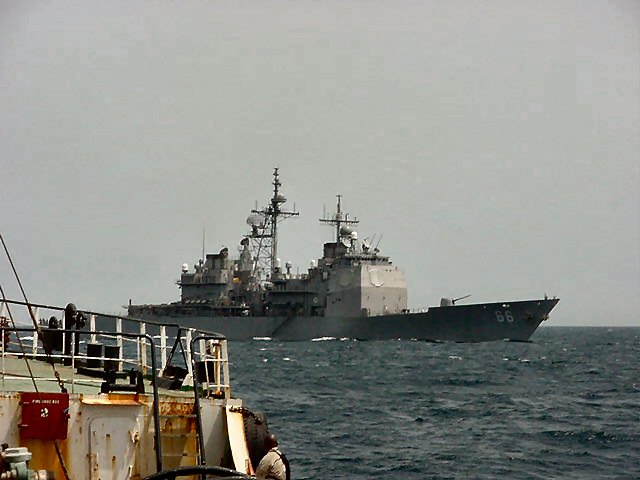
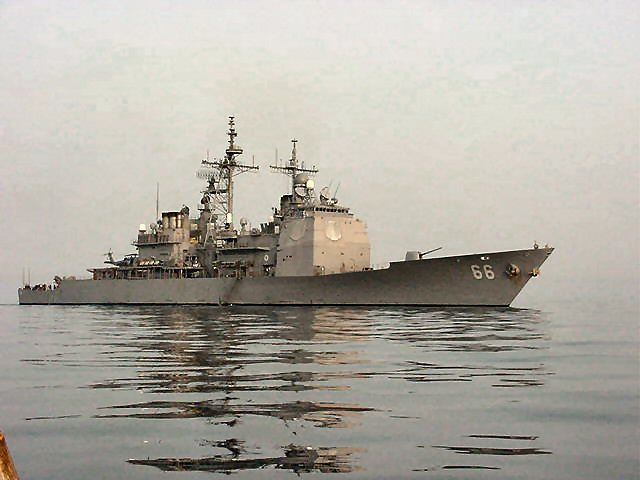
An effective and judicious use of national power: USS Hue City CG-66 passing an impounded Iraqi smuggler in 2002

This is demonstrated in our history as well as that of Great Britain.  When we are strong at sea we are strong, when we commit to long wars of attrition overseas we cause ourselves untold problems. As our first President George Washington said:

“It follows than as certain as that night succeeds the day, that without a decisive naval force we can do nothing definitive, and with it, everything honorable and glorious.”

This is something that our politicians inWashingtonand those that populate the think tanks need to learn.

Peace

Padre Steve+
1 Comment

Filed under national security, Navy Ships, US Navy

The Naming of a New Aircraft Carrier and the Centrality of the Navy in Future National Security Strategy

USS HUE CITY CG-66 Enforcing the UN Oil Embargo against Iraq in April 2002

“Control of the seas means security. Control of the seas means peace. Control of the seas can mean victory. The United States must control the sea if it is to protect our security.” —John F. Kennedy

“For in this modern world, the instruments of warfare are not solely for waging war. Far more importantly, they are the means for controlling peace. Naval officers must therefore understand not only how to fight a war, but how to use the tremendous power which they operate to sustain a world of liberty and justice, without unleashing the powerful instruments of destruction and chaos that they have at their command.” Admiral Arleigh Burke

Over the Memorial Day weekend Secretary of the Navy Ray Mabus announced the naming of the second ship in the Gerald R. Ford class aircraft carrier.  The name selected was significant as the ship will be named the USS John F. Kennedy CVN-79, her namesake being President John F. Kennedy who served as a junior officer in the Second World War commanding a Patrol Torpedo Boat, PT-109 in the Solomon Islands. Kennedy’s boat was rammed and split in two by the Japanese Fubuki class destroyer Amagiri in the early hours of August 2nd 1943.  Over a period of six days he made herculean efforts to save his crew and was awarded the Navy Marine Corps Medal and the Purple Heart.

The United States has always been a seafaring nation and today the vast majority of our commerce is borne by ships from the world over. The United States learned during the Revolution and the War of 1812 the importance of sea power when the Royal Navy for all intents and purposes rules the waves. Even the land victory of Washington at Yorktown was sealed by the intervention of the French Fleet which prevented the British from evacuating the garrison.  During the Civil War the Union Navy was the deciding factor as it blockaded Southern ports and forced the Mississippi River cutting the Confederacy in two and sealing its fate even as Confederate armies battled Union forces in the bloodiest battles ever seen on this continent. The Navy was the deciding factor in the Spanish American War sweeping the Spanish Navy from the seas and dooming its garrisons around the world.  The U.S. Navy began the First World War late but by the end was the ascendant naval power in the world and was one of the major reasons that the British in spite of the superiority that they had at the time agreed to the Washington and later London Naval accords.  When the Second World War erupted the United States was in the beginning stages of a Naval build up to reinforce and replace the fleet that was still dominated by the ships built prior to the Naval treaties.   In the Pacific the Japanese Navy steamrolled its scattered and ill equipped opposition while in the Atlantic German U-Boats decimated convoys very nearly breaking the back of Great Britain and the Soviet Union. However it was the Navy initially stretched to its limits by the Two Ocean War which regained the initiative which in an unprecedented build up of Naval Power defeated its adversaries and safeguarded the vast convoys of merchant ships carrying American troops and equipment into battle and bringing American Lend Lease aid to reach Britain and the Soviet Union. During the Cold War, Korea and Vietnam the Navy was a flexible and mobile response force to crises around the globe military, diplomatic and humanitarian, often diffusing situations without a shot having to be fired in anger and eliminating the need for large numbers of ground forces. In the 1980s the Navy secured the Gulf of Sirte against the threats of Libya’s Colonel Gaddafi and kept the Persian Gulf open during the Tanker Wars initiated by Iran on merchant ships transiting the Gulf. American naval power was again on display during the Gulf War and subsequent United Nations sanctions on Iraq.  After 9-11 the Navy has been a response force around the globe in the War on Terrorism as well as numerous natural disasters and humanitarian crises. When a crisis develops which might require a military response the first questions on the mind of every Presidential administration has been where is the nearest Carrier Strike Group and Marine Expeditionary unit.  Today the Navy supports military operations in Afghanistan, Iraq, and the Horn of Africa and against piracy.

The vast majority of the world’s populations now live on the littorals, or the land areas adjacent to the ocean.  The bulk of world commerce is maritime commerce; the United States depends on secure sea lanes to support our economy.

While sea power is essential to American national power, diplomatic, economic and military large standing armies are not. Yes our land forces must be strong and in quality the best in the world. At the same time whenever we have committed large numbers of land forces to ill defined campaigns we have squandered national power and prestige in wars that have been at best stalemates and at worst strategic defeats. This of course excemts the two World Wars where those large land forces were engaged they had a specific mission that was directly tied to national strategy.

We have come to a place in our national life where our strategic thinking still largely influenced by the World Wars and the Cold War has to be modified.  The major land wars launched by the Bush administration in Iraq and Afghanistan have proven incredibly costly in terms of manpower and economics and it is clear that the Obama administration and bipartisan Congress will seek to disengage sooner rather than later from those wars.  One knows that once those wars are over that land forces will shrink as plans are already on the table with cuts already beginning in some services.

Of course one has to ask what the military should be composed of in light of a coherent national security strategy that takes into account the full spectrum of threats to our nation many of which are not military in a traditional sense. To sustain large numbers of land forces on foreign territory is expensive and often fraught with peril when there are changes in the leadership of allied nations on which we depend for the basing of such forces. Even forward deployed Air Force assets are subject to these constraints.  Such basing was necessitated by the Soviet threat during the Cold War.  All previous overseas conflicts were viewed by American leaders as expeditionary in nature, land forces would go in with a specific goal for a limited time. If forces were left in place they were generally small and of a constabulary nature.

Only the Navy-Marine Corps team provides the flexibility to provide a rapid military or humanitarian response to overseas contingencies.  Critics call it “gunboat diplomacy” but then we have found what we are doing is not sustainable and we need an alternative.  That alternative is the Sea Services, which also include the Coast Guard and Merchant Marine.  The Bush administration reduced the Navy in terms of ships and personnel in order to support land wars of questionable strategic value, even turning thousands of Sailors into soldiers to support Army missions in Iraq and Afghanistan without reducing and even expanding the requirements of Naval forces.  This was a mistake of unmitigated proportions, no strategic goal that we have accomplished in either Iraq or Afghanistan could not have been accomplished by the Navy and Marine Corps and contingents of Special Forces, military and civilian advisors and the CIA.

Theodore Roosevelt had a saying, “speak softly and carry a big stick.” He was not an isolationist by any means; he advocated engagement with the world but also protections, military, economic and ecological for Americans.   A strong Navy was central to his thinking as were good relations with other nations.  He understood the importance of the Navy in supporting American interests. In his annual address to Congress on December 6th 1904 he stated:

“In treating of our foreign policy and of the attitude that this great Nation should assume in the world at large, it is absolutely necessary to consider the Army and the Navy, and the Congress, through which the thought of the Nation finds its expression, should keep ever vividly in mind the fundamental fact that it is impossible to treat our foreign policy, whether this policy takes shape in the effort to secure justice for others or justice for ourselves, save as conditioned upon the attitude we are willing to take toward our Army, and especially toward our Navy. It is not merely unwise, it is contemptible, for a nation, as for an individual, to use high-sounding language to proclaim its purposes, or to take positions which are ridiculous if unsupported by potential force, and then to refuse to provide this force. If there is no intention of providing and keeping the force necessary to back up a strong attitude, then it is far better not to assume such an attitude.”

Roosevelt understood better than most of his peers around the world of the necessity of worldwide engagement and the protection of American interests.  As interdependent as the United States and our allies are on international cooperation in anti-terrorism, humanitarian response and the free flow of commerce the Sea Services have to be the primary means of response.  Land forces are important but it is clear that they will need to be reorganized and rebuilt after the long and arduous conflicts that they have shouldered and ultimately they are dependent on the Navy for the bulk of their support when deployed overseas.

Any new national security strategy must prioritize our nation’s goals with diplomatic, intelligence, military and economic assets. We must leverage power and not squander it.  Naval forces are among the most flexible and economic means of exercising the military aspects of such strategy and are not hostage to unstable governments as are forward deployed land forces.   Naval power leverages national power in ways that forward deployed land forces cannot and are far more connected to goodwill than are ground forces which are seen by many around the world as occupying forces.

British Maritime strategist Julian Corbett in his book Some Principles of Maritime Strategyprovides a clear understanding of how sea power is best suited to the principle of a true national strategy for a maritime nation which emphasized limited and asymmetrical warfare.  Such strategy sustained the British Empire until it allowed itself to become mired in the trenches of Flanders and the shores of Gallipoli during the First World War killing off the flower of the nation’s youth and nearly bankrupting the nation and alienating much of the empire.

Corbett maintained that naval forces were best suited to controlling lines of communications, focus on the enemy, and maneuver for tactical advantage.  He also believed that naval forces best suited the political, economic and financial dimensions of waging war as well as war’s technological and material aspects.  One key aspect of this was the Corbett believed that continental war where large land armies are deployed inherently act against opponents limiting their political aims and increase the chance of total war with all of its destructive effects.  Corbett understood, as Clausewitz did before him the primacy of politics in war and necessity to devise appropriate strategies to protect the national interests while emphasizing efficiency in battle while preserving costly assets.

Ultimately the United States is a maritime power. When we try to become a continental power by engaging in protected land wars overseas we lose our strategic and economic advantage.  One can argue that we would not be in Iraq or Afghanistan today had it not been for the deployment of land and air forces on the Arabian Peninsula following the Gulf War.

The new USS John F. Kennedy when completed will be one of the key platforms of American power projection in the middle part of this century and it is important that we strengthen and modernize the Navy so that it might meet the tasks required of it by our nation and our friends around the world.  It is imperative that we as a nation remember our heritage and return to it as we develop a strategy that is at last freed from the World War and Cold War model.  The time for that is now.

Peace

Padre Steve+
2 Comments

Filed under History, Military, national security, Navy Ships, US Navy

Remembering Hammerin’ Harmon: Harmon “Killer” Killebrew 1936-2011

Harmon Killebrew 1936-2011

Baseball lost one of its best today. Harmon “Killer” Killebrew, or Hammerin’ Harmon died of Esophageal Cancer at the age of 74.  He died today with his wife Nita, friends and family at his side. Jack Morris the 1991 World Series MVP said something that I can totally understand in regard to Harmon Killebrew:

“To remember the innocence of being a young kid who just looked up to a guy he didn’t know because of what he did as a baseball player, something that you hoped that maybe someday you could be like. But as a grown man, I look back at him now not as that guy, but as the guy who tried to show me that you don’t have to be angry. You don’t have to be mad. You can love and share love. We’re all going to miss him, and we’re all going to love him forever.”

Harmon was one of the classiest players who ever played the game. A genuine star he did not make a show of fame or demean an opponent.  He played with a singular passion for the game and was a consummate gentleman who engendered the respect from his teammates and opponents and love from those that knew him.  A true superstar he hit 573 home runs and stands at 11th on the all-time home run leader list and drove in 1584 runs.   He was a 13 time All Star and the American League MVP in 1969.  In 1970 he led the American League with 41 home runs and hit over 40 home runs 8 times during his career. He began his career with the Washington Senators in 1954 and went with the franchise when it moved to Minnesota in 1961.  He finished his career with the Kansas City Royals in 1975.  In 1969 he hit 49 home runs and drove in 140 runs, a career best.  Since his records were set in the non-steroid era at a time when ballparks were larger than when many of the current home run leaders played they are truly remarkable. He was elected to the Major League Baseball Hall of Fame in 1984  on his fourth year of eligibility with 81.3% of the vote.

He was a generous man who contributed much to his community and to cancer treatment and research. He made sure that he continued his association with the Twins until this season when after his diagnosis with Esophageal Cancer he spent his customary time with the team during Spring Training.  Due to his treatments he was unable to attend opening day.

I had the privilege of meeting him twice. The first time was on Sunday July 12th 1970 when I was 10 years old at Anaheim Stadium when the Twins were playing the Angels. It was photo day and though my parents took pictures of us with many of the players including Harmon who I remember teasing me about my Angels’ cap.  He hit a two run home run in the first inning off Angels’ starter Tom Murphy.  It was amazing thing to see for a ten year old.  That picture must have been lost years ago as I found only a few from that day when I was searching my parents’ collection of photos after my father died last year.

One of his nicknames was “killer” but that was in relation to his hitting and how he played the game. In life he was a kind, generous, soft spoken and gentle man who exemplified all that is good. He was a mentor to young people and players and many players who played with or on teams where he coached credit him with lessons in life as well as baseball. He was engaged in many charitable beginning in 1977 when he established the Danny Thompson Memorial Gold Tournament which has raised over 8.6 million dollars in the fight against Leukemia and Cancer and is named after a teammate from the Twins who died of Leukemia in 1976 at the age of 29.  In 1991 he established the Harmon Killebrew Foundation.

I met Harmon again in the summer of 2003 when I was stationed aboard the USS Hue City at Mayport Florida.  He was on a USO tour co-sponsored by AT&T called the Heroes to Heroes Tour. He was travelling with fellow Hall of Famer Ferguson Jenkins, John Tudor, Manny Sanguillen, Paul Blair and Jimmy Winn. There were two visits that day in Mayport, one at the Naval Station Galley at breakfast and one at the Navy Exchange. The breakfast meeting was not well publicized and due to traffic congestion the players arrived late. However, I was one of just a few sailors who where there when they arrived. We spent an hour together the players outnumbered the sailors. I remember Harmon as one of the nicest athletes that I had ever met. I told him about meeting him in 1970 and he remembered the day but not the 10 year old, but then there were hundreds of us out there that day.

He was one player that I always admired. Legend has it that his image was used as the Major League Baseball logo, although that his contested by the artist. Personally I think that he had to be the model for the logo as the image is so true to Killebrew that I cannot believe that it is anyone other than him. But then I can believe what I want, if he wasn’t and it was a composite as the author claims his image had to be part of it.

George Brett the All Star of the Kansas City Royals said something that I hope will be said of me when it is my time to pass from this world into the next:

“He was just a fierce competitor and a perfect gentleman at the same time. You don’t see that a lot. Sometimes you get fierce competitors who are bad people. You see guys that are not fierce competitors but nice guys. You don’t see the two of them together very much.”

Harmon Killebrew was an amazing man who I am honored to have met and seen play on television and in person. I have his autograph on a card with the other 5 players that I met in Mayport that morning in 2003 as well as the Stockton Ports hat that I was wearing that day.  Though I only met him those tow times I feel like I have lost a friend. The things that he signed and my memories of him are what I have left of one of baseball and humanity’s greats. Harmon you will be missed. May you rest in peace.

Peace

Padre Steve+
2 Comments

Filed under Baseball, remembering friends

The Importance of the Navy Family

There are families and there are families. One family apart from my biological family that I think I treasure the most is my Navy family going back to when I was a Navy Brat and the friends of my parents who were in fact another family.  These were people that my dad served with at various times, mostly though from our tour in the Philippines that remained lifelong friends through thick and thin now for close to 50 years.  In my own life I have serve in the Army and the Navy.  We have a couple that we have known since my first month on active duty that we stay in contact with and hope in the near future to see again. Marty and Sue are part of my Army family we served together in Germany and I expect that we will remain friends the rest of our lives.  Then there is my Chapel family from Fort Indiantown Gap Pennsylvania many special people, some now with the Lord some of whom wrote letters of recommendation for me to transfer from the Army to the Navy.

I entered the Navy in February 1999 and there have been people that have been part of our lives since early in my Navy career. We will be seeing one of our best friend’s son’s graduate from high school next month, hard to believe how young that he was when we first met.  Judy loves both of their boys and we have been fortunate to share many special occasions with them. I also have friends that I have known since coming in the Navy.  Some are fellow Chaplains and though our careers have often taken divergent paths when we get together it is like yesterday. In an institution where denominational barriers and distrust sometimes disrupt relationships these are special relationships. Today during a training session aboard Camp LeJeune I was able to meet up with some old friends, many like me who have or are going through periods of great trial and pain.  I was able to share a couple of beers with one dear from my old denomination who was here from out of town for the training.  He was still shaking his head about how I had been tossed from the denomination and the subsequent events and scandal associated with the Bishop who had tossed me and the stories from others in the denomination who believed what the man had said about me.  He told them that it couldn’t be true but many did not know me as well as he did and evidently believed the lie. Even so it was good to see Dean again and I hope that we are able to meet again sometime soon.  Another friend that I saw is going walking with his wife through her terribly painful cancer treatments.  These are friends that I know if I need that I can go to and be honest.

Some are former shipmates from the USS HUE CITY CG-66 and Marines from any of the number of Marine Corps units that I have served and my friends EOD Group Two and from the Navy Medicine Community at Naval Medical Center Portsmouth and Naval Hospital Camp LeJeune.  I have baptized their babies, married them and been their when death took a spouse, counseled regarding personal, marital or spiritual issues many times long after we served together. I have been able to stay connected and I am happy to be their “Padre” or simply “Chaps.”

Yesterday I conducted the funeral of a retired Navy Master Chief and I talked about the Navy family and how important it was. There were many heads that nodded in agreement when I talked about this. I got an e-mail from the son of a man who was one of my parent’s closest friends in the Navy.  I mentioned Frank yesterday during the funeral how he had been my dad’s Chief and sponsored us in the Philippines nearly 50 years ago. He sent my mom an e-mail about a chance to the ID card system yesterday, a Yeoman he never missed administrative messages.  His son contacted me this evening on his e-mail account to tell me that he had passed away early this morning and asking me to contact my mother.

After I responded to the e-mail I called her and of course she was shocked and she wondered what would happen to Frank’s wife who has been chronically ill for many years.  Frank took care of her. He had a heart attack about 10 days ago and when he got out of the hospital he was told to take it easy and even stay off the internet.  He didn’t listen and he had to stay involved in the lives of his family as well as his Navy family.  He has been an encouraging person to me in my ministry as a Priest though he was a conservative Roman Catholic. He prayed for me and cared and I am sure that he will keep praying for me now that he is with the Lord.

While this was going on a sailor from a previous command popped in on me on Facebook regarding a pressing family matter. Another friend from Marine Corps Command and Staff College and Iraq responded to a friend request and sent me a couple of messages and another friend from the past chimed in on a humorous post that I had placed on Facebook regarding Osama Bin Laden’s Facebook account.  Another sailor who referred to me as the “Anti-Chaps” when I bought beer from him and some other sailors on a liberty call and stays in regular contact. What can I say? I do like the nickname.

What I find wonderful about my Navy family is that they have been there for me and my family over my entire life more so than most of my non-immediate biological family.  Those that don’t know this because they have not served in the Navy or another military branch of service are missing so much. For most it isn’t politics, religion or even if they are Dodgers’ fans we share a common bond serving in war and peace that transcends everything else.  They are my friends and I am their Chaplain or friend.  It is a most wonderful fellowship far better than most churches will ever known.

It has been a long day there were other things that happened in caring for Sailors and Marines over the past couple of days, some things that I can assist and others that I can only pray for and offer some guidance.

I am also exhausted by some of the commentators on the David Wilkerson article in which I postulated that his death could be a suicide. It is amazing how nasty some people can be when you even suggest that their idol was a human being.  Likewise I made the mistake of getting involved in a discussion with some pro-life activists who had to throw abortion into the death of Osama Bin Laden and been frustrated with how fellow Christians are wringing their hands about the killing of that perfidious bastard who killed so many of our people. The lack of moral clarity in these people who see the world in black and white dualistic terms and ignorant of philosophy, ethics and history as well as the nasty gray areas of life really pisses me off. Tomorrow I should get a good PT session in after physical therapy and play ball in the evening. Thanks be to God.

I’m now finish a big glass of Riesling and getting ready to prepare for tomorrow. Thankfully I have an appointment with my shrink in the afternoon.

Pray for me a sinner.

Peace

Padre Steve+

1 Comment

Filed under faith, Military, shipmates and veterans, US Navy

No I will Not Grow Up: Some thoughts on my 51st Birthday

“It takes a long time to grow young.” Pablo Picasso

“I want to thank you for making this day necessary” Yogi Berra

Today is yet another anniversary of being forcibly evicted from my mother’s womb where I had taken a three week extension on my nine month lease. Ever since that time I have not acted my age….well maybe that’s not quite correct.  I think it is better said that I am aware of my age and pretend to act my age when the occasion requires that I do but deep inside I am still an incorrigible adolescent.  My brother who is six years my junior was 40 years old by the time that he turned eight.  He was always the serious one and when Judy and I took him on a toilet paper raid during my junior year in college he was scandalized.  Now that we adults he is still the serious one, I only get serious when I write about a serious subject or I’m in trouble.

Now when I was young in body as well as spirit I always was amazed and saddened to see people grow old. I don’t mean growing old in body because no one can get around that, but I mean growing old in spirit and losing their youth and joy in life.  It was sad for me to see people who really were not that old dressing and acting like they were older than their years. It made me want to never grow up, I didn’t want to be that way and as the people that know me can attest I am yet to grow up.  I still find the humor and irony in so many things and have to keep my humor in check sometimes in things like Board of Directors meetings and stuff like that; I do have a sense of decorum as misplaced as it often is.

I remember my paternal grandmother, “Granny” who when I was 5 years old and she was not much older than I am now was talking about how it wouldn’t be long until she was dead and gone. When she was 85 I pissed her off to ask if she was moving when she said it one too many times.  I think I got a call from my mom and dad about that one because Granny really got pissed.  I had an algebra teacher in junior high school named Mr. Nichley.  He looked really old then and dressed it and acted it. That was in 1974.  He just died a couple years back and was in his mid 80s, which meant that he was just in his 40s back then, he was a man too old before his time.  I saw so many people who lived their lives in that way that I rebelled against the thought of it.

Since I was born back in 1960 I can say that I was part of the 60s and that my views on life do not always square with my rather serious friends.  I really think that a lot of our political and ideological divisions in this country are because far too many people take everything too seriously. I know that we have a lot of serious issues that need serious answers but we have lost any sense of humor, levity and irony to face them well. Sometimes when I am around a lot of overly serious people I hear James Earl Jones telling Kevin Costner in Field of Dreams “Out! Back to the sixties! Back! There’s no place for you here in the future! Get back while you still can!”

We’ll I can’t go back to the 60’s but I can stay young.  I have resumed collecting baseball cards, still occasionally build model ships, tanks and aircraft, and try to stay active and I hope I can get on our hospital’s baseball team, if not this year maybe next. I do not own a suit. I have a few sports jackets (why they call them that I’ll never know because I have yet to see anyone playing baseball or football in one) and a few pairs of nice pants to go with my clerical shirts but only wear them when the occasion absolutely demands. For years Judy has tried and failed to get me to dress more upscale but I’d rather wear my wide array of baseball jerseys, fleeces and warm up jackets.  I try not to wear long pants after baseball season begins and until after the final game of the World Series unless absolutely necessary.  I always dreamed of being in the military as a kid and I am still in the military coming up on 29 years of total service despite being about as serious as Hawkeye Pierce and studious as Von Molkte the Elder. As Will Rogers said “Do the best you can, and don’t take life too serious.”

Tommy Lasorda said “I love doubleheaders. That way I get to keep my uniform on longer” well I have gotten to keep my uniform on a lot longer than most of the people that I have served with and still enjoy staying in the game. Life is good even when its not.

For me learning is part of staying young, I think that when we stop learning we start dying. This means that I will probably take up another advanced academic degree, not so much to increase my job opportunities after the Navy but because it keeps me young and engaged. The other part of remaining you is to know, love and believe in what you are doing in life.  In fact Will Rogers said that such was the secret of success. I think that so many people lose their joy because they have forgotten that little truth and that is another reason why we are in such a mess.

I try to stay fit and my doctors tell me that my blood pressure, cholesterol and other important measurements of health are those of people a lot younger than me.  My blood pressure is consistently about 105 over 70, not bad at all.

Finally I really believe that part of staying young is to live life to the fullest because we don’t know when we will breathe our last breath. Life is too short not to live it fully and at the tender age of 51 I want to get every bit out of life that I can in all aspects of life to include my faith as Francis of Assisi said “It is not fitting, when one is in God’s service, to have a gloomy face or a chilling look.”  After all who can stand to be around gloomy, judgmental and overly serious Christians or for that matter those kinds of people in any religion?  In my chosen vocation of being a Priest and Navy Chaplain I decided to be true to who I am long ago. I won’t be something that I am not. When I was on the USS Hue City one of my sailors, Tommy Byrne nicknamed me “the Anti-Chaps” simply because I did not fit the mold of what most people expected, I think it was when I bought him and some of our shipmates a couple of pitchers of beer at a bar when on liberty.

Life is to be lived and Abe Lincoln said it so well put it “the end, it’s not the years in your life that count. It’s the life in your years.”

I am grateful for my life and am blessed that neither Judy nor my little dog Molly look or act their ages either. I have many friends and today have been so blessed to hear from so many of them through the medium of Facebook.

I want to thank you all of my friends for being a part of my life. May you and your live long and prosper.

Peace and Blessings

Padre Steve+

6 Comments

Filed under christian life, faith, Loose thoughts and musings, philosophy, purely humorous

Danger in the Arabian Gulf: The Fires of Protest Spread to Bahrain

Protesters attacked in Bahrain (AP Photo)

It is weird when you see a place that you have been many times explode into massive protests, violence and potential revolution. That I have been to Bahrain many times and it is strange to see what is going on there. My first couple of times I was assigned to a ship, the cruiser USS HUE CITY on port calls while deployed in the Arabian Gulf. Later I would make frequent trips there as chaplain for the Marine Security Forces.

In the days following the downfall of Tunisia’s President Ben Ali and Egypt’s Hosni Mubarak the flames of revolution have spread across the Middle East. Protests have taken place in Yemen, Libya, Jordan and Bahrain and the situations have become violent as security forces attempted to put down the protests. Even Iran is beginning to boil over as protestors who feel cheated by the results of the contested 2009 elections rise up against the Iranian regime. However, the situation in Bahrain is the most troubling if one looks at the potential impact on US strategy in the Arabian Gulf and always tense situation with Iran.

Bahraini Shia women with black flags. The Black flag is commonly flown in Shia neighborhoods and villages in Bahrain (AP Photo)

As I said before I have been to Bahrain many times. It is one of the most socially progressive countries in the Middle East and unlike most other Arab nation’s alcohol can be purchased in stores and not just upscale hotels that cater to foreigners, businessmen, military personnel and diplomats. It is a wealthy nation which though not prosperous as Qatar or the United Arab Emirates, Bahrain has managed to diversify its economy with a per capita income of $25,420.  It is a frequent vacation destination of many well off Saudis and has over 230,000 expats from other countries who call Bahrain home. According to a United Nations report Bahrain has 807,000 residents including the expats.

One thing that I remember about Bahrain is that the wealth is not very evenly divided. For the most part the Shia population is incredibly poor and their villages stand in stark contrast to the wealth of the Sunni. This is one of the biggest causes of the tensions which have brought about the protest movement which was ignited by the success of the revolts in Tunisia and Egypt.

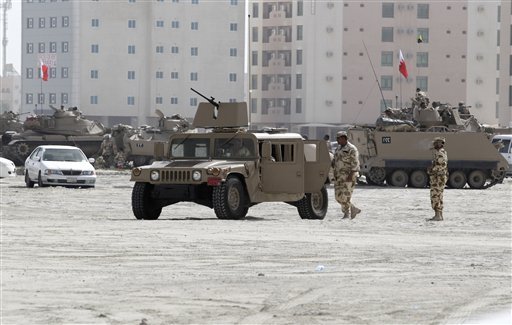
Bahrain Army units deployed in Manama (AP Photo)

The population of Bahrain is divided between the Sunni ruling class which comprises approximately 30% of the population and a less well off Shia population. The Khalifah family has ruled the country since driving out the Persians in 1783. It became a British protectorate in 1861 and the Kingdom attained its independence in 1971 and became a constitutional Monarchy in 2002 with some elected representatives.  The current King Sheikh Hamad bin Isa Al Khalifah is a graduate of Cambridge University and the U.S. Army Command and Staff College. He has reigned since March of 1999 when his father died.

Iran considers Bahrain a rebel province and is viewed as a threat by Bahrain has sought over the years to foment dissent in Shia community which believes that it is discriminated against by the Sunni rulers.

NAVCENT Headquarters in Bahrain (Navy Times Photo)

Bahrain is a vital part of the U.S. strategic presence in the region as a counter to the Iranian threat. It hosts the headquarters of the U.S. 5th Fleet, Naval Forces Central Command (NAVCENT) and Marine Forces Central Command (MARCENT). It is a frequent port of call for U.S. and Allied Navy ships that operate in the Arabian Gulf.  As such the current instability and violence is a matter of grave concern for the United States and its Allies in the Gulf.

As I said I have been to Bahrain numerous times in 2002, 2003, 2004, 2005 and 2006. I would stay in hotels with the best security which happened to be the 5 Star locations and dine at various Irish, British or Arab restaurants mostly with fellow Marine or Navy Officers or expats.  The difference between that world and the Shia villages and neighborhoods is amazing the contrast between the vast wealth of some and the absolute poverty of the other troubled me because I could see that it was a ticking time bomb. The Shia population also has limited political rights and is often targeted by the police.  They are certainly infiltrated by Iranian agents who I would guess are helping to stir things up.

The violence that has overtaken Bahrain does not surprise me. The Bahraini military is primarily composed of Sunnis from other Arab countries and has little love for the Shia. They are basically a mercenary force absolutely loyal to the government. There will be no Egyptian style coup in Bahrain. Since the population is small and the Army, police and other security forces wedded to the government I expect that the protests will be put down and that the regime will survive.  It will not be pretty and could well have an impact on U.S. Forces in Bahrain.

Back after 9/11 military dependents were sent home and force protection increased. A couple of years ago dependants were allowed back in but I think that we will see them extracted again. The security forces at the base are robust and work closely with the Bahraini security forces. I would expect that whatever Marine Expeditionary Unit is in theater will be on alert and that additional Fleet Anti-Terrorism Security Teams could be flown in to reinforce the base.

The broader ramifications of a continued violent crackdown on the protestors will be felt throughout the region. With the success of the Tunisian and Egyptian revolts people in many parts of the Arab World are now boiling over as protests and revolts against the old authoritarian regimes spread. As the situation continues to build I expect the probability of more regimes being overthrown with very unpredictable consequences. What may be true for Egypt may not be true anywhere else. What is for sure is that the Middle East that existed in December will look far different by the end of this year and that could be a good thing or a bad thing depending on just how it all shakes out and the possible impact on American and NATO operations in the region as well as impact on American overseas counter-terrorism operations especially in Yemen.

We can only wait and see and hopefully influence peaceful and democratic change in the area, but revolutions in countries that repress their populations tend not to be peaceful.  Egypt so far is an exception to that. If you believe in prayer I recommend that we pray hard my friends.

Peace

Padre Steve+
 

11 Comments

Filed under Foreign Policy, History, Military, national security

Remembering Challenger

http://www.youtube.com/watch?v=j4JOjcDFtBE

About 5:30 PM on January 28th 1986 I was a young Army Medical Service Corps 1st Lieutenant in command of the 557th Medical Company (Ambulance) which was based on Wiesbaden Air Base in Wiesbaden Germany. I was hoping to close out the day by 7PM which was early for me as well as most officers in the 68th Medical Group and 3rd Support Command of the Imperial Army on the Rhine.

I had a stack of work in my inbox, NCO evaluations, criminal investigations, maintenance reports and upcoming missions, not to mention trying to get a head start on my Unit Status Report. Most of my soldiers except those on duty had finished for the day.

Back then communications and television for military personnel stationed overseas was primitive. The Armed Forces Network had one channel then and only recently had added live needs feeds from stateside news programs on CNN and morning shows such as NBC’s Today Show. By 1986 the Space Shuttle missions had become routine but this one was different because of a school teacher, Christa McAuliffe who was a payload specialist on the flight.

The Challenger was making her 10th flight in less than 3 years having first flown on April 4th 1983.  The mission STS-51-L had been delayed due to weather on the 22nd and rescheduled several times due to weather or in one case due to problems with an exterior access hatch.  The morning of the launch the weather was predicted to be at or below the 31 degree minimum safe launch threshold. Engineers from the builder of the Challenger’s Solid Rocket Boosters (SRBs) Morton Thiokol contacted NASA with their concerns that the O-Rings which sealed the joints on the SRBs which they believed might not seal properly.  NASA engineers argued that even if the primary O-Ring failed that the secondary O-Ring would be sufficient even though this was an unproven theory. Eventually Thiokol management overruled their engineers influenced by NASA management which demanded that Thiokol prove that it was not safe to launch rather than prove that it was safe to launch. Considering it was a “Criticality 1” component meaning that there was no backup in case of a failure of both joints. It was a clear violation of protocol but the later Rogers Commission would show that NASA managers frequently ignored or evaded safety regulations to meet their very ambitious mission schedule. This decision doomed Challenger and her crew of seven.

I had heard that the Challenger was to launch that morning in Florida which of course was the early evening for us in Germany.  However I had seen numerous shuttle launches on television, considered them routine and by then rather uninteresting.  Since I was a very junior 1st Lieutenant commanding a company forward deployed with a mission to race to the Fulda Gap in the event of a Soviet invasion of West Germany up to my ears in work I had no interest in watching another one.

Challenger disintegrates (BBC Photo)

About 20 minutes until 6 my senior duty person at the company, the Charge of Quarters or CQ in Army parlance came to my door which was at the far end of the hallway from where the CQ was stationed. Specialist Lisa Daley was a solid medic and outstanding soldier who had a great personality that caused her to be well liked in the company.  She came to my door and blurted out “Lieutenant Dundas! The Space Shuttle just blew up!”

I looked up from my desk and I remember my words to this day. “Specialist Daley, Space Shuttles don’t blow up.” She then said, “No sir they do, it’s on TV right now!” That startled me. I grew up with the space program and remembered the Apollo 11 Moon landing. Although I remember the fire on Apollo 1 which killed three astronauts on the launch pad, but that was different, no American spacecraft had ever been lost though Apollo 13 was nearly lost while on a Moon mission.

I got up and followed her as she told me what had happened. While I reached the CQ desk I saw the small television which she and her assistant CQ were watching. There was a live feed from CNN replaying the disaster, the twin plumes of smoke careening across the screen.  I was stunned and will never forget the image that I saw with my soldiers that day.

Seventeen years after that event I was waiting at the Naval Air Station at Mayport Florida for General Peter Pace.  General Pace who was then the Vice Chairman of the Joint Chiefs of Staff was coming to be the guest speaker at the Battle of Hue City Memorial weekend hosted by the USS Hue City. I got to the ship early and while drinking coffee in the Wardroom saw the news of the breakup of the Space Shuttle Columbia. It brought back the images of the Challenger disaster. General Pace was delayed as the Joint Chiefs and National Security Council held an emergency meeting and arrived several hours late and when he arrived he spoke of the Challenger disaster along with the Columbia.

There are two more shuttle flights scheduled before the program ends this year. An era will be ever. The shuttles will pass into history and unfortunately for many the signature moment of the program will not be the many successes it will be the Challenger disaster and the images shown on CNN that cold and clear Tuesday in 1983.

The brave astronauts of all of our space programs deserve our highest admiration. The Mercury, Gemini, Apollo and Shuttle programs pioneered space travel. We should not forget their sacrifices especially those that gave the last full measure especially those that we remembered yesterday. Ronald Reagan ended his short speech the evening of the Challenger’s demise with this line:

“The crew of the space shuttle Challenger honored us by the manner in which they lived their lives. We will never forget them, nor the last time we saw them, this morning, as they prepared for the journey and waved goodbye and ‘slipped the surly bonds of earth’ to ‘touch the face of God.’”

As a child I grew up with the space program and Star Trek. It is my hope that manned missions aboard better and more capable space ships capable of reaching the far reaches of this solar system and the galaxy will be built and humanity’s constant desire for exploration and discovery will herald a better future.

Peace

Padre Steve+
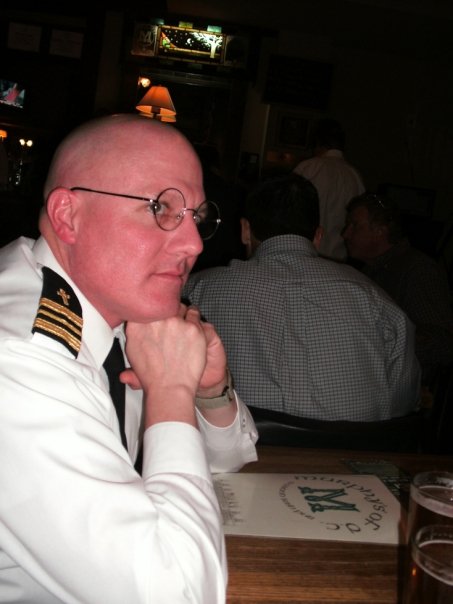
 

1 Comment

Filed under History, traumatic national events