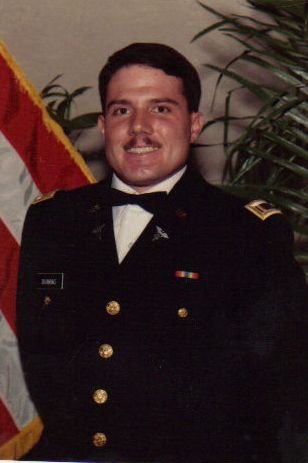
Nearly 32 years ago I was getting ready to embark on a military career. It was the fall of 1980 and I was a junior at California State University Northridge. Within the year I was beginning my first furtive steps in my career by enlisting in the California National Guard and enrolling in the Army ROTC program at UCLA.
It was an interesting time. My imagination of the military back in the days of the Cold War was quite orthodox and founded on what a “normal” Army career should look like. I would get commissioned, serve as a platoon leader, company executive officer, battalion staff officer and company commander. I would attend the appropriate military schools, the officer basic course, the advanced course, specialized courses and Command and General Staff College and then hopefully be promoted to the field grade ranks and after serving 20-30 years would retire as a Major, Lieutenant Colonel or maybe even a Colonel.
If that had been the case I would have had a very different life than I have today. Certainly a good life, but not what I have today. I would be me, but a different me. I would have probably played everything safe and been the perfect servant of the institution while ensuring my own success.
Instead the tapestry of my life and choices have produced something different than I could have ever imagined 32 years ago. Those choices have resulted in successes and failures, blessings and great difficulties as well as trials that honestly I would never want to go through again. However all of those things have helped make me what and who I am today.
I look back at the people in my life who have influenced me at different points, as well as critical junctures where I made decisions I see a tapestry that I could never have thought possible, a tapestry much richer and diverse than I could have thought of back then. It has not been without pain but it has been worth it.
One of the things that I discovered early was that as hard as I tried to fit the mould of the Army, I was a non-comformistby nature. I thought outside of the box and that in attempting to fit in I was not happy. I had one rater in his evaluation of me offer the criticism that thought too much of my abilities that “lent me to criticism.” That may have been true to some extent, and my rather blunt and outspoken opinions to criticize higher ranking officers and to take liberties with orders got me in trouble at times.
However I did survive some of my more stupid escapades such as telling my Medical Group Commander that he had embarrassed our command as a very junior Army 1st Lieutenant and in another case banned the two local CID investigators from running amok on a fishing expedition in my barracks without probable cause or a warrant for their investigation. They never returned with probable cause or a warrant. Another time I told the the senior personnel officer in the command I was stationed as a Captain that he could take his spies out of my command, as well as getting thrown out of the Army Chaplain Officer Advanced Course in 1992. It would take too long to explain the details of these incidents here but assuredly they were the fault of a young, opinionated and outside the box thinking officer who dared to voice his opinion to men who were institutional careerists, they were not bad people, just people conformed to and servants of institutional norms. That being said my troubles were troubles brought on me by my own actions because I did not understand what the institution, any institution can do to otherwise well meaning and honorable people.
Despite some black eyes I did make Major in the Army Reserve and finally to get back on active duty reduced in rank to enter the Navy back in 1999. The good thing was that I learned from my experiences and have been able to use them to learn, survive and succeed in my Navy-Marine Corps career.
In the process there were men and women who at various times in my life and career passed along wisdom, not just advice, not just knowledge, but wisdom. It is to them that I owe my successes. Without their sage advice, authentic leadership and honesty I would have certainly crashed and burned a long time ago, a prisoner of my own limited insight and unlimited ambition.
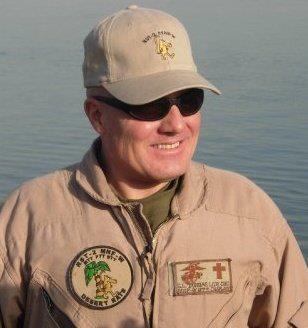
But more than succeeding in my career I have learned that it is okay to be me, to be authentic and to be honest about who I am and what I do. My goal now as a relatively senior chaplain is to care for, mentor and allow those men and women who work directly for me to succeed, even as well as those that I serve. It is no longer about my career. I am on the backside of my career regardless of my next assignment or even if I get promoted to Captain in the Navy several years from now when I am eligible. But promotion is not an end to itself, if I have learned anything it is that many times promotion to a higher office can be a prison that some men never escape.
The fact is that I have far fewer years left to serve than I have served to this point. Thus it is far more important to do right for the people that I serve and help them take lessons that I have learned into their futures and if they remain in the military pass them along to others as they become authentic leaders. 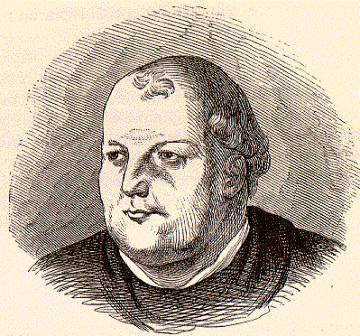
Johann Von Staupitz
My study of history and more practically in my case military history and to some extent church history and theory shows me quite those who don’t achieve the highest levels of command or institutional power often have a greater influence in the long term than those who do. Without Johann von Stauptiz it is doubtful if the young Martin Luther would have began to study the Bible and hence bring about the Protestant Reformation.
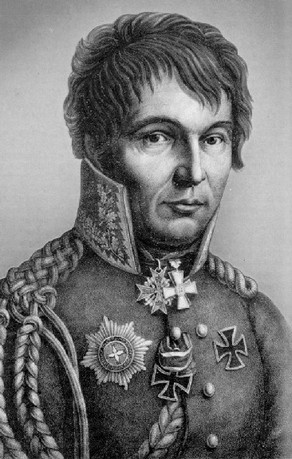
Carl Von Clausewitz
As the foremost interpreter of Napoleon, a relatively unknown Prussian General Staff Officer, Carl von Clausewitz had a greater impact on warfare and military theory than did Napoleon himself. There are many other examples of such individuals in history, men and women, many times of far lesser estate than Clausewitz or Staupitz who have by their wisdom helped those that eventually held power or influence in thinking outside the bounds of tradition to accomplish things that were not possible to their teachers.
Wisdom comes slowly to most of us, especially people like me. The problematic thing is that is, for the most part wisdom is a commodity that is not highly treasured in a society built upon expediency and crass materialism. It is certainly not something the most men and women that seek power are gifted with, despite their intellectual gifts and often well earned knowledge. But learned knowledge and raw intelligence are different than wisdom. Knowledge and intelligence are quite wonderful but ungoverned by wisdom the ambition that they breed is often the undoing of those that rely on them as well as their physical, economic or even military power.
The key thing is that wisdom, experience and learning was passed along to men and women who, God willing, will be serving long after I retire from the Navy. Today I was approached by one of our wounded warriors stationed at our hospital because of his injuries. He engaged me in a conversation and he said that he would like to spend some time with me, to listen to some of my stories about my life in the military and experience. Evidently a couple of his young friends have told him a bit about me. That meant a lot to me, just as the times that young people have come to me not because of my position, or rank, but because they see me as a real person, approachable and available. The nice thing for me is that there are many times that I learn from them, for many times it is young people that can see the greatest problems and offer ideas and solutions that elude older and more experienced people in every walk of life.
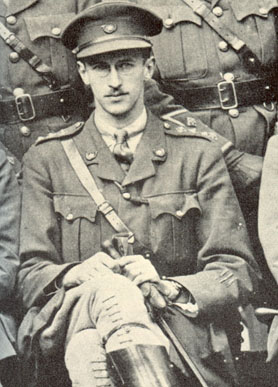
B. H. Liddell-Hart
I recently read B.H. Liddell-Hart’s biography of T.E. Lawrence, perhaps one of the most gifted military commanders, philosophers and men of the 20th Century. Lawrence and to some extent Liddell-Hart understood something about wisdom that most of their contemporaries and even students miss. Liddell-Hart himself, though a medically retired as a Captain due to wounds suffered in World War One was one of the more influential thinkers of his day. His works had a profound impact on the most successful commanders of the Second World War. He understood that the key to wisdom is self understanding and a recognition of their own knowledge as well as limitations. Liddell-Hart wrote of Lawrence, wisdom and humanity in 1937:
“A study of history, past and in the making, seems to suggest that most of mankind’s troubles are man-made, and arise from the compound effect of decisions taken without knowledge, ambitions uncontrolled by wisdom and judgements that lack understanding. Their ceaseless repetition is the grimmest jest that destiny plays on the human race. Men are helped to authority by their knowledge continually make decisions on questions beyond their knowledge. Ambition to maintain their authority forbids them from admitting the limits of their knowledge and calling upon the knowledge that is available in other men. Ambition to extend the bounds of their authority leads them to a frustration of others opportunity and interference with others’ liberty that, with monotonous persistency, injures themselves or their successors on the rebound.
The fate of mankind in all ages has ben the plaything of petty personal ambitions. The blend of wisdom with knowledge would restrain men from contributing to this endless cycle of folly, but understanding can guide them toward progress.” B.H. Liddell-Hart “Lawrence of Arabia” DeCapo Press, Reprint, originally published as “The Man Behind the Legend” Halcyon House 1937

T. E. Lawrence
It is my hope that no matter what my next assignment is and no matter how long I have left in the military as well as in life that I will be able to be one of those wise old sages who helps the next generations do things that were impossible for my generation, to succeed where we failed and who like Staupitz, Clausewitz, Liddell-Hart and Lawrence inspired others to greatness far beyond their own.
I am coming up for orders soon, order that will take me to my next assignment. I have spent the past two years as a geographic bachelor, apart from my wife, by the time I leave this assignment it will be close to three years. I have been assured that my next assignment will be in the area where our home is, however I do not know what it will be. I know what I want to do but do not know if it is possible based on the needs of the Navy. However, that being said I do know enough that no matter where I am assigned the mission is the same, as well as the pay. That mission is to care for, guide and assist those that work for me as well as those that I have the honor of serving, or possibly simply be the wise old sage.
I think I like that idea.
Peace
Padre Steve+




 The Inglorius Padre Steve's World