Tag Archives: world war ii

Remembering Why We Keep Memorial Day

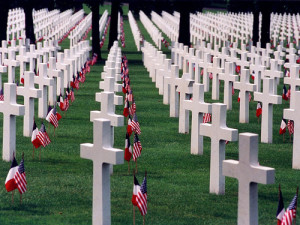
memorial-day1-300x225

“even if those who come after us are to forget all that we hold dear, and the future is to teach and kindle its children in ways as yet unrevealed, it is enough for us that this day is dear and sacred…”

Nearly 20 years after the Civil War, Oliver Wendell Holmes Jr. then serving as Chief Justice of the Massachusetts Supreme Court spoke on Memorial Day 1884 in Keene New Hampshire at a gathering of veterans. He recalled an incident not long before where he had heard a young man ask “why people still kept up Memorial Day. The question was one that he pondered before his speech and that he attempted to find an answer, not to his fellow veterans who certainly understood their shared memories of war “but an answer which should command the assent of those who do not share our memories.”

I think that having an answer for the question is as timely now as when Holmes first pondered it. Though his war was twenty years past and had torn the nation apart, there were still many men on both sides who had served in that terrible time and but even so many people were not only forgetting the war and the sacrifices made by so many but intent on becoming rich. Something that he would directly state in a Memorial Day address to the graduating class of Harvard University in 1895:
1-oliver-wendell-holmes-jr-1841-1935-everett

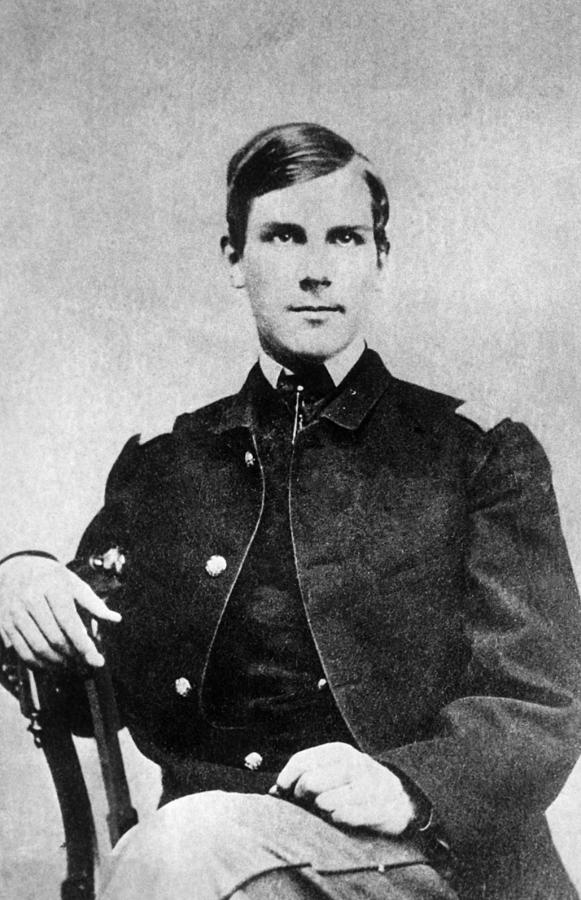
Oliver Wendell Holmes Jr in the Civil War

“The society for which many philanthropists, labor reformers, and men of fashion unite in longing is one in which they may be comfortable and may shine without much trouble or any danger. The unfortunately growing hatred of the poor for the rich seems to me to rest on the belief that money is the main thing (a belief in which the poor have been encouraged by the rich), more than on any other grievance. Most of my hearers would rather that their daughters or their sisters should marry a son of one of the great rich families than a regular army officer, were he as beautiful, brave, and gifted as Sir William Napier. I have heard the question asked whether our war was worth fighting, after all. There are many, poor and rich, who think that love of country is an old wife’s tale, to be replaced by interest in a labor union, or, under the name of cosmopolitanism, by a rootless self-seeking search for a place where the most enjoyment may be had at the least cost.”

However his message to his fellow veterans, mostly men from his own former regiment, the 20th Massachusetts was quite personal and something that they could find meaning in. Holmes understood war, he had seen much action and had been wounded at Ball’s Bluff, Antietam and Chancellorsville. He talked of the shared experience of war, something that those who have fought in our nation’s wars, as well as combat veteran soldiers in other countries can understand far more than people that have only known peace, even while their countrymen are at war.
dscn0044

Holmes remembrances of the war and the comrades that he and those present had served with, those living and those dead is powerful. Many of us who have served in the wars that began on September 11th 2001 have lost friends in either Iraq or Afghanistan, and many more who are wounded or maimed in body, mind and spirit. Many survivors of wounds today would have died in previous wars.

Likewise his descriptions of the memories of war, triggered by “accidents” are real to those that have experienced war and combat.

“Accidents may call up the events of the war. You see a battery of guns go by at a trot, and for a moment you are back at White Oak Swamp, or Antietam, or on the Jerusalem Road. You hear a few shots fired in the distance, and for an instant your heart stops as you say to yourself, The skirmishers are at it, and listen for the long roll of fire from the main line. You meet an old comrade after many years of absence; he recalls the moment that you were nearly surrounded by the enemy, and again there comes up to you that swift and cunning thinking on which once hung life and freedom–Shall I stand the best chance if I try the pistol or the sabre on that man who means to stop me? Will he get his carbine free before I reach him, or can I kill him first?These and the thousand other events we have known are called up, I say, by accident, and, apart from accident, they lie forgotten.”
dscn0064

We all have our memories of our wars, those of us who remain, be we veterans of Iraq or Afghanistan, Somalia, Desert Storm, Lebanon, Vietnam, Korea or World War II. It is hard to believe that so few remain from World War II and Korea, and that even the Vietnam veterans are aging rapidly, most now in their 60s or 70s. In as much as the wars of the past decade have been fought by a tiny minority of American citizens fewer and fewer will understand the bond that we share through our memories of the living and the dead. We have been set apart by our experiences, even though the wars that we have fought differ in many ways.

As such we should whenever possible take the time to meet and remember. That might be as groups of friends, unit associations or perhaps local chapters of Veterans organizations. We do this to remember but also to remind ourselves that we cannot live in the past alone, for the present likewise calls us to action, even after our service is complete.
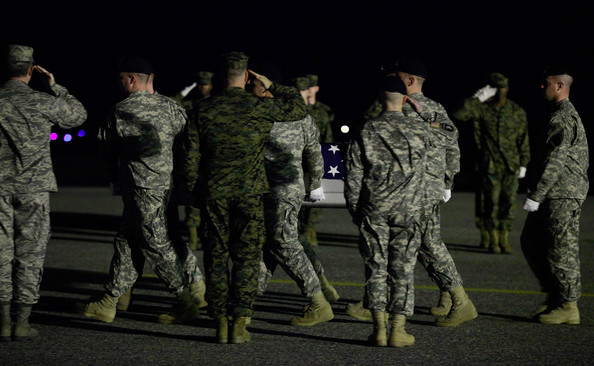
Army+Marine+Casualties+Afghanistan+War+Return+dSZmlJbciN5l

Holmes put it well: “When we meet thus, when we do honor to the dead in terms that must sometimes embrace the living, we do not deceive ourselves. We attribute no special merit to a man for having served when all were serving. We know that, if the armies of our war did anything worth remembering, the credit belongs not mainly to the individuals who did it, but to average human nature. We also know very well that we cannot live in associations with the past alone, and we admit that, if we would be worthy of the past, we must find new fields for action or thought, and make for ourselves new careers.”

We remember the past, we remember our fallen and we remember the families who have lost loved ones in these wars as well as those whose lives have been changed and maybe even torn apart by the changes that war has wrought in their loved ones who returned different from war. In our service we have been set apart and as such as Holmes so well states we have the duty to “bear the report to those who will come after us.” His words carry forth to us today, we few we happy few as Shakespeare so eloquently wrote.

“nevertheless, the generation that carried on the war has been set apart by its experience. Through our great good fortune, in our youth our hearts were touched with fire. It was given to us to learn at the outset that life is a profound and passionate thing. While we are permitted to scorn nothing but indifference, and do not pretend to undervalue the worldly rewards of ambition, we have seen with our own eyes, beyond and above the gold fields, the snowy heights of honor, and it is for us to bear the report to those who come after us.” 
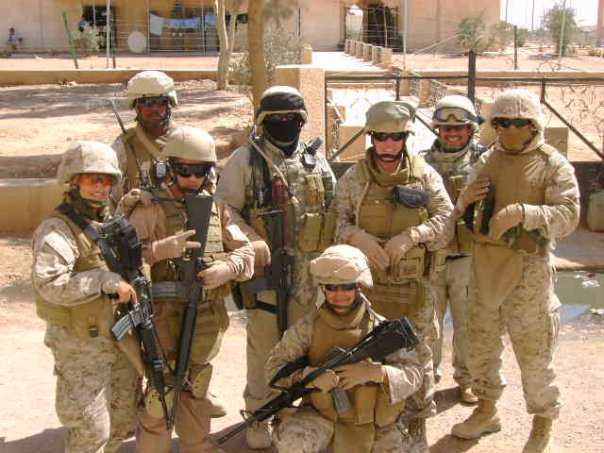
n671902058_1896194_6303

I will remember my time in Iraq and those that I served alongside. I will also remember friends who served in other units who did not return as well as those Marines, Sailors and Soldiers that I see every day in our Naval Hospital suffering from the physical, psychological and spiritual wounds of war.

This weekend I will remember and on Monday, that sacred day that we set aside to remember the fallen I take some time at noon to join in that time of remembrance and pray that maybe someday war will be no more.

That is why I think that we should remember Memorial Day even if others forget.

Peace

Padre Steve+

5 Comments

Filed under civil war, History, iraq,afghanistan, Military, shipmates and veterans, vietnam

Sequester, Lent and Hope

198177_10151361204842059_1890411795_n

“As lousy as things are now, tomorrow they will be somebody’s good old days.” Gerald Barzan

Sequester is here and with it the era of mutual assured destruction by our political, economic and media elites continues in an unabated form.

At the same time sequester occurs during the season of Lent when Christians are called on to make voluntary sacrifices of things that are important to them in the forms of fasting and abstinence. Lent is a season of penitence which hopefully builds in the heart of the believer a new love for God and neighbor, a season that changes a person from a “me first” attitude to an attitude of thanksgiving, gratitude and service to those in distress. That being said, the season of Lent should be a season of hope.

However it is difficult at times to be hopeful when all around there is bad news. We seem to be living the ancient Chinese curse that says “May you live in interesting times.” The times are certainly interesting with lots going on of historic significance that may years from now be remembered as one of those tumultuous times where the world changed before our eyes.

History of course is replete with such times, the rise and fall of ancient empires, the age of exploration, the Reformation, the French and American Revolutions, the Napoleonic era, the American Civil War, the Industrial Revolution, the First and Second World War with the Great Depression sandwich, the 1960’s, the post Cold War era and the post-911 era just for a start.

I could go back further in history for other epochal periods, but I think that the reason that today’s crisis seem so much more dire is that we are both the beneficiaries and the victims of the instantaneous communication revolution in which common people have real time access to events that are impacting their lives.  This causes many a great deal of anxiety both real and imagined, anxiety which usually finds expression in a desire for the good old days as well as seeks solace and security from those who feverishly exploit that anxiety.  It does not matter if the security comes from religion, political ideology and matters neither if it comes from the left or the right so long as the call resonates with them they will follow it. They will faithfully follow even as the purveyors of the message drive up their worry and anxiety that they no longer can actually enjoy life or be thankful because they are so consumed with how “lousy” things are or “evil” their opponents are.

Thus even during the season of Lent it is hard for many people to grasp the meaning of it when all around them appears to be falling apart and in chaos.

It is in times like these that one has to take a deep breath, look around at all that they have to be thankful for and just really examine of the nostalgia that they feel for “better times” is that or an escape from an unpleasant present and fear of the future if the other side wins.

The fact is that we have seen such times before and somehow made it through.  I hear from friends and relatives who lived through the Great Depression and World War II that those were good times in spite of everything happening, much of which is present today but somehow things are worse now.  Even I fall into the trap about somehow thinking that the times that I grew up in were somehow better than the present, this may be true for music but overall things were not that good for a lot of people but somehow we made it through them.  Lent is a time to step back from the brink, take stock and renew our life with God and our neighbor.

When I returned from Iraq back in February 2008 I soon discovered that the bombardment of bad news and über-partisan political battles took its toll on me.  I was neither as resilient as I thought that I was nor as consumed by the need to continue to ratchet up rhetoric on one side or the other as the more extreme elements on the right or left were doing.  PTSD or not I realized that the purveyors of the 24/7 bad news cycle were driving people with legitimate ideological differences to extremes that I had never seen, but which I recognized from history have a lot of precedent and can lead to making things even worse.  One only has to look at Weimar Germany to realize how things can go so very wrong when extremes on both sides of the ideological spectrums squeeze out those in the middle or chance at mutually beneficial solutions and that was in the days before type of information overload that is the bedrock of the political and ideological landscape of today.

I am not attacking those who get caught up in this but I do question the politicians, pundits, “news-networks” and talk show hosts who continue to ratchet up rhetoric to the point that many feel that the only alternative is some kind of “revolution.”  Again those that call for “radical change” or revolt against those who are in favor of that kind of change are both calling for revolution when revolutionary talk reaches a point where one side or the other does not see a way to resolve things in a civil manner then the those alternatives slip away and the only recourse is violence.

It is not the fault of one side or the other as those that stoke this talk are found on both sides of the American as well as other nations political and ideological spectrum testify to daily.  In the United States we also have a long history of apocalyptic thought which presents the lousy state of current events in any generation as something that will certainly bring the end of life as we know it or the return of the Lord, the Great Tribulation or whatever you chalk it up to. There are those on both the religious and secular side of the spectrum who have apocalyptic visions related to their world view.  For some reason we Americans do the apocalyptic quite well whether we believe in God or not.

The thing that has been most on my mind this Lent, as it has been the past several years has been the idea of being reconciled both to God and to one another.  Lent is a season of self examination, repentance and forgiveness.  The call to “be reconciled to one another” is a never ending command and applies across the variety and spectrum of life.

cross-ash-wednesday

Lent reminds us that that “we are dust and to dust we shall return” but that we are also all made in the image of the God who created us, redeems us and sanctifies us who calls us to himself and reminds us that mercy triumphs over judgment and “not be conformed to this world, but be transformed by the renewing of your minds, so that you may discern what is the will of God—what is good and acceptable and perfect.” I am afraid that in times like these even the best intentioned of people can find themselves pulled into the orbit of those that in less stressful or trying times that they would never be involved with.

The German martyr Dietrich Bonhoeffer once wrote: “Our enemies are those who harbor hostility against us, not those against whom we cherish hostility… As a Christian I am called to treat my enemy as a brother and to meet hostility with love. My behavior is thus determined not by the way others treat me, but by the treatment I receive from Jesus.”

I know for some that call themselves “Christians” this message is lost. However, I believe that it is not because they are consciously rejecting the message of the Gospel but because that have become so deeply involved in whatever cause they endorese that they have lost the ability at least temporarily to see the good that may rest in their opponents and their ideas.

As Bonhoeffer also wrote “Judging others makes us blind, whereas love is illuminating. By judging others, we blind ourselves to our own evil and to the grace which others are just as entitled to as ourselves.”  Now of course Bonhoeffer knew the evil that was the Nazis and eventually gave his life by supporting the German resistance to Hitler.  Loving our enemies does not absolve us from public responsibility but in ensuring that we do not ensnare ourselves in ideology that restricts our ability to love them as Christ has commanded.

I think in the past few years that I have gained a new perspective on life that has changed the way that I look at the world.  I know that things are not good right now and that there are a lot of things to be legitimately concerned. That said I know too that somehow our country as well as much of humanity have weathered worse and like Barzan said that for some these will be the good old days someday.

That thought helps me to live in the present knowing that the future is not yet written and known only to God who in his grace condescends to love us and desires that we better love him and one another and not be conformed to any ideology that would prevent that. Sequestration and political division aside I do pray that we will both see better days as well as be reconciled to God and to one another.

It is in times like this that I think of Bonhoeffer’s words:

“God loves human beings. God loves the world. Not an ideal human, but human beings as they are; not an ideal world, but the real world. What we find repulsive in their opposition to God, what we shrink back from with pain and hostility, namely, real human beings, the real world, this is for God the ground of unfathomable love.”

That is my Lenten prayer.

Peace,

Padre Steve+

1 Comment

Filed under christian life, faith, History, News and current events, Political Commentary

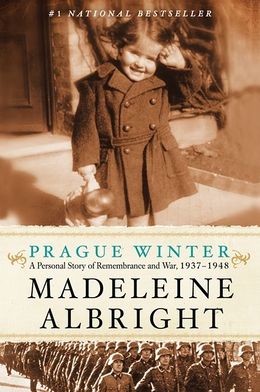
“To Remain Oneself” A Review of “Prague Winter” by Madeline Albright

9780062030344_p0_v3_s260x420

“The main thing is to remain oneself,under any circumstances; that was and is our common purpose.” From an unpublished novel by Josef Korbel, the father of Madeline Albright

tlc tour host

Prague Winter: A Personal Story of Remembrance and War 1937-1948, Harper Collins Books New York, 2012.

Former Secretary of State Madeline Albright’s book Prague Spring provides an important look at the history of Czechoslovakia during the period between 1937 and 1948. It also provides the reader a succinct history of the Czech people and nation throughout the history of Europe going back to Charles IV (1316-1378) King Wenceslas, the pre-reformation martyr John Hus and revolutionary leader Jan Zizka.

Albright is the daughter of one of Czechoslovakia’s most distinguished diplomats and advocates for Czech independence, democracy, religious and ethnic pluralism. Her father, Josef Korbel was raised during the latter years of Bohemia and Moravia’s subjugation under the rule of the Austro-Hungarian Empire. He would become a diplomat in the years just prior to the dismemberment and occupation of his homeland by Nazi Germany. Serving as a press-attache at the Czech embassy in Belgrade Yugoslavia he and his family, including his young daughter, the future Secretary of State were forced into exile in Britain.

The book is a history written from the very personal perspective of a woman who when most of the events transpired was a child who experienced her first memories of life as an exile. She would not be able to return to her country of origin until after the fall of Soviet Union and the collapse of the Warsaw Pact.

The book fills a void for many Americans whose understanding of European history is limited to the popular coverage of British monarchy or the barbarity of the Hitler regime. The book provides a look at the relationships of the men who made Czechoslovakia beginning with Tomas Masaryk, the founder of the newly independent republic in 1918. Masaryk stressed that “love of nation does not imply hatred toward another.” In an age where xenophobic nationalism and race hatred was a staple of politics in much of Europe Masaryk emphasized tolerance, good relations between religions, peoples, and the equality of religion. Albright notes that the solution of Masaryk to the ways that the settled order of civilization, political order, religious convictions and economic status were under attack was “to embrace religion without the straightjacket of the Church, social revolution without the excesses of Bolshevism, and national pride without bigotry.”

Masaryk would die shortly before the deal cut by the leaders of Britain, France, Italy and Germany at Munich to dismember Czechoslovakia in 1938. His successor, Edvard Benes would be left to deal with a situation where despite the strengths of his nation would be abandoned by the leaders of nations that he, and many of his countrymen felt abandoned by the world. That was the world that Madeline Albright came to age in.

Albright would grow up to see her father working on behalf of Benes and the exiled Czech government during the war, and the post war struggles in the nation between Democrats of various parties against the Communist Party led by Klement Gottwald supported by the occupying Soviet Red Army.

Her narrative provides a very effective and history of the period meshed with the experiences of her family, both in exile and those who remained. Her family, of Jewish origin, though largely secular and Czech in outlook faced deportation to the Theresienstadt Concentration camp and extermination camps and many died. While in England her parents converted to Catholicism and she was baptized into the Catholic Church. Her own story is fascinating, though remaining a Christian in the Episcopal Church she honors her family who died as Jews at the hand of the Nazis and her own countrymen.

The book provides a badly needed narrative of a small but critical country which for much of the 20th Century was ground zero of the struggle between Democracy and Totalitarianism. It does not seek to make heroes of those that were not, but it does seek to understand the dilemmas faced by people whose existence is threatened by larger neighbors and how the experience of victimhood can lead to retribution and revenge. It points out the dangers of ideologues who have no other agenda but their own and the crushing of any opposition. Albright’s father, Josef would again have to go into exile following the Communist takeover of his country. His daughter, raised in that exile would go on to become an American citizen and rise to the pinnacle of the diplomatic world, as Ambassador to the United Nations and Secretary of State, the first woman to become Secretary of State.

She touches on her own connections to her family’s Holocaust experiences in this book, though they are secondary to the history of Czechoslovakia before, during and after the Second World War and the work of her father in that critical period.

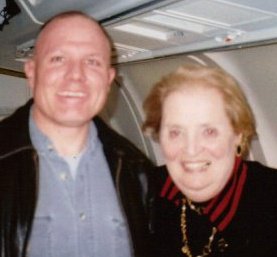
I have always admired Secretary Albright and has the honor of meeting her and conversing with her on a flight between Madrid and London in March of 2005. I was traveling in connection with a trip to visit my Marines in Spain, Bahrain and Scotland and she, accompanied by former Senator Gary Hart were traveling between Madrid and London for a security conference on the anniversary of the March 11th 2004 Islamic terrorist bombings in Madrid. She was a most gracious woman and interested in what I was doing. I will not forget that trip.

In reading it I felt that I began to feel that I was beginning to know and understand men who were instrumental in history but always have been regulated to bit parts by American and British histories of the period. It is hard to imagine what those men placed in such and unenviable position had to endure, particularly the tragic story of Jan Masaryk, the son of Tomas Masaryk who would serve as foreign minister under Benes before and after the war and be murdered by the Communists shortly after the takeover.

23453_404297257058_7628878_n

I think that the message that I took away from the book was the message penned by Secretary Albright’s father Josef in his unpublished novel: “The main thing is to remain oneself,under any circumstances…” I believe that in an age where political, racial and religious ideologues of various persuasions seek to divide the peoples of nations against each other it is an important work. What the Nazi leaders of the German minority in the country led by Konrad Henlein did was to divide and destroy a people who had lived in peaceful co-existence for centuries. Their actions led to the Nazi seizure and dismemberment of Czechoslovakia. Following the war 9/10ths of the pre-war German population of the country would be forced out by the Czechs and Slovaks now under the control of Soviet agents, something that occurred throughout Eastern Europe following the war.

To remain oneself, under any circumstances.

I highly recommend this book. Secretary Albright has written a fitting companion to the other histories of the period that fills a critical gap for American readers about the history of Czechoslovakia.

Peace

Padre Steve+

3 Comments

Filed under books and literature, History

Vice Admiral Samuel Gravely Jr: Pioneer of Integration and Civil Rights in the U.S. Navy

gravely

“I was sure that I could not afford to fail. I thought that would affect other members of my race if I failed anywhere along the line. I was always conscious of that, particularly in midshipman school and any other schools I went to…I tried to set a record of perfect conduct ashore and at sea.” Vice Admiral Samuel Gravely

Things have changed much since 1942 when following the attack on Pearl Harbor a young black college student from Richmond Virginia enlisted in the Navy. Samuel Gravely Jr. was the son of a postal worker and Pullman porter while his mother worked as a domestic servant for white families in Richmond. His mother died unexpectedly when he was 15 in 1937 and he remained to help care for his siblings as his father continued to work. Balancing the care of his family with his education he enrolled in Virginia Union College, a Baptist school in Richmond.

gravely_young

Fireman Apprentice Samuel Gravely Jr

It is hard to imagine for most of us now to comprehend the world that the young Gravely grew up in. Segregation was the norm. Blacks in the south and many other locations faced personal as well as intrenched institutional racism. Violence against blacks was quite common and the Ku Klux Klan was strong.

The military was still segregated and a great gulf existed between white military personnel and blacks. Though the selective service law of 1940 called for the conscription of people regardless of race, creed or color the services enjoyed much latitude in determining how minorities could serve. The Secretary of the Navy at the time, Frank Knox resisted integration. Knox determined that African Americans would remain segregated and serve only as Mess Stewards to “prevent undermining and disruptive conditions in the Navy.” Knox told President Roosevelt in the presence of black leaders that “because men live in such intimacy aboard ship that we simply can’t enlist Negroes above the rank of messman. “

That sentiment was strong in both the Navy and the Marines the leaders of which resisted attempts to broaden the ability for African Americans to serve and urged that blacks serve in the Army, not the Naval Service.  Marine Corps Commandant Major General Thomas Holcomb agreed with this stance. He commented:

“If we are defeated we must not close our eyes to the fact that once in they [Negroes] will be strengthened in their effort to force themselves into every activity we have. If they are not satisfied to be messmen. they will not be satisfied to go into the constriction or labor battalions. Don’t forger the colleges are turning out a large number of well educated Negroes. I don’t know how long we will be able to keep them out of the V-7 class. I think not very long.”

But Roosevelt was not deterred and by April 1942 changes were announced to allow African Americans to serve in other capacities. Even so African Americans selected for ratings other than messman were to be segregated and commanded by White Officers and Petty Officers.

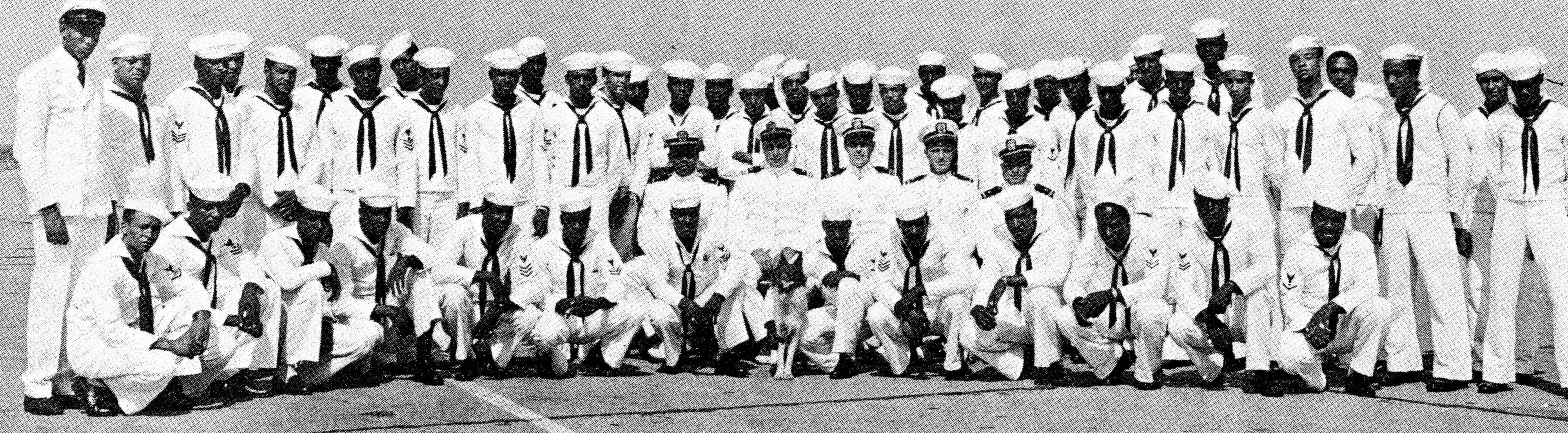
USS_PC-1264_officers_and_crew

images-18

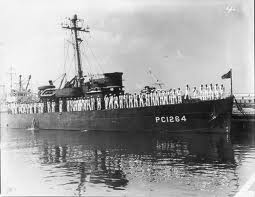
The USS PC-1264 and its crew, Gravely is the lone black officer

Gravely enlisted in the Navy under these conditions. Serving as a Fireman Apprentice after receiving training as a Motor Machinist in San Diego he worked in menial jobs. In 1943 Gravely was one of only three sailors in his unit to be selected for the V-12 officer training program. He was the only black to make the cut. He was commissioned as an Ensign on December 14th 1944 and assigned to train black recruits at Great Lakes though the vast majority of his class went to sea. The was mainly due to the policy set forth by the General Board in 1942 that prescribed:

“(a) the white man will not accept the negro in a position of authority over him; (b) the white man considers that he is of a superior race and will not admit the negro as an equal; and (c) the white man refuses to admit the negro to intimate family relationships leading to marriage. These concepts may not be truly democratic, but it is doubtful if the most ardent lovers of democracy will dispute them, particularly in regard to inter-marriage.”

Despite this by 1945 the Navy was beginning to change. Gravely was chosen to serve on one of two ships assigned to the “experiment” of seeing how blacks in general ratings could serve at sea. The USS Mason (DE 539) and the USS PC-1264 were assigned black crews with majority white officers, except that Gravely was assigned to PC-1264. Though his commander was pleased with his service Gravely, who had been denied admittance to Officer Clubs and many other “white only” facilities resigned from the Navy in 1946. He believed that the inherent discrimination of the Navy left him no place for advancement. He returned to complete his bachelors degree at Virginia Union.

In 1949, following President Truman’s integration of the military Gravely was asked by the Navy to return to active duty. But the end of the old order was foreshadowed by a Navy pamphlet published in 1944 entitled The Guide to the Command of Negro Personnel. That publication included the statement that ”The Navy accepts no theories of racial differences in inborn ability, but expects that every man wearing its uniform be trained and used in accordance with his maximum individual capacity determined on the basis of individual performance.”

images-17

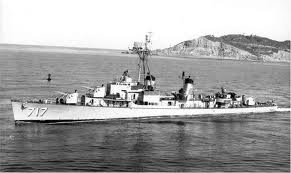
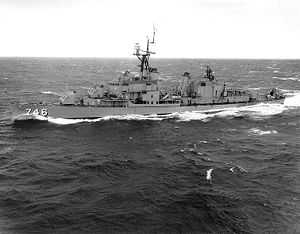
300px-USS_Taussig_(DD-746)_port_side_1965

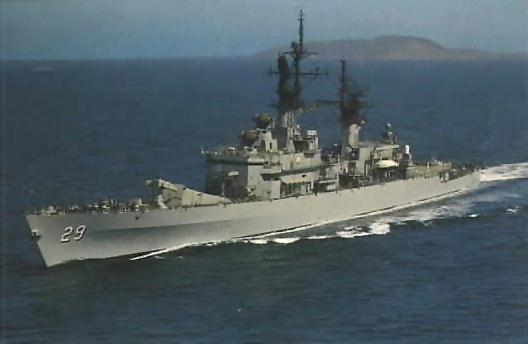
cg29

Gravely’s commands (top to bottom) USS Theodore E Chandler, USS Taussig and USS Jouett

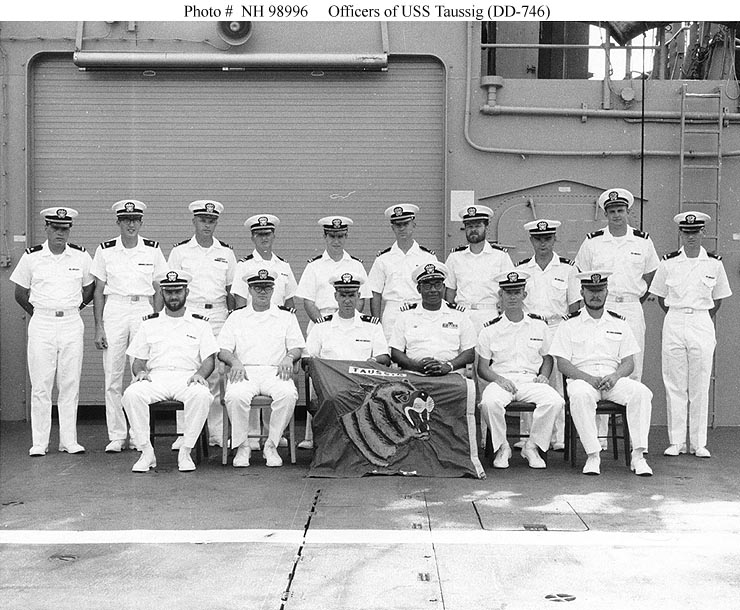
Gravely accepted the offer to return to active duty and never looked back. He worked hard for respect and used his natural talents, personality and size to command respect. He was a man who would blaze the way for other African Americans, and later women and most recently gays to go on to greater things. Gravely would go on to command three ships. He was the first African American Naval Officer to command a Navy warship, the USS Theodore E Chandler (DD 717), the first to command a Navy ship in combat, the USS Taussig (DD 746) and the first to command a major warship, the USS Jouett (CG 29). Promoted to flag rank he eventually became the first to command a Fleet when he took command of 3rd Fleet. He retired in 1980 and passed away in 2004.

h98996

Commander Gravely and his officers on USS Taussig

Gravely gave his parents and conditions of his upbringing much credit for his success. He believed that those conditions which forced him to “capitalize on his strong points, build his weak areas and sustain the positive self-esteem and self-worth that his parents instilled in him as a young child.”

He was a great leader. LCDR Desiree Linson who interviewed him for her Air Command and Staff College project noted that Gravely like many other great military leaders before him learned to manage the image that he presented, be a caretaker for his people, what we would now call a mentor. He said “[If I was CNO] my responsibility would be to make sure enlisted men and families were taken care of. I would do everything in my power to make sure.”

His pursuit of excellence, self confidence and mastery of professional skills empowered him in an institution where he was still an anomaly and where racism still existed. He believed in effective communication, especially verbal communication and in building teams and in being a good follower, listening, learning and proactively anticipating the needs of his superiors. Gravely was also a believer in personal morality and self discipline and preparedness. He said:

“I did everything I could think of to prepare myself. If the opportunity came, I would be prepared for it. [The question would not be] “Why didn’t you prepare for this opportunity.” I would be prepared for whatever opportunity that came. If it came, fine. If it did not, fine, but I would be prepared if it did come.”

USS_Gravely

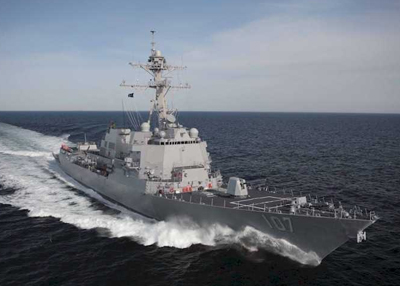
The USS Gravely

Vice Admiral Gravely blazed a trail for those that followed him and set an example for all Naval Officers to follow. He did it under conditions that most of us could not imagine. I am proud to serve in the Navy that he helped to make.  His vision, service and memory are carried on in this navy and in the ship that bears his name, the USS Gravely DDG-107.

Peace

Padre Steve+

3 Comments

Filed under History, laws and legislation, leadership, Military, Navy Ships, US Navy

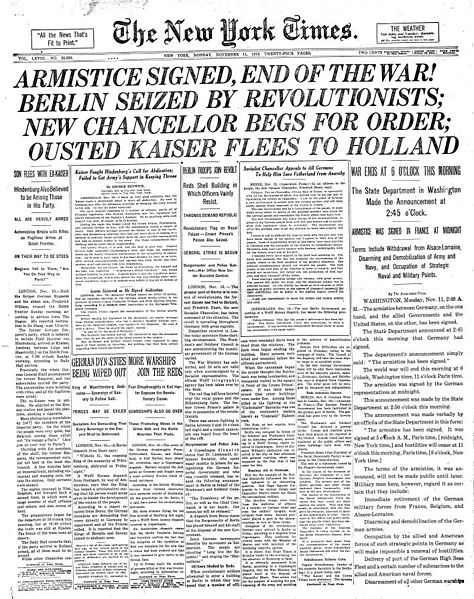
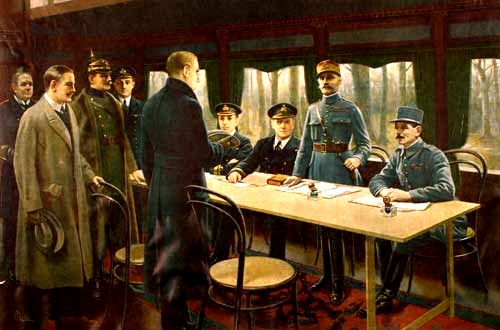
The 11th Hour of the 11th Day of the 11th Month: The Continuing Legacy of the Armistice of World War One

“Armistice Day is a constant reminder that we won a war and lost a peace.” General Omar Bradley

Germany was in pre-revolutionary turmoil. The High Command of the Army had told Kaiser Wilhelm II that military resistance was no longer possible and that the Army would not follow him back to Germany to put down the revolutionaries.

After four long years of war in which around 10 million soldiers and 7 million civilians were killed and another 20 million wounded the guns fell silent. In the end it was also the end of an era. It was then end of empires. The Russian Empire had collapsed in 1917 and been initially been replaced by a republic and then by a Soviet State and Czar Nicholas II and his family became victims of the revolutionary violence. The Austro-Hungarian Empire collapsed and in its place a hodge-podge of new states as well as liberated areas came into existence. The Ottoman Empire was carved up with its various parts being granted “independence” by the allies under the leadership of tribal leaders supported by the French or British.

Britain survived the war but not without crisis due to the massive losses in manpower and economic losses sustained during the war. France nearly fell in 1917 when the Army, demoralized by the unrelenting losses of years of brutal warfare mutinied. Belgium was devastated as was much of northern and eastern France.

Most surprisingly Imperial Germany collapsed. After knocking Russia out of the war in 1917 the Germans attempted a knockout punch against France. The offensive, code named Michael was successful at first and nearly succeeded, but in the end ran up against obstacles that could not be overcome, including the arrival of a massive and still fresh American Expeditionary Force. By the summer the tide had changed and the allies were on the offensive and threatening to break through the now vulnerable German lines. At home revolution was in the air, fed by the starvation of the German people and rising unrest units of the High Seas Fleet mutinied, as did units of the Army stationed in Germany proper. Workers and Soldiers Soviets took control of local and state governments.  Finally with everything on the line the Kaiser left Berlin to meet with his High Command at their headquarters in Spa, Belgium.

It was in Spa that the Kaiser found out that his reign was over. On November 9th General Wilhelm Groener, the Quartermaster General and the de-facto second in command of the Army told the Kaiser that the Army no longer supported him. It was a seminal moment. The Kaiser abdicated his throne and to prevent a communist takeover the leadership of the Social Democratic party proclaimed a republic that day. Hurried negotiations between the Socialists and the Army produced an alliance which averted the threatened Soviet takeover, but also doomed the new Weimar Republic. A hated state, it was blamed by monarchists and other conservatives for the German defeat and the humiliation of Versailles and hated by the communists, who viewed it as illegitimate.

The Germans send a peace delegation to France which agreed to the armistice at about  5 AM on November 11th which stipulated that hostilities were to cease at 1100. The firing stopped and German troops withdrew to a nation totally unprepared for defeat. The allies maintained their naval blockade of German ports until the Treaty of Versailles was signed the following year, wracked by starvation, the great Influenza epidemic, economic collapse and civil war Germany never came to terms with its defeat. Eventually, a crippled Weimar Republic would fall in 1933. Adolf Hitler , a decorated veteran of the war in the trenches became Chancellor and and with an year the undisputed dictator of Germany in 1934.

During the interregnum between the wars the victors cobbled together states from the the former empires. Borders were drawn without respect to racial, tribal or religious divisions. The victors, particularly the British, French and Italians expanded their overseas empires at the expense of the former empires and the newly acquired lands.

The war that was to end all wars only brought about another even more bloody war that would end with the dropping of Atomic Bombs in Hiroshima and Nagasaki Japan in August 1945. Hitler, who led Germany to ruin died by his own hand in his bunker. The remnants of empires that had not collapsed in the immediate aftermath of the First World War did not survive the second. By the 1970s most of the former colonies of the great empires were independent, but not necessarily free. Tribal and religious conflicts as well as genocide followed in Africa and Asia. A “Cold War” between the former allies of the Second World War followed, only ending with the fall of the Berlin Wall on November 9th 1989, which was exactly 71 years to the day that Kaiser Wilhelm abdicated his throne.

Today, though it is nearly a century later the ramifications of that war, a war that was “to end all wars” are still with us. War and more revolution threatens in the Middle East even as former colonies wracked by tribal, religious or ethnic divisions within their artificially drawn boundaries continue to implode. Europe, buoyed by the hope of economic integration following the end of the Cold War is again being torn apart by ethnic and nationalist divisions as the Euro crisis deepened.

On November 11th 1918 few thought that the end of that war would still be felt today. After all, it was the “war to end all wars.”

Peace

Padre Steve+


1 Comment

Filed under History, Military, national security

A Loss for the Country and the World: A War Hero and Prophet of Peace George McGovern Dead at 90

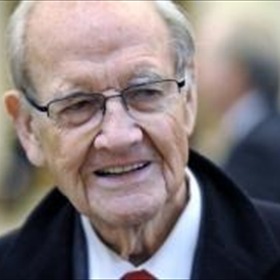
George McGovern in 2012 (AP File Photo)

The United States of America and the world lost a champion of peace and humanity this weekend when former Senator George McGovern died at the age of 90. If you had asked me if I would have written this article 10 or 15 years ago, I probably would not have, but war has a way of changing ones perspective about those that consistently labored for peace and justice.

The son of a Wesleyan Methodist Minister McGovern grew up in the South Dakota during the Great Depression and the Dust Bowl. He volunteered in the Second World War and flew 35 combat missions as the pilot of a B-24 Liberator bomber during which his aircraft was heavily damaged on a number of occasions and his skill as a pilot helped save the aircraft and crew.  For his service he was awarded the Distinguished Flying Cross and four awards of the Air Medal and his memories of being under fire from German FLAK and having his plane set afire during a mission caused him nightmares for years after the war.

McGovern and his Aircrew (above) and with his Co-pilot and Navigator (below)

His experiences during the Depression and with the victims of war that he encountered in Italy made him a champion of people that suffer. He spent one year in seminary before switching to graduate studies in American History earning a Masters and Ph.D. in History. He served as a Congressman and Senator and represented the liberal wing of the Democratic Party. He served as the director of President Kennedy’s Food for Peace program. He was the first Senator to openly speak out against U.S. Military involvement in Vietnam when President Kennedy began to expand the mission. As a historian who actually studied what was going on in Vietnam for years he warned the Senate in September 1963 that:

“The current dilemma in Vietnam is a clear demonstration of the limitations of military power … [Current U.S. involvement] is a policy of moral debacle and political defeat … The trap we have fallen into there will haunt us in every corner of this revolutionary world if we do not properly appraise its lessons.”

After lending his vote to the Gulf of Tonkin Resolution which gave President Johnson a blank check to expand military involvement in Vietnam he realized that he had made a mistake. After and on January 15th 1965 as the U.S. forces entered into heavy combat against the North Vietnamese Army and the Viet Cong McGovern warned:

“We are fighting a determined army of guerrillas that seems to enjoy the cooperation of the countryside and that grow[s] stronger in the face of foreign intervention… We are further away from victory over the guerrilla forces in Vietnam today than we were a decade ago.” 

McGovern visiting Vietnam in 1965

He continued his outspoken opposition as the war continued and in November 1965 he spent three weeks in country carefully visiting and studying the situation with US military  and diplomatic officials as well as visiting the wounded. His visits to the hospitals in country made a huge impression on him causing him to become even more anti-war, though he voted for appropriations bills in order not to deprive the troops of what they needed.  In September 1969 with President Nixon looking to expand the war into Cambodia he deliberately offended his fellow Senators when fighting for the passage of the McGovern-Hatfield Amendment which would have forced the Administration to begin to end the war:

“Every Senator in this chamber is partly responsible for sending 50,000 young Americans to an early grave. This chamber reeks of blood. Every Senator here is partly responsible for that human wreckage at Walter Reed and Bethesda Naval and all across our land—young men without legs, or arms, or genitals, or faces or hopes. There are not very many of these blasted and broken boys who think this war is a glorious adventure. Do not talk to them about bugging out, or national honor or courage. It does not take any courage at all for a congressman, or a senator, or a president to wrap himself in the flag and say we are staying in Vietnam, because it is not our blood that is being shed. But we are responsible for those young men and their lives and their hopes. And if we do not end this damnable war those young men will some day curse us for our pitiful willingness to let the Executive carry the burden that the Constitution places on us.” 

He ran for President in 1972 and ran what was probably one of the worst campaigns ever. The Democratic party was deeply divided and in disarray and the Nixon campaign took advantage of both his “dovish” stance on the war as well as more progressive stances to demonize him as a person. The late columnist Robert Novak was a vicious critic working hand in hand with Nixon’s Chief of Staff Chuck Colson.

McGovern lost in the most lopsided defeat in modern American history only winning Massachusetts and losing 49 states and only garnering 38% of the vote. Following the defeat he won on more Senate campaign in 1974 and remained in the Senate until 1980 when he was defeated on the coattails of Ronald Reagan’s defeat of Jimmy Carter. He was demoted in the Democratic Party Senate hierarchy and never regained the power he had in the Senate that he had before the 1972 campaign.

In 1972 his campaign was a disaster and some of his policies not well thought out, Nixon and his cohort used everything against him, including some of the most dishonest campaign tactics, culminating in the Watergate break-in.

He remained an active voice in American politics until this year when age, illness and accidents finally caught up with him. He suffered the loss of his wife and two of his children before he died.

He was a voice for the powerless and for the common military man. He was anti-war but never anti-military or anti-troop. He had a great compassion for those that serve in uniform and was a critic of those that would send men and women into battle without taking the risk themselves. He was guided by his Christian faith in is beliefs especially about peace and the care of the poor. He was a Prophet of Peace.

Back in 1972 I was 12 years old and my dad was in Vietnam. Military personnel were frequently treated shamefully by anti-war activists who could not distinguish in their zealotry the difference between the policies of the government and the Soldiers, Marines, Sailors and Airmen that served in that unpopular war. I had a Sunday School Teacher tell me that my dad was a “baby killer.” For years I harbored much resentment for George McGovern. For years I did not appreciate the depth of his integrity and personal courage. In college I savored his loss of his Senate seat in 1980. When he came out against the invasion of Iraq in 2003 I figured that it was more of the same. However my views about him changed after my tour in Iraq and I now appreciate his honesty and foresight regarding both Vietnam and Iraq.

One does not have to agree with all of his policies to admire his personal courage and integrity as well as foresight about the tragedy that would unfold in Vietnam and Iraq. The man was a hero who served is country and the world and I hope someday that we will really come to appreciate him. I wish I had come to such an appreciation of him earlier in life.

Rest in peace,

Padre Steve+

3 Comments

Filed under History, News and current events, Political Commentary

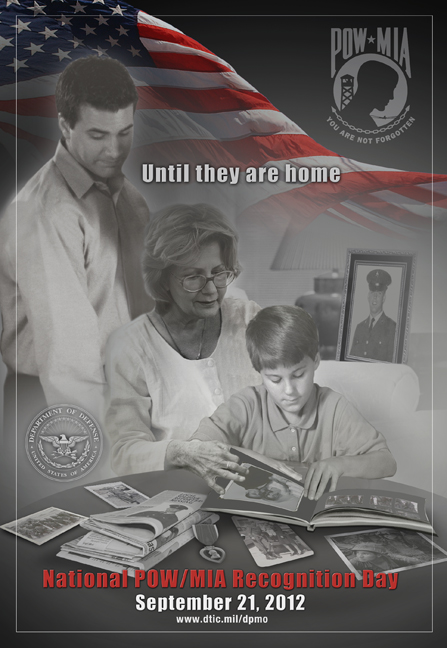
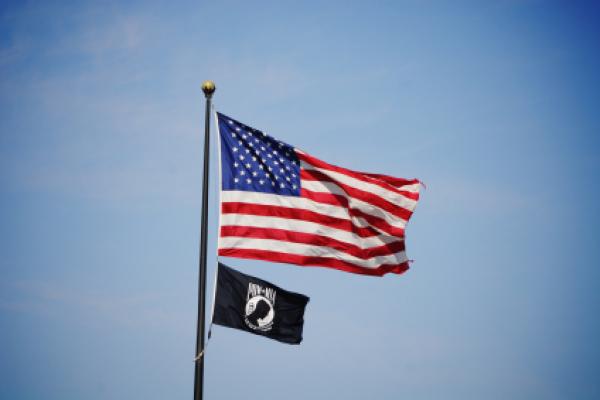
Never Forget: National POW-MIA Recognition Day September 21st 2012

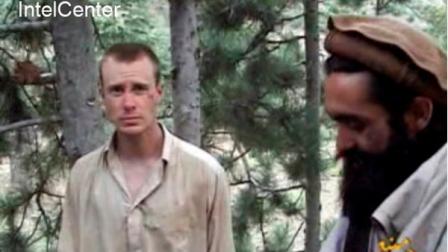
Over 80,000 American Soldiers, Sailors, Marines and Airmen who answered the call to the nation’s colors are still listed as Missing in Action. Currently there is one known Prisoner of War, Sergeant Bowe Bergdahl being held by Taliban Forces in Afghanistan.

Sht Bowe Bergdahl in Taliban captivity

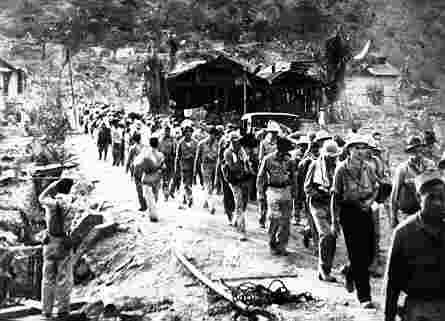
Most of these men and women served in World War II, Korea and Vietnam. They went to war, many as conscripts and never came home. For many Americans they are not even a memory. We are so distanced from the concept of national service or sacrifice and these wars are so far in the past that most people have no concept unless they are closely connected to a military family that still looks at an empty place at a table and has not had the closure of knowing that their relative is alive or dead. They have memories of the day that someone told them that their loved one was missing in action or a prisoner of our enemies.

Bataan Death March

The wait endured by these families is unimaginable to most people. For those known to be POWs the wait is tempered by the knowledge that their loved on is still alive and might return. For the relatives of the missing, there is only hope that their loved one is alive. For most this is not the case, especially as the time between when they went missing and the present day grows ever longer.

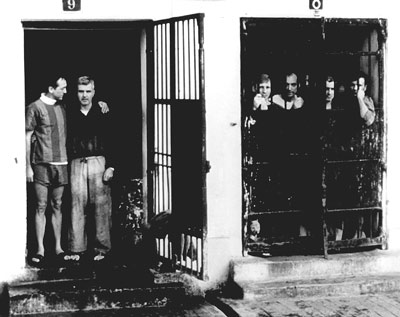
Captain James Stockdale (2nd from left) at the Hoa Lo Prison (Hanoi Hilton)

For those that experienced being a Prisoner of War the wait is one marked by isolation, constant enemy propaganda and the fear that they might not ever their their loved ones or home again. Most have endured those hardships and have survived torture at the hands of their captors. Vice Admiral James Stockdale who was a prisoner of the North Vietnamese for over seven and a half years. After his release he said something that I have always thought both remarkable and inspirational and representative of many of those who endured captivity: “The test of character is not ‘hanging in’ when you expect light at the end of the tunnel, but performance of duty, and persistence of example when you know no light is coming.”

Norman Eidsmoe

When I was a kid and my dad was in the Navy I went to school with the children of a Navy pilot, LCDR Norman Eidsmoe. Eidsmoe went missing on a night bombing mission over North Vietnam on January 26th 1968. Two of his sons would serve as aviators in the Navy or Marine Corps and in 1997 his remains,were recovered. On December 9th 1999 his remains as well as those of his bombardier-navigator LT Michael Dunn were positively identified by the Joint POW/MIA Accounting Command (JPAC).

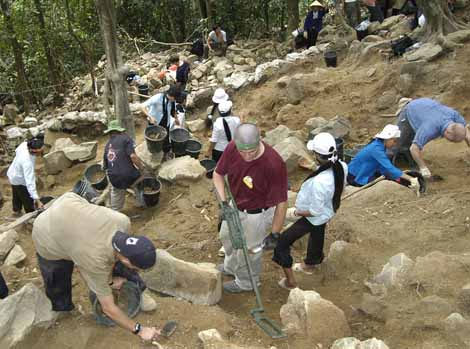
Members of the Joint POW-MIA Accounting Command near Dong Hoi Vietnam in 2006

For the Eidsmoe’s and the Dunn’s their long wait ended, but for tens of thousands of others the wait continues. Each day the men and women of the JPAC work around the world in to track down, recover and identify the missing. Working in the jungles of Southeast Asia, remote Pacific Islands and the battlefields of Europe and North Africa these men and women labor, often with our former enemies to locate, recover and identify our missing heroes. Almost every month the survivors and descendants of a MIA are notified that the remains of their loved one have been identified bringing needed closure to these families.

As this night ends let us not forget those who are still missing or held captive and those that currently serve in harm’s way.

Peace

Padre Steve+


1 Comment

Filed under History, Military, vietnam

September 1st 1939: The Day the World Changed Forever

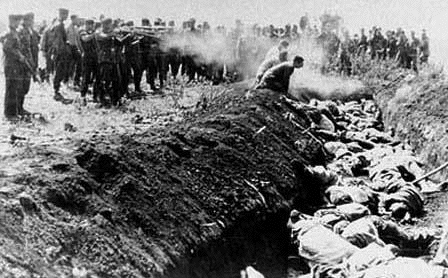
In the early dawn hours of September 1st 1939 the the Panzer spearheads of the German Wehrmacht rolled across the Polish Frontier. In the Free City of Danzig the elderly battleship Schweswig-Holstein fired her 11” guns into Polish positions on the Westerplatte at point blank range. In the air the Luftwaffe swept the small Polish Air Force from the skies. Ju-87 Stuka dive bombers screeched down in merciless attacks on Polish units, cities and even refugees. Behind the front lines came the Einsatzgruppen their mission to exterminate the elite of the Polish nation and the Jews.

It was a different kind of war. Hitler told his military chiefs  at Obersalzburg the week before the before the campaign:

“Our strength consists in our speed and in our brutality. Genghis Khan led millions of women and children to slaughter—with premeditation and a happy heart. History sees in him solely the founder of a state. It’s a matter of indifference to me what a weak western European civilization will say about me. I have issued the command—and I’ll have anybody who utters but one word of criticism executed by a firing squad—that our war aim does not consist in reaching certain lines, but in the physical destruction of the enemy. Accordingly, I have placed my death-head formation in readiness—for the present only in the East—with orders to them to send to death mercilessly and without compassion, men, women, and children of Polish derivation and language. Only thus shall we gain the living space (Lebensraum) which we need. Who, after all, speaks to-day of the annihilation of the Armenians?

The war would be marked by brutality unseen in modern warfare, especially on the Eastern Front and between the Allies and the Japanese in the Pacific. It would end with the dropping of the Atomic bombs on Hiroshima and Nagasaki. By the end of the war between 50 and 78 million people were dead. Europe was divided between the Soviet dominated East and the Western Allies by the Iron Curtain. Proxy wars would be waged by the United States and the Soviet Union as a Cold War settled over the world.

The Cold War has been over for over 20 years now and now other wars rage around the world and war clouds loom, especially in the Middle East. Madmen threaten to exterminate their enemies.

Pray for peace

Padre Steve+

1 Comment

Filed under History, world war two in europe, world war two in the pacific

70 Years: Celebrating the Miracle at Midway

It is hard to imagine now but in June of 1942 it seemed a good possibility that the Americans and British could be on the losing side of the Second World War.

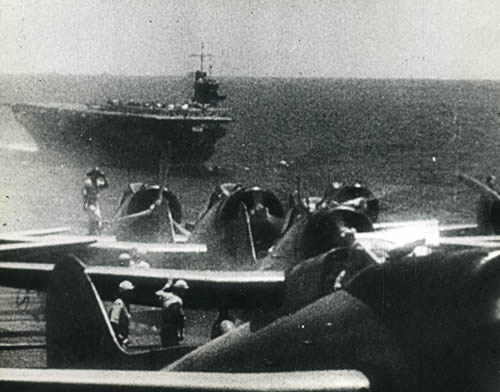
In June 1942 the Japanese onslaught in the Pacific appeared nearly unstoppable. The Imperial Navy stormed across the Pacific and Indian Oceans in the months after Pearl Harbor decimating Allied Naval forces that stood in their way.  The British Battleships HMS Prince of Wales and HMS Repulse were sunk by land based aircraft off of Singapore. A force of Royal Navy cruisers and the Aircraft Carrier HMS Hermes were sunk by the same carriers that struck Pearl Harbor in the Indian Ocean.  Darwin Australia was struck with a devastating blow on February 19th and on February 27th the Japanese annihilated the bulk of the American, British, Dutch and Australian naval forces opposing them at the Battle of the Java Sea. American forces in the Philippines surrendered on May 8th while the British in Singapore surrendered on February 15th.

In only one place had a Japanese Naval task force been prevented from its goal and that was at the Battle of the Coral Sea.  Between 4-8 May the US Navy’s Task Force 11 and Task Force 17 centered on the Carriers USS Lexington and USS Yorktown prevented a Japanese invasion force from taking Port Moresby. Their aircraft sank the light carrier Shoho, damaged the modern carrier Shokaku and decimated the air groups of the Japanese task force. But it was the unexpected raid by US Army Air Corps B-25 Bombers launched from the USS Hornet under command of Colonel Jimmy Doolittle on April 18th 1942 which embarrassed Yamamoto so badly that he ordered the attack to take Midway and destroy the remaining US Naval power in the Pacific.

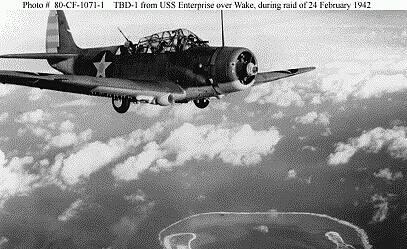
In May US Navy code breakers discovered the next move of the Imperial Navy an attack on Midway Island and the Aleutian islands.   Since the occupation of Midway by Japanese forces would give them an operational base less than 1000 miles from Pearl Harbor Admiral Chester Nimitz committed the bulk of his naval power, the carriers USS Enterprise CV-6, USS Yorktown CV-5 and USS Hornet CV-8 and their 8 escorting cruisers and 15 destroyers.  His force of 26 ships with 233 aircraft embarked to defend Midway while a force of 5 cruisers and 4 destroyers was dispatched to cover the Aleutians.  Midway itself had a mixed Marine, Navy and Army air group of 115 aircraft which included many obsolete aircraft, 32 PBY Catalina Flying Boats and 83 fighters, dive bombers, torpedo planes and Army Air Force bombers piloted by a host of inexperienced but resolute airmen.

The Japanese Fleet was led by Admiral Isoroku Yamamato and was built around the elite First Carrier Striking Group composed of the Pearl Harbor attackers Akagi, Kaga, Soryu and Hiryu. Led by Vice Admiral Chuichi Nagumo its highly trained and combat experienced air groups composed of 273 aircraft. This force was escorted by 2 Battleships, 3 Cruisers 12 Destroyers. Yamamoto commanded a force of  2 light carriers, 5 Battleships, 11 cruisers and 27 destroyers.  Meanwhile a  force of 4 battleships, 12 destroyers assigned screen to the Aleutian invasion force which was accompanied by 2 carriers 6 cruisers and 10 destroyers. The other carriers embarked a further 114 aircraft.  The Japanese plan was ambitious but it was so ambitious that the Japanese Task forces were scattered over thousands of square miles of the Northern Pacific Ocean from which they could not rapidly come to the support of each other.

With the foreknowledge provided by the code breakers the US forces hurried to an intercept position northeast of Midway. They eluded the Japanese submarine scout line which the Japanese Commander Admiral Yamamoto presumed would find them when they sailed to respond to the Japanese attack on Midway.  Task Force 16 with the Enterprise and Hornet sailed first under the command of Rear Admiral Raymond A Spruance in place of the ailing William “Bull” Halsey. Task Force 17 under Rear Admiral Frank “Jack” Fletcher was built around the Yorktown which had been miraculously brought into fighting condition after suffering heavy damage at Coral Sea. Fletcher assumed overall command by virtue of seniority and Admiral Nimitz instructed his commanders to apply the principle of “calculated risk” when engaging the Japanese as the loss of the US carriers would place the entire Pacific at the mercy of the Japanese Navy.

On June 3rd a PBY Catalina from Midway discovered the Japanese invasion force and US long range bombers launched attacks against but inflicted no damage. On the morning of the 4th the Americans adjusted their search patterns in and the Japanese came into range of Midway and commenced their first strike against the island.  In response land based aircraft from Midway attacked the Japanese carrier force taking heavy casualties and failing to damage the Japanese task force.

The American Carrier task forces launched their strike groups at the Japanese fleet leaving enough aircraft behind of the Combat Air Patrol and Anti-submarine patrol.  As the Americans winged toward the Japanese fleet the Japanese were in confused.  A scouting report by an aircraft that had been delayed at launch discovered US ships but did not identify a carrier until later into the patrol.  This was the Yorktown and TF 17. The Japanese attempted to recover their strike aircraft and prepare for a second strike on the island and then on discovery of the carrier embarked on the task of unloading ground attack ordnance in favor of aerial torpedoes and armor piercing bombs.  The hard working Japanese aircrew did not have time to stow the ordnance removed from the aircraft but by 1020 they had the Japanese strike group ready to launch against the US carriers.

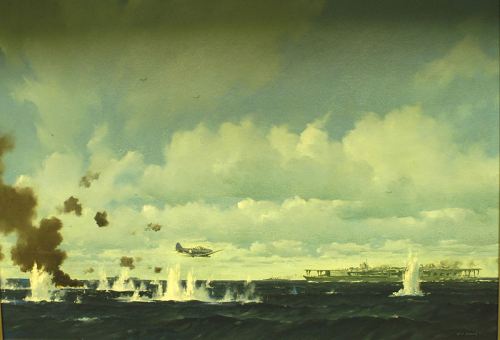
As the Japanese crews worked the Japanese carriers were engaged in fending off attacks by the US torpedo bomber squadrons, VT-6 from Enterprise, VT-8 from Hornet and VT-3 from Yorktown.  The Japanese Combat Air Patrol ripped into the slow, cumbersome and under armed TBD Devastators as they came in low to launch their torpedoes.  Torpedo Eight from Hornet under the command of LCDR John C Waldron pressed the attack hard but all 15 of the Devastators were shot down.  Only Ensign George Gay’s aircraft was able to launch its torpedo before being shot down and Gay would be the sole survivor of the squadron.

Torpedo 6 under the command of LCDR Eugene Lindsey suffered heavy casualties losing 10 of 14 aircraft with Lindsey being one of the casualties.  The last group of Devastators to attack was Torpedo 3 under the command of LCDR Lem Massey from the Yorktown.  These aircraft were also decimated and Massey killed but they had drawn the Japanese Combat Air Patrol down to the deck leaving the task force exposed to the Dive Bombers of the Enterprise and Yorktown.

There had been confusion among the Americans as to the exact location of the Japanese Carriers, the Bombing 8 and Scouting 8 of Hornet did not find the carriers and had to return for lack of fuel with a number of bombers and their fighter escort having to ditch inn the ocean and wait for rescue.  The Enterprise group under LCDR Wade McClusky was perilously low on fuel when the wake of a Japanese destroyer was spotted.  McClusky followed it to the Japanese Task Force.  The Yorktown’s group under LCDR Max Leslie arrived about the same time.  The found the skies empty of Japanese aircraft. Aboard the Japanese ships there was a sense of exhilaration as each succeeding group of attackers was brought down and with their own aircraft ready to launch and deal a fatal blow to the American carrier wondered how big their victory would be.

At 1020 the first Zero of the Japanese attack group began rolling down the flight deck of the flagship Akagi, aboard Kaga aircraft were warming up as they were on the Soryu.  The unsuspecting Japanese were finally alerted when lookouts screamed “helldivers.” Wade McClusky’s aircraft lined up over the Akagi and Kaga pushing into their dives at 1022. There was a bit of confusion when the bulk of Scouting 6 joined the attack of Bombing 6 on the Kaga.  The unprepared carrier was struck by four 1000 pound bombs which exploded on her flight deck and hangar deck igniting the fully fueled and armed aircraft of her strike group and the ordnance littered about the hangar deck.  Massive fires and explosions wracked the ship and in minutes the proud ship was reduced to an infernal hell with fires burning uncontrollably. She was abandoned and would sink at 1925 taking 800 of her crew with her.

LT Dick Best of Scouting 6 peeled off from the attack on Kaga and shifted to the Japanese flagship Akagi. On board Akagi were two of Japans legendary pilots CDR Mitsuo Fuchida leader of and CDR Minoru Genda the architect of the Pearl Harbor attack and subsequent string of Japanese victories.  Both officers were on the sick list and had come up from sick bay to watch as the fleet was attacked.  Seeing Kaga burst into flames they stood mesmerized until Akagi’s lookouts screamed out the warning “helldivers” at 1026.  Best’s aircraft hit with deadly precision landing tow of their bombs on Akagi’s flight deck creating havoc among the loaded aircraft and starting fires and igniting secondary explosions which turned the ship into a witch’s cauldron.  By 1046 Admiral Nagumo and his staff were forced to transfer the flag to the cruiser Nagara as Akagi’s crew tried to bring the flames under control. They would do so into the night until nothing more could be done and abandoned ship at 2000.  Admiral Yamamoto ordered her scuttled and at 0500 on June 5th the pride of the Japanese carrier force was scuttled.

VB-3 under LCDR Max Leslie from the Yorktown stuck the Soryu with 17 aircraft, only 13 of which had bombs due to an electronic arming device malfunction on 4 of the aircraft including the squadron leader Leslie.  Despite this they dove on the Soryu at 1025 hitting that ship with 3 and maybe as many as 5 bombs. Soryu like her companions burst into flames as the ready aircraft and ordnance exploded about her deck. She was ordered abandoned at 1055 and would sink at 1915 taking 718 of her crew with her.

The remaining Japanese flattop the Hiryu attained the same fate later in the day after engaging in an epic duel with the Yorktown which her aircraft heavily damaged. Yorktown was abandoned after a second strike but when she did not sink her her returned to attempt to save her. However despite their efforts she and the destroyer USS Hamman DD-412 were torpedoed by the Japanese Submarine I-168. Hamman sank almost immediately with heavy loss of life while Yorktown sank on the morning of the 7th.

It was quite miraculous what happened at Midway in those five pivotal minutes.  Authors have entitled books about Midway Incredible Victory and Miracle at Midway and the titles reflect the essence of the battle.  A distinctly smaller force defeated a vastly superior fleet in terms of experience, training and equipment and when it appeared that the Japanese Fleet would advance to victory in a span of less than 5 minutes turn what looked like certain defeat into one of the most incredible and even miraculous victories in the history of Naval warfare.  In those 5 minutes history was changed in a breathtaking way.  While the war would drag on and the Japanese still inflict painful losses and defeats on the US Navy in the waters around Guadalcanal the tide had turned and the Japanese lost the initiative in the Pacific never to regain it.   The Japanese government hid the defeat from the Japanese people instead proclaiming a great victory while the American government could not fully publicize the information that led to the ability of the US Navy to be at the right place at the right time and defeat the Imperial Navy.

When one looks at implications of the victory it did a number of things. First it changed the course of the war in the Pacific probably shortening it by a great deal.  Secondly it established the aircraft carrier and the fast carrier task force as the dominant force in naval warfare which some would argue it still remains.  Finally those five minutes ushered in an era of US Navy dominance of the high seas which at least as of yet has not ended as the successors to the Enterprise, Hornet and Yorktown ply the oceans of the world and the descendants of those valiant carrier air groups ensure air superiority over battlefields around the world.

Peace

Padre Steve+

4 Comments

Filed under History, Military, Navy Ships, US Navy, world war two in the pacific

In Praise of Nurses

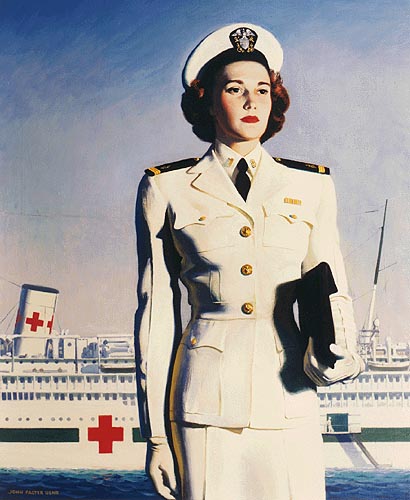
Last week, May 5th-12th was National Nurses Week as well as the 104th Anniversary of the Navy Nurse Corps. Nurses are the lynchpin of medicine. Physicians are incredibly important and as a society we usually ascribe more value to them. However in many case, if not most it is a nurse who is the person that does the heavy lifting in the care of the sick. Before the modern era of nursing was often done by Nuns or by women that volunteered to assist military physicians.

It was in the quagmire of the Crimean War that Florence Nightingale brought about the modern era of nursing, even though physicians and hospitals often saw the women who served as nurses as inexpensive help to care for the sick. Despite this nursing became more and more professional and technical over the years without ever losing that particular calling of ministering to the afflicted that is the essence of their history. In the later 1800s the first nursing schools were established and in 1901 New Zealand was the first country to have Registered Nurses. In 1903 North Carolina became the first US State to require the licensure of nurses.  The US Navy Nurse Corps was established n 1908 with nurses being commissioned as officers and assigned to Naval Hospitals.

However it was the needs of war that brought nursing into the modern age where it is formally recognized as a key component of Health Care. In the World Wars nursing came into its own as a profession. Nurses were among the US personnel that endured the initial onslaught of the war in the Pacific. The Army and Navy Nurses that served and cared for the wounded, starving and emaciated Soldiers, Martines and Sailors on Bataan and Corregidor were heroes in their own right.

The profession of nursing continues to grow and the women and men who serve as nurses at various levels, from the most highly trained Clinical Nurse Specialists and Nurse Practitioners, or other highly specialized Register Nurses many of whom have advanced degrees including doctorates down to the most humble Licensed Vocational (or Practical) Nurse and even Certified Nursing Aides. These women and men are the backbone of medicine and despite the long hours, the years of training and certification required of them, many people don’t fully appreciate them until they become sick and are cared for by these wonderful people.

I have been blessed to have known and worked with many amazing nurses in the course of my career as a Medical Service Corps Officer in the Army and as a Chaplain in the military and civilian settings. As I wrote yesterday I lost a dear friend and co-worker, Commander Marsha Hanly a Navy Nurse who died unexpectedly yesterday. Marsha exemplified the best of nursing and thank God there are so many more like her who serve so well, and care so well for those committed to their. Likewise many a physician and chaplain for that matter owe a great deal to nurses.

God Bless all Nurses tonight.

Peace

Padre Steve+
2 Comments

Filed under healthcare, History