
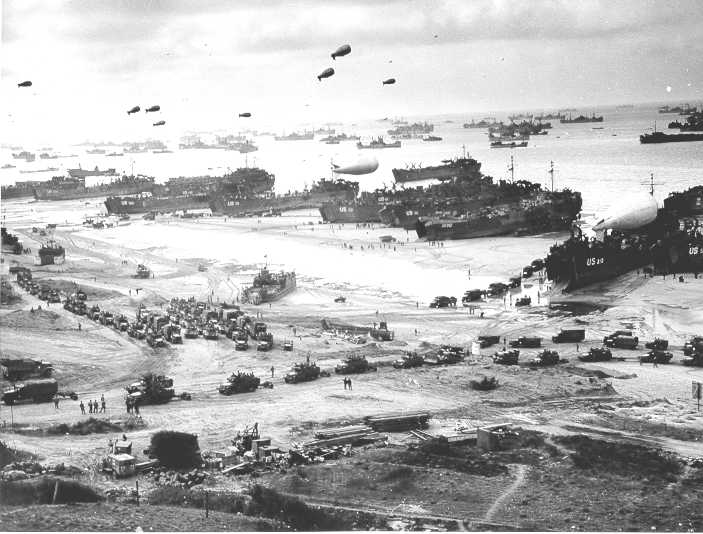
 The Normandy Invasion
There are few months in history when the courses of events change in a global sense, however the month of June 1944 was one of them. In June 1944 the Allies were on the offensive. The initiative had shifted to their favor in every theater of the war. On June first 1st 1944 the United States and Britain were preparing to cross the English Channel and invade France at Normandy. In Italy Allied Forces were moving forward after a long series of battles at Salerno, Monte Casino, the Rapido River and Anzio the US 5th Army was closing in on Rome. In Russia the Red Army was preparing for its summer offensive aimed at the destruction of the German Army Group Center. In Central Pacific US Navy and Marine Forces with some attached Army units were sailing to invade the Marinas islands and into a confrontation with the bulk of the Imperial Japanese Navy which was planning to attempt the destruction of the US Fleet and invasion forces. In offices and headquarters around Germany and occupied Europe senior military officers, politicians, police officials and members of the intelligentsia and clergy were plotting a coup to kill Hitler and drive the Nazis from power. In the United States President Roosevelt was running for re-election for the 3rd time, it was a time when the world hung in the balance and while each adversary had a desired outcome none was sure.

In fact D-Day was a very near run thing and Rome was surrendered by the Germans without a fight that might have bled the Allies in Italy dry, the Germans were quite adept at defense in built up areas and the Soviets benefited greatly from the withholding of vital reinforcements from the front by the Command of the German Replacement Army which was deeply involved in the plot to overthrow Hitler and keeping large numbers of divisions in Germany to assist them to take over when Hitler was killed. In the Pacific the Admiral Nimitz and his subordinates commanded a fleet like none before yet still faced many unknowns that could derail the campaign if they were not careful. The lives of millions of Soldiers, Sailors, Marines and Airmen from a host of nations as well as noncombatants in almost every theater of the war depended on decisions made in carious capitals, military and naval headquarters and such annoying things as weather, logistics and the “fog of war” as Clausewitz so aptly put it. In fact once the die was cast and the battle joined on all of these fields of battle decisions of junior commanders and even small units would play major roles in the outcomes and the plans of the various nations would have to be adjusted as no plan survives contact with the enemy.
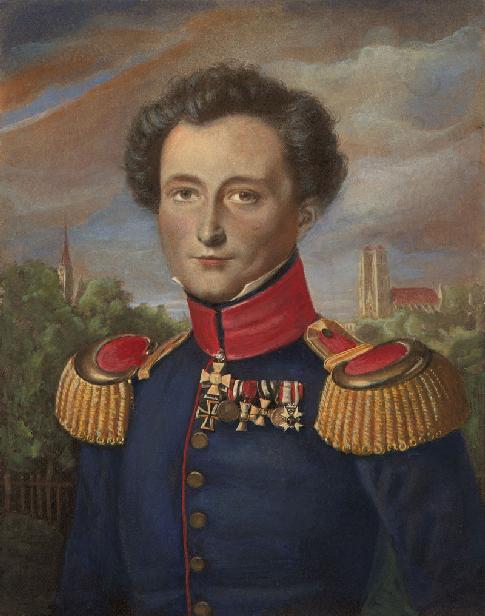 Carl Von Clausewitz in his book “On War” developed the understanding of “the fog of war”
That is the way that history tends to develop. The participants see the events around them, make plans and make assumptions. They do this in the hopes of achieving an outcome that favors them and their cause yet at the end of the day no matter how well they plan, whatever advantages or disadvantages they or their opponents have are subject to chance once the die is cast, unexpected circumstances events and seemingly innocuous choices lay waste to the most carefully crafted plans. Add to this the mistakes and actions of even the most modest and unassuming people, failures of equipment, the introduction of new or unexpected weaponry, tactics or operational concepts and the fog becomes thicker and friction greater. Finally there is the success or failure of the boring aspects of war such as logistics, economics, industrial production and the respective national will of each nation all affect the outcome of conflict as the failure of a simple part of a system can have catastrophic results.
 Iranian Missile Boat and UH-1 Helicopter…What will happen in June 2010?
One has to ask what ifs when dealing with events in times of war, conflict and economic chaos and this is exactly the world that we live in today. I do not need to recite the numerous areas of war and conflict around the globe but in each case the participants all have desired outcomes which whether grounded in reality or not influence their actions and their responses to competitors in given situations. The United States is trying to withdraw US combat forces from Iraq and at the same time launch a major offensive at the spiritual heart of the Taliban movement in Afghanistan. Additionally the US is working with Allies to prevent Iran from developing or obtaining a nuclear weapon and attempt to garner a settlement in the continuing Israeli-Palestinian conflict and conflict with Hezbollah. Any of this missions would be difficult enough on its own but the United States like all major powers has other concerns and when North Korea sinks a South Korean ship, a clash erupts between Israel and groups attempting to breach the Israeli blockade of the Palestinian Authority all the while natural and commercial disasters impact the US, our economy and the environment. At home the country faces continued terrorist threats from radical Moslem extremist groups as well as a crisis at its southern border. To cap everything off the political division in the country adds yet another complication to an already muddled mess.
All of this as well as things that I have not mentioned or that we don’t expect to happen impact military plans and operations around the world just as unexpected and unplanned for events impacted what happened in that fateful month of June 1944. What will happen in June of 2010? God only knows, the best laid plans of mice and men are often rudely disrupted by the uncertainty of the fog of war as well as the unexpected events that seem to occur when they are the least convenient for us. It will be interesting to see what the world likes like by the end of the summer. God have mercy on us.
Peace
Padre Steve+

 The Inglorius Padre Steve's World