Monthly Archives: January 2014

The Enduring Crisis: Suicides in Veterans Spiking

126642_600The Veterans Administration released a disturbing report that male veterans under 30 years old saw a 44% increase in the rate of suicide. The rate for women veterans increased by 11%. About 22 veterans a day committed suicide in 2013. That did not count those still on active duty numbers which are still high but have dropped somewhat since 2012 and previous years.

The VA National Mental Health Director for Suicide Prevention, Jan Kemp said “Their rates are astronomically high and climbing…” Kemp postulated that reasons for the spike might include “the pressures of leaving military careers, readjusting to civilian life and combat injuries like post-traumatic stress disorder…”

I believe that the stigma that many felt about getting psychological help while they were in the military continues on when they enter civilian life. Unlike the military where there is still some sense of camaraderie and a chance that the chain of command might force a service member to get help, no corresponding structure or community exists in the civilian world. Young veterans are often isolated and face new stresses while they are already on edge. Many find that the military occupation specialities that they trained for have no direct civilian counterpart, leaving them struggling in the civilian job market. Combat injuries as well as injuries sustained in training often continue on, limiting what they can do and the unseen injuries of PTSD, Traumatic Brain Injury and Moral Injury, often undiagnosed and untreated lurk in the background.

20131108-ArlingtonVA-MilitaryInforgraphic

This is a national tragedy and crisis. Many of these young men and women are among the best and brightest. They volunteered to serve in time of war and now as the military, especially the Army and Marine Corps begin to shed large numbers of troops, many more will be thrust into a world that they may be ill equipped to survive.

They will attempt to go to work or attend school, quite often alone. There they will be surrounded by people who have no idea of the issues that they face or understanding of the military world that they left, or the places that they served. I think this social isolation will be a killer for many.

130919123908-suicide-frequency-story-body

My recommendation is that people who work or go to school with these young veterans, or for that matter any veteran get to know them. Help them adjust to the world and keep an eye on them. Ask them how they are doing and just show that you care. You do not have to be a veteran to do that. Likewise get to know about the resources that are available for veterans and help direct them to them. Have the courage to care.

Resources include the Veterans Crisis Hotline which is staffed 24 hours a day, 7 days a week. They can be reached at (800)-273-8255, press 1, or here to chat online. They also allow veterans to send a text message to 838255 to receive confidential support 24 hours a day.

Another resource is the Real Warriors Live Chat. The a trained health resource consultant is ready to talk, listen and provide guidance and resources. They can be reached by calling 866-966-1020 or going to their live chat service here http://www.realwarriors.net/livechat.

Afterdeployment.org http://afterdeployment.t2.health.mil offers wellness resources for the Military Community. Service members in transition to civilian life can contact inTransition by calling 800-424-7877 or at their website http://www.health.mil/InTransition/default.aspx

To me this is personal. I still suffer from the effects of PTSD and I have known far too many veterans who have taken their own lives, or struggle with mental health issues, physical injuries and illness, or social isolation. This week a brilliant and heroic senior officer I knew, who helped me when I was collapsing due to the effects of PTSD took his own life. This is something that all of us have a stake in. Please help look out for our veterans.

Peace

Padre Steve+

5 Comments

Filed under healthcare, Military, News and current events, PTSD

Writing My Way Home: Iraq, Faith PTSD and Life

Friends of Padre Steve’s World. It has been an exhausting week. I have had a lot on my mind, I have not slept well so tonight I am taking it easy and sending out a rerun of an older post that fits well into the stories I have been writing about this week. As I have thought about the passing of Captain Sitsch and a host of other matters I have continued to muse on my purpose. I think that is a good thing, and in no way negative. I really do think that we must always be evaluating our lives, correcting our course when needed, and ensuring that we are going where we need to go, wherever that may be. Someone once said “where you go, there you are” and I think there is truth in that. This article kind of summarizes where I was last summer but where I still remain and where I think in light of what I have been seeing where I need to be for a while. I started rewriting, editing and reposting my Iraq story last year. I stopped because I got too busy and other things took me away. So I think I will continue that journey of writing and healing. Have a great night, a good weekend if you don’t get back here and be safe. Peace, Padre Steve+

padresteve's avatarThe Inglorius Padre Steve's World

295_26912012058_78_n

“Many people are looking for an ear that will listen. They do not find it among Christians, because these Christians are talking where they should be listening.But he who can no longer listen to his brother will soon be no longer listening to God, either; he will be doing nothing but prattle in the presence of God, too. This is the beginning of the death of the spiritual life, and in the end there will be nothing left but spiritual chatter and clerical condescension arrayed in pious words… never really speaking to others.” Dietrich Bonhoeffer

Since I returned from Iraq I have grown weary of Christians that have all the answers and are more interested in promoting their agenda than actually listening or caring for those wounded in spirit from various forms of trauma including war. I returned from Iraq and went through what amounted to a crisis in faith…

View original post 1,890 more words

Leave a comment

Filed under Loose thoughts and musings

“A Foreign World”: The High Cost of Coming Home from War

295_26912117058_5652_n

For me it began in February 2008 when on the way back from Iraq the military charter aircraft bringing us home stopped in Ramstein Germany. After a few hour layover we re-boarded the aircraft but we were no longer alone, the rest of the aircraft had been filled with the families of soldiers and airmen stationed in Germany. Just days before most of us had been in Iraq or Afghanistan. The cries of children and the intrusion of these people, not bad people by any means on our return flight was shocking, it was like returning to a world that I no longer knew.

I think that coming home from war, especially for those damaged in some way, in mind, body or spirit is harder than being at war. In that thought I am not alone. Erich Maria Remarque in his classic novel All Quiet on the Western Front wrote:

“I imagined leave would be different from this. Indeed, it was different a year ago. It is I of course that have changed in the interval. There lies a gulf between that time and today. At that time I still knew nothing about the war, we had been only in quiet sectors. But now I see that I have been crushed without knowing it. I find I do not belong here any more, it is a foreign world.” Erich Maria Remarque in All Quiet on the Western Front

Likewise, Guy Sager a French-German from the Alsace and veteran of the Grossdeutschland Division on the Eastern Front in World War II noted at the end of his book The Forgotten Soldier: 

“In the train, rolling through the sunny French countryside, my head knocked against the wooden back of the seat. Other people, who seemed to belong to a different world, were laughing. I couldn’t laugh and couldn’t forget.” Guy Sager in The Forgotten Soldier

I have been reminded of this several times in the past week. It began walking through a crowded Navy commissary on Saturday, in the few minutes in the store my anxiety level went up significantly. On Tuesday I learned of the death of Captain Tom Sitsch my last Commodore at EOD Group Two, who died by his own hand. His life had come apart. After a number of deployments to Iraq as the Commander EOD Mobile Unit 3 and of Task Force Troy he was afflicted with PTSD. Between June of 2008 and the end of 2009 he went from commanding an EOD Group to being forced to retire.  Today I had a long talk with a fairly young friend agonizing over continued medical treatments for terminal conditions he contracted in two tours in Iraq where he was awarded the Bronze Star twice.

I have a terrible insomnia, nightmares and night terrors due to PTSD. My memories of Iraq are still strong, and this week these conditions have been much worse. Sager wrote:

“Only happy people have nightmares, from overeating. For those who live a nightmare reality, sleep is a black hole, lost in time, like death.”

Nearly 20 years after returning from war, a survivor of the 1st Battalion 308th Infantry, the “Lost Battalion” of World War One, summed up the experience of so many men who come back from war:

“We just do not have the control we should have. I went through without a visible wound, but have spent many months in hospitals and dollars for medical treatment as a result of those terrible experiences.”

Bradley-12-2

Two time Medal of Honor winner Major General Smedley Butler toured Veterans hospitals following his retirement from the Marine Corps. He observed the soldiers who had been locked away. In his book War is a Racket:

“But the soldier pays the biggest part of this bill. If you don’t believe this, visit the American cemeteries on the battlefields abroad. Or visit  any of the veterans’ hospitals in the United States….I have visited eighteen government hospitals for veterans. In them are about 50,000 destroyed men- men who were the pick of the nation eighteen years ago. The very able chief surgeon at the government hospital in Milwaukee, where there are 3,800 of the living dead, told me that mortality among veterans is three times as great as among those who stayed home.”

Similarly Remarque wrote in All Quiet on the Western Front:

“A man cannot realize that above such shattered bodies there are still human faces in which life goes its daily round. And this is only one hospital, a single station; there are hundreds of thousands in Germany, hundreds of thousands in France, hundreds of thousands in Russia. How senseless is everything that can ever be written, done, or thought, when such things are possible. It must be all lies and of no account when the culture of a thousand years could not prevent this stream of blood being poured out, these torture chambers in their hundreds of thousands. A hospital alone shows what war is.”

Lt.ColonelCharlesWhiteWhittlesey

Sometimes even those who have been awarded our Nation’s highest award for valor succumb to the demons of war that they cannot shake, and never completely adjust to life at “home” which is no longer home. For them it is a different, a foreign world to use the words of Sager and Remarque. Lieutenant Colonel Charles Whittlesey won the Congressional Medal Medal of Honor as Commander of 1st Battalion 308th Infantry, the “Lost Battalion” in France. After the war he was different. He gave up his civilian law practice and served as head of the Red Cross in New York. In that role, and as the Colonel for his reserve unit, he spent his time visiting the wounded who were still suffering in hospitals. He also made the effort to attend the funerals of veterans who had died. The continued reminders of the war that he could not come home from left him a different man. He committed suicide on November 21st 1921not long after serving as a pallbearer for the Unknown Soldier when that man was interred at Arlington National Cemetery.

In the eulogy Judge Charles L. Hibbard noted:

“He is sitting on the piazza of a cottage by the sea on a glorious late September day but a few weeks ago. . . He is looking straight out to sea, with naught but sea between him and that land where lie so many of his boys. The beating surf is but an echo, the warm, bright sunshine, the blue sky, the dancing waves, all combine to charm. But a single look at his face and one knows he is unconscious of this glory of Nature. Somewhere far down in the depths of his being or in imagination far off across the waters he lives again the days that are past. That unconscious look has all the marks of deep sorrow, brooding tragedy, unbearable memories. Weeks pass. The mainspring of life is wound tighter and tighter and then comes the burial of the Unknown Soldier. This draws the last measure of reserve and with it the realization that life had little now to offer. This quiet, reserved personality drew away as it were from its habitation of flesh, thought out the future, measured the coming years and came to a mature decision. You say, ‘He had so much to live for – family, friends, and all that makes life sweet.’ No, my friends, life’s span for him was measured those days in that distant forest. He had plumbed the depth of tragic suffering; he had heard the world’s applause; he had seen and touched the great realities of life; and what remained was of little consequence. He craved rest, peace and sweet forgetfulness. He thought it out quietly, serenely, confidently, minutely. He came to a decision not lightly or unadvisedly, and in the end did what he thought was best, and in the comfort of that thought we too must rest. ‘Wounded in action,’ aye, sorely wounded in heart and soul and now most truly ‘missing in action.’”

Psychologist and professor Dr Ari Solomon analyzed the case of Colonel Whittlesey and noted:

“If I could interview Whittlesey as a psychologist today, I’d especially have in mind … the sharp discrepancy between the public role he was playing and his hidden agony, his constant re-exposure to reminders of the battle, his possible lack of intimate relations, and his felt need to hide his pain even from family and dearest friends.”

I wish I had the answer. I have some ideas that date back to antiquity in the ways that tribes, clans and city states brought their warriors home. The warriors were recognized, there were public rituals, sometimes religious but other times not. But the difference is that the warriors were welcomed home by a community and re-integrated into it. They were allowed to share their stories, many of which were preserved through oral traditions so long that they eventually were written down, even in a mythologized state.

But we do not do that. Our society is disconnected, distant and often cold. Likewise it is polarized in ways that it has not been since the years before our terrible Civil War. Our warriors return from war, often alone, coming home to families, friends and communities that they no longer know. They are misunderstood because their experience is not shared by the population at large. The picture painted of them in the media, even when it is sympathetic is often a caricature.  Their camaraderie with the friends that they served alongside is broken by distance and the frenetic pace of our society. Remarque wrote “We were all at once terribly alone; and alone we must see it through.”

If we wonder about the suicide epidemic among veterans we have to ask hard questions. Questions like why do so many combat veterans have substance abuse problems and why is it that approximately one in ten prisoners serving time are veterans? It cannot be simply that they are all bad eggs. Many were and are smart, talented, compassionate and brave, tested and tried in ways that our civilian society has no understanding for or clue about. In fact to get in the military most had to be a cut above their peers. We have to ask if we are bringing our veterans home from war in a way that works. Maybe even more importantly we have to ask ourselves if as a culture if we have forgotten how to care about each other. How do we care for the men and women who bear the burden of war, even while the vast majority of the population basks in the freedom and security provided by the soldier without the ability to empathize because they have never shared that experience.

For every Tom Sitsch, Charles Whittlesey or people like my friend, there are countless others suffering in silence as a result of war. We really have to ask hard questions and then decide to do something as individuals, communities and government to do something about it. If we don’t a generation will suffer in silence.

Peace

Padre Steve+

2 Comments

Filed under History, iraq,afghanistan, Military, PTSD

Ending the Stigma: PTSD, TBI and Moral Injury in Senior Leaders

295_26911892058_4301_n

Yesterday I wrote about the death of my former Commodore at EOD Group Two, Captain Thomas Sitsch who committed suicide on Monday outside a New Hampshire Hospital. Captain Sitsch was another casualty of the longest wars this nation has engaged.

Many senior leaders in the military, officers and senior enlisted of every service have frequently deployed to Iraq, Afghanistan as well as other locations in the war on terror. Since the war has been going over 12 years many have spent over half of their careers preparing for, engaging in, or recovering from wartime deployments. Many have suffered physical injuries as well as the unseen injuries of war, PTSD, Traumatic Brain Injury and Moral Injury. Unfortunately they are often the last people to seek help.

In the past few years I have personally known or know of a number of senior officers and senior enlisted personnel who have committed or attempted suicide or had their careers destroyed because of their actions. Some like Captain Sitsch were diagnosed with PTSD, others displayed some or all of the indicators but either refused help or put getting help aside in order to “stay in the fight.”

In the past couple of years the Commanding Officer of a deployed SEAL Team committed suicide in Afghanistan, two Marine Expeditionary Unit commanding officers were relieved after incidents that probably have their genus in PTSD, or Moral Injury. I would almost bet that some of the issues that some of our senior leaders have been relieved of their duties for are also the result of untreated PTSD, TBI, Combat Stress Injury or Moral Injury.

dallaire-rwanda

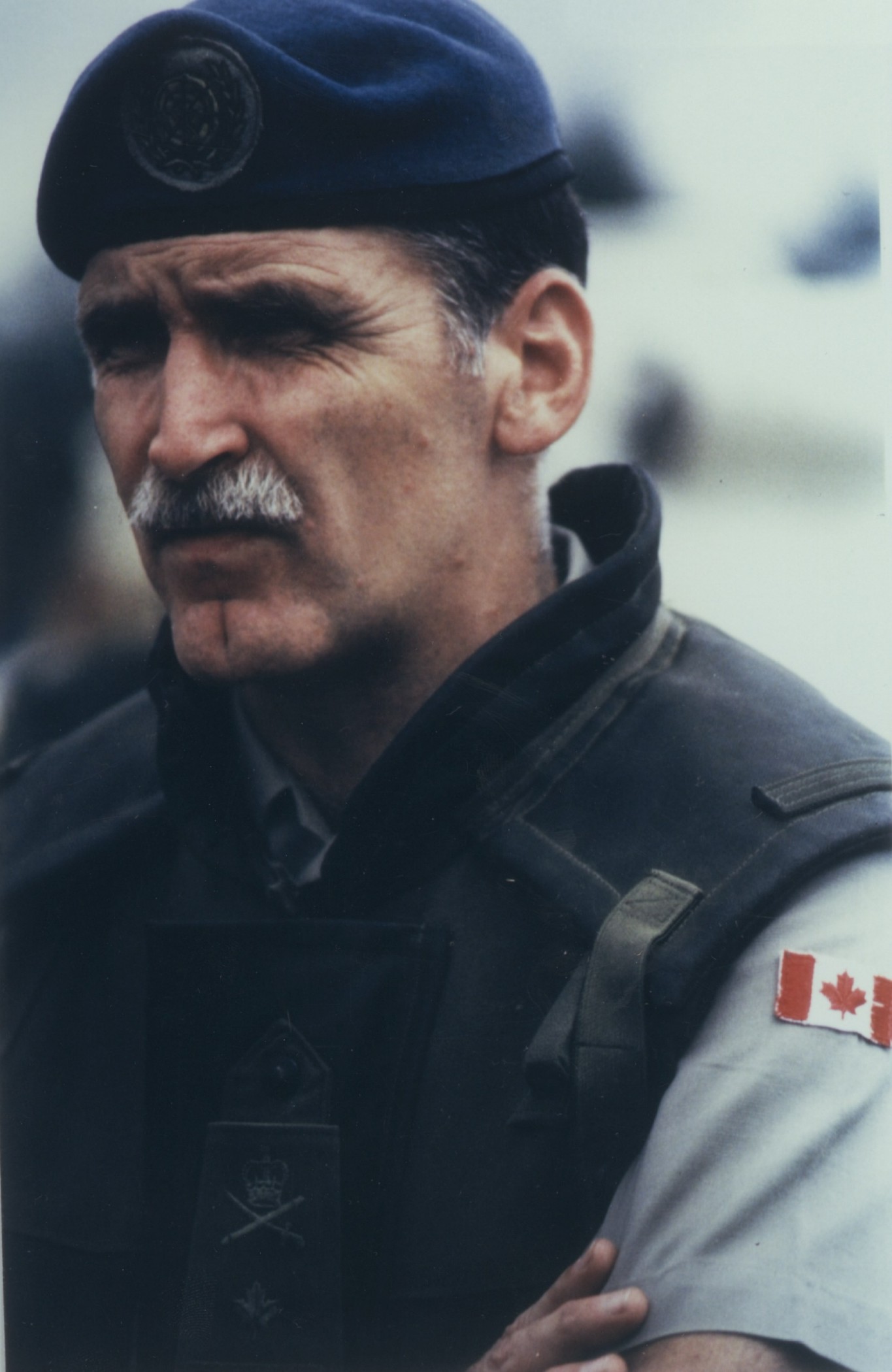
Retired Canadian General Romeo Dallaire still suffers from PTSD following his command of the UN Rwanda force in the middle of that country’s genocide. He attempted suicide in 2000 and still suffers. Last month he was involved in a car accident on his way to work in the Canadian Senate when he fell asleep at the wheel of his car. He had not slept the previous night due to reliving the horrors of that experience. As someone who still suffers chronic insomnia related to my PTSD I understand how this can happen.

The PTSD of T. E. Lawrence’s experience of war in the Middle East in the First World War shows in the pages of his classic Seven Pillars of Wisdom and various letters. Lawrence, who could have risen to high rank in the military or the foreign service basically went underground under an assumed name to serve in the ranks of the Royal Air Force in the 1920s. He wrote to Eric Kennington in 1935 not long before his death in a motorcycle accident:

“You wonder what I am doing? Well, so do I, in truth. Days seem to dawn, suns to shine, evenings to follow, and then I sleep. What I have done, what I am doing, what I am going to do, puzzle and bewilder me. Have you ever been a leaf and fallen from your tree in autumn and been really puzzled about it? That’s the feeling.”  

That is a part of our military culture. Leaders are under a great deal of pressure to accomplish often impossible missions and to take care of their troops. Many have been exposed to repeated combat trauma and had to bury more than one of their troops, often after the person commits suicide. Many anguish over the deaths, blame themselves and heap guilt on top of grief on top of traumatic or moral injury.

As I said many do not seek help due to an overwhelming cultural stigma against getting help, or “going to the wizard.” Likewise they know that that the reality is that if they seek help them may never command or be assigned to sensitive career enhancing billets again. As one senior leader told me “its hard when they say if you have issues and they are known that you can still have a successful career, but you will never be promoted or selected to a critical position, again.” 

1517080376

A few senior leaders have admitted to suffering from the symptoms of Combat Stress Injury and sought treatment. The most senior was General Carter Ham who began to suffer symptoms following his deployment to Mosul Iraq in 2004. Major General Gary Patton has also sought help for PTSD. Lieutenant General Peter Chiarelli, now retired has taken up the cause to reduce the stigma seeking to have PTSD renamed Post Traumatic Stress Injury instead of “disorder” because it is an injury.

110119-D-9880W-005.JPG

I wish I had an answer. For me it took a complete crash to get help as well as the assistance of two fine EOD officers, Admiral Frank Morneau and Captain Sitsch. Even with that initial assistance I still feel a certain stigma. My experience is that senior leaders who admit to this and seek treatment often become radioactive. I feel this most often around other chaplains. I am sure that senior leaders probably feel the same way when they are around others who either do not have the experience or who are trying to bury theirs.

One thing that I do think would be helpful is that instead of promoting stigma would be to stand alongside each other. Relationships are key to this and while professional help is good the only thing that can take away the stigma is to get back to standing beside each other in crisis rather than abandoning those who struggle. We are the willing participants in a zero defect culture which sees struggle as weakness and a mark of failure. The sad thing is that under our current system many of the greatest military leaders in history would not be promoted. It is no wonder the leaders who we have invested so much in developing and have sacrificed so much of themselves do not seek help.

grant-and-sherman-122304

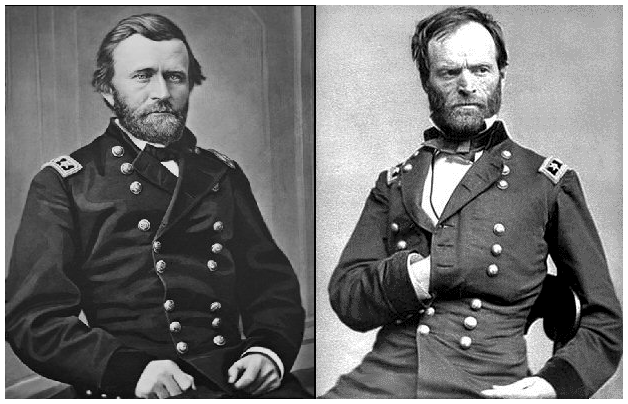
I like the example of Ulysses Grant and William Tecumseh Sherman. Both had significant problems after they left the Army after the Mexican War and in the early days of the Civil War. Grant struggled with drinking and Sherman suffered terrible depression. Sherman said of their relationship: “Grant stood by me when I was crazy, and I stood by him when he was drunk, and now we stand by each other.”

The reality is that in today’s more corporate military culture that neither of these men would have ever been promoted to high command. They would have been shunted aside.

Something has to change if we are to end this terrible scourge. I hope that General Ham and General Chiarelli are working with mental health professionals are able to help change the culture, but then by themselves they cannot. That has to start as we say in the Navy “at the deck plates.” It is up to us to change our culture, to be warriors who look after our fellow warriors in their time of need and who by our actions take away the stigma that keeps our brothers and sisters from getting help.

Peace

Padre Steve+

2 Comments

Filed under iraq,afghanistan, Military, News and current events, PTSD

Rest In Peace Captain Tom Sitsch USN

481801_10151367001287059_1003164983_n-2

Captain Tom Sitsch died by his own hand on January 6th outside a hospital Emergency Room in Littleton New Hampshire. Captain Sitsch was loved and respected by his sailors. As an Explosive Ordnance Demolition officer and expert he was deployed into harms way many times. As the commanding officer of Task Force Troy, a Joint Task Force in Iraq his expertise and leadership helped save countless lives from Improvised Explosive Devices or as they are more familiarly known “IEDs.”

He was my last Commodore at EOD Group Two in Norfolk. He took command from Captain, now Admiral Frank Morneau. Both men mean a lot to me. They were leaders of men and care for those who they commanded. When I collapsed from the effects of PTSD in June 2008 then Commodore Morneau made sure that I got the help I needed and worked with our Medical Officer to make it happen. Commodore Sitsch was one of the first men, maybe the first to ask me the hard question: “where does a chaplain go for help?”

Both were men of compassion, and Captain Sitsch’s suicide has stunned me. I learned of his death tonight on Facebook as I had lost track of him after he was retired from the Navy in 2009.

Evidently his demons were too much for him. He suffered from PTSD, which considering his vocation is not surprising. In 2009 he was relieved of his command and forced to retire after he was caught shoplifting a pair of shoes from a local Navy Exchange. Following his retirement he struggled and was in and out of trouble. He was estranged from his wife, and he was forbidden to enter the state she lived by a court order. Four weeks before he took his life he was arrested for shoplifting at a Fredericksburg Virginia Wal-Mart. When arrested he told the police that he was a kleptomaniac.

Some who do not understand will condemn him even as he lies in his grave. I cannot. I didn’t know Captain Sitsch well, but no matter what his flaws may have been, he showed me compassion when I needed it most. For that I am grateful. Many of his EOD officers and sailors, as well as the Army, Marine Corps and Air Force EOD technicians Who served alongside him will say the same thing.

The one question all of us are probably asking is “what could any of us done to prevent this?”

Truthfully I don’t know. Captain Sitsch is not the first and will not be the last legitimate American hero to fall victim to his own demons, or end his life by his own hand. The physical wounds of war, PTSD, traumatic Brian Injury as well as what is called “moral injury” not to mention the months and years away from hearth and home take a tremendous toll on our veterans and their families.

From my perspective it seems that rank, age and experience are not necessarily safeguards against any of these conditions. It is my opinion after over 30 years of service that our military bureaucracy and promotion systems contribute to tragedies like that of Captain Sitsch. As they are set up they ensure that those who admit to struggles are shunted aside even as equally damaged individuals who “suck it up” and say nothing move up.

I was able to chat with some EOD friends this evening. That was helpful. I pray for the soul of Captain Sitsch, as well as his family, friends, and shipmates during this time of inexpressible loss.

I pray that the soul of Captain Tom Sitsch and all the departed will rest in peace.

Peace

Padre Steve+

40 Comments

Filed under PTSD, shipmates and veterans, US Navy

Politics! Politics! Politics! Mel Brooks, the Roman Empire the Inquisition, the Old West and our Republic

Friends of Padre Steve’s World, here I sit at the Apple Store seeing if I can get my MacBook’s wifi restarted so for tonight another re-run. This is from a couple of years back and I have done some edits and updates. The links all work as of today. Have a great night! Peace, Padre Steve+

padresteve's avatarThe Inglorius Padre Steve's World

I love Mel Brooks movies and find them hysterically funny. Despite some of the course language and double entendres employed I find that they speak our political climate. Both Blazing Saddlesand History of the World Part I came out in times of political and economic turmoil. Like now when these films came out people were disillusioned and cynical about their political leaders.  The country was badly divided, racism was rampant while divisive social issues, a problem riddled military and economic malaise ruled the day.  The Soviet Union seemed to be on the ascendant while some were writing the obituary of the United States and Western Europe.  There are a lot of similarities.

In such difficult times most political leaders and their partisan followers are absolutely devoid of humor, as are most pundits and politically minded preachers.  As a result everything becomes personal, and anyone that deviates from the party line is “the enemy.” …

View original post 672 more words

Leave a comment

Filed under Loose thoughts and musings

Stalingrad: Disaster on the Volga

Friends of Padre Steve’s World , I hope that if you live anywhere in the area do the United States affected by the Polar Vortex I hope you are able to stay safe and warm. On this cold night, with the really cold air to get here later I am re-posting an older article about the Battle of Stalingrad. The is partially because I have a hardware issue on my MacBook that has killed my wifi and I am doing this on my iPad. Tomorrow I have an appointment at the Apple store and hopefully they get my machine working again. I was planning on re-posting this article anyway but the problem with the computer made it convenient to do it tonight. For those who think that the cold we are experiencing is something, try to imagine being exposed to similar elements while surrounded, with very little heat, fresh water or food and under constant attack. Personally the last time that I was out for extended periods in weather this cold was on the Iraq-Syria border in December 2007. So have a good night and stay safe and warm. Peace, Padre Steve+

padresteve's avatarThe Inglorius Padre Steve's World

Madonna of Stalingrad: Drawn by a German Chaplain and physician the piece was taken out of the city by one of the last officers to get out. It is now displayed in the Kaiser Wilhelm Memorial Church in Berlin

Sunday the 31st of January marks the surrender of the remnants of the German 6th Army to the Soviets at Stalingrad. The focus of this article is on how the Germans and Russians fought the Stalingrad campaign. In particular it is an analysis of the way the governments and military’s of both Nazi Germany and the Soviet Union planned and executed strategy during the course of the campaign adjusted to the situation and how the campaign ended. It is also a reminder of the price that ordinary soldiers can pay when a country commits them to war. I conclude with a potential modern application for the US and NATO in Afghanistan.

Stalingrad:…

View original post 6,194 more words

Leave a comment

Filed under Loose thoughts and musings

My Heart Remains in Al Anbar

262_29132382058_5961_n-2

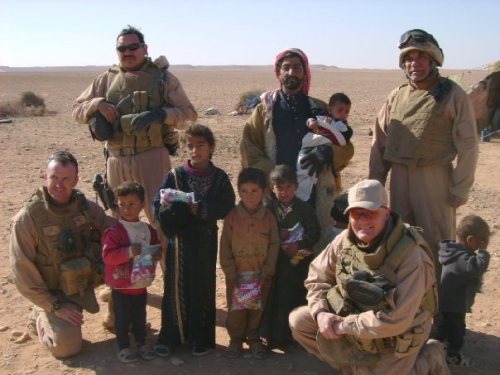
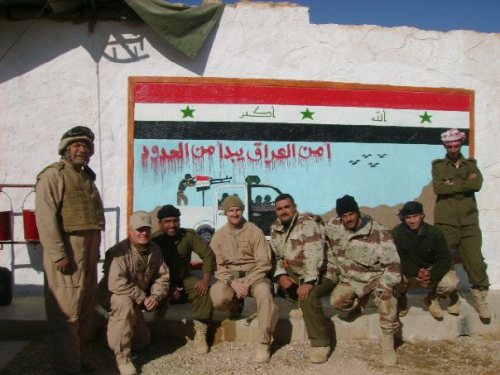
I keep a close watch at what happens in Iraq, especially Al Anbar Province.  I was there in 2007-2008 in the midst of the Anbar Awakening.  I had the honor of working with our advisors and the Iraqis of the 1st and 7th Divisions, 2nd Border Brigade and local police and Iraqi Highway Patrol. In my time there, traveling the entirety of the province, getting to work with and know Iraqi military officers and tribal leaders I gained a great appreciation for them as people and sympathy for the people there who in the course of over 30 years of war have suffered so much.

295_26912097058_4309_n-3

To do so I have to use the English language services of various Arab and Iraqi news sources as well as some German and French services to get decent information. American media tends to ignore Iraq until it cannot be ignored because to be truthful most Americans don’t give a damn about Iraq or its long suffering people. Come to think of it, as I look at the voting records and actions of those that they elect to Congress of both parties, they don’t seem to give a damn about the Americans who served in Iraq or Afghanistan either. But then it is easy to buy a “I support the Troops” bumper sticker and then elect Congressmen who instead of cutting unnecessary and wasteful defense spending in their districts, cut the benefits to the troops.

n671902058_1153829_4642-2

The situation in Al Anbar now with Al Qaida ISIL militants gaining strength and attempting to seize both Fallujah and Ramadi has brought back many memories. It has also given me great concern for the Iraqi people who I served among and Iraqi military personnel who not only risk their lives in combat but whose families are often targeted by terrorists. They are true patriots because deciding to serve not only endangers them but their families.

185615_1857288397412_3950321_n

When I came home from Iraq I was a changed man. My life, faith, politics and values were  challenged by what I experienced. I came home afflicted with chronic and serve PTSD, something that while I do better in managing the symptoms now still affects me in many ways.

295_26912117058_5652_n

Nearly six years after I left Iraq it is amazing to me how much it still permeates my soul, my thoughts and life. I can close my eyes and I can be back there, on the Syrian border, in Ramadi, and in dozens of different camps and settlements. The kindness and hospitality of the Iraqis I met is something that I shall not forget.

399202_10151366970802059_725286976_n

I do pray that the Tribal leaders in Al Anbar can take the fight to the militants and defeat them with the help of the Iraqi Army, perhaps the most trusted institution in the country. I hope and pray that the Shia leaders of the Maliki government stop the heavy handed and undemocratic tactics they have been using against the Sunni in Al Anbar. It looks that after his last meeting with President Obama that Maliki might be getting the hint.

295_26912057058_2651_n-2

Too many people, Iraqis as well as Americans have shed their blood in a war of choice launched by the Bush Administration where Bush appointees squandered any good will after the invasion through sheer hubris and incompetence. Iraq will take years to recover even if a full fledged civil war does not erupt.

533506_10151366982462059_34997654_n

The costs have been so great and I do pray that the Iraqis will find a way to unite and defeat both Sunni and Shia extremists so that they may one day again live in peace with themselves and their neighbors.

481801_10151367001287059_1003164983_n-2

I would go back again, because I did leave a big part of me in Iraq. I left my heart in Al Anbar. I can echo the words of T. E. Lawrence in his opening sentences of Seven Pillars of Wisdom: 

“I loved you, so I drew these tides of men into my hands
and wrote my will across the sky in stars
To earn you Freedom” 

Peace

Padre Ste

2 Comments

Filed under History, iraq,afghanistan, Tour in Iraq

Spendin’ the Nighttime Reminiscing: Padre Steve Remembers the Music of the 1970s and Early 1980s

me-and-judy-dorm

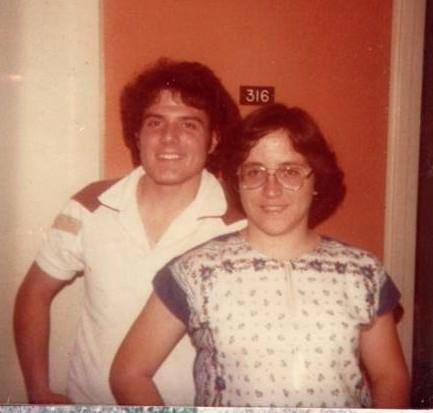
I don’t know about you but the music that I really enjoy is the music that was popular when I was in Junior High, High School and College.  For me that period spanned the years 1971-1983.

richardnixon-flickrcommons1

It was a turbulent era. The Vietnam War was ending and Nixon was resigning due to the Watergate break in cover-up despite going to China and establishing the beginning of detente with the Soviet Union.  Assassination attempts on political leaders, successful and unsuccessful, were common. Two attempts were made on Gerald Ford.  Prime Minister Aldo Moro of Italy and President Anwar Sadat of Egypt victim fell to terrorists while President  Ronald Reagan and Pope John Paul II were felled by bullets which did not prove fatal.

gas-lines

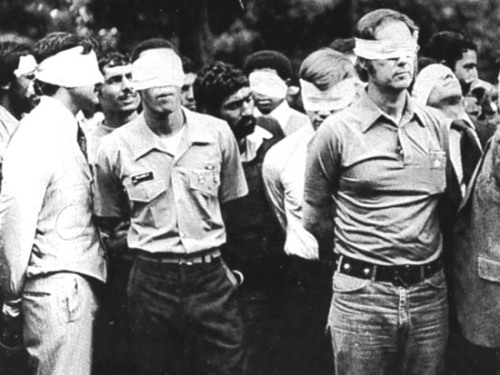
The Cold War was tense despite the beginning of detente and signing of Nuclear Weapons treaties between the United States and the Soviet Union. The Middle East was in turmoil even as Egypt and Israel hammered out a peace treaty withe the help of US President Jimmy Carter. In Iran a revolution swept the Shah of Iran out of power bringing the Ayatollah Khomeini into power.  The seizure of the US Embassy and the 444 day hostage crisis punctuated by a failed rescue attempt demoralized the United States. In October 1983 247 Marines were killed in a terror bombing of their barracks at the Beirut International Airport.

Mortar_attack_on_Shigal_Tarna_garrison,_Kunar_Province,_87

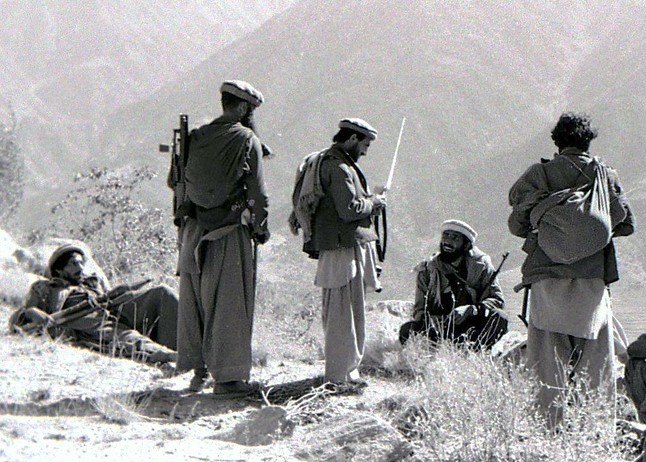
The Soviets invaded Afghanistan which would become their Vietnam, as part of the Cold War this lead to US involvement with Mujahideen. The US support with the Mujahideen was a fateful alliance that brought the Taliban to prominence and introduced the world to Osama Bin Laden. The Cubans were fighting in Angola while the Anti-Apartheid movement struggled with its leader Nelson Mandela languishing in a South African prison.

70s-iranian-hostages

High profile terrorist attacks became common. The Palestinian terrorist group Black September killed Israeli athletes at the 1972 Munich Olympics. European terrorist organizations including the Red Brigades, the Red Army Faction and Bader Meinhof gang, the Irish Republican Army and the American Weather Underground provided a constant string of terrorist attacks even as Middle Eastern terrorist groups highjacked airliners in daring fashion, matched at times by equally rescues by Israeli and German anti-terrorist units.

The American and the world economies were in a state of recession much of the era. There was a major recession, the American auto industry needed bailouts, inflation was running in double digits as was the unemployment rate. The dollar was weak and OPEC wreaked havoc on world oil markets with embargoes in 1973 and 1979.

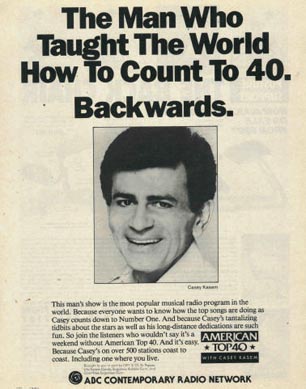
Casey Kasem AT40 Ad

However it was music in the 1970s and early 1980s that provided a diversion for many people looking for respite from all the bad news that echoed around the airwaves and in the newspapers.  Thankfully there wasn’t a 24 hour cable news cycle yet otherwise people would have probably been jumping off of buildings.  It was the heyday of AM Top 40 type stations and the beginning of rock oriented FM music stations. Kasey Kasem gave voice to the hits with American Top 40. As for me I had countless 45s and LPs of my favorite groups and artists.

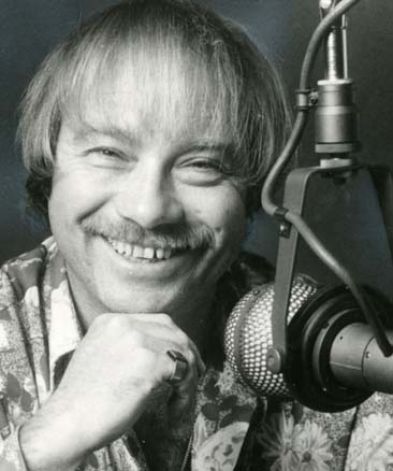
628x471-8

I listened  Doctor Donald D Rose of KFRC in San Francisco and my car, a 1966 Buick LeSabre 400 had a retro-fitted 8-Track tape player and speakers.

Great groups and artists ruled the pop and rock airwaves and the era produced some of the best rock, pop, R&B, soul, country-rock, disco and new-wave music ever done. It really was an amazing era both in quality and diversity of music .

It was not “message music” like much 60’s music but focused on entertainment.  Power groups like Journey, Starship, REO Speedwagon and Boston made power ballads, while AC/DC and KISS shocked and entertained at the same time.  Groups like the Blondie, the Eagles, Chicago, Paul McCartney and Wings, Abba and the Commodores dominated the pop charts while individual artists such as Olivia Newton-John, Elton John, Carly Simon, John Denver, Lionel Ritchie, Barry Manilow and others satisfied the more mainstream pop crown.  Disco enjoyed a brief heyday with the popularity of Saturday Night Fever and the Bee Gees.  R&B enjoyed a renaissance due to the unlikely duo of the Blues Brothers who helped re-launch the careers of Aretha Franklin, Johnny Lee Hooker, Cab Calloway and a host of others. Country crossovers became big with Kenny Rogers, Dolly Parton and Glenn Campbell leading the way.  As the 80’s came along new groups and styles were introduced including New Wave and Rap. It was music that helped us through those times.

I listen to that music all the time and remember those turbulent days well. It certainly wasn’t the fact that things were great in the world. That being said despite bad news there was still some sense of that things would work out okay.  Music helped provide part of that sense of hope. It was an escape and the music of that time is still with us. Many of those those groups haven’t gone away and people look back with fondness to the music of the era even as the artists age and pass away.

Here are some of my favorites with links to the videos, they are in no particular order nor are the representative of all the groups that I have in my library of CDs and DVDs, but I enjoy the heck out of them.  Have fun and enjoy.

Peace,

Padre Steve+

Little River Band “Reminiscing” http://www.youtube.com/watch?v=CZ_3G4xqSDQ

olivia-if-not-for-you-a

Olivia Newton-John “Magic”

http://www.youtube.com/watch?v=r7WPwH8Rd6g

and “I Honestly Love You”

http://www.youtube.com/watch?v=6zGLSnZGZts 

commodores

The Commodores “Sail On” 

http://www.youtube.com/watch?v=zg-ivWxy5KE

the-eagles-hotel-california

The Eagles “Hotel California” 

http://www.youtube.com/watch?v=mnkJcjBCG88

ac-dc

AC/DC “You Shook Me All Night Long”

http://www.youtube.com/watch?v=Lo2qQmj0_h4

KISS “I Was Made for Loving You” 

http://www.youtube.com/watch?v=q7fxN3g5sLw

Kenny Rogers and Dolly Parton: Islands in the Stream http://www.youtube.com/watch?v=recWNQddJeE&feature=related

Rupert Holmes: Escape (The Pina Colada Song) http://www.youtube.com/watch?v=DaOXWJKsX-U

donna2

Donna Summer: Last Dance http://www.youtube.com/watch?v=7cPIT_T3mYU

Roberta Flack: The First Time Ever I Saw Your Face http://www.youtube.com/watch?v=r9jmusgMgro&feature=related

bee-gees1

Bee Gees “How Deep is You Love

http://www.youtube.com/watch?v=XpqqjU7u5Yc

Dr Hook “Cover of the Rolling Stone” 

http://www.youtube.com/watch?v=fJu6Up9w2Hc

John Denver: Take Me Home Country Roads http://www.youtube.com/watch?v=ukUL_I14GPw

Three Dog Night, Joy to the World http://www.dailymotion.com/video/x2x3af_three-dog-night-joy-to-the-world_people

the-carpenters

The Carpenters “Rainy Days and Mondays” http://www.youtube.com/watch?v=dPmbT5XC-q0

Paul McCartney and Wings  “Band on the Run http://www.youtube.com/watch?v=7Qx2jEfBsqY

The Trammps “Disco Inferno” http://www.youtube.com/watch?v=A_sY2rjxq6M

rod_stewart

Rod Stewart “Tonight’s the Night”

http://www.dailymotion.com/video/x1p96h_rod-stewarttonights-the-nightgonna_music

abba

Abba “The Winner Takes it All” http://www.youtube.com/watch?v=92cwKCU8Z5c

and “Waterloo” 

http://www.youtube.com/watch?v=Sj_9CiNkkn4

Elvis Presley: Suspicious Minds

 http://www.youtube.com/watch?v=SBmAPYkPeYU

elton_john_70s

Elton John “Goodbye Yellow Brick Road” 

http://www.youtube.com/watch?v=9kMVdazvII4 

Journey “Don’t Stop Believing” 

http://www.youtube.com/watch?v=VcjzHMhBtf0

Albert Hammond: It Never Rains in Southern California http://www.youtube.com/watch?v=-pyC7WnvLT4

queen

Queen: Bohemian Rhapsody http://www.youtube.com/watch?v=fJ9rUzIMcZQ

blondie

Blondie “Heart of Glass” 

http://www.youtube.com/watch?v=WGU_4-5RaxU

Neil Diamond: Sweet Caroline

 http://www.youtube.com/watch?v=1vhFnTjia_I

Boz Skaggs “Lido Shuffle” http://www.youtube.com/watch?v=DIu0jQ5TaRQ&feature=PlayList&p=8201408B8B6E42C8&index=2

Katrina and the Waves “Walking on Sunshine” http://www.youtube.com/watch?v=iPUmE-tne5U

Billy Joel “Piano Man” http://www.youtube.com/watch?v=gxEPV4kolz0

barry-manilow

Barry Manilow “Mandy” http://www.youtube.com/watch?v=AM7SQzq3yHQ

Heart: Crazy on You

 http://www.youtube.com/watch?v=4gpNqB4dnT4&feature=related

villagepeople

Village People: YMCA

 http://www.youtube.com/watch?v=CS9OO0S5w2k

Fleetwood Mac “Don’t Stop Thinking About Tomorrow”

http://www.youtube.com/watch?v=a8arvEzHsA8

laurabranigan1990

Laura Branigan “Gloria”

http://www.youtube.com/watch?v=1tVutw8rjFk

Carly Simon “You’re So Vain”

http://www.youtube.com/watch?v=mQZmCJUSC6g

Chicago “Saturday in the Park”

http://www.youtube.com/watch?v=nWxA3e9f6rY

linda_ronstadt_usa_11

Linda Ronstadt “When Will I Be Loved”

http://www.youtube.com/watch?v=OmE7tTzJkbU

Foghat “Third Time Lucky”

http://www.youtube.com/watch?v=Fj1O2KtH4kE

The Captain and Tennille “Do that to Me One More Time”

http://www.youtube.com/watch?v=KNHcgk5bf7o&feature=related

kingdingeling_blues_brothers_most

Finally, the Blues Brothers “Everybody Needs Somebody”

http://www.mojvideo.com/video-the-blues-brothers-everybody-needs-somebody-to-love/ac0b631b54ff095fd5c0

2 Comments

Filed under History, music

The Excommunication of Martin Luther and the Journey of Padre Steve

BullExurgeDomine

Leo X’s Papal Bull Exsurge Domine

“We are not yet what we shall be, but we are growing toward it, the process is not yet finished, but it is going on…” Martin Luther

On the 3rd of January 1521 Pope Leo X issued his Papal Bull of Excommunication Decet Romanum Pontificem against Martin Luther. The excommunication followed Luther’s publication of his three masterful works published in 1520 To the Christian Nobility of the German Nation, On the Babylonian Captivity of the Church and On the Freedom of a Christian.

The excommunication was the second act of a three part drama. The first part began with Luther’s publication of the 95 Theses on October 31st 1517. That launched a series of actions by the Papacy in which various representatives were sent to bring Luther back into line. Failing this the last of the inquisitors, Johann Eck became Luther’s and other Reformer’s constant nemesis for the next 25 years.

In the summer of 1520 Eck brought back to Germany Leo X’s Papal Bull Exsurge Domine which attacked and condemned Luther’s writings, a prequel to the formal excommunication. Eck was not well received and Luther’s movement began to gain more traction especially among much of the nobility and among other theologians.

The message of the Bull was clear, Luther, his works and those who supported him or published his works were condemned. In part it read:

“…we likewise condemn, reprobate, and reject completely the books and all the writings and sermons of the said Martin, whether in Latin or any other language, containing the said errors or any one of them; and we wish them to be regarded as utterly condemned, reprobated, and rejected. We forbid each and every one of the faithful of either sex, in virtue of holy obedience and under the above penalties to be incurred automatically, to read, assert, preach, praise, print, publish, or defend them. … Indeed immediately after the publication of this letter these works, wherever they may be, shall be sought out carefully by the ordinaries and others [ecclesiastics and regulars], and under each and every one of the above penalties shall be burned publicly and solemnly in the presence of the clerics and people.” 

???????????????????????????????

Luther burning the Bull

Luther who received a copy in October of 1520 reacted in kind noting: “Since they have burned my books, I burn theirs. The canon law was included because it makes the pope a god on earth. So far I have merely fooled with this business of the pope.”

Neither the Bull dealt with the substance of Luther’s teachings, instead they were both heavy handed missives of Papal primacy and punishment on those that disobeyed. The Bull of excommunication read in part:

Nevertheless Martin himself—and it gives us grievous sorrow and perplexity to say this—the slave of a depraved mind, has scorned to revoke his errors within the prescribed interval and to send us word of such revocation, or to come to us himself; nay, like a stone of stumbling, he has feared not to write and preach worse things than before against us and this Holy See and the Catholic faith, and to lead others on to do the same.

He has now been declared a heretic; and so also others, whatever their authority and rank, who have cared nought of their own salvation but publicly and in all men’s eyes become followers of Martin’s pernicious and heretical sect, and given him openly and publicly their help, counsel and favour, encouraging him in their midst in his disobedience and obstinacy, or hindering the publication of our said missive: such men have incurred the punishments set out in that missive, and are to be treated rightfully as heretics and avoided by all faithful Christians, as the Apostle says (Titus iii. 10-11).

III. Our purpose is that such men should rightfully be ranked with Martin and other accursed heretics and excommunicates, and that even as they have ranged themselves with the obstinacy in sinning of the said Martin, they shall likewise share his punishments and his name, by bearing with them everywhere the title “Lutheran” and the punishments it incurs.

Our previous instructions were so clear and so effectively publicised and we shall adhere so strictly to our present decrees and declarations, that they will lack no proof, warning or citation.

Our decrees which follow are passed against Martin and others who follow him in the obstinacy of his depraved and damnable purpose, as also against those who defend and protect him with a military bodyguard, and do not fear to support him with their own resources or in any other way, and have and do presume to offer and afford help, counsel and favour toward him. All their names, surnames and rank—however lofty and dazzling their dignity may be—we wish to be taken as included in these decrees with the same effect as if they were individually listed and could be so listed in their publication, which must be furthered with an energy to match their contents.

On all these we decree the sentences of excommunication, of anathema, of our perpetual condemnation and interdict; of privation of dignities, honours and property on them and their descendants, and of declared unfitness for such possessions; of the confiscation of their goods and of the crime of treason; and these and the other sentences, censures and punishments which are inflicted by canon law on heretics and are set out in our aforesaid missive, we decree to have fallen on all these men to their damnation.”

It was an extraordinary and misguided document which failed to understand the significance of what was happening in the Church and in Europe. It was a document that echoes what every authoritarian structure does when challenged, it ignored the causes, it ignored the issues and simply condemned those involved. Instead of dialogue it chose retribution and destroyed the unity of the Western Church. Phillip Schaff, one of the great Church historians wrote about the Bull: “The bull of excommunication is the papal counter-manifesto to Luther’s Theses, and condemns in him the whole cause of the Protestant Reformation. Therein lies its historical significance. It was the last bull addressed to Latin Christendom as an undivided whole, and the first which was disobeyed by a large part of it.”

After his excommunication Luther appealed to Emperor Charles V who initially rejected it outright but reconsidered in light of the danger that the Empire faced if German states revolted. Charles invited Luther to the Diet promising him safe passage. The fact that Luther was able to appear at the council safely was in large part because of Elector Friedrich the Wise, his protector insisting that Luther not be imprisoned or outlawed without a hearing. Along the way Luther was greeted as a hero by townspeople, it was something like a victory parade.

20080102-luther

When the hearings began the Archbishop of Trier asked Luther if he would recant his writings. Luther asked for time to consider and at 4 PM the following day was called back to the Diet, where before the Emperor and the Princes of Germany he stood alone.

The Archbishop demanded: “Explain yourself now. Will you defend all your writings, or disavow some of them?” 

Luther provided a rather long answer regarding his writings, categorizing them and explaining them. Eventually the exasperated Archbishop asked: “Martin–answer candidly and without horns–do you or do you not repudiate your books and the errors which they contain?”

Luther then gave the answer in German rather than Latin, which has reverberated nearly half a millennium:

“Since then your sere Majesty and your Lordships seek a simple answer, I will give it in this manner, neither horned nor toothed. Unless I am convinced by the testimony of the Scriptures or by clear reason (for I do not trust either in the pope or in councils alone, since it is well known that they have often erred and contradicted themselves), I am bound by the Scriptures I have quoted and my conscience is captive to the Word of God. I cannot and I will not recant anything, since it is neither safe nor right to go against conscience. May God help me. Amen.”

Friedrich the Wise spirited Luther away in a staged “kidnapping” to the Wartburg Castle, allowing him to evade those that sought his life and to stabilize the Reformation in Germany.

I have always felt a closeness to Luther. He is one of my heroes. I recognize that he was neither perfect, nor do I agree with everything that he wrote or some of the things that he did. That being said, this very imperfect and often impetuous Monk, Priest and Professor is close to me. His “Theology of the Cross” makes more sense than others I have read, and his defense of the Eucharist was instrumental in my faith journey.

Luther, despite many in the Catholic Church who fight for him has not been “rehabilitated” nor the bans of excommunication removed. He has been called by some a “reluctant revolutionary.” I hope that Pope Francis will lift the excommunication despite the Roman tradition of not lifting such bans on those who have passed away.

Luther, like me was somewhat blunt, earthy and liked beer. In fact after Worms he wrote:

“I simply taught, preached, and wrote God’s Word; otherwise I did nothing.  And then, while I slept, or drank Wittenberg beer with my Philip [Melanchthon] and my Amsdorf [Nicholaus von], the Word so greatly weakened the papacy that never a prince or emperor did such damage to it.  I did nothing.  The Word did it all.” 

In seminary Luther, his writings and theology were instrumental in coming to a catholic understanding of the the Christian faith. Now that understanding was much more interpreted in light of the Second Vatican Council and more progressive theologians such as Hans Kung, Bernard Haring and Yves Congar, but it was still catholic and a clean break from my Evangelical Protestant background and education.

Likewise, when I was ordained as a Priest in a more conservative Anglo-Catholic denomination in the mid 1990s I never dreamed that I would face a time where my writings would mark me as a “heretic” in the eyes of some in that church. Nor did I think that I would be told that I was “too liberal” and needed to leave that church. Before that I had been censured and forbidden from writing because I was “too Catholic” by another bishop. Like Luther I assumed that what I wrote and said were readily apparent. Since I have written extensively about that situation and don’t feel the need to go into detail here.
1470237_10152110186432059_1784204366_n

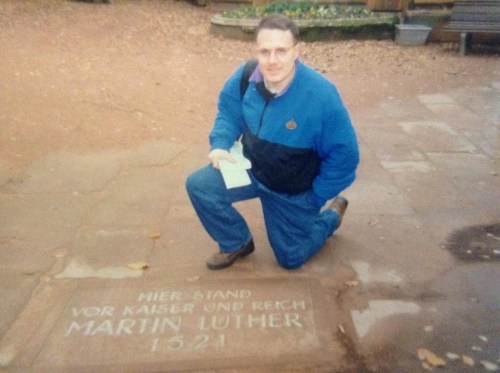
In 1996 I led a series of tours of Luther’s reformation sites in Germany, including Wittenberg, Heidelberg and Worms. I posed for pictures outside the door of the Castle Church as well as at the site where Luther gave his “Here I stand” speech. I was so familiar with the locations in Wittenberg that I was asked if I had ever been to them before. I could only say that I had never been there in person, but had been there many times in my mind. When at each location I felt a tremendous closeness to a man who had influenced so much of my spiritual journey.

As Luther wrote:

“This life therefore is not righteousness, but growth in righteousness, not health, but healing, not being but becoming, not rest but exercise. We are not yet what we shall be, but we are growing toward it, the process is not yet finished, but it is going on, this is not the end, but it is the road. All does not yet gleam in glory, but all is being purified.” 

Peace

Padre Steve+

1 Comment

Filed under christian life, faith, History, Religion