Yearly Archives: 2016

“Darkness Cannot Drive Out Darkness” an Assassination in Baton Rouge


Friends of Padre Steve’s World,

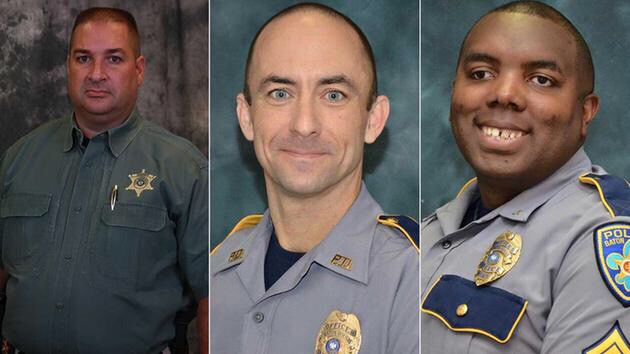
Yesterday in Baton Rouge three more police officers were assassinated, and another three were wounded, one critically. Once again the assassin was a young black military veteran armed with a killing machine, an assault rifle designed with only one purpose, killing large numbers of people with the utmost of efficiency. Like the man who assassinated five police officers that were guarding a peaceful Black Lives Matter protest in Dallas, this man, a former Marine Corps Sergeant named Gavin Eugene Long was interested not in justice, but vengeance. One of the men that he killed was an African American police officer, named Montrell Jackson, a father who talked of how people in the wake of the police killing of Alton Sterling, “I swear to God that I love this city but I wonder if this city loves me. In uniform I get nasty hateful looks and out of uniform some consider me a threat.” Two others, Baton Rouge officer Matthew Gerald, who was also a veteran of Iraq, and East Baton Rouge Sheriff Deputy Brad Garafola. The murders were inexcusable, and the killers, well, they put more innocent lives at risk. 

Neither Long, nor Micah Johnson was a freedom fighter, nor were they heroes. They were terrorists and murderers. The men that they killed and wounded were ambushed and assassinated simply because they were police. While Johnson said that he wanted to killed “white people,” Long simply wanted to kill police. Neither helped the cause of African Americnas who have been brutalized by other police officers, they did not bring any lives back, they killed to kill without thought of the repercussions that other African Americans might experience. While others protested peacefully, some even being harassed and others arrested in the name of principled non-violent protest, Johnson and Long used their military training to serve as judge, jury, and executioner of men who had done nothing to them. 

I am angry because these men have only helped the critics of of the Black Lives Matter movement, they have proved that for them no lives matter. Filled with hate Johnson and Long did what countless other nihilistic hate driven assassins have done before them, they killed in order to destroy. Dr. Martin Luther King Jr. said “The old law about ‘an eye for an eye’ leaves everybody blind. The time is always right to do the right thing.” Sadly, these two men were probably too ignorant to remember or even care about what Dr. King said, and now because of their crimes they have enabled white supremacists and other racists to change the narrative and blame African Americans for violence committed against other African Americans. 

Their actions did nothing to help African Americans, nor did it do anything to end the scourge of violence that has led to so many African Americans dying at the hands of some police. Instead their actions have only ensured that more violence against African Americans as well as law enforcement officers will continue. No words from elected officials or celebrities will change that until people’s hearts change, and sadly, I cannot believe that will happen anytime soon.

Dr. King said, “Darkness cannot drive out darkness: Only light can do that. Hate cannot drive out hate: Only love can do that.” 

If only these two men had heeded his words. When will we ever learn? 

Until tomorrow,

Peace,

Padre Steve+ 


Leave a comment

Filed under civil rights, crime, News and current events

Talking Turkey


Friends of Padre Steve’s World,

I have just a few thoughts tonight as I decided to wait on writing this until I spent some time with a Turkish-American friend of mine who has been an American citizen about thirty years, married to an American woman, but who had served as a junior officer I the Turkish Army, and still has relatives in Anarka. 

I have known a good number of Turks, most who were Turkish military due to my time in the military working with NATO. I have always held the Turks in good regard and had the distinct pleasure of visiting Turkey in 2002. I admired the political system set up by Mustafa Kemal Ataturk which set Turkey on the road to being Muslim nation with a secular constitution and government. Turkey, nor its leaders were not perfect, and the Turkish military and courts were the bastion of secularism for most of Turkey’s existence. 

In 2003 Recip Erdogan became prime minister. Erdogan  is a very conservative Islamist who as the head of the Justice and Development Party (AKP). He served three terms and then was elected President, a post which had been more of a symbolic figurehead with little real power. Over the years that Erdogan served as Prime Minister he has ruled with a simple majority of the vote, not a large majority by any means, elections in Turkey have been very close. But over the years Erdogan has shown that he and his party are not generally actually interested in democracy except as it benefits them. Opposition parties have suffered at the hands of the government, democratic institutions including the judiciary, the media, and educators, have been silenced, and Erdogan has worked hard to bring the military under the control of his party. Erdogan has shown that he has a very thin skin, internal opponents have been harassed, persecuted, and jailed, and foreign critics condemned. A German comedian who dared to satirize Erdogan was condemned, and Erdogan demanded the the German government apologize for the actions of a private citizen. It led to a diplomatic crisis between Turkey and Germany that has lasted much of the year. 

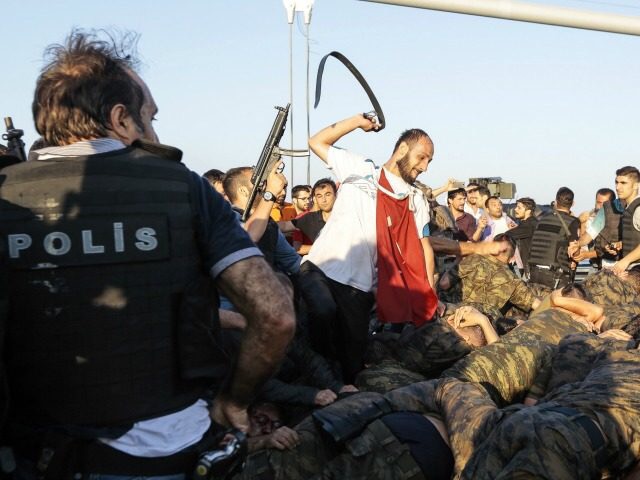
On Friday, elements of the Turkish military handed Erdogan, who was growing less popular by the day a gift. With the intention of stopping the country’s drift into a single party religious state, some parts of the military attempted a coup in order to remove Erdogan from power. I believe that their motives were honorable, but their method was wrong, and its execution inept. Military coups are not the right way to remove an elected leader from office, in a democracy, even one that is under seige, the ballot box must be the first choice to change a government. 

The coup attemp not only failed, but it gave the decidedly unpopular Erdogan the advantage. He can now purge the government and military of all opposition with impunity. Even his political opponents were against the coup. But now, although the Erdogan government remains in power, the country’s divisions are even more starkly in evidence. 

My fried said that his brother said that people, even people who did not support the coup, are afraid the Erdogan will use it as an excuse and justification for more anti-democratic measures. 

The face is what is happening in Turkey matters to all of us. Turkey is one of the most strategic countries in the world based on its geographical location. It is a key ally against the Islamic State, and for most the last three decades Turkey has been a model of stability, and progress in the Muslim world. What happened this weekend is disturbing as it could usher in more instability and maybe bring about a civil war in Turkey, which believe me would be really bad. I hope that Erdogan will not act out in revenge seeking to exact retribution on his political and religious opponents, but personally I do not think that he is capable of that. He seems to me to be driven by his religious ideology more than realpolitik, but I can hope. 

So anyway, I said this would be brief, so until tomorrow. 

Peace,

Padre Steve+

Leave a comment

Filed under Foreign Policy, History, middle east, News and current events, Political Commentary

Je Suis Francais 


Friends of Padre Steve’s World,

One again the oldest ally and friend of the United States has been attacked by terrorists. While the details about the attacker are still scarce, this much is know; an attacker drove a tractor trailer rig loaded with grenades,mweapons and othe ammunition through a crowd that was celebrating Bastille Day in the port city of Nice on the French Riviera. At least 80 people were killed and another hundred or more wounded in the attack. It was the third major terrorist attack in the past year and a half on our French allies and friends, and more than 200 French citizens have been killed and hundreds more wounded in these brutal attacks committed by people allied with DAESH, the so called Islamic State. While it is yet undetermined who committed this barbaric act, it shows all the characteristics of DAESH. 

These attacks, along with others in Belgium and other countries in the past two years are a change in strategy for DEASH. They are losing in Iraq and Syria, their dreams of a Caliphate are dying. So now they have returned to the time honored methods of other terrorist groups, striking soft targets outside the battle area, killing innocents simply to show that they are still powerful. 

But the are not. In a war of ideas they come up short, they want a iron fisted theocracy with no freedom, no dissent, no Liberty. They stand against the proposition in the preamble of the Declaration of Independence which says “we hold these truths to be self evident, that all men are created equal.”  They stand in opposition to the national motto of France, Liberte, Egalite, Fraternite: Liberty, Equality, Fraternity, and no matter how many people they kill they cannot win, because their ideology is based on the proposition that they, and they alone represent God, and no one has any rights but them. History shows that their medieval and barbaric ideology is doomed to failure so long as people who believe in Liberty, equality, and fraternity do not give in to their terror. The same is true of any theocratic ideology of any religion. 

Unlike a lot of Americnas, I have always admired the French. They, like us are certainly not perfect, but they hold to same the ideals that we do. No king or queen, no state religion, but Liberty, equality, and fraternity. In 1958 when the people of France implemented their last Constitution, they adopted verbatim, Abraham Lincoln’s words from the Gettysburg Address as a “principle” into their own sacred instrument, which recites in Article II that the French Republic will be a “government of the people, by the people, and for the people.” The French are the only other country in the world to put those words into their constitution. When I was watching the games of the Euro Cup, I was inspired to see members of the French National team, including men, people of color, whose families came from former French colonies in Africa signing Le Marseillaise at the top of their voices, proud to be Frenchmen. 


It is time to support our friends in France. It is time to stand against all forms of religious terror, and all who presume that their religion, no matter which one it is, Muslim, Christian, Jewish, Hindu, or whatever,  entitles them to to rule over others in the name of their God. 

I stand with France today. Je Suis Francais, today, I am French. 

Peace,

Padre Steve+ 

Leave a comment

Filed under Foreign Policy, News and current events, Political Commentary, terrorism

Becoming What We Should Be


Friends of Padre Steve’s World,
Having completed, with the exception of editing and circulating some hard copies of the first volume of my Civil War text A Great War in a Revolutionary Age of Change, I have gone back to work on the second volume of my Civil War text “Mine Eyes Have Seen the Glory” Religious Ideology, Race, and Politics in the Civil War Era. Beginning yesterday I began to go through the approximately 160 pages of text, which had been the second chapter of my Gettysburg Staff Ride text, but like A Great War really needed to be split off and turned into its own separate book. 

Yesterday I went back to figure the natural chapter breaks and to begin some minor editing and creating a bibliography and working table of contents as I prepare to really dig in on it. The good thing is that I have continued to research this section even as I concentrated on work on A Great War and major chapter revisions to the book dealing with the campaign of 1863 and the Battle of Gettysburg. 

As I have done this I become more and more convinced that what I am writing about needs to be told. As I look at responses to the Black Lives Matter movement I am appalled by the willing historical ignorance of much of the country, including white America, which has erased from its collective memory the terrible injustices of slavery, the black codes, Jim Crow, segregation, and violence directed at African Americans over nearly three hundred year period before the Supreme Court stuck down the Jim Crow era segregation laws, and the Congress passed the 1964 Civil Rights Act, and 1965 Voting Rights Act, and less than three years later Dr. Martin Luther King Jr., the champion of peace protest and civil rights was gunned down and assassinated. 

But it is easy for some people to condemn the Black Rights Movement, it is called racist by some, and it is blamed for a host of issues that it is simply exposing and demanding action to solve. Some people respond to criticism of police with the saying that Blue Lives Matter, and I agree that they do, police officers do dangerous work, and with the proliferation of high powered weaponry in the hands of irresponsible and angry people, their lives are always in danger. But that is no reason not to say that Black Lives Matter is wrong in its intent. Some say that All Lives Matter, and I agree with that in principle, but I would challenge the people that flippantly say that in order to dismiss the validity of Black Lives Matter, while doing nothing to work for the rights of people different than themselves, that they need to put their money where their mouth is. 

In the 1850s and 1860s Abraham Lincoln struggled with this in a country that was becoming increasingly diverse due to massive immigration from Ireland and Germany, and in which Congress and the Courts were making decisions which would allow for the expansion of slavery and the definition of African Americans as a subordinate race without any citizenship rights. Lincoln was worried that America was becoming like a plow horse with blinders fastened to the sides of its eyes, capable of seeing only in one direction: ahead of it. He saw Americans as people increasingly interested only with their present and their future, the things still before them, but disinterested with their own historical past, the things already behind them. A condition that is not much different that what we see today. Maybe because I am a historian I am more sensitive to this, but it is concerning. 

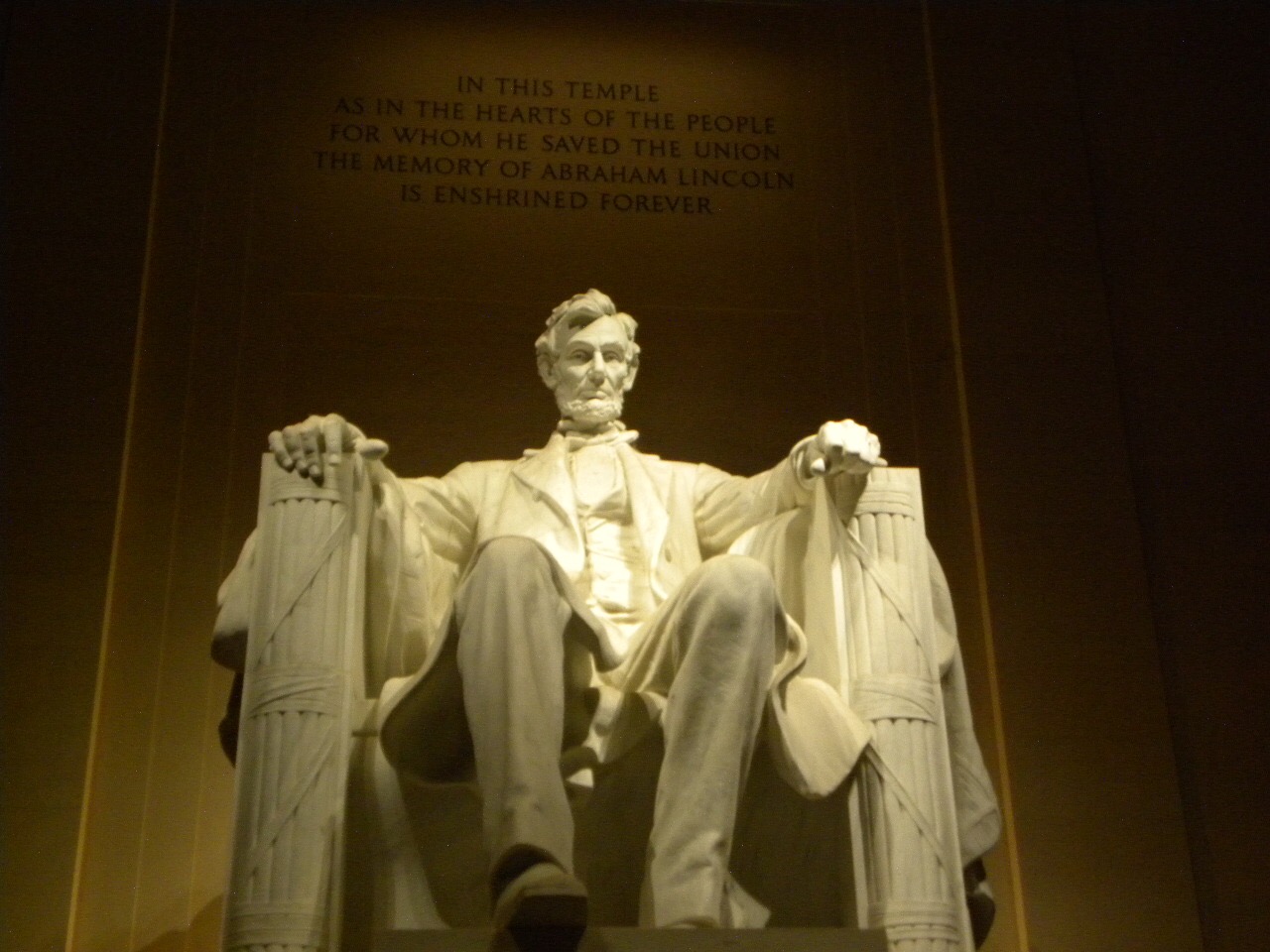
Lincoln realized that people had forgotten the heart and soul of America, the secular scripture found in the preamble of the Declaration of Independence. “We hold these truths to be self-evident, that all men are created equal, that they are endowed by their Creator with certain unalienable Rights, that among these are Life, Liberty and the pursuit of Happiness,—That to secure these rights, Governments are instituted among Men…” He realized that for most people of his era the proposition that all men are created equal was in the process of dying. He knew that freedom without equality was no freedom at all, and beginning with the Emancipation Proclamation he began the first step to universalize that proposition. Les than a year later he gave a short speech of under three hundred words at Gettysburg in which he went back to the Declaration noting “Four score and seven years ago our fathers brought forth on this continent, a new nation, conceived in Liberty, and dedicated to the proposition that all men are created equal,” and he called on Americans to renew themselves to that proposition: “It is for us the living, rather, to be dedicated here to the unfinished work which they who fought here have thus far so nobly advanced. It is rather for us to be here dedicated to the great task remaining before us—that from these honored dead we take increased devotion to that cause for which they gave the last full measure of devotion—that we here highly resolve that these dead shall not have died in vain—that this nation, under God, shall have a new birth of freedom—and that government of the people, by the people, for the people, shall not perish from the earth.”

In a book that I just finished on the Gettysburg Address the author noted something that I find quite true. He said: “We should read the Preamble to the Declaration of Independence, and then, the Gettysburg Address. They are, together, our American scriptures. And we should read them aloud, the way they were meant to be. They are words which are most powerful when they are spoken. Their words remain fresh and alive, no matter how many times they are read. All we need to know about what American democracy should be, is found there, among the words of these two ancient manuscripts.”

Now I do not arrogantly claim that we as Americans exemplify those words, or that we even live up to them, but they are something that we need to keep in the forefront of our minds, and strive to achieve if we are to become a better nation. 

I was talking with one of our international officers at the staff college today who has been studying at the Naval War College for the past year before he came to us, and as we talke we agreed that what makes America great is not our military might, nor our economic power, but that proposition of Liberty, the proposition that is so radical that few countries include it in any of their political documents, that proposition, that all men are created equal. It was something that a number of my Korean officers noted at Gettysburg back in May. They all understood something that so many Americans have forgotten. 

So I will continue to read, research, and write, and I am excited about it, especially during this critical time in our nation’s history. I’m sure that in the coming month or two that you will see some of that work appear on this site as I work on Mine Eyes Have Seen the Glory. 

Until tomorrow I wish you peace,

Padre Steve+

Leave a comment

Filed under civil rights, civil war, Gettysburg, History, News and current events, Political Commentary

Midsummer Night Dreaming 


Friends of Padre Steve’s World,

Last night was nice, I took a break and watched the MLB All Star Game. Baseball has always been a big part of my life but recently I have been so busy that I have been scarcely doing more than checking the box scores. But then there is nothing wrong with that, as Fox Mulder told Dana Scully in the X-Files episode The Unnatural  when Scully told him that she couldn’t believe that he had been reading about baseball: “Reading the box scores, Scully. You’d like it. It’s like the Pythogorean Theorem for jocks. It distills all the chaos and action of any game in the history of all of baseball games into one tiny, perfect, rectangular sequence of numbers. I can look at this box and I can recreate exactly what happened on some sunny summer day back in 1947. It’s like the numbers talk to be, the comfort me. They tell me that even though lots of things change some things remain the same….” 

Baseball has always been a part of my life, I have recounted that many times on this site. It is something that has grounded me throughout life ever since I could remember, and like it does the fictional Fox Mulder, baseball reminds me that in an era of massive change that some things, some really good things, remain the same, and it is reassuring as Sharon Olds wrote, “Baseball is reassuring. It makes me feel as if the world is not going to blow up.” 

I know that some people find baseball boring, it isn’t fast enough, or violent enough for their taste. It’s not played on a standard sized gridiron or court, it’s not bound by the same rules of space and time as other sports. Theoretically a baseball game could last for eternity, just as the foul lines that angle out from home plate theoretically exetend to infinity, while any statistic in the game can be plotted to the most accurate decimal. It is a curious blend of sport, life, mathematics, philosophy, metaphysics, and faith, and it is a part of who we are as Americans. It is woven in to the fabric of the country, soldiers in Blue and Gray broke up the monotony of camp life during the Civil War, it helped people get through world wars and the Great Depression, and when Jackie Robinson broke the color barrier it signaled the beginning of the end for Jim Crow. Kids played it in farm fields, on sandlots, and in big city neighborhoods with makeshift balls, sticks and whatever they could use as gloves. There were times when it captivated the nation even when cities were burning and wars were raging. There is something magical about a pennant race, a perfect game, the crack of a bat and a ball that travels into the center field seats. 


On a visit to Capital Hill during a contentious legislative session, the legendary Negro League player and manager stopped to talk about what it would be like if instead of preaching virulent hatred and division, the television was showing the great catch made by Willie Mays in the 1954 World Series. O’Neil grew up in the Jim Crow era, in segreation, and played his best ball when he was not allowed to play in the Major Leagues, or even enter certain restaurants, movie theaters, hotels, or public rest rooms simply because he was black. But he never became bitter, and he never stopped working for full equality nor continued to work for peace, he told the people watching a television which had the news on: “If Willie Mays was up there, people would stop making laws. They would stop running. They would stop arguing about big things, little things. No Democrat or Republican, no black or white, no North or South. Everybody just stop, watch the TV, watch Willie Mays make that catch. That’s baseball man.” 


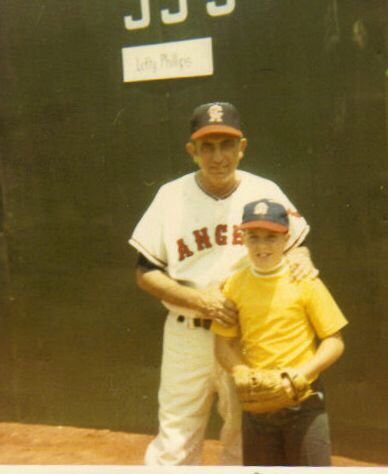
Me with California Angels Manager Lefty Phillips in 1970

When I watch the All Star Game I am reminded for playing catch with my dad, playing in little league and going to ball games to see my heroes play in those, lush, green, and beautiful diamonds, well except for the Astro Turf ones. We can thank whatever deity convinced baseball executive to go back to grass that most of those are gone. In the movie Field of Dreams, James Earl Jones, playing the reclusive writer Terrence Mann, modeled on J.D. Salinger said to Ray Kinsella, a character played by Kevin Costner, “The one constant through all the years has been baseball. America has been rolled by like an army of steamrollers. It’s been erased like a blackboard, rebuilt, and erased again. But baseball has marked the time. This field, this game, is a part of our past. It reminds us of all that was once good, and what could be again.” 

Well last night the American League beat the National League 4-2. Zach Britton, the closer for the Baltimore Orioles who I got to know a bit when he pitched in Norfolk got the save. My favorite teams, the San Francisco Giants and the Orioles lead their divisions going into the second half of the season. It was, despite all the chaos, violence, political division, and uncertainty in the world, a perfect misdsummer night. 

Until tomorrow,

Peace,

Padre Steve +

1 Comment

Filed under Baseball, faith, History, Political Commentary

Celebrating an Achievement 


Friends of Padre Steve’s World,

Things have been very busy, I have been putting the finishing touches on the draft of what used to be the first chapter of my Gettysburg Staff Ride text. The chapter grew to be about 260 pages, far more than a chapter should be. For at least six months I have been planning on splitting it off into its own book, and yes it is a book; but I did not get around to it, instead I kept working on it. 

So about two weeks ago I made the decision to turn all this work into a book. So I spent my time the last two weeks, day and night, at work and at home working on getting it exactly the way I want it to be. I still need to go back and re-read it a number of times to catch mistakes that might have slipped through, as well as re-checking my sources, but when I finished it up this afternoon and sent the draft to m students I was elated. I will have some other people look at it to see if they think I need to do anything differently, but I am pretty sure that this is at least the 90% solution before seeking a publisher. 

One thing I had been stuck on was an appropriate title. For the longest time I was stuck with the rather boring Foundations of the First Modern War. It is accurate in some ways,nut it never really got me. But while working on turning this into a book was just how revolutionary the Civil War really was, and just how many times I had written about the revolutionary nature of the entire era, not just the war. So today I came up with the title: A Great War in a Revolutionary Age of Change. I think that it works as the text deals with change, military, political, social, economic, informational, and diplomatic. In fact if you want to understand who we are as Americans you have to understand the Civil War era. Of course this book is just a small part of understanding it, and I am indebted to so many historians who have worked to unravel, sorting fact from fiction, truth from myth. For so many of these men and women this has been a life’s work, and many of them have been accused of being “revisionists”  especially those who contradicted the myths of the Lost Cause and the Noble South  which were for two many decades the accepted “history”  of the Civil War era. Like them I have taken my share of heat from unrepentant secessionists and Lost Causers, and I don’t care so long as what I write is as truthful and unbiased as possible. 

Over the past couple of weeks I have taken the time to turn the massive chapter into a book. I was able to divide it up into an introduction and twelve chapters in which I try to connect the dots between the development of the Army and developments in society in the years before the war, during the war, and following the war during Reconstruction, Jim Crow, and the Civil Rights movement. I explore the continuum of history and war, war in an age of change, and the context of war. Then I move to talk about how war is more than fighting, and the development of American military culture and theory. Then I shift to technology how technology matters, building armies from scratch, the changing character of armies and society, looking at the effect of conscription on Northern and Southern society. Then I move to the social change regarding Emancipation and Black soldiers, and the beginnings of the Women’s Rights movement, before I move back to discussing how technology pioneered before and during the Civil War set the stage for many things we know today. Then I think I go on to discuss a topic that many people fail to remember, the importance of what happens when the fighting stops, before finishing up talking about the timeless importance of this era today, and how so often we fail to learn the lessons of war. 

Tomorrow I will begin taking my second chapter, another book in its own right and separate it from the bulk of the text that deals with the strategic situation at the beginning of 1863, the Gettysburg campaign, and the Battle of Gettysburg. My regular readers have seen much of this develop from a very embryonic form in 2012 to what it is becoming now, over 1100 pages of text. There is still more work to be done and I am totally motivated to push forward and complete the rest of this work before I move on to other things that I want to write about, some topics that I have written about on this site. 

But tonight is a time to rest and watch the MLB All-Star Game, one of my favorite mid-summer things to do, an event that takes me back to childhood when things were so much simpler. I’ll write about that tomorrow before I move on to other subjects. 

Have a great night,

Peace,

Padre Steve+

2 Comments

Filed under civil rights, civil war, History

Why Can’t We All Get Along: Reflections on Violence and Race


Friends of Padre Steve’s World,

Back in the 1990s, a black man by the name of Rodney King who had been brutally beaten by police appealed for calm after his attackers were acquitted. As riots broke out in Los Angeles, King called out “why can’t we all get along?” It is still a valid question. 

I have been thinking a lot about the events that have shaken our country over the past week and my thoughts today will meander between reactions to those events and memories of people and events that shaped my life that impact how I see what is happening today. I think that it important to realize that our past experience and the attitudes that we were brought up with shape how we view current events.

First there were men doing nothing violent, no resisting police requests, being gunned down by police, an event that has become all too common. Then there were the five police officers in Dallas protecting a Black Lives Matter March being ambushed and assassinated by an African American former soldier who stated his contempt for the BLM movement even as he claimed he wanted to kill whites, especially police officers. Then there have been the protests against the killings which have become a fixture in some cities that have been plagued by the brutality of some rogue police officers, as well as the very real and uncomfortable fact that police often handle situations involving white men, even armed white men acting in threatening manners, with far more restraint than they do black men. There is such a thing as White privilege, whether most of us want to admit it or not, and it has existed for the entire history of our country, and even the great victories of the Civil Rights movement never completely riddled us of it. 

I was a kid during the great protests of the Civil Rights movement. I remember watching the evening news and seeing police brutally beat peaceful and unarmed protestors senselessly in living black and white since we didn’t get a color television until about 1972. But those images have remained burned into my memory. I went to a desegregated high school which was that way due to court-ordered desegregation which involved bussing kids across town. A lot of parents objected to it, but interestingly enough, most of the kids who attended junior high school together didn’t try to avoid it, we wanted to continue school with the kids that we knew, and to meet new friends. It was an adventure, but initially there were fear of the unknown for all of us. No one knew how this experiment would work. But for our school, Edison High School in Stockton California, it was a defining moment in time; a magical time, where a mixed race student body made up of about a quarter each of Asians, African Americans,Whites,and Mexicans bonded in a remarkable manner, and today some forty years later, many of us remain close, we are the Soul Vikes to this day. That bonding for me has extended to the men and women who went there before and after me. 

Since then I have lived in many parts of the country, and sadly the experience that I had in high school seems like the exception rather than the rule. Many of the cities and towns that we have lived in have stark racial divides. Thankfully, we have been fortunate during my career in the Navy, we have lived in middle class, mixed race neighborhoods, even today, and we not only feel safe, but we know our neighbors, and we look out for each other. 

In my thirty-five years in the military I have served alongside men and women of every race, ethnicity, religion, and social class that found in our country. These are my brothers and sisters. 

That being said, Judy and I have been the victims of violent crime. In 1979 while out with her parents were were held up at gunpoint by two black men. I had a pistol pointed at my head and Judy had her glasses ripped off her face and ground into the parking lot when the robbers fled. But that one incident has not made us fearful of African Americans, even young African American men, and we find that walls can be broken down by simple kindness and respect. 

When I was in the reserves I worked for a social service agency in the slums and barrios of San Antonio, a homeless shelter in Arlington, Texas, and in the trauma and surgery department of Parkland Memorial Hospital in Dallas, where some of the police officers shot last week were taken. I have seen the effects of poverty and seen the effects of violence, and I have stood by the grieving families and friends of African American men, women, and children who died senseless deaths at the hand of violent people. I have also seen the community activists, teachers, medical personnel, pastors, and dare I say police, who work against huge odds in those neighborhoods  who do all they can to promote a culture of life, respect, and dare I say, hope. So when I see and hear people of great privilege like former New York Mayor Rudi Guilinani did this weekend, I can only shake my head in disgust. Likewise I am disgusted by media coverage, and the often incredibly ignorant and hate-filled posts that I see on social media and blogs, from people who support violence against the protestors, or the police. Frankly, neither is acceptable.

While I can understand anger of people tired of seeing rogue police officers go unpunished for crimes against people of color in their custody, and I fully support protests, I cannot place all of the blame on police. We live in a heavily armed and increasingly violent society, where the gun rules. As such police officers live in a world where they are in fear of their lives, even in routine traffic stops, and the number of people “packing heat”, legally or not, creates an environment where some officers will either overreact or abuse their authority. But there is another thing to add, with the exception of what occured in Dallas and a few other incidents, most police officers are killed by white men, but those stories seldom make the news. 

The thing is that none of this will be solved unless we all start working together as Americans, we cannot allow ourselves to be lulled into the belief that nothing can be done. Our problems will not be solved by picking sides or blaming people as there is plenty of that to go around. 

Anyway, at some point I will return to this subject, but I am tired of seeing people die. I have stood over the bodies of far too many men and women killed by gun violence, grieving with their families, as well as those wounded or maimed by bullets. Sadly, most of those were in this country, not in Iraq where I also witnessed violent death. I am tired of seeing our flag at half-mast due to the mass killings of our fellow citizens: Black people in church killed by a White-Supremacist, police killed by a ruthless former soldier, children in an elementary school killed by a seriously disturbed young man whose mother allowed him access and training to use assault weapons, a man killing people in a movie theater, and so many other incidents that I have about lost count of them. 

These events occur so frequently that they seem to almost blend together, but dare say the word that if these killers did not have access to semi-automatic assault style weapons which are designed for one thing and one thing only, for use in combat, to kill as many people as possible in the most effective manner, that we would have fewer mass killings is tantamount to violating the Constitution. I am not against the right of people to own weapons at all, for self-defense, for hunting and recreation, for sport. But why we don’t curtail the sale of the killing machines designed for war complete with high volume magazines which allow a fusillade of bullets to be fired in any action is beyond me. In fact were it not for the massive numbers of these weapons on the street, legally owned and illegally procured, there would be little need for the militarization of our police forces. I have been trained and qualified on how to use these weapons, and yes, they are fun to shoot, but they have only one purpose, killing lots of people. But I digress, and I’m sure that some people that read this will call me all sorts of names. 

Until tomorrow,

Peace

Padre Steve+

2 Comments

Filed under crime, culture, laws and legislation, News and current events

A Moment in Time Part Four: The Ongoing Struggle from Women’s Rights


Friends of Padre Steve’s World,

For the last few days I have going back to a part of my Gettysburg and Civil War text dealing with women’s rights. This is the conclusion of that series of articles. I have spent a lot of time working on this section recently, and will probably do some more in the coming weeks, but I think that you will find it interesting, and still relevant in our society.

Peace

Padre Steve+

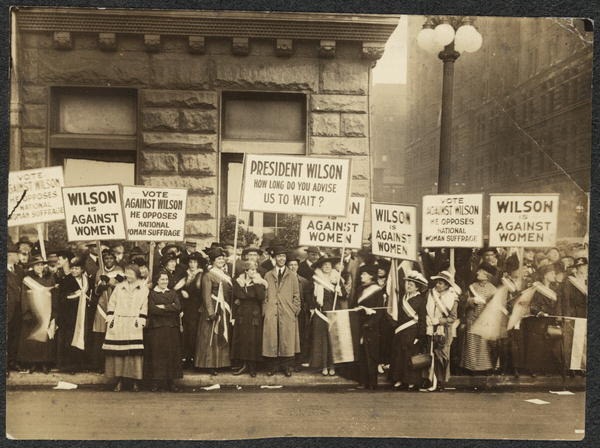
The struggle for Women’s rights continued after the war, which neither advanced nor reduced the rights of women, but the end of the war marked a change in the relationship with women’s rights advocates and their former allies in Congress. Likewise, the same evangelical churches which many of the women’s rights leaders had begun their crusades “which had been in the forefront of ante-bellum reform upheld the status quo.” [1] This was true of their support for women’s rights, as well as civil rights for blacks, and supported the use of force against strikers.

After laboring alongside abolitionists to abolish slavery and pass the Thirteenth Amendment, women’s rights leaders lobbied to have women’s suffrage linked to that of black suffrage and asked Congress to include universal suffrage as parts of the Fourteenth, and then the Fifteenth Amendments. However, Radical Republicans were fearful that including women’s rights in either measure could lead to black citizenship and suffrage to be rejected, and was a bitter disappointment to Stanton, Anthony and other Women’s rights leaders.

Stanton responded to one of the Congressmen who refused to support it by noting that failing to include women in these measures actually hurt the cause of African Americans and would doom Reconstruction because it would exclude black women from suffrage,, “our former champions forsook principle for policy, and in giving women the cold shoulder raised a more deadly opposition to the negro than we had yet encountered, creating an antagonism between him and the element most needed to be propitiate do on his behalf…. But Mr. Smith abandons the principle clearly involved and I trenches himself on policy. He would undoubtedly please the necessity of the ballot for the negro at the south for his protection, and to point to innumerable acts of cruelty he suffers to-day. But all of these things fall as heavily on the women of the black race, yea, far more so, for no man can ever know the damning degradation to which woman is subject in her youth, in helplessness and poverty…. Women everywhere are waking up to their God-given rights, to their true dignity as citizens of a republic, as mothers of the race…” [2]


Susan B. Anthony was arrested with a number of other women and convicted of trying to vote in the 1872 elections. After her conviction she condemned the resistance of white male politicians to universal suffrage, and of attempts throughout the country to limit and even role back suffrage rights which had been granted to African Americans after the war. After her trial and conviction she proclaimed, “This government is no democracy…. It is an odious aristocracy; a hateful oligarchy of sex” that placed “father, brothers, husbands, sons… over the mother and sisters, of every household.” [3]

Despite the setbacks suffered by women, the cause of women’s rights continued to grow as women asserted themselves in the workplace, in the press, in lobbying for workplace safety, and taking up leadership roles in the labor movement. Likewise the opportunities for women working in Federal Government agencies which had opened during the war continued to grow. “By 1875 the number in Washington had doubled. Federal, State, and local agencies were employing women clerks, bookkeepers, stenographers, and receptionists…. Competition for jobs was keen because wages were higher and workdays shorter than most other lines of work, and it was exciting to live in the nation’s capital.” [4] even so there was a certain amount of insecurity in such work as many Civil Service jobs were dependent on the patronage of elected officials. It was not until the first civil service acts in the 1880s that the danger of job loss from political change was minimized.

In the 1890s educational opportunities for women advanced as women’s colleges and land grant colleges open their doors to women as students, and later professors. Likewise, the establishment of teacher’s colleges and vocational training institutions expanded opportunities for women as the need for teachers and other specialists grew as the nation expanded. The women nurses of the war continued to find employment, and some went to Europe where they let their service to the French and Prussians during the Franco-Prussian War. After the war new nursing schools were opened, and medical colleges that allowed women to attend were established. By the 1890s “more than a dozen medical colleges were co-educational, including those of Syracuse, California, Iowa, and Harvard University.” [5] Medical societies began opening their doors to women as well, but in many cases the walls fell slowly as prejudice against women remained as strong as it ever was.

Even so, none of these efforts went without opposition, and in the face of it the movement itself split into a radical faction headed by Susan B. Anthony “which continued to press for a national constitutional amendment and a moderated wing led by Mary Livermore and Henry Ward Beecher which wanted to limit the campaign to what could be accomplished in state legislatures.” [6]

Sadly, none of the pioneers of women’s rights would live to see the passage and ratification of the Nineteenth Amendment which gave women the right to vote in 1920. The Equal Pay Act, which mandated the equal pay for Federal employees did not pass until 1963, and the ill-fated Equal Rights Amendment which simply stated “That equality of rights under the law shall not be abridged by the United States or by any State on account of sex” was introduced in 1923, but not passed by Congress in 1972,  but was never ratified falling three states short of ratification, mainly due to the opposition of religious conservatives who propagandize diet as a threat to traditional gender roles, citing in particular that the amendment might result in women being subject to the draft.

Even so, in the years following the failure of the amendment, women have continued to advance in the private sector, government, and the military, with women rising to be Chief Executive Officers of Fortune 500 companies, in elected office, as Cabinet Secretaries and on the Supreme Court, and even as four-star Generals and Admirals in the U.S. Military. Today women make up over half of college graduates and nearly half of the work force. To further increase opportunity the Department of Defense decided to open military occupational combat arms specialties previously restricted to men to women in 2015. Even so women can still be legally paid less, and discriminated against based on their gender in many states.

Notes

[1] Ibid. Goldfield America Aflame: How the Civil War Created a Nation p.468

[2] Stanton, Elizabeth Cady, Letter to Congressman Gerrit Smith, from The Revolution 14 January 1869 in The Civil War and Reconstruction: A Documentary Collection edited by William E. Gienapp, W.W. Norton and Company, New York and London. 2001 p.361

[3] Ibid. Goldfield America Aflame: How the Civil War Created a Nation p.468

[4] Ibid. Massey Women in the Civil War pp.340-341

[5] Ibid. Massey Women in the Civil War p.352

[6] Ibid. Guelzo Fateful Lightning p.403  

2 Comments

Filed under civil rights, History, Political Commentary

One Brief Moment Part Three: Harriet Tubman, Soldier and Spy


Friends of Padre Steve’s World,

Over the past few days I have been going back to a part of my Gettysburg and Civil War text dealing with women’s rights. I took a break from that yesterday to share a few thoughts on the 20th anniversary of my ordination to the priesthood. Sadly I had already posted that and was far too busy to spend any time on the terribly tragic events of the past few days in Dallas, St. Paul, and Baton Rouge. These senseless killings have left me stunned, I cannot believe that we have come to this. The carefully executed assassination of the Dallas Police officers who were marching with and providing security for Black Lives Matter marchers, and the video recorded killings of black men in St. Paul and Shreveport by police have left me wondering about our future as a nation. I don’t think that we can keep going on like this and survive. I will write more about this and post it Sunday or Monday as I want to be as objective as possible. 

So today I am posting a section of the portion of my text dealing with a most amazing woman, Harriet Tubman. The more I ready about her the more I stand I awe. This section was a lot less detailed that in is now. I have spent a lot of time working on this section recently, and will probably do some more in the coming weeks, but I think that you will find it interesting, and still relevant in our society.

So until tomorrow, I with you peace, health, and safety,

Peace

Padre Steve+

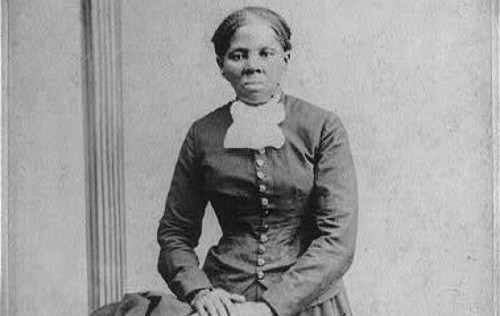
The innate prejudices of many military and political leaders about the abilities and limitations of women in military service, often caused them to overlook how women could use that prejudice to their advantage, especially as spies. “African American women were generally dismissed as militarily harmless, a miscalculation that Harriet Tubman…used to immense advantage. Tubman, who had escaped from slavery in Maryland twenty years before the war and who had amassed considerable experience venturing into the south to guide runaways to the North undertook spying expeditions for the Federal troops on the South Carolina Sea Islands.” [1] The incredibly brave woman served throughout the war accompanying Union forces and securing vital information even as she worked to set other slaves free. Tubman’s “spying activities included convincing slaves to trust the Union invaders,” [2] many of whom would join the ranks of the newly raised regiments of U.S. Colored Troops.
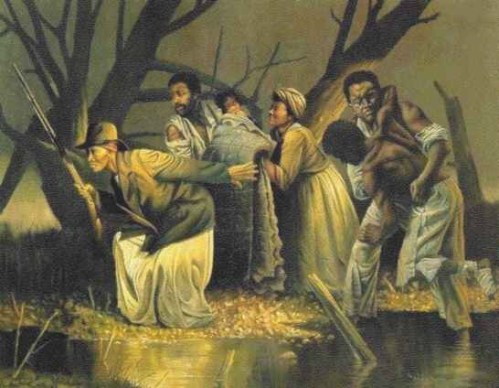

Tubman had been fighting her personal civil war for over twenty years before the war began. As an escaped slave she returned to the South time and time again as a “conductor” on the Underground Railroad, smuggling escaped slaves out of the South and to freedom. She “successfully returned nineteen more times, bringing out an estimated 300 to 400 people…. She worked with a determination bordering on ruthlessness: if an escaped slave tarried, she pushed him in; if a baby cried she muffled the sound.as she herself said later…. “I was the conductor on the Underground Railroad for eight years, and I can say what most conductors can’t say – I never ran my train off the track and I never lost one passenger.” [3]

In early 1863, Union commanders in South Carolina decided that Tubman would be valuable as a covert operative to lead reconnaissance missions behind Confederate lines and along contested waterways where Confederate personnel had laid torpedoes, what we now know as sea mines, and she organized a small unit of nine men who used small boats to find the torpedoes and warn the captains of Union vessels operating in those streams and rivers.

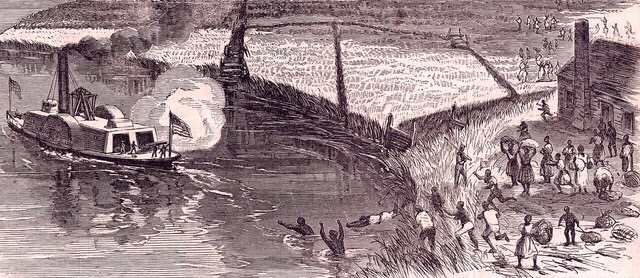
Eventually, Tubman’s actives “evolved into a kind of special forces operation under Colonel James Montgomery. A fervent believer in guerrilla warfare, Montgomery was a veteran of antislavery border fighting in Kansas.” The pair developed some of the most effective operations mounted by irregular and regular forces conducted by the Union in the war. In July 1863, Tubman came up with a plan for a raid, and in it acted as “Montgomery’s second-in-command during a night raid up the Combahee River, near Beaufort, South Carolina. The Union gunboats, carrying some 300 black troops, slipped up the river, eluding torpedoes that Tubman’s men had spotted. Undetected, the raiders swarmed ashore, destroyed a Confederate supply depot, torched homes and warehouses, and rounded up more than 750 rice plantation slaves.” [4]

The Confederate report on the raid unwittingly ended up praising the work of Tubman and the freed slaves of her unit. It noted that the enemy “seems to have been well posted as to the character and capacity of our troops… and seems to have been well guided with persons thoroughly acquainted with the river and country.” Union Brigadier General Rufus Saxton wrote to Secretary of War Stanton praised Tubman’s work, noting, “This is the only military command in American history wherein a woman, black or white, led to raid, and under whose inspiration, it was originated and conducted.” [5]

Tubman continued her work for the duration of the war and after it continued to assist freed slaves and black veterans and continued her work with campaign for women’s suffrage. In 1890 she was awarded a pension for her work as a spy, nurse, and combat leader. The valiant pioneer of abolition, women’s suffrage, and combat in war who was nicknamed “the General” by Frederick Douglass, died in 1913, and was buried with full military honors.

Other women served in various roles caring for the wounded. In the North, “Dorothea Dix organized the Union’s army nurses for four years without pay; Mary Livermore headed the Union’s Sanitary Commission, inspecting army camps and hospitals….Scores of others like Clara Barton, volunteered to be nurses.” [6] All of these women did remarkable service, mostly as volunteers, and many witnessed the carnage of battle close up as the cared for the wounded and the dying which often created ethic concerns for the women nurses:

“Clara Barton described her crisis of conscience when a young man on the verge of death mistook her for his sister May. Unable to bring herself actually to address him as “brother,” she nonetheless kissed his forehead so that, as she explained, “the act had done the falsehood the lips refused to speak.” [7]

The very existence of so many women who served in the ranks during the Civil War, and their “demonstrated competence as combatants, challenge long-held assumptions about gender roles…. From a historical perspective, the women warriors of the Civil War were not just ahead of their time. They were ahead of our time.” [8]

Of the women that served in the ranks during the war, some were discovered, and many of them remained protected by their fellow soldiers. Quite a few of these closeted women soldiers received promotions and even served as NCOs or junior officers. With women now serving in combat or combat support roles in the U.S. Military since Operation Desert Storm in 1991, the stigma and scandal that these cross-dressing women soldiers of the Civil War has faded and as scholars and the public both “continue probing cultural notions of gender and identity, the reemerging evidence that women historically and successfully engaged in combat has met with less intellectual resistance and has taken on new cultural significance.” [9] As the United States military services examine the issues surrounding further moves to integrate the combat arms we also should attempt to more closely examine the service of the brave and often forgotten women who served on both sides of the Civil War.

In addition to these tasked many other women were engaged in the war as “supply organizers, relief workers, pamphleteers all aided the cause, and female journalists covered it. Dorothea Dix and Clara Barton became powerful forces helping soldiers; Anna Carroll provided the propaganda. And the Civil War boasted its own version of Rosie the Riveter, women who did the dangerous work of making munitions at arsenals, many losing their lives in awful accidents.” [10]

Likewise, the war caused many educated women to take much more interest in “political and military issues and led many women to articulate a sharper consciousness of national affairs…. The feminist paper The Mayflower commented that “nearly every letter we receive breathes a spirit of deep feeling on the war question.” The editorial added that among women, “There seems to be little disposition to think, speak, read or write of anything else.” [11] In particular one women, Anna Ella Carroll, the daughter of Thomas King Carroll, a former governor of Maryland, “was interested in political theory and practice and was a profound logical thinker as well as an effective propagandist for the Union.” [12]  During the war she was in part responsible for persuading the governor of Maryland to keep the pro-secession legislature from meeting in 1861, defended Lincoln’s suspension of habeas corpus in that state, and is believed to have originated the military strategy in the Tennessee River Campaign, for which she was never given full credit even though there is documentary evidence that many leaders knew of her involvement. A recent biographer concluded that she “was a “tragic victim of reconstruction,” for if a military strategist, she was not given due credit.” [13] In the South it was often the same, the diaries of many educated Southern women show a tremendous interest and discernment of what was happening during the war, and in domestic politics, and frequently expressed their criticism of government and military strategy as the war continued.

Notes

[1] Ibid. Guelzo Fateful Lightning p.394

[2] Sizer, Lyde Cullen Acting Her Part: Narratives of Union Women Spies in Divided Houses: Gender and the Civil War Oxford University Press, New York and Oxford 1992 p.130

[3] Ibid. Sizer Acting Her Part: Narratives of Union Women Spies  p. 127

[4] Ibid. Central Intelligence Agency, Intelligence in the Civil War location 481 of 991

[5] Ibid. Central Intelligence Agency, Intelligence in the Civil War location 481-482 of 9911

[6] Ibid. Silvey I’ll Pass for Your Comrade p.10

[7] Faust, Drew Gilpin, This Republic of Suffering: Death and the American Civil War Vintage Books, a division of Random House, New York 2008 p.12

[8] Ibid. Blanton and Cook They Fought Like Demons p.208

[9] Ibid. Blanton and Cook They Fought Like Demons p.204

[10] Ibid. Roberts Capital Dames: The Civil War and the Women of Washington 1848-1868 p.3

[11] Attie, Jeanie Warwork and the Crisis of Domesticity in the North in Divided Houses: Gender and the Civil War edited by Catherine Clinton and Nina Silber, Oxford University Press, Oxford and New York 1992 p.253

[12] Ibid. Massey Women in the Civil War p. 168

[13] Ibid. Massey Women in the Civil War p.169

3 Comments

Filed under civil rights, civil war, History, leadership

Celebrating 20 Years as a Miscreant Priest 


Friends of Padre Steve’s World,

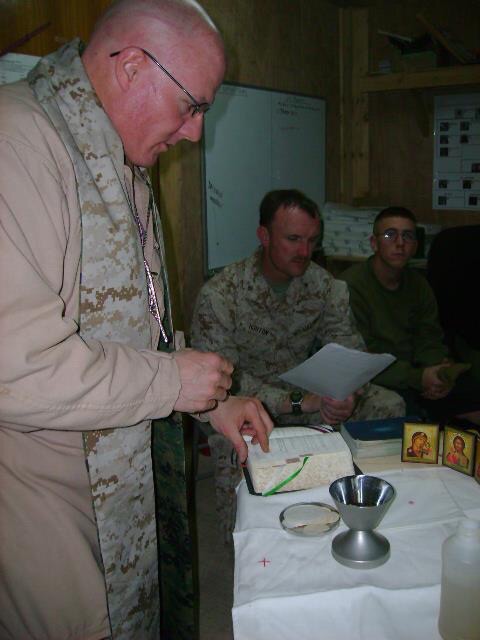
Yesterday was the 20th anniversary of my ordination to the Priesthood. July 7th 1996, it really is hard to believe that it has been that long, and this year it kind of snuck up on me. I had pretty much forgotten until I noticed an old friend from Camp LeJeune was wishing me well on it. If you are reading this Ray, thank you. 

Since Being ordained I have served in a lot of places as an Army and now Navy Chaplain, and I have served some of the most wonderful people ever, and in turn they have done more for me than I can ever imagine or repay. One of the things that a lot of people don’t understand is that the true joy in the priestly ministry is people, all kinds of people, regardless of who they are or what they believe. 

Over the years I have come to value that more than anything else. For me this is not about any kind of ecclesiastical power or desire for advancement. I do not desire to be a bishop, nor for that matter be in charge of anything. I prefer just to serve and care as I can, be with real people, and try as I might to show people God’s love by being real and caring for them. Now that doesn’t mean that I always do it well, I can be so stupid and insensitive sometimes, even when I am not trying to be. Judy tells me that it is because the male hormone causes brain damage. I won’t argue. 


Over the past twenty years I’ve have times of extreme faith, actually bordering on pious certitude bordering on arrogance. But I have also had doubts, very real doubts. In fact for almost two years after my tour in Iraq I can honestly say that at best I was an agnostic just praying that God existed. Eventually faith returned, and it has to be called faith, because it is not based on how much I think I know, but how little I do know. St. Anselm of Canterbury, the great Scholastic theologian described his task as “faith seeking understanding.” I used to think that way, but I don’t think that understanding the great mystery that is God is really possible, and that’s not a bad thing. I have faith in Jesus the Christ, I believe, and as one of the men Jesus encounters exclaimed, “I believe, help my unbelief.” 


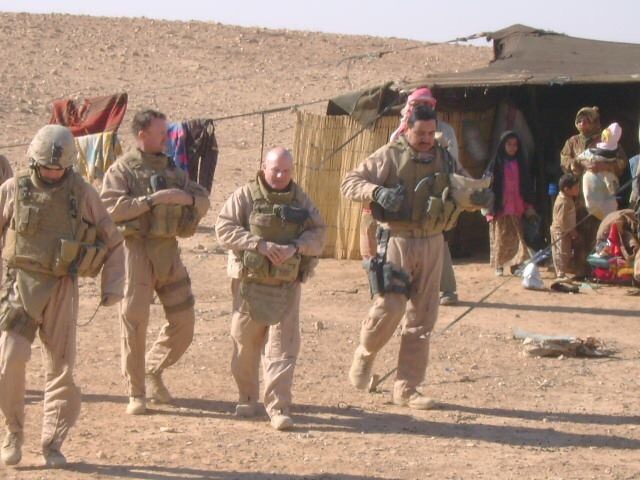
I guess that is all part of the journey. When I look back at all of my time as a priest was my high point, it was my time in Iraq. In the midst of all chaos that I felt closest to God, even when I was struggling. As T.E. Lawrence wrote, “We were fond together because of the sweep of open places, the taste of the wide winds, the sunlight, and the hopes in which we worked. The morning freshness of the world-to-be intoxicated us. We were wrought up with ideas inexpressible and vaporous, but to be fought for…”  It was the richest time of my life, but also the most disappointing, personally and professionally. I found like Lawrence, that most people really don’t care about the Iraqis, and that most of my fellow clergy really didn’t care about me. No wonder Lawrence said, “the fringes of their deserts were strewn with broken faiths.” 

But all of that aside, despite everything, I have rediscovered faith, life, and joy in ministry. So at twenty years I am good, and hopefully I’ve got at last twenty more good years to serve God and the people of God, wherever they are and no matter what their faith or lack of faith is, and interestingly enough my idea of ministry has broadened. So I don’t think that the form of my future ministry will be in the traditional parish setting. That too is okay as I am still fond of the sweep of open places, and the ideas, often inexpressible and vaporous are still there to be fought for. 

So until tomorrow, have a great day, and as the wonderful and grace filled conclusion off the rite of penance says, “pray for me a sinner.” 

Peace

Padre Steve+

4 Comments

Filed under faith, iraq, middle east, Military, ministry