

Yes, I know I have played this one several times already, but please bear with me. I tend to play this song when … well, when I need to … imagine. …
♫ Imagine ♫
We all need to imagine sometimes, thanks to Jill Dennison for sharing this.
Yes, I know I have played this one several times already, but please bear with me. I tend to play this song when … well, when I need to … imagine. …
♫ Imagine ♫
We all need to imagine sometimes, thanks to Jill Dennison for sharing this.
Filed under Loose thoughts and musings

The date for the re-start of mine and Jeff’s project, September 11th, came about quite by accident … to start with, that is. We counted back eight …
America’s Wake-Up Call — Jeff & Jill Are Baaaaack!!!
Jill Dennison echoing some of my same thoughts and commentary about George W. Bush displaying empathy, care, and leadership in the initial weeks after 9-11-2001 and how the current occupant of the White House could never do it.
Filed under Loose thoughts and musings
By Robert A. Vella In today’s news, we’ll cover 3 Russians and 1 pro-Russian Ukrainian who have been either sanctioned by the U.S. Department of …
Russian election meddling, Trump muzzles Fauci, Dems’ voter advantage, 2020 hottest year on record
A great post from Robert Vella at his Secular Jurist site.
Filed under Loose thoughts and musings
Filed under Loose thoughts and musings

Friends of Padre Steve’s World,
September 11th is a day that always makes me more introspective. It brings back so many memories, some that I wish I could forget; but I cannot get the images of that day out of my mind. The burning towers, the people jumping to their deaths to escape the flames, and the scenes of devastation. I have decided to take the time tonight to share that day and what followed in my life and with the people that I served, including those who died.
I knew one of the victims in the attack on the Pentagon, an Army Lieutenant Colonel, Karen Wagner who commanded a Medical training company at Fort Sam Houston where I was serving as the Brigade Adjutant in 1987 and 1988. She was a very nice person, very gracious and decent, admired by everyone who knew her; I was shocked to see her name on the casualty list after the attack.
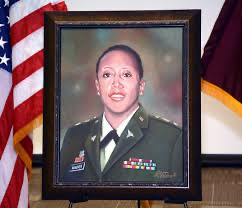
Lieutenant Colonel Karen Wagner, Medical Service Corps, US Army
The emotions that I feel on the anniversary of these terrorist attacks which claimed the lives of so many innocent people, and which devastated so many families, still haunts me, and my subsequent service, especially in Iraq has changed me. Years after he returned from his time in the Middle East, T.E. Lawrence; the immortal Lawrence of Arabia wrote to a friend, “You wonder what I am doing? Well, so do I, in truth. Days seem to dawn, suns to shine, evenings to follow, and then I sleep. What I have done, what I am doing, what I am going to do, puzzle and bewilder me. Have you ever been a leaf and fallen from your tree in autumn and been really puzzled about it? That’s the feeling.” I often feel that way.
Nineteen years ago I was getting ready to go to the French Creek Gym at Camp Le Jeune North Carolina where I was serving as the Chaplain of Headquarters Battalion 2nd Marine Division. I had returned from a deployment to Okinawa, Mainland Japan and Korea just two months before with 3rd Battalion 8th Marines.

Staff Sergeant Ergin Osman, US Army, former US Marine, KIA, Afghanistan 26 May 2011
One of the Marines I got to know well at 3/8 was Corporal Ergin Osman. He eventually left the Marines enlisted in the Army and was serving with the 101st Airborne Division when he and 6 members of his platoon were killed on May 26th 2011 by an Improvised Explosive Device, while hunting down a Taliban leader.

Father (Chaplain) Tim Vakoc
Another man I knew was Father Timothy Vakoc, an Army Chaplain I knew when he was a seminarian going through the Army Chaplain Officer Basic Course with in 1990. He was horribly wounded by an IED when traveling in a HUMMV to say mass for his troops near Mosul, Iraq in 2004. At the time he was a Major in the Chaplain Corps. He never made a full recovery from his wounds but was inspirational to all he met and served until he died in 2009 after having eithe been dropped, or fallen in a nursing home.
On the morning of 9-11-2001 I was preparing to transfer to the USS Hue City, a guided missile cruiser stationed in Mayport, Florida, to deploy in January 2002 to support operations against the Taliban and take part in the UN Oil Embargo against Iraq.
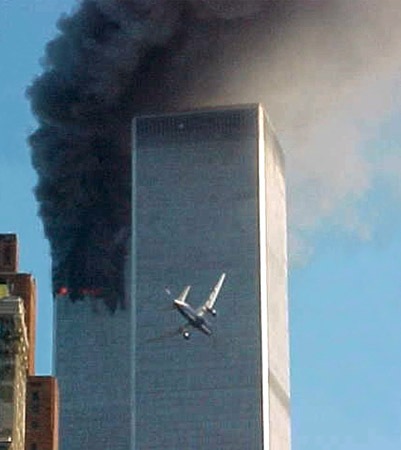
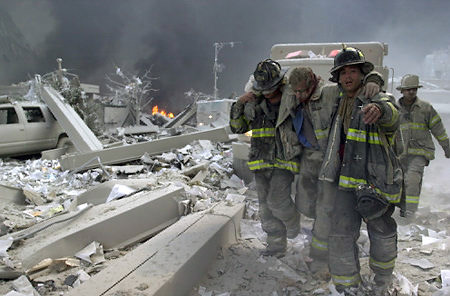

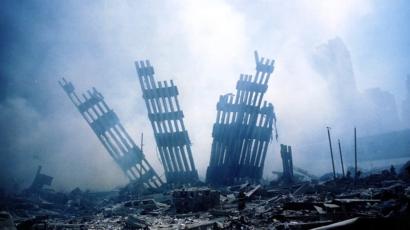

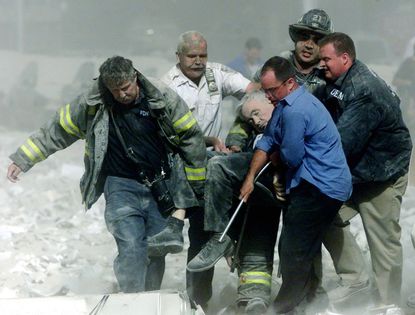


At the time of the attack I had already been in the military for over 20 years and I had actually taken a reduction in rank to transfer from the Army, where I was a Major in the reserves, to the Navy to serve on active duty. In those previous 20 years I had served overseas during the Cold War along the Fulda Gap. I had been mobilized to support the Bosnia mission in 1996, and I had just missed being mobilized for Operation Desert Storm as my unit was awaiting its mobilization orders when the war ended. I had done other missions as well as the deployment to the Far East that returned from in July 2001; but nothing prepared me for that day. Like other career military officers I expected that we would be at war again and thought it might be back in the Middle East, and probably a result of some fool’s miscalculations; but like the American officers who were serving at the time of the Pearl Harbor attack, I never expected what happened that morning.
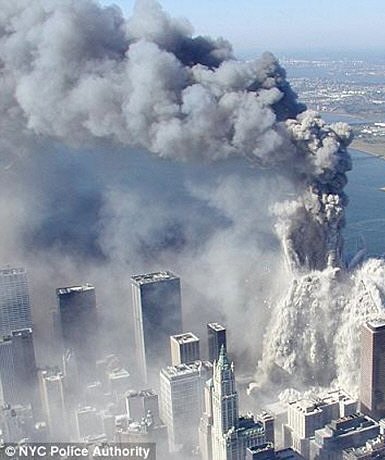

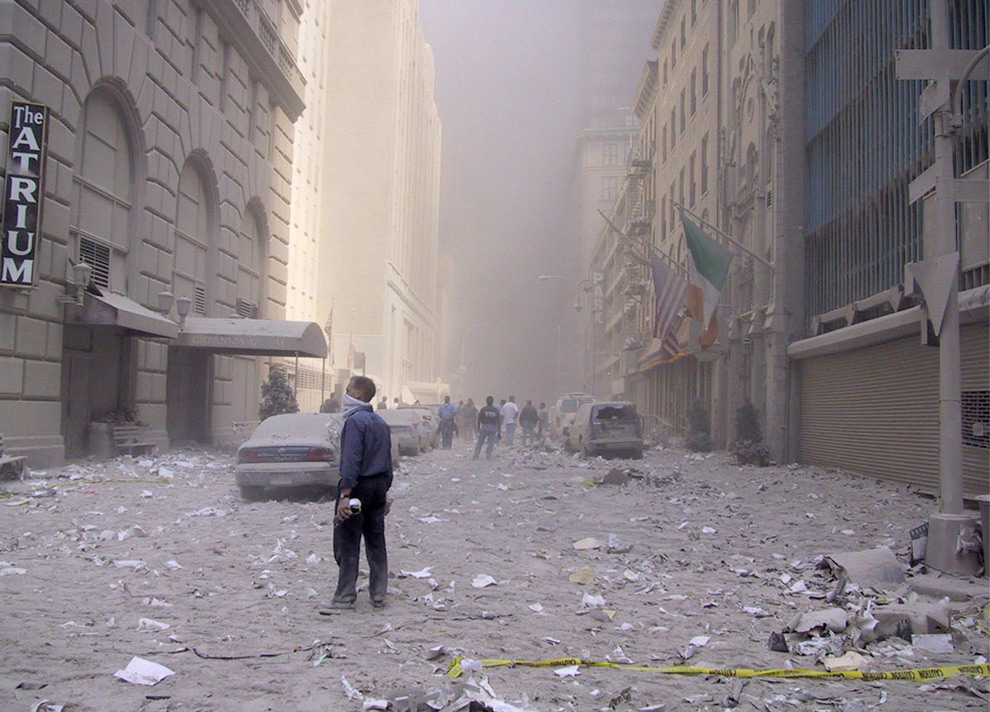
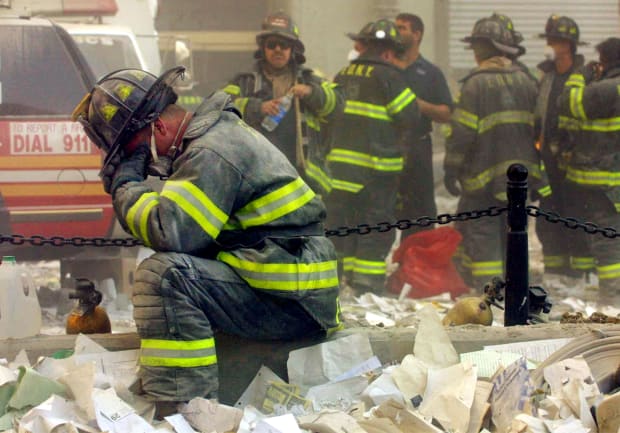


Tuesday, September 11th 2001 had started like so many days in my career. Routine office work, a couple of counseling cases and what I thought would be a good PT session. I was about to close out my computer browser when I saw a little headline on Yahoo News that a plane had crashed into the World Trade Center. I paid little attention and figured that a private plane, something like a Cessna piloted by an incompetent pilot had inadvertently flown into the building.
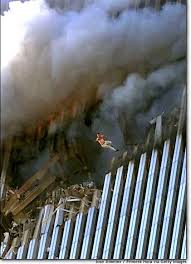
That delusion lasted about two minutes. I got in my car and the radio, tuned to an AM talk station had a host calling the play by play. He started screaming “oh my God another airliner flew into the other tower.” Seeking to see what was happening I went to the gym where there were many televisions. I got there and saw the towers burning, with stunned Marines and Sailors watching silently, some in tears. I went back out, drove to my office and got into uniform. After checking in with my colonel a made a quick trip to my house for my sea bags and some extra underwear, and personal hygiene items.

When I got back the headquarters we went into a meeting, and the base went on lock down mode. The gates were closed and additional checkpoints, and roadblocks established on base. Marines in full battle-rattle patrolled the perimeter and along the waterfront. I did not leave the base until the night of the 15th when things began to settle down and we all went into contingency planning mode for any military response to the attacks.
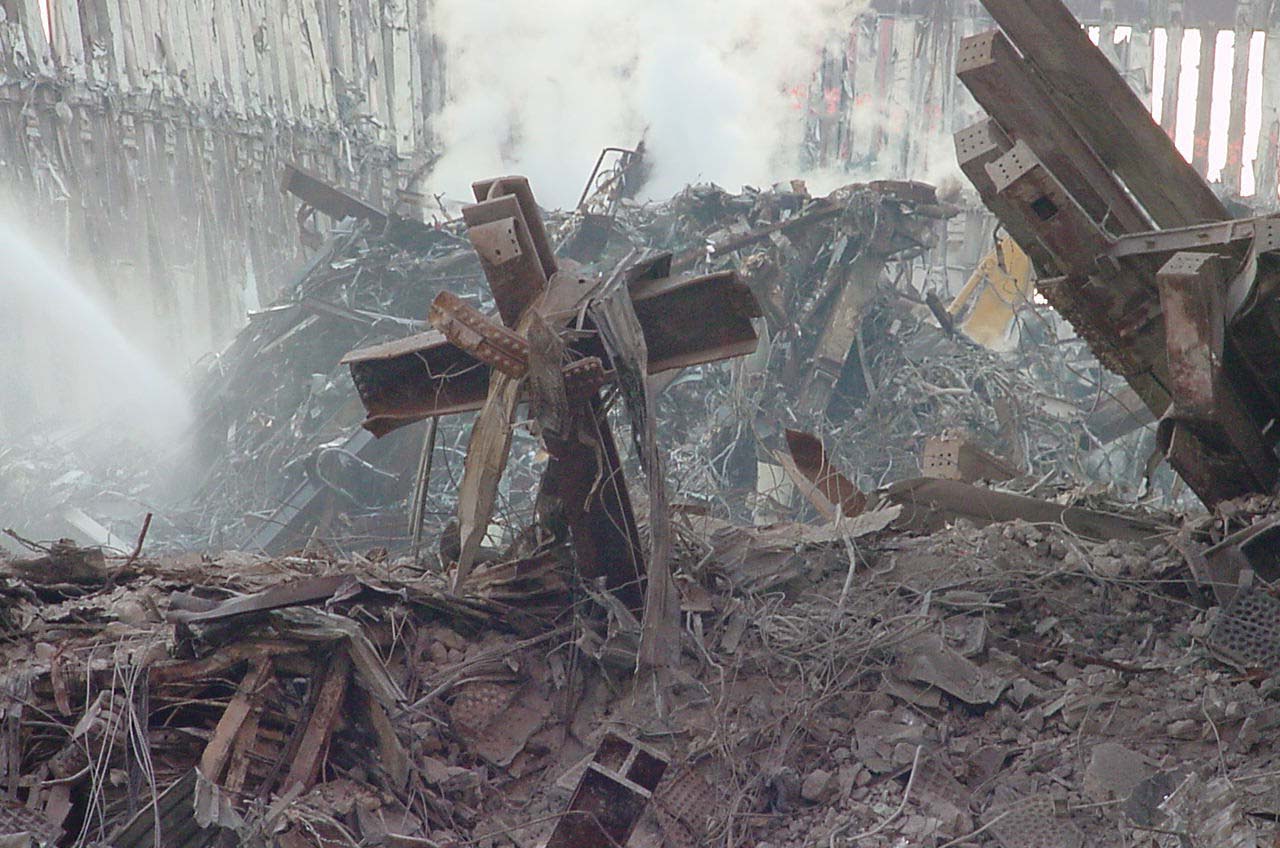
My wife, who as waiting for a doctor’s appointment with a friend saw the attacks on live television and knew when the first plane struck she told her friend that it was terrorism. Her friend responded “that damned Saddam Hussein.” Like so many of us who initially thought this, my wife’s friend was wrong.
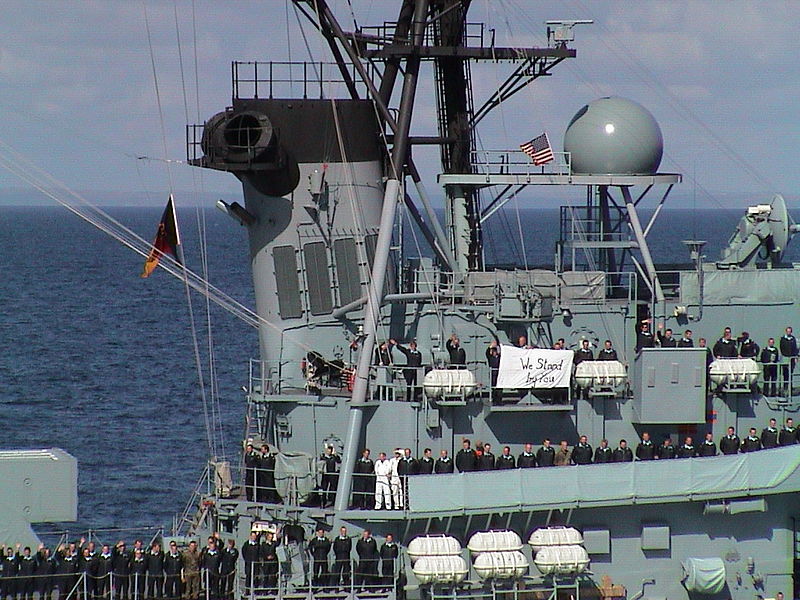

Those were tumultuous days, so much fear; so much paranoia; and so much bad information as to who committed the attacks and what was going to happen next. One thing that I do remember that for a brief moment in time we were united as Americans. Say what you want about him now and some of his later decisions, but President George W. Bush was inspirational in the days after the attack. He provided both rallied us and led us in our grief in a way the current President, who lied about what he saw and did that day, never could.
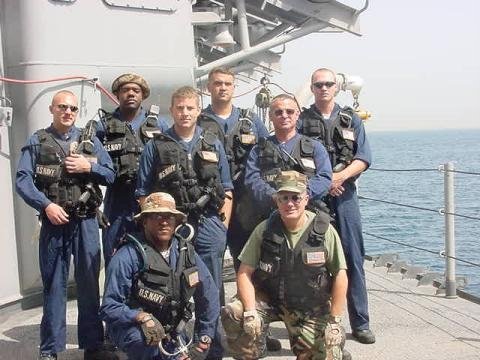
A few months later I deployed aboard Hue City to the Middle East where we supported the air operations in Afghanistan, anti-terrorist operations off the Horn of Africa and in Operation Southern Watch and the U.N. Oil Embargo against Iraq.

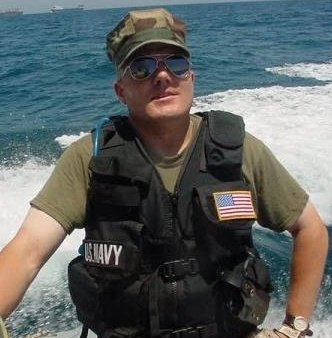
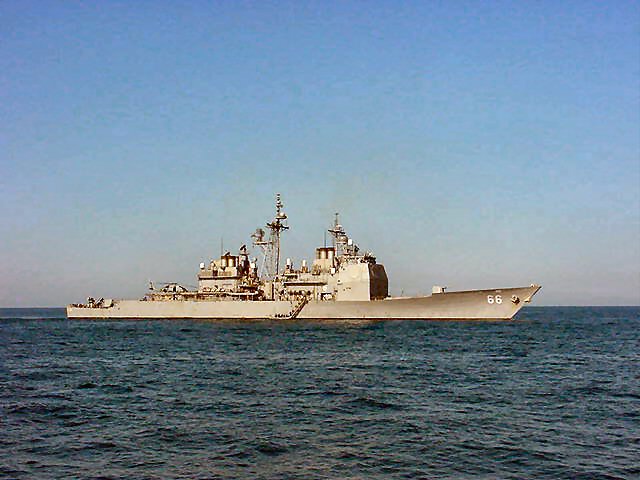
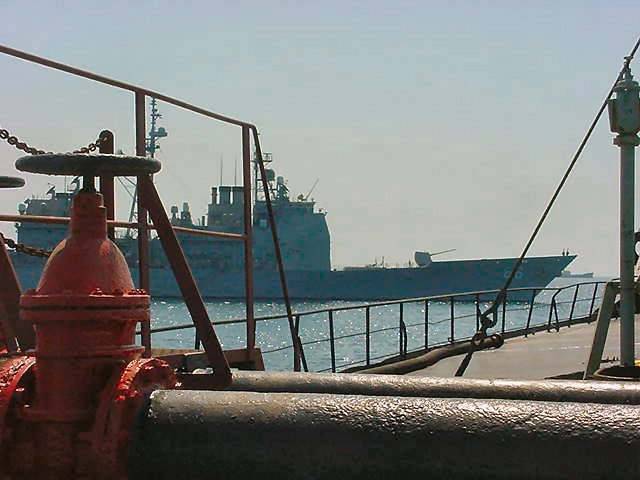

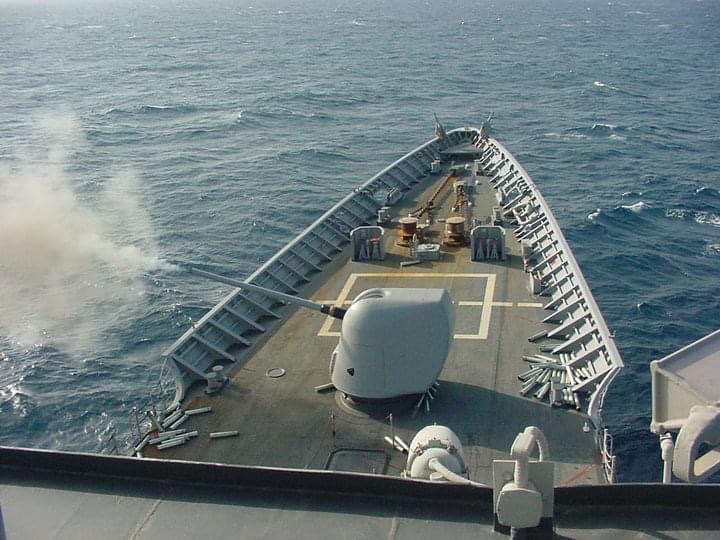


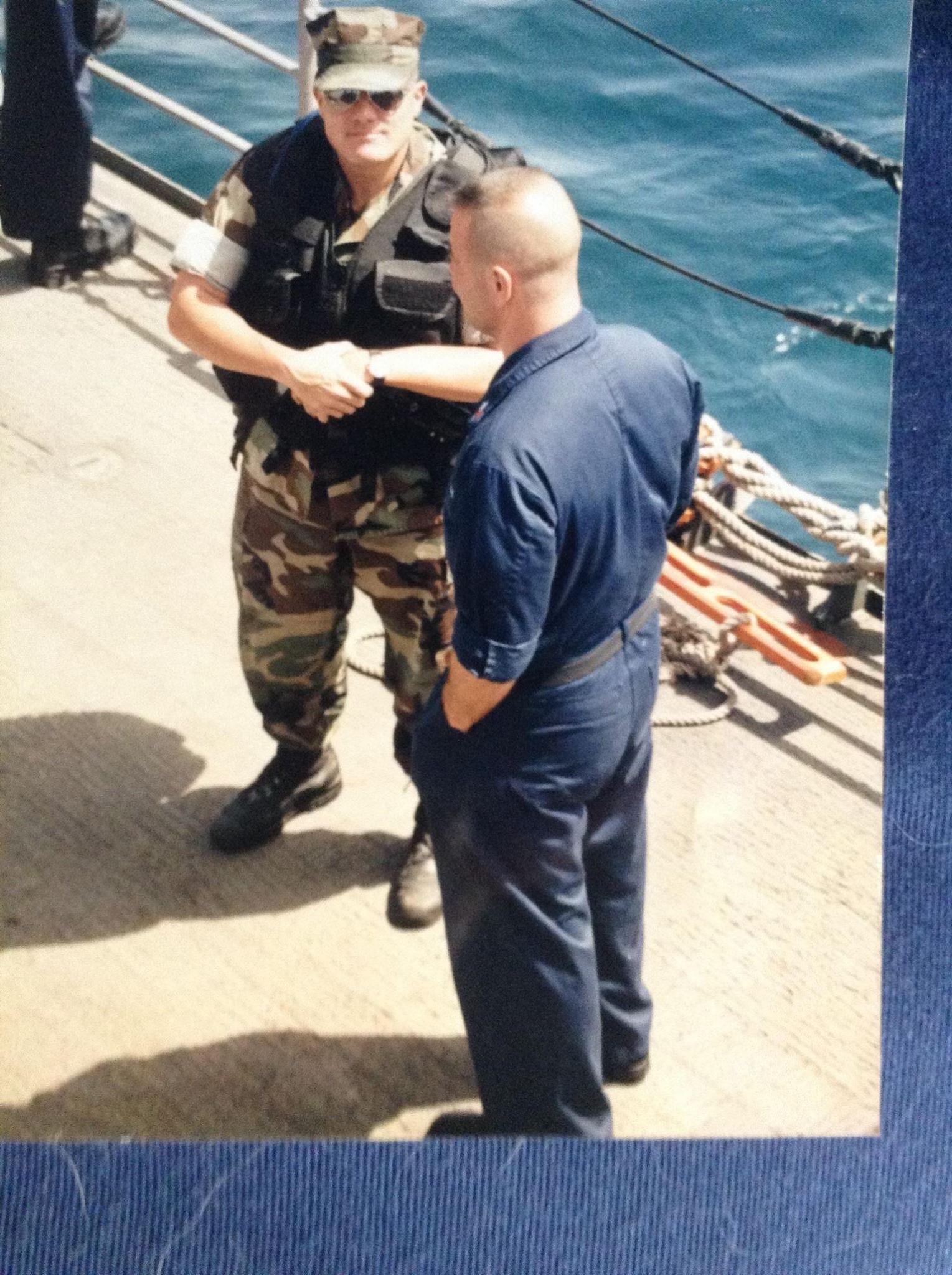

I then did three years with Marine Security Forces, traveling around the world to support Marine Fleet Anti-Terrorism Security Team companies. For three years I was on the road one to three weeks a month traveling to the Middle East, Europe, the Pacific and many parts of the United States.
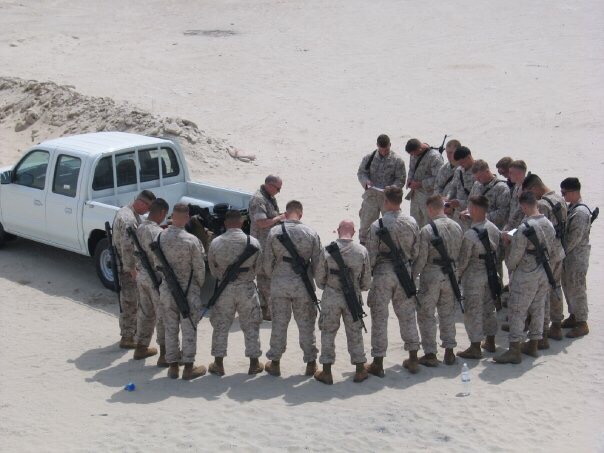
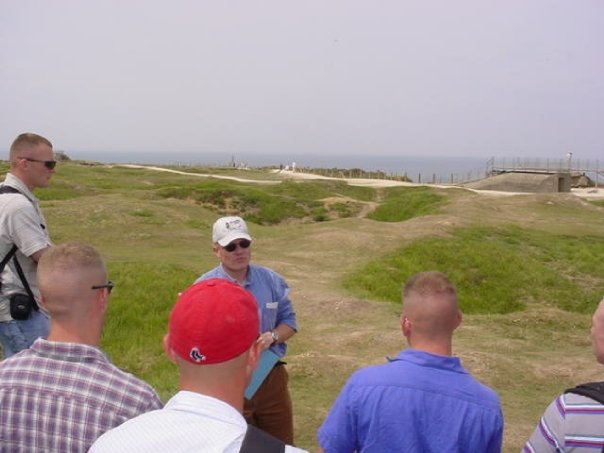
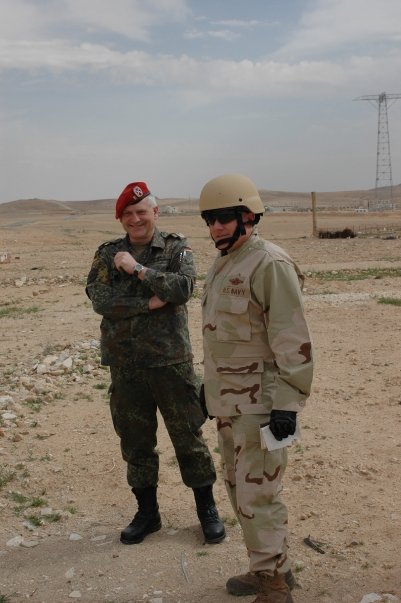

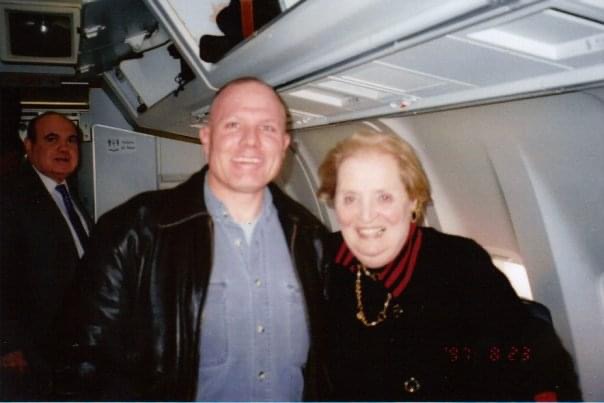

In 2008 I was promoted and transferred to Explosive Ordnance Disposal Group Two, from which I was deployed with my assistant to Iraq, where we served as members of the Iraq Assistance Group in all Al Anbar Province supporting small teams of Marine Corps, Army and Joint Force adviser teams to the Iraqi Army, Border troops, Port of Entry police, police and highway patrol.
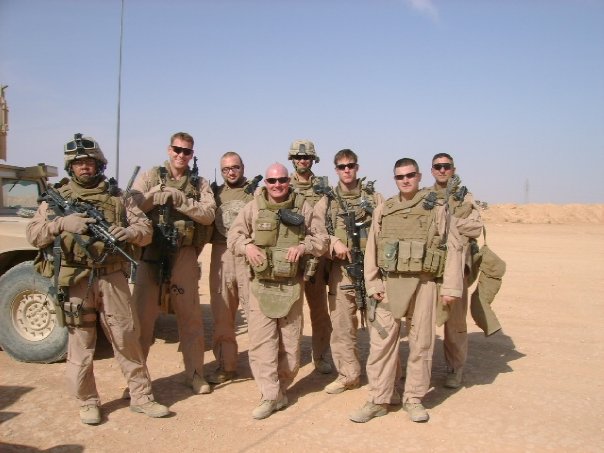
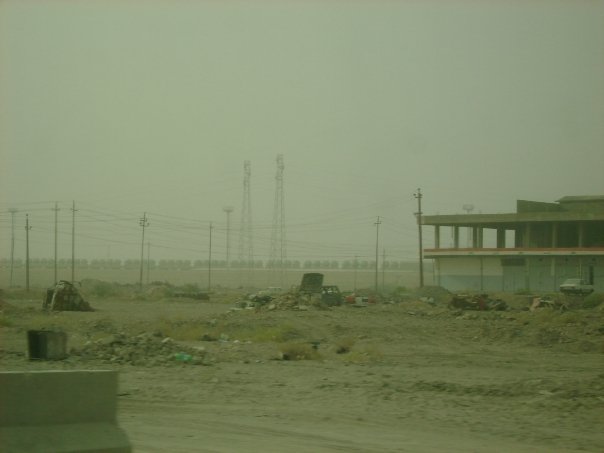
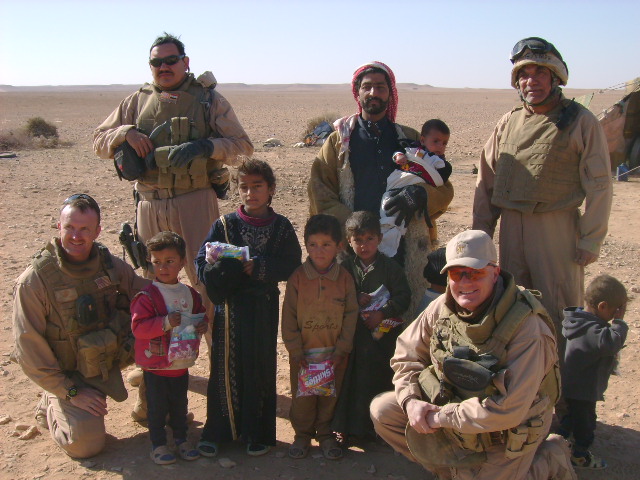


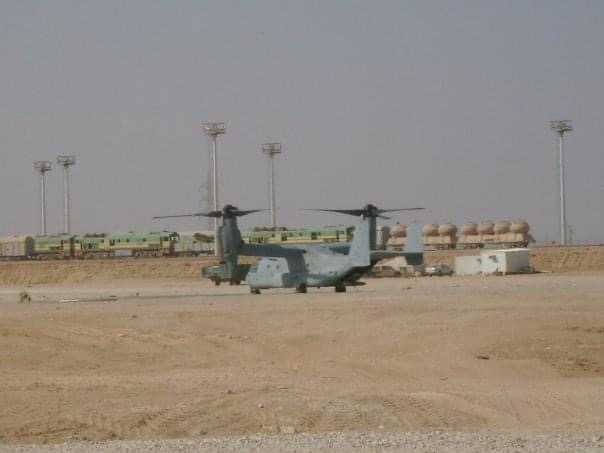


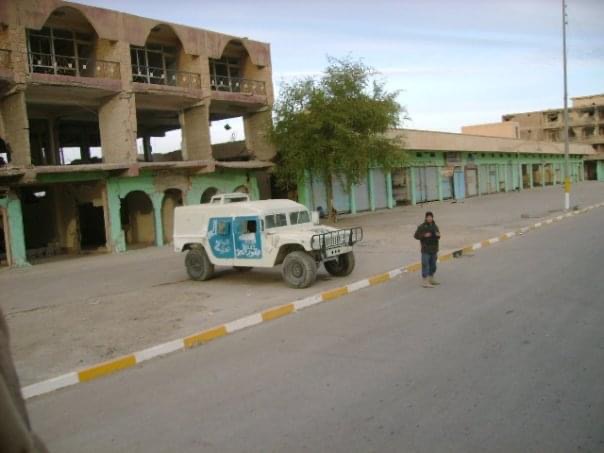

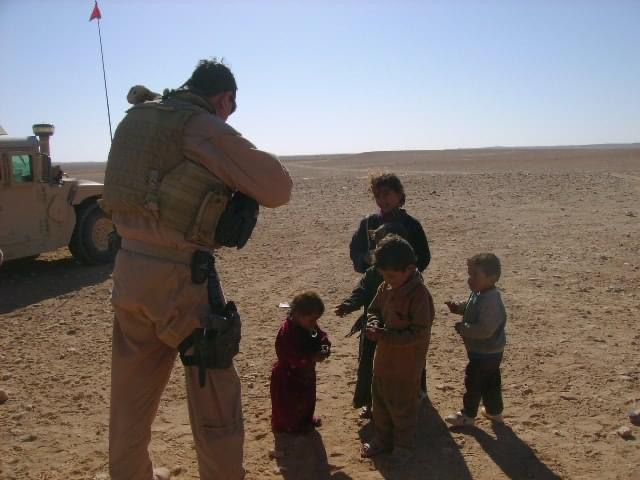

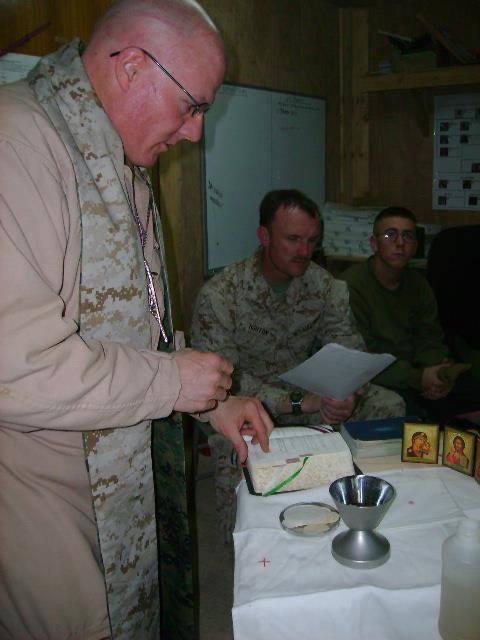
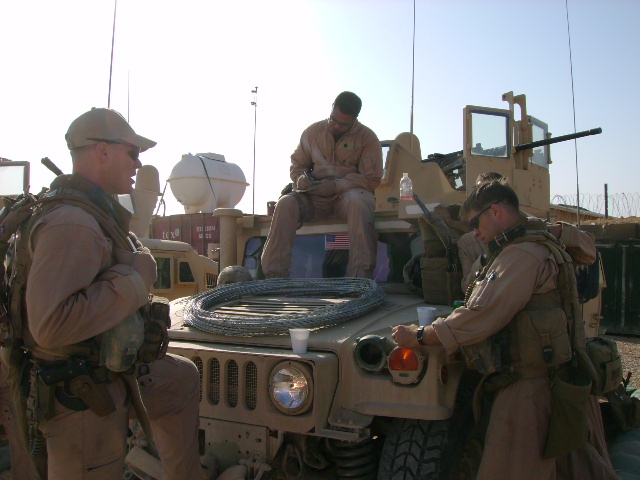
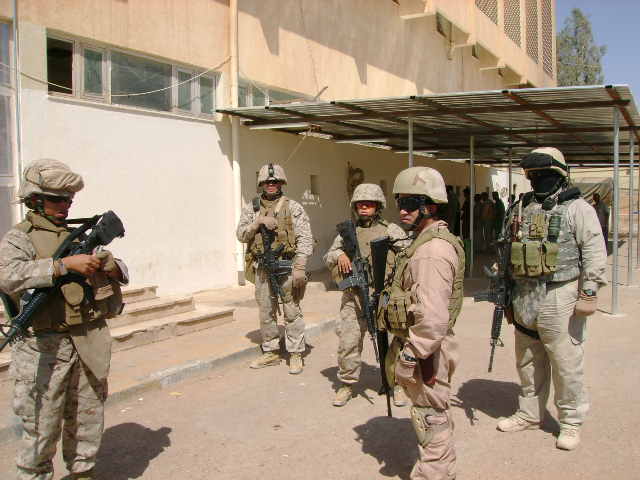
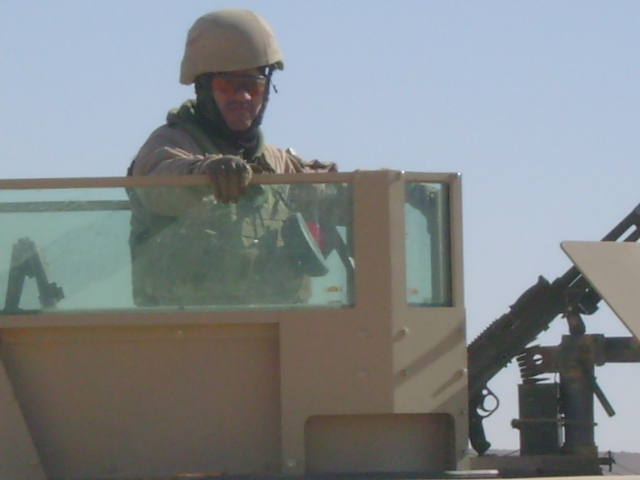


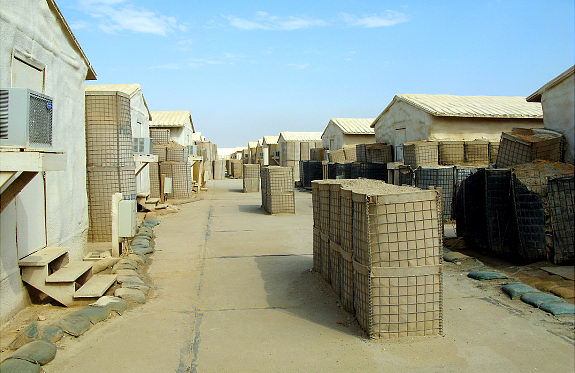
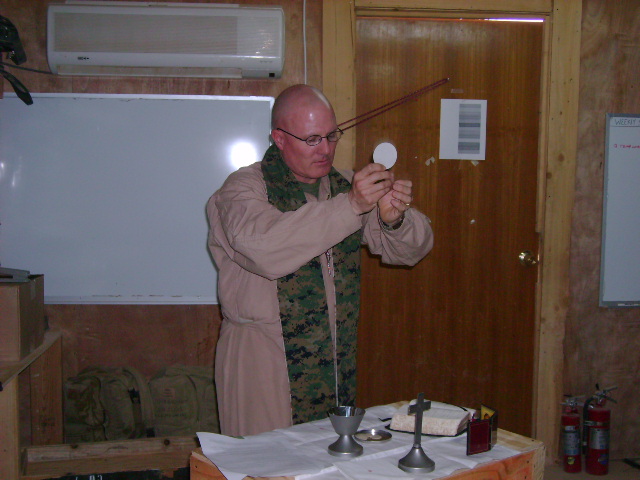
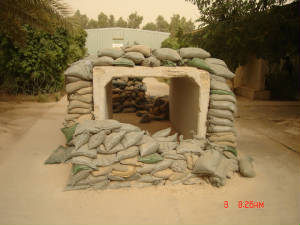
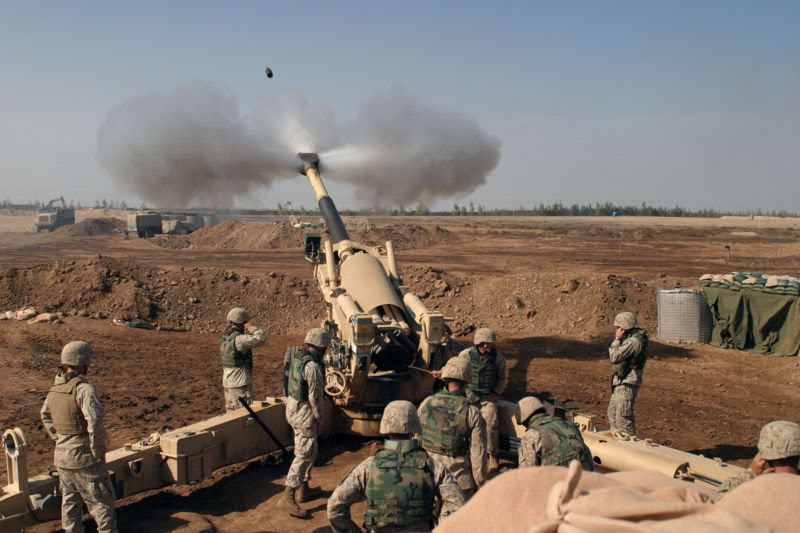
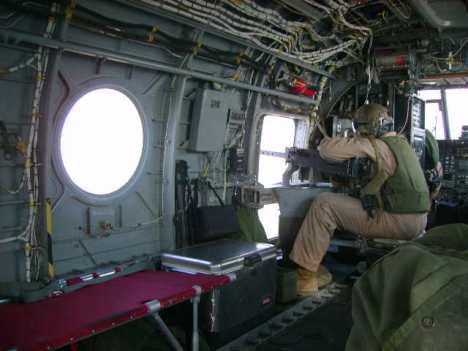
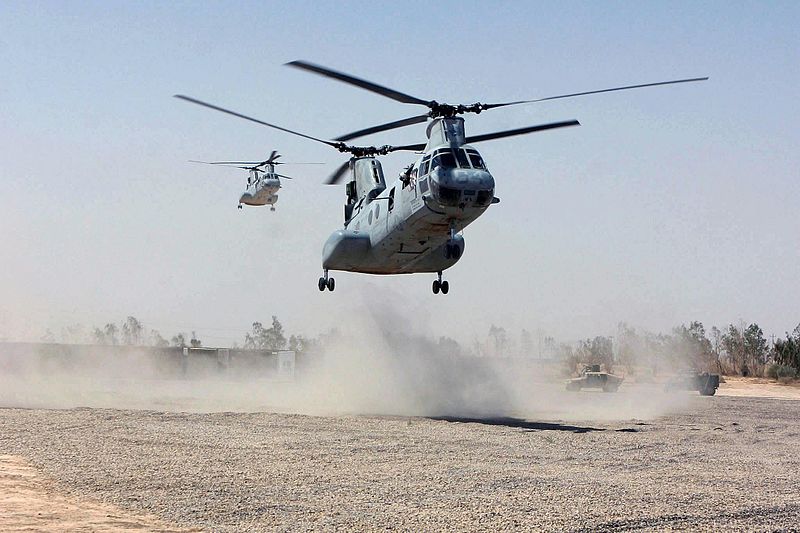
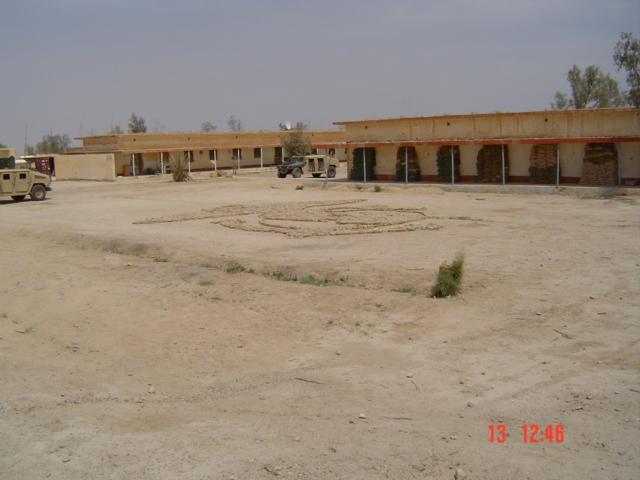
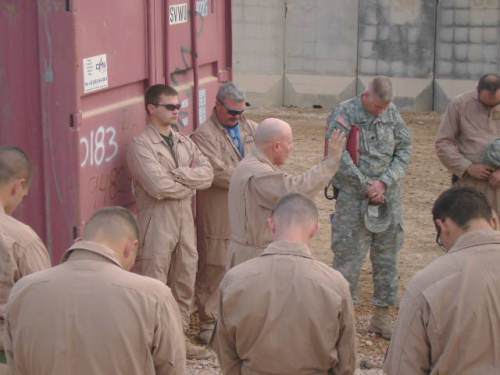
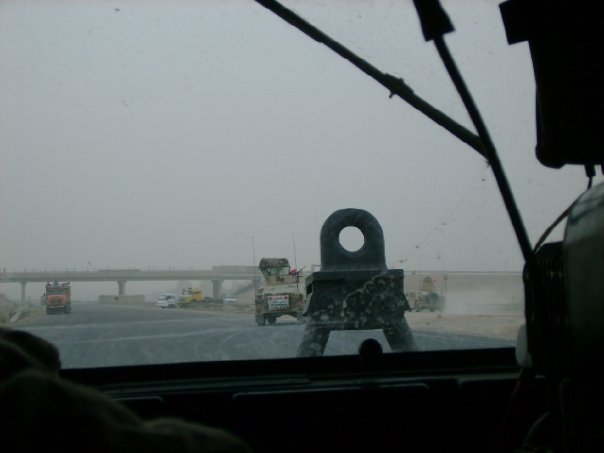

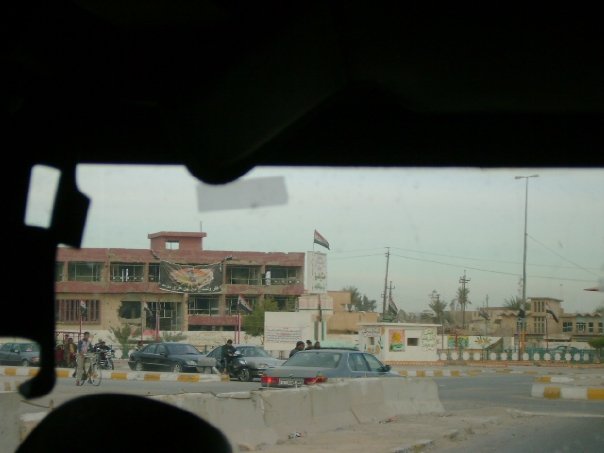
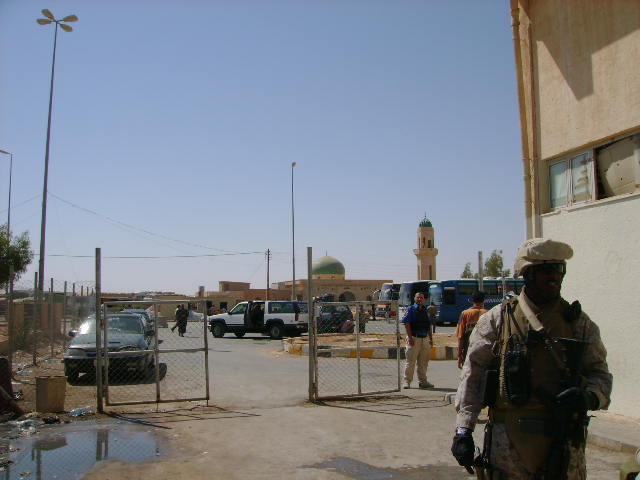

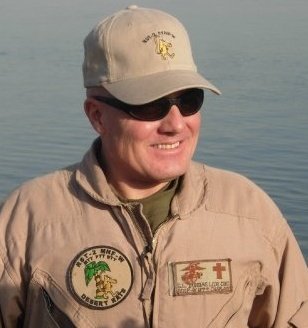

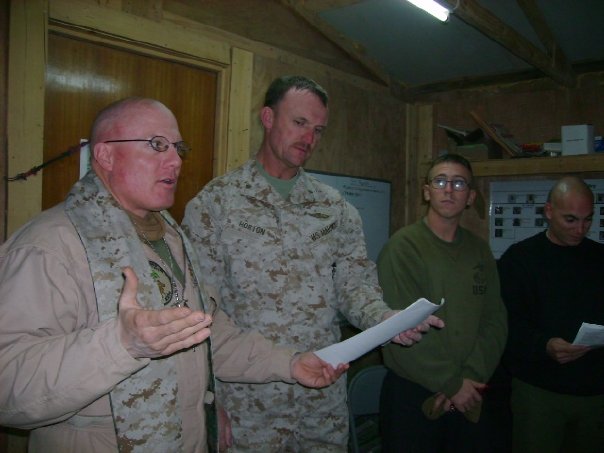
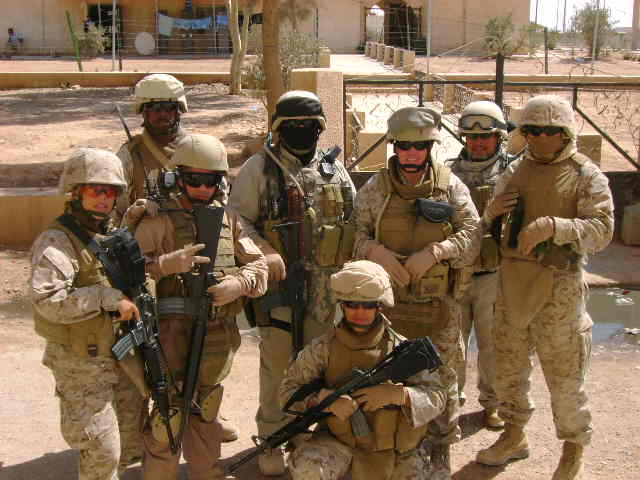
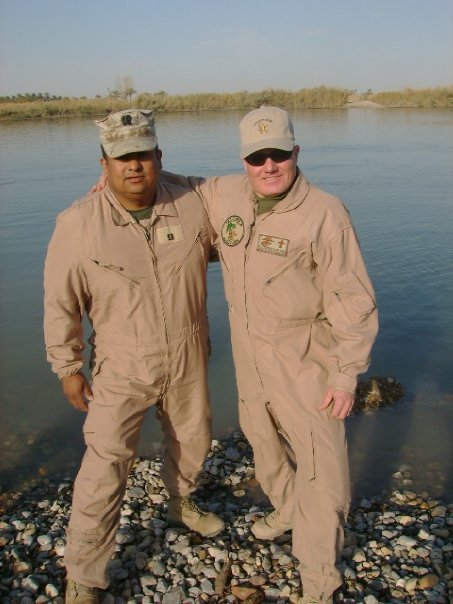
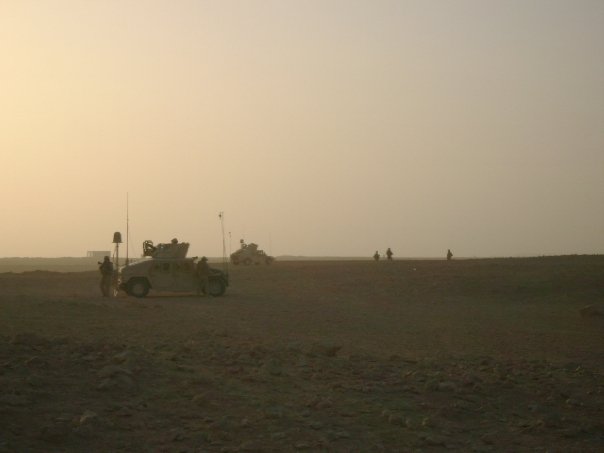
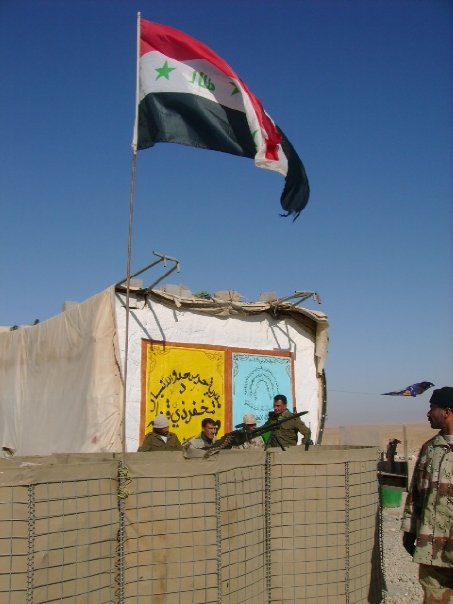
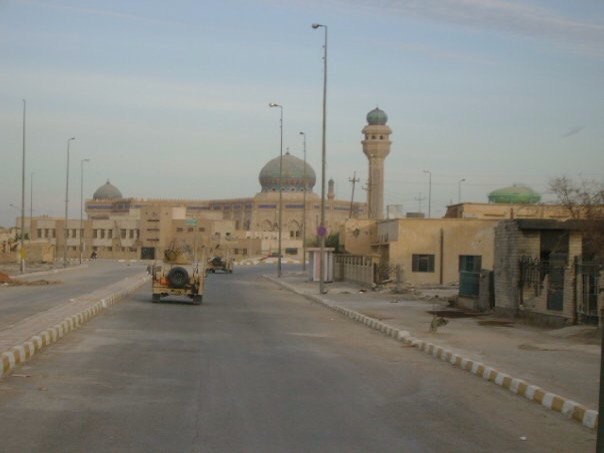


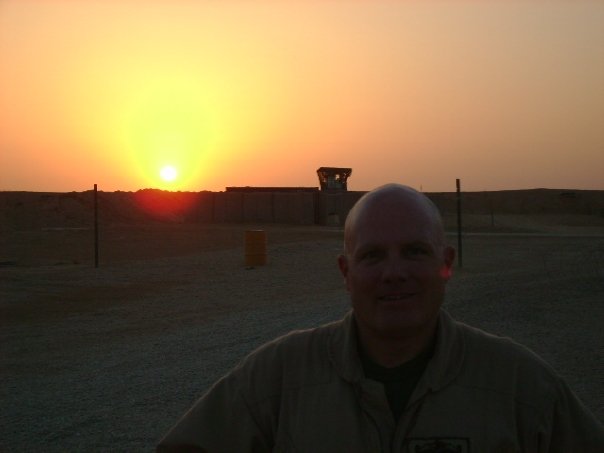
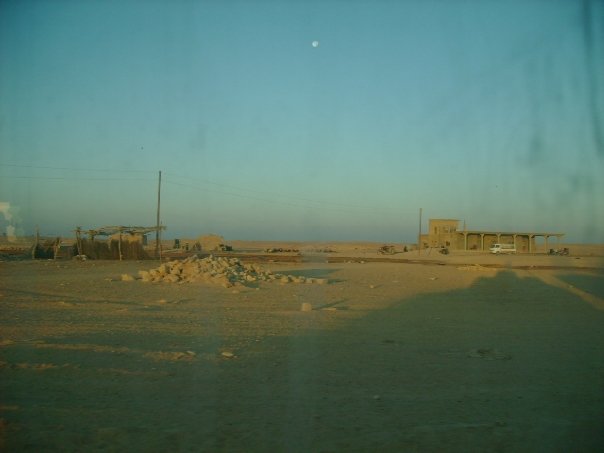
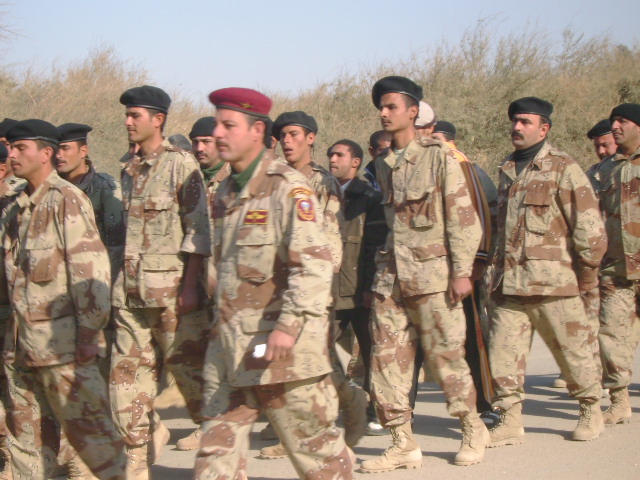
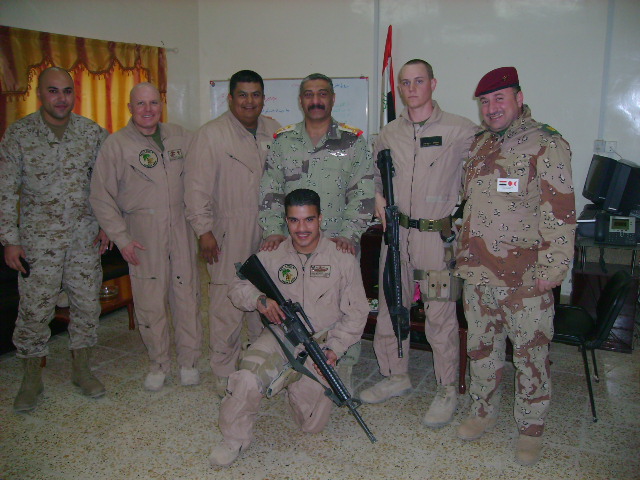
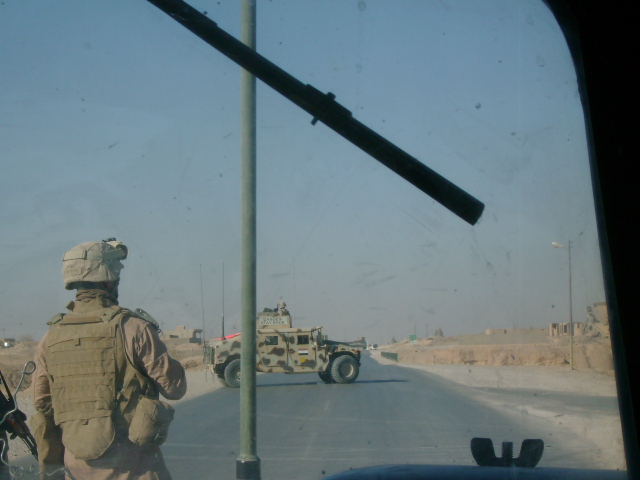
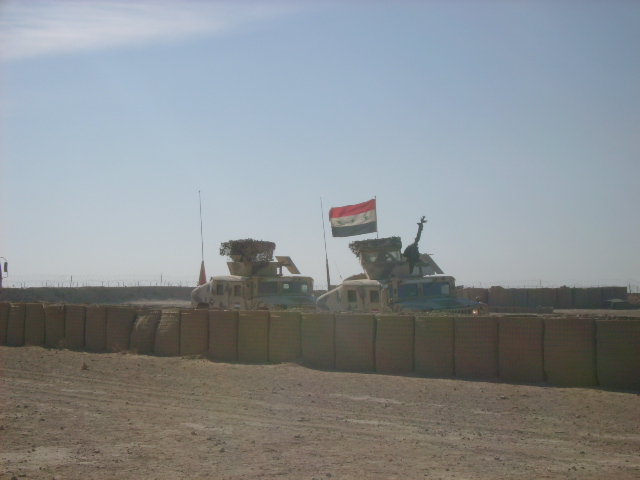
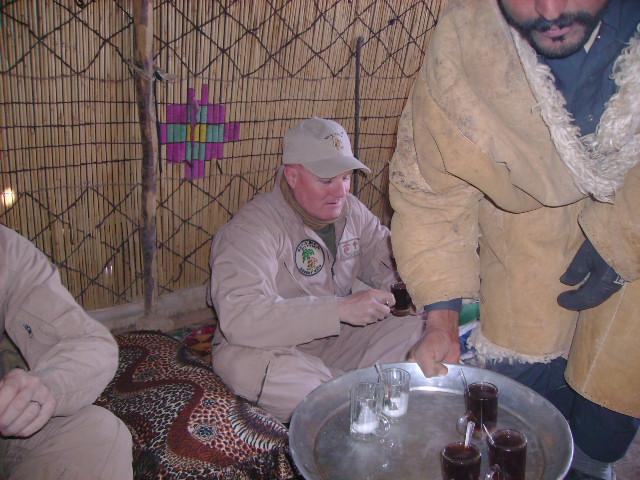
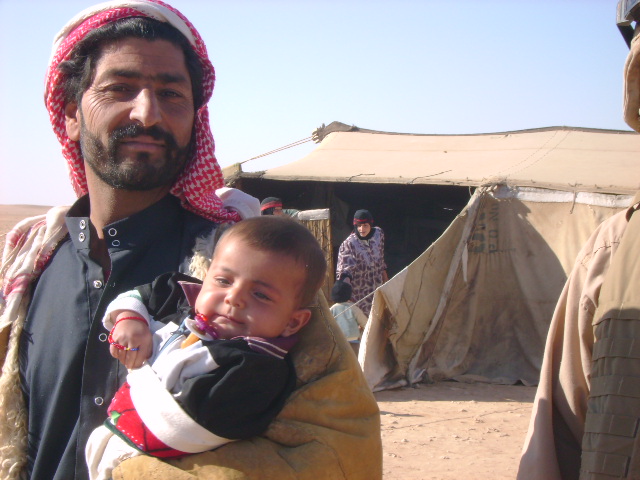

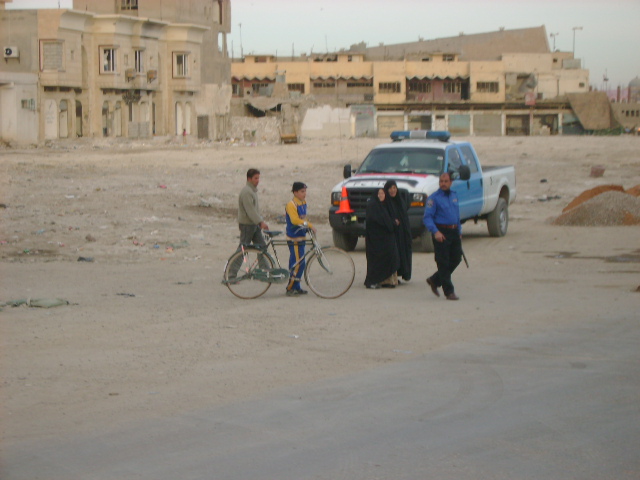
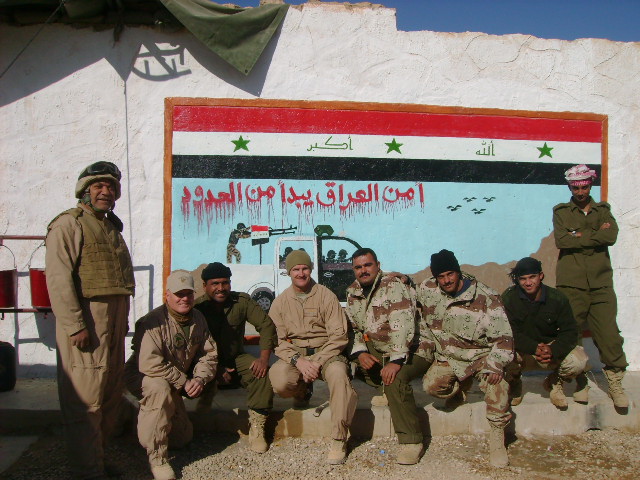
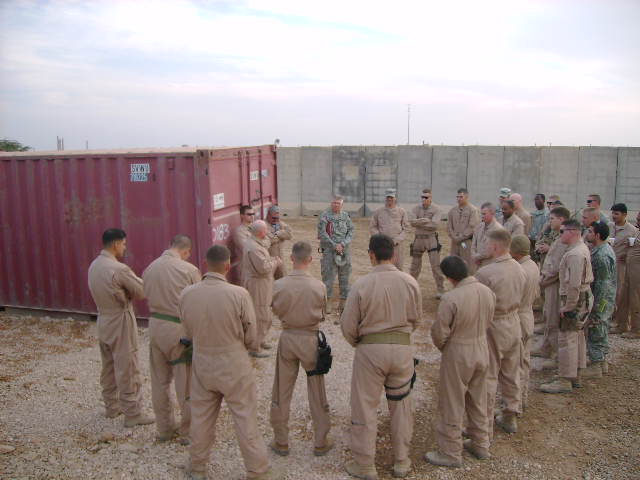
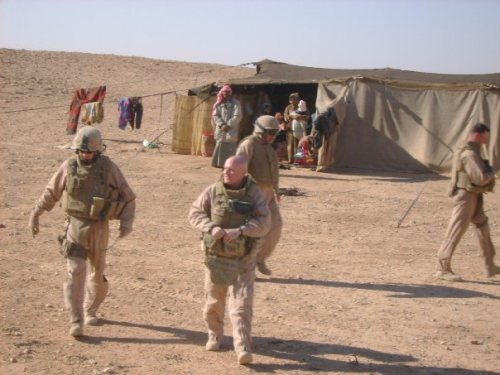

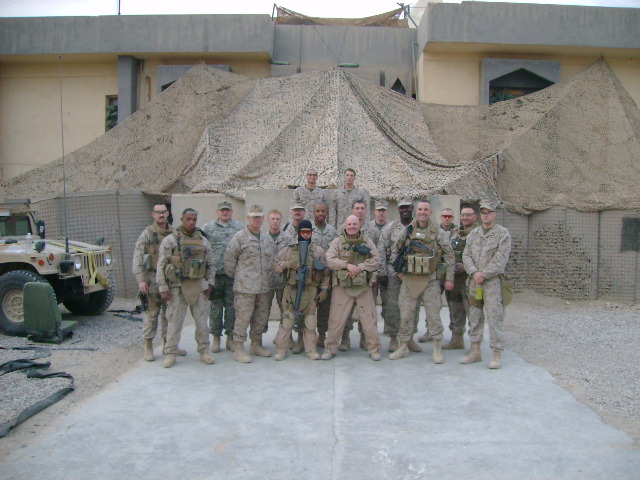
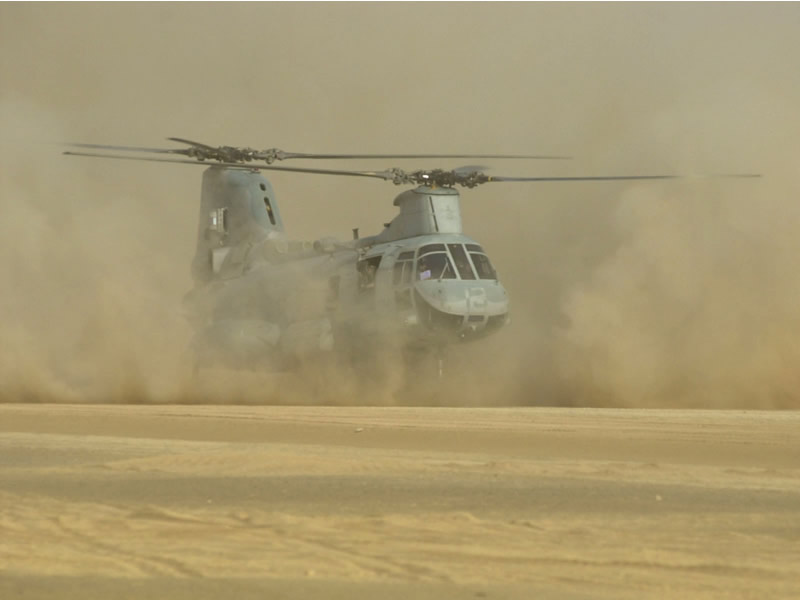
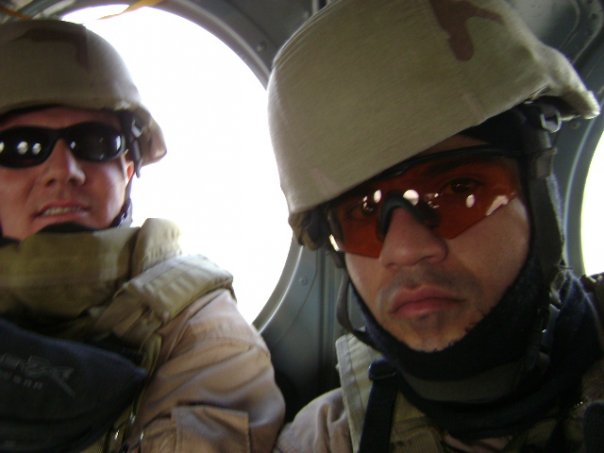
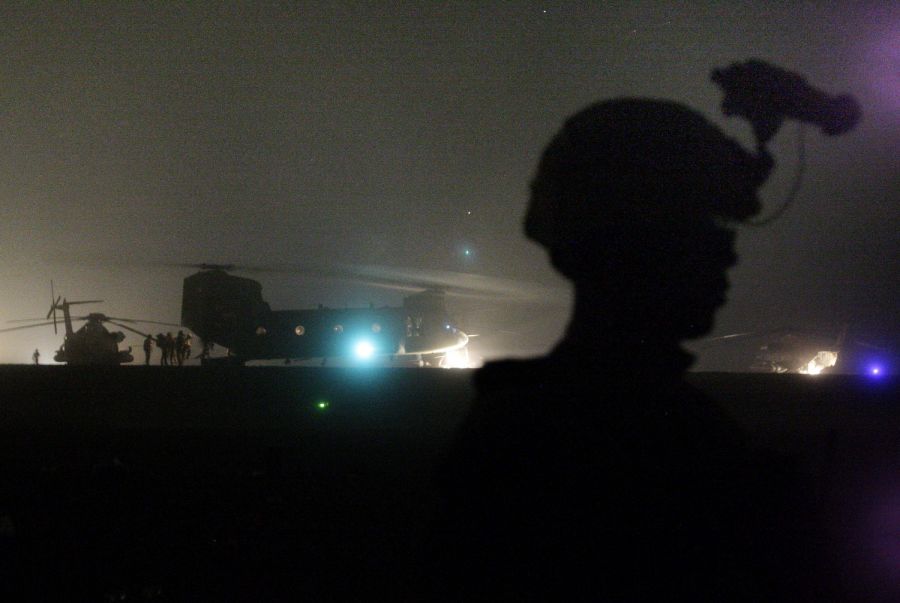
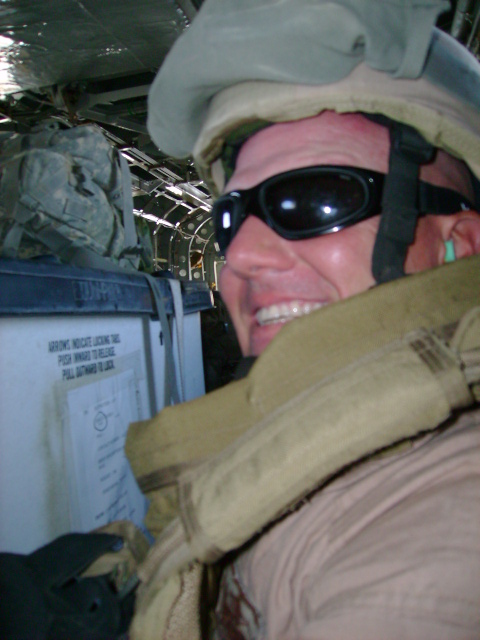
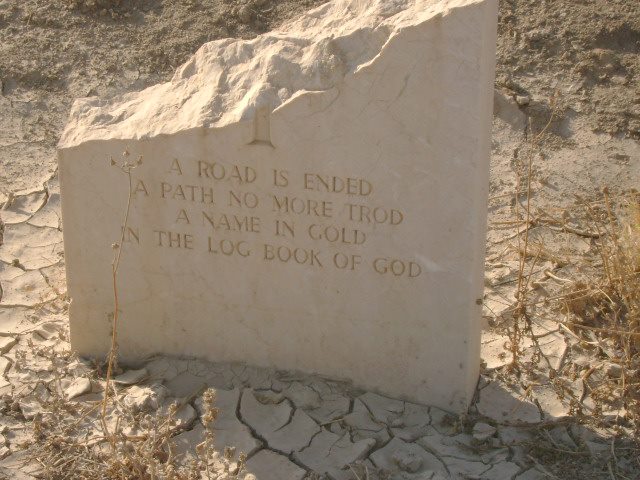
When I returned from Iraq I was a changed man and while I am proud of my service I am haunted by my experiences. One cannot go to war, see its devastation, see the wounded and dead, as well as the innocents traumatized by it. One cannot get shot at, or be in enclosed rooms, meeting with people that might be friends, or might be enemies, and while everyone else is armed, you are not.

War changed me, and my homecoming was more difficult than I could have imagined. I never felt so cut off from my country, my society, my church, or even other chaplains. My experience is not uncommon among those who have served in Iraq or Afghanistan, or for that matter those who have served in almost any modern war. Erich Maria Remarque in his classic All Quite on the Western Front who wrote:
“I imagined leave would be different from this. Indeed, it was different a year ago. It is I of course that have changed in the interval. There lies a gulf between that time and today. At that time I still knew nothing about the war, we had been only in quiet sectors. But now I see that I have been crushed without knowing it. I find I do not belong here any more, it is a foreign world.”
That being said I would not trade my experience for anything. The experience of PTSD and other war related afflictions has been a blessing as well as a curse. They have changed my world view and made me much more emphatic to the suffering and afflictions of others, as well when they are abused, mistreated, terrorized and discriminated against. These experiences along with my training as a historian, theologian, and hospital chaplain clinician before and after my tour have given me a lot bigger perspective than I had before.
But I have to live with all of the memories. Guy Sajer wrote in his book The Forgotten Soldier, “Only happy people have nightmares, from overeating. For those who live a nightmare reality, sleep is a black hole, lost in time, like death.”General Gouverneur Warren, a hero of many Civil War battles including Gettysburg wrote to his wife after the war “I wish I did not dream so much. They make me sometimes to dread to go to sleep. Scenes from the war, are so constantly recalled, with bitter feelings I wish never to experience again. Lies, vanity, treachery, and carnage.”
As hard as this has been these are good things, and as I go on I wonder what will happen next. I do not think that the wars and conflicts which have followed in the wake of the 9-11 attacks will be over for years, maybe even decades. I pray for peace, but too many people, some even in this country seem to live for the bloodlust of war. One can only hope and as my Iraqi friends say, Inshallah, (إن شاء الله) God willing…
I wonder too, if the words of T.E. Lawrence reflecting on his service in the Arab Revolt are not as applicable to me and others who came back from Iraq, “We had been hopelessly labouring to plough waste lands; to make nationality grow in a place full of the certainty of God… Among the tribes our creed could be only like the desert grass – a beautiful swift seeming of spring; which, after a day’s heat, fell dusty.” I have lost too many friends in these wars, including men who could not readjust to home, many like me. I have seen the men and women, broken in body, mind and spirit and I wonder if any of it was worth it, and if in some of our response, especially the invasion of Iraq has not made a bad situation even worse, and turned the war into a generational conflict.
As for me, I am now an old guy by military standards. I recently celebrated 39 years of service, and unless something incredibly strange occurs I will retire on December 31st and this will be my last year, and last observance of 9-11 on active duty.
But that being said there are still U.S. Military personnel in harm’s way in many places around the world. I wish I could say that they will be safe and that there will be no more killed or wounded, but I know that will not be the case. Now we have young men and women serving in wars that began before they were born.

Yesterday and today there were and will be many ceremonies and services to remember the victims of the attacks. I think that is fitting. Today I provided the invocation at our Navy Shipyard’s ceremony marking that day. As I gave them I could feel the emotions, see the faces, and remember all the people I knew and served alongside who died that day or in the following wars.
So please, have a good day and whatever you do do not forget those whose lives were forever changed by those dastardly attacks and all that has transpired in the years since. I do hope that things will get better and that some semblance of peace will return to the world, and even more importantly that amidst the Coronavirus Pandemic and the damnable political division and violence in our country, much of it brought on by the President and some of his White Supremacist and Neo-Nazi followers, QAnon conspiracy theorists, and Christian theocrats whose message and goal is little different than the people who attacked us nineteen years ago.

On the good news side my wife Judy was pronounced cancer free and cured on her five year follow-exam today. Every exam, after her surgery was a anxiety laden exercise, now she doesn’t have to go back for a year.
Hopefully next year this time I will be teaching and writing, and we will have made the transition to civilian life with our three Papillon babies, Izzy, Pierre, and Maddy Lyn.
Peace, Shalom, and blessings,
Inshallah, (إن شاء الله) God willing…
Peace
Padre Steve+
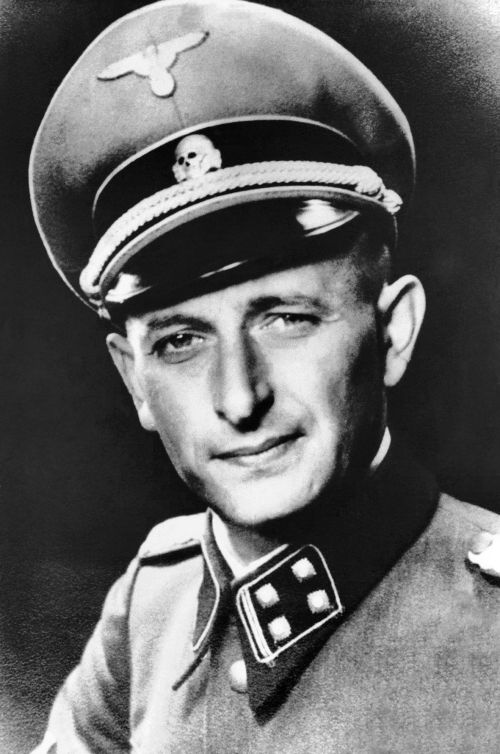
Adolf Eichmann
Friends of Padre Steve’s World,
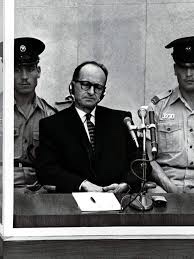
Yesterday I wrote about the men in the dock at the Einsatzgruppen Trial and their actions. Tonight I will address their Chief, SD Lieutenant Colonel Adolf Eichmann. Eichmann’s power in the SS hierarchy far outweighed his rank. As the second to the Chief of the Riech Security Main Office (RSHA) SS Lieutenant General Reinhard Heydrich and following Heydrich’s death his successor Ernst Kaltenbrunner, Eichmann was directly in control of the execution of the Endlösung or Final Solution, be it in the Death Camps or by the up close and personal methods of the Einsatzgruppen.
On June 1st 1962 Adolf Eichmann was hanged in Israel for his crimes of mass murder and genocide. His appearance in the court where he portrayed himself as a functionary and bureaucrat who was repulsed by bloodshed and only following orders. So convincing was his act that Hannah Arendt wrote of him:
“The trouble with Eichmann was precisely that so many were like him, and that the many were neither perverted nor sadistic, that they were, and still are, terribly and terrifyingly normal. From the viewpoint of our legal institutions and of our moral standards of judgment, this normality was much more terrifying than all the atrocities put together, for it implied — as had been said at Nuremberg over and over again by the defendants and their counsels — that this new type of criminal, who is in actual fact hostis generis humani, commits his crimes under circumstances that make it well-nigh impossible for him to know or to feel that he is doing wrong.”
Unfortunately there are people such as Arendt described, but Eichmann was not one of them. She wrote her commentary having only attended parts of the trial, but what she saw convinced her that Eichmann was ordinary and normal. She was convinced by his appearance and presentation at the trial that he was not the man who ran roughshod over Jews as well as German officials in order to execute the Final Solution. That phrase, “the banality of evil” has often been used to provide an alibi for men and women who wholeheartedly participated in the extermination of the Jews and others deemed to be less than human regardless of whether they were desk bound bureaucrats in Berlin, managers of the extermination camps, or the members of the Einsatzgruppen, the Ordungspolizei, or the Wehrmacht who systematically exterminated millions of people up close and personal.
Eichamnn was a true believer in the Nazi system and its desire to exterminate the Jews from the earth and he enjoyed what he did. He not only acted on orders but he anticipated them, as he told William Sassen in an interview while living undercover in Argentina in the 1950s:
“If we would have killed 10.3 million Jews, then I would be satisfied and would say, good, we annihilated an enemy. … I wasn’t only issued orders, in this case I’d have been a moron, but I rather anticipated, I was an idealist.”
Eichmann began his career by persecuting the Jews of Vienna but following the Wansee Conference he was entrusted by Reinhard Heydrich with overseeing the mechanics of implementing the Final Solution. He was only an SS Lieutenant Colonel but he wielded his power with such effect that he could ensure that Nazi functionaries senior to him did his bidding in regard to the Jews, He told Sassen:
“They knew me wherever I went. Through the press, the name Eichmann had emerged as a symbol…. In any case, the word Jew … was irreversibly linked with the word Eichmann. Much more power … was attributed to me than I actually had.”
Eichmann summed up the attitude of many when he said regarding his work to deport hundreds of thousands of Hungarian Jews to Auschwitz in in just a few weeks during the fall of 1944, “Whether they were bank directors or mental cases, the people who were loaded on those trains meant nothing to me.” Speaking to Willem Sassen in 1957 Eichmann reveled in that accomplishment, “It was an achievement that was never matched before or since.” Eichmann also enjoyed leading his victims on, pretending that he might listen, and they might change his mind. Eichmann was proud of what he did. He told his staff, “I will leap into my grave laughing because the feeling that I have five million human beings on my conscience is for me a source of extraordinary satisfaction.”
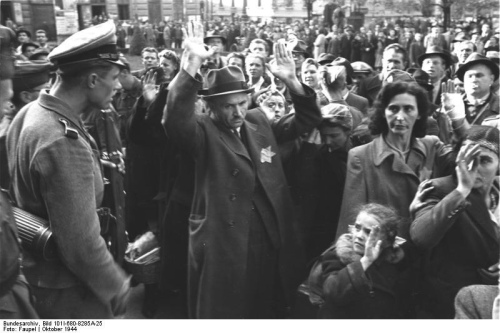

Some of the 437,000 Hungarian Jews Being Sent to Auschwitz
His greatest accomplishment of genocide was in Hungary between March and May of 1944 when he orchestrated the “evacuation” of 437,000 Jews to Auschwitz, of which nearly 400,000 were exterminated in that camps massive gas chambers. His greatest regret was that Himmler and others, realizing that the war was lost were now trying to find ways to deal with the Allies using the Jews as bargaining chips. They put an end to his campaign leaving half of Hungary’s Jews alive, something that he detested to the end of his life for his superiors had taken away his reason for being.
Eichmann twisted language in a perverse manner to both glorify and justify his inhumanity. Bettina Stangneth, wrote in her book Eichmann Before Jerusalem:
“The language becomes entirely perverted where Eichmann turns metaphors on their heads, talking about expulsion and murder using gentle images of life. An institution for forced emigration was his “first child,” where he was able to “be creative in my work.” All the individual acts of robbery and expulsion that took place in Austria were committed to “provide [the country] with injections of Jewish solutions.” Even exterminations and deportations were “born”. This was why he felt so superfluous in Budapest, when he was forced to stop deporting people to Auschwitz: “As far as I know, I couldn’t have done anything fruitful anymore” … In Eichmann’s language, he didn’t send people to the death camps; the camps were “fed with material”.
Adolf Eichmann went to his death unrepentant and there is nothing to be mourned on this anniversary of his death, other than the fact that there are people who are much like him today. That is the terrifying reality. Some may be those faceless bureaucrats, but too many others would easily become killers. As Timothy Snyder noted:
“The European history of the twentieth century shows us that societies can break, democracies can fall, ethics can collapse, and ordinary men can find themselves standing over death pits with guns in their hands. It would serve us well today to understand why.”
Christopher Browning wrote in his book Ordinary Men: Reserve Police Battalion 101 and the Holocaust in Poland:
“I fear that we live in a world in which war and racism are ubiquitous, in which the powers of government mobilization and legitimization are powerful and increasing, in which a sense of personal responsibility is increasingly attenuated by specialization and bureaucratization, and in which the peer group exerts tremendous pressures on behavior and sets moral norms. In such a world, I fear, modern governments that wish to commit mass murder will seldom fail in their efforts for being unable to induce “ordinary men” to become their “willing executioners.”
Eichmann’s deputy SS Captain Dieter Wisliceny described him in this manner: “Eichmann was personally a cowardly man, who was at great pains to protect himself from responsibility… He was amoral and completely ice cold in his attitude.“
The late Christopher Hitchens wrote about what happens when any people or government use the word problem or question to characterize any race, ethnic group, religion, or opponent of any kind:
“Die Judenfrage,’ it used to be called, even by Jews. ‘The Jewish Question.’ I find I quite like this interrogative formulation, since the question—as Gertrude Stein once famously if terminally put it—may be more absorbing than the answer. Of course one is flirting with calamity in phrasing things this way, as I learned in school when the Irish question was discussed by some masters as the Irish ‘problem.’ Again, the word ‘solution’ can be as neutral as the words ‘question’ or ‘problem,’ but once one has defined a people or a nation as such, the search for a resolution can become a yearning for the conclusive. Endlösung: the final solution.”
In such a world it is all too important that we never forget, especially now when we could be watching it begin all over again. Eichmann may be dead but he lives on in the hearts and minds of many, and we must always remain vigilant, or the specter of the Holocaust will rise again, quite possibly in countries that are considered civilized and freedom loving, like the United States. In fact his ideological heirs are roaming the streets of the country, either as extra constitutional and illegal White Nationalist “militias” or law enforcement officers using their position to terrorize people they are pledged to protect and serve, in the name of the American President they worship as their supreme leader.
Never forget,
Peace
Padre Steve+

Friends of Padre Steve’s World,
Over the past week I have been writing about the Nazi crimes against humanity in Poland and the Soviet Union I want to spend just a bit of time discussing the leaders of the Einsatzgruppen who were tried at Nuremberg beginning on September 29th 1947. It was nearly a miracle that these men would face justice, for the evidence that condemned them had not been found until most of the war crimes trials were over, resources And personnel for the American War Crimes Tribunals drying up, and with the Cold War looming a growing impatience of Americans and Germans alike to end the trials due to the growing Soviet threat.
But in the charred ruins of Berlin, American investigations discovered a treasure trove of documents about crimes that had not been brought to justice. A young Jewish-American lawyer named Benjamin Ferencz volunteered to take on the prosecution of these masters of mass murder. Ferencz, a distinguished graduate of Harvard Law School, and veteran of the Second World War, was the youngest man on the prosecution team, and though a brilliant researcher, and investigator, he had never served as a prosecutor for any trial. But no other prosecutors were available as the Americans attempted to wrap up the remaining trials.
Ferencz reviewed the evidence recovered from the ruins of the Reichs Security Main Office, and realized that the crimes committed had to be prosecuted. He brought the evidence to Brigadier General Telford Taylor admitted his office’s lack of resources but told Ferencz that if he took the case he would add it.
The evidence was some of the most damning of all the War Crimes trials because it came from the unedited reports submitted by the commanders of the Einsatzgruppen and their subordinate units. Eventually, twenty-three of these men were selected for trial, unfortunately some of the most guilty were either dead, or missing, including the man these men reported to and who relentlessly drove them to kill more Jews faster, even if it harmed the German war effort; SD Standartenführer Adolf Eichmann who seemed to have to disappeared off the face of the earth, but with the help of the Vatican was beginning a new life under a false name in Argentina.
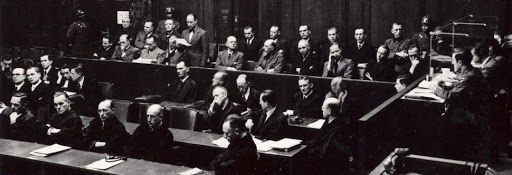
On July 29th the following Einsatzgruppe leaders filed into the dock In Nuremberg’s Palace of Justice.
SS-Major General Otto Ohlendorf, Chief of Einsatzgruppe D. Graduated in law and political science from the Universities of Leipzig and Goettingen. A one-time practicing barrister in the courts of Alfeld-Leine and Hildesheim.
SS-Brigadier General Heinz Jost, Chief of Einsatzgruppe A. Specialized in law and economics when he studied at the Universities of Giessen and Munich.
SS-Brigadier General Erich Naumann, Chief of Einsatzgruppe B. Left school at age of 16 and entered commercial firm. Later became officer of police.
SS-Brigadier General Otto Rasch. Doctor of Law and Economics, former mayor of Wittenberg.
SS-Brigadier General Erwin Schulz. Studied law at University of Berlin and later became staff member of Dresden Bank.
SS-Brigadier General Franz Six. Full time university professor.
SS-Colonel Paul Blobel. Former architect.
SS-Colonel Walter Blume. Graduated in law at University of Erlangen.
SS-Colonel Martin Sandberger. Studied jurisprudence at Universities of Munich, Freiburg, Cologne and Tuebinger. Assistant judge in Inner Administration of Wuerttemberg.
SS-Colonel Willy Seibert. Graduated from University of Goettingen in 1932 in economics.
SS-Colonel Eugen Steimle. Studied history, Germanic languages and French at the Universities of Tuebingen and Berlin.
SS-Colonel Ernst Biberstein. Former clergyman.
SS-Colonel Werner Braune. Graduated in law from University of Jena and obtained degree of Doctor of Juridical Science.
SS-Lieutenant Colonel Walter Haensch. Studied law at Leipzig University and trained as “Referendar.”
SS-Lieutenant Colonel Gustav Nosske. Studied banking, economics and law. Became assessor and “entered Administration of Justice” at Halle.
SS-Lieutenant Colonel Adolf Ott. Began career in administrative office of German Workers’ front in Lindau.
SS-Lieutenant Colonel Eduard Strauch. Graduate Erlangen University. Member Intelligence service, press officer, disciplinary officer general SS.
SS-Major Woldemar Klingelhoefer. Voice teacher and opera singer.
SS-Major Lothar Fendler. Doctor in dentistry.
SS-Major Waldemar Von Radetzky. Linguist. Worked with import firm.
SS-Captain Felix Ruehl. Commercial Clerk. Lived in England for one year.
SS-First Lieutenant Heinz Hermann Schubert. High School education; apprentice to lawyer and “registrator.” In civil administrative service.
SS-Master Sergeant Mathias Graf. Independent business man and civil servant.
Telford Taylor spoke at the beginning of the trial:
“These defendants are not German peasants or artisans drafted into the Wehrmacht. They are not uneducated juveniles. They are lawyers, teachers, artists, and a former clergyman. They are, in short, men of education, who were in full possession of their faculties and who fully understood the grave and sinister significance of the program they embarked upon. They were part of the hard core of the SS. They did not give mere lip service to Himmler’s atrocious racial doctrines; they were chosen for this terrible assignment because they were thought to be men of sufficient ruthlessness to carry them out. They are hand-picked fanatics; every one of them was an officer of the SS … They are not unhappy victims, unwillingly pushed into crime by the tyranny of the Third Reich; these men, above all others, themselves, spread the Nazi doctrine with fire and sword.”
Well educated, cultured for the most part, schooled in the law and justice, cultured and articulate. It seemed that men who were being charged with killing between a million and a million and a half people would look and act like barbarians, but these men didn’t look anything like murderers, yet all of these men in the dock shared one expression, the firm resolution that drove them across the steppes and swamps of Russia to fulfill Hitler’s diabolical mission of exterminating the Jewish-Bolshevik menace and conquer the Lebensraum that would secure the Thousand Year Reich.
But all were committed to the cause, and to it they gave what should have been the best years of their lives. But working under the direction of Eichmann they compiled statistics like like the sports reporters of the 1990s reporting the exploits of baseball home run hitters on steroids, each report exacting in detail, and numbing to read. Einsatzgruppe B sent a report to the RHSA on October 15th 1941 cited the following:
After announcing that 71,105 Jews had been executed in Lithuania, the Einsatz commander, Walter Stahlecker appended an inventory of all persons killed by his organization, just as a regional office of a national or transnational corporation might cite its monthly or quarterly profits:
“Total: Jews | Communists | Total
Lithuania 80,311 | 860 | 81,171
Latvia 30,025 | 1,845 | 31,868
Estonia. 474 | 684 |1,158
White Ruthenia 7,620 | |7,620
Total: 118,430 | 3,387 | 121,817
to be added to these figures: In Lithuania and Latvia Jews annihilated by pogroms: 5,500 Jews, Communists and partisans executed in old-Russian area: 2,000 Lunatics executed: 748 (correct total 130,065): 122,455 Communists and Jews liquidated by State Pol. and Security Service Tilsit during search actions: 5,502 Total: 135,567”
Justice Michael Musmanno who tried the case wrote:
“Like election returns, the figures on executions came pouring into Eichmann’s office in Berlin, and with the characteristic Teutonic precision and passion for orderliness the reports were duly mimeographed and tabulated, copies were distributed and originals filed.”
But why? The report filed by the Commander of Einsatzgruppe C wrote after reporting some 51,000 executions in the Ukraine, announced the reason why:
“These were the motives for the executions carried out by the Kommandos: Political officials, looters and saboteurs, active Communists and political representatives, Jews who gained their release from prison camps by false statements, agents and informers of the NKWD, persons who, by false depositions and influencing witnesses, were instrumental in the deportation of ethnic Germans, Jewish sadism and revengefulness, undesirable elements, partisans, politrucks, dangers of plague and epidemics, members of Russian bands, armed insurgents… provisioning of Russian bands, rebels and agitators, drifting juveniles …” and then came the all inclusive phrase: “Jews in general.”
In his opening Ferencz said:
“May it please your Honors. Vengeance is not our goal, nor do we seek merely a just retribution. We ask this Court to affirm by international penal action man’s right to live in peace and dignity regardless of his race or creed. The case we present is a plea of humanity to law…
“Each of the defendants in the dock held a position of responsibility or command in an extermination unit. Each assumed the right to decide the fate of men, and death was the intended result of his power and contempt. Their own reports will show that the slaughter committed by these defendants was dictated, not by military necessity, but by that supreme perversion of thought, the Nazi theory of the master race. We shall show that these deeds of men in uniform were the methodical execution of long-range plans to destroy ethnic, national, political, and religious groups which stood condemned in the Nazi mind.”
Where Ferencz ended his associate, Peter Walton, from Georgia took up the opening statement:
“These small forces totaling not more than three thousand men killed at least one million human beings in approximately two years’ time. These figures enable us to make estimates which help considerably in understanding this case. They show that the four Einsatzgruppen averaged some 1,350 murders per day during a two-year period; 1,350 human beings slaughtered on the average day, seven days a week for more than one hundred weeks … All these thousands of men, women, and children killed had first to be selected, brought together, held in restraint, and transported to a place of death. They had to be counted, stripped of possessions, shot, and buried. And burial did not end the job, for all of the pitiful possessions taken from the dead had to be salvaged, crated, and shipped to the Reich. Finally, books were kept to cover these transactions. Details of all these things had to be recorded and reported.”
I will leave it at that for tonight.
Peace,
Padre Steve+
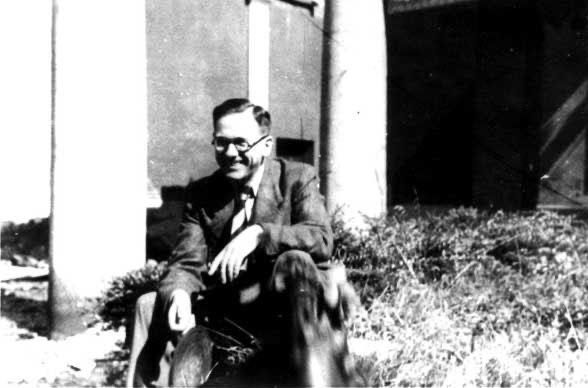
Hermann Graebe after the War
Friends of Padre Steve’s World,
Over the past week I have been writing about the Nazi campaigns in Poland and the Soviet Union. These posts have included the actions of Reinhard Heydrich and Adolf Eichmann’s Einsatzgruppen, Nazi Plans and policies, the military and legal precedents to genocide, the complicity of the German Army and many of their senior leaders in the genocide conducted against the Jews.
The things I have written about are not pleasant, but in a sense, despite the words of the Generals who issued criminal orders, The vast numbers killed by the Einsatzgruppen and a few incidents of individual actions against the Jews. All that being said it is really hard to grasp the killings of millions. Most of us can grasp the death of one or maybe two human beings, but to try to conceptualize the deaths of hundreds of thousands or millions is far above what we can imagine. Mass numbers of dead human beings become statistics, they certainly were to Adolf Eichmann who took in the daily numbers killed by the Einsatzgruppen and recorded them like sports reporters reporting statistics.
But when reads the detailed account of a family of eight representing four generations going to their deaths it hits home more. The following is the testimony of Hermann Friedrich Graebe, a civilian German engineer and project manager for the Josef Jung Construction Company in the Ukraine. While working on a project at Dubno where among his laborers were Jews. He testified at the Einsatzgruppen Trial and as a result had so many threats on his life that he emigrated to the United States and settled in San Francisco until his death in 1986.
Before this he worked to save as many Jewish workers as possible when alerted to an Einsatzgruppen killing operation in Rovno. Although he was promised that his workers would be spared, he found that seven had being seized and were going to be killed. Hi account of that experience follows:
Hermann Friedrich Graebe, was a manager and supervisor engineer in charge of a German building firm in Sdolbunow, Ukraine, assigned to rebuilding aircraft hangers at the former Soviet airfield. Graebe narrated in graphic language how many Einsatzgruppen mass murder operations were conducted.
When he heard that one of these horrifying performances was being rehearsed in his town he called on the commanding officer of the area, SS-Sturmbannfuehrer Puetz, to make inquiries, since he, Graebe, employed a few Jewish workers he wished to protect. Sturmbannfuehrer Puetz denied the rumors. Later, however, Graebe ascertained from the Area Commissioner’s deputy, Stabsleiter Beck, that what he heard was true, but Beck exacted from Graebe the promise not to disclose the secret. In exchange for this promise, he supplied Graebe with a certificate which was to protect his workers when the storm of blood should burst. This amazing document reads:
“Messrs. JUNG ROVNO:
The Jewish workers employed by your firm are not affected by the pogrom (Aktion). You must transfer them to their new place of work by Wednesday, 15 July 1942, at the latest. From the Area Commissioner Beck”
That evening the Einsatzgruppen killers lashed through the streets of Rovno like a hurricane. Graebe described it:
“The people living there were driven on to the street just as they were, regardless of whether they were dressed or in bed. Since the Jews in most cases refused to leave their houses and resisted, the SS and militia applied force. They finally succeeded, with strokes of the whip, kicks and blows, with rifle butts in clearing the houses. The people were driven out of their houses in such haste that small children in bed had been left behind in several instances. In the street women cried out for their children and children for their parents. That did not prevent the SS from driving the people along the road, at running pace, and hitting them, until they reached a waiting freight train. Car after car was filled, and the screaming of women and children, and the cracking of whips and rifle shots resounded unceasingly. Since several families or groups had barricaded themselves in especially strong buildings, and the doors could not be forced with crowbars or beams, these houses were now blown open with hand grenades. Since the Ghetto was near the railroad tracks in Rovno, the younger people tried to get across the tracks and over a small river to get away from the Ghetto area. As this stretch of country was beyond the range of the electric lights, it was illuminated by signal rockets.
All through the night these beaten, hounded and wounded people moved along the lighted streets. Women carried their dead children in their arms, children pulled and dragged their dead parents by their arms and legs down the road toward the train. Again and again the cries “Open the door! Open the door!” echoed through the Ghetto.”
Despite the immunity guaranteed Graebe’s Jewish workers by Stabsleiter Beck, seven of his employees were seized and taken to the collecting point. Graebe’s narrative continued:
“I went to the collecting point to save these seven men. I saw dozens of corpses of all ages and both sexes in the streets I had to walk along. The doors of the houses stood open, windows were smashed. Pieces of clothing, shoes, stockings, jackets, caps, hats, coats, etc. were lying in the street. At the comer of the house lay a baby, less than a year old with his skull crushed. Blood and brains were spattered over the house wall and covered the area immediately around the child. The child was dressed only in a little shirt.
The commander, SS Major Puetz, was walking up and down a row of about 80-100 male Jews who were crouching on the ground. He had a heavy dog whip in his hand. I walked up to him, showed him the written permit of Stabsleiter Beck and demanded the seven men whom I recognized among those who were crouching on the ground. Dr. Puetz was very furious about Beck’s concession and nothing could persuade him to release the seven men. He made a motion with his hand encircling the square and said that anyone who was once here would not get away. Although he was very angry with Beck, he ordered me to take the people from 5 Bahnhofstrasse out of Rovno by 8 o’clock at the latest.
When I left Dr. Puetz, I noticed a Ukrainian farm cart, with two horses. Dead people with stiff limbs were lying on the cart, legs and arms projected over the side boards. The cart was making for the freight train. I took the remaining 74 Jews who had been locked in the house to Sdolbunow.
Five thousand Jews were killed in this pogrom.”
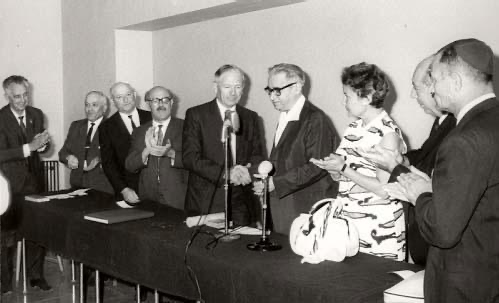
Hermann Graebe Receiving his Honors from Yad Vashem
For his actions to save these Jews, Graebe was recognized as one of the Righteous Among the Nations by Yad Vashem. As powerful as his actions were in this incident it was his testimony at the Einsatzgruppen Trial which are even more chilling.
“I, the undersigned, Hermann Friedrich Graebe, make the following declaration under oath:
From September 1941 to January 1944 I was director and chief engineer of the Sdolbunow branch of the Josef Jung Construction Company of Solingen. In this capacity one of my duties was to visit the firm’s projects. Under the terms of a contract with the army construction services, the company was building grain warehouses on the old Dubno airfield in the Ukraine.
On October 5th 1942, at the time of my visit to the construction offices in Dubno, my foreman, Hubert Moennikes told me that some Dubno Jews had been shot near the building, in three huge ditches about 30 metres long and three metres deep. The number of people killed daily was estimated at around 1,500. The 5,000 Jews who lived in Dubno before the Pogrom were all marked for liquidation. Since the executions took place in the presence of my employee, he was painfully aware of and affected by them.
Accompanied by Moennikes, I went to the work area. I saw great mounds of earth about 30 metres long and two metres high. Several trucks were parked nearby. Armed Ukrainian militia were forcing people out, under the surveillance of SS soldiers. The same militia men were responsible for guard duty and driving the trucks. The people in the trucks wore the regulation yellow pieces of cloth that identified them as Jews on the front and back of their clothing.
Moennikes and I went straight toward the ditches without being stopped. When we neared the mound, I heard a series of rifle shots close by. The people from the trucks – men, women and children – were forced to undress under the supervision of an SS soldier with a whip in his hand. They were obliged to put their effects in certain areas: shoes, clothing, and underwear separately. I saw a pile of shoes, thousands of pairs, great heaps of underwear and clothing. Without weeping or crying out, these people undressed and stood together in family groups, embracing each other and saying goodbye while waiting for a sign from the SS soldier, who stood on the edge of the ditch.
During the fifteen minutes I stayed there, I did not hear a single complaint or plea for mercy. I watched a family of about eight: a man and woman about fifty years old, surrounded by their children aged about one, eight, and ten, and two older girls about 20 and 24. An old lady, her hair completely white, held the baby in her arms, rocking it and singing it a song. The infant was crying aloud with delight. The parents watched the groups with tears in their eyes. The father held the ten-year-old boy by the hand, speaking softly to him; the child struggled to hold back his tears. Then the father pointed a finger to the sky and, stroking the child’s head, seemed to be explaining something.
At this moment, the SS man near the ditch called something to his comrade. The latter counted off some twenty people and ordered them behind the mound. The family of which I have just spoken was in the group. I still remember the young girl, slender and dark, who, passing near me, pointed at herself, saying, “23.” I walked around the mound and faced a frightful common grave. Tightly packed corpses were heaped so close together that only the heads showed. Most were wounded in the head and the blood flowed over their shoulders. Some still moved. Others raised their hands and turned their heads to show that they were still alive. The ditch was two-thirds full. I estimate that it held a thousand bodies.
I turned my eyes toward the man who had carried out the execution. He was an SS man; he was seated, legs swinging, on the narrow edge of the ditch; an automatic rifle rested on his knees and he was smoking a cigarette. The people, completely naked, climbed down a few steps cut in the clay wall and stopped at the place indicated by the SS man. Facing the dead and wounded, they spoke softly to them. Then I heard a series of rifle shots. I looked in the ditch and saw their bodies contorting, their heads, already inert, sinking on the corpses beneath. The blood flowed from the nape of their necks. I was astonished not to be ordered away, but then I noticed two or three uniformed postmen nearby. A new batch of victims approached the place. They climbed down into the ditch, lined up in front of the previous victims and were shot.
On the way back, while rounding the mound, I saw another full truck which had just arrived. This truck contained only the sick and crippled. Women, already naked, were undressing an old woman with an emaciated body, her legs frightfully thin. She was held up by two people and seemed paralyzed. The naked people led her behind the mound. I left the place with Moennikes and went back to Dubno in a car.
The next morning, returning to the construction, I saw some thirty naked bodies lying thirty to fifty yards from the ditch. Some were still alive; they stared into space with a set look, seeming not to feel the coolness of the morning air. A young girl of about twenty spoke to me, asking me to bring her clothes and to help her escape. At that moment we heard the sound of a car approaching at top speed; I saw that it was an SS detachment. I went back to my work. Ten minutes later rifle shots sounded from the ditch The Jews who were still alive had been ordered to throw the bodies in the ditch. They then had to lie down themselves to receive a bullet in the back of the neck.”
Hermann Graebe, a civilian, chose to risk his life to save people who were doomed to death. Survivors of the massacre remembered his efforts.

Survivors of Dubno Massacre honoring the dead in 1945
Another accidental witness was a German Army Lieutenant, Axel von dem Bussche, whose regiment was in the area but refused to participate in the action, but Bussche decided to witness what was really happening. He was so traumatized by what he saw that he joined the resistance cell in Army Group Center. After this experience he declared that there were only three ways left to preserve his honor as an officer: to die in battle, to desert, or to rebel against the government that had ordered this and all other massacres. He chose the last option, justifying his intention to kill Hitler by his legal right to defend others against unlawful, ongoing, criminal attacks. I wonder if any American Officers would choose the same course today if President Trump continues down the road to authoritarian dictatorship and attacking, jailing, or killing those that oppose him.
Von dem Bussche volunteered for two of the early operations to kill Hitler which each failed because Hitler changed his plans at the last moment. In January 1944 he was severely wounded in action and spent months in an SS Hospital recovering from the loss of his leg. Because of his wounds, and long absence from the conspiracy no conspirators arrested after the failed the July 20th plot exposed his involvement in previous attempts on Hitler’s life.

Axel von dem Bussche
He survived the war and became a diplomat for the new West German Republic. He died in 1993, the last of the anti-Hitler conspirators to die.
Both Hermann Graebe and Axel von dem Bussche saw evil, and each in their own way decided to do what they could to stop it. Graebe, took action in the moment, Von dem Bussche, made the conscious decision to break his personal oath to Hitler and was involved in two assassination attempts.
The actions of both of these men who risked their lives to either save lives directly or to kill and overthrow the leader who had ordered genocide and war crimes. I wonder how many Americans would do either if they had to make such a choice. I know what I would do. I would do whatever necessary to save a vengeful racist dictator’s intended victims, or whatever I could do to put an end to such a man’s rule. As another of Hitler’s Victims said in 1933:
In April 1933 while speaking of the responsibility of Christians and the church to stand against injustice he wrote in his essay The Church and the Jewish Question:
“The church has an unconditional obligation to the victims of any ordering society, even if they do not belong to the Christian community.” and also“We are not to simply bandage the wounds of victims beneath the wheels of injustice, we are to drive a spoke into the wheel itself.”
If a Christian makes the decision to draw a line around the Church and not to act to protect the people created by God outside of it in order to buttress their political and social power he or she does not know Jesus the Christ. If in the coming months or years I am put in the place to make such a choice, I will not hesitate to stake my life on my actions to both rescue the victims and to put a spike into the wheel, and the heart of injustice.
Until tomorrow,
Peace,
Padre Steve+

Friends of Padre Steve’s World,
Over the past few days I have been writing about War crimes, war criminals, and bringing them to justice while pointing out that some commanders, even in criminal nations have opposed and disobeyed such orders. Most of these articles have already with the Einsatzgruppen which were charged with carrying our the mass murder of Jews, Red Army Commissars, Soviet Officials, anyone believed to be a partisan, with or without proof, as well as “Life Unworthy of Life,” the physically handicapped, mentally ill, including disabled children. Their chain of command ran directly to SD Lieutenant Colonel Adolf Eichmann, and through him to SS Lieutenant General Reinhard Heydrich, SS Reichführer Heinrich Himmler to Adolf Hitler. Everything that concerned Hitler’s genocidal plan to exterminate the Jews, from emigration, to Ghettos, to the Einsatzgruppen and eventually death camps. Even when Himmler ordered the extermination of the Jews end, Eichmann did all that he could to continue exterminating them.
What caused me to revisit the subject was watching the biographical documentary of Benjamin Ferencz, the last remaining prosecutor from the Nuremberg Trials. Ferencz discovered the evidence to the Einsatzgruppen in Berlin, but not in time to have them prosecuted the Einsatzgruppen Trial. The Einsatzgruppen were four units composed of SS, SD, Waffen SS, and Order Police personnel, with a combined strength of about 3,000 personnel, commanded by SS, or SD Colonels or Generals.
The Einsatzgruppen had the mission of exterminating Jews, Gypsies, and Soviet Communist Party officials, or Red Army Commissars. They received additional support from Order Police Battalions, Wehrmacht Security Divisions, government and party officials in charge of the occupied territories, and from the Wehrmacht Army Group, Army, Army Corps, and Division Commanders in their areas of operations. The Einsatzgruppen murdered nearly a million and a half people up close and personal with pistols, rifles, and machine guns at close range over mass graves. They also pioneered the use of gas vans, which served as some of the initial gas chambers in the East. Many of their actions took place before the decision to implement the Final Solution.
However the Einsatzgruppen could not succeed in their policies without the cooperation of of the Wehrmacht, Government occupation authorities, and the Order Police they could not have murdered so many people. The story begins with Wehrmacht, principally the Army, without which the Einsatzgruppen could not have killed anyone. For the most part the Army and it’s senior commanders either gave their complete support to the Einsatzgruppen or turned a blind eye to their atrocities.
Contrary to the myth of a clean Wehrmacht, during the German invasion of the Soviet Union senior leaders of the Wehrmacht actively cooperated with the crimes of the Nazi regime against the Jews, Soviet prisoners of war, and Soviet citizens.
I have pointed out that Hitler’s ideology of the racial superiority of his Aryan Master Race and the corresponding view that the Jews and Slavs were untermenschen or subhuman justified the most extreme measures that the Nazis used to kill millions of innocent people through extermination, ethnic cleansing, and extermination.
There was a common myth after the Second World War that the regular German Army, the Wehrmacht, fought an honorable and clean war while the criminal actions of war crimes and genocide were the fault of Hitler, the Nazi Party, and the SS. It was a comforting myth because it allowed a great number of men who agreed with Hitler’s policies, and often assisted in them to maintain a fiction of honor and respectability. While for the most part the German Army in the West fought according to international norms of conduct, it was a different matter on the Easter Front, where following Hitler’s lead the Wehrmacht from its senior officers in down was often at the tip of the spear in enforcing Hitler’s racial and ideological war.
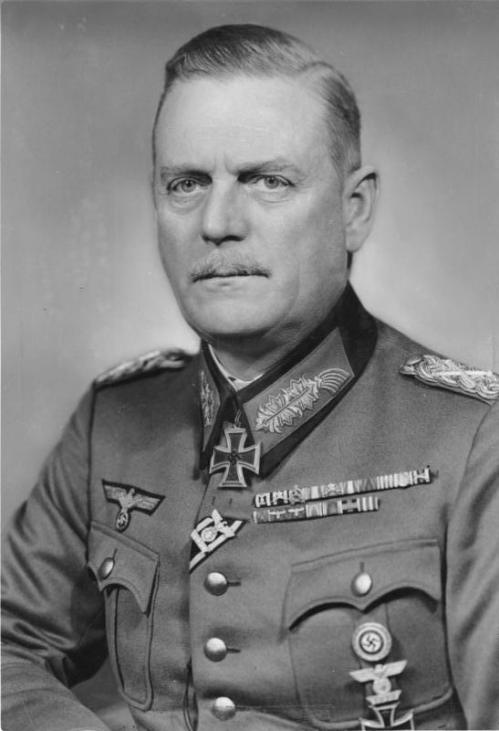
Field Marshal Wilhelm Keitel
This came form the top. In addition to the Commissar order, also known as the Criminal Order, Field Marshal Keitel offered this directive to units fighting on the Easter Front:
“In view of the vast size of the conquered territories in the East, the forces available for establishing security in these areas will be sufficient only if instead of punishing resistance by sentencing the guilty in a court of law, the occupying forces spread such terror as is likely, by its mere existence, to crush every will to resist amongst the population.
The commanders concerned, together with all available troops, should be made responsible for maintaining peace within their areas. The commanders must find the means of keeping order within their areas, not by demanding more security forces, but by applying suitable drastic measures.”
 Field Marshal Walter Von Reichenau
Commanders in the East used Keitel’s order as carte blanche authority to be even more severe than Keitel’s order specified. Field Marshal Walter Reichenau issued what is something’s known as the Severity Order to his 6th Army which was part of Field Marshal Gerd Von Rundstedt’s Army Group South. Von Rundstedt, who was not a Nazi and who maintained his “clean” reputation after the war expressed his “complete agreement” with it and urged other subordinates to issue similar orders. Reichenau’s order stated:
“The most important objective of this campaign against the Jewish-Bolshevik system is the complete destruction of its sources of power and the extermination of the Asiatic influence in European civilization. … In this eastern theatre, the soldier is not only a man fighting in accordance with the rules of the art of war, but also the ruthless standard bearer of a national conception. … For this reason the soldier must learn fully to appreciate the necessity for the severe but just retribution that must be meted out to the subhuman species of Jewry…”

Field Marshal Erich Von Manstein
An order was issued by General Erich Von Manstein to his Eleventh Army in November 1941 which stated in part:
“Jewry constitutes the middleman between the enemy in the rear and the remainder of the Red Armed Forces which is still fighting, and the Red leadership. More strongly than in Europe it holds all the key positions in the political leadership and administration, controls commerce and trades, and further forms the nucleus for all unrest and possible uprisings.
The Jewish-Bolshevist system must be exterminated once and for all. Never again must it encroach upon our European living space.
The German soldier has therefore not only the task of crushing the military potential of this system. He comes also as the bearer of a racial concept and as the avenger of all the cruelties’ which have been perpetrated on him and on the German people…
The food situation at home makes it essential that the troops should as far as possible be fed off the land and that furthermore the largest possible stocks should be placed at the disposal of the homeland. Particularly in enemy cities a large part of the population will have to go hungry. Nevertheless nothing which the homeland has sacrificed itself to contribute may, out of a misguided sense of humanity, be given to prisoners or to the population unless they are in the service of the German Wehrmacht.
The soldier must appreciate the necessity for the harsh punishment of Jewry, the spiritual bearer of the Bolshevist terror. This is also necessary in order to nip in the bud all uprisings which are mostly plotted by Jews…
Manstein claimed that he did not remember the order at his trial and that he sought to ensure that his troops did not engage in conduct not fitting of the honor of soldiers. He included the following in the order: “Severest action to be taken: against despotism and self-seeking; against lawlessness and lack of discipline; against every transgression of the honor of a soldier.”
In his defense at Nuremberg Generals Trial, Manstien attempted to mitigate the damning words of the order. He explained that “I do want to point out to you that if it says here that the system must be exterminated, then that is extermination of the Bolshevik system, but not the extermination of human beings.” Despite Manstein’s clarification of what he meant in the order it would be hard for soldiers and commanders receiving the order as written could hardly have been expect not to interpret it literally. Likewise his order mentions the intentional starvation of Soviet citizens and harsh invectives against the Jews.
Like Von Rundstedt, Manstein too would be rehabilitated and for the most part his complicity in Hitler’s racial and ideological war forgotten by historians and military men who admired his strategic, operational, and tactical acumen.

Colonel General Hermann Hoth
Colonel General Hermann Hoth, commander of a Panzer Group issued this order:
“Every trace of active or passive resistance or of any kind of machinations by the Bolshevik -Jewish agitators are [sic] to be immediately and pitilessly rooted out. The necessity of severe measures against elements foreign to people and kind must be understood precisely by the soldiers. These circles are the spiritual pillars of Bolshevism, the tablebearers [priests] of its murder organization, the helpers of the partisans. It consists of the same Jewish class of people which have done so much to harm our Fatherland and by its hostile activity…and anti-culture, which promotes anti-German currents in the whole world and which wants to be the bearer of revenge. Their annihilation is a law of self-preservation. Any soldier criticizing these measures has no memory of the former traitorous activity lasting for years carried on among our own people by Jewish-Marxist elements.”

Colonel General Erich Hoepner with SS Major General Walter Krüger of the 4th SS Infantry Division “Polizei”
Likewise, General Erich Hoepner issued the following order at the beginning of Operation Barbarossa:
The war against Russia is an important chapter in the German nation’s struggle for existence. It is the old battle of the Germanic against the Slavic people, of the defence of European culture against Muscovite-Asiatic inundation and of the repulse of Jewish Bolshevism. The objective of this battle must be the demolition of present-day Russia and must therefore be conducted with unprecedented severity. Every military action must be guided in planning and execution by an iron resolution to exterminate the enemy remorselessly and totally. In particular, no adherents of the contemporary Russian Bolshevik system are to be spared.
Hoepner issued a number of other orders directing how Jews should be treated and the commander of Einsatzgruppe A, SS Brigadier General Walter Stahlecker whose units killed nearly 250,000 Jews between July and December 1941 praised the cooperation of the Wehrmacht and in particular of Hoepner with his execution squads. Stahlecker described the cooperation of the Wehrmacht with his men as “generally very good”, and “in certain cases, as for example, with Panzer Group 4 under the command of General Hoepner, extremely close, one might say even warm.” The fact is that the Einsatzgruppen could not have ran up such massive numbers of deaths without the cooperation of the German Army leaders in Russia.

There are many other examples of German Army commanders at various levels issuing orders similar to Von Reichenau, Von Manstein, Hoth, and Hoepner as well as accounts of Wehrmacht units cooperating with the Einsatzgruppen in various mass extermination actions against the Jews, including the action at Babi Yar. In many cases the cooperation was quite close as evidenced by the report of the commander of Einsatzgruppe C to Berlin on November 3rd 1941:
In a great number of cases, it happened that the support of the Einsatzkommandos was requested by the fighting troops. Advance detachments of the Einsatzgruppe also participated in every large military action. They entered newly captured localities side by side with the fighting troops. Thus, in all cases, the utmost support was given. For example, in this connection, it is worth mentioning the participation in the capture of Zhitomir, where the first tanks entering the city were immediately followed by three cars of Einsatzkommando 4a.
As a result of the successful work of the Einsatzgruppe, the Security Police is also held in high regard, in particular by the HQ of the German Army. The liaison officers stationed in Army HQ are loyally briefed of all military operations, and, besides, they receive the utmost cooperation. The Commander of the 6th Army, Generalfeldmarschall von Richenau, has repeatedly praised the work of the Einsatzkommandos and, accordingly, supported the interests of the SD with his staff.
It is true that in some cases individual Wehrmacht officers refused to cooperate with the Einsatzgruppen in their operational areas, but without the cooperation of the Wehrmacht the extermination campaigns against the Jews and other Soviet citizens could not have been successful.
One has to ask what it takes for otherwise ordinary and law abiding people to carry out crimes of such magnitude. I believe that the answer is found in the racial ideology that posits certain races as being less than human. The examples of such belief in action litter human history and are not limited to the Germans of the Nazi era.
The truly disturbing thing is that the men who perpetrated the Nazi crimes against humanity and genocide were not unique. The actions of the Japanese army in China, Korea, and Southeast Asia to include the Rape of Nanking and their Unit 731; the American genocide committed against the Native American tribes and the enslavement of Blacks; the extermination of the Herero in German Southwest Africa, the Rwandan genocide, the mass killings of Bosnians by Bosnian Serbs, the Armenian genocide committed by the Turks, and far too many more examples show this to be the case. But as Israeli historian and Holocaust survivor Yehuda Bauer wrote:
“The horror of the Holocaust is not that it deviated from human norms; the horror is that it didn’t. What happened may happen again, to others not necessarily Jews, perpetrated by others, not necessarily Germans. We are all possible victims, possible perpetrators, possible bystanders.”
I think one of our problems is that we want to believe that evil is simply done be evil people. That is why when we see a Hitler, Stalin, Pol Pot, or the monsters of the so-called Islamic State, we are often strangely comforted. This is often because we can point to a single person with a wicked ideology and say “they are evil,” all the while forgetting that they are, or were, like us, also human.Once human beings decide that other human beings are less than human, then all bets are off, and that includes Americans. Over our history we have shown a taste for barbarity when we believe our opponents are less than human.

There is a scene in the movie Nuremberg in which an American psychologist named Gustave Gilbert questions the commandant of Auschwitz. When he asks the commandant if he felt guilty for the extermination of the Jews in his camp the commandant said “does a rat catcher feel guilty for killing rats.” Thereafter Gilbert confronts Herman Goering pointedly asking the number two Nazi “A rat catcher catching rats”. Is that the kind of thinking it takes to carry out state sanctioned mass murder? Not just blind obedience but also a belief that your victims are not human?”
Goering replies: Let me ask you this. What was Hiroshima? Was it not your medical experiment? Would Americans have dropped bombs as easily on Germany as it did upon Japan killing as many civilians as possible? I think not. To an American sensibility, a Caucasian child is considerably more human than a Japanese child…
What about the negro officers in your own army? Are they not allowed to command troops in combat? Can they sit on the same buses as the whites? The segregation laws in your country and the anti Semitic laws in mine, are they not a difference of degree?
The tragic thing is that while Gilbert was certainly correct in his question to Goering, Goering was also right. For all that is good about America there is a persistent strain of this kind of thinking which deems other people, especially non-white people as inferior racially, culturally, and intellectually. Over the decades we like to think that we have become better but the underlying attitudes are still present today, sometimes in plain view, but often just under our veneer of civility and good manners, but what maintains that civility is quite fragile. In his history of Auschwitz British historian Laurence Rees wrote:
“human behavior is fragile and unpredictable and often at the mercy of the situation. Every individual still, of course, has a choice as to how to behave, it’s just that for many people the situation is the key determinate in that choice.”
The German military officers who took part in the campaign in the East were terrifyingly normal. They were raised in an advanced society, highly cultured, well educated, and raised in the cradle of Protestantism, as well as Catholic Germany. Yet many of them became willing participants in crimes of their nation that are unimaginable. But the fact is that the character of nations can be as fragile as that if individuals. As Americans we like to think that we are different but our history often belies this, even our military history and this is part of our conundrum.
Aleksandr Solzhenitsyn wrote of the struggle:
“If only it were all so simple! If only there were evil people somewhere insidiously committing evil deeds, and it were necessary only to separate them from the rest of us and destroy them. But the line dividing good and evil cuts through the heart of every human being. And who is willing to destroy a piece of his own heart?”
When I taught ethics at the Joint Forces Staff College I challenged my students to deal with these kinds of questions. They are not easy and they require that we look into the darkest reaches of our hearts to see what we will do when we are confronted with choices to obey orders that go against the values of the institution but may reflect the more troubling aspects of our culture. Some of these men and women I am sure understood and will not break under pressure, but I am not so sure about others, and I worry about them in the crisis. The fact is we are only as good as we are in the crisis. Historian Timothy Snyder wrote something that we should not discount when asking the question about how ordinary men become war criminals:
“The European history of the twentieth century shows us that societies can break, democracies can fall, ethics can collapse, and ordinary men can find themselves standing over death pits with guns in their hands. It would serve us well today to understand why.”
This is something that we most ponder because it would not take much in our present day where the old ethnic race hatreds, religious hatreds, and resurgent nationalism are again raising their head not only in our own country, but around the world. So until tomorrow,
Peace
Padre Steve+

Friends of Padre Steve’s World,
This is another part of series of articles on the actions of Hitler’s SS and their Einsatzgruppen during their campaign of mass murder in Eastern Europe. This section is about the campaign in Russia. It is even more troubling than the previous sections, because in Russia, all pretense of civilization was dropped and even the German Army was heavily engaged in committing some of the most heinous and evil atrocities ever committed by a supposedly civilized and allegedly Christian people.
Likewise, it is important to remember that much of what happened before February 1942 occurred before the decision to implement the Final Solution and the beginning operations of the massive extermination camps such as Auschwitz-Birkenau, Soribor, Belzec, and Treblinka in Poland. The latter three were simply extermination centers, while Auschwitz-Birkenau served a multiplicity of roles: death camp, medical experimentation center, work camp which provided laborers for German industry, and camp for Polish political dissidents. I will deal with these camps in future articles.
The tragedy is that other nations and people’s including Americans, British, French and the Belgians, as well as the Spanish, not to mention the Russians, Chinese, Turks, Japanese, Rwandans, and so many other have committed genocide, but nothing in their litany of genocide can compare with the Nazi Holocaust, even when the numbers added up to more. This is because nearly every ministry of the German Government was involved in them, and the Nazi Party, its officials, German Government ministries, the military and police, and German industry were involved to an extent not seen before or since.
The leaders of the Einsatzgruppen were according to General Telford Taylor:
“These defendants are not German peasants or artisans drafted into the Wehrmacht. They are not uneducated juveniles. They are lawyers, teachers, artists, and a former clergyman. They are, in short, men of education, who were in full possession of their faculties and who fully understood the grave and sinister significance of the program they embarked upon. They were part of the hard core of the SS. They did not give mere lip service to Himmler’s atrocious racial doctrines; they were chosen for this terrible assignment because they were thought to be men of sufficient ruthlessness to carry them out. They are hand-picked fanatics; every one of them was an officer of the SS … They are not unhappy victims, unwillingly pushed into crime by the tyranny of the Third Reich; these men, above all others, themselves, spread the Nazi doctrine with fire and sword.” (From “The Eichmann Kommandos: Hitler’s Executioners and the Einsatzgruppen Trial” by Justice Michael Musmanno, 1964)
Had not files been unearthed in the ruins of Berlin by a young Jewish American investigator, Benjamin Ferencz, the crimes of the Einsatzgruppen might never had been uncovered, or their leaders tried. Ferencz reported back to his superior Brigadier General Telford Taylor that he had evidence that another trial had to be added to the Nuremberg trials. Taylor agreed, and Ferencz, the youngest member of the prosecution team was appointed to prosecute these men, although he had never tried a case in his life.
Benjamin Ferencz Prosecuting the Accused during the Einsatzgruppen Trial, Ferencz is the last surviving prosecutor or defense attorney from the Nuremberg Trials still living, he was a driving force in the establishment of the International Criminal Court, which the United States has yet to Join.
The actions of the Nazis, if they were simply limited to just the Germans of that period could be explained away as a exception, but it is not. That is what makes these heinous crimes so troubling, as the people who committed them were not that different than us, or our own ancestors. Despite those the genocides perpetrated by others, those of the Nazis against the Jews are unique in their execution and evil. The entire police and military power of a nation were used first against their fellow citizens, and then against the Jews of every country they conquered or occupied in Europe. It was unique and thus the evil perpetrated by them was in a league of its own.
Eventually I will be revising these articles significantly and use them in a book that I have already begun to write “Walk, Remember, Bear Witness: Ensuring the Holocaust is not Forgotten after the Last Survivors and Witnesses Have Passed Away” This revision includes minor updates to grammar as well as to clarifying what was written in earlier editions which can be found on this site. All of these revised articles will need to be converted into a word document that I can edit and add new material and update footnotes and references.
Peace
Padre Steve+
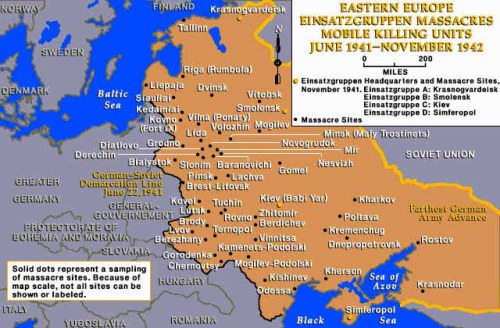
The Nazi war against Russia was the ultimate test of Hitler’s ideological race war. Planning for the war with the Soviet Union began after the fall of France and during the opening stages of the Battle of Britain, when German and the Soviet Union were supposedly committed to their non-Aggression Pact, signed just before the invasion of Poland. On 21 July 1940 Hitler made“his intentions plain” to the Army leadership of his desire to invade and destroy the Soviet Union, and the head of the OKH, Field Marshal “von Brauchitsch set his planners to work.” 119 Accordingly his staff at OKH began preparations for the offensive in the winter of 1940-41 following the Luftwaffe’s failure against Britain and postponement of Operation Sea Lion, the proposed invasion of Great Britain.
A war on multiple fronts was what all senior German officers feared, and the fact that Britain was still in the war and had opened yet another front in the Middle East against Italy which required German troops to keep the Italians from collapsing, Hitler decided to open another front. He announced his intention to “crush Soviet Russia in a quick campaign which was to begin no later than March 15, 1941, and before the end of the war with England.” 120 Field Marshal Keitel noted the final decision came in “early December 1940” and from then he had “no doubt whatsoever that only some unforeseen circumstance could possibly alter his decision to attack.” 121
The military plan initially focused on the destruction of “the Red Army rather than on any specific terrain or political objective,” 122although the political and geographic objectives would arise in later planning and during the campaign, the goal of destroying the Red Army was of paramount importance to the destruction of the Soviet Union. Hitler stated: “What matters is that Bolshevism must be exterminated. In case of necessity, we shall renew our advance whenever a new center of resistance is formed. Moscow as the center of doctrine must disappear from the earth’s center….” 123
Besides preparations aimed at the destruction of the Red Army and overthrow of the Soviet State, versus territorial gain, the “war against the Soviet Union was more openly ideological from the start.” 124 The ideological prominence set the stage for the invasion and on March 3rd 1941 Hitler announced this to his assembled Generals by announcing:
“the forthcoming campaign is more than a mere armed conflict; it is a collision between two different ideologies…this war will not be ended merely by the defeat of the enemy armed forces” and that “the Jewish-Bolshevist intelligentsia must be eliminated….” 125

Ordungspolizei Officers in Russia
The Jews remained the primary target of Hitler since he saw Jews and Bolsheviks as one. Because that was so important to him personally he realized that the task of eliminating the Jews was one that had to be conducted by Heinrich Himmler’s SS. He noted, that “this is a task so difficult that it cannot be entrusted to the Army.” 126
Reichskommissars, civilian overlords from the Nazi Party political leadership, mostly those with experience as Gauleiters would be appointed to administer conquered areas. However, since normal civilian powers would be insufficient to eliminate the Bolsheviks Hitler noted that it “might be necessary “to establish organs of the Reichsfuhrer SS alongside the army’s Secret Field Police, even in the operational areas….” 127 The “primary task” of the SS Einsatzgruppen and Police battalions was to liquidate “all Bolshevist leaders or commissars” if possible while still in the operations zones,” 128 yet the orders were vague enough not to offend the sensibilities of Army leaders and did not contain “a syllable that in practice every Jew would be handed over to the extermination machine.” 129
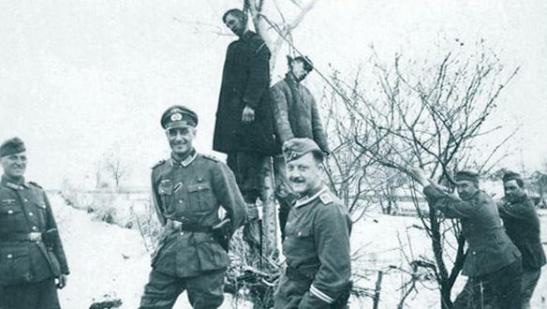
Wehrmacht Soldiers (not SS or Police) hanging civilians in Russia
As with almost all German operations which involved cooperation between the Army and the SS, the parties ensured very precise legal definitions and that existing agreements between the agencies, German laws, and army doctrine were followed. On 13 March an agreement was reached between the Army represented by General Wagner and the SS represented by SS-Brigadeführer Walter Schellenberg which stated in part, that “the Reichsführer SS has been given by the Führer special tasks within the operations zone of the Army…to settle the conflict between two opposing political systems.” 130Likewise the agreement dictated that Himmler’s SS units would “act independently and on his own responsibility” while ensuring that “military operations are not affected by measures necessary to carry out his task.” 131

Rounding up Jews in Russia
A further instruction was issued by Wagner on 26 March which gave the Army’s agreement for the use of the Einsatzgrüppen in the operations zone. The agreement spelled out the coordinating instructions between the Einsatzgruppen and army authorities in the operational zone and communications zones to the rear. Cooperation between the Army and the SS was based on already existing agreements between the SS and the Army, notably the “principals for co-operation between the State Secret Police and the Field Security organization of the Wehrmacht agreed with the Security branch of the War Ministry on 1 January 1937.” 132

Zentralbild – IML / 1.8.1962 II.Weltkrieg 1939-45 Der überlebende halbwüchsige Sohn dieser ermordeten Familie wird an die Mordstelle herangeführt. Von dem hinter ihm stehenden faschistischen deutschen Offizier wurde er durch Genickschuss ermordet. (The surviving teenage son of this murdered family is brought to the scene of the murder. He was murdered by a shot in the neck by the fascist German officer standing behind him.) 5.7.1941 in Slorow, Ukraine A 0706/18/30
The most significant agreement that the Army reached with the SS was the Commissar Order. This order, sometimes known as the “Criminal Order” was used war as evidence at Nuremberg as against Keitel, Jodl and High Command of the Wehrmacht during the later Generals Trial. The order specified that the Army would cooperate with the SS and kill Soviet Political Commissars attached to the Red Army who were taken prisoner, as “they were not prisoners of war.” Another order specified that “in the event that a German soldier committed against civilians or prisoners, disciplinary action was optional….” 133
This was a major break that the Wehrmacht made with its previous commitment to abide by the provisions of the Geneva and Hague Conventions. The new order noted a new attitude regarding political commissars and their protections under international law: “in this struggle consideration and respect for international law with regard to these elements is wrong.” 134 Yet another new order released by Keitel’s OKW, the Army’s “Guidelines for the Conduct of Troops in Russia” issued on May 19, 1941 called for “ruthless and vigorous measures against Bolshevist inciters, saboteurs [and] Jews.” 135 The inclusion of the Jews made the Wehrmacht a willing accomplice to every charge leveled against German political and government organizations at Nuremberg.

Jewish Women Being Finished off In Russia
Shortly before the Commissar Order was issued Hitler previewed it to the generals saying that the war in Russia “cannot be conducted in a knightly fashion” and that the war against the Soviet Union would have to be waged with “unprecedented, unmerciful and unrelenting harshness…” 136
Hitler told the generals that they would have to “dispense with all of their outdated and traditional ideas about chivalry and the generally accepted rules of warfare: the Bolsheviks had long since dispensed with them.” 137 He explained that he understood that his orders were beyond their comprehension but insisted, “I cannot and will not change my orders and I insist that that they be carried out with unquestioning and unconditional obedience.” 138
General Franz Halder, Chief of the OKH, or the Army High Command took notes on Hitler’s speech. The notes are chilling to read as none of the Generals present could have understood them in any other way than Hitler meant them:
“Clash of two ideologies. Crushing denunciation of Bolshevism, identified with asocial criminality….We must forget the comradeship between soldiers. A Communist is no comrade before nor after the battle. This is a war of extermination….We do not wage war to preserve the enemy….War against Russia: Extermination of the Bolshevist Commissars and of the Communist intelligentsia….this is no job for military courts. The individual troop commanders must know the issues at stake. They must be leaders in the fight….This war will be very different from war in the West. In the East harshness today means leniency in the future. Commanders must make the sacrifice of overcoming their personal scruples.”139
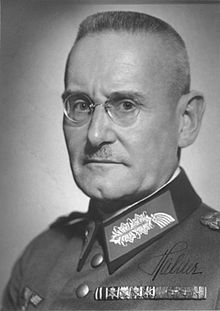
Colonel General Franz Halder, Chief Of OKH
According to Von Brauchitsch a number of Generals protested the orders that Hitler was previewing in the briefing, and demanded that he take their protest to Hitler. 140 Von Brauchitsch refused to protest the order directly or otherwise bring it up to Hitler, but issued an order on his own authority “threatening dire penalties for excesses against civilians and prisoners of war” which he maintained at Nuremberg “was sufficient to nullify the Commissar Order.” 141
But that was a lie, as during the campaign against the Soviet Union, von Brauchitsch told his commanders to “proceed with the necessary hardness.” 142 General Walter Warlimont noted that Field Marshal Fedor von Bock, who would “later emerge as an opponent of the Commissar Order…makes no special comment on the meeting or the restricted conference that followed.”143
At Nuremberg Keitel said that he “stubbornly contested” the clause “relating to the authority of the SS-Reichsführer… in the rearward operational areas.” 144
At Nuremberg Keitel attempted to shift blame for order the to the Army High Command OKH under Halder. But his argument was easy to disprove because the order came out with his signature on behalf of Hitler, which was key evidence against him at Nuremberg. Keitel stated that “there was never any possibility of justifying them in retrospect by circumstances obtaining in the Russian campaign.” 145
Some Wehrmacht commanders refused to publish the orders and “insisted that the Wehrmacht never implemented such policies…” blaming them instead on the SS, but in the campaign such refusals to publish the orders made little difference. One writer stated that “such protests were undoubtedly sincere, but in practice German soldiers were far from innocent. The senior professional officers were often out of touch with their subordinates.” 146
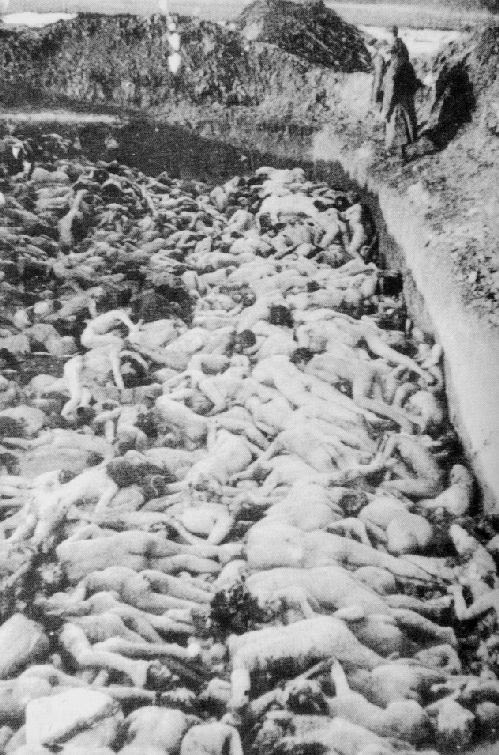
Einsatzgruppe Mass Killing and Grave
The orders coming from Hitler, and signed by Keitel were a “license to kill, although not a great departure from German military traditions….” 147 as I noted in my article about the Legal and Military Foundations of Genocide. The effect of these orders was terrifying, for in a sense the Einsatzgruppen, even when operating with or near the Army “could commit ever crime known to God and man, so long as they were a mile or two away from the firing line.” 148 Additionally the Security Divisions of the Army, which were in charge of rear area security, were “instructed to give material and logistical support to…units of the Einsatzgruppen.” 149 Even worse, other army units in rear areas “could be called on to assist Himmler’s SS police leaders” as the situation dictated, and few commanders refused to honor such requests. 150
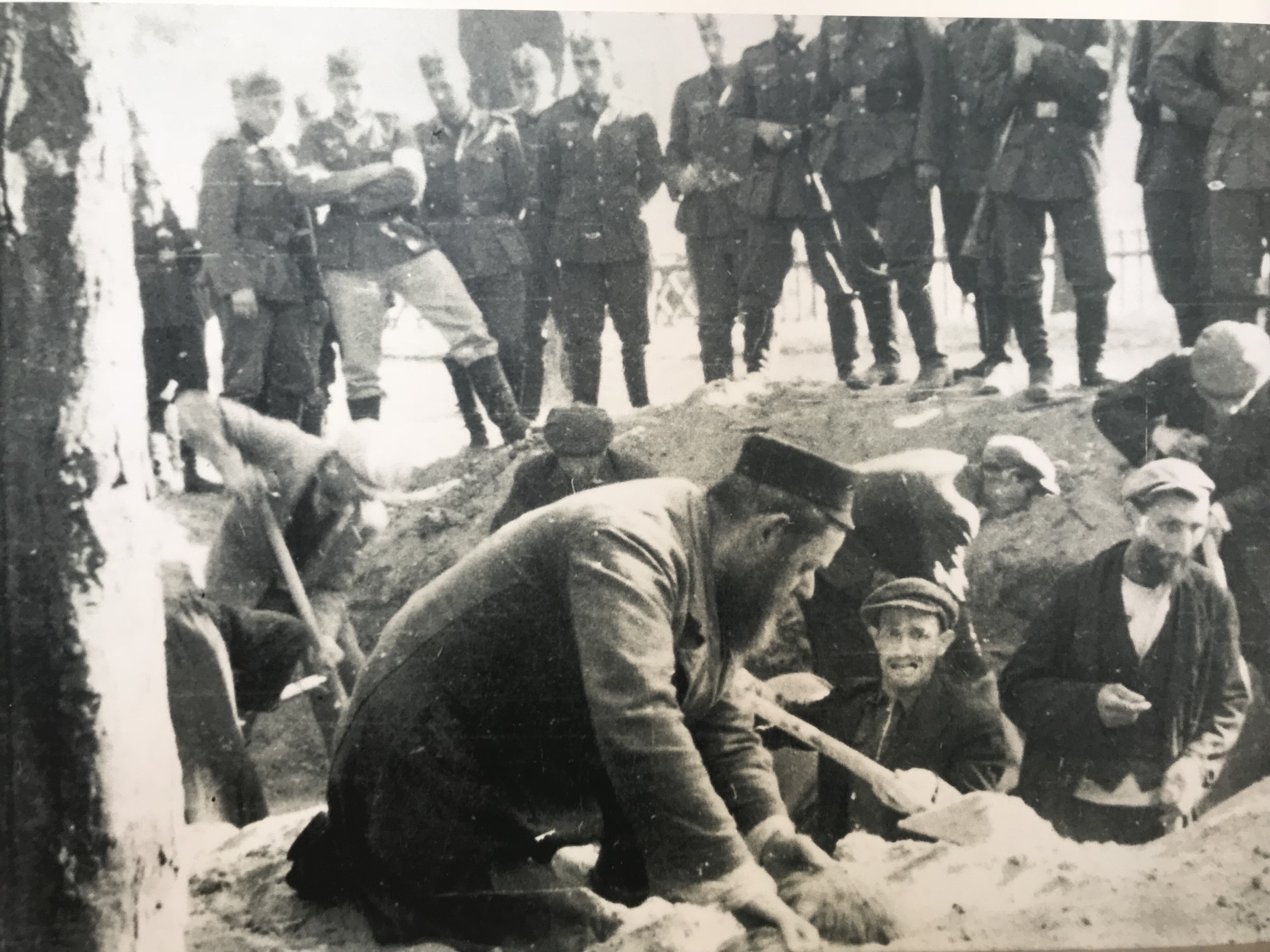
Jews Digging their graves.
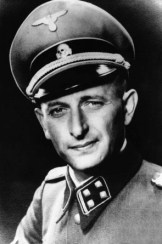
Adolf Eichmann
For the campaign against the Soviet Union, Himmler had his deputy, SS Obergrüppenfuhrer Reynard Heydrich, the Head of the Sicherheitsdienst or SD, assisted by Heydrich’s SD Deputy, SS-Obersturmbannführer (Lieutenant Colonel) Adolf Eichmann, the SS formed four Einsatzgruppen composed of SD, Waffen-SS and Police troops designated Einsatzgruppen A-D.
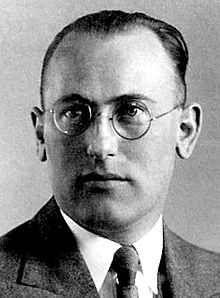
SS-Brigadeführer Dr. Franz Walter Stahlecker, Einsatzgruppen A
Einsatzgruppe A was assigned to Army Group North; it was commanded by SS-Brigadeführer Dr. Franz Walter Stahlecker. Stahlecker was killed in action against partisans in early 1942 and was replaced by SS Brigadeführer Heinz Jost.
Einsatzgruppe B was assigned to Army Group Center, and it was commanded by SS-Brigadeführer Arthur Nebe. Nebe returned to his job as Chief of the Kriminal Polizei at the Reichs Security Main Office in October 1941. He was ordered by the head of the Gestapo, SS General Heinrich Müller in the 50 British Officer escapees of Stalag Luft III, the Great Escape for execution in March 1944, and would be involved in the plot to kill Hitler. He went into hiding but was betrayed by a former mistress was arrested and executed at the personal order of Hitler. He was succeeded by SS Brigadeführer Erich Naumann.
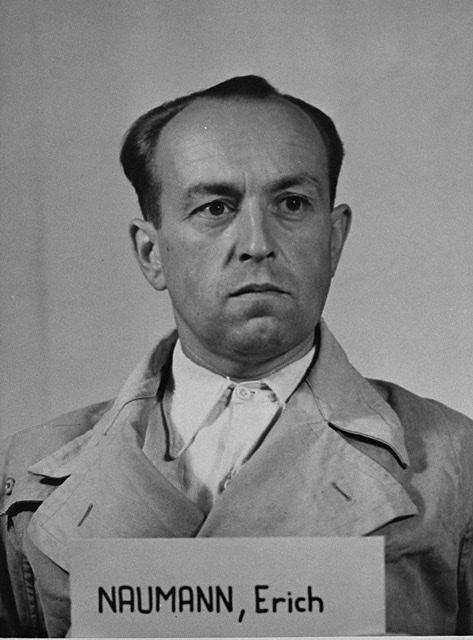
Einsatzgruppe C was assigned to Army Group South and was commanded by SS-Gruppenführer Dr. Otto Rasch. Rasch who had been careful to ensure that every officer under his command personally murdered Jews was removed from his position in October 1941 and not returned to service in the SS. Units under his command conducted the Babi Yar Massacre, at Kiev in September 1941. He was employed by a German Oil company until the end of the war. He was a defendant at the Einsatzgruppen Trials but charges were dismissed due to his declining health and inability to take part in his defense. He died in 1948 while in custody. He was followed as commander of Einsatzgruppen C by SS-Gruppenführer und Generalleutnant der Polizei Max Thomas.

Otto Ohlendorf (standing) at the Einsatzgruppen Trial and in Uniform (below)
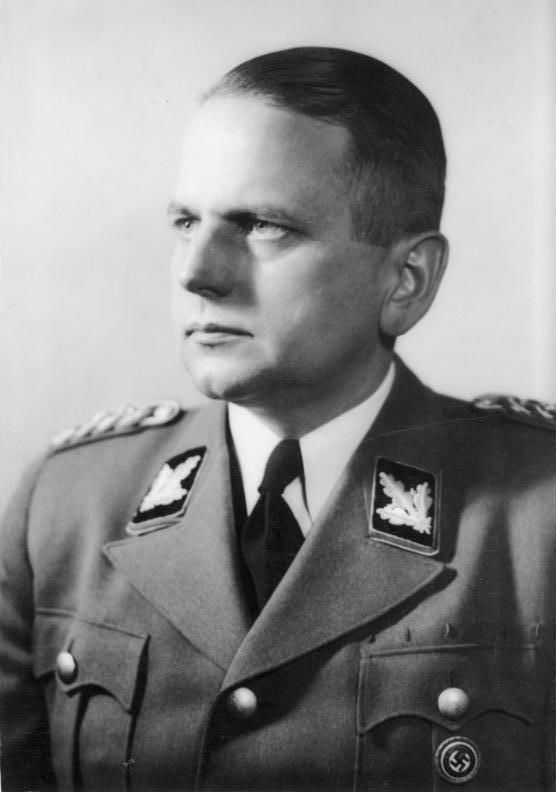
Lastly, Einsatzgruppe D was assigned to General Erich von Manstein’s 11th Army, which had the responsibility for operations along the Black Sea coast and the conquest of Crimea. It was commander by SS-Gruppenführer Prof. Otto Ohlendorf. During his command his units executed over 90,000 Jews, and at trial he offered no excuses but was brutally honest and unrepentant in what he had done.
The Einsatzgruppen were not standardized in manpower or equipment. In size they were The equivalent of battalions. The largest Einsatzgruppe was Einsatzgruppe A in the North with 990 assigned personnel 151while Einsatzgruppe D was the smallest and had only 550 troops assigned. 152 These units all had SS, SD or Police commanders. Though these units were not large, they also had the support of nine Ordungspolizei battalions, which were initially assigned to the invasion forces to supplement the operations of the Einsatzgruppen. 153
The Importance of the Ordnungspolizei Battalions
The police contingent would grow to be a massive force. By 1943, these Ordnungspolizei battalions would be grouped into regiments and number about 180,000 men assisted by 301,000 local non-German auxiliaries. 154 These units acted in concert with nine Army Security Divisions which handled rear area security. 155
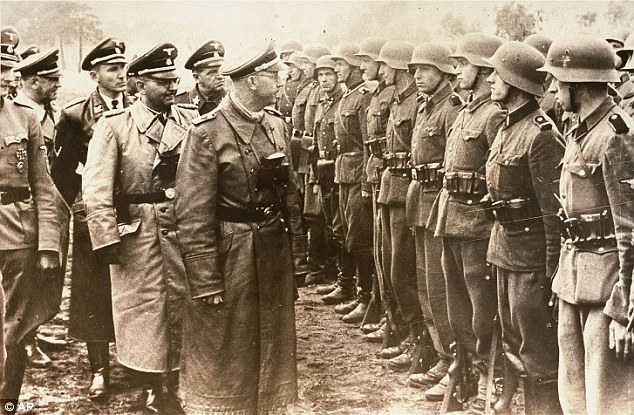
Himmler was so secretive that he initially did not reveal the intent and planned use of the Ordnungspolizei units to the Einsatzgruppen commanders. Instead he told them that they had a “heavy task…to “secure and pacify” the Russian area using Sicherheitspolizei and SD methods.” 156 Understanding the effect of these operations on the Ordungspolizei commanders and their personnel, Himmler told them that “in many cases it is considerably easier to lead a company in battle than to command a company responsible to…carry out executions, to deport people…to be always consistent, always uncompromising-that is in many cases far, far harder.” 157
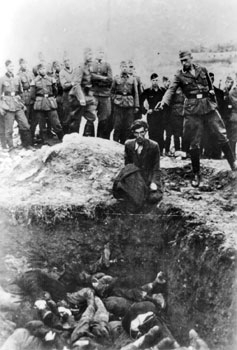
Russian Jew about to be executed in 1941 by Einsatzgruppe NCO, note the witnesses that include regular Army Personnel
The actions of all of the units are well documented; those of the most notorious, the Einsatzgruppen, but also the active and reserve Ordnungspolizei Battalions, the Army Security Divisions, and other Army or Luftwaffe units that directly aided or supported the killing of the Jews, and the locally recruited Schutzmannschaft battalions 158 which ruthlessly exterminated Jews and others in the operational area. No sooner had an Einsatzgruppe unit entered a city, a “deadly stranglehold” would grip the “Jewish inhabitants claiming thousands and thousands of victims day by day and hour by hour.” 159
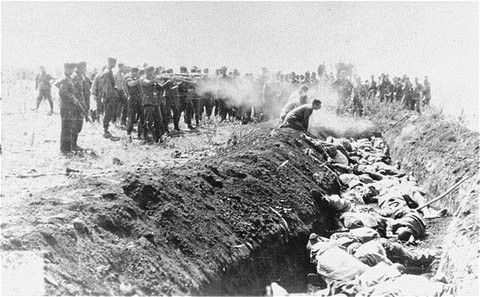
Babi Yar
Non-Jewish Russians were encouraged to conduct programs which Heydrich noted “had to be encouraged.” 160 An Einsatzgruppen D report numbered 153 noted: “During period covered by this report 3,176 Jews, 85 Partisans, 12 looters, 122 Communist functionaries shot. Total 79,276.” 161 By the spring of 1942 Einsatzgruppe A had claimed “more than 270,000 victims, the overwhelming majority of whom were Jewish.” 162 The total killed for all groups by early 1942 was 518,388 people, mostly Jews. 163 Germany’s Romanian ally acted against Jews in their operational areas as well. In Odessa, “on 23 October 1941 19,000 Jews were shot near the harbor… probably 200,000 Jews perished either at Romanian hands or after being turned over by the Romanians to the Germans.” 164
To further cloud the ethics and morality, the operations against Jews were often called anti-partisan operations. Himmler referred to Einsatzgruppen as “anti-Partisan formations” 165 while Wehrmacht Security divisions cooperating with the SS “murdered countless Soviet civilians and burned Russian settlements to the ground under the pretext of subduing partisan resistance.” 166 The German attitude in Russia by 1941-1942 was that “all Jews are partisans and all partisans are Jews.” From 1943, all armed resistance was “banditry” and all Jews irrespective of circumstances were treated as “bandits.”” 167

Field Marshal Walter von Reichenau
Field Marshal Von Reichenau, commander of the German 6th Army issued an order in which he stated:
“The soldier in the Eastern territories is not merely a fighter according to the art of war but also a bearer of a ruthless national ideology and the avenger of the bestialities which had been inflicted upon German and racially related nations. Therefore the soldier must have full understanding for the necessity of a severe but just revenge on subhuman Jewry.” 168
Likewise the distinguished Panzer commander, General Herman Hoth issued his own order of 17 November 1941 urging his troops to exact revenge on the Jews and Communists:
“Every trace of active or passive resistance or of any kind of machinations by the Bolshevik – Jewish agitators are [sic] to be immediately and pitilessly rooted out. The necessity of severe measures against elements foreign to people and kind must be understood precisely by the soldiers. These circles are the spiritual pillars of Bolshevism, the tablebearers [priests] of its murder organization, the helpers of the partisans. It consists of the same Jewish class of people which have done so much to harm our Fatherland and by its hostile activity…and anti-culture, which promotes anti-German currents in the whole world and which wants to be the bearer of revenge. Their annihilation is a law of self-preservation. Any soldier criticizing these measures has no memory of the former traitorous activity lasting for years carried on among our own people by Jewish-Marxist elements.” 169
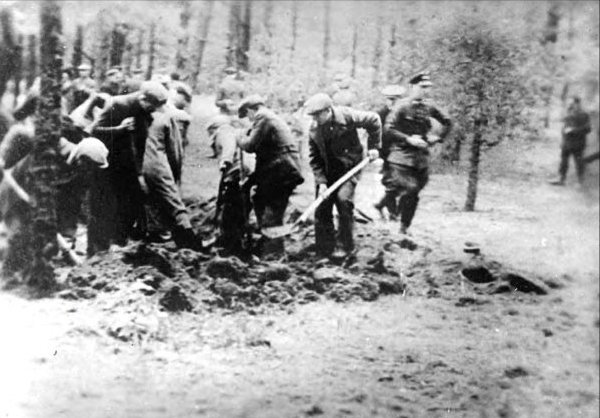
Jews digging their own graves
The commander of the Wehrmacht’s 221st Security Division endeavored to persuade his “subordinate units that the Jews were carriers of Bolshevik contamination and, therefore, the ultimate source of any sabotage or difficulty the division faced.” 170 The extermination of the Jews and partisan war were closely intertwined with the Reich’s economic policies designed to exploit the natural resources of the Russia. This included the “hunger plan” which German authorities seemed to imagine that “millionfold starvation could be induced by requisitioning off all available grain and “shutting off” the cities.” 171
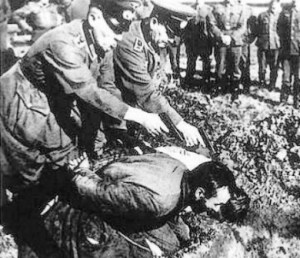
Einsatzgruppe men and Ordungspolizei in action above and below: Yale Historian Timothy Snyder wrote in his book “On Tyranny” wrote: “The European history of the twentieth century shows us that societies can break, democracies can fall, ethics can collapse, and ordinary men can find themselves standing over death pits with guns in their hands. It would serve us well today to understand why.”

The Wehrmacht’s complicity in these measures is demonstrated in the order drafted by Warlimont and signed by Keitel on 13 May 1941. That order, the “Decree on Exercising Military Jurisdiction in the Area of Barbarossa and Special Measures by the Troops” made it clear that international conventions regarding the treatment of civilians would not be observed in the Soviet Union. The order, relying on the historic precedent of German military law in regard to partisan activity stated:
I “Treatment of crimes committed by enemy civilians”
“1. Until further order the military courts and the courts martial will not be competent for crimes committed by enemy civilians.”
2. Francs-tireurs will be liquidated ruthlessly by the troops in combat or while fleeing. “
3. Also all other attacks by enemy civilians against the armed forces, its members, andauxiliaries will be suppressed on the spot by the troops with the most rigorous methods until the assailants are finished (niederkaempfen)”
4. Where such measures were not taken or at least were not possible, persons suspected of the act will be brought before an officer at once. This officer will decide whether they are to be shot. Against localities from which troops have been attacked in or treacherous manner, collective coercive measures be applied immediately upon the order of an officer of the rank of at least battalion etc., commander, if the circumstances do not permit a quick identification of individual perpetrators.”
II. “Treatment of crimes committed against inhabitants by members of the Wehrmacht and its auxiliaries”
1. With regard to offenses committed against enemy civilians by members of the Wehrmacht or by its auxiliaries prosecution is not obligatory, even where the deed is at the same time a military crime or misdemeanor….” 172
Hitler was quite clear in his intent when he told General Halder that in 1941 that he “intended to level Moscow and Leningrad, to make them uninhabitable, so there would be no need to feed their populations during the winter.” 173Economic officials held life and death power over villages. Those that met agricultural quotas were “likely to be spared annihilation and evacuation…the culmination of this process, during 1943, would be the widespread creation of “dead zones.””174
All told during the campaign against the Soviet Union the Einsatzgruppen, Ordnungspolizei, Army, and Local Security killed nearly 1.5 million Russian Jews. 175

Jewish Women Awaiting Execution
By 1942, over two million Soviet POW’s had been killed. 600,000 shot outright, 140,000 by the Einsatzkommandos. 176Eventually about 3.3 million Soviet POWs died in German captivity through starvation, disease and exposure. 177
Most are included included in the total of over 10 million Red Army Combat deaths, but those starved were killed as prisoners, and not in combat, attesting to the inhumanity of their German captors. 178
But still the Jews as an indistinguishable part of the Jewish-Bolshevik menace, were the number one target of the Nazis wherever they went, especially in the Soviet Union. The distinguished German historian Karl Dietrich Bracher wrote, “The reality and irreality of the National Socialism were given their most terrible expression in the extermination of the Jews.” 179

Arthur Nebe, from Jew killer to anti-Hitler plotter
Himmler and others continued to use euphemistic language to describe their efforts talking in terms of “Jewish resettlement.” 180 Terms such as special actions, special treatment, execution activity, cleansing and resettlement were used in place of the word murder. 181At the same time these operations led to problems in the ranks, one SS trooper observed: “deterioration in morale among his own men who had to be issued increasing rations of vodka to carry out their killing orders.” 182
Even commanders of the Einsatzgruppe were affected. Arthur Nebe would say “I have looked after so many criminals and now I have become one myself.” Nebe became an active participant in the July 20th plot against Hitler 183and a fellow conspirator would describe him as a “shadow of his former self, nerves on edge and depressed.” 184 Erich Bach-Zelewski, who led the SS anti- partisan operations, would suffer a nervous breakdown which included “hallucinations connected to the shootings of Jews” which hospitalized him in 1942. 185 Himmler would state in his Posen speech given in October 1943 that “to have gone through” the elimination of the Jews had “and remained decent, that has made us tough. This is an unwritten, never to be written, glorious page in our history.” 186

Proud and Unrepentant: Ohlendorf and Jost on Trial at Nuremberg
While while the Einsatzgruppen, Ordungspolizei battalions, the Wehrmacht Security Divisions, and locally recruited forces continued their Jew Hunts, another even more ghastly plan was being launched against the Jews in Nazi occupied territory. The Endlösung of the Jewish Problem had been set in motion.
To be continued…
Notes
119 Ibid. Megargee. War of Annihilation p.24
120 Ibid. Wheeler-Bennett The Nemesis of Power p.511
121 Ibid. Goerlitz. The Memoirs of Field Marshal Wilhelm Keitel. P.132
122 Glantz, David M. and House, Jonathan. When Titans Clashed: How the Red Army Stopped Hitler. University Press of Kansas, Lawrence, KS. 1995 p.31
123 Trevor-Roper, H.R. Hitler’s Table Talk 1941-1944 with an introduction by Gerhard L Weinberg, Translated byNorman Cameron and R.H. Stevens, Enigma Books, New York, NY 2000. Originally published in Great Britain by Weidenfeld & Nicholoson, London 1953 p.6
124 Ibid. Megargee. War of Annihilation p.10 The campaign against the Soviet Union was to be much more openlyideological as compared to the campaign in Poland.
125 Ibid. Warlimont. Inside Hitler’s Headquarters p.150 126 Ibid. Warlimont. Inside Hitler’s Headquarters p.151
125 Ibid. Warlimont. Inside Hitler’s Headquarters p.150 126 Ibid. Warlimont. Inside Hitler’s Headquarters p.151
127 Ibid. Reitlinger, The SS p.175
128 Ibid. Höhne The Order of the Death’s Head p. 354
129 Ibid. Höhne The Order of the Death’s Head p. 354 Again another deception.
130 Ibid. Warlimont. Inside Hitler’s Headquarters p.153
131 Ibid. Warlimont. Inside Hitler’s Headquarters p.153
132 Ibid. Warlimont. Inside Hitler’s Headquarters pp. 158-159
133 Ibid. Glantz and House. When Titans Clashed p.56
134 Ibid. Davidowicz. The War Against the Jews p.123
135 Ferguson, Niall. The War of the Worlds: Twentieth Century Conflict and the Descent of the West. The Penguin Press, New York, 2006 p.442
136 Ibid. Wheeler-Bennett. Nemesis of Power p.513
137 Ibid. Goerlitz. The Memoirs of Field Marshal Wilhelm Keitel. P.135
138 Ibid. Wheeler-Bennett. Nemesis of Power p.513
139 Hebert, Valerie Genevieve, Hitler’s Generals on Trial: The Last War Crimes Tribunal at Nuremberg University of Kansas Press, Lawrence Kansas 2010 pp.77-78
140 Ibid. Wheeler-Bennett Nemesis of Power p.513 and footnote. He cites the three Army Group commanders, Leeb, Rundstedt and Bock. However Von Rundstedt’s biographer notes that “no evidence exists as to what VonRundstedt’s to this was at the time.” Messenger, Charles, The Last Prussian: A Biography of Field Marshal Gerd Von Rundstedt 1875-1953 Brassey’s (UK) London England 1991. p.134
141 Ibid. Reitlinger, The SS p.176
142 Ibid. Megargee. War of Annihilation p.33
143 Ibid. Warlimont. Inside Hitler’s Headquarters p.162
144 Ibid. Goerlitz. The Memoirs of Field Marshal Keitel p.136
145 Ibid. Goerlitz. The Memoirs of Field Marshal Keitel pp.136-137
146 Ibid. Glantz and House. When Titans Clashed p.56
147 Ibid. Blood. Hitler’s Bandit Hunters p.52
148 Ibid. Reitlinger The SS p. 177
149 Ibid. Shepherd. War in the Wild East p.54
150 Ibid. Reitlinger The SS p. 177
151 Ibid. Rhodes Masters of Death pp.12-13
152 Ibid. Westermann. Hitler’s Police Battalions p.167 153 Ibid. Westermann. Hitler’s Police Battalions p.164 154 Ibid. Blood Hitler’s Bandit Hunters p.141
155 Ibid. Shepherd Wild War in the East p.48. Shepherd notes the deficiencies of these units in terms of organization, manpower and equipment which he calls “far short of the yardstick of military excellence with which the Wehrmacht is so widely associated
156 Ibid. Höhne The Order of the Death’s Head p. 356 Only one of the Einsatzgruppen commanding officers was a volunteer, Arthur Nebe who was involved in the conspiracy to kill Hitler. It is believed by many that Nebe volunteered to earn the clasp to the Iron Cross to curry favor with Heydrich and that initially “Nebe certainly did not know that “employment in the east” was synonymous with the greatest mass murder in history.
157 Ibid. Bracher. The German Dictatorship p.422
158 Ibid. Blood Hitler’s Bandit Hunters p.55
159 Ibid. Höhne The Order of the Death’s Head p. 360 160 Ibid. Friedlander TheYears of Extermination p.207 161 Ibid. Höhne The Order of the Death’s Head p. 360 162 Ibid. Tooze The Wages of Destruction p.481
163 Ibid. Ferguson. The War of the World p.446
164 Di Nardo, Richard L. Germany and the Axis Powers: From Coalition to Collapse. University Press of Kansas,Lawrence, KS. 2005 p.133 The Hungarians would also engage in ant-Jewish operations. Only the Italian army would not conduct operations against the Jews.
165 Ibid. Höhne The Order of the Death’s Head p. 369
166 Ibid. Wette The Wehrmacht p.127
167 Ibid. Blood. Hitler’s Bandit Hunters p.117
168 Ibid. Hebert p.94
169 Ibid. Hebert pp.94-95
170 Ibid. Shepherd. War in the Wild East pp.90-91
171 Ibid. Tooze The Wages of Destruction p.481
172 Ibid, Hebert p.86
173 Ibid. Magargee. War of Annihilation p.64
174 Ibid. Shepherd. War in the Wild East pp.127-128
175 Ibid. Davidowicz The War Against the Jews from the table on page 403. This included 228,000 from the Baltic republics (90%) 245,000 from White Russia (65%) 900,000 from the Ukraine (60%) and 107,000 from Russia proper (11%)
176 Ibid. Rhodes. Masters of Death p.241
177 Ibid. Glantz and House When Titans Clashed p.57
178 Ibid. Glantz and House. When Titans Clashed table on p.292
179 Ibid. Bracher. The German Dictatorship p.431
180 Ibid. Bracher. The German Dictatorship p.430
181 Ibid. Höhne The Order of the Death’s Head p. 367
182 Ibid. Rhodes. Masters of Death p.225
183 Ibid. Rhodes Masters of Death p.225
184 Ibid. Höhne The Order of the Death’s Head p. 363 185 Ibid. Höhne The Order of the Death’s Head p. 363 186 Ibid. Bracher. The German Dictatorship p.423

The Website of Historian, Author and Priest Steve Dundas
Dr. Rex .... Blogging for change.
What is the right question?
A former cop taking on tough subjects
A daily selection of the best content published on WordPress, collected for you by humans who love to read.
Personal ramblings and rants of a somewhat twisted mind
Toronto, Los Angeles.....and now CHICAGO. LOGAN Cinemas in midtown Chicago.
A liberal that believes in facts.
Life After Retirement
Devotionals, Opinion, General Musings
Observations about my life and the world around me.
Just another WordPress.com weblog
Living nonviolently in a violent world
Cogito Ergo Sum
Souvenons-nous


 The Inglorius Padre Steve's World