Author Archives: padresteve

padresteve's avatar

About padresteve

I'm a Navy Chaplain and Old Catholic Priest

Pat Robertson the Devil and Haiti

Devastation in Haiti (TelegraphUK photo)

Well just when human tragedy couldn’t get any more tragic Pat Robertson decided to get into the act. Following the 7.0 earthquake that devastated that impoverished country leveling the capital of Pot-O-Prince and killing thousands with estimates going into the 100,000 to 1.000.000 range with hurricane season approaching. Not being able to keep his mouth shut my neighbor in the Tidewater has decided to blame the tragedy on to poop people of Haiti on the alleged actions of people who lived over 150 years ago.  Robertson on his 700 Club show commented:

Pat Robertson Hears from God and Tells us about it

“They were under the heel of the French, you know Napoleon the third and whatever. And they got together and swore a pact to the devil. They said ‘We will serve you if you will get us free from the prince.’ True story. And so the devil said, ‘Ok it’s a deal.’ And they kicked the French out. The Haitians revolted and got something themselves free. But ever since they have been cursed by one thing after another….”

This is absurdity of course but something that has been spread by some Fundamentalist Christians for years.  Robertson is not alone, blogger Tom Barrett of “The American Daily” says: “Haiti is the only country in the entire world that has dedicated its government to Satan. Demonic spirits have been consulted for political decisions, and have shaped the country’s history.” Thus speaks Reverend Doug Anderson, who grew up in Haiti with missionary parents, and served there along with his wife Dawn as a missionary until 1990. The leaders of Haiti make no attempt to hide their allegiance to Satan. Haiti’s government is a government of the devil, by the devil, and for the devil.”

Unfortunately crap like this has been floating around for years in the United States among some more conservative and fundamentalist Christians for many years.  I can remember in a number of churches where former “missionaries” to Haiti spoke the same tripe.  Unfortunately this is more common than any of us would like to admit and even allegedly educated and “spiritual” people who have money and power like to spout forth such hateful and un-Christian ideology.

Of course such comments are absurd as Jean Gelen of “Black and Christian.com notes:

“Obviously, the idea that Haiti was dedicated to Satan prior to its independence is a very serious and profound statement with potentially grave consequences for its people in terms of how they are perceived by others or how the whole nation is understood outside its borders. One would agree that such a strong affirmation should be based on solid historical and scriptural ground. But, although the satanic pact idea is by far the most popular explanation for Haiti’s birth as a free nation, especially among Christian missionaries and some Haitian Church leaders, it is nothing more than a fantasist opinion that ultimately dissipates upon close examination.”

In fact the issue is less related to a pact with Beelzebub than the American and French governments of the time.  As historian Alex von Tunzelmann wrote in the Times Online in his article “Haiti: the land where children eat mud” said and I apologize for the long quote but I cannot say it better:

“History tells a different story. The appalling state of the country is a direct result of having offended a quite different celestial authority — the French. France gained the western third of the island of Hispaniola — the territory that is now Haiti — in 1697. It planted sugar and coffee, supported by an unprecedented increase in the importation of African slaves. Economically, the result was a success, but life as a slave was intolerable. Living conditions were squalid, disease was rife, and beatings and abuses were universal. The slaves’ life expectancy was 21 years. After a dramatic slave uprising that shook the western world, and 12 years of war, Haiti finally defeated Napoleon’s forces in 1804 and declared independence. But France demanded reparations: 150m francs, in gold.

For Haiti, this debt did not signify the beginning of freedom, but the end of hope. Even after it was reduced to 60m francs in the 1830s, it was still far more than the war-ravaged country could afford. Haiti was the only country in which the ex-slaves themselves were expected to pay a foreign government for their liberty. By 1900, it was spending 80% of its national budget on repayments. In order to manage the original reparations, further loans were taken out — mostly from the United States, Germany and France. Instead of developing its potential, this deformed state produced a parade of nefarious leaders, most of whom gave up the insurmountable task of trying to fix the country and looted it instead. In 1947, Haiti finally paid off the original reparations, plus interest. Doing so left it destitute, corrupt, disastrously lacking in investment and politically volatile. Haiti was trapped in a downward spiral, from which it is still impossible to escape. It remains hopelessly in debt to this day.” http://www.timesonline.co.uk/tol/news/world/us_and_americas/article6281614.ece

One has to look at the practical implications of statements such as Robertson has not only on the people of Haiti but also on how people around the world view the Christian faith.  To his credit Robertson’s “Operation Blessing” charity has done much good, however his statements, even when retracted or clarified by his spokespeople as was done today, damage the efforts of well meaning Christians who go to Haiti not simply to evangelize but to serve and help local churches.  Additionally such statements do immeasurable harm to his fellow Christians of all types as many people who are not Christians assume that such views are characteristic of all Christians.

The reaction to Robertson’s remarks have been predicable, as usual he has played right into his detractors and the critics of the Christian faith. His words will echo far louder than all the Christian aid workers who are already in Haiti or on their way, many at their own expense.  My old training sergeant when I was in my college Army ROTC made a comment that in the Army that there were “attaboys and aw shits” and that “it took 2000 attaboys to make up for one aw shit.”  The same is true in life and in any form or public ministry. Robertson has as usual managed to drop a turd in the communion chalice and piss on Christians who care for the people of Haiti and spend their time and talent to help these good people.

Robertson’s comments ultimately that God would be so vengeful that he would punish the people of Haiti today for the alleged actions of people who in desperation revolted against harsh and brutal colonial masters over 200 years ago.  Of course this takes Old Testament judgments against the people of Israel for their sins “down to the 7th generation” or judgments on the nations surrounding Israel and applies them to current people by isogeting scripture and outside of its historic context in order to bolster crass prejudice against Haitians.  The Haitians are not viewed as people whose current situation is based on alleged “pacts with the Devil” when the only “devil” that they dealt with were the French, Americans and Germans who placed insurmountable burdens on the Haitians that when coupled with corrupt families who dominated Haitian politics for nearly a century doomed these people to the lowest standard of living in the Western Hemisphere.

Robertson and those like him only make matters worse for the Haitians and the Christians who actually go to Haiti to serve the Haitian people.  It is a sad commentary that men like Robertson who have power, money and influence over millions of Evangelical Christians use their position to posit such crap which assumes that somehow God is angry at the Haitians today for things that their founding fathers allegedly did.  I have to ask if this is so how can God ignore the sins of other powerful nations who not only through their ideology, economic policies and prejudices have exploited poor nations like Haiti for their own nefarious purposes.  The idea that somehow the Haitians are any more under God’s judgment than any other nation is prejudicial at best and demonstrates the height of historical ignorance and cultural arrogance.

Robertson as usual has stuffed his foot so deep down his throat that his big toe is almost visible from another orifice and as usual other Christians will have to deal with his statements as they strive to love and serve God and his people.

God bless those who are already on the ground and those on their way to Haiti to help the Haitian people no matter what their religious faith is or is not.  I do pray that people will do whatever they can to contribute to worthwhile organizations who will use the time, talent and treasure of those who give to actually do some good for the people of Haiti and not simply make themselves look good.

Some links are provided here:

The American Red Cross

https://american.redcross.org/site/Donation2?4306.donation=form1&idb=1696340864&df_id=4306&JServSessionIdr004=9lm1250ur1.app197a

Catholic Charities of Miami

https://secure.qgiv.com/cps_donors/?key=catholiccharitiesofthearchdioceseofmiami&restrict=Haiti%2BEarthquake%2BRelief

Samaritans Purse

http://www.samaritanspurse.org/

Salvation Army

http://www.salvationarmy.org/ihq/www_sa.nsf/vw-news/3BA710B2E3E57078802576AA004D0ED3?opendocument

Episcopal Relief and Development

http://www.er-d.org/ERDHaiti/

UNICEF

http://www.unicefusa.org/news/releases/unicef-urgently-appeals-for.html

Peace,

Padre Steve+
1 Comment

Filed under Foreign Policy, philosophy, Religion

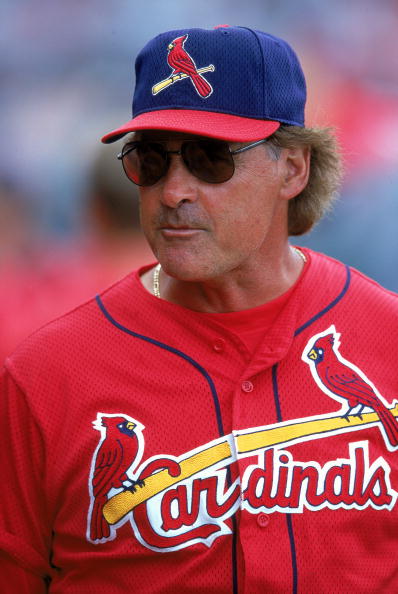
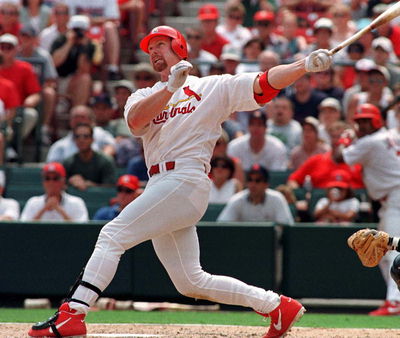
Mark McGuire, Tony LaRussa and the Dirty Secret of the Steroid Era

Mark McGuire’s Admission of Steroid Use Has Provoked More Debate About the Steroid Era

Mark McGuire admitted that he used steroids in the 1990s during his electric home run barrage that for a time anyway gave him the single season home run title.  The summer of 1998 was one that captivated baseball fans and America as McGuire and Sammy Sosa slugged their way to what many would think would be baseball immortality.

Jose Canseco’s Claims of Rampant Steroid Use in Baseball Seem to have Been Born Out

First came the allegations by Jose Canseco that he had McGuire regular shot up with steroids in the clubhouse of the Oakland A’s whose manager just happened to be Tony LaRussa. McGuire vehemently denied his former friend and teammate Canseco’s allegations in the book Juiced even last night in his interview with Bob Costas, however McGuire now suffers a credibility gap after his denials back when Canseco published his book and later.  The claim which can be boiled down to “Yeah I did steroids but not like that” doesn’t hold water to me as much as I want to believe McGuire who I really do think is a good person, fantastic ballplayer and a man who gave a lot back to baseball and his community during his career.  Canseco was heavily criticized for the tone of his book but the allegations seem to be more right than wrong.

Sammy Sosa Went From Hero to Zero After Steroids and Corked Bats

However, even as many dismissed Canseco’s charges and baseball turned its back on him others came under suspicion including Sosa and eventually Barry Bonds and pitching great Roger Clemons.  As one superstar after another either was accused, implicated or had their name come up on a list of players who had allegedly tested positive in a screening done by baseball the scandal grew in proportion to McGuire’s massive arms.  An entire era was tainted and every player even those who had not done steroids or other banned performance enhancing drugs were viewed with suspicion.

At the same time the self righteous attacks on the players by many in the media which in a sense rightly accused them of cheating missed a number of important issues.  The first in my opinion of is the responsibility of baseball’s management and ownership which had turned a blind eye to what the players were doing and the fact that these players were not the first to cheat in one way or another.  A secondary note is that for a time in the 1990s many of these substances had not been banned by the game and that some, especially HGH are legal in other countries and with the continual advances in pharmaceutical development may eventually be legal in this country.  Thus what was yesterday’s “banned substance” may end up being tomorrow’s “miracle drug” but the players who were then “criminals” or “cheaters” will still have their names sullied by a culture’s inability to keep up with technology.

Tony La Russa and Other Managers Have to Shoulder Some Responsibility for the Steroids Era

The responsibility of management is demonstrated by LaRussa who in his nearly two decade association with McGuire cannot have missed McGuire’s and others steroid use.  Baseball teams are somewhat like small elite military units, players, coaches and managers live in a very small world, a world in some sense protected by the clubhouse door.  Owners, managers, coaches and other staff in particular the physicians; trainers and strength and condition coaches know what is going on with their highly paid players. It would demonstrate the height of incompetence for a staff not to know what their players were doing.  The fact that many claim ignorance of what players tells me that they are either lying or so incredibly unaware of their surroundings that it would be impossible for them to manage at the professional level.  Add to this that LaRussa, a lawyer is no dummy; he knows people and can read what is going on and his claim that the first that he knew of McGuire’s steroids use was when McGuire called him yesterday it is hard to believe.  However, in defense of LaRussa I do believe as he told “Mike and Mike” on ESPN that he believed that he felt bound by some of the things going on in the game regarding players unions and other factors that he and others were slow to respond. Other managers, coaches and team owners, while not lawyers are certainly adept at knowing people; and could not have been unaware of the use of steroids and other banned substances by their players. Good coaches know when players are lying.

This is not just a player’s issue it extends to management and also to the players union, the media members who on a daily basis associated with players, coaches and managers and even ownership who turned a blind eye to the obvious.  If steroid abuse was a big deal that they thought was wrong they all, including the player’s union should have instituted stringent testing measures when the allegations about major stars began to surface.

Likewise there is baseball’s knowing tolerance of cheaters in the past, to include current members of the hall of fame.  It was common knowledge that in earlier times players were using amphetamines to quicken their response on the field, while others played drunk or under the influence of illegal drugs.  Then there were the players such as pitcher Gaylord Perry who in his biography after he retired from the game admitted using the “spit ball” which was never legal during his career and was still voted into the Hall of Fame.  To now throw these players under the bus while not holding ownership, management, coaching staffs, team medical staffs and even the media responsible for not policing this and nipping it in the bud is absolutely hypocritical.  If we want to apply a standard we have to be consistent in the way that we do it.  If Gaylord Perry can be in the Hall of Fame after admitting to using an illegal pitch why can’t the players who used steroids? I can see little moral difference between the two.

Now did McGuire and others actions harm the game itself?  In one sense yes, using these substances they did cheat, but they are not the first and will not be the last to do so. Likewise the fact that they used these drugs places the records that they set in the strange netherworld of trying to determine how much of their performance was effected by the use of these drugs.  Unfortunately there is no quantifiable way to do so.  McGuire says that he does not think that they did but apologized to the son of Roger Maris.  In another sense no, like the players who cheated before them and were not banned from baseball, who did not have their records questioned and who in some cases are in the Hall of Fame did no real permanent harm to the game.  Baseball still survived and maybe one day like Gaylord Perry they will be appreciated.  I doubt that will happen anytime soon but it may.

That is the dirty little secret.  I wish McGuire and all the rest of those implicated in any way with steroids had come clean years ago.  I wish that managers like LaRussa had not tolerated this or had come up and said that they did not believe it to be wrong if indeed as LaRussa says that he believes McGuire when he says that he did it because of career threatening injuries.  If that were to happen to me I am sure that I would use any means to stay in the game and I will not condemn McGuire for this.  Instead baseball ownership, management, the player’s union and the media have tried to have it both ways.  They turned a blind eye to what was happening and many are now crying crocodile tears and throwing the players who made them millions of dollars under the bus.  At least LaRussa has brought McGuire who regardless of his use of steroids is one of the greatest hitters to play the game back into the game to be a hitting coach. I commend LaRussa for doing this as it shows that men like McGuire do not need to remain outside of baseball.  I do hope that other organizations will have the decency to do the same with others of this era.

To me it matters not if any of them get in the Hall of Fame, however if they admit their use even belatedly they should be forgiven and allowed to be part of the game that for a time they were the centerpiece of its success.  Who can ever forget the magical summer of 1998 and how we all were enthralled by what took place on the diamonds that year?  Can anyone who watched the home run derby ever forget it?  I won’t and I still will never forget the day that McGuire broke the record even if the record is tainted because of his use of steroids.  The records are now tainted and nothing can change that. The reputations of McGuire, Sosa and others ruined. But for a time it was magic and it is now time to move forward as we cannot change the past but we can learn from it and make sure that it does not happen again.  Baseball means too much to America to remain stuck in an era that is now an unfortunate part of the history of the game.

By the way, only a few weeks left until spring training.

Peace

Padre Steve+

1 Comment

Filed under Baseball

Baseball Beyond Life and Death in the ICU

“I consider myself the luckiest man on the face of the Earth. And I might have been given a bad break, but I’ve got an awful lot to live for…” Lou Gehrig

Today I was walking away from our hospital pharmacy where I had to pick up a prescription and I heard a voice of a man call out to me…no not a voice crying out in the wilderness, but a familiar voice.  I looked around and immediately recognized the man as the husband of the woman who back in May of last year was very near death in our ICU.  I wrote about that in a little post called Baseball in Between Life and Death in the ICU. That post came at an interesting time for my PTSD battle was still raging, my dad’s condition was getting worse and I was getting ready to go home for what I thought be my last visit and I was heavily engaged on the ICU and PICU.

The lady sat next to her husband, and it was yet another of the recent blessings in my life that I have begun to count as miracles. She looked great, especially since last year her prognosis for her life once she left the hospital was measured in weeks or a couple of months.  The woman was a big baseball fan and even coached.  Her husband kept baseball games on her ICU television whenever they were on even though she was for the most part very heavily sedated and only occasionally conscious. We had many visits by her bedside and one day I brought in a baseball that I had thrown out as the first pitch at a Kinston Indians game on a wedding anniversary a few years back.  With her husband and sister in the room I put the ball in her hand which tightened around it.  For what I understand the ball seldom left her hand as she remained in the ICU.  As we visited they both told me how much what I did in the ICU meant to them, the prayer, anointing of the sick and the baseball.  She told me that the ball, an official Carolina League ball on her mantle.  What was funny she only vaguely remembered my face because of her terrible condition and sedation, but that her husband would not stop talking about me. We chatted some more and talked about all the prayer that had been made on her behalf as well as the hard work of the ICU and Cardiology teams to keep her alive and help her recover.  I mentioned that probably the whole companies of baseball “saints” in heaven were praying for her as well and we all had a great laugh.  I had to leave and go to a call but we exchanged hugs and blessings.

Today has been a busy day.  I have already dealt with the death of a relatively young woman with cancer in palliative care; withdraw of life support from a man and several other situations where people could be spending their last hours or days on earth.  I had given last rites to the woman who passed away tonight last Thursday when I was on call.

I mentioned last week that despite everything I still felt good emotionally though I was physically worn out. Today I am pretty fresh even now and know that I will need to remain her much of the day tomorrow no matter what happens tonight.  However for the first time in a while I can say that I am ready and feel something like my old self again.  What began as Padre Steve’s Christmas Miracle has continued into the New Year and despite complications and infection associated with my implant surgery I feel good. I am hoping to be cleared Wednesday to PT again and am looking forward to good things even in the midst of life and death both inside and outside of the ICU.

There are some other things going on that I will be writing about in the coming days. Baseball spring training is getting closer and lots of deals and trades are happening. The Orioles and Giants have both picked up some hitting and have great young pitching.  On the other news front I am glad that Mark McGuire finally admitted his use of steroids.  At the same time I am not going to condemn him as so many others were doing the same thing, I just wished he had not taken them and come clean sooner.

Now I’m heading back upstairs to check on all of my really sick folks and savoring the bit of time that I had for dinner and to write this little post.

Peace

Padre Steve+

Leave a comment

Filed under Baseball, healthcare, Pastoral Care, PTSD, Religion

A “Wild” Wild Card Weekend

Though I am not a member of the heretical Church of Football but rather a member of the one true Church, the Church of Baseball, I do pay attention to what happens in this aberrant sect.  This weekend was the “Wild Card Weekend” where the teams with the best records that did not win a division title faced off against each other and the division title winner in each conference with the worst of the divisional winners.

I do not have any dog in the fight except for whoever is playing the Cowboys.  I don’t consider me to be a “Cowboy hater” but I cannot be considered to be a Cowboy fan having suffered through Cowboy hubris living as a foreigner in the Republic of Texas, though serving as a sworn member and officer in that Land’s National Guard being a member of a unit with its heritage going back to the Texas Brigade of General John Bell Hood.

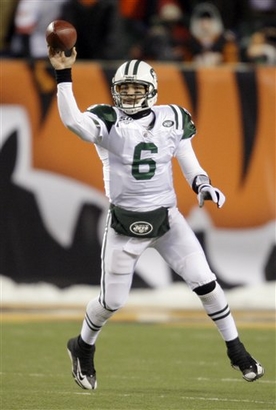
Rookie QB Mark Sanchez Leads the Jets over the Bengals (AP photo)

This weekend featured four games.  In the first game the New York Jets under coach Buddy Ryan defeated the Cincinnati 24-14 Bengals for the second straight week in Cincinnati after having shellacked the Bengals last week to secure a playoff berth.   This was not really a surprise to me because the Jets after an inauspicious start to the season where almost anyone with half a brain figured that they stood no chance of even having a winning season and that Ryan would be a former head coach by now turned things around and finished the season as one of the hottest teams in football.

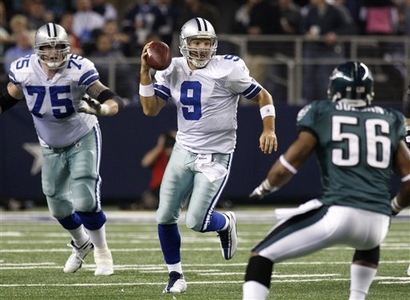
Tony Romo and the Cowboys Broke their Playoff Drought against the Eagles (AP photo)

In the monstrosity known as Cowboy’s Stadium where the scoreboard is bigger than Eritrea the Cowboys clipped the Eagles wings for the second straight week.  In fact they made the Eagles who had entered the playoff never having lost an opening playoff game under Coach Andy Reid. The Cowboys won their first playoff game since 1996.  The Cowboys much like the Jets had been pronounced dead after losing to San Diego and heading into their traditional December depression. This time Tony Romo and Coach Wade Phillips led the Cowboys to a 34-14 win over the Eagles sending Donovan McNabb home to eat soup with mom.

Now neither of these games were a surprise to me after the previous week where both the Cowboys and the Jets had made the Bengals and Eagles look bad.  Now it is true that both the Bengals had nothing to gain in the final game of the season, but even so they were flat and the Eagles first lost the division last week and were booted from the playoffs Saturday.

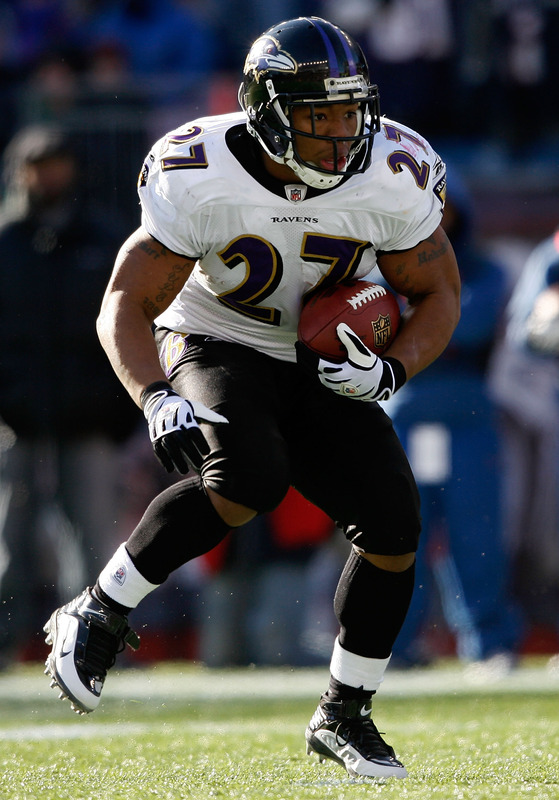
Ray Rice had 159 Yards against the Patriots (AP Photo)

Today’s games were certainly entertaining, unless you are a Patriots fan.  In the first game today the Baltimore Ravens dominated the Patriots with a crushing rushing attack and devastating defense led by veteran linebacker Ray Lewis 33-14.  The Ravens made the Patriots who had one of their most uneven seasons of the past 10 years look bad.  Tom Brady, who was probably cursed by the Grand Master Pastor Reverend Marc of the Amazing Grace Baptist Church who had labeled Brady a sinner bound for hell on their website had a terrible day. He went 23 of 42 attempts for a mere 154 years with three interceptions. Baltimore Running Back Ray Rice rushed for more yards by himself than Brady passed for. So the Patriots pass into off season oblivion while Bill Belichick commented “All of us that participated in the game are accountable for our performance and I don’t think anybody felt very good about it, players, coaches, anybody.” The Patriots looked really bad like they did not even belong on the same field as the Ravens.

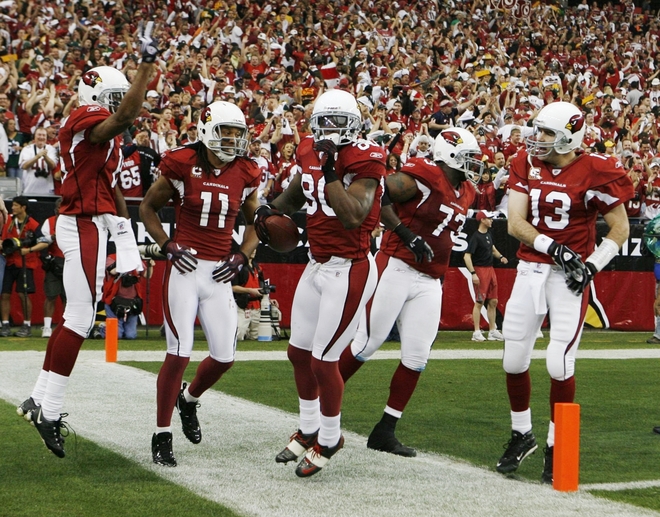
Kurt Warner and his Offense Celebrate against the Packers (AP Photo)

In the final game of the Wild Card Weekend we were treated to a truly “wild” game.  The Arizona Cardinals defeated the Green Bay Packers who had defeated the Cardinals in the last game of the regular season 33-7 by a score of 51-45 in overtime.  This was an offensive display seldom seen in the playoffs; the most points ever scored in an NFL playoff game and possibly was one of the most exciting playoff games ever played. Kurt Warner led the Cardinals attack and the game was decided in the first series of overtime when Cardinal Karlos Dansby returned a fumble by Green Bay Quarterback Aaron Rodgers 17 yards for a defensive touchdown. The teams combined for 1024 yards of offense and 96 points.   The Packers go home.

Next week the Cardinals will venture to the Bayous of Louisiana to play the Saints in the Superdome.  New Orleans is favored but I would not count out Warner and the Cardinals.  The Ravens stay on the road to venture into Indianapolis to play Peyton Manning and the Colts. The Colts are favored but have played very flat since resting their players in week 15 and giving up the chance at a perfect season while the Ravens have played like a team possessed.  Moving on to Sunday Dallas will venture to the northlands to play the Vikings in the nation’s loudest venue the Hubert H Humphrey Metrosexual Dome in what could be the last game of any kind played there unless the Vikings win and the Saints lose forcing Arizona to go north.  The Vikings stumbled into the playoffs while the Cowboys are hot.  The game could certainly go either way but I think that the Vikings home field advantage might with a strong offensive and defensive performance might be what the Vikings need to send the Cowboys home.  In the final game the Jets wing their way to the west coast to play the Chargers who have remained hot all year long.  While the Jets could pull an upset I will go with the Chargers to shoot down the Jets.

My picks for what they are worth.  I think that the Cardinals by 3 in a shootout in New Orleans and the Colts by 7 the over the Ravens despite a hope that the Ravens will pull the upset.  In the Sunday games I take Brett Farve and the Vikings over the Cowboys by 3 and the Chargers over the Jets by 7.

1 Comment

Filed under football

I Miss the Music of the 70’s and 80’s

The Abbess and I in 1980 at Cal State Northridge

Note: Many of the links on this page are now dead. I have done a new article about this which is linked here: 

Spendin’ the Nighttime Reminiscing: Padre Steve Remembers the Music of the 1970s and Early 1980s

If you like this post please see the sequel:  More about Why I Miss the Music of the 70’s and 80’s unfortunately many of the links are dead on this one too, but the article is interesting.

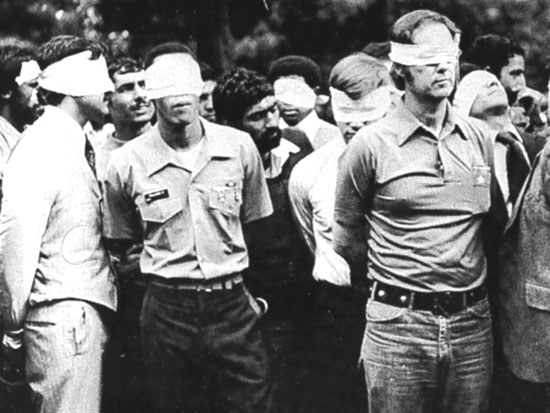
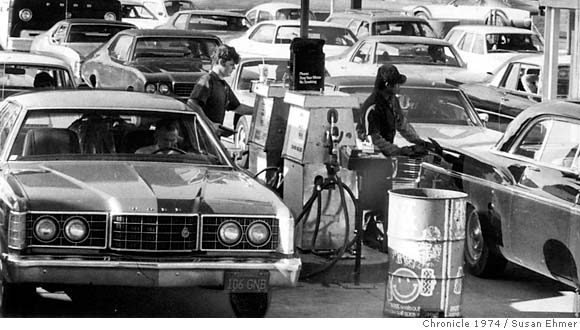
I don’t know about you but the music that I really enjoy is the music that was popular when I was in Junior High, High School and College.  For that period spanned the years 1971-1983.  For those of that were alive back then it was a turbulent era, Vietnam was ending, Nixon was resigning due to the Watergate break in cover-up, assassination attempts both successful and unsuccessful were common, two attempts on Gerald Ford, Aldo Moro of Italy and Anwar Sadat of Egypt fell to terrorists and both Ronald Reagan and Pope John Paul II were felled by bullets which did not prove fatal. The Cold War was tense, the Middle East a mess, and the economy…well kind of like now in a lot of ways.  There was a major recession the auto industry needed bailouts, inflation was running in double digits as was the unemployment rate, the dollar was weak and OPEC wreaked havoc on world oil markets. Jimmy Carter was ridiculed worldwide for his “malaise” speech and the Iranian revolution led by the Ayatollah Khomeini swept into power and with it the seizure of the US Embassy and the 444 day hostage crisis punctuated by a failed rescue attempt demoralized the United States.

The 444 Day Iranian Hostage Crisis Helped End the Carter Presidency

The Soviets invaded Afghanistan which became their Vietnam.  In Lebanon 247 Marines were killed in the bombing of their barracks, Cubans were fighting in Angola and well. Terrorist groups killed Israeli athletes at the Munich Olympics and the Red Brigades, the Bader Meinhof gang, the Weather Underground and the Irish Republican Army provided a constant string of terrorist attacks even as Middle Eastern terrorist groups highjacked airliners in daring fashion, matched at times by equally rescues by Israeli and German anti-terrorist units. As you can imagine there was a lot to be down about.

Gas Lines 1974

However with the passing of the 60’s the music of the 1970s and early 1980s provided a diversion for many people looking for respite from all the bad news that echoed around the airwaves and in the newspapers.  Thankfully there wasn’t a 24 hour cable news cycle yet and had there been people would have probably been jumping off of buildings.  As for me I had countless 45s and LPs of my favorite groups and artists, Doctor Donald D Rose of KFRC in San Fransisco was my favorite DJ and my car had a retro-fitted 8-Track tape player.

Today while much of the population gathered around TVs to watch NFL Wild Card playoff games, I needed some peace, so I started putting music DVDs on as the Abbess and I worked about the house.  First was Blondie’s Greatest Hits and Abba Gold followed by the Eagle’s Farewell Tour I concert album.

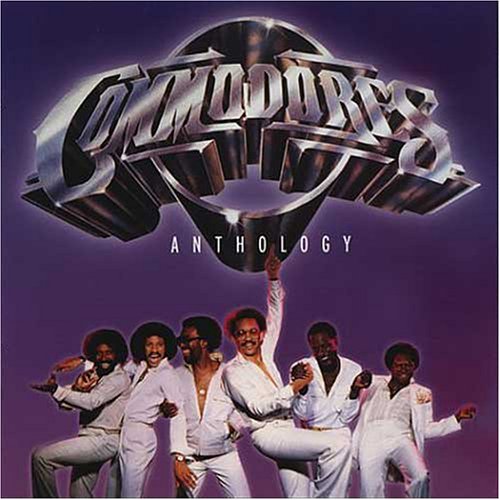
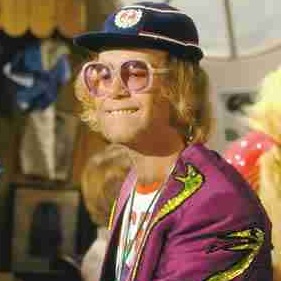
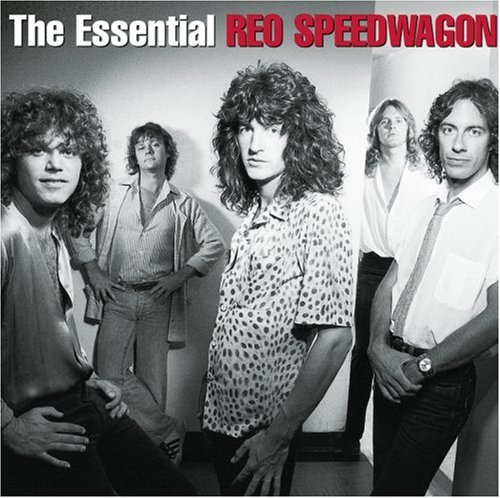
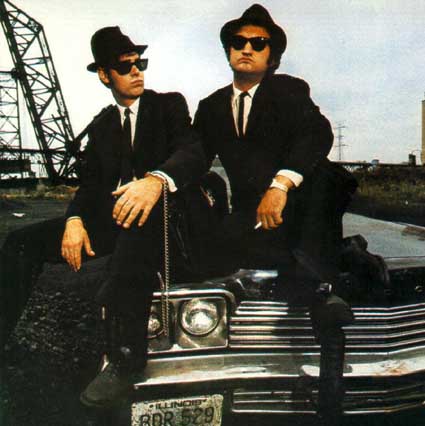
Great groups and artists ruled the pop and rock airwaves and save for the disaster known as disco the 70’s and early 80’s produced some of the more memorable music of a generation.  It was not “message music” like much of the music in the 60’s but focused on entertainment.  Power groups like Journey, Starship, REO Speedwagon and Boston made power ballads, while AC/DC and KISS shocked and entertained at the same time.  Groups like the Blondie, the Eagles, Chicago, Paul McCartney and Wings, Abba and the Commodores dominated the pop charts while individual artists such as Olivia Newton-John, Elton John, Carly Simon, John Denver, Lionel Ritchie, Barry Manilow and others satisfied the more mainstream pop crown.  R&B enjoyed a renaissance due to the unlikely duo of the Blues Brothers who helped re-launch the careers of Aretha Franklin, Johnny Lee Hooker, Cab Calloway and a host of others.  As the 80’s came along new groups and styles were introduced including New Wave and Rap. It was music that helped us through those times.

As I listened and watched I mentioned to the Abbess that I missed those times.  It certainly wasn’t the fact that things were great in the world, but despite all of what was going on there was still some sense of that things would work out okay.  Music helped provide part of that sense of hope, even disco as much as I would hate to admit that. It was an escape and the music of that time is still with us, somehow those groups haven’t gone away and people look back with fondness to the music of the era.

Here are some of my favorites with links to the videos, they are in no particular order nor are the representative of all the groups that I have in my library of CDs and DVDs, but I enjoy the heck out of them.  Have fun and enjoy.

Peace,

Padre Steve+

The Eagles “Take it Easy”

http://www.youtube.com/watch?v=ScG0ilS0dgI

“Heartache Tonight”

http://www.youtube.com/watch?v=nvJqdudx8cg

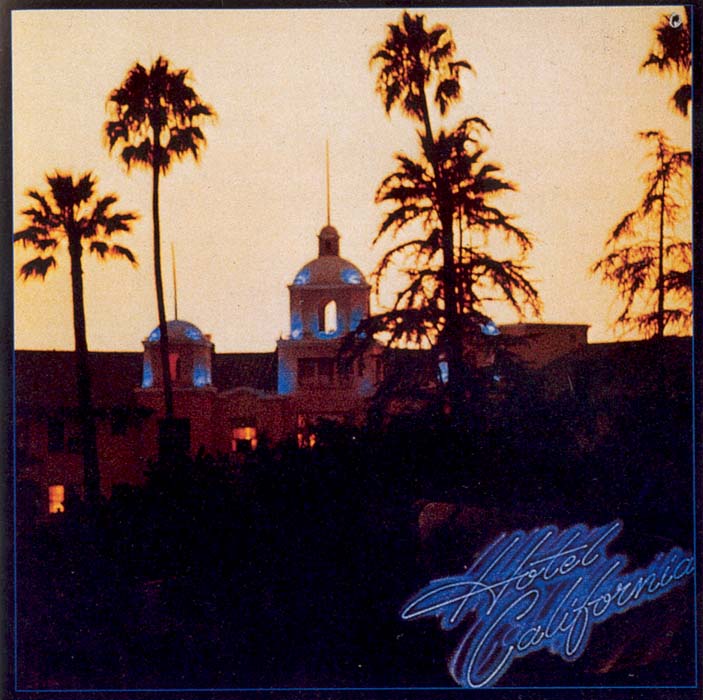
and “Hotel California”

http://www.youtube.com/watch?v=FbjKMobts5U


Olivia Newton-John “Magic”

http://www.youtube.com/watch?v=r7WPwH8Rd6g

and “I Honestly Love You”

http://www.youtube.com/watch?v=6zGLSnZGZts

The Commodores “Sail On”


http://www.youtube.com/watch?v=zg-ivWxy5KE

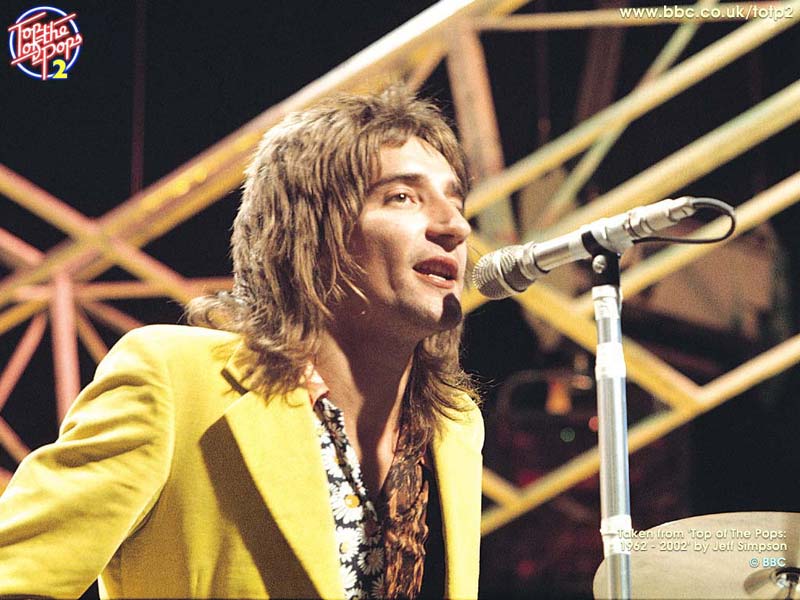
Rod Stewart “Tonight’s the Night”

http://www.dailymotion.com/video/x1p96h_rod-stewarttonights-the-nightgonna_music


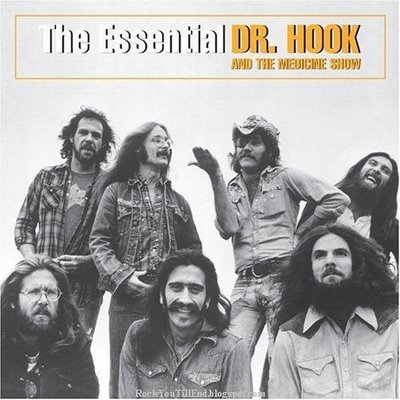
Dr Hook and the Medicine Show “On the Cover of the Rolling Stone”

http://www.youtube.com/watch?v=0-XzGOZHYdA&feature=PlayList&p=AF906570E242A626&index=1

and “Sharing the Night Together”

http://www.youtube.com/watch?v=ECyAATeNH3E


Abba “Waterloo”

http://www.youtube.com/watch?v=wGs7dTjUsXw

and The Winner Takes it All

http://www.youtube.com/watch?v=92cwKCU8Z5c


Fleetwood Mac “Don’t Stop Thinking About Tomorrow”

http://www.youtube.com/watch?v=a8arvEzHsA8


Journey “Don’t Stop Believing”

http://www.youtube.com/watch?v=CNB1EUJg1-w


Laura Branigan “Gloria”

http://www.youtube.com/watch?v=1tVutw8rjFk


Bonnie Tyler “Total Eclipse of the Heart”

http://www.youtube.com/watch?v=840B27zYfOk&feature=related

Carly Simon “You’re So Vain”

http://www.youtube.com/watch?v=mQZmCJUSC6g


Blondie “Dreaming”

http://www.youtube.com/watch?v=yIjxGKLTADE

“Rapture”

http://www.youtube.com/watch?v=xHPikUPlRD8&feature=PlayList&p=F2ED8F30DB2943CD&index=1

and “Island of Lost Souls”

http://www.youtube.com/watch?v=wEpPjBG4CJY


Chicago “Saturday in the Park”

http://www.youtube.com/watch?v=nWxA3e9f6rY

Linda Ronstadt “When Will I Be Loved”

http://www.youtube.com/watch?v=OmE7tTzJkbU


Air Supply “Making Love Out of Nothing at All”

http://www.youtube.com/watch?v=6lE6Htee0sA

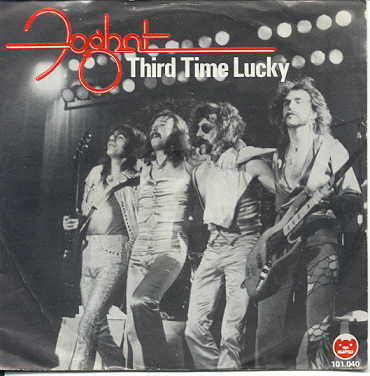
Foghat “Third Time Lucky”

http://www.youtube.com/watch?v=Fj1O2KtH4kE


Elton John “Bennie and the Jets”

http://www.youtube.com/watch?v=j0WCQadt864

The Captain and Tennille “Do that to Me One More Time”

http://www.youtube.com/watch?v=KNHcgk5bf7o&feature=related

REO Speedwagon “Keep on Loving You”

http://www.youtube.com/watch?v=u-mw1HGJjdA&feature=related

Joan Jett and the Blackhearts “I Love Rock and Roll”

http://www.youtube.com/watch?v=0SOJxNOP37I

Starship “Nothing’s Gonna Stop Us Now”

http://www.youtube.com/watch?v=5PP1HEFlkdY

and “We  Built this City”

http://www.youtube.com/watch?v=7flrwE-bZVo

Finally, the Blues Brothers “Everybody Needs Somebody”

http://www.mojvideo.com/video-the-blues-brothers-everybody-needs-somebody-to-love/ac0b631b54ff095fd5c0

14 Comments

Filed under History, music

A Short Restropective on Recovery

Tonight I will Sleep and not Worry about Communists or Anyone Else…I don’t know if the Dog will accompany me

I’m going to bed.  I’m tired, but for the first time in recent memory I have has two weeks without an emotionally crash.  Since it was two years ago this week that I returned from Iraq this was sort of a surprise. It was even more of a surprise due to having oral surgery to put in an implant and a heated discussion with my mom which normally of itself would have sent me on a emotional trip down the sewage pipe of life. Even that did not end up a disaster and even to some degree allowed us to be honest and get past the emotion of the moment and actually listen to each other.  Another miracle?

It began shortly before Christmas when I was expecting to have a miserable Christmas full of full dreams. nightmares, insomnia, anxiety attack, rages and dare I say….oh dare…depression.  Instead I experienced Christmas Miracle.  We;; the Octave of  Christmas is over and not only did I experience the miracle of a noce Christmas, it continued, despite having oral surgery just days later.

Now I did have some anxiety about the implant surgery.  Being that I am just a tad knowledgeable about risks and potential complications it is a miracle that I didn’t obsess and make myself crazy.  In fact I was talking with one of my favoroite intensive care doctors in the ICU about it and and he asked me if I thought about the potential risks and complications as we discussed the infection that I experienced subsequent to the surgery.  When he found out that I did think about these things he said it was amazing what being on the “other side” was like.  I had a number of other physicians and nurses comment on my experience of being a patient and what I remembered and did not remember while sedated. So I am glad that I wrote them down and published them.

As far as the surgery, I ended up getting an infection at the site and my oral surgeon made a quick intervention with a large does on IV antibiotics on Tuesday morning.  Today he was please to tell me that it looked that the infection was gone and that I was getting better. Since the pain has lessened and I am not having any more major malfunctions I think that I believe him.

The past two weeks has been exhausting, but for the first time since I returned from Iraq it was not due to emotional or spiritual crisis, but just simply the physical recovery from surgery and physical exhaustion.  Even yesterday where I had a very busy on call which involved dealing with two deaths and 3 other patients who have a very good chance of dying today or in the next few days, one of whom I administered Last Rites to did not sent me down an emotional abyss.  Instead I can say that though very tired I felt the grace of God and despite being on the run much of the night and well into the morning was back in my element. For the first time that I can remember this kind of night did not pull the emotional stuffing out of me.

So maybe I am getting better and for that I am grateful.  Tonight I’m heading to bed way early for me.  That is alright. I need the sleep and actually think that I will sleep.  Next week will be challenging.  For part of at least two days I will be the acting department head in addition to my usual duties.  I am actually looking forward to the opportunity and planning the week in my mind even now so that I am able to do all that I need to do.  I don’t think that was possible just a few weeks back.  I looking forward to and not dreading next week despite the fact that it will be busy and challenging.  Maybe two years after the fact I am indeed getting better.

Peace and blessings

Steve+

2 Comments

Filed under faith, PTSD

Rock and Roll all Night Long

Well sports fans the BCS Championship game is going strong as am I.  Busy day and night for me at the medical center, a number of really sick folks keeping me busy.  Started with a woman who lost a bavy this morning and has not stopped. Thankfully the site of my implant seems to be doing better and I have not been feeling any bad effects today. Still some pain but I think the antibiotics are doing their job.

Like I said it has been busy.  Lots of sick people and some pretty tragic situations.  Did Last Rites for one patient who is expected to pass away soon, have others in bad shape and at least another on the way in from a civilian hospital.  Things look to remain busy.

In the moring I have my “fat boy program” weigh in and my follow up with the oral surgeons.  Looks like possibility of snow and ice as well.  Life is good.

More tomorrow sometime as I get back to normal

Peace

Padre Steve+
Leave a comment

Filed under Loose thoughts and musings

Learning to Apply the Principles of Counterinsurgency Part One: Introduction to the Soviet-Afghan War

Soviets Enter Afghanistan

Note: This is the First Part of a Series which I will be writing on Afghanistan and Counterinsurgency strategy in that country. Part of this will be a review of various historical materials especially from Russian sources as well as analysis of the Afghan insurgency and its foreign supporters including Al Qaeda. I have written a number of other articles on the Afghan War and associated topics.  Links are provided at the end of this article.

Counterinsurgency is not just thinking man’s warfare—it is the graduate level of war. Special Forces Officer in Iraq, 2005

“Protracted conflicts favor insurgents, and no approach makes better use of that asymmetry than the protracted popular war. The Chinese Communists used this approach to conquer China after World War II. The North Vietnamese and Algerians adapted it to fit their respective situations. And some Al Qaeda leaders suggest it in their writings today. This approach is complex; few contemporary insurgent movements apply its full program, although many apply parts of it. It is, therefore, of more than just historical interest. Knowledge of it can be a powerful aid to understanding some insurgent movements.”[i]

Introduction

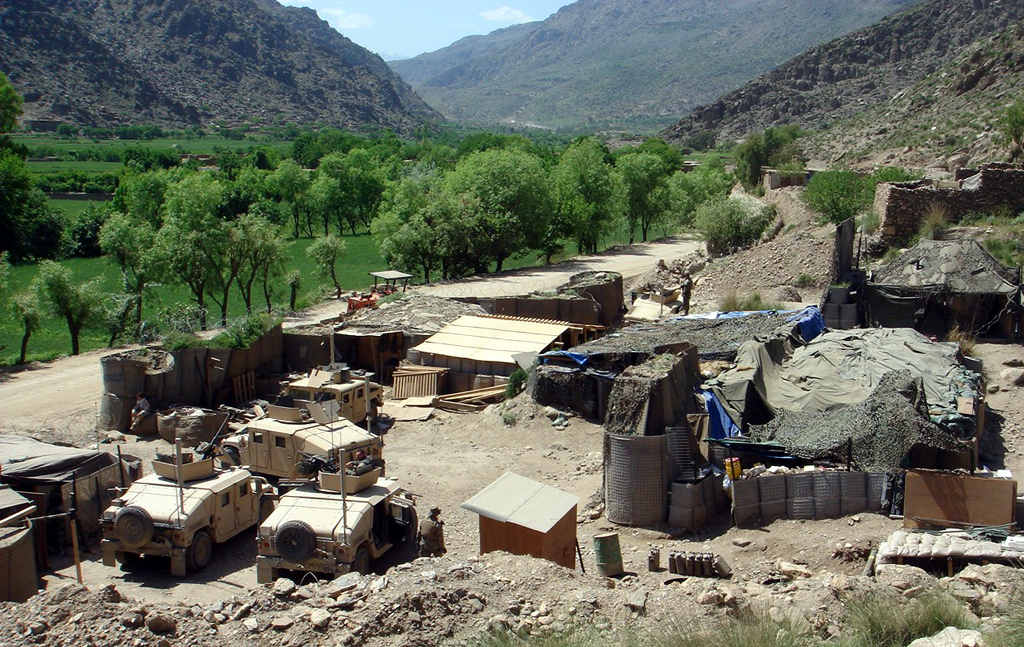
US Training Team Base

The United States has entered its 9th year of military involvement in Afghanistan following the October 2001 invasion that came as a response to the attacks on the World Trade Center and Pentagon of September 11th 2001.  In that time the United States, its NATO allies and the United Nations have endeavored to bring stability as well as a more democratic and accountable government to the country in the face of resistance from various political, religious and tribal groups with a diverse and sometimes conflicting agendas.  The foremost of these resistance groups was and is the Taliban which arose during the Soviet occupation of the country and eventually took power after winning a civil war against a number of other Mujahidin groups.   As the United States diverted force and focused its efforts on Iraq’s insurgency the Taliban using bases in remote areas along the Pakistani border and monetary and political support from Moslem groups with similar goals rehabilitated and reorganized its forces and began the process of regaining influence in Afghanistan.  By 2008 it was apparent that the situation had reached a crisis point.  The vast majority of Afghans as well as many in the international community came to view the Karzai government as corrupt, weak and unpopular.  The Taliban and other groups began to work more closely together despite differing agendas and the political and military situation deteriorated to the point that the incoming Obama administration appointed a new commander, General Stanley McChrystal to evaluate the situation and based on his recommendations and those of General David Petreus, Secretary of Defense Robert Gates and others announced a “surge” to try to regain the initiative in the country.  That troop buildup is currently underway. By the time it reaches its maximum the United States will have approximately 100, 000 troops in Afghanistan and the NATO and ISAF allies approximately another 38,000.  These are supporting and training the Afghan National Army and Police which number approximately 97,000 in the Army and another 98,000 in the National Police.  The Afghan forces have not proven to be reliable and have been infiltrated by Taliban and Al Qaeda members and the NATO and ISAF allies are often limited in the scope of their mission and have restrictive rules of engagement.  Thus the bulk of the fight rests on the United States and some allies with more robust rules of engagement such as Canada, Britain and France.  The lack of internal credibility of the Afghan Government, the weakness of its army and security forces coupled with the numerical weakness of US and ISAF forces has given the various indigenous insurgent groups, especially the Taliban to make a comeback that threatens the mission.  General McChrystal noted:

“The situation in Afghanistan is serious; neither success nor failure can be taken for granted. Although considerable effort and sacrifice have resulted in some progress, many indicators suggest the overall situation is deteriorating. We face not only a resilient and growing insurgency; there is also a crisis of confidence among Afghans—in both their government and the international community—that undermines our credibility and emboldens the insurgents. Further, a perception that our resolve is uncertain makes Afghans reluctant to align with us against the insurgents.”[ii]

Taliban Insurgents

The situation is such in Afghanistan that many Americans are struggling how the “good war” could go “bad.”  Many armchair strategists, many political and media figures and even some in the military fail to understand the nature of Counterinsurgency and its complexity as opposed to conventional warfare. In fact many of these assume that the simple application of combat force using conventional tactics is the cure for the situation, however history shows that such is not the case especially in Afghanistan.

This introduction to this study will focus on some commonalities of the Soviet and American experiences in Afghanistan.

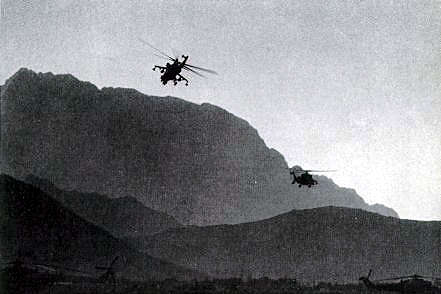
Soviet Mi-24s

The Soviets invaded Afghanistan in 1979 they used their 40th Army which initially was composed of “two motorized rifle divisions, an airborne division, an air assault brigade and separate motorized rifle regiments.”[iii] These forces totaled about 52,000 troops and were “considered sufficient to guarantee the viability of Afghanistan.”[iv] The 40th Army was a standard Cold War Soviet Combined Arms Army designed for high tempo conventional operations.  It was not designed for nor trained in counterinsurgency operations or what the Soviets and Russians class as “anti-guerilla operations.” It was poorly suited to mountain and dessert combat and at the beginning “not only had no practical skills in the conduct of counter-guerilla warfare, they also did not have a single well-developed theoretical manual, regulation or tactical guideline for fighting such a war.”[v]

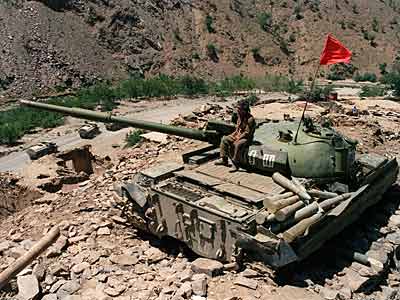
Soviet Tank Guarding Convoy

The Soviets did not expect to be involved in combat operations and the Afghan population reacted to their presence with resistance which spread across the country both against their own government which they viewed as a puppet of the Soviets but also against the Soviet Forces.  As time went on the Soviets attempted to use raids and large scale operations to attempt to bring Mujahidin forces to battle, however the insurgents were very skillful and the Soviets attempted to increase the training of their forces as well as their numbers.  By 1986 the numbers on the ground had increased to 108,000 personnel in four divisions, five separate brigades, four separate regiments and six separate battalions.[vi] In the nearly 10 years of operations over a half million Soviet soldiers and support personnel served in Afghanistan. Tours for enlisted personnel who were primarily conscripts served 12-18 months in country and officers 2 years.  Few returned for subsequent tours meaning that the 40th Army had few personnel very familiar with the country, its people and the challenges faced by Soviet forces.  According to official sources the 40th Army suffered 13,833 killed in action or died of wounds, 49,985 wounded and 311 missing in action a figured of 1 in 8 Soviet Soldiers being casualties.  14.3 percent of the casualties were officers.[vii] Of course the official figure is doubted many believing the number killed in action or died of wounds to be closer to 26,000.[viii]

Soviet Troops Preparing to Leave Afghanistan 1989

The Soviet Forces supported the Army of the Democratic Republic of Afghanistan which numbered at their peak on average between 120,000-150,000 soldiers.[ix] The Afghan forces, then as now were at the mercy of tribal, familial and communist party affiliations. Over 70 percent of the DRA was conscripted, desertions averaged 1,500 to 2,000 soldiers a month and units were usually optimistically 25-40 percent under their TO&E strength.[x] Limitations on training and leadership meant that typically DRA units could not conduct large scale missions without Soviet help. As such most of the fighting was done by Soviet formations.

Many of these problems have plagued the United States and ISAF throughout the first 8 years of the current Afghan War.  As General McChrystal has noted in his assessment “ISAF is a conventional force that is poorly configured for COIN, inexperienced in local languages and culture, and struggling with the challenges inherent to coalition warfare. These intrinsic disadvantages are exacerbated by our current culture and how we operate.”[xi]

End of part one to be continued…

Links:

Lessons on Coalition Warfare: The Dysfunctional Coalition German and the Axis Partners on the Eastern Front

The Afghan War 2009-2012: Lessons from Algeria 1954-1960 A Review of “A Savage War of Peace

Unequal Allies: Lessons from The German’s and Their Allies on the Eastern Front for Today

The Effects of Counter-Insurgency Operations on U.S. and French Forces in Vietnam and Algeria and Implications for Afghanistan

Brothers to the End…the Bond between those Who Serve Together in Unpopular Wars


[i] ______________ “The Army/Marine Corps Counterinsurgency Manual FM 3-24 MCWP 3-33.5,” HQ Department of the Army and HQ Marine Corps Combat Development Command, Washington DC 2006.  p. 1-6

[ii] MCChrystal, Stanley. “Commander’s Initial Assessment Commander International Security Assistance Force Afghanistan” dated 30 August 2009 p. 1-1

[iii] The Russian General Staff. The Soviet Afghan War: How a Superpower Fought and Lost” translated and edited by Lester A. Grau and Michael A. Gress, University Press of Kansas, Lawrence KS 2002 p.17.

[iv] Ibid. p.18

[v] Ibid. p.43

[vi] Ibid. p.28

[vii] Ibid. p.309

[viii] Ibid. p.xix

[ix] Ibid. p.48

[x] Ibid. pp.48-51

[xi] McChrystal. p.1-2

1 Comment

Filed under counterinsurency in afghanistan, History, iraq,afghanistan, Military

More Time with the Oral Surgeon, Thank God for Global Warming and Randy Johnson Retires

More Time with the Oral Surgeon, Thank God for Global Warming and Randy Johnson Retires

Back to the Dentist

Well I had my follow up visit with my oral surgeon today and well, it was not a routine “it’s all good go away” kind of visit.  On Saturday night or Sunday morning one of the stitches came out of the site.  I wasn’t bleeding from the site; it was a little sore so I called the resident on call who said that if it got worse to come in.  The day was uneventful although I wasn’t feeling that great and the pain got a bit worse during the day requiring Vicodin before I went to bed.  I woke up Monday not feeling too well but was behind on a bunch of things that I needed to do.  I scheduled my follow up appointment for today but by 1300 on Monday I was feeling bad enough to need more Vicodin so the boss sent me home to take it and get some rest.  I came to work not feeling a lot better and still a bit under the influence of the medication and went in to dental.  When they took me back they saw swelling and the first dentist saw puss and called the oral surgeon.  He immediately went to wore and had the site irrigated and then took me back to one of the oral surgery rooms where once again I was hooked up to monitors, and had an IV placed and was given a bolus of 250 ml normal saline prior to an infusion of IV antibiotics.  He told me that we needed to do this because if the site got infected it might necessitate removal of the implant as well as the bone graft.  After that I was given a prescription for more antibiotics and sent home with instructions to take it easy, take the antibiotics and keep the site irrigated and to return to work Thursday with a follow up appointment for early Friday morning.  It has been weird as I have been pretty wiped out physically by this but doing okay emotionally.  So we’ll see how the sequel to the “Undead Tooth of Terror” continues.  Hopefully it will be a happy ending and I will not have to have the work taken out and have to go through a bunch of time again before I can get it fixed.

Cold Enough to be Thankful for Global Warming

If anyone hasn’t noticed it has been pretty cold across the eastern 2/3rds of the United States as well as many other countries in the Northern Hemisphere.  In fact it has been like record setting cold all over the place, Europe, Asia, North America and even places like Peru.  Trains are getting buried in snow drifts in China, record snow and cold elsewhere and even the little lake in my neighborhood has ice forming on it.  There is no relief in sight.  Forecasters are saying that this could be the coldest winter in at least 245 years.  Back when I was growing up in the 1960s and 1970s climatologists were predicting a coming ice age and encouraged folks to dress warm for a long time.  Then in the late 1980s and early 1990s there came a movement saying that everything was getting warmer at an alarming rate.  This has grown into the Global Warming movement and dare I say industry.  We had a very mild summer this year and it has been cold as hell this winter.  Now I am not a climatologist but if needed cold play one on TV.  It is my ersatz climatologist persona that says that I don’t think that some of the real climatologists are telling us the whole truth.  To me it seems that the global warming thing may not be all that it is cracked up to be.  All I can say is that if there is global warming I’m glad that we have it because we would really be freezing our asses off.  Even so I will dress warm and put on my gloves.  At least the dog doesn’t mind the cold so long as it is not raining.

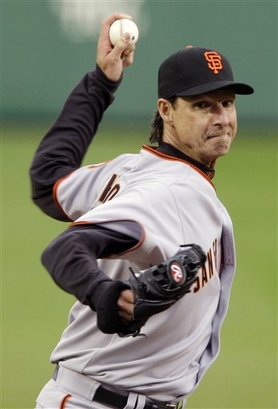
Randy Johnson Winning Game 300

Finally an era in baseball has passed.  Future Hall of Fame pitcher Randy Johnson officially retired from the game today.  The 46 year old Johnson pitched 22 years beginning his career at Montreal with most of the time with the Mariners and Diamondbacks but with stints with the Astros, Yankees and his last season with the Giants.  In his career he won 5 Cy Young Awards, pitched a no-hitter and a perfect game, and was a 10 time All-Star and the 2001 World Series MVP.  Over the years he pitched in 618 games, starting 603 of them. In those games he pitched a total of 4135.1 innings won 303 games and had a career 3.29 ERA and was second only to the legendary Nolan Ryan with 4875 strikeouts.  The batting average against him was only .221.  He was one of the most feared pitchers to play the game almost any hitter who had to face him would tell you that he would rather not have to face Johnson.  Johnson was known at times for his intensity a piercing gaze and at times snarling look at batters, and an at times equally icy relationship with reporters.  What is truly amazing about Johnson is that he achieved what he did against a plethora of players who have either admitted to using or highly suspected of using steroids and other performance enhancing substances.  He pitched his last season with the Giants where he got his 300th win.  The season was certainly not his best and he finished the season on the disabled list, however we saw a man who was genuinely appreciative of the game and those with who he played.  As a person who at times can be testy and give good glares and snarls I understand someone like Johnson who pushed himself hard and came back from injuries to stay competitive well past the age that most other players are ensconced in second careers or retirement. Even more so because I have played on a number of teams within the military and I am now quite a bit older than most people my rank.  Randy Johnson has had a magnificent career and I wonder if we will see another 300 game winner anytime soon.

On a humorous note I had a comment to my “about” page from someone with the ID of “El Cid.”  Seems that Sid believes that I am deceived of course not providing me any help to see just what I am deceived about. His comment “You are so deceived” stuck a chord in me.  So I just had to respond.  Here is that response:

“Cool, don’t know what about but glad to get comments like this. Must be doing something right. The fact that you refer to yourself as El Cid shows me that you fancy yourself a General in the fight against the Moors or have delusions of being Charlton Heston.”

So anyway, as I take my pain meds and head off to bed I wish everyone a good night.

Peace,

Steve+
Leave a comment

Filed under Loose thoughts and musings

The American Civil War and the Origins of Modern Warfare

Hagerman, Edward. The American Civil War and the Origins of Modern Warfare. Midland Book Editions, Indiana University Press. Bloomington IN. 1992

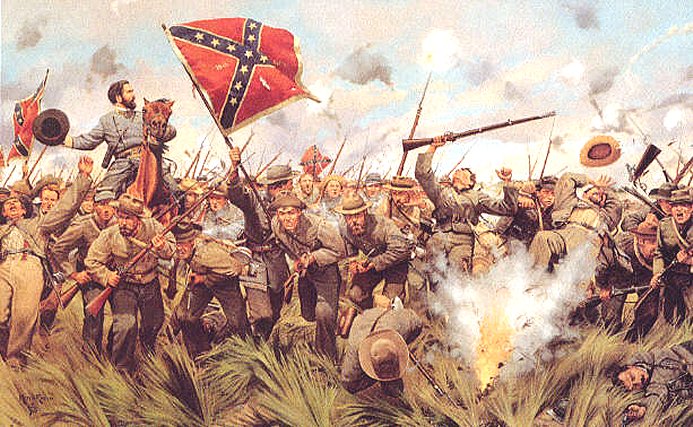
Pickett’s Charge Displayed the Futility of Napoleonic Tactics Against Modern Weaponry

Edward Hagerman postulates in The American Civil War and the Origins of Modern Warfare that the American Civil War is the first modern war. He examines developments in tactics, logistics and the concept of total war and looks specifically how tactical and strategic thought impacted the war.  Specifically Hagerman examines how Henri Jomini’s interpretation of Napoleonic warfare and the theories of Dennis Hart Mahan and Henry Halleck which were the prevalent military thought in America were challenged by advances in weaponry and the vastness of the American continent.  He surveys how the Union and Confederate armies learned the value and application of field fortifications and the limitations of artillery in the offense.  Even more importantly Hagerman argues how logistics influenced campaigning on the American continent as opposed to earlier European wars. Likewise he examines how the 20th Century concept of total war found its first application in the campaigns of General Sherman and how Robert E. Lee’s use of defensive maneuver and fortifications in positional warfare heralded a new era in warfare.

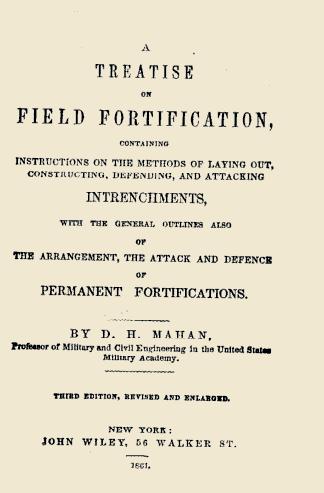
Dennis Hart Mahan’s Book: The First American Book on Military Theory

Hagerman examines how these factors influence and affected the Union and Confederate armies.  His initial focus is the tactical conundrum posed by the advances weaponry particularly the rifled musket to the Napoleonic tactics that both armies began the war. Napoleonic tactics were developed at a time when the maximum effective range of muskets was barely 100 meters and how despite the increase in range and accuracy that came with the rifled musket how tactical formations and tactics were slow to change.

Hagerman spends the first part of his book examining how the ante-bellum US Army leadership was influenced by the theories of Henri Jomini. He discusses the challenge to Jominian orthodoxy by Dennis Hart Mahan, who modified “the current orthodoxy by rejecting its central tenants-primarily offensive assault tactics.”[i] He examines the tension in American military thought between the conservative Jominian thinking which predominated much of the Army, noting that within the army “Mahan’s decrees failed to win universal applause.”[ii] However, Mahan influenced many future leaders of both the Union and Confederate armies in his “Napoleon Club” a military round table at West Point.[iii] Hagerman notes that Mahan’s greatest contributions were his development of the active defense and emphasis on victory through maneuver. Unlike Jomini, who thought maneuver as risky with the purpose of the “defeat of the enemy’s army,” Mahan emphasized “maneuver to occupy the enemy’s territory or strategic points.”[iv] In the book Hagerman wrestles with disjointed developments in infantry, artillery and cavalry tactics of the ante-bellum Army which and surmises that “Military thinking, and even more strategic organization, remained essentially within the Napoleonic tradition filtered through an eighteenth-century world view….” He asserts that “A broader vision was necessary to pose an alternative to the mechanistic program.”[v]

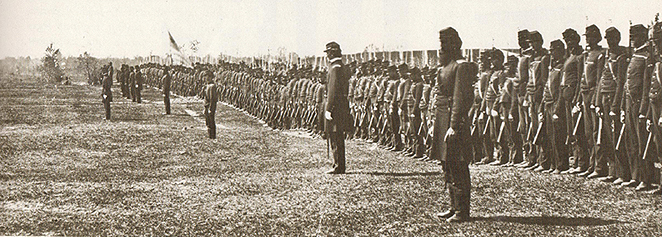
The 2nd Michigan Regiment: Most Civil War Units on both sides were State Regiments

Hagerman then discusses wartime developments in strategy, tactics and organization as they developed in both the Eastern and Western theaters.  He focuses on the themes of organization, logistics, communications, weaponry, field fortifications and maneuver. In each chapter he weaves these themes to show how they affected campaigns or were modified during the war based on experience.  He deals with leadership, but mostly in the context of how leaders responded to challenges posed in these arenas.  Of particular interest to him are the early efforts of successive commanders of the Army of the Potomac including McClellan, Burnside and Hooker to deal with these problems as well as the responses of Grant, Sherman and Rosecrans in the West to the same issues.

Hagerman’s discussion of army organization focuses on how each army developed sociologically as well as professionally prior to and during the war. He examines the ways that commanders educated at West Point initially dealt with large armies made up of militia units and volunteers and how these armies would be changed by the war.  He includes in the discussion i the institution of the draft in both the North and South.  His discussion of how McClellan successful fought the break-up of the Regular Army keeping it separate from the militia units organized by the States was important to development of the Army. He notes their importance and points out the problems of the militia units raised by the various states particularly in the early part of the war.

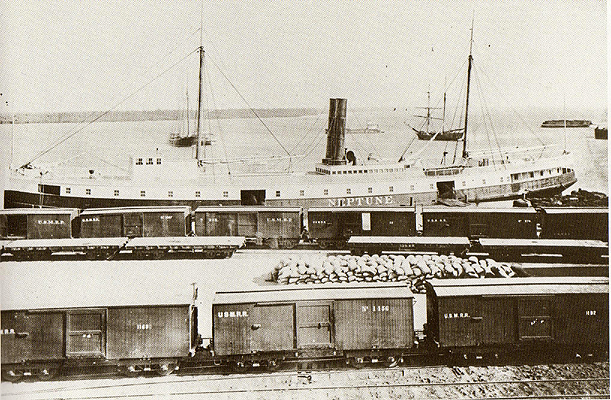
The Integration of Sea and Land Logistics Systems in the Civil War Revolutionized the Way that Modern War is Supplied

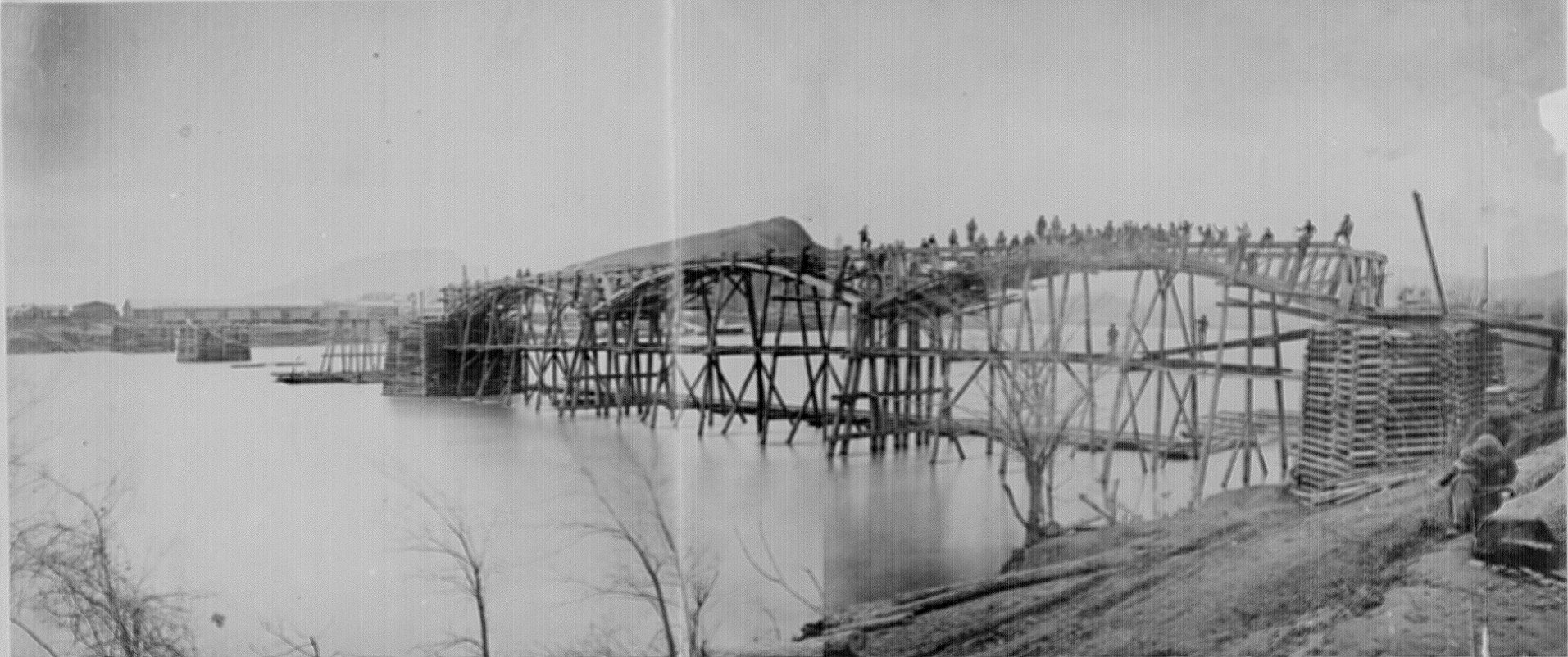
More significant to Hagerman’s narrative is his emphasis on logistics, and how each Army responded to the challenges of supplying their armies in the field.  Hagerman examines how the ante-bellum Army developed its logistic doctrine from the Napoleonic examples and how that doctrine had to be modified in light of the American reality of a less developed continent with far greater distances involved.

Hagerman’s discussion of logistics is quite detailed.  He examines topics such as the number of wagons per regiment and how army commanders, modified that number at various points during the war based on their situation. He discusses the development of the “flying column” as a response to the dependency on wagons and basic load of food and ammunition carried by each soldier in order to increase strategic maneuverability.  He details the forage requirements for people and animals in each theater of operations and how each army responded to requirement of living off the land for much of their forage requirements and their relative successes and failures in supplying their soldiers in this fashion.

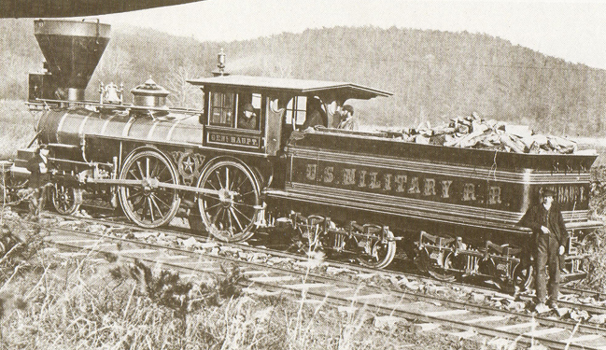
Railways Meant the Ability to Move Troops and Supplies Great Distances very Quickly

Hagenman discusses the use of railroads and the use of naval forces to both assist the ground forces and to move supplies and troops.  In each of these areas he provides a detailed examination of the effect of logistical considerations on each army.  He notes that of all the areas of development that the Army of the Potomac was successful at putting logistic theory into practice. By late 1863 the Army of the Potomac demonstrated “the close integration of operational planning and that of the general in chief and supply bureaus. In this one area, the development of a mature and modern staff was evident.”[vi]

Hagerman’s discussion of the development of communications in both armies focuses on the fact that the size of the armies and the distances involved on the battlefield made command and control difficult.  As such each army experimented with signals organizations that used tradition visual signals and couriers but began to rely on the telegraph for rapid communications.  He deals with the conflict in the North between the Signal Corps and the Military Telegraph Service.  He discusses the use of wire telegraph equipment and the new Beardslee wireless telegraphs by the Signal Corps and how the Army eventually favored the traditional wire bound networks operated by the Military Telegraph.  Though the Army rejected the Beardslee equipment some commanders requested it for their operations.[vii] As they became more dependent on such communications armies feared that their signals could be compromised through wire tapping and made efforts to encode transmissions.

Signal Corps Soldiers and Wire Communications

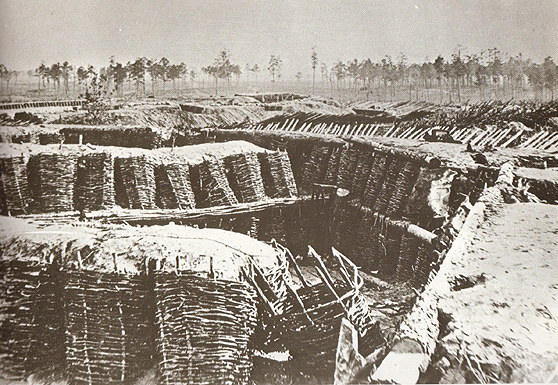
Hagerman’s discusses the evolution of the Union and Confederate armies use of field fortifications including their use in offensive campaigns.  He discusses their use by McClellan on the Peninsula in 1861 and Lee’s sporadic use of them[viii] until 1864 beginning in the Wilderness campaign and culminating in the defense and siege of Petersburg.  Hagerman’s thesis is that the developments in field works and firepower gave the advantage to the defense when armies made the frontal attacks which were at the heart of Jominian theory.  He notes how various commanders including Grant failed at Shiloh and Lee at Antietam failed to dig in, but how both the Union and Confederate armies learned to dig hasty field works as a matter of course.[ix]

Both sides also learned to use maneuver in combination with positional warfare to force the enemy to battle. Hagerman examines the campaigns in the West of Grant, Sherman and Rosecrans, particularly Stone’s River, the Vicksburg Campaign, and the campaign in middle Tennessee.[x] The last two chapters mention these issues in the context of the 1864-65 campaign around Richmond and Sherman’s campaigns in Georgia and the Carolinas.  Of particular note is how Sherman’s forces routinely entrenched on the offensive[xi] and how Confederate forces under Joseph Johnston employed entrenchments on the defensive. Hagerman notes how Confederate Cavalry “perhaps best displayed the growing intensity of trench warfare” noting General Joe Wheeler’s use of them at the close of the war.[xii]

Massive Siege Mortar outside Petersburg

A sidebar to Hagerman’s discussion of fortification is his examination of the Corps of Engineers.  He discusses the development of Engineering or Pioneer units from nothing in 1861 to organized units by the middle of the war.  He examines the problems of the Engineering Corps in adjusting to the war. He notes its dispersion among the line and its civil duties as impediments to responding to the needs of war and both the hesitancy and resistance to creating engineering units by Congress, despite the pleas of McClellan and Lincoln.[xiii] He then looks at the institutional irony of the how newly organized engineer units had few West Point trained Corps of Engineers officers, but were primarily staffed and commanded by officers detailed from the line. The effect was a “decline in the antebellum definition of professionalism embodied in the Corps of Engineers.”[xiv]

Engineering Units were Built from Scratch and Accomplished Many Feats

Petersburg Fortifications a Harbinger of World War One

Hagerman’s last two chapters focus on the developments in the strategies of attrition and exhaustion in relation to positional and maneuver warfare.  He examines how this was by Grant in Virginia and Sherman in Georgia and the Carolinas.  He discusses the “ascendancy of positional warfare” which allowed Lee to hold out and force Grant into winter quarters at Petersburg.[xv] This demonstrated that “an army fighting on interior lines, even under nearly overwhelming conditions of deprivation and against vastly superior numbers, could sustain a prolonged existence by use of field fortification and defensive maneuver.”[xvi] Sherman’s campaign demonstrated how an army could exploit “diversion, dispersion, and surprise to successfully pursue a modern total-war strategy of exhaustion against the enemy’s resources, communications and will.”[xvii]

Sherman’s March to the Sea

Hagerman’s book is particularly strong in the discussion of tactical developments and logistics and how those were developed over the course of the war.  It is strong because it allows the serious student to trace the developments in each of the areas he examines to future wars fought by the US Army.  Russell Weigley picks up the effect of what Hagerman describes in his books The American Way of War discussing both Grant’s strategy of annihilation and its costs, and in Sherman’s campaign against Johnston and attack upon Southern resources.[xviii] His discussion of tactics reflects that of J.F.C. Fuller notes that “the tactics of this war were not discovered through reflection, but through trial and error.”[xix] The events described by Hagerman, especially the campaigns of Grant and Sherman influence modern strategy including that of the Marine Corps which discusses maneuver and attrition warfare continuum in MCDP 1 Warfighting.[xx] Hagerman’s work is best at helping tie the elements of war often ignored by other Civil War historians into a coherent whole that allows the reader to see the logical development of each of these elements in modern war.

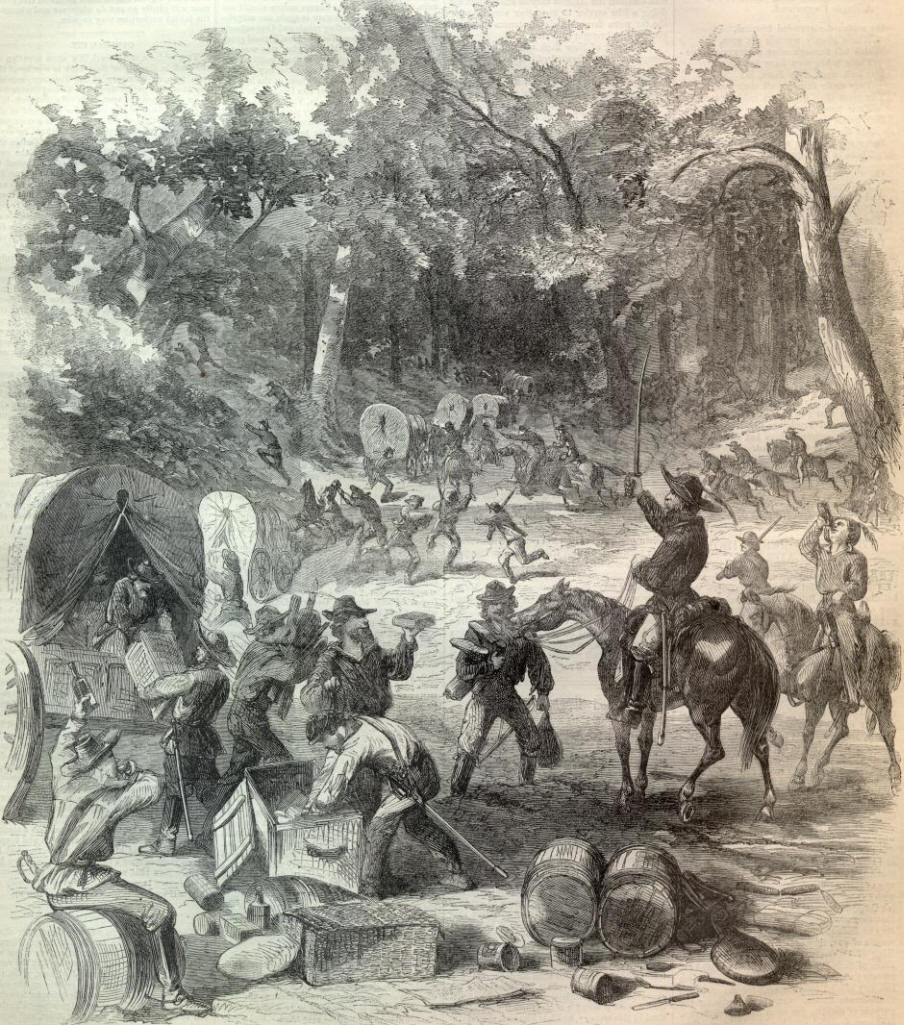
Irregular Formations Such as Mosby’s Raiders Would Create Problems Behind Union Lines

Hagerman’s value to the literature is that he fills a void among many Civil War writers who often focus simply on the battles and campaigns and not arcane but important subjects such as transportation, logistics, communications and fortifications.  Hagerman makes an astute observation on how change comes to military organizations at the end of his discussion of the Corps of Engineers and the Army following the war.  He notes “that change in war requires time for digestion before lessons are converted-if they are converted-into theory and doctrine.” [xxi] In the light of the Pershing’s strategy in the First World War One, which revisited some of the worst mistakes of the Civil War one wonders if those lessons were ever fully digested by the Army. Such an observation can be made about our present war.  We need to ask if the lessons of previous insurgencies in conquered areas have been digested, even going back to the lessons of the Union Army operating in the hostile lands of the conquered Confederacy.[xxii] Likewise how an Army adjusts to developments in weaponry, technology and tactics are fair game when one analyzes past campaigns in relation to current wars.  Thus when we look at Hagerman it is important to use his work to understand the timeless aspects of military history, theory, doctrinal development, logistics, communications and experiential learning in war that are with us even today.


[i] Hagerman, Edward. The American Civil War and the Origins of Modern Warfare. Midland Book Editions, Indiana University Press. Bloomington IN. 1992. p.9

[ii] Ibid. p.13.

[iii] Hagerman also notes the contributions of Henry Halleck and his Elements of Military Art and Science published in 1846 (p.14) and his influence on many American Officers.  Weigley in his essay in Peter Paret’s Makers of Modern Strategy would disagree with Hagerman who notes that in Halleck’s own words that his work was a “compendium of contemporary ideas, with no attempt at originality.” (p.14) Weigley taking exception gives credit to Halleck for “his efforts to deal in his own book with particularly American military issues.” Paret, Peter editor. Makers of Modern Strategy: For Machiavelli to the Nuclear Age Princeton University Press, Princeton NJ 1986 p.416.

[iv] Ibid.

[v] Ibid. p.27.

[vi] Ibid. p.79.

[vii] Ibid. p.87.

[viii] The most notable use of them between the Peninsula campaign and the Wilderness was at Fredericksburg by Longstreet’s Corps. Many wonder why Lee failed to entrench at Antietam.

[ix] Fuller, J.F.C. Grant and Lee: A Study in Personality and Generalship, Indiana University Press, Bloomington IN 1957.  Fuller comments “Thus over a year of bitter fighting was necessary to open the eyes of both sides to the fact that the trench was a by product of the rifle bullet, and like so many by-products, as valuable as the product itself.” (p.269) He calls it “astonishing that Lee, an engineering officer, made no use of entrenchments at the battle of Antietam.” (pp.269-270)

[x] Ibid. pp. 198-219.

[xi] Ibid. p.295.  Hagerman comments how Sherman’s troops outside Atlanta began to entrench both the front and rear of their positions.

[xii] Ibid. p.297-298.

[xiii] Ibid. p.238.

[xiv] Ibid.

[xv] Ibid. p.272

[xvi] Ibid. p.274.

[xvii] Ibid. p.293.  B.H. Liddell-Hart in comparing the campaigns of Grant and Sherman makes an important note that Sherman’s strategy is more “suited to the psychology of a democracy…” and “ he who pays the piper calls the tune, and that strategists might be better paid in kind if they attuned their strategy, so far as rightly possible, to the popular ear.” Liddell-Hart, B.H. Strategy Faber and Faber Ltd, London 1954 and 1967, Signet Edition, The New American Library, New York 1974 p.132

[xviii] Weigley, Russell F. The American Way of War: A History of United States Military History and Policy University of Indiana Press, Bloomington IN, 1973. pp.145-146.

[xix] Ibid. Fuller. P.269  A similar comment might be made of most wars including the current Iraq war.

[xx] ___________. MCDP-1 Warfighting. United States Marine Corps, Washington D.C. 1997. pp. 36-39

[xxi] Ibid. Hagerman. P.239

[xxii] Ibid. Fuller. Fuller’s comments on the situation of the Northern Soldier are eerily similar to our current conflict in Iraq : “Consequently, minor tactics were definitely against the Northern soldier, because his major tactics demanded the offensive; for without the offensive the South could not be brought to heel.  It was the problem which had faced the French in LaVendee and in the Peninsula of Spain, which faced Napoleon in Russia, and the British in South Africa during the Boer War of 1899-1902. Not only was the Northern soldier, through force of circumstances, compelled to fight in the enemy’s country, but he was compelled to devastate it as well as conquer it, in order to protect himself against the bands of irregular troops which were here, there and everywhere.” pp.247-248

Bibliography

Fuller, J.F.C. Grant and Lee: A Study in Personality and Generalship, Indiana University Press, Bloomington IN 1957

Hagerman, Edward. The American Civil War and the Origins of Modern Warfare. Midland Book Editions, Indiana University Press. Bloomington IN. 1992

Liddell-Hart, B.H. Strategy Faber and Faber Ltd, London 1954 and 1967, Signet Edition, The New American Library, New York 1974

Paret, Peter editor. Makers of Modern Strategy: For Machiavelli to the Nuclear Age Princeton University Press, Princeton NJ 1986

Weigley, Russell F. The American Way of War: A History of United States Military History and Policy University of Indiana Press, Bloomington IN, 1973

___________. MCDP-1 Warfighting. United States Marine Corps, Washington D.C. 1997

1 Comment

Filed under History, Military