Author Archives: padresteve

padresteve's avatar

About padresteve

I'm a Navy Chaplain and Old Catholic Priest

MLB League Championship Series so Far, I will wear Short Pants until the World Series is Over and Learning that I am a “Wounded Healer”

So far things appear to be working out the way that I thought that they would in the MLC League Championship Series between the Phillies and Dodgers. I predicted that the teams would split at Chavez Ravine and go back to Philly knotted.  The Phillies took game one and looked like they had game two in the bag with Pedro Martinez shutting the Dodgers out through seven giving up only two hits.  Then the Phillies problematic bullpen took over in the eighth and it went down from there with the Dodgers coming back to win.

The ALCS has been played at the new Yankee Stadium amid the din of a Nor’easter.  The Yankees took game one 4-1 as the Angels quite literally “froze” in the cold and damp weather.  Game two played in even worse conditions has been influenced by the weather and was a superb pitcher’s duel.  The game went into extra innings tied at two and though the Angels went ahead in the top of the 11th as the rain started coming down harder only to have Alex Rodriguez come up big again for the Yankees in the bottom of the 11th with a home run to tie the game.  The game went to the bottom of the 13th when with one out the Yankees scored on a throwing error to win the game 4-3.  It was an amazing game that I could not pull myself away from but will write more about later.

On another note, the weather here in Hampton Roads has been miserable as we also have had some of the residue of the Nor’easter with cold rain, fog and drizzle that has not let up.  Amid this positively crappy weather I am maintaining my vow to wear short pants as long as I can with the exceptions being my uniform and going to church.  This means that I am bundling up from the belt up while keeping my legs bare.  I have never done this before which means either I’m nuts or I’m nuts, but nonetheless I am in this until the World Series is over at the minimum.  Since with the exception of church, work and one social event where shorts were unacceptable I have not worn long pants since sometime in April.  Tonight I had a Norfolk Tides jacket and sweatshirt on.  We’ll see how this goes…

I have the duty this weekend and have been in and out of the hospital a number of times.  One of the visits called to mind just how much I am like the people I serve and what it means to have to ask the same questions about God, faith and what it is to be human and a Christian. What got me tonight was a gentleman struggling with his faith, much as I have after returning from Iraq and battling PTSD and other nagging injuries.  Having him ask the same questions that I have wrestled with and having him ask me directly what I thought.  I have learned that I don’t have to “fake it” and try to give the man some textbook answer of how he needed to believe more, read his Bible more, go to church more, pray more or harder.  Instead I was able to be honest that I have wrestled with the same question but somehow the words of the 23rd Psalm speak to me.  “Even though I walk through the valley of the shadow of death, I will fear no evil for you are with me.”  The Psalm is very reassuring for me as it is so honest.  Reality is that we do walk through the valley of the shadow of death.  In fact it is a difficult and pain filled world.  That I will fear no evil means that evil is in fact very real but in the middle of this there is an understanding that God is still with us.  It is an understanding that even when life is more like Good Friday than Easter, that God as far away as he may seem is still there.  Maybe that is actually the miracle that most people need, the miracle to know that no matter how bad things suck, and I do use the word “suck” because that is how it is sometimes, especially when there is no “miracle” to be had otherwise.  When I told the man that I had spent the past 18 months wrestling with those questions he opened up and we had a wonderful discussion and prayer.   I am totally okay with this somehow God uses me in my weakness more than when I had all the answers.

Tonight I discovered that  Bishop John Holloway, the medically retired former Ordinary of the Charismatic Episcopal Church Diocese of the Mid-South and one of the early leaders of the Church, his wife Elaine and two youngest children have to leave their home in Thomaston Georgia.  They moved there as a missionary bishop giving up pension and medical from the Methodist Church to follow God’s call into the CEC.  The home is being foreclosed on after the church, which has no pension or insurance plan in most dioceses for clergy and had provided a great deal of money to help pay off debts in the past has had to reduce the money they were providing by half and now according it the Holloways’ son Jared to nothing.  Their home is being foreclosed on and they have to be out by December 1st and if you want to read more go to his blog: http://jzholloway.wordpress.com/  If there is a question as to how the CEC currently handles finaces go to www.cechome.com where the budgets and expenses of every diocese are posted.  There had been great problems in the past in the finacial management of the CEC largely done by people no longer associated with the church, including some former bishops.  I think this is getting better under Archbishop Bates unfotunately the residue and distaste of that era is still out there.

I really don’t know what to think about that except that I did talk to a CEC Bishop about it and hear that there are other parts to the story.  That aside, when the CEC was formed and one of the things that drew me to it was that the CEC was to would be more personal and relational than churches where the bishops did not really know their clergy. I think that is still the ideal in the Church but what Jared is reporting and what I hear from Elaine on Facebook gives me some cause for concern because it deals with a bishop who can no longer function and is completely disabled. Additionally Elaine is a cancer survivor who has exeeded her life expectancy with the disease.  Obiviously things are not good for them and I have to trust that the situation will be resolved in a spirit of love and reconcilliation and that ultimately the Holloways will be taken care of by the church and God’s people.  I cannot say anything else because I do not know anything else, but to say how this grieves me as Bishop Holloway was and I’m sure, even in his greatly de-habilitated and totally dependent state is a gracious and giving man.  I always felt comfortable and safe around him.  He ordained my friend Father Stu King back in 2001.  Stu has left the CEC having been accepted into Seminary and in now working to become a Roman Catholic Priest.  I’m sure that Bishop John would approve and give his blessing.  Please keep the Holloways in your prayers. I have no idea if there is anything that can be done to help them, if there is Jared may know or one could contact the Mid South Diocese of the CEC.

I also found that a friend, the sister of our dear friend Dr Helen Linkey who taught at Marshall University who battled breast cancer for two years before succumbing to it in 2005 has found a lump in her breast. She is going in for a biopsy which is expected to find cancer. Maryellen occasionally comments on my website and her news was included in her comment to my post from last night at https://padresteve.wordpress.com/2009/10/16/war-remembrance-and-healing-a-chaplain-officer-and-historian-makes-his-way-home/

Please keep Maryellen in your prayers also. Anyway, it is time for me to try to get to sleep.

Peace,

Padre Steve+

Leave a comment

Filed under Baseball, healthcare, Pastoral Care, philosophy, PTSD

The Readers Keep Coming 470,000+ Much Due to Alpha Inventions

My readership continues to expand. Much of this is due to Alpha Inventions. It helps me gain readers as well as see some other good bloggers, my favorite being the Polycarp who has a great site called The Church of Jesus Christ.

Leave a comment

Filed under Loose thoughts and musings

War, Remembrance and Healing: A Chaplain, Officer and Historian Makes His Way Home

The first version of this post was written in the spring of 2008 when I was doing a lot of soul searching and reflecting after Iraq. It was originally run in my church’s online news service.  I post it now with some updates that have been brought about by new ways that I am rediscovering God and because of the current situation in Afghanistan which has become worse in the past year. As I read news releases about casualties and attacks on NATO forces and Afghan civilians, especially those in small outposts or serving as advisers and trainers I am reminded of my time in Iraq.  Please don’t forget those who serve in Iraq and Afghanistan, or those who have served in prior wars. Especially keep in your prayers and help assist those who have returned injured in mind, body or spirit and those who made the supreme sacrifice.

874Leaving a Bedouin Camp 1 mile from Syria

I have been doing a lot of reflecting on ministry and history over the past since returning from Iraq. Since I’ve been back about a year and a half I can say that I have changed as a result of my service there.  Change can be scary but in my case it has been both necessary and probably good.  Ministry, theology and history have been part of my life for many years; they have taken on a new dimension after serving in Iraq. When I first wrote this piece not long after returning I was in pretty bad shape but in the months since I have been attempting to integrate my theological and academic disciplines with my military, life and faith experience since my return. I’m not done yet by any means, but things are getting better, not quite like Chief Inspector Dreyfus in The Pink Panther Strikes Again “Every day in every way I’m getting better and better…Kill Clouseau!” but a slowly getting better with some occasional bumps in the road.

One of the things that I have wrestled with is my faith, and returning from war changes a man.  Before I went to Iraq I thought that I had things pretty much together.  When I came home and fell apart it also affected my faith, doing little things became difficult and the effects were exaggerated by my isolation.  In a sense it was my Saint John of the Cross Dark night of the Soul experience.  I felt that God had abandoned me, people would come to me with their crisis of faith and I had to dig deep to stay with them, but in doing so I became acutely aware of the fact that I shared this with them. I couldn’t hide behind my collar or the cross on my uniform as the crisis was an interruption which drove me out of my comfort zone and forced me to deal with the world that the people I minister among deal with every day.
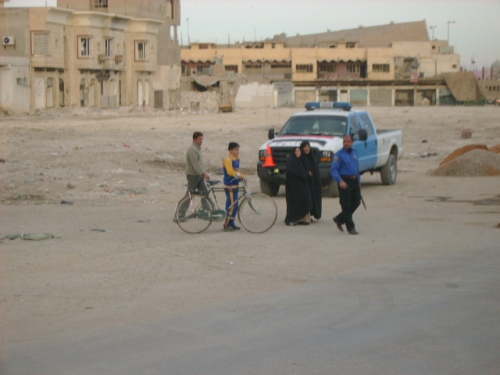
291Iraqi Police in Ramadi Escorting Civilians Across the War Zone of Route Michigan

There are those who believe that all forms of ministry are basically the same and that lessons learned are universally applicable and that somehow all ministries are proclamation oriented.  Unfortunately that is not the case and one of the places that this is true is the Military Chaplain ministry.  This mibnistry is much different than parish or para-church ministries and even different than other institutional ministries such as Police, Fire, Industrial or civilian health care chaplaincy.   It is different in that it is more incarnation versus proclamation. We not only minster to our people but we live among them.  We live the experience of those that we serve, especially in the uncertainly of war and deployments.  Chaplains live in a world where we are fully military officers and fully ministers of our own church or faith tradition. As a chaplain I never lose my calling of being a priest, but I am a priest in uniform, a military professional and go where our nations send me to serve the Sailors, Marines, Soldiers and Airmen who I live among be that overseas, or in the States.

142Always a Priest Eucharist with Advisers in the Far West of Al Anbar

There is always a tension in the military chaplain ministry. This is  especially true when the wars that we are sent to are unpopular at home and seem to drag on without the benefit of a nice clear victory such as VE or VJ Day in World War II or the homecoming after Desert Shield and Desert Storm. There are those that oppose the military chaplaincy on theological or philosophic grounds, usually some manner of absolutist understanding of ministry, church-state relations or social justice considerations.  My purpose is here not to defend military chaplain institutions against such criticism but rather to share the world and tension that military chaplains live in when our nation is engaged in unpopular which some consider unjust or illegal wars.

training team baseIsolated Base Camp for Advisers in Afghanistan

A lot of people have no “ethical” or “moral” qualms about wars that are easy to pigeonhole as just wars, especially if we win quickly and easily.  It is my belief that when things go well and we have easy victories that it is easy for religious people, especially more conservative Christians to give the credit to the Lord for the “victory.”  Unfortunately such “Credit” is given without them ever understanding or sometimes even caring about the human cost of war.   Likewise it is easy for others to give the credit to superior strategy, weaponry or tactics to the point of denying the possibility that God’s involvement.  Conversely and maybe even perversely I have heard some say that God has blessed the use of weapons or tactics that violate principles of fighting a “just war” especially that of proportionality. Such is the case in almost every war and Americans since World War Two have loved the technology of war seeing it as a way to easy and “bloodless” victory. In such an environment ministry can take on an almost “cheer-leading” dimension. It is hard to get around it, because it is a heady experience to be on a winning Army in a popular cause but I do think that many chaplains have a less “cheerleading” approach than many in conservative churches. The challenge for chaplains in such an environment is to keep our ministry of reconciliation in focus. To do so we must care for the least, the lost and the lonely and never forget the victims of war, especially the innocent and the vanquished, as well as our own wounded, killed and their families.

237Iraqi Kids in Al Anbar Province, a couple of months before they could not venture outside because of insurgent attacks, children are never winners in war

We are now seeing the conflict in Iraq winding down and what until this year had been “the good war” in Afghanistan go bad and support for it decline.  Strategy is being debated as how to best “win” the war in Afghanistan even as the United States withdraws from Iraq. The task of chaplains in the current war, and similar wars fought by other nations is different and really doesn’t allow for them to indulge themselves in “cheerleading.” In fact chaplains can themselves through isolation, lack of experience and fear can become more reflective and less “cheerleader” oriented the longer the war goes on without sign of appreciable progress, much less victory.  They feel the onslaught of their soldiers doubts, fears as well as the loss of friends and the chapel congregation through being killed or wounded in action. This  can take a terrible toll even for the most resilient of chaplain. In these wars, sometimes called counter-insurgency operations, revolutionary wars, guerilla wars or peace keeping operations, there is no easily discernible victory. These types of wars can drag on and on, sometimes with no end in sight. Since they are fought by volunteers and professionals, much of the population acts as if there is no war since it does often not affect them, while others oppose the war, all of which can affect the chaplain.

dien_bien_phu paras landingFrench Paratroops Landing at Dien Bien Phu

Chaplains volunteer to go with and place themselves in harms way to care for God’s people in the combat zone or far away from home. While they do this there are supporters of war as well as detractors who have no earthly clue about war or life in the military other then what they see in the media or experienced in peacetime or the cold war. Some supporters often seem more interested in political points of victory for their particular political party than for the welfare of those that are sent to fight the wars. This has been the case in about every war fought by the US since World War II. It is not a new phenomenon. Only the cast members change with the particular war.

legion indo-chinaForeign Legion Troops in Indochina

In order to somehow make sense of going on we cannot simply think of what is politically expedient for either those who support or want to expand the war, or others who want it ended now, both of which have consequences many of which are bad.  I think that we have to look at history and not just to American history to find answers, not simply answers to how to win or end the war but answers to the consequences that either course of action posits. Thus I think that we can find parallels in other militaries. I think particularly of the French professional soldiers, the paratroops, Colonials (Marines) and Foreign Legion who bore the brunt of the fighting in Indo-China. These men, not all of who were French were placed in a difficult situation by their government and alienated from their own people. In particular I think of the Chaplains, all Catholic priests save one Protestant, at the Battle of Dien Bien Phu, the epic defeat of the French forces that sealed the end of their rule in Vietnam. The Chaplains there went in with the Legion and Paras. They endured all that their soldiers went through while ministering the Sacraments and helping to alleviate the suffering of the wounded and dying. Their service is mentioned in nearly every account of the battle. During the campaign which lasted 6 months from November 1953 to May 1954 these men observed most of the major feasts from Advent through the first few weeks of Easter with their soldiers in what one author called “Hell in a Very Small Place.”
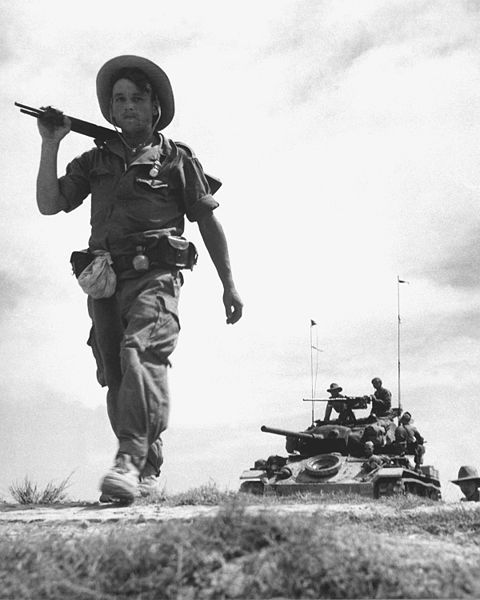
french troops indochinaFrench Troops on the March in Indochina

One author describes Easter 1954: “In all Christendom, in Hanoi Cathedral as in the churches of Europe the first hallelujahs were being sung. At Dienbeinphu, where the men went to confession and communion in little groups, Chaplain Trinquant, who was celebrating Mass in a shelter near the hospital, uttered that cry of liturgical joy with a heart steeped in sadness; it was not victory that was approaching but death.” A battalion commander went to another priest and told him “we are heading toward disaster.” (The Battle of Dienbeinphu, Jules Roy, Carroll and Graf Publishers, New York, 1984 p.239) This can be a terrible burden for the Padre who cares for such men.  Ministry in such places is truly an incarnational experience because there is no place to hide and the chaplain is as vulnerable as his flock.  It is the ministry that places us “in the valley of the shadow of death” where as the Psalmist says we are “to fear no evil for you are with us.” It is the ministry of Good Friday where to all appearances seems that God has abandoned the field and evil has won.

VIETNAM DIEN BIEN PHUFrench Surrender at Dien Bien Phu

Of course one can find examples in American military history such as Bataan, Corregidor, and certain battles of the Korean War to understand that our ministry can bear fruit even in tragic defeat. At Khe Sahn in our Vietnam War we almost experienced a defeat on the order of Dien Bien Phu. It was the tenacity of the Marines and tremendous air-support that kept our forces from being overrun.

legion algeriaLegionaries in Algeria, many French Troops Went from one War in Indochina to another in Algeria only to have the De Gaulle Government throw the Military Victory Away and Cause a Crisis

You probably wonder where I am going with this, back when I first drafted this year and a half ago I wondered too. But here is where I think I am going. We live in difficult of times at home and in Afghanistan.  It home we are mired in an economic crisis clouded by deep political division.  In Afghanistan we are engaged in a hard fight where units we are taking casualties and the mission is being debated.  Sometimes to those deployed and those who returned that their sacrifice is not fully appreciated by a nation absorbed with its own issues.  This of course is not universally true as there a people of all political viewpoints who care for the welfare and attempt to ensure that those who serve are not abandoned as those men who served in Vietnam.  I think that part of the feeling comes from the presentation of the war by the media which tends to focus only on the negative outcomes and not positive things that our soldiers accomplish. That can be discouraging to the men and women on the ground.  One of the most difficult things for me upon my return was to see the bitterness a division in the American people and political establishments and becoming quite depressed about it.   I stopped watching the perpetual news cycle and listening to talk radio.  The hatred, ignorance and crassness of it all was disheartening and I refuse to take any part in something that is so hate filled, power driven and unredemptive.
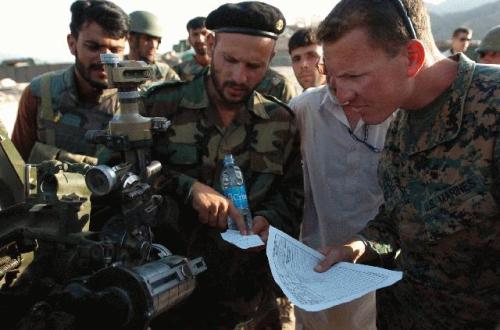
traiining team with afghan armyUSMC Training Team With Afghan Troops

For the French the events and sacrifices of their soldiers during Easter 1954 was page five news in a nation that was more focused on the coming summer. This is very similar to our circumstances today because it often seems that own people are more concerned about economic considerations and the latest in entertainment news than what is going on in Iraq or Afghanistan. The French soldiers in Indo-china were professionals and volunteers, much like our own troops today. Their institutional culture and experience of war was not truly appreciated by their own people.  Nor was it fully appreciated by their government which sent them into a war against an opponent that would sacrifice anything and take as many years as needed to secure their aim.  At the same time their own countrymen were unwilling to make the sacrifices needed to win and in fact had already given up their cause as lost. The sacrifice of French soldiers would be lost on their own people and their experience ignored by the United States when we sent major combat formations to Vietnam in the 1960s. In a way the French professional soldiers of that era have as well as British colonial troops before them have more in common with our force than the citizen soldier heroes of the “Greatest Generation.” Most of the “Greatest Generation” was citizen soldiers who did their service in an epic war and then went home to build a better country as civilians. We are now a professional military fighting unpopular wars and that makes our service just a bit different than those who went before us.  I related to the French troops who fought in Indochina and Algeria as well as our own Vietnam Vets than I do to others.  These is a kinship among us that goes beyond nationality, politics or age.

This is the world in which military chaplains’ minister.  It is a world of volunteers who serve with the highest ideals, men and women who enlist knowing that they will be deployed and quite likely end up in a combat zone. We go where we are sent, even when it is unpopular. It is here that we make our mark; it is here that we serve our Soldiers, Sailors, Marines and Airmen. Our duty is to bring God’s grace, mercy and reconciliation to men and women, and their families who may not see it anywhere else. It is a ministry of reconciliation by the means of incarnation. Many times those outside the military do not understand this. It is a different world full of contradictions and ambiguity.  Such situations even impact the families of those who serve.

When my dad was serving in Vietnam in 1972 I had a Sunday school teacher tell me that he was a “Baby Killer.” It was a Catholic Priest and Navy Chaplain who showed me and my family the love of God when others didn’t. As the country builds to the 2010 mid-term Congressional elections I anticipate that people from all parts of the political spectrum will offer criticism or support to our troops or the war in order to bolster their election chances which do not always coincide with what is in the best interest of the troops or the mission. Chaplains cannot be concerned about the politics nor even the policy as our duty is to be there as Priests, Ministers, Rabbis and Imams for those that we serve. We cannot afford to allow ourselves to be discouraged in caring for our men and women and their families because of all the strife in the body politic.  In addition we must continue on because most churches and other religious communities, even those supportive of our troops really don’t understand the nature of our service or the culture that we represent. We live in a culture where the military professional is in a distinct minority group upholding values of honor, courage, sacrifice and duty which may be foreign or archaic to many Americans, or for those countries with troops and chaplains in Afghanistan or Iraq. We are called to that ministry in victory and if it happens someday, defeat. In such circumstances we must always remain faithful to God as well as to those that we serve.

For those interested in the French campaign in Indo-China it has much to teach us. Good books on the subject include The Last Valley by Martin Windrow, Hell in a Very Small Place by Bernard Fall; The Battle of Dienbeinphu by Jules Roy; and The Battle of Dien Bien Phu- The Battle America Forgot by Howard Simpson. For a history of the whole campaign, read Street Without Joy by Bernard Fall. I always find Fall’s work poignant, he served as a member of the French Resistance in the Second World War and soldier later and then became a journalist covering the Nurnberg Trials and both the French and American wars in Vietnam and was killed by what was then known as a “booby-trap” while covering a platoon of U.S. Marines.

There is a picture that has become quite meaningful to me called the Madonna of Stalingrad. It was drawn by a German chaplain-physician named Kurt Reuber at Stalingrad at Christmas 1942 during that siege. He drew it for the wounded in his field aid station, for most of whom it would be their last Christmas. The priest would die in Soviet captivity and the picture was given to one of the last officers to be evacuated from the doomed garrison. It was drawn on the back of a Soviet map and now hangs in the Kaiser Wilhelm Memorial Church in Berlin where it is displayed with the Cross of Nails from Coventry Cathedral as a symbol of reconciliation. I have had it with me since before I went to Iraq. The words around it say: “Christmas in the Cauldron 1942, Fortress Stalingrad, Light, Life, Love.” I am always touched by it, and it is symbolic of God’s care even in the midst of the worst of war’s suffering and tragedy.

Madonna of StalingradMadonna of Stalingrad

So as you can see I have done a lot of reflecting over the past year and a half. It has been a spiritual journey, an intellectual and academic journey and a personal journey of slowly healing and recovery.  I have gone through some changes in the process which have not been easy, but certainly have deepened my faith even as I struggled and made me much more appreciative of life, love and peace.

I write in order to wrestle with what I have mentioned here, and I try to write something every night. I can full agree with Father Henri Nouwen in his book Beyond the Mirror as to the purpose that writing serves me in my journey.

“These many interruptions calling me ‘beyond’ compelled me to write. First of all, simply because writing seemed to be the only way for me not to lose heart to in the frightening and often devastating interruptions and to hold onto my innermost self while moving from known to unknown places. Writing helped me to remain somewhat focused amid the turmoil and discern the small guiding voice of God’s Spirit in the midst of the cacophony of distracting voices.  But there is a second motivation. Somehow I believed that writing was the one way tom let something of lasting value emerge from the pains and fears of my little, quickly passing life.  Each time life required me to take a new step into unknown spiritual territory, I felt a deep, inner urge to tell my story to others- perhaps as a need for companionship but maybe, too, out of an awareness that my deepest vocation is to be a witness of the glimpses of God I have been allowed to catch.”

pub2Slowly Getting Better

I am healing though it has been at times painful, but faith is returning and I can say that though it has not been easy it has been worth it.  I do hope that what little I do in my work and in my writing will be of help to those who struggle and those who recognize their own need for reconciliation, healing who need to hope again no matter who they are and what their circumstance.

Peace,

Padre Steve+

2 Comments

Filed under Loose thoughts and musings

My Life and Baseball: How Padre Steve Makes Some Sense of the World

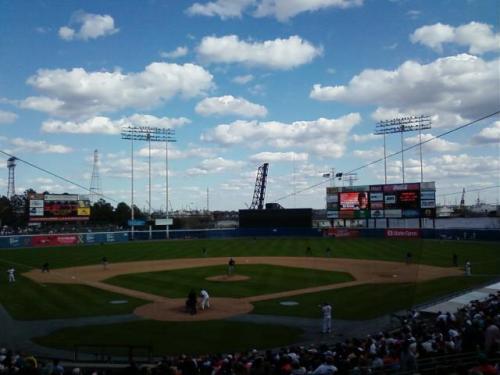
harbor park opening dayThe Church of Baseball, Harbor Park Parish

“This is my most special place in all the world, Ray. Once a place touches you like this, the wind never blows so cold again. You feel for it, like it was your child.” Dr. Archibald “Moonlight” Graham in Field of Dreams

“I love baseball. You know it doesn’t have to mean anything, it’s just beautiful to watch.” Woody Allen in Selig (1983)

I went to Harbor Park last week just to talk with staff and sit in the concourse.  Tomorrow after work, though the weather is not predicted to be very good I plan on doing the same. There is something about baseball people and my seats down in section 102, row B, seat 2 and 3 that help me even when there is not game going on.  I walked around the diamond, the weather was gorgeous and it was so peaceful, even as the head groundskeeper aerated the field in preparation for the winter.  I feel close to God when I am around a ballpark, even without the game being played there is something almost mystical about it.  To me there is nowhere more peaceful than a ballpark.  Tonight as I sit watching game one of the National League Championship Series between the Dodgers and the Phillies my mind goes back to how much baseball has been part of my life, and how in a very real way that God speaks to me through this special game.

grainger stadiumGranger Stadium Kinston NC

“Baseball, it is said, is only a game. True. And the Grand Canyon is only a hole in Arizona. Not all holes, or games, are created equal.” George Will

Baseball is part of my life and I think this goes back to my childhood when my dad introduced me to it in our back yard in Oak Harbor Washington.  Even before I played an organized game dad played catch with me, showed me how to grip a ball and told me about the great ballplayers.  He made me learn the fundamentals of the game and weather we were attending a game in person, watching one on television or playing catch, pepper or practicing infield or pitching dad was all about the game.  Of course he was the same way with football, hockey and basketball, but the sport that he seemed most passionate about was baseball.  As a kid he was a Cincinnati Reds fan.  His mother, my grandmother who hailed from the hollers of Putnam County West Virginia was a diehard Dodgers fan, though I am sure that God forgives her for that.  She was an independent woman of conviction and determination that has to in some way influenced her love for the game, even as a little boy if there was a game on television she would have it on.  I still wonder about to this day how she became a Dodger’s fan but it probably had something to do with her independent streak.  Granny as she chose to be called was a woman who as a widow in the late 1930s went to work, raised her two boys and bought her own house.  Unlike most of the people in West Virginia she was also a Republican, a rare breed especially in that era. As independent in her choice of baseball teams as she was in her politics Granny was a Dodgers fan in a land of Reds, Indians and Pirates fans, so even with Granny we were immersed in baseball.

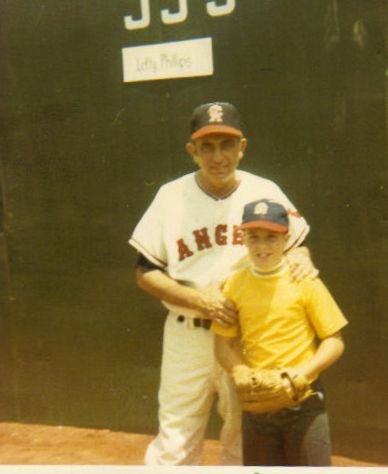
Me and Lefty PhillipsCalifornia Angels Manager Lefty Phillips and Young Padre Steve 1970

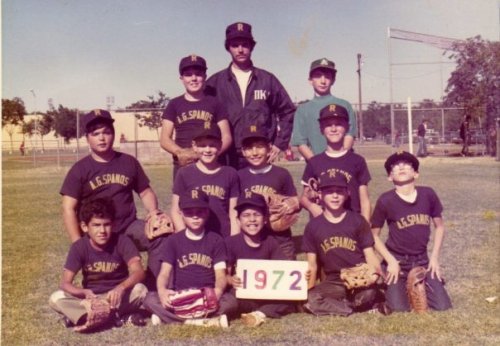
Dad always made sure that we got to see baseball wherever we lived. In 1967 he took us to see the Seattle Pilots which the next year went to Milwaukee and became the Brewers. The pilots were an expansion team in a town with a long history of minor league ball. They played at an old park named Sick Stadium, which if you ask me is a really bad marketing plan.  The game that we went to was the “Bat Day” giveaway.  Then they game regulation size Louisville Slugger bats.  Mine had the name of the Pilots First Baseman Mike Hegan on the barrel.  That was my first trip to a Major League stadium and I still can remember it as if it was yesterday.  Somewhere in my junk I have a button with the Pilots logo on it.  I’ll have to find it again sometime.  The next year I played my first organized baseball with the Oak Harbor Little League “Cheyenne’s.” My coach was a kind of gruff old guy who stuck me out in right field.  I don’t know why but our team uniforms did not match, half of us had white and the other half gray.   Unfortunately due to military moves I didn’t get to play organized ball again until 1972.

jim_spencer_autographMY Favorite Angel Jim Spencer as a Yankee

In the elementary schools of those days our teachers who put the playoff and World’s Series games as many were played during daylight hours.  I remember watching Bob Gibson pitch when the Cardinals played against the Red Sox in the 1967 series.  It was awesome to see that man pitch.   I remember the Amazin’ Mets upsetting the Orioles in 1969 and seeing the Orioles take down the Reds in 1970.  I never will forget the 1970 All Star Game where Pete Rose ran over Ray Fosse at home plate for the winning run.  I watched in awe as the great dynasty teams of the 1970s, the Reds and the Athletics who dominated much of that decade and the resurgence of the Yankees in the summer that the Bronx burned.  Back then every Saturday there was the NBC Game of the Week hosted by Curt Gowdy, Tony Kubek and Joe Garragiola.

halicki no hitterEd Halicki No Hitter

When we were stationed in Long Beach California from 1970-1971 my dad had us at Anaheim stadium all the time.  I imagine that we attended at least 30 games there and a couple at Dodger stadium that first year and a good number more before we moved to Stockton California in the middle of the 1971 season.  That was disappointing, it took forever to get adjusted to Stockton and I think that part of it was not seeing the Angels every week at the Big “A.” At those games I met a lot of the players and coaches and even some opposing players.  The Von’s grocery store chain and the Angels radio network had a “My Favorite Angel” contest.  My entry about Angels First Baseman Jim Spencer was a runner up, netting me two seats behind the plate and having Dick Enberg announce my name on the radio.  Spencer was a Gold Glove First Baseman who later played for the Yankees on their 1978 World Series team.  My first hat from a Major League team was the old blue hat with a red bill, the letters CA on the front and a halo stitched on top. I still have a hat from the 1971 team with the lower case “a” with a halo hanging off of it.  It has numerous autographs on the inside of the bill including Sandy Alomar, Jim Spencer, and Jim Fregosi, Chico Ruiz and Billy Cowan and sits in a display case on my kitchen wall.

Me and last last picMy Dad and Me May 2009

While we didn’t live as close to a major league team baseball did not go away, though we were not at the ballpark as much it got more interesting as I got to see playoff games and a no-hitter.  We saw the A’s dynasty teams including games one and two of the 1972 American League Championship Series between the A’s and the Tigers.  Across the Bay a few years later I got to see Ed Halicki of the Giants no-hit the Mets a Candlestick on August 24th 1975.  In those days I got to see some of the greats of the era play, Catfish Hunter, Reggie Jackson, Willie Mays, Willie McCovey, Steve Garvey, Vida Blue, Harmon Killebrew, Rollie Fingers, and so many others at the Oakland-Alameda County Coliseum and Candlestick Park.

While in Stockton I became acquainted with Minor League Baseball through the Stockton Ports, who then were the Class “A” California League farm team for the Orioles.  I remember a few years back talking to Paul Blair the Orioles great Paul Blair who played for the Ports in the early 1960s about Billy Hebert Field and how the sun would go down in the outfield blinding hitters and spectators in its glare.  I would ride my bike over in the evening to try to get foul balls that came over the grand stand when I didn’t have the money to get a ticket.

1972 Oak Park AL RamsMy Championship Season

When I was a kid I had a large baseball card collection which I kept in a square cardboard box.  I must have had hundreds of cards including cards that if I had them now would be worth a small fortune, unfortunately when I went away to college I left them in the garage and during a purge of junk they were tossed out.  This year I started collecting cards again, mostly signed cards that I obtained at the Church of Baseball at Harbor Park.  In a sense they kind of serve a purpose like Holy Cards due in the Catholic Church for me.  They are a touch point with the game and the players who signed them.

As I have grown older my appreciation for the game, despite strikes and steroids still grows.  I am in awe of the diamond.  I have played catch on the field of dreams, seen a game in the Yankee Stadium Right Field bleachers seen games in other venues and thrown out the first pitch in a couple of minor league games.  I am enchanted with the game. The foul lines theoretical go on to infinity, only broken by the placement of the outfield wall.  Likewise unlike all other sports there is no time limit, meaning that baseball can be an eschatological game going on into eternity. The Hall of Fame is like the Calendar of Saints in the Catholic, Orthodox and Anglican Churches.  There are rituals, the exchange of batting orders and explanation of the ground rules, the ceremonial first pitch, players not stepping on the foul line when entering and leaving the field of play, no talking about it when a pitcher is throwing a no-hitter and the home run trot. The care of a field by an expert ground crew is a thing to behold, especially when they still use the wooden box frames to lay down the chalk on the baselines and the batter’s box.

We have travelled to many minor league parks often in tiny out of the way locations and even to the Field of Dreams in Dyersville Iowa where once again Judy indulged me and let me play catch. Likewise my long suffering wife has allowed our kitchen and much of my dining room are as close to a baseball shrine as Judy will let me make them; thankfully she is most tolerant and indulges this passion of mine.

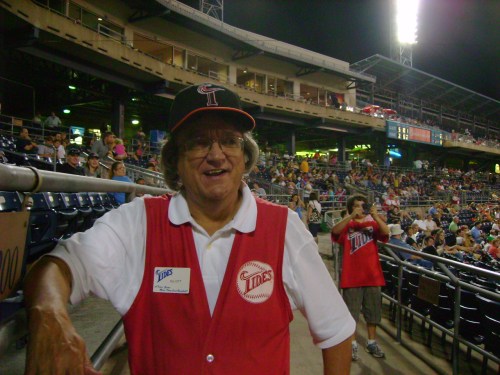
042Elliott the Usher

Since I returned from Iraq the baseball diamond is one of my few places of solace.  For the first time I bought a season ticket to my local minor league team the Norfolk Tides.  Section 102, row B seat 2 and 3 and was able to watch the game from the same place game after game.  It became a place of refuge during some of my bad PTSD times, and I got to know and love the people around me; Elliot the Usher, Chip the Usher, Ray and Bill the Vietnam Veteran Beer guys behind home plate, Kenny “Crabmeat” the Pretzel Guy and Barry the Scorekeeper.

122Moon Over Harbor Park

My dad is slowly dying of Alzheimer’s Disease and a shell of his former self but the last time I visited him we had a few minutes where he was with it we talked baseball and I gave him a new Giants t-shirt and hat.  I plan on going back next month sometime to spend some time with him.  Maybe we’ll get a few minutes of lucidity and a bit of time together again, I wish he was able to get up and play catch, but that will have to wait for eternity on the lushest baseball field imaginable.

The season there is over, but God is not done speaking to me through baseball as I close my eyes and recollect the words of Terrance Mann (James Earl Jones) in Field of Dreams: “The one constant through all the years has been baseball. America has rolled by like an army of steamrollers. It’s been erased like a blackboard, rebuilt, and erased again. But baseball has marked the time. This field, this game, is a part of our past. It reminds us of all that once was good, and what could be again.”

044Jeff Fiorentino hits a 3 run shot at Harbor Park

In a sense this says it all to me in an age of war, economic crisis and bitter partisan political division.  In a sense it is a prayer, a prayer for a return to something that can be good again.

Peace and blessings,

Padre Steve+

Leave a comment

Filed under Baseball, philosophy, Religion

Padre Steve’s MLB Championship Series Picks

Well sports fans I’m back on some predictions.  The fact that I am neither the Prophet nor the Son of the Prophet makes no difference here, and since my picks with the exception of the Evil Dodgers sweep of the Cardinals were pretty accurate here it goes again.  Now obviously since I am merely Padre Steve and not the Pope nothing I say is infallible my picks can be wrong and I hate that.  Thankfully since I am not claiming to speak from the Most High a wrong pick will not leave me crushed to death with heavy stones by the faithful.  At the same time I get a certain satisfaction about being right like the time I was waiting in the ER with Judy as they tried to diagnose her throat swelling.  I “Googled” the symptoms and got it right, before they did, it was Epiglottis, something extremely rare in adults which they were neither looking for nor expecting.  I thought that was pretty cool as did my ICU attending physicians.

So how do I get my picks?  First I try to put emotion aside and look at trends, stats and intangibles.  It does not matter if I like the team or not when it comes to picking such things.  What I want is to be dispassionate in my analysis because I love the game.

So a quick review of the Divisional Series:

I picked the Cardinals in 4 over the Dodgers.  Dodgers swept the Cards 3-0.  The tow things that I believed that would bring about a Cardinals win did not happen.  First the starting pitching did not get it done.  Second the Cardinals hitting died like 1981 Chevette, trust me I know as we had one.  It was not pretty and then if you throw in the improbable muff a ball that Matt Halliday made in Left Field with two outs in the bottom of the 9th in game two with the Cardinals ahead…..  Ouch!

I picked the Phillies in 5 figuring that the Rockies would win at home.  Instead they split in Philly and the Phillies swept the Rockies in Denver despite cold weather and what should have been home field advantage.  The Phillies choice of Cliff Lee to pitch game one paid off in spades and the Phillies hitters did not disappoint.  Rockies fans must have had their hearts ripped out when they scored three in the bottom of the 8th to take a 4-2 lead in game four only to have closer Huston Street blow the save for the second night in a row.

Moving to the American League I picked the Angels in 5 over the Red Sox.  I figured that the Angels were a better team than the last few times they played the Sox and that the Red Sox had lost their edge.  I thought that the “X” factor of Nick Adenhart would work in the Angels favor and I expected a close series with the Angels winning it.  Instead the Angels dominated the Bosox and swept them with an improbable rally with 2 outs in the bottom of the 9th when they were down to their last pitch.

Finally there was the series between the Yankees and the Twins.  The Twins had a remarkable September and captured the AL Central crown in a one game playoff against the Tigers.  I picket the Yankees in 4 allowing for a game three Twins win at the Hubert H Humphrey Metrosexual Dome, also known as visiting team Hell.  The Yankees swept the Twins but game two and three were close and the Yankees came from behind in both to win.

So here they are:  First the National League and the Phillies against the Dodgers.  Pitching is a wash as the Phillies have the better starters with Lee and Clay Hammels but have a suspect bullpen. Closer Brad Lidge seems to have gotten his stuff back after a miserable season.  The Dodgers have a patchwork rotation of decent but not outstanding pitchers but have an amazing bullpen.  In the hitting department both teams have great offensive potential but I give the edge to Ryan Howard’s wrecking crew.  In the regular season the Dodgers took the series between the two teams 4-3.  This will be close and the Dodgers are capable of winning in unusual ways as evidenced by game two of the NLDS.  I think this goes 7 with the teams splitting in LA, Philly taking 2 at home and splitting the final pair with the Phillies taking the down the Dodgers for the second year in a row.  While I am picking the Phillies this series could go the other way.  I never will forget the 1981 Dodgers who played had a miraculous series of playoff wins which culminated against the Yankees.  They lost the first two games and won the next four closing the series at Yankee Stadium.  So I believe that anything is possible, but I’m still picking the Phillies and watch the game in my San Francisco Giants gear.  I guess I do have some emotions invested in this series after all.

Now I’ll move over to the American League and talk about the Yankees and the Angels.  This should be a great series.  The Halo’s won 4 of 6 in the regular season and outscored them by a pretty large margin in Anaheim.  Now both teams have a lot of firepower as well as pretty solid pitching.  The Yankees are coming off the best season the have had in a number of years and their 103 wins were the most in baseball.  The Angels have had a very good season as well.  At this point it is hard to pick a winner.  I think that the Yankees have the edge in personnel and are the hungriest for the pennant that I have seen them in years.  The Angels too are hungry and have something of an “X” factor in the incredible bonding and team spirit brought about by the loss of rookie pitcher Nick Adenhart.  The series will start in New York where the weather forecast is crappy for the weekend, especially Friday where there is an 80% chance of rain and temperatures in the low 40s.  The temps will remain about the same the entire weekend and the precipitation is forecast at 40% for the weekend.   These are not baseball conditions and could be a factor in who wins and loses the games in New York.  With the weather as much as a factor as it could be I think that negates some of the Yankees home field advantage.  I think that the teams split in New York and go to Anaheim at 1-1.  When the teams get to Anaheim next week the weather should be perfect Southern California fall weather clear and temperatures in the 70s at game time.  They Angels dominated the Yankees at home and I think that they will take at least two of the three in Anaheim and go back to New York up 3-2.  The Yankees are a great clutch team and this year and have been awesome in the come from behind situations.  The series could go either way at this point but I think that the Angels can steal this from the Yankees and put them away in game six, just as they came from behind to defeat the Red Sox in game three of their series.  My pick is the Angels in six.

So my picks are the Angels and Phillies to get to the World Series.  Of course I could be wrong as these are all great teams and each has something to prove. The Phillies want to repeat, the Yankees want to make up for years of disappointment of being so close but so far away, the Dodgers are trying to reclaim a winning heritage and gain the respect that they deserve and the Angels, they are playing for something so totally intangible that it is hard to put a value on, they are playing for the love and memory of a team-mate and have an almost magical and mystical feel to their season.  There are individual players trying to recapture past triumphs and others still trying to escape the demons and come out from under the cloud of not having won it all. I expect some great baseball no matter who advances to the Series.  The way I see it even if I am wrong on my picks this should be some great baseball.

Peace,

Padre Steve+

Leave a comment

Filed under Baseball

For the Love of the Game and the Love of Life; Finding Meaning Life and Love in the Perfect Game

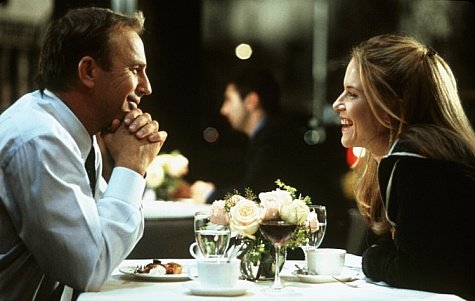
for_love_of_the_gameKevin Costner as Billy Chapel

One of my favorite movies is the baseball story For the Love of the Game which starred Kevin Costner.  This is the film rendition of Michael Shaara’s Pulitzer Prize winning novel The Perfect Game. Both the book and the movie tell the story of “Billy Chapel” a pitcher who played 19 seasons with the same team, in the movie the Detroit Tigers.  The story focuses on the last game of the season in which Chapel is to start.  The game for his team is meaningless; they will not be going to the playoffs as they are a bad team.  Compounding the team’s situation is the uncertainty of the team’s future as the long time owner who signed Chapel out of high school is about to sell the team.  The new ownership group wants to make changes, among the changes a trade involving Billy Chapel to the Giants. The trade would force him to play the next season in another uniform and another city when he wants to finish his career in the same city where it started.  Before the game the owner comes to Chapel to talk about possibilities and then begins to criticize the game, saying that it stinks.  Chapel responds: “The game doesn’t stink, Mr. Wheeler. It’s a great game.”

The book and the movie present a tapestry of the Billy Chapel’s life in between pitches.  Unlike most baseball films this focus’s not on a season, but a game, a single game.  Woven in this rich tapestry of this game are the lives of several people besides the lead character played by Kevin Costner.  The manager of the team has a wife with cancer.  His love, Jane Aubrey played by Kelly Preston is leaving him, going to London for a new job and stands him up the previous night.  She tells him “You’re perfect. You, and the ball, and the diamond, you’re this perfectly beautiful thing. You can win or lose the game, all by yourself. You don’t need me.” It is the classic cry of a woman whose true love is absolutely passionate about what he does well.

costner and preston for the love of the gameBilly Chapel (Costner) and Jane Aubrey (Kelly Preston)

A friend and former team mate now plays for the Yankees who Chapel’s Tigers will play in the last game of the season. Billy’s catcher Gus is not much of a hitter and the manager wants to play a better hitting catcher but Chapel will have nothing of it as Gus is “his catcher.”  As the game goes on Chapel’s arm begins to hurt from an old off season injury, he’s tired and feeling the pressure. Throughout the game Gus helps Billy keep it together and as they go out for the last inning he goes out to the mound and says to Billy: “The boys are all here for ya, we’ll back you up, we’ll be there, cause, Billy, we don’t stink right now. We’re the best team in baseball, right now, right this minute, because of you. You’re the reason. We’re not gonna screw that up, we’re gonna be awesome for you right now. Just throw.” It’s the kind of word that anyone can need when they are exhausted but about to accomplish something great, the team is there for them.

for the love of the gameThe Wind Up

Billy chapel is old.  He has had a mediocre season for anyone else but for him a bad season.  His all star days are past.  His dad who taught him the game and witnessed his greatest moments is dead as is his mother.  He is, with the exception of Gus alone.  It is a story that could end like so many stories in sadness or despair.  Instead it is the story of triumph.  It is the story of how in spite of a whirl of emotions and a lot of pain from past injuries he triumphs.  He does so against an opponent that is going to the playoffs, the always dangerous Yankees in the venerable Yankee Stadium.  Chapel pitches a perfect game against the odds.  Supporting players who had failed during the season make stellar plays.  The team which had nothing to look forward to celebrates one of the rarest of human events, a Major League perfect game. Not just a “no-hitter” which I have been specially graced by the Deity Herself to see in person, but a perfect game of which only 18 have been thrown.  Perfect games are unforgettable and this story gets it right.  The game itself is a story of redemption, in life, love and the pursuit of excellence.  During the game the grandson of the owner is sent to get Chapel’s answer about taking the trade.  Chapel writes his response on a baseball: Tell them I’m through, “for love of the game”, Billy Chapel. Chapel the game is more than a paycheck, it is about life and relationships.

After the post game celebration he pours Gus out in his room and He then goes to find Jane, who due to a flight delay is stuck waiting at JFK in a bar watching the game.  She realizes what she is walking out on.  When Chapel finds out about her leaving the next morning he goes to the airport.  He says something that I think really sticks out to guys who have invested much in their careers but left love behind or had it go stale:

“I used to believe, I still do, that if you give something your all it doesn’t matter if you win or lose, as long as you’ve risked everything put everything out there. And I’ve done that. I did it my entire life. I did it with the game. But I never did it with you, I never gave you that. And I’m sorry. I know I’m on really thin ice but, when you said I didn’t need you… well last night should’ve been the biggest night of my life, and it wasn’t. It wasn’t because you weren’t there. So I just wanted to tell you, not to change your mind or keep you from going, but just so you know, that I know, that I do need you.”

Dundas at HitPadre Steve Doing What He Loves

The story of Billy Chapel is one of finishing well.  So many people start their lives full of promise and somewhere along the way give up. They exist, go through the motions and stop believing in themselves and those who love them.  For whatever reason some people, maybe a lot of people stop living long before they die. The wake up, go through the motions and stop striving for excellence and forget about love, life and friendship. They forget what loyalty means and take for granted the love of people who care about them.  They have lost their love and passion and simply go through the motions of existence.  It happens in all phases of life. In the military we have a slang term called the “ROAD program.”  It means “Retired On Active Duty.  These are the guys who have stopped trying; they know that short of committing a criminal act that they can retire.  They go through the motions.  There are these kinds of folks everywhere, not just the military and unfortunately a decent number in minstry.  Somewhere, somehow they have given up. I don’t want to do that.  I want my last game to be my best.

Billy Chapel is the epitome of a man who gives his all in what he knows will be his final game, a game that for everyone else but him is meaningless.  However in the microcosm of that game everyone finds meaning.  As he pitches and the tension builds, those who had just been along for the ride get caught up in the magic.  His manager, his journeyman catcher “Gus,” his team mates, and even the opposing players and the hostile Yankee fans discover what it is to live again.  People who had given up find inspiration and hope. Billy Chapel creates magic on the mound which in that moment of time makes life right.  Sure it is just a novel, it is just a film, but it is life just as baseball is life, a game played like most of us live, some great performances, slumps, winning and losing streaks, errors, bad calls, trades, being fired and even rain or on rare occasion Colorado fans, snow delays.  In baseball great players are still not perfect the majority of the time, baseball unlike any other sport is humanity at its best and worst.

Judy and Steve[1]_edited-1Me with My Love

I find the story of Billy Chapel in The Perfect Game to be compelling.  I love baseball and for me the story of someone at the tail end of their career achieving the next to impossible is inspiring.  I find inspiration in other old ball players who keep doing well. It is the old guys of baseball who inspire me now, guys like Jamie Moyer of the Phillies and Mike Mussina who retired from the Yankees last year at the top of his game. I could well be finishing my career in the next few years.  I want my time in the Navy to matter in my last few years. If I get promoted and remain a few more, that is okay, but even then I want to finish well.  When I’m done with that I hope that the Deity Herself will give me the grace to continue to strive for excellence in serving people as a priest.  I never want to be on the ROAD program even if I live to be 90. I want my last years, be they a military career, or the rest of my life and ministry to be my best and that means my life.

Peace, Padre Steve+

5 Comments

Filed under Baseball, Loose thoughts and musings, marriage and relationships

Bring Out the Brooms: Dodgers, Angels, Yankees and Phillies Advance to League Championship Series

So far the MLB playoffs have not disappointed unless you are a Cardinals, Twins, Red Sox or Rockies fan.  There was a lot of drama, great play, and miraculous comebacks and for the shear sake of humanity some bad calls by some of the umpires.  But that’s why baseball is so much better than football; it is human and not clouded by the artificial attempt to impose “fairness” by reviewing up to 12 plays a game at the request of coaches and more for “mandatory” reviews.   These four series plus the one game

The human drama of baseball was played out before our eyes. The stories were amazing and every game had stories within the story of players and teams doing amazing.  As my readers know I made predictions about the divisional series over at https://padresteve.wordpress.com/2009/10/05/padre-steve%E2%80%99s-mlb-divisional-playoff-picks/ So far with the exception of the Cardinals being swept by the Evil Dodgers, the divisional series went pretty much as I expected as to the winners though I did not expect all of the sweeps.  I gave the Twins one game and thought the Angels and Red Sox would go five with the Angels winning.  The Phillies and Rockies series went very much as I expected and the Rockies almost brought in back to Philly.

In this Divisional series six games were decided by one run.   Five games were decided in the 9th inning or extra innings. Six games were comeback wins where the winning team gained the lead in the 7th inning or later. With a few exceptions the games were close even late in the game.  There were a number of plays that the umpires blew the call on, sometimes badly, oh well, humanity strikes again.  That is no reason to implement the insanity of the NFL’s replay policies or anything like them.

Let’s go back to my picks. I picked the Cardinals in four over the Dodgers.  The Cardinals, who were not even picked for the playoffs dominated the NL Central but Tony La Russa, one of the outstanding managers in the game has a way of making things work.  My expectation was that Chris Carpenter and Jonathan Wainwright would shut the Dodgers down at Chavez Ravine and then go back to St Louis where their hitters had been awesome throughout the season.  Their major weakness was their bullpen. A lot broadcasters and experts predicted a Cardinals sweep.  Having seen the Dodgers perform miracles in past playoff series, including in 1981 and 1987 I did have a sense of unease in picking the Cardinals, but I went with logic and this time it failed.  The Cardinals pitching was shaky and their hitting died. The turning point was in game two where with two outs that the Cardinals up 2-1 Matt Halliday lost a fly ball in the lights allowing a runner and the Dodgers then finished them off.  I think that it was a finish that could only happen with the Dodgers in the playoffs. I owe my Dodger fan nephew Joe a beer the next time I get to San Diego as I promised in my prediction of the Cardinals lost.  What is more interesting now for the Cardinals is what happens in the off season as Tony La Russa and Dave Duncan’s contracts expire at the end of the month.  If I had my choice Billy Beane would bring him back to Oakland a move which would be good for him as La Russa has many connections and business interests in the bay area.

The Angels and Red Sox were a tough call.  I picked the Angels in five because the Red Sox have not been the same team as they were the past few seasons. Some of their key players are showing the signs of age and losing a step or two. Additionally their starting pitching staff was inconsistent during the season and had some key injuries.  I also picked the Angels because they are a better team than they have been the past few years and there was the “X” factor of Angels’ pitcher Nick Adenhart killed after his first start in the second game of the season. The amount of unity on the team was something that I have not seen in a long time.  In their sweep of the Red Sox the Angels pitchers shut the Red Sox down until game three when Boston made a got out to an early lead which they reinforced in the bottom of the 8th.   What was surprising was the manner in which the Red Sox lost.  Jonathan Papelbon gave up not only his first ever run in the playoffs but blew the save and got the loss.  Previous to this he had pitched 27 innings of shutout playoff baseball.  The Red Sox have some decisions to make during the off season to see if they can get their edge back.

The Twins and Yankees series was the classic “David versus Goliath” story.  The Twins came from nowhere to overtake a Tigers team that faltered at the end winning the one game playoff at the Metro Dome.  The Yankees played all year with a chip on their shoulder and won 103 games, the best in the Majors.  They had an attitude and played all year as a team, they had very few injuries and every part of the team was strong.  The Yankees have played all year like they wanted to win the whole thing. I didn’t think that the Twins had a chance; they had lost all seven games to the Yankees including three in a row at Yankee Stadium on walk off hits.  The Yankees clubbed the Twins in game one and C.C. Sabathia got his first playoff win and like Rodriguez shook off the demons of playoffs past. In game two the Yankees had to come back to beat them as usually reliable closer Joe Nathan blew the save when Alex Rodriguez hit a two run homer in the bottom of the 9th.  Mark Teixeira hit a walk off shot in the bottom of the 11th.  I thought that the Twins might win one in the twisted hell of the Metro Dome, but the Yankees came back to win there with Alex Rodriguez Jorge Posada teamed up in the 7th with single homers off former Yankee Carl Pavano and Mariano Rivera closed out the game.  Throughout the series Rodriguez, Derek Jeter and a host of other Yankees played solid baseball getting the key hits and making the key plays to win the series. The Twins had a remarkable season but were simply outmatched by the power, pitching and speed of the Yankees.  Even so the final two games were dramatic as the Twins led by Joe Mauer and Michael Cuddyer played a great series.

The defending World Series Champion Phillies and amazing Rockies series was great.  I expect the teams to go to five games with the Phillies winning at home in game five.  The Phillies won game one in a walk, but the Rockies showed great character and surprised the Phillies in game two.  Game three had one of those only in Denver moments when it was postponed due to winter weather and snow.  Why the heck the Rockies wouldn’t have built Coors Light Field with a retractable dome like Milwaukee beats the hell out of me. The game was made up Saturday and the Phillies won a nail biter in which the lead changed often and the Phillies winning on a Ryan Howard sacrifice fly.  Game four tonight looked like the Rockies had the Phillies reeling when in the bottom of the 8th they scored three runs to go up 4-2.  The Phillies came back as Ryan Howard had a 2 RBI double with 2 outs in the top of the 9th and was driven in by Jaysen Werth for the winning run.  Beleaguered Phillies closer Brad Lidge saved both game 3 and 4, Carlos Ruiz, Chase Utley and big Ryan Howard were all clutch hitters for the Phillies.  The acquisition of Cliff Lee by the Phillies

Leave a comment

Filed under Baseball

Major League…Jake Taylor, Ricky Vaughn and Me…

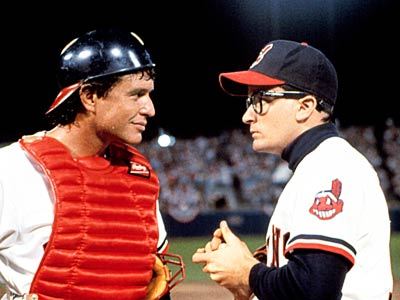
major_league1Tom Berenger and Charlie Sheen in Major League

Today after doing some work around the house and hanging around with Molly the dog as the Abbess has been away most of the week, I set about working on my first week of preparation for the comprehensive exams in my Masters is Military History program.  After having finished all course work with a 4.0 GPA I want to kick this thing in the ass and get a “Pass with Distinction” on the exam.  So as I sat down this afternoon without a baseball game in sight I switched to a college football game.  I don’t mind college football, in person I like it better than the NFL, but it is not baseball.  Football in all forms is a war and with the war comes a lot of noise and it seems to me that no matter how low I put the sound, with the exception of pushing the mute button, that I get a headache.  It happened last week too.  So as I collected my thoughts I decided to pick out one of my myriad of baseball movies Major League. This has been one of my favorite movies ever since it came out and I probably watch my DVD of it a couple of times a year.  If I see it as I’m channel surfing I will watch it.  Today was no different. With Molly at my side and Judy out I began to work on five separate thesis statements within my concentration area, which happens to be World War Two.  If you have noticed my site has a decent number of military history posts and this is because I never really stop studying, reading or writing.  A find lessons that are often applicable to the present when I do this type of research and analysis.

molly and daddyMolly Giving Me Advice on My Work

Anyway, back to the movie.  Having been on some really bad softball teams and having my share of emotional moments even before my encounter with PTSD I really appreciate the movie.  I really like the characters of Jake Taylor played by Tom Berenger and Ricky Vaughn played by Charlie Sheen. I kind of relate to both more like Ricky Vaughn in my younger days, though occasionally as people who know me well can attest I can be like “Wild Thing.”  Mind you I have been tossed from ball games and tossed from the Army Chaplain Officer Advanced Course. However, now I relate more to Jake Taylor, the old worn out catcher with bad knees.  Like the character Crash Davis in Bull Durham Taylor is the glue that helps keep the team together even though he is struggling with his own life, past failures and uncertain future I find myself wrestling with those things while still continuing to play the game to the best of my ability and eke out a few more seasons, in this case one last promotion so I can stay in a few more years and do what I love doing.  I have no aspirations for much more on the Navy side because I’ve had a great ride and have gotten to serve far longer that I thought that I would when I started.

Of course the movie ended just in time to watch the Dodgers sweep the Cardinals in the National League Divisional Series.  To say the least I did not expect a sweep.  The Dodgers played extremely well while the Cardinals hitters couldn’t hit water if they fell out of the boat.  The Phillies and Rockies were postponed due to winter weather conditions in Denver….of all the places that should have built a stadium with a retractable dome,  Hey Denver can you spell Dome? I knew you couldn’t.

So I watched as I wrote and looked at the baseball fields and felt peaceful.  The noise of the movie didn’t bother me, it wasn’t disruptive or intrusive.  There is a song in it that touches me because of how much time I have spent away from Judy over the years.  It is Most of all You by Bill Medley.

Woke up one day, what did I find Holes in my pocket, memories on my mind

So many things I lost on the way but most of all you

Pennies and dreams carelessly spent

Pieces of time and who knows where they went

Is there a chance to pick up the pieces and try for it all again

Sometimes you’re just so busy running, running round in circles

You never see you’re going nowhere.

Sometimes you get so tired of chasing, chasing after rainbows

You look around your life and find no one’s there

No one’s there, nooooooooo one’s there

If there’s a time everyone sees they may have missed the forest for the trees

How could I let the best things roll by and most of all you

You knew me better than I knew myself

Somehow you always knew there’d come a day I’d put my toys away

I was a fool traveling so far only to find that home is where you are

You are the way there, just let me stay there

I’ll have it all, if most of all there’s you……….

Now we do have a good marriage but I always have a tendency to get consumed by my work and when I let that get away from me as I often have in the past I miss really important things with Judy. Like Jake Taylor who is trying to recover a blown relationship with his one true love Lynn Wells played by Rene Russo I find that I have had to make up for lost time over the years spent on deployments, travel, exercises or duty.  So anyway with that said it is time for me to get my ass to sleep.

Harrisburg 1Judy and I in Harrisburg PA on our 23rd Wedding Anniversary in between trips and deployments

Peace, Padre Steve+

2 Comments

Filed under Baseball, Loose thoughts and musings, marriage and relationships

Unequal Allies: Lessons from The German’s and Their Allies on the Eastern Front for Today

patton with french tankPatton with French Renault F1 Tank in WWI

One of the problems that any coalition of unequal partners as is the case in Afghanistan is the role of the lesser partners, their capabilities and limitations imposed on them by their own governments.  When NATO joined the US led effort in Afghanistan a number of NATO allies contributed troops to the effort.  The same was true of the “coalition of the willing” in Iraq.  While obviously the US appreciated and continues to appreciate the efforts of its allies in both theaters the unique problems associated with coalition warfare are often not appreciated until the strengths and weaknesses of each junior partner in the coalition are shown to include the effect of each nation’s choice of units sent, logistics capability and rules of engagement.  Thus when some Americans are critical of the contribution of some allies, or the limitations imposed by their governments they should remember that in the First World War the United States was dependant on France and Britain for the majority of the Artillery, all of the tanks and aircraft as well as instructors and training facilities for the rapidly recruited American Expeditionary Force.

RickenbackerUS Ace Eddie Rickenbacker with French Supplied Nieuport 28
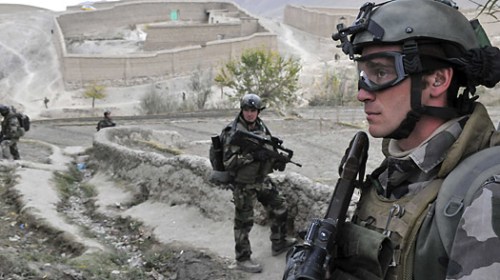
Every nation works within its own national interests and domestic political situation as well as its military capabilities. Unfortunately many people do not look at history to see how a coalition of a major power allied with a number of minor powers each with their own limitations as well as motivations for entering the war execute that war after the initial plan is foiled.  This is something that has happened in Afghanistan after the initial success disappeared with the corrupt and ineffective Afghan government, the resurgent Taliban and the resiliency of Al Qaida in their bases in the remote border areas of Afghanistan and Pakistan.

nato_france_a_0403French Troops in Afghanistan: The French, British and Canadians have the most Robust Rules of Engagement of Non US NATO Forces (Time Magazine Photo)
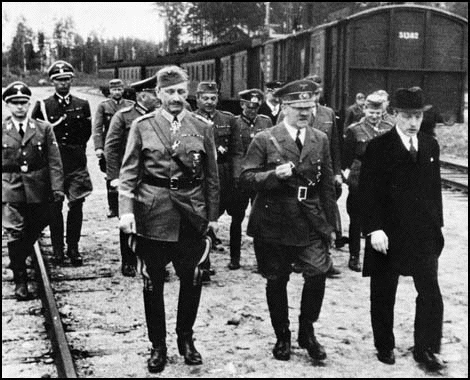
One of the best places to find such an example is the German relationship with their allies on the Eastern Front.  The question of the German dominated European Axis alliance in the Second World War is one of the more neglected subjects of World War Two II. In most accounts of the war, the relationship of the Germans to their coalition is minimal.  This includes the works of B.H. Liddell-Hart, Williamson Murray, Chester Wilmot and David M Glantz.   Italy usually receives some attention in the context of the campaign in North Africa and Mediterranean.  Hungary, Romania and Finland receive scant attention from anyone except as to how their armies were overrun during the Stalingrad campaign. Popular German memoirs provide little substantive help. Field Marshal Albert Kesselring’s memoirs and Erwin Rommel’s papers give some views of the Italian efforts in North Africa and the Mediterranean and Erich Manstein gives a limited amount of attention to the Italians, Finns, Hungarians and Rumanians in Russia.

Finland-HitlerConflicting War Aims: Hitler with Finland’s Field Marshal Von Mannerheim
In his essay The Dysfunctional Coalition Robert Di Nardo examines the relationship of Germany to her allies on the Eastern Front where the Germans due to their own limitations were forced into a coalition war with weak allies of uncertain reliability. This is a subject that Di Nardo expanded on in his book Germany and the Axis Powers: from Coalition to Collapse (University of Kansas Press, 2005).  Di Nardo believes that there are important lessons to be learned from the failure of Germany and its coalition. Unfortunately we in the west are more often than not content to judge coalitions by the success of the Allies in the Second World War.  Di Nardo’s work on the subject is something that the United States must learn from as it works with coalitions whose members have significant military weaknesses often magnified by the domestic political climates in their own country. The situation, especially in Afghanistan places he United States in a similar position to Germany in relation to the current wars on terror and campaigns in Iraq and Afghanistan.

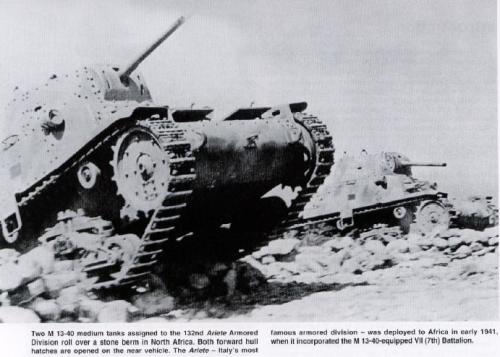
m 13-40 tankItalian M 13-40 tanks were the mainstays of Italian Armored Units, Slow, Undergunned and Poorly Armored they were No Match for Soviet T-34s

Di Nardo asserts “the way in which Germany conducted coalition warfare was reflective of the manner in which Hitler and the German military looked at the world, as well as the war in general.”  Germany often displayed a haughtiness toward its allies and even knowing their weaknesses was both unable and often unwilling to do much to strengthen them for the fight against the Soviet Union.  Di Nardo believes that the German attitudes were “a significant factor that contributed to the ultimate defeat of Nazi Germany.” (p.712)  In the essay Di Nardo notes the few successes of the coalition. In particular he looks at the German work with Rumanian air defense around the Ploesti oil refineries and the German-Finnish Winter Warfare School.  Apart from these instances he characterizes Axis coalition warfare on the eastern front as “poor” with “failures at every level.” (p.713)

italian troops stalino

Di Nardo analyzes the problems with language barriers, the wide differences of modernity of the armies and levels of technology and training of the coalition partners many of which are common to the war in Afghanistan. Germany’s failure to become the “arsenal of Fascism” which the United States became “the Arsenal of Democracy” for its allies hindered the Germans in their relationship to their poorly equipped allies.  Likewise, the lack of understanding of all the partners regarding the “relationship between national objectives, strategy and the morale of soldiers of officers and soldiers alike”(p.713) was a major obstacle.

finnish at gun

Di Nardo provides a good description of the German liaison detachments allotted to the coalition armies.  These teams functioned as advisors to their allies as well as liaisons between the German army and the allies. These teams dealt with language, tactical communications weaknesses and often displayed the generally haughty attitude that the Germans displayed to their partners. There is an excellent illustration of this in dealing with the failure of XLVIII Panzer Corps at Stalingrad when the German Liaison to the Romanian 1st Panzer Division was wounded.  At the operational and strategic levels Di Nardo describes the German policies and attitudes toward their allies as “imperialist.” (p.718)

He examines the wide gap in transportation capabilities of the various armies and the failure of the Germans to better provide for the needs of their partners in contrast to the United States assistance to her allies.   Germany provided obsolete captured Czech and French weapons and vehicles to her allies.  They refused to supply the Romanians and Hungary with the plans to build German tank and aircraft in Romanian and Hungarian industrial concerns capable of their manufacture. (pp.718-719) Di Nardo notes how this lack of modern equipment impacted the allies operations against the Red Army and their defeat at the hands of the Soviets.  Although Di Nardo alludes to how even elite German formations had substandard equipment he does not explain principle reason for this.   This was due to the fact that the Germans did not go to a “total war” footing in regard to industrial production until Albert Speer took over as Armaments Minister in 1943.

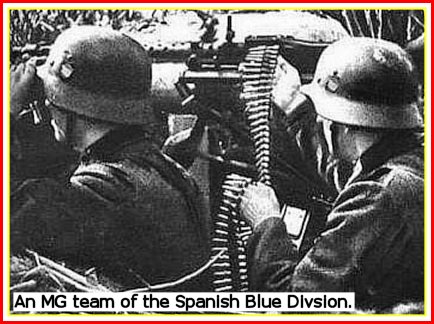
spanish blue divsion

The number of troops contributed by the German Allies was substantial. Hungary began Barbarossa with two corps, including its Mobile Corps and in 1942 supplied their 2nd Army which was composed of 1 Armored and 9 Infantry Divisions. 2nd Army was crushed by the Soviet offensive against Stalingrad. The Italians began with an expeditionary corps of 2 Semi-Motorized and 1 Light Infantry Divisions. In early 1943 they added 4 Infantry and 3 Alpine Divisions and a number of other smaller formations. This force became the 8th Army. It fought well during the advance toward Stalingrad but spread out over a wide front with little armored or air support was decimated by the Soviet offense against the city.  The remnants were no longer battle worthy and were evacuated to Italy.  Most of the Finnish Army was engaged in the war but after September 1939 made no major offensive contribution to the war. In 1944 following a major Soviet offensive which forced them to withdraw from the territory that they had captured in 1941 the Finnish government sued for peace. The Russians occupied a number of border provinces and islands and Finland was obliged to expel German Forces.  This resulted in the “Lapland War” between the Finns and the Germans with the Germans adopting a scorched earth policy as they withdrew from the country. The quality of the Finnish forces was generally higher than that of Germany’s other Allies.

romanian r35Obsolete French Built Romanian R-35 Light Tank
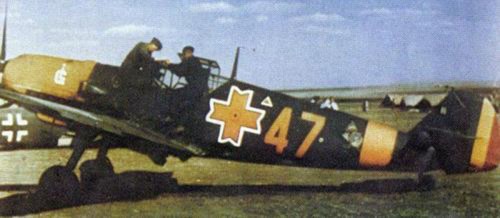
The Romanians contributed 19 divisions organized into 3 Armies to Barbarossa. They were limited by their equipment and logistics. The 3rd and 4th Romanian Armies were shattered at Stalingrad forcing a major reorganization as they continued the war.  In August 1944 with the Soviets pressing their border King Michael led a coup to overthrow the Fascist dictatorship of Antonescu. The Germans elected to fight and the Romanians changed sides and joined the Russian advance to the end of the war with their 1st Army taking part in the Prague offensive. Another contributor of troops was Franco’s Spain although it was a neutral country. Spain provided a division of volunteers which became the famous “Spanish Blue Division” or the 250th Infantry Division. It was outfitted as a German unit and received additional training from the Germans before it went into action. The division fought near Leningrad and was engaged in many tough fights.  A Spanish “Blue” Fighter squadron allotted to and equipped by the Luftwaffe also distinguished itself. In October 1943 Spain under allied pressure withdrew the division from the front although many soldiers volunteered to remain and fight on as smaller units attached to German formations. One volunteer company became part of the 11th SS Panzergrenadier Division Nordland at Berlin.  One thing that probably was a factor in the Spanish effectiveness as well as commitment to to German cause was their genuine loathing of the Soviets following the Spanish Civil War.

The final part of Di Nardo’s essay deals with the strategic goals and conflicts among the Axis coalition which were never worked out.  Examples of this include how the Finns never signed a formal alliance with Germany and how their national strategy did not allow them to deeper into the Soviet Union instead settling on recovering territory lost to the Soviets in 1939 with a few minor gains.  There was also the problem that the Romanians and Hungarians distrusted each other so much that they could not work together over their own territorial disputes.  The Italians joined the campaign late and their 8th Army participated in the German advance toward Stalingrad protecting the German flank.  While the Italians provided their own equipment including armor and aircraft they and their weapons were woefully suited for the war that they faced on the Eastern Front.  Di Nardo finishes his essay noting morale problems in the Hungarian, Italian and Romanian armies, the lack of understanding and general lack of motivation for the campaign.

Romanian_Me109-px800Romanian ME-109 E4, The Romanian Air Force Was One of the Axis Success Stories
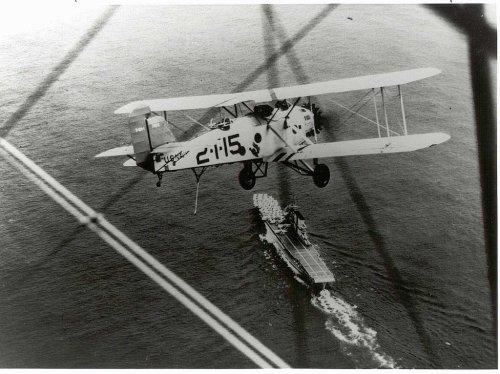
This article is well sourced. Di Nardo uses histories, archival sources, operational orders and analysis by the various armies as well as interviews with participants. Of particular note is that he goes to sources of the coalition partners and not just German sources.  This allows him to be far more nuanced and detailed in his discussion as opposed to others who simply ignore the contributions of the Axis partners.  His footnotes provide added detail and provide and lend support to his arguments.

The importance of this essay is twofold.  First it provides a look at the relationship of German to her coalition partners on the Eastern Front.  This is important from a historic standpoint simply because it is such a neglected topic in most histories of the period and gives added depth to the reasons for Germany’s defeat.  One has to ask the “what if questions” in regard to had the Germans better treated, equipped and recognized their allies’ contributions to the war effort.

The second and probably more important for Afghanistan is that it provides lessons to any nation which has to engage in coalition warfare.  In particular it has lessons for the United States which has found itself as the senior and vastly superior partner in a war which has multiple coalition partners in several theaters of operations.  Each coalition partner has certain military strengths and weaknesses in relationship to the United States, national interests, geo-political and economic relationships with competitors to the United States and internal political realities which impact their cooperation in the war.  As such the United States cannot allow itself to be cast in the role of a haughty imperialistic senior partner as did Germany.  The US instead must cultivate an attitude of assistance, respect and trust among its partners to assure their full cooperation and assistance in relation to U.S. goals in the war. This is particularly important now was it appears that the Afghan war is reaching a point where the deteriorating situation on the ground could invite the early withdraw of allies and necessitate either the addition of more US troops or a strategic withdraw which would be for all intents and purposes a defeat for the US and NATO. The consequences would not be good and while the Taliban may be able to be contained they undoubtedly would invite Al Qaida back and provide them with a sanctuary just as Pakistan has stepped up its efforts on the border.

Leave a comment

Filed under History, iraq,afghanistan, world war two in europe

The First Aircraft Carriers Part One: The First American Flattops- Langley, Lexington and Saratoga

saratoga aircraft approach for landingAircraft over Saratoga

Note: This is the first in a series on the early aircraft carriers.  Two others will follow on the British and Japanese carriers.  My dad was a Chief Petty Officer in Naval Aviation.  As such I grew up around Naval Air Stations, Squadrons and of course Aircraft Carriers.  My dad retired off of the USS Hancock CVA-19 in 1974.  I spent two weeks underway on USS Coral Sea CV-43 as a NJROTC Cadet in the summer of 1976.  It was an experience that I will never forget.  While on the Cruiser USS Hue City CG-66 we deployed with the USS John F Kennedy CV-67 for Operation Enduring Freedom.  There is something about the power and majesty of the modern carriers at the same time there is a sense of timelessness in the first aircraft carriers.  Three of the first four American ships were converted from other platforms.  As a kid, a young adult and even now I am fascinated by all things Navy, especially ships that made history.  Here is my look at the first American Aircraft Carriers.

The United States did not invent the aircraft carrier although Eugene Ely flew an aircraft onto and off of the Armored Cruiser USS Pennsylvania on January 18th 1911.  It was the British Royal Navy which first built and operated aircraft carriers beginning with the HMS Furious which had been converted from a light Battle Cruiser.  The Royal Navy would covert the sister ships of the Furious, the Glorious and Courageous as well as the auxiliary ship the Argus before building their first carrier that was designed from the keel up, the HMS Hermes.     With the British building carriers and the Japanese following suit the United States began a program of aircraft carrier production and operation unmatched in history.

uss langleyUSS Langley CV-1 The “Covered Wagon”

The first US carrier was the USS Langley, CV-1.  Langley was converted from the collier USS Jupiter beginning in July 1919.  She was commissioned as USS Langley CV-1 on 21 April 1920.  Displacing 15,150 tons fully loaded Langley embarked 34 aircraft and had a maximum speed of 15.5 knots.  Langley was primitive but groundbreaking.  She was the first carrier equipped with catapults and on 18 November 1922 achieved the first catapult takeoff by an aircraft.  She served as an invaluable training platform for Naval Aviators and helped provide the fleet with highly skilled flight crews that would operate from the USS Lexington and USS Saratoga.

langley as av-3Langley after conversion to AV-3

Nicknamed the “Covered Wagon” she served initially in the Atlantic until November of 1924 when she was transferred to the Pacific Battle Force.  She served as a carrier in the Pacific until 1936 when she was converted into a Seaplane Tender AV-3 and assigned to the Pacific in September 1939 based in Manila.  She was in the Philippines when the Japanese attacked and was sent south to Australia.  She was assigned to the ABDA forces defending the Netherlands East Indies and was sunk by her escorts after being bombed and disabled by Japanese aircraft while delivering fighter aircraft to Java with the loss of 16 sailors.

uss lexingtonUSS Lexington CV-2

The second two American Aircraft Carriers were also conversions.  Unlike Langley the Lexington and Saratoga were converted from a new class of large and powerful battle cruisers whose construction had been canceled by the restrictions of the Washington Naval Treaty.  Commissioned on December 14th 1927 Lexington was 880 feet long and displaced 38,746 tons.  Saratoga was commissioned on November 16th of the same year and of similar dimensions and displacement.  Both of these ships could steam at 33.25+ knots and had a complement of 90 aircraft.  They were armed with eight 8” guns mounted in 4 turrets at the behest of more traditionally minded officers who felt that the armament might be needed for surface actions.

Saratoga underwayUSS Saratoga CV-3

They were the largest American carriers built until the Midway class appeared inin late 1945 and early 1946.  Of other nations pre-war carriers only the Japanese Navy’s Akagi and Kaga, converted from a battle cruiser and battle ship for the same reason as a the Lexington’s were comparable in size, air group capacity, protection and speed. Saratoga’s 8”battery would be replaced by twin 5” 38 caliber mounts in 1942.

lexington sinkingLexington Burning and Sinking

Both ships were used to help develop carrier doctrine and the concept of the carrier task force. Future leaders of Naval Aviation including Marc A. Mitscher trained aboard or flew from these ships.  Of particular note was that during Fleet Problem XIX in 1938 Saratoga launched a surprise air attack on Pearl Harbor from a point 100 miles off Oahu, setting a pattern that the Japanese copied in December 1941.

saratoga 1945Saratoga 1945

During World War II both helped hold the line after Pearl Harbor along with Enterprise, Yorktown and Hornet. Lexington was the flagship of TF-11 during as series of raids on Japanese outposts in the Solomons.  TF-11 joined Admiral Frank “Jack” Fletcher’s TF-17 at the Battle of Coral Sea, the first Naval Battle fought outside of eyesight of the respective forces. Lexington’s aircraft helped sink the Japanese light carrier Shoho on May 7th 1942 and heavily damage the fleet carrier Shokaku the following day. However aircraft from Shokaku and Zuikaku hit Lexington with two torpedoes and 3 bomb hits which her damage control parties seemed to have under control when vapors from ruptured aviation fuel lines were ignited resulting in a series of explosions which ignited uncontrollable fires. Her crew was evacuated by escorts and she was torpedoed by the destroyer USS Phelps.

Saratoga served throughout the war. She engaged in patrols after Pearl Harbor and while enroute to joining Enterprise was hit by a torpedo from the Japanese submarine I-16. After repairs she was rushed to Hawaii to join the American Task Forces at Midway but arrived in Hawaii the day after the battle.  Following this Saratoga operated in the Central Pacific in the first offensive at Guadalcanal.  She participated in the landings as the flagship of Admiral Fletcher and then at the Battle of Eastern Solomons sank the Japanese light carrier Ryujo and damaged the seaplane carrier Chitose.  Following this battle she was hit by a torpedo from the I-26. After repairs she again went to the Solomons joined by the light carrier USS Princeton.  On November 5th the two carriers conducted a brilliant strike on Japanese ships and aircraft facilities at Rabaul which were threatening the landings at Bougainville.

saratoga 1944Saratoga September 1943

Following these operations Saratoga operated in the Gilberts and then with the British in the Indian Ocean.  She then was used as a training carrier for new pilots and aircrews at Pearl Harbor before being brought to Iwo Jima to operate night fighters against Kamikaze raids.  While conducting these operations she was attacked by Japanese aircraft in which 6 Japanese aircraft score 5 hits on her in 3 minutes.  Her forward flight deck was wrecked and she suffered great damage below decks and she lost 123 sailors.

saratoga kamikaze 2Saratoga burning after Kamikaze hits in 1945
Following repairs she resumed training duties and after the defeat of Japan was involved in Operation Magic Carpet to bring Servicemen back from overseas.  Surplus to Navy needs at the end of the war Saratoga was sunk in Operation Crossroads at Bikini Atoll by an underwater atomic blast in the “Baker” bomb test a mere 500 yards from her position. She sank 7 hours later.

saratoga sinkingThe End of an Era- Saratoga goes down at Bikini

5 Comments

Filed under History, Navy Ships