Category Archives: christian life

Wounded Healers at Christmas

lastmass

Friends of Padre Steve’s World

The German theologian Jürgen Moltmann wrote, “God weeps with us so that we may one day laugh with him.”  Since coming home from Iraq in 2008 my faith has undergone a profound change. This is a part of my story that I share with you.

Christmas is a special time for me, it always has been but in spite of that there were times that I took the faith element for granted. I believed and my faith in God, for me the Christian God, Father, Son and Holy Spirit was unquestioned. I knew the Scriptures, the Creeds and the Councils and I felt that my faith in a sense was untouchable. I was sure of it, in fact almost cocksure or arrogant about it. That came out in published writings in a very conservative Catholic monthly, the New Oxford Review back in 2000-2001.

For me the elements of my faith were very much intellectual. I could see other points of view but if I disagreed with them enough I would engage them with the purpose of defeating them. Of course this usually went to theological methods, history and hermeneutics. As far as those that lost their faith it was something that I had difficulty comprehending. Not that I was unsympathetic or uncaring of them or their plight, but I didn’t see how it could happen to me.

But that was before Iraq. That was before PTSD, moral injury and my own crisis of faith when I returned from the Iraq War in 2008.  That changed me as war has changed so many others before. Guy Sager wrote of his return from war in his classic The Forgotten Soldier:

“In the train, rolling through the sunny French countryside, my head knocked against the wooden back of the seat. Other people, who seemed to belong to a different world, were laughing. I couldn’t laugh and couldn’t forget.” 

My return instigated a crisis of faith, I felt like I still belonged in Iraq and home seemed like a foreign land.  In the crisis I was for all practical purposes I was an agnostic trying to believe and feeling abandoned by God and many of his people, especially clergy.  Commodore Tom Sitsch at EOD Group Two, a veteran of much combat asked me “where does a Chaplain go for help?” I told him “not to other Chaplains or clergy.”

That crisis etched a permanent scar in my soul which led to some fairly major changes in my life.  It forced me to enter what Saint John of the Cross called the “Dark Night of the Soul.”

I will not tell of how my great spiritual disciplines and intellect helped me get through the crisis, as they did not. I found it hard to pray or believe in anything for nearly two years as I struggled with abandonment. I felt that God, the Church and the Navy had abandoned me.  The only thing that kept me going was my profound sense of vocation as a Priest and Chaplain and commitment to others who were suffering.

I was losing my battle with PTSD during that time, depressed, anxious and despairing I threw myself into my work among the critically ill ICU patients and those that cared for them.  Christmas Eve of 2008 was spent in despair as I wandered through the darkness on a cold night after leaving Mass because I could not get through it.

Though I found a community and camaraderie among those that I worked with and tried to provide spiritual care, my own condition grew worse.  I was so bad enough that my clinical duties had to be curtailed over my objections in September of 2009.

I still stood the overnight duty and filled in for others as needed, but for a number of months I had no clinical assignments.  That meant that others in our minimally staffed department had to fill in for me. I am sure that they resented that, especially because before this I often worked 80-90 hours a week mostly in our ICUs and the staff of the ICUs now expected that kind of intensive ministry and support.

But in my desperation I was greeted with a surprise. On one of the on call nights not long before Christmas I received a call to the ER to provide the last rites to an elderly retired Navy Medical Doctor.  The man was a saint, faithful to God, his Church and the community. For years he dedicated much of his practice to the poorest members of the community, delivering babies for women with no insurance and caring for prisoners in the Portsmouth City Jail.  He breathed his last as I prayed this prayed the prayer of commendation following the anointing and something strange happened. I felt the presence of God for the first time since Christmas of 2007 in Iraq. It is too this day hard to explain.

Something miraculous happened that night and by Christmas Eve I realized that something was happening to me. As I wrote in Padre Steve’s Christmas Miracle on Christmas Eve of 2009:

“Mid afternoon I was walking down the hall and I experienced a wave of emotion flood over me, and unlike the majority of emotions that I have felt in the past couple of years this was different.  It was a feeling of grace and I guess the presence of God.  I went up and talked with Elmer the shrink about what I was feeling and the experience was awesome, I was in tears as I shared, not the tears of sadness, but of grace.  I am beginning to re-experience the grace of God, something that has been so long absent that I did not expect it, at least right now.  I didn’t do anything differently; I certainly was not working extra hard to pray more, get more spiritual or pack my brain full of Bible verses.  I was too far gone to do those things.  It was all I could do many mornings just to get out of bed and come to work.”

Since that time I have continued to recover faith and belief. I cannot say that it is the same kind of faith that I had before Iraq. This was a different kind of faith.  It was faith born of the terrible emptiness and pain of abandonment and despair, a faith that is not content with easy answers and not afraid to ask questions.  It is a faith in Jesus Christ, the crucified one who’s image we see hanging from the crucifix and adorning icons of the Crucifixion. It is as Moltmann wrote in The Crucified God:

“The Symbol of the Crucifix in church points to the God who was crucified not between two candles on an altar, but between two thieves in the place of the skull, where the outcasts belong, outside the gates of the city. It is a symbol which therefore leads out of the church and out of religious longing in to the fellowship of the oppressed and abandoned. On the other hand, it is a symbol which calls the oppressed and godless into the church and through the church into the fellowship of the crucified God”

My Philosophy of Religion Professor, Dr. Yandall Woodfin at Southwestern Baptist Theological Seminary told us in class that until we had “dealt with the reality of suffering and death we were not doing Christian theology.” At the time the words were offensive to me, but by the time I had graduated and also done a year of Clinical Pastoral Education they became a part of my experience. However that did not prepare me for the darkness that I lived in from February of 2008 until that Christmas Eve of 2009.  I would say that in addition to Dr Woodfin’s understanding of grappling with suffering and death that one has to add the abandonment of the outcast to the equation.

The “I Believe in God” of the Creed is no longer for me simply a theological proposition to defend, but rather an experience of God born out of pain, despair, anxiety, doubt, unbelief and abandonment. During my crisis I found almost no Christians willing to walk through the darkness with me, including clergy. The only clergy willing to were those who were walking the same path of the outcast with me, suffering from PTSD, TBI and other unseen wounds of war. It was if I was radioactive. Many people had “answers” for me, but none sought to understood my questions until my first  therapist Dr. Elmer Maggard asked me “how I was with the big guy?”

When I finally collapsed in the summer of 2008 and met with Dr. Maggard I made a conscious decision that I would not hide what I was going through.  I felt that if someone didn’t speak out that others like me wouldn’t seek help. In the nearly six years since I returned from Iraq I have encountered many people, men and women, current and former military personnel and families of veterans who came to me either in person or through this website. It led to me being interviewed in a newspaper and being featured on the Real Warriors website http://www.realwarriors.net , a program run by the Department of Defense to help reduce the stigma of getting help for PTSD which features the stories of military personnel suffering from it. My story can be found here: 

http://www.realwarriors.net/multimedia/profiles/dundas.php

I have had a number of military chaplains come to me also experiencing a faith crisis. Most said that I was the first Chaplain or minister that they had met or who admitted that he struggled with faith and the existence of God.  For a minister to be open about such struggles is dangerous. When my faith returned and was different I was asked to leave my former denomination because I was now “too liberal.”

In each of those encounters with those suffering there was a glimmer of hope for me and I think for them.  It was as if for the first time we had people that we could be open with.  Co-workers and others said that I was “real.” I certainly do not boast of that because it was painful to be transparent with people while in the depths of doubt and despair while hoping that somehow God would touch them with some measure of grace when I found it hard to believe.  I guess it was the fact that I was willing to walk with them in their crisis and let them be honest even if it meant facing my own pain and doubt. I learned something about being what Henri Nouwen called a wounded healer.  Nouwen wrote:

“Nobody escapes being wounded. We all are wounded people, whether physically, emotionally, mentally, or spiritually. The main question is not “How can we hide our wounds?” so we don’t have to be embarrassed, but “How can we put our woundedness in the service of others?” When our wounds cease to be a source of shame, and become a source of healing, we have become wounded healers.”

I do still struggle with the continued effects of War and PTSD, but I am in a much better place. I also struggle with faith at times when I look at the actions of those who profess to believe but treat others with contempt. I can understand the quote from the Gospel “I believe, help my unbelief.”

So today this wounded healer will celebrate a special Christmas at home. My wife and I will celebrate a Mass, enjoy a Christmas dinner with our dogs, Molly and Minnie. Depending on how she feels we will either go out to a movie or watch one at home.

I want to thank all of my readers, especially those who like or comment on these posts. You are appreciated, some are lengthy and you choose to take your time to read them and often share them. If you are walking the path of the outcast feel free to drop me a line here or on my Facebook page. My wish for you and for all is a Christmas of peace, reconciliation and love.

Peace and blessings,

Padre Steve+

1 Comment

Filed under christian life, faith, ministry, Pastoral Care, PTSD, Tour in Iraq

Christ & Christmas

996759_10152169414832059_1833080489_n

Friends of Padre Steve’s World,

Just a short thought today as we get ready for Christmas. Of course it is still the season of Advent, but no time like Advent to talk about faith, but as I mentioned at the beginning of the month, I plan on sharing some of my faith experience, and this is another one of those posts.

The great author and novelist Anne Rice wrote after leaving the Catholic Church a few years ago, “My faith in Christ is central to my life. My conversion from a pessimistic atheist lost in a world I didn’t understand, to an optimistic believer in a universe created and sustained by a loving God is crucial to me. But following Christ does not mean following His followers. Christ is infinitely more important than Christianity and always will be, no matter what Christianity is, has been, or might become.”

I can understand that feeling, and now over five years after being asked to leave my former church I am in a good place, and for the most part I am over the pain, hurt, and bitterness that I felt in the immediate aftermath of that experience. While I still experience a sense of loss due being rejected by men I thought were friends, I don’t feel the terrible pain that I used to feel, especially this time of year. But that being said what I feel now is much more about other people who may be going through similar experiences in their own churches or faith communities.

The fact is that I do not want others to have to go what I went through. I know that such things happen every day, but I would never wish what I went through on anyone. 

Sadly, it will happen. It will happen in churches across the theological and ecclesiolgical  spectrum. In one breath church leaders and members will extoll the love of God, and in the next condemn and reject people for a myriad of reasons; and they will use the most hate filled and vile terminology covered with a thin veneer of theological and biblical justification. They will turn their backs on people who simply want to be loved, cared for, accepted, and listened to in their spiritual quest. 

Dietrich Bonhoeffer said:

“Many people are looking for an ear that will listen. They do not find it among Christians, because these Christians are talking where they should be listening.”

This Advent I am thankful that I have a number of friends, including some Christians from variety of backgrounds, as well as some chaplains who have stood by me even if they disagree with my theology, politics, or my favorite baseball teams. That being said, with the exception of such people who have been with me through thick and thin I am mostly terrified of being around conservative Christians, and most of my closest friends are people who are not welcome in most churches due to their beliefs or lifestyles. But they are genuine and we honestly care for each other. 

Most churches are frightening places for me, and the sad fact is that if I were not already a Christian there is little in American Christianity that would ever cause me to be interested in Jesus. I can totally understand why churches are hemorrhaging members, especially young people whose religious preference is “none,” for I too am in some sense an outcast. I guess that is why I can relate to Anne when she wrote, “following Christ does not mean following His followers. Christ is infinitely more important than Christianity and always will be, no matter what Christianity is, has been, or might become.”

Have a great day,

Peace

Padre Steve+

2 Comments

Filed under christian life, faith, Pastoral Care, philosophy, Religion

The Long & Winding Road of a Radioactive Priest

IMG_1931

Friends of Padre Steve’s World

The late Henri Nouwen wrote, “Ministry means the ongoing attempt to put one’s own search for God, with all the moments of pain and joy, despair and hope, at the disposal of those who want to join this search but do not know how.”

Those who have followed my writings for some time know how much that means for me, and how in spite of all of my struggles with faith and doubt it matters as I continue my own walk, as well as try to be there for those who like me struggle at this time of year. Since I have a lot of new readers since I last shared this I figured I would attempt to share those thoughts again.

In February 2009, about eight months after psychological physical and spiritual collapse due to the effects of PTSD and in the midst of my struggle I began to write about my experiences on this site. My psychologist at the time had suggested that I go public with my struggles using my writing as a means to do so. It was something that I had contemplated for some time. I was a mess and struggling many days to even get to work. I was depressed much of the time, continually on edge, still suffered from nightmares, night terrors, flashbacks and sometimes an angry rage which swept over me when I felt threatened. I avoided big crowds, was afraid to even go to church and I had a hard time trusting anyone. In that time I would listen to the Beatle’s song “The Long and Winding Road” which in some ways became a prayer for me.

The long and winding road
That leads to your door
Will never disappear
I’ve seen that road before
It always leads me here
Lead me to your door

The wild and windy night
That the rain washed away
Has left a pool of tears
Crying for the day
Why leave me standing here?
Let me know the way

Many times I’ve been alone
And many times I’ve cried
Anyway you’ll never know

The many ways I’ve tried

And still they lead me back
To the long winding road
You left me standing here
A long long time ago
Don’t leave me waiting here
Lead me to your door

But still they lead me back
To the long winding road
You left me standing here
A long long time ago
Don’t keep me waiting here
Lead me to your door

The Long And Winding Road lyrics: Songwriters: Mccartney, Paul; Lennon, John. © SONY BEATLES LTD; SONY/ATV TUNES LLC

So I began to write and find some solace even as I struggled with even the existence of God. One thing that I found was that there were really very few people, especially ministers secure enough to enter into a healing relationship with me. I felt isolated among my peers especially those from my own church. Since I have detailed that journey to include a restoration of faith in God in December 2009 about two years after my struggle began I won’t go into great detail in this article. All I knew is that it seemed that most Priests and other ministers either didn’t know how to walk with me, were afraid to walk with me and were most certainly uncomfortable with a colleague, especially one with my experience dealing with the pain psychological and spiritual effects of PTSD including being from all practical purposes an agnostic. As one psychotherapist labeled it I was “radioactive.”

Eventually some in the leadership of my former denomination which I had served faithfully as a priest for 14 years asked me to leave the church because I had become “I had changed since coming back from Iraq” and “had become too liberal.”I had known this was coming for some time and had been making preparations for it but the timing of the notice from my former Bishop came as a surprise.

I had begun to voice opinions, especially on social and political issues that rankled some, maybe many in my former church. Since only a few friends from that church remain in contact with me I presume that I rankled more than I did not. There were times during the early part of 2010 that my wife would ask me after reading something that I had published if I was trying to get thrown out. I wasn’t trying to but I was at the point where I knew that I had to be honest and transparent about my struggle as well as how my beliefs had changed a result of war and of PTSD. I was diplomatic and tried to say what I had to say without getting too controversial. That began to change in the summer of 2010 and reached its head on September 23rd when I published Faith Journeys: Why I am Still a Christian. https://padresteve.wordpress.com/2010/09/22/faith-journey%E2%80%99s-why-i-am-still-a-christian/

I actually did not intend for the article to be too controversial, but looking back I can see how it was interpreted that way. It was for all practical purposes a declaration of independence and a severe criticism of the lack of care that I had felt from the church that I had served for most of my ministerial career. In a sense it was my “Here I stand, I can do no other moment.” 

My goal since faith began to return was to be available to those that feel cut off from God and the Church, to walk with people in the midst of struggle, pain and despair, especially fellow ministers and chaplains. I don’t have all the answers, in fact I know very few, except that I know that God can use the pain, alienation, struggle and despair that I went through then, as well as the struggles that I still have in the lives of others like me that are willing to walk that lonely path to reconciliation with God and humanity.

It has been a long, winding and often lonely road but I have found solace, community and faith as I have travelled it. Those that I have met along the way have become my brothers and sisters on the journey. And that my friends makes it all worth it.

Peace

Padre Steve+

1 Comment

Filed under christian life, faith, ministry

The War on Christmas

lk120912dAPR-losing-the-war-500

Friends of Padre Steve’s World,

This time of year as the war on Christmas heats up I am reminded of the immortal words of Doctor Seuss:

“The Grinch hated Christmas! The whole Christmas season!

Now, please don’t ask why. No one quite knows the reason.

It could be his head wasn’t screwed on just right.

It could be, perhaps, that his shoes were too tight.

But I think that the most likely reason of all

May have been that his heart was two sizes too small…”

Dr Seuss How the Grinch Stole Christmas


Yes my friends I hate to admit it there is a war on Christmas. However unlike those that want to blame it on all of those Godless types, I have to say that some Christians have waged a real war on Christmas for centuries.

Now I have to be fair. There are some people in the secularist camp who file lawsuits against municipalities that have Christmas displays on public property and even some who will push those lawsuits to exhibits on private property.  However, despite the media attention these are nothing in comparison to what the Christian Grinches have done over centuries. So despite the efforts of some I do not fear for Christmas because the celebration of Christ’s Incarnation and Nativity has survived far worse even from those within the faith.

PURITAN-BAN-ON-CHRISTMAS-WAS-TO-PREVENT-DEMONIZATIONS-OF-CITIZENS-IN-COMMUNITY

Puritan Anti-Christmas Laws

Now let me be fair here. Some of the things that the Christian Grinches have protested are frivolous and not very spiritual. But that tends not to be the case today. Today’s Christians seem perfectly at home with the crass materialism and consumerism of our modern Christmas celebrations even within the walls of Christian churches. It seems that as long as we are willing to put a nativity scene made by Third World slave laborers in the middle of an otherwise completely capitalistic consumer orgy we don’t care. But God forbid an Atheist object or a member of a minority religion demand equal time and space for their display in the otherwise crassly materialistic celebration, those things are a declaration of war against the very holiday that we as Christians wantonly desecrate.

frowning-puritan-300x226

The Puritans hated Christmas…

Let us go back and look at some history. Not the kind of “history” promoted by David Barton and Glenn Beck, but real history. You know, stuff that actually happened and that we have documentary evidence to support, not stuff that we pull out of thin air.

Back in the 1600s a Christian group that was tremendously influential in our nation’s early development hated the celebration of Christmas. I am not kidding. These were the Puritans.

The Puritans believed that they were the “elect” based on their theology. The Calvinist doctrine of double predestination ensured that they as the elect knew they knew they were right. For those that do not understand this doctrine, let me explain. The Puritans and other strict Calvinists believed that they were the elect. They believed that they were pre-ordained by God before the foundation of the world to go to heaven, and the rest of us were created to live and die, and then go to Hell because God decided so before the creation of the world.

But that is not all. The Puritans also believed that as the elect that they had a “Biblical Mandate” to rule for God on earth and as such they established a theocracy in the Massachusetts Bay Colony. If the Puritans had simply died out and gone away this might not be an issue. However, their theology has continued and their modern successors in the modern Christian Dominion or 7 Mountains Theology movements believe the same thing. They believed that sine it was God’s will that they rule that whatever they said that others needed to obey, after all God put them in charge.

The Puritans came out of the Protestant Reformation in England. Unlike the Englishmen of today, the English of that period took their religion pretty seriously.  Now despite the cultured accent that we hear on the BBC or CNN World the English religionists of that day were actually more like unruly football fans only worse. When it came to matters of religious tolerance and loving their neighbors they were rather un-Christian.

English Protestants of the non-monarchical Reformation type like the Puritans did their best to rid the Church of England of anything that appeared to even look Catholic, especially anything to do with Christmas. Of course this cleansing of the church often included killing real people including the few remaining stick in the mud Roman Catholics as well as Anglicans who still liked Catholic stuff.

But to be fair to the Puritans back then the English of all Christian denominations tended to be a bit intolerant. They would lop off the heads, burn at the stake, or crush with heavy stones anyone that deviated from their beliefs. They killed first first and asked questions later. It was kind of like the fans of the Premier League only without professional officials to regulate the game.

Early in their history the Puritans were a persecuted group. They were militant, intolerant and exclusive, so who could not find reasons not to like them? But when the Puritans took power after Oliver Cromwell overthrew the monarchy they took their revenge with great gusto. They didn’t just decide to lop, crush and burn their opponents of all denominations, but they also decided to outlaw the celebration of Christmas.

Of course they did so for the noble reason of purifying England of heresy. In fact if you want to compare them to a modern religious group, they would be pretty similar to the Taliban. When the Puritans took over the government they did their best to ensure that everyone was as miserable as them. This included banning the celebration of Christmas.

Wassail 03

Wassailers 

The Puritans were not content with inflicting their beliefs on church going people, they inflicted them on the majority of the people who simply wanted some relief for the drudgery of daily life in 17th Century England. The Puritans even banned the poor from the tradition of Wassailing. Wassailing was a custom in which the rather pungent poor would go from house to house, begging for treats in exchange for drinking a toast to the family.  The drink they called wassail was a hot-spiced wine.  Now this was not a vintage Napa Valley or French wine but a rather pungent and rancid English wine, thus the need for spices and heat.

SPSC1115-Mob-Football-14t

Mob Football

Wassailing sometimes ended up with episodes of drunken revelry, much like current English Football match celebrations, which is why the Puritans objected so strenuously. They didn’t like football either. No kidding, then it was called “Mob Football” and it didn’t have very many rules. Since it was particularly popular at Christmas, the Puritans suspected that it must have been from the Devil.

The Puritans had no sense of fun as we know it. They viewed any religious practice that might include something that might be fun harmful, as such anything fun needed to be completely removed from public life.

Oliver Cromwell by Samuel Cooper

Oliver Cromwell

This miserable situation lasted until 1660; a year after the Lord Protector and head of the army and police Oliver Cromwell kicked the bucket. The anti-Christmas laws were quickly overturned and everyone was happy. Well sort of, the populace went back to simply lopping, burning and crushing heretics, especially Roman Catholics. That being said, people were so happy to bring Christmas back that the new rulers in England exhumed Cromwell’s body from Westminster Abbey and executed him posthumously. Since decorating was allowed these rulers lopped off Cromwell’s head and displayed it outside Westminster Hall for about four years. A popular verse of the time said:

Now thanks to God for Charles’ return,

Whose absence made old Christmas mourn;

For then we scarcely did it know,

Whether it Christmas were or no.

Not to be outdone the Puritan colonists in the Massachusetts Bay Colony decided that what was going on in their homeland was not to their taste. So in 1659 under Governor Sir Edmund Andros they enacted laws like those of Cromwell. The laws remained on the books until 1681. During the time that the laws were in force everyone had a grand time. To keep the festivities going the General Court of the Massachusetts Bay Colony banned the celebration of Christmas and other such holidays at the same time it banned gambling and other lawless behavior.

Grouping all such behaviors together the court placed a fine of five shillings on anyone caught feasting or celebrating the holiday in a manner that might be construed as fun. Things like taking time off from work, feasting, partying, wassailing, playing Mob Football, or anything else that might be construed as fun were criminalized. The law stated:

“For preventing disorders, arising in several places within this jurisdiction by reason of some still observing such festivals as were superstitiously kept in other communities, to the great dishonor of God and offense of others: it is therefore ordered by this court and the authority thereof that whosoever shall be found observing any such day as Christmas or the like, either by forbearing of labor, feasting, or any other way, upon any such account as aforesaid, every such person so offending shall pay for every such offence five shilling as a fine to the county.”

article-1332096124019-12390FC5000005DC-933373_304x425

That sounds lovely doesn’t it? To their credit the Puritans of the Massachusetts Bay Colony didn’t go lopping, burning or crushing heretics with heavy stones unless they were proven to be a Christmas celebrating witch.

Christmas law 1658

Unlike England where the lifting of the ban was celebrated with the aplomb given to a World Cup championship the Puritans in the Massachusetts Bay Colony and their descendants frowned upon the celebration of Christmas until the 1820s. That was when enough Irish showed up in Boston to turn the place around and make it the fun town that it is now.  Coincidently the last State Church in the United States was the Congregational Church in Massachusetts. It wasn’t disestablished until 1833.

So the next time you hear about the war on Christmas, remember that a lot of the people ranting about the supposed “war on Christmas” actually want to re-establish a very harsh and sterile Puritan view of faith that led to the celebration of Christmas being criminalized in England and in Massachusetts. Of course they would have a hard time doing that now since they so connected to the corporations and retailers who make big time bucks off of Christmas.

Thankfully for now we only have to suffer from the yearly rants of the fun deprived army of Christian Grinches, who without the religious flair of the Puritans attempt to crush the spirit of Christmas. Thankfully, today, more people like all the tinsel, bells, lights, decorations, the presents and time off regardless of their religion or lack thereof to want to abolish Christmas. So the Christmas celebration as we know it will survive, at least until next year. One can always hope.

Peace

Padre Steve+

2 Comments

Filed under christian life, faith, History, News and current events, Religion

Advent & the “War” on Christmas

677

Friends of Padre Steve’s World

I often talk about my struggles with doubt and faith, but in regard to faith, the season of Advent has become even more important to me than it ever was before. In fact, amid all the yearly histrionics and propaganda of the Christian Right and their Fox News Channel cheerleaders who scream about “the war on Christmas” I find Advent to be a powerful antidote.

Advent is the beginning of the liturgical year, in a sense the opening day of a new season of faith, as much as the Opening Day is to baseball. Advent is a season of new beginnings, of hope looking forward and looking back. It is a season of intense realism. It is a season where the people of God look forward to their deliverance even as they remember the time when God entered into humanity.  It was not simply entering the human condition as a divine and powerful being inflicting his will upon people but deciding to become subject to the same conditions know by humanity. As Paul the Apostle, wrote about him: “though he was in the form of God, did not regard equality with God as something to be exploited, but emptied himself, taking the form of a slave, being born in human likeness. And being found in human form, he humbled himself and became obedient to the point of death– even death on a cross.” (Philippians 2:5b-8) 

In the incarnation Jesus Christ shows his love and solidarity with people, humanity, the creation, reality. Dietrich Bonhoeffer wrote:

“God loves human beings. God loves the world. Not an ideal human, but human beings as they are; not an ideal world, but the real world. What we find repulsive in their opposition to God, what we shrink back from with pain and hostility, namely, real human beings, the real world, this is for God the ground of unfathomable love.” 

That simple fact is why Christ came. Christ did not come to found a government or even for that matter a religion. He did not come to exemplify “Christian” virtues or to condemn people that religious people condemned as sinners. He came simply to save and redeem the world and people like us from themselves.

The meaning of the incarnation, and the hope of the season of Advent is that God loves people. Yes, even the people that the supposed Christian culture warriors despise.

In the next few week there will be much written and said about Jesus. Much of it will not actually deal with Jesus or the people that he came to save but instead about the worldly power and influence of those who seek the profits of being “prophets.” Some of them will talk fervently about the “War on Christmas” as if somehow God and Christ are so small that they need government-sponsored displays in the public square in order to be real, relevant or for that matter important. What a small God they must have.

Somehow the message of Advent, the coming of Jesus is contradictory to the message of the for profit prophets. Certainly the early Christians had no government backing of any kind. These early Christians simply lived life and showed God’s love to their neighbors, often at the cost of their lives and paradoxically the message was not crushed, but spread and to be neutralized had to be coopted by Constantine. It was only when the leaders of the church became co-executors of government power that the message of reconciliation became a bludgeon to be used against those who did not agree with the theology of the clerics beholden to the Empire.

The Christ of the Season of Advent, the one who came and who promises to come again is not captive to the capricious message of the for profit prophets and their political and media allies. I would dare say that God is much bigger than them or those that they believe will somehow end the Christian faith as we know it. But then maybe the Christian faith “as we know it” is more a reflection of our culturally conditioned need for physical, economic and political power over others than it is of Jesus.

All I know is that the simplicity of the message that “God so loved the world that he gave his only begotten Son” is more powerful than any political-religious alliance.

The time of waiting in expectation during advent also helps us to focus on Jesus’ words to  “Love God with all your heart and love our neighbors as ourselves.” It also calls to mid the words of the Old Testament prophet Micah, who asked “what does the Lord require of thee? To love show justice, to love mercy and to walk humbly with thy God.”

Advent stands in stark contrast to the politically charged consumerism of the War on Christmas.  I think that the message that God loves the real world is worth repeating in such an environment. In fact I think that because the message of God’s great love for those deemed “repulsive” by so many supposedly “conservative Christians” is so amazing that it must be proclaimed. As distasteful as it is to the “for profit prophets” of our time, it is not only worth repeating, but actually believing and being acting upon.

It is a good reason for me to during this season of Advent to look forward to our celebration of the mystery of the Incarnation, the coming of the God who “emptied himself” and took “the form of a slave” in order to save his people.

Peace

Padre Steve+

3 Comments

Filed under christian life, faith, Religion

Belief & Unbelief in Advent

2004weihnachtsbrief-2

Friends of Padre Steve’s World,

I mentioned on Sunday that I would be writing about faith and doubt during the season of Advent and Christmas.  Gospel according to Saint Mark records the story of a man that brought his son to Jesus the Christ to be cured of a deadly disease. In desperation the man cries out to Jesus, “Lord I believe, help me in my unbelief.”

I understand that impassioned cry.

That being said, for a lot of people, including me, the season of Advent and Christmas are incredibly difficult and times where faith, already difficult becomes nearly impossible.  For many the season is not a time of joy but depression, sadness and despair. I know feeling well, for it has been the reality that I have lived with since returning from Iraq.

Before Iraq, Advent and Christmas were times of wonder and mystery and I really found it difficult to understand how anyone could be depressed during the season, but that was before I came home from Iraq. After Iraq, the seasons of Advent and Christmas became almost unbearable as I struggled to believe in anything, including God.

I have faith again, but I still struggle to find the same wonder and mystery of the season that I once experienced. I think that the last time I was truly joyful at Christmas and during Advent was in Iraq, celebrating the message of hope among our advisors up and down the Iraqi-Syrian border. I think the most special moment was serving Eucharist to an Iraqi Christian interpreter who had not received the Eucharist in years that Christmas Eve of 2007 at COP South. Somehow in that God forsaken land God seemed closer than any place I have been since.

Since I returned from Iraq my life has been a series of ups and major downs. In dealing with PTSD, anxiety, depression and chronic insomnia as well as my dad’s painfully slow death from Alzheimer’s disease, I have struggled with faith.  Prayer became difficult at best and as I dealt with different things in life I knew that I didn’t have any easy answers.  Going to church was painful. Chaplain conferences even more so, except being with others who struggled like me.  About the only place that I could find solace was at a baseball park.  For some reason the lush green diamond is one of the few places that comfort me.

I find that the issue of doubt is not uncommon for a lot of people, including ministers of most Christian denominations. I am sure that this can be the case with non-Christian clerics as well, but I cannot say that with any deal of authority.

For some Christian ministers and priests the seasons of Advent and Christmas can be difficult. For those of us who are ordained and view ministry or Priesthood as a sacred vocation this can difficult to deal with.  Ministers and others who suffer a crisis in faith, depression or despair endure a special kind of hell this time of year because we are not supposed to suffer a crisis in faith, for any reason.

I believe that for many people, a religious leader who has doubts and struggles with faith is disconcerting.  I know many ministers who for a myriad of reasons experienced a crisis in faith. Sometimes this involved great personal losses such as the loss of a child, a failed marriage or being let go or fired by a church, or experiencing any number of other major traumatic events.  All of these men and women are good people. But when they experienced a crisis, instead of being enfolded by a caring community of faith they were treated as faithless failures, and and abandoned or excluded from their faith community as if they were criminals.

When I was younger I used to look askance at pastors who had given up, lost their faith, or abandoned the ministry for whatever reason.  As a young seminary student and later young chaplain I had a hard time with such situations. They made no sense to me and I was somewhat judgmental until I started to get to know a decent number of “broken” ministers from various faith traditions that a lot more went into their decision than simply not being tough enough to hang in there until things got better.

While I saw this happen to others I never thought it would happen to me. I thought I was “bulletproof” and when it occurred I was stunned. I didn’t expect what happened nor its effect on me.

When I came back from Iraq I came home to find that my office had been packed up and many mementos lost, it took months to find most and there are still important documents that have never been recovered. My wartime accomplishments went unrecognized by most of my peers in the Chaplain Corps on my return home and I found no place of comfort.

As I crashed no one asked about my faith until I met my first shrink. It was after the initial crash that my commanding officers, Captain, now Admiral, Frank Morneau and Tom Sitsch both asked me about my faith.  I told them that I was struggling and both were more understanding than the vast majority of chaplain, ministers, or Christian lay people that I knew. Commodore Sitsch asked me “Where does a Chaplain go for help?”  I could only say, “not to other chaplains.” Sadly I had no idea how much Commodore Sitsch was going through as he ended his life on January 6th 2014, suffering the effects of untreated PTSD and TBI.

On the professional side I felt tremendously isolated from much of the clergy of my former church, and many chaplains. This is something that I still feel to some extent today, although there are some chaplains who I can be completely honest with, sadly, like me, they have also experienced major faith crisis and have struggled with the same kind of abandonment and betrayal that I have felt. I was angry then because I felt that I deserved better, because I had done all that was asked of me for both my former church and chaplain corps.

In the midst of the crisis I appreciated simple questions like “How are you doing with the Big Guy?” or “Where does a Chaplain go to for help?” Those questions showed me that the people who asked them cared.

There were many times between 2008 and 2010 that I knew that I had no faith.  People would ask me to pray and it was all that I could do to do to pray and hoped that God would hear me.  Even the things that I found comforting, the Mass, the Liturgy and the Daily Office were painful, and while faith has returned, some of the of them still are.

That being said, I am still a Christian, or maybe as I noted last week a Follower of Jesus, since the Christian “brand” is so badly tarnished by the politically minded, hateful, power seeking, media whores that populate the airwaves and cyber-space. This makes Advent and Christmas difficult.

Why I remain a Christian is sometimes hard to figure.  I am certainly not a Christian because of the church, what is called Christendom, or the actions of supposed Christians who want to use the police power of government to subjugate others. At the same time like the German priest and theologian Hans Kung “I can feel fundamentally positive about a tradition that is significant for me; a tradition in which I live side by side with so many others, past and present.” Nor am I a Christian because I think that the Christian faith has all of the answers to all of lives issues. After coming home from Iraq I know that it is not so. I have to be painfully honest and say that neither the Church nor Christians have all the answers. That may sound like heresy to some, but I can live with it.

I don’t presume to know God’s will and I can’t be satisfied with pat answers like I see given in so many allegedly Christian publications, sermons and media outlets.  Praying doesn’t always make things better. I remain a Christian in spite of these things and in spite of my own doubts.  I still believe that God cares in spite of everything else, and in spite of my own doubts, fears and failures.

One of the verses of the Advent hymn O’ Come O’ Come Emmanuel is a prayer for me this year.

O come, Thou Day-Spring, come and cheer

Our spirits by Thine advent here

Disperse the gloomy clouds of night

And death’s dark shadows put to flight.

 So now, for those that like me struggle with faith, those who feel abandoned by God, or by family and friends, I pray that all of us will experience joy this season. So I do pray that the Day Spring will come and cheer, all of us with his advent here.

Peace,

Padre Steve+

2 Comments

Filed under christian life, faith, Pastoral Care, Tour in Iraq

Advent 2015

AdventWreath

Friends of Padre Steve’s World

Today was first Sunday of Advent, which is the beginning of the liturgical year in the Christian church. Advent and Christmas have always been my favorite part of the liturgical year, I tend to find them mysterious, yet comforting and hope filled. The past couple of years Advent has been kind of an odd time for me. I have a small chapel at the Staff College but from the end of November to the beginning of January we are out of session, and the largest course that we offer has no students here. Thus with no congregation I do not do services.

I will be sharing some of my journey and my struggles over the coming weeks. Since Iraq, Advent and Christmas are not the same. I believe, but I don’t. I struggle, but still keep faith. I can understand why people struggle with depression during the season. I hope that what I from my heart and experience will encourage others who like me wonder just what the hell is going on sometimes.

So, until the next time.

Peace

Padre Steve+

Leave a comment

Filed under christian life, faith

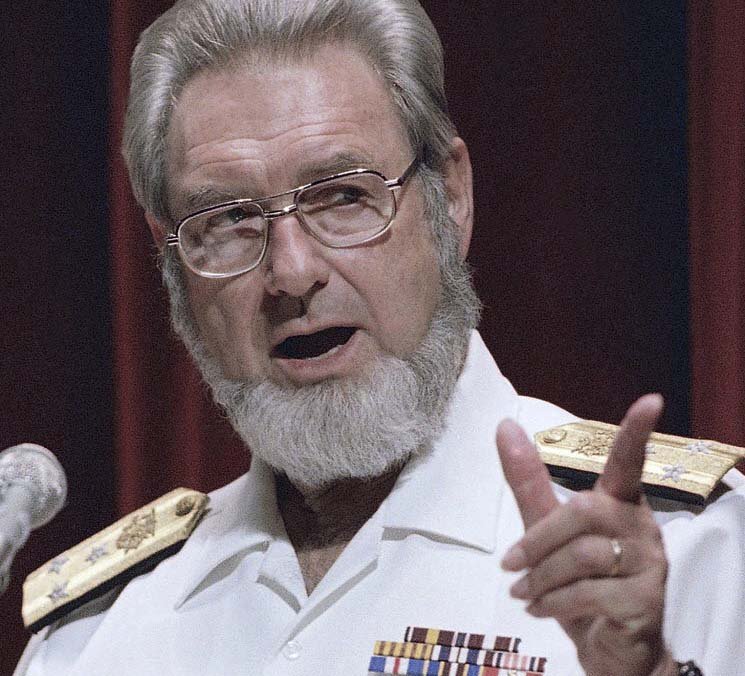
Separate Ideology & Religion from Sworn Duty: The Legacy of Dr. C. Everett Koop

c-everett-koop-1db591308d7eb474

“At the beginning of the AIDS epidemic many Americans had little sympathy for people with AIDS…. The feeling was that somehow people from certain groups ‘deserved’ their illness. Let us put those feelings behind us. We are fighting a disease, not a people.” C. Everett Koop, Surgeon General 1986

Friends of Padre Steve’s World,

I have mentioned that I have been reflecting on many things over the past few weeks and months. Of course if you follow my writings you know what I think about public officials who refuse to do their duty to follow the law and protect the rights of other citizens, even of those that they happen to disapprove. This came to a head recently with the case of the anti-marriage equity county clerk, Kim Davis. I am not going to revisit her case as I have been worn out by it and have no need to waste any more time on her.

That being said I can point out the case of a public official, a conservative, pro-life, Evangelical Christian who served as Surgeon General under President Reagan, Dr. C. Everett Koop. In an era of extreme intolerance and hatred for those infected with HIV, Dr. Koop became one of the leading proponents of compassionate and responsible care for victims of HIV/AIDS, most of whom were homosexual men. He met opposition within the administration, where despite his impressive credentials he was marginalized and was vilified by conservative Christians.

Dr. James Dobson and Dr. D. James Kennedy, early leaders of the political religious right were particularly vindictive. These unscrupulous leaders helped spread much disinformation about HIV from the a book published by a charlatan named Gene Antonio who wrote what was then a popular book called “The AIDS Cover Up,” They claimed that AIDS could be spread by kissing, mosquito bites or even by touching surfaces that had been touched by those infected. These men were bolstered by their allies in the Reagan White House, Secretary of education Bill Bennett and his assistant Gary Bauer who were the official administration spokesmen regarding AIDS.

They marginalized the Surgeon General; Dr. C. Everett Koop who noted in the early days of the epidemic was “completely cut off from AIDS” by Bennett and others in the Reagan Administration. They were so wrong that Koop, who was by no means a liberal took them to task on their hateful, dishonest and un-Christian proclamations. Koop told a journalist:

“the Christian activity in reference to AIDS of both D. James Kennedy and Jim Dobson is reprehensible. The first time that Kennedy ever made a statement about AIDS, I saw it on television. It was so terrible, so homophobic, so pure Antonio that I wrote him a letter.”

Koop said of Dobson, who he had worked with earlier on HIV/AIDS: “I don’t know what happened to him. He changed his mind, and last August in his paper he attacked me for two pages as leading people down the garden path. But again his arguments were full of holes. I just cannot believe the poor scholarship of so many Christians.”

Despite the opposition and attacks on his character by leaders of the Christian Right, Dr. Koop was undeterred and had no problem taking on these men and women. Some of these supposedly Christian leaders still are with us and spout the same hatred for homosexuals that they did in the 1980s. Dr. Koop realized that many of his fellow Christians really didn’t care about people, and believed that HIV was God’s judgment against people that they already despised and had in their theology condemned to Hell. He also realized that many of these leaders would resort to poor scholarship and even inflammatory statements to influence public opinion.

For doing so Dr. Koop was condemned by fanatical extremists like Phyllis Schlafly who said that Koop’s recommendations in his report about preventing AIDS looked “like it was edited by the Gay Task Force” and Schlafly, ever the loving, honest and ethical Christian that she is accused Koop of advocating that third-graders learn the rules of “safe sodomy.”

Koop replied in a very courageous manner to Schlafly, who in my view is one of the most loathsome people to ever unite religion and politics: “I’m not surgeon general to make Phyllis Schlafly happy. I’m surgeon general to save lives.”

Dr. Koop understood the oath that he took as a physician and the oath that he took when he became Surgeon General; sadly Mrs. Davis and many in the Christian Right will never understand that. In 1988 Dr. Koop said something that most people in positions of any public responsibility, be they public health officials, medical professionals, politicians or even the most partisan political preachers should abide: “I separate ideology, religion and other things from my sworn duty as a health officer in this country.”

Dr. Koop’s words should be heeded by any Christian in public office, but sadly, those who do will be treated with the same scorn and hatred as Dobson, Kennedy, Bauer, and Schlafly heaped on him.

I can understand Dr. Koop’s plight. I have been set upon by some of the disciples of Bauer, Dobson, Schlafly, Kennedy and others for simply defending people’s rights under the Constitution and obeying the oath of office that I took in 1981 and have continued to affirm since. Sadly, the truth is that many so-called Christians will attempt to destroy the lives, reputation and careers of other Christians who do not tow their ideological line, and sadly this has become much worse than it was in the 1980s.

I will write more about this but for now I will wish you a good day.

Peace

Padre Steve+

1 Comment

Filed under christian life, civil rights, ethics, faith, healthcare, History, laws and legislation, leadership, LGBT issues, News and current events, Political Commentary

Born that Way: A Star Trek Episode for Today

STTNG517TheOutcast18_zps9b0f7431

Friends of Padre Steve’s World

Judy and I were watching a Star Trek the next Generation video the other night and both of us were moved by it. The episode called The Outcast from season five, involved an encounter where the crew of the Enterprise assisted people of an androgynous race to find a missing shuttlecraft.

The androgynous race had believed that they had evolved beyond gender, and members who felt that they were either male or female were outcasts, and subjected to what we might call reprogramming, something quite like what some Christian conservatives call “reparative therapy” or “conversion therapy” in which homosexuals are forced to renounce and deny who and what they are. 

In the Star Trek episode a scientist, of that race named Soren meets the crew of the Enterprise and finds that she is attracted to Commander Riker. It is a highly emotional episode, and when her leaders find that she is attracted to Riker they put her on trial. During that interrogation she is given the chance by Riker to deny who she is and blame the situation on him, but she cannot. Instead she declares the truth about who she is, a truth that is shared by so many of the homosexuals and lesbians that I have come to know over the years. Her argument is so compelling, and has been stated in similar ways by so many of the people that I have known.

“I am female. I was born that way. I have had those feelings, those longings, all of my life. It is not unnatural. I am not sick because I feel this way. I do not need to be helped. I do not need to be cured. What I need, and what all of those who are like me need, is your understanding. And your compassion. We have not injured you in any way. And yet we are scorned and attacked. And all because we are different. What we do is no different from what you do. We talk, and laugh. We complain about work. And we wonder about growing old. We talk about our families, and we worry about the future. And we cry with each other when things seem hopeless. All of the loving things that you do with each other, that is what we do. And for that, we are called misfits, and deviants, and criminals. What right do you have to punish us? What right do you have to change us? What makes you think you can dictate how people love each other?”

The leaders of the planet reject her argument and she is subjected to the reparative therapy against her wishes. When Riker attempts to rescue her she rejects the attempt. When I first saw the episode when I was in seminary I was conflicted because I understood that the heart of the matter did not deal with someone being a heterosexual, but toward how we as a society and as members of the Christian faith community have treated homosexuals and lesbians for millennia.

I know and have known many homosexuals and lesbians, many of them Christians, many much more conservative in their faith than me. Sadly, their families, their faith communities, have rejected most of them and until the past few years denied the rights enjoyed by heterosexuals, inside or outside of marriage, including the right to have their partner with them when they die.

Who is to dictate whom people love and the manner in which they love each other? What would I, or you do if someone in a church, or the government, or even our families told us that we could not be who we were born to be? And honestly, what would we think if people tried to change us against our will and against every fiber of our being? Would that not be a crime against our humanity?

That is the question that all of us have to ask, even when we claim that God only blesses certain relationships while ignoring the other clear commands of scripture? When I see people who have multiple divorces, and adulterous relationships condemn homosexual couples who only desire to legally marry and remain with the love of their life, I am appalled, for I know many same sex couples who have been faithful to each other and lived together for decades before their relationships were recognized as legal and proper, even if some religious people disagree.

My commitment is to care for and accept people no matter what their sexual orientation is. As a priest and pastor I can do nothing else. Of course some will disagree with me and that is their right and I will not take freedom away from them, but I do ask that they not impose their beliefs on same sex couples and thus deprive them of the same freedoms the rest of us enjoy.

While the Supreme Court has recognized that gays and lesbians have the Constitutional right to marriage based upon the 14th Amendment and the Civil Rights Act of 1965, that right is still being assailed by its opponents; most of who are conservative Christians.

This is about civil rights and human rights, and at the same time the religious freedom of gay and lesbian Christians who have been denied the right other heterosexual Christians have always had; the right to have the marriage they entered into and blessed by their ministers as legal. For too many centuries those defending the faith, including Popes, bishops and kings engaged in the same relationships that they persecuted others for doing. The list of these defenders of the faith is long, and the people often illustrious and sometimes infamous.

I think that it is time that we learn to accept people for who they are, and not who we think that they should be.

Have a great day,

Peace

Padre Steve+

Leave a comment

Filed under christian life, ethics, faith, LGBT issues, marriage and relationships, star trek

Who but Tyrants? The Danger of State Religion

dyer-hanging-1

Friends of Padre Steve’s World

James Madison wrote something about certain Christians of his day that could have been written today. The topic, one of Madison’s favorite topics actually, was the subject of the relationship between church and state. Madison wrote:

“[T]here remains [in some parts of the country] a strong bias towards the old error, that without some sort of alliance or coalition between Govt. & Religion neither can be duly supported. Such indeed is the tendency to such a coalition, and such its corrupting influence on both parties, that the danger cannot be too carefully guarded against.”

I have lost count of the number of preachers, pundits, and politicians, who have been making public statements and doing their best to pass legislation to make Christianity the official state religion of the United States. To a person all represent the politically militant wing of the conservative, or maybe better named Right Wing Christianity. I wrote about this some yesterday and have written numerous pieces on the subject so I am not going to say much more here; except to say that the historical ignorance of those that want to impose Christianity as the law of the land is mind-numbing in large part because of how fiercely the concept was resisted by those who founded the United States.

The great Virginia Baptist leader John Leland, a friend of both Jefferson and Madison was scathing in his condemnation of those who wanted to impose a Christian state religion and place it in the Constitution:

“How undeniable the fact, that civil government is not founded on Christianity …. How improper, how unjust, how anti-Christian it must be, for one man or one party of men to get that kind of religion interwoven into the civil constitution, which they believe is best, under the pretence that their consciences are wounded if others do not believe like themselves. The plea of conscience, in such cases, is the art of ill design, or the effect of imposition, which none but tyrants or bigoted enthusiasts will make …. Government is the formation of an association of individuals, by mutual agreement, for mutual defence and advantage; to be governed by specific rules. And, when rightly formed, it embraces Pagans, Jews, Mahometans and Christians, within its fostering arms–prescribes no creed of faith for either of them–proscribes none of them for being heretics, promotes the man of talents and integrity, without inquiring after his religion–impartially protects all of them–punishes the man who works ill to his neighbor, let his faith and motives be what they may. Who, but tyrants, knaves and devils, can object to such government …. It is the glory of the United States, that, after Christian tyranny had raged with savage fury for fifteen hundred years, its progress should be arrested in this land of liberty.”

The fact is, in every place and clime where a religion, be it a Christian Church, or any non-Christian religion holds the franchise of power with the state that no person is safe. Robert Ingersoll stated it very well, “The liberty of man is not safe in the hands of any church. Wherever the Bible and sword are in partnership, man is a slave. All laws for the purpose of making man worship God, are born of the same spirit that kindled the fires of the auto da fe, and lovingly built the dungeons of the Inquisition….”

Today, a very vocal minority that has seized control of a major political party wish to reverse the very liberty promoted by our founders and men like Leland who fought for it by legislating at every turn laws which give special privilege to Christians, often under the name “Religious Freedom Restoration Acts,” which exempt people from obeying laws applicable to all citizens, merely based on their “sincere religious beliefs.” Some of these laws even permit discrimination against others based on an individual’s sincere religious beliefs. One of that party’s leading candidates for the Presidential nomination, Ben Carson, said that a Moslem should not be able to be President, defying the Constitution itself. I do not have to wonder what Jefferson, Madison, Leland or so many other pioneers of real religious liberty would say to Mr. Carson or others like him. Their replies to the people of their day more than suffice to reply to such ignorant buffoons.

Leland was right. This country was miraculous because to again quote Leland; It is the glory of the United States, that, after Christian tyranny had raged with savage fury for fifteen hundred years, its progress should be arrested in this land of liberty.” And as he so succinctly put it, who but tyrants, knaves, and devils, could resist a government which “embraces Pagans, Jews, Mahometans and Christians, within its fostering arms–prescribes no creed of faith for either of them–proscribes none of them for being heretics, promotes the man of talents and integrity, without inquiring after his religion–impartially protects all of them–punishes the man who works ill to his neighbor, let his faith and motives be what they may.”

For me it gets old to continue to have to write about this, but then someone has to, otherwise the truth about religious freedom will be trampled under the jack-boots of Christian tyrants who have the fact is we deceived sincere Christians into following a creed that will enslave them. History matters, and have not advanced so far that we cannot return to the barbarism of our ancestors. If the political manifestation of the Christian Right was ever to establish themselves and their Dominionist theology as the law of the land, we would all be in trouble.

Peace

Padre Steve+

Leave a comment

Filed under christian life, civil rights, ethics, faith, History, philosophy, Political Commentary, Religion