Category Archives: ethics

Tragic Heroes: Gouverneur Warren Part Five

Friends of Padre Steve’s World

The last installment of my work on Gouverneur Warren.

Peace

Padre Steve+
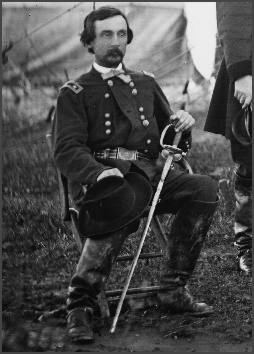
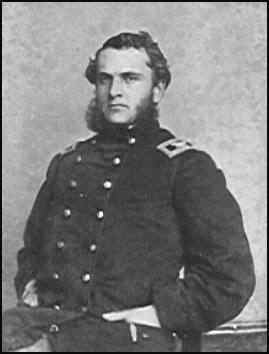
warren5-5

A Martyr to no Cause at All: Disgrace and Restoration

Among the people that Warren made enemies with during the campaign was his mentor and friend George Gordon Meade. The issue with Meade was particularly serious as Meade seriously considered relieving Warren due to his insubordinate attitude. Meade wrote a letter which he never sent to Grant’s chief of staff Colonel John Rawlins where he acknowledged Warren’s fine traits but also his problems. Meade wrote:

“No officer in the army exceeds Genl Warren in personal gallantry, in activity, in zeal and in sleepless nights, or in devotion to his duties,” Meade wrote- he suffered from a serious “defect” in which he often questioned orders rather than obey them. Such a serious defect Meade wrote, “strikes at the root of all Military subordination, and is entirely out of question that I can command this Army, if each Corps Commander is to exercise a similar independence of action.” [1]

Another enemy made by Warren was Phillip Sheridan, the new commander of the army’s cavalry. The two men were seemingly destined to clash; they had already clashed at Spotsylvania where Warren complained about Sheridan’s performance.  Sheridan never forgave or ever forgot Warren’s justified criticism of him during that battle, and

But the issue really came down to personality and leadership style. Joshua Chamberlain who testified at his board of inquiry testified at it that “Warren gave the impression of a slow, quiet contemplative sort who could not be rushed into decision making. Whether on the march or in battle, he moved at a deliberate pace, refusing to commit himself or his troops until he had time to analyze the situation.” [2]

Chamberlain observed that to someone who did not know Warren, as Sheridan did not that “General Warren’s temperament is such that he, instead of showing excitement, generally shows an intense concentration in what I call important movements…and those who do not know him might take it for apathy when it is deep, concentrated thought and purpose” [3] much of which was rooted in Warren’s strong desire not to sacrifice his men needlessly taking care “to ensure that they were not thrown in to suicidal situations” and he “looked out for their welfare.” [4]

Warren and Sheridan were different types of people and commanders. Warren was an exceptionally intelligent man, one of the brightest in the army and highly regarded in many ways. He was excellent leader of men and he was beloved by his troops, but that being said the traits that were his strengths hindered him in command. He did command from the front, but “his real interest was in the science of command. Warren believed that leading a corps gave him discretion and leeway in carrying out his duties – which often he performed with the smugness of the righteous. It developed that not everyone would be tolerant of either his manner or his philosophy of command – particularly not U.S. Grant.” [5] Nor did Warren have the kind of single minded vision and killer instinct that made Grant, Sherman and Sheridan such brutally effective battlefield commanders. He was “handicapped by the breadth of his vision,” [6] the trait that made him such an effective staff officer which at Little Round Top served the army so well.

After the war Grant praised Warren’s intelligence, earnestness and perceptiveness, but he found in Warren, what he called a “defect which was beyond his control, that which was very prejudicial to his usefulness…” What was the defect? Grant wrote: “could see every danger at a glance before he encountered it. He would not only make preparations to meet the danger which might occur, but he would inform his commanding officer what others should do while he was executing his move.” [7]

Grant had been apprised of the battlefield by a false report of Warren and his troop’s actual location, news that was hours old “told Sheridan to relieve Warren if he judged the Fifth Corps would “do better” under another commander.” Staff officers of Fifth Corps were shocked, and one wrote “General Grant knew that General Sheridan was not a person to be intrusted with such a weapon and not use it.” [8]

sheridan

Major General Phillip Sheridan

Sheridan did use the power Grant had given. Sheridan was still smarting from a setback incurred the previous day where one of Warren’s infantry divisions had to “extricate Little Phil from difficulties with George Pickett’s Confederates at Dinwiddie Court House on March 31”  [9]  relieved Warren while the latter was in the midst of actual combat. However, neither Sheridan nor Grant wanted to admit was that “Warren did about as well as anyone could have that night getting three divisions of the Fifth Corps to Sheridan’s position.” [10]

Sheridan relieved Warren of command of V Corps following the Battle of Five Forks where Sheridan believed that Warren’s Corps had moved too slowly in the attack. Sheridan’s actions to relieve Warren at the moment of a great victory “would reverberate for the better part of two decades.” [11] Sheridan’s staff had given Warren wrong information about the positions of the Confederate troops and Warren’s own orders to his division commanders were conflicting. Warren had been working to get Crawford’s division into the fight as it had strayed too far north before turning westward and hit the wrong Confederate units and Warren went to rectify the situation and to get Crawford’s troops into the fight.

Since Sheridan did not see Warren at the front he ordered him relieved of command, even though Warren had personally taken over the direction of one of the brigades, led it into action “and under the setting sun, he snatched up his corps flag, shouted to his men – “Now, boys, follow me, this will be the last fight of the war!” – and rode straight toward the rebel line. His horse was shot and killed, and Colonel Hollon Richardson of the Seventh Wisconsin was wounded as he tried to shield his corps commander when he toppled to the ground….”  [12] Not long after this “official orders relieved Warren of his command.” [13] Sadly, had Warren died that day he might have been eulogized as a hero; instead he suffered terribly at the hands of the leaders of the army that he had served so well.

The relief was brutal, Sheridan wrote that “General Warren did not exert himself to get up his corps as rapidly as he might have done, and his manner gave me the impression that he wished the sun to go down before dispositions for the attack could be completed.” [14] This ruined Warren’s career and even hinted at a possible lack of courage on the part of Warren. This Sheridan refused to reconsider, something that “Chamberlain and the officers and men of the Fifth Corps ever forgave him for what they considered an unjust act made cruel by his refusal to reconsider it.” [15] Many, including men who had little love for Warren and who were often critical of him were appalled at the relief. Colonel Charles Wainwright, the commander of Warren’s corps artillery who once wrote to his wife that Warren was “a very loathsome, profane ungentlemanly & disgusting puppy in power” [16] felt that Warren’s “removal at this time, and after the victory had been won, appears to be wrong and cruel.” [17] Porter Alexander wrote after the war of Warren that “no Federal corps commander had a higher personal reputation for courage, enterprise and good judgment.” [18]

Warren was a professional soldier, but he was not perfect. He “possessed all the attributes of a capable, if not excellent corps commander- intelligence, executive ability, training, and personal bravery. But he was a difficult subordinate, whose arrogance and bouts with depression fueled his temper.” [19] Warren took the relief hard. Unfortunately as a topographic engineer he was an outsider to many in the army and not fully appreciated by Grant or Sheridan, who in their haste at Five Forks not only destroyed his career but did nothing to rectify their decision even after others protested. Despite the problems in their relationship Meade “on two occasions suggested to Grant that he reinstate Warren as commander of the V Corps, Grant did not respond.” [20]

William Henry Powell wrote in his history of Fifth Corps:

“With the flush of victory on his brow, with the end of the struggle so near, with the faint Rays of the dawn of peace already gleaming in the sanguinary sky, this noble warrior was brushed aside like a fly from a map and sent into what was an undeniable, if not apparently dishonorable, seclusion.” [21]

After the war Warren resigned his commission as a Major General of Volunteers and returned to his permanent rank as a Major of Engineers. He served another 17 years doing engineering duty and was promoted to Lieutenant Colonel in 1879, but his past always haunted him, even his sleep. The previously noted letter to his wife Emily where Warren stated that “I wish I did not dream so much…” and described symptoms that we might now attribute to some sort of combat stress injury was written during that assignment.

Warren sought a Court of Inquiry to exonerate himself but this was refused until President Grant left office. The Court eventually exonerated him but Warren died three months before the results were published. He reportedly told his wife Emily as he lay dying “Convey me to my grave without pageant or show…I die a disgraced soldier.” [22] His last words reportedly were “The Flag! The Flag!” [23] Embittered by the treatment he had received by the army that he had served so well, Warren was buried “as he directed in his will, in civilian clothes and without military ceremony.” [24] In 1888, veterans of the 5th New York, Duryee Zouaves; Warren’s first command placed a bronze statue of Warren standing on the boulder on Little Round Top, where Warren reportedly stood during the battle.

Warren’s funeral was attended by his friends Winfield Scott Hancock and Samuel Crawford, his oldest army friend and mentor Andrew Humphreys was called away before the service due to the sudden illness of his son. [25] The Washington Post noted that Warren “had gone “where neither the malevolence nor the justice of this world can reach him. He had enough of the former; and denial of the latter not only embittered his closing months of his life, but undoubtedly hastened his end.”  [26]

Despite the later events which ended up in his relief by Sheridan, Warren’s actions on that hot and muggy July 2nd 1863 exemplified the leadership qualities that we as an institution strive to achieve. From a leadership perspective Warren’s actions at Little Round Top demonstrate how the Chairman’s Desired Leader Attributes and the principles of Mission Command: “the ability to operate on intent through trust, empowerment and understanding” should work in a relationship between seniors and subordinates.

However with that being said, during the 1864 campaign in Virginia, Warren was often disconnected from his senior commanders.  During the campaign acted in a manner that did not always contribute to successful mission command, even when events proved him to be correct. During the campaign there were times that his temper, angry outbursts and depression severely hampered his ability to operate on intent, through trust, empowerment and understanding.

In a way the harsh actions of Grant and Sheridan at Five Forks to send a message to the senior leaders of the Army of the Potomac was correct. Unfortunately they directed that action at the wrong man at the wrong time. What Grant and Sheridan did to Warren was without doubt as grave injustice as ever done to any American commander during the prosecution of any war. However, though they were wrong in what they did to Warren “had the same fate been visited upon one or two of the Army of the Potomac’s less-than-stellar corps commanders back in 1862 or 1863, to serve as an indelible lesson to that army’s high command…” [27] much good might have been accomplished and the war in the East brought to an end sooner.  But through their unjust actions General Gouverneur K. Warren “became a martyr to no cause at all.” [28]

Warren’s life also serves to remind us of the ethics of our profession, that it is possible for good officers, even excellent officers and leaders to do things that hinder or even hurt the ability to maintain the sense of trust required by their command or staff position. The conflicting personalities of Warren and Sheridan demonstrate this lack of trust which culminated in Warren’s relief.

Warren was a tragic hero, brilliant, courageous and caring. He was also was likely suffering from psychological wounds of war. It was probably these unseen wounds that caused him to be misunderstood in the moment of perceived crisis by men that neither knew him nor appreciated him. Loomis Langdon, who served as the official recorder for the board of inquiry which exonerated Warren after his death wrote:

“I had never met General Warren till he came before his Court of Inquiry…I learned to value his good opinion – and while I admired him for his great patience, his wonderful energy, habit of concentration, his vast learning and untiring application, I loved him for his tenderness, gentleness and charity, even to those whom he believed had combined to do him a cruel wrong; and I admired him for his nobleness of character and his courage and unselfish patriotism.” [29]

It is easy for military professionals to become totally focused in our profession, especially the details of planning and process to forget the humanity of those that we serve alongside. Warren is one of those complex figures who are not easy to categorize.  His biographer Jordan wrote that:

“Warren was a man with fine intellect, widely read, and of keen sensibilities. He was also an excellent engineer, mapmaker, and scientist. He was a soldier who cared much for the safety and welfare of the men under him, and he was sickened by the appalling carnage of the war in which he took such a prominent part. He was arrogant and proud, and he hesitated hardly at all in putting down those of his colleagues he regarded as inferiors. His mind’s eye took in much beyond what was his immediate concern, but this gift worked against him in the hierarchical realm of military life. Warren was prone to long sieges of depression, and he himself agreed that others found him morose and unsmiling…” [30]

In reading military history is far too easy to isolate and analyze a commander’s actions in battle and ignore the rest of their lives. In the case of Warren where there is so much controversy, this is particularly important. We have to honestly evaluate his strengths and weaknesses and not fall into the trap that many do by isolating a particular event or personality trait, be it good or bad, and using and then using it to turn the person into an icon, or to destroy the subject of our work.

Those that commit this error render a great disservice to the men themselves. In time of war nearly everyone who serves in combat, gives up something of themselves and sometimes the effects last long after the war is over. Sadly there are times when the lives and reputations of heroes like Gouverneur Warren can be destroyed, not only by their personality failings or weaknesses; by the affliction of Combat Stress injuries as well as the actions of people in the institutions that they serve.

This is the challenge for current military leaders, for within the ranks of our military, including those of the officer corps there are men and women who are very much like the troubled hero of Little Round Top, Brigadier General Gouverneur Kemble Warren.

Notes

[1] ibid. Huntington Searching for George Gordon Meade p.305

[2] Ibid. Longacre Joshua Chamberlain: The Soldier and the Man p176

[3] Sears, Stephen W. Controversies and Commanders Mariner Books, Houghton Mifflin Company, Boston and New York 1999 pp.278

[4] Ibid. Jordan Happiness is Not My Companion: The Life of G.K. Warren p.316

[5] Ibid. Sears Controversies and Commanders p.257

[6] Ibid. Jordan Happiness is Not My Companion: The Life of G.K. Warren p.317

[7] Ibid. Sears Controversies and Commanders p.262

[8] Ibid. Sears Controversies and Commanders pp.275-276

[9] Inid. Huntington Searching for George Gordon Meade p.328

[10] Ibid. Sears Controversies and Commanders p.272

[11] Ibid. Sears Controversies and Commanders p.255

[12] Ibid. Jordan Happiness is Not My Companion: The Life of G.K. Warren p.232

[13] Nesbitt, Mark Through Blood and Fire: Selected Civil War Paper of Major General Joshua Chamberlain Stackpole Books, Mechanicsburg PA 1996 Amazon Kindle edition location 2113 of 2800

[14] Ibid. Sears Controversies and Commanders p.278

[15] Ibid. Wallace The Soul of the Lion p.175

[16] Wert, Jeffry D. The Sword of Lincoln: The Army of the Potomac Simon and Schuster, New York 2005 p.374

[17] Ibid. Jordan Happiness is Not My Companion: The Life of G.K. Warren p.236

[18] Alexander, Edward Porter. Fighting for the Confederacy: The Personal Recollections of General Edward Porter Alexander edited by Gary Gallagher University of North Carolina Press, Chapel Hill 1989 p.514

[19] Ibid. Wert The Sword of Lincoln p.402

[20] Ibid. Huntington Searching for George Gordon Meade p.330

[21] Ibid. Huntington Searching for George Gordon Meade p.330

[22] Ibid. Jordan Happiness is Not My Companion: The Life of G.K. Warren p.307

[23] Ibid. LaFantasie Twilight at Little Round Top p.244

[24] Foote Shelby The Civil War, a Narrative, Volume Three: Red River to Appomattox Random House, New York 1974 p.874  

[25] Ibid. Jordan Happiness is Not My Companion: The Life of G.K. Warren p.309

[26] Ibid. Jordan Happiness is Not My Companion: The Life of G.K. Warren p.308

[27] Ibid. Sears Controversies and Commanders p.284

[28] Ibid. Sears Controversies and Commanders p.284

[29] Ibid. Jordan Happiness is Not My Companion: The Life of G.K. Warren p.309

[30] Ibid. Jordan Happiness is Not My Companion: The Life of G.K. Warren preface pp.x-xi
7 Comments

Filed under civil war, ethics, History, leadership, Military

Character, Insight, and Honor: The Uncomfortable Legacy of General Ludwig Beck

Friends of Padre Steve’s World,

I am dipping into the archives today because the article is exceptionally relevant, at least to me with the rise of Donald Trump and the real possibility that he could become President of the United States. That is something that based on his lack of character, his bellicose threats against civil liberties, his disregard for the Constitution, and his exceptional narcissism and what I believe is psychological instability, frighten the hell out of me.

Most of my undergraduate and non-theological graduate studies focused on the conundrum faced by German military officers during the rise of Hitler. Did those not immediately cashiered or murdered after Hitler’s assumption of power resign, retire, or continue to serve, either supporting the new regime, or attempting to mitigate he evil. Sadly, most ended up giving their support to the Nazi regime as Hitler, but some did attempt to mitigate the evil of the Hitler regime. One was General Ludwig Beck, and his legacy is an uncomfortable one for anyone who has sworn an oath as an officer.  Beck said: 

“It is a lack of character and insight, when a soldier in high command sees his duty and mission only in the context of his military orders without realizing that the highest responsibility is to the people of his country.” 

It is with that in mind that I repost this article.

Peace

Padre Steve+

Bundesarchiv_Bild_183-C13564,_Ludwig_Beck

General Ludwig Beck

This is one of those uncomfortable posts to write partially because I know that some people will take it completely wrong or ascribe meaning to it that I do not intend. I by training am a military historian, probably better at that than I am theology. One thing that fascinates me in the study of military history is the actions of men in the face of evil and the meetings of such people at the intersections of where military and government policy intersect. It is a timeless theme. The bulk of my study until the past few years was the German Army, particularly that of the Weimar Republic and the Wehrmacht to include policies, leaders, political attitudes and behavior in war and peace. Thus it makes sense for me to look at Colonel General Ludwig Beck who held the post of Chief of the German General Staff during the early part of the Nazi era.

Ludwig Beck is one of those characters in military history that makes professional military officers uncomfortable. Beck is not the perfect example of righteousness nor was he always correct in things that he supported. As an artillery regiment commander he defended the rights of soldiers and officers to be Nazi Party members though he himself was not one. He, like many military officers was a conservative military officer by nature and became Chief of Staff of the Wehrmacht in 1935 two years after Hitler’s ascension to power. Taking office Beck was troubled by some Nazi policies but not by the need for Germany to expand to areas that it had once controlled, he opposed the plan to attack Czechoslovakia not because of any love for the Czech state which he desired to be eliminated, but rather it being a war that Germany could not win. He resigned from his position a Chief of Staff in 1938 when he could not persuade the rest of the General Staff to resign in protest over Hitler’s plan which he felt would be disastrous for Germany. Had the western powers led by Neville Chamberlain not caved at Munich it is likely that the Germans would have suffered badly against the Czech army and fortifications and with the entry of France into the war would have suffered a defeat that would have ended the Hitler regime. In fact German officers who saw the extent of Czech preparations on the frontier following the Munich deal were greatly relieved that they did not have to fight their way into the Czech state.

After his resignation Beck played a key role in the resistance movement. He was involved in the planning for a number of attempts on Hitler’s life. Yet it was his leadership in the July 20th 1944 attempt on the life of Hitler that ensured his place in history. With Colonel Klaus Von Stauffenberg and others in the General Staff at the Front and in Germany he acted to avert further destruction in Europe and the certain destruction of Germany. The plot, Operation Valkyrie was marred by poor execution and failed to kill Hitler of seize power but for a few hours. The planners had left too much to chance and once Hitler had restored communications the coup attempted ended swiftly. Had the attempt succeeded Beck was in line to become either the leader of Germany or the Head of the Army. Instead while being interrogated after his capture he took his own life depriving Nazi leaders of the ability to put him up for a public trial at which he would have been humiliated and then executed. The Kasserne in Sonthofen where the Bundeswehr MP School and Staff School as well as NATO and EU military schools are located is named for him. It is there, ironically a former Adolf Hitler School that his memory and sacrifice is honored by the nation which emerged from the rubble of World War Two. He is honored in a small museum and with a plaque recognizing his sacrifice.

492

The reason that General Beck makes many of us in uniform uncomfortable (and I do include myself) is that he recognized that senior officers, especially those in high command who help set and execute policy cannot isolate themselves in the purely military aspects of the operations. Instead he believed that officers have a higher duty to the constitution and people and not just the military mission that they have been assigned. When he realized that he could not stop Hitler’s invasion of Czechoslovakia he resigned and worked in the obscurity of a small and often divided resistance movement against Hitler. The bulk of the German high command, including many officers idolized in the United States did not recognize the higher duty. Many of these men were consummate professionals who did not support the evil of the Nazi regime and who conducted themselves honorably. Yet they effectively abetted its crimes by not opposing actions of their government that were against international law and morality as well as dangerous from purely a pragmatic military standpoint.

The problem is that military officers in any nation, including ours can face situations such as Beck faced. A military’s character is demonstrated in how leaders deal with such situations. Beck recognized the situation early, the bulk of his fellow officers did not recognize a problem until Germany was embroiled in a war that it could no longer win. Even then most could not mount an opposition to Hitler because they did not want to be considered to be mutineers and violate their oath. The potential to abet evil when military professionals bury their heads by planning and executing purely military aspects of a campaign is great. If they ignore questionable policy or even policies that they know that have been judged by the international community to be illegal or immoral, such as torture of prisoners or waging wars of aggression against countries that have not attacked their nation they become complicit in their nations crimes. This was the case with German Officers who may not have committed any personal crime and even tried to mitigate the evils of the Nazi regime were morally complicit in that evil.

In the United States the military shows its fidelity by remembering our oath to the Constitution and being faithful to it and the people that we serve. As officers we represent all Americans and not just those of our political party, religious faith or social or economic interests, nor any political leader, faction or interest group within the nation. The Constitution, our military regulations, traditions and the Uniform Code of Military Justice are the standard by which we operate and by which we conduct ourselves and tools that protect us when policies or actions taken by the government or people within it violate those codes or international law. The UCMJ makes it clear those officers who take part in, plan or a complicit in illegal actions in war are committing crimes.

When a nation become involved in wars which are non-traditional, revolutionary wars or insurgencies that barriers to professional conduct can be broken down. The Mai Lai massacre committed by 2LT William Calley’s platoon with the certain knowledge and maybe even approval of individuals in the chain of command is one example as were the uncontrolled chaos of prisoner abuse and torture at Abu Ghraib.

Times are difficult and we do not know what the future brings. Stress in societies caused by economic conditions, natural disasters, lawlessness on the streets and divided and ineffective governments sometimes remove the moral restraints of the society and even affect the military. One sees this in Weimar Germany as well as the 4th Republic in France which had to deal with post World War II economic difficulties, exacerbated by recriminations of political opponents for actions the others did during the war while France was occupied by Germany as well as the wars in Indo-China and Algeria which further divided the nation and the military.

It is in stressful and uncertain times that officers have to be men and women of principle who always uphold the highest traditions of their military as well as be the voice of conscience when governments, political parties, special interests or leaders begin to violate international norms in the conduct of war. Beck was not a perfect officer. He supported some of Hitler’s policies until after his resignation but like much of the resistance believed that the Nazi regime could only end up destroying Germany. It is important to remember that like Ludwig Beck that officers do not need to sacrifice their honor to be faithful to their oath.


Leave a comment

Filed under ethics, History, leadership, Military, Political Commentary

Hiroshima, Nukes, and Trump

Cloud-2

Hiroshima, August 6th 1945

Friends of Padre Steve’s World,

Today is the 71st anniversary of the first atomic bomb being used against the city of Hiroshima. In an instant ninety percent of the city was destroyed, 80,000 people killed, and tens of thousands more would die of radiation exposure in the weeks, months, and years following the bombing. Three days later another atomic bomb was dropped on Nagasaki. In the decades that followed, the United States, the Soviet Union, Britain, France, China, India, Pakistan, probably Israel, and maybe even North Korea have constructed thousands of nuclear weapons, most of them more powerful than the ones used by the United States against Japan.

In the decades since, none of the countries that have built these weapons have used them. There is a good reason for that. Once a nation crosses the nuclear threshold today there is no going back. It was something that President John F. Kennedy understood, and he led the nation through a potential nuclear Armageddon during the Cuban Missile Crisis, “We will not prematurely or unnecessarily risk the costs of worldwide nuclear war in which even the fruits of victory would be ashes in our mouth.”

I have always been concerned about the character and temperament of Donald Trump, especially when I think of the possibility of the use of nuclear weapons, Back in the 1980s during the Cold War I was a Nuclear, Biological, and Chemical Defense Officer. I had to learn all about the effects of nuclear weapons on people. I could tell you how many Rads, or the absorbed radiation dose that a soldier could be exposed to and still function. I could tell you how best to survive a nuclear strike, what kind of structure, or vehicle would provided you some amount of protection from radiation exposure. I could tell you how long you could remain in an area where a nuclear blast, or in the case of the Chernobyl meltdown occurred, and I could plot fallout patterns. The maps we used to plot those things in our training included the city that I lived in. I know more about this than I ever wanted to, and those when I hear politicians or for that matter anyone advocating for the use of nuclear weapons, especially as a first strike option, I get concerned.

This week, Joe Scarborough of the MSNBC morning show “The Morning Joe” reported that a senior national security policy adviser was asked by Donald Trump “why can’t we use nukes?” three times within less than an hour. When I heard Trump’s acceptance speech, he said that he would defeat the Islamic State “quickly,” even as he derided the U.S. Miltary as a “disaster.” To me that meant only one thing, that he would use nuclear weapons as a first strike option against an enemy that has no capacity to destroy us. The Islamic State is evil, but it is not an existential threat to the United States or any of its allies, thus from an ethical, moral, legal, and military standpoint the use of nuclear weapons would be criminal.

I believe that it spoke volumes as to why he is unfit to lead this country, and why so many military and national security experts are not supporting him. The fact is that Trump has no self-control. He acts on emotion and perceived slights to his person. His prejudices are now legend, and his ignorance of basic national security strategy policy, government, and even the Constitution itself are shown on a daily basis. Barbara Tuchman wrote something that I think is very applicable to Trump. “Strong prejudices and an ill-informed mind are hazardous to government, and when combined with a position of power even more so.” [1]

When I read Tuchman’s words I can only think about Donald Trump with his finger on the nuclear trigger.

Anyway, it is something to seriously ponder. Have a great weekend.

Peace

Padre Steve+

[1] Tuchman, Barbara The March of Folly: From Troy to Vietnam A Ballantine Book published by Random House, New York 1984 p.138

1 Comment

Filed under ethics, History, Military, News and current events, Political Commentary

Nuremberg on Lake Erie


Friends of Padre Steve’s World

I have been watching bits and pieces of the Republican National Convention and try as I might as a man who spent thirty-two years as a faithful Republican to find anything redeeming in it, I couldn’t. In fact, it troubled me more that I ever imagined that it could. If I wasn’t a historian with a tremendous background in both the history of Imperial Germany, the Weimar Republic, and the Nazi Era; not to mention the American Civil War era, I probably would be less frightened. If I were not a historian I would probably just brush the words and actions that I have seen in Cleveland off as hyperbole with little real merit. But I cannot use ignorance as an excuse to ignore what I see, and try as I might I cannot get the images of the Nuremberg Nazi Party rallies out of my mind as I watch what is going on in Cleveland.

Though Trump won the delegate count by a slight plurality, dissenting delagates were brushed aside in procedural votes, any who oppose him in the GOP are now considered traitors and are scorned. Many prominent GOP leaders, including George W. Bush and George H.W. Bush are not attending this fiasco, nor is the last GOP Presidential nominee Mitt Romney. Likewise, some  18 GOP Senators and hundreds of other GOP leaders. Leading Republicans, including elected officials and pundits with pedigrees that go back to Buckley, Goldwater, and Reagan are leaving the party, and with good reason; but to Trump and his stalwarts they are all traitors. For those who don’t remember Hitler purged the Nazi Party of men who did not agree with him as well. 

The images shown at the convention hall were designed to appeal to the basist of human nature: hatred of the other, using faux patriotism, the image of military might, and the tales of martyrs. Coming from a man who has openly and notoriously mocked military personnel and veterans; a man who compared his time in a private military pre-school to be superior to actual military service; and a man who used every method imaginable to avoid the draft in Vietnam, the display was sickening. A man that openly mocks military personnel using them for his political and personal gain. 

The speeches thus far have been angry diatribes which demonized Democrats, especially Hillary Clinton using charges that have been continually refuted. Peaceful Black Lives Matter Demonstraters were vilified as being responsible for the recent assassinations of police officers, when the men who killed them wanted nothing to do with the BLM movement or working peacefully with authorities to deal with a very real problem. The answer of Trump and his supporters to these to all problems is to go back and echo the words of anti-immigrant Know Nothing movement of the 1840s and 1850s, or the answers of those who instituted Jim Crow, and those who passed the anti-Chinese laws of the 1880s-1940s.

But now these same xenophobic ideas are turned against Americans of color, or Americans of the Muslim faith; and let us not even talk about the radically anti-woman and anti-gay measures in the party platform. One speaker openly proclaimed that President Obama is a Muslim, repeating a lie as old as Obama’s nomination in 2008; a lie that Trump was one of the biggest publicists, and for which he has never apologize. Interestingly enough, the day the convention began, Iowa GOP Congressman Steve King, a long time Trump supporter, openly spoke of the superiority of the white race on live television. 

Listening to some of the speakers and reading their words I was reminded of the Nuremberg party rallies where Jews, Social Democrats, organized labor, and peoplewho were called subhuman, were the target of intensely violent rhetoric, which once the Nazis came to power was transformed into action. Like today the foreign policy blunders that led to a war  that broke the nation were not attributed to the imperialistic nationalists who helped bring about the disaster. Instead the fault for World War One was not blamed on the Kaiser and militarists, but those who were not responsible for bringing about the war, and who were saddled with dealing with the mess when those who caused it ran away from their responsibilities. Today Trump and his minions demonize President Obama and Hillary Clinton for the deaths of Ambassador Chris Stevens and four security contractors in a rapidly evolving crisis that only lasted 13 hours, but ignore any sort of inquiry or justice for the 4500 military deaths in the Iraq War; a war that was planned for over a year and justified by lies. Likewise, the lists of similarities in style and substance between Trump and the Nazi movement are too numerous to mention, and the similarities in the political climate between the late Weimar of 1930 to January of 1933 and today is frightening. Historian Richard Evans wrote in his book The Coming of the Third Reich: 

In the increasingly desperate situation of 1930, the Nazis managed to project an image of strong, decisive action, dynamism, energy and youth that wholly eluded the propaganda efforts of the other political parties, with the partial exception of the Communists. The cult of leadership which they created around Hitler could not be matched by comparable efforts by other parties to project their leaders as the Bismarcks of the future. All this was achieved through powerful, simple slogans and images, frenetic, manic activity, marches, rallies, demonstrations, speeches, posters, placards and the like, which underlined the Nazis’ claim to be far more than a political party: they were a movement, sweeping up the German people and carrying them unstoppably to a better future. What the Nazis did not offer, however, were concrete solutions to Germany’s problems, least of all in the area where they were most needed, in economy and society. More strikingly still, the public disorder which loomed so large in the minds of the respectable middle classes in 1930, and which the Nazis promised to end through the creation of a tough, authoritarian state, was to a considerable extent of their own making. Many people evidently failed to realize this, blaming the Communists instead, and seeing in the violence of the brown-uniformed Nazi stormtroopers on the streets a justified, or at least understandable reaction to the violence and aggression of the Red Front-Fighters’ League. 

Voters were not really looking for anything very concrete from the Nazi Party in 1930. They were, instead, protesting against the failure of the Weimar Republic. Many of them, too, particularly in rural areas, small towns, small workshops, culturally conservative families, older age groups, or the middle-class nationalist political milieu, may have been registering their alienation from the cultural and political modernity for which the Republic stood, despite the modern image which the Nazis projected in many respects. The vagueness of the Nazi programme, its symbolic mixture of old and new, its eclectic, often inconsistent character, to a large extent allowed people to read into it what they wanted to and edit out anything they might have found disturbing. Many middle-class voters coped with Nazi violence and thuggery on the streets by writing it off as the product of excessive youthful ardour and energy. But it was far more than that, as they were soon to discover for themselves.

Trump presents a vague program and changes his positions so often that it is a wonder how he can say them and keep a straight face. But the very real anger of the voters that he is channeling doesn’t demand answers, they don’t want anything concrete from him, with the possible exception of  a wall across the southern border with Mexico. But to many of Trump’s supporters today, like many Germans in 1932, a real program, real answers, and any kind of ideological consistently, economic philosophy, or understanding of foreign policy do not matter. 

But even worse from the perspective of a Christian is the fact that to many people, Trump’s hedonistic lifestyle, three divorces; his basic lack of concern and empathy for anyone other than himself; as well as his propensity to use people until they are of no use to him and throw them away; not to mention  his lack of business ethics, four corporate bankruptcies and his vainglorious narcissism which in former times would have lost  vote of conservative Christians, are now ignored. 

In fact a plethora of prominent leaders of the Religious Right, men like James Dobson and James Robison; men who Barry Goldwater despised, have come to embrace and support the Trump candidacy. The last poll I saw estimated that four of five people who call themselves evangelical or conservative Christians plan to vote for Trump, and mock his Deomcratic and Republican opponents. A “Christian” pastor used his benediction to do what never has been done at any major American political party’s convention. He called the other party and their candidate “the enemy,” and linked Trump’s vision to that of God. It was both blasphemous and anti-American all at once. 

The whole first day and today’s continued rancor is frightening to behold. Ronald Reagan would be rolling in his grave and Abraham Lincoln would condemn what we have seen in the same way that he condemned the Know Nothings in the 1850s. 

As a former Republican, as a man who worked for the Ford campaign before I could vote;  a man who voted for Ronald Reagan, Bob Dole, and both George H.W., and George W. Bush, this is not about partisan politics, but I am glad that I left the FOP when I did when I came home from Iraq in 2008. 

This is about telling the truth about a campaign that I could never have believed in a million years that would be occurring in our country.  That my friends scares the hell of me. While I don’t believe that Trump will win the election, the thought that he has taken control of the GOP and is in the process of destroying it, bothers me, as it should you, and frankly he doesn’t care. He has no loyalty to anyone other than himself, and all of us, including his most loyal followers are just stepping stones; just like the German people were to Hitler, and they followed him to hell. 

Anyway, that is enough for today. Nothing like spending hours in doctors and military pharmacy waiting rooms with screaming kids and GOP convention coverage to get the blood flowing. I can use a beer or four tonight. 

Have a great day,

Peace

padre+

2 Comments

Filed under ethics, History, leadership, News and current events, Political Commentary

Speaking Out for Pride


Friends of Padre Steve’s World,

Yesterday  I had the chance to speak at the Staff College’s LGBT Pride ceremony. I asked to speak because I felt it was important for people to get a historical and personal account from a heterosexual who has served continuously since 1981. I have recounted my story of how as a white, heterosexual, Christian, military officer and chaplain my journey to support the rights of LGBTQ people. 

Though I have written about this subject many times, today was the first time that I spoke in front of peers and colleagues. I was able to recount how things have changed since I entered the army in 1981. That was a time when it was easy to demean and even persecute LGBTQ people. The amount of anti-gay prejudice then was pervasive and so normal that it didn’t even seem wrong. Likewise, it was not permitted for Gays to serve in the military, and even if they were exemplary soldiers, sailors, Marines, or airman even an unprovable allegation by someone was enough to ensure that they were punished and discharged from the military under other than honorable conditions. 

After I was commissioned and sent to Germany to serve in a Medical company, I had soldiers in my platoon who were either Gay or Lesbian. They were exceptionally discreet and were some of the best soldiers in the company. These men and women were exceptional, they volunteered for duties beyond what was needed, and when others fell down on the job, the stepped in, doing extra work and taking field assignments. They were solid, dependable, and always ready to do more that required to get the mission done. At that moment I realized that Gays and Lesbians should be allowed to serve. 

When I became the company commander dealing far too many other real disciplinary issues ranging from sexual assault, drug use, robbery, vandalism, DUI, and other assorted issues, I realized that it would be stupid to punish some of my best soldiers, and to create a lot more work for me, so I began my own policy of Don’t Ask Don’t Tell over seven years before that policy went into effect. 

My next assignment was at the Academy of Health Sciences at Fort Sam Houston in San Antonio. There I served as the Adjutant for the Academy Brigade. I was a newly promoted Captain and recent graduate of the army’s Military Personnel Officer course. It was about that time that HIV and AIDS became a national concern, and military physicians and researchers, realizing that this was a threat to military health and readiness were in the forefront of the efforts to find out about this disease. Likewise, the military needed personnel policies that would allow servicemen and women infect with HIV to be able to continue their service. 

As a result, being that I was the junior medical personnel officer present, and senior officers wanted nothing to do with HIV or those infected I was assigned to work with Department of the Army personnel on developing personnel policies for those infected, and to be the point of contact for every soldier in our command who had tested positive for HIV. Those experiences with men infected with HIV gave me a compassion for their suffering, and made me question things that many of my Christian friends said about Gays. Instead of people to be scorned and consigned to hell, I realized that they were deserving of empathy and compassion. After I left active duty and went to seminary and became a chaplain I did a pastoral care residency at Parkland Memorial Hospital in Dallas, Texas, where I was immersed in the life and death struggles of men and women dying of AIDS related infections and cancers. I saw men who were dying who were treated shamefully by their “Christian” family members and had their partners forbidden to be with them in their dying hours. At the same time I saw other Christian families care for and love the partners of their dying sons. 

I was in the National Guard when the Don’t Ask Don’t Tell policy went into effect. It was a step in the right direction, but not enough. I knew Gays and Lesbians who served, but still lived in fear that something might lead to their removal from the service for simply being Gay. I remember one of my friends, now retired, who spent the first 18 years of her career in fear and on more than one occasion during the DADT era being investigated by her command due to allegations made against her. I cannot imagine what that would be like. 

Since returning to active duty in the navy in 1999 I have served with sailors and Marines, officers and enlisted who were Gay, Lesbian, or Bisexual. Most were exemplary Sailors and Marines. Some are still serving, but now after the repeal of DADT are able to do so openly. Likewise, with ruling in favor of Marriage Equality in the Obergfell v. Hodges case, these men and women can now marry, and their spouses are considered military spouses. 

I a proud to serve alongside these men and women, people who swear the same oath that I have to support and defend the Constitution of the United Staates, and our nation in a time of war when under one percent of the American population serves in the military. They are part of my military family, my brothers and sisters who go into harm’s way to defend our way of life. 

So yesterday I was proud to speak out, not just giving my story in a nutshell, but recounting examples from history and connecting the most important thing for me; that being the radical proposition that is the heart of the Declaration of Independence, “we hold these truths to be self evident, that all men are created equal, that they are endowed by their Creator with certain unalienable Rights, that among these are Life, Liberty, and the pursuit of Happiness. – That to secure these rights, Governments are instituted among men…” 

For me that is the most important thing, and it is something that I am always reminded of when I visit Gettysburg and read Abraham Lincoln’s univeralization of those rights in his Gettysburg Address. In that short speech, Lincoln noted that our founders created a new nation, “conceived in Liberty and dedicated to the proposition that all men are created equal.” Lincoln’s words were as revolutionary, and perhaps even more than those contained in the Declaration of Independence, because he was now fighting a war against fellow Americans who had seceded from the Union based on the proposition that blacks were not citizens, and for that matter were less human than whites, something specified in the Confederate Constitution and declared in each declaration of secession voted on by the states that made up the Confederacy. 

The truth that all men are created equal  and that this nation is  dedicated to the proposition that all men are created equal is the basis of the 13th, 14th, and 15th Amendments to the Constitution, the 19th Amendment, the Civil Rights and Voting Rights Acts, as well as the decision to repeal DADT and the recent Supreme Court Rulings which gave LGBTQ people the right to marry. For me, this is the extension of Liberty, and finally I was able to speak publicly to affirm that I stand by my LGBTQ friends, realizing, like Lincoln, that this is still an “unfinished work” and I dedicate myself to continue to stand alongside them in an era where many still would attempt to restrict those rights, or even kill them simply because of who they are. 

Because of this I will continue to speak out and right in support of my LGBTQ brothers and sisters who serve our country, as well as all people. 

So have a good day,

Peace,

Padre Steve+

Leave a comment

Filed under ethics, faith, History, LGBT issues, Military, Political Commentary

The Appalling Silence of Good People

img_0071

Friends of Padre Steve’s World,

I have been asked by some people why I as a chaplain, priest, and military officer, not to mention the fact that I am heterosexual, so strongly support my Gay and Lesbian friends, as well as the LGBTQ community. My answer has to echo the words of Albert Einstein who said “If I were to remain silent, I’d be guilty of complicity.”

Many times the question is crouched in theological terms, and those that ask presume that I am supporting sin, and aiding as some say the “enemies of God.” The problem is, that if being Gay is a sin, then why are not all those concerned about them doing something other than condemning them unto their last breath? Likewise why are the sin hunters who hate LGBTQ people with unmatched passion; who use local, state and when possible attempt to use the Federate government to legislate against equality for LGBTQ people, and who remain dreadfully silent when Gays are attacked and killed, never condemn those that practice what are called the Seven Deadly Sins? If you don’t know them here they are; pride, envy, gluttony, lust, anger, greed, and sloth. They infect our society root and branch, and dare I say our hallowed religious institutions, from which so much of the anti-Gay venom spews forth.

I wish I knew the answer to that, but for some reason it seems that religions in general tend to condemn, persecute, and even sanction the killing of Gays, especially Gay men, more than any other institutions. Christians, Muslims, Hindus, Jews, there are elements in all these religions who are not content with simply preaching against homosexuality, but wherever they have control of government to persecute and kill LGBTQ people.

Early Sunday morning a man whose personal hatred toward Gay men, and radical Islamic religious based terrorist ideology formed a nexus of evil that allowed him to kill about fifty men and women, while wounding over fifty more. This was certainly a terrorist act, in the words of the man who committed the massacre an act done in the name of his understanding of Islam, and in accordance with the overall goals of the Islamic State.

We will find out if there is a deeper connection between the killer and the Islamic State, but that is not the biggest question here. Why did he strike a Gay nightclub versus any other soft target? There are hundreds if not thousands of soft targets in South Florida, including some which would have just as easy, and symbolic as symbols of America or even Christianity. Why not a sporting event, a non-gay nightclub, a park, a school, or even a church? Well, because here is what many Americans don’t want to admit, he hated Gays, and specifically targeted them on Pride weekend. Those two factors my friends are the key. He could have attacked anything, but he chose to kill mass numbers of Gays and others gathered at the Pulse nightclub.

Sadly he is not alone and has found significant support from anti-Gay Christian leaders like Pastor Steven Anderson and Walid Shoebat who both would prefer Gays to be killed, in fact Anderson’s only issue was the fact that it should have been the government that killed them, not the terrorist. Shoebat said that the only people mourning over the victims of the massacre are “liberals, idiots, and Gay lovers.”  I will not repeat rest of their hate filled venom here because it boggles the mind. How such people can even call themselves Christians is beyond me.

Mercifully others who are often at the front in condemning Gays have been relatively silent and mentioned that they will be “praying for the victims and their families.” But such prayers are cheap, unless you actually care about the people you are praying for, and unless you can empathize with them. Sadly, many of these religious leaders and their political allies have no intent of backing down on their work to curtail, limit, or roll back the rights of LGBTQ people, even to the point of criminalizing homosexuality.

But then there are others who are genuinely good people, who have friendships with Gays and even have Gay family members but still refuse to take the necessary step to support the basic human and legal rights of their friends and family members, and who for whatever reason, fear of being ostracized by their church or any number of a myriad of other reasons remain silent when horrible, inhuman crimes take place. But then Dr. Martin Luther King Jr. noted, “Not only will we have to repent for the sins of bad people; but we also will have to repent for the appalling silence of good people.”

All I know is that I will continue to speak out for LGBTQ people, and I will not be silent. I am sure that will lose me some friends, but I cannot stand by and remain silent, it would make me complicit with the man that killed and wounded all of those innocent people, and with the religious leaders that harbor the same views.

That is all for now. Have a good day, and please, even if you do not agree with me on anything else, and please take the time to try to feel a measure of empathy for those killed, those wounded, and those who grieve for them, and if you can take the next step to speak up for them. I promise that you will not regret that decision.

Peace

Padre Steve+

5 Comments

Filed under civil rights, crime, ethics, faith, LGBT issues, Political Commentary, Religion

Zealots and Ideologues

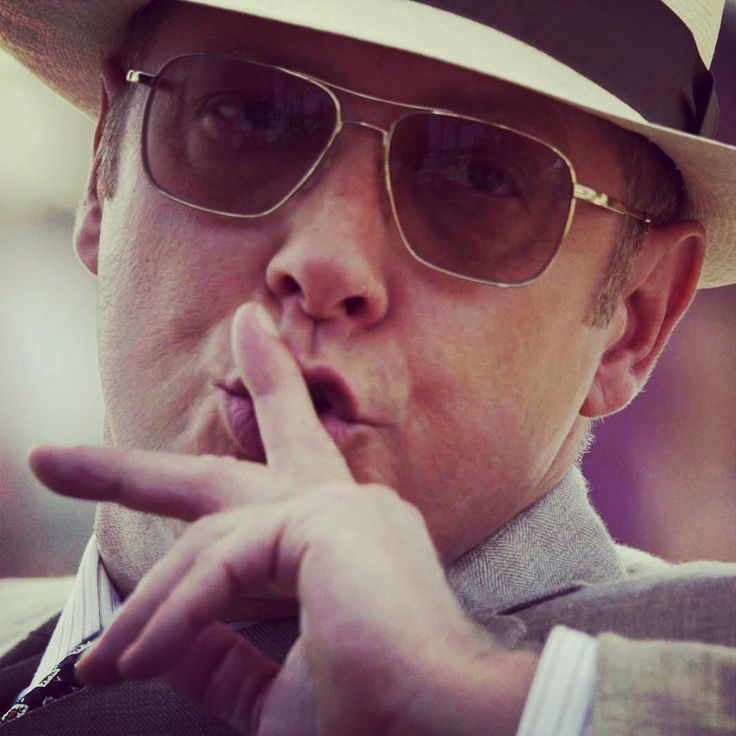
raymond-reddington-sunglasses

“In this world, there are no sides. Only players.”

Friends of Padre Steve’s World,

I think my favorite character on television is Raymond “Red” Reddington, played by James Spader on the shoe The Blacklist. He is a very complex and troubling character, and the thing is I can understand him. His is a world of gray where he does the right thing for wrong reasons and the wrong thing for right reasons. His loyalties are personal and not ideological, he is a man of contradictions, as am I. Raymond Reddington one said, “Cultural peculiarities notwithstanding, I find cock fighting to be abominable. However, truth be told, I do love fried chicken.” I totally agree with that, sorry Vegan friends.

My regular readers know that I am a complex person as well. I am a Christian, a priest at that, who often doubts; a career military officer who hates war, but also realizes that as much of an evil as war is, that there are worse evils than war itself.  Likewise I am very liberal and progressive in my political and social beliefs, but I serve in a profoundly conservative institution that is not always welcoming to my beliefs. But that being said, even though I am a liberal and progressive at heart, my education as a historian and my life experience mitigates against me becoming an ideologue or zealot, and I am not a revolutionary.

I tend to be able to see and appreciate arguments of multiple points of view on almost every issue, and I wrestle with them, doing the best I can to do the right thing. Whether it is for the right reason or not, I don’t pretend to know. Maybe that is one reason I have friends on all sides of the political, religious, and ideological debates that rage about this country and in the world. But as always I digress…

In the last episode of season three of The Blacklist, Reddington tells an assistant FBI director who he has been helping solve crimes, “I know so many zealots, men and women, who choose a side, an ideology by which to interpret the world. But, to get up every single day and do the hard work of deciding what to believe. What’s right, today? When to stand up or stand down. That’s courage.” From my experience I believe that to be the truth, and truthfully, I would rather deal with people that wrestle with this difficult world than rather than those whose beliefs are shaped by their ideology first, regardless of facts, divergence of opinions, history, science, reality, and experience.

But what bothers me in what I see going on in this country and around the world is that mass movements of ideologues and zealots of every persuasion, political and religious, those that have seized or are trying to seize power in many nations, and foment revolution. Captivated by ideological purity, they are unwilling to compromise and frequently label anyone that disagrees with them or the leader of their movement, even in the slightest manner as traitors or evil. Many times the zealots take no time to evaluate the quality of the merits of their movement or those that oppose them, their cause is right, their opponents are evil and need to be destroyed. I think the most distressing case is where the Nazis and German Communists worked together to destroy the Weimar Republic in the late 1920s and early 1930s.

Eric Hoffer wrote,  “The quality of ideas seems to play a minor role in mass movement leadership. What counts is the arrogant gesture, the complete disregard of the opinion of others, the singlehanded defiance of the world.” Likewise, Hoffer noted something that I observe almost every day, that the zeolots and ideologues of mass movements use anger and hatred to unify their followers. Hoffer noted, “Hatred is the most accessible and comprehensive of all the unifying agents. Mass movements can rise and spread without belief in a god, but never without a belief in a devil.” Believe, me, ask any ideologue of any type, and he or she will tell you who their devil is. But sadly history demonstrates that a mass movements of any type, political, ideological, or religious has achieved powe, all opponents, especially those closest to them ideologically or religiously are the enemy, or to use Hoffer’s words “a devil.” The opponents closest to the ideologues ideology have to be destroyed or discredited first, before they can move on to battle their real opposites. Just look at history.

The ideologue cannot lose because he already knows his answer, the classic fundamentalist Christian quote, “God said it, I believe it, that settles it”  is very much descriptive of other ideologically driven mass movements be they conservative or liberal. The ideologue’s attitudes are derived from their ideology and are often not subject to facts. I see it every day, especially on social media where partisans of evil persuasion fire broadside after broadside at all opponents, regardless of the facts, or even the fact that there may be more than one equally valid viewpoint on a subject. But then I tend to see everything in various shades of gray and not in black and white absolutes, and ideologues of all types frighten me, even those whose unbending beliefs are sugarcoated with millennial or utopian sentiments of the perfect world that will follow their victory. I know from history that such is not the case, in far too many instances first thing that radical, or self-proclaimed revolutionaries do after achieving absolute power is to kill.

Maybe that is why I like Raymond Reddington. I really do think that real courage is to wrestle with reality every day and do the hard work of deciding what to believe; and today that may be different then tomorrow, but it will be based on reality and tempered by my often contradictory beliefs. Of course a true political ideologue or religious fundamentalist will condemn me to their version of hell of being that honest, but it is true. That is my uncomfortable reality, it may not be right, and my vision may be skewed and distorted, but it is what it is, and as Reddington said, “In the kingdom of the blind, the one-eyed man is king.”

So until tomorrow,

Peace

Padre Steve+

2 Comments

Filed under ethics, faith, History, philosophy, Political Commentary, Religion

War What is it Good For? Sometimes Something: The Context of War

cropped-the_storming_of_ft_wagner-lithograph_by_kurz_and_allison_1890a.jpg

Friends of Padre Steve’s World,

Today something different. Yesterday I did a post about the Gettysburg Address and the importance of the proposition that of democracy that all men are created equal. It is a radical proposition that since the writing of the Declaration of Independence, the Emancipation Proclamation, the Gettysburg Address, the Thirteenth, Fourteenth, Fifteenth and Nineteenth Amendments, the Voting Rights Act of 1964 and Civil Rights Act of 1965, as well as Supreme Court decisions in Brown v. Board of Education and Obergfell v. Hodges, has grown in or country to encompass civil rights for African Americans and other racial minorities, Women, and Gays. But those liberties had to be fought for, and would most likely never happened had not Abraham Lincoln and others in the North understood that neither liberty or Union could survive if the South succeeded. In fact, all of us owe our continued freedom to that understanding and the necessity of total war to achieve it.

However, yesterday I had a Twitter troll snipe at me, this time a left-wing troll who claimed to be a “liberal progressive.” However, his remarks were so ignorant of history and reality that I am sure the the had no clue how his words betrayed his alleged beliefs. So in a few words I told him that he was basically ignorant and blocked him. Most of the time when this happens to me it comes from supposed “conservatives,” or “white nationalists” of various flavors, to include the KKK and Neo-Nazi types. But the fact that this came from a self-proclaimed “liberal and progressive” proves that ignorance is not confined to any ideology. That is a sad commentary on our time.

So what I am posting today is an updated and slightly edited portion of the first chapter of my Civil War and Gettysburg text. The entire chapter is close to 150 pages and is probably going to become a book in its own right, but I think it is important for my readers to understand, that sometimes liberty only comes with great sacrifice and the complete defeat of those who want to deny it. That does not matter if it was the Confederacy, Nazi Germany, or even the so-called Islamic State.

As a man who came back changed by war I can only say that I hate it. That being said, though I am a progressive and liberal, I am a realist and understand that as evil as war is, that surrendering liberty to those who believe in “liberty for the few, and slavery for all others.” 

The section of the book may seem a bit wonkish, but it is important. I understand that some of my readers will disagree, but one cannot escape reality.

So anyway, that being said I wish you a good day.

Peace,

Padre Steve+

Richard Evans wrote something in the preface to his book The Third Reich in History and Memory that those who study military history often forget. He noted: “Military history, as this volume shows, can be illuminating in itself, but also needs to be situated in a larger economic and cultural context. Wherever we look, at decision making at the top, or at the inventiveness and enterprise of second rank figures, wider contextual factors remained vital.” [1] Thus while this work is an examination of the Gettysburg campaign it is important to understand the various issues that were formative for the men who directed and fought the battle. One cannot understand the determination the determination of Robert E. Lee to maintain the offensive, the dogged persistence of Joshua Chamberlain or Strong Vincent to hold Little Round Top, what brought John Buford to McPherson’s Ridge, what motivated Daniel Sickles to move Third Corps to the Peach Orchard, and what motivated the men of Pickett’s division to advance to their death on Cemetery Ridge, without understanding the broader perspective of culture, politics, economics, religion, sociology, and ideology that shaped these men.

The American Civil War was the first modern war. It was a watershed event in an era, which introduced changes in new types of weapons, more lethal versions of older weapons, tactics, army organization, logistics, intelligence and communications. Though the war did not change the essential nature of war, which Clausewitz says is “is an act of violence to compel our opponent to fulfill our will” [2] it expanded the parameters of war and re-introduced the concept of “total war” to the world and “because its aim was all embracing, the war was to be absolute in character.” [3] In a sense it was a true revolution in military affairs.

The Civil War was truly a revolution in military affairs. The war changed the character of war, as it had been known for centuries, since the Peace of Westphalia and the end of the Thirty Years War. In the American Civil War, the character of war changed from a limited war waged between opposing armies into a war that at times bordered on Clausewitz’s understanding of absolute or total war. This conflict was waged between two people who shared much in common but were divided by an ideology which encompassed politics, economics, society, law, and even religion.

The war was revolutionary in other ways, and brought about a host of social, philosophical, economic, and political changes which continue to impact the lives of people in the United States and around the world even today. Some of these, especially those regarding the abolition of slavery and emancipation, as well as the beginnings of the Women’s Rights movement have had a ripple effect in matters of political and social equality for other previously disenfranchised groups of citizens. One writer noted in regard to the social impacts that “The Civil War uprooted institutions, transformed our politics, influenced social relationships of half a continent, and wrought changes that echo down the generations.” [4] Mark Twain wrote in 1873 that the war “uprooted institutions that were centuries old, changed the politics of a people …and wrought so profoundly upon the national character that cannot be measured short of two or three generations.” [5]

In a sense, when Abraham Lincoln proclaimed “a new birth of freedom” in his Gettysburg address it served as a watershed moment in American history because it brought to the forefront the understanding of Jefferson and the other signers of the Declaration of Independence that all men are created equal. That statement, flowing from the Declaration was key to Lincoln’s understanding of human rights and dignity, and from it came the Emancipation Proclamation and the Thirteenth Amendment, which abolished slavery. Those would be followed by the Republican Congresses’ passage of the Fourteenth Amendment, which overturned the Dred Scott Decision, which denied all citizenship to blacks across the country, and by Ulysses S. Grant’s Fifteenth Amendment, which gave African American men to right to vote. That is the human and political context by which we have to understand the American Civil War.

Thus it is important to study the Gettysburg campaign in the context of the Civil War because the campaign of 1863 in the east cannot be divorced from what was happening in the west at Vicksburg, nor the Union blockade, nor the diplomatic, economic and informational aspects of the war. Likewise the Gettysburg campaign cannot be separated from its relationship to the broader understanding of the nature and character of war. To do this one must examine the connection between them and policies made by political leaders; to include the relationship of political to military leaders, diplomats, the leaders of business and industry and not to be forgotten, the press and the people. Likewise we must understand the various contexts of war, to include the social, political, ideological and even the religious components of war, how they impacted Civil War leaders and why civilian policy makers and military leaders must understand them today.

While the essential nature of war remains constant, wars and the manner in which they are fought have changed in their character throughout history, and this distinction matters not only for military professionals, but also policy makers. The changing character of war was something that military leaders as well as policy makers struggled with during the American Civil War much as today’s military leaders and policy makers seek to understand the character of warfare today. British military theorist Colin Gray writes “Since the character of every war is unique in the details of its contexts (political, social-cultural, economic, technological, military strategic, geographical, and historical), the policymaker most probably will struggle of the warfare that is unleashed.” [6] That was not just an issue for Abraham Lincoln and Jefferson Davis, both of whom struggled with the nature of the war which had been unleashed, but it is one for our present political leaders, who as civilian politicians are “likely to be challenged by a deficient grasp of both the nature of war as well as its contemporary context-specific character.” [7]

In addition to being the first modern war, or maybe I should say, the first war of the Industrial Age, the Civil War prefigured the idea of total war written about by Clausewitz that occurred in the World Wars of the Twentieth Century. The war combined a massive number of technological advances, which both preceded and occurred during it, in which the philosophical nature of the Industrial Revolution came to the fore.

Likewise, the enmity of the two sides for one another had been fostered by a half century of relentless and violent propaganda that ushered from the mouths of politicians, the press and even from the pulpit brought the element of hatred to the fore of the conflict. A Confederate Captain wrote his wife to teach his children “a bitter and unrelenting hatred of the Yankee race” that had “invaded our country and devastated it…[and] murdered our best citizens…. If any luckless Yank should unfortunately come my way he need not petition for mercy. If he does I will give him lead.” A soldier from a Wisconsin regiment wrote to his fiancée after the assault on Resaca, Georgia that his unit had captured twenty-three Confederates and “or boys asked if they remembered Fort Pillow and killed them all. Where there is no officer with us, we take no prisoners…. We want revenge for our brother soldiers and will have it…. Some of the [rebels] say they will fight as long as there is one of them left. We tell them that is what we want. We want to kill them all off and cleanse the country.” [8]

As such there were many times the American Civil War came close to Clausewitz’s understanding of absolute war in its in character, and it prefigured the great ideological wars of the twentieth century. J.F.C. Fuller noted “for the first time in modern history the aim of war became not only the destruction of the enemy’s armed forces, but also of their foundations- his entire political, social and economic order.” [9] It was the first war where at least some of the commanders, especially Ulysses S. Grant and William Tecumseh Sherman were men of the Industrial Age, in their thought and in the way that they waged war, in strategy, tactics even more importantly, psychologically. Fuller wrote:

“Spiritually and morally they belonged to the age of the Industrial Revolution. Their guiding principle was that of the machine which was fashioning them, namely, efficiency. And as efficiency is governed by a single end- that every means is justified- no moral or spiritual conceptions of traditional behavior must stand in its way.” [10]

Both men realized in early 1864 that “the South was indeed a nation in arms and that the common European practice of having standing armies engaged each other in set-piece battles to determine the outcome of a war was not enough to win this struggle.” [11] Though neither man was a student of Clausewitz, their method of waging war was in agreement with the Prussian who wrote that “the fighting forces must be destroyed; that is, they must be put in such a position that they can no longer carry on the fight” but also that “the animosity and the reciprocal effects of hostile elements, cannot be considered to have ended so long as the enemy’s will has not been broken.” [12]

William Tecumseh Sherman told the mayor of Atlanta after ordering the civilian population expelled that “we are not only fighting hostile armies, but a hostile people, and must make the old and young, the rich and poor, feel the hard hand of war.” [13] Sherman was one of the first American military leaders to understand that a civil war could not be waged according to the limited war doctrines most American officers had been taught. He not only “carried on war against the enemy’s resources more extensively and systematically than anyone else had done, but he developed also a deliberate strategy of terror directed against the enemy’s minds.” [14] While some might find this troubling, the fact remains that it was Sherman’s Southern sweep of all that lay before him that broke the back of the Confederacy.

vincent

Strong Vincent

But Sherman and Grant were not alone in understanding the problem of fighting a limited war against the Confederacy. In the fall of 1862 a twenty-five year volunteer Colonel serving with McClellan’s army in Virginia who would be instrumental in throwing back Hood’s assault on Little Round Top, and die leading the defense of that edifice, by the name of Strong Vincent, understood what had to happen if the Union were to overcome the rebellion of the Confederacy.

“We must fight them more vindictively, or we shall be foiled at every step.  We must desolate the country as we pass through it, and not leave a trace of a doubtful friend or foe behind us; make them believe that we are in earnest, terribly in earnest; that to break this band in twain is monstrous and impossible; that the life of every man, yea, of every weak woman or child in the entire South, is of no value whatever compared with the integrity of the Union.” [15]

To most modern Americans who have no experience of war other than seeing it as a video spectator, the words of Vincent and Sherman seem monstrous and even inhuman. However, those who persist in such thinking fail to understand the nature and context of war. While some wars may be fought in a limited manner, others, especially ones driven by militant and uncompromising ideologies, often backed by fanatical religious beliefs cannot be limited, and those that fight such wars must, to paraphrase the words of Strong Vincent, “must fight them more vindictively, or be foiled at every step.” It would have been interesting to see what Vincent might have achieved had he not been cut down by Confederate bullets on Little Round Top.

Abraham Lincoln came to embrace the eternal nature of war as well as the change in the character of the war over time. Lincoln had gone to war for the preservation of the Union, and initially pursued the war in a limited way, seeking to defeat Confederate armies in the field while sparing the people of the Confederacy from total destruction.

But in his quest to preserve the Union, something that for him was almost spiritual in nature, as is evidenced by the language he used in both of his inaugural addresses and the Gettysburg Address, he found that Confederacy would only return to the Union if conquered, and he became convinced that the South’s peculiar institution, that of slavery, must be destroyed in the process. Thus, instead of a war to simply re-unite the Union and let bygones be bygones, Lincoln changed the narrative of the war when he signed the Emancipation Proclamation. When this happened the war not only became a war to restore the Union, but the a war for the liberation of enslaved African Americans, After January 1st 1863 when the Emancipation Proclamation went into effect, Lincoln “told an official of the Interior Department, “the character of the war will be changed. It will be one of subjugation…The [old] South is to be destroyed and replaced by new propositions and ideas.” [16] That too was a modern understanding of war.

Of course, the revolution in military affairs that characterized the Civil War took time, but it was the political and military leaders of the North who better adapted themselves and their nation to the kind of war that was being fought. “Lincoln’s remarkable abilities gave him a wide edge over Davis as a war leader, while in Grant and Sherman the North acquired commanders with a concept of total war and the determination to make it succeed.” [17]

At the beginning of the war the leaders and populace of both sides still held a misguided and unrealistic romantic idea of war. Most people in the North and the South held on to the belief that the war would be over in a few months and that would be settled by a few decisive battles and that casualties would be comparatively light. This included most politicians as well as many military officers on both sides. There were some naysayers who believed that the war would be long and costly, like the venerable and rather corpulent General Winfield Scott, but politicians and the press mocked Scott and other doubters who even suggested that the war would be long, hard, and bloody. Of course those who predicted a short, easy, and relatively bloodless war were the ones proven wrong, though it would take the leaders and the people of both sides over a year to understand. When it was done the American Civil War became the bloodiest war ever waged by Americans, and it was against other Americans.

Notes

[1] Evans, Richard J. The Third Reich in History and Memory Oxford University Press, Oxford and New York 2015 p.ix

[2] Clausewitz, Carl von. On War Indexed edition, edited and translated by Michael Howard and Peter Paret, Princeton University Press, Princeton NJ 1976 p.75

[3] Fuller, J.F.C. The Conduct of War 1789-1961 Da Capo Press, New York 1992. Originally published by Rutgers University Press, New Brunswick N.J p.99

[4] Lowry, Thomas P. The Stories the Soldiers Wouldn’t Tell: Sex in the Civil War Stackpole Books, Mechanicsburg PA 1994 p.176

[5] McPherson, James The War that Forged a Nation: Why the Civil War Still Matters Oxford University Press, Oxford and New York 2015 p.48

[6] Gray, Colin S. Fighting Talk: Forty Maxims on War, Peace, and Strategy Potomac Book, Dulles VA 2009 p.36

[7] Ibid. Gray Fighting Talk p.36

[8] Ibid. McPherson The War that Forged a Nation pp.49-50

[9] Fuller, J.F.C. A Military History of the Modern World, Volume Three: From the Seven Days Battle, 1862, to the Battle of Leyte Gulf, 1944 Minerva Press 1956 p.88

[10] Ibid. Fuller A Military History of the Modern World, Volume Three p.88

[11] Flood, Charles Bracelen, Grant and Sherman: The Friendship that Won the War, Harper Perennial, New York 2005 p.238

[12] Ibid. Clausewitz p.90

[13] McPherson, James. The Battle Cry of Freedom: The Civil War Era Oxford University Press, Oxford and New York 1988 p.809

[14] Weigley, Russell F. The American Way of War: A History of United States Military History and Policy University of Indiana Press, Bloomington IN, 1973 p.149

[15] Nevins, James H. and Styple, William B. What Death More Glorious: A Biography of General Strong Vincent Belle Grove Publishing Company, Kearney NJ 1997 p.57

[16] Ibid. McPherson The Battle Cry of Freedom p.558

[17] Ibid. McPherson The Battle Cry of Freedom p.857

Leave a comment

Filed under civil rights, civil war, ethics, History, Military, Political Commentary

Power and Folly

ADN-ZB/Archiv Kirchenwahl am 23.7.1933 in Berlin. Wahl in der Marien Kirche am Neuen Markt. Nazistische Wahlpropaganda unter Maske des Christentums.

I have refrained from tackling any politics for over a week now, and that was a good thing. My time of deliberate rest from jumping into any of the major political, judicial, or social controversies the past week has been good. It has allowed me to re-center myself. As I have done so I have taken a step back just to observe, to watch and listen, and to continue to read, study, reflect, and yes, to relax. .

Of course, much of that study and reflection turns back to history. Barbara Tuchman wrote, “Chief among the forces affecting political folly is lust for power, named by Tacitus as “the most flagrant of all passions.” One go a minute without observing this.

Dietrich Bonhoeffer was a German pastor and theologian who openly opposed Hitler and his policies in an age when the bulk of German Christians either threw their wholehearted allegiance behind Hitler, or simply did nothing. Bonhoeffer wrote about the violence of Nazi power, and how it, like other brazen displays of power produces outbursts of folly. He noted:

“If we look more closely, we see that any violent display of power, whether political or religious, produces an outburst of folly in a large part of mankind; indeed, this seems actually to be a psychological and sociological law: the power of some needs the folly of others. It is not that certain human capacities, intellectual capacities for instance, become stunted of destroyed, but rather that the upsurge of power makes such an overwhelming impression that men are deprived of their independent judgment, and…give up trying to assess the new state of affairs for themselves.”

It is important for all of us, no matter what our political ideology, or who our chosen candidate is, not to get caught up in the violence of power. We must retain our capacity for independent judgment and never give up our individual and collective responsibility to assess what is going on and make informed judgments.

Unfortunately, that can be quite an undertaking when we are bombarded with an endless assault by politicians, pundits, and preachers, and their media allies and enablers every minute of the day. Even so, we cannot abandon our duty to think and ask the hard questions, even of those we agree with and support.

Anyway, until tomorrow,

Peace

Padre Steve+

Leave a comment

Filed under ethics, History, News and current events, Political Commentary

An Easter Alleluia?

rubensresurrection1

Friends of Padre Steve’s World,

I am glad that Easter Sunday is over. Of course in my tradition, the Catholic-Orthodox-Anglican tradition, there are 49 more days left in the Easter Season, but who is counting?

I dreaded Easter this year, more than I ever have. I think it is because that for only the second time in my life, Easter Sunday coincided with my birthday. The only previous time that it did was in 2005, when I stilled lived in a cloud-cuckoo-land of unquestioned belief before I went to Iraq, before my crisis in faith, before I was cast aside by most of the clergy of my former church, and abandoned by men, fellow priests, chaplains, and clergy, who I thought were my friends. Interestingly enough, the current head of that church continues to stay in contact with me, and sent me a nice birthday greeting this morning. We may not agree on some of our theology, but I can respect and love him. For that I am grateful, and interestingly enough, many of those who I thought were my closest friends in that church,and in the military chaplaincy, abandoned it, just as they did me, because it wasn’t good enough for them either.

This year, for me, Easter became something existential. I did not think that I was going to live through it. Now, as far as I know there is nothing physically wrong with me that, and in fact I want to live, more than life itself. I want to live to be at least 105 years old so I can lead a staff ride on the 200th anniversary of the Battle of Gettysburg in 2063. I may need one of those hi-tech exoskeleton units to accomplish that should I live that long, but that is my goal.

I love life, but I struggle with faith. This week, in fact the whole season of Lent that preceded Holy Week was a struggle for me. Week after week I showed up to conduct services, to celebrate Eucharist, and no one came, until the last week of the previous class when one student came by. I was thrilled when it did, but truthfully, in the past two and a half years at the Staff College, my most faithful parishioners have been Lebanese Catholic officers, and there were none of them in the winter class. So despite the fact that we are kind of in a between class limbo, I was wondering, “why do I even bother to show up?”

I mean really… on Easter Sunday morning, my birthday to make matters worse, all I wanted to do was die. On the way home from work all I could feel was heaviness, and the only thing that kept me from driving my car off the road was that I didn’t want to put Judy through that pain. What I was feeling was not her fault; she had done all that she could to make this a good week and good birthday. I could not ask for more. But if you say you have faith, and have never been to the point of despair that I have been, please abstain if you can from judging me, and spare me your sermons.

Eventually, we got out to or friends at the Gordon Biersch brewery restaurant. After the horrible morning, the afternoon was good. My mood has lifted considerably. I have been treated with great kindness by hundreds of friends who have wished me well, by phone, e-mail, or on social media. Other friends were kind to me today. My Turkish friend at Biersch, his wife, made me a small cake; others were just kind to give me a hug, spend some time in conversation, or to share a laugh with me over a beer. While there I found that one of my friends here in Virginia Beach was in an automobile accident, and suffered some injuries this morning, and I pray, to the God that I so struggle to believe in, that he will be okay.

But that being said, I wonder at times, what Dietrich Bonhoeffer asked, is not true for me: experience has made us suspicious of others and kept us from being truthful and open; intolerable conflicts have worn us down and even made us cynical. Are we still of any use?”

I admit that I have been worn down, that I am suspicious, and that I struggle. I wonder, as far as my calling and vocation as a minister, priest and chaplain goes, if I am of any use.

If I am, I am glad for that. If I have even helped someone in some small way, in his or her time of crisis, or doubt, I am glad for that. If not, then that is something to be decided not by me, nor by the Church, but by God, and such decisions are way above and beyond my pay grade. As far as the men that I feel who abandoned me when I struggled, and when my questions could no longer be tolerated; men who I did all that I could do to help to where they are today, and men who I thought were my friends and brothers; for that I have no answer. So I guess that too is well above and beyond my pay grade.

As far as yesterday morning, Easter Sunday, I guess I am glad that no one showed up at my chapel. I was so far from even believing, I was so far from the hope of the resurrection, that to cry out “Alleluia! He is risen! The Lord is risen indeed!” would have been blasphemy. So in a sense, as hard as today was, I was glad that I was spared from that.

When I thin that I am reminded of the words of he great German theologian Jurgen Moltmann;

“Believing in the resurrection does not just mean assenting to a dogma and noting a historical fact. It means participating in this creative act of God’s … Resurrection is not a consoling opium, soothing us with the promise of a better world in the hereafter. It is the energy for a rebirth of this life. The hope doesn’t point to another world. It is focused on the redemption of this one.”

I am hoping that this week will be better and that if anyone darkens the door of my chapel this coming Sunday, that I might actually join in the Easter alleluias. I want to experience that rebirth again, I want, not to simply assent to a dogma, but instead to participate in the creative act of God, and maybe to find redemption in this world whatever the next world may bring.

I hope that this makes sense, and even if it doesn’t, please, pray for me a sinner,

Peace

Padre Steve+

3 Comments

Filed under christian life, ethics, faith