Well finally we come to the end of the year 2017. That being said we can say that it was definitely a year. It was a year that filled the hearts of many with fear and unease. At the same time it is now in the past. It cannot be relieved or changed but we can take the time to learn from it and hopefully build a better future. In fact, building a better future and fighting against the forces that threaten freedom and democracy, including those in the highest reaches of government.
2017 like all of the past will be remembered and written about by historians, theologians journalists and philosophers and most will place their own interpretation on it and then go on to prognosticate about the future. However the future is unknown and even Jesus warned us “that we do not know what tomorrow brings.”
I am a historian. For me history is not just something dead in the past but a living reality that influences us in everything we do. As such I thing we need to learn lessons from history and apply that knowledge to what we do now. We do not live in a vacuum, if we did we would be very dusty and always spinning around, but I digress.
Uncertain Times
I think that we have to learn from the past in order to be ready for the future. But the future is unknown and often uncharted. Thus we should as George Patton said “Prepare for the unknown by studying how others in the past have coped with the unforeseeable and the unpredictable.” That really is the reason I study history, not so we have a laundry list of facts events and dates that I can use to prove my point but rather to see how people and nations dealt with things that they either could not or did not foresee. Human nature doesn’t change and while circumstances and technology may change the way people deal with unforeseeable events can help us navigate future difficulties. It is not a guarantee but it is a help.
Dallas Maverick’s owner Mark Cuban wrote that “None of us are born into the world we live in.” That is so true because we are all born at a moment in time and the world is always changing and changing is ways that will always surprise us. Maybe not some of the events themselves, but the players that make things happen, the places that they happen and the speed of which they happen. Time stands still for no person.
Though the future is yet to be written people of faith place the future in the hands of God. Yet that being said we cannot erase the past and go back to some point in time where our interpretation of history says that things were better. Such thinking is pure fantasy and is quite delusional. Golda Meir said “One cannot and must not try to erase the past merely because it does not fit the present.”
Unfortunately it seems that the American President, many of his supporters, pundits, politicians, and people alike do not understand this; nor do many of their opponents. George Orwell so poignantly noted “All political thinking for years past has been vitiated in the same way. People can foresee the future only when it coincides with their own wishes, and the most grossly obvious facts can be ignored when they are unwelcome.”
I think that is a large part of why we are in the political mess we have been in for so long in this country and why I don’t expect things to get better anytime soon.
For me 2017 was a year of growth and learning as I transitioned from full time academia to dealing with the problems and challenges of managing a large Navy chapel program.
In 2017 I made plenty of mistakes and really haven’t deviated too much off of the Mendoza Line, I still am battling about 200 in the game of life and as long as I keep doing that I figure I’m doing okay. But hopefully have learned from those mistakes. I’m not going to make any resolutions for the new year because no-matter what I resolve to do it will simply be a repeat of something that I have resolved to do at least once if not several times during previous new years times and I don’t want to have to give myself “resolution absolution” yet again. I figure that there is no way that I could make it through New Year’s Day if without totally screwing them up so why bother.
However that being said I do resolve this year is to go out every day, do my best and try not to screw things up too badly. It is the same attitude that I have playing baseball or softball, so why not apply it to the rest of my life?
English poet Thomas Hood penned this:
And ye, who have met with Adversity’s blast,
And been bow’d to the earth by its fury;
To whom the Twelve Months, that have recently pass’d
Were as harsh as a prejudiced jury –
Still, fill to the Future! and join in our chime,
The regrets of remembrance to cozen,
And having obtained a New Trial of Time,
Shout in hopes of a kindlier dozen.
All this being said I think that the wisest thing ever said about the future was by Yogi Berra who wisely remarked “The future ain’t what it used to be.” But then was it ever what it used to be?
Tonight I will usher in the New Eve with Judy, our friend Patty, and our Papillons Minnie, Izzy, and Pierre. Right now we’re watching a movie that has been a long standing tradition for Judy and I, “It’s a Mad Mad Mad Mad World.”
So tonight to all of my friends I wish you the best, and in the words of Auld Lang Syne:
And surely you’ll buy your pint cup !
and surely I’ll buy mine !
And we’ll take a cup o’ kindness yet,
for auld lang syne.
Blessings my friends, Happy end of the Old Year and all the best for the New Year!
I tend to become somewhat reflective as the New Year approaches. I am reminded of Peter Benchley, who wrote, “The past always seems better when you look back on it than it did at the time. And the present never looks as good as it will in the future.” Likewise, St Augustine of Hippo once asked “How can the past and future be, when the past no longer is, and the future is not yet?”
Augustine’s question is interesting, but I think that his question is flawed. I think that the past lives in the present much more than we would like to think and that our future, though unwritten can unfold in a multitude of ways and possibilities. We have seen that over the past two years with the campaign and presidency of Donald Trump and how the illusion of a mythical past has driven many ordinary people to support a man who despises them, all because he appeals to certain parts of a shared mythology about the past which sadly is often too racist to imagine. As the conservative writer and historian Max Boot noted today:
“The larger problem of racism in our society was made evident in Donald Trump’s election, despite — or because of — his willingness to dog-whistle toward white nationalists with his pervasive bashing of Mexicans, Muslims, and other minorities. Trump even tried to delegitimize the first African-American president by claiming he wasn’t born in this country, and now he goes after African-American football players who kneel during the playing of the anthem to protest police brutality. (Far from being concerned about police misconduct, which disproportionately targets people of color, Trump actively encourages it.)”
But politics aside, many of us live in the past as if it were today. We, individually and collectively, as individuals and nations live in the past and look to it much more fondly than when it was our present. I think that historian Will Durant possibly said it the best: “The past is not dead. Indeed, it is often not even past.”
As a historian myself I value the past and seek answers and wisdom from it to use in the present because what we do in the present does, for better or worse defines our future. Confucius said “study the past if you would define the future.” He was quite wise, he said to study the past did not say to live in it.
That is something that I have been learning for close to 25 years now when my Clinical Pastoral Education Supervisor, using a Star Trek Next Generation metaphor from the episode A Matter of Time helped me to begin to recognize just how much the past impinged on my own life. In that episode a shadowy visitor claiming to be from the future refuses to help the Captain and crew of the Enterprise, claiming that if he were to help that his “history – would unfold in a way other than it already has.”
Finally Captain Picard is forced to make a decision and confronts the visitor, who turns out to be, not a historian from the future but a con-artist and thief from the past who was using time travel with a stolen space ship to collect technology to enrich himself. Picard refused the mans help and told him:
“A person’s life, their future, hinges on each of a thousand choices. Living is making choices! Now, you ask me to believe that if I make a choice other than the one that appears in your history books, then your past will be irrevocably altered. Well… you know, Professor, perhaps I don’t give a damn about your past, because your past is my future, and as far as I’m concerned, it hasn’t been written yet!”
My residency supervisor suggested to me that my future did not have to be my past, and in doing so opened a door of life and faith that I had never experienced before and which showed me that life was to be boldly lived in the present. While it meant a lot then, it means more now for the past according to William Shakespeare “is prologue.”
We cannot help being influenced by the past. I admit that I am. That being said we should indeed learn from from our past but we cannot remain in the past or try to return to it. Kierkegaard said that “Life can only be understood backwards; but it must be lived forwards.”
Since I am a Christian, at least by profession, my faith in that future is in the God who is eternal, the God of love. Victor Hugo in Les Miserables said “Love is the only future God offers.”That is the future that I want to envision.
Living is making choices and the future hinges on thousands of them. Many of these choices we make automatically without thought simply because we have always done them that way, or because that is how it was done in the past. However, if we want to break the cycle, if we want to live in and envision that future of the God of love then we have to live in the present though the past lives in us.
T.S. Elliot penned this verse:
“For last year’s words belong to last year’s language And next year’s words await another voice. And to make an end is to make a beginning.”
We had a special Christmas this year with friends who can be best described as a relatively eclectic group. We hosted dinner as is our custom and it really turned out well, and I do have to say that emotionally and spiritually I am in in a better place than was not too long ago.
So today, especially for my new readers I want to recount a bit of that journey.
The German theologian Jürgen Moltmann wrote, “God weeps with us so that we may one day laugh with him.” Since coming home from Iraq in 2008 my faith has undergone a profound change. This is a part of my story that I share with you.
Christmas is a special time for me, it always has been but in spite of that there were times that I took the faith element for granted. I believed and my faith in God, for me the Christian God, Father, Son and Holy Spirit was unquestioned. I knew the Scriptures, the Creeds and the Councils and I felt that my faith in a sense was untouchable. I was sure of it, in fact almost cocksure or arrogant about it. That came out in published writings in a very conservative Catholic monthly, the New Oxford Review back in 2000-2001.
For me the elements of my faith were very much intellectual. I could see other points of view but if I disagreed with them enough I would engage them with the purpose of defeating them. Of course this usually went to theological methods, history and hermeneutics. As far as those that lost their faith it was something that I had difficulty comprehending. Not that I was unsympathetic or uncaring of them or their plight, but I didn’t see how it could happen to me.
But that was before Iraq. That was before PTSD, moral injury and my own crisis of faith when I returned from the Iraq War in 2008. That war changed me as war has changed so many others before. Guy Sager wrote of his return from war in his classic The Forgotten Soldier:
“In the train, rolling through the sunny French countryside, my head knocked against the wooden back of the seat. Other people, who seemed to belong to a different world, were laughing. I couldn’t laugh and couldn’t forget.”
My return instigated a crisis of faith, I felt like I still belonged in Iraq and home seemed like a foreign land. In the crisis I was for all practical purposes I was an agnostic trying to believe and feeling abandoned by God and many of his people, especially clergy. Commodore Tom Sitsch at EOD Group Two, a veteran of much combat asked me “where does a Chaplain go for help?” I told him “not to other Chaplains or clergy.” Sadly Captain Sitsch, struggling with his own PTSD and other life crises took his life in 2014, but I think that he understood me better than most Chaplains or clergy.
That the crisis etched a permanent scar in my soul which led to some fairly major changes in my life. It forced me to enter what Saint John of the Cross called the “Dark Night of the Soul.” For those not familiar with that book it is the sense that God has withdrawn his presence from you which you must go through to experience true union with God.
I will not tell of how my great spiritual disciplines and intellect helped me get through the crisis, for they did not. I found it hard to pray or believe in anything for nearly two years as I struggled with abandonment. I felt that God, the Church and the Navy had abandoned me. The only thing that kept me going was my profound sense of vocation as a Priest and Chaplain and commitment to others who were suffering. When I watch the classic film about the 1914 Christmas Truce, Joyeaux Noel I very much understand the priest who is being relieved of his duties by his bishop who he tells “I belong here, with those in pain who have lost their faith.”
In the fall of 2008 was losing my battle with PTSD during that time I was clinically depressed, terribly anxious, angry, and in despair I threw myself into my work among the critically ill ICU patients and those that cared for them. Christmas Eve of 2008 was spent in despair as I wandered through the darkness on a cold night after leaving the Christmas Eve Vigil Mass because I could not get through it. If a bar had been open anywhere within walking distance I would have poured myself into it.
Though I found a community and camaraderie among those that I worked with and tried to provide spiritual care, my own condition grew worse. I was so bad enough that my clinical duties had to be curtailed over my objections in September of 2009.
I still stood the overnight duty and filled in for others as needed, but for a number of months I had no clinical assignments. That meant that others in our minimally staffed department had to fill in for me. I am sure that they resented that, especially because before this I often worked 70-90 hours a week mostly in our ICUs and the staff of the ICUs now expected that kind of intensive ministry and support. Likewise I was largely absent from home which was not a good thing for my marriage.
But in my desperation I was greeted with a surprise. On one of the on call nights not long before Christmas of 2009 I received a call to the ER to provide the last rites to an elderly retired Navy Medical Doctor. The man was a saint, faithful to God, his Church and the community. For years he dedicated much of his practice to the poorest members of the community, delivering babies for women with no insurance and caring for prisoners in the Portsmouth City Jail. He breathed his last as I prayed this prayed the prayer of commendation following the anointing and something strange happened. I felt the presence of God for the first time since Christmas of 2007 in Iraq. It is too this day hard to explain. It was as if his faith
Something miraculous happened that night and by Christmas Eve I realized that something was happening to me. As I wrote in Padre Steve’s Christmas Miracleon Christmas Eve of 2009:
“Mid afternoon I was walking down the hall and I experienced a wave of emotion flood over me, and unlike the majority of emotions that I have felt in the past couple of years this was different. It was a feeling of grace and I guess the presence of God. I went up and talked with Elmer the shrink about what I was feeling and the experience was awesome, I was in tears as I shared, not the tears of sadness, but of grace. I am beginning to re-experience the grace of God, something that has been so long absent that I did not expect it, at least right now. I didn’t do anything differently; I certainly was not working extra hard to pray more, get more spiritual or pack my brain full of Bible verses. I was too far gone to do those things. It was all I could do many mornings just to get out of bed and come to work.”
Since that time I have continued to recover faith and belief. I cannot say that it is the same kind of faith that I had before Iraq. This was a different kind of faith. It was faith born of the terrible emptiness and pain of abandonment and despair, a faith that is not content with easy answers and not afraid to ask questions. It is a faith in Jesus Christ, the crucified one who’s image we see hanging from the crucifix and adorning icons of the Crucifixion. It is as Moltmann wrote in The Crucified God:
“The Symbol of the Crucifix in church points to the God who was crucified not between two candles on an altar, but between two thieves in the place of the skull, where the outcasts belong, outside the gates of the city. It is a symbol which therefore leads out of the church and out of religious longing in to the fellowship of the oppressed and abandoned. On the other hand, it is a symbol which calls the oppressed and godless into the church and through the church into the fellowship of the crucified God”
My Philosophy of Religion Professor, Dr. Yandall Woodfin at Southwestern Baptist Theological Seminary told us in class that until we had “dealt with the reality of suffering and death we were not doing Christian theology.” At the time the words were offensive to me, but by the time I had graduated and also done a year of Clinical Pastoral Education they became a part of my experience. However that did not prepare me for the darkness that I lived in from February of 2008 until that Christmas Eve of 2009. I would say that in addition to Dr Woodfin’s understanding of grappling with suffering and death that one has to add the abandonment of the outcast to the equation.
The “I Believe in God” of the Creed is no longer for me simply a theological proposition to defend, but rather an experience of God born out of pain, despair, anxiety, doubt, unbelief and abandonment. During my crisis I found almost no Christians willing to walk through the darkness with me, including clergy. The only clergy willing to were those who were walking the same path of the outcast with me, suffering from PTSD, TBI and other unseen wounds of war. It was if I was radioactive. Many people had “answers” for me, but none sought to understood my questions until my first therapist Dr. Elmer Maggard asked me “how I was with the big guy?”
When I finally collapsed in the summer of 2008 and met with Dr. Maggard I made a conscious decision that I would not hide what I was going through. I felt that if someone didn’t speak out that others like me wouldn’t seek help. In the nearly six years since I returned from Iraq I have encountered many people, men and women, current and former military personnel and families of veterans who came to me either in person or through this website. It led to me being interviewed in a newspaper and being featured on the Real Warriors website http://www.realwarriors.net , a program run by the Department of Defense to help reduce the stigma of getting help for PTSD which features the stories of military personnel suffering from it. My story can be found here:
I have had a number of military chaplains come to me also experiencing a faith crisis. Most said that I was the first Chaplain or minister that they had met or who admitted that he struggled with faith and the existence of God. For a minister to be open about such struggles is dangerous. When my faith returned and was different I was asked to leave my former denomination because I was now “too liberal.”
In each of those encounters with those suffering there was a glimmer of hope for me and I think for them. It was as if for the first time we had people that we could be open with. Co-workers and others said that I was “real.” I certainly do not boast of that because it was painful to be transparent with people while in the depths of doubt and despair while hoping that somehow God would touch them with some measure of grace when I found it hard to believe. I guess it was the fact that I was willing to walk with them in their crisis and let them be honest even if it meant facing my own pain and doubt. I learned something about being what Henri Nouwen called a wounded healer. Nouwen wrote:
“Nobody escapes being wounded. We all are wounded people, whether physically, emotionally, mentally, or spiritually. The main question is not “How can we hide our wounds?” so we don’t have to be embarrassed, but “How can we put our woundedness in the service of others?” When our wounds cease to be a source of shame, and become a source of healing, we have become wounded healers.”
I do still struggle with the continued effects of War and PTSD, but I am in a much better place. That being said over past couple of weeks or so my crazy nightmares and night terrors have come back with a vengeance, last night I threw myself out of bed in the midst of a particularly violent nightmare but it hasn’t soured my mood, my hip still hurts a bit but like unlike the last couple of times I neither broke my nose, sustained a concussion, nor bruised by jaw and sprained my neck.; that my friends is an improvement.
I also struggle with faith at times when I look at the actions of those who profess to believe but treat others with contempt, especially the men and women that call themselves Conservative Evangelical Christians who seem to me to have sacrificed any pretense of faith in Christ in the pursuit of raw political power by supporting a man who is as much of a Christian as the Medici Popes. So I can understand the quote from the Gospel “I believe, help my unbelief.”
So today this wounded healer celebrated Christmas at home, hosting friends after having preached at Christmas services for American and German military communities. It was a healing experience for me and helped to increase my faith. I know: faith versus reason. I get that, but as reasonable and logical as I try to be I do find the mystery of faith to be something that attracts me to Jesus the Christ.
So this evening, this Christmas night, I want to thank all of my readers, especially those who like or comment on my posts.
You are appreciated as some are lengthy and you choose to take your time to read them and often share them. Likewise there are times that my own biases show through in what I write, and I know that a decent number of people who subscribe to this site and comment don’t always agree with me. I appreciate that and thank you for continuing to follow what I write.
Likewise, if you are walking the path of the outcast feel free to drop me a line here or on my Facebook page. My wish for you and for all is a Christmas of peace, reconciliation and love.
It is late on Christmas Eve and I am reflecting about the true meaning of Christmas in a world where hope seems to be dying before our eyes. This morning I preached in my Chapel from the Christmas story in the Gospel of St. Luke, the same passage I preached on a week or so ago with the German NATO contingent. The story of the incarnation, of God coming in the weakness of a tiny baby who would grow up and be crucified not far from where he was born is of profound importance for my faith, because it is not a pie in the sky promise of prosperity and power, but God who can be present in midst of the human made hell of war.
In such an environment I reflect on men who lived in a human made hell, a hell made by hate filled ideologues who launched the world into its bloodiest war, and I wonder, could it happen again? A decade ago I would have said it never could again happen. In December of 2016 after the election of Donald Trump I began to hedge my bets, but a year later I do believe that it can, and very well may happen again. So in such a world I must try to find hope wherever I can find it, especially as I seen the pattern of a descent into authoritarianism which has been so much a part of 20th Century European history developing in the United States. I worry about that because I can see nothing good coming of it, and notice friends, including Christian clergy openly advocating against the safeguards, the checks and balances put forth in our Constitution and laws to ensure that the President has unchecked power; and that means the power to plunge the nation into war.
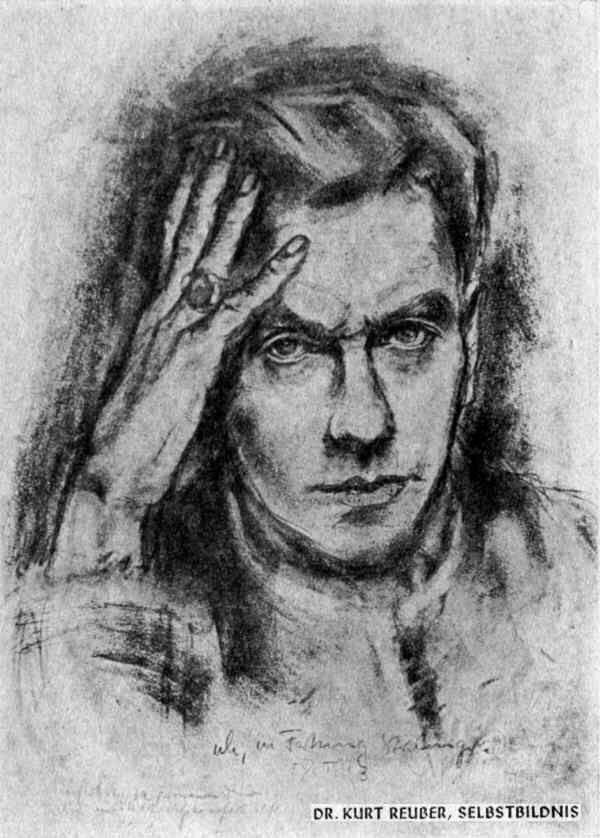
I think most of my readers know that I am a career military officer and have served in peace and war as a chaplain. That service includes a tour in Iraq, a war, which by almost any standard would have been considered unjust and illegal, yet I served there, and came back a changed man. As such the stories of those who served in war, especially those who serve in hopeless battles, and even in evil causes during Christmas have a special place in my heart. One of those men was a German pastor and medical doctor named Kurt Reuber.
As I said, Reuber was a theologian, pastor and medical doctor, likewise he was an accomplished artist and used that medium to convey his own faith, and doubts. He was a friend of Albert Schweitzer and in 1939 he was conscripted to serve as a physician in the Germany Army. By November 1942 he was a seasoned military physician serving with the 16th Panzer Division, part of the German 6th Army, which had been fighting in the hell of Stalingrad. When his division along with most of 6th Army was surrounded by the Soviets, cut off from most supply and without real hope of relief, he like other physicians continued to serve the soldiers committed to his care.
However, unlike most physicians, the care Reuber offered care included spiritual matters, as he sought to help his soldiers deal with the hopelessness of their situation. As Reuber reflected on the desperation of the German soldiers in the Stalingrad pocket. He wrote to his family.
“I wondered for a long while what I should paint, and in the end I decided on a Madonna, or mother and child. I have turned my hole in the frozen mud into a studio. The space is too small for me to be able to see the picture properly, so I climb on to a stool and look down at it from above, to get the perspective right. Everything is repeatedly knocked over, and my pencils vanish into the mud. There is nothing to lean my big picture of the Madonna against, except a sloping, home-made table past which I can just manage to squeeze. There are no proper materials and I have used a Russian map for paper. But I wish I could tell you how absorbed I have been painting my Madonna, and how much it means to me.”
“The picture looks like this: the mother’s head and the child’s lean toward each other, and a large cloak enfolds them both. It is intended to symbolize ‘security’ and ‘mother love.’ I remembered the words of St. John: light, life, and love. What more can I add? I wanted to suggest these three things in the homely and common vision of a mother with her child and the security that they represent.”
The picture was drawn on the back of a captured Soviet map and when he finished it he displayed it in his bunker, which became something of a shrine. Reuber wrote:
“When according to ancient custom I opened the Christmas door, the slatted door of our bunker, and the comrades went in, they stood as if entranced, devout and too moved to speak in front of the picture on the clay wall…The entire celebration took place under the influence of the picture, and they thoughtfully read the words: light, life, love…Whether commander or simple soldier, the Madonna was always an object of outward and inward contemplation.”
As the brutal siege continued men came to the bunker for both medical care and spiritual solace. On Christmas Eve Reuber found himself treating a number of men wounded by bombs outside the bunker. Another soldier lay dying, just minutes before the soldier had been in the bunker singing the Christmas hymn O Du Froehliche. Reuber wrote:
“I spent Christmas evening with the other doctors and the sick. The Commanding Officer had presented the letter with his last bottle of Champagne. We raised our mugs and drank to those we love, but before we had had a chance to taste the wine we had to throw ourselves flat on the ground as a stick of bombs fell outside. I seized my doctor’s bag and ran to the scene of the explosions, where there were dead and wounded. My shelter with its lovely Christmas decorations became a dressing station. One of the dying men had been hit in the head and there was nothing more I could do for him. He had been with us at our celebration, and had only that moment left to go on duty, but before he went he had said: ‘I’ll finish the carol with first. O du Frohliche!” A few moments later he was dead. There was plenty of hard and sad work to do in our Christmas shelter. It is late now, but it is Christmas night still. And so much sadness everywhere.”
On January 9th 1943 with all hope of escape or reinforcement gone Reuber gave the picture to the battalion commander as the officer was too ill to carry on and was one of the last soldiers to be evacuated from the pocket. Reuber’s commander carried the Madonna out of the pocket and returned it delivered it to Reuber’s family, preserving it for all.
Reuber was taken prisoner and survived the harrowing winter march to the Yelabuga prison camp. In late 1943 Reuber wrote his Christmas Letter to a German Wife and Mother – Advent 1943. It was a spiritual reflection but also a reflection on the hope for life after the war, when the Nazi regime would be defeated, and Germany given a new birth.
Reuber wrote:
“The concatenation of guilt and fate has opened our eyes wide to the guilt. You know, perhaps we will be grateful at the end of our present difficult path yet once again that we will be granted true salvation and liberation of the individual and the nation by apparent disappointment of our “anticipation of Advent”, by all of the suffering of last year’s as well as this year’s Christmas. According to ancient tradition, the Advent season is simultaneously the season of self-reflection. So at the very end, facing ruin, in death’s grip – what a revaluation of values has taken place in us! We thus want to use this period of waiting as inner preparation for a meaningful new existence and enterprise in our family, in our vocation, in the nation. The Christmas light of joy is already shining in the midst of our Advent path of death as a celebration of the birth of a new age in which – as hard as it may also be – we want to prove ourselves worthy of the newly given life.” (Erich Wiegand in Kurt Reuber, Pastor, Physician, Painter, Evangelischer Medienverb. Kassel 2004. )
Reuber did not live to see that day. He died of Typhus on January 20th 1944, not long after writing this and just a few weeks after painting another portrait of the Madonna, this one entitled The Prisoner’s Madonna. He was not alone, of the approximately 95,000 German POWs taken at Stalingrad only about 6,000 returned home.
His paintings survived the war and his family gave The Madonna of Stalingrad to the Kaiser Wilhelm Memorial Church in Berlin after it was restored as a symbol of hope and reconciliation. Copies are also displayed in Coventry Cathedral and the Russian Orthodox Cathedral in Volgograd, the former Stalingrad. A copy of The Prisoner’s Madonna is now displayed at the Church of the Resurrection in Kassel.
I have a print of the Madonna of Stalingrad in my office. It has become one of the most meaningful pictures I have since I returned from Iraq in 2008. To me they are symbols of God’s presence when God seems entirely absent.
I praying for an end to war and likewise that the United States will not fall victim to a lawless authoritarian leader who seems intent on stoking the fires of more wars.
There are some songs at Christmas that despite their relative newness as compared to ancient carols seem to strike a chord that resonates deep in the hearts of people. I think that in our day that some speak louder than others.
One of those songs, at least for me, and probably many others is the song Have Yourself a Merry Little Christmas. The music was written by Ralph Blane and the lyrics by Hugh Martin for the musical Meet Me in St Louisand first performed by Judy Garland in that film. In the movie Garland’s character sings the song to her younger sister after their father announces plans to move from their home of St Louis to New York for a job.
The lyrics for the musical were changed because Garland’s director Vincent Minnelli and co-star Tom Drake felt that Martin’s original lyrics which began with “Have yourself a Merry Little Christmas, it could be your last. Next year we may all be living in the past” were too depressing. The lyrics were changed to “let your heart be light, Next year all our troubles will be out of sight” in response to their request. The words sung in the musical by Judy Garland have a haunting but very real feel for people who face uncertainty at Christmas, as such they were very meaningful to the US military personnel who heard them at the front in the Second World War.
As originally produced they reflect a hope for a better future as opposed to a carefree present. As such they are probably much more appropriate to our current time than in the mid-1950s when Frank Sinatra recorded a modified version of the song for his album A Jolly Christmas.
Sinatra asked Martin to “jolly up” the line “we’ll have to muddle through somehow” and Martin changed it to “Hang a shining star upon the highest bough.”
When Frank Sinatra recorded the song in 1957 it too became a hit and the focus on present happiness rather than a hope for a better future fit the times in which it was recorded. Sinatra’s version also notes that “faithful friends gather near to us once more” instead of “will be near to us once more.”
The song was re-written by Martin a number of times including a “Christian”version which included the words “if the Lord allows” instead of “if the fates allow.” Though I am a Christian I think that change was kind of lame, but then if there are a few dollars to be made off religious people who otherwise won’t listen to a song why not?
The song is one is one of the most recorded Christmas songs ever written and can be heard being sung by artists as diverse as Bing Crosby, Ella Fitzgerald, Rod Steward, the Carpenters, Kelly Clarkson, John Denver with the Muppets, the Pretenders, Olivia Newton John, Kenny Loggins, and even Twisted Sister.
The song as recorded by Judy Garland is actually my favorite, though I also love the Sinatra version. Somehow “muddling through somehow” seems to be more appropriate in my experience.
So enjoy these versions of a song that has touched the hearts of hundreds of millions of people since it was first recorded. May it be an inspiration in these uncertain times of a hope for a better future. Maybe that makes it a better Advent song and since until about evening on the 24th it is still the fourth Sunday of Advent that might actually work.
For me it is kind of a sad song, but at the same time it is mixed with hope…and I always try to live in hope.
The great American poet Henry Wadsworth Longfellow penned these words of hope on Christmas Day, 1863, “God is not dead, nor doth He sleep; The wrong shall fail, the right prevail With peace on earth, good will to men.”
Christmas is coming and I feel that Longfellow’s words are as pertinent today as when he first penned them. The thought of what is to come in the next few years, in the United States and in many other liberal democracies bodes ill for our future as authoritarian and often xenophobic leaders rise to power. The world that we grew up is is passing away, and what comes in its place, a dystopian world where hope will be a rare commodity beckons.
Longfellow’s words became the heart of the song I Heard the Bells on Christmas Day. I have heard it a number of times in the past few days and each time it really touches me.
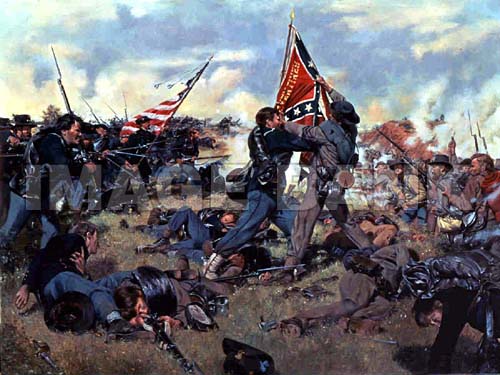
The song has been recorded in a number of versions by different artists over the years. However, the words of the song go back to the American Civil War. It began as a poem written by Henry Wadsworth Longfellow on Christmas Day 1863 following the serious wounding of his son Charles, a Lieutenant in the Union Army at the Battle of New Hope Church, and the death of his wife in a fire two years before.
The words are haunting. Probably because they demonstrate the profound tension that lies at the heart of the Incarnation, which is the heart of Christmas and the Christian faith. the tension, played out so well in the song is the existence of a message of peace and reconciliation in a world where war and hatred of many kinds rip human beings apart coupled with the tragic inability of Christendom, especially American Conservative Evangelicalism to even come close to the message of Christmas.
I heard the bells on Christmas day
Their old familiar carols play,
And wild and sweet the words repeat
Of peace on earth, good will to men.
I thought how, as the day had come,
The belfries of all Christendom
Had rolled along th’ unbroken song
Of peace on earth, good will to men.
The reality of this is seen in the third verse. It is a verse that echoes throughout history and seems to be true even today, in fact it seems to be the most real as we deal with war, hatred, terrorism, killing in the name of God, and political fratricide.
And in despair I bowed my head
“There is no peace on earth,” I said,
“For hate is strong and mocks the song
Of peace on earth, good will to men.”
The interesting part about the songs as opposed to the poem is that they omit three of Longfellow’s verses that admittedly in a reunited country would not help record sales. Those verses speak to the heart of the Civil War.
Till ringing, singing on its way,
The world revolved from night to day,
A voice, a chime,
A chant sublime
Of peace on earth, good-will to men!
Then from each black, accursed mouth
The cannon thundered in the South,
And with the sound
The carols drowned
Of peace on earth, good-will to men!
It was as if an earthquake rent
The hearth-stones of a continent,
And made forlorn
The households born
Of peace on earth, good-will to men!
But Longfellow hears in the bells something more powerful. It is the message of Christmas and the incarnation. The message that justice and peace will finally embrace.
Then pealed the bells more loud and deep:
“God is not dead, nor doth He sleep;
The wrong shall fail, the right prevail
With peace on earth, good will to men.”
Till ringing, singing on its way
The world revolved from night to day,
A voice, a chime, a chant sublime
Of peace on earth, good will to men.
The song has been recorded many times by many artists. I like the version sung by Frank Sinatra, which the music was composed by Johnny Marks, composer of Rudolph the Red Nosed Reindeer. Another earlier version composed by John Baptiste Calkin has been recorded by Elvis Presley and Johnny Cash among others.
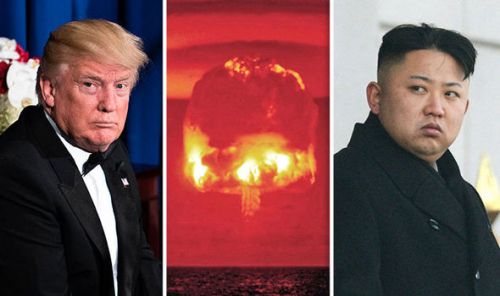
As wars rage in the Middle East, tensions rise in Asia, Africa and even Eastern Europe while the Unholy Trinity of Politicians, Pundits and Preachers, led by the American President rage as we go into another, and even more perilous year with the possibility of nuclear war more probably than not, people still look for hope.
Longfellow, who lost so much in a short time in the midst of a terrible Civil War, reminds us that in such times, “God is not dead, nor doth He sleep; The wrong shall fail, the right prevail With peace on earth, good will to men.”
In a time like this when the world led by the American President seems to be hurtling into the abyss, it is important to remember Longfellow’s words and the message of Christ and the Incarnation. The child born as an outcast in a manger would die as a criminal, crucified by an occupying power with the full support of the leaders of the occupied country. As the German theologian Jurgen Moltmann wrote:
“He humbles himself and takes upon himself the eternal death of the godless and the godforsaken, so that all the godless and the godforsaken can experience communion with him.”
Yes, the wrong shall fail, and the right prevail, but it will certainly involve much travail.
As a veteran who served in the badlands of Al Anbar Province during Christmas of 2007 I can relate to Father Palmer, the British priest and chaplain in the film Joyeux Noel (Merry Christmas) when he makes the comment “I belong with those who are in pain, and who have lost their faith, I belong here.”
I again watched that film tonight. The film is the story of the amazing and exceptional Christmas Truce of 1914. It is a film that each time I see it that I discover something new, more powerful than the last time I viewed it. It reminds me of serving in Iraq, at Christmas from my perspective as a Chaplain, and thereby giving voice to those who serve now, as well as those who served God’s people in hellish places before me. It reminds me of how much I hate war, and how much I often hate the clergy who are all too often, bloodthirsty cheerleaders for war.
As a Chaplain I am drawn to the actions of the British Padre in the film, who during the truce conducts a Mass for all the soldiers, British, French and German in no-man’s land, who goes about caring for the soldiers both the living and the dead. His actions are contrasted with his Bishop who comes to relieve him of his duties and to urge on the replacement soldiers to better kill the Germans.
As the Chaplain begins to provide the last Rites to a dying soldier the Bishop walks in, in full purple cassock frock coat and hat and the chaplain looks up and kisses his ring.
As the chaplain looks at his clerical superior there is a silence and the Bishop looks sternly at the priest and addresses him:
“You’re being sent back to your parish in Scotland. I’ve brought you your marching orders.”
Stunned the Priest replies: “I belong with those who are in pain, and who have lost their faith, I belong here.”
The Bishop then sternly lectures the Priest: “I am very disappointed you know. When you requested permission to accompany the recruits from your parish I personally vouched for you. But then when I heard what happened I prayed for you.”
The Priest humbly and respectfully yet with conviction responds to his superior: “I sincerely believe that our Lord Jesus Christ guided me in what was the most important Mass of my life. I tried to be true to his trust and carry his message to all, whoever they may be.”
The Bishop seems a bit taken aback but then blames the Chaplain for what will next happen to the Soldiers that he has served with in the trenches: “Those men who listened to you on Christmas Eve will very soon bitterly regret it; because in a few days time their regiment is to be disbanded by the order of His Majesty the King. Where will those poor boys end up on the front line now? And what will their families think?”
They are interrupted when a soldier walks in to let the Bishop know that the new soldiers are ready for his sermon. After acknowledging the messenger the Bishop continues: “They’re waiting for me to preach a sermon to those who are replacing those who went astray with you.” He gets ready to depart and continues: “May our Lord Jesus Christ guide your steps back to the straight and narrow path.”
The Priest looks at him and asks: “Is that truly the path of our Lord?”
The Bishop looks at the Priest and asks what I think is the most troubling question: “You’re not asking the right question. Think on this: are you really suitable to remain with us in the house of Our Lord?”
With that the Bishop leaves and goes on to preach. The words of the sermon are from a 1915 sermon preached by an Anglican Bishop in Westminster Abbey. They reflect the poisonous aspects of many religious leaders on all sides of the Great War, but also many religious leaders of various faiths even today, sadly I have to say Christian leaders are among the worst when it comes to inciting violence against those that they perceive as enemies of the Church, their nation or in some cases their political faction within this country.
I was reminded of that last night and today as the President received the worship of his most vocally Christian cabinet members and the Vice President as they celebrated the passage of a tax cut bill that end up harming many more people than it will help, even as he edges closer to a devastating war with North Korea, a war that besides being more deadly than in since the World Wars will bring many unexpected and unintended consequences, none good, but I digress…
The Bishop who relieved Father Palmer went on to preach a sermon to newly arrived troops.
“Christ our Lord said, “Think not that I come to bring peace on earth. I come not to bring peace, but a sword.” The Gospel according to St. Matthew. Well, my brethren, the sword of the Lord is in your hands. You are the very defenders of civilization itself. The forces of good against the forces of evil. For this war is indeed a crusade! A holy war to save the freedom of the world. In truth I tell you: the Germans do not act like us, neither do they think like us, for they are not, like us, children of God. Are those who shell cities populated only by civilians the children of God? Are those who advanced armed hiding behind women and children the children of God? With God’s help, you must kill the Germans, good or bad, young or old. Kill every one of them so that it won’t have to be done again.”
The sermon is chilling and had it not been edited by the director would have contained the remark actually said by the real Bishop that the Germans “crucified babies on Christmas.” Of course that was typical of the propaganda of the time and similar to things that religious leaders of all faiths use to demonize their opponents and stir up violence in the name of their God.
When the Bishop leaves the Priest finishes his ministration to the wounded while listening to the words of the Bishop who is preaching not far away in the trenches. He meditates upon his simple cross, takes it off, kisses it hand hangs it upon a tripod where a container of water hangs.
The scene is chilling for a number of reasons. First is the obvious, the actions of a religious leader to denigrate the efforts of some to bring the Gospel of Peace into the abyss of Hell of earth and then to incite others to violence dehumanizing the enemy forces. The second and possibly even more troubling is to suggest that those who do not support dehumanizing and exterminating the enemy are not suitable to remain in the house of the Lord. Since I have had people, some in person and others on social media say similar things to what the Bishop asks Palmer the scene hits close to home.
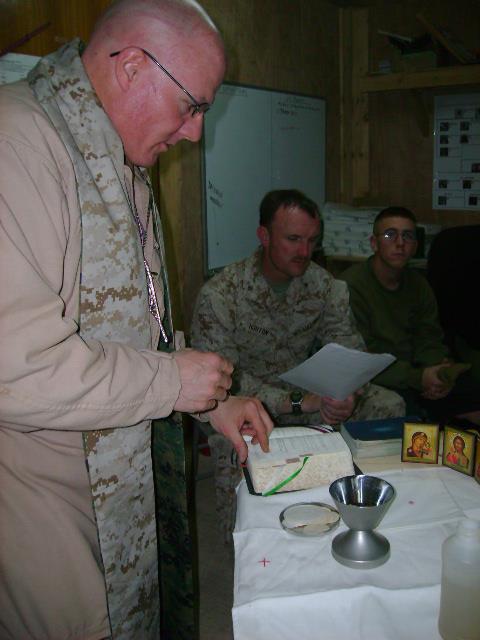
When I left Iraq in February 2008 I felt that I was abandoning those committed to my spiritual care, but my time was up. Because of it I missed going with some of my advisors to Basra with the 1st Iraqi Division to retake that city from insurgents. It was only a bit over a month after I had celebrated what I consider to be my most important Masses of my life at COP South and COP North on December 23rd as well as Christmas Eve and Christmas Day. In fact until very recently they were really the last masses that I felt the mystery and awe of the love of God that I used to so much feel.
When I left Iraq the new incoming senior Chaplain refused to take my replacement leaving our advisers without dedicated support. He then slandered me behind my back because what I was doing was not how he would do things and because I and my relief were under someone else’s operational control. It is funny how word gets back to you when people talk behind your back. Thankfully he is now retired from the Navy and I feel for any ministers of his denomination under his “spiritual” care. So I cannot forget those days and every time I think about them, especially around Christmas I am somewhat melancholy and why I can relate so much to Father Palmer in the movie. While I cannot prove it I do believe, and have heard from others who used to work at the Chief of Chaplains office that I have been shunned and punished by past and present leaders of the Chaplain Corps because of my witness in being open about my struggles with faith and PTSD. A can recount a number of incidents that would be of circumstantial evidence, but I digress. That being said I am much better off for that experience than I would be had it not occurred.
It has been ten years since those Christmas Masses and they still feel like yesterday. In the intervening years my life has been different. Just a year later I was walking home from church where my wife was to sing in the choir during the Christmas vigil mass. I couldn’t handle the crowds, the noise, and I felt so far away from God. That night I walked home in the dark looking up into the sky asking God if he still was there. If there had been a bar on the way home I would have stopped by and poured myself in.
Since Iraq I have dealt with severe and chronic PTSD, depression, anxiety and insomnia were coupled with a two year period where due to my struggles I lost faith, was for all practical purposes an agnostic. I felt abandoned by God, but even more so and maybe more importantly by my former church and most other Chaplains. It was like being radioactive, there was and is a stigma for Chaplains that admits to PTSD and go through a faith crisis, especially from other Chaplains and Clergy. It was just before Christmas in late 2009 that faith began to return in what I call my Christmas Miracle. But be sure, let no one tell you differently, no Soldier, Sailor, Marine or Airman who has suffered the trauma of war and admitted to PTSD does not feel the stigma that goes with it, and sadly, despite the best efforts of many there is a stigma.
Now that faith is different and I have become much more skeptical of the motivations of religious leaders, especially those that demonize and dehumanize those that do not believe like them or fully support their cause or agenda. Unfortunately there are far too many men and women who will use religion to do that, far too many. Unlike a few years ago they now occupy the seat of political power as sycophants of the President, offering no prophetic voice but speaking the words of death covered in the veneer of the Christian faith.
As for me as opposed to . I had the floor kicked from out from under me in the summer of 2014 and it has been a hard fight and while I am beginning to get back to some sense of normal it is a day to day thing. I still suffer the effects of the PTSD, especially the insomnia, nightmares and the nightmares which came back with a vengeance that summer. I also still have the anxiety in crowded places and bad traffic, but working with my new therapist I am coming up with some effective coping mechanisms. As for faith, I do believe again, more often than not, though at the same time I doubt. Though I believe I think I still consider myself to be a Christian Agnostic who echoes the cry of the man who cried out to Jesus, “Lord I believe, help my unbelief!” I believe and yet, I don’t and I don’t think that is a bad thing, I think it helps me understand those who no longer believe, those that struggle, and those who raised as Christians have left the faith.
Like the Priest in Joyeux Noel I know that my place is with those who are “in pain, and who have lost their faith.” For me this may no longer be on the battlefield as I will retire from the Navy in a few years, unless as I expect a major war breaks out with North Korea, and maybe Iran too.
However, that being said I will strive to be there for those that struggle with faith and believe, especially those who struggle because of what they saw and experienced during war and when they returned home. This Sunday, Christmas Eve I will preach at my chapel’s Protestant service. Likewise as I wrote last week I had the honor of conducting the Christmas service for the German contingent of the NATO headquarters here.
I expect that in the coming year I will do my best to speak truth to those in power and those whose faithfulness is more a product of their comfort with the God that they create in their own mind rather than the Crucified God wise death on the Cross s a scandal. For many Christians the scandal of the cross is too easy to avoid by surrounding ourselves with pet theologies that appeal to our pride, prejudice and power. The kind of malevolent power represented by the bishop in Joyeux Noel as well as the leaders of the so called “Conservative Evangelicals” who support a President who says “Merry Christmas” even as he defecates on all who believe in the God who became incarnate as a helpless babe in a manger and who died on a cross. In fact I saw a mocking meme of Trump saying “Merry Christmas” as he holds a bigger than life Bible to his chest from a very conservative evangelical friend on Facebook, it was blasphemous.
The French mystic Simone Weil said “He who has not God in himself cannot feel His absence.” I think that sums up the President and his ardent Evangelical supporters. I don’t think they would recognize Christ if he walked among them and would have been among those shouting “Crucify him!” but of course I could be wrong in some individual cases.
So, this Christmas, like the theologian Paul Tillich I have come to believe that “Sometimes I think it is my mission to bring faith to the faithless, and doubt to the faithful.”In other words I am going to be faithful to the Crucified Christ and remain a complete pain in the ass to them until the day that I die.
I am dipping into the archives today because the article is exceptionally relevant, at least to me with the distressing actions of President Trump which seem to me to be based on his lack of character, his bellicose threats against civil liberties as well as the actions of his administrational against the norms of our republican form of government, his disregard for the Constitution, his exceptional narcissism and what I believe is a terrible psychological instability which may be based on an onset of some form of dementia, which could lead us into multiple wars the likes that have not been seen since the Second World War, frighten the hell out of me.
Most of my undergraduate and non-theological graduate studies focused on the conundrum faced by German military officers during the rise of Hitler. Did those not immediately cashiered or murdered after Hitler’s assumption of power resign, retire, or continue to serve, either supporting the new regime, or attempting to mitigate he evil. Sadly, most ended up giving their support to the Nazi regime as Hitler, but some did attempt to mitigate the evil of the Hitler regime. One was General Ludwig Beck, and his legacy is an uncomfortable one for anyone who has sworn an oath as an officer. Beck said:
“It is a lack of character and insight, when a soldier in high command sees his duty and mission only in the context of his military orders without realizing that the highest responsibility is to the people of his country.”
It is with that in mind that I repost this article.
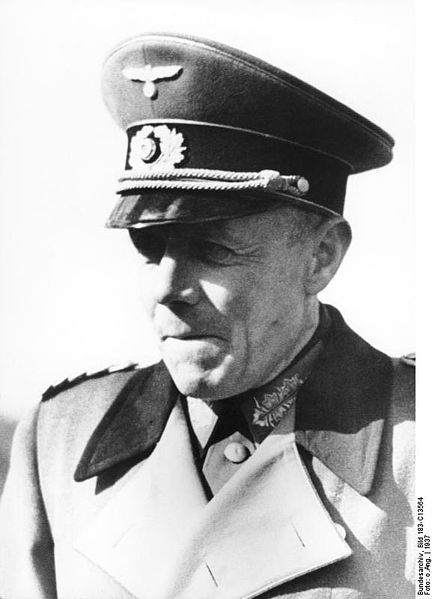
General Ludwig Beck
This is one of those uncomfortable posts to write partially because I know that some people will take it completely wrong or ascribe meaning to it that I do not intend. I by training am a military historian, probably better at that than I am theology. One thing that fascinates me in the study of military history is the actions of men in the face of evil and the meetings of such people at the intersections of where military and government policy intersect. It is a timeless theme. The bulk of my study until the past few years was the German Army, particularly that of the Weimar Republic and the Wehrmacht to include policies, leaders, political attitudes and behavior in war and peace. Thus it makes sense for me to look at Colonel General Ludwig Beck who held the post of Chief of the German General Staff during the early part of the Nazi era.
Ludwig Beck is one of those characters in military history that makes professional military officers uncomfortable. Beck is not the perfect example of righteousness nor was he always correct in things that he supported. As an artillery regiment commander he defended the rights of soldiers and officers to be Nazi Party members though he himself was not one. He, like many military officers was a conservative military officer by nature and became Chief of Staff of the Wehrmacht in 1935 two years after Hitler’s ascension to power. Taking office Beck was troubled by some Nazi policies but not by the need for Germany to expand to areas that it had once controlled, he opposed the plan to attack Czechoslovakia not because of any love for the Czech state which he desired to be eliminated, but rather it being a war that Germany could not win. He resigned from his position a Chief of Staff in 1938 when he could not persuade the rest of the General Staff to resign in protest over Hitler’s plan which he felt would be disastrous for Germany. Had the western powers led by Neville Chamberlain not caved at Munich it is likely that the Germans would have suffered badly against the Czech army and fortifications and with the entry of France into the war would have suffered a defeat that would have ended the Hitler regime. In fact German officers who saw the extent of Czech preparations on the frontier following the Munich deal were greatly relieved that they did not have to fight their way into the Czech state.
After his resignation Beck played a key role in the resistance movement. He was involved in the planning for a number of attempts on Hitler’s life. Yet it was his leadership in the July 20th 1944 attempt on the life of Hitler that ensured his place in history. With Colonel Klaus Von Stauffenberg and others in the General Staff at the Front and in Germany he acted to avert further destruction in Europe and the certain destruction of Germany. The plot, Operation Valkyrie was marred by poor execution and failed to kill Hitler of seize power but for a few hours. The planners had left too much to chance and once Hitler had restored communications the coup attempted ended swiftly. Had the attempt succeeded Beck was in line to become either the leader of Germany or the Head of the Army. Instead while being interrogated after his capture he took his own life depriving Nazi leaders of the ability to put him up for a public trial at which he would have been humiliated and then executed. The Kasserne in Sonthofen where the Bundeswehr MP School and Staff School as well as NATO and EU military schools are located is named for him. It is there, ironically a former Adolf Hitler School that his memory and sacrifice is honored by the nation which emerged from the rubble of World War Two. He is honored in a small museum and with a plaque recognizing his sacrifice.
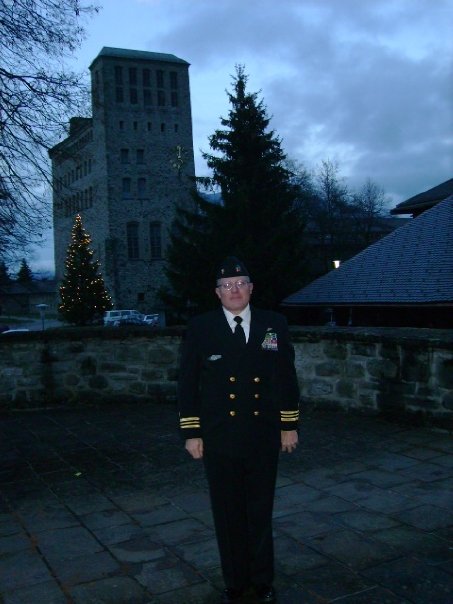
Me at Ludwig Beck Kasserne in December 2006
The reason that General Beck makes many of us in uniform uncomfortable (and I do include myself) is that he recognized that senior officers, especially those in high command who help set and execute policy cannot isolate themselves in the purely military aspects of the operations. Instead he believed that officers have a higher duty to the constitution and people and not just the military mission that they have been assigned. When he realized that he could not stop Hitler’s invasion of Czechoslovakia he resigned and worked in the obscurity of a small and often divided resistance movement against Hitler. The bulk of the German high command, including many officers idolized in the United States did not recognize the higher duty. Many of these men were consummate professionals who did not support the evil of the Nazi regime and who conducted themselves honorably. Yet they effectively abetted its crimes by not opposing actions of their government that were against international law and morality as well as dangerous from purely a pragmatic military standpoint.
The problem is that military officers in any nation, including ours can face situations such as Beck faced. A military’s character is demonstrated in how leaders deal with such situations. Beck recognized the situation early, the bulk of his fellow officers did not recognize a problem until Germany was embroiled in a war that it could no longer win. Even then most could not mount an opposition to Hitler because they did not want to be considered to be mutineers and violate their oath. The potential to abet evil when military professionals bury their heads by planning and executing purely military aspects of a campaign is great. If they ignore questionable policy or even policies that they know that have been judged by the international community to be illegal or immoral, such as torture of prisoners or waging wars of aggression against countries that have not attacked their nation they become complicit in their nations crimes. This was the case with German Officers who may not have committed any personal crime and even tried to mitigate the evils of the Nazi regime were morally complicit in that evil.
In the United States the military shows its fidelity by remembering our oath to the Constitution and being faithful to it and the people that we serve. As officers we represent all Americans and not just those of our political party, religious faith or social or economic interests, nor any political leader, faction or interest group within the nation. The Constitution, our military regulations, traditions and the Uniform Code of Military Justice are the standard by which we operate and by which we conduct ourselves and tools that protect us when policies or actions taken by the government or people within it violate those codes or international law. The UCMJ makes it clear those officers who take part in, plan or a complicit in illegal actions in war are committing crimes.
When a nation become involved in wars which are non-traditional, revolutionary wars or insurgencies that barriers to professional conduct can be broken down. The Mai Lai massacre committed by 2LT William Calley’s platoon with the certain knowledge and maybe even approval of individuals in the chain of command is one example as were the uncontrolled chaos of prisoner abuse and torture at Abu Ghraib.
Times are difficult and we do not know what the future brings. Stress in societies caused by economic conditions, natural disasters, lawlessness on the streets and divided and ineffective governments sometimes remove the moral restraints of the society and even affect the military. One sees this in Weimar Germany as well as the 4th Republic in France which had to deal with post World War II economic difficulties, exacerbated by recriminations of political opponents for actions the others did during the war while France was occupied by Germany as well as the wars in Indo-China and Algeria which further divided the nation and the military.
It is in stressful and uncertain times that officers have to be men and women of principle who always uphold the highest traditions of their military as well as be the voice of conscience when governments, political parties, special interests or leaders begin to violate international norms in the conduct of war. Beck was not a perfect officer. He supported some of Hitler’s policies until after his resignation but like much of the resistance believed that the Nazi regime could only end up destroying Germany. It is important to remember that like Ludwig Beck that officers do not need to sacrifice their honor to be faithful to their oath. This is important now more than ever as the President makes multiple assaults on the judiciary, the Department of Justice, the FBI, the CIA, and in a less direct matter against the military, its leaders, and its members, especially when he insinuates that before he came to office the military were “losers.” I can only imagine what will happen when the President launches a depleted military into war on multiple fronts especially against North Korea. I am certain that he will blame the military and its leadership for the failures of his policies.
I just wonder if there are any leaders today with the courage of Ludwig Beck. As for me I remain in service simply to care for sailors, marines, soldiers, airmen and their families, knowing that very bad times are coming. Likewise I hope to be an example and mentor to the chaplains, religious program specialists, and the others that I serve with knowing that no matter what happens I am coming to the end of my career. I have been serving continuously in the Army and Navy since 1981. I have been to war and expect that I will see war again before my career is over. My loyalty is to the Constitution and the men and women who I have the privilege of serving alongside.
Today was very busy but quite interesting as I had the honor of helping lead the German NATO contingent Christmas service and afterward to attend their Christmas party, complete with a visit from Saint Nikolas for the children. It was an honor to have the chance to serve my German friends. I feel so at home with Germans and tonight was another chance to serve them as a Chaplain which I have had the chance to do a number of times when stationed or visiting in Germany.
It was a wonderful experience. I was able to meet some really nice people and take part in a truly German Christmas service. There was music and the singing of Christmas carols and hymns, prayers, the reading of the Christmas story form the Gospel of Luke and I led most of the prayers and the liturgy, and preached the sermon, of course all in German. For many in attendance this was a surprise, they are not used to Americans who can do this. Truthfully I did work hard on the Sherman and quoted from the writings of Dietrich Bonhoeffer and Martin Luther in the sermon, while also relating it to the reality of the struggle with faith, even using the images of Charlie Brown’s Christmas and the speech of Linus in it for illustration. But the heart of the sermon focused on how God comes to us from the manger to the Cross in the incarnation of Jesus Christ and why that is so important.
After the service I was complimented by many people including one officer who commented on my truly German accent when preaching. I guess that immersion in another culture and language is the best way to learn it. I still need to do some hard work to be really fluent, especially with my terrible speech comprehension in crowed venues, but it is good to know that I don’t sound like an American when speaking German.
But any way, I might go back and retranslate my sermon back into English and post some of it here in the coming days.
I could write a lot tonight but I won’t because I am busy preparing to preach at the German NATO contingent Christmas service at my chapel. For me it is an honor as I have been serving alongside and friends of the men and women of the German Bundeswehr since I was a young Army lieutenant in 1984. After the service tomorrow, Judy and I will attend their Christmas party at one of the hotels on our beachfront. It is an honor to get the chance to do this.
As such I have been going back to my German liturgy as well as the writings of men like Martin Luther, Dietrich Bonhoeffer, Hans Kung, Martin Niemoller, and Jurgen Moltmann. I do find that reading the Biblical, liturgical, and theological texts in German, or for that matter singing the Mass or prayers in German seems to bring more of a sense of mystery and meaning than what I do in english.
Honestly, I can’t say why that is, as I have no German DNA in me, and I am for all purposes an American with mostly Irish DNA, despite my Scottish last name. Maybe it is because when I was a non-denominational Christian going to a Southern Baptist seminary I discovered Martin Luther’s Theology of the Cross in his own writings, as well as those of Dietrich Bonhoeffer, Jurgen Moltmann, and Hans Kung. Those writing brought me to the Catholic, but not Roman side of Christianity. I now serve as a Priest in an Old Catholic denomination. When I was a relatively new priest serving as a mobilized Army Reserve Chaplain in German I learned and memorized the Mass, the Our Father, and the Hail Mary in German better than I ever could in English. I have no idea why, for English is my first language and I didn’t begin learning German until my sophomore year in college; but for some reason that I don’t know, God seems to speak to me in German far more than English.
My German friends say that I am fluent, though I know that I am not, but when I travel in Germany I have to tell people that I am American. My German is good enough, and my accent, a blend of Bavarian and Hessian German confuses people for I don’t speak German like even a well spoken American fluent in school book German. I speak like Germans with different German dialects.
So anyway, I am going to get back to work on my sermon, which I may post in English here tomorrow night.
Friends of Padre Steve's World
I welcome comments, even those which disagree with my positions and articles. I have done this for years, but recently I have been worn out by some people.
I have just a couple of rules for comments. First, be respectful of me and other commentators. If you are polite and respectful' even if I disagree with you your comment will be posted and I will respond accordingly.
That being said I will not allow people to hijack the comment section to push their religious or ideological views. Unless the comment deals with the meat of the article, don't expect me to allow you to preach, especially if you are a racist, anti-Semetic, or are a homophobe.
Nor will I allow spam comments. Most of those are automatically blocked by Wordpress but some do get through, and deal with them accordingly.
Peace
Padre Steve+















 The Inglorius Padre Steve's World