Category Archives: faith

Will We Crucify Humanity on a Cross of Gold?

cross

Friends of Padre Steve’s World

Do you remember when conservative Christian politicians and preachers actually supported working people? I am not kidding, there was a time when some did exactly that and did so in the highest reaches of their political parties. Unlike today’s preachers they were not just lobbying for more tax cuts for the most wealthy, and extolling the job “creators” over the the people whose labor actually produces products, instead they spoke boldly on behalf of regular people. Sadly today all of the major political figures as well as most of the minor ones who claim to be “conservative Christians” have more in common with the greedy Robber Barons than one of the most celebrated conservative Christian politicians who has ever lived.

William Jennings Bryan was one of the most influential politicians of his era. Bryan served as Secretary of State under Woodrow Wilson, he was a Senator and three time Presidential Candidate. He was also a very conservative Fundamentalist Christian perhaps most famous, or perhaps infamous now as one of the prosecuting attorneys at the Scopes “Monkey” Trial of 1925. In fact I can find that Bryan’s handling of that case played to the basest religious and social hatred of his day and though he thought that he was defending “Biblical” values  ended up making Christians look but small minded, intolerant and hateful. The movie Inherit the Wind, though a fictional account of that trial, shows how decent Christians can become consumed with hatred in the name of righteousness.  It is a sad thing that Bryan is most remembered for the Scopes Trial than when he bucked the political system of both the Republican and Democratic parties to speak up for workers and small businessmen. Personally I cannot imagine Ted Cruz, Mike Huckabee, Marco Rubio or any other supposedly Christian political doing what Bryan did.

Whether one agrees on Bryan’s fundamentalist religious doctrine regarding the creation of the earth or the manner of how God created the earth,  one has to admit that of pre-Great Depression politicians he was quite amazing. Especially in how he saw through the Godlessness of unbridled capitalism and the devaluation of workers by valued capital over the people that actually produced anything.

As an American and a Christian I have to look at the body of work and life of a man. I don’t have to agree with all that they stood for or did and though I find much fault in Bryan and his supporters in the Scopes Trial I do not throw out the good things that he did and got right.

I think the apex of Bryan’s political thought is encapsulated in his speech at the Democratic National Convention of 1896, what is now called the Cross of Gold Speech.

When one looks at it now it really is timeless. Bryan saw through the charade that was being played out by politicians and the big money Wall Street types that they represented with great verve. It was a speech that one might have heard come from a prophet in the Old Testament.
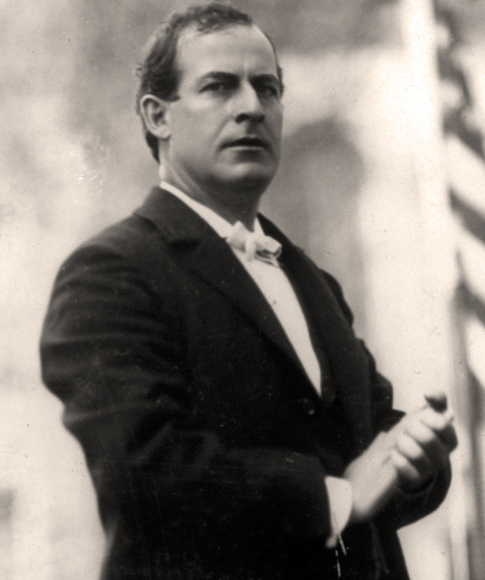
HD_WilliamJenningsBryan1896

I am just going to quote a couple of pertinent sections from the speech to trigger the thought of anyone reading this article. I think that they could be spoken today in light of the way that many conservative Christians both Evangelical and Fundamentalist Protestants, Roman Catholics and those that preach the so called “Prosperity Gospel” have thrown their support behind ideas that are nothing more than unvarnished, crude materialism of the worst kind. In fact I believe that it is nothing more than the “baptism” of such thought by Christians are among the biggest reasons for the massive exodus of people from the churches and the rise of the “Nones,” or those with no religious preference.

Bryan said:

“We say to you that you have made the definition of a business man too limited in its application. The man who is employed for wages is as much a business man as his employer; the attorney in a country town is as much a business man as the corporation counsel in a great metropolis; the merchant at the cross-roads store is as much a business man as the merchant of New York; the farmer who goes forth in the morning and toils all day, who begins in spring and toils all summer, and who by the application of brain and muscle to the natural resources of the country creates wealth, is as much a business man as the man who goes upon the Board of Trade and bets upon the price of grain; the miners who go down a thousand feet into the earth, or climb two thousand feet upon the cliffs, and bring forth from their hiding places the precious metals to be poured into the channels of trade are as much business men as the few financial magnates who, in a back room, corner the money of the world. We come to speak of this broader class of business men.”

His words are striking in their directness and honesty. They are not only Christian but they are deeply American. He called on his Democratic party, which had been as bad as the Republicans during the age of the unregulated Robber Barons who used the Gold Standard to manipulate the markets and eliminate silver as currency to their benefit to be different:

“Upon which side will the Democratic Party fight; upon the side of “the idle holders of idle capital” or upon the side of “the struggling masses”? That is the question which the party must answer first, and then it must be answered by each individual hereafter. The sympathies of the Democratic Party, as shown by the platform, are on the side of the struggling masses, who have ever been the foundation of the Democratic Party.”

His arguments could be called true Christian populism. Bryan talked about two ideas of diametrically opposed types of government and economics:

“There are two ideas of government. There are those who believe that, if you will only legislate to make the well-to-do prosperous, their prosperity will leak through on those below. The Democratic idea, however, has been that if you legislate to make the masses prosperous, their prosperity will find its way up through every class which rests upon them.”

He concluded his speech with this statement.

“Having behind us the producing masses of this nation and the world, supported by the commercial interests, the laboring interests, and the toilers everywhere, we will answer their demand for a gold standard by saying to them: “You shall not press down upon the brow of labor this crown of thorns; you shall not crucify mankind upon a cross of gold.”

When I hear the unholy trinity of politicians, pundits and preachers who extol the virtue of capital over labor and the worship of wealth as the highest good I wish that there would be some that would remember that the people who actually make things, grow things, fix things and maintain things are not just human capital, but people.

And after all, it is people that matter…

Peace

Padre Steve+


Leave a comment

Filed under economics and financial policy, faith, History, News and current events, Political Commentary

The Present Never Looks as Good…

Matt-Frewer-as-Berlingoff-Rasmussen-TNG-A-Matter-of-Time-7

Friends at Padre Steve’s World

I tend to become somewhat reflective as the New Year approaches. I am reminded of Peter Benchley, who wrote, “The past always seems better when you look back on it than it did at the time. And the present never looks as good as it will in the future.” Likewise, St Augustine of Hippo once asked “How can the past and future be, when the past no longer is, and the future is not yet?”

Augustine’s question is interesting, but I think that his question is flawed. I think that the past lives in the present much more than we would like to think and that our future, though unwritten can unfold in a multitude of ways and possibilities.

Many of us live in the past as if it were today. We, individually and collectively, as individuals and nations live in the past and look to it much more fondly than when it was our present. I think that historian Will Durant possibly said it the best: “The past is not dead. Indeed, it is often not even past.”

As a historian myself I value the past and seek answers and wisdom from it to use in the present because what we do in the present does, for better or worse defines our future. Confucius said “study the past if you would define the future.” He was quite wise, he said to study the past did not say to live in it.

That is something that I have been learning for close to 20 years now when my Clinical Pastoral Education Supervisor, using a Star Trek Next Generation metaphor from the episode A Matter of Time. In the episode a shadowy visitor claiming to be from the future refuses to help claiming that if he were to help that his “history – would unfold in a way other than it already has.”

Finally Picard is forced to make a decision and confronts the visitor, who turns out to be a thief from the past using time travel to collect technology to enrich himself. Picard responds:

“A person’s life, their future, hinges on each of a thousand choices. Living is making choices! Now, you ask me to believe that if I make a choice other than the one that appears in your history books, then your past will be irrevocably altered. Well… you know, Professor, perhaps I don’t give a damn about your past, because your past is my future, and as far as I’m concerned, it hasn’t been written yet!”

It was in telling me that my future did not have to be my past that opened a door of life and faith that I had never experienced before and which showed me that life was to be boldly lived in the present. While it meant a lot then, it means more now for the past according to William Shakespeare “is prologue.”

We cannot help being influenced by the past. We should indeed learn from it, but we cannot remain in it or try to return to it. Kierkegaard said that “Life can only be understood backwards; but it must be lived forwards.”

Since I am a Christian, at least by profession, my faith in that future is in the God who is eternal, the God of love. Victor Hugo in Les Miserables said “Love is the only future God offers.” That is the future that I want to envision.

Living is making choices and the future hinges on thousands of them. Many of these choices we make automatically without thought simply because we have always done them that way, or because that is how it was done in the past. However, if we want to break the cycle, if we want to live in and envision that future of the God of love then we have to live in the present though the past lives in us.

T.S. Elliot penned this verse:

“For last year’s words belong to last year’s language
And next year’s words await another voice.
And to make an end is to make a beginning.”

Peace

Padre Steve+

1 Comment

Filed under faith, philosophy, star trek

Reflections on Christmas & War

bedouin

Friends of Padre Steve’s World

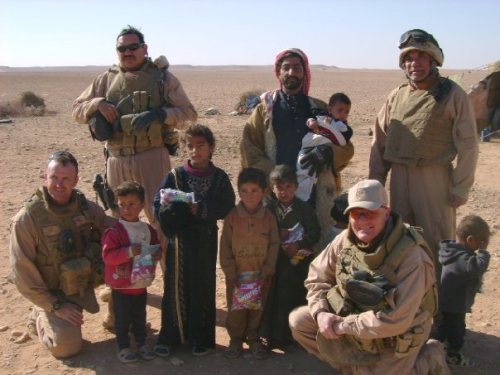
Yesterday I posted an essay about a German physician and pastor who drew the picture The Madonna of Stalingrad, and the day before one about the Christmas Truce of 1914 and the movie Joyeux Noël (Merry Christmas). As I have mention before, I get very reflective around Christmas, in large part due to my experiences in Iraq. While I am certainly happy this year, I am, as I still tend to be a bit melancholy. My time in Iraq changed me, T.E. Lawrence; the immortal Lawrence of Arabia wrote to a friend, “You wonder what I am doing? Well, so do I, in truth. Days seem to dawn, suns to shine, evenings to follow, and then I sleep. What I have done, what I am doing, what I am going to do, puzzle and bewilder me. Have you ever been a leaf and fallen from your tree in autumn and been really puzzled about it? That’s the feeling.” I often feel that way.

As I said, when I returned from Iraq I was a changed man and while proud of my service I am haunted by my experiences. One cannot go to war, see its devastation, see the wounded and dead, as well as the innocents traumatized by it. One cannot get shot at, or be in enclosed rooms, meeting with people that might be friends, or might be enemies, and while everyone else is armed, you are not.

Likewise my homecoming was more difficult than I could have imagined. I never felt so cut off from my country, my society, my church, or even other chaplains. My experience is not uncommon among those who have served in Iraq or Afghanistan, or for that matter those who have served in almost any modern war. Erich Maria Remarque in his classic All Quite on the Western Front wrote:

“I imagined leave would be different from this. Indeed, it was different a year ago. It is I of course that have changed in the interval. There lies a gulf between that time and today. At that time I still knew nothing about the war, we had been only in quiet sectors. But now I see that I have been crushed without knowing it. I find I do not belong here any more, it is a foreign world.”

My first Christmas at home was so difficult that at a Christmas Eve mass I handed my wife the car keys and walked home in the dark and cold. Had there been a bar on the way home I would have walked in and poured myself into a bottle.

That being said I would not trade my experience for anything. The experience of PTSD and other war related afflictions has been a blessing as well as a curse. They have changed my world view and made me much more emphatic to the suffering and afflictions of others, as well when they are abused, mistreated, terrorized and discriminated against. These experiences along with my training as a historian, theologian, and hospital chaplain clinician before and after my tour have given me a lot bigger perspective than I had before, especially at Christmas.

But I live with all of the memories. Guy Sajer wrote in his book The Forgotten Soldier, “Only happy people have nightmares, from overeating. For those who live a nightmare reality, sleep is a black hole, lost in time, like death.” General Gouverneur Warren, a hero of many Civil War battles including Gettysburg wrote to his wife after the war “I wish I did not dream so much. They make me sometimes to dread to go to sleep. Scenes from the war, are so constantly recalled, with bitter feelings I wish never to experience again. Lies, vanity, treachery, and carnage.”

As difficult as things have been and as much as I wonder what will happen next, at Christmas I pray for peace, but too many people, some even in this country seem to live for the bloodlust of war.

But amid such unholy thoughts one can hope and pray for peace at Christmas, I guess that is a reason I love the song Happy Christmas, I have put Melissa Etheridge’s version here.

As my Iraqi friends are prone to say, Inshallah, (إن شاء الله) God willing…

Yes, God willing,

Peace

Padre Steve+

Leave a comment

Filed under faith, PTSD, Tour in Iraq

Light, Life, Love: The Madonna of Stalingrad

Bundeswehr zeigt "Stalingrad"-Ausstellung

Friends of Padre Steve’s World,

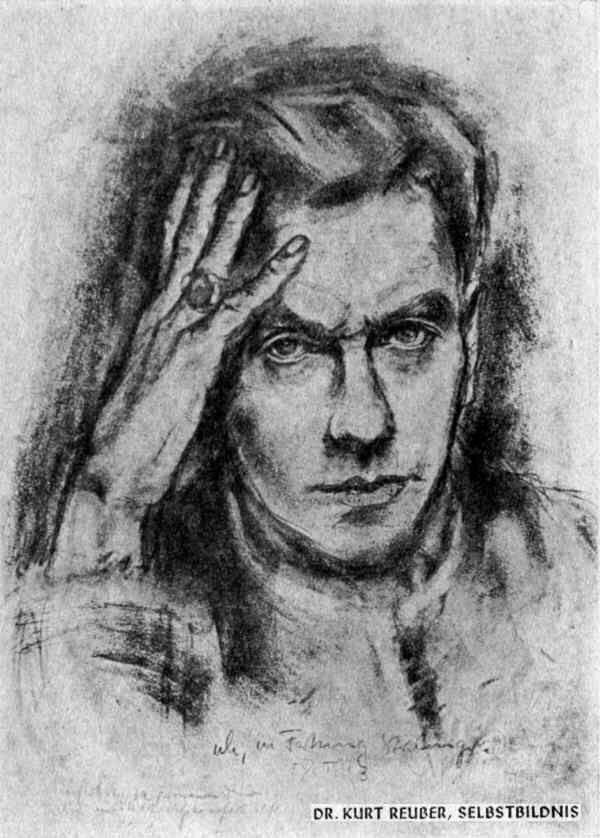
I think most of my readers know that I am a career military officer and have served in peace and war as a chaplain. That service includes a tour in Iraq, a war, which by almost any standard would have been considered unjust and illegal, yet I served there, and came back a changed man. As such the stories of those who served in war, especially those who serve in hopeless battles, and even in evil causes during Christmas have a special place in my heart. One of those men was a German pastor and medical doctor named Kurt Reuber.

k_reuberl

As I said, Reuber was a theologian, pastor and medical doctor, likewise he was an accomplished artist and used that medium to convey his own faith, and doubts. He was a friend of Albert Schweitzer in 1939 he was conscripted to serve as a physician in the Germany Army. By November 1942 he was a seasoned military physician serving with the 16th Panzer Division, part of the German 6th Army, which had been fighting in the hell of Stalingrad. When his division along with most of 6th Army was surrounded by the Soviets, cut off from most supply and without real hope of relief, he like other physicians continued to serve the soldiers committed to his care.

pg-34-stalingrad-2-getty

However, unlike most physicians, the care Reuber offered care included spiritual matters, as he sought to help his soldiers deal with the hopelessness of their situation. As Reuber reflected on the desperation of the German soldiers in the Stalingrad pocket. He wrote to his family.

“I wondered for a long while what I should paint, and in the end I decided on a Madonna, or mother and child. I have turned my hole in the frozen mud into a studio. The space is too small for me to be able to see the picture properly, so I climb on to a stool and look down at it from above, to get the perspective right. Everything is repeatedly knocked over, and my pencils vanish into the mud. There is nothing to lean my big picture of the Madonna against, except a sloping, home-made table past which I can just manage to squeeze. There are no proper materials and I have used a Russian map for paper. But I wish I could tell you how absorbed I have been painting my Madonna, and how much it means to me.”

“The picture looks like this: the mother’s head and the child’s lean toward each other, and a large cloak enfolds them both. It is intended to symbolize ‘security’ and ‘mother love.’ I remembered the words of St. John: light, life, and love. What more can I add? I wanted to suggest these three things in the homely and common vision of a mother with her child and the security that they represent.”

The picture was drawn on the back of a captured Soviet map and when he finished it he displayed it in his bunker, which became something of a shrine. Reuber wrote:

“When according to ancient custom I opened the Christmas door, the slatted door of our bunker, and the comrades went in, they stood as if entranced, devout and too moved to speak in front of the picture on the clay wall…The entire celebration took place under the influence of the picture, and they thoughtfully read the words: light, life, love…Whether commander or simple soldier, the Madonna was always an object of outward and inward contemplation.”

drkrop

As the siege continued men came to the bunker for both medical care and spiritual solace.  On Christmas Eve Reuber found himself treating a number of men wounded by bombs outside the bunker. Another soldier lay dying, just minutes before the soldier had been in the bunker singing the Christmas hymn O Du Froehliche.  Reuber wrote:

“I spent Christmas evening with the other doctors and the sick. The Commanding Officer had presented the letter with his last bottle of Champagne. We raised our mugs and drank to those we love, but before we had had a chance to taste the wine we had to throw ourselves flat on the ground as a stick of bombs fell outside. I seized my doctor’s bag and ran to the scene of the explosions, where there were dead and wounded. My shelter with its lovely Christmas decorations became a dressing station. One of the dying men had been hit in the head and there was nothing more I could do for him. He had been with us at our celebration, and had only that moment left to go on duty, but before he went he had said: ‘I’ll finish the carol with first. O du Frohliche!” A few moments later he was dead. There was plenty of hard and sad work to do in our Christmas shelter. It is late now, but it is Christmas night still. And so much sadness everywhere.”

On January 9th 1943 with all hope of escape or reinforcement gone Reuber gave the picture to the battalion commander as the officer was too ill to carry on and was one of the last soldiers to be evacuated from the pocket. Reuber’s commander carried the Madonna out of the pocket and returned it delivered it to Reuber’s family, preserving it for all.

Reuber was taken prisoner and survived the harrowing winter march to the Yelabuga prison camp. In late 1943 Reuber wrote his Christmas Letter to a German Wife and Mother – Advent 1943. It was a spiritual reflection but also a reflection on the hope for life after the war, when the Nazi regime would be defeated, and Germany given a new birth.

Reuber wrote:

“The concatenation of guilt and fate has opened our eyes wide to the guilt. You know, perhaps we will be grateful at the end of our present difficult path yet once again that we will be granted true salvation and liberation of the individual and the nation by apparent disappointment of our “anticipation of Advent”, by all of the suffering of last year’s as well as this year’s Christmas. According to ancient tradition, the Advent season is simultaneously the season of self-reflection. So at the very end, facing ruin, in death’s grip – what a revaluation of values has taken place in us! We thus want to use this period of waiting as inner preparation for a meaningful new existence and enterprise in our family, in our vocation, in the nation. The Christmas light of joy is already shining in the midst of our Advent path of death as a celebration of the birth of a new age in which – as hard as it may also be – we want to prove ourselves worthy of the newly given life.”  (Erich Wiegand in Kurt Reuber, Pastor, Physician, Painter, Evangelischer Medienverb. Kassel 2004. )

prisoner's madonna

Reuber did not live to see that day. He died of Typhus on January 20th 1944, not long after writing this and just a few weeks after painting another portrait of the Madonna, this one entitled The Prisoner’s Madonna. He was not alone, of the approximately 95,000 German POWs taken at Stalingrad only about 6,000 returned home.

His paintings survived the war and his family gave The Madonna of Stalingrad to the Kaiser Wilhelm Memorial Church in Berlin after it was restored as a symbol of hope and reconciliation. Copies are also displayed in Coventry Cathedral and the Russian Orthodox Cathedral in Volgograd, the former Stalingrad. A copy of The Prisoner’s Madonna is now displayed at the Church of the Resurrection in Kassel.

I have a print of the Madonna of Stalingrad in my office. It has become one of the most meaningful pictures I have since I returned from Iraq in 2008. To me they are symbols of God’s presence when God seems entirely absent.

Praying for an end to war.

Peace

Padre Steve+

Leave a comment

Filed under christian life, faith, History, Military, ministry, world war two in europe

Joyeux Noël: I Belong Here with those in Pain Who have Lost Their Faith


palmer

Friends of Padre Steve’s World

As a veteran who served in the badlands of Al Anbar Province during Christmas of 2007 I can relate to Father Palmer, the British priest and chaplain in the film Joyeux Noel (Merry Christmas) when he makes the comment “I belong with those who are in pain, and who have lost their faith, I belong here.”

I again watched that film last night. The film is the story of the amazing and exceptional Christmas Truce of 1914. It is a film that each time I see it that I discover something new, more powerful than the last time I viewed it. It reminds me of serving in Iraq, at Christmas from my perspective as a Chaplain, and thereby giving voice to those who serve now, as well as those who served God’s people in hellish places before me. It reminds me of how much I hate war, and how much I often hate the clergy who are all too often, bloodthirsty cheerleaders for war.


As a Chaplain I am drawn to the actions of the British Padre in the film, who during the truce conducts a Mass for all the soldiers, British, French and German in no-man’s land, who goes about caring for the soldiers both the living and the dead. His actions are contrasted with his Bishop who comes to relieve him of his duties and to urge on the replacement soldiers to better kill the Germans.

As the Chaplain begins to provide the last Rites to a dying soldier the Bishop walks in, in full purple cassock frock coat and hat and the chaplain looks up and kisses his ring.

As the chaplain looks at his clerical superior there is a silence and the Bishop looks sternly at the priest and addresses him:

“You’re being sent back to your parish in Scotland. I’ve brought you your marching orders.”

Stunned the Priest replies: “I belong with those who are in pain, and who have lost their faith, I belong here.”

The Bishop then sternly lectures the Priest: “I am very disappointed you know. When you requested permission to accompany the recruits from your parish I personally vouched for you. But then when I heard what happened I prayed for you.”

The Priest humbly and respectfully yet with conviction responds to his superior: “I sincerely believe that our Lord Jesus Christ guided me in what was the most important Mass of my life. I tried to be true to his trust and carry his message to all, whoever they may be.”

The Bishop seems a bit taken aback but then blames the Chaplain for what will next happen to the Soldiers that he has served with in the trenches: “Those men who listened to you on Christmas Eve will very soon bitterly regret it; because in a few days time their regiment is to be disbanded by the order of His Majesty the King. Where will those poor boys end up on the front line now? And what will their families think?”

They are interrupted when a soldier walks in to let the Bishop know that the new soldiers are ready for his sermon. After acknowledging the messenger the Bishop continues: “They’re waiting for me to preach a sermon to those who are replacing those who went astray with you.” He gets ready to depart and continues: “May our Lord Jesus Christ guide your steps back to the straight and narrow path.”

The Priest looks at him and asks: “Is that truly the path of our Lord?”

The Bishop looks at the Priest and asks what I think is the most troubling question: “You’re not asking the right question. Think on this: are you really suitable to remain with us in the house of Our Lord?”

With that the Bishop leaves and goes on to preach. The words of the sermon are from a 1915 sermon preached by an Anglican Bishop in Westminster Abbey. They reflect the poisonous aspects of many religious leaders on all sides of the Great War, but also many religious leaders of various faiths even today, sadly I have to say Christian leaders are among the worst when it comes to inciting violence against those that they perceive as enemies of the Church, their nation or in some cases their political faction within a country.


“Christ our Lord said, “Think not that I come to bring peace on earth. I come not to bring peace, but a sword.” The Gospel according to St. Matthew. Well, my brethren, the sword of the Lord is in your hands. You are the very defenders of civilization itself. The forces of good against the forces of evil. For this war is indeed a crusade! A holy war to save the freedom of the world. In truth I tell you: the Germans do not act like us, neither do they think like us, for they are not, like us, children of God. Are those who shell cities populated only by civilians the children of God? Are those who advanced armed hiding behind women and children the children of God? With God’s help, you must kill the Germans, good or bad, young or old. Kill every one of them so that it won’t have to be done again.”

The sermon is chilling and had it not been edited by the director would have contained the remark actually said by the real Bishop that the Germans “crucified babies on Christmas.” Of course that was typical of the propaganda of the time and similar to things that religious leaders of all faiths use to demonize their opponents and stir up violence in the name of their God.

When the Bishop leaves the Priest finishes his ministration to the wounded while listening to the words of the Bishop who is preaching not far away in the trenches. He meditates upon his simple cross, takes it off, kisses it hand hangs it upon a tripod where a container of water hangs.

The scene is chilling for a number of reasons. First is the obvious, the actions of a religious leader to denigrate the efforts of some to bring the Gospel of Peace into the abyss of Hell of earth and then to incite others to violence dehumanizing the enemy forces. The second and possibly even more troubling is to suggest that those who do not support dehumanizing and exterminating the enemy are not suitable to remain in the house of the Lord. Since I have had people, some in person and others on social media say similar things to what the Bishop asks Palmer the scene hits close to home.

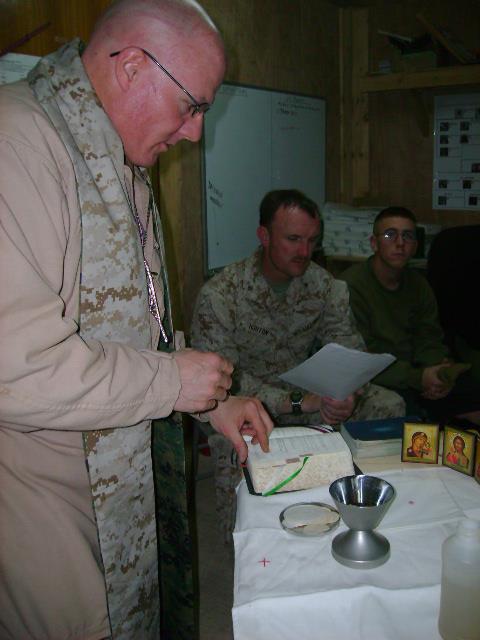
When I left Iraq in February 2008 I felt that I was abandoning those committed to my spiritual care, but my time was up. Because of it I missed going with some of my advisors to Basra with the 1st Iraqi Division to retake that city from insurgents. It was only a bit over a month after I had celebrated what I consider to be my most important Masses of my life at COP South and COP North on December 23rd as well as Christmas Eve and Christmas Day. In fact they were really the last masses that I felt the mystery and awe of the love of God that I used to so much feel.

When I left the new incoming senior Chaplain refused to take my replacement leaving our advisers without dedicated support. He then slandered me behind my back because what I was doing was not how he would do things and because I and my relief were under someone else’s operational control. It is funny how word gets back to you when people talk behind your back. Thankfully he is now retired from the Navy and I feel for any ministers of his denomination under his “spiritual” care. So I cannot forget those days and every time I think about them, especially around Christmas I am somewhat melancholy and why I can relate so much to Father Palmer in the movie.

It has been eight years since those Christmas Masses and they still feel like yesterday. In the intervening years my life has been different. Just a year later I was walking home from church where my wife was to sing in the choir during the Christmas vigil mass. I couldn’t handle the crowds, the noise, and I felt so far away from God. That night I walked home in the dark looking up into the sky asking God if he still was there. If there had been a bar on the way home I would have stopped by and poured myself in.

Since Iraq I have dealt with severe and chronic PTSD, depression, anxiety and insomnia were coupled with a two year period where due to my struggles I lost faith, was for all practical purposes an agnostic. I felt abandoned by God, but even more so and maybe more importantly by my former church and most other Chaplains. It was like being radioactive, there was and is a stigma for Chaplains that admits to PTSD and go through a faith crisis, especially from other Chaplains and Clergy. It was just before Christmas in late 2009 that faith began to return in what I call my Christmas Miracle. But be sure, let no one tell you differently, no Soldier, Sailor, Marine or Airman who has suffered the trauma of war and admitted to PTSD does not feel the stigma that goes with it, and sadly, despite the best efforts of many there is a stigma.

Now that faith is different and I have become much more skeptical of the motivations of religious leaders, especially those that demonize and dehumanize those that do not believe like them or fully support their cause or agenda. Unfortunately there are far too many men and women who will use religion to do that, far too many.

As for me, I thought that I was in a better place a year ago. I had the floor kicked from out from under me in the summer of 2014 and it has been a hard fight and while I am beginning to get back to some sense of normal it is a day to day thing. I still suffer the effects of the PTSD, especially the insomnia, nightmares and the nightmares which came back with a vengeance last summer. I also still have the anxiety in crowded places and bad traffic, but working with my new therapist I am coming up with some effective coping mechanisms. As for faith, I do believe again, though at the same time I doubt. I would have to consider myself a Christian Agnostic who echoes the cry of the man who cried out to Jesus, “Lord I believe, help my unbelief!” I believe and yet, I don’t.

Like the Priest in Joyeux Noel I know that my place is with those who are “in pain, and who have lost their faith.” For me this may no longer be on the battlefield as I will retire from the Navy in a few years. However, that being said I will strive to be there for those that struggle with faith and believe, especially those who struggle because of what they saw and experienced during war and when they returned home.

533506_10151366982457059_868388211_n


Likewise I expect that I will do my best to speak truth to those in power and those whose faithfulness is more a product of their comfort with the God that they create in their own mind rather than the Crucified God wise death on the Cross s a scandal. For many Christians the scandal of the cross is too easy to avoid by surrounding ourselves with pet theologies that appeal to our pride, prejudice and power. The kind of malevolent power represented by the bishop in Joyeux Noel. Thus I take a measure of comfort in the words of Simone Weil who said “He who has not God in himself cannot feel His absence.” 

Thus, like Paul Tillich I have come to believe that “Sometimes I think it is my mission to bring faith to the faithless, and doubt to the faithful.”  In other words to become a complete pain in the ass until the day that I die.

Praying for Peace this Christmas,

Padre Steve+

Leave a comment

Filed under faith, History, Military, ministry, movies, Tour in Iraq, world war one

Stille Nacht

800px-Stille_nacht

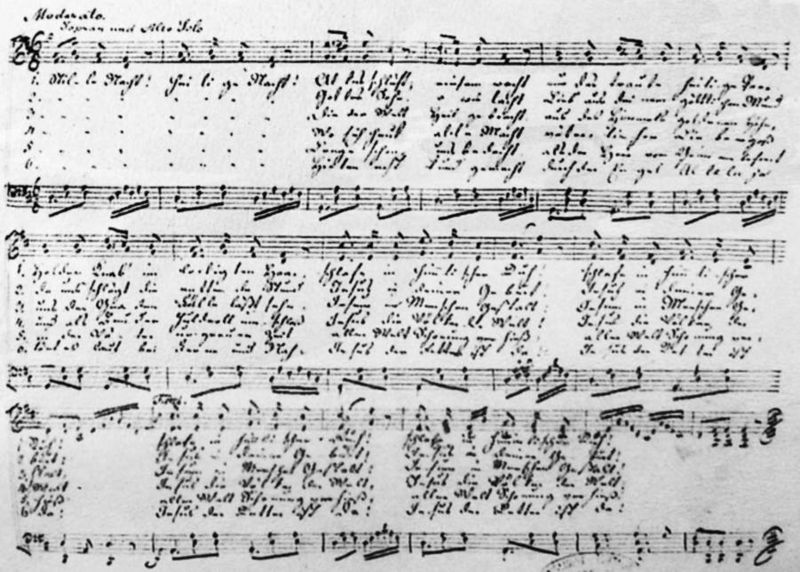
Stille Nacht Autograph in the Hand of Joseph Mohr

In 1816 a young Austrian Catholic Priest in a small parish near Salzburg penned the lyrics to a hymn that even in the midst of war can bind people together. Father Joseph Mohr after moving to another parish in Oberndorf took those lyrics to Franz Gruber a nearby schoolmaster and organist. Mohr asked Gruber to put the words to music, specifically with a guitar accompaniment. Together the performed the song at Oberndorf’s parish church’s Vigil Mass on December 24th 1818.

There are a number of fanciful apocryphal stories about why the song was written and performed on the guitar, including one about the bellows of the church organ having been eaten by mice, but these are akin to sensationalist tabloid journalism. The simple truth is that Mohr sought out Gruber to arrange the song for guitar to be sung by two people accompanied by a choir for that Christmas Vigil Mass.

Stille Nacht, Heilige Nacht 

Stille Nacht, heilige Nacht,
Alles schläft; einsam wacht
Nur das traute hochheilige Paar.
Holder Knabe im lockigen Haar,
Schlaf in himmlischer Ruh!

Stille Nacht, heilige Nacht,
Hirten erst kundgemacht
Durch der Engel Halleluja,
Tönt es laut von fern und nah:
Christ, der Retter ist da!

Stille Nacht, heilige Nacht,
Gottes Sohn, o wie lacht
Lieb’ aus deinem göttlichen Mund
, Da uns schlägt die rettende Stund’.
Christ, in deiner Geburt!

 The song rapidly grew in popularity and spread quickly in Europe. A traveling Austrian singing group, the Rainer family performed it in front of Austrian Emperor Franz I and Tsar Alexander I.

They also gave its first American performance in New York outside the famed Trinity Church in 1839. I continued to grow in popularity and was translated into many languages, now numbering about 140.

The American Episcopalian Bishop John Freeman Young translated it into English in 1863. It is his version that is most used today in English speaking lands today. A website called the Silent Night Web http://silentnight.web.za has 227 versions of the song in 142 languages on its site.

Silent Night 

Silent night, Holy night

 All is calm, all is bright

‘Round yon virgin , mother and child

Holy infant so, tender and mild
Sleep in heavenly peace,
Sleep in heavenly peace.

Silent night, Holy night
Shepherds quake, at the sight
Glories stream from heaven afar
Heavenly, hosts sing Hallelujah.
Christ the Savior is born,
Christ the Savior is born.

Silent night, Holy night
Son of God, love’s pure light
Radiant beams from thy holy face
With the dawn of redeeming grace,
Jesus, Lord at thy birth,
Jesus, Lord at thy birth.

Father Mohr refused to profit from his song and donated his proceeds to care for the elderly and educate children in the parishes and towns he served. He died in 1848.

I find that the song will bring me to tears fast than almost any song. It is one that I have sung in English, German and French. In my travels as a military Chaplain have used on every Christmas Eucharist celebration that I have done, including at two lonely COPS in Iraq, COP South and COP North on the Syrian Border in Al Anbar Province. Likewise I have celebrated joint ecumenical Christmas services with German military chaplains and civilian clergy.

It is a simple and humble song. It is performed the world over by the great and small, the famous and the unknown. It is a song that in two world wars has stopped the violence as opposing soldiers paused to sing it together each in their own language. This happened during the Christmas Truce truce of 1914 as well as in 1944 along the Western Front during the Battle of the Bulge.

Tonight people gather for Christmas Eve services the song will be sung around the world. In lands where war rages the song will be sung. It is my hope that someday that war will be no more and the tiny child spoken of in this humble hymn will understand the incredible grace of the message spoken by the Angels as recorded in Luke’s Gospel:  “Glory to God in the highest, And on earth peace among men in whom he is well pleased.” (American Standard Version)

Peace and Merry Christmas

Padre Steve+

1 Comment

Filed under faith, ministry, music

Pop Goes Christmas: A Holiday Music Collection 

santa-thwak-guitar1

Pop Goes the Christmas

Friends of Padre Steve’s Word,

I have been immersing myself in a lot of Christmas and other holiday music as it is one of the few things that can put me into a mood suitable for the season, otherwise I would be as jolly as George Costanza at Festivus, yes “Serenity Now!”

I grew up in the 1960’s 1970’s and went to college in the 1980s. As such my musical taste reflects much of the Rock, Pop, R&B, and Country crossovers of the era. So here are some of those artists performing some of their Christmas music. I have also included some more contemporary artists whose music I enjoy. Some are religious in nature and some not. While some are just fun to listen to there are others that speak to the sadness and melancholy that some people feel this time of year. As I have grown older I have come to appreciate non-religious Christmas or holiday music, especially that which touches the deepest emotions and longings that I feel, just as much as I do the traditional hymns of Advent and Christmas. I find it interesting as I have mentioned before that so many of the performers are people who would not be welcome in any church because of their faith, or lack of, their politics, or their sexual preference. But I digress…

I have posted over sixty songs here and they are no particular order, and I hope that you enjoy them.  My wish is that you enjoy the Christmas or whatever holiday you are celebrating; after all the key is to enjoy life and hopefully love as well this holiday season.

Peace

Padre Steve+

Leave a comment

Filed under faith, music

Wounded Healers at Christmas

lastmass

Friends of Padre Steve’s World

The German theologian Jürgen Moltmann wrote, “God weeps with us so that we may one day laugh with him.”  Since coming home from Iraq in 2008 my faith has undergone a profound change. This is a part of my story that I share with you.

Christmas is a special time for me, it always has been but in spite of that there were times that I took the faith element for granted. I believed and my faith in God, for me the Christian God, Father, Son and Holy Spirit was unquestioned. I knew the Scriptures, the Creeds and the Councils and I felt that my faith in a sense was untouchable. I was sure of it, in fact almost cocksure or arrogant about it. That came out in published writings in a very conservative Catholic monthly, the New Oxford Review back in 2000-2001.

For me the elements of my faith were very much intellectual. I could see other points of view but if I disagreed with them enough I would engage them with the purpose of defeating them. Of course this usually went to theological methods, history and hermeneutics. As far as those that lost their faith it was something that I had difficulty comprehending. Not that I was unsympathetic or uncaring of them or their plight, but I didn’t see how it could happen to me.

But that was before Iraq. That was before PTSD, moral injury and my own crisis of faith when I returned from the Iraq War in 2008.  That changed me as war has changed so many others before. Guy Sager wrote of his return from war in his classic The Forgotten Soldier:

“In the train, rolling through the sunny French countryside, my head knocked against the wooden back of the seat. Other people, who seemed to belong to a different world, were laughing. I couldn’t laugh and couldn’t forget.” 

My return instigated a crisis of faith, I felt like I still belonged in Iraq and home seemed like a foreign land.  In the crisis I was for all practical purposes I was an agnostic trying to believe and feeling abandoned by God and many of his people, especially clergy.  Commodore Tom Sitsch at EOD Group Two, a veteran of much combat asked me “where does a Chaplain go for help?” I told him “not to other Chaplains or clergy.”

That crisis etched a permanent scar in my soul which led to some fairly major changes in my life.  It forced me to enter what Saint John of the Cross called the “Dark Night of the Soul.”

I will not tell of how my great spiritual disciplines and intellect helped me get through the crisis, as they did not. I found it hard to pray or believe in anything for nearly two years as I struggled with abandonment. I felt that God, the Church and the Navy had abandoned me.  The only thing that kept me going was my profound sense of vocation as a Priest and Chaplain and commitment to others who were suffering.

I was losing my battle with PTSD during that time, depressed, anxious and despairing I threw myself into my work among the critically ill ICU patients and those that cared for them.  Christmas Eve of 2008 was spent in despair as I wandered through the darkness on a cold night after leaving Mass because I could not get through it.

Though I found a community and camaraderie among those that I worked with and tried to provide spiritual care, my own condition grew worse.  I was so bad enough that my clinical duties had to be curtailed over my objections in September of 2009.

I still stood the overnight duty and filled in for others as needed, but for a number of months I had no clinical assignments.  That meant that others in our minimally staffed department had to fill in for me. I am sure that they resented that, especially because before this I often worked 80-90 hours a week mostly in our ICUs and the staff of the ICUs now expected that kind of intensive ministry and support.

But in my desperation I was greeted with a surprise. On one of the on call nights not long before Christmas I received a call to the ER to provide the last rites to an elderly retired Navy Medical Doctor.  The man was a saint, faithful to God, his Church and the community. For years he dedicated much of his practice to the poorest members of the community, delivering babies for women with no insurance and caring for prisoners in the Portsmouth City Jail.  He breathed his last as I prayed this prayed the prayer of commendation following the anointing and something strange happened. I felt the presence of God for the first time since Christmas of 2007 in Iraq. It is too this day hard to explain.

Something miraculous happened that night and by Christmas Eve I realized that something was happening to me. As I wrote in Padre Steve’s Christmas Miracle on Christmas Eve of 2009:

“Mid afternoon I was walking down the hall and I experienced a wave of emotion flood over me, and unlike the majority of emotions that I have felt in the past couple of years this was different.  It was a feeling of grace and I guess the presence of God.  I went up and talked with Elmer the shrink about what I was feeling and the experience was awesome, I was in tears as I shared, not the tears of sadness, but of grace.  I am beginning to re-experience the grace of God, something that has been so long absent that I did not expect it, at least right now.  I didn’t do anything differently; I certainly was not working extra hard to pray more, get more spiritual or pack my brain full of Bible verses.  I was too far gone to do those things.  It was all I could do many mornings just to get out of bed and come to work.”

Since that time I have continued to recover faith and belief. I cannot say that it is the same kind of faith that I had before Iraq. This was a different kind of faith.  It was faith born of the terrible emptiness and pain of abandonment and despair, a faith that is not content with easy answers and not afraid to ask questions.  It is a faith in Jesus Christ, the crucified one who’s image we see hanging from the crucifix and adorning icons of the Crucifixion. It is as Moltmann wrote in The Crucified God:

“The Symbol of the Crucifix in church points to the God who was crucified not between two candles on an altar, but between two thieves in the place of the skull, where the outcasts belong, outside the gates of the city. It is a symbol which therefore leads out of the church and out of religious longing in to the fellowship of the oppressed and abandoned. On the other hand, it is a symbol which calls the oppressed and godless into the church and through the church into the fellowship of the crucified God”

My Philosophy of Religion Professor, Dr. Yandall Woodfin at Southwestern Baptist Theological Seminary told us in class that until we had “dealt with the reality of suffering and death we were not doing Christian theology.” At the time the words were offensive to me, but by the time I had graduated and also done a year of Clinical Pastoral Education they became a part of my experience. However that did not prepare me for the darkness that I lived in from February of 2008 until that Christmas Eve of 2009.  I would say that in addition to Dr Woodfin’s understanding of grappling with suffering and death that one has to add the abandonment of the outcast to the equation.

The “I Believe in God” of the Creed is no longer for me simply a theological proposition to defend, but rather an experience of God born out of pain, despair, anxiety, doubt, unbelief and abandonment. During my crisis I found almost no Christians willing to walk through the darkness with me, including clergy. The only clergy willing to were those who were walking the same path of the outcast with me, suffering from PTSD, TBI and other unseen wounds of war. It was if I was radioactive. Many people had “answers” for me, but none sought to understood my questions until my first  therapist Dr. Elmer Maggard asked me “how I was with the big guy?”

When I finally collapsed in the summer of 2008 and met with Dr. Maggard I made a conscious decision that I would not hide what I was going through.  I felt that if someone didn’t speak out that others like me wouldn’t seek help. In the nearly six years since I returned from Iraq I have encountered many people, men and women, current and former military personnel and families of veterans who came to me either in person or through this website. It led to me being interviewed in a newspaper and being featured on the Real Warriors website http://www.realwarriors.net , a program run by the Department of Defense to help reduce the stigma of getting help for PTSD which features the stories of military personnel suffering from it. My story can be found here: 

http://www.realwarriors.net/multimedia/profiles/dundas.php

I have had a number of military chaplains come to me also experiencing a faith crisis. Most said that I was the first Chaplain or minister that they had met or who admitted that he struggled with faith and the existence of God.  For a minister to be open about such struggles is dangerous. When my faith returned and was different I was asked to leave my former denomination because I was now “too liberal.”

In each of those encounters with those suffering there was a glimmer of hope for me and I think for them.  It was as if for the first time we had people that we could be open with.  Co-workers and others said that I was “real.” I certainly do not boast of that because it was painful to be transparent with people while in the depths of doubt and despair while hoping that somehow God would touch them with some measure of grace when I found it hard to believe.  I guess it was the fact that I was willing to walk with them in their crisis and let them be honest even if it meant facing my own pain and doubt. I learned something about being what Henri Nouwen called a wounded healer.  Nouwen wrote:

“Nobody escapes being wounded. We all are wounded people, whether physically, emotionally, mentally, or spiritually. The main question is not “How can we hide our wounds?” so we don’t have to be embarrassed, but “How can we put our woundedness in the service of others?” When our wounds cease to be a source of shame, and become a source of healing, we have become wounded healers.”

I do still struggle with the continued effects of War and PTSD, but I am in a much better place. I also struggle with faith at times when I look at the actions of those who profess to believe but treat others with contempt. I can understand the quote from the Gospel “I believe, help my unbelief.”

So today this wounded healer will celebrate a special Christmas at home. My wife and I will celebrate a Mass, enjoy a Christmas dinner with our dogs, Molly and Minnie. Depending on how she feels we will either go out to a movie or watch one at home.

I want to thank all of my readers, especially those who like or comment on these posts. You are appreciated, some are lengthy and you choose to take your time to read them and often share them. If you are walking the path of the outcast feel free to drop me a line here or on my Facebook page. My wish for you and for all is a Christmas of peace, reconciliation and love.

Peace and blessings,

Padre Steve+

1 Comment

Filed under christian life, faith, ministry, Pastoral Care, PTSD, Tour in Iraq

The Wrong Shall Fail… I Heard the Bells

fightforthecolors2la

Friends of Padre Steve’s World,

The great American poet Henry Wadsworth Longfellow penned these words of hope on Christmas Day, 1863, “God is not dead, nor doth He sleep; The wrong shall fail, the right prevail With peace on earth, good will to men.”

While it is not Christmas yet I felt that his words are as pertinent today as when he first penned them.

His words became the heart of the song I Heard the Bells on Christmas Day.  I have heard it a number of times in the past few days and each time it really touches me.

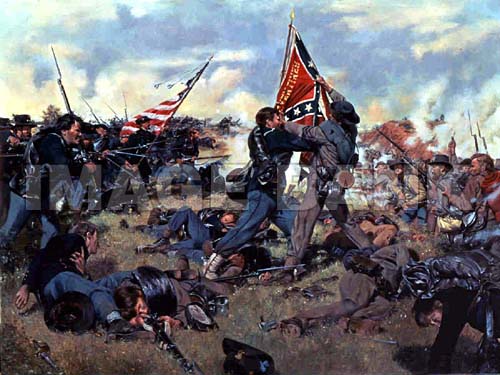
The song has been recorded in a number of versions by different artists over the years. However, the words of the song go back to the American Civil War. It began as a poem written by Henry Wadsworth Longfellow on Christmas Day 1863 following the serious wounding of his son Charles, a Lieutenant in the Union Army at the Battle of New Hope Church, and the death of his wife in a fire two years before.

The words are haunting. Probably because they demonstrate the profound tension that lies at the heart of the Incarnation, which is the heart of Christmas and the Christian faith. the tension, played out so well in the song is the existence of a message of peace and reconciliation in a world where war and hatred of many kinds tear human beings apart and the tragic inability of Christendom to even come close to the message of Christmas.

I heard the bells on Christmas day

Their old familiar carols play,

And wild and sweet the words repeat

Of peace on earth, good will to men.

I thought how, as the day had come,

The belfries of all Christendom

Had rolled along th’ unbroken song

Of peace on earth, good will to men.

gburg dead2

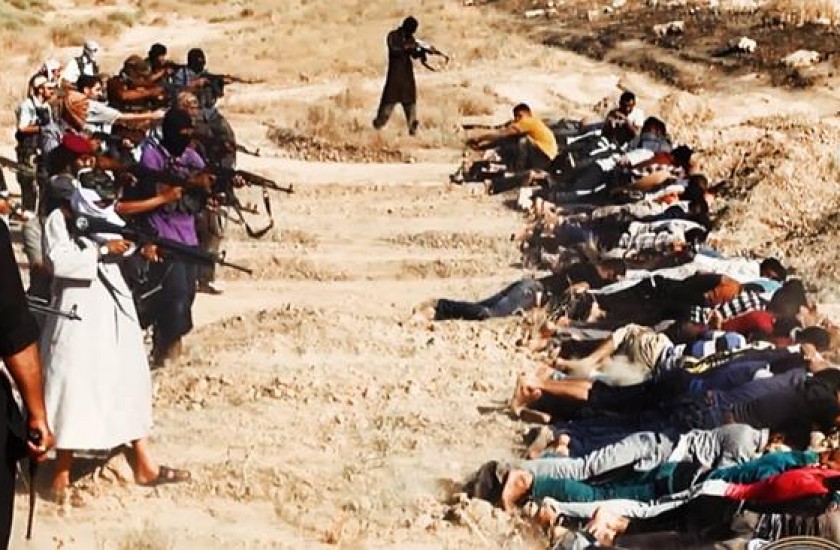
The reality of this is seen in the third verse. It is a verse that echoes throughout history and seems to be true even today, in fact it seems to be the most real as we deal with war, hatred, terrorism, killing in the name of God, and political fratricide.

And in despair I bowed my head

“There is no peace on earth,” I said,

“For hate is strong and mocks the song

Of peace on earth, good will to men.”

isis3-840x550

The interesting part about the songs as opposed to the poem is that they omit three of Longfellow’s verses that admittedly in a reunited country would not help record sales. Those verses speak to the heart of the Civil War.

Till ringing, singing on its way,
The world revolved from night to day,

A voice, a chime,

A chant sublime

Of peace on earth, good-will to men!

Then from each black, accursed mouth
The cannon thundered in the South,

And with the sound

The carols drowned

Of peace on earth, good-will to men!

It was as if an earthquake rent
The hearth-stones of a continent,

And made forlorn

The households born

Of peace on earth, good-will to men!

But Longfellow hears in the bells something more powerful. It is the message of Christmas and the incarnation. The message that justice and peace will finally embrace.

Then pealed the bells more loud and deep:

“God is not dead, nor doth He sleep;

The wrong shall fail, the right prevail

With peace on earth, good will to men.”

Till ringing, singing on its way

The world revolved from night to day,

A voice, a chime, a chant sublime

Of peace on earth, good will to men.

The song has been recorded many times by many artists. I like the version sung by Frank Sinatra, which the music was composed by Johnny Marks, composer of Rudolph the Red Nosed Reindeer. Another earlier version composed by John Baptiste Calkin has been recorded by Elvis Presley and Johnny Cash among others.

As wars rage in the Middle East, tensions rise in Asia, Africa and even Eastern Europe while the Unholy Trinity of Politicians, Pundits and Preacher rage as we go into another, and even more divided election season, people look for hope. Longfellow, who lost so much in a short time in the midst of a terrible Civil War, reminds us that in such times, “God is not dead, nor doth He sleep; The wrong shall fail, the right prevail With peace on earth, good will to men.”

Peace

Padre Steve+

Leave a comment

Filed under faith, History

We’ll Have to Muddle Through Somehow: Christmas 2015

Friends of Padre Steve’s World

There are some songs at Christmas that despite their relative newness as compared to ancient carols seem to strike a chord that resonates deep in the hearts of people. One of those for me, and probably many others is the song Have Yourself a Merry Little Christmas. The music was written by Ralph Blane and the lyrics by Hugh Martin for the musical Meet Me in St Louis and first performed by Judy Garland in that film. In the movie Garland’s character sings the song to her younger sister after their father announces plans to move from their home of St Louis to New York for a job.

The lyrics for the musical were changed because Garland’s director Vincent Minnelli and co-star Tom Drake felt that Martin’s original lyrics which began with “Have yourself a Merry Little Christmas, it could be your last. Next year we may all be living in the past” were too depressing. The lyrics were changed to “let your heart be light, Next year all our troubles will be out of sight” in response to their request. The words sung in the musical by Judy Garland have a haunting but very real feel for people who face uncertainty at Christmas, as such they were very meaningful to the US military personnel who heard them at the front in the Second World War.

As originally produced they reflect a hope for a better future as opposed to a carefree present. As such they are probably much more appropriate to our current time than in the mid-1950s when Frank Sinatra recorded a modified version of the song for his album A Jolly Christmas.

Sinatra asked Martin to “jolly up” the line “we’ll have to muddle through somehow” and Martin changed it to “Hang a shining star upon the highest bough.”

When Frank Sinatra recorded the song in 1957 it too became a hit and the focus on present happiness rather than a hope for a better future fit the times in which it was recorded. Sinatra’s version also notes that “faithful friends gather near to us once more” instead of “will be near to us once more.”

The song was re-written by Martin a number of times including a “Christian” version which included the words “if the Lord allows” instead of “if the fates allow.” Though I am a Christian I think that change was kind of lame, but then if there are a few dollars to be made off religious people who otherwise won’t listen to a song why not?

The song is one is one of the most recorded Christmas songs ever written and can be heard being sung by artists as diverse as Bing Crosby, Ella Fitzgerald, Rod Steward, the Carpenters, Kelly Clarkson, John Denver with the Muppets, the Pretenders, Olivia Newton John, Kenny Loggins, and even Twisted Sister.

The song as recorded by Judy Garland is actually my favorite, though I also love the Sinatra version. Somehow “muddling through somehow” seems to be more appropriate in my experience.

So enjoy these versions of a song that has touched the hearts of hundreds of millions of people since it was first recorded. May it be an inspiration in these uncertain times of a hope for a better future. Maybe that makes it a better Advent song, but I digress….

For me it is kind of a sad song, but mixed with hope…and I always try to live in hope.

Here’s to muddling through somehow…

Peace

Padre Steve+

Leave a comment

Filed under faith, film, movies, music