Category Archives: faith

Advent 2015

AdventWreath

Friends of Padre Steve’s World

Today was first Sunday of Advent, which is the beginning of the liturgical year in the Christian church. Advent and Christmas have always been my favorite part of the liturgical year, I tend to find them mysterious, yet comforting and hope filled. The past couple of years Advent has been kind of an odd time for me. I have a small chapel at the Staff College but from the end of November to the beginning of January we are out of session, and the largest course that we offer has no students here. Thus with no congregation I do not do services.

I will be sharing some of my journey and my struggles over the coming weeks. Since Iraq, Advent and Christmas are not the same. I believe, but I don’t. I struggle, but still keep faith. I can understand why people struggle with depression during the season. I hope that what I from my heart and experience will encourage others who like me wonder just what the hell is going on sometimes.

So, until the next time.

Peace

Padre Steve+

Leave a comment

Filed under christian life, faith

Try to Understand: The Kindest, Noblest, & Best Thing You Will Ever Do

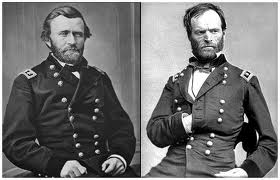
grant and sherman

Grant and Sherman

Friends of Padre Steve’s World,

The great American Civil War general William Tecumseh Sherman once said of his relationship with Ulysses S. Grant, “Grant stood by me when I was crazy, and I stood by him when he was drunk. Now we stand together.” Having been both crazy, and at times drunk, I can relate to both men, both of whom also often suffered from severe and often disabling depression at different points in their lives.

Yesterday I wrote an article about depression and I decided to follow it up with another on the same subject. Yesterday I mentioned the late Iris Chang and her comments about how depression is not rational, and C.S. Lewis who talked about how mental pain is harder to deal with than physical pain. During my worst phases of depression in the years after I came back from Iraq, I fought every day to find something to hold onto, something to keep me from ending my life. If you have never experienced real depression, the kind that slowly eats away the very fabric of your being, you might not understand. In fact it was something that I really didn’t understand until I went through years of it.

Depression is far different than being sad. It is like the difference between having a cold, which you know should pass, and having an insidious cancer which even if it goes into remission lurks for another chance to strike again.

I think that Elizabeth Wurtzel, the author of the book Prozac Nation, hit what I am describing on the head, “That’s the thing about depression: A human being can survive almost anything, as long as he sees the end in sight. But depression is so insidious, and in compounds daily, that it’s impossible to ever see the end.”

In a similar manner, J.K. Rowling, the author of the Harry Potter books noted, “Depression is the most unpleasant thing I have ever experienced. . . . It is that absence of being able to envisage that you will ever be cheerful again. The absence of hope. That very deadened feeling, which is so very different from feeling sad. Sad hurts but it’s a healthy feeling. It is a necessary thing to feel. Depression is very different.”

I have to agree with both of these writers, depression is the worst. I can live with insomnia, and night terrors, even with anxiety, but depression is the worst, it never seems like it will end. I was fortunate that I got through my most difficult times, including a period just over a year ago where I was nearly suicidal after very bad treatment in the Mental Health Department at the local naval medical center. It took the intervention of my former commanding officer, a doctor named David Lane, who had just been selected for promotion to admiral to get me the help that I needed, but not everyone has that kind of ace in the hole. I wouldn’t have thought of asking him, but his Command Master Chief, and my friend Ed Moreno, intervened, told him of how bad I was doing and that made all the difference. Ed didn’t try to fix me, he just stood beside me and when I needed help, he came through as a friend, and he is still a friend. That is what friends do.

I still struggle, sometimes with depression, but more often the nightmares and night terrors associated with my PTSD. Last night my wife woke me up when in one of my high definition nightmares I was thrashing around trying to defend myself from an enemy insurgent in Iraq. Now mind you, I was never in a close combat situation, but I took part in a number of missions where we didn’t know who the good guys or bad guys were and I was unarmed. But I can live with that, depression without end is far different.

In my worst times I had a lot of people tell me what I needed to do to get out of being depressed. Most were well meaning but didn’t have a clue as to what I really needed. I didn’t need someone to fix me. I didn’t need a checklist of things to make me well. I didn’t need to pray more, or read my Bible more. I didn’t need to work ungodly numbers of hours in ICUs where lives of people were hanging in the balance… all I needed was people who would say I love you, I care for you, and I value you for who you are, not what I want you to be, and will be there for you no matter what, or maybe, let me buy you a beer. Thankfully, there were a few people who did all of those things, and they have been there for me since I emerged from that darkness.

As for the others, who seemed more like “Job’s helpers” it is sometime embarrassing to come across them. Of course I am polite and I do not avoid them. That being said, once you have gone through this, you can see just how uncomfortable that they are to be around you. So those encounters tend to be brief and uncomfortable, as Job’s helpers quickly move along to avoid the awkwardness of the situation. The interesting thing is now I am perfectly fine with their discomfort.

I think that some of the best advice for those who live with, work with, or are friends with a person struggling with depression was written by English comedian Stephen Fry, who said, “Try to understand the blackness, lethargy, hopelessness, and loneliness they’re going through. Be there for them when they come through the other side. It’s hard to be a friend to someone who’s depressed, but it is one of the kindest, noblest, and best things you will ever do.” That is empathy in action.

I have a number of friends; classmates, and other people I have served with in the military who this very day just hope to stay alive, to find something to live for. The depression that they feel is often overwhelming. They are wonderful, talented and gifted people, people who have a strong amount of empathy for others, but they are enveloped by a darkness and fog which makes it hard for them to see any sign that the depression will ever lift. I have been there, and now I try to be there for them. For me it comes back to what Sherman said about Grant, If I don’t stand with those who suffer from depression after what I have been through, what good would I be?

Peace

Padre Steve+

2 Comments

Filed under faith, healthcare, mental health

Success, Depression & Empathy

chicken of depression

Friends of Padre Steve’s World,

I just finished reading a biography of the late Iris Chang, who wrote the book The Rape of Nanking and A History of the Chinese in America. She was a brilliant, caring, and passionate women who had a major depressive crash and ended up committing suicide. She wrote her mother about her feelings when Charles Schulz, the creator of Peanuts died, the night before the final Sunday comic came out. She wrote her mom:

Dear Mom,

I think it was Charles Schulz’s pessimism – as well as his ability to understand human failure, insecurity, heartbreak – that made millions love Peanuts.

You’re absolutely right, Schulz had no reason whatsoever to be depressed, after achieving wealth and fame at such an early age. But depression is not rational. Perhaps he did have a mental problem, or some chemically induced condition. But whatever it was, it prevented him from losing touch with the underdogs of the world.

It’s strange, but I still feel a void in my heart after Schulz’s death – even though I never knew him and didn’t particularly like him after meeting him in person, It made me wonder, what is the secret to Schulz’s magical appeal?

The answer, I believe, is simple. Schulz understands the heart of a loser. He captures those moments in life when we fell utterly unloved, unwanted, and alone. And all of us – no matter how successful- have felt like losers at some point in life.

Love, Iris

(From The Woman Who Could Not Forget: Iris Chang Before and After The Rape of Nanking, a memoir by Ying-Ying Chang, Pegasus Books, New York, 2013)

The book intrigued me and I was drawn to Iris’s story, and was so impressed with her as a person, and having suffered major depression myself, felt a certain kinship with her as I read the book, especially the chapters dealing with her success, and her collapse.

Those of you who have followed me for a while know that I have struggled a lot with major depression, anxiety, and even have occasionally been suicidal since returning from Iraq in 2008 with one hell of a case of PTSD. Thankfully over the past couple of months I have been doing pretty well. While I still suffer chronic insomnia, really weird dreams, nightmares, and night terrors, as well as anxiety in crowed places and flashbacks; but I have not been chronically depressed. I have had a few down days, but nothing like the past number of years. So all in all I think that is a good thing, I am starting to get back in better physical shape, eating better, and losing weight, so all in all I count that in the win column.

That being said, since Iraq I have developed a tremendous amount of empathy for those that suffer from depression, because it is not a rational disease. It affects millions of people in our country, and I am not referring to people who once in a while get the blues or feel a bit down, but people who live their lives in a state of clinical depression. I have known a lot of people who suffer from depression. Most are tremendously talented, witty, charming, intelligent, and caring. I have known very successful people who suffer from such depression that they cannot appreciate their own achievements and feel like failures. I have known some who have committed suicide because they saw no hope for themselves and believed that the world would be better off without them. I have friends who walk this path today, people who are battling to stay alive.

Likewise, many of my heroes, my role models, have suffered from depression, even lifelong depression. These include Joshua Lawrence Chamberlain, the hero of Little Round Top at Gettysburg, Abraham Lincoln, and T.E. Lawrence, better known as Lawrence of Arabia.

Sadly, most people, especially religious people have little long term tolerance for depressed people. If the depressed person does not get better, they abandon them, sometimes in very cruel ways.

In a Peanuts strip Charlie Brown goes to Lucy and says, “I have deep feelings of depression… What can I do about this?” Lucy does what is so common in our culture and says “Snap out of it! Five cents, please.” The fact is that if you are chronically depressed or suffer from clinical depression, you don’t simply snap out of it and I think that depression and mental pain is harder to bear than physical pain. C.S. Lewis wrote in his book The Problem of Pain:

“Mental pain is less dramatic than physical pain, but it is more common and also more hard to bear. The frequent attempt to conceal mental pain increases the burden: it is easier to say “My tooth is aching” than to say “My heart is broken.”

The reality is that depression is not rational, nor is it logical, and thus it defies the attempts of well-meaning people to help those who suffer from it. You can tell a depressed person to get involved in activities, to stay busy, work harder, to read their Bible or pray more, but most of the time this only makes things worse. The depressed person tries them and does not get better which makes the depression and feeling of failure even worse. I know this because I lived it, I did all those things. I worked harder, prayed more, and the rest of that, and I only got worse. Then I began to lose hope. It was terribly frightening and very few people understood, and even fewer stood by me. Those who did were mainly my drinking buddies and friends from the Norfolk Tides and Kinston Indians ballparks, not clergy, or chaplains. 

This makes it terribly frustrating for all concerned. The depressed person ends up feeling alone, lost, isolated, and rejected when the friends, family, and caregivers give up.

I think to me the hardest thing is that for those of us who serve in caring professions, the clergy, mental health care, medicine, and nursing; is that when we struggle there is often no-one to go to. When I was absolutely falling apart after Iraq, my new commanding officer asked me “where does a chaplain go to get help?” and I said “I don’t know, but not to other chaplains.” I know that I said that in the abyss of total despair, and that there are a couple of chaplains that I can go to and pour out my heart without fear of rejection, but they are the minority. The fact is that many caregivers, especially clergy, have no empathy for those most like them. I know this because I have known and seen so many clergy, across the denominational and theological spectrum who have been broken by the cares of life, and been abandoned by their churches and their peers.

But like, Iris Chang, I do think that some, people like Charles Schulz, the depression they live enables them not to lose touch with those who suffer, that in a sense that their suffering engenders a great empathy for others that many lack. I have been told by some that I have that kind of empathy and if I do it is not because I am such a great person, but rather because I have suffered and still suffer from the pain, and despite my own accomplishments, and achievements, that I still occasionally feel like a loser or failure. But as far as my condition goes, I am oddly comforted by the words of Raymond “Red Reddington (James Spader) in The Blacklist:

“There is nothing that can take the pain away. But eventually, you will find a way to live with it. There will be nightmares. And everyday when you wake up, it will be the first thing you think about. Until one day, it’s the second.”

I know my ongoing battle will continue, but I have determined to try to be there for others that struggle with pain that does not want to go away, and nightmares that never seem to end. As the late Henri Nouwen wrote: “Ministry means the ongoing attempt to put one’s own search for God, with all the moments of pain and joy, despair and hope, at the disposal of those who want to join this search but do not know how.”

Until tomorrow,

Peace

Padre Steve+

2 Comments

Filed under faith, History, mental health, ministry

Designed to Break Your Heart: Baseball Season Ends

DSCN9504

Friends of Padre Steve’s World,

The late commissioner of baseball and literary giant A. Bartlett Giamatti once wrote:

It breaks your heart.  It is designed to break your heart.  The game begins in spring, when everything else begins again, and it blossoms in the summer, filling the afternoons and evenings, and then as soon as the chill rains come, it stops and leaves you to face the fall alone.” (A. Bartlett Giamatti, “The Green Fields of the Mind,” Yale Alumni Magazine, November 1977)

Last night when the Kansas City Royals came back to defeat the New York Mets in extra innings, the won their first World Series in thirty years and ended the 2015 baseball season and with it a lot of hearts broke, as they do every year at this time. It is not just that somewhere along the way our favorite team loses, but it is the how for many people, like me, that baseball is more than a game, but has an incredible spiritual component.

This year none of my teams made the playoffs, except for our local Triple-A International League affiliate of the Baltimore Orioles, the Norfolk Tides. That being said the post-season was interesting and had a lot of great stories within the story of the post-season playoff series and the World Series. The Royals picked up where they did last year after they lost a heartbreaker to the San Francisco Giants and continued to win even when it looked like the opposition, whether it was the Astros, Blue Jays or the Mets was poised to win. I am not a Royals fan but as a lover of baseball I have to say that they are an amazing team.

However, the season is now over, and for me winter is now officially here, and yesterday was dreary with a lot of rain. The official beginning of winter for me starts with the end of the Fall Classic.

With the end of the season one of my places of solace from the cares of the world. Really, when I came home from Iraq, baseball was one of the few things that helped to calm my soul from the demons of PTSD, TBI, major depression, anxiety, and often-suicidal thoughts. I can agree with Sharon Olds who wrote back in the early 1970s “Baseball is reassuring.  It makes me feel as if the world is not going to blow up.”

In a world where so many things are unsettling baseball is reassuring. In the run-up to the 2016 general election where the politicians, pundits, and preachers, the “Trinity of Evil” use every means available to raise the levels of fear and anxiety of people, it is even more so. In such a world baseball is a safe-harbor for me, as Mark Kramer wrote, “Baseball is a harbor, a seclusion from failure that really matters, a playful utopia in which virtuosity can be savored to the third decimal place of a batting average.”

Now I wait for Spring Training 2016 begins and the pitchers and catchers, including a number of friends start reporting, and with that my spring will begin.

Peace

Padre Steve+

Leave a comment

Filed under Baseball, faith, philosophy

Just Following Orders: The Rationalization of Genocide

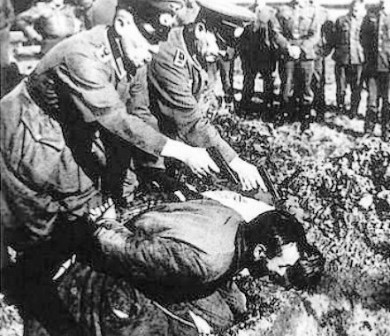
einsatzgruppen-brutal-germans-nazi-death-squads1

One of the most troubling aspects of genocide is the degree to which people will go to rationalize and justify it, especially if it is supposedly commanded by their “God.” This includes people who exalt their human leader’s pronouncements to that of a god. 

 Thus, today’s article is difficult to write. I realuze that some people will be offended because to those that cannot see the nuance that any criticism of their beliefs is akin to an attack on God. That is not my intent at all, there are too many people of faith in all religions who work against the extremists who proport to speak evil in the name of their God. Likewise I am not  attempting by any stretch of the imagination to broad brush or demonize people of faith.

That being said, there are extremists, and there are many ordinary people who obey without questioning, and if ordered by a high enough authority will commit unspeakable acts. 

My sole intent is to point out some of the questions and issues that people of faith need to ask when they faced with the killing of inocents or defenseless people in the name of God, or of a political leader.

One only has to look at history and the words or actions of people who live among us to realize that the seeds of genocide are always being sown by those who find others less than human. The men and women who sow the seeds of future genocide can do so in the name of their God, their religion, their religious or secular political ideological, or their views on the superiority of their race. The Nazis provide us a road map of the twisted logic used by the perpetrators of such actions, but they are not alone in history, and people like them exist today, some peddling their hatred in the name of God and religion, but not always.

When one reads the speeches, the after action reports, and the post-war testimony of those who orchestrated and conducted the worst terror of the Nazi regime against the Jews and others that they considered to be less than human, or in the case of the handicapped and the mentally ill, “life unworthy of life” they are stunning, and troubling.

During his Posen speech of October 1943 SS Reichsfuhrer Heinrich Himmler was quite clear about the aims of the Nazis, and their goals regarding the Jews and other Untermenschen (Sub humans) including infants and children. Himmler said, “We came to the question: what to do with the women and children? I decided to find a clear solution here as well. I did not consider myself justified to exterminate the men – that is, to kill them or have them killed – and allow the avengers of our sons and grandsons in the form of their children to grow up. The difficult decision had to be taken to make this people disappear from the earth…”

One would think that killing babies, any babies, but in the particular case Jewish babies to prevent them from growing up to avenge the deaths of their parents would be repulsive, especially to Jews. For most Jews it is, but like every religion Judaism has its share of extremists. One of them is the controversial Rabbi Yitzhak Shapira, the dean of the Od Yosef Hai Yeshiva near Nablus in Israel. In a chapter in his book Torat ha-Melekh [The King’s Teaching] entitled “Deliberate harm to innocents,” which provides numerous justifications to kill gentiles, Shapira wrote:

“In any situation in which a non-Jew’s presence endangers Jewish lives, the non-Jew may be killed even if he is a righteous Gentile and not at all guilty for the situation that has been created… Hindrances—babies are found many times in this situation. They block the way to rescue by their presence and do so completely by force. Nevertheless, they may be killed because their presence aids murder. There is justification for killing babies if it is clear that they will grow up to harm us, and in such a situation they may be harmed deliberately, and not only during combat with adults.”

The Rabbi’s followers have engaged in frequent violence against Palestinians and Jews who do not hold his radical views. In 2006 he was detained for questioning after writing an article in which he said that all Palestinian males from age 13 and up should be killed or expelled from the West Bank. The rabbi condemns any moderation by the Israeli Defense Forces, and he criticizes Israel’s legal system and judiciary when its rulings conflict with his uncompromising views. To be sure his book was condemned by other Rabbis, especially of the Reformed School, but some Orthodox Rabbis supported it.

Those views are not unlike the stated views of the leaders of the so-called Islamic State when it comes to the killing of non-believers. In that organization’s 2013 Declaration of War those leaders stated:

“If you can kill a disbelieving American or European – especially the spiteful and filthy French – or an Australian, or a Canadian, or any other disbeliever from the disbelievers waging war, including the citizens of the countries that entered into a coalition against the Islamic State, then rely upon Allah, and kill him in any manner or way however it may be. Do not ask for anyone’s advice and do not seek anyone’s verdict. Kill the disbeliever whether he is civilian or military, for they have the same ruling. Both of them are disbelievers. Both of them are considered to be waging war [the civilian by belonging to a state waging war against the Muslims]. Both of their blood and wealth is legal for you to destroy, for blood does not become illegal or legal to spill by the clothes being worn.”

Many Imam’s and Mufti’s around the world and in the Middle East have issued Fatwah’s against the Islamic State and condemned its teachings. But many of these clerics, who often represent their tribal or government leaders, are considered to be disbelievers and “defenders of Israel” by the Islamic State. As such, many Moslem clerics, and large numbers the vast oppressed masses of impoverished, and often disenfranchised Arab Moslems are attracted to that ideology, especially that directed against the Jews, who are seen as the ultimate enemy.

There are Christians too that find theological justification for killing children, and their reasons are chillingly like those of Himmler: An article on the blog Rational Christianity writes;

“Why were the children killed, if they weren’t guilty? Apparently, they were considered as morally neutral, since they weren’t yet old enough to be held accountable or to have done much right or wrong. While not as corrupt as their parents, they were part of the society that was judged, and shared its earthly (though not its eternal) fate.”

Another author, a man named Wayne Jackson of Apologetics Press writes of the children of the Canaanites, “Would it not have been infinitely worse, in view of eternity, had these children grown to maturity and adopted the same pagan practices as their parents?”

William Lane Craig, a frequent apologist wrote in the Reasonable faith website a comment that sounds like it could have come from the lips of Himmler in dealing with the effect of the mass murders of Jews and others on the troops of the Einsatzgruppen. Craig wrote,

“So whom does God wrong in commanding the destruction of the Canaanites? Not the Canaanite adults, for they were corrupt and deserving of judgment. Not the children, for they inherit eternal life. So who is wronged? Ironically, I think the most difficult part of this whole debate is the apparent wrong done to the Israeli soldiers themselves. Can you imagine what it would be like to have to break into some house and kill a terrified woman and her children? The brutalising effect on these Israeli soldiers is disturbing.”

However, Craig has no qualms about what the Israelites did, simply because the genocide was commanded by God.

If one substitutes “Hitler” for “God” one sees a similar rationalization used members of the Einsatzgruppen. Colonel Walter Blume, a Police Colonel at Vitebsk who tried to “care” for his troops during a mass execution of Jews. He wrote, “If I am now asked about my inner attitude which I then held, I can only say that it was absolutely split. On the one hand there was the strict order of my superior… and as a soldier I had to obey. On the other hand I considered the execution of this order cruel and humanly impossible. My very presence at this execution convinced me of this in a final manner. I still know that I wanted to make the situation easier for my men who were certainly moved by the same feelings. When ten men were shot there was always a pause until the next had been brought in. During these pauses I let my men sit down and rest and I joined them. I still know what I said exactly the following words to them at this time: “As much as it is no job for German men and soldiers to shoot defenseless people but the Fuhrer has ordered these shootings because he is convinced that these men would otherwise shoot at us as partisans or would shoot our comrades and our women and children were to be protected if we undertake these executions. This we would have to remember when we carry out this order.” Furthermore, I tried talking about neutral subjects to make the difficult spiritual situation easier and to overcome it.”

That is the troubling issue for me. Genocide is genocide and evil, no matter who commands it. We can try to wiggle around and avoid the subject by saying that whatever God we have is above normal law, or that our secular leader’s commands are above the law, but we cannot escape the fact that genocide is immoral and an immutable evil; even if we do it in the name of our God.

I think that is the problem that I have with people who follow their leaders down the path to genocide, even those who they believe are speaking for God. Likewise, I am very much concerned when people seem to care more about the emotional and spiritual effects of mass murders on the perpetrators than on the victims. 

But then, the victims are dead and have no one left to speak for them. 

Until tomorrow,

Peace

Padre Steve+


1 Comment

Filed under ethics, faith, History, nazi germany, Political Commentary, Religion

Tapestry: The Importance of Just One Thread

IMG_1915.JPG

Friends of Padre Steve’s World

It is interesting to think about life, what has transpired, and what might have been if only…

Like anyone I wonder about all of the “what ifs” and “might have been” parts of my life. Of course there are many, going back to things that I could not control, such as the choices that my parents made regarding career, family, and home. Then there are my own choices, choices that I made, some for better, and some maybe for worse. Then there were the choices of men and women in my life and career that impacted my life and the decision that I made.

Some of my dreams, and nightmares too, involve those decisions, particularly the ones that I could not control; but then there were those decisions, particularly regarding my military career choices, that come back to haunt my dreams. Those can be troubling; the things that I volunteered to do and the costs of those to Judy as a result of those decisions. Many of those decisions, particularly my decisions to volunteer for certain deployments and operations have come at a great cost to both of us.

But then I am reminded that none of us have a crystal ball that allows us to see what the result of our decisions will be; none of us are God, or some other omniscient being. We make our decisions based on what we know, and what we think might be the outcome of our decisions.

Judy and I have been watching a marathon of Star Trek the Next Generation episodes of late. We are currently in the midst of season six. One of the episodes that we watched the other night is called Tapestry where Captain Picard is killed, but given a chance by the being called the Q for a do-over, a second change at life. Picard ends up regretting the do-over, it alienates him from his friends, and turns him in to a different person. Instead of a starship captain is a nondescript lieutenant junior grade doing a job that he hates.

tapestry2

The resultant decision leaves Picard distraught and he complains to Q:

Picard: You having a good laugh now, Q? Does it amuse you to think of me living out the rest of my life as a dreary man in a tedious job?

Q: I gave you something most mortals never experience: a second chance at life. And now all you can do is complain?

Picard: I can’t live out my days as that person. That man is bereft of passion… and imagination! That is not who I am!

Q: Au contraire. He’s the person you wanted to be: one who was less arrogant and undisciplined in his youth, one who was less like me… The Jean-Luc Picard you wanted to be, the one who did not fight the Nausicaan, had quite a different career from the one you remember. That Picard never had a brush with death, never came face to face with his own mortality, never realized how fragile life is or how important each moment must be. So his life never came into focus. He drifted through much of his career, with no plan or agenda, going from one assignment to the next, never seizing the opportunities that presented themselves. He never led the away team on Milika III to save the Ambassador; or take charge of the Stargazer’s bridge when its captain was killed. And no one ever offered him a command. He learned to play it safe – and he never, ever, got noticed by anyone.

It is a fascinating exchange and one that when I wonder about the choices that I have made that I think about; because when all is said and done, my life, like all of ours is a tapestry. On reflection Picard tells Counselor Troi, “There are many parts of my youth that I’m not proud of. There were… loose threads – untidy parts of me that I would like to remove. But when I… pulled on one of those threads – it’d unravel the tapestry of my life.”

I think that I can agree with that. All the things in my life, the good things and the bad, as well as the paths not taken have all been a part of the tapestry of my life. I would not be who I am without them; and that I cannot comprehend. I would rather be the flawed me that is me, than the perfect me that never existed. Thus, all of those threads are in a sense precious and even holy.

Peace

Padre Steve+

2 Comments

Filed under faith, star trek

Religious Liberty or Tyranny?

vatican46_35

Friends of Padre Steve’s World,

Today I am posting just a brief thought that really struck me the past week as I have been reading, writing, and doing some more research on the Holocaust.

There has been a lot of talk about religious liberty over the past few years, mostly coming from the Christian Right. I am all for the freedom of all people to have religious liberty. My life has been dedicated to that proposition, including protecting the religious and civil rights of people who may despise me, and what I believe in.

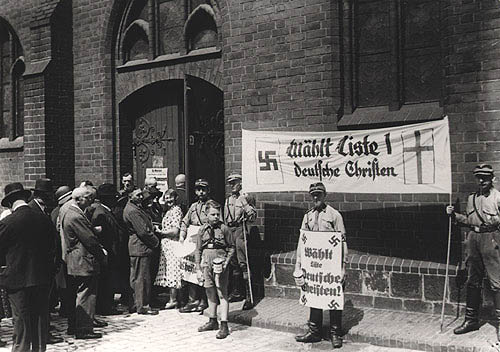
I was watching the television miniseries Nuremberg and when I watched the opening statement of Justice Robert Jackson portrayed by Alec Baldwin I went back to read the transcript of the actual opening statement rendered by Justice Jackson. One of the things that Jackson said in that opening statement dealt with the Nazi understanding of “religious liberty.” That concept is little different from that of the Christian Right. Jackson stated:

“The forecast of religious persecution was clothed in the language of religious liberty, for the Nazi program stated, “We demand liberty for all religious denominations in the State.” But, it continues with the limitation, “so far as they are not a danger to it and do not militate against the morality and moral sense of the German race.”

Note how similar that is to statements of leading members of the Christian Right over the past twenty to thirty years, statements which have grown in intensity and radicalism over the past few years. The statements of many supposedly Christian political, media, and religious leaders, about curtailing or limiting the religious or rights of those who are not Christians, be they Moslems, progressive or liberal Christians, Reform Jews, agnostics, atheists, homosexuals are chilling. Those statements by these leaders, which are so numerous and include statements by current presidential candidates, are so numerous and explicit that they defy any semblance of Christian civilization.

Sadly, the most vocal and popular leaders of Christian Right have equated their morality as that of all Americans and the United States and as such have openly stated their desire to crush the civil and religious rights of others. As such they have legislated “Religious Freedom Restoration Acts” at the Federal, and even more restrictive measures at the State and Local levels, acts, which permit people in public office as well as others to deny service to those whose beliefs, or lifestyles that they oppose, simply based on their “sincerely held” religious beliefs.

Those who legislate these actions honestly believe that those they oppose are a danger to them, their faith and to the nation. They believe this as much as those who followed Hitler believed about the correctness of curtailing the religious and civil liberty of the people, the Jews, the Socialists, homosexuals and others that they opposed. It is not that all of them are evil, or for that matter even bad people; it is just that they have chosen to believe the fear mongering lies and distortions of their political and religious leaders.

In the late 1920s and early 1930s a prominent German pastor, a war hero from the First World War believed the lies of the Nazis, and supported Hitler in his rise to power. That pastor was Martin Niemoller. However, unlike most German church leaders Niemoller soon recognized his error when Hitler took power. Niemoller had feared the “liberals” of his day, the Social Democrats who had been a major force in the early days of the Weimar Republic. After Hitler took power, Niemoller recognized his mistake and wrote, “I hated the growing atheistic movement, which was fostered and promoted by the Social Democrats and the Communists. Their hostility toward the Church made me pin my hopes on Hitler for a while. I am paying for that mistake now; and not me alone, but thousands of other persons like me.”

In the hands of tyrants there is no such thing as religious liberty, especially those that argue the most stridently that they are defending their religious freedom. Those today, mostly leaders of the highly politicized Christian Right are making a terrible mistake. When there is no liberty for those who do not agree with religious conservatives, there is no liberty for anyone. Thomas Jefferson put it well, “History, I believe, furnishes no example of a priest-ridden people maintaining a free civil government. This marks the lowest grade of ignorance, of which their civil as well as religious leaders will always avail themselves for their own purposes.”

Peace

Padre Steve+

2 Comments

Filed under civil rights, faith, History, Political Commentary, Religion

Separate Ideology & Religion from Sworn Duty: The Legacy of Dr. C. Everett Koop

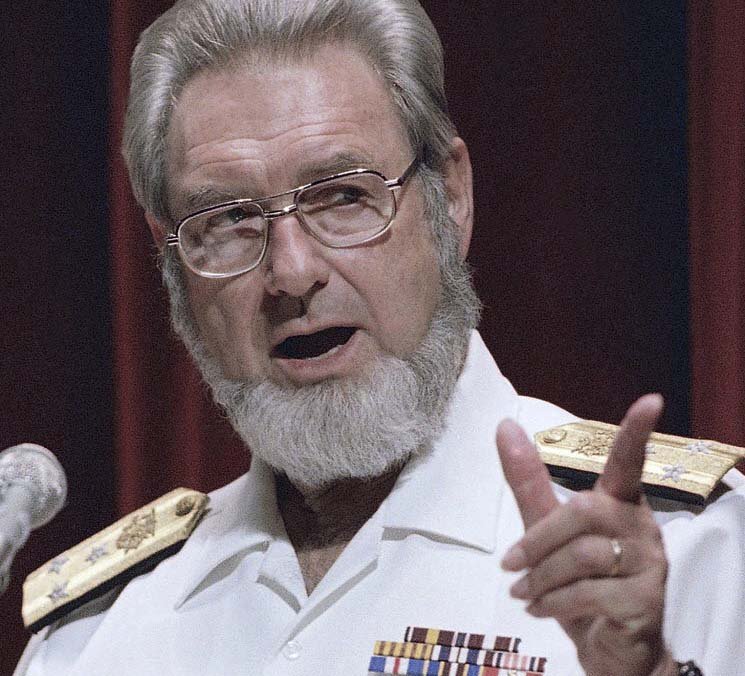
c-everett-koop-1db591308d7eb474

“At the beginning of the AIDS epidemic many Americans had little sympathy for people with AIDS…. The feeling was that somehow people from certain groups ‘deserved’ their illness. Let us put those feelings behind us. We are fighting a disease, not a people.” C. Everett Koop, Surgeon General 1986

Friends of Padre Steve’s World,

I have mentioned that I have been reflecting on many things over the past few weeks and months. Of course if you follow my writings you know what I think about public officials who refuse to do their duty to follow the law and protect the rights of other citizens, even of those that they happen to disapprove. This came to a head recently with the case of the anti-marriage equity county clerk, Kim Davis. I am not going to revisit her case as I have been worn out by it and have no need to waste any more time on her.

That being said I can point out the case of a public official, a conservative, pro-life, Evangelical Christian who served as Surgeon General under President Reagan, Dr. C. Everett Koop. In an era of extreme intolerance and hatred for those infected with HIV, Dr. Koop became one of the leading proponents of compassionate and responsible care for victims of HIV/AIDS, most of whom were homosexual men. He met opposition within the administration, where despite his impressive credentials he was marginalized and was vilified by conservative Christians.

Dr. James Dobson and Dr. D. James Kennedy, early leaders of the political religious right were particularly vindictive. These unscrupulous leaders helped spread much disinformation about HIV from the a book published by a charlatan named Gene Antonio who wrote what was then a popular book called “The AIDS Cover Up,” They claimed that AIDS could be spread by kissing, mosquito bites or even by touching surfaces that had been touched by those infected. These men were bolstered by their allies in the Reagan White House, Secretary of education Bill Bennett and his assistant Gary Bauer who were the official administration spokesmen regarding AIDS.

They marginalized the Surgeon General; Dr. C. Everett Koop who noted in the early days of the epidemic was “completely cut off from AIDS” by Bennett and others in the Reagan Administration. They were so wrong that Koop, who was by no means a liberal took them to task on their hateful, dishonest and un-Christian proclamations. Koop told a journalist:

“the Christian activity in reference to AIDS of both D. James Kennedy and Jim Dobson is reprehensible. The first time that Kennedy ever made a statement about AIDS, I saw it on television. It was so terrible, so homophobic, so pure Antonio that I wrote him a letter.”

Koop said of Dobson, who he had worked with earlier on HIV/AIDS: “I don’t know what happened to him. He changed his mind, and last August in his paper he attacked me for two pages as leading people down the garden path. But again his arguments were full of holes. I just cannot believe the poor scholarship of so many Christians.”

Despite the opposition and attacks on his character by leaders of the Christian Right, Dr. Koop was undeterred and had no problem taking on these men and women. Some of these supposedly Christian leaders still are with us and spout the same hatred for homosexuals that they did in the 1980s. Dr. Koop realized that many of his fellow Christians really didn’t care about people, and believed that HIV was God’s judgment against people that they already despised and had in their theology condemned to Hell. He also realized that many of these leaders would resort to poor scholarship and even inflammatory statements to influence public opinion.

For doing so Dr. Koop was condemned by fanatical extremists like Phyllis Schlafly who said that Koop’s recommendations in his report about preventing AIDS looked “like it was edited by the Gay Task Force” and Schlafly, ever the loving, honest and ethical Christian that she is accused Koop of advocating that third-graders learn the rules of “safe sodomy.”

Koop replied in a very courageous manner to Schlafly, who in my view is one of the most loathsome people to ever unite religion and politics: “I’m not surgeon general to make Phyllis Schlafly happy. I’m surgeon general to save lives.”

Dr. Koop understood the oath that he took as a physician and the oath that he took when he became Surgeon General; sadly Mrs. Davis and many in the Christian Right will never understand that. In 1988 Dr. Koop said something that most people in positions of any public responsibility, be they public health officials, medical professionals, politicians or even the most partisan political preachers should abide: “I separate ideology, religion and other things from my sworn duty as a health officer in this country.”

Dr. Koop’s words should be heeded by any Christian in public office, but sadly, those who do will be treated with the same scorn and hatred as Dobson, Kennedy, Bauer, and Schlafly heaped on him.

I can understand Dr. Koop’s plight. I have been set upon by some of the disciples of Bauer, Dobson, Schlafly, Kennedy and others for simply defending people’s rights under the Constitution and obeying the oath of office that I took in 1981 and have continued to affirm since. Sadly, the truth is that many so-called Christians will attempt to destroy the lives, reputation and careers of other Christians who do not tow their ideological line, and sadly this has become much worse than it was in the 1980s.

I will write more about this but for now I will wish you a good day.

Peace

Padre Steve+

1 Comment

Filed under christian life, civil rights, ethics, faith, healthcare, History, laws and legislation, leadership, LGBT issues, News and current events, Political Commentary

Born that Way: A Star Trek Episode for Today

STTNG517TheOutcast18_zps9b0f7431

Friends of Padre Steve’s World

Judy and I were watching a Star Trek the next Generation video the other night and both of us were moved by it. The episode called The Outcast from season five, involved an encounter where the crew of the Enterprise assisted people of an androgynous race to find a missing shuttlecraft.

The androgynous race had believed that they had evolved beyond gender, and members who felt that they were either male or female were outcasts, and subjected to what we might call reprogramming, something quite like what some Christian conservatives call “reparative therapy” or “conversion therapy” in which homosexuals are forced to renounce and deny who and what they are. 

In the Star Trek episode a scientist, of that race named Soren meets the crew of the Enterprise and finds that she is attracted to Commander Riker. It is a highly emotional episode, and when her leaders find that she is attracted to Riker they put her on trial. During that interrogation she is given the chance by Riker to deny who she is and blame the situation on him, but she cannot. Instead she declares the truth about who she is, a truth that is shared by so many of the homosexuals and lesbians that I have come to know over the years. Her argument is so compelling, and has been stated in similar ways by so many of the people that I have known.

“I am female. I was born that way. I have had those feelings, those longings, all of my life. It is not unnatural. I am not sick because I feel this way. I do not need to be helped. I do not need to be cured. What I need, and what all of those who are like me need, is your understanding. And your compassion. We have not injured you in any way. And yet we are scorned and attacked. And all because we are different. What we do is no different from what you do. We talk, and laugh. We complain about work. And we wonder about growing old. We talk about our families, and we worry about the future. And we cry with each other when things seem hopeless. All of the loving things that you do with each other, that is what we do. And for that, we are called misfits, and deviants, and criminals. What right do you have to punish us? What right do you have to change us? What makes you think you can dictate how people love each other?”

The leaders of the planet reject her argument and she is subjected to the reparative therapy against her wishes. When Riker attempts to rescue her she rejects the attempt. When I first saw the episode when I was in seminary I was conflicted because I understood that the heart of the matter did not deal with someone being a heterosexual, but toward how we as a society and as members of the Christian faith community have treated homosexuals and lesbians for millennia.

I know and have known many homosexuals and lesbians, many of them Christians, many much more conservative in their faith than me. Sadly, their families, their faith communities, have rejected most of them and until the past few years denied the rights enjoyed by heterosexuals, inside or outside of marriage, including the right to have their partner with them when they die.

Who is to dictate whom people love and the manner in which they love each other? What would I, or you do if someone in a church, or the government, or even our families told us that we could not be who we were born to be? And honestly, what would we think if people tried to change us against our will and against every fiber of our being? Would that not be a crime against our humanity?

That is the question that all of us have to ask, even when we claim that God only blesses certain relationships while ignoring the other clear commands of scripture? When I see people who have multiple divorces, and adulterous relationships condemn homosexual couples who only desire to legally marry and remain with the love of their life, I am appalled, for I know many same sex couples who have been faithful to each other and lived together for decades before their relationships were recognized as legal and proper, even if some religious people disagree.

My commitment is to care for and accept people no matter what their sexual orientation is. As a priest and pastor I can do nothing else. Of course some will disagree with me and that is their right and I will not take freedom away from them, but I do ask that they not impose their beliefs on same sex couples and thus deprive them of the same freedoms the rest of us enjoy.

While the Supreme Court has recognized that gays and lesbians have the Constitutional right to marriage based upon the 14th Amendment and the Civil Rights Act of 1965, that right is still being assailed by its opponents; most of who are conservative Christians.

This is about civil rights and human rights, and at the same time the religious freedom of gay and lesbian Christians who have been denied the right other heterosexual Christians have always had; the right to have the marriage they entered into and blessed by their ministers as legal. For too many centuries those defending the faith, including Popes, bishops and kings engaged in the same relationships that they persecuted others for doing. The list of these defenders of the faith is long, and the people often illustrious and sometimes infamous.

I think that it is time that we learn to accept people for who they are, and not who we think that they should be.

Have a great day,

Peace

Padre Steve+

Leave a comment

Filed under christian life, ethics, faith, LGBT issues, marriage and relationships, star trek

“Nothing that We Despise”

lawrence12

General Allenby: [leafing through Lawrence’s dossier] “Undisciplined… unpunctual… untidy. Knowledge of music… knowledge of literature… knowledge of… knowledge of… you’re an interesting man there’s no doubt about it.” 

Friends of Padre Steve’s World

As I noted yesterday I have been in a more reflective mood thinking about so many things, and some of my own inner conflicts and doubts. When I do that I tend to turn to history and muse about the lives of other people who seem to have shared to some degree my struggles.

Character is a terrible thing to judge. Mostly because those doing the judging also suffer from flaws in their own character and truthfully I don’t think that any of us are exempt from doing this at least sometimes. Dietrich Bonhoeffer noted: “Nothing that we despise in other men is inherently absent from ourselves.” I think is somewhat freeing to realize that.

Yet somehow the temptation is for us to stand as judge, jury and character executioner on those that we find wanting. As a culture we like tearing down those that we at one time built up, in fact we have industries that exist in order to build up and then destroy people.

It is a rather perverse proclivity that we have as human beings, especially if we can find some kind of religious justification for it.

I think that is part of the complexity of the human condition. As a historian I find that the most exalted heroes, men and women of often great courage both moral and physical, intellect, creativity, humanity and even compassion have feet of clay.

I find that I am attracted to those characters who find themselves off the beaten track. Visionaries often at odds with their superiors, institutions, and sometimes their faith and traditions. Men and women who discovered in themselves visions for what might be and pursued those visions, sometimes at the costs of their families, friends, and in quite a few cases their lives.

Throughout my studies I have been attracted to men as diverse as Peter the Apostle, Martin Luther, Thomas Aquinas, T.E. Lawrence, Dietrich Bonhoeffer, Erwin Rommel, Admiral Horatio Nelson, Abraham Lincoln, John F Kennedy, Dwight D Eisenhower, Franklin Roosevelt, Dr. Martin Luther King Jr, Jackie Robinson, Teresa of Avila, Nelson Mandela, Vaclav Havel and Emir Feisal Hussein of the Arab Revolt. All had flaws and the list could go on and on and on.

Some of these men and women, saints and sinners alike had fits of temper and violence, others sexual escapades, mistresses, affairs, greed, avarice, and a host of other unseemly characteristics.  Some of them stretched law and morality in their quest to achieve their goals. But all are considered great men and women.

Feet of clay. Who doesn’t have them? But then I think that I would rather have feet of clay than a heart of stone, unchallenged mind, or a lack of courage to do the right thing even when it does not directly benefit me.

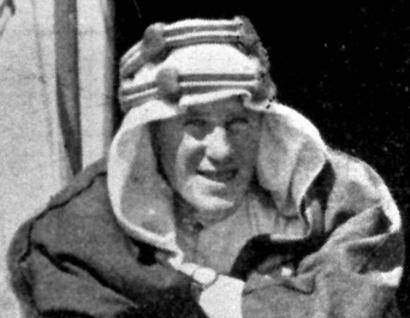
I love the cinema classic Lawrence of Arabia. Peter O’Toole plays Lawrence in a most remarkable manner, showing his brilliance, courage, diplomatic ability and understanding of the Arabs with whom he served.

There are many people, leaders and others that we encounter in life or that we study. Even the best of the best are flawed and there is no such thing as a Saint who never sinned. But we love destroying them and their memory when to our “surprise” when we find that their hagiographers built them into an idol.

I am a great believer in redemption and the weight of the whole of a person’s life. Thus I try to put the flaws as they are called in perspective and their impact both positive and negative in history. Studying in this way gives me a greater perspective on what it is to be human and to place my own clay feet in appropriate perspective.

As Lawrence said: “Immorality, I know. Immortality, I cannot judge.”

Peace

Padre Steve+

Leave a comment

Filed under faith, film, History, philosophy