Category Archives: Foreign Policy

Failing to Learn from History: The Lesson of the First Anglo-Afghan War and Questions about the US-NATO Campaign

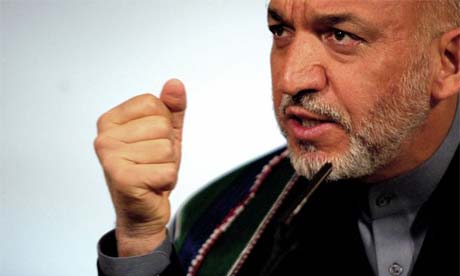
“The Americans in Afghanistan are Demons. They claim they burned Korans by mistake, but really those were “Satanic acts that will never be forgiven by apologies.” Afghanistan President Hamid Karzai

It seems that we in the West seldom learn from history nor do certain Afghan leaders like Hamid Karzai. The situation in Afghanistan has taken on a more ominous tone as the situation continues to spiral downward with Afghan President Hamid Karzai’s demand for the US and NATO to redeploy their troops to large bases and leave the countryside to Afghan control. Even more ominously he said that the Afghan-NATO relationship was “at the end of the rope.”  Karzai alluded that he did not believe that US and NATO account of the killing of 16 Afghan villagers near Kandahar.

This should come as no surprise to any observer of Afghanistan or anyone familiar with the relationship of Afghan leaders with western occupiers.  Karzai knows that the US-NATO era is coming to an end and even though he rules only because he is buttressed by western military power he is now trying to ensure his political and literal survival when we leave be it in 2013 or 2014.  The one thing that Karzai needs to keep in mind is that like his predecessors who turned on their western supporters be they British or Soviet he will be dangling from the end of the rope when we leave. He and his corrupt band of thieves who have alienated and plundered their own people will not survive their wrath once the protective cordon of American and NATO troops is withdrawn.

Karzai’s anti-American stance is further reinforced by the growing number of killings of US and NATO troops by Afghan police, soldiers and other personnel. Even this week an attack was made by an interpreter who drove a stolen pickup truck at a Marine Corps General and his British Brigadier assistant commander at Kandahar while awaiting the arrival of Secretary of Defense Panetta. Likewise the death of a Marine in February was officially announced as being at the hand of an Afghan soldier. The death occurred before the Afghan reaction to the burning of the Koran and was the 7th NATO service member who died at the hands of Afghan forces in February.
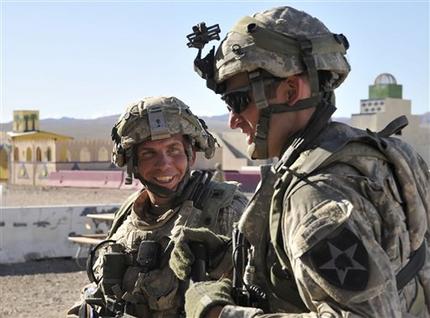
Staff Sergeant Robert Bales at the National Training Center in 2011 (US Army/DoD Photo)

The final nail in the coffin for the campaign occurred last week when Staff Sergeant Robert Bales for unknown reasons went on a shooting rampage killing 16 Afghan civilians including 9 children when they were asleep in their homes.  Bales actions whether attributable to a psychological breakdown, being drunk or if he was simply a cold blooded killer have effectively destroyed any chance of the United States and NATO recovering the situation in Afghanistan. It is already said that Bales attorney plans to use the case to also put the US war effort on trial. Since Bales reportedly has a Traumatic Brain Injury or TBI and possibly PTSD who allegedly was told that he would not be deployed again expect that the Army Medical Department and Madigan Army Medical Center will be raked over the coals. Those institutions and the Commanders of Joint-Base Lewis McChord are already being investigated for downgrading PTSD diagnosis to other mental illnesses that do not qualify for medical disability payments.

Staff Sergeant Bales appears to be a man who appeared until this incident to be an honorable and professional soldier with a distinguished combat record. However he had a number of potentially troubling legal and personal situations occur over the past number of years and had not been selected for promotion. How those events play into this and what may have happened to push him over the edge or to unleash an evil in him that no one knew was there will be the subject of much debate in the coming weeks.  None of it will be good for the United States.

At the same time the question will have to be asked how and why a soldier with injuries of PTSD and TBI was deployed as part of a small team supporting Special Forces troops instead of with his own unit even after allegedly being told that he would not redeploy.  That is a question that must be answered.  Why would the Army deploy a soldier with known PTSD and TBI as an Individual Augment with different unit than which he was assigned? In this environment he would not be in a place to have the same camaraderie of being part of his own unit probably suffer much more isolation with the inherent dangers of such a situation. Having served on small bases in Iraq with the small teams of advisors and having worked with Sailors, Soldiers, Marines and Airmen assigned to commands as Individual Augments (IAs) and having been one myself I can say that these assignments are often much more dangerous for those with preexisting trauma.

The result of this latest incident coming on the heels of the burning of the Koran and other religious texts at Bagram Air Base, the release of a You Tube video of a US Marine Scout Sniper team urinating on the corpses of Taliban fighters and the revelation of the “Kill team” in 2010 has for all practical purposes ended any chance of making a successful transition in Afghanistan.
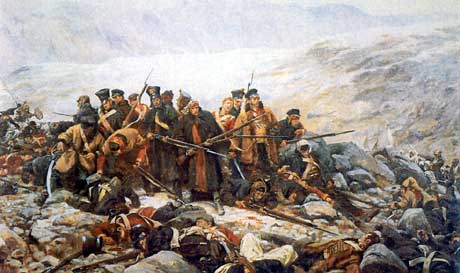
Last Stand of the 44th Regiment of Foot 1842

Afghanistan was supposed to be the “good war” and for a couple of years that is what it was. US forces had taken down the Taliban regime with minimal effort in 2001 and appeared to be well on their way to finishing off Al Qaeda and banishing the Taliban from Afghanistan. However in 2003 the US took its focus off of Afghanistan by invading Iraq. We also had placed our trust in Hamid Karzai to guide Afghanistan into a new and democratic era. Karzai has proven to be much like Sujah Shah Durrani who the British imposed on Afghanistan in 1838 when they could not get Emir Dost Mohammed Khan to do their bidding in trying to keep Russia and Persia from dominating Afghanistan. That was a mistake of epic proportions that led to one of the greatest British military, diplomatic and political disasters of the Empire.

A survivor to the First Anglo-Afghan War Chaplain G.R. Gleig wrote about that war something that may be said about our campaign there in years to come:

“a war begun for no wise purpose, carried on with a strange mixture of rashness and timidity, brought to a close after suffering and disaster, without much glory attached either to the government which directed, or the great body of troops which waged it. Not one benefit, political or military, was acquired with this war. Our eventual evacuation of the country resembled the retreat of an army defeated.” 

We can pray that it doesn’t happen that way. What started as an attempt to find and kill Osama Bin Laden and his Al Qaeda leadership in Afghanistan in October of 2001 has turned into a long term occupation that serves no strategic interest of the United States.  Nearly 100,000 US troops are tied down in a country where they can do little conduct local operations against an intractable enemy to support a corrupt government that the people of Afghanistan loathe.  It is so similar to the British experience that it makes one wonder if anyone has ever read a book about the country before invading it.

Bin Laden is dead and Al Qaeda is still reeling from continued strikes on its leadership. The goal of the war was achieved. Afghanistan is Afghanistan. It will not change and any threats brought by terrorists that may try to use it as a base can be defended so long as we are able and willing to whack a mole whenever they raise their head up, just as we are in the Horn of Africa, Yemen and even Pakistan. That does not require 100,000 tied down in Afghanistan where they are exposed to local threats as well as the possibility of being cut off from supplies should Pakistan or the Russian Federation cut supply lines or should hostilities break out with Iran.

Peace

Padre Steve+
4 Comments

Filed under counterinsurency in afghanistan, Foreign Policy, iraq,afghanistan, Military, national security, News and current events

Unforced Errors: The Bane of the American-NATO Campaign in Afghanistan

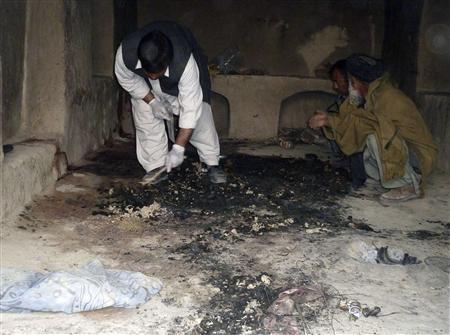
The Scene at one of the Houses (Reuters: Ahmad Nadeem) 

The efforts of the United States in Afghanistan and chances of coming out with anything resembling a successful conclusion to the longest war in its history are being destroyed by unforced errors. Of course anyone who watches any kind of sporting event knows that there are many times that the team that should win self destructs by committing unforced errors that result in them losing a game. In football they might be penalties, fumbles or badly thrown balls that result in interceptions. In basketball the errant pass, the bad foul, the unforced turnover in baseball the error that costs a game. However in war unforced errors cost precious lives, harm the strategic goals of a nation and lead to greater suffering of the populations affected.

Today we learned that a US Army Staff Sergeant went on a rampage in the Afghan villages near his base in Kandahar killing 15 or 16 Afghan civilians including 9 children and 3 women. The killings were particularly brutal. We don’t know details except that some reports indicate that the sergeant had recently had a breakdown and had deployed at least one other time to Iraq or Afghanistan. I would guess that he had multiple deployments.  The initial reports say that he was assigned to troops supporting a Special Forces team that was working with the local villagers.  Some Afghans say that more than one soldier was involved although NATO says that the soldier acted alone.

The murders come after the accidental burning of a Koran sparked riots and attacks on US and NATO forces killing 6 NATO soldiers including 2 US officers working inside a secure area of the Afghan interior ministry. They also follow the video display of Marines urinating on the bodies of dead Taliban and the trial and conviction of soldiers who had their own killing team. All the incidents were unrelated and none had the imprimatur of the American or NATO command.  However like the My Lai massacre committed by the platoon led by Lieutenant William Calley during the Vietnam War the crimes have tarnished the honor of the US military and are undermining all efforts to bring about a successful conclusion to the war in Afghanistan.

Unforced errors do not help when the strategic goals are totally dependent on the cooperation and goodwill of the populace of the country that you are operating in and trying to secure. The whole tenant of Counterinsurgency Warfare is securing the population and by doing that bringing them to cooperate with you. If you do not have the massive numbers of troops to actually secure the country yourself it is doubly important. In fact by doctrine there should be 4 times more troops to conduct a successful counterinsurgency campaign. In places where the indigenous forces are larger and more capable some or even much of the burden can be born by them, however the Afghan National Army and National Police are able to shoulder the burden. Riddled with corruption, plagued by incompetent leaders, poor discipline, high desertion rates and awash in Taliban sympathizers. A growing number of American and NATO soldiers have lost their lives in attacks from the Afghan soldiers and police working alongside of them.

Of course there are other factors such as that the government of the country must inspire the confidence of its own people in order to turn back an insurgency.  Afghanistan is “governed” if one can call it that by the regime of Mohammed Karzai. The government can most charitably be described as corrupt and incompetent.  However the Karzai government has little power or authority outside of Kabul.  It has little control over its own security forces or for that matter even regional governors who function in a near autonomous fashion as best benefits them personally or the tribe that they belong.  A shadow government of the Taliban factions often hold as much real power over the people as the “legitimate” government.  The biggest money maker is the Opium trade as Afghanistan is one of the top Opium producers in the world. The real truth is that for all practical matters Afghanistan is for all practical purposes a narco-State run by criminals and thugs of different factions.

Afghanistan also is a nation whose people believe that it is an offense against Islam foreigners to occupy the country. The Afghanis have shown their resolve against every invader and though successfully invaded they have never been long occupied nor cooperated well with their occupiers, even those that considered themselves liberators. As such the campaign to rid Afghanistan of the Taliban and bring about some form of democracy has had little chance of success after forces were diverted to the invasion of Iraq.

The latest incident will cause more American and NATO soldiers to die and will likely erase any possibility that we can succeed in our goal of an orderly train up of Afghan security forces and transfer of the conduct of the war to them.  It is very likely that the situation on the ground will get worse, perhaps markedly worse.  The American military will do the right thing regarding the investigation and prosecution of this case but that investigation may prove to show how bad things have become.

Unforced errors.  I don’t know how to overcome them.

Peace

Padre Steve+

Leave a comment

Filed under Foreign Policy, History, iraq,afghanistan, Military, national security

The Question is When, Where and How?…not If…. The Inevitability of War with Iran

“War is the unfolding of miscalculations.”  Barbara W. Tuchman

I do not think that there is a sane person in the world that sees any benefit of a war between the United States, Israel and the West and Iran.  But then sane people seem to be in the minority of all those involved in the current escalation of tension regarding Iran,  Israel, the United States, the West and the Arab World.

That being said I don’t think that anyone really wants to go to war even as all of countries involved move military units around the region, stockpile more weapons and issue ever more strident threats against one another.

When the war between Iran and those that oppose it occurs it will be because one of parties involved makes a fatal miscalculation that leads to a regional war with unimaginable consequences.

The immediate parties involved, the Iranians, the Israelis and the Americans have all hardened their military, political and economic stances in the past few months. The Iranians in particular have escalated military tensions by threatening to close the Straits of Hormuz, moving naval units to Syria even as that country devolves into civil war and making attempts or threats on the lives of Israeli diplomats in various countries including the United States.

Israel is reacting in kind to what many Israelis view as an existential threat from Iran in regard to the possibility of Iran producing nuclear weapons and delivery systems that could threaten Israel.  Reports seem to indicate that the Israelis could conduct a pre-emptive strike against Iran any time between the spring and the November elections in the United States.

The United States and much of Europe have imposed an increasing number of economic sanctions on Iran that are taking a toll on Iran’s economy.  Iran is increasing pressure on its own citizens who want more freedom. The Iranian military and the Revolutionary Guards are conducting exercises which are becoming increasingly bellicose including sending warships into the Mediterranean Sea to Syria.  Whether they want war or do not their actions could accidentally trigger a war with terrible consequences to the region as well as the global economy.

At this point I do not see any easy way out of a war which everyone knows is coming but cannot or will not avert.  The question is no longer if? It is when, how and where? Will it be a naval action at the Straits of Hormuz? Will it be the assassination of an Israeli, Iranian or perhaps a Saudi diplomat or leader? Will it be a terrorist attack against Israel by an Iranian ally such as Hezbollah which triggers an Israeli response?  Who really knows? There are so many possibilities that could trigger a regional war that it it boggles the mind.

The media with its 24 hour news cycle which demands fresh news raises the tenor of emotions and passions of the people and nations involved with each passing day.  The fear of war is driving people to the brink of it.  Back in the late 1890s it was called “Yellow Journalism.”

Adlai Stevenson said that “In matters of national security emotion is no substitute for intelligence, nor rigidity for prudence. To act coolly, intelligently and prudently in perilous circumstances is the test of a man, and also a nation.”  But this is not always the case. It is very possible that Israel, Iran or the United States may conduct a “preventative” strike against its opponents.  Otto von Bismarck commented that “Preventive war is like committing suicide out of fear of death.”

One can only hope that leaders and nations will see the truth of Stevenson and Bismarck’s words before the someone makes that one fatal miscalculation.

Peace

Padre Steve+
1 Comment

Filed under Foreign Policy, History, middle east, national security, News and current events

Padre Steve Reviews “The Wounded Giant: America’s Armed Forces in an Age of Austerity” by Michael O’Hanlon

The Wounded Giant: America’s Armed Forces in an Age of Austerity (An eSpecial from The Penguin Press)

• Format: Kindle Edition
• File Size: 1685 KB
• Publisher: The Penguin Press (November 15, 2011)

I was recently asked to do a review of Michael O’Hanlon’s new book The Wounded Giant: America’s Armed Forces in an Age of Austerity by the folks at TLC Book Tours http://tlcbooktours.com/ I am a historian and have served 30 years in the United States Army and United States Navy. As such I try to look at the nuances of Defense policy from a historical as well as current point of view.

O’Hanlon’s book deals with a topic that is receiving much attention and debate in the wake of the 2011 Congressional Budget impasse and deal and the recently release of the 2012 Defense Strategic Guidance and the FY 2013 Department of Defense Budget request. O’Halon’s book was published in the midst of the budget impasse in which could bind Congress into cuts well in the excess of the proposed $500 Billion in cuts proposed by the Pentagon and the Obama Administration. Cuts that could total over a trillion dollars over the next decade.

O’Hanlon deals with the economic necessity of Defense budget cuts laying out his thesis in the first two chapters dealing with the history of US military budgets since the Second World War with particular attention to the post-Cold War cuts under the Bush and Clinton administrations. In the following chapters O’Hanlon argues for what I would call a strategy of calculated risk in which Defense budgets and the necessary force cuts are balanced with the economic realities of our present time. He does not argue for massive cuts and disengagement from the world that some argue for, at the same time he realizes that defense cuts are necessary but cannot be too great.

He then goes on to discuss the potential reductions for ground forces as well as air and naval forces within the context of potential threats, especially those posed by Iran as well as the potential threat from China.  He argues for a leaner military but also acknowledges the danger of cutting too much.

His conclusions regarding force size and composition will be attacked by some and defended by others.  I think that his arguments regarding ground forces which support going back to the approximate numbers in the Army and Marine Corps in 2001 are reasonable presuming that there is a substantial reduction of US forces in Afghanistan and no other major ground campaigns arise.  The current personnel authorizations were only made reluctantly after years of war by the Bush administration whose first Defense Secretary Donald Rumsfeld was no advocate of large ground forces.

O’Hanlon also discusses the possibility of savings through some base closure as well as reductions in some Air Force and Naval capabilities while attempting to minimize the effects of the reductions by crew rotations of forward based warships and more use of drone aircraft. He also discusses the US capabilities in intelligence and Homeland Security in the context of the overall defense structure.

One thing that I find lacking in O’Hanlon’s treatment of the defense strategy and budget is the lack of attention paid to the overall industrial base required to support the replacement or modernization of our current forces. He argues in favor of keeping production lines open but neglects the fact that most of the US defense industrial base is now the property of about five major corporations. At one time we had more shipyards  and other facilities that made the rapid production of war materials in times of national emergency which at the end of hostilities could revert to civilian industrial production. Much of that capability is now gone, outsourced to China and South Korea.

O’Hanlon has some good proposals and his numbers are not much different than those proposed by the Pentagon. His analysis does included what is called the DIME, the diplomatic, intelligence, military and economic aspects of national security strategy. He describes his vision for a military that despite cuts can still be mission capable. One may argue with his overall strategic thinking and his detailed proposals and many will. I have issues with some of the proposals.  Likewise anyone attempting to project a vision of a national security strategy and military force structure is always fraught with the ever present reality that no one can predict the future. However history tells us time and time again that we seldom are right and that threats yet unimagined can shred the most well thought out and detailed plans.  Making such decisions in an election year makes them all the more prone to being wrong because the political establishments of both parties

It is a good read for anyone seriously interested in national security strategy.It is not perfect by any means but worth the read.  It it is published in paperback as well as the Amazon Kindle edition.

The Author: Dr. Michael O’Hanlon is is director of research and a senior fellow in Foreign Policy at the Brookings Institution, where he specializes in U.S. defense strategy, the use of military force, homeland security and American foreign policy. He is a visiting lecturer at Princeton University and adjunct professor at John Hopkins University. O’Hanlon is the author of several books, most recently A Skeptic’s Case for Nuclear Disarmament. His writing has been published in The Washington Post, The New York Times, The Financial Times, The Wall Street Journal, among other publications, and he has appeared on TV or radio almost 2,000 times since 9/11. Before joining Brookings, O’Hanlon worked as a national security analyst at the Congressional Budget Office and served as a Peace Corps volunteer in Congo/Kinshasa (the former Zaire). He received his bachelor, masters, and doctoral degrees from Princeton, where he studied public and international affairs.

3 Comments

Filed under books and literature, Foreign Policy, Loose thoughts and musings, Military, national security

Tension in the Gulf: Don’t Miscalculate; Speak Softly and Carry a Big Stick

“War is the unfolding of miscalculations.” Barbara Tuchman

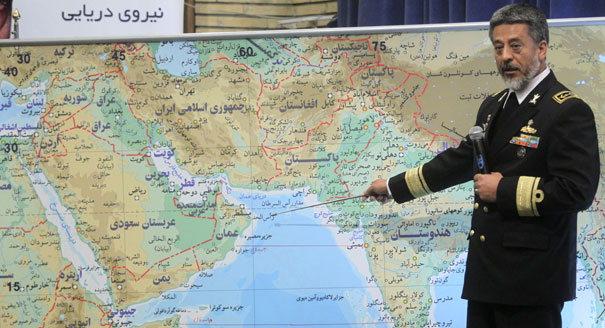
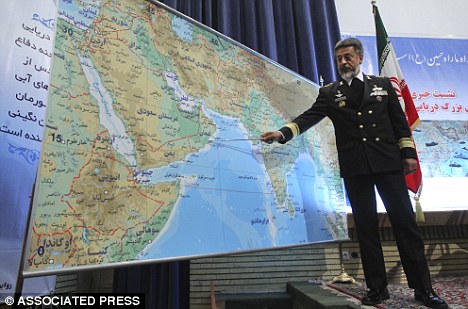
Iran’s navy chief Habibollah Sayyari briefs media on the naval exercise 

The greatest danger in the current war of words between Iran and the United States is the danger that the Iranians one side or the other will miscalculate the will, resolve and strength of the other.  Teddy Roosevelt made the comment “speak softly and carry a big stick.” The Iranians have been shouting loudly and brandishing a small stick and if they are not careful they will bluster their way into a naval war that they cannot win and that will cause significant economic and physical disruption in the region.

The Iranian Navy and Revolutionary Guards Naval Forces are about halfway into a 10 day series of exercises in the Gulf of Oman, the Strait of Hormuz and the Northern Arabian Gulf, or what they call the Persian Gulf. Iranian leaders have increased their rhetoric in regard to closing the Strait of Hormuz if more sanctions are leveled against them for their nuclear program.

The bellicosity of the Iranians comes at a time when they are feeling internal political pressure from Iranian young people, as well as external diplomatic and most likely espionage campaigns.  The latter are designed to slow down or halt their nuclear program which most analysts now believe to be designed to produce nuclear weapons.

For what it is the Iranian Navy can threaten the strait and maybe even close it for a limited time. It is possible if they ever launched a surprise attack on an isolated US or Western warship using their “swarm” tactics close inshore to Iran in the constricted waters of the strait or in a narrow part of the NAG that they could sink or cause severe damage to it.  They would probably mine the straits if they could do so before hostilities began or before sufficient forces could be deployed to stop them. Likewise their missile forces and special operations forces could cause some damage and chaos in the Gulf but the repercussions would isolate and devastate Iran.  However closing the strait or attacking a US or Western warship would be the end of Iran’s naval forces and cause more damage to the country than its leaders are willing to accept at least right now. The Iranians would find that they were fighting far more than the United States Navy should this happen and their Russian and Chinese supporters would more than likely do everything possible to dissuade them from trying this.  Since China imports the bulk of its oil from the Gulf it is unlikely that they would support the Iranians.

While such a direct attack is unlikely the possibility of an accidental war caused by miscalculation on the part of one side or the other is always real and should the Israelis strike Iran’s nuclear facilities Iran would certainly retaliate against Israel but also US Forces and installations in the Gulf and probably against the Gulf States and even Iraq.

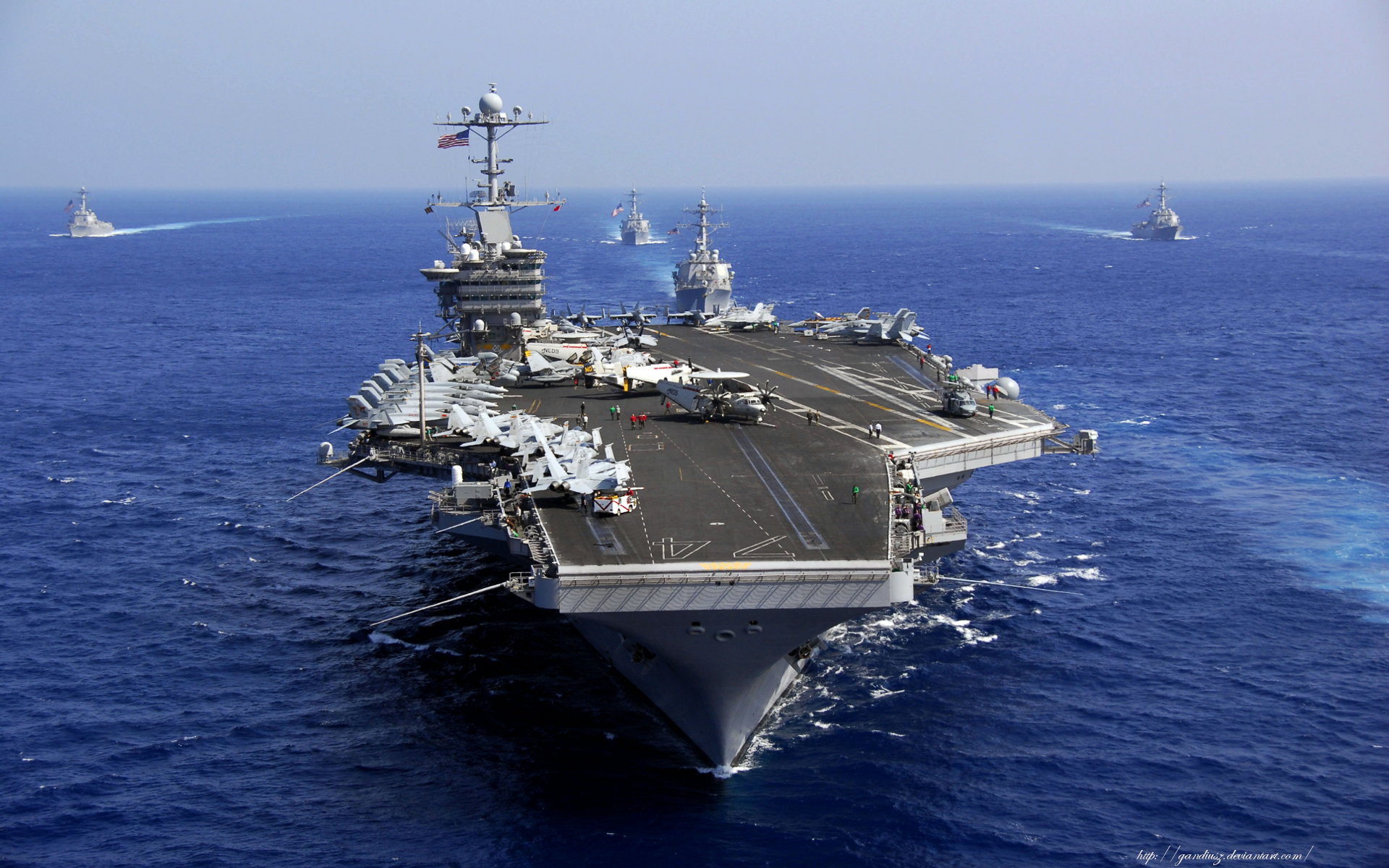
USS John C Stennis (US Navy Photo)

Regarding how such a campaign would be fought the United States would stand off a safe distance and pound Iranian naval, air and coastal defenses and not allow Iranian surface ships to get close enough to make a swarm attack.  This is a big reason that the USS John C. Stennis transited the straits and entered the Gulf of Oman (GOO).  Operating in the open seas gives the blue water US Navy the edge. The Iranian navy’s ships lack the range and endurance for sustained operations at sea and could not sustain a blockade. US attack submarines would hunt down the Iranian Kilo class subs before they could become a threat and US Naval Aviation assets would sweep the surface assets of the Iranian Navy and Revolutionary Guard Naval Forces from the sea while destroying Iranian coastal defenses on the islands in and the Iranian side of the strait.  Once the strait was cleared tanker traffic would resume and Iran would be the biggest loser.  History shows time and time again that light coastal naval forces are no match for a professional seagoing navy even if they score an occasional victory.

Much has been made about Iranian claims to have tracked the USS John C Stennis as she transited the straits.  That is nothing new, the Iranians have air, sea and land surveillance of the narrow straits. The fact is that US ships transit the strait and its approaches on high alert and have done so since the Tanker Wars of the 1980s.  Every Iranian move is watched by the US Navy.  Likewise while transiting the strait the ships of both sides communicate with each other regarding navigation.  It is standard practice.

Since I believe that the Iranians despite their rhetoric are far more prudent than some believe and that they will not launch an unprovoked attack. Even if they succeeded in temporarily closing the straits and even scoring some kind of naval victory by sinking a US ship the victory would be extremely short lived. US and other forces would stream to the region and devastate all that is Iran. The costs for the Iranians and their long term goal of regional hegemony would be too great for them to intentionally start a naval confrontation in the Gulf.  However the chances of either side miscalculating and stumbling into war should not be underestimated.

The biggest danger now is the potential for miscalculation but Iran’s long term goal of dominating the Gulf and acquiring nuclear weapons will probably keep them from attempting anything of this sort. That said there are factions in Iran that could try to use the threat of new sanctions to force a confrontation in the straits and for that we must be ready to meet the threat.  Iranian threats should not be disparaged nor their political and military will underestimated. To underestimate an Iran’s capabilities and will are extremely dangerous. At the same time we should not overestimate their capabilities and yield to their threats when they threaten to cut off the flow of oil from the Gulf.

The United States needs to follow Theodore Roosevelt’s advice and remember history as we follow the situation and ensure that whatever Iran does that we will not be surprised or unprepared.

Peace

Padre Steve+

Leave a comment

Filed under Foreign Policy, History, middle east, national security, US Navy

A Weekend of Surprises and Not : Packers Lose, Colts Win and Kim Jong-Il Dies; Tebow finally Loses and Padre Steve keeps on Trucking…

Packed away

Wow what a Sunday….

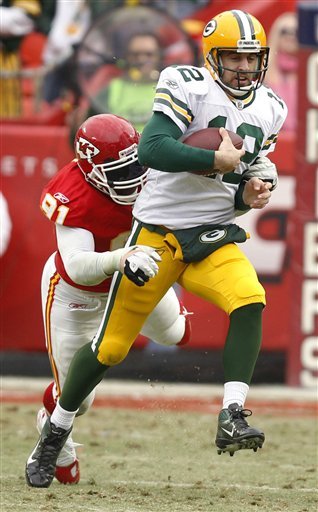
The Green Bay Packers who had not lost a game for a year lost to the lowly Kansas City Chiefs who had just fired their Head Coach on Monday.  It is actually fascinating because Kansas City started a Quarterback that had never started in the NLF prior to today and we facing a team that is the odds on favorite to repeat as Super Bowl Champions.  It looked like that the Pack had a clear path to a perfect season and the playoffs.  They will be in the playoffs but it possible that they could lose their home field advantage.  I don’t think that is likely but stranger things have happened.

Not to be outdone the winless Indianapolis Colts who were coming close to being the second NFL team to go 0-16 in a season defeated the Tennessee Titans today. I was expecting that they had a great chance to tie the 2008 Detroit Lions for that seemed the impossible nightmare for any team.

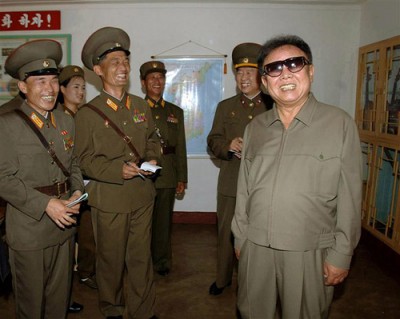
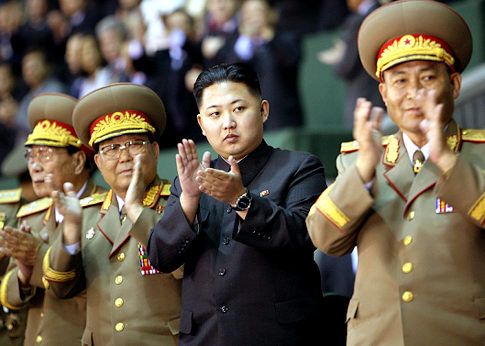
The late Kim Jong Il above and son and new Dictator for Life Kim Jon Un below

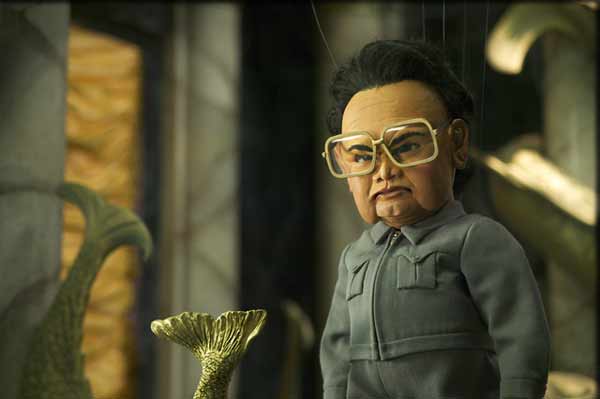
To make things even weirder today North Korean Dictator for Life Kim Jong-Il died today, or actually tomorrow if you are in Korea. State media staid that he died on a train from a heart attack induced by “physical and mental fatigue.” I would guess that this was due to overwork at one of his notorious orgies with Scandinavian actresses but that is just speculation, maybe he was just trying to figure out his new Facebook profile page but I digress.  Of course I could be wrong and “Team America” got him. Kim will join his pals Moammar Ghadafi, Saddam Hussein and Ossama Bin Laden on their eternal vacation on the Lake of Fire. I hope that he brought his asbestos water skis. He will be replaced as Dictator for Life by his son and self appointed heir Kim Jong-Un who is know by some as the Un-Kim.  The younger Kim is in his mid to late 20s and must be a pretty sharp guy and military genius because his dad promoted him to the North Korean Equivalent of a Four Star General. Knowing this the South Korean government has placed its military on “Extra Special Chaos in North Korea alert.”  All kidding aside this is not a good situation. We have a young man insulated from any real reality now in charge of a rogue nation with a starving population, a big army and lots of nukes.  If it wasn’t reality it would make a great episode on South Park.

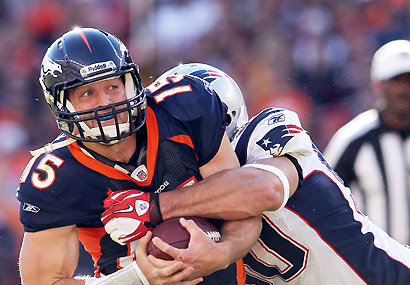
Finally the magic of Tim Tebow ran out today against Tom Brady and the New England Patriots.  It was a good battle but the Tebow and the Broncos turned the ball over in critical situations and the Patriots not only took advantage of every break but made their own. Yet it was a classy game. Two decent men quarterbacking NFL teams behaved with class during and after the game.  The Patriots with the Ravens losing are now in control of home field advantage in the AFC playoffs.  Raiders blew a 13 point lead in the 4th Quarter and lost to the Lions and thus the Broncos remained even with the Raiders for the AFC West lead as San Diego made up a game on both by knocking off the Ravens.

As far as Padre Steve, it was a day of travel followed by fellowship with friends at Gordon Biersch followed by doctors appointments for her tomorrow before making the trip back. Of course our little dog Molly is enjoying the long rides and trips through drive thru restaurants.  Tomorrow evening Molly will be sweetly telling me every time that she thinks that she needs to pee or take a walk down to the beach and back.  Life is good when you are a cute little dog.

Anyway, have a great final week of preparation for Christmas or whatever holiday that you celebrate or even those that you don’t.

Peace

Padre Steve+
1 Comment

Filed under football, Foreign Policy, History

The War that No One wants to Fight: Pakistan 2011

Supply Lines in Peril

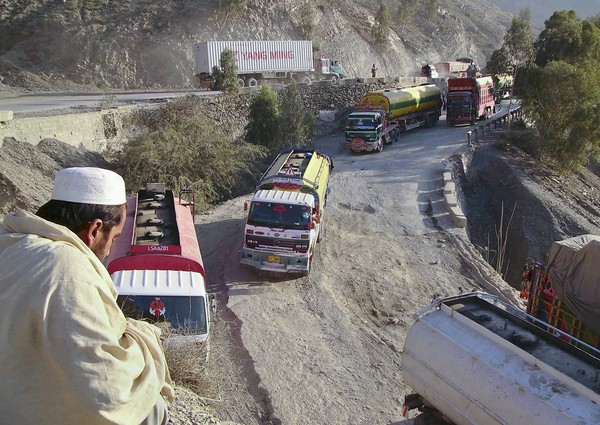
This weekend there was an altercation on the Afghanistan-Pakistan border in which somewhere between 24 and 28 Pakistani soldiers were killed during a NATO airstrike.  Afghan military and regional government officials are saying that Afghan soldiers called in for air support after they were attacked from the Pakistani side of the border.  The Pakistanis are calling the the strike an “unproved attack.” NATO and Afghan officials note that the border is not very distinguishable and that Taliban forces often will shoot from positions near Pakistani outposts.  Unfortunately in Pakistan the only truth that matters is that NATO killed its soldiers and the fact that their country and some agencies specifically the intelligence service actively support the Taliban is irrelevant.  The truth is that the only reason that the Pakistani government and military has halfway cooperated with NATO is because of the vast amount of military and economic aid it receives from the United States.  The thin veneer of cooperation was broken this weekend and there may be little that anyone can do to reestablish any kind of real trust or cooperation despite the fact that the cooperation of the Pakistanis is a “necessary evil” as long as the US an NATO have over 100.000 troops deployed in “penny packets” around the vast  rugged expanse of Afghanistan.

The fact is that depending on whose statistics you look at some 40-50% of NATO’s supplies are transported overland from the Pakistani port of Karachi to Afghanistan. The bulk of these goods are things like fuel and heavy equipment without which the ability of NATO forces in Afghanistan cannot conduct effective operations.  The Pakistanis have already demanded that the US pull its CIA drone units from a key Pakistani air base and the Pakistanis are still smarting over the killing of Osama Bin Laden on their soil. The simple truth is that unless the Pakistani military can calm their country our supply lines will be cut off. Unfortunately this same military and government has used any excuse or provocation to stir up their population against the United States and NATO in order to preserve their hold on power.  Now it appears that the situation has reached a point that they will not be able to control the passions that they have stirred whenever the need suits them.

If the Pakistani military and government have put themselves and us in a bind. If they  appear to be “soft” on NATO in the eyes of their people they risk a popular revolt and more terrorism at home. If they harden their opposition to NATO and the US or use the latest incident to whip up more anti-NATO support they could find themselves in a war with the United States and NATO.  Any misstep could be disastrous to all concerned.

Unlike the Iranians the Pakistanis actually have deployable nuclear weapons in addition to a large conventional military force.  If they were to decide to stop US and NATO resupply convoys for more than a few days our operations in Afghanistan would be affected and if the impasse were to become long term it could cripple US and NATO operations in that country.

The sad truth is that the US and NATO forces in Afghanistan are terribly exposed to dangers that neither they or their commanders control. It is what happens along the Afghanistan-Pakistan border that matters what happens between the United States-Israel and Iran can have a dramatic and even calamitous effect on our deployed forces.

The fact is that it is hard to replace 40-50% of your bulk supplies when they have to come by sea and the only port is in a hostile or at best semi-hostile country.  If the Pakistanis were to force the issue the mission in Afghanistan would be untenable.  A smaller force tailored to anti-terrorism operations could be sustained by air and via overland routes which pass through former Soviet republics but a heavy force of over 100,000 troops scattered across thousands of square miles of mountainous terrain cannot be sustained unless the supply lines for bulk fuel, water, food and heavy equipment are secure.

Logistics is not sexy but no modern military can do without it. You do not operate heavy mechanized forces in hostile territory without reliable supply lines. Simply ask the Germans in Stalingrad or the French at Dien Bien Phu how well they did when supplies were cut off.

It just doesn’t seem to me that most people especially politicians see the danger that US and NATO troops face in Afghanistan from forces that they cannot control in surrounding countries.  This is a dangerous situation and even if the current impasse is resolved the long-term outlook is bleak as long as the Pakistani regime plays both sides of the fence.

If the supply lines were severed for any length of time the mission in Afghanistan would have to be reevaluated and the possibility of military action to reopen them considered. At that point all bets are off and God help us.  It would not be good.

Peace

Padre Steve+
1 Comment

Filed under Foreign Policy, History, iraq,afghanistan, Military, Political Commentary

November 1918: The Month that Changed the World

November 1918

In November 1918 a world was ending and a new one beginning.  The Great War which had begun in August 1914 following the assassination of the heir apparent to the Throne of the Austro-Hungarian Empire wife on June 29th 1914 was in its final days, as was the Austro-Hungarian Empire and Imperial Germany.  It was a month saw the collapse of a long established order which through wanton ambition and unchecked arrogance had brought about a war that devastated Europe.

In the years following the war revolution and civil war enveloped much of Europe and led to the rise of Fascism, Communism and Nazism and a second world war.  The events of November 1918 led to changes that are still being felt today.

In fact the events that occurred over 90 years ago are the ghosts that haunt Europe today.  They are why the European Union is trying so hard to keep Greece from defaulting on its sovereign debt which most believe would destroy the EU and cause global economic and social disruption. Some key European leaders have even raised the specter of war should the Greeks default and the EU collapse.

To the Europeans the thought of such is frightful having been the epicenter of two world wars, continent changing revolutions, genocide and the division of the continent between NATO and the Warsaw Pact.  The very thought of social and economic chaos brought about by the collapse of the EU is a legitimate concern of the Europeans and it is something that should concern us too because we are so naïve when it comes to civil war.

Yes we had a great civil war which rent the country asunder and cost hundreds of thousands of Americans their lives and left scars that still exist.   We say that our civil war pitted brother against brother but it was really more region against region.  When civil war came toEuropein the aftermath of World War One it was a war that pitted neighbor against neighbor and it as often far more vicious and insidious in the way that it was waged. It was ideology and class warfare at its worst. People on the left and the right surrendered to their basest instincts and permitted themselves to the most brutal atrocities committed not against a foreign power, but their neighbors, and in the case of some men who had served together in the trenches against their former comrades in arms.

The deep scars lurk underneath Europe’s veneer of peace and prosperity.  Despite all its advances and the remarkable changes that have occurred in the years following the Second World War the scars of the wars remain. Europe is more fragile than than it looks and Europe’s leaders understand this.  They also understand that people in the smaller and weaker countries like Greece feel threatened by the power of Germany and France, nations that lead the EU and each at one time dominated the continent by the force of arms and have dominated it economically the past 20 years.

The leaders of Europe and many of its people are justifiably concerned about their future because their ancestors lived that future.  We should be concerned as well because same social, political and economic dynamics are in play in our country but our extremists on the left and the right cannot see the danger.  For both it has become a zero sum game.  Eventually as the Europeans found out in the 1920s and 1930s when it is a zero sum game no compromise is possible and one side will eventually crush their opponents until they themselves are crushed by forces that they unleash but cannot control.

In the mid 1920s an artificial a brief period of prosperity enabled by cheap credit extended by the United States provided Europeans the illusion that their fragile new democracies might take root.  Then in October 1929 the economic house collapsed and the world entered the Great Depression and with it the social order melted away. Governments collapsed under the weight of mass movements championed by radicals on the left and the right.  We know the rest of the story.  The question is will it happen again?

November 1918, November 2011.  Are we about to see Europe and the world plunged into another period of unrelenting economic turmoil, social and political unrest leading to civil wars and wars of conquest?  People like German Chancellor Angela Merkel warn of this with good reason and we should be concerned not just for Europe but for our own country.  If the EU collapses the consequences will wash upon our shores.

Peace

Padre Steve+
1 Comment

Filed under economics and financial policy, Foreign Policy, History, national security

Padre Steve’s Arab Spring Articles: Tahir Square to Sirte

It is hard to believe that Moammar Gaddafi is dead and that the people of Libya have thrown off the shackles of his tyrannical dictatorship which caused them and the world so much grief.  These are links and brief descriptions of the articles of this series.  There have been revolts across the Middle East as oppressed people have risen up peacefully against their repressive governments only to be met with force. Egypt, Yemen, Bahrain, Libya and now Syria, each is rooted in history and each is different. Taken together they are inspiring others around the world.  I have not written much on Yemen or Syria but expect in the coming weeks and months there will be plenty of opportunities to look at the history, culture and unique aspects of these revolts and their potential impact in the region and around the world.  It is my belief that they are helping usher in a new age of revolution with results that will be as dramatic and important as the fall of Empires at the close of the First World War.  Looking at each article you can see how my thought process has evolved as the situation has developed.

Also a page update. I have updated the Middle East Page found in the top menu.

Peace

Padre Steve+
Walk Like an Egyptian: The Egyptian Revolution and the Radicalization of the Middle East Published31 January 2011. An analysis of the probability of the radicalization of the Middle East as revolution spreads.

The Beginning of Chaos in Egypt: Watching and Waiting as the Situation Deteriorates Published2 February 2011 as the situation began to deteriorate in Egypt as Mubarak loyalists attacked protesters in Tahir Squar.

Egypt: As Mysterious as the Sphinx and as Dangerous as a Cobra….What Next? Posted11 February 2011.  A continuation of my observations of  the revolution in Egypt prior to the fall of Hosni Mubarak.

Danger in the Arabian Gulf: The Fires of Protest Spread to Bahrain Posted18 February 2011. The article deals with the protests in Bahrain and my experiences and observations having traveled there many times.

Damned if you do…Damned if you Don’t: The Middle East Protests and U.S. Foreign Policy Posted 19 February 2011. An examination of the difficulties facing U.S. Foreign policy officials in light of the recent spread of revolution in the Arab World.

To the Shores of Tripoli: The Flames of Revolution Spread to Libya as Gaddafi Fights Back Posted February 21st as the protests in Libya provoked a response from dictator Moammar Gaddafi. Saif Al Islam Gaddafi said We will take up arms… we will fight to the last bullet… We will destroy seditious elements. If everybody is armed, it is civil war, we will kill each other.”

Göttdammerung in Libya: Shades of Hitler as Gaddafi Promises to Die as a Martyr Published 22 February 2011 Moammar Gaddafi promises “I am a fighter, a revolutionary from tents … I will die as a martyr at the end… I have not yet ordered the use of force, not yet ordered one bullet to be fired … when i do, everything will burn.”   Moammar Gaddafi accurately predicts his death.

The Guns of March Published 9 March 2011. “War is the unfolding of miscalculations” Barbara Tuchman Libya in the context of the broader Middle East and US Military capabilities.

Gaddafi Taunts the West and Kills his People: Our inaction speaks so loud he can’t hear a Word that we are Saying  Published 11 March 2011.  The cost of inaction and the risks of making threats that you do not back up with force.  When I wrote this I believed that if nothing was done that Gaddafi or terrorist organizations like Al Qaeda and others could turn this revolt into a regional war.

Strike on Libya: The Unknown outcome of Operation Odyssey Dawn Published20 March 2011. The beginning of the NATO air campaign in Libya.

Damned if you do and Damned if you Don’t: The Allied Intervention in Libya Published March 21st 2011.  War is the province of chance. In no other sphere of human activity must such a margin be left for this intruder. It increases the uncertainty of every circumstance and deranges the course of events.”- Karl von Clausewitz The opportunities and peril associated with the NATO intervention in Libya.

Gaddafi’s Götterdämmerung: The End in Tripoli Published 21 August 2011.  The fall of  Tripoli, the Libyan Rebels drive out Gaddafi.

The Promise and Peril of Revolutionary Times: A Warning From History  Published 18 October 2011. Putting revolutions around the world in context.

Gaddafi is Dead so what happens Now? Published 20 October 2011. The death of Moammar Gaddafi and questions of what comes next.

Why the Libyans were able to Overthrow Gaddafi and what We can learn from It: A Lesson from the work of T E Lawrence  Published 21 October 2011 What NATO and theUnited States did right inLibya and a look at Middle East History.

2 Comments

Filed under Foreign Policy, History, middle east, Military

Why the Libyans were able to Overthrow Gaddafi and what We can learn from It: A Lesson from the work of T E Lawrence

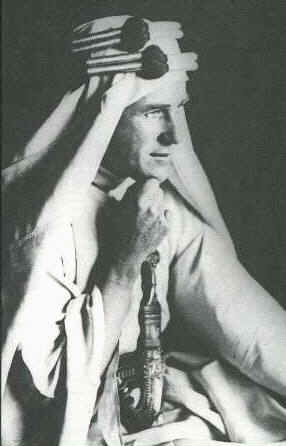
T E Lawrence

“Do not try to do too much with your own hands. Better the Arabs do it tolerably than that you do it perfectly. It is their war, and you are to help them, not to win it for them. Actually, also, under the very odd conditions of Arabia, your practical work will not be as good as, perhaps, you think it is.” T. E. Lawrence

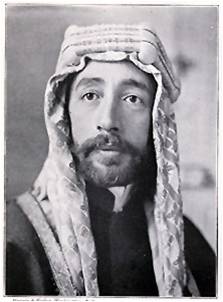
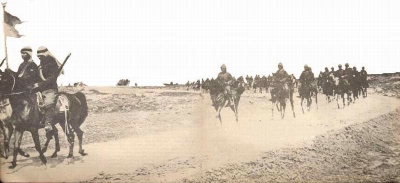
Lawrence with Arab fighters at Aqaba and Emir Faisal Hussein (below)

The Libyan revolution succeeded in overthrowing Moammar Gaddafi and his 42 year tyranny because the West did not turn it into an American or NATO war. By limiting involvement to airpower, coastal interdiction and tiny numbers of advisers the United States and NATO avoided the costly trap of putting large numbers of troops on the ground.  Such action would have been counterproductive in Libya and in the Arab world. While the action certainly would have ridded the world of Gaddafi and his regime much more quickly it would have emasculated the Libyans who had taken up arms against Gaddafi by turning it into our war, a war which would have been seen by many Libyans and Arabs as just more Western Imperialism.  Critics can always find fault in any military operation but for once in the Post Cold War era the United States and NATO knew their limitations and that the revolution had to be the work of the Libyans themselves.

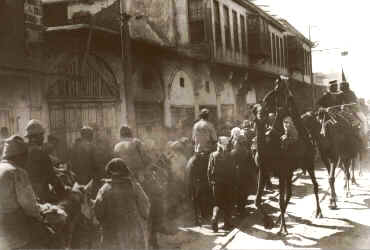
Lawrence and Hussein’s troops pass Ottoman prisoners at Damascus in 1918

T E Lawrence understood the Arab mind more than most westerners ever will.  Living with and helping lead the Arab tribes that revolted against the Ottoman Empireduring the First World War he learned the culture as well as came to understand the strengths and weaknesses of the Arab tribes.  One thing that can be said is that most Americans like many of Lawrence’s counterparts in the British political leadership, military and diplomatic services is that far too few have taken the time to either understand or respect the Arabs. When I was in Iraq the senior Iraqi Officers that I met were amazed and impressed that I knew their history and culture because so few people did. When I mentioned their victory at Al Kut Amara, or their capture of the Al Faw peninsula at the end of the Iran-Iraq war they beamed with pride.

Ottoman troops in Mesopotamia 

One of the things that Lawrence understood was the profound sense of personal pride and honor which imbued the Bedouin.  He understood that the various Bedouin tribes had no love for the Ottoman Turks who treated them with distain.  He also understood that they needed to be the ones that defeated the Turks.

The campaign waged by Lawrence and the Bedouin confounded the Turks. Working with Emir Faisal the son of Sherif  Hussein of Mecca he convinced his force of Arab irregulars not to make a direct assault on the city of Medina which was heavily garrisoned by the Turks.  Instead he expanded the battlefield by exploiting the natural weakness of the Turks, the need for constant supply via the Hejaz Railway.  In doing so he tied up large numbers of Ottoman troops that could have been used against the forces of General Allenby that were waging a conventional campaign and which was very successful in defeating the Ottomans.

While Lawrence was a part of a much larger effort his work in helping the Arab revolt was of great importance to the success of the British efforts against the Ottomans.  Unfortunately the good will that Lawrence and others like him built did not last. The British and French governments did not respect treaties that supported Arab independence and instead dividing the region between them under the terms of the 1916 Sykes-Picot Agreement. They left an isolated and abandoned Hashamite kingdom in the Hejaz which was conquered by the Saudis to whom the British had shifted their support.

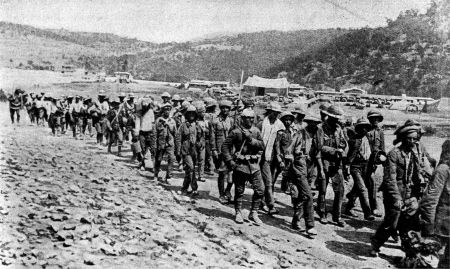
British prisoners at Kut al Amara

A few hundred miles away the British did not take advantage of indigenous Arab resentment of the Ottomans in Mesopotamia.  The British invaded Mesopotamiain 1914 expecting to defeat the Turks easily.  However the British did precious little to enlist the support or help the Iraqi Arabs.  The campaign was long and included the worst defeat of a British Army during the war at the Siege of Kut Al Amara in 1916 at the hands of a largely Iraqi Ottoman 6th Army.  Some 30,000 British and Indian soldiers were killed or died of disease and 13,000 captured many who did not survive captivity.  After the war Lawrence remarked “The people of England have been led in Mesopotamia into a trap from which it will be hard to escape with dignity and honor. They have been tricked into it by a steady withholding of information.”

Faisal would go on to be elected as the new Kingdom of Syria by the Syrian National Congress in March of 1920 but kicked out by the French who enforced the Mandate of Syria in July.  In 1922 after the British brutally suppressed an Iraqi independence movement they appointed Faisal as the King of Iraq. When the British “gave” the Iraqis their independence in 1932 Faisal was the head of state.  He died in 1933 and the British maintained a tight grip on the country and put down another Iraqi nationalist revolt led by the Army in 1941.  The British would remain in Iraq until 1958 when a military coup which is known as the “14 July Revolution” overthrew the government and killed king Faisal II.

Libya Rebels

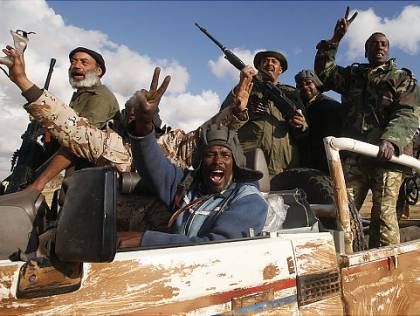
In Libya there was great temptation and political pressure for the United States to begin an early air campaign without significant support in the international community.  Some say that this caused more casualties and suffering for the Libyans, but it helped in the long run because Libyans saw it as their war to win even when NATO began its air campaign against Gaddafi.  The air campaign was a great help to the newly proclaimed National Transitional Council in Benghazi and probably saved them from being defeated but it was the courage of Libyans on the ground who sacrificed themselves against a better armed and trained force to retake the country.

The revolt restored the pride of an oppressed people, something that could not have taken place had the campaign been led by the United States and NATO with boots on the ground.  People forget that in 2003 the majority of Iraqis welcomed US forces as liberators.  This lasted until Paul Bremer unilaterally dissolved Iraqi military, police and civil servants that were actively helping us, turning them into enemies overnight.  The liberated Iraqis felt betrayed and dishonored by the United States just as they had been by the British following the First World War.  Bremer did this without ensuring that the Iraqi Army weapons depots were secure thereby providing Sunni and Shia insurgents with vast amounts of weapons.  These weapons were turned against American and coalition soldiers and even the UN and NGOs which were just beginning to helpIraqrebuild.  The result of Bremer’s was a protracted insurgency and civil which cost us nearly 4500 soldiers killed and over 32000 wounded and hundreds of thousands of Iraqis killed, wounded or displaced.  If one wants an answer as to why the Iraqis rose up against the United States occupation in late 2003 they need to look no farther than this. The Iraqis only want to be independent and saw the Bremer’s actions in the lens of their history with the British.

The author with Iraqi General Sabah Ramadi 2007

The decision of President Obama, French President Sarkozy and British Prime Minister Cameron to work through the UN and NATO was the correct one. It enabled the Libyans to overthrow Gaddafi and it kept our military involvement to a minimum.  While it cannot be a template for all future military operations in the Arab world as every Arab country is different it does have lessons for us. Libya was a perfect place to use this method. It had a population that wanted Gaddafi gone and were willing to die trying to overthrow him.  It had no huge urban population centers teaming with uneducated and poverty stricken people with little hope.  It has substantial oil wealth and an oil infrastructure which unlike Iraq was not destroyed during the war or in bad repair due to years of sanctions. It also enjoyed a key geographic location which made NATO air intervention much easier than almost anywhere in the Middle East because we did not need bases in Libya or its neighbors to run the operation. It was conducted from Europe and platforms at sea.   This is not possible in most other Arab countries. The task would be much more difficult if the target was Syria.

Now is the time to help the Libyans in rebuilding their country and letting them continue to regain their pride by letting them do as much as possible.  They won’t do it the way we would but that is okay. They will make mistakes but given time the people that shed their blood together to rid themselves of Gaddafi can work together to build a free country.  Those that go to Libya to assist the Libyans need to keep this in mind if they really want to see a strong, robust and successful Libyan democracy take hold.  Let’s also make sure that the good feelings that the Libyans have for us now remain by simply treating them as we would like to be treated.  Simply put we have to stop treating them as vassal states that we only value for their natural resources while we disrespect their people, history and culture.

As for the future it would be a wise investment to ensure that diplomatic, military and NGO personnel be trained and educated to understand and appreciate the Arabs and other cultures that are different than ours in the West.  The West has much to overcome in its relationship with the Arabs most of which is self inflicted. But we can try to start again.

Peace

Padre Steve+

3 Comments

Filed under Foreign Policy, History, middle east, Military