Category Archives: History

The War to End All Wars….and a Peace to end all Peace

It was the War to end all war

On the 11th hour of the 11th day of the 11th month the guns fell silent across Western Europe and the war which had killed 16 million soldiers, sailors and civilians and wounded another 21 million more came to an end. It had begun as a conflict in the Balkans which rapidly drew in all of Europe’s major powers.  The central focus of the war was the Western Front where the armies of Germany battled those of Britain, France, Belgium and later the United States.  Battles with names such as the Marne, Passchendaele, the Somme, Verdun, Ypres, Chateau Thierry, Belleau Wood, Vimy Ridge, Cambrai, the Aisne, represented the pinnacle of killing as soldiers battled in the mud of massive trench systems and Generals sacrificing thousands of men in a day for the gain of a few hundred yards of territory throwing them against mountains of barbed wire, landmines, well emplaced machine gun nests and mortars. Massed batteries of artillery tore men to shreds leaving many men so pulverized that they would ever be identified.  Poison gas both choking agents and the long lasting mustard gas added to the hell that was the war in the West.

During the war the war Imperial Russia had fallen to a Communist revolt and surrendered, the Austro-Hungarian Empire fell in October of 1918 and even the Allies had faced near calamity on the home front. In 1917 the French Army mutinied after years of futility with only Marshal Petain the hero of Verdun able to quell it.

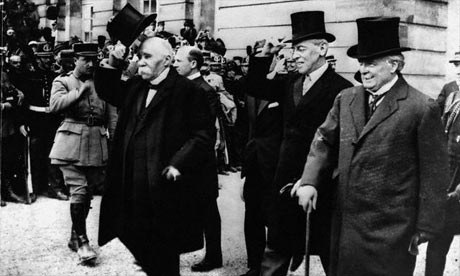
The men who drafted the Peace to end all Peace: Clemenceau, Wilson, Lloyd George

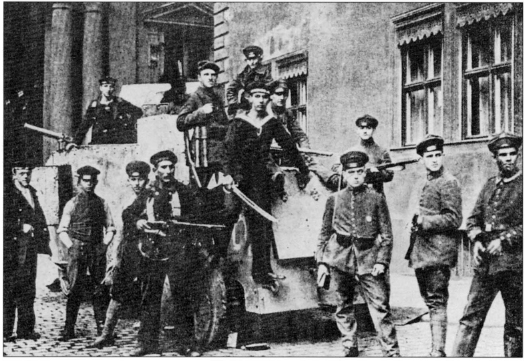
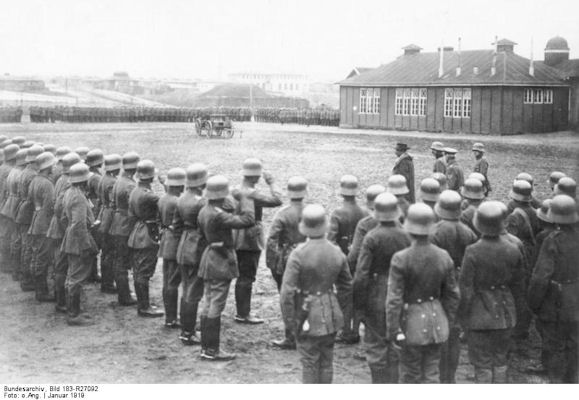
Kaiser Wilhelm II had abdicated his throne on November 9th amid a revolution at home which tore the country apart.  The new German Government accepted an armistice in the belief that the Allies would honor President Woodrow Wilson’s 14 Points.  Instead they were subjected to humiliation and starvation as the Allies refused to end their blockade of Germany until the Peace Treaty was signed. Hundreds of thousands more Germans died as a result of starvation and disease as their cities were wracked by violence as order collapsed.  It was the Socialist government which had inherited the country that had to fight the Communists in the streets allying themselves with the Army High Command to form Freikorps from units and individual soldiers under commanders willing to fight.

Soviet style revolution in Germany 1918-1919

In France at the Palace of Versailles the Allies led by the British and French brushed aside Wilson’s attempt at a just peace and placed draconian sanctions on the new German Republic which had no choice but to accept the surrender terms dictated by the Treaty of Versailles. The Army was to be reduced to 100,000 men with no heavy weapons, the Navy to a token force of obsolete ships, the air force disbanded.  Massive war reparations were imposed which were impossible for the Germans to fulfill and which were only paid off this year.  The final ignominy was the fact that the Germans were forced to bear the sole responsibility for the war. The German economy collapsed in the aftermath, France occupied key German industrial areas in the Saar and Ruhr and the nation fell into more disorder as the Deutschmark lost all of its value as hyperinflation made the money worthless.

Freikorps helped restore order when the Army dissolved

Eventually order returned to Germany with a brief period of relative prosperity which lasted until the world-wide Great Depression which through Germany back into chaos. Government after government was formed and dissolved and the last Chancellors of the Republic were forced to rule under the emergency conditions of Article 48 of the Weimar Constitution.  Eventually extremists on the left and the right brought further chaos as the eventually leading President Hindenburg to appoint the Leader of the National Socialist German Workers Party (Nationalsozialistische Deutsche Arbeiterpartei) or NSDAP as Chancellor.  We know the rest of the story. A World War that killed far more than the first 22-25 million military and 62-78 million civilians, a war of extermination on the Eastern Front, the Holocaust, and fearful weapons which ushered in the Atomic and Nuclear age.  Europe was shattered, Britain’s wealth drained and empire unsustainable, France divided and impoverished and other nations in political or economic crisis with the Soviets controlling Eastern Europe behind an Iron Curtain.

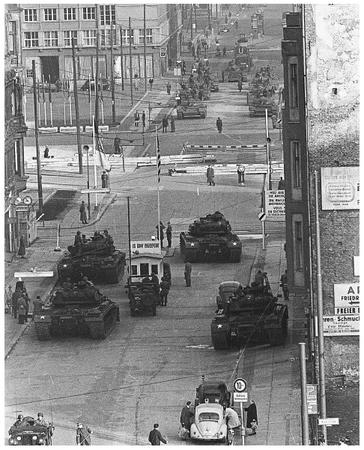
Cold War

In Europe and Asia a “Cold War” between the Soviet Communists and the West took the place of the previous war.  The United States would fight wars in Korea and Vietnam while the Soviets would rule with an iron fist in Eastern Europe and at the height of the Cold War invaded Afghanistan.  The wars in Vietnam and Afghanistan caused crisis in both the United States and the Soviet Union and Afghanistan helped mark the end of Soviet power and the end of the Soviet Union.

Around the world colonial empires fell through either revolts of colonized people or the abdication of empire by nations exhausted and economically broken by war. The many of the newly free “nations” were artificial and as a result experienced their own civil, tribal and religious conflicts the effects of which are still felt.  The end of the Cold war brought more change and for a time there was a period of American superiority but wars engulfed the Middle East as Iraq attacked its neighbors and was defeated in the Gulf War.  However the effects of that war were felt as Moslem extremists took power in Afghanistan and others including the Yemeni born Saudi Osama Bin Laden began a campaign of terror to drive the United States out of the Middle East that culminated in the attacks of September 11th 2001 and now the war that seems to have no end.

And it was the War to end all war and a peace that ended all hope of peace….God help us as it is unlikely that this war will end anytime soon for us or our allies even if we withdraw from Afghanistan.  Our enemies are too beholden to their ideology to stop their attacks until they win or are destroyed, the war will continue and God only knows how many soldiers and civilians will die in the coming years over 90 years after the War to end all War ended and the Peace to end all Peace began.

Peace

Padre Steve+


1 Comment

Filed under Foreign Policy, History, iraq,afghanistan, Military, national security, Political Commentary, world war two in europe

Happy 235th Birthday Marines!

In 1775 a committee of the Continental Congress met at Philadelphia’s Tun Tavern to draft a resolution calling for two battalions of Marines able to fight for independence at sea and on shore.  The resolution was approved on November 10, 1775, officially forming the Continental Marines. The first order of business was to appoint Samuel Nicholas as the Commandant of the newly formed Marines. Robert Mullan the owner and proprietor of the said Tun Tavern became Nicholson’s first captain and recruiter. They began gathering support and were ready for action by early 1776.  They served throughout the War for Independence and like the Navy they were disbanded in April 1783 and reconstituted as the Marine Corps in 1798. The served on the ships of the Navy in the Quasi-war with France, against the Barbary Pirates where a small group of 8 Marines and 500 Arabs under Lieutenant Presley O’Bannon made a march of 500 miles across the Libyan Desert to lay siege Tripoli but only reached Derna. The action is immortalized in the Marine Hymn as well as the design of the Marine Officer’s “Mameluke” Sword. They served in the War of 1812, the Seminole Wars and in the Mexican-American War where in the storming of the on Chapultepec Palace they continued to build and enduring legacy. In the months leading up to the Civil War they played a key role at home and abroad.  In October 1859 Colonel Robert E. Lee led Marines from the Marine Barracks Washington DC to capture John Brown and his followers who had captured the Federal Armory at Harper’s Ferry.

The Corps would serve through the Civil War and on into the age of American Expansion serving in the Spanish American War in the Philippines, Puerto Rico and Cuba where they seized Guantanamo Bay at the battle of Cuzco Wells.  The would serve in China and be a key component of the international force that defended foreign diplomats during the Boxer Revolt as well as the international force that would relieve the diplomatic compound in Peking (Beijing).  In World War One the Marines stopped the German advance at Chateau Thierry and cemented their reputation as an elite fighting force at Belleau Wood where legend has it that the Germans nicknamed them Teufelhunden or Devil Dogs, a name that they Marines have appropriated with great aplomb.

During the inter-war years the Marines were quite active in the Caribbean and Asia and also developed amphibious tactics and doctrine that would be put to use in the Pacific Campaign.  During the war the Marines served in all theaters but won enduring fame at Wake Island, Guadalcanal, Tarawa, Iwo Jima, Okinawa and numerous other battles in the Pacific war. Marine Aviators flew in some the most desperate actions in the war to support the Navy and amphibious operations ashore.

After the war the Truman Administration sought to eliminate the Marine Corps but the Corps was saved by the efforts of Americans across the country and Marine supporters in Congress.  That was a good thing because the Marines were instrumental in keeping the North Koreans from overrunning the South during the Korean War on the Pusan Perimeter, turned the tide at Inchon and helped decimate Communist Chinese forces at the Chosin Reservoir.  After Korea the Marines would serve around the World in the Caribbean and Lebanon and in Vietnam where at Da Nang Keh Sanh, Hue City, Con Thien fighting the North Vietnamese and their Viet Cong allies.  The Marines took the initiative to implement innovative counter insurgency measures such as the Combined Action Platoons which enjoyed tremendous success until they were shut down by the Army high command.  These lessons would serve the Marines well in the new millennium during the Anbar Awakening in Iraq which changed the course of that insurgency and war.

The Marines would again be involved around the World after Vietnam serving in the Cold War, in Lebanon and the First Gulf War which was followed by actions in Somalia, the Balkans and Haiti. After the attacks of September 11th 2001 the Marines were among the first into Afghanistan helping to drive the Taliban from power. In the Iraq Campaign the Marines had a leading role both in the invasion and in the campaign in Al Anbar Province.  After theirwithdraw from Iraq the Marines became a central player in Afghanistan where today they are engaged around Khandehar and in Helmand Province.

The Marines are elite among world military organizations and continue to “fight our nations battles on the air and land and sea.” The Corps under General John LeJeune institutionalized the celebration of the Marine Corps Birthday and their establishment at Tun Tavern. General LeJeune issued this order which is still read at every Marine Corps Birthday Ball or observance:

MARINE CORPS ORDER No. 47 (Series 1921)
HEADQUARTERS
U.S. MARINE CORPS Washington, November 1, 1921

The following will be read to the command on the 10th of November, 1921, and hereafter on the 10th of November of every year. Should the order not be received by the 10th of November, 1921, it will be read upon receipt.

On November 10, 1775, a Corps of Marines was created by a resolution of Continental Congress. Since that date many thousand men have borne the name “Marine”. In memory of them it is fitting that we who are Marines should commemorate the birthday of our corps by calling to mind the glories of its long and illustrious history.

The record of our corps is one which will bear comparison with that of the most famous military organizations in the world’s history. During 90 of the 146 years of its existence the Marine Corps has been in action against the Nation’s foes. From the Battle of Trenton to the Argonne, Marines have won foremost honors in war, and in the long eras of tranquility at home, generation after generation of Marines have grown gray in war in both hemispheres and in every corner of the seven seas, that our country and its citizens might enjoy peace and security.

In every battle and skirmish since the birth of our corps, Marines have acquitted themselves with the greatest distinction, winning new honors on each occasion until the term “Marine” has come to signify all that is highest in military efficiency and soldierly virtue.

This high name of distinction and soldierly repute we who are Marines today have received from those who preceded us in the corps. With it we have also received from them the eternal spirit which has animated our corps from generation to generation and has been the distinguishing mark of the Marines in every age. So long as that spirit continues to flourish Marines will be found equal to every emergency in the future as they have been in the past, and the men of our Nation will regard us as worthy successors to the long line of illustrious men who have served as “Soldiers of the Sea” since the founding of the Corps.

JOHN A. LEJEUNE,
Major General
Commandant

I have had the privilege of serving with the Marines in peace and war and the most memorable Marine Corps Birthday celebrations for me were in Ramadi with the Marine advisors to the Iraqi 7th Division and with the Marine Security Force Company at Guantanamo Bay Cuba. The highlight of my career was serving with the Marines in Iraq and I wear my Iraq Campaign Medal with pride.  The Marines have helped my professional development as an office through the Amphibious Warfare Course, Command and Staff College and the Fleet Marine Force Officer Qualification. I count my Marines as some of my most enduring friends.

Happy Birthday Marines. Thank you for all you do.

Peace

Padre Steve+


Leave a comment

Filed under History, iraq,afghanistan, Military

100 Years of Navy Aviation: Part One the Aircraft Carriers

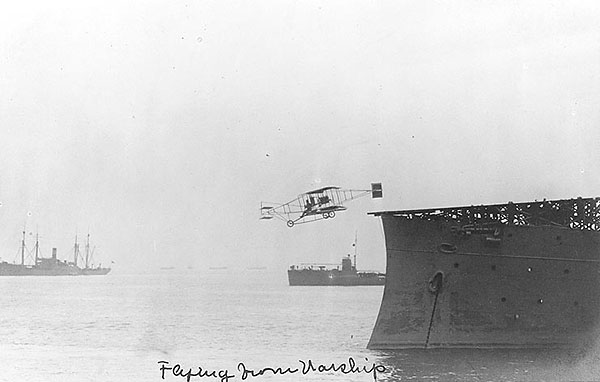
Eugene Ely makes the first takeoff from USS Birmingham on November 14th 1910

On a blustery November 14th in the year 1910 a young civilian pilot hailing from Williamsburg Iowa became the first man to fly an aircraft off the deck of a ship.  At the age of 24 and having taught himself to fly barely 7 months before Eugene Ely readied himself and his Curtis biplane aboard the Cruiser USS Birmingham anchored just south of Fort Monroe in Hampton Roads.  Ely was there because he was discovered by Navy Captain Washington Irving Chambers who had been tasked with exploring how aircraft might become part of Naval Operations. Chambers had no budget or authority for his seemingly thankless task but hearing that a German steamship might launch and aircraft from a ship hustled to find a way to stake a claim for the U.S. Navy to be the first in flight. Weather was bad that day as is so typical for Hampton Roads in November and between rain squalls Ely decided to launch even though Birmingham did not have steam up to get underway to assist the launch.  Ely gunned the engine and his biplane rumbled down the 57 foot ramp and as he left the deck the aircraft nosed down and actually make contact with the water splintering the propeller and forcing him to cut the flight short and land on Willoughby Spit about 2 ½ miles away not far from the southern entrance to the modern Hampton Roads Bridge Tunnel is.  Chambers would talk Ely into making the first landing on a Navy ship the Armored Cruiser USS Pennsylvania in San Francisco Bay on January 18th 1911.  Ely died in a crash at the Georgia State Fairgrounds on October 11th 1911.

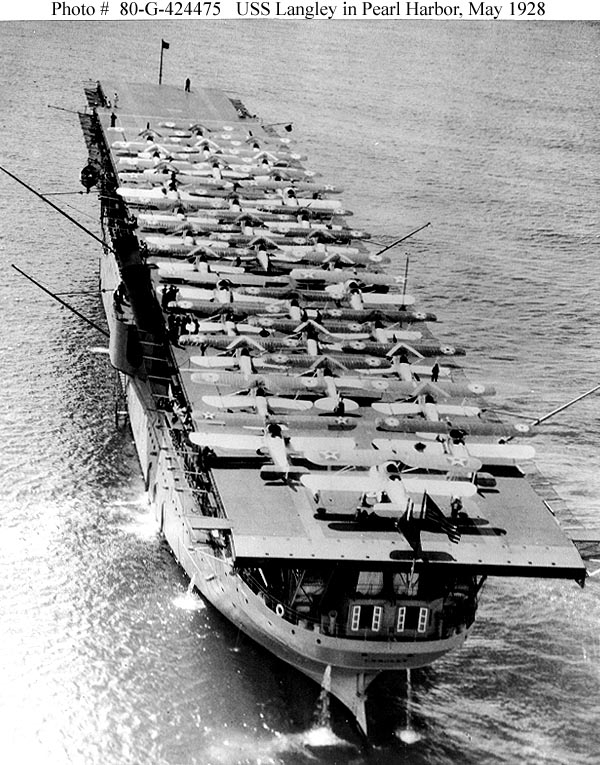
USS Langley CV-1

The Naval was slow to build upon the early achievements and the British and France would commission Aircraft Carriers well before the USS Langley CV-1 a converted Collier was commissioned.  After Langley the Navy commissioned the converted Battlecruisers USS Lexington CV-2 and USS Saratoga CV-3 in the mid 1920s.

USS Lexington CV-2 October 1941

The three ships formed the nucleus of the Navy’s embrace of aviation and the pilots that they trained and the experience gained would be the foundation of the Navy’s success in the Second World War.  They would be joined by the USS Ranger CV-4 the first U. S. Navy Carrier designed as such from the keel up in 1934.

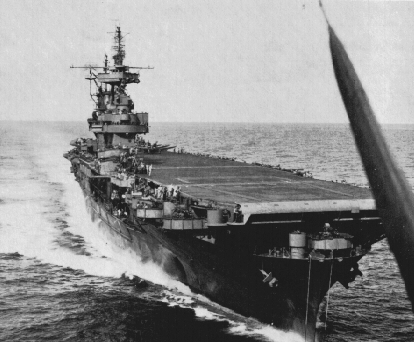
USS Enterprise CV-6

In 1937 the Navy commissioned the first of its true Fleet Carriers the USS Yorktown CV-5 which was followed by the USS Enterprise CV-6 in 1938, the USS Wasp CV-7 an improved version of Ranger in was commissioned in 1940 and the USS Hornet CV-8 in 1941.   These ships would bear the brunt of US Navy operations in the first year of the war following the disaster at Pearl Harbor. Of these ships only the Enterprise and Saratoga would survive the first year of the war in the Pacific.  Langley now a Seaplane Carrier was sunk during the Battle of the Java Sea in February 1942. Lexington would go down at Coral Sea in May 1942.  Hornet would launch the Doolittle Raid against Japan on April 18th 1942.  Yorktown, Enterprise and Hornet would take on and defeat the Japanese Carrier Strike force and sink the Akagi, Kaga, Soryu and Hiryu at Midway to avenge Pearl Harbor. Yorktown was sunk in the battle but Midway stopped the Japanese advance in the Pacific.

The U. S. went on the offensive in August invading Guadalcanal in the Solomons Islands. The Guadalcanal campaign and the numerous sea battles in the adjacent waterways would claim many American and Japanese ships. Wasp was sunk by a Japanese submarine on September 15th 1942 and Hornet was sunk at the Battle of Santa Cruz on 27 October 27th 1942.  Saratoga spent much of 1942 in the yards having been torpedoed twice leaving the often battered Enterprise as the sole U. S. Navy Carrier facing the Japanese until Saratoga was repaired and the first of the Essex Class Fleet Carriers and Independence Class Light Fleet Carriers entered service and arrived in the Pacific.

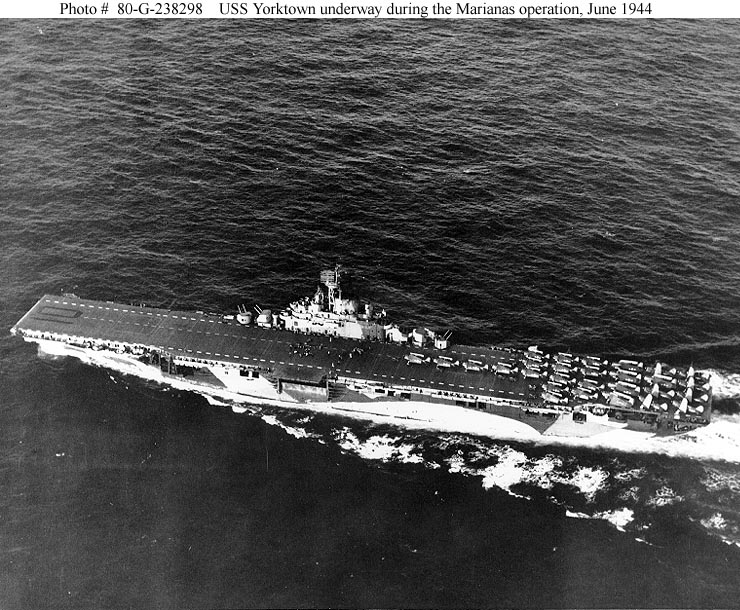
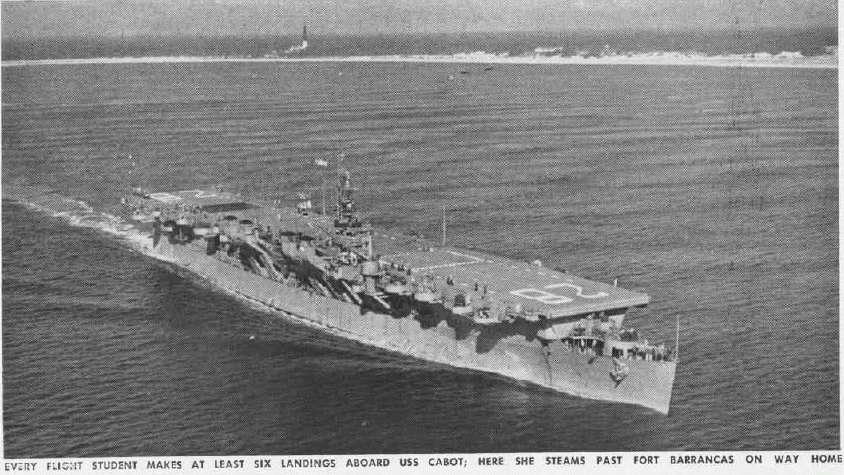
USS Yorktown CV-10 1944 a good example of the wartime Essex class ships  below USS Cabot CVL-28 an Independence Class Light Fleet Carrier


The Essex Class ships became the nucleus of the Fast Carrier Task Forces in the Pacific and with their smaller consorts of the Independence Class would dominate operations at sea from 1943 on.  The Essex class would eventually number 24 ships with several more canceled before completion becoming the most numerous of any class of Fleet Carriers produced by the U. S. Navy.  The Essex class would figure prominently in all offensive operations including the Battle of the Philippine Sea, Battle of Leyte Gulf, the campaigns at Iwo Jima and Okinawa and raids on the Japanese home islands.  In the process they and their air groups would be instrumental in sinking hundreds of Japanese ships including the Battleships Yamato and Musashi and destroying thousands of aircraft.  A number were heavily damaged by Kamikazes but none were lost with the epic story of the USS Franklin CV-13 and her survival after being hit by two bombs from a Japanese plane that slipped through the Combat Air Patrol. The resultant explosions and fires amongst her fueled and armed aircraft nearly sank her but for the heroic efforts of her crew including Chaplain Joseph O’Callahan who won the Medal of Honor caring for the wounded and dying and directing damage control teams. The ship lost 724 men killed and 265 wounded in the attack but survived though without power and dead in the water 50 miles off the Japanese coast.

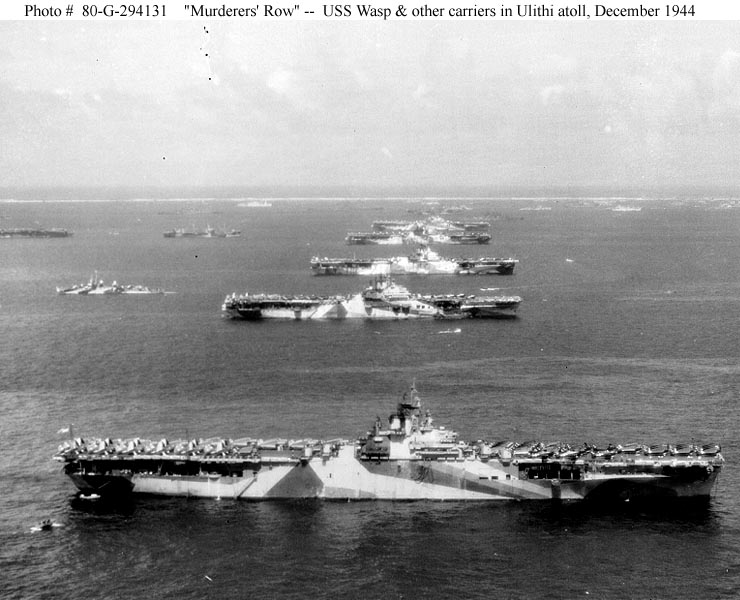
Murderers’ Row

The Essex class were iconic and the ships etched their names in naval history. The Essex, Yorktown, Hornet, Wasp, Hancock, Ticonderoga, Franklin, Bunker Hill, Intrepid, Lexington and the other ships of the class had legendary careers. These ships became known as “Murderers’ Row” for their expertise in killing off Japanese ships and aircraft.  Fittingly four of the ships, the Hornet, Yorktown, Lexington and Intrepid have found a second life as museum ships and Oriskany was sunk as an artificial reef off the coast of Florida where she is a favorite of recreational divers.

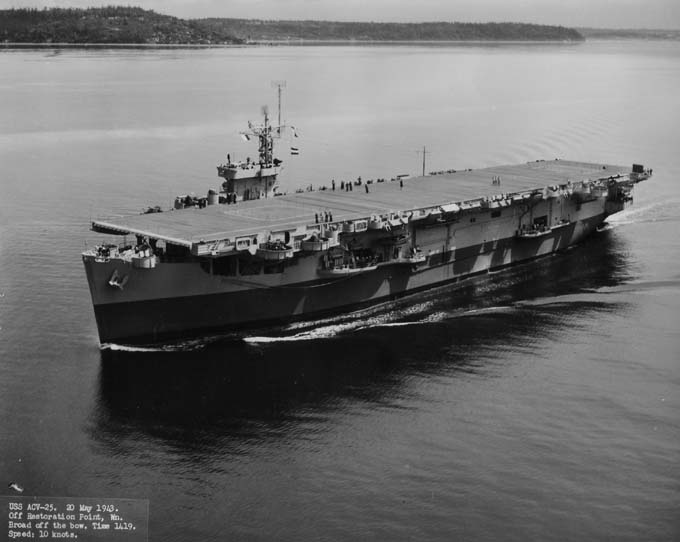
USS Croatan CVE-25 a Bogue Class Escort Carrier

During the war the Navy also built 118 Escort Carriers converted from merchant ships for use as convoy escorts, anti-submarine warfare and close air support for amphibious operations. 38 of these ships saw service in the British Royal Navy during the war.

USS Hancock CVA-19 in 1969 showing the extent of the modernizations that brought the Essex Class into the jet age

In the post World War II drawdown many carriers were decommissioned and the oldest, the Saratoga and Ranger disposed of.  The three ship Midway class entered service after the war and incorporated design improvements learned from combat operations in the war. As the Navy entered the jet era it was found that the existing carriers would need significant modernization to handle the new aircraft. Among the improvements made to the Midway and Essex class ships was the angled flight deck, steam catapults, hurricane bows and improved landing systems.  These improvements allowed these World War II era ships to remain front line carriers into Vietnam and in the case of the USS Midway and USS Coral Sea into the 1990s.

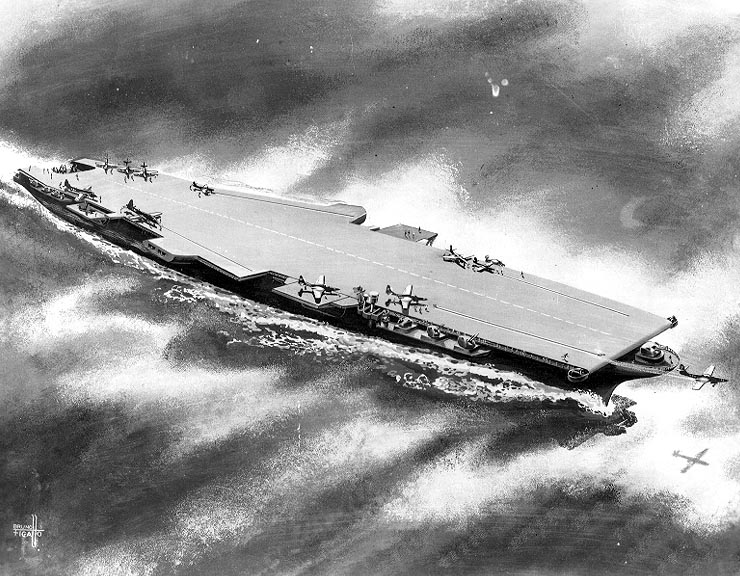
Artists’ conception of USS United States CVA-58 a victim of Truman Era Air Force politics

The Navy began its first super-carrier the USS United States in 1949 but the ship and class was cancelled by Secretary of Defense Louis A. Johnson, not a fan of the Navy or Marine Corps due to opposition by the Army and the newly founded Air Force.  The ship would have carried 12-18 nuclear capable bombers as well as 45-50 jet fighters and attack aircraft and been 1090 feet long and displaced 65,000 tons.  It would not be until after the Korean War that the Navy would begin construction of its first super-carriers.

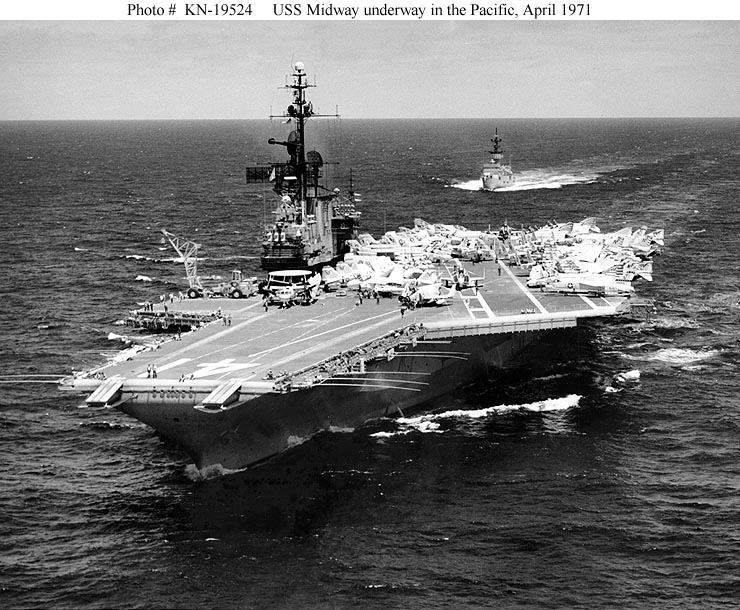
USS Midway CVA-41 in 1971

During the Korean War most of the Essex class ships were called back into service with 15 modified to conduct jet operations while others were converted to serve as ASW Carriers and Helicopter Carriers (LPH) to support Marine amphibious forces. Likewise the Midway’s were modernized as the Navy began to construct the four-ship Forrestal Class which were 1036 feet long and displaced 56,000 tons and designed to carry 100 aircraft. The four ships, Forrestal CVA-59, Saratoga CVA-60, Ranger CVA-61, and Independence CVA-62 would all serve into the early 1990s before being decommissioned. In the past few months Forrestal and Saratoga have begun the journey to be scrapped, sold for a penny each to scrapyards in Brownsville, Texas.

USS Ranger CVA-61

They were all heavily involved in the Vietnam War on Yankee and Dixie Station and both the Atlantic and Pacific during the Cold War. All four have been stricken from the Navy List and are awaiting disposal.  Forrestal was programmed as an artificial reef but she, like Saratoga which had been on donation hold was approved for scrapping. Ranger is still on donation hold and the USS Ranger Foundation is attempting to raise the money to save her. Independence which had been programmed as an artificial reef project was approved for scrapping in 2008.In the past few months Forrestal and Saratoga began the journey to be scrapped in 2014, sold for a penny each to scrapyards in Brownsville, Texas.

USS John F Kennedy CV-67 a modified Kitty Hawk class ship

These ships were followed by the Kitty Hawk class consisting of Kitty Hawk CVA-63, Constellation CVA-64, America CVA-66 and John F. Kennedy CVA-67 which were improved versions of the Forrestal Class with a 60,100 ton displacement and 1047 foot length with the ability to carry 100 aircraft. Kitty Hawk had the distinction of being the last fossil fuel carrier in active U. S. Navy service being decommissioned and placed in reserve in 2009. Her sister the Constellation CV was decommissioned in December 2003 and in 2008 was programmed to be scrapped in the next five years.  America was decommissioned in 1996 after not being given a Service Life Extension Program (SLEP) refit in the 1990s due to budget cuts.  America was involved in much of the Cold War, Gulf War and Vietnam including responding to the Israeli attack on the USS Liberty in 1967, the Intervention in Lebanon in 1983 and the conflict with Libya in the Gulf of Sidra in 1985.  She was sunk as a test bed to see how modern carriers would be affected by battle damage and to incorporate those lessons into future carrier design in May of 2005.  John F. Kennedy was originally planned to be a nuclear ship equipped with 4 A3W reactors.  This plan was shelved and she was completed as a fossil fuel ship. “Big John” served in Vietnam as well as throughout the Cold War and Gulf War and also engaged the Libyans in 1985.  She was placed in the Reserve Force in the 1990s to save money and also served as a training carrier.  Like America she did not receive the necessary maintenance and by 2002 she needed emergency repairs in order to deploy in support of Operation Enduring Freedom. Kennedy made three deployments in support of the War on Terror and decommissioned in 2007.  She was placed in donation hold and currently two groups are making progress to acquire her as a Museum ship. Like the Forrestal’s the Constellation’s served in Vietnam, the Cold War, Operation Desert Shield and Desert Storm and three continued their service into Operation Iraqi Freedom. Constellation began her journey to the scrapyard in August 2014.

USS Enterprise CVN-65

As the Navy continued to develop the capabilities of the aircraft carrier it commissioned the nuclear powered USS Enterprise CVAN-65.  The added capability of nuclear power enabled her to operate without dependence on fossil fuel which in addition to her range and speed allowed her to carry more aviation fuel and munitions than the fossil fuel ships.  Unique among the Nuclear Carriers she produces 280,000 SHP and is powered by 8 Westinghouse (A2W) Reactors driving geared turbines, 4 screws with a classified top speed in excess of 35 Knots and is the quickest carrier going from all stop to full speed. At 1101 feet long and 75,700 ton (93,000 Full Load) displacement she was larger than any other carrier. She served in Vietnam, the Cold War, the Gulf War and Operation Enduring and Operation Iraqi Freedom. She was and was decommissioned in 2013.

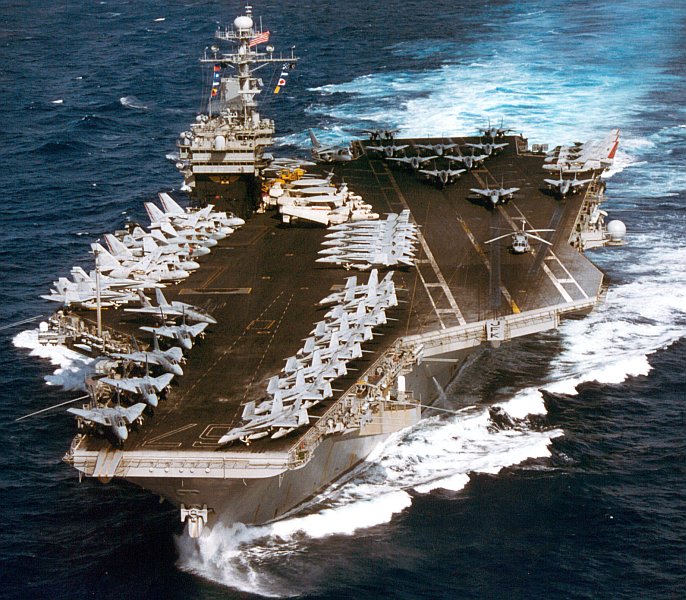
USS Theodore Roosevelt CVN-71 of the Nimitz class

The Nimitz Class of nuclear powered carriers is the most numerous class of capital ship in the U.S. Navy since the Essex Class.  Slightly smaller than Enterprise with a 1088 overall length and 91,000 full load displacement the Nimitz CVN-68 and her sister ships are the mainstay of the U. S. Navy carrier force.  These ships have been the symbols of American naval power for three decades and will continue to be for the foreseeable future.  Each of the ships has embodied successive improvements gained from the previous ships and the latest ships of the class the USS Ronald Reagan CVN-76 and USS George H. W. Bush CVN-77 incorporate technologies that were not known when Nimitz was on the drawing board. Thus whenever a ship is taken in for their Refueling and Complex Overhaul (RCOH) it is upgraded to the capabilities of the newest ship.  The class consists of the Nimitz, the USS Dwight D. Eisenhower CVN-69, USS Carl Vinson CVN-70, USS Theodore Roosevelt CVN-71, USS George Washington CVN-72, USS Abraham Lincoln CVN-73, USS John C. Stennis CVN-74, USS Harry Truman CVN-75 as well as the previously mentioned Reagan and Bush. They can carry 90% more fuel and 50% more ordnance than the Forrestal class. Carrying 90 or more aircraft they pack a mobile offensive punch that is not matched by any other surface ship.  The have served in every major military and many humanitarian missions since Nimitz was commissioned in 1974.

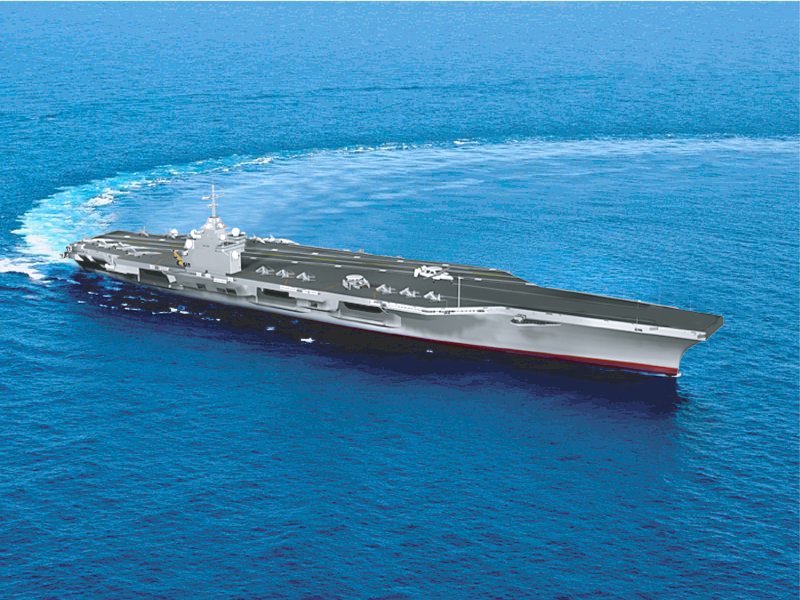
Artist conception of USS Gerald R Ford CVN-78

The Nimitz class will be joined by the USS Gerald R. Ford CVN-78.  The Ford is the first ship of an entirely new class. While approximately the same size as the Nimitz class at 1092 feet long and approximately 100,000 tons full load displacement the Ford class of which three are currently authorized and one under construction will feature many improvements over their predecessors. Among improvements are an advanced arresting gear, automation, which reduces crew requirements by several hundred from the Nimitz class carrier, the updated RIM-162 Evolved Sea Sparrow missile system, the AN/SPY-3 dual-band radar (DBR), as developed for Zumwalt class destroyers an Electromagnetic Aircraft Launch System (EMALS) in place of traditional steam catapults for launching aircraft, a new nuclear reactor design (the A1B reactor) for greater power generation, advanced stealth features to help reduce radar profile and the ability to operate the new F-35C Lightning II. If the class is built as programmed on a one ship every five year rate with the Ford commissioning in 2015 then 6 ships of the class will be in commission by 2040. The next two ships have been named, the John F Kennedy and Enterprise. 

Of course as with any military technology the future never is certain. In 1918 no one would have thought that the all-big gun Dreadnought Battleships would be eclipsed by the Aircraft Carrier in less than 25 years. While the Carriers have ruled the waves since Midway there are threats to them both military and financial.  Countries such as China while building their own carriers have are developing weapons such as guided ballistic missiles designed to destroy carriers.  As of now there is no defense against such a weapon if a carrier is within range. While China has not yet deployed the weapon it could be a game changer in the Western Pacific. Likewise there is the ever present threat posed by new and advanced submarines even those deployed by 2nd and 3rd world nations.  Finally there is the financial cost which could derail the procurement of more carriers in an era of austerity. The cost of the Ford is currently estimated to be $9 Billion Dollars which if stretched end to end would probably reach Vulcan where the Vulcans would come up with an answer to our current problems.

At the same time the carriers have defied those who predicted their demise since the Truman administration.  Currently no sea based platform has the multitude of capabilities of a carrier and its associated air wing and battle group and thus they should remain the Queens of the Sea for some time to come and the United States Navy which has led the world in their development and operation should continue to lead the way.

The next installment which will appear later this week will discuss the aircraft employed by the United States Navy not only those from carriers, but seaplanes, rotor-wing aircraft and lighter than air ships.

Peace

Padre Steve+

6 Comments

Filed under History, Military, Navy Ships

Reforming the Church Today Part One: By their Budgets Ye Shall know Them

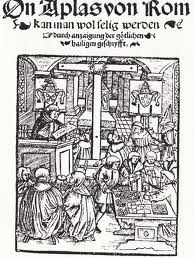
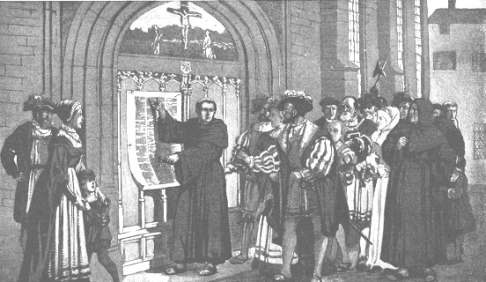
John Tetzel shook down Germans for Indulgences….Have we learned anything from history?

This is the first in a series of essays on reforming the Church today that will appear on this website

It seems that Christians and especially ministers of all traditions forget the lessons of history.  The church in the United States is at a critical point in history and is fast losing its credibility due to the arrogance and excess of many churches as well as individual clergy in matters related to personal behavior, financial accountability as well as accountability before the law concerning clergy that who have committed grievous crimes against children and others.  Likewise there is the nearly incestuous relationship between many ministers and those holding political and or economic power in which quite often one cannot tell where the “gospel” ends and the politics begin.  This exists in many churches large and small and spans the denominational spectrum not being the sole property of any particular body.  There is also the matter of accountability in which it seems that many churches, ministries and ministers practice a “do as I say, not as I do” lifestyle holding their subordinate clergy as well as parishioners to a higher standard than they practice themselves.

The United States has always had a strong Christian heritage that has impacted its faith as well as its national life.  This is not of itself a bad thing as one looks at how churches and Christian leaders have made an impact that goes beyond them and is beneficial to the nation as a whole.  Some of these achievements include the pressure put on James Madison by Virginia Baptists to ensure a guarantee of religious freedom in the Bill of Rights, the abolition of slavery the ending of child labor, the Civil Rights movement as well as numerous charitable and public interest oriented ministries to care for society’s most disadvantaged citizens as well as the aliens that have lived among us.  At the same time there were many Christians, churches and ministers that supported slavery, an established state religion, segregation and many other issues.  That being said churches and individual ministers have made a huge contribution to American life and community that cannot be easily dismissed despite the many problems, controversies, and scandals that have surrounded churches of almost all denominations since the founding of the United States.  Religious liberty as well as Christian churches and religion in general has traditionally been seen as a positive rather than a negative aspect of the United States going back to Alexis de Tocqueville in his comments on American democracy.

Clergy have enjoyed a special status in American life that exists in large part due the Bill of Rights and the Jeffersonian understanding of an “eternal wall of separation” between church and state.   This is because clergy were seen as fair arbiters because they were not an appendage of the state as were the clergy of most European states that had established state religion.  Thus the “clericalism” of Europe which was seen as a danger by our Founding Fathers was not a major issue. Yes some of the founders recognized a potential danger but that did not stop Congress from treating clergy and churches favorably in the early years of the republic and worked to ensure that no church became a “State church.”  Over the years since the founding of the United States clergy of many denominations have made many positive contributions to our Nation in both their pastoral and prophetic roles.  At the same time over the years some clergy have attempted to use their status and privileges as an entry into the elite parts of society, especially in the political, government policy and financial realms.

The point to be short is that many clergy in the United States, especially those in influential pulpits and ministries have forgotten the dangers of “clericalism” and the abuses of clerics who use their office as clergy to gain political, financial and personal power.  Jesus told his disciples that they had to be servants and not seek wealth, status or position something that was echoed by the New Testament writers as well as many of the Ante-Nicene Fathers.

By their budgets ye shall know them….I saw the report of the Reverend Robert Schuler of the “Crystal Cathedral” megachurch which declared bankruptcy last week being $43 Million dollars in debt and embroiled in struggles about Schuler’s successor call for his parishioners to give more money.  He asked “tithers to double tithe” and those that do not tithe to “start tithing.” He talked about what the church has given to them and earned their support. I found this to be a rather pompous plea from a man who has had the ear of Presidents and leaders in the political and business world.  The fact is that Southern California has been terribly hard hit by the economic downturn and recession and that obviously includes many of his parishioners both those that worship at the Cathedral as well as those who what Schuler’s “Hour of Power” show.  The Chrystal Cathedral now has to live “month to month on $2 Million dollars a month” and has cut back staff, curtailed programs and sold property to try to make ends meet. I’m sorry but when you live off of other people’s money you should never build a ministry requiring millions of dollars on the presumption that if you get it wrong that the faithful givers should have to bail you out.  I saw this at a local level a few years back and it all but destroyed the local church and the denomination that church belonged.  I wonder how many more megachurches built on piles of debt are facing what is happening at the Chrystal Cathedral.

By their budgets ye shall know them….Other churches at denominational and local levels have often become embroiled in banking scandals that tarnished the reputation of those churches, their leaders and disillusioned their membership often causing mass defections to other churches or leave the organized church all together.  The Roman Catholic Church had to deal with a major scandal involving the Vatican Bank in the 1970s and 1980s and have recently had other allegations of another potential banking scandal involving the Vatican have surfaced.

By their budgets ye shall know them….I worked for a fairly reputable Television ministry while I was a seminary student. The common plea of these types of ministries is that they “are on a mission from God” well, maybe that is a Blues Brother’s paraphrase but you get my drift. Most are not part of any denominational structure and have little oversight and presume that since someone might watch them that they are entitled to financial support. They do not ask their audience for actual input into their “mission” strategy, they just ask for their audience’s money to do with as they “and as the Lord would have them to do” with it. This of course is not the sole property of television ministries but it occurs in many churches as well.  If someone questions the church and its financial accountability they are accused of “being unfaithful,” “not hearing God,” or being “disobedient to God’s will or to the church.”  Since many churches and ministries suffer a terrible lack of accountability and oversight these abuses are more widespread than we would want to believe. Sometimes it takes personal experience to see this but when one sees it up close and in person the blinders can be removed. In regard to television ministries in particular the amount of money required to keep their programs on the air is beyond exorbitant. It comes often from those that are barely surviving financially even in “good times” and the most desperate of people “believing in God for a miracle” in response to obediently shelling out of their meager incomes to ministries in response to persuasive pleas by ministers that should know better. The motivation, love and obedience of these often wonderful people is exploited in order to support air programs that have little impact on the world despite the boastings of these ministers that they are “fulfilling the great commission.” One has to ask if this is the case why there is so little to be seen in our society as a result of all the money poured into these pricy ministries.

By their budgets ye shall know them….If money was the only thing it would be a manageable problem…. Oh but wait money and power is the root of the problem as the problem extends to lifestyles of ministers and other church leaders which are hardly supported by the demands of the Gospel. It is not uncommon at all to see clergy living off of the offerings of their parishioners live opulent lifestyles and when times get tough demand more money from their flocks rather than amending their own behaviors.  Instead of accountability, repentance and a change in behavior there is a demand for obedience from their flock and if the flock objects they are the ones that are vilified.  This again cuts across denominational lines and includes Protestants and Catholics, those in parish as well as those in parachurch, television and radio ministries. In my old church those clergy who could not meet their tithe for whatever reason were told that they were being “disobedient to their vows” which instead of vows to the Church in regard to orthodoxy as well as orthopraxy were narrowed down to if you were paying your tithe on time. I remember one Bishop who left the church to go elsewhere told the assembled priests in his diocese that the tithe was the “essential test of obedience, and what bound us together.” Families and parishioners of parishes were described by another Bishop as “tithing units” not people and when I was in the reserves contemplating a mission parish start up was told that in order to be “successful” the church needed at least “x-number of tithing units.” Doctrine or even other forms of public witness were secondary to paying the tithe.  That church had many major financial scandals that are well documented elsewhere so I won’t go into detail about them.

By their budgets ye shall know them…. If churches spend more money on the salaries of their pastors than they do on outreach to the poor or missions something is severely out of order, one cannot imagine the Apostles of those Ante-Nicene Fathers who suffered poverty and persecution advocating for what amounts to be an “Imperial” church even those that advocated a firm hierarchy in regard to faith and belief.  When leaders of a church, especially a small church get together and dine in luxury on the monies donated by their often impoverished flocks it shows a tacit denial of the Gospel and lack of respect or care for the people of God.

By their budgets ye shall know them….When church building programs and plant maintenance are extravagant and require massive amounts of money to sustain without demanding more from their parishioners than something is out of kilter.  When chandeliers cost more than a mission budget for the poor something is wrong.  My Church History professor from who I appropriated the “by their budgets ye shall know them” line used to say that “God is going to get us for our stained glass windows when we neglect the poor.”  I love good church architecture including stained glass windows but it is presumptive on God the people of God for churches, ministries and ministers to demand monies when they have failed to play and manage effective especially when in spite of economic indicators they spend like drunken sailors and expect others to pick up the tab while crying crocodile tears about how “God’s plans will be thwarted” if their ministry fails.

By their budgets ye shall know them….Back prior to the Protestant Reformation in Europe there was a large amount of discontent which focused on the arrogance, opulence and financial demands of the Catholic Church.  In fact much of Dr. Martin Luther’s protest in the 95 Thesis dealt with the manner in which the Church used a practice called indulgences and the selling of “relics” to fund the construction of St Peters Basilica in Rome.  In people gave because they believed men like John Tetzel who preached in regard to indulgences “a penny into the coffer rings a soul from purgatory springs.”  Of course there was the manner that the Church also used its power to reward or punish rulers which was also part of the problem but the complaint of many reformers was often directly related to the Churches’ financial as well as political abuses of its members and nations to buttress its position in Europe.  Unfortunately I do not think that we have learned this lesson and that Churches and ministries in the United States are losing membership and the trend is that people are opting for individual expressions of faith rather than become a part of institutions that they feel are out of touch with real people.  I believe that if things do not change there will be a mass exodus from many churches and religious institutions because of the odious nature of the financial dealings and pressure put on people to support questionable programs and lavish lifestyles.

By their budgets ye shall know them….There are honest and hard working ministers and churches that emphasize ministry and care for people as part of the Gospel message.  Many are foreign missionaries that eke out support while working full time in “tentmaker” professions in order to fund their missions without unduly burdening those that support them.  I know many people like this and for them whether they be working in foreign missions or caring for the poor at home live the Gospel in word and deed and nothing in this essay should be construed to be against such people or their missions.  I may disagree with someone’s theology but when I see them demonstrate humility and the love of God in all that they do I can only commend them.

You see my friends and readers my experience leads me to believe that people are still searching for authentic faith and spirituality and have not necessarily given up on orthodox Christian beliefs.  The problem is they are finding little of substance in many churches and other religious institutions. Novelist and write Anne Rice recently did this, leaving “Christianity” but not Christ and I fully understand her reasoning for doing so.

Martin Luther and the 95 Thesis: What if the Church had listened to him rather than branding him as a heretic and criminal?

Some will say that by writing this that I am “causing division in the Church” or the more pious “causing division in the body of Christ.”  However that is a red herring argument that attempts to divert attention from the real problem. If the Church and I mean across denominations not any particular body fails to reform itself it will fall on its own and fall hard and in the process harm the faith of many people. Churches which have to defend the indefensible to “retain unity” are those that are in schism from Christ, not those that raise issues that the society at large recognizes but church and religious leaders seem incapable of admitting. The Church must reform and a big part of that in the United States involves how we deal with wealth. By their budgets ye shall know them.

This essay will be continued as I move to the next segment which will be about the incestuous relationship between many ministers and those of the political and financial elites.  I’m sure that I will come up with a catch title for that essay but need to ruminate some more.

Peace

Padre Steve+


3 Comments

Filed under christian life, faith, History, Pastoral Care, philosophy, Religion

A Politician Plays at Being a Waffen SS Mann: Learning all the Wrong Lessons from History

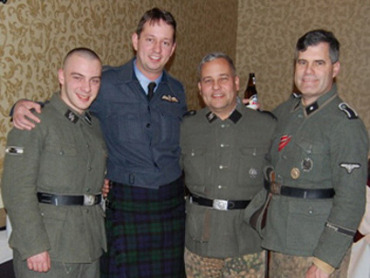
Richard Iott (second from right) with fellow re-enactors

Republican Congressional Candidate Richard Iott placed himself on the national political landscape because he likes history. You might say that he is a “history buff” or a person that is not a trained historian who dabbles in “history” as a hobby or that obsesses on the technical details of a period especially in relationship to military history.  History buffs tend to focus on the parts of history that they find interesting and really are not interested in the comprehensive study as a discipline. As such many history buffs, especially re-enactors become ensnared by their interest in a historical period in such a manner that they do not see the obvious dangers in their hobby and become apologists for those that they pretend to be, especially if the groups have a history of supporting evil.  Richard Iott has taken part in various types of historical reenactments for many years. His involvement with the 2/SS Panzer Pioneer Battalion 5 of the SS-Wiking Panzer Division shows that he and his unit have mythologized the role of the Waffen SS in World War II and its history on the Eastern Front.

Iott demonstrates his own lack of awareness in the following quote:

“I’ve always been fascinated by the fact that here was a relatively small country that from a strictly military point of view accomplished incredible things. I mean, they took over most of Europe and Russia, and it really took the combined effort of the free world to defeat them. From a purely historical military point of view, that’s incredible.” Richard Iott to Atlantic reporter Joshua Green

The following quote is from the reenactment unit website: http://www.wiking.org/ (12 October 2010)

“”European Volunteers, Join to Fight Bolshevism!” Germany headed a strong movement in Europe to actively campaign (politically and through warfare) against the ideals of Bolshevist Communism. This culminated in 1941, when the German armed forces were pitted against the very home of Bolshevism, Soviet Russia. Nazi Germany had no problem in recruiting the multitudes of volunteers willing to lay down their lives to ensure a “New and Free Europe”, free of the threat of Communism. National Socialism was seen by many in Holland, Denmark, Norway, Finland, and other eastern European and Balkan countries as the protector of personal freedom and their very way of life, despite the true underlying totalitarian (and quite twisted, in most cases) nature of the movement. Regardless, thousands upon thousands of valiant men died defending their respective countries in the name of a better tomorrow. No matter how unsavory the Nazi government was, the front-line soldiers of the Waffen-SS (in particular the foreign volunteers) gave their lives for their loved ones and a basic desire to be free.”

The quote by Iott shows a myopic view of history, simply from a military history point of view which is always dangerous because other, usually more important issues are missed.  The website description of those from other European countries “defending their countries” against Bolshevism “in the name of a better tomorrow” ignores the fact that Hitler had waged a war of aggression against their own countries and was the aggressor in the Soviet Union. There was nothing defensive about Operation Barbarossa and to state that they were fighting for a “better tomorrow” is to ignore what would have happened had Hitler won the war based on the atrocities that Nazi forces planned and executed in every country that they conquered.  To be sure the SS-Wiking Division had a nearly unblemished record in regard to war crimes on a few members of the division were ever involved in atrocities involving very few victims by Nazi standards.  This was unusual for the SS Foreign Volunteer Units many of which were  complicit in some of the most heinous actions of the war shocking the senses of many of their most hardened  Waffen SS comrades.

To remind my readers, especially conservatives who in their eagerness to drive the Democrats out of Washington are willing to excuse almost any behavior by their candidates as to what this was about I am republishing an essay that I first published in September of 2009 entitled The Ideological War: How Hitler’s Racial Theories Influenced German Operations in Poland and Russia”
Now a disclaimer I am not making an ad hominem attack on conservatives as liberals have often excused the less than stellar behaviors of their candidates on many occasions.  However what Iott espouses in this part of his private/public life causes me to question of his depth of historical thinking and judgment. Republican Minority Whip Congressman Eric Cantor has stated that Iott’s hobby has “rendered him unfit for public office.”  I believe that Cantor is correct.

Military historian Robert Citano said “The entire German war effort in the East was a racial crusade to rid the world of ’subhumans,’ Slavs were going to be enslaved in numbers of tens of millions. And of course the multimillion Jewish population of Eastern Europe was going to be exterminated altogether. That’s what all these folks were doing in the East. It sends a shiver up my spine to think that people want to dress up and play SS on the weekend.” NY Times Blog “The Lede” by Robert Mackey 11 October 2010

I have reposted the article in its entirety below.

The Ideological War: How Hitler’s Racial Theories Influenced German Operations in Poland and Russia”

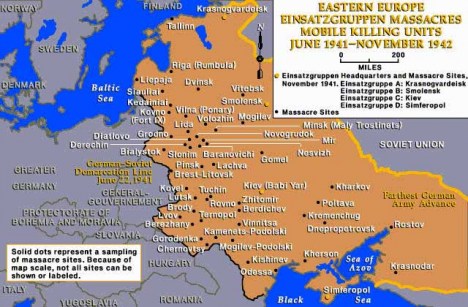
Einsatzgruppen Massacre sites (www.jewishvirtuallibrary.org)

The German war against the Soviet Union was the first truly race-based ideological war in history with the campaign against Poland its precursor.  Adolf Hitler’s racial theories and beliefs played a dominant role in Germany’s conduct of the war in the East in both the military campaign and occupation.  This has become clearer in recent years as historians have had the opportunity to examine Hitler’s writings, those of senior Nazi officials and military officers and documents which had been unavailable until the end of the Cold War.  Understanding the Nazi ideological basis and the underlying cultural prejudice against the Jews and eastern Europeans in general is foundational to understanding Hitler’s conduct of the war and why the destruction of the Jews figured so highly in his calculations.  One must also understand the military and police cultures and doctrines that enabled them to cooperate so closely in the conduct of the war.

The German war in the east would differ from any previous war.  Its underlying basis was ideological. Economic and geopolitical considerations were given importance in relationship to the understanding of the German “Master Race.”  Race and Lebensraum was the goal of the State that “concentrates all of its strength on marking out a way of life for our people through the allocation of Lebensraum for the next one hundred years…the goal corresponds equally to the highest national and ethnic requirements.[1] Hitler believed that Germany was “entitled to more land…because it was the “mother of life” not just some “little nigger nation or another.”” [2] The Germans planned to “clear” the vast majority of the Slavic population and the “settlement of millions of hectares of eastern Lebensraum with German colonists” complimented by a short term exploitation of the land to “secure the food balance of the GermanGrossraum.”[3] Joachim Fest notes that Hitler called it a “crime” to wage war only for the acquisition of raw materials. Only the issue of living space permitted resort to arms.”[4]

Previous wars emphasized conquest of territory and natural resources be they for empire or self sufficiency. The Thirty Years War had a heavy religious component but was more about increasing the power of emerging nation states led by men not necessarily loyal to their religious brethren.[5] The American and Russian Civil wars had some ideological basis and helped usher in the brutality of total war. Both had major effect in these nations’ development and both were bitterly contested with the winners imposing to various degrees political changes on their vanquished brothers they were civil wars.[6] While Adam Tooze sees the Holocaust as the first step of the “last great land grab in the long and bloody history of European colonialism…”[7] This argument does not take away from the basic premise that the war was at its heart ideological.
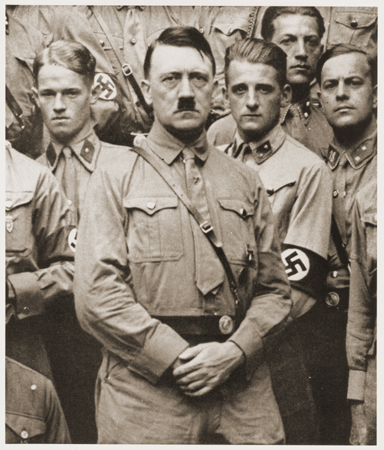
Adolf Hitler

The root of this war was in the mind of Adolf Hitler himself. His years in Vienna were foundational as he absorbed the ideas of Pan-German, anti-Semitic groups and newspapers like the Deutsches Volksblatt. [8] In Vienna he made the connection between the Jews and Marxism.[9] Joachim Fest notes that in Vienna Hitler became obsessed by the fear of the Slavs and Jews, hated the House of Hapsburg, the Social Democratic Party, and “envisioned the end of Germanism.”[10] His racial views were amplified after the war in turbulent Weimar Germany where he became a member of the NDSAP, rising rapidly within it, eventually taking over party leadership, reorganizing it so that it “became the instrument of Hitler’s policies.”[11] Following the unsuccessful Beer Hall Putsch of 1923 Hitler wrote Mein Kampf while imprisoned in the Landsberg prison in which he enunciated his views about the Jews, Slavs andLebensraum. Hitler believed that Imperial Germany had been “hopelessly negligent” in regard to the Jews[12] and that the Jews in conjunction with the Catholic Center Party and Socialists worked together for “maximum damage to Germany.”[13] Likewise he saw the Jews as heading the “main ideological scourges of the nineteenth and twentieth century’s.”[14] It was the ideology of Hitler’s “obsessive anti-Semitism”[15] that drove Nazi Germany’s policy in regard to the Jews and against Jewish-Bolshevism.  By the 1920s Hitler had “combined his hatred of the Jews and of the supposedly Jewish dominated Soviet state with existing calls to conquer additional Lebensraum, or living space, in the east.”[16] Hitler wrote: “The fight against Jewish world Bolshevism requires a clear attitude toward Soviet Russia. You cannot drive out the Devil with Beelzebub.”[17] Richard Evans notes that Mein Kampf clearly enunciated that “Hitler considered racial conflict…the essence of history, and the Jews to be the sworn enemy of the German race ….” And that the “Jews were now linked indissolubly in Hitler’s mind with “Bolshevism” and “Marxism.”[18] When Hitler became the dictator of Germany “his ideology and strategy became the ends and means of German foreign policy.”[19] His aims were clear, Hitler remarked to Czech Foreign Minister Chvalkovsky on 21 January 1939: “We are going to destroy the Jews.”[20] It was clear that Hitler understood his own role in this effort noting to General Heinrici that “he was the first man since Charlemagne to hold unlimited power in his own hand. He did not hold this power in vain, he said, but would know how to use it in the struggle for Germany…”[21]

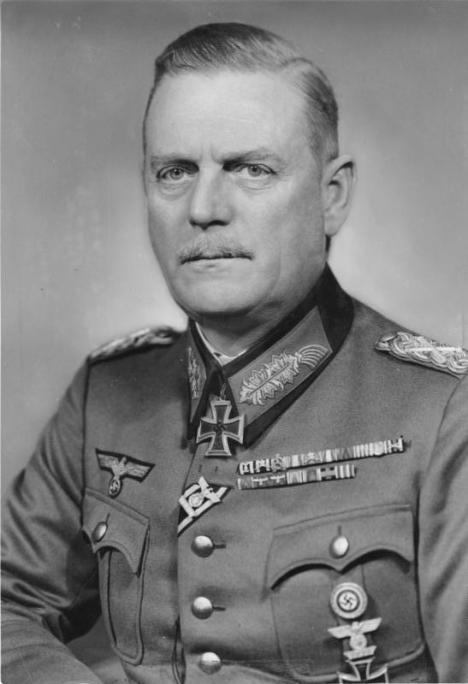
Wilhelm Keitel: “war was a fight for survival….dispense with outdated and traditional ideas about chivalry and the generally accepted rules of warfare…” Bundesarchiv Bild

This study will focus on the German policy of ideological-racial war in Poland and Russia. The German war against the Soviet Union and to a certain extent Poland was waged with an unforgiving ferocity against Hitler’s enemy, the Jewish-Bolshevik state and the Slavic Untermenschen. It was characterized by the rise of “political-ideological strategy”[22] in which “Barbarossa showed the fusion of technocracy and ideology in the context of competitive military planning.”[23] Hitler’s “ideological and grandiose objectives, expressed in racial and semi-mystical terms, made the war absolute.”[24] Field Marshal Keitel noted a speech in March 1941 where Hitler talked about the inevitability of conflict between “diametrically opposed ideologies” and that the “war was a fight for survival and that they dispense with their outdated and traditional ideas about chivalry and the generally accepted rules of warfare.”[25] General Halder, Chief of the OKH in his War Dairy for that meeting noted “Annihilating verdict on Bolshevism…the leaders must demand of themselves the sacrifice of understanding their scruples.”[26] Based on Lebensraum and race, the German approach to war would combine “racism and political ideology” for the purpose of the “conquest of new living space in the east and its ruthless Germanization.”[27] Hitler explained that the “struggle for the hegemony of the world will be decided in favor of Europe by the possession of the Russian space.”[28] Conquered territories would be “Reich protectorates…and that these areas were to be deprived of anything in the nature of a Slav intelligentsia.”[29]This goal was manifest in the “Criminal Order” issued by OKW which stated that the war was “more than mere armed conflict; it is a collision between two different ideologies…The Bolshevist-Jewish intelligentsia must be eliminated….”[30] Other displaced inhabitants of the conquered eastern lands would be killed or allowed to starve.[31] Part of this was due to economic considerations in the Reich, which gave Germans priority in distribution of food, even that from the conquered lands. Starvation was a population control measure that supplemented other forms of annihilation.[32] As Fest notes in Russia Hitler was “seeking nothing but “final solutions.””[33] Despite numerous post-war justifications by various Wehrmacht generals, the “Wehrmacht and army fell into line with Hitler because there was “a substantial measure of agreement of “ideological questions.””[34]
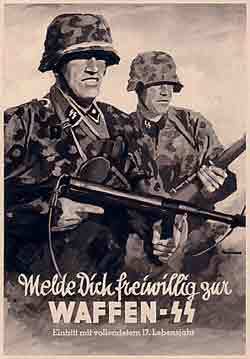
Waffen SS Volksdeutsch Recruiting Poster

Ideology was key to Hitler’s worldview and fundamental to understanding his actions in the war.[35] However twisted Hitler’s ideological formulations were his ideas found acceptance beyond the Nazi faithful to the Army and Police, who would execute the campaigns in Poland and Russia in conjunction with theEinsatzgrüppen and Nazi party organizations.  In these organizations he found allies with pre-existing cultural, political and doctrinal understandings which allowed them to be willing participants in Hitler’s grand scheme of eastern conquest.

Doctrinal and Ideological Foundations
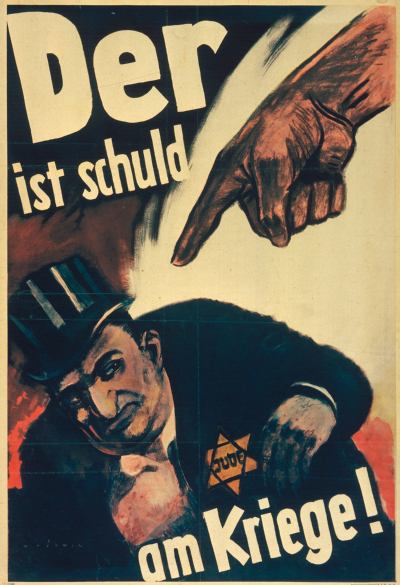
Nazi propaganda poster blaming the Jews for the war

While Hitler’s racial ideology was more extreme than many in the German military and police, these organizations had cultural beliefs and prejudices as well as doctrinal and ideological foundations which helped them become willing accomplices to Hitler.  These factors were often, consciously or unconsciously, excluded from early histories of World War II. The Allies relied on German officers to write these histories at the beginning of the Cold War, developing the “dual myth of German military brilliance and moral correctness.”[36] B.H. Liddell-Hart makes the astounding statement that “one of the surprising features of the Second World War was that German Army in the field on the whole observed the rules of war than it did in 1914-1918-at any rate in fighting its western opponents….”[37] While he might be excused by lack of knowledge of German army atrocities, not just the SS who he blamed the atrocities, it helps present a myth as truth.[38] The myths were helped by the trials of Manstein and Kesselring where “historical truth had to be sacrificed…to the demands of the Cold War.”[39] Kenneth Macksey confronts the myth that only the “Waffen SS committed barbaric and criminal acts” noting: “Not even the Knights of the Teutonic Order and their followers in the Middle Ages sank to the depths of the anti-Bolshevik Wehrmacht of 1941.”[40]

Germany had a long running history of anti-Semitism before Hitler.  German anti-Semitism often exhibited a “paranoid fear of the power of the Jews,”[41]and included a “fashionable or acceptable anti-Semitism”[42] which became more pronounced as the conditions of the Jews became better and Jews who had fled to Eastern Europe returned to Germany.[43] Sometimes this was tied to religious attitudes, but more often focused on the belief that the Jews “controlled certain aspects of life” and presented in “pseudo-scientific garb” along with the “myth of a secret Jewish plot for world domination which was simultaneously part of the internationalism of Freemasonry.”[44] Admiral Wilhelm Canaris provides an example as he “had grown up in the atmosphere of “moderate” anti-Semitism prevailing in the Ruhr middle class and in the Navy believed in the existence of a “Jewish problem”” and would “suggest during 1935-1936 that German Jews should be identified by a Star of David as special category citizens….”[45] Wehrmacht soldiers were “subject to daily doses of propaganda since the 1930s” and that with the “start of the Russian campaign propaganda concerning Jews became more and more aggressive.”[46] Some objected to Nazi actions against Jews. Von Manstein protested the “Aryan paragraph” in the Reichswehr on general principal.”[47] Yet some who planned and executed the most heinous crimes like Adolf Eichmann had “no fanatical anti-Semitism or indoctrination of any kind.”[48]

The military “looked to the regime to reshape society in every respect: political, ideological, economic and military…Propaganda would hammer home absolute nature of the struggle…”[49] Ideological training began in the Hitler Youth andReichsarbeitsdienst and produced a soldier in which “Anti-Semitism, anti-communism, Lebensraum – these central tenants of Nazism were all inextricably linked with the Landser’s conception of duty, with his place and role in the vast machinery of war.”[50] Following the dismissal of General Fritsch in 1938, General Brauchitsch promised that “he would make every effort to bring the Army closer to the State and the State’s ideology.”[51] Alfred Novotny, a Austrian soldier in the Gross Deutschland division noted how training depicted the Russians as Untermenschen and how they were “subjected to official rantings about how the supposedly insidious, endless influence of the Jews in practically every aspect of the enemy’s endeavors…Jews were portrayed as rats, which were overrunning the world….”[52] This added to the already “harsh military discipline” which had a long tradition in Germany conditioning soldiers to violence and brutalization of their enemy. Similar programs existed in the Order Police which would play a large part in the eastern campaign, the “image of “treasonous” leftists and Jews helped shape the personal and political beliefs of many policemen throughout the interwar period.”[53] Even ordinary police training before the war in German speaking Europe was brutalizing.”[54] These troops were recipients of an ideological formation which “aimed at shaping the worldview of the police leading to the internalization of belief along National Socialist lines.”[55] Waffen SS soldiers, especially those of the Totenkopfdivision were subjected to even more systematic political indoctrination on the enemies of National Socialism, the Jews, freemasonry, Bolshevism and the churches.[56]

Along with cultural anti-Semitism and the Nazification of German thought in the 1930s, there were aspects of military doctrine which helped prepare the way for the eastern campaign. The most important were the Army’s anti-partisan and rear area security doctrine.  The history of security anti-partisan operations dated back to the Prussian Army’s Ettapen, which began in 1813 with theLandwehr’s role in security against looters and others.[57] These units supported and supplied offensive operations from the rear to the combat zone with a secondary mission of countering partisans and preventing disruptions in the rear area. The Ettapen would be reformed and regulated in 1872 following the Franco-Prussian War.[58] The German experience fighting guerrillas and partisans, the francs-tireurs in the Franco-Prussian War, “scarred the Army’s institutional mentality.”[59] Von Moltke was “shattered,” writing his brother that “war was now taking on an ever more hate-inspired character.”[60] He was “appalled by improvised armies, irregular elements, and appeals to popular passion, which he described as a “return to barbarism.”[61] He wrote: “Their gruesome work had to be answered by bloody coercion. Because of this our conduct of the war finally achieved a harshness that we deplored, but which we could not avoid.”[62] The brutal German response to the franc-tireurs found legal justification in Franz Lieber’s principles for classification of belligerents and non-belligerents, which determined that guerrillas were outlaws or bandits.[63] In response, the Germans systematically reorganized the Ettapen to include railroad and security troops, special military courts, military police, intelligence and non-military police, including the Landespolizei and the Grenzschutzpolizei.[64]

Pre-Nazi Exterminator: General Lothar Von Trotha led the Genocide against the Herero in Namibia

The doctrinal response to partisans, or as they would become known in German writings as “bandits,” was that bandits should be encircled and destroyed. This was employed in the Southwest Africa German colonies.  The Germans, influenced by the experience in France, “displayed a ferocity surpassing even that of the racially brutalized campaigns of its imperialist peers.”[65] The campaign against the Herero tribes which resisted the occupation of Namibia from 1904-1912 utilized encirclement operations, racial cleansing and what would become known as Bandenkämpfung operations.[66] This was further developed in the First World War, especially in the east where General Fritz Gempp described the security problem as a “ruthless struggle” in which German pacification policy “was in reality the application of terror to galvanize the population into accepting German rule.”[67] Anti-partisan doctrine was codified in the Truppenführung of 1933 which stated that “area defense against partisan warfare is the mission of all units” and that the preferred method of combating partisan bands was that they be surrounded and destroyed.[68] General Erhard Rauss later described active and passive measures used to deal with partisans, focusing on the tactic of encirclement to destroy the enemy.[69]

Anti-partisan doctrine focused on the destruction of the partisans, was coupled a total war philosophy and provided fit well with Hitler’s radical ideology.  The “propensity for brutality in anti-guerrilla warfare was complimented by officers’ growing preoccupation, both during and after World War I, with the mastery and application of violence.”[70] Michael Geyer notes: “ideological mobilization for the creation of a new national and international order increasingly defined the parameters of technocratic planning.”[71] The acceptance of long used brutal tactics to destroy the enemy combined with Hitler’s radical racial animus against the Jews could only be expected to create a maelstrom in which all international legal and moral standards would be breached.

Beginnings in Poland

The Polish campaign was a precursor to the Russian campaign and was not totally race driven. It contained elements of Germany’s perception of the injustice of Versailles which gave Poland the Danzig corridor and Germany’s desire to reconnect East Prussia to the Reich, as well as the perceived necessity to remove a potential enemy from its rear as it faced France, yet it was a campaign steeped in Nazi racial ideology.  Poland resisted German efforts to ally itself with Germany in 1939, thus Hitler determined it “would be crushed first.”[72] Meeting with military leaders on 23 May 1939 Hitler “made it plain that the real issue was not Danzig, but securing of Germany’sLebensraum….[73] On 22 August he enjoined the generals to “Close your hearts to pity! Act brutally! Eighty million people must obtain what is their right.”[74]Even so, most military leaders failed to appreciate what Hitler was calling on them to do; Manstein would note that “what Hitler had to say about an eventual war with Poland, could not, in my opinion, be interpreted as a policy of annihilation.”[75] Others such as Canaris was “utterly horrified” as he read his notes to his closest colleagues “His voice trembled as he read, Canaris was acutely aware that he had witnessed something monstrous.”[76] General Johannes Blaskowitz, commander of 8th Army who would be the military commander in Poland did not leave any notes about the meeting, but his biographer notes that he “may have naively attached a military meaning to these terms since he was busy with military matters and soon to begin operations.”[77]This was the interpretation of Manstein as well.[78] Keitel noted that the speech was “delivered in the finest sense of psychological timing and application,” molding “his words and phrases to suit his audience.”[79] In light of the mixed interpretations by military leaders, it is possible that many misinterpreted Hitler’s intent and did not fully appreciated his ideology as they went into Poland, carefully secluding themselves in the narrow confines of their military world. While such an explanation is plausible for some, it is also true that many others in light of subsequent actions were in full agreement with Hitler. One author notes that “no man who participated in the Führer Conferences….and there were present the highest ranking officers of the three services, could thereafter plead ignorance of the fact that Hitler had laid bare his every depth of infamy before them, and they had raised no voice in protest either then or later.”[80] In July, General Wagner, the Quartermaster General issued orders that “authorized German soldiers to take and execute hostages in the event of attacks by snipers or irregulars.”[81]

Regardless of the meaning ascribed to Hitler’s speech, Hitler had already laid plans to destroy the Jews in Poland and decimate the Polish intelligentsia and leadership.   Hitler gave Himmler the task of forming “Einsatzgrüppen to follow the German troops as they advanced into Poland and liquidate Poland’s upper class wherever it was to be found.”[82] While senior party leaders remained at Hitler’s side following the conference, Himmler worked to coordinate his troops, including the reinforced Totenkopf battalions and Einsatzgrüppen with the Army.[83]
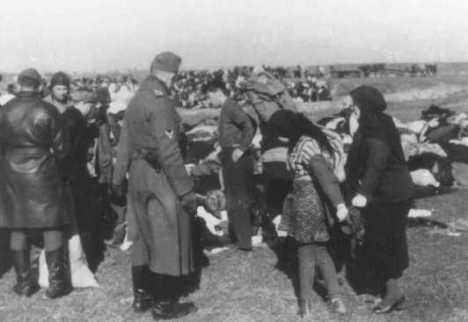
Einsatzgruppen Troops gathering Ukrainian Jews for ExecutionHessisches Hauptstaatsarchiv Wiesbaden

Himmler began planning in early May and the Army decided to “use SS and police units to augment their own forces for security tasks.”[84] Himmler established “five Einsatzgrüppen to accompany each of the numbered German armies at the start of the campaign.”[85] Placed under the aegis of Reinhard Heydrich the groups were broken down into smaller units of 100-150 men and allotted to army corps.  All senior posts were occupied by officers of the Sicherhietsdienst.[86] Two additional groups were formed shortly after the invasion.[87] Additionally 3 regiments of the SS Totenkopfverbande, under the direction of SS General Theodore Eicke were deployed in the rear areas of the advancing armies.[88] The purpose of these units was shielded from the Army in the planning stages,[89] although Heydrich worked with the Army to develop lists of up to 30,000 people to be arrested.[90] To eliminate the Polish elites without disturbing the Army, Himmler and Heydrich gave the Army “only the bare minimum of information.”[91] The deception was initially successful.  Blaskowitz’s 8th Army defined the mission of the Einsatzgrüppen in a traditional manner, noting their mission as “the suppression of all anti-Reich and anti-German elements in the rear of the “fighting troops, in particular, counter espionage arrests of politically unreliable persons, confiscation of weapons, safeguarding of important counter-espionage materials etc…”[92] General Wagner issued orders in July 1939 that “authorized German soldiers to take and execute hostages in the event of attacks by snipers or irregulars.” Despite the deception, there was no way to disguise the murder of Polish intelligentsia and Jews, and had the Army had the political acumen it could have considerably restricted the terror campaign.[93]
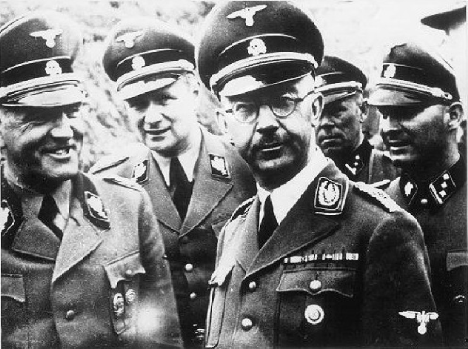
Heinrich Himmler: Implementer of Hitler’s Ideas Authorized formation of Einsatzgruppen

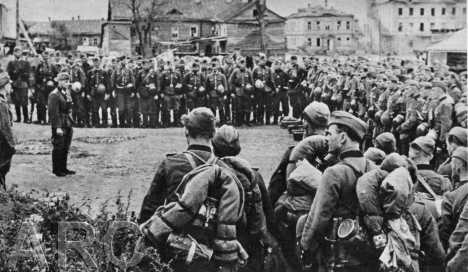
The campaign demonstrated Hitler’s intent. Heydrich talked about the “murdering the Polish ruling class” of the aristocracy, Catholic clergy, communists and Jews on 7 September.[94] The Army moved east with theEinsatzgruppen and Totenkopf Verbande, conducting arrests and executions in its wake.  The Army worried about Polish soldiers left behind in rear areas, and a paranoia developed as some generals believed that a “brutal guerilla campaign has broken out everywhere and we are ruthlessly stamping it out.”[95] Yet some actions against the Polish elites and the Jews drew Army reactions. The unit commanded by SS General Woyrsch “behaved with such unparalleled bestiality that it was throw out of the operational area” by General List of 14th Army.[96]Totenkopfverbande Brandenburg came to Army attention when its commander remarked that the “SSVT would not obey Army orders,” and the conclusion of the Army General was that “the SSVT commander was following orders from some non-military authority to terrorize the local Jews.”[97] These atrocities as well as those of other Waffen-SS units were hard to hide and brought reactions out of army commanders who sought to punish the offenders. Blaskowitz and others attempted to put a halt to SS actions against Poles and Jews,[98] but most officers turned a blind eye to the atrocities or outright condoned them.  It is believed that General Walter Model and others “not only knew what was occurring in Poland but actually took part in what Halder himself described in October as “this devilish plan.””[99] It appears that many who objected were not motivated so much by humanitarian, moral or legal considerations, but rather by the effect on good order and discipline.[100] Likewise it is clear that many officers, even if they did not participate in the actions probably approved of them.  Many biographies and histories of this period written by authors influenced by surviving German officers make no or little mention of the Army’s part in these actions. Himmler and Heydrich were sensitive to the perception of the Army and resented the fact that the Army believed them to be responsible for actions that they were carrying out under the direction and order of Hitler and that their troops were “undisciplined gangs of murderers.”[101] After the establishment of the Government General led by Hans Frank there was conflict between the Army under Blaskowitz, the SS, Police and the Nazi administration. Blaskowitz made an “elaborate report on the atrocities of the SS,”[102]expressing concern about his “extreme alarm about illegal executions, his worries about maintaining troop discipline under those circumstances, the failure of discussions with the SD and Gestapo and their assertions that they were only following SS Orders.”[103] While it is unclear if the memorandum made it to Hitler, it is clear that Hitler did know about the protest and Blaskowitz fell into disfavor and was reassigned after a period of continued conflict with the Nazi administration. Hitler’s reaction according to his adjutant was that the Army’s leaders used “Salvation Army” methods, and their ideas “childish.”[104]Likewise General Georg von Külcher was relieved of command for protesting SS and police atrocities.[105] SS Officers convicted by Army courts-martial were given amnesty by Hitler on “4 October 1939 who two weeks later removed SS units from the jurisdiction of military courts.”[106] While the army remained, it was not longer in charge and would assist the SS and Police in combat and further atrocities. One German officer, later a conspirator in the July 20th plot, remarked in November 1939 about the killings that he “was ashamed to be German! The minority are dragging our good through the mud by murdering, looting and torching houses will bring disaster on the whole German people if we do not stop it soon…”[107]
Ordungspolizei in Action: Street Cops Become Executioners

The Army was relieved of responsibility for policing Poland which fell on theOrdungspolizei battalions and Gendarmerie.  These units would wreak their own devastation on Poland in the coming months and years.[108] Poland would also be the first Nazi driven shift in population to exploit the newly won Lebensraumas Poles were driven into the newly formed Government General and ethnic Germans moved into previously Polish occupied territories. By 1941 over 1,200,000 Poles and 300,000 Jews had been expelled and 497,000 ethnic Germans brought into provinces lost in 1919.[109] Prior to the war about 3.3 million Jews lived in Poland. After the war 50-70,000 were found to have survived in Poland, the Polish Army and camps in Germany. A further 180,000 were repatriated from the Soviet Union.[110]

Russia

The Nazi war against Russia was the penultimate test of Hitler’s ideology. Planning began after 21 July, when Hitler made “his intentions plain” and “von Brauchitsch set his planners to work.”[111] Detailed preparations began in the winter of 1940-41 following the Luftwaffe’s failure against Britain and postponement of Operation Sea Lion.  Hitler intended to “crush Soviet Russia in a quick campaign which was to begin no later than March 15, 1941, and before the end of the war with England.”[112] Keitel noted the final decision came in “early December 1940” and from then he had “no doubt whatsoever that only some unforeseen circumstance could possibly alter his decision to attack.”[113]The plan focused on the destruction of “the Red Army rather than on any specific terrain or political objective,”[114] although these objectives would arise in later planning and in the campaign.  Hitler stated: “What matters is that Bolshevism must be exterminated. In case of necessity, we shall renew our advance whenever a new center of resistance is formed. Moscow as the center of doctrine must disappear from the earth’s center….”[115]

Besides preparations aimed at the destruction of the Red Army and overthrow of the Soviet State, the “war against the Soviet Union was more openly ideological from the start.”[116] Hitler set the stage on March 3rd 1941: “the forthcoming campaign is more than a mere armed conflict; it is a collision between two different ideologies…this war will not be ended merely by the defeat of the enemy armed forces” and that “the Jewish-Bolshevist intelligentsia must be eliminated….”[117] Hitler noted that “this is a task so difficult that it cannot be entrusted to the Army.”[118] Reichskommissars would be appointed in the conquered areas, but since normal civilian powers would be insufficient to eliminate the Bolshevists, that it “might be necessary “to establish organs of the Reichsführer SS alongside the army’s Secret Field Police, even in the operational areas….”[119] The “primary task was to liquidate “all Bolshevist leaders or commissars” if possible while still in the operations zones,”[120] yet the orders did not contain “a syllable that in practice every Jew would be handed over to the extermination machine.”[121] This was followed on 13 March by an agreement between the Army represented by General Wagner and the SS, which stated in part that “the Reichsführer SS has been given by the Führer special tasks within the operations zone of the Army…to settle the conflict between two opposing political systems.”[122] Likewise the agreement dictated that Himmler would “act independently and on his own responsibility” while ensuring that “military operations are not affected by measures necessary to carry out his task.”[123] A further instruction of 26 March issued by Wagner gave the Army’s agreement to the use of the Einsatzgrüppen in the operations zone, specifying coordination between them and army authorities in the operational zone and communications zones to the rear.  Cooperation was based on the “principals for co-operation between the State Secret Police and the Field Security organization of the Wehrmacht agreed with the Security branch of the War Ministry on 1 January 1937.”[124]

The most significant act for the Army in this was the Commissar Order, sometimes known as the “Criminal Order” which was used war as evidence at Nurnberg as against Keitel and the High Command of the Wehrmacht.  The order specified the killing of Soviet Political Commissars attached to the Red Army and as “they were not prisoners of war” and another order specified that “in the event that a German soldier committed against civilians or prisoners, disciplinary action was optional….”[125] The order noted regarding political commissars that “in this struggle consideration and respect for international law with regard to these elements is wrong.” [126] The “Guidelines for the Conduct of Troops in Russia” issued on May 19, 1941 called for “ruthless and vigorous measures against Bolshevist inciters, saboteurs [and] Jews.”[127]

Shortly before the order was issued, Hitler previewed it to the generals saying that the war in Russia “cannot be conducted in a knightly fashion” and that it would have to be waged with “unprecedented, unmerciful and unrelenting harshness…”[128] and that they would have to “dispense with all of their outdated and traditional ideas about chivalry and the generally accepted rules of warfare: the Bolsheviks had long since dispensed with them.”[129] He explained that his orders were beyond their comprehension stating “I cannot and will not change my orders and I insist that that they be carried out with unquestioning and unconditional obedience.”[130] Hitler’s speech was protested by some according to Von Brauchitsch,[131] who refused to protest to Hitler but issued an order “threatening dire penalties for excesses against civilians and prisoners of war” which he maintained at Nurnberg “was sufficient to nullify the Commissar Order.”[132] Yet Von Brauchitsch would tell commanders to “proceed with the necessary hardness.”[133] Warlimont noted that Von Bock, who would “later emerge as an opponent of the Commissar Order…makes no special comment on the meeting or the restricted conference that followed.”[134] Keitel said that he “stubbornly contested” the clause “relating to the authority of the SS-Reichsführer… in the rearward operational areas.”[135]Keitel blamed the Army High Command, but the order came out with his signature on behalf of Hitler, which was key evidence against him at Nurnberg. He stated that “there was never any possibility of justifying them in retrospect by circumstances obtaining in the Russian campaign.”[136] Some commanders refused to publish the orders and “insisted that the Wehrmacht never implemented such policies…” blaming them instead on the SS. One writer states “such protests were undoubtedly sincere, but in practice German soldiers were far from innocent. The senior professional officers were often out of touch with their subordinates.”[137] The orders were a “license to kill, although not a great departure from German military traditions….”[138] The effect was terrifying, for in a sense the Einsatzgruppen, “could commit ever crime known to God and man, so long as they were a mile or two away from the firing line.”[139] Security Divisions were “instructed to give material and logistical support to…units of the Einsatzgruppen.”[140] Even worse, army units in rear areas “could be called on to assist Himmler’s SS police leaders.”[141]
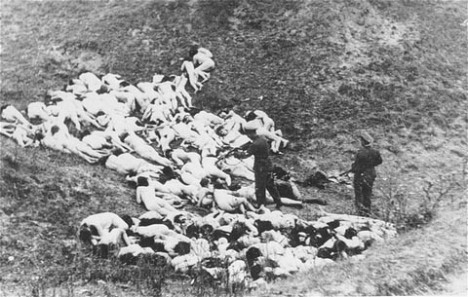
Einsatzgruppe troops finishing off Jewish Women

The SS formed four Einsatzgruppen composed of SD, Waffen-SS and Police troops designated A-D with “A” being assigned to Army Group North, B to Army Group Center, C to Army Group South and “D” to 11th Army.  They were not standardized in manpower or equipment, the largest unit being A in the North at 990 personnel [142] and D with only 550.[143] These units had SS, SD or Police commanders. Additionally nine Ordnungspolizei battalions were initially assigned to the invasion forces.[144] The police contingent would grow over time so that by 1943, these units would be grouped under regiments and number about 180,000 men assisted by 301,000 auxiliaries.[145] These units would act in concert with 9 Army Security Divisions which handled rear area security.[146] Himmler initially did not reveal their intent and planned use to Einsatzgruppen commanders, only speaking of a “heavy task…to “secure and pacify” the Russian area using Sicherheitspolizei and SD methods.”[147]Understanding the effect of these operations, Himmler would state that “in many cases it is considerably easier to lead a company in battle than to command a company responsible to…carry out executions, to deport people…to be always consistent, always uncompromising-that is in many cases far, far harder.”[148]

Nazi actions are well documented; the Einsatzgruppen, Police, Army and locally recruited Schutzmannschaft battalions [149] ruthlessly exterminated Jews and others in the operational area. No sooner had an Einsatzgruppe unit entered a city, a “deadly stranglehold” would grip the “Jewish inhabitants claiming thousands and thousands of victims day by day and hour by hour.”[150] Non-Jewish Russians were encouraged to conduct programs which Heydrich noted “had to be encouraged.”[151] Einsatzgruppen D report 153 noted: “During period covered by this report 3,176 Jews, 85 Partisans, 12 looters, 122 Communist functionaries shot. Total 79,276.” [152] By the spring of 1942 Einsatzgruppe A had claimed “more than 270,000 victims, the overwhelming majority of whom were Jewish.”[153] The total killed for all groups then was 518,388 people, mostly Jews.[154] Germany’s Romanian ally acted against Jews in Odessa as well; “on 23 October 1941 19,000 Jews were shot near the harbor… probably 200,000 Jews perished either at Romanian hands or after being turned over by the Romanians to the Germans.”[155]

Many Anti-Jewish Massacres were Labeled “Anti-Partisan” Operations. Einsatzgruppe Officers, a Major in the middle, of the SD (Sicherheitsdienst) during an operation in Poland

Operations against Jews were often called anti-partisan operations.  Himmler referred to Einsatzgruppen as “anti-Partisan formations[156] while WehrmachtSecurity divisions “murdered countless Soviet civilians and burned Russian settlements to the ground under the pretext of subduing partisan resistance.”[157] The attitude in 1941-1942 was that “’all Jews are partisans and all partisans are Jews.” From 1943, all armed resistance was “banditry” and all Jews irrespective of circumstances were treated as “bandits.””[158] The commander of the 221st Security Division endeavored to persuade his “subordinate units that the Jews were carriers of Bolshevik contamination and, therefore, the ultimate source of any sabotage or difficulty the division faced.”[159] The extermination of the Jews and partisan war were closely intertwined with the Reich’s economic policies designed to exploit the natural resources of the Russia. This included the “hunger plan” which German authorities seemed to imagine that “millionfold starvation could be induced by requisitioning off all available grain and “shutting off” the cities.”[160] Hitler told Halder that in 1941 that he “intended to level Moscow and Leningrad, to make them uninhabitable, so there would be no need to feed their populations during the winter.”[161] Economic officials held life and death power over villages. Those that met agricultural quotas were “likely to be spared annihilation and evacuation…the culmination of this process, during 1943, would be the widespread creation of “dead zones.””[162] All told the German killed nearly 1.5 million Russian Jews.[163] By 1942, 2 million Soviet POW’s were killed.  600,000 shot outright, 140,000 by the Einsatzkommandos.[164]All told 3.3 million Soviet POWs died in German captivity through starvation, disease and exposure,[165] are included in a total of over 10 million Red Army Combat deaths.[166] Bracher notes: “The reality and irreality of the National Socialism were given their most terrible expression in the extermination of the Jews.”[167]

The Killer Becomes a Victim: Arthur Nebe’s experience commanding an Einsatzgruppe so traumatized him that he would be reassigned and then become active in the attempt to kill Hitler and lose his life in the process

Himmler and others continued to use euphemistic language to describe their efforts talking in terms of “Jewish resettlement.”[168] Terms such as special actions, special treatment, execution activity, cleansing and resettlement were used in place of the word murder.[169] At the same time these operations led to problems in the ranks, one SS trooper observed: “deterioration in morale among his own men who had to be issued increasing rations of vodka to carry out their killing orders.”[170] Even commanders were affected, Nebe would say “I have looked after so many criminals and now I have become one myself.”[171] A fellow conspirator would describe him as a “shadow of his former self, nerves on edge and depressed.”[172] Erich Bach-Zelewski, who led the SS anti-partisan efforts would suffer a nervous breakdown which included “hallucinations connected to the shootings of Jews” which hospitalized him in 1942.[173]Himmler would state in October 1943 that “to have gone through” the elimination of the Jews had “and remained decent, that has made us tough. This is an unwritten, never to be written, glorious page in our history.”[174]

Conclusion

The German war against Poland and Russia was heavily dependent on the racist ideology of Adolf Hitler.  He was the true spirit behind the atrocities committed by his nation as one noted in Russia: “Here too the Führer is the moving spirit of a radical solution in both word and deed.”[175] He saw the partisan war as “the chance to stamp out everything that stands against us.”[176] Belief in Germany’s right to Lebensraum the superiority of the German Volk and necessity to settle the Jewish problem provided a fertile ground for Hitler’s plans.  German military doctrines, especially those of anti-partisan and total warfare abetted Hitler’s goals.

It is quite clear that many in the Wehrmacht were in agreement with Hitler’s ideology of racial-war. Prepared by cultural prejudice and long traditions of thought, the “Prussian and in later German military must be regarded as a significant part of the ideological background of the Second World War.”[177]General Reichenau’s orders to his troops are revealing: “The most important goal of the campaign against Jewish-Bolshevism is the complete destruction of its grip on power and the elimination of the Asian influence from our European cultural sphere.”[178] Von Rundstedt appeared to agree with Reichenau to “use the partisan threat as excuse for persecuting Jews, so long as the dirty work was largely left to SS Einsatzgruppen.”[179] The Army command…on the whole acquiesced in the extermination of the Jews, or at least closed its eyes to what was happening.”[180] Even if the Generals had been more forceful in their opposition, they would have been opposed by the highly Nazified youth that made up the bulk of their Army, especially junior officers. SS leaders fanatically executed Hitler’s policies aided by the civil administration. Genocide was to bring the Reich “long term economic gains and trading advantages” and was seen as a way of “financing the war debt without burdening the German taxpayer.”[181] Some individuals attempted to resist the most brutal aspects of the Nazi campaign against the Jews. Some like Wilhelm Kube, Reichskommissar for White Russia and a virulent anti-Semite was shocked at the murders of the Jews calling them “unworthy of the German cause and damaging to the German reputation” and would later attempt to spare Jews by employing them in war industries, would be “defeated by Himmler’s zealots.”[182] Army officers who objected like Blaskowitz and Külcher were relieved, or like Von Leeb, told by Hitler to “in so many words told to mind his own business.” Leeb stated: “the only thing to do is to hold oneself at a distance.”[183] Rommel knew of crimes through Blaskowitz but blamed the crimes “on Hitler’s subordinates, not Hitler himself.”[184]
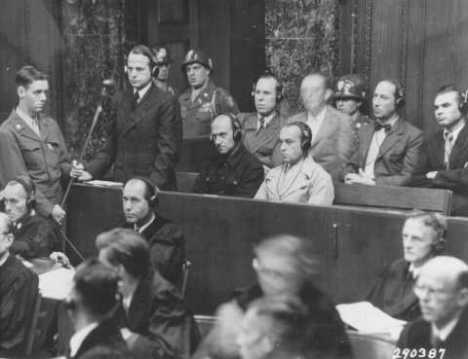
Partial Justice: The Einsatzgruppen Trial

Hitler’s ideology permeated German military campaigns and administration of the areas conquered by his armies. No branch of the German military, police or civil administration in occupied Poland or Russia was exempt guiltless in the crimes committed by the Nazi regime. It is a chilling warning of the consequences awaiting any nation that allows it to become caught up in hate-filled political, racial or even religious ideologies which dehumanizes opponents and of the tragedy that awaits them and the world. In Germany the internal and external checks that govern the moral behavior of the nation and individuals failed. Caught up in the Nazi system, the Germans, especially the police and military abandoned the norms of international law, morality and decency, banally committing crimes which still reverberate today and which are seen in the ethnic cleansing actions in the former Yugoslavia and other nations.

Bibliography

Aly, Gotz and Heim, Susanne. Architects of Annihilation: Auschwitz and the Logic of Destruction Phoenix Paperbacks, London, 2003, originally published as Vordenker der Vernichtung, Hoffman und Campe, Germany 1991, English translation by Allan Blunden.  First published in Great Britain Weidenfeld & Nicholson, London, 2002

Arendt, Hannah, Eichmann in Jerusalem: A Report on the Banality of Evil.Revised and Enlarged Edition. Penguin Books, Harmondsworth, England and New York, NY 1965. Originally published by Viking Press, New York, NY 1963

Blood, Philip. Hitler’s Bandit Hunters: The SS and the Occupation of Europe.Potomoac Books Inc. Washington, DC 2008

Bracher, Karl Dietrich. The German Dictatorship: The Origins, Structure, and Effects of National Socialism. Translated by Jean Steinberg, Holt Rinehart and Winston, New York, NY 1979. Originally Published under the title Die Deutsche Diktatur: Entstehung, Struktur,Folgen des Nationalsocialismus. Verlag Kiepenheuer & Witsch. Koln and Berlin, 1969

Browning, Christopher R. Ordinary Men: Reserve Police Battalion 101 and the Final Solution in Poland. Harper Perennial Books, New York, New York 1993 reissued 1996.

Burleigh, Michael and Wippermann, Wolfgang. The Racial State: Germany 1933-1945 Cambridge University Press, New York NY and Cambridge UK 1991

Condell, Bruce and Zabecki, David T. Editors. On the German Art of War: Truppenführung , Lynn Rienner Publishers, Boulder CO and London 2001

Craig, Gordon A. The Politics of the Prussian Army 1640-1945. Oxford University Press, London and New York, 1955

Davidowicz, Lucy S. The War Against the Jews 1933-1945 Bantam Books, New York, NY 1986.

Di Nardo, Richard L. Germany and the Axis Powers: From Coalition to Collapse. University Press of Kansas, Lawrence, KS. 2005

Erickson, John. The Road to Berlin. Cassel Military Paperbacks, London, 2003. First Published by Weidenfeld and Nicholson, 1983

Evans, Richard J. The Coming of the Third Reich Penguin Books, New York 2004.  First published by Allen Lane 2003

Evans, Richard J. The Third Reich in Power 1933-1939. Penguin Press, New York, NY 2005

Ferguson, Niall. The War of the Worlds: Twentieth Century Conflict and the Descent of the West. The Penguin Press, New York, 2006

Fest, Joachim, Hitler. Translated by Richard and Clara Winston. Harcourt Brace Jovanovich Publishers, San Diego, New York, London, 1974.  German Edition by Verlag Ullstein 1973

Fraser, David. Knight’s Cross: A Life of Field Marshal Erwin Rommel Harper Perennial, New York 1995, first published by Harper Collins in Britain, 1993

Friedlander, Saul Nazi Germany and the Jews 1939-1945: The Years of Extermination. Harper Perennial, New York, NY 2007

Fritz, Stephen G. Frontsoldaten: The German Soldier in World War II.  The University Press of Kentucky, Lexington, KY 1995

Geyer, Michael. German Strategy 1914-1945 in Makers of Modern Strategy from Machiavelli to the Nuclear Age. Peter Paret, editor. Princeton University Press, Princeton NJ. 198

Giziowski, Richard. The Enigma of General Blaskowitz. Hppocrene Books, New York 1997

Glantz, David M. and House, Jonathan. When Titans Clashed: How the Red Army Stopped Hitler. University Press of Kansas, Lawrence, KS. 1995

Goerlitz, Walter. History of the German General Staff.” Translated by Brian Battershaw, Westview Press, Boulder and London, 1985. Originally published asDie Deutsche Generalstab Verlag der Frankfurter Hefte, Frankfurt am Main, 1953

Goerlitz, Walter. The Memiors of Field Marshal Wilhelm Keitel: Chief of the German High Command 1938-1945.  Translated by David Irving. Cooper Square Press 2000,  First English Edition 1966 William Kimber and Company Ltd.  German edition published by Musterschmnidt-Verlad, Gottigen 1961 .

Hitler, Adolf Mein Kampf translated by Ralph Manheim. Mariner Books, Houghton Mifflin Company, New York, NY 1999. Houghton Mifflin Company 1943, copyright renewed 1971. Originally published in Germany by Verlag Frz. Eher Nachf. GmbH 1925

Höhne, Heinze. Canaris: Hitler’s Master Spy. Traslated by J. Maxwell Brownjohn. Cooper Square Press,

New York 1999. Originally published by C. Bertelsmann Verlag Gmbh, Munich 1976, first English edition by Doubleday and Company 1979

Höhne, Heinze. The Order of the Death’s Head: The Story of Hitler’s SS. Translated by Richard Barry. Penguin Books, New York and London, 2000. First English edition published by Martin Secker and Warburg Ltd. London 1969. Originally published as Der Orden unter dem Totenkopf, Verlag Der Spiegel, Hamburg 1966.

Hughes, Daniel J. editor. Moltke on the Art of War: Selected Writings,translated by Harry Bell and Daniel J Hughes. Presidio Press, Novato CA 1993

Liddell-Hart, B.H. The German Generals Talk. Quill Publishing, New York, NY. 1979. Copyright 1948 by B.H. Liddell-Hart

Macksey, Kenneth. Why the Germans Lose at War: The Myth of German Military Superiority. Barnes and Noble Books, New York 2006, originally published by Greenhill Books, 1996

Manstein, Erich von. Forward by B.H. Liddle Hart, Introduction by Martin Blumenson. Lost victories: The War Memoirs of Hitler’s Most Brilliant General.Zenith Press, St Paul MN 2004. First Published 1955 as Verlorene Siege, English Translation 1958 by Methuen Company

Shirer, William L. The Rise and Fall of the Third Reich. A Touchstone Book published by Simon and Schuster, 1981, Copyright 1959 and 1960

Megargee, Geoffrey P. War of Annihilation: Combat and Genocide on the Eastern Front 1941.Bowman and Littlefield Publishers Inc. Lanham, Boulder, New York. 2007

Messinger, Charles, The Last Prussian: A Biography of Field Marshal Gerd Von Rundstedt 1875-1953 Brassey’s (UK) London England 1991

Newton, Steven H. Hitler’s Commander: Field Marshal Walter Model-Hitler’s Favorite General DaCapo Press a division of Perseus Books Group, Cambridge MA 2005

Novatny, Alfred. The Good Soldier. The Aberjona Press, Bedford, PA 2003

Padfield, Peter. Himmler. MJF Books, New York. 1990

Reitlinger, Gerald.  The SS: Alibi of a Nation. The Viking Press, New York, 1957. Republished by Da Capo Press, New York, NY.

Rhodes, Richard. Masters of Death: The SS Einsatzgruppen and the Invention of the Holocaust. Vintage Books a division of Random House, New York, NY 2002

Shepherd, Ben. War in the Wild East: The German Army and Soviet Partisans.Harvard University Press, Cambridge, MA 2004

Sofsky, Wolfgang. The Order of Terror: The Concentration Camp. Translated by William Templer. Princeton University Press. Princeton, NJ 1997. Originally published as Die Ordnung des Terros: Das Konzentrationslager. S. Fischer Verlag, GmbH, Frankfurt am Main, 1993

Speer, Albert. Inside the Third Reich. Collier Books, a Division of MacMillan Publishers, Inc. New York, NY 1970.

Strachan, Hew. European Armies and the Conduct of War. George, Allen and Unwin, London, UK 1983

Stein, George H. The Waffen SS 1939-1945: Hitler’s Elite Guard at War. Cornell University Press, Ithaca and London, 1966

Stern, Fritz. Gold and Iron: Bismarck, Bleichroder and Building of the German Empire. Vintage Books a division of Random House, New York 1979 First published by Alfred a Knopf 1977

Sydnor, Charles W. Soldiers of Destruction: The SS Death’s Head Division, 1933-1945. Princeton University Press, Princeton, NY 1977

Taylor, Fred, Editor and Translator. The Goebbels Diaries 1939-1941, Penguin Books Ltd, Harmondsworth UK and New York NY 1984.

Tooze, Adam. The Wages of Destruction Penguin Books, New York, NY, 2008. First Published by Allen Lane Books, Penguin Group, London UK, 2006

Trevor-Roper, H.R. Hitler’s Table Talk 1941-1944 with an introduction by Gerhard L Weinberg,  Translated by Norman Cameron and R.H. Stevens, Enigma Books, New York, NY 2000. Originally published in Great Britain by Weidenfeld & Nicholoson, London 1953.

Warlimont, Walter. Inside Hitler’s Headquarters 1939-45. Translated by R.H. Berry, Presido Press, Novato CA, 1964.

Weinberg, Gerhard L. Germany Hitler and World War II . Cambridge University Press, New York, NY 1995

Weinberg, Gerhard L. Ed. Hitler’s Second Book: The Unpublished Sequel to Mein Kampf by Adolph Hitler. Translated by Krista Smith, Enigma Books,  New York, NY 2006. Originally published as Hitlers zweites Buch, Gerhard Weinberg editor, 1961.

Weinberg, Gerhard L. Visions of Victory: The Hopes of Eight World War II Leasers. Cambridge University Press, New York, NY 2005

Westermann, Edward B. Hitler’s Police Battalions: Enforcing Racial War in the East. University Press of Kansas, Lawrence, KS. 2005

Wette, Wolfram. The Wehrmacht: History, Myth, Reality. Translated by Deborah Lucas Schneider. Harvard University Press, Cambridge, MA 2006. Originally published as Die Wehrmacht: Feindbilder, Vernichtungskreig, Legenden. S. Fischer Verlag, GmbH, Frankfurt am Main, 2002

Wheeler-Bennett, John. The Nemesis of Power: The German Army in Politics 1918-1945. St. Martin’s Press Inc. New York, NY 1954

1] Weinberg, Gerhard L. Ed. Hitler’s Second Book: The Unpublished Sequel to Mein Kampf by Adolph Hitler. Translated by Krista Smith, Enigma Books, New York, NY 2006. Originally published as Hitlers zweites Buch, Gerhard Weinberg editor, 1961 p. 159

[2] Davidowicz, Lucy S. The War Against the Jews 1933-1945 Bantam Books, New York, NY 1986. p.91

[3] Tooze, Adam. The Wages of Destruction Penguin Books, New York, NY, 2008. First Published by Allen Lane Books, Penguin Group, London UK, 2006. p.463

[4] Fest, Joachim, Hitler. Translated by Richard and Clara Winston. Harcourt Brace Jovanovich Publishers, San Diego, New York, London, 1974.  German Edition by Verlag Ullstein 1973 pp. 607-608

[5] Note the actions of Cardinal Richelieu in France who worked to expand French power at the expense of other Catholic nations and the Vatican itself.

[6] In the United States the Reconstruction policies produced great resentment in the south with decidedly negative results for the newly freed slaves which lasted another 100 years, while in the Soviet Union great numbers of “opponents of Socialism” were killed, imprisoned or driven out of the county.

[7] Ibid. Tooze. The Wages of Destruction p.462

[8] Ibid. Davidowicz, The War Against the Jews pp.8-9

[9] Ibid. Davidowicz. The War Against the Jews p.12

[10] Ibid. Fest  Hitler. p.47

[11] Bracher, Karl Dietrich. The German Dictatorship: The Origins, Structure, and Effects of  National Socialism. Translated by Jean Steinberg, Holt Rinehart and Winston, New York, NY 1979. Originally Published under the title Die Deutsche Diktatur: Entstehung, Struktur,Folgen des Nationalsocialismus.Verlag Kiepenheuer & Witsch. Koln and Berlin, 1969 p.93

[12] Weinberg, Gerhard L. Germany Hitler and World War II . Cambridge University Press, New York, NY 1995 p.61

[13] Ibid. Weinberg, Hitler’s Second Book p.60

[14] Friedlander, Saul Nazi Germany and the Jews 1939-1945: The Years of Extermination. Harper Perennial, New York, NY 2007 p.xviii

[15] Ibid. Friedlander, The Years of Extermination p.xvii  Friedlander called this anti-Semitism “Redemptive anti-Semitism” in which “Hitler perceived his mission as a kind of crusade to redeem the world by eliminating the Jews.

[16] Megargee, Geoffrey P. War of Annihilation: Combat and Genocide on the Eastern Front 1941.Bowman and Littlefield Publishers Inc. Lanham, Boulder, New York. 2007 p.4

[17] Hitler, Adolf Mein Kampf translated by Ralph Manheim. Mariner Books, Houghton Mifflin Company, New York, NY 1999. Houghton Mifflin Company 1943, copyright renewed 1971. Originally published in Germany by Verlag Frz. Eher Nachf. GmbH 1925. p.662.

[18] Evans, Richard J. The Coming of the Third Reich Penguin Books, New York 2004.  First published by Allen Lane 2003 p.197

[19] Ibid. Davidowicz The War Against the Jews pp. 88-89

[20] Rhodes, Richard. Masters of Death: The SS Einsatzgruppen and the Invention of the Holocaust. Vintage Books a division of Random House, New York, NY 2002 p.37

[21] Speer, Albert. Inside the Third Reich. Collier Books, a Division of MacMillan Publishers, Inc. New York, NY 1970 p.166

[22] Geyer, Michael. German Strategy 1914-1945 in Makers of Modern Strategy from Machiavelli to the Nuclear Age. Peter Paret, editor. Princeton University Press, Princeton NJ. 1986. p.582

[23] Ibid. Geyer. German Strategy p.587

[24] Strachan, Hew. European Armies and the Conduct of War. George, Allen and Unwin, London, UK 1983 p.174

[25] Goerlitz, Walter. The Memoirs of Field Marshal Wilhelm Keitel: Chief of the German High Command 1938-1945.  Translated by David Irving. Cooper Square Press 2000,  First English Edition 1966 William Kimber and Company Ltd.  German edition published by Musterschmnidt-Verlad, Gottigen 1961 p. 135

[26] Ibid. Fest, Hitler.  p. 649

[27] Ibid. Megargee, War of Annihilation p.7

[28] Trevor-Roper, H.R. Hitler’s Table Talk 1941-1944 with an introduction by Gerhard L Weinberg,  Translated by Norman Cameron and R.H. Stevens, Enigma Books, New York, NY 2000. Originally published in Great Britain by Weidenfeld & Nicholoson, London 1953 p. 27 Goebbels notes a similar theme in his recollection of Hitler’s reasons for destroying Russia a power .  See Taylor, Fred, Editor and Translator. The Goebbels Diaries 1939-1941, Penguin Books Ltd, Harmondsworth UK and New York NY 1984 pp. 413-415.

[29] Goerlitz, Walter. History of the German General Staff.” Translated by Brian Battershaw, Westview Press, Boulder and London, 1985. Originally published as Die Deutsche Generalstab Verlag der Frankfurter Hefte, Frankfur am Main, 1953 p.390

[30] Warlimont, Walter. Inside Hitler’s Headquarters 1939-45. Translated by R.H. Berry, Presido Press, Novato CA, 1964 p. 150

[31] Weinberg, Gerhard L. Visions of Victory: The Hopes of Eight World War II Leasers. Cambridge University Press, New York, NY 2005. p. 24

[32] Aly, Gotz and Heim, Susanne. Architects of Annihilation :Auschwitz and the Logic of Destruction Phoenix Paperbacks, London, 2003, Originally published as  Vordenker der Vernichtung, Hoffman und Campe, Germany 1991, English translation by Allan Blunden.  First published in Great Britain Weidenfeld & Nicholson, London, 2002 pp. 245-246

[33] Ibid. Fest. Hitler p.649

[34] Wette, Wolfram. The Wehrmacht: History, Myth, Reality. Translated by Deborah Lucas Schneider. Harvard University Press, Cambridge, MA 2006. Originally published as Die Wehrmacht: Feindbilder, Vernichtungskreig, Legenden. S. Fischer Verlag, GmbH, Frankfurt am Main, 2002 p.93

[35] This understanding is different than many historians who as Friedlander notes advocate something like this: “The persecution and extermination of the Jews of Europe was but a secondary consequence of major German policies pursued toward entirely different goals.” Friedlander p.xvi

[36] Ibid. Megargee. War of Annihilation p.xii

[37] Liddell-Hart, B.H. The German Generals Talk. Quill Publishing, New York, NY. 1979. Copyright 1948 by B.H. Liddell-Hart p.22

[38] It has to be noted that Liddle-Hart published this work in 1948 and was limited in the materials available, his primary sources being German officers who he viewed with sympathy because he saw them as exponents of his theory of the indirect approach.

[39] Ibid. Wette. The Wehrmacht p.224

[40] Macksey, Kenneth. Why the Germans Lose at War: The Myth of German Military Superiority. Barnes and Noble Books, New York 2006, originally published by Greenhill Books, 1996. p.139

[41] Stern, Fritz. Gold and Iron: Bismarck, Bleichroder and Building of the German Empire. Vintage Books a division of Random House, New York 1979 First published by Alfred a Knopf 1977.  p.495

[42] Ibid. Stern. Gold and Iron p.494

[43] Ibid. Bracher. The German Dictatorship p.34

[44] Ibid. Bracher The German Dictatorship pp.34-35

[45] Höhne, Heinze. Canaris: Hitler’s Master Spy. Translated by J. Maxwell, Brownjohn. Cooper Square Press,

New York 1999. Originally published by C. Bertelsmann Verlag Gmbh, Munich 1976, first English edition by Doubleday and Company 1979 p. 216.  Canaris would later protest the Kristalnacht to Keitel (p.334) and become convinced of the crime of the Nazis against the Jews.

[46] Ibid. Witte. The Wehrmacht p.98

[47] Ibid Witte The Wehrmacht, p.73

[48] Arendt, Hannah, Eichmann in Jerusalem: A Report on the Banality of Evil.Revised and Enlarged Edition. Penguin Books, Harmondsworth, England and New York, NY 1965. Originally published by Viking Press, New York, NY 1963 p.26

[49] Ibid. Megargee. War of Annihilation p.6

[50] Fritz, Stephen G. Frontsoldaten: The German Soldier in World War II.  The University Press of Kentucky, Lexington, KY 1995 p.195

[51] Craig, Gordon A. The Politics of the Prussian Army 1640-1945. Oxford University Press, London and New York, 1955 p.495

[52] Novatny, Alfred. The Good Soldier. The Aberjona Press, Bedford, PA 2003 p.40

[53] Westermann, Edward B. Hitler’s Police Battalions: Enforcing Racial War in the East. University Press of Kansas, Lawrence, KS. 2005 p.64  Westermann also notes the preponderance of SA men who entered the Order Police in the 1930s, a factor which helped further the politicization of that organization.

[54] Ibid. Rhodes Masters of Death p.23

[55] Ibid. Westermann Hitler’s Police Battalions p.103

[56] Sydnor, Charles W. Soldiers of Destruction: The SS Death’s Head Division, 1933-1945. Princeton University Press, Princeton, NY 1977 p. 28

[57] Shepherd, Ben. War in the Wild East: The German Army and Soviet Partisans. Harvard University Press, Cambridge, MA 2004 p.41

[58] Blood, Philip. Hitler’s Bandit Hunters: The SS and the Occupation of Europe. Potomac Books Inc. Washington, DC 2008 p.11

[59] Ibid. Shepherd. War in the Wild East p.42

[60] Ibid. Goerlitz. History of the German General Staff p.93

[61] Rothenburg, Gunther. Moltke, Schieffen, and the Doctrine of Strategic Envelopment in Makers of Modern Strategy from Machiavelli to the Nuclear Age. Peter Paret, editor. Princeton University Press, Princeton NJ. 1986 p.305

[62] Hughes, Daniel J. editor. Moltke on the Art of War: Selected Writings,translated by Harry Bell and Daniel J Hughes. Presidio Press, Novato CA 1993. p.32

[63] Ibid. Blood Hitler’s Bandit Hunters p.6   Lieber was a Prussian emigrant to the US who taught law at Columbia University.

[64] Ibid. Blood Hitler’s Bandit Hunters pp.12-13

[65] Ibid. Shepherd Wild War in the East p.42

[66] Ibid. Blood. Hitler’s Bandit Hunters pp.16-19

[67] Ibid. Blood. Hitler’s Bandit Hunters p.22

[68] Condell, Bruce and Zabecki, David T. Editors. On the German Art of War: Truppenführung , Lynn Rienner Publishers, Boulder CO and London 2001. p.172

[69] Tsouras, Peter G. Editor, Fighting in Hell: The German Ordeal on the Eastern Front The Ballantine Publishing Group, New York, 1998. First published 1995 by Greenhill Books. Pp. 142-146.  It is interesting to note that Rauss does not describe any actual anti-partisan operation.

[70] Ibid. Shepherd. War in the Wild East p.45

[71] Ibid. Geyer. German Strategy p.584

[72] Ibid. Weinberg. Visions of Victory p.8

[73] Ibid. Goerlitz, History of the German General Staff p.346

[74] Höhne, Heinze. The Order of the Death’s Head: The Story of Hitler’s SS. Translated by Richard Barry. Penguin Books, New York and London, 2000. First English edition published by Martin Secker and Warburg Ltd. London 1969. Originally published as Der Orden unter dem Totenkopf, Verlag Der Spiegel, Hamburg 1966 p.259

[75] Manstein, Erich von. Forward by B.H. Liddle Hart, Introduction by Martin Blumenson. Lost victories: The War Memoirs of Hitler’s Most Brilliant General.Zenith Press, St Paul MN 2004. First Published 1955 as Verlorene Siege, English Translation 1958 by Methuen Company p.29

[76] Ibid. Hohne. Canaris p.347

[77] Giziowski, Richard. The Enigma of General Blaskowitz. Hppocrene Books, New York 1997 p.119

[78] Ibid. Manstein. Lost Victories p.29

[79] Ibid. Goerlitz. The Memoirs of Field Marshal Keitel p.87

[80] Wheeler-Bennett, John. The Nemesis of Power: The German Army in Politics 1918-1945. St. Martin’s Press Inc. New York, NY 1954 p.448

[81] Ibid. Megargee. War of Annihilation p.13

[82] Ibid. Höhne The Order of the Death’s Head p.297

[83] Padfield, Peter. Himmler. MJF Books, New York 1990 p.264

[84] Ibid. Megargee. War of Annihilation p.13

[85] Ibid. Westermann. Hitler’s Police Battalions p.127

[86] Ibid.  Höhne The Order of the Death’s Head p.297

[87] Ibid. Westermann. Hitler’s Police Battalions p.127

[88] Ibid. Sydnor Soldiers of Destruction p.37 These would become the nucleus of the Totenkopf Division

[89] Ibid. Giziowski Blaskowitz p.120

[90] Ibid. Witte. The Wehrmacht p.100

[91] Ibid. Höhne The Order of the Death’s Head pp. 297-298

[92] Ibid. Giziowski Blaskowitz p.120

[93] Ibid. Höhne The Order of the Death’s Head p.298

[94] Ibid. Witte. The Wehrmacht p.100

[95] Newton, Steven H. Hitler’s Commander: Field Marshal Walter Model-Hitler’s Favorite General Da Capo Press a division of Perseus Books Group, Cambridge MA 2005. p.74

[96] Ibid. Giziowski. The Enigma of General Blaskowitz pp.165-166

[97] Ibid. Sydnor, Soldiers of Destruction pp. 42-43 Note SSVT is the common abbreviation for the SS Totenkopf Verbande

[98] Ibid. Goerlitz. History of the German General Staff p.359

[99] Ibid. Newton. Hitler’s Commander p.78

[100] Ibid. Witte The Wehrmacht p.102

[101] Ibid. Höhne The Order of the Death’s Head p.298

[102] Ibid. Goerlitz. History of the German General Staff .p.359

[103] Ibid. Giziowski. The Enigma of General Blaskowitz p.173

[104] Ibid. Giziowski. The Enigma of General Blaskowitz p.173

[105] Ibid. Witte The Wehrmacht p.102

[106] Burleigh, Michael and Wippermann, Wolfgang. The Racial State: Germany 1933-1945 Cambridge University Press, New York NY and Cambridge UK 1991. p.100

[107] Ibid. Witte The Wehrmacht p.102

[108] For a good account of one of the Police Battalions see Ordinary Men: Reserve Police Battalion 101mand the Final Solution in Poland by Christopher Browning Harper Perennial Publishers, San Francisco CA 1992

[109] Reitlinger, Gerald.  The SS: Alibi of a Nation. The Viking Press, New York, 1957. Republished by Da Capo Press, New York, NY p.131

[110] Ibid. Davidowicz The War Against the Jews pp.395-397

[111] Ibid. Megargee. War of Annihilation p.24

[112] Ibid. Wheeler-Bennett The Nemesis of Power p.511

[113] Ibid. Goerlitz. The Memoirs of Field Marshal Wilhelm Keitel. P.132

[114] Glantz, David M. and House, Jonathan. When Titans Clashed: How the Red Army Stopped Hitler. University Press of Kansas, Lawrence, KS. 1995 p.31

[115] Trevor-Roper, H.R. Hitler’s Table Talk 1941-1944 with an introduction by Gerhard L Weinberg,  Translated by Norman Cameron and R.H. Stevens, Enigma Books, New York, NY 2000. Originally published in Great Britain by Weidenfeld & Nicholoson, London 1953 p.6

[116] Ibid. Megargee. War of Annihilation p.10 More openly ideological as compared to Poland.

[117] Ibid. Warlimont. Inside Hitler’s Headquarters p.150

[118] Ibid. Warlimont. Inside Hitler’s Headquarters p.151

[119] Ibid. Reitlinger, The SS p.175

[120] Ibid. Höhne The Order of the Death’s Head p. 354

[121] Ibid. Höhne The Order of the Death’s Head p. 354  Again another deception.

[122] Ibid. Warlimont. Inside Hitler’s Headquarters p.153

[123] Ibid. Warlimont. Inside Hitler’s Headquarters p.153

[124] Ibid. Warlimont. Inside Hitler’s Headquarters pp. 158-159

[125] Ibid. Glantz and House. When Titans Clashed p.56

[126] Ibid. Davidowicz. The War Against the Jews p.123

[127] Ferguson, Niall. The War of the Worlds: Twentieth Century Conflict and the Descent of the West. The Penguin Press, New York, 2006 p.442

[128] Ibid. Wheeler-Bennett. Nemesis of Power p.513

[129] Ibid. Goerlitz. The Memoirs of Field Marshal Keitel p.135

[130] Ibid. Wheeler-Bennett. Nemesis of Power p.513

[131] Ibid. Wheeler-Bennett Nemesis of Power p.513 and footnote. He cites the three Army Group commanders, Leeb, Rundstedt and Bock. However Von Rundstedt’s biographer notes that “no evidence exists as to what Von Rundstedt’s to this was at the time.” Messenger, Charles, The Last Prussian: A Biography of Field Marshal Gerd Von Rundstedt 1875-1953 Brassey’s (UK) London England 1991. p.134

[132] Ibid. Reitlinger, The SS p.176

[133] Ibid. Megargee. War of Annihilation p.33

[134] Ibid. Warlimont. Inside Hitler’s Headquarters p.162

[135] Ibid. Goerlitz. The Memoirs of Field Marshal Keitel p.136

[136] Ibid. Goerlitz. The Memoirs of Field Marshal Keitel pp.136-137

[137] Ibid. Glantz and House. When Titans Clashed p.56

[138] Ibid. Blood. Hitler’s Bandit Hunters p.52

[139] Ibid. Reitlinger The SS p. 177

[140] Ibid. Shepherd. War in the Wild East p.54

[141] Ibid. Reitlinger The SS p. 177

[142] Ibid. Rhodes Masters of Death pp.12-13

[143] Ibid. Westermann. Hitler’s Police Battalions p.167

[144] Ibid. Westermann. Hitler’s Police Battalions p.164

[145] Ibid. Blood Hitler’s Bandit Hunters p.141

[146] Ibid. Shepherd Wild War in the East p.48. Shepherd notes the deficiencies of these units in terms of organization, manpower and equipment which he calls “far short of the yardstick of military excellence with which the Wehrmacht is so widely associated.

[147] Ibid.  Höhne The Order of the Death’s Head p. 356 Only one of the Einsatzgruppen commanding officers was a volunteer, Arthur Nebe who was involved in the conspiracy to kill Hitler. It is believed by many that Nebe volunteered to earn the clasp to the Iron Cross to curry favor with Heydrich and that initially “Nebe certainly did not know that “employment in the east” was synonymous with the greatest mass murder in history.

[148] Ibid. Bracher. The German Dictatorship p.422

[149] Ibid. Blood Hitler’s Bandit Hunters p.55

[150] Ibid. Höhne The Order of the Death’s Head p. 360

[151] Ibid.  Friedlander The Years of Extermination p.207

[152] Ibid. Höhne The Order of the Death’s Head p. 360

[153] Ibid. Tooze The Wages of Destruction p.481

[154] Ibid. Ferguson. The War of the World p.446

[155] Di Nardo, Richard L. Germany and the Axis Powers: From Coalition to Collapse. University Press of Kansas, Lawrence, KS. 2005 p.133 The Hungarians would also engage in ant-Jewish operations. Only the Italian army would not conduct operations against the Jews.

[156] Ibid. Höhne The Order of the Death’s Head p. 369

[157] Ibid. Wette The Wehrmacht p.127

[158] Ibid. Blood. Hitler’s Bandit Hunters p.117

[159] Ibid. Shepherd. War in the Wild East pp.90-91

[160] Ibid. Tooze The Wages of Destruction p.481

[161] Ibid. Magargee. War of Annihilation p.64

[162] Ibid. Shepherd. War in the Wild East pp.127-128

[163] Ibid. Davidowicz The War Against the Jews from the table on page 403. This included 228,000 from the Baltic republics (90%) 245,000 from White Russia (65%) 900,000 from the Ukraine (60%) and 107,000 from Russia proper (11%)

[164] Ibid. Rhodes. Masters of Death p.241

[165] Ibid. Glantz and House When Titans Clashed p.57

[166] Ibid. Glantz and House. When Titans Clashed table on p.292

[167] Ibid. Bracher. The German Dictatorship p.431

[168] Ibid. Bracher. The German Dictatorship p.430

[169] Ibid. Höhne The Order of the Death’s Head p. 367

[170] Ibid. Rhodes. Masters of Death p.225

[171] Ibid. Rhodes Masters of Death p.225

[172] Ibid. Höhne The Order of the Death’s Head p. 363

[173] Ibid. Höhne The Order of the Death’s Head p. 363

[174] Ibid. Bracher. The German Dictatorship p.423

[175] Ibid. Bracher. The German Dictatorship p.430

[176] Ibid. Megargee War of Annihilation p.65

[177] Ibid. Wette. The Wehrmacht p.293

[178] Ibid. Wette. The Wehrmacht p.97

[179] Messenger, Charles. The Last Prussian A Biography of Field Marshal Gerd Von Rundstedt 1875-1953 Brassey’s London, 1991 p148

[180] Ibid. Bracher The German Dictatorship pp.430-431

[181] Ibid. Aly and Heim Architects of Annihilation p.242

[182] Ibid. Padfield Himmler pp.341-342

[183] Ibid. Megargee War of Annihilation p.97

[184] Fraser, David. Knight’s Cross: A Life of Field Marshal Erwin RommelHarper Perennial, New York 1995, first published by Harper Collins in Britain, 1993. p.536

6 Comments

Filed under History, Military, Political Commentary, world war two in europe

“Victory” and Reality: Never think that War will be Easy

“No one starts a war-or rather, no one in his senses ought to do so-without first being clear in his mind what he intends to achieve by that war and how he intends to conduct it.” – Karl von Clausewitz

I was talking with a friend recently and the subject came to the support of a certain church for the war in Iraq back in 2003.  My friend, who is very thoughtful, spiritual and circumspect made the comment that “they were even against the war” when we discussed the merits of this particular church.  I thought for a second and said “after the past nine years of war was that wrong?” He paused a moment and said “I see your point.” I think that in the early months and years of this war, where we quickly deposed the Taliban in Afghanistan and Saddam Hussein in Iraq that we made unfounded assumptions about our “successes” with the end result that we have had to fight a much more protracted, bloody and costly series of wars than we had ever imagined. Like so many nations who entered into wars believing that they would have easy victories achieved at a cheap price in blood and treasure we have discovered once again that the serpent of the fog and friction of war coupled with hasty or politically expedient decisions has come to cause us great pain as a nation and after nine years a foreboding sense that we might not win in Afghanistan.

Like most Americans after the attacks of 9-11-2001 on the World Trade Center and the Pentagon I was all in favor of going after those that attacked this country wherever they were to bring those that planned these vile attacks to justice.  Within a month the United States had driven the Taliban out of power in Afghanistan and put the leaders of Al Qaida on the run.  By 2002 the US Government had began making a case against Iraq, one of a trio of nations identified as the “Axis of Evil.”  In 2003 we went to war with Iraq after failing to convince many allies of the necessity of the attack. When the “shock and awe” campaign was launched, Iraq forces defeated, Baghdad captured and Saddam Hussein driven from power there was a heady feeling of success.  Even those opposed to the invasion were amazed at the speed of and apparent ease of the conquest as pictures of cheering Iraqis filled the screen as the statues of Saddam came down.  In May President Bush landed on the USS Abraham Lincoln to proclaim “mission accomplished.” “We support the troops” ribbons and bumper stickers were the rage, victory has many friends and some churches even ascribed the victory to God.  But as the muse would say to the returning Roman conquerors, “victory is fleeting.”

We thought that we had achieved a “revolution in warfare” in the two campaigns but within months the tide had shifted in Iraq as in a colossal mistake of epic proportions a decision was made either in Washington DC or by the head of the Coalition Provisional Authority Ambassador Paul Bremer. A decision was made to disband the Iraqi Military, Police and Civil Service offices without having enough troops in place to police Iraq or civilians including NGOs and the UN available to fill the civil service gaps.  This was in direct contravention to years of CENTCOM plans. To make matters worse we had gone in so light that we had not disarmed or demobilized the Iraqi forces, thus we sent the people who could best help us restore Iraq to working order home. We sent them home and as anyone that knows Arab culture can tell you we dishonored them and created enemies out of potential friends while placing corrupt opportunists in power.  It was if we were making things up as we went rather than thinking things through and the result was a disaster.  By the end of 2004 a full-fledged insurgency had broken out an insurgency that would cost thousands of Americans and Iraqis their lives with tens of thousands of others wounded.  It was not until late 2007 and 2008 that the tides turned in Iraq as Iraqi Sunnis realized that Al Qaida backed insurgents were more of a threat to them than the American forces were.

Over the course of the war the thrill of the early days was forgotten as American Soldiers and Marines engaged a resourceful enemy that was willing to fight us in ways that we had neither expected nor planned.  War loses its luster when the thrill of victory is gone.  With the transition of the mission in Iraq and a renewed focus on Afghanistan where the Taliban had come back with a vengeance we are now moving toward being at war for 10 years.  We have fought the war with a military force that is well under 1% of the US population.  The military has fought well. We have not been defeated in open combat despite losing many troops to IEDs and ambushes; though in Afghanistan there have been a couple of near run events where small bases were nearly overrun by Taliban forces. We should remember General Hans Guderian, the creator of the Blitzkrieg and his words about the German campaign in Russia after the Battle of Kursk in 1943: “We have severely underestimated the Russians, the extent of the country and the treachery of the climate. This is the revenge of reality.” General Heinz Guderian

Nine plus years after 9-11 most of the American public as well as the political class of both parties have soured on the wars even while others seek war with Iran and maybe North Korea. I wonder about the wisdom of taking on even more enemies when the military is stretched to the breaking point and the nation is heading into bankruptcy.

But such things are not new from a historic point of view, if only we would look to history. Back in 1940 after their victories in France and the Low Countries the Germans felt as if they were invincible. By 1941 their troops were bailing out the Italians in North Africa and the Balkans while engaging the British in the air above Great Britain and in the seas around it. That did not stop Hitler from attacking the Soviet Union where as in France and the Balkans the German Army enjoyed amazing success until winter arrived and the Soviets counter-attacked.  Thereafter the German Army would not enjoy the same success and millions of German Soldiers; not to mention at least 20 million Soviet citizens and Red Army Soldiers died. Eventually the Wehrmacht was shattered, defeated and Europe devastated.

I am not saying that this will happen to the US, but it can.  We need to learn from history and look at how good people were enticed by the aphrodisiac of the “victory disease” that accompanied supposedly easy victories.  If one looks at Germany many officers, soldiers and civilians drank the aphrodisiac of victory and had their faith in Germany, their leaders and their cause destroyed as the war turned against them and they experienced defeat even while many times getting the best of their enemies on the battlefield.  Honorable men that had served their country well were either cashiered by the Nazi government and many killed by that instrument of evil because they voiced opposition to the regime.  Initially many had been lured into the trap of easy victory.

Back in 2001 and into 2003 I was like many of those men who served in the German military.  I was excited about the apparent easy victories in both Afghanistan and Iraq.   But like some German officers of that day who realized as the campaign in Russia was going badly into the fall of 1941 by late 2003 I began to sense that something was going terrible wrong in Iraq.  I think it was the moment that I heard that we had disbanded the Iraqi Army, Security forces and Civil Service as I started my course of study with the Marine Command and Staff College program held at the Joint Forces Staff College.  The experience of serving with thoughtful Marines in my unit and my fellow students; Marine, Navy, Coast Guard and Allied officers at the school helped me see the danger that was developing in our campaigns.  By the time I arrived in Iraq in the summer of 2007 the tide was beginning to turn but I saw the devastation of the country, ministered to wounded Marines and Soldiers and seen the affect of the war on Iraqis.  My duties with our advisors and their Iraqi counterparts were enlightening as I travelled about Al Anbar Province.

In the end I think that the Iraqis despite everything will do okay. I believe that most are tired of war and will not succumb again to sectarian violence on a large scale. I do not think that they have an easy road ahead but I believe the words of Brigadier General Ali as I left him for the final time: “You come back to Iraq in five years, as tourist, it will be better then.” I am not so optimistic about Afghanistan or Pakistan and I do not think we have yet seen the worst in those countries, but at least despite all of our mistakes Iraq most likely will do well.

The experience of war coupled with my study of history and military theory at the Command and Staff College as well as in my studies from my Master’s degree in Military History changed my perspective. I still serve faithfully and hope and pray for a conclusion to the wars that leaves us in better shape and brings peace to the lands that we have shed the blood of our Soldiers, Sailors, Marines, Airmen and other Federal intelligence, diplomatic and police agencies and treasure in.  I pray for my friends serving in harm’s way and those preparing to deploy and I pray for the safety of my Iraqi military friends and their families.

I am not a defeatist should someone level that charge at me.  I agree with Ralph Peters who made this comment: “We will not be beaten. But we may be shamed and embarrassed on a needlessly long road to victory.” However, I wonder if this country has the will to win and to make the sacrifices to do so and not just shovel them off on those that serve and have served throughout this war, a war which appears to have no end and which may expand to other countries.

Like the Germans we are engaged in a multi-front and multi-theater war but we have been trying to do so upon the backs of less than one percent of the population. This allows the rest of the country to live under the illusion of peace and prosperity with the bitter losses and memories of 9-11 fade into a yearly remembrance called “Patriot Day” by politicians of all stripes who often mouth empty words to eulogize the victims and thank the troops and then move on to their next fundraiser.  By doing this we have worn out the force without the full support of the nation which is absolutely necessary for the successful prosecution of a war, especially a long drawn out war such as we have now.  Unfortunately most Americans have little patience and while we mythologize a lot about World War Two one has to remember that there was a strong lobby that desired to end the war in 1944 even if victory had not been achieved.

We have a military now composed of many battle hardened and deployment weary soldiers who live in a world that the bulk of the nation does not understand nor really wants to understand.  We have seen the cost of the war multiply to the point that it has drained the ability of the military to prepare for other wars and modernize itself.  What happens if God forbid we are forced into a war with Iran or North Korea?  With what will we fight those wars?

When the Allies were cracking the German front in Normandy and the Red Army was decimating Army Group Center in the East, Field Marshall Gerd Von Rundstedt was asked what needed to be done by a General at Hitler’s military headquarters. The old Prussian warhorse simply said “make peace you idiot.” He was fired shortly thereafter. We certainly have not reached that point but should anything else break out while we are still engaged in Afghanistan and maintain a large number of troops in Iraq that could change.

One always needs to be careful when getting into “easy” and “quick” wars as more often than not they are neither easy nor quick.

Peace

Padre Steve+

Leave a comment

Filed under Foreign Policy, History, iraq,afghanistan, Military, national security

Fighting a World Wide Insurgency: The Problem Fighting Revolutionary Terrorists and Insurgents- Part One

Taliban Insurgents

“Warfare is now an interlocking system of actions political, economic, psychological; military that aims at the overthrow of the established authority in a country and its replacement by another regime.  To achieve this end, the aggressor tries to exploit the internal tensions of the country attacked ideological, social, religious, economic, any conflict liable to have a profound influence on the population to be conquered.” Roger Trinquier Modern Warfare

The United State and our allies have been at war with Islamic terrorists as well as nationally based insurgencies for over nine years.  The war that we are fighting is not like the Second World War where we fought a conventional war against enemies that were defined by national, political and geographic boundaries.  That war as well as the First World War and most recently the 1991 Gulf War but rather is a global insurgency in which we are pitted against a number of sometimes disparate groups One of the things that seems to be misunderstood by much of the media as well as the public

Muslim terrorist groups they use some tenants of Islam, mostly from the Wahabi school that emerged on the Arabian Peninsula in the late 1700s to justify what they do. Hezbollah and the Iranian Revolutionary Guard use the Islam taught by the school of the Ayatollah to do the same.

However that being said there are a sizable number of Muslims worldwide that oppose the terrorists and their brands of Islam but still can be offended and driven to the other side by Americans doing just what pastor Jones got started. The radicals take this and use it as propaganda against us.

The fact is that it is all about using propaganda effectively and not giving the terrorists the grist they need to use against us. The terrorist or the insurgent has no need to tell the truth and usually will not and will twist any “truth” to his own end. This is true in every revolutionary war, which is what all of these groups are waging. They are fighting to turn all of Islam and anyone else they can against us. This is the case since the beginning of time and not limited to Muslims.

We as Americans have been pretty lousy at this except when we were the revolutionaries. It is a fact, not just with the Muslims but all revolutionaries that since they are on the weak side of the military equation that they use propaganda, especially what any of our people do to radicalize people on the fence against us. Jones and others played into their hands and by doing so jeopardize the mission and endanger our troops. The fact is that we neither have the resources or people to allow this to become a war against all of Islam. Thus we have to exploit natural divisions and cultural divides in the Moslem world to isolate and neutralize the radicals of Al Qaeda, Hamas, the Taliban, Hezbollah and the Iranian Revolutionary Guard.

It may seem on the surface to be politically correct appeasement but a true strategic purpose is served. The counter-insurgent cannot do what the insurgent can as they will lose the propaganda war and with it the broader war. We are fighting a world-wide revolutionary war against Moslem fundamentalist extremists that want us to make it a war against all of Islam. If that were to be the case we would have to go to a total war footing, ignore our own economy renew the draft and prepare for a war that in the long run we cannot win and will leave us as broken as Germany after WWII.

The problem with Islam as that for the most part much of Islam especially in the Middle East still lives in the 14th century with fancy technology. They did not have the Renaissance, Reformation or the enlightenment thus the appeal of the fundamentalist sects and radical Islam. That makes our job hard and that of Bin Laden easy as their world-view  promotes a black and white understanding of the world which makes recruitment of youthful idealists easy especially when the conflict is framed as against “Crusaders” or “Imperialists” opposed to Islam.

The war that we are engaged in is not conventional and we do not have a good record in recent times of fighting this kind of war. We lost in Vietnam because we ignored this. We won all the battles and lost the war. Despite what some pundits believe this is not like WWII and no new incarnation of George Patton will win it.

As I said we are engaged in a revolutionary war which is different than other types of war. In revolutionary wars the revolutionary no matter what his cause is able to use propaganda to influence opinion, usually of people that they are trying to bring to their side. Our founders were very good in portraying the British as violent and brutal occupiers. We used British excess especially in Boston and in the South against them very well. The Jihadists are promoting a revolutionary cause, that cause being the overthrow of established governments in the Middle East and bringing about a radical and fundamental brand of Islamic rule. This happened in Iran and after 30 years the young people are beginning to revolt against the Ayatollahs. It is also revolutionary because they are actively promoting the overthrow of established states and have a goal of establishing their brand of Islam over the entire world. The use revolutionary techniques and strategies used successfully by other revolutionaries attempting to control the populations where they operate through both terror and by discrediting unpopular or corrupt governments.

One of the problems that we in the United States have in understanding Al Qaida and other Islamic groups that rely on terrorism as their primary means of conducting warfare is the nature of the terrorist himself.  Roger Trinquier who observed and fought against such groups in the 1940s and 1950s wrote one of the fundamental books on this type of warfare.  Trinquier said something that will undoubtedly be taken wrong by some readers of this essay but if one understands the nature of Revolutionary war has been true going back for centuries and is not confined to militant Islamic Fundamentalism.   Trinquier observed that “the terrorist should not be considered an ordinary criminal.  Actually he fights within the framework of his organization, without personal interest, for a cause he considers noble and for a respectable ideal, the same as soldiers in the armies confronting him.”

One can see how this is demonstrated in history in such disparate groups as the Israeli Irgun fighters who used terrorist tactics from 1931 until the founding of the state of Israel in 1948 against the British occupiers, the Irish Republican Army.  This is even part of the American experience in the post Civil War South of the Reconstruction era.  Then many Southern whites organized into guerrilla terrorist units such as the Klan in Tennessee, the Red Shirts in South Carolina, the Knights of the White Camellia in Louisiana, the Young Men’s Democratic Club in Florida in order to attack anyone associated with Reconstruction. Their targets included newly free blacks, carpetbaggers, Scalawags, teachers from the North, Freedmen Bureau officials, northern troops, and Republicans.  If you read their writings or even query their current day descendants you will find that none believed that they were criminals and their actions, while unacceptable to many were justified.  One does not have to agree that the terrorists cause is right to acknowledge that terrorists believe this to be true.  Thus in fighting the terrorist organizations one has to employ a wide variety of tactics to protect the populations targeted by terrorists to include police, limited military involvement, the use of propaganda, and “soft” methods to provide aid to these populations and isolate the terrorists from them.

The current batch of Jihadists are actually fairly disparate and not necessarily allies as we found out in Iraq where Al Qaeda and the foreign fighters turned the population of Al Anbar Province against them and brought that Sunni population to our side. They also have sometimes conflicting goals or limit their cause to local areas. The Sunni and the Shi’a have a hard time working together so while this is a global revolution it is not monolithic. Thus if we are smart we can exploit natural divisions in these groups. To do so we have to play smart in how we fight them recognizing that the “soft” approach often is better as the French found out too late in Vietnam but did well with in Algeria. See books by David Galula “Counterinsurgency in Algeria 1956-1954” “Counterinsurgency Warfare”, Roger Trinquier’s “Modern Warfare” as well as the book by Alister Horne “A Savage War of Peace” all are excellent reads. Bernard Fall’s book “Street Without Joy” is a good study of how this happened in French Indochina. The US Counterinsurgency Manual is available online or in bookstores as is “Learning to Eat Soup with a Knife” by John Nagl, a major writer of US Counterinsurgency doctrine.

US Advisors with Afghan Army Officers

In a world-wide insurgency even actions which seem logical to Americans at home can be detrimental to US Forces and political goals in Afghanistan, Pakistan, and Iraq and throughout the Muslim world. I’m not a fan of the Mosque near the World Trade Center even though it is the equivalent of 6 normal city blocks away and not visible from the site. Many Americans if not an outright majority oppose this building project yet the builders don’t seem to understand the raw wounds that the project has opened for many Americans. I’m sure for them that much of it is a business, they are developers in New York City and the land was available. Yet the project can quite rightly be seen as insensitive because of what it means to the victims.

At the same time politicians and protesters by naming it the “Ground Zero Mosque” has raised its propaganda value exponentially, that is why Hamas and Hezbollah have also raised the ante in their talk about it. Thus what was an annoyance and hurtful to the victims has become a propaganda victory for the terrorists. In a sense we have let our collective outrage play into the terrorist’s hands. When he pastor of a small church in Florida threatened to burn a large number of copies of the Koran he helped ignite a firestorm of protest in many parts of the Islamic world especially in the epicenter of our current struggle in Afghanistan and neighboring Pakistan.

We are at war with the warlike highly militant strains of Islam and trying to keep the more Western leaning peaceful variants on the sidelines or enlist them to our side. This is a hard path for our leaders to walk as President Bush found out and President Obama is finding out is that most Americans don’t see it that way.  To many Americans all of Islam is the enemy and nothing can change that and the heated passion of our population often plays into the hands of our enemies.  Thus both Presidents’ comments about Islam have usually fallen on deaf ears and both have been excoriated for straddling this fence.

Anyway as you gather I have spent a considerable amount of time studying this type of warfare. I admit that this is pretty unusual for a chaplain, but I also have a Masters degree in Military History as well as the Marine Corps Command and Staff College. When I was in Iraq I knew more than many Marine and Army officers about fighting this type of war. Kind of weird I know but what can I say?

One of the most famous and successful practitioners of Counterinsurgency Warfare was French Colonel David Galula.  Galula in a sense is the “voice crying in the wilderness” of counterinsurgency doctrine and his methods have been used with some measure of success during the “Surge” in Iraq and the “Anbar Awakening” which turned the tide of the Iraqi insurgency.  Galula commented about terrorist tactics, tactics that have not changed in either Iraq or Afghanistan:

“The rebels realized that they could achieve the greatest psychological effect on the French and on world opinion at the cheapest price by stepping up terrorism in the main cities, notably in Algiers, which served as headquarters to most French and foreign correspondents and thus acted as a natural amplifier. A grenade or a bomb in a café there would produce far more noise than an obscure ambush against French soldiers in the Ouarsenis Mountains.” Galula “Counterinsurgency in Algeria”

One of the most frustrating aspects for military and police personnel fighting insurgencies that employ terrorist tactics is that quite often superior forces cannot finish off the insurgents. Galula provides an answer to this question.

“Our forces were vastly superior to the rebels. Then why couldn’t we finish with them quickly? Because they managed to mobilize the population through terror and persuasion . . . It was therefore imperative that we isolate the rebels from the population and that we gain the support of the population.  This implied that under no circumstances could we afford to antagonize the population even if we had to take risks for ourselves in sparing it.”

This is a lesson that we have not always learned as incidents such as the Abu Ghraib torture and most recently a series of targeted killings of Afghan civilians by a squad of Army Soldiers in Afghanistan in which they allegedly planned the killings in advance and kept body parts of their victims.  Unfortunately atrocities like this as was demonstrated at Mei Lai in Vietnam do little to the enemy and everything to turn the populations that we are trying to protect and world opinion against us. It also provides grist for the terrorist propaganda purposes and aids him in recruiting more insurgents to his cause.

Galula recognized the quandary that commanders of police and military units involved in counterinsurgency operations face when dealing with populations where terrorists operate. Galula was a realist about this and noted “If we distinguish between people and rebels, then we have a chance. One cannot catch a fly with vinegar. My rules are this: outwardly treat every civilian as a friend; inwardly you must consider him as a rebel ally until you have positive proof to the contrary.” This may seem contradictory but the concept was used by Ronald Reagan during the Cold War using the term “trust but verify” in relationship to the Soviet Union and arms control.
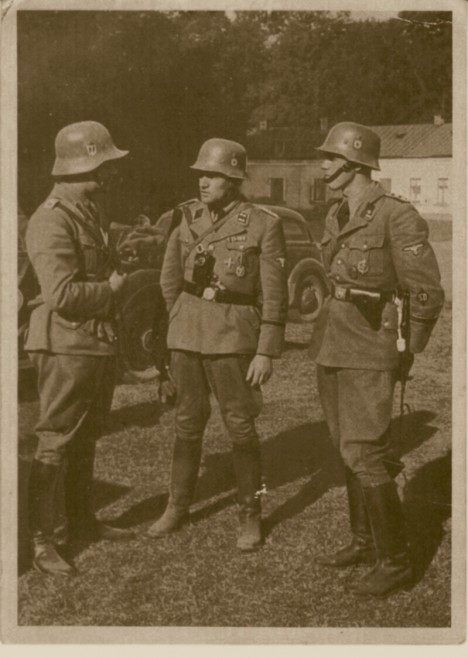
David Kilcullen an Australian Army Lieutenant Colonel and counterinsurgency expert and advisor to General David Petreus noted

Colonel Dennis Drew writing in 1988 understood the linkage of all parts of insurgency and how well an insurgency represents the essence of the thought of Prussian theorist Carl von Clausewitz: “Although theorists consider insurgent warfare to be anti-Clausewitzian, such warfare is the very embodiment of the Prussian master’s most famous dictum. Insurgency represents the total integration of political and military factors, but with political factors always in complete domination.” (INSURGENCY AND COUNTERINSURGENCY American Military Dilemmas and Doctrinal Proposals- Air University Press Maxwell Air Force Base, Alabama 1988)

Thus attempting to fight an insurgency and terrorist groups thinking that one can defeat them in the style of world War Two, as is so often espoused by pundits and amateur military theorists that crowd the airwaves and cyber space is foolish and only leads to the defeat of the counter-insurgent and the loss of the population targeted by the insurgent. The wars in Afghanistan and Iraq are not conventional wars and the political outweighs the military in every respect.  As Drew noted:
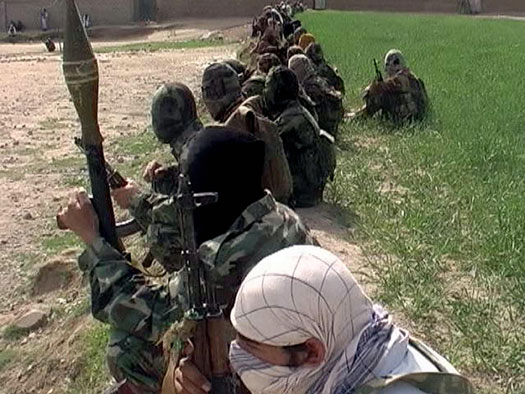
“Although the military aspect of the struggle may ebb and flow, the source of insurgent strength–a covert political infrastructure–remains constant. This infrastructure, the bitter fruit resulting from the perceived political and economic inequities sown much earlier, is the most important ingredient in the insurgent recipe for success. The political infrastructure performs at least six major functions vital to the survival, growth, and eventual success of the insurgency: (1) intelligence gathering and transmission; (2) provision of supplies and financial resources; (13) recruitment; (4) political expansion and penetration; (5) sabotage, terrorism, and intimidation; and (6) establishment of a shadow government.”

This is exactly what has happened in Afghanistan and why we have such difficulty in fighting the insurgency.

One of the most common tactics that the United States has attempted in attacking the insurgents is the strategy of decapitation. In this the U.S. has attempted to kill the leaders at the top echelons of the insurgency with limited success. Even when we kill off a senior Al Qaida or Taliban leader others rapidly take their place with little affect in their operations against us. Galula recognized the fallacy of this approach in Algeria when the French government succeeded in capturing five top leaders of the Algerian rebellion. “Then, five top leaders of the rebellion, including Ben Bella, had been neatly caught during a flight from Rabat to Tunis. Their capture, I admit, had little effect on the direction of the rebellion, because the movement was too loosely organized to crumble under such a blow.” The lesson here is that should we ever succeed in capturing or killing Osama Bin Laden or Mullah Omar that this will not lead to victory unless we are able to protect the population of Afghanistan.

Protecting the population Iraqi Police and Civilians in Ramadi

To do this the population must come to our side because they know that we will stay the course and that we can be counted on to help them.  This cannot just be the military aspect of protecting them against the terrorists as well as economic and political reforms that is consistent with their traditional way of life which is not necessarily consistent with Western political and social traditions or practices. In fact the difficulty for the United States and NATO in Afghanistan is the political struggle on the home front where as Drew states:

“American military dilemma concerns time, public support, and image. Time is the ally of the insurgent; the longer an insurgent survives, the stronger its chances of growing. Meanwhile, as time drags on, the American military position is weakened by declining support, impatience, and war weariness at home, particularly if there is no perceived progress in the struggle. Maintaining public support is clearly a responsibility of the political side of the equation and involves factors far beyond the battlefield–although military progress is a key ingredient. The connection between the duration of the struggle and public support is the image of the insurgency presented to the American body politic.”

To be continued….

Peace

Padre Steve+

1 Comment

Filed under counterinsurency in afghanistan, History, iraq,afghanistan, Military, national security, Political Commentary

“I have not yet begun to Fight!” John Paul Jones and the Battle of Flamborough Head

Battle off Flamborough Head September 23rd 1779

Two hundred thirty one years ago today a small naval battle occurred off the coast of Yorkshire England. From a purely military perspective the battle was rather insignificant. A squadron of five American and French ships intercepted a convoy guarded by two British ships. However, the battle was one that had immense psychological significance for the Americans as a ramshackle converted French East India ship with an inferior main battery forced a materially superior British warship to strike her colors. In fact the battle is so significant to the United States Navy that the body of the victor, Captain John Paul Jones was returned to the United States in 1905 from an abandoned site in northeastern Paris known as the former St. Louis Cemetery for Alien Protestants to be interred in Bancroft Hall at the United States Naval Academy. Jones had an unusual career as a British merchant skipper accused of murdering a mutinous crewman at Tobago and escaped to Fredericksburg Virginia out of fear that he would be tried in a local versus and Admiralty Court.

John Paul Jones

Jones went to the United States and due to his friendship with Henry “Lighthorse” Lee and other friends in the Continental Congress including a man who became a lifelong friend, Benjamin Franklin obtained a commission in the Continental Navy as a First Lieutenant.  At that time the “First Lieutenant” was the senior officer among the Lieutenants on a ship and often served as the First Officer or Executive Officer.  His first assignment was on the fleet flagship Alfred where he hoisted the first US Ensign aboard an American Naval vessel.  He took part in the raid on Nassau and upon his return assumed command of the Sloop of War Providence where he captured 16 prizes of war and escaped capture by the a British Frigate. He then assumed command of Alfred for a brief time capturing a key supply vessel that had winter clothing for British troops commanded by General Burgoyne in New York.  Following this he took command of the 18 gun Sloop of War Ranger in France received the first ever salute to an American man-of-war by a foreign power 8 days after the French had recognized the American Colonies as an independent nation.

Ranger receives the first salute rendered to an American warship by a foreign power

The nine-gun salute fired from Admiral Piquet’s flagship recognized this and the new Franco-American alliance. Jones wrote of the event: “I accepted his offer all the more for after all it was a recognition of our independence and in the nation.” After this made an epic raid on the port of Whithaven and captured the British 20 gun Brig HMS Drake in an hour long fight.  Jones’ raid on Whithaven struck fear into the British populace and forced the British to allocate more resources to the defense of British seaports than had previously been the case.  The capture of the Drake was of immense psychological importance and along with Jones’ other victories would ultimately lead to the formation of the United States Navy.

Bonhomme Richard

Jones’ exploits made him a celebrated figure and after giving up command of Ranger took command of the Bonhomme Richard a converted 42 gun former French East India ship named after Benjamin Franklin’s book “Poor Richards’ Almanac” and a mixed squadron of American and French ships including the 36 gun American Frigate Alliance, the 32 gun French Frigate Pallas and two 12 gun warships the Vengeance and Le Cerf. Detailed to provide a diversion for a combined French and Spanish fleet the squadron menaced Ireland and Scotland before moving into the North Sea.  As they came into English waters the Americans intercepted a 50 ship convoy on the 22nd of September. The convoy which was enroute to the Baltic was escorted by the 44 gun two-decker Serapis. Serapis was brand new and powerful in comparison with Bonhomme Richard though a larger ship was not designed as a warship nor had as powerful battery as Serapis. A second ship, the 20 gun Countess of Scarborough accompanied Serapis.

Jones directing the battle from the Bonhomme Richard

The battle was joined about 1800 on the 23rd and the Serapis which was more maneuverable than Jones’ flagship pounded the Bonhomme Richard holing her below the waterline and seriously damaging her with little damage to herself and Jones’ problems were compounded when with the first broadside two of Bonhomme Richard’s elderly 18 pounders burst damaging the ship and killing most of the gun crews on the lower deck.  Jones attempted to close the range in order to grapple the Serapis and make the battle a close aboard action. Eventually the bow of Bonhomme Richard ran into the stern of Serapis and the Captain of Serapis Captain Richard Pearson hailed Jones to ask if he had struck his colors (surrendered.) The First Lieutenant of Bonhomme Richard Richard Dale recorded Jones’ response for posterity “I have not yet begun to fight!”

Alliance opens fire on Serapis and Bonhomme Richard

Serapis then collided with Bonhomme Richard and in his attempt to extricate his ship from the American Captain Pearson ended up causing the ships to come side to side and Jones’ crew lashed the ships together.  The fight now became a close quarter fight with the remaining guns on both ships blasting large holes in the other at point blank range while Marines in the rigging poured relentless musket fire and grenade volleys on the exposed crews of their opponents. An American grenade thrower was able to drop a grenade down an open hatch of Serapis where it exploded near a charge of gunpowder placed in readiness setting off a chain reaction of explosions which knocked out five guns and killed or wounded most of the gun crews.

Bonhomme Richard had taken a severe beating with most of her guns knocked out, taking water and burning from fires ignited by the British onslaught. The Bonhomme Richard’s Carpenter and Master of Arms thinking that Jones was dead took it on themselves to hail the British to say that the Americans had struck their colors, which had been shot away in the engagement.  Pearson hailed Jones asking of he had really struck and Jones responded “I have not yet thought of it, but I am determined to make you strike.” The battle continued and the Alliance under the command of a Frenchman with an American commission Pierre Landais came up and delivered a devastating broadside much of which hit Bonhomme Richard, holing her again below the waterline and causing her to settle rapidly. At the same time she caused additional damage to Serapis. With his ship badly damaged and Alliance threatening Pearson stuck his colors in person at 2230 hours.  Jones would take possession of Serapis and the badly damaged Bonhomme Richard would sink the on the 25th of September despite Jones’ best efforts to save her.  Jones made temporary repairs Serapis and sought refuge in the Netherlands.

The battle was militarily insignificant but again a major psychological victory as Jones had for the second time defeated a British warship in British waters within sight of the local population.  Even though Jones had taken Serapis the British warships completed their mission of protecting the convoy. Jones’s post war career would leave him embittered. His opportunity to command the first US Navy Ship of the Line, the 74 gun America disappeared when that ship was given to France. Made a Chevalier of France by Louis the XVI and awarded a gold medal by Congress Jones found employment in the Imperial Russian Navy of Catherine the Great. Though successful against the Turks  jealous Russian commanders conspired against him and had him removed from his command of the Black Sea Fleet.  He retired to France where he died of a brain tumor on July 18th 1792.

In the years since that victory the United States Navy went from a militarily insignificant force to the most powerful Navy in the world. Jones and the ships that he captained would not be forgotten. Two Aircraft Carriers were named after Jones’ Sloop of war Ranger, while several destroyers have born his name.

The odds against Jones in his battle with Serapis were heavily weighted against him.  His victory over Serapis was another demonstration that the Americans should not be taken lightly and began a tradition of valiant service for the Navy that has endured throughout the centuries.  The victory off Flamborough Head reaches into the present as American sailors and their ships ply the world’s oceans keeping the sea lanes open and protecting American interests abroad.

Peace

Padre Steve+

3 Comments

Filed under History, Military, Navy Ships, US Navy

Iconic and Heroic: The Fletcher Class Destroyers

The USS Fletcher DD-445

If ever a class of warships can define a ship type the destroyers of the Fletcher Class were that. The most numerous of all United States Navy destroyer classes the Navy commissioned 175 of these ships between June 1942 and February 1945.  There were two groupings of ships the 58 round or “high bridge” ships and the 117 square or “low bridged” ships. It was a sound design that would be modified for use in the later Allen M. Sumner and Gearing Class destroyers.  Eleven shipyards produced the ships fast, heavily armed and tough the ships would serve in every theater of the war at sea but would find their greatest fame in the Pacific where many became synonymous with the courage and devotion of their officers and crews.

USS Stevens one of the 6 Fletchers equipped with an aircraft catapult

The ships were a major improvement on previous classes of destroyers and were equal or superior to the destroyers of our allies and our enemies in the war.  At 2050 tons displacement and 2900 tons full load the ships were significantly larger than preceding classes and were designed to mount a superior anti-aircraft armament to compliment their main battery of five 5” 38 caliber dual purpose guns and ten 21” torpedo tubes. 376 feet long and flush decked they were an exceptionally tough class of ships which was demonstrated often in the brutal surface battles in the South Pacific, Leyte Gulf and in the battles with Kamikazes off the Philippines, Iwo Jima, Okinawa and the Japanese mainland.  They were the first destroyers of the US Navy which were built with radar as part of the initial design.

USS O’Bannon DD-450 in 1961

The anti aircraft armament was increased throughout the war. Initially this was composed of: 4 x 40mm Bofors in two twin-mounts and 6 to 13 x 20mm Oerlikon in single-mounts. By June of 1943 new ships of the class mounted 10 x 40mm Bofors in five twin-mounts 7 x 20mm Oerlikon in single-mounts. As the Kamikaze threat became dire ships returning to the United States for refit lost one of their torpedo tube mounts and had their AA armament increased to 14 x 40mm Bofors in three twin and two quad mounts and 12 x 20mm Oerlikon in six twin mounts.  One of the more unusual experiments was to equip six ships with a catapult for a float plane. This eliminated some of their AA guns and one torpedo tube mounting. It was not successful and the mounts were removed before the end of the war.

USS Nicholas in action at Kula Gulf

The first ships of the class saw action in the Solomons during the Guadalcanal campaign.  Fletcher and O’Bannon took part in the Naval Battle of Guadalcanal where O’Bannon was one of several destroyers that ganged up on the Japanese Battleship Hiei at ranges as low as 500 yards causing heavy damage to the Battleship which was sunk by naval aircraft the following day.  The O’Bannon would be awarded the Presidential Unit Citation for her actions around Guadalcanal which read:

O’Bannon

“For outstanding performance in combat against enemy Japanese forces in the South Pacific from October 7, 1942, to October 7, 1943. An aggressive veteran after a year of continuous and intensive operations in this area, the U.S.S. O’BANNON has taken a tremendous toll of vital Japanese warships, surface vessels and aircraft. Launching a close range attack on hostile combatant ships off Guadalcanal on the night of November 13, 1942, the O’BANNON scored three torpedo hits on a Japanese battleship, boldly engaged two other men o’ war with gunfire and retired safely in spite of damage sustained. During three days of incessant hostilities in July 1943, she gallantly stood down Kula Gulf to bombard enemy shore positions in coverage of our assault groups, later taking a valiant part in the rescue of survivors from the torpedoed U.S.S STRONG while under fierce coastal battery fire and aerial bombing attack and adding her fire power toward the destruction of a large Japanese naval force. In company with two destroyers, the O’BANNON boldly intercepted and repulsed nine hostile warships off Vella Lavella on October 7, 1943, destroying two enemy ships and damaging others. Although severely damaged, she stood by to take aboard and care for survivors of a friendly torpedoed destroyer and retired to base under her own power. The O’BANNON’s splendid acheivements and the gallant fighting spirit of her officers and men reflect great credit upon the United States Naval Service.

DESRON 23

Fletcher’s composed DESON 23 the Little Beavers” commanded by Commodore Arleigh “31 knot” Burke. The squadron which covered the initial landings at Bougainville in November 1943 fought in 22 separate engagements during the next four months. During this time the squadron was credited with destroying one Japanese cruiser, nine destroyers, one submarine, several smaller ships, and approximately 30 aircraft.  Under Burke the squadron was composed of USS Foote (DD-511), USS Charles Ausburne (DD-570), USS Spence (DD-512), USS Claxton (DD-571), USS Dyson (DD-572), USS Converse (DD-509) and USS Thatcher (DD-514).  At the Battle of Cape St. George the squadron intercepted a Japanese force of 5 destroyers sinking 3.  At the Battle of Empress Augusta Bay the ships were in action as part of Task Force 39 based around Cruiser Division 12 comprised of the Cleveland Class Light Cruisers Montpelier, Cleveland, Columbia and Denver the took part in the sinking of the Japanese Light Cruiser Sendai and a destroyer.  For their efforts DESRON 23 would be awarded the Presidential Unit Citation which stated:

“For extrordinary heroism in action against enemy Japanese forces during the Solomon Islands Campaign, from November 1, 1943, to February 23, 1944. Boldly penetrating submarine-infested waters during a period when Japanese naval and air power was at its height, Destroyer Squadron TWENTY THREE operated in daring defiance of repeated attacks by hostile air groups, closing the enemy’s strongly fortified shores to carry out sustained bombardments against Japanese coastal defenses and render effective cover and fire support for the major invasion operations in this area. Commanded by forceful leaders and manned by aggressive, fearless crews the ships of Squadron TWENTY THREE coordinated as a superb fighting team; they countered the enemy’s fierce aerial bombing attacks and destroyed or routed his planes; they intercepted his surface task forces, sank or damaged his warships by torpedo fire and prevented interference with our transports. The brilliant and heroic record achieved by Destroyer Squadron TWENTY THREE is a distinctive tribute to the valiant fighting spirit of the individual units in this indomitable combat group and of each skilled and courageous ship’s company.”

USS Johnston DD-557

Fletcher’s served heroically with “Taffy-3” in the Battle of Samar at the Battle of Leyte Gulf.  Taffy-3 which was composed of 6 escort carriers, the Fletcher Class destroyers Hoel, Johnston and Heermann and 4 destroyer escorts was assigned the task of providing close air support for troops ashore and anti-submarine protection for transports.  On the morning of October 25th Admiral Halsey took Third Fleet north to engage a Japanese carrier force believing a Japanese surface force of battleships and cruisers to have withdrawn after being heavily hurt by submarine and air attacks.  The carrier force had few aircraft and was considered a decoy by the Japanese. This left the San Bernardino Strait unguarded and the Japanese surface force which by now was comprised of 4 battleships including the Yamato as well as 6 heavy and 2 light cruisers and 11 destroyers doubled back going through the strait during the early morning hours of the 25th.  Just before dawn a patrol aircraft spotted the Japanese force and at 0659 Yamato opened fire on the task group.

USS Hoel DD-533

The three Fletcher’s and the Destroyer escort Samuel B Roberts were launched into a suicidal counter-attack against the Japanese force. Led by Johnston under the command of Ernest E. Evans the little ships engaged their vastly superior foe as the escort carriers edged away as they launched and recovered their aircraft to keep a continuous air assault on the Japanese force.  Johnston scored numerous hits with her 5” guns on the Heavy Cruiser Kumano and when she reached torpedo range launched her 10 “fish” one of which blew off Kumano’s bow and another of which crippled Kumano’s sister Suzuya before she was hit in quick succession by a 14” shell from the Battleship Kongo which hit her engine room and three 6” shells from Yamato which struck her bridge.  Evans kept the crippled ship in the fight drawing fire away from other attacking destroyers and fending off a Japanese destroyer squadron that was trying to flank the carriers. Johnston continued to be hit and was abandon at 0945 sinking 25 minutes later with 186 of her crew.  Evans did not survive and was awarded the Medal of Honor.

USS Heermann DD-532 in action at Samar

Hoel under the command of Commander Leon S. Kintberger took on the Battleship Kongo and a column of cruisers lead by the Heavy Cruiser HaguroHoel’s torpedo attack on Kongo forced that ship to turn away and torpedo hits were claimed on the Haguro, although that ship remained in action and the Japanese denied any torpedo damage from the attack. The Japanese concentrated on Hoel sinking her at 0855 taking all but 86 of her crew to a watery grave.

Heermann under Commander Amos Hathaway threw herself into the fight engaging Japanese battleships and cruisers. Heermann engaged Heavy Cruiser Chikuma with her guns while mounting a torpedo attack on Haguro. She then attacked the Japanese battleships directly engaging Haruna and forcing Yamato to head away from the action for 10 minutes as she was bracketed by two of Heermann’s torpedoes running on a parallel course.  She engaged the other battleships at such close range that they could not hit her and broke off to intercept a column of cruisers.  Once again she engaged Chikuma in a bloody duel with both ships taking heavy damage. Crippled by a series of 8” shell hits from the heavy cruisers Heermann was down heavily at the bow, so much so that her anchors dragged the water. Carrier aircraft joined the battle and Chikuma withdrew from the fight and sank during her withdraw. Heermann then engaged Heavy Cruiser Tone before that ship, also damaged by air attack withdrew from the fight.  Though she was heavily damaged the Heermann was the only destroyer to survive the action.  Despite their terrible losses the ships and aircraft of Taffy-3 sank 3 heavy cruisers and a destroyer and heavily damaged 3 battleships and 3 heavy cruisers.

Just a bit wet, USS Halsey Powell unrep with USS Wisconsin

For their heroic actions which kept the Japanese from getting to the vulnerable transports Taffy-3 including the valiant destroyers Johnston, Hoel, Heerman and Destroyer Escort Samuel B Roberts was awarded the Presidential Unit Citation which read:

“For extraordinary heroism in action against powerful units of the Japanese Fleet during the Battle off Samar, Philippines, October 25, 1944. Silhouetted against the dawn as the Central Japanese Force steamed through San Bernardino Strait towards Leyte Gulf, Task Unit 77.4.3 was suddenly taken under attack by hostile cruisers on its port hand, destroyers on the starboard and battleships from the rear. Quickly laying down a heavy smoke screen, the gallant ships of the Task Unit waged battle fiercely against the superior speed and fire power of the advancing enemy, swiftly launching and rearming aircraft and violently zigzagging in protection of vessels stricken by hostile armor-piercing shells, anti-personnel projectiles and suicide bombers. With one carrier of the group sunk, others badly damaged and squadron aircraft courageously coordinating in the attacks by making dry runs over the enemy Fleet as the Japanese relentlessly closed in for the kill, two of the Unit’s valiant destroyers and one destroyer escort charged the battleships point-blank and, expending their last torpedoes in desperate defense of the entire group, went down under the enemy’s heavy shells as a climax to two and one half hours of sustained and furious combat. The courageous determination and the superb teamwork of the officers and men who fought the embarked planes and who manned the ships of Task Unit 77.4.3 were instrumental in effecting the retirement of a hostile force threatening our Leyte invasion operations and were in keeping with the highest traditions of the United States Naval Service.”

USS Isherwood (DD-520) underway in heavy weather as she comes alongside the heavy cruiser USS Tuscaloosa (CA-37) in August 1943. National Archives and Records Administration. Photo # 80-G-79429. [Navsource]

During the war 19 of the class were lost and 6 damaged so badly that they were not repaired. 44 of the ships were awarded 10 battle stars or more while 19 were awarded Naval Unit Commendations and 16 Presidential Unit Citations.  Following the war all were decommissioned and placed in reserve. Many were re-commissioned during the Korean War and served through Vietnam. Some of these ships were modernized with newer ASW weapons and re-designated Escort Destroyers (DDE) while others had their air search radar modernized and were re-classified as Radar Picket Destroyers or (DDR). The last Fletcher in US Service decommissioned in 1971.  52 were sold or transferred under military assistance programs to other navies in the 1950s.  The ships served well and the last one in active service the Mexican Navy Destroyer Cuitlahuac the former USS John C Rodgers DD-874 was decommissioned in 2001.

Ex USS Twinning in Republic of China Navy Service, note weapon modifcations

Zerstörer Z-1 Rommel

USS Kidd as Museum and Memorial

Four are currently open as memorial ships the USS Cassin Young DD-793 at Buffalo NY, the USS The Sullivans DD-537 at Boston MA and USS Kidd DD-661 at Baton Rouge LA can be seen in the United States. The Cassin Young is berthed at the old Charlestown Naval Yard in Boston across the pier from the Frigate USS Constitution.  The former the Greek destroyer Velos the ex-USS Charette DD-581 is located in Athens.  The John Rodgers has been purchased by a group in the US but is currently laid up in Mexico and her fate is undecided. I hope that she too will be saved for future generations.

The Fletcher Class really symbolizes more than any class of destroyer the classic look of what a destroyer should be. Their clean lines and classic design are iconic not just in this country but in the 15 other countries that they would serve in during the following years.  Their amazing record and service in World War Two and in the following years in both the US Navy and the navies of our Allies is one that will probably never be surpassed.

I have visited the Cassin Young in Boston; it is well worth the time to see. I hope that I might see The Sullivans and Kidd in the coming years.

The Zerstörer Z-4 ex USS Dyson in heavy seas

I salute the ships of the class and the officers and sailors that served on them in peace and war.

Peace

Padre Steve+

5 Comments

Filed under History, Navy Ships, US Navy, world war two in the pacific

Save the USS Olympia!

I am a historian and for that matter to be more specific a military historian.  I have had a very busy week in “real life” but I saw a couple of articles last week about the cruiser USS Olympia.  It seems that this warship, a symbol of American industry and power at the end of the 19th and turn of the 20th Century is in danger of being scrapped or disposed of as an artificial reef of Cape May New Jersey if a benefactor is not found to help pay the more than 5 million dollars needed to keep this national and international maritime treasure afloat.  The 5 million is just the immediate cost, it is estimated that it may take up to 19.5 million dollars to dry-dock her and make the extensive repairs to her hull.  Olympia is not the first historic US Navy ship to be threatened by the ravages of time, the Frigate USS Constitution,

http://sundaygazettemail.com/Life/Travel/201005270677

The Olympia was one of the first steel and steam warships of the United States Navy and is the oldest steel warship in the United States Navy still afloat.  She was a transitional ship as the Navy entered the modern age and her design was revolutionary for her time.  Displacing 5870 tons and with a length of 344 feet she was She was powered by reciprocating steam engines and capable of 20 knots. She had twin revolving turrets which housed her main battery of four 8 inch guns and mounted a secondary battery of ten 5 inch guns which protruded from her superstructure on the main deck.  She also retained sails as part of her design and was the first US Navy ship with a refrigeration plant and ice making machines.

She was the Flagship of Admiral Dewey at the Battle of Manila Bay during the Spanish American War and her last mission was to bring the body of the “Unknown Soldier” back from France following the First World War.  The launched on November 5th 1892 and commissioned on 5 February 1895 Olympia was decommissioned for the final time in on December 9th 1922.  She would continue her US Navy career in an inactive status after being reclassified as a miscellaneous auxiliary.  She remained as a Navy asset until she was acquired by the Cruiser Olympia Association on 11 SEP 1957 and was classified as a National Historic Landmark on 29 January 1964 and transferred to the Independence Seaport Museum in January 1995.
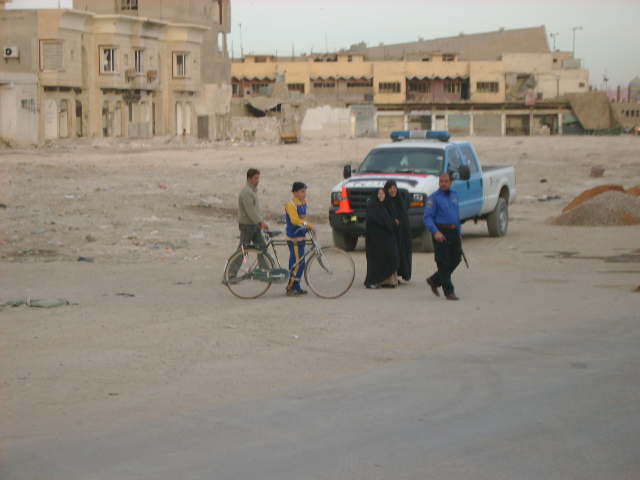
The ex-Olympia is a national and maritime history treasure. There are but a handful of ships for that era that still remain.  The Imperial Japanese Battleship Mikasa, Admiral Togo’s flagship at the Battle of Tsushima in 1905 is outside the Naval Base of Yokosuka Japan http://www.japan-i.jp/explorejapan/kanto/kanagawa/miurapeninsula/d8jk7l000002rn1h.html. The Russian Cruiser Aurora is moored in Petersburg http://www.aurora.org.ru/eng/ and the Greek Armored Cruiser Georgios Averof http://www.hnsa.org/ships/averof.htm are the only ships of that era remaining.

Olympia is in dire need of dry-docking and major repairs to her hull. Despite Federal Government regulations and sound maritime practices which stipulate that museum ships should be dry-docked and repaired at the minimum of every 20 years the Olympia has not been dry-docked or repaired since 1957.  She has numerous patches and her caretakers keep constant watch on her to ensure that no leak develops that could sink her. Additionally water now leaks through her decks into her hull causing further problems with rust and hull deterioration.

The Olympia is a National Historic Landmark listed on the National Register of Historic Places (1964), a National Historic Engineering Landmark (1977), and National Historic Maritime Landmark (1988) and was awarded “Official Project” status of Save America’s Treasures program (1999).

She will be closed as an attraction on the Philadelphia waterfront on November 22nd as the caretakers and the Navy determines her fate. Ultimately the Navy will have the final say in Olympia’s fate; even so efforts need to be made to enlist private and corporate sponsors to help save this treasure. As of the present time these efforts have been unsuccessful.

Naval Historian and author of a book on Olympia Lawrence Burr commented: “It’s an absolute national disgrace. It’s an appalling situation. She is a national symbol, and she marks critical points in time both in America’s development as a country and the Navy’s emergence as a global power.”

The “Friends of the Cruiser Olympia” http://www.cruiserolympia.org/ as well as former Secretary of the Navy John Lehman and former US Representative Curt Weldon  are leading the charge to see Olympia restored and reopened.

Olympia is not the first US Navy historic ship to be in such dire need. The first was the USS Constitution which was going to be broken up in 1830 until the public inspired by Oliver Wendell Homes’ poem elicited the money needed to repair that ship which was again threatened in the 1920s and was saved by a private-public endeavor urged by the Secretary of the Navy Curtis D. Wilbur which included a drive where children contributed thousands of dollars of pennies to the restoration effort and where prints of “Old Ironsides” were sold for .50 each.  Certainly it will take a creative effort to save Olympia and preserve her for history and those Americans that come after us.

I go to Baltimore to see an Orioles game on October 1st and may take a short trip to Philadelphia to visit the Olympia and if I do I will do an update with my own photos.

Peace,

Padre Steve+

6 Comments

Filed under History, Military, Navy Ships, US Navy