Category Archives: iraq,afghanistan

Armed Forces Day 2013: A Sober Reflection on a Nearly Invisible Holiday

2013ArmedForcesDayHiRes

Today is Armed Forces Day and unfortunately most of the country will not notice unless they are attending a Baseball game where it is being observed or some special event on a base, national cemetery, monument or VFW hall. There are also protests, sometimes involving veterans. Last year at the NATO Summit in Chicago which coincided with Armed Forces Day a number of veterans protested by throwing away their Global War on Terror Medal. I actually have little problem with people protesting wars, even the current one so long as they direct their protest at the appropriate target, the politicians, pundits, think tank wonks and lobbyists that profit from war and not the soldiers that fight them.

Now there are a fair number of local celebrations to honor members of the Armed Forces across the country. As a career officer and son of a Vietnam veteran Navy Chief I appreciate those events and the people that put them together. Being a veteran of Operation Iraqi Freedom and Operation Enduring Freedom, especially those that have taken the time to honor Iraq and Afghanistan veterans.

DSC_0028

Likewise there are wonderful people that honor the Armed Forces every day. I think especially about the Maine Troop Greeters of Bangor Maine and the Pease Troop Greeters of New Hampshire. These men and women, many veterans themselves or related to veterans are amazing. They have been welcoming veterans back since early in the war and provide many services to the men and women of the Armed Forces that pass through Bangor Maine International Airport and the Portsmouth International Airport, the former Pease Air Force Base in Pease New Hampshire.  I have had the honor of passing through both locations, Bangor on more than one occasion. While I know that there are many others that do this they are in the minority in this country.

At any given time less than 1% of Americans are serving in all components of the military. For over 10 years we have been at war in Afghanistan and Iraq as well as other locations that we don’t like to talk about too much like Pakistan. However this has not been the effort of a nation at war. For the most part the war effort is that of a tiny percentage of the population.

As a nation we are disconnected from the military and the wars that have been going on for so long. The fact is that most Americans do not feel that they have a personal or vested interest in these wars because they have been insulated by political leaders of both parties from them. There is no draft, and no taxes were raised to fund the wars and the military is worn out while taking 50% of the cuts of the Congressional Sequester.
295_26911892058_4301_n

We have now been at war continuously for nearly 12 years and truthfully there is no end in sight. In that time every single Soldier, Sailor, Marine and Airman volunteered for duty or reenlisted during this time period. Motives may have varied from individual to individual, but unlike the World Wars, Korea and Vietnam every single one volunteered to serve in time of war. I think that this makes the current generation of veterans quite unique.

Many of these volunteers served in Iraq and Afghanistan. Neither war was popular, except in the very beginning when casualties were low and victory appeared to be easy and quick. We like short wars. We left Iraq in December 2011 and Afghanistan is still going to be with us for God knows how long, even though we are drawing down or forces there.

In Afghanistan we followed the same path trod by the British and Soviets in trying to topple regimes and plant our respective versions of civilization in that land of brutal Pashtun, Tajik, Hazara and Uzbek warlords who war on each other as much as any foreign infidel.  It is a path that leads to heartbreak which ties down vast amounts of manpower without any significant strategic gain for the United States or NATO.  This even as war drums beat across the Middle East and nuclear armed Pakistan slips into political and social chaos and keeps a major supply route for the US and NATO to Afghanistan shut down.

The fact is that American and for that matter other NATO and coalition military personnel who have served in Iraq, Afghanistan, the Horn of Africa or at sea are in the minority in all of our countries. Thus when a few of the few of these veterans choose to make a public spectacle of themselves by tossing a medal away they get cheered and lots of media attention. Some liberals applaud the medal throwers and conservatives vilify them without getting what is really going on. Both miss the tragic disconnection between the military and civilian society that is the result of public policy since the end of the Vietnam War. A relatively small professional military in comparison to the population is sent to fight wars while the bulk of the population is uninvolved and corporations, lobbyists and think tanks get rich.

Rachel Maddow the MSNBC host of the Rachel Maddow Show wrote in her outstanding book Drift: The Unmooring of American Military Power:

“The reason the founders chafed at the idea of an American standing army and vested the power of war making in the cumbersome legislature was not to disadvantage us against future enemies, but to disincline us toward war as a general matter… With citizen-soldiers, with the certainty of a vigorous political debate over the use of a military subject to politicians’ control, the idea was for us to feel it- uncomfortably- every second we were at war. But after a generation or two of shedding the deliberate political encumbrances to war that they left us… war making has become almost an autonomous function of the American state. It never stops.” 

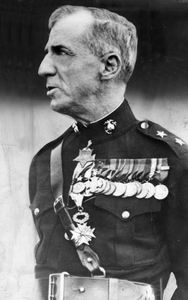
Now, going back to the protestors for a minute. The right to protest and disagree with policy and the politics of war is important and for Americans is protected under the First Amendment. That being said I think it is important that when one protests a war that they direct their protest at the appropriate target, the army of lobbyists and think tank wonks that promote the politics of war regardless of who is President and not the soldiers. The fact is that the lobbyists, pundits that promote war don’t care about the protesters or the troops. This is because no matter who is in office or who controls Congress they will promote policies that keep them employed and their businesses enriched. Marine Major General and Medal of Honor winner Smedley Butler was quite right when he said:

“War is a racket. It always has been. It is possibly the oldest, easily the most, surely the most vicious. It is the only one international in scope. It is the only one in which the profits are reckoned in dollars and the losses in lives. A racket is best described, I believe, as something that is not what it seems to the majority of the people. Only a small ‘inside’ group knows what it is about. It is conducted for the benefit of the very few, at the expense of the very many. Out of war a few people make huge fortunes.”

I may disagree with the manner of how and when veterans protest wars that they have served like those that threw their medals away in Chicago last year. However, I am not going to question their motives, integrity or honor even if I disagree with their manner of protest because I came back different from war.
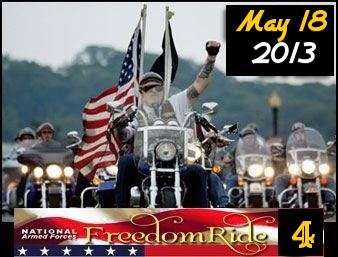
bannerfans_4309565 (3)

When a society sends off its sons and daughters to fight in wars that no one understands, and the vast majority of people no longer support it is no wonder that some veterans make such displays. Likewise it is understandable why other veterans have major issues with such protestors, just as many Vietnam veterans still feel the hurt of how a nation turned its back on them. For example I still have a terrible time even thinking about Jane Fonda, the images of her manning a North Vietnamese anti-aircraft gun when my dad was serving in Vietnam.

295_26912097058_4309_n

Protests may make some feel good, but they often miss the bigger point of why wars like these go on for so long.  That they do is because misguided policies have brought about a chronic disconnection in our society between those that serve in the military and those that do not. But how can there not be when in the weeks after 9-11 people like President Bush and others either directly or in a manner of speaking told people to “go shopping”* as we went to war in Afghanistan? When I returned from Iraq I returned to a nation that was not at war whose leaders used the war to buttress their respective political bases.

295_26912012058_78_n

I think that Armed Forces Day should be better celebrated but I am grateful to those people that do things every day to thank and support military personnel in thought, word and deed like the Maine Greeters and Pease Greeters. The interesting thing about these groups is that they are made up of citizens from across the political spectrum, veterans and non-veterans who simply care for and appreciate the men and women that serve in and fight the wars that no-one else can be bothered to fight.

dscn0064

I just hope and pray that the end in Afghanistan does not turn into an even worse historic debacle than suffered by the British or the Soviets during their ill fated campaigns. Of course the politicians, pundits, preachers and the defense contractors, banks and lobbyists will find a way to profit from this no matter how many more troops are killed, wounded or injured and how badly it affects military personnel or their families. After all, to quote Smedley Butler, “war is a racket.”
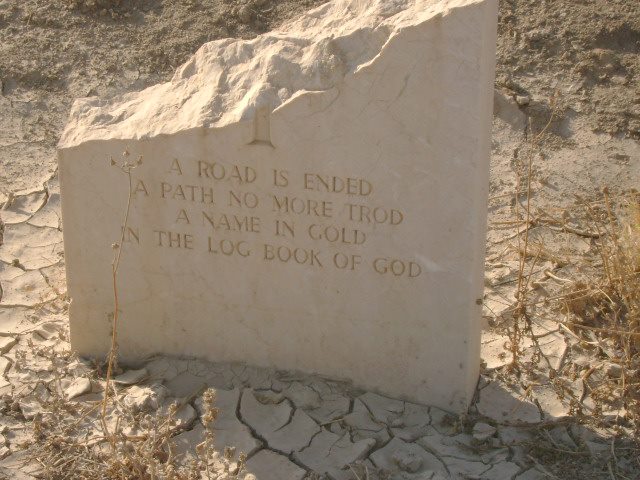
481801_10151367001287059_1003164983_n

Peace

Padre Steve+

President Bush’s actually words were “Now, the American people have got to go about their business. We cannot let the terrorists achieve the objective of frightening our nation to the point where we don’t — where we don’t conduct business, where people don’t shop…” http://georgewbush-whitehouse.archives.gov/news/releases/2001/10/20011011-7.html

2 Comments

Filed under History, iraq,afghanistan, Military, national security, philosophy

Happy 105th Birthday to the United States Navy Nurse Corps

navy_nurse-1


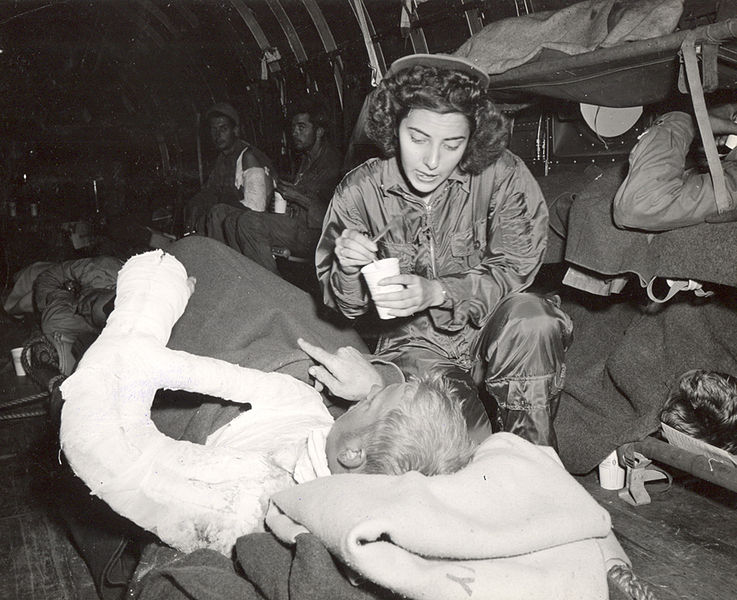
Last week was National Nurses Week. Today was the 105th Anniversary of the Navy Nurse Corps. Nurses are the lynchpin of medicine. Physicians are incredibly important and as a society we usually ascribe more value to them. However in many case, if not most it is a nurse who is the person that does the heavy lifting in the care of the sick. Before the modern era of nursing was often done by Nuns or by women that volunteered to assist military physicians.

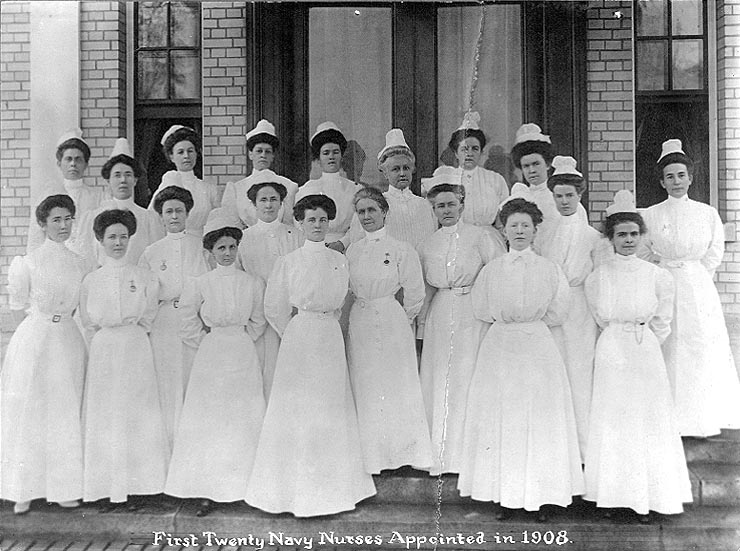
Navy_nurse_corps_1908

The First 20 Navy Nurses “the Sacred 20” 1908

It was in the quagmire of the Crimean War that Florence Nightingale brought about the modern era of nursing, even though physicians and hospitals often saw the women who served as nurses as inexpensive help to care for the sick. Despite this nursing became more and more professional and technical over the years without ever losing that particular calling of ministering to the afflicted that is the essence of their history. In the later 1800s the first nursing schools were established and in 1901 New Zealand was the first country to have Registered Nurses. In 1903 North Carolina became the first US State to require the licensure of nurses.

485px-Lenah_Higbee

Chief Nurse Lena Higbee, Second Superintendent of the Nurse Corps, and first woman awarded the Navy Cross (above) and the ship named after her the USS Higbee DD 806 (below)

USS_Higbee_(DDR-806)_being_refueled_in_1960

The US Navy Nurse Corps was established n 1908 with nurses being commissioned as officers and assigned to Naval Hospitals. However it was the needs of war that brought nursing into the modern age where it is formally recognized as a key component of Health Care. In the World Wars nursing came into its own as a profession. Nurses were among the US personnel that endured the initial onslaught of the war in the Pacific. The Army and Navy Nurses that served and cared for the wounded, starving and emaciated Soldiers, Marines and Sailors on Bataan and Corregidor were heroes in their own right.

Chief_Nurse_Laura_Cobb_and_Dorothy_Still_Danner_among_other_Navy_Nurse_POWs_after_their_release

Navy Nurses released from Japanese Captivity (above) and a Nurse aboard USS Benevolence with a POW released from Japanese Captivity in 1945

733px-Navy_nurse_and_released_POW_on_USS_benevolence,_August_1945_highres

The profession of nursing continues to grow and the women and men who serve as nurses at various levels, from the most highly trained Clinical Nurse Specialists and Nurse Practitioners, or other highly specialized Registered Nurses many of whom have advanced degrees including doctorates down to the most humble Licensed Vocational (or Practical) Nurse and even Certified Nursing Aides. These women and men are the backbone of medicine and despite the long hours, the years of training and certification required of them, many people don’t fully appreciate them until they become sick and are cared for by these wonderful people.

737px-Jane_Kendeigh_USN_Flight_Nurse_1945_a

Ensign Jane “Candy” Kendeigh, the First flight nurse to serve in Iwo Jima and Okinawa Campaigns

Today US Navy Nurses serve in every place one can find a Sailor or Marine. They serve in Hospitals, Medical Centers and other Medical Facilities in the United States and overseas. They serve aboard surface ships, combatants as well as Hospital Ships, with the Fleet Marine Force, in Joint and Multi-National Medical activities deployed in combat zones and in humanitarian operations.

DSCN0066

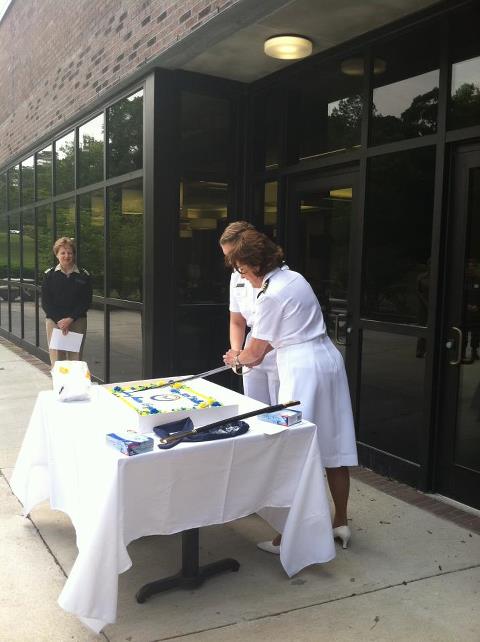
I have been blessed to have known and worked with many amazing nurses in the course of my career as a Medical Service Corps Officer in the Army and as a Chaplain in the military and civilian settings. Today I was present and offered a prayer at the cutting of the Navy Nurse Corps Birthday Cake at Naval Hospital Camp LeJeune. It was my 5th year serving in Navy Medicine and offering this prayer and blessing was an honor that I will always remember. Since I will be transferring out of Navy Medicine in the August-September time frame to assume new duties at the Joint Forces Staff College this will be the last one of these events that I get to officiate at for a few years.

media_db2f5cf3581e4c93b84fbe221904111a_t607


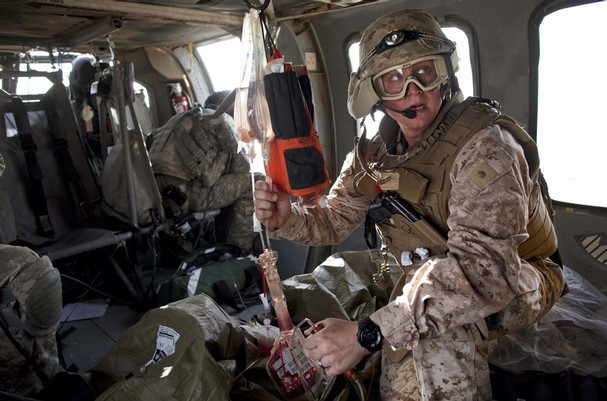
LCDR Eric Gryn in Afghanistan tending a wounded Afghan Soldier on a Medivac flight in 2011, he serves at Naval Hospital Camp LeJeune

5989_10151677233582059_485026871_nCaptain Nancy Pearson cuts the Birthday Cake at Naval Hospital Camp LeJeune

As such I just want to thank all of my friends that serve as Navy Nurses with whom I have shared joys and sorrows the past several years. Blessings on all of you!

God Bless all Nurses tonight, especially those tending the sick, ill and injured and those in harm’s way.

Peace,

Padre Steve+

3 Comments

Filed under healthcare, History, iraq,afghanistan, Military, shipmates and veterans, US Navy

Back from the Abyss: Padre Steve’s Reflections of 5 Years Dealing with PTSD Faith and Life

295_26912097058_4309_n

“God will not look you over for medals, degrees or diplomas but for scars.” Elbert Hubbard

It has been five full years since I descended into the hell of the abyss that is PTSD. Back in the late spring and early summer of 2008 just a few months after my return from what I still consider my best tour of duty in over 30 years of military service with US advisors and Iraq Army and Security forces in Al Anbar Province in 2007-2008 I was in a state of emotional and spiritual collapse.

I really couldn’t believe then what was happening to me or they way that it would end up shaping my life to the present day. In retrospect my return from Iraq marked a beginning of a personal hell that for a number of years seemed like that it would never end. It was painful, it was isolating and it marked a profound change in the way that I saw God, faith, politics and social justice. It changed me in ways that I never could have imagined when I got on a bus heading for Fort Jackson South Carolina following the July 4th holiday of 2007.

Those brave souls that have followed me on this website as well as those that are still my friends despite occasional disagreements and misunderstandings, those that may not understand me but still are my friends have seen this.

So five years later what is it like?

I still have trouble sleeping, not as much as I used to but enough to impact my life. I don’t take heavy doses of sleep meds anymore, just some Melatonin as well as a mild dosage of an anti-anxiety medication and anti-depressant. A far better combination than medications that made me feel like I was hung over without that benefit of sharing too many drinks with friends at the local watering hole.

481801_10151367001287059_1003164983_n

As opposed to the years immediately following my time in Iraq I have to say that I am no longer self medicating with alcohol. I remember in 2009 going out for dinner, having a few beers, then going to a ball game and drinking a few more and coming home with Krispy Kreme donuts and drinking more beer on a regular basis and usually taking a couple of shots or Jaegermeister or glasses of Spanish Brandy just to get to sleep so I could go back to facing life and death situations the next day in our ICUs. I don’t need that anymore, even though sleep can be problematic and dreams and nightmares rivaling anything I can watch on my HD TV…

I still love to pony up to the bar and share a couple of pints with friends but I don’t need it to numb myself into feeling no pain. Talking with many other vets who have served in Iraq, Afghanistan or even Vietnam I know that I wasn’t alone in those dark days.

n671902058_1153794_4301

I have become a bit less hyper-vigilant though when I come home to Virginia Beach than I was just three years ago and most certainly five years ago in May of 2008. However, that being said I do notice that I am more on guard on the roads and that little things, sirens, emergency vehicles, loud noises and traffic still set me off more than when I am in rural North Carolina. This week I have been home because my wife Judy had some surgery and I have had to readjust to the traffic, noises and other things that I haven’t really had to deal with the past few years. That has been both interesting and enlightening.

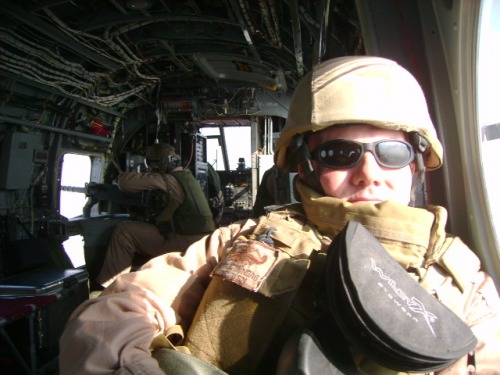
I absolutely hate air travel. I don’t like the crowds, the stress of security or the constant delays, changes and overcrowding. Truthfully I felt more comfortable flying the skies of Iraq on Marine, Army and Air Force fixed and rotor wing aircraft and on occasion being shot at in Iraq’s Al Anbar Province than I do on any airline today in this country.

Physical fitness matters more than it did before, even though I was in very good shape before and during my time in Iraq. But when I came home from that I was not only wounded in mind and spirit, but my body was beaten up. Chronic nagging injuries and chronic pain kept me from doing what I liked doing and what helped me keep my physical-spiritual and emotional balance. Those nagging injuries took a long time to heal, and they took some adjustments on my part which took me several years to adapt to and compensate in my physical regimen.  I can say now that I am in as good or better shape than I was before I left for Iraq in 2007. Maybe I’ll write a best selling book and do an exercise video like Jane Fonda…

flight-to-baghdad-4-me

Whereas in 2008 through 2010 and even until 2011 I was exceptionally sensitive to criticism to the changes that were occurring in my life including my move to the “left” both theologically and politically I have gotten to the point that I realize that it is more important to be honest and authentic as to who I am and what I believe. I have found that those that really matter to me don’t care so much about those things and that relationships maintained with people who don’t always agree with each other where all remain their personal integrity are far more rewarding than relationships that are first and foremost decided by allegiance to political or religious orthodoxy no matter what side of the spectrum it is from. I hate group think. Thus though I have to now consider me to be on the “liberal” side of the political and theological divide I still have to be considered a moderate simply because I refuse to make people my enemy simply because I disagree with them or they with me.

When I began this site in the spring of 2009 I named it Padre Steve’s World…Musings of a Passionate Moderate. I think I did that because it actually described me then, and now, even though I am pretty passionately liberal about some things and that doesn’t bother me in any way because it comes from my wrestling with God and faith and realizing that integrity matters more than about anything else. I have toyed with changing the title of the site but have decided against that because I am a moderate liberal committed to a Christian faith that speaks for the oppressed and is willing to confront those that would use faith, political or economic power to oppress the weak or those different from us.

Since I returned from Iraq in 2008 I discovered what it was to really question faith and God. To become for a couple of years a man who was for all practical purposes an agnostic praying that God still existed and cared. I discovered that in doing so that faith returned, different but more real than I had ever experienced in a life spent in the Christian faith and ministry.

fatherpippy

That brought change because my rediscovered faith brought me into conflict with people in the church denomination and faith community where I had been ordained as a priest. I was asked to leave and found a new home church and denomination that fit my life, faith experience and where I could live and minister in complete integrity. In the church that took me in during the fall of 2010 I can be faithful to the Gospel and care for the lost, the least and the lonely, especially those who have been abused by churches and ministries that have sold their soul to right wing political ideologues whose only concern is their political power and influence and would use churches and Christians to do their evil bidding. I guess that I learned that just because someone wraps the Bible in an American Flag, believes that Jesus brought us the Constitution and says that they “support the troops” it doesn’t necessarily mean that they care a whit about the Bible, the Flag, the Constitution or the Troops. I hope that isn’t too harsh….

Oh well, I feel that I am beginning to ramble so I will say good night and “God Bless,” no matter what God that you profess or for that matter don’t profess.

Peace

Padre Steve+

2 Comments

Filed under christian life, faith, iraq,afghanistan, Pastoral Care, PTSD, Tour in Iraq

Remembering Hell: The Fall of Dien Bien Phu 59 Years Gone by and Still Forgotten

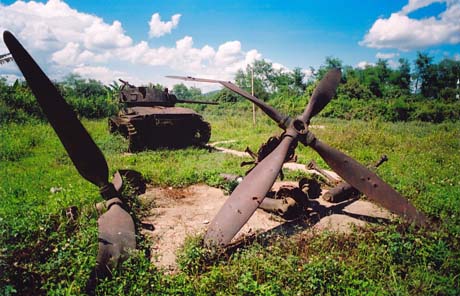
Dien Bien Phu War Remnants

Dien Bien Phu Today

It was an epic battle in a tragic war and most people neither know or care what happened in the valley where a small border post named Dien Bien Phu became synonymous with forgotten sacrifice. This year fewer remembrances are taking place. Some are in Vietnam and others in France.

Diplomat_Sep10059-227x300

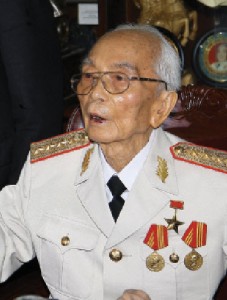
General Vo Nguyen Giap

On May 7th 2011 in Hanoi a small remembrance was held to mark the fall of Dien Bien Phu and honor the victor, 101 year old General Vo Nguyen Giap at his home. Giap is the last senior commander of the war alive at 103 he remains active. That 2011 ceremony was one of the few remembrances held anywhere marking that battle which was one of the watersheds of the 20th Century. A half a world away in Houston Texas a small group of French veterans, expatriates and historians laid a wreath at the Vietnam War Memorial.  In Paris an ever shrinking number of French survivors gather each year on May 7th at 1815 hours for a religious service at the Church of Saint Louis des Invalides to remember the dead and missing of the French Expeditionary Corps lost in Indochina. A small number of other small ceremonies have been held this year.

This battle is nearly forgotten by time even though it and the war that it symbolized is probably the one that we need to learn from before Afghanistan becomes our Indochina.

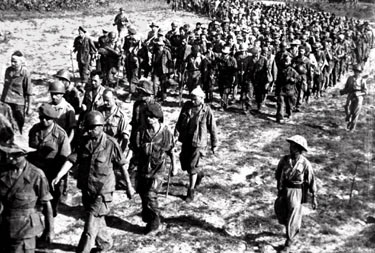
FRENCH SOLDIERS SURRENDER

French Prisoners

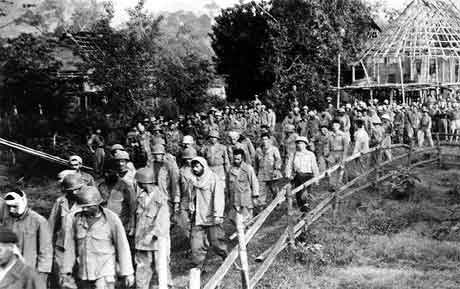
On May 8th 1954 the French garrison of Dien Bien Phu surrendered to the Viet Minh.  It was the end of the ill-fated Operation Castor in which the French had planned to lure the Viet Minh Regulars into open battle and use superior firepower to decimate them.  The strategy which had been used on a smaller scale the previous year at Na Son.

The French had thought they had come up with a template for victory based on their battle at Na Son in how to engage and destroy the Viet Minh. The plan was called the “Air-land base.”  It involved having strong forces in a defensible position deep behind enemy lines supplied by air.  At Na Son the plan worked as the French were on high ground, had superior artillery and were blessed by General Giap using human wave assaults which made the Viet Minh troops fodder for the French defenders.  Even still Na Son was a near run thing for the French and had almost no effect on Viet Minh operations elsewhere while tying down a light division equivalent and a large portion of French air power.

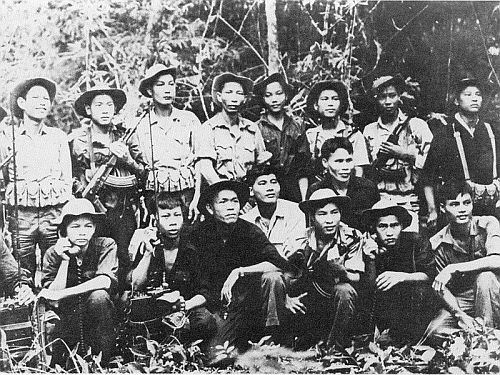
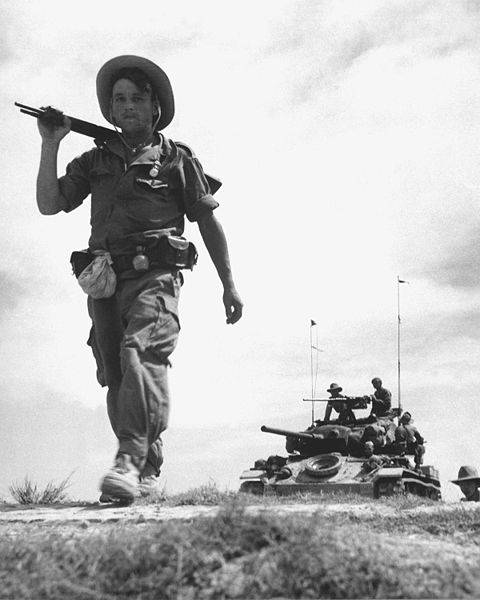
nlfmainforce

Viet Minh Regulars

The French took away the wrong lesson from Na-Son and repeated it at Dien Bien Phu.  The French desired to use Dien Bien Phu as a base of operations against the Viet Minh.  Unfortunately the French chose badly. The elected to occupy a marshy valley surrounded by hills covered in dense jungle. They elected to go light on artillery and the air head was at the far end of the range of French aircraft, especially tactical air forces which were in short supply.  To make matters worse the General Navarre, commander of French forces in Indochina informed that the French government was going to begin peace talks and that he would receive no further reinforcements elected to continue the operation.

dien-bien-phu

French Paras Drop into Dien Bien Phu

Likewise French logistics needs were greater than the French Air Force and American contractors could supply.  French positions at Dien Bien Phu were exposed to an an enemy who held the high ground and were not mutually supporting. The terrain was so poor that French units were incapable of any meaningful offensive operations against the Viet Minh. As such they could only dig in and wait for battle. Despite this many positions were not adequately fortified and the artillery was in exposed positions.

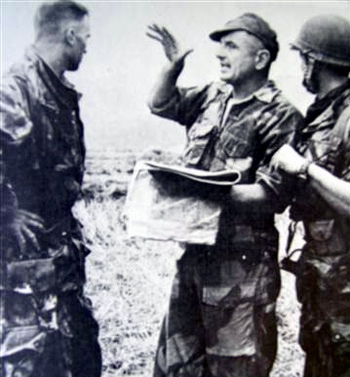
bigeard_instruction_saut

Major Marcel Bigeard 

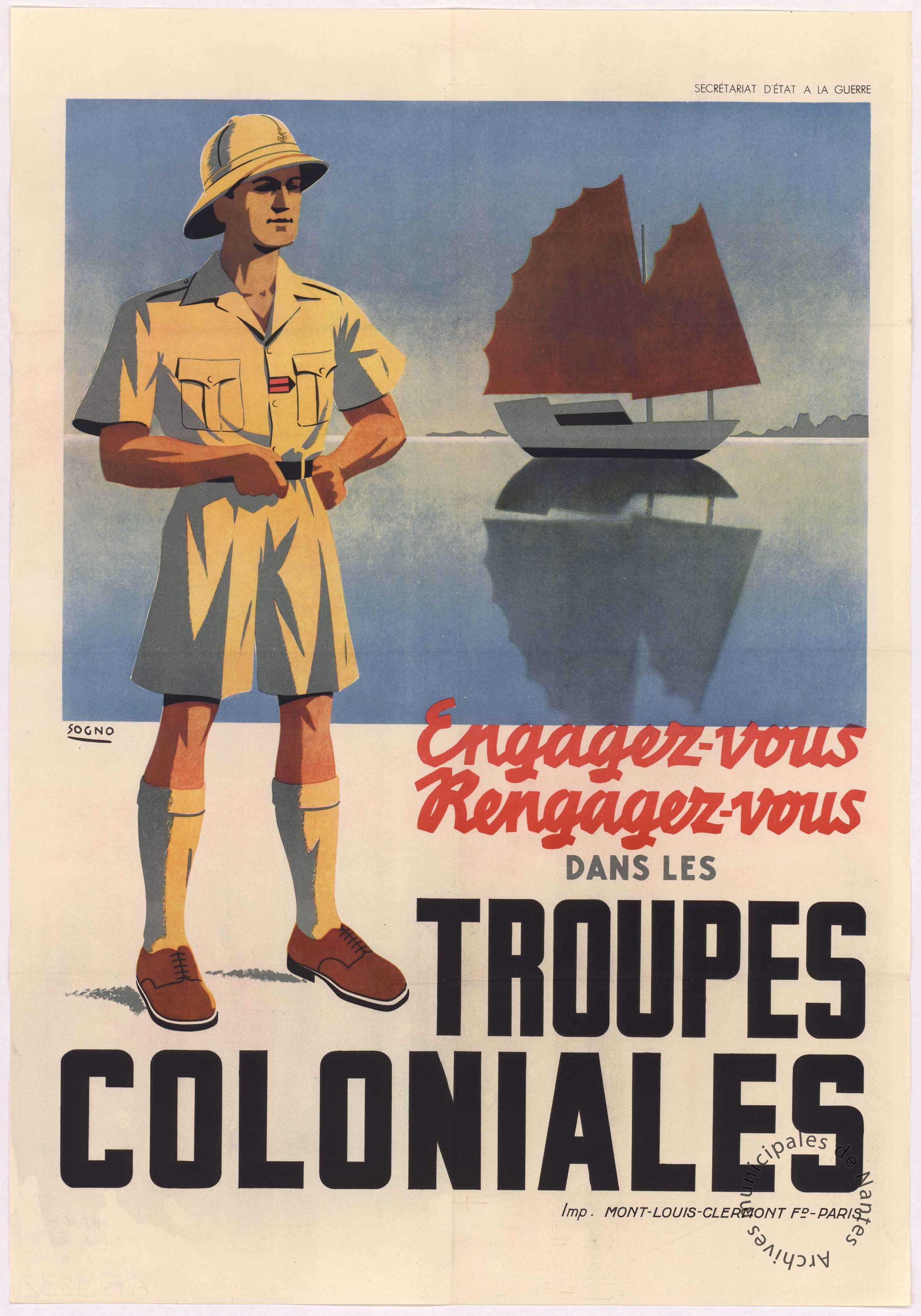
The French garrison was a good quality military force composed of veteran units. It was comprised of Paras, Foreign Legion, Colonials (Marines), North Africans and Vietnamese troops. Ordinarily in a pitched battle it would have done well, but this was no ordinary battle and their Viet Minh opponents were equally combat hardened, well led and well supplied and fighting for their independence.

Many of the French officers including Lieutenant Colonel Langlais and Major Marcel Bigeard commander of the 6th Colonial Parachute Battalion were among the best leaders in the French Army. Others who served in Indochina including David Galula and Roger Trinquier would write books and develop counter-insurgency tactics which would help Americans in Iraq. Unfortunately the French High Command badly underestimated the capabilities and wherewithal of the Giap and his divisions.

65193421-small_269244

Viet Minh Supply Column

Giap rapidly concentrated his forces and built excellent logistics support.  He placed his artillery in well concealed and fortified positions which could use direct fire on French positions. Giap also had more and heavier artillery than the French believed him to have.  Additionally he brought in a large number of anti-aircraft batteries whose positions enabled the Viet Minh to take a heavy toll among French Aircraft.  Giap also did not throw his men away in human assaults.  Instead he used his Sappers (combat engineers) to build protective trenches leading up to the very wire of French defensive positions.  In time these trenches came to resemble a spider web.

Without belaboring this post the French fought hard as did the Viet Minh. One after one French positions were overwhelmed by accurate artillery and well planned attacks.  The French hoped for U.S. air intervention, even the possibility of using nuclear weapons against the Viet Minh. They were turned down by a US Government that had grown tired of a war in Korea.

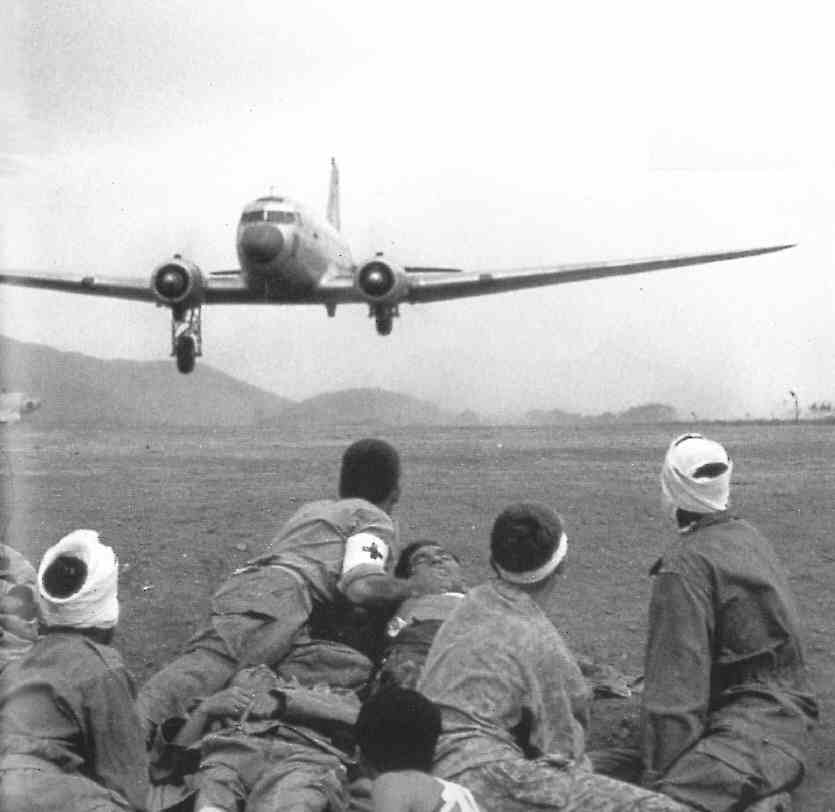
dien bien phu6

Wounded Awaiting Medivac 

Relief forces were unable to get through and the garrison died, despite the bravery of the Paratroops. Colonials and Legionaries. The French garrison was let down by their high command and their government and lost the battle due to inadequate logistics and air power. The survivors endured a brutal forced march of nearly 400 miles on foot to POW camps in which many died. Many soldiers who survived the hell of Dien Bien Phu were subjected to torture, including a practice that we call “water boarding.” General Georges Catroux who presided over the official inquiry into the debacle at Dien Bien Phu wrote in his memoirs: “It is obvious that there was, on the part of our commanding structure, an excess of confidence in the merit of our troops and in the superiority of our material means.”

Few French troops caved to the Viet Minh interrogations and torture but some would come away with the belief that one had to use such means to fight the revolutionaries.  Some French troops and their Algerian comrades would apply these lessons against each other within a year of their release. French soldiers and officers were shipped directly from Indochina to Algeria to wage another protracted counterinsurgency often against Algerians that they had served alongside in Indochina. The Algerian campaign proved to be even more brutal and it was lost politically before it even began.

dien_bien_phu

The March to Captivity

The wars in Indochina and Algeria tore the heart out of the French Army. The defeats inflicted a terrible toll. In Indochina many French career soldiers felt that the government’s “lack of interest in the fate of both thousands of missing French prisoners and loyal North Vietnamese…as dishonorable.” Divisions arose between those who served and those who remained in France or Germany and created bitter enmity between soldiers. France would endure a military coup which involved many who had fought in Vietnam and Algeria. Having militarily won that war these men called The Centurions by Jean Lartenguy had been turned into liars by their government.  They were forced to abandon those who they had fought for and following the mutiny, tried, imprisoned, exiled or disgraced. Colonial troops who remained loyal to France were left without homes in their now “independent” nations. They saw Dien Bien Phu as the defining moment. “They responded with that terrible cry of pain which pretends to free a man from his sworn duty, and promises such chaos to come: ‘Nous sommes trahis!’-‘We are betrayed.’

The effects of the wars in French Indochina, Algeria and Vietnam on the French military establishment were long lasting and often tragic. The acceptance of torture as a means to an end sullied even the hardest French officers. Men like Galula and Marcel Bigeard refused to countenance it, while others like Paul Aussaresses never recanted.

One of the most heart rending parts of the Dien Bien Phu story for me is that of Easter 1954 which fell just prior to the end for the French:

“In all Christendom, in Hanoi Cathedral as in the churches of Europe the first hallelujahs were being sung. At Dienbeinphu, where the men went to confession and communion in little groups, Chaplain Trinquant, who was celebrating Mass in a shelter near the hospital, uttered that cry of liturgical joy with a heart steeped in sadness; it was not victory that was approaching but death.” A battalion commander went to another priest and told him “we are heading toward disaster.” (The Battle of Dienbeinphu, Jules Roy, Carroll and Graf Publishers, New York, 1984 p.239)

As a veteran of Iraq whose father served in Vietnam I feel an almost a spiritual link to our American and French brothers in arms who fought at Dien Bien Phu, the Street Without Joy, Algiers and places like Khe Sanh, Hue City, the Ia Drang and the Mekong. When it comes to this time of year I always have a sense of melancholy and dread as I think of the unlearned lessons and future sacrifices that we may be asked to make.

FrenchForeignLegionaireVtNamDOD

Legionairs on the Street Without Joy

The lessons of the French at Dien Bien Phu and in Indochina were not learned by the United States as it entered Vietnam, Iraq or Afghanistan. Nor were the lessons of Algeria. It was an arrogance for which we paid dearly and I do not think that many in our political, media and pundits or military have entirely learned or that we in the military have completely shaken ourselves. We lost 54,000 dead in Vietnam, nearly 4500 in Iraq and close to 2600 in Afghanistan, not counting vast numbers of wounded. There are those even as we have been at war for 12 years who advocate even more interventions in places that there is no good potential outcome, only variations on bad. How many more American Soldiers, Sailors, Marines and Airmen will need die without “victory” whoever we might want too define it?

normal_03_56_F8F_decollage_a_DBP_Beriel_ph

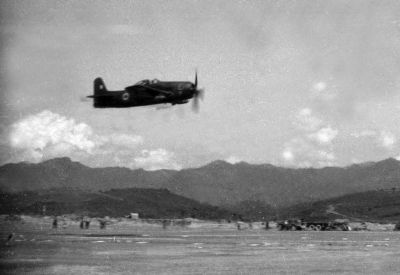
French Navy F-8 Bearcat at Dien Bien Phu

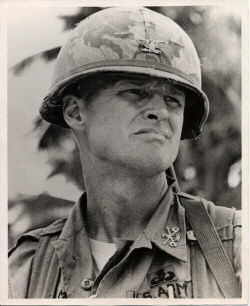
Like the French our troops who returned from Vietnam were forgotten.The U.S. Army left Vietnam and returned to a country deeply divided by the war. Vietnam veterans remained ostracized by the society until the 1980s. As Lieutenant General Harold Moore  who commanded the battalion at the Ia Drang immortalized in the film We Were Soldiers recounted “in our time battles were forgotten, our sacrifices were discounted, and both our sanity and suitability for life in polite American society were publicly questioned.”

For those interested in the French campaign in Indochina it has much to teach us. Good books on the subject include The Last Valley by Martin Windrow, Hell in a Very Small Place by Bernard Fall; The Battle of Dienbeinphu by Jules Roy; and The Battle of Dien Bien Phu- The Battle America Forgot by Howard Simpson. For a history of the whole campaign, read Street Without Joy by Bernard Fall. I always find Fall’s work poignant, he served as a member of the French Resistance in the Second World War and soldier later and then became a journalist covering the Nuremberg Trials and both the French and American wars in Vietnam and was killed by what was then known as a “booby-trap” while covering a platoon of U.S. Marines.

I do pray that we will learn the lessons before we enter yet another hell.

Peace

Padre Steve+

6 Comments

Filed under History, iraq,afghanistan, Military, vietnam

Red Lines… Syria and Sarin and United States Military Intervention: A Warning from History

chemical-weapons-490x326

Updated August 23rd 2013: Since this article was written back in April of this year the situation in Syria, not to mention the rest of the region has continued to get worse. This past week there appear to be credible new reports of the Syrian government using chemical weapons against their own people. It appears that the US and other powers are cautiously moving military forces into the region closer to Syria and that Lebanon, Turkey, Jordan, Iraq and Israel could be drawing closer to involvement in the war. Hundreds of thousands of Syrians of all ethnic groups and faiths are fleeing the country, primarily to Iraq, Jordan and Turkey. Lebanon is beginning to collapse and Israel launched air strikes into Lebanon after being hit by rockets fired by the Assad regime’s ally Hezbollah. This is all taking place as Egypt is perched at the abyss of civil war, and much of North Africa, the Horn of Africa and the Arabian Peninsula is in the throws of war, civil war or the collapse of any governmental order.

Needless to say it is not a good situation and the United States as well as many other governments and international bodies are trying to find a way through the eye of the needle to keep the multitude of problems from coalescing into a truly disastrous regional conflict which could effect the political, economic and military security of countries in the region and yes, like us on the far side of the globe. 

Carl von Clausewitz wrote: “No one starts a war–or rather, no one in his senses ought to do so–without first being clear in his mind what he intends to achieve by that war and how he intends to conduct it.” 

Personally I don’t think that there is anyone who has a clear understanding of what they think their country should do or accomplish in Syria of the Middle East. 

That being said here is what I wrote in April.

Peace

Padre Steve+


For the past number of weeks various news agencies and governments have reported the use of Sarin nerve gas by the Bashir Assad led Syrian government against rebels in that country’s civil war. The use of such weapons would be in defiance of international law and the law of war. The confirmed use of such weapons has been defined as a “red line” by the Obama administration. Israel, NATO and Turkey have all warned of the danger of the use of such weapons. Sarin has been banned and almost all nations have signed the 1993 treaty, but Syria is not one of them and reportedly has one of the largest stockpiles of Sarin in the world.

Today US Secretary of Defense Chuck Hagel stated:

“the U.S. intelligence community assesses with some degree of varying confidence that the Syrian regime has used chemical weapons on a small scale in Syria, specifically the chemical agent sarin.”

Last week both Britain and France wrote the Secretary General of the United Nations that they had evidence that the Syrian government had used chemical weapons against their own people. The Russians, a long term traditional ally of Syria have accused the West of attempting to “politicize” efforts to determine whether chemical weapons have been used and compared such efforts to the pre-Iraq War hunt for alleged Iraqi WMDs.

It is a dangerous time. The United States and NATO have deployed a number of Patriot Missile batteries to Turkey, which is harboring tens of thousands of Syrian refugees and a small number of US troops are in Jordan assisting with refugees and working with the Jordanians on other security matters. Lebanon is becoming involved in the conflict due to the activities of Hezbollah and Israel has stepped up its security along its border with both Syria and Lebanon. In Syria the civil war has claimed an estimated 70,000 lives with hundreds of thousands more displaced or living as refugees in other countries.

It is a human rights disaster and in a perfect world the international community would come together to right the situation. That will likely not happen. Instead I expect that hawks in the United States Congress and press and potentially Israel and its Washington lobby will force President Obama to intervene in the Syrian Civil War, perhaps unilaterally or as part of a relatively small coalition. Both Senators John McCain and Diane Feinstein made statements today on the need for intervention.

The fact is that as terrible as the situation is that an even worse situation will most likely develop should such a limited intervention take place to secure the chemical and possible biological weapons stored by the Syrian regime. Before Iraq I would have probably been on the bandwagon urging intervention, but I did learn something from Iraq. The fact is that though our intelligence agencies may believe that Sarin has been used in small quantities we need to be absolutely sure before any intervention is made. Some in the Defense Department are concerned because of what happened regarding supposedly good and solid intelligence. As such the Miguel Rodriquez of the White House Office of Legislative Affairs noted:

“Our intelligence community does assess with varying degrees of confidence that the Syrian regime has used chemical weapons on a small scale in Syria, specifically the chemical agent sarin. This assessment is based in part on physiological samples. Our standard of evidence must build on these intelligence assessments as we seek to establish credible and corroborated facts. …

“Given the stakes involved, and what we have learned from our own recent experiences, intelligence assessments alone are not sufficient — only credible and corroborated facts that provide us with some degree of certainty will guide our decision-making …”

I know what Sarin and other nerve gasses can do. I trained extensively as an Army Medical Service Corps Officer in NBC (Nuclear Chemical and Biological) weapon defense. The Soviets called Sarin GB and it was something that we trained to defend against during the Cold War. Back then we trained extensively to defend ourselves against chemical weapons, we practically lived in our MOPP (Mission Oriented Protective Posture) suits and protective masks. We trained to decontaminate personnel and equipment, we trained on knowing how such weapons were used, fallout patterns and half-life of the agents. We trained with atropine injectors in case we were contaminated and we learned that the triage of wounded was different when they were contaminated with chemical agents.

poison5

However, since 9-11 and our counter-insurgency efforts in Iraq and Afghanistan the general preparedness of most units in this type of warfare has been neglected because those wars did not require them.  With the exception of highly specialized units organized with the mission of Chemical, Biological and Nuclear weapon defense and response in the Continental United States few units are trained to the level that we were in the Cold War and even then most of us expected that if such weapons were used in the quantities amassed by the Soviets that most of us would die.

That being said we had damned well be absolutely sure that we know a lot more than we know now before committing a single American Soldier, Marine, Sailor or Airman to the mission of securing these weapons. Securing them in the existing environment in Syria would take tens of thousands of troops and based on the geography of Syria, the potential for Iranian intervention and the use of these WMDs against our troops by Syria should we intervene.

The question that I would ask anyone advocating military intervention now is “what is the cost in lives and treasure you are willing to make to do it? and what is your endgame?” The fact is that in two “low intensity” counterinsurgency campaigns we have lost over 6500 US troops killed and over 50,000 wounded not counting the hundreds of thousands afflicted with Traumatic Brain Injury and and PTSD. How many more would be sacrificed in a campaign in Syria and what will be the long term cost to them, their families, the military, national security and the economy?

The easy answer for the Hawks in Congress, the Beltway pundits and lobbyists is to send in the military. I think that it is a reflexive response now, send in the troops, damn the costs. That is easy for them to say because “the troops” are less than 1% of the US population. They can win elections without our vote. Sending in the troops looks strong and patriotic and people applaud when they see us on television doing a great job. But it is unrealistic. The military has been worn down by nearly 12 years of war. Equipment is wearing out, troops are tired, suicide rates skyrocketing, medical costs increasing. Add to this the fact that operational units are being squeezed by the budget fiasco forced by Congress in 2011 known as the sequester. But few will say this and that is as close to criminal negligence as one can get on the part of those advocating intervention in Syria.

I am offended by the knee jerk reactions of Congressmen and Senators as well as their enablers in the media and the beltway who seem to be advocating US involvement in yet another civil war in a Middle Eastern country. What is the legal basis for such an invasion or intervention? What is the human cost and what is the economic cost and who pays the bill?

Smedley Butler, Marine Corps Major General and two time Medal of Honor winner said it well when writing about the costs of war in his book War is a Racket following World War One, which by the way was the last time that US troops faced Chemical weapons:

“But the soldier pays the biggest part of this bill.

If you don’t believe this, visit the American cemeteries on the battlefields abroad. Or visit  any of the veterans’ hospitals in the United States….I have visited eighteen government hospitals for veterans. In them are about 50,000 destroyed men- men who were the pick of the nation eighteen years ago. The very able chief surgeon at the government hospital in Milwaukee, where there are 3,800 of the living dead, told me that mortality among veterans is three times as great as among those who stayed home.”

In another part of his book Butler wrote:

“In the government hospital at Marion, Indiana 1,800 of these boys are in pens! Five hundred of them in a barracks with steel bars and wires all around the outside of the buildings and on the porches. These have already been mentally destroyed. These boys don’t even look like human beings. Oh, the looks on their faces! Physically they are in good shape but mentally they are gone.” 

There are thousands and thousands of these cases and more and more are coming in all the time…

That’s a part of the bill. So much for the dead-they have paid their part of the war profits. So much for the mentally and physically wounded- they are paying now with their share of the war profits. But others paid with the heartbreaks when they tore themselves away for their firesides and their families to don the uniform of Uncle Sam- on which a profit had been made….”

Before any military actions are taken against Syria someone had better ask the hard questions that were so buried and ignored in the build up to the Iraq War. What is the cost? What is the legal basis? What is the endgame? If those questions cannot be answered in a satisfactory manner then not no American military forces be committed and not a dime spent.

Yes the situation in Syria is a tragedy, but intervention would likely make it even more so. As terrible as this conflict is, it is a Syrian affair. Yes we will have to deal with whatever comes out of it, but is American military intervention to secure the Syrian Chemical weapons the wise course of action, especially in light of how much that we do not know?

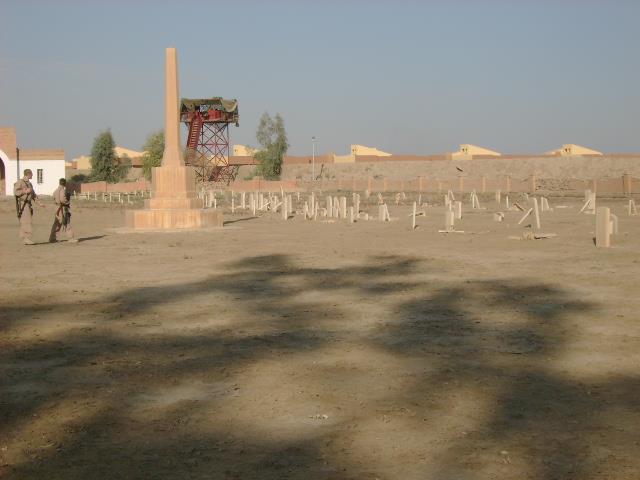
How many more coffins containing the bodies of US military personnel need to be shipped back from yet another war? Oh wait, I’ll bet you didn’t know that the bodies of soldiers killed by chemical agents are contaminated and most would not come home because of that risk. Somehow I don’t think that a military cemetery in Syria would be as well maintained as those in France, Belgium and Luxembourg where so many Americans lay in final repose following the First and Second World War. I know this because I have seen the British military cemetery in Habbaniyah Iraq.

429423_10151366999012059_698864942_n

Yes this is a big deal for all of us. It is much too important to be made without a full accounting before a single American Soldier, Marine, Sailor or Airman is committed to action.

Peace

Padre Steve+

1 Comment

Filed under History, iraq,afghanistan, middle east, national security, News and current events

The Terrible Costs of Not Learning the Lessons of War: Vietnam, Iraq Afghanistan

481801_10151367001287059_1003164983_nIn 1986 a Army Major working at the Office of the Secretary of Defense wrote a book that was a history of the US Army in the Vietnam War, and as it turns out to be a work of military prophecy. The young officer, Andrew Krepinevich wrote his book, The Army in Vietnam: 

“In the absence of a national security structural framework that address the interdepartmental obligations associated with FID operations, and considering the lack of incentives for organizational change within the Army, it is presumptuous for the political leadership to believe that the Army (or the military) alone will develop the capability to successfully execute U.S. security policy in Third World countries threatened by insurgency. This being the case, America’s Vietnam experience takes on a new and tragic light. For in spite of its anguish in Vietnam, the Army has learned little of value. Yet the nation’s policy makers have endorsed the service’s misconceptions derived from the war while contemplating an increased role in Third World low-intensity conflicts. This represents a very dangerous mixture that in the end may see the Army again attempting to fight a conventional war against a very unconventional enemy.” (The Army in Vietnam, Andrew F Krepinevich Jr., The Johns Hopkins University Press, Baltimore and London, 1986. p.275)

Krepinevich retired from the Army in the 1990s as a Lieutenant Colonel and has been busy in the world of think tanks and national security policy. Unlike his book, which is probably one of the best accounts of the Vietnam War and as I said before a book that is somewhat prophetic his later work has not been as well received. He has his critics. But despite that criticism once cannot deny the accuracy of his predictions concerning the Army’s subsequent operations in low intensity, or counter-insurgency campaigns beginning in Somalia and encompassing the wars in Iraq and Afghanistan.

If Krepinevich had been alone in his criticism, or his book not been widely read one might excuse policy makers of the 1990s and 2000s who sent the Army and the military into counterinsurgency campaigns involving massive numbers of troops and the commitment of blood and treasure that had practically no value to the national security of the United States. Instead thousands of American and Allied lives were sacrificed, tens of thousands wounded and one nation, Iraq that had nothing to do with the attacks of 9-11-2001 left devastated and crippled empowering Iran the sworn enemy of the United States no regional rival.

n671902058_1153793_4043

One cannot say that the Iraq war was worth the lives and treasure spent to cover the lies and hubris of the Bush Administration. Nor can one say that the effort to change the tribal structure of the fiercely independent Afghan peoples after driving Al Qaeda from that “Graveyard of Empires” been worth the expenditure of so many American lives and treasure. In fact the wars in Iraq and Afghanistan damaged the United States in more ways than their proponents could every admit. The military, now drained by years of war is hamstrung and will be hard pressed to meet legitimate threats to our national security around the world because of the vast amounts of blood and treasure expended in these wars.

In 1920 T.E. Lawrence wrote about the follies of the British government in Mesopotamia, what is now Iraq. His words could have been written about the Bush Administrations 2003 war in Iraq. Lawrence wrote in a letter to the Sunday Times:

The people of England have been led in Mesopotamia into a trap from which it will be hard to escape with dignity and honour. They have been tricked into it by a steady withholding of information. The Bagdad communiqués are belated, insincere, incomplete. Things have been far worse than we have been told, our administration more bloody and inefficient than the public knows. It is a disgrace to our imperial record, and may soon be too inflamed for any ordinary cure. We are to-day not far from a disaster.”

Krepinevech, like Lawrence before him was right, but he was not the only one. in 1993 Ronald H Spector in his book wrote:

“Americans dislike problems without solutions. Almost from the beginning of the U.S. involvement in Vietnam they have attempted to find “lessons” in the war. The controversy about the appropriate lessons to be learned continues with the same vigor and lack of coherence as the debates about the war itself.

Lessons are controversial and fleeting but lessons long. The memories of 1968 have remained and served to influence attitudes and expectations well into the 1990s. The ghosts of Vietnam haunted all sides of the recent deliberations about the Gulf War. In the wake of that war, President Bush hastened to announce that “we have kicked the Vietnam syndrome.” 

Doubtless many Americans would like to agree. It is easier to think of the Vietnam War as a strange aberration, a departure from the “normal” kind of war, like World War II and the recent war in the Gulf, where the course of military operations were purposeful and understandable and the results relatively clear cut. Yet the Vietnam War may be less of an aberration than an example of a more common and older type of warfare, reaching back before the Thirty Years’ War and including World War I. A type of warfare in which a decision is long delayed, the purposes of the fighting become unclear, the casualties mount, and the conflict acquires a momentum of its own. In a world which had recently been made safe for conventional, regional and ethnic wars, Vietnam rather than World War II may be the pattern of the future.” (After Tet: The Bloodiest Year in Vietnam, Ronald H Spector Vintage Books, a division of Random House, New York 1993 pp. 315-316

After serving in Iraq with the advisors to the Iraqi 7th and 1st Divisions and 2nd Border Brigade in 2007-2008 and seeing the results of the great misadventure brought upon our nation and Iraq by the Bush administration I cannot help but recognize how disastrous the wars unleashed after 9-11-2001 have been. I have lost friends and comrades in them, I see the human costs in our Navy hospitals every day. I have told too many If they had actually accomplished something it would be another matter. But the human, economic, strategic and even more importantly the moral costs have been so disastrous to our nation to make the loss of the Twin Towers and the victims of 9-11-2001 pale in significance.

sch0-017

The sad thing is that these wars have gone on so long that many of the young Marines and Soldiers fighting them have no understanding of why they deploy and deploy to Iraq and then Afghanistan, and they are far more knowledgeable than the population at large, many of whom are untouched by the personal costs of the war. We as Americans love to say “we support the troops” but most don’t even know one. For the most part big bases from where our troops train and deploy are far from where most Americans live and might as well be on a different planet. We are invisible to most of the country, except when they see a color guard at a sporting event or bump into one of us in uniform at an airport.

3rd Infantry Places American Flags At The Graves Of U.S. Soldiers

As a result the sacrifices that the under 1% of the population that serve in the military and fight these wars are really not understood, or fully appreciated. I don’t think that this is so much the fault of the people. but rather the product of the post Vietnam era and the “Peace Dividend” of the post Cold War era when the military was reduced, the draft ended and bases in major populations centers closed.

I have written about the effects of these kinds of wars before, not just Iraq or Afghanistan. You can see some of that writing the following articles on this site. They are not comprehensive but they do tell some of the tale of where we have been since 9-11-2001. 

The Anomaly of Operation Desert Storm and Its Consequences Today

Why History Matters: The Disastrous Effects of Long Insurgency Campaigns on the Nations that Wage them and the Armies that Fight Them 

Irrelevant Incidents and Un-winnable Wars: Thoughts on Returning from War 5 Years Later

 349: Active Duty Military Suicides Hit New High in 2012

The Fallacy of “Complete” Victory and the Seeds of Perpetual War and the Way to Peace

Thoughts on Choosing a President and the Results of Not Getting it Right: Lieutenant General Harold Moore at West Point

War is a Racket: Remembering Major General Smedley Butler USMC and Why He Matters

Armed Forces Day 2012: The Disconnection of the Military and Society and the Terrible Result

Failing to Learn from History: The Lesson of the First Anglo-Afghan War and Questions about the US-NATO Campaign

The War that Cannot Be Won: Afghanistan 2012

The 9-11 Generation: The Few

The “Comfortable” Experts and the Real Soldiers

Adjusting Strategy to Reality

No Illusions: The Cost of the Long War and its Potential impact on the United States

The sad thing is that we don’t learn from history. Krepinevech, Spector and Lawrence could have written what they wrote yesterday. Instead they all wrote many years before the 9-11 attacks and our military response to them. As a historian, a career officer and a chaplain I cannot help but think of the terrible costs of such wars and how they do not do anything to make us more secure. The fact is that we do not learn from history much to our detriment despite the great human, spiritual, moral and economic effects of such wars.

300px-Battle_of_Ia_Drang_Valley-1

What is the cost of war? what is the bill? Major General Smedley Butler wrote: “This bill renders a horrible accounting. Newly placed gravestones. Mangled bodies. Shattered minds. Broken hearts and homes. Economic instability. Depression and all of its attendant miseries. Back -breaking taxation for generations and generations. For a great many years as a soldier I had a suspicion that war was a racket; not only until I retired to civilian life did I fully realize it….”

Peace

Padre Steve+

Leave a comment

Filed under Foreign Policy, History, iraq,afghanistan, Military, national security, News and current events

Reflections on the Invasion of Iraq: 10 Years Later in Light of Nuremberg

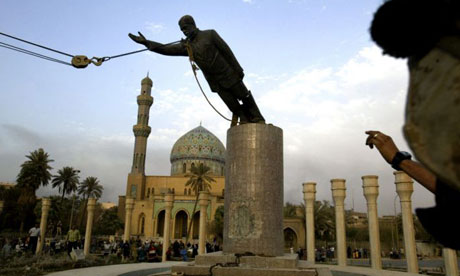
saddam0978

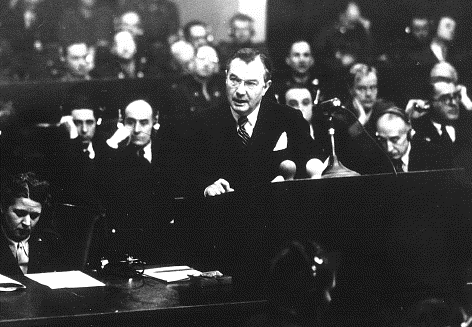
“If certain acts of violation of treaties are crimes, they are crimes whether the United States does them or whether Germany does them, and we are not prepared to lay down a rule of criminal conduct against others which we would not be willing to have invoked against us.” Justice Robert Jackson International Conference on Military Trials, London, 1945, Dept. of State Pub.No. 3080 (1949), p.330.

In March 2003 I like many of us on active duty at the time saw the nation embark on a crusade to overthrow an admittedly thuggish criminal head of state, Saddam Hussein. The images of the hijacked airliners crashing into the Twin Towers of the World Trade Center and the Pentagon were still relatively fresh in our minds. The “evidence” that most of us had “seen,” the same that most Americans and people around the world were shown led many of us to believe that Saddam was involved in those attacks in some manner and that he posed a threat to us.

Now it wasn’t that we didn’t have doubts about it or even the wisdom of invading Iraq. It didn’t matter that there was also credible evidence that maybe what we were being told was not correct, and it didn’t matter that some of our closest allies voted against a mandate to invade Iraq in the United Nations Security Council. We were emotionally charged by the events of 9-11 and “we knew” that Saddam was a “bad guy.” We also believed that we could not be defeated. We had defeated the Iraqis in 1991 and we were stronger and they weaker than that time.

We really didn’t know much about Iraq, its history, people, culture and certainly we paid little attention to the history of countries that had invaded and occupied Iraq in the past. T.E. Lawrence, the legendary Lawrence of Arabia wrote in August of 1920 about his own country’s misbegotten invasion and occupation of Iraq, or as it was known then Mesopotamia.

“The people of England have been led in Mesopotamia into a trap from which it will be hard to escape with dignity and honour. They have been tricked into it by a steady withholding of information. The Bagdad communiqués are belated, insincere, incomplete. Things have been far worse than we have been told, our administration more bloody and inefficient than the public knows. It is a disgrace to our imperial record, and may soon be too inflamed for any ordinary cure. We are to-day not far from a disaster.”

The sad thing is that the same could have been written of the United States occupation by 2004.

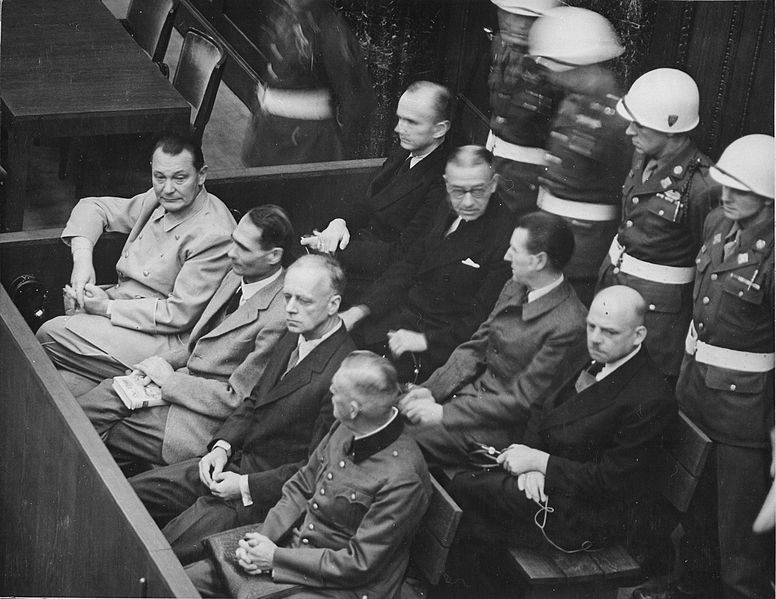
But even more troubling than the words of Lawrence are the Nuremberg War Crimes Trials. Somehow as a historian who has spent a great deal of time studying the Nazi period and its aftermath I cannot help but look back in retrospect and wonder what Supreme Court Justice Robert Jackson and the other Nuremberg prosecutors would have done had they had some of our leaders in the dock instead of the Nazis.

776px-Nuremberg-1-

The indictments against the Nazis at Nuremberg are chilling if we were to be held to the same standard that we held the Nazis leaders at Nuremberg. True, we did not have massive death camps or exterminate millions of defenseless people, nor did we run slave labor factories, but we did like they launched a war of aggression under false pretense against a country that had not attacked us.

At Nuremberg we charged twenty top Nazi political officials, as well as police and high ranking military officers with war crimes. The indictments included:

Count One: Conspiracy to Wage Aggressive War: This count addressed crimes committed before the war began, showing a plan by leaders to commit crimes during the war.

Count Two: Waging Aggressive War, or “Crimes Against Peace” which included “the planning, preparation, initiation, and waging of wars of aggression, which were also wars in violation of international treaties, agreements, and assurances.”

Count Three: War Crimes. This count encompassed the more traditional violations of the law of war already codified in the Geneva and Hague Conventions including treatment of prisoners of war, slave labor, and use of outlawed weapons.

Count Four: Crimes Against Humanity, which covered the actions in concentration camps and other death rampages.

While count four, Crimes Against Humanity would be difficult if not impossible to bring to trial because there was nothing in the US and Coalition war in Iraq that remotely compares to that of what the Nazis were tried, some US and British leaders could probably have been successful prosecuted by Jackson and the other prosecutors under counts one through three.

The fact is that none of the reasons given for the war by the Bush Administration were demonstrated to be true. Senior US and British officials knowing this could be tried and very probably convicted on counts one and two. We also know that some military and intelligence personnel have been convicted of crimes that would fall under count three.

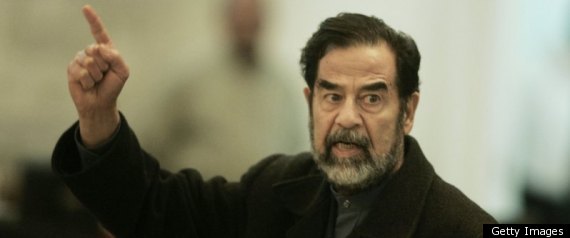
r-SADDAM-HUSSEIN-large570

Saddam Hussein was a war criminal. He was also a brutal dictator who terrorized and murdered hundreds of thousands of his own people. But we went to war over his alleged ties to Al Qaeda and WMDs and he had not attacked us. Looking back at history and using the criteria that we established at Nuremberg I have no doubt that had Dick Cheney or Donald Rumsfeld been in the dock that Justice Jackson would have destroyed them and the court would have convicted them.

So 10 years, nearly 5000 US military personnel dead, 32,000 wounded, over 100,000 afflicted with PTSD, and other spiritual and psychological injuries, with an estimated 22 veterans committing suicide every day; somewhere between 1 and 2 trillion dollars spent, hundreds of thousands of Iraqis dead, wounded and displaced from their homes and a country destroyed and still in turmoil. And somehow those that decided to take us to war roam free. They write books defending their actions and appear on “news” programs hosted by their media allies who 10 years ago helped manipulate the American public, still traumatized by the events of 9-11-2001 to support the war.

nuremberg-jackson-10400

http://www.youtube.com/watch?v=No06Lwk_TAg

Saddam and many of his henchmen are dead or rotting in Iraqi prisons for their crimes against the Iraqi people. However good this may be one has to ask if how it happened was legal or justified under US or International Law, if it was worth the cost in blood, treasure or international credibility. Likewise why have none of the men and women who plotted, planned and launched the war been held the standard that we as a nation helped establish and have used against Nazi leaders and others?

If we cannot ask that and wrestle with this then we as a nation become no better than the Germans who sought minimize their responsibility for the actions of their leaders, and in doing so enable future leaders to feel that they can do the same with impunity. That is a terrible precedent.

Peace

Padre Steve+

1 Comment

Filed under History, iraq,afghanistan, middle east

A Memorial Service as Tragedy Strikes Camp Lejeune on the 10th Anniversary of the Beginning of the Iraq War

9-11b

“God didn’t put us here for that pat on the back. He created us so he could be here himself. So he could exist in the lives of those he created, in his image.” Chaplain (Captain) Fr Francis Mulcahy M*A*S*H 

The past week has been difficult at Camp LeJeune. We lost a sailor, a hospital corpsman who died by his own hand last Monday. He was a veteran of Afghanistan and his death came as a surprise to his friends, family and shipmates. Today we conducted his memorial service. It was a full house. His family travelled to be here and his friends, those that served with him while he was assigned to the Marines as well as his current shipmates were there in abundance.

It was a time to grieve. The young man was beloved by his friends, respected and cared for. However something that none of us will ever know or understand overwhelmed him. It may have been the trauma of war, maybe something else, but he maintained a facade that kept his friends, family and shipmates away from whatever despair drove him to take his life.

It was a time for all of us to grieve. It was as William Shakespeare wrote in McBeth a time to “Give sorrow words; the grief that does not speak knits up the o’er wrought heart and bids it break.”

But even as we grieved the news filtered to the base that 7 Marines assigned to the Second Marine Division were killed, and a number of others injured when a mishap occurred where they were training in Nevada. Evidently either a mortar round either exploded in the tube or as it was being handled during a live fire exercise. They join the thousands of men and women who have died or been wounded in preparation for, the conduct of or the aftermath of their service in Iraq or Afghanistan. The death of each one leaves a void in the heart of a loved one, friend or shipmate.

Ergin-Osman1

Staff Sergeant Ergin Osman KIA Afghanistan

I have lost friends and shipmates in all phases of both wars and their aftermath. Some have died in combat, others while supporting combat operations of natural causes or accidents, some have committed suicide, including a Priest and Chaplain who served in both Vietnam and Iraq. Still countless others endure injuries or illnesses that will eventually kill them.

Likewise there are far too many more who have sustained terrible injuries to their minds, bodies and spirits that time will never heal. The young men and women that I see every day, those with the physical wounds of war and those with the unseen but sometimes even more disabling injuries such as PTSD, Traumatic Brain Injury or Moral Injury remain in the fight, sometimes with the sole mission of recover or remaining alive.

saddam0978

Ten years after the war in Iraq began and twelve and a half years after 9-11 and the invasion of Afghanistan the costs continue to build in lives and treasure. In Iraq almost 4500 American and over 300 other coalition casualties, more than 500 contractors and nearly 10,000 Iraqi Soldiers and Police and countless thousands of Iraqi civilians have died. US wounded alone number almost 35,000 in Iraq. In Afghanistan there are over 2100 US dead and about 1100 NATO and Coalition dead, hundreds of contractors, and thousands of Afghans with over 17,000 more American military wounded. Every day nearly 20 veterans take their lives while thousands of others struggle with physical, psychological and spiritual wounds of war, wounds that don’t heal even as they find that they no longer fit in the country that went shopping when they went to war. The costs of both wars now are building into trillions of dollars, costs that will continue to grow even after the wars wind down.

Butler-medals

Two time Congressional Medal of Honor Winner Major General Smedley Butler, US Marine Corps wrote:

“What is the cost of war? what is the bill? Major General Smedley Butler wrote: “This bill renders a horrible accounting. Newly placed gravestones. Mangled bodies. Shattered minds. Broken hearts and homes. Economic instability. Depression and all of its attendant miseries. Back -breaking taxation for generations and generations. For a great many years as a soldier I had a suspicion that war was a racket; not only until I retired to civilian life did I fully realize it….” (See War is a Racket: Remembering Major General Smedley Butler USMC and Why He Matters

23_QU_18_d_HM_012ps

Likewise Lieutenant General (US Army Retired) Hal Moore, who is immortalized in the film We Were Soldiers and book We Were Soldiers Once…and Young told West Point Cadets in 2005:

The war in Iraq, I said, is not worth the life of even one American soldier. As for Secretary Rumsfeld, I told them, I never thought I would live long enough to see someone chosen to preside over the Pentagon who made Vietnam-era Defense Secretary Robert McNamara look good by comparison. The cadets sat in stunned silence; their professors were astonished. Some of these cadets would be leading young soldiers in combat in a matter of a few months. They deserved a straight answer.

The expensive lessons learned in Vietnam have been forgotten and a new generation of young American soldiers and Marines are paying the price today, following the orders of civilian political leaders as they are sworn to do. The soldiers and those who lead them will never fail to do their duty. They never have in our history. This is their burden. But there is another duty, another burden, that rests squarely on the shoulders of the American people. They should, by their vote, always choose a commander in chief who is wise, well read in history, thoughtful, and slow-exceedingly slow-to draw the sword and send young men and women out to fight and die for their country. We should not choose for so powerful an office someone who merely looks good on a television screen, speaks and thinks in sixty-second sound bites, and is adept at raising money for a campaign.

If we can’t get that part right then there will never be an end to the insanity that is war and the unending suffering that follows in war’s wake-and we must get it right if we are to survive and prosper as free Americans in this land a million Americans gave their lives to protect and defend.”

Needless to say, Moore, a West Point graduate has not been asked back.

n671902058_1153828_4309

Thousands of young Americans, as well as NATO or other Allied nation soldiers, including Iraqi soldiers that I knew and Afghans that I have not worked with have died or been mangled by these wars. Yet too many Americans, Europeans and others that have sent young men and women to these wars have no stake in the game.  Most people continue with the mundane aspects of peacetime life while their political, religious and business leaders plot even more war. Syria, Mali, North Korea, Iran…where will it end?

Today we mourned a shipmate and friend at Camp LeJeune even as we wait to see who else that we know have been killed or injured in this latest training accident. I was honored to be a part of the memorial and happy to be of help to the families and friends of my sailor. At the same time I too grieve and wonder just how many more will have to die before the madness ends.

I left the base after the ceremony, and saw the massed trucks of the local and national news networks parked outside the gate like vultures. When I got home I hugged my dog Molly, I love that little dog, she has helped save my life after my time in Iraq. I then went for a four mile run on the beach and then had a couple of beers with my dinner while at the bar with my friends at my local watering hole.

father

The old regulars there have nicknamed me “Father Mulcahy” a name that some people at the hospital have also given me. Maybe it is that I ear round steel rimmed glasses. Maybe it is because I will join in the occasional poker game , football, basketball or NASCAR pool, which by the way I won the NASCAR pool this week. Or maybe it is just because they didn’t know I was a Chaplain or Priest until a mutual friend and co-worker told one of them. Until then I was just Steve, the guy that wore the Orioles and Giants baseball gear. Now I have become their Priest and Chaplain, funny how that works. Regardless, it is a nickname that I cherish, because when I was growing up Fr Mulcahy symbolized so much of what I thought was good in a Priest and Chaplain. The writers of M*A*S*H made him very human. But I digress…

As we mourned today I was reminded of something that Helen Keller said, something that I think no matter what any of us grieve is true. “We bereaved are not alone. We belong to the largest company in all the world–the company of those who have known suffering.”

Pray for me a sinner.

Peace

Padre Steve+

Leave a comment

Filed under faith, iraq,afghanistan, Military, Pastoral Care, philosophy, PTSD

A Long Strange Trip Home from Iraq: A Five Year Trek to Healing

400236_10151328400862059_541742014_n

“Sometimes the lights all shinin’ on me;
Other times I can barely see.
Lately it occurs to me what a long, strange trip its been.” 

The Grateful Dead “Truckin’” 

http://www.youtube.com/watch?v=pafY6sZt0FE

Just over 5 years ago I returned from Iraq a changed man. But the change was not complete, it was the fact that the man that I was before Iraq was shattered. I returned vainly hoping to return to what used to be “normal.” But that was not possible. I returned to a place where I felt that I felt abandoned at at times betrayed. I thought that I would be able to get through what I was feeling by working harder, praying more and pushing myself beyond my limits. Within months of my return I was in a state of emotional, spiritual and physical collapse.

Insomnia, nightmares, hyper-vigilance, acute sensory sensitivity to sight, smell and sounds that reminded me of Iraq, rage, depression, emotional distance from those that I loved. I drank more than I should have and self medicated because of chronic pain. Driving became an adventure, my hyper-vigilance made me drive like a Jedi Knight, the “force” was with me. Slow traffic, objects that resembled items that might hide IEDs alongside the road and aggressive or threatening drivers caused outright panic and anxiety.  This led to some unsafe driving practices on my part and thankfully a lawyer got my speeding tickets on US 17 in North Carolina reduced to mechanical violations.

I had deep anger at the politicians and leaders that took us to war and the media that lied about it. I had a spiritual crisis that left me for all intents and purposes an agnostic praying that God still existed. There were few clergy that I even trusted at all because most didn’t seem to either care or understand what I was going through. The only thing that kept me going was a hope that things might get better and only my sense of call as a Priest and Chaplain allowed me to continue in spite of my crisis. During that early period of 2009 I began this site and the article God in the Empty Places…Padre Steve Remembers the Beginnings of Padre Steve’s World helps recount those early days.

At first when things began I could not label what I was going through. But by the middle of June I was falling apart and during a seminar that I was coordinating involving the author of On Killing and On Combat, Lieutenant Colonel Dave Grossman I was in such bad shape that the Medical Officer of EOD Group Two asked me “Are you okay Chaplain?” I told him “no” and after he was sure that I was not a danger to myself he set up an appointment for the next morning. Following his evaluation and subsequent evaluations at Naval Medical Center Portsmouth Virginia I was diagnosed with chronic and severe PTSD, anxiety and depression.

The road back has been long and often difficult. I mentioned that I was going through a spiritual crisis that left me for all intents and purposes an agnostic. It took nearly two years but in the act of conducting what are often called the “Last Rites” for a retired Navy doctor faith returned. It was what I call my “Christmas Miracle” though it actually occurred during Advent (see:  Padre Steve’s Christmas Miracle )

After that things still were difficult. Faith had returned but it was different, less doctrinaire and more accepting of others different than me. I still struggled with depression, anxiety and insomnia. I struggled in my marriage and it seemed that the only place that I could find peace was at a baseball park. The management of the local AAA International League team, the Norfolk Tides allowed me to come and visit the stadium and walk the concourses and be at the field during the off season as well.

In June 2010 I found out that I had been selected for promotion to Commander, the next day my father died and a week later I found that I was being transferred to my current assignment. Just before my transfer I was told by a former Archbishop of my old church that I was “too liberal” and needed to find a new church home. I did with some help and it has been for the better, I still have many friends in that church including other leaders in it and the former Archbishop himself was removed for attempting to remove the military chaplains from that church to another. Change continued as did my struggles but some things were getting better. In spite of my own struggles I was determined to make sure that others like me were cared for and the new assignment at Camp LeJeune gave me plenty of opportunity.

I wrote an article on this site entitled Raw Edges: Are there other Chaplains out there Like Me? That article led to me being contacted by a reporter from our local newspaper, the Jacksonville Daily News they published an article about my struggle and recover in April 2011. Shortly thereafter I was contacted by the DOD Real Warriors Campaign who did a feature on me. That site did a feature on me http://www.realwarriors.net/multimedia/profiles/dundas.php that helped others connect to me and be able in some cases to tell their stories, or those of family members sometimes for the first time.

I was getting better but still struggling, especially with sleep and nightmares. Due to her medical issues my wife remained in Virginia when I went to LeJeune. Last December my dog Molly decided that she was going to stay with me and that was a big help. Her cheerful unflappable personality helped me begin to engage life again. Instead of going home to an empty apartment I was greeted by a dog that welcomed me cheerfully and made me get out of my shell. We ended up a couple of months later getting a new puppy for Judy, a puppy who has added a new dimension to all of our lives.

Finally last year I began some more therapy that was extremely helpful and about a month ago I stopped doing sleeping pills that did not help me sleep and left me feeling almost hung-over every morning, making it hard to function and even to get out of bed. Over the course of nearly 5 years I had been on a number of different medications and all had the same effect, even those designed to not leave the patient that way. My therapist suggested trying Melatonin on duty nights when I needed to be able to drive to work if there was an emergency at the hospital. I noticed a difference. My sleep was no worse and when I got up in the morning I actually felt somewhat rested.

n671902058_1153793_4043

For the first time since I returned from Iraq I feel that I am functioning like a normal human being. Hope has returned and people that know me can tell the difference. Judy says that I am the man that she fell in love with again. In ministry I have found that what I went through assists me in caring for those going through great difficulties, any do to PTSD, TBI or Combat Stress, but others that are struggling with their place in life in the military institution, particularly caregivers including chaplains and medical personnel. At work I have more energy and connection to people than in years and I have developed more relationships with people on the island as well.

Do I still have days that I struggle? Yes. Is my sleep perfect? No. Do I still have nightmares and strange dreams? Yes. All that being said I know that for the first time in years I approach the Lenten Season feeling good, not just hoping things get better.

430244_10150660298597059_1430020993_n

It has been as Jerry Garcia and the Grateful Dead once sang “a long strange trip” but it continues to get better. If you know someone struggling from the effects of PTSD or other combat trauma there are a lot of resources, sometimes they are hard to find and in some places due to the numbers of personnel suffering they are in short supply, but they are still can be found. My encouragement to others is not to give up, not to lose hope and to keep seeking help. It took me five years to get back to what is my “new normal.” I can’t go back to what I used to be and I don’t want to, my definition of what is “normal” has changed and that is okay.

My views on life, faith, politics, ministry and social issues have changed over the years, I think for the better. Some might disagree, but that is okay, I have been called a lot of things by people that do not understand over the past few years, but I would rather have that than be where I was before Iraq. Iraq changed me in ways I did not expect. When I left for Iraq in 2007 I thought that I was immune to PTSD because of my experience in dealing with trauma and death both in the military and the civilian world. I was wrong, but despite what I have gone through I am glad for the experience.

There is still one constant in my life, besides my wife Judy who has suffered much during my ordeal, and that is baseball. I can only echo the words of James Earl Jones in Field of Dreams “The one constant through all the years has been baseball. America has rolled by like an army of steamrollers. It’s been erased like a blackboard, rebuilt, and erased again. But baseball has marked the time. This field, this game, is a part of our past. It reminds us of all that once was good, and what could be again.”

Peace

Padre Steve+

2 Comments

Filed under Baseball, faith, iraq,afghanistan, marriage and relationships, Military, Pastoral Care, PTSD, Tour in Iraq

Irrelevant Incidents and Un-winnable Wars: Thoughts on Returning from War 5 Years Later

6Fi9832

Just shy of five years ago in February 2008 I returned from Iraq after a tour with our advisors to the Iraqi Army and Security forces in the far reaches of Al Anbar Province. I flew back to the United States on a chartered flight with about 200 other men and women, individual augments from the US Navy who had served in Iraq and Afghanistan. We had a few days in Kuwait to “decompress” and then were on our way home. Those that conducted our training in that time had been in Kuwait, at large bases, separated from home but enjoying creature comforts that made it feel that we were in “Little America.”

Our aircraft stopped at Ramstein Air Base in Germany for a crew change and refueling. While there the aircraft was filled to its capacity with servicemen and their families returning from Germany to the United States. Crying babies and screaming kids greeted us as we boarded the aircraft. Most of us had not slept in the 24 hours before we left Kuwait and were exhausted. I was wearing my last serviceable uniform.

The remaining part of the flight from Germany to Philadelphia was difficult. The new arrivals were coming from a peacetime world and we were coming our of combat zones, often isolated even from other Americans. When we landed we went from our aircraft, got our civilian tickets, clad in our desert camouflage and dragging our gear we were made to removed our belts and boots by the TSA agents. It was obvious from we had come but instead of a welcome we we treated as potential hijackers. We each flew back to our respective bases on different flights into the arms of waiting families that loved us but did not understand us and units, who had not shared our experience simply sent us back to work without recognition while those that had not deployed griped about how hard things were.

FrenchForeignLegionaireVtNamDOD

Today I was doing some counseling with a sailor and as we talked about life and the war a passage from Bernard Fall’s classic account of the French war in Indochina, Street Without Joy, came to mind. It reminded me of our experience returning from war, which could be seen as seemingly irrelevant incidents, but which pointed to a larger problem. It was so powerful that I decided to post much of it here.

In October 1953, Fall a journalist was covering the French war in Indochina. In between his stints with various French and allied units fighting the Viet Minh he made a travel stop over in Cambodia. He wrote of it:

“Sometimes, there occurs an almost irrelevant incident which, in the light of later developments, seems to have been a sign of the gods, a dreamlike warning which if heeded, could have changed fate- or so it seems.

One such incident occurred to me in October 1953 in Cambodia, at Siem-Reap, not far from the fabulous temples of Angkor-Wat…

A few French officers were still around, mainly as advisors to the newly-independent Cambodian Army….

When I went to the Transportation Office that afternoon at 1530, the Cambodian orderly told me apologetically that “le Lieutenant est alle au mess jouer au tennis avec le Capitaine” and that they might well stay there all afternoon. Since the convoy which I was expected to catch was supposed to leave at dawn, I decided to stroll over to the mess in order to get my travel documents signed there.

The Siem-Reap officers’ mess was a pleasant and well kept place; with its wide Cambodian-type verandahs, its parasol-shaded tables and the well-manicured lawns and beautifully red-sanded tennis court, it was an exact replica of all the other colonial officers’ messes from Port Said to Singapore, Saigon or even Manila, wherever the white man had set his foot in the course of building his ephemeral empires.

I found the two officers at the tennis court, in gleaming white French square-bottomed shorts…matching Lacoste tennis shirts and knee-long socks…

Since the men were in the midst of a set and I had little else to do, I set down at a neighboring table after a courteous bow to the ladies and watched the game, gladly enjoying the atmosphere of genteel civility and forgetting for a moment the war…

Then emerged from the verandah a soldier in French uniform. His small stature, brown skin and Western-type features showed him to be a Cambodian. He wore the blue field cap with the golden anchor of the Troupes Coloniales- the French “Marines”- and three golden chevrons of a master-sergeant. On his chest above the left breast of his suntan regulation shirt were three rows of multi-colored ribbons: croix de guerre with four citations, campaign ribbons with clasps of France’s every colonial campaign since the Moroccan pacification of 1926; the Italian campaign of 1943 and the drive to the Rhine of 1945. In his left hand, he carried several papers crossed diagonally with a tri-colored ribbon; travel orders, like mine, which also awaited the signature of one of the officers.

He maintained in the shadow of the verandah’s awnings until the officers interrupted their game and had joined the two women with their drinks, then strode over in a measured military step, came stiffly to attention in a military salute, and handed the orders for himself and his squad to the captain. The captain looked up in surprise, still with a half smile on his face from the remark made previously. His eyes opened suddenly as he understood that he was being interrupted. Obviously, he was annoyed but not really furious.

“Sergeant, you can see that I’m busy. Please wait until I have time to deal with your travel orders. Don’t worry. You will have them in time for the convoy.”

The sergeant stood stiffly at attention, some of his almost white hair glistening in the sun where it peeked from under the cap, his wizened face betraying no emotion whatsoever.

“A vous ordres, mon Capitaine.” A sharp salute, a snappy about face. The incident was closed, the officers had their drink and now resumed their game.

The sergeant resumed his watch near where the Cambodian messboys were following the game, but this time squatted down on his haunches, a favorite Cambodian position of repose which would leave most Europeans with partial paralysis for several hours afterwards. Almost without moving his head, he attentively followed the tennis game, his travel orders still tightly gripped in his left hand.

The sun began to set behind the trees of the garden and a slight cooling breeze rose from the nearby Lake Tonle-Sap, Cambodia’s inland sea. It was 1700.

All of a sudden, there rose from behind the trees, from the nearby French camp, the beautiful bell-clear sounds sounds of a bugle playing “lower the flag”- the signal, in which the French Army, marks the end of the working day as the colors are struck.

Nothing changed at the tennis court; the two officers continued to play their set, the women continued their chatter, and the messboys maintained their silent vigil.

Only the old sergeant moved. He was now standing stiffly at attention, his right hand raised to the cap in a flat-palmed salute of the French Army, facing in the direction from which the bugle tones came; saluting, as per regulations, France’s tricolor hidden behind the trees. The rays of the setting sun shone upon the immovable brown figure, catching the gold of the anchor and of the chevrons and one of the tiny metal stars of his ribbons.

Something very warm welled up in me. I felt like running over to the little Cambodian who had spent all of his life fighting for my country, and apologizing to him for my countrymen here who didn’t care about him, and for my countrymen in France who didn’t even care about their countrymen fighting in Indochina…

And in one single blinding flash, I knew that we were going to lose the war.”

Bernard Fall, Street Without Joy, Fourth edition, May 1967, Stackpole Books Harrisburg PA, pp. 291-294

481801_10151367001287059_1003164983_n

I hadn’t thought about the passage in a long time, until it came to me today. When I read it I began to understand the feelings that I had in 2008 but could not comprehend. The fact is that a very few men and women, a small segment of the population, less than one half of one percent of Americans have been fighting the wars in Iraq, Afghanistan while the rest of the country, even parts of the military have been on the sidelines.

I realized when I came home that those that crammed the families from Germany onto our plane to save a few dollars, the TSA airport security agents and some of those in the units that we returned to didn’t understand. In fact it was as if they were not at war. I think I began to realize at that point that no matter how ardently that some of us served that our sacrifices would not produce the planned intent of those that sent us to war. I knew at that point, but couldn’t quite put my finger on it that we could not win this war. A war that only a portion of the military, was fighting while the bulk of the population lived in peace without any “skin in the game.”

We are so much like the French, the British and every other colonial or imperial power that it is frightening. We claim not to be an empire but we act like empires have throughout history. We place our footprint large of the globe, creating bastions of American culture in the midst of lands far different than us. Then we send a small percentage of our people to fight the wars that our nation’s leaders as well American and multinational businesses deem to be in our national interest, especially natural resources and commerce.

n671902058_1153793_4043

As the expeditionary forces fight the wars the bulk of the public is shielded from the horror of it. Many people are sympathetic to the war fighters but because they have not served are ignorant of what we face. Beguiled by the slick, high tech media presentations in the news and entertainment industry of war; they do not understand the cost. The representations in the media make war another spectator sport. At least the news no longer shows a nightly “body count” as was done in Vietnam.

Marine Major General Smedley Butler, a man awarded the Congressional Medal of Honor twice wrote shortly after his retirement in 1932:

“What is the cost of war? what is the bill? Major General Smedley Butler wrote: “This bill renders a horrible accounting. Newly placed gravestones. Mangled bodies. Shattered minds. Broken hearts and homes. Economic instability. Depression and all of its attendant miseries. Back -breaking taxation for generations and generations. For a great many years as a soldier I had a suspicion that war was a racket; not only until I retired to civilian life did I fully realize it….”

It is amazing what going to war will do to you. This is especially true when you can recognize what too few people see or even want to even think about. But then why should we expect anything different? There was no national call to arms after 9-11-2001 and our leaders told the people to do what they normally would do, and most importantly to “go shopping.”

Pray for Peace,

Padre Steve+

4 Comments

Filed under iraq,afghanistan, middle east, Military, national security, News and current events, Tour in Iraq