Category Archives: middle east

Reflections on the Invasion of Iraq: 10 Years Later in Light of Nuremberg

saddam0978

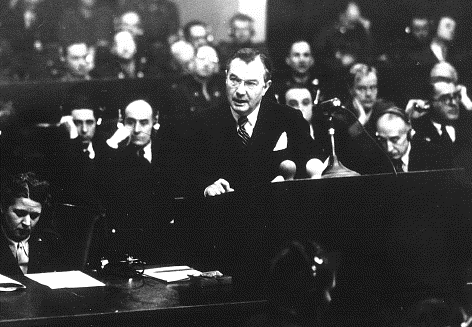
“If certain acts of violation of treaties are crimes, they are crimes whether the United States does them or whether Germany does them, and we are not prepared to lay down a rule of criminal conduct against others which we would not be willing to have invoked against us.” Justice Robert Jackson International Conference on Military Trials, London, 1945, Dept. of State Pub.No. 3080 (1949), p.330.

In March 2003 I like many of us on active duty at the time saw the nation embark on a crusade to overthrow an admittedly thuggish criminal head of state, Saddam Hussein. The images of the hijacked airliners crashing into the Twin Towers of the World Trade Center and the Pentagon were still relatively fresh in our minds. The “evidence” that most of us had “seen,” the same that most Americans and people around the world were shown led many of us to believe that Saddam was involved in those attacks in some manner and that he posed a threat to us.

Now it wasn’t that we didn’t have doubts about it or even the wisdom of invading Iraq. It didn’t matter that there was also credible evidence that maybe what we were being told was not correct, and it didn’t matter that some of our closest allies voted against a mandate to invade Iraq in the United Nations Security Council. We were emotionally charged by the events of 9-11 and “we knew” that Saddam was a “bad guy.” We also believed that we could not be defeated. We had defeated the Iraqis in 1991 and we were stronger and they weaker than that time.

We really didn’t know much about Iraq, its history, people, culture and certainly we paid little attention to the history of countries that had invaded and occupied Iraq in the past. T.E. Lawrence, the legendary Lawrence of Arabia wrote in August of 1920 about his own country’s misbegotten invasion and occupation of Iraq, or as it was known then Mesopotamia.

“The people of England have been led in Mesopotamia into a trap from which it will be hard to escape with dignity and honour. They have been tricked into it by a steady withholding of information. The Bagdad communiqués are belated, insincere, incomplete. Things have been far worse than we have been told, our administration more bloody and inefficient than the public knows. It is a disgrace to our imperial record, and may soon be too inflamed for any ordinary cure. We are to-day not far from a disaster.”

The sad thing is that the same could have been written of the United States occupation by 2004.

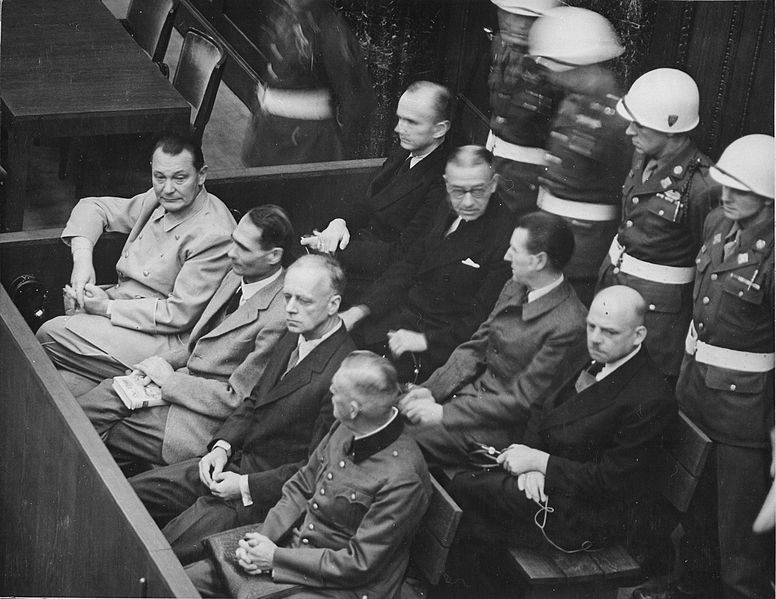
But even more troubling than the words of Lawrence are the Nuremberg War Crimes Trials. Somehow as a historian who has spent a great deal of time studying the Nazi period and its aftermath I cannot help but look back in retrospect and wonder what Supreme Court Justice Robert Jackson and the other Nuremberg prosecutors would have done had they had some of our leaders in the dock instead of the Nazis.
776px-Nuremberg-1-

The indictments against the Nazis at Nuremberg are chilling if we were to be held to the same standard that we held the Nazis leaders at Nuremberg. True, we did not have massive death camps or exterminate millions of defenseless people, nor did we run slave labor factories, but we did like they launched a war of aggression under false pretense against a country that had not attacked us.

At Nuremberg we charged twenty top Nazi political officials, as well as police and high ranking military officers with war crimes. The indictments included:

Count One: Conspiracy to Wage Aggressive War: This count addressed crimes committed before the war began, showing a plan by leaders to commit crimes during the war.

Count Two: Waging Aggressive War, or “Crimes Against Peace” which included “the planning, preparation, initiation, and waging of wars of aggression, which were also wars in violation of international treaties, agreements, and assurances.”

Count Three: War Crimes. This count encompassed the more traditional violations of the law of war already codified in the Geneva and Hague Conventions including treatment of prisoners of war, slave labor, and use of outlawed weapons.

Count Four: Crimes Against Humanity, which covered the actions in concentration camps and other death rampages.

While count four, Crimes Against Humanity would be difficult if not impossible to bring to trial because there was nothing in the US and Coalition war in Iraq that remotely compares to that of what the Nazis were tried, some US and British leaders could probably have been successful prosecuted by Jackson and the other prosecutors under counts one through three.

The fact is that none of the reasons given for the war by the Bush Administration were demonstrated to be true. Senior US and British officials knowing this could be tried and very probably convicted on counts one and two. We also know that some military and intelligence personnel have been convicted of crimes that would fall under count three.
r-SADDAM-HUSSEIN-large570

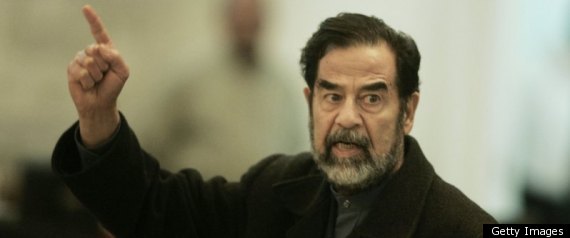
Saddam Hussein was a war criminal. He was also a brutal dictator who terrorized and murdered hundreds of thousands of his own people. But we went to war over his alleged ties to Al Qaeda and WMDs and he had not attacked us. Looking back at history and using the criteria that we established at Nuremberg I have no doubt that had Dick Cheney or Donald Rumsfeld been in the dock that Justice Jackson would have destroyed them and the court would have convicted them.

So 10 years, nearly 5000 US military personnel dead, 32,000 wounded, over 100,000 afflicted with PTSD, and other spiritual and psychological injuries, with an estimated 22 veterans committing suicide every day; somewhere between 1 and 2 trillion dollars spent, hundreds of thousands of Iraqis dead, wounded and displaced from their homes and a country destroyed and still in turmoil. And somehow those that decided to take us to war roam free. They write books defending their actions and appear on “news” programs hosted by their media allies who 10 years ago helped manipulate the American public, still traumatized by the events of 9-11-2001 to support the war.
nuremberg-jackson-10400

http://www.youtube.com/watch?v=No06Lwk_TAg

Saddam and many of his henchmen are dead or rotting in Iraqi prisons for their crimes against the Iraqi people. However good this may be one has to ask if how it happened was legal or justified under US or International Law, if it was worth the cost in blood, treasure or international credibility. Likewise why have none of the men and women who plotted, planned and launched the war been held the standard that we as a nation helped establish and have used against Nazi leaders and others?

If we cannot ask that and wrestle with this then we as a nation become no better than the Germans who sought minimize their responsibility for the actions of their leaders, and in doing so enable future leaders to feel that they can do the same with impunity. That is a terrible precedent.

Peace

Padre Steve+
1 Comment

Filed under History, iraq,afghanistan, middle east

Irrelevant Incidents and Un-winnable Wars: Thoughts on Returning from War 5 Years Later

6Fi9832

Just shy of five years ago in February 2008 I returned from Iraq after a tour with our advisors to the Iraqi Army and Security forces in the far reaches of Al Anbar Province. I flew back to the United States on a chartered flight with about 200 other men and women, individual augments from the US Navy who had served in Iraq and Afghanistan. We had a few days in Kuwait to “decompress” and then were on our way home. Those that conducted our training in that time had been in Kuwait, at large bases, separated from home but enjoying creature comforts that made it feel that we were in “Little America.”

Our aircraft stopped at Ramstein Air Base in Germany for a crew change and refueling. While there the aircraft was filled to its capacity with servicemen and their families returning from Germany to the United States. Crying babies and screaming kids greeted us as we boarded the aircraft. Most of us had not slept in the 24 hours before we left Kuwait and were exhausted. I was wearing my last serviceable uniform.

The remaining part of the flight from Germany to Philadelphia was difficult. The new arrivals were coming from a peacetime world and we were coming our of combat zones, often isolated even from other Americans. When we landed we went from our aircraft, got our civilian tickets, clad in our desert camouflage and dragging our gear we were made to removed our belts and boots by the TSA agents. It was obvious from we had come but instead of a welcome we we treated as potential hijackers. We each flew back to our respective bases on different flights into the arms of waiting families that loved us but did not understand us and units, who had not shared our experience simply sent us back to work without recognition while those that had not deployed griped about how hard things were.

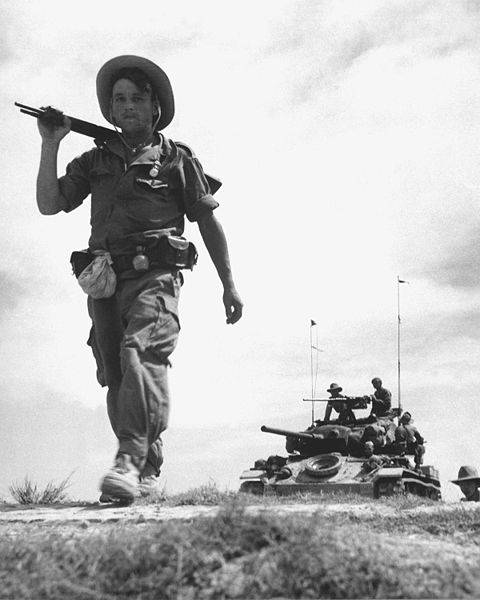
FrenchForeignLegionaireVtNamDOD

Today I was doing some counseling with a sailor and as we talked about life and the war a passage from Bernard Fall’s classic account of the French war in Indochina, Street Without Joy, came to mind. It reminded me of our experience returning from war, which could be seen as seemingly irrelevant incidents, but which pointed to a larger problem. It was so powerful that I decided to post much of it here.

In October 1953, Fall a journalist was covering the French war in Indochina. In between his stints with various French and allied units fighting the Viet Minh he made a travel stop over in Cambodia. He wrote of it:

“Sometimes, there occurs an almost irrelevant incident which, in the light of later developments, seems to have been a sign of the gods, a dreamlike warning which if heeded, could have changed fate- or so it seems.

One such incident occurred to me in October 1953 in Cambodia, at Siem-Reap, not far from the fabulous temples of Angkor-Wat…

A few French officers were still around, mainly as advisors to the newly-independent Cambodian Army….

When I went to the Transportation Office that afternoon at 1530, the Cambodian orderly told me apologetically that “le Lieutenant est alle au mess jouer au tennis avec le Capitaine” and that they might well stay there all afternoon. Since the convoy which I was expected to catch was supposed to leave at dawn, I decided to stroll over to the mess in order to get my travel documents signed there.

The Siem-Reap officers’ mess was a pleasant and well kept place; with its wide Cambodian-type verandahs, its parasol-shaded tables and the well-manicured lawns and beautifully red-sanded tennis court, it was an exact replica of all the other colonial officers’ messes from Port Said to Singapore, Saigon or even Manila, wherever the white man had set his foot in the course of building his ephemeral empires.

I found the two officers at the tennis court, in gleaming white French square-bottomed shorts…matching Lacoste tennis shirts and knee-long socks…

Since the men were in the midst of a set and I had little else to do, I set down at a neighboring table after a courteous bow to the ladies and watched the game, gladly enjoying the atmosphere of genteel civility and forgetting for a moment the war…

Then emerged from the verandah a soldier in French uniform. His small stature, brown skin and Western-type features showed him to be a Cambodian. He wore the blue field cap with the golden anchor of the Troupes Coloniales- the French “Marines”- and three golden chevrons of a master-sergeant. On his chest above the left breast of his suntan regulation shirt were three rows of multi-colored ribbons: croix de guerre with four citations, campaign ribbons with clasps of France’s every colonial campaign since the Moroccan pacification of 1926; the Italian campaign of 1943 and the drive to the Rhine of 1945. In his left hand, he carried several papers crossed diagonally with a tri-colored ribbon; travel orders, like mine, which also awaited the signature of one of the officers.

He maintained in the shadow of the verandah’s awnings until the officers interrupted their game and had joined the two women with their drinks, then strode over in a measured military step, came stiffly to attention in a military salute, and handed the orders for himself and his squad to the captain. The captain looked up in surprise, still with a half smile on his face from the remark made previously. His eyes opened suddenly as he understood that he was being interrupted. Obviously, he was annoyed but not really furious.

“Sergeant, you can see that I’m busy. Please wait until I have time to deal with your travel orders. Don’t worry. You will have them in time for the convoy.”

The sergeant stood stiffly at attention, some of his almost white hair glistening in the sun where it peeked from under the cap, his wizened face betraying no emotion whatsoever.

“A vous ordres, mon Capitaine.” A sharp salute, a snappy about face. The incident was closed, the officers had their drink and now resumed their game.

The sergeant resumed his watch near where the Cambodian messboys were following the game, but this time squatted down on his haunches, a favorite Cambodian position of repose which would leave most Europeans with partial paralysis for several hours afterwards. Almost without moving his head, he attentively followed the tennis game, his travel orders still tightly gripped in his left hand.

The sun began to set behind the trees of the garden and a slight cooling breeze rose from the nearby Lake Tonle-Sap, Cambodia’s inland sea. It was 1700.

All of a sudden, there rose from behind the trees, from the nearby French camp, the beautiful bell-clear sounds sounds of a bugle playing “lower the flag”- the signal, in which the French Army, marks the end of the working day as the colors are struck.

Nothing changed at the tennis court; the two officers continued to play their set, the women continued their chatter, and the messboys maintained their silent vigil.

Only the old sergeant moved. He was now standing stiffly at attention, his right hand raised to the cap in a flat-palmed salute of the French Army, facing in the direction from which the bugle tones came; saluting, as per regulations, France’s tricolor hidden behind the trees. The rays of the setting sun shone upon the immovable brown figure, catching the gold of the anchor and of the chevrons and one of the tiny metal stars of his ribbons.

Something very warm welled up in me. I felt like running over to the little Cambodian who had spent all of his life fighting for my country, and apologizing to him for my countrymen here who didn’t care about him, and for my countrymen in France who didn’t even care about their countrymen fighting in Indochina…

And in one single blinding flash, I knew that we were going to lose the war.”

Bernard Fall, Street Without Joy, Fourth edition, May 1967, Stackpole Books Harrisburg PA, pp. 291-294

481801_10151367001287059_1003164983_n

I hadn’t thought about the passage in a long time, until it came to me today. When I read it I began to understand the feelings that I had in 2008 but could not comprehend. The fact is that a very few men and women, a small segment of the population, less than one half of one percent of Americans have been fighting the wars in Iraq, Afghanistan while the rest of the country, even parts of the military have been on the sidelines.

I realized when I came home that those that crammed the families from Germany onto our plane to save a few dollars, the TSA airport security agents and some of those in the units that we returned to didn’t understand. In fact it was as if they were not at war. I think I began to realize at that point that no matter how ardently that some of us served that our sacrifices would not produce the planned intent of those that sent us to war. I knew at that point, but couldn’t quite put my finger on it that we could not win this war. A war that only a portion of the military, was fighting while the bulk of the population lived in peace without any “skin in the game.”

We are so much like the French, the British and every other colonial or imperial power that it is frightening. We claim not to be an empire but we act like empires have throughout history. We place our footprint large of the globe, creating bastions of American culture in the midst of lands far different than us. Then we send a small percentage of our people to fight the wars that our nation’s leaders as well American and multinational businesses deem to be in our national interest, especially natural resources and commerce.

n671902058_1153793_4043

As the expeditionary forces fight the wars the bulk of the public is shielded from the horror of it. Many people are sympathetic to the war fighters but because they have not served are ignorant of what we face. Beguiled by the slick, high tech media presentations in the news and entertainment industry of war; they do not understand the cost. The representations in the media make war another spectator sport. At least the news no longer shows a nightly “body count” as was done in Vietnam.

Marine Major General Smedley Butler, a man awarded the Congressional Medal of Honor twice wrote shortly after his retirement in 1932:

“What is the cost of war? what is the bill? Major General Smedley Butler wrote: “This bill renders a horrible accounting. Newly placed gravestones. Mangled bodies. Shattered minds. Broken hearts and homes. Economic instability. Depression and all of its attendant miseries. Back -breaking taxation for generations and generations. For a great many years as a soldier I had a suspicion that war was a racket; not only until I retired to civilian life did I fully realize it….”

It is amazing what going to war will do to you. This is especially true when you can recognize what too few people see or even want to even think about. But then why should we expect anything different? There was no national call to arms after 9-11-2001 and our leaders told the people to do what they normally would do, and most importantly to “go shopping.”

Pray for Peace,

Padre Steve+

4 Comments

Filed under iraq,afghanistan, middle east, Military, national security, News and current events, Tour in Iraq

Iraq and the Middle East 2013: Lessons from T. E. Lawrence

295_26912097058_4309_n

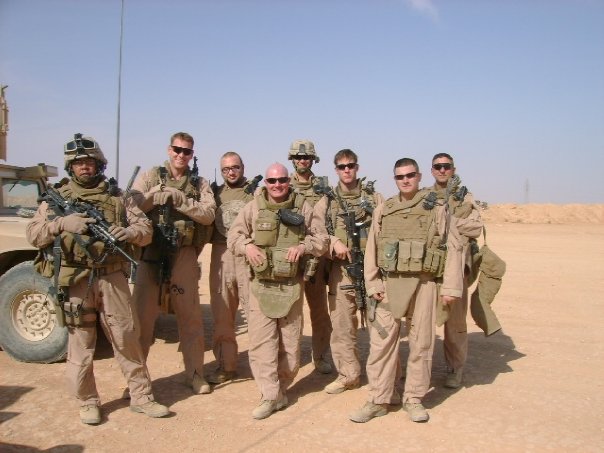
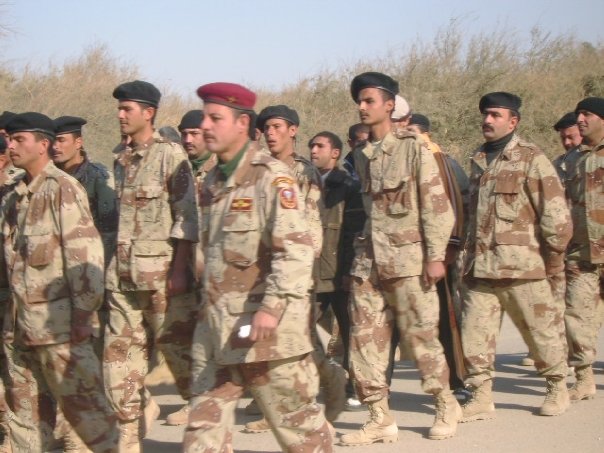
The Author with Advisors and Bedouin on the Iraqi Syrian Border

I left Iraq just under five years ago and in the process left part of me in that long suffering country.  I have written much about my experience there and how even today I have a deep regard for the Iraqi people and their hopes for a better future.

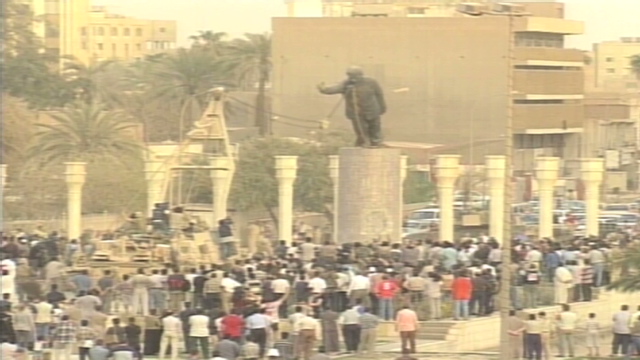
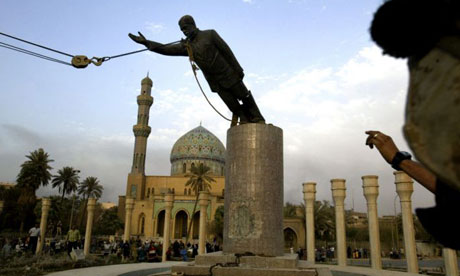
In 2003 the United States invaded Iraq and made short work of that country’s military. Many, if not most Iraqis of all creeds looked upon the US and coalition forces as liberators but within a few months the illusion was over. The US military personnel and leaders who were working with Iraqi officials, both military and civilian to get the country back on its feet were replaced by the Bush administration.

vault.von.saddam.statue.fall.itn.640x360

False Hopes in 2003, believing that US Forces were Liberators 

In their place a new entity, the Coalition Provisional Authority was created and staffed. The first administrator of the entity was retired Army Lieutenant General Jay Garner, who had much experience in Iraq but was replaced quickly for not conducting an immediate purge of members of the Ba’athist Party from key positions in the civil service or security forces.  Led by Ambassador L. Paul Bremer, a man who had no experience in the Arab world, much less in Iraq. Bremer and his staff, most of who had little experience or knowledge of the country created conditions that directly led the the Iraq insurgency, the sacrifice of thousands of American and allied lives and the friendship of the Iraqi people. They also gave a victory to Iraq’s traditional enemy and oppressor Iran to become a dominant regional power without having to worry about the Iraqi threat.

410w-1

Lawrence

rumsfeld-bremerL Paul Bremer (r) with SECDEF Donald Rumsfeld

It was as if Bremer, the leaders of the Bush administration and their neo-conservative allies knew nothing of history. T.E. Lawrence wrote of the British incursion into Turkish Mesopotamia in 1915, managed by the British Indian Office:

“By brute force it marched then into Basra. The enemy troops in Irak were nearly all Arabs in the unenviable predicament of having to fight on behalf of their secular oppressors against a people long envisaged as liberators, but who obstinately refused to play the part.”

The actions of the CPA laid waste pragmatists in the Pentagon and State Department who hoped that existing civil service, police and military forces would be retained and individuals with significant ties to the regime of Saddam removed. Instead Bremer dissolved the Iraqi military, police and civil service within days of his arrival. Since the military invasion had been accomplished with minimal forces most Iraqi weapon sites, arsenals and bases were looted once their Iraqi guardians were banished and left their posts. The embryonic insurgency was in effect given a full arsenal of weapons to use against American forces, many of who were now mobilized Reservists and National Guardsmen that were neither trained or equipped to fight an insurgency or in urban areas.

The reaction of the Iraqi Arabs to US occupation should have been anticipated. Lawrence wrote in 1920 a letter that could have easily been written in 2004:

“It is not astonishing that their patience has broken down after two years. The Government we have set up is English in fashion, and is conducted in the English language. So it has 450 British executive officers running it, and not a single responsible Mesopotamian. In Turkish days 70 per cent of the executive civil service was local. Our 80,000 troops there are occupied in police duties, not in guarding the frontiers. They are holding down the people.”

295_26912047058_2328_n

Rebuilding an Army

The actions of Bremer’s incompetent leadership team led to a tragic insurgency that need not have taken place. The now unnumbered US forces had to fight an insurgency while attempting to re-create an army, security forces and civil service from the wreckage created by Bremer’s mistakes and its own often heavy handed tactics in the months following the invasion. Nearly 4500 US troops would die and over 30,000 more wounded in the campaign. Hundreds of thousands of Iraqis were killed, wounded or died of disease during the war.  Lawrence wrote about the British administration of Iraq words that could well have been written about Bremer’s Coalition Provisional Authority: “Meanwhile, our unfortunate troops, Indian and British, under hard conditions of climate and supply, are policing an immense area, paying dearly every day in lives for the wilfully wrong policy of the civil administration in Bagdad.”

It took dramatic efforts in blood and treasure to rebuilt that was only beaten back after the US acted to conduct a surge in conjunction with the revolt of the Sunni of Anbar Province against foreign fighters who had become a dominant force in the insurgency. The surge under the command of General David Petreus achieved the desired result. It gave the Iraqis a chance to stabilize their government and increase their own security forces. Unfortunately many of those that remained in power of the Shi’ite sect refused to  share power in meaningful ways with Iraq’s Sunni and Kurds leading to a political crisis. The US military mission ended in December 2011 and since then Iraq security forces and civil authorities, often divided by tribal or sectarian loyalties have struggled to maintain order. The result is that in 2013 that Iraq is again heading toward the abyss of civil war. Sunni protestors in Anbar and other provinces conduct frequent protests as sectarian violence spreads. Many Iraqis of all sects have mixed feelings about the American invasion and the bloody aftermath and fear the future.

In 1920 Lawrence wrote of the continuing British intervention and occupation of Iraq: “The people of England have been led in Mesopotamia into a trap from which it will be hard to escape with dignity and honour. They have been tricked into it by a steady withholding of information. The Bagdad communiqués are belated, insincere, incomplete. Things have been far worse than we have been told, our administration more bloody and inefficient than the public knows. It is a disgrace to our imperial record, and may soon be too inflamed for any ordinary cure. We are to-day not far from a disaster.”

His words have a sadly familiar tone. The US invasion of Iraq did have a different outcome than we imagined. The Arab Spring erupted and the consequences of it will be far reaching and effect much of the Middle East and the world. However, Lawrence’s words and wisdom concerning the Arabs who rebelled against the Turkish Ottoman Empire are something that we in the West need to heed today.

baghdad1917

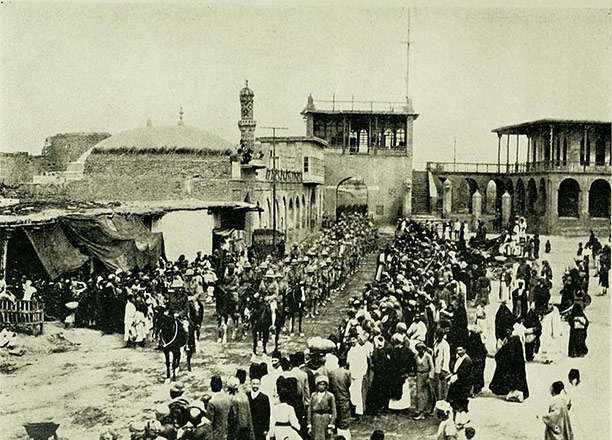
British Troops entering Baghdad

“The Arabs rebelled against the Turks during the war not because the Turk Government was notably bad, but because they wanted independence. They did not risk their lives in battle to change masters, to become British subjects or French citizens, but to win a show of their own.”

481801_10151367001287059_1003164983_n

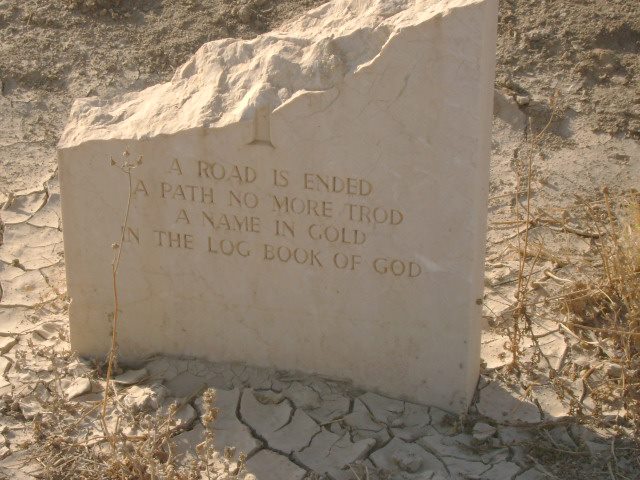
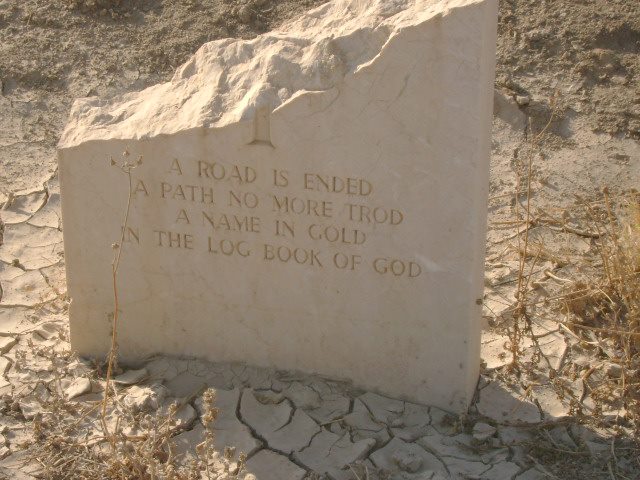
Grave of a British Soldier in Habbaniyah Iraq

That is the case in many Arab countries today. One can only hope that in those countries and in Afghanistan where our troops are embroiled in a war that cannot end well that we will do better.

Peace

Padre Steve+
2 Comments

Filed under Foreign Policy, History, iraq,afghanistan, middle east, national security

The Loss of an Icon: General Norman Schwarzkopf dies at 79

201212281047938734_20

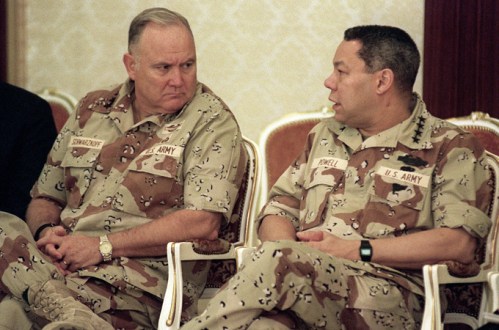
Schwarzkopf and Powell, the Eisenhower and Marshall of their Era

“Do what is right, not what you think the high headquarters wants or what you think will make you look good.” 

Americans lost a military hero and an icon yesterday. General Norman Schwarzkopf died in Tampa at the age of 79 due to complications of pneumonia.

Schwarzkopf was one of the most brilliant commanders of his era, a multi-dimensional character who was to many of us bigger than life.

Schwarzkopf was the quintessential Army Brat, growing up on military bases in the United States as well as in diplomatic posts overseas. The son of General he graduated from West Point, was commissioned as an infantry officer, became a paratrooper at Fort Campbell Kentucky before being assigned to the Berlin Brigade, a post he left just prior to the erection of the Berlin Wall by the Soviets and the East Germans. He completed a Masters degree in Mechanical Engineering from USC and was assigned as an instructor at West Point.

sch0-008a

Schwarzkopf helping to carry a wounded South Vietnamese Paratrooper 

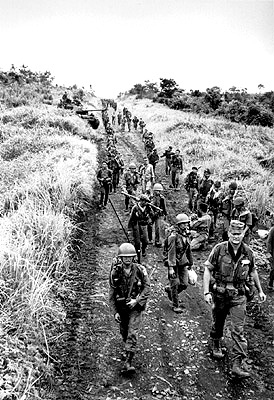
During that tour he volunteered to serve as an advisor with South Vietnamese paratroopers.  After that tour and the completion of his tour at West Point he was promote to Lieutenant Colonel and commanded the 1st Battalion 6th Infantry, 198th Brigade and was wounded while with his troops and who in the crisis kept his head and helped lead his troops, though seriously wounded out of the trap. He was known with affection by many soldiers as “the Bear,” a moniker that he appreciated much more than Desert Storm media nickname of “Stormin’ Norman.”

sch0-017

Schwarzkopf with ARVN Paratroops

It was during his time in Vietnam that Schwarzkopf came to a realization about men at war and his own personality. “I prided myself on being unflappable even in the most chaotic of circumstances,…That guise lasted until Vietnam, where I realized that I was dealing with human lives and if one were lost, it could never be replaced. I quickly learned that there was nothing wrong with being emotional.”

sch0-007a

Following his time in Vietnam he remained in the Army to help be a part of its rebuilding as an All Volunteer force. By the late 1970s he had served as a Brigade commander in the 9th Infantry Division and Assistant Division Commander in the 8th Infantry Division before taking command of the 24th Infantry Division in late 1982. He was appointed the Deputy Commander for the Joint Task Force that invaded Grenada in 1983 and in 1988 was appointed Commander for the US Central Command.

1general122812

It was in this capacity that he took command of US and coalition troops gathering to respond to Saddam Hussain’s invasion of Kuwait in August 1981. His leaders and planning cells helped engineer a military campaign in conjunction with the admirable skill of President George H.W. Bush and his diplomats the successful expulsion and destruction of Saddam’s forces. While some criticize the decision not to continue the war and go on to Baghdad Schwarzkopf made a comment that those that invaded Iraq in 2003 might well have better heeded: had “we taken all of Iraq, we would have been like a dinosaur in the tar pit — we would still be there, and we, not the United Nations, would be bearing the costs of that occupation.”

20436634_BG1

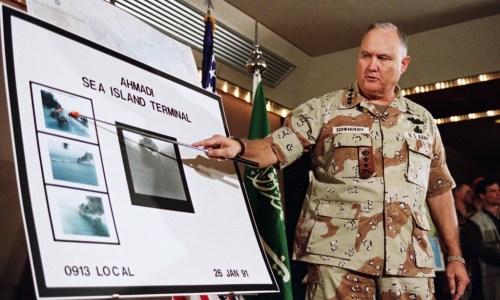
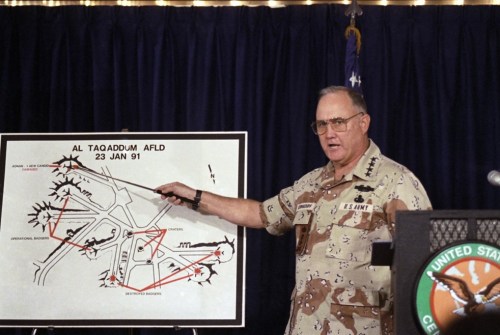
Schwarzkopf’s Briefings

After his retirement he was active in supporting cancer research programs, efforts to save the Grizzly Bear and was a military commentator and analyst for NBC. Although he supported the invasion of Iraq in 2003 he asked questions that few were asking. In early 2003 he told the Washington Post: “What is postwar Iraq going to look like, with the Kurds and the Sunnis and the Shiites? That’s a huge question, to my mind. It really should be part of the overall campaign plan.”  Following the invasion and the beginning of the insurgency he became a critic of the operation. He was particularly critical of Defense Secretary Donald Rumsfeld for not anticipating the consequences of the invasion and for Rumsfeld’s criticism of the Army and the deployment of reserve component troops into urban combat who did not have the correct training or equipment for the job. He also made another observation that few noted about Rumsfeld and much of the Pentagon staff and the Bush Administration appointees in Iraq, in that they “showed a total lack of understanding of the culture that we were dealing with.” 

Schwarzkopf was an original and though he was loathe to admit it a hero. He also knew that life was bigger than the military and that one has to be more than the sum of their career. He once told the Associated Press: “I may have made my reputation as a general in the Army and I’m very proud of that… “But I’ve always felt that I was more than one-dimensional. I’d like to think I’m a caring human being. … It’s nice to feel that you have a purpose.”

ip8CXZqG.OL8

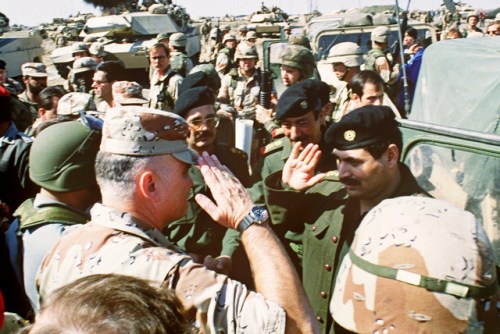
Schwarzkopf with Iraqi Generals at Cease Fire

Though I never served under his command while in the Army I knew many friends that did and my early career was shaped and molded by men life him.  He was not a perfect commander, analysis of his command in the Gulf show that he did make some mistakes, the greatest and most long lasting being the concession to allow the defeated Iraqi forces the use of helicopters which they used with great effect against the Shi’a tribes near Basra that sought independence.

However, in my mind it was Schwarzkopf’s public leadership that helped inspire his troops and encourage the nation which until that point had not recovered from all of the effects of the Vietnam War.  His briefings inspired confidence in America and with our Allies. He was as much of a diplomat in figuring out how to employ over 700,000 troops, military forces of 32 nation coalition, including numerous large Arab countries in a successful war.

Schwarzkopf also understood the full gravity of war and its effects on nations and people. He said: “I hate war. Absolutely, I hate war…Good generalship is a realization that … you’ve got to try and figure out how to accomplish your mission with a minimum loss of human life.”

He is remembered well. General Colin Powell who served as the Chairman of the Joint Chiefs during Desert Storm remarked after Schwarzkopf’s death “His leadership not only inspired his troops, but also inspired the nation. He was a good friend of mine, a close buddy. I will miss him.” From his hospital bed former President George H W Bush issued a statement saying that Schwarzkopf: “epitomized the ‘duty, service, country’ creed that has defended our freedom and seen this great nation through our most trying international crises….More than that, he was a good and decent man — and a dear friend.”  President Barak Obama praised him saying that “He was an American original” and “From his decorated service in Vietnam to the historic liberation of Kuwait and his leadership of United States Central Command, General Schwarzkopf stood tall for the country and Army he loved…”

Norman+Schwarzkopf+

Rest in Peace General, Rest in Peace,

Peace

Padre Steve+
2 Comments

Filed under History, iraq,afghanistan, leadership, middle east, Military, News and current events, vietnam

NATO Patriots to Turkey as Syria Teeters on the Abyss

p01-120828-p2r

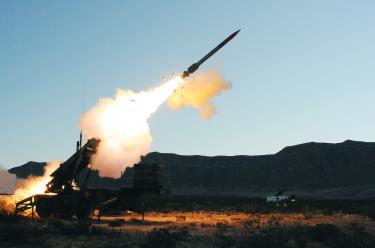
M-104 D Patriot Missile (Patriot PAC-3)

There are times when wars and conflicts grind on day after day seemingly without end and without any kind of resolution. There are other times that in the midst of such conflicts events occur that are not routine. In the case of the Syrian revolt and civil war this was such a week.

For months, actually nearing two years the conflict in Syria has simmered. With each passing week the rebels have gained ground and support while the regime of Bashir Al Assad has engaged in ever more repressive and violent measures to stay in power.

patriot-system

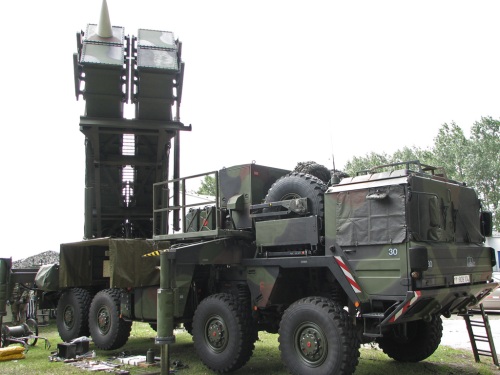
German Luftwaffe Patriot System

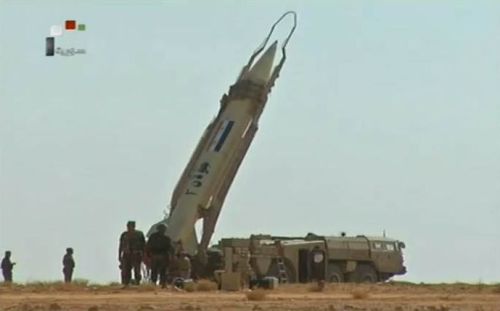
This was a significant week in the Syrian crisis as three NATO member nations, Germany, the Netherlands and the United States announced the deployment of the latest version of the Patriot Surface to Air Missile to Turkey in response to Turkey’s request for NATO assistance. Additionally it was announced that the United States has confirmed that Syria has fired its SCUD missiles against its own people even as the Russian Foreign Minister announced that it was possible that the Assad regime would not survive the revolt. In addition it has been reported that the Syrian regime is readying its chemical weapons for possible use.

The Patriot units being sent to Turkey are six full batteries manned of advanced Patriot PAC-3 missiles manned by close to 1200 troops. The PAC-3 missile is currently only in service with the United States, Germany and the Netherlands. Other NATO forces use the PAC-2 or PAC-2/GEM versions.

scud-b_ss-1c_r-17_srbm_short_range_ballistic_missile_syrian_armed_forces_03

Syrian SCUD Missile and Launcher

The events of the past week point to possible escalation of the Syrian conflict which has for some time threatened to involve Syria’s ancestral rival Turkey. There is little love between the Turk and the Syrian Arab dating back to the times of the Ottoman Empire. Turkey has done a remarkable job in giving sanctuary to Syrians fleeing the violence and has had to deal with Syrian artillery attacks as well as the shoot down of a Turkish Air Force reconnaissance aircraft over the Mediterranean.

With American and other NATO troops on the ground in Turkey the chances that a Syrian attack on Turkey could directly involve the US and NATO in another war grows.

Praying for Peace

Padre Steve+
2 Comments

Filed under middle east, Military, News and current events

Arab Spring Fever: The Revolution Begins Anew in Egypt as Syria Begins to Melt Down

bouazizi

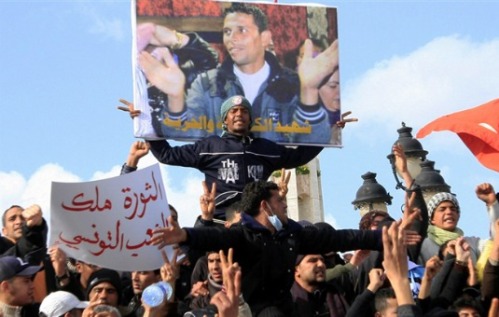
Tunisian Demonstrators

It began in such an innocuous manner. A Tunisian street vendor named Tarek al-Tayeb Mohamed Bouazizi set fire to himself due to what he viewed as harassment and humiliation by a local government official who confiscated his goods when he could not afford to pay bribes to the police. He died a few weeks later. That act set in motion widespread protests that led to the overthrow of long time Tunisian dictator Zine El Abidine Ben Ali ten days later.

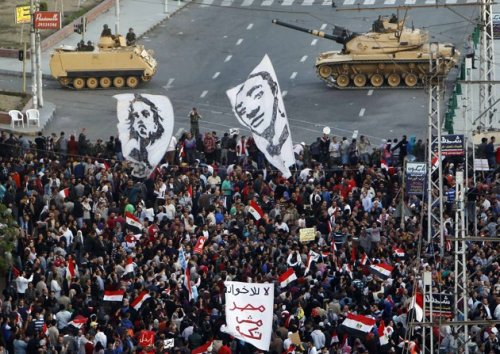
The events in Tunisia sparked revolts throughout the Arab World, including the largest and most influential of the Arab States, Egypt and Syria. The situation in Egypt ended in the overthrow of President Hosni Mubarak and free elections where Islamists gained a majority in Parliament and the election of Moslem Brotherhood leader Mohamed Mursi as President. The situation in Syria led to minor reforms before the government of Bashir Al Asad began a series of repressive and violent crackdowns against protestors. This led to a armed revolt that has only continued to gain ground and achieve a modicum of international recognition.

2012-12-07T183045Z_340924292_GM1E8C71U0S01_RTRMADP_3_EGYPT-POLITICS

Egyptian Demonstrators calling for the Ouster of President Mursi

It appears that Egyptian President Mursi and the Islamic Brotherhood may have bit off a bit more than they could chew when they hurriedly wrote a new draft constitution that maximized their power and limited freedoms of non-Islamists including Coptic Christians, Democrats and secularists. Mursi compounded his mistake by issuing an edict that gave him practically unlimited power. The backlash from the Egyptian judiciary, journalists and opposition parties has been dramatic. Protests on the order of the original demonstrations against the Mubarak regime have engulfed Egypt, Mursi has  annulled his decree that granted him those powers and the opposition is calling for his overthrow. The Egyptian military has again become a player in the unfolding drama.

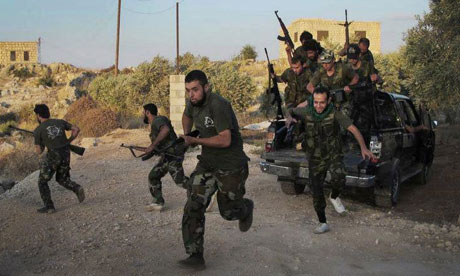
Free Syrian Army soldiers in Idlib

Free Syrian Army Soldiers in Action

In Syria the opposition is nearing complete control of many areas of the country and Bashir Al Asad’s regime is believed by many to be on its last legs, only the endgame remains to be played out. Some believe that Syria’s regime may be willing to use chemical weapons, particularly Sarin nerve gas agents against the opposition. The leaders of Western nations, especially the United States have announced that the use of such weapons would be unacceptable.

There are continued demonstrations, protests and political actions ongoing in several countries including US Allies Jordan, Kuwait and Bahrain.

Throughout the Arab World the Arab Spring has had marked repercussions. The long term dictators of Yemen and Libya were both overthrow, with Yemen’s case Ali Abdullah Saleh was able to negotiate his exit from power, while in Libya the regime of Muammar Ghadaffi was overthrown in a bloody manner following a protracted civil war. Ghadaffi himself was brutally murdered following his capture.

The Arab has also has had effects on the foreign policy of nations, particularly the United States, Russia and the European Union and others around the world who have stood to gain by maintaining the status quo in the region, playing off the interests of their Arab “friends” for their own benefit. The fact is that most countries or alliances with military, economic and political, diplomatic and intelligence interests are still trying to make sense of the new Middle East and how it will impact their interests.

The problem is that most people outside the region have little understanding of it or how different the culture, history and social considerations of each part of the Arab world is different than others. We like to take about the “Arab Street” or the “Moslem world” but the fact is that neither the Arab Street or the Moslem world is monolithic and what is the case in one country is not necessarily true in other countries.

054

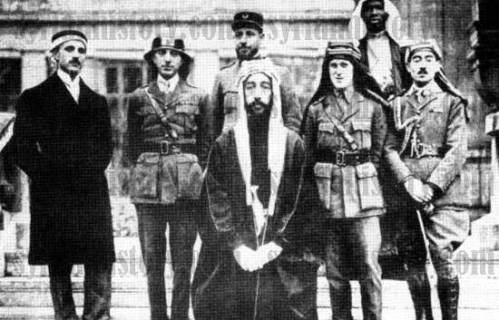
T.E. Lawrence with members of Arab delegation at Versailles

What we know as countries in many cases are nothing more than disparate Arab peoples of different, Tribal affiliations, cultural traditions, history as well as Islamic and Christian factions. There is no generic Arab country or people and in many Arab countries there is internal conflict based on tribal, ethnic or religious lines. This was something that T.E. Lawrence noted in his works and something that we in our desire to shape events to our liking, need to remember.

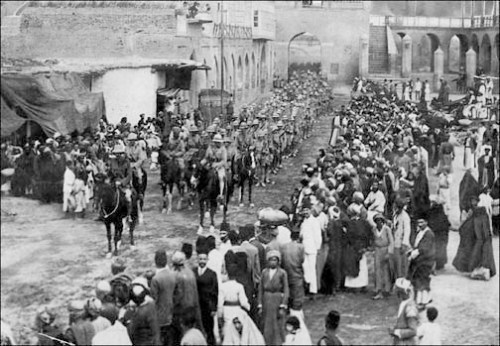
britishbaghdad1917www

British Troops Enter Baghdad in 1920

During and after the First World War, European powers, particularly the English and French, but also the Italians used their military, economic and diplomatic power to divide the Arab World, recently free of Ottoman-Turk domination through the Sykes-Picot agreement, agreements made at Versailles and San Remo. In doing so they prevented a natural development of Arab freedom and helped poison relations between the Arabs and the West for generations and in the case of Saudi Arabia led to the domination of the Wahhabi house of Saud.

The Arab world is a mosaic of different peoples, cultures, traditions and histories. As the Arab Spring continues to unfold it is very important that we, who are not Arabs understand the various tensions at play and make vague assumptions about them or what the Arab Spring portends in Egypt or elsewhere.

Yes, we have important interests in the region. However as chaotic as it may seem the Arab Spring is a natural outgrowth of a region and its peoples finding themselves after centuries of foreign domination, be it that of the Roman, the Byzantine, the Turk, the Persian, or various countries of Europe and even the United States. It is important that it play out with as little foreign interference as possible. The lesson from history is that the last century of Western domination, imperialism and interference in Arab affairs have not helped and that these events will have to play themselves out, and that may take at least a generation.

arabspring-640x480

Whether we like it or not, what is happening now, despite the violence, strife and chaos is a necessary part of their story. How can we not understand? How many centuries of ethnic, cultural, religious and political war and strife have the nations of Europe and America endured to come to some semblance of working peacefully together?

The Arab Spring will be with us for a while because Arabs, regardless of their nationality, tribe or religious sect must determine their fate.

Peace

Padre Steve+
2 Comments

Filed under Foreign Policy, History, middle east, News and current events

The Fallacy of “Complete” Victory and the Seeds of Perpetual War and the Way to Peace

“We learn from history that complete victory has never been completed by the result that the victors always anticipate—a good and lasting peace. For victory has always sown the seeds of a fresh war, because victory breeds among the vanquished a desire for vindication and vengeance and because victory raises fresh rivals.” B H Liddell Hart

The current conflict between Israel and Hamas in Gaza has brought into light the fallacy of the belief that military victories alone can bring peace. One would think that leaders would know this and understand the basic truth of this key aspect of the human condition but it seems that we are doomed in every generation for leaders to ignore this basic fact of human life and civilization.

While one can easily criticize the Israelis and Palestinian Arabs for their unremitting hostility and desire for revenge they are not unique. Europe bears the scars of over 1500 years of Christendom’s own tribal and religious hatreds, many which still simmer underneath the surface of “free and democratic society.” Asia is rife with ethnic hatred and desire for revenge for actions committed by people long dead. Africa, the same except for the most part those in the “First World” be they Americans, Europeans or Asians only care about Africa for its natural resources, otherwise we would have acted to stop the various genocides on that rich, beautiful and diverse but seemingly cursed continent. The inter-Islamic and other Middle Eastern and Central Asian Moslems likewise have their hatreds, try as they might Arabs and Persians despite a common allegiance to Islam are mortal enemies with animosities that pre-date their conversion to Islam. Even we Americans are not immune to such hostility in our own country and against those that we label as our enemies overseas.

Despite this there are those that first and always resort to military force or terrorist violence to attempt to fight the “war to end all wars.”

The current episode of violence in Gaza is simple another chapter in what has been an unending series of wars since the establishment of the State of Israel. The time since has been marked by major wars in 1948, 1956, 1967, 1973 and 1981 the Palestinian Infatada as well as border conflicts between Israel, Fatah, Hamas and Hezbollah that have occurred since. These wars forced exodus of Palestinian Arabs from their ancestral homes, as well as the practical end of substantial Jewish and Christian communities in Moslem dominated nations.

The Israelis have in many cases lived under threat of invasion and destruction by neighboring Arab states for much of their history even while maintaining control of territories that they occupy by brutal force in the name of their own security. In some sense the Israeli position is understandable. They occupy but a small portion of land and threats of extermination, real and propagandistic by Arab and nations and the Iranians cause them to see these threats as existential threats.

The Arabs on the other hand deal with centuries of humiliation at the hand of foreigners, many Christian and European, but also that of the Turk and Persian. The constant drumbeat of military defeats endured by them at the hands of the Israelis and the support of Israel by western nations, some of whom ran the brutal colonial administrations which divided their lands, appointed despots as surrogates and exploited their natural resources has ingrained in them a deep seated need for revenge and respect.

I know from my time in Iraq and other Middle Eastern countries that the key to friendship and mutual respect is the simple act of taking time to know and appreciate the culture, history, faith and traditions of other people. I frequently in my dealings with Iraqi officers in Al Anbar Province opened doors by taking the time to learn their history, which goes back several millennia as the cradle of civilization and to be both polite and respectful in dealing with them. Iraqi officers were surprised that I knew the positive contributions of Iraqi military officers to Iraq, including the abolition of child labor, public education, the expansion of universities, universal suffrage and public works that benefited all Iraqis before the takeover of the country by Saddam Hussein and his Ba’ath Party. Likewise the fact that I could name the victories of Iraq forces against the British at Al Kut in the First World War, the largest surrender of British forces during the war as well as other victories gained me their respect and friendship as the “American” or “Christian Imam.”

However most Americans have not learned this despite over a decade of war in Afghanistan and Iraq. I was listening to a friend today who was upset that the government of Iraq was urging that Arabs use oil as a weapon against the United States to force the United States to change its policy in regard to the Palestinians. The argument presented on Fox News and echoed around much of the country is that the statement of the Iraqis is an act of ingratitude by a country that we “liberated.”

But that is our fiction that we create to absolve ourselves from the fact that over a period of 20 years American and other Western nations destroyed Iraq and humiliated its people. Yes we overthrew Saddam Hussein, a brutal dictator, a man that we supported for years as an ally until he crossed a line that we determined that he should not cross when he invaded Kuwait in 1990. To Shi’te Iraqis the overthrow of Saddam in 2003 was liberation, but it was “liberation” that followed the betrayal of them in 1991 where after encouraging them to revolt against Saddam we allowed them to be slaughtered by his Republican Guard.

To the Sunni of Anbar Province who after realizing that the radicals of Al Qaeda who were bringing more destruction to them than the Americans and allied themselves with the United States military in 2007, the Anbar Awakening the withdraw of American forces was an abandonment. They made our exit from Iraq possible and helped break the back of Al Qaeda, and for their trouble they believe that they have been abandoned to a corrupt Shi’te led government in Baghdad.

In light of all of this who can blame the Iraqis for making those statements. How would be we feel if that were to happen to us in the United States, or in Western Europe? Actually we know from history how we would feel. The answer is obvious in our history as well as our current actions and attitudes. We would not rest until those that brought destruction on our country and betrayed our people were defeated.

It is no wonder that Sun Tzu said that “To win one hundred victories in one hundred battles is not the acme of skill. To subdue the enemy without fighting is the acme of skill.”

Likewise Abraham Lincoln asked a question that those consumed by the need to destroy their enemies by military force should ask before ever mobilizing an army for war: “Am I not destroying my enemies when I make friends of them?”

Peace

Padre Steve+
2 Comments

Filed under History, iraq,afghanistan, middle east, Military, Tour in Iraq

The Myth of Decisive Victory in Gaza

“Cure yourself of two commonly fatal delusions: the idea of victory and the idea that war can be limited.” B. H. Liddell Hart

“There is no middle path here – either the Gazans and their infrastructure are made to pay the price, or we reoccupy the entire Gaza Strip. Otherwise there will be no decisive victory.” Gilad Sharon

As one who supports Israel it is hard to watch its leaders falling into the trap of invading Gaza, something that they have done before without success. In the past 5 days the Israelis have blunted the attacks of Hamas militants and others operating in the Gaza Strip, killed some important Hamas military leaders and decimated much of the Hamas missile capability through air, naval and artillery strikes. It is clear that the new Iron Dome missile system has shielded the Israeli population from appreciable harm and that Hamas cannot protect the people of Gaza from Israeli attack. However, the protection of the people of Gaza is not the goal of the leaders of Hamas, their goal is to draw Israel into a war that will sap its strength by drawing its forces into Gaza.

It appears that at least some leaders of Israel may oblige them. The Knesset has authorized the call up of 75,000 reservists for duty and Prime Minister Benjamin Netanyahu has stated that the Israelis are to expand the operation. This mobilization is massive by Israeli standards. It is a force that certainly will have the capability of occupying Gaza, and for a time preventing a renewed build up of Hamas’ missile forces, but it will be a force that will be unable to secure a decisive victory as Gilad Sharon believes possible.

Sun Tzu wrote: “Confront them with annihilation, and they will then survive; plunge them into a deadly situation, and they will then live. When people fall into danger, they are then able to strive for victory.”

If some kind of cease fire is not arranged soon the possibility that the conflict could expand is very real. It is also likely that an expansion of the conflict beyond Gaza could be tremendously harmful to Israel and the region. The real possibility that the emotions of war could draw Egypt into the conflict, regardless of that nation’s need for stability is something that cannot be discounted, especially with the Moslem Brotherhood now in control of the government. The even greater threat is that Iran could use other surrogates in Lebanon and Syria to attack Israel and draw the Israelis into a direct attack on Iran.

The emotions of war and those people who have been humiliated by military defeat after defeat are not rational. Peoples who endure defeat after defeat at the hands of any nation only to want to exact revenge on those that they believe are their oppressors. We in the “Christian” West should understand this, it is the history of Europe.

Israel’s operations in Gaza may be successful in the short term, but should they decide to invade Gaza they will invite even more desire for revenge throughout the region. A ground invasion will also cede Israel’s position as the victim of Hamas attacks in much of the world, especially since any invasion will be accompanied by many civilian deaths in a built up area that is already poverty stricken and war torn.

It is not a good situation. One hopes that the conflict can be curtailed before it spreads and becomes a regional war of incalculable costs in terms of lives and treasure.

Peace

Padre Steve+
4 Comments

Filed under Foreign Policy, History, middle east, Military, national security

Looking into the Abyss: The Middle East November 2012

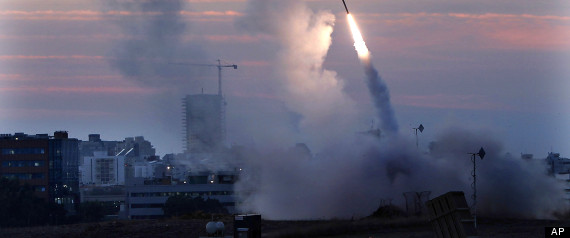
Israeli “Iron Dome” Missile Defense System in Action (Ap Photo: Tasafrir Abayov)

“You don’t have any communication between the Israelis and the Iranians. You have all sorts of local triggers for conflict. Having countries act on a hair trigger – where they can’t afford to be second to strike – the potential for a miscalculation or a nuclear war through inadvertence is simply too high.”  Dennis Ross


As I write this the Israeli Army is beginning the mobilization of 30,000 reservists as the IDF continues to respond with great vigor to the missile attacks conducted by Hamas and the Islamic Jihad on Israeli cities including Tel Aviv. On the sidelines are Hezbollah and Iran while Egypt, now governed by leaders of the Islamic Brotherhood attempts to finesse support for the Islamists while not provoking a wider conflict with the Israelis. To the northeast, Israeli forces have exchanged fire with the forces of Bashir Assad’s Syria which are engaged in their own version of an Arabic Götterdämmerung against their own people.

In the past two days nearly 300 rockets launched from Gaza have hit Israel, killing 3 Israelis. The missiles that hit Tel Aviv were the first to hit that city since Saddam Hussein’s Scuds in the 1991 Gulf War. Over 100 more have been successfully intercepted by Israeli “Iron Dome” missiles. In response the IDF has launched numerous sustained attacks against Hamas, Islamic Jihad and other militant groups in Gaza, even killing the military chief of Hamas.

The Obama Administration has warned the Hamas forces to cease fire and urged leaders in Egypt and Turkey to help get the Hamas forces to stand down. Representatives of France are attempting to broker a cease fire even as the fighting escalates. The US Senate passed a unanimous declaration of support for Israel and demand for Hamas to cease its missile attacks.

The situation is escalating and could spread, especially in light of the fact that the Arab Spring swept away dictatorships like that of Hosni Mubarak which though they oppressed their own people also used their military and police power to just enough ant-Israel protest to defuse more extreme reactions. The fact that an Islamic Brotherhood government is now in control of Egypt is a wild card that no US administration has had to face since the days before the Camp David accords. Likewise the actions of the IDF two years ago against a Turkish flagged merchant ship attempting to break the Gaza blockade severely damaged Israeli-Turkish relations and crippled a previously strong Israeli-Turkish military alliance.

We are in uncharted waters. The US is tied down in Afghanistan and the burgeoning crisis in the senior leadership of the US military and intelligence services caused by the Petraeus scandal has the potential to cripple senior military and intelligence leadership. Likewise ongoing domestic political crisis brought about by a badly divided electorate and government as well as the Fiscal Cliff the timing could not be worse. Despite a decade of bloody and expensive military campaigns in the region United States now has less influence in the Middle East than it did in the 1970s, 1980s, 1990s and even the early 2000s.

As bad is the situation is the best case scenario is that it can be localized between the Israelis and Hamas in Gaza. As tragic and as devastating as that will be to both Israelis and Palestinians the possibility that the conflict could spread and become a regional war involving Egypt, Iran, Lebanon, Syria and the United States is a distinct possibility. Syria is falling apart and in the middle of a brutal civil war. Lebanon is torn between its own historic divisions and heavily dominated by the Iranian backed Hezbollah terrorist group. Egypt is in the throws of its own revolution and in turmoil. Iran sits on the sidelines stoking the fires while making its own threats against Israel as well as its own Arab neighbors and the US forces in the region.

I am not going to try to predict what will happen next. The situation is developing and dangerous. One hopes for the best, that the conflict can be contained and the suffering of innocents minimized, but possibilities of a larger and more disastrous conflict are all too real not to downplay.

Peace

Padre Steve+
1 Comment

Filed under middle east, national security, News and current events

Remember those that Came in Peace: BLT 1/8 and the Bombing of the Beirut Barracks

In the early hours of October 23rd 1983 I was awake. I could not sleep. I was a new Army 2nd Lieutenant attending the Junior Officer Maintenance Course at Ft Knox Kentucky following the completion of the Medical Service Corps Officer Basic Course enroute to my first assignment in Germany.


I had gone out with friends earlier in the evening. Since Ft Knox was located in a dry county we made a trip up to a restaurant in Louisville followed by a trip to a bar and dance club for drinks. All of us that went were either newly married or engaged and none of our wives or soon to be wives were there we were on good behavior. After a dinner and a few drinks we went back to Knox, each to our own quarters.


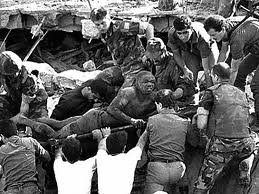
It was late and since I couldn’t get to sleep I turned on CNN, which at the time was a rather new thing in news. I think that it was about 2AM that CNN broke in with the news that the Marine Barracks had been bombed. As the day developed the extent of the catastrophe became apparent, the barracks was destroyed and 241 Marines, Sailors and Soldiers were dead, with another 60 wounded. It was the worst single day loss suffered by the Marines since the Battle of Iwo Jima.

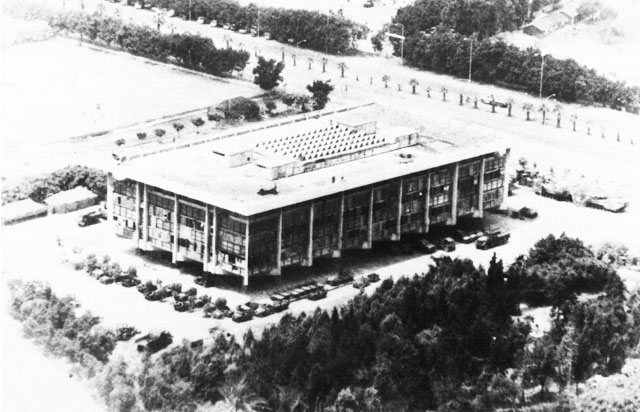
Battalion Landing Team 1/8, built around the 1st Battalion 8th Marines had been assigned as part of the UN Peacekeeping Force following the Israeli invasion of Lebanon. The BLT was billeted at the Beirut International Airport and at 0620 a truck driven by a suicide bomber containing explosives equivalent of over 12,000 lbs of explosives blew it up in the lobby of the building. Rules of Engagement prevented the few sentries on duty from engaging the vehicle until it had already crashed through the barbed wire and was lodged in the building.  The explosion blew out the support structure of the building and caused it to pancake upon itself trapping those inside. About 2 minutes after the attack French Paratroopers of the 1st Parachute Chasseur Regiment were hit by a truck bomb at their barracks about 6 km away. 58 French Paras were killed and many more wounded in an attack that caused more casualties in a single day since the French campaign in Algeria.

In the days and weeks following the attack a series of minor American and French airstrikes and Naval gunfire attacks were launched with little effect. President Reagan withdrew the Marines and the UN and French also withdrew their force. The attacks and the limited response gave the Iranian backed Hezbollah militia new swagger and respect. Hezbollah is now one of the most deadly opponents of the United States, Israel and the West.

Fast forward. In January 2000 I am a relatively new Navy Chaplain and get no notice orders transferring me from the Second Combat Engineer Battalion of 2nd Marine Division at Camp LeJeune NC to the 1st Battalion 8th Marine Regiment as a “relief pitcher” when their chaplain was removed from his duties. On a wall of the HQ building at Camp LeJeune was a mural drawn by Marines which honored their predecessors who died in the bombing. In the 5 months that I was with the battalion before going on to  another battalion as a “relief pitcher” I got to appreciate the sacrifice of the Marines, Navy Hospital Corpsmen and 6 attached Army Soldiers. Today I serve at the Naval Hospital Camp LeJeune. The Marines of the Fleet Marine Force are part of who I am. I am proud to have served with both the 1st Battalion and 3rd Battalion of the 8th Marine Regiment.

At Camp LeJeune there is a memorial every year at the Beirut Memorial. Many veterans , survivors of the attacks and relatives of the fallen attend. I was not able to attend this year but remember attending it in 2001, nit long after the 9-11 attacks. There are 241 trees , one for each of the fallen planted along Carolina Highway 24 outside of Camp LeJeune.

The Beirut expedition showed the limitations of military power as well as the wisdom of President Reagan and Secretary of Defense Casper Weinburger not to get even more involved in another country’s civil war. The decision to withdraw was prudent, especially since the Cold War was reaching its apex and the Soviets were deeply involved in Afghanistan and the Iran of Ayatollah Khomeini was becoming more bellicose. The sad thing is that we did not realize those limits before the bombing nor had given the commanders on the ground rules of engagement that might have prevented the bombing. Instead the military chain of command was blamed for the loss and the politicians that orchestrated the intervention got off scott free.

Let us not forget the sacrifice of those 241 American Marines, Sailors and Soldiers and the 58 French troops who died in those attacks 29 years ago.

Peace

Padre Steve+
4 Comments

Filed under Foreign Policy, History, middle east, Military, national security