Category Archives: Military

Padre Steve Reviews “The Wounded Giant: America’s Armed Forces in an Age of Austerity” by Michael O’Hanlon

The Wounded Giant: America’s Armed Forces in an Age of Austerity (An eSpecial from The Penguin Press)

• Format: Kindle Edition
• File Size: 1685 KB
• Publisher: The Penguin Press (November 15, 2011)

I was recently asked to do a review of Michael O’Hanlon’s new book The Wounded Giant: America’s Armed Forces in an Age of Austerity by the folks at TLC Book Tours http://tlcbooktours.com/ I am a historian and have served 30 years in the United States Army and United States Navy. As such I try to look at the nuances of Defense policy from a historical as well as current point of view.

O’Hanlon’s book deals with a topic that is receiving much attention and debate in the wake of the 2011 Congressional Budget impasse and deal and the recently release of the 2012 Defense Strategic Guidance and the FY 2013 Department of Defense Budget request. O’Halon’s book was published in the midst of the budget impasse in which could bind Congress into cuts well in the excess of the proposed $500 Billion in cuts proposed by the Pentagon and the Obama Administration. Cuts that could total over a trillion dollars over the next decade.

O’Hanlon deals with the economic necessity of Defense budget cuts laying out his thesis in the first two chapters dealing with the history of US military budgets since the Second World War with particular attention to the post-Cold War cuts under the Bush and Clinton administrations. In the following chapters O’Hanlon argues for what I would call a strategy of calculated risk in which Defense budgets and the necessary force cuts are balanced with the economic realities of our present time. He does not argue for massive cuts and disengagement from the world that some argue for, at the same time he realizes that defense cuts are necessary but cannot be too great.

He then goes on to discuss the potential reductions for ground forces as well as air and naval forces within the context of potential threats, especially those posed by Iran as well as the potential threat from China.  He argues for a leaner military but also acknowledges the danger of cutting too much.

His conclusions regarding force size and composition will be attacked by some and defended by others.  I think that his arguments regarding ground forces which support going back to the approximate numbers in the Army and Marine Corps in 2001 are reasonable presuming that there is a substantial reduction of US forces in Afghanistan and no other major ground campaigns arise.  The current personnel authorizations were only made reluctantly after years of war by the Bush administration whose first Defense Secretary Donald Rumsfeld was no advocate of large ground forces.

O’Hanlon also discusses the possibility of savings through some base closure as well as reductions in some Air Force and Naval capabilities while attempting to minimize the effects of the reductions by crew rotations of forward based warships and more use of drone aircraft. He also discusses the US capabilities in intelligence and Homeland Security in the context of the overall defense structure.

One thing that I find lacking in O’Hanlon’s treatment of the defense strategy and budget is the lack of attention paid to the overall industrial base required to support the replacement or modernization of our current forces. He argues in favor of keeping production lines open but neglects the fact that most of the US defense industrial base is now the property of about five major corporations. At one time we had more shipyards  and other facilities that made the rapid production of war materials in times of national emergency which at the end of hostilities could revert to civilian industrial production. Much of that capability is now gone, outsourced to China and South Korea.

O’Hanlon has some good proposals and his numbers are not much different than those proposed by the Pentagon. His analysis does included what is called the DIME, the diplomatic, intelligence, military and economic aspects of national security strategy. He describes his vision for a military that despite cuts can still be mission capable. One may argue with his overall strategic thinking and his detailed proposals and many will. I have issues with some of the proposals.  Likewise anyone attempting to project a vision of a national security strategy and military force structure is always fraught with the ever present reality that no one can predict the future. However history tells us time and time again that we seldom are right and that threats yet unimagined can shred the most well thought out and detailed plans.  Making such decisions in an election year makes them all the more prone to being wrong because the political establishments of both parties

It is a good read for anyone seriously interested in national security strategy.It is not perfect by any means but worth the read.  It it is published in paperback as well as the Amazon Kindle edition.

The Author: Dr. Michael O’Hanlon is is director of research and a senior fellow in Foreign Policy at the Brookings Institution, where he specializes in U.S. defense strategy, the use of military force, homeland security and American foreign policy. He is a visiting lecturer at Princeton University and adjunct professor at John Hopkins University. O’Hanlon is the author of several books, most recently A Skeptic’s Case for Nuclear Disarmament. His writing has been published in The Washington Post, The New York Times, The Financial Times, The Wall Street Journal, among other publications, and he has appeared on TV or radio almost 2,000 times since 9/11. Before joining Brookings, O’Hanlon worked as a national security analyst at the Congressional Budget Office and served as a Peace Corps volunteer in Congo/Kinshasa (the former Zaire). He received his bachelor, masters, and doctoral degrees from Princeton, where he studied public and international affairs.

3 Comments

Filed under books and literature, Foreign Policy, Loose thoughts and musings, Military, national security

God in the Empty Places: Four Years Later

Four years ago I was leaving Iraq for Kuwait, the first stop in the process of coming home.  At that point I wanted to go home but I didn’t want to go either. It was the beginning of a new phase in my life.  I wrote an article shortly after my return for the church that I belonged to at the time. I am reposting article here tonight.  

When I wrote it I really had no idea how much I had changed and what had happened to me.  I feel s special kinship with those that have fought in unpopular wars before me. French Indochina, Algeria and Vietnam, even the Soviet troops in Afghanistan before we ever went there.  

I am honored to have served with or known veterans of Vietnam, particularly the Marines that served at the Battle of Hue City, who are remembering the 44th anniversary of the beginning of that battle.  My dad also served in Vietnam at a place called An Loc. He didn’t talk about it much and I can understand having seen war myself. 

There are no new edits to the article. When I wrote it I was well on my way to a complete emotional and spiritual collapse due to PTSD.  Things are better now but it was a very dark time for several years and occasionally I still have my bad days. Today was a day of reflection.  As I walked my little dog Molly down the street tonight to the beach I looked up at the moonlit sky and I was as I have been thinking lately about seeing all of those stars and the brilliance of the moon over the western desert of Iraq near Syria. Somehow that sight now comforts me instead of frightens me. 

Tonight our Soldiers, Marines, Sailors and Airmen serve in harm’s way nearly 100,000 in Afghanistan alone. We are out of Iraq but Lord knows how things will turn out in the long run there.  

Anyway. Here is is.

God in the Empty Places. 

I have been doing a lot of reflecting on ministry and history over the past few months. While both have been part of my life for many years, they have taken on a new dimension after serving in Iraq. I can’t really explain it; I guess I am trying to integrate my theological and academic disciplines with my military, life and faith experience since my return.

The Chaplain ministry is unlike civilian ministry in many ways. As Chaplains we never lose the calling of being priests, and as priests in uniform, we are also professional officers and go where our nations send us to serve our Soldiers, Sailors, Marines and Airmen. There is always a tension, especially when the wars that we are sent to are unpopular at home and seem to drag on without the benefit of a nice clear victory such as VE or VJ Day in World War II or the homecoming after Desert Shield and Desert Storm.

It is my belief that when things go well and we have easy victories that it is easy for us to give the credit to the Lord and equally easy for others to give the credit to superior strategy, weaponry or tactics to the point of denying the possibility that God might have been involved. Such is the case in almost every war and Americans since World War Two have loved the technology of war seeing it as a way to easy and “bloodless” victory. In such an environment ministry can take on an almost “cheer-leading” dimension. It is hard to get around it, because it is a heady experience to be on a winning Army in a popular cause. The challenge here is to keep our ministry of reconciliation in focus, by caring for the least, the lost and the lonely, and in our case, to never forget the victims of war, especially the innocent among the vanquished, as well as our own wounded, killed and their families.

French Paratroop Corpsmen treating wounded at Dien Bien Phu

But there are other wars, many like the current conflict less popular and not easily finished. The task of chaplains in the current war, and similar wars fought by other nations is different. In these wars, sometimes called counter-insurgency operations, guerrilla wars or peace keeping operations, there is no easily discernible victory. These types of wars can drag on and on, sometimes with no end in sight. Since they are fought by volunteers and professionals, much of the population acts as if there is no war since it does often not affect them, while others oppose the war.

Likewise, there are supporters of war who seem more interested in political points of victory for their particular political party than for the welfare of those that are sent to fight the wars. This has been the case in about every war fought by the US since World War II. It is not a new phenomenon. Only the cast members have changed.

This is not only the case with the United States. I think that we can find parallels in other militaries. I think particularly of the French professional soldiers, the paratroops and Foreign Legion who bore the brunt of the fighting in Indochina, placed in a difficult situation by their government and alienated from their own people. In particular I think of the Chaplains, all Catholic priests save one Protestant, at the Battle of Dien Bien Phu, the epic defeat of the French forces that sealed the end of their rule in Vietnam. The Chaplains there went in with the Legion and Paras. They endured all that their soldiers went through while ministering the Sacraments and helping to alleviate the suffering of the wounded and dying. Their service is mentioned in nearly every account of the battle. During the campaign which lasted 6 months from November 1953 to May 1954 these men observed most of the major feasts from Advent through the first few weeks of Easter with their soldiers in what one author called “Hell in a Very Small Place.”

Another author describes Easter 1954: “In all Christendom, in Hanoi Cathedral as in the churches of Europe the first hallelujahs were being sung. At Dienbeinphu, where the men went to confession and communion in little groups, Chaplain Trinquant, who was celebrating Mass in a shelter near the hospital, uttered that cry of liturgical joy with a heart steeped in sadness; it was not victory that was approaching but death.” A battalion commander went to another priest and told him “we are heading toward disaster.” (The Battle of Dienbeinphu, Jules Roy, Carroll and Graf Publishers, New York, 1984 p.239)

Of course one can find examples in American military history such as Bataan, Corregidor, and certain battles of the Korean War to understand that our ministry can bear fruit even in tragic defeat. At Khe Sahn in our Vietnam War we almost experienced a defeat on the order of Dien Bien Phu. It was the tenacity of the Marines and tremendous air-support that kept our forces from being overrun.

You probably wonder where I am going with this. I wonder a little bit too. But here is where I think I am going. It is the most difficult of times; especially when units we are with take casualties and our troops’ sacrifice is not fully appreciated by a nation absorbed with its own issues.

For the French the events and sacrifices of their soldiers during Easter 1954 was page five news in a nation that was more focused on the coming summer. This is very similar to our circumstances today because it often seems that own people are more concerned about economic considerations and the latest in entertainment news than what is going on in Iraq or Afghanistan. The French soldiers in Indochina were professionals and volunteers, much like our own troops today. Their institutional culture and experience of war was not truly appreciated by their own people, or by their government which sent them into a war against an opponent that would sacrifice anything and take as many years as needed to secure their aim, while their own countrymen were unwilling to make the sacrifice and in fact had already given up their cause as lost. Their sacrifice would be lost on their own people and their experience ignored by the United States when we sent major combat formations to Vietnam in the 1960s. In a way the French professional soldiers of that era have as well as British colonial troops before them have more in common with our force than the citizen soldier heroes of the “Greatest Generation.” Most of them were citizen soldiers who did their service in an epic war and then went home to build a better country as civilians. We are now a professional military and that makes our service a bit different than those who went before us.

Yet it is in this very world that we minister, a world of volunteers who serve with the highest ideals. We go where we are sent, even when it is unpopular. It is here that we make our mark; it is here that we serve our Soldiers, Sailors, Marines and Airmen. Our duty is to bring God’s grace, mercy and reconciliation to men and women, and their families who may not see it anywhere else. Likewise we are always to be a prophetic voice within the ranks.

When my dad was serving in Vietnam in 1972 I had a Sunday school teacher tell me that he was a “Baby Killer.” It was a Catholic Priest and Navy Chaplain who showed me and my family the love of God when others didn’t. In the current election year anticipate that people from all parts of the political spectrum will offer criticism or support to our troops. Our duty is to be there as priests, not be discouraged in caring for our men and women and their families because most churches, even those supportive of our people really don’t understand the nature of our service or the culture that we represent. We live in a culture where the military professional is in a distinct minority group upholding values of honor, courage, sacrifice and duty which are foreign to most Americans. We are called to that ministry in victory and if it happens someday, defeat. In such circumstances we must always remain faithful.

For those interested in the French campaign in Indochina it has much to teach us. Good books on the subject include The Last Valley by Martin Windrow, Hell in a Very Small Place by Bernard Fall; The Battle of Dienbeinphu by Jules Roy; and The Battle of Dien Bien Phu- The Battle America Forgot by Howard Simpson. For a history of the whole campaign, read Street Without Joy by Bernard Fall. I always find Fall’s work poignant, he served as a member of the French Resistance in the Second World War and soldier later and then became a journalist covering the Nuremberg Trials and both the French and American wars in Vietnam and was killed by what was then known as a “booby-trap” while covering a platoon of U.S. Marines.

There is a picture that has become quite meaningful to me called the Madonna of Stalingrad. It was drawn by a German chaplain-physician named Kurt Reuber at Stalingrad at Christmas 1942 during that siege. He drew it for the wounded in his field aid station, for most of whom it would be their last Christmas. The priest would die in Soviet captivity and the picture was given to one of the last officers to be evacuated from the doomed garrison. It was drawn on the back of a Soviet map and now hangs in the Kaiser Wilhelm Memorial Church in Berlin where it is displayed with the Cross of Nails from Coventry Cathedral as a symbol of reconciliation. I have had it with me since before I went to Iraq. The words around it say: “Christmas in the Cauldron 1942, Fortress Stalingrad, Light, Life, Love.” I am always touched by it, and it is symbolic of God’s care even in the midst of the worst of war’s suffering and tragedy.

Peace

Padre Steve+

Leave a comment

Filed under History, iraq,afghanistan, Military, PTSD, Tour in Iraq

A Weekend of Old Navy Movies: Mister Roberts, The Caine Mutiny and In Harm’s Way

Well I have the duty pager for the hospital this weekend so I have been hanging out at the Island Hermitage with my dog Molly watching classic Navy movies.

Friday night I watched the classic film Mister Roberts. Yesterday I watched In Harm’s Way and The Caine Mutiny.

All three films are fictional and because of that I find them great for understanding the complexity of Navy life and leadership.  Mister Roberts and the Caine Mutiny the films deal with the complexities of life and leadership on small and rather insignificant ships while In Harm’s Way deals with more senior officers and their lives. All three deal with subjects that are uncomfortable because they still exist not just in the Navy but throughout the military. Thus all three offer insights into toxic leaders, poor morale, discipline, mental illness, alcoholism and subjects such as sexual assault and suicide.

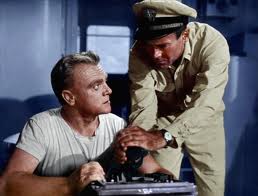
Mister Roberts stared Henry Fonda, James Cagney, Jack Lemmon and William Powell. It is set on the USS Reluctant a Light Cargo Ship in the backwaters of the Pacific in the closing months of the Second World War. Released in 1955 the film was based on the 1946 novel of the same name by Thomas Heggen.

http://www.tcm.com/mediaroom/video/323485/Mister-Roberts-Movie-Clip-Up-All-Night.html

Cagney plays a despotic former Merchant Marine Captain, LCDR Morton an officer of the type that the Navy did not want portrayed on film then, and still doesn’t today.  He is petty, self serving and rules as a tyrant in order to secure his promotion to Commander. His prize possession is a palm tree which was awarded to the ship for handling the most cargo which he believes will be his ticket to promotion. Lemon plays the ship’s Laundry and Morale Officer Ensign Frank Pulver who creatively finds ways of avoiding work. He is so successful that Captain Morton doesn’t know who he is despite having been on the ship 14 months. Pulver provides amusement and aggravation to Henry Fonda plays the ship’s Cargo Officer LTJG Doug Roberts. Roberts is liked by the crew and always in conflict with hs captain.  He is desperate to be transferred off the Reluctant and serve on a ship on the front lines. He fears that the war will pass him by and sends in letter after letter to get transferred to a fighting ship only to have Morton send them on without recommending approval.

Roberts is caught in the position of many young leaders where they are torn between their duty and their loyalty to their crew.  Eventually he  William Powell in his last film plays ship’s Medical Officer, the wise sage whose advice and counsel is invaluable to Roberts.  Eventually Roberts gets off the ship because the crew forges a request for transfer along with a forged recommendation from the Captain. When he leaves the ship the crew presents him with their “Medal” the “Order of the Palm.” He is transferred to a destroyer and is killed in action. His final letter to Ensign Pulver tells of his appreciation for the crew and comes along with a letter from a friend of Pulver’s on board the destroyer Roberts was transferred telling of Roberts being killed when the ship was hit by a kamikaze.

In the letter Roberts expresses that he finally understood the enemy faced by those in rear areas and all of those that cannot see why they matter or know their place in a war.  The challenge of leaders to understand “that the unseen enemy of this war is the boredom that eventually becomes a faith and, therefore, a terrible sort of suicide.”  He finally after having seen combat that those that he served with on the Reluctant “Right now I’m looking at something that’s hanging over my desk. A preposterous hunk of brass attached to the most bilious piece of ribbon I’ve ever seen. I’d rather have it than the Congressional Medal of Honor. It tells me what I’ll always be proudest of: That at a time in the world when courage counted most I lived among 62 brave men.” 

The Caine Mutiny adapted from the novel written by Herman Wouk deals with a another ship where leadership challenges abound. The Captain of the ship, LCDR Queeg played by Humphrey Bogart is plagued by doubt, fear and paranoia.  A Regular Navy Officer on with a wardroom of reservists he comes to the ship battered from two years in the Atlantic. He is also plagued by his Communications Officer, LT Tom Keefer played by Fred MacMurray who spends the time not writing a novel in spreading poison about his ship, the Navy and his commanding officers. Queeg begs for their support and understanding.

http://www.tcm.com/mediaroom/video/413561/Caine-Mutiny-The-Movie-Clip-Like-A-Family.html

However Keefer is so successful at undermining Queeg that in the midst of a typhoon the Executive Officer, LT Steve Maryk played by Van Johnson takes command and relieves Queeg on the bridge supported by the Officer of the deck Ensign Willie Keith.

http://www.youtube.com/watch?v=vtqf0CCVUek

Maryk is tried and acquitted at court marital but his defense attorney, LT Barney Greenwald played by Jose Ferrer has to destroy Queeg on the witness stand to do it.  During the trial Keefer is called as a witness for the prosecution lies on the stand to avoid incriminating himself while damaging the case of his friend Maryk. At the end Greenwald confronts Kiefer at a party and provides the leadership lesson for a wardroom which abandoned their sick captain long before the mutiny occurred.

http://www.youtube.com/watch?v=EKeISsYKROI

[Greenwald staggers into the Caine crew’s party, inebriated] 

Lt. Barney Greenwald: Well, well, well! The officers of the Caine in happy celebration! 

Lt. Steve Maryk: What are you, Barney, kind of tight? 

Lt. Barney Greenwald: Sure. I got a guilty conscience. I defended you, Steve, because I found the wrong man was on trial. 

[pours himself a glass of wine] 

Lt. Barney Greenwald: So, I torpedoed Queeg for you. I had to torpedo him. And I feel sick about it. 

[drinks wine] 

Lt. Steve Maryk: Okay, Barney, take it easy. 

Lt. Barney Greenwald: You know something… When I was studying law, and Mr. Keefer here was writing his stories, and you, Willie, were tearing up the playing fields of dear old Princeton, who was standing guard over this fat, dumb, happy country of ours, eh? Not us. Oh, no, we knew you couldn’t make any money in the service. So who did the dirty work for us? Queeg did! And a lot of other guys. Tough, sharp guys who didn’t crack up like Queeg. 

Ensign Willie Keith: But no matter what, Captain Queeg endangered the ship and the lives of the men. 

Lt. Barney Greenwald: He didn’t endanger anybody’s life, you did, all of you! You’re a fine bunch of officers. 

Lt. JG H. Paynter Jr.: You said yourself he cracked. 

Lt. Barney Greenwald: I’m glad you brought that up, Mr. Paynter, because that’s a very pretty point. You know, I left out one detail in the court martial. It wouldn’t have helped our case any. 

[to Maryk] 

Lt. Barney Greenwald: Tell me, Steve, after the Yellowstain business, Queeg came to you guys for help and you turned him down, didn’t you? 

Lt. Steve Maryk: [hesitant] Yes, we did. 

Lt. Barney Greenwald: [to Paynter] You didn’t approve of his conduct as an officer. He wasn’t worthy of your loyalty. So you turned on him. You ragged him. You made up songs about him. If you’d given Queeg the loyalty he needed, do you suppose the whole issue would have come up in the typhoon? 

[to Maryk] 

Lt. Barney Greenwald: You’re an honest man, Steve, I’m asking you. You think it would’ve been necessary for you to take over? 

Lt. Steve Maryk: [hesitant] It probably wouldn’t have been necessary. 

Lt. Barney Greenwald: [muttering slightly] Yeah. 

Ensign Willie Keith: If that’s true, then we were guilty. 

Lt. Barney Greenwald: Ah, you’re learning, Willie! You’re learning that you don’t work with a captain because you like the way he parts his hair. You work with him because he’s got the job or you’re no good! Well, the case is over. You’re all safe. It was like shooting fish in a barrel. 

[long pause; strides toward Keefer] 

Lt. Barney Greenwald: And now we come to the man who should’ve stood trial. The Caine’s favorite author. The Shakespeare whose testimony nearly sunk us all. Tell ’em, Keefer! 

Lieutenant Tom Keefer: [stiff and overcome with guilt] No, you go ahead. You’re telling it better. 

Lt. Barney Greenwald: You ought to read his testimony. He never even heard of Captain Queeg! 

Lt. Steve Maryk: Let’s forget it, Barney! 

Lt. Barney Greenwald: Queeg was sick, he couldn’t help himself. But you, you’re *real* healthy. Only you didn’t have one tenth the guts that he had. 

Lieutenant Tom Keefer: Except I never fooled myself, Mr. Greenwald. 

Lt. Barney Greenwald: I’m gonna drink a toast to you, Mr. Keefer. 

[pours wine in a glass] 

Lt. Barney Greenwald: From the beginning you hated the Navy. And then you thought up this whole idea. And you managed to keep your skirts nice, and starched, and clean, even in the court martial. Steve Maryk will always be remembered as a mutineer. But you, you’ll publish your novel, you’ll make a million bucks, you’ll marry a big movie star, and for the rest of your life you’ll live with your conscience, if you have any. Now here’s to the *real* author of “The Caine Mutiny.” Here’s to you, Mr. Keefer. 

[splashes wine in Keefer’s face] 

Lt. Barney Greenwald: If you wanna do anything about it, I’ll be outside. I’m a lot drunker than you are, so it’ll be a fair fight. 

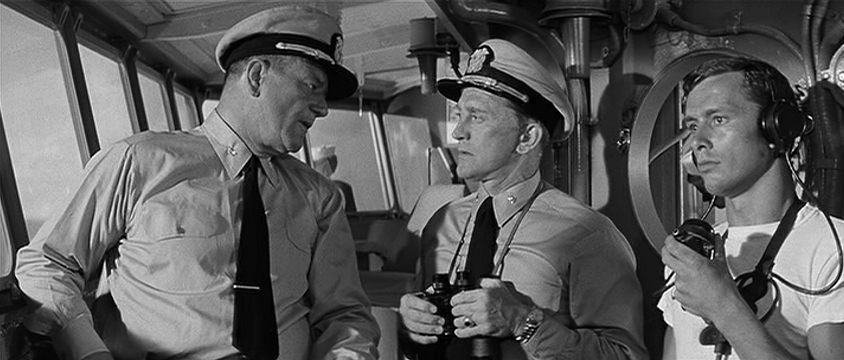
In Harm’s Way was filmed a decade after the Caine Mutiny and Mister Roberts. Starring John Wayne, Kirk Douglas, Henry Fonda, Patricia Neal, Burgess Meredith and Tom Tryon it was a epic that was panned by critics as having a shallow plot. It involved the intersecting lives of a number of officers during the war with John Wayne playing Rear Admiral “Rock” Torrey. Although the plot is relatively shallow the film brings up several very serious subjects that are faced by leaders even today.  The topics of alcoholism, sexual assault and suicide are touched upon through the character played by Kirk Douglas, Captain Paul Eddington.  Eddington is plagued by alcoholism and a failed marriage that ended when his wife was killed while with an Army Air Corps Officer on the morning of the Peal Harbor attack.  Sentenced to a backwater assignment he is called to be Torrey’s Chief of Staff.  In that position he ends up raping a nurse played by Jill Howarth that happens to be the fiancee of Torrey’s son. She then commits suicide. When Eddington discovers that she is dead he sets off on a suicide mission to find the Japanese fleet.

http://www.tcm.com/mediaroom/video/348030/In-Harm-s-Way-Movie-Clip-The-Navy-s-Never-Wrong.html

The questions raised in the film are not answered, there is no Barney Greenwald to point out the moral of the story.  John Wayne plays a flawed hero surrounded by characters of that are all in some way dealing with their own personal demons. However the questions are those that have been faced by military leaders for generations.  How does a leader deal with men and women in failing marriages? How does one deal with those that simply are advancing their own careers? How does a leader deal with key staff that are dealing with alcoholism? How does one prevent sexual assault in a combat area and prevent suicide?  The truth is that we still deal with all of these questions and none of us or any military in the world has solved any of them.  Perhaps Henry Fonda as Admiral Nimitz sums up the situation that we still face “Well, we all know the Navy’s never wrong. But in this case, it was a little weak on bein’ right.”

Taken as a whole the three films all are valuable for today’s naval leader as well as military leaders in general. The I do learn something new every time that I watch them and all challenge me to be a better leader.

Peace

Padre Steve+

3 Comments

Filed under film, leadership, Military, movies, US Navy, world war two in the pacific

Atrocity in War: The Afghanistan Video

“Our men can’t make this change from normal civilians into warriors and remain the same people … the abnormal world they have been plunged into, the new philosophies they have had to assume or perish inwardly, the horrors and delights … they are bound to be different people from those you sent away. They are rougher than when you knew them. Killing is a rough business.”  Ernie Pyle

Ernie Pyle was one of the most prolific wartime journalists that ever lived, in fact he was killed by Japanese machine gun fire on the island of Ie Jima while with the Army during the Okinawa campaign. Ernie Pyle understood war and the men that fight it. If he was alive today I imagine that his comments about what happens to men in combat would be no different now than it was then.

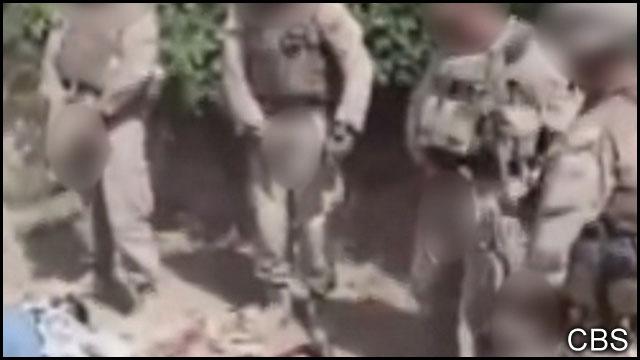
In the past two days we have heard much and seen a distressing video of four U.S. Marines from a Scout-Sniper Team of 3rd Battalion 2nd Marine Regiment urinating on dead Taliban fighters. The images are disturbing and because they are raw and offensive they have created a furor that could define the NATO campaign in Afghanistan as much as the Abu Ghraib torture photos harmed U.S. efforts in Iraq and the broader Middle East.  When I was in Iraq I heard Marine leaders talking about the Abu Ghraib incident with distain and saying that those few soldiers that recorded their torture of prisoners were costing us the war.

3/2 was deployed in the northern area of Helmand Province and lost 6 Marines and a Navy Corpsman during their deployment. According to the Marine Corps Times Battle Rattle Blog author Dan Lamothe, Major General John Toolan said that the Scout Snipers of 3/2 may have killed up to 100 insurgents each during their tour, which would mean that they were engaged in many dangerous combat engagements.  This in no way condones or excuses their actions but it does provide some context to view what happened.

However wrong the actions may be and how stupid it was for the Marines in this unit to record them and allow them onto the internet the truth is that war changes people. Ordinary men do things that they would not have contemplated before it including breaking the codes of honor that they pledge to uphold when volunteering to serve. Ernie Pyle understood this far better than most journalists before or since. In fact he understood it far better than the minuscule percentage of Americans who have ever served in the military much less in combat.  Pyle wrote:

“Their life consisted wholly and solely of war, for they were and always had been front-line infantrymen. They survived because the fates were kind to them, certainly — but also because they had become hard and immensely wise in animal-like ways of self-preservation.”

E.B Sledge who served throughout the Pacific War as a Marine infantryman and whose writings are dramatized in the HBO Series The Pacific wrote about fellow Marines that harvested gold teeth from dead Japanese soldiers, urinated in the mouths of the corpses of the Japanese and shot civilians.  He was patriotic, religious and after the war wrote in his book With the Old Breed: At Peleliu and Okinawa:

“The fierce struggle for survival in the abyss of Peleliu had eroded the veneer of civilization and made savages of us all. We existed in an environment totally incomprehensible to men behind the lines-service troops and civilians.” 

Mind you this is not an excuse for what these Marines did but it does offer an explanation for the act that they committed to video that we view without any context as to what led up to the incident or what they had been through.  It seems that people are rushing to judgement and that this will be compared to Abu Ghraib as a defining image of the Afghanistan as much as Abu Ghraib became symbolic of Iraq.  This is despite the fact that apart from being committed to video they are different. The Marines were infantrymen in one of the most desolate and dangerous combat zones of Afghanistan and the Abu Ghraib soldiers were jailers that had complete control of the prisoners.  There is a major difference between the actions as deplorable as both are.

I see the American wounded every day, Marines and Sailors whose lives have been radically changed by service in Iraq and Afghanistan.  They have seen horrors committed by Taliban, Al Qaida and other insurgents against their comrades as well as against Iraqi and Afghan civilians.  The war is every bit as brutal as was waged in the Pacific and they fight a brutal and unforgiving enemy that is intent on driving the infidels out of Afghanistan.

The uncomfortable fact is that an incredibly small number of Americans are fighting a war that at best will be a draw and quite probably a strategic and political defeat despite our troops not losing any battles.  The fact is that the action of these Marines will be used to not only prosecute them but to demonize them just as the actions of Lieutenant William Calley and his platoon at My Lai were used to demonize the Americans that fought in Vietnam.  The sad truth is that most of those that will engage in such demonization have never served in harm’s way or even known military service. Sledge wrote of critics of the Marines following the Second World War:

“In the post-war years, the U.S. Marine Corps came in for a great deal of undeserved criticism in my opinion, from well-meaning persons who did not comprehend the magnitude of stress and horror that combat can be. The technology that developed the rifle barrel, the machine gun and high explosive shells has turned war into prolonged, subhuman slaughter.”

I know that a thorough investigation will be conducted and that we will find out what happened in this unit that caused this obvious breakdown in discipline. Right now we don’t know who even posted the video on the internet and why they did so. Hopefully this is an isolated incident otherwise the incident will only grow in significance. During the investigation as well as news reports and interviews we will learn about the individual Marines involved in this action as well as their leaders. It will likely be uncomfortable and sad to watch.  It could well damage the reputation of the Marine Corps in the eyes of many even if it is an isolated incident.  What happened has already and will continue to reverberate here and in Afghanistan for a long time to come.  I just wish that we our media and politicians were as wise as Ernie Pyle and Eugene Sledge in judging these men as individuals before we know the whole story.

As someone that has served with Marines in harm’s way and know something of the stress that small teams of Marines can experience I have mixed feelings on this. I cannot approve of desecrating the remains of any human being at the same time I wonder what happened before this that might have contributed to the incident.  Of course we will hear more details than we want.

Peace

Padre Steve+

P.S. I have written a number of articles about the political, ideological strategic and moral aspects of war which I have listed here:

War Without Mercy: Race, Religion, Ideology and Total War

Why History Matters: The Disastrous Effects of Long Insurgency Campaigns on the Nations that Wage them and the Armies that Fight Them 

The Ideological War: How Hitler’s Racial Theories Influenced German Operations in Poland and Russia

1 Comment

Filed under iraq,afghanistan, Military, national security, News and current events

The Last Troops Leave as Sunnis Quit Iraqi Parliament

The final contingent of American Soldiers except those assigned to the US Embassy.  The last US military installation in Iraq, Camp Adder near Nasiriya during the cover of night to avoid traffic jams and for their security. As the 500 soldier 110 vehicle convoy of Special Troops Battalion 3rd Brigade 1st Cavalry Division from Fort Hood made its way to the Kuwait border the Sunni Block Iraqiya quit the Iraqi Parliament.  The Americans crossed the fortified border of Kuwait joining their comrades at Camp Virginia marking the end of our  war in Iraq today.

Iraqiya is one of the largest political parties in the country and had entered the government on a power sharing basis with the majority Shia coalition.  Iraqiya is protesting Prime Minister Nouri Al Maliki’s consolation of power in himself and Ma his failure to fill the key Defense Minister and Interior Minister vacancies.  One of the party’s leaders warned of a Maliki dictatorship and the possibility of civil war and the division of the country.

It will be a dangerous time for Iraq and the region. Should their be a civil war the possibility of the intervention of Iran, Saudi Arabia or even Turkey to secure their interests in the country. Such would be a disaster for Iraq and its people.  Somehow the Shia and Sunni will have to find a way to share power or face even more war and destruction.

I pray for my Iraqi friends and that they will find a way to rebuild and unify their country.  Too many American Soldiers, Marines, Sailors and Airmen as well as Iraqi security forces and civilians have died over the course of this war to do anything else.

Our war in Iraq is over and I hope that Iraq and its people will truly unite prosper and become a friend to the United States. Likewise I pray for all of us that served in Iraq and our families that time will also heal the wounds of war.  But only time will tell.  God willing, Inshallah.

Peace

Padre Steve+

1 Comment

Filed under History, iraq,afghanistan, middle east, Military

GO NAVY! BEAT ARMY! Padre Steve is Passionate About Navy

I have always been a fan of Navy. I was born in a Navy hospital and grew up as a Navy Brat.  My dad was a Navy Chief Petty Officer and retired from the Navy in 1974. However my dad for all of his virtues, love of the Navy, distain for the Army was not a fan of the Naval Academy during the Army Navy Game. I remember asking him about this and it turns out that as a kid he was a fan of the Military Academy sometimes known as “Army” at this time of year.  He was a man of of principle and never wavered in his support of Army football during the Army Navy Game.

As for me I have been a “flip flopper” in much of my life. I grew up as a Navy brat and entered the Army because Judy said that she wouldn’t marry me if I joined the Navy but that the Army was okay.  No to be truthful I did ask the Navy ROTC unit at UCLA about the possibilities of entering the Navy but to do so they wanted me to change my major in my senior year of college from History to something in the hard sciences, Mathematics or Engineering.  Since I had no desire to repeat several years of college I asked “who will take me?”  I was told to “see the people in green down the hall.”  Thus I ended up in the Army.

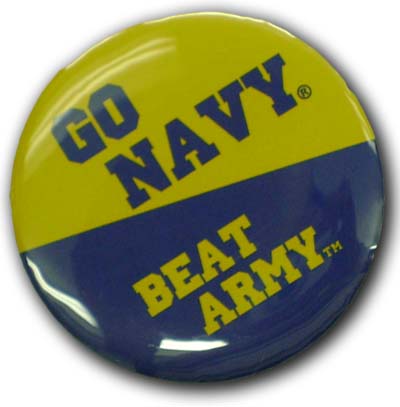
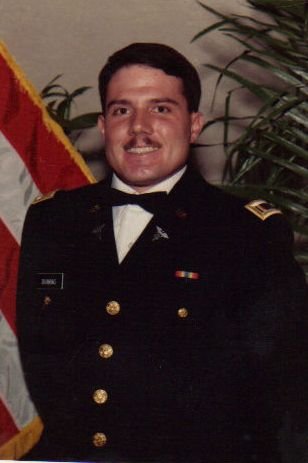
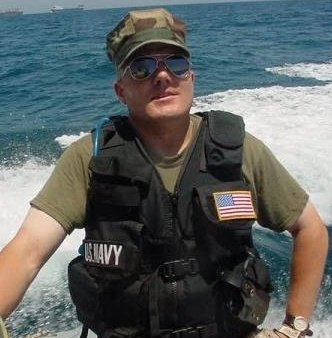
Now when I was in the Army I remained faithful to the Navy.  I had a “Go Navy” button that I would keep in my uniform pocket especially during the weeks leading up to the Army-Navy Game.  Well after 17 1/2 years of service in the Army, Army National Guard and Army Reserve I declared free agency and resigned my Army Reserve commission as a Major to enter the Navy, reducing in rank to do so. Judy was not pleased because I basically made the decision without consulting her, even though she probably would have agreed if I had asked her but what can I say? I am a man. A manly one at that. However Judy has remained with me for all of these years she has been a military wife for over 28 years now and probably has another 5-8 or more to go.  God bless her and the other military spouses that choose to endure the career choices of their husbands or wives.  But I digress…

The fact is that through thick and thin and despite the fact that I was a military service “flip-flopper” I have always been true to the Naval Academy in its rivalry against the Army and the Air Force.  The fact that I was in the Army for many years never took away from the fact that as a kid I loved the Navy and always was for Navy in the Army-Navy Game. The fact that my dad who was a career Navy man always cheered for the Army is inspirational to me. My dad was a man of character and never abandoned the team that he cheered as a child.  Like him I have not wavered in my support of the team that I cheered as a child. The irony is that I spent nearly a full career in the Army before going to the Navy.

As for the “Go Navy” button I gave it to my best friend in Germany a now retired German Army Officer who spent the first three years of his military career in the German Navy.  Gottfried never left his navy roots and I gave the button to him many years ago.  He may have spent most of his career in the German Army but still is a Navy man at heart.

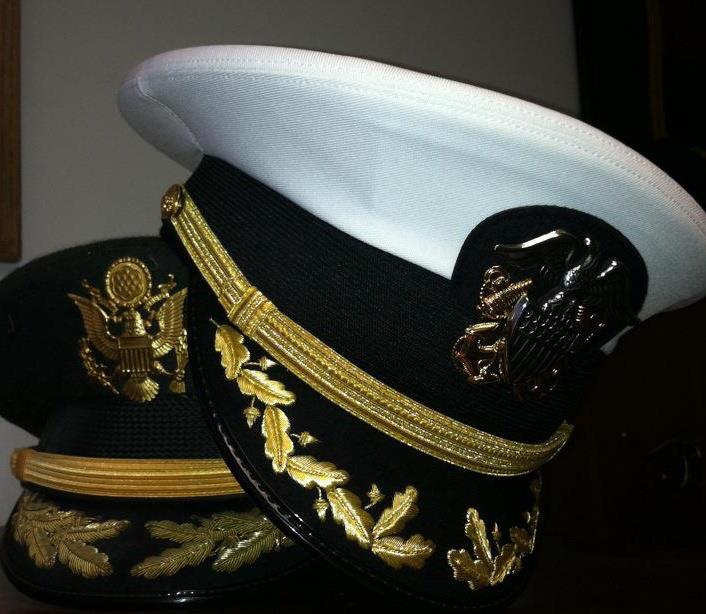
On Saturday the Midshipmen of the Naval Academy will play the Cadets of Army. The Navy Goat will face the Army Mule yet again in this great American tradition. While we may be adversaries on the gridiron we are brothers on battlefield and in the defense of the United States and our friends.  I have served over 30 years in the Army and Navy. Though I admire and respect my friends in the Army I can only say one thing about the Army-Navy Game….


GO NAVY! BEAT ARMY!

Peace

Padre Steve+

2 Comments

Filed under Just for fun, Military, sports and life, US Navy

The First Shot: USS Ward at Pearl Harbor

LT William Outerbridge was new to command. The Lieutenant and veteran of 14 years of service had taken command of the elderly destroyer USS Ward (DD 139) less than 24 hours before she began her weekend Anti-Submarine patrol of the entrance to Pearl Harbor. In the inter-war years promotion was slow and opportunities for advancement slim. Outerbridge had been commissioned following graduation from the Naval Academy in 1927. He was the only Regular Navy Officer on the ship.

The Ward was old but had very few miles on her. A Wickes class destroyer of 1250 tons and armed with four 4” 50 caliber and two 3” guns she was launched and commissioned in 1918 and was decommissioned and placed in reserve in 1921. Recommissioned in January 1941 she was assigned to Destroyer Division 80 at Pearl Harbor. This squadron of elderly ships  consisting of Ward along with USS Schley, USS Chew and the even older USS Allen was assigned to the Inshore Patrol Command.

As tensions between the United States and Japan increased the War Department and Department of the Navy issued a “War Warning” and Admiral Husband Kimmel, Commander in Chief Pacific Fleet ordered a “shoot on sight” against any ship or submarine operating in the security zone outside Pearl Harbor which effectively put the ships of DesDiv 80 on a war footing.

Outerbridge had taken command on Friday December 5th and taken the ship to sea 6th at 0628. He had no idea that in just over 24 hours the guns of his ship would be the first American warship to fire at an enemy combatant in the Pacific during the war.

As the Ward patrolled the area just a couple of miles off of the entrance to Pearl Harbor the minesweeper USS Condor (AMc-14) spotted a white wake near her at 0342.  The Officer of the Deck and Captain determined that it was the periscope of a submarine.  They signaled the Ward which was patrolling nearby: “Sighted submerged submarine on westerly course, speed nine knots” at 0348.

Outerbridge ordered the Ward to general quarters. After a futile search Outerbridge secured from General Quarters at 0443.  At 0458 Pearl Harbor’s anti-torpedo net gate was opened to allow passage of Condor and a number of other small ships including the Stores Ship USS Antares (AKS 14). Antares was towing a target back to base when at about 0635 a lookout on Ward noticed a wake following the auxiliary between her and her the raft.

Outerbridge returned to the bridge and sounded general quarters at 0640.  Outerbridge increased Ward’s speed to 25 knots and commended firing on the sub at 0645.  Ward’s number three gun scored a hit at the base of the sub’s conning tower and Ward charged the sub.  Coming close alongside the Ward dropped depth charges which sank the sub.

Outerbridge notified harbor control at 0651 sending the message “Depth bombed sub operating in defensive sea area.” Some of his own officers thought that it was possible that Ward had attacked an American submarine but Outerbridge was confident that the sub was hostile. To emphasize that this was different from false alarms that headquarters was accustomed sent another message at 0653 “Attacked, fired upon, depth bombed, and sunk submarine operating in defensive sea area.”  It was just over an hour before the first Japanese planes would begin their bombing runs.

Delays in seeking more conformation and reluctance to believe the report resulted in the message not being rapidly transmitted up the chain of command. It was a symptom of a parochial and divided command structure which did not respond quickly to the needs of war.

The rest is history. Within two hours the Battle line of the Pacific Fleet was sunk or crippled, all told 18 ships were sunk or damaged.  2402 Sailors, Marines and Soldiers were killed and another 1247 wounded.

USS Ward APD-16 burning after being hit by Kamikaze

Ward war was not over. She was converted to a Fast Transport and redesigned APD-16 in 1943. She participated in actions in the Solomons, New Guinea and the Philippines.

On December 7th 1944 while conducting operations at Ormoc Bay the veteran ship was hit by a Japanese “Betty” Twin engined bomber. The large aircraft acting as a Kamikaze crashed into Ward  and started fires and flooding that could not be controlled. One of the ships that came toWard’s assistance was the USS O’Brien (DD 725) commanded by LCDR William Outerbridge. The same officer who had commanded Ward at Pearl Harbor. Three years to the day after sinking the Japanese submarine LCDR Outerbridge was ordered to sink his former ship after rescuing her crew.

Outerbridge retired as a Rear Admiral in 1957 and died in 1986.  Like others of his generation he served in war and peace.  As we remember the attack on Pearl Harbor let us not forget him as well as the fine crew of the USS Ward.  These men were alert that quiet Sunday morning 70 years ago and took action. They sunk a Japanese midget submarine intent on entering Pearl Harbor and reported their actions.  One wonders what might have happened if Outerbridge’s reports had been acted on, interceptors scrambled and anti-aircraft defenses on ships and ashore been ready when the Japanese attackers swept in to attack Pearl Harbor.  Of course we will never know.

Peace

Padre Steve+

25 Comments

Filed under History, Military, Navy Ships, world war two in the pacific

Marking the Illusion of Peace: December 6th 1941

A great war was already going on in Europe, Asia and the Middle East but most Americans lived as if war would never happen.  It didn’t seem to matter that that Nazi Germany had conquered all of Western Europe and that the Soviet Union was on the Ropes even as the United States Navy was already in action escorting convoys in the Atlantic. Of course the Japanese had been busy and were entering their second decade of war in China and had occupied French Indochina earlier in 1941. No war was something that happened to other people and nations.  The United States of course was immune to what was going on overseas and isolationism dictated much of the political debate often hamstringing the Roosevelt administration.

While the Government and the military anticipated that war was immanent the bulk of the country acted as if war would never happen. Various parties in Congress and special interest groups actively lobbied for the United States to remain clear of war and resisted the Roosevelt administration as it sought to strengthen the military. Thus as December 6th passed the nation focused on  everyday life.  People went to football games did Christmas shopping and spent time with family.

Now the country had been preparing for war, the Army, the Army Air Corps and the Navy  were expanding at a rapid rate. Exercises were held by large Army formations across the South in 1941 and bases were being built around the country.  In the years before the war the Japanese had attacked and sunk the gunboat USS Panay in China and German U-Boats had torpedoed and sunk the Destroyers USS Ruben James and damaged the USS Kearny as well as numerous merchant ships. Despite this many people failed to comprehend that war was immanent.  In fact there were groups that actively supported the political cause of Nazi Germany right here in the United States. Thus when people found out in the morning or in the afternoon of December 7th 1941 there was a collective sense of shock that had was new to the nation.

December 6th 1941 was the last night of an old world, a world of fantasy. It was the temporary end of the belief that the United States could be isolated from the carnage of war in Europe, the Middle East and Asia.  For 70 years since we have fought to return to that fantasy world where if we close our eyes and mind our own business that nothing bad will happen.  After the fall of the Soviet Union and the Cold War we seemed to believe that the world was different and that somehow we were unique, it was told to us by Republicans and Democrats so it had to be true.

Then we were attacked on September 11th 2001 and we went to war, except this time we decided were the wars would be fought but unlike World War II we abdicated the responsibility for conducting the war to a small sliver of the population, never more than half of one percent of the nation to go do the fighting and dying for the rest of us. Instead of a call to service we were told to go shopping. We entered wars with no certainty of what the end state would be.  Ten years later we are still fighting and despite the many successes and the valiant efforts and sacrifices of our military we are nowhere close to where our nation was to winning the war as we were within two years of the attack on Pearl Harbor and unlike that war we now face bigger threats than we were facing then.  War beckons in other lands and the post Cold War world is in shambles.

I certainly don’t have the answers to this but I do know that we must not let ourselves be lulled into even more complacency thinking that what happens overseas stays overseas.

The memories of December 7th 1941 have faded away. Few survivors of that day remain and those of the Greatest Generation are passing away faster than we think possible.  The collective memory is being left to family members, friends and historians. For that matter our collective memory of the Korean War, Vietnam, the Cold War, the First Gulf War and even our current wars seems to be waning.  As a nation we seem to have forgotten everything and have returned to the illusions of December 6th 1941.

These are dangerous times and while there may not be a Japanese Carrier Striking Force making its final approach to Hawaii there are real threats that can make our present “crisis” look like a picnic on a summer day.

Peace

Padre Steve+

1 Comment

Filed under History, Military, national security, world war two in the pacific

The War that No One wants to Fight: Pakistan 2011

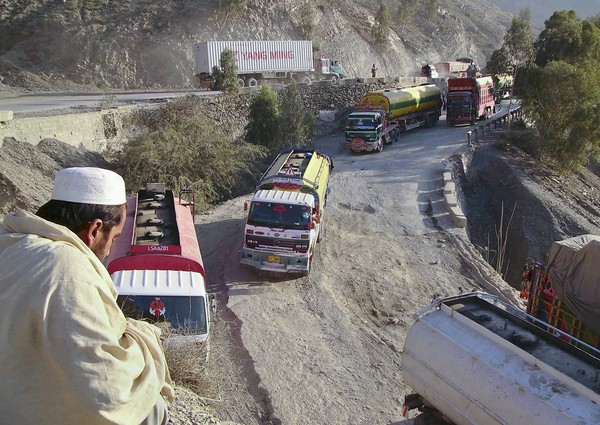
Supply Lines in Peril

This weekend there was an altercation on the Afghanistan-Pakistan border in which somewhere between 24 and 28 Pakistani soldiers were killed during a NATO airstrike.  Afghan military and regional government officials are saying that Afghan soldiers called in for air support after they were attacked from the Pakistani side of the border.  The Pakistanis are calling the the strike an “unproved attack.” NATO and Afghan officials note that the border is not very distinguishable and that Taliban forces often will shoot from positions near Pakistani outposts.  Unfortunately in Pakistan the only truth that matters is that NATO killed its soldiers and the fact that their country and some agencies specifically the intelligence service actively support the Taliban is irrelevant.  The truth is that the only reason that the Pakistani government and military has halfway cooperated with NATO is because of the vast amount of military and economic aid it receives from the United States.  The thin veneer of cooperation was broken this weekend and there may be little that anyone can do to reestablish any kind of real trust or cooperation despite the fact that the cooperation of the Pakistanis is a “necessary evil” as long as the US an NATO have over 100.000 troops deployed in “penny packets” around the vast  rugged expanse of Afghanistan.

The fact is that depending on whose statistics you look at some 40-50% of NATO’s supplies are transported overland from the Pakistani port of Karachi to Afghanistan. The bulk of these goods are things like fuel and heavy equipment without which the ability of NATO forces in Afghanistan cannot conduct effective operations.  The Pakistanis have already demanded that the US pull its CIA drone units from a key Pakistani air base and the Pakistanis are still smarting over the killing of Osama Bin Laden on their soil. The simple truth is that unless the Pakistani military can calm their country our supply lines will be cut off. Unfortunately this same military and government has used any excuse or provocation to stir up their population against the United States and NATO in order to preserve their hold on power.  Now it appears that the situation has reached a point that they will not be able to control the passions that they have stirred whenever the need suits them.

If the Pakistani military and government have put themselves and us in a bind. If they  appear to be “soft” on NATO in the eyes of their people they risk a popular revolt and more terrorism at home. If they harden their opposition to NATO and the US or use the latest incident to whip up more anti-NATO support they could find themselves in a war with the United States and NATO.  Any misstep could be disastrous to all concerned.

Unlike the Iranians the Pakistanis actually have deployable nuclear weapons in addition to a large conventional military force.  If they were to decide to stop US and NATO resupply convoys for more than a few days our operations in Afghanistan would be affected and if the impasse were to become long term it could cripple US and NATO operations in that country.

The sad truth is that the US and NATO forces in Afghanistan are terribly exposed to dangers that neither they or their commanders control. It is what happens along the Afghanistan-Pakistan border that matters what happens between the United States-Israel and Iran can have a dramatic and even calamitous effect on our deployed forces.

The fact is that it is hard to replace 40-50% of your bulk supplies when they have to come by sea and the only port is in a hostile or at best semi-hostile country.  If the Pakistanis were to force the issue the mission in Afghanistan would be untenable.  A smaller force tailored to anti-terrorism operations could be sustained by air and via overland routes which pass through former Soviet republics but a heavy force of over 100,000 troops scattered across thousands of square miles of mountainous terrain cannot be sustained unless the supply lines for bulk fuel, water, food and heavy equipment are secure.

Logistics is not sexy but no modern military can do without it. You do not operate heavy mechanized forces in hostile territory without reliable supply lines. Simply ask the Germans in Stalingrad or the French at Dien Bien Phu how well they did when supplies were cut off.

It just doesn’t seem to me that most people especially politicians see the danger that US and NATO troops face in Afghanistan from forces that they cannot control in surrounding countries.  This is a dangerous situation and even if the current impasse is resolved the long-term outlook is bleak as long as the Pakistani regime plays both sides of the fence.

If the supply lines were severed for any length of time the mission in Afghanistan would have to be reevaluated and the possibility of military action to reopen them considered. At that point all bets are off and God help us.  It would not be good.

Peace

Padre Steve+

1 Comment

Filed under Foreign Policy, History, iraq,afghanistan, Military, Political Commentary

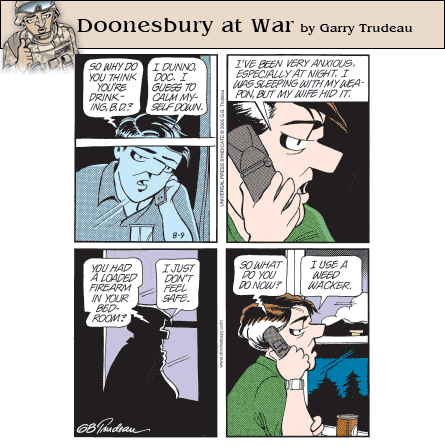
Night Terrors: Padre Steve’s Closet of Anxieties

There are times that I know that I still have issues.  One of those times is when I wake up screaming in the middle of the night.  It is a reminder that there are dark recesses in my mind that I do not and may not ever understand. While I may find some of the meaning of these dreams and images through symbols and remembrance of things that have happened in my life they are on the whole rather outside of the world that I try to live in.

Most of the time I do not sleep well.  Ever since Iraq my sleep has been mostly troubled and seldom good.  However with that being said it is only on rare occasions when images become so disturbingly lifelike that it seems that I am actually in the middle of a real fight and wake up screaming as I attack imaginary intruders.  When I am at home this is no comfort to Judy and Molly who are awakened by me attacking the lamp on my side of the bed or some object.  When I am away and wake alone up in a cold sweat with my heart pounding I long to be able to feel Judy alongside of me or have our dog Molly come to me and try to make things better.

This was one of those weeks. My sleep has not been good and on Monday I had one of those less frequent but most terrifying of dreams where I was fighting to defend my family against a hostile and malevolent intruder.  It is always a similar dream and has haunted me since we were held up at gunpoint outside of Arroyo’s Cafe when it was still on South Center Street in Stockton California back in 1979.  It began to surface much more frequently in Iraq and since I returned home in 2008.  I love how one traumatic experience can be amplified by new traumatic experiences and how the anxiety related to my experience in Iraq is increased by things that I see happening in this country and around the world.  PTSD is such a joy to live with as almost every hour I wake up scanning for the enemy.

I understand from reading that I am not alone in this struggle and veterans that I spend time with often have terrible sleep disturbances related to wartime experience or other trauma.  Nearly four years after returning from Iraq I still experience flashbacks during waking hours and sometimes relive my experiences when others tell me of theirs. That is easier to process than what occurs at night.

Thankfully the prayers from the office of Compline do help when the terrors come as does the Prayer of Saint Michael and Saint Patrick’s Breastplate, but even still it is a battle to have restful sleep.

* Save us, Lord, while we are awake,

guard us while we are asleep;

that, awake, we may watch with Christ

and, asleep, may rest in His peace.

Peace,

Padre Steve+

1 Comment

Filed under Military, PTSD, Tour in Iraq