Category Archives: Military

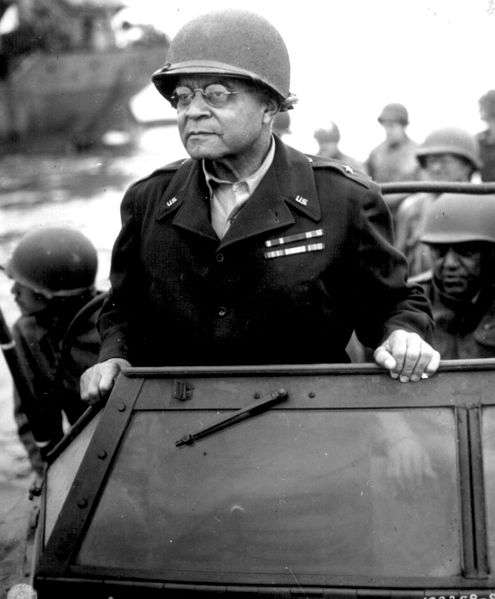
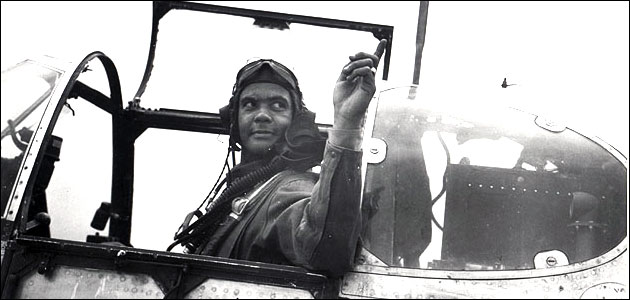
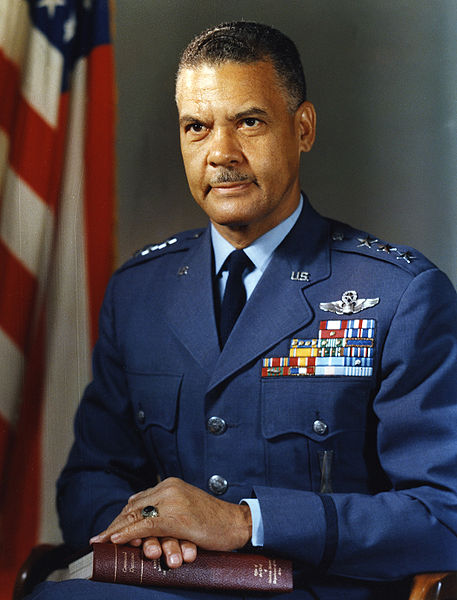
The Buffalo Soldier & the Red Tail Benjamin O. Davis Senior and Junior

495px-Benjamin_o_davis

Friends of Padre Steve’s World,

As we observe the life of Dr. Martin Luther King Jr. we have to remember that American History would not be the same without his life, work and prophetic ministry, we also remember the pioneers who came before him.

Dr. King was born in a time when most of the country was segregated when “separate by equal” was simply façade to cover the lie that in no way did African Americans have equal rights or privileges in the United States.

Dr. King was born less than 60 years after the secession of the Southern states from the Union and the beginning of the American Civil War. Though that blood conflict had freed the slaves it had not freed African Americans from prejudice, violence and discrimination.  When Dr. King began his ministry and was thrust upon the national stage as the strongest voice for equal rights and protections for blacks the discrimination and violence directed towards blacks was a very real and present reality in much of the United States.

However there were cracks beginning to appear in the great wall of segregation in the years preceding Dr. King’s ascent to leadership as the moral voice of the country in the matter of racial equality. In baseball Jackie Robinson became the first African American player in Major League Baseball opening a door for others who would become legends of the game as well as help white America begin its slow acceptance of blacks in sports and the workplace.

Likewise the contributions of a father and son Brigadier General Benjamin O. Davis Sr. and General Benjamin O. Davis Jr. advanced the cause of blacks in the military, which eventually led to the desegregation of the military in 1948.  The impact of these two men cannot be underestimated for they were trailblazers who by their lives, professionalism and character blazed a trail for African Americans in the military as well as society.

benjaminodavisjr02

Benjamin O. Davis Sr. was a student at Howard University when the USS Maine exploded and sank in Havana Harbor.  He volunteered for service and was commissioned as a temporary 1st Lieutenant in the 8th United States Volunteer Infantry. He was mustered out of service in 1899 but enlisted as a private in the 9th United States Cavalry one of the original Buffalo Soldiers regiments.  He enlisted as the unit clerk of I troop of 3rd Squadron and was promoted to be the squadron Sergeant Major.

Davis was commissioned while the unit was deployed to the Philippines and assigned to the 10th Cavalry.  He was assigned in various positions throughout his career including command, staff and instruction duties including as Professor of Military Science and Tactics in various ROTC programs.  He reached the rank of rank of temporary Lieutenant Colonel and Squadron Commander of 3rd and later 1st Squadron 9th Cavalry from 1917-1920 in the Philippines before reverting to the rank of Captain on his return as part of the post-World War I reduction in force.

Davis continued to serve during the inter-war years and assumed command of the 369th Infantry Regiment New York National Guard in 1938. He was promoted to Brigadier General on 25 October 1940 becoming the first African American elevated to that rank in the United States Army and was assigned as Commander 4th Brigade 2nd Cavalry Division. He later served in various staff positions at the War Department and in France and was instrumental in the integration of the U.S. Military. He retired after 50 years’ service in 1948 in a public ceremony with President Harry S. Truman presiding. He was a member of the American Battle Monuments Commission from 1953-1961 and died in 1970.

His son Benjamin O. Davis Jr. was appointed to West Point in 1932.  He graduated and was commissioned in 1936 graduating 35 out of 278, the fourth African American graduate of West Point. During his time at the Academy most of his classmates shunned him and he never had a roommate.  Despite this he maintained a dogged determination to succeed.  The Academy yearbook made this comment about him:

“The courage, tenacity, and intelligence with which he conquered a problem incomparably more difficult than plebe year won for him the sincere admiration of his classmates, and his single-minded determination to continue in his chosen career cannot fail to inspire respect wherever fortune may lead him.”

He was denied entrance to the Army Air Corps because of his race and assigned to the Infantry first to the all lack 24th Infantry Regiment at Ft Benning where he was not allowed in the Officers Club due to his race. Upon his commissioning the Regular Army had just 2 African American Line Officers, 2nd Lieutenant Davis and his father Colonel Davis.

After completion of Infantry School he was assigned as an instructor of Military Science and Tactics and the Tuskegee Institute.  In 1941 the Roosevelt Administration moved to create a black flying unit and Captain Davis was assigned to the first black class at the Tuskegee Army Air Field and in March 1942 one his wings as one of the first 5 African Americans to complete flight training.

In July 1942 he was assigned as Commanding Officer of the 99th Pursuit Squadron which served in North Africa and Sicily flying Curtiss P-40 Warhawks. He was recalled to the United States in September 1943 to command the 332nd Fighter Group. However some senior officers attempted to prevent other black squadrons from serving in combat alleging that the 99th had performed poorly in combat. Davis defended his squadron and General George Marshall ordered an inquiry which showed that the 99th was comparable to white squadrons in combat and during a 2 day period over the Anzio beachhead the pilots of the 99th shot down 12 German aircraft.

Davis took the 332nd to Italy where they transitioned to P-47 Thunderbolts and in July 1944 to the P-51 Mustang which were marked with a signature red tail. During the war, the units commanded by Davis flew more than 15,000 sorties, shot down 111 enemy planes, and destroyed or damaged 273 on the ground at a cost of 66 of their own planes.

Their record against the Luftwaffe was outstanding and their protection of the bombers that they escorted was superb with very few bombers lost while escorted by them men that the Luftwaffe nicknamed the Schwarze Vogelmenschen and the Allies the Red-Tailed Angels or simply the Redtails. Davis led his Tuskegee Airmen to glory in the war and their performance in combat helped break the color barrier in the U.S. Military which was ended in 1948 when President Truman signed an executive order to end the segregation of the military. Colonel Davis helped draft the Air Force plan and the Air Force was the first of the services to fully desegregate.

Colonel Davis transitioned to jets and let the 51st Fighter Interceptor Wing against Chinese Communist MIGs in the Korean War.  He was promoted to Brigadier General in 1954 and served in numerous command and staff positions. He retired in 1970 with the rank of Lieutenant General and was advanced to General while retired by President Clinton in 1998.  He died in 2002 at the age of 89.

ltgen Benjamindavis

The legacy of Benjamin O. Davis Senior and Benjamin O. Davis Junior is a testament to their character, courage and devotion to the United States of America. They helped pioneer the way for officers such as General Colin Powell and helped change this country for the better.  During times when discrimination was legal they overcame obstacles that would have challenged lesser men.  Benjamin O. Davis Junior remarked:

“My own opinion was that blacks could best overcome racist attitudes through achievements, even though those achievements had to take place within the hateful environment of segregation.”

Such men epitomize the selfless service of so many other African Americans who served the country faithfully and “by the content of their character” triumphed over the evil of racism and helped make the United States a more perfect union.

Peace

Padre Steve+

1 Comment

Filed under civil rights, leadership, Military

The Road to Gettysburg: Lee is Puzzled as Meade Acts

Lee1

General Robert E. Lee

Friends of Padre Steve’s World

For those that have followed my writing for some time you know that I teach military history and ethics at the Joint Forces Staff College. One of the great joys that I have is leading the Gettysburg Staff Ride, which is an optional event for students that want to participate. When I took the position here I took some of my older writings on Gettysburg and put them into a student study guide and text. That was two years ago. Then the text was about 70 pages long. It is now about 870 pages long and eventually I hope to get it published. When and if that happens I expect it to become two, and possibly three books.

This is the third of a series of articles that I will be posting potions of a chapter that I have rewritten about the surprises that various commanders experienced on June 28th 1863. The lessons for today are that war, any war, is the realm of chance, as such, surprises always happen. It is said that no plan survives first contact with the enemy, but some plans don’t survive that long. As you read this don’t just look at the events, but look at the people, and their reaction to the surprises that they encountered, for that is where we come to understand history.

So even if you are not a Civil War buff, or even a history buff, take the time to look at the people, their actions, and the things that made them who they were, and influenced what they did. History is about people.

So please enjoy,

Peace

Padre Steve+

Any commander that embarks on a high risk offensive operation in enemy territory must do so with great care, especially in regard to command and control of his forces. This is especially true regarding reconnaissance. By June 28th Lee had been operating blind for well over a week, and this was in large part his own fault.

There are two reasons for this. The first of these was his decision regarding Stuart’s cavalry. The orders that Lee issued were so vague that Stuart was free to interpret them in any way that suited him. The result was that Stuart and the cavalry that Lee was counting on to screen his own army and keep tabs on the Federal army was well to the east and completely useless to Lee. Now Lee was reaping the fruit of his carelessness and overconfidence as he bemoaned his lack of contact with Stuart.

The second reason is that Lee failed to wisely employ the cavalry that he did have available, which by all means should have been enough to provide what Lee needed. After all, Lee still had three brigades of Stuart’s Cavalry Division available, but none were in a position to assist his reconnaissance needs. Some of this is Stuart’s fault, and some the fault of the commander of the forces left behind to screen Lee, but at least some of the blame for this has to be laid at the feet of Lee. Robertson’s and Jones’ brigades were still deep in Virginia guarding Snicker’s and Ashby’s Gap. Imboden’s Brigade was to the west at Hancock Maryland. Jenkins’ brigade, which was not a part of Stuart’s division, was far to the front with Ewell’s Corps.

Had Robertson followed Stuart’s orders “Lee would not have felt the want of adequate cavalry support” [1] but since Robertson had remained stationary Lee had nothing available when he needed it and made no effort to bring these units up to help.

In selecting Jones’ and Robertson’s brigades for the mission of screening Lee, Stuart made a critical mistake. Jones and Robertson both had serious deficiencies as leaders and proved that neither had Lee’s “confidence or understood his expectations…and Stuart badly misread the amount of personal connection his superior required.” [2] Jones was actually the better officer, but was junior to Robertson who failed miserably.

While Lee’s orders to Stuart allowed him to go off on his mission, Lee still had plenty of cavalry available had he employed it well. However, Lee employed it in a woeful manner and did not take the steps necessary to ensure that the commanders assigned understood his expectations. This was another critical mistake made by Lee. Alan T. Nolan wrote: “There seems to be no excuse for Lee’s finding himself at Chambersburg on the 28th without a single regiment of cavalry” [3] The tragic thing for the Confederacy was that Lee would make this same mistake in failing to communicate his intent with other subordinates throughout the campaign.

Late on the night of June 28th Lieutenant General James Longstreet “was woken by someone banging on his tent pole.” [4] It was his assistant Inspector General, Major John W. Fairfax. Fairfax had with him a man claiming to have information on the movement and location of the Army of the Potomac. The man’s name was Henry Thomas or “Harry” Harrison and he was an actor. Longstreet hired him as a “scout” or what we would now term a spy during the Suffolk campaign. Longstreet paid Harrison in U.S. dollars versus Confederate money, something that Moxey Sorrel said was worth it because he “always brought us true information.” [5]

Harrison was described as an “altogether an extraordinary character” [6] by Sorrel, and was one of those mysterious figures that occasionally show up in the context of a historical event and make it even more interesting. Very few senior Confederate commanders employed spies, “but Longstreet, with his usual care for detail, saw that his spies were well chosen and diligent.” [7] On this expedition Longstreet paid Harrison in gold and instructed him “to travel to Washington and secure any information he could obtain.” [8] He gave the spy a long leash and told him “I did not care to see him again till he could bring me information of importance.” [9]

Harrison arrived at Longstreet’s headquarters having been detained by men of Pickett’s division “dirt-stained, travel-worn, and very broken down.” [10] The spy brought Longstreet the first information about the whereabouts and situation of the Army of the Potomac that the army had since before Brandy Station.

Harrison brought news of Hooker’s relief and replacement by Meade as well as the location of the Federal army. He noted the location of John Buford’s Cavalry division as well as the location of five of the Army of the Potomac’s seven army corps, all of which were too close for comfort. Though his information was now almost two days old it was shocking. While Lee and his subordinates believed that the Army of the Potomac was still south of the Potomac, Harrison reported that “Hooker’s army had begun crossing the river three days before and was now well up into Maryland.” [11] The information was

Questioned by Longstreet about the location and activities of Stuart, Harrison could give no information, but the news that he brought was electrifying, and Longstreet immediately sent Harrison accompanied either by Sorrel or Fairfax to Lee’s headquarters.

Lee’s aide Walter Taylor noted “Great was his surprise and annoyance, therefore, when on June 28th he received information from one of the scouts to the effect that the Federal army had crossed the Potomac…” [12] Lee distrusted spies and did not employ them, but when whichever aide was present “vouchsafed for Longstreet’s confidence in him” [13] Lee “listened to Harrison’s report with “great composure and minuteness.” [14] The “contents, timing, and source of the spy’s report bothered Lee.” It was upsetting, especially since it “was brought by a person unknown to him whose word had to be taken on faith” [15] rather than from Stuart who he implicitly trusted.

However, Lee was “very reluctant to make a move without confirmation of his cavalry.” [16] Lee was skeptical of the report given by Harrison, especially because Stuart had not reported anything. He told Fairfax “I do not know what to do….I cannot hear from General Stuart, the eye of the army. What do you think of Harrison? I have no confidence in any scout, but General Longstreet thinks a good deal of Harrison.” [17]

Lee’s puzzlement at finding the federal army across the Potomac is curious. As early as June 23rd he had known of the pontoon bridge being built over the Potomac. However, Lee decision making process seemed paralyzed by the absence of Stuart. The surprise of the Union Army being concentrated so near him took away Lee’s ability to retain the initiative of a campaign of maneuver.

Because his army was so scattered he was now in danger of being hit and defeated in detail by the Federal army, “Meade, in short, might be able to do what he had planned to do to Hooker- defeat him in detail.” [18] It was a dangerous position for him to be in and he knew it. In a sense he was fortunate that on June 28th the Army of the Potomac was in the midst of changing command and thus unable to strike while his army was so vulnerable.

With the knowledge that the Federal army was near Lee acted with alacrity to concentrate his army in the Cashtown and Gettysburg area. “Within eight hours of Harrison’s report to Lee” [19] Lee had set in motion orders to all commands of his scattered army. Lee still had “no idea of the whereabouts of the enemy’s forces beyond what Longstreet’s spy had just told him- information that was already twenty-four hours old,” and he did have “any idea of how to remedy this intelligence gathering void.” [20]

Lee knew precious little other than the fact that “Hooker’s army, now under Meade, was across the mountain from him and that it was Stuart who was still in Virginia.” [21] He had learned the latter information from Captain James Power Smith who informed Lee that he had met two troopers of Stuart’s division who:

“casually told him that on the preceding day (Saturday the 27th) that they had left the main body of cavalry under Stuart in Prince William County back in northern Virginia. When Smith passed on this information, General Lee, he said, “was evidently surprised and disturbed.” [22]

Another consequence of his lack of available cavalry was that he had to leave Pickett’s division to guard the rear until Imboden’s cavalry could arrive to take up the task. Imboden’s troops had been far to the west completely away from the army when Lee discovered their location. Because of this Pickett’s division was detained to guard the army’s trains far to the rear of the march. This would be another unfortunate consequence of Stuart’s absence that would plague Lee during the battle, especially on July 2nd, when Longstreet’s corps would be without Pickett’s troops as they assaulted the Federal left.

On the afternoon of June 29th Lee met with a number of officers and his outward calm was still present. He told them “Tomorrow, gentlemen, we will not move to Harrisburg, as we expected, but will go over to Gettysburg and see what General Meade is after.” [23] When questioned by his subordinates about the relief of Hooker, and by his replacement by Lee’s former subordinate, Meade, Lee noted “General Meade will commit no blunder in my front, and if I make one he will make haste to take advantage of it.” [24]

Despite his surprise Lee was still confident. He had not fully appreciated Harrison’s information. He believed that instead of concentrating for battle that “the Army of the Potomac was shaking itself into pieces that Lee could turn upon and beat one by one, with the all the odds in his favor.” [25] Likewise he was confident that Meade would be so cautious as to not seek out an engagement, or would if forced by Washington attack him on ground of his choosing.

Implicit in Lee’s orders to concentrate east of the South Mountain range near Gettysburg was “his deliberate challenge to the enemy.” [26] Rather than waiting for the Federals to come after him he would seek them out. When John Bell Hood visited Lee, Lee remarked “Ah! General, the enemy is a long time in finding us….If he does not succeed soon, we must go in search of him.” [27] In moving his army east, “he gave away his exact location….By June 29th the approach of the Confederate army was evident to the people of Gettysburg.” [28]

Meade too had recognized the importance of Gettysburg and began to move his forces toward the town even as Lee tried to concentrate his army. On the evening of June 29th Meade sent the 1st Cavalry Division under the command of Brigadier General John Buford, a seasoned Indian fighter ahead to Gettysburg. In Buford Meade had something that Lee currently was missing, an outstanding cavalry officer in the time and place that he needed one. “Buford was a supremely confident and tenacious soldier” [29] who would provide Meade with the information that he needed to enter the battle, while Lee was practically blind due to the absence of Stuart and the mishandling of the cavalry that he should have had available.

While Lee’s army was still greatly scattered and few divisions in a place that they could provide support to each other, Meade was concentrating his army. After ordering Buford to Gettysburg he stopped the advance towards the Susquehanna and “redirected the 1st, 3rd and 11th Corps north toward Emmitsburg and the Pennsylvania state line, and the 2nd, 5th, 6th and 12th Corps to the northeast toward Pipe Creek and Taneytown.” [30]

Buford arrived and survey the ground around Gettysburg. He reconnoitered all the ridges to the front as well as Cemetery Hill and Ridge and there was nothing that his trained eye missed. Noting how the Schoolhouse Ridge, Herr’s Ridge, McPherson’s Ridge and Seminary Ridge offered successive lines of good ground for defense, and that Cemetery Hill provided a rally point he thought his plan through. He realized that the Confederates would have to come up to Gettysburg along the Cashtown Pike and that even a small force such as his could delay the enemy advance.

With that in mind, Buford made his decision. He convinced himself that “he could pull off something never achieved in this war: a defense in depth by dismounted cavalry against a large force of foot soldiers with artillery support.” [31] He also took into account the approach of Ewell’s troops from the north, and deployed one of his brigades to watch it. It was a calculated risk, if the Federal infantry did not come up to support him in time, it would risk the annihilation of his division, but if successful it would ensure that Meade’s army would hold excellent defensive ground.

Buford had a keen eye for terrain and instantly recognized that the area around Gettysburg was favorable ground. He also through the hard work of his troops surmised that Hill’s Third Corps with the divisions of Heth, Anderson and Pender would approach from the west, while Ewell’s Second Corps with the divisions of Rodes, Early and Johnson would come to Gettysburg from the north and east and provided that information to Reynolds and Meade. He again proved his “reputation as an expert gather of intelligence.” As one historian observed “this was cavalry scouting and reporting at their best, a model of precision and accuracy, with fact carefully separated from rumor.” [32]

On the morning of June 30th, Buford detected the Confederate infantry of Pettigrew’s brigade to the west of the town. Buford knew that the battle was to be there and sent word back to John Reynolds, commander of I Corps:

“Have Occupied Gettysburg. Contacted large force of Reb infantry. I think they are coming this way. Expect they will be here in force in the morning.”[33]

Notes

[1] Ibid. The Gettysburg Campaign, A Study in Command p.184

[2] Ibid. Trudeau Gettysburg, A Testing of Courage. p.69

[3] Nolan, Alan T. R.E. Lee and July 1 at Gettysburg in The First Day at Gettysburg, Gallagher, Gary W. Editor, Kent State University Press, Kent Ohio 1992 p. 20

[4] Korda, Michael. Clouds of Glory: The Life and Legend of Robert E. Lee Harper Collins Publishers, New York 2014 p.542

[5] Wert, Jeffry D. General James Longstreet: The Confederacy’s Most Controversial Soldier, A Touchstone Book, Simon and Schuster, New York and London 1993 p.237

[6] Ibid. Wert General James Longstreet p.237

[7] Ibid. Freeman Lee’s Lieutenants p.551

[8] Ibid. Wert General James Longstreet p.254

[9] Ibid. Guelzo Gettysburg: The Last Invasion p.113

[10] Ibid. Wert General James Longstreet p.237

[11] Ibid Sears. Gettysburg. p.124

[12] Taylor, Walter. General Lee: His campaigns in Virginia 1861-1865 With Personal Reminiscences University of Nebraska Press, Lincoln Nebraska and London, 1994 previously published 1906 p.184

[13] Ibid. Wert General James Longstreet p.255

[14] Ibid. Guelzo Gettysburg: The Last Invasion p.113

[15] Ibid. Coddington The Gettysburg Campaign, A Study in Command p.181

[16] Ibid. Wert A Glorious Army p.237

[17] Ibid. Freeman Lee p.320

[18] Ibid. Foote The Civil War, A Narrative. Volume Two pp.462-463

[19] Ibid. Foote The Civil War, A Narrative. Volume Two p. 463

[20] Ibid. Sears Gettysburg p.124

[21] Dowdy, Clifford. Lee and His Men at Gettysburg: The Death of a Nation Skyhorse Publishing, New York 1986, originally published as Death of a Nation Knopf, New York 1958 p.49

[22] Ibid. Dowdy Lee and His Men at Gettysburg p.48

[23] Ibid. Freeman Lee p.321

[24] Ibid. Freeman Lee p.321

[25] Ibid. Guelzo Gettysburg: The Last Invasion p.114

[26] Ibid. Sears Gettysburg p.133

[27] Ibid. Sears Gettysburg p.114

[28] Ibid. Coddington The Gettysburg Campaign, A Study in Command p.195

[29] Ibid. Korda Clouds of Glory p.544

[30] Ibid. Guelzo Gettysburg: The Last Invasion pp.115-116

[31] Longacre, Edward G. John Buford: A Military Biography Da Capo Press, Perseus Book Group, Cambridge MA p.185

[32] Ibid. Longacre John Buford p.187

[33] Shaara, Michael. The Killer Angels. Ballantine Books, New York. 1974 p.40


Leave a comment

Filed under civil war, Gettysburg, History, leadership, Military

The Road to Gettysburg: Meade Takes Command

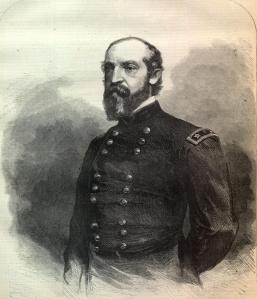
general-george-meade

Major General George Gordon Meade

Friends of Padre Steve’s World

For those that have followed my writing for some time you know that I teach military history and ethics at the Joint Forces Staff College. One of the great joys that I have is leading the Gettysburg Staff Ride, which is an optional event for students that want to participate. When I took the position here I took some of my older writings on Gettysburg and put them into a student study guide and text. That was two years ago. Then the text was about 70 pages long. It is now about 870 pages long and eventually I hope to get it published. When and if that happens I expect it to become two, and possibly three books.

This is the second of a series of articles that I will be posting potions of a chapter that I have rewritten about the surprises that various commanders experienced on June 28th 1863. The lessons for today are that war, any war, is the realm of chance, as such, surprises always happen. It is said that no plan survives first contact with the enemy, but some plans don’t survive that long. As you read this don’t just look at the events, but look at the people, and their reaction to the surprises that they encountered, for that is where we come to understand history.

So even if you are not a Civil War buff, or even a history buff, take the time to look at the people, their actions, and the things that made them who they were, and influenced what they did. History is about people.

So please enjoy,

Peace

Padre Steve+

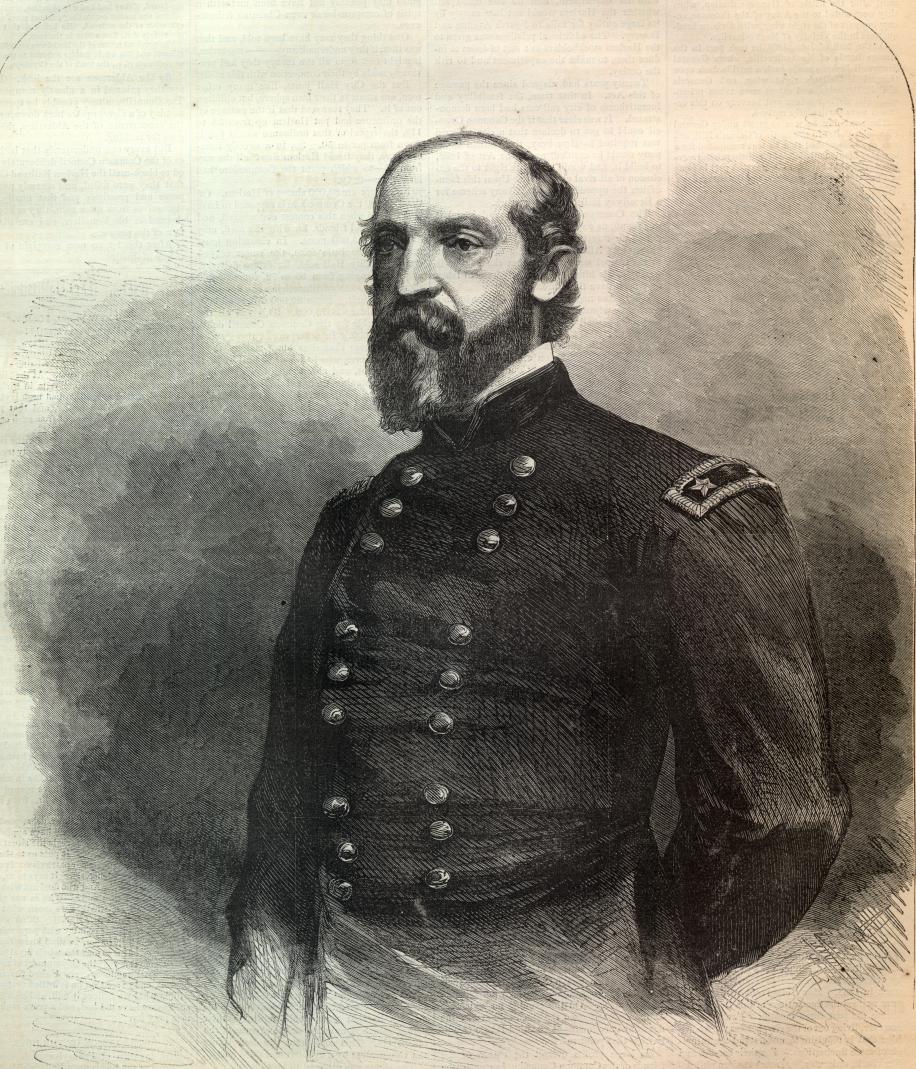
About the time that Lee was confidently discussing the campaign with Isaac Trimble Major General George Meade, commander of V Corps the night of June 27th George Meade was simply one of seven Corps Commanders in the Army of the Potomac, but before the night was over he would be its commander on the eve of the most decisive battle of the war in the east.

George Gordon Meade was the son of an American merchant who served as the naval agent for the U.S. government in that country until 1817. Meade was born in Cadiz on December 31st 1815 and grew up in Pennsylvania and Maryland. His father had been ruined financially in Spain when supporting the Spanish government by loaning it over $375,000 in the Peninsular War against Napoleon. Meade’s father remained in Spain to try to recover his lost fortune he sent his wife and children back to the United States where the family lived on the margins of poverty. The money should have been reimbursed to him under the terms of the Treaty of Florida “which obligated the American government to assume any Spanish obligations to American citizens.” However “the U.S. government discovered loopholes that it allowed it to dodge all responsibility to an increasingly bitter and disappointed Richard Meade.” [1] It was a crushing blow to the elder Meade.

Meade’s father returned to the U.S. and the family moved from Philadelphia to Washington D.C. were Richard Meade, “worn down physically and mentally by his struggles” [2] died in 1828 when George was just 12 years old and attending “a boarding-school at Mount Airy, a few miles from Philadelphia, known as the American Classical and Military Lyceum.” [3] It was here that Meade got his first taste of military discipline as the school was modeled after West Point and in addition to their studies the students participated in military drill.

At the Lyceum, Meade was known for being “an amiable boy, full of life, but rather disposed to avoid the rough-and-tumble frolics of youths his age; quick at his lessons, and popular with both teachers and scholars.” [4] The family ran out of money to keep him at the school and he returned to Baltimore where he was enrolled in the Mount Hope School in Baltimore as his mother sought to gain him an appointment at West Point. At Mount Hope he studied Latin, English composition and mathematics. A certificate from the headmaster of the school obtained by his mother discussed Meade’s academic acumen.

“The knowledge he has gained…is far greater than is usually acquired by young men of his age in a single year. He possesses an uncommon quickness of perception and is, therefore, capable of acquiring knowledge with great rapidity….” [5]

Meade entered West Point in 1831 when he was just sixteen years old after being nominated by Andrew Jackson. The financial condition of his family was mostly responsible for this as “West Point was the one place where the young Meade could obtain a free college education.” [6] At West Point Meade did not excel in his studies and due to “his lack of attention to details of dress and equipment and apparent disinterest in drill, demerits began to pile up in his third year.” [7] While he graduated in the top half of his class his performance in some subjects such as military engineering gave no indication of how he would excel later in life. He graduated nineteenth of fifty-six in the class of 1835.

Unlike many classes which were crowded with men destined for greatness, there were few notables in this class. Other than Meade there was Lincoln’s Postmaster General Montgomery Blair, Brigadier General Herman Haupt, who directed the transportation system of the Union army in the East during the war and John Pemberton, who as a Confederate general would surrender Vicksburg to Grant as Meade was defeating Lee.

Meade was commissioned as a Brevet Second Lieutenant and assigned to the artillery. He spent most of that year in Florida where he was sick and assigned less demanding duties. He resigned his commission after serving his one year obligation and entered civilian life as a topographic engineer. Such was not an unusual occurrence in the tiny army of that era, as “over the previous two years more than a hundred West Point graduates had left the army.[8]

He found civilian employment with the Bureau of Topographical Engineers and over the next five years took part in surveying the Texas-Louisiana boundary line, followed by an assignment on the Mississippi River Delta. He finally worked on the survey of the Canadian-United States boundary, an area of perpetual dispute from the time of American independence.

It was during his time of civilian work with the Bureau that he met and married his wife Margaret Sergeant Wise, the daughter of Congressman John Sergeant, who had been the running mate of Henry Clay in the 1832 presidential election. The young woman was well educated and “developed a wide range of cultural interests including facility in four languages and proficiency at the piano.” [9] They had had seven children together, three sons and four daughters and through much of his career was forced to raise the children alone. Despite this, the marriage appeared to be happy and would last until his death in 1872.

In 1842 Congress passed a measure which limited topographic survey to officers of the Topographic Engineer Corps. For Meade this was a godsend, for with the assistance of Margaret’s brother-in-law Congressman Henry A. Wise of Virginia Meade was reappointed as a Second Lieutenant in the Topographic Engineers on May 19th 1842. He had lost nearly six years of seniority, but “he had fairly earned his rank of Second Lieutenant of Topographic Engineers.” [10] His first assignments included surveying the Aroostook River in Maine and the design and construction of a lighthouse for Brandywine Shoals, Delaware.

In 1845 with a war with Mexico looming due to the annexation of Texas, Lieutenant Meade reported to the headquarters of General Zachary Taylor in Corpus Christi. Here he conducted surveys of the Nueces River and other inland waterways. Meade accompanied Taylor to the disputed border area around between the Nueces and the Rio Grande where some of the first actions of the war took place in 1846. During the war he served in Mexico “principally with Taylor’s army, where he won a brevet for gallantry at Monterrey.” [11] During his time in Texas and Mexico Meade became disgusted with the political machinations that surrounded the war and in a letter home he wrote “the mighty engine of influence, that curse of our country, which forces party politics into everything.” [12]

Meade was transferred to the army of Winfield Scott where he was no longer the senior Topographic Engineer but the junior. He chafed at his inactivity with Scott and complained about it. Major Turnbull, the senior Topographic Engineer told Scott that Meade was “Meade was unexpectedly with the army and that he had quite enough officers without him.” [13] In light of this Scott sent Meade back, where he returned to building lighthouses missing the bulk of the campaign. That assignment was cut short in 1849 when Meade was ordered to Florida “amid an outbreak of violence by the Seminoles.” [14] In Florida he survey a line of forts and upon completion returned to lighthouse work at Brandywine Shoals and then in Key Largo.

When the Army established the Lighthouse Board, Meade was appointed t the Seventh District where he continued his work in Florida. Among the lighthouses that he built was the Sand Key lighthouse at Key West which stands to this day. Meade was still just a First Lieutenant but he was rising in terms of the work that he was doing and was “promoted to superintendent of the Seventh Lighthouse District.” [15] He took over the Fourth District as well when its superintendent was transferred to the West Coast. In this work Meade prospered. The most impressive monument to Meade’s work is the 163 foot tall Barnegat Bay Light in New Jersey. Meade was justifiably proud of his accomplishments and after the war noted that “I have always thought my services in the construction of lighthouses, and subsequently on the Lake Survey were of considerable importance.” [16]

In 1856 Meade was promoted to Captain and given charge over the vast Great Lakes survey. In Meade’s words he work involved:

“the delineation of the shores, and bottom of the lakes, bringing to light the hidden dangers; obtaining the evidence and capacity and depth of water in all the harbors and rivers and consequently the most practical mode of improving them; furnishing the evidence of the wants of navigation in reference to lighthouses, beacons and buoys and the proper sites for same.” [17]

Meade had to lobby Congress for funding and expanded the number of officers and personnel involved until by 1860 he had ten teams, some working on land and some aboard ships with a budget which he expanded from $25,000 to $75,000 in three years. It was a remarkable job, but then Meade had matured as an officer and as a leader.

Meade was still involved with this mission when Fort Sumter was attacked. To the consternation of local leaders in Detroit, he and his officers refused to be part of a mass meeting where the locals were insisting the Federal officers publically renew their oaths. This decision was part of Meade’s innate conservatism. Meade felt that doing so without the order of the War Department was not within his prevue.

Meade was not a firebrand, conservative and logical thought that the best course would for both sides to step back and catch their breath. He was “dismayed at the arrogance of the fire-eaters, to whom Southern secession seemed like a simple riot which would be suppressed by the mere appearance of Federal troops.” [18] The decision angered Senator Zach Chandler who had organized the event and Chandler would remain an opponent of Meade throughout the war.

He had never been a political officer and was determined to avoid becoming one, he wrote “as a soldier, holding a commission, it has always been my judgement that duty required that I should disregard all political questions, and obey orders.” [19] Thus he avoided some of the more overtly political displays in Michigan but wrote:

“I have ever held it to be my duty…to uphold and maintain the Constitution and resist the disruption of this Government. With this opinion I hold the other side responsible for this existing condition of affairs.” [20]

He was viewed with suspicion by Radical Republicans as “another politically unreliable McClellan Democrat” and William Lloyd Garrison’s The Liberator noted that his look “reveals a character that never yet efficiently and consistently served a liberal cause.” [21]

He immediately volunteered for field duty, but it his request was not answered due to resistance in the Corps of Topographic Engineers. It was not until after the debacle at Bull Run when he would be appointed a Brigadier General of Volunteers, even as he was preparing to resign his commission to take command of a Michigan Regiment.

Meade was appointed to command a brigade of the Pennsylvania Reserves and saw much action at the head of his brigade on the Peninsula, serving alongside his friend John Reynolds who commanded another brigade in the division. Meade exhibited a coolness under fire that earned the respect of his soldiers and officers. His fearless nature had “resulted in his being wounded twice by bullets almost simultaneously at the Battle of Glendale on the Peninsula” [22] and incurring other wounds and close calls at South Mountain, Antietam and Fredericksburg.

In September 1862 he was promoted to command the division and after Fredericksburg he was promoted to command Fifth Corps. His promotions “from brigade commander in the Pennsylvania Reserve Division to corps command had been earned on battlefields.” [23] Serving in almost all of the army’s campaigns in the East Meade “gained increasing distinction as a highly competent and skillful officer. At Fredericksburg his division was the only unit to achieve any kind of success in a battle that otherwise was known as the worst fiasco in the history of the Army of the Potomac.” [24]

Like many of the commanders at Gettysburg Meade’s personality, temperament and character were complex, leading to people who met him or served with him to different conclusions. He possessed little flair for the dramatic or the theatrical. He was quietly religious and modest and “he usually kept aloof and made no effort to make himself popular” especially with reporters and “they exacted a toll for this treatment, and as a result Meade’s reputation suffered from a poor press.” [25]

He did not fit the stereotype of a commanding general of an army, he possessed none of McClellan’s style, Hooker’s dash or Reynold’s handsomeness. Some of his critics in the ranks referred to him as “a damned old goggle-eyed snapping turtle” while others called him “Old Four Eye” based on the glasses that he wore.[26] Meade handled such comments well for he had few delusions about himself, he remarked to an officer “I know they call me a damned old snapping turtle.” [27] As for his physical appearance a reporter noted that Meade “is colorless, being of a ghostly pale,” and “his nose of the antique bend.” [28] Another noted that he looked more like “a learned pundit than a soldier” [29] while his attire did not help, an aide noted “as for clothes, General Meade was nowhere.” Another officer remarked, “it would be rather hard to make him look well dressed.” [30]

Meade was sharp minded and quick tempered, “irritable and touchy in camp, possessed of a famous temper and imperfect means of controlling it.” [31] His temper was rooted in his sense of perfectionism and truthfulness. Theodore Lyman wrote that “I never saw a man in my life who was so characterized by straightforward truthfulness as he is.” [32] But Meade’s often volcanic temper and abject truthfulness were that of a logical man who could not abide “stupidity, negligence or laziness.” [33] Lyman observed “I don’t know any thin old gentleman, with a hooked nose and cold blue eye, who, when he is wrathy, exercises less of Christian charity than my well-beloved Chief!” [34]

Unlike some leaders whose temper led them to make unwise decisions with the lives of their troops, “in matters involving the safety of the army or the lives of thousands of men he exercised self-control and showed great moral courage in his decisions.” [35] At the same time he was a man who if after an angry outburst was full of regret, and as introspective as he was had “a cordial desire, if he had been wrong to make amends.” [36]

He was a man who in the war did not lose his humanity either towards the soldiers that he commanded or the victims of war. He was moved to acts of compassion when he saw suffering women and children whose lives had been upended by war. During the campaign of 1864 Meade:

“happened upon a poorly dressed woman fringed by several crying children – a family which the cavalry had robbed – he pulled out a five-dollar bill and also saw that food was provided for the day’s neediest. “The soft-hearted General…though of his own small children,” Colonel Lyman reflected. “He is a tender hearted man.” [37]

It was this complex man, a modest, conservative perfectionist, prone to volcanic eruptions of temper, but possessing of a strong sense of honesty even in regard to himself, who in the early morning hours of June 28th 1863 would have the fate of the Union thrust upon his shoulders.

“I Bring You Trouble” Meade Takes Command

As Trimble left and Lee settled in for the night, Meade, Commander of V Corps, was at his new headquarters located at Robert McGill’s farm outside of Frederick. Meade was asleep in his tent, was unaware that Colonel James A. Hardie, Halleck’s Assistant Adjutant General, was on a train from Washington with orders that would change the course of the war. Hardie arrived in Fredericksburg after midnight and instead of remaining for the night rented a carriage and made his way directly to Meade’s headquarters, bearing in his hand “General Orders 194…relieving General Hooker as commander of the Army of the Potomac and appointing General Meade in his place.” [38]

Meade, though he desired the appointment as commander of the Army did not expect it. Meade, a career soldier “possessed ambition but had never allowed it to consume him as Joseph Hooker had.” [39] Meade believed that if Hooker was relieved of command that John Reynolds of First Corps or another would receive it. Meade was outranked by his fellow Corps commanders Reynolds and John Sedgwick of VI Corps, and he felt that Reynolds was the ideal man to command the army.

Meade wrote to his wife the reasons he believed that he would not get command a few days before: “because I have no friends, political or others, who press or advance my claims or pretentions.” [40] The latter was not because Meade did not have friends, but because unlike Hooker, Sickles and so many others he stayed out of the various political cabals in the army and their constant intrigues. Meade, though on bad terms with Hooker was not one of the Generals who conspired against Hooker in the weeks following Chancellorsville. He told Governor Andrew Curtain of Pennsylvania that “I should be very sorry to see him removed, unless a decidedly better man is substituted.” [41]

On June 25th Meade had written his wife Margaret, who was uneasy with the rumors that her husband might be named head of the army. Earlier in the month when it was rumored that he might be offered command she “reacted to the news with vigor and urgency: “Do not accept it!” She was convinced that it would ruin his career.” [42] Reiterating his belief that he did not have the necessary political connections, and that there were others at least as competent or more to lead the army, he wrote:

“For these reasons I have never indulged in any dreams of ambition, contented to await events, and do my duty in the sphere it pleases God to place me in…and I really think that it would be well for you to take the same philosophical view; but do you know, I think your ambition is being roused and that you are beginning to be bitten with the dazzling prospect of having for a husband a commanding general of an army. How is this?” [43]

At 3:00 A.M. Hardie arrived. “Led to Meade’s tent, Hardie greeted the suddenly awakened general by saying he brought “trouble.” [44] Meade wrote his wife:

“At 3:00 A.M. I was roused from my sleep by an officer from Washington entering my tent…and after waking me up, saying he had come to give me trouble. At first I thought that it was to either relieve or arrest me, and promptly replied to him, that my conscience was clear, void of offense towards any man; I was prepared for his bad news. He then handed me a communication to read: which I found was an order relieving Hooker from the command and assigning me to it.” [45]

Meade was “given a brief order from Lincoln assigning him the high command, and a detailed message outlining his course. The army was to cover Washington and Baltimore; Harpers Ferry and its garrison would come under Meade’s own jurisdiction, etc.” and Halleck noted that “the transfer was being made at a critical time.” [46]

Meade agitatedly stated his objections to Hardie, again reiterating his belief that Reynolds should command the army but Hardie explained that the decision had been made and that Meade had no choice but to obey his orders or resign. Hardie provided Meade a letter from Halleck which said “Considering the circumstances…no one ever received a more important command; and I cannot doubt that you will firmly justify the confidence that the Government has reposed in you.” [47]

The order gave Meade command of the troops at Harper’s Ferry which had been denied to Hooker just days before. It also gave him freedom of command. It read: “You will not be hampered by any minute instructions from these headquarters” and “you are free to act as you deem proper under the circumstances as they arise.” [48] Likewise Meade was authorized to take command General Couch’s forces along the Susquehanna. A further power given to Meade which had not been given to previous commanders of the Army of the Potomac was the authority to relieve from command and dismiss officers from the army, or appoint to command officers regardless of seniority as he saw fit. It was a power that during the tumult of battle that he would use well in the coming days.

Meade went by horseback with Hardie and his son Captain George Meade to Hooker’s headquarters at Prospect Hall.

The previous night Hooker, who after hearing nothing after Halleck’s terse response to his request to be relieved “had convinced himself that the ensuing silence meant that he had beaten Halleck.” [49] But now, Hooker, aware that Hardie was in the camp, correctly assumed that he was through as the commander of the Army of the Potomac. Hooker greeted his visitors in his full dress uniform and with “much effort he tried to hide his feelings and by extreme courtesy to relieve the situation of embarrassment.” [50]

Meade had not seen Hooker in two weeks and had no idea how scattered the army was. When Hooker and Dan Butterfield his Chief of Staff briefed Meade, and Meade learned of the army’s disposition he “unguardedly expressed himself.” Hooker “retorted with feeling.[51] There was also disagreement on what the two generals believed Lee’s intentions were regarding crossing the Susquehanna. Hooker insisted that since Lee had no bridging equipment that he would not cross the river or threaten Harrisburg. Instead Hooker believed that Lee would proceed down the right bank of the river towards Baltimore and Washington. Meade disagreed that “the enemy would not attempt to cross at low water. In point of fact, Lee had already issued orders to move,” [52] while Dick Ewell was already preparing for a river crossing and assault on the weakly held Pennsylvania Capital.

Despite the uncomfortableness of the situation Hooker and Meade were able to successfully pass command of the army and Hooker issued General Order 66 in which “he praised his successor and asked the army to extend the hearty support it had given him. He added:

“Impressed with the ability that my usefulness as the commander of the Army of the Potomac is impaired I part from it; yet not without the deepest emotion.

The sorrow of parting with comrades of so many battles is relieved by the conviction that the courage and devotion of this army will never cease to fail.” [53]

Meade’s words in his General Order 67 are indicative of his feelings on assuming command of the army:

“By direction of the President of the United States, I hereby assume command of the Army of the Potomac…. As a soldier obeying this order- an order totally unexpected and unsolicited- I have no promises to make.”

‘The country looks to this army to relieve it from the devastation and disgrace of a foreign invasion. Whatever fatigues and sacrifices we may be called to undergo, let us have in view, constantly the magnitude of the interests involved, and let each man determine to do his duty, leaving to an all-controlling Providence the decision of the contest.

“It is with great diffidence that I relieve in the command of this army an eminent and accomplished soldier, whose name must appear conspicuous in the history of its achievements; but I rely on the hearty support of my companions in arms to assist me in the discharge of the duties of the important trust which has been confided to me.” [54]

That afternoon Meade sent a note to Halleck telling him he had received “the order placing me in command of this army” and that “as a soldier, I obey it.” [55] When Lincoln saw the letter which also outlined Meade’s initial plans to give battle, he was overheard to say “I tell you I think a lot of that fine fellow Meade.” [56]

Reynolds was among the first corps commanders to pay his respects to Meade, and Meade “grabbed him by the arm and earnestly told him he wished Reynolds had received the assignment. Reynolds replied that Meade was the right choice and that he would do whatever was necessary to support him.” [57] John Gibbon greeted Meade’s appointment “with a sigh of relief” and Reynold’s artillery commander wrote “For my part, I think that we have got the best man of the two, much as I think of Reynolds….” [58]

Meade had good reason to wish that Reynolds or another had been appointed and certainly welcomed his friend Reynolds’ support. Meade knew that he was not Lincoln’s first choice for the job, partly because of being associated with George McClellan, as well as his own political ties as a Democrat, and the opposition of leading Republicans to his appointment to any command. He had run afoul of the Northern abolitionist “fire eaters” in Detroit when Fort Sumter was fired on, and was distrustful of politicians and politically inclined soldiers.

The new commander of the army was fully aware ware of the fate of other officers who had a similar political bent. One of these officers, Fitz-John Porter, his predecessor at V Corps, was “court-martialed, cashiered and disgraced” [59] after being falsely accused of “disobedience of orders during the Second Battle of Bull Run” [60] by John Pope who had brought about that disaster.

With that in mind Meade understood the political danger that his appointment entailed:

“If he was successful in protecting Washington and Baltimore or if he somehow defeated Lee and drove the Confederates back across the Potomac, he would receive precious little credit from the Lincoln administration; if he failed, even for the most plainly military reasons, he expected to be pilloried without mercy as a halfheart and traitor.” [61]

The appointment of Meade was met with relief by most of his fellow Corps commanders. He was respected by them, despite having “a cold, even irascible, edge to him, particularly when occupied with army business. He was demanding of himself and of aids and subordinates,” [62] but what mattered to them was that Meade “was a thorough soldier, and a “mighty clear headed man”, with “extraordinary courage.” [63] A future staff officer noted that Meade “will pitch himself in a moment, if he thinks he has done wrong; and woe to those, no matter who they are, who do not do right.” [64]

He was viewed as a truthful, honest and caring commander who after a blow- up would do what he could to reconcile. He was passionate about the lives of his troops and whenever possible avoided battles that he believed their sacrifice would be in vain. He knew his trade, paid close attention to detail and knew and understood his troops and commanders. He had earned respect throughout his career and during the battles on the Peninsula, Antietam, Fredericksburg and Chancellorsville proved that he was an excellent leader and commander of troops.

All that being said Meade was virtually “an unknown quantity outside of his corps.” [65] Many in the rank and file wondered about the change of commanders in the middle of the campaign, “What’s Meade ever done?” was a common response among the men- those outside his corps at least- when they heard that he was their new commander. The general himself had few delusions on this score. “I know they call me a damned old snapping turtle….” [66] These soldiers had seen good and bad commanders and seen how Washington had dealt with each one, but by now “their training in the school of hard knocks under fumbling leaders had toughened the soldiers to a flinty self-reliance that left many indifferent to the identity of their commander. [67] On the eve of battle they had a new commanding general and “they were almost within rifleshot of a supremely aggressive enemy…whatever happened during the next week, the one certainty was now that the soldiers themselves would run this next battle. The most that could be expected of Meade was that he would make no ruinous mistakes.” [68] It not only was an army with a new leader, but in its soul, the Army of the Potomac was a different army than Lee had ever faced.

Meade had an immense task to accomplish. When he went to bed on the night of the 27th as commander of V Corps he was unaware of the locations of the bulk of the Federal Army and knew that Lee was already deep in Pennsylvania. Now, Meade was determined to bring Lee to battle, but was cautious as he did not want to take a chance of his forces being split up and defeated in detail, which in fact was what Lee hoped to do to the Army of the Potomac.

With his assumption of command Meade had to make some organizational changes. Against the advice of some Meade kept General Daniel Butterfield as his Chief of Staff despite his personal aversion for him and for Butterfield’s close association with Hooker and his political cabal. He appointed Major General George Sykes to command his old V Corps and wired Halleck with an “unheard of request: to promote in one jump three brilliant young officers from the rank of captain to that of brigadier general. They were Elon J. Farnsworth of the 8th Illinois Cavalry, George A Custer of the 5th United States Cavalry and Wesley Merritt of the 2nd United States Cavalry.” [69] Each was appointed to command brigades in Pleasanton’s Cavalry Corps which was being reorganized that day.

Meade had another great advantage over Lee in in his access to information and intelligence. Colonel George Sharpe of the Bureau of Military Information had provided him with the information that “the enemy force does not exceed 80,000 men and 275 guns,” as well as “a remarkably accurate outline of Lee’s movements.” [70] The information allowed Meade to begin his pursuit of Lee in earnest the following morning.

One thing that Meade understood was that if he was to defeat Lee he had to concentrate his combat power, he could not allow Lee’s forces to engage elements of the army and defeat them in detail. All too often Federal forces had not concentrated or taken advantage of their superiority in men and artillery. Meade wired Halleck that he would “move toward the Susquehanna keeping Baltimore and Washington well covered, and if the enemy is checked in his attempt to cross the Susquehanna or if he turns toward Baltimore, to give him battle.” [71] Meade wrote discussed his intent, noting, “my object being at all hazards to compel him to loose his hold on the Susquehanna and to meet me in battle at some point. It was my firm determination…to give battle wherever and as soon as I could possibly find the enemy.” [72]

Wisely, Meade also prepared a fallback position along Pipe Creek on the Pennsylvania-Maryland border. Knowing that it was possible that a corps could become isolated and face superior forces Meade gave his Corps commanders permission to withdraw back to the Pipe Creek line if they felt threatened by a larger Confederate force.

With his orders given and preparations underway, Meade’s Army of the Potomac began to march north on the morning of June 29th into Pennsylvania where it was fated to do battle with its old nemesis, the Army of Northern Virginia.

Notes

[1] Huntington, Tom Searching for George Gordon Meade: The Forgotten Victor of Gettysburg Stackpole Books, Mechanicsburg PA 2013 p.12

[2] Ibid. Huntington Searching for George Gordon Meade p.12

[3] Meade, George edited by George Gordon Meade The Life and Letters of George Gordon Meade, Major General United States Army Volume I Big Byte Books Amazon Kindle Edition 2014 originally published 1913 location 185 of 7307

[4] Ibid. Huntington Searching for George Gordon Meade p.12

[5] Cleaves, Freeman Meade of Gettysburg University of Oklahoma Press, Norman and London 1960 p.10

[6] Sears, Stephen W. Gettysburg. Houghton Mifflin Co. Boston and New York 2003 p.85

[7] Ibid. Cleaves Meade of Gettysburg p.11

[8] Ibid. Huntington Searching for George Gordon Meade p.13

[9] Wilson Robert and Clair, Carl They Also Served: Wives of Civil War Generals Xlibris Corporation 2006 p.27

[10] Ibid. Cleaves Meade of Gettysburg p.18

[11] Pfanz Harry W. Gettysburg: The First Day University of North Carolina Press, Chapel Hill and London 2001 p.43

[12] Ibid. Huntington Searching for George Gordon Meade p.29

[13] Ibid. Cleaves Meade of Gettysburg p.43

[14] Ibid. Huntington Searching for George Gordon Meade p.31

[15] Ibid. Cleaves Meade of Gettysburg p.49

[16] Ibid. Huntington Searching for George Gordon Meade p.32

[17] Ibid. Cleaves Meade of Gettysburg p.50

[18] Ibid. Catton The Army of the Potomac: Glory Roadp.257

[19] Ibid. Huntington Searching for George Gordon Meade p.39

[20] Ibid. Cleaves Meade of Gettysburg p.52

[21] Ibid. Guelzo Gettysburg: The Last Invasion p.88

[22] Tagg, Larry The Generals of Gettysburg: The Leaders of America’s Greatest Battle Da Capo Press Cambridge MA 1998 Amazon Kindle Edition p.2

[23] Ibid. Wert A Glorious Army p.267

[24] Ibid. Coddington The Gettysburg Campaign pp.213-214

[25] Ibid. Coddington The Gettysburg Campaign p.213

[26] Ibid. Guelzo Gettysburg: The Last Invasion p.87

[27] Ibid. Foote The Civil War, A Narrative. Volume Two p.454

[28] Wert, Jeffry D. The Sword of Lincoln: The Army of the Potomac Simon and Schuster, New York and London 2005 p.268

[29] Ibid. Foote The Civil War, A Narrative. Volume Two p.454

[30] Ibid. Wert The Sword of Lincoln p.268

[31] Ibid. Catton The Army of the Potomac: Glory Roadp.257

[32] Ibid. Coddington The Gettysburg Campaign p.211

[33] Ibid. Coddington The Gettysburg Campaign p.211

[34] Ibid Sears. Gettysburg. Pp.125-126

[35] Ibid. Coddington The Gettysburg Campaign p.211

[36] Ibid. Coddington The Gettysburg Campaign p.212

[37] Ibid. Cleaves Meade of Gettysburg p.247

[38] Ibid Sears. Gettysburg. p.123

[39] Ibid. Wert The Sword of Lincoln p.267

[40] Ibid. Foote The Civil War, A Narrative. Volume Two p.446

[41] Ibid. Huntington Searching for George Gordon Meade p.145

[42] Ibid. Wilson and Clair They Also Served p.28

[43] Ibid. Huntington Searching for George Gordon Meade p.147

[44] Ibid. Wert The Sword of Lincoln p.266

[45] Trudeau, Noah Andre. Gettysburg, A Testing of Courage Harper Collins, New York, 2003. p.102

[46] Ibid. Cleaves Meade of Gettysburg p.125

[47] Ibid. Huntington Searching for George Gordon Meade p.148

[48] Ibid. Foote The Civil War, A Narrative. Volume Two p.451

[49] Ibid. Guelzo Gettysburg: The Last Invasion p.89

[50] Hebert, Walter H. Fighting Joe Hooker University of Nebraska Press, Lincoln and London 1999. Originally published by Bobbs-Merrill, New York 1944 p. 246

[51] Ibid. Huntington Searching for George Gordon Meade p.149

[52] Ibid. Cleaves Meade of Gettysburg p.125

[53] Ibid. Hebert Fighting Joe Hooker p.246

[54] Ibid. Huntington Searching for George Gordon Meade p.150

[55] Ibid. Guelzo Gettysburg: The Last Invasion p.89

[56] Ibid. Cleaves Meade of Gettysburg p.126

[57] Ibid. Huntington Searching for George Gordon Meade p.149

[58] Ibid. Huntington Searching for George Gordon Meade p.150

[59] Ibid. Guelzo Gettysburg: The Last Invasion p.90

[60] Ibid. Wert The Sword of Lincoln p.185

[61] Ibid. Guelzo Gettysburg: The Last Invasion p.90

[62] Ibid. Wert The Sword of Lincoln p.267

[63] Ibid. Wert The Sword of Lincoln p.268

[64] Ibid. Wert The Sword of Lincoln p.267

[65] McPherson, James. The Battle Cry of Freedom: The Civil War Era Oxford University Press, Oxford and New York 1988 p.652

[66] Ibid. Foote The Civil War, A Narrative. Volume Two p.454

[67] Ibid. McPherson The Battle Cry of Freedom p.652

[68] Ibid. Catton The Army of the Potomac p.259

[69] Ibid. Coddington p.220

[70] Ibid. Trudeau Gettysburg, A Testing of Courage p.106

[71] Ibid. Coddington The Gettysburg Campaign, A Study in Command pp. 219-220

[72] Ibid. Trudeau Gettysburg, A Testing of Courage p.112

1 Comment

Filed under civil war, Gettysburg, History, leadership, Military

I Left My Heart in Al Anbar: Memories & Nightmares

iraq-2007

Friends of Padre Steve’s World,

I have been having a lot of Iraq memories lately, and with them nightmares.

I deployed to Iraq in the summer of 2007. My experience of Iraq was far different than most Americans. I served as chaplain to a large number of teams of advisers in American advisors to Iraqi forces in Al Anbar Province. Most were teams working with the Iraqi 7th Division and 2nd Border Brigade, the 1st and 3rd Brigade of the 1st Division, Iraqi Police, Highway Patrol, and various other sundry groups.

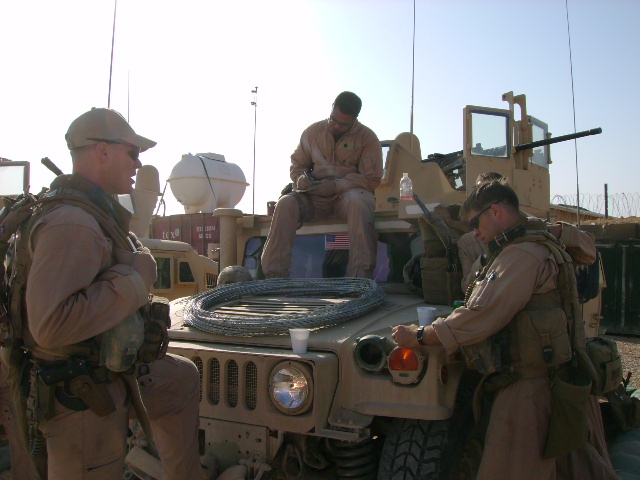
During the deployment I travelled thousands of miles hot cramped HUMMVs in tiny convoys and in tightly packed aircraft with my assistant and bodyguard RP1 Nelson Lebron. The teams consisted of 12-30 Americans who were embedded with the Iraqis in far flung locations between the Syrian border at Al Waleed, Al Qaim and various small outposts along the border, back to Fallujah and almost everywhere in between, including a lot of trips to bases in Ramadi. There were times that the convoys or helicopters that we traveled on took enemy fire, and there were other times that we were in places where we were in meetings with groups of Iraqis where we didn’t know the good guys from the bad guys, and of course I was the only person not armed.

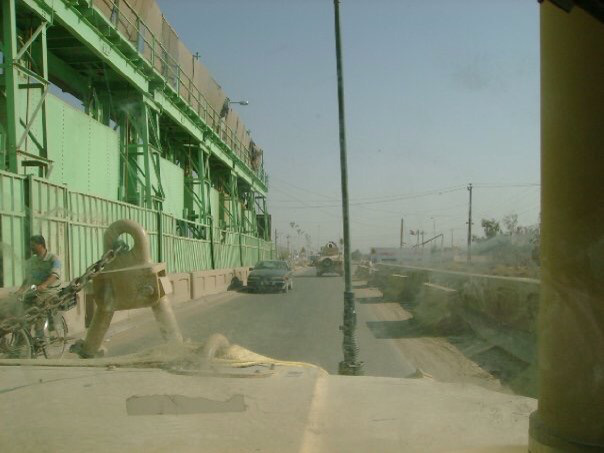
img_2672
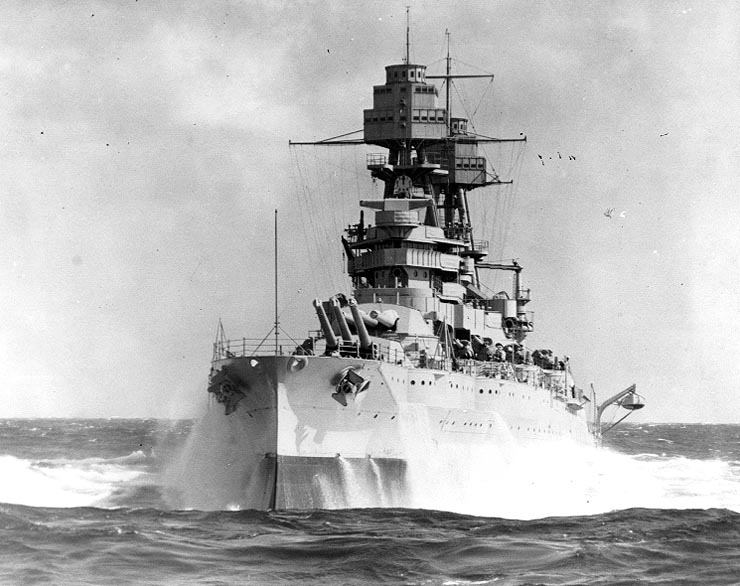
Crossing the Bridge on way to Camp Blue Diamond and the Snake Pit

For those unaware of geography Anbar Province is about the same size in area as the State of North Carolina. The Euphrates River runs through it, a shimmering blue swath bordered by a narrow green valley that cuts through an endless sea of yellow brown sand speckled with small towns and a few larger sized cities. The Provincial Capital, Ramadi is in the east central part of the province about 65 miles west of Baghdad. It was a city of about 440,000 people at the time of the US invasion.

In 2007 Ramadi and Al Anbar Province was the turning point for the United States in the Iraq War. The Sunni tribes of the province decided that their interests were better served by cooperating with the United States Forces rather than continue to endure the terrorism of foreign Al Qaida members. When the region fell to DAESH I was heartbroken, for I had gotten to know too many Iraqis, military, police, and civilians in the region. I had broken bread with them, been asked to pray for them, to bless their vehicles on missions.

As I said, I have been thinking a lot about Iraq lately with the retaking of Ramadi, and I am surprised by how strong the memories those memories still are. I have not slept well and have had plenty of strange dreams and nightmares, many which include surreal Iraq memories mixed in with others. PTSD is something that keeps on giving.

Mission Prep

I remember one of my experiences at a small base on the banks of the Euphrates in Ramadi. At least part of it was known as Snake Pit. The base was north of the Euphrates and included a Joint Security Operations Center run by the US Army, a Police training facility, Iraqi Military and Police forces, Marine advisers working with the Iraqi Army 7th Division, and an Iraqi Detention Facility. The base was surrounded by Hesco Barriers and walls, and immediately adjacent to a number of high-speed avenues of approach. It was an easy target for any attacker. In fact the area was overrun by DAESH and only recently retaken by Iraqi forces.

652_53210437058_4925_n

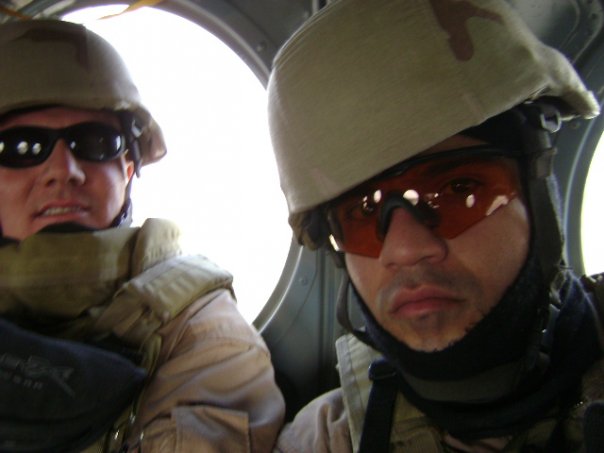
Me with RP1 Nelson Lebron on a Flight

When I visited the base Iraqi forces were in charge of the perimeter security while a small number of Americans worked at three isolated areas within it. For me strongest memories of that visit were of walking through the prison as well as getting to address the first class of female Iraqi Police cadets in Anbar.

The memories of that visit are still etched deep in my mind. When I close my eyes I can see the inside of that prison. I have been to prisons and jails in this county, but that was a wake up call, the prisoners were hard-core jihadists and the conditions were to put it mildly were harsh. But then, the nowhere in the Middle East are prisons anything near as civilized as they are here.

Neither will I forget the faces of those brave Iraqi women who risked their lives and those of their families to become Police officers in war torn Ramadi. Those women were eager to serve their people and their country and the memories of how they received me are still so strong. I wonder how many are still alive.

For most people the Iraq war is not even a memory. Most Americans are untouched by war and cannot imagine what either our troops or the Iraqi people went through and it is hard to explain.

I will stop for now but to paraphrase Tony Bennett’s immortal song I Left my Heart in San Francisco, I left my at least part of my heart in Al Anbar.

Peace

Padre Steve+

2 Comments

Filed under iraq, Military, PTSD, Tour in Iraq

Light, Life, Love: The Madonna of Stalingrad

Bundeswehr zeigt "Stalingrad"-Ausstellung

Friends of Padre Steve’s World,

I think most of my readers know that I am a career military officer and have served in peace and war as a chaplain. That service includes a tour in Iraq, a war, which by almost any standard would have been considered unjust and illegal, yet I served there, and came back a changed man. As such the stories of those who served in war, especially those who serve in hopeless battles, and even in evil causes during Christmas have a special place in my heart. One of those men was a German pastor and medical doctor named Kurt Reuber.

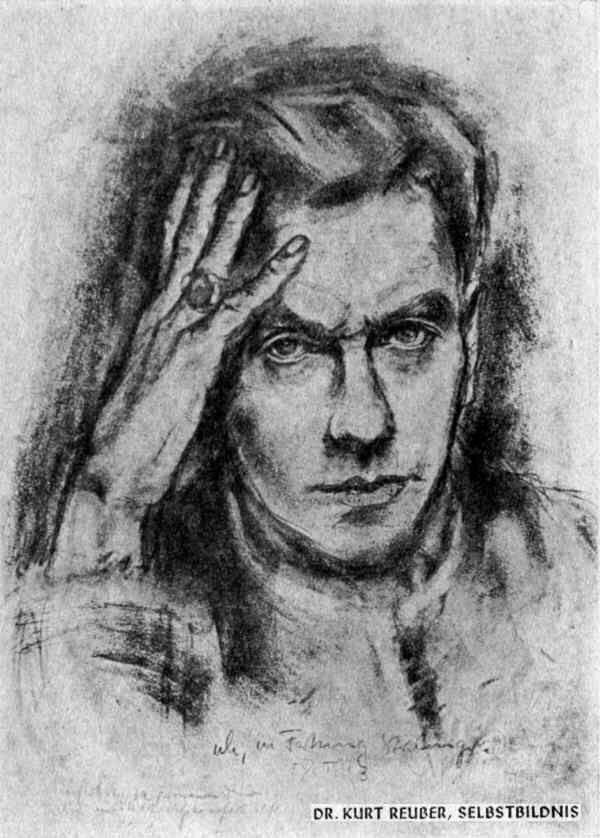
k_reuberl

As I said, Reuber was a theologian, pastor and medical doctor, likewise he was an accomplished artist and used that medium to convey his own faith, and doubts. He was a friend of Albert Schweitzer in 1939 he was conscripted to serve as a physician in the Germany Army. By November 1942 he was a seasoned military physician serving with the 16th Panzer Division, part of the German 6th Army, which had been fighting in the hell of Stalingrad. When his division along with most of 6th Army was surrounded by the Soviets, cut off from most supply and without real hope of relief, he like other physicians continued to serve the soldiers committed to his care.

pg-34-stalingrad-2-getty

However, unlike most physicians, the care Reuber offered care included spiritual matters, as he sought to help his soldiers deal with the hopelessness of their situation. As Reuber reflected on the desperation of the German soldiers in the Stalingrad pocket. He wrote to his family.

“I wondered for a long while what I should paint, and in the end I decided on a Madonna, or mother and child. I have turned my hole in the frozen mud into a studio. The space is too small for me to be able to see the picture properly, so I climb on to a stool and look down at it from above, to get the perspective right. Everything is repeatedly knocked over, and my pencils vanish into the mud. There is nothing to lean my big picture of the Madonna against, except a sloping, home-made table past which I can just manage to squeeze. There are no proper materials and I have used a Russian map for paper. But I wish I could tell you how absorbed I have been painting my Madonna, and how much it means to me.”

“The picture looks like this: the mother’s head and the child’s lean toward each other, and a large cloak enfolds them both. It is intended to symbolize ‘security’ and ‘mother love.’ I remembered the words of St. John: light, life, and love. What more can I add? I wanted to suggest these three things in the homely and common vision of a mother with her child and the security that they represent.”

The picture was drawn on the back of a captured Soviet map and when he finished it he displayed it in his bunker, which became something of a shrine. Reuber wrote:

“When according to ancient custom I opened the Christmas door, the slatted door of our bunker, and the comrades went in, they stood as if entranced, devout and too moved to speak in front of the picture on the clay wall…The entire celebration took place under the influence of the picture, and they thoughtfully read the words: light, life, love…Whether commander or simple soldier, the Madonna was always an object of outward and inward contemplation.”

drkrop

As the siege continued men came to the bunker for both medical care and spiritual solace.  On Christmas Eve Reuber found himself treating a number of men wounded by bombs outside the bunker. Another soldier lay dying, just minutes before the soldier had been in the bunker singing the Christmas hymn O Du Froehliche.  Reuber wrote:

“I spent Christmas evening with the other doctors and the sick. The Commanding Officer had presented the letter with his last bottle of Champagne. We raised our mugs and drank to those we love, but before we had had a chance to taste the wine we had to throw ourselves flat on the ground as a stick of bombs fell outside. I seized my doctor’s bag and ran to the scene of the explosions, where there were dead and wounded. My shelter with its lovely Christmas decorations became a dressing station. One of the dying men had been hit in the head and there was nothing more I could do for him. He had been with us at our celebration, and had only that moment left to go on duty, but before he went he had said: ‘I’ll finish the carol with first. O du Frohliche!” A few moments later he was dead. There was plenty of hard and sad work to do in our Christmas shelter. It is late now, but it is Christmas night still. And so much sadness everywhere.”

On January 9th 1943 with all hope of escape or reinforcement gone Reuber gave the picture to the battalion commander as the officer was too ill to carry on and was one of the last soldiers to be evacuated from the pocket. Reuber’s commander carried the Madonna out of the pocket and returned it delivered it to Reuber’s family, preserving it for all.

Reuber was taken prisoner and survived the harrowing winter march to the Yelabuga prison camp. In late 1943 Reuber wrote his Christmas Letter to a German Wife and Mother – Advent 1943. It was a spiritual reflection but also a reflection on the hope for life after the war, when the Nazi regime would be defeated, and Germany given a new birth.

Reuber wrote:

“The concatenation of guilt and fate has opened our eyes wide to the guilt. You know, perhaps we will be grateful at the end of our present difficult path yet once again that we will be granted true salvation and liberation of the individual and the nation by apparent disappointment of our “anticipation of Advent”, by all of the suffering of last year’s as well as this year’s Christmas. According to ancient tradition, the Advent season is simultaneously the season of self-reflection. So at the very end, facing ruin, in death’s grip – what a revaluation of values has taken place in us! We thus want to use this period of waiting as inner preparation for a meaningful new existence and enterprise in our family, in our vocation, in the nation. The Christmas light of joy is already shining in the midst of our Advent path of death as a celebration of the birth of a new age in which – as hard as it may also be – we want to prove ourselves worthy of the newly given life.”  (Erich Wiegand in Kurt Reuber, Pastor, Physician, Painter, Evangelischer Medienverb. Kassel 2004. )

prisoner's madonna

Reuber did not live to see that day. He died of Typhus on January 20th 1944, not long after writing this and just a few weeks after painting another portrait of the Madonna, this one entitled The Prisoner’s Madonna. He was not alone, of the approximately 95,000 German POWs taken at Stalingrad only about 6,000 returned home.

His paintings survived the war and his family gave The Madonna of Stalingrad to the Kaiser Wilhelm Memorial Church in Berlin after it was restored as a symbol of hope and reconciliation. Copies are also displayed in Coventry Cathedral and the Russian Orthodox Cathedral in Volgograd, the former Stalingrad. A copy of The Prisoner’s Madonna is now displayed at the Church of the Resurrection in Kassel.

I have a print of the Madonna of Stalingrad in my office. It has become one of the most meaningful pictures I have since I returned from Iraq in 2008. To me they are symbols of God’s presence when God seems entirely absent.

Praying for an end to war.

Peace

Padre Steve+

Leave a comment

Filed under christian life, faith, History, Military, ministry, world war two in europe

Joyeux Noël: I Belong Here with those in Pain Who have Lost Their Faith


palmer

Friends of Padre Steve’s World

As a veteran who served in the badlands of Al Anbar Province during Christmas of 2007 I can relate to Father Palmer, the British priest and chaplain in the film Joyeux Noel (Merry Christmas) when he makes the comment “I belong with those who are in pain, and who have lost their faith, I belong here.”

I again watched that film last night. The film is the story of the amazing and exceptional Christmas Truce of 1914. It is a film that each time I see it that I discover something new, more powerful than the last time I viewed it. It reminds me of serving in Iraq, at Christmas from my perspective as a Chaplain, and thereby giving voice to those who serve now, as well as those who served God’s people in hellish places before me. It reminds me of how much I hate war, and how much I often hate the clergy who are all too often, bloodthirsty cheerleaders for war.


As a Chaplain I am drawn to the actions of the British Padre in the film, who during the truce conducts a Mass for all the soldiers, British, French and German in no-man’s land, who goes about caring for the soldiers both the living and the dead. His actions are contrasted with his Bishop who comes to relieve him of his duties and to urge on the replacement soldiers to better kill the Germans.

As the Chaplain begins to provide the last Rites to a dying soldier the Bishop walks in, in full purple cassock frock coat and hat and the chaplain looks up and kisses his ring.

As the chaplain looks at his clerical superior there is a silence and the Bishop looks sternly at the priest and addresses him:

“You’re being sent back to your parish in Scotland. I’ve brought you your marching orders.”

Stunned the Priest replies: “I belong with those who are in pain, and who have lost their faith, I belong here.”

The Bishop then sternly lectures the Priest: “I am very disappointed you know. When you requested permission to accompany the recruits from your parish I personally vouched for you. But then when I heard what happened I prayed for you.”

The Priest humbly and respectfully yet with conviction responds to his superior: “I sincerely believe that our Lord Jesus Christ guided me in what was the most important Mass of my life. I tried to be true to his trust and carry his message to all, whoever they may be.”

The Bishop seems a bit taken aback but then blames the Chaplain for what will next happen to the Soldiers that he has served with in the trenches: “Those men who listened to you on Christmas Eve will very soon bitterly regret it; because in a few days time their regiment is to be disbanded by the order of His Majesty the King. Where will those poor boys end up on the front line now? And what will their families think?”

They are interrupted when a soldier walks in to let the Bishop know that the new soldiers are ready for his sermon. After acknowledging the messenger the Bishop continues: “They’re waiting for me to preach a sermon to those who are replacing those who went astray with you.” He gets ready to depart and continues: “May our Lord Jesus Christ guide your steps back to the straight and narrow path.”

The Priest looks at him and asks: “Is that truly the path of our Lord?”

The Bishop looks at the Priest and asks what I think is the most troubling question: “You’re not asking the right question. Think on this: are you really suitable to remain with us in the house of Our Lord?”

With that the Bishop leaves and goes on to preach. The words of the sermon are from a 1915 sermon preached by an Anglican Bishop in Westminster Abbey. They reflect the poisonous aspects of many religious leaders on all sides of the Great War, but also many religious leaders of various faiths even today, sadly I have to say Christian leaders are among the worst when it comes to inciting violence against those that they perceive as enemies of the Church, their nation or in some cases their political faction within a country.


“Christ our Lord said, “Think not that I come to bring peace on earth. I come not to bring peace, but a sword.” The Gospel according to St. Matthew. Well, my brethren, the sword of the Lord is in your hands. You are the very defenders of civilization itself. The forces of good against the forces of evil. For this war is indeed a crusade! A holy war to save the freedom of the world. In truth I tell you: the Germans do not act like us, neither do they think like us, for they are not, like us, children of God. Are those who shell cities populated only by civilians the children of God? Are those who advanced armed hiding behind women and children the children of God? With God’s help, you must kill the Germans, good or bad, young or old. Kill every one of them so that it won’t have to be done again.”

The sermon is chilling and had it not been edited by the director would have contained the remark actually said by the real Bishop that the Germans “crucified babies on Christmas.” Of course that was typical of the propaganda of the time and similar to things that religious leaders of all faiths use to demonize their opponents and stir up violence in the name of their God.

When the Bishop leaves the Priest finishes his ministration to the wounded while listening to the words of the Bishop who is preaching not far away in the trenches. He meditates upon his simple cross, takes it off, kisses it hand hangs it upon a tripod where a container of water hangs.

The scene is chilling for a number of reasons. First is the obvious, the actions of a religious leader to denigrate the efforts of some to bring the Gospel of Peace into the abyss of Hell of earth and then to incite others to violence dehumanizing the enemy forces. The second and possibly even more troubling is to suggest that those who do not support dehumanizing and exterminating the enemy are not suitable to remain in the house of the Lord. Since I have had people, some in person and others on social media say similar things to what the Bishop asks Palmer the scene hits close to home.

When I left Iraq in February 2008 I felt that I was abandoning those committed to my spiritual care, but my time was up. Because of it I missed going with some of my advisors to Basra with the 1st Iraqi Division to retake that city from insurgents. It was only a bit over a month after I had celebrated what I consider to be my most important Masses of my life at COP South and COP North on December 23rd as well as Christmas Eve and Christmas Day. In fact they were really the last masses that I felt the mystery and awe of the love of God that I used to so much feel.

When I left the new incoming senior Chaplain refused to take my replacement leaving our advisers without dedicated support. He then slandered me behind my back because what I was doing was not how he would do things and because I and my relief were under someone else’s operational control. It is funny how word gets back to you when people talk behind your back. Thankfully he is now retired from the Navy and I feel for any ministers of his denomination under his “spiritual” care. So I cannot forget those days and every time I think about them, especially around Christmas I am somewhat melancholy and why I can relate so much to Father Palmer in the movie.

It has been eight years since those Christmas Masses and they still feel like yesterday. In the intervening years my life has been different. Just a year later I was walking home from church where my wife was to sing in the choir during the Christmas vigil mass. I couldn’t handle the crowds, the noise, and I felt so far away from God. That night I walked home in the dark looking up into the sky asking God if he still was there. If there had been a bar on the way home I would have stopped by and poured myself in.

Since Iraq I have dealt with severe and chronic PTSD, depression, anxiety and insomnia were coupled with a two year period where due to my struggles I lost faith, was for all practical purposes an agnostic. I felt abandoned by God, but even more so and maybe more importantly by my former church and most other Chaplains. It was like being radioactive, there was and is a stigma for Chaplains that admits to PTSD and go through a faith crisis, especially from other Chaplains and Clergy. It was just before Christmas in late 2009 that faith began to return in what I call my Christmas Miracle. But be sure, let no one tell you differently, no Soldier, Sailor, Marine or Airman who has suffered the trauma of war and admitted to PTSD does not feel the stigma that goes with it, and sadly, despite the best efforts of many there is a stigma.

Now that faith is different and I have become much more skeptical of the motivations of religious leaders, especially those that demonize and dehumanize those that do not believe like them or fully support their cause or agenda. Unfortunately there are far too many men and women who will use religion to do that, far too many.

As for me, I thought that I was in a better place a year ago. I had the floor kicked from out from under me in the summer of 2014 and it has been a hard fight and while I am beginning to get back to some sense of normal it is a day to day thing. I still suffer the effects of the PTSD, especially the insomnia, nightmares and the nightmares which came back with a vengeance last summer. I also still have the anxiety in crowded places and bad traffic, but working with my new therapist I am coming up with some effective coping mechanisms. As for faith, I do believe again, though at the same time I doubt. I would have to consider myself a Christian Agnostic who echoes the cry of the man who cried out to Jesus, “Lord I believe, help my unbelief!” I believe and yet, I don’t.

Like the Priest in Joyeux Noel I know that my place is with those who are “in pain, and who have lost their faith.” For me this may no longer be on the battlefield as I will retire from the Navy in a few years. However, that being said I will strive to be there for those that struggle with faith and believe, especially those who struggle because of what they saw and experienced during war and when they returned home.

533506_10151366982457059_868388211_n


Likewise I expect that I will do my best to speak truth to those in power and those whose faithfulness is more a product of their comfort with the God that they create in their own mind rather than the Crucified God wise death on the Cross s a scandal. For many Christians the scandal of the cross is too easy to avoid by surrounding ourselves with pet theologies that appeal to our pride, prejudice and power. The kind of malevolent power represented by the bishop in Joyeux Noel. Thus I take a measure of comfort in the words of Simone Weil who said “He who has not God in himself cannot feel His absence.” 

Thus, like Paul Tillich I have come to believe that “Sometimes I think it is my mission to bring faith to the faithless, and doubt to the faithful.”  In other words to become a complete pain in the ass until the day that I die.

Praying for Peace this Christmas,

Padre Steve+

Leave a comment

Filed under faith, History, Military, ministry, movies, Tour in Iraq, world war one

We Can do It: The Amazing Work of the Salvage Divers at Pearl Harbor

markV

Friends of Padre Steve’s World

One of the more interesting aspects of the Pearl Harbor attack were the efforts of the US Navy to salvage and return to duty the ships sunk or so heavily damaged that they were thought to be irreparable after the attack. 19 ships were sunk or damaged during the attack, or roughly 20% of the fleet present on December 7th 1941.

NH64486_Wallin_aboard_BB-44

WVA-Wallin-and-White-h64490

Captain Homer Wallin directing Salvage Operations

Many people know something about the attack, but one of the most remarkable aspects of it was the effort to salvage the fleet in the months following the attack. Under the leadership of Captain Homer N. Wallin teams of Navy and civilian divers from the Pacific Bridge Company worked day and night to salvage the sunken ships. The divers spend over 20,000 man hours under water in the highly hazardous waters; which were filled with unexploded ordinance, and contaminated by fuel and sadly decomposing human bodies. Wallin wrote, “The scene to the newcomer was foreboding indeed. There was a general feeling of depression throughout the Pearl Harbor area when it was seen and firmly believed that none of the ships sunk would ever fight again.”

h63921

The divers wore were rubberized coveralls with gloves. The divers were equipped with a lead-weighted belt which weighed 84 pounds and lead-weighted shoes, each of which weighed 36 pounds. Each diver wore a copper helmet attached to a breastplate. Air was supplied through a hose which was attached to the helmet and ran up to a compressor monitored by men on the surface. The work was extremely hazardous, the wrecked ships contained numerous hazards, any of which could cut his air hose and cause his death, and they also contained highly toxic gasses. They often worked in total darkness and had to communicate with the men on the surface via a telephone cable. The divers had to be exceptionally talented to and needed a great amount of coordination senses and balance to work with welding torches, suction hoses, and heavy equipment in the confines of the shattered ships. During the salvage operations a number of divers lost their lives. Before the ships could be raised ammunition, including the massive 14 and 16 inch shells weighing anywhere from 1300 to 2000 pounds each, Japanese bombs and torpedoes, fuel oil, gasoline, electrical equipment and batteries, weapons, and whenever possible the bodies of the entombed crews had to be removed, and then every hole had to be patched to make them buoyant. After the ships were raised cleanup crews had to go aboard and clear the ships of other hazardous waste as repair crews began their work to repair the basic systems needed to get the ships to West Coast shipyards for the major overhauls, The herculean effort was one of the greatest engineering feats in maritime history.

Of these were battleships, the USS Arizona sunk by a cataclysmic explosion, her broken hulk with her collapsed foremast the iconic symbol of the attack. USS Oklahoma was capsized on Battleship Row.  USS Nevada was grounded and sunk off Hospital Point after an abortive attempt to sortie during the attack. USS California and USS West Virginia lay upright on the bottom of Pearl Harbor, their superstructure, distinctive cage masts and gun turrets visible above the oily water.

BB-37_Oklahoma105c

The former battleship USS Utah lay capsized on the far side of Ford Island while the light cruiser USS Raleigh was fighting for her life barely afloat near Utah.  The ancient Minelayer USS Oglala was laying on her side next to the light cruiser USS Helena at the 1010 Dock. She was not hit by a bomb or torpedo but was said to have “died of fright” when Helena was hit by a torpedo, the blast which opened the seams of her hull. The destroyers USS Cassin and USS Downes were wrecks in the main dry dock. USS Shaw was minus her bow in the floating dry dock after exploding in what was one of the more iconic images of the attack. Other ships received varying amounts of damage.

h64474

As the engineers, damage control and salvage experts looked at the damage they realized that every ship would be needed for the long term fight. The building program of the US Navy was just beginning to pick up steam and it would be some time before new construction could not only make up for the losses but also be ready to fight a Two Ocean War. The decision was made to salvage and return to duty any ship deemed salvageable.

salvage09

Even the seemingly less important ships needed to be rapidly salvaged. Some which initially appeared to be unsalvageable needed at the minimum to be cleared from dry docks and docks needed by operational or less damaged ships. Likewise equipment, machinery and armaments from these ships needed to be salvaged for use in other ships.

h64496

Even by modern standards the efforts of the Navy divers and salvage experts and the civilians who worked alongside them were amazing. In the end only three of the 19 ships never returned to service. The work began quickly and on December 14th Commander James Steele began to direct the salvage operations on the sunken hulks. Captain Wallin relieved Steele on January 9th 1942. Wallin formed a salvage organization of Navy officers and civilian contractors. The civilian contractors were instrumental in the operation. Many of the civilians had experience in salvage operations, or underwater construction efforts, such as working on the Golden Gate Bridge which often exceeded the experience of the Navy divers.

h64493

The divers recovered bodies whenever possible, salvaged equipment, removed weapons and ammunition, made temporary repairs and help rig the ships for righting or re-floating. In each case the salvage experts, divers and engineers faced different challenges.

arizona-buring

Arizona was never raised. Her superstructure was cut down, main battery and some anti-aircraft guns removed. The main batter guns were delivered to the Army Coastal Artillery for use as shore batteries but none reached an operational status before the end of the war. The dives aboard were so dangerous that eventually the attempts to recover bodies ceased as several divers lost their lives in the wreck.  Over the years the National Parks Service has continued to dive on the wreck to assess it as a war grave and memorial.

Utah too was not raised. She was righted in 1942 but efforts to do more were halted because the elderly wreck had no remaining military value. Her wreck along with that of Arizona are war graves, many of their crew members, including over 1000 of Arizona’s men forever remain entombed in their ships. When I visited Pearl Harbor in 1978 as a Navy Junior ROTC Cadet and visited both memorials I was humbled at what I saw. They are haunting reminders of the cost paid by sailors during wartime.

Nevada was the first major ship salvaged. She was re-floated in February 1942 and after temporary repairs sailed to the West Coast on her own power. After repairs and a significant modernization of her anti-aircraft systems was complete she returned to action in 1943 in the invasion of Attu Alaska. She participated in many amphibious operations including Normandy, Southern France, Iwo Jim and Okinawa. She survived the Atomic Bomb tests in 1946 but wrecked and radioactive she was sunk as a target off Hawaii in 1948.

013717

BB-37_Oklahoma052org

oklahoma-salvage

The salvage of the Oklahoma was one of the more challenging endeavors faced by Wallin’s men. Hit by at least five torpedoes during the attack the great ship capsized, her tripod masts digging deep into the mud of the harbor as she settled. Over 400 over her crew lay dead inside the ship. Since it was apparent that the ship was a total loss the salvage operations did not commence until the middle of 1942. The primary goal of the operation was to clear needed space for berthing large ships along Battleship Row. The operation involved making the ship as watertight as possible, solidifying the bottom of the harbor around her to enable her to roll and emplacing a massive system of righting frames, anchor chains and shore mounted winches and cables. The process involved cutting away wrecked superstructure, removing ammunition, weapons and the bodies of those entombed in their former home. She was completely righted in July 1943, and floated again in November. Moved to a dry dock in December she was made watertight and moored in another part of the harbor. Following the war she was being towed to a scrap yard but sank in a storm in May 1947.

California was raised in March and after temporary repairs sailed under her own power to the West Coast. Her repairs and modernization were a major undertaking. Fully reconditioned and modernized to standards of most modern battleships she returned to service in January 1944. She served in retaking Saipan, Guam, Tinian, as well as Leyte Gulf were she had a significant part in the Battle of Surigao Strait. Hit by a Kamikaze she was repaired and returned to action at Okinawa and support the occupation operations of the Japanese Home Islands. She was decommissioned in 1947 and sold for scrapping in 1959.

729px-Photograph_of_the_damage_done_to_the_USS_West_Virginia,_sunk_in_the_Japanese_raid_on_Pearl_Harbor_-_NARA_-_306536

west-virginia-damage

West Virginia suffered the most severe damage of the battleships returned to duty. She was raised in July 1942 and after repairs sailed to Puget Sound Naval Shipyard. Like California she was completely rebuilt and returned to action in October 1944 in time to take the lead role in destroying the Japanese Battleship Yamashiro. She served throughout the remainder of the war in the Pacific at Iwo Jima, Okinawa and the occupation of Japan.

h54564

The Mahan Class destroyers Cassin and Downes were so badly damaged sitting in the Dry Dock Number One with Pennsylvania that initially they were believed beyond salvage. However after closer inspection it was determined that the hull fittings, main weapons systems and propulsion machinery on both ships were worth salvaging. These items were removed, shipped to Mare Island Naval Shipyard and installed on new hulls being constructed. The hulks of the old ships were scrapped at Pearl Harbor. Those ships were commissioned as the Cassin and Downes and served throughout the war.

h50005

Both were decommissioned in 1945 and scrapped in 1947. Their sister ship Shaw which had blown up in the floating dry dock was wrecked from her bridge forward. However the rest of the ship including her engineering spaces were intact. A temporary bow was fashioned and the ship sailed to Mare Island under her own power. Completely overhauled she was back in service by July 1942. She was decommissioned in 1945 and scrapped in 1946.

h64492

The ancient minelayer Oglala was raised in July and sent back to the West Coast where she was repaired and recommissioned as an internal combustion engine repair ship. She survived the war was decommissioned and transferred to Maritime Commission custody. She was a depot ship at the Suisun Bay Reserve Fleet until 1965 when she was sold for scrap.

The salvage feat to return these ships to duty was one of the most remarkable operations of its type ever conducted. Not only were most of the ships salvaged but most returned to duty. While none survive today many played key roles during the war. Artifacts of some of the ships are on display at various Naval Bases, Museums and State Capitals. They, their brave crews and the Navy Divers and civilian diving and salvage experts who conducted this task exhibited the finest traditions of the US Navy. The successors of the Navy divers at Mobile Diving Salvage Units One and Two still carry on that tradition today.

Peace

Padre Steve+

Leave a comment

Filed under History, Military, Navy Ships, world war two in the pacific

The Battleships at Pearl Harbor

arizon-main-battery2-2

Friends of Padre Steve’s World,

Today is the seventy-fourth anniversary of the Japanese attack on Pearl Harbor. It is hard to believe that the attack occurred so long ago. The survivors are aging, and even the youngest are close to ninety years old, the oldest survivor of the USS Arizona, Joe Langdell died in February of 2015. At the time of the attack he was a nearly commissioned Ensign. He and many like him served as the officers and men aboard the eight great battleships moored at Pearl Harbor on that terrible Sunday morning.

The next day President Franklin Roosevelt spoke these immortal words, “Yesterday, Dec. 7, 1941 – a date which will live in infamy – the United States of America was suddenly and deliberately attacked by naval and air forces of the Empire of Japan….

I remember reading Walter Lord’s classic and very readable book about Pearl Harbor “Day of Infamy” when I was a 7th grade student at Stockton Junior High School back in 1972.  At the time my dad was on his first deployment to Vietnam on the USS Hancock CVA-19.  As a Navy brat I was totally enthralled with all things Navy and there was little that could pull me out of the library.  In fact in my sophomore year of high school I cut over one half of the class meetings of the 4th quarter my geometry class to sit in the library and read history, especially naval and military history.

Over the years I have always found the pre-World War Two battleships to be among the most interesting ships in US Navy history.  No they are not the sleek behemoths like the USS Wisconsin which graces the Norfolk waterfront. They were not long and sleek, but rather squat yet exuded power. They were the backbone of the Navy from the First World War until Pearl Harbor. They were the US Navy answer to the great Dreadnaught race engaged in by the major navies of the world in the years prior to, during and after World War One.

Built over a period of 10 years each class incorporated the rapid advances in technology between the launching of the Dreadnaught and the end of the Great War.  While the United States Navy did not engage in battleship to battleship combat the ships built by the US Navy were equal to or superior to many of the British and German ships of the era.

Through the 1920s and 1930s they were the ambassadors of the nation, training and showing the flag. During those years the older ships underwent significant overhaul and modernization.

The Battle Force of the Pacific Fleet in 1941 included 9 battleships of which 8 were at Pearl Harbor on the morning of December 7th.  In the event of war the US War Plan, “Orange” called for the Pacific Fleet led by the Battle Force to cross the Pacific, fight a climactic Mahanian battle against the battleships of the Imperial Japanese Navy and after vanquishing the Japanese foe to relieve American Forces in the Philippines.  However this was not to be as by the end of December 7th all eight were out of action, with two, the Arizona and Oklahoma permanently lost to the Navy.

The ships at Pearl Harbor comprised 4 of the 6 classes of battleships in the US inventory at the outbreak of hostilities.  Each class was an improvement on the preceding class in speed, protection and firepower.  The last class of ships, the Maryland class comprised of the Maryland, Colorado and West Virginia, was the pinnacle of US Battleship design until the North Carolina class was commissioned in 1941.  Since the Washington Naval Treaty limited navies to specific tonnage limits as well as the displacement of new classes of ships the United States like Britain and Japan was limited to the ships in the current inventory at the time of the treaty’s ratification.

uss_oklahoma

USS Oklahoma (above) and USS Nevada

bb36_06

Those present at Pearl Harbor included the two ships of the Nevada class, the Nevada and Oklahoma they were the oldest battleships at Pearl Harbor and the first of what were referred to as the “standard design” battleships. The two ships of the Pennsylvania class, the Pennsylvania and her sister the Arizona served as the flagships of the Pacific Fleet and First Battleship Division respectively and were improved Nevada’s. The California class ships, California and Tennessee and two of the three Maryland’s the Maryland and West Virginia made up the rest of the Battle Force.

The Colorado was undergoing a yard period at Bremerton and the three ships of the New Mexico class, New Mexico, Mississippi and Idaho had been transferred to the Atlantic before Pearl Harbor due to the German threat.  The three oldest battleships in the fleet, those of the New York and Wyoming Classes, the New York, Arkansas and Texas also were in the Atlantic. Two former battleships, the Utah and Wyoming had been stripped of their main armaments and armor belts and served as gunnery training ships for the fleet. The Utah was at Pearl Harbor moored on the far side of Ford Island. The newest battleships in the Navy, the modern USS North Carolina and USS Washington were also serving in the Atlantic as a deterrent to the German battleships and battlecruisers which occasionally sortied into the Atlantic to attack convoys bound for Britain.

The great ships that lay at anchor at 0755 that peaceful Sunday morning on Battleship Row and in the dry dock represented the naval power of a bygone era, something that most did not realize until two hours later. The age of the battleship was passing away, but even the Japanese did not realize that the era had passed building the massive super-battleships Yamato and Musashi mounting nine 18” guns and displacing 72,000 tons, near twice that of the largest battleships in the U.S. inventory.

The Oklahoma and Nevada were the oldest ships in the Battle Force.  Launched in 1914 and commissioned in 1916 the Nevada and Oklahoma mounted ten 14” guns and displaced 27,500 tons and were capable of 20.5 knots. They served in World War One alongside the British Home Fleet and were modernized in the late 1920s. They were part of the US presence in both the Atlantic and Pacific in the inter-war years. Oklahoma took part in the evacuation of American citizens from Spain in 1936 during the Spanish Civil War.

During the Pearl Harbor attack Oklahoma was struck by 5 aerial torpedoes capsized and sank at her mooring with the loss of 415 officers and crew. Recent analysis indicates that she may have been hit by at least on torpedo from a Japanese midget submarine. Her hulk would be raised but she would never again see service and sank on the way to the breakers in 1946.

Nevada was the only battleship to get underway during the attack.  Moored alone at the north end of Battleship Row her Officer of the Deck had lit off a second boiler an hour before the attack.  She was hit by an aerial torpedo in the first minutes of the attack but was not seriously damaged. She got underway between the attack waves and as she attempted to escape the harbor she was heavily damaged. To prevent her from sinking in the main channel she was beached off Hospital Point.

Nevada was raised and received a significant modernization before returning to service for the May 1943 assault on Attu.  Nevada returned to the Atlantic where she took part in the Normandy landings off Utah Beach and the invasion of southern France.  She returned to the Pacific and took part in the operations against Iwo Jima and Okinawa where she again provided naval gunfire support.  Following the war the great ship was assigned as a target at the Bikini atoll atomic bomb tests. The tough ship survived these tests and was sunk as a target on 31July 1948.

USS_Arizona_(BB-39)_-_1930s

Two views of USS Arizona

arizona-and-battleline

518px-O3U-3s_on_USS_Pennsylvania_(BB-38)_in_1935

Pennsylvania

pennsylvania-under-golden-gate

USS Pennsylvania sailing under the Golden Gate Bridge

774px-USS_Arizona_after_1931_modernization_NARA_19-LC-19B-1

The two ships of the Pennsylvania Class were improved Oklahoma’s.  The Arizona and Pennsylvania mounted twelve 14” guns and displacing 31,400 tons and capable of 21 knots they were both commissioned in 1916. They participated in operations in the Atlantic in the First World War with the British Home Fleet. Both ships were rebuilt and modernized between 1929 and 1931. Though damaged in the attack, Pennsylvania was back in action by early 1942. She underwent minor refits and took part in many amphibious landings in the Pacific and was present at the Battle of Surigao Strait.  She was heavily damaged by an aerial torpedo at Okinawa Pennsylvania and was repaired. Following the war the elderly warrior was used as a target for the atomic bomb tests. She was sunk as a gunnery target in 1948.

Arizona was destroyed during the attack. As the flagship of Battleship Division One, she was moored next to the repair ship USS Vestal.  She was hit by 8 armor piercing bombs one of which penetrated her forward black powder magazine. The ship was consumed by a cataclysmic explosion which killed 1103 of her 1400 member crew including her Captain and Rear Admiral Isaac Kidd, commander of Battleship Division One.  She was never officially decommissioned and the colors are raised and lowered every day over the Memorial which sits astride her broken hull.

tennessee-1938

USS Tennessee & USS California

uss_california_bb44_03

california-1938

California sailing under the Brooklyn Bridge

The Tennessee class ships the Tennessee and California were the class following the New Mexico class ships which were not present at Pearl Harbor. These ships were laid down in 1917 and commissioned in 1920. Their design incorporated lessons learned at the Battle Jutland. They mounted twelve 14” guns, displaced 32,300 tons and were capable of 21 knots. At Pearl Harbor Tennessee was moored inboard of West Virginia and protected from the aerial torpedoes which did so much damage to other battleships. She was damaged by two bombs.

California was the Flagship of Battleship Division Two. She was moored at the southern end of Battleship Row. She was hit by two torpedoes in the initial attack, but she had the bad luck to have all of her major watertight hatches unhinged in preparation for an inspection. Despite the valiant efforts of her damage control teams she sank at her moorings. She was raised and rebuilt along with Tennessee were completely modernized with the latest in radar, fire control equipment and anti-aircraft armaments. They were widened with the addition of massive anti-torpedo bulges and their superstructure was razed and rebuilt along the lines of the South Dakota class. When the repairs and modernization work was completed the ships looked nothing like they did on December 7th. Both ships were active in the Pacific campaign and be engaged at Surigao Strait where they inflicted heavy damage on the attacking Japanese squadron. Both survived the war and were placed in reserve until 1959 when they were stricken from the Navy list and sold for scrap.

764px-USS_Maryland_broadside_1920s

USS Maryland & USS West Virgina

west-virginia-1934

The Maryland and West Virginia were near sisters of the Tennessee class.  They were the last battleships built by the United States before the Washington Naval Treaty. and the first to mount 16” guns. With eight 16” guns they had the largest main battery of any US battleships until the North Carolina class. They displaced 32,600 tons and could steam at 21 knots. Laid down in 1917 and commissioned in 1921 they were modernized in the late 1920s. They were the most modern of the Super-Dreadnoughts built by the United States and included advances in protection and watertight integrity learned from both the British and German experience at Jutland.

g411119

the-japanese-attack-on-pearl-harbor-everett-2

At Pearl Harbor Maryland was moored inboard of Oklahoma and was hit by 2 bombs and her crew helped rescue survivors of that unfortunate ship.  She was quickly repaired and returned to action.  She received minimal modernization during the war. She participated in operations throughout the entirety of the Pacific Campaign mainly conducting Naval Gunfire Support to numerous amphibious operations. She was present at Surigao Strait where despite not having the most modern fire control radars she unleashed six salvos at the Japanese Southern Force.

729px-Photograph_of_the_damage_done_to_the_USS_West_Virginia,_sunk_in_the_Japanese_raid_on_Pearl_Harbor_-_NARA_-_306536

Tennessee & West Virginia after the attack (above) Arizona (below)

arizona-buring

h64474

754px-USS_West_Virginia_5-21-42,_Port_quarter_showing_previous_water_line_(FCP)_-_NARA_-_296915

west-virginia-damage

pennsylania-drydock

Pennsylvania in Drydock Number One, Nevada beached at Hospital Point

nevada-1

013717

Oklahoma Capsized and after being righted

oklahoma-salvage

West Virginia suffered some of the worst damage in the attack. She was hit by at least 5 torpedoes and two bombs. One of the torpedoes may have come from one of the Japanese midget submarines that penetrated the harbor. She took a serious list and was threatening to capsize. However she was saved from Oklahoma’s fate by the quick action of her damage control officer who quickly ordered counter-flooding so she would sink on an even keel.  She was raised from the mud of Pearl Harbor and after temporary repairs and sailed to the West Coast for an extensive modernization on the order of the Tennessee and California.

west-virginia-final-config

USS California Late WWII

nevada-utah-beach

West Virginia was the last Pearl Harbor to re-enter service. However when she returned she made up for lost time.  She led the battle line at Surigao Strait and fired 16 full salvos at the Japanese squadron. Her highly accurate gunfire was instrumental in sinking the Japanese Battleship Yamashiro in the last battleship versus battleship action in history.  West Virginia, Maryland and their sister Colorado survived the war and were placed in reserve until they were stricken from the Naval List and sold for scrap in 1959.

The battleships of Pearl Harbor are gone, save for the wreck of the Arizona and various relics such as masts, and ships bells located at various state capitals and Naval Stations.  Unfortunately no one had the forethought to preserve one of the surviving ships to serve as a living memorial at Pearl Harbor with the Arizona. As I noted at the beginning of this article, the brave Sailors and Marines who manned these fine ships are also passing away.

Thus as this anniversary of the Pearl Harbor attack passes into history it is fitting to remember these men and the great ships that they manned.

Peace,

Padre Steve+

Leave a comment

Filed under History, Military, Navy Ships, US Navy, world war two in the pacific

Sub Sighted Sub Sunk: The USS Ward & the First Shot at Pearl Harbor

USS Ward Painting

Friends of Padre Steve’s World,

It is the day before the anniversary of the attack on Pearl Harbor, and as I always do this time of year I spend a significant amount of time writing about it, so that we never forget the brave men of the Greatest Generation who were there.

One of these men was Lieutenant Commander William Outerbridge, the commanding office of the USS Ward DD-139. Outerbridge and veteran of 14 years of service, and he had taken command of the elderly ship less than 24 hours before she began her weekend Anti-Submarine patrol of the entrance to Pearl Harbor. In the inter-war years promotion was slow and opportunities for advancement slim. Outerbridge had been commissioned following graduation from the Naval Academy in 1927. He was the only Regular Navy Officer on the ship.

USS Ward 1919

The Ward was old but had very few miles on her. She was a Wickes class destroyer displacing 1250 tons and was armed with four 4” 50 caliber and two 3” guns. She was launched and commissioned in 1918 and was decommissioned and placed in reserve in 1921. Recommissioned in January 1941 she was assigned to Destroyer Division 80 at Pearl Harbor. This squadron of elderly ships consisting of the Ward along with USS Schley, USS Chew and the even older USS Allen, was assigned to the Inshore Patrol Command.

As tensions between the United States and Japan increased the War Department and Department of the Navy issued a “War Warning” and Admiral Husband Kimmel, Commander in Chief Pacific Fleet ordered a “shoot on sight” against any ship or submarine operating in the security zone outside Pearl Harbor which effectively put the ships of DesDiv 80 on a war footing.

Outerbridge had taken command on Friday December 5th and taken the ship to sea 6th at 0628. He had no idea that in just over 24 hours the guns of his ship would be the first American warship to fire at an enemy combatant in the Pacific during the war.

As the Ward patrolled the area just a couple of miles off of the entrance to Pearl Harbor the minesweeper USS Condor (AMc-14) spotted a white wake near her at 0342.  The Officer of the Deck and Captain determined that it was the periscope of a submarine.  They signaled the Ward which was patrolling nearby: “Sighted submerged submarine on westerly course, speed nine knots” at 0348.

Outerbridge ordered the Ward to general quarters. After a futile search Outerbridge secured from General Quarters at 0443.  At 0458 Pearl Harbor’s anti-torpedo net gate was opened to allow passage of Condor and a number of other small ships including the Stores Ship USS Antares (AKS 14). Antares was towing a target back to base when at about 0635 a lookout on Ward noticed a wake following the auxiliary between her and her the raft.

Ward gun crew

Outerbridge returned to the bridge and sounded general quarters at 0640.  Outerbridge increased Ward’s speed to 25 knots and commended firing on the sub at 0645.  Ward’s number three gun scored a hit at the base of the sub’s conning tower and Ward charged the sub.  Coming close alongside the Ward dropped depth charges which sank the sub.

Outerbridge notified harbor control at 0651 sending the message “Depth bombed sub operating in defensive sea area.” Some of his own officers thought that it was possible that Ward had attacked an American submarine but Outerbridge was confident that the sub was hostile. To emphasize that this was different from false alarms that headquarters was accustomed sent another message at 0653 “Attacked, fired upon, depth bombed, and sunk submarine operating in defensive sea area.”  It was just over an hour before the first Japanese planes would begin their bombing runs.

Delays in seeking more conformation and reluctance to believe the report resulted in the message not being rapidly transmitted up the chain of command. It was a symptom of a parochial and divided command structure which did not respond quickly to the needs of war.

The rest is history. Within two hours the Battle line of the Pacific Fleet was sunk or crippled, all told 18 ships were sunk or damaged.  2402 Sailors, Marines and Soldiers were killed and another 1247 wounded.

But the war for Outerbridge and the Ward was not over. Outerbridge was promoted and transferred while the Ward was converted to a Fast Transport and redesigned APD-16 in 1943. She participated in actions in the Solomon Islands, New Guinea and the Philippines.

USS Ward burning

Ward burning after Kamikaze Attack

On December 7th 1944 while conducting operations at Ormoc Bay the veteran ship was hit by a Japanese “Betty” Twin engine bomber. The large aircraft acting as a Kamikaze crashed into Ward and started fires and flooding that could not be controlled. One of the ships that came to Ward’s assistance was the USS O’Brien (DD 725) commanded by her former commander, William Outerbridge, who had commanded Ward at Pearl Harbor. Three years to the day after sinking the Japanese submarine Outerbridge was ordered to sink his former ship after rescuing her crew.

Outerbridge retired as a Rear Admiral in 1957 and died in 1986.  Like others of his generation he served in war and peace.  As we remember the attack on Pearl Harbor let us not forget him as well as the fine crew of the USS Ward.  These men were alert that quiet Sunday morning 70 years ago and took action. They sunk a Japanese midget submarine intent on entering Pearl Harbor and reported their actions.  One wonders what might have happened if Outerbridge’s reports had been acted on, interceptors scrambled and anti-aircraft defenses on ships and ashore been ready when the Japanese attackers swept in to attack Pearl Harbor.  Of course we will never know.

Peace

Padre Steve+

1 Comment

Filed under History, leadership, Military, Navy Ships, US Navy

The Unfolding of Miscalculations: Syria 2015

russian jet in flames

Friends of Padre Steve’s World,

The tensions fuel by the incredibly complex and dangerous war in Syria just when up, as I like to say the “pucker factor” is very high, in fact it is getting close to stage ten. Barbara Tuchman wrote, “War is the unfolding of miscalculations” and it seems that right now there are whole a lot of miscalculations going on.

Yesterday a Russian Su-24 fighter plane was blasted out of the sky by a Turkish F-16. Reports conflict, Turkey say that the Russian aircraft had violated its airspace multiple times and had been given multiple warnings before the shoot down. The Russians claim that the aircraft was on the Syrian side of the border and that the attack was an unprovoked violation, and Russian President Putin called it a “stab in the back.” Russia is accusing Turkey of backing DAESH, while Russia’s forces, which are supposedly there to fight DAESH are spending more time attacking Syrian President Assad’s non-DAESH Syrian opposition, including Turkoman Syrians fighting the Assad regime in the area where the jet was shot down. Some think that it might be payback for the Russians bombing the faction supported by the Turks.

Admittedly, Turkey has a right to self-defense and the Russians are operating in Syria without any kind of international mandate. That being said, the Russians are there at the behest of the Assad government, which even if we don’t like it is still the legal government of Syria, a long term ally and client of Russia, going back to the old Soviet days.

However, the feud between Russia and Turkey goes back hundreds of years. They hate each other, and this hatred goes back to the days of the Tsars and the Ottomans. The hatred is generations old, and is cultural, religious and political. Maybe that is why we in the west do not understand it, but I digress… 

The fact is that the actions of both nations, as well as most other nations in the West including the United States have helped to stoke the fire of the Syrian war, which is threatening to escalate into a regional conflict. I am not going to go into all the details of what has brought us to this point, because they are too many to cover. Some of course are saying that it could lead to a World War, but I do think that cooler heads will prevail. Of course I could be wrong, as Tuchman wrote, “To admit error and cut losses is rare among individuals, unknown among states.”

It is now time for President Obama to step up to the plate, and not rattle sabers, but to help pull everyone back from the brink. He needs to work with Russia’s President Putin to deescalate the crisis. Since everyone involved has a stake in what happens it Syria it cannot be ignored. The nations involved need to sit down and come up with a way to defeat DAESH and bring peace to Syria and Iraq. Of course this is easier said than done, especially since bullets are flying, blood is flowing, and tensions rising. The fallibility of human beings has been demonstrated time and time again in this war, and as Tuchman wrote in The Guns of August, “Human beings, like plans, prove fallible in the presence of those ingredients that are missing in maneuvers – danger, death, and live ammunition.”

In 1962 President Kennedy faced the real possibility of nuclear war with the Soviet Union during the Cuban Missile Crisis. Kennedy had just read Tuchman’s The Guns of August which had just been published. He was shocked by the words of German Chancellor Bethmann-Hollweg who when asked how World War One started replied “Ah, if only one knew.” Kennedy asked General Curtis LeMay what would happen if the Soviets did not back down, and the officer replied that he would order a nuclear strike. Kennedy could not go down that road, he referred to the book when he remarked, “If this planet is ever ravaged by nuclear war—if the survivors of that devastation can then endure the fire, poison, chaos and catastrophe—I do not want one of these survivors to ask another, “How did it all happen?” and to receive the incredible reply: “Ah, if only one knew.”

The downing of this Russian jet shows just how easily things can spin out of control. It is time for calmer heads to prevail and walk this back before things get really out of hand.

Peace

Padre Steve+

2 Comments

Filed under History, middle east, Military, national security, News and current events