Category Archives: Military

The Myth of Decisive Victory in Gaza

“Cure yourself of two commonly fatal delusions: the idea of victory and the idea that war can be limited.” B. H. Liddell Hart

“There is no middle path here – either the Gazans and their infrastructure are made to pay the price, or we reoccupy the entire Gaza Strip. Otherwise there will be no decisive victory.” Gilad Sharon

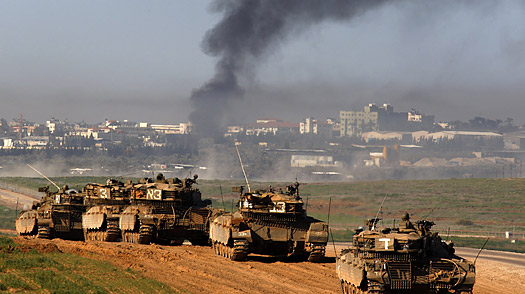
As one who supports Israel it is hard to watch its leaders falling into the trap of invading Gaza, something that they have done before without success. In the past 5 days the Israelis have blunted the attacks of Hamas militants and others operating in the Gaza Strip, killed some important Hamas military leaders and decimated much of the Hamas missile capability through air, naval and artillery strikes. It is clear that the new Iron Dome missile system has shielded the Israeli population from appreciable harm and that Hamas cannot protect the people of Gaza from Israeli attack. However, the protection of the people of Gaza is not the goal of the leaders of Hamas, their goal is to draw Israel into a war that will sap its strength by drawing its forces into Gaza.

It appears that at least some leaders of Israel may oblige them. The Knesset has authorized the call up of 75,000 reservists for duty and Prime Minister Benjamin Netanyahu has stated that the Israelis are to expand the operation. This mobilization is massive by Israeli standards. It is a force that certainly will have the capability of occupying Gaza, and for a time preventing a renewed build up of Hamas’ missile forces, but it will be a force that will be unable to secure a decisive victory as Gilad Sharon believes possible.

Sun Tzu wrote: “Confront them with annihilation, and they will then survive; plunge them into a deadly situation, and they will then live. When people fall into danger, they are then able to strive for victory.”

If some kind of cease fire is not arranged soon the possibility that the conflict could expand is very real. It is also likely that an expansion of the conflict beyond Gaza could be tremendously harmful to Israel and the region. The real possibility that the emotions of war could draw Egypt into the conflict, regardless of that nation’s need for stability is something that cannot be discounted, especially with the Moslem Brotherhood now in control of the government. The even greater threat is that Iran could use other surrogates in Lebanon and Syria to attack Israel and draw the Israelis into a direct attack on Iran.

The emotions of war and those people who have been humiliated by military defeat after defeat are not rational. Peoples who endure defeat after defeat at the hands of any nation only to want to exact revenge on those that they believe are their oppressors. We in the “Christian” West should understand this, it is the history of Europe.

Israel’s operations in Gaza may be successful in the short term, but should they decide to invade Gaza they will invite even more desire for revenge throughout the region. A ground invasion will also cede Israel’s position as the victim of Hamas attacks in much of the world, especially since any invasion will be accompanied by many civilian deaths in a built up area that is already poverty stricken and war torn.

It is not a good situation. One hopes that the conflict can be curtailed before it spreads and becomes a regional war of incalculable costs in terms of lives and treasure.

Peace

Padre Steve+

4 Comments

Filed under Foreign Policy, History, middle east, Military, national security

Twilight of the Generals: The Deeper Implications of the Petraeus Scandal

“War with impersonal leadership la a brutal soul-destroying; business, provocative only of class animosity and bad workmanship. Our senior officers must get back to sharing danger and sacrifice with their men, however exalted their rank, just as sailors have to do. That used to be the British way, but, unfortunately, there was a grievous lapse from it in the last war.” Colonel C.S.O. Head, A Glance at Gallipoli 

It has been a strange week for the military. I will be writing some more on this over the next few days but in the wake of the scandals wracking the military.

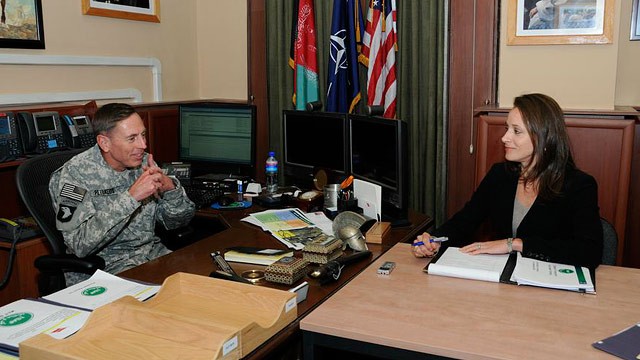
Some of these things have been brewing for some time.  But the revelations of an extramarital affair of retired Army General and now former CIA Director David Petreus, the revelation that Petraeus’ successor in Afghanistan Marine General John Allen sending allegedly flirtatious e-mails with the woman whose complaints of e-mail harassment triggered the investigation that exposed the Petraeus and his mistress-biographer Paula Broadwell.

General William “Kip” Ward, the former commander of US AFRICOM was demoted following an investigation that tied him to “unauthorized expenses” and “lavish travel” to the tune of 129,000 on an 11 day “business trip” that only three days were actual business.

Meanwhile in Fort Bragg North Carolina Army Brigadier General Jeffery Sinclair is going through the military version of a grand-jury investigation for sexual harassment and other such crimes against a number of his female staff officers. One alleges that Sinclair forced her to have oral sex and that he threatened to kill her or her family if she told anyone.

As a career officer myself, having spent the last 31 years in the Army, the Reserve Components of the Army and the Active Duty Navy I am disappointed but not surprised. I spent almost over half my career as a company grade officer or enlisted man and a fan of the late Colonel David Hackworth, who called he senior leaders of the military “perfumed princes.”

I think part of the problem is that many of us in the military have become more supporters of the preservation of the institution of the military than we are of the Constitution or the country. This is not surprising and in a sense I can understand this and probably at more than one point in my career been guilty of this. We are afraid of cuts to the military institution because it impacts us.

The roots of the problem go back to Vietnam but can probably be traced further back. The revolt of liberals and young people against the war, the military and the draft forced an end to the draft and the beginning of the All Volunteer force. This was a two edged sword. On the positive side it allowed the military to reform, reorganize and become the premier fighting force in the world. On the minus side of the equation was the fact that the military became a society within the society. We became insular and in many cases, including mine distrusted liberals and Democrats on any national security issue. Those old enough can trace that back to how either we, or our fathers were treated by liberals, Democrats and the media during the Vietnam war and its aftermath. Others, younger than me simply have bought the lie that liberals and Democrats are inherently anti-military. This has been particularly the case since the end of the Reagan administration and the George H.W. Bush led Gulf War victory over Iraq which cemented a narrative that the military was invincible.

Over the course of the next 20 years, the 8 years of Bill Clinton, the 8 years of George W. Bush and the first 4 years of Barak Obama the esteem for the military by the general population has continued to go up, even as that population is increasingly divorced from the need to serve in the military. The military at any given times in the past 20 years numbered less than 1% of the American population. This statistic is unlikely to go up in the near future with the reduction of the military to its pre-Iraq war strength and the increase in the population.
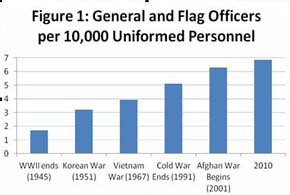
While the military has been engaged in a protracted war since the attacks of 9-11 and heavily involved in other wars or “operations other than war” since the Gulf War it has continued to shrink in relative terms to the US population. At the same time the military has become a lot more top-heavy in  numbers of General and Flag Officers since before the Second World War. The percentage of Generals and Flag officers added to the military since the beginning of the War on Terror has only increased, especially at the 3 and 4 star level.

There were in 2011 a total of 964 Generals and Admirals in the US military down slightly from 1017 at the end of the Cold War when there were more than 600,000 more personnel in the military. In the Second World War there were about 1.7 Generals or admirals per 10,000 personnel, the line today is about 6.8 per 10,000. See ( http://www.pogo.org/pogo-files/testimony/national-security/ns-wds-20110914.html )

Regardless of the administration in power the senior ranks of the military have increased not only in numbers but in influence in the government. Highly respected by the public and with probably more power than at any time in our history the senior leadership of the Armed Forces has become insular and isolated. The senior ranks of the military have become a culture within a culture within the culture. The ongoing revelations of the Petraeus affair and possible involvement of General Allen regarding two women, most notably Jill Kelley a socialite who has cultivated close relationships with military leaders assigned to CENTCOM in Tampa as well as the culture of the Washington Beltway shows the depth of that disconnect.

At any given time there are well under 10% of flag and general officers commanding troops in combat. The rest are assigned to stateside units and staffs of various combatant commands, staffs and the Pentagon. In my service the Navy in World War II there were about 130 ships for every Admiral, today there are almost as many admirals as ships. While the ranks of the military have shrunk the numbers of Generals and Admirals has risen and the culture surrounding them has become more opaque. Generals and Admirals have become celebrities and power players in society in their own right. In fact I would guess that only the Great German Imperial General Staff of the Kaiser Reich had such influence in society at large or political power.

That respect which these men and women have earned in the nation which is often earned due to the incredible sacrifice of ordinary Soldiers, Sailors, Marines and Airmen. Likewise many General and Flag officer have done time in combat zones as lower ranking commanders and staff officers and have spent many years deployed and away from their families in direct combat or in supporting roles.

In spite of this there is obviously something amiss in the senior ranks of the military. The record numbers of the relief for cause of many senior officers and commanders due to various infractions, many of a personal, ethical or sexual nature is cause for concern. The concern that I hear from young men and women serving in the military and read about almost every day is that there is a separate set of standards for senior ranks than junior ranks. I have been fortunate that commands that I have been a part over the past 15 years have sensitive to this and have worked hard to ensure that standards are enforced regardless of rank but that is not always the case. High profile stories of scandal, privilege on the part of some have tarnished the hard work of many stellar officers and NCOs and the great sacrifice of those killed, maimed or wounded in mind, body and spirit in our current war.

The indiscreet and sometimes criminal actions of General Petraeus, General Ward, General Sinclair and fairly substantial number of other commanders who have been relieved for cause is is something to be concerned about.

Major General J.F.C. Fuller who served in the Royal Tank Corps in the First World War wrote a small but timeless book called “Generalship: Its Diseases and Their Cure: A Study of the Personal Factors of Command” in 1932. Fuller was quite critical of a culture in the higher ranks which had led to unnecessary slaughter and suffering during the First World War. It is a book that is well worth the read in such a time as ours. As the scandal continued to develop this week I remembered it and decided to re-read it.

The problems that we face are not unique to us. Scandals that are rocking the US Military are not new, they have been faced by other militaries before. The issue today is that the modern media and communications age has made it nearly impossible for those involved in salacious behavior to have it covered up. The Petraeus scandal has unfolded in large part due to the electronic media which almost all of us are dependent on, even for routine communications that never would have seen the light of day had they not been recorded in the cyber records of Google, Facebook, Twitter, text messages, e-mail providers or other electronic communication systems. There might have been insinuations, innuendo and accusations but many would have never seen the light of day.

The indiscretions of these men actually opened a door for honest questions and examination of the health of the American civil-military institutions. The military institution and those that swear to support and defend the Constitution of the United States cannot become just another special interest group. Yes it is important to maintain national security and to take care of the troops when they return to civilian society. We cannot allow ourselves to become a state within a state or culture within a culture. The exaggerated numbers of General and Flag Officers compared to the overall numbers of personnel in the military can only be justified by the necessary bureaucratic and institutional power provided by the rank, not by mission or responsibility.

The power of the institution is dangerous when its leaders subtly shift the mission from the defense of the Constitution and the people to the defense and maintenance of the institution itself and their own power.

This is not simply about sex, improper relationships, assault or financial indiscretions of leaders, it points to broader and perhaps more dangerous threats to our system of government, but the unbridled temptation of power and influence that believes that comes with the unquestioned adulation of politicians, pundits and preachers, the Unholy Trinity. So even as the scandals rock the military it is not a bad thing. If we do not address them they will become millstones about our necks that will drag us under and expose the people and Constitution that we are sworn to defend to untold disaster.

Dwight D. Eisenhower reminded us so well about this danger in his farewell address in 1961:

“In the councils of government, we must guard against the acquisition of unwarranted influence, whether sought or unsought, by the military-industrial complex. The potential for the disastrous rise of misplaced power exists and will persist. We must never let the weight of this combination endanger our liberties or democratic processes.”

Peace

Padre Steve+

2 Comments

Filed under History, leadership, Military, national security

Veterans Day 2012: Remembering those Who Served and Those that Helped Me

I always become a bit more thoughtful around Veterans Day and Memorial Day.  I’ve been in the military for over 30 years now.  I enlisted in the National Guard while in college and entered Army ROTC back on August 25th 1981.  Since then it has been to quote Jerry Garcia “a long strange trip.”  During that trip I learned a lot from the veterans who I am blessed to have encountered on the way.

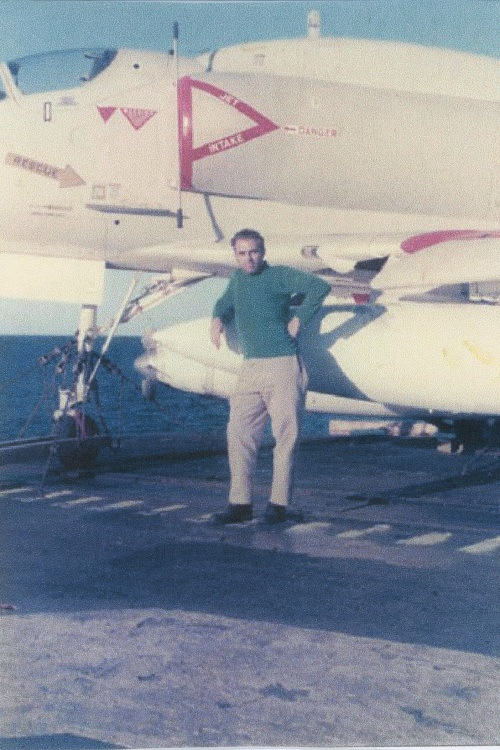
My Dad: Chief Petty Officer Carl Dundas aboard the USS Hancock CVA 19 circa 1971-72

I come from a Navy family. My dad served twenty years in the Navy.  Growing up in a Navy family in the 1960s and 1970s was an adventure for me and that Navy family that surrounded us then remained part of my family’s life long after.  My mom and dad remained in contact with friends that they served with or were stationed with, and now many of them are elderly and a good number have passed away.  Even so my mom, now a widow stays in regular contact with a number of her Navy wife “sisters.”

My dad retired in 1974 as a Chief Petty Officer and did time surrounded in the South Vietnamese city of An Loc when it was surrounded by the North Vietnamese for 80 days in 1972.  He didn’t talk about it much when he came back; in fact he came back different from the war.  He probably suffered from PTSD.  All the markers were there but we had no idea about it back then, after all he was in the Navy not the Army.  I had friends whose dad’s did not return fromVietnamand saw howVietnamveterans were treated by the country as a whole including some members of the Greatest Generation.  They were not welcomed home and were treated with scorn.  Instead of being depicted a Americans doing their best in a war that few supported they were demonized in the media and in the entertainment industry for many years afterwards.

My dad never made a big deal out of his service but he inspired me to pursue a career in the military by being a man of honor and integrity.

It was the early Navy family experience that shaped much of how I see the world and is why I place such great value on the contributions of veterans to our country and to me.  That was also my introduction to war; the numbers shown in the nightly news “body count” segment were flesh and blood human beings.

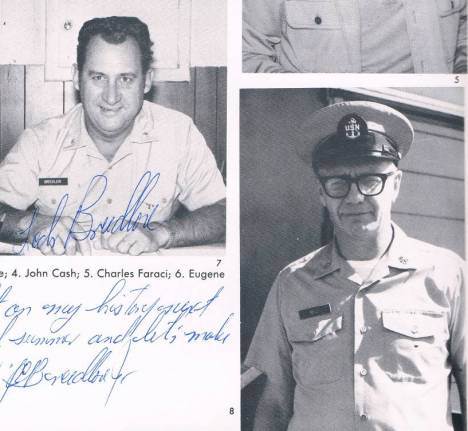
My second view of war came from the Veterans of Vietnam that I served with in the National Guard and the Army.  Some of these men served as teachers and mentors.  LCDR Jim Breedlove and Senior Chief John Ness at the Edison High School Naval Junior ROTC program were the first who helped me along.  Both have passed away but I will never forget them.  Commander Breedlove was someone that I would see every time that I went home as an adult. His sudden death the week before I returned from Iraqshook me.  I have a post dedicated to them at this link.  (In Memorium: Chief John Ness and LCDR Jim Breedlove USN )

Colonel Edgar Morrison was my first battalion commander.  He was the most highly decorated member of the California National Guard at that time and had served multiple tours inVietnam.  He encouraged me as a young specialist and officer cadet and showed a tremendous amount of care for his soldiers.  Staff Sergeant’s Buff Rambo and Mickey Yarro taught me the ropes as a forward observer and shared many of their Vietnam experiences. Buff had been a Marine dog handler on the DMZ and Mickey a Forward Observer.

The Senior NCOs that trained me while in the Army ROTC program at UCLA and Fort Lewis had a big impact. All were combat veterans that had served inVietnam.  Sergeant First Class Harry Zilkan was my training NCO at the UCLA Army ROTC program.  He was a Special Forces Medic with 7th Group inVietnam.  He still had part of a VC bayonet embedded in his foot.  He received my first salute as a newly commissioned Second Lieutenant as well as a Silver Dollar.  I understand that after the Army he became a fire fighter.  He had a massive heart attack on the scene of a fire and died a few years later from it.  Sergeant Major John Butler was our senior enlisted advisor at UCLA.  An infantryman he served with the 173rd Airborne inVietnam.  Sergeant First Class Harry Ball was my drill sergeant at the ROTC pre-commissioning camp at Fort Lewis Washington in 1982.  He was a veteran of the Special Forces and Rangers and served multiple tours inVietnam.  Though he only had me for a summer he was quite influential in my life, tearing me apart and then building me back up.  He was my version of Drill Sergeant Foley in An Officer and a Gentleman. Like Zack Mayo played by Richard Gere in the movie I can only say: Drill Sergeant “I will never forget you.”

As I progressed through my Army career I encountered others of this generation who also impacted my life. First among them was First Sergeant Jim Koenig who had been a Ranger in the Mekong Delta.  I was the First Sergeant that I would measure all others by.  Once during an ARTEP we were aggressed and all of a sudden he was back in the Delta. This man cared so much for his young soldiers in the 557th Medical Company.   He did so much for them and I’m sure that those who served with him can attest to this as well as me. Jim had a brick on his desk so that when he got pissed he could chew on it.   He was great.  He played guitar for the troops and had a song called “Jane Fonda, Jane Fonda You Communist Slut.” It was a classic.  He retired after he was selected to be a Command Sergeant Major because he valued his wife and family more than the promotion.  It hurt him to do this, but he put them first. Colonel Donald Johnson was the commander of the 68th Medical Group when I got to Germany in January 1984.  Colonel “J” as well all called him was one of the best leaders I have seen in 28 years in the military.  He knew everything about everything and his knowledge forced us all to learn and be better officers and NCOs.  On an inspection visit you could always find him dressed in coveralls and underneath a truck verifying the maintenance done on it.  He served a number ofVietnamtours.  He died of Multiple Myeloma and is buried at Arlington.  Chaplain (LTC) Rich Whaley who had served as a company commander in Vietnam on more than one occasion saved my young ass at the Army Chaplain School.  He remains a friend and is the Endorsing Agent for the Church of Jesus Christ of Latter Day Saints. As a Mormon he was one of the most “Christian” men that I have ever met.  I know some Christians who might have a hard time with that, but Rich demonstrated every trait of a Christian who loved God and his neighbor.

Me with Col Tom Almon and MG Frank Smoker USAF Ret

When I was the Installation Chaplain at Fort Indiantown Gap PA I was blessed to have some great veterans in my Chapel Parish.  Major General Frank Smoker flew 25 missions as a B-17 pilot over Germany during the height of the air war in Europe. He brought his wonderful wife Kate back from England with him and long after his active service was over he remained a vital part of the military community until his death in 2010.  Sergeant Henry Boyd was one of the 101st Airborne soldiers epitomized in Band of Brothers. He had a piece of shrapnel lodged next to his heart from the Battle of the Bulge until the day he died and was honored to conduct his funeral while stationed at Indiantown Gap. Colonel Walt Swank also served in Normandy.  Major Scotty Jenkes was an Air Force pilot in Vietnam flying close air support while Colonel Ray Hawthorne served several tours both in artillery units and as an adviser in 1972 and was with General Smoker a wonderful help to me as I applied to enter the Navy while CWO4 Charlie Kosko flew helicopters in Vietnam.  All these men made a deep impact on me and several contributed to my career in very tangible ways.

My life more recently has been impacted by others. Since coming into the Navy I have been blessed to serve with the Marines and Sailors of the 2nd Combat Engineer Battalion and Lieutenant Colonel T D Anderson, 1st Battalion 8thMarines and Lieutenant Colonel Desroches, 3rd Battalion 8th Marines and Colonel Lou Rachal and Headquarters Battalion 2nd Marine Division and Colonel, now Major General Richard Lake.   My friends of the veterans of the Battle of Hue City including General Peter Pace, Barney Barnes, Tony “Limey” Cartilage, Sergeant Major Thomas and so many others have become close over the years, especially after I did my time inIraq. They and all theVietnam vets, including the guys from the Vietnam Veterans of America like Ray and John who manned the beer stand behind the plate at HarborPark all mean a lot to me.  My friends at Marine Security Forces Colonel Mike Paulovich and Sergeant Major Kim Davis mean more than almost any people in the world.  We traveled the globe together visiting our Marines.  Both of these men are heroes to me as well as friends, Colonel Paulovich was able to administer the oath of office to me when I was promoted to Commander.

Finally there are my friends and brothers that I have served with at sea on USS HUE CITY during Operation Enduring Freedom and the advisers on the ground in Al Anbar mean more than anything to me. Perhaps the most important is my RP, RP2 Nelson Lebron who helped keep me safe and accompanied me all over the battlefield.  Nelson who has doneIraq three times,Afghanistan,Lebanon and the Balkans is a hero.  The men and women of Navy EOD who I served with from 2006-2008 have paid dearly in combating IEDs and other explosive devices used against us in Iraq and Afghanistan are heroes too.  There is no routine mission for EOD technicians.  Then there are the friends that I serve with in Navy Medicine, medical professionals who care for our Sailors, Marines, Soldiers and Airmen, family members and veterans at home and in the thick of the fighting in Afghanistan.

I give thanks for all them men that I mention in this post, especially my dad. For the countless others that are not mentioned by name please know that I thank God for all of you too.

I do hope that people will remember the Veterans that impacted their lives this and every day.  Some may have been the men and women that we served with, perhaps a parent, sibling or other relative, maybe a childhood friend, a teacher, coach or neighbor. As we pause for a moment this Friday let us honor those who gave their lives in the defense of liberty in all of the wars of our nation. They have earned it.

Peace

Padre Steve+


1 Comment

Filed under faith, History, iraq,afghanistan, Military, News and current events

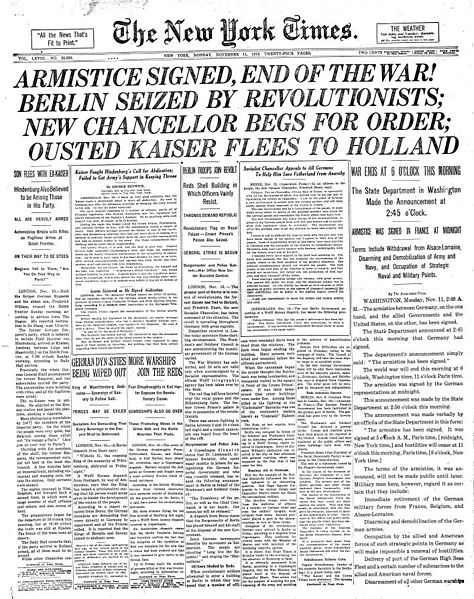
The 11th Hour of the 11th Day of the 11th Month: The Continuing Legacy of the Armistice of World War One

“Armistice Day is a constant reminder that we won a war and lost a peace.” General Omar Bradley

Germany was in pre-revolutionary turmoil. The High Command of the Army had told Kaiser Wilhelm II that military resistance was no longer possible and that the Army would not follow him back to Germany to put down the revolutionaries.

After four long years of war in which around 10 million soldiers and 7 million civilians were killed and another 20 million wounded the guns fell silent. In the end it was also the end of an era. It was then end of empires. The Russian Empire had collapsed in 1917 and been initially been replaced by a republic and then by a Soviet State and Czar Nicholas II and his family became victims of the revolutionary violence. The Austro-Hungarian Empire collapsed and in its place a hodge-podge of new states as well as liberated areas came into existence. The Ottoman Empire was carved up with its various parts being granted “independence” by the allies under the leadership of tribal leaders supported by the French or British.

Britain survived the war but not without crisis due to the massive losses in manpower and economic losses sustained during the war. France nearly fell in 1917 when the Army, demoralized by the unrelenting losses of years of brutal warfare mutinied. Belgium was devastated as was much of northern and eastern France.

Most surprisingly Imperial Germany collapsed. After knocking Russia out of the war in 1917 the Germans attempted a knockout punch against France. The offensive, code named Michael was successful at first and nearly succeeded, but in the end ran up against obstacles that could not be overcome, including the arrival of a massive and still fresh American Expeditionary Force. By the summer the tide had changed and the allies were on the offensive and threatening to break through the now vulnerable German lines. At home revolution was in the air, fed by the starvation of the German people and rising unrest units of the High Seas Fleet mutinied, as did units of the Army stationed in Germany proper. Workers and Soldiers Soviets took control of local and state governments.  Finally with everything on the line the Kaiser left Berlin to meet with his High Command at their headquarters in Spa, Belgium.

It was in Spa that the Kaiser found out that his reign was over. On November 9th General Wilhelm Groener, the Quartermaster General and the de-facto second in command of the Army told the Kaiser that the Army no longer supported him. It was a seminal moment. The Kaiser abdicated his throne and to prevent a communist takeover the leadership of the Social Democratic party proclaimed a republic that day. Hurried negotiations between the Socialists and the Army produced an alliance which averted the threatened Soviet takeover, but also doomed the new Weimar Republic. A hated state, it was blamed by monarchists and other conservatives for the German defeat and the humiliation of Versailles and hated by the communists, who viewed it as illegitimate.

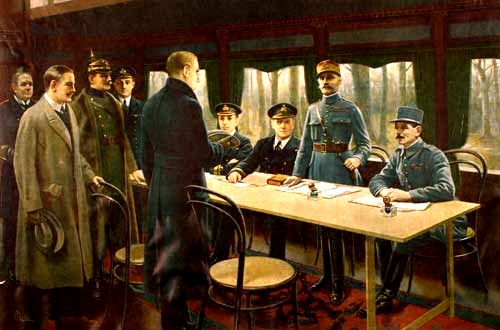
The Germans send a peace delegation to France which agreed to the armistice at about  5 AM on November 11th which stipulated that hostilities were to cease at 1100. The firing stopped and German troops withdrew to a nation totally unprepared for defeat. The allies maintained their naval blockade of German ports until the Treaty of Versailles was signed the following year, wracked by starvation, the great Influenza epidemic, economic collapse and civil war Germany never came to terms with its defeat. Eventually, a crippled Weimar Republic would fall in 1933. Adolf Hitler , a decorated veteran of the war in the trenches became Chancellor and and with an year the undisputed dictator of Germany in 1934.

During the interregnum between the wars the victors cobbled together states from the the former empires. Borders were drawn without respect to racial, tribal or religious divisions. The victors, particularly the British, French and Italians expanded their overseas empires at the expense of the former empires and the newly acquired lands.

The war that was to end all wars only brought about another even more bloody war that would end with the dropping of Atomic Bombs in Hiroshima and Nagasaki Japan in August 1945. Hitler, who led Germany to ruin died by his own hand in his bunker. The remnants of empires that had not collapsed in the immediate aftermath of the First World War did not survive the second. By the 1970s most of the former colonies of the great empires were independent, but not necessarily free. Tribal and religious conflicts as well as genocide followed in Africa and Asia. A “Cold War” between the former allies of the Second World War followed, only ending with the fall of the Berlin Wall on November 9th 1989, which was exactly 71 years to the day that Kaiser Wilhelm abdicated his throne.

Today, though it is nearly a century later the ramifications of that war, a war that was “to end all wars” are still with us. War and more revolution threatens in the Middle East even as former colonies wracked by tribal, religious or ethnic divisions within their artificially drawn boundaries continue to implode. Europe, buoyed by the hope of economic integration following the end of the Cold War is again being torn apart by ethnic and nationalist divisions as the Euro crisis deepened.

On November 11th 1918 few thought that the end of that war would still be felt today. After all, it was the “war to end all wars.”

Peace

Padre Steve+


1 Comment

Filed under History, Military, national security

Happy 238th Birthday Marines! The Proud Tradition of the United States Marine Corps Continues

Resolved, that two Battalions of Marines be raised consisting of one Colonel, two Lieutenant Colonels, two Majors & Officers as usual in other regiments, that they consist of an equal number of privates with other battalions; that particular care be taken that no persons be appointed to office or enlisted into said Battalions, but such as are good seamen, or so acquainted with maritime affairs as to be able to serve to advantage by sea, when required. That they be enlisted and commissioned for and during the present war with Great Britain and the colonies, unless dismissed by Congress. That they be distinguished by the names of the first & second battalions of American Marines, and that they be considered a part of the number, which the continental Army before Boston is ordered to consist of.
—Resolution of the Continental Congress on 10 November 1775

Today is the 238th birthday of the United States Marine Corps. The history of the Marine Corps is one of the most fascinating of any armed service in the world. Starting out as a tiny force attached to Navy ships and shipyards the Corps has gained prominence as one of the premier fighting forces ever assembled. Flexible and deployable anywhere in the world on short notice the Marine Corps has seen action in “every place and clime” and continues to serve around the world be it in battle in Afghanistan or aiding American citizens affected by Hurricane Sandy and the Nor’easter of this week. Marine Corps Reservists always active in their communities touch the lives of needy children through the Toys for Tots program.

The Shores of Tripoli

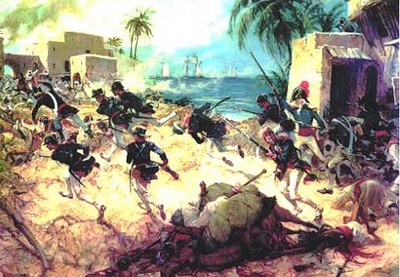
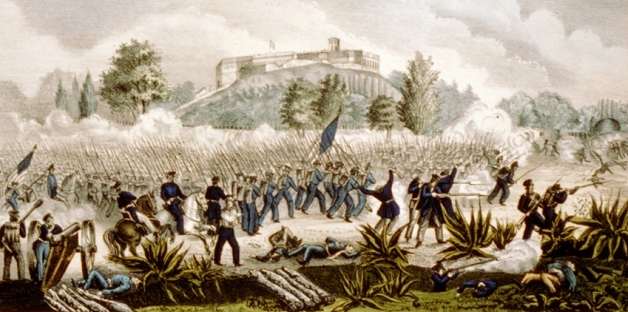
In 1775 a committee of the Continental Congress met at Philadelphia’s Tun Tavern to draft a resolution calling for two battalions of Marines able to fight for independence at sea and on shore.  The resolution was approved on November 10, 1775, officially forming the Continental Marines. The first order of business was to appoint Samuel Nicholas as the Commandant of the newly formed Marines. Robert Mullan the owner and proprietor of the said Tun Tavern became Nicholson’s first captain and recruiter. They began gathering support and were ready for action by early 1776.  They served throughout the War for Independence and like the Navy they were disbanded in April 1783 and reconstituted as the Marine Corps in 1798. The served on the ships of the Navy in the Quasi-war with France, against the Barbary Pirates where a small group of 8 Marines and 500 Arabs under Lieutenant Presley O’Bannon made a march of 500 miles across the Libyan Desert to lay siege Tripoli but only reached Derna. The action is immortalized in the Marine Hymn as well as the design of the Marine Officer’s “Mameluke” Sword. They served in the War of 1812, the Seminole Wars and in the Mexican-American War where in the storming of the on Chapultepec Palace they continued to build and enduring legacy. In the months leading up to the Civil War they played a key role at home and abroad.  In October 1859 Colonel Robert E. Lee led Marines from the Marine Barracks Washington DC to capture John Brown and his followers who had captured the Federal Armory at Harper’s Ferry.

Thd Halls of Montezuma 

The Corps would serve through the Civil War and on into the age of American Expansion serving in the Spanish American War in the Philippines, Puerto Rico and Cuba where they seized Guantanamo Bay at the battle of Cuzco Wells.  The would serve in China and be a key component of the international force that defended foreign diplomats during the Boxer Revolt as well as the international force that would relieve the diplomatic compound in Peking (Beijing).  In World War One the Marines stopped the German advance at Chateau Thierry and cemented their reputation as an elite fighting force at Belleau Wood where legend has it that the Germans nicknamed them Teufelhunden or Devil Dogs, a name that they Marines have appropriated with great aplomb.

The Teufelhunden at Belleau Wood 

During the inter-war years the Marines were quite active in the Caribbean and Asia and also developed amphibious tactics and doctrine that would be put to use in the Pacific Campaign.  During the war the Marines served in all theaters but won enduring fame at Wake Island, Guadalcanal, Tarawa, Iwo Jima, Okinawa and numerous other battles in the Pacific war. Marine Aviators flew in some the most desperate actions in the war to support the Navy and amphibious operations ashore.

Medal of Honor Winner Mitchell Paige at Bloody Ridge, Guadalcanal 

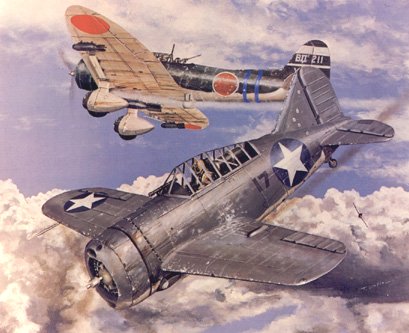
F2A Brewster Buffalo of VMF 221 at the Battle of Midway

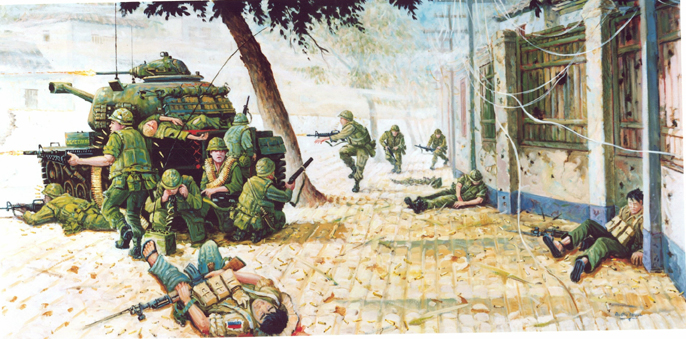
After the war the Truman Administration sought to eliminate the Marine Corps but the Corps was saved by the efforts of Americans across the country and Marine supporters in Congress.  That was a good thing because the Marines were instrumental in keeping the North Koreans from overrunning the South during the Korean War on the Pusan Perimeter, turned the tide at Inchon and helped decimate Communist Chinese forces at the Chosin Reservoir.  After Korea the Marines would serve around the World in the Caribbean and Lebanon and in Vietnam where at Da Nang Keh Sanh, Hue City, Con Thien fighting the North Vietnamese and their Viet Cong allies.  The Marines took the initiative to implement innovative counter insurgency measures such as the Combined Action Platoons which enjoyed tremendous success until they were shut down by the Army high command.  These lessons would serve the Marines well in the new millennium during the Anbar Awakening in Iraq which changed the course of that insurgency and war.

The Marines would again be involved around the World after Vietnam serving in the Cold War, in Lebanon and the First Gulf War which was followed by actions in Somalia, the Balkans and Haiti. After the attacks of September 11th 2001 the Marines were among the first into Afghanistan helping to drive the Taliban from power. In the Iraq Campaign the Marines had a leading role both in the invasion and in the campaign in Al Anbar Province.  After their withdraw from Iraq the Marines became a central player in Afghanistan where today they are engaged around Khandahar and in Helmand Province.

The Battle of Hue City

The Marines are elite among world military organizations and continue to “fight our nations battles on the air and land and sea.” The Corps under General John LeJeune institutionalized the celebration of the Marine Corps Birthday and their establishment at Tun Tavern. General LeJeune issued this order which is still read at every Marine Corps Birthday Ball or observance:

MARINE CORPS ORDER No. 47 (Series 1921)
HEADQUARTERS
U.S. MARINE CORPS Washington, November 1, 1921

The following will be read to the command on the 10th of November, 1921, and hereafter on the 10th of November of every year. Should the order not be received by the 10th of November, 1921, it will be read upon receipt.

On November 10, 1775, a Corps of Marines was created by a resolution of Continental Congress. Since that date many thousand men have borne the name “Marine”. In memory of them it is fitting that we who are Marines should commemorate the birthday of our corps by calling to mind the glories of its long and illustrious history.

The record of our corps is one which will bear comparison with that of the most famous military organizations in the world’s history. During 90 of the 146 years of its existence the Marine Corps has been in action against the Nation’s foes. From the Battle of Trenton to the Argonne, Marines have won foremost honors in war, and in the long eras of tranquility at home, generation after generation of Marines have grown gray in war in both hemispheres and in every corner of the seven seas, that our country and its citizens might enjoy peace and security.

In every battle and skirmish since the birth of our corps, Marines have acquitted themselves with the greatest distinction, winning new honors on each occasion until the term “Marine” has come to signify all that is highest in military efficiency and soldierly virtue.

This high name of distinction and soldierly repute we who are Marines today have received from those who preceded us in the corps. With it we have also received from them the eternal spirit which has animated our corps from generation to generation and has been the distinguishing mark of the Marines in every age. So long as that spirit continues to flourish Marines will be found equal to every emergency in the future as they have been in the past, and the men of our Nation will regard us as worthy successors to the long line of illustrious men who have served as “Soldiers of the Sea” since the founding of the Corps.

JOHN A. LEJEUNE,
Major General
Commandant

I have had the privilege of serving with the Marines in peace and war and the most memorable Marine Corps Birthday celebrations for me were in Ramadi with the Marine advisors to the Iraqi 7th Division and with the Marine Security Force Company at Guantanamo Bay Cuba. The highlight of my career was serving with the Marines in Iraq and I wear my Iraq Campaign Medal with pride.  The Marines have helped my professional development as an office through the Amphibious Warfare Course, Command and Staff College and the Fleet Marine Force Officer Qualification. I count my Marines as some of my most enduring friends.

I have provide a link to a great tribute to the Marines, the official Marine Corps Birthday Message for 2013.

http://www.military.com/video/forces/marine-corps/2013-marine-corps-birthday-message/2816787896001/

Happy Birthday Marines. Thank you for all you do.

Semper Fidelis!

Padre Steve+

2 Comments

Filed under History, Military

Remember those that Came in Peace: BLT 1/8 and the Bombing of the Beirut Barracks

In the early hours of October 23rd 1983 I was awake. I could not sleep. I was a new Army 2nd Lieutenant attending the Junior Officer Maintenance Course at Ft Knox Kentucky following the completion of the Medical Service Corps Officer Basic Course enroute to my first assignment in Germany.


I had gone out with friends earlier in the evening. Since Ft Knox was located in a dry county we made a trip up to a restaurant in Louisville followed by a trip to a bar and dance club for drinks. All of us that went were either newly married or engaged and none of our wives or soon to be wives were there we were on good behavior. After a dinner and a few drinks we went back to Knox, each to our own quarters.


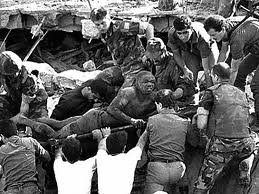
It was late and since I couldn’t get to sleep I turned on CNN, which at the time was a rather new thing in news. I think that it was about 2AM that CNN broke in with the news that the Marine Barracks had been bombed. As the day developed the extent of the catastrophe became apparent, the barracks was destroyed and 241 Marines, Sailors and Soldiers were dead, with another 60 wounded. It was the worst single day loss suffered by the Marines since the Battle of Iwo Jima.

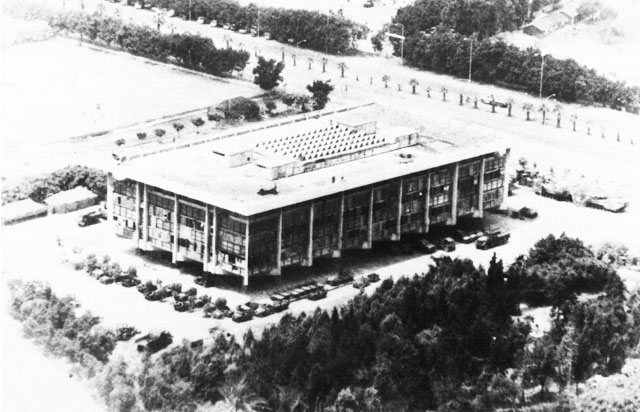
Battalion Landing Team 1/8, built around the 1st Battalion 8th Marines had been assigned as part of the UN Peacekeeping Force following the Israeli invasion of Lebanon. The BLT was billeted at the Beirut International Airport and at 0620 a truck driven by a suicide bomber containing explosives equivalent of over 12,000 lbs of explosives blew it up in the lobby of the building. Rules of Engagement prevented the few sentries on duty from engaging the vehicle until it had already crashed through the barbed wire and was lodged in the building.  The explosion blew out the support structure of the building and caused it to pancake upon itself trapping those inside. About 2 minutes after the attack French Paratroopers of the 1st Parachute Chasseur Regiment were hit by a truck bomb at their barracks about 6 km away. 58 French Paras were killed and many more wounded in an attack that caused more casualties in a single day since the French campaign in Algeria.

In the days and weeks following the attack a series of minor American and French airstrikes and Naval gunfire attacks were launched with little effect. President Reagan withdrew the Marines and the UN and French also withdrew their force. The attacks and the limited response gave the Iranian backed Hezbollah militia new swagger and respect. Hezbollah is now one of the most deadly opponents of the United States, Israel and the West.

Fast forward. In January 2000 I am a relatively new Navy Chaplain and get no notice orders transferring me from the Second Combat Engineer Battalion of 2nd Marine Division at Camp LeJeune NC to the 1st Battalion 8th Marine Regiment as a “relief pitcher” when their chaplain was removed from his duties. On a wall of the HQ building at Camp LeJeune was a mural drawn by Marines which honored their predecessors who died in the bombing. In the 5 months that I was with the battalion before going on to  another battalion as a “relief pitcher” I got to appreciate the sacrifice of the Marines, Navy Hospital Corpsmen and 6 attached Army Soldiers. Today I serve at the Naval Hospital Camp LeJeune. The Marines of the Fleet Marine Force are part of who I am. I am proud to have served with both the 1st Battalion and 3rd Battalion of the 8th Marine Regiment.

At Camp LeJeune there is a memorial every year at the Beirut Memorial. Many veterans , survivors of the attacks and relatives of the fallen attend. I was not able to attend this year but remember attending it in 2001, nit long after the 9-11 attacks. There are 241 trees , one for each of the fallen planted along Carolina Highway 24 outside of Camp LeJeune.

The Beirut expedition showed the limitations of military power as well as the wisdom of President Reagan and Secretary of Defense Casper Weinburger not to get even more involved in another country’s civil war. The decision to withdraw was prudent, especially since the Cold War was reaching its apex and the Soviets were deeply involved in Afghanistan and the Iran of Ayatollah Khomeini was becoming more bellicose. The sad thing is that we did not realize those limits before the bombing nor had given the commanders on the ground rules of engagement that might have prevented the bombing. Instead the military chain of command was blamed for the loss and the politicians that orchestrated the intervention got off scott free.

Let us not forget the sacrifice of those 241 American Marines, Sailors and Soldiers and the 58 French troops who died in those attacks 29 years ago.

Peace

Padre Steve+
4 Comments

Filed under Foreign Policy, History, middle east, Military, national security

I Left My Heart in Al Anbar…Visions of Iraq 5 Years Later

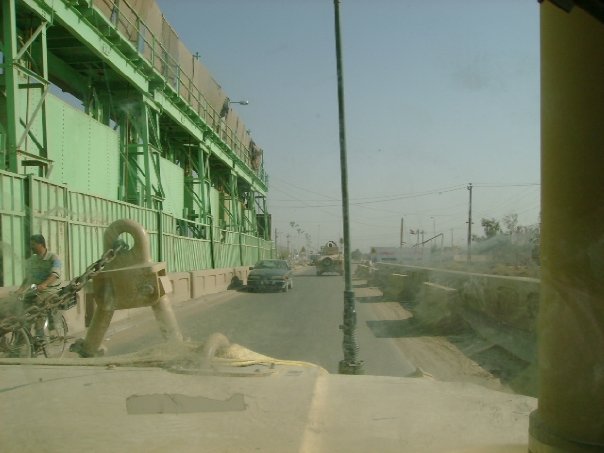
I left Iraq in early 2008. My experience of Iraq was with various teams of advisors in Al Anbar Province. I travelled thousands of miles hot cramped HUMMVs and in tightly packed aircraft to get to these far flung teams of 12-30 Americans in places from the Syrian border at Al Waleed, Al Qaim and various COPs on the border, back to Fallujah and almost everywhere in between, occasionally taking fire and most of the time isolated, and sometimes alone and unarmed except for the presence of my Religious Programs Specialist and Bodyguard, RP1 Nelson Lebron.

For those unaware of geography Anbar Province is about the same size in area as the State of North Carolina. The Euphrates River runs through it, a shimmering blue swath bordered by a narrow green valley that cuts through an endless sea of yellow brown sand speckled with small towns and a few larger sized cities. The Provincial Capital, Ar Ramadi is in the east central part of the province about 65 miles west of Baghdad. It is a city of about 440,000 people at the time of the US invasion.

In 2007 Ramadi and Al Anbar Province was the turning point for the United States in the Iraq War. The Sunni tribes of the province decided that their interests were better served by cooperating with the United States Forces rather than continue to endure the terrorism of foreign Al Qaida members.

It was to Al Anbar Province that I deployed in 2007. I was assigned to the Iraq Assistance Group with duties to serve the advisor teams assigned to the Iraqi Army, Border Forces, Police, Highway Patrol and Port of Entry Police. While there I also served members of Provincial Reconstruction Teams.

I have been thinking a lot about Iraq lately as I have been having to recount my experiences as I get ready for EMDR and Biofeedback therapy to treat my PTSD. I have been surprised by how strong the memories are of my time there.

Today I was talking with my therapist and the discussion came to one of my experiences at a base on the banks of the Euphrates in Ramadi. At least part of it was known as COP Snake Pit. It is a base included a Joint Security Operations Center run by the US Army, a Police training facility an Iraqi Military and Police forces, an Advisor of Marines woking with the Iraqi Army 7th Division and an Iraqi Detention Facility. Surrounded by Hesco Barriers and walls not far from a number of high speed avenues of approach an easy target for any attacker. In fact since the United States left Iraq the detention facility and Operations center have been attacked by Al Qaida linked insurgents.

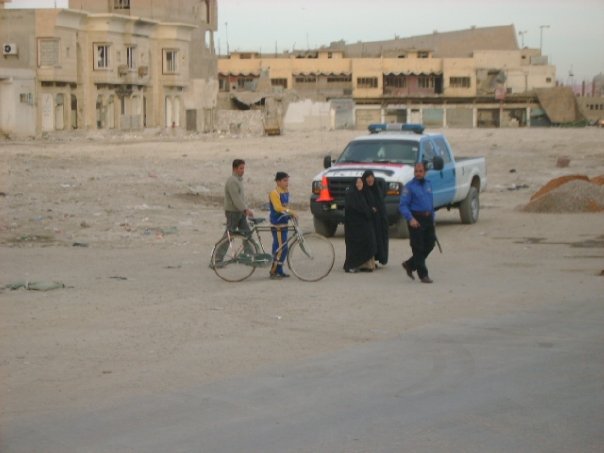
When we visited there Iraqi forces were in charge of the perimeter security while a small number of Americans worked at three isolated areas within the base. For me the memories of walking through the prison as well as getting to address the first class of female Iraqi Police cadets in Anbar.

The memories of that visit are still etched deep in my mind. When I close my eyes I can see the inside of that prison as well as the faces of those brave Iraqi women who risked their lives and those of their families to become Police officers in war torn Ramadi. As I talked with my therapist those memories were so strong. I talked about things today that I have not shared with anyone and which are still hard to write about. Eventually I will, but not tonight, it will be hard enough to sleep as it is.

For most people the Iraq war is not even a memory. Most Americans are untouched by war and cannot imagine what either our troops or the Iraqi people went through and it is hard to explain.

Since I am all verklempt right now I think I will stop for the night. But as I told my therapist today to paraphrase Tony Bennett’s immortal song I Left my Heart in San Francisco I left my at least part of my heart in Al Anbar.

Peace

Padre Steve+
1 Comment

Filed under iraq,afghanistan, middle east, Military, PTSD, Tour in Iraq

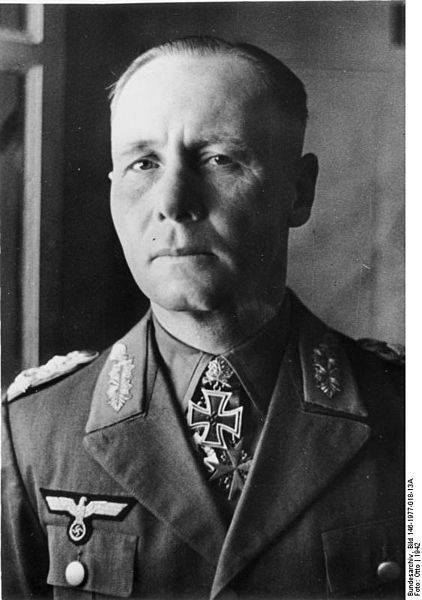
The Murder of Field Marshal Erwin Rommel

It was 68 years ago in Ulm Germany that a car pulled up to the residence of Field Marshal Erwin Rommel. In the car was the driver and two Generals dispatched by Hitler.  Rommel was recuperating following being severely wounded in an air attack in Normandy on July 17th 1944.

Rommel was never a Nazi but like many Germans he believed Hitler’s promises and propaganda. As a division commander in France and as the commander of the troops sent to bail out Mussolini’s failed African adventure Rommel gained fame, earned rapid promotion and was a poster-child for Goebels’ propaganda machine. His fame also earned the resentment of many fellow officers who since he was not an officer of the General Staff regarded him with jealous envy and distain.

That was until he discovered the reality of Hitler’s promises as the troops of the Afrika Corps found themselves subjected to constant privation from lack of supply, air support and reinforcements. As commander of the Afrika Corps and the Panzer Armee Arfika he and his troops achieved amazing success against an enemy that was always better supplied and equipped and which had air and sea superiority. Battling the British as well as the political machinations of Mussolini and Germany’s Italian Allies as well as opponents in the German government such as Hermann Goering, Rommel saw his troops crushed under the press of the British as well as the Americans who landed in French North Africa. Eventually, sick and worn out he was sent back to Germany.

His honest assessments of the chances of the Germans winning the war which he spoke candidly to Hitler and the High Command made him persona non grata in Berlin and Berchtesgaden. In the time before he was posted to France in late 1943 he became a part of the plot to end the war and overthrow Hitler. Rommel’s Chief of Staff at OB West General Hans Speidel was a key man in the conspiracy and Rommel had contacts with a number of key conspirators. He believed that the war was lost unless his forces could repel the coming Allied invasion on the beaches. His recommendations for the deployment of Panzer Divisions where they could immediately counterattack were not taken. He was given command but not control of many important units which Hitler alone could release.

When the invasion came Rommel was away and sped back to Normandy. He fought a desperate battle against an Allied force. His outnumbered forces under constant assault from the land, sea and air received paltry reinforcements compared to the Allies. German troops inflicted many local defeats and exacted a heavy price in allied blood in Normandy. Many American infantry regiments suffered 100% casualties but remained in action because of a continuous stream of replacements. Rommel urged a withdraw before the allies broke through his front and found that he was now considered a defeatist.

He was wounded just days before the attempt on Hitler’s life which Hitler survived and exacted a terrible revenge on anyone connected with the plot. Show trials and public hangings of officers who had served valiantly at the front were common.Thousands were killed and thousands more imprisoned.

Eventually Rommel was identified with the plotters. He was recommended by the “Court of Military Honor” to be expelled from the military and tried by the “People’s Court” of Judge Roland Freisler. Because of his fame and popularity in Germany Hitler was decided to offer Rommel the choice of being tried by the People’s Court that was busily executing anyone suspected of disloyalty or committing suicide and ensuring his family’s safety. German military heroes were hauled before this court and humiliated by Freisler before they were sent to their deaths.

Rommel suspected that he would be identified and killed and told that to his friends and family leading up to the day that the staff car carrying Generals Wilhelm Burgorf and Ernst Maisel from OKW with the ultimatum. They met with Rommel for a short time before giving him the opportunity to say goodbye to his family. Rommel told them of his choice and left his home for the last time. 15 minutes later the Generals called his wife to say that he had died of a heart attack. Rommel was given a state funeral and the German people were lied to about his cause of his death.

Rommel was 52 when he died, the same age that I am now. I find in the story of Rommel some commonality in my own life. Before Rommel went to Africa he believed that Germany would win the war, during his command there he discovered that what he believed was lies and that Hitler had little regard for him or his troops. Before I went to Iraq in 2007 I believed much of the political propaganda about that war. I have written on this site numerous articles critical of that war and our current war in Afghanistan. Like Rommel I feel that our troops have been and are being sacrificed in a war that we have no chance of winning. We are saddled with an Afghan ally who we put in office, President Karzai who makes Mussolini look like a winner and does nothing to help our war effort, condemning our troops at every opportunity even as his own police and soldiers kill ours. Our troops do valiant and often heroic work and in spite of the terrible situation that could get worse of more war breaks out in Iran or Syria.

Peace

Padre Steve+

4 Comments

Filed under History, iraq,afghanistan, Military, Tour in Iraq, world war two in europe

237 Years of Service: Happy Birthday US Navy!

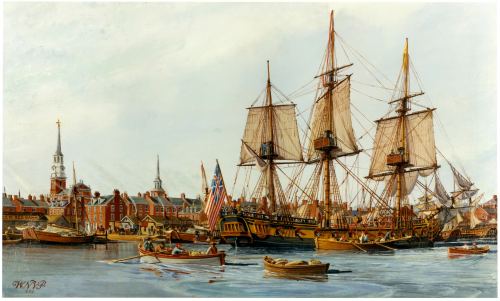
Raising the Flag Aboard the USS Alfred 

“It follows than as certain as that night succeeds the day, that without a decisive naval force we can do nothing definitive, and with it, everything honorable and glorious.” George Washington 15 November 1781 to the Marquis de Lafayette

On October 13th 1775 the Continental Congress passed legislation to establish a Navy for a country that did not yet exist.  It was the first was the first in a long line of legislative actions taken by it and subsequent Congresses that helped define the future of American sea power.

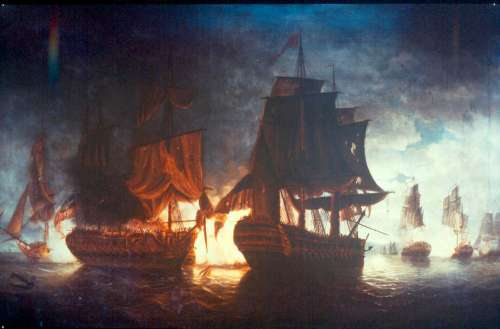
The Battle of Flamborough Head

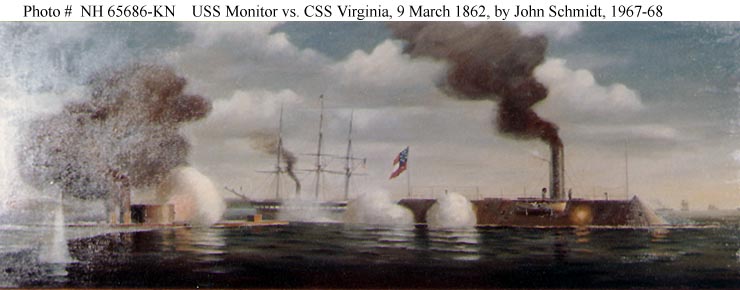
The legislation was the beginning of a proud service that the intrepid founders of our nation could have ever imagined.  Less than two months after it was signed on December 3rd 1775 Lieutenant John Paul Jones raised the Grand Union Flag over the new fleet flagship the Alfred. The fleet set sail and raided the British colony at Nassau in the Bahamas capturing valuable cannon and other military stores.  It was the first amphibious operation ever conducted by the Navy and Marines.

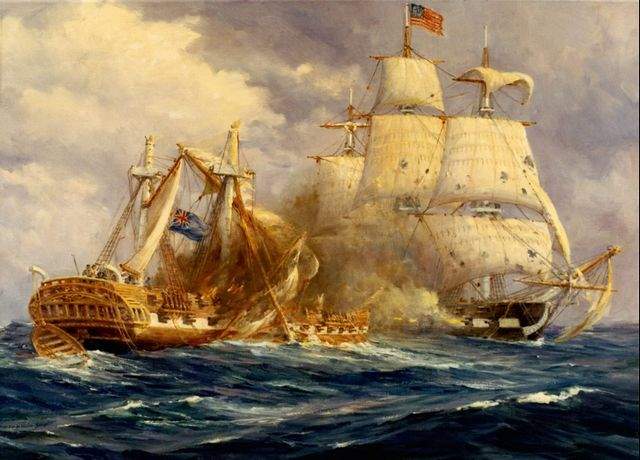
USS Constitution and HMS Guerriere

Jones received the first recognition of the American flag shortly after France recognized the new United States.  In command of the Sloop of War Ranger his ship received a nine-gun salute from the French flagship at Quiberon Bay.

Oliver Hazard Perry at the Battle of Lake Erie

Jones would go on to to greater glory when he in command of the Bonhomme Richard defeated the HMS Serapis at the Battle of Flamborough Head. During the battle when all seemed lost and the colors had been shot away he replied to a British question if he had surrendered replied “I have not yet begun to fight!”

Admiral David Farragut at the Battle of Mobile Bay

When the war ended very few of these ships remained most having been destroyed or captured during the war. But these few ships and the brave Sailors and Marines who manned them blazed a trail which generations of future sailors would build on.  The Navy has served the nation and the world as a “Global Force for Good” for 237 years.

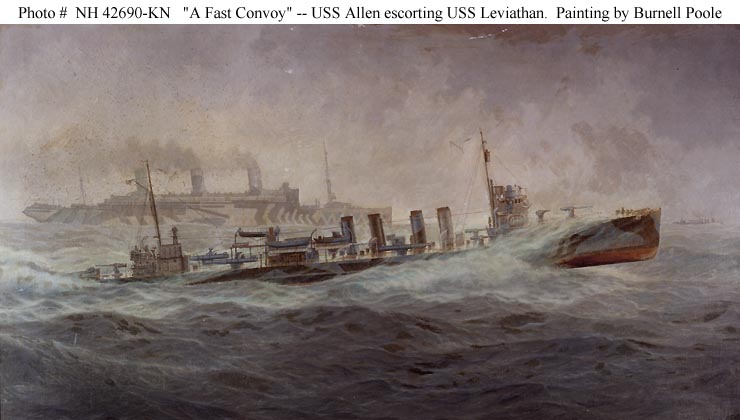
World War One: Convoy Escort USS Allen

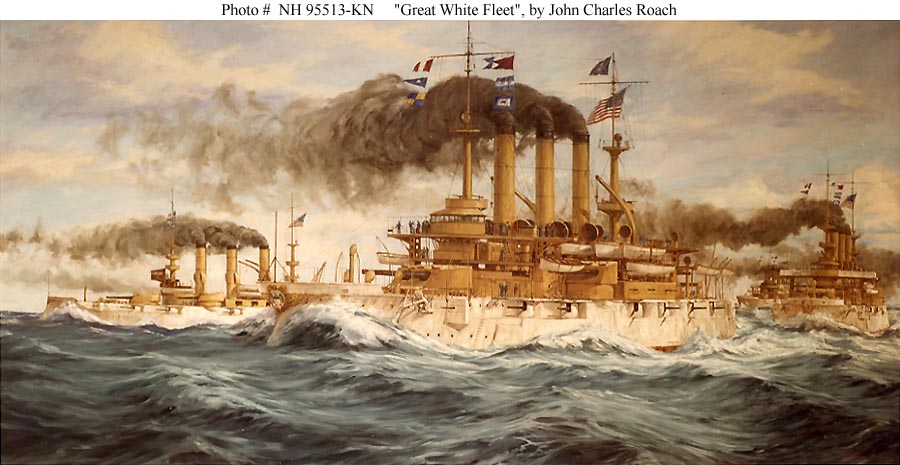
The Great White Fleet

This force for good is on duty today and those that have served over the past 237 years are part of a tradition that is more than honorable. President John F. Kennedy who served as a PT Boat Commander in World War Two remarked:

“I can imagine no more rewarding a career. And any man who may be asked in this century what he did to make his life worthwhile, I think can respond with a good deal of pride and satisfaction: ‘I served in the United States Navy.'”

The Battle of Midway

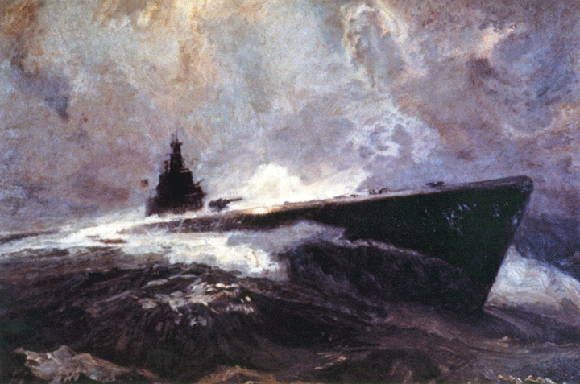
USS Growler

Tonight as you go to bed and sleep soundly after eating well and spending time with family, friends or enjoying some form of entertainment remember those of our Navy who serve at sea at the ready in the Straits of Hormuz, in the mountains and deserts of Afghanistan, the desolation of the Horn of Africa and around the world defending our interests, caring for our military personnel and their families and deploying to serve in harm’s way and in areas of devastation.  They are America’s “Global Force for Good.”  They are my shipmates they are your fellow citizens.  They are the United States Navy.

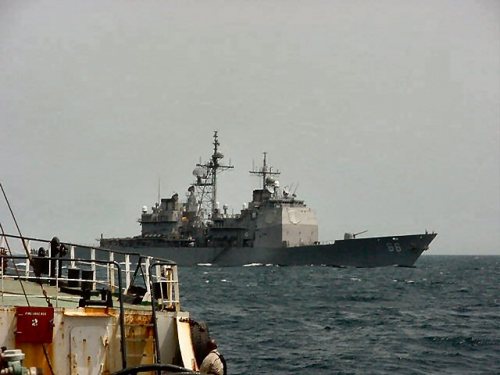
USS Hue City CG-66

Happy Birthday Shipmates.

Peace

Padre Steve+
1 Comment

Filed under History, Military, Navy Ships, US Navy

The Battle of Cape Esperance: October 11-12 1942

Naval battles between U.S. Navy and Imperial Japanese Navy surface forces around Guadalcanal in 1942 were almost always brief and bloody. The number of ships sunk in the area around Guadalcanal, Tulagi and Savo Island led to the area being nicknamed “Iron Bottom Sound.”

The battles around Guadalcanal occurred in a time of technical transition as radar became better at detecting ships and fire direction systems advanced. By October 1942 the U.S. Marines battling on Guadalcanal were fighting an enemy growing in numbers and felt the effects of the the predatory Japanese surface raiders that routinely bombarded their positions and endangered U.S. resupply efforts.

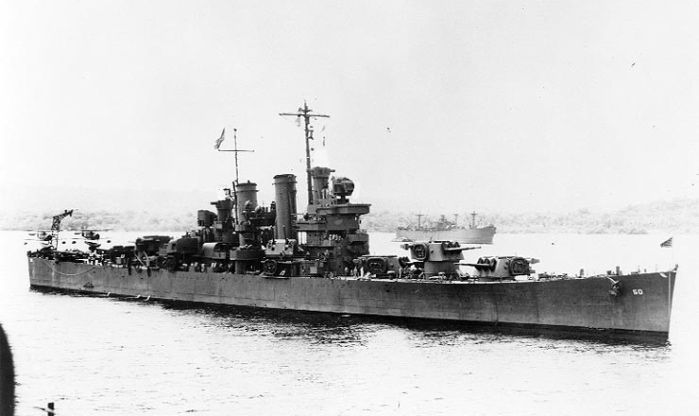
USS Helena

Since the Marine, Navy and Army Air Force Squadrons based on Guadalcanal maintained air superiority in the nearby waters during the day the Japanese were limited to night surface operations against the island, operations involving the reinforcement and resupply of Japanese Forces on the island as well as offensive operations to aid the land forces by attempting to make the U.S. airstrip, Henderson Field inoperable.

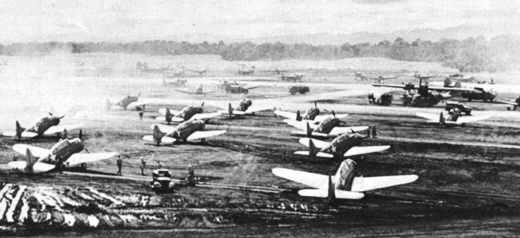
Henderson Field

The first of their major operations was in early August when a Japanese cruiser destroyer force ravaged the U.S. cruiser forces off Savo Island sinking 3 American and one Australian Heavy cruiser while damaging another. The Battle was a disaster for the U.S. forces and led to the early withdraw of ships of the invasion force before many could finish unloading the equipment and supplies that were critical to the operation.

The Tokyo Express Route along the Slot

Japanese resupply and reinforcement operations were so frequent that the Japanese forces were nicknamed the Tokyo Express by the Americans. Knowing that the Marines who had been in bitter combat with the Japanese needed reinforcements the U.S. sent a convoy to land the 164th Infantry Regiment of the Americal Division on October 13th and sent a surface task force TF-64 composed of the Cruisers USS San Francisco, USS Boise, USS Salt Lake City and USS Helena and 5 destroyers under the command of Rear Admiral Norman Scott to protect it from any Japanese surface threats.

IJN Heavy Cruiser Aoba after the battle

The U.S. moves coincided with a Japanese reinforcement effort which was covered by a force of three heavy cruisers, the Aoba, Furutuka and Kinugasa and two destroyers under the command of Rear Admiral Arimoto Goto. The Japanese cruisers were to bombard Henderson Field as the Japanese were not expecting any American surface forces to oppose their effort.

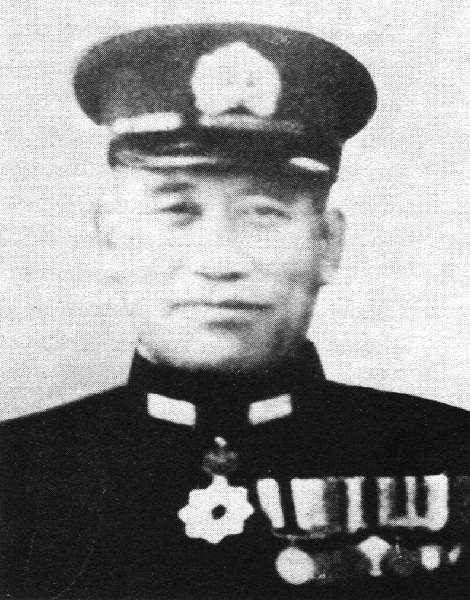
Rear Admiral Arimoto Goto

The Japanese were detected by aerial reconnaissance on the afternoon of the 10th when they were about 200 miles from Guadalcanal. Scott, whose forces lacked experience in night surface combat made a simple plan to “cross the T” of the enemy force in a single line formation with three destroyers in the van, the cruisers in the center and two destroyers in the rear.

Rear Admiral Norman Scott

U.S. floatplanes from the cruisers detected the Japanese at 2300 hours and at 2322 the radar of the USS Helena picked up the Japanese force at a range of about 27,000 yards. However misunderstandings of Scott’s orders broke his formation and put the van destroyers out of position in the poor visibility of the moonless night caused Scott to believe that the radar contacts were his own destroyers.

The Japanese still did not realize that an American force was near them and continued on. At 2345 the ships were only about 5,000 yards apart when Helena radioed asking permission to fire. The message was received by Scott who did not grant permission but acknowledged receipt of the message. Mistaking this as permission Helena, followed by the other cruisers opened a devastating fire on the Japanese force. Goto’s lookouts had sight the Americans at 2343 but assumed that they were friendly. The result was heavy damage to the Japanese flagship Aoba and left Goto mortally wounded.

IJN Heavy Cruiser Furutaka

Scott. taken by surprise ordered ceasefire at 2347 thinking that he was shooting at his own destroyers, but resumed fire at 2351. At 2349 Furutaka was heavily damaged by American fire and at 2358 was hit by a torpedo fired by the destroyer Buchanan. The Japanese destroyer Fubuki was mortally wounded about the same time and began to sink. The U.S. destroyers Duncan and Farenholt were both damaged in the crossfire with Duncan so badly damaged that she would be abandoned and sunk.

USS Duncan

The American cruisers turned on their searchlights which provided the last Japanese cruiser, Kinugasa the opportunity to hit them hard. Kinugasa heavily damaged Boise forcing her out of the battle. As Boise sheared away from the action Kinugasa and Salt Lake City exchanged fire hitting each other before the Japanese cruiser broke off the action.

The commander of the Japanese reinforcement group, his mission completed dispatched destroyers to assist Goto’s force at it withdrew and rescue survivors. However these ships were caught by U.S. aircraft from Henderson Field as the light of the dawn lit the sky. The destroyers Murakumo and Natsugumo were heavily damaged and scuttled.

On the 13th the American reinforcements arrived, as did Japanese reinforcements that night. On the night the 13th Japanese battleships Kongo and Haruna almost destroyed Henderson Field. However the resilient Marines kept the airfield operational and the Marines of the 1st Marine Division and the nearly arrived soldiers of the 164th Regiment held off a major Japanese assault from 23-26 October, known as the Battle of Henderson Field or Bloody Ridge.

Task Force 64 lost one destroyer sunk and two cruisers damaged while the Japanese lost one cruiser and three destroyers sunk and two cruisers damaged, with Aoba taking severe damage from nearly 40 6” and 8” shells that knocked her out of the war for four months. The battle had lasted less than 50 minutes from the time Helena picked up the Japanese force on her radar.

The battle was a tactical victory for the U.S. Navy but the lessons of the battle about the power of Japanese torpedoes and effectiveness in night combat were not learned causing other U.S. task forces to have to learn the hard way in subsequent engagements. Rear Admiral Scott would not long survive his victory being killed in action aboard the USS Atlanta during the Naval Battle of Guadalcanal just a month later.

Peace

Padre Steve+
6 Comments

Filed under History, Military, Navy Ships, US Navy, world war two in the pacific