Category Archives: ministry

“You Don’t Want to Be That Sick” Pastors Who Ignore

themiddle

Back when I was doing my Clinical Pastoral Education Residency at Parkland Memorial Hospital I was astounded to hear my pastor make a comment which I think was one of the most heartless that I have ever heard said from a pulpit.  The church was a large and trendy Evangelical-Charismatic Church which I had attended throughout seminary and had ordained my in October 1991.  The Pastor was recounting an incident where one of our members had been critically ill in hospital and had not been visited by him.  After the parishioner was released from hospital he asked the pastor: “How sick do I have to be for you to visit me in the hospital?”  The pastor told us his response: “Sir, you don’t want to be that sick.”

The congregation laughed at the pastor’s story and he went on to talk about how he and other senior pastors should not be doing that kind of work because it “distracted them from bigger Kingdom tasks.”  You see according to the pastor the care of sick parishioners did not contribute to the “growth” of the church and thus was a “distraction and better left to others.”

The comment struck a raw nerve now that I was dealing with the suffering and death every day of people who had been abandoned by the churches and pastors.  I lost all respect for him as a man and pastor during that sermon.  My philosophy of religion professor at Southwestern Baptist Seminary, Dr. Yandall Woodfin said: “You have not done Christian theology until you have dealt with suffering and death.”

Unfortunately my old pastor, and many more like had stopped doing Christian theology in order to be an “Apostle” and CEO.  He was “growing” the church and managing programs, but had for the most part stopped caring as in being a pastoral care giver.

Now this pastor is not alone and nor is the issue of the lack of care confined to Evangelical or Charismatic churches. The trend has has found its way across the denominational spectrum.  Sometimes this is by design as is the case of the Mega-churches.

Pastors of mega-churches are for all practical purposes CEOs of large organizations and have a multiplicity of specialized staff, but often which do little for pastoral care. Having attended a number of these churches, and worked for a prominent television evangelist I can sadly report seeing this first hand many times.

Sometimes this problem it is by default in cases such as the Roman Catholic Church.  In that church the ever worsening shortage of Priests is forcing the closure of smaller parishes and the increase of large parishes with a corresponding decrease in what Priests can do for their people.   Even very good Priests cannot keep pace with the demand of both Sacramental needs as well as pastoral care.

No matter if it is by design or default the result is similar.  The least, the lost and the lonely those “lambs” that Jesus talks about who need care and feeding are shunted aside.  In one case, that of the Catholic Church it is primarily a lack of Priests, Deacons and Sisters to provide this care, although sadly there are Catholic priests who do not see themselves as care givers.

The “by design” issue is more far more troubling as the focus of the church is growth, sustaining numbers, programs and buildings.  This requires that pastors spend their time with members who can supply the vast financial need that those plans require.  I have seen this in numerous congregations across the spectrum, which sometimes as was the case at a church that I attended in Florida results in a financial meltdown and collapse of the congregation, many of whom gave up and went elsewhere when the extent of the scandal became known.  Likewise the ripple effects that this caused in the denomination were like a Tsunami, it was disastrous and the church is still in recovery mode.  Going back to my pastor back when I was in residency I got the feeling that had he been the shepherd in the Parable of the lost sheep (Luke 15) that he would have let it go as hunting for it might have distracted him from the others.

When I was in seminary there were quite a number of my fellow students who chafed about having to take courses on pastoral care.  I remember friends and fellow students complaining that what they needed were more “practical courses” such as “church growth, evangelism and Sunday School program management.”  Courses dealing with Pastoral Care were seen as a bother and distraction.  Not to mention academic courses such as Systematic Theology, Philosophy of Religion and Church History which offer timeless lessons for pastors.  One friend talked about his Master of Divinity only having a “shelf-life of 5 years” because what he learned would be outdated.

Well in a way he was right.  His focus was on classes that dealt with programs and methods of church growth, programs and management.   From that perspective his degree would rapidly be obsolescent as soon as the next trend in church growth came along and everyone jettisoned the last method in favor of the new.

With the ubiquity of the Mega-church which unlike the Leisure Suit is not going away anytime soon.  The rise of the “Superstar” Pastors such as Bill Hybels, Joel Osteen and Rick Warren and the proliferation of massive “Ministry Media” conglomerates and stand-alone television ministries are actually dangerous to the vitality and health of the Christian Church in the United States.  They propagate methods which have the sole intent of getting people into church or giving to a ministry and keeping them there, doctrine, worship, sacraments or ordinances, and pastoral care of the least, lost and lonely be damned.  The methods are pragmatic and impersonal.   Numbers and crowds define expertise, credibility and worth. The bigger the church the better the church, it’s that simple.

Unlike others who pick these ministers apart for their theology or business practices my problem with what is happening is what happens to regular people in these large and often very impersonal churches.  It is easy for people to get lost, forgotten and when they are going through difficulty abandoned when the church stops making a conscious effort to do real pastoral care and focus purely on the programs which lend to growth.  Often the substitute for pastoral care is found in the home cell group, or care group or whatever cute name a church can pin on a meeting at a member’s house.

The home groups or cell groups have a noble intention.  They attempt to build community in an otherwise very impersonal organization.  There are some really good things that can come out of healthy home groups as well as long lasting friendships.  We have a couple from our time in San Antonio that is still a very real part of our lives, they showed us genuine love and care and we remain friends.  Of course this couple had an advantage over most home group leaders; he was a clinical social worker by trade who was heading off to seminary.

Most home groups are not that fortunate.  There are unhealthy groups which are led by people who are poorly trained and equipped to deal with broken people.  The good group leaders recognize their limitations and try to get help for those who are really hurting.  Others who do not know their limitations end up abusing these dear lambs of God. Often this is because sick, depressed or lonely people take too much time, are too needy, or that their problems don’t match up with their church theology.

My wife and I know this from personal experience as my wife suffered from a number of ailments throughout seminary and we were going through tremendous health and financial difficulties and in some places we felt cast aside and like we did not matter.  We were fortunate that some people did care and we did make it through, however it was not something that I would ever want to repeat.  I have heard similar stories from hundreds of people that I have come across in my life and work over the years.

I don’t care what you call it, but any church which has multiple services of several thousand or a major service of close to 20,000 as occurs at Osteen’s Lakewood Church is no longer focused on caring for people but sustaining their growth and market share.

I remember reading Charisma Magazine back in the mid-1990s when I still read it regularly about a church in North Dallas that has a period of incredible church growth in which it grew from 1,200 members to well over 7,000.  In the article the pastor touted the church programs which drew people to the church.  What the dirty little secret which was not mentioned was that two exits south of this church a Mega-church of some 10,000 members imploded when the Pastor, one Bob Tilton got caught doing some pretty bad stuff.  This church despite its claims of great programs simple picked up about 6,000 of these people because they were close by and a similar type of church.

All of this is dangerous as to its impact on people.  One only has to look at the latest Barna Polls about what is going on in churches to see that these large churches are alienating people even as they grow.  People come, but others either burn out trying to keep pace with the manic pace of programs proliferated by these churches or they get lost in the crowd and forgotten.  I meet a least a person every day who is a displaced Christian, often hurt, lonely and broken, not only by what they have experienced in life, but by the cold emptiness that they feel when a church surrounded by thousands of people who don’t even know their name.

Some churches do recognize that people have issues that need to be addressed and have in-house Christian counseling programs or refer members to Christian counseling services.   I think that there certainly is a place for clinically trained therapists in the life of a church; however this is not really pastoral care, even when they use “Biblical” methods.   In a sense it is the outsourcing by pastors of one of the most vital missions entrusted to a church, the pastoral care of the flock of God to others, in a sense, “hirelings.”  Again my issue is not with the therapists or Christian counselors, but rather pastors who refuse to do pastoral care as part of their ministry.

Ultimately it is people that are important, even those who are not rich, powerful and who have problems that don’t fit nicely into theological boxes or paradigms promoted by church growth experts. It is high time that churches start reclaiming one of the most vital missions given by Jesus to his Disciples, to care for the least, the lost and the lonely.
The onus for this falls on pastors who cannot simply outsource one of their primary missions as given by Jesus himself to others.  If pastors do not set the example of being caring pastoral care givers, it will not matter that they are supposedly “empowering” laypeople to do ministry.  Instead it sends another more ominous message, that if it is not important for the pastor, why should it be important to me?

Every member of the church at some time goes through a crisis when their faith, family, health or vocation.  Sometimes these are not isolated events but rather prolonged periods of anguish, as what Saint John of the Cross described as “the Dark Night of the Soul” where it seems that God has even abandoned the person.  Unfortunately people in this situation are often abandoned by their church as things fail to improve.  Despairing they become the lost sheep whose shepherd has abandoned.  This is the hardest time for pastoral care, the times where we as pastors are called to stand with someone as Mary the Mother of Jesus did at the Cross, just simply being there though nothing else can be done.

Now do I understand that the demands of running a large church can be sometimes become such that pastors have difficulty making time for pastoral care?

Of course I understand this, at the same time pastors, even those who function primarily as pastor-teacher/CEOs still have the responsibility of caring for people, not simply administering programs and preaching.  Pastors need to set the example of care for people, real people, the regular people who populate their pews, by their books and give to their ministry, even if it is only in small ways, not just the super-givers or the wealthy and powerful.

James’s “right strawy epistle” (Martin Luther’s words) has much to say about favoring the rich and powerful and neglecting the poor and seemingly insignificant people hanging about the peanut galleries of their large “Worship Centers.”  Even if the pastor has limited time he or she must be about the flock, or they will forget what the needs of the flock really are and instead of the People of God, the lambs who Jesus says to care for they will simply be the consumers of a religious message who we have to keep coming back to keep the operation going.

Peace,

Padre Steve+

2 Comments

Filed under christian life, faith, ministry, Pastoral Care, Religion

American Church Greed: By Their Budgets Ye Shall Know Them


mega-business-share

Back on October 31st 1517 a little known Monk and Professor of Theology and Bible at the University of Wittenberg proposed a theological debate regarding a practice called “Indulgences” where preachers from Rome came up to Germany and basically shook down the population for donations to help built the now majestic Saint Peters Basilica in Rome. Promises of spiritual blessings, to include time out of Purgatory for those that donated had an affect on German churches and the local political leaders.

What happened that day in Wittenberg was one of the most monumental events in Christian and Western History. Luther charged church leaders in his 95 Theses:

“Lastly, works of piety and charity are infinitely better than indulgences, and yet they do not preach these with such display or so much zeal; nay, they keep silence about them for the sake of preaching pardons. And yet it is the first and sole duty of all bishops, that the people should learn the Gospel and Christian charity: for Christ nowhere commands that indulgences should be preached. What a dreadful thing it is then, what peril to a bishop, if, while the Gospel is passed over in silence, he permits nothing but the noisy outcry of indulgences to be spread among his people, and bestows more care on these than on the Gospel!”

However, it seems that Christians and especially ministers of all times and traditions often forget the lessons of history.

The church in the United States is at a critical point in history, but for the most part its leaders don’t understand this. The American church is fast losing its credibility due to the arrogance and excess of many church leaders in matters related to personal behavior, financial accountability, and accountability before the law concerning clergy sexual abuse cases. The common view of many inside and outside the church is that American ministers practice a “do as I say, not as I do” lifestyle holding others, especially non-Christians to a higher standard than they practice themselves.

Likewise there is the nearly incestuous relationship between many ministers and those holding political and or economic power in which quite often one cannot tell where the “gospel” ends and the politics begin.  This spans the denominational spectrum.

The practical fallout is stunning: The Barna Group, a highly respected polling organization surveyed people 18-29 years old asked what phrases best described Christians: The top five answers “Anti-homosexual, judgmental, hypocritical and too involved in politics.” This view was held by 91% of non-Christians and a staggering 80% of young churchgoers. But the vast bulk of conservative American clergy and their devoted followers don’t seem to care, probably because the facts do not fit their narrative.

The point I am making is that many clergy in the United States, especially those in influential pulpits and ministries have forgotten the dangers of “clericalism” and the abuses of clerics who use their office as clergy to gain political, financial and personal power.  Jesus told his disciples that they wanted  to be great in God’s kingdom they had to be servants of all.  Jesus, as well as the apostles, other new Testament writers and the Ante-Nicene Fathers warned about the dangers of seeking wealth, status or position. Of course that changed after Constantine when the church became the Imperial Church, something that despite the attempts of some that it has found a way to do throughout history, our American experience included.

Money is a big part of this, and one way to tell what a church, a denomination or a ministry values is to look at their budgets. As my Church History Professor at Southwestern Baptist Seminary said “By their budgets ye shall know them.

By their budgets ye shall know them….Reverend Robert Schuler’s “Crystal Cathedral” megachurch declared bankruptcy in 2012. It was $43 Million dollars in debt and embroiled in an internal power struggle and losing money.  Schuler asked “tithers to double tithe” and those that do not tithe to “start tithing.” He talked about what the church has given to them and why it earned their support.

It was a rather pompous plea from a man who had the ear of Presidents and other political and business leaders. Southern California had been terribly hard hit by the economic downturn and recession of 2007-2011. This affected many parishioners that worshipped at the Cathedral as well as those who watched Schuler’s “Hour of Power” show.

The Chrystal Cathedral tried to live “month to month on $2 Million dollars a month.” It cut back staff, curtailed programs and sold property to try to make ends meet. The efforts failed. The church collapsed and the Church Campus was sold to the local Roman Catholic Diocese. I wonder how many more megachurches built on piles of debt are facing what happened at the Chrystal Cathedral. Of course since their books are well guarded we won’t know until they collapse.

I’m sorry but those that live off of other people’s money should never be presumptuous and assume that  faithful givers should have to bail them out.

By their budgets ye shall know them….Other churches at denominational and local levels have often become embroiled in financial scandals that tarnished the reputation of those churches, their leaders and disillusioned their membership.  The Roman Catholic Church had to deal with a major scandal involving the Vatican Bank in the 1970s and 1980s and Pope Francis has been having to unscrew the latest mess that occurred during Pope Benedict’s watch.

hagee cornerstone

By their budgets ye shall know them: If a ministry spends the bulk of its time and money working as surrogates for a political candidate or party it is highly likely that it has forgotten the basic mission of the Church. I cannot remember anything in the New Testament even remotely suggests we do this nor can a single time in Church history that it turned out well for the church, or for regular people in general.

By their budgets ye shall know them….I worked for a fairly reputable Television ministry while I was a seminary student. The common plea of these types of ministries is that they “are on a mission from God” and need the money.

Most of these ministries not part of any denominational structure and have little oversight.  Most are presumptuous and assume that they entitled to the financial support provided by the often poor people who give them their last dime.

These ministries  do not ask their audience for actual input into their “mission” strategy.  Their leaders make the call, say that is “God’s will” and use shame and guilt to squeeze the money out of their viewers. This happens in churches as well and if someone questions the church or its financial accountability they are accused of “being unfaithful,” “not hearing God,” or being “disobedient to God’s will or to the church.”

Many churches and ministries suffer a terrible lack of accountability and oversight, so be assured these abuses are more widespread than we would want to believe.  In regard to television ministries in particular the amount of money required to keep their programs on the air is beyond exorbitant.

The bulk of the money used by such ministries comes often from those that are barely surviving financially even in “good times.” Often it comes most vulnerable and desperate people. The elderly, the sick, the poor, and the lonely.  Such people are “believing in God for a miracle” and trust that the smiling preacher will help get them their miracle. Such vulnerable people respond to these ministries by obediently shelling out of their meager incomes to ministries in response to persuasive pleas by ministers that should know better.

The motivation, love and obedience of these often wonderful people is exploited by unscrupulous ministers in order to support air programs that have little impact on the world.  However, those funds have a great deal of influence in the political aspirations of these preachers. Money equals influence and influence equals power.

By their budgets ye shall know them….If money was the only thing it would be a manageable problem. But money and power is the root of the problem and problem extends to lifestyles of ministers and other church leaders which are hardly supported by the demands of the Gospel. The shear opulence of the lifestyle of many clergy is not just off-putting but obscene. When times get tough for their churches or ministries these charlatans demand more money from their flocks rather than amending their lives and budgets. If members of flock object they are the ones that are vilified.

In my old church those clergy who could not meet their tithe for whatever reason were told that they were being “disobedient to their vows.” For some of our bishops and clergy vows to the Church were less concerned with doctrinal orthodoxy, or even being good Christians, but were narrowed down to if you paid your tithe on time.

I remember one Bishop who left the church to go elsewhere who told the assembled priests in his diocese that the tithe was the “essential test of obedience, and what bound us together.” Families and parishioners were described by another Bishop as “tithing units” and not people. When I was in the Army Reserve and contemplating a mission parish start up I was told by the bishop that in order to be “successful” the church needed at least “x-number of tithing units.” I was offended and decided not to do a  mission as I was recalled to active duty soon after.

In such churches people and families are reduced to an economic resource to keep the ministry afloat and support the lifestyle of the minister. Doctrine or even other forms of public witness are secondary to paying the tithe.

By their budgets ye shall know them…. If churches spend more money on the salaries of their pastors than they do on outreach to the poor or missions something is severely out of order. I am a historian and I know that the Apostles of those Ante-Nicene Fathers who suffered poverty and persecution never advanced such ideas. Even those that advocated a firm hierarchy in regard to matters of faith and doctrine never advocated for policies that benefited them financially. When leaders of a church, get together and dine in luxury on the monies donated by their often impoverished flocks it is denial of the Gospel and lack of respect and care for the people of God.

By their budgets ye shall know them….When church building programs and plant maintenance are extravagant and require massive amounts of money to sustain without demanding more from their parishioners than something is out of kilter.  When chandeliers, or massive high definition video monitors cost more than the mission budget, or benevolence ministry something is wrong.

My Church History professor, Dr. Doyle Young from who I appropriated the “by their budgets ye shall know them” line used to say that “God is going to get us for our stained glass windows when we neglect the poor.”  Now I appreciate good church architecture including stained glass windows. However it is  highly presumptive and arrogant for churches, ministries and ministers to demand monies when they have failed to be good stewards of what they have been entrusted. When ministries unwisely spend the money given them like drunken sailors and then expect others to pick up the tab while they cry crocodile tears about how “God’s plans will be thwarted” if their ministry fails, it is plain and simple fraud.

By their budgets ye shall know them….Back prior to the Protestant Reformation in Europe there was a large amount of discontent which focused on the arrogance, opulence and financial demands of the Catholic Church.  In fact much of Dr. Martin Luther’s protest in the 95 Thesis dealt with the manner in which Church finances.

Back then the Roman Church used a practice called indulgences and the selling of “relics” to fund the construction of St Peters Basilica in Rome.  People gave because they believed men like John Tetzel who preached in regard to indulgences “a penny into the coffer rings a soul from purgatory springs.”  That is incredibly similar to the collection methods of the big evangelists who prey upon the most vulnerable to fund their ministries. Likewise the Church attempted to use its power to reward or punish rulers of these regions, much as political preachers today attempt to use their influence to push candidates to support their agenda.

However, the chief complaint of many reformers was related to the Churche financial as well as political abuses of its members and nations to buttress its position in Europe.  Unfortunately we have not learned this lesson, American churches are so consumed with power and money that people are fleeing them, much as happened to the Roman church during the Reformation.

By their budgets ye shall know them….Finally there are honest and hard working ministers and churches that emphasize ministry and care for people as part of the Gospel message.  Many eke out support while working full time in “tentmaker” professions in order to fund their missions without unduly burdening those that support them. In my denomination, all of our clergy are “worker priests” including our bishop, who does not take a salary from the church. Likewise, I know many good ministers who give not only their lives but their livelihoods to care for those in their charge. They seek not fame, wealth or power. Some are conservative, others progressive, but they have caring and compassionate hearts and their budgets reflect their priorities.

Until tomorrow.

Peace

Padre Steve+

7 Comments

Filed under christian life, ethics, faith, History, ministry, Religion

Another Year on the Margins of the Church

1622612_10152232336042059_727365308_nMe and my Little Buddy, Minnie Scule

I have been living on the margins of American Christianity for a bit over seven years now. The watershed moment was when I returned from Iraq in February 2008 my faith shattered and my soul wounded suffering from severe PTSD. I was not in good shape then and two years later after faith returned, albeit in a different form I realized that I no longer fit in the mainstream of conservative American Christianity.

The process of return took me to the margins of the faith that I knew and grew up in. For a while I felt like a victim, but over the course of the years I have discovered a tremendous freedom in living on the margins of the church. Jamake Highwater wrote something that really struck me as true:

“What outsiders discover in their adventures on the other side of the looking glass is the courage to repudiate self-contempt and recognise their “alienation” as a precious gift of freedom from arbitrary norms that they did not make and did not sanction. At the moment a person questions the validity of the rules, the victim is no longer a victim.”

When I began to express some of those changes, which mainly had to do in the manner of how I viewed others I got in trouble. At the time I was part of a pretty conservative Episcopal-Catholic denomination with very strong Evangelical and Charismatic leanings. I wrote that I thought that homosexuals could be Christians and not automatically damned to hell. I wrote that not all Moslems were bad. I expressed a great deal of empathy for non-believers, particularly Atheists and Agnostics having recently come out of a period where for all intents I was an Agnostic praying that God really did exist and care. I also asserted that I saw no reason why women could not or should not be ordained to the Priesthood and the Episcopacy and I expressed other views that while not connected with anything to do in the Christian faith was not politically correct in conservative circles.

During that time period I found that I was getting slammed and “unfriended” on Facebook by people I had previously considered friends whenever I had the nerve to disagree with them, or innocently post something that they disagreed with on my Facebook page. I think that was the hardest part for me, I was shocked that people who I had thought were friends, who knew what I was going through were so devoted to their ideology that they condemned me and threw me away. I found that I agreed with Mahatma Gandhi who observed: “I like your Christ; I do not like your Christians. Your Christians are so unlike your Christ.” Of course I say that with a fair amount of humility because most of the time I am not a very good Christian, if that means actually trying to emulate Jesus.

Of course that is not uncommon in the annals of Christianity. Ulrich Zwingli, the Reformer of Zurich was so upset when his students and closest associates became Anabaptist that he had them drowned in the Rhine River. In fact any time Church leaders have had significant powers over people through the levers of the State they have quite often used that power to crush anyone that did not believe like them or questioned their authority.

In a sense for two millennia various groups of Christians have been creating God in their own image and inflicting their beliefs on others. Christians punishing other Christians for having views that they do not agree is so common. Last week a Chaplain of a Nazarene college was fired for questioning Christian support for war in the wake of the movie American Sniper. Sadly most of the time that Christians are condemned by other Christians it is not even for any of major doctrinal beliefs found in the Creeds, the great Ecumenical Councils of the Church, or even of the various Confessions or Statements of Faith of any denomination. Instead they usually have to with unpopular stands on political or social issues. Anne Lamott has a pithy little thought that I love which I think describes this type of Christian persecution: “You can safely assume you’ve created God in your own image when it turns out that God hates all the same people you do.”

In September of 2010 I was asked to leave that church, even though my actual theological orthodoxy, as to what I believed about God and Christ was unchanged. Thankfully another church, the Apostolic Catholic Orthodox Church, a denomination of the Old Catholic tradition took me in. It is a tiny denomination, much like the Old Catholic Church of the Netherlands, but very affirming and I fit well in it.

As far as my old church, it was going through a difficult time and the Bishop who threw me out was a big part of the problem. He was removed a few months later when it was revealed that he was plotting to take all of the military chaplains out of the denomination to another without consulting the other bishops. One friend who is still in that church speculated that I was asked to leave by the bishop because he thought I might reveal his plans, even though he had not told me directly about them.

What was odd about that church was that in 2004 I was censured by the then second ranking archbishop in that church, forbidden from publishing and even having or having any personal contact with his clergy where I was living because I was “too Catholic.” The irony was that this bishop was a big cause of the trouble that the church went through including the massive splits that occurred in 2005-2010. He left that church, became the editor of a conservative Catholic website and now is a Priest in the Anglican Ordinate and effectively a Roman Catholic Priest.  I love irony.

Thankfully I still have a number friends in my old church, and thankfully there are good people there doing their best to live the Gospel. I can’t say that I would fit in there anymore, but I have no residual animosity to the current leadership of that denomination and pray that they continue to recover from the tumult and division that marked their struggle from 2005-2011. I admit that it was a painful time and for a while I was quite bitter about how I had been treated, but it has been easier to live by forgiving. C. S. Lewis noted: “To be a Christian means to forgive the inexcusable because God has forgiven the inexcusable in you.” Since I have been forgiven for so much how can I not at least try to live in a forgiving manner?

I have written a lot about my frustrations with American Christianity in particular the conservative Christian subculture. Looking at what I wrote I can see that I definitely exist on the margins of that world. But that is not a bad thing, there is a certain amount of freedom as well as intellectual honesty and integrity that I have now that I could not have being for all intents closeted in my former denomination.

Living on the margins allows me to echo Galileo who wrote: “I do not feel obliged to believe that the same God who has endowed us with sense, reason, and intellect has intended us to forgo their use.” It allows me to be at the intersection of faith and unbelief and allows me entry into both worlds, both of which I believe to be sacred and both need to be heard, as well as protected.

Thus when I champion religious liberty, it is not the liberty to use religion to bludgeon others or to use the police power of the State to enforce their religious views on others. Unfortunately that is what I see going on in this country as conservative American Christians especially Evangelicals, Charismatics and conservative Roman Catholics wage a Kulturkampf against modernism and secularism. It as if many of the leaders of that movement desire to set up a Christian theocracy. Gary North, a longtime adviser to Ron Paul and many in the Tea Party movement wrote:

“We must use the doctrine of religious liberty to gain independence for Christian schools until we train up a generation of people who know that there is no religious neutrality, no neutral law, no neutral education, and no neutral civil government. Then they will get busy in constructing a Bible-based social, political and religious order which finally denies the religious liberty of the enemies of God.”

Personally, and with no invective intended I have to imagine that if a Moslem leader in this country said something similar that the Religious Right would be screaming bloody murder and that Bill O’Reilly and Fox News would be leading the charge.


Thus we see a reprise of the Scopes Monkey Trial in efforts to diminish the teaching of real science in schools and replace it with various religious theories of origins such as Young Earth Creationism. It doesn’t seem to matter what the issue is: equality for women, minorities, gays, teaching science, caring for the poor, the sick and the weak, acknowledging the value of other cultural traditions and religions it seems that many politically charged conservative Christians have no tolerance for anyone outside their often quite narrow belief system. North wrote:

“The long-term goal of Christians in politics should be to gain exclusive control over the franchise. Those who refuse to submit publicly to the eternal sanctions of God by submitting to His Church’s public marks of the covenant–baptism and holy communion–must be denied citizenship, just as they were in ancient Israel.”

I’m sorry but again this sounds not too dissimilar to the Taliban in Afghanistan and Pakistan, without the sheep and the comfortable clothes, or the Moslem Brotherhood types, Hezbollah or the Iranian Imams. The religion of North might be different from the Taliban but the goals are eerily similar, and only a fool would not see that. But then we Christians are quite good at ignoring the hate being preached by those that claim to be defending us from those “evil” Moslems.

This is no empty threat, throughout the country Christian Conservatives and their political front men are ramming through laws that have but one intent, the establishment of a Christian theocracy and the persecution of those who do not agree. Allegedly all of these laws are designed to “protect religious liberty” but in fact are nothing more than a legislative attempt to disenfranchise non-believers or others that the majority does not approve. Unfortunately the people pushing these laws do not understand that once the become law they can be used against them if another group comes into power. They set precedent and under such precedent even Sharia Law could be enacted in Moslem dominated areas of the country, such as Dearborn Michigan, or polygamy in separatist Mormon communities in Utah and Idaho.

I am sorry but that is antithetical to the thoughts of our founders and the real defenders of religious liberty in the early days of our republic. John Leland, head of the Virginia Baptists and a key player in the drafting of the First Amendment and religious liberty protections in Virginia wrote:

“The notion of a Christian commonwealth should be exploded forever…Government should protect every man in thinking and speaking freely, and see that one does not abuse another. The liberty I contend for is more than toleration. The very idea of toleration is despicable; it supposes that some have a pre-eminence above the rest to grant indulgence, whereas all should be equally free, Jews, Turks, Pagans and Christians.”

Leland understood what he was talking about, because in Virginia Baptists and others were being persecuted by Anglicans who before the Revolution had been the State Church of Virginia and wanted to be again in the new republic. James Madison wrote of the danger:  “Who does not see that the same authority which can establish Christianity, in exclusion of all other religions, may establish with the same ease any particular sect of Christians, in exclusion of all other sects?”

I will defend the right of religious conservative to believe what they want, including the right to teach it in their churches, church schools and homes and to express those views in the public square as part of real dialogue. I may not agree with them, but if I want my views to be protected I should grant others what I would want. What I cannot support is the attempt of some politically active Christian conservatives to force those views on others through the power of the State, the public schools or any other place where the citizens of our very diverse and pluralistic society have to co-exist.

Likewise, I have become much more outspoken in defending those who are the targets of real Christian hate, in particular the LGBT community, unbelievers, especially atheists and agnostics and Moslems. That may seem odd, but really, if we as Christians do not show God’s love to them, just how do we expect that they will embrace what we believe?

I love the movie Inherit the Wind. I especially love the scene where Spencer Tracy playing the fictionalized version of Clarence Darrow gives a logical yet passionate defense of religious, civil and intellectual liberty.

“Can’t you understand? That if you take a law like evolution and you make it a crime to teach it in the public schools, tomorrow you can make it a crime to teach it in the private schools? And tomorrow you may make it a crime to read about it. And soon you may ban books and newspapers. And then you may turn Catholic against Protestant, and Protestant against Protestant, and try to foist your own religion upon the mind of man. If you can do one, you can do the other. Because fanaticism and ignorance is forever busy, and needs feeding. And soon, your Honor, with banners flying and with drums beating we’ll be marching backward, BACKWARD, through the glorious ages of that Sixteenth Century when bigots burned the man who dared bring enlightenment and intelligence to the human mind!”

Since I don’t want to go back to the 16th Century I will be content to live in the freedom that I have on the margins of contemporary American Christianity. Personally I would rather be there than in the 16th century.

bloom-county-liberal-label-1

Back in 2010 when I was getting kicked out of my old church and suffering the rejection of friends it wasn’t something that I enjoyed. However, I am grateful to be where I am now and to have the freedom that I enjoy. I certainly didn’t plan it this way, but I am definitely okay with the way things have turned out. Living on the margins of American Christianity beats the hell out of living within the hateful, greedy and oppressive structures that permeate our American Christian landscape.

Peace

Padre Steve+

1 Comment

Filed under christian life, civil rights, ethics, faith, LGBT issues, ministry, philosophy, political commentary, Religion

Heresy, Love, and Faith: My Journey

IMG_1915

I like hard questions and hard cases. My life has been quite interesting and that includes my faith journey as a Christian and human being. It is funny that in my life I have as I have grown older begun to appreciate those that do not believe and to rather distrust those who proclaim their religious faith with absolute certitude, especially when hard questions are asked.  I was reminded of this by an Orthodox Christian internet “troll” this week.

Paul Tillich once said “Sometimes I think it is my mission to bring faith to the faithless, and doubt to the faithful.” 

I find it amusing when trolls come by to condemn my “heresy” and I realize that most have some kind of psychological need to be right, as well as a deep fear, despite their certitude, that they might be wrong, that causes them to do this.

I think that the quote by the late theologian is quite appropriate to me and the ministry that I find myself. I think it is a ministry pattern quite similar to Jesus in his dealings with the people during his earthly incarnate ministry.

Jesus was always hanging out with the outcasts, whether they be Jewish tax collectors collaborating with the Romans, lepers and other “unclean” types, Gentiles including the hated Roman occupiers, Samaritans and most dangerously, scandalous women. He seemed to reach out to these outcasts while often going out of his way to upset the religious establishment and the “true believers” of his day.

There is even one instance where a Centurion whose servant he healed was most likely involved in a homosexual relationship, based on the writer of the Gospel of Matthew’s use of the Greek word “Pais” which connotes a homosexual servant, instead of the more common “Doulos.” That account is the only time in the New Testament where that distinction is made, and Pais is used throughout Greek literature of the time to denote a homosexual slave or “house boy” relationship. Jesus was so successful at offending the profoundly orthodox of his day that his enemies made sure that they had him killed.

I think that what has brought me to this point is a combination of things but most importantly what happened to me in and after my tour in Iraq. Before I went to Iraq I was certain of about everything that I believed and was quite good at what we theologians and pastors call “apologetics.” My old Chaplain Assistant in the Army, who now recently serves as a Lieutenant Colonel in the Army Chaplain Corps called me a “Catholic Rush Limbaugh” back in 1997, and he meant it quite affectionately.

I was so good at it that I was silenced by a former Archbishop in my former church and banned from publishing for about 7 years after writing two articles for a very conservative Roman Catholic journal, the New Oxford Review.

The funny thing is that he, and a number of my closest friends from that denomination are either Roman Catholic priests or priests in the Anglican Ordinariate which came into communion with Rome a couple of years back. Ironically while being “too Catholic” was the reason I was forbidden to write it was because I questioned certain traditions and beliefs of the Church including that I believed that there was a role for women in the ordained ministry, that gays and lesbians could be “saved” and that not all Moslems were bad that got me thrown out in 2010.

However when I returned from Iraq in the midst of a full blown emotional, spiritual and physical collapse from PTSD that certitude disappeared. It took a while before I was able to rediscover faith and life and when I did it wasn’t the same. There was much more mystery to faith as well as reason. I came out of that period with much more empathy for those that either struggle with or reject faith. Thus I tend to hang out at bars and ball games more than church activities or socials, which I find absolutely tedious. I also have little use for clergy than in dysfunctional and broken systems that are rapidly being left behind. I am not speaking about belief here, but rather structure and methodology.

I think that if there is anything that God will judge the American versions of the Christian church is our absolute need for temporal power in the political, economic and social realms and the propagation of religious empires that only enrich the clergy which doing nothing for the least, the lost and the lonely. The fact that the fastest growing religious identification in the United States is is “none” or “no preference” is proof of that and that the vast amounts of money needed to sustain these narcissistic religious empires, the mega-churches and “Christian” television industry will be their undoing.  That along with their lack of care for anyone but themselves. Jesus said that his disciples would be known by their love for one another, not the size of their religious empire or temporal power.

The interesting thing is that today I have friends and colleagues that span the theological spectrum. Many of these men even if they do not agree with what I believe trust me to love and care for them, even when those most like them in terms of belief or doctrine, both religious and political treat them like crap. Likewise I attract a lot of people who at one time were either in ministry or preparing for it who were wounded in the process and gave up, even to the point of doubting God’s love and even existence. It is kind of a nice feeling to be there for people because they do not have to agree with me for me to be there for them.

In my darkest times my only spiritual readings were Father Andrew Greeley’s Bishop Blackie Ryan mysteries which I began reading in Iraq to help me get through the nights in between missions in Iraq and through the nights when I returned from them.  In one of those books, the last of the series entitled “The Archbishop goes to Andalusia” the miscreant Auxiliary Bishop to the Cardinal Archbishop of Chicago goes to Seville Spain.  In the novel Bishop Blackie makes a comment after celebrating Mass in the cathedral at Seville. He said “Every sacramental encounter is an evangelical occasion. A smile warm and happy is sufficient. If people return to the pews with a smile, it’s been a good day for them. If the priest smiles after the exchanges of grace, it may be the only good experience of the week.”  (The Archbishop in Andalusia p.77)

That is something that I try to do now on a regular basis. Sure most of my sacramental encounters as a hospital chaplain do not occur during the liturgy, but often in the life and death moments and times of deep discouragement felt by the wounded, ill and injured. In that ministry I have found that there are many hurting people, people who like me question their faith and even long held beliefs.

I like the old song by Nazareth called Love Hurts. The song always gets me. It is one of those “real” songs from the 1960s and 1970s that nails how life can be sometimes.

Love hurts, love scars
Love wounds and mars
In any heart not tough
Nor strong enough
To take a lot of pain
And love is like a cloud
Holds a lot of rain
Love hurts

I’m young and I know
But even so, I know a thing or two
I have learned from you
I’ve really learned a lot
And love is like a stove
Burns you when it’s hot
Love hurts

Some fools rave of happiness
Of blissfulness, togetherness
Some fools fool themselves, I guess
But they’re not fooling me
I know it isn’t true
Love is just a lie
Made to make you blue
Love hurts

Love does hurt, and well deciding to love can bring a lot of pain, but I do think that it is worth it. Well, that is all for tonight. Until tomorrow.

Blessings and Peace

Padre Steve+
Love Hurts lyrics © Kobalt Music Publishing Ltd., Warner/Chappell Music, Inc., EMI Music Publishing, Sony/ATV Music Publishing LLC, HOUSE OF BRYANT PUBLICATIONS


2 Comments

Filed under christian life, faith, LGBT issues, mental health, Military, ministry, Religion

Christmas 2007 in Anbar: My Last Mass to Love…

lastmass

“It’s my last mass, my last mass to love…”

It’s funny how a slight twisting of the lyrics of a classic Disco song can blend with one’s wartime experience, instead of my last dance, it was my last mass, to love….

I was in Iraq in December 2007 on an 11 day expedition to American advisors to Iraqi Army and Border units in Al Anbar Province toward the end of my tour in Iraq. The mission was to provide chaplain support and spiritual succor to the American soldiers, marines, sailors, airmen and civilians, as well as the Iraqi and other Arab interpreters and contractors serving in incredibly isolated parts of the province near the Syrian border.

For me it was one of the last magical times in my life. I was exhausted and already suffering from insomnia and nightmares caused by PTSD that I was unaware of having, but while I was there that didn’t matter, in fact if I would have been allowed to extend in Iraq back then I would have. It was my life and the men and women that I served mattered more to me than anything. It still does…

copsouth

COP South

After a number of visits with other elements we traveled out to a small base near the Syrian border called COP South. It was the location of two teams of advisors, one which supported elements of the Second Border Brigade and one which supported the 3rd Battalion of the 3rd Brigade of the 7th Iraqi Army Division. We were not strangers to either team. Following the vista there we made our way to COP North, also along the Syrian border to do the same for two other advisor teams, one supporting a different Border unit and and the 2nd battalion of the 3rd Brigade of the 7th Division.

10400534_29132407058_7347_n

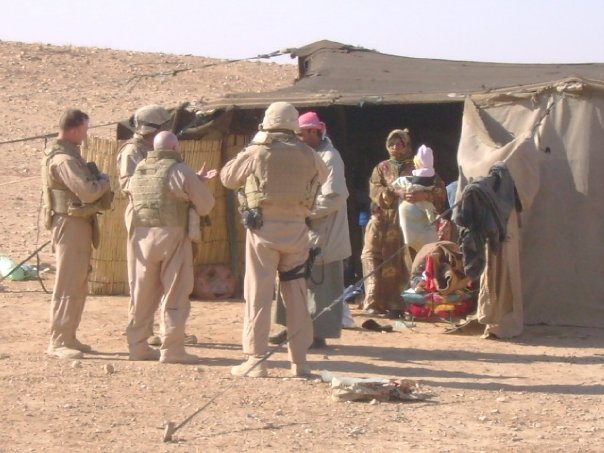
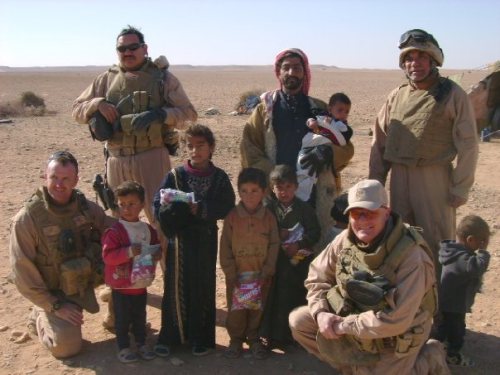
With the Bedouin on the Border, I’m the bald guy without the helmet. 

These outposts were terribly isolated. The men who served there served in incredibly austere conditions where danger lurked just beyond the sand berms that were the boundaries between them and the Islamist extremists of Al Qaeda Iraq and their supporters. The berms were not much comfort to anyone on either of the two most west most COPs in theater. Just to the west was Syria, a haven and support to the Al Qaeda Iraq insurgents and their supporters. All around were Iraqi Sunnis who many only recently had changed their allegiance to support the Americans against the largely foreign AQI forces.

The men that I served were not a typical congregation that you would find in the states. Methodists, Baptists, Presbyterians, Charismatics, Catholics, non-denominational types, Latter Day Saints and even a few Iraqi Christians, some who had not received Eucharist from any priest for years gathered for mass at COP South and COP North that Christmas of 2007. Iraqi Moslems wished us well. Peace on earth in the midst of war.

lastmass2

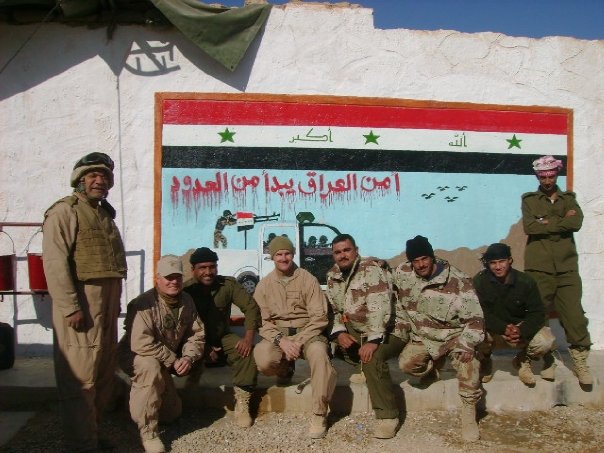
At Border Fort Five on the Syrian Border

As I mentioned I was exhausted. We had been on the road, flying and in small convoys of just a few vehicles since we arrived in theater, I was also on my last legs. I had stood with and stayed with the wounded, I had seen the destruction wrought on Iraqi facilities and people by both sides. All that mattered was to get out with the men and women who had no other formal spiritual support. I would have stayed another year to provide that support, but I knew that would not happen.

When they were done and we headed back to Ta’Qaddum, the base that we operated from I realized that the support we had provided was the high point of my military Chaplain career as well as my priesthood. Instead of my “last dance” as Dona Summer’s song said, it was my “last mass” to love.

Since then things have not been the same for me. I have talked and written about this before on this site, but those masses with those small groups of Americans and Iraqis meant more to me than any I have ever celebrated, especially those after my return from Iraq in 2008. For me, the magic and mystery have disappeared. I struggle with faith and belief even as I chose to believe in spite of my doubts.

There are times I wonder if it would have been better to have been killed by a rocket, an IED, an ambush or to have been shot down in Iraq, rather than to have to deal with this seemingly endless crisis of faith and to inflict my shit on those that I love. But then such is life and such is war.

Honestly I have to say that I believe again, but I am not sure why. I have to say that while I believe my doubts encompass me.

Christmas will never be the same for me. Yes, I have celebrated man masses since I returned, but to quote the Barry Manilow song, I’m “trying to get the feeling again” and sadly, despite my efforts I don’t think that will ever happen. If it does I will rejoice. If it doesn’t I will persevere just hoping and praying that feelings and facts matter less than faith and doing the best that I can.

Anyway. I am tired and just hoping that this Christmas will be different and that maybe I will get that feeling again, if not now, maybe someday….

Peace

Padre Steve+



Leave a comment

Filed under christian life, faith, iraq,afghanistan, Military, ministry, Pastoral Care, Religion, Tour in Iraq

Epiphanies and Struggles at 2000

10570298_10152872503382059_5058681841617456899_n

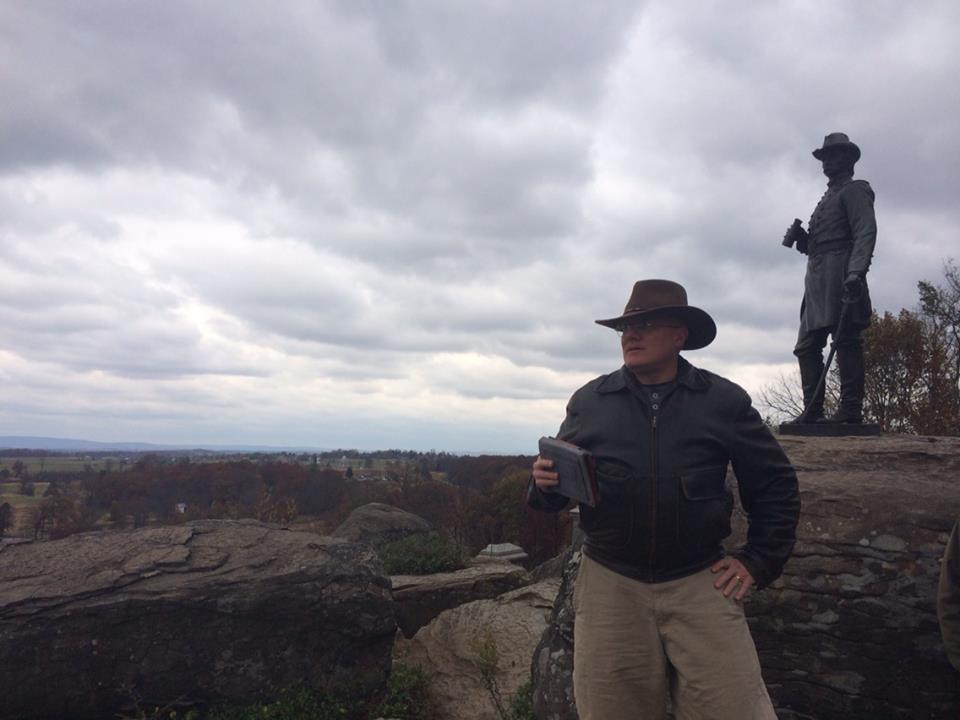
I posted an article last night about three Union heroes of the Battle of Little Round Top in the Civil War; Colonel Strong Vincent, Colonel Joshua Lawrence Chamberlain and Colonel Patrick “Paddy” O’Rorke. That was the 1999th article that I have posted here, this is number 2000.

I have wondered for weeks what I was going to write about on such an auspicious occasion, and I thought of a lot. However, recent events have brought me to an emphany based on my own experiences to be sure, but also through the study of the post Civil War life of Joshua Chamberlain and Gouverneur Warren as well as the British leader of the Arab Revolt in the First World War, T.E. Lawrence.

The frailties and struggles of these men with life after war in relation to their calling, chosen vocations and family lives have stuck a chord in me that the mere study of them as iconic military leaders had never done. Well over a century after their death of Chamberlain, the lives and words of these men have spoken to me in ways that few things, including the words of scripture and the lives of the great saints have ever done,

I am currently re-writing another article about on another Union hero of that battle, Brigadier General Gouverneur Warren. I expect that after I complete that and get some edits from my wife Judy that it should be posted Sunday or Monday.

I find it fascinating and even ironic how much I learn from the lives of these men, especially the two men who serviced to battle to both great glory and heartache.

If you are a regular reader of this site you probably have picked up how much that I relate to complex, contradictory and often troubled historical figures. My world is a world of various shades of gray. My heroes are usually flawed men, men of great brilliance and intelligence who may on some occasions rise to greatness and other times struggle in the most basic elements of life.

I have written many times and shared my struggles with faith, belief in God, acceptance, meaning and depression. These are things that honestly I did not struggle with, or that I could have imagined before I returned from Iraq. If you had told me in early 2007 that I would struggle with these things I would have told you just how wrong that you were.

I cannot do that now. Although I have been very successful in life as well as my military and academic career I often feel like a complete failure. I struggle to believe that I am not, especially in regard to my service in the Chaplain Corps, an organization that since my return from Iraq I have felt disconnected from and in some cases rejected by. Now I do have to own that as my own issue. In my more recent interactions with some senior Chaplains I have found that my perception may not be true of how I am viewed may not be true.

Alexander Dumas wrote in his literary classic The Count of Monte Cristo:

“Moral wounds have this peculiarity – they may be hidden, but they never close; always painful, always ready to bleed when touched, they remain fresh and open in the heart.”

That kind of got thrown in my face when the contractors preparing the annual Navy Chaplain Corps professional development training conference contacted me. They plan on using my story from the DOD Real Warriors website as a “discussion starter during the training event. The irony is that I told a number of people recently that I felt like the “poster child” for PTSD that no one wants to admit exists. Now it looks like I might be the poster child that everyone sees. The irony is too rich.

bedouin

I understand from a senior Chaplain who attended the validation of the project, that it was perceived in a very positive manner by the senior leaders of the Chaplain Corps present. My friend whose judgment I trust was surprised by how I perceived that I have been seen by senior leaders. Truthfully my feelings are quite negative and I admit based on how depressed that I have been that those feelings might not be correct.

I am humbled, but kind of embarrassed as you can imagine for a number of reasons, first that I could be wrong about my perception. That is the easier conundrum. The second is that though I have tried to be transparent in sharing my experience on this website as well as in person the fact is that in every case where others picked up and ran with my story, it was on their initiative, not mine. All of those events,including the Real Warriors video and story were scary, because I had to “drop my shields” so to speak and let others tell and interpret my story. Honestly if I was to become famous for anything I would prefer it to be my writing about history, ethics, and of course Gettysburg.

As I told the people for the contracting team I am happy to help in any way that I can so long as those who hear my story are inspired, or even guilted into ensuring those in the Chaplain Corps and those that we serve are cared for and do not experience the hell of what I went through when I returned from Iraq feeling so rejected, abandoned and uncared for by my peers and superiors. So even though the prospect of my story being shared among a community that I have little trust of, I am willing to allow them to use it, so long as it helps ensure that others do not experience what I did on their return from war.

My wife Judy told me that I need to stop my negative self talk, which I probably should try to do but find it hard to do. However,I guess from my clinical experience that I should know better. However, being chronically depressed for years while suffering from PTSD does skew one’s perspective on life and reality. It also can effect how they believe that they are perceived by others, usually in ways that correspond to their own beliefs.

For me I often feel as T.E. Lawrence wrote after he had left the Royal,Air Force where he had served for twelve years under an assumed name following his voluntary exit from the world stage. Lawrence wrote:

“You wonder what I am doing? Well, so do I, in truth. Days seem to dawn, suns to shine, evenings to follow, and then I sleep. What I have done, what I am doing, what I am going to do, puzzle and bewilder me. Have you ever been a leaf and fallen from your tree in autumn and been really puzzled about it? That’s the feeling.”

I do understand what Lawrence meant by this, but I understand what Judy says too. When she says tells me to stop the negative self talk, I know what she says to be true, That being said many times I have a hard time believing it or acting upon it. Of course Judy is quite correct, despite how I feel I am capable of being logical and analytical. That was something that I was always good at doing, thus in spite of myself she has me trapped.

It is somewhat fascinating to me that coming up on seven years after I left Iraq, a country that I would gladly go back to again to help my Iraqi friends that I still seem to be emotionally stuck at the place that I returned. The quote by Captain Picard that I led this article with is an excellent place to end tonight.

Honestly I just want to work my way through this, but I struggle. Since I now seem to be rambling I will close for the night.

Thank you as always for taking the time to include my writings into your life. All of our time is limited and the fact that many of you chose to spend time reading what I write means a great deal to me.

So until tomorrow,

Peace

Padre Steve+

Leave a comment

Filed under Loose thoughts and musings, Military, ministry, PTSD

The Enduring Mystery of an Encounter with an AIDS Patient

lent

Last night I wrote about my early experience dealing with AIDS while serving as an Army Medical Service Corps personnel officer in 1987. In the 1990s that experience changed as I began to deal with men and women who were dying of the effects of full blown AIDS while serving as a hospital chaplain. The experiences of being with those men and women, and in some cases with their families, or loved ones was another chapter in my acceptance of Gays as well as other people marginalized and abandoned by my fellow Christians.

This is an account of one of those encounters at Parkland Hospital in Dallas where I was doing my Clinical Pastoral Education residency, it is not about the politics of AIDS, instead it is about humanity, connection, faith, mystery and things that I cannot explain. Those who know me or have followed my writings on this site know my struggles with faith and God, belief and unbelief.

Even today thinking about this encounter brings tears to my eyes and makes me wonder about faith, life, reason and mystery. Frankly, it is something that I cannot explain, nor do I care to. I am content to live with the mystery of something that I cannot explain, but then at the same time, I am not.

As Anais Nin wrote: “The possession of knowledge does not kill the sense of wonder and mystery. There is always more mystery.”

Peace

Padre Steve+
Sometimes death comes unannounced but other times it sounds a warning.  Most of the time we think of such warnings as what our body is saying to us, maybe someone is having chest pains or that we know of a terminal condition which is getting worse and the doctors say that there is nothing else that they can do.  Other times it appears that some people almost have a sixth sense about their impending death and leave notes or say “goodbye” to loved ones in a different way than they would normally do.

When I see or hear about the sixth sense kind of incident I find that I am intrigued.  As a student of history I have read countless accounts where soldiers know that they will not survive a particular battle and leave things or messages for their friends to give to loved ones.

There have been times when I have had a sixth sense about what was going to happen to someone and the feeling is like you are watching something unfold in slow motion but can do nothing to stop it.

This story is a bit different and took place during an overnight as the “on call” chaplain at Parkland Memorial Hospital in Dallas during my Clinical Pastoral Education Residency. Parkland is a rather large, at the time of my residency a 940 bed county hospital and Level One Trauma center.  The “on call” chaplain after normal hours was the only chaplain in the hospital to cover all emergencies in the house.  Usually I stationed myself in the ER area as that was the “hottest” place for ministry at any given time.  I would always take a spin around our 9 ICUs sometime in the evening to make sure that nothing was brewing; but unless something was going bad on one of them would always end up back in the ER.

One night I had just finished with a situation involving a violent death in the ER when about Nine PM I got a page from “9 South” our General Medicine Step-Down ward. This was a ward that not much usually happened on, in fact as a critical care and trauma type I considered it and other wards like it as a bit boring as nothing much usually happened there.

The nurse that I talked to when I returned the page told me that I needed to come up right away. She said that she had a patient who was convinced that she was going to die that night.  Intrigued, I told the nurse, that I would be right up and made my way up to the ward.

I got to the ward about 9:15 PM and met the nurse who further explained the situation to me while I reviewed the chart.  The nurse was an RN who had come to the United States from India and she was obviously unnerved by what was going on. She told me about the patient, I reviewed the chart as is my normal procedure and then went in to visit the lady. There was nothing in the chart to indicate any problems, in fact she was listed as improving enough to go home the next day, discharge orders were already in the chart.

The lady was in her mid-30s and she was HIV positive. She was married, and her husband who was also HIV positive and in a more advanced stage of the disease had been discharged from the hospital the day before. She had come in for a few day stay as she had been spiking a fever but that was under control, and she had no other medical issues. She was not at the point of having any of the major opportunistic infections or diseases associated with full blown AIDS, her T-Cell count was good.  Clinically she was stable and expected to do well for a number of years to come.

But despite all the good numbers, stable condition and good prognosis the woman was convinced that she was going to die, this very evening.

Just after the evening shift change the patient had told the nurse that “the Lord was going to take her home tonight.”  This troubled the nurse as it would any normal rational person, so she called the duty Internal Medicine resident physician to come and speak with the lady. The resident could not convince here that she was going to be okay and that she told both of them that she was going to die that evening and “go home and be with Jesus.”

Now for those who have never lived in the south “going home” is not like leaving the office at the end of the day.  Elvis “went home” wherever that was (see “Men in Black”) and if you are talking with someone raised in the South and they start talking about “going home” you better stop and clarify to make sure that they are going home to watch the Braves on television and drink a beer, or if they are planning on dying.

I had a grandmother who told me from the time that I was 5 years old that she was either “going home” or “wasn’t going to be around much longer.” Of course she was convinced that she was going to die, and once I stirred up a hornet’s nest when after she told me that “she wast going to be around much longer  So I asked her “where are you moving to?” Granny was not impressed and gave me an earful. Granny lived to be almost 90 years old when she finally “went home”  when I was 40 after giving me 35 years worth of warning, but I digress…

Now patently I am of the mind that if the numbers say that you will live I believe the numbers.  I’m a baseball guy, God speaks to me through baseball and I play the percentages. It is the rational thing to do, which means that while I believe that God can intervene in situations I don’t bet on that happening. I read the chart. I talk to the nursing staff, and I talk with the physicians.

After talking with the resident and nurse I was convinced that this lady would walk out of the hospital in the morning and probably outlive her husband. Then I met the lady.

I walked into her room. She was sitting up in bed with her Bible open beside her on her mattress. She appeared to be very calm and there was a peaceful sense about her.  She was from Jamaica and very polite and when I introduced myself to her she greeted me warmly with the accent characteristic of that island nation.

“So you are the pastor?” she asked.

I replied that I was the Chaplain and that the nurse and doctor had asked me to spend some time with her.

She then said “Ah yes, they do not believe me because I told them that Jesus told me that he will take me home tonight.”

So I asked her what she believed was going on with her. She then described to me what had occurred that evening to make her think that she was going to die. “You see pastor, the doctors say that I will go to my house tomorrow but I will not.”

She paused and even more curious I nodded for her to go on and said “really? Tell me more.”

She continued “Pastor you see this evening Jesus came to me, he visit me and tell me that I will go and be with him tonight.”

Now I have to admit that I was skeptical. However, she was not acting emotional or even bothered about what she just said. Normally I might ask for a psychiatric consult, but she seemed to be completely rational, and her chart made no mention of any mental illness or psychological issues.

I was fascinated and asked her to tell me more. She then went on a fairly long recitation of her faith journey from the time that she was a young girl. She told me how she frequently would sense God’s presence and hear his voice at different points in her life. She told me how she had gotten HIV from her husband, who had been a drug abuser and how much it meant for her to be right with others and God.

So I asked her about the specifics of “why she thought that she would die tonight?”

Calmly she explained. “The doctors tell me that I will be well and go home tomorrow. They tell me that I am in good condition and that I will live a long time, but that does not matter to me because Jesus told me today that he will take me home to be with him….tonight.” 

The word tonight was said with a confidence that stunned me. She talked as if this was a regular every day occurrence and her face was radiant.  She continued “I love Jesus and know that he will not lie to me so I know that I will be with him tonight.”

Her faith was touching and powerful in its simplicity and the amount of trust that she showed even to a message that she believed to be from Jesus that was completely different than the news of the doctors. After our conversation, which lasted about 30 minutes involved me probing her faith, asking what she understood about her condition and talking about her family. It seemed to me that our visit was a time for her to tie up the loose ends of her life and that I was the person that she was taking the time to share them with.

As we closed she asked me if I would pray with her and give her a blessing which I did.  She thanked me, reached out and asked for a hug. She embraced me weakly and then let go, and she thanked me again.  I was moved by this, still not convinced that Jesus would take her home. I didn’t she was going to die but there was a certain finality in her words and actions that gave me a bit of doubt about the facts and numbers that I trusted in.

When I left her room, I charted my visit, wrapped things up with the resident and the nurse and went back down to ER where more carnage was waiting, shootings, motor vehicle accidents and drug overdoses.

About 2:30 AM my pager went off. It was the nurse’s station on Nine South. I returned the call and the nurse that I had talked with earlier was on the line.

She was nearly frantic and said: “Chaplain, please come quick, I went in to check her vitals and she is dead!”  I put on my best calm voice and said “Who is dead?” 

The nurse nearly in a panic said “The lady that said that God was going to take her home, she died!”  I looked up from the Trauma ER nurses’ station and realized that there was nothing immediate and told the nurse  “Okay I’ll be right up” and went up to the ward as quickly as I could.

When I got to the ward to find the nurse pacing anxiously outside the door of the patient’s room.  I asked if the nurse if she was okay, meaning her and not the now deceased patient. The poor nurse replied that she was upset by the death because the lady should not be dead. She was frightened and that she didn’t understand how the patient could calmly know that she was going to die.  Now the nurse was not a southerner unless it was the south part of the Indian subcontinent.  She was relatively new to Texas and the American South she was not as attuned to some of the religious and cultural aspects of either the South or some of the Caribbean islands, where the lady had come.

After helping the nurse calm down I met the resident who was in the room looking perplexed, when I walked in he said “This women shouldn’t be dead.” 

I couldn’t think of much else to say so I just said to him “sometimes it’s just someone’s time even if the numbers don’t say so.” 

He said: “Yeah, I know, but this was really freaky because she told me that she was going to die tonight and she did.”

I did concur with this young doctor that what had happened was a bit on the unusual side but that we couldn’t discount what she believed especially since she had been correct. As the resident went to finish up paperwork I looked at the woman. It looked like she had simply fallen asleep. Her Bible was on her lap and opened to the book of Revelation, the 21st chapter. Although I cannot be sure exactly what she was reading can only imagine that it was this verse “See, the home of God is among mortals. He will dwell with them as their God; they will be his peoples, and God himself will be with them; he will wipe every tear from their eyes. Death will be no more; mourning and crying and pain will be no more, for the first things have passed away.” (Revelation 21:3b-5 NRSV)

This dear woman had passed away, gone home looking forward to a place where whatever tears or sorrows she had experienced would be wiped away. I closed her Bible, gently placed her hands together over it and prayed a prayer of commendation before pulling the bed sheet over her face and body.

On leaving the room I spent a bit more time with the nurse who was beginning to gather herself after this unusual death.  A couple of hours later I would escort the body of this woman to our morgue accompanied by the nurse and a LVN.

If you have never made the walk to a morgue it is always the longest walk you will ever make. At Parkland it seemed that no matter where you were coming from the walk took forever as it is a massive facility, and in the wee hours of the morning while most of the world sleeps, that walk is an eternity.

As we rode the elevator down to the basement where the morgue was located we continued to talk a bit more. When we got to the basement and commenced the walk down the long and empty corridor to the morgue we did so in silence. I unlocked the door and then the door to the walk in refrigerator, which could hold up to eight adult bodies on cold stainless steel gurneys at any given time. Dimly lit and damp the morgue has a truly macabre ambiance which is magnified by the sight of bodies of the deceased wrapped in body bags and covered by white sheets.

Once I had admitted the body and locked the door to the morgue the two nurses left to head back to the 9th floor. I took the chart and other paperwork up to our office where our decedent affairs clerk would complete the death certificate. The daytime duty chaplain would have the responsibility of discharging the woman’s body after an autopsy was conducted and a funeral home came to take her body to her final resting place.

I thought how unusual this case was as I sat for a while in the office. I had heard of similar things but had never seen something like this before where the person in question made such a claim and was right defying the numbers that said she would walk out of the hospital. After a the rest of the evening, or rather the early morning was relatively uneventful and my shift came to an end as the rest of the staff came in for the day. I briefed the chaplain who was taking the pager, did my debriefing with my fellow Pastoral Care residents and went home, wondering what had happened.

Physicist Max Planck who originated Quantum Theory said: “Science cannot solve the ultimate mystery of nature. And that is because, in the last analysis, we ourselves are a part of the mystery that we are trying to solve.”

It is a mystery, so I guess I should leave it there…

Peace

Padre Steve+
Leave a comment

Filed under christian life, faith, healthcare, ministry, Pastoral Care, philosophy, Religion

Living with Dark Places and Pain

947188_10151670056587059_1172426886_n

“There is nothing that can take the pain away. But eventually, you will find a way to live with it. There will be nightmares. And everyday when you wake up, it will be the first thing you think about. Until one day, it’s the second.” Raymond “Red Reddington (James Spader) The Blacklist

I am haunted by many things, unlike many people who have little self-awareness I might have just a bit too much. I have talked about the nightmares, night terrors and insomnia that I have many times following my return from Iraq. I used to believe, at least back in the first year or so after I returned that I thought that eventually I would get over it. I don’t believe that anymore, now I just believe that I will find a way to live with them.

I guess that is the secret to life. Instead of wishing that something would miraculously take way the pain, I guess that it is better to find a way to live with it because one day something  else will replace it.

Is that an ideal way to deal with life? Probably not, but I know that I am an idealist anymore. I used to be, but that was a while back. It took time, but war and the lies of men that I voted for, men who I trusted because they professed my faith, my love of country, and some who even shared my vocation as a priest and chaplain took that from me.

Experts call this “moral injury.” For me it is connected with my tour in Iraq, PTSD and what I experience when I came home from colleagues, and people in my former church. Betrayal and abandonment is a terrible thing, but I am learning to live with it. It is not pretty but I am learning with every passing night and morning. Alexander Dumas wrote in The Count of Monte Cristo:

“Moral wounds have this peculiarity – they may be hidden, but they never close; always painful, always ready to bleed when touched, they remain fresh and open in the heart.”

My life is full again, there is meaning and purpose, but it is tempered by realism and the expectation that every day I will wake up and still think about those painful memories until finally something else takes their place. 

I guess that the secret to living with darkness and pain is simply to live with it because the saying that “time heals all wounds” is a lie, it is the fabrication of people that don’t want to deal with the real world. God might heal, but then God may not. So I will live with it and in doing so I will continue on and in the process hopefully be there for others that also struggle with pain that does not want to go away and nightmares that never seem to end. As Henri Nouwen wrote:

“Ministry means the ongoing attempt to put one’s own search for God, with all the moments of pain and joy, despair and hope, at the disposal of those who want to join this search but do not know how.”

Peace

Padre Steve+

1 Comment

Filed under christian life, faith, ministry, PTSD

The Journey of a Christian Agnostic: Remembering 18 Years of Priestly Ministry

“Do you exist? I think not. I have never seen you or touched you or felt you. Well, sometimes I think you’re presen163017_10150113444907059_3944470_nt but that may be wish fulfillment. Intellectually, I have no reason to believe. Yet much of the time I act like I do believe …. Only when I have time to reflect do I feel doubts, and then after the doubts certainty that the universe is cold and lonely. I know that I am a hypocrite and a fool. Then I preside over the Eucharist in my unsteady bumbling way and I know that you are. I don’t believe but I know.” Andrew Greeley in The Beggar Girl of St Germain

Eighteen years ago, on a warm and sultry night in Libertytown Maryland I was ordained as a Priest. I had been graduated from seminary in 1992 and been ordained as a minister in an Evangelical Protestant church in 1991 and served as a chaplain in the Army National Guard and Reserve as well as civilian hospital ministry, but in the course of my studies and subsequent study I came to a more Anglican and Catholic understanding of life and ministry.

Since that time the world has changed and I have changed. Back then I lived my life with a fair amount of certitude, hubris and arrogance, a trait that many, maybe even most young ministers regardless of their denomination or religion often fall into, and unfortunately many who seek to climb the ecclesiastical ladder to power, influence and sometimes fortune never forsake. At one time I believed that church and church leaders should not be questioned, until I found that they like many others were just as prone to cruelty, injustice and desire for power and authority as anyone I knew in the secular world.

After encountering this lack of care, cruelty and and injustice, both in the church and among some senior military chaplains my eyes were opened. I should have known better because just before I left the active duty Army to go to seminary I was told by my brigade executive officer “Steve, you think that the Medical department is too political, cutthroat and vicious, we can’t hold a candle to the Chaplain Corps.”

Unfortunately he was right, not only the Chaplain Corps, but many churches and denominations. I know far too many ministers and other ordained clergy who have been crushed by the burdens placed on them by their faith groups as well as various chaplain ministries, military and civilian. When I was in seminary I was shocked by the number of “former ministers” that I encountered, many who had real, earned academic theological degrees, as well as a wealth of pastoral experience, but the common thing that must shared was being abused, abandoned and sometimes even persecuted by their faith communities, often for the most trivial of reasons.

While I do not have any regrets about following the call to ministry and the priestly vocation, and would do it again, I do not recommend it to most people, it is an incredibly difficult life .

Since that night in 1996 my life has experienced twists and turns that I could never have imagined. Like Jerry Garcia of the Grateful Dead wrote in his song “Truckin’” 
“what a long strange trip it’s been.” That being said most of my time as a priest has been spent serving in some capacity on active duty as a military chaplain, first in the Army, but since 1999 in the Navy.

After Iraq, my life changed, afflicted with severe PTSD and what also might be considered “moral injury” I collapsed, psychologically, physically and spiritually. For all practical purposes I was an agnostic, praying that God just might still exist. When faith, seemingly miraculously returned it ended the hubris and certitude. I became much more willing to ask questions, express my doubts and publicly disagree with the church that I was first ordained as a priest. That got me thrown out of that church, as my bishop accused me of being “too liberal,” and thankfully I am now in a faith community where I am a good fit.

Faith has returned, at least part of the time and to be honest I still doubt, and that is not a bad thing. Andrew Greeley, speaking as Bishop Blackie Ryan in the novel The Bishop and the Beggar Girl of St Germain wrote: “Most priests, if they have any sense or any imagination, wonder if they truly believe all the things they preach. Like Jean-Claude they both believe and not believe at the same time.”

I still serve as a priest and Navy Chaplain. I am happy and like Father Jean-Claude in Andrew Greeley’s novel I believe and do not believe at the same time. I have the honor of serving a small chapel for our students at the Joint Forces Staff College as well as teaching ethics, military history and leading the Gettysburg Staff Ride. I also find a great deal of meaning in writing on this website, something that was begun out of the anguish of what I was going through after Iraq. In this website I serve people that I may never meet, and when they write, share their own stories and seek and encourage me it renews my faith and hope. As Andrew Greeley said: “I wouldn’t say the world is my parish, but my readers are my parish. And especially the readers that write to me. They’re my parish. And it’s a responsibility that I enjoy.”

My politics and views on many social issues have changed significantly since I was ordained, they are significantly more liberal and I think better grounded in the grace and love of God than they were before. As far as the people I encounter, both in the chapel setting, at the Staff College and among people I meet in town I find that I am much more comfortable listening to and being there for others, especially struggling clergy and others who find church not a place of solace, but a place of fear where they are neither cared for or accepted, the outcasts. Thus I feel strongly that eery encounter, especially sacramental ones are times to show care for others. As Andrew Greeley wrote in his final Bishop Blackie novel The Archbishop Goes to Andalusia:

“Every sacramental encounter is an evangelical occasion. A smile warm and happy is sufficient. If people return to the pews with a smile, it’s been a good day for them. If the priest smiles after the exchanges of grace, it may be the only good experience of the week.” 

That was something that I experienced this weekend with a visitor to my chapel. That makes it all worth it, despite that I believe and do not believe at the same time and I will live with this tension and trust that the Jesus the Christ, God who took on the fullness of humanity for the life of the world will somehow understand.

Peace

Padre Steve+

4 Comments

Filed under christian life, faith, ministry

The Long and Winding Road of 31 Years of Commissioned Service

hogansheroeslook

Today marks another milestone in my life and career, at least in terms of longevity. Thirty-one years ago today I was with my soon to be wife Judy, as well as my dad and brother at UCLA where I was being commissioned as a Second Lieutenant in the U.S. Army. Six days later I married Judy who has over the past 31 years seen me go my down the long and winding road of my military career. Truthfully the long and winding road has been to use the words of Jerry Garcia a “long strange trip” and usually not the Yellow Brink Road.

commissioningmeandjudy557thcmdpic2ndplt557motorofficerpromotiontocpt

Let’s see…service as a Medical Service Corps Officer, platoon, leader, company executive officer, maintenance officer, NBC officer, and company commander, and brigade adjutant. Texas Army National Guard, Armor officer, Chaplain Candidate (Staff Specialist Branch) and Chaplain serving with Combat Engineers, and Chaplain in the Virginia National Guard with the Light Infantry. Army Reserve Chaplain, drilling and mobilized to support Bosnia mission, Installation Chaplain at Fort Indiantown Gap Pennsylvania.

checkpointcharliekoreandmzbrabdenburgertornegate

The Army, Cold War Germany, the Fulda Gap and the Berlin Wall, supporting the Bosnia mission, exercises, and active duty for training, even doing an exchange program with the German Bundeswehr.

flakfeuerwurzburg

AHSparadeeasterboardingteamfujibostonhuecityscotland

Then the path took a different direction. After 17 1/2 years in the Army Judy was looking forward to the day that I would retire from the reserves and she would have me back. Instead, I took off my rank as an Army Reserve Major and became a Navy Chaplain. Two tours with the Marine Corps, Second Marine Division and Marine Security Forces, Sea Duty on the USS Hue City, a tour with EOD, interspersed with an individual augmentee in Iraq followed by 5 years working in Medical Naval Centers or hospitals and finally serving as Chaplain and doing teaching in military ethics and military history at the Joint Forces Staff College.

jordannellieandmeiraqramadibettertimesdinner-w-bg-sabah1

Lots of field exercises and underway periods at sea, travel around the world to support deployed Marines, a Marine Deployment to Okinawa, mainland Japan and Korea including the DMZ. Then along came the 9-11-2001 attacks and war. A deployment to the Horn of Africa, the Gulf of Oman and the Northern Arabian Gulf in support of Operation Enduring Freedom and Operation Southern Watch aboard the Hue City, served as a member of a boarding team making 75 missions to detained Iraqi Oil Smugglers and helping keep peace on those miserable ships. Traveling to Europe, the Middle East, Asia and Guantanamo Bay Cuba with the Marine Security Forces, standing at Gitmo’s Northeast Gate, and completing the “Commie Trifeca” of Cold War German, Korea and Cuba.

easterramadi2boarding teamnellieandme

Then there was EOD, serving with some of the most amazing men and women I have ever met, a tour in Iraq with my trusty assistant, bodyguard and friend Nelson Lebron. Of course as any reader of this site knows the time in Iraq changed me forever, the aftereffects of that tour remain with me every day, the battle with PTSD, anxiety, hyper-vigilance, depression and the shattering effect of seeing that my government leaders had lied about the reasons for war and by their actions devastated a country and helped throw a region into chaos. I saw the suffering of Americans as well as Iraqis in Al Anbar Province, death, badly injured Marines, soldiers and Iraqis, poorly treated third world nationals working for Halliburton and other contractors. After coming home dealing with all of my shit while trying to care for others in back to back tours at two different Naval Medical centers or hospitals. The ongoing violence in Iraq and the fact that that unfortunate country and its people are going to suffer more haunts me. I miss Iraq, I would go back not because I love war, but because I care about the Iraqi people.

normandysstaffridestaffride

Now I minister, celebrate Eucharist in my little chapel, care for people and teach. The highlight of my life is leading our institution’s Gettysburg Staff Ride and being able to research, read, ponder, analyze and write about that campaign, the Civil War and relate it to what we teach at our institution.

meandjudyLCDRusmcballgitmojudynellieme

Throughout my career there have been two constants, my long suffering wife Judy who has spent close to ten of the last 17 or 18 years without me and those who I served alongside, many of who I am still in contact with through Facebook. I am amazed at the quality of men and women who have served alongside of me since 1981. The funny thing is that even though I probably still have another five to six years until I finally retire to civilian life, that I am watching men and women who entered the military 10-13 years after me retiring from the military.

antichaps

Thankfully I still love what I do and serve in a great place. To those who have served alongside me all these years in any capacity I thank you. You don’t get to where I am in life without a good deal of help, sage advice from men and women not afraid to speak the truth and without a bit of good luck and fortune and maybe a bit of the grace and mercy of God.

Yes it has been a long strange trip down a long and winding road, but it has been more than I could ever imagine.

Have a great night and thanks for reading,

Peace

Padre Steve+
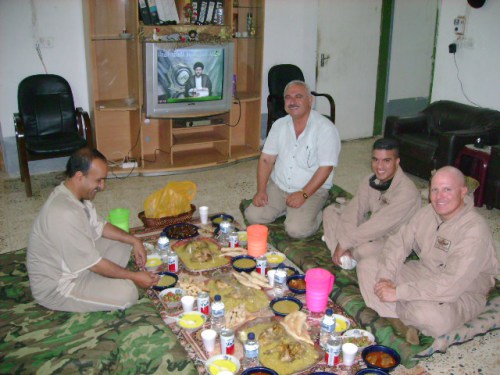


1 Comment

Filed under Loose thoughts and musings, Military, ministry