Category Archives: national security

“Our World in Stupor Lies…” December 6th 1941 at 75 

h97398

Friends of Padre Steve’s World,

Walter Lord wrote this perceptive and prophetic comment about the Japanese attack on Pearl Harbor, “A nation brought up on peace was going to war and didn’t know how.” His words still resonate as most people have no idea about the reality of war. Despite terrorist attacks on major cites and unending war in the Middle East, Afghanistan, and parts of Africa, for most Americans and Western Europeans this is time of peace. Well, at least the illusion of peace.

Today tens of thousands of American, NATO and European Union troops operating in a number of mandates are in harm’s way. In some places like Afghanistan they are at war, in others attempting to keep the peace amidst a resurgence of the Taliban. Around the world regional conflicts, civil wars, insurgencies  and revolutions threaten not only regional peace but the world peace and economy. Traditional national rivalries and ethnic and religious tensions especially in Asia and the broader Middle East have great potential to escalate into wars that should they actually break will involve the US, NATO and the EU, if not militarily economically and diplomatically.

But, we live in a dream world an illusory world of peace, that entraps political leaders across the political spectrum. It is as W.H. Auden wrote in his poem September 1st 1939:

Defenseless under the night
Our world in stupor lies…

On December 6th 1941 the world was already at war and the United States was edging into the war. The blood of Americans has already been shed but for the vast majority of Americans the events in Europe and Asia were far away and not our problem. Though President Roosevelt had began the expansion of the military there were those in Congress seeking to demobilize troops and who fought all attempts at to intervene.

maltese-falcon-by-content-artofmanlinessdotcomw499h371

Most people went about their business that last furtive day of peace. People went about doing their Christmas shopping, going to movies like The Maltese Falcon staring Humphrey Bogart or the new short Tom and Jerry cartoon, The Night Before Christmas.

Tom And Jerry

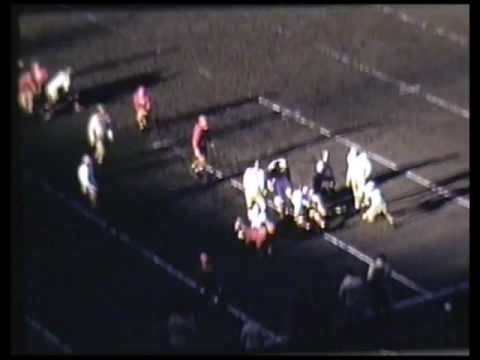
Others went to football games. UCLA and USC had played their annual rivalry game to a 7-7 tie, Texas crushed Oregon in Austin by a score of 71-7 while Texas A&M defeated Washington State in the Evergreen Bowl in Tacoma by a score of 7-0.

0-3

In Europe a Soviet counter-offensive was hammering a freezing and exhausted German Wehrmacht at the gates of Moscow. U-Boats were taking a distressing toll of ships bound for Britain including neutral US merchant ships and warships, including the USS Reuben James. American Airmen were flying as the volunteer Flying Tigers for the Nationalist Chinese against the Japanese invaders.

decwarp1

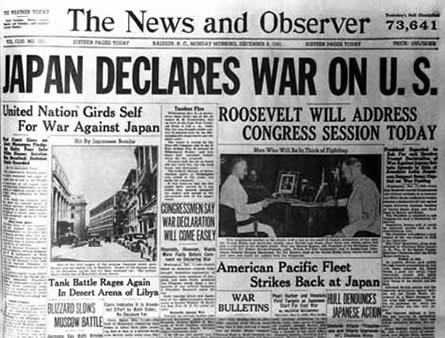
War was everywhere but there was still the illusion of peace. When the messages came out of Pearl Harbor the next morning it was already early afternoon on the East Coast. The Japanese Ambassador had been delayed in delivering the declaration of war, people across the country going about their Sunday business, going to church, relaxing or listening to the radio. Thus when war came, despite all the precursors and warnings war came. When it happened it took the nation by surprise. Walter Lord wrote in his classic account of the Pearl Harbor attack Day of Infamy: “A nation brought up on peace was going to war and didn’t know how.”

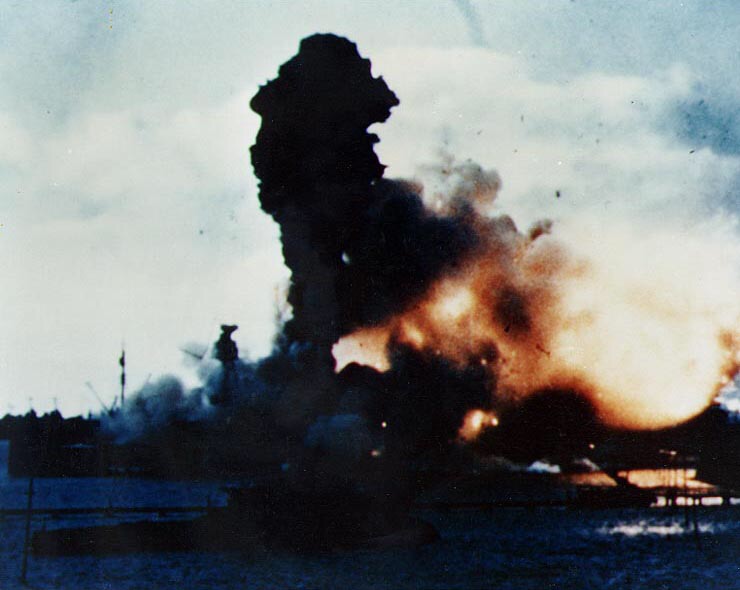
By the end of the day over 2400 Americans were dead and over 1200 more wounded. The battleships of the Pacific Fleet were shattered. 4 sunk, one grounded and 3 more damaged. 10 other ships were sunk or damaged in the attack. 188 aircraft were destroyed and 159 damaged.


The next day President Franklin D. Roosevelt called the nation to action requesting that Congress declare war on Japan. 

Mr. Vice President, and Mr. Speaker, and Members of the Senate and House of Representatives:

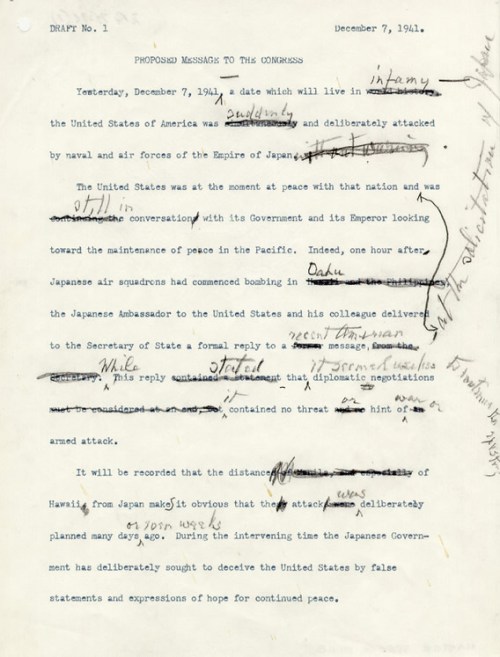
Yesterday, December 7, 1941 — a date which will live in infamy — the United States of America was suddenly and deliberately attacked by naval and air forces of the Empire of Japan.

The United States was at peace with that Nation and, at the solicitation of Japan, was still in conversation with its Government and its Emperor looking toward the maintenance of peace in the Pacific. Indeed, one hour after Japanese air squadrons had commenced bombing in the American Island of Oahu, the Japanese Ambassador to the United States and his colleague delivered to our Secretary of State a formal reply to a recent American message. And while this reply stated that it seemed useless to continue the existing diplomatic negotiations, it contained no threat or hint of war or of armed attack.

It will be recorded that the distance of Hawaii from Japan makes it obvious that the attack was deliberately planned many days or even weeks ago. During the intervening time the Japanese Government has deliberately sought to deceive the United States by false statements and expressions of hope for continued peace.

The attack yesterday on the Hawaiian Islands has caused severe damage to American naval and military forces. I regret to tell you that very many American lives have been lost. In addition American ships have been reported torpedoed on the high seas between San Francisco and Honolulu.

Yesterday the Japanese Government also launched an attack against Malaya.
Last night Japanese forces attacked Hong Kong.
Last night Japanese forces attacked Guam.
Last night Japanese forces attacked the Philippine Islands.
Last night the Japanese attacked Wake Island. And this morning the Japanese attacked Midway Island.

Japan has, therefore, undertaken a surprise offensive extending throughout the Pacific area. The facts of yesterday and today speak for themselves. The people of the United States have already formed their opinions and well understand the implications to the very life and safety of our Nation.

As Commander in Chief of the Army and Navy I have directed that all measures be taken for our defense.

But always will our whole Nation remember the character of the onslaught against us.

No matter how long it may take us to overcome this premeditated invasion, the American people in their righteous might will win through to absolute victory. I believe that I interpret the will of the Congress and of the people when I assert that we will not only defend ourselves to the uttermost but will make it very certain that this form of treachery shall never again endanger us.

Hostilities exist. There is no blinking at the fact that our people, our territory, and our interests are in grave danger.

With confidence in our armed forces- with the unbounding determination of our people- we will gain the inevitable triumph- so help us God.

I ask that the Congress declare that since the unprovoked and dastardly attack by Japan on Sunday, December 7, 1941, a state of war has existed between the United States and the Japanese Empire.

171-0417042317-pearlharbor_paper

Today thousands of US and NATO troops are deployed in Afghanistan, while others are advising Iraqi forces and Syrian rebels in the fight against the so called Islamic State. Some of them are dying in places that most of us do not care about in the least, so that others might have a chance at peace and a better life. Eleanor Roosevelt reflected:

“Lest I keep my complacent way I must remember somewhere out there a person died for me today. As long as there must be war, I ask and I must answer was I worth dying for?”

Wars, revolutions and other tensions in other parts of the world threaten on every side, but most Americans and Europeans live in the illusion of peace.  A very few professionals are given the task of preparing for and fighting wars that our politicians, business leaders, Armageddon seeking preachers and the talking heads of the media sow the seeds. As such many have no idea of the human, material and spiritual cost of war and when it comes again in all of its awful splendor few will be prepared.

We do not know what tomorrow will bring and unfortunately for the vast bulk of Americans and Western Europeans the comments of Walter Lord and W.H. Auden are as applicable today as they were on December 7th 1941 for our world in stupor lies…

Peace

Padre Steve+

Leave a comment

Filed under Foreign Policy, History, Military, national security, world war two in the pacific

Pearl Harbor, Tactical Success, and Failure


Friends of Padre Steve’s World,

Those who have followed my writings since I began this site in 2009 know how much I study and think about the Japanese attack on the U.S. Navy’s Pacific Fleet at Pearl Harbor. The fact is I am kind of a Pearl Harbor geek. Ever since I read Walter Lord’s classic treatment of the attack, Day of Infamy, back in 7th Grade I was hooked and I began to read everything that I could about the attack. Then in 1978 I was privileged to be part of a Navy Junior ROTC cruise to Pearl Harbor and back. I visited the USS Arizona Memorial on Easter Sunday of that year. I have never forgotten peering into the aqua waters of Pearl Harbor and looking down into the wreck of the Arizona as I looked upon the names of the officers and sailors who died aboard her that Sunday morning in 1941. 

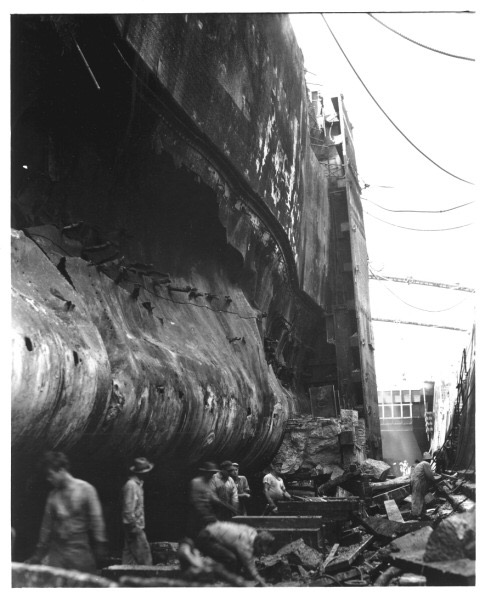
The battleships of the Pacific Fleet, including Arizona which were moored on battleship row were unprepared for the onslaught of torpedoes and bombs unleashed by the Japanese Naval aviators that morning. The Japanese had prepared a diabolical set of weaponry that would wreak havoc on the ships moored on Battleship Row. 

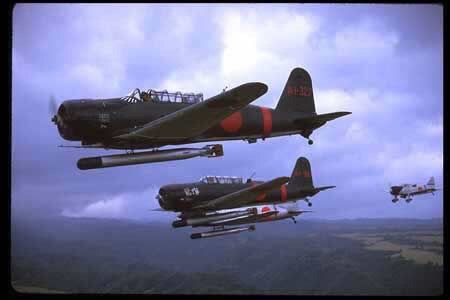
The Japanese had learned well from the British Royal Navy attack on the Italian Fleet moored at Taranto earlier in the year. Pearl Harbor was shallow, so the Type 91 aerial torpedoes used by the Imperial Navy were modified to allow them to be dropped from the Nakajima BN5 “Kate” torpedo bombers against targets inshallow waters. The modification was simple. Commander Minoru Genda worked with other specialist in order to modify the torpedos with a wooden fins that kept them from hitting bottom. Likewise 16″ armor piercing shells from the Nagato class battleships were modified to be dropped from other Kates operating as level bombers at an altitude of nearly 10,000 feet. 


The combination proved deadly. Some 19 torpedoes found their mark on the Battleships California, Oklahoma, West Virginia, and Nevada, as well as the gunnery training ship Utah, light cruiser Raleigh, and light cruiser Helena. Meanwhile some 24 of the modified armor piercing shells found their targets on Battleship Row or the far side of Ford Island. 

When all was said and done every one of the Battleships moored along Ford Island as well as the USS Pennsylvania were sunk or heavily damaged during the attack. Tactically the Japanese achieved remarkable success, but their strategic goals remained unfulfilled. The Aircraft Carriers of the Pacific Fleet were not in port on that Sunday morning; likewise the Japanese neglected to attack the fuel oil tank farm on Ford Island, or the submarine base at Pearl Harbor. The omissions of the Japanese High Command in regard to the attack helped doom their empire in the coming months and years. 


Technical marvels which provide tactical successes are important, but when those who unleash those devices without fully comprehending the strategic situation, or forgetting the other military, informational, diplomatic, and economic policy aspects of war and conflict will find that their short term tactical success will prove less than successful. The U.S. Navy was able to recover and within a year had wrested the initiative from the Japanese and was rolling back the initial Japanese success at Coral, Sea, Midway, and Guadalcanal. Four of the six aircraft carriers and both battleships involved in the attack were at tepee bottom of the Pacific by November 1942. In the meantime the United States recovered. All of the battleships except Oklahoma and Arizona returned to action, and some, like West Virgina, California, Tennessee, Maryland, and Pennsylvania wrought havoc on the Japanese at the Battle of Surigao Strait, while Nevada returned to the fight in North Africa, and Normandy before going back to the Pacific. The carriers which the Japanese failed to sink at Pearl Harbor, as well as the submarines proved to be decisive in the battle against Japan. 

The Japanese Navy concentrated their attacks at Pearl Harbor on the America battleships and in the process lost the war. The Japanese, for all of their tactical and operational acumen neglected the larger factors of diplomacy, information, military power, and economics when they attacked the United States and its allies on December 7th 1941. Weapons and tactics are only one part of the equation, something that many war “buffs” fail to appreciate. 

Have a great day,

Peace,

Padre Steve+ 

6 Comments

Filed under aircraft, History, Military, My Other Blogs, national security, World War II at Sea

Rainy Days, Floods, and National Security 


Friends of Padre Steve’s World,

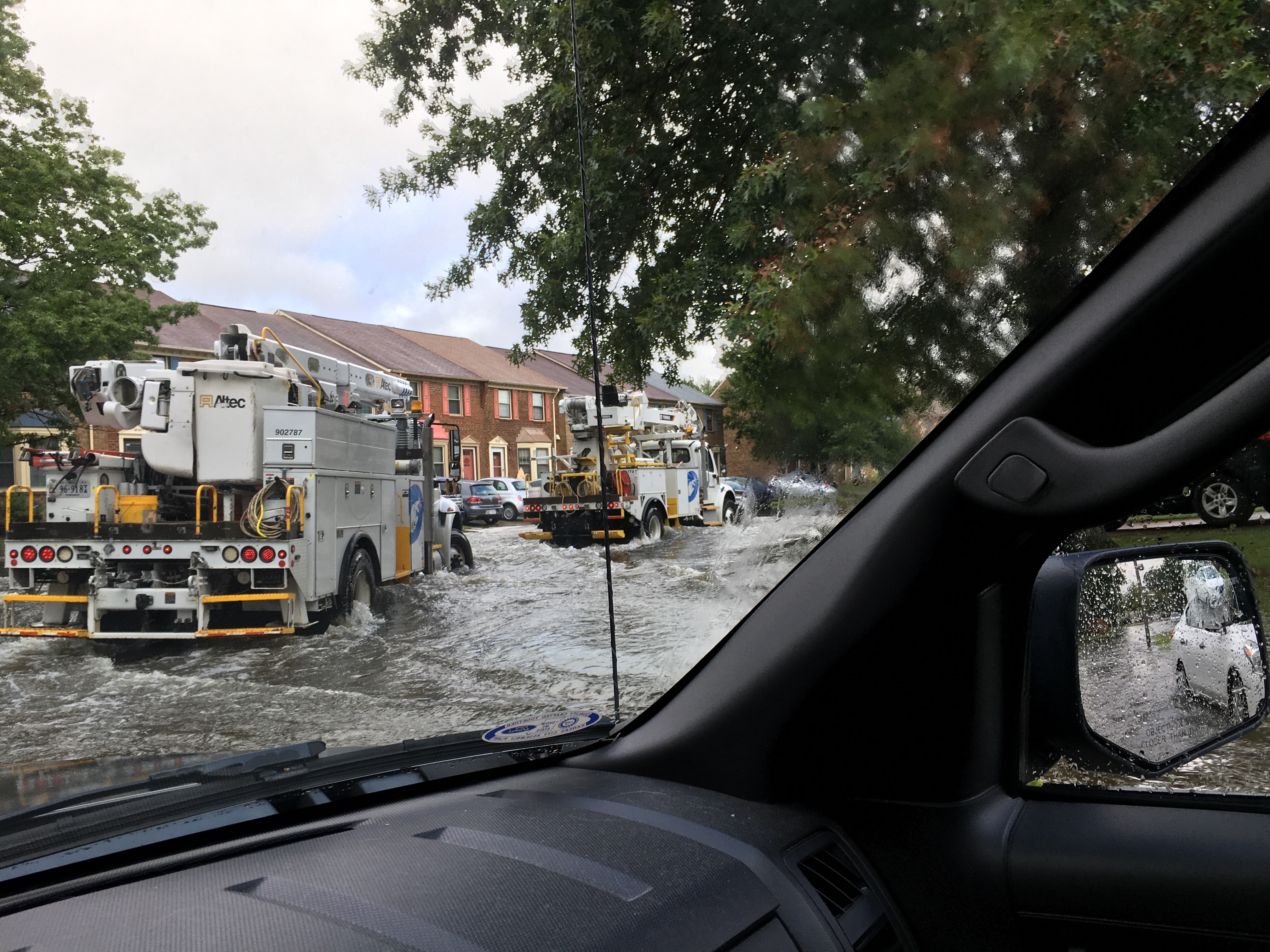
We have had a lot of rain here in Hampton Roads since Monday. As of about 3:00 PM yesterday our neighborhood in Virginia Beach has received almost 14 inches of rain since Monday when the remnants of former Tropical Storm Julia arrived. The rain was still falling when I went to bed and I imagined that we are well over 15 inches of rain. To give you an idea just how much rain we had, our yearly rainfall average is 46.5 inches of rain, in the summer we average just under 15 inches, in other words we got a third of our yearly average rainfall in three days. 

Today we have about 50% chance of more rain and schools including the Staff College are operating under a delay even while schools in North Carolina just a few miles from us will be closed due to flooding.

That slow moving system came into contact with a weak cold front and pretty much stalled over the area. Hampton Roads is a low lying coastal area with lost of rivers and streams, in fact before civilization arrived it was pretty much a swamp. Since the early settlers arrived the area has been called the Virginia Tidewater, and may I say that Tidewater is a quaint and somewhat romantic synonym for swamp. As such we frequently have flood conditions any time there is a tropical storm or a Nor’easter. That is simply the way it is.


In our swamp, I live in a town home that was built in the 1980s which the builders as they do so often in these parts built in such a way that water sometimes comes over the foundation and into the house. So I spent yesterday morning de-watering our living room, and again about 11:00 PM when another round of really heavy rain came through. Thankfully little damage was done, mainly because I have tile floors and our furniture is high enough not to sustain damage, but this is the third time in less than six months that we have had to do this.


That is what we live in, a swamp, very prone to flooding, in some places if someone flushes their toilet too long. But that is what you get when you build cities in areas that are prone to flooding that is what you get. Sadly, most of us on the coastlines of this and other nations have done just that, even in good times we flood. But just wait, as sea levels rise due to global warming, something that the United States Navy recognizes even if Congress will not, things will only get worse. As sea levels rise the effects of storms like this, and the run of the mill tropical storms and hurricanes that come through will be greater. The Navy requested funding to begin work to deal with the potential loss of its biggest naval base complex as sea levels rise, but this year Congressional Repulicans blocked the request in the DOD budget. The same is true of our other big base in San Diego, although that fair city does not have to deal with the habitual flood conditions that we endure here. The decision of Congress was  a terribly short sighted move based on the denial of science and empirical evidence and a decision that if continued will harm national security. But then when a majority of the GOP representatives are or represent Fundamentalist Christians who believe that we don’t have to plan for the future because Jesus is coming soon it really doesn’t matter. But I digress…

Naval Station Norfolk, rising seas will submerge the Navy’s largest base if measures are not taken to mitigate the effects of Climate Change

The is a huge economic concern as well. The area is home to one of the largest port and shipbuilding complexes in the nation. 

But our area is not alone. These trends will effect most of the costal area of the United States and the world. This is not simply an environmental issue, it is economic, social, and military issue. Over 70% of the earth’s population lives in what we in the Navy call the littorals. Climate change and the rise in sea levels will cause massive social, economic, and security problems and what we in the Tidewater experienced today will be incredibly mild as whole societies are disrupted.


For the United States the answer is to prepare, and thankfully if we use them we have the resources to alleviate the worst effects of global warming and sea rise. But many nations will not, and the turbulence that this change causes will not leave the United States or Europe uneffected.

What happens this week in Hampton Roads was probably not the result of global warming, but in the effects of it will grow in the coming years. Hampton Roads has always suffered from flooding, but even today with much better storm drain systems we still see the same kind of flooding that affected the region 80-100 years ago.  It is time to actually take this seriously. I do, but sadly too many people turn it into a joke.

Have a great day and stay dry.

Peace

Padre Steve

2 Comments

Filed under Climate change,, Military, national security, News and current events, weather

Everything Has Changed: The Aftermath of 9-11-2001 and Fifteen Years of War

Explodierendes World Trade Center III

Friends of Padre Steve’s World

I posted a reflection yesterday on some of my reflections on the 9-11-2001 attacks on the World Trade Center and the Pentagon, today a continuation of those thoughts. Yesterday morning after chapel and taking care of things I needed to for the opening day of our new class at the Staff college this morning I went to breakfast with Judy. We talked about how it was hard to believe that it had been fifteen years since the attacks of 9-11-2001. Judy mentioned that everything had changed since then.

As I recalled yesterday I can still remember the day like it had just happened, the images are burned into my memory and will never go away. I was getting out of my office at Camp LeJeune after an early morning counseling case and some administrative duties I was getting ready to head to the French Creek gym. I was about to close out my browser when I saw a little note on the Yahoo.com homepage: “Airplane crashes into World Trade Center.” It was about 0900 that tragic morning. I thought to myself, “Some dumb ass just crashed his Cessna into the building.”

The day was clear and absolutely gorgeous, a slight north wind and low humidity, a well-deserved break from what had been a hot and humid summer. Not that I had seen much of the Carolina summer having returned from a deployment to Okinawa, Mainland Japan and Korea in late July. When I got to my car the local talk radio station was broadcasting a second or third tier national talk radio host and he was screaming “oh my God another plane just flew into the towers!”

I was stunned and I drove over to the gym where I joined a large crowd of Marines and Sailors transfixed as we watched the towers burn. I went back to my office showered and went over to my battalion headquarters and was there when the South Tower went down at 0959.

Since then a lot has changed. I have made two deployments and traveled to the Middle East many more times. I came back from my deployment to Iraq with a serious case of PTSD and a health distrust of the right wing media, politicians, preachers, and especially the talk radio hosts that I used to listen to as often as I could. I remember being in Iraq in between missions to the far reaches of Al Anbar Province and watching the news on the televisions at the dining facility and wondering just what war that they were covering.

Before Iraq I could be considered a pretty solid “conservative” but eight years after going to war I am decidedly liberal. However, despite many allegedly conservative talk pundits, politicians and right wing preachers say just because a person is “liberal” does not mean that they are unpatriotic or do not care about our country or freedom. After serving in Iraq and seeing how certain people have equated patriotism with adherence to their political agenda I wholeheartedly believe that a person’s patriotism has nothing to do with their politics or their religious beliefs.

Before Iraq I was jaded by what happened to my dad’s generation after Vietnam when liberals called returning Veterans “baby killers” or “Nazis.” In fact I had a Sunday school teacher tell me that my dad was a “baby killer” in 1972 and in 1981 had some ass at UCLA call me a “ROTC Nazi.” As a result I had little love for the Left. After September 11th I followed the “conservative” talk radio crowd and Fox News more than I had ever before. The emotions that they stirred up were primal. But experience and reflection caused me to get beyond the pain of my past and the emotion of the present. Just as I detest those that characterized my dad’s service or my service as being criminal I also detest those that say one cannot be critical of those that advocate for war regardless of the human and economic cost or actual strategic benefit.

kaseasbeh-4

daesh-girls-slaves-isis-4

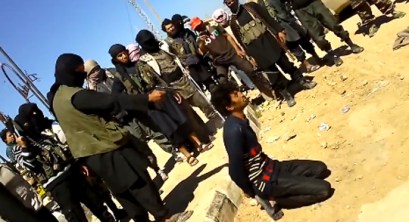
A man (C) identified in the subtitiles as Al Karar the Iraqi gestures as he speaks at an undisclosed location in this image taken from undated video footage released by Islamic State. Islamic State warned in the new video on November 16, 2015 that countries taking part in air strikes against Syria would suffer the same fate as France, and threatened to attack in Washington. The video, which appeared on a site used by Islamic State to post its messages, begins with news footage of the aftermath of Friday's Paris shootings in which at least 129 people were killed. REUTERS/Social Media Website via Reuters TVATTENTION EDITORS - THIS PICTURE WAS PROVIDED BY A THIRD PARTY. REUTERS IS UNABLE TO INDEPENDENTLY VERIFY THE AUTHENTICITY, CONTENT, LOCATION OR DATE OF THIS IMAGE. THIS PICTURE IS DISTRIBUTED EXACTLY AS RECEIVED BY REUTERS, AS A SERVICE TO CLIENTS. FOR EDITORIAL USE ONLY. NOT FOR SALE FOR MARKETING OR ADVERTISING CAMPAIGNS. NO RESALES. NO ARCHIVE.      TPX IMAGES OF THE DAY

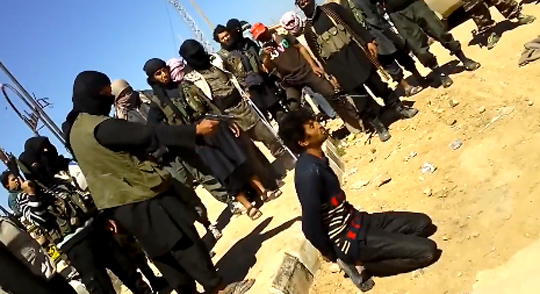
I rejoiced when our SEALs killed Osama Bin Laden and every Al Qaeda leader that we have ushered into the arms of Allah. They have caused unmitigated suffering around the world, not just to us but to their own Islamic neighbors and deserve no pity and since they refuse to give quarter should be shown none. I feel the same way about ISIS and ISIL who are killing the Iraqis that I served alongside and their families, and if that sounds harsh I can’t help it. The attacks of 9-11 and the wars that have followed are all too personal and as far as the extremists of ISIl, Al Qaeda, and their affiliates around the world I am unapologetic, we should annihilate them. I would apply the words of the hero of the Battle of Little Round Top at Gettysburg, Colonel Strong Vincent concerning the Confederates to the supporters of Al Qaeda and ISIL wherever the are:

“We must fight them more vindictively, or we shall be foiled at every step. We must desolate the country as we pass through it, and not leave a trace of a doubtful friend or foe behind us; make them believe that we are in earnest, terribly in earnest; that to break this band in twain is monstrous and impossible; that the life of every man, yea, of every weak woman or child in the entire South, is of no value whatever compared with the integrity of the Union.”

This will sound hard, but the life of every supporter of ISIL or Al Qaeda is of no value whatsoever to freedom and democracy.  I would apply that standard to any supporter of authoritarian dictatorship in any guise, not just militant Islamists, lest there be any doubt.

At the same time I question the strategic purpose and value of the campaign in we conducted in Iraq which seems to me has opened the gates of hell. I still think that the words that T.E. Lawrence wrote in 1920 about the British in Iraq are as applicable today as when he penned them; only the empires are different:

“The people of England have been led in Mesopotamia into a trap from which it will be hard to escape with dignity and honour. They have been tricked into it by a steady withholding of information. The Bagdad communiqués are belated, insincere, incomplete. Things have been far worse than we have been told, our administration more bloody and inefficient than the public knows. It is a disgrace to our imperial record, and may soon be too inflamed for any ordinary cure. We are to-day not far from a disaster.”

The British who Lawrence wrote about, gave their people reasons for going into Mesopotamia which were similar to those of the Bush administration over 80 years later. They cloaked their intentions in the words of liberation and protection, the British from the Turks, and the Americans from Saddam. Lawrence noted in words that are hauntingly familiar to those that paid attention to the American war in Iraq:

“Yet our published policy has not changed, and does not need changing. It is that there has been a deplorable contrast between our profession and our practice. We said we went to Mesopotamia to defeat Turkey. We said we stayed to deliver the Arabs from the oppression of the Turkish Government, and to make available for the world its resources of corn and oil. We spent nearly a million men and nearly a thousand million of money to these ends. This year we are spending ninety-two thousand men and fifty millions of money on the same objects.”

At the fifteen year mark I grieve for those that have lost their lives as well as loved ones in the attacks or in the wars that have followed. On September 11th 2001 2977 people were killed at the World Trade Center, the Pentagon or on United Flight 93 which went down in Pennsylvania. One of those killed at the Pentagon was Lieutenant Colonel Karen Wagner who I had served with at the Academy of Health Sciences Brigade in 1987-1988.

481801_10151367001287059_1003164983_n1

Since then about 4500 American military personnel have given their lives in Iraq and another 2400 in Afghanistan. NATO or coalition allies, excluding the Iraqi and Afghani military or police forces have lost about another 1300 military personnel and that does not count the soldiers of Iraq and Afghanistan who fought at our side. More than 45,000 American servicemen an women have been wounded in this fight. I know a decent number of those wounded and some of those that have died. The losses are intensely personal and to think that we have lost well over twice the number killed on September 11th 2001 in two wars; many of whom were children aged 8-12 years old on that tragic September day. Of course the numbers do not count those that died by their own hand after they returned from the war, a number that grows daily. I have known too many of them as well, heroes who could not make the adjustment coming home. Likewise I cannot forget the devastation that I saw in Iraq, the deaths of so many, some estimates of over a million civilian casualties, not county what has happening during the current ISIS/ISIL era.

That is why I am in favor of a hard war against these people. Some would say that a hard war would endanger civilians, and yes I agree with that. But then what is the alternative? To leave those same people under a regime that crushes them, enslaves them, takes their children and schools them to be child soldiers and Islamic Kamikazes? William Tecumseh Sherman told the mayor of Atlanta after ordering the civilian population expelled that “we are not only fighting hostile armies, but a hostile people, and must make the old and young, the rich and poor, feel the hard hand of war.”

That may seem hard, but I have been changed by that tragic event and the wars that have followed. I still shudder when I see the video of United Air Lines Flight 175 crashing into the South Tower or see the videos of the towers crashing down on that September day fifteen years ago.

The events of that tragic day changed me, and changed countless numbers of other Americans as well as others around the world. While we yearn to return to the day’s before 9-11-2001 that is impossible, there is too much water and too much blood that has passed under the bridge to go back, and those who advocate the same ideology as the attackers of 9-11 will not go back either.

As for me, I know that I can’t go back. But as much as I wish that I could I will have to live with reality, as I have for the last fifteen years, and I will continue to learn to live with it.  To live with the reality that this war will not end anytime soon and that far too many more people will die before this war ends. For those that find my opinions about this war repulsive or less than informed, I would actually hope and pray that you are right. But as my Iraqi friends say,

“Inshallah (إن شاء الله)”

Peace

Padre Steve+

1 Comment

Filed under afghanistan, Foreign Policy, History, iraq,afghanistan, middle east, Military, national security, News and current events, terrorism, War on Terrorism

A Suggestion of Assassination 


Friends of Padre Steve’s World

I had planned of starting a new series tonight about the Guadalcanal campaign since it began 74 years ago yesterday but I got distracted. Sadly it wasn’t unexpected but I had hoped to avoid writing  on Donald Trump until at least Labor Day. In fact, if he had just been his normal narcissistic self, or repetition of flagrant lies, I probably would have said nothing. Trump is so full of this stuff that it really is getting out and boring. 

But today he did something that went beyond anything I could have imagined that a major political party nominee would ever say. During a campaign speech in Wilmington, North Carolina he not only made false allegations on Clinton’s gun policy, he suggested that if she were elected and appointed Supreme Court justices that she would destroy the Second Ammendment. If he had stopped at that I would have let it pass, but he then told his supporters that “there was nothing they could do.” His actual comments which were delivered in a word salad manner were: “If she gets to pick her judges – nothing you can do folks. Although the Second Amendment people. Maybe there is. I don’t know.” 

Of course there was the outright lie that if Clinton gets to pick judges that people have no choice. He seems to ignore the legislative process, but then if he causes the GOP to implode and lose their House and Senate majorities neither he or they have nobody else but themselves to blame. But that wasn’t all. He made a suggestion, which Senator Jeff Sessions of Alabama said could have been a “joke” that implied that “Second Amendment people” could do something. His spokesmen said that it meant that they would come out and vote, but the language, facial expression and body language of Trump spoke volumes. Since one of his advisers said less than two weeks ago that Hillary should be put before a foreign something that Trump never repudiated, and the fact that Trump has incited and encouraged physical violence against opponents, it was hard not to conclude that Trump was suggesting that his supporters kill Hillary Clinton, Supreme Court justices, or Federal judges. 

But Trump jumped the shark on this one. Rational people from across the political spectrum realized exactly what Trump meant. Former Congresswoman Gabby Giffords, herself a survivor of an assassination attempt said “Donald Trump might astound Americans on a routine basis, but we must draw a bright red line between political speech and suggestions of violence. Responsible, stable individuals won’t take Trump’s rhetoric to its literal end, but his words may provide a magnet for those seeking infamy. They may provide inspiration or permission for those bent on bloodshed.”

Former CIA Director and Air Force General, Michael Hayden told CNN’s Jake Tapper, “If someone else had said that outside the hall, he’d be in the back of a police Eagan now with the Secret Service questioning him.” Hayden added: “You’re not just responsible for What you say. You are responsible for what people hear. That was more than a speed bump. That is actually a very arresting comment. It suggests either a very bad taste with reference to political assassination and an attempt at humor or an incredible insensitively – it may be the latter – an incredible insensitivity to the prevalence of political assassination inside of American history.” 

Of course Trump spokesmen and supporters including Rudy Guilinani rapidly defended Trump by saying that he actually didn’t say or mean what he said. But context is everything. He provided cover for any person bent on infamy, or those bent on bloodshed. It is inexcusable and vile, and to hear people who say that they are all about law and order  defend the remarks and spin them beyond recognition goes beyond my capacity for understanding. We had four Presidents (Lincoln, Garfield, McKinley,and Kenedy) killed by assassins in a period of less than one hundred years, and and at least four others (Theodore Roosevelt, Harry Truman, Gerald Ford, and Ronald Reagan) survived such attempts. Name one other civilized country where that has occured? To even joke about it on the campaign trail shows the moral and ethical depravity of Donald Trump. 

Now I know a lot of gun owners whose position on the Second Amendment more closely resembles Trump’s than mine. That being said I don’t know a one who would ever try to kill a political opponent, or assassinate a President, Presidential candidate, or Federal judge. These are rational, law abiding people, but Trump is appealing to the hate filled and deranged conspiracy theory types. The latter are the kind of people who would attempt such an action. Trump’s words are also insulting to the vast number of gun-owners who are law abiding citizens, by using the term “Second Amendment people” Trump, lumped together the law abiding and the law breaking, the sane and the insane, the rational and the irrational. 

Anyway. I am tired. It has been a long but good day. I had another crazy PTSD nightmare last night, thankfully instead of my face hitting the nightstand I gave it an overhead kick during a close combat nightmare. But I got another three mile run in this afternoon and unlike yesterday my legs felt good the entire run.

So have a good night.

Peace

Padre Steve+

1 Comment

Filed under History, national security, Political Commentary

What too Many in Their Hearts Desire: A Massacre and Those Who Will Not Condemn it


Friends of Padre Steve’s World,

When I got up yesterday morning to head over to my chapel at the staff college, despite the fact that with classes out of session that I would have no-one to worship with, I saw the news of the massacre at the Pulse nightclub in Orlando. I was stunned, and of course I prayed for the victims. As the morning continued I read with horror the dramatic increase in the number of people killed and wounded. I have Gay friends in Orlando and thankfully they had checked in safe on Facebook, which relieved some of my concern, but not my shock and anger over what had happened. 

Then came news of the murderer. His name, Omar Mateen. He was a Muslim, born in the United States to Afghan parents. As the day went on we learned more about him. He had been on the FBI radar for comments sympathetic to terrorists, including the Boston Marathon bombers. He was employed by one of the largest private security firms in the world. He had recently completed an associate of arts in Criminal Justice and a college in Florida. His first wife said that he was unstable and frequently beat her. His father claimed that he was enraged when he saw two men kissing in public a few weeks ago. In the past two weeks, despite having been on the Federal radar, he was able to legally purchase an assault rifle and a Glock semi-automatic pistol in Florida. During the massacre he called 911 and swore his allegiance to the leader of the Islamic State, or ISIL. He rented a car and travelled 120 miles from his home to attack this specific target. 

Was he a terrorist? Yes. Was he motivated by a deep hatred of homosexuals? Yes. Did he have religious reasons to do this? Also yes, fundamentalist Islam has no problem with killing homosexuals, and the more militant types seem to take a perverse pleasure in killing homosexuals, especially Gay men. This happens all the time, and not just in areas controlled by the Islamic State or the Taliban. Was Mateen an actual member of the Islamic State? It depends on what your definition of membership is, as the FBI sorts through his cyber trail we will find out more about his connections with militant Islam. Evidently his father is a supporter of the Taliban and has spoken on American Afgani television programs about that support, though he may be delusional as well, since he has also claimed to be the President of Afganistan. 

Sadly, the fact that is was a hate crime committed against LGBTQ people in Orlando will be obscured by the Islamic connection. Donald Trump has been doing this all day, for him the victims don’t matter, all that matters is his campaign and his determination to make all Muslims pay for the actions of some. Expect to see more of this, especially from the supposedly “Christian” political leaders, pundits, and preachers who make their living demonizing the LGBTQ community in the United States; who ramrod legislation to deny Gays to same rights enjoyed by others across this nation; and who promote “kill the gays” laws in other countries, especially in Equatorial Africa, where numerous American evangelists have gone to help try to pass such laws. Texas Lieutenant Governor Dan Patrick tweeted this shortly after the shooting:


Frankly, at least from my point of view it seems that there is little difference between anti-gay preachers and bigots of any religion who cry for the death, punishment, and persecution of Gays. All find some reason in their scriptures to justify their hatred and violent attitudes, not just towards Gays, but toward anyone that disagrees with them. All in my view are culpable of the murder of these men and women. In the classic film Judgement at Nuremberg, Spencer Tracy’s character, Judge Dan Haywood said these all too pertinent words:

“The principal of criminal law in every civilized society has this in common. Any person who sways another to commit murder, any person who furnishes the lethal weapon for the purpose of the crime, any person who is an accessory to the crime, is guilty.” 

One cannot expect to have a society where Gay people are demonized and discriminated against, where anti-gay vitriol runs rampant, especially in religious circles, and then to pretend that ties shooting is an isolated incident committed by an Islamic terrorist who was motivated by terrorism versus hating the people he killed because they were Gay. That is a convenient excuse. When I mentioned this on Facebook yesterday morning I waited to see reactions of friends. Interestingly enough of all the people that commented, or expressed any feelings of toward the victims, none were conservative Christians. None. When I mentioned this later a few came on line to agree how terrible this was. I looked at other friends timelines, and thankfully there were some who condemned what happened, but overall, very few said anything either to condemn the attack or to offer any sympathy or support to the victims. One of my friends, another Navy Chaplain immediately commented on that and said, “The gunman did what too many in their hearts desire, unfortunately. They are silent because they know that truth…” 

Sadly, he is all too correct. Whatever happened to the words of Jesus who said to love our neighbors as we do ourselves? Whatever happened to the words of Jesus about the Good Samaritan, the man who was despised by the religious elite who alone had mercy on a man who had been attacked and badly injured who religious leaders passed by on the road. (See Luke 10:25-37) 

With that in mind have a good day. 

Until tomorrow,

Peace

Padre Steve+

2 Comments

Filed under crime, LGBT issues, national security, News and current events, terrorism

The Straw that Stirs the Drink: The Implications of Resurgent Religion for Strategists and Policy Makers

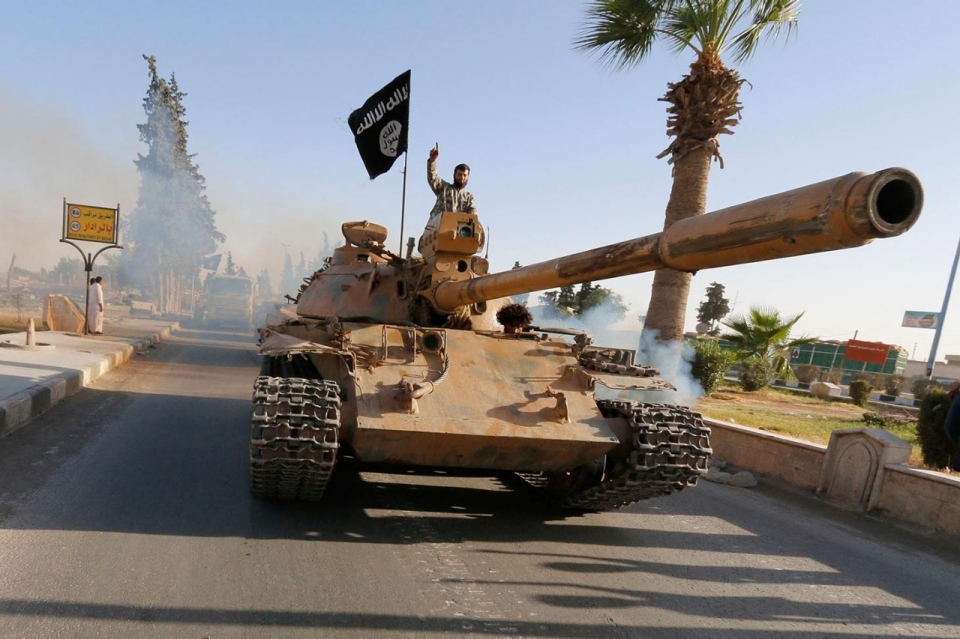
isis-terrorists

Friends of Padre Steve’s World,

I am being published in the most recent issue of Campaigning: The Journal of the Joint Forces Staff College. The article will be available along with the rest of the journal at the website of the college, but I am posting it here. It is an interesting topic since religion is raising its head in numerous conflicts around the world, and is a very real part of the contemporary American political climate. Note, the pictures are not included in the Campaigning issue.

I hope that you enjoy.

Peace

Padre Steve+

One can never separate war and the means by which it is fought from its political ends. There are, however, many societies whose language and religious ideology shape the leader’s political ends. To borrow the immortal words of legendary baseball slugger Reggie Jackson, religion is often “the straw that stirs the drink.” The fact that religious ideologies influence societies and international relations is not new, but after almost three centuries of decline the twenty-first century promises to begin a new age of religious influence. Samuel Huntington notes, “Western secular models of the state are being challenged and replaced”[1] in many nations as religious influence grows. The indicators of this shift, religious, cultural, and racial, are glaringly obvious in the Middle East but clearly present in Eastern Europe, Russia, the Balkans, India, Latin America, and the United States, and threaten to subvert Western secular models of the state.

According to Clausewitz, war is an extension or continuation of politics. Clausewitz, a product of classic German Liberalism, understood the term politics in light of the German concept Weltanschauung, which translates as “World View.” The term is not limited to a particular doctrine or the ideology of party politics, but it encompasses the worldview of a people or culture and includes religion. Religious leaders, as well as media outlets and politicians, use a world view to influence their populatio. In fact, the world view is often crucial in the decision by a people to go to war, their rationale for going to war, whom they war against, the means for conducting war, and the end state they envision from warring.

image.adapt.960.high

Because Weltanschauung includes all elements of culture, to include race, religion, and economy, as well as sociological and historical factors; religious leaders, as well as media outlets and politicians, use it to manipulate their people. Radical proponents of religious fundamentalism around the world, who reject the pluralities of modernism and science, skillfully “use each new method of communication” [2] to spread their message of fear in a dualistic manner  to influence those most vulnerable to the threat of change.

Modern Americans and Western European policy makers tend to look at the world, and issues of politics and policy in isolation from each other, and especially in isolation from religion. Such an atomistic method ensures that many policy makers cannot see the forest for the trees. This is particularly true when religion is a motivating factor and an ideological component of conflict. Religiously based ideology is a powerful and “often intractable force that can be quite unresponsive to all the instrumentalities of state power, let alone the instrumentalities of foreign policy,” [3] and has been so from the advent of civilization to the present day. Samuel Huntington observed, “To a very large degree, the major civilizations in human history have been closely identified with the world’s great religions; and people who share ethnicity and language but differ in religion may slaughter each other….” [4]

Even among religions that claim to worship the same god beliefs may differ, and that fact underscores Colin Gray’s all important, “contexts of war.” Gray makes the case for seven essential contexts policy makers and military leaders must understand regarding war that “can have strong negative consequences,” [5] if ignored or misunderstood.

Each of the contexts is associated with the manner of social development, and define the essential characteristics of a particular armed conflict. In many areas of the world religion functions as the “central political pillar maintaining the power of [the] ruler—a major pole in determining people’s loyalty—and as a key ingredient in determining a nation’s stability or instability.” [6] Religion and religious values remain instrumental to the ethics and the social norms of a society and dictate how it deals with other nations and peoples, as well as how it conducts war.

Over the course of the last three centuries the emphasis on rational and empirical thought predisposed western strategists and policy makers to exclude religion as a component of analysis. Furthermore, the scientific methodology used by many analysts dictates that they asses individual components of issues in isolation from each other, and often without connection to their opponent’s world view. Experts dissect economic factors, military capabilities, existing political systems, diplomatic considerations, and the ways societies gather information and exhaustively examine and evaluate each individual component. But the problem comes when policymakers fail to understand how world view, ideological factors, history, and religious belief impact how a given opponent will conduct war.

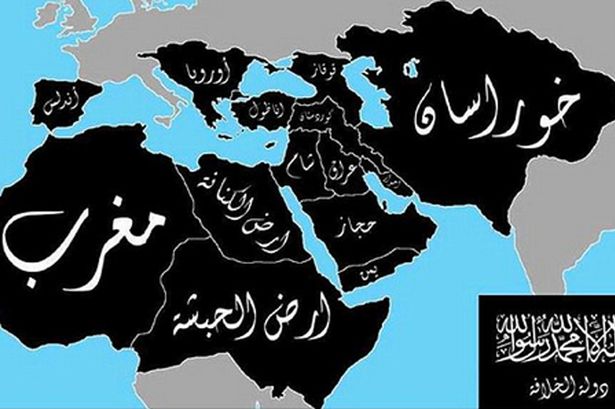
ISIS-MAP

In part, policy makers tend to interpret information through their own worldview. As Gray notes, “Policy and strategy will be influenced by the cultural preferences bequeathed by a community’s unique interpretation of its history as well as by its geopolitical-geostrategic context.” [7] As such, both military and civilian policy makers fail to address the criticality of religion to developing effective strategy. Barbara Tuchman wrote, “When information is relayed to policy-makers, they respond in terms of what is already inside their heads and consequently make policy less to fit the facts than to fit the notions and intentions formed out of the mental baggage that has accumulated in their minds since childhood.” [8] A world view imposes cultural prejudices and blinders on western policy makers and strategists, that predispose them to look for shortcuts, or the most convenient explanations selected from the information they can see. Edward Luttwak wrote:

Enlightenment prejudice has remained amply manifest in the contemporary professional analysis of foreign affairs. Policymakers, diplomats, journalists, and scholars who are ready to overinterpret economic causality, who are apt to dissect social differentiations most finely, and who will minutely categorize political affiliations are still in the habit of disregarding the role of religion, religious institutions, and religious motivations in explaining politics and conflict, and even in reporting their concrete modalities. Equally the role of religious leaders, religious institutions, and religiously motivated lay figures in conflict resolution has also been disregarded – or treated as a marginal phenomenon hardly worth noting. [9]

Unbeknownst to policy makers, their prejudices, the world view blinders they wear, inhibit them from seeing how interconnected the most primal elements of the human experience are to others’ worldviews, even their own. As such, both military and civilian policy makers fail to address the criticality of religion to developing effective strategy.

Many people believed that modern ideas, “such as science, technology, secularism, and humanism would overcome the religious concept of the universe that dominated premodern society.” [10] Contemporary Western strategists and policy makers came to adulthood in a culture that supplanted the importance of religious ideas and need. A global, four-decade resurgence of religious ideals makes adaptation for strategists and planners difficult because of the dramatic shift in essential, unquestioned views. [11] Others’ worldviews, including religious beliefs, often influence the application of economic, political, diplomatic, military power, and the use and dissemination of information. That fact remains true despite the religion or sect involved, and especially in a decidedly secular, or at least outwardly non-religious, nation. Perhaps, by ignorance or a refusal to admit the importance of religious motivations in conflict, strategists and planners fail to realize the western culture arose from primal religious beliefs that informed politics, philosophy, ethics, law, economics, art, racial constructs, and science for nearly 1500 years. Perhaps, that refusal fueled a justified appall or embarrassment of the religious justifications their forbearers used to incite war that subjugated or exterminated peoples.

The United States Military made a belated attempt to address ideology, culture, and religion in terms of counter-insurgency doctrine when it published the U.S. Army/Marine Counterinsurgency Manual. The discussion of these issues is limited to two pages that specifically deal with various extreme Moslem groups that use religion as a pillar of their ideology, strategy, and operations. But the analysis in the counterinsurgency manual is limited because its focus is very general and at a tactical level. While the manual encourages leaders to attempt to understand the cultural differences it contains little to help leaders understand the importance of religion and ideology at the strategic and operational levels.

Commendably, the manual discusses how terrorist and insurgent groups use ideology, which is frequently based on religion to create a narrative. The narrative often involves a significant amount of myth presented as history, such as how Al Qaida and ISIL use the Caliphate as a religious and political ideal that for many Moslems, “produces a positive image of the golden age of Islamic civilization.” [12]

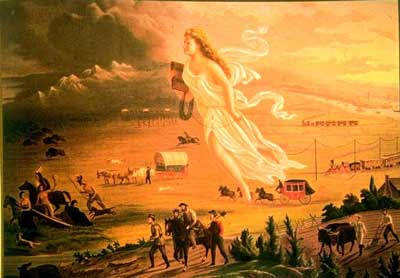
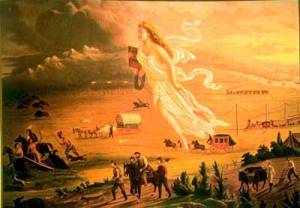
A purely intellectual understanding of how Al Qaida and ISIL use symbolism and imagery limits how strategists and planners can develop methods to counter it. Rather, strategists and planners would benefit from a historical introspection that leads to a personal reflection, aimed at understanding how the theological tools of the Christian religion subjugated peoples and the ramifications today. Protestant Christianity, particularly the Puritan concept of “a city set on a hill” undergirded the American belief in the nation’s Manifest Destiny, which in large part led to the extermination of the Native Americans, the War with Mexico, the romanticism of the ante-bellum American South, the belief that African Americans were sub-human, and that God ordained slavery. The concept persisted after the Civil War in the myth of the Lost Cause, and was exported abroad as the United States belatedly entered the race for overseas colonies.
Manife4

The concept of Manifest Destiny is still an essential element of the idea of American Exceptionalism, which often justifies much of American foreign policy. Former President George W. Bush alluded to this idea in his 2003 State of the Union Address where he said, “that freedom is the right of every person and the future of every nation. The liberty we prize is not America’s gift to the world, it is God’s gift to humanity.” [13] Throughout the Bush presidency, the President’s idea that God undergirded the policy of the United States led to a mismatch of policy ends and the means to accomplish them. Former Israeli Ambassador to the United States and historian Michael Oren wrote:

Not inadvertently did Bush describe the struggle against Islamic terror as a ‘crusade to rid the world of evildoers.’ Along with this religious zeal, however, the president espoused the secular fervor of the neoconservatives…who preached the Middle East’s redemption through democracy. The merging of the sacred and the civic missions in Bush’s mind placed him firmly in the Wilsonian tradition. But the same faith that deflected Wilson from entering hostilities in the Middle East spurred Bush in favor of war. [14]

Only when policy makers and strategists understand that the use of religious ideology to conquer, subjugate, and terrorize in the name of God is universal, does it become easier to defeat those who employ it.

American Presidents often invoke the name of God to justify the compulsion to conquer, such as McKinley did when he decided to annex the Philippines in 1899 following the defeat of the Spanish. The war against the Filipinos used some of the most bloodthirsty tactics employed to fight the Filipino insurgents, who only wanted independence, and stained our own national honor. Mark Twain wrote: “There must be two Americas: one that sets the captive free, and one that takes a once-captive’s new freedom away from him, and picks a quarrel with him with nothing to found it on; then kills him to get his land. . . .” [15]

A doubtlessly sincere McKinley sought counsel from God about whether he should annex the Philippines or not. Barbara Tuchman wrote: “He went down on his knees, according to his own account, and ‘prayed to Almighty God for light and guidance’. He was accordingly guided to conclude “that there was nothing left to do for us but to take them all, and to educate the Filipinos. And uplift and civilize and Christianize them, by God’s grace to do the very best we could by them, as our fellowmen for whom Christ died.” [16]

The counterinsurgency manual does mention how “Ideology provides a prism, including a vocabulary and analytical categories, through which followers perceive their situation.” [17] But again, it does this at a micro-level and the lessons are not applied at the higher levels of strategic thinking and policy. This is often due to the fact that American and other western strategists and policy makers view religion “as a set of theological issues rather than as a profoundly political influence in public life.”[18] Even after nearly a decade and a half of unremitting war against enemies for whom religion is at the center of their politics, policy makers still misread or neglect the importance of religion and religiously based ideology in the political motivations of their opponents. In many cases, the religion of a people is a stronger part of their identity than that of the state. Nations created during the post-colonial era “continue to see religion, clan, ethnicity, and other such factors as the markers of community identity” [19] Despite the advances in communications and technology and the globalization of so many western concepts, the political and religious leaders of Islamic nations view modern western political and social concepts as unwanted intrusions on their ancient cultures, and more importantly, insults to their religion.

kim davis pastor

But, lest American policy makers and strategists see this rise as something completely foreign, a similar phenomenon is occurring in the United States. Despite the fact that a growing number of Americans espouse no-religious preference and, according to multiple studies conducted over a period of two decades, are leaving organized Christianity, adherents of two highly motivated and militant branches of Christianity have grown in strength and political power over the last forty years. The group known as Christian Dominionism advocates Christian domination of all parts of society and culture, and Pre-Millennial Dispensationalists believe in the imminent return of Christ to earth, including the belief that most of the earth’s population will be killed during the Apocalypse. A Pew Research Center survey found that by the year 2050, that 41% of Americans believe that Jesus Christ will return to earth. [20] Leaders, politicians (including major conservative presidential hopefuls), pundits, and preachers often weigh in on public policy, to include military strategy, and claim that God’s law supersedes that of the state. They simultaneously reject secularism while legislating against those they deem enemies, and advocate for a “holy war” against Islam without distinction to Islam’s own divisions and distinctive denominational differences.

may appear irrational American strategists and policy makers, but it is completely rational to those who subscribe to it. The study of history, particularly how the deep roots of religion and faith shape cultural worldviews, as well as the actions of various peoples and nations, helps the policy maker and strategist adapt policy, strategy, and ultimately operational and tactical methods to the context of the conflict at hand. To do this effectively it is important that American strategists not be afraid to examine our own past to see how our ancestors used religion for good as well as for evil. However, the often dark mirror of history can be disconcerting to peer into. People tend to be uncomfortable when the face that they see in the mirror is all too similar to their current enemies, to the point that one might turn away in fear of what they see. The inability to look into the dark mirror of our own history is especially perilous when enemies are perfectly willing to wage war without end unto the destruction of the world in the name of their God, because when you belatedly look back in the mirror, failure will be staring you right in the face.

Notes

[1] Huntington, Samuel P. Who Are We? America’s Great Debate The Free Press, Simon and Schuster Europe, London 2004 p.360

[2] Jacoby, Susan. The Age of American Unreason Revised and Updated Vintage Books, A Division of Random House, New York 2008 p.18

[3] Luttwak, Edward. The Missing Dimension  in Religion: The Missing Dimension of Statecraft  Oxford University Press, Oxford and New York 1994 p.13  

[4] Huntington, Samuel P. The Clash of Civilizations and the Remaking of the World Order Touchstone Books, New York 1997 p.42

[5] Gray, Colin S. Fighting Talk: Forty Maxims on War, Peace, and Strategy Potomac Book, Dulles VA 2009 p.5

[6] Rubin, Barry Religion in International Affairs in Religion: The Missing Dimension of Statecraft  Oxford University Press, Oxford and New York 1994 pp.20-21

[7] Ibid. Gray Fighting Talk p.25

[8] Tuchman, Barbara W. Practicing History Alfred A. Knopf, New Your 1981 p.289

[9] Ibid Luttwak The Missing Dimension pp.9-10

[10] Ibid. Rubin Religion in International Affairs p.21

[11] Ibid. Rubin Religion in International Affairs p.21

[12] ___________ U.S. Army/ Marine Counterinsurgency Field Manual FM 3-24 MCWP 3-33.5 15 December 2006 with and forward by General David A Petraeus and General James Amos, Konecky and Konecky, Old Saybrook CT 2007 p.26

[13] Bush, George W. State of the Union Address Washington D.C. January 28th 2003 retrieved from Presidential Rhetoric.com http://www.presidentialrhetoric.com/speeches/01.28.03.html 10 June 2015

[14] Oren, Michael Power, Faith and Fantasy: America and the Middle East 1776 to the Present W.W. Norton and Company, New York and London 2007 p.584

[15] Twain, Mark To the Person Sitting in Darkness February 1901 Retrieved from The World of 1898: The Spanish American War The Library of Congress http://www.loc.gov/rr/hispanic/1898/twain.html 12 December 2014

[16] Ibid. Tuchman Practicing History p.289

[17] Ibid. U.S. Army/ Marine Counterinsurgency Field Manual p.27

[18] Ibid. Rubin Religion in International Affairs in Religion p.20

[19] Ibid. Rubin Religion in International Affairs p.22

[20] Pew Research Center, U.S. Politics and Policy, http://www.people-press.org/2010/06/22/public-sees-a-future-full-of-promise-and-peril/

8 Comments

Filed under Foreign Policy, History, middle east, national security, News and current events, Religion

Living with Terrorism

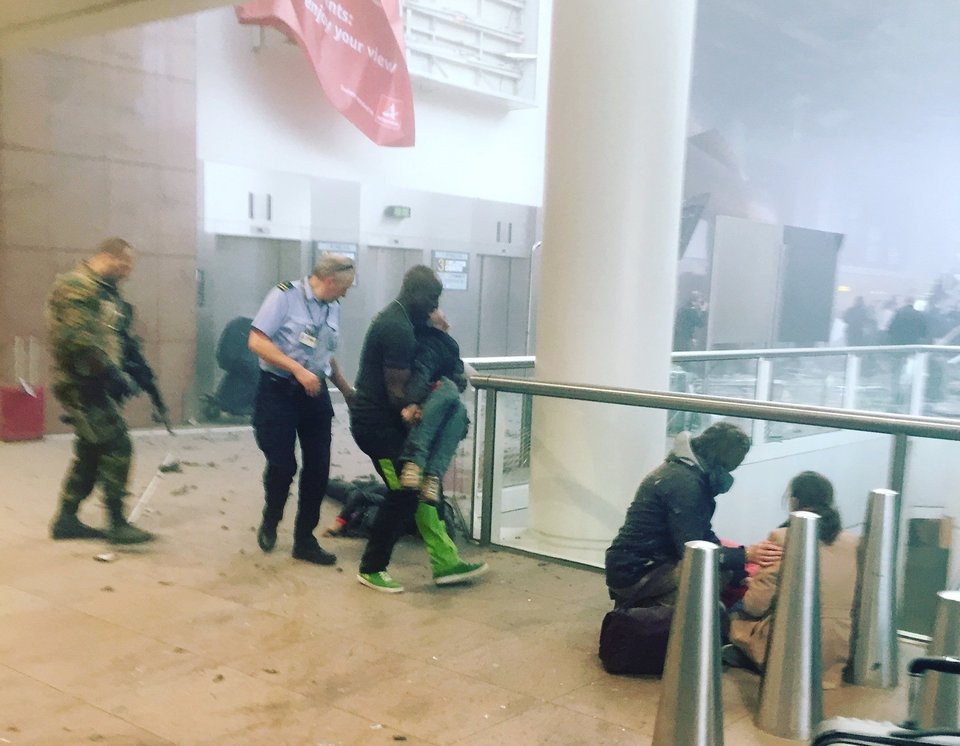
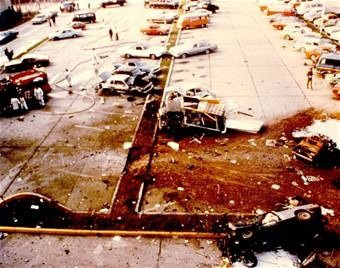
This photo provided by Georgian Public Broadcaster and photographed by Ketevan Kardava, shows the scene in Brussels Airport in Brussels, Belgium, after explosions were heard Tuesday, March 22, 2016. A developing situation left a number dead in explosions that ripped through the departure hall at Brussels airport Tuesday, police said. All flights were canceled, arriving planes were being diverted and Belgium's terror alert level was raised to maximum, officials said. (Ketevan Kardava/ Georgian Public Broadcaster via AP)

Friends of Padre Steve’s World,

I am an old hand when it comes to living with terrorism. When we were stationed in Germany in the 1980s it was at the height of the second generation of the Baader-Meinhoff Gang/ Red Army Faction reign of terror. There were frequent bombings and murders committed by these East German supported terrorists throughout Germany, and we narrowly avoided being victims of two of them; one at the Frankfurt Airport, and one at the Frankfurt Military Exchange. Every day we had to look under our car for car bombs as that was a favorite method of killing. Likewise when we drove onto base, not only did we have multiple forms of identification verified, but our vehicles were checked for bombs underneath, as well as in the trunks and engine compartments, which had to be opened and inspected. Despite that on one occasion a bomb was found in the Mess Hall and defused, across town at another base a young enlisted man was kidnapped and murdered by a female terrorist posing as a date. When we were shopping one day at a German retail store we saw, and reported to the Polizei a group of people that we recognized too late from the wanted posters. We made our report and were interrogated for over two hours. I was actually glad for that, because what we said was taken seriously.

RAF bombing

Baader-Meinhoff/ Red Brigade Bombing in Germany

But sadly that was just the beginning of my experience with terrorism, both international and domestic. Terrorists may have different causes and motivations, but the one thing they desire to do is to is to terrorize and kill, that their victims often have nothing to do with their grievances, real or imagined, and are innocent of any crime against them does not matter; nor does it seem to matter to their western apologists who excuse the terrorists by blaming the societies and governments of the victims instead of placing the blame on the hate filled ideology of the terrorist.

The sad thing is the ideology of DAESH has been around for a long time, but that it would not made much progress had not President Bush destroyed Iraq and given them a place to flourish. Fareed Zakaria hit the nail on the head when he noted: “I should have paid greater attention to my mentor in graduate school, Samuel Huntington, who once explained that Americans never recognize that, in the developing world, the key is not the kind of government — communist, capitalist, democratic, dictatorial — but the degree of government. That absence of government is what we are watching these days, from Libya to Iraq to Syria.” It is the absence of the restraining force of government that has allowed DAESH to thrive, and which will allow it to continue.

I have travelled all over the world and I have been to war. I have seen horrible things and even when I admit the many things that this country has done that are wrong, and even criminal, I cannot allow that to color my view that the terrorists; be they the Baader-Meinhoff gang and the Red Brigades, or today the hate filled religious terrorists of DAESH deserve the slightest bit of sympathy, and just because our government and other governments, as well as the media sometimes label people as terrorists who are not, does not mean that the actual terrorists, like the ones who attacked Brussels yesterday are not terrorists. They are terrorist and that word has a definitive meaning for them, there is no moral equivalence of sleight of hand here. They terrorize and kill innocents in the lands that they occupy, and are taking their fight all over the world.

So do I live with it? I decide to live regardless of the threat, and refused to be terrorized and I will speak out, even if I offend people. I think that Salman Rushdie, a man who has known the price of having a bounty on his head by religious fanatics for decades, said it right: “How to defeat terrorism? Don’t be terrorized. Don’t let fear rule your life. Even if you are scared.”

I will travel to Germany again this year. I will go to the airport, I will travel on the subways, and go through train stations; and I will not be afraid. Likewise, despite the fact that I know such attacks are bound to happen here, maybe even at the base I am stationed, I will not be afraid.

Have a good day,

Peace

Padre Steve+

2 Comments

Filed under History, national security, News and current events, Religion, terrorism

Dehumanization & Genocide

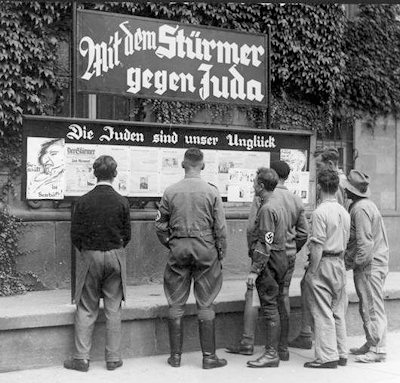
sturmer-display

Friends of Padre Steve’s World,

One of the most terrible things about a national security crisis, real or imagined, is that xenophobic leaders, instill fear and terror about people who are different from the majority. It is shockingly easy to do, and is part and parcel of every human culture. In doing so they use language which enables people, often very good people, to view others as less than human, a process known as dehumanization. Right now we see the results of this. On one hand there are the fanatics of DAESH and other Moslems extremist groups that use propaganda to dehumanize anyone that does not adhere to their beliefs. On the other hand there is the response of some American and European politicians, preachers, pundits and media organizations which in responding to the extremists, dehumanize all Moslems and suggest the most severe measures to deal with what they call the problem of Islam.

David Livingstone Smith wrote, “Dehumanization isn’t a way of talking. It’s a way of thinking—a way of thinking that, sadly, comes all too easily to us. Dehumanization is a scourge, and has been so for millennia. It acts as a psychological lubricant, dissolving our inhibitions and inflaming our destructive passions. As such, it empowers us to perform acts that would, under other circumstances, be unthinkable.”

Once someone has succumbed to the idea that certain others are no longer fully human, or less than human the unthinkable becomes not only possible, but probable. Of course this process takes time, and usually comes from years of exposure to propaganda that first demonizes, and then dehumanizes those that the propagandists despise. At Nuremberg, Julius Streicher, the publisher of the Nazi tabloid Der Sturmer was asked by a prosecutor, “And do you think to call them “blood-suckers,” “a nation of blood-suckers and extortioners– do you think that’s preaching hatred?” Streicher replied, “No, it is not preaching hatred; it is just a statement of facts.”

In Hitler’s Third Reich it was the Jews and others who were viewed as sub-human. When one reads the testimony of the major war criminals at Nuremberg, every single defendant admitted to the role that decades of anti-Semitic propaganda had in shaping their worldview.

The sad truth is that Hitler is not alone. Such beliefs and actions are all too common. In 1830s to the 1850s in the United States it was Irish and German Catholics; in the ante-bellum and the Jim Crow South it was African Americans who were said to be an inferior race; in the 1860s to the early 1900s on the west coast it was the Chinese. After Pearl Harbor, the Japanese who we put in internment camps. Let us not forget the protracted campaign to exterminate the Native Americans, something that Rush Limbaugh mocked in 2009 saying, “Holocaust? Ninety million Indians? Only four million left? They all have casinos — what’s to complain about?” Those are just European and American examples. One can see the same language and action in Rwanda, the Sudan, the Middle East, the Japanese campaign in China, the Soviet starvation and massacres of Poles and Ukrainians during the 1930s; and the list can go on and on.

One of the ways that they make it easy for their followers to approve of draconian measures is to dehumanize their victims and euphemistically refer to the situation as a question, a question that must have an answer or a solution. In the Third Reich it was the Jewish question, and the answer became the apocalyptic Final Solution.

The Nazis referred to the Jews as sub-human, a bacilli, or cancer. Today leading politicians in the United States and Europe are referring the Syria refugees, as well as other Moslems in a similar manner. Some of the worst offenders are men who beat on their chest and claim to be Christians. Mike Huckabee referred to the Syria refugees as “spoiled milk,” Ben Carson called them “rabid dogs.” The mainstream British columnist, Katie Hopkins called them “rats and cockroaches.” Plenty of other less prominent politicians, pundits and preachers have voiced similar opinions, and you cannot visit Facebook without seeing scores of memes and comments echoing those thoughts.

But others, particularly the media and already elected officials use other language to dehumanize people. The language of natural disasters, or war is common. Politicians, preachers and the media couple refugees and migrants with words such as influx, occupation, invasion, flood or flow. All of these terms are used to stoke fear in the minds of their listeners or followers. Floods must be controlled, invasions, defeated, occupations, ended. Eventually people just take it for granted that such threats must be dealt with, such questions, answered.

This language encourages their followers to approve of draconian measures is to dehumanize their victims. Somewhat euphemistically they refer to the situation as a question, a question that must have an answer or a solution. In the Third Reich it was the Jewish question, and the answer became the apocalyptic Final Solution. The Nazis preached that there would have to be a showdown between their pure “Aryan” race, and the Jews. Rudolf Höss, the commandant of Auschwitz noted the Himmler stressed “that if Germany was to survive then World Jewry must be exterminated and we all accepted it as truth.”

Höss told American Army psychologist Gustave Gilbert about how he accepted the orders f0or the Final Solution based on his beliefs:

“That was the picture I had in my head, so when Himmler called me to him, I just accepted it as the realization of something that I already accepted – not only I, but everybody. I took it for granted that even though this order, which would move the strongest and coldest nature – and at that moment this crass order to exterminate thousands of people (I did not know how many) – even though it did frighten me momentarily – it fitted in with all that had been preached to me for years. The only problem itself, the extermination of Jewry, was not new – but only that I was the one to carry it out, frightened me at first. But after getting the clear direct order and even an explanation with it – there was nothing left to do but carry it out.”

Gilbert asked Höss, “So, that was the background for accepting a mass murder order?” Höss  replied, “Yes, when I think of it all, it is hard to figure out – but at the time I didn’t think of it as propaganda, but as something one just had to believe.”

But that is what millions of people are being asked to believe today in terms of all Moslems. It is not the fact that some Moslems are fanatical killers bent on war, and that we are at war with them; but that Islam itself, and thereby all Moslems are the enemy, and must be destroyed. The continual preaching of this will lead to, persecution, mass murder, and maybe even genocide, and it will be done by people like Höss, who are convinced that they are doing the right thing.

Until tomorrow,

Peace

Padre Steve+

1 Comment

Filed under History, holocaust, national security, News and current events, Political Commentary, Religion, terrorism

The Unfolding of Miscalculations: Syria 2015

russian jet in flames

Friends of Padre Steve’s World,

The tensions fuel by the incredibly complex and dangerous war in Syria just when up, as I like to say the “pucker factor” is very high, in fact it is getting close to stage ten. Barbara Tuchman wrote, “War is the unfolding of miscalculations” and it seems that right now there are whole a lot of miscalculations going on.

Yesterday a Russian Su-24 fighter plane was blasted out of the sky by a Turkish F-16. Reports conflict, Turkey say that the Russian aircraft had violated its airspace multiple times and had been given multiple warnings before the shoot down. The Russians claim that the aircraft was on the Syrian side of the border and that the attack was an unprovoked violation, and Russian President Putin called it a “stab in the back.” Russia is accusing Turkey of backing DAESH, while Russia’s forces, which are supposedly there to fight DAESH are spending more time attacking Syrian President Assad’s non-DAESH Syrian opposition, including Turkoman Syrians fighting the Assad regime in the area where the jet was shot down. Some think that it might be payback for the Russians bombing the faction supported by the Turks.

Admittedly, Turkey has a right to self-defense and the Russians are operating in Syria without any kind of international mandate. That being said, the Russians are there at the behest of the Assad government, which even if we don’t like it is still the legal government of Syria, a long term ally and client of Russia, going back to the old Soviet days.

However, the feud between Russia and Turkey goes back hundreds of years. They hate each other, and this hatred goes back to the days of the Tsars and the Ottomans. The hatred is generations old, and is cultural, religious and political. Maybe that is why we in the west do not understand it, but I digress… 

The fact is that the actions of both nations, as well as most other nations in the West including the United States have helped to stoke the fire of the Syrian war, which is threatening to escalate into a regional conflict. I am not going to go into all the details of what has brought us to this point, because they are too many to cover. Some of course are saying that it could lead to a World War, but I do think that cooler heads will prevail. Of course I could be wrong, as Tuchman wrote, “To admit error and cut losses is rare among individuals, unknown among states.”

It is now time for President Obama to step up to the plate, and not rattle sabers, but to help pull everyone back from the brink. He needs to work with Russia’s President Putin to deescalate the crisis. Since everyone involved has a stake in what happens it Syria it cannot be ignored. The nations involved need to sit down and come up with a way to defeat DAESH and bring peace to Syria and Iraq. Of course this is easier said than done, especially since bullets are flying, blood is flowing, and tensions rising. The fallibility of human beings has been demonstrated time and time again in this war, and as Tuchman wrote in The Guns of August, “Human beings, like plans, prove fallible in the presence of those ingredients that are missing in maneuvers – danger, death, and live ammunition.”

In 1962 President Kennedy faced the real possibility of nuclear war with the Soviet Union during the Cuban Missile Crisis. Kennedy had just read Tuchman’s The Guns of August which had just been published. He was shocked by the words of German Chancellor Bethmann-Hollweg who when asked how World War One started replied “Ah, if only one knew.” Kennedy asked General Curtis LeMay what would happen if the Soviets did not back down, and the officer replied that he would order a nuclear strike. Kennedy could not go down that road, he referred to the book when he remarked, “If this planet is ever ravaged by nuclear war—if the survivors of that devastation can then endure the fire, poison, chaos and catastrophe—I do not want one of these survivors to ask another, “How did it all happen?” and to receive the incredible reply: “Ah, if only one knew.”

The downing of this Russian jet shows just how easily things can spin out of control. It is time for calmer heads to prevail and walk this back before things get really out of hand.

Peace

Padre Steve+

2 Comments

Filed under History, middle east, Military, national security, News and current events