Category Archives: PTSD

Holy Week and the Outcasts

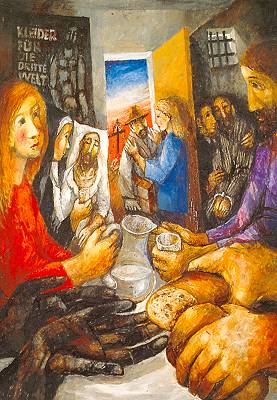
Sieger Köder
“Barmherzigkeit”

“Let us not underestimate how hard it is to be compassionate. Compassion is hard because it requires the inner disposition to go with others to place where they are weak, vulnerable, lonely, and broken. But this is not our spontaneous response to suffering. What we desire most is to do away with suffering by fleeing from it or finding a quick cure for it.” Henri Nouwen

Holy Week is here and on my way home from work and a visit with my shrink I was doing some thinking about Christians that have suffered a crisis in faith or loss of faith. I meet them all the time and read their stories on blogs, books and social media.  Of course I run across more now because I have gone through such a crisis and have written about it and through that had my story publicized. As a result I am contacted by people who have suffered trauma, especially related to PTSD as well as those that care for such people.

For many of the people Holy Week and Easter can be particularly painful. Having known plenty of these people I can say that this phenomena is one of the more tragic aspects of the season.  People who at one time felt the presence of God in their life only sense emptiness and aloneness which sometimes becomes a feeling of hopelessness where even death appears more comforting than life in the present.

I say this because people suffering through this often go unnoticed or are ignored in church. Their loss could be that of a spouse or child, the loss of something else significant or the experience of trauma that devastates them but no matter the cause of the suffering many people discover that they are now outcasts in the place where they should be cared about more than anywhere else.

Likewise there are many pastors and priests who are either unaware of them, uncomfortable around them or irritated by them because they don’t respond like “normal” people do to the message of Easter.  I have found from my own experience returning from Iraq that Easter despite the message of resurrection and hope often triggers a despair of life itself when one no longer senses the presence of God and feels alone against the world, especially in church.

Years ago I believed that if someone was in the midst of a crisis in faith if they read the Bible more, prayed more and made sure that they were in church that things would work out.  I believed then that somehow with a bit of counseling, the right concept of God and involvement in church activities that God would “heal” them.  Call me a heretic but that line of thinking is nice for people experiencing a minor bump in their life but absolutely stupid advice for people who are severely traumatized or clinically depressed and suicidal who no longer perceive the presence of God in their lives.  For those abused by parents or clergy this is I think an even deeper wound one in which the very concept and understanding of God becomes skewed in the minds and hearts of the victims.

I cannot condemn those who have lost their faith or are wavering in their faith due to trauma, abuse or other psychological reason. The numbers of people have been victimized by family, teachers, clergy other authority figures or physical trauma related to accidents, near death experiences or combat is mind numbing. They are all over the place and many go unnoticed in the church.

Sometimes the damage wrought on people makes it nearly impossible for them to comprehend a God who both cares about them and who is safe to approach.  My experience came from Iraq and the trauma of my return and were absolutely frightening so much so that I left a Christmas Eve Mass in 2008 and walked through the dark wondering if God even existed.  My isolation from Christian community and sense of despair during that time showed me that such a loss of faith is not to be trifled with or papered over with the pretty wallpaper or neat sets of “principles” drawn up in the ivory theological towers by theologians and “pastors” who refuse to deal with the reality of the consequences of a fallen world and their impact on real people.

Those that I have talked to and read about who have suffered a crisis or loss of faith almost always mention to me is that that feel cut off and even abandoned by God.  It is not simply depression that they are dealing with but despair of life itself when death or just going to sleep is preferable to living. This overwhelming despair impacts almost all of life.  It is if they never are able to leave the “God forsakenness” of Good Friday and cannot climb out of the tomb.   For some the pain is so much that suicide becomes an option and the belief that their family, friends and loved ones would be better off without them. I have seen this too many times to count.

It is hard to reach out to people in this situation.  I have to admit in my case that it was only people who chose to remain with me and walk with me through the ordeal in spite of my frequent crashes, depression, anger and even rage that helped get me through the worst of this.  However I’m sure that my condition burned some people out.  There were some that would not walk with me as I first began to go down this road and the sad thing is that many were ministers and fellow chaplains.  In some ways I don’t blame them.  However it is telling that the first person that asked me about my spiritual life “or how I was with the Big Guy” was my first therapist.

The topic of a loss of faith or the reality of feeling God forsaken is had to deal with but is something that we need to face especially during Holy Week. The Cross necessitates this, Jesus was considered “God-Forsaken” and that is what is so perplexing about Good Friday.

Yet scripture plainly teaches that we are to “bear one another’s burdens, and in this way you will fulfill the law of Christ.”  As Dietrich Bonhoeffer said  We must learn to regard people less in light of what they do or omit to do, and more in the light of what they suffer.”  It is our willingness to be with people in their suffering that is one of the true marks of the Christian.  Being with someone in triumph is far easier than with those who suffer the absence of God.  It is presence and love not sermons that people who have lost their faith need as Bonhoeffer so eloquently said “Where God tears great gaps we should not try to fill them with human words.”

I do pray that as we walk with Jesus this Holy Week that we will not forget those who despair of live and feel as if they are “God-forsaken.”

Peace

Padre Steve+
2 Comments

Filed under christian life, faith, Pastoral Care, PTSD, Religion

Not Alone: The Real Warriors Campaign

“Grant stood by me when I was crazy, and I stood by him when he was drunk, and now we stand by each other.” William Tecumseh Sherman 

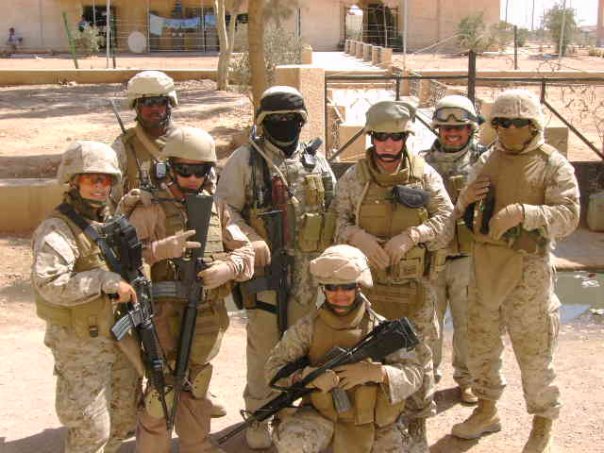
When I returned from Iraq in February 2008 it began the most difficult period of my life. Suffering from PTSD and a crisis in faith I felt alone, isolated, suffered terrible depression, anxiety was hyper-vigilant and angry. I felt abandoned by my former church as well as God. When I think about it now I can get still feel the deep emotions of those years. I am doing better now compared to how I was doing then.  Thankfully I have some friends that are to me what Grant was to Sherman.

Life is about living in the real world. Dietrich Bonhoeffer wrote from prison “I discovered later, and I’m still discovering right up to this moment, that is it only by living completely in this world that one learns to have faith. By this-worldliness I mean living unreservedly in life’s duties, problems, successes and failures. In so doing we throw ourselves completely into the arms of God, taking seriously, not our own sufferings, but those of God in the world. That, I think, is faith.”

When I started getting help after I fell apart in the summer of 2008 I was really struggling and the first person that asked about how I was doing with God was my therapist Dr. Elmer Maggard. It was during those initial months when I discovered that there were others out there like me that I decided that I could not be silent. Those that have followed this blog since its early days have followed me as I detailed my struggles, experience and tried to be as transparent as possible within the limits of my emotional state at any given time.  I was helped by a number of friends especially by my friends Greg and David, both Chaplains who have experienced things similar to me and without whom I would have been hard pressed to make it through my difficult times.

That was hard to do because I am a pretty introverted and private person.  So I wrote what I could when I could. Sometimes very raw and unfiltered emotions came to the front, other times I was able to get back into my comfort zone and write from a more detached point of view, a particular virtue and failing of being a historian. I wrote an article in September 2010 titled Raw Edges: Are there other Chaplains out there Like Me?  The next day I was asked to leave my former church although the two were not directly linked being ask to leave a day after I was talking to people about them not being alone even if they felt abandoned by God, their church or faith community or even the military.

A few months later in March of 2011I was interviewed by Hope Hodge of the Jacksonville Daily News after their editor had read that article and found that I was at camp LeJeune.  The article appeared on the front page of their print edition and online. This was a big step for me because by doing it I allowed someone else to write the story. Now Hope and the editors at the Daily News handled it very well and I felt that they produced a very good article.

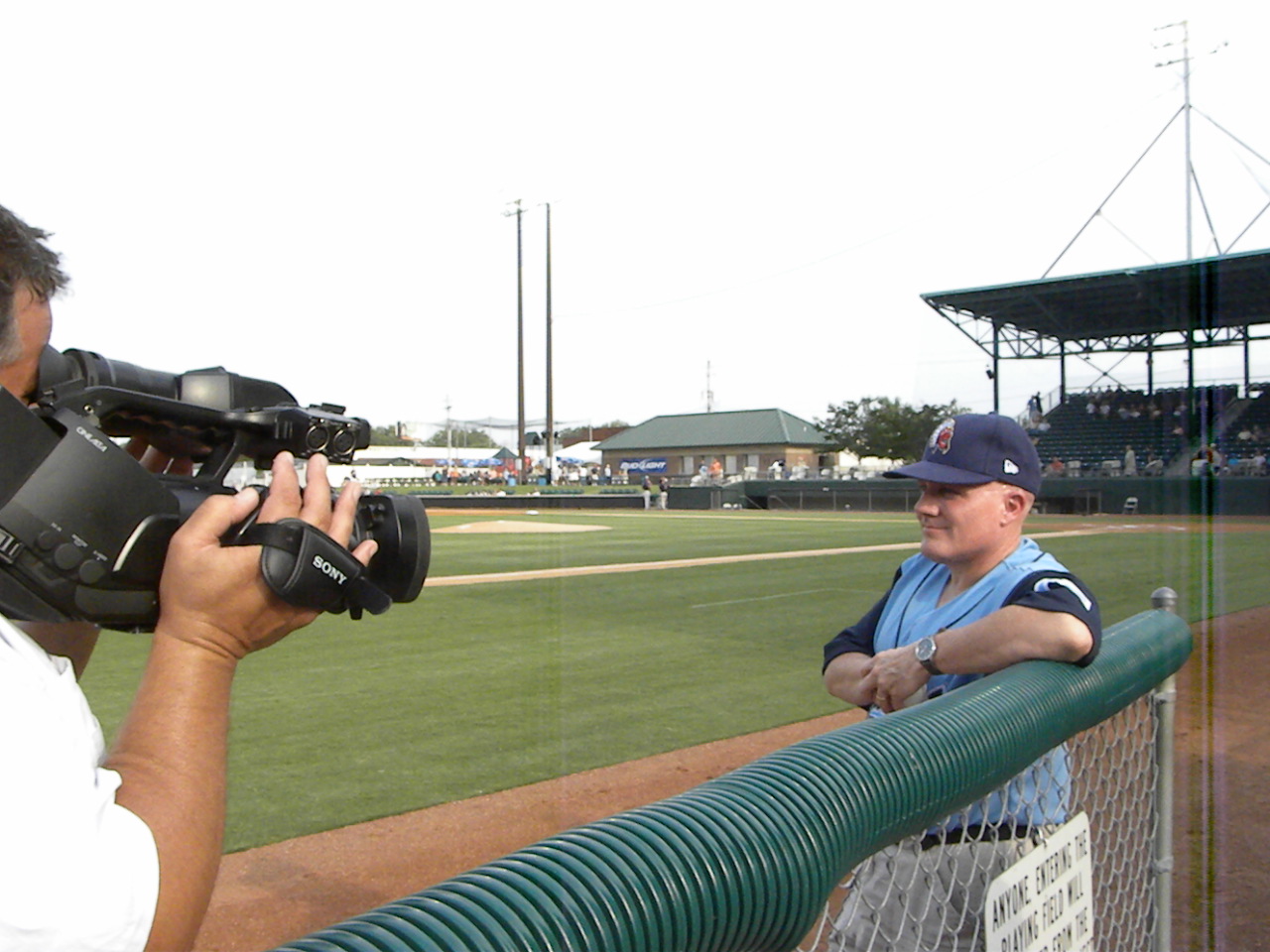
A couple months later I was asked by the good folks at the Real Warriors Campaign which is an initiative of the Defense Centers of Excellence for Psychological Health and Traumatic Brain Injury (DCoE) if I would share my story to a wider audience. I wrestled with that because things like this are scary, I am not a televangelist I don’t go in front of a camera for a living. I was helped by our public affairs officer Raymond Applewhite and the team that did the filming handled it well.

The video was released on the Real Warriors website as one of a number of videos featuring veterans sharing their stories of war and return.  The video is found at this link http://www.realwarriors.net/multimedia/profiles/dundas.php and I viewed the final draft a couple of weeks ago before it went online.

My hope is that others struggling will be encouraged and know that there are indeed others out here that know something of their experience and that there is light at the end of the tunnel. My story is still being written. I am doing much better than I was but I am changed by war and while I still struggle that is not necessarily a bad thing. I have like Bonhoeffer so well put it that it is “only in living completely in the world that one learns to have faith.” Sometimes that faith comes at great cost and certainly is not something that is something that is done without help, spiritual, emotional and from people that are willing to suffer with you.  The cost to families and relationships is difficult.  My wife Judy has had to struggle with my issues and I know that what happens in war affects those that we love in profound and often painful ways. Bonhoeffer said:

“In normal life we hardly realize how much more we receive than we give, and life cannot be rich without such gratitude. It is so easy to overestimate the importance of our own achievements compared with what we owe to the help of others.” 

There are a number of people who have helped me through very dark times. To those that struggle, especially those struggling with faith and God following experience the trauma of war I just want to say that you are not alone.

Peace

Padre Steve+



4 Comments

Filed under faith, iraq,afghanistan, Military, PTSD, Tour in Iraq

God in the Empty Places: Four Years Later

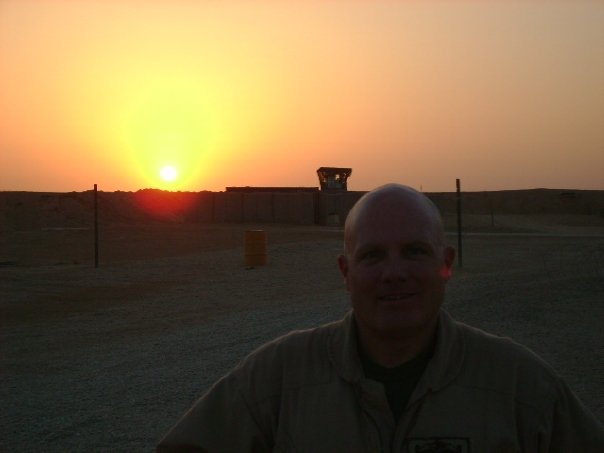
Four years ago I was leaving Iraq for Kuwait, the first stop in the process of coming home.  At that point I wanted to go home but I didn’t want to go either. It was the beginning of a new phase in my life.  I wrote an article shortly after my return for the church that I belonged to at the time. I am reposting article here tonight.  

When I wrote it I really had no idea how much I had changed and what had happened to me.  I feel s special kinship with those that have fought in unpopular wars before me. French Indochina, Algeria and Vietnam, even the Soviet troops in Afghanistan before we ever went there.  

I am honored to have served with or known veterans of Vietnam, particularly the Marines that served at the Battle of Hue City, who are remembering the 44th anniversary of the beginning of that battle.  My dad also served in Vietnam at a place called An Loc. He didn’t talk about it much and I can understand having seen war myself. 

There are no new edits to the article. When I wrote it I was well on my way to a complete emotional and spiritual collapse due to PTSD.  Things are better now but it was a very dark time for several years and occasionally I still have my bad days. Today was a day of reflection.  As I walked my little dog Molly down the street tonight to the beach I looked up at the moonlit sky and I was as I have been thinking lately about seeing all of those stars and the brilliance of the moon over the western desert of Iraq near Syria. Somehow that sight now comforts me instead of frightens me. 

Tonight our Soldiers, Marines, Sailors and Airmen serve in harm’s way nearly 100,000 in Afghanistan alone. We are out of Iraq but Lord knows how things will turn out in the long run there.  

Anyway. Here is is.

God in the Empty Places. 

I have been doing a lot of reflecting on ministry and history over the past few months. While both have been part of my life for many years, they have taken on a new dimension after serving in Iraq. I can’t really explain it; I guess I am trying to integrate my theological and academic disciplines with my military, life and faith experience since my return.

The Chaplain ministry is unlike civilian ministry in many ways. As Chaplains we never lose the calling of being priests, and as priests in uniform, we are also professional officers and go where our nations send us to serve our Soldiers, Sailors, Marines and Airmen. There is always a tension, especially when the wars that we are sent to are unpopular at home and seem to drag on without the benefit of a nice clear victory such as VE or VJ Day in World War II or the homecoming after Desert Shield and Desert Storm.

It is my belief that when things go well and we have easy victories that it is easy for us to give the credit to the Lord and equally easy for others to give the credit to superior strategy, weaponry or tactics to the point of denying the possibility that God might have been involved. Such is the case in almost every war and Americans since World War Two have loved the technology of war seeing it as a way to easy and “bloodless” victory. In such an environment ministry can take on an almost “cheer-leading” dimension. It is hard to get around it, because it is a heady experience to be on a winning Army in a popular cause. The challenge here is to keep our ministry of reconciliation in focus, by caring for the least, the lost and the lonely, and in our case, to never forget the victims of war, especially the innocent among the vanquished, as well as our own wounded, killed and their families.

French Paratroop Corpsmen treating wounded at Dien Bien Phu

But there are other wars, many like the current conflict less popular and not easily finished. The task of chaplains in the current war, and similar wars fought by other nations is different. In these wars, sometimes called counter-insurgency operations, guerrilla wars or peace keeping operations, there is no easily discernible victory. These types of wars can drag on and on, sometimes with no end in sight. Since they are fought by volunteers and professionals, much of the population acts as if there is no war since it does often not affect them, while others oppose the war.

Likewise, there are supporters of war who seem more interested in political points of victory for their particular political party than for the welfare of those that are sent to fight the wars. This has been the case in about every war fought by the US since World War II. It is not a new phenomenon. Only the cast members have changed.

This is not only the case with the United States. I think that we can find parallels in other militaries. I think particularly of the French professional soldiers, the paratroops and Foreign Legion who bore the brunt of the fighting in Indochina, placed in a difficult situation by their government and alienated from their own people. In particular I think of the Chaplains, all Catholic priests save one Protestant, at the Battle of Dien Bien Phu, the epic defeat of the French forces that sealed the end of their rule in Vietnam. The Chaplains there went in with the Legion and Paras. They endured all that their soldiers went through while ministering the Sacraments and helping to alleviate the suffering of the wounded and dying. Their service is mentioned in nearly every account of the battle. During the campaign which lasted 6 months from November 1953 to May 1954 these men observed most of the major feasts from Advent through the first few weeks of Easter with their soldiers in what one author called “Hell in a Very Small Place.”

Another author describes Easter 1954: “In all Christendom, in Hanoi Cathedral as in the churches of Europe the first hallelujahs were being sung. At Dienbeinphu, where the men went to confession and communion in little groups, Chaplain Trinquant, who was celebrating Mass in a shelter near the hospital, uttered that cry of liturgical joy with a heart steeped in sadness; it was not victory that was approaching but death.” A battalion commander went to another priest and told him “we are heading toward disaster.” (The Battle of Dienbeinphu, Jules Roy, Carroll and Graf Publishers, New York, 1984 p.239)

Of course one can find examples in American military history such as Bataan, Corregidor, and certain battles of the Korean War to understand that our ministry can bear fruit even in tragic defeat. At Khe Sahn in our Vietnam War we almost experienced a defeat on the order of Dien Bien Phu. It was the tenacity of the Marines and tremendous air-support that kept our forces from being overrun.

You probably wonder where I am going with this. I wonder a little bit too. But here is where I think I am going. It is the most difficult of times; especially when units we are with take casualties and our troops’ sacrifice is not fully appreciated by a nation absorbed with its own issues.

For the French the events and sacrifices of their soldiers during Easter 1954 was page five news in a nation that was more focused on the coming summer. This is very similar to our circumstances today because it often seems that own people are more concerned about economic considerations and the latest in entertainment news than what is going on in Iraq or Afghanistan. The French soldiers in Indochina were professionals and volunteers, much like our own troops today. Their institutional culture and experience of war was not truly appreciated by their own people, or by their government which sent them into a war against an opponent that would sacrifice anything and take as many years as needed to secure their aim, while their own countrymen were unwilling to make the sacrifice and in fact had already given up their cause as lost. Their sacrifice would be lost on their own people and their experience ignored by the United States when we sent major combat formations to Vietnam in the 1960s. In a way the French professional soldiers of that era have as well as British colonial troops before them have more in common with our force than the citizen soldier heroes of the “Greatest Generation.” Most of them were citizen soldiers who did their service in an epic war and then went home to build a better country as civilians. We are now a professional military and that makes our service a bit different than those who went before us.

Yet it is in this very world that we minister, a world of volunteers who serve with the highest ideals. We go where we are sent, even when it is unpopular. It is here that we make our mark; it is here that we serve our Soldiers, Sailors, Marines and Airmen. Our duty is to bring God’s grace, mercy and reconciliation to men and women, and their families who may not see it anywhere else. Likewise we are always to be a prophetic voice within the ranks.

When my dad was serving in Vietnam in 1972 I had a Sunday school teacher tell me that he was a “Baby Killer.” It was a Catholic Priest and Navy Chaplain who showed me and my family the love of God when others didn’t. In the current election year anticipate that people from all parts of the political spectrum will offer criticism or support to our troops. Our duty is to be there as priests, not be discouraged in caring for our men and women and their families because most churches, even those supportive of our people really don’t understand the nature of our service or the culture that we represent. We live in a culture where the military professional is in a distinct minority group upholding values of honor, courage, sacrifice and duty which are foreign to most Americans. We are called to that ministry in victory and if it happens someday, defeat. In such circumstances we must always remain faithful.

For those interested in the French campaign in Indochina it has much to teach us. Good books on the subject include The Last Valley by Martin Windrow, Hell in a Very Small Place by Bernard Fall; The Battle of Dienbeinphu by Jules Roy; and The Battle of Dien Bien Phu- The Battle America Forgot by Howard Simpson. For a history of the whole campaign, read Street Without Joy by Bernard Fall. I always find Fall’s work poignant, he served as a member of the French Resistance in the Second World War and soldier later and then became a journalist covering the Nuremberg Trials and both the French and American wars in Vietnam and was killed by what was then known as a “booby-trap” while covering a platoon of U.S. Marines.

There is a picture that has become quite meaningful to me called the Madonna of Stalingrad. It was drawn by a German chaplain-physician named Kurt Reuber at Stalingrad at Christmas 1942 during that siege. He drew it for the wounded in his field aid station, for most of whom it would be their last Christmas. The priest would die in Soviet captivity and the picture was given to one of the last officers to be evacuated from the doomed garrison. It was drawn on the back of a Soviet map and now hangs in the Kaiser Wilhelm Memorial Church in Berlin where it is displayed with the Cross of Nails from Coventry Cathedral as a symbol of reconciliation. I have had it with me since before I went to Iraq. The words around it say: “Christmas in the Cauldron 1942, Fortress Stalingrad, Light, Life, Love.” I am always touched by it, and it is symbolic of God’s care even in the midst of the worst of war’s suffering and tragedy.

Peace

Padre Steve+
Leave a comment

Filed under History, iraq,afghanistan, Military, PTSD, Tour in Iraq

Casing the Colors in Iraq

Today the colors were cased in a ceremony at the US Airbase co-located at the Baghdad International Airport.  It really is hard to believe that this excursion in Mesopotamia is over.  The ceremony marked the formal end to the US military operation in Iraq although a few thousand troops are finishing the retrograde of equipment from the country.

The fact that we might not end up in Iraq again if the Iranians push their Iraq Arab Shia friends too hard. They may share a common strain of Islam but there really is no love lost between the Arabs and the Persians as many Iraqis will derisively call them.  The Iraqis are a proud people and remember Persian rule like it was yesterday. The Persians treated Arabs like dirt and though it was centuries ago the Arabs have not forgotten.  My Iraqi friends both Sunni and Shia recognized that Iran was a threat and hope that if Iran ever attempted to take Iraq over that we would help defend Iraq.

The current US involvement is over after 4484 American service members were killed in action and 32000 wounded.  318 coalition Allied troops died.  The Iraqi Security Forces have lost 8825 soldiers killed with a further 1300 killed during the initial invasion of the country.  Over 100,000 Iraqi civilians are believed to have been killed and some agencies have estimated far higher totals.  Of course the Iraqis are still taking casualties as extremist groups both Shia and Sunni continue their blood feud and the Shia majority tries to solidify its power over the minority former ruling party Sunni.  Over a trillion dollars was spent on the war by the United States and long term costs are expected to reach 2-3 Trillion dollars.  Of course Iraq is still reeling from all of the damage and its involvement in wars with Iran from 1980-1988, the invasion of Kuwait by Saddam Hussein in 1990 and the United States response Operation Desert Storm, the post war sanctions and the enforcement of an oil embargo and a no-fly zone to keep Saddam contained even as he butchered thousands of Iraqis who rose up against him after he was driven from Kuwait and the the current war which began in 2003.

But the numbers are not just numbers, behind every one is a family, wives, husbands, parents, siblings and children as well as friends.  Every one has a name and a face and all meant something to somebody and left a void when they died or were irreversibly changed by the war.  That pain and cost will go on for a long time and there are no words that adequately compensate for these losses. Faith and trust in God’s grace help some but others struggle, even believers.  That I know for a fact because I still do.

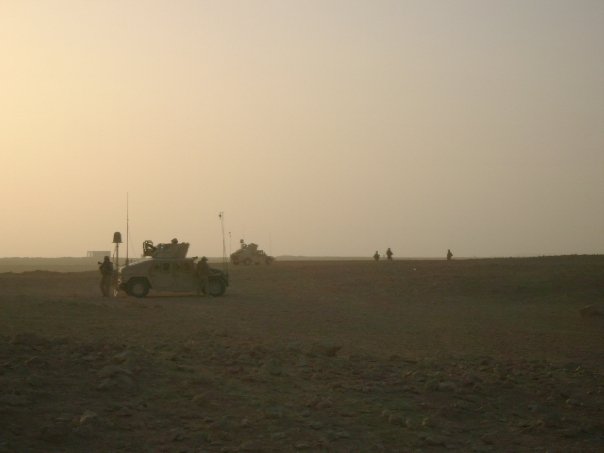
I remember flying into Baghdad in 2007 it was the height of the “surge” and I was going to provide Chaplain support to US Advisors to Iraqi Army, Border, Police and other Security Forces in Al Anbar Province.  At the time the base was shelled and when we exited the aircraft it was no peacetime drill we left in our full gear and were brief on what to do should we encountered incoming fire.  It was in Baghdad that I first experienced a rocket attack when one flew over my head.  But now the bases are empty, it must be surreal to be one of the last Americans leaving the country.

For me the end of our involvement is a strange experience.  It was hard to believe in 2007 that we would ever leave. The great edifices that we erected around country some of which were going up even when I was there are mostly empty except for some taken over by the Iraqi military.  Former military bases even in this country are a surreal site.  I have been to a number that were closed following the end of the Cold War.  Fort Wolters Texas near Fort Worth is an example. When I would go to a small section of the base used by the National Guard I would go past many mostly unused buildings including what had been a brand new hospital which opened just before the base was closed following Vietnam. The last time I flew through the former George Air Force Base  when going to and returning from Twenty-Nine Palms it was a ghost town except a few businesses and hundreds of former commercial jets parked on the tarmac. I remember going through recently closed American bases in Germany in the 1990s and saw installations empty. I was also the final Federal Chaplain at Fort Indiantown Gap Pennsylvania when it was transferred to the National Guard.  Built during World War II it was a throwback to a different era. The base has been revitalized as a sizable ground and aviation training center by the Guard with much new construction but the sight of all the World War II “temporary” wooden buildings was amazing. Vast areas of the base we unused and some complete areas were demolished. I helped in getting the main Post Chapel Renovated in order that the existing congregation would be able to continue with a contract Chaplain paid by the Guard and activated or drilling Guard Chaplains.  We had to decommission or convert some to other uses and saved one which was donated to a church 40 miles away who paid to have it deconstructed and rebuilt on their own land. But I digress…

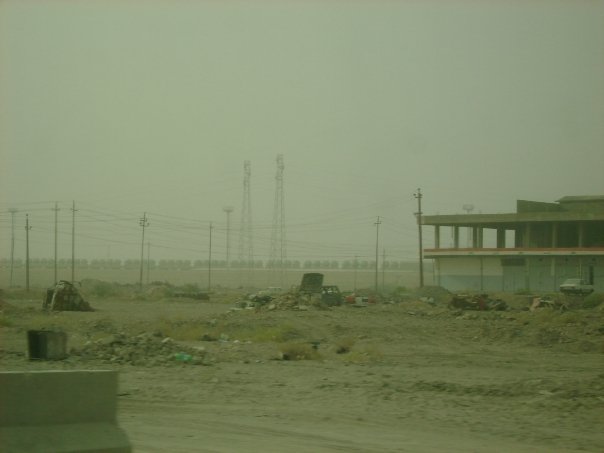
When I was in Iraq in many places there were the remains of Saddam Hussein’s military.  The base that I operated from had a number of abandoned or damaged Iraqi bombers and fighter aircraft parked at it.  Of course most of the existing buildings were converted to American use.  The biggest of these were the Al Faw Palace complex at Camp Victory but Camp Fallujah was the site of one of the Baath Party resorts used by Uday and Qusay Hussein.  I stayed there couple of days while traveling from Baghdad to Taqaddum which was my base of operations because of the capability to get around by air to where I needed to go and proximity to many advisor teams supporting the Iraqi First and Seventh Divisions.

Back then all were major bases with a large American presence which was inflated by many of the contractors, American and from other countries that supported base operations from the chow hall, to the laundry, the fire department and even the cleaning of the shower trailers and countless porta-johns.

People will debate for many years whether the war was worth it and I can only say that I hope that history will show that it was despite the huge loss of life, the destruction of a country and the vast expenditure of the national treasury.  It is probably too early to make that judgement, we tend to be pretty bad in making those decisions in the moment.  That is one of the problems in this age of information overload.  We have lots of data but no historical context and we make decisions that we think are correct but find out years later were tragically erroneous.

At the same time we cannot go back in time and change the past. For good or for bad we have to go forward from now and hopefully in time Iraq and its people will recover from the effects of over 30 years of war and economic sanctions.  We will find out over the next 10 to 50 years what the real effect is.  But for now we are left with a weak Iraq, a strong and threatening Iran and our own diminished military capacity and weak economy as well as a war that is not going well in Afghanistan.

I doubt that that can give comfort to the families of those that died in Iraq or came back wounded in mind body or spirit.  I know that I came back different, PTSD has a way of doing that.

But I am proud of the Marines, Soldiers, Sailors, Airmen and Iraqi officers that I served alongside in the badlands of Al Anbar Province mostly far away from the immediate help of any big units if they got in trouble.  I know how valiant and skilled they were fighting Al Qaida Iraq and other insurgents and even foreign fighters from places like Chechnya aided by Iran and others.  It was a brutal fight at times but the men of the Iraqi 1st and 7th Divisions and our advisors helped turn the tide during 2007 and 2008.  Without their diligence and toughness combined with the help of Iraqi civilians the war would have ended differently.

Tonight as I walked the dog to the beach I looked up at the sky. In our neighborhood there are not many street lights and most are clustered in one small area. Since many residents are not here in the winter many of the homes are dark as well and there are areas that have no houses but are lots covered in pine trees.  In the dark I was thinking about Iraq and I could hear the sound of the sea crashing on the beach.  I looked up at the sky and saw the most stars I have seen since being out on the Syrian border in December 2007.  I was reminded that I left part of me in Iraq and I pray for the Iraqis that I served with and those that provided us hospitality during our missions.

As I walked I thought of the words of Otto Von Bismarck one of the greatest statesmen that every lived.  Our war in Iraq was a preventive war.  Bismarck said that “Preventive war is like committing suicide out of fear of death.”  I pray that in our case that he was not right and that we think long and hard before entering another preventive war with anyone.  Bismarck, who knew war commented that “Anyone who has ever looked into the glazed eyes of a soldier dying on the battlefield will think hard before starting a war.” Unfortunately the vast majority of our elected leaders have ever done that.  Bismarck was certainly no pacifist but warned us that “I consider even a victorious war as an evil, from which statesmanship must endeavor to spare nations.”

The world is not a safe place and our near about 140,000 US and NATO troops are still engaged against a stubborn enemy in Afghanistan that has been aided by wavering allies such as Pakistan and sworn enemies like Iran.  War seems to threaten on many fronts.  I pray that we will be prudent before entering another.

I have rambled a bit tonight because I have so many thoughts and images of the war.  I trust your indulgence.  But for now the colors have been cased and our military involvement in Iraq is over.  We can only pray that Iraq will recover and become a free and prosperous country that treats its citizens well and that we too will recover from this war.  But then Bismarck is sometimes quoted saying that “There is a Providence that protects idiots, drunkards, children, and the United States of America.” I do hope that if he did say this that he was right.

Peace and and as my Iraqi friends would say Inshallah (إن شاء الله)

Padre Steve+

1 Comment

Filed under iraq,afghanistan, PTSD, Tour in Iraq

Night Terrors: Padre Steve’s Closet of Anxieties

There are times that I know that I still have issues.  One of those times is when I wake up screaming in the middle of the night.  It is a reminder that there are dark recesses in my mind that I do not and may not ever understand. While I may find some of the meaning of these dreams and images through symbols and remembrance of things that have happened in my life they are on the whole rather outside of the world that I try to live in.

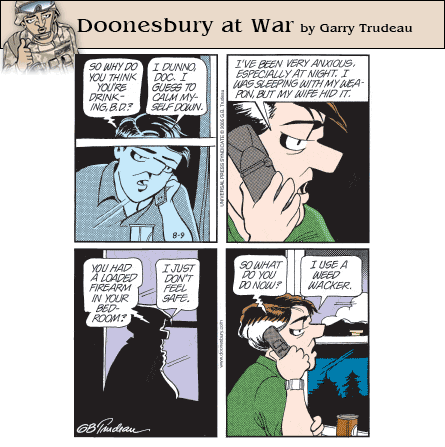
Most of the time I do not sleep well.  Ever since Iraq my sleep has been mostly troubled and seldom good.  However with that being said it is only on rare occasions when images become so disturbingly lifelike that it seems that I am actually in the middle of a real fight and wake up screaming as I attack imaginary intruders.  When I am at home this is no comfort to Judy and Molly who are awakened by me attacking the lamp on my side of the bed or some object.  When I am away and wake alone up in a cold sweat with my heart pounding I long to be able to feel Judy alongside of me or have our dog Molly come to me and try to make things better.

This was one of those weeks. My sleep has not been good and on Monday I had one of those less frequent but most terrifying of dreams where I was fighting to defend my family against a hostile and malevolent intruder.  It is always a similar dream and has haunted me since we were held up at gunpoint outside of Arroyo’s Cafe when it was still on South Center Street in Stockton California back in 1979.  It began to surface much more frequently in Iraq and since I returned home in 2008.  I love how one traumatic experience can be amplified by new traumatic experiences and how the anxiety related to my experience in Iraq is increased by things that I see happening in this country and around the world.  PTSD is such a joy to live with as almost every hour I wake up scanning for the enemy.

I understand from reading that I am not alone in this struggle and veterans that I spend time with often have terrible sleep disturbances related to wartime experience or other trauma.  Nearly four years after returning from Iraq I still experience flashbacks during waking hours and sometimes relive my experiences when others tell me of theirs. That is easier to process than what occurs at night.

Thankfully the prayers from the office of Compline do help when the terrors come as does the Prayer of Saint Michael and Saint Patrick’s Breastplate, but even still it is a battle to have restful sleep.

* Save us, Lord, while we are awake,

guard us while we are asleep;

that, awake, we may watch with Christ

and, asleep, may rest in His peace.

Peace,

Padre Steve+

1 Comment

Filed under Military, PTSD, Tour in Iraq

Reaching the Lost Christian Generation

“God weeps with us so that we may one day laugh with him.” Jürgen Moltmann

Over the past couple of weeks I have been thinking about encounters that I have had with Christians of various denominations who have suffered a crisis in faith or loss of faith due to some kind of trauma in their lives.  These people are the unseen, unheard and ignored part of our religious landscape.  In theUnited Stateswe have a very vibrant religious culture which finds its way into much of everyday life.  In fact listening to most of our Presidential candidates you would think that most are in fact Evangelical Christian preachers.

The fact is that despite the popularity of the mega-church and pop-psychology driven church world directed by “pastors” that function more as CEOs, motivational speakers and authors that churches are losing adherents at an increasing rate.  Many of those that are being lost are those that have suffered silently doing everything that is supposed to fulfill a Christian and make them healthy, wealthy and popular get left in the dust because they don’t “get better.”  I call them the “Lost Christian Generation.” There are many times that I totally empathize with author Anne Rice in saying that she has left Christianity yet still has faith in Christ.  For Rice it was the lack of love shown by the institutional church for people that are marginalized and treated as if they were unredeemable by often well meaning Christians.

For the wounded the church itself becomes their little acre of Hell on earth.  Having known plenty of these people I can say that this phenomenon is one of the more tragic aspects of life.  Those that at one time felt the presence of God in their life only sense emptiness and aloneness.   But most remain in the church for years living in pain thinking that they must be doing something wrong, that maybe they have angered God or that God has abandoned them.  In fact I would challenge my readers that attend church to take a look around the pews and see that person sitting alone, maybe staring into space, maybe with an expression of deep sadness on their face even as people talk and laugh around them.  The problem is most of us have very little situational awareness and don’t see them and of we do feel uncomfortable or inadequate so we leave them hoping that maybe they’ll get their act together or just go away.

I know what it feels like to be marginalized after I came back fromIraqbecause many of my Christian friends seemed, at least in my view to be tied to the absolute hogwash that spews from talk radio hosts and allegedly “Christian” politicians.  I remember having some Christians question my patriotism and even my faith because I disagreed with them regarding certain aspects of the war, despite the fact that I had been on the ground in harm’s way serving with our advisors and Iraqis in Al Anbar province.  The fact that not a clergyman, civilian or military, took time to care for me when I was in a major PTSD meltdown and crisis of faith before I went to Naval Medical Center Portsmouth didn’t seem to matter because a political agenda was given primacy over the simple truths and hard demands of the Gospel.

I went through a period after Iraq where feeling abandoned and isolated from those of a like faith that I was for all practical purposes an agnostic.  That was a really difficult time in my life and if you think that anything sucks try to be a Chaplain when you no longer know if God exists and the only person asking how you are doing with “the Big Guy” is your therapist. I can say without a doubt that it sucks and I know that I am not alone in my feelings.  I have met others whose experience is similar to mine but those that are struggling right now, caught between our faith and the feeling of being abandoned by God and his people because our experience of seeing the human suffering caused by war has shaken us.  That experience changed me enough that my former church told me to leave because I had become “too liberal.”

This “God Forsakenness” sometimes leads those people that are part of the “lost Christian generation” to believe that death appears more comforting than life in the present. For such people, they live “Good Friday” everyday feeling that they are truly God Forsaken.   I write this because I really believe that these often very sensitive and wonderful people are either ignored or not even seen by most of their fellow church members. Likewise I believe that many if not most pastors and priests are either unaware of them, uncomfortable around them or irritated by them because they don’t respond like “normal” people do.   I have found from my own experience returning from Iraq that Easter despite the message of resurrection and hope often triggers a despair of life itself when one no longer senses the presence of God and feels alone against the world, especially in church.

Many times the crisis of faith is caused by prolonged depression, PTSD or other trauma often involving family members, clergy or other trusted authority figures in their lives.  Sometimes the trauma is due to a physical injury, perhaps a near death experience due to an illness, combat or accident and can be neurological as in the case of Traumatic Brain Injury or TBI not something that routine counseling either psychological or pastoral or an anti-depressant medication will correct.  In my case it was PTSD and chronic pain and insomnia which overwhelmed me and along with a crisis of faith triggered such hopelessness that I barely held on for almost two years.

I remember when I first started dealing with this in others while in seminary that I was of the mind that if someone was in the midst of a crisis in faith if they read the Bible more, prayed more and made sure that they were in church that things would work out.  I believed then that somehow with counseling, the right concept of God and involvement in church activities that God would “heal” them.  Call me a heretic but that line of thinking is nice for people experiencing a minor bump in their life but absolutely stupid advice for people who are severely traumatized or clinically depressed and suicidal who no longer perceive the presence of God in their lives.

I cannot condemn those who have lost their faith or are wavering in their faith due to trauma, abuse or other psychological reason. So many people like this have been victimized by family, teachers, clergy other authority figures or physical trauma related to accidents, near death experiences or combat that it is mind numbing.  The fact that I went through a period for the nearly two years where I was pretty much an agnostic praying to believe again because of my PTSD injury incurred in Iraq that felt hopelessly isolated for the first year after my return until I finally reconnected with others and began to feel safe again gives me just a bit of an idea at what these people are going through.  My isolation from Christian community and sense of despair during that time showed me that such a loss of faith is not to be trifled with or papered over with the pretty wallpaper or neat sets of “principles” drawn up in the ivory theological towers by theologians and “pastors” who refuse to deal with the reality of the consequences of a fallen world and their impact on real people.

Sometimes the damage wrought on people makes it nearly impossible to comprehend a God who both cares about them and who is safe to approach.  My experience was due to from my time in Iraq and the trauma of my return.  That time was absolutely frightening.  Church was no longer a comfort and my long established spiritual practices no longer brought peace or a feeling of communion with God. It was so bad that I left a Christmas Eve Mass in 2008 and walked through the dark wondering if God even existed.

For those clergy this is an even deeper wound one in which the very concept and understanding of God becomes skewed in the minds and hearts of the victims.  It becomes worse when church institutions deny or ignore their claims which has been an unfortunate occurrence in many Roman Catholic dioceses around the world, particularly in Europe and North America where new revelations of clerical abuse seem to show up with alarming frequency.

The feeling that people who go through a crisis or loss of faith almost always mention to me is that they feel God feel cut off and even abandoned by God.  This is not simply depression that they are dealing with but despair of life itself when thoughts of death or just going to sleep are much preferable to living.  This overwhelming despair impacts their relationships especially with their family and frequently will destroy families as the spouse grows weary and loses hope seeing their loved one get better.  It is if they never are able to leave the “God forsakenness” of Good Friday and cannot climb out of the tomb.   For some the pain is so much the last and previously unthinkable alternative of suicide becomes the only course of action that they think will help.  Such thoughts are not simply narcissism as some would believe but from the “logical” belief that their family, friends and loved ones would be better off without them.  I have seen this too many times to count.

It is hard to reach out to people in this situation.  I have to admit in my case that it was only people who chose to remain with me and walk with me through the ordeal in spite of my frequent crashes, depression, anger and even rage that helped get me through the worst of this.  However I’m sure that my condition burned some people out.  There are some that would not walk with me as I first began to go down and the sad thing is that many were ministers and fellow chaplains.  In some ways I don’t blame them at the same time the first person that asked me how my spiritual life “or how I was with the Big Guy” was my therapist.  When I reported to my current duty station I was shocked to find Chaplains who were willing to come alongside of me, even when they didn’t have the answers and remain with me.

The topic of a loss of faith or the reality of feeling God forsaken is had to deal with.  It is seldom dealt with in many seminaries or Bible schools because it is not comfortable or something that you can “grow your church” with.  But the reality is there are more people going to church praying for an answer who no one reaches out to; in fact they are often invisible amid the busyness of program oriented ministry.

I do not think that it is enough simply to tell them that “God won’t give you more than you can bear” or quote other scriptures when they have been pushed beyond the “red line” and are breaking down.  They want to believe that scriptural principle but no longer believe because God is no longer real to them.

Yet scripture plainly teaches that we are to “bear one another’s burdens, and in this way you will fulfill the law of Christ.” As Dietrich Bonhoeffer said “We must learn to regard people less in light of what they do or omit to do, and more in the light of what they suffer.”  It is our willingness to be with people in their suffering that is one of the true marks of the Christian.  Being with someone in triumph is far easier than with those who suffer the absence of God.  It is presence and love not sermons that people who have lost their faith need as Bonhoeffer so eloquently said “Where God tears great gaps we should not try to fill them with human words.”

We have to be honest and not turn a blind eye to the transgressions of Christians over the centuries.  We cannot turn a deaf ear to the cries of those that are living their own dark night of the soul or have given in to despair.

I do pray that as we celebrate the joy of the Resurrection that we will not forget those who despair of live and feel as if they are “God-forsaken.”  It is not easy as those who walked with me can testify but in doing so there is the chance that such action will prevent tragedy and maybe, just maybe give hope to this “Lost Christian Generation” that may allow them to return.

Peace

Padre Steve+
7 Comments

Filed under christian life, faith, Pastoral Care, PTSD, Religion

The Tapestry of Life: How PTSD and Combat Stress is a Part of Who and What We Are

I have been dealing with the effects of Post Traumatic Stress over 3 ½ years.  In that time I have had my struggles going ranging from falling into the abyss to a measure of recovery and occasional relapses.  It has been a difficult time which has stretched me in ways that I never dreamed and given me perspective on what it is to live, to have faith and to experience life in ways that I could not have imagined before I deployed toIraq.

Within a few weeks of beginning therapy I was asked by my therapist what I wanted to do with my experience.  I really didn’t know, I was in the midst of a complete emotional breakdown and crisis of faith.  When my therapist asked me “well Padre how are you with the Big Guy” I could only answer “I don’t know if God exists anymore or if he does if he cares about me.”  My therapist was the first person that asked me about my spiritual life after I returned.  No clergy of any kind asked that question.  I guess that they assumed quite wrongly that I hadn’t really changed.  There is a tendency among clergy to ignore the obvious when a colleague begins to fall apart.

In fact it is really a cultural problem.  Often the advice to someone dealing with trauma and the experience of grief which often compounds traumatic experience is to “forget about it” or “put it behind you and move forward.”  Some therapists and pastors seem to have burying the experience, reliving it time and time again until you are numb or simply try to expunge it from memory as their goal.

The problem with all of these “methods” is that they label the person who has been traumatized and the complex grief that they experience as a result of the trauma as ill, damaged or broken.  But it the opposite is true, people that have experienced trauma especially in a combat zone are simply having a normal reaction to experiences that are not normal.

We adapt to war and the experience becomes part of who we are.  It is a survival tool that humans have had ever since the first skirmishes between primitive tribes.  However primitives actually have an advantage over the modern human.  They went to war to defend their families and homes.  The warriors would be sent out with fanfare, religious ceremonies and ritual. When they returned they would be brought back into the tribe, new warriors who had distinguished themselves would be noted, sometimes marked in some physical manner.  Rituals marked the re-entry of the warriors and they would be reincorporated into the community. Some societies would incorporate rituals for individuals to do as they re-entered the community. Their stories would become part of the tribe’s oral tradition and passed down to successive generations.

Today’s modern American warrior doesn’t go to war with his neighbors.  These warriors go to war with men and women that come from many parts of the country, US territories or immigrants and when they leave service they often return to neighbors, friends and families that care about them but do not understand them or their experience. The reactions that they developed in combat and their response to perceived threats are considered dangerous or abnormal.  People tell them that they need to go back to what they were before the war experience but they can’t because they have been changed by their experiences.

We live in a culture of denial. All too often it seems that society simply wants the traumatized and grieving veteran just be quiet, see a shrink, go to a PTSD group and “get well.”  Many times churches and religious institutions treat the problem as some kind of spiritual shortcoming.  Many Christian veterans come home and find that they are shunned because they have doubts or because they don’t “get better” after people pray for them.  I was reading a faux news article which was more like an infomercial for a CD that promotes a method as “Be still and know….”  It was developed by a reserve Army Chaplain and Christian therapist. It is designed to make it all go away.  Do the method right and you get better, God heals you and you live happily ever after until something breaks the cycle of denial and you crash.  I do believe that God heals but I don’t believe that God makes everything magically go away like it never happened.  Such a belief is not supported in Scripture, the testimony of the early Church or for that matter most of the Christian tradition.

This week I was being filmed for a Department of Defense program called The Real Warriors Campaign   http://www.realwarriors.net/which is designed to de-stigmatize Combat Stress injuries including PTSD and Traumatic Brain Injury.  They picked up the article that was written about me in the Jacksonville Daily News in April of this year and asked if I would be willing to participate.   http://www.enctoday.com/articles/cmdr-89433-jdn-stephen-military.html

It was a hard week for me. I went to a functioned hosted by our hospital Wardroom at the base Officer’s Club Saturday night and while I enjoyed myself I hit sensory overload. When I got hope I was pretty edgy and to add to the situation we had some Marine helicopters flying in the area I live that night. As I tried to calm down I realized that I was going to be interviewed Tuesday and the thought scared the shit out of me.  Yes I had agreed to do it and yes I thought I needed to do it but my heavily introverted and relatively anti-social personality type now seasoned with reactivated PTSD symptoms couldn’t handle it.  I couldn’t sleep and had the firstIraqrelated dreams I have had in many months. I did not even open the front door of my place on Sunday.  I couldn’t sleep Sunday night and got permission of my boss to get some assistance.  Since I couldn’t get a no-notice appointment with my current psychiatrist I called my first therapist and he was helpful. I went to a ball game and that helped calm me down.  I was still anxious but functional.

The two days of filming went pretty well for me, although I know with the possible exception of “COPS” there is no such thing as reality television.  This was not “reality television” but the goal was to try to show how I live life, work and relate to people after deployment.  The crew was really good and handled things professionally but even so it was packaged and things had to be have lighting, have different camera angles and required me to repeat things sometimes because of the privacy issues of patients in the hospital.  But it is what it is.  By the end of the two days I was pretty wiped out and simply rested last night.

However on Monday night before the interview I had an epiphany.  That simple illumination came from an episode of Star Trek the Next Generation called Tapestry I won’t ruin it for you but the final segment of the episode is linked here:

http://www.youtube.com/watch?v=hZeGzaJiP6g&feature=related

The epiphany was very simple.  All of our life, the good, the bad, the enjoyable and even the traumatic are part of a rich tapestry.  Those painful threads, the ones that we cause ourselves or the ones that are the result of trauma, grief and loss are part of who we are as human beings.  If we try to remove them we damage the tapestry and if we try or are persuaded by those that deny the reality of pain and suffering to remove the really painful and deep hurts, those which are the most tightly wound into the fabric of our lives, especially for the combat veteran we risk long lasting damage to our very soul.

The challenge is not to be “healed” or to compartmentalize the trauma and put it in some deep closet in our brain.  Nor is it to deny the trauma or for that matter keep trying to relive the trauma so that we are desensitized to the pain.  The real challenge is to allow our experiences of war, grief, loss and trauma to have their place in our lives knowing that without them we are not who we are.

I’m not saying that I have any real answer to what all of us that experience combat stress injuries deal with.  All I know is that I just want to be real and there are risks in opening up to people and reaching out to get help.  At the same time it is important to find a way to get help so we can adapt to our new reality.

As for me I went through some terrible times that still affect me.  Yes I went through a period of profound spiritual crisis and even a loss of faith and when I began to recover faith people that had been okay with me being broken ended up asking me to leave my church because the faith that I have now didn’t fit the narrow box that defined that church.

All that being said I am glad that my therapists or my supervisors allowed me and continue to allow me to work through the issues that still impact me and my ability to function in society, deal with others and even effect my marriage.  I wish every combat vet and survivor of trauma had that support.  I just hope that I can be worthy of the trust that they have place in me and that I will care for those entrusted to me with the same care and compassion that I was and am being shown.

Peace

Padre Steve+

3 Comments

Filed under faith, Military, Pastoral Care, philosophy, PTSD, Religion, star trek, Tour in Iraq

A Church of Love: Reflections on the celebration of my 15th Anniversary of Ordination

Christmas in Iraq 2007

It is hard to believe that I am a Priest and that I have been one now for the past 15 years. I held ordination in a two different Evangelical churches dating back to 1989 and had served as a Chaplain in civilian hospitals as well as the Army National Guard and Reserve before I was ordained as a Priest by Bishop Phillip Zampino of the Charismatic Episcopal Church Diocese for the Mid-Atlantic on July 7th 1996. It was what I thought was the culmination of my journey to the Catholic faith since the Charismatic Episcopal Church in that area considered itself very much on the Anglo-Catholic and Roman Catholic leaning side of that denomination.

My journey to a sacramental and catholic faith had began as a child when Navy Chaplain who was a Roman Catholic priest was instrumental in helping me continue to believe when a Methodist Sunday School teacher told me that my dad, then serving at An Loc Vietnam was a “baby killer.” I really do still trace my vocation as a Priest to that man even though my journey on the way to this faith was rather circuitous.  That journey continued all thorough my life as an Evangelical Christian and was intellectually cemented in at Southwestern Baptist Theological Seminary where in my Church History and Systematic Theology courses I became convinced of many Catholic teachings. It took another four years after graduation leave the Evangelical movement to the CEC and had I not gone there I would have likely ended up in the Episcopal Church or one of the more Catholic leaning continuing Anglican churches or somewhere in the Old Catholic movement.  What took me to the CEC was the recommendation of an Anglican friend who thought it would be a good fit.

I was ordained on the evening of July 7th 1996. The ordination date was actually advanced several months because of my impending mobilization to support Operation Joint Endeavor, the Bosnia peacemaking mission.  We arrived the night prior to my ordination and I had a talk with Bishop Zampino talking about the “new phase of ministry” that I was entering. He reminded me that the Sacrament of Holy Orders (Ordination) was not was not about a change of ministry but something different. In Catholic theology ordination is very different from most of Protestantism where there is little difference in the estate of the ordained minister and lay people.  In Sacramental theology when a person is ordained to the Priesthood there is an ontological change brought about by the Holy Spirit. Once a person has been ordained they are spiritually changed, which is the origin of the saying, “Once a priest, always a priest.” The Priest can be dispensed of his or her obligations as a priest and in the case of grave misconduct or heresy even forbidden to act as a priest; but they remain priests forever.

The Bishop’s words reinforced something that I already understood from my theological education and formation but had not been put as bluntly with such effect by any of my professors or the Priests that mentored me.  When I was ordained that Sunday evening it was on the feast of Saint Willibald of Eichstadt, a Celtic Benedictine missionary born in England who settled in the small Bavarian town of Eichstadt.  He remained as the Bishop of that small diocese for 40 years and is buried in the picturesque cathedral located in the city. His brother Wunibald was also a missionary and Abbott in Heidenheim and their sister Walburga governed the female community at the same abbey. I was ordained in the evening which also meant it was July 8th in Germany, the feast day of another Celtic missionary Saint Killian the martyr bishop of Würzburg. It so happened that my first assignment as a Priest would be in Würzburg just a few weeks later.  I feel a close connection to each of these Saints as the date of my baptism was that of the Feast of Saint Wunibald, December 18th.

My life since ordination has been rather interesting or as Jerry Garcia put it a “long strange trip.” I have travelled the world as a Navy Chaplain and been able to care for God’s people in many diverse and often dangerous places. To be a priest in the Navy, be a person Roman, Anglican, Orthodox or Old Catholic is an adventure, to celebrate Eucharist, to baptize and to administer the Sacrament of Penance as well as the Sacrament of Healing or as it used to be called Unction in often dangerous places is for me the pinnacle of the priestly ministry.  Many of my friends of other branches of the Catholic, Anglican or Orthodox traditions echo that sentiment. To proclaim the Gospel to men and women in harm’s way and to care for those of other traditions that are given to our care, providing what we can and helping them the best we can while respecting them and their beliefs.

For me the path has not always been easy and I think that most Priests can echo that. In my 14 years as Priest in the Charismatic Episcopal Church I ran afoul of some rather autocratic Bishops all of whom are no longer in that Church.  I was banned from writing for a number of years because of my published essays which were considered “too Catholic.” During that time Bishop Zampino even suggested that I explore the Roman Catholic priesthood.  I looked into it in a number of dioceses but never went beyond exploring possibilities. Bishops were polite but less than interested in a married Priest from a Church that was considered valid but illicit.

So despite being banned from writing and even banned from contact with civilian Priests in the state where I was stationed by another Bishop who is now a Roman Catholic layman I remained in the church. During this time I became more disconnected and disenchanted with the church.  When I returned from Iraq I was in a full blown spiritual crisis brought about by PTSD.  My conditioned worsened to the point that for nearly two years I was a practical agnostic.  Faith returned in December of 2009 when administering the last rites to a dying man on the Emergency Room of the Medical Center where I was serving as a Chaplain.

But the faith was different and I no longer fit in the Church though I tried. Despite this my writings, which I had started as part of my therapy became too much for my church and even though faith had returned it was not welcome.  I was asked to leave and thankfully was received by the Apostolic Catholic Orthodox Church, a North American expression of the Old Catholic faith. Since my ordination was valid I was simply received into the Church.

I am very blessed to be able to serve as a Priest and care for the people that God brings into my life. It is now 15 years since that night when Bishop Zampino laid his hands upon me and ordained me into this life. Despite some to the twists, turns and even disappointments I am fortunate as my faith is real again and I can see the good in people and experience the Grace of God in my daily life.  It really is miraculous.  I have a joy again that allows me to pass through the painful and sometimes lonely times that I still occasionally experience.

In my darkest times my only spiritual readings were Father Andrew Greeley’s Bishop Blackie Ryan mysteries which I began reading to help me get through the nights in between missions in Iraq and through the nights when I returned.  In one of those books, the last of the series entitled “The Archbishop goes to Andalusia” the miscreant Auxiliary Bishop to the Cardinal Archbishop of Chicago goes to Seville Spain.  In the novel Bishop Blackie makes a comment after celebrating Mass in the cathedral at Seville. He said “Every sacramental encounter is an evangelical occasion. A smile warm and happy is sufficient. If people return to the pews with a smile, it’s been a good day for them. If the priest smiles after the exchanges of grace, it may be the only good experience of the week.”  (The Archbishop in Andalusia p.77)

I have found that this is more than true. My belief now is that the church must be a church of love.  In another book Greeley has a fictional papal contender named Luis Emilio Cardinal Menendez y Garcia makes a speech which the end of which I find particularly inspiring. While it speaks of the Roman Catholic Church I think that it speaks to most churches and reflects how people see us:

“So many of our lay people believe that ours is a Church of rules, that being Catholic consists of keeping rules. They do not find an institution which is like that very appealing. Nor should they.

In fact, we are a Church of love. Our message from the Lord himself even today is the message that God is Love and that we are those who are trying, however badly, to reflect that love in the world. I find that in my own city that notion astonishes many people. How we came to misrepresent that which we should be preaching above all else is perhaps the subject for many doctoral dissertations.

More important for us today, however, is the reaffirmation that we exist to preach a God of love, we try to be people of love, and we want our church to be, insofar as we poor humans can make it, a Church of radiant love.

Does such a Church have a future? How could it not?”

Saint Francis said “Preach the Gospel at all times, use words when necessary.”

I hope that I do that as imperfect as I am and as earthy as I tend to be.

On the anniversary of my ordination I ask you to pray for me a sinner.

Peace

Padre Steve+

4 Comments

Filed under christian life, faith, Pastoral Care, philosophy, PTSD, Religion

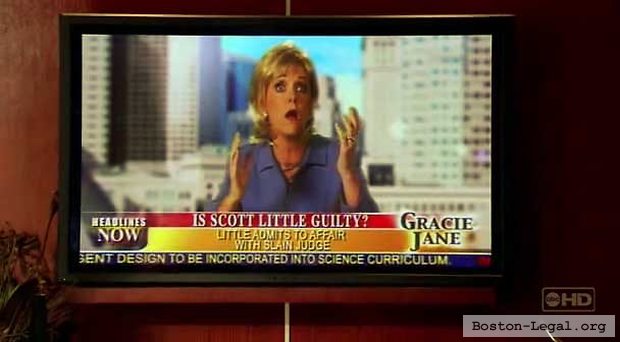
Thoughts on Smoke, Suicides, Gracie Jane, the Media Legal System and I guess I’m not Patriotic

Gracie Jane…the Boston Legal Nancy Grace

Today was one of those weird days. I got up relatively early for a day off only to have my morning interrupted by a page from the Emergency Room to deal with a suicide. I showered and drove in to work knowing what the outcome was going to be even though our staff was trying heroically to save the patient.  On the way in I was reminded of Iraq once again as I drove through the dense smoke which has enshrouded our region from one of several wild fires.

Last night I had been out watching the Independence Day fireworks with Judy and our little dog Molly on the beach about a quarter of a mile from the Island Hermitage and I did pretty wel`l, though Molly did better. While I was occasionally flashing back to watching artillery and illumination rounds and hearing that infernal 122 rocket flying over me in Baghdad as well as being nervous in the large crowds that surrounded me I didn’t melt down despite some very close blasts from individuals firing some pretty large firework charges above our heads. Maybe it was the unflappable attitude of Molly. Molly isn’t afraid of anything and maybe her looking up and occasionally barking at the infernal things both comforted and amused me. However I digress….

I got to the ER sustained by a large cup of Dunkin Donuts coffee and found that our staff could not save the life of the individual. I have dealt with far too many suicides in the military where it seems to be epidemic now days as well as in my time as an ER and Trauma department Chaplain in major civilian medical centers. There are people that condemn those that commit suicide to hell and call it an “unpardonable sin.” I can’t do that. Suicide is a tragedy no matter when it happens and it is happening far too often among the ranks of our Active Duty, Reserve and National Guard forces and to those retired or discharged from the military.  I spent some time and with our staff as well as some of his senior enlisted leaders who were obviously affected by this and quietly said a prayer of commendation at the bedside.  This is a tragedy one that will unfortunately keep occurring even as Congress contemplates cuts to the force that include the Mental Health Professionals and Chaplains that are the last line of defense for these young men and women.  But then what value are the lives of the men and women that fight our wars compared to not raising the taxes for the incredible wealthy that profit off of our wars and the sacrifices of the troops.

When I got home Judy and I took a drive up to Beaufort North Carolina where we had lunch at Finz, a bar and grill. As always we sat in the bar and while eating lunch noticed a commotion. A waitress from the restaurant side rushed in and changed the channel from the peaceful natural disasters reported by the Weather Channel to Headline News where Gracie Jane (Nancy Grace, Gracie Jane is the caricature Nancy created by the writers of Boston Legal played with gusto by Jill Brennan) was having a conniption fit that Casey Anthony was found not guilty of killing her daughter in one of the most sensational trials since the O. J. Simpson trial.

Now I didn’t watch the trial my faith in the Media Legal system having been crushed with the failure of the O. J. jury to find him guilty and order him crushed to death with heavy stones. But evidently some jury in Florida where convicting someone of murder and having them put to death is a spectator sport failed to convict, something about reasonable doubt. It sounds to me that in such and environment that the prosecutors must have pulled a Marcia Clarke and botched the prosecution.  They should have petitioned to have the trial moved to Texas where they could have gotten the conviction and the death penalty. Even President Bush who never pardoned anyone as Governor couldn’t save the lady convicted of drowning her kids when she said she had repented when a jury convicted her of capital murder.

However, my friends as terrible as the verdict sounds as it seems justice has been denied, someone probably killed that little girl and will get away with it, the reaction of Gracie Jane was priceless as she was nearly apoplectic even saying that Satan must be having a “party in Hell” and that proving “reasonable doubt” an unfair burden to prosecutors.   But that is the way the Media Legal system works, Greta, Geraldo, Court TV and Gracie Jane, they thrive on trying these cases in the media and while our justice system is certainly imperfect and sometimes even insane ever person is due their day in court and it is the responsibility of prosecutors to prove guilt beyond reasonable doubt. These prosecutors had no direct evidence of the lady killing her daughter.  They had lots of circumstantial evidence even some pretty damning stuff from what Gracie Jane tells me but they couldn’t get a conviction. When I took a class in Military Law we were advised that if we didn’t believe that we could make the charges stick at a General Courts Martial in from of a judge and jury that it was inadvisable to charge soldiers with a crime, even if we were trying the case as a “non-judicial” case under Article 15 of the UCMJ. As a company commander I never lost because I made sure that if I charged someone that the evidence would prove guilt beyond a reasonable doubt.  These guys didn’t. They lost to better defense attorneys and someone got away with murder, manslaughter or child abuse. But the Media Legal system will never admit that they could be wrong in convicting people before a jury even gets the case. It’s a pity that Lincoln Meyer (a peeping Tom murderer played in a most creepy manner by David Dean Bottrell) couldn’t come up and clunk her on the head with a shovel like in Boston Legal).

Finally I ran afoul of a Tea Party partisan yesterday when I mentioned in his extended quote from the Declaration of Independence about removing despots and the right of people to revolt he cut off the quote where the Declaration says “Prudence, indeed, will dictate that Governments long established should not be changed for light and transient causes.” For this I was called everything but a Democrat, you’d think that I had spurned God and man for mentioning this. Instead the man and one of his friends set out to mock me as some kind of Constitution stomping, CNN and MSNBC watching infidel for my cautious and even distrustful views views in regard to the Tea Party movement and some of its leaders.  Of course when picked their arguments apart I got called more names was told that they were “Constitutionalists” and kept trying to shut me up. I had too much fun finally getting one to end his insulting comments aimed at me with “God Bless the USA!” Unfortunately when the phase is used to end an argument, insult the honor, integrity and intellectual honesty and question the patriotism of a fellow American it resonates about as well with me as much as “Heil Hitler!” did to Dietrich Bonhoeffer.

Evidently even though I have served the country in the military in peace and war the past 30 years including in combat I am less of a patriot than him or anyone else in the Tea Party.  Despite my personal victory today I fear for the worst when this man and others like him come to power. Dissent will be crushed as they use laws that they currently decry to punish their opponents or critics. Those that joined the movement out of legitimate frustration at the mess that Republicans and Democrats alike as well as most powerful supporters have made of this country will be sorely disappointed when they find that they are considered expendable to those that they put their trust in to deliver the country.

I personally find the often violent language and imagery used so flippantly by many the leaders of the Tea Party to be frightening. The use of such terms as evil, satanic, communist, Marxist or Fascist to characterize those that disagree with you is dangerous for it dehumanizes the other and appeals to the basest forms of human behavior.  The fact that some senior state organizers have links intellectual and economic to white supremacist groups and anti-government “militia” groups makes me even more nervous as do the unstated motivations of some of the principal financial backers the Koch brothers and Rupert Murdoch.  Contrary to what some believe this movement is not a movement of uneducated bumpkins to be trifled with. The Tea Party has money, media and power at its disposal it is not to be taken lightly even when its leaders make mistake after mistake concerning American history and the Constitution.

But it seems that none of them really studies history and that we have failed in teaching our people to learn from history, not the mythology that makes us feel good and warms our patriotic hearts. But according to the gentleman I must not have one of those. Oh well… God Bless the USA!

Well that’s all for tonight.

Peace

Padre Steve+
2 Comments

Filed under ER's and Trauma, faith, leadership, Lies of World Net Daily, Military, Pastoral Care, philosophy, Political Commentary, PTSD, purely humorous

The Bond

This story shall the good man teach his son;
And Crispin Crispian shall ne’er go by,
From this day to the ending of the world,
But we in it shall be remembered-
We few, we happy few, we band of brothers;
For he to-day that sheds his blood with me
Shall be my brother; be he ne’er so vile,
This day shall gentle his condition;
And gentlemen in England now-a-bed
Shall think themselves accurs’d they were not here,
And hold their manhoods cheap whiles any speaks
That fought with us upon Saint Crispin’s day.

From the Speech of King Henry V at Agincourt in Shakespeare’s “Henry V” 1599

In the midst of the petty politics surrounding the Afghan War so so ponderously and pompously purveyed by politicians and pundits of all strains I feel the need to speak up for that small band of brothers that has served in these wars. They are to steal a phrase applied to a previous generation the “New Greatest Generation” something that I am loathe to apply to much of the population at large.  You see the cost of these wars is finally beginning to sink in, at least the financial cost. I’m not so sure that the human cost factors in for most people because the tiny percentage of the population that serve in the wars. The fact is that the volunteer military is an insular community which for the most part is based on bases away from most of the population. We used to have big bases in or near major cities, the New York Naval Yard, the Presidio of San Francisco, Long Beach Naval Shipyard, Fort Devens Massachusetts near Boston, Fort Benjamin Harrison Indiana at Indianapolis.  But after the Cold War they and hundreds of other bases were eliminated and with them a connection to the active duty military.  That is not the fault of the people in the big cities it just happened that way, no the military with a few exceptions is based away from most of the population. As a result people may support the troops but most have no idea what they do, how they live and what they suffer.

In spite of that this new Greatest Generation’s accomplishments will largely go unheralded by history. Unlike the “Greatest Generation” of World War Two they will probably not receive the full honors and accolades due them.  This brotherhood of war who have served in the current War on Terror, Iraq and Afghanistan campaigns have now been serving in a war that is now twice as long as the American involvement in World War Two.  Many, like me have been in this since the beginning and many have made multiple deployments to the combat zones.  And many of us, if not most of us would go again. I know that I would because part of me is still in Iraq; for me this war is still un-won and un-finished.

The battles, Fallujah, Ramadi, Haditha, Mosul, Baghdad, Tal Afar, Marjah, Kandahar, Anaconda, Wanat and thousands of other places significant and insignificant are vivid in the minds of those that were there. Unfortunately for most of their countrymen they might as well be on a different planet.

With no disrespect to the Greatest Generation of World War Two, all of the current Soldiers, Sailors, Marines, Airmen and Coast Guardsmen volunteered to serve in time of war.  At any given time only about one half of one percent is in uniform.  In the three years and ten months of the Second World War about 16.1 Million Americans served in the military, the vast majority being draftees.  Likewise the current generation has fought the war alone.  The vast bulk of the country has lived in peace untouched by any inconvenience to daily life such as gas and food rationing, requirements to work in war industries and the draft as were citizens in World War Two.  In the Second World War Americans shared the burden which in large part has not occurred in this war.  While many have pitched in to help and volunteered to help veterans and their families the vast majority of people in this country are untouched by the war, not that there is anything wrong with that.  This is simply a comparison of the situation that those who served in World War Two and the present conflicts faced.  So I have to say that our current “Greatest Generation” is only a small part of the generation, as the line in Henry V “we few, we happy few who fought together….”

These Soldiers, Sailors, Marines and Airmen from the United States as well as our Allies who serve alongside of us are my brothers and sisters.  They too are volunteers and represent a miniscule portion of their countries population. I am friends with military personnel from the UK, Canada and Germany who have served in the various combat zones or at sea and met quite a few others from France, the Netherlands and Australia. Of course my Iraqi friends who I served with while with our advisers in Al Anbar province who are not only trying to bring peace and stability back to their country but have to worry about the possibility that their families become the target of terrorists.

There are a number of things that unite us in this relatively small brotherhood.  However, I think that this brotherhood could also be extended to our brothers who fought in Vietnam, French, Vietnamese, Australian, South Korean and American, the French who served in Algeria and the Americans and others that served in Korea.  All of these wars were unpopular. All had little support on the home front and often returning veterans found themselves isolated and their sacrifices ignored or disrespected.  For those Americans who serve in the current wars I can say that at least to this point the public has been much more supportive than they were to our Vietnam brothers, many of who were even disrespected by World War Two vets who had fought in “a real war.”  I cannot count the Gulf War in this list as it was hugely successful and the returning vets were hailed as conquering heroes with ticker tape parades.

Our shared brotherhood includes our scars, physical, psychological, neurological and spiritual.  Those who served on the ground in Iraq and Afghanistan as well as those who served in Vietnam, French Indo-China and Algeria have a common shared experience.  All fought people who didn’t or don’t like foreigners no matter how noble our intentions and who by the way have a long history of outlasting people that they believe to be invaders or occupiers.  We have had to fight wars with no front lines, no major units arrayed against us, but rather asymmetrical threats propagated by creatively devious foes who use low tech easily available technology and a willingness to sacrifice themselves and others to force attempt to kill us.  Thus we have cleverly designed and often quite powerful IEDs or Improvised Explosive Devices which can obliterate a HUMMV.

These threats create a situation where there is no front line and thus where every excursion outside of a FOB (Forward Operating Base) or COP (Coalition Outpost) is automatically a trip into a potential danger zone.  Enemies can infiltrate bases posing as local nationals in either military uniform or as workers, rockets and mortars can be lobbed onto even the largest and most secure bases at any time and any vehicle driving by you on the road could be loaded with explosives and just waiting to blow you up while insurgents with automatic weapons and Anti-Tank Rocket Propelled Grenades (RPGs) have taken down helicopters.  When you have taken fire on the road, in the air and had rockets whiz over your head you this becomes a reality that you never forget.

As a result we many men and women with physical wounds as well as wounds that have damaged the psyche or the soul.  PTSD is very common either from a direct encounter or the continual wear and tear of being in a danger zone wondering if you were to get hit that day every day of a tour.  I have lost count now of people that I know who have mild to severe symptoms of PTSD.  Traumatic Brain injury is another condition men and women attacked by IEDs, mortars and rockets experience. Likewise there are the injuries that shatter the soul.  These are the images of ruined buildings, burned out vehicles, wounded bodies, injured children, refugees and wars desolation that can leave a person’s faith in God, or ideals that he or she believes in weakened or even destroyed.  There are the smells of smoke, death, diesel, garbage and sewage that when encountered far away from the combat zone send us back.

The wars have been costly in lives and treasure.  The “up front” casualty numbers are below; they do not include those with PTSD or mild to moderate TBI. They also do not count those that have died later after their service in VA or other civilian care, those that did not report their injuries and those that have committed suicide.

Iraq                   KIA    US  4463       UK 179    Other  139           Total  4781

Afghanistan     KIA  US  1637         UK 374     Other 537        Total  2548

US Wounded   Iraq  32227      Afghanistan   11191

The financial cost: over 1.2 trillion dollars and counting.

As many idealistic and patriotic military personnel question God, their National Leadership and even themselves because of their experience in Iraq or Afghanistan.  I cannot get the image of a refugee camp on the Iraqi Syrian border full of Palestinian refugees who have nowhere to go; they had been invited to Iraq under Saddam and have been sitting on the border trying to get home for years now.  The Palestinian authority wants nothing to do with them. I cannot smell smoke or hear a helicopter or pass a freshly fertilized field without being reminded of Iraq.

These men and women are my brothers and sisters.   I have seen quite a few of my colleagues at the Naval Medical Center and Naval Hospital deploy and deploy, the medical personnel don’t get much of a break.  These are my friends and I do get concerned for them and pray earnestly for their safe return.  I wish that I could go with them because I know them and have already walked with them through the dark valley of the shadow of death in the Medical Center ICU or the wards and clinics of the Naval Hospital.  We already have a bond that will not be broken.

It is now four years since I was in the process of leaving for Iraq and three years since my PTSD crash.  However, I still would do it again in a heartbeat.  There is something about doing the job that you were both trained to do and called to do that makes it so.  Likewise the bonds of friendship and brotherhood with those who you serve are greater than almost any known in the human experience.  Shared danger, suffering and trauma bind soldiers together, even soldiers of different countries and sometimes with enemies.  I remember the conversation that I had with an Iraqi Merchant Marine Captain on a ship that we had apprehended for smuggling oil violating the United Nations sanctions.  The man was a bit older than me, in his early 60s.  He had been educated in Britain and traveled to the US in the 1960s and 1970s. He had the same concerns as any husband and father for his family and had lost his livelihood after Saddam invaded Kuwait in 1990.   He was a gentleman who provided for his crew and went out of his way to cooperate with us.  In our last meeting he said to me: “Someday I hope that like the Americans, British and the German soldiers at the end of the Second World War can meet after the war is over, share a meal and a drink in a bar and be friends.”  That is my hope as well.

In the final episode of the series Band of Brothers there is a scene where one of the American soldiers, Joseph Liebgott who came from a German Jewish family interprets the words of a German General to his men in the prisoner compound.  The words sum up what the Americans had felt about themselves and likewise the bond that all soldiers who serve together in war have in common, if you have seen the episode you know how powerful it is, I ended up crying when I heard it the first time and cannot help but do so now that I have been to the badlands of Al Anbar Province.

“Men, it’s been a long war, it’s been a tough war. You’ve fought bravely, proudly for your country. You’re a special group. You’ve found in one another a bond that exists only in combat, among brothers. You’ve shared foxholes, held each other in dire moments. You’ve seen death and suffered together. I’m proud to have served with each and every one of you. You all deserve long and happy lives in peace.”

As do we.

Peace

Padre Steve+
2 Comments

Filed under History, iraq,afghanistan, Military, PTSD, shipmates and veterans, Tour in Iraq