Category Archives: PTSD

“How Hollow is the Sound of Victory without Someone to Share it with? Honor Gives Little Comfort to a Man Alone in his Home… and in his heart.” Thoughts on Valentine’s Day from a Klingon Perspective


Friends of Padre Steve’s World,

Well it is Valentine’s Day and I think that it completely appropriate to talk about love. Now I know that this particular day brings up a lot of good as well as bad memories. If someone is in the middle of a divorce, break up, or just simply is alone it can be a painful experience. On the other hand if you have discovered love, are in love, or even hopelessly infatuated by someone despite the reality that you might be rejected by them it can be a special, and maybe even an expensive day.

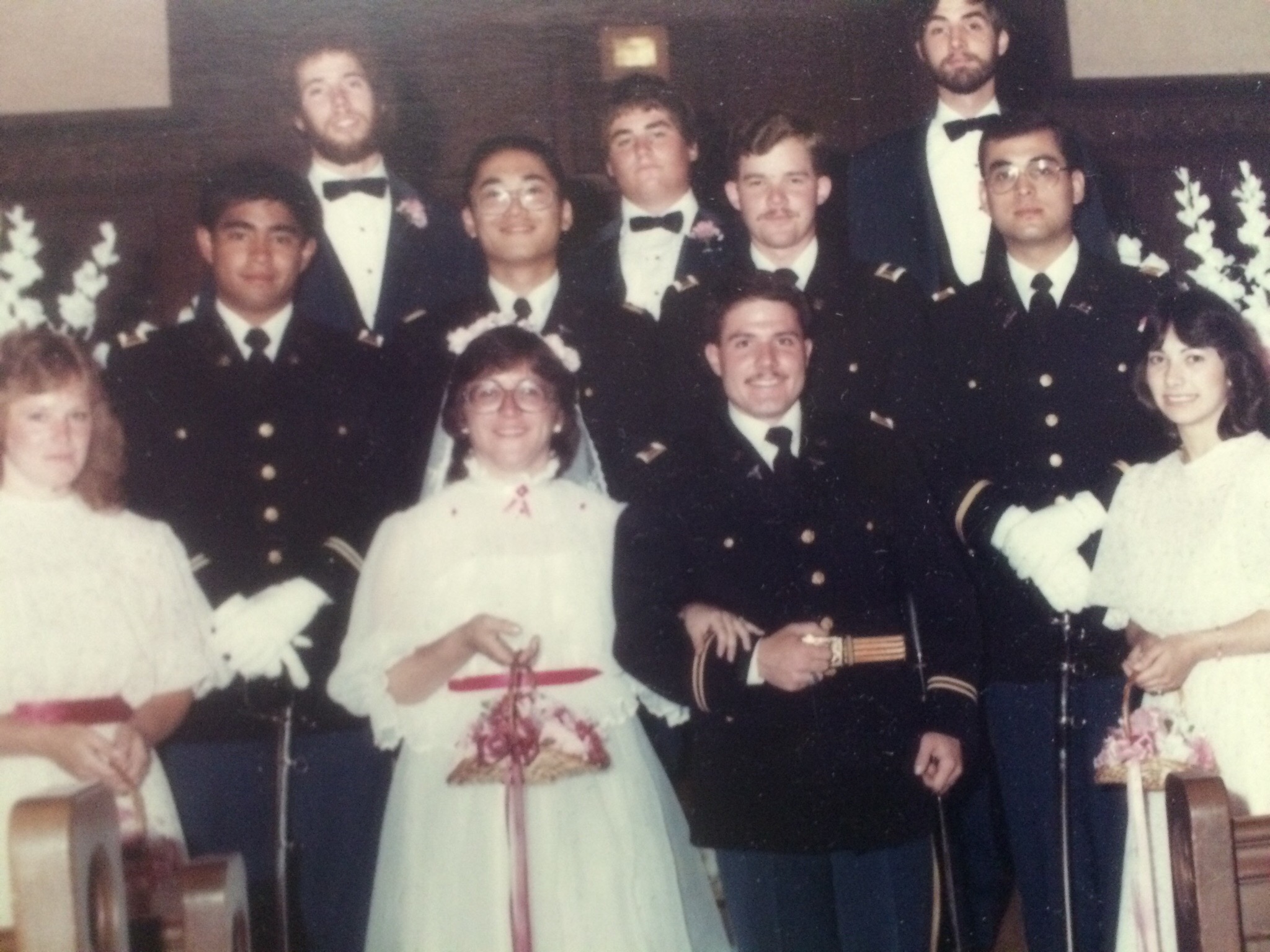
However, some of us get lucky and Cupid, the flying naked kid armed with a bow and arrow, shoots us in the ass one day and we discover that one true love. That happened to me in September of 1978 when I met Judy. I fell in love with her that night, but it took a while to develop. We are coming up on our 37th marriage anniversary this June, 6 days after my projected retirement ceremony, which is exactly 37 years after I was commissioned as an Army Second Lieutenant on June 19th 1983. My career in the military, in the Army and Navy has been difficult on her, especially after I came home from various deployments and combat deployments. Though I am now, and have been a chaplain since 1992, I have always been a warrior and soldier at heart, even when unarmed on combat deployments and getting shot at. Thus I find that I am very much attracted to the Klingons in Star Trek the Next Generation and Deep Space Nine, because it is in those series we discover just how complex Klingon culture, traditions, and religious beliefs are. Thankfully for me Judy shares my love of Star Trek, especially DS9. 

So I was thinking about what to do for her this Valentine’s Day as for much of my life I have been pretty lousy at giving her the attention and honor she is due, especially things like Valentine’s Day, birthdays and anniversaries. No doubt, though a faithful husband, I pretty much have been at the Mendoza Line when it comes to romance. Part of this is because of the fact that for close to half of our marriage I have been away from home, and came back pretty messed up from war.

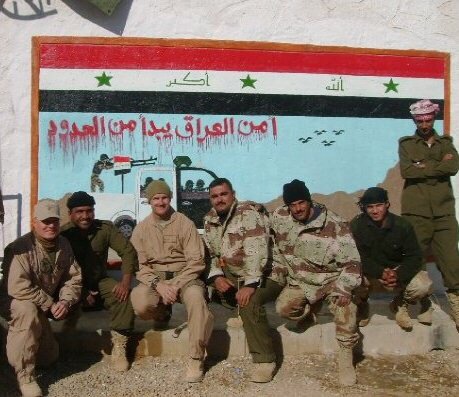
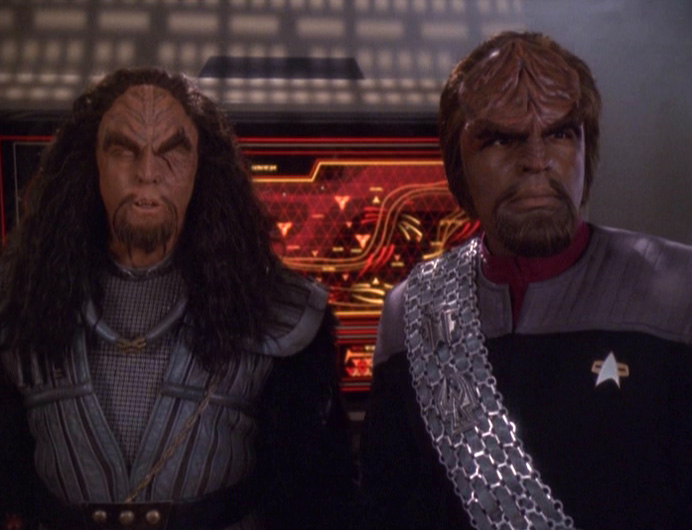
When I was going through my Clinical Pastoral Education Residency at Parkland Memorial Hospital in Dallas following Seminary, that my CPE Supervisor, Steve Ivy was able to connect my compartmentalization of my emotions with Lieutenant Worf, the Klingon Security Officer of the Enterprise in Star Trek the Next Generation played by Michael Dorn, who reprised the role in Star Trek Deep Space Nine. For me that was an eye opening experience. Though I was by that time an ordained minister, and two years later a Priest, I was always a warrior at heart, wanting, desiring, and volunteering time and time again for dangerous assignments. My first 17 1/2 years in the military were in the Army National Guard, active Duty Army, and Army Reserve, and even though I was mobilized to support Operation Joint Endeavor, the Bosnia Peace Enforcement mission, but in a purely support role. I was not until I entered the Navy, taking off my rank as a Major in the Army Reserve to return to active duty as a Navy Lieutenant in February 1999, and the attacks of 9/11/2001 that I got my chance for action at sea in 2002 in Operation Enduring Freedom and the UN Oil Embargo on Iraq in 2002, where I served as an “advisor” to a boarding team, numerous trips to Marine Security Forces in the Middle East from 2003 to 2006, and service in Iraq from 2007 to 2008 with the Advisors of the Iraq Assistance Group in Al Anbar Province, from the Syrian Border to Fallujah and about everywhere in between. It was an amazing combat tour, mostly outside the big bases, working with small teams of American advisors and Iraqi Army, Police, and Border forces. It was the best and most rewarding of tours of my career, but I came back changed. Since I have written about those experiences many times, I won’t go into details, but if I could have remained in Iraq supporting the advisors I would have stayed on indefinitely, and would have gone back given the chance. I left a lot of my soul in Iraq and I pray for the Iraqis, soldiers and civilians alike, who befriended me as the man they called the American Imam. But I digress…

But back to the Klingons, love, marriage, and Valentine’s Day. In one of the early Next Generation episodes Lieutenant Worf is asked by young Wesley Crusher what Klingon courtship is like. Worf replied:

I will sing Klingon love poems while she throws furniture. I duck a lot.

So today I posted a quote from DS9 on my Facebook timeline this morning while waiting at the Medical Center pharmacy. It was from an episode titled Looking for par’Mach in All the Wrong Places where the Ferengi Bartender, Quark ends up helping his Klingon ex-wife Grilka to deal with the financial situation of her House, which he helped her to gain following the death of her husband. Quark is forced to do battle with Grilka’s bodyguard who cannot abide a Ferengi being part of her house. The bodyguard issues a challenge which Quark could never match without help, which Worf and Jadzia Dax give him, but there is a technical glitch and to stall for time Quark issues a supposed Ferengi tradition, which he invented on the spot, The Right of Proclamation, a speech about his love for Grilka:

To this end my blade soars through the
aquarium of my soul seeking the
kelp of discontent which must be cut so that the
rocky bottom of love lies in waiting, with fertile
sand of the coming seed of Grilka’s
affection.
And yet, does this explain my need for her? No. It is like
oh, a giant cave of emptiness waiting for
the bats of love to hang by –

Judy responded by telling people that she would look at my medication list and look for side effects, and that people could direct message her. It was a perfect riposte.

But Quark’s words are those are the words of a Ferengi, not a Klingon, though Quark gave it his best. As Worf gets ready to marry Jadzia, she has to be approved by the matriarch of the House of Martok, and she makes Jadzia’s life hell.

But Martok encourages Worf, saying:

We are not accorded the luxury of choosing the women we fall in love with. Do you think Sirella is anything like the woman I thought that I’d marry? She is a prideful, arrogant, mercurial woman who shares my bed far too infrequently for my taste. And yet… I love her deeply. We Klingons often tout our prowess in battle, our desire for glory and honor above all else… but how hollow is the sound of victory without someone to share it with? Honor gives little comfort to a man alone in his home… and in his heart.” 

When Jadzia successfully passes the tests of Martok’s wife Sirella, the traditional Klingon wedding takes place in Quark’s bar on DS9. The traditional Klingon marriage includes the Klingon creation story, which is enacted by the bride and groom. It certainly is not a Christian understanding of creation, but it does encapsulate the depth of love between two people:

With fire and steel did the gods forge the Klingon heart. So fiercely did it beat, so loud was the sound, that the gods cried out, ‘On this day we have brought forth the strongest heart in all the heavens. None can stand before it without trembling at its strength.’ But then the Klingon heart weakened, its steady rhythm faltered and the gods said, ‘Why have you weakened so? We have made you the strongest in all of creation. And the heart said ‘I am alone.’ And the gods knew that they had erred. So they went back to their forge and brought forth another heart. But the second heart beat stronger than the first, and the first was jealous of its power. Fortunately, the second heart was tempered by wisdom. ‘ If we join together, no force can stop us.’ And when the two hearts began to beat together, they filled the heavens with a terrible sound. For the first time, the gods knew fear. They tried to flee, but it was too late. The Klingon hearts destroyed the gods who created them and turned the heavens to ashes. To this very day, no one can oppose the beating of two Klingon hearts… 
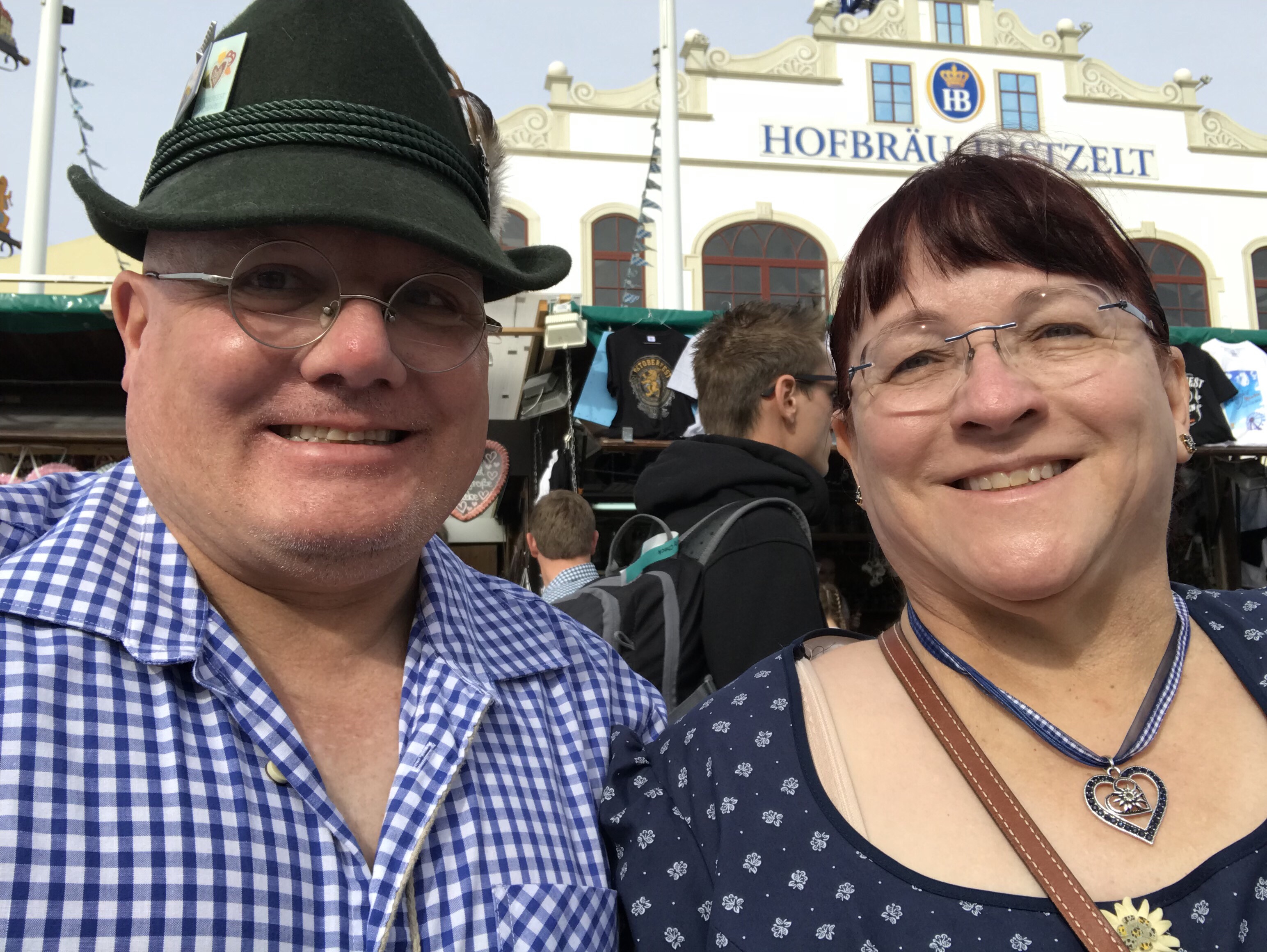
After either courting each other or being married for over forty years I think that Judy and I are a lot like Klingons. I am the proud, yet damaged warrior, she is the proud and faithful wife, and after all these years our hearts beat together.

This may not make a lot of sense to some readers, unless you are true Star Trek nerds, not that there is anything wrong with that.

The thing is that for all its commercialization, and despite the pain that often accompanies love, that Valentine’s Day is a celebration of love between two people, when their hearts beat together. One of my office mates lost his wife of 38 years two and a half years ago. If someone had not told me that he was a widower, it would be hard to guess it. When we talk about life, music, television, life, and family, he speaks of her in such a way that I know that his love for her did not die when she did. Their hearts still beat as one, and I love that, I wish I had actually met her. But, he has his son and other relatives in the local area and still lives a rich life, he is happy, and is still in love with her.

I hope and pray that everyone gets to experience that kind of undying love.

Until tomorrow,

Peace,

Padre Steve+


2 Comments

Filed under iraq, life, marriage and relationships, Military, PTSD, star trek, televsion, Tour in Iraq, us army, US Navy, War on Terrorism

A Veteran’s Day Postscript: Belonging to a Different World

Friends of Padre Steve’s World

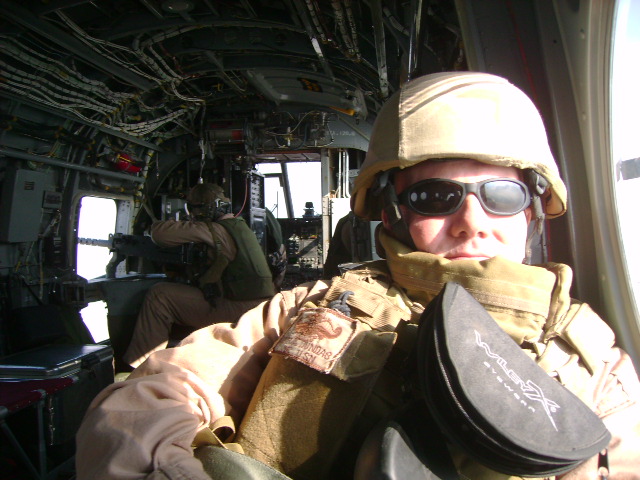
I wrote about Armistice Day and Veteran’s Day but I decided to write a postscript to it today. I write this specifically as a combat veteran who more than a decade after my return still deal with the effects of war, PTSD, TBI, sleep disorders, nightmares and night terrors, bad knees, ankles, shoulders, tinnitus, inability to understand speech, and a bunch of other stuff. I know many more who deal with what I do and worse. At least I am no longer suicidal, though I do experience periodic bouts of depression, panic attacks, and anxiety.

For me it began in February 2008 when on the way back from Iraq the military charter aircraft bringing us home stopped in Ramstein Germany. After a few hour layover we re-boarded the aircraft but we were no longer alone, the rest of the aircraft had been filled with the families of soldiers and airmen stationed in Germany. Just days before most of us had been in Iraq or Afghanistan. The cries of children and the intrusion of these people, not bad people by any means on our return flight was shocking, it was like returning to a world that I no longer knew.

I think that coming home from war, especially for those damaged in some way, in mind, body or spirit is harder than being at war.

In that thought I am not alone. Erich Maria Remarque in his classic novel All Quiet on the Western Front wrote:

“I imagined leave would be different from this. Indeed, it was different a year ago. It is I of course that have changed in the interval. There lies a gulf between that time and today. At that time I still knew nothing about the war, we had been only in quiet sectors. But now I see that I have been crushed without knowing it. I find I do not belong here any more, it is a foreign world.”

Likewise, Guy Sajer a French-German from the Alsace and veteran of the Grossdeutschland Division on the Eastern Front in World War II noted at the end of his book The Forgotten Soldier: 

“In the train, rolling through the sunny French countryside, my head knocked against the wooden back of the seat. Other people, who seemed to belong to a different world, were laughing. I couldn’t laugh and couldn’t forget.”

I have been reminded of this several times in the past week. It began walking through a crowded Navy commissary on Saturday, in the few minutes in the store my anxiety level went up significantly. On Tuesday I learned of the death of Captain Tom Sitsch my last Commodore at EOD Group Two, who died by his own hand. His life had come apart. After a number of deployments to Iraq as the Commander EOD Mobile Unit 3 and of Task Force Troy he was afflicted with PTSD. Between June of 2008 and the end of 2009 he went from commanding an EOD Group to being forced to retire.  Today I had a long talk with a fairly young friend agonizing over continued medical treatments for terminal conditions he contracted in two tours in Iraq where he was awarded the Bronze Star twice.

I have a terrible insomnia, nightmares and night terrors due to PTSD. My memories of Iraq are still strong, and this week these conditions have been much worse. Sager wrote:

“Only happy people have nightmares, from overeating. For those who live a nightmare reality, sleep is a black hole, lost in time, like death.”

Nearly 20 years after returning from war, a survivor of the 1st Battalion 308th Infantry, the “Lost Battalion” of World War One, summed up the experience of so many men who come back from war:

“We just do not have the control we should have. I went through without a visible wound, but have spent many months in hospitals and dollars for medical treatment as a result of those terrible experiences.”

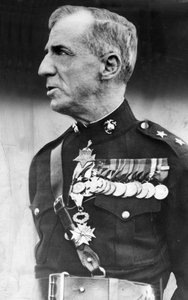
butler-medals1

Two time Medal of Honor winner Major General Smedley Butler toured Veterans hospitals following his retirement from the Marine Corps. He observed the soldiers who had been locked away. In his book War is a Racket:

“But the soldier pays the biggest part of this bill. If you don’t believe this, visit the American cemeteries on the battlefields abroad. Or visit  any of the veterans’ hospitals in the United States….I have visited eighteen government hospitals for veterans. In them are about 50,000 destroyed men- men who were the pick of the nation eighteen years ago. The very able chief surgeon at the government hospital in Milwaukee, where there are 3,800 of the living dead, told me that mortality among veterans is three times as great as among those who stayed home.”

Similarly Remarque wrote in All Quiet on the Western Front:

“A man cannot realize that above such shattered bodies there are still human faces in which life goes its daily round. And this is only one hospital, a single station; there are hundreds of thousands in Germany, hundreds of thousands in France, hundreds of thousands in Russia. How senseless is everything that can ever be written, done, or thought, when such things are possible. It must be all lies and of no account when the culture of a thousand years could not prevent this stream of blood being poured out, these torture chambers in their hundreds of thousands. A hospital alone shows what war is.”

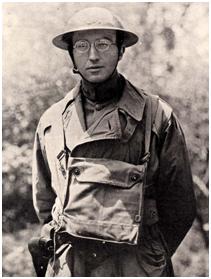
Lt.ColonelCharlesWhiteWhittlesey

Lieutenant Colonel Charles Whittlesey

Sometimes even those who have been awarded our Nation’s highest award for valor succumb to the demons of war that they cannot shake, and never completely adjust to life at “home” which is no longer home. For them it is a different, a foreign world to use the words of Sager and Remarque. Lieutenant Colonel Charles Whittlesey won the Medal Medal of Honor as Commander of 1st Battalion 308th Infantry, the “Lost Battalion” in France. After the war he was different. He gave up his civilian law practice and served as head of the Red Cross in New York. In that role, and as the Colonel for his reserve unit, he spent his time visiting the wounded who were still suffering in hospitals. He also made the effort to attend the funerals of veterans who had died. The continued reminders of the war that he could not come home from left him a different man. He committed suicide on November 21st 1921not long after serving as a pallbearer for the Unknown Soldier when that man was interred at Arlington National Cemetery.

In his eulogy, Judge Charles L. Hibbard noted:

“He is sitting on the piazza of a cottage by the sea on a glorious late September day but a few weeks ago. . . He is looking straight out to sea, with naught but sea between him and that land where lie so many of his boys. The beating surf is but an echo, the warm, bright sunshine, the blue sky, the dancing waves, all combine to charm. But a single look at his face and one knows he is unconscious of this glory of Nature. Somewhere far down in the depths of his being or in imagination far off across the waters he lives again the days that are past. That unconscious look has all the marks of deep sorrow, brooding tragedy, unbearable memories. Weeks pass. The mainspring of life is wound tighter and tighter and then comes the burial of the Unknown Soldier. This draws the last measure of reserve and with it the realization that life had little now to offer. This quiet, reserved personality drew away as it were from its habitation of flesh, thought out the future, measured the coming years and came to a mature decision. You say, ‘He had so much to live for – family, friends, and all that makes life sweet.’ No, my friends, life’s span for him was measured those days in that distant forest. He had plumbed the depth of tragic suffering; he had heard the world’s applause; he had seen and touched the great realities of life; and what remained was of little consequence. He craved rest, peace and sweet forgetfulness. He thought it out quietly, serenely, confidently, minutely. He came to a decision not lightly or unadvisedly, and in the end did what he thought was best, and in the comfort of that thought we too must rest. ‘Wounded in action,’ aye, sorely wounded in heart and soul and now most truly ‘missing in action.’”

Psychologist and professor Dr. Ari Solomon analyzed the case of Colonel Whittlesey and noted:

“If I could interview Whittlesey as a psychologist today, I’d especially have in mind … the sharp discrepancy between the public role he was playing and his hidden agony, his constant re-exposure to reminders of the battle, his possible lack of intimate relations, and his felt need to hide his pain even from family and dearest friends.”

I wish I had the answer. I have some ideas that date back to antiquity in the ways that tribes, clans and city states brought their warriors home. The warriors were recognized, there were public rituals, sometimes religious but other times not. But the difference is that the warriors were welcomed home by a community and re-integrated into it. They were allowed to share their stories, many of which were preserved through oral traditions so long that they eventually were written down, even in a mythologized state.

But we do not do that. Our society is disconnected, distant and often cold. Likewise it is polarized in ways that it has not been since the years before our terrible Civil War. Our warriors return from war, often alone, coming home to families, friends and communities that they no longer know. They are misunderstood because the population at large does not share their experience. The picture painted of them in the media, even when it is sympathetic is often a caricature; distance and the frenetic pace of our society break the camaraderie with the friends that they served alongside. Remarque wrote, “We were all at once terribly alone; and alone we must see it through.”

If we wonder about the suicide epidemic among veterans we have to ask hard questions. Questions like why do so many combat veterans have substance abuse problems and why is it that approximately one in ten prisoners serving time are veterans? It cannot be simply that they are all bad eggs. Many were and are smart, talented, compassionate and brave, tested and tried in ways that our civilian society has no understanding for or clue about. In fact to get in the military most had to be a cut above their peers. We have to ask if we are bringing our veterans home from war in a way that works. Maybe even more importantly we have to ask ourselves if as a culture if we have forgotten how to care about each other. How do we care for the men and women who bear the burden of war, even while the vast majority of the population basks in the freedom and security provided by the soldier without the ability to empathize because they have never shared that experience.

For every Tom Sitsch, Charles Whittlesey or people like my friend, there are countless others suffering in silence as a result of war. We really have to ask hard questions and then decide to do something as individuals, communities and government to do something about it. If we don’t a generation will suffer in silence.

Peace

Padre Steve+

3 Comments

Filed under History, iraq,afghanistan, leadership, Military, ministry, PTSD, remembering friends, shipmates and veterans, suicide, Tour in Iraq, us army, US Marine Corps, US Navy, world war one

Waiting for First Light at Slaughterhouse Five: PTSD and a Coda to te end of a Military Career


Friends of Padre Steve’s World,

I am checking out of my current command to finish my career attached to Norfolk Naval Shipyard, in Portsmouth Virginia. I am struggling. Not feeling appreciated and feeling like a cast off. This isn’t new, shortly after I was promoted to Commander, the newly appointed Deputy Chief of Chaplains treated me like a potted plant while making her rounds of the Generals and Major Commands. As Kurt Vonnegut noted in Slaughterhouse Five “and so it goes.”  My Problems in the Navy Chaplain Corps began when I went public with my struggles with PTSD. Somehow it seems that Chaplains can care for the wounded and those traumatized by war but if we admit that we are wounded we are expendable.

I read General Romeo Dallaire’s latest book, Waiting for First Light: My Ongoing Struggle with PTSD a couple of years ago. General Dallaire had been the commander of the UN Peacekeepers in Rwanda, men and women who were prevented from stopping genocide, and people who have been forever haunted by what they witnessed.

General Dallaire recounts a story of horror that never ended for him, and he details how difficult and traumatic coming home that neither appreciate nor understood what he had been through, including people in the military. I found so much in his story that was analogous to my own and in light of that I am going to begin writing my PTSD memoir.

It will be hard because I will have to write about things that are deeply traumatic and upsetting, especially how I was received and continue to be received by most of my fellow chaplains. Because I came and publicly discussed my issues with PTSD, the shattering of my faith in so many things, my wilderness experience of being an agnostic for two years, and the change in my faith since then, I experienced the rejection of my former church and many of my peers.

To many of my peers and Chaplain Corps superiors I am simply a broken Chaplain; and broken chaplains or for that matter broken ministers have no place and very few people who they can talk with. I remember my old Commodore at EOD Group Two, the late Captain Tom Sitsch ask me bluntly “Where does a chaplain go for help?”My answer to him was “not to other chaplains.” Sadly, he too was going through his own personal PTSD hell and with his life falling apart he committed suicide in January 2014.

General Dallaire recounts a similar experience, as like Chaplains, Generals and other senior leaders have no place to go, they like us are not supposed to break. General Dallaire wrote: “I received little support from my colleagues and peers; I received only a few messages from my sixty or so fellow generals – a couple of phone calls, and an e-mail from one old friend. The others appeared to be in two camps: those who were too busy to get in touch, and those who didn’t know what to say.” But I would also add, that there are those that do not want to know and others who actually turn their backs on men and women whose injury lies inside their brain, as well as some chaplains and ministers who seem to take a certain perverse joy in inflicting pain.

I still struggle with nightmares, night terrors, insomnia, and hyper-vigilance. After more than a decade I cannot imagine life without them. Like General Dallaire, I still wait for first light.

So pray for me if you do that, if not send some positive thoughts my direction.

Until tomorrow,

Peace

Padre Steve+

23 Comments

Filed under iraq, mental health, Pastoral Care, PTSD, Tour in Iraq, US Navy

Back in the USA

Friends of Padre Steve’s World,

We are back in the USA after our two week pilgrimage to Germany. It was good for us, especially for me when I intentionally disconnected from media for several of the days there except to skim the headlines. Today was much like that. We drove from Karlsruhe to Munich, caught our late flight back which was delayed due to weather in Munich and having to go further north to avoid the effects of Hurricane Lorenzo. We got into Washington about 40 minutes late. Our friend David picked us up at the airport and we are resting.

We will head back home to our Papillons tomorrow and begin the process of readjusting to insanity of Trump’s America, preparing to transfer my duties to a new Chaplain as I really enter the preparation to retire from the military and prepare for life as a civilian in the spring.

I will write some of my observations of Germany, Europe and our trip in the coming days. There are problems there too, different but similar in some ways to what we are going through. And I think as I ruminate on them over the next few days I will jot them down here. As I have said before, I believe that we are in one of those epochs of history where the old order is giving way and we go from crisis to crisis, some of which could be disastrous for humanity in general, but especially those who resist totalitarian systems of government. I was looking at my Twitter feed for about 10 minutes before I had to get off it it.

I have now been up over 28 hours, driven about 200 miles and had a ten hour ride in a Lufthansa Airbus 350-900. Before I go to bed I will read my daily comics and another chapter or two of the book That Was Dachau, 1933-1945. 

So until tomorrow,

Peace,

Padre Steve+

Leave a comment

Filed under News and current events, Political Commentary, travel

Munich Update

Friends of Padre Steve’s World,

Yesterday was our first full day in Munich. We got up relatively early, had breakfast and went to the opening parade and tapping of the Bier at the Oktoberfest. Following that we did some shopping and since Judy had walked and stood three to four times as long as at any time since her first knee replacement surgery we took her back to the hotel.

I then went down to the hotel bar to watch the second half of the Bayern München game against Koln, Bayern won 4-0. Then I went to the Lidl grocery and picked up a few things before going back to the hotel and picking Judy up for dinner at our favorite local Bavarian restaurant, Zum Brunstein, which is always like a visit to home away from home. After a wonderful dinner we went for a nightcap at the hotel bar.

When we went back to our room I thought I was going to watch a German crime drama and post a blog, but jet lag hit and we crashed. We slept late, I had a light breakfast of fruit and coffee, Judy is resting while I make pilgrimage to Dachau and the Concentration Camp Memorial.

I am writing on my iPhone while riding the S-Bahn to Dachau.

When I finish this trip and return to the hotel, our plans are to go back to Theresienwiesn where the Fest is held for beer and a wonderful Bavarian Rotisserie Chicken dinner, before heading back to the hotel. Tomorrow we’ll probably do some shopping and I might make a trip to the Dachau labor sub-camp memorial or the Sophie Scholl museum. I do plan on making those trips, but we are pacing ourselves.

So until the next time, from Munich,

Peace,

Padre Steve+

2 Comments

Filed under History, Loose thoughts and musings, travel

Emotional and Physical Recovery from a Traumatic Event

Pearls Before Swine Comic Strip for August 07, 2017

Comic, Pearls Before Swine, (c) 2017 by Stephan Pastis

Friends of Padre Steve’s World,

On Thursday afternoon my car was run off the road by an inattentive driver with a very loud exhaust system.

I honestly thought I would be better the next day, but late in the afternoon when Judy took me to get the car, I got in the driver seat and I felt sick to my stomach and was trembling. I got the car home and she drove us to Gordon Biersch where we had a nice night.

I didn’t sleep well, lots of nightmares and I didn’t leave bed, except to let the dogs out until about 1 PM. I knew I had to get a few groceries at Kroger and Wegmans so I made the trip. Until I got to the Kroger parking lot the trip went well. Then it seemed that every old lady was trying to crash by cutting me off or taking up most of a lane. I was doing into panic mode, but took a deep breath, regathered myself and instead of going directly to Wegmans I stopped by Gordon Biersch for a one and done to calm the nerves. Since I no longer take a specific anti anxiety medication, I stopped taking the minimal PRN dosage of Xanax a few years back because I was experiencing less anxiety.

The crash has re-triggered that anxiety, something I will talk to with my shrink on Tuesday and my psychiatric medicine manager Wednesday. But yesterday I needed to calm down. I texted Judy and posted my situation on Facebook. A good friend came over and spent some time with me at the bar. I then did a take out order since Judy told me that. Wegmans could wait.

Judy reminded me of the chemical chain reaction that trauma sends through the body, and how it takes time for that to play out. I am lucky to have her.

This morning we planned to go out to breakfast, but since neither of us were hungry we stayed in bed with the dogs. They have been very comforting, especially my girl Izzy. Judy is about to drive us to Biersch for dinner so we can get out of the house.

Tomorrow I am up really early for fat boy PT, then I have to drive to the Naval Medical Center for aquatic physical therapy and to get my antidepressant refilled  since I have gone without it 5 days and don’t want to crash and get suicidal. Then I will go in to work.

About the cartoon. That is how I have felt all weekend. The cartoon is Pearls Before Swine by Stephan Pastis. This particular cartoon ran in August of 2017. His comics can be accessed at GoComics.com, I hope that since I didn’t ask permission to run it that you will flood his site with hits and buy his books.

So until tomorrow, and hopefully better times,

Peace,

Padre Steve+


3 Comments

Filed under Loose thoughts and musings, mental health, Military, PTSD

PTSD: Anxiety, Fear, and Things That Lurk on the Road

Friends Of Padre Steve’s World,

Back in August of 1978 when I met and fell hopelessly head over heals in love with my wife Judy, I had no idea how badly she had been damaged by the actions of her parents, siblings, and one particular grandmother. Between physical, emotional violence, neglect, and abuse that continued long after we were married in 1983, she showed herself to be a rock for me over the past couple of days.

On Thursday night I wrote about it thinking that by Friday I would be doing better. I got the car back late Friday afternoon. Judy took me to get it and take it home before driving me out to dinner. This morning I didn’t want to get out of bed. I have had trouble sleeping, but bed feels safe.

That being said I had to go to a grocery store to pick up a few things and see if I could get a refill on my antidepressant. I couldn’t get the refill today because they had to transfer it from the Naval Medical Center. Since I have to go there on Monday anyway, I go without. But I planned on going to another grocery store, a Wegmans, for the very best strawberries, cantaloupe, dark chocolate almond bark, and Paulaner Beer from Munich. But as I was trying to leave Kroger it seamed that every insane old woman in the parking lot was trying to crash into my car. No kidding, there were at least three times in the parking lot that old ladies locked eyes with me and tried to force me into crashes with parked cars by purposely restricting my ability to maneuver. To avoid each, I stopped and yielded.

On the way to Wegmans I stopped by Gordon Biersch for a one and done beer to calm my nerves. I posted my situation on Facebook and let Judy know. A friend came by to check on me. Judy told me to take the time to regather my nerves. I then brought us take out from there on my way home.

I think that it’s important to have someone who understands your anxieties, fears, and weaknesses. I haven’t felt this vulnerable, fearful, and anxious, since my last Commodore at EOD Group Two In 2008, took his life in January 2014. Tomorrow, I plan to take Judy out to breakfast and make the trip to Wegmans I had planned for today. Monday, it is back to fat boy PT at the base, followed by aquatic physical therapy at the Naval Medical Center, after which I will try to get my antidepressant refilled. I’ll see my shrink on Tuesday, and my psych drug doctor Wednesday. The rest of the week will between split between work, physical therapy, and medical appointments.

For the moment I am not okay. I am so frightened, anxious, and fearful that I don’t want to go out or get in my car. I love doing both, and for most of my life driving, and traveling has been relaxing. I don’t know when or if it will be so again, most of that is residue from convoys in Iraq. However, over a decade after I came home all it took to throw me back into that emotional morass, was an incident precipitated by someone who probably never noticed what happened on Thursday.

Pray for me a sinner,

Peace,

Padre Steve+


5 Comments

Filed under mental health, Military, PTSD, Tour in Iraq

The PTSD Startle Response: Never far from the Surface

Friends Of Padre Steve’s World,

PTSD is an unwanted gift that keeps giving. One of its many manifestations is a startle response. My wife Judy can tell you about them, and it took me many years to understand how inadvertent and programmed they are, she’s had them for decades, me just since returning from Iraq in 2008. Until I started dealing with my shit, I failed to understand hers and many times when she would startle and I wasn’t very sympathetic. She has dealt with childhood PTSD for a lot longer than I have combat PTSD, and even after I came back from Iraq I didn’t understand how deep the trauma she experienced still affected her.

I remain hyper vigilant, have terrible nightmares and night terrors, when I go out somewhere I always stay aware of my circumstances, but it has been a few years since I had something happen like today. I was on my way home from work at the beginning of rush hour and and was about a mile or so off base when a large pickup truck with one of those noice enhanced exhaust systems roared up close alongside on the right lane. The noise caused me to look over my shoulder and I caught the vision of the truck, just big and dark, speeding past me. I went into my automatic response, I swerved to avoid a possible collision, entered the edge of the grass on the median and then hit a curb in a turn lane. The impact blew out the tires on the left side of my car. I didn’t try to keep driving and slowly pulled into the grass of the median and turned on my emergency flashers.

The interesting thing was that hundreds of cars passed me with none stopping to offer assistance until a female Virginia Beach Police officer coming from the opposite direction stopped to help. She got me a tow truck and the car will be in the shop until tomorrow afternoon. I am going to let my insurance company, USAA, know what happened in the morning.

Of course I have no positive identification of the pickup truck and he probably meant no harm, just gunning his engine to get home quicker. The fact that the loudness of his exhaust system and noise enhanced muffler startled me is irrelevant. That’s not a crime. But what surprised me is that nobody but a police officer offered to help. I couldn’t do that. I paid for the tow to a tire store that I do business with and walked to meet Judy at a restaurant where I had here waiting in case I needed a ride.

I have nothing but praise for the Virginia Beach Police officer and the tow service. I also thank all of my friends who have contacted me on social media, and for Judy who stayed in touch with me until she was sure that I was safe. I just knew that the location of the incident wasn’t conducive to her traveling to retrieve me.

Whatever happens next I am glad that I am okay and that apart from some money that it won’t cost us anything. I am safe and have a new appreciation for Judy’s startle reflex.

So until tomorrow,

Peace,

Padre Steve+


Leave a comment

Filed under mental health, Military, PTSD, Tour in Iraq

Inshallah, (إن شاء الله) God willing: Thoughts on Landing in Iraq 12 Years Later it is hard

Friends Of Padre Steve’s World,

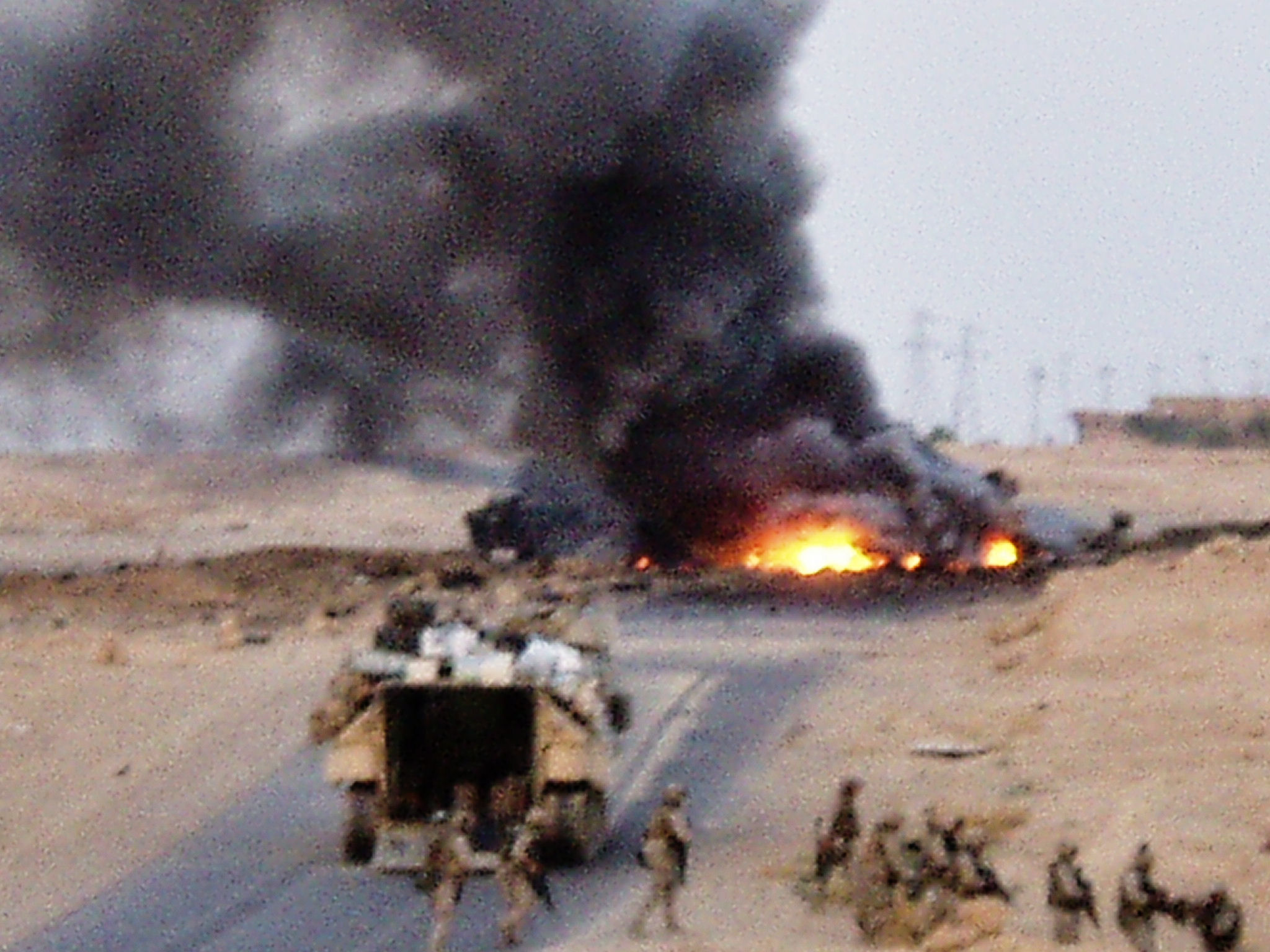
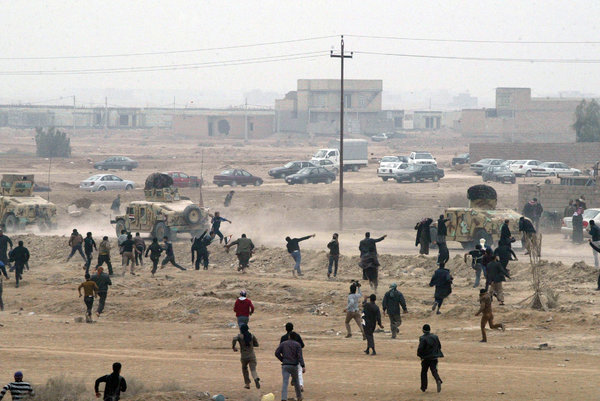
it is hard to believe that about this time a dozen years ago that I was landing in Iraq, for a tour of duty with American advisers to Iraqi Army and security forces in Al Anbar Province. To quote Charles Dickens “It was the best of times, it was the worst of times.” It was a tour of duty that would change me forever, I could have stayed there indefinitely, but my tour was limited to seven months. Nonetheless, I left a lot of me in Iraq, and brought a lot back.

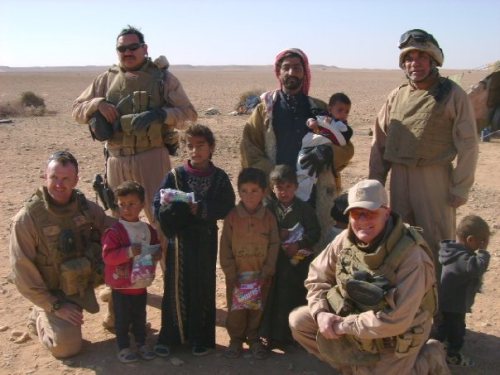
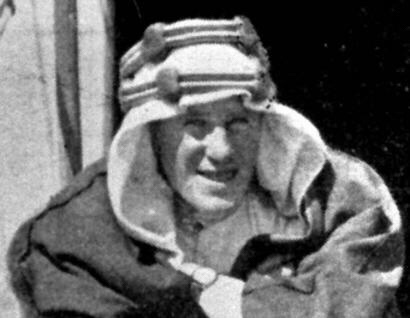
It was an amazing tour of duty, full of danger every day, full of travel from the Syrian border to Fallujah and all places in between. I met many friends there, Americans and Iraqis alike. I returned with a severe case of PTSD as well as moral and spiritual injuries that have afflicted me since. I really understand T. E. Lawrence, better known by most as Lawrence Of Arabia who wrote:

“We were fond together because of the sweep of open places, the taste of wide winds, the sunlight, and the hopes in which we worked. The morning freshness of the world-to-be intoxicated us. We were wrought up with ideas inexpressible and vaporous, but to be fought for. We lived many lives in those whirling campaigns, never sparing ourselves: yet when we achieved and the new world dawned, the old men came out again and took our victory to remake in the likeness of the former world they knew. Youth could win, but had not learned to keep, and was pitiably weak against age. We stammered that we had worked for a new heaven and a new earth, and they thanked us kindly and made their peace.”

You see I went to war as a volunteer. I was eager to go, and as I said I would have remained longer. When I left I felt like I was abandoning my Americans and Iraqis. When I left, the Navy Chaplain who followed the one I served under deferred on having my replacement and in a sense abandoning those Americans and Iraqis that I was the only Chaplain serving. My replacement was sent to an Army team in Mosul.

I left Iraq questioning everything that I had went there believing: about the justness of the war, about my country’s leadership, the political party I had been a part of for three decades, and my faith as a Christian.

I have written much about my experience in Iraq and how even today I have a deep regard for the Iraqi people and their hopes for a better future. However, I wonder if what Lawrence wrote will be true:

“We had been hopelessly labouring to plough waste lands; to make nationality grow in a place full of the certainty of God… Among the tribes our creed could be only like the desert grass – a beautiful swift seeming of spring; which, after a day’s heat, fell dusty.” 

vault-von-saddam-statue-fall-itn-640x360

In 2003 the United States invaded Iraq and made short work of that country’s military. Many Iraqis of all creeds looked upon the US and coalition forces as liberators but within a few months the illusion was over. Within weeks of the overthrow of Saddam, the US military personnel and leaders who were working with Iraqi officials, both military and civilian to get the country back on its feet were replaced by the Bush administration.

rumsfeld-bremer-2

In their place a new entity, the Coalition Provisional Authority was created and staffed. The first administrator of the entity was retired Army Lieutenant General Jay Garner. He had much experience in Iraq but was sacked quickly by Secretary of Defense Donald Rumsfeld for not conducting an immediate purge of members of the Baathist Party from key positions in the civil service or security forces, or implementing the agenda of the administration.

After Garner’s dismissal the CPA was led by Ambassador L. Paul Bremer, a man who had no experience in the Arab world, much less in Iraq. Bremer and his staff, most of who had little experience or knowledge of the country created conditions that directly led the the Iraq insurgency, the sacrifice of thousands of American and allied lives and the loss of friendship of the Iraqi people. They also gave a a bloodless strategic victory to Iraq’s traditional enemy and oppressor Iran, which became a dominant regional power without having to worry about their traditional Arab nemesis.

It was as if Bremer, the leaders of the Bush administration and their neoconservative allies knew nothing of history. If they did they decided to ignore it. Whether it was ignorance of history, or a wanton disregard for it, and the country we invaded it was immoral, unethical and probably criminal.

baghdad1917-2

T.E. Lawrence wrote of the British incursion into Turkish Mesopotamia in 1915, managed by the British Indian Office:

“By brute force it marched then into Basra. The enemy troops in Irak were nearly all Arabs in the unenviable predicament of having to fight on behalf of their secular oppressors against a people long envisaged as liberators, but who obstinately refused to play the part.”

The actions of the CPA destroyed the plans pragmatists in the Pentagon and State Department to incorporate the existing civil service, police and military forces in the newly free Iraq.  Instead Bremer dissolved the Iraqi military, police and civil service within days of his arrival. Since the military invasion had been accomplished with minimal forces most Iraqi weapon sites, arsenals and bases were looted once their Iraqi guardians were banished and left their posts. The embryonic insurgency was thus provided by Bremer a full arsenal of weapons to use against American forces; many of whom were now mobilized Reservists and National Guardsmen that were neither trained or equipped to fight an insurgency or in urban areas.

mosul-41

The reaction of the Iraqi Arabs to US occupation should have been anticipated. Lawrence wrote in 1920 a letter that could have easily been written in 2004:

“It is not astonishing that their patience has broken down after two years. The Government we have set up is English in fashion, and is conducted in the English language. So it has 450 British executive officers running it, and not a single responsible Mesopotamian. In Turkish days 70 per cent of the executive civil service was local. Our 80,000 troops there are occupied in police duties, not in guarding the frontiers. They are holding down the people.”

The actions of Bremer’s incompetent leadership team led to a tragic insurgency that need not have taken place. The now unnumbered US forces had to fight an insurgency while attempting to re-create an army, security forces and civil service from the wreckage created by Bremer’s mistakes; as well as its own often heavy handed tactics in the months following the invasion.

OLYMPUS DIGITAL CAMERA

Nearly 4500 US troops would die and over 30,000 more wounded in the campaign. Hundreds of thousands of Iraqis were killed, wounded or died of disease during the war.  Lawrence wrote about the British administration of Iraq words that could well have been written about Bremer’s Coalition Provisional Authority:

“Meanwhile, our unfortunate troops, Indian and British, under hard conditions of climate and supply, are policing an immense area, paying dearly every day in lives for the willfully wrong policy of the civil administration in Bagdad.”

It took dramatic efforts in blood and treasure to restore the some modicum of security in Iraq, something that was only accomplished when the Sunni tribes of Anbar Province turned against the Al Qaeda backed foreign fighters. The surge under the command of General David Petreus achieved the desired result. It gave the Iraqis a chance to stabilize their government and increase their own security forces.

26iraq_image1-articleLarge

Unfortunately many of those that remained in power of the Shia sect refused to share power in meaningful ways with Iraq’s Sunni and Kurds leading to a political crisis. The US military mission ended in December 2011 and since then Iraq security forces and civil authorities, often divided by tribal or sectarian loyalties have struggled to maintain order. The result is that by 2013 that Iraq was again heading toward the abyss of civil war. Sunni protestors in Anbar and other provinces conducted frequent protests, sectarian violence spread, and an Al Qaeda affiliated group gained control of Fallujah and parts of Ramadi. It took years for the Iraqis aided by the Kurds, and a renewed U.S. military presence to restore a precarious stability in Iraq, something that it seems the Trump administration is trying to destroy in its economic and political war against Iran. To me that seems like the President is pissing on the graves of every American and Iraqi who died supporting that operation, and I hate him for that. I am still loyal to my oath and the Constitution but I loathe him and have no respect for a man who used every opportunity he could to not serve in Vietnam and consistently has disrespected Vietnam veterans and other military personnel. He loves military technology, but he shows no respect for the soldier.

Syria

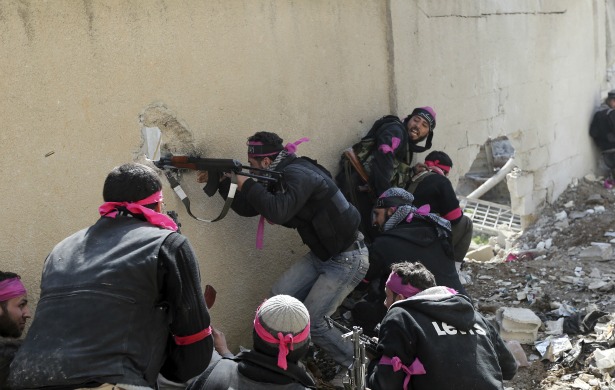
To the west in Syria a brutal civil war has been going on for  years. Like Iraq it pits Sunni against Shia, as well as Kurd and foreign fighters from a score of nations, some fighting as part of a Free Syria movement, others as part of the Al Qaeda coalition and others beside Syria’s government.

In 1920 Lawrence wrote of the British intervention and occupation of Iraq:

“The people of England have been led in Mesopotamia into a trap from which it will be hard to escape with dignity and honour. They have been tricked into it by a steady withholding of information. The Bagdad communiqués are belated, insincere, incomplete. Things have been far worse than we have been told, our administration more bloody and inefficient than the public knows. It is a disgrace to our imperial record, and may soon be too inflamed for any ordinary cure. We are to-day not far from a disaster.”

lawrenceguerrillas1

His words have a sadly familiar tone. The US invasion of Iraq did have a different outcome than we imagined. The Arab Spring erupted and the consequences of it will be far reaching and effect much of the Middle East and the world. The internal conflicts in Iraq and Syria threaten every country that borders them, and the instability has the potential of bringing on an regional war.

295_26912097058_4309_n-4

That being said, many if not most Arabs in all of these lands simply desire to live in peace and enjoy some amount of freedom for themselves and future for their children. One has to remember that the freedom for which many are striving, and dying is for them, not for the United States or any other power.

Lawrence’s words and wisdom concerning the Arabs who rebelled against the Turkish Ottoman Empire are as true today as when he wrote them after the war:

“The Arabs rebelled against the Turks during the war not because the Turk Government was notably bad, but because they wanted independence. They did not risk their lives in battle to change masters, to become British subjects or French citizens, but to win a show of their own.”

That is the case in many Arab countries today. One can only hope that in those countries as well as in Afghanistan where our troops are embroiled in a war that cannot end well, that somehow peace will come. I do hope that we will do better than we have over the past dozen years of conflict, or than the British or French did almost 100 years ago, but under the present administration I doubt it.

I have recovered much since my tour, but there are days when I feel as Lawrence did not long before his death, when he wrote a friend:

“You wonder what I am doing? Well, so do I, in truth. Days seem to dawn, suns to shine, evenings to follow, and then I sleep. What I have done, what I am doing, what I am going to do, puzzle and bewilder me. Have you ever been a leaf and fallen from your tree in autumn and been really puzzled about it? That’s the feeling.”


I fully understand, and in the final year of my active service, I must speak the truth, even when it is uncomfortable for me and others.

As for my Iraqi friends who still remain in danger, I say Inshallah, (إن شاء الله) God willing.

Peace

Padre Steve+


1 Comment

Filed under ethics, faith, History, iraq, iraq,afghanistan, leadership, life, mental health, Military, News and current events, Political Commentary, PTSD, Tour in Iraq

PTSD and Combat Trauma: Gouverneur Warren, a Hero Betrayed

gkwarren

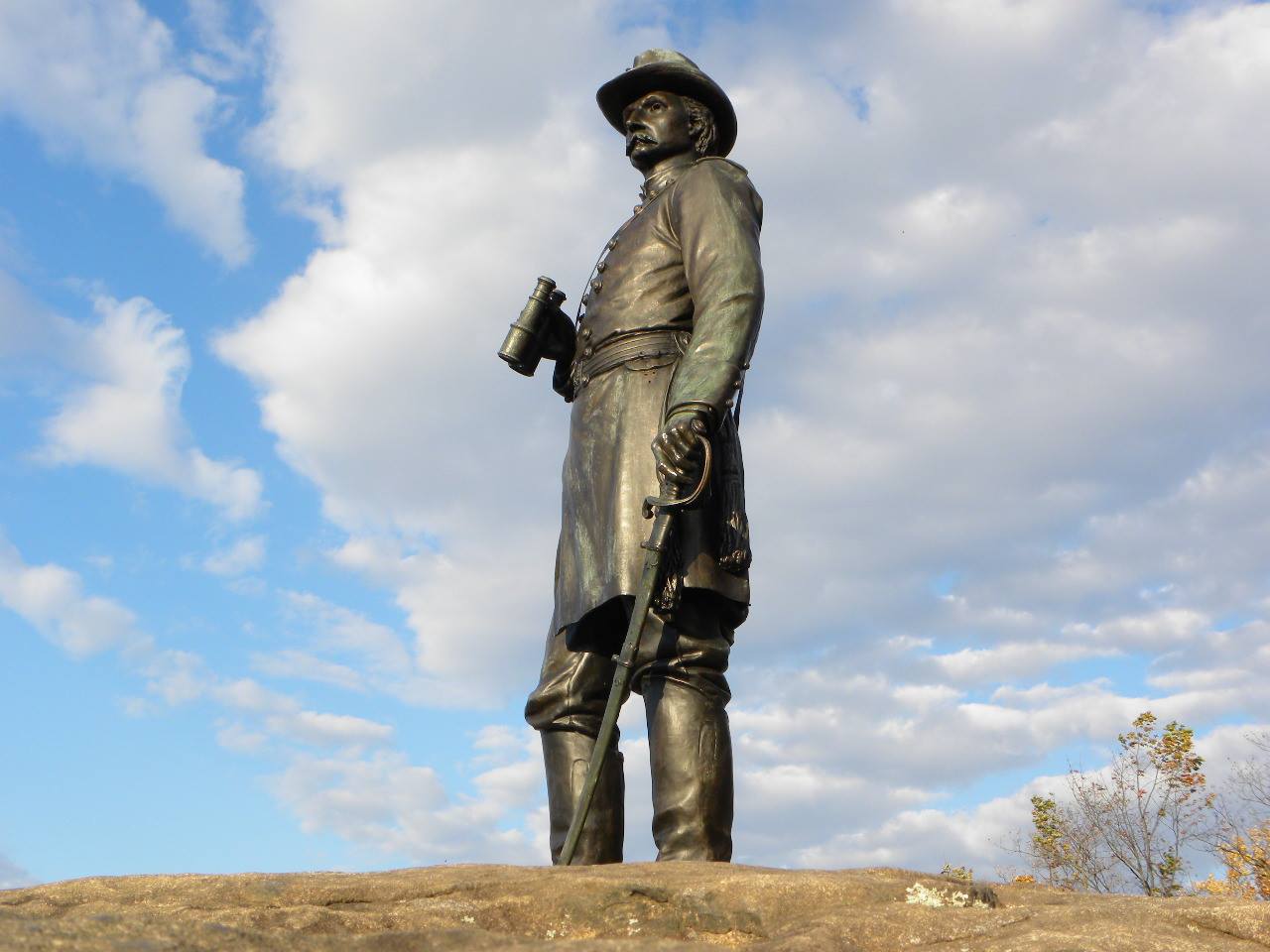
Brigadier General Gouverneur Warren

Friends of Padre Steve’s World,

This is another article from one of my yet unpublished boos on the Battle of Gettysburg. Hopefully my agent will find a home for it. That being said the men who fought that battle were very little different from the men and women that serve in our armed forces today. I find a particular affinity with this man, General Gouverneur Warren.

Peace

Padre Steve+

Throughout this study we have been looking at how leaders at various levels in conduct of campaigns as well as battles make decisions. Likewise we examine the lives and character of those leaders as it applies to their actions at critical points of a battle. In this chapter we will examine three officers whose lives, character and actions at Gettysburg, specifically at Little Round Top exemplify two of the Chairman of the Joint Chiefs of Staff Desired Leader Attributes, “to anticipate and adapt to surprise and uncertainty” and the principle of Mission Command, to “operate on intent through trust, empowerment and understanding.” It is from those perspectives that we will look at this part of the battle, but we would be amiss if we did not address the nearly mythical status to which this action has risen.

The actions of three men at the Battle of Little Round Top; Brigadier General Gouverneur Warren, the Chief Engineer of the Army of the Potomac, Colonel Strong Vincent, commanding Third Brigade, First Division, V Corps and Colonel Joshua Lawrence Chamberlain, commanding the 20th Maine Infantry Regiment of Vincent’s brigade are very important to the outcome of the battle, but also for what they teach us about leadership and the profession of arms. This chapter focuses on Warren, in particular with his work with the Commander of the Army of the Potomac, George Meade and his actions to secure Little Round Top on July 2nd 1863, the next will deal with Chamberlain and Vincent.

The battle at Little Round Top is an iconic part of American History and in particular for the Army, a key element of how leadership has been studied. It has achieved nearly mythical status due to the actions of Colonel Joshua Chamberlain which have been told many times in history, fiction and in film, particularly Michael Shaara’s classic historical novel The Killer Angels and its film adaptation Gettysburg. While these accounts are certainly inspiring and allow us to experience the emotion and near spiritual quality of what Chamberlain writes, there is much more to learn.

That near spiritual quality and mythic status that we accord Gettysburg is important, for in large part it is why we come to the battlefield, and why we study. Chamberlain said it well many years after Gettysburg at the dedication of the Maine Monuments:

“In great deeds, something abides. On great fields, something stays. Forms change and pass; bodies disappear; but spirits linger, to consecrate ground for the vision-place of souls… generations that know us not and that we know not of, heart-drawn to see where and by whom great things were suffered and done for them, shall come to this deathless field, to ponder and dream; and lo! the shadow of a mighty presence shall wrap them in its bosom, and the power of the vision pass into their souls.” [1]

So as we endeavor to look at the actions of these leaders on that fateful day it is important to recognize that we cannot totally separate those actions that helped decide the battle from the mythos that surrounds the story. [2] Likewise, it important to acknowledge that we cannot separate their character and the totality of military leaders lives from their actions on a particular battlefield. Unlike Chamberlain Warren does not engender myth, and that is why he is often overlooked by many casual students and observers of the Battle of Gettysburg.

For the purposes of this study it is important to note that Warren was not a commander during this action, he was, like most senior officers today, a staff officer. Many times students of military history and theory are inclined to dismiss the contributions of staff officers because they do not have the overall responsibility of a battle, or the glamour of the limelight of the commanders that they serve under. However, for military professionals, especially those serving on senior staffs who prepare campaign plans, contingency plans and crisis plans the study of officers like Warren is essential.

The Federal Army at Gettysburg, like its Confederate opponent had a wide variety of officers serving in its ranks. Many of its senior officers were graduates of West Point. Many had served together in Mexico and in the various campaigns against Native American tribes. Those who stayed in the Army during the long “peace” between the Mexican War and the outbreak of the Civil War endured the monotony, boredom and often miserable conditions of isolated army posts, long family separations, as well as low pay, slow promotion and often low social status.[3] In light of such conditions, many resigned their commissions to undertake various professional, business or academic pursuits; in fact Samuel Huntington noted that in the years before the Civil War that “West Point produced more railroad presidents than generals.” [4] However, on the outbreak of the war returned to service whether in the service of the Union, or the Confederate States.

When the war began the Army underwent a massive expansion, which it met through and the call of up militia and raising new units from the various states. In the expansion many officers were appointed who had no prior military service, or if they did it was performed years or even decades before the war. Some of these men were simply patriots who rallied to the flag, others due to a sense of righteousness about their cause, while others were political opportunists or appointees. In the north this was a particular problem as “professional officers were pushed aside and passed over in the Union, the higher commissions going, in the first stages of the war at least to officers called back into service or directly appointed from civilian life, many of them “political” appointees.” [5]

At times the lack of experience, training and sometimes the poor character of these men was tragic. However, many of these men performed as well or better than some of their regular army counterparts at various levels of command. At the same time a good number of Regular Army officers were allowed to assist states in the formation and training of these new units, one of whom was Gouverneur Warren. Gettysburg would provide opportunity for the best and worst of all of these types of officers to succeed or fail. In this chapter we will look at one of the regular officers and two of the volunteer whose lives intersected on July 2nd 1863.

Brigadier General Gouverneur Warren was typical of the many professional officers of the old army. An 1850 graduate of West Point, Warren was a bright student who had absorbed the teachings of his professor, Dennis Hart Mahan as the core of his own military thought, both in his senior year in college and through reinforcement as a faculty member. [6] Warren was commissioned as a Brevet Second Lieutenant and because of his high standing in his class was assigned to Corps of Topographical Engineers. He spent his first seven years in a number of assignments which took him throughout much of the country.

Warren’s work involved exploring and mapping for various enterprises including the project to help tame the Mississippi River, and the exploration of the Great Plains and Black Hills where he developed a sympathy for the various Sioux tribes he encountered noting on completion of his mission in 1858, writing that He had never heard a Sioux chief express an opinion in regard to what was due them in which I do not concur and that many of them view the extinction of their race as an inevitable result of the operation of present causes, and do so with all the feelings of despair with which we should contemplate the extinction of our nationality. [7] Following his years in the west he returned as faculty to West Point where he as an Assistant Professor, shared mathematics instructional duties with Oliver O. Howard and resumed his relationship with his former professor Mahan. [8]

On the outbreak of war Warren was granted leave from his duties at West Point to serve as Lieutenant Colonel of Volunteers in the 5th New York Infantry Regiment, also known as Duryee’s Zouaves. Where Duryee was appointed as a Brigadier General, Warren became its Colonel, serving with it during the Peninsula campaign where he was eventually given command of a provisional brigade and promoted to Brigadier General, serving as a Brigade Commander in at Second Manassas, Antietam and Fredericksburg.

At Chancellorsville he was pulled from his brigade duties by Hooker who employed him with good effect to assist his engineering staff, first with mapping and then building the fortifications that stopped the ferocious Confederate storm on the second day of battle. [9] In less than 48 hours Warren’s troops threw up five miles of the most formidable entrenchments yet constructed under battlefield conditions. [10] Edward Alexander, Longstreet’s artillery officer noted that when the Confederates came upon the fortifications after Hooker’s withdraw that “they were amazed at the strength and completeness of the enemys fortifications. [11] Following the battle Warren was appointed as Chief Engineer of the Army of the Potomac on May 12th 1863 by Hooker. When Hooker was relieved of command and was replaced by Meade on June 28th 1863, he was kept in that position by his fellow engineer Meade rather than being promoted to a division or being assigned as Meade’s Chief of Staff. As this turned out it was a wise choice.

Warren along with Major General Winfield Scott Hancock arrived at Cemetery Hill on the night of July 1st. As Meade organized his defenses he not only depended on his advice about the ground, but “consulted him constantly at headquarters or sent him off on matters of highest importance.” [12] Meade respected Warren and had offered Warren the chance to serve as his Chief of Staff, a position that Warren, like Seth Williams, the Adjutant General declined that offer indicating that he had too much work in their departments to take on the burdens of a new job. [13] Lee appreciated Warren’s calm, absorbed, and earnest manner, his professional skill and sound judgment.[14] These qualities would serve both men and the army well on July 2nd.

When Sickles moved III Corps forward during the afternoon without permission moved his Corps forming a vulnerable salient at the Peach Orchard leaving the southern flank in the air, Meade was aghast. Warren who from his reconnaissance of the previous day and the morning knew the position better than anyone recognized that something was badly awry on SicklesThird Corps front  matters there were not all straight. [15] He had sent an officer to discover to investigate Sickles’ front and that officer reported that the section of Cemetery Ridge assigned to III Corps was not occupied.[16]

Meade and Warren discussed the situation and realized that III Corps “could hardly be said to be in position” [17] and knowing VI Corps was now close at hand order V Corps, at the time his only reserve into the position vacated by Sickles. They went forward and seeing the empty spaces Warren told Meade “here is where our line should be” to which Meade replied: “It’s too late now.” [18] Warren, whose familiarity with the whole of the battlefield gave him concern about Sickles’ corps dispositions suggest that Meade send him to the Federal left, “to examine the condition of affairs.” [19]

Meade concurred with his Engineer and in dispatching him he also gave Warren the authority to take charge as needed saying “I wish you would ride over there and if anything serious is going on, attend to it.” [20] Again Meade’s choice of Warren for the task demonstrated the trust that is essential in command. The two officers worked together seamlessly and as Coddington described their relationship that day: “Meade chose him to act as his alter ego in crucial moments of the battle, and Warren rendered services for which Meade and the country were to be eternally grateful.” [21]Warren would not see Meade again “until the attack had spent its force.” [22]

little round top map

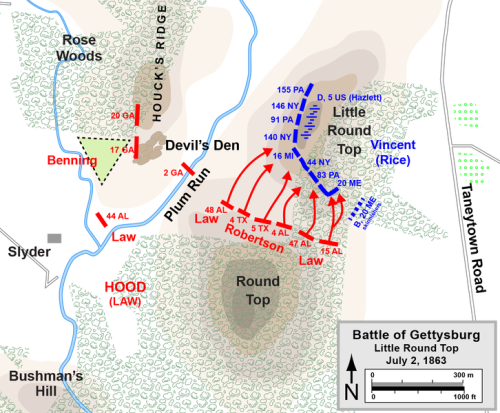
Hunt noted that “The duty could not have been in better hands.” [23]When Warren arrived on Little Round Top he found it unoccupied save for a few signal corps soldiers. Warren immediately recognized the tactical value of Little Round Top and noted that it was “the key of the whole position.” [24]Warren saw that the Confederates were massing not more than a mile away and that there were no troops on the hill to stop them. He believed that an area “of woods on the near side of the Emmitsburg Road as “an excellent place for the enemy to form out of sight” [25] which was exactly what Major General John Bell Hood’s division was doing, as Henry Hunt noted “The enemy at the time lay concealed, awaiting signal for the assault…” [26] To test his suspicions Warren sent a messenger to Captain James Smith’s 4th New York artillery battery on Devil’s Den to fire a single shot into the woods. Warren described the situation:

“As the shot went whistling through the air the sound of it reached the enemy’s troops and caused every one to look in the direction of it. This motion revealed to me the glistening gun-barrels and bayonets of the enemy’s line of battle, already formed and far outflanking the position of any of our troops; so that the line of his advance from the right to Little Round Top was unopposed. I have been particular in telling this, as the discovery was intensely thrilling to my feelings, and almost appalling.” [27]

warren lrt

Upon confirming his fears Warren resorted to ruse and action. He order the “signalmen to keep up their wigwag activity, simply as a pretense of alertness, whether they had any real signals to transmit or not…”[28] He also sent messengers to Meade, Sickles and Sykes, the commander of V Corps asking Meade to “Send at least a division to me” [29] instructing the messenger, Lieutenant Randall Mackenzie to tell Meade “that we would at once have to occupy that place very strongly.” [30] Sickles refused on account of how badly stretched his lines were, however George Sykes of V Corps responded sending Captain William Jay to find Barnes commander of his 1st Division. The messenger could not find Barnes, but instead came across the commander of the division’s 3rd Brigade Colonel Strong Vincent. Vincent knew that Barnes was self-medicating his “pre-battle anxieties out of a black commissary quart bottle” and was already “hollow from skull to boots” and demanded “What are your orders? Give me your orders.” [31] Upon learning that Sykes wanted a brigade to proceed to Little Round Top Vincent responded immediately to take the initiative and ordered his four regiments up Little Round Top without waiting for permission. Vincent told Sykes messenger “I will take the responsibility myself of taking my brigade there.” [32]

Meade’s choice of Warren was demonstrated in how Warren continued to act with alacrity and decisiveness throughout the afternoon. “As the Union line began to crumble on Little Round Top, Warren, vested with the authority of Meade’s chief representative, emerged as the right man at the right place at the right time.” [33] Warren did not stop with sending messengers, but seeing the danger building he noted that the northwest face of the hill was still unoccupied and open to attack. Warren forgot “all about a general’s dignity” he “sprinted down the east slope of the hill like a rabbit.” [34] There he found Brigadier General Stephen Weed’s brigade which he had previously commanded. Since he did not see Weed, but he found Colonel Patrick O’Rorke of the 140th New York and ordered him to follow him up the hill, saying “Paddy…give me a regiment.” [35] When O’Rorke said that Weed expected him to be following him Warren took the responsibility telling O’Rorke “Bring them up on the double quick, and don’t stop for aligning. I’ll take responsibility.” [36] O’Rorke followed with his gallant regiment with the rest of the brigade under Weed following. Warren’s actions were fortuitous as the 140th New York and Lieutenant Charles Hazlett’s battery of the 5th Artillery arrived at the crest just in time to repulse the advancing Confederates. In the fight the brigade would take fearful casualties and by the end of the battle, Weed, O’Rorke and Hazlett would all be dead, but with Vincent’s brigade they held on and saved the Union line.[37]

Warren continued to urge on the Federal troops despite being wounded, in the words of a reporter who observed him in “a most gallant and heroic manner, riding with utmost confidence over fields swept by the enemy’s fire, seemingly everywhere present, directing, aiding, and cheering the troops.” [38] Once he was assured that Little Round Top was secure he proceeded to rejoin Meade “near the center of the battlefield where another crisis was at hand.” [39]

Warren distinguished as a Corps commander until he ran afoul of the fiery General Phillip Sheridan in 1865. Sheridan relieved Warren of command of V Corps following the Battle of Five Forks where Sheridan believed that Warren’s Corps had moved too slowly in the attack. The relief was brutal and ruined his career. Warren was a professional soldier and took the relief hard. Unfortunately as a topographic engineer he was an outsider to many in the army and not fully appreciated by Grant or Sheridan who in their haste at Five Forks destroyed his career.

After the war Warren resigned his commission as a Major General of Volunteers and returned to his permanent rank as a Major of Engineers. He served another 17 years doing engineeringduty and was promoted to Lieutenant Colonel in 1879, but his past always haunted him, even his sleep. He wrote his wife while supervising a major bridge construction project over the Mississippi River in 1867: “I wish I did not dream so much. They make me sometimes to dread to go to sleep. Scenes from the war, are so constantly recalled, with bitter feelings I wish never to experience again. Lies, vanity, treachery, and carnage.” [40]

He sought a Court of Inquiry to exonerate himself but this was refused until President Grant left office. The Court eventually exonerated him but he died three months before the results were published. Embittered he directed that he be buried in civilian clothes and without military honors. His funeral was attended by his friends Winfield Scott Hancock and Samuel Crawford, his oldest army friend and mentor Andrew Humphreys was called away before the service due to the sudden illness of his son. [41] The Washington Post noted that Warren “had gone “where neither the malevolence nor the justice of this world can reach him. He had enough of the former; and denial of the latter not only embittered his closing months of his life, but undoubtedly hastened his end.” [42]

Warren’s actions on that hot and muggy July 2nd exemplified the leadership qualities that we as an institution strive for, and from a leadership perspective demonstrate how the Chairman’s Desired Leader Attributes and the principles of Mission Command“the ability to operate on intent through trust, empowerment and understanding” should work in a relationship between seniors and subordinates. But his life also serves to remind us of the ethics of our profession. Loomis Langdon, who served as the official recorder for the board of inquiry wrote of Warren:

“I had never met General Warren till he came before his Court of Inquiry…I learned to value his good opinion – and while I admired him for his great patience, his wonderful energy, habit of concentration, his vast learning and untiring application, I loved him for his tenderness, gentleness and charity, even to those whom he believed had combined to do him a cruel wrong; and I admired him for his nobleness of character and his courage and unselfish patriotism.” [43]

It is easy for military professionals to become totally focused in our profession, especially the details of planning and process to forget the humanity of those that we serve alongside. Warren is one of those complex figures who are not easy to categorize. His biographer Jordan wrote that:

“Warren was a man with fine intellect, widely read, and of keen sensibilities. He was also an excellent engineer, mapmaker, and scientist. He was a soldier who cared much for the safety and welfare of the men under him, and he was sickened by the appalling carnage of the war in which he took such a prominent part. He was arrogant and proud, and he hesitated hardly at all in putting down those of his colleagues he regarded as inferiors. His mind’s eye took in much beyond what was his immediate concern, but this gift worked against him in the hierarchical realm of military life. Warren was prone to long sieges of depression, and he himself agreed that others found him morose and unsmiling…” [44]
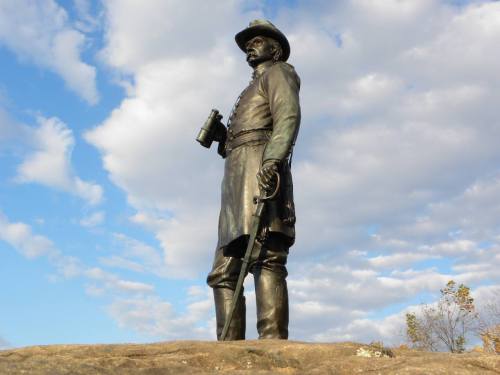
Warren

In reading military history is far too easy to isolate and analyze a commander’s actions in battle and ignore the rest of their lives. I think that this does a great disservice to the men themselves. In time of war gives up something of themselves and sometimes even heroes like Gouverneur Warren are destroyed by the actions of institutions that they serve.

                                                        Notes

[1] Chamberlain, Joshua Lawrence. Chamberlain’s Address at the dedication of the Maine Monuments at Gettysburg, October 3rd 1888 retrieved from http://www.joshualawrencechamberlain.com/maineatgettysburg.php 4 June 2014

[2] Note: My use of the terms myth, mythology or mythos should not be considered negative, and the use of the terms does not mean that there is not some degree of fact or truth in them. The definitions of the term mythos are important to understanding my use of the term here, first it denotes a traditional or recurrent narrative theme or plot structure of a story, and secondly a set of beliefs or assumptions about something. (See the Oxford American Dictionary.)

[3] Taylor, John M. Duty Faithfully Performed: Robert E Lee and His CriticsBrassey’s, Dulles VA 1999 pp.37-38.

[4] Huntington, Samuel P. The Soldier and the State: The Theory and Politics of Civil-Military Relations The Belknap Press of Harvard University Press, Cambridge MA and London 1957 p.199

[5] Ibid. Huntington. The Soldier and the State: The Theory and Politics of Civil-Military Relations p.213

[6] Jordan, David M. Happiness is Not My Companion: The Life of G.K. Warren Indiana University Press, Bloomington Indiana 2001 p.6

[7] Ibid. Jordan Happiness is Not My Companion: The Life of G.K. Warren p.30

[8] Ibid. Jordan Happiness is Not My Companion: The Life of G.K. Warren p.33

[9] Sears, Stephen W. ChancellorsvilleHoughton Mifflin Co. Boston and New York 1996 p.372

[10] Hagerman, Edward. The American Civil War and the Origins of Modern Warfare. Midland Book Editions, Indiana University Press. Bloomington IN. 1992 p.91

[11] Alexander, Edward Porter Military Memoirs of a Confederate: A Critical Narrative 1907 republished 2013 by Pickle Partners Publishing, Amazon Kindle Edition location 7007

[12] Coddington, Edwin B. The Gettysburg Campaign: A Study in Command, A Touchstone Book, Simon and Schuster New York, 1968 p.332

[13] Sears, Stephen W. Gettysburg. Houghton Mifflin Co. Boston and New York 2003 pp.129-130

[14] Ibid. Coddington, The Gettysburg Campaign: A Study in Command, p.332

[15] Ibid. Sears Gettysburg p.262

[16] Tredeau, Noah Andre. Gettysburg: A Testing of Courage, Harper Collins Publishers, New York 2002 p.319

[17] Ibid. Tredeau. Gettysburg: A Testing of Courage, p.319

[18] Ibid. Tredeau. Gettysburg: A Testing of Courage, p.320

[19] Ibid. Jordan Happiness is Not My Companion: The Life of G.K. Warren p.90

[20] Ibid. Tredeau. Gettysburg: A Testing of Courage, p.320

[21] Ibid. Coddington, The Gettysburg Campaign: A Study in Command, p.388

[22] Guelzo, Allen C. Gettysburg: The Last Invasion Vintage Books a Division of Random House, New York 2013 p.260

[23] Hunt, Henry. The Second Day at Gettysburg in Battles and Leaders of the Civil War Volume III, The Tide Shifts. Edited by Robert Underwood Johnson and Clarence Clough Buel Castle, Secaucus NJ p. 307

[24] Ibid. Jordan Happiness is Not My Companion: The Life of G.K. Warren p.92

[25] Ibid. Jordan Happiness is Not My Companion: The Life of G.K. Warren p.92

[26] Ibid. Hunt The Second Day at Gettysburg in Battles and Leaders of the Civil War Volume III, The Tide Shifts. p. 307

[27] Pfanz, Harry F. Gettysburg: The Second Day. University of North Carolina Press, Chapel Hill 1987 p.206

[28] Foote, Shelby, The Civil War, A Narrative. Volume Two Fredericksburg to Meridian Random House, New York 1963 p.503

[29] Ibid. Jordan Happiness is Not My Companion: The Life of G.K. Warren p.92

[30] Ibid. Guelzo Gettysburg: The Last Invasion Vintage p.261

[31] Ibid. Guelzo Gettysburg: The Last Invasion Vintage p.262

[32] Longacre, Edward Joshua Chamberlain: The Soldier and the ManCombined Publishing Conshohocken PA 1999 p.127

[33] Ibid. Coddington, The Gettysburg Campaign: A Study in Command, p.395

[34] Swanberg, W.A. Sickles the IncredibleStan Clark Military Books, Gettysburg PA 1957 p.214

[35] Ibid. Jordan Happiness is Not My Companion: The Life of G.K. Warren p.93

[36] Ibid. Foote The Civil War, A Narrative. Volume Two Fredericksburg to Meridian p.504

[37] Ibid. Jordan Happiness is Not My Companion: The Life of G.K. Warren pp. 93-94

[38] Ibid. Coddington, The Gettysburg Campaign: A Study in Command, p.388

[39] Ibid. Coddington, The Gettysburg Campaign: A Study in Command, p.396

[40] Ibid. Jordan Happiness is Not My Companion: The Life of G.K. Warren p.249

[41] Ibid. Jordan Happiness is Not My Companion: The Life of G.K. Warren p.309

[42] Ibid. Jordan Happiness is Not My Companion: The Life of G.K. Warren p.308

[43] Ibid. Jordan Happiness is Not My Companion: The Life of G.K. Warren p.309

[44] Ibid. Jordan Happiness is Not My Companion: The Life of G.K. Warren preface pp.x-xi

Leave a comment

Filed under civil war, ethics, History, leadership, Military, PTSD, us army