Category Archives: PTSD

Padre Steve’s World at Eight Years: I’m Still Standing

img_3414

Friends of Padre Steve’s World,

Tonight a short pause to reflect. I was reminded by my WordPress, the company that hosts my site that I began this blog eight years ago today.

The blog came out of a question my first shrink asked me as I was beginning to melt down with PTSD and TBI after my tour in Iraq which ended in February 2008. His question, “Well chaplain, what are you going to do with your your experience?” forced me to think, and get outside of myself.

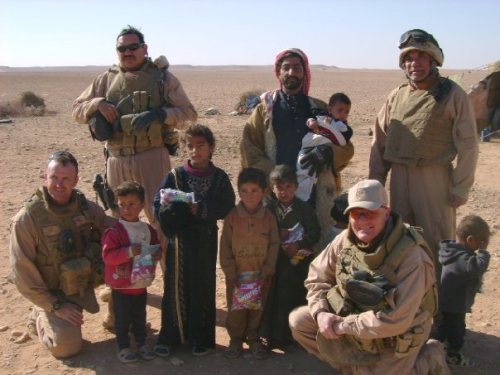
iraq-2007

bedouin

I certainly wasn’t in great shape, in fact I was falling apart. Chronic insomnia, nightmares, night terrors, depression, anxiety, hyper-vigilance, fear of everyday activities, all took their and my doctors trying different combinations of medicines, each with their own side effects, even while I was undergoing different psychiatric and neurological test. I was a total wreck and often impossible to be around. I was always on edge and prone to anger. I threw myself into work in the ICU sixty to one hundred hours a week depending on my call schedule. That didn’t help, and I got worse. It would take years to see measurable improvement, and even then, with periodic crashes, often connected to the deaths of friends, including those who suffered from what I suffered.

In contemplating my therapist’s question I knew that I wanted to share what I was going through, even while I was in the middle of it. But there was a risk, and he pointed it out, and I had seen it before; anyone who opens up and talks of their brokenness when they themselves are supposed to be one of the “healers” often ends up ostracized by their community. Their fellow professionals frequently withdraw from them, old friends distance themselves, and sometimes their family lives fall apart. This happens to physicians, nurses, hospital corpsmen, mental health providers, law enforcement officers, as well as highly trained Special Forces, EOD, and other military professionals. It also happens to Chaplains. Henri Nouwen wrote: “But human withdrawal is a very painful and lonely process, because it forces us to face directly our own condition in all its beauty as well as misery.” That happened to me, and I am better for it.  In the depths of my struggle I found a strange solace in the words of T.E. Lawrence who toward the end of his life wrote a friend: “You wonder what I am doing? Well, so do I, in truth. Days seem to dawn, suns to shine, evenings to follow, and then I sleep. What I have done, what I am doing, what I am going to do, puzzle and bewilder me. Have you ever been a leaf and fallen from your tree in autumn and been really puzzled about it? That’s the feeling.”

So that’s how things began. I wrote about what was going on with me. That included my spiritual struggles, as well as writing about baseball which is as much a part of my spirituality as anything. As I continued to write I began to address social and political issues, and then on to my real love, writing history, which I completed my second Master’s degree in a year after I started this blog.

The latter which has been both educational, as well as therapeutic. In my reading, research, and writing, I discovered fellow travelers from history whose stories helped me find myself again, men with feet of clay, doubts, depression, often masked by triumph. My examples included T.E. Lawrence, Gouveneur Warren, Joshua Lawrence Chamberlain, Ulysses Grant, and William Tecumseh Sherman. I found a measure of comfort as well as solace in their lives, experience, and writings.

My historical writings been further motivated by being able to teach and lead the Gettysburg Staff Ride at the Staff College. That is unusual for a chaplain, but I am an unusual chaplain, as one of my fellow professors said, “You’re a historian masquerading as a chaplain, not that there is anything wrong with that.” 

So that’s how, some 2,862 posts, and three draft books, I got to this point. I still do suffer symptoms of PTSD but I have stabilized for the most part, much of it I attribute to a decent combination of meds, a renewed love and friendship with my wife, and my Papillon Izzy, who is a therapy dog in every sense of the word. Likewise there have been a few people who stood by me through thick and thin. I have expressed to them how much I appreciate them and because of them I really began to appreciate the words of William Tecumseh Sherman who noted: “Grant stood by me when I was crazy. I stood by him when he was drunk, now we stand together.” Since I have been both at times, I find that such camaraderie is more important than about anything else.

I appreciate all the people who subscribe to this blog, those who follow it through social media sites like Facebook and Twitter, and who take the time to comment, as well as to provide words of encouragement. For that I thank all of you.

Have a great night,

Peace

Padre Steve+


1 Comment

Filed under faith, mental health, Military, PTSD

The Friend in My Adversity…

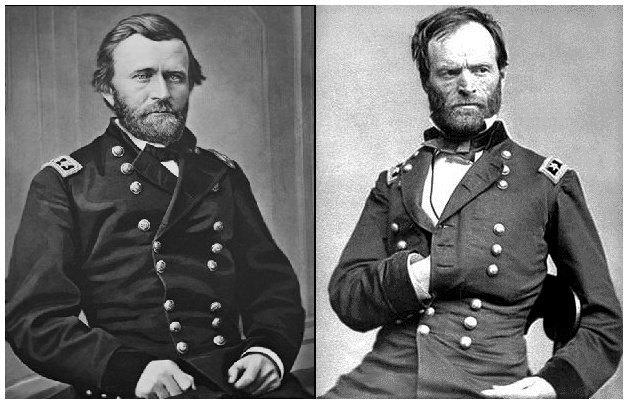
grant-and-sherman-122304

Friends of Padre Steve’s World,

Today just a short thought. I spent most of this holiday weekend down with a nasty cold which allowed me to do some reading and working on my book A Great War in a Revolutionary Age of Change: The Foundations of the American Civil War and Why it Still Matters Today. What I was working on was more on the technical “wonk” side of the development and use of artillery that preceded the war and how artillery was used in it. Lots of analysis, and delving through obscure books which I found absolutely fascinating, but anyway I digress and someday soon you’ll get to read that as well.

Last night a got a wonderful phone call from an old friend, a priest from my former denomination who remarkably hasn’t cast me off. We had a wonderful time, he’s a brilliant man, a combat veteran of Iraq and suffers from some of the same issues that plague me, but with added medical issues from inhaling so many toxins during his two combat tours. He’s gone through a lot, but he and his family are doing well. He is now in medical school and doing very well, but like I said he’s brilliant.

After we returned from Iraq we suffered and commiserated a lot, sometimes over a lot of alcoholic beverages. Last night our talk went on for quite a while and it was great just to do that, so relaxing, good memories, thoughtful discussion of what is going on in the country and in our lives. One thing he said that meant the world to me was the difference I had made as a mentor, encourager, and friend and how important I was to him. He said I was like the character that Kevin Costner played in Bull Durham, Crash Davis, the old catcher sent down to help out the rising star. In a way he is right, and I love the comparison.

As we talked he noted it was so seldom that people take the time to listen, care, encourage, and mentor others. In fact its something that is mentioned quite often in the New Testament. I mentioned to him that one of the people who recently expressed a similar thought to me was a former Navy doctor who I knew when he was an intern; he’s an atheist, but we truly appreciate and value each other.

Sadly, as a culture we have lost that connection and ability to care and learn from each other, even when we disagree on certain points, even important ones. Additionally, we often tend to discard those who are broken in some way, or who color too far outside the lines. There is a creeping Ayn Rand, survival of the fittest style of Social Darwinism that has infiltrated our culture, and especially the church. It has become part of our politics as well and I am sure under the new administration we will see it bloom as we have never seen it before, but I digress again…

Being friends means to let each other know how much we appreciate each other and encourage one another.

Ulysses S. Grant, who is one of my heroes with feet of clay remarked, The friend in my adversity I shall always cherish most. I can better trust those who helped to relieve the gloom of my dark hours than those who are so ready to enjoy with me the sunshine of my prosperity.” Grant’s ever mindful friend and subordinate William Tecumseh Sherman noted, “Grant stood by me when I was crazy, I stood by him when he was drunk. Now we stand together.” 

With that I wish you a good day,

Peace

Padre Steve+

2 Comments

Filed under christian life, Loose thoughts and musings, Pastoral Care, PTSD, remembering friends

“I Can Live With It” An Advent Meditation

2004weihnachtsbrief-2

Friends of Padre Steve’s World,

The Gospel according to Saint Mark records the story of a man that brought his son to Jesus the Christ to be cured of a deadly disease. In desperation the man cries out to Jesus, “Lord I believe, help me in my unbelief.”

I understand that impassioned cry, and I can live with it.

That being said, for a lot of people, including me, the season of Advent and Christmas are incredibly difficult and times where faith, already difficult becomes nearly impossible.  For many the season is not a time of joy but depression, sadness and despair. I know feeling well, for it has been the reality that I have lived with since returning from Iraq.

Before Iraq, Advent and Christmas were times of wonder and mystery and I really found it difficult to understand how anyone could be depressed during the season, but that was before I came home from Iraq. After Iraq, the seasons of Advent and Christmas became almost unbearable as I struggled to believe in anything, including God.

I have faith again, but I still struggle to find the same wonder and mystery of the season that I once experienced. I think that the last time I was truly joyful at Christmas and during Advent was in Iraq, celebrating the message of hope among our advisors up and down the Iraqi-Syrian border. I think the most special moment was serving Eucharist to an Iraqi Christian interpreter who had not received the Eucharist in years that Christmas Eve of 2007 at COP South. Somehow in that God forsaken land God seemed closer than any place I have been since.

Since I returned from Iraq my life has been a series of ups and major downs. In dealing with PTSD, anxiety, depression and chronic insomnia as well as my dad’s painfully slow death from Alzheimer’s disease, I have struggled with faith.  Prayer became difficult at best and as I dealt with different things in life I knew that I didn’t have any easy answers.  Going to church was painful. Chaplain conferences even more so, except being with others who struggled like me.  About the only place that I could find solace was at a baseball park.  For some reason the lush green diamond is one of the few places that comfort me.

I find that the issue of doubt is not uncommon for a lot of people, including ministers of most Christian denominations. I am sure that this can be the case with non-Christian clerics as well, but I cannot say that with any deal of authority.

For some Christian ministers and priests the seasons of Advent and Christmas can be difficult. For those of us who are ordained and view ministry or Priesthood as a sacred vocation this can difficult to deal with.  Ministers and others who suffer a crisis in faith, depression or despair endure a special kind of hell this time of year because we are not supposed to suffer a crisis in faith, for any reason.

I believe that for many people, a religious leader who has doubts and struggles with faith is disconcerting.  I know many ministers who for a myriad of reasons experienced a crisis in faith. Sometimes this involved great personal losses such as the loss of a child, a failed marriage or being let go or fired by a church, or experiencing any number of other major traumatic events.  All of these men and women are good people. But when they experienced a crisis, instead of being enfolded by a caring community of faith they were treated as faithless failures, and and abandoned or excluded from their faith community as if they were criminals.

When I was younger I used to look askance at pastors who had given up, lost their faith, or abandoned the ministry for whatever reason.  As a young seminary student and later young chaplain I had a hard time with such situations. They made no sense to me and I was somewhat judgmental until I started to get to know a decent number of “broken” ministers from various faith traditions that a lot more went into their decision than simply not being tough enough to hang in there until things got better.

While I saw this happen to others I never thought it would happen to me. I thought I was “bulletproof” and when it occurred I was stunned. I didn’t expect what happened nor its effect on me.

When I came back from Iraq I came home to find that my office had been packed up and many mementos lost, it took months to find most and there are still important documents that have never been recovered. My wartime accomplishments went unrecognized by most of my peers in the Chaplain Corps on my return home and I found no place of comfort.

As I crashed no one asked about my faith until I met my first shrink. It was after the initial crash that my commanding officers, Captain, now Admiral, Frank Morneau and Tom Sitsch both asked me about my faith.  I told them that I was struggling and both were more understanding than the vast majority of chaplain, ministers, or Christian lay people that I knew. Commodore Sitsch asked me “Where does a Chaplain go for help?”  I could only say, “not to other chaplains.” Sadly I had no idea how much Commodore Sitsch was going through as he ended his life on January 6th 2014, suffering the effects of untreated PTSD and TBI.

On the professional side I felt tremendously isolated from much of the clergy of my former church, and many chaplains. This is something that I still feel to some extent today, although there are some chaplains who I can be completely honest with, sadly, like me, they have also experienced major faith crisis and have struggled with the same kind of abandonment and betrayal that I have felt. I was angry then because I felt that I deserved better, because I had done all that was asked of me for both my former church and chaplain corps.

In the midst of the crisis I appreciated simple questions like “How are you doing with the Big Guy?” or “Where does a Chaplain go to for help?” Those questions showed me that the people who asked them cared.

There were many times between 2008 and 2010 that I knew that I had no faith.  People would ask me to pray and it was all that I could do to do to pray and hoped that God would hear me.  Even the things that I found comforting, the Mass, the Liturgy and the Daily Office were painful, and while faith has returned, some of the of them still are.

That being said, I am still a Christian, or maybe as I have noted in other posts, a Follower of Jesus, since the Christian “brand” is so badly tarnished by the politically minded, hateful, power seeking, media whores that populate the airwaves and cyber-space. This makes Advent and Christmas difficult.

Why I remain a Christian is sometimes hard to figure.  I am certainly not a Christian because of the church, what is called Christendom, or the actions of supposed Christians who want to use the police power of government to subjugate others. At the same time like the German priest and theologian Hans Kung “I can feel fundamentally positive about a tradition that is significant for me; a tradition in which I live side by side with so many others, past and present.” Nor am I a Christian because I think that the Christian faith has all of the answers to all of lives issues. After coming home from Iraq I know that it is not so. I have to be painfully honest and say that neither the Church nor Christians have all the answers. That may sound like heresy to some, but I can live with it.

I don’t presume to know God’s will and I can’t be satisfied with pat answers like I see given in so many allegedly Christian publications, sermons and media outlets.  Praying doesn’t always make things better. I remain a Christian in spite of these things and in spite of my own doubts.  I still believe that God cares in spite of everything else, and in spite of my own doubts, fears and failures.

One of the verses of the Advent hymn O’ Come O’ Come Emmanuel remains a prayer for me this year.

O come, Thou Day-Spring, come and cheer

Our spirits by Thine advent here

Disperse the gloomy clouds of night

And death’s dark shadows put to flight.

So now, for those that like me struggle with faith, those who feel abandoned by God, or by family and friends, I pray that all of us will experience joy this season. So I do pray that the Day Spring will come and cheer, all of us with his advent here.

Peace,

Padre Steve+

3 Comments

Filed under christian life, faith, PTSD

Waiting for First Light: A Reflection on PTSD

img_0230-3

Friends of Padre Steve’s World,

I just finished reading General Romeo Dallaire’s latest book, Waiting for First Light: My Ongoing Struggle with PTSD. Dallaire had been the commander of the UN Peacekeepers in Rwanda, men and women who were prevented from stopping genocide, and people who have been forever haunted by what they witnessed.

General Dallaire recounts a story of horror that never ended for him, and he details how difficult and traumatic coming home that neither appreciate nor understood what he had been through, including people in the military. I found so much in his story that was analogous to my own and in light of that I am going to begin writing my PTSD memoir.

It will be hard because I will have to write about things that are deeply traumatic and upsetting, especially how I was received and continue to be received by most of my fellow chaplains. Because I came and publicly discussed my issues with PTSD, the shattering of my faith in so many things, my wilderness experience of being an agnostic for two years, and the change in my faith since then, I experienced the rejection of my former church and many of my peers.

To many of my peers and Chaplain Corps superiors I am simply a broken Chaplain; and broken chaplains or for that matter broken ministers have no place and very few people who they can talk with. I remember my old Commodore at EOD Group Two, Captain Tom Sitsch ask me bluntly “Where does a chaplain go for help?” My answer to him was “not to other chaplains.” Sadly, he too was going through his own personal PTSD hell and with his life falling apart he committed suicide in January 2014.

General Dallaire recounts a similar experience, as like Chaplains, Generals and other senior leaders have no place to go, they like us are not supposed to break. General Dallaire wrote: “I received little support from my colleagues and peers; I received only a few messages from my sixty or so fellow generals – a couple of phone calls, and an e-mail from one old friend. The others appeared to be in two camps: those who were too busy to get in touch, and those who didn’t know what to say.” But I would also add, that there are those that do not want to know and others who actually turn their backs on men and women whose injury lies inside their brain, as well as some chaplains and ministers who seem to take a certain perverse joy in inflicting pain.

So pray for me if you do that, if not send some positive thoughts my direction.

Until tomorrow,

Peace

Padre Steve+

2 Comments

Filed under faith, leadership, Military, ministry, PTSD

The Papillon Gambit

Izzy and Minnie on the Hunt

Friends of Padre Steve’s World

I love my two Papillons, Minnie and Izzy. Minnie is coming up on five years old while Izzy is coming up on two. They are from different breeders and have completely different personalities but they are a perfect pair and a great team.

They both are sweet and incredibly intelligent; in fact they are scary smart and they continue to surprise us with their scheming and attitude.

I try to walk them around the lake near our home two to three times a day. There are a lot of ducks as well as geese, not to mention other birds, squirrels, and rabbits for them to track and chase. I know that is nothing unusual for anyone with a dog, most dogs love to chase and to hunt. However, lately these two have pulled something new that none of our other dogs have ever done and which we have not taught them to do, though I wish I had. I hate to admit it but I do encourage their bad habits.

Recent they have adopted a classic military strategy to outflank and surround the ducks and geese. One will go down the bank of the lake and chase them toward the other who goes higher and then comes down to cut off their retreat. It is amazing to watch. They both have different methods of the hunt. Most of the time Izzy plunges headlong to the attack, but Minnie, she quietly sneaks up, almost crouching and tiptoeing as she stalks her prey. 

When they perform what I now call the Papillon Gambit, it is Izzy who goes down the bank to flush out the prey, while Minnie sneaks around the flank, but last night they switched roles. It was amazing to watch. Yesterday, during their morning walk Izzy took the low road on some Muscovy ducks while Minnie went high and dove down. This time the ducks didn’t realize it until the last second and for the first time I actually saw them take to flight in order to avoid being trapped. But this time they barely escaped. In a near panic the ducks turned and flew away from Minnie and a large drake barely avoided being snatched out of the air by Izzy. Had she got him it would have been really interesting. 


Minnie and Izzy 

Now mind you, Minnie and Izzy are not very big, even though they are large for Papillons, Minnie is 12 pounds while Izzy weighs in at 13 pounds. Papillons do vary in size, some as small as 3 pounds and some up to twenty, but most fall into the 6 to 8 pound range. Minnie is actually a bit taller and longer than Izzy, but Izzy is built like a tank. She doesn’t have an ounce of fat on her, but as our vet said when he first saw her as a puppy, she is sturdy. The ducks in question are bigger than either of them, the males (drakes) average 10 to 18 pounds in weight while the females are a bit smaller. It is really funny to see such little dogs stalking such big prey. The one Izzy almost caught was large, probably in the 15-16 pound range. 

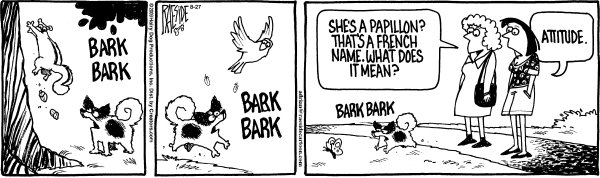
For those that don’t know much about the breed, they are Spaniels. Like other bigger breeds of Spaniels they are not afraid of water, or mud and occasionally will dive into the water to go after ducks or geese. They are also considered to be among the top dog breeds in terms of intelligence. They are incredibly sweet, loyal, and unfortunately sometimes they are a bit headstrong, with an attitude that you wouldn’t believe. That being said I have never seen two dogs work in tandem as these two girls do. They execute perfect flanking movements in order to trap their prey, you’d think that they were foxes or wolves, but they are Pappies.


Back in the 17th and 18th Centuries Papillons were a favorite among French royalty, in addition to being great lap dogs they doubled as great ratters, keeping the royal palaces free of vermin. It is written that Queen Marie Antoinette carried her pet papillon with her to the guillotine;  nothing is written as to whether the dog shared her fate, but I can imagine that the Papillon took a bite out of the executioner’s leg. Likewise, Madame Pompadour, mistress of King Louis XV, cherished a papillon called Inez. Despite being small, they are tough little dogs, and while incredibly sweet and friendly they are fearless. I find that quality quite endearing. 

breedhistory-010

The papillon also appeared regularly in paintings featuring the 17th and 18th century royal children and ladies at court done by such old masters as Rubens, Titian and Van Dyck.Since we haven’t had problems with rats, Izzy tries to catch any flies or other insects that might come into view. It is fun to watch her trap and kill flies. 

538419_10151072307562059_250921066_n

I have to say, that these two girls bring me a lot of joy and are exceptional therapy dogs for my continued struggle with the ongoing effects of PTSD. God I do enjoy them and how can I not?

Have a great weekend,

Peace

Padre Steve+

3 Comments

Filed under dogs, papillons, PTSD

Tragic Heroes: Gouverneur Warren Part Four

Friends of Padre Steve’s World,

Going back to the leadership series and the fourth installment of my work dealing with Union Major General Gouverneur Warren.

Peace,

Padre Steve+

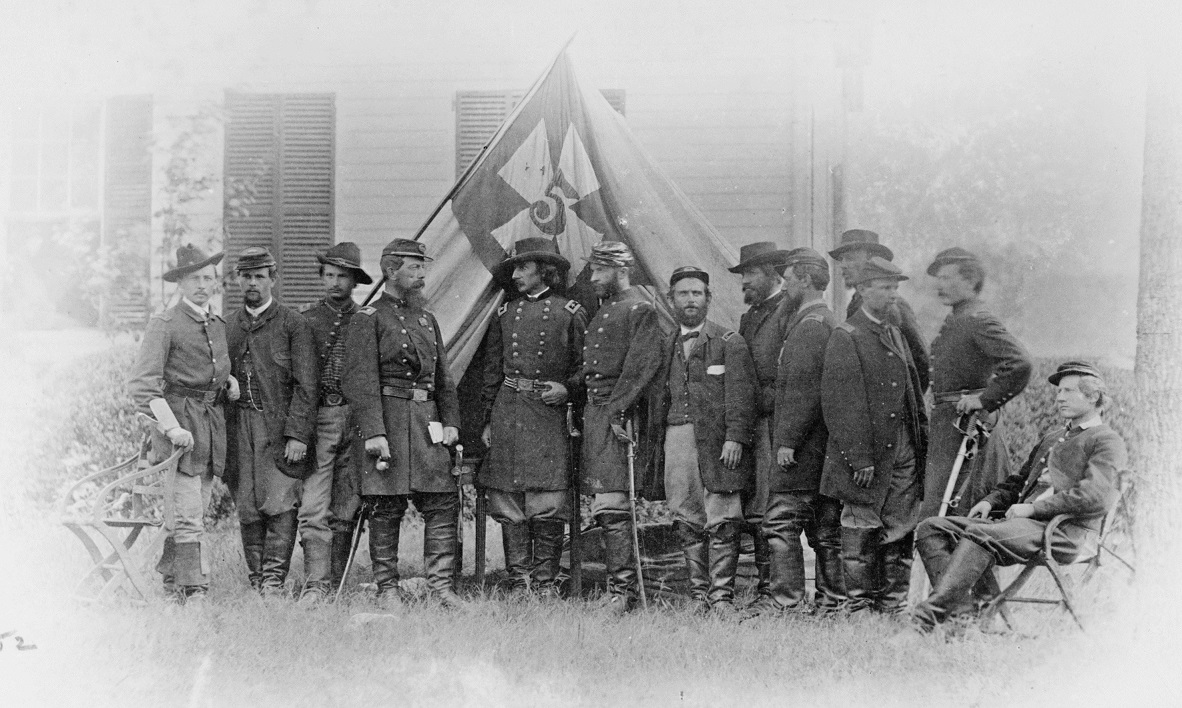
warren-and-staff

Warren With his Staff

Corps Command in Virginia and the Evidence of Combat Stress

Warren was promoted to be the acting commander of II Corps after Gettysburg as Hancock had been wounded and then was appointed to command V Corps.  He served well as a Corps commander, although his often “quick and sulphurous temper which he displayed in the Virginia campaign of 1864 worked against Warren by making him unnecessary enemies and dismaying his friends.” [1] Warren was so short tempered during the campaign, probably, due to the result of the strain of it that Colonel Charles Wainwright complained that Warren “had a screw loose and is not quite accountable for all his freaks.”  [2] In high command Warren’s “fellow officers respected his ability as an engineer, but disliked his arrogance and insolence. Warren’s temper was legendary, and when his anger boiled over he sputtered out profanities that, said one colleague, “made my hair stand on end.” [3] To be fair to Warren that last outburst followed the disaster inflicted by Grant on the army at Cold Harbor, when Grant threw it up against strongly entrenched Confederate troops with great loss. Warren who could not abide meaningless slaughter found it reprehensible.

The interesting thing about all the accounts of Warren’s temper being so violent is that they do not begin until after he is in Corps command, and he gives no hint of such anger and rage in his letters until after his experiences on the Peninsula, Second Manassas, Antietam, Fredericksburg and finally Gettysburg. During the Army of the Potomac’s inaction during the fall of 1863 it became clear that the war was taking a toll on Warren. Alcohol became a problem, so much that once after drinking a whisky punch with his staff he was “falling down drunk” and had to be told of his actions the following night by one of his staff members. [4]

His letters to Emily display a sense of depression and sometimes even despair. He wrote Emily:

“I repine a great deal. I begin to feel myself giving out in spirit. I need so to rest where I could be contented. So long now my life has been one continued worry or excitement that I am losing my elasticity and I am getting almost afraid for I am apprehensive that I cannot uphold my position…. Every day shows me more and more how this war is severing my old affiliations and making me lonely…here I sit all alone in this great camp (for so I feel) and the memory of my dear friends comes over me and I am morbidly depressed. Indeed I feel I am a very small man that I can endure no more, for I am well and not a prisoner…and have been honored more than I deserve. I have not the heart of a good soldier.” [5]

Since so many people that knew Warren after Gettysburg describe the fearsome and nearly volcanic nature of his temper we can accept that as a fact. Likewise his arrogant, insolent and even haughty attitude towards those that he believed himself to be intellectually superior is evident even during his early career as are his recurrent struggles with depression which only grew worse throughout the war and in following years.

Dr. Judith Herman, an associate Professor of Psychiatry at Harvard Medical School wrote:

“Traumatic events call into question basic human relationships. They breach the basic attachments of family, friendship, love and community. They shatter the construction of the self that is formed and sustained in relation to others. They undermine the belief systems that give meaning to human experience. They violate the victim’s faith in a natural or divine order and cast the victim into a state of existential crisis.” [6]

But it is only after the continued trauma that Warren experienced at Malvern Hill, Second Manassas, Antietam and Fredericksburg that we see the evidence of Warren’s anger, bitterness and rage becoming a major factor in his life and relationships. If we are to take into account the findings of modern science, medicine and psychiatry in relationship to the descriptions provided by Warren and those that knew him, we have to at least give serious consideration to the real possibility that Warren’s issues were caused by his experience of war and some type of resultant combat stress injury. This could include PTSD, Moral Injury, or possibly even changes brought about by a traumatic brain or concussive injury.

Jonathan Shay, a psychologist with many years of experience in dealing with veterans afflicted with PTSD wrote that “The social conditions that cause complex PTSD – persistent betrayal and rupture of community in mortal stakes situations of captivity – destroy thumos, destroy normal narcissism and undo character.” [7]

Dave Grossman writes about how such events can become what we now call “Character disorders”:

Character disorders include obsessional traits in which the soldier becomes fixated on certain actions or things; paranoid trends accompanied by irascibility, depression, anxiety, often taking on the tone of threats to his safety; schizoid trends leading to hypersensitivity and isolation; epileptoid character reactions accompanied by periodic rages…..What has happened to the soldier is an altering of his fundamental personality.” [8]

Shay writes about what happens to character when it is damaged by war, and the spectrum of clinical manifestations of an injury to character seen in many combat veterans. Among the manifestation that Shay describes, a good number which are present in what we know about Warren. These include: Demoralization, self-loathing, a sense of worthlessness, pervasive “raw” vulnerability and feeling conspicuous, social withdraw irritability, rage at small slights, disappointments and lapses, coercive attempts to establish power dominance. [9]

Warren’s repeated writings about his isolation; depression and despair to Emily are powerful. He writes Emily in words that he shares with no one else. In those letters he conveys the depth of his injury, an injury that has shaken his faith in himself, his leaders and brought about an existential crisis. It is an injury that with a man like Ulysses S. Grant in command that he could not voice to anyone in the army for fear of what we would now call the stigma of PTSD that is experienced by so many combat veterans. Instead it comes out in a drive to ensure that his soldiers are not sacrificed in senseless battles, a sense of his own unworthiness, and a sense that he has been shunted aside, even betrayed by those commanding the army, including his former friend Meade as well as Grant. His letter to Emily that he wrote in 1866 describes the effects of PTSD and Moral Injury almost perfectly:

“I wish I did not dream that much. They make me sometimes dread to go to sleep. Scenes from the war, are so constantly recalled, with bitter feelings I wish to never experience again. Lies, vanity, treachery, and carnage.” [10]

Notes

[1] Ibid. Jordan Happiness is Not My Companion: The Life of G.K. Warren p.315

[2] Huntington, Tom Searching for George Gordon Meade: the Forgotten Victor of Gettysburg Stackpole Books Mechanicsburg PA 2013 p.305

[3] Ibid. LaFantasie Twilight at Little Round Top p.73

[4] Ibid. Jordan Happiness is Not My Companion: The Life of G.K. Warren p.104

[5] Ibid. Jordan Happiness is Not My Companion: The Life of G.K. Warren p.106

[6] Herman, Judith Trauma and Recovery: The Aftermath of Violence – From Domestic Abuse to Political Terror Basic Books, a member of Perseus Books Group. New York 1992 and 1997 p.51

[7] Shay, Jonathan Odysseus in America: Combat Trauma and the Trials of Homecoming Scribner, New York and London 2002 p.160

[8] Grossman, Dave On Killing Back Bay Books Little, Brown and Company New York, Boston and London 1995 and 1996 p.48 An epileptoid personality pattern is one that includes irritability, selfishness, aggressiveness and being uncooperative. All of these are demonstrated in the changes that Warren exhibits between 1862 and 1865

[9] Ibid. Shay Odysseus in America pp.160-161

[10] Ibid. Jordan Happiness is Not My Companion: the Life of G.K Warren p.249

Leave a comment

Filed under civil war, History, leadership, mental health, Military, PTSD

Tragic Heroes: Gouverneur Warren, Part One

Friends of Padre Steve’s World

I have been writing about leadership the past couple of days and despite all that is going on in the news I think that I will continue to do so using some parts of my Gettysburg text. I think it is incredibly important to get to know the men and women behind iconic pictures, statues, and biographies that are often not much more than hagiography. In my studies I have encountered people who I find fascinating and not just because of their achievements but also due to their suffering. One of my seminary professors said that you could never come to grips with Jesus until you came to understand suffering.

That is important especially when we deal with men and women who have been traumatized on the battlefield, who when they return from war they come home changed. Many are great leaders and outstanding people whose courage was proven but their lives after the war can only be considered tragic. One of these is Gouverneur Warren, one of the heroes of the Union in the Civil War, and who was instrumental in stopping the Confederate forces at Gettysburg 0n July 2nd 1863. I have written about him before, but I think now is an appropriate time to revisit his life as well as some other men who fought alongside him at Gettysburg.

Have a great day,

Peace

Padre Steve+

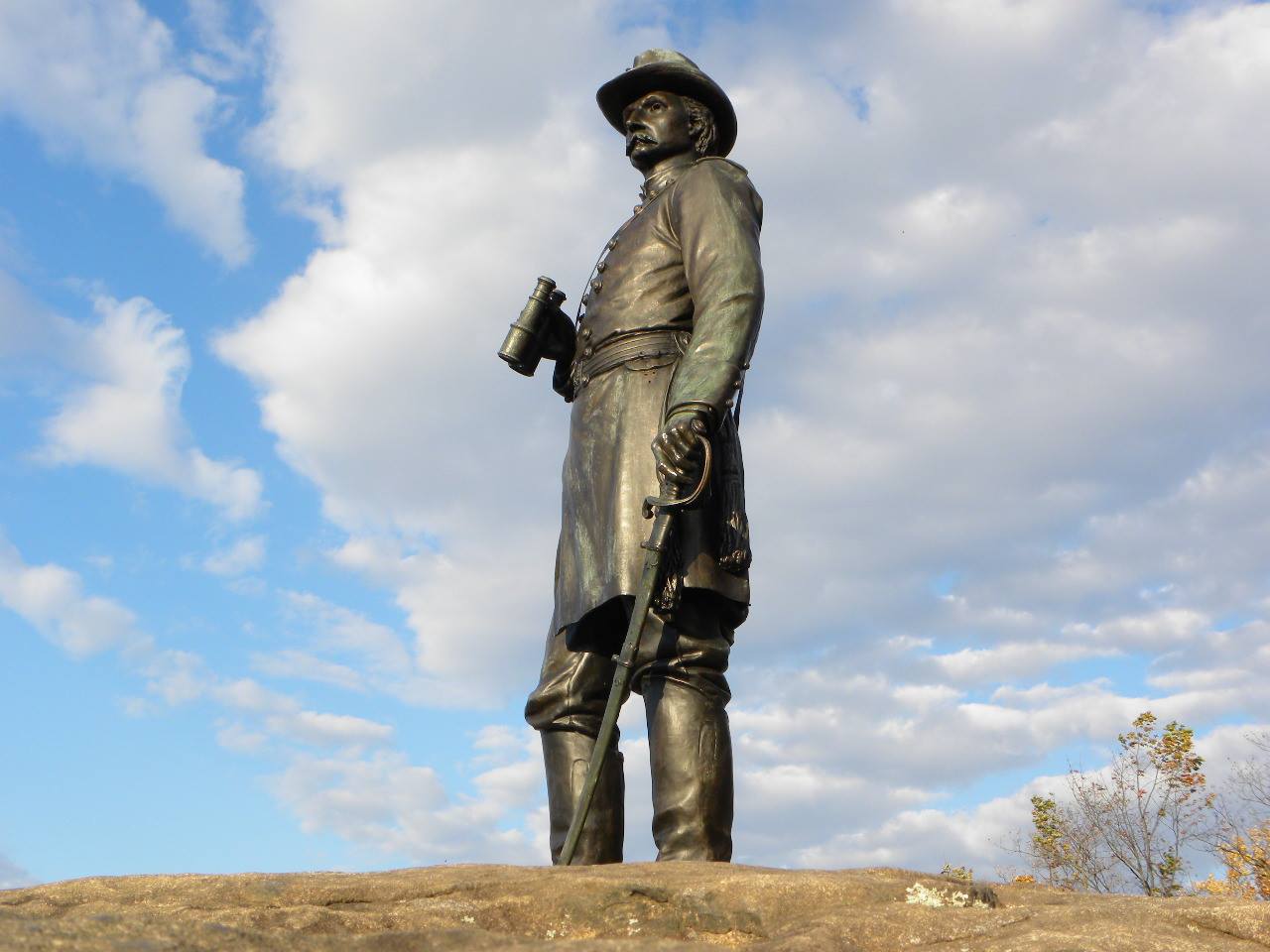
Warren

The Statue of Gouverneur Warren on Little Round Top


History, Memory and Myth at Little Round Top 

The battle of Gettysburg is an iconic part of American history. The accounts of Buford’s delaying action and John Reynolds death on July 1st, the savage battle at the Wheat Field, the Peach Orchard and Plum Run on July 2nd and the great charge known as Pickett’s Charge on July 3rd 1863 all draw us to the battlefield. The stories of individual courage and the sacrifice of soldiers from the North and the South that are enshrined on the monuments that now populate the battlefield have a nearly religious quality that draws Americans to Gettysburg by the hundreds of thousands every year.

But there are some places on the battlefield that seem to be the most iconic, the most spiritual, and the most inspirational for various reasons. Two of these places in particular have a nearly magnetic attraction, the “High Water Mark” of the Confederacy on Cemetery Ridge where Pickett’s Charge met its end, and the rocky hill known as Little Round Top. A large part of the reason that these two places hold such an attraction is not just the way that the battle was fought.  Rather, it is often because of the way the stories of those actions and the stories of the men who fought at them have been passed down to us in the accounts of survivors, in history and even in the fictional accounts of the battle. In each of these stories there are elements of courage, devotion, sacrifice, and tragedy that touch us in deeply personal ways and connect us to them and what we see when we experience history tells us as much about us as it does them.

The story of the Battle for Little Round Top has been passed along to us in the many accounts and histories of the battle, but perhaps more importantly in literature and cinema through Michael Shaara’s Pulitzer Prize winning novel, The Killer Angels and that book’s film adaptation, Gettysburg.  Many people who have never read an actual history of the battle know about the Battle for Little Round Top from Jeff Daniels’ inspirational portrayal of Joshua Lawrence Chamberlain in the movie.

The mythic status that we accord Gettysburg is important to Americans as a people. It is a defining moment in our American story and that is why so many of us come to the battlefield. It is a part of who and what we are as a people. Chamberlain said this well a quarter century after the battle at the dedication of the Maine Monuments in 1888:

“In great deeds, something abides. On great fields, something stays. Forms change and pass; bodies disappear; but spirits linger, to consecrate ground for the vision-place of souls… generations that know us not and that we know not of, heart-drawn to see where and by whom great things were suffered and done for them, shall come to this deathless field, to ponder and dream; and lo! the shadow of a mighty presence shall wrap them in its bosom, and the power of the vision pass into their souls.” [1]

While the accounts in the novel and the film are certainly inspiring and allow us to experience the emotion and near spiritual sense of what Chamberlain writes about the battle, there is much more to learn. When we go beyond the mythic portrayal of the battle we find that despite the vast amount of information available that there are a large number of approximations and ambiguities in the accounts of the battle.  So as we endeavor to look at the actions of these leaders on that fateful day it is important to recognize that it is impossible for us to totally separate the actions of the men that helped decide the battle from the mythos that surrounds the story. [2] Likewise, it is important for us to acknowledge, that we cannot completely separate the character of these men and how they lived their lives from their actions on this particular battlefield and afterwards.

That understanding is important if we want to be able to interpret these men and their actions; actions that are recorded in their journals, after action reports, unit histories, individual diaries and letters, as well as the accounts of their contemporaries who served alongside them; accounts which for many reasons are not completely reliable.

As important as these accounts are for us in attempting to sort out the truth of the matter we must apply a hermeneutic of suspicion to them and we must interpret them. [3]  We have to do this because all historical accounts are influenced by the writer’s motivations, ideology or perspective. There are some authors who omit damning or damaging information, especially about their own actions, or the actions of those leaders that they wish to protect, and the writers that “spin” the event in order to build up or destroy the reputations of those present. Even those writers of the contemporary accounts of the battle who wrote their accounts with the best motivations and intentions to record the events as best as they could describe them were often prone to mistakes, even in details such as the time an event took place. The location of people during the event was limited by their physical position on the battlefield and what they could see amid the bullets and bombshells that created carnage around their point of observation. Those not present at the battle, the men who recorded their accounts based on the recollections of those present are similarly limited.

There is also another factor to consider in dealing with these accounts, especially when untrained observers make observations of the actions and behavior of others which seem strange or erratic to them. This is especially true of men who are writing about men who have experienced the horrors of war and combat which might have resulted in some sort of combat stress injury such as PTSD, brain injuries such as TBI or a concussive syndrome or experience which is now called Moral Injury. Thus when we examine the behavior of such leaders and see a marked change in the way that they deal with others after their experience of war, those conditions, unknown to their contemporaries must be considered as a possibility when evaluating their actions.

The problem for the historian or for that matter the writer of military doctrine is how to interpret the information that they have available to them to make it relevant and useful in the art that they practice.  This can be a daunting task with many associated pitfalls that is neither an inductive, nor a deductive process. David Hackett Fischer writes:

“The logic of historical thought is not a formal logic of deductive inference. It is not a symmetrical structure of Aristotelian syllogisms, or Ramean dialectics, or Boolean equations….Instead it is a process of adductive reasoning in the simple sense of adducing answers to specific questions, so that a specific “fit” is obtained. The answers may be general or particular, as circumstances may require. History is, in a sense a problem-solving discipline. A historian is someone (anyone) who asks an open ended question about past events and answers it with selected facts which are arranged in the form of an explanatory paradigm.” [4]

All this is important because it reminds us, that when we study these accounts and attempt to use them as a basis for leadership theories, operation art and strategy, or for any other reason, that all that we know to be “true” is a combination of fact, myth and spin. Our task is to do the best we can with that in mind while admitting that we all have our own prejudices, agendas and ideas that color the glasses by which we interpret the event and the actions of the people involved.

In a sense when we look at the records of the people present or their contemporaries we must entertain a fair amount of suspicion and be able to ask questions as if the writers were talking or writing to us presently. We must ask three questions to do this: Why are they telling this fact or story? Why are they telling it to me? Why are they telling it now? Or more succinctly put “Why this? Why me? Why now?”

Notes

[1] Chamberlain, Joshua Lawrence. Chamberlain’s Address at the dedication of the Maine Monuments at Gettysburg, October 3rd 1888 retrieved from http://www.joshualawrencechamberlain.com/maineatgettysburg.php 4 June 2014

[2] Note: My use of the terms myth, mythology or mythos should not be considered negative, and the use of the terms does not mean that there is not some degree of fact or truth in them. The definitions of the term mythos are important to understanding my use of the term here, first it denotes a traditional or recurrent narrative theme or plot structure of a story, and secondly a set of beliefs or assumptions about something. (See the Oxford American Dictionary.)

[3] I mention the term a hermeneutic of suspicion. Hermeneutics is the theory of understanding and interpreting language and non-linguistic expression. The Stanford Encyclopedia of Philosophy defines it this way: “The term hermeneutics covers both the first order art and the second order theory of understanding and interpretation of linguistic and non-linguistic expressions. As a theory of interpretation, the hermeneutic tradition stretches all the way back to ancient Greek philosophy. In the course of the Middle Ages and the Renaissance, hermeneutics emerges as a crucial branch of Biblical studies. Later on, it comes to include the study of ancient and classic cultures.” 

[4] Fischer, David Hackett Historians’ Fallacies: Toward a Logic of Historical Thought Harper and Row, New York 1970 p.xv  

Leave a comment

Filed under civil war, Gettysburg, History, leadership, mental health, Military, PTSD

There Lies a Gulf Between that Time and Today: Remembering 9-11-2001

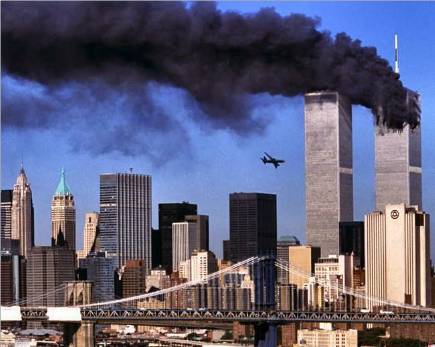
flight_175_photo

Friends of Padre Steve’s World,

September 11th is a day that always makes me more introspective. It brings back so many memories, some that I wish I could forget; but I cannot get the images of that day out of my mind. The burning towers, the people jumping to their deaths to escape the flames, and the scenes of devastation. I knew one of the victims in the attack on the Pentagon, an Army Lieutenant Colonel, Karen Wagner who commanded a Medical training company at Fort Sam Houston where I was serving as the Brigade Adjutant in 1987 and 1988. She was a very nice person, very gracious and decent, admired by everyone who knew her; I was shocked to see her name on the casualty list after the attack.

The emotions that I feel on the anniversary of these terrorist attacks which claimed the lives of so many innocent people, and which devastated so many families, still haunts me, and my subsequent service, especially in Iraq has changed me. Years after he returned from his time in the Middle East, T.E. Lawrence; the immortal Lawrence of Arabia wrote to a friend, “You wonder what I am doing? Well, so do I, in truth. Days seem to dawn, suns to shine, evenings to follow, and then I sleep. What I have done, what I am doing, what I am going to do, puzzle and bewilder me. Have you ever been a leaf and fallen from your tree in autumn and been really puzzled about it? That’s the feeling.” I often feel that way.

Fifteen years ago I was getting ready to go to the French Creek Gym at Camp Le Jeune North Carolina where I was serving as the Chaplain of Headquarters Battalion 2nd Marine Division. I had returned from a deployment to Okinawa, Mainland Japan and Korea just two months before and was preparing to transfer to the USS Hue City, a guided missile cruiser stationed in Mayport, Florida.

At the time of the attack I had already been in the military for over 20 years and I had actually taken a reduction in rank to transfer from the Army, where I was a Major in the reserves, to the Navy to serve on active duty. In those previous 20 years I had served overseas during the Cold War along the Fulda Gap. I had been mobilized to support the Bosnia mission in 1996, and I had just missed being mobilized for Operation Desert Storm as my unit was awaiting its mobilization orders when the war ended. I had done other missions as well as the deployment to the Far East that returned from in July 2001; but nothing prepared me for that day. Like other career military officers I expected that we would be at war again and thought it might be back in the Middle East, and probably a result of some fool’s miscalculations; but like the American officers who were serving at the time of the Pearl Harbor attack, I never expected what happened that morning.

Tuesday, September 11th 2001 had started like so many days in my career. Routine office work, a couple of counseling cases and what I thought would be a good PT session. I was about to close out my computer browser when I saw a little headline on Yahoo News that a plane had crashed into the World Trade Center. I paid little attention and figured that a private plane, something like a Cessna piloted by an incompetent had inadvertently flown into the building.
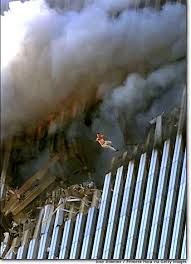
9-11 jumpers

That delusion lasted about two minutes. I got in my car and the radio, tuned to an AM talk station had a host calling the play by play. He started screaming “oh my God another airliner flew into the other tower.” Seeking to see what was happening I went to the gym where there were many televisions. I got there and saw the towers burning, with stunned Marines and Sailors watching silently, some in tears. I went back out, drove to my office and got into uniform. After checking in with my colonel a made a quick trip to my house for my sea bags and some extra underwear, and personal hygiene items. When I got back the headquarters we went into a meeting, and the base went on lock down mode. The gates were closed and additional checkpoints, and roadblocks established on base. Marines in full battle-rattle patrolled the perimeter and along the waterfront. I did not leave the base until the night of the 15th when things began to settle down and we all went into contingency planning mode for any military response to the attacks.

My wife, who as waiting for a doctor’s appointment with a friend saw the attacks on live television and knew when the first plane struck she told her friend that it was terrorism. Her friend responded “that damned Saddam Hussein.” Like so many of us who initially thought this, my wife’s friend was wrong.
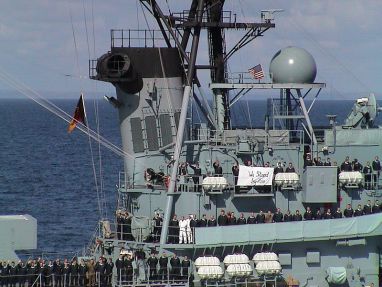
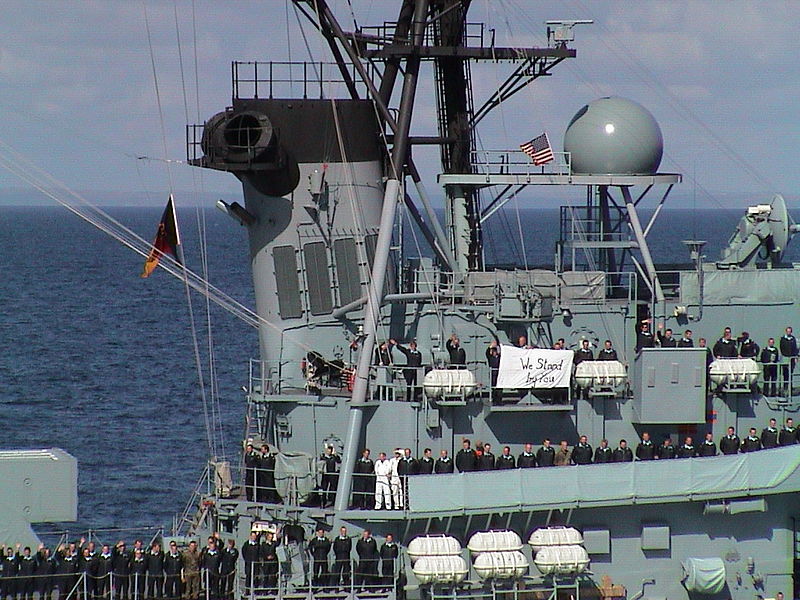
LutjensHonors

Those were tumultuous days, so much fear; so much paranoia; and so much bad information as to who committed the attacks and what was going to happen next.
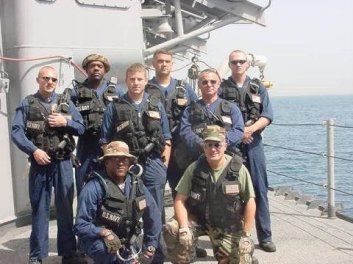
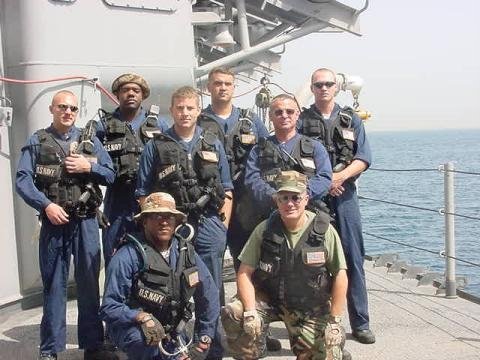
hue city boarding party


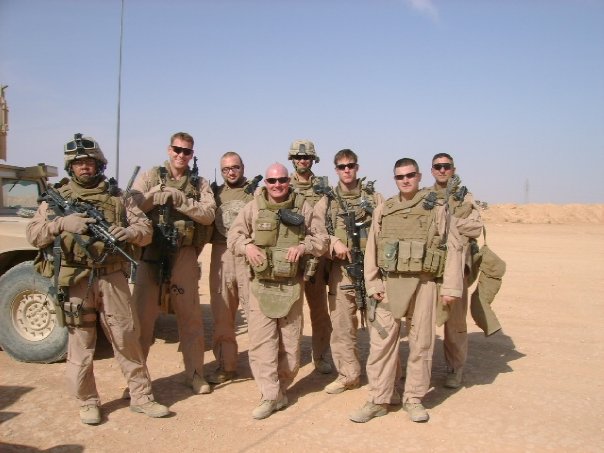
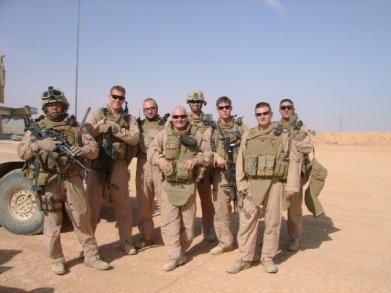
A few months later I deployed aboard Hue City to the Middle East where we supported the air operations in Afghanistan, anti-terrorist operations off the Horn of Africa and in Operation Southern Watch and the U.N. Oil Embargo against Iraq. I then did three years with Marine Security Forces, traveling around the world to support Marine Fleet Anti-Terrorism Security Team companies. For three years I was on the road one to three weeks a month traveling to the Middle East, Europe, the Pacific and many parts of the United States. Then I was promoted and transferred to Explosive Ordnance Disposal Group Two, from which I was deployed with my assistant to Iraq, where we served as members of the Iraq Assistance Group in all Al Anbar Province supporting small teams of Marine Corps, Army and Joint Force adviser teams to the Iraqi Army, Border troops, Port of Entry police, police and highway patrol.
with-mtt-3-7-ronin


When I returned from Iraq I was a changed man and while I am proud of my service I am haunted by my experiences. One cannot go to war, see its devastation, see the wounded and dead, as well as the innocents traumatized by it. One cannot get shot at, or be in enclosed rooms, meeting with people that might be friends, or might be enemies, and while everyone else is armed, you are not.

War changed me, and my homecoming was more difficult than I could have imagined. I never felt so cut off from my country, my society, my church, or even other chaplains. My experience is not uncommon among those who have served in Iraq or Afghanistan, or for that matter those who have served in almost any modern war. Erich Maria Remarque in his classic All Quite on the Western Front wrote:

“I imagined leave would be different from this. Indeed, it was different a year ago. It is I of course that have changed in the interval. There lies a gulf between that time and today. At that time I still knew nothing about the war, we had been only in quiet sectors. But now I see that I have been crushed without knowing it. I find I do not belong here any more, it is a foreign world.”

That being said I would not trade my experience for anything. The experience of PTSD and other war related afflictions has been a blessing as well as a curse. They have changed my world view and made me much more emphatic to the suffering and afflictions of others, as well when they are abused, mistreated, terrorized and discriminated against. These experiences along with my training as a historian, theologian, and hospital chaplain clinician before and after my tour have given me a lot bigger perspective than I had before.

But I have to live with all of the memories. Guy Sajer wrote in his book The Forgotten Soldier, “Only happy people have nightmares, from overeating. For those who live a nightmare reality, sleep is a black hole, lost in time, like death.” General Gouverneur Warren, a hero of many Civil War battles including Gettysburg wrote to his wife after the war “I wish I did not dream so much. They make me sometimes to dread to go to sleep. Scenes from the war, are so constantly recalled, with bitter feelings I wish never to experience again. Lies, vanity, treachery, and carnage.”

As hard as this has been these are good things, and as I go on I wonder what will happen next. I do not think that the wars and conflicts which have followed in the wake of the 9-11 attacks will be over for years, maybe even decades. I pray for peace, but too many people, some even in this country seem to live for the bloodlust of war. One can only hope and as my Iraqi friends say, Inshallah, (إن شاء الله) God willing…

I wonder too, if the words of T.E. Lawrence reflecting on his service in the Arab Revolt are not as applicable to me and others who came back from Iraq, “We had been hopelessly labouring to plough waste lands; to make nationality grow in a place full of the certainty of God… Among the tribes our creed could be only like the desert grass – a beautiful swift seeming of spring; which, after a day’s heat, fell dusty.” I have lost too many friends in these wars, including men who could not readjust to home, many like me. I have seen the men and women, broken in body, mind and spirit and I wonder if any of it was worth it, and if in some of our response, especially the invasion of Iraq has not made a bad situation even worse, and turned the war into a generational conflict.

As for me, I am now an old guy by military standards. I recently celebrated 35 years of service. Sadly, I know all too well that those who I have worked with, and those who are yet to enlist will be continuing to fight a war which seems to be without end long after I retire in about four years.

Yesterday and today there were and will be many ceremonies and services to remember the victims of the attacks. I think that is fitting. President Obama has declared this a of prayer and remembrance which is also good. I will not attend the ceremonies because I still get too emotional, but I will be there in spirit, even though much of me is still in Iraq.

I will quietly reflect as I conduct my chapel services today, and as I get ready for our incoming class at the Staff College. I will also try to get a good run in and then spend some time with Judy, and then have a few beers with some friends at Gordon Biersch.

So please, have a good day and whatever you do do not forget those whose lives were forever changed by those dastardly attacks and all that has transpired in the years since. I do hope that things will get better and that some semblance of peace will return to the world.

Inshallah, (إن شاء الله) God willing…

Peace

Padre Steve+

Leave a comment

Filed under History, iraq,afghanistan, middle east, Military, PTSD, remembering friends, terrorism, War on Terrorism

Nightmares and Adjusting to PTSD


Friends of Padre Steve’s World,

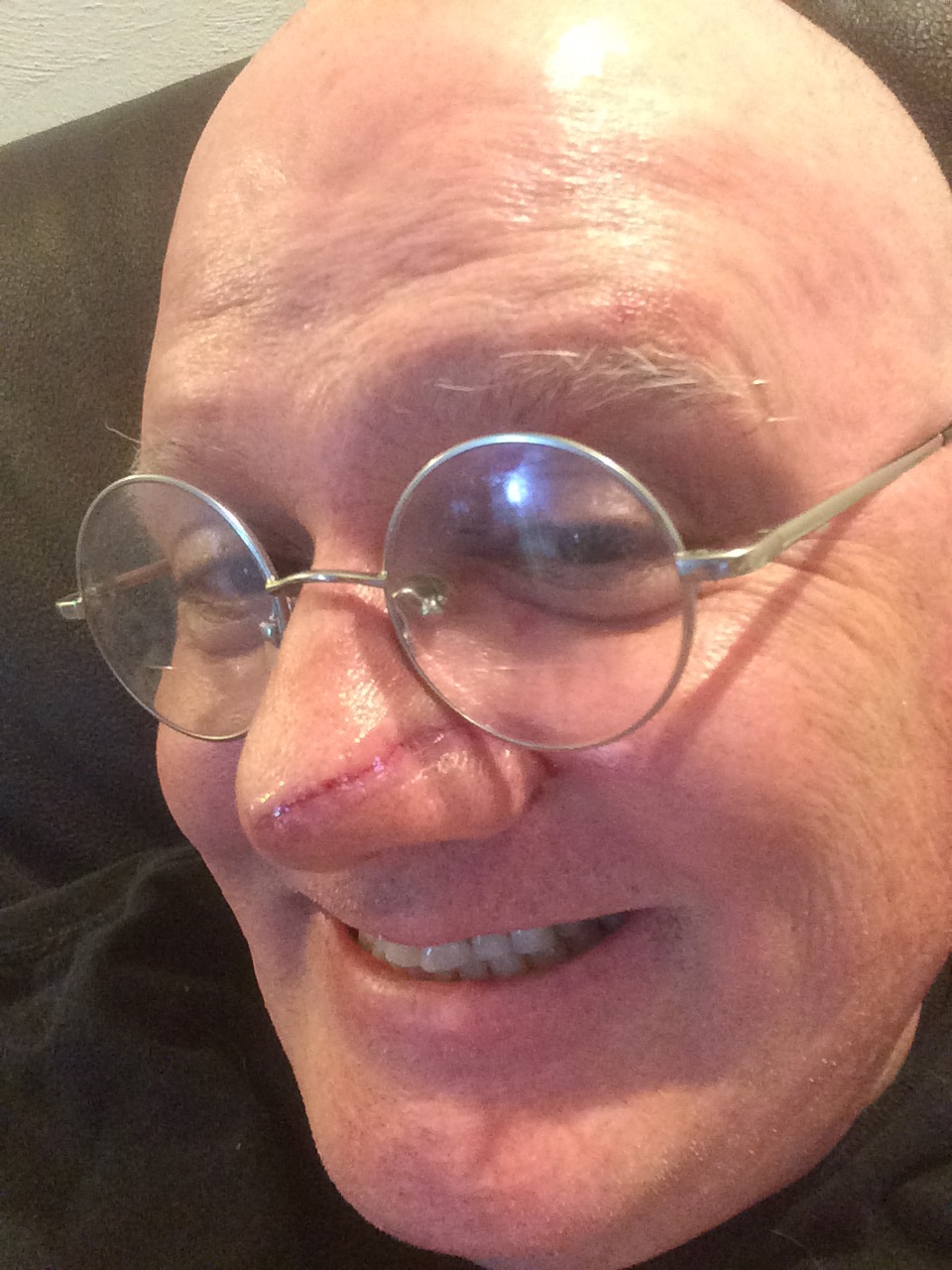
Last week I wrote about a very vivid PTSD triggered nightmare which landed me in the emergency room with cuts and contusions to my face and a broken nose. 

After it happened I mentioned that I had decided to get a catcher’s mask to sleep in. Well, I got something else, a street hockey goalie mask. Judy, thought that I should get a bed rail for my side of the bed. Despite the soundness of her advice, I realized that such a contraption would result in even more injuries to me. To say the least I am not very graceful, and I am sure that I would end up tripping over it even when I was not having nightmares causing even more injuries each time I got up to go to the toilet in the middle of the night. When I told her that I had ordered the goalie mask, she told me that I was an idiot. Truthfully, I’m okay with that, as I have been called a lot worse. 

The mask arrived the on Monday and I have been sleeping with it every night since. It is actually relatively comfortable, and if you served in the Army in Europe during the Cold War, and had to live in chemical protective gear and M-17 A1 gas masks for hours on end in field exercises, this is easy. I was actually surprised at how quickly I adapted, as did our two Papillons, Minnie and Izzy who took my new appearance in stride. 

Judy took a picture of me with it on and posted it on Facebook. What can I say?

Peace

Padre Steve+
Leave a comment

Filed under PTSD

Smile and the World Smiles with You: PTSD, Broken Noses, Smiles, F-Bombs, and God’s Love


 Smile and the World Smiles with You: It Looks and Feels a Lot Worse in Person, the Black Eye is Awesome

Friends of Padre Steve’s World,

Tuesday morning began with a fucking bang. I was in the middle of one of my HD PTSD nightmares and I was rudely awakened when my face smashed into my nightstand. It’s not the first time that this is happened, and it is the second time in the past two years that the incident required a visit to the ER. I have had a lot of these incidents since returning from Iraq in2008, but thankfully only two required going in for medical treatment. The last time I required medical treatment was when in a similar nightmare, I bruised my jawbone and gave me a concussion. Today, just a gash across my face and a broken nose. The incident was so violent that it scared the hell out of Judy, Minnie, and Izzy. I woke up and felt liquid on my face and realized that I was bleeding. So I rapidly put some Kleenex to keep the blood from dripping everywhere I didn’t want to clean and stumbled into the bathroom where I was confronted with my bloodied image in the mirror. I looked like an old and out of shape MMA fighter who just had his ass kicked, but thankfully I didn’t tap out. 

Judy drove me to the Naval Medical Center, and two of the nurses both related to my situation, having both dealt with the nightmares of PTSD. One female nurse said that hers lasted over five years after returning, mine have been going on over eight years. It is one of the marks of PTSD, the fucking brain matter gets scrambled, and sometimes, no matter how much therapy you get, or how good your medication management is, shit like this happens.

That my friends is life. It may not be fair. It may not fit in with a theology that says of you pray that God will heal you, but it is life, and for that matter it is much more in keeping with scripture, and reality than the bullshit put out by the mega-church and television preacher bullshit artists who call themselves pastors, who fleece their flocks by the tune of millions of dollars every fucking day of the week. So fuck them, not that I would want to, but I digress… 

That being said, with the except of the chronic insomnia and nightmares I am doing much better when it comes to dealing with PTSD. I make accommodation for it, I avoid things that I know are likely to blow me up, and So I have a choice; I can either sulk and be angry, or while realizing how serious it is I can decide to live, to smile, and to love. So fuck it, I’m going to live and smile. I might need to start wearing a catcher’s mask to bed to keep from hurting myself when I have these high definition nightmares, but then I did play catcher in both little league and softball. 

So… What now? Well for me the answer is simple, live, love, and smile, because when you smile, no matter how fucked up things are, the world smiles with you. Laugh, and no matter how fucked up things are, and the world laughs with you; and for that matter, God might even give me a grin, because the God I believe in actuality understands and cares about real human beings and is much more concerned about our happiness than he is about the occasional F-Bomb. 

As for me, no matter what life and dealing with the effects of PTSD and TBI may be, I am still going to fucking laugh, and fucking smile. Even so I do think I will go looking for a comfortable and well fitting catcher’s mask when I get back from Gettysburg. 

Have a great night, and no matter what happens, try to smile.

Peace

Padre Steve+

P.S. I will post something about the Democratic Party National Convention tomorrow and promise to soon do something on the Trump-Putin bromance and Trump’s probable treason in the coming days. 

2 Comments

Filed under mental health, PTSD