Category Archives: PTSD

Days Seem to Dawn: Reflections on 9-11-2001 & War

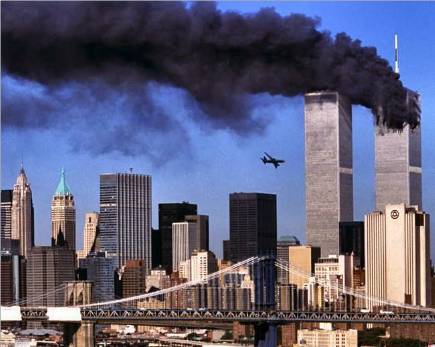
flight_175_photo

Friends of Padre Steve’s World,

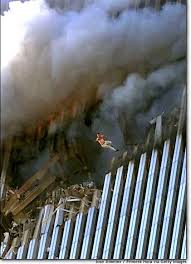
September 11th is a day that always makes me more introspective. It brings back so many memories, some that I wish I could forget; but I cannot get the images of that day out of my mind. The burning towers, the people jumping to their deaths to escape the flames, and the scenes of devastation. I knew one of the victims in the attack on the Pentagon, an Army Lieutenant Colonel, Karen Wagner who commanded a Medical training company at Fort Sam Houston where I was serving as the Brigade Adjutant in 1987 and 1988. She was a very nice person, very gracious and decent, admired by everyone who knew her; I was shocked to see her name on the casualty list after the attack.

The emotions that I feel on the anniversary of these terrorist attacks which claimed the lives of so many innocent people, and which devastated so many families, still haunts me, and my subsequent service, especially in Iraq has changed me. Years after he returned from his time in the Middle East, T.E. Lawrence; the immortal Lawrence of Arabia wrote to a friend, “You wonder what I am doing? Well, so do I, in truth. Days seem to dawn, suns to shine, evenings to follow, and then I sleep. What I have done, what I am doing, what I am going to do, puzzle and bewilder me. Have you ever been a leaf and fallen from your tree in autumn and been really puzzled about it? That’s the feeling.” I often feel that way.

Fourteen years ago I was getting ready to go to the French Creek Gym at Camp Le Jeune North Carolina where I was serving as the Chaplain of Headquarters Battalion 2nd Marine Division. I had been back from a deployment to Okinawa, Mainland Japan and Korea just two months before and was preparing to transfer to the USS Hue City, a guided missile cruiser stationed in Mayport, Florida.

At the time of the attack I had already been in the military for over 20 years and I had actually taken a reduction in rank to transfer from the Army, where I was a Major in the reserves, to the Navy to serve on active duty. In those previous 20 years I had served overseas during the Cold War along the Fulda Gap. I had been mobilized to support the Bosnia mission in 1996, and I had just missed being mobilized for Operation Desert Storm as my unit was awaiting its mobilization orders when the war ended. I had done other missions as well as the deployment to the Far East that returned from in July 2001; but nothing prepared me for that day. Like other career military officers I expected that we would be at war again and thought it might be back in the Middle East, and probably a result of some fool’s miscalculations; but like the American officers who were serving at the time of the Pearl Harbor attack, I never expected what happened that morning.

Tuesday, September 11th 2001 had started like so many days in my career. Routine office work, a couple of counseling cases and what I thought would be a good PT session. I was about to close out my computer browser when I saw a little headline on Yahoo News that a plane had crashed into the World Trade Center. I paid little attention and figured that a private plane, something like a Cessna piloted by an incompetent had inadvertently flown into the building.

9-11 jumpers

That delusion lasted about two minutes. I got in my car and the radio, tuned to an AM talk station had a host calling the play by play. He started screaming “oh my God another airliner flew into the other tower.” Seeking to see what was happening I went to the gym where there were many televisions. I got there and saw the towers burning, with stunned Marines and Sailors watching silently, some in tears. I went back out, drove to my office and got into uniform. After checking in with my colonel a made a quick trip to my house for my sea bags and some extra underwear, and personal hygiene items. When I got back the headquarters we went into a meeting, and the base went on lock down mode. The gates were closed and additional checkpoints, and roadblocks established on base. Marines in full battle-rattle patrolled the perimeter and along the waterfront. I did not leave the base until the night of the 15th when things began to settle down and we all went into contingency planning mode for any military response to the attacks.

My wife, who as waiting for a doctor’s appointment with a friend saw the attacks on live television and knew when the first plane struck she told her friend that it was terrorism. Her friend responded “that damned Saddam Hussein.” Like so many of us who initially thought this, my wife’s friend was wrong.

Those were tumultuous days, so much fear; so much paranoia; and so much bad information as to who committed the attacks and what was going to happen next.

boardingteam

boarding team

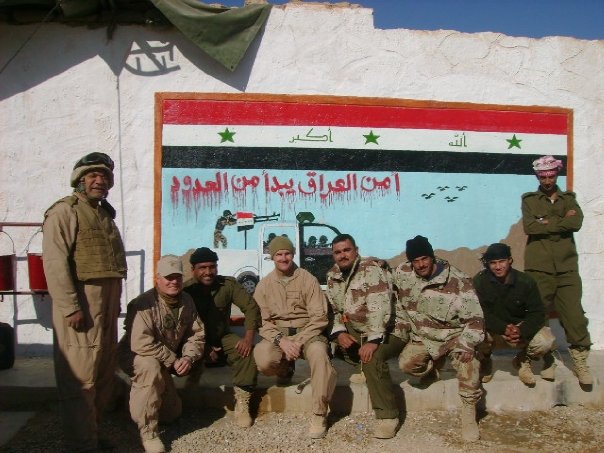
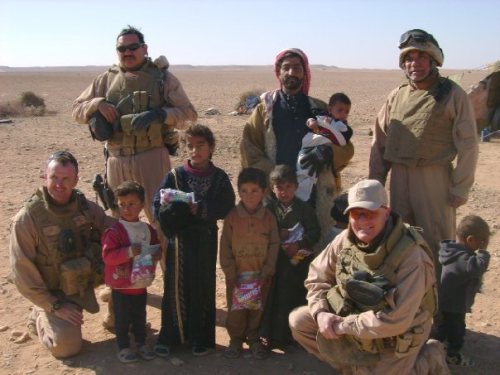
A few months later I deployed aboard Hue City to the Middle East where we supported the air operations in Afghanistan, anti-terrorist operations off the Horn of Africa and in Operation Southern Watch and the U.N. Oil Embargo against Iraq. I then did three years with Marine Security Forces, traveling around the world to support Marine Fleet Anti-Terrorism Security Team companies. For three years I was on the road one to three weeks a month traveling to the Middle East, Europe, the Pacific and many parts of the United States. Then I was promoted and transferred to Explosive Ordnance Disposal Group Two, from which I was deployed with my assistant to Iraq, where we served as members of the Iraq Assistance Group in all Al Anbar Province supporting small teams of Marine Corps, Army and Joint Force adviser teams to the Iraqi Army, Border troops, Port of Entry police, police and highway patrol.

lastmass2

iraq-bedouin1

iraq-2007

When I returned from Iraq I was a changed man and while proud of my service I am haunted by my experiences. One cannot go to war, see its devastation, see the wounded and dead, as well as the innocents traumatized by it. One cannot get shot at, or be in enclosed rooms, meeting with people that might be friends, or might be enemies, and while everyone else is armed, you are not.

War changed me, and my homecoming was more difficult than I could have imagined. I never felt so cut off from my country, my society, my church, or even other chaplains. My experience is not uncommon among those who have served in Iraq or Afghanistan, or for that matter those who have served in almost any modern war. Erich Maria Remarque in his classic All Quite on the Western Front wrote:

“I imagined leave would be different from this. Indeed, it was different a year ago. It is I of course that have changed in the interval. There lies a gulf between that time and today. At that time I still knew nothing about the war, we had been only in quiet sectors. But now I see that I have been crushed without knowing it. I find I do not belong here any more, it is a foreign world.”

That being said I would not trade my experience for anything. The experience of PTSD and other war related afflictions has been a blessing as well as a curse. They have changed my world view and made me much more emphatic to the suffering and afflictions of others, as well when they are abused, mistreated, terrorized and discriminated against. These experiences along with my training as a historian, theologian, and hospital chaplain clinician before and after my tour have given me a lot bigger perspective than I had before.

But I have to live with all of the memories. Guy Sajer wrote in his book The Forgotten Soldier, “Only happy people have nightmares, from overeating. For those who live a nightmare reality, sleep is a black hole, lost in time, like death.” General Gouverneur Warren, a hero of many Civil War battles including Gettysburg wrote to his wife after the war “I wish I did not dream so much. They make me sometimes to dread to go to sleep. Scenes from the war, are so constantly recalled, with bitter feelings I wish never to experience again. Lies, vanity, treachery, and carnage.”

As hard as this has been these are good things, and as I go on I wonder what will happen next. I do not think that the wars and conflicts which have followed in the wake of the 9-11 attacks will be over for years, maybe even decades. I pray for peace, but too many people, some even in this country seem to live for the bloodlust of war. One can only hope and as my Iraqi friends say, Inshallah, (إن شاء الله) God willing…

isis3-840x550

I wonder too, if the words of T.E. Lawrence reflecting on his service in the Arab Revolt are not as applicable to me and others who came back from Iraq, “We had been hopelessly labouring to plough waste lands; to make nationality grow in a place full of the certainty of God… Among the tribes our creed could be only like the desert grass – a beautiful swift seeming of spring; which, after a day’s heat, fell dusty.”  I have lost too many friends in these wars, including men who could not readjust to home, many like me. I have seen the men and women, broken in body, mind and spirit and I wonder if any of it was worth it, and if in some of our response, especially the invasion of Iraq has not made a bad situation even worse, and turned the war into a generational conflict.

As for me, I am now an old guy by military standards. In a couple of years I hope to retire with 36 years of service, knowing that those who I have worked with will be continuing to fight a war which seems to be without end.

481801_10151367001287059_1003164983_n

Today there will be many ceremonies and services to remember the victims of the attacks. I think that is fitting. President Obama has declared a day of prayer and remembrance which is also good. I will not attend the ceremonies because I still get too emotional, but I will be there in spirit, even though much of me is still in Iraq. 

I will quietly reflect at the office today as I get ready for our incoming class at the Staff College. Afterward I will go get a beer and dinner with Judy and our friends at Gordon Biersch after catching to remainder of the Norfolk Tides vs. Columbus Clippers International League playoff game which was postponed due to rain last night. I guess that is fitting to as it was baseball that helped begin the healing in Nee York in the days after the attack. 

Have a good day, and do not forget those whose lives were forever changed by those dastardly attacks and all that has transpired in the years since. Maybe things will get better… Inshallah, (إن شاء الله) God willing…

Peace

Padre Steve+

2 Comments

Filed under History, iraq,afghanistan, Military, PTSD

They Shall Not Have Died in Vain: Memorial Day 2015

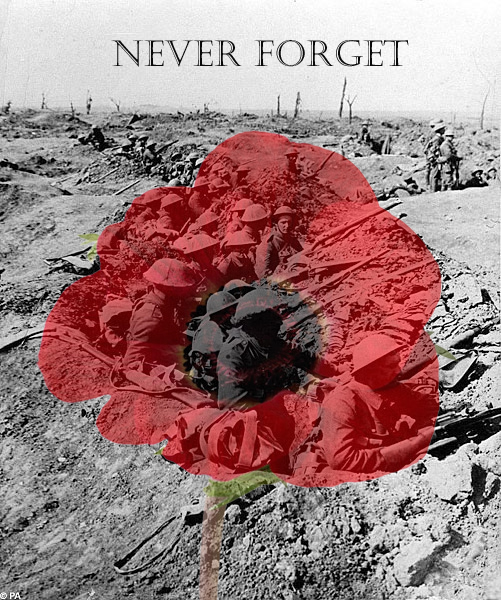
Remembrance_Day___Poppy_Day_by_daliscar

In Flanders Fields

John McCrae, 1915.

In Flanders fields the poppies blow

Between the crosses, row on row

That mark our place; and in the sky

The larks, still bravely singing, fly

Scarce heard amid the guns below.

We are the Dead. Short days ago

We lived, felt dawn, saw sunset glow,

Loved and were loved, and now we lie

In Flanders fields.

Take up our quarrel with the foe:

To you from failing hands we throw

The torch; be yours to hold it high.

If ye break faith with us who die

We shall not sleep, though poppies grow

In Flanders fields.

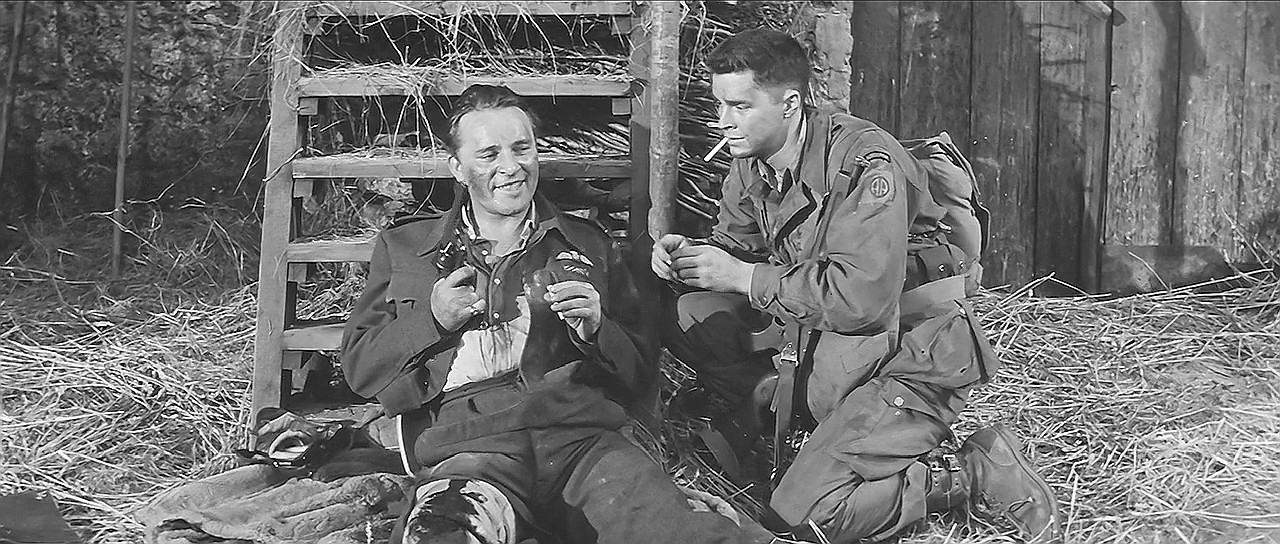
There is a poignant scene in the film The Longest Day in which Richard Burton, playing the wounded British Royal Air Force Flying Officer David Campbell looks at the body of a dead German soldier and says to an American paratrooper who is lost from his unit: 

“It’s funny isn’t it. He’s dead, I’m crippled, you’re lost. Suppose it’s always like that. I mean war.” 

LD20

Back when the movie was filmed in the early 1960s there were still many World War II veterans around and the United States and most Western European nations still had some form of draft or conscription which ensured that most people still had some connection with the military. It’s not like that now. In the United States far these than 1% of the population is serving in the military, and this includes the National Guard and reserves. The numbers are similar throughout Western Europe. Those who have served in combat or even deployed to combat theaters are far fewer. As a result the people of the United States and Western Europe as a whole are so disconnected from military service, not to mention the terrible human cost that is war. As William Tecumseh Sherman said: War is Hell. 

I came back a different man from Iraq. It seems that for me with every passing year Memorial Day becomes more of a melancholy observance. It is a weekend and observance that I feel deeply having lost friends in war and served in Iraq as well as Operation Enduring Freedom. It is also a day in which I feel more and more disconnected from the vast majority of my fellow Americans. I don’t know, but just from my observation it seems that for most Americans the weekend serves as not much more than the end of the school year and the beginning of the summer holiday and vacation season.

Now I could be wrong, but it seems to me that for most Americans, the vast majority who have themselves never served a day in uniform and who have no more than a passing relationship with anyone who is either serving in our current wars or has served in any war, that war is at best a spectator sport.

This is an attitude that has been nurtured by our politicians of all parties, political pundits and preachers for decades. As a result there is a grave disconnect between the society at large and the men and women who serve in the military and in our wars.

To be fair I don’t think it is a matter of ordinary people not caring, not that at all. Many do and I am thankful to them. That being said there are many who though they say they support the troops find war to be some sort of sporting event where we send our heroes out to do battle against the enemies of freedom, while making no sacrifices themselves and even call military health care, retirement benefits and disability pensions “entitlement programs” which need to be reigned in. Yes, that is right. Send the volunteers to war and then abandon them. Sadly, with the exception of the end of World War Two, this is always how this nation has treated its veterans and their families.

The real fact of the matter is that the wars that we have fought since World War II have not been national affairs. If they were we would not be continually fighting wars that most people neither understand and which in many if not most cases we would be better off staying out of completely. That being said I am appreciative of those who do things to care for and honor our veterans, honor our fallen and do practical things for the survivors. There are some really wonderful people, many who have never served who do what they can for those who fight and die in or come back forever changed from these misbegotten and unpopular wars.

At the same time there are a lot of what I call War Porn addicts, especially the pundits, politicians and preachers who cannot get enough of war. As a Christian I hate to say that many of the worst of the war porn addicts are the supposedly Christian pundits, politicians and preachers who cannot seem to find enough new wars to get us involved in even as we struggle to deal with what is on our plate already. If you ask me these sons-of-bitches are traitors who do not love the troops, do not love this country and should be forced into the front line so they can see, smell and taste death.

What I find the most offensive are the war mongers and profiteers who have never served. I feel this way about those who did all that they could to avoid serving in the military and those who did the very minimum to satisfy outward appearances of service while avoiding anything difficult, especially deployment to combat zones. Of the latter I can think of five to six currently serving and very outspoken conservative members of the House of Representatives and the Senate that fit the description. I shan’t mention the members of the previous Presidential administration who through their outright lies caused the deaths of nearly 4500 American military personnel in Iraq. I speak about men who in their writings, their appearances on news networks and their think tanks and corporations that do nothing but profit off of war. Some are current or former politicians, others supposedly “academics” and others men who smell a profit in war. 

memorial-day1-300x225

I find such people to be loathsome and wonder how on Memorial Day weekend they can show their faces. But then they are rather shameless. Sometimes their actions make me wonder if the sacrifices made by those who serve are in vain. However, I strive to resist that and pray that our sacrifices will not be in vain. While they profit from war others pay the bill and it has always been this way. Marine Corps Major General Smedley Butler, a two time winner of the Congressional Medal of Honor wrote after World War One in his book War is a Racket:

“This bill renders a horrible accounting. Newly placed gravestones. Mangled bodies. Shattered minds. Broken hearts and homes. Economic instability. Depression and all of its attendant miseries. Back -breaking taxation for generations and generations. For a great many years as a soldier I had a suspicion that war was a racket; not only until I retired to civilian life did I fully realize it….”

481801_10151367001287059_1003164983_n-1.jpg

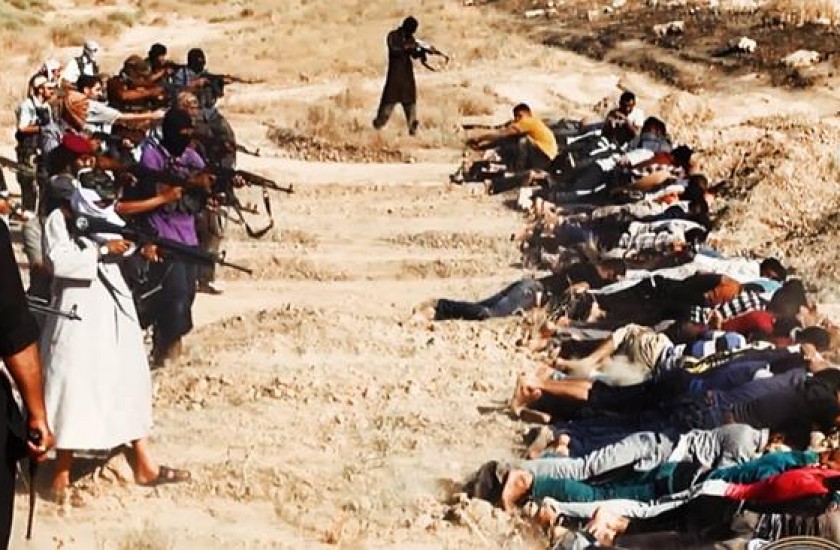
Maybe I feel this way because I grew up in a military family where my dad was frequently deployed and served in Vietnam, a place where some of my friends fathers died, and because I have been in the military 32 years between the Army and the Navy. Maybe it is partly because I am a military historian, theologian, priest and chaplain who has seen the horrors of war and the wounds that remain for life in the bodies, minds and spirits of those that fight in them. I cannot speak of how my heart feels when I see young men and women, wounded in war, their lives forever changed bravely struggling to go on even as the war mongers, war profiteers and chicken-hawks profit off of their suffering. As I said before, these people are traitors and if I had my way we would drive them at bayonet point into the arms of the Islamic State so they can taste what war is all about. Maybe then these sons-of-bitches would think twice before sending another young American to die so they might make a profit.

So for me this is a rather melancholy time. A time where I struggle a time when I get so angry. That being said I also echo the words of Civil War Veteran and Supreme Court Justice Oliver Wendell Holmes who spoke these words in 1895:

“even if those who come after us are to forget all that we hold dear, and the future is to teach and kindle its children in ways as yet unrevealed, it is enough for us that this day is dear and sacred…. nevertheless, the generation that carried on the war has been set apart by its experience. Through our great good fortune, in our youth our hearts were touched with fire. It was given to us to learn at the outset that life is a profound and passionate thing. While we are permitted to scorn nothing but indifference, and do not pretend to undervalue the worldly rewards of ambition, we have seen with our own eyes, beyond and above the gold fields, the snowy heights of honor, and it is for us to bear the report to those who come after us.”

175

I honor the fallen, my brothers and sisters who have given the last full measure of devotion in serving this country, those that I know personally or have served with and those who did so before I was every born. Why you might ask? 

The reason is simple and I think that Abraham Lincoln said it best as he closed his Gettysburg Address:

“It is for us the living, rather, to be dedicated here to the unfinished work which they who fought here have thus far so nobly advanced. It is rather for us to be here dedicated to the great task remaining before us — that from these honored dead we take increased devotion to that cause for which they gave the last full measure of devotion — that we here highly resolve that these dead shall not have died in vain — that this nation, under God, shall have a new birth of freedom — and that government of the people, by the people, for the people, shall not perish from the earth.”

Peace

Padre Steve+

3 Comments

Filed under History, iraq, iraq,afghanistan, Military, News and current events, Political Commentary, PTSD, Tour in Iraq, vietnam, War on Terrorism, world war one, world war two in europe

Music, Liturgy & the Relief of the Soul

davids_harp__image_1_sjpg1312

Friends of Padre Steve’s Word

Something a little bit different. A while back I was asked to write and article for a periodical called “The Liturgical Singer” which is published by the That National Association of Pastoral Musicians. The article came out only in hard copy and at the request of a couple of friends I am posting it here. Have a great night.

Peace

Padre Steve+


“And whenever the evil spirit from God came upon Saul, David took the lyre and played it with his hand, and Saul would be relieved and feel better, and the evil spirit would depart from him.” 1 Samuel 16:23

When I was in seminary one of the most valuable courses I ever took was an introductory course in Church Music. The course opened my heart to music in the liturgical setting. Now I am not a musician, I play the radio and sing monotone. Like many pastors, priests and theologians I am a word person; written, spoken I am a word person. That being said I learned early on that music can be a balm for the wounded and suffering soul.

Sadly, I don’t think that many priests or pastors truly understand this. I am a Priest and Navy Chaplain. But, I am one of the wounded. I suffer from severe PTSD, anxiety, and more often than not I find going to church often makes things worse. As an Iraq Veteran I can somewhat relate to King Saul. Sometimes the effects of PTSD feel like an evil spirit, and when I came home from war I went through a spiritual crisis that was so bad that for nearly two years I was for all practical purposes an agnostic hoping that God still existed.

Hans Christian Anderson wrote that “Where words fail, music speaks.” All too often our worship, even in liturgical churches focuses more on words, than it does the healing property of music.

Those who suffer from trauma of any kind, including PTSD, or who suffer from anxiety, depression or other afflictions of the soul don’t usually come to church to see a show or to get yet another self-help lecture baptized with a few selected Bible verses. They don’t come to be entertained. They come for solace, they come to encounter God as do most regular churchgoers. But a recent Barna survey noted that less than 20% of regular churchgoers feel close to God on even a monthly basis. Martin Luther, who suffered from tremendous depression and despair for much of his life wrote “My heart, which is so full to overflowing, has often been solaced and refreshed by music when sick and weary.”

One has to ask why this is. I think one reason is that in many churches, even liturgical churches music has become entertainment. While this is pervasive in our American church culture it is not new. Erasmus of Rotterdam wrote:

“We have brought into our churches certain operatic and theatrical music; such a confused, disorderly chattering of some words as I hardly think was ever in any of the Grecian or Roman theatres. The church rings with the noise of trumpets, pipes, and dulcimers; and human voices strive to bear their part with them….”

As entertain it really is no longer part of liturgy, which is by definition the work of the people. I think the type or style of music is less important than the message that it conveys. I honestly believe different types of music touch our soul in different ways. That being said I think that the message of the music should lead people into the presence of God and to do that church music directors and liturgists need to back off of the culture of entertainment that has invaded the Church. I can say that there are songs, hymns and psalms of almost every musical style which reside in my heart. In the midst of my spiritual crisis I found that some of these songs stayed with me. One verse of Abide With Me was one of my prayers during that time:

Come not in terrors, as the King of kings, But kind and good, with healing in Thy wings, Tears for all woes, a heart for every plea— Come, Friend of sinners, and thus abide with me.

I have found that when a liturgist leads a people into the presence of God it is that the songs, hymns and songs they use actually allow the people to participate in the liturgy. The songs speak of God’s presence even in the midst of suffering, they allow those who suffer a measure of hope, even in the midst of what St. John of the Cross referred to as “the dark night of the soul.” When this happens the music becomes part of the participant’s experience of God, it takes up residence in the depth of the soul and there it remains reminding the person that they are not alone. Percy Bysshe Shelley wrote that “Music, when soft voices die, vibrates in the memory.”

Peace

Padre Steve+

Leave a comment

Filed under christian life, faith, ministry, music, PTSD

A Question for Tom Cotton and Other War Mongers

cotton

I have been at my denominational Chaplain and Pastoral Counselor conference and we were talking about the concept of Moral Injury.  Sadly the concept while real is so misunderstood. Many in the Christian psychotherapy and pastoral counseling world have reduced the concept to what the soldier did on a battlefield that causes him problems and which he must confess to God to be forgiven. But the bigger issue in moral injury is not that, it is the betrayal of trust by the nation of those that they send to war for the most spurious and often illegal and immoral reasons.

Most people who join the military are idealistic and have a trust of their government, their leaders, their military services and even their churches and God that is a major part of their life. Sadly, that trust is betrayed when the nation sends them into wars which are illegal, immoral and place them in situations where they do or see things that break that trust often forever. This happened to many of our Vietnam vets and is happening again to those of us who served in Iraq or Afghanistan.

Sadly, most Americans, about 99% have no skin in this game. The young men and women who go to war represent far less than one percent of the American population. Many ethnic minorities and come from either the middle class or the poor. Likewise, a growing percentage are men and women who grew up as military brats. I’m one of those, but I see a lot more now. In World War II even the political and economic elites sent their sons to war, but this is not the case today. In fact it is hard to name the children of any national political or corporate leaders who have served in Iraq or Afghanistan. The only one that comes to mind to me is Vice President Joe Biden’s son Beau, who served in Iraq.

But even as we still struggle to deal with the results of the Iraq blunder, there are those who foolishly desire to involve this nation in another war. A war which can have no good outcome and which when push comes to shove few will oppose, because other than the incredibly small minority that serve in the military, no one has any skin in the game.

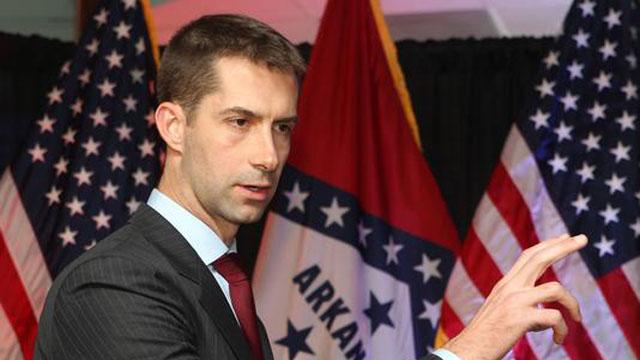
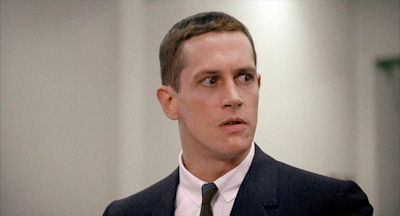
Senator Tom Cotton, a former Army Lieutenant and Iraq veteran, with about as much sense as Doug Neidermeyer from Animal House is beating the drums of war with Iran saying that any military action against Iran would be short and easy. Senator Cotton-Neidermeyer say that it would require just a few days of bombing to complete the mission of crippling Iran’s nuclear program.

Of course he is not alone there is a rising chorus of war mongers who want yet to wage another preemptive war. This would be a war that baring a direct attack of Iran on the United States or an ally that we are bound by treaty to defend would be illegal under every international convention. It would be comparable to the actions of Nazi Germany in its wars of aggression that we sent Nazi leaders to the gallows at Nuremberg.

U.S. Supreme Court Associate Justice Robert Jackson who served as the American prosecutor and worked with our allies to set up the Nuremberg proceedings made this comment which always should be for most in the mind of any American leader when considering going to war: “If certain acts of violation of treaties are crimes, they are crimes whether the United States does them or whether Germany does them, and we are not prepared to lay down a rule of criminal conduct against others which we would not be willing to have invoked against us.” Justice Robert Jackson International Conference on Military Trials, London, 1945, Dept. of State Pub.No. 3080 (1949), p.330.

neidermeyer

If Senator Cotton-Neidermeyer gets his war, baring an Iranian attack on us or one of our allies it be illegal an tantamount to what we put the leaders of the Third Reich on trial for.  Likewise, it would be like the one waged against Iraq one waged under false pretenses which cost so many lives, bled the nation’s treasury dry and reduced our trust and standing in the world.  

We sowed the wind in Iraq, and with climatic struggle between the Islamic State and the Iraqi Shia, supported by Iranian Revolutionary Guards, are reaping the whirlwind. 

Senator Cotton seems not to get the fact that in any war the enemy gets a vote, and the Iranians, even if we manage to cripple their nuclear program will certainly exact a price in blood and treasure that Lieutenant Cotton-Neidermeyer does not seem to understand or appreciate. U.S. ships in the Persian Gulf will have to right off salvos of anti-ship missiles, swarm attacks by Iranian missile and torpedo boats as well as air attacks and submarines. No matter how well we do in defending against these attacks it is undoubtable that ships will be damaged or even sunk and many, maybe even hundreds or thousands of sailors killed, something not seen since World War Two. Likewise the U.S. installations in Bahrain and Qatar will be bombarded with hundreds of short and medium ranged missiles many which will get through our missile defense systems.

When the bodies of our dead military personnel come back, will Senator Cotton be there to meet them? I doubt it because for him, they are just the cost of war. Will he and his allies increase support for the bereaved families, or the wounded? I doubt it, because all of them are bent of cutting the benefits to the wounded, the broken and those shattered by war, because such expenditures get in the way of lining the pockets of their benefactors.

Yes, they will beat their chests and talk about “our heroes” and castigate as traitors those who opposed the war that they brought about in order to cover their guilt.

While we would eventually prevail in such an exchange it would be disastrous and further weaken our military as well as our standing in the world. But then there is the moral question, especially for those who like Senator Cotton and so many of the others who advocate an illegal, immoral preemptive war of aggression who claim to be Christians need to ask.

That question was asked by the iconic hero of the American Civil War Joshua Chamberlain on the front lines at Petersburg in the closing days of that war: “…men made in the image of God, marred by the hand of man, and must we say in the name of God? And where is the reckoning for such things? And who is answerable? One might almost shrink from the sound of his own voice, which had launched into the palpitating air words of order–do we call it?–fraught with such ruin. Was it God’s command that we heard, or His forgiveness that we must forever implore?” 

That my friends is what Senator Cotton and others of those who advocate yet another war of aggression need to answer.

Peace

Padre Steve+

5 Comments

Filed under afghanistan, ethics, faith, Foreign Policy, History, iraq, leadership, Military, national security, PTSD

Perchance to Sleep: A Sleep Study

IMG_0230

For people who have not followed my writings on this site for any length of time I need to let you know that for me, a career military officer and veteran of Iraq, and other adventures at sea and ashore that I suffer from PTSD, TBI and Moral Injury. As a result I endure terrible insomnia, nightmares and night terrors. A really good night sleep I have not enjoyed since I went to Iraq in 2007. Guy Sager, a German veteran of the Russian front wrote in his classic account of war and homecoming The Forgotten Soldier: 

“Only happy people have nightmares, from overeating. For those who live a nightmare reality, sleep is a black hole, lost in time, like death.” 

It is something that I fully understand. General Gouverneur Warren, a hero of Gettysburg also suffered from terrible insomnia and nightmares. He wrote:

“I wish I did not dream that much. They make me sometimes dread to go to sleep. Scenes from the war, are so constantly recalled, with bitter feelings I wish to never experience again. Lies, vanity, treachery, and carnage.”

Tonight I am undergoing a sleep study which will look at a number of aspects of what might be keeping me from sleep and what might help me. I will be examined for a number of neurological and respiratory conditions. I have about half an hour until the tech make the final hook of of all the paraphernalia that I have connected to me, wires, machines and bands across my head and my chest. I have wires connected to about every part of my body but my penis and sphincter.

As it is all of this is terrifying. I find test such as this to be troubling, for I do not know what they will reveal. Over the past couple of months I have been going through a lot of testing related to traumatic brain injury and concussive injuries. Frankly I have knocked my noggin a lot in my life, sports, the military, deployment and just dumb stuff.

I also have some worry because my father died of complications from Alzheimer’s disease, what William Shatner’s character in the television series Boston Legal, Denny Crane referred to as the “Mad Cow.” I hated to see how that evil disease ravaged my dad’s mind. While it is unlikely that I would have it too, there is always the chance and of all the things to die of I would hate losing my mind, the one thing that defines who I am the most. Denny Crane said: “When God strips you of your talent, He should at least have the decency to strip away the memory of having had it.”

I do not like the night, noises seem amplified, an airplane, a helicopter, sirens and crashing noises will trigger me into a state of hyper-arousal that is almost impossible to come down from.

As such I am going to curl up with my iPad and continue to read To Kill a Mockingbird as I have been doing the past week.

Until tomorrow,

Peace

Padre Steve+

1 Comment

Filed under healthcare, PTSD

Joshua Chamberlain: Myth & Reality 

Friends of Padre Steve’s World

I am going to periodically interspersing and publishing short articles about various commanders at Gettysburg  on the site. These all come from my student text and the reason is I am going to do this is because I have found that readers are often more drawn to the lives of people than they are events. As I have noted before that people matter, even flawed people, and we can learn from them.

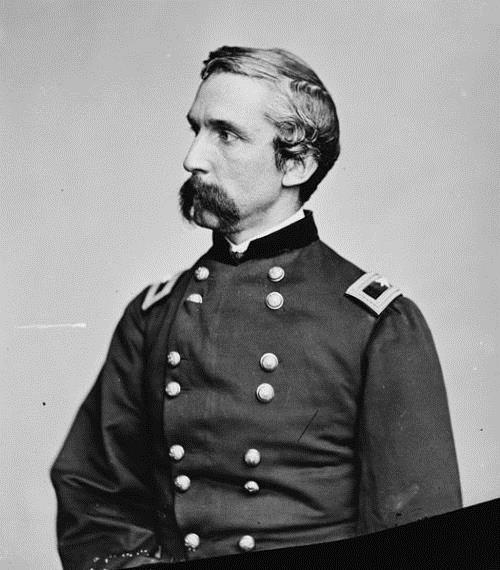
Today’s vignette is about Major General (then Colonel) Joshua Lawrence Chamberlain who commanded the legendary 20th Maine at Little Round Top on July 2nd 1863. Chamberlain is one of the most fascinating characters of the Civil War, a volunteer soldier, a scholar and professor he would have been considered an unlikely hero. He was a man of peace who took up the sword and when the war was done promoted reconciliation. He was also a greatly flawed husband who suffered from his wounds, seen and unseen after the war. This is one part of his story that most people know nothing about which maybe even more than his exploits on the battlefield connects with those who come home from war today.  

Peace

Padre Steve+
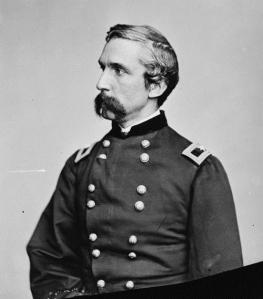
chamberlain

Colonel Joshua Chamberlain

While Colonel Joshua Chamberlain’s story is much better known than his brigade commander, Strong Vincent, Chamberlain was another one of the citizen soldiers whose performance and leadership on Little Round Top saved the Union line that hot July evening. Chamberlain was a graduate of Bowdoin College and Bangor Theological Seminary. Fluent in nine languages other than English he remained at Bowdoin as Professor of Rhetoric, and was deeply unhappy at missing the war even as his students left and were commissioned as officers in newly raised regiments.

In June of 1862 Chamberlain wrote to Governor Israel Washburn requesting an appointment in a newly raised Maine Regiment without consulting either the college or his wife Fannie, who was “shocked, hurt, and alarmed by the decision he had made without consulting her…She remonstrated, she raised her voice, and quite possibly wept over the injustice he had done to both by this unilateral act that threatened to send their world careening in all directions.” [36]

As far as Bowdoin went, Chamberlain actually deceived the college by requesting a “scholarly sabbatical when in fact he had applied to the governor of Maine in the new 20th Maine Infantry in the late summer of 1862.” [37] When the faculty of Bowdoin found out of Chamberlain’s action many of them “were livid over what they considered his duplicity, and some shunned him during the brief period that he remained in Brunswick before reporting to training camp. [38]

The letter that Chamberlain wrote to Governor Israel Washburn details Chamberlain’s desire to serve and in some ways shows his considerable political skill in presenting his case to join the army:

“For seven years past I have been Professor in Bowdoin College. I have always been interested in military matters, and what I do not know in that line I know how to learn.

Having been lately elected to a new department here, I am expecting to have leave, at the approaching Commencement, to spend a year or more in Europe, in the service of the College. I am entirely unwilling, however, to accept this offer, if my Country needs my service or example here.

Your Excellency presides over the Educational as well as the military affairs of our State, and, I am well aware, appreciates the importance of sustaining our Institutions of Learning. You will therefore be able to decide where my influence is most needed.

But, I fear, this war, so costly of blood and treasure, will not cease until the men of the North are willing to leave good positions, and sacrifice the dearest personal interests, to rescue our Country from Desolation, and defend the National Existence against treachery at home and jeopardy abroad. This war must be ended, with a swift and strong hand; and every man ought to come forward and ask to be placed at his proper post.

Nearly a hundred of those who have been my pupils, are now officers in our army; but there are many more all over our State, who, I believe, would respond with enthusiasm, if summoned by me, and who would bring forward men enough to fill up a Regiment at once. I can not free myself from my obligations here until the first week in August, but I do not want to be the last in the field, if it can possibly be helped.” [39]

Chamberlain’s pre-war experiences gave no indication that he would emerge as a military hero. His father, a veteran of the War of 1812 had named him after Captain James Lawrence, the commanding officer of the frigate USS Chesapeake in the War of 1812 who uttered the famous words “Don’t give up the ship” as he lay mortally wounded when that ship was defeated by the HMS Shannon off Boston Harbor in 1813. However, Chamberlain’s mother added the name Joshua as his first name in the town’s books. While his father hoped that the young Chamberlain would pursue a military career, his mother earnestly desired that he would pursue a ministerial career. Chamberlain did become a licensed minister but had no desire to become a pastor, and was never ordained. This was reinforced by Fannie who though the daughter of a minister was “too much a free thinker” and “did not share the devotion her father and Chamberlain held for organized religion.” [40]

Chamberlain debated attending West Point after graduation, a path that his classmate Oliver O. Howard took. Instead he attended Bangor Theological Seminary and following graduation took up his academic career at Bowdoin. It was during this time that he met, fell in love with, pursued, courted and finally married Frances Caroline Adams, who played the organ at the local Congregational Church that he attended. Known by most as “Fannie,” she was the adopted daughter of the eminent Congregationalist minister, Dr. George Adams who served as pastor. Fannie had a strong independent streak and was as an accomplished musician and artist.

The couple was an interesting match. Chamberlain was impressed by Fannie’s “artistic gifts. Fannie had talent not only in music but in poetry and, especially; art…” [41] but he ignored potential areas of conflict that would create difficulties throughout their marriage. However, Fannie was beset by numerous fears, as well as a desire not to be dominated by any man. Chamberlain pursued her with abandon but for a time she resisted, until her widowed father married a woman not much older than herself. She desired to pursue the study of music and went away to New York to do so, but in 1852 she decided that she was in love with him. “Yet she harbored doubts about her ability to return his feelings for her measure for measure.” [42]

Fannie suffered from depression and a constant worry about her eyesight which began failing her and an early age. It was a malady that eventually left her completely blind by then turn of the century. Compounding her struggles was the fact that her new husband struggled with his own doubts and depression, a depression that only seamed to lift during the war years.

“During most of his life, Chamberlain struggled with bouts of deep depression and melancholy. But not during the war years. It was as if the war and soldiering had made a new man out of him.” [43]

Chamberlain was offered command of the 20th Maine but asked Governor Washburn that he was appointed as a Lieutenant Colonel, which he was in August 1862. He fought with the regiment at Fredericksburg and was named commander of it when Colonel Adelbert Ames, his commander was transferred to perform staff duties prior to obtaining a brigade command in Oliver Howard’s XI Corps following the debacle at Chancellorsville.

Chamberlain was through his association with abolitionists and others prior to the war was a staunch Unionist. Before going into the army he wrote:

“We have this war upon is & we want to stop it. It has cost us already too much precious blood. It has carried stagnation, starvation & grief in to too many villages of our fair land – brought death to too many noble hearts that we could ill afford to lose. But the only way to stop this war, is first to show that we are strongest…I feel that we are fighting for our country – for our flag- not as so many Stars and Stripes, but as the emblem of a good & powerful nation – fighting to settle the question whether we are a nation or a basket of chips. Whether we shall leave our children the country we have inherited – or leave them without a country – without a name – without a citizenship among the great nations of the earth – take the chief city of the rebels. They will have no respect for us unless we whip them & and I say it in all earnestness….” [44]

Like Vincent, Chamberlain was also a quick student or military science and rapidly adapted to being a soldier, officer and commander of troops in combat. He spent as much time studying the art of war under the supervision of Colonel Ames including Henri Jomini’s Art of War which he wrote to Fannie “The Col. & I are going to read it. He to instruct me, as he is kindly doing everything now.” [45] He excelled at his studies under Ames, but since most of the manuals that he studied were based on Napoleonic tactics and had not incorporated the changes brought about by the rifled musket, Chamberlain like so many others would have to learn the lesson of war the hard way.

Chamberlain was with the regiment at Antietam, but it saw no action. He was in the thick of the fighting at Fredericksburg and Burnside’s subsequent “Mud March” which were both disastrous for the army.

He took command of the regiment in late April after Ames left on detached duty before assuming a brigade command. As the new commander of the regiment, Chamberlain and the 20th Maine missed the Battle of Chancellorsville as the regiment had been quarantined due to an epidemic of smallpox, which they had probably received from “poorly prepared serum with which the regiment was vaccinated” [46] in April.

From the regiment’s quarantined location Chamberlain and his men could hear the sound of battle. One of his soldiers wrote “We could hear the firing plain but there we lay in glorious idleness without being able to lift a finger or fire a gun.” [47] In frustration Chamberlain rode to Major General Joseph Hooker’s headquarters and asked Hooker’s Chief of Staff Dan Butterfield for the chance to enter the fight. Refused the chance Chamberlain told Butterfield “If we couldn’t do anything else we would give the rebels the smallpox!” [48] The regiment spent the battle guarding a telegraph line must to Chamberlain and his soldier’s disgust.

On the march up to Gettysburg Chamberlain was ordered to take a number of veterans of the 2nd Maine, who had signed three year, rather than two year enlistment contracts and were angry at remaining in the army when the regiment was mustered out. The men were angry and Chamberlain was given permission by Meade to fire on them “if they refused to do duty. The new colonel realized he had a crisis on his hands.” [49] The soldiers were bitter but Chamberlain treated them graciously and “almost all of them agreed to take up their muskets again the service of the 20th Maine.” [50] Chamberlain later remarked of how these men “we’re afterward among my best men, worthy of the proud fame of the 2nd, and the hard earned laurels of the 20th.” [51]

On receiving his orders from Vincent, Chamberlain deployed his small regiment halfway down the southern slope facing the small valley between Little Round Top and Big Round Top. By the time he arrived at Gettysburg had become “a great infantry officer, and among his valuable qualities was [understanding] where an attack would come….” [52]

Since Chamberlain’s account is so important I will forgo a discussion of his tactics and instead quote the sections of his after action report that explains his actions. Chamberlain wrote:

“On reaching the field at about 4 p.m. July 2d, Col. Vincent commanding the Brigade, placing me on the left of the Brigade and consequently on the extreme left of our entire line of battle, instructed me that the enemy were expected shortly to make a desperate attempt to turn our left flank, and that the position assigned to me must be held at every hazard.

I established my line on the crest of a small spur of a rocky and wooded hill, and sent out at once a company of skirmishers on my left to guard against surprise on that unprotected flank.

These dispositions were scarcely made when the attack commenced, and the right of the Regt. found itself at once hotly engaged. Almost at the same moment, from a high rock which gave me a full view of the enemy, I perceived a heavy force in rear of their principal line, moving rapidly but stealthily toward our left, with the intention, as I judged, of gaining our rear unperceived. Without betraying our peril to any but one or two officers, I had the right wing move by the left flank, taking intervals of a pace or two, according to the shelter afforded by rocks or trees, extending so as to cover the whole front then engaged; and at the same time moved the left wing to the left and rear, making a large angle at the color, which was now brought to the front where our left had first rested.

This hazardous maneuvre was so admirably executed by my men that our fire was not materially slackened in front, and the enemy gained no advantage there, while the left wing in the meantime had formed a solid and steady line in a direction to meet the expected assault. We were not a moment too soon; for the enemy having gained their desired point of attack came to a front, and rushed forward with an impetuosity which showed their sanguine expectations.

Their astonishment however was evident, when emerging from their cover, they met instead of an unsuspecting flank, a firm and ready front. A strong fire opened at once from both sides, and with great effect, the enemy still advancing until they came within ten paces of our line, where our steady and telling volleys brought them to a stand. From that moment began a struggle fierce and bloody beyond any that I have witnessed, and which lasted in all its fury, a full hour. The two lines met, and broke and mingled in the shock. At times I saw around me more of the enemy than of my own men. The edge of conflict swayed to and fro -now one and now the other party holding the contested ground. Three times our line was forced back, but only to rally and repulse the enemy. As often as the enemy’s line was broken and routed, a new line was unmasked, which advanced with fresh vigor. Our “sixty rounds” were rapidly reduced; I sent several messengers to the rear for ammunition, and also for reinforcements. In the mean time we seized the opportunity of a momentary lull to gather ammunition and more serviceable arms, from the dead and dying on the field. With these we met the enemy’s last and fiercest assault. Their own rifles and their own bullets were turned against them. In the midst of this struggle, our ammunition utterly failed. The enemy were close upon us with a fresh line, pouring on us a terrible fire. Half the left wing already lay on the field. Although I had brought two companies from the right to its support, it was now scarcely more than a skirmish line. The heroic energy of my officers could avail no more. Our gallant line withered and shrunk before the fire it could not repel. It was too evident that we could maintain the defensive no longer. As a last desperate resort, I ordered a charge. The word “fix bayonets” flew from man to man. The click of the steel seemed to give new zeal to all. The men dashed forward with a shout. The two wings came into one line again, and extending to the left, and at the same time wheeling to the right, the whole Regiment described nearly a half circle, the left passing over the space of half a mile, while the right kept within the support of the 83d Penna. thus leaving no chance of escape to the enemy except to climb the steep side of the mountain or to pass by the whole front of the 83d Penna. The enemy’s first line scarcely tried to run-they stood amazed, threw down their loaded arms and surrendered in whole companies. Those in their rear had more time and gave us more trouble. My skirmishing company threw itself upon the enemy’s flank behind a stone wall, and their effective fire added to the enemy’s confusion. In this charge we captured three hundred and sixty eight prisoners, many of them officers, and took three hundred stand of arms. The prisoners were from four different regiments, and admitted that they had attacked with a Brigade.” [53]

Colonel William Oates of the 15th Alabama gave Chamberlain and his regiment the credit for stopping his attack. Oates wrote: “There have never been harder fighters than the Twentieth Maine and their gallant Colonel. His skill and persistency and the great bravery of his men saved Little Round Top and the Army of the Potomac from defeat.” [54]

As with any firsthand account, aspects of Chamberlain’s accounts are contested by others at the scene. But in another way Chamberlain’s accounts of battle have to be carefully examined, because they often reflect his romanticism, he was not always a realist. Unlike Major Ellis Spear who played such an important role on the hill that day, who was a realist who “saw things plainly and remembered them clearly, in stark, unadorned hues. Joshua Chamberlain was a romanticist; even when describing the horrors of bloodbath his prose could be colorful, lyrical, even poetic.” [55]

Oates wrote that he ordered the retreat and that there were not as many prisoners taken, one of Chamberlain’s company commanders disputes the account of the order of the bayonet charge however the fact is that Chamberlain who was outnumbered nearly two to one by the, 4th 15th and 47th Alabama regiments “offset this superiority with strength of position, iron determination and better tactics.” [56]Also a factor was the fatigue of the Confederates, these regiments and their parent unit, Law’s brigade of Hood’s division had conducted a grueling 28 mile march to get to the battlefield and were exhausted and dehydrated by the time that they arrived, something that their commander, Colonel Oates believed “contributed largely to our failure at Little Round Top.” [57]

Chamberlain survived the war to great acclaim being wounded three times, once during the siege of Petersburg the wound was so severe that his survival was in doubt and General Ulysses S. Grant promoted him on the spot. It was the only promotion that Grant gave on the field of battle. Grant wrote:

“He had been several times recommended for a brigadier-generalcy for gallant and meritorious conduct. On this occasion, however, I promoted him on the spot, and forwarded a copy of my order to the War Department, asking that my act might be confirmed without any delay. This was done, and at last a gallant and meritorious officer received partial justice at the hands of his government, which he had served so faithfully and so well.” [76]

gl-pr-105

Chamberlain at Appomattox

He recovered from the wound, and was promoted to Major General commanding a division and awarded the Medal of Honor. He received the surrender of John Gordon’s division of the Army of Northern Virginia at Appomattox on April 9th 1865. When he did he ordered his men to present arms in honor of their defeated foe as those haggard soldiers passed his division. It was an act that helped spur a spirit of reconciliation in many of his former Confederate opponents. Gordon remarked:

“You astonish us by your honorable and generous conduct. I fear we should not have done the same by you had the case been reversed.” Another commented “I went into that cause and I meant it. We had our choice of weapons and of ground, and we have lost. Now” pointing at the Stars and Stripes “that is my flag, and I will prove myself as worthy as any of you ”

Chamberlain’s accolades were certainly earned but others on that hill have been all too often overlooked by most people. This list includes Gouverneur Warren who was humiliated by Phillip Sheridan at Five Forks, Strong Vincent who died on of wounds suffered on Little Round Top and Paddy O’Rorke, the commander of the 140th New York of Weed’s Brigade on Vincent’s right who was mortally wounded that day.

After the war like most citizen soldiers, Chamberlain returned to civilian life, and a marriage that was in crisis in which neither Joshua nor Fannie seemed able to communicate well enough to mend. The troubled couple “celebrated their tenth wedding anniversary on December 7, 1865. He gave her a double banded gold-and-diamond bracelet from Tiffany’s, an extravagant gift that only temporarily relieved the stresses at work just below the surface of their bland marriage. Wartime separation had perhaps damaged it more than Chamberlain knew.” [77]

fannie chamberlain

Fannie Chamberlain

When he came home Chamberlain was unsettled. Fannie quite obviously hoped that his return would reunite them and bring about “peaceful hours and the sweet communion of uninterrupted days with the husband that had miraculously survived the slaughter” [78] and who had returned home, but it was not to be. Army life had given him a sense of purpose and meaning that he struggled to find in the civilian world. He was haunted by a prediction made by one of his professors. A prediction that “he would return from war “shattered” & “good for nothing,” [79] Chamberlain began to search for something to give his life meaning. He began to write a history of V Corps and give speeches around the northeast, and “these engagements buoyed his spirit, helping him submerge his tribulations and uncertainties in a warm sea of shared experience. [80] in his travels he remained apart from Fannie, who remained with the children, seldom including her in those efforts. She expressed her heart in a letter in early 1866:

“I have no idea when you will go back to Philadelphia, why dont you let me know about things dear?….I think I will be going towards home soon, but I want to hear from you. What are you doing dear? are you writing for your book? and how was it with your lecture in Brunswick- was it the one at Gettysburg? I look at your picture when ever I am in my room, and I am lonely for you. After all, every thing that is beautiful must be enjoyed with one you love, or it is nothing to you. Dear, dear Lawrence write me one of the old letters…hoping to hear from you soon…I am as in the old times gone bye Your Fannie.” [81]

In those events he poured out his heart in ways that seemed impossible for him to do with Fannie. He accounted those wives, parents, sons and daughters at home who had lost those that they loved, not only to death:

“…the worn and wasted and wounded may recover a measure of their strength, or blessed by your cherishing care live neither useless nor unhappy….A lost limb is not like a brother, an empty sleeve is not like an empty home, a scarred breast is not like a broken heart. No, the world may smile again and repair its losses, but who shall give you back again a father? What husband can replace the chosen of your youth? Who shall restore a son? Where will you find a lover like the high hearted boy you shall see no more?” [82]

Chamberlain set his sights on politics, goal that he saw as important in championing the rights of soldiers and their well treatment by a society, but a life that again interrupted his marriage to Fannie and brought frequent separation. Instead of the one term that Fannie expected, Chamberlain ended up serving four consecutive one year terms as Governor of Maine, and was considered for other political offices. Fannie’s “protracted absence from the capital bespoke her attitude toward his political ambitions.” [83]absence from the capital Eventually he returned home and. “For twelve years following his last term as governor, he served as president of Bowdoin College, his alma mater. [84]

He became a champion of national reconciliation admired by friend and former foe alike, but he returned with bitterness towards some in the Union who he did not believe cared for his comrades or their families, especially those who had lost loved ones in the war. While saluting those who had served in the Christian and Sanitary Commissions during the war, praising veterans, soldiers and their families he noted that they were different than:

Those who can see no good in the soldier of the Union who took upon his breast the blow struck at the Nation’s and only look to our antagonists for examples of heroism- those over magnanimous Christians, who are so anxious to love their enemies that they are willing to hate their friends….I have no patience with the prejudice or the perversity that will not accord justice to the men who have fought and fallen on behalf of us all, but must go round by the way of Fort Pillow, Andersonville and Belle Isle to find a chivalry worthy of praise.” [85]

Chamberlain’s post-war life, save for the times that he was able to revisit the scenes of glory, and be with his former comrades, was marred by deep personal and professional struggles and much suffering. He struggled with the adjustment to civilian life, which for him was profoundly difficult. He “returned to Bowdoin and the college life which he had sworn he would not again endure. Three years of hard campaigning however, had made a career of college teaching seem less undesirable, while his physical condition made a permanent army career impossible.” [86] The adjustment was more than even he could anticipate, and the return to the sleepy college town and monotony of teaching left much to be desired.

These are not uncommon situations for combat veterans to experience, and Joshua Chamberlain, the hero of Little Round Top who was well acquainted with the carnage of war suffered immensely. His wounds never fully healed and he was forced to wear what would be considered an early form of a catheter and bag. In 1868 he was awarded a pension of thirty dollars a month for his Petersburg wound which was described as “Bladder very painful and irritable; whole lower part of abdomen tender and sensitive; large urinal fistula at base of penis; suffers constant pain in both hips.” [87] Chamberlain struggled to climb out of “an emotional abyss” in the years after the war. Part was caused by his wounds which included wounds to his sexual organs, shattering his sexuality and caused his marriage to deteriorate.

He wrote to Fannie in 1867 about the “widening gulf between them, one created at least in part by his physical limitations: “There is not much left in me to love. I feel that all too well.” [88] Chamberlain’s inability to readjust to civilian life following the war, and Fanny’s inability to understand what he had gone through during it; caused great troubles in their marriage. Chamberlain “felt like hell a lot of the time, morose in mood and racked with pain.” [89] His wounds would require more surgeries, and in “April 1883 he was forced to have extensive surgery on his war wounds, and through the rest of the decade and well into the next he was severely ill on several occasions and close to death once.” [90]

By 1868 the issues were so deep that Fannie threatened him with divorce and was accusing Joshua of domestic abuse, not in court, but among her friends and in town; a charge which he contested. It is unknown if the abuse actually occurred and given Chamberlain’s poor physical condition it is unlikely that he could have done what she claimed, it is actually much more likely, based on her correspondence as well as Fannie’s:

“chronic depression, her sense of being neglected of not abandoned, and her status as an unappreciated appendage to her husband’s celebrated public career caused her to retaliate in a manner calculated to get her husband’s attention while visiting on him some of the misery she had long endured.” [91]

The bitterness in their relationship at the time was shown in his offer to her of a divorce; a condition very similar to what many combat veterans and their families experience today. After he received news of the allegations that Fannie was spreading among their friends around town, Chamberlain wrote to her:

“If it is true (as Mr. Johnson seems to think there is a chance of its being) that you are preparing for an action against me, you need not give yourself all this trouble. I should think we had skill enough to adjust the terms of a separation without the wretchedness to all our family which these low people to whom it would seem that you confide your grievances & plans will certainly bring about.

You never take my advice, I am aware.

But if you do not stop this at once it will end in hell.” [92]

His words certainly seem harsh, especially in our time where divorce, be it contested or uncontested does not have the same social stigma it did then. Willard Wallace writes that the letter “reflects bewilderment, anger, even reproof, but not recrimination; and implicit throughout is an acute concern for Fanny, who did not seem to realize the implications of legal action. The lot of a divorcee in that era in a conservative part of the country was not likely to be a happy one.” [93] This could well be the case, but we do not know for sure his intent. We can say that it speaks to the mutual distress, anger and pain that both Joshua and Fannie were suffering at the time.

fannychamberlain1

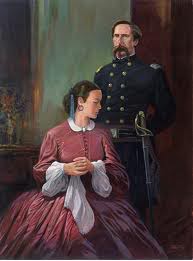
Joshua and Fannie Chamberlain (Dale Gallon)

The marriage endured a separation which lasted until 1871 when his final term of office expired they reconciled, and the marriage did survive, for nearly forty more years. “Whatever differences may have once occasionally existed between Chamberlain and Fanny, the two had been very close for many years.” [94] The reconciliation could have been for any number of reasons, from simple political expedience, in that he had been rejected by his party to be appointed as Senator, and the realization that “that politics, unlike war, could never stir his soul.” [95] Perhaps he finally recognized just how badly he had hurt her over all the years of his neglect of her needs. But it is just as likely that deep in his heart he really did love her despite his chronic inability for so many years to demonstrate it in a way she could feel. Fannie died in 1905 and Chamberlain, who despite all of their conflicts loved her and grieved her, a grief “tinged with remorse and perhaps also with guilt.” [96] The anguished widower wrote after her death:

“You in my soul I see, faithful watcher, by my cot-side long days and nights together, through the delirium of mortal anguish – steadfast, calm, and sweet as eternal love. We pass now quickly from each other’s sight, but I know full well that where beyond these passing scenes you shall be, there will be heaven!”

Chamberlain made a final trip to Gettysburg in May of 1913. He felt well enough to give a tour to a delegation of federal judges. “One evening, an hour or so before sunset, he trudged, alone, up the overgrown slope of Little Round Top and sat down among the crags. Now in his Gothic imagination, the ghosts of the Little Round Top dead rose up around him….he lingered up the hillside, an old man lost in the sepia world of memory.” [97] He was alone.

Chamberlain died on a bitterly cold day, February 24th 1914 of complications from complications of the ghastly wound that he received at Petersburg in 1864. The Confederate minié ball that had struck him at the Rives’ Salient finally claimed his life just four months shy of 50 years since the Confederate marksman found his target.

Sadly, the marriage of Joshua and Fannie Chamberlain is all too typical of many military marriages and relationships where a spouse returns home changed by their experience of war. This is something that we need to remember when we encounter those changed by war and the struggles of both them and their families; for if we have learned nothing from our recent wars it is that the wounds of war extend far beyond the battlefield, often scarring veterans and their families for decades after the last shot of the war has been fired.

Leave a comment

Filed under civil war, Gettysburg, History, leadership, Military, PTSD

The Long Strange Trip: Seven Years of PTSD, TBI & Moral Injury

lastmass2

You’re sick of hangin’ around and you’d like to travel,
Get tired of travelin’ and you want to settle down.
I guess they can’t revoke your soul for tryin’,
Get out of the door and light out and look all around.

Sometimes the light’s all shinin’ on me,
Other times I can barely see.
Lately it occurs to me what a long, strange trip it’s been.

Truckin’, I’m a goin’ home. Whoa whoa baby, back where I belong,
Back home, sit down and patch my bones, and get back truckin’ on.

From Truckin’ by the Grateful Dead

It has been seven full years since I descended into the hell of the abyss that is PTSD. Back in the late spring and early summer of 2008 just a few months after my return from what I still consider my best tour of duty in over 30 years of military service with US advisors and Iraq Army and Security forces in Al Anbar Province in 2007-2008 I was in a state of emotional and spiritual collapse.

I really couldn’t believe then what was happening to me or they way that it would end up shaping my life to the present day. In retrospect my return from Iraq marked a beginning of a personal hell that for a number of years seemed like that it would never end. It was painful, it was isolating and it marked a profound change in the way that I saw God, faith, politics and social justice. It changed me in ways that I never could have imagined when I got on a bus heading for Fort Jackson South Carolina following the July 4th holiday of 2007.

Those brave souls that have followed me on this website as well as those that are still my friends despite occasional disagreements and misunderstandings, those that may not understand me but still are my friends have seen this.

So seven years later what is it like? I kind of feel like T.E. Lawrence when he penned this thought in a letter to a friend:

“You wonder what I am doing? Well, so do I, in truth. Days seem to dawn, suns to shine, evenings to follow, and then I sleep. What I have done, what I am doing, what I am going to do, puzzle and bewilder me. Have you ever been a leaf and fallen from your tree in autumn and been really puzzled about it? That’s the feeling.” T. E. Lawrence, Letter 1935

I still have terrible trouble sleeping. It got worse last summer when I had a complete relapse and major crash.  I don’t take heavy doses of sleep meds anymore, my new doctors are working to see what will work. I now take a mild dosage of an anti-anxiety medication and an anti-depressant, I also have a new medication to help reduce the severity and violence of my nightmares. This is far better of a combination than the heavy doses of medications that made me feel like I was hung over without that benefit of sharing too many drinks with friends at the local watering hole.

As opposed to the years immediately following my time in Iraq I have to say that I am no longer self medicating with alcohol. I remember in 2009 going out for dinner, having a few beers, then going to a ball game and drinking a few more and coming home with Krispy Kreme donuts and drinking more beer on a regular basis and usually taking a couple of shots or Jaegermeister or glasses of a  nice Spanish Brandy just to get to sleep so I could go back to facing life and death situations the next day in the ICUs that I then worked in. I don’t need that anymore, even though sleep can be problematic and dreams and nightmares rivaling anything I can watch on my HD TV. I can understand the words of Union General Gouverneur Warren after the Civil War:

“I wish I did not dream so much. They make me sometimes to dread to go to sleep. Scenes from the war, are so constantly recalled, with bitter feelings I wish never to experience again. Lies, vanity, treachery, and carnage.”

I still love to pony up to the bar and share a couple of steins with friends but I don’t need it to numb myself into feeling no pain. Talking with many other vets who have served in Iraq, Afghanistan or even Vietnam I know that I wasn’t alone in those dark days.

I have become a bit less hyper-vigilant than I was just in May of 2008. However, that being said I do notice that I am more on guard on the roads and that little things, sirens, emergency vehicles. Loud noises and traffic still set me off more than when I lived in rural North Carolina while stationed at Camp LeJeune from 2010 until August of 2013.

I absolutely hate air travel. I don’t like the crowds, the stress of security or the constant delays, changes and overcrowding. Truthfully I felt more comfortable flying the skies of Iraq on Marine, Army and Air Force fixed and rotor wing aircraft and on occasion being shot at in Iraq’s Al Anbar Province than I do on any airline today in this country.

I have become exceptionally sensitive to tragedy, death and suffering. The loss of friends or major incidents where military personnel are killed in combat, training missions or just doing their job hits me hard. The worst times are when friends, or others that I know die by their own hand. When they are veterans who suffer from PTSD, TBI or Moral Injury it is like a dagger plunging into me.

Whereas in 2008 through 2010 and even until 2011 I was exceptionally sensitive to criticism to the changes that were occurring in my life including my move to the “left” both theologically and politically I have gotten to the point that I realize that it is more important to be honest and authentic as to who I am and what I believe.

I have found that those that really matter to me don’t care so much about those things and that relationships maintained with people who don’t always agree with each other where all remain their personal integrity are far more rewarding than relationships that are first and foremost decided by allegiance to political or religious orthodoxy no matter what side of the spectrum it is from. I hate group think. Thus though I have to now consider me to be on the “liberal” side of the political and theological divide I still have to be considered a moderate simply because I refuse to make people my enemy simply because I disagree with them or they with me.

When I began this site in the spring of 2009 I named it Padre Steve’s World…Musings of a Passionate Moderate. I think I did that because it actually described me then, and now, even though I am pretty passionately liberal about some things and that doesn’t bother me in any way because it comes from my wrestling with God and faith and realizing that integrity matters more than about anything else. I changed the title of the site to Musings of a Passionately Progressive Moderate last year. I did this because I am a passionately progressive moderate; a liberal committed to a Christian faith that speaks up for the oppressed. I am willing to confront those that would use faith, political or economic power to oppress the weak or those different from us.

Since I returned from Iraq in 2008 I discovered what it was to really question faith and God. To become for a couple of years a man who was for all practical purposes an agnostic praying that God still existed and cared. I discovered that in doing so that faith returned, different but more real than I had ever experienced in a life spent in the Christian faith and ministry.

My agnostic period gave me an immense empathy and appreciation for those who have lost faith, struggle with faith or reject any concept of God. I value reason as much, maybe if not more than faith now, not that reason is infallible or perfect. However, reason does allow me to evaluate my faith, and appreciate the amazing mysteries of the universe that our science and technology continue to reveal in ever more complex detail.

That brought change because my rediscovered faith brought me into conflict with people in the church denomination and faith community where I had been ordained as a priest. I was asked to leave and found a new home church and denomination that fit my life, faith experience and where I could live and minister in complete integrity. In the church that took me in during the fall of 2010 I can be faithful to the Gospel and care for the lost, the least and the lonely. This is especially the case for those who have been abused by churches and ministries, who often contact me.

I am now in the process of more medical evaluation and testing to discover the extent of the Traumatic Brian Injury and how it is interacting with the PTSD.

It has been a long strange trip and it will probably continue to go on.

Peace

Padre Steve+

1 Comment

Filed under faith, mental health, PTSD, Tour in Iraq

Coming Home: Memories of Return from Iraq

lastmass2

Almost seven years ago I returned from Iraq. It was a war that changed me forever and my return from it has been as traumatic as my experiences in Iraq.

I had a good therapy session today with my new shrink. It is a good thing, I am in the process of getting evaluated for things that should have been done years ago. However, dealing with PTSD, Moral Injury and TBI or Concussive injuries is not always an easy or straightforward task. Many of the symptoms that those affected with these injuries overlap. Unfortunately without continuity of care it takes far longer for professionals to make the connections, even very good and experienced medical and mental health professionals.

My case seems to be one of those kind of cases, and my memories seem to almost overwhelm me every year as I approach the date of my return home from Iraq. I fully understand the words of Bruce Dern in the movie Coming Home when he cries out

“What I’m saying is! I don’t belong in this house, and they say I don’t belong over there!” 

 While I no longer feel that I don’t belong in my own house, I still struggle with having to leave Iraq in 2008. I will discuss that  more in the coming days, but it will suffice for now to say that I still struggle. What has happened to that while I still struggle I manage to live with it.
What I will say tonight is that I still struggle, that I often feel alienated from fellow Chaplains and clergy as well as the “true believers” who sit in judgment over those that express their doubts and struggles. My first shrink told me that be speaking the truth that I would be “radioactive” to many of my peers. He was more right than I ever thought possible, but as most of my peers abandoned me, he did not.
I can’t go back to Iraq. Truthfully I would if I could, if nothing else to try to help those Iraqis who I knew. I feel so terrible for them, their country ravaged by a brutal dictator, and savaged by the decision of my country’s former leaders to invade it, bringing about more death, destruction and instability than a thousand Saddam Hussein’s.
The fact is that many veterans of Iraq, and to some extent Afghanistan understand this. We did our duty. We served, we saw things that we wished we could forget. When we returned to a country that the vast majority of people, including many who served in the military but did not have “boots on the ground” we found that we really didn’t fit. We didn’t fit in at home, and our country didn’t want us where we did fit. For me that was in the badlands of Al Anbar Province, where I left my heart.
For years before going to Iraq I studied the people and the country, going there I was blessed to get to know many Iraqis. I still grieve for what they are going through, and what we as a nation are in large part responsible for, the rise of ISIS or ISIL, the existence of Al Qaeda and the rise of other extremist groups. Our intentions were not bad, but they were done out of ignorance and perceived opportunity to dominate others for out own ends.
We sowed the wind and we are reaping the whirlwind.
As for me, like T.E. Lawrence I wonder. Lawrence wrote a friend not long before he died:
“You wonder what I am doing? Well, so do I, in truth. Days seem to dawn, suns to shine, evenings to follow, and then I sleep. What I have done, what I am doing, what I am going to do, puzzle and bewilder me. Have you ever been a leaf and fallen from your tree in autumn and been really puzzled about it? That’s the feeling.”
I understand that feeling.
I’ll be putting out a couple of other memories of my time in Iraq and my return over the next few days. 
Have a great night.
Peace
Padre Seve+

1 Comment

Filed under faith, History, mental health, News and current events, PTSD

Heroes or Villains? Snipers and Moral Ambiguity

734631_053

I saw the movie American Sniper when it came out two weeks ago, I have not read the book, though I have read excerpts of it, and both seen and read many of Chris Kyle’s responses to questions in various interviews after he retired from the Navy.  I have seen the shit storm that has developed in response to the movie as well as supporters lift Kyle up to near sainthood, a true hero; while detractors present him as a war criminal, a sociopath and something as close to demonic as a human being can be.

I think that both are right and both are wrong, and that the uncomfortable truth about Kyle lies somewhere in between those extremes.

I find that curious because I do not remember any visceral reaction to the actions of the scripture quoting American sniper, Private Jackson in Saving Private Ryan or the Soviet or German snipers in Enemy at the Gates.

Because of that I think in large part this visceral reaction to either lift Kyle up or tear him down comes from the context of the Iraq War itself. It was horribly divisive, in large part because the invasion of Iraq launched by the Bush Administration was no doubt a major war crime by any standard of international law.

I have written about this before. If the leaders of the Bush Administration had been put on trial for their actions at Nuremberg as were the Nazis, Justice Robert Jackson would have had them all on the gallows. Jackson said during the trial:

“If certain acts of violation of treaties are crimes, they are crimes whether the United States does them or whether Germany does them, and we are not prepared to lay down a rule of criminal conduct against others which we would not be willing to have invoked against us.”

Most, including the former President, Vice President, and Secretary of Defense, not to mention other key players and decision makers would have easily been convicted of all except the charge of genocide. The three major counts that they would have hanged for were:

Count One: Conspiracy to Wage Aggressive War: This count addressed crimes committed before the war began, showing a plan by leaders to commit crimes during the war.

Count Two: Waging Aggressive War, or “Crimes Against Peace” which included “the planning, preparation, initiation, and waging of wars of aggression, which were also wars in violation of international treaties, agreements, and assurances.”

Count Three: War Crimes. This count encompassed the more traditional violations of the law of war already codified in the Geneva and Hague Conventions including treatment of prisoners of war, slave labor, and use of outlawed weapons.

The decision of the Bush Administration to invade Iraq was not only criminal, but the consequences of that decision and the later disastrous post-invasion policies of the administration ensured that the suffering of the Iraqis and the suffering of the American military personnel and their families who shouldered the burden on that war, while 99.3% of the nation sat it out, would continue, even today.

I served in Iraq, supporting small teams of advisors working with the Iraqi military and security services in Al Anbar Province. I know that I hoped, as did the Marines, Soldiers and our Iraqi friends wanted to see peace come to Iraq and see that country rise from the ashes. Instead we have seen our efforts blow away like the sands of the desert. T.E. Lawrence I think wrote words that are all to symbolic of what we tried to do:

“We had been hopelessly labouring to plough waste lands; to make nationality grow in a place full of the certainty of God… Among the tribes our creed could be only like the desert grass – a beautiful swift seeming of spring; which, after a day’s heat, fell dusty.”

So my Iraq war was different. I saw things in a different light from many because I worked with the Iraqis and got to know them, their hopes and their dreams. I also saw it differently because I could place it in a larger historical context. The Iraqis I knew, were not savages, they were human beings with the same kind of hopes and dreams for their families and country at any one of as has as Americans. That being said, none of us, American or Iraqi, felt any sympathy for the terrorists, foreign fighters, and Al Qaeda Iraq operatives who made a habit of killing and brutalizing Iraqi citizens, or those outside the country, who supported the terrorist efforts.

The part where ambiguity comes in is when we look at the men and women who serve in such wars, what they go through and the moral ambiguity that often comes with such service. It is an ambiguity which some need to justify by convincing themselves the all that they did was done in the name of a greater good, and against people who were less than human. That is something that those who serve as snipers in any army must convince themselves.

If you have ever read anything about snipers and how soldiers felt about them in various wars, I would encourage you to do so.

When I read that Michael Moore called Kyle, and all snipers cowards, I cringed. Not to say that Moore’s comments, which he attributed to how he lost a relative to a German sniper in the Second World War were completely unfair, they are actually similar to the views held by many against snipers. British historian and writer Max Hastings sums that up in his book Armageddon which is about the final months of World War Two in Europe:

“Almost every soldier on both sides shared a hatred of snipers, which frequently caused them to be shot out of hand if captured. There was no logic or provision of the Geneva Convention to justify such action. Sniping merely represented the highest refinement of the infantry soldier’s art. Its exercise required courage and skill. Yet, sniping made the random business of killing, in which they were all engaged. become somehow personal and thus unacceptable to ordinary footsoldiers.”

Snipers have a unique place in war and especially in the types of infantry intensive urban operations which Kyle was involved. Their trade is not in contravention of the Geneva Convention or any international military criminal code. So long as they are engaged in combat and are in the uniform of their country, and not engaging in acts that are forbidden by those codes their actions are legal. So to call Kyle a “war criminal” as some have is to misunderstand the law.

To call Kyle and other snipers “cowards” is also to misunderstand the nature of war, especially as it applies to snipers. Snipers have a lonely existence, they can be celebrated but some, but the nature of their war is different. The character Private Jackson in Saving Private Ryan perhaps summed it up what it takes to be a sniper, when he said: “Well, it seems to me, sir, that God gave me a special gift, made me a fine instrument of warfare.” The nature of the sniper’s war dictates that they believe something like this that enables them to survive.

Unlike those who can drop bombs, pilot drones, shoot artillery from afar or even engage in infantry combat with large numbers of others, the sniper has a lonely, yet intimate war.

Snipers usually serve alone, they set up, they wait, they seldom have back up. They are as much the hunted as they are the hunter. They know if captured that their enemy will have no mercy upon them. Unlike others, they have an intimacy with those that they kill, they see them, and in the kinds of wars where the “enemy” is not a uniformed soldier, but an insurgent blending in among civilians, they task of the sniper is incomprehensible. To do that job, combat tour after combat tour, has to do something to the human soul. Those that survive and come home have to try to justify their actions, as Kyle did, asserting that he knew that all of the people he killed were “bad guys.” It is probably the only way that one can keep his sanity when he returns to a world that doesn’t understand what he did.

But the justifications are as corrosive to the soul as anything else. They force people like Kyle, to push under the things that they saw or did which were wrong with a certitude that causes them to make assertions and claims that are either patently false, exaggerated, or which paint them in an even worse light than the truth would. Such would be the case in Kyle’s book where he claims killing thirty Americans in post Hurricane Katrina New Orleans. If he did that he was a criminal, but he is dead, and we will probably never know the truth.

A veteran of the U.S. Marine campaigns against the Japanese in the Pacific, Eugene Sledge wrote in his book With the Old Breed: At Peleliu and Okinawa: 

“To the non-combatants and those on the periphery of action, the war meant only boredom or occasional excitement, but to those who entered the meat grinder itself the war was a netherworld of horror from which escape seemed less and less likely as casualties mounted and the fighting dragged on and on. Time had no meaning, life had no meaning. The fierce struggle for survival in the abyss of Peleliu had eroded the veneer of civilization and made savages of us all.”

That kind of war my friends has a corrosive and toxic effect on the human soul. Sledge noted: “I am the harvest of man’s stupidity. I am the fruit of the holocaust. I prayed like you to survive, but look at me now. It is over for us who are dead, but you must struggle, and will carry the memories all your life. People back home will wonder why you can’t forget.”

War changes those who serve in it, the kind of change is in large part due to the kind of wars that we serve in and what we do in it. When I watched the movie with my former assistant and body guard during our tour in Iraq, Nelson Lebron I was bombarded with memories, of both my time there and my return home, and the hell I have put my wife Judy through at times as I have struggled with PTSD, what I saw in Iraq and my reaction to coming home to a country that knew not war. I didn’t sleep for several days afterward and the shit storm surrounding the movie has brought a lot of anxiety to me, I guess because it seems that few people really understand what war does to people.

I think for me, the part of the movie that had the most effect was the homecoming, and it reminded me of a movie that came out in 1978 about the home front in the Vietnam War, Coming Home staring Jon Voigt, Jane Fonda and Bruce Dern. Both movies dealt with the pain of families affected by war.

I’m certainly not going to sit in judgment of Chris Kyle or his critics, he is dead and unable to defend or even take bak anything that he might have written or said, likewise his critics, in many cases do not know what war can do to a person. I don’t know how much of Chris Kyle’s story is true, or how much is some sort of fiction, or even if what he wrote was filtered through what he saw and did in Iraq. Killing that many people, seeing their faces and to watch the life flowing out of them has to mess up a mind. Though I have been to combat, I have not walked in the shoes of Chris Kyle or any sniper. I have never had to kill anyone, even in self defense.

I would hope that people see the movie. Not so much because I believe in its historical truth, it seems to me to be a composite representation of Kyle, Navy SEALs, Marines and Iraqis that has as much Hollywood myth as it does truth.

But rather I believe people should see it to see how war tears the souls out of people. I would rather have my fellow citizens look at the ugliness of war, and to hold politicians accountable for any decision to go to war. I would rather see my countrymen look upon the pain that war causes, even long after those who fought come home.

Two time Medal of Honor winner Smedley Butler wrote:

What is the cost of war? what is the bill? Major General Smedley Butler wrote: “This bill renders a horrible accounting. Newly placed gravestones. Mangled bodies. Shattered minds. Broken hearts and homes. Economic instability. Depression and all of its attendant miseries. Back -breaking taxation for generations and generations. For a great many years as a soldier I had a suspicion that war was a racket; not only until I retired to civilian life did I fully realize it….”

The effects of war are terrible and had George Bush not made the decision to go to Iraq, Chris Kyle might still be alive, like so many others.

I don’t know if this makes any sense to you but I had to try to put some words and thoughts around what I have been feeling for the past couple of weeks.

Have a great evening,

Peace

Padre Steve+


2 Comments

Filed under film, History, Military, movies, News and current events, PTSD

“Tho’ all the world betray thee” The Minstrel Boy

lastmass2

The Minstrel Boy (Thomas Moore)

The minstrel boy to the war is gone,
In the ranks of death ye will find him;
His father’s sword he hath girded on,
And his wild harp slung behind him;
“Land of Song!” said the warrior bard,
“Tho’ all the world betray thee,
One sword, at least, thy rights shall guard,
One faithful harp shall praise thee!”

The Minstrel fell! But the foeman’s chain
Could not bring his proud soul under;
The harp he lov’d ne’er spoke again,
For he tore its chords asunder;
And said “No chains shall sully thee,
Thou soul of love and bravery!
Thy songs were made for the pure and free
They shall never sound in slavery!”

The Minstrel Boy will return we pray
When we hear the news we all will cheer it,
The minstrel boy will return one day,
Torn perhaps in body, not in spirit.
Then may he play on his harp in peace,
In a world such as heaven intended,
For all the bitterness of man must cease,
And ev’ry battle must be ended.

(Last verse anonymous Civil War)

Seven years ago I was in the process of returning home from Iraq spending my last couple of days in country before flying out to Kuwait and then the United States. I was already in a rather melancholy state knowing that the Chaplain incoming higher headquarters had turned off my relief for Al Anbar Province after I had paved the way for him with all of the teams of advisors that I had worked with during my time serving them. My relief a personal friend was diverted to the Army advisors with a different Iraqi Division in the north of the country. I felt that the incoming senior chaplain had betrayed and abandoned the men that I worked so hard to care for. Later I heard that he had disregarded my heavily detailed after action reports and told at least one senior chaplain that he “had heard that I was out there but didn’t know if I had done anything.”

It was at that point that I realized that you could do your job and sacrifice yourself to complete a mission only to have someone with their own agenda do what they could to discredit you.  I felt betrayed and still do. I was asked by my therapist about this and frankly, though I have tried to forgive the feelings always come back.

Where the senior Chaplain that I worked for did all that he could to support my team’s mission and see that we were properly recognized at Multi-National Corps Iraq in Baghdad his successor dismissed our work. It was the first time in my Navy career that I had experienced that.  I think it was the fact that I worked for a non-traditional billet working for an Army led joint command outside the normal Navy-Marine Corps chain was a big part of this. Inter-service rivalries and the distain of those bound by conventional thinking are not new and those that have done such non-conventional work have frequently been treated in a similar manner.

I think that is why the line in the song “Tho’ all the world betray thee” means so much to me and w.a big reason why the song touches me in the way it does. It is a song of men changed by war.

Looking back there are some songs which are particularly meaningful to me after my time in Iraq that send a chill up my spine when I hear them. One of these is the patriotic Irish song The Minstrel Boy written by Thomas Moore while a student in honor of friends killed in the Irish Rebellion of 1798.  The song was very popular among soldiers of Irish descent in the American Civil War as well as soldiers fighting in Irish Regiments in World War One and World War Two.

The song is powerful when you hear it for it speaks of the reality of war, war that changes those, even those that return home are not unchanged by it.  It speaks of the sacrifices required by those that go to war and even the effects on the community, the loss of young people.  The final verse added by an anonymous author during the American Civil War in a sense is a prayer, a prayer of return as well as reconciliation. It has been recorded a number of times including an instrumental during the film Blackhawk Down. Another rendition is in the telvision mini-series Rough Riders about the 1st U.S. Volunteer Cavalry at the Battle of San Juan Hill and one in the movie Gettysburg as Father Corby blesses the Irish Brigade.

william_corby_reformat

My life has been changed and faith challenged. When I went to Iraq I still maintained a sense of idealism.   After Iraq and having to deal with PTSD and a psychological, spiritual and physical breakdown as well as a profound sense of abandonment by some senior chaplains, my former church and even God I am a different person. My faith which had been shattered to the point of being a practical agnostic for nearly two years has returned and even now seven years later I struggle with belief, unbelief and faith in general, but I don’t think that is a bad thing. If we are not changed by what God allows or by what life brings I don’t think that we grow. As a Priest I wonder if I could work in the environment that I work without having gone through what I did.

hqdefault1

I see many of the “minstrel boys” and girls of our era and having also been to war and come back changed the last lines of the final verse is a prayer that I echo. One of the versions that I particularly like is the one sung in the Star Trek the Next Generation episode “The Wounded.” While it is only the first verse it deals with the lives of two officers whose lives are forever changed by war. http://www.youtube.com/watch?v=RJudJ9S579A

This is dedicated to all those who have served who have gone through the pain of war and return until war shall be no more.

Peace

Padre Steve+

Leave a comment

Filed under civil war, History, Military, movies, music, PTSD, Tour in Iraq