Category Archives: Tour in Iraq

God in the Empty Places: Four Years Later

Four years ago I was leaving Iraq for Kuwait, the first stop in the process of coming home.  At that point I wanted to go home but I didn’t want to go either. It was the beginning of a new phase in my life.  I wrote an article shortly after my return for the church that I belonged to at the time. I am reposting article here tonight.  

When I wrote it I really had no idea how much I had changed and what had happened to me.  I feel s special kinship with those that have fought in unpopular wars before me. French Indochina, Algeria and Vietnam, even the Soviet troops in Afghanistan before we ever went there.  

I am honored to have served with or known veterans of Vietnam, particularly the Marines that served at the Battle of Hue City, who are remembering the 44th anniversary of the beginning of that battle.  My dad also served in Vietnam at a place called An Loc. He didn’t talk about it much and I can understand having seen war myself. 

There are no new edits to the article. When I wrote it I was well on my way to a complete emotional and spiritual collapse due to PTSD.  Things are better now but it was a very dark time for several years and occasionally I still have my bad days. Today was a day of reflection.  As I walked my little dog Molly down the street tonight to the beach I looked up at the moonlit sky and I was as I have been thinking lately about seeing all of those stars and the brilliance of the moon over the western desert of Iraq near Syria. Somehow that sight now comforts me instead of frightens me. 

Tonight our Soldiers, Marines, Sailors and Airmen serve in harm’s way nearly 100,000 in Afghanistan alone. We are out of Iraq but Lord knows how things will turn out in the long run there.  

Anyway. Here is is.

God in the Empty Places. 

I have been doing a lot of reflecting on ministry and history over the past few months. While both have been part of my life for many years, they have taken on a new dimension after serving in Iraq. I can’t really explain it; I guess I am trying to integrate my theological and academic disciplines with my military, life and faith experience since my return.

The Chaplain ministry is unlike civilian ministry in many ways. As Chaplains we never lose the calling of being priests, and as priests in uniform, we are also professional officers and go where our nations send us to serve our Soldiers, Sailors, Marines and Airmen. There is always a tension, especially when the wars that we are sent to are unpopular at home and seem to drag on without the benefit of a nice clear victory such as VE or VJ Day in World War II or the homecoming after Desert Shield and Desert Storm.

It is my belief that when things go well and we have easy victories that it is easy for us to give the credit to the Lord and equally easy for others to give the credit to superior strategy, weaponry or tactics to the point of denying the possibility that God might have been involved. Such is the case in almost every war and Americans since World War Two have loved the technology of war seeing it as a way to easy and “bloodless” victory. In such an environment ministry can take on an almost “cheer-leading” dimension. It is hard to get around it, because it is a heady experience to be on a winning Army in a popular cause. The challenge here is to keep our ministry of reconciliation in focus, by caring for the least, the lost and the lonely, and in our case, to never forget the victims of war, especially the innocent among the vanquished, as well as our own wounded, killed and their families.

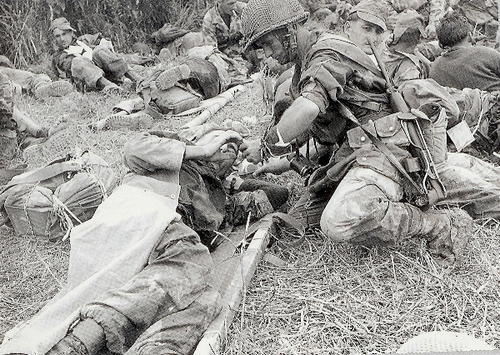
French Paratroop Corpsmen treating wounded at Dien Bien Phu

But there are other wars, many like the current conflict less popular and not easily finished. The task of chaplains in the current war, and similar wars fought by other nations is different. In these wars, sometimes called counter-insurgency operations, guerrilla wars or peace keeping operations, there is no easily discernible victory. These types of wars can drag on and on, sometimes with no end in sight. Since they are fought by volunteers and professionals, much of the population acts as if there is no war since it does often not affect them, while others oppose the war.

Likewise, there are supporters of war who seem more interested in political points of victory for their particular political party than for the welfare of those that are sent to fight the wars. This has been the case in about every war fought by the US since World War II. It is not a new phenomenon. Only the cast members have changed.

This is not only the case with the United States. I think that we can find parallels in other militaries. I think particularly of the French professional soldiers, the paratroops and Foreign Legion who bore the brunt of the fighting in Indochina, placed in a difficult situation by their government and alienated from their own people. In particular I think of the Chaplains, all Catholic priests save one Protestant, at the Battle of Dien Bien Phu, the epic defeat of the French forces that sealed the end of their rule in Vietnam. The Chaplains there went in with the Legion and Paras. They endured all that their soldiers went through while ministering the Sacraments and helping to alleviate the suffering of the wounded and dying. Their service is mentioned in nearly every account of the battle. During the campaign which lasted 6 months from November 1953 to May 1954 these men observed most of the major feasts from Advent through the first few weeks of Easter with their soldiers in what one author called “Hell in a Very Small Place.”

Another author describes Easter 1954: “In all Christendom, in Hanoi Cathedral as in the churches of Europe the first hallelujahs were being sung. At Dienbeinphu, where the men went to confession and communion in little groups, Chaplain Trinquant, who was celebrating Mass in a shelter near the hospital, uttered that cry of liturgical joy with a heart steeped in sadness; it was not victory that was approaching but death.” A battalion commander went to another priest and told him “we are heading toward disaster.” (The Battle of Dienbeinphu, Jules Roy, Carroll and Graf Publishers, New York, 1984 p.239)

Of course one can find examples in American military history such as Bataan, Corregidor, and certain battles of the Korean War to understand that our ministry can bear fruit even in tragic defeat. At Khe Sahn in our Vietnam War we almost experienced a defeat on the order of Dien Bien Phu. It was the tenacity of the Marines and tremendous air-support that kept our forces from being overrun.

You probably wonder where I am going with this. I wonder a little bit too. But here is where I think I am going. It is the most difficult of times; especially when units we are with take casualties and our troops’ sacrifice is not fully appreciated by a nation absorbed with its own issues.

For the French the events and sacrifices of their soldiers during Easter 1954 was page five news in a nation that was more focused on the coming summer. This is very similar to our circumstances today because it often seems that own people are more concerned about economic considerations and the latest in entertainment news than what is going on in Iraq or Afghanistan. The French soldiers in Indochina were professionals and volunteers, much like our own troops today. Their institutional culture and experience of war was not truly appreciated by their own people, or by their government which sent them into a war against an opponent that would sacrifice anything and take as many years as needed to secure their aim, while their own countrymen were unwilling to make the sacrifice and in fact had already given up their cause as lost. Their sacrifice would be lost on their own people and their experience ignored by the United States when we sent major combat formations to Vietnam in the 1960s. In a way the French professional soldiers of that era have as well as British colonial troops before them have more in common with our force than the citizen soldier heroes of the “Greatest Generation.” Most of them were citizen soldiers who did their service in an epic war and then went home to build a better country as civilians. We are now a professional military and that makes our service a bit different than those who went before us.

Yet it is in this very world that we minister, a world of volunteers who serve with the highest ideals. We go where we are sent, even when it is unpopular. It is here that we make our mark; it is here that we serve our Soldiers, Sailors, Marines and Airmen. Our duty is to bring God’s grace, mercy and reconciliation to men and women, and their families who may not see it anywhere else. Likewise we are always to be a prophetic voice within the ranks.

When my dad was serving in Vietnam in 1972 I had a Sunday school teacher tell me that he was a “Baby Killer.” It was a Catholic Priest and Navy Chaplain who showed me and my family the love of God when others didn’t. In the current election year anticipate that people from all parts of the political spectrum will offer criticism or support to our troops. Our duty is to be there as priests, not be discouraged in caring for our men and women and their families because most churches, even those supportive of our people really don’t understand the nature of our service or the culture that we represent. We live in a culture where the military professional is in a distinct minority group upholding values of honor, courage, sacrifice and duty which are foreign to most Americans. We are called to that ministry in victory and if it happens someday, defeat. In such circumstances we must always remain faithful.

For those interested in the French campaign in Indochina it has much to teach us. Good books on the subject include The Last Valley by Martin Windrow, Hell in a Very Small Place by Bernard Fall; The Battle of Dienbeinphu by Jules Roy; and The Battle of Dien Bien Phu- The Battle America Forgot by Howard Simpson. For a history of the whole campaign, read Street Without Joy by Bernard Fall. I always find Fall’s work poignant, he served as a member of the French Resistance in the Second World War and soldier later and then became a journalist covering the Nuremberg Trials and both the French and American wars in Vietnam and was killed by what was then known as a “booby-trap” while covering a platoon of U.S. Marines.

There is a picture that has become quite meaningful to me called the Madonna of Stalingrad. It was drawn by a German chaplain-physician named Kurt Reuber at Stalingrad at Christmas 1942 during that siege. He drew it for the wounded in his field aid station, for most of whom it would be their last Christmas. The priest would die in Soviet captivity and the picture was given to one of the last officers to be evacuated from the doomed garrison. It was drawn on the back of a Soviet map and now hangs in the Kaiser Wilhelm Memorial Church in Berlin where it is displayed with the Cross of Nails from Coventry Cathedral as a symbol of reconciliation. I have had it with me since before I went to Iraq. The words around it say: “Christmas in the Cauldron 1942, Fortress Stalingrad, Light, Life, Love.” I am always touched by it, and it is symbolic of God’s care even in the midst of the worst of war’s suffering and tragedy.

Peace

Padre Steve+

Leave a comment

Filed under History, iraq,afghanistan, Military, PTSD, Tour in Iraq

Casing the Colors in Iraq

Today the colors were cased in a ceremony at the US Airbase co-located at the Baghdad International Airport.  It really is hard to believe that this excursion in Mesopotamia is over.  The ceremony marked the formal end to the US military operation in Iraq although a few thousand troops are finishing the retrograde of equipment from the country.

The fact that we might not end up in Iraq again if the Iranians push their Iraq Arab Shia friends too hard. They may share a common strain of Islam but there really is no love lost between the Arabs and the Persians as many Iraqis will derisively call them.  The Iraqis are a proud people and remember Persian rule like it was yesterday. The Persians treated Arabs like dirt and though it was centuries ago the Arabs have not forgotten.  My Iraqi friends both Sunni and Shia recognized that Iran was a threat and hope that if Iran ever attempted to take Iraq over that we would help defend Iraq.

The current US involvement is over after 4484 American service members were killed in action and 32000 wounded.  318 coalition Allied troops died.  The Iraqi Security Forces have lost 8825 soldiers killed with a further 1300 killed during the initial invasion of the country.  Over 100,000 Iraqi civilians are believed to have been killed and some agencies have estimated far higher totals.  Of course the Iraqis are still taking casualties as extremist groups both Shia and Sunni continue their blood feud and the Shia majority tries to solidify its power over the minority former ruling party Sunni.  Over a trillion dollars was spent on the war by the United States and long term costs are expected to reach 2-3 Trillion dollars.  Of course Iraq is still reeling from all of the damage and its involvement in wars with Iran from 1980-1988, the invasion of Kuwait by Saddam Hussein in 1990 and the United States response Operation Desert Storm, the post war sanctions and the enforcement of an oil embargo and a no-fly zone to keep Saddam contained even as he butchered thousands of Iraqis who rose up against him after he was driven from Kuwait and the the current war which began in 2003.

But the numbers are not just numbers, behind every one is a family, wives, husbands, parents, siblings and children as well as friends.  Every one has a name and a face and all meant something to somebody and left a void when they died or were irreversibly changed by the war.  That pain and cost will go on for a long time and there are no words that adequately compensate for these losses. Faith and trust in God’s grace help some but others struggle, even believers.  That I know for a fact because I still do.

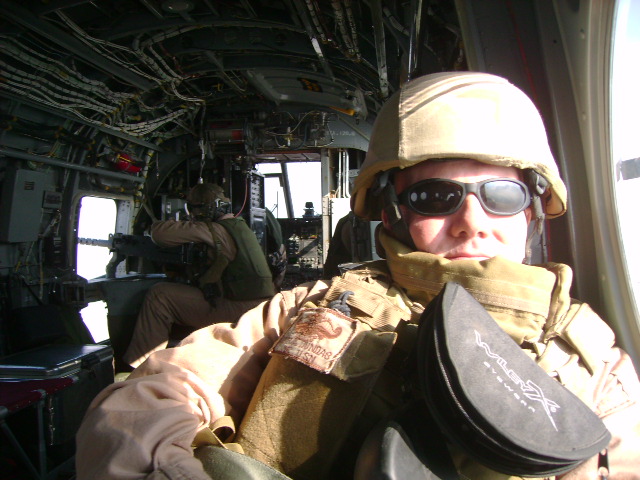
I remember flying into Baghdad in 2007 it was the height of the “surge” and I was going to provide Chaplain support to US Advisors to Iraqi Army, Border, Police and other Security Forces in Al Anbar Province.  At the time the base was shelled and when we exited the aircraft it was no peacetime drill we left in our full gear and were brief on what to do should we encountered incoming fire.  It was in Baghdad that I first experienced a rocket attack when one flew over my head.  But now the bases are empty, it must be surreal to be one of the last Americans leaving the country.

For me the end of our involvement is a strange experience.  It was hard to believe in 2007 that we would ever leave. The great edifices that we erected around country some of which were going up even when I was there are mostly empty except for some taken over by the Iraqi military.  Former military bases even in this country are a surreal site.  I have been to a number that were closed following the end of the Cold War.  Fort Wolters Texas near Fort Worth is an example. When I would go to a small section of the base used by the National Guard I would go past many mostly unused buildings including what had been a brand new hospital which opened just before the base was closed following Vietnam. The last time I flew through the former George Air Force Base  when going to and returning from Twenty-Nine Palms it was a ghost town except a few businesses and hundreds of former commercial jets parked on the tarmac. I remember going through recently closed American bases in Germany in the 1990s and saw installations empty. I was also the final Federal Chaplain at Fort Indiantown Gap Pennsylvania when it was transferred to the National Guard.  Built during World War II it was a throwback to a different era. The base has been revitalized as a sizable ground and aviation training center by the Guard with much new construction but the sight of all the World War II “temporary” wooden buildings was amazing. Vast areas of the base we unused and some complete areas were demolished. I helped in getting the main Post Chapel Renovated in order that the existing congregation would be able to continue with a contract Chaplain paid by the Guard and activated or drilling Guard Chaplains.  We had to decommission or convert some to other uses and saved one which was donated to a church 40 miles away who paid to have it deconstructed and rebuilt on their own land. But I digress…

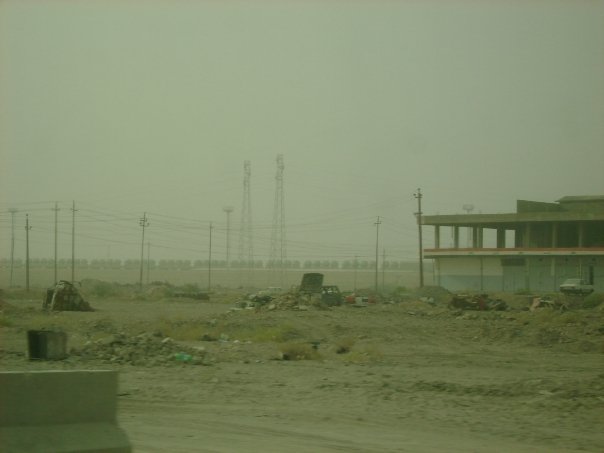
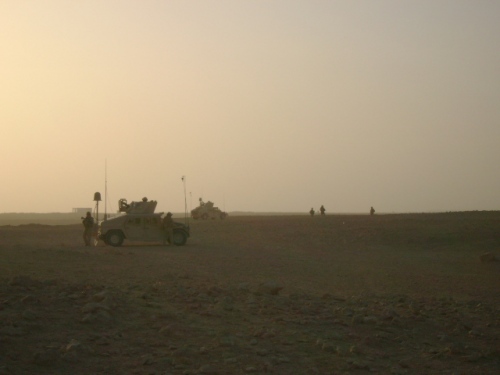
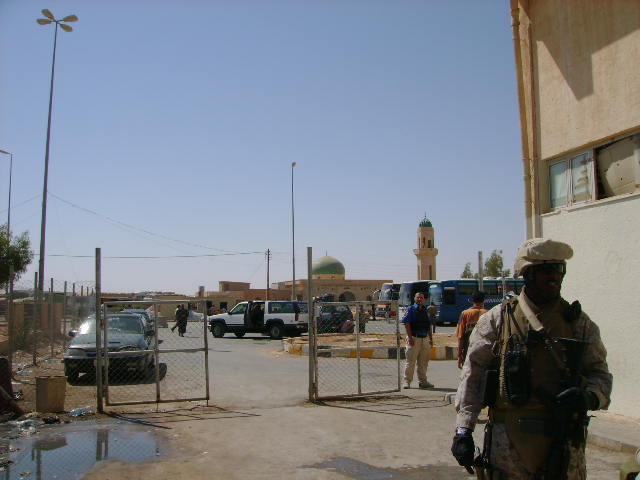
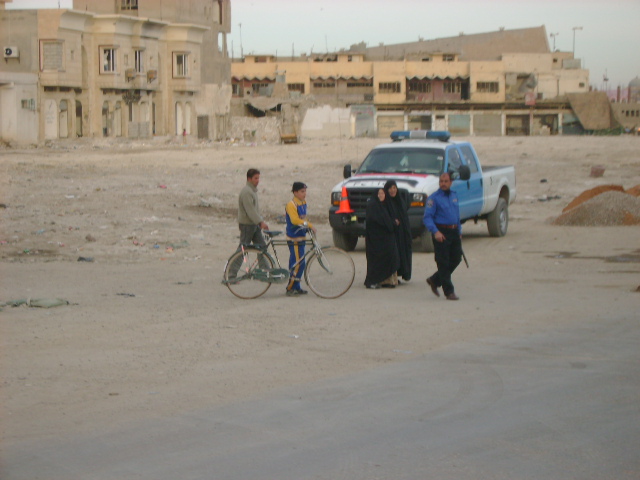
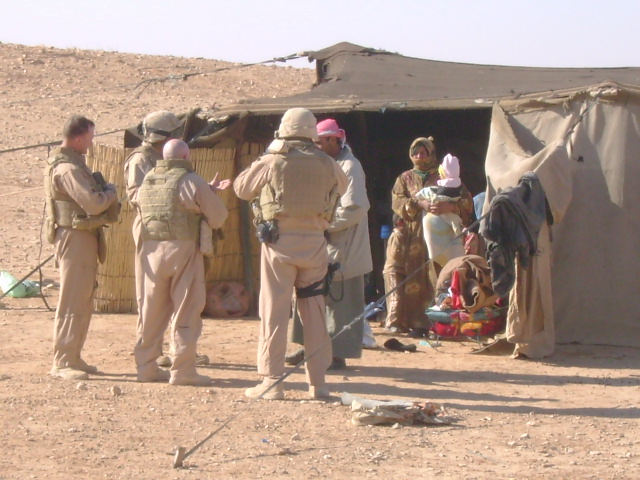
When I was in Iraq in many places there were the remains of Saddam Hussein’s military.  The base that I operated from had a number of abandoned or damaged Iraqi bombers and fighter aircraft parked at it.  Of course most of the existing buildings were converted to American use.  The biggest of these were the Al Faw Palace complex at Camp Victory but Camp Fallujah was the site of one of the Baath Party resorts used by Uday and Qusay Hussein.  I stayed there couple of days while traveling from Baghdad to Taqaddum which was my base of operations because of the capability to get around by air to where I needed to go and proximity to many advisor teams supporting the Iraqi First and Seventh Divisions.

Back then all were major bases with a large American presence which was inflated by many of the contractors, American and from other countries that supported base operations from the chow hall, to the laundry, the fire department and even the cleaning of the shower trailers and countless porta-johns.

People will debate for many years whether the war was worth it and I can only say that I hope that history will show that it was despite the huge loss of life, the destruction of a country and the vast expenditure of the national treasury.  It is probably too early to make that judgement, we tend to be pretty bad in making those decisions in the moment.  That is one of the problems in this age of information overload.  We have lots of data but no historical context and we make decisions that we think are correct but find out years later were tragically erroneous.

At the same time we cannot go back in time and change the past. For good or for bad we have to go forward from now and hopefully in time Iraq and its people will recover from the effects of over 30 years of war and economic sanctions.  We will find out over the next 10 to 50 years what the real effect is.  But for now we are left with a weak Iraq, a strong and threatening Iran and our own diminished military capacity and weak economy as well as a war that is not going well in Afghanistan.

I doubt that that can give comfort to the families of those that died in Iraq or came back wounded in mind body or spirit.  I know that I came back different, PTSD has a way of doing that.

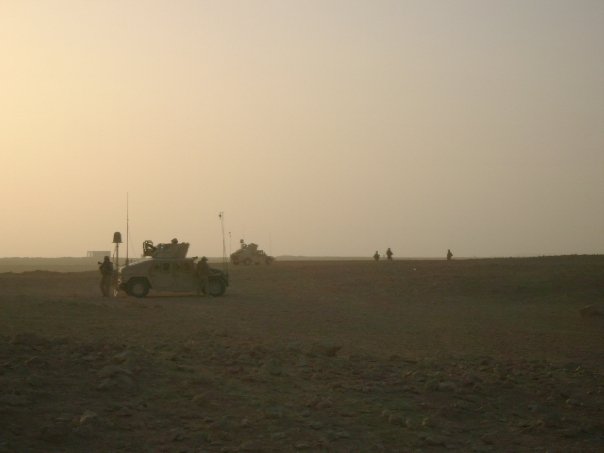
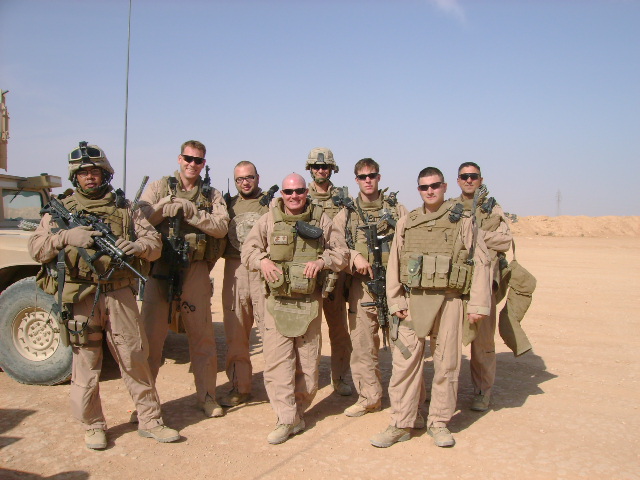
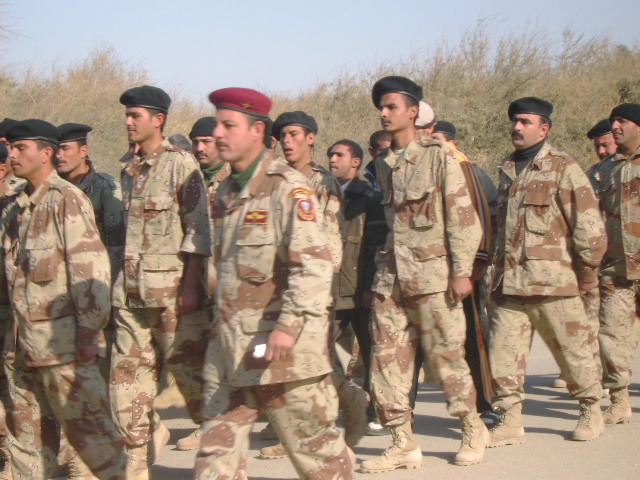
But I am proud of the Marines, Soldiers, Sailors, Airmen and Iraqi officers that I served alongside in the badlands of Al Anbar Province mostly far away from the immediate help of any big units if they got in trouble.  I know how valiant and skilled they were fighting Al Qaida Iraq and other insurgents and even foreign fighters from places like Chechnya aided by Iran and others.  It was a brutal fight at times but the men of the Iraqi 1st and 7th Divisions and our advisors helped turn the tide during 2007 and 2008.  Without their diligence and toughness combined with the help of Iraqi civilians the war would have ended differently.

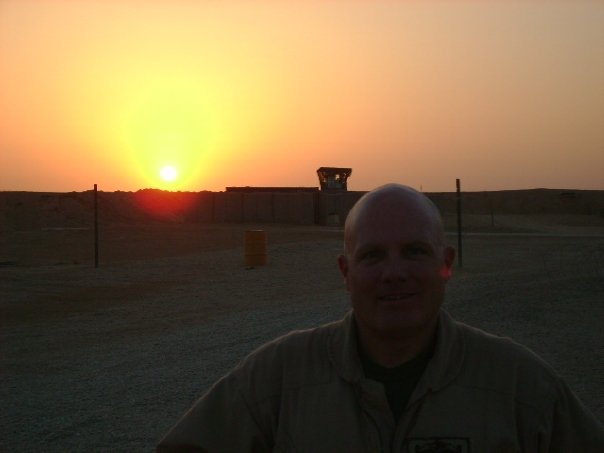
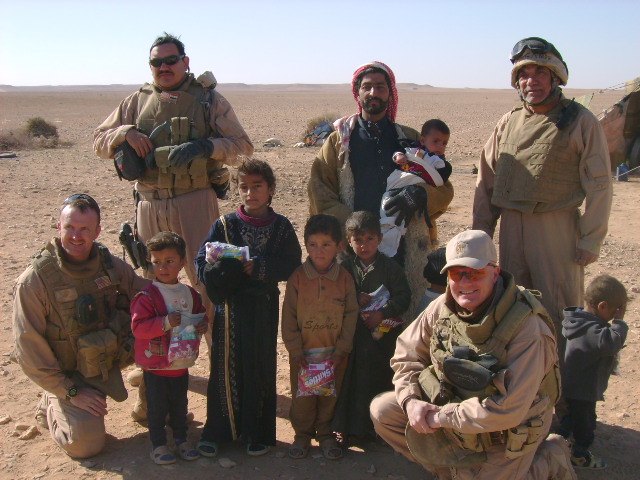
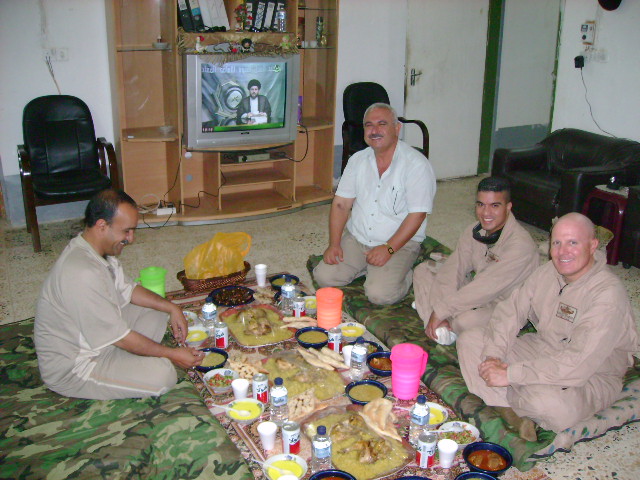
Tonight as I walked the dog to the beach I looked up at the sky. In our neighborhood there are not many street lights and most are clustered in one small area. Since many residents are not here in the winter many of the homes are dark as well and there are areas that have no houses but are lots covered in pine trees.  In the dark I was thinking about Iraq and I could hear the sound of the sea crashing on the beach.  I looked up at the sky and saw the most stars I have seen since being out on the Syrian border in December 2007.  I was reminded that I left part of me in Iraq and I pray for the Iraqis that I served with and those that provided us hospitality during our missions.

As I walked I thought of the words of Otto Von Bismarck one of the greatest statesmen that every lived.  Our war in Iraq was a preventive war.  Bismarck said that “Preventive war is like committing suicide out of fear of death.”  I pray that in our case that he was not right and that we think long and hard before entering another preventive war with anyone.  Bismarck, who knew war commented that “Anyone who has ever looked into the glazed eyes of a soldier dying on the battlefield will think hard before starting a war.” Unfortunately the vast majority of our elected leaders have ever done that.  Bismarck was certainly no pacifist but warned us that “I consider even a victorious war as an evil, from which statesmanship must endeavor to spare nations.”

The world is not a safe place and our near about 140,000 US and NATO troops are still engaged against a stubborn enemy in Afghanistan that has been aided by wavering allies such as Pakistan and sworn enemies like Iran.  War seems to threaten on many fronts.  I pray that we will be prudent before entering another.

I have rambled a bit tonight because I have so many thoughts and images of the war.  I trust your indulgence.  But for now the colors have been cased and our military involvement in Iraq is over.  We can only pray that Iraq will recover and become a free and prosperous country that treats its citizens well and that we too will recover from this war.  But then Bismarck is sometimes quoted saying that “There is a Providence that protects idiots, drunkards, children, and the United States of America.” I do hope that if he did say this that he was right.

Peace and and as my Iraqi friends would say Inshallah (إن شاء الله)

Padre Steve+

1 Comment

Filed under iraq,afghanistan, PTSD, Tour in Iraq

Night Terrors: Padre Steve’s Closet of Anxieties

There are times that I know that I still have issues.  One of those times is when I wake up screaming in the middle of the night.  It is a reminder that there are dark recesses in my mind that I do not and may not ever understand. While I may find some of the meaning of these dreams and images through symbols and remembrance of things that have happened in my life they are on the whole rather outside of the world that I try to live in.

Most of the time I do not sleep well.  Ever since Iraq my sleep has been mostly troubled and seldom good.  However with that being said it is only on rare occasions when images become so disturbingly lifelike that it seems that I am actually in the middle of a real fight and wake up screaming as I attack imaginary intruders.  When I am at home this is no comfort to Judy and Molly who are awakened by me attacking the lamp on my side of the bed or some object.  When I am away and wake alone up in a cold sweat with my heart pounding I long to be able to feel Judy alongside of me or have our dog Molly come to me and try to make things better.

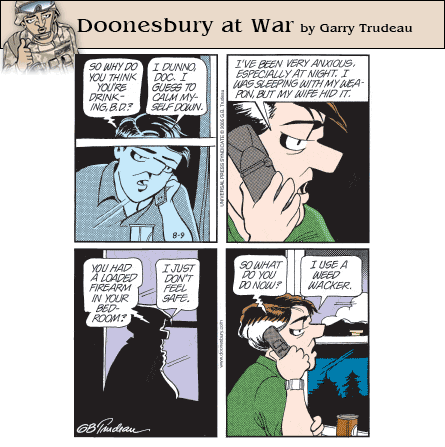
This was one of those weeks. My sleep has not been good and on Monday I had one of those less frequent but most terrifying of dreams where I was fighting to defend my family against a hostile and malevolent intruder.  It is always a similar dream and has haunted me since we were held up at gunpoint outside of Arroyo’s Cafe when it was still on South Center Street in Stockton California back in 1979.  It began to surface much more frequently in Iraq and since I returned home in 2008.  I love how one traumatic experience can be amplified by new traumatic experiences and how the anxiety related to my experience in Iraq is increased by things that I see happening in this country and around the world.  PTSD is such a joy to live with as almost every hour I wake up scanning for the enemy.

I understand from reading that I am not alone in this struggle and veterans that I spend time with often have terrible sleep disturbances related to wartime experience or other trauma.  Nearly four years after returning from Iraq I still experience flashbacks during waking hours and sometimes relive my experiences when others tell me of theirs. That is easier to process than what occurs at night.

Thankfully the prayers from the office of Compline do help when the terrors come as does the Prayer of Saint Michael and Saint Patrick’s Breastplate, but even still it is a battle to have restful sleep.

* Save us, Lord, while we are awake,

guard us while we are asleep;

that, awake, we may watch with Christ

and, asleep, may rest in His peace.

Peace,

Padre Steve+

1 Comment

Filed under Military, PTSD, Tour in Iraq

Goodbye Iraq… Inshallah (إن شاء الله)

A spokesman for the Administration confirmed that US Forces will leave Iraq by the end of the year. The decision came after Iraqi Prime Minister Nouri al-Maliki has told U.S. military officials that he does not have the votes in parliament to provide immunity to the American trainers.

As of today 4478 American, 179 British and 139 other coalition troops have given their lives in this campaign. 32200 Americans have been wounded. Over 10,000 members of the Iraqi Army and Security Forces have given their lives to defend their country following the fall of Saddam Hussein. The official count of Iraqi civilian deaths is a bit over 50,000 people but the actual toll is probably much higher. The Congressional Budget Office estimates the long term cost of the Iraq War will be about 1.9 trillion dollars.

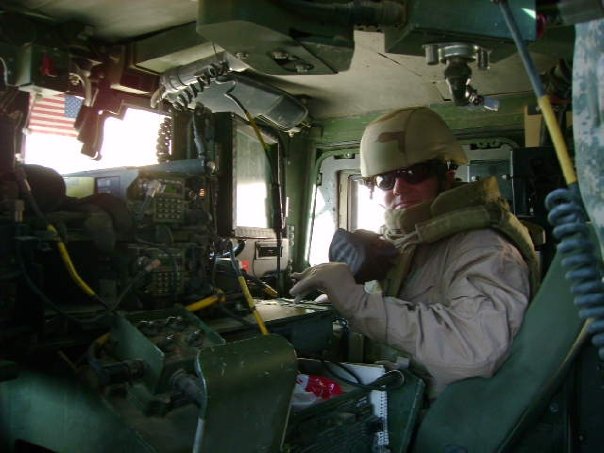
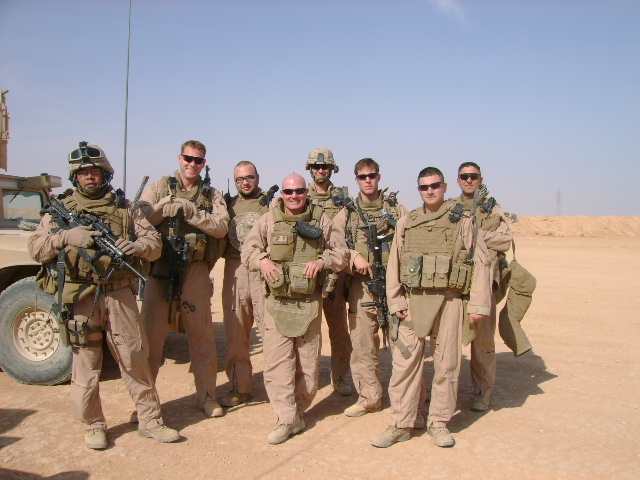
I served in Iraq and I am proud of my service there as part of the Iraq Assistance Group serving with our Marine Corps, Army, Navy and Air Force working with our Iraqi allies in Al Anbar Province from 2007-2008. I have found that it was probably the most rewarding tour I have had in my 30 years in the military. It also changed me in ways that I did not anticipate, especially the effects of PTSD. People sometimes ask me why the tour in Iraq was more rewarding than peacetime or non-deployed service and why I desire to serve in combat again as a Chaplain. The first time someone asked the answer at first surprised them. I said while I viewed peacetime and garrison service as important and meaningful ministry that it was like the regular baseball season. On the other hand getting to do what I did in a combat zone outside the wire with little groups of Americans and their Iraqis was like playing in the World Series. Some will not understand that and I can respect their opinion and their bewilderment. However you had to be there to understand.

I left part of me in Iraq and I will value my friendships with Iraqi military officers and the hospitality shown by them where ever I traveled. I will worry about them and their families as Iraq attempts to stabilize itself and rebuild from the war. I pray that there will be no civil war as some speculate and thatIran’s influence will become less as we leave and the Iraqi Shia Arabs remember that the “Persians” are not their friends as an Iraqi Shia officer reminded me. I do hope that one day I can go back as a visitor and see what I hope to be a free and prosperous country that is a friend.

Yet despite my feelings the question has to be asked: Was it worth it? Somehow I am left feeling that it hurt us andIraqin the long run. Saddam is gone and with him the terror that he imposed on the Iraqi people, but the Iranians are stronger and they were always the real threat to the region.

I almost feel like General Roy Urquhart played by Sean Connery at the end of the movie “A Bridge too Far.” http://www.youtube.com/watch?v=1j9kRciiD3E

We have to ask was it worth the human cost born by the United States military and the Iraqi people. Was it worth the strategic result of Iran becoming stronger? Was it worth the immense cost in blood, military strength and treasure and to our image around the world?

I am not sure if it was. I can only hope and pray that in the end something good will result for us and the long suffering people of Iraq.

Inshallah,

Padre Steve+

Note: Inshallah (إن شاء الله) is the Arabic word for “God Willing” or “if God wills it.”

5 Comments

Filed under History, iraq,afghanistan, Tour in Iraq

The Tapestry of Life: How PTSD and Combat Stress is a Part of Who and What We Are

I have been dealing with the effects of Post Traumatic Stress over 3 ½ years.  In that time I have had my struggles going ranging from falling into the abyss to a measure of recovery and occasional relapses.  It has been a difficult time which has stretched me in ways that I never dreamed and given me perspective on what it is to live, to have faith and to experience life in ways that I could not have imagined before I deployed toIraq.

Within a few weeks of beginning therapy I was asked by my therapist what I wanted to do with my experience.  I really didn’t know, I was in the midst of a complete emotional breakdown and crisis of faith.  When my therapist asked me “well Padre how are you with the Big Guy” I could only answer “I don’t know if God exists anymore or if he does if he cares about me.”  My therapist was the first person that asked me about my spiritual life after I returned.  No clergy of any kind asked that question.  I guess that they assumed quite wrongly that I hadn’t really changed.  There is a tendency among clergy to ignore the obvious when a colleague begins to fall apart.

In fact it is really a cultural problem.  Often the advice to someone dealing with trauma and the experience of grief which often compounds traumatic experience is to “forget about it” or “put it behind you and move forward.”  Some therapists and pastors seem to have burying the experience, reliving it time and time again until you are numb or simply try to expunge it from memory as their goal.

The problem with all of these “methods” is that they label the person who has been traumatized and the complex grief that they experience as a result of the trauma as ill, damaged or broken.  But it the opposite is true, people that have experienced trauma especially in a combat zone are simply having a normal reaction to experiences that are not normal.

We adapt to war and the experience becomes part of who we are.  It is a survival tool that humans have had ever since the first skirmishes between primitive tribes.  However primitives actually have an advantage over the modern human.  They went to war to defend their families and homes.  The warriors would be sent out with fanfare, religious ceremonies and ritual. When they returned they would be brought back into the tribe, new warriors who had distinguished themselves would be noted, sometimes marked in some physical manner.  Rituals marked the re-entry of the warriors and they would be reincorporated into the community. Some societies would incorporate rituals for individuals to do as they re-entered the community. Their stories would become part of the tribe’s oral tradition and passed down to successive generations.

Today’s modern American warrior doesn’t go to war with his neighbors.  These warriors go to war with men and women that come from many parts of the country, US territories or immigrants and when they leave service they often return to neighbors, friends and families that care about them but do not understand them or their experience. The reactions that they developed in combat and their response to perceived threats are considered dangerous or abnormal.  People tell them that they need to go back to what they were before the war experience but they can’t because they have been changed by their experiences.

We live in a culture of denial. All too often it seems that society simply wants the traumatized and grieving veteran just be quiet, see a shrink, go to a PTSD group and “get well.”  Many times churches and religious institutions treat the problem as some kind of spiritual shortcoming.  Many Christian veterans come home and find that they are shunned because they have doubts or because they don’t “get better” after people pray for them.  I was reading a faux news article which was more like an infomercial for a CD that promotes a method as “Be still and know….”  It was developed by a reserve Army Chaplain and Christian therapist. It is designed to make it all go away.  Do the method right and you get better, God heals you and you live happily ever after until something breaks the cycle of denial and you crash.  I do believe that God heals but I don’t believe that God makes everything magically go away like it never happened.  Such a belief is not supported in Scripture, the testimony of the early Church or for that matter most of the Christian tradition.

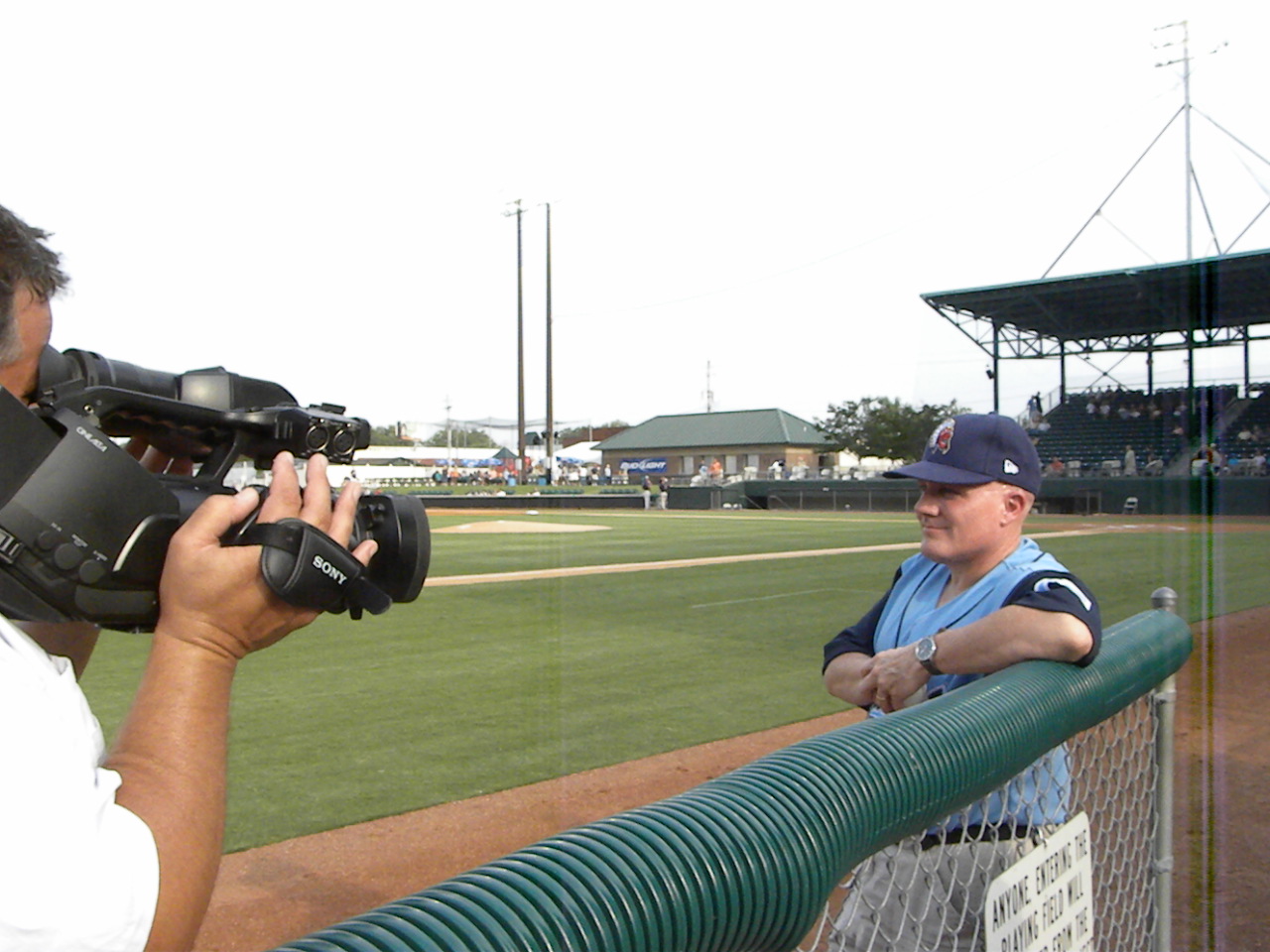
This week I was being filmed for a Department of Defense program called The Real Warriors Campaign   http://www.realwarriors.net/which is designed to de-stigmatize Combat Stress injuries including PTSD and Traumatic Brain Injury.  They picked up the article that was written about me in the Jacksonville Daily News in April of this year and asked if I would be willing to participate.   http://www.enctoday.com/articles/cmdr-89433-jdn-stephen-military.html

It was a hard week for me. I went to a functioned hosted by our hospital Wardroom at the base Officer’s Club Saturday night and while I enjoyed myself I hit sensory overload. When I got hope I was pretty edgy and to add to the situation we had some Marine helicopters flying in the area I live that night. As I tried to calm down I realized that I was going to be interviewed Tuesday and the thought scared the shit out of me.  Yes I had agreed to do it and yes I thought I needed to do it but my heavily introverted and relatively anti-social personality type now seasoned with reactivated PTSD symptoms couldn’t handle it.  I couldn’t sleep and had the firstIraqrelated dreams I have had in many months. I did not even open the front door of my place on Sunday.  I couldn’t sleep Sunday night and got permission of my boss to get some assistance.  Since I couldn’t get a no-notice appointment with my current psychiatrist I called my first therapist and he was helpful. I went to a ball game and that helped calm me down.  I was still anxious but functional.

The two days of filming went pretty well for me, although I know with the possible exception of “COPS” there is no such thing as reality television.  This was not “reality television” but the goal was to try to show how I live life, work and relate to people after deployment.  The crew was really good and handled things professionally but even so it was packaged and things had to be have lighting, have different camera angles and required me to repeat things sometimes because of the privacy issues of patients in the hospital.  But it is what it is.  By the end of the two days I was pretty wiped out and simply rested last night.

However on Monday night before the interview I had an epiphany.  That simple illumination came from an episode of Star Trek the Next Generation called Tapestry I won’t ruin it for you but the final segment of the episode is linked here:

http://www.youtube.com/watch?v=hZeGzaJiP6g&feature=related

The epiphany was very simple.  All of our life, the good, the bad, the enjoyable and even the traumatic are part of a rich tapestry.  Those painful threads, the ones that we cause ourselves or the ones that are the result of trauma, grief and loss are part of who we are as human beings.  If we try to remove them we damage the tapestry and if we try or are persuaded by those that deny the reality of pain and suffering to remove the really painful and deep hurts, those which are the most tightly wound into the fabric of our lives, especially for the combat veteran we risk long lasting damage to our very soul.

The challenge is not to be “healed” or to compartmentalize the trauma and put it in some deep closet in our brain.  Nor is it to deny the trauma or for that matter keep trying to relive the trauma so that we are desensitized to the pain.  The real challenge is to allow our experiences of war, grief, loss and trauma to have their place in our lives knowing that without them we are not who we are.

I’m not saying that I have any real answer to what all of us that experience combat stress injuries deal with.  All I know is that I just want to be real and there are risks in opening up to people and reaching out to get help.  At the same time it is important to find a way to get help so we can adapt to our new reality.

As for me I went through some terrible times that still affect me.  Yes I went through a period of profound spiritual crisis and even a loss of faith and when I began to recover faith people that had been okay with me being broken ended up asking me to leave my church because the faith that I have now didn’t fit the narrow box that defined that church.

All that being said I am glad that my therapists or my supervisors allowed me and continue to allow me to work through the issues that still impact me and my ability to function in society, deal with others and even effect my marriage.  I wish every combat vet and survivor of trauma had that support.  I just hope that I can be worthy of the trust that they have place in me and that I will care for those entrusted to me with the same care and compassion that I was and am being shown.

Peace

Padre Steve+

3 Comments

Filed under faith, Military, Pastoral Care, philosophy, PTSD, Religion, star trek, Tour in Iraq

The Bond

This story shall the good man teach his son;
And Crispin Crispian shall ne’er go by,
From this day to the ending of the world,
But we in it shall be remembered-
We few, we happy few, we band of brothers;
For he to-day that sheds his blood with me
Shall be my brother; be he ne’er so vile,
This day shall gentle his condition;
And gentlemen in England now-a-bed
Shall think themselves accurs’d they were not here,
And hold their manhoods cheap whiles any speaks
That fought with us upon Saint Crispin’s day.

From the Speech of King Henry V at Agincourt in Shakespeare’s “Henry V” 1599

In the midst of the petty politics surrounding the Afghan War so so ponderously and pompously purveyed by politicians and pundits of all strains I feel the need to speak up for that small band of brothers that has served in these wars. They are to steal a phrase applied to a previous generation the “New Greatest Generation” something that I am loathe to apply to much of the population at large.  You see the cost of these wars is finally beginning to sink in, at least the financial cost. I’m not so sure that the human cost factors in for most people because the tiny percentage of the population that serve in the wars. The fact is that the volunteer military is an insular community which for the most part is based on bases away from most of the population. We used to have big bases in or near major cities, the New York Naval Yard, the Presidio of San Francisco, Long Beach Naval Shipyard, Fort Devens Massachusetts near Boston, Fort Benjamin Harrison Indiana at Indianapolis.  But after the Cold War they and hundreds of other bases were eliminated and with them a connection to the active duty military.  That is not the fault of the people in the big cities it just happened that way, no the military with a few exceptions is based away from most of the population. As a result people may support the troops but most have no idea what they do, how they live and what they suffer.

In spite of that this new Greatest Generation’s accomplishments will largely go unheralded by history. Unlike the “Greatest Generation” of World War Two they will probably not receive the full honors and accolades due them.  This brotherhood of war who have served in the current War on Terror, Iraq and Afghanistan campaigns have now been serving in a war that is now twice as long as the American involvement in World War Two.  Many, like me have been in this since the beginning and many have made multiple deployments to the combat zones.  And many of us, if not most of us would go again. I know that I would because part of me is still in Iraq; for me this war is still un-won and un-finished.

The battles, Fallujah, Ramadi, Haditha, Mosul, Baghdad, Tal Afar, Marjah, Kandahar, Anaconda, Wanat and thousands of other places significant and insignificant are vivid in the minds of those that were there. Unfortunately for most of their countrymen they might as well be on a different planet.

With no disrespect to the Greatest Generation of World War Two, all of the current Soldiers, Sailors, Marines, Airmen and Coast Guardsmen volunteered to serve in time of war.  At any given time only about one half of one percent is in uniform.  In the three years and ten months of the Second World War about 16.1 Million Americans served in the military, the vast majority being draftees.  Likewise the current generation has fought the war alone.  The vast bulk of the country has lived in peace untouched by any inconvenience to daily life such as gas and food rationing, requirements to work in war industries and the draft as were citizens in World War Two.  In the Second World War Americans shared the burden which in large part has not occurred in this war.  While many have pitched in to help and volunteered to help veterans and their families the vast majority of people in this country are untouched by the war, not that there is anything wrong with that.  This is simply a comparison of the situation that those who served in World War Two and the present conflicts faced.  So I have to say that our current “Greatest Generation” is only a small part of the generation, as the line in Henry V “we few, we happy few who fought together….”

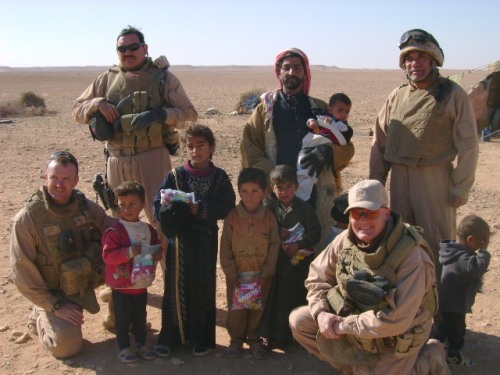
These Soldiers, Sailors, Marines and Airmen from the United States as well as our Allies who serve alongside of us are my brothers and sisters.  They too are volunteers and represent a miniscule portion of their countries population. I am friends with military personnel from the UK, Canada and Germany who have served in the various combat zones or at sea and met quite a few others from France, the Netherlands and Australia. Of course my Iraqi friends who I served with while with our advisers in Al Anbar province who are not only trying to bring peace and stability back to their country but have to worry about the possibility that their families become the target of terrorists.

There are a number of things that unite us in this relatively small brotherhood.  However, I think that this brotherhood could also be extended to our brothers who fought in Vietnam, French, Vietnamese, Australian, South Korean and American, the French who served in Algeria and the Americans and others that served in Korea.  All of these wars were unpopular. All had little support on the home front and often returning veterans found themselves isolated and their sacrifices ignored or disrespected.  For those Americans who serve in the current wars I can say that at least to this point the public has been much more supportive than they were to our Vietnam brothers, many of who were even disrespected by World War Two vets who had fought in “a real war.”  I cannot count the Gulf War in this list as it was hugely successful and the returning vets were hailed as conquering heroes with ticker tape parades.

Our shared brotherhood includes our scars, physical, psychological, neurological and spiritual.  Those who served on the ground in Iraq and Afghanistan as well as those who served in Vietnam, French Indo-China and Algeria have a common shared experience.  All fought people who didn’t or don’t like foreigners no matter how noble our intentions and who by the way have a long history of outlasting people that they believe to be invaders or occupiers.  We have had to fight wars with no front lines, no major units arrayed against us, but rather asymmetrical threats propagated by creatively devious foes who use low tech easily available technology and a willingness to sacrifice themselves and others to force attempt to kill us.  Thus we have cleverly designed and often quite powerful IEDs or Improvised Explosive Devices which can obliterate a HUMMV.

These threats create a situation where there is no front line and thus where every excursion outside of a FOB (Forward Operating Base) or COP (Coalition Outpost) is automatically a trip into a potential danger zone.  Enemies can infiltrate bases posing as local nationals in either military uniform or as workers, rockets and mortars can be lobbed onto even the largest and most secure bases at any time and any vehicle driving by you on the road could be loaded with explosives and just waiting to blow you up while insurgents with automatic weapons and Anti-Tank Rocket Propelled Grenades (RPGs) have taken down helicopters.  When you have taken fire on the road, in the air and had rockets whiz over your head you this becomes a reality that you never forget.

As a result we many men and women with physical wounds as well as wounds that have damaged the psyche or the soul.  PTSD is very common either from a direct encounter or the continual wear and tear of being in a danger zone wondering if you were to get hit that day every day of a tour.  I have lost count now of people that I know who have mild to severe symptoms of PTSD.  Traumatic Brain injury is another condition men and women attacked by IEDs, mortars and rockets experience. Likewise there are the injuries that shatter the soul.  These are the images of ruined buildings, burned out vehicles, wounded bodies, injured children, refugees and wars desolation that can leave a person’s faith in God, or ideals that he or she believes in weakened or even destroyed.  There are the smells of smoke, death, diesel, garbage and sewage that when encountered far away from the combat zone send us back.

The wars have been costly in lives and treasure.  The “up front” casualty numbers are below; they do not include those with PTSD or mild to moderate TBI. They also do not count those that have died later after their service in VA or other civilian care, those that did not report their injuries and those that have committed suicide.

Iraq                   KIA    US  4463       UK 179    Other  139           Total  4781

Afghanistan     KIA  US  1637         UK 374     Other 537        Total  2548

US Wounded   Iraq  32227      Afghanistan   11191

The financial cost: over 1.2 trillion dollars and counting.

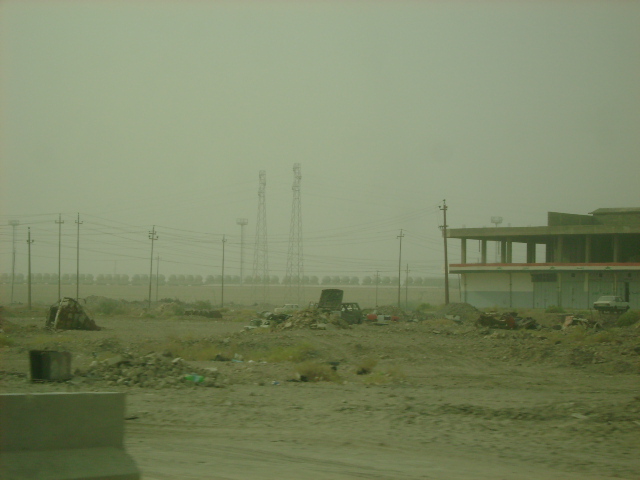
As many idealistic and patriotic military personnel question God, their National Leadership and even themselves because of their experience in Iraq or Afghanistan.  I cannot get the image of a refugee camp on the Iraqi Syrian border full of Palestinian refugees who have nowhere to go; they had been invited to Iraq under Saddam and have been sitting on the border trying to get home for years now.  The Palestinian authority wants nothing to do with them. I cannot smell smoke or hear a helicopter or pass a freshly fertilized field without being reminded of Iraq.

These men and women are my brothers and sisters.   I have seen quite a few of my colleagues at the Naval Medical Center and Naval Hospital deploy and deploy, the medical personnel don’t get much of a break.  These are my friends and I do get concerned for them and pray earnestly for their safe return.  I wish that I could go with them because I know them and have already walked with them through the dark valley of the shadow of death in the Medical Center ICU or the wards and clinics of the Naval Hospital.  We already have a bond that will not be broken.

It is now four years since I was in the process of leaving for Iraq and three years since my PTSD crash.  However, I still would do it again in a heartbeat.  There is something about doing the job that you were both trained to do and called to do that makes it so.  Likewise the bonds of friendship and brotherhood with those who you serve are greater than almost any known in the human experience.  Shared danger, suffering and trauma bind soldiers together, even soldiers of different countries and sometimes with enemies.  I remember the conversation that I had with an Iraqi Merchant Marine Captain on a ship that we had apprehended for smuggling oil violating the United Nations sanctions.  The man was a bit older than me, in his early 60s.  He had been educated in Britain and traveled to the US in the 1960s and 1970s. He had the same concerns as any husband and father for his family and had lost his livelihood after Saddam invaded Kuwait in 1990.   He was a gentleman who provided for his crew and went out of his way to cooperate with us.  In our last meeting he said to me: “Someday I hope that like the Americans, British and the German soldiers at the end of the Second World War can meet after the war is over, share a meal and a drink in a bar and be friends.”  That is my hope as well.

In the final episode of the series Band of Brothers there is a scene where one of the American soldiers, Joseph Liebgott who came from a German Jewish family interprets the words of a German General to his men in the prisoner compound.  The words sum up what the Americans had felt about themselves and likewise the bond that all soldiers who serve together in war have in common, if you have seen the episode you know how powerful it is, I ended up crying when I heard it the first time and cannot help but do so now that I have been to the badlands of Al Anbar Province.

“Men, it’s been a long war, it’s been a tough war. You’ve fought bravely, proudly for your country. You’re a special group. You’ve found in one another a bond that exists only in combat, among brothers. You’ve shared foxholes, held each other in dire moments. You’ve seen death and suffered together. I’m proud to have served with each and every one of you. You all deserve long and happy lives in peace.”

As do we.

Peace

Padre Steve+

2 Comments

Filed under History, iraq,afghanistan, Military, PTSD, shipmates and veterans, Tour in Iraq

The Evolving Faith of a Miscreant Priest

“Practically speaking, your religion is the story you tell about your life.” Andrew A Greeley 

Three years ago I had an emotional physical and spiritual breakdown as the life and faith that I had known for many years came apart at the seams as I was overcome with the full blown effects of PTSD a bit over four months after my return from Iraq.  I should have seen the collapse coming as a vainly struggled to maintain control of my emotions, thoughts and faith.  Nothing made sense as I drifted in and out of flashbacks, night terrors and sunk into depression isolated from my faith community which by and large did not understand and other clergy who didn’t seem to care enough to listen.

I tried; I maintained the discipline of praying the Daily Office and reading the Scriptures, I tried to attend church but it was too much. Church with all the people and crowded noisy space with lots of light and sound was too much. I was hyper-vigilant and didn’t feel safe in crowds except at the ballpark where somehow the sight of that magical diamond brought me peace.

June 16th 2008 was the day that the wheels came off. The nightmares, night terrors and flashbacks came together with fires in the Great Dismal Swamp which shrouded the Tidewater in a thick brown haze which looked and smelled like Iraq and a seminar on battlefield trauma.  At the end of the day when the seminar was over my unit Medical Officer looked at me and said “Chaplain are you okay?” I replied in a broken voice “no, I’m not.” I briefly explained what I was going through and he asked if I was safe to go home. When I assured him that I thought that I could make it to the next day he agreed to let me leave and saw me the next morning. After his evaluation he set me up to see a Psychologist at the Naval Medical Center Portsmouth Deployment Health Center.

Looking back he made the right choice. I was very apprehensive as I had never been to a shrink before though I had referred many service members and their families to shrinks when I knew that I was in over my head.  I was lucky because I got Dr. Elmer Maggard from Hazard County Kentucky. I soon developed a rapport with him because I knew that he was real. What convinced me was when he asked me “Well there Padre how are you doing with the Big Guy?” I hadn’t expected that question because no ministers, Priests or chaplains had ever broached the subject.  I was falling apart and when I brought things up to ministerial colleagues about what I was going through including my assessment of my spiritual life I was ignored.  It was like I was radioactive.  I simply told Elmer that “I didn’t even know if the Big Guy even cared about me or existed anymore.”  He didn’t flinch and he walked with me through the darkness until and after what I call my “Christmas Miracle” in December of 2009.

During that painful and lonely time where I was for all intents an agnostic struggling with faith and even the existence of God it seemed that contact with the Divine was sporadic at best and either came through baseball or the Fr. Andrew Greeley Bishop Blackie Ryan murder mysteries. I had started reading them in Iraq because I was somewhat familiar with Greeley’s writing although I had never read any of the Blackie Ryan series. The first book that I read was The Bishop Goes to the University and others rapidly followed as I rummaged through the giveaway paperbacks in the small MWR library at Al Taqaddum in between missions to the hinterland of Al Anbar Province.

It was the grace and love of God in those books that even in the worst of times gave me a fragment of hope as my life collapsed.  I found in Bishop Blackie a kindred though fictional spirit who embodied what I thought the Priesthood should be.  In those books I came to understand that the grace of God along with the practical expressions of compassion, mercy and love were much more compelling than pounding people into submission with my rather rich knowledge of theology, philosophy and Church history. I also found that they were necessary for me to be healed.

My recovery of faith came unexpectedly much like how it happens to the characters in the Bishop Blackie mysteries.  It came in the middle of giving the last rites to a patient in our Emergency Department at Portsmouth.  The man a physician was a veritable saint whose life and faith had touched his community for over 50 years.  As I prayed the commendation prayers at the close of the rite following the anointing he breathed his last and it was almost if the cloud of unbelief melted away and the realization that God indeed was a God of love and that Jesus was actually to quote the Gospel exactly what his opponents called him “a friend of sinners.” In that moment it was if I had been reborn.

Now since then my faith has been evolving, not that I have surrendered the faith proclaimed in the Gospel or the Creeds but in the way that faith works itself out in relationship to others.  I have to say that it hasn’t been easy and I still have times where I doubt but not like when I was falling apart. I think that the doubt is there to remind me not to become arrogant or exude a toxic triumphalism in my faith or proclamation.  I read something that Greeley wrote which perfectly expressed my understanding of Christian witness going back to the persecuted Catholic Church of the Roman Empire.  “People came into the Church in the Roman Empire because the Church was so good-Catholics were so good to one another, and they were so good to pagans, too. High-pressure evangelization strikes me as an attempt to deprive people of their freedom of choice” or as Saint Francis said “Preach the Gospel at all times, use words when necessary.” It is amazing the diverse people, many hurt and wounded by war, abuse or even the Church and its ministers wander into my life at work and here on Padre Steve’s World. It doesn’t matter if they are conservative or liberal, Christian or not they tell me that “you’re different” and “I know that you will listen to me.” These people have become my parish. Greeley said it well “I wouldn’t say the world is my parish, but my readers are my parish. And especially the readers that write to me. They’re my parish. And it’s a responsibility that I enjoy.” 

I used this site to work through many of the things that I struggled with during the process and eventually that ran me afoul of my former Church, the Charismatic Episcopal Church which through my Bishop asked me to leave in September 2010 because I was “too liberal.”  I knew that it had been coming for some time and had been making preparations and had been working with the local Episcopal diocese but the transition to that church could not be accomplished for at least a year and a half.

I was referred to my present Church, the Apostolic Catholic Orthodox Church an Old Catholic denomination by the Episcopal Church which once again seemed to be a miracle. Though small the Church embodies the faithfulness to the Gospel and the Catholic Faith with an inclusiveness and love of God for people that was exactly what I had become during my “dark night of the soul” and rebirth.  There are still things that I am working out both in the personal aspects of my faith and how it works itself out in life.

But I do have faith again; faith in Jesus the Christ and the Triune God reveled in Scripture, Tradition and Reason and in the lives of the faithful.  This belief is that God is love and is present and active in the world.  This love of God is seen in the Sacraments, the Eucharist and in the lives of those dear to us, our families, friends, neighbors and those that we seem to randomly encounter.  It is shown in the care of people who will sit with us in our pain and doubt, listen, care and lovingly put their arms around us or hold our hand.  It is shown in the faith that others show to us when others are willing to cast us aside, those that see the potential of God’s creation in each of us in a rediscovered love that God is there.

Yes my faith is still evolving but I think that is what Paul meant when he said “I want to know Christ and the power of his resurrection and the sharing of his sufferings by becoming like him in his death, if somehow I may attain the resurrection from the dead. Not that I have already obtained this or have already reached the goal; but I press on to make it my own, because Christ Jesus has made me his own.” (Phil. 3:10-12)

Peace and Blessings

Padre Steve+

2 Comments

Filed under christian life, faith, Pastoral Care, PTSD, Religion, Tour in Iraq

A Return to God in the Empty Places

Three years and some change have passed since I returned from Iraq. I originally wrote this article for my former church immediately after returning home. At the time that I wrote it I was well on the way to my psychological and spiritual crash due to PTSD which at the time of writing this I clueless about despite lots of warning signs. Now well into recovery of my life and faith albeit in a different faith community as I was asked to leave my former church last September because I was now “too liberal” I have decided to repost it without any new edits or additions. I do this because for me it is a touch point in relation to being a chaplain serving with military professionals, volunteers fighting a series of unpopular wars. My problem and I think why I keep ending up here is that I was not always a Chaplain. I was not always a Chaplain but I am also a historian and more specifically a military historian and to some degree theorist. Additionally I have served as an enlisted man in the Army National Guard and as a line officer in the Army in command and staff positions before I became a Chaplain first in the Army and then in the Navy, taking a reduction in rank from a senior Army Major to a no time in grade Navy Lieutenant to enter the Navy in February 1999. As such a lot of what I study is military history and the social-political dimension of it.  I graduated from Marine Corps Command and Staff College and was about halfway through my Masters in Military History program of study when I was alerted that I was to be sent to Iraq in the Spring of 2007. As part of both the Command and Staff College and the degree program I spent a lot of time studying counterinsurgency campaigns, especially those of the French in Indo-China and Algeria and I saw many parallels between the professional French soldiers and officers who served in the Paratroops, Foreign Legion and Colonials (Marines) and our military in relation to society and politics in both countries As I point out in the article professional our all volunteer professional military is far different than the men of the Greatest Generation who were for the most part draftees as well as the military that fought in Vietnam the bulk of which were draftees.  This comment is in no way to cast dispersion on the brave men who fought so bravely in both wars, it is just a statement of fact as our military culture is different than it was then as is our political culture. In the middle of this are we happy few, we band of brothers who serve together in very unpopular wars. Tonight I post it again after my first public interview dealing with my struggles to acknowledge all of those that serve today as well as our brothers of the Vietnam era, French Indo-China and Algeria, and the British soldiers who served in so many crummy wars.

Today our Soldiers, Marines, Sailors and Airmen are engaged in three wars in the Middle East, are providing humanitarian relief to the people of Japan as well as other nations and are deployed in many other hot spots that could easily become war zones.  I don’t want anyone to forget them or their sacrifices. Anyway I digress; this is my return to God in the Empty Places.

I have been doing a lot of reflecting on ministry and history over the past few months. While both have been part of my life for many years, they have taken on a new dimension after serving in Iraq. I can’t really explain it; I guess I am trying to integrate my theological and academic disciplines with my military, life and faith experience since my return.

The Chaplain ministry is unlike civilian ministry in many ways. As Chaplains we never lose the calling of being priests, and as priests in uniform, we are also professional officers and go where our nations send us to serve our Soldiers, Sailors, Marines and Airmen. There is always a tension, especially when the wars that we are sent to are unpopular at home and seem to drag on without the benefit of a nice clear victory such as VE or VJ Day in World War II or the homecoming after Desert Shield and Desert Storm.

It is my belief that when things go well and we have easy victories that it is easy for us to give the credit to the Lord and equally easy for others to give the credit to superior strategy, weaponry or tactics to the point of denying the possibility that God might have been involved. Such is the case in almost every war and Americans since World War Two have loved the technology of war seeing it as a way to easy and “bloodless” victory. In such an environment ministry can take on an almost “cheer-leading” dimension. It is hard to get around it, because it is a heady experience to be on a winning Army in a popular cause. The challenge here is to keep our ministry of reconciliation in focus, by caring for the least, the lost and the lonely, and in our case, to never forget the victims of war, especially the innocent among the vanquished, as well as our own wounded, killed and their families.

French Paratroop Corpsmen treating wounded at Dien Bien Phu

But there are other wars, many like the current conflict less popular and not easily finished. The task of chaplains in the current war, and similar wars fought by other nations is different. In these wars, sometimes called counter-insurgency operations, guerilla wars or peace keeping operations, there is no easily discernable victory. These types of wars can drag on and on, sometimes with no end in sight. Since they are fought by volunteers and professionals, much of the population acts as if there is no war since it does often not affect them, while others oppose the war.

Likewise, there are supporters of war who seem more interested in political points of victory for their particular political party than for the welfare of those that are sent to fight the wars. This has been the case in about every war fought by the US since World War II. It is not a new phenomenon. Only the cast members have changed.

This is not only the case with the United States. I think that we can find parallels in other militaries. I think particularly of the French professional soldiers, the paratroops and Foreign Legion who bore the brunt of the fighting in Indo-China, placed in a difficult situation by their government and alienated from their own people. In particular I think of the Chaplains, all Catholic priests save one Protestant, at the Battle of Dien Bien Phu, the epic defeat of the French forces that sealed the end of their rule in Vietnam. The Chaplains there went in with the Legion and Paras. They endured all that their soldiers went through while ministering the Sacraments and helping to alleviate the suffering of the wounded and dying. Their service is mentioned in nearly every account of the battle. During the campaign which lasted 6 months from November 1953 to May 1954 these men observed most of the major feasts from Advent through the first few weeks of Easter with their soldiers in what one author called “Hell in a Very Small Place.”

Another author describes Easter 1954: “In all Christendom, in Hanoi Cathedral as in the churches of Europe the first hallelujahs were being sung. At Dienbeinphu, where the men went to confession and communion in little groups, Chaplain Trinquant, who was celebrating Mass in a shelter near the hospital, uttered that cry of liturgical joy with a heart steeped in sadness; it was not victory that was approaching but death.” A battalion commander went to another priest and told him “we are heading toward disaster.” (The Battle of Dienbeinphu, Jules Roy, Carroll and Graf Publishers, New York, 1984 p.239)

Of course one can find examples in American military history such as Bataan, Corregidor, and certain battles of the Korean War to understand that our ministry can bear fruit even in tragic defeat. At Khe Sahn in our Vietnam War we almost experienced a defeat on the order of Dien Bien Phu. It was the tenacity of the Marines and tremendous air-support that kept our forces from being overrun.

You probably wonder where I am going with this. I wonder a little bit too. But here is where I think I am going. It is the most difficult of times; especially when units we are with take casualties and our troops’ sacrifice is not fully appreciated by a nation absorbed with its own issues.

For the French the events and sacrifices of their soldiers during Easter 1954 was page five news in a nation that was more focused on the coming summer. This is very similar to our circumstances today because it often seems that own people are more concerned about economic considerations and the latest in entertainment news than what is going on in Iraq or Afghanistan. The French soldiers in Indo-china were professionals and volunteers, much like our own troops today. Their institutional culture and experience of war was not truly appreciated by their own people, or by their government which sent them into a war against an opponent that would sacrifice anything and take as many years as needed to secure their aim, while their own countrymen were unwilling to make the sacrifice and in fact had already given up their cause as lost. Their sacrifice would be lost on their own people and their experience ignored by the United States when we sent major combat formations to Vietnam in the 1960s. In a way the French professional soldiers of that era have as well as British colonial troops before them have more in common with our force than the citizen soldier heroes of the “Greatest Generation.” Most of them were citizen soldiers who did their service in an epic war and then went home to build a better country as civilians. We are now a professional military and that makes our service a bit different than those who went before us.

Yet it is in this very world that we minister, a world of volunteers who serve with the highest ideals. We go where we are sent, even when it is unpopular. It is here that we make our mark; it is here that we serve our Soldiers, Sailors, Marines and Airmen. Our duty is to bring God’s grace, mercy and reconciliation to men and women, and their families who may not see it anywhere else. Likewise we are always to be a prophetic voice within the ranks.

When my dad was serving in Vietnam in 1972 I had a Sunday school teacher tell me that he was a “Baby Killer.” It was a Catholic Priest and Navy Chaplain who showed me and my family the love of God when others didn’t. In the current election year anticipate that people from all parts of the political spectrum will offer criticism or support to our troops. Our duty is to be there as priests, not be discouraged in caring for our men and women and their families because most churches, even those supportive of our people really don’t understand the nature of our service or the culture that we represent. We live in a culture where the military professional is in a distinct minority group upholding values of honor, courage, sacrifice and duty which are foreign to most Americans. We are called to that ministry in victory and if it happens someday, defeat. In such circumstances we must always remain faithful.

For those interested in the French campaign in Indo-China it has much to teach us. Good books on the subject include The Last Valley by Martin Windrow, Hell in a Very Small Place by Bernard Fall; The Battle of Dienbeinphu by Jules Roy; and The Battle of Dien Bien Phu- The Battle America Forgot by Howard Simpson. For a history of the whole campaign, read Street Without Joy by Bernard Fall. I always find Fall’s work poignant, he served as a member of the French Resistance in the Second World War and soldier later and then became a journalist covering the Nurnberg Trials and both the French and American wars in Vietnam and was killed by what was then known as a “booby-trap” while covering a platoon of U.S. Marines.

There is a picture that has become quite meaningful to me called the Madonna of Stalingrad. It was drawn by a German chaplain-physician named Kurt Reuber at Stalingrad at Christmas 1942 during that siege. He drew it for the wounded in his field aid station, for most of whom it would be their last Christmas. The priest would die in Soviet captivity and the picture was given to one of the last officers to be evacuated from the doomed garrison. It was drawn on the back of a Soviet map and now hangs in the Kaiser Wilhelm Memorial Church in Berlin where it is displayed with the Cross of Nails from Coventry Cathedral as a symbol of reconciliation. I have had it with me since before I went to Iraq. The words around it say: “Christmas in the Cauldron 1942, Fortress Stalingrad, Light, Life, Love.” I am always touched by it, and it is symbolic of God’s care even in the midst of the worst of war’s suffering and tragedy.

Peace

Padre Steve+


2 Comments

Filed under christian life, faith, History, iraq,afghanistan, Military, Tour in Iraq

The Front Page: Padre Steve talks about a Newspaper Interview on His Battle with PTSD

“Gratitude changes the pangs of memory into a tranquil joy.” Dietrich Bonhoeffer

I was interviewed about a week and a half ago by Hope Hodge a reporter for the Jacksonville Daily News. The paper had discovered me through an article I wrote last September entitled Raw Edges: Are there other Chaplains out there Like Me? The editor assigned Hope to the project. After thinking about the request a number of days I knew that I needed to do the interview and had Hope contact our Public Affairs Officer, Raymond Applewhite. When he secured the permission of my Commanding Officer Captain Daniel Zinder he set up the interview with Hope and photographer Chuck Beckley.  

The interview was a very healing experience and the article was well done and I have nothing but thanks to Hope and those that arranged this. While I have talked extensively about my tour in Iraq and subsequent battles with PTSD, loss of faith and my slow recovery on this site as well as with individuals but I have carefully avoided media until now.  While I write a lot tend to be somewhat reclusive in real life especially since coming home from Iraq with my safe places being Harbor Park in Norfolk and Gordon Biersch Virginia Beach.

I knew that the interview would trigger some memories and I knew that once the article was out in public that there would be varied reactions including some that I knew would be negative.  At the same time the negative has been far outweighed by the positive reactions, especially among those that have gone through similar dark times. As I read the comments I knew despite that any negative reactions or attacks on me that the interview was the right thing to do. I read the stories of those who told about their battles with PTSD, experiences with military and VA healthcare as well as their crisis’s of faith posted in comments section and was touched.  They were telling things that are hard to talk about, especially in a public forum of a local newspaper where people can be quite vicious.  I know that even in that forum when most remain anonymous there is a risk and an emotional cost in posting experiences that in a sense are holy to the people sharing them and should be respected so I am glad to see that for some the article was helpful and encouraging. I was also blessed and even comforted by those that spoke well of me.  The kindness, support and comradeship that one has with such people is amazing, there is a brotherhood of war and we will support each other.

There was one man that was particularly nasty and I do need to deal with his comment here, not because I am upset but rather because I know how war, especially was like Vietnam and the current wars can do to a person.  The man who is an anonymous poster to this and other articles on the Daily News website claims to be a veteran of Vietnam in 1969-1970. I have no reason to doubt him as there are a lot of Vietnam Era combat vets in the local area and since I am a child of a Vietnam combat veteran and remember the shameful way that these men were treated when they returned I would never disrespect his service or even his feelings about how he was treated and the abuses that he saw when he came home.  I am very close to the Marine veterans of the Battle of Hue City and still maintain correspondence with these men who I count as friends.

At the same time I think that this man’s comments need to be addressed, not because of his service or experience following his return but because of the use of character assassination that is so common in our national discourse now days. The last time I experienced an attack on this site of similar invective was when a Neo-Nazi or White Supremacist from East Tennessee went so far as to physically threaten me. That man claimed to be a former paratroop officer. I really don’t know what brings people to launch such attacks on people that they never have even met but it is part of life and I knew that I might get something like this so it is what it is.  This is what this man said:

“This man should never have been in the military as he is too weak-minded. And/or, he, like a surprising number of his fellow officers have found it is best to get out under a disability as it’s a tax free cream puff ride to the bank each month. Imagine if he was one of the thousands of trigger pullers afield and try to pull this off? Pathetic!!” Comment by Your62 on Jacksonville Daily News (This and other posts by this man was removed by the newspaper sometime today 3/30/11)

Needless to say he was pretty nasty to others who commented on the article as well so I cannot take it personally and some of them gave it back to him in spades. As for me I hope that this man finds peace someday.

As for me I figure that since I have been in the military, not only as a Navy chaplain but also an Army Officer for nearly 29 years and that I have volunteered for every combat, humanitarian or contingency mission that I could over the course of my career, much to the chagrin of my wife, family and friends that I am by no means weak or lack courage. I know that I didn’t volunteer to go to Iraq to come out of it with PTSD and all that I have gone through since and what I have put my wife through.

Much to the surprise of this veteran I am not looking for a “tax free crème puff” as I figure that 5-10 years from now when I actually retire that I will have maxed out about every pay scale that there is and probably will have another deployment or two in me before I am done.  I figure that the way things are going in the world I will get a shot in Afghanistan or North Africa before all is said and done.

I certainly do not claim to be anywhere or done anything that I did not do or experience and never claim that I experienced what many other veterans of our current wars or past wars have in any of their wounds.  I see too many young men and women who have suffered grievous wounds to body and soul as a result of war to do such a thing. Likewise the many veterans of previous wars that I know who still suffer their wounds I would never dishonor. I consider it an honor to have served alongside such fine men and women or to met them long after their service in Vietnam, Korea or the Second World War or at the end of their careers when I was a young and idealistic know nothing officer in the early 1980s.

My war was different than others. It was in a lot of places where many never went serving alongside small units of 15-20 American advisers stationed with Iraqi units.  These men were remarkable because they were incredibly exposed to danger and often far from big units that could help them if they ran into trouble. They were the men that help organize and train the Iraqi Army to help turn the tide against Al Qaeda in 2007 and 2008 as much as anyone they were responsible for helping build friendships with Iraqi military officers that will be a cornerstone of our friendship with Iraq in the future.

As for me I did not shrink from danger. I went on foot patrols, night convoys in the badlands and was in a helicopter that was shot at and returned fire. I have had rockets fly over my head and being on a convoy that took some fire. Thankfully I was never in a convoy hit by an IED or big coordinated ambush. Since the convoys that I travelled with usually had three HUMMVs with nothing heavier than a single .50 cal or 240 series machine gun that any such action would have been a battle for life and death and I know what I would have done had such a situation occurred. Since Al Qaeda Iraq had Chaplains as a high value target and since our Iraqis new that I was the “American Imam” and that such word would filter out of the camps the men that I served with took good care of me even in very exposed locations. Likewise even Iraqi officers sought my counsel and asked me to bless or to pray for their soldiers.  I will never forget the Iraqi soldiers that asked me to bless their vehicles on one of our convoys with Holy Water as I did for our advisers as we set off on Route Uranium west of Ramadi.

Through it all I can now say that I am grateful for what I have been through. It still is not easy as even though I continue to see improvement I still on occasion have flashbacks, nightmares and have to make the effort to go into places where I don’t feel safe.  At the same time I would gladly go back to Iraq or to Afghanistan or anywhere else to serve the men and women of the Navy, Marine Corps, Army and Air Force that I love and respect so much.  There is not a day that goes by when I don’t think about serving in combat again, much to the chagrin of my wife and family.  I am not a proponent of war, in fact the more I see I am against it.  I fully agree with General Robert E. Lee who said “It is good that war is so terrible. We should grow too fond of it.” However, I know my place until the day that I retire from the Navy is when my Marines, Sailors, Soldiers and Airmen are in harm’s way.

For those who are silently suffering the ravages of PTSD and moral injury related to their service I know the pressure. I didn’t seek help until the EOD Diving Medical Officer saw me falling apart and got me into the medical system.  Unfortunately there can be and often is a stigma attached to PTSD and for some to suffer in silence is preferable to the stigma of seeking help and being called weak.  I made the choice to get help when I couldn’t do it on my own any longer but have seen others be traumatized by other servicemen and women for seeking help, that whole thing about being “weak.” I got lucky when I was sent for help, not everyone has my experience.

Despite that I encourage those suffering from such injuries to seek help because there are a lot of us out here that really care because we know what it is like. I admit that it is not easy to seek help and sometimes getting it can be problematic simply because of the stress on the medical system, but help is there.

Blessings and Peace

Padre Steve+

7 Comments

Filed under faith, iraq,afghanistan, Military, Pastoral Care, philosophy, PTSD, Tour in Iraq

Contemplating the Past, Present and Future: The Third Anniversary of Leaving Iraq


“It is well that war is so terrible, or we should get too fond of it.” Robert E. Lee

I began my flight home from the Middle East three years ago today. Three years ago I could not imagine what has transpired in my life since neither my return nor the situation that we see developing in Egypt.  It has been three years but it feels longer.  I have recounted my PTSD and psychological collapse as well as my crisis of faith which for nearly two years left me a practical agnostic numerous times so I will not say much about them in this article except to say while I still suffer from the effects of both I am doing better and faith has returned.

The war in Iraq changed me. I saw the suffering of the people of Iraq that the conservative media to which I had been wedded for years ignored or distorted.

Likewise when I came home to the nastiness of the 2008 Presidential Election I was unprepared for it. To see my countrymen tearing each other apart with increasingly violent rhetoric as well as the militancy of some was deeply unsettling and was a part of my collapse because I felt like my country was plunging into the abyss of hatred.

Since I have seen the tragic and long lasting effects of the unbridled hatred among former friends and neighbors in the Balkans as well as Iraq I know that anything is possible when we make the subtle shift from viewing fellow Americans as political opponents to mortal enemies to whom we equate every vice and evil.  What has happened to us?  Last night I responded to a dear family friend who has kept sending me e-mails of such intense anger and even hatred regarding those that he believes are destroying the country. I had to tell him that I could no longer go to those places and told him things that I have experienced after Iraq. He is older and both he and his wife have been sick and are isolated.  They are good people but I have not heard back from him.

Likewise the sense of abandonment I felt from my former church as well as many clergy and chaplains did nothing to help my faith. For the first time I realized how deeply that I needed other Christians and for the most part few were there for me, my brokenness made me radioactive to many.  As Dietrich Bonhoeffer said “Many people are looking for an ear that will listen. They do not find it among Christians, because these Christians are talking where they should be listening.”


Despite this healing came but also change which I think actually has been good for me and for the ministry that I am called to as a Priest and Chaplain.  While healing has begun I am cognizant of my own wounds and how they affect how I deal with life and others. I pray that they have made me a better vessel of the grace of God and his love.

Tonight I am somewhat contemplative. I have turned off the news and I am watching a movie called Lost Command starring Anthony Quinn.  It is an adaptation of Jean Larteguy’s novel The Centurions which is about the French Paratroops in Indo-China and Algeria.  These were men who after surviving Viet Minh prison camps after the fall of Dien Bien Phu were almost immediately redeployed to fight the insurgency in Algeria, sometimes against former Algerian comrades who were now part of the Algerian independence movement. Algeria was brutal and though the French had militarily defeated the insurgency they still lost the war, and for many soldiers part of their souls which were sacrificed for their country.

It has been three years since I stepped on the aircraft to come home and in some ways miss Iraq and my friends American and Iraqi. I watch as that nation and its people struggle.  I watch the continuing war in Afghanistan and emerging danger in Egypt and much of the Arab world I wonder what further sacrifices our Marines, Soldiers, Sailors and Airmen will have to make if the chaos spreads and if the violence will again come to our shores.  I wonder if our politicians from both parties will support us or abandon us even as we fight.

I remember my time in Iraq well. I can see the faces of my friends; remember the hospitality of the advisors that I spent my time with and the friendship of Iraqi Officers.  Sometimes the memories seem so real especially when I look into the eyes of those that served in Iraq. Fallujah, Ta-Qaddum, Habbinyah, Al Asad, Al Waleed, Al Qaim, Korean Village, Ramadi and its various neighborhoods, Hit, Baghdadi, COP North and COP South and what seems like a hundred more locations in Al Anbar Province from villages to small outposts.

I remember thousands of miles in helicopters, C-130s and in convoys, the smell of Jet Fuel, Diesel and hydraulic fluid which always seemed to find me in any helicopter I rode in.   I hear the helicopters fly overhead, some even tonight. I close my eyes and it feels like I am in Iraq again.

I am somewhat melancholy tonight, that war is never far away and unfortunately there are more to come.  But tomorrow is another day.

Peace

Padre Steve+
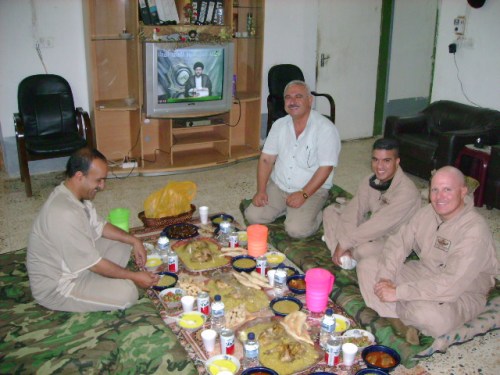
3 Comments

Filed under christian life, faith, iraq,afghanistan, Military, Political Commentary, PTSD, Tour in Iraq