Category Archives: Tour in Iraq

The Minstrel Boy: The Song of Souls Changed by War

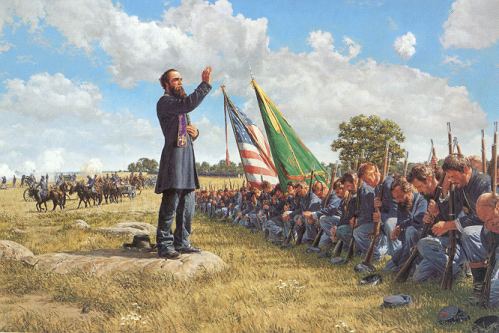
Fr Corby gives absolution to the Irish Brigade at Gettysburg

The Minstrel Boy (Thomas Moore)

The minstrel boy to the war is gone,
In the ranks of death ye will find him;
His father’s sword he hath girded on,
And his wild harp slung behind him;
“Land of Song!” said the warrior bard,
“Tho’ all the world betray thee,
One sword, at least, thy rights shall guard,
One faithful harp shall praise thee!”

The Minstrel fell! But the foeman’s chain
Could not bring his proud soul under;
The harp he lov’d ne’er spoke again,
For he tore its chords asunder;
And said “No chains shall sully thee,
Thou soul of love and bravery!
Thy songs were made for the pure and free
They shall never sound in slavery!”

The Minstrel Boy will return we pray
When we hear the news we all will cheer it,
The minstrel boy will return one day,
Torn perhaps in body, not in spirit.
Then may he play on his harp in peace,
In a world such as heaven intended,
For all the bitterness of man must cease,
And ev’ry battle must be ended.

(Last verse anonymous Civil War)

Three years ago I was in the process of returning home from Iraq spending my last couple of days in country before flying out to Kuwait and then the United States. I was already in a rather melancholy state knowing that the Chaplain incoming higher headquarters had turned off my relief for Al Anbar Province after I had paved the way for him with all of the teams of advisors that I had worked with during my time serving them. My relief a personal friend was diverted to the Army advisors with a different Iraqi Division in the north of the country. I felt that the incoming senior chaplain had betrayed and abandoned the men that I worked so hard to care for. Later I heard that he had disregarded my heavily detailed after action reports and told at least one senior chaplain that he “had heard that I was out there but didn’t know if I had done anything.”

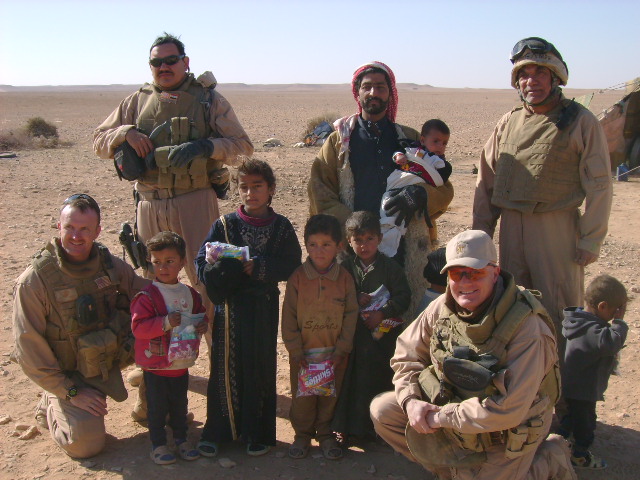
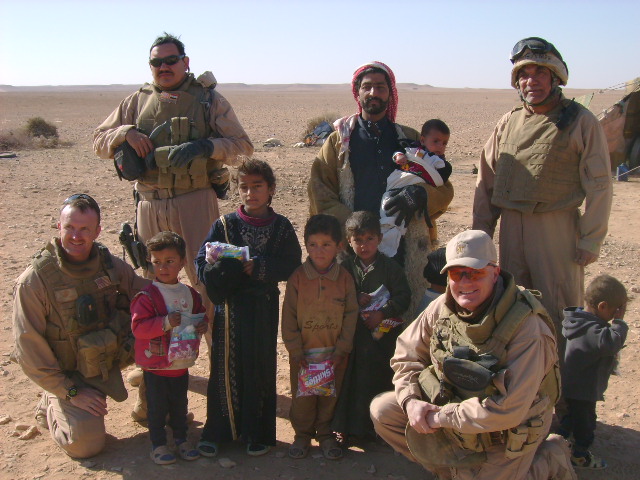
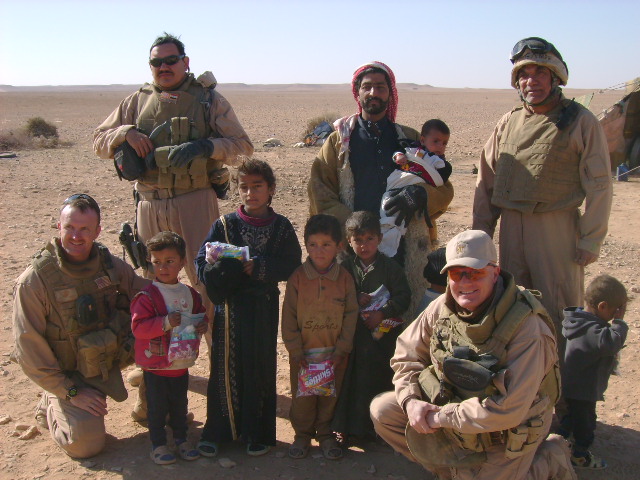
On the Syrian Border with members of a Border Team and Bedouin family

It was at that point that I realized that you could do your job and sacrifice yourself to complete a mission only to have someone with their own agenda do what they could to discredit you.  Where the senior Chaplain that I worked for did all that he could to support my team’s mission and see that we were properly recognized at Multi-National Corps Iraq in Baghdad his successor dismissed our work. It was the first time in my Navy career that I had experienced that.  I think it was the fact that I worked for a non-traditional billet working for an Army led joint command outside the normal Navy-Marine Corps chain was a big part of this. Inter-service rivalries and the distain of those bound by conventional thinking are not new and those that have done such non-conventional work have frequently been treated in a similar manner.

Looking back there are some songs which are particularly meaningful to me after my time in Iraq that send a chill up my spine when I hear them. One of these is the patriotic Irish song The Minstrel Boy written by Thomas Moore while a student in honor of friends killed in the Irish Rebellion of 1798.  The song was very popular among soldiers of Irish descent in the American Civil War as well as soldiers fighting in Irish Regiments in World War One and World War Two.

The song is powerful when you hear it for it speaks of the reality of war, war that changes those, even those that return home are not unchanged by it.  It speaks of the sacrifices required by those that go to war and even the effects on the community, the loss of young people.  The final verse added by an anonymous author during the American Civil War in a sense is a prayer, a prayer of return as well as reconciliation. It has been recorded a number of times including an instrumental during the film Blackhawk Down. Another rendition is in the telvision mini-series Rough Riders about the 1st U.S. Volunteer Cavalry at the Battle of San Juan Hill.

http://www.youtube.com/watch?v=un_AVYB-GI8&feature=player_embedded

My life has been changed and faith challenged. When I went to Iraq I still maintained a sense of idealism.   After Iraq and having to deal with PTSD and a psychological, spiritual and physical breakdown as well as a profound sense of abandonment by some senior chaplains, my former church and even God I am a different person. My faith which had been shattered to the point of being a practical agnostic for nearly two years has returned. I don’t regret that and do believe that it is a good thing. If we are not changed by what God allows or by what life brings I don’t think that we grow. As a Priest I wonder if I could work in the environment that I work without having gone through what I did.

I see many of the “minstrel boys” and girls of our era and having also been to war and come back changed the last lines of the final verse is a prayer that I echo. One of the versions that I particularly like is the one sung in the Star Trek the Next Generation episode “The Wounded.” While it is only the first verse it deals with the lives of two officers whose lives are forever changed by war. http://www.youtube.com/watch?v=RJudJ9S579A

This is dedicated to all those who have served who have gone through the pain of war and return until war shall be no more.

Peace

Padre Steve+

5 Comments

Filed under faith, film, History, iraq,afghanistan, Tour in Iraq, US Navy

Advent 2010: Looking Back, Looking Forward

Christmas Eve 2007 with Border Team and Bedouin family on Syrian Border

The Season of Advent and the celebration of the Incarnation of Jesus on Christmas and during the Christmas Octave is my favorite season of the Church year. I have always even as a child been mesmerized by the aspect of hope that is intrinsic to the celebration, the twofold emphasis on the time leading to the Incarnation of Jesus Christ, born of the Virgin Mary in the manger of Bethlehem and the personalities involved to the promise of the Second Coming which was considered the “Blessed Hope” by the early Church which believed that the event would occur during their time as has the Church in times ever since.

I think the most meaningful season of Advent and Christmas that I have known was my time in Iraq in 2007.  At the time I was travelling about the remote western regions of Al Anbar province with my trusty assistant RP2 Nelson Lebron.  We had been doing this kind of work at a steady pace travelling thousands of miles by air and ground to be with the Military Training Teams that were assigned to the 1st and 7th Iraqi Divisions and those of the Border Training Teams assigned to the 2nd Border Brigade as well as Army advisors assigned to the Iraqi Police and Marines working with the Iraqi Highway Patrol.  By the time we made our far west Christmas expedition which lasted almost two weeks.  The immediate days around Christmas were spent on the Syrian Border with the teams assigned to the 1st and 3rd Battalions, 3rd Brigade 7th Division and Border forces at COP South and COP North.

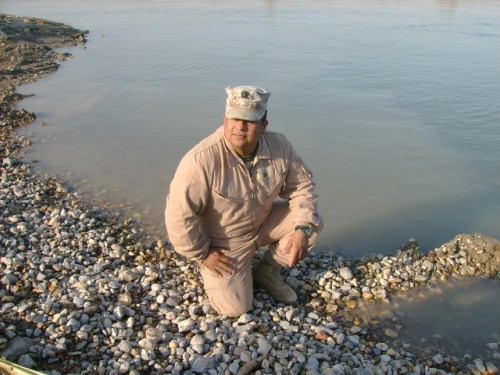
As we traveled the area with our teams, especially Captain Josh Chartier’s Military Training Team and Major Stan Horton’s Border team out of COP South I was taken in by the Bedouin camps that dotted the desert because in so many ways they lived a life so similar to the shepherds that received the angelic visitation recorded in the Gospel according to Saint Luke.  The Bedouin are nomads and travel where they can tend flocks or fields according to the season.  On December 23rd we traveled with Major Horton’s team visiting both the Bedouin in the area and the Iraqi Border Forces in a number of border forts along the Syrian border which at the time was a major conduit for money and arms being smuggled to Al Qaeda Iraq and indigenous Iraqi insurgents.  The Iraqi troops were most hospitable as were the Bedouin who hosted us in their tents or homes.  We delivered toys, candy and school supplies to the Bedouin kids and were treated to food and Ch’ai tea. Had it not been late and we had not had more sites to visit we would have taken the invitation of the head of one Bedouin family to have dinner with him.

That night we celebrated a Christmas Eve Eucharist a day early for the teams at COP South.  Since we were the only Religious Ministry team that spent any real time with the isolated teams like these it was a special occasion for all, one man in particular, one of the Iraqi interpreters, a Christian who had not been able to attend a Mass of any kind for over two years.  The next day we would travel 50 miles of often very rough roads and trails to the even more isolated COP North where we did the same for the members of those teams and had a wonderful Christmas day and eve with these Marines.

That was the most meaningful Advent and Christmas season I had ever seen. It was a season without all the bells and whistles, without all the commercialism and distractions to take away from the simplicity of the message that “when the fullness of time had come, God sent his Son, born of a woman, born under the law, in order to redeem those who were under the law, so that we might receive adoption as children” (Galatians 4:4-5) the simple message of redemption and the grace and mercy of God that has been shown to all people and is the heart of the season.

After my return from Iraq I experienced a major spiritual and emotional collapse related to PTSD which changed me in fairly significant ways.  For nearly two years I struggled desperately to recover faith that was lost after I returned home.  I was overwhelmed with the turbulence of the country, a disastrous series of splits in my old church, feeling abandoned by the Navy and dealing with the long, slow and painful demise of my father due to the ravages of Alzheimer’s disease. I am told that I am not alone in what I went through.  I begin this Advent having made the transition from my old church to the Apostolic Catholic Orthodox Church which is a North American expression of the Old Catholic faith and I am quite at peace with that move.

After nearly two years faith returned during Advent due to an event in the Medical Center that I worked in where I provided the last rights to an Anglican patient as he drew his last breathe in our ER. I call it my “Christmas miracle.”   https://padresteve.wordpress.com/2009/12/24/padre-steve%E2%80%99s-christmas-miracle/

It was ironic and fitting that my spiritual rebirth came in the midst administering the Sacrament of the Anointing of the sick.  Faith has returned and unlike last year when in the midst of my personal gloom and despair I rediscovered faith and the wonder of the season I look forward to the fullness of the season.

I don’t know how much I will write about the season this year, certainly some articles but I do look forward to the continued rediscovery of faith in the Incarnate God.

Peace

Padre Steve+


1 Comment

Filed under christian life, faith, PTSD, Religion, Tour in Iraq

Raw Edges: Are there other Chaplains out there Like Me?

Before a Convoy

The past week or so I have had to go back and revisit my Iraq experience. Part of this is due to work, we have had seminars on the spiritual and moral affects of trauma, the challenge of forgiveness and most recently discussing best spiritual care practices for those who suffer from PTSD or Traumatic Brain Injury (TBI).  The training has been excellent but has kicked up a lot of stuff in me.  Added to this have been reports out of Afghanistan about more casualties in particular of a helicopter that crashed that killed 9 Americans, the Taliban claim credit for downing the aircraft but the circumstances are not fully known.

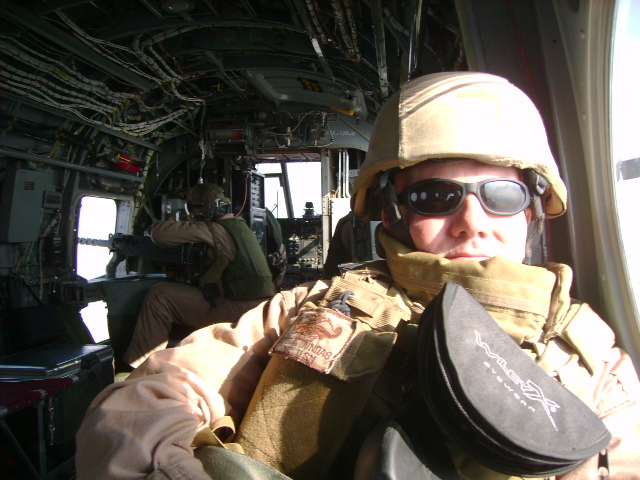
One of many helicopter flights, this a daylight flight in a Marine CH-46

The course last week on the spiritual and moral affect of trauma and the challenge of forgiveness brought up issues from Iraq but not upsetting.  In fact the seminar taught by Dr. Robert Grant author of The Way of the Wound was helpful to me in sorting out what I have been going through for the past couple of years.  The training this week is also good, good information but for me it is more unsettling because it deals with images, videos of convoys, burning vehicles and other things like that.  The convoy images coupled with the news of the helicopter crash actually had me pretty shaken as I spent a large amount of time in small convoys with small groups of Americans and Iraqis in pretty dangerous areas of Al Anbar Province stretching from Fallujah to the Syrian border as well as a couple of hundred hours in the air, usually at night in various Marine and Army helicopters as well as the MV-22 Osprey.  During those experiences we took fire a couple of times and had a few experiences on some of our flights that were a bit sporty.  So for a while I was lost in my own stuff but was able to pull out in not too long of time.

Convoy stopped near Al Qaim

Some of our discussions revolved around how trauma and war can impact a person’s image and relationship with God, whatever that may be.  The focus was on us as pastoral care givers caring for those in our charge.  Once again this really good information for me as I will be dealing with a lot of PTSD and TBI cases are Camp LeJeune.  But there was one thing that got me.  I came back from Iraq as most of my readers know in pretty bad shape dealing with PTSD and issues of abandonment feeling disconnected with the Navy and my church.  Part of that was what amounted to be a loss of faith so severe that I was for all practical purposes an agnostic for almost two years because I couldn’t make sense of anything to do with God, I felt God forsaken it was to use the image of St. John of the Cross, my Dark Night of the Soul.  I am doing better now and feel like my faith has returned to some degree, certainly not like it was before but while I have doubts I am okay with that part of the journey now.

Christmas Eve not far from Syria

I know a number of military Chaplains from the Navy and Army that have returned from Iraq or Afghanistan in some sort of faith crisis many suffering from PTSD or TBI.  I am actually wondering how many are out there.  I know that I am not alone, but I need to know if others are going through this experience too.  It was for me a desperate feeling to be the Chaplain, Priest, Pastor and spiritual care giver when I was struggling having no answers and only questions, when people asked me about God and I didn’t even know if God existed.  This is the unspoken cry of at least some and possibly quite a few Chaplains and other ministers who have experienced trauma and moral injury.  One thing my incoming CO at my old unit asked me was “where does the Chaplain go for help?”  At that point I said that I didn’t know.  The sad thing is that I know many chaplains and ministers that have a basic lack of trust in their fellow clergy and do not feel safe confiding in them because they feel that they will be judged, not listened to or blown off.

A different war with the Bedouin in the western desert of Iraq about 5 km from Syria.

When I was diagnosed with PTSD in the summer of 2008 I made it my goal to grow through this and hopefully as I go through this to be there for others. Part of my recovery came through sharing experiences, the good and the bad on this site.  Elmer the Shrink asked me back when I started this if I thought that it would be helpful to me in my recovery, but he also asked if I was okay in opening up about this topic.  Since I didn’t see many people writing about this from the perspective of being a “wounded healer” I told him that I thought that I had to do it.  The experience has been terribly painful but at the same time I think that it has been worth it because as a Priest and Chaplain I think now more than ever in my weakness I can be with people in their difficult times without trying to “fix” them.

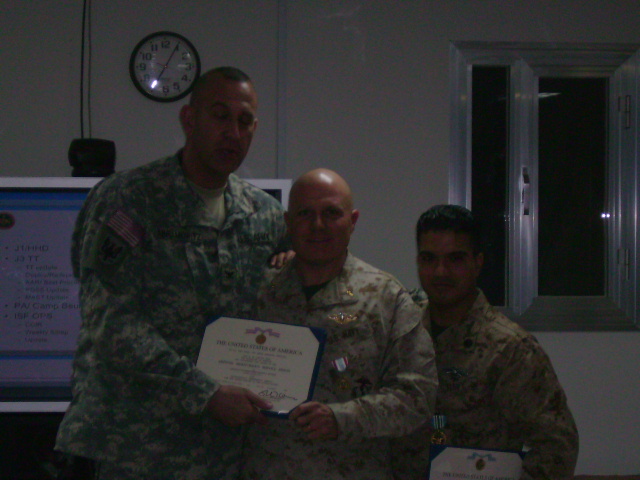
Colonel David Abramowitz with me and RP2 Nelson Lebron after presenting me with the Defense Meritorious Service Medal and Nelson the Joint Service Commendation Medal for our service with our advisors and Iraqis in Al Anbar with the Iraq Assistance Group. After this we both dealt with abandonment and other issues on our return home.

So who is there for “damaged” Chaplains? Who takes care of us? I was lucky or maybe blessed. I had Dr Chris Rogan ask me if I was okay. I had Elmer the Shrink do a lot of the hard work with me. At Naval Medical Center Portsmouth I had a Command Chaplain that was wise enough to protect me while I went through the deepest and darkest valley of my life.   As I recovered he challenged much like a Baseball Manager would challenge a pitcher who had been very successful on other clubs coming off the disabled list to regain his self confidence and ability to get back on the mound with a winning attitude. Not every Chaplain gets what I got and I am blessed.  I still have work to do and I need to recognize my limits, much as a pitcher who has recovered from Tommy John surgery makes adjustments.

So this is my question:  Are there others other there like me?  Are there other Chaplains experiencing such feelings after Iraq or Afghanistan? I’d really like to know because I believe that in what might be termed “a fellowship of the forsaken” that we can rediscover faith, belief and hope again and in doing so be there for others.

If you want please let me know if this encourages you or feel free to comment. Prayer is still hard for me but I promise that if someone asks that I will pray and to the best of my ability be available for them as others were for me because I don’t want any Chaplain to experience the abandonment that I felt went I returned from Iraq having felt that it was the pinnacle of my military career. To those Chaplains I just want to say that you are not alone.

Peace

Padre Steve+

4 Comments

Filed under faith, iraq,afghanistan, Military, Pastoral Care, philosophy, PTSD, Religion, Tour in Iraq, US Navy

Going to War: The First Mission Flying West in a C-130

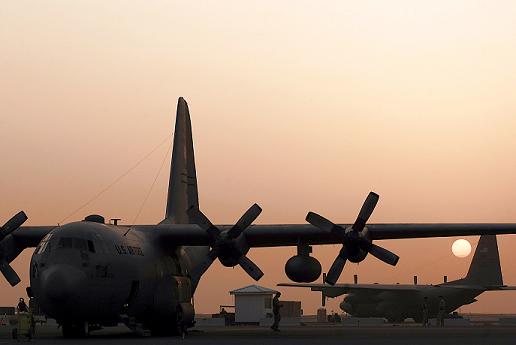
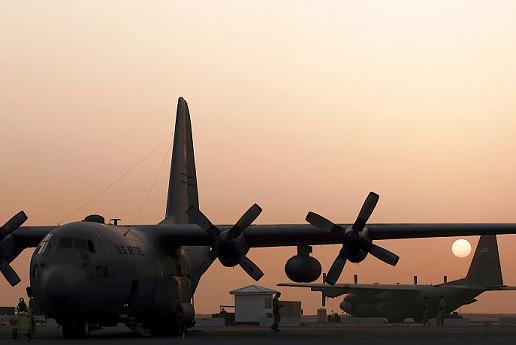
Workhorses: C-130s at an US Base in Iraq

This is another installment of my “Going to War” Series that I began last year.  In the Fall I had to take a break from posting anything more due to issues that I was having dealing with the effects of PTSD. I started this article in the spring but again put it on hold.  I have reached the point that I can again write about this. I will post follow up articles about our operations and experiences supporting our Marine Corps, Army and Joint Service advisor teams in Al Anbar province. The previous posts as well as others dealing with Iraq are filed in the “Tour in Iraq” link on the home page. The direct link to these articles is here: https://padresteve.wordpress.com/category/tour-in-iraq/

Nelson and I continued to prepare in the days leading up to our first mission to the Border Port of Entry at Waleed on the Syrian border with a planned follow on to the teams of the 3rd Brigade, 7th Iraqi Division at Al Qaim about a hundred miles to the north .  Waleed is about 350 miles west of TQ and 70 miles from the nearest FOB with any substantial American presence known as Korean Village or simply KV. We were in constant communication with the team that we to visit via VOIP and SVOIP telephone and secure and non-secure e-mail. The commander of the Border teams, which included Border and Port of Entry adviser teams was Lieutenant Colonel Bien.  Our mission in getting out to the furthest point west was to meet up with an incoming and an outgoing Port of Entry team and see what we could do to get out to other posts along the border.

Nothing in Iraq is easy.  The get out to Waleed we had to make a two day trip from TQ, through Al Asad out to Waleed.  Our flight out was a day flight on an Air Force C-130 to Al Asad.  Our contacts in the G3-Air at 2nd MLG were good in helping me figure out the Air Force flight request which was different than the normal Marine Air Support Request.  For this mission I had to submit two Air Force and three Marine Air Support requests.    Simply submitting a request does not guarantee a flight. Flights are based on precedence dictated by the overall mission.  Religious support was pretty high on the list but there was no telling that your flight would go until you had your approval message and even then things could change.  The actual missions were not known until about midnight the night prior to the flight. So if you were a frequent flyer it meant no sleep the night before a mission as you waited to see if you were approved.  This was my first time actually having to do this for real so I sat at my secure laptop in my office in the back of the TQ plywood Cathedral waiting for the flight list to be posted on the MLG G3 Air Secure Website.  Finally about 0100 the list popped and our first flight was on in.  It was a mid day flight which meant that we needed to be at the passenger terminal about 0930.  This entailed getting our ride from the Chapel to the terminal by 0900.

I told Nelson who was checking his e-mail on a computer in the RP office that it was a go and then headed off to my can to prepare.  Since most of my gear for the 10 day trip was already packed I tried to actually get ready to sleep.  I quickly found that simply being tired because I was up late was not enough to help me go to sleep.  I was really tired but the adrenaline was coursing through my body making it impossible to sleep.  I prayed the office of Compline and then played computer Ma-Jong until at least 0300 before I could finally pass out.  I was up early to shower and get breakfast before lugging my gear over to the chapel.  The weather as usual was about 100 degrees by the time I got back from the chow hall; I gathered my gear and went to the chapel.  I took my back pack, my laptop and a flight bag. I would learn on this mission that I would need to pack lighter the next time around, but live and learn.

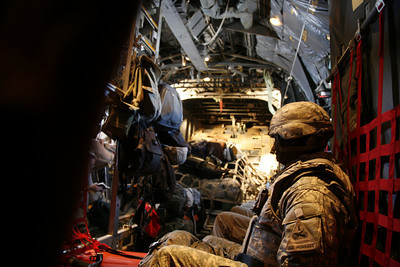
The first leg of our trip was on an Air Force C-130 from TQ to Al Asad which we shared with a large number of previously unknown friends from every branch of service in the US military as well as various civilians and contractors.  All of us had our personal protective equipment as well as our bags. The bags that we did not want to lug were placed on pallets and transported with a large fork lift to the aircraft.  When you make one of these trips you are accounted for a good number of times before ever getting on the aircraft.  This first mission was still in the heat of the Iraqi summer and thus the temperature inside and outside of the aircraft was stifling.  We staged off the tarmac in the sun for a final role call and then in two lines who guided out to our aircraft which had just landed.  As we were trudging out to the aircraft two lines of assorted passengers primarily Soldiers and Marines passed us mid way to the aircraft.  As we neared the aircraft the propeller blast blew the hot air into our faces and I thanked God for the high speed Wiley-X ballistic sunglasses that I had been issued by EOD.  Entering into the aircraft we had to step up onto the cargo ramp and then took our seat in the narrow canvas mesh jump seats that lined both the side of the aircraft and the center.  The rear of the aircraft including the cargo ramp was used for several pallets of cargo including the bags that we elected not to carry.  Sitting in the aircraft and waiting for the pallets to be loaded I thought back to my early career as an Army Officer where I became an air-load planner and embarked my soldiers on six C-130s during Winter REFORGER 1985.  Back then instead of the 130 degree heat of Iraq we faced the coldest winter in 40 years in Europe in which the Rhine froze over.  Although the use of computers has become routine in load plans the principles are the same as they were 25 years ago and everything on the aircraft needs to be properly balanced to ensure the stability and safety of the aircraft and that weight limits are not exceeded.  As the sweat poured off of me I took off my helmet and downed part of the one liter bottle of water that I carried onto the aircraft and threw some on my face, though warm it was refreshing and I reattached my helmet as the aircrew came through the cabin giving a final safety brief.

As the last of the cargo pallets were loaded about the aircraft the cargo ramp was raised, the entire time that the aircraft was on the ground was under 15 minutes, it is amazing what the Marine and Air Force ground crews and cargo handlers can accomplish.  With the ramp raised the aircraft’s air conditioning began to take effect and though not the coolest air conditioning it was better than what we had up to that point. The aircraft began to roll and move down the taxiway and when it reached the end of the taxiway it made a fast turn and began its take off.  Since there was a real and present danger of possible missile or gun attacks on low flying aircraft the C-130 made a steep lift off and banked right over Lake Habbinyah and continued its ascent until it reached its cruise altitude.  The C-130, like any cargo aircraft is extremely loud and because of this hearing protection is worn by passengers and crew and conversation is nearly impossible.

The flight from TQ to Al Asad is only about 30 to 45 minutes depending on the route taken so most of the passengers took the opportunity to grab a bit of sleep or read.  Nelson and I sat together on the starboard side of the aircraft not far from the palletized cargo.  Nelson who can sleep almost anywhere on a moment’s notice was out quickly; and although I was tired I could do little more than close my eyes and try to clear my mind.  When we neared Al Asad the aircraft banking nearly perpendicular to the ground made a steep and fast approach.  As we landed I could see other aircraft on the ground including F-18’s, various transports and rotor wing aircraft.  The C-130 taxied to a spot on the tarmac where the ramp was dropped and we were instructed to exit the aircraft and led to the rear of the aircraft about 50 yards and then led between it and another aircraft to a group of tiny Japanese made Nissan and Mitsubishi buses in which we were loaded until every seat was full including the in aisle jump seats.  Packed into the bus like sardines and smelling almost as bad we sucked in the stench, which was somewhat like a European elevator in the 1980s.

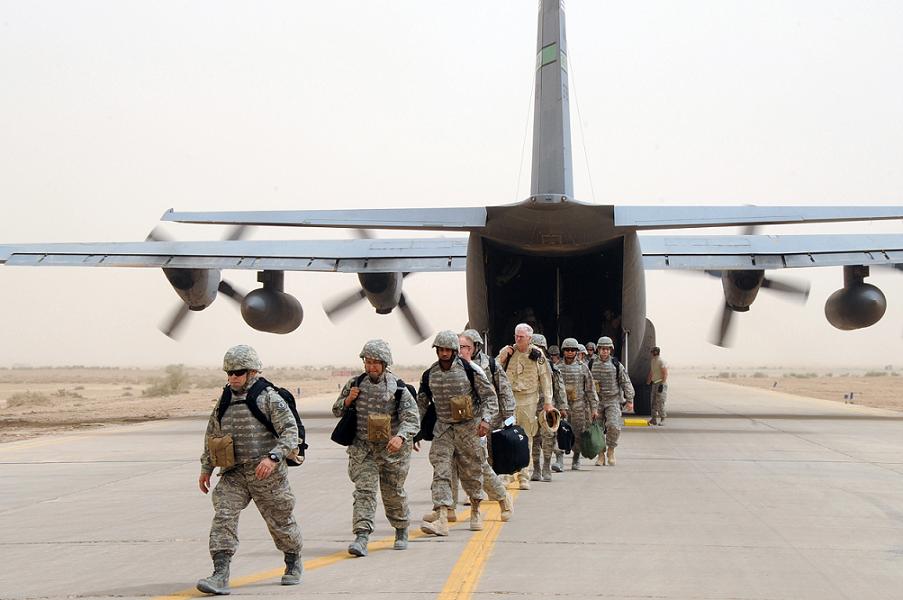
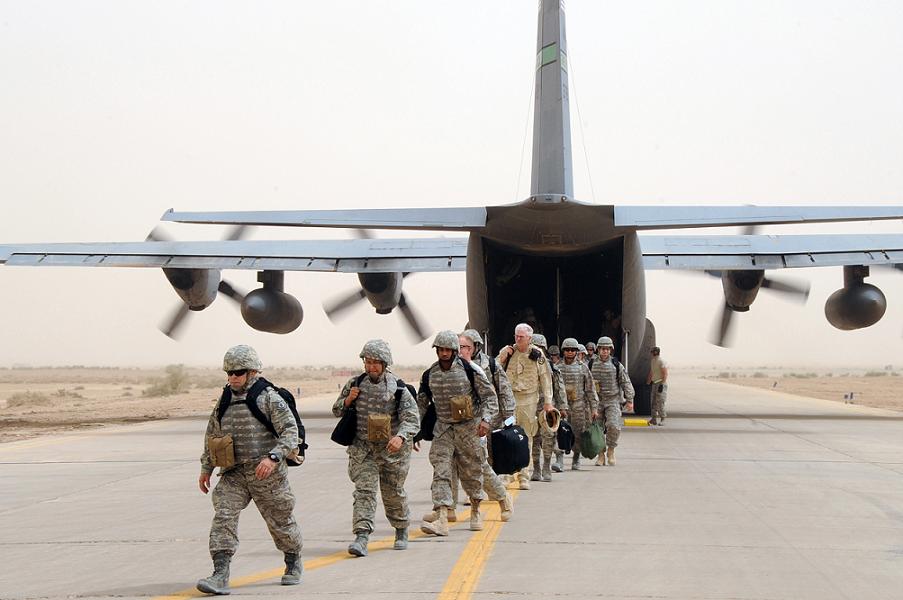
Passengers disembark from a C-130 at Al Asad

After a short ride to the terminal we picked up our gear which had been delivered on the pallets by forklifts.  Another muster was taken and after all personnel were accounted for those of us waiting on follow on flights checked in at the terminal.  After being accounted for we got our temporary billeting in large tents about a hundred yards from the terminal.  The tents were large and poorly lit with plywood floors and several air conditioners built into the sides of the tent.  The bunks were in very poor condition, many broken and even more with dirty worn out mattresses sagging in the middle.  Nelson and I looked at each other and Nelson made some comments about the accommodations and we each found a bunk grounded our gear and settled in for a bit in order to clean up before trying to go get some chow.

Next: Air Travel In Al Anbar: the California Line.

Leave a comment

Filed under iraq,afghanistan, Military, Tour in Iraq

29 Years in the Military and still Going Strong

“It’s a mere moment in a man’s life between the All-Star Game and an old timer’s game.” Vin Scully
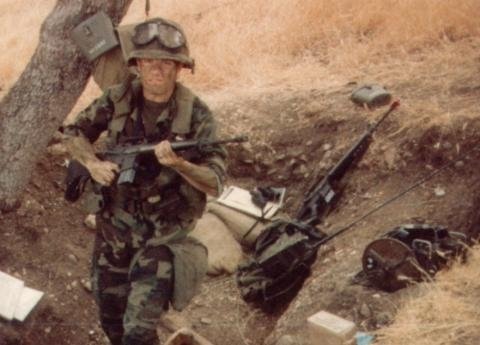
Padre Steve in 1982

They say that “time flies when you’re having fun” and I cannot believe that I have been in the military now for 29 years. On August 25th 1981 a 21 year old college kid with long Southern California “surfer” hair walked into the California Army National Guard Armory on Van Nuys Boulevard to enlist in the National Guard after having just sworn into the Army ROTC program at UCLA.   Back then I enlisted in what was or is called the Simultaneous Membership Program or SMP program.  My initial military training came through the ROTC program as well as on the job training in the National Guard as a Field Artillery Forward Observer and Intelligence Specialist.

Like Cal Ripken Jr commenting about his career “So many good things have happened to me in the game of baseball. When I do allow myself a chance to think about it, it’s almost like a storybook career. You feel so blessed to have been able to compete this long.” I can say the same thing just substituting the words “military career” for “the game of baseball.”

On the day that I enlisted I met with Major Charles Armagost the S-1 of 3rd Battalion 144th Field Artillery and full time advisor for the battalion filled out my enlistment papers and raised my right hand. I still remember the day when I enlisted. It was a hot smoggy Los Angeles day where you could see the air.  I walked down the hall after I swore in to see the supply Sergeant who outfitted me with four sets of Olive Green fatigues and ordered me two sets of the brand new BDUs.  I was issued my TA-50 gear and taken to the motor pool where I was given cursory training on the M151A1 “Jeep” and issued a military drivers license.  The three weeks later I was driving one of those venerable machines to Fort Irwin on a Friday through Sunday drill with the advanced party. It was the beginning of a 29 year career spanning two services, the active and reserve components and now multiple trips to combat zones.
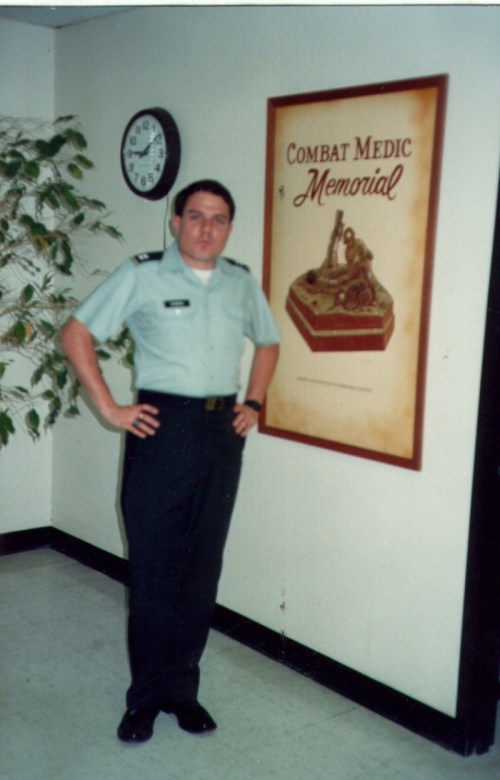
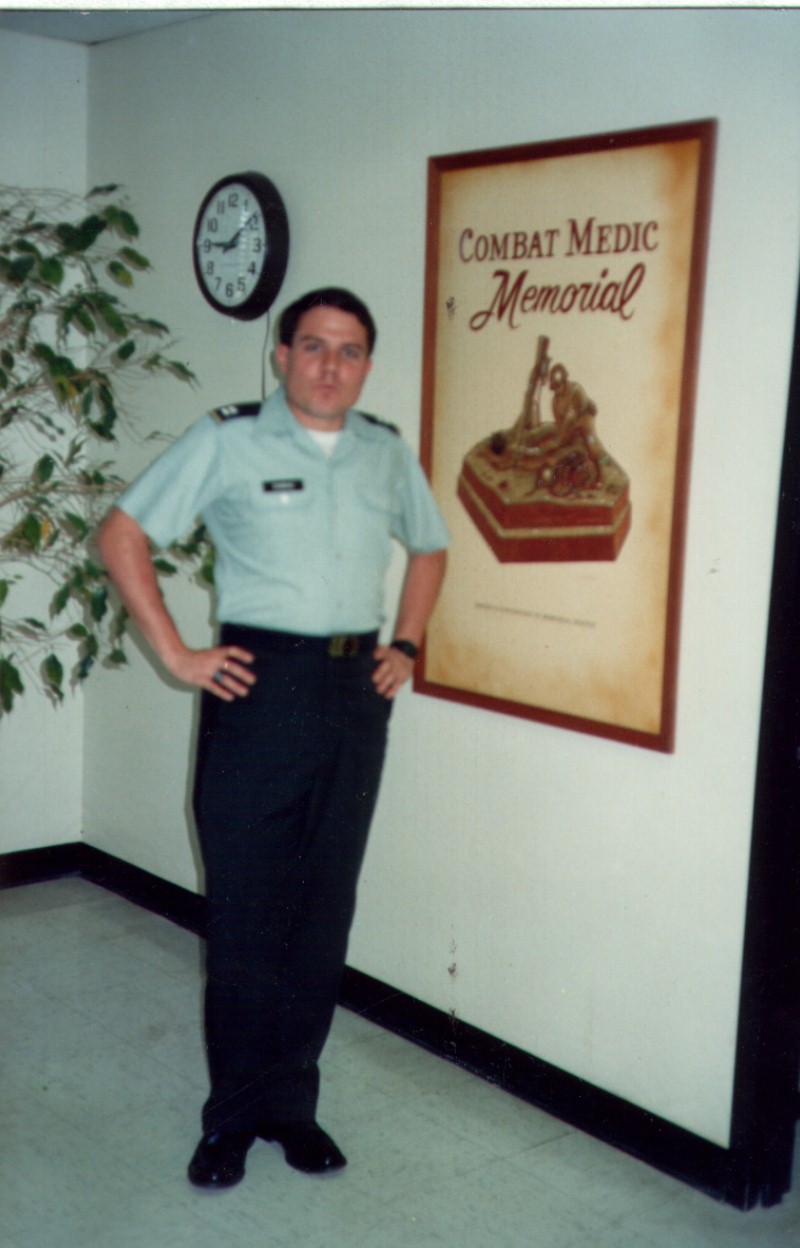
Army Captain 1987

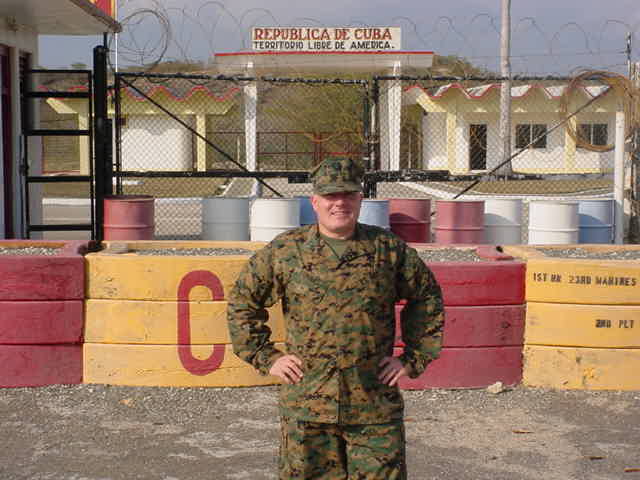
It has to quote Jerry Garcia of the Grateful Dead “a long strange trip” spanning the Army and the Navy, active and reserve components as well as two tours with the Marine Corps while serving in the Navy and the beat goes on with my selection for promotion to Commander and my Senate nomination to that grade on August 21st.  I have served on the Fulda Gap in the Cold War, been to what was then East Berlin driving the Helmstedt-Berlin corridor sharing the road with Soviet armored columns.  I supported the Bosnia Operation in 1996-97 and the Korean DMZ with the Marines in 2001. I served in Operation Enduring Freedom and Southern Watch in 2002 where I was on a boarding team, boarding 75 Iraqi and other country smuggling ships while serving aboard the USS Hue City.  That was followed by multiple trips in and out of theater with the Marine Security Forces from 2003-2006 as well as time on the Cuban fence line at Guantanamo Bay before serving in Iraq with our Marine and Army advisors and their Iraqi Army and Security forces.  I’ve served with Infantry, Armor, Combat Engineer, Artillery, Medical and Ordnance units, Security forces, support elements, bases and training centers, hospitals and ships.
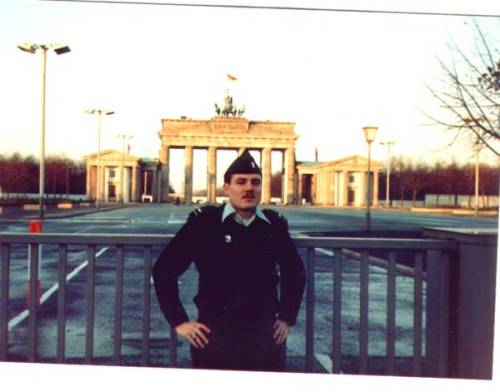
Berlin Wall November 1986

When I enlisted I thought that once I was commissioned that I would serve my entire career in the Army and retire as a Lieutenant Colonel. I did not anticipate becoming a Chaplain nor leaving the Army for the Navy. When I am officially promoted to Commander it will be the first rank since I was an Army First Lieutenant that I have not held twice.  When I first enlisted and had no ribbons I used to look at wonderment at the Korea and Vietnam veterans who had tons of ribbons and tell Judy that I wish I had what they had. Now that I am working on 9 rows of the things I cringe every time I have to remount ribbons and ribbons and my wallet screams in agony.  Judy is quick to remind me of my whininess back then and tell me that I asked for it.
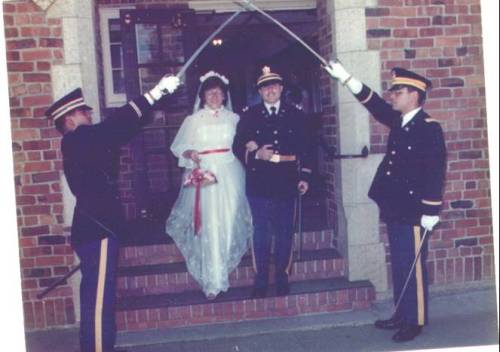
She didn’t know what she was getting into

As an Army and Navy Officer I have served or done some kind of military duty in Germany, France, Great Britain, Greece, Italy, Croatia and Turkey, Spain, Malta, Korea, Japan, Jordan, Bahrain, Kuwait and Iraq.  I’ve done what I call the “Commie Trifecta” the Berlin Wall, Korean DMZ and the Cuban Fence Line. At the same time I have spent 16 of 27 wedding anniversaries away from home and lost count of birthdays and other important occasions that I missed while serving the country.

Guantanamo Bay Cuba 2004

I have served 5 different Presidents. In that time I have seen changes in the political, social and economic conditions of the country and the world that I could not have imagined at the time of my enlistment.  The Soviet Union had just invaded Afghanistan and the Iranian hostage crisis had just ended but within the Soviet Union had been defeated the Berlin Wall taken down and collapse of the Soviet Union.  Twenty years after I enlisted the people that defeated the Soviets were attacking us on our own soil.

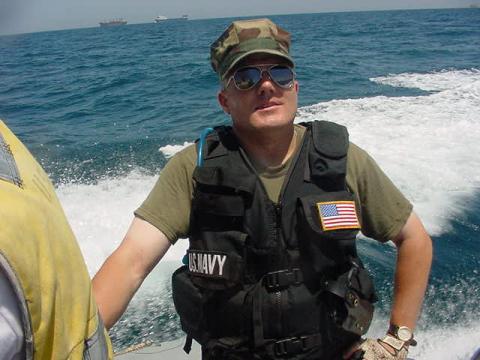
Boarding Party Arabian Gulf May 2002

I lived in Europe and went through the Chernobyl radiation cloud which is obviously the cause of my glowing personality.  While in Europe I ate enough beef to be labeled by the Red Cross as a potential carrier of Mad Cow disease. I worked on military personnel policies at the beginning of the AIDS epidemic and saw the beginning of Don’t Ask Don’t Tell policy.  I saw the Reagan build up and the post Cold War drawdown.  When I was a Company XO and Company Commander we had landlines and typewriters with carbon paper and did not get internet in my office until 1997.  It is hard to believe the changes even in the quantum leaps in computer and communication technology in the past few years where I can check e-mail on my Blackberry and work from almost anywhere with my laptop.

With Advisors and Bedouin on Iraqi-Syrian Border December 2007

Looking back here are some of the things that I have seen since I entered the military:

October 23rd 1983: Beirut Bombing: BLT 1/8 barracks and French 1st Parachute Regiment destroyed by suicide bombers 241 Americans and 58 French Paras killed.  I was at the Junior Officer Maintenance Course at Fort Knox watching CNN late at night when they broke the news.

December 12th 1985:  Arrow Air Charter Boeing 707 crashed in Gander Newfoundland killing 248 American Soldiers returning from Peacekeeping duty in Sinai Peninsula. Among the dead was Sergeant Charles Broncato who had been one of my Squad Leaders in 2nd Platoon 557th Medical Company Ambulance. I was then serving as the Company Commander.

January 28th 1986: The Space Shuttle Challenger blows up 73 seconds into flight killing 7 Astronauts.  I was in my office at the close of the day getting ready to adjudicate an Article 15 when my Charge-of Quarters SPC Lisa Dailey ran into my office and said “Lieutenant Dundas, the Space Shuttle just blew up!” My response was “Come on, Space Shuttles don’t blow up.”

February 15th 1988: The Soviet Union withdraws from Afghanistan. I was a National Guard Officer in Texas attending Seminary and thought this was a good thing.  Now I wish that they had done better and at least killed Osama Bin Laden, then a relatively minor commander.

December 21st 1988: Pan Am 103 downed by Libyan operatives over Lockerbie Scotland killing all 270 passengers and crew. The aircraft a Boeing 747 named the Maid of the Seas was the same aircraft that we had flown home from Germany on December 28th 1986.

October 17th 1989: the Loma Prieta Earthquake causes massive damage in San Francisco and Oakland. I was watching pregame activities of game 3 of the World Series between the A’s and Giants on television when it happened.

November 9th 1989: The Berlin Wall Fell. In November of 1986 we had been to East Berlin and like most Americans never thought that we would see this day.

August 2nd 1990: Iraq Invades Kuwait: At time few people believe it well end in war. I was deputy course leader for Army Chaplain Officer Basic Course, tell my classmates to get ready to go to war.

December 31st 1991: The Soviet Union is dissolved.

April 19th 1993: FBI and other Federal Law Enforcement personnel using Combat Engineering Vehicles from the 111th Engineer Battalion, the unit that I serve as a Chaplain assault the Branch Davidian compound outside Waco Texas. Davidian leader David Koresh and dozens of followers die in fire and shoot out.

June 17th 1994:  Police arrest O. J. Simpson after nationally televised low speed chase charging him with murder in the death of his wife Nicole and Ronald Goldman. NBC splits screen between NBA championship series game between Houston Rockets and New York Knicks and the chase. I watch in back of M577 Command Vehicle on 9 inch television in the field at Fort Hood.

August 12th 1994: Baseball strike cancels season, playoffs and Worlds Series.

April 19th 1995: Timothy McVeigh and Terry Nichols blow up Alfred P. Murrah Federal Building

January 26th 1998: Bill Clinton states that “I want you to listen to me. I’m going to say this again: I did not have sexual relations with that woman, Miss Lewinsky.”

December 31st 1999: The world awaits the end of life as we know it due to the Y2K flaw sthat supposedly causes computers to malfunction and bring calamity to the earth.

January 1st 2000:  People including me wake up from hangovers to find that computers still work.

September 11th 2001: Al Qaeda terrorists hijack four commercial airliners crashing two into the World Trade Center Towers in New York collapsing them and one into the Pentagon. A fourth is brought down by passengers before it can reach Washington DC and its target, the US Capital killing 2976 people and injuring another 6000+. I am at Camp LeJeune North Carolina and remained locked down on base the next 4 days.

March 19th 2003: US and Allies launch attack on Iraq known as Operation Iraqi Freedom to remove Saddam Hussein from power and disarm his stocks of weapons of mass destruction. I am assigned to USS Hue City and the ship is in dry dock. The rest is history.

I also saw a lot of baseball mostly from afar, Pete Rose’s epic hit, Cal Ripken’s consecutive games record, Nolan Ryan’s 5000th strike out and 7th no-hitter as well as all of the now steroid tainted home run records including Barry Bond’s 756th home run which I saw live in a chow hall in Baghdad.

Somehow it is all worth it. Judy has not divorced me although I have probably given her reason on more than one occasion to do so and I love what I do and the people that I get to serve. It really is amazing to look back and think about all the events that I have either witnessed or been a part of in the military as well as all of the great people that I have been associated with. Those friendships and relationships mean more than about anything to me and I am grateful to God and to Judy, my family and all of my friends who have helped me, sometimes in very dark times to go as far and as long as I have in both the Army and Navy.
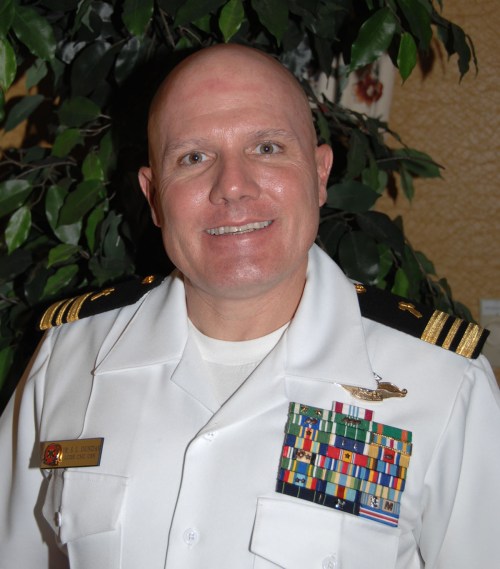
I was selected for promotion to Commander in June and confirmed by the Senate on August 23rd. I now am about to enter a new phase of life, military service and ministry as the supervisory Chaplain at Naval Hospital Camp LeJeune North Carolina.  Lord knows what the future hold, but whatever happens I feel that things will be fine.

I hope that whatever you do that you will experience good things and be able to look back in life and say “wow that was something else.” So here is to all of us and the long strange trips that we embark upon in life.  In the words of Lou Gehrig, “I am the luckiest man alive.”

Peace,

Padre Steve+

Leave a comment

Filed under Baseball, History, Military, Tour in Iraq, US Navy

Rehab Assignments

There are times in life that many of us experience some kind of injury; physical, emotional or spiritual that puts us in the position that we cannot function at the level that we are accustomed to doing. For some people this might be the result of some kind of traumatic event, perhaps a serious illness or physical injury or even something that causes us to lose faith in God or in whatever higher power that we ascribe meaning in our life.

As any regular reader of this site will recognize I interpret or frame much of my life experience through baseball and baseball analogies. In my case I frequently frame that through pitchers or older ball players that have encountered injury or rough spots in their careers.  I think about pitchers a lot because the craft of pitching involves such a degree of connection between the physical and mental dimensions of the game.  There are many times when a pitcher suffers a physical injury that requires changes in his delivery or the kinds of pitches that he throws.  When this happens it also affects his mind as he may lose confidence or over think what he is doing as he tries to make adjustments, also while experiencing residual physical pain.  Some pitchers are able to make the adjustment, for others the adjustment is more difficult and they are not as effective as they were previously. Still others either cannot recover from the physical injury or never make the adjustments and end up out of the game.

Those that experience injury as they recover are sent back to the minor leagues, or if they are in the high minor leagues to a lower level league in order to get back to the level that they were before the injury.  Even when they get back to the majors or to triple-A the pitching coach and manager may still go easy on them in order to ensure they are 100% and do not re-injure themselves.  This is called a rehab assignment and it is part of the game.

In the military we seldom get that chance unless the injuries are so significant that we need to put on some kind of limited duty and a placed in a non-deployable status until they are considered fully fit for duty. I returned from Iraq in February 2008 with several nagging chronic physical injuries to my ankles, knees and shoulders and an elbow which coalesced to sideline me from much physical activity. Even worse I was dealing with PTSD which was not recognized or diagnosed until late June of 2008 when I was falling apart having flashbacks, night terrors, chronic anxiety, insomnia and moods that alternated from anger to despondency.  When I left EOD Group Two I for my assignment to Portsmouth Naval Medical Center I was still in denial of sorts, though I knew that I was in ragged shape I went into the assignment trying to act as if and perform as if I was uninjured.  I threw myself into the job pouring working on the average 65-75 hours a week for almost a year mostly on the ICU and PICU before my boss finally stopped me and put me on more administrative duties with minimal clinical duties and plenty of time to get back in physical, emotional and spiritual shape.  Not many senior officers would give a subordinate that kind of grace nor would they rate an officer under them with an eye on their potential versus what they were doing for them at the moment.  Mine did, I will be forever grateful to Chaplain Jessie Tate for giving me that grace.

Eventually his patience as well as my hard work and a lot of God’s grace were rewarded. Things started to turn around in December of 2009 in what I call my “Christmas miracle.”   Slowly my physical injuries healed and I can now say that I am in as good or better shape than when I went to Iraq. I had to make some adjustments to my physical training regimen as well as confidence to believe that I was not going to re-injure myself.  My mindset in my physical training went from timid to confident as I gained in strength, speed, dexterity and endurance.  This was coupled with the loss of 16 pounds and a body fat percentage that went from 32% (when I ballooned from 167 to 194 pounds between April and November of 2009) down to 22% as of last week.  Spiritually I began to believe again. Most of the time after Iraq I struggled with faith sometimes even doubting the existence of God or at best feeling alienated and rejected by him and many of his people.  My spirituality has changed as has the way I approach my faith being much less doctrinaire to relational focusing on the grace, love and mercy of God and to trying to show that to others as St Francis said “preach the Gospel at all times, use words when necessary.”  Psychologically I was able to come to grips with my PTSD and make the adjustments that I needed so that I might be able to function.  I am much more in touch with feelings and what is going on in me than I was before and my observation of other people has improved, I guess once a person has had everything fall apart that they become more sensitive even to the unspoken things when they are around others.

In a sense this assignment became a rehab assignment for me. I was able to come back and become not only functional but able to be in the game again.  When I was selected for promotion my boss had no hesitancy in nominating me for the supervisory Chaplain at Naval Hospital Camp LeJuene. I can see the future again and it is good.  My plan was for Portsmouth to be an “All-Star” game for me where my clinical and academic skills would enable me to be a water walker but it was different, it was a fight to remain in the game a fight to regain confidence, overcome injury and return to relatively normal life.  My rehab assignment is over and I am back in the game performing at a level that I expect.

For those that are in similar circumstances I hope that you have a boss with the grace to help you through the difficult times and not abandon you as “broken” or of little use to the organization. I know that happens in the military and outside of the military, even in churches.

Peace and blessings,

Padre Steve+

2 Comments

Filed under Baseball, christian life, faith, Pastoral Care, philosophy, PTSD, Tour in Iraq

Thoughts on the Occasion of getting ready to Transfer

Two years ago I was preparing to leave EOD Group Two and getting ready to move over to Naval Medical Center Portsmouth.  At that point in my life I was falling apart. The ravages of PTSD, depression and chronic pain from shoulder, knee and ankle injuries sustained in Iraq had taken their toll. Chronic anxiety, flashbacks, night terrors, vivid and disturbing dreams of Iraq, nearly uncontrollable emotions that ranged from intense sadness complete with that girl thing of crying to intense anger and rage, especially in traffic were a daily staple of life. Fear of large crowds, noise and light sensitivity panic in airports and fear of new places brought me more isolation and pain.  I went to the new assignment with trepidation but with a desire to make an impact.

When I got to Portsmouth I did my best to cover up the affects of PTSD and everything else that I mentioned in my life for the sake of work. I threw myself into the job; especially the patient and staff care aspect of it.  I worked painfully long hours usually due to my own need to know that I was still of some use despite all that was wrong with me and I ended up getting worse and not better.  I was in therapy and most of my colleagues and my boss tried to take care of me although I’m sure that they probably wondered if I was salvageable at times. I am thankful for their support as it was needed and vital to getting me through but I still sunk down deeper into the abyss.  Nothing was getting better and I even doubted if God was even around, or if he was around if he even gave a damn about me. I was experiencing what I am now not afraid to call, not just PTSD but let me call it what it is, mental illness.  In addition I was in a full-fledged crisis of faith. During the year I had experienced the loss of a number of friends and colleagues and each one deeply affected me plunging me deeper into depression. Christmas of 2008 was the worst that I had ever experienced from a spiritual point of view. I left the Christmas Eve Mass at my wife’s church before the Mass began into the night for an hour before I got home. I looked up at the sky and cried much of the time wondering if God was there and if he was wondered if he had abandoned me.  As I got worse I stopped doing the things that I needed to do to take care of myself, good nutrition and exercise was out the door and I gained 25 pounds in 6 months and ended up on the fat boy program.  By late August I was in worse shape than I had been the previous September and it was in mind, body and spirit.

For someone like me this was almost more than I could handle and my boss, recognizing that I was not doing well pulled me kicking and screaming out of the ICU and PICU and pushed me to take care of myself and get help.  I began to do this but if you have been as down as I was you understand that recovery doesn’t happen in a day, or even a week.  It is a continuous and often painful process mixed with times where you begin to see occasional fleeting glimpses of hope.  I struggled for the next three months until a couple of weeks before Christmas I was called to the ER and in a moment of grace in the midst of my own despair I was called upon to perform Last Rites for a retired physician that was Episcopalian. As I performed the Sacrament he breathed his last, his wife and son said it was like he was waiting to receive that before he died.  Something happened that night and things began to turn around, unfortunately the young Intern physician that called me to the scene and with whom I took remedial PT tests and nutrition classes died a little over a month later.

However, Christmas of 2009 was different, for the first time since I was in Iraq I felt joy, and slowly things began to turn around.  The first part was spiritual, the next physical and psychological.  Each month I got a bit better and it was if a thick blanket of California Central Valley Thule fog was dissipating with the sun beginning to peek through.  In February I was felled by a kidney stone for a month, my physical recover was slowed but didn’t stop. Spiritually things were getting better, on the psychological side of the house my PTSD symptoms were evening out, panic attacks were going away and for the first time since before Iraq I was beginning to sleep.

In June I had three events that converged to change my life.  I was selected for promotion for Commander on June 22nd, or at least that was when the message was released.  The next day my dad who had been suffering from Alzheimer’s disease for nearly 7 years passed away and two days after his memorial service I found that I was being transferred to be the Command Chaplain of the Naval Hospital at Camp LeJeune North Carolina.

As far as promotion I am grateful to my boss because I showed up damaged and was not fully functional he chose to grade me on my potential for service on my fitness reports and made sure that what went to the promotion board was something that would help my selection.  I would guess based on my knowledge of the system that not many senior chaplains or for that matter senior officers would do the same thing.  I would have been dealt with like I was a broken piece of equipment and allowed to serve out my career but never rising to anything more than that.  This leads me into the transfer which will allow me to get my feet wet as the Command Chaplain of a decent sized hospital on a very busy base which is fully engaged in the war.  It will be challenging and I will supervise three chaplains and three enlisted religious program specialists.  Much of what I have learned recently will help me in that job and I hope to do well in it to serve the patients and staff in that hospital.  I want to be a good boss to the men and women that work in the department and hopefully am able to do some things that will knit pastoral care even more tightly into the interdisciplinary team for better care of patients, their families and hospital staff.

I have mixed feeling about leaving. I will really miss the people that I have worked with the past two years. I will not miss the perpetual staff shortages and having to be the go to guy so often, maybe even get to take some leave that is actually the kind for refreshment versus taking care of family emergencies.

My friends at Portsmouth will be that and I will miss them and keep up with as many as I can through e-mail and Facebook.  Some have been, are being or will be stationed in LeJuene and it will be great to be with them in North Carolina.

Today was a frustrating day that kept me going all day and with the exception of my PT test which I crushed with 100 sit ups, 70 pushups and just under 12 minutes for the 1.5 mile run, which I did on a stationary bike so the calorie count was converted to the run time. Not too bad for a 50 year old. I would have done the run as my ankle and knees are fully healed but I couldn’t do it until noon when the temperature was too hot.  When I get to LeJeune I will do the run. My interval training and PT program coupled with my diet is paying great dividends.  I have lost 4.5 inches around my belly since late November 2009, lost 16 pounds and 10% body fat, going from 32% body fat to 22%. I am not done as I want to lose 3 more inches around the belly and 10-12 more pounds of weight.  I’d like my body fat to be under 20% and keep it there, getting lower of I can.

I’ll have some more reflections over the next couple of weeks. My friends in the ICU are planning something for me and I am really blessed to have such great friends and colleagues. I am told that the pastoral care staff will have a good-bye as well, but that is kind of expected, the real joy for me comes from the people that I have gone through difficult times within the ICU in the high stress environment of live and death situations, ethical consults and pastoral care administering prayers, counsel and sacraments to our patients, their families and our staff, my friends.  That means more than almost anything to me as they have walked with me through the darkness.

Peace,

Padre Steve+

Leave a comment

Filed under faith, healthcare, Military, Pastoral Care, PTSD, Tour in Iraq, US Navy

Going to War: Flying in Al Anbar on C-130s

C-130’s in Iraq

This is another installment of my “Going to War” Series that I began last year.  In the Fall I had to take a break from posting anything more on the story of my deployment to Iraq in 2007 and 2008 due to issues that I was having dealing with the effects of PTSD. I have reached the point that I can again write about this so on occasion I will post these articles which now deal with our actual operations and experiences supporting our Marine Corps, Army and Joint Service advisor teams in the province. The previous posts as well as others dealing with Iraq are filed in the “Tour in Iraq” link on the home page. The direct link to these articles is here: https://padresteve.wordpress.com/category/tour-in-iraq/

Nelson and I continued to prepare in the days leading up to our first mission to the Border Port of Entry at Waleed on the Syrian border with a planned follow on to the teams of the 3rd Brigade, 7th Iraqi Division at Al Qaim about a hundred miles to the north .  Waleed is about 350 miles west of TQ and 70 miles from the nearest FOB with any substantial American presence. We were in constant communication with the team that we to visit via VOIP and SVOIP telephone and secure and non-secure e-mail. The commander of the Border teams, which included Border and Port of Entry adviser teams was Lieutenant Colonel Bien.  Our mission in getting out to the furthest point west was to meet up with an incoming and an outgoing Port of Entry team and see what we could do to get out to other posts along the border.

C-130 unloading its passengers

Nothing in Iraq is easy.  The get out to Waleed we had to make a two day trip from TQ, through Al Asad out to Waleed.  Our flight out was a day flight on an Air Force C-130 to Al Asad.  Our contacts in the G3-Air at 2nd MLG were good in helping me figure out the Air Force flight request which was different than the normal Marine Air Support Request.  For this mission I had to submit 2 Air Force and 3 Marine Air Support requests.    Simply submitting a request does not guarantee a flight. Flights are based on precedence dictated by the overall mission.  Religious support was pretty high on the list but there was no telling that your flight would go until you had your approval message and even then things could change.  The actual missions were not known until about midnight the night prior to the flight. So if you were a frequent flyer it meant no sleep the night before a mission as you waited to see if you were approved.  This was my first time actually having to do this for real so I sat at my secure laptop in my office in the back of the TQ plywood Cathedral waiting for the flight list to be posted on the MLG G3 Air Secure Website.  Finally about 0100 the list popped and our first flight was on in.  It was a mid day flight which meant that we needed to be at the passenger terminal about 0930.  This entailed getting our ride from the Chapel to the terminal by 0900.

I told Nelson who was checking his e-mail on a computer in the RP office that it was a go and then headed off to my can to prepare.  Since most of my gear for the 10 day trip was already packed I tried to actually get ready to sleep.  I quickly found that simply being tired because I was up late was not enough to help me go to sleep.  I was really tired but the adrenaline was coursing through my body making it impossible to sleep.  I prayed the office of Compline and then played computer Ma-Jong until at least 0300 before I could finally pass out.  I was up early to shower and get breakfast before lugging my gear over to the chapel.  The weather as usual was about 100 degrees by the time I got back from the chow hall; I gathered my gear and went to the chapel.  I took my back pack, my laptop and a flight bag. I would learn on this mission that I would need to pack lighter the next time around, but live and learn.

The first leg of our trip was on an Air Force C-130 from TQ to Al Asad which we shared with a large number of previously unknown friends from every branch of service in the US military as well as various civilians and contractors.  All of us had our personal protective equipment as well as our bags. The bags that we did not want to lug were placed on pallets and transported with a large fork lift to the aircraft.  When you make one of these trips you are accounted for a good number of times before ever getting on the aircraft.  This first mission was still in the heat of the Iraqi summer and thus the temperature inside and outside of the aircraft was stifling.  We staged off the tarmac in the sun for a final role call and then in two lines who guided out to our aircraft which had just landed.  As we were trudging out to the aircraft two lines of assorted passengers primarily Soldiers and Marines passed us mid way to the aircraft.  As we neared the aircraft the propeller blast blew the hot air into our faces and I thanked God for the high speed ballistic sunglasses that I had been issued by EOD.  Entering into the aircraft we had to step up onto the cargo ramp and then took our seat in the narrow canvas mesh jump seats that lined both the side of the aircraft and the center.  The rear of the aircraft including the cargo ramp was used for several pallets of cargo including the bags that we elected not to carry.  Sitting in the aircraft and waiting for the pallets to be loaded I thought back to my early career as an Army Officer where I became an air-load planner and embarked my soldiers on six C-130s during Winter REFORGER 1985.  Back then instead of the 130 degree heat of Iraq we faced the coldest winter in 40 years in Europe in which the Rhine froze over.  Although the use of computers has become routine in load plans the principles are the same as they were 25 years ago and everything on the aircraft needs to be properly balanced to ensure the stability and safety of the aircraft and that weight limits are not exceeded.  As the sweat poured off of me I took off my helmet and downed part of the one liter bottle of water that I carried onto the aircraft and threw some on my face, though warm it was refreshing and I reattached my helmet as the aircrew came through the cabin giving a final safety brief.

Interior shot of a C-130

As the last of the cargo pallets were loaded about the aircraft the cargo ramp was raised, the entire time that the aircraft was on the ground was under 15 minutes, it is amazing what the Marine and Air Force ground crews and cargo handlers can accomplish.  With the ramp raised the aircraft’s air conditioning began to take effect and though not the coolest air conditioning it was better than what we had up to that point. The aircraft began to roll and move down the taxiway and when it reached the end of the taxiway it made a fast turn and began its take off.  Since there was a real and present danger of possible missile or gun attacks on low flying aircraft the C-130 made a steep lift off and banked right over Lake Habbinyah and continued its ascent until it reached its cruise altitude.  The C-130, like any cargo aircraft is extremely loud and because of this hearing protection is worn by passengers and crew and conversation is nearly impossible.

The flight from TQ to Al Asad is only about 30 to 45 minutes depending on the route taken so most of the passengers took the opportunity to grab a bit of sleep or read.  Nelson and I sat together on the starboard side of the aircraft not far from the palletized cargo.  Nelson who can sleep almost anywhere on a moment’s notice was out quickly; and although I was tired I could do little more than close my eyes and try to clear my mind.  When we neared Al Asad the aircraft banking nearly perpendicular to the ground made a steep and fast approach.  As we landed I could see other aircraft on the ground including F-18’s, various transports and rotor wing aircraft.  The C-130 taxied to a spot on the tarmac where the ramp was dropped and we were instructed to exit the aircraft and led to the rear of the aircraft about 50 yards and then led between it and another aircraft to a group of tiny Japanese made Nissan and Mitsubishi buses in which we were loaded until every seat was full including the in aisle jump seats.  Packed into the bus like sardines and smelling almost as bad we sucked in the stench, which was somewhat like a European elevator in the 1980s.

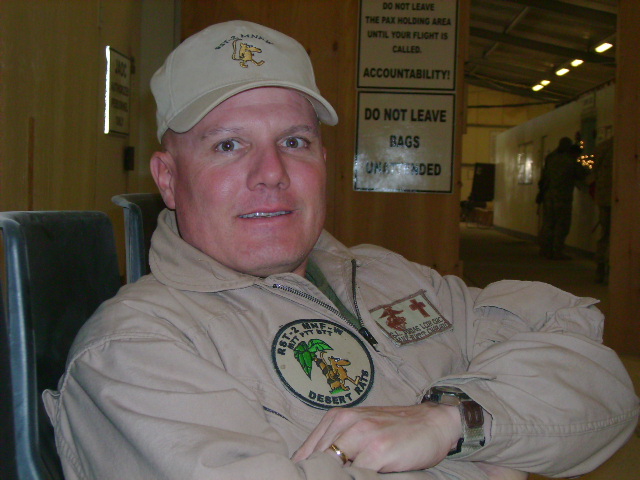
Padre Steve Chillin’ at Al Asad Terminal

After a short ride to the terminal we picked up our gear which had been delivered on the pallets by forklifts.  Another muster was taken and after all personnel were accounted for those of us waiting on follow on flights checked in at the terminal and got our temporary billeting in large tents about a hundred yards from the terminal where we each found a bunk grounded our gear and settled in for a bit to clean up before trying to go get some chow.

Next: Air Travel In Al Anbar the California Line.

Leave a comment

Filed under History, iraq,afghanistan, Military, Tour in Iraq

Moslem Allies and Friends

I posted a piece that I’m sure that some will find controversial yesterday.  Entitled “A Christian Defense of the Rights of Moslems in a Democracy (or Constitutional Republic) it dealt with comments and demands made by some that Moslems be removed from the military, security services and government positions simply because of religion or ethnicity.  You an see the post here:

https://padresteve.wordpress.com/2009/11/14/a-christian-defense-of-the-rights-of-moslems-and-others-in-a-democracy-or-constitutional-republic/

It generated some heated debate and I am sure that more will come. However I am just going to show a photo montage of the Iraqi military, US employed interpreters and former Iraqi officers helping the Iraqi government and US Forces.  The people of Iraq and much of the Middle East are not a monolithic bloc or extremists as many in this country are prone to believe.  Moslems fight every day against terrorists and are killed by the same kind of extremists who took down the Trade Center Towers and inspired Major Hasan in his shooting at Fort Hood.  They are friends and allies in the war against Moslem terrorists.  I post this article to put a human face on those that are often lumped together as the “enemy” simply because of their religion.

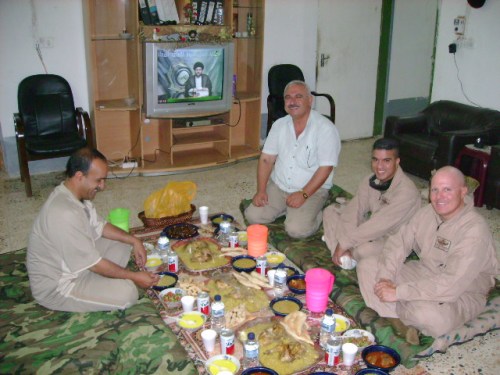
074Dinner with Brigadier General Sabah of 1st Brigade of 7th Iraqi Division in Ramadi. A professional soldier and Shia he sees himself as an Iraqi and ally of the US. The Last time we met in January 2008 in passing at the helo terminal in Ramadi he greeted me with a hug in front of his staff and many American soldiers and Marines calling me a friend.
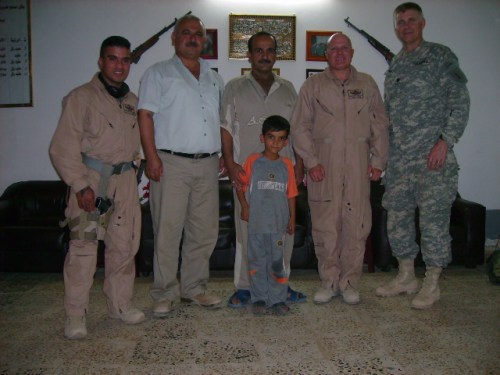
079Group Shot with General Sabah, his youngest son, our interpreter, the American Brigade Senior Adviser and my Assistant RP2 Lebron
176RP2 Lebron with one of the “Terps” interpreters named “Shaun” originally from Palestine but a Green Bay Packer fan living in Minnesota
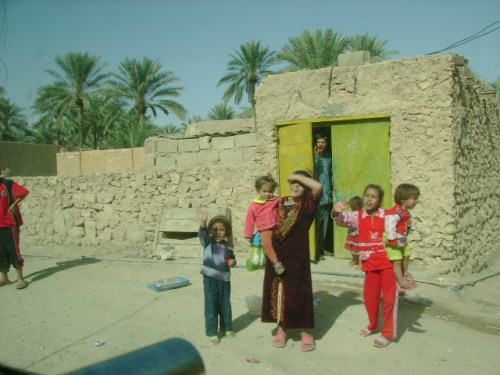
237Iraqi Children Greeting us in a town along the Euphrates

227Iraqi man in traditional garb happy to see us because Americans helped clean out the terrorists from his village
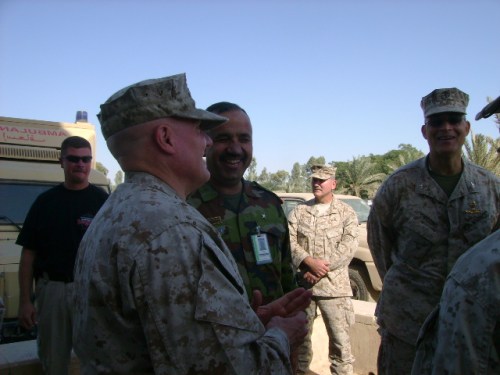
258With Iraqi Officers of 7th Division and Marine Advisers at the 2007 Marine Corps Birthday Cake Cutting at Camp Blue Diamond. Trained by the Marines the 7th and the 1st Iraqi Divisions helped turn the Tide in Al Anbar and the 1st went on to liberate Basra and then to Diyala Province
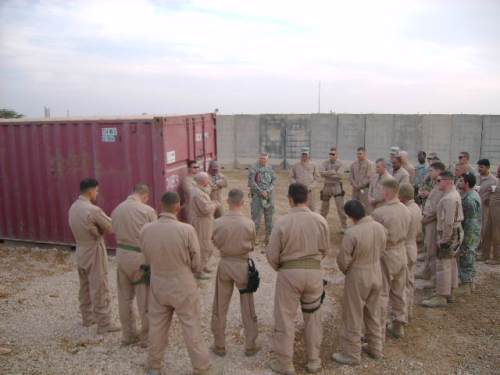
372Blessing Advisers of 7th Division as they prepared to go with Iraqis to guard a fuel convoy. Following this the Iraqis asked if I would bless them and their vehicles too, it seems they have some kind of Holy Water too and were willing to take the Christian kind as well.
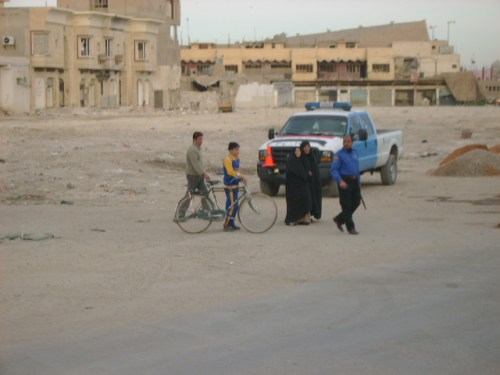
291A man with a Dangerous Job. Iraqi Policeman Escorting Civilians across Route Michigan in Ramadi. Shortly after we took small arms fire and Iraqi Police engaged the target
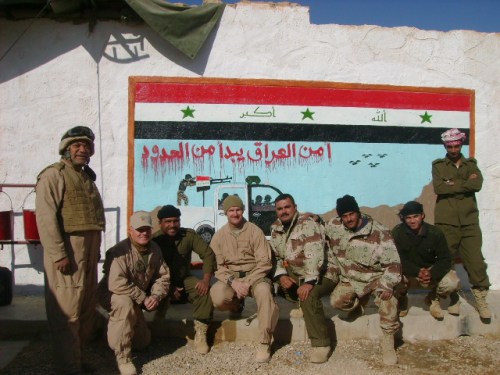
866With the Leaders of an Iraqi Border Force Company a kilometer from Syria, they like all the Iraqis we dealt with were hospitable offering us Ch’ai as well as food on our visit with the adviser team

880With a Bedouin Family near the Syrian border on Christmas Eve 2007

867Iraqi Border Troops at Border Fort Five near Syria
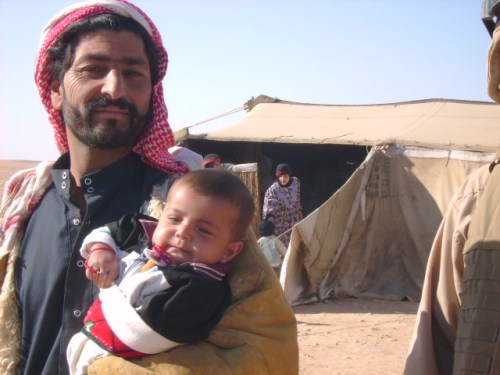
882Proud Bedouin Father and his son

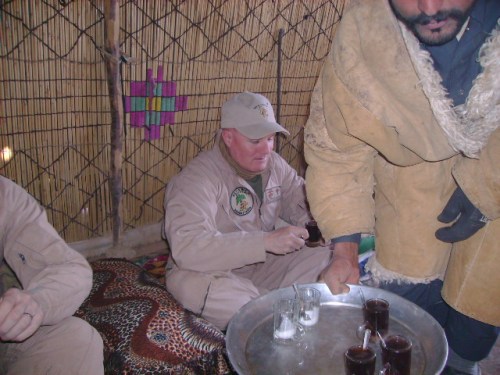
883The Bedouin Father serves us Ch’ai and cakes
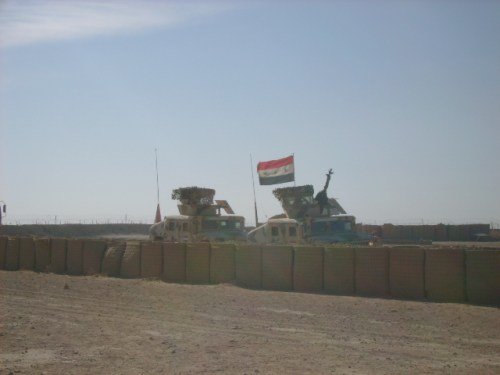
934Iraqi Troops of 7th Division coming back from Patrol on Christmas Day at COP North an isolated post near Syria. While we celebrated they worked and trained.

911One of the Iraqi vehicles in one of our convoy’s near Al Qaim pulling security for us to pass. Our convoys generally had about 3 American and 2-3 Iraqi trucks transiting dangerous areas with very few soldiers, nothing more than 240 series or .50 cal machine guns and far away from any big reinforcements should we have been hit
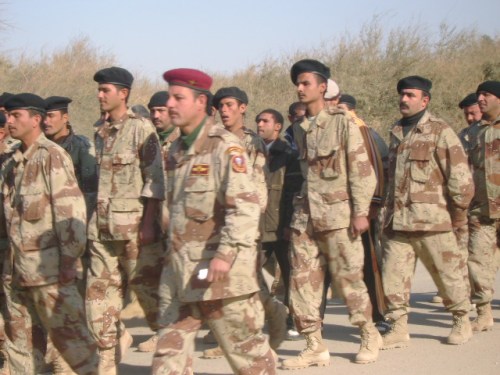
969New Iraqi Army Soldiers in Basic Training at Habbiniya. Imagine being far away from your family and know that they are in danger just because you serve in the Army

971Chaplains and our Assistants with General  Ali and his staff of the Training and Support Center at Habbinyah. He proudly showed us his well worn Arabic-English Bible. A Moslem he liked it because it had information not in the Koran

973Bakers at the Iraqi Army Bakery in Habbinyah the fresh bread is great

Dundas and FallahWith General Falah Hasan..driven from Iraq by Saddam under threat of death he returned from the United States to help rebuild the Iraqi Air Force and advise the Iraq Assistance Group.When asked what branch of Islam he said “My mother was Sunni, my father Shia I don’t know I am an Iraqi”
Of course I had many more interactions with the Iraqis than just these photos.  There was the G-3 Officer at 2nd Brigade of 7th Division who said that he wished that the Iraqis had Christian Priests to serve as Imams because he knew that they would care for the soldiers and families and were not compromised like many Sunni and Shia clergy.  The Iraqi military, Sunni and Shia distrusts most Moslem clergy because of their political militancy and divisiveness during the worst part of the civil war.  At one time they had Imams during the Saddam era but many commanders refused to appoint Imams.  Then there was the Iraqi Company commander at out in the west who tracked me down to meet the “American Imam and thank him” for serving our Marines and for praying for Iraq and its people. He also said to let people know that if something ever happened between the US and “Persia” that most Iraqis would support us. I could go on but needless to say there are millions of Moslems who fight along side of us as well as the American Moslems who serve in our ranks without being traitors like Major Hasan.   

Peace and blessings,

Padre Steve+


2 Comments

Filed under iraq,afghanistan, Tour in Iraq

Going to War: Life at TQ, Chuck Norris Visits and Mass Casualties

While we prepared for our first mission we adjusted to what life was like on a large airbase and logistics hub. Ta Qaddum is one of the larger Iraq Air Force bases from Saddam’s time but has a history going back to the old Royal Air Force base at Habbinyah which is just down the hill.  In 1941 the Iraqi Army laid siege to the British forces in Habbinyah from the escarpment that overlooks the town from what is now the northern edge of TQ.  One only has to imagine the feelings of the Iraqi soldiers short on supply and exposed to air attack on the escarpment while waiting for German intervention only to be driven off by the British when their relief force arrived from Jordan.

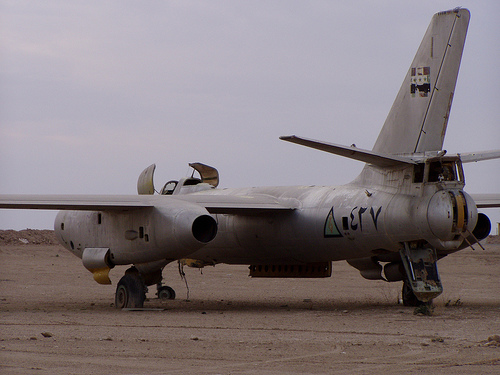
iraqi bomber at tqWrecked Iraqi Bomber at TQ

The Iraqi legacy on the base looms in some of the infrastructure as well as the hulks of Soviet made Iraqi Air Force bomber and fighter aircraft near the edge of the airfield.  When I was there in 2007-2008 the base was under the command of the 2nd Marine Logistics Group or 2nd MLG.  The MLG is a command and control headquarters for logistics support units of the 2nd Marine Expeditionary Force.  It is tailored to support the Ground Combat Element, the 2nd Marine Division and the Air Combat Element, the 2nd Marine Air Wing and attached units.  Its function is similar to an Army Corps Support Command or whatever the Army calls them now.  TQ was also the home of several helicopter squadrons Marine and Army as well as a local defense force at the time made up of the 1st Battalion 11th Marines from Camp Pendleton. 1/11 was an artillery battalion but was being primarily used as a security and convoy protection force.  Other units including Navy Seabees and Army logistics units operated from TQ.  A Marine Infantry Battalion was stationed in Habbinyah while elements of a Marine Expeditionary Unit (MEU) were operating in the area as part of the surge.

The base is about mid-range on the amenity scale for troop comfort. At the time we were there the only non-DFAC/ Chow Hall was the Green Beans Coffee trailer as opposed to places like Al Asad and Camp Victory which had a multiplicity of fast food places for the troops.  The Marines are tougher on communication security than the Army and many websites which troops could use on other bases were unavailable unless one went to the Iraqi internet café or the MWR computer and phone center.  The Iraqi run shop had the fastest internet on the base but you had to contend with huge amounts of second hand smoke and pay a nominal charge to use it.  The MWR facility often had broken machines, had a waiting list to use them and the connections were very poor with pages slower to load that the old dial up days.  On the plus side TQ did have a relatively decent Marine Corps exchange, not as big as Al Asad or Camp Victory, but one of the larger exchanges in Iraq and second only to Al Asad in the West.  Most places including Ramadi had pretty small and not well stocked exchanges.  TQ had nice fitness center facilities which I used a lot being coached by Nelson.

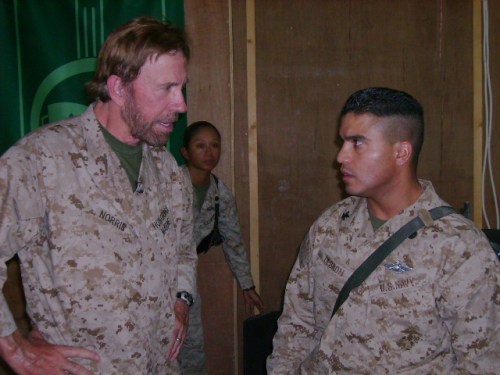
060Chaplains and RPs with Chuck Norris

The base MWR worked with the USO and other agencies to bring sports stars or celebrities to the base.  Just before we left on our first mission Chuck Norris came through.  Chuck was made an “Honorary Marine” a few years back and has made it his task to try to meet every Marine deployed in Iraq and Afghanistan, shaking the hand of each one he met.  The chapel was the host facility for the visit which last about 2 hours in which Chuck pressed the flesh and had his picture taken with probably close to 5000 Marines and other personnel, maybe more.  The Chaplains were drafted to be the photographers and I lost count of how many different types of digital cameras that I took pictures with.  Chuck enjoyed the heck out of Nelson and was impressed with his fighting resume.  I think that Nelson got more face time with Chuck than anyone on the base and he deserved it.  Chuck was accompanied by Chaplain Langston and RP1 Roland our friend from Fallujah.  After they were done he had to get on the waiting helo and fly out to his next stop.

058Chuck and Nelson

The chow halls, of which there were two, were large and usually had a pretty good menu.  I especially came to like the Indian nights where Indian specialties were served.  Since many of the cooks employed by Gulf Catering who had the contract were Indian, Pakistani, Bangladeshi or from Ceylon so it generally was pretty good unless they had to scrounge for suitable ingredients.  I like the curry chicken, but occasionally it was made with chicken nuggets when the real chicken was in short supply.  It almost reminded me of the Spam Lamb in the TV series M*A*S*H or the great quote out of the movie Meatballs: “Attention. Here’s an update on tonight’s dinner. It was veal. I repeat, veal. The winner of tonight’s mystery meat contest is Jeffrey Corbin who guessed “some kind of beef.”   I think that there were a number of times when I really wondered what the meat was.  They usually had a pretty good salad bar unless resupply convoys were interrupted and fresh vegetables had run out.  There were a number of times where the pickins were slim and Nelson and I had to get creative.  Breakfast was usually good with a good choice of food choices, some even healthy.  The workers were great, always friendly despite working 12 hour days 6 days a week for $300 a month.  Many had signed up through agencies which cost them $4000 so the first year that many worked was for nothing.  It was in my opinion a case of a KBR/ Halliburton subcontractor using them in effect as indentured servants and pretty well damned close to slaves, all legal by the US Government.  I thought that it was pretty immoral and certainly a case of a company contracted by the government reducing labor costs on the back of some of the poorest people in the world. Back at the end of the Cold War the military downsized and eliminated most of the Army and Marine mess specialists which paved the way for the contracting industry, led by the former Secretary of Defense and his Halliburton team to begin their massive contracting operations with the Bosnia deployments back in 1995.  They were limited to their own compound far away from anything and were always the last to eat.  They were polite and really tried to accommodate sometimes rude and condescending Americans, the local management did the best they could to give them good accommodations but were limited by their parent company.  Many of the workers were Roman Catholic or Anglican Christians  and Fr Jose had a great ministry that he took on to support them by going to their camp a couple of times a week to celebrate Mass.  His masses were packed and what a source of life and the love of God he was to so many people at TQ, Americans and non-Americans alike.

988Fr Jose on the bank of the Euphrates at Habbinyah

About a week after we got to TQ Marines from the battalion in Habbinyah were hit in an IED complex ambush while on patrol.  A couple of vehicles were hit, Jose was across the base celebrating Mass and Pat was in Fallujah.  A chaplain was needed in the Shock Surgical Trauma Unit or SSTP.  Wounded were being brought in, the platoon had been hit hard, 14 wounded and a couple killed.  I figured that since I was a pretty experienced trauma and critical care chaplain who had dealt with over 500 deaths, many traumatic with bullet wounds, burns and the host of other types of trauma, and tended to probably twice that many who did not die that I could handle this.  When I got to the SSTP I was greeted by a couple of nurses and docs and briefed as to what was going on.  Within a few minutes the casualties were beginning to roll in as the UH-60 Dust-off MEDIVAC helicopters landed and teams went out to meet them.  Some were ambulatory, or walking wounded bandaged with lacerations and burns on their faces and upper bodies, other were brought in on stretchers and ushered into the treatment beds in the area outside the OR.  It was like a scene out of M*A*S*H as the well honed surgical teams, surgeons, anesthetists, nurses and corpsmen went to work.  I now work with a number of these fine people. I was able to make my way about to the wounded Marines, praying with some, holding hands as and with a couple performing the sacrament of healing, or the anointing of the sick.  As I listen to Marines, prayed with them or anointed them there was a tremendous sense that this was different than what I did at Parkland or Cabell-Huntington.  These young men wore the same uniform that I wore, served the same country that I served and travelled the same roads that I would soon be on.  As each was assessed and moved off to surgery, prepared for further evacuation or treated and sent to a ward I noticed the little things about each of them.  The wounds, the torn uniforms, the burns and even the tattoos, these were our guys, they weren’t gang bangers or criminals but young Americans fighting a brutal war against a enemy that had terrorized Iraqis and found devastating ways to kill Americans.  Some of the Marines asked if they would be okay, others asked about friends and in those moments I learned what it was to care and be with men traumatized by the violence and brutality of war against an enemy that would not fight by our rules, much as the North Vietnamese and Viet Cong refused to fight our war.  The enemy was clever and determined and his weapons were deadly.

Stars and Stripes sstpTQ Surgical During Mass Casualty Event (Stars and Stripes Photo)
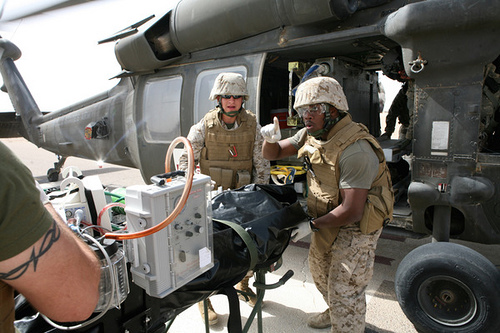
The teams did their work quickly and soon the event in the ER was done as the Marines were moved off to OR, the ward or further evacuation. I spent some time talking with unit Corpsmen and less wounded Marines and learned about the attack. They were in a convoy heading back to Habbinyah when the there was an enemy contact ahead of them.  As they moved forward to engage a primary and secondary IED hit the convoy heavily damaging two trucks with an ensuing firefight.  The Marines fought off their attackers, the wounded were treated and security set up as Dust-off came in to evacuate the wounded.  I thought back to my days as a Medical Service Corps Officer in the Army and remembered my friends who had elected to apply for flight school to become Dust-off pilots.  I remembered learning to call in MEDIVAC missions and some of the Army MSC aviators that I knew; some had flown in Vietnam, being a Dustoff pilot can be a sporty occupation.  They fly an unarmed bird into hot landing zones and get badly wounded troops to medical facilities in 100 degree plus weather without killing them enroute, those guys are good. As the crowd dissipated I spend so time with some of the staff.  Eventually with night having fallen I began the walk back to my office in the Chapel.  I looked up at the night sky, in the darkness a another UH-60 sat down to pick up others being evacuated on to Baghdad or Balad.  I looked up at the sky and saw more stars than I had seen at any time since I was at sea on the USS HUE CITY.  It was amazing; it looked like you could almost walk across them from horizon to horizon. When I got to my office I checked on my our mission status, I had submitted our first Air Support Request earlier in the day, of course it had not moved yet, but at least it gave me something to do.  I checked my unclassified e-mail and knew that there was nothing that I could share with anyone so I looked at baseball scores, checked a couple of news sites and headed off to my “can.”

medivacPackaging a Casualty for Further Evacuation on the TQ Surgical Pad

That night I did not sleep well, the images of the wounded Marines were burned into my mind; I could see their faces, their wounds and their tattoos.  I prayed the office of Compline from the Book of Common Prayer using Psalm 91 and the prayer “Be our light in the darkness, O Lord, and in your great mercy defend us from all perils and dangers of this night; for the love of your only Son, our Savior Jesus Christ.  Amen.” I took some comfort in this, walked out again into the night to see illumination rounds in the vicinity of Habbinyah and the distant sound of automatic weapons fire.   For once my insomnia was not related to jet lag or exhausting night flights, it was instead a realization that what happened to these Marines could well happen to me as I we launched later in the week.

The next morning another eight or ten Marines from the same company came in, this time I went to the SSTP with Jose and we did a tag team match, we tried to determine religious affiliation of the wounded Marines with him taking the Roman Catholics to provide sacramental needs and me taking the rest.  Once again the images were vivid; these Marines were on a mission to recover the damaged vehicles and were hit by IEDs on their way back to base.  This time one Marine was killed.  I walked to the graves registration and mortuary affairs team with the battalion surgeon and a corpsman who were to identify the body.  I listened to their frustration and heartache as they described what they had been through the past two days.  The company had taken over 20 casualties including 3 dead.  A high percentage of casualties for a unit that probably numbered about 120 men.  Once again I walked back, this time in the hot mid-morning sun with Jose to the Chapel.  We talked for a while about the past two days, he knew the battalion that had been hit well as he supported them as well.  The surgeon was one of his parishioners.  After we went our separate ways I did my morning prayer and settled in to study more about where we were going.  Nelson and I got PT later in the evening and I spent a restless night in my “can” playing computer Maj-Jong and Chess on my laptop deep into the morning.  Once again I spent time walking in the dark looking at the vast sea of stars above me.

3 Comments

Filed under iraq,afghanistan, Military, Tour in Iraq