Category Archives: world war one

The Peril of Preventive War

Friends of Padre Steve’s World,

About this time of month one hundred and one years ago the armies of Europe were beginning a four-year bloodletting that killed over ten million soldiers and resulted in twenty million other deaths. That war spawned other wars and conflicts the world over, some of which still go on today. Since I have been to war in Iraq, a war that if we took international law and war crimes seriously would be considered illegal under the codes that we tried the major German and Japanese war criminals under at the end of the Second World War, I take war, and going to war very seriously.

The beginning of the First World War provides an example for us of how out of control things can get when leaders opt for war when doing the hard work to keep the peace is much more in their interests.
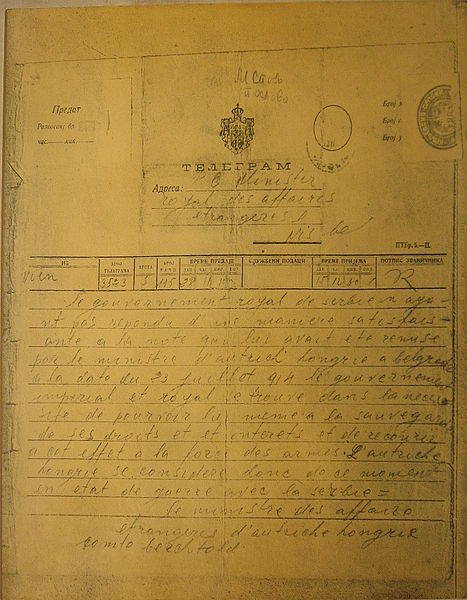
The Austrian Declaration of War against Serbia

One of the premier military and political theorist who has ever lived, Carl von Clausewitz “No one starts a war–or rather, no one in his senses ought to do so–without first being clear in his mind what he intends to achieve by that war and how he intends to conduct it.” Sadly, few political leaders take his advice.

It was a war that should never have happened. It was a war for which the belligerent powers could boast many causes but for which few had any real objectives. One hundred and one years ago this week the armies nations of Europe were beginning clashing on the frontiers of France, Germany, Belgium and Russia. Their leaders were hell bent on waging a war that all thought would be short, decisive and end in victory for their side. The leaders were wrong and nearly a century later the world still pays the price for their misplaced beliefs and hubris of those men.

It was a war in large part brought on by the declining Austro-Hungarian Empire’s fears. Fear of neighbors, ethnic minorities and its place among regional and world powers led the leaders of the Austro-Hungarian Empire to decide for war when the very unpopular heir to the throne Archduke Franz Ferdinand was assassinated in Sarajevo, the capital of the recently annexed province of Bosnia-Herzegovina on June 28th 1914.
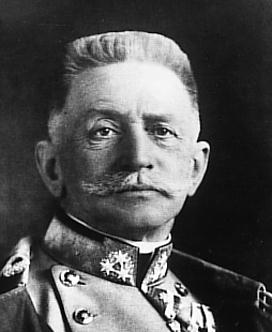
Conrad von Hötzendorf: War was the only means of politics

It was a series of decisions by those in the government of the Empire that brought Europe and the world to war, a war which we still feel the effects of today. In particular it was the decisions of the Austrian Chief of the General Staff Conrad von Hötzendorf, the Foreign Minister Leopold Berchtold and the aging Emperor, Franz Joseph which plunged the world into a world war which spawned revolutions, regional wars, a second world war, a cold war and countless other wars. The decisions were based on the belief, still common today that war is the only means of politics.
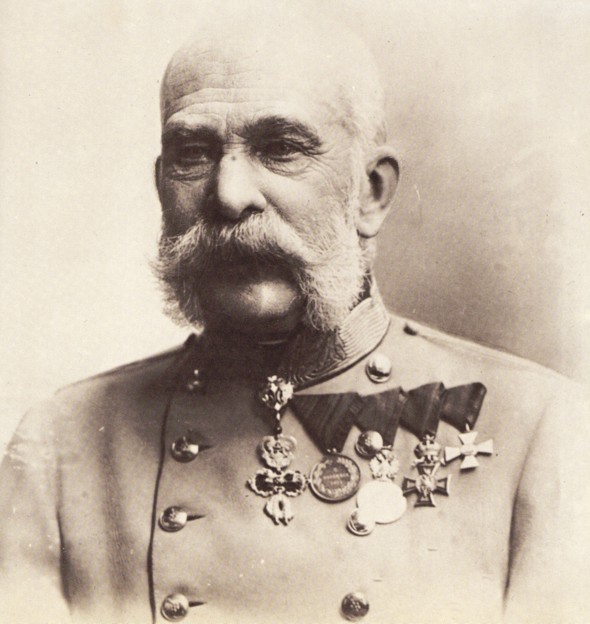
Emperor Franz Joseph: “If we must go under, we better go under decently”

Hötzendorf had been a continual advocate of war in every situation. He lobbied for war in 1907 against Italy and Serbia, in 1908 against Serbia, Russia and Italy, in 1909 against Serbia and Montenegro, in 1910 against Italy and the list increased in the years leading up to the war. He fervently believed that “the use of armed force alone could retard the centrifugal forces of nationalism in the ‘multinational empire’; war was the only means of politics.” The Emperor, Franz Joseph was of the same mindset by 1914 and in the days following the assassination of Franz Ferdinand he gave his approval to the actions of Hötzendorf and the diplomacy of Berchtold that doomed the Austro-Hungarian Empire and would destroy and remake Europe within a span of four years.

Theobald von Bethmann-Hollweg: The Blank Cheque

 The leadership of the Empire had decided on war within days of the assassination. Berchtold dispatched an emissary to Kaiser Wilhelm who decided in counsel with his Imperial Chancellor Theobald von Bethmann-Hollweg gave the Austrians a “blank cheque” of unconditional support for war against Serbia. Berlin was confident that “the Balkan crisis could be localized” and “advised Vienna to “proceed with all means at its disposal” and that Germany would support Austria-Hungary “come what may.” In doing so they willingly ignored the wise counsel of Otto Von Bismarck who considered the Balkans “not worth the life of a single Pomeranian Grenadier.

800px-Bain_News_Service_-_The_Library_of_Congress_-_Kaiser_Wilhelm_(LOC)_(pd)

Kaiser Wilhelm II

After they received German support the Austrians did everything that they could to ensure that war would occur. Their demands of Serbia were intentionally designed to be unacceptable to that country and they held key information from their German allies in the three weeks after they received the unconditional German support.
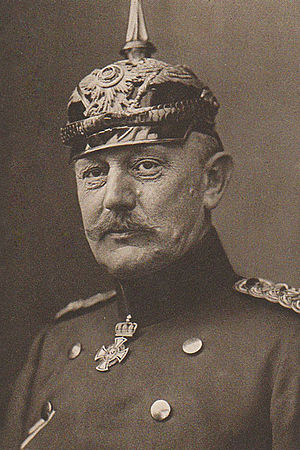
Helmuth Von Molkte: “no alternative but to fight a preventive war…” 

German militarists, particularly the Chief of the General Staff Helmuth Von Molkte the younger saw the coming conflict in racial and cultural terms. Von Molkte said that the coming war   would come “sooner or later” and be a war “primarily a struggle between Germans and Slavs” and compared Serbia to an “abscess.”  As the war cloud built Von Molkte told the Foreign Secretary von Jagrow that there was “no alternative but to fight a preventive war so as to beat the enemy while we could still emerge fairly well from the struggle” ignoring the advice of the Iron Chancellor Otto Von Bismarck who counseled “Preventive war is like committing suicide out of fear of death.”


Austrian Reservists going to war

 The Austrians felt that the threat from Serbia combined with internal political factors related to the Hungarian and other Slavic regions of the Empire, and the increasing influence of Russia and Germany in the Balkans was an existential threat. At the same time they were poorly prepared for war. Their military was large but poorly trained and equipped.  Their national infrastructure, industry and railroads were ill prepared for the demands of war. Their German allies had not planned for war either and were critically short of the required stocks of ammunition needed for a general war in Europe.
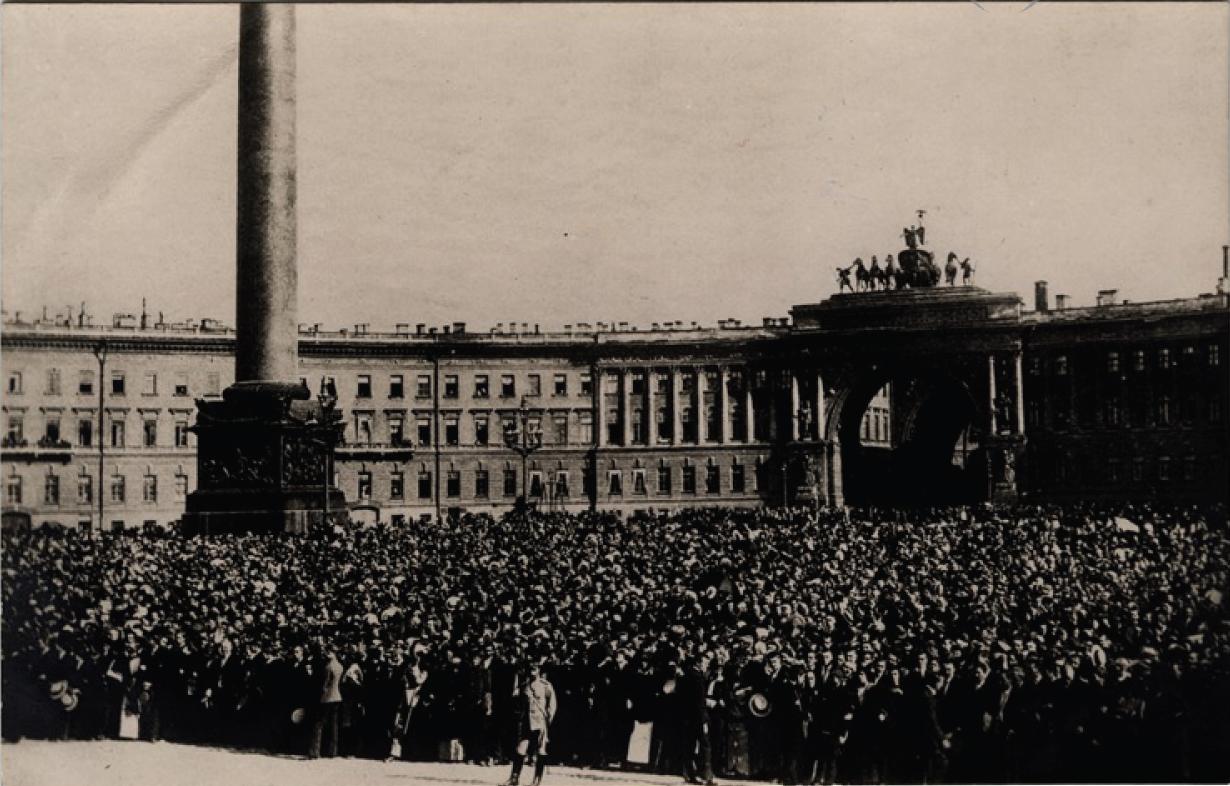
Cheering crowds in Petersburg

The Russians were heavily invested in the Balkans linked to other Slavic people by culture, language and religion. The French were bent on revenge against the Germans for the debacle of 1870 and had no stake in what happened in the Balkans. The British a few years prior to the war had told the Belgians not to expect support if they were invaded by Germany, but declared war to “protect Belgian neutrality.”
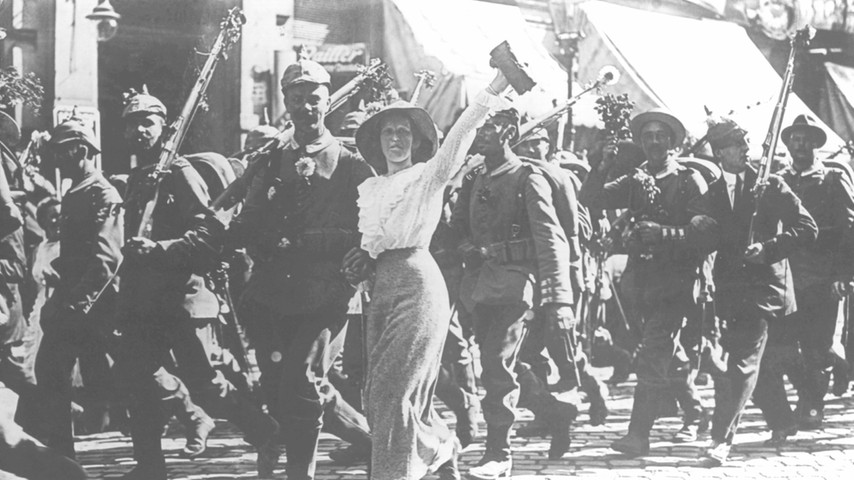
German wives and girlfriends walking alongside the Landser…

 The Austrians thought that with German support that even if Russia intervened that the war could be limited to Serbia. They were wrong. Just as the Germans had given the Austrians a “blank cheque” the French, both officially and unofficially were giving the Russians their own blank cheque. French Ambassador Maurice Paleologue assured Russian Foreign Minister S.D. Sazonov of the “complete readiness” of France to fulfill her obligations as an ally in case of necessity.
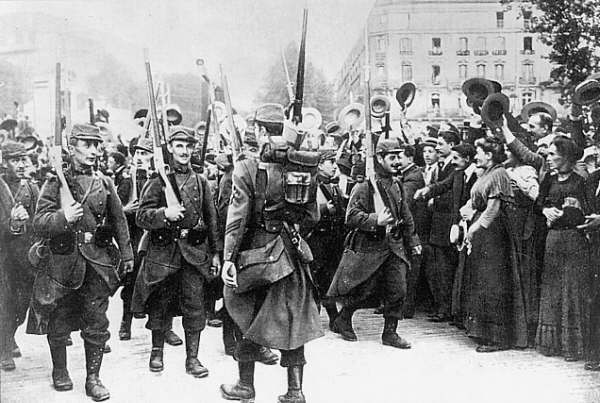
French Soldiers being cheered

Austria declared war on July 28th, Russia followed by a partial mobilization to support Serbia on the 29th. Kaiser Wilhelm attempted to avert war at the last minute but Czar Nicholas II wrote, “An ignoble war has been declared on a weak country. The indignation of Russia, fully shared by me, is enormous. I foresee that very soon I shall be overwhelmed by pressure to which I am exposed and compelled to take measures which will lead to war.”  This was met with German mobilization on the 30th and the French on August 1st. Declarations of war were exchanged and on August 4th in response to Germany’s refusal to respect the neutrality of Belgium Great Britain declared war against Germany.
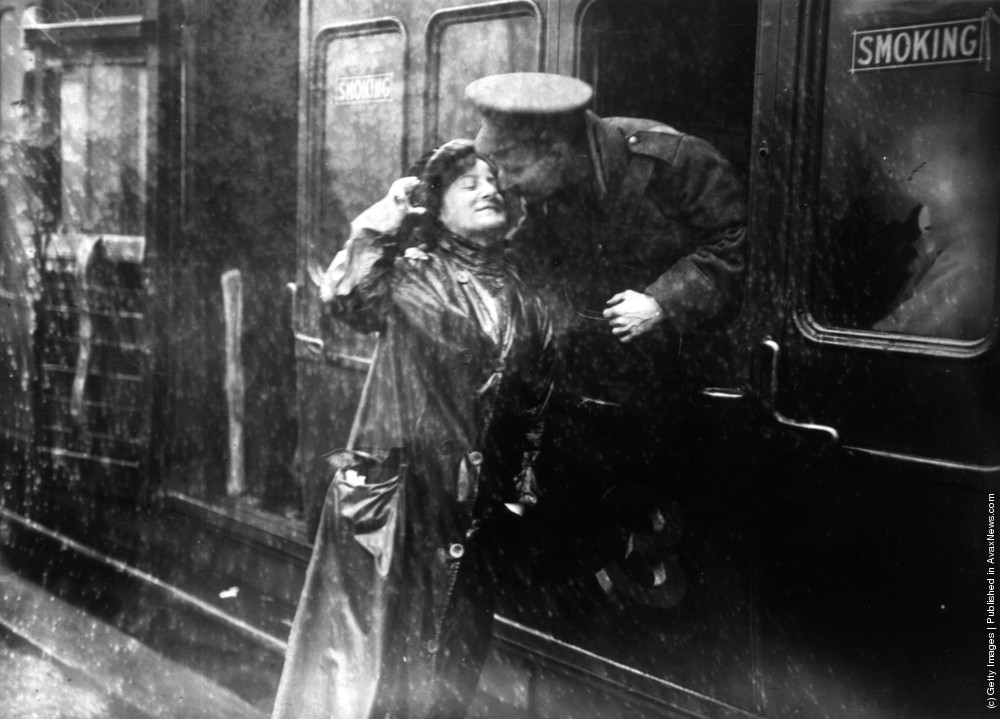
A final kiss from a British Soldier at Victoria Station

They were fateful days. Only the Austrians entered the war with any positive objectives, military or political goals. Every other power lurched into the war without clear objectives or end states. One writer noted that the war had “causes but no objectives.”

The world again finds itself perched at the edge of the abyss of war. There are people, smart and otherwise reasonable people who believe that they can wage “preventive wars” and rely on brute military force to solve nearly any problem. There are others that suggest that we should not criticize “allies” even when their decisions could be disastrous to them and the world, much as the Germans gave their Austrian brothers a “blank cheque.”  I wish that they would just look at the consequences before they commit nations and the world to more war that can only result in calamity and great suffering without benefit for anyone or any nation involved.

Those that counsel “preventive wars” need to remember the words of Otto Von Bismarck that “Preventive war is like committing suicide out of fear of death.”

Peace

Padre Steve+
3 Comments

Filed under Foreign Policy, History, leadership, Military, national security, Political Commentary, world war one

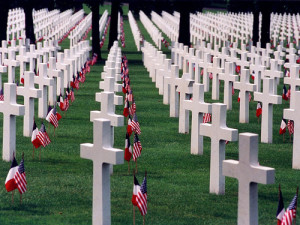
They Shall Not Have Died in Vain: Memorial Day 2015

Remembrance_Day___Poppy_Day_by_daliscar

In Flanders Fields

John McCrae, 1915.

In Flanders fields the poppies blow

Between the crosses, row on row

That mark our place; and in the sky

The larks, still bravely singing, fly

Scarce heard amid the guns below.

We are the Dead. Short days ago

We lived, felt dawn, saw sunset glow,

Loved and were loved, and now we lie

In Flanders fields.

Take up our quarrel with the foe:

To you from failing hands we throw

The torch; be yours to hold it high.

If ye break faith with us who die

We shall not sleep, though poppies grow

In Flanders fields.

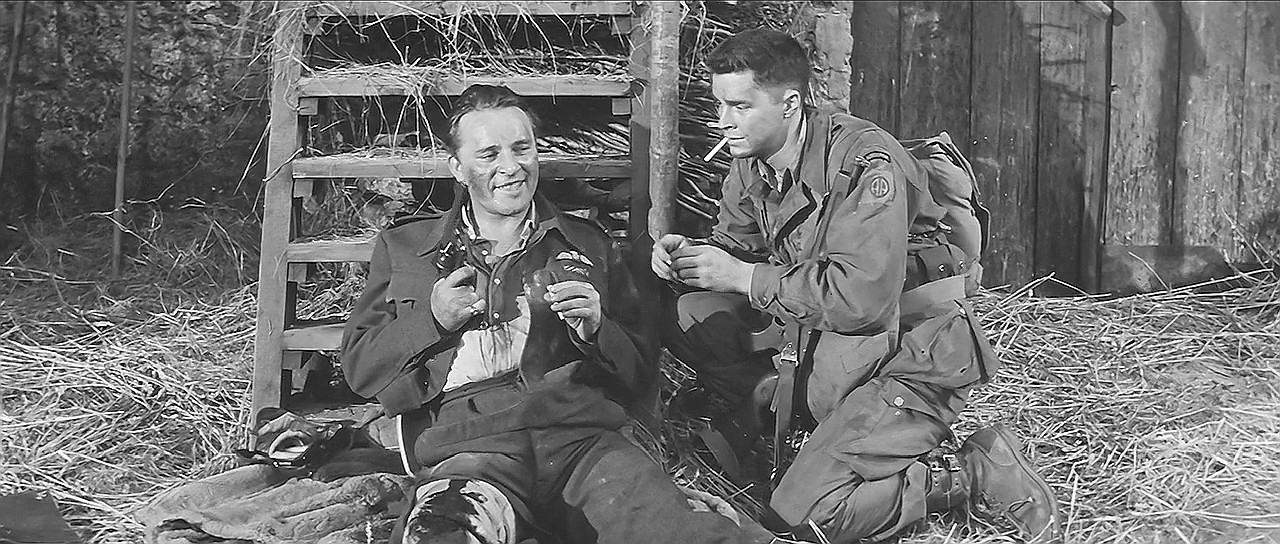
There is a poignant scene in the film The Longest Day in which Richard Burton, playing the wounded British Royal Air Force Flying Officer David Campbell looks at the body of a dead German soldier and says to an American paratrooper who is lost from his unit: 

“It’s funny isn’t it. He’s dead, I’m crippled, you’re lost. Suppose it’s always like that. I mean war.” 

LD20

Back when the movie was filmed in the early 1960s there were still many World War II veterans around and the United States and most Western European nations still had some form of draft or conscription which ensured that most people still had some connection with the military. It’s not like that now. In the United States far these than 1% of the population is serving in the military, and this includes the National Guard and reserves. The numbers are similar throughout Western Europe. Those who have served in combat or even deployed to combat theaters are far fewer. As a result the people of the United States and Western Europe as a whole are so disconnected from military service, not to mention the terrible human cost that is war. As William Tecumseh Sherman said: War is Hell. 

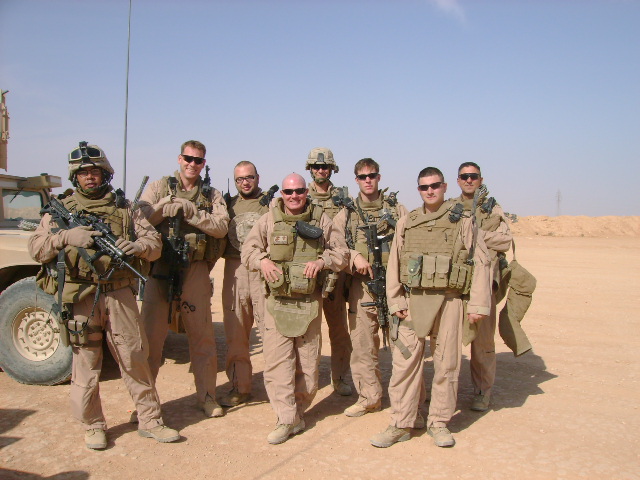
I came back a different man from Iraq. It seems that for me with every passing year Memorial Day becomes more of a melancholy observance. It is a weekend and observance that I feel deeply having lost friends in war and served in Iraq as well as Operation Enduring Freedom. It is also a day in which I feel more and more disconnected from the vast majority of my fellow Americans. I don’t know, but just from my observation it seems that for most Americans the weekend serves as not much more than the end of the school year and the beginning of the summer holiday and vacation season.

Now I could be wrong, but it seems to me that for most Americans, the vast majority who have themselves never served a day in uniform and who have no more than a passing relationship with anyone who is either serving in our current wars or has served in any war, that war is at best a spectator sport.

This is an attitude that has been nurtured by our politicians of all parties, political pundits and preachers for decades. As a result there is a grave disconnect between the society at large and the men and women who serve in the military and in our wars.

To be fair I don’t think it is a matter of ordinary people not caring, not that at all. Many do and I am thankful to them. That being said there are many who though they say they support the troops find war to be some sort of sporting event where we send our heroes out to do battle against the enemies of freedom, while making no sacrifices themselves and even call military health care, retirement benefits and disability pensions “entitlement programs” which need to be reigned in. Yes, that is right. Send the volunteers to war and then abandon them. Sadly, with the exception of the end of World War Two, this is always how this nation has treated its veterans and their families.

The real fact of the matter is that the wars that we have fought since World War II have not been national affairs. If they were we would not be continually fighting wars that most people neither understand and which in many if not most cases we would be better off staying out of completely. That being said I am appreciative of those who do things to care for and honor our veterans, honor our fallen and do practical things for the survivors. There are some really wonderful people, many who have never served who do what they can for those who fight and die in or come back forever changed from these misbegotten and unpopular wars.

At the same time there are a lot of what I call War Porn addicts, especially the pundits, politicians and preachers who cannot get enough of war. As a Christian I hate to say that many of the worst of the war porn addicts are the supposedly Christian pundits, politicians and preachers who cannot seem to find enough new wars to get us involved in even as we struggle to deal with what is on our plate already. If you ask me these sons-of-bitches are traitors who do not love the troops, do not love this country and should be forced into the front line so they can see, smell and taste death.

What I find the most offensive are the war mongers and profiteers who have never served. I feel this way about those who did all that they could to avoid serving in the military and those who did the very minimum to satisfy outward appearances of service while avoiding anything difficult, especially deployment to combat zones. Of the latter I can think of five to six currently serving and very outspoken conservative members of the House of Representatives and the Senate that fit the description. I shan’t mention the members of the previous Presidential administration who through their outright lies caused the deaths of nearly 4500 American military personnel in Iraq. I speak about men who in their writings, their appearances on news networks and their think tanks and corporations that do nothing but profit off of war. Some are current or former politicians, others supposedly “academics” and others men who smell a profit in war. 

memorial-day1-300x225

I find such people to be loathsome and wonder how on Memorial Day weekend they can show their faces. But then they are rather shameless. Sometimes their actions make me wonder if the sacrifices made by those who serve are in vain. However, I strive to resist that and pray that our sacrifices will not be in vain. While they profit from war others pay the bill and it has always been this way. Marine Corps Major General Smedley Butler, a two time winner of the Congressional Medal of Honor wrote after World War One in his book War is a Racket:

“This bill renders a horrible accounting. Newly placed gravestones. Mangled bodies. Shattered minds. Broken hearts and homes. Economic instability. Depression and all of its attendant miseries. Back -breaking taxation for generations and generations. For a great many years as a soldier I had a suspicion that war was a racket; not only until I retired to civilian life did I fully realize it….”

481801_10151367001287059_1003164983_n-1.jpg

Maybe I feel this way because I grew up in a military family where my dad was frequently deployed and served in Vietnam, a place where some of my friends fathers died, and because I have been in the military 32 years between the Army and the Navy. Maybe it is partly because I am a military historian, theologian, priest and chaplain who has seen the horrors of war and the wounds that remain for life in the bodies, minds and spirits of those that fight in them. I cannot speak of how my heart feels when I see young men and women, wounded in war, their lives forever changed bravely struggling to go on even as the war mongers, war profiteers and chicken-hawks profit off of their suffering. As I said before, these people are traitors and if I had my way we would drive them at bayonet point into the arms of the Islamic State so they can taste what war is all about. Maybe then these sons-of-bitches would think twice before sending another young American to die so they might make a profit.

So for me this is a rather melancholy time. A time where I struggle a time when I get so angry. That being said I also echo the words of Civil War Veteran and Supreme Court Justice Oliver Wendell Holmes who spoke these words in 1895:

“even if those who come after us are to forget all that we hold dear, and the future is to teach and kindle its children in ways as yet unrevealed, it is enough for us that this day is dear and sacred…. nevertheless, the generation that carried on the war has been set apart by its experience. Through our great good fortune, in our youth our hearts were touched with fire. It was given to us to learn at the outset that life is a profound and passionate thing. While we are permitted to scorn nothing but indifference, and do not pretend to undervalue the worldly rewards of ambition, we have seen with our own eyes, beyond and above the gold fields, the snowy heights of honor, and it is for us to bear the report to those who come after us.”

175

I honor the fallen, my brothers and sisters who have given the last full measure of devotion in serving this country, those that I know personally or have served with and those who did so before I was every born. Why you might ask? 

The reason is simple and I think that Abraham Lincoln said it best as he closed his Gettysburg Address:

“It is for us the living, rather, to be dedicated here to the unfinished work which they who fought here have thus far so nobly advanced. It is rather for us to be here dedicated to the great task remaining before us — that from these honored dead we take increased devotion to that cause for which they gave the last full measure of devotion — that we here highly resolve that these dead shall not have died in vain — that this nation, under God, shall have a new birth of freedom — and that government of the people, by the people, for the people, shall not perish from the earth.”

Peace

Padre Steve+

3 Comments

Filed under History, iraq, iraq,afghanistan, Military, News and current events, Political Commentary, PTSD, Tour in Iraq, vietnam, War on Terrorism, world war one, world war two in europe

I Belong Here With Those in Pain and Who Have Lost Their Faith

iraqchristmas

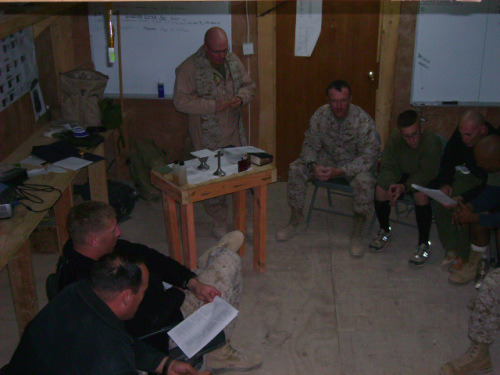
Christmas Eve at COP South 2007, the Most Important Mass of My Life

“I belong with those who are in pain, and who have lost their faith, I belong here.” Father Palmer, the Chaplain in Joyeux Noel (Merry Christmas)

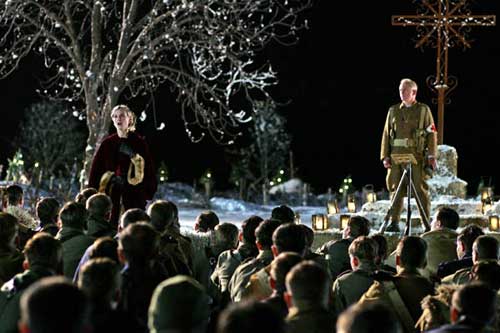
In the next day or two, certainly by Christmas I will again watch the film classic Joyeux Noel (Merry Christmas) which is the story of the amazing and exceptional Christmas Truce of 1914. It is a film that each time I see it that I discover something new, more powerful than the last time I viewed it. I will also be writing about Christmas from my perspective as a combat veteran and giving voice to those who serve now, as well as those who served God’s people in hellish places before me.

As a Chaplain I am drawn to the actions of the British Padre in the film, who during the truce conducts a Mass for all the soldiers, British, French and German in no-man’s land, who goes about caring for the soldiers both the living and the dead.  His actions are contrasted with his Bishop who comes to relieve him of his duties and to urge on the replacement soldiers to better kill the Germans.

palmer

Father Palmer Tending the Wounded

As the Chaplain begins to provide the last Rites to a dying soldier the Bishop walks in, in full purple cassock frock coat and hat and the chaplain looks up and kisses his ring.

As the chaplain looks at his clerical superior there is a silence and the Bishop looks sternly at the priest and addresses him:

“You’re being sent back to your parish in Scotland. I’ve brought you your marching orders.”

Stunned the Priest replies: “I belong with those who are in pain, and who have lost their faith, I belong here.”

The Bishop then sternly lectures the Priest: “I am very disappointed you know. When you requested permission to accompany the recruits from your parish I personally vouched for you. But then when I heard what happened I prayed for you.”

The Priest humbly and respectfully yet with conviction responds to his superior: “I sincerely believe that our Lord Jesus Christ guided me in what was the most important Mass of my life. I tried to be true to his trust and carry his message to all, whoever they may be.”

The Bishop seems a bit taken aback but then blames the Chaplain for what will next happen to the Soldiers that he has served with in the trenches: “Those men who listened to you on Christmas Eve will very soon bitterly regret it; because in a few days time their regiment is to be disbanded by the order of His Majesty the King. Where will those poor boys end up on the front line now? And what will their families think?”

They are interrupted when a soldier walks in to let the Bishop know that the new soldiers are ready for his sermon. After acknowledging the messenger the Bishop continues: “They’re waiting for me to preach a sermon to those who are replacing those who went astray with you.” He gets ready to depart and continues: “May our Lord Jesus Christ guide your steps back to the straight and narrow path.”

The Priest looks at him and asks: “Is that truly the path of our Lord?”

The Bishop looks at the Priest and asks what I think is the most troubling question: “You’re not asking the right question. Think on this: are you really suitable to remain with us in the house of Our Lord?”

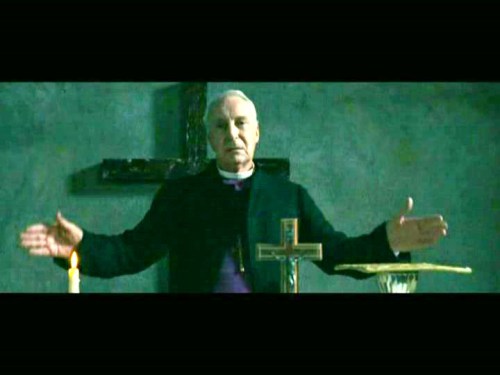
With that the Bishop leaves and goes on to preach. The words of the sermon are from a 1915 sermon preached by an Anglican Bishop in Westminster Abbey. They reflect the poisonous aspects of many religious leaders on all sides of the Great War, but also many religious leaders of various faiths even today, sadly I have to say Christian leaders are among the worst when it comes to inciting violence against those that they perceive as enemies of the Church, their nation or in some cases their political faction within a country.

bishop

The Bishop Leads His “Service” 

http://www.youtube.com/watch?v=fMPxjUE40iw

“Christ our Lord said, “Think not that I come to bring peace on earth. I come not to bring peace, but a sword.” The Gospel according to St. Matthew. Well, my brethren, the sword of the Lord is in your hands. You are the very defenders of civilization itself. The forces of good against the forces of evil. For this war is indeed a crusade! A holy war to save the freedom of the world. In truth I tell you: the Germans do not act like us, neither do they think like us, for they are not, like us, children of God. Are those who shell cities populated only by civilians the children of God? Are those who advanced armed hiding behind women and children the children of God? With God’s help, you must kill the Germans, good or bad, young or old. Kill every one of them so that it won’t have to be done again.”

The sermon is chilling and had it not been edited by the director would have contained the remark actually said by the real Bishop that the Germans “crucified babies on Christmas.”  Of course that was typical of the propaganda of the time and similar to things that religious leaders of all faiths use to demonize their opponents and stir up violence in the name of their God.

When the Bishop leaves the Priest finishes his ministration to the wounded while listening to the words of the Bishop who is preaching not far away in the trenches. He meditates upon his simple cross, takes it off, kisses it hand hangs it upon a tripod where a container of water hangs.

The scene is chilling for a number of reasons. First is the obvious, the actions of a religious leader to denigrate the efforts of some to bring the Gospel of Peace into the abyss of Hell of earth and then to incite others to violence dehumanizing the enemy forces. The second and possibly even more troubling is to suggest that those who do not support dehumanizing and exterminating the enemy are not suitable to remain in the house of the Lord. Since I have had people, some in person and others on social media say similar things to what the Bishop asks Palmer the scene hits close to home.

iraq-bedouin1

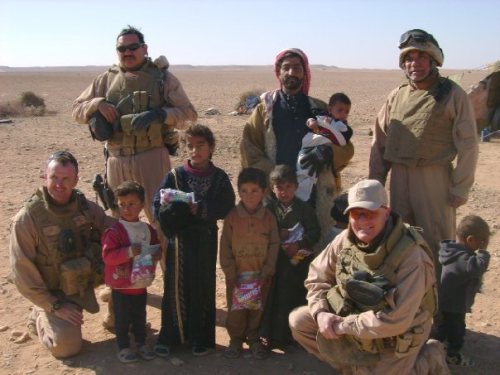
Christmas Eve 2007 with the Bedouin 

When I left Iraq in February 2008 I felt that I was abandoning those committed to my spiritual care, but my time was up. Because of it I missed going with some of my advisors to Basra with the 1st Iraqi Division to retake that city from insurgents. It was only a bit over a month after I had celebrated what I consider to be my most important Masses of my life at COP South and COP North on December 23rd as well as Christmas Eve and Christmas Day. In fact they were really the last masses that I felt the mystery and awe of the love of God that I used to so much feel.

When I left the new incoming senior Chaplain refused to take my replacement leaving our advisors without dedicated support. He then slandered me behind my back because what I was doing was not how he would do things and because I and my relief were under someone else’s operational control. It is funny how word gets back to you when people talk behind your back. Thankfully he is now retired from the Navy and I feel for any ministers of his denomination under his “spiritual” care.  So I cannot forget those days and every time I think about them, especially around Christmas I am somewhat melancholy and why I can relate so much to Father Palmer in the movie.

It has been seven years since those Christmas Masses and they still feel like yesterday. In the intervening years my life has been different. Just a year later I was walking home from church where my wife was to sing in the choir during the Christmas vigil mass. I couldn’t handle the crowds, the noise, and I felt so far away from God. That night I walked home in the dark looking up into the sky asking God if he still was there. If there had been a bar on the way home I would have stopped by and poured myself in.

Since Iraq I have dealt with Severe and Chronic PTSD, depression, anxiety and insomnia were coupled with a two year period where due to my struggles I lost faith, was for all practical purposes an agnostic. I felt abandoned by God, but even more so and maybe more importantly by my former church and most other Chaplains. It was like being radioactive, there was and is a stigma for Chaplains that admits to PTSD and go through a faith crisis, especially from other Chaplains and Clergy.  It was just before Christmas in late 2009 that faith began to return in what I call my Christmas Miracle. But be sure, let no one tell you differently, no Soldier, Sailor, Marine or Airman who has suffered the trauma of war and admitted to PTSD does not feel the stigma that goes with it, and sadly, despite the best efforts of many there is a stigma.

Now that faith is different and I have become much more skeptical of the motivations of religious leaders, especially those that demonize and dehumanize those that do not believe like them or fully support their cause or agenda. Unfortunately there are far too many men and women who will use religion to do that, far too many.

As for me, I thought that I was in a better place a year ago. I had the floor kicked from out from under me this summer and it has been a hard fight and while I am beginning to get back to some sense of normal it is a day to day thing. I still suffer the effects of the PTSD, especially the insomnia, nightmares and the nightmares which came back with a vengeance this summer. I also still have the anxiety in crowded places and bad traffic, but working with my new therapist I am coming up with some effective coping mechanisms. As for faith, I do believe again, though at the same time I doubt. I would have to consider myself a Christian Agnostic who echoes the cry of the man who cried out to Jesus, “Lord I believe, help my unbelief!” 

Like the Priest in Joyeux Noel I know that my place is with those who are “in pain, and who have lost their faith.” For me this may no longer be on the battlefield as I will retire from the Navy out of my current billet teaching at the Joint Forces Staff College in a couple of years. However, that being said I will strive to be there for those that struggle with faith and believe, especially those who struggle because of what they saw and experienced during war and when they returned home.

3670064wxkyb

Joyeux Noel Christmas Eve

Likewise I expect that I will do my best to speak truth to those in power and those whose faithfulness is more a product of their comfort with the God that they create in their own mind rather than the Crucified God wise death on the Cross s a scandal. For many Christians the scandal of the cross is too easy to avoid by surrounding ourselves with pet theologies that appeal to our pride, prejudice and power. The kind of malevolent power represented by the bishop in Joyeux Noel. Thus I take a measure of comfort in the words of Simone Weil who said “He who has not God in himself cannot feel His absence.” 

Thus, like Paul Tillich I have come to believe that “Sometimes I think it is my mission to bring faith to the faithless, and doubt to the faithful.”  In other words to become a complete pain in the ass until the day that I die.

Praying for Peace this Christmas,

Padre Steve+

1 Comment

Filed under christian life, faith, film, History, Military, PTSD, Tour in Iraq, world war one

They Thanked us Kindly and Made Their Peace: Veteran’s Day 2014

481801_10151367001287059_1003164983_n

“We were fond together because of the sweep of open places, the taste of wide winds, the sunlight, and the hopes in which we worked. The morning freshness of the world-to-be intoxicated us. We were wrought up with ideas inexpressible and vaporous, but to be fought for. We lived many lives in those whirling campaigns, never sparing ourselves: yet when we achieved and the new world dawned, the old men came out again and took our victory to remake in the likeness of the former world they knew. Youth could win, but had not learned to keep, and was pitiably weak against age. We stammered that we had worked for a new heaven and a new earth, and they thanked us kindly and made their peace.”

T.E. Lawrence

In November 1914 millions of soldiers were fighting in horrible conditions throughout Europe. From the English Channel to Serbia, Poland and Galicia; French, British, German, Austro-Hungarian, Serbian and Russian troops engaged each other in bloody and often pointless battles. Often commanded by old men who did not understand how the character of war had changed, millions were killed, wounded, maimed or died of disease.

After four years, with the Empires that were at the heart of the war’s outbreak collapsing one after the other there was an armistice. On the eleventh  hour, of the eleventh day, of the eleventh month the shooting stopped and the front lines quieted. By then over 20 million people, soldiers and civilians alike had died. Millions more had been wounded, captured, seen their homes and lands devastated or been driven from there ancestral homelands, never to return.

The human cost of that war was horrific. Over 65 million soldiers were called up on all sides of the conflict, of which nearly 37.5 million became casualties, some 57.5% of all soldiers involved. Some countries saw the flower of their manhood, a generation decimated. Russia sustained over 9 million casualties of the 12 million men they committed to the war, a casualty rate of over 76%. The other Allied powers suffered as well.  France lost 6.4 million of 8.5 million, or 73%, Great Britain 3.1 million of nearly 9 million, 35%; Italy 2.2 million of 5.6 million, 39%. Their opponents, Germany, Austria-Hungary and the Ottoman Empire suffered greatly. Germany sustained 7.1 million casualties of 11 million men called up, or nearly 65%, Austria 7 million of 7.8 million, 90% and the Ottoman Empire 975,000 of 2.8 million or 34% of the soldiers that they sent to war.

It was supposed to be the War to end all War…but it wasn’t, it was the mother of countless wars.

pic_giant_021814_SM_Lessons-of-World-War-1

It has been a century since that bleak November of 1914, and ninety-six years since the time where for a brief moment, people around the world, but especially in Europe dared to hope for a lasting and just peace. But that would not be the case…

The victors imposed humiliating peace terms on the vanquished, be it the Germans on the Russians, or the Allies on Germany and her partners. The victors divided up nations, drew up borders without regard to historic, ethnic, tribal or religious sensibilities. But then, it was about the victors imposing themselves and their quest for domination, expanding colonial empires and controlling natural resources rather than seeking a just and lasting peace. The current war against the Islamic State is one of the wars spawned by the Sykes-Picot agreement which divided the Middle East between the French and the British at the end of the war. It was a war that keeps on giving.

Of course we have known the disastrous results of their hubris, a hubris still carried on by those who love and profit by war…war without end which continues seemingly with no end in sight.

I am a veteran of Iraq and Operation Enduring Freedom, as well as the Bosnia mission and the Cold War. My dad was a Vietnam veteran who enlisted during the Korean War. I serve because it is the right thing to do, not because I find war romantic or desirable. It is as General William Tecumseh Sherman said “Hell.” If called to go back to Iraq, where I left so much of my soul, I would in a heartbeat.

canadian-soldiers-going-over-trench

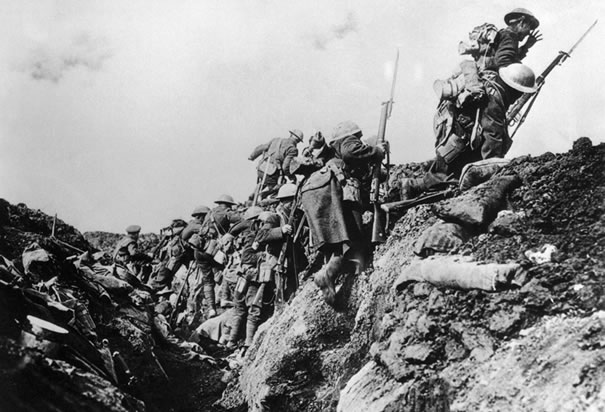
Today we pay our day of homage to our honor veterans, especially in the United States, Great Britain, Canada and France. But sometimes it seems so hollow, for in all of our countries those that serve are a tiny minority of those eligible to serve, who are much of the time ignored or even scorned by those that feel that providing for them after they have served is too much of a burden on the wealthy who make their profits on the backs of these soldiers, sailors, marines and airmen.

I have walked about since returning from Iraq often in a fog, trying to comprehend how a country can be at war for so long, and there is such a gap between the few who serve and the vast majority for whom war is an abstract concept happening to someone else, in places far away, and whose experience of war is its glorification in video games. Personally I find that obscene, and feel that I live in a foreign world. Erich Maria Remarque wrote in All Quiet on the Western Front: 

“I imagined leave would be different from this. Indeed, it was different a year ago. It is I of course that have changed in the interval. There lies a gulf between that time and today. At that time I still knew nothing about the war, we had been only in quiet sectors. But now I see that I have been crushed without knowing it. I find I do not belong here any more, it is a foreign world.”

Similarly Guy Sager wrote in his classic The Forgotten Soldier: 

“In the train, rolling through the sunny French countryside, my head knocked against the wooden back of the seat. Other people, who seemed to belong to a different world, were laughing. I couldn’t laugh and couldn’t forget.”

Major General Gouverneur Warren wrote to his wife two years after the American Civil War:

“I wish I did not dream that much. They make me sometimes dread to go to sleep. Scenes from the war, are so constantly recalled, with bitter feelings I wish to never experience again. Lies, vanity, treachery, and carnage.”

Sometimes I find it obscene that retailers and other corporations have turned this solemnity into another opportunity to profit. But then why should I expect different? Such profiteers have been around from the beginning of time, but then maybe I still am foolish enough to hope for something different. Please don’t get me wrong, I do appreciate the fact that some businesses attempt in at least some small way to thank veterans. I also know there are many businesses and business owners who do more than offer up tokens once a year, by putting their money where their mouth is to support returning veterans with decent jobs and career opportunities; but for too many others the day is just another day to increase profits while appearing to “support the troops.”

As Marine Corps legend and two time Medal of Honor winner Major General Smedley Butler Wrote:

“What is the cost of war? what is the bill? “This bill renders a horrible accounting. Newly placed gravestones. Mangled bodies. Shattered minds. Broken hearts and homes. Economic instability. Depression and all of its attendant miseries. Back -breaking taxation for generations and generations. For a great many years as a soldier I had a suspicion that war was a racket; not only until I retired to civilian life did I fully realize it….”

But the marketers of war do not mind, almost Orwellian language is used to lessen its barbarity. Dave Grossman wrote in his book On Killing:

“Even the language of men at war is the full denial of the enormity of what they have done. Most solders do not “kill,” instead the enemy was knocked over, wasted, greased, taken out, and mopped up. The enemy is hosed, zapped, probed, and fired on. The enemy’s humanity is denied, and he becomes a strange beast called a Jap, Reb, Yank, dink, slant, or slope. Even the weapons of war receive benign names- Puff the Magic Dragon, Walleye, TOW, Fat Boy, Thin Man- and the killing weapon of the individual soldier becomes a piece or a hog, and a bullet becomes a round.”

There is even a cottage industry of war buffs, some of who are veterans seeking some kind of camaraderie after their service, but most of whom have little or know skin in the real game, and at no inconvenience to themselves. As far as the veterans I understand, but as for the others I can fully understand the words of Guy Sager, who wrote:

“Too many people learn about war with no inconvenience to themselves. They read about Verdun or Stalingrad without comprehension, sitting in a comfortable armchair, with their feet beside the fire, preparing to go about their business the next day, as usual…One should read about war standing up, late at night, when one is tired, as I am writing about it now, at dawn, while my asthma attack wears off. And even now, in my sleepless exhaustion, how gentle and easy peace seems!”

dscn0064

It was to be the War to end all war” but I would venture that it was the war that birthed countless wars, worse tyrannies and genocides; That war, which we mark the end of today, is in a very real and tragic sense, the mother of the wars that have followed. War without end…Amen.

As so to my friends, my comrades and all that served I honor you, especially those that I served alongside. We are a band of brothers, no matter what the war profiteers do, no matter how minuscule our number as compared to those who do not know what we do, and those who never will.  We share a timeless bond and no-one can take that away.

n671902058_1153829_4642-2

I close with the words of a German General from the television mini-series Band of Brothers which kind of sums up how I feel today. The American troops who have fought so long and hard are watching the general address his troops after their surrender. An American soldier of German-Jewish descent translates for his comrades the words spoken by the German commander, and it as if the German is speaking for each of them as well.

Men, it’s been a long war, it’s been a tough war. You’ve fought bravely, proudly for your country. You’re a special group. You’ve found in one another a bond that exists only in combat, among brothers. You’ve shared foxholes, held each other in dire moments. You’ve seen death and suffered together. I’m proud to have served with each and every one of you. You all deserve long and happy lives in peace.

In hopes of peace,

Padre Steve+

Leave a comment

Filed under History, Military, News and current events, philosophy, Political Commentary, shipmates and veterans, world war one

The Sinking of the Aboukir, Cressy and Hogue and the Advent of Submarine Warfare

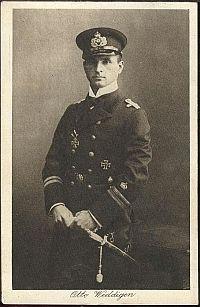
livebait_pc_weddigen1

“There was a fountain of water, a burst of smoke, a flash of fire, and part of the cruiser rose in the air. Then I heard a roar and felt reverberations sent through the water by the detonation.”

Otto Weddigen describing the sinking of HMS Aboukir 

Ninety years ago this month an event took place that changed naval warfare and introduced the world to how deadly a single submarine could be. In September 1914 most naval experts held the submarine was not much of a threat. The submarines of the day were limited in range, diving depth, speed, armament and endurance.

U9Submarine1


U-9

The U-9 was powered by kerosene engines on the surface which charged batteries which were used when the boats were submerged. Later submarines would be powered by diesel engines. U-9 was small, displacing only 543 tons on surface and 674 submerged. She was 188 feet long and just 19.7 feet in beam. The living conditions for her crew of 4 officers and 25 enlisted men were less than spartan. She was armed with four 17.7 inch torpedo tubes, two forward and two aft and carried six torpedoes, four in the tubes and two reloads for the forward torpedo tubes. The boat had been commissioned in April 1910 and on the outbreak of the First World War she was commanded by Kapitänleutnant Otto Weddigen.

kapitaenleutnant_-_otto_eduard_weddigen_-_03_01_1918


Otto Weddigen 

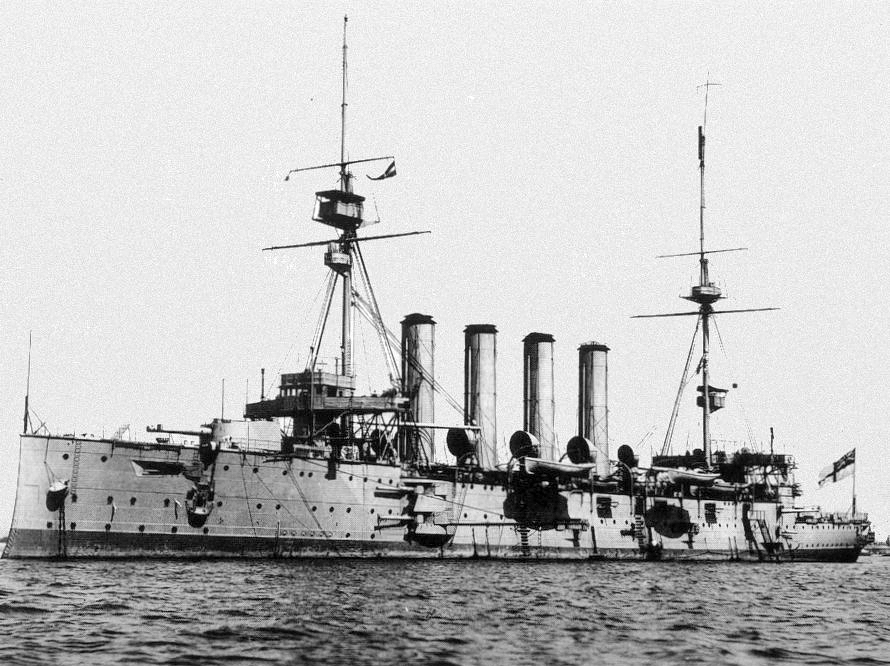
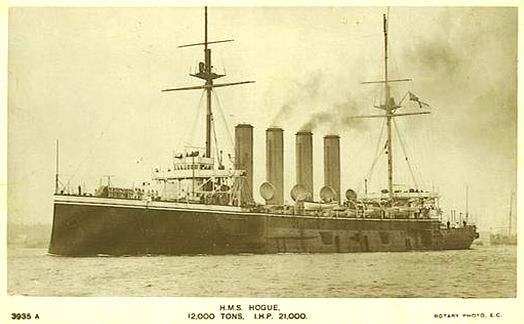
On September 22nd 1914 with enormous battles raging on the Western Front and the High Seas Fleet in port the soon to be famous submarine was patrolling in the North Sea. The U-9 was about 18 miles off the Dutch Coast near the Hook of Holland when she encountered three ships of the Royal Navy’s 7th Cruiser Squadron, or Cruiser Force C. The squadron was composed of three obsolete Cressy Class Armored Cruisers, the HMS Cressy, HMS, Aboukir and HMS Hogue displacing 12,000 tons and mounting two 9.2” and 12 6” guns each.

HMS_Aboukir


HMS Aboukir at Malta before the War, HMS Cressy (below)

HMS_Cressy

wjb_hogue_2

HMS Hogue shortly after being commissioned

The three ships were manned primarily by recently called up reservists and were derisively known throughout the fleet as the “Live Bait Squadron.” On that September morning they would be just that. The squadron was reduced in number as the squadron flagship was not present and the HMS Euryalus had to drop out due to lack of coal and weather damage to her wireless. The weather was bad, so the admiral in command was had to remain with the ship, unable to transfer. As such he delegated command to the captain of the Aboukir. The same bad weather also kept the destroyers that would of accompanied the patrol in port.


The ships were steaming in a line ahead formation when Weddigen on the U-9 spotted them about 0600 on the morning of September 22nd. They were not zig-zagging to lessen the chance of submarine attack and thought they had posted lookouts had no idea that U-9 was stalking them.

Weddigen on worked the boat into what he felt was a better firing position and launched his first torpedo at the center cruiser, the Aboukir at 0620 from a distance of just 550 yards. The torpedo struck her midships and broke her back. She began to sink and within 25 minutes capsize taking 527 of her crew of 760 down with her. Weddigen wrote in his post battle report:

“Her crew were brave, and even with death staring them in the face kept to their posts, ready to handle their useless guns….”

livebait_aboukir_sinking1

Aboukir Sinking

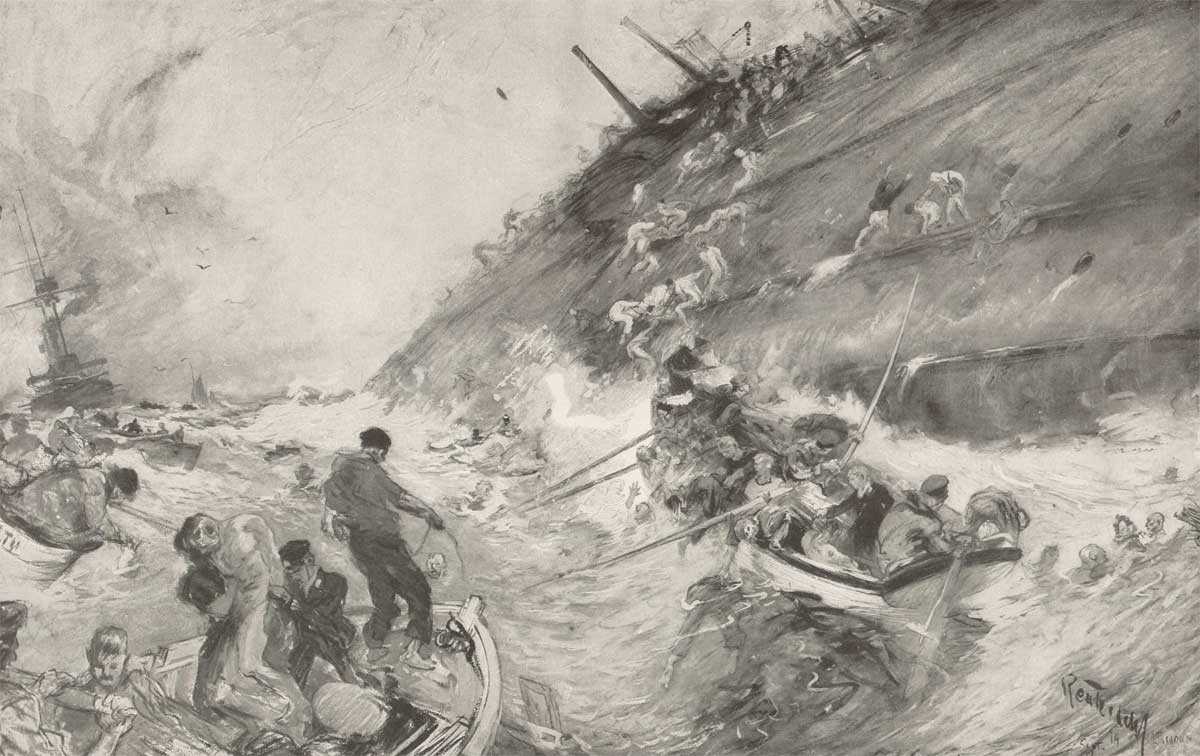
Thinking that Aboukir had struck a mine the Captains of the Cressy and Hogue moved their ships close to rescue survivors. Weddigen had surfaced to observe the British and then fired two torpedoes into Hogue from a range of just 300 yards and then dived with Hogue opening fire as she did so. Hogue capsized and sank in 15 minutes.

The British now knew that a submarine was responsible for the attack and the last ship and after reloading his forward tubes attacked Cressy at 0720 firing two torpedoes from her stern tubes. Weddigen then surfaced to bring his bow tubes into action and fired another shot, as he dis so the British cruiser opened fire and attempted to ram. Cressy was struck by two torpedoes during the attack, the doomed ship capsized and then sank at 0755.

Reuterdahl_-_HMS_Cressy_Sinking


Cressy Sinking 

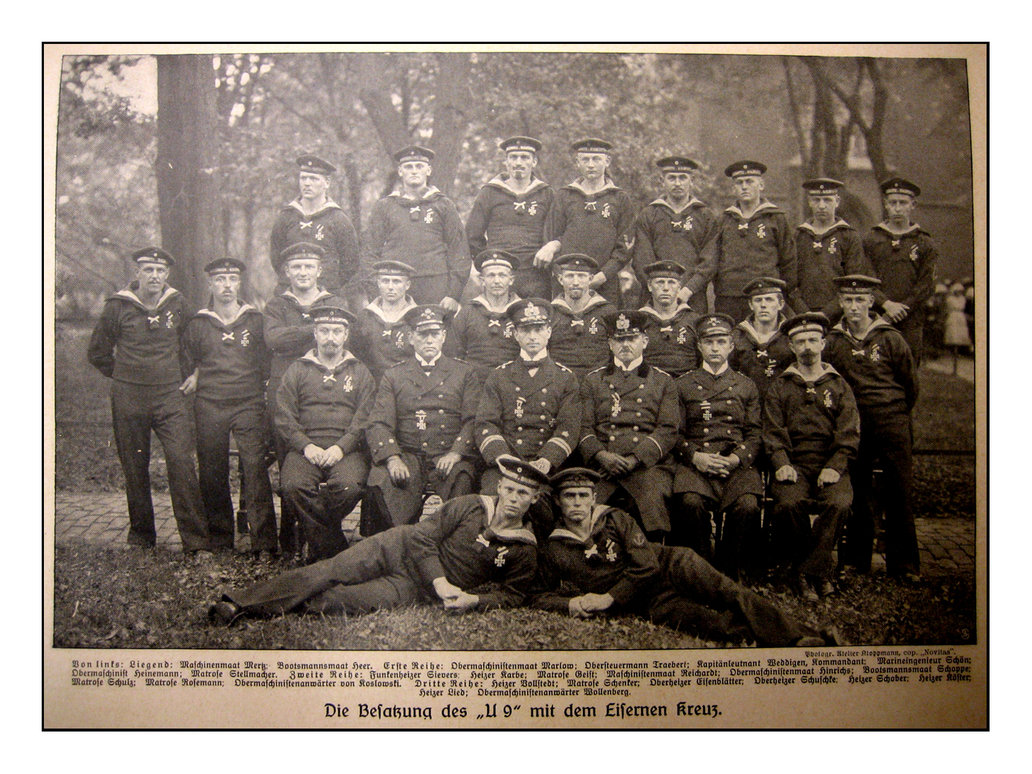
In a little over an hour the U-9 had sunk three British cruisers. A total of 1459 British sailors died in the attacks and only 837 crew members from all three ships survived. Weddigen withdrew from the area as he knew that the British would be looking for the U-9. When the boat returned to port, Weddigen, and his crew were hailed as heroes. Weddigen was awarded the Iron Cross First Class and later the Pour le Merite which he received personally from Kaiser Wilhelm II. The U-9 was one of only two ships of the Imperial Navy awarded the Iron Cross. The other was the Light Cruiser Emden, nicknamed the “Swan of the East” which tied down a large number of British, French and Russian ships in the Pacific and Indian Ocean during her short but productive deployment as a commerce raider.

U9_Heimkehr

The Return of the U-9 to Wilhelmshaven

The plucky U-9 would survive the war, sinking another cruiser, the HMS Hawke in 1915 and 13 other merchant ships or fishing boats. She was withdrawn from front line service in 1916 and assigned to training duties.

German_marines___U9_submarine_by_G497


The Crew of U-9

Weddigen was less fortunate, the aggressive young officer was killed on March 18th 1915 when his new command the U-29 was rammed and sunk by the HMS Dreadnought.

Future First Sea Lord Dudley Pound then serving on the Battleship HMS St. Vincent wrote:

“Much as one regrets the loss of life one cannot help thinking that it is a useful warning to us — we had almost begun to consider the German submarines as no good and our awakening which had to come sooner or later and it might have been accompanied by the loss of some of our Battle Fleet.”

Submarines would go on to be one of the most feared and effective weapons ever developed for naval warfare. German U-Boats nearly brought Britain to its knees in both World Wars and the submarines of the US Navy’s Pacific Fleet decimated the Japanese merchant fleet and inflicted great losses on the Imperial Japanese Navy in the Second World War. After Pearl Harbor and the many defeats of early 1942 it was the submarine force that according to Admiral Chester Nimitz “held the lines against the enemy.”

Today the most deadly submarines ever built prowl underneath the surface of the world’s oceans. Nuclear powered and advanced diesel electric boats armed with torpedoes and cruise missiles, and giant nuclear powered ballistic missile submarines armed with long range nuclear ballistic missiles provide an invisible and nearly undetectable deterrent.

Unlike 1914 today all navies take the submarine threat seriously. Should any significant naval war be fought in the Persian Gulf or the Pacific submarines will certainly have an impact not only at sea but in strategic strikes on enemy installations and land based units. In 1914 no one would have thought that the success of the tiny U-9 would eventually lead to such a dominating weapon.

Peace

Padre Steve+
Leave a comment

Filed under History, history, Military, Navy Ships, world war one

The Night the Lights Went Out in Europe: August 3rd 1914

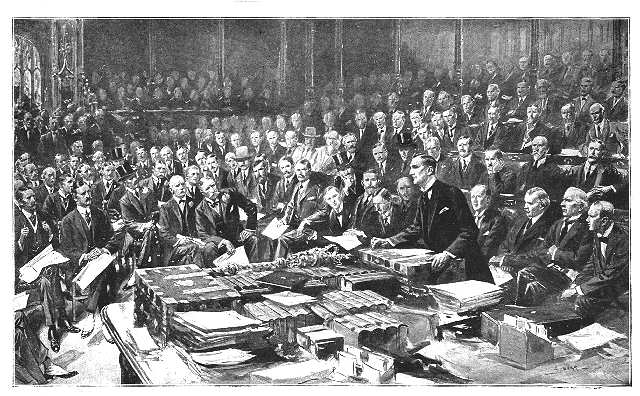
grey-bastard

Sir Edward Grey addressing the House of Commons 

The mobilization of millions of soldiers across Europe was moving rapidly as the sun set on the night of August 2nd 1914 when the German Ambassador to Belgium Klaus Bulow-Selaske delivered an ultimatum to the Belgian government. The ultimatum gave the Belgians 12 hours to decide if they would allow the German armies free passage through the country. The Belgians, treasuring their independence and led by a truly heroic leader, the young and humble King Albert refused the German ultimatum and vowed to fight.

The next morning the British House of Commons met and for the first time since 1893 every member was present, with many spectators in attendance, Britain’s participation in a war on the European Continent in nearly 100 years was being contemplated. Britain was divided between interventionists and non-interventionists, and the pressure was on the government.

The British Foreign Minister, Sir Edward Grey urged giving support to France. He told the assembled Members of Parliament about, British military understandings with France, and the German ultimatum to Belgium. Grey asked them whether Britain “would quietly stand by and witness the perpetration of the dirtiest crime that ever stained the pages of history, and thus become participators in the sin.” He added that “we are going to suffer, I am afraid in this war, whether we are in it or stand aside.” If Britain dis stand aside, forfeiting her “Belgian Treaty obligations” the she would “sacrifice our respect and good name and reputation before the world.” Grey had not convinced everyone, but he had carried the day. However, the Germans did not believe that Britain would go to war over Belgium.

At seven that evening the German Ambassador to France Baron Schoen delivered a declaration of war against France, his counterpart in Berlin, the French Ambassador was given his passports.

As Grey pondered the content of an ultimatum to be sent to Berlin he returned to his office in Whitehall. “Watching with his failing eyes, the lamps being lit in St. James Park, Grey was heard to remark that “the lamps are going out all over Europe; we shall not see them again in our lifetime.”

The next morning the German army began its assault on the Belgian fortress city of Liege. That afternoon Poincare and Foreign Minister Viviani addressed the combined houses of the French Parliament, asking for war credits, discussing German violations of French territory and “implored the deputies, and the French people “to help us in bearing the burden of our heavy responsibility, the comfort of a clear conscience and the conviction that we have done our duty.”

The members of all parties, from the nationalists, the Catholic right and the Socialists overwhelming committed themselves to a sacred union. Poincare recalled later “Never has there been a spectacle as magnificent as that which they have just participated….In the memory of man, there has never been anything more beautiful in France.”

kw31_reichstagsprotokolle_bild

Bethmann-Hollweg address the Reichstag 

In Berlin Prime Minister Bethmann-Hollweg accused the French of violating German borders and of the Russian mobilization. He asked the Reichstag deputies “Were we to wait in further patience until the nations on either side of us chose the moment for their attack?” He was interrupted with cries of “No! No!”

Bethmann went on and admitted that Germany had violated Belgian territory and that it was a “breach of international law” ironically what he had just accused the French of doing, but Bethmann promised that “this wrong- I speak openly-the wrong we thereby commit we will try to make good as soon as our military aims have been attained.” Grand Admiral Tirpitz considered the admission of wrongdoing “the greatest blunder ever spoken by a German statesman.”

Bethmann called the nation to stand behind the military and as in France “Reichstag party leaders rose as one to vote war credits.”

A similar ultimatum was delivered to Russia by the German Ambassador and a similar scene repeated as Russia declared war.

That evening the British Ambassador to Germany Sir Edward Goschen paid a visit to Foreign Minister Jagow with a British ultimatum for the Germans to withdraw from Belgium within twelve hours, or face war. Bethmann, who had helped lead his nation into war believing that the British would remain neutral was stunned. Likewise, none had counted on the Russians to fight. The Germans had given Austria-Hungary a “blank check” and that nation’s leaders cashed it with grave consequences for the world. Austria’s actions led to Czar Nicholas making the fateful decision to mobilize on July 29th, which set Europe on course for war.

There was no turning back, in four hours the two greatest military powers in the world, Great Britain and Germany would be at war.

All all of the leaders in their speeches had left out information that would be embarrassing to their claims in their addresses, duplicity was the order of the day. The lights were going out across Europe. And the leaders of all of the nations, with the exception of Belgium shared some degree of responsibility.

The questions for us today are similar: Will all of our leaders allow the lights to go out again, not just in Europe but the Middle East and Asia? and will world leaders allow some foolish action somewhere to bring about more war?

Admittedly the situation is not identical, but there are troubling similarities. It is something to think long and hard about.

Peace

Padre Steve+

1 Comment

Filed under History, history, national security, Political Commentary, world war one

Winston Churchill, Turkey and the High Cost of Two Dreadnoughts

churchill1914

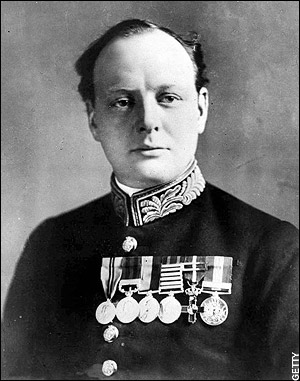
One of the more interesting and overlooked factors in the days leading up to the First World War, which had significant ramifications in the Middle East involved Winston Churchill. Churchill was serving as First Lord of the Admiralty and made a decision which ensured the Ottoman Empire would be pushed into an alliance with Germany.

For many years Britain had been the chief supplier of ships for the Ottoman Navy. In fact in the years leading up to World War One the Ottomans had purchased over 40 ships from Great Britain and on August 2nd 1914 was expecting to take delivery of two, extremely modern Dreadnoughts, the Sultan Osman I and the Reshadieh. The Sultan Osman was armed with fourteen 12” guns, the Reshadieh with ten 13” guns, making them the equal or superior to most battleships afloat. The Turkish Government had paid over 4 billion Pounds for the ships and made the final payment on August 2nd shortly before the Turkish Captain and 500 crew members were to come aboard for a ceremony formally handing over the ship to the Turkish Navy.

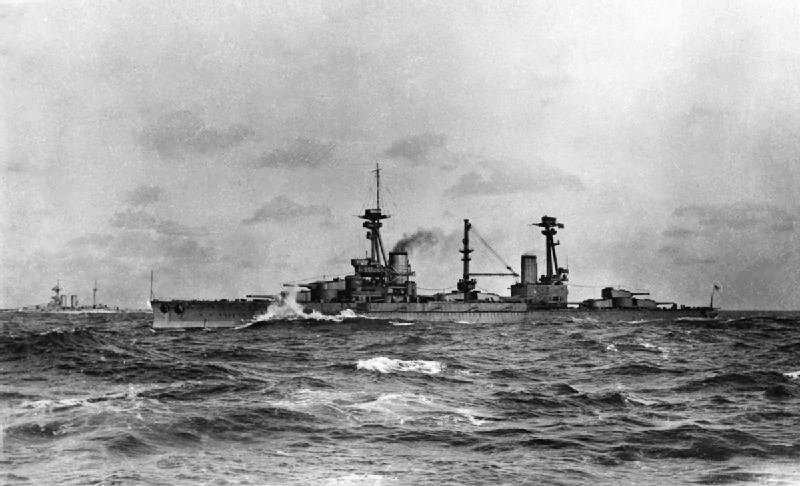
HMS_Agincourt_1915

HMS Agincourt 

Much of the money the Turks used to pay for the ships came from the donations of ordinary Turkish citizens. Money came from taverns, from cafes, schools, Mosques and markets. Those that donated were awarded a commemorative medal, the ships were the pride of Turkey and the empire. The nation awaited the delivery of the ships which would ensure the superiority of the Turkish Navy against its traditional foe, Russia.

HMS_Erin

HMS Erin

As War approached Churchill began to prepare, keeping many of his plans and actions even from the government. Less than an hour before the ceremony Churchill ordered the ships seized and and the Royal Navy kept the Turkish Captain and crew locked aboard a nearby transport. The Turkish Captain later wrote:

“… We paid the last installment (700.000 Turkish liras). The manufacturer and we agreed on that the ships would be hand over on 2 August 1914. Nevertheless, after we made our payment and half an hour before the ceremony, the British declared that they have requisitioned the ships… Although we have protested, nobody paid attention.”

Churchill had gained two modern Dreadnoughts for the Royal Navy, and the British shipyards kept the money, the Turks were never compensated for the loss. The ships were renamed HMS Agincourt and HMS Erin. Both served throughout the war and at the Battle of Jutland, and bother were scrapped in the early 1920s due to the restrictions of the Washington Naval Treaty.

SMS_Goeben-ptbow3

SMS Goeben

But in the process whereby the British gained the ships, ensured that Turkey would ally itself with Germany. The positive effects were mitigated by the Germans providing the very modern dreadnought type  Molkte Class Battlecruiser Goeben and Light Cruiser Breslau to the Turks, giving them the edge over the Russians. Breslau was mined and sunk in 1918 but Goeben served in the Turkish Navy as the Yavuz Sultan Selim until she was decommissioned in 1954, and scrapped in 1973.

Likewise, Churchill’s decision meant that when Turkey entered the war that the strategically important Bosporus strait which was Russia’s only year round access to foreign shipping was closed, keeping Britain and France from being able to supply their Russian ally. The ill-fated Gallipoli campaign, launched by Churchill was the attempt to break the Turkish stranglehold, and the costly failure of that operation helped ensure the defeat of Russia and the overthrow of the Czar..

In the long term it had affects that we are still feeling the today. The entry or Turkey into the war and the subsequent collapse of the Ottoman Empire was the catalyst for the arbitrary borders drawn by the allies across the Middle East.

Had Turkey remained neutral throughout the war, or even sided with the allies the course of history might be far different. We don’t know, but the Ottoman Empire might have endured or it might have peacefully morphed into something different.

Churchill’s decision turned out to be one of the more important, and less known events before the war broke out, and certainly we still feel the ramifications today. Actions have consequences, and sometimes what seems expedient to give a tactical edge, sometimes has far reaching strategic consequences. Consequences that sometimes linger for generations.

Peace

Padre Steve+
4 Comments

Filed under History, history, middle east, Military, world war one

The Unfolding of Miscalculations


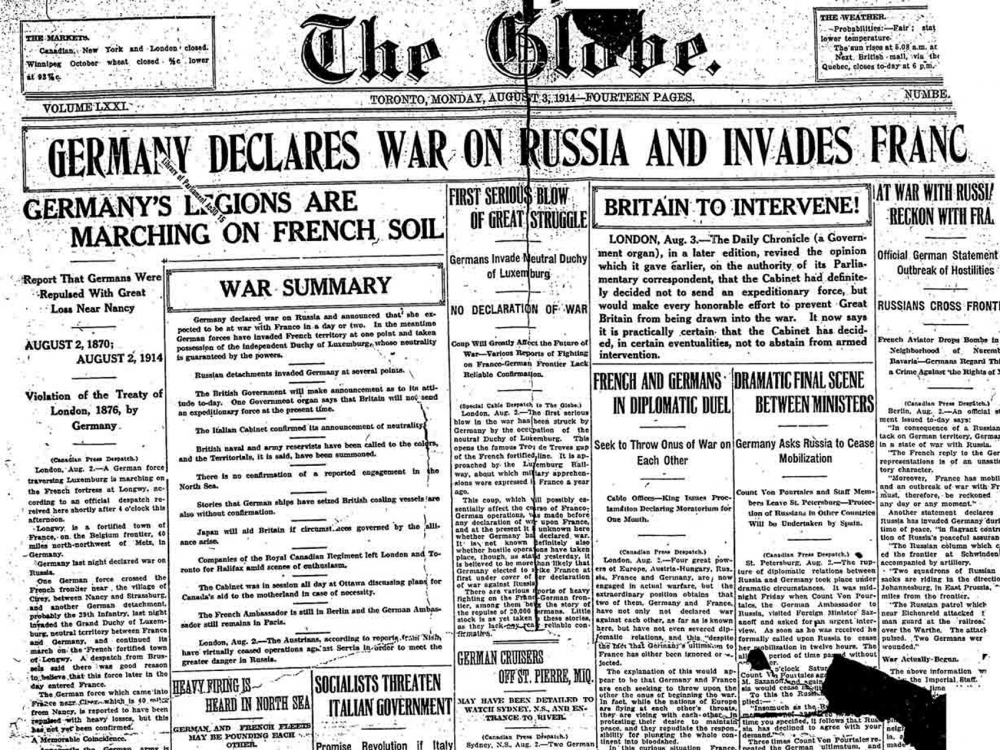
GM_Aug3_1914_Germany-Declares-war-on-Russia-invades-France

“The muffled tongue of Big Ben tolled nine by the clock as the cortege left the palace, but on history’s clock it was sunset, and the sun of the old world was setting in a dying blaze of splendor never to be seen again.” Barbara Tuchman, The Guns of August

It is now late July of 2014 and for the past month I have been reading about the events in Europe of 100 years ago, a time when the leaders of Europe were hurtling into a war which would change the world forever and the effects of which redound to our day. As I read each book I am always amazed at the hubris, vanity, ignorance and incompetence of the monarchs, prime ministers, foreign ministers and diplomats and military leaders. Men who managed to miscalculate their way into a war that was far larger, longer, destructive and earth shaking than most imagined at the time. As Barbara Tuchman wrote “War is the unfolding of miscalculations.”

Yes there were some who knew that a war would be longer, larger and more destructive than most expected, they were either ignored, or in the case of Field Marshal von Molkte of Germany and Joffre of France ignored their own predictions of a long costly war “made any allowance in their plans for the war of attrition which they both foresaw.” Lord Kitchener of Britain, who had no part in his nation’s planning for war and who was recalled to become War Minister on August 4th 1914 was the only military leader to act on his predictions. He predicted to a colleague that the war would last three years, but added that it might last longer, but “three years will do to begin with. A nation like Germany, after having forced the issue, will only give in after it is beaten to the ground. That will take a very long time. No one living knows.”

Of course few people, especially leaders learn from history, including Americans. In November 2002 Donald Rumsfeld predicted that the coming U.S. invasion of Iraq would “Five days or five weeks or five months, but it certainly isn’t going to last any longer than that….It won’t be a World War III.” Of course, he and those who led the United States into war were incredibly wrong, the American involvement lasted 8 years, cost about 4500 U.S. military dead and about 40,000 wounded and when all costs are factored in will have cost the nation trillions of dollars. It also helped bring into existence the group known as ISIL, or the Islamic State of Iraq and the Levant, which now controls vast swaths of Iraq and Syria and whose conquests may drag the United States back in to the Iraq conflagration, maybe even in concert with Iran. It may not be a “world war” but threatens to become global as the influence of ISIL is spreading to other parts of the Middle East, Africa and Asia.

There are also rumblings of war coming from Russia and the Ukraine, a conflict that has now claimed nearly 300 people who had no stake in it, the passengers and crew of Malaysia Air Flight 17, shot down by pro-Russian insurgents with a missile very probably supplied by Russia. Both Russia and Ukraine have begun limited mobilization of their militaries. While one would want to believe that neither Russia or Ukraine, or for that matter Europe or the United States has an interest in war one can never be sure. As Tuchman wrote “One constant among the elements of 1914—as of any era—was the disposition of everyone on all sides not to prepare for the harder alternative, not to act upon what they suspected to be true.”

In the weeks leading to the First World War, some nations were determined on war, others thrust into it by their perceived military interests and still others because they ignored the danger of the situation until it was too late. In all cases their actions and inaction led to disaster.

Peace

Padre Steve+

2 Comments

Filed under History, history, News and current events, world war one