Category Archives: world war two in europe

Predators of the High Seas: The U-Boat Type IX

Friends of Padre Steve’s World,

As I mentioned yesterday I am kind of taking some time away from politics and all the other stuff I could write about to go back to one of my passions, the great warships of history. I am busy at work and I am continuing to work on my Civil War texts but I’m not ready to post any of the new material from those just yet. Last night I wrote about the U-Boat Type VII, the most numerous, and one of the most successful type of submarines ever produced. Today, an older article dredged up from my archives about the U-Boat Type IX, which was one of the most successful types of submarines ever built. This is a tribute to them and their brave crews, who though fighting for an evil cause demonstrated bravery and courage even when the odds were stacked against them, most of who never saw home again. 

Have a great day,

Peace,

Padre Steve+

Lorient, U-Boote U-123 und U-201 auslaufend

U-123 returning from patrol

As the Kriegsmarine began its expansion in the mid-1930s the new U-Boat arm developed several types of submarines. The Type IX class was designed in 1935-36 as a long range attack boat and was larger had a greater range and were more heavily armed than the more numerous Type VII boats. The Kreigsmarine designers envisioned a submarine capable of operating far from German bases for extended periods of time. The design of these boats was derived from the two boat Type 1 class and incorporated lessons learned from that class. 283 boats of the type were constructed between 1937 and 1944 and the Kriegsmarine continuously sought to improve the type which resulted in five distinct models within the class.

type ix

Type IXA The first group referred to as the Type IXA or simply the Type IX was comprised of 8 boats built by AG Weser of Bremen. Ordered in 1936 the group was part of the Kriegsmarine’s Plan Z rearmament plan which began when the Nazi Government announced that it would no longer abide by the Treaty of Versailles. The initial 8 boats had a 1032 ton standard displacement were 251 feet long and were armed with six 21” torpedo tubes with 22 torpedoes. They had a 105mm deck gun with 110 rounds as well as a 37mm and 20mm anti-aircraft gun. They were the first German submarines equipped with a double hull which increased survivability and seaworthiness. They were powered on the surface by two MAN M9V40/46 supercharged 9-cylinder diesel engines that produced 4,400 shp as well as two SSW GU345/34 double-acting electric motors for underwater operations. As in all diesel-electric boats the diesels were used to recharge the batteries for the electric motors while the boat was operating on the surface. They had a maximum speed of 18.2 knots on the surface and a range of 22,354 miles at 10 knots. Underwater they had a maximum speed of 7.7 knots and range of 166 miles at 4 knots. The official maximum diving depth was 230 meters or 750 feet. Of the 8 boats of this type 6 were sunk during combat operations and two scuttled at the end of the war by their crews to prevent their capture by the Allies. The most successful of the Type IXA boats was the U-37 was the most successful boat of the type sinking 53 merchant ships for a total of 200,124 tons as well as two warships, the Sloop HMS Penzance and French Submarine Q-182.

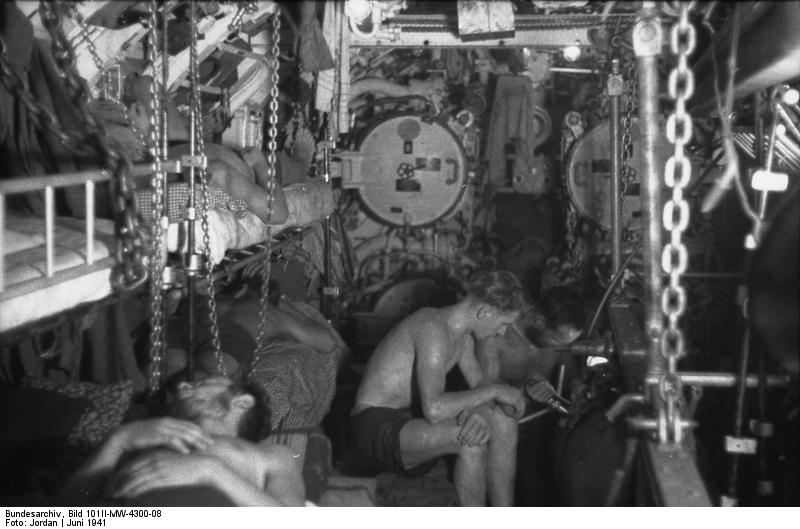
U-107 in See, Bugraum

Crew members of U-107 in Torpedo Room

Type IXB The next group was the IXB of which 14 boats were built by AG Weser Bremen. This was the most successful class of U-boats, or for that matter any class of submarines based on tonnage sunk per boat during the Second World War. Each of these ships sank over 100,000 tons of Allied shipping. They were slightly larger than the IXA boats and had a significantly longer operational range of 24,600 miles on the surface at 10 knots. The U-107 of this class had the most successful war patrol of any U-Boat in the war sinking nearly 100,000 tons of Allied shipping off Freetown Sierra Leone while U-103 sank over 237,000 tons of Allied shipping during 11 war patrols over the course of 4 years. These boats were involved in Operation Drumbeat off the coast of the United States in early 1942.

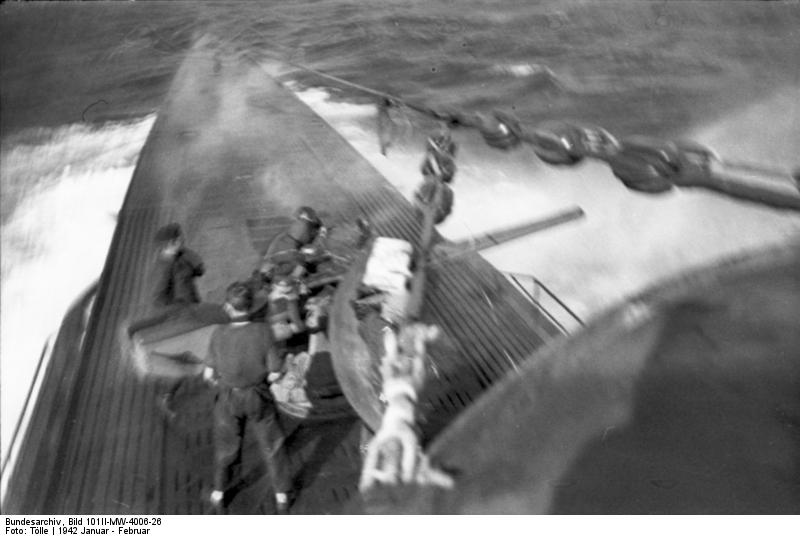
U-Boot U-123 in See

U-123 Gun Crew

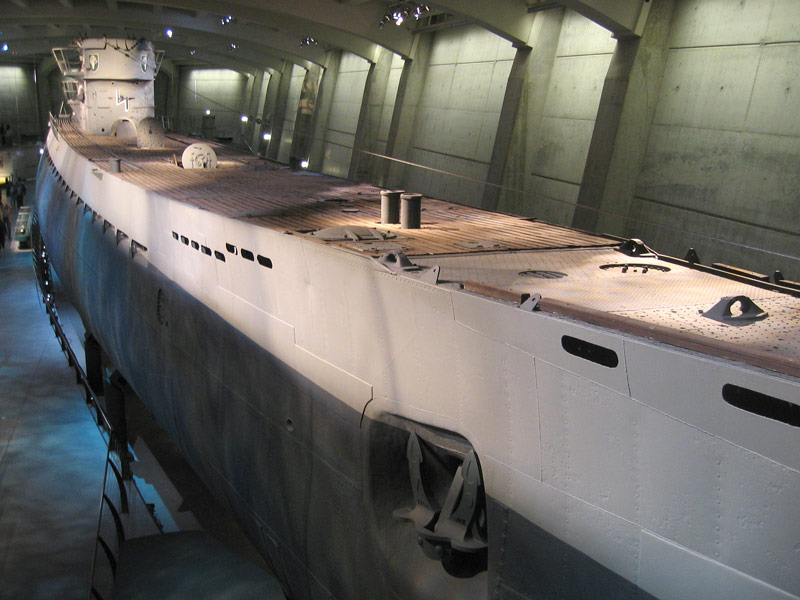
Type IXC The Type IXC was a further improvement of the type with additional fuel capacity and longer range. They displaced 1120 tons and 54 of the boats were commissioned of which 19 were equipped as minelayers with a capacity of 44 TMA or 66 TMB mines. The boats were built by AG Weser Bremen, Seebeckwerft Bremen and Deutsche Werft Hamburg. The U-505 of this type is the only surviving intact Type IX and was captured by a boarding team from the Escort Carrier USS Guadalcanal on June 4th 1944. Her capture was kept secret from the Germans and her crew kept as POWs in a separate POW Camp. The story of the crew and their encounter with the game of baseball is recorded in Gary Moore’s book, Playing with the Enemy: A Baseball Prodigy, a World at War, and a Field of Broken Dreams. The book is being turned into a movie entitled Playing with the Enemy which is scheduled to be released in 2011. She is preserved at the Museum of Science and Industry in Chicago.

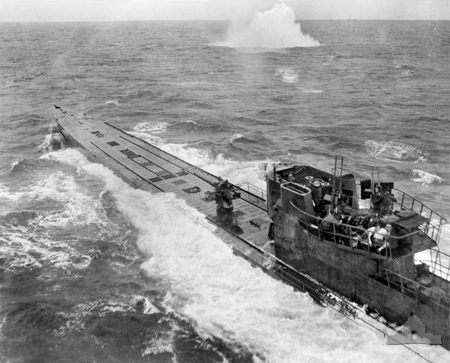
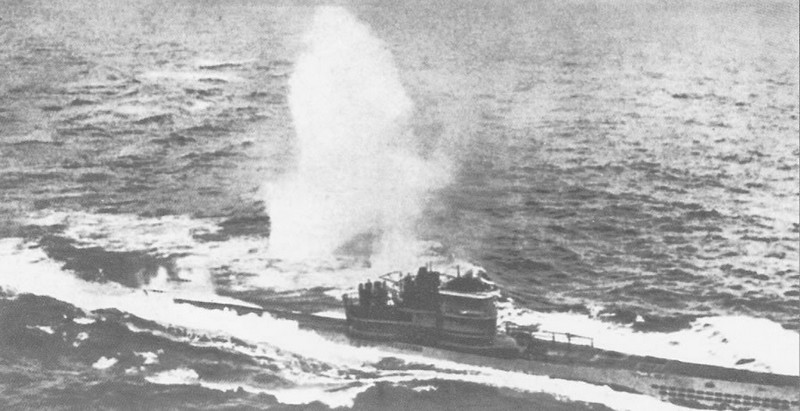
U-848 Submarine_attack_(AWM_304949)

U-848 under attack by USN Aircraft

Type IXC/40 This was a further refinement of the IXC with slightly greater range and surface speed. It was the most numerous type of the class built with 87 being built by AG Weser Bremen, Seebeckwerft Bremen and Deutsche Werft Hamburg. The remains of the U-534 of the class are displayed at Woodside Ferry Terminal in Birkenhead England after being raised from the North Sea in 1986.

U-534_exhibit,_Birkenhead_(geograph_4545759)

U-534

Type IXD The final type in the Type IX Series was the Type IXD. This was a significantly larger boat than the others in the class 287 feet long with a standard displacement of 1610 tons. They were unique in that they had two sets of diesel engines, one for cruising and the other for high speed runs and battery recharge. There were three variants within the type, the IXD1 which were all converted to transport use due to problems with their engines, the most numerous variant the IXD2 and the IXD42 which had greater horsepower. Thirty Type IXs were commissioned with a further six Type IXD42s which were ordered with only one commissioned by the end of the war.

U-505chicago jerry atherton 2005

U-505 at the Museum of Science and Industry in 2005 (Jerry Atherton)

During the war surviving boats would receive increased anti-aircraft armament, the Schnorkel device which allowed them to operate on diesel power while submerged as well as better electronics and detection devices. Most of the boats which survived the war were scuttled by the Allies in Operation Deadlight. The U-511 was sold to Japan in 1943 and U-862 taken over by the Japanese after the German Surrender in May 1945. Both survived the war and were scuttled by the Allies. U-1231 was taken over by the Soviet Navy and served as the B-26 after the war.

The sailors of these U-Boats like all submarine sailors endured many hardships and during the war approximately 75% of the 40,000 U-Boat sailors never returned from patrol, forever interred in the deep with their proud boats.

Leave a comment

Filed under historic preservation, History, Military, Navy Ships, nazi germany, World War II at Sea, world war two in europe

The Type VIIC U-Boat: The Workhorse of the German Navy

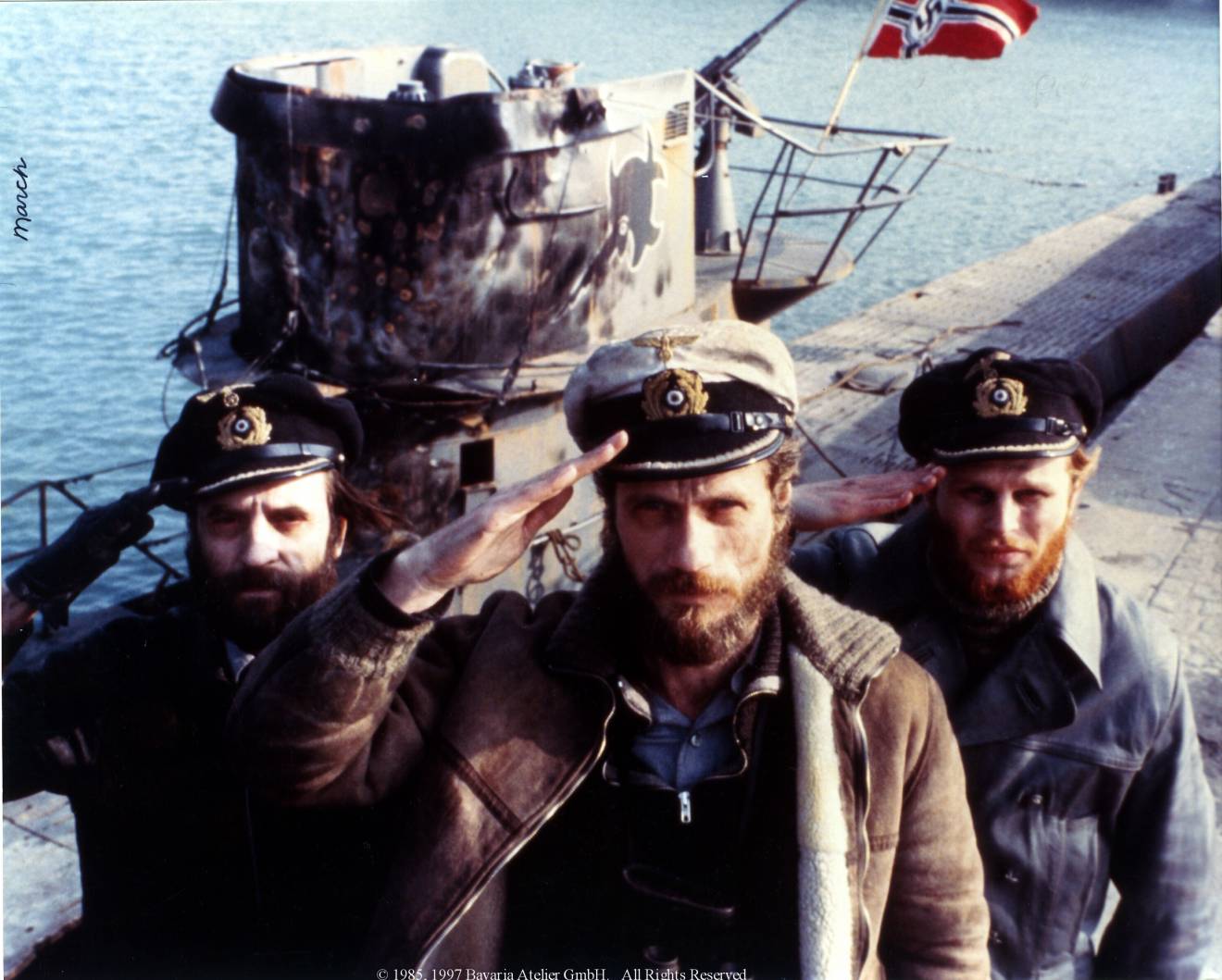
das_boot03

Das Boot 

Friends of Padre Steve’s World,

The beginning of this week has been really busy with something unexpected at work that took up much of my day caring for some of my co-workers. Nobody died or anything like that, but it was pretty traumatic and I am not the person to write about it, though I expect that Thomas Ricks may do so soon. That being said, as always there is much to write about but after today I am kind of taking it easy, besides, Donald Trump’s antics are getting pretty boring as he continues to implode as a serious candidate for President, as are the machinations of the GOP House members, the gang who could’t shoot strait, who are trying once again to torpedo Hillary Clinton. Sorry, but after five years they remind me of Wile E. Coyote trying to get the Road Runner, simply boring. 

So tonight something not very controversial but interesting. Those that know me and have been following my writings from the beginning know that I am fascinated with warships. Today, and the next few days I am going to republish some very old articles about three important types of German U-Boats in the Second World War. Tonight, an article on the Type VII U-Boat, the workhorse of the German Navy during the Battle of the Atlantic, and a tribute to the brave sailors who served aboard them, most of who never returned home.

Have a great night.

Peace

Padre Steve+

type viic

The signature warship of the German Kreigsmarine of the Second World War has to be the U-Boat Type VIIC, the most numerous type of submarine ever produced by any Navy. 568 of these U-Boats would be commissioned beutween 1940 and 1945 as well as 91 of the Type VIIC/41. The Type VIIC was developed from the prewar Type I and Type VIIA and VIIB classes.

Compared to contemporary American submarines of the Gato class they were smaller, mounted fewer torpedo tubes and had a shorter range. However the American boats were designed for the vast expanse of the Pacific while the German boats for the most part were operated in the smaller confines of the Atlantic and Mediterranean.

u1023

U-1023

The boats displaced a mere 769 tons on the surface and 871 tons submerged and were 67.1 meters (220.14 feet) long. The boats had a single pressure hull and the VIIC could dive to a maximum depth of 230 meters (754 feet) and had a crush depth of 250-295 meters (820-967 feet). The VIIC/41 could dive to 250 meters or 820 feet and a crush depth of 275-325 meters (902-1066 feet). This was deeper than any allied submarines of the period and a testament to their sound construction.

St. Nazaire, Uboot U 94, Karl Dönitz

Admiral Dönitz greeting U-94 in 1941

The Type VIICs were armed with a C35 88 mm/L45 gun with 220 rounds for surface actions and various types and numbers of anti-aircraft guns. The standard configuration for torpedo tubes was 4 bow mounted tubes and 1 stern mounted tube although a small number only carried 2 forward and none aft. They carried a maximum of 14 torpedoes and could carry 26 TMA Mines which would be laid at approaches to various ports.

u966

U-966 under air attack

The Type VIIC was powered by two supercharged Germaniawerft, 6 cylinder, 4-stroke M6V 40/46 diesel engines on the surface producing between 2,800 to 3,200 horsepower which gave the boats a 17.7 knot maximum speed on surface. For submerged operations the boats were powered by one of a number of different electric motors whose batteries were charged by the diesels. The electric motors produced 750 horsepower (560 kW) and could drive the boats a maximum of 7.6 knots. In 1944 many of the surviving boats were equipped with the schnorkel apparatus which allowed them to use their diesel engines underwater at shallow depths. The had a range of 8190 miles at 10 knots surfaced which gave them a decent amount of operational flexibility for their Atlantic operations.

U995_2004_1

The last Type VII- U-995 (Type VIIC/41) German U-Boat Memorial Laboe Germany

During the war the German U-Boat force suffered grievous losses many of which were Type VIICs. The VIICs performed excellently in combat and many survived engagements that would have sunk less tough boats. The most famous of the Type VIICs of all variants is probably the U-96 which was featured in the epic submarine film Das Boot. A number had post war careers in several navies and the last active VIIC the U-573 which served in the Spanish Navy as the G-7 was decommissioned in 1970 and sold for scrap over the objections of those that wanted to purchase her as a memorial. The only surviving Type VIIC is the U-995 at Laboe Germany where she is a memorial to all the U-Boat Sailors of the Second World War. Two full sized mock ups one for exterior scenes and one for interior scenes were constructed for Das Boot and the exterior mock up was also used in Raiders of the Lost Ark.

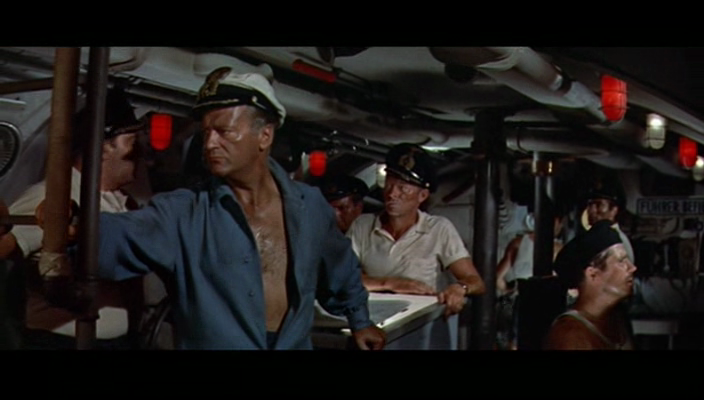
7865_6_screenshot

The Enemy Below


During the war U-Boats of all types sank nearly 3000 Allied ships including 175 warships among which were the carriers HMS Glorious, HMS Ark Royal and HMS Eagle and the Battleships HMS Barham and HMS Royal Oak. The Germans lost nearly 800 U-Boats of all types and over 28,000 U-Boat Sailors, about 75% of the force.

The films Das Boot and The Enemy Below are excellent reminders of the courage of the men that operated these submarines during the war. Though the Nazi Regime was evil the men of the U-Boat Service often displayed courage and ingenuity in the face of overwhelming odds and they nearly won the war for the Germans.


2 Comments

Filed under History, Military, Navy Ships, nazi germany, World War II at Sea, world war two in europe

We, We Happy Few, We Band of Brothers: Reflecting on D-Day


Friends of Padre Steve’s World,

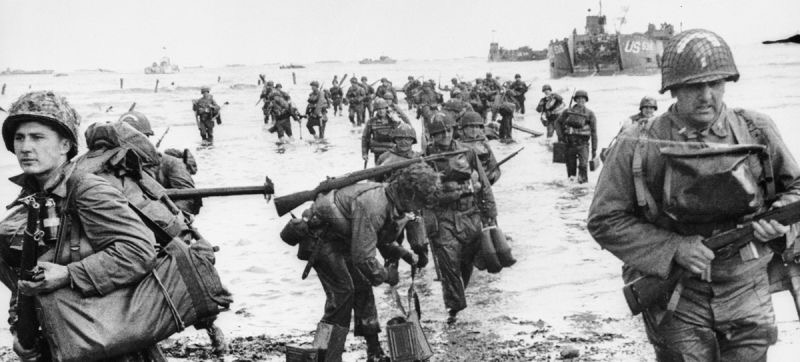
Seventy-two years ago today American, British, Canadian, and Free French forces landed on the beaches of France on the Normandy Peninsula to begin the liberation of Europe. 

I have written a good number of articles about the invasion on this site, in fact you can look them up, but instead of editing an older article or looking at some aspect of the invasion that I haven’t before I wanted to share a few thoughts. 

This past week, beginning during the Memorial Day weekend I spent a lot of time doing reading and reflection. I also decided to watch a number of films, and series that dealt with D-Day and the fight to liberate Europe from the Nazis. I have been to Normandy, in fact I have actually taught there at Sainte Mere Eglise and Pont du Hoc just prior to the 60th anniversary of D-Day. For me it was a moving experience to stand in those locations where so many men contended against the military forces of a regime so evil that it defies the imagination. 

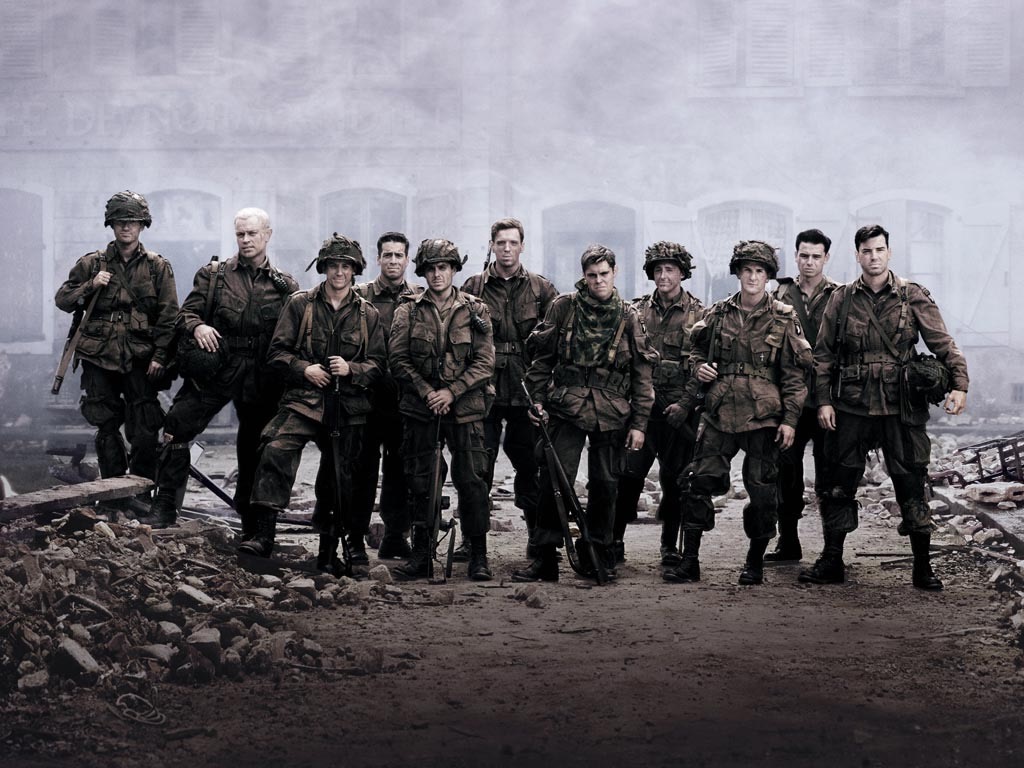
As I said, in addition to reading and reflecting I took time to watch some films, as well as a television mini-series that dealt with that time in history. I watched the film A Bridge too Far on Memorial Day and then began to watch the ten episodes of the series Band of Brothers. When I was done with those last night I watched the film the Longest Day. I thought about watching Saving Private Ryan, but every time I watch that film I am so overcome with emotion that it is hard to function the next day. 


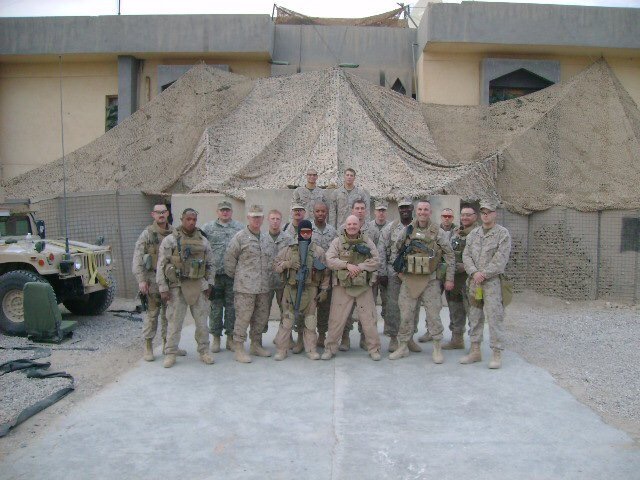
Anyway, this was the first time that I have watched all ten episodes of Band of Brothers in order in a short period of time. I was glad that I did it that way. As I watched it I thought of my own service and those men who have been my “band of brothers” be it in Iraq, or on a boarding team in the Persian Gulf. There is something about serivice in a combat zone and in harm’s way which cannot be replicated in any other part of life. 

The series really captures the constant wear and tear on the human mind, body, and spirit when one goes to war. It captures the bonds that most people today never experience. There were quite a few times where I knew exactly what they were going through, what they were thinking, and what they felt; including the paradoxes of seeing the evil committed by some, but also of recognizing that many of the enemy soldiers were really not that different from us. 

Today we remember that ever shrinking number of men who landed on the beaches of Normandy, fought their way across France, Belgium, and Holland before driving into Hitler’s Germany. I have had the great honor of knowing a number of those men, and even burying one of the men who served in the unit immortalized in Band of Brothers. In this time when so many have never served in the military in any form, and even fewer who have served in combat, it is important not to forget their memory, nor those who have served in subsequent wars. 

There was a segment of one of the Band of Brothers episodes where one of the soldiers was reflecting on how distant the war was to many Americans by New Year’s Day 1945, even though the men were fighting and dying to repel the Germans after the Ardennes Offensive, which we now call the Battle of the Bulge and others were fighting and dying against the Japanese in the Pacific. Those men wondered what it would be like to return home after the war, among a people who didn’t understand. It was a question that many of us asked when we came home from Iraq, and others did coming home from Korea, Vietnam, or Afghanistan. 


The men of the Band of Brothers had the same kind of issues coming home as we do today, some dealt with them better than others, just like today. But the way changed them all and it also bound them to each other. 

In his play Henry V William Shakespeare wrote, 

“And Crispin Crispain shall ne’er go by, From this day to the ending of the world, 

But we in it shall be remembered – We few, we happy few, we band of brothers; 

For he today who sheds his blood with me shall be my brother; be he ne’er so vile,

This day shall gentle his condition;

And gentlemen in England now abed shall think themselves accurs’d they were not here,

And hold their man hoods cheap while any speaks that fought with us on Saint Crispin’s Day” 

We, we happy few, we band of brothers. 

Peace,

Padre Steve+


Leave a comment

Filed under History, iraq,afghanistan, Military, movies, world war two in europe

Watershed Days


D-Day, June 6th 1944

Friends of Padre Steve’s World,

Today I am posting just a relatively small thought. For those that do not know, the next few days are full of amazing historical events.

On June 3rd 1940, the British finished the evacuation of the British Expeditionary Force and some French forces from Europe, though defeated, the British action preserved the British Army and kept Britain in the war. 


Midway 

 From June 4th through June 6th 1942 a small American fleet defeated a much larger, more experienced and better equipped fleet at the Battle of Midway. The battle did not end the war, but it ensured that Japan never could win the war against the United States in the Pacific. It was a turning point. It has rightly been called an “Incedible Victory” as all the elements that make war what it is, the element of chance, the element of friction, and the  element of surprise all broke the American way. The Japanese leaders, and for that matter many if not the vast majority of their soldiers and sailors were full of hubris, believing themselves invincible they were decisively defeated. 

Two Years later on June 6th 1944, Allied forces landed on the Normandy Peninsula of France to begin their long awaited attack on Nazi occupied Europe. The invasion, code named Operation Overlord did not end the war, but coupled with the Soveit offensive against the German Army Group Center which began just two weeks later, Operation Bagration, it was the beginning of the end for Hitler’s Germany. 

Twenty-six years earlier, two-regiments of U.S. Marines turned back the Germans at the Battle of Belleau Wood near Chateau-Thierry France. The effort blocked a German drive on Paris, giving the Allies the time to begin a counter-offensive that would end the war. 


Senator Robert F. Kennedy lays Mortally Wounded after being shot by Sirhan Sirhan 

But in addition to the battles other important events shook the world, in 1919 the Congress passed the 19th Amendment, which when ratified gave women the right to vote. In 1968, Senator Robert F. Kennedy was gunned down by the assassin Sirhan Sirhan in Los Angeles after winning the Democratic Party primary. He would have been the odds on favorite to defeat Republican Richard Nixon in the general election. On June 8th 1789 James Madison introduced twelve amendments to the U. S. Constitution, of which ten were ratified by the states to become known as the Bill of Rights. On June 8th 1967, the USS Liberty, a surveillance ship, was attacked by Israeli ships and aircraft during the Six Day War, the attack resulted in the death of 34 American sailors and the wounding of 171 more. 

Of course there are numerous other events that took place, some which were very important, and others which are Interesting but less important in world history, though they were important in certain countries or regions. I’ll be tacking some of these events in the coming days. 

Have a great day,

Peace

Padre Steve+

Leave a comment

Filed under History, world war one, world war two in europe, world war two in the pacific

Why We Keep Memorial Day

Friends of Padre Steve’s World,

This is Memorial Day Weekend, a weekend where we remember those who died in the service of our country. It is not a day to thank the living veterans, that day is Veteran’s Day. Nor is it the day to thank those men and women who currently wear the uniform and fight the wars of our country. This weekend I am reposting a number of articles from past years to remind my regular readers and those new to my writings about how important this remembrance is, not just to me, but to all of us. I do not say that lightly. Memorial Day is the offspring of the families of the American Civil War dead, when people who lost loved ones in the cause of liberty and the defense of the Union honored their loved ones.

No matter what your political views, ideology, or religious beliefs, please take time to remember the high human cost of freedom this weekend, especially on Monday when we observe Memorial Day.

Peace,

Padre Steve+

1-oliver-wendell-holmes-jr-1841-1935-everett

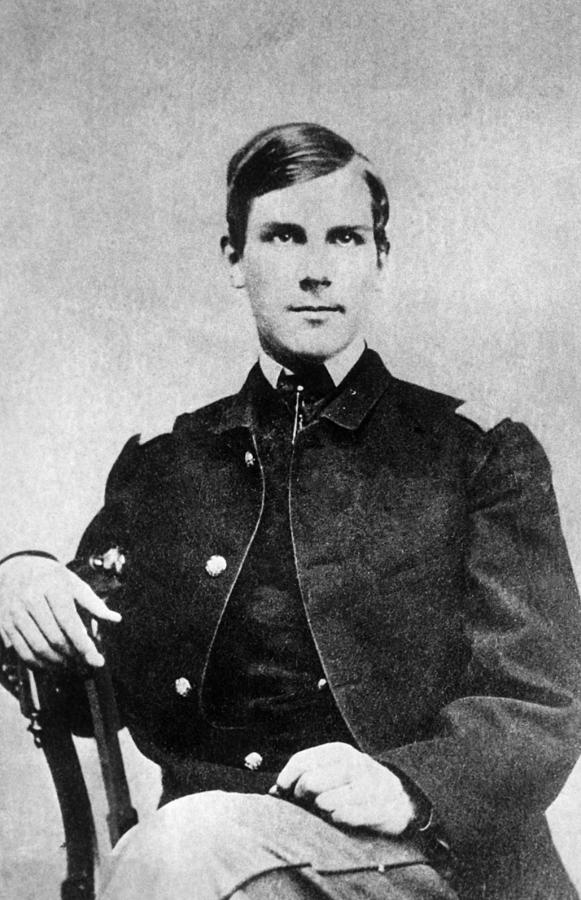
Oliver Wendell Holmes 

“even if those who come after us are to forget all that we hold dear, and the future is to teach and kindle its children in ways as yet unrevealed, it is enough for us that this day is dear and sacred…”

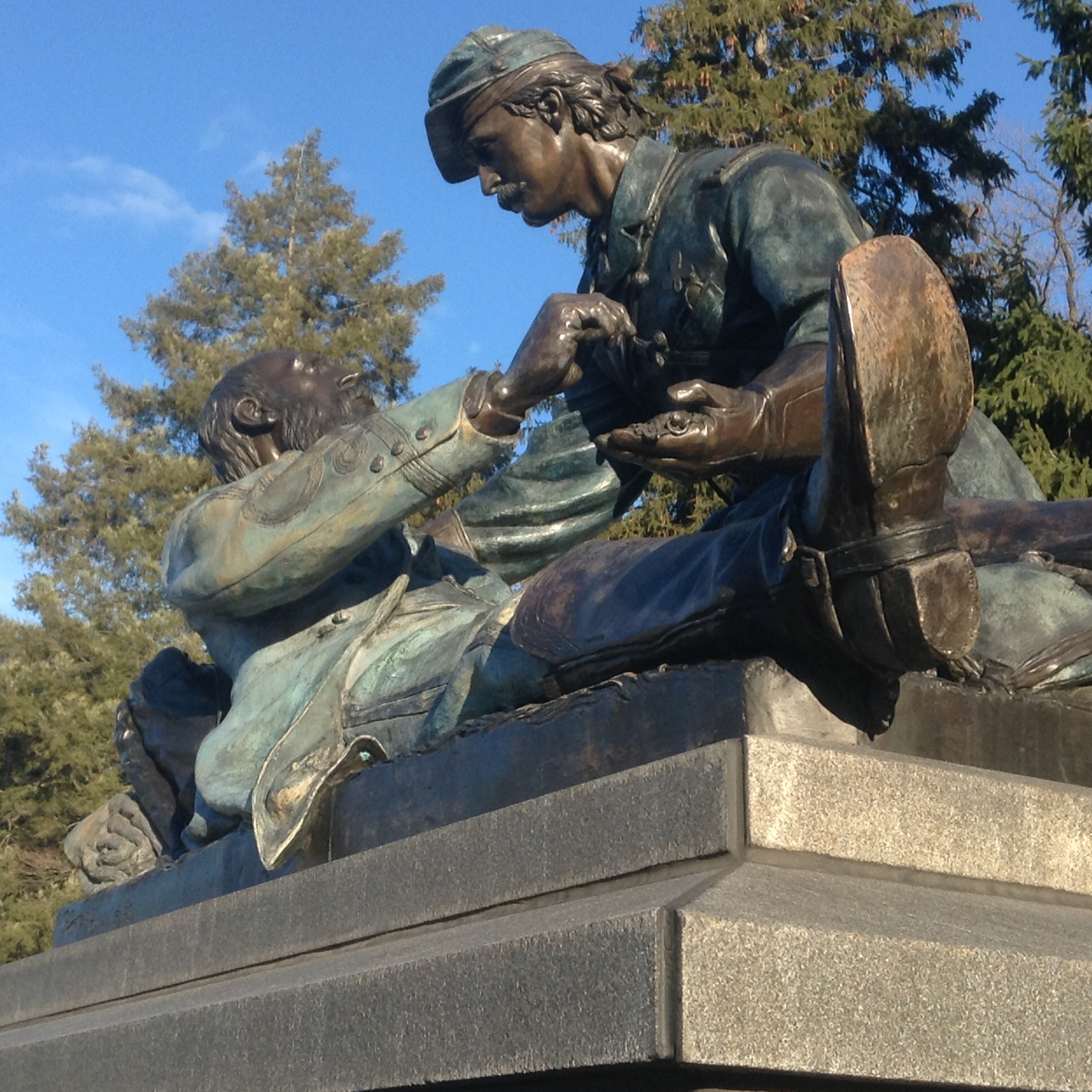
Nearly 20 years after the Civil War, Oliver Wendell Holmes Jr. then serving as Chief Justice of the Massachusetts Supreme Court spoke on Memorial Day 1884 in Keene New Hampshire at a gathering of veterans. He recalled an incident not long before where he had heard a young man ask “why people still kept up Memorial Day. The question was one that he pondered before his speech and that he attempted to find an answer, not to his fellow veterans who certainly understood their shared memories of war “but an answer which should command the assent of those who do not share our memories.”

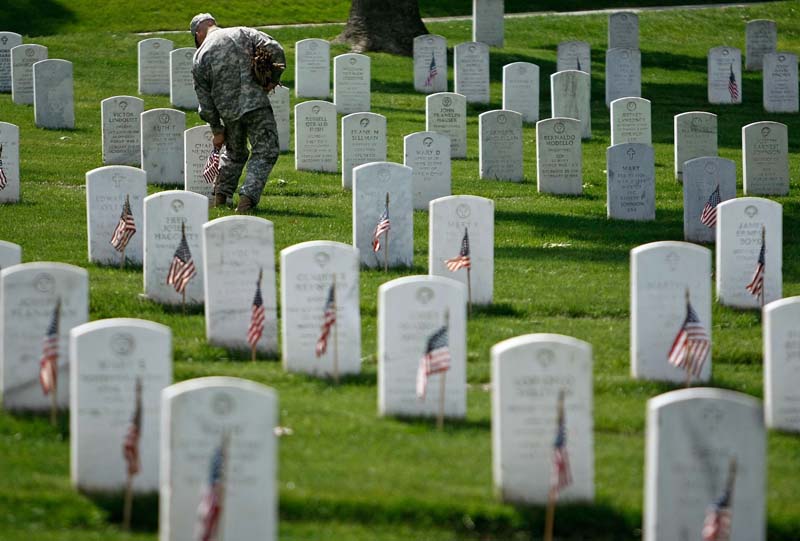
3rd Infantry Places American Flags At The Graves Of U.S. Soldiers

I think that having an answer for the question is as timely now as when Holmes first pondered it. Though his war was twenty years past and had torn the nation apart, there were still many men on both sides who had served in that terrible time and but even so many people were not only forgetting the war and the sacrifices made by so many but intent on becoming rich. Something that he would directly state in a Memorial Day address to the graduating class of Harvard University in 1895:

“The society for which many philanthropists, labor reformers, and men of fashion unite in longing is one in which they may be comfortable and may shine without much trouble or any danger. The unfortunately growing hatred of the poor for the rich seems to me to rest on the belief that money is the main thing (a belief in which the poor have been encouraged by the rich), more than on any other grievance. Most of my hearers would rather that their daughters or their sisters should marry a son of one of the great rich families than a regular army officer, were he as beautiful, brave, and gifted as Sir William Napier. I have heard the question asked whether our war was worth fighting, after all. There are many, poor and rich, who think that love of country is an old wife’s tale, to be replaced by interest in a labor union, or, under the name of cosmopolitanism, by a rootless self-seeking search for a place where the most enjoyment may be had at the least cost.”

However his message to his fellow veterans, mostly men from his own former regiment, the 20th Massachusetts was quite personal and something that they could find meaning in. Holmes understood war, he had seen much action and had been wounded at Ball’s Bluff, Antietam and Chancellorsville. He talked of the shared experience of war, something that those who have fought in our nation’s wars, as well as combat veteran soldiers in other countries can understand far more than people that have only known peace, even while their countrymen are at war.

Memorial Day Series

Holmes’s remembrances of the war and the comrades that he and those present had served with, those living and those dead is powerful. Many of us who have served in the wars that began on September 11th 2001 have lost friends in either Iraq or Afghanistan, and many more who are wounded or maimed in body, mind and spirit. Many survivors of wounds today would have died in previous wars.

Likewise his descriptions of the memories of war, triggered by “accidents” are real to those that have experienced war and combat.

“Accidents may call up the events of the war. You see a battery of guns go by at a trot, and for a moment you are back at White Oak Swamp, or Antietam, or on the Jerusalem Road. You hear a few shots fired in the distance, and for an instant your heart stops as you say to yourself, The skirmishers are at it, and listen for the long roll of fire from the main line. You meet an old comrade after many years of absence; he recalls the moment that you were nearly surrounded by the enemy, and again there comes up to you that swift and cunning thinking on which once hung life and freedom–Shall I stand the best chance if I try the pistol or the sabre on that man who means to stop me? Will he get his carbine free before I reach him, or can I kill him first?These and the thousand other events we have known are called up, I say, by accident, and, apart from accident, they lie forgotten.”

We all have our memories of our wars, those of us who remain, be we veterans of Iraq or Afghanistan, Somalia, Desert Storm, Lebanon, Vietnam, Korea or World War II. It is hard to believe that so few remain from World War II and Korea, and that even the Vietnam veterans are aging rapidly, most now in their 60s or 70s. In as much as the wars of the past decade have been fought by a tiny minority of American citizens fewer and fewer will understand the bond that we share through our memories of the living and the dead. We have been set apart by our experiences, even though the wars that we have fought differ in many ways.

481801_10151367001287059_1003164983_n-1.jpg

As such we should whenever possible take the time to meet and remember. That might be as groups of friends, unit associations or perhaps local chapters of Veterans organizations. We do this to remember but also to remind ourselves that we cannot live in the past alone, for the present likewise calls us to action, even after our service is complete.

Holmes put it well: “When we meet thus, when we do honor to the dead in terms that must sometimes embrace the living, we do not deceive ourselves. We attribute no special merit to a man for having served when all were serving. We know that, if the armies of our war did anything worth remembering, the credit belongs not mainly to the individuals who did it, but to average human nature. We also know very well that we cannot live in associations with the past alone, and we admit that, if we would be worthy of the past, we must find new fields for action or thought, and make for ourselves new careers.”

We remember the past, we remember our fallen and we remember the families who have lost loved ones in these wars as well as those whose lives have been changed and maybe even torn apart by the changes that war has wrought in their loved ones who returned different from war. In our service we have been set apart and as such as Holmes so well states we have the duty to “bear the report to those who will come after us.” His words carry forth to us today, we few we happy few as Shakespeare so eloquently wrote.

“nevertheless, the generation that carried on the war has been set apart by its experience. Through our great good fortune, in our youth our hearts were touched with fire. It was given to us to learn at the outset that life is a profound and passionate thing. While we are permitted to scorn nothing but indifference, and do not pretend to undervalue the worldly rewards of ambition, we have seen with our own eyes, beyond and above the gold fields, the snowy heights of honor, and it is for us to bear the report to those who come after us.”

I will remember my time in Iraq and those that I served alongside. I will also remember friends who served in other units who did not return as well as those Marines, Sailors and Soldiers that I see every day in our Naval Hospital suffering from the physical, psychological and spiritual wounds of war.

This weekend I will remember and on Monday, that sacred day that we set aside to remember the fallen I take some time at noon to join in that time of remembrance and pray that maybe someday war will be no more.

That is why I think that we should remember Memorial Day even if others forget.

Peace

Padre Steve+

Leave a comment

Filed under civil war, History, iraq,afghanistan, Military, News and current events, shipmates and veterans, vietnam, world war one, world war two in europe, world war two in the pacific

Stalingrad at 73

Friends of Padre Steve’s World

Sunday the 31st of January marked 73rd anniversary of  the surrender of the remnants of the German 6th Army to the Soviets at Stalingrad. The focus of this article is on how the Germans and Russians fought the Stalingrad campaign. In particular it is an analysis of the way the governments and military’s of both Nazi Germany and the Soviet Union planned and executed strategy during the course of the campaign adjusted to the situation and how the campaign ended. It is also a reminder of the price that ordinary soldiers can pay when a country commits them to war. In all nearly two million Axis and Soviet personnel, including civilians were killed, wounded, or captured during the campaign.

That being said, it is a reminder to all of us of the consequences of how xenophobic and racist politics of self-anointed leaders, and their followers can lead nations into disaster.

Peace 

Padre Steve+

Stalingrad: Primary or Secondary Objective
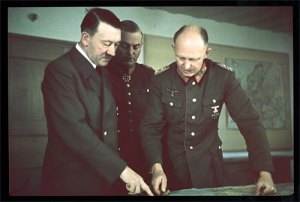
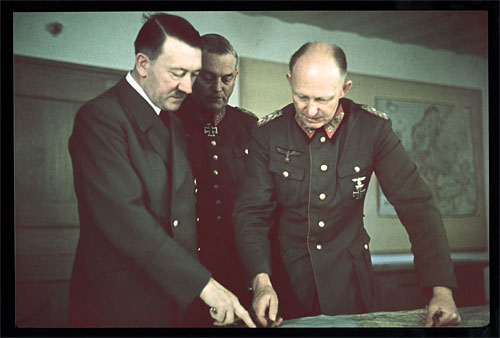
 keitel-jodl-hitler

The mistakes began early in the planning and conduct of the operation

Following the Soviet winter offensive and the near disaster in front of Moscow the German High Command was faced with the strategic decision of what to do in the 1942 campaign.  Several options were considered and it was decided to seize the Caucasus oilfields and capture or neutralize the city of Stalingrad on the Volga.  However, the German High Command was divided on the actual objective of the campaign.

operation blau map

The Oberkommando des Heer or the OKH (Army High Command) under the guidance of General Franz Halder assumed that Stalingrad was the objective and the advance into the Caucasus was a blocking effort.[i] Hitler and Oberkommando des Wehrmacht or the OKW planned to capture the Caucasus oil fields and capture or neutralize Stalingrad to secure the left flank.[ii] Both OKH and OKW considered Stalingrad significant but “German commanders initially regarded it as a weigh station en route to the Caucasus oil fields.” [iii] The conflict echoed in the ambiguity of Directive No. 41, which “included the ‘seizure of the oil region of the Caucasus’ in the preamble concerning the general aim of the campaign, yet made no mention of this in the main plan of operations.” [iv] At the planning conference held at Army Group South in early June “Hitler hardly mentioned Stalingrad. As far as his Generals were concerned it was little more than a name on the map. His obsession was with the oil fields of the Caucasus.” [v] Manstein noted, “Hitler’s strategic objectives were governed chiefly by the needs of his war economy….” [vi] Historian Anthony Beevor noted that at this stage of planning “the only interest in Stalingrad was to eliminate the armaments factories there and secure a position on the Volga. The capture of the city was not considered necessary.” [vii] German planners “expected that the Soviets would again accept decisive battle to defend these regions.” [viii]

In Moscow Stalin and his Generals attempted to guess the direction of the impending German offensive.  “Stalin was convinced that Moscow remained the principle German objective…Most of the Red Army’s strategic reserves…were therefore held in the Moscow region.” [ix] The Soviet High Command, Stavka attempted to disrupt the German offensive and to recover Kharkov by launching three offensives three offensives of their own. The largest of these, an attack on Kharkov was defeated by the Germans between the 12th to the 22nd of May, with the loss of most of the armor in southern Russia. This disaster was accompanied by an equally disastrous defeat of Red Army forces in Crimea by Erich Von Manstein’s 11th Army, and the combination meant that the Red Army would face the Germans in a severely weakened condition. [x]

Operation Blau: Opening Moves and Divergent Objectives
panzers_across_the_don

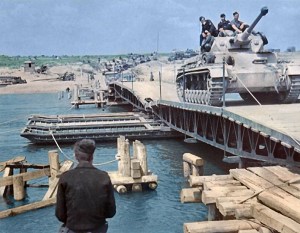
Panzers cross the Don

The German offensive began on 28 June under the command of Field Marshal Fedor von Bock. Von Bock’s command included two separate army groups, Army Group B under General Maximilian Von Weichs with 2nd Army, 6th Army and 4th Panzer Army operated in the northern part of the operational area. Army Group A under Field Marshall Wilhelm List was to the south with 17th Army and 1st Panzer Army, with the goal of driving into the Caucasus. [xi] Army Group B provided the main effort for the offensive and its forces quickly smashed through the defending Soviet armies and by the 20th Hitler believed that “the Russian is finished.” [xii] One reason for the German success in the south was that until July 7th Stalin believed that Moscow was still the primary objective for any German summer offensive. [xiii] Despite his success, Hitler prevented Von Bock from destroying the Soviet formations that had been left behind and was relieved of command by Hitler. This enabled many of those units to escape the German onslaught. For his trouble Von Bock was replaced by Von Weichs, which created a difficult command and control problem.  Manstein noted that this created a “grotesque chain of command on the German southern wing” with the result that Army Group A had “no commander of its own whatever” and Army Group B had “no few than seven armies under command including four allied ones.” [xiv]

Bild 169-0894

Destroyed Soviet T-34s

This decisions made next proved fateful.  Hitler’s decided to redirect the advance of the 4th Panzer Army to support an early passage of the lower Don, diverting it from its drive on Stalingrad.  Additionally the army groups became independent of each other when Bock was relieved of command.  They were “assigned independent-and diverging-objectives” under the terms of Directive No.45. [xv] This combination of events had a decisive impact on the campaign.  Hitler’s decision prevented a quick seizure of Stalingrad by 4th Panzer Army followed by a hand over to 6th Army to establish the “block” as described by Directive No.41.  Kleist noted that he didn’t need 4th Panzer Army’s help to accomplish his objectives and that it could have “taken Stalingrad without a fight at the end of July….” [xvi]
 general-paulus

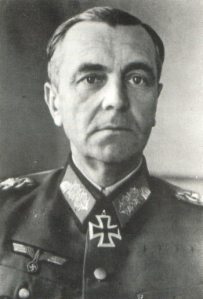
Field Marshall Von Paulus

The result was damning. The Luftwaffe air support and fuel needed by Army Group A was transferred to 6th Army, denuding Army Group A of the resources that it needed to conclude its conquest of the Caucasus. [xvii] At the same time it denied Army Group B of the Panzer Army that could have seized Stalingrad when it was still possible to do so.  Anthony Beevor called Hitler’s decision a disastrous compromise, [xviii] while Halder believed that Hitler’s decision underestimated the enemy and was “both ludicrous and dangerous.” [xix]

Focus on Stalingrad

battle-stalingrad-ww2-second-world-war-two-russian-eastern-front-unseen-pictures-photos-images

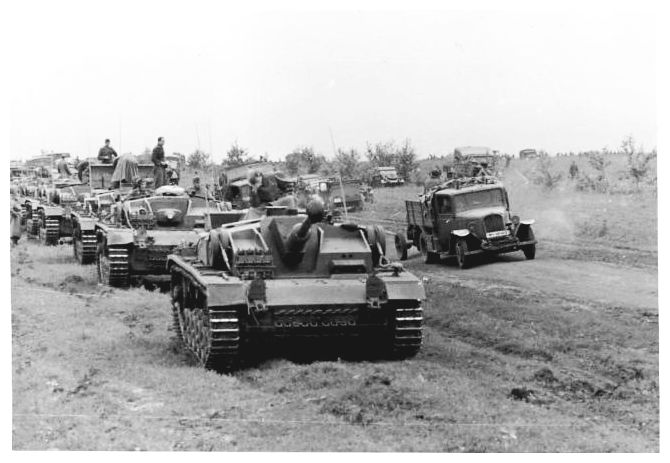
Sturmgeschutz Battalion Advancing toward Stalingrad

On July 22nd as the Wehrmacht ran short on fuel and divisions to commit to the Caucasus, and 6th Army fought for control of Voronezh the Soviets created the Stalingrad Front. Stavka moved an NKVD Division to the city [xx] and rapidly filled the new front with formations transferred from the Moscow Front. [xxi] Stalin then issued Stavka Order 227, better known as “No Step Back” on July 28th. The order mandated that commanders and political officers who retreated would be assigned to Penal battalions[xxii] and each field army was to form three to five special units of about 200 men each as a second line “to shoot any man who ran away.” [xxiii] Russian resistance west of the Don slowed the German advance. German commanders were astonished “at the profligacy of Russian commanders with their men’s lives.” [xxiv] Von Kleist compared the stubbornness of Russians in his area to those of the previous year and wrote that they were local troops who fought more stubbornly because they were fighting to defend their homes.” [xxv] Additionally, Stalin changed his commanders frequently in the “vain hope that a ruthless new leader could galvanize resistance and transform the situation.” [xxvi] General Chuikov brought the 64th Army into the Stalingrad Front in mid-July to hold the Germans west of the Don.[xxvii]

The OKW further weakened the German offensive by transferring several key SS Panzer Divisions and the Grossdeutschland Panzer Division to France. The Hungarian, Italian and Romanian armies that were part of the army group lacked motorization; modern armored and anti-tank units, and were unable to fulfill the gaps left by the loss of the experienced German divisions that had been transferred and the expectations of Hitler. [xxviii] The German 6th Army was virtually immobilized for 10 days due to lack of supplies allowing the Russians to establish a defense on the Don Bend. [xxix]

To the south the Germans were held up by lack of fuel and increased Soviet resistance including the introduction of a force of 800 bombers, which took away the total domination of the air that the Germans had previously enjoyed.[xxx] David Glantz and House note that after the fall of Rostov on July 23rd “Hitler abruptly focused on the industrial and symbolic value of Stalingrad.” [xxxi] Hitler was undeterred by warnings from Halder that fresh Russian formations were massing east of the Volga and those of Quartermaster General Erich Wagner, who guaranteed that he could supply either the thrust to the Caucasus or Stalingrad but not both operations simultaneously. [xxxii] Again frustrated by the slow progress to take Stalingrad, Hitler reverted to the original plan for the 4th Panzer Army to assist the 6th Army at Stalingrad, but the cost in time and fuel to move that army from the Caucasus to Stalingrad were significant to the operation and the question was whether “they could make up for Hitler’s changes in plan.” [xxxiii]

Strategic Implications

The changes in the German plan had distinct ramifications for both sides.  Friedrich Von Mellenthin wrote, “the diversion of effort between the Caucasus and Stalingrad ruined our whole campaign.” [xxxiv] The Germans could not secure the Caucasus oil fields that Hitler considered vital to the German war effort.  The Germans advanced deep into the region and captured the Maikop oil fields, though the drilling and refining facilities were almost completely destroyed by the retreating Russians when they withdrew.[xxxv] Due to the lack of fuel and increased Soviet resistance Army Group A was halted along the crests of the Caucasus on August 28th. [xxxvi] This setback left Hitler deeply “dissatisfied with the situation of Army Group A.” [xxxvii] Kleist and others attributed much of the failure to a lack of fuel [xxxviii] while Gunther Blumentritt observed that Mountain divisions that could have made the breakthrough were employed along the Black Sea coast in secondary operations. [xxxix]

battle_stalingrad65

JU-87 Stuka over Stalingrad

Meanwhile on the Stalingrad front, fuel and supply shortages hampered 6th Army’s advance while Hermann Hoth’s 4th Panzer Army was needlessly shuttled between Rostov and Stalingrad. By the time the 4th Panzer Army resumed its advance the Russian forces around Stalingrad “had sufficiently recovered to check its advance.” [xl] As the 6th Army advanced into Stalingrad the “protection of Army Group B’s ever-extending northern flank was taken over by the 3rd Rumanian, the 2nd Hungarian and the newly formed 8th Italian Army.” [xli] The allied armies had to occupy overextended fronts, and these formations were neither trained equipped for the Russian campaign, nor well motivated to die for Germany. [xlii] The supply shortage in both German army groups was not helped by a logistics bottleneck. All supplies for both army groups had to transit over a single crossing on the Dnieper River, which Manstein noted, also prevented swift movement of troops from one area to another. [xliii]

 pzdiv-24-motorcycle-stalingrad

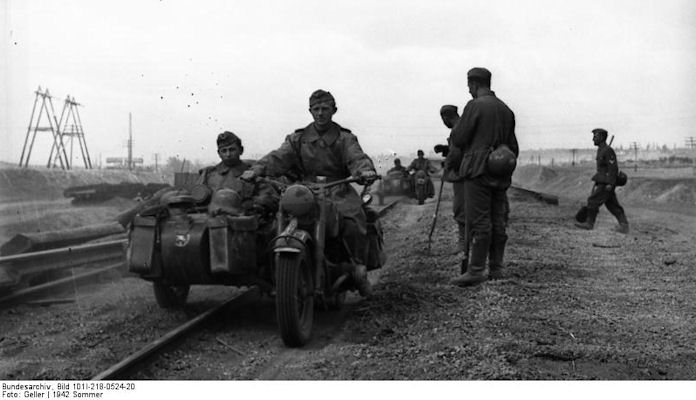
Reconnaissance Battalion of 24th Panzer Division near Stalingrad

Von Paulus’ 6th Army attempted to capture Stalingrad with a swift attack between the 25th and 29th of July, even as Hoth’s 4th Panzer Army milled about on the lower Don.  However, Paulus’s piecemeal commitment of his divisions and failure to concentrate in the face of unexpectedly strong Soviet resistance caused the attacks to fail.  Paulus then halted the 6th Army on the Don so it could concentrate its forces and build its logistics base, [xliv] and to allow Hoth’s army to come up from the south. This further delay allowed the Russians to build up even more forces west of Stalingrad, to reinforce the Stalingrad front, and to strengthen the defenses of the city. [xlv] Likewise, due to the distances involved it now was easier for the Russians to reinforce the Stalingrad front than it was for the Germans. [xlvi] As they strengthened their positions, the Soviets filled a number of key leadership positions with competent and tough Generals who would skillfully fight the coming battle for the city.[xlvii]

russian marines stalingrad

Hitler now focused on the capture of Stalingrad despite the fact that “as a city Stalingrad was of no strategic importance.” [xlviii] Strategically, its capture would cut Soviet supply lines to the Caucasus, [xlix] but this could be achieved without its capture. The check of the German advance in the Caucasus “began to give Stalingrad a moral importance-enhanced by its name-which came to outweigh its strategic value.” [l] To Hitler Stalingrad would gain “a mystic significance” [li] and along with Leningrad became “not only military but also psychological objectives.” [lii]

battle_stalingrad79

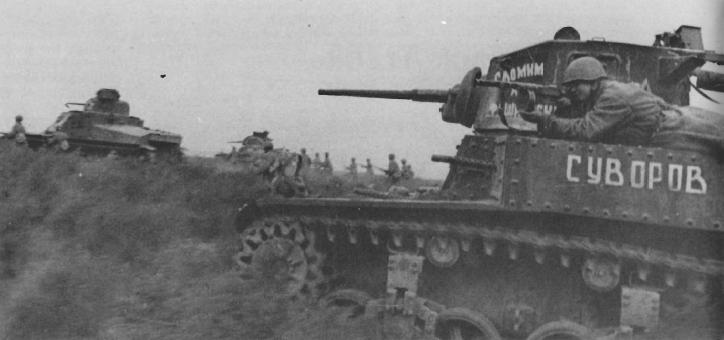
Red Army Armored troops using Lend-Lease American M3 Stuart and M3 Grant tanks

Despite the risks the Germans now mounted a frontal assault using the 6th Army and elements of 4th Panzer Army despite having intelligence reports supported by airiel reconnaissance that “the Russians are throwing forces from all directions at Stalingrad.” [liii] Friedrich von Paulus as the senior General was in charge of the advance, with Hoth subordinated to him, but the attack had to wait until Hoth’s army could fight its way up from the south. [liv] Von Mellenthin comments rightly, “when Stalingrad was not taken on the first rush, it would have been better to mask it….” [lv] Such a decision would have enabled the Germans to strengthen their lines and prepare for the inevitable Soviet counter-offensive. In retrospect it is clear that the German advance had actually reached its culminating point with the failure of the advance into the Caucasus and Paulus’s initial setback on the Don, but it was not yet apparent to many involved. [lvi] The proper course of action would have been to halt and build up the front and create mobile reserve to parry any Russian offensive along northern flank while reinforcing success in the Caucasus. Manstein wrote, “by failing to take appropriate action after his offensive had petered out without achieving anything definite, he [Hitler] paved the way to the tragedy of Stalingrad!” [lvii]

Transfixed by Stalingrad

Bild 183-B22413

German Stug III at Stalingrad

On August 19th Paulus launched a concentric attack against the Russian 62nd and 64th Armies.  The attack ran into problems, especially in Hoth’s sector. [lviii] Yet, on the 22nd the 14th Panzer Corps of 6th Army “forced a very narrow breach in the Russian perimeter at Vertyachi and fought their way across the northern suburbs of Stalingrad,” [lix] reaching the Volga on the 23rd. That day 4th Air Fleet launched some 1600 sorties against the city dropping over 1,000 tons of bombs. [lx] The breakthrough by the 6th Army imperiled the Soviet position as they had concentrated their strongest forces against Hoth. [lxi] For the moment the Germans held air superiority and continued heavy bombing attacks.  During the last days of August 6th Army “moved steadily forward into the suburbs of the city, setting the stage for battle.” [lxii] As the Soviets reacted to Paulus, Hoth’s army achieved a breakthrough in the south that threatened the Russian position.  However the 6th Army was unable to disengage its mobile forces from inside Stalingrad to link up with the 4th Panzer Army and another opportunity to defeat major Soviet forces in the area and secure the city was missed. [lxiii]
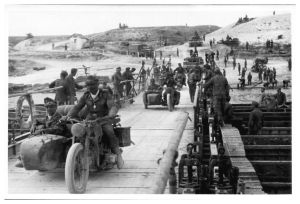
battle-stalingrad-ww2-second-world-war-germans-don-river-rare-pictures-unseen-photos-images

German unit crossing the Don

As the 6th Army moved into the city General Yeremenko ordered attacks against General Hube’s 16th Panzer Division. Soviet resistance increased as more formations arrived the Germans suffered one of their heaviest casualty rates. [lxiv] Though unsuccessful the Soviet counterattacks “managed to deflect Paulus’s reserves at the most critical moment.” [lxv] The Germans remained confident the first week of September as 6th Army and the 4th Panzer Army linked up, but Yeremenko saved his forces by withdrawing and avoided encirclement west of the city, retiring to an improvised line closer to the Stalingrad. [lxvi] On September 12th Vasily Chuikov was appointed to command 62nd Army in Stalingrad.  Chuikov understood that for the Soviets in Stalingrad there “was only one way to hold on. They had to pay in lives. ‘Time is blood,’ as Chuikov put it later.” [lxvii] Stalin sent Nikita Khrushchev to the front “with orders to inspire the Armies and civilian population to fight to the end.” [lxviii] In the next few days the 13th Guards Rifle Division arrived and saved the Volga landings, which allowed the Soviets to continue to resupply Stalingrad, but the division last 30% of its troops as casualties in its first 24 hours of combat. [lxix]
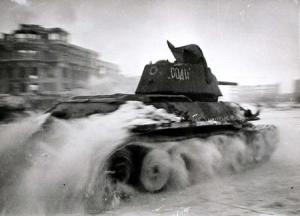
t-34 stalingrad

T-34 in Stalingrad

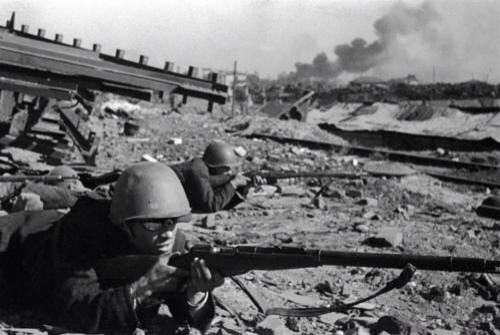
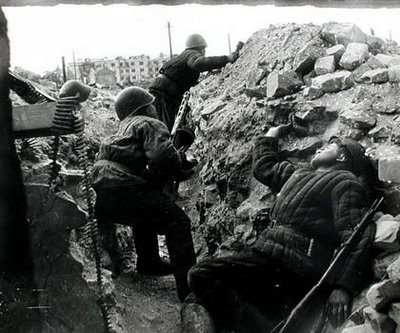
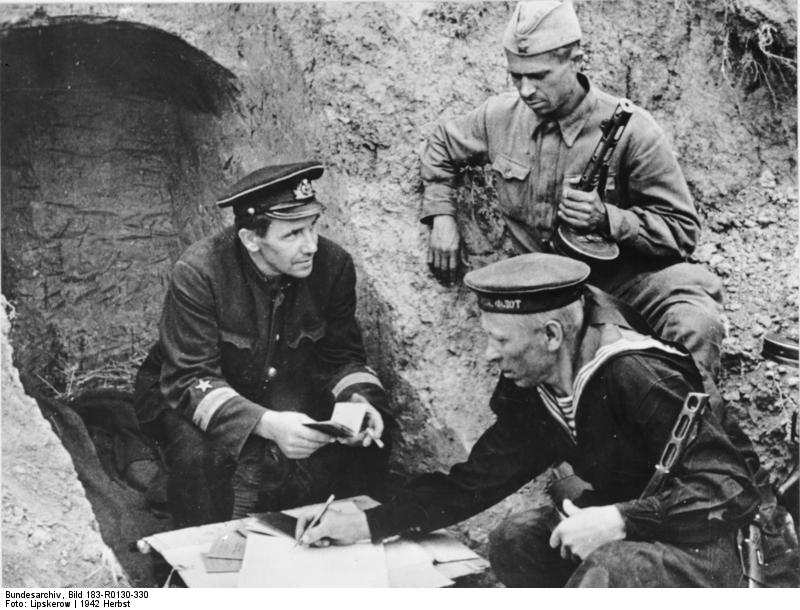
An NKVD regiment and other units held the strategically sited Mamaev Kurgan, keeping German guns from controlling the Volga.[lxx] The defenders contucted a house to house and block by block fight, and the Red Army and NKVD units were reinforced by Naval Infantry.  Chuikov conducted the defense with a brutal ferocity, relieving senior commanders who showed a lack of fight and by sending many officers to penal units.  Chuikov’s defensive plan was masterful; he funneled German attacks into “breakwaters” where the panzers and infantry could be separated from each other causing heavy German casualties. [lxxi]

Bype36yIQAASUVK

resized_battle-stalingrad-6

resized_battle-stalingrad-4

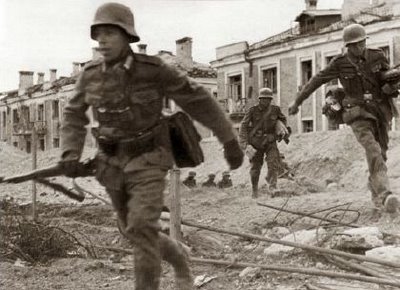
Now for Hitler the “city became a prestige item, its capture ‘urgently necessary for psychological reasons,’ as Hitler declared on October 2. A week later he declared that Communism must be ‘deprived of its shrine.’” [lxxii] The Germans continued to gain ground in the city, but slowly and at great cost, especially among their infantry, so much so that decimated companies had to be combined to form combat effective units.
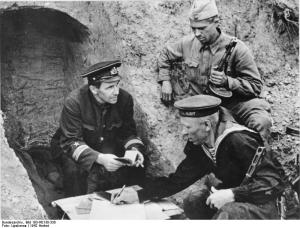
Bild 183-R0130-330

person_chuikov1

Chuikov used his artillery to interdict the Germans from the far side of the Volga while assault squads with incredible ferocity fought the fight in the city.   The close-quarters combat in the city was dubbed, “Rattenkrieg by German soldiers.” [lxxiii] Paulus continued to bring more units into the city, further thinning his flanks, but his troops continued to slowly drive the Russians back against the river, and by early October Chuikov wondered if he would be able to hold. [lxxiv] It appeared that the Germans might finally capture Stalingrad, and by November Chuikov “was altogether holding only one-tenth of Stalingrad – a few factory buildings and a few miles of river bank.” [lxxv] Paulus now expected “to capture the entire city by 10 November,” [lxxvi] despite the fact that many of his units were fought out. The causalities had been massive; an analysis by 6th Army determined that 42% of the battalions of 51st Corps were fought out. [lxxvii] Even so on November 9th, a confident Hitler declared “No power on earth will force us out of Stalingrad again!” [lxxviii] However, that boast was misplaced.

Soviet Counteroffensive: Disaster on the Flanks

stalingrad-map-counterattack

T34_Stalingrad-Offensive-px800

soviet infantry attacking

Soviet Forces Advancing

As 6th Army fought its way into Stalingrad some officers in the German High Command attempted to warn Hitler of the danger. Hitler now tolerated no interference, and on September 24th he relieved Halder for persisting to explain, “what would happen when new Russian reserve armies attacked the over-extended flank that ran out to Stalingrad.” [lxxix] Many on others the German side recognized the danger. Blumentritt said, “The danger to the long-stretched flank of our advance developed gradually, but it became clear early enough for anyone to perceive it who was not willfully blind.” [lxxx] Rumanian Marshall Antonescu, and the staffs of both Army Group B and Paulus’s 6th Army warned Hitler too, [lxxxi] but Hitler was transfixed on Stalingrad.  By their sole focus on Stalingrad the Germans gave up the advantage of uncertainty and once the German “aim became obvious…the Russian Command could commit its reserves with assurance.” [lxxxii]

person_chuikov4

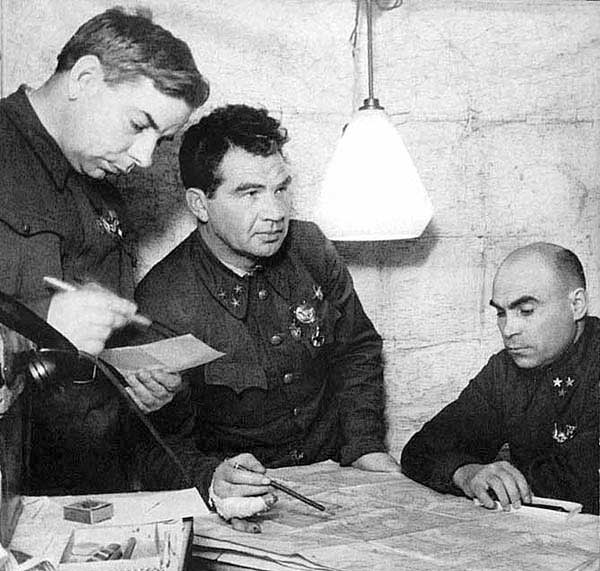
Chuikov and his staff

Despite Stalin’s concern about Stalingrad the Stavka planners never lost sight of their goal to resume large-scale offensive operations and destroy at least one German Army Group. [lxxxiii] Unlike Hitler, the ever suspicious Stalin had begun to trust his Generals and Stavka under the direction of Marshal Vasilevsky produced a concept in September to cut off the “German spearhead at Stalingrad by attacking the weak Rumanian forces on its flanks.” [lxxxiv] At first Stalin “showed little enthusiasm” for the attack, fearing that Stalingrad might be lost, but on 13 September he gave his full backing to the proposal [lxxxv] which Marshals Zhukov, Vasilevsky and Vatutin developed into a plan involving three operations; Operation Uranus, to destroy the German and allied forces at Stalingrad, and Operation Saturn to destroy all the German forces in the south, and a supporting attack to fix German forces in the north, Operation Mars aimed at Army Group Center. [lxxxvi]

Russian-Ground-Mount-Rocket

Soviet Katusha Rockets

To accomplish the destruction of 6th Army and at least a part of 4th Panzer Army around Stalingrad the Stavka planners employed over 60% of the “whole tank strength of the Red Army.” [lxxxvii] Strict secrecy combined with numerous acts of deception was used by the Red Army to disguise the operation. [lxxxviii] The plan involved an attack against 3rd Romanian Army on the northern flank by the Soviet 5th Tank Army and two infantry armies and their supporting units. [lxxxix] In the south another force of over 160,000 men and 430 tanks were deployed against 4th Rumanian Army and weak element of 4th Panzer Army. [xc] Despite warnings from his Intelligence Officer, Paulus did not expect a deep offensive into his flanks and rear and made no plans to prepare to face the threat. [xci] Other senior officers believed that the attack would take place against Army Group Center. [xcii] Walter Warlimont who served at OKW noted that there was a “deceptive confidence in German Supreme Headquarters.” [xciii]

 ju-52 stalingrad

Luftwaffe JU-52s made many resupply runs into the pocket but suffered great losses

The storm broke on 19 November as Soviet forces attacked rapidly crushing Romanian armies to the north and the south of Stalingrad [xciv] linking up to encircle the Germans in the city on the 23rd. [xcv] The German 48th Panzer Corps supporting the Romanians was weakened by the exhausting campaign and had few operational tanks. [xcvi] It attempted a counterattack but was “cut to pieces” in an engagement against the 5th Tank Army. [xcvii] A promising attempt by the German 29th Motorized division against the flank of the southern Russian pincer was halted by the Army Group and the division was ordered to defensive positions south of Stalingrad. [xcviii] To compound German problems the Luftwaffe was neutralized by bad weather. [xcix] Inside the city Paulus continued to do nothing as since the attacks were outside of his area of responsibility and rather than taking the initiative to extricate his forces, waited for instructions. [c] As a result the 6th Army’s 16th and 24th Panzer Divisions that could have assisted matters to the west remained “bogged down in street-fighting in Stalingrad.” [ci] Without support of the army’s Panzer formations, the 6th Army units west of Stalingrad were forced back in horrific conditions.  By the 23rd of November the 6th Army was cut off along with one corps of the 4th Panzer Army and assorted Romanian units, over 330,000 men.  Though they had the Germans surrounded, the entrapped force would require the Soviets to use seven rifle armies and much staff attention to eliminate. [cii]

von Paulus surrenders to the Soviets

Paulus Surrenders

Hitler ordered Von Manstein to form a new, composite, Army Group Don, to relieve Stalingrad. Hitler would not countenance a break out by the encircled forces and wanted Manstein to break through and relieve the 6th Army.[ciii] Hitler refused a request by Paulus on 23 November to move troops to prepare for a possible a break out attempt, and assured him that he would be relieved. [civ] Albert Speer noted that General Kurt Zeitzler who replaced Halder at OKW insisted that the Sixth Army “must break out to the west.” [cv] Hitler, completely obsessed with capturing Stalingrad told Zeitzler, “We should under no circumstances give this up. We won’t get it back once it’s lost.” [cvi] The ever boastful Herman Goering promised that his Luftwaffe would be able to meet the re-supply needs of 6th Army by air, even though his own Generals knew that it was impossible with the number of transport aircraft available. [cvii] However, Hitler took his Luftwaffe chief at his word and exclaimed “Stalingrad can be held! It is foolish to go on talking any more about a breakout by Sixth Army…” [cviii] Hitler then issued a Führer decree ordering that the front be held at all costs. [cix] Walter Goerlitz stated, “Hitler was incapable of conceiving that the 6th Army should do anything but fight where it stood.” [cx] Likewise Manstein had precious few troops with which to counterattack, as he also had to protect the flank of Army Group A, which was still deep in the Caucasus.

hungarian withdraw

hungarian dead stalingrad

Hungarian Dead and Wounded

Manstein’s “army group” was only corps strength and was spread across a 200 mile front. [cxi] Any relief attempt had to wait for more troops, especially Panzers.  Manstein believed that the best chance for a breakout had passed and that it was a serious error for Paulus to put the request to withdraw through to Hitler rather than the Army Group or act on his own [cxii] and many soldiers, long conditioned to believe in the promises of their Hitler were optimistic that Hitler would get them out of the caldron. [cxiii] Other German generals like Guderian, Reichenau, Heinrici, Hoeppner, or even the Waffen SS General Sepp Dietrich might have acted to save their army, but Paulus, surrounded in the city, was knew nothing but obedience.[cxiv]
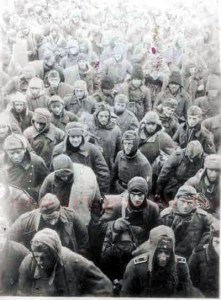
pows stalingrad

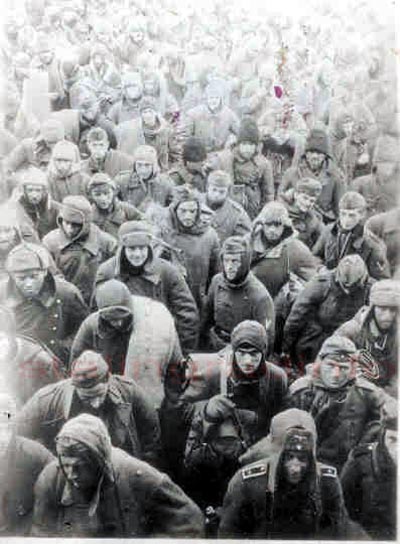
German POWs only 5000 of some 90,000 would see home again

Operation Saturn began on 7 December destroying the Italian 8th Army and forcing the Germans to parry the threat.[cxv] A relief attempt by 57th Panzer Corps under Hoth on 12 December made some headway until a massive Soviet counterattack on 24 December drove it back.[cxvi] This attack was hampered by OKW’s refusal to allocate the 17th Panzer and 16th Motorized divisions to Manstein,[cxvii] and by 6th Army not attacking out to link with the relief force.[cxviii]By 6 January Paulus signaled OKW: Army starving and frozen, have no ammunition and cannot move tanks anymore.”[cxix] On 10 January the Soviets launched Operation Ring to eliminate the pocket and despite all odds German troops fought on. On the 16th Paulus requested that battle worthy units be allowed to break out, but the request was not replied to.[cxx] On the 22nd the last airfield had been overrun and on 31 January Paulus surrendered.[cxxi]

Analysis: What Went Wrong

Stalingrad had drawn the attention Hitler and Stalin and the lives of their soldiers into a giant vortex of death. However, the Soviet Stavka, even when facing disaster never lost sight of their primary objectives during the campaign. The Germans on the other hand committed numerous unforced errors mostly caused by Hitler and or von Paulus. The German mistakes began early in their planning process and continued throughout the campaign. Overconfident, they failed to follow up success, and allowed the Soviets to regroup and then smash their forces at Stalingrad.
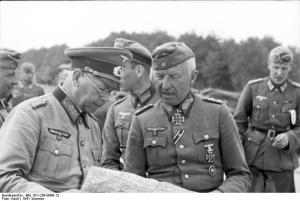
Russland-Nord, Erich von Manstein, Brandenberger

Von Manstein

After the fall of Stalingrad as the Soviets attempted to follow up their success by attempting to cut off Army Group “A.” Manstein, with the meager forces at hand was permitted by Hitler to wage a mobile defense while Von Kleist managed to withdraw his army group with few losses. [cxxii] The superior generalship of Manstein and Von Kleist prevented the wholesale destruction of German forces in southern Russia and Manstein’s counter offensive inflicted a severe defeat on the Soviets, showing them that the German army, though wounded was not without the power to fight back.

But the German Army had suffered a massive defeat.  The seeds of defeat were laid early, the failure to destroy bypassed Soviet formations in July, the diversion of 4th Panzer Army from Stalingrad, and the divergent objectives of trying to capture the Caucasus and Stalingrad at the same time.  This diluted both offensives ensuring that neither succeeded.  Likewise the failure to recognize the culminating point when it was reached and to adjust operations accordingly was disastrous for the Germans. The failure create a mobile reserve to meet possible Russian counter offensives, and the fixation on Stalingrad took the German focus off of the critical yet weakly held flanks.

The hubris of Hitler and OKW to believe that the Russians were incapable of conducting major mobile operations even as Stavka commenced massive offensive operations on the thinly held flanks all contributed to the defeat.  Alan Clark notes these facts but adds that the Germans “were simply attempting too much.” [cxxiii] Likewise, the Soviet advantage in numbers allowed them to wear down the Germans even early in the campaign when they were suffering defeat after defeat. [cxxiv] Stalin, whose decisions had nearly lost the war in 1941 gave his commanders a chance to revive the mobile doctrine of deep operations with mechanized and shock armies that he had discredited in the 1930s. [cxxv] All through the campaign Zhukov and other commanders maintained both their nerve even when it appeared that Stalingrad was all but lost. They never lost sight of their goal of destroying major German formations though they failed to entrap Army Group A with 6th Army.

Notes

[i] Clark, Alan. Barbarossa: The Russian-German Conflict: 1941-45. Perennial Books, An imprint of Harper Collins Publishers, New York, NY 1965. p.191

[ii] Ibid.

[iii] Glantz, David M. and House, Jonathan. When Titan’s Clashed: How the Red Army Stopped Hitler. The University Press of Kansas, Lawrence KS, 1995. p.111

[iv] Ibid. Clark. p.191

[v] Beevor, Anthony. Stalingrad: The Fateful Siege: 1942-1943. Penguin Books, New York NY 1998. p.69

[vi] Manstein, Erich von. Forward by B.H. Liddle Hart, Introduction by Martin Blumenson. Lost victories: The War Memoirs of Hitler’s Most Brilliant General. Zenith Press, St Paul MN 2004. First Published 1955 as Verlorene Siege, English Translation 1958 by Methuen Company. p.291 This opinion is not isolated, Beevor Quotes Paulus “If we don’t take Maikop and Gronzy…then I must put an end to the war.” (Beevor pp. 69-70)  Halder on the other hand believed that Hitler emphasized that the objective was “the River Volga at Stalingrad. (Clark. p.190)

[vii] Ibid. Beevor. p.70.

[viii] Ibid. Glantz and House. p.106

[ix] Ibid. p.105-106

[x] Ibid. Clark. p.203.  The offensive did impose a delay on the German offensive.

[xi] Ibid. Clark. p.191 Each group also contained allied armies.

[xii] Ibid. p.209.

[xiii] Ibid. Glantz and House. p.119

[xiv] Ibid. Manstein. p.292.

[xv] Ibid. Clark. p.209

[xvi] Ibid. Clark.  p.211

[xvii] Ibid. Glantz and House. p.120. There is a good discussion of the impact of this decision here as 6th Army’s advance was given priority for both air support and fuel.

[xviii] Ibid. Beevor. p.74

[xix] Warlimont, Walter. Inside Hitler’s Headquarters 1939-45. Translated by R.H. Berry, Presido Press, Novato CA, 1964. p.249

[xx] Ibid. Beevor. p.75 This was the 10th NKVD Division and it took control of all local militia, NKVD, and river traffic, and established armored trains and armor training schools.

[xxi] Ibid. Clark. p.212

[xxii] Ibid. Glantz and House. p.121

[xxiii] Ibid. Beevor. p.85

[xxiv] Ibid. p.89

[xxv] Liddell-Hart, B.H. The German Generals Talk. Quill Publishers, New York, NY 1979. Originally published by the author in 1948. p.202

[xxvi] Ibid. Beevor. p.88

[xxvii] Ibid. Beevor. p.90

[xxviii] Ibid. Beevor. p.81

[xxix] Ibid. Glantz and House. p.121

[xxx] Ibid. Liddell-Hart. p.202

[xxxi] Ibid. Glantz and House. p.120

[xxxii] Goerlitz, Walter. History of the German General Staff. Westview Press, Frederick A. Praeger Publisher, Boulder, CO. 1985 p.416

[xxxiii] Ibid. Beevor. pp.95-96.

[xxxiv] Von Mellenthin, F.W. Panzer Battles: A Study of the Employment of Armor in the Second World War. Translated H. Betzler, Edited by L.C.F. Turner. Oklahoma University Press 1956, Ballantine Books, New York, NY. 1971. p.193

[xxxv] Shirer, William L. The Rise and Fall of the Third Reich. A Touchstone Book published by Simon and Schuster, 1981, Copyright 1959 and 1960. p.914

[xxxvi] Ibid. Glantz and House. p.122

[xxxvii] Ibid. Warlimont. p.256

[xxxviii] Ibid. Liddell-Hart. p.203

[xxxix] Ibid. p.204

[xl] Ibid. Shirer. p.914

[xli] Ibid. Goerlitz. p.416

[xlii] Ibid. Goerlitz. p.416

[xliii] Ibid. Manstein. p.293

[xliv] Ibid. Clark. p.214

[xlv] Ibid. Beevor. pp.97-99. The mobilization included military, political, civilian and industrial elements.

[xlvi] Liddell-Hart, B.H. Strategy. A Signet Book, the New American Library, New York, NY. 1974, Originally Published by Faber and Faber Ltd., London. 1954 & 1967. p.250

[xlvii] Ibid. Beevor. p.99.  Two key commanders arrived during this time frame, Colonel General Andrei Yeremenko, who would command the Stalingrad Front  and General Chuikov commander of 64th Army who would conduct the defense of the city.

[xlviii] Carell, Paul Hitler Moves East: 1941-1943. Ballantine Books, New York, NY 1971, German Edition published 1963. p.581

[xlix] Ibid. Shirer.  p.909.

[l] Ibid. Liddell-Hart, Strategy. p.250

[li] Wheeler-Bennett, John W. The Nemesis of Power: The German Army in Politics 1918-1945. St. Martin’s Press, New York, NY 1954.  p.531

[lii] Ibid. Wheeler-Bennett. p.531

[liii] Ibid. Beevor. p.96

[liv] Ibid. Clark. p.216.

[lv] Ibid. Von Mellenthin. P.193

[lvi] See Von Mellinthin pp.193-194.  Von Mellinthin quotes Colonel Dinger, the Operations Officer of 3rd Motorized Division at Stalingrad until a few days before its fall. Dingler noted that the Germans on reaching Stalingrad “had reached the end of their power. Their offensive strength was inadequate to complete the victory, nor could they replace the losses they had suffered.” (p.193) He believed that the facts were sufficient “not only to justify a withdrawal, but compel a retreat.” (p.194)

[lvii] Ibid. Manstein. p.294

[lviii] Ibid. Clark. p.216

[lix] Ibid. Clark. p.217

[lx] Ibid. Beevor. p.107

[lxi] Ibid. Beevor. p.107

[lxii] Ibid. Glantz and House. p.122

[lxiii] Ibid. Carell. P.601

[lxiv] Ibid. Beevor. p.118

[lxv] Ibid. Beevor. p.118

[lxvi] Ibid. Carell. p.602

[lxvii] Ibid. Beevor. p.128

[lxviii] Ibid. Carell. p.603

[lxix] Ibid. Beevor. p.134

[lxx] Ibid. Beevor. pp.136-137

[lxxi] Ibid. Beevor. p.149

[lxxii] Fest, Joachim. Hitler. Translated by Richard and Clara Winston, Harcourt, Brace, Jovanovich Publishers, San Diego, New York, London. 1974. p.661

[lxxiii] Ibid. Beevor. pp. 149-150

[lxxiv] Ibid. Beevor. p.164

[lxxv] Ibid. Carell. p.618

[lxxvi] Ibid. Glantz and House. p.123

[lxxvii] Ibid. Beevor. p.218

[lxxviii] Ibid. Carell. p.623

[lxxix] Ibid. Goerlitz. p.418

[lxxx] Ibid. Liddell-Hart. The German Generals Talk. p.207

[lxxxi] Ibid. Manstein. p292

[lxxxii] Ibid. Liddell-Hart. History of the Second World War. p.258

[lxxxiii] Ibid. Glantz and House. p.129

[lxxxiv] Ibid. Glantz and House. p.130

[lxxxv] Ibid. Beevor. pp.221-222 Glantz and House say that Stalin gave his backing in mid-October but this seems less likely due to the amount of planning and movement of troops involved to begin the operation in November.

[lxxxvi] Ibid. Glantz and House. p.130

[lxxxvii] Ibid. Beevor. p.226

[lxxxviii] Ibid. Glantz and House. p.132

[lxxxix] Ibid. Glantz and House. p.130

[xc] Ibid. Beevor. p.227

[xci] Ibid. Beevor. p.228

[xcii] Ibid. Clark. p.235

[xciii] Ibid. Warlimont. p.274

[xciv] Ibid, Carell. p.627 3rd Rumanian Army lost 75,000 men in three days.

[xcv] Ibid. Clark.pp.247-248

[xcvi] The condition of the few German Panzer Divisions in position to support the flanks was very poor, the 22nd had suffered from a lack of fuel and maintenance and this many of its tanks were inoperative. Most of the armor strength of the 48th Panzer Corps was provided by a Rumanian armored division equipped with obsolete Czech 38t tanks provided by the Germans.

[xcvii] Ibid. Clark. pp.251-252. The designation of 2nd Guards Tank Army by Clark has to be wrong and it is the 5th Tank Army as 2nd Guards Tank was not involved in Operation Uranus.  Carell, Beevor and Glantz properly identify the unit.

[xcviii] Ibid. Carell. p.630

[xcix] Ibid. Beevor. p.244

[c] Ibid. Beevor. p.247

[ci] Ibid. Beevor. p.245

[cii] Ibid. Glantz and House. p.134

[ciii] Ibid. Glantz and House. p.134

[civ] Ibid. Clark. p.256

[cv] Speer, Albert. Inside the Third Reich. Collier Books, a Division of MacMillan Publishers, Inc. New York, NY 1970. p.248

[cvi] Heiber, Helmut and Glantz, David M. Editors. Hitler and His Generals: Military Conferences 1942-1945. Enigma Books, New York, NY 2002-2003.  Originally published as Hitlers Lagebsprechungen: Die Protokollfragmente seiner militärischen Konferenzen 1942-1945. Deutsche Verlags-Anstalt GmbH, Stuttgart, 1962. p.27

[cvii] Ibid. Glantz and House. p.135 Glantz and House note that the amount of aircraft estimated to successfully carry out the re-supply operation in the operational conditions was over 1,000.  The amount needed daily was over 600 tons of which the daily reached only 300 tons only one occasion.

[cviii] Ibid. Speer. p.249

[cix] Ibid. Carell. p.636

[cx] Ibid. Goerlitz. p.426

[cxi] Ibid. Clark. p.252

[cxii] Ibid. Manstein. p.303

[cxiii] Ibid. Beevor. p.276

[cxiv] Ibid. Carell. p.640

[cxv] Ibid. Glantz and House. p.140

[cxvi] Ibid. Glantz and House. p.140

[cxvii] Ibid. Clark. p.264

[cxviii] Ibid. Manstein. p.337

[cxix] Ibid. Beevor. p320

[cxx] Ibid. Beevor. p.365

[cxxi] Of the approximately 330,000 in the pocket about 91,000 surrendered, another 45,000 had been evacuated.  22 German divisions were destroyed.

[cxxii] Ibid. Liddell-Hart. The German Generals Talk. p.211

[cxxiii] Ibid. Clark. p.250

[cxxiv] Ibid. Glantz and House. p.124

[cxxv] Ibid. Beevor. p.221


Bibliography

Beevor, Anthony. Stalingrad: The Fateful Siege: 1942-1943. Penguin Books, New York NY 1998

Carell, Paul Hitler Moves East: 1941-1943. Ballantine Books, New York, NY 1971, German Edition published 1963.

Clark, Alan. Barbarossa: The Russian-German Conflict:1941-45. Perennial Books, An imprint of Harper Collins Publishers, New York, NY 1965.

Fest, Joachim. Hitler. Translated by Richard and Clara Winston, Harcourt, Brace, Jovanovich Publishers, San Diego, New York, London. 1974

Glantz, David M. and House, Jonathan. When Titan’s Clashed: How the Red Army Stopped Hitler. The University Press of Kansas, Lawrence KS, 1995.

Goerlitz, Walter. History of the German General Staff. Westview Press, Frederick A. Praeger Publisher, Boulder, CO. 1985

Heiber, Helmut and Glantz, David M. Editors. Hitler and His Generals: Military Conferences 1942-1945. Enigma Books, New York, NY 2002-2003.  Originally published as Hitlers Lagebsprechungen: Die Protokollfragmente seiner militärischen Konferenzen 1942-1945. Deutsche Verlags-Anstalt GmbH, Stuttgart, 1962.

Liddell-Hart, B.H. The German Generals Talk. Quill Publishers, New York, NY 1979. Originally Published by the author in 1948.

Liddell-Hart, B.H. Strategy. A Signet Book, the New American Library, New York, NY. 1974, Originally Published by Faber and Faber Ltd., London. 1954 & 1967

Manstein, Erich von. Forward by B.H. Liddle Hart, Introduction by Martin Blumenson. Lost victories: The War Memoirs of Hitler’s Most Brilliant General. Zenith Press, St Paul MN 2004. First Published 1955 as Verlorene Siege, English Translation 1958 by Methuen Company

Shirer, William L. The Rise and Fall of the Third Reich. A Touchstone Book published by Simon and Schuster, 1981, Copyright 1959 and 1960

Speer, Albert. Inside the Third Reich. Collier Books, a Division of MacMillan Publishers, Inc. New York, NY 1970.

Von Mellenthin, F.W. Panzer Battles: A Study of the Employment of Armor in the Second World War. Translated H. Betzler, Edited by L.C.F. Turner. Oklahoma University Press 1956, Ballantine Books, New York, NY. 1971.

Warlimont, Walter. Inside Hitler’s Headquarters 1939-45. Translated by R.H. Berry, Presido Press, Novato CA, 1964.

Wheeler-Bennett, John W. The Nemesis of Power: The German Army in Politics 1918-1945. St. Martin’s Press, New York, NY 1954

2 Comments

Filed under History, Military, world war two in europe

Never Forget: Holocaust Remembrance 2016

1483285_10152114931522059_1612934841_n

Friends of Padre Steve’s World,

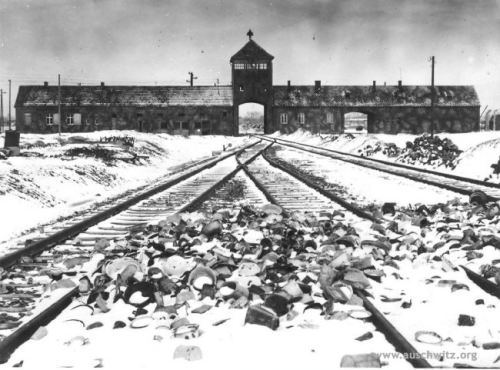
Yesterday, January 27th 2016 was Holocaust Remembrance Day. On that day seventy-one years ago on January 27th 1945 the Soviet Red Army liberated the Auschwitz Concentration Camp, the centerpiece of the Nazi Death Camp machine. Though it did not end the Nazi genocide against the Jews it was only a matter of time before the horror would end.

It is a day that we should never forget. The horrors perpetrated by the Nazi regime, all in the name of “race purity” and the extermination of the Jews and others deemed by the Nazis to be “sub-human” or untermenschen is something that is hard for most to imagine. Over the past week I have been reading Bettina Stangneth’s book, Eichmann Before Jerusalem: The Unexamined Life of a Mass Murderer. While I am very well informed and educated on the lives, writings, actions, and statements of many of the Nazi war criminals, this new book on Eichmann is the most troubling that I have ever read. In particular it is the accounts of his writings and interviews with other pro-Nazi, or former Nazis in Argentina, particularly the Sassen Interviews, which span hundreds of hours of tape and thousands of pages of transcripts.

I am a Christian, a gentile, and a historian. I have lived in Germany, read, speak and write German and have many friends in that country, including members of the German military, retired and active duty.  My study and association with Holocaust survivors goes back to my college days at California State University Northridge when as an undergraduate history major I spent much of my time studying Germany from the first unification and the Kaiser Reich, the First World War, Versailles, Weimar and the Hitler Regime. My professor, Dr. Helmut Heussler, whose family left Germany in the late 1920s, served in the U.S. Army in World War II and was an interrogator at Nuremberg. I took a number of classes from Dr. Heussler, including Hitler’s Germany and the Holocaust. In the latter I had the chance to meet Holocaust survivor Mel Mermelstein, who was later played by Leonard Nimoy in the TV movie Never Forget. 

Since then I have continued to study, read and even visit the sites of former concentration camps including Dachau and Bergen-Belsen. One day, God willing I will get to Auschwitz.

The Nazis had begun their persecution of the Jews shortly after Hitler took power in 1933. Later in the year the Enabling Act gave Hitler and his henchmen the legal means to begin their persecution of the Jews and others. These were followed by the Nuremberg Laws and other laws that targeted the Jews. Persecution increased throughout the 1930s, and sadly most countries refused to accommodate increased Jewish immigration. Then came Kristallnacht, or the Night of Broken Glass, when on 9-10 November 1938, a series of orchestrated attacks on Jewish businesses, Synagogues, institutions and individuals. On that night close to 200 synagogues, 7000 Jewish businesses and 29 major department stores were destroyed or damaged. Over 30,000 Jews, mostly men, were arrested and sent to concentration camps, 91 people were killed outright, and several thousand died in the aftermath.

mass killing einsatzgruppen

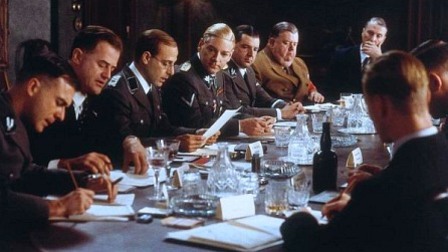
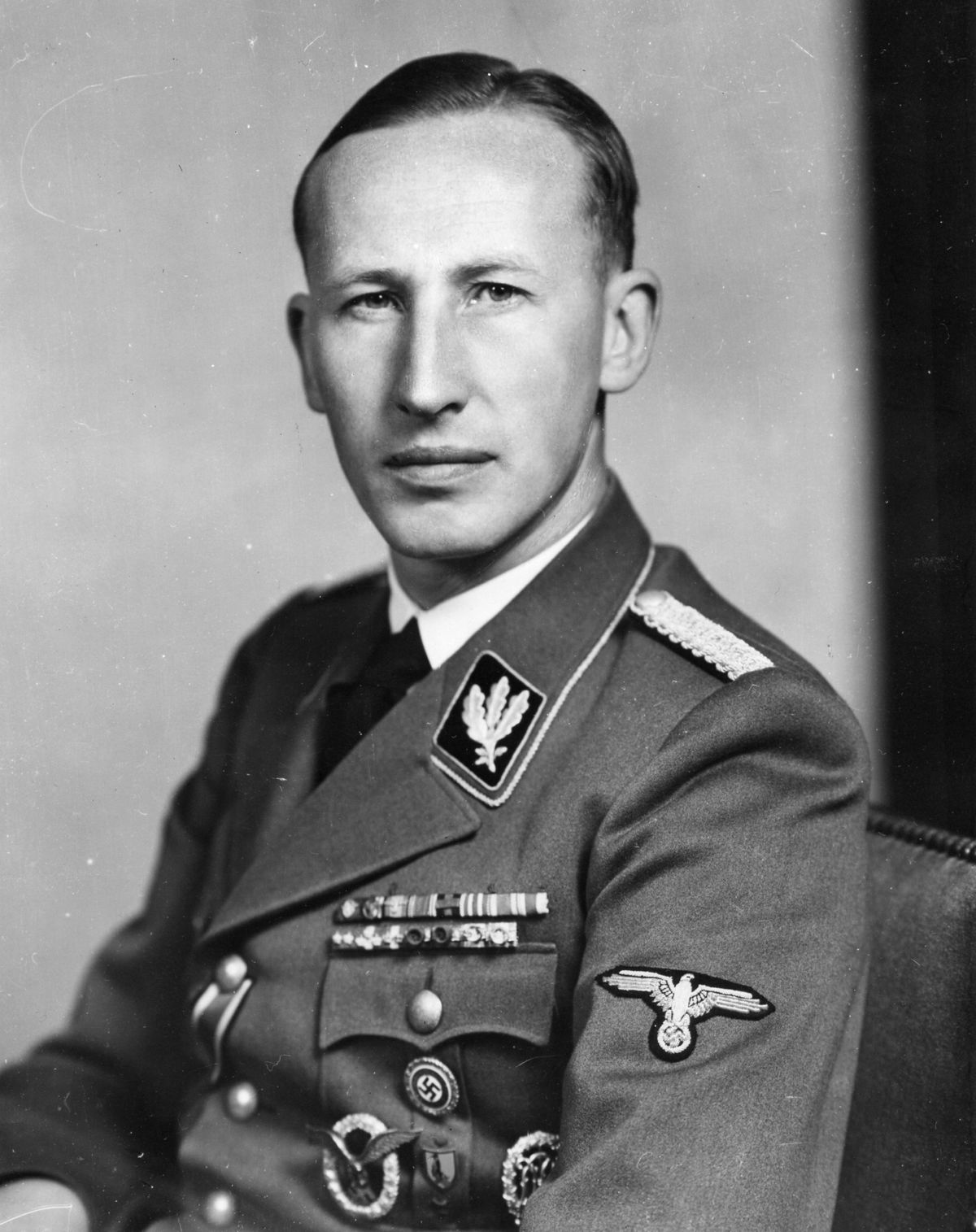
When the Nazis invaded Poland, its Jews were rounded up and placed into ghettos where many died of starvation and abuse even before the ghettos were liquidated and the people who lived in them were deported to the extermination camps. In 1941 as the German military seemed to be assured of victory in the Soviet Union the Nazis decided to exterminate the Jews of Europe. In the Soviet Union four Einsatzgruppen followed each of the German Army Groups and systematically began to massacre the Jews of every city and village which German soldiers captured. Over a million and a half Soviet Jews were killed by the Einsatzgruppen, Ordungspolizei battalions, Army Security Divisions and locally recruited units. At the Wansee Conference of January 20th 1942 the specifics of the campaign were mapped out by Himmler’s number two man, SS General Reinhard Heydrich. What followed was the comprehension of most people, but the perpetrators were for the most part men and women who were terrifyingly normal.

The truly terrifying thing about the Nazi perpetrators of the Holocaust to me is that most of the men at Wansee, men that commanded the Concentration camps and the Einsatzgruppen were very ordinary men who simply believed that they were doing their jobs. Very few could be described as psychopathic killers by nature. They were lawyers, doctors, career police officials, businessmen, and bureaucrats who carried out an extermination campaign that killed by their own numbers between 5.5 and 6 million Jews, not to mention others deemed to be subhuman including the handicapped, the mentally ill, homosexuals, and other non-Jewish minorities like the Gypsies not to mention the wide variety of those considered political enemies. But it was the Jews that bore the most tragic fate.

When you read their writings, listen to them when they were interviewed, or watch footage of them during or after the war, you find that they had absolutely no empathy for their victims. When confronted about the evil that they engineered they invariably blamed their victims, just as many like them do today.

Most of the men who coordinated the massive effort to exterminate the Jews of Europe following the Wansee Conference of January 20th 1942 approached their jobs dispassionately. This was a common attitude among the civil service, military and police officials that oversaw the Holocaust. They simply did their jobs and followed the law, and for most of them, their victims meant nothing.

ChildrenBirkenau

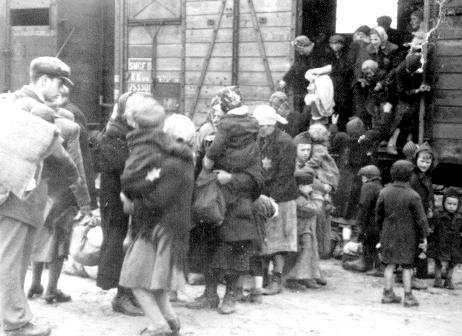
Hungarian Jews being sent to Extermination Camps

Adolf Eichmann summed up the attitude of many when he said regarding his work to deport hundreds of thousands of Hungarian Jews to Auschwitz in in just a few weeks during the fall of 1944, “Whether they were bank directors or mental cases, the people who were loaded on those trains meant nothing to me.” Speaking to Willem Sassen in 1957 Eichmann reveled in that accomplishment, “It was an achievement that was never matched before or since.” Eichmann also enjoyed leading his victims on, pretending that he might listen, and they might change his mind. Eichmann was proud of what he did. He told his staff, “I will leap into my grave laughing because the feeling that I have five million human beings on my conscience is for me a source of extraordinary satisfaction.”

Hannah Arendt wrote of Eichmann:

“The trouble with Eichmann was precisely that so many were like him, and that the many were neither perverted nor sadistic, that they were, and still are, terribly and terrifyingly normal. From the viewpoint of our legal institutions and of our moral standards of judgment, this normality was much more terrifying than all the atrocities put together.”

This was what made the Holocaust committed against the Jews of Europe by Nazi Germany a phenomenon different than other genocides. Many of the perpetrators were not driven by centuries old hate as in the Balkans, tribal blood lust as occurred in Rwanda, or the products of Soviet Communism or Communist Chines Maoist regimes.

dachaumorgue1945

It was the racial ideology of the Nazis which deemed the Jews and other non-Aryans to be sub-human. That ideology undergirded the German treatment of the Jews, and the conduct of the war, especially in the East. But the execution of the plan required the bureaucratic, administrative, technical and legal skills brought to the table by ordinary men. Men who sought promotion, advancement and economic security for their families. Individually many would have never killed, but in their positions they ran the rail network, the factories, the banking and finance industries and supported the war effort, most not thinking much about the evil that they abetted or if they did finding a way, be it social, scientific, religious, patriotic, legal or simply in the name of efficiency.

Survivors of Auschwitz

That is what makes the evil committed by them so terrifying. It is the product of “normal” people in an advanced Western nation. Make no bones about it, their actions were evil. They aided and abetted the genocide of the Jews, the disabled, other “sub-human” races, particularly Slavs, as well as those that they deemed less than suitable.

I think that the most chilling thing about the Holocaust was that the greatest atrocities were committed by ordinary men, sometimes well educated, decent family men. These were men who simply executed orders and often went home at night. Hannah Arendt wrote that “The sad truth is that most evil is done by people who never make up their minds to be good or evil.” She was right, there was an ordinariness to the evil perpetrated by the Nazis, at the same time there are those who consciously decide to participate in evil.

It is important that we do not forget the Holocaust. It is also important to recognize that the instruments of that horror were on the whole “ordinary” men who as they saw it were simply doing their job. It is something that everyone needs to remember. Bettina Stangneth wrote “Systematic mass murder is not just the sum of isolated instances of sadism but the result of a political thinking that is perverted from the ground up.”

So many of the perpetrators saw nothing wrong in what they were doing, in fact at his trial in Jerusalem Eichmann said, “To sum it all up, I must say that I regret nothing.”

They believed that their victims were less than human and like so many people even today, they had no empathy. Gustave Gilbert, an American Army Psychologist at the major War Criminal Trials at Nuremberg said it so well: “Evil is the absence of empathy.”

It is important that we never forget.

Peace

Padre Steve+

Leave a comment

Filed under History, holocaust, nazi germany, Political Commentary, world war two in europe

Wansee: Implementing the Final Solution

conspiracy

Friends of Padre Steve’s World,

Primo Levi wrote, “Monsters exist, but they are too few in number to be truly dangerous. More dangerous are the common men, the functionaries ready to believe and to act without asking questions.” 

Seventy-four years ago today a group of 15 relatively common men of various German government, police, and party agencies sat around a table and discussed the implementation of what is called the Final Solution. The meeting was chaired by SS Lieutenant General Reinhard Heydrich, who had been charged with the task of solving Germany’s “Jewish Problem” shortly after the German invasion of the Soviet Union. Hermann Goering, the number two man in the Nazi Reich sent Heydrich the following message:

Berlin, July 31st 1941

To: Gruppenfuhrer Heydrich

Supplementing the task assigned to you by the decree of January 24th 1939, to solve the Jewish problem by means of evacuation and emigration in the best possible way by according to present conditions, I hereby charge you to carry out preparations as regards organizational, financial, and material matters for a total solution (Gesamtlosung) of the Jewish question in all the territories of Europe under German occupation.

Where the competency of other organizations touches on this matter, the organizations are to collaborate. 

I charge you further to submit to me as soon as possible a general plan of the administrative material and financial measures necessary for the carrying out the desired final solution (Endlosung) of the Jewish question.”

Goering

1200x-1

Heydrich

When Goering wrote Heydrich, the head of the Reichssiecherhiethauptampt (RSHA) or Reich Security Main Office, in July 1941 it seemed that Nazi victory in Europe was all but assured. Goering’s words were businesslike. Early measures taken by Heydrich to rid Germany and annexed Austria had been reasonably successful to rid those areas of their Jews through emigration and evacuation. These were not benign measures, people were forced to leave their homes, businesses, communities, and had most of their belongings taken from them in order to leave the Reich. However with the occupation of most of Europe following the Nazi military success and the looming occupation and subjugation of the Soviet Union the process of giving the Jews a chance to emigrate to lands outside Nazi control had come to an end. In fact the Nazis occupied the countries that may Jews had found refuge.

Less than six months after he received the directive from Goering, on January 20th 1942 Heydrich summoned representatives from various Reich agencies were called for what turned out to be a brief, two hour meeting which decided the fate of the Jews. The meeting was held at an estate located in the suburbs of Berlin, called Wansee. Organized by Heydrich’s deputy Adolph Eichmann, involved Heydrich, Eichmann and 13 mid level representatives from various economic, governmental, justice and police entities.

At the conference Heydrich established his authority through Goering’s directive to overcome the bureaucratic and personal attempts of various attendees to take control of the Final Solution process. Despite objections from some attendees who favored sterilization and the use of Jews in the war armaments industries, Heydrich made it clear that the Final Solution would be a campaign of extermination. He was quite clear:

“Approximately 11 million Jews will be involved…in large single sex labor columns, Jews fit to work will work their way eastward constructing roads. Doubtless the large majority will be eliminated through natural causes. Any final remnant that survives will doubtlessly consist of the most resistant elements. They will have to be dealt with appropriately, because otherwise by natural selection, they would form the germ cell of a new Jewish revival.”

brama_birkenau-2

The Nazi leadership decided that its race war against the Jews needed to forge ahead. Within days of Wansee the orders went out and SS commanders at various concentration camps began devising more efficient means to exterminate Jews and other “sub-humans.” It was a matter of pride and efficiency for them. As Rudolph Hoess the Commandant of Auschwitz said at Nuremberg “the camp commandant at Treblinka told me that he had liquidated 80,000 in the course of one half year. He was principally concerned with liquidating all the Jews from the Warsaw Ghetto. He used monoxide gas, and I did not think that his methods were very efficient. So when I set up the extermination building at Auschwitz, I used Zyclon B….” Hoess estimated that some 2.5 million people were exterminated at Auschwitz at rates as high as 10,000 a day.

einsatzgruppen-nazi-death-squads-ww2-german-brutal-002_thumb

Einsatzgruppen in Action

In the Soviet Union four Einsatzgruppen followed each of the German Army Groups and systematically began to massacre the Jews of every city and village which German soldiers captured. The Einsatzgruppen, Ordungspolizei battalions, Army Security Divisions and locally recruited units in fewer than six months, killed over a million and a half Soviet Jews, and the slaughter would continue unabated until the dying days of the Reich.

Heinrich Himmler, Heydrich’s friend and superior told a gathering of senior SS leaders:

“I also want to mention a very difficult subject before you here, completely openly. It should be discussed among us, and yet, nevertheless, we will never speak about it in public…I am talking about the “Jewish evacuation” the extermination of the Jewish people.” 

It is One of the things that is easily said. “The Jewish people is being exterminated,” every Party member will tell you, “perfectly clear, it’s part of our plans, we’re eliminating the Jews, exterminating them, ha!, a small matter.” 

But then along they all come, all the decent upright Germans and each has his decent Jew. They all say: the others are all swine, but here is a first class Jew. And none of them has seen it, has endured it. Most of you will know what it means when 100 bodies lie together, or when there are 500 or 1000. And to have seen this through, and –with the exception of human weaknesses– to have remained decent, has made us hard and is a page of glory never mentioned and never to be mentioned….”

himmlervisit

Himmler and his entourage 

Whether the words are those of Goering, Heydrich, Hoess or Himmler, there is a certain businesslike banality to them. But these men, and many others like them orchestrated a campaign of genocide and race hatred unmatched in history. Yes, there have been other genocides, the Turks killing the Armenians during the First World War and the Hutu and Tutsi slaughter in Rwanda but neither they or the politically motivated campaigns of mass slaughter conducted by the Soviets, the Chinese Communists and the Khamer Rouge killing fields can match the systematized extermination campaign waged by the Nazis against the Jews.

The truly terrifying thing about the Nazi perpetrators of the Holocaust to me is that most of the men at Wansee, men that commanded the Concentration camps and the Einsatzgruppen were very ordinary men who simply believed that they were doing their jobs. Very few could be described as psychopathic killers by nature. They were lawyers, doctors, career police officials, businessmen, and bureaucrats who carried out an extermination campaign that killed by their own numbers between 5.5 and 6 million Jews, not to mention others deemed to be subhuman including the handicapped, the mentally ill, homosexuals, and other non-Jewish minorities like the Gypsies not to mention the wide variety of those considered political enemies. But it was the Jews that bore the most tragic fate.

arbeitmachtfrei

It is something that we must never forget.

Peace

Padre Steve+

Leave a comment

Filed under History, holocaust, world war two in europe

Light, Life, Love: The Madonna of Stalingrad

Bundeswehr zeigt "Stalingrad"-Ausstellung

Friends of Padre Steve’s World,

I think most of my readers know that I am a career military officer and have served in peace and war as a chaplain. That service includes a tour in Iraq, a war, which by almost any standard would have been considered unjust and illegal, yet I served there, and came back a changed man. As such the stories of those who served in war, especially those who serve in hopeless battles, and even in evil causes during Christmas have a special place in my heart. One of those men was a German pastor and medical doctor named Kurt Reuber.

k_reuberl

As I said, Reuber was a theologian, pastor and medical doctor, likewise he was an accomplished artist and used that medium to convey his own faith, and doubts. He was a friend of Albert Schweitzer in 1939 he was conscripted to serve as a physician in the Germany Army. By November 1942 he was a seasoned military physician serving with the 16th Panzer Division, part of the German 6th Army, which had been fighting in the hell of Stalingrad. When his division along with most of 6th Army was surrounded by the Soviets, cut off from most supply and without real hope of relief, he like other physicians continued to serve the soldiers committed to his care.

pg-34-stalingrad-2-getty

However, unlike most physicians, the care Reuber offered care included spiritual matters, as he sought to help his soldiers deal with the hopelessness of their situation. As Reuber reflected on the desperation of the German soldiers in the Stalingrad pocket. He wrote to his family.

“I wondered for a long while what I should paint, and in the end I decided on a Madonna, or mother and child. I have turned my hole in the frozen mud into a studio. The space is too small for me to be able to see the picture properly, so I climb on to a stool and look down at it from above, to get the perspective right. Everything is repeatedly knocked over, and my pencils vanish into the mud. There is nothing to lean my big picture of the Madonna against, except a sloping, home-made table past which I can just manage to squeeze. There are no proper materials and I have used a Russian map for paper. But I wish I could tell you how absorbed I have been painting my Madonna, and how much it means to me.”

“The picture looks like this: the mother’s head and the child’s lean toward each other, and a large cloak enfolds them both. It is intended to symbolize ‘security’ and ‘mother love.’ I remembered the words of St. John: light, life, and love. What more can I add? I wanted to suggest these three things in the homely and common vision of a mother with her child and the security that they represent.”

The picture was drawn on the back of a captured Soviet map and when he finished it he displayed it in his bunker, which became something of a shrine. Reuber wrote:

“When according to ancient custom I opened the Christmas door, the slatted door of our bunker, and the comrades went in, they stood as if entranced, devout and too moved to speak in front of the picture on the clay wall…The entire celebration took place under the influence of the picture, and they thoughtfully read the words: light, life, love…Whether commander or simple soldier, the Madonna was always an object of outward and inward contemplation.”

drkrop

As the siege continued men came to the bunker for both medical care and spiritual solace.  On Christmas Eve Reuber found himself treating a number of men wounded by bombs outside the bunker. Another soldier lay dying, just minutes before the soldier had been in the bunker singing the Christmas hymn O Du Froehliche.  Reuber wrote:

“I spent Christmas evening with the other doctors and the sick. The Commanding Officer had presented the letter with his last bottle of Champagne. We raised our mugs and drank to those we love, but before we had had a chance to taste the wine we had to throw ourselves flat on the ground as a stick of bombs fell outside. I seized my doctor’s bag and ran to the scene of the explosions, where there were dead and wounded. My shelter with its lovely Christmas decorations became a dressing station. One of the dying men had been hit in the head and there was nothing more I could do for him. He had been with us at our celebration, and had only that moment left to go on duty, but before he went he had said: ‘I’ll finish the carol with first. O du Frohliche!” A few moments later he was dead. There was plenty of hard and sad work to do in our Christmas shelter. It is late now, but it is Christmas night still. And so much sadness everywhere.”

On January 9th 1943 with all hope of escape or reinforcement gone Reuber gave the picture to the battalion commander as the officer was too ill to carry on and was one of the last soldiers to be evacuated from the pocket. Reuber’s commander carried the Madonna out of the pocket and returned it delivered it to Reuber’s family, preserving it for all.

Reuber was taken prisoner and survived the harrowing winter march to the Yelabuga prison camp. In late 1943 Reuber wrote his Christmas Letter to a German Wife and Mother – Advent 1943. It was a spiritual reflection but also a reflection on the hope for life after the war, when the Nazi regime would be defeated, and Germany given a new birth.

Reuber wrote:

“The concatenation of guilt and fate has opened our eyes wide to the guilt. You know, perhaps we will be grateful at the end of our present difficult path yet once again that we will be granted true salvation and liberation of the individual and the nation by apparent disappointment of our “anticipation of Advent”, by all of the suffering of last year’s as well as this year’s Christmas. According to ancient tradition, the Advent season is simultaneously the season of self-reflection. So at the very end, facing ruin, in death’s grip – what a revaluation of values has taken place in us! We thus want to use this period of waiting as inner preparation for a meaningful new existence and enterprise in our family, in our vocation, in the nation. The Christmas light of joy is already shining in the midst of our Advent path of death as a celebration of the birth of a new age in which – as hard as it may also be – we want to prove ourselves worthy of the newly given life.”  (Erich Wiegand in Kurt Reuber, Pastor, Physician, Painter, Evangelischer Medienverb. Kassel 2004. )

prisoner's madonna

Reuber did not live to see that day. He died of Typhus on January 20th 1944, not long after writing this and just a few weeks after painting another portrait of the Madonna, this one entitled The Prisoner’s Madonna. He was not alone, of the approximately 95,000 German POWs taken at Stalingrad only about 6,000 returned home.

His paintings survived the war and his family gave The Madonna of Stalingrad to the Kaiser Wilhelm Memorial Church in Berlin after it was restored as a symbol of hope and reconciliation. Copies are also displayed in Coventry Cathedral and the Russian Orthodox Cathedral in Volgograd, the former Stalingrad. A copy of The Prisoner’s Madonna is now displayed at the Church of the Resurrection in Kassel.

I have a print of the Madonna of Stalingrad in my office. It has become one of the most meaningful pictures I have since I returned from Iraq in 2008. To me they are symbols of God’s presence when God seems entirely absent.

Praying for an end to war.

Peace

Padre Steve+

Leave a comment

Filed under christian life, faith, History, Military, ministry, world war two in europe

Never Forget: The Undeniable Evidence

1483285_10152114931522059_1612934841_n

Friends of Padre Steve’s World

I have been writing about the Holocaust and genocide for most of the last week. This is in large part due to teaching my ethics elective at the Staff College during which time we examined the Holocaust and the Rwandan genocide. 

 In doing so I decided to re-watchthe movie Nuremberg which is about the trial of the major Nazi War Criminals. That trial exposed to the world the evil of the Nazi regime. Massive amounts of documentary evidence were introduced, much from the precise records kept by the Nazis themselves. It may be hard to believe, but those who ordered and directed these crimes were proud of what they did, believing that they were doing the world a favor, but it was not something that they felt that they could speak too openly about. Heinrich Himmler, the head of the SS and the German police told SS leaders that the Jews were a bacillus that had to be eradicated. At Posen on October 4th 1943 Himmler reminded the senior leaders of the SS of their “duty” in this regard. That speech, with its English and German transcripts can be found here:

The audio of Himmler’s remarks is chilling, as are the written and photographic evidence compiled by the Nazis themselves. The meticulous nature of the Nazis in documenting what they did would be used against their surviving leaders. The Allied troops who marched into Germany and the countries that the Nazis occupied were stunned at what they found the massive amounts of documents, photos, and films, the meticulous records and the human evidence that the Nazis could not hide; the victims of Nazi inhumanity in the liberated concentration camps. Nazi Armaments Minister, Albert Speer wrote of the evidence presented during the trial:

“For many months the documents and testimonies accumulated…. It was horrible, and only could have been borne because our nerves became more blunted from session to session. To this day photographs, documents, and orders keep coming back to me. They were so monstrous that they seemed unbelievable, and yet none of the defendants doubted their genuineness.” (Speer, Inside the Third Reich p.513)

85124

Among the most devastating evidence shown at Nuremberg was a film shot by Allied film crews as they liberated the camps. If a picture speaks a thousand words, the film speaks millions. The scene was described by John and Ann Tusa in their book The Nuremberg Trial:

“There was to be an even stronger reaction that afternoon when the prosecution showed a film to the court of the concentration camps as they had been found by the advancing Allies…. No one who ever saw it in court ever forgot it. A view recorded: ‘The impression we get is an endless river of white bodies flowing across the screen, bodies with ribs sticking through their chests, with pipe-stem legs and battered skulls and eyeless faces and grotesque thin arms reaching for the sky… On the screen there is no end to the bodies, tumbling bodies and bodies in mounds and single bodies with holes between the eyes and bodies being shoved over cliffs into common graves and bodies pushed like dirt by giant bulldozers, and bodies that are not bodies that are not bodies at all but charred bits of bone and flesh lying upon a crematory grate made of bits of steel rail laid upon blackened wood ties.” (Tusa, The Nuremberg Trial location 2563 of 8828 Amazon Kindle edition)

1401214_10152110188252059_1811667116_o

Bergen Belsen

The film left those in the courtroom in stunned silence, the judges left and the chief judge, Sir Geoffrey Lawrence “had not even managed to speak the usual formal words of adjournment.” Even some of the Nazi leaders who were on trial were shocked by what they saw, but few took any responsibility. Many denied knowing anything about the camps of the crimes, some were shocked, and even cried, but most shifted blame to others. Herman Goering told Gustave Gilbert “Everyone was laughing with me and then they showed that awful film and it just spoiled everything.” But one defendant, Hans Frank, the Governor General of occupied Poland told Gilbert, “Don’t let everyone tell you that they had no idea. Everyone sensed that there was something terribly wrong… even if we did not the details. They just didn’t want to know all the details.” (Tusa, The Nuremberg Trial, location 2576) When the trial was concluded and the defendants made their closing statements, most condemned the killings, but only Speer admitted having some share of responsibility for them, the others all denied their own share of responsibility.

I think that it is important for people to watch the film. It is not easy to do, but if we are to ensure that such things never happen again, we have to show it, and we have to educate those who have no contact with, or no direct knowledge of these crimes. There are few survivors left to tell the tale, it is for us the living to ensure that these crimes never happen again.

Peace,

Padre Steve+

Leave a comment

Filed under crime, History, nazi germany, world war two in europe