Category Archives: world war two in europe

God and Gun Violence: Mike Huckabee and Bryan Fischer Mock the Gospel in Comments about the Newtown Massacre

newtown-town

I am still trying to comprehend the massacre in Newtown Connecticut. It seems to be an evil committed by a young man who was quite possibly mentally ill. He used an arsenal of weapons kept by his mother, a woman who ensured that he was able to handle weapons, and who he killed before he went on his rampage. He may have been evil. He may have been mentally ill. He may very well have been both, but more importantly he was well trained in the use of firearms and very well armed.

This is not an article about gun control. However after seeing the effects of these types of weapons on civilians in this country and US military personnel and Iraqi civilians in Iraq I wonder about the wisdom of allowing just anyone to own a military grade assault weapon and enough ammunition to lay waste to a town. No, this is my criticism of fellow “Christian” ministers that attempt to reduce all the ills of our society and crimes of individuals to the lack of government enforcement of their religious views in public schools.

In the wake of the massacre certain religious-political leaders on the political right. Former Arkansas Governor and current Fox News commentator Mike Huckabee, who dropped out of the seminary that I graduated made this comment:

“We ask why there is violence in our schools, but we have systematically removed God from our schools…Should we be so surprised that schools would become a place of carnage?”

Not to be outdone failed former pastor Bryan Fischer of the American Family Association said on his radio program:

“The question is going to come up, where was God? I though God cared about the little children. God protects the little children. Where was God when all this went down. Here’s the bottom line, God is not going to go where he is not wanted….God would say to us, ‘Hey, I’ll be glad to protect your children, but you’ve got to invite me back into your world first. I’m not going to go where I’m not wanted. I am a gentlemen.”

Personally I think that the comments by both men do a grave disservice to God and God’s people. Men like these and their political hack allies use such language to attempt to blame everyone but the culture of death that their worldview helps promote. A culture that makes it easier and cheaper to obtain a military grade assault weapon than health care, that glorifies a perplexing blend of vigilantism and militarism mixed with apocalyptic religious views is not healthy. It is not Christian. It is not Pro-life. Of course the people of Newtown will also have to deal with the cultists of radical hate, Westboro Baptist Church as those professional religious hate spewers attempt to protest the funerals of the victims.

The fact is that there is little linkage to what these men preach and the facts. If there was such a direct correlation one would think that the liberal-secular humanist countries of Western Europe would have astronomically high rates of gun violence. You would think that the same would be true of other countries as well. But the fact is that the United States has one of the highest gun violence and deaths per 100,000 of any country in the world. In fact our rates of death by guns dwarf those of any Western European countries, most Asian countries and are only exceeded by countries of Central America that are wracked by drug violence, much of which is enabled by the consumption of drugs by Americans, or countries wracked by full scale civil war. The fact is that in most instances you seldom see school shoots and mass murder on a scale seen in this country in Western Europe, most of Eastern Europe, Japan, Korea or other industrialized societies, most of which are far more secular than the United States.

If we want to look at history we can find that in almost any era, even in the days where American Christians dominated the political and moral landscape of the country that we were a country in love with guns and enamored with gun violence. The big difference now is the amount of firepower easily available to anyone that can afford it, or in the case of the latest maniac took from the mother that he murdered with her own weapons.

To be so crass as the seminary dropout turned political hack Huckabee and the professional hate monger Fischer to blame this on the lack of prayer in schools, or that “God will not go where he is not wanted” is nothing more than worst kind of religious abuse. It is shameful and it makes a mockery of the Gospel. God goes exactly where he is not wanted, and died on a Cross for it. In the midst of Good Friday and for that matter all Good Friday experiences, especially that horrible Friday in Newtown, God is there, not in power but in suffering, his name Emmanuel, “God with us.”

Peace

Padre Steve+

5 Comments

Filed under christian life, faith, News and current events, Political Commentary, Religion, traumatic national events

A Cry in Newtown: Anguish after a Massacre

2019903298

“A cry was heard in Ramah–weeping and great mourning. Rachel weeps for her children, refusing to be comforted, for they are dead.” Matthew 2:18

It came suddenly and terribly as at 9:30 AM on Friday the 14th of December a 20 year old Adam Lanza entered Sandy Hook Elementary School in Newton Connecticut. It was unexpected. The town is considered one of the safest if not the safest cities in the country and in it people, like people across the country were preparing to celebrate Christmas or the last two days of Chanukah. It is a festive time when people, especially children should feel safe, but on this day the people of Newtown and many in the United States discovered the fragility of life and reality of evil walking in the midst of them.

While the investigation is still ongoing it appears that he killed his mother at their home and then went to the school where according to initial reports had at one time either worked or volunteered. New reports indicate that she was not associated with the school. Clad in black and wearing a bulletproof vest and carrying  multiple weapons. Lanza used a .223 caliber Bushmaster semi-automatic carbine, the civilian version of the M-4 carbine used by the military, and had two semi-automatic pistols and hundreds of rounds of ammunition, Lanza entered the school, and opened fire in the office. Bt the time he was done he had killed 20 children and 6 adults before killing himself. We know almost nothing about him, his older brother 24 year old Ryan Lanza of Hoboken New Jersey was initially identified as the killer as Adam was carrying his identification. According to some reports Ryan told police that his brother had a history of mental illness. His parents had divorced in 2009 and people that knew the family described Adam as “troubled” and his mother “rigid.” Some reports on Saturday say that Nancy Lanza was a gun enthusiast who took her sons shooting.

When the news came this morning and the full terrible extent of the massacre became known I was stunned.  It was like being kicked in the stomach. Like most people I cannot fathom the absolute evil, or madness that brings a young man to kill people, but even more specifically young children in such a brutal manner.  Reports from one of the medical examiners conducting the autopsies indicated that each of the children were shot 5-7 times each. I have seen the results of such violence. I have seen the bodies of children who have been killed or maimed by bullets fired by violent people. I have been with the mothers and fathers of these children, in the Emergency Rooms and ICUs of major medical centers as well as in Iraq. To see the mutilated bodies of the children and the grief of the families in that moment of loss where no words can take away the grief is something that I live with as a Priest and Chaplain.

As the news continued I thought of my brother and sister in law. He is a school administrator and she a elementary school teacher in Stockton California, one of the most dangerous cities in the country. My mother had spent nearly two decades as a teacher’s aide in another elementary school in the same city, while my wife’s first job in college was as an aide with deaf children there. As I thought of them I thought of another school shooting. This one in Stockton in 1989. It occurred on a school playground where a young man named Patrick Edward Purdy took an automatic rifle and killed 5 children and wounded 30 more on the same school playground were I played. My brother and I had both attended that school, Cleveland Elementary School and it was the same school that my wife held her first job. So for me the news brought waves of emotion and concern, as it did for most people. It is a terrible event.

Unfortunately there is little that most of us can do now other than to pray for the victims and if we are in a place to do so be there to care for the families and friends directly affected by this tragedy.

There were pundits, preachers and politicians across the political spectrum today advocating their specific agendas either for or against gun control, as well as throwing God and school prayer into the debate. Somehow it seems to me that those that mourn deserve better than such immediate outbursts of even well meaning partisan vitriol. There is a time for debate and action. However, I wish that people would have the good sense to give the survivors a chance to mourn and everyone a chance to absorb the magnitude of today’s tragedy.

Tonight the people of Newtown and surrounding communities gathered in churches and synagogues to mourn, to pray and to grieve, to seek comfort in God and as individuals and as a community. There will be much more of that to do in the coming days, weeks and months, but for many tonight there will be no comfort, for like the figure of Rachel comfort, at least for now is not possible, for their children are dead.

I think that the scripture quoted by President Obama is the most fitting to end with. It is time to comfort those that mourn and bind up their wounds.

Peace

Padre Steve+

2 Comments

Filed under News and current events, traumatic national events

An older post of mine about Pearl Harbor as we approach the 71st anniversary of that “Day of Infamy.”

padresteve's avatarThe Inglorius Padre Steve's World

Arizona Leading the Battle Line

“Yesterday, Dec. 7, 1941 – a date which will live in infamy – the United States of America was suddenly and deliberately attacked by naval and air forces of the Empire of Japan…. The attack yesterday on the Hawaiian Islands has caused severe damage to American naval and military forces. Very many American lives have been lost.” Except of President Franklin D Roosevelt’s Pearl Harbor Speech December 8th 1941

Today is the 68th anniversary of the Japanese attack on Pearl Harbor and as we were then we are at war.

A Date that Will Live in Infamy: USS Arizona Burning

I remember reading Walter Lord’s “Day of Infamy” when I was a 7th grade student at Stockton Junior High School back in 1972.  At the time my dad was on his first deployment to Vietnam on the USS Hancock CVA-19.  As…

View original post 1,837 more words

1 Comment

Filed under History, Military, Navy Ships, traumatic national events, US Navy, world war two in the pacific

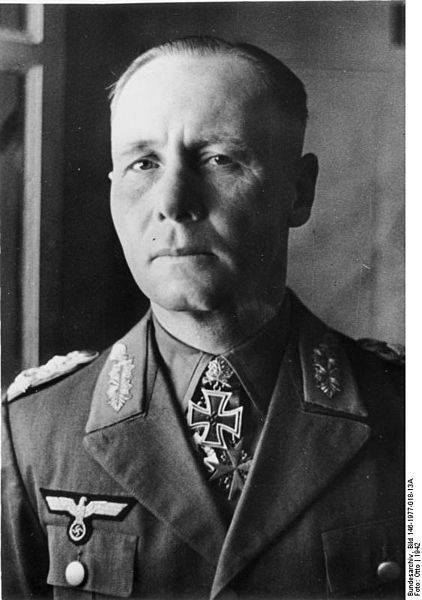
The Murder of Field Marshal Erwin Rommel

It was 68 years ago in Ulm Germany that a car pulled up to the residence of Field Marshal Erwin Rommel. In the car was the driver and two Generals dispatched by Hitler.  Rommel was recuperating following being severely wounded in an air attack in Normandy on July 17th 1944.

Rommel was never a Nazi but like many Germans he believed Hitler’s promises and propaganda. As a division commander in France and as the commander of the troops sent to bail out Mussolini’s failed African adventure Rommel gained fame, earned rapid promotion and was a poster-child for Goebels’ propaganda machine. His fame also earned the resentment of many fellow officers who since he was not an officer of the General Staff regarded him with jealous envy and distain.

That was until he discovered the reality of Hitler’s promises as the troops of the Afrika Corps found themselves subjected to constant privation from lack of supply, air support and reinforcements. As commander of the Afrika Corps and the Panzer Armee Arfika he and his troops achieved amazing success against an enemy that was always better supplied and equipped and which had air and sea superiority. Battling the British as well as the political machinations of Mussolini and Germany’s Italian Allies as well as opponents in the German government such as Hermann Goering, Rommel saw his troops crushed under the press of the British as well as the Americans who landed in French North Africa. Eventually, sick and worn out he was sent back to Germany.

His honest assessments of the chances of the Germans winning the war which he spoke candidly to Hitler and the High Command made him persona non grata in Berlin and Berchtesgaden. In the time before he was posted to France in late 1943 he became a part of the plot to end the war and overthrow Hitler. Rommel’s Chief of Staff at OB West General Hans Speidel was a key man in the conspiracy and Rommel had contacts with a number of key conspirators. He believed that the war was lost unless his forces could repel the coming Allied invasion on the beaches. His recommendations for the deployment of Panzer Divisions where they could immediately counterattack were not taken. He was given command but not control of many important units which Hitler alone could release.

When the invasion came Rommel was away and sped back to Normandy. He fought a desperate battle against an Allied force. His outnumbered forces under constant assault from the land, sea and air received paltry reinforcements compared to the Allies. German troops inflicted many local defeats and exacted a heavy price in allied blood in Normandy. Many American infantry regiments suffered 100% casualties but remained in action because of a continuous stream of replacements. Rommel urged a withdraw before the allies broke through his front and found that he was now considered a defeatist.

He was wounded just days before the attempt on Hitler’s life which Hitler survived and exacted a terrible revenge on anyone connected with the plot. Show trials and public hangings of officers who had served valiantly at the front were common.Thousands were killed and thousands more imprisoned.

Eventually Rommel was identified with the plotters. He was recommended by the “Court of Military Honor” to be expelled from the military and tried by the “People’s Court” of Judge Roland Freisler. Because of his fame and popularity in Germany Hitler was decided to offer Rommel the choice of being tried by the People’s Court that was busily executing anyone suspected of disloyalty or committing suicide and ensuring his family’s safety. German military heroes were hauled before this court and humiliated by Freisler before they were sent to their deaths.

Rommel suspected that he would be identified and killed and told that to his friends and family leading up to the day that the staff car carrying Generals Wilhelm Burgorf and Ernst Maisel from OKW with the ultimatum. They met with Rommel for a short time before giving him the opportunity to say goodbye to his family. Rommel told them of his choice and left his home for the last time. 15 minutes later the Generals called his wife to say that he had died of a heart attack. Rommel was given a state funeral and the German people were lied to about his cause of his death.

Rommel was 52 when he died, the same age that I am now. I find in the story of Rommel some commonality in my own life. Before Rommel went to Africa he believed that Germany would win the war, during his command there he discovered that what he believed was lies and that Hitler had little regard for him or his troops. Before I went to Iraq in 2007 I believed much of the political propaganda about that war. I have written on this site numerous articles critical of that war and our current war in Afghanistan. Like Rommel I feel that our troops have been and are being sacrificed in a war that we have no chance of winning. We are saddled with an Afghan ally who we put in office, President Karzai who makes Mussolini look like a winner and does nothing to help our war effort, condemning our troops at every opportunity even as his own police and soldiers kill ours. Our troops do valiant and often heroic work and in spite of the terrible situation that could get worse of more war breaks out in Iran or Syria.

Peace

Padre Steve+

4 Comments

Filed under History, iraq,afghanistan, Military, Tour in Iraq, world war two in europe

Missed Opportunities: The Allies in Europe from Mortain to Market Garden

Arnhem Bridge

In 1985 Judy and I visited her cousin and her family in the Netherlands when I was an Army Lieutenant in Germany. Since I was a history major in college and had done a lot of reading and study about Operation Market Garden, which most people associate with the movie A Bridge Too Far I decided that on our way back to Germany that we needed to stop by Arnhem and Oosterbeek to visit the battlefield and the British Airborne Museum. It was one of those places that even today evokes poignant memories. When we walked through the British cemetery across from the museum which is in the former British headquarters, the Hartenstein Hotel I saw a grave marker. It read Capt. J.S. (James Strathern) Dundas, 7th KOSB (7th King’s Own Scottish Borderers) of the British 1st Airborne Division. He was the 2IC, or Executive Officer of Company B of that Regiment. He assumed command of the company on the 19th after its commander was reported missing in action. He commanded the unit until his death on September 25th when commanding the rearguard of the battalion as it and the remnants of the 1st Airborne Division evacuated the bridgehead over the Rhine. It was a sobering reminder of the cost of war. 

Grave marker of Captain J.S. Dundas at the British Cemetery at Oosterbeek

September 17th was the 68th anniversary of the Allied attempt to liberate the Netherlands, secure a crossing across the Rhine and plunge into the heart of German industry and war making capacity the Ruhr basin. The plan is better known as Operation “Market-Garden” and was the first major use of Airborne Divisions in a strategic jump versus a tactical or operational mode.  What made this operation different was the distance that the Airborne would be dropped from the front lines and the number of obstacles that the ground troops would have to cross to get to them.  It was a high risk strategic plan to end the war early.  However this operation did not occur in a vacuum and was the product of operational and strategic decisions that the Allies made from the time of the Normandy breakout.  Each decision was made on the fly as the situation rapidly developed from a static slugfest in the hedgerows to the pursuit of a broken enemy.  As the Allies advanced across France decisions had to be made of how the advance would be made which became a major bone of contention between Eisenhower and his subordinates.  To understand how the Allies got to the point of launching Market-Garden one has to look back at the events leading up to it beginning with the Allied decisions made shortly after the breakout.  The actual campaign does not always correlate to popular myths nor does it allow for a uncritical analysis or generalization of the events which made up this part of the campaign in Western Europe.

It is a campaign that teaches us even today that mundane things such as logistics, weather and the failure to recognize moments of opportunity and times for caution matter in a military campaign. The campaign is a reminder that every military campaign has risks and that even crippled enemy can inflict costly defeats on superior forces and regain lost initiative. 

Introduction 

Patton Bradley and Montgomery, Time Magazine Photo

Lieutenant General Omar Bradley’s 12th Army Group breakout from Normandy opened a realm of possibilities for the Allies to defeat the German Army in detail and end the war.  The manner in which the Allies exploited their success and their failure to destroy the German Army in the west in the late summer of 1944 was a key factor in prolonging the war.  Both the Allies and the Germans faced challenges due to the change in the nature of the campaign. For nearly two months they had waged a nearly static war of attrition in the Norman hedgerows.  The breakout changed the dynamic of the campaign to one of maneuver.  In the post-breakout period the Allies had several opportunities to envelope large portions of the German Army in western France, Belgium and southern Holland.  The campaign became one of maneuver and a “commander’s battle” in which it was “the decisions of the generals that determined the manner in which events unfolded in August, their successes and failures which brought about the position that was achieved by September.”[1] Prior to the breakout success in the hedgerows was determined on “the ability of British, American and Canadian units to seize ground from their German opponents on the next ridge, the next hedge, beyond the next road.” [2]The change would expose the weaknesses in the quality of allied generalship and logistics management.  The Allies failure to recognize the ability of the Germans to recover from disaster conspired with key elements in the campaign to end the war by Christmas.[3]

Grenadiers and Tanks of 12th SS Panzer Division (Hitler Jugend) in Normandy

A key decision reached early in the campaign was for Bradley’s XII Army Group to capture Brest and other Brittany ports.  This decision meant that when 3rdArmy exploited the break out the preponderance of its forces went west, the opposite way that the battle was developing.  This deprived the Americans of forces and logistical assets that could have supported the envelopment of the major part of the German Army still engaged in Normandy. Russell Weigley lays the blame for this decision on Bradley.  The dash into Brittany did little to help the Allied logistical problems and diverted much needed troops away from the focal point of the action in Normandy.[4] Hastings criticizes Bradley’s lack of imagination in the initial stages of the breakout in adhering to the original OVERLORD exploitation plan[5] rather than adapting to the situation on the ground. Patton’s biographer Carlo D’Este seconds this opinion and it makes sense from an operational standpoint.[6] Why send significant forces to an area far away from the critical part of the battle for little practical gain?  In the end German forces held out, in some cases to the end of the war, denying the Americans the use of the ports either by just holding out or by demolishing the port facilities.

Mortain: German Counter Attack and the Short Envelopment

The American exploitation of the breakout, notably by elements of Patton’s 3rdArmy pushing east combined with the continued pressure of the British Army Group toward Falaise. The breakout forced forced the Germans into a strategic decision to attempt to restore the front in Normandy or withdraw to the Seine or further east as there was no “defensive position short of the permanent fortifications of the West Wall on Germany’s frontier offered so many defensive strengths as the Normandy line the Americans had just breached and turned.”[7]

With limited options Hitler determined that German forces again needed to ensnare the allies in the hedgerows.[8] There was disagreement between Hitler and Field Marshal von Kluge regarding the offensive while von Kluge opposed it.  Hitler believed that the American breakout gave the Germans a chance to cut off the American forces in Brittany and possibly more believing that “once the coast had been reached at Avranches a beginning should be made with rolling up the entire Allied position in Normandy!”[9]

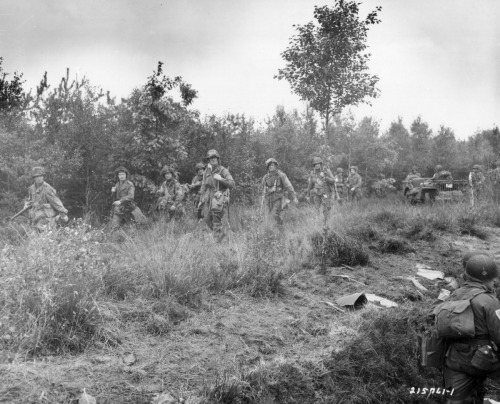
The German attack named Operation Lüttich was led by XLVII Panzer Corps assisted by elements of 1st SS Panzer Division.  Despite warnings from ULTRA the panzers achieved tactical surprise on the front of the 30th US Division at Mortain on the night of 6-7 August when the Germans attacked without the customary preparatory artillery bombardment.[10] The Germans made initial progress against the 30th Division which had recently taken over positions at Mortain.  However the 2nd Battalion 120th Infantry “Old Hickory” Regiment held key ground which enabled them to call artillery fire and air strikes on German forces attempting to advance on Avranches.[11] The Americans quickly reinforced 30th Division with elements of 2nd Armored Division, 35th Infantry Division and the veteran 4th Infantry Division to hold the line against the weakened German Panzer divisions.  Bradley and other American commanders viewed Lüttich as “an opportunity, not a threat.”[12] Bradley was “not merely confident of withstanding them, but expected to destroy them.”[13] Bradley attempted to lure more Germans into the potential trap by radio transmissions hoping that the Germans to persist in their attacks around Mortain.[14]

American Armor Advancing in Normandy

The German plan included the use of a significant number of aircraft to support the attack.  However this did not happen and German troops were furious at the failure of the Luftwaffe to shield them from Allied air attacks which devastated the Panzers.  The 300 fighters promised by the commander of Luftwaffe forces were engaged by British and American fighters and savaged so badly that no Luftwaffe units made an appearance over Mortain.[15] Despite some local success the German ground forces were turned back by the Americans who did not even halt their eastward movement further imperiling the German forces in Normandy.

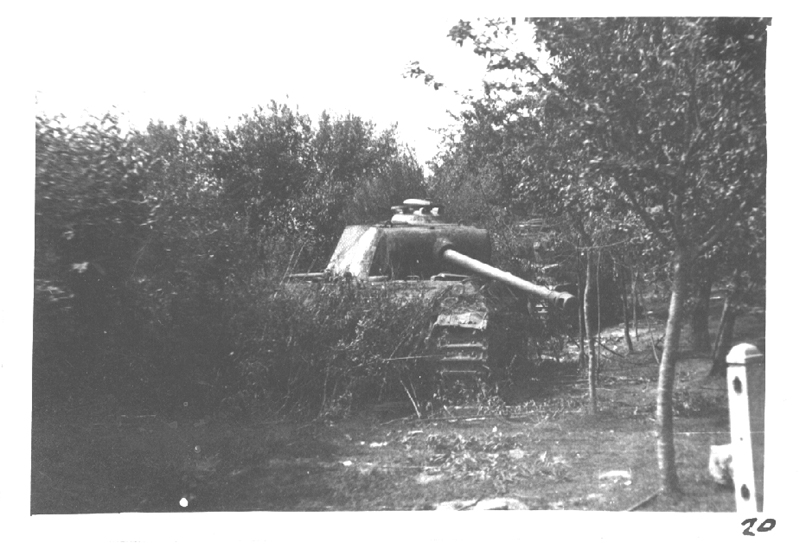
Knocked out Panzer V Panther Tank at Mortain

With the Germans ensnared at Mortain, the 3rd Army driving east and the Canadians advancing on towards Falaise, Bradley suggested a short envelopment in which over 100,000 German troops would be trapped between the Patton’s troops and the Canadians who had opened their TOTALIZE offensive from Caen to Falaise on August 8th.  This modified plans for a deep envelopment by XV Corps of 3rd Army to entrap the Germans against the Seine crossings with an operation that might promise “still surer results.”[16] Speaking to Secretary of the Treasury Henry Mongenthau Bradley said that “he told the Cabinet officer he had “an opportunity that comes to a commander not more than once in a century. We’re about to destroy and entire hostile army.”[17] However the short envelopment was predicated on the Germans continuing their advance, had they as Hastings notes “behaved rationally, recognized the threat of envelopment to their entire front and begun a full-scale retreat east, then Bradley could indeed been accused of losing his armies a great prize.”[18]

The decision to turn the better part of 3rd Army west into Brittany deprived Bradley of forces that could have better accomplished the mission of enveloping the German 7th Army.  General Wood of 4th Armored Division to his dying day “remained embittered over the lost opportunity”[19] lost when his division was turned back into Brittany rather than being allowed to move east toward the Seine.   Weigley points out an even deeper flaw regarding the Brittany decision that was that OVERLORD planners “had not thought anything resembling the Avranches breakout and pursuit without pause to the Seine likely…” Weigley critically stated that it is among the worst forms of generalship that takes counsel of its fears. Yet that was exactly the condition of OVERLORD logistical planning.”[20]

The Falaise Pocket

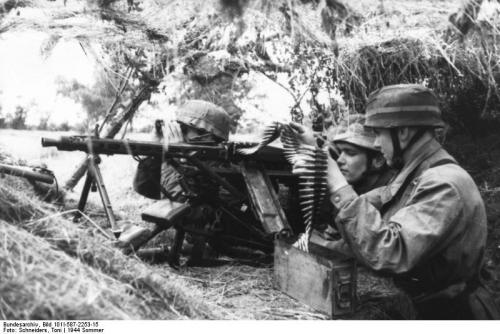
Fallschirmjaeger in France

The Allies did have a chance to destroy the German 7th Army.  LXVII Panzer Corps and II SS Panzer Corps as well as the remnants of II Parachute Corps and other formations battered in Normandy were attempting to move east from Mortain following the failure to break through.  The remnants of I SS Panzer Corps led by 12 SS Panzer Division Hitlerjügend and various battle groups of other decimated divisions and Army units such as 21st Panzer Division offered determined resistance to the Canadians toward Falaise.  In the south only scattered Kampfgruppen of divisions shattered in Normandy opposed Patton’s forces at Avranches.  These German units, outnumbered and without air support were aided by a fortuitous decision of the commander of the 2nd French Armored Division to move a combat command along a road needed by the American 5thArmored Division.  The delay allowed the Germans to send a battalion into the town which could have “fallen easily a few hours before.”[21]

Grenadiers of the 12th SS at Falaise

At this point the Allies were bedeviled by several failures which prevented the short double envelopment from occurring and allowed the remnants of 7th Army to escape to fight again. The Germans suffered grievous losses in men, material, and especially armored fighting vehicles, artillery and motor transport but more often than not their units retained their cohesion and ability to operate.

Carnage in the Falaise Pocket

The first failure belonged to the Canadians who failed to push the Germans out of Falaise despite overwhelming material and air superiority.  The Canadian attack Operation TOTALIZE was planned by the best of the Canadian generals, Simonds.  The operation began on a promising note but bogged down halfway to Falaise due to a quick counterattack by 12th SS Panzer kampfgruppen. The Canadians were not helped when a misguided bombing attack by “friendly” air units hit them rather than the Germans.  Likewise the inexperience of the Canadian 4th and Polish 1st Armored Divisions showed when they paused to eliminate strong points rather than bypassing them and advancing to disrupt the Germans.  As such they gave the Germans the opportunity to reform their lines.[22] The second failure was that of Montgomery who had refused to adjust army group boundaries with Americans which put more pressure on the Canadians to “renew their drive promptly and vigorously.”[23] Rather than pushing on General Crerar of Canadian 1st Army spent five days “doing what really battlewise generalship could do by regrouping and making diversionary attacks.”[24] It took Crerar over 48 hours to launch a determined attack to close the gap despite the weakness of German forces that opposed him despite the fact that even Montgomery personally called him urging him to “Close the gap between First Canadian Army and 3rd U.S. Army.”[25] General Kurt Meyer of 12th SS faulted the Canadian leadership with a failure to use imaginative planning, and noted that “none of the Canadian attacks showed the genius of a great commander.”[26] American units which Patton had cautiously advanced north of Argentan towards Falaise were recalled after Bradley was unable to convince Montgomery to alter the army-group boundary in light of the new circumstances.[27] Patton recounts that he believed that his units could have “easily entered Falaise and closed the gap” and that the “halt was a great mistake.”[28] Weigley blames Bradley as much for the halt order as much he does Montgomery for “discouraging whatever might have been done to rectify the blunder- even discouraging on August 13th a call from the Supreme Commander to Montgomery about the inter-allied boundary.”[29] Thus through a series of Allied mistakes particularly by senior commanders the first opportunity to envelop the Germans passed into history as a great yet incomplete victory.

Opportunities in South France

The invasion of South France Operations ANVIL and DRAGOON[30] had been debated by the Allies as early as April 1943.  The British resisted ANVIL from the beginning with Winston Churchill not yielding “his struggle until five days before the eventual D-Day of August 15th.”[31] American planners saw the need for the operation and had never given up on it despite its postponement due to a shortage of amphibious lift at the time of OVERLORD.  Following the invasion the perilous logistic situation created by the lack of operational major ports in Normandy and Brittany caused American planners to “believe that ANVIL was virtually imperative.”[32] Landings in the south offered significant advantages to the logistical needs of the Allies.  The major seaports and naval bases at Marseilles and Toulon were both closer to Germany than Cherbourg.  Both offered major modern port facilities and the south included rail nets that had not suffered significant damage from Allied air attacks. Likewise the presence of a major navigable river, the Rhone, made it possible to move supplies into the heart of France by water.  From a strategic point of view the move into southern France would “help Eisenhower form a front along the whole German border from the North Sea to Switzerland, to stretch the German army as perilously thin as possible for its defense of the Fatherland.”[33] ANVIL also offered the opportunity to bring more trained American divisions into the fight which could not otherwise come ashore in Normandy due to the port and supply problems.[34]

The Allies initially allotted three American divisions of 7th Army and VI Corps as well as units of the French Army based in the Mediterranean to the invasion.  Commanding VI Corps and its three veteran Divisions, the Regular Army 3rdInfantry Division, the “Rock of the Marne”, the 36th “Texas” Division and 45th“Thunderbird” Division of the National Guard was Lieutenant General Lucian Truscott.  Truscott was of the best American Corps commanders. Early in the war he had created the Rangers and had distinguished himself in Italy commanding 3rd Infantry Division.  He followed this by taking over to rescue the unhappy Anzio campaign from utter fiasco.[35] A hard driving officer and prewar friend of Patton Truscott was the ideal commander for the operation.[36]

Truscott’s forces were opposed by the weak and widely scattered German 19thArmy of General Blaskowitz’s Army Group G.  The landings were highly successful and the Americans made rapid progress inflicting heavy casualties and capturing large numbers of Germans with relatively low American casualties.  However in Blaskowitz the Americans faced a skilled commander who managed to extricate the bulk of his forces and form a continuous front with the remnants of Army Group B by mid September.  Hitler had recognized the necessity of this link up but held Blaskowitz in low regard due to his resistance to Nazi policy while Military Governor of Poland in 1939, said to Field Marshall von Rundstedt of Blaskowitz: “If he contrives to do that (i.e. join up 19th Army rapidly with the main body) then I will make him a solemn apology for everything.”[37]

Truscott made the German army his objective. Truscott pushed his units hard but was hampered by his meager forces and his tendency to outrun his supplies.  German delaying actions hampered the American advance and prevented the Americans from utterly destroying the 19th Army.   Despite this the campaign in the south prevented the Allied logistical situation in France from becoming “insurmountable” in the fall of 1944 and “contributed directly and mightily to bringing the bulk of the American Army to grips with the German army in the West, to defeat and destroy it.”[38] Had Truscott had more forces and adequate supplies he may have achieved even more than he did. One can only imagine the “what if” scenarios that could have developed in the West with the application of more force to this option rather than feed the limited number of American divisions into the cauldron of the hedgerow country.

The Seine and Beyond

With the closing of the Falaise pocket too late to catch most of the German forces the next opportunity for the now postponed “long envelopment” was now staring the Allies in the face.  The Seine beckoned.  Could the Allies prevent the fleeing remnants of the 7th Army and Panzer Group West, soon to be renamed the 5thPanzer Army from escaping across the Seine?   Bradley’s belated decision to restart the drive to the Seine on 14 August was beset with the problem of the logistical sustainment.  The logistics problem was not limited to port facilities.  The Allies had moved well past the eastern edge of the Normandy lodgment area over two weeks before planners anticipated. Fuel to propel the Allied armies forward became a critical consideration. Despite this the Allied high command saw the opportunity to complete the destruction of the German forces fleeing Normandy and Montgomery “anticipated for weeks the possibility of the long envelopment at the Seine.”[39] Adjustments were made on the fly. The plan to pause at the Seine dictated by OVERLORD was discarded in favor of trying to cross it on the run.  XV Corps of 3rd Army had reached Mantes crossing into the British 21st Army Group zone.  Montgomery refused an American offer of trucks to assist the British and Canadians to Mantes to complete the envelopment from the west. However he gave permission for XV Corps to continue its advance into the British zone in the hopes of completing the encirclement of the estimated 75,000 German troops west of the Seine.[40]

American Soldiers Cross the Seine

Yet again the Allied hopes for the encirclement of German forces west of the Seine were dashed.  XIX Corps came up to assist XV Corps in its advance into the German rear on the 24th of August at Elbeuf.  However a scratch Kampfgrüppemade up of elements of eight panzer divisions made a stand that delayed the American forces five days.[41] The British and Canadian forces did not push hard.  The determined resistance of the panzer battle group and the failure of the British and Canadians to push harder enabled Army Group B to evacuate many of its troops, 25,000 vehicles and most of its higher headquarters across the Seine before the Canadians and XIX Corps linked up on 26 August.[42] [43] While the envelopment attempt ran its course the Americans pushed across the Seine. The Americans allowed the French 2nd Armored division to liberate Paris on August 25th and rapidly began to move east in pursuit of the German forces.

Despite horrendous losses in men and material including all but about 100 of the 2300 tanks and assault guns committed to Normandy[44] the German command rapidly organized the survivors into Kampfgrüppen.  These battle groups though hastily organized were well led and usually comprised of hardened veterans skilled in the active defense.  Field Marshall Model “Hitler’s Fireman” took command of Army Group B after Von Kluge committed suicide when returning to Germany after being implicated in the attempt on Hitler’s life.  Hitler gave the western front priority on tank replacements. Likewise reinforcements of newly formed Panzer Brigades flowed into France even as the Americans advanced east fighting not only the Germans but the gasoline shortage.[45] Patton’s army reached the Moselle but by September 2nd its tanks had run dry.  “Third Army received just 25,390 gallons, when its divisions needed at least 450,000 gallons to resume their advance.”[46] Patton continued by scavenging fuel wherever he could get it whether captured German stocks or by various creative means. Patton had his logistics officers divert fuel or send raiding parties into 1st Army’s depots. His agents bartered for fuel at port facilities and depots by offering captured souvenirs to those running those facilities in exchange for gas.[47]

American M-8 Armored Car at the Arch d’Triumph during the Liberation of Paris

The Allied shortage of gasoline, a product of both the lack of ports, damage to the French rail system and the unexpected rate of advance[48] ultimately forced Eisenhower to make the decision to halt Patton’s advance in favor of a push by Montgomery in the north. Now complicating Eisenhower’s situation the Germans Likewise the ability of the Germans to join Army Group B with Army Group G’s 1st and 19th Armies from Army Group G further assisted the German defense.  The German army’s self preservation in late August and early September became known to them as the “Miracle of the West.”[49] A successful envelopment of German forces took place at Mons just south of the Belgium border where 1st Army captured over 25,000 prisoners from units that had escaped from Normandy.[50] Throughout the campaign in France the Allies were beset by logistical problems and sometimes by bad generalship as they attempted to change the campaign plan on the fly.[51]

Antwerp and the Scheldt: Missed Opportunity

While Bradley and Patton’s American units sped across France “advancing faster and further than any Army in history,” Montgomery’s 21st Army Group crossed the Seine and began a drive that rivaled the Americans in speed.  XXX Corps under the recently appointed General Horrocks attacked out of the Seine bridgehead on 29 August.  After overcoming initial stiff resistance from the German Kampfgrüppen defending the area XXX Corps advanced with great speed capturing Brussels and Antwerp by 4 September.  Logistics also tied Montgomery’s hands just as it had Patton in the south.[52] He was forced to immobilize 8th Corps to supply XXX Corps which advanced north as 1st Canadian Army attempted to capture the channel ports.[53]

Canadian Soldiers during the Battle of the Scheldt

The quickness of the advance and erroneous decision making kept the XXX Corps attack from complete success.  This caused serious complications to further operations and which gave the Germans the break that they needed to stabilize the front.  General “Pip” Roberts commander of 11th Armored division which had just liberated Antwerp assumed that the British drive would turn east toward the Ruhr industrial area of Germany. In doing so he failed to capture the crossings over the Albert Canal.[54] Additionally he failed to advance the few miles needed to cut off the German 15th Army on the Scheldt thus missing the opportunity to trap an entire German Army against the sea.  Hastings lays the blame for this not entirely on the Division and Corps Commanders, Roberts and XXX Corps commander Horrocks, but on those responsible for the overall strategy, Eisenhower, Montgomery and Dempsey who should have realized this and especially that Montgomery “might have been expected to see for himself the pivotal importance of the Antwerp approaches.”[55] While the British rested in Antwerp the Germans blew the bridges over the Albert Canal. General Von Zangen of 15th Army took the opportunity to extricate his Army using any vessel available to cross the Scheldt. He occupied the strategic island of Walchern on the Antwerp approaches and placed his troops in position to assist in the defense of Holland and northern Germany.  Due to British inaction and his own creativity Von Zangen evacuated 65,000 troops, 225 guns, 750 vehicles and over 1000 horses across the waterway in 16 days to fight again.[56]

North of the Albert General Kurt Chill in the typical fashion of so many German commanders in a crisis situation took charge and halted the panicked retreat of German forces into Holland. Chill organized personnel from all branches of the German military into something resembling an Army.[57] Likewise Generals Bittrich of II SS Panzer Corps and Harmel of 10th SS Panzer Division salvaged “vehicles abandoned by other groups and weapons from deserted army depots” including 12 brand new howitzers on abandoned train.  The improvisation of the German commanders in these few days would be of decisive importance in the coming days.[58]

While the British paused to regroup in Belgium the Germans took the opportunity to form a new Army, the 1st Parachute Army under the Luftwaffe paratroop expert, General Kurt Student. 1st Parachute Army was hardly an army at all, barely the size of a fully manned allied division.  Made up of battle groups formed around remnants of the elite 6th Parachute regiment, assorted parachute training battalions, Flak units, a hodge-podge of Army Kampfgrüppen, General Chill’s units and divisions evacuated from the Scheldt, Student laid out a defensive line along the Albert Canal.[59] Student expected the British to attack when he was so terribly weak. He could not believe that he was not attacked when his line was most vulnerable to a determined assault that much of the German command believed would cause the front in Belgium to collapse.  The British Guards Armored division slowly advanced from the Albert to the Meuse-Escaut canal but the German defense had assured that any further advance to the north would be on a narrow front with a vulnerable left flank.[60] Von Rundstedt’s new Chief of staff at OB West Siegfried Westphal noted that “the situation was desperate. A major defeat anywhere along the front-which was so full of gaps that it did not deserve that name would lead to catastrophe if the enemy were to fully exploit the opportunities.”[61] Hastings and Weigley both note that the British failure to close the gap were of decisive importance to the coming campaign in Holland.[62]

Arnhem: The Failed Vertical Envelopment

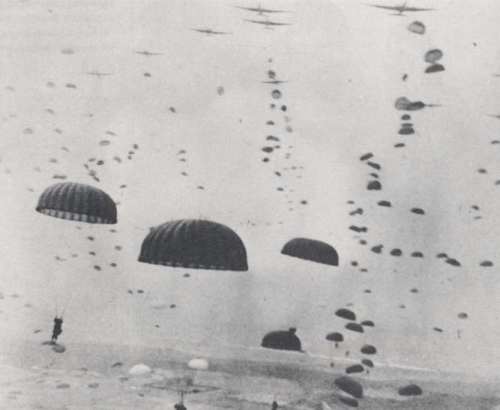
Operation Market Garden, the Largest Airborne Operation in History

The Allies still believed there was the chance to break into Germany in 1944.  Lacking the logistical base to sustain a wide front advance Eisenhower opted to make Montgomery the primary effort. Montgomery planned to utilize the 1stAllied Airborne Army in a bold and “in the context of Anglo-American generalship in France, refreshingly daring”[63] operation.[64] The concept of “vertical envelopment” had been advocated by General Marshall and General H.H. Arnold and throughout the campaign 18 airborne exploitation operations had been planned “each of them cancelled by the rapidity of the advance of the ground forces.”[65] Eisenhower made Montgomery the primary effort on September 10th and Montgomery “immediately detailed planning …for an idea he had already conceived to use the airborne reserve.”[66]

American Paratroops in Holland

The plan was Operation MARKET-GARDEN and to be successful Montgomery’s forces would have to cross 8 water obstacles including 3 major rivers.[67] He had to use one two lane highway bordered by soft Dutch podder, thick woods and drainage ditches that restricted armor and mechanized forces to the road itself.[68] The was for three Allied airborne divisions, the American 82nd and 101st, the British 1st Airborne and the Polish 1st Parachute Brigade to secure the bridges over the waterways between the front and Arnhem 65 miles north of the front.  The goal was to establish a bridgehead over the Rhine for the British Second Army to advance deep into the German heartland.  XXX Corps was to advance up this “corridor of death” and link up with each of the airborne divisions with the goal of breaking the German defense in the west.

British Paras in the ruins of Arnhem

Nearly all the writers agree that had the offensive been launched 7-10 days earlier when the Germans were in complete disarray it might have succeeded in its objective of crossing the Rhine and getting into Germany.  Hastings and Weigley both believe that the axis of the offensive was wrong and that the attack should have been made further south using 21st Army Group and 1st Army to drive to the Rhine.[69] All believe that an attack by Patton’s 3rd Army would not have achieved significant strategic gain as he now faced the bulk of the Wehrmacht’s strength and that there was little of strategic value in the part of Germany he could attack.

German Sturmgeschutz III in Arnhem 

The attack was made on 17 September.   The shortcomings of the plan became rapidly apparent.[70] German resistance in South Holland was much stronger than expected, the Son bridge was demolished by the Germans which created a major delay as bridging equipment had to be found and brought forward.  Due to the presence of battle groups from the 10th SS Panzer Division and other units dug in the city around the bridge the 82nd could not secure the Nijmegen Bridge until XXX Corps arrived.  The 1st Airborne was landed too far away from Arnhem Bridge to secure it in the face of the 9th and 10th SS Panzer Divisions of II SS Panzer Corps.  Due to a shortage of aircraft and refusal of the air transport command to make two drops on the first day the drops took 3 days to get all the airborne units into the fight.  The single road ensured that the spearhead of the XXX Corps advance was limited to a squadron of tanks and supporting infantry on a front two tanks wide.[71] The flanks were weakly held and German units salvaged from the Scheldt attacked the west and units from the Germany proper attacked the 82nd’s lodgment area.  Communications problems in the 1st Airborne Division prevented it from communicating with its own units as well as higher headquarters leaving everyone wondering what was happening.[72] The advance of XXX Corps was often both before Eindhoven and after Nijmegen lacking in urgency.[73] When all was said and done 1st Airborne Division was all but destroyed and had to be evacuated from its bridgehead and the operation ended in failure.[74] Numerous events contributed to the failure of the operation, many of which occurred before it was planned.  The German ability to make an army out of nothing coupled with planning which was based more on assumptions about what the Germans were incapable of doing rather than what was happening on the ground was a major fact. Likewise the British command discounted intelligence reports of Panzers in or near the drop the drop zones.

SS Panzer Grenadiers in Arnhem

The plan itself left much to chance and was built around the assumption that the Germans lacked the ability to stop them, neglecting the restrictions in which the Allied forces would have to execute the plan. If things could go wrong they did, especially in the 1st Airborne area of operations. Critical equipment failed to arrive, communications broke down, 2 of 3 battalions detailed to seize the Arnhem Bridge were stopped by a mixed bag of German forces including Panzers, an SS training battalion and various Army units and only one battalion reached the bridge. The failure to plan for and establish a landing zone on the south side of the Rhine kept them from being able to take the bridge, which became a key factor in the German ability to move troops from Arnhem to Njimegen. General Urquart was trapped in a house by German units which posted themselves around it and the commander of 1st Airborne Brigade was wounded.  The Germans succeeded in over running the drop zones and without communications British Airborne could not let the air transport know that supplies were not getting to them.

Summary

This phase of the French campaign exhibited the best and the worst of Allied generalship. The reasons; generally inexperienced American leadership at this level of warfare and poor leadership by the more experienced British command.  The key failures were logistics management and the strategic focus following the breakout which changed the nature of the planned campaign. The Allies were running at the limit of their capacity, shortages of fuel and other supplies and heavy casualties incurred in Normandy weakened the Allied advance demonstrating von Clausewitz’s understanding of what happens when a offensive reaches its culminating point. The drive into Brittany, the failure at the Falaise gap, the failure to close the door at the Seine, the failure to trap the 15th Army at the Scheldt and its failure to cross the Albert Canal, as well as the Market-Garden fiasco can all be directly attributed to Allied leadership at high levels.  Likewise the extraordinary ability of German commanders to restore seemingly hopeless situations all demonstrated how Clausewitz’s understood “genius” in war.

The campaign from the Normandy to Arnhem was one of spotty performance by the Allies especially in terms of generalship and logistics planning and the ability to improvise.  The Germans suffered from Hitler’s interference, especially at Mortain where he insisted on counterattack versus withdraw. Likewise they suffered from a critical lack of air support.  However German commanders were masters of improvisation taking advantage of Allied errors and confusion to recover the situation time and time again.

[1] Hastings, Max. Overlord: D-Day and the Battle for Normandy Vintage Books, New York, 1984 p.280

[2] Ibid.

[3] Hastings, Max. Armageddon: The Battle for Germany 1944-1945 Alfred a Knopf, New York, 2004 p.37.  Hastings comments that “British planners threw away it had learned since 1939 about the speed of reaction of Hitler’s army, its brilliance at improvisation, its dogged skill in defense, its readiness always to punish allied mistakes.”

[4] Weigley, Russell F. Eisenhower’s Lieutenants: The Campaign of France and Germany, 1944-1945, Indiana University Press, Bloomington IN, 1981pp.184-186

[5] Ibid. Hastings. Overlord pp.282-283

[6] D’Este,  Carlo. Patton: A Genius for War. Harper Collins Publishers New York, 1995 pp.632-633

[7] Ibid.  p.195

[8] Ibid. Also

[9] Warlimont, Walter. Inside Hitler’s Headquarters 1939-45 Presidio Press, Novato CA 1964 pp.449-450.

[10] Ibid pp.195-196. Weigley notes that Montgomery and most other Allied commanders  had been optimistic in not anticipating the German counter attack despite the ULTRA warnings, while Bradley and Patton were cautious in making troop deployments.

[11] Michael Reynolds in Steel Inferno: The 1st SS Panzer Corps in Normandynotes that the Americans inflicted “astonishing casualties on the northern thrusts of 2nd SS Panzer and remained undefeated when the Germans withdrew 4 days later.”  Reynolds, Michael Steel Inferno: The 1st SS Panzer Corps in NormandyDell Publishing, New York, 1997 p.264

[12] Ibid. Hastings Overlord p.283

[13] Ibid.

[14] Ibid. Weigley p.199.

[15] Carrell, Paul. Invasion! They’re Coming!” Trans. E. Osers, Originally published as Sie Kommen! Gerhard Stalling Verlag 1960, Bantam Books New York, 1964, 5th Printing June 1984. p. 249

[16] Ibid. Weigley p. 199

[17] Ibid. p.200

[18] Ibid. Hastings. Overlord. pp.282-283

[19] Ibid. D’Este. p.631

[20] Ibid. Weigley. p.286  He also points out that the Brittany diversion could have been “worse had it not been for Montgomery’s influence”  p.288

[21] Ibid. p. 202

[22] Ibid. p.204

[23] Ibid.

[24] Ibid.

[25] Reynolds, Michael Steel Inferno: 1st SS Panzer Corps in Normandy Dell Publishing New York, 1997. p.320.

[26] Meyer, Kurt Grenadiers trans. By  Michael Mende and Robert J.  Edwards, J.J. Fedorowicz Publishing, Inc. Winnipeg Manitoba, Canada 2001 p.290.

[27] Ibid. Hastings Overlord pp.288-289.

[28] Patton, George S. War As I Knew It Bantam Books NY  published 1980, originally published by Houghton Mifflin Company 1947. pp.101-102

[29] Ibid. Weigley p.209  Weigley quotes Major Hansen, Bradley’s aide in stating that the Falaise halt orde was “the only decision he has ever questioned.”

[30] DRAGOON was the airborne component of he south France operation.

[31] Ibid. p.218

[32] Ibid.

[33] Ibid.

[34] Ibid.

[35] Ibid. pp.222-224

[36] Patton and Truscott had a clash during the Sicilian campaign over Patton’s push for an amphibious operation accusing him of being “afraid to fight” and threatening to relieve him but then throwing his arm around him and offering him a drink. See D’Este pp.526-528  This incident was made famous in the movie “Patton.”

[37] Giziowski, Richard. The Enigma of General Blaskowitz. Hippocrene Books, New York 1997 p.338

[38] Ibid. Weigley

[39] Ibid. p.241

[40] Ibid.

[41] Ibid. p.243

[42] Ibid. p.246

[43] Hans Von Luck, the commanding a Kampfgrüppe of 21st Panzer Division describes how he and his troops camouflaged his “Schwimmwagen” with bushes to cross the Seine successfully disguising the vehicle to avoid persistant Allied air attacks. VonLuck, Hans Panzer Commander Dell Publishing New York 1989. p.209

[44] Ibid. Weigley. p.255

[45] Weigley, Hastings and D’Este all place a fair amount of blame for the logistical crisis on the commander of the COMMZ, General John C.H. Lee.

[46] Ibid. Hastings, Armageddon p.24

[47] Ibid D’Este pp.647-652

[48] Weigley notes that OVERLORD plans had not envision support American divisions for offensive operations across the Seine until D+120, yet by “D+90, sixteen United States divisions were already 200 kilometers beyond the Seine.” p.268.  Hastings and Weigley also note the waste in the American supply system noting that of “twenty-two million fuel jerrycans shipped to France since D-Day, half had vanished since September.” Hastings. Armageddon p.23.

[49] Ibid. Weigley

[50] Ibid. p.275-276

[51] Both Weigley and Hastings note the logistical problems of the British which not only included the problems that beset the Americans but problems of their own making including poor trucks of numerous makes rather than the standardized American trucks.  Hastings notes that for a time around Antwerp that “Montgomery’s armies were obliged for a time to commandeer thousands of horse-drawn wagons abandoned by the Wehrmacht, to make good its shortage of vehicles for the haulage of supplies.” Hastings. Armageddon p.23

[52] Weigley notes that Montgomery had a fiasco of British logistics in which some “1,400 British three-ton lorries, plus all the replacement engines for this model, had been discovered to have faulty pistons rendering them useless.” p.281.

[53] Ibid. Hastings. Armageddon. p.20

[54] Ryan in A BridgeToo Far quotes the XXX Corps Commander Horrocks who said in his memoirs “My excuse is that my eyes were entirely fixed on the Rhine and everything else seemed of subsidiary importance.” Ryan, Corrnelius. A Bridge Too Far Fawcett Popular Library by Arrangement with Simon and Schuster Publishing, New York, 1974  p.60

[55] Ibid.

[56] Ibid. Hastings p.20.  Weigley on p.293 gives a higher figure of 86,000 troops, 600 artillery pieces, 6,000 vehicles and 6,000 horses.

[57] Ibid. Ryan. p.49

[58] Reynolds, Michael Sons of the Reich Casemate, Havertown PA 2002 p.98

[59] A significant unit that was to plan a key role in the German defense against XXX Corps was Kampfgrüppe Walter formed around the 6th Parachute Regiment and other assorted units.  It is noted in almost every volume devoted to the campaign.

[60] Ibid. Weigley. p.294

[61] Ibid. Ryan. p.52

[62] See Hastings p.22 “The fumbled handling of Antwerp was among the principal causes of Allied failure to break into Germany in 1944.  It was not merely that the port was unavailable for the shipment of supplies; through two months that followed, a large part of Montgomery’s forces had to be employed upon a task that could have been accomplished in days if the necessary energy and “grip” been exercised at the beginning of September, when the enemy was incapable of resistance.”  and Weigley pp.293-294

[63] Ibid. Weigley p.288

[64] Hastings notes that since the Airborne Army had been created that “the apostles of the new art of envelopment from the sky were determined that it should be used.” Armageddon p.35

[65] Ibid. p.289

[66] Ibid.

[67] Ibid. Weigley. p.291

[68] Ibid. p.295

[69] Also see Ryan. p.81 Ryan notes that in the planning General Dempsey because of his doubts about the ability of 2nd Army suggested an attack “seizing the Rhine crossing at Wesel….” as “it would be better, he believed to advance in conjunction with the U.S. First Army northward toward Wesel.”

[70] All the commentators make reference too the misgivings voiced at the final planning conference. Hastings comments on Gavin who believed that “If I get through this one, I will be very lucky.”

[71] Ibid. Weigley. p.295

[72] Hastings comments “It was a scandal-for which in the Russian or German armies some signals officers would have been shot-that the communications of 1stAirborne Division remained almost non-existent from 17 September onwards.Armaggedon p.58

[73] Ibid. p.293

[74] Casualties in 1st Airborne were high, of “the original 10,005 man force only 2,163 troopers, along with 160 Poles and 75 Dorsets, came back across the Rhine. After nine days the division had approximately 1,200 dead and 6,642 missing, wounded or captured.” Ryan p.509.

Bibliography

Carrell, Paul. Invasion! They’re Coming!” Trans. E. Osers, Originally published as Sie Kommen! Gerhard Stalling Verlag 1960, Bantam Books New York, 1964, 5th Printing June 1984

D’Este,  Carlo. Patton: A Genius for War. Harper Collins Publishers New York, 1995

Giziowski, Richard. The Enigma of General Blaskowitz. Hippocrene Books, New York 1997

Hastings, Max. Armageddon: The Battle for Germany 1944-1945 Alfred a Knopf, New York, 2004

Hastings, Max. Overlord: D-Day and the Battle for Normandy Vintage Books, New York, 1984

Meyer, Kurt Grenadiers trans. By  Michael Mende and Robert J.  Edwards, J.J. Fedorowicz Publishing, Inc. Winnipeg Manitoba, Canada 2001

Patton, George S. War As I Knew It Bantam Books NY  published 1980, originally published by Houghton Mifflin Company 1947.

Reynolds, Michael Sons of the Reich Casemate, Havertown PA 2002

Reynolds, Michael Steel Inferno: 1st SS Panzer Corps in Normandy Dell Publishing New York, 1997

Ryan, Corrnelius. A Bridge Too Far Fawcett Popular Library by Arrangement with Simon and Schuster Publishing, New York, 1974

Von Luck, Hans Panzer Commander Dell Publishing New York 1989

Warlimont, Walter. Inside Hitler’s Headquarters 1939-45 Presidio Press, Novato CA 1964

Weigley, Russell F. Eisenhower’s Lieutenants: The Campaign of France and Germany, 1944-1945, Indiana University Press, Bloomington IN, 1981

2 Comments

Filed under History, Military, world war two in europe

September 1st 1939: The Day the World Changed Forever

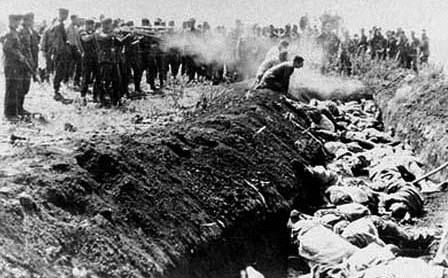
In the early dawn hours of September 1st 1939 the the Panzer spearheads of the German Wehrmacht rolled across the Polish Frontier. In the Free City of Danzig the elderly battleship Schweswig-Holstein fired her 11” guns into Polish positions on the Westerplatte at point blank range. In the air the Luftwaffe swept the small Polish Air Force from the skies. Ju-87 Stuka dive bombers screeched down in merciless attacks on Polish units, cities and even refugees. Behind the front lines came the Einsatzgruppen their mission to exterminate the elite of the Polish nation and the Jews.

It was a different kind of war. Hitler told his military chiefs  at Obersalzburg the week before the before the campaign:

“Our strength consists in our speed and in our brutality. Genghis Khan led millions of women and children to slaughter—with premeditation and a happy heart. History sees in him solely the founder of a state. It’s a matter of indifference to me what a weak western European civilization will say about me. I have issued the command—and I’ll have anybody who utters but one word of criticism executed by a firing squad—that our war aim does not consist in reaching certain lines, but in the physical destruction of the enemy. Accordingly, I have placed my death-head formation in readiness—for the present only in the East—with orders to them to send to death mercilessly and without compassion, men, women, and children of Polish derivation and language. Only thus shall we gain the living space (Lebensraum) which we need. Who, after all, speaks to-day of the annihilation of the Armenians?

The war would be marked by brutality unseen in modern warfare, especially on the Eastern Front and between the Allies and the Japanese in the Pacific. It would end with the dropping of the Atomic bombs on Hiroshima and Nagasaki. By the end of the war between 50 and 78 million people were dead. Europe was divided between the Soviet dominated East and the Western Allies by the Iron Curtain. Proxy wars would be waged by the United States and the Soviet Union as a Cold War settled over the world.

The Cold War has been over for over 20 years now and now other wars rage around the world and war clouds loom, especially in the Middle East. Madmen threaten to exterminate their enemies.

Pray for peace

Padre Steve+

1 Comment

Filed under History, world war two in europe, world war two in the pacific

Knight’s Cross with Golden Oak Leaves Swords and Diamonds: Hans-Ulrich Rudel and the Problem of Soldiers Serving Evil Governments

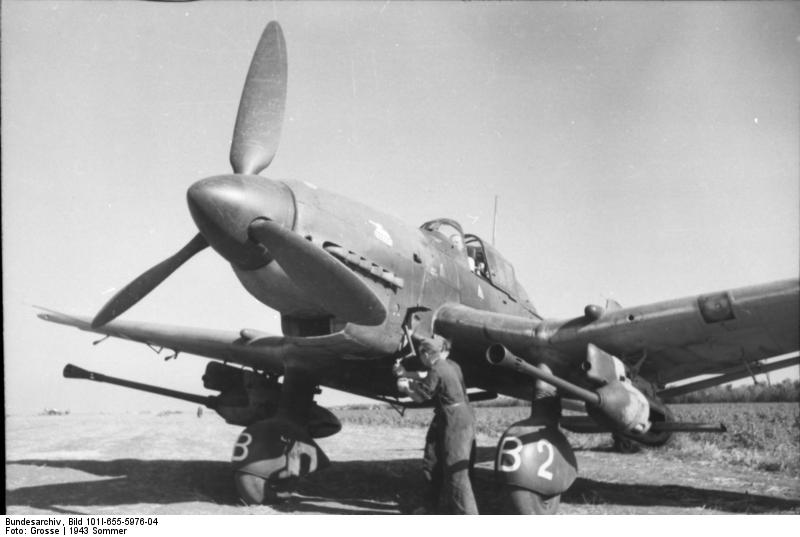
Colonel Hans-Ulrich Rudel was undoubtably the greatest ground attack pilot that ever lived. His record is unsurpassed by any combat pilot flying ground attack missions. According to official Luftwaffe records he flew 2350 combat missions beginning in June 1941 and ending when he led the remains of his squadron to crash land on the American occupied airfield in Kitzingen on May 8th 1945.

Born in Rosenheim Bavaria in 1916 he joined the Luftwaffe as an officer cadet. Like many of his era Rudel was an ardent Nazi. Despite that and his unrepentant admiration for Adolf Hitler his combat achievements are unmatched.

His early career was inauspicious. He was not regarded well as a pilot and spent the Polish campaign as an observer and did not take part in a combat role during the campaign in the west, the Battle of Britain or Crete in 1940 to May of 1941. Assigned to Sturzkampfgeschwader 2 (StG 2) Immelmann he finally saw combat in June 1941 in the Soviet Union and thereafter was almost always in combat.

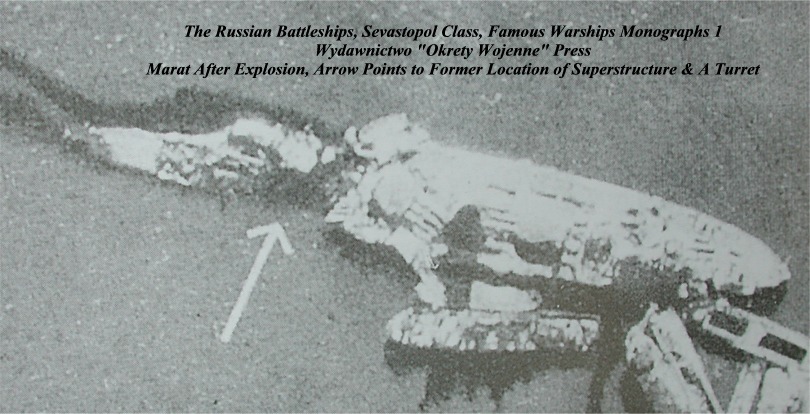
Flying various models of the Ju-87 Stuka Rudel was one of two pilots credited with sinking the Soviet Battleship Marat at Kronstadt harbor near Leningrad (Petersburg) on September 23rd 1941. During the war he was never shot down by an opposing aircraft but was shot down by anti-aircraft artillery or forced to land 32 times. He destroyed over 2000 targets including 519 tanks, hundreds of other vehicles and artillery pieces, he previously mentioned Battleship Marat, several other ships, 70 anding craft, bridges, armored trains and 9 aircraft in air to air combat. His accomplishments during the latter part of the war are remarkable because of the Soviet dominance of the airspace on the Eastern Front. Losses among ground attack pilots flying the venerable Stukas were high and the fact that he flew multiple missions on a daily basis for a sustained period is unsurpassed in modern warfare.

He was critically wounded by the explosion of a 40mm anti-aircraft shell on February 8th 1945 and saved by the quick action of his observer. His right leg was amputated below the knee and despite his wound he returned to combat on March 25th 1945.

He was spent 10 month in American captivity and after his release moved to Argentina where he became a friend of the dictator Juan Peron. He returned to Germany and became active in right wing nationalist politics. He became a successful businessman but his still openly National Socialist political views kept him marginalized in the West German Bundeswehr.

However, with the threat of a Soviet armored assault across the German plain during the Cold War Rudel was tapped to assist the U.S. Air Force in the development of the A-10 Thunderbolt ground attack aircraft. Despite its ungainly appearance the A-10, known by its nickname Warthog” has proven to be one of the most successful combat aircraft produced by the United States. His writings on tactics were required reading for pilots involved with the aircraft’s development by the A-10’s lead designer Pierre Sprey.


Rudel was the most highly decorated officer in the Luftwaffe, holding the highest decoration awarded to anyone other than Herman Goering. Alone the holders of the Knight’s Cross with Oak Leaves, Swords and Diamonds, he was awarded the gold Oak Leaves.

Rudel was a remarkable pilot and combat flyer. His valor and combat accomplishments are unquestioned but his undying attachment to Nazi ideology following the war caused a scandal that claimed the careers of two Bundeswehr Luftwaffe Generals including World War Two fighter ace Walter Krupinski (197 kills) clouds his legacy. He died in 1982 admired by British and American combat pilots including the legendary British ace Douglas Bader, who did not know his political activities; as well as Germans of Nazi or right wing political leanings. As a Luftwaffe pilot he was not a part of atrocities committed by the SS or Wehrmacht and never tried as a war criminal.

In retrospect it is important to understand that Rudel’s political views were shaped by the times in which he lived and the radicalism that swept Germany during the 1920s and 1930s. Likewise it is also important to note that unlike many others who grew up during the same period like fellow Luftwaffe aces Johannes Steinhoff and Adolf Galland, Rudel never recanted his views and published a tract in the early 1950s that condemned German officers who did not wholeheartedly support Adolf Hitler. He also recommended attacking the Soviet Union in the 1950s in order to reacquire Lebensruam.  

I think it is important to be able to recognize military accomplishments but also to recognize that even valiant soldiers can serve evil governments, and some of them give their unrequited support to the evil ideology of those regimes. Thus Rudel is not alone. He stands with other Nazi, Communist, Fascist and others soldiers of totalitarianism whose valor and deeds are tainted by evil and the crimes of the regimes that they supported.

Rudel’s mixed legacy, like many from the Nazi era as well as from other nations should serve as a reminder to any soldier, sailor or airman. That warning is to always be careful to ensure that honest patriotism does not become corrupted by the ideology of those that appeal to fear, hate and revenge as the source of their power.

Peace

Padre Steve+

3 Comments

Filed under aircraft, Military, Political Commentary, world war two in europe

“Unprecedented, unmerciful and unrelenting harshness…”: Terror and Ideology in the German Campaigns In Poland and Russia


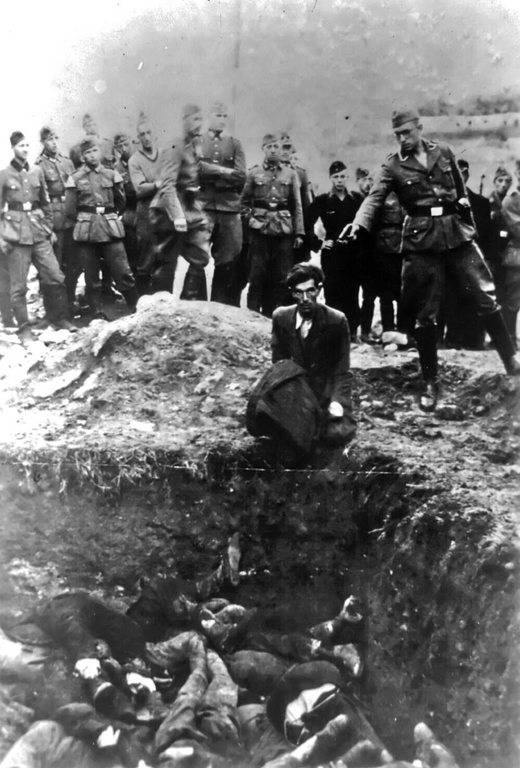
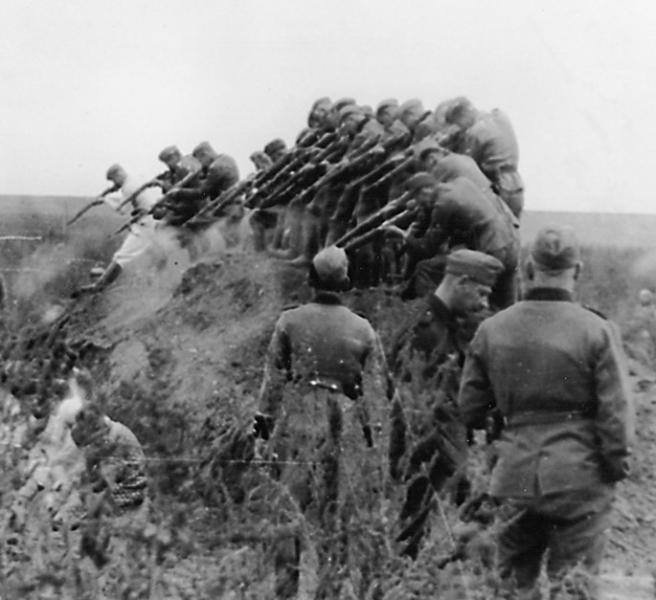
The following is an article that I first published on this site in 2009 “The Ideological War: How Hitler’s Racial Theories Influenced German Operations in Poland and Russia.” Since I am getting ready to write a number of articles on the subject of politicized military and police forces, the Concentration Camps and the Einsatzgrüppen I wanted to give my readers an overview of the subject. The focus is the ideology that framed and justified to the perpetrators the mass murders of Jews, Poles, Russians and others during the German invasions of Poland and the Soviet Union. I will be writing about policy as well as key personalities involved in the planning and execution of these crimes over the coming months since I have renewed my studies of the crimes and their prosecution at Nuremberg over the past year. In a sense this article is simply an introduction to more specific articles that I will write.  

Peace, Padre Steve+

Introduction: Ideology and Genocide 

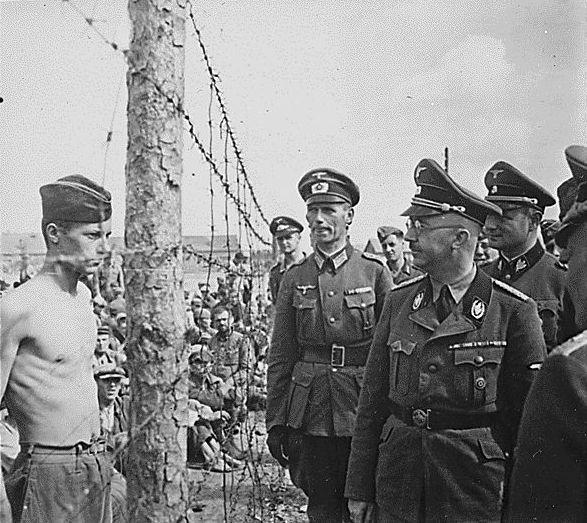
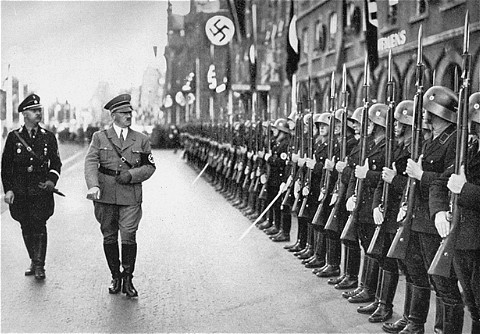
Architects of Annihilation: Heinrich Himmler with Adolf Hitler 

The German war against the Soviet Union was the first truly race-based ideological war in history with the campaign against Poland its precursor.  Adolf Hitler’s racial theories and beliefs played a dominant role in Germany’s conduct of the war in the East in both the military campaign and occupation.  This has become clearer in recent years as historians have had the opportunity to examine Hitler’s writings, those of senior Nazi officials and military officers and documents which had been unavailable until the end of the Cold War.  Understanding the Nazi ideological basis and the underlying cultural prejudice against the Jews and eastern Europeans in general is foundational to understanding Hitler’s conduct of the war and why the destruction of the Jews figured so highly in his calculations.  One must also understand the military and police cultures and doctrines that enabled them to cooperate so closely in the conduct of the war.

The German war in the east would differ from any previous war.  Its underlying basis was ideological. Economic and geopolitical considerations were given importance in relationship to the understanding of the German “Master Race.”  Race and Lebensraum was the goal of the State that “concentrates all of its strength on marking out a way of life for our people through the allocation of Lebensraum for the next one hundred years…the goal corresponds equally to the highest national and ethnic requirements.[1] Hitler believed that Germany was “entitled to more land…because it was the “mother of life” not just some “little nigger nation or another.”” [2] The Germans planned to “clear” the vast majority of the Slavic population and the “settlement of millions of hectares of eastern Lebensraum with German colonists” complimented by a short term exploitation of the land to “secure the food balance of the German Grossraum.”[3] Joachim Fest notes that Hitler called it a “crime” to wage war only for the acquisition of raw materials. Only the issue of living space permitted resort to arms.”[4]

Previous wars emphasized conquest of territory and natural resources be they for empire or self sufficiency. The Thirty Years War had a heavy religious component but was more about increasing the power of emerging nation states led by men not necessarily loyal to their religious brethren.[5] The American and Russian Civil wars had some ideological basis and helped usher in the brutality of total war. Both had major effect in these nations’ development and both were bitterly contested with the winners imposing to various degrees political changes on their vanquished brothers they were civil wars.[6] While Adam Tooze sees the Holocaust as the first step of the “last great land grab in the long and bloody history of European colonialism…”[7] this argument does not take away from the basic premise that the war was at its heart ideological.
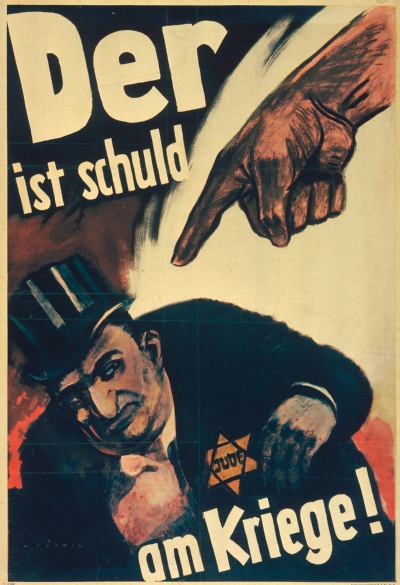
The root of this war was in the mind of Adolf Hitler himself. His years in Vienna were foundational as he absorbed the ideas of Pan-German, anti-Semitic groups and newspapers like the Deutsches Volksblatt. [8] In Vienna he made the connection between the Jews and Marxism.[9] Joachim Fest notes that in Vienna Hitler became obsessed by the fear of the Slavs and Jews, hated the House of Hapsburg, the Social Democratic Party, and “envisioned the end of Germanism.”[10] His racial views were amplified after the war in turbulent Weimar Germany where he became a member of the NDSAP, rising rapidly within it, eventually taking over party leadership, reorganizing it so that it “became the instrument of Hitler’s policies.”[11] Following the unsuccessful Beer Hall Putsch of 1923 Hitler wrote Mein Kampf while imprisoned in the Landsberg prison in which he enunciated his views about the Jews, Slavs and Lebensraum. Hitler believed that Imperial Germany had been “hopelessly negligent” in regard to the Jews[12] and that the Jews in conjunction with the Catholic Center Party and Socialists worked together for “maximum damage to Germany.”[13] Likewise he saw the Jews as heading the “main ideological scourges of the nineteenth and twentieth century’s.”[14] It was the ideology of Hitler’s “obsessive anti-Semitism”[15] that drove Nazi Germany’s policy in regard to the Jews and against Jewish-Bolshevism.

By the 1920s Hitler had “combined his hatred of the Jews and of the supposedly Jewish dominated Soviet state with existing calls to conquer additional Lebensraum, or living space, in the east.”[16] Hitler wrote: “The fight against Jewish world Bolshevism requires a clear attitude toward Soviet Russia. You cannot drive out the Devil with Beelzebub.”[17] Richard Evans notes that Mein Kampf clearly enunciated that “Hitler considered racial conflict…the essence of history, and the Jews to be the sworn enemy of the German race ….” And that the “Jews were now linked indissolubly in Hitler’s mind with “Bolshevism” and “Marxism.” [18] When Hitler became the dictator of Germany “his ideology and strategy became the ends and means of German foreign policy.”[19] His aims were clear, Hitler remarked to Czech Foreign Minister Chvalkovsky on 21 January 1939: “We are going to destroy the Jews.”[20] It was clear that Hitler understood his own role in this effort noting to General Heinrici that “he was the first man since Charlemagne to hold unlimited power in his own hand. He did not hold this power in vain, he said, but would know how to use it in the struggle for Germany…”[21]

This study will focus on the German policy of ideological-racial war in Poland and Russia. The German war against the Soviet Union and to a certain extent Poland was waged with an unforgiving ferocity against Hitler’s enemy, the Jewish-Bolshevik state and the Slavic Untermenschen. It was characterized by the rise of “political-ideological strategy”[22] in which “Barbarossa showed the fusion of technocracy and ideology in the context of competitive military planning.”[23]
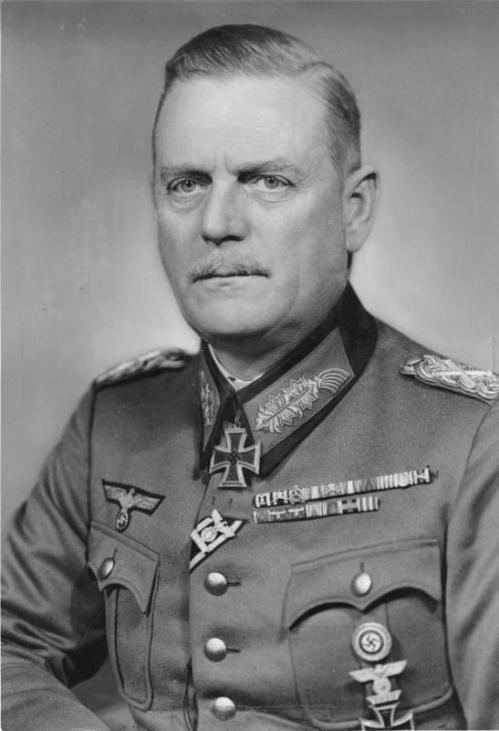
Field Marshal Wilhelm Keitel “war was a fight for survival….dispense with outdated and traditional ideas about chivalry and the generally accepted rules of warfare…” Bundesarchiv Bild

Hitler’s “ideological and grandiose objectives, expressed in racial and semi-mystical terms, made the war absolute.”[24] Field Marshal Keitel noted a speech in March 1941 where Hitler talked about the inevitability of conflict between “diametrically opposed ideologies” and that the “war was a fight for survival and that they dispense with their outdated and traditional ideas about chivalry and the generally accepted rules of warfare.”[25] General Halder, Chief of the OKH in his War Dairy for that meeting noted “Annihilating verdict on Bolshevism…the leaders must demand of themselves the sacrifice of understanding their scruples.”[26] Based on Lebensraum and race, the German approach to war would combine “racism and political ideology” for the purpose of the “conquest of new living space in the east and its ruthless Germanization.”[27] Hitler explained that the “struggle for the hegemony of the world will be decided in favor of Europe by the possession of the Russian space.”[28] Conquered territories would be “Reich protectorates…and that these areas were to be deprived of anything in the nature of a Slav intelligentsia.”[29] This goal was manifest in the “Criminal Order” issued by OKW which stated that the war was “more than mere armed conflict; it is a collision between two different ideologies…The Bolshevist-Jewish intelligentsia must be eliminated….”[30] Other displaced inhabitants of the conquered eastern lands would be killed or allowed to starve.[31] Part of this was due to economic considerations in the Reich, which gave Germans priority in distribution of food, even that from the conquered lands. Starvation was a population control measure that supplemented other forms of annihilation.[32] As Fest notes in Russia Hitler was “seeking nothing but “final solutions.””[33] Despite numerous post-war justifications by various Wehrmacht generals, the “Wehrmacht and army fell into line with Hitler because there was “a substantial measure of agreement of “ideological questions.””[34]

Ideology was key to Hitler’s worldview and fundamental to understanding his actions in the war.[35] However twisted Hitler’s ideological formulations were his ideas found acceptance beyond the Nazi faithful to the Army and Police, who would execute the campaigns in Poland and Russia in conjunction with the Einsatzgrüppen and Nazi party organizations.  In these organizations he found allies with pre-existing cultural, political and doctrinal understandings which allowed them to be willing participants in Hitler’s grand scheme of eastern conquest.

Doctrinal and Ideological Foundations

While Hitler’s racial ideology was more extreme than many in the German military and police, these organizations had cultural beliefs and prejudices as well as doctrinal and ideological foundations which helped them become willing accomplices to Hitler.  These factors were often, consciously or unconsciously, excluded from early histories of World War II. The Allies relied on German officers to write these histories at the beginning of the Cold War, developing the “dual myth of German military brilliance and moral correctness.”[36] B.H. Liddell-Hart makes the astounding statement that “one of the surprising features of the Second World War was that German Army in the field on the whole observed the rules of war than it did in 1914-1918-at any rate in fighting its western opponents….”[37] While he might be excused by lack of knowledge of German army atrocities, not just the SS who he blamed the atrocities, it helps present a myth as truth.[38] The myths were helped by the trials of Manstein and Kesselring where “historical truth had to be sacrificed…to the demands of the Cold War.”[39] Kenneth Macksey confronts the myth that only the “Waffen SS committed barbaric and criminal acts” noting: “Not even the Knights of the Teutonic Order and their followers in the Middle Ages sank to the depths of the anti-Bolshevik Wehrmacht of 1941.”[40]
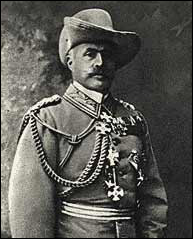
Pre-Nazi Exterminator: General Lothar Von Trotha led the Genocide against the Herero in Namibia

Germany had a long running history of anti-Semitism before Hitler.  German anti-Semitism often exhibited a “paranoid fear of the power of the Jews,”[41] and included a “fashionable or acceptable anti-Semitism”[42] which became more pronounced as the conditions of the Jews became better and Jews who had fled to Eastern Europe returned to Germany.[43] Sometimes this was tied to religious attitudes, but more often focused on the belief that the Jews “controlled certain aspects of life” and presented in “pseudo-scientific garb” along with the “myth of a secret Jewish plot for world domination which was simultaneously part of the internationalism of Freemasonry.”[44] Admiral Wilhelm Canaris provides an example as he “had grown up in the atmosphere of “moderate” anti-Semitism prevailing in the Ruhr middle class and in the Navy believed in the existence of a “Jewish problem”” and would “suggest during 1935-1936 that German Jews should be identified by a Star of David as special category citizens….”[45] Wehrmacht soldiers were “subject to daily doses of propaganda since the 1930s” and that with the “start of the Russian campaign propaganda concerning Jews became more and more aggressive.”[46] Some objected to Nazi actions against Jews. Von Manstein protested the “Aryan paragraph” in the Reichswehr on general principal.”[47] Yet some who planned and executed the most heinous crimes like Adolf Eichmann had “no fanatical anti-Semitism or indoctrination of any kind.”[48]

The military “looked to the regime to reshape society in every respect: political, ideological, economic and military…Propaganda would hammer home absolute nature of the struggle…”[49] Ideological training began in the Hitler Youth and Reichsarbeitsdienst and produced a soldier in which “Anti-Semitism, anti-communism, Lebensraum – these central tenants of Nazism were all inextricably linked with the Landser’s conception of duty, with his place and role in the vast machinery of war.”[50] Following the dismissal of General Fritsch in 1938, General Brauchitsch promised that “he would make every effort to bring the Army closer to the State and the State’s ideology.”[51] Alfred Novotny, a Austrian soldier in the Gross Deutschland division noted how training depicted the Russians as Untermenschen and how they were “subjected to official rantings about how the supposedly insidious, endless influence of the Jews in practically every aspect of the enemy’s endeavors…Jews were portrayed as rats, which were overrunning the world….”[52] This added to the already “harsh military discipline” which had a long tradition in Germany conditioning soldiers to violence and brutalization of their enemy. Similar programs existed in the Order Police which would play a large part in the eastern campaign, the “image of “treasonous” leftists and Jews helped shape the personal and political beliefs of many policemen throughout the interwar period.”[53] Even ordinary police training before the war in German speaking Europe was brutalizing.”[54] These troops were recipients of an ideological formation which “aimed at shaping the worldview of the police leading to the internalization of belief along National Socialist lines.”[55] Waffen SS soldiers, especially those of the Totenkopf division were subjected to even more systematic political indoctrination on the enemies of National Socialism, the Jews, freemasonry, Bolshevism and the churches.[56]

Along with cultural anti-Semitism and the Nazification of German thought in the 1930s, there were aspects of military doctrine which helped prepare the way for the eastern campaign. The most important were the Army’s anti-partisan and rear area security doctrine.  The history of security anti-partisan operations dated back to the Prussian Army’s Ettapen, which began in 1813 with the Landwehr’s role in security against looters and others.[57] These units supported and supplied offensive operations from the rear to the combat zone with a secondary mission of countering partisans and preventing disruptions in the rear area. The Ettapen would be reformed and regulated in 1872 following the Franco-Prussian War.[58] The German experience fighting guerrillas and partisans, the francs-tireurs in the Franco-Prussian War, “scarred the Army’s institutional mentality.”[59] Von Moltke was “shattered,” writing his brother that “war was now taking on an ever more hate-inspired character.”[60] He was “appalled by improvised armies, irregular elements, and appeals to popular passion, which he described as a “return to barbarism.”[61] He wrote: “Their gruesome work had to be answered by bloody coercion. Because of this our conduct of the war finally achieved a harshness that we deplored, but which we could not avoid.”[62] The brutal German response to the franc-tireurs found legal justification in Franz Lieber’s principles for classification of belligerents and non-belligerents, which determined that guerrillas were outlaws or bandits.[63] In response, the Germans systematically reorganized the Ettapen to include railroad and security troops, special military courts, military police, intelligence and non-military police, including the Landespolizei and the Grenzschutzpolizei.[64]

The doctrinal response to partisans, or as they would become known in German writings as “bandits,” was that bandits should be encircled and destroyed. This was employed in the Southwest Africa German colonies.  The Germans, influenced by the experience in France, “displayed a ferocity surpassing even that of the racially brutalized campaigns of its imperialist peers.”[65] The campaign against the Herero tribes which resisted the occupation of Namibia from 1904-1912 utilized encirclement operations, racial cleansing and what would become known as Bandenkämpfung operations.[66] This was further developed in the First World War, especially in the east where General Fritz Gempp described the security problem as a “ruthless struggle” in which German pacification policy “was in reality the application of terror to galvanize the population into accepting German rule.”[67] Anti-partisan doctrine was codified in the Truppenführung of 1933 which stated that “area defense against partisan warfare is the mission of all units” and that the preferred method of combating partisan bands was that they be surrounded and destroyed.[68] General Erhard Rauss later described active and passive measures used to deal with partisans, focusing on the tactic of encirclement to destroy the enemy.[69]

Anti-partisan doctrine focused on the destruction of the partisans, was coupled a total war philosophy and provided fit well with Hitler’s radical ideology.  The “propensity for brutality in anti-guerrilla warfare was complimented by officers’ growing preoccupation, both during and after World War I, with the mastery and application of violence.”[70] Michael Geyer notes: “ideological mobilization for the creation of a new national and international order increasingly defined the parameters of technocratic planning.”[71] The acceptance of long used brutal tactics to destroy the enemy combined with Hitler’s radical racial animus against the Jews could only be expected to create a maelstrom in which all international legal and moral standards would be breached.

Beginnings in Poland
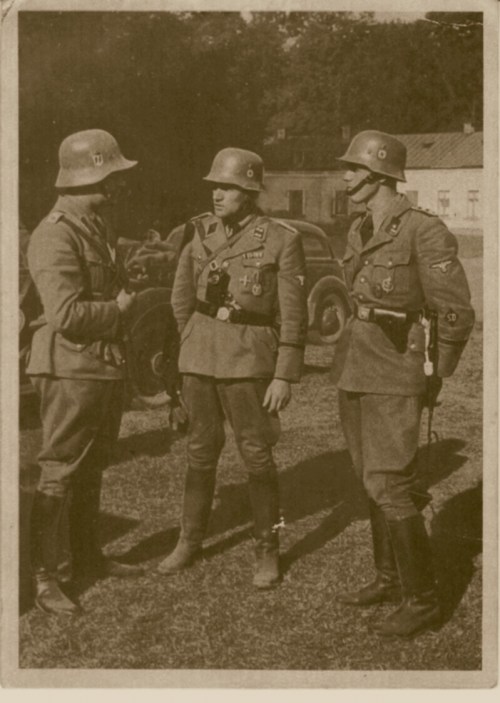
Einsatzgrüppen in Poland

The Polish campaign was a precursor to the Russian campaign and was not totally race driven. It contained elements of Germany’s perception of the injustice of Versailles which gave Poland the Danzig corridor and Germany’s desire to reconnect East Prussia to the Reich, as well as the perceived necessity to remove a potential enemy from its rear as it faced France, yet it was a campaign steeped in Nazi racial ideology.  Poland resisted German efforts to ally itself with Germany in 1939, thus Hitler determined it “would be crushed first.”[72] Meeting with military leaders on 23 May 1939 Hitler “made it plain that the real issue was not Danzig, but securing of Germany’s Lebensraum….”[73] On 22 August he enjoined the generals to “Close your hearts to pity! Act brutally! Eighty million people must obtain what is their right.”[74]
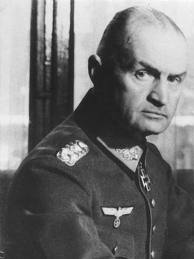
General Johannes Blaskowitz 

Even so, most military leaders failed to appreciate what Hitler was calling on them to do; Manstein would note that “what Hitler had to say about an eventual war with Poland, could not, in my opinion, be interpreted as a policy of annihilation.”[75] Others such as Canaris was “utterly horrified” as he read his notes to his closest colleagues “His voice trembled as he read, Canaris was acutely aware that he had witnessed something monstrous.”[76] General Johannes Blaskowitz, commander of 8th Army who would be the military commander in Poland did not leave any notes about the meeting, but his biographer notes that he “may have naively attached a military meaning to these terms since he was busy with military matters and soon to begin operations.”[77] This was the interpretation of Manstein as well.[78] Keitel noted that the speech was “delivered in the finest sense of psychological timing and application,” molding “his words and phrases to suit his audience.”[79] In light of the mixed interpretations by military leaders, it is possible that many misinterpreted Hitler’s intent and did not fully appreciated his ideology as they went into Poland, carefully secluding themselves in the narrow confines of their military world. While such an explanation is plausible for some, it is also true that many others in light of subsequent actions were in full agreement with Hitler. One author notes that “no man who participated in the Führer Conferences….and there were present the highest ranking officers of the three services, could thereafter plead ignorance of the fact that Hitler had laid bare his every depth of infamy before them, and they had raised no voice in protest either then or later.”[80] In July, General Wagner, the Quartermaster General issued orders that “authorized German soldiers to take and execute hostages in the event of attacks by snipers or irregulars.”[81]

Regardless of the meaning ascribed to Hitler’s speech, Hitler had already laid plans to destroy the Jews in Poland and decimate the Polish intelligentsia and leadership.   Hitler gave Himmler the task of forming “Einsatzgrüppen to follow the German troops as they advanced into Poland and liquidate Poland’s upper class wherever it was to be found.”[82] While senior party leaders remained at Hitler’s side following the conference, Himmler worked to coordinate his troops, including the reinforced Totenkopf battalions and Einsatzgrüppen with the Army.[83]
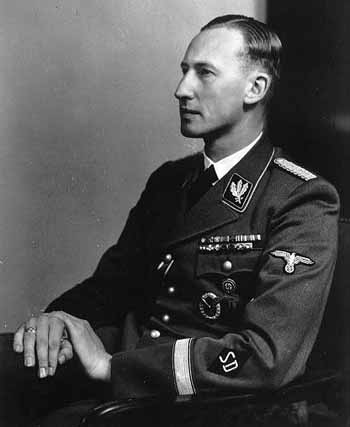
SS Obergruppenfuhrer Reinhard Heydrich: Hitler’s Hangman

Himmler began planning in early May and the Army decided to “use SS and police units to augment their own forces for security tasks.”[84] Himmler established “five Einsatzgrüppen to accompany each of the numbered German armies at the start of the campaign.”[85] Placed under the aegis of Reinhard Heydrich the groups were broken down into smaller units of 100-150 men and allotted to army corps.  All senior posts were occupied by officers of the SS Intelligence Service the SD or Sicherhietsdienst.[86] Two additional groups were formed shortly after the invasion.[87] Additionally 3 regiments of the SS Totenkopfverbande, under the direction of SS General Theodore Eicke were deployed in the rear areas of the advancing armies.[88] The purpose of these units was shielded from the Army in the planning stages,[89] although Heydrich worked with the Army to develop lists of up to 30,000 people to be arrested.[90] To eliminate the Polish elites without disturbing the Army, Himmler and Heydrich gave the Army “only the bare minimum of information.”[91] The deception was initially successful.  Blaskowitz’s 8th Army defined the mission of the Einsatzgrüppen in a traditional manner, noting their mission as “the suppression of all anti-Reich and anti-German elements in the rear of the “fighting troops, in particular, counter espionage arrests of politically unreliable persons, confiscation of weapons, safeguarding of important counter-espionage materials etc…”[92] General Wagner issued orders in July 1939 that “authorized German soldiers to take and execute hostages in the event of attacks by snipers or irregulars.” Despite the deception, there was no way to disguise the murder of Polish intelligentsia and Jews, and had the Army had the political acumen it could have considerably restricted the terror campaign.[93] .

The campaign demonstrated Hitler’s intent. Heydrich talked about the “murdering the Polish ruling class” of the aristocracy, Catholic clergy, communists and Jews on 7 September.[94] The Army moved east with the Einsatzgruppen and Totenkopf Verbande, conducting arrests and executions in its wake.  The Army worried about Polish soldiers left behind in rear areas, and a paranoia developed as some generals believed that a “brutal guerilla campaign has broken out everywhere and we are ruthlessly stamping it out.”[95] Yet some actions against the Polish elites and the Jews drew Army reactions. The unit commanded by SS General Woyrsch “behaved with such unparalleled bestiality that it was throw out of the operational area” by General List of 14th Army.[96] Totenkopfverbande Brandenburg came to Army attention when its commander remarked that the “SSVT would not obey Army orders,” and the conclusion of the Army General was that “the SSVT commander was following orders from some non-military authority to terrorize the local Jews.”[97]

These atrocities as well as those of other Waffen-SS units were hard to hide and brought reactions out of army commanders who sought to punish the offenders. Blaskowitz and others attempted to put a halt to SS actions against Poles and Jews,[98] but most officers turned a blind eye to the atrocities or outright condoned them.  It is believed that General Walter Model and others “not only knew what was occurring in Poland but actually took part in what Halder himself described in October as “this devilish plan.””[99] It appears that many who objected were not motivated so much by humanitarian, moral or legal considerations, but rather by the effect on good order and discipline.[100] Likewise it is clear that many officers, even if they did not participate in the actions probably approved of them.  Many biographies and histories of this period written by authors influenced by surviving German officers make no or little mention of the Army’s part in these actions.

Einsatzgruppe Members killing Polish Jews

Himmler and Heydrich were sensitive to the perception of the Army and resented the fact that the Army believed them to be responsible for actions that they were carrying out under the direction and order of Hitler and that their troops were “undisciplined gangs of murderers.”[101] After the establishment of the Government General led by Hans Frank there was conflict between the Army under Blaskowitz, the SS, Police and the Nazi administration. Blaskowitz made an “elaborate report on the atrocities of the SS,”[102] expressing concern about his “extreme alarm about illegal executions, his worries about maintaining troop discipline under those circumstances, the failure of discussions with the SD and Gestapo and their assertions that they were only following SS Orders.”[103] While it is unclear if the memorandum made it to Hitler, it is clear that Hitler did know about the protest and Blaskowitz fell into disfavor and was reassigned after a period of continued conflict with the Nazi administration. Hitler’s reaction according to his adjutant was that the Army’s leaders used “Salvation Army” methods, and their ideas “childish.”[104] Likewise General Georg von Külcher was relieved of command for protesting SS and police atrocities.[105] SS Officers convicted by Army courts-martial were given amnesty by Hitler on “4 October 1939 who two weeks later removed SS units from the jurisdiction of military courts.”[106] While the army remained, it was not longer in charge and would assist the SS and Police in combat and further atrocities. One German officer, later a conspirator in the July 20th plot, remarked in November 1939 about the killings that he “was ashamed to be German! The minority are dragging our good through the mud by murdering, looting and torching houses will bring disaster on the whole German people if we do not stop it soon…”[107]

The Army was relieved of responsibility for policing Poland which fell on the Ordungspolizei battalions and Gendarmerie.  These units would wreak their own devastation on Poland in the coming months and years.[108] Poland would also be the first Nazi driven shift in population to exploit the newly won Lebensraum as Poles were driven into the newly formed Government General and ethnic Germans moved into previously Polish occupied territories. By 1941 over 1,200,000 Poles and 300,000 Jews had been expelled and 497,000 ethnic Germans brought into provinces lost in 1919.[109] Prior to the war about 3.3 million Jews lived in Poland. After the war 50-70,000 were found to have survived in Poland, the Polish Army and camps in Germany. A further 180,000 were repatriated from the Soviet Union.[110]

Russia
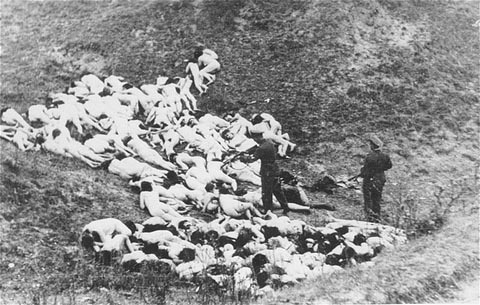
The Nazi war against Russia was the penultimate test of Hitler’s ideology. Planning began after 21 July, when Hitler made “his intentions plain” and “von Brauchitsch set his planners to work.”[111] Detailed preparations began in the winter of 1940-41 following the Luftwaffe’s failure against Britain and postponement of Operation Sea Lion.  Hitler intended to “crush Soviet Russia in a quick campaign which was to begin no later than March 15, 1941, and before the end of the war with England.”[112] Keitel noted the final decision came in “early December 1940” and from then he had “no doubt whatsoever that only some unforeseen circumstance could possibly alter his decision to attack.”[113] The plan focused on the destruction of “the Red Army rather than on any specific terrain or political objective,”[114] although these objectives would arise in later planning and in the campaign.  Hitler stated: “What matters is that Bolshevism must be exterminated. In case of necessity, we shall renew our advance whenever a new center of resistance is formed. Moscow as the center of doctrine must disappear from the earth’s center….”[115]

Besides preparations aimed at the destruction of the Red Army and overthrow of the Soviet State, the “war against the Soviet Union was more openly ideological from the start.”[116] Hitler set the stage on March 3rd 1941: “the forthcoming campaign is more than a mere armed conflict; it is a collision between two different ideologies…this war will not be ended merely by the defeat of the enemy armed forces” and that “the Jewish-Bolshevist intelligentsia must be eliminated….”[117] Hitler noted that “this is a task so difficult that it cannot be entrusted to the Army.”[118] Reichskommissars would be appointed in the conquered areas, but since normal civilian powers would be insufficient to eliminate the Bolshevists, that it “might be necessary “to establish organs of the Reichsführer SS alongside the army’s Secret Field Police, even in the operational areas….”[119] The “primary task was to liquidate “all Bolshevist leaders or commissars” if possible while still in the operations zones,”[120] yet the orders did not contain “a syllable that in practice every Jew would be handed over to the extermination machine.”[121] This was followed on 13 March by an agreement between the Army represented by General Wagner and the SS, which stated in part that “the Reichsführer SS has been given by the Führer special tasks within the operations zone of the Army…to settle the conflict between two opposing political systems.”[122] Likewise the agreement dictated that Himmler would “act independently and on his own responsibility” while ensuring that “military operations are not affected by measures necessary to carry out his task.”[123] A further instruction of 26 March issued by Wagner gave the Army’s agreement to the use of the Einsatzgrüppen in the operations zone, specifying coordination between them and army authorities in the operational zone and communications zones to the rear.  Cooperation was based on the “principals for co-operation between the State Secret Police and the Field Security organization of the Wehrmacht agreed with the Security branch of the War Ministry on 1 January 1937.”[124]

Police Battalion in the Soviet Union

The most significant act for the Army in this was the Commissar Order, sometimes known as the “Criminal Order” which was used war as evidence at Nuremberg as against Keitel and the High Command of the Wehrmacht.  The order specified the killing of Soviet Political Commissars attached to the Red Army and as “they were not prisoners of war” and another order specified that “in the event that a German soldier committed against civilians or prisoners, disciplinary action was optional….”[125] The order noted regarding political commissars that “in this struggle consideration and respect for international law with regard to these elements is wrong.” [126] The “Guidelines for the Conduct of Troops in Russia” issued on May 19, 1941 called for “ruthless and vigorous measures against Bolshevist inciters, saboteurs [and] Jews.”[127]
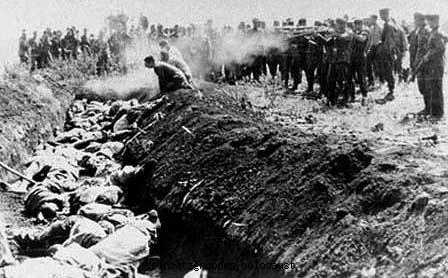
Shortly before the order was issued, Hitler previewed it to the generals saying that the war in Russia “cannot be conducted in a knightly fashion” and that it would have to be waged with “unprecedented, unmerciful and unrelenting harshness…”[128] and that they would have to “dispense with all of their outdated and traditional ideas about chivalry and the generally accepted rules of warfare: the Bolsheviks had long since dispensed with them.”[129] He explained that his orders were beyond their comprehension stating “I cannot and will not change my orders and I insist that that they be carried out with unquestioning and unconditional obedience.”[130]

Himmler visiting POW Camp holding Red Army Prisoners, most would die in German Captivity

Hitler’s speech was protested by some according to Von Brauchitsch,[131] who refused to protest to Hitler but issued an order “threatening dire penalties for excesses against civilians and prisoners of war” which he maintained at Nurnberg “was sufficient to nullify the Commissar Order.”[132] Yet Von Brauchitsch would tell commanders to “proceed with the necessary hardness.”[133] Warlimont noted that Von Bock, who would “later emerge as an opponent of the Commissar Order…makes no special comment on the meeting or the restricted conference that followed.” [134] Keitel said that he “stubbornly contested” the clause “relating to the authority of the SS-Reichsführer… in the rearward operational areas.”[135] Keitel blamed the Army High Command, but the order came out with his signature on behalf of Hitler, which was key evidence against him at Nuremberg. He stated that “there was never any possibility of justifying them in retrospect by circumstances obtaining in the Russian campaign.”[136] Some commanders refused to publish the orders and “insisted that the Wehrmacht never implemented such policies…” blaming them instead on the SS. One writer states “such protests were undoubtedly sincere, but in practice German soldiers were far from innocent. The senior professional officers were often out of touch with their subordinates.”[137] The orders were a “license to kill, although not a great departure from German military traditions….”[138] The effect was terrifying, for in a sense the Einsatzgruppen, “could commit ever crime known to God and man, so long as they were a mile or two away from the firing line.”[139] Security Divisions were “instructed to give material and logistical support to…units of the Einsatzgruppen.”[140] Even worse, army units in rear areas “could be called on to assist Himmler’s SS police leaders.”[141]
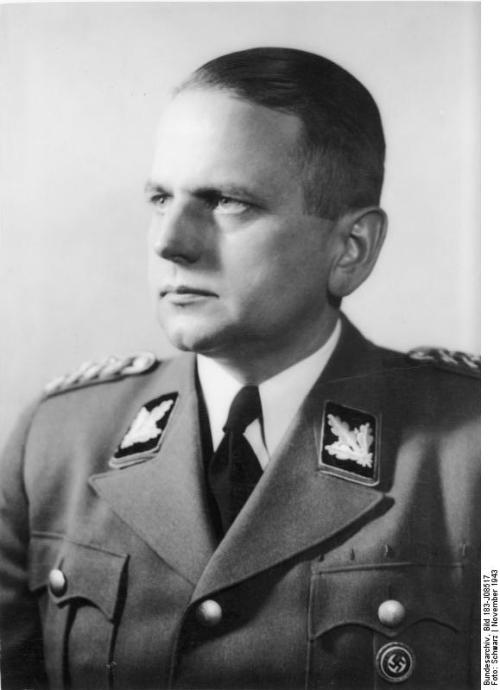
SS Brigadefuhrer Otto Ohlendorf Commander of Einstazgruppe D

The SS formed four Einsatzgruppen composed of SD, Waffen-SS and Police troops designated A-D with “A” being assigned to Army Group North, B to Army Group Center, C to Army Group South and “D” to 11th Army.  They were not standardized in manpower or equipment, the largest unit being A in the North at 990 personnel[142] and D with only 550.[143] These units had SS, SD or Police commanders. Additionally nine Ordnungspolizei battalions were initially assigned to the invasion forces.[144] The police contingent would grow over time so that by 1943, these units would be grouped under regiments and number about 180,000 men assisted by 301,000 auxiliaries.[145] These units would act in concert with 9 Army Security Divisions which handled rear area security.[146] Himmler initially did not reveal their intent and planned use to Einsatzgruppen commanders, only speaking of a “heavy task…to “secure and pacify” the Russian area using Sicherheitspolizei and SD methods.”[147] Understanding the effect of these operations, Himmler would state that “in many cases it is considerably easier to lead a company in battle than to command a company responsible to…carry out executions, to deport people…to be always consistent, always uncompromising-that is in many cases far, far harder.”[148]

Nazi actions are well documented; the Einsatzgruppen, Police, Army and locally recruited Schutzmannschaft battalions[149] ruthlessly exterminated Jews and others in the operational area. No sooner had an Einsatzgruppe unit entered a city, a “deadly stranglehold” would grip the “Jewish inhabitants claiming thousands and thousands of victims day by day and hour by hour.”[150] Non-Jewish Russians were encouraged to conduct programs which Heydrich noted “had to be encouraged.”[151] Einsatzgruppen D report 153 noted: “During period covered by this report 3,176 Jews, 85 Partisans, 12 looters, 122 Communist functionaries shot. Total 79,276.”[152] By the spring of 1942 Einsatzgruppe A had claimed “more than 270,000 victims, the overwhelming majority of whom were Jewish.”[153] The total killed for all groups then was 518,388 people, mostly Jews.[154] Germany’s Romanian ally acted against Jews in Odessa as well; “on 23 October 1941 19,000 Jews were shot near the harbor… probably 200,000 Jews perished either at Romanian hands or after being turned over by the Romanians to the Germans.”[155]

Operations against Jews were often called anti-partisan operations.  Himmler referred to Einsatzgruppen as “anti-Partisan formations[156] while Wehrmacht Security divisions “murdered countless Soviet civilians and burned Russian settlements to the ground under the pretext of subduing partisan resistance.”[157] The attitude in 1941-1942 was that “’all Jews are partisans and all partisans are Jews.” From 1943, all armed resistance was “banditry” and all Jews irrespective of circumstances were treated as “bandits.””[158] The commander of the 221st Security Division endeavored to persuade his “subordinate units that the Jews were carriers of Bolshevik contamination and, therefore, the ultimate source of any sabotage or difficulty the division faced.”[159] The extermination of the Jews and partisan war were closely intertwined with the Reich’s economic policies designed to exploit the natural resources of the Russia. This included the “hunger plan” which German authorities seemed to imagine that “millionfold starvation could be induced by requisitioning off all available grain and “shutting off” the cities.”[160] Hitler told Halder that in 1941 that he “intended to level Moscow and Leningrad, to make them uninhabitable, so there would be no need to feed their populations during the winter.”[161] Economic officials held life and death power over villages. Those that met agricultural quotas were “likely to be spared annihilation and evacuation…the culmination of this process, during 1943, would be the widespread creation of “dead zones.””[162] All told the German killed nearly 1.5 million Russian Jews.[163] By 1942, 2 million Soviet POW’s were killed.  600,000 shot outright, 140,000 by the Einsatzkommandos.[164] All told 3.3 million Soviet POWs died in German captivity through starvation, disease and exposure,[165] are included in a total of over 10 million Red Army Combat deaths.[166] Bracher notes: “The reality and irreality of the National Socialism were given their most terrible expression in the extermination of the Jews.”[167]

SS Gruppenfuhrer Arthur Nebe: “I have looked after so many criminals and now I have become one myself.”

Himmler and others continued to use euphemistic language to describe their efforts talking in terms of “Jewish resettlement.”[168] Terms such as special actions, special treatment, execution activity, cleansing and resettlement were used in place of the word murder.[169] At the same time these operations led to problems in the ranks, one SS trooper observed: “deterioration in morale among his own men who had to be issued increasing rations of vodka to carry out their killing orders.”[170] Even commanders were affected, Nebe would say “I have looked after so many criminals and now I have become one myself.”[171] A fellow conspirator would describe him as a “shadow of his former self, nerves on edge and depressed.”[172] Erich Bach-Zelewski, who led the SS anti-partisan efforts would suffer a nervous breakdown which included “hallucinations connected to the shootings of Jews” which hospitalized him in 1942.[173] Himmler would state in October 1943 that “to have gone through” the elimination of the Jews had “and remained decent, that has made us tough. This is an unwritten, never to be written, glorious page in our history.”[174]

Conclusion

The German war against Poland and Russia was heavily dependent on the racist ideology of Adolf Hitler.  He was the true spirit behind the atrocities committed by his nation as one noted in Russia: “Here too the Führer is the moving spirit of a radical solution in both word and deed.”[175] He saw the partisan war as “the chance to stamp out everything that stands against us.”[176] Belief in Germany’s right to Lebensraum the superiority of the German Volk and necessity to settle the Jewish problem provided a fertile ground for Hitler’s plans.  German military doctrines, especially those of anti-partisan and total warfare abetted Hitler’s goals.

Einsatzgruppen Trial at Nuremberg 

It is quite clear that many in the Wehrmacht were in agreement with Hitler’s ideology of racial-war. Prepared by cultural prejudice and long traditions of thought, the “Prussian and in later German military must be regarded as a significant part of the ideological background of the Second World War.”[177] General Reichenau’s orders to his troops are revealing: “The most important goal of the campaign against Jewish-Bolshevism is the complete destruction of its grip on power and the elimination of the Asian influence from our European cultural sphere.”[178] Von Rundstedt appeared to agree with Reichenau to “use the partisan threat as excuse for persecuting Jews, so long as the dirty work was largely left to SS Einsatzgruppen.”[179] The Army command…on the whole acquiesced in the extermination of the Jews, or at least closed its eyes to what was happening.”[180] Even if the Generals had been more forceful in their opposition, they would have been opposed by the highly Nazified youth that made up the bulk of their Army, especially junior officers. SS leaders fanatically executed Hitler’s policies aided by the civil administration. Genocide was to bring the Reich “long term economic gains and trading advantages” and was seen as a way of “financing the war debt without burdening the German taxpayer.”[181] Some individuals attempted to resist the most brutal aspects of the Nazi campaign against the Jews. Some like Wilhelm Kube, Reichskommissar for White Russia and a virulent anti-Semite was shocked at the murders of the Jews calling them “unworthy of the German cause and damaging to the German reputation” and would later attempt to spare Jews by employing them in war industries, would be “defeated by Himmler’s zealots.”[182] Army officers who objected like Blaskowitz and Külcher were relieved, or like Von Leeb, told by Hitler to “in so many words told to mind his own business.” Leeb stated: “the only thing to do is to hold oneself at a distance.”[183] Rommel knew of crimes through Blaskowitz but blamed the crimes “on Hitler’s subordinates, not Hitler himself.”[184]

Hitler’s ideology permeated German military campaigns and administration of the areas conquered by his armies. No branch of the German military, police or civil administration in occupied Poland or Russia was exempt guiltless in the crimes committed by the Nazi regime. It is a chilling warning of the consequences awaiting any nation that allows it to become caught up in hate-filled political, racial or even religious ideologies which dehumanizes opponents and of the tragedy that awaits them and the world. In Germany the internal and external checks that govern the moral behavior of the nation and individuals failed. Caught up in the Nazi system, the Germans, especially the police and military abandoned the norms of international law, morality and decency, banally committing crimes which still reverberate today and which are seen in the ethnic cleansing actions in the former Yugoslavia and other nations.

Bibliography

Aly, Gotz and Heim, Susanne. Architects of Annihilation: Auschwitz and the Logic of Destruction Phoenix Paperbacks, London, 2003, originally published as Vordenker der Vernichtung, Hoffman und Campe, Germany 1991, English translation by Allan Blunden.  First published in Great Britain Weidenfeld & Nicholson, London, 2002

Arendt, Hannah, Eichmann in Jerusalem: A Report on the Banality of Evil. Revised and Enlarged Edition. Penguin Books, Harmondsworth, England and New York, NY 1965. Originally published by Viking Press, New York, NY 1963

Blood, Philip. Hitler’s Bandit Hunters: The SS and the Occupation of Europe. Potomoac Books Inc. Washington, DC 2008

Bracher, Karl Dietrich. The German Dictatorship: The Origins, Structure, and Effects of National Socialism. Translated by Jean Steinberg, Holt Rinehart and Winston, New York, NY 1979. Originally Published under the title Die Deutsche Diktatur: Entstehung, Struktur,Folgen des Nationalsocialismus. Verlag Kiepenheuer & Witsch. Koln and Berlin, 1969

Browning, Christopher R. Ordinary Men: Reserve Police Battalion 101 and the Final Solution in Poland. Harper Perennial Books, New York, New York 1993 reissued 1996.

Burleigh, Michael and Wippermann, Wolfgang. The Racial State: Germany 1933-1945 Cambridge University Press, New York NY and Cambridge UK 1991

Condell, Bruce and Zabecki, David T. Editors. On the German Art of War: Truppenführung , Lynn Rienner Publishers, Boulder CO and London 2001

Craig, Gordon A. The Politics of the Prussian Army 1640-1945. Oxford University Press, London and New York, 1955

Davidowicz, Lucy S. The War Against the Jews 1933-1945 Bantam Books, New York, NY 1986.

Di Nardo, Richard L. Germany and the Axis Powers: From Coalition to Collapse. University Press of Kansas, Lawrence, KS. 2005

Erickson, John. The Road to Berlin. Cassel Military Paperbacks, London, 2003. First Published by Weidenfeld and Nicholson, 1983

Evans, Richard J. The Coming of the Third Reich Penguin Books, New York 2004.  First published by Allen Lane 2003

Evans, Richard J. The Third Reich in Power 1933-1939. Penguin Press, New York, NY 2005

Ferguson, Niall. The War of the Worlds: Twentieth Century Conflict and the Descent of the West. The Penguin Press, New York, 2006

Fest, Joachim, Hitler. Translated by Richard and Clara Winston. Harcourt Brace Jovanovich Publishers, San Diego, New York, London, 1974.  German Edition by Verlag Ullstein 1973

Fraser, David. Knight’s Cross: A Life of Field Marshal Erwin Rommel Harper Perennial, New York 1995, first published by Harper Collins in Britain, 1993

Friedlander, Saul Nazi Germany and the Jews 1939-1945: The Years of Extermination. Harper Perennial, New York, NY 2007

Fritz, Stephen G. Frontsoldaten: The German Soldier in World War II.  The University Press of Kentucky, Lexington, KY 1995

Geyer, Michael. German Strategy 1914-1945 in Makers of Modern Strategy from Machiavelli to the Nuclear Age. Peter Paret, editor. Princeton University Press, Princeton NJ. 198

Giziowski, Richard. The Enigma of General Blaskowitz. Hippocrene Books, New York 1997

Glantz, David M. and House, Jonathan. When Titans Clashed: How the Red Army Stopped Hitler. University Press of Kansas, Lawrence, KS. 1995

Goerlitz, Walter. History of the German General Staff. Translated by Brian Battershaw, Westview Press, Boulder and London, 1985. Originally published as Die Deutsche Generalstab Verlag der Frankfurter Hefte, Frankfurt am Main, 1953

Goerlitz, Walter. The Memiors of Field Marshal Wilhelm Keitel: Chief of the German High Command 1938-1945.  Translated by David Irving. Cooper Square Press 2000,  First English Edition 1966 William Kimber and Company Ltd.  German edition published by Musterschmnidt-Verlad, Gottigen 1961 .

Hitler, Adolf Mein Kampf translated by Ralph Manheim. Mariner Books, Houghton Mifflin Company, New York, NY 1999. Houghton Mifflin Company 1943, copyright renewed 1971. Originally published in Germany by Verlag Frz. Eher Nachf. GmbH 1925

Höhne, Heinze. Canaris: Hitler’s Master Spy. Traslated by J. Maxwell Brownjohn. Cooper Square Press,

New York 1999. Originally published by C. Bertelsmann Verlag Gmbh, Munich 1976, first English edition by Doubleday and Company 1979

Höhne, Heinze. The Order of the Death’s Head: The Story of Hitler’s SS. Translated by Richard Barry. Penguin Books, New York and London, 2000. First English edition published by Martin Secker and Warburg Ltd. London 1969. Originally published as Der Orden unter dem Totenkopf, Verlag Der Spiegel, Hamburg 1966.

Hughes, Daniel J. editor. Moltke on the Art of War: Selected Writings, translated by Harry Bell and Daniel J Hughes. Presidio Press, Novato CA 1993

Liddell-Hart, B.H. The German Generals Talk. Quill Publishing, New York, NY. 1979. Copyright 1948 by B.H. Liddell-Hart

Macksey, Kenneth. Why the Germans Lose at War: The Myth of German Military Superiority. Barnes and Noble Books, New York 2006, originally published by Greenhill Books, 1996

Manstein, Erich von. Forward by B.H. Liddle Hart, Introduction by Martin Blumenson. Lost victories: The War Memoirs of Hitler’s Most Brilliant General. Zenith Press, St Paul MN 2004. First Published 1955 as Verlorene Siege, English Translation 1958 by Methuen Company

Shirer, William L. The Rise and Fall of the Third Reich. A Touchstone Book published by Simon and Schuster, 1981, Copyright 1959 and 1960

Megargee, Geoffrey P. War of Annihilation: Combat and Genocide on the Eastern Front 1941.Bowman and Littlefield Publishers Inc. Lanham, Boulder, New York. 2007

Messinger, Charles, The Last Prussian: A Biography of Field Marshal Gerd Von Rundstedt 1875-1953 Brassey’s (UK) London England 1991

Newton, Steven H. Hitler’s Commander: Field Marshal Walter Model-Hitler’s Favorite General DaCapo Press a division of Perseus Books Group, Cambridge MA 2005

Novatny, Alfred. The Good Soldier. The Aberjona Press, Bedford, PA 2003

Padfield, Peter. Himmler. MJF Books, New York. 1990

Reitlinger, Gerald.  The SS: Alibi of a Nation. The Viking Press, New York, 1957. Republished by Da Capo Press, New York, NY.

Rhodes, Richard. Masters of Death: The SS Einsatzgruppen and the Invention of the Holocaust. Vintage Books a division of Random House, New York, NY 2002

Shepherd, Ben. War in the Wild East: The German Army and Soviet Partisans. Harvard University Press, Cambridge, MA 2004

Sofsky, Wolfgang. The Order of Terror: The Concentration Camp. Translated by William Templer. Princeton University Press. Princeton, NJ 1997. Originally published as Die Ordnung des Terros: Das Konzentrationslager. S. Fischer Verlag, GmbH, Frankfurt am Main, 1993

Speer, Albert. Inside the Third Reich. Collier Books, a Division of MacMillan Publishers, Inc. New York, NY 1970.

Strachan, Hew. European Armies and the Conduct of War. George, Allen and Unwin, London, UK 1983

Stein, George H. The Waffen SS 1939-1945: Hitler’s Elite Guard at War. Cornell University Press, Ithaca and London, 1966

Stern, Fritz. Gold and Iron: Bismarck, Bleichroder and Building of the German Empire. Vintage Books a division of Random House, New York 1979 First published by Alfred a Knopf 1977

Sydnor, Charles W. Soldiers of Destruction: The SS Death’s Head Division, 1933-1945. Princeton University Press, Princeton, NY 1977 Taylor, Fred, Editor and Translator. The Goebbels Diaries 1939-1941, Penguin Books Ltd, Harmondsworth UK and New York NY 1984.

Tooze, Adam. The Wages of Destruction Penguin Books, New York, NY, 2008. First Published by Allen Lane Books, Penguin Group, London UK, 2006

Trevor-Roper, H.R. Hitler’s Table Talk 1941-1944 with an introduction by Gerhard L Weinberg,  Translated by Norman Cameron and R.H. Stevens, Enigma Books, New York, NY 2000. Originally published in Great Britain by Weidenfeld & Nicholoson, London 1953.

Warlimont, Walter. Inside Hitler’s Headquarters 1939-45. Translated by R.H. Berry, Presido Press, Novato CA, 1964.

Weinberg, Gerhard L. Germany Hitler and World War II . Cambridge University Press, New York, NY 1995

Weinberg, Gerhard L. Ed. Hitler’s Second Book: The Unpublished Sequel to Mein Kampf by Adolph Hitler. Translated by Krista Smith, Enigma Books,  New York, NY 2006. Originally published as Hitlers zweites Buch, Gerhard Weinberg editor, 1961.

Weinberg, Gerhard L. Visions of Victory: The Hopes of Eight World War II Leasers. Cambridge University Press, New York, NY 2005

Westermann, Edward B. Hitler’s Police Battalions: Enforcing Racial War in the East. University Press of Kansas, Lawrence, KS. 2005

Wette, Wolfram. The Wehrmacht: History, Myth, Reality. Translated by Deborah Lucas Schneider. Harvard University Press, Cambridge, MA 2006. Originally published as Die Wehrmacht: Feindbilder, Vernichtungskreig, Legenden. S. Fischer Verlag, GmbH, Frankfurt am Main, 2002

Wheeler-Bennett, John. The Nemesis of Power: The German Army in Politics 1918-1945. St. Martin’s Press Inc. New York, NY 1954

Notes

[1] Weinberg, Gerhard L. Ed. Hitler’s Second Book: The Unpublished Sequel to Mein Kampf by Adolph Hitler. Translated by Krista Smith, Enigma Books, New York, NY 2006. Originally published as Hitlers zweites Buch, Gerhard Weinberg editor, 1961 p. 159

[2] Davidowicz, Lucy S. The War Against the Jews 1933-1945 Bantam Books, New York, NY 1986. p.91

[3] Tooze, Adam. The Wages of Destruction Penguin Books, New York, NY, 2008. First Published by Allen Lane Books, Penguin Group, London UK, 2006. p.463

[4] Fest, Joachim, Hitler. Translated by Richard and Clara Winston. Harcourt Brace Jovanovich Publishers, San Diego, New York, London, 1974.  German Edition by Verlag Ullstein 1973 pp. 607-608

[5] Note the actions of Cardinal Richelieu in France who worked to expand French power at the expense of other Catholic nations and the Vatican itself.

[6] In the United States the Reconstruction policies produced great resentment in the south with decidedly negative results for the newly freed slaves which lasted another 100 years, while in the Soviet Union great numbers of “opponents of Socialism” were killed, imprisoned or driven out of the county.

[7] Ibid. Tooze. The Wages of Destruction p.462

[8] Ibid. Davidowicz, The War Against the Jews pp.8-9

[9] Ibid. Davidowicz. The War Against the Jews p.12

[10] Ibid. Fest  Hitler. p.47

[11] Bracher, Karl Dietrich. The German Dictatorship: The Origins, Structure, and Effects of  National Socialism. Translated by Jean Steinberg, Holt Rinehart and Winston, New York, NY 1979. Originally Published under the title Die Deutsche Diktatur: Entstehung, Struktur,Folgen des Nationalsocialismus. Verlag Kiepenheuer & Witsch. Koln and Berlin, 1969 p.93

[12] Weinberg, Gerhard L. Germany Hitler and World War II . Cambridge University Press, New York, NY 1995 p.61

[13] Ibid. Weinberg, Hitler’s Second Book p.60

[14] Friedlander, Saul Nazi Germany and the Jews 1939-1945: The Years of Extermination. Harper Perennial, New York, NY 2007 p.xviii

[15] Ibid. Friedlander, The Years of Extermination p.xvii  Friedlander called this anti-Semitism “Redemptive anti-Semitism” in which “Hitler perceived his mission as a kind of crusade to redeem the world by eliminating the Jews.

[16] Megargee, Geoffrey P. War of Annihilation: Combat and Genocide on the Eastern Front 1941.Bowman and Littlefield Publishers Inc. Lanham, Boulder, New York. 2007 p.4

[17] Hitler, Adolf Mein Kampf translated by Ralph Manheim. Mariner Books, Houghton Mifflin Company, New York, NY 1999. Houghton Mifflin Company 1943, copyright renewed 1971. Originally published in Germany by Verlag Frz. Eher Nachf. GmbH 1925. p.662.

[18] Evans, Richard J. The Coming of the Third Reich Penguin Books, New York 2004.  First published by Allen Lane 2003 p.197

[19] Ibid. Davidowicz The War Against the Jews pp. 88-89

[20] Rhodes, Richard. Masters of Death: The SS Einsatzgruppen and the Invention of the Holocaust. Vintage Books a division of Random House, New York, NY 2002 p.37

[21] Speer, Albert. Inside the Third Reich. Collier Books, a Division of MacMillan Publishers, Inc. New York, NY 1970 p.166

[22] Geyer, Michael. German Strategy 1914-1945 in Makers of Modern Strategy from Machiavelli to the Nuclear Age. Peter Paret, editor. Princeton University Press, Princeton NJ. 1986. p.582

[23] Ibid. Geyer. German Strategy p.587

[24] Strachan, Hew. European Armies and the Conduct of War. George, Allen and Unwin, London, UK 1983 p.174

[25] Goerlitz, Walter. The Memoirs of Field Marshal Wilhelm Keitel: Chief of the German High Command 1938-1945.  Translated by David Irving. Cooper Square Press 2000,  First English Edition 1966 William Kimber and Company Ltd.  German edition published by Musterschmnidt-Verlad, Gottigen 1961 p. 135

[26] Ibid. Fest, Hitler.  p. 649

[27] Ibid. Megargee, War of Annihilation p.7

[28] Trevor-Roper, H.R. Hitler’s Table Talk 1941-1944 with an introduction by Gerhard L Weinberg,  Translated by Norman Cameron and R.H. Stevens, Enigma Books, New York, NY 2000. Originally published in Great Britain by Weidenfeld & Nicholoson, London 1953 p. 27 Goebbels notes a similar theme in his recollection of Hitler’s reasons for destroying Russia a power .  See Taylor, Fred, Editor and Translator. The Goebbels Diaries 1939-1941, Penguin Books Ltd, Harmondsworth UK and New York NY 1984 pp. 413-415.

[29] Goerlitz, Walter. History of the German General Staff.” Translated by Brian Battershaw, Westview Press, Boulder and London, 1985. Originally published as Die Deutsche Generalstab Verlag der Frankfurter Hefte, Frankfur am Main, 1953 p.390

[30] Warlimont, Walter. Inside Hitler’s Headquarters 1939-45. Translated by R.H. Berry, Presido Press, Novato CA, 1964 p. 150

[31] Weinberg, Gerhard L. Visions of Victory: The Hopes of Eight World War II Leasers. Cambridge University Press, New York, NY 2005. p. 24

[32] Aly, Gotz and Heim, Susanne. Architects of Annihilation :Auschwitz and the Logic of Destruction Phoenix Paperbacks, London, 2003, Originally published as  Vordenker der Vernichtung, Hoffman und Campe, Germany 1991, English translation by Allan Blunden.  First published in Great Britain Weidenfeld & Nicholson, London, 2002 pp. 245-246

[33] Ibid. Fest. Hitler p.649

[34] Wette, Wolfram. The Wehrmacht: History, Myth, Reality. Translated by Deborah Lucas Schneider. Harvard University Press, Cambridge, MA 2006. Originally published as Die Wehrmacht: Feindbilder, Vernichtungskreig, Legenden. S. Fischer Verlag, GmbH, Frankfurt am Main, 2002 p.93

[35] This understanding is different than many historians who as Friedlander notes advocate something like this: “The persecution and extermination of the Jews of Europe was but a secondary consequence of major German policies pursued toward entirely different goals.” Friedlander p.xvi

[36] Ibid. Megargee. War of Annihilation p.xii

[37] Liddell-Hart, B.H. The German Generals Talk. Quill Publishing, New York, NY. 1979. Copyright 1948 by B.H. Liddell-Hart p.22

[38] It has to be noted that Liddle-Hart published this work in 1948 and was limited in the materials available, his primary sources being German officers who he viewed with sympathy because he saw them as exponents of his theory of the indirect approach.

[39] Ibid. Wette. The Wehrmacht p.224

[40] Macksey, Kenneth. Why the Germans Lose at War: The Myth of German Military Superiority. Barnes and Noble Books, New York 2006, originally published by Greenhill Books, 1996. p.139

[41] Stern, Fritz. Gold and Iron: Bismarck, Bleichroder and Building of the German Empire. Vintage Books a division of Random House, New York 1979 First published by Alfred a Knopf 1977.  p.495

[42] Ibid. Stern. Gold and Iron p.494

[43] Ibid. Bracher. The German Dictatorship p.34

[44] Ibid. Bracher The German Dictatorship pp.34-35

[45] Höhne, Heinze. Canaris: Hitler’s Master Spy. Translated by J. Maxwell, Brownjohn. Cooper Square Press,

New York 1999. Originally published by C. Bertelsmann Verlag Gmbh, Munich 1976, first English edition by Doubleday and Company 1979 p. 216.  Canaris would later protest the Kristalnacht to Keitel (p.334) and become convinced of the crime of the Nazis against the Jews.

[46] Ibid. Witte. The Wehrmacht p.98

[47] Ibid Witte The Wehrmacht, p.73

[48] Arendt, Hannah, Eichmann in Jerusalem: A Report on the Banality of Evil. Revised and Enlarged Edition. Penguin Books, Harmondsworth, England and New York, NY 1965. Originally published by Viking Press, New York, NY 1963 p.26

[49] Ibid. Megargee. War of Annihilation p.6

[50] Fritz, Stephen G. Frontsoldaten: The German Soldier in World War II.  The University Press of Kentucky, Lexington, KY 1995 p.195

[51] Craig, Gordon A. The Politics of the Prussian Army 1640-1945. Oxford University Press, London and New York, 1955 p.495

[52] Novatny, Alfred. The Good Soldier. The Aberjona Press, Bedford, PA 2003 p.40

[53] Westermann, Edward B. Hitler’s Police Battalions: Enforcing Racial War in the East. University Press of Kansas, Lawrence, KS. 2005 p.64  Westermann also notes the preponderance of SA men who entered the Order Police in the 1930s, a factor which helped further the politicization of that organization.

[54] Ibid. Rhodes Masters of Death p.23

[55] Ibid. Westermann Hitler’s Police Battalions p.103

[56] Sydnor, Charles W. Soldiers of Destruction: The SS Death’s Head Division, 1933-1945. Princeton University Press, Princeton, NY 1977 p. 28

[57] Shepherd, Ben. War in the Wild East: The German Army and Soviet Partisans. Harvard University Press, Cambridge, MA 2004 p.41

[58] Blood, Philip. Hitler’s Bandit Hunters: The SS and the Occupation of Europe. Potomac Books Inc. Washington, DC 2008 p.11

[59] Ibid. Shepherd. War in the Wild East p.42

[60] Ibid. Goerlitz. History of the German General Staff p.93

[61] Rothenburg, Gunther. Moltke, Schieffen, and the Doctrine of Strategic Envelopment in Makers of Modern Strategy from Machiavelli to the Nuclear Age. Peter Paret, editor. Princeton University Press, Princeton NJ. 1986 p.305

[62] Hughes, Daniel J. editor. Moltke on the Art of War: Selected Writings, translated by Harry Bell and Daniel J Hughes. Presidio Press, Novato CA 1993. p.32

[63] Ibid. Blood Hitler’s Bandit Hunters p.6   Lieber was a Prussian emigrant to the US who taught law at Columbia University.

[64] Ibid. Blood Hitler’s Bandit Hunters pp.12-13

[65] Ibid. Shepherd Wild War in the East p.42

[66] Ibid. Blood. Hitler’s Bandit Hunters pp.16-19

[67] Ibid. Blood. Hitler’s Bandit Hunters p.22

[68] Condell, Bruce and Zabecki, David T. Editors. On the German Art of War: Truppenführung , Lynn Rienner Publishers, Boulder CO and London 2001. p.172

[69] Tsouras, Peter G. Editor, Fighting in Hell: The German Ordeal on the Eastern Front The Ballantine Publishing Group, New York, 1998. First published 1995 by Greenhill Books. Pp. 142-146.  It is interesting to note that Rauss does not describe any actual anti-partisan operation.

[70] Ibid. Shepherd. War in the Wild East p.45

[71] Ibid. Geyer. German Strategy p.584

[72] Ibid. Weinberg. Visions of Victory p.8

[73] Ibid. Goerlitz, History of the German General Staff p.346

[74] Höhne, Heinze. The Order of the Death’s Head: The Story of Hitler’s SS. Translated by Richard Barry. Penguin Books, New York and London, 2000. First English edition published by Martin Secker and Warburg Ltd. London 1969. Originally published as Der Orden unter dem Totenkopf, Verlag Der Spiegel, Hamburg 1966 p.259

[75] Manstein, Erich von. Forward by B.H. Liddle Hart, Introduction by Martin Blumenson. Lost victories: The War Memoirs of Hitler’s Most Brilliant General. Zenith Press, St Paul MN 2004. First Published 1955 as Verlorene Siege, English Translation 1958 by Methuen Company p.29

[76] Ibid. Hohne. Canaris p.347

[77] Giziowski, Richard. The Enigma of General Blaskowitz. Hppocrene Books, New York 1997 p.119

[78] Ibid. Manstein. Lost Victories p.29

[79] Ibid. Goerlitz. The Memoirs of Field Marshal Keitel p.87

[80] Wheeler-Bennett, John. The Nemesis of Power: The German Army in Politics 1918-1945. St. Martin’s Press Inc. New York, NY 1954 p.448

[81] Ibid. Megargee. War of Annihilation p.13

[82] Ibid. Höhne The Order of the Death’s Head p.297

[83] Padfield, Peter. Himmler. MJF Books, New York 1990 p.264

[84] Ibid. Megargee. War of Annihilation p.13

[85] Ibid. Westermann. Hitler’s Police Battalions p.127

[86] Ibid.  Höhne The Order of the Death’s Head p.297

[87] Ibid. Westermann. Hitler’s Police Battalions p.127

[88] Ibid. Sydnor Soldiers of Destruction p.37 These would become the nucleus of the Totenkopf Division

[89] Ibid. Giziowski Blaskowitz p.120

[90] Ibid. Witte. The Wehrmacht p.100

[91] Ibid. Höhne The Order of the Death’s Head pp. 297-298

[92] Ibid. Giziowski Blaskowitz p.120

[93] Ibid. Höhne The Order of the Death’s Head p.298

[94] Ibid. Witte. The Wehrmacht p.100

[95] Newton, Steven H. Hitler’s Commander: Field Marshal Walter Model-Hitler’s Favorite General Da Capo Press a division of Perseus Books Group, Cambridge MA 2005. p.74

[96] Ibid. Giziowski. The Enigma of General Blaskowitz pp.165-166

[97] Ibid. Sydnor, Soldiers of Destruction pp. 42-43 Note SSVT is the common abbreviation for the SS Totenkopf Verbande

[98] Ibid. Goerlitz. History of the German General Staff p.359

[99] Ibid. Newton. Hitler’s Commander p.78

[100] Ibid. Witte The Wehrmacht p.102

[101] Ibid. Höhne The Order of the Death’s Head p.298

[102] Ibid. Goerlitz. History of the German General Staff .p.359

[103] Ibid. Giziowski. The Enigma of General Blaskowitz p.173

[104] Ibid. Giziowski. The Enigma of General Blaskowitz p.173

[105] Ibid. Witte The Wehrmacht p.102

[106] Burleigh, Michael and Wippermann, Wolfgang. The Racial State: Germany 1933-1945 Cambridge University Press, New York NY and Cambridge UK 1991. p.100

[107] Ibid. Witte The Wehrmacht p.102

[108] For a good account of one of the Police Battalions see Ordinary Men: Reserve Police Battalion 101mand the Final Solution in Poland by Christopher Browning Harper Perennial Publishers, San Francisco CA 1992

[109] Reitlinger, Gerald.  The SS: Alibi of a Nation. The Viking Press, New York, 1957. Republished by Da Capo Press, New York, NY p.131

[110] Ibid. Davidowicz The War Against the Jews pp.395-397

[111] Ibid. Megargee. War of Annihilation p.24

[112] Ibid. Wheeler-Bennett The Nemesis of Power p.511

[113] Ibid. Goerlitz. The Memoirs of Field Marshal Wilhelm Keitel. P.132

[114] Glantz, David M. and House, Jonathan. When Titans Clashed: How the Red Army Stopped Hitler. University Press of Kansas, Lawrence, KS. 1995 p.31

[115] Trevor-Roper, H.R. Hitler’s Table Talk 1941-1944 with an introduction by Gerhard L Weinberg,  Translated by Norman Cameron and R.H. Stevens, Enigma Books, New York, NY 2000. Originally published in Great Britain by Weidenfeld & Nicholoson, London 1953 p.6

[116] Ibid. Megargee. War of Annihilation p.10 More openly ideological as compared to Poland.

[117] Ibid. Warlimont. Inside Hitler’s Headquarters p.150

[118] Ibid. Warlimont. Inside Hitler’s Headquarters p.151

[119] Ibid. Reitlinger, The SS p.175

[120] Ibid. Höhne The Order of the Death’s Head p. 354

[121] Ibid. Höhne The Order of the Death’s Head p. 354  Again another deception.

[122] Ibid. Warlimont. Inside Hitler’s Headquarters p.153

[123] Ibid. Warlimont. Inside Hitler’s Headquarters p.153

[124] Ibid. Warlimont. Inside Hitler’s Headquarters pp. 158-159

[125] Ibid. Glantz and House. When Titans Clashed p.56

[126] Ibid. Davidowicz. The War Against the Jews p.123

[127] Ferguson, Niall. The War of the Worlds: Twentieth Century Conflict and the Descent of the West. The Penguin Press, New York, 2006 p.442

[128] Ibid. Wheeler-Bennett. Nemesis of Power p.513

[129] Ibid. Goerlitz. The Memoirs of Field Marshal Keitel p.135

[130] Ibid. Wheeler-Bennett. Nemesis of Power p.513

[131] Ibid. Wheeler-Bennett Nemesis of Power p.513 and footnote. He cites the three Army Group commanders, Leeb, Rundstedt and Bock. However Von Rundstedt’s biographer notes that “no evidence exists as to what Von Rundstedt’s to this was at the time.” Messenger, Charles, The Last Prussian: A Biography of Field Marshal Gerd Von Rundstedt 1875-1953 Brassey’s (UK) London England 1991. p.134

[132] Ibid. Reitlinger, The SS p.176

[133] Ibid. Megargee. War of Annihilation p.33

[134] Ibid. Warlimont. Inside Hitler’s Headquarters p.162

[135] Ibid. Goerlitz. The Memoirs of Field Marshal Keitel p.136

[136] Ibid. Goerlitz. The Memoirs of Field Marshal Keitel pp.136-137

[137] Ibid. Glantz and House. When Titans Clashed p.56

[138] Ibid. Blood. Hitler’s Bandit Hunters p.52

[139] Ibid. Reitlinger The SS p. 177

[140] Ibid. Shepherd. War in the Wild East p.54

[141] Ibid. Reitlinger The SS p. 177

[142] Ibid. Rhodes Masters of Death pp.12-13

[143] Ibid. Westermann. Hitler’s Police Battalions p.167

[144] Ibid. Westermann. Hitler’s Police Battalions p.164

[145] Ibid. Blood Hitler’s Bandit Hunters p.141

[146] Ibid. Shepherd Wild War in the East p.48. Shepherd notes the deficiencies of these units in terms of organization, manpower and equipment which he calls “far short of the yardstick of military excellence with which the Wehrmacht is so widely associated.

[147] Ibid.  Höhne The Order of the Death’s Head p. 356 Only one of the Einsatzgruppen commanding officers was a volunteer, Arthur Nebe who was involved in the conspiracy to kill Hitler. It is believed by many that Nebe volunteered to earn the clasp to the Iron Cross to curry favor with Heydrich and that initially “Nebe certainly did not know that “employment in the east” was synonymous with the greatest mass murder in history.

[148] Ibid. Bracher. The German Dictatorship p.422

[149] Ibid. Blood Hitler’s Bandit Hunters p.55

[150] Ibid. Höhne The Order of the Death’s Head p. 360

[151] Ibid.  Friedlander The Years of Extermination p.207

[152] Ibid. Höhne The Order of the Death’s Head p. 360

[153] Ibid. Tooze The Wages of Destruction p.481

[154] Ibid. Ferguson. The War of the World p.446

[155] Di Nardo, Richard L. Germany and the Axis Powers: From Coalition to Collapse. University Press of Kansas, Lawrence, KS. 2005 p.133 The Hungarians would also engage in ant-Jewish operations. Only the Italian army would not conduct operations against the Jews.

[156] Ibid. Höhne The Order of the Death’s Head p. 369

[157] Ibid. Wette The Wehrmacht p.127

[158] Ibid. Blood. Hitler’s Bandit Hunters p.117

[159] Ibid. Shepherd. War in the Wild East pp.90-91

[160] Ibid. Tooze The Wages of Destruction p.481

[161] Ibid. Magargee. War of Annihilation p.64

[162] Ibid. Shepherd. War in the Wild East pp.127-128

[163] Ibid. Davidowicz The War Against the Jews from the table on page 403. This included 228,000 from the Baltic republics (90%) 245,000 from White Russia (65%) 900,000 from the Ukraine (60%) and 107,000 from Russia proper (11%)

[164] Ibid. Rhodes. Masters of Death p.241

[165] Ibid. Glantz and House When Titans Clashed p.57

[166] Ibid. Glantz and House. When Titans Clashed table on p.292

[167] Ibid. Bracher. The German Dictatorship p.431

[168] Ibid. Bracher. The German Dictatorship p.430

[169] Ibid. Höhne The Order of the Death’s Head p. 367

[170] Ibid. Rhodes. Masters of Death p.225

[171] Ibid. Rhodes Masters of Death p.225

[172] Ibid. Höhne The Order of the Death’s Head p. 363

[173] Ibid. Höhne The Order of the Death’s Head p. 363

[174] Ibid. Bracher. The German Dictatorship p.423

[175] Ibid. Bracher. The German Dictatorship p.430

[176] Ibid. Megargee War of Annihilation p.65

[177] Ibid. Wette. The Wehrmacht p.293

[178] Ibid. Wette. The Wehrmacht p.97

[179] Messenger, Charles. The Last Prussian A Biography of Field Marshal Gerd Von Rundstedt 1875-1953 Brassey’s London, 1991 p148

[180] Ibid. Bracher The German Dictatorship pp.430-431

[181] Ibid. Aly and Heim Architects of Annihilation p.242

[182] Ibid. Padfield Himmler pp.341-342

[183] Ibid. Megargee War of Annihilation p.97

[184] Fraser, David. Knight’s Cross: A Life of Field Marshal Erwin Rommel Harper Perennial, New York 1995, first published by Harper Collins in Britain, 1993. p.536

3 Comments

Filed under History, Military, nazi germany, Political Commentary, world war two in europe

The Battleships of D-Day

The 14″ Guns of USS Nevada in action at Normandy

On June 6th 1944 Allied Forces landed on the beaches of Normandy. Six American, British and Canadian Infantry Divisions, three Airborne Divisions and numerous supporting units came ashore in landing craft or were airdropped into Normandy. Backing them was an immense Naval Task Force which provided naval gunfire support, screened the force from German U-Boat or surface naval forces and transported the massive ground force.  It was an amazing armada.

HMS Rodney bombarding German positions off Caen

It was an armada that also is forgotten by many who read about Normandy or whose only exposure to the landings are films such as Saving Private Ryan. Today I think it is fitting to remember Battleships that served at Normandy, USS Arkansas, USS Texas, USS Nevada, HMS Warspite, HMS Ramillies and HMS Rodney.

USS Arkansas off Omaha Beach

The naval gunfire support force included Battleships, Cruisers and Destroyers as well as specialized gunfire support ships.  The largest and most powerful ships were the six American and British Battleships.  These ships were important in providing the heavy firepower needed to destroy the strongest fortifications and shore batteries and to fire at targets far beyond the shoreline that were vital for German reinforcements.

However the ships involved were not the modern behemoths which were built in the 1930s and since the beginning of the war but rather among the oldest ships still active in either the United States or the British Royal Navy. At one time they had all been the hearts for their navies but now old, slow and with less than modern armament and fire control systems they were regulated to supporting amphibious forces or escorting convoys.

USS Arkansas BB-33

The oldest of these venerable ships was the USS Arkansas BB-33 which was commissioned in 1912. A Wyoming Class Battleship she mounted twelve 12” guns in six twin turrets, two forward, two aft and two midships. She displaced just over 27,000 tons. She had spent most of the war escorting convoys in the Atlantic before being assigned to the Normandy landings. She stood off Omaha Beach dueling with German shore batteries and pounding the German troops who were making Omaha a living hell for the men of the US 1st and 29th Infantry Divisions.  She would continue her valuable service off of Normandy and would do the same in to support the landings in Southern France before steaming to the Pacific where she would do the same at Iwo Jima and Okinawa.

USS Texas BB-35

The USS Texas, BB-35 of the New York class had been in commission since 1914. She mounted ten 14” guns in 5 twin turrets, two forward, two aft and one midships and was slightly larger than the Arkansas.  More modern she was more extensively modernized between the wars than was Arkansas and was one of the first US ships to carry experimental radar sets.  She also conducted convoy operations but was used to bombard Vichy French troops and positions during Operation Torch, the Allied invasion  of North Africa.  At D-day she was in the western sector of Omaha and bombarded Point Du Hoc and cruised to within 3000 yards of the beach to clear the western exits of the beach near Vierville.  She remained in the area a number of days and would subsequently support the attack on Cherbourg, the invasion of South France and then serve in the Pacific at Iwo Jima and Okinawa.

USS Nevada BB-36

The USS Nevada BB-36 was the first of a new class of battleships which set the basic pattern of US Battleship design through the ratification of the Washington Naval Treaty. Her main battery of ten 14” guns was mounted in four turrets, mounted fore and aft two triple and 2 twin turrets.  She was he powered by oil fired boilers as opposed to coal and   was designed with a longer cruising radius to meet the demands of War Plan Orange.  Nevada received major upgrades between the wars and on December 7th 1941 was moored on Battleship Row when Peal Harbor was attacked by the Japanese. The only Battleship to get underway during the attack Nevada was set upon by Japanese aircraft as she steamed toward the harbor entrance. Heavily damaged she was grounded off Hospital Point. She was re-floated and sailed to the United States where she was heavily modernized with a modern AA battery of twin 5” 38 caliber guns, and fire direction radars. She was modernized to the point that she no longer resembled the ship sunk at Pearl Harbor. After her repair and modernization she participated in the invasion of Attu Island and did convoy escort duty before reporting for the invasion of Normandy. Nevada supported the US 4th Infantry Division at Utah Beach and subsequently served with Texas and Arkansas in South France before going to the Pacific to support the invasions of Iwo Jima and Okinawa. Had the war continued she would have been involved in the invasion of the Japanese Mainland.

HMS Warspite

The Royal Navy Battleships of D-Day were also elderly veterans. The eldest was the heroic HMS Warsipte commissioned in 1915 and a veteran of the Battle of Jutland and numerous actions during the Second World War including the slaughter of the German Destroyers at Narvik, the Battle of Cape Matapan and the invasion of Sicily and Italy.  The Queen Elizabeth Class Battleship mounted eight 15” guns in twin turrets and was extensively modernized between the wars. At Salerno Warspite was hit by three of the earliest guided missiles, the Fritz-X type launched by Luftwaffe Aircraft. She was heavily damaged and required major repairs before returning to service at Normandy. She supported British troops at Sword Beach and later Gold Beach. She again was heavily damaged by a magnetic mine and received temporary repairs to allow her to continue bombardment duties against German positions France and Belgium before being placed in reserve in January 1945.

HMS Ramillies

The HMS Ramillies was a Revenge Class Battleship commissioned in 1917. These ships were a compromise design that was smaller, slower and cheaper than the Queen Elizabeth Class but had the same main battery of eight 15” guns.  The compromises prevented them from receiving significant upgrades between the wars and limited their employment. Ramillies operated as a convoy escort and was also involved in action in  the Mediterranean and Indian Ocean. She participated in the hunt for the German Pocket Battleship Graf Spee and shielded Convoy HX-106 from the Scharnhorst and Gneisenau and later took part in the hunt for the Bismarck. However she but was not engaged against any of the German ships but her presence prevented Admiral Lutjens from risking Scharnhorst and Gneisenau to attack the convoy. She took part in the initial battle between the Royal Navy and the Italians at the Battle of Cape Spartivento getting off several salvos before her slow speed forced her out of the action. She was heavily damaged by a torpedo from a Japanese mini-submarine in Diego Suarez harbor during the invasion of Madagascar in May 1942. Following repairs and the addition of extra deck armor and modern anti-aircraft guns she returned to action at Normandy were she supported British troops ashore and drove off an attack by German Destroyers. She stayed in action firing over 1000 shells at Normandy before supporting the invasion of Southern France. Too slow to be of use in the Pacific she was placed in Reserve in January 1945.

HMS Rodney

The youngest of the Battlewagons at Normandy on June 6th was the HMS Rodney which was commissioned in 1927. She and her sister ship HMS Nelson were to be the first of the post WWI super battleships and was designed as a larger and more powerful ship. With the limitations of the Washington Naval Treaty the ships were “cut down” and reduced in size and speed. Her armament made her one of the most powerful battleships of period but her engineering plant was not always reliable. Since she was relatively modern she did not receive any major refits before the war and apart from a repairs to her engines in Boston in 1941 (before the US entry into the war) and a brief refit in 1942 she received no further refits during the war. With the HMS King George V she helped sink the Bismarck and would escort convoys and participate in the Allied invasions of North Africa, Sicily and Salerno before being assigned to the Normandy invasion force attacking targets near Caen.  Her sister HMS Nelson was held in reserve and joined the battle on June 10th but she was not present on D-Day.

Warspite aground and Rodney being scrapped (below)

Despite their age and limitations all of these ships and their performed heroically during the war. The post war period was not as kind to the ships. Arkansas and Nevada were used in the Atomic Bomb tests at Bikini Atoll. Nevada survived and was expended as a target in 1948. All of the British ships were scrapped following the war due to their age, wear and damage incurred during the war. Warspite was being towed to the breakers when she broke a tow line and went aground. She ended up being partially scrapped in place.  Mementos of all these ships remain including a gun from Ramillies at the Imperial War Museum. The lone survivor was the USS Texas which became a museum ship and memorial at the San Jacinto battlefield in 1948. She is the last of the Dreadnought ships remaining. Other more modern US Battleships have been preserved but only Texas remains from those ships that at one time ruled the waves and pounded the Germans at Normandy.

The author aboard USS Texas in March 2011

The fire support provided by these proud ships and their consorts ensured the success of the Normandy landings. Without them it is very possible that the landings would not have succeeded and many more Allied soldiers would have died and the war extended.

To these great ships and all their heroic crews…

Peace

Padre Steve+

28 Comments

Filed under History, Military, Navy Ships, US Navy, world war two in europe

The 9-11 Generation: The Few

“We few, we happy few, we band of brothers….”

Winston Churchill referred to the Royal Air Force’s heroism in the Battle of Britain.  He remarked “Never in the field of human conflict was so much owed by so many to so few.”  By comparison with that tiny force the American military is massive. However in comparison with the missions that it has been given since September 11th 2001 and its size relative to the population of the United States it is a small force; a force that much more has been asked than anyone could have imagined on that terrible day.

Since the attacks of September 11th 2001 over 2.8 million young Americans have volunteered to serve in the nations military.  Since that fateful day some 5.5 million Americans have served in all branches of the military both active and reserve, many like me were on active duty that fateful morning. Today about 2.2 million serve in the various components of the military, just 1.4 million on active duty out of a total estimated population of 120 million men and women aged 18-49 fit to serve.

That makes the accomplishments of those that have served so much greater.  Never before has our country asked so much for such a long period of time from such a miniscule segment of the population.  Every single Soldier, Sailor, Marine, Airman and Coastguardsman that currently serve volunteered in a time of war to either join or extend their service in the military. Over 2.3 million have served in Iraq or Afghanistan with many more that have served in the Middle East and other regions supporting those wars as well as other anti-terrorist operations around the world.  While we have been committed to wars that may not be “winnable” we have accomplished so much and exacted revenge upon Osama Bin Laden and many of those who planned and perpetrated the attacks of 9-11-2001.

Many were children some as young as 8 years old when the attacks took place who have grown up in the years following the attack.  Others pressed the upper age limits to enlist many seeking age waivers to do so.  The vast majority of the men and women who enlisted because they felt it was their duty, not for money, not for glory.  They came from every State, District and Territory where Old Glory flies as a symbol of freedom.  The represent every race, creed and political party, and come from what the media like to call the “Red States and the Blue States” only for them it is not a question of “Red or Blue” but “Red White and Blue.”  Others have come to the United Statesfrom other nations because they felt that there was something great and noble about this nation and our ideals.

Some would wrongly call this military and those that serve in it a mercenary force, but no it is not and they are professionals that serve our country in time of war.  Mercenaries simply sign on for the money and fight for any regime that will employ them.  We are not mercenaries.

Over the course of this war some of those ideals have faded and of those that go back time and time again do it often because they do not want to abandon their friends or see their sacrifices wasted.  The war has taken and continues to take a toll on this small segment of America.  Over 6200 have died in action and over 45200 wounded, 77 wounded just today September 11th 2011 in Afghanistan.  The numbers do not count the large numbers suffering from PTSD or other combat stress related injuries nor does it count those that have died by suicide following deployment.

Among the many speeches today I was most taken with that of Vice President Joe Biden. The Vice President talked about this generation in a speech today at the Pentagon. The speech was one of the most moving that I have heard about our military in a long time.  It made me even more proud of all that I serve alongside.  I have excepted this passage:

“Many of them were just kids on that bright September morning. But like their grandparents after December 7, 1941, they courageously bore the burden that history placed on their shoulders. And as they came of age, they showed up to fight for their country – 2,800,000 Americans of the 9/11 Generation were moved to join our military since the 9/11 attacks, to finish the war that began on 9/11. They joined knowing full well that they were likely to be deployed in harm’s way – and in many cases deployed multiple times in Afghanistan, Iraq and in other parts of the world….

Over a decade at war, they pioneered new tactics, mastered new languages, developed and employed advanced new technologies. They took on responsibilities once reserved only for those with years of seniority- responsibilities that extended far beyond the base or the battlefield to politics, economics, and development tasks….And one more thing about this generation of warriors-never before in our history has America asked so much, over such a sustained period, of an all-volunteer fighting force. So I say without doubt or exaggeration that the 9/11 generation ranks among the greatest our nation has ever produced.” (See the video or read the speech at http://foxnewsinsider.com/2011/09/11/video-and-text-vice-president-biden-speaks-at-the-pentagon-reflects-on-the-courage-of-the-911-victims-and-their-families/

I have long contended that this generation of patriots who serve in our military as well as in our Federal police and intelligence services are a “new greatest generation.”  All of us have served to defend this country many making multiple deployments to combat zones.  I have made just two combat deployments and feel that I have not done enough, especially compared to those that have done far more of these deployments.  However I would guess that I will get at least one more in before my long career is done.

All Americans and millions of people around the world owe so much to these men and women as well as those from other nations that stand together with us.  For us it is not just remembering that terrible day that changed the world, but to give ourselves to serve and hopefully keep this from happening again.

Always remember9-11-2001, never forget that day or those that died at the hallowed grounds of the World Trade Center, the Pentagon and that lonely field outside Shanksville Pennsylvania.   But please never forget those that continue to give the last full measure of devotion, the 9-11 Generation.

Peace

Padre Steve+

2 Comments

Filed under History, Military, traumatic national events