Tag Archives: 14th amendment

Gays Get Unalienable Rights Too

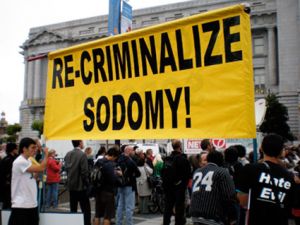
re-criminalize-sodomy

Anti-gay Christian protestors outside the Supreme Court

Friends of Padre Steve’s World

In the next day or two, Kim Davis, the Recalcitrant County Clerk of Rowan County will go back to work after Federal Appelate Court Judge Jim Bunning released her from jail after holding her in contempt of court. He released her because other clerks were issuing the marriage licences that she had refused to Gay couples. If she does not interfere with clerks who have pledged to continuing to issue the licences this will probably blow over, but if she interferes with or punishes her employees the stage is set for her quick return to jail, something that her biggest supporters including Mike Huckabee seem to want to happen. 

But lost in all of the ranting of Conservative Christians regarding their right to discriminate in the name of Jesus amen against the legal rights of Gays, Lesbians and others of the LGBTQ community is what is happening to the gays.

From the supporters of Mrs. Davis you almost always hear the claim that Gays are trying to get special rights and persecute Christians. If that claim were true, which it is not it would be troubling. Likewise the claim that Christians and others who oppose Marriage Equality are now the victims of systematic government persecution and oppression is equally fraudulent. 

Their claims to being persecuted are an affront to all Christians who have really suffered and died for their faith in Christ. Likewise the claims of Mrs. Davis’s lawyers and the politicians, pundits, and preachers who support her, that she is “like a Jew in Nazi Germany” utterly demeans the lives of the Jews persecuted by the Nazis in the 1930s and the six-million Jews slaughtered by them during the 1940s. 

The claims of these so-called Christians are repugnant and embarrassing. Any Christian with a modicum of honesty, integrity, and ethics should publically repudiate then. Sadly, most, caught up in the emotions generated by the rabid anti-gay politicians, pundits and preachers, don’t know enough history, fact, or Christian theology to do anything else but to follow these charlatans as they lead the church to the abyss, just as the leaders of German churches did during the Nazi era. 

The fact is, that for the first time in our history Gays and others of the LGBTQ community have almost equal rights to all other Americans citizens, the rights so eloquently written in the Declaration of Independence by Thomas Jefferson that “all men are created equal, that they are endowed by their Creator with certain unalienable Rights, that among these are Life, Liberty and the pursuit of Happiness. – That to secure these rights, Governments are instituted among Men….”
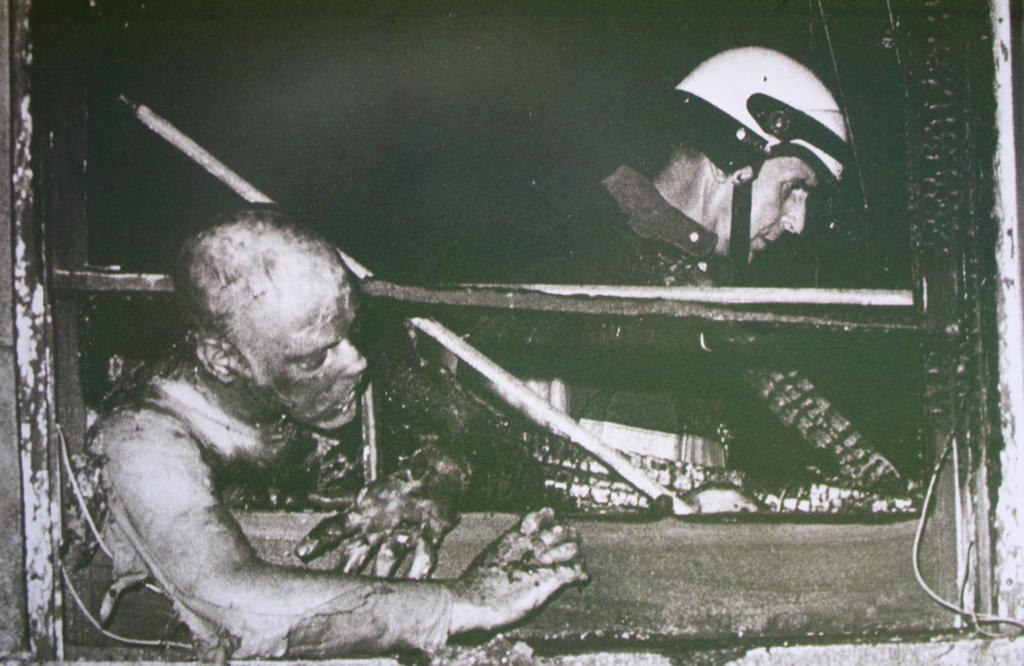
upstairs lounge massacre

Burned bodies of gay men after the Up Stairs Lounge in New Orleans was attacked in 1973, 32 men died. The suspect, a gay man who had been thrown out escaped police custody. Witness testimony was dismissed by investigators. Media buried the story while talk radio hosts mocked the victims. No one cared, even most churches which refused funerals for victims because they were gay

And which were finally enshrined in the Constitution by the 14th Amendment, an amendment which from the time it was ratified has been hated by the opponents of liberty for people that they despise, be it based on race, color, religion, nationality, gender or sexual preference. That amendment is precious and there are some co-called conservatives who actually want to get rid of it. I think that it should be memorized by everyone who believes in freedom:

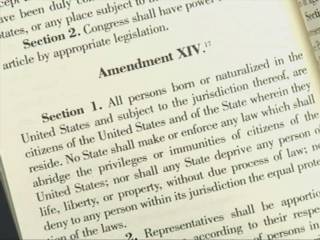
“All persons born or naturalized in the United States, and subject to the jurisdiction thereof, are citizens of the United States and of the state wherein they reside. No state shall make or enforce any law which shall abridge the privileges or immunities of citizens of the United States; nor shall any state deprive any person of life, liberty, or property, without due process of law; nor deny to any person within its jurisdiction the equal protection of the laws.”

So, Gays are getting rights that they never had before and their critics whine about being oppressed and persecuted for trying to use their religion to deny those legal rights. But how is the right to deny legal rights to others a sign of oppression? I guess it is if you believe that your religious rights trump all other rights because God trump’s all, except maybe Trump.
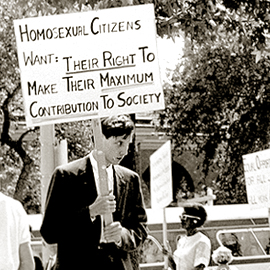
Mini-StonewallGay Rights protest in 1965

But really, I want you to try to imagine what real oppression is like, that is the official, government sanctioned oppression that Gays went through, until very recent times. I guess if you never served alongside honorable people who put their lives on the line for their country, but who could be tried as criminals simple because someone outed them as being Gay it wouldn’t occur to you why this is so important. But government sanctioned oppression and even violence was a fact of life for gays until very recent times, and this is the kind of country that Kim Davis and the preachers, politicians and pundits who support her would like to return.

Imagine if your activities were monitored, catalogued and reported by local, state and Federal police agencies.

Imagine that police detectives and informants were allowed to spy on your activities.

Imagine that police, acting in the “name of the law” under the merest pretense or spurious accusation could invade your home, business or institution and use physical violence to subdue you, even if you had done nothing wrong.

Imagine if a business rival or a spurned lover desired to ruin you, your business, or your career and professional reputation with only an accusation.

Imagine if the price of your freedom was to name names and condemn others.

Imagine if even suspicion of your activities was considered as grounds for termination of your employment, or prevent you from receiving a promotion.

Imagine if those same suspicions could brand you as a felon with the results of being forbidden to vote, the loss of property and employment rights. 

Imagine that if you went to a bar that if you looked in any direction but straight ahead that you could be charged with accosting others.

Imagine that anyone, anywhere who had knowledge of your behaviors could use that knowledge to have you kicked out of the military, law enforcement or government employment, usually with a felony conviction. 

Imagine that your behavior, even discrete behavior in your own residence could get you locked in a psychiatric hospital and quite possibly the use of drugs and surgery to to include, lobotomy, castration or chemical sterilization “correct your illness” without your consent. 

Imagine if you were a faithful member of your church, were conservative in your theology and politics and supported all the causes of that body, but one aspect of your behavior could lead to your excommunication and banishment from that community. 
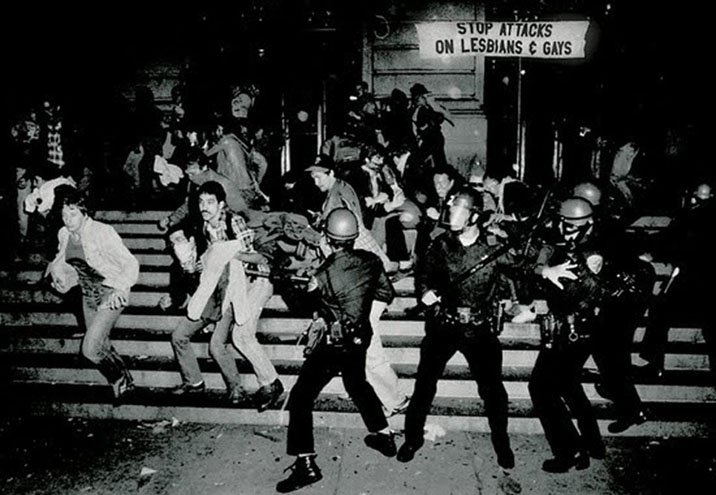
stonewall-riots

Police attack Gays in San Francisco during the White Night riot on May 21st 1979. 

I guess if it was your behavior or your beliefs that led to such treatment you would cry foul, you would protest, that you would claim that you were the victim of discrimination; and my friend I say that you would be correct. That would be persecution. Sadly the Kim Davis and those claiming to be victims of “massive anti-Christian” persecution are only being prohibited from crushing the freedom and liberty of people who they consider sinners, not from practicing their faith in any way.

That my friends was the America and Great Britain that Gays lived in the 1950’s, 1960’s and 1970’s, portions of which remained enshrined in law until very recently and which a number of high powered and influential politicians, pundits and preachers of the Christian Right would like to go again.

Sadly there are young Gays and Lesbians who take the rights that those who went before them for granted. Thankfully, they have grown up in a more tolerant society, but few know what happened to people just like them in the not too distant past. It should not be forgotten. 

So, when you think about those special “legal rights” being given to a “vocal minority who want to destroy America” ask which America? The one where we all enjoy the right to Life, Liberty and the pursuit of Happiness or the one that denies those rights to certain types of people who have done nothing wrong other than being who they are. Of course those who seek to abridge these basic human rights and freedoms, almost all do so in the name of their God and religion which they use to buttress and validate their prejudice and hatred.

Think about it.

Peace

Padre Steve+

7 Comments

Filed under civil war, History, laws and legislation, LGBT issues, News and current events, Political Commentary

With Bible in Hand: Anti-Gay Christians & Religious Tyranny

WCPO_Fort_Thomas_Kim_Davis_rally5_1441659156589_23696760_ver1.0_640_480

Protesters outside Judge Bunning’s Home

Friends of Padre Steve’s World,

As I write this I can almost hear people echoing these words of Reverend Brown in the movie Inherit the Wind being uttered by some of my less than happy readers against me:  “Oh, Lord of the tempest and the thunder, strike down this sinner, as thou did thine enemies of old in the days of the Pharaohs! Let him know the terror of thy sword! Let his soul, for all eternity, writhe in anguish and damnation!”

But then, what’s new? Since I have stopped the hijacking of the site by such commentators that is all they can do. I tolerated their crap for too long, my generosity was treated with contempt, so screw them. I totally agree with the words of Frederick Douglass who wrote:

“Indeed, I can see no reason, but the most deceitful one, for calling the religion of this land Christianity. I look upon it as the climax of all misnomers, the boldest of all frauds, and the grossest of all libels…He who is the religious advocate of marriage robs whole millions of its sacred influence, and leaves them to the ravages of wholesale pollution. The warm defender of the sacredness of the family relation is the same that scatters whole families, — sundering husbands and wives, parents and children, sisters and brothers, — leaving the hut vacant and the heart desolate. “

According to some readers I represent and stand alongside a vocal minority that is intent on destroying America, minority that is despised and hated by many people in the name of their God. The group I speak of are homosexuals, and their supporters which include me, as well as those people who actually support the rule of law in this country. The 14th Amendment, which was the basis of the Supreme Court’s majority ruling in the case of Obergfell v. Hodges, the ruling which legalized Marriage Equality in all 50 States says:

“All persons born or naturalized in the United States, and subject to the jurisdiction thereof, are citizens of the United States and of the state wherein they reside. No state shall make or enforce any law which shall abridge the privileges or immunities of citizens of the United States; nor shall any state deprive any person of life, liberty, or property, without due process of law; nor deny to any person within its jurisdiction the equal protection of the laws.”

Sadly, the opponents of Marriage Equality, or for that matter of any kind of civil rights for Gays use the same arguments against the rights of Gays that their Christian ancestors, in both the North and the South did to defend the institution of Southern Slavery. In His book Christianity’s Dangerous Idea, British Evangelical-Anglican theologian Alister McGrath observes how “the arguments used by the pro-slavery lobby represent a fascinating illustration and condemnation of how the Bible may be used to support a notion by reading the text within a rigid interpretive framework that forces predetermined conclusions to the text.” Then he asks a dangerous question, a very important question for modern Christians who might be tempted to support a position using the Bible to deny the rights of others for the same reasons today, “Might not the same mistakes be made all over again, this time over another issue?”

When I see the rabid politicians, preachers and pundits supporting the right of a public official to violate the civil liberties of others in the name of their interpretation of scripture, it is troubling. In this case they support Kim Davis, the Recalcitrant County Clerk of Rowan County Kentucky. Mrs. Davis violated the oaths of office that she took, defied the Governor of Kentucky, as well the rulings of multiple courts including the Supreme Court of the United States and was jailed on contempt of court charges.

integration is a sin

It wasn’t that long ago that people used the Bible for this

Sadly I see disturbing parallels in their arguments to the arguments of Christians in the North and the South before the Civil War regarding slavery, and the disenfranchisement of newly emancipated African Americans following the Civil War, during Reconstruction and during the Jim Crow era.

The supporters of Mrs. Davis view the world through the lens of Manichean dualism. Those who agree with them, agree with God and those who do not, are evil, and deserving of no liberty, nor life. Before the Civil War, Southern theologian James Henley Thornwell presented the conflict between northern evangelical abolitionists and southern evangelical defenders of slavery in Manichean terms. He and many others believed that by arguing for abolition that Christian abolitionists attacked religion itself. It was not just an attack on their belief in validity of the institution of slavery, it was an attack on their faith. Thornwell wrote:

“The “parties in the conflict are not merely abolitionists and slaveholders,…They are atheists, socialists, communists, red republicans, Jacobins, on one side, and friends of order and regulated freedom on the other. In one word, the world is the battle ground – Christianity and Atheism as the combatants; and the progress of humanity at stake.”

Thornwell was joined by Robert Lewis Dabney, a southern Presbyterian pastor who later served as Chief of Staff to Stonewall Jackson in the Valley Campaign and at Seven Pines and who remained a strident defender of slavery, and opponent of civil rights for blacks long after the war was over. Dabney’s words remind me very much of the words of the militants speaking up for Mrs. Davis and condemning all who support the rights of Gays. Dabney wrote:

“we must go before the nation with the Bible as the text and ‘Thus saith the Lord’ as the answer….we know that on the Bible argument the abolition party will be driven to reveal their true infidel tendencies. The Bible being bound to stand on our side, they have to come out and array themselves against the Bible. And then the whole body of sincere believers at the North will have to array themselves, though unwillingly, on our side. They will prefer the Bible to abolitionism.”

But I think one of the most reveling are the words spoken by the Reverend William Leacock of Christ Church, New Orleans declared in his Thanksgiving sermon of 1860:

“Our enemies…have “defamed” our characters, “lacerated” our feelings, “invaded “our rights, “stolen” our property, and let “murderers…loose upon us, stimulated by weak or designing or infidel preachers. With “the deepest and blackest malice,” they have “proscribed” us “as unworthy members… of the society of men and accursed before God.” Unless we sink to “craven” beginning that they “not disturb us,…nothing is now left us but secession.”

The very personal nature of Leacock’s complaint in his sermon about abolitionists following the election of Abraham Lincoln in 1860 is startling when you compare it to the words of so many anti-LBGT politicians, pundits and preachers, some of who even urge civil war and secession if they do not get their way. Mike Huckabee says that Davis being jailed on contempt of court charges “removes all doubt of the criminalization of Christianity in our country.”

The invective against Judge Bunning, a Republican who was appointed to the bench by George W. Bush, and all who support the law is reaching the level where frustrated supporters will resort to violence. It has happened before. In fact, one of the leaders, of the protest outside Judge Bunning’s home yesterday on charges of “violating the law of God” was the Reverend Flip Benham. Benham is no stranger to precipitating violence against those he deems violators of God’s law by stoking the fear and anger of his followers. In 2009 one of those followers, murdered a doctor who performed late term abortions in the man’s church. Likewise, Benham has stalked others and he has defended the murderer of others. If he can motivate people to kill abortion providers, why not gays and their supporters? Thus I have legitimate concerns for the safety of Judge Bunning and anyone who gets in the way of Benham and his followers.

Mrs. Davis was released jail yesterday, and ordered her not to interfere with the issuing of gay marriage licenses. Judge Bunning released her because he was satisfied  that her office is “fulfilling its obligation to issue marriage licenses to all legally eligible couples.” Her supporters will claim this as a victory, but it will not change the law, and I imagine that if she interferes with her subordinates, Judge Bunning says that she will end up back in jail. She and her lawyers and Mike Huckabee exited the jail to the cheers of their supporters. Their words and actions showed a arrogance and defiance of law that only American Christians of our era, as well as the ante-Bellum South, and the Reconstruction and Jim Crow eras seem capable. We will see what happens, I am not optimistic so long there is a dollar and political point to be gained. 

With this “victory” the lawyers who led her down the primrose path to jail will move on and leave Mrs. Davis behind if she complies with Judge Bunning’s order. Their “success” will encourage others to do the same. These politicians, preachers and pundits who led this charge want a conflict, and they need a conflict to legitimize themselves. They also need it to make lots of money donated by their followers without accomplishing anything. They hate Gays, and liberals and make their money playing the victim, when it is they who seek to deny the rights of others. One of their most influential writers, an adviser to Rand and Ron Paul expressly said so:

“The long-term goal of Christians in politics should be to gain exclusive control over the franchise. Those who refuse to submit publicly to the eternal sanctions of God by submitting to His Church’s public marks of the covenant–baptism and holy communion–must be denied citizenship, just as they were in ancient Israel.”

North’s words apply to everyone who stands against his interpretation of Christian Dominionism.

But with Bible in hand they will go forward, and I am reminded of the words of Atticus Finch in To Kill a Mockingbird:

“Sometimes the Bible in the hand of one man is worse than a whiskey bottle in the hand of (another)… There are just some kind of men who – who’re so busy worrying about the next world they’ve never learned to live in this one, and you can look down the street and see the results.”

These people are a scary bunch. Their right to discriminate against others based on their religious beliefs matters more than the Constitution, and matters more than bearing a true witness of God’s love to the world.

Peace

Padre Steve+


3 Comments

Filed under civil rights, faith, laws and legislation, LGBT issues, News and current events, Political Commentary

The Klan, the Courts & White Rule: The End of Freedom

Friends of Padre Steve’s World

Today I am completing, for now anyway, my series on what happened after the Civil War which is taken from my Gettysburg Staff Ride and Civil War text. Of course this included the passage of three incredibly revolutionary Constitutional amendments, an attempt to equalize the playing field for African Americans and a conservative backlash against these attempts. It was a time when the freedom for all was trumped by racism, social Darwinism as well as ruthless and corrupt capitalism which caused some of the greatest economic depressions in United States history.

This article deals with that time and why it matters today. Sadly, this period is again being deliberately written out of our history books by conservative pseudo-historians as well as state boards of education, like that of Texas which has written this out of our history. That my friends will be disastrous, as historian George Santayana wrote “Those who cannot remember the past are doomed to repeat it.” That is a reason, even in spite of some criticism that I write.  

Tomorrow I plan on writing an article about why I write. 

Have a great weekend and a very reflective day.

Peace

Padre Steve+

voting

The legislation enacted by Congress to declare African Americans free and end slavery, the Thirteenth Amendment; to recognize them as citizens, the Fourteenth Amendment; and to give African American men the right to vote, the Fifteenth Amendment were revolutionary documents. Taken together the three constitutional amendments promised equality to African Americans, but that equality under the Constitution was soon erased.

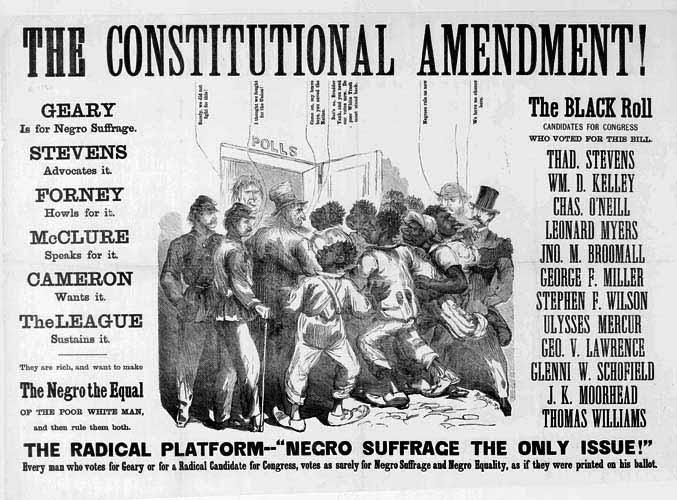
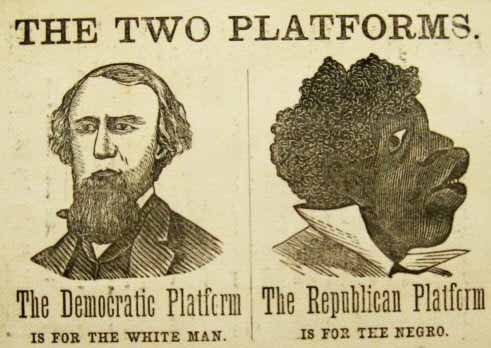
After Reconstruction officially ended in 1877 Democratic politicians in every state in the South worked to roll back these rights. They did so with the active support of conservative Northern businessmen and politicians and through the quiet apathy of most Northerners who simply wanted to move along and forget the Civil War and Reconstruction in the name of reconciliation and Manifest Destiny which now included join ing ranks with European colonial powers. The political and business leaders of South and North worked to roll back the new rights which had been granted to African Americans, and this ensured that the “resurrected South would look a great deal like the Old South, a restored regime of white supremacy, patriarchy, and states’ rights. This political and cultural principles became holy tenants, dissent from which threatened redemption.” [1] The means used to regain this in included state legislation against blacks, violence committed by people associated with racist terrorist groups such as the Ku Klux Klan, and the actions of Federal Courts including the Supreme Court to regulate those rights out of existence.

blog-crow-copy

Reconstruction was officially ended in 1877 by newly elected President Rutherford B. Hayes and all Federal troops assigned to enforce it were withdrawn. Despite this, some people in the South attempted to fight for the rights of African Americans, including men like former Confederate Generals James Longstreet, William Mahone and Wade Hampton. Their motives varied and all were vilified by political opponents and in the press, the attacks on Longstreet were particularly vicious and in the Myth of the Lost Cause he is painted as a man worse than Judas Iscariot. Hampton was elected as the first post-Reconstruction governor of South Carolina in and campaigned against the black codes, and during his term in office even appointed African Americans to political offices in the state and maintained a regiment of African American state militia in Charleston against strident opposition.

While Hampton remained a white supremacist and used the Red Shirt militia to help in his election as Governor of South Carolina, he disappointed many of his white supremacist supporters.  Hampton, despite his past, was also was committed to the upholding the law and “promoting the political rights to which freedmen were entitled to under law, and he consistently strove to protect those rights.” [2] This made Hampton anathema for many South Carolina politicians, including Benjamine Tillman who as governor during the 1890s dismantled policies that Hampton had introduced to allow blacks to political patronage appointments. Once he did that Tillman set out to deprive South Carolina’s blacks of almost every basic civil right, and in 1895 he led “a successful effort to rewrite the South Carolina constitution in such a way as to virtually disenfranchise every black resident of the state.” [3] Longstreet, who had become a Republican was wounded while leading Louisiana militia in an unsuccessful fight against White Leaguers in New Orleans on September 14th 1873.

HW1866P321569-2

The legislation which helped provide blacks with some measure of freedom was rolled back after Reconstruction ended. In 1883 “the Civil Rights Act of 1875, outlawing discrimination against Negroes using public facilities, was nullified by the Supreme Court, which said: “individual invasion of individual rights is not the subject-matter of the amendment.” The Fourteenth Amendment, it said, was aimed at state action only. No state shall…” [4]

The actions of the court and alliances between Northern corporations and Southern landowners led to even more discrimination and disenfranchisement for blacks, “From the 1880s onward, the post-Reconstruction white governments grew unwilling to rely just on intimidation at the ballot box and themselves in power, and turned instead to systematic legal disenfranchisement” [5] which furthered the black codes into what we now call the era of Jim Crow.

black-voter-threatening

For years after the Supreme Court’s Cruikshank decision blacks throughout the South attempted to vote despite intense opposition from Southern whites and armed bands of thugs. But with White Democrats now in charge of local government and “in control of the state and local vote-counting apparatus, resistance to black voting increasingly took the form of fraud as well as overt violence and intimidation. Men of color who cast Republican votes often found later that they had been counted for the party of white supremacy.” [6]

In 1896 the black codes were upheld by the Supreme Court in the case of Plessy v. Ferguson. That ruling established the “separate but equal” doctrine and ushered in an era of de jure segregation in almost all arenas of life including education, transportation, entertainment and health care. The limited social equity and privileges enjoyed by blacks, not only in the South, but in the entire nation were erased by the stroke of the judicial pen. The justices ruled on the concept that only people’s political rights were protected by the Constitution and that in the social arena that African-Americans could not interact with whites and assumed their racial inferiority.

101111-national-civil-rights-act-1875.jpg

Not all on the Court agreed with these rulings. One of them was Associate Justice John Harlan, who was a former slaveholder. Harlan dissented in Court’s decision to overturn the Civil Rights Act of 1875 and also in Plessy v. Ferguson. In the case of the Civil Rights Act ruling Harlan insisted that “our Constitution is color blind” [7] and wrote a strongly worded opinion:

“The destinies of two races, in this country are indissolubly linked together, and the interests of both require that the common government of all should not permit the seeds of race hate to be planted under the sanction of law. What can more certainly arouse race hate, what more certainly create and perpetuate a feeling of distrust between these races, than state enactments, which, in fact, proceed on the ground that colored citizens are so inferior and degraded that they cannot be allowed to sit in public coaches occupied by white citizens? That, as all will admit, is the real meaning of such legislation as was enacted in Louisiana.” [8]

The “separate but equal” measures of the Jim Crow era took nearly a century to reverse, and “only began to disappear with Brown v. Board of Education in 1954 and the Civil Rights and Voting Rights Acts of 1964 and 1965.” [9]

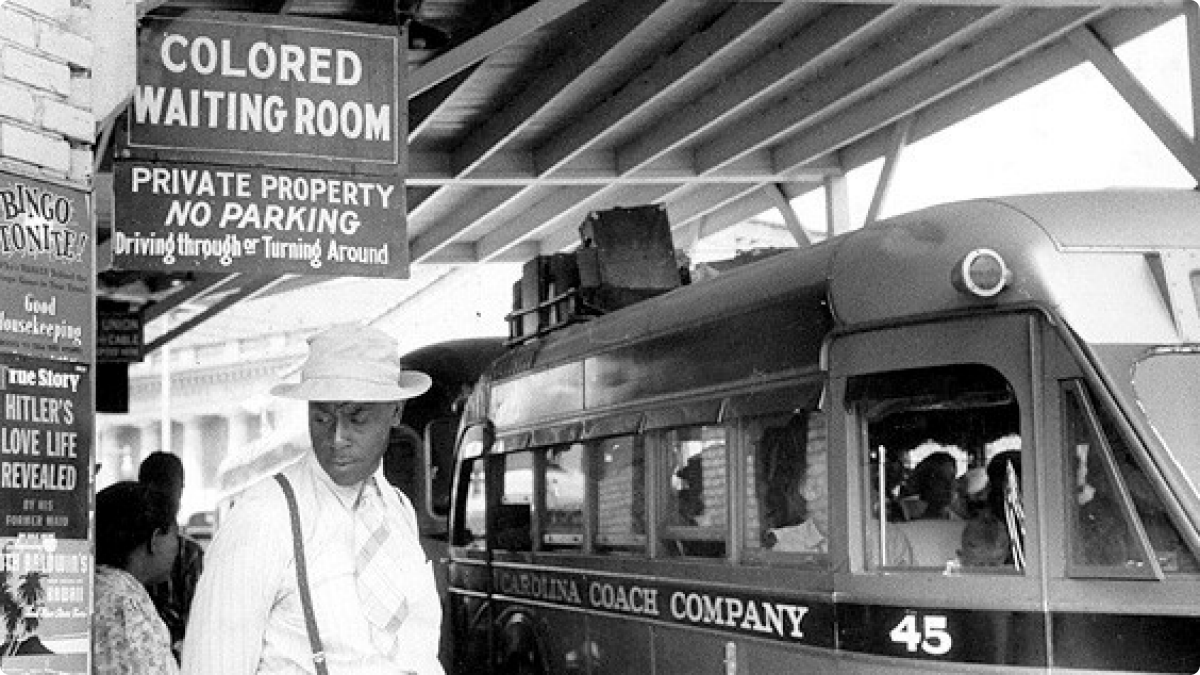
These court decisions and legislation strengthened racism and discrimination against blacks, “effectively excluding blacks from public places, from the right to votes, from good public education, and so forth.” [10] The Plessy ruling was a watershed. Southern legislators, now unencumbered by Federal interference passed “state laws mandating racial segregation in every aspect of life, from schools to hospitals, waiting rooms to toilets, drinking fountains to cemeteries…segregation was part of a complex system of white domination, in which each component – disenfranchisement, unequal economic status, inferior education – reinforced the others.” [11] For decades future courts would cite Plessy and Cruikshank as well as other decisions as precedent in deny rights to blacks. It would not be until 1954 when the Supreme Court overturned Plessy and the “Separate but Equal” Jim Crow laws in Brown v. Board of Education. Brown was a watershed for it deemed that separate schools were “inherently unequal.” The reaction across the South, especially Mississippi was stunned shock, disbelief and anger. “A Mississippi judge bemoaned “black Monday” and across the South “Citizen’s Councils” sprung up to fight the ruling. [12]

Mississippi led the way in disenfranchising black voters through the use of voter qualifications that would eliminate most blacks from the rolls of voters. In 1895 the state legislature passed a measure that would “technically apply to everybody but actually eliminate the Negro without touching the white.” [13] The move was in open defiance of the Fifteenth Amendment and resulted in tens of thousands of black voters being dropped from the rolls, in most cases under 5% of black voters who had been eligible to vote in 1885 remained eligible in 1896. Mississippi was rewarded in 1898 when the Supreme Court in Williams v. Mississippi that “there was no reason to suppose that the state’s new voting qualification were aimed specifically at Negroes.” [14] “In 1900 blacks comprised 62 percent of Mississippi, the highest percentage in the nation. Yet the state had not one black elected official.” [15]

henry_smith

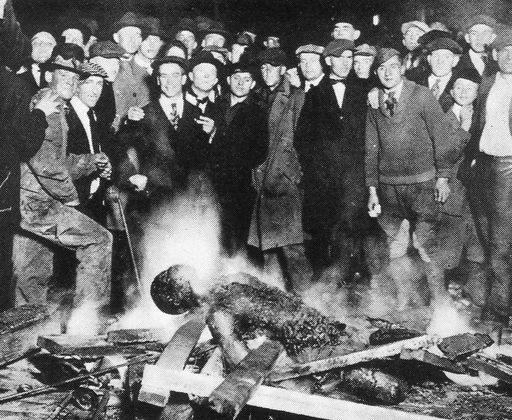
Violence was used with great effect and between 1880 and 1968 approximately 3,500 people were murdered or lynched throughout the South. This had become a far easier task and far less dangerous for the perpetrators of violence against blacks as Supreme Court “interpreted black people’s other constitutional rights almost out of existence.” [16] Since the court had “limited the federal government’s role in punishing violations of Negro rights” this duty fell to the states, which seldom occurred, and when “those officials refused to act, blacks were left unprotected.” [17]

One of these was the case of United States v. Harris where the federal prosecutors had indicted “twenty members of a Tennessee lynch mob for violating section two of the enforcement Act, which outlawed conspiracies to deprive anyone of “equal protection of the laws.” However the Court struck down section 2 because the “lynching was not a federal matter, the Court said, because the mob consisted only of private individuals.” [18]

This remained the case until the 1960s when during the Freedom Rides when Mississippi again became a battleground in the Civil Rights movement. As students and educators came to the state to help register blacks to vote in 1964. This brought generations of barely concealed hatred to the surface. Bruce Watson in his book Freedom Summer wrote:

“In Mississippi’s most remote hamlets, small “klaverns” of ruthless men met in secret to discuss the “nigger-communist invasion of Mississippi.” They stockpiled kerosene, shotguns, and dynamite, then singled out targets – niggers, Jews, “nigger-lovers.” One warm April night, their secret burst into flames. In some sixty counties, blazing crosses lit up courthouse lawns, town squares, and open fields. The Klan was rising again in Mississippi. Like “White Knights” as their splinter group was named, the Klan planned a holy war against the “dedicated agents of Satan…determined to destroy Christian civilization.” The Klan would take care of your business, a recruiting poster said. “Get you Bible out and PRAY! You will hear from us.” [19]

FBI_Poster_of_Missing_Civil_Rights_Workers

Eventual the violence of these people led to the killings of three of the organizers, Michael Schwerner, James Cheney and Andrew Goldman were killed by a group of Klansmen led by members of the Neshoba County Sheriff’s Department on June 21st 1964. The resultant search for their bodies and the subsequent investigation transfixed the nation and led to the passage of the Civil Rights and Voting Rights Acts in 1964 and 1965.

The example of Reconstruction’s failure shows that in order to secure peace that military victory must be accompanied by the political will to ensure that the avowed goals of that victory are secured after the war in ensuring a just peace. Southerners may have lost the shooting war, but they did not accept the peace. Southerners resorted to all means to reverse their military defeat through political, social, economic and judicial means and “justice was sacrificed for the unjust peace ushered in by “redemption” of the South, a peace marred by Jim Crow, poverty and lynching.” [20] Most Northern leaders failed to appreciate this until it was far too late, and hindered by President Johnson’s opposition failed to win the peace in the South when they had the best chance. They failed to appreciate that even after the shooting is often that “there is a need for further threats, and indeed action, because postwar disorder and even chaos will have to be address, and victorious allies are always likely to squabble over the spoils of victory” [21] as certain was the case in the divided Republican Party of the Reconstruction era.

Notes

[1] Ibid. Goldfield American Aflame p.403

[2] Longacre, Edward G. Gentleman and Soldier: The Extraordinary Life of General Wade Hampton Rutledge Hill Press, Nashville TN 2003 p.265

[3] Ibid. Longacre Gentleman and Soldier p.274

[4] Ibid. Zinn The Other Civil War p.57

[5] Ibid. Guelzo Fateful Lightening p.526

[6] Ibid. Lane The day Freedom Died p.251

[7] Ibid. Zinn The Other Civil War p.58

[8] LaMorte, Michael W. School Law: Cases and Concepts 9th Edition 2008 Allyn and Bacon Inc. 2008 p.300

[9] Ibid. Huntington Who are We? p.54

[10] Gonzalez, Justo L. The History of Christianity Volume 2: The Reformation to the Present Day Harper and Row Publishers San Francisco 1985 p.252

[11] Ibid. Foner Forever Free p.208

[12] Ibid. Watson Freedom Summer p.46

[13] Ibid. Lord The Past that Wouldn’t Die p.22

[14] Ibid. Lord The Past that Wouldn’t Die p.23

[15] Ibid. Watson Freedom Summer p.41

[16] Ibid. Lane The day Freedom Died p.253

[17] Ibid. Langguth After Lincoln p.338

[18] Ibid. Lane The day Freedom Died p.253

[19] Ibid. Watson Freedom Summer p.12

[20] Ibid. McPherson The War that Forged a Nation p. 191

[21] Ibid. Gray Fighting Talk p.14

1 Comment

Filed under civil rights, civil war, History, Political Commentary

The Revolutionary & Important 14th Amendment

Friends of Padre Steve’s World

As I work on my Civil War and Gettysburg text I continue to write about truth, and truth can be very uncomfortable. Today is a section of my text that deals with the Black Codes that were enacted in Southern States in the immediate aftermath of the Civil War. They sprang up because Abraham Lincoln’s successor, Andrew Johnson was a unregenerate racist who encouraged such measures.  In the next few days I will be posting more sections of the text dealing with specific aspects of Reconstruction and the more often than not heavily racist opposition to rights of any kind being granted to blacks in the North and the South. 

Sadly, there are people today, people who were expensive suits, walk the halls of Congress, speak in our largest churches and travel in high style accompanied by the media who continue to fight against the rights of not only blacks, but of immigrants, the LGBTQ community, women and Moslems.

The fact is that the Fourteenth Amendment is hated by many who call themselves “conservatives.” Many suggest that it be repealed, in fact if you go to Google images and type in Fourteenth Amendment you will find a myriad of pictures, bumper stickers and comments by these “conservatives” who despise the amendment. But sadly, that has become the nature of conservatism in the United States, many of who do not even understand why it had to be enacted in the first place, and if they do, agree with the people who opposed it for racist reasons in 1866. That may sound harsh, but I spent the better part of my adult life in the this conservative world and thankfully, I am free. 

Have a great night,

Peace

Padre Steve+

14-amendment

The situation for newly emancipated blacks in the South continued to deteriorate as the governors appointed by President Johnson supervised elections which elected new governors and all-white legislatures composed chiefly of former Confederate leaders. Freedom may have been achieved, but the question as to what it meant was still to be decided, “What is freedom?” James A. Garfield later asked. “Is it the bare privilege of not being chained?… If this is all, then freedom is a bitter mockery, a cruel delusion.” [1] The attitude of the newly elected legislatures and the new governors toward emancipated blacks was shown by Mississippi’s new governor, Benjamin G. Humphreys, a former Confederate general who was pardoned by Andrew Johnson in order to take office. In his message to the legislature Humphreys declared:

“Under the pressure of federal bayonets, urged on by the misdirected sympathies of the world, the people of Mississippi have abolished the institution of slavery. The Negro is free, whether we like it or not; we must realize that fact now and forever. To be free does not make him a citizen, or entitle him to social or political equality with the white man.” [2]

Johnson’s continued defiance of Congress alienated him from the Republican majority who passed legislation over Johnson’s veto to give black men the right to vote and hold office, and to overturn the white only elections which had propelled so many ex-Confederates into political power. Over Johnson’s opposition Congress took power over Reconstruction and “Constitutional amendments were passed, the laws for racial equality were passed, and the black man began to vote and to hold office.” [3] Congress passed measures in 1867 that mandated that the new constitutions written in the South provide for “universal suffrage and for the temporary political disqualification of many ex-Confederates.” [4] As such many of the men elected to office in 1865 were removed from power, including Governor Humphreys who was deposed in 1868.

These measures helped elect bi-racial legislatures in the South which for the first time enacted a series of progressive reforms including the creation of public schools. “The creation of tax-supported public school systems in every state of the South stood as one of Reconstruction’s most enduring accomplishments.” [5] By 1875 approximately half of all children in the South, white and black were in school. While the public schools were usually segregated and higher education in tradition White colleges was restricted, the thirst for education became a hallmark of free African Americans across the county. In response to discrimination black colleges and universities opened the doors of higher education to many blacks. Sadly, the public primary school systems which were created during Reconstruct were rapidly defunded by Southern states after the end of Reconstruction.

They also ratified the Thirteenth and the Fourteenth Amendments, but these governments, composed of Southern Unionists, Northern Republicans and newly freed blacks were “elicited scorn from the former Confederates and from the South’s political class in general.” [6] Seen as an alien presence by most Southerners the Republican governments in the South faced political and was as violent opposition.

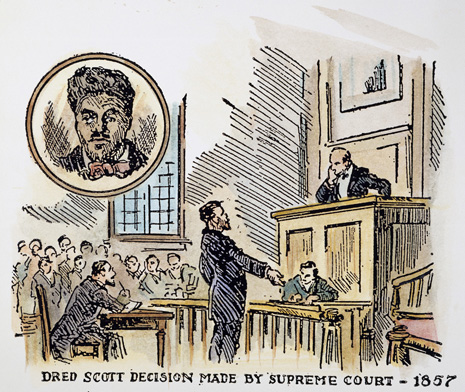
ROGER B. TANEY (1777-1864).  Roger Taney, Chief Justice of the U.S. Supreme Court, handing down his decision on the Dred Scott case, 1857. American illustration.

ROGER B. TANEY (1777-1864).
Roger Taney, Chief Justice of the U.S. Supreme Court, handing down his decision on the Dred Scott case, 1857. American illustration.

The Fourteenth Amendment was of particular importance for it overturned the Dred Scott decision which denied citizenship to blacks. Johnson opposed the amendment and worked against its passage by campaigning for men who would oppose it in the 1866 elections. His efforts earned him the opposition of former supporters including the influential New York Herald declared that Johnson “forgets that we have passed through a fiery ordeal of a mighty revolution, and the pre-existing order of things is gone and can return no more.” [7]

Johnson signed the Amendment but never recanted his views on the inferiority of non-white races. In his final message to Congress he wrote that even “if a state constitution” gave Negroes the right to vote, “it is well-known that a large portion of the electorate in all the States, if not a majority of them, do not believe in or accept the political equality of Indians, Mongolians, or Negroes with the race to which they belong.” [8]

When passed by Congress the amendment was a watershed which would set Constitutional precedent for future laws. These would include giving both women and Native Americans women the right to vote. It would also be used by the Supreme Court in the 1954 Brown v. Board of Education decision which ended the use of “separate but equal” and overturned many other Jim Crow laws. It helped lead to the passage of the Voting Rights Act of 1964 and the Civil Rights Act of 1965, and most recently was the basis of the Supreme Court decision in Obergfell v. Hodges which give homosexuals the right to marry. Section one of the amendment read:

“All persons born or naturalized in the United States, and subject to the jurisdiction thereof, are citizens of the United States and of the state wherein they reside. No state shall make or enforce any law which shall abridge the privileges or immunities of citizens of the United States; nor shall any state deprive any person of life, liberty, or property, without due process of law; nor deny to any person within its jurisdiction the equal protection of the laws.” [9]

Even so, for most white Southerners freedom for African Americans was not the same as freedom for whites, as while whites might grant the black man freedom, they had no intention of allowing him the same legal rights as white men.” [10] As soon as planters returned to their lands they “sought to impose on blacks their definition of freedom. In contrast to African Americans’ understanding of freedom as a open ended ideal based on equality and autonomy, white southerners clung to the antebellum view that freedom meant mastery and hierarchy; it was a privilege, not a universal right, a judicial status, not a promise of equality.” [11] In their systematic efforts to deny true freedom for African Americans these Southerners ensured that blacks would remain a lesser order of citizen, enduring poverty, discrimination, segregation and disenfranchisement for the next century.

Notes

[1] Ibid. Foner A Short History of Reconstruction p.30

[2] Ibid. Lord The Past that Would Not Die pp.11-12

[3] Ibid. Zinn The Other Civil War p.54

[4] Ibid. McPherson The War that Forged a Nation p. 178

[5] Ibid. Foner Forever Free p.162

[6] Perman, Michael Illegitimacy and Insurgency in the Reconstructed South in The Civil War and Reconstruction Documents and Essays Third Edition edited by Michael Perman and Amy Murrell Taylor Wadsworth Cengage Learning Boston MA 2011 p.451

[7] Ibid. Foner Forever Free p.121

[8] Ibid. Langguth After Lincoln p.232

[9] _____________ The 14th Amendment to the U.S. Constitution retrieved from https://www.law.cornell.edu/constitution/amendmentxiv 29 June 2015

[10] Ibid. Carpenter Sword and Olive Branch p.93

[11] Ibid. Foner Forever Free p.92


Leave a comment

Filed under civil rights, civil war, History, Political Commentary

Justice Sacrificed on the Altar of Peace: Rolling Back Freedom after Reconstruction

Friends of Padre Steve’s World

The legislation enacted by Congress to declare African Americans free, the Thirteenth Amendment; to recognize them as citizens, the Fourteenth Amendment; and to give African American men the right to vote, the Fifteenth Amendment were revolutionary documents. However, after Reconstruction ended every state in the South, with the acquiescence of Northern businessmen and politicians worked to roll back those rights. The means included state legislation, violence committed by people associated with racist terrorist groups such as the Ku Klux Klan, and the actions of Federal Courts including the Supreme Court to regulate those rights out of existence.

This is as important to recognize now as it was then, for those who oppose the rights of basic equality never stop doing so. Even today there are politicians, pundits and preachers, those that I refer to as the Trinity of Evil who seek to roll back or even overturn things like the Voting Rights Act of 1964, or who oppose equal rights for women, non-white immigrants and Gays.

So tonight I am posting a section of my Civil War and Gettysburg text dealing with the concerted efforts of men who after the Civil War and Reconstruction did all that they could to put African Americans back in a social and economic condition that was little different than slavery.

Expect more on this tomorrow,

Peace

Padre Steve+

NormanRockwellSouthernJustice-1

Norman Rockwell’s Southern Justice

Reconstruction was officially ended in 1877 by newly elected President Rutherford B. Hayes and all Federal troops assigned to enforce it were withdrawn. Despite this, some people in the South attempted to fight for the rights of African Americans, including men like former Confederate Generals James Longstreet, William Mahone and Wade Hampton. Their motives varied and all were vilified by political opponents and in the press, the attacks on Longstreet were particularly vicious and in the Myth of the Lost Cause he is painted as a man worse than Judas Iscariot. Hampton was elected as the first post-Reconstruction governor of South Carolina in and campaigned against the black codes, and during his term in office even appointed African Americans to political offices in the state and maintained a regiment of African American state militia in Charleston against strident opposition.

While Hampton remained a white supremacist he also was committed to the upholding the law and “promoting the political rights to which freedmen were entitled to under law, and he consistently strove to protect those rights.” [1] This made Hampton anathema for many South Carolina politicians, including Benjamine Tillman who as governor during the 1890s dismantled policies that Hampton had introduced to allow blacks to political patronage appointments. Once he did that Tillman set out to deprive South Carolina’s blacks of almost every basic civil right, and in 1895 he led “a successful effort to rewrite the South Carolina constitution in such a way as to virtually disenfranchise every black resident of the state.” [2] Longstreet, who had become a Republican was wounded while leading Louisiana militia in an unsuccessful fight against White Leaguers in New Orleans on September 14th 1873.

The legislation which helped provide blacks with some measure of freedom was rolled back after Reconstruction ended. In 1883 “the Civil Rights Act of 1875, outlawing discrimination against Negroes using public facilities, was nullified by the Supreme Court, which said: “individual invasion of individual rights is not the subject-matter of the amendment.” The Fourteenth Amendment, it said, was aimed at state action only. No state shall…” [3]

The actions of the court and alliances between Northern corporations and Southern landowners led to even more discrimination and disenfranchisement for blacks, “From the 1880s onward, the post-Reconstruction white governments grew unwilling to rely just on intimidation at the ballot box and themselves in power, and turned instead to systematic legal disenfranchisement” [4] which furthered the black codes into what we now call the era of Jim Crow.

For years after the Supreme Court’s Cruikshank decision blacks throughout the South attempted to vote despite intense opposition from Southern whites and armed bands of thugs. But with White Democrats now in charge of local government and “in control of the state and local vote-counting apparatus, resistance to black voting increasingly took the form of fraud as well as overt violence and intimidation. Men of color who cast Republican votes often found later that they had been counted for the party of white supremacy.” [5]

In 1896 the black codes were upheld by the Supreme Court in the case of Plessy v. Ferguson. That ruling established the “separate but equal” doctrine and ushered in an era of de jure segregation in almost all arenas of life including education, transportation, entertainment and health care. The limited social equity and privileges enjoyed by blacks, not only in the South, but in the entire nation were erased by the stroke of the judicial pen. The justices ruled on the concept that only people’s political rights were protected by the Constitution and that in the social arena that African-Americans could not interact with whites and assumed their racial inferiority.

Not all on the Court agreed with these rulings. One of them was Associate Justice John Harlan, who was a former slaveholder. Harlan dissented in Court’s decision to overturn the Civil Rights Act of 1875 and also in Plessy v. Ferguson. In the case of the Civil Rights Act ruling Harlan insisted that “our Constitution is color blind” [6] and wrote a strongly worded opinion:

“The destinies of two races, in this country are indissolubly linked together, and the interests of both require that the common government of all should not permit the seeds of race hate to be planted under the sanction of law. What can more certainly arouse race hate, what more certainly create and perpetuate a feeling of distrust between these races, than state enactments, which, in fact, proceed on the ground that colored citizens are so inferior and degraded that they cannot be allowed to sit in public coaches occupied by white citizens? That, as all will admit, is the real meaning of such legislation as was enacted in Louisiana.” [7]

The “separate but equal” measures of the Jim Crow era took nearly a century to reverse, and “only began to disappear with Brown v. Board of Education in 1954 and the Civil Rights and Voting Rights Acts of 1964 and 1965.” [8]

These court decisions and legislation strengthened racism and discrimination against blacks, “effectively excluding blacks from public places, from the right to votes, from good public education, and so forth.” [9] The Plessy ruling was a watershed. Southern legislators, now unencumbered by Federal interference passed “state laws mandating racial segregation in every aspect of life, from schools to hospitals, waiting rooms to toilets, drinking fountains to cemeteries…segregation was part of a complex system of white domination, in which each component – disenfranchisement, unequal economic status, inferior education – reinforced the others.” [10] For decades future courts would cite Plessy and Cruikshank as well as other decisions as precedent in deny rights to blacks. It would not be until 1954 when the Supreme Court overturned Plessy and the “Separate but Equal” Jim Crow laws in Brown v. Board of Education. Brown was a watershed for it deemed that separate schools were “inherently unequal.” The reaction across the South, especially Mississippi was stunned shock, disbelief and anger. “A Mississippi judge bemoaned “black Monday” and across the South “Citizen’s Councils” sprung up to fight the ruling. [11]

Mississippi led the way in disenfranchising black voters through the use of voter qualifications that would eliminate most blacks from the rolls of voters. In 1895 the state legislature passed a measure that would “technically apply to everybody but actually eliminate the Negro without touching the white.” [12] The move was in open defiance of the Fifteenth Amendment and resulted in tens of thousands of black voters being dropped from the rolls, in most cases under 5% of black voters who had been eligible to vote in 1885 remained eligible in 1896. Mississippi was rewarded in 1898 when the Supreme Court in Williams v. Mississippi that “there was no reason to suppose that the state’s new voting qualification were aimed specifically at Negroes.” [13] “In 1900 blacks comprised 62 percent of Mississippi, the highest percentage in the nation. Yet the state had not one black elected official.” [14]

Violence was used with great effect and between 1880 and 1968 approximately 3,500 people were murdered or lynched throughout the South. This had become a far easier task and far less dangerous for the perpetrators of violence against blacks as Supreme Court “interpreted black people’s other constitutional rights almost out of existence.” [15] Since the court had “limited the federal government’s role in punishing violations of Negro rights” this duty fell to the states, which seldom occurred, and when “those officials refused to act, blacks were left unprotected.” [16]

One of these was the case of United States v. Harris where the federal prosecutors had indicted “twenty members of a Tennessee lynch mob for violating section two of the enforcement Act, which outlawed conspiracies to deprive anyone of “equal protection of the laws.” However the Court struck down section 2 because the “lynching was not a federal matter, the Court said, because the mob consisted only of private individuals.” [17]

This remained the case until the 1960s when during the Freedom Rides when Mississippi again became a battleground in the Civil Rights movement. As students and educators came to the state to help register blacks to vote in 1964. This brought generations of barely concealed hatred to the surface. Bruce Watson in his book Freedom Summer wrote:

“In Mississippi’s most remote hamlets, small “klaverns” of ruthless men met in secret to discuss the “nigger-communist invasion of Mississippi.” They stockpiled kerosene, shotguns, and dynamite, then singled out targets – niggers, Jews, “nigger-lovers.” One warm April night, their secret burst into flames. In some sixty counties, blazing crosses lit up courthouse lawns, town squares, and open fields. The Klan was rising again in Mississippi. Like “White Knights” as their splinter group was named, the Klan planned a holy war against the “dedicated agents of Satan…determined to destroy Christian civilization.” The Klan would take care of your business, a recruiting poster said. “Get you Bible out and PRAY! You will hear from us.” [18]

Eventual the violence of these people led to the killings of three of the organizers, Michael Schwerner, James Cheney and Andrew Goldman were killed by a group of Klansmen led by members of the Neshoba County Sheriff’s Department on June 21st 1964. The resultant search for their bodies and the subsequent investigation transfixed the nation and led to the passage of the Civil Rights and Voting Rights Acts in 1964 and 1965.

The example of Reconstruction’s failure shows that in order to secure peace that military victory must be accompanied by the political will to ensure that the avowed goals of that victory are secured after the war in ensuring a just peace. Southerners may have lost the shooting war, but they did not accept the peace. Southerners resorted to all means to reverse their military defeat through political, social, economic and judicial means and “justice was sacrificed for the unjust peace ushered in by “redemption” of the South, a peace marred by Jim Crow, poverty and lynching.” [19] Most Northern leaders failed to appreciate this until it was far too late, and hindered by President Johnson’s opposition failed to win the peace in the South when they had the best chance. They failed to appreciate that even after the shooting is often that “there is a need for further threats, and indeed action, because postwar disorder and even chaos will have to be address, and victorious allies are always likely to squabble over the spoils of victory” [20] as certain was the case in the divided Republican Party of the Reconstruction era.

Notes

[1] Longacre, Edward G. Gentleman and Soldier: The Extraordinary Life of General Wade Hampton Rutledge Hill Press, Nashville TN 2003 p.265

[2] Ibid. Longacre Gentleman and Soldier p.274

[3] Ibid. Zinn The Other Civil War p.57

[4] Ibid. Guelzo Fateful Lightening p.526

[5] Ibid. Lane The day Freedom Died p.251

[6] Ibid. Zinn The Other Civil War p.58

[7] LaMorte, Michael W. School Law: Cases and Concepts 9th Edition 2008 Allyn and Bacon Inc. 2008 p.300

[8] Ibid. Huntington Who are We? p.54

[9] Gonzalez, Justo L. The History of Christianity Volume 2: The Reformation to the Present Day Harper and Row Publishers San Francisco 1985 p.252

[10] Ibid. Foner Forever Free p.208

[11] Ibid. Watson Freedom Summer p.46

[12] Ibid. Lord The Past that Wouldn’t Die p.22

[13] Ibid. Lord The Past that Wouldn’t Die p.23

[14] Ibid. Watson Freedom Summer p.41

[15] Ibid. Lane The day Freedom Died p.253

[16] Ibid. Langguth After Lincoln p.338

[17] Ibid. Lane The day Freedom Died p.253

[18] Ibid. Watson Freedom Summer p.12

[19] Ibid. McPherson The War that Forged a Nation p. 191

[20] Ibid. Gray Fighting Talk p.14

1 Comment

Filed under civil rights, civil war, History, Political Commentary