Tag Archives: admiral yamamoto

They Held the Line: The USS Yorktown CV-5, USS Enterprise CV-6 and USS Hornet CV-8, Part Two the Hornet

USS Hornet CV-8 Building at Newport News VA

This is part two of a three part series about the USS Yorktown Class Aircraft Carriers. Part one serves as an introduction as well as the story of the lead ship of the Class, the USS Yorktown CV-5.  Part One about the Yorktown is located here: https://padresteve.wordpress.com/2009/12/27/they-held-the-line-the-uss-yorktown-cv-5-uss-enterprise-cv-6-and-uss-hornet-cv-8-part-one/
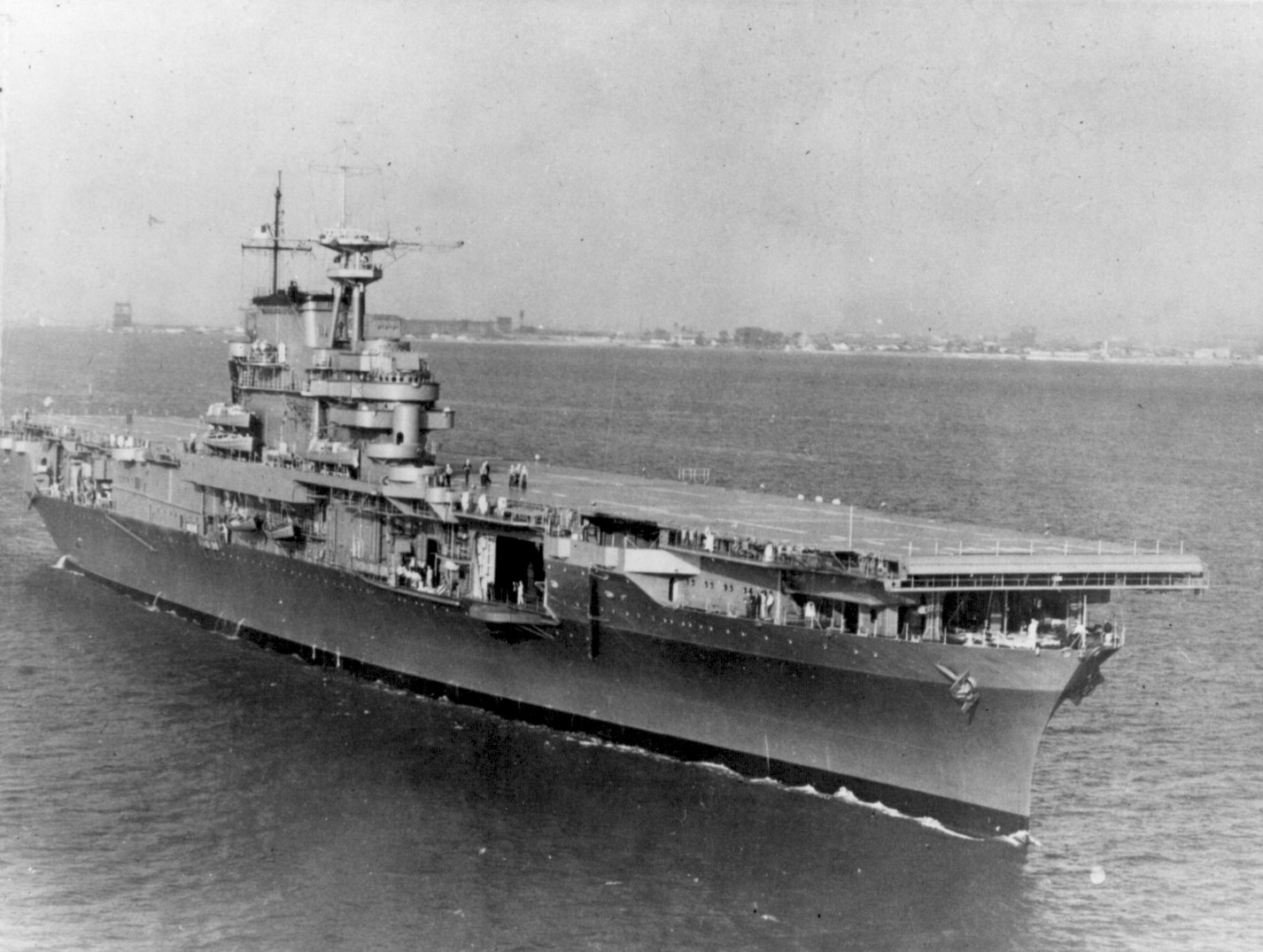
Hornet as Completed off Hampton Roads shortly after Her Commissioning

The USS Hornet CV-8 was the third ship of the Yorktown Class and is sometimes referred to as her own one ship Hornet Class.  Laid down on 25 September1939 under the Naval Expansion act of May 17th 1938, Hornet was part of the pre-war naval build up authorized by President and Congress.  The previous Yorktown design was used to speed construction.  Hornet was slightly modified from her sisters Yorktown and Enterprise being 15 feet longer, 5 feet wider in the beam and displacing about 1000 tons more than her near sisters.  Her anti-aircraft armament was also slightly improved.  As with her near sisters Hornet had good protection except that her underwater protection was weak.  However, as would be born out in combat Hornet like her sisters would prove to be extraordinarily tough.
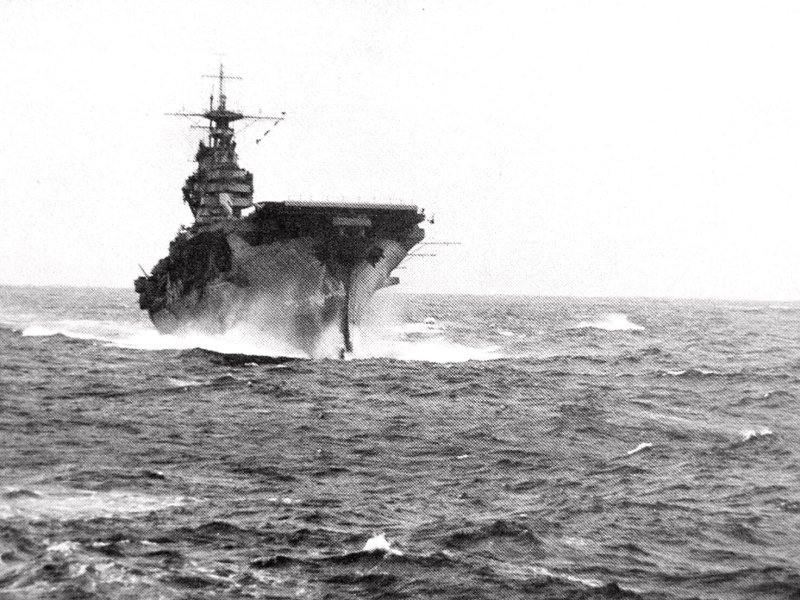
Hornet in Rough Seas Preparing to Launch the Doolittle Raid

Hornet was launched on 14 December 1940 and commissioned 25 October 1941 with Naval Aviation pioneer Captain Marc A Mitscher Commanding. Hornet conducted her initial training and air group qualifications while operating out of Norfolk.  On February 2nd two Army Air Corps B-25 Medium Bombers were loaded aboard.  As Hornet put to sea the bombers were launched to the astonishment of the crew. Hornet departed Norfolk for the Pacific where she embarked 16 B-25s under the command of Colonel Jimmy Doolittle.  Hornet’s own air group was stowed in the hanger bay.  On April 2nd Hornet departed from San Francisco for a rendezvous with Admiral Halsey’s Task Force 16 and her sister ship Enterprise.  As the ship departed Mitscher informed the crew of their mission.  Hornet would launch Colonel Doolittle’s aircraft against the heart of the Imperial Japanese Empire, Tokyo.
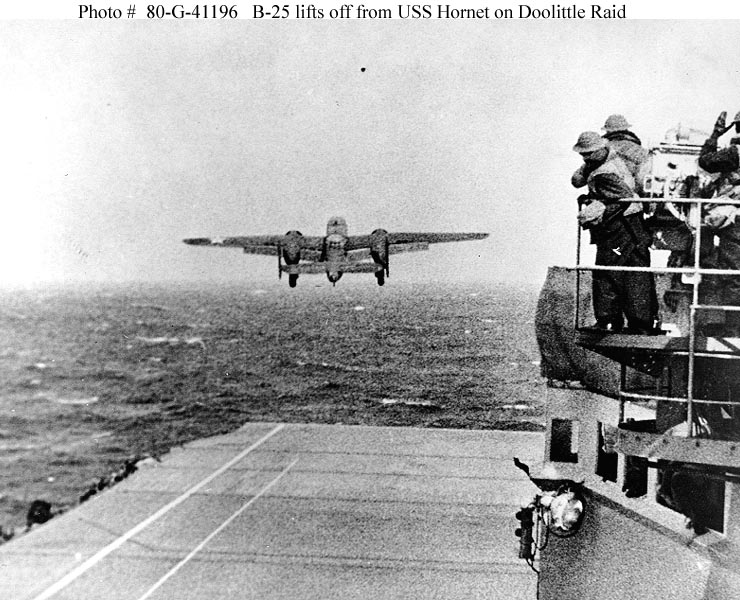
Hornet Launching B-25

The plan was for the task force to sail to 400 miles from Japan and launch the bombers. Enterprise was to provide air cover for the task force while Hornet’s air group was inaccessible while the bombers remained aboard.  On the morning of 18 April the task force was spotted by a Japanese patrol boat.  The craft was quickly dispatched by the heavy cruiser USS Nashville but not before the craft had reported the presence of the task force.  Though the task force was still 600 some miles from Japan Halsey ordered that Doolittle’s aircraft be launched against Tokyo.  The attack while militarily insignificant came as a major surprise to the Japanese who anticipating a raid by naval aircraft believed that any attack could not take place until the following day.  Even more significantly the attack stunned the Japanese military establishment, especially the Navy. The attack would provoke Admiral Yamamoto to attack Midway in order to draw out the American carriers and destroy them.
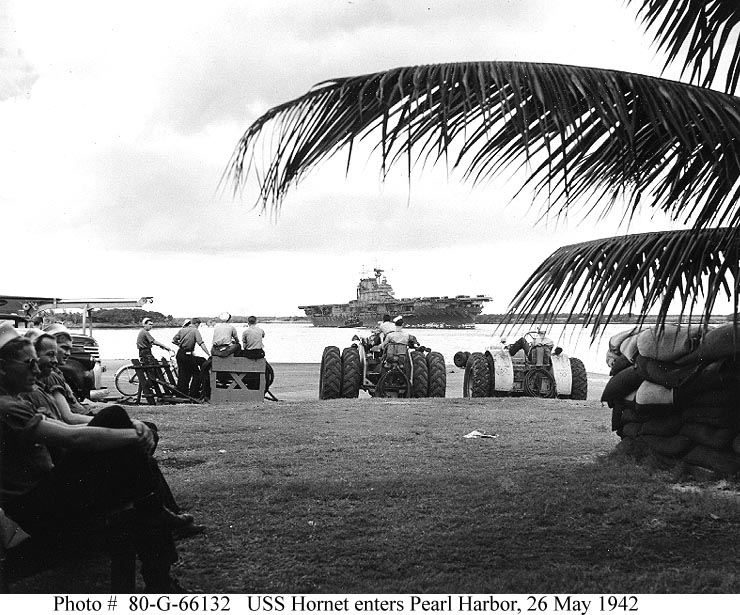
Hornet Arrives at Pearl Harbor Before Midway

Hornet along with Task Force 16 sailed back to Pearl Harbor arriving a week later and the mission would remain secret for over a year.  The task force steamed to assist the Yorktown and Lexington at the Battle of Coral Sea but that battle was over before they could arrive.  The task force returned to Pearl Harbor on the 26th of May and sail on the 28th for Midway.  Hornet’s air group was plagued with bad luck.  Torpedo Squadron 8, or Torpedo 8 commanded by LCDR John Waldron found and attacked the Japanese task force losing all aircraft and all pilots save one.  6 new TBF Avengers from her air group operating from Midway met with heavy losses in their attack against the Japanese.  Only one pilot from Torpedo 8 with Waldron’s group survived, Ensign George Gay.  Hornet’s dive bombers followed bad reports of the location of the Japanese carriers and took no part in the action.  Many would have to ditch in the ocean as they ran out of fuel.  Hornet’s air group would help sink the Japanese Heavy Cruiser Mikuma and heavily damaged Mogami on the 6th.  The Battle of Midway was one of the major turning points of the war.  The Japanese had lost six carriers which had attacked Pearl Harbor along with their aircraft and many of their highly trained pilots and flight crews. Coupled with their losses at Coral Sea the Japanese suffered losses that they could ill afford and could not easily replace.

Following Midway Hornet had new radar installed and trained out of Pearl Harbor until order to the Southwest Pacific to take part in the struggle for Guadalcanal.  By the time she arrived she was the only operational American carrier in the Pacific. Enterprise had suffered bomb damage at the Battle of Easter Solomons on August 24th; Saratoga was damaged by a submarine torpedo on August 31st and the Wasp was sunk by a submarine on September 15th.  In the space of 3 weeks the United States Navy had lost 3/4ths of its operational carriers in the waters off of Guadalcanal. Hornet now faced the Japanese alone, providing much of the badly needed air support for the Marines fighting ashore.
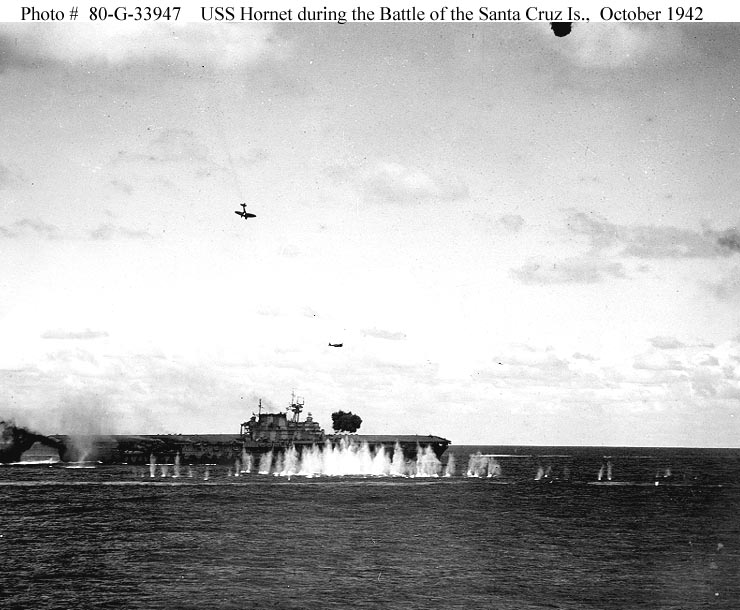
Hornet Under Attack: Note “Val” Dive Bomber about to crash ship

The Enterprise rejoined Hornet following hasty repairs off the New Hebrides Islands on October 24th.  On the 26th they joined battle with a Japanese task force of 4 carriers centered on the veterans Shokaku and Zuikaku. The Hornet’s aircraft attacked and seriously damaged Shokaku even as Japanese torpedo planes and dive bombers launched a well coordinated attack against Hornet. Hornet was hit by three bombs, two torpedoes and had two Vals dive into her with their bombs.  On fire and without power her damage control parties fought to regain control of the ship and extinguish the fires that blazed aboard her.
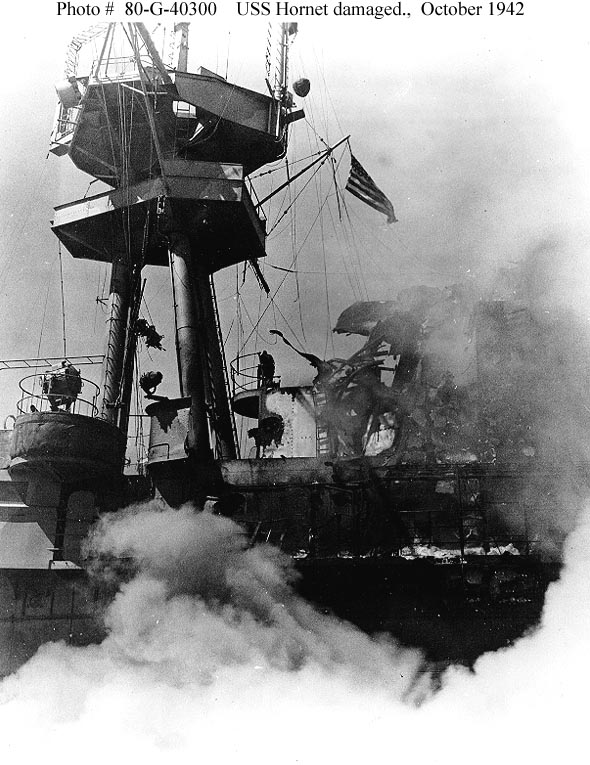
Hornet’s Damaged Island and Main Mast

Assisted by the heavy cruiser Northampton which took her in tow her crew brought the fires under control and were close to restoring power when another Japanese strike group found her and put another torpedo into her.  With this hit Hornet’s list increase and she was abandoned even as she was hit by another bomb.  With Japanese ships in the area it was decided to scuttle the ship. Escorting destroyers hit her with 9 torpedoes and over 400 rounds of 5” shells.  As Hornet blazed in the night her escorts withdrew and Japanese forces after attempting to take her under tow put four of their 24” “Long Lance” torpedoes into the doomed ship at long last sinking her.
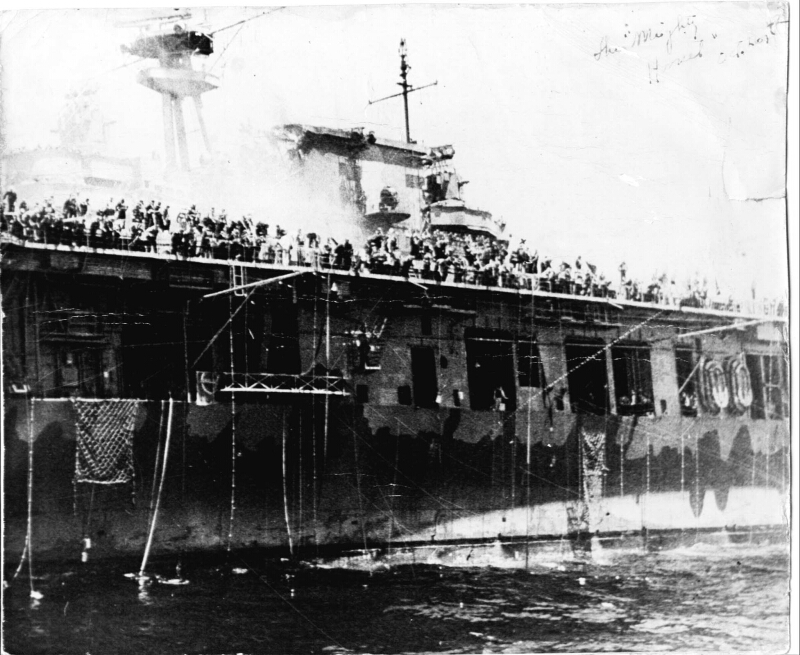
Hornet Being Abandoned by Her Crew

In her last fight Hornet’s aircraft along with those of Enterprise mauled the air groups of Shokaku and Zuikaku again inflicting irreplaceable losses among their experienced air crews.  In the battle Hornet was hit by 4 bombs, two aircraft, 16 torpedoes and over 400 rounds of 5” shells, more hits than were sustained by any other US carrier in a single action during the war.  She was stuck from the Navy list on 13 January 1943 and her gallant Torpedo 8 was awarded the Navy Presidential Unit Citation “for extraordinary heroism and distinguished service beyond the call of duty” in the Battle of Midway.  Her name was given to the Essex Class carrier CV-12. The new Hornet served throughout the war and served well into the Cold War.  She now rests as a Museum ship at Alameda California.

The USS Hornet Association website is here:  http://www.usshornetassn.com/

The Museum site is here: http://www.uss-hornet.org/

If you liked this article you might want to also read the following articles on this site:

The Battleships of Pearl Harbor

The Transitional Carriers: USS Ranger CV-4 and USS Wasp CV-7

The First Aircraft Carriers Part One: The First American Flattops- Langley, Lexington and Saratoga
The Treaty Cruisers: A Warship Review

5 Comments

Filed under History, Military, Navy Ships, world war two in the pacific

Can Anybody Spare a DIME: A Short Primer on Early Axis Success and How the Allies Won the Second World War

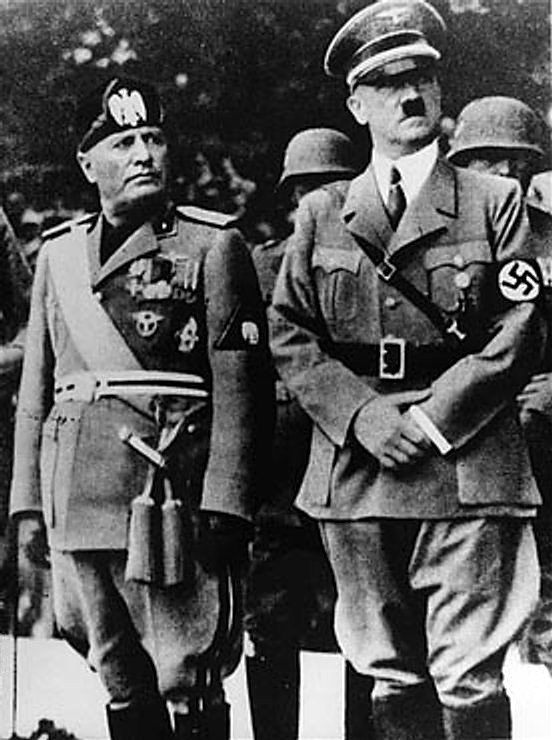
Hitler and Mussolini, the Axis Leaders Never Developed a Grand Strategy

All modern war is predicated on the full potential of a nation or alliance to fight a war.  This includes what is known in today’s parlance the DIME, or the Diplomatic, Intelligence, Military and Economic factors of national power. During the war the Axis powers almost exclusively fixated on the military dimension, especially at the operational and tactical level never coordinating a national or alliance grand strategy.  On the other hand the Allies were successful in doing so despite competing national interests of the British Empire, the Soviet Union and the United States.

Early German Success in France Changed the Face of Warfare

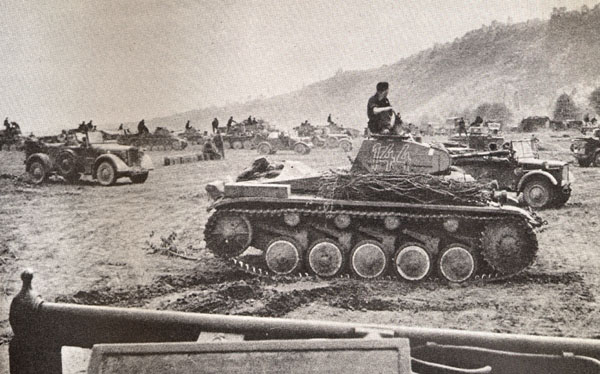
The Germans and Japanese were victorious in the early years of the World War Two due to their application of the most modern forms of warfare and ability to exploit weaknesses in their opponents.  For the Germans this entailed the use of the “Blitzkrieg” or lightening war which used the combined arms team of tanks, artillery, and mechanized infantry with close air support coordinated by commanders in mobile command posts who were able to adapt to tactical considerations on the ground and exploit enemy’s weaknesses.  This involved the classic forms of applied mass, speed and firepower to overwhelm enemy defenses at critical points and the encouragement of initiative by commanders, the Auftragstaktik. Led by men such as Heinz Guderian, Erich Von Manstein and Erwin Rommel to name but a few, the German commanders overcame allied opposition as well as the occasional hesitancy of their own senior leaders to defeat Allied forces throughout Europe.  The blitzkrieg involved risk, but the Germans for the most part, with key exceptions such as at Dunkirk during the French campaign took risks and exploited weaknesses in Allied political goals, military coordination and operational art. The Allies were hampered by weak political leadership, an aversion to risk, an outmoded strategy and poor coordination of a force which outnumbered the Germans and included more tanks than the Germans could field.  The German armaments were not necessarily superior to the Allies, but were better used for the most part.

German skill at the operational level was exemplified in Poland, France and the Low Countries, a daring Norwegian operation, which could be described as one of the first joint operations in military history, the Balkans and North Africa as well as the initial phases of Operation Barbarossa.  Each of these operations had flaws, the most glaring being at the strategic level and lack of a Grand Strategy.  The operations also exposed weaknesses in logistics and limits to what the mechanized and tactical air forces could do when stretched too far, North Africa and Russia as cases in point.  The Germans would always be outnumbered and fighting a multi-front war because of their limited naval capability, both in surface units and U-Boats, as well as the lack of a strategic air capability which kept them from eliminating Britain from the war.  Hitler’s desire for German domination in Europe excluded a true coalition effort to make allies with powers in Europe such as Vichy France which shared an aversion to the British especially after the attack of the British Navy on the French fleet in North Africa.  Likewise Germany’s alliance with Mussolini’s Italy was more of a strategic liability than a true partner. Hitler’s aversion to the Soviet State prevented any more than a brief cooperation with the USSR which was ended by the German invasion of the USSR. The Germans also failed in their war strategy by not going to a total war effort until 1943 after the ascension of Albert Speer as the Armaments Minister.  Thus German forces had to fight war “on the cheap” so to speak for the first part of the war, especially in North Africa and in Russia. In Russia the vast expanse of the front forced the Germans to thin out their forces to dangerous levels and whose pathetic road and rail network limited the already limited ability of the Wehrmacht to supply its forces as they advanced deep into Russia.

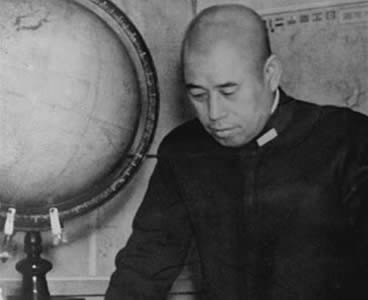
Admiral Yamamoto One of the Few Japanese Leaders to Understand what the Japanese Faced in Going to War with the United States

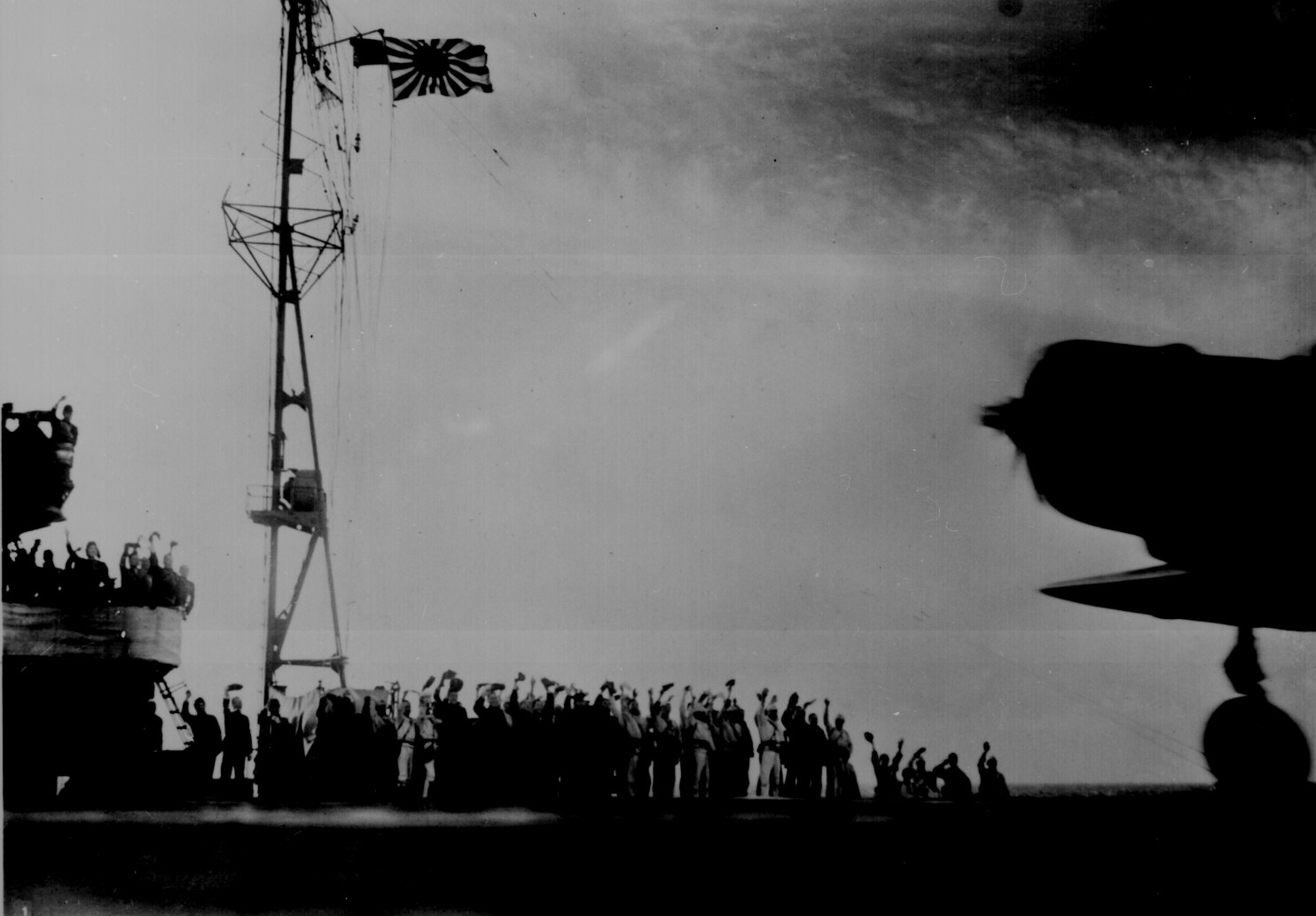
In the Pacific the Japanese used fast carrier task forces and naval air power coupled with superior surface warfare groups of fast battleships, cruisers and destroyers operating in conjunction with land based Army and Naval air units to isolate and destroy allied naval forces and outposts throughout the Pacific.   The Japanese exploited their superiority to conduct their own form of blitzkrieg.

Despite Inflicting Crushing Defeats on the Allies in late 1941 and early 1942 the Japanese period of Conquest would be Short Lived

At the same time the Japanese, even more so than the Germans lacked the ability to fight a long war; something that the best and most realistic of the Japanese strategists, Admiral Yamamoto understood and warned his government about before the attack on Pearl Harbor.  Likewise they like the Germans failed to develop a cohesive Grand Strategy in their war effort.  Competing priorities and inter-service rivalries between the Army and the Navy over resources, manufacturing priorities and war aims crippled Japanese efforts.  Despite this the Japanese used superior tactical application of forces, exploited Allied command and control weaknesses, numerical and qualitative superiority over dispersed and often obsolete Allied forces. The Allies in the opening phase of the war were often led by officers who had little respect for the Japanese and underestimated the Japanese skill at the tactical and operational level of warfare as well as the individual Japanese soldier and sailor, with tragic results.

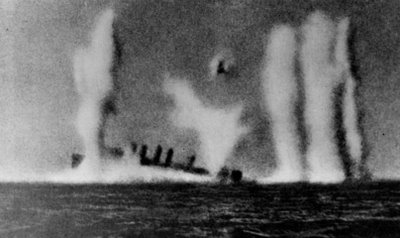
USS Pope Being Blown out of the Water at the Battle of the Java Sea

The Japanese were constrained by limited resources and intense competition between the Army and Navy for those resources as well as a long term war in China which drew off the larger part of the Japanese Army and Army Air Forces.  The Japanese effort stalled after they lost much of their carrier fleet and experienced naval aviators at Coral Sea, Midway and the Guadalcanal Campaign.  The Americans, who assumed the mantle of the Pacific Theater after the initial Japanese success and weakness of British and Dutch forces in the Pacific and demands of the war in Europe began an aggressive defense and opened an offensive against the Japanese long before the Japanese believed that they would at Guadalcanal.

At the heart of the early German and Japanese success lay their superior application of the techniques and weapons of modern warfare on the land, sea and air against opponents who were initially ill-prepared to meet their onslaught.  They both had glaring weaknesses but their weaknesses in the early years of the war were masked by Allied ineptitude at all levels, tactical, operational and strategic.   Thus they were successful and at times wildly so, but in their success lay the seeds of their defeat.

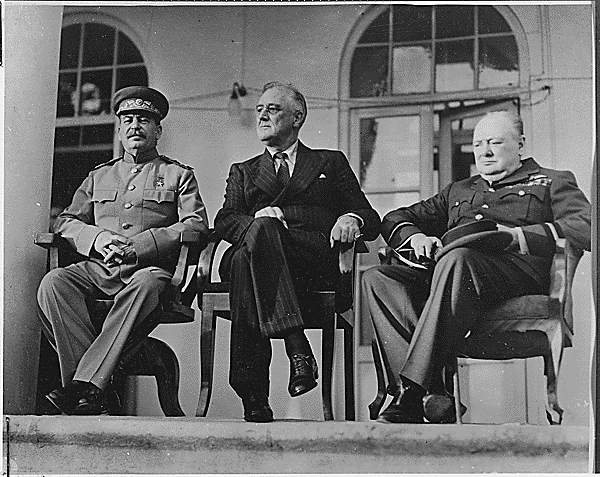
Stalin, Roosevelt and Churchill overcame Significant Conflicts of Interest to Build a Grand Strategy

The defeat of the Axis powers was in large part a combination of superior Allied strategy at the “grand strategy” level and lack of a corresponding Axis Grand Strategy; as well as the Axis powers inherent weaknesses in natural resources, manpower and industrial capabilities to fight multi-front wars, coupled with poor transportation and logistics capabilities for distant operations.

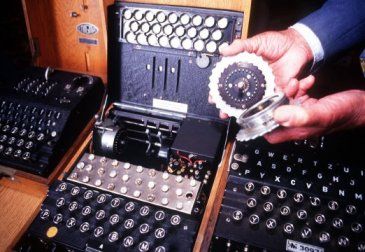
The US Navy Breaking of the Japanese Naval and Diplomatic Codes as well as the Cracking of the German Ultra Code and Capture of the Enigma Machine Greatly Enhanced Allied Intelligence

The cracking of Japanese Naval and diplomatic codes and the capture of the German Enigma code machine and code books aided Allied strategic planning, none or the Axis intelligence services rose to the challenges of the war. The Allied victory and Axis defeat was in fact a combination of what is called the DIME, the Diplomatic Intelligence Military and Economic factors which caused the Axis defeat.  While it is in part due to Allied strategy, Axis deficiencies in each of these areas played a part in their ultimate defeat.

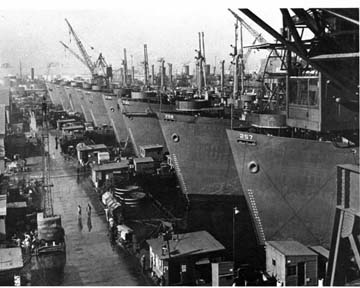
Massive US Industrial Capacity Drove the Allied War Effort

On the Grand Strategic level there was no comparison. The Allies, even factoring in often conflicting national goals were able to coordinate a strategy to first defeat Germany and then Japan.  The Americans, British and Russians began such cooperation even prior to the American entry into the war through the Lend Lease, followed by the British and American Combined Chiefs of Staff, which helped coordinate often disparate British and American strategies in Europe and Asia. Murray and Millett assert and I agree with the thesis that the British and Americans “came closest to designing a global strategy that accommodated their war aims.” (War to Be Won p.584) While close coordination with the Russians was illusory at best, the Western Allies were able to help keep the Russians in war the by helping to supply them (War to Be Won p.388), and on occasion launching operations which assisted the Russians, such as the invasion of Italy. The Italian invasion, though the pipe dream of Churchill to crack the “soft underbelly” of Europe was a key factor in the German decision to quit the Kursk offensive and redeploy Panzer Divisions, including SS formations to Italy and the West. This weakened the Germans in the face of the Russian counter offensive following Kursk which aided Russian success. The Axis powers knew no such coordinated strategic thinking.

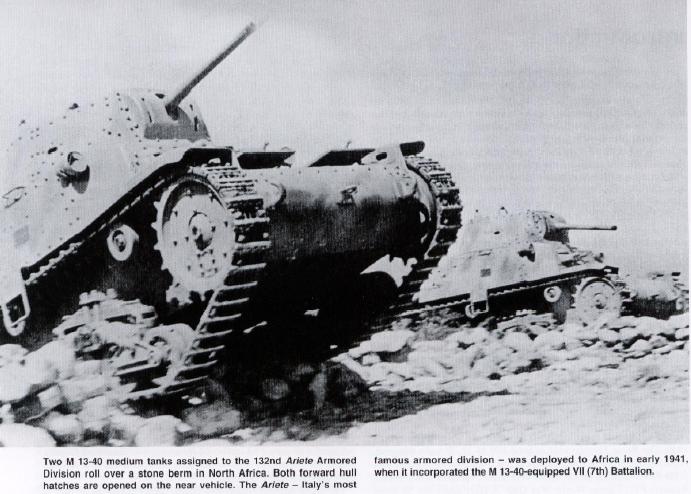
Poor Italian Technology, Training and Organization Made them More of  a Burden to Germany than a Help

The Japanese, Germans and Italians ran separate wars based on their perceived national considerations at times which often ran contrary to the common needs of their coalition.  Italian actions in the Mediterranean caused a diversion in German efforts at key times, such as in Greece where the Germans had to save the Italians and delay the opening of Operation Barbarossa.  Italian incompetence forced the Germans to commit forces to North Africa, Greece, the Balkans and Italy upon its collapse which could have been used to great effect in Europe or Russia. The Japanese and Germans never coordinated their efforts to defeat either the western Allies or the Soviets.  The lack of a coherent Grand Strategy on the part of the Axis powers, especially in the early part of the war when Allied fortunes were at lowest ebb, was every bit as much a part of their ultimate defeat as was a coordinated or “superior” Allied strategy.

The lack of a coordinated Axis Grand Strategy was reflected in the way each fought its war, the Japanese were hindered by lack of natural resources, especially those most important in maintaining a war economy, fuels, metals, rubber and even foodstuffs for which they were dependant on foreign suppliers such as the United States.  They were also hindered by a war in China which consumed troops and supplies without a corresponding benefit.  (See Barnhart’s “Japan Prepares for Total War and Toland’s “Rising Sun.) Their inability to produce the machines of war in sufficient numbers to replace losses due to combat operations and their failure to keep up with advances in technology negated their initial success and superiority at sea and in the air.

US Naval Forces Would Dominate the Pacific

The Germans failed to mobilize their economy to a total war footing until after Stalingrad and the accession of Albert Speer to head Reich war production.   They also attempted to fight a multi-front war and were dependant on weak and unenthusiastic satellite states such as Romania and Hungary to hold what they deemed to be less important areas in order free up German units.  Likewise the Germans had not adequately prepared for the war at sea with sufficient surface, naval air or U-boat strength to win the battle of the Atlantic, nor had the Luftwaffe developed a strategic bombing capability with long range fighter escorts to win the Battle of Britain. German industrial efforts, even the great strides made after Speer took over war production were unable to keep pace with the massive production of the Americans and the Soviet Union.  The Red Army ground the Wehrmacht to dust on the Steppes of Russia, a key factor in that helped the American and British successfully invade Western Europe.

B-17s Over Europe

The preponderance of western Air, Naval, war production and natural resources enabled them to field Fleets, Armies and Air Forces which were unmatched in size or technical sophistication for their time in history.  The Japanese and the Germans had no way to win by 1944, short of developing and deploying Atomic weapons and delivery systems before the Americans and British did could defeat.  Murray and Millett note this in regard to Germany which had the Wehrmacht held out longer would have been the first target of the Atomic bombs. (War to Be Won p.483)

Atomic Bomb at Hiroshima, It could Have Been Berlin Instead

In summary the Axis powers were defeated by their own weaknesses in the diplomatic, intelligence, military and economic arenas as much as they were by superior Allied strategy.  This in no way negates the superior way in which the Allies marshaled their resources and coordinated a coherent Grand Strategy.  But even so the Allies by were running out of troops by the end of the European war.  Russian formations while still formidable were operating at greatly diminished strength by the end of the war and their losses “carried political and social consequences that were to burden the Soviet Union to its demise.” (War to Be Won p.483)  The British were bled dry and unable to keep up with losses suffered after Normandy. The Americans too suffered from a shortage of manpower, particularly in Army infantry forces, and had limited their Army to a mere 90 divisions of all types to fight a world war. They had diverted manpower to the Army Air Corps, Naval and Marine Corps leaving the Army chronically short infantry. The Americans were forced into emergency drafts of troops from the Air Corps and other ancillary formations and support units to fill out infantry formations during the winter of 1944-45.  (See Russell Weigley’s book Eisenhower’s Lieutenants.” and Max Hasting’s “Armageddon” for a good treatment of the manpower situation in 1944-45) This is one point were the Americans took a risk that almost backfired on them and could have cost them victory.

12 Comments

Filed under History, Military, world war two in europe, world war two in the pacific