Tag Archives: afghanistan war

To Iraq and Back: Days at the Deployment Processing Center

295_27076832058_495_n

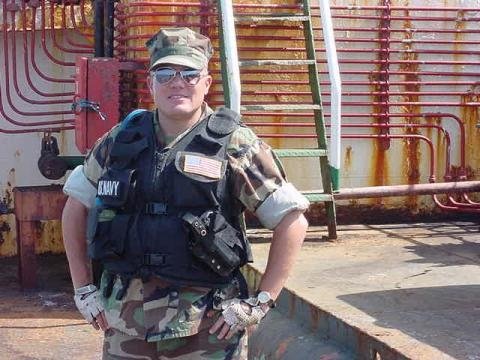
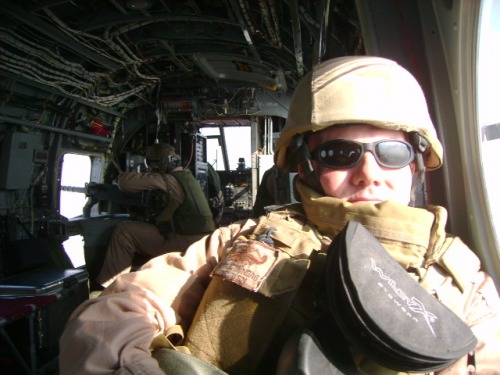
Me Aboard an Iraqi Oil Smuggler in 2002

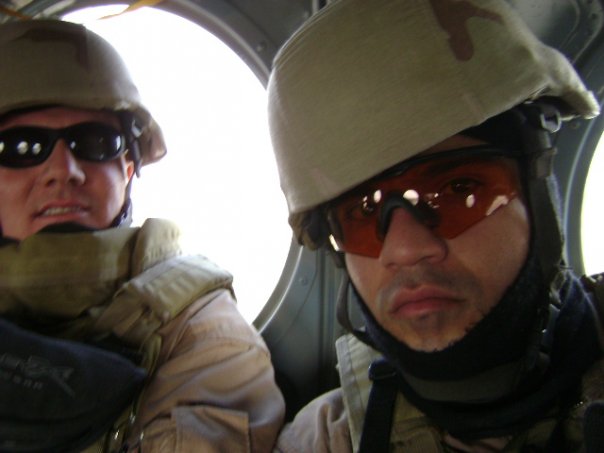
This is another installment of my account of my account of mine and RP1 Nelson Lebron’s deployment to Iraq in 2007.

By the time the first day had ended there were nearly 120 of us being processed to serve in individual augment positions in Iraq, Afghanistan, Kuwait and Djibouti. Most of us were going to Iraq at this time since the “surge” was at its peak.

NMPS was just the first stop on the way to Iraq, for us it was the initial administrative processing that we would receive on the to Iraq. Most of our compatriots, save a few Seabees or Medical types who had served with the Marines had neither been on a deployment like this, been trained for land warfare of had served in a combat zone except aboard ship. After Norfolk we would receive more specific training and equipment at Fort Jackson South Carolina and then Kuwait.

603036_10200446098660478_1730640134_n

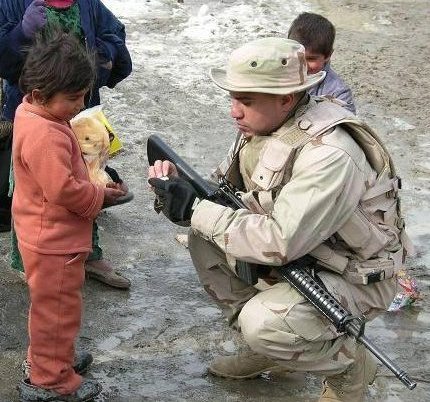
Nelson with an Afghani child in 2005

When compared to many of our fellow sailors Nelson and I had a lot of experience. I had served in the Army and both of us had served in infantry units of the Fleet Marine Force. Additionally Nelson had served with Naval Special Warfare Group Two, and the Marine 3rd Recon Battalion. He had previously served in Iraq, Afghanistan and Lebanon. I had much field experience with the Army and Marines and had been a part of a boarding team from the USS HUE CITY which conducted boarding operations supporting the UN Oil Embargo on Iraq in 2002. Likewise, Nelson is an accomplished martial artist, boxer, kick boxer and MMA fighter who has competed at many levels, while I am a military historian and theoretician  with much advanced education in both on top of my theological and pastoral care training and experience.

Our mobilization processing proceeded the next couple of days as we received our immunizations, were issued DCUs and other clothing needed for the deployment.  Nelson and I of course were already well outfitted by our unit, EOD Group Two, much more so than our counterparts reporting from other fleet units or the reserves.

In spite of this we drew additional DCU uniforms, brown t-shirts, socks and a host of miscellaneous gear. Thankfully as I have mentioned, EOD had outfitted us well including boots of our choosing, not the standard uncomfortable Army issue desert boots being provided to the rest of the sailors. I had a pair of Blackhawks and a pair of Magnum 5.11’s, both much more comfortable than those being issued. As far as other gear we already had much of it, and because it was EOD issue it was superior quality to  much of what was being issued.

Wills and powers of attorneys were drawn up by JAG officers. We updated our “page 2s” the record of who we wanted notified in the event of our demise were verified. Additionally new dog tags ordered and a myriad of forms were filled out, in typical military fashion often for the second or third time.

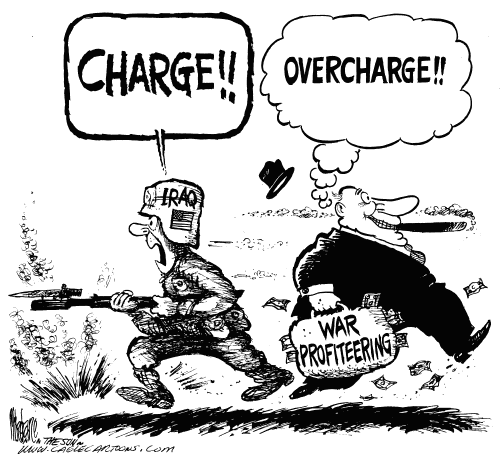
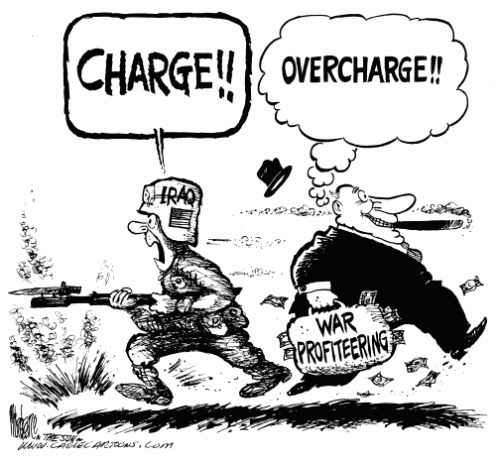
Of course even before we reported to NMPS we had we had completed numerous online pre-deployment courses on Navy Knowledge Online or NKO to orient us to operations, health and safety issues and for Nelson classes on the M-16A2 and M9 Pistol. Some were good but many were of dubious value especially in the online format.I could have taught many of them. Obviously some contractor got rich selling them to the Navy, but such is war and the activities of war profiteers who make their living inferior products to the military.

Both of us had the additional advantage of living in the Norfolk area so we could spend times with friends or family.

At the end of each day we were able to go home while our companions who had come from other locations were staying in transient quarters on base.

Since we had the 4th of July off we would both take advantage of it.

Peace

Padre Steve+

4 Comments

Filed under iraq,afghanistan, middle east, Military, to iraq and back, Tour in Iraq, US Navy

Writing My Way Home: Iraq, Faith PTSD and Life

295_26912012058_78_n

“Many people are looking for an ear that will listen. They do not find it among Christians, because these Christians are talking where they should be listening.But he who can no longer listen to his brother will soon be no longer listening to God, either; he will be doing nothing but prattle in the presence of God, too. This is the beginning of the death of the spiritual life, and in the end there will be nothing left but spiritual chatter and clerical condescension arrayed in pious words… never really speaking to others.” Dietrich Bonhoeffer

Since I returned from Iraq I have grown weary of Christians that have all the answers and are more interested in promoting their agenda than actually listening or caring for those wounded in spirit from various forms of trauma including war. I returned from Iraq and went through what amounted to a crisis in faith, belief and experienced what I felt to be abandonment by God and many Christians.

481801_10151367001287059_1003164983_n

As such I elected to travel down a path that has been one of paradox. I have benefited from this but the path has been filled with much difficulty and pain. I walked through the psychological, spiritual and physical effects of my time in Iraq as well as the moral injuries that I incurred.  Over the years I have seen the effects of these crisis on my life and relationships. It has become important to tell my story, in as sense as a Canadian Chaplain in our Pastoral Care residency said to “write my way home.”

After Iraq I began to write. I did so initially because it was therapeutic and helped me to begin to start sorting out what was going on with me. It also helped me, especially when I went public on this site about my experience to get outside of my normally severely introverted self. As I began to write regularly it became a part of my life as I struggled to deal with PTSD and the spiritual and emotional crises following my tour in Iraq.

I began to understand the importance of my stories, in fact all of our stories in the way that we understand reality what we believe to be true and what really is true about ourselves and the universe that we are a part.

I experienced this to some degree in my own pastoral care residency at Parkland Memorial Hospital in the 1990s. My supervisor challenged be to stop living in the past and begin to imagine a future that was not a prisoner of my past disappointments and failures. That was a watershed experience for me and I began to realize that I did not need to live my life in a constant repetition of the past. That realization did not always find a place in my life but in a gradual process I began to escape that past and begin to live in the moment with an eye to the future.

Iraq changed that to a large degree. What I experienced there and upon my return to the States shook many of my beliefs about the world, faith and life. The images of American Marines wounded by IED attacks, wounded children and destruction of vast areas of cities, towns and villages coupled with having HUMMVs and Helicopters that I traveled on shot at and having rockets fly over my head changed me.  That was magnified when I saw how the war was being covered by both the liberal and conservative media which bore little resemblance to my first hand observations.

Even worse was the feeling of being isolated and abandoned when I returned home.  I experienced a crisis in faith that left me a practical agnostic even as I desperately prayed for God to show up.  In fact my psychotherapist was the first person to even address my spiritual life after my return.

When Elmer Maggard asked me: “How are you and the big guy?” I could only say “I don’t know I don’t even know if he exists.”

For a priest and chaplain that was a harrowing admission. I had entered a world of darkness that I did not believe was possible. I would struggle for another year and a half until during Advent of 2009. It was then, after what I refer to as my “Christmas Miracle” that things began to change and I began to sense the presence of a loving God again.  My faith began to return but it was and is not the same as before I went to Iraq.  I still struggle at times, though not as much. I still question God, the Church and faith in general. I believe and often must pray “Lord help my unbelief.” My faith is still in the realm of Christian orthodoxy but more negotiable.

This might sound confusing so let me explain. I admit that I do not have the answers that I used to think that I had. The late great manager of the Baltimore Orioles, Earl Weaver once said “it’s what you learn after you know it all that counts.”

The fact is I know a whole lot less than I used to. This has made me more apt to actually listen to people when they tell their stories and when they ask questions that I can’t answer I say “I don’t know” or “I struggle with that too” people trust me with their faith struggles or even the existence of God.

dinner-w-bg-sabah

I refuse to pass judgment on someone’s faith journey, even if they question God’s existence because I have been there and it is not a comfortable place to live.  I am far more willing to walk with someone thorough that valley of doubt or unbelief because I lived in that valley for over a a long time and sometimes pay it a return visit.

I don’t like to attribute normal experiences in life to being “God’s will” or “an attack of the Devil.” I recognize that as human beings that we live in a fallen state and that sometimes things just happen. To put in in the vernacular “Shit Happens.”

That being said I believe that the real miracle is that God can give us the grace to go through the most difficult times even when we have no faith at all.  I think that the experience of Jesus on Good Friday and the testimony of many saintly people tells me that this is true. The miracle in my mind is not being “delivered” from crisis or unbelief but making it though the crisis and return to faith, even if that faith takes a different form.

For me the act of writing both about my experiences, writing about history, faith, ethics and even baseball has been therapeutic and forced me out of my comfort zone.  When I  began to tell my story my friend Elmer the Shrink asked me if I was really sure that I wanted to open up and become vulnerable.

I said that I thought that I needed to because people needed to know the reality of what many Iraq and Afghanistan veterans experience.  He told me that what I was doing was risky but let me make the call. Almost 1500 posts later, not all of course dealing with what I and other veterans have gone through I can say that it was the right decision.

295_26912097058_4309_n

My story is paradoxical. I am a man of faith, a Christian and Priest. I believe but I also question and doubt and sometimes still feel a twinge of agnosticism. I am much more prone to give the benefit of the doubt to people who struggle with life, faith and the existence of God. Andrew Greeley wrote that is was possible for a priest to lose their faith “no more often than a couple of times a day.” I figure that God is big enough to handle doubt and unbelief while still loving and caring for the person experiencing them, even those whose beliefs that may not fit the definition of Christian orthodoxy.

I am a passionate introvert in an extroverted world both in ministry and the military. I am an intuitive “out of the box” thinker and somewhat a rebel. Yet in spite of this I willingly volunteer to serve the church and the military. It is interesting because both institutions prize loyalty to the institution, obedience and staying within the lines of prescribed beliefs and traditions. I believe yet question.

I think that there is a healthy tension in this type of life. Though I fully subscribe to the Creeds, the first 7 Ecumenical Councils of the Church an Old Catholic understanding of the Christian faith tempered by some Anglican flavors, I am not a legalist when it comes to faith.

This also applies to the rest of life because I don’t think that faith should influence how we treat people, even in politics. I cannot allow any political ideology to hold my faith captive, nor can I cast aside the essence of the Christian faith even when I doubt. My political views could be described as a moderate progressive liberalism tempered with the demands of the Gospel, the top two commandments that Jesus talked about, the whole love God and love your neighbor thing.

I have discovered that for the most part I can comfortably live in this tension and actually believe that writing about it has been a big part of my recovery. The fact is that I think that it is okay to live life in balance and with a health appreciation of creative tension.

262_29132382058_5961_n

I continue to emerge from the darkness of my post Iraq experience and I know that I am still wounded. I still struggle but I now see this as a gift from God. My faith is not the same as it was and I am not satisfied with simplistic answers or the party lines of people that only care about their agenda especially when they decide that their agenda is God’s will, even if it has nothing to do with the Gospel. That may sound snarky but I really want to be an authentic Christian not some caricature that is more a picture of the American perversion of the faith than anything found in Scripture or the 2000 year history of the Church.

I believe but I struggle. I will listen to other points of view, including those of people that are not Christian. In fact when I was in Iraq I found that my Iraqi Muslim friends were much easier to dialogue with and have deep and respectful theological discussions with than many American Evangelicals. That was a watershed moment.  T. E. Lawrence wrote in Seven Pillars of Wisdom that “The Beduin could not look for God within him: he was too sure that he was within God.” After having been with the Bedouin I think that I understand.

This is the dialogue that has been going on in me since my return from Iraq. I know other Chaplains and other people of faith that have returned from Iraq or Afghanistan who have experienced similar feelings.

Unfortunately many do not have a safe place in their churches to heal and are afforded little time to do self care. I am concerned for our caregivers that care of veterans like me.  I wonder how many can be real in their faith community without having people run away from them as if they were radioactive, a feeling that many veterans and other trauma victims experience when they attempt to tell their story.

6095_128718117058_1466465_n

I just hope that I will be able to be there for others who are wounded and suffering as a result of what they experienced in war. T. E. Lawrence wrote: “The rare man who attains wisdom is, by the very clearness of his sight, a better guide in solving practical problems than those, more commonly the leaders of men, whose eyes are misted and minds warped by ambition for success….”

Maybe that is why I went through what I did in Iraq and after my return. If that is the case it is a good thing and I will continue to write.

That is all for tonight.  Blessings and peace my friends,

Padre Steve+

5 Comments

Filed under christian life, faith, iraq,afghanistan, Military, Pastoral Care, Tour in Iraq

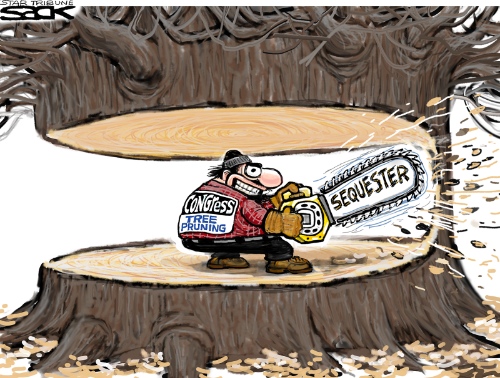
Sequester Is Here and I Feel a Sermon Coming On: Padre Steve Hammers the War Profiteers and their Political and Religious Supporters

url Well the effects of the great sequester foisted on us by Congress in 2011 are finally starting to be felt. In my little part of the world they are impacting the health care needs of Marines and Sailors and their families. In fact our hospital will be having to cut over 800 mental health appointments in the next 11 weeks. Many other services will be impacted. The probability is that should this continue that the effects will be even more severe on the current active duty force as well as veterans being care for in military or VA facilities, this my friends is just the beginning.

So much for supporting the troops who are dealing with PTSD, Traumatic Brain Injury, crippling wounds that leave them dependent on pain killers, narcotics which in previous wars they would not have survived. Let’s not forget the suicide epidemic and sexual assault crisis, as well as collapsing families due to to the repeated stress of deployments and a system that is already struggling to cope with all of this. But that doesn’t really matter as long as corporate profits from war remain high and political contributions come rolling in. Thank you Congress, while you continue to get the best health care imaginable, take no cuts to your salary, and get more vacation days than anyone else employed by the government, even deciding when to not do business so you can take a paid holiday at taxpayer expense while the people that you have sent to war for the last 12 years pay the price, but I digress…

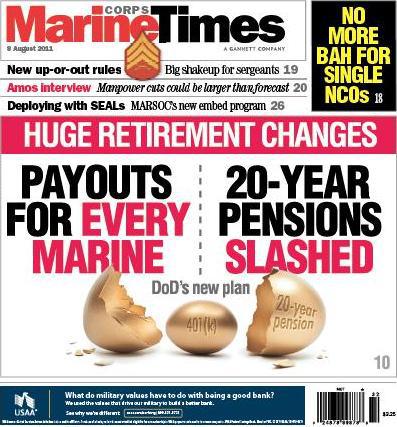
The K Street Lobbyists that advocate for all of the big defense industries whose programs and profits are getting relief from sequestration at every turn because their Congressional lackeys ensure it happens aren’t suffering. Their stocks and profits are going through the roof, even as they still sell things to the military that quite often we neither do not want or do not need. However, because the contractors and lobbyists have made sure that they located their programs in every Congressional district it takes an act of Congress that you can’t get to cut them. profiteering Meanwhile, those poor districts that only service the people of the military get hammered. Yes, all of those troop laden bases that don’t require big aerospace or shipyard investments in those southern Red States that take the hardest hits. You know, the really patriotic ones North Carolina, Texas, Georgia, Louisiana, Missouri, Kentucky and South Carolina where such bases as Fort Hood, Fort Bragg, Fort Bliss, Fort Polk, Fort Benning, Fort Knox, Fort Campbell, Fort Jackson and Camp LeJeune are located. It is they who take the biggest cuts to personnel and programs both the active duty military as well as our DOD civilian workers and personnel working for us employed by contractors. Of course these cuts affect other areas in Blue States or Swing States but I find the irony that those pushing hardest for sequester affecting military personnel and operations tend to be from those same Red States and those fighting hardest for the benefits to troops and veterans over weapons programs and industry are those that are traditionally called anti-military liberal Democrats. mct_cover_080811 Likewise those pushing for the most severe cuts in personnel and benefits are mostly men appointed to their advisory positions by Donald Rumsfeld. Men who have a decided interest in pushing for the profits of corporations that they are connected. The sad thing is that some of these men are former senior officers. (See my article The Disdain of American Business for Military Personnel and their Benefits and Follow the Money: The Real Motives behind those Seeking to Radically Change the Military Retirement System). There is more irony. Back in the early days of the Bush administration even after we went to war in Afghanistan and Iraq Defense Secretary Rumsfeld worked hard to civilianize military positions, especially medical billets. Those medical personnel billets were downsized and replaced by civilians or contractors. Of course the Federal civilians are now sequestered meaning that military personnel including wounded warriors will face even more hurdles to obtain needed medical care. Throw in the fact that even without the sequester the Veteran’s Administration system is broken and that many “conservative” politicians and their business allies want to reduce the Tricare health insurance coverage for service members, retirees and their families and it all adds up to betrayal.
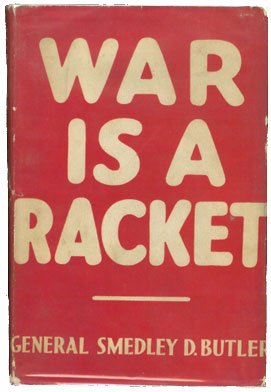
But the sad thing is that none of this is new. The irony is that Marine Corps icon and two time Medal of Honor winner Major General Smedley Butler wrote about the very same thing when he retired from the Marine Corps in 1932. He wrote a little book that I highly recommend called War is a Racket. It is a damning indictment of American politics and business. It shows just how callous, brutal and truly traitorous political and business interests can be when it comes to the trust of the nation and those that serve it in time of war. I quote the entirety of Chapter Two of Butler’s Book because rings so true today.
Who Makes the Profits


The World War, rather our brief participation in it, has cost the United States some $52,000,000,000. Figure it out. That means $400 to every American man, woman, and child. And we haven’t paid the debt yet. We are paying it, our children will pay it, and our children’s children probably still will be paying the cost of that war.
The normal profits of a business concern in the United States are six, eight, ten, and sometimes twelve percent. But war-time profits — ah! that is another matter — twenty, sixty, one hundred, three hundred, and even eighteen hundred per cent — the sky is the limit. All that traffic will bear. Uncle Sam has the money. Let’s get it.

Of course, it isn’t put that crudely in war time. It is dressed into speeches about patriotism, love of country, and “we must all put our shoulders to the wheel,” but the profits jump and leap and skyrocket — and are safely pocketed. Let’s just take a few examples.

Take our friends the du Ponts, the powder people — didn’t one of them testify before a Senate committee recently that their powder won the war? Or saved the world for democracy? Or something? How did they do in the war? They were a patriotic corporation. Well, the average earnings of the du Ponts for the period 1910 to 1914 were $6,000,000 a year. It wasn’t much, but the du Ponts managed to get along on it. Now let’s look at their average yearly profit during the war years, 1914 to 1918. Fifty-eight million dollars a year profit we find! Nearly ten times that of normal times, and the profits of normal times were pretty good. An increase in profits of more than 950 per cent.

Take one of our little steel companies that patriotically shunted aside the making of rails and girders and bridges to manufacture war materials. Well, their 1910-1914 yearly earnings averaged $6,000,000. Then came the war. And, like loyal citizens, Bethlehem Steel promptly turned to munitions making. Did their profits jump — or did they let Uncle Sam in for a bargain? Well, their 1914-1918 average was $49,000,000 a year!

Or, let’s take United States Steel. The normal earnings during the five-year period prior to the war were $105,000,000 a year. Not bad. Then along came the war and up went the profits. The average yearly profit for the period 1914-1918 was $240,000,000. Not bad. There you have some of the steel and powder earnings. Let’s look at something else. A little copper, perhaps. That always does well in war times.

Anaconda Copper for instance. Average yearly earnings during the pre-war years 1910-1914 of $10,000,000. During the war years 1914-1918 profits leaped to $34,000,000 per year. (One should read their history of strip mining massive pollution, ARCO bought them in the 1970s but was stuck with massive environmental problems, such that the company is only on the books to show the losses)

Or Utah Copper. Average of $5,000,000 per year during the 1910-1914 period. Jumped to an average of $21,000,000 yearly profits for the war period.
Let’s group these five, with three smaller companies. The total yearly average profits of the pre-war period 1910-1914 were $137,480,000. Then along came the war. The average yearly profits for this group skyrocketed to $408,300,000. A little increase in profits of approximately 200 per cent.

Does war pay? It paid them. But they aren’t the only ones. There are still others. Let’s take leather. For the three-year period before the war the total profits of Central Leather Company were $3,500,000. That was approximately $1,167,000 a year. Well, in 1916 Central Leather returned a profit of $15,000,000, a small increase of 1,100 per cent. That’s all.
The General Chemical Company (now part of Honeywell) averaged a profit for the three years before the war of a little over $800,000 a year. Came the war, and the profits jumped to $12,000,000. a leap of 1,400 per cent.

International Nickel Company — and you can’t have a war without nickel — showed an increase in profits from a mere average of $4,000,000 a year to $73,000,000 yearly. Not bad? An increase of more than 1,700 per cent.

American Sugar Refining Company (largest Sugar refining company in the world, name brand Domino Sugar) averaged $2,000,000 a year for the three years before the war. In 1916 a profit of $6,000,000 was recorded.

Listen to Senate Document No. 259. The Sixty-Fifth Congress, reporting on corporate earnings and government revenues. Considering the profits of 122 meat packers, 153 cotton manufacturers, 299 garment makers, 49 steel plants, and 340 coal producers during the war. Profits under 25 per cent were exceptional. For instance the coal companies made between 100 per cent and 7,856 per cent on their capital stock during the war. The Chicago packers doubled and tripled their earnings.
And let us not forget the bankers who financed the great war. If anyone had the cream of the profits it was the bankers. Being partnerships rather than incorporated organizations, they do not have to report to stockholders. And their profits were as secret as they were immense. How the bankers made their millions and their billions I do not know, because those little secrets never become public — even before a Senate investigatory body.

But here’s how some of the other patriotic industrialists and speculators chiseled their way into war profits.
Take the shoe people. They like war. It brings business with abnormal profits. They made huge profits on sales abroad to our allies. Perhaps, like the munitions manufacturers and armament makers, they also sold to the enemy. For a dollar is a dollar whether it comes from Germany or from France. But they did well by Uncle Sam too. For instance, they sold Uncle Sam 35,000,000 pairs of hobnailed service shoes. There were 4,000,000 soldiers. Eight pairs, and more, to a soldier. My regiment during the war had only one pair to a soldier. Some of these shoes probably are still in existence. They were good shoes. But when the war was over Uncle Sam has a matter of 25,000,000 pairs left over. Bought — and paid for. Profits recorded and pocketed.

There was still lots of leather left. So the leather people sold your Uncle Sam hundreds of thousands of McClellan saddles for the cavalry. But there wasn’t any American cavalry overseas! Somebody had to get rid of this leather, however. Somebody had to make a profit in it — so we had a lot of McClellan saddles. And we probably have those yet.
Also somebody had a lot of mosquito netting. They sold your Uncle Sam 20,000,000 mosquito nets for the use of the soldiers overseas. I suppose the boys were expected to put it over them as they tried to sleep in muddy trenches — one hand scratching cooties on their backs and the other making passes at scurrying rats. Well, not one of these mosquito nets ever got to France!

Anyhow, these thoughtful manufacturers wanted to make sure that no soldier would be without his mosquito net, so 40,000,000 additional yards of mosquito netting were sold to Uncle Sam.

There were pretty good profits in mosquito netting in those days, even if there were no mosquitoes in France. I suppose, if the war had lasted just a little longer, the enterprising mosquito netting manufacturers would have sold your Uncle Sam a couple of consignments of mosquitoes to plant in France so that more mosquito netting would be in order.
Airplane and engine manufacturers felt they, too, should get their just profits out of this war. Why not? Everybody else was getting theirs. So $1,000,000,000 — count them if you live long enough — was spent by Uncle Sam in building airplane engines that never left the ground! Not one plane, or motor, out of the billion dollars worth ordered, ever got into a battle in France. Just the same the manufacturers made their little profit of 30, 100, or perhaps 300 per cent.

Undershirts for soldiers cost 14¢ [cents] to make and uncle Sam paid 30¢ to 40¢ each for them — a nice little profit for the undershirt manufacturer. And the stocking manufacturer and the uniform manufacturers and the cap manufacturers and the steel helmet manufacturers — all got theirs.

Why, when the war was over some 4,000,000 sets of equipment — knapsacks and the things that go to fill them — crammed warehouses on this side. Now they are being scrapped because the regulations have changed the contents. But the manufacturers collected their wartime profits on them — and they will do it all over again the next time.
There were lots of brilliant ideas for profit making during the war.

One very versatile patriot sold Uncle Sam twelve dozen 48-inch wrenches. Oh, they were very nice wrenches. The only trouble was that there was only one nut ever made that was large enough for these wrenches. That is the one that holds the turbines at Niagara Falls. Well, after Uncle Sam had bought them and the manufacturer had pocketed the profit, the wrenches were put on freight cars and shunted all around the United States in an effort to find a use for them. When the Armistice was signed it was indeed a sad blow to the wrench manufacturer. He was just about to make some nuts to fit the wrenches. Then he planned to sell these, too, to your Uncle Sam.

Still another had the brilliant idea that colonels shouldn’t ride in automobiles, nor should they even ride on horseback. One has probably seen a picture of Andy Jackson riding in a buckboard. Well, some 6,000 buckboards were sold to Uncle Sam for the use of colonels! Not one of them was used. But the buckboard manufacturer got his war profit.
The shipbuilders felt they should come in on some of it, too. They built a lot of ships that made a lot of profit. More than $3,000,000,000 worth. Some of the ships were all right. But $635,000,000 worth of them were made of wood and wouldn’t float! The seams opened up — and they sank. We paid for them, though. And somebody pocketed the profits.
It has been estimated by statisticians and economists and researchers that the war cost your Uncle Sam $52,000,000,000. Of this sum, $39,000,000,000 was expended in the actual war itself. This expenditure yielded $16,000,000,000 in profits. That is how the 21,000 billionaires and millionaires got that way. This $16,000,000,000 profits is not to be sneezed at. It is quite a tidy sum. And it went to a very few.

The Senate (Nye) committee probe of the munitions industry and its wartime profits, despite its sensational disclosures, hardly has scratched the surface.
Even so, it has had some effect. The State Department has been studying “for some time” methods of keeping out of war. The War Department suddenly decides it has a wonderful plan to spring. The Administration names a committee — with the War and Navy Departments ably represented under the chairmanship of a Wall Street speculator — to limit profits in war time. To what extent isn’t suggested. Hmmm. Possibly the profits of 300 and 600 and 1,600 per cent of those who turned blood into gold in the World War would be limited to some smaller figure.

Apparently, however, the plan does not call for any limitation of losses — that is, the losses of those who fight the war. As far as I have been able to ascertain there is nothing in the scheme to limit a soldier to the loss of but one eye, or one arm, or to limit his wounds to one or two or three. Or to limit the loss of life. There is nothing in this scheme, apparently, that says not more than 12 per cent of a regiment shall be wounded in battle, or that not more than 7 per cent in a division shall be killed.

Of course, the committee cannot be bothered with such trifling matters.

But still even so the real costs of the actions of the vultures of business and their political lackeys in both major parties impact military personnel and their families and devastate the nation as a whole. Butler wrote: “What is the cost of war? what is the bill? Major General Smedley Butler wrote: “This bill renders a horrible accounting. Newly placed gravestones. Mangled bodies. Shattered minds. Broken hearts and homes. Economic instability. Depression and all of its attendant miseries. Back -breaking taxation for generations and generations. For a great many years as a soldier I had a suspicion that war was a racket; not only until I retired to civilian life did I fully realize it….” warracket1-1 The sad thing is that the “racket” that Butler wrote about hasn’t changed an iota. In fact it has gotten worse because the profiteers and politicians have shuffed off the actual war fighting on a tiny part of the population, barely half a percent. They don’t even need to draft people to serve in war anymore and risk a political blowback.
It’s really quite a system, the profiteers get the profits and political support and have almost no risk because it is other people’s money, you know, the taxpayers money and when the cuts come they still make a profit while the military personnel get thrown under the bus. It is wonderful business but really quite immoral even if they have the blessing of the political preachers.

Butler talked about those guys too. Butler wrote: “So vicious was this war propaganda that even God was brought into it. With few exceptions our clergymen joined in the clamor to kill, kill, kill. To kill Germans. God is on our side…it is his will that the Germans be killed.”

Substitute “Islamists” for “Germans” and the message from the Right Wing Preachers is the same. Not very Jesus like, but hey, the peace and love stuff doesn’t rake in the big bucks for the big politically driven “ministries.” Get people angry, sow fear and distrust, convince people that they are threatened and even civilized “Christian” people will commit genocide, all in the name of Jesus.

Enough for tonight.

Peace Padre Steve+

2 Comments

Filed under Military, national security, News and current events, Political Commentary

Never Forget, They are Not Just Names… Reflections on War, Loss and Change: Iraq, Afghanistan and Deep Space Nine

481801_10151367001287059_1003164983_n-1.jpg

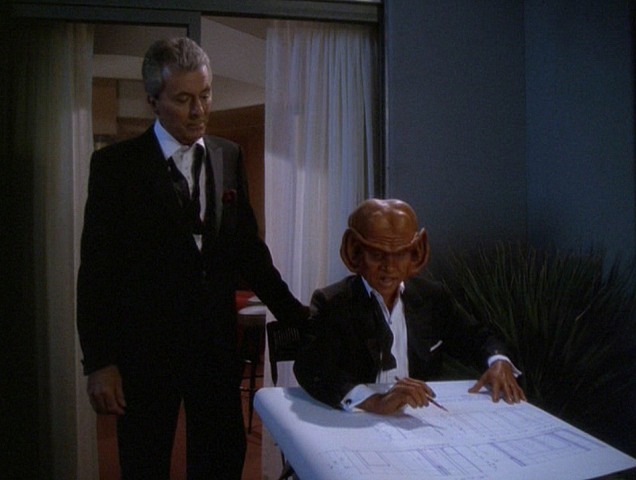
KIRA: Sir, the latest casualty reports have just been posted.
SISKO: How many this time?
KIRA: Including the troops lost at AR five five eight, seventeen hundred and thirty.
SISKO: Seventeen hundred thirty.
KIRA: That’s a lot of names.
SISKO: They’re not just names. It’s important we remember that. We have to remember.

I have had trouble sleeping the past couple of weeks and I think that late last night or early this morning I figured it out.

I am remembering.

It was about this time of year six years ago I was getting ready to celebrate my 24th wedding anniversary with Judy knowing that about a week and a half later I would be leaving for Iraq for duty in Al Anbar Province with our advisors and wondering, if at the height of the war I would come back.

Of course I did come back and the following year in 2008 we celebrated our 25th anniversary as I melted down, collapsing due to PTSD. I was home but I wasn’t.

Every time I see or read a casualty report I still feel a chill, knowing how easily my life could have ended. I saw a report yesterday that four American troops were killed by indirect fire at Bagram Air Base near Kabul. Reading it I remembered the rocket the flew over my head the night I was flying out of Camp Victory for Anbar and how nonchalant I was when a young soldier ran up to me in his PT gear nearly in a panic asking me “what was that?” and my response, “oh it was just a rocket.” We were not far from the eastern perimeter of the base in an area of tents set out as transient quarters gunship helicopters flew over the camp and the city beyond the walls, machine guns rattled in the distance as explosions echoed in the distance as American soldiers and Iraqi security forces battled insurgents not very far from where we sat.

This past week a number of things have been triggering me. The Marines have been conducting exercises at Camp LeJeune and I have heard artillery in the distance and aircraft have been taking off and landing at the auxiliary airfield across the sound a couple miles away.

652_53210437058_4925_n

Even though it is still two weeks until July 4th the tourists and summer rental types are already shooting off fireworks in the neighborhood near the beach. Last night I barely slept and tonight the tourist insurgents have been going mad with the fireworks. I was out walking Molly when some rather large commercial type fireworks went off a couple hundred yards away on the next street over. I nearly went to ground until I realized that they were only fireworks. I thought about July 4th 2011 when Judy brought Molly down and we went down to the beach to watch the fireworks. That night I was terrified and only the unflappable calm of Molly sitting beside me barking at the fireworks to protect me kept me together. Tonight Molly was as unflappable as ever, not bothered by the explosions. That made me laugh despite the near panic that I found myself. It is amazing what a little dog, now blind but still very relevant can do for someone like me dealing with the PTSD Mad Cow. I hate July 4th now, not what it means but all the explosions.

6095_128718117058_1466465_n

Molly supervising my writing in 2008 or 2009

Tonight I was watching Star Trek Deep Space Nine on DVD and the end of the season seven episode The Siege of AR-558 got me a bit. At the end of the episode Captain Sisko and Colonel Kira are discussing the latest casualty lists, which Sisko posts each week for his crew. I quoted it at the beginning of the article and it really spoke to me.

Some 6700 American Soldiers, Marines, Sailors and Airmen have died in Iraq or Afghanistan close to 50,000 more wounded and probably a couple hundred thousand afflicted with PTSD or Traumatic Brain Injury. Hundreds, if not thousands more, active duty, reserve and former service members have taken their own lives after returning. Of course those numbers don’t count the troops from NATO or the Iraq Coalition Forces, the Iraqi and Afghan troops that have fought and died alongside us or the hundreds of thousands of civilians who have been killed, wounded or driven from their homes.

But they are more than numbers. Every one has a name, the dead and those who have come back in some way forever changed by war. It is important that we never forget that. They cannot be just numbers, otherwise we dehumanize them and avoid the real cost of war, especially the human costs. I think that Smedley Butler said it the best:

“This bill renders a horrible accounting. Newly placed gravestones. Mangled bodies. Shattered minds. Broken hearts and homes. Economic instability. Depression and all of its attendant miseries. Back -breaking taxation for generations and generations. For a great many years as a soldier I had a suspicion that war was a racket; not only until I retired to civilian life did I fully realize it….”

As I write the situation in Afghanistan is still dangerous and this week I saw another friend, a surgeon from my hospital depart for duty there. Likewise there is much debate about the US and NATO role in the Syrian Civil War, something that seems to me will eventually involve US forces in yet another war.

I guess that is why I can’t sleep and why some of my dreams have been so disturbing lately. I know that I will get through this as I have been through much worse over the past six years.

Another episode of Deep Space Nine entitled Paper Moon that I watched tonight dealt with the young Ferengi officer Nog who was wounded at AR-558, losing a leg and his struggles after returning to the station dealing with the trauma of war, loss and change.

10

Nog tells his holographic friend the lounge singer Vic Fontaine played by James Darren When the war began…I was eager. I wanted to test myself. I wanted to prove I had what it took to be a soldier. And I saw a lot of combat. I saw a lot of people get hurt. I saw a lot of people die, but I didn’t think anything was going to happen to me.” I didn’t think that anything would happen to me either, I thought that I was immune from trauma and PTSD, I was an expert in dealing with trauma but I came back changed.

At the end of the episode as he comes to terms with his loss and the change he is asked by his father’s new wife “Are you okay?” and he replies “No. But I will be.”

I will be too. Tonight I hope to sleep.

Peace

Padre Steve+

6 Comments

Filed under iraq,afghanistan, middle east, News and current events, PTSD, Tour in Iraq

My Melancholy Memorial Day Thoughts

Remembrance_Day___Poppy_Day_by_daliscar

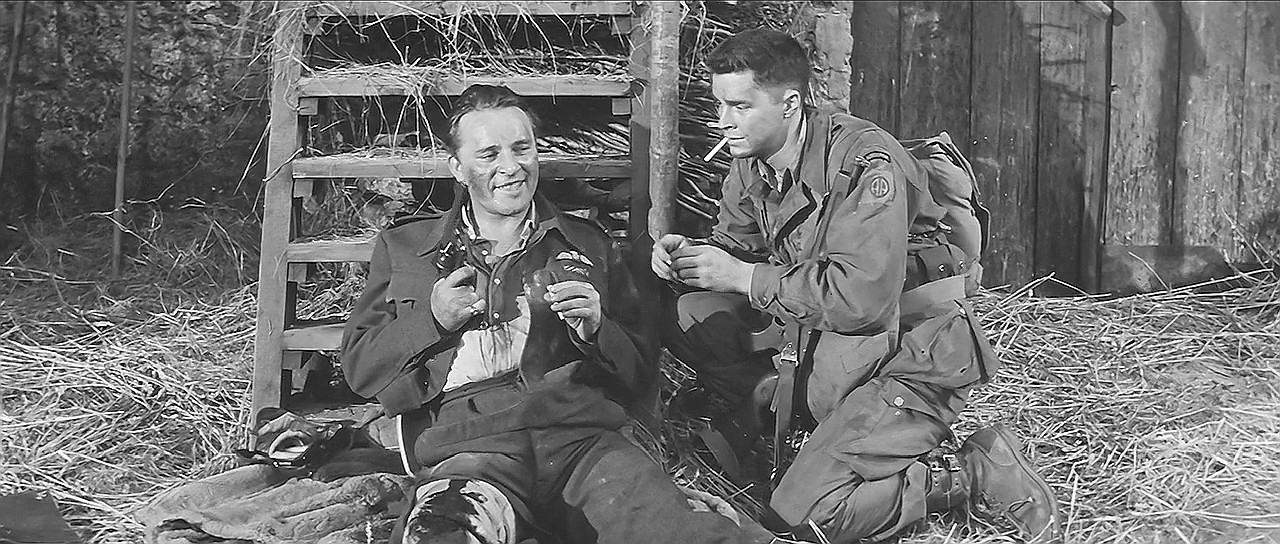
“It’s funny isn’t it. He’s dead, I’m crippled, you’re lost. Suppose it’s always like that. I mean war.” Flying Officer David Campbell played by Richard Burton in “The Longest Day” 

LD20

I came back a different man from Iraq. It seems that for me with every passing year Memorial Day becomes more of a melancholy observance. It is a weekend and observance that I feel deeply having lost friends in war and served in Iraq as well as Operation Enduring Freedom. It is also a day in which I feel more and more disconnected from the vast majority of my fellow Americans. I don’t know, but just from my observation it seems that for most Americans the weekend serves as not much more than the end of the school year and the beginning of the summer holiday and vacation season.

I could be wrong, but it seems to me that for most Americans, the vast majority who have themselves never served a day in uniform and who have no more than a passing relationship with anyone who is either serving in our current wars or has served in any war that war is at best a spectator sport. It is an attitude that has been nurtured by our politicians of all parties, political pundits and preachers for decades. As a result there is a grave disconnect between the society at large and the men and women who serve in the military and in our wars.

To be fair I don’t think it is a matter of ordinary people not caring, not that at all, just that no one has really called the nation to war, as such we have been at war but only a small amount of the population is called on to serve. The real fact of the matter is that the wars that we have fought since World War II have not been national affairs. If they were we would not be continually fighting wars that most people neither understand and which in many if not most cases we would be better off staying out of completely.  That being said I am appreciative of those who do things to care for and honor our veterans, honor our fallen and do practical things for the survivors. There are some really wonderful people, many who have never served who do what they can for those who fight and die in or come back forever changed from these misbegotten and unpopular wars.

What I do find offensive are the war mongers and profiteers who have never served. I feel this way about those who did all that they could to avoid serving in the military and those who did the very minimum to satisfy outward appearances of service while avoiding anything difficult, especially deployment to combat zones. Of the latter I can think of five to six currently serving and very outspoken conservative members of the House of Representatives and the Senate that fit the description. I shan’t mention the members of the previous Presidential administration who through their willing lies caused the deaths of nearly 4500 American military personnel in Iraq. I speak about men who in their writings, their appearances on news networks and their think tanks and corporations that do nothing but profit off of war. Some are current or former politicians, others supposedly “academics” and others men who smell a profit in war.

memorial-day1-300x225

I find such people to be loathsome and wonder how on Memorial Day weekend they can show their faces. But then they are rather shameless. Sometimes their actions make me wonder if the sacrifices made by those who serve are in vain. However, I strive to resist that and pray that our sacrifices will not be in vain. While they profit from war others pay the bill and it has always been this way. Marine Corps Major General Smedley Butler, a two time winner of the Congressional Medal of Honor wrote after World War One in his book War is a Racket:

“This bill renders a horrible accounting. Newly placed gravestones. Mangled bodies. Shattered minds. Broken hearts and homes. Economic instability. Depression and all of its attendant miseries. Back -breaking taxation for generations and generations. For a great many years as a soldier I had a suspicion that war was a racket; not only until I retired to civilian life did I fully realize it….”

Maybe I feel this way because I grew up in a military family where my dad was frequently deployed and served in Vietnam, a place where some of my friends fathers died, and because I have been in the military 32 years between the Army and the Navy. Maybe it is partly because I am a military historian, theologian, priest and chaplain who has seen the horrors of war and the wounds that remain for life in the bodies, minds and spirits of those that fight in them.  I cannot speak of how my heart feels when I see young men and women, wounded in war, their lives forever changed bravely struggling to go on even as the war mongers, war profiteers and chicken-hawks profit off of their suffering.

481801_10151367001287059_1003164983_n-1.jpg

So for me this is a rather melancholy time. A time where I struggle. I honor the fallen, my brothers and sisters who have given the last full measure of devotion in serving this country, those that I know personally or have served with and those who did so before I was every born.

Until tomorrow.

Peace

Padre Steve+

3 Comments

Filed under History, iraq,afghanistan, Military, News and current events, shipmates and veterans

Remembering Why We Keep Memorial Day

memorial-day1-300x225

“even if those who come after us are to forget all that we hold dear, and the future is to teach and kindle its children in ways as yet unrevealed, it is enough for us that this day is dear and sacred…”

Nearly 20 years after the Civil War, Oliver Wendell Holmes Jr. then serving as Chief Justice of the Massachusetts Supreme Court spoke on Memorial Day 1884 in Keene New Hampshire at a gathering of veterans. He recalled an incident not long before where he had heard a young man ask “why people still kept up Memorial Day. The question was one that he pondered before his speech and that he attempted to find an answer, not to his fellow veterans who certainly understood their shared memories of war “but an answer which should command the assent of those who do not share our memories.”

I think that having an answer for the question is as timely now as when Holmes first pondered it. Though his war was twenty years past and had torn the nation apart, there were still many men on both sides who had served in that terrible time and but even so many people were not only forgetting the war and the sacrifices made by so many but intent on becoming rich. Something that he would directly state in a Memorial Day address to the graduating class of Harvard University in 1895:

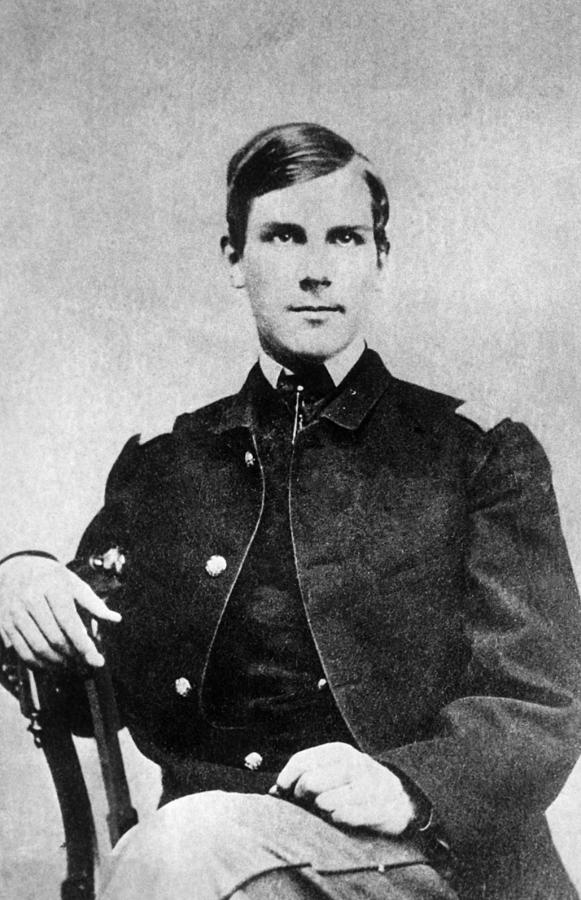
1-oliver-wendell-holmes-jr-1841-1935-everett

Oliver Wendell Holmes Jr in the Civil War

“The society for which many philanthropists, labor reformers, and men of fashion unite in longing is one in which they may be comfortable and may shine without much trouble or any danger. The unfortunately growing hatred of the poor for the rich seems to me to rest on the belief that money is the main thing (a belief in which the poor have been encouraged by the rich), more than on any other grievance. Most of my hearers would rather that their daughters or their sisters should marry a son of one of the great rich families than a regular army officer, were he as beautiful, brave, and gifted as Sir William Napier. I have heard the question asked whether our war was worth fighting, after all. There are many, poor and rich, who think that love of country is an old wife’s tale, to be replaced by interest in a labor union, or, under the name of cosmopolitanism, by a rootless self-seeking search for a place where the most enjoyment may be had at the least cost.”

However his message to his fellow veterans, mostly men from his own former regiment, the 20th Massachusetts was quite personal and something that they could find meaning in. Holmes understood war, he had seen much action and had been wounded at Ball’s Bluff, Antietam and Chancellorsville. He talked of the shared experience of war, something that those who have fought in our nation’s wars, as well as combat veteran soldiers in other countries can understand far more than people that have only known peace, even while their countrymen are at war.

dscn0044

Holmes remembrances of the war and the comrades that he and those present had served with, those living and those dead is powerful. Many of us who have served in the wars that began on September 11th 2001 have lost friends in either Iraq or Afghanistan, and many more who are wounded or maimed in body, mind and spirit. Many survivors of wounds today would have died in previous wars.

Likewise his descriptions of the memories of war, triggered by “accidents” are real to those that have experienced war and combat.

“Accidents may call up the events of the war. You see a battery of guns go by at a trot, and for a moment you are back at White Oak Swamp, or Antietam, or on the Jerusalem Road. You hear a few shots fired in the distance, and for an instant your heart stops as you say to yourself, The skirmishers are at it, and listen for the long roll of fire from the main line. You meet an old comrade after many years of absence; he recalls the moment that you were nearly surrounded by the enemy, and again there comes up to you that swift and cunning thinking on which once hung life and freedom–Shall I stand the best chance if I try the pistol or the sabre on that man who means to stop me? Will he get his carbine free before I reach him, or can I kill him first?These and the thousand other events we have known are called up, I say, by accident, and, apart from accident, they lie forgotten.”

dscn0064

We all have our memories of our wars, those of us who remain, be we veterans of Iraq or Afghanistan, Somalia, Desert Storm, Lebanon, Vietnam, Korea or World War II. It is hard to believe that so few remain from World War II and Korea, and that even the Vietnam veterans are aging rapidly, most now in their 60s or 70s. In as much as the wars of the past decade have been fought by a tiny minority of American citizens fewer and fewer will understand the bond that we share through our memories of the living and the dead. We have been set apart by our experiences, even though the wars that we have fought differ in many ways.

As such we should whenever possible take the time to meet and remember. That might be as groups of friends, unit associations or perhaps local chapters of Veterans organizations. We do this to remember but also to remind ourselves that we cannot live in the past alone, for the present likewise calls us to action, even after our service is complete.

Army+Marine+Casualties+Afghanistan+War+Return+dSZmlJbciN5l

Holmes put it well: “When we meet thus, when we do honor to the dead in terms that must sometimes embrace the living, we do not deceive ourselves. We attribute no special merit to a man for having served when all were serving. We know that, if the armies of our war did anything worth remembering, the credit belongs not mainly to the individuals who did it, but to average human nature. We also know very well that we cannot live in associations with the past alone, and we admit that, if we would be worthy of the past, we must find new fields for action or thought, and make for ourselves new careers.”

We remember the past, we remember our fallen and we remember the families who have lost loved ones in these wars as well as those whose lives have been changed and maybe even torn apart by the changes that war has wrought in their loved ones who returned different from war. In our service we have been set apart and as such as Holmes so well states we have the duty to “bear the report to those who will come after us.” His words carry forth to us today, we few we happy few as Shakespeare so eloquently wrote.

“nevertheless, the generation that carried on the war has been set apart by its experience. Through our great good fortune, in our youth our hearts were touched with fire. It was given to us to learn at the outset that life is a profound and passionate thing. While we are permitted to scorn nothing but indifference, and do not pretend to undervalue the worldly rewards of ambition, we have seen with our own eyes, beyond and above the gold fields, the snowy heights of honor, and it is for us to bear the report to those who come after us.” 

n671902058_1896194_6303

I will remember my time in Iraq and those that I served alongside. I will also remember friends who served in other units who did not return as well as those Marines, Sailors and Soldiers that I see every day in our Naval Hospital suffering from the physical, psychological and spiritual wounds of war.

This weekend I will remember and on Monday, that sacred day that we set aside to remember the fallen I take some time at noon to join in that time of remembrance and pray that maybe someday war will be no more.

That is why I think that we should remember Memorial Day even if others forget.

Peace

Padre Steve+
5 Comments

Filed under civil war, History, iraq,afghanistan, Military, shipmates and veterans, vietnam

Armed Forces Day 2013: A Sober Reflection on a Nearly Invisible Holiday

2013ArmedForcesDayHiRes

Today is Armed Forces Day and unfortunately most of the country will not notice unless they are attending a Baseball game where it is being observed or some special event on a base, national cemetery, monument or VFW hall. There are also protests, sometimes involving veterans. Last year at the NATO Summit in Chicago which coincided with Armed Forces Day a number of veterans protested by throwing away their Global War on Terror Medal. I actually have little problem with people protesting wars, even the current one so long as they direct their protest at the appropriate target, the politicians, pundits, think tank wonks and lobbyists that profit from war and not the soldiers that fight them.

Now there are a fair number of local celebrations to honor members of the Armed Forces across the country. As a career officer and son of a Vietnam veteran Navy Chief I appreciate those events and the people that put them together. Being a veteran of Operation Iraqi Freedom and Operation Enduring Freedom, especially those that have taken the time to honor Iraq and Afghanistan veterans.

DSC_0028

Likewise there are wonderful people that honor the Armed Forces every day. I think especially about the Maine Troop Greeters of Bangor Maine and the Pease Troop Greeters of New Hampshire. These men and women, many veterans themselves or related to veterans are amazing. They have been welcoming veterans back since early in the war and provide many services to the men and women of the Armed Forces that pass through Bangor Maine International Airport and the Portsmouth International Airport, the former Pease Air Force Base in Pease New Hampshire.  I have had the honor of passing through both locations, Bangor on more than one occasion. While I know that there are many others that do this they are in the minority in this country.

At any given time less than 1% of Americans are serving in all components of the military. For over 10 years we have been at war in Afghanistan and Iraq as well as other locations that we don’t like to talk about too much like Pakistan. However this has not been the effort of a nation at war. For the most part the war effort is that of a tiny percentage of the population.

As a nation we are disconnected from the military and the wars that have been going on for so long. The fact is that most Americans do not feel that they have a personal or vested interest in these wars because they have been insulated by political leaders of both parties from them. There is no draft, and no taxes were raised to fund the wars and the military is worn out while taking 50% of the cuts of the Congressional Sequester.

295_26911892058_4301_n

We have now been at war continuously for nearly 12 years and truthfully there is no end in sight. In that time every single Soldier, Sailor, Marine and Airman volunteered for duty or reenlisted during this time period. Motives may have varied from individual to individual, but unlike the World Wars, Korea and Vietnam every single one volunteered to serve in time of war. I think that this makes the current generation of veterans quite unique.

Many of these volunteers served in Iraq and Afghanistan. Neither war was popular, except in the very beginning when casualties were low and victory appeared to be easy and quick. We like short wars. We left Iraq in December 2011 and Afghanistan is still going to be with us for God knows how long, even though we are drawing down or forces there.

In Afghanistan we followed the same path trod by the British and Soviets in trying to topple regimes and plant our respective versions of civilization in that land of brutal Pashtun, Tajik, Hazara and Uzbek warlords who war on each other as much as any foreign infidel.  It is a path that leads to heartbreak which ties down vast amounts of manpower without any significant strategic gain for the United States or NATO.  This even as war drums beat across the Middle East and nuclear armed Pakistan slips into political and social chaos and keeps a major supply route for the US and NATO to Afghanistan shut down.

The fact is that American and for that matter other NATO and coalition military personnel who have served in Iraq, Afghanistan, the Horn of Africa or at sea are in the minority in all of our countries. Thus when a few of the few of these veterans choose to make a public spectacle of themselves by tossing a medal away they get cheered and lots of media attention. Some liberals applaud the medal throwers and conservatives vilify them without getting what is really going on. Both miss the tragic disconnection between the military and civilian society that is the result of public policy since the end of the Vietnam War. A relatively small professional military in comparison to the population is sent to fight wars while the bulk of the population is uninvolved and corporations, lobbyists and think tanks get rich.

Rachel Maddow the MSNBC host of the Rachel Maddow Show wrote in her outstanding book Drift: The Unmooring of American Military Power:

“The reason the founders chafed at the idea of an American standing army and vested the power of war making in the cumbersome legislature was not to disadvantage us against future enemies, but to disincline us toward war as a general matter… With citizen-soldiers, with the certainty of a vigorous political debate over the use of a military subject to politicians’ control, the idea was for us to feel it- uncomfortably- every second we were at war. But after a generation or two of shedding the deliberate political encumbrances to war that they left us… war making has become almost an autonomous function of the American state. It never stops.” 

Now, going back to the protestors for a minute. The right to protest and disagree with policy and the politics of war is important and for Americans is protected under the First Amendment. That being said I think it is important that when one protests a war that they direct their protest at the appropriate target, the army of lobbyists and think tank wonks that promote the politics of war regardless of who is President and not the soldiers. The fact is that the lobbyists, pundits that promote war don’t care about the protesters or the troops. This is because no matter who is in office or who controls Congress they will promote policies that keep them employed and their businesses enriched. Marine Major General and Medal of Honor winner Smedley Butler was quite right when he said:

“War is a racket. It always has been. It is possibly the oldest, easily the most, surely the most vicious. It is the only one international in scope. It is the only one in which the profits are reckoned in dollars and the losses in lives. A racket is best described, I believe, as something that is not what it seems to the majority of the people. Only a small ‘inside’ group knows what it is about. It is conducted for the benefit of the very few, at the expense of the very many. Out of war a few people make huge fortunes.”

I may disagree with the manner of how and when veterans protest wars that they have served like those that threw their medals away in Chicago last year. However, I am not going to question their motives, integrity or honor even if I disagree with their manner of protest because I came back different from war.

bannerfans_4309565 (3)

When a society sends off its sons and daughters to fight in wars that no one understands, and the vast majority of people no longer support it is no wonder that some veterans make such displays. Likewise it is understandable why other veterans have major issues with such protestors, just as many Vietnam veterans still feel the hurt of how a nation turned its back on them. For example I still have a terrible time even thinking about Jane Fonda, the images of her manning a North Vietnamese anti-aircraft gun when my dad was serving in Vietnam.

295_26912097058_4309_n

Protests may make some feel good, but they often miss the bigger point of why wars like these go on for so long.  That they do is because misguided policies have brought about a chronic disconnection in our society between those that serve in the military and those that do not. But how can there not be when in the weeks after 9-11 people like President Bush and others either directly or in a manner of speaking told people to “go shopping”* as we went to war in Afghanistan? When I returned from Iraq I returned to a nation that was not at war whose leaders used the war to buttress their respective political bases.

295_26912012058_78_n

I think that Armed Forces Day should be better celebrated but I am grateful to those people that do things every day to thank and support military personnel in thought, word and deed like the Maine Greeters and Pease Greeters. The interesting thing about these groups is that they are made up of citizens from across the political spectrum, veterans and non-veterans who simply care for and appreciate the men and women that serve in and fight the wars that no-one else can be bothered to fight.

dscn0064

I just hope and pray that the end in Afghanistan does not turn into an even worse historic debacle than suffered by the British or the Soviets during their ill fated campaigns. Of course the politicians, pundits, preachers and the defense contractors, banks and lobbyists will find a way to profit from this no matter how many more troops are killed, wounded or injured and how badly it affects military personnel or their families. After all, to quote Smedley Butler, “war is a racket.”

481801_10151367001287059_1003164983_n

Peace

Padre Steve+

President Bush’s actually words were “Now, the American people have got to go about their business. We cannot let the terrorists achieve the objective of frightening our nation to the point where we don’t — where we don’t conduct business, where people don’t shop…” http://georgewbush-whitehouse.archives.gov/news/releases/2001/10/20011011-7.html

2 Comments

Filed under History, iraq,afghanistan, Military, national security, philosophy

Back from the Abyss: Padre Steve’s Reflections of 5 Years Dealing with PTSD Faith and Life

295_26912097058_4309_n

“God will not look you over for medals, degrees or diplomas but for scars.” Elbert Hubbard

It has been five full years since I descended into the hell of the abyss that is PTSD. Back in the late spring and early summer of 2008 just a few months after my return from what I still consider my best tour of duty in over 30 years of military service with US advisors and Iraq Army and Security forces in Al Anbar Province in 2007-2008 I was in a state of emotional and spiritual collapse.

I really couldn’t believe then what was happening to me or they way that it would end up shaping my life to the present day. In retrospect my return from Iraq marked a beginning of a personal hell that for a number of years seemed like that it would never end. It was painful, it was isolating and it marked a profound change in the way that I saw God, faith, politics and social justice. It changed me in ways that I never could have imagined when I got on a bus heading for Fort Jackson South Carolina following the July 4th holiday of 2007.

Those brave souls that have followed me on this website as well as those that are still my friends despite occasional disagreements and misunderstandings, those that may not understand me but still are my friends have seen this.

So five years later what is it like?

I still have trouble sleeping, not as much as I used to but enough to impact my life. I don’t take heavy doses of sleep meds anymore, just some Melatonin as well as a mild dosage of an anti-anxiety medication and anti-depressant. A far better combination than medications that made me feel like I was hung over without that benefit of sharing too many drinks with friends at the local watering hole.

481801_10151367001287059_1003164983_n

As opposed to the years immediately following my time in Iraq I have to say that I am no longer self medicating with alcohol. I remember in 2009 going out for dinner, having a few beers, then going to a ball game and drinking a few more and coming home with Krispy Kreme donuts and drinking more beer on a regular basis and usually taking a couple of shots or Jaegermeister or glasses of Spanish Brandy just to get to sleep so I could go back to facing life and death situations the next day in our ICUs. I don’t need that anymore, even though sleep can be problematic and dreams and nightmares rivaling anything I can watch on my HD TV…

I still love to pony up to the bar and share a couple of pints with friends but I don’t need it to numb myself into feeling no pain. Talking with many other vets who have served in Iraq, Afghanistan or even Vietnam I know that I wasn’t alone in those dark days.

n671902058_1153794_4301

I have become a bit less hyper-vigilant though when I come home to Virginia Beach than I was just three years ago and most certainly five years ago in May of 2008. However, that being said I do notice that I am more on guard on the roads and that little things, sirens, emergency vehicles, loud noises and traffic still set me off more than when I am in rural North Carolina. This week I have been home because my wife Judy had some surgery and I have had to readjust to the traffic, noises and other things that I haven’t really had to deal with the past few years. That has been both interesting and enlightening.

I absolutely hate air travel. I don’t like the crowds, the stress of security or the constant delays, changes and overcrowding. Truthfully I felt more comfortable flying the skies of Iraq on Marine, Army and Air Force fixed and rotor wing aircraft and on occasion being shot at in Iraq’s Al Anbar Province than I do on any airline today in this country.

Physical fitness matters more than it did before, even though I was in very good shape before and during my time in Iraq. But when I came home from that I was not only wounded in mind and spirit, but my body was beaten up. Chronic nagging injuries and chronic pain kept me from doing what I liked doing and what helped me keep my physical-spiritual and emotional balance. Those nagging injuries took a long time to heal, and they took some adjustments on my part which took me several years to adapt to and compensate in my physical regimen.  I can say now that I am in as good or better shape than I was before I left for Iraq in 2007. Maybe I’ll write a best selling book and do an exercise video like Jane Fonda…

flight-to-baghdad-4-me

Whereas in 2008 through 2010 and even until 2011 I was exceptionally sensitive to criticism to the changes that were occurring in my life including my move to the “left” both theologically and politically I have gotten to the point that I realize that it is more important to be honest and authentic as to who I am and what I believe. I have found that those that really matter to me don’t care so much about those things and that relationships maintained with people who don’t always agree with each other where all remain their personal integrity are far more rewarding than relationships that are first and foremost decided by allegiance to political or religious orthodoxy no matter what side of the spectrum it is from. I hate group think. Thus though I have to now consider me to be on the “liberal” side of the political and theological divide I still have to be considered a moderate simply because I refuse to make people my enemy simply because I disagree with them or they with me.

When I began this site in the spring of 2009 I named it Padre Steve’s World…Musings of a Passionate Moderate. I think I did that because it actually described me then, and now, even though I am pretty passionately liberal about some things and that doesn’t bother me in any way because it comes from my wrestling with God and faith and realizing that integrity matters more than about anything else. I have toyed with changing the title of the site but have decided against that because I am a moderate liberal committed to a Christian faith that speaks for the oppressed and is willing to confront those that would use faith, political or economic power to oppress the weak or those different from us.

Since I returned from Iraq in 2008 I discovered what it was to really question faith and God. To become for a couple of years a man who was for all practical purposes an agnostic praying that God still existed and cared. I discovered that in doing so that faith returned, different but more real than I had ever experienced in a life spent in the Christian faith and ministry.

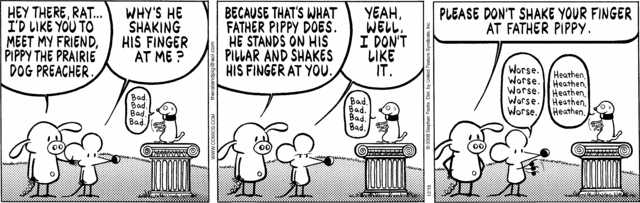
fatherpippy

That brought change because my rediscovered faith brought me into conflict with people in the church denomination and faith community where I had been ordained as a priest. I was asked to leave and found a new home church and denomination that fit my life, faith experience and where I could live and minister in complete integrity. In the church that took me in during the fall of 2010 I can be faithful to the Gospel and care for the lost, the least and the lonely, especially those who have been abused by churches and ministries that have sold their soul to right wing political ideologues whose only concern is their political power and influence and would use churches and Christians to do their evil bidding. I guess that I learned that just because someone wraps the Bible in an American Flag, believes that Jesus brought us the Constitution and says that they “support the troops” it doesn’t necessarily mean that they care a whit about the Bible, the Flag, the Constitution or the Troops. I hope that isn’t too harsh….

Oh well, I feel that I am beginning to ramble so I will say good night and “God Bless,” no matter what God that you profess or for that matter don’t profess.

Peace

Padre Steve+
2 Comments

Filed under christian life, faith, iraq,afghanistan, Pastoral Care, PTSD, Tour in Iraq

Remembering Hell: The Fall of Dien Bien Phu 59 Years Gone by and Still Forgotten

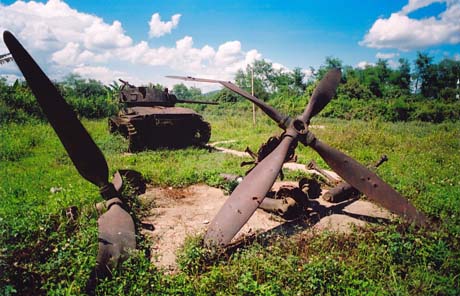
Dien Bien Phu War Remnants

Dien Bien Phu Today

It was an epic battle in a tragic war and most people neither know or care what happened in the valley where a small border post named Dien Bien Phu became synonymous with forgotten sacrifice. This year fewer remembrances are taking place. Some are in Vietnam and others in France.

Diplomat_Sep10059-227x300

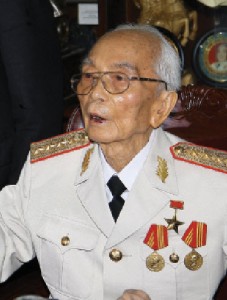
General Vo Nguyen Giap

On May 7th 2011 in Hanoi a small remembrance was held to mark the fall of Dien Bien Phu and honor the victor, 101 year old General Vo Nguyen Giap at his home. Giap is the last senior commander of the war alive at 103 he remains active. That 2011 ceremony was one of the few remembrances held anywhere marking that battle which was one of the watersheds of the 20th Century. A half a world away in Houston Texas a small group of French veterans, expatriates and historians laid a wreath at the Vietnam War Memorial.  In Paris an ever shrinking number of French survivors gather each year on May 7th at 1815 hours for a religious service at the Church of Saint Louis des Invalides to remember the dead and missing of the French Expeditionary Corps lost in Indochina. A small number of other small ceremonies have been held this year.

This battle is nearly forgotten by time even though it and the war that it symbolized is probably the one that we need to learn from before Afghanistan becomes our Indochina.

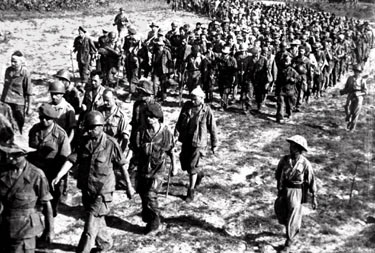
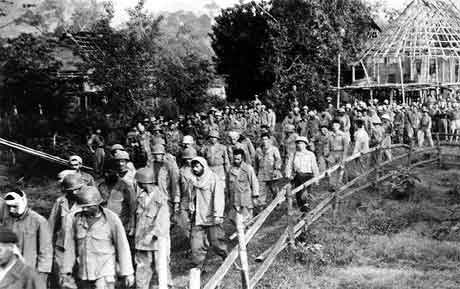
FRENCH SOLDIERS SURRENDER

French Prisoners

On May 8th 1954 the French garrison of Dien Bien Phu surrendered to the Viet Minh.  It was the end of the ill-fated Operation Castor in which the French had planned to lure the Viet Minh Regulars into open battle and use superior firepower to decimate them.  The strategy which had been used on a smaller scale the previous year at Na Son.

The French had thought they had come up with a template for victory based on their battle at Na Son in how to engage and destroy the Viet Minh. The plan was called the “Air-land base.”  It involved having strong forces in a defensible position deep behind enemy lines supplied by air.  At Na Son the plan worked as the French were on high ground, had superior artillery and were blessed by General Giap using human wave assaults which made the Viet Minh troops fodder for the French defenders.  Even still Na Son was a near run thing for the French and had almost no effect on Viet Minh operations elsewhere while tying down a light division equivalent and a large portion of French air power.

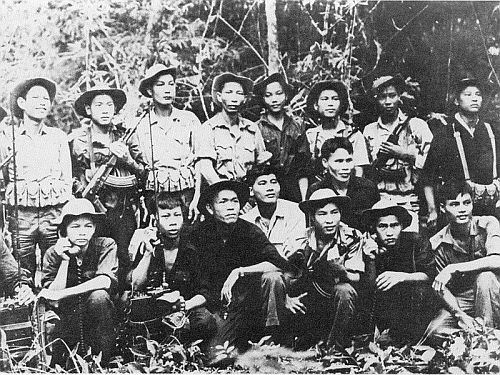
nlfmainforce

Viet Minh Regulars

The French took away the wrong lesson from Na-Son and repeated it at Dien Bien Phu.  The French desired to use Dien Bien Phu as a base of operations against the Viet Minh.  Unfortunately the French chose badly. The elected to occupy a marshy valley surrounded by hills covered in dense jungle. They elected to go light on artillery and the air head was at the far end of the range of French aircraft, especially tactical air forces which were in short supply.  To make matters worse the General Navarre, commander of French forces in Indochina informed that the French government was going to begin peace talks and that he would receive no further reinforcements elected to continue the operation.

dien-bien-phu

French Paras Drop into Dien Bien Phu

Likewise French logistics needs were greater than the French Air Force and American contractors could supply.  French positions at Dien Bien Phu were exposed to an an enemy who held the high ground and were not mutually supporting. The terrain was so poor that French units were incapable of any meaningful offensive operations against the Viet Minh. As such they could only dig in and wait for battle. Despite this many positions were not adequately fortified and the artillery was in exposed positions.

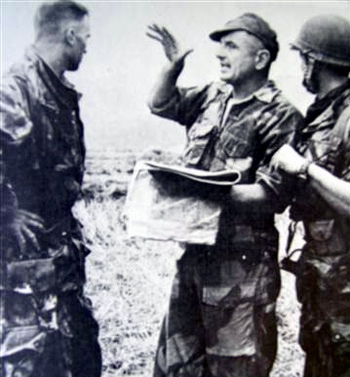
bigeard_instruction_saut

Major Marcel Bigeard 

The French garrison was a good quality military force composed of veteran units. It was comprised of Paras, Foreign Legion, Colonials (Marines), North Africans and Vietnamese troops. Ordinarily in a pitched battle it would have done well, but this was no ordinary battle and their Viet Minh opponents were equally combat hardened, well led and well supplied and fighting for their independence.

Many of the French officers including Lieutenant Colonel Langlais and Major Marcel Bigeard commander of the 6th Colonial Parachute Battalion were among the best leaders in the French Army. Others who served in Indochina including David Galula and Roger Trinquier would write books and develop counter-insurgency tactics which would help Americans in Iraq. Unfortunately the French High Command badly underestimated the capabilities and wherewithal of the Giap and his divisions.

65193421-small_269244

Viet Minh Supply Column

Giap rapidly concentrated his forces and built excellent logistics support.  He placed his artillery in well concealed and fortified positions which could use direct fire on French positions. Giap also had more and heavier artillery than the French believed him to have.  Additionally he brought in a large number of anti-aircraft batteries whose positions enabled the Viet Minh to take a heavy toll among French Aircraft.  Giap also did not throw his men away in human assaults.  Instead he used his Sappers (combat engineers) to build protective trenches leading up to the very wire of French defensive positions.  In time these trenches came to resemble a spider web.

Without belaboring this post the French fought hard as did the Viet Minh. One after one French positions were overwhelmed by accurate artillery and well planned attacks.  The French hoped for U.S. air intervention, even the possibility of using nuclear weapons against the Viet Minh. They were turned down by a US Government that had grown tired of a war in Korea.

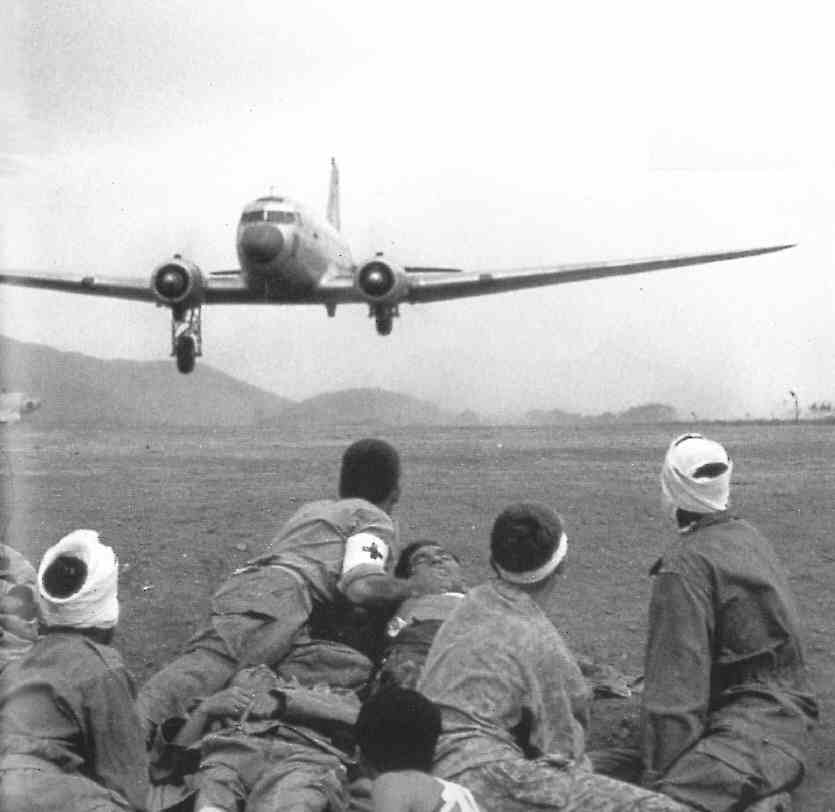
dien bien phu6

Wounded Awaiting Medivac 

Relief forces were unable to get through and the garrison died, despite the bravery of the Paratroops. Colonials and Legionaries. The French garrison was let down by their high command and their government and lost the battle due to inadequate logistics and air power. The survivors endured a brutal forced march of nearly 400 miles on foot to POW camps in which many died. Many soldiers who survived the hell of Dien Bien Phu were subjected to torture, including a practice that we call “water boarding.” General Georges Catroux who presided over the official inquiry into the debacle at Dien Bien Phu wrote in his memoirs: “It is obvious that there was, on the part of our commanding structure, an excess of confidence in the merit of our troops and in the superiority of our material means.”

Few French troops caved to the Viet Minh interrogations and torture but some would come away with the belief that one had to use such means to fight the revolutionaries.  Some French troops and their Algerian comrades would apply these lessons against each other within a year of their release. French soldiers and officers were shipped directly from Indochina to Algeria to wage another protracted counterinsurgency often against Algerians that they had served alongside in Indochina. The Algerian campaign proved to be even more brutal and it was lost politically before it even began.

dien_bien_phu

The March to Captivity

The wars in Indochina and Algeria tore the heart out of the French Army. The defeats inflicted a terrible toll. In Indochina many French career soldiers felt that the government’s “lack of interest in the fate of both thousands of missing French prisoners and loyal North Vietnamese…as dishonorable.” Divisions arose between those who served and those who remained in France or Germany and created bitter enmity between soldiers. France would endure a military coup which involved many who had fought in Vietnam and Algeria. Having militarily won that war these men called The Centurions by Jean Lartenguy had been turned into liars by their government.  They were forced to abandon those who they had fought for and following the mutiny, tried, imprisoned, exiled or disgraced. Colonial troops who remained loyal to France were left without homes in their now “independent” nations. They saw Dien Bien Phu as the defining moment. “They responded with that terrible cry of pain which pretends to free a man from his sworn duty, and promises such chaos to come: ‘Nous sommes trahis!’-‘We are betrayed.’

The effects of the wars in French Indochina, Algeria and Vietnam on the French military establishment were long lasting and often tragic. The acceptance of torture as a means to an end sullied even the hardest French officers. Men like Galula and Marcel Bigeard refused to countenance it, while others like Paul Aussaresses never recanted.

One of the most heart rending parts of the Dien Bien Phu story for me is that of Easter 1954 which fell just prior to the end for the French:

“In all Christendom, in Hanoi Cathedral as in the churches of Europe the first hallelujahs were being sung. At Dienbeinphu, where the men went to confession and communion in little groups, Chaplain Trinquant, who was celebrating Mass in a shelter near the hospital, uttered that cry of liturgical joy with a heart steeped in sadness; it was not victory that was approaching but death.” A battalion commander went to another priest and told him “we are heading toward disaster.” (The Battle of Dienbeinphu, Jules Roy, Carroll and Graf Publishers, New York, 1984 p.239)

As a veteran of Iraq whose father served in Vietnam I feel an almost a spiritual link to our American and French brothers in arms who fought at Dien Bien Phu, the Street Without Joy, Algiers and places like Khe Sanh, Hue City, the Ia Drang and the Mekong. When it comes to this time of year I always have a sense of melancholy and dread as I think of the unlearned lessons and future sacrifices that we may be asked to make.

FrenchForeignLegionaireVtNamDOD

Legionairs on the Street Without Joy

The lessons of the French at Dien Bien Phu and in Indochina were not learned by the United States as it entered Vietnam, Iraq or Afghanistan. Nor were the lessons of Algeria. It was an arrogance for which we paid dearly and I do not think that many in our political, media and pundits or military have entirely learned or that we in the military have completely shaken ourselves. We lost 54,000 dead in Vietnam, nearly 4500 in Iraq and close to 2600 in Afghanistan, not counting vast numbers of wounded. There are those even as we have been at war for 12 years who advocate even more interventions in places that there is no good potential outcome, only variations on bad. How many more American Soldiers, Sailors, Marines and Airmen will need die without “victory” whoever we might want too define it?

normal_03_56_F8F_decollage_a_DBP_Beriel_ph

French Navy F-8 Bearcat at Dien Bien Phu

Like the French our troops who returned from Vietnam were forgotten.The U.S. Army left Vietnam and returned to a country deeply divided by the war. Vietnam veterans remained ostracized by the society until the 1980s. As Lieutenant General Harold Moore  who commanded the battalion at the Ia Drang immortalized in the film We Were Soldiers recounted “in our time battles were forgotten, our sacrifices were discounted, and both our sanity and suitability for life in polite American society were publicly questioned.”

For those interested in the French campaign in Indochina it has much to teach us. Good books on the subject include The Last Valley by Martin Windrow, Hell in a Very Small Place by Bernard Fall; The Battle of Dienbeinphu by Jules Roy; and The Battle of Dien Bien Phu- The Battle America Forgot by Howard Simpson. For a history of the whole campaign, read Street Without Joy by Bernard Fall. I always find Fall’s work poignant, he served as a member of the French Resistance in the Second World War and soldier later and then became a journalist covering the Nuremberg Trials and both the French and American wars in Vietnam and was killed by what was then known as a “booby-trap” while covering a platoon of U.S. Marines.

I do pray that we will learn the lessons before we enter yet another hell.

Peace

Padre Steve+
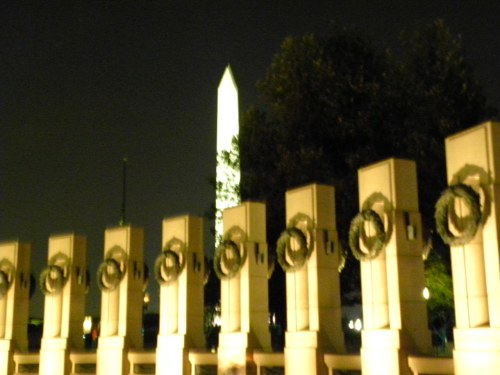
6 Comments

Filed under History, iraq,afghanistan, Military, vietnam

The Terrible Costs of Not Learning the Lessons of War: Vietnam, Iraq Afghanistan

481801_10151367001287059_1003164983_nIn 1986 a Army Major working at the Office of the Secretary of Defense wrote a book that was a history of the US Army in the Vietnam War, and as it turns out to be a work of military prophecy. The young officer, Andrew Krepinevich wrote his book, The Army in Vietnam: 

“In the absence of a national security structural framework that address the interdepartmental obligations associated with FID operations, and considering the lack of incentives for organizational change within the Army, it is presumptuous for the political leadership to believe that the Army (or the military) alone will develop the capability to successfully execute U.S. security policy in Third World countries threatened by insurgency. This being the case, America’s Vietnam experience takes on a new and tragic light. For in spite of its anguish in Vietnam, the Army has learned little of value. Yet the nation’s policy makers have endorsed the service’s misconceptions derived from the war while contemplating an increased role in Third World low-intensity conflicts. This represents a very dangerous mixture that in the end may see the Army again attempting to fight a conventional war against a very unconventional enemy.” (The Army in Vietnam, Andrew F Krepinevich Jr., The Johns Hopkins University Press, Baltimore and London, 1986. p.275)

Krepinevich retired from the Army in the 1990s as a Lieutenant Colonel and has been busy in the world of think tanks and national security policy. Unlike his book, which is probably one of the best accounts of the Vietnam War and as I said before a book that is somewhat prophetic his later work has not been as well received. He has his critics. But despite that criticism once cannot deny the accuracy of his predictions concerning the Army’s subsequent operations in low intensity, or counter-insurgency campaigns beginning in Somalia and encompassing the wars in Iraq and Afghanistan.

If Krepinevich had been alone in his criticism, or his book not been widely read one might excuse policy makers of the 1990s and 2000s who sent the Army and the military into counterinsurgency campaigns involving massive numbers of troops and the commitment of blood and treasure that had practically no value to the national security of the United States. Instead thousands of American and Allied lives were sacrificed, tens of thousands wounded and one nation, Iraq that had nothing to do with the attacks of 9-11-2001 left devastated and crippled empowering Iran the sworn enemy of the United States no regional rival.

n671902058_1153793_4043

One cannot say that the Iraq war was worth the lives and treasure spent to cover the lies and hubris of the Bush Administration. Nor can one say that the effort to change the tribal structure of the fiercely independent Afghan peoples after driving Al Qaeda from that “Graveyard of Empires” been worth the expenditure of so many American lives and treasure. In fact the wars in Iraq and Afghanistan damaged the United States in more ways than their proponents could every admit. The military, now drained by years of war is hamstrung and will be hard pressed to meet legitimate threats to our national security around the world because of the vast amounts of blood and treasure expended in these wars.

In 1920 T.E. Lawrence wrote about the follies of the British government in Mesopotamia, what is now Iraq. His words could have been written about the Bush Administrations 2003 war in Iraq. Lawrence wrote in a letter to the Sunday Times:

The people of England have been led in Mesopotamia into a trap from which it will be hard to escape with dignity and honour. They have been tricked into it by a steady withholding of information. The Bagdad communiqués are belated, insincere, incomplete. Things have been far worse than we have been told, our administration more bloody and inefficient than the public knows. It is a disgrace to our imperial record, and may soon be too inflamed for any ordinary cure. We are to-day not far from a disaster.”

Krepinevech, like Lawrence before him was right, but he was not the only one. in 1993 Ronald H Spector in his book wrote:

“Americans dislike problems without solutions. Almost from the beginning of the U.S. involvement in Vietnam they have attempted to find “lessons” in the war. The controversy about the appropriate lessons to be learned continues with the same vigor and lack of coherence as the debates about the war itself.

Lessons are controversial and fleeting but lessons long. The memories of 1968 have remained and served to influence attitudes and expectations well into the 1990s. The ghosts of Vietnam haunted all sides of the recent deliberations about the Gulf War. In the wake of that war, President Bush hastened to announce that “we have kicked the Vietnam syndrome.” 

Doubtless many Americans would like to agree. It is easier to think of the Vietnam War as a strange aberration, a departure from the “normal” kind of war, like World War II and the recent war in the Gulf, where the course of military operations were purposeful and understandable and the results relatively clear cut. Yet the Vietnam War may be less of an aberration than an example of a more common and older type of warfare, reaching back before the Thirty Years’ War and including World War I. A type of warfare in which a decision is long delayed, the purposes of the fighting become unclear, the casualties mount, and the conflict acquires a momentum of its own. In a world which had recently been made safe for conventional, regional and ethnic wars, Vietnam rather than World War II may be the pattern of the future.” (After Tet: The Bloodiest Year in Vietnam, Ronald H Spector Vintage Books, a division of Random House, New York 1993 pp. 315-316

After serving in Iraq with the advisors to the Iraqi 7th and 1st Divisions and 2nd Border Brigade in 2007-2008 and seeing the results of the great misadventure brought upon our nation and Iraq by the Bush administration I cannot help but recognize how disastrous the wars unleashed after 9-11-2001 have been. I have lost friends and comrades in them, I see the human costs in our Navy hospitals every day. I have told too many If they had actually accomplished something it would be another matter. But the human, economic, strategic and even more importantly the moral costs have been so disastrous to our nation to make the loss of the Twin Towers and the victims of 9-11-2001 pale in significance.

sch0-017

The sad thing is that these wars have gone on so long that many of the young Marines and Soldiers fighting them have no understanding of why they deploy and deploy to Iraq and then Afghanistan, and they are far more knowledgeable than the population at large, many of whom are untouched by the personal costs of the war. We as Americans love to say “we support the troops” but most don’t even know one. For the most part big bases from where our troops train and deploy are far from where most Americans live and might as well be on a different planet. We are invisible to most of the country, except when they see a color guard at a sporting event or bump into one of us in uniform at an airport.

3rd Infantry Places American Flags At The Graves Of U.S. Soldiers

As a result the sacrifices that the under 1% of the population that serve in the military and fight these wars are really not understood, or fully appreciated. I don’t think that this is so much the fault of the people. but rather the product of the post Vietnam era and the “Peace Dividend” of the post Cold War era when the military was reduced, the draft ended and bases in major populations centers closed.

I have written about the effects of these kinds of wars before, not just Iraq or Afghanistan. You can see some of that writing the following articles on this site. They are not comprehensive but they do tell some of the tale of where we have been since 9-11-2001. 

The Anomaly of Operation Desert Storm and Its Consequences Today

Why History Matters: The Disastrous Effects of Long Insurgency Campaigns on the Nations that Wage them and the Armies that Fight Them 

Irrelevant Incidents and Un-winnable Wars: Thoughts on Returning from War 5 Years Later

 349: Active Duty Military Suicides Hit New High in 2012

The Fallacy of “Complete” Victory and the Seeds of Perpetual War and the Way to Peace

Thoughts on Choosing a President and the Results of Not Getting it Right: Lieutenant General Harold Moore at West Point

War is a Racket: Remembering Major General Smedley Butler USMC and Why He Matters

Armed Forces Day 2012: The Disconnection of the Military and Society and the Terrible Result

Failing to Learn from History: The Lesson of the First Anglo-Afghan War and Questions about the US-NATO Campaign

The War that Cannot Be Won: Afghanistan 2012

The 9-11 Generation: The Few

The “Comfortable” Experts and the Real Soldiers

Adjusting Strategy to Reality

No Illusions: The Cost of the Long War and its Potential impact on the United States

The sad thing is that we don’t learn from history. Krepinevech, Spector and Lawrence could have written what they wrote yesterday. Instead they all wrote many years before the 9-11 attacks and our military response to them. As a historian, a career officer and a chaplain I cannot help but think of the terrible costs of such wars and how they do not do anything to make us more secure. The fact is that we do not learn from history much to our detriment despite the great human, spiritual, moral and economic effects of such wars.

300px-Battle_of_Ia_Drang_Valley-1

What is the cost of war? what is the bill? Major General Smedley Butler wrote: “This bill renders a horrible accounting. Newly placed gravestones. Mangled bodies. Shattered minds. Broken hearts and homes. Economic instability. Depression and all of its attendant miseries. Back -breaking taxation for generations and generations. For a great many years as a soldier I had a suspicion that war was a racket; not only until I retired to civilian life did I fully realize it….”

Peace

Padre Steve+
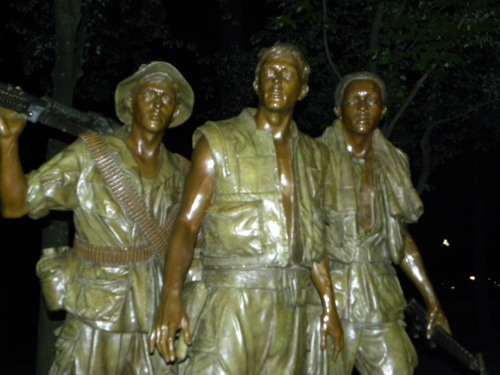
Leave a comment

Filed under Foreign Policy, History, iraq,afghanistan, Military, national security, News and current events