Tag Archives: Albert Speer

An Introduction to D-Day and the Normandy Campaign

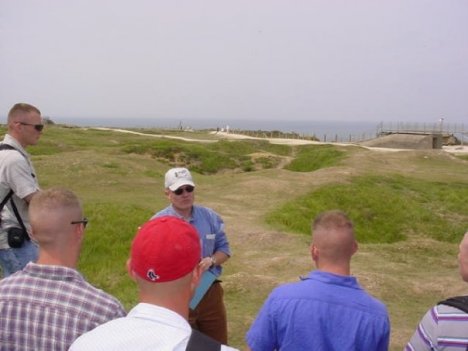
The author with Marines at Point du Hoc, Normandy in 2004

Every year about this time I try to write about D-Day. Last year I posted several articles as I had in 2009 as well.  This year I spent more time on the Battle of Midway writing three articles. Today I have been on the road much of the day and as I drove back to my Island Hermitage I began to think about what I wanted to do this year. When I have decided to do is to re-post a short research paper that I did for one of my Master’s degree courses tonight and follow it with some articles over the week on specific aspects and personalities of the campaign.  What I hope is that people that are not familiar with the campaign as well as those that are can use this as a portal to other resources on the web and in print.

I have visited Normandy once in 2004 on a trip with the Marines of the Marine Security Force Company Europe that took me to Belleau Wood as well as Normandy.  In both places I had the good fortune to be able to explain aspects of both battles, at Normandy discussing the invasion from the German side of the fence.  The Normandy battlefields are well worth visiting.  Hopefully in the next few years I will get a chance to go back and do some serious exploring.

Introduction

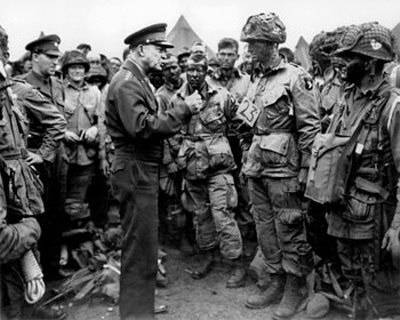
General Dwight D Eisenhower Commander in Chief Allied Forces Europe

The American landings on Omaha Beach were critical to the success of the Allied invasion northwestern Europe in the overall Overlord plan.  Without success at Omaha there would have been a strong chance that the German 7th Army and Panzer Group West could have isolated the remaining beachheads, and even if unsuccessful at throwing the Allies into the sea could have produced a stalemate that would have bled the Allies white.  This quite possibly could have led to a political and military debacle for the western allies which would have certainly changed the course of World War II and maybe the course of history.[i] This is not to say the Germans would have won the war, but merely to state that a defeat on Omaha could have changed the outcomes of the war significantly.   Subsequent to the successful landing there were opportunities both for the Allies and the Germans to change the way that the campaign unfolded, thus the battles leading up to the breakout at Avranches are critical to its development and the subsequent campaign in France.

OVERLORD: The Preparations

Eisenhower’s Key Lieutenants: Patton, Bradley and Montgomery

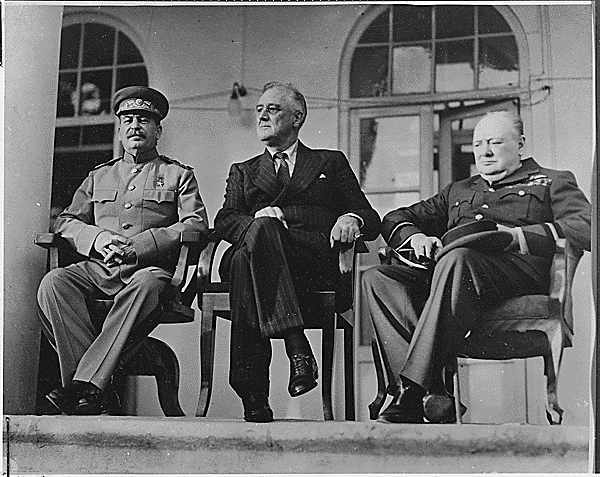
The planning for the Normandy invasion began in earnest after the QUADRANT conference in Quebec in August 1943.  The timetable for the operation was established at the Tehran conference where Stalin sided with the Americans on the need for an invasion of France in the spring of 1944.[ii] Prior to this there had been some planning by both the British and Americans for the eventual invasion initially named ROUNDUP.  These preparations and plans included a large scale raid at Dieppe in 1942 which ended in disaster but which provided needed experience in what not to do in an amphibious assault on a heavily defended beach.        The failure at Dieppe also darkened the mood of the Allies, the British in particular to the success of such operations, bringing to mind the failed Gallipoli campaign of 1915 as well as the opposed landings at Salerno and the USMC experience at Tarawa.[iii] Despite this the Americans led by General Marshall pushed for an early invasion of northwest Europe. Churchill and the British due to their weakness in land power pushed for land operations in the Mediterranean, and even in Norway as an option to the assault in France. The conflicted mindset of the Allies left them in the position of planning almost exclusively for the success of the initial landings and build up to the near exclusion of planning for the subsequent campaign once they landed. This especially included what one writer described as “the maze of troubles awaiting behind the French shore.”[iv]

Field Marshal Erwin Rommel, Commander of Army Group B

Despite conflicts between the Americans and British political and military leadership the planning for the Normandy landings detailed in NEPTUNE and OVERLORD moved ahead.  General Dwight Eisenhower was appointed as the commander of SHAEF with his major subordinates for Land, Air and Sea which caused consternation on both sides of the Atlantic.[v] [vi] The planned operation was expanded from the initial 3 division assault on a narrow front to a minimum 5 division assault on a broad front across Normandy[vii]supplemented by a strong airborne force.[viii] Overall the plan as it developed reflected a distinctly “American willingness to confront the enemy head-on in a collision which Britain’s leaders had sought for so long to defer.”[ix] It is ironic in a sense that the British avoidance of the head on attack was based on their known lack of manpower.  Britain had few infantry reserves to sustain the war effort and the Americans only late recognized their own deficiency in both quantity and quality of infantry forces on which their strategy depended.  That the western allies, so rich in material and natural resources would be so deficient in infantry manpower was a key constraint on the subsequent campaign in France and Germany.  The shortage of infantry forces would cause great consternation among the Allies as the campaign in France wore on.

German Beach Obstacles

The Germans too faced manpower shortages due to the immense losses sustained on the Eastern front, those lost in Africa and those tied down in Italy, the Balkans and Norway as well as the drain caused by Luftwaffe Field Divisions and troops diverted into the Waffen-SS.   The German Army resorted to smaller divisions and the created many “static” divisions manned by elderly or invalid Germans to plug the gaps along the Atlantic wall. The Germans were also forced to recruit “Volksdeutsch” and foreign “volunteers” to fill out both Wehrmacht and Waffen-SS formations.

German fortifications at the Pas de Calais

Prior to the final decision to mount an invasion the Allied planners had contended with the location of the assault in northwestern France.  The Pas de Calais provided a direct route was rejected because it was where the Germans would expect the strike to occur and because it was where the German defenses were strongest.  The fiasco at Dieppe had provided ample proof of what could happen when making an assault into a heavily fortified port.  Likewise the mouth of the Seine near Le Harve was rejected because of the few beaches suitable for landing and because the forces would be split on both sides of the river.  Brittany was excluded due to its distance from the campaigns objectives in Germany.[x]This left Normandy which offered access to a sufficient number of ports and offered some protection from the weather. Normandy offered options to advance the campaign toward the “Breton ports or Le Harve as might be convenient.”[xi] Omaha beach, situated on the center right of the strike would be crucial to the success of the assault situated to the left of UTAH and the right of the British beaches.

Rommel inspecting beach obstacles

Once Normandy was selected as the location for the strike by the Allies, the planning sessions remained contentious.  This was especially true when the Allies debated the amount and type of amphibious lift that could be provided for the landings, particularly the larger types of landing ships and craft to support the Normandy invasion and the planned invasion of southern France, Operation ANVIL.  The increase in OVERLORD requirements for landing craft had an impact in the Mediterranean and resulted in ANVIL being postponed until later in the summer.
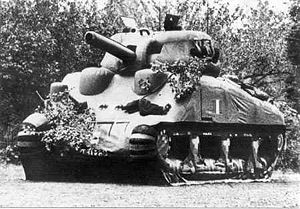
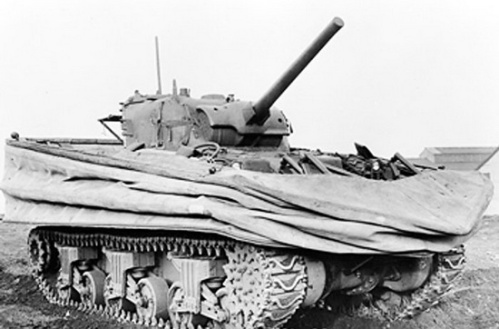
“Dummy” Sherman Tank: The Allies created a fictional Army Group to deceive German planners

As part of their preparations the Allies launched a massive deception campaign, Operation FORTITUDE.  This operation utilized the fictitious First Army Group under the “command” of General George Patton. Patton was still smarting from his relief of command of 7th Army following slapping commanded an “Army Group” which incorporated the use of dummy camp sites, dummy tanks, aircraft and vehicles, falsified orders of battle and communications to deceive German intelligence.[xii] The success of this effort was heightened by the fact that all German intelligence agents in the U.K. had been neutralized or turned by the British secret service.  Additionally the Luftwaffe’s limited air reconnaissance could only confirm the pre-invasion build ups throughout England without determining the target of the invasion.[xiii] The German intelligence chief in the west, Colonel Baron von Roenne “was deceived by FORTITUDE’s fantasy invasion force for the Pas de Calais.”[xiv] Despite this Commander of the 7thArmy recognized by 1943 that Normandy was a likely Allied target and efforts were made to shift 7th Army’s center of gravity from Brittany to Normandy.  The one potential German success in getting wind of when the Allied landings would occur was lost when German intelligence discovered two lines of Verlaine’s “Chason d’ Automme” in June 1944 which were to alert the French Resistance of the invasion.  The security section of 15th Army heard them transmitted on the afternoon of 5 June and notified General Jodl at OKW, but no action was taken to alert forces on the coast.[xv] Allied intelligence was aided by ULTRA intercepts of coded German wireless transmissions. However this was less of a factor than during the African and Italian campaigns as more German communications were sent via secure telephone and telegraph lines vice wireless.[xvi] Allied deception efforts were for the most part successful in identifying German forces deployed in Normandy. However they were uncertain about the location of the 352nd Infantry Division which had been deployed along OMAHA and taken units of the 709th Infantry Division under its command when it moved to the coast.[xvii]


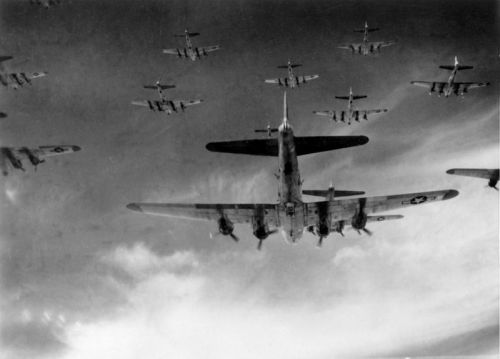
US Army Air Corps B-17s were part of the strategic air campaign to isolate the German beach defenses

The Allied air campaign leading up to the invasion was based on attempting to isolate the invasion site from German reinforcements. Leigh-Mallory the Air Chief developed the “TRANSPORTATION PLAN” which focused efforts on destroying the French railroad infrastructure.[xviii] A more effective effort was led by General Brereton and his Ninth Air Force which was composed of medium bombers and fighters.  Brereton’s aircraft attacked bridges and rapidly achieved success in crippling German efforts to reinforce Normandy.[xix] Max Hastings gives more credit to the American bombing campaign in Germany to crippling the German defense in the west. General Spaatz and the 8th Air Force destroyed German production capacity in oil and petroleum as well as the degraded the German fighter force.  The American daylight raids so seriously degraded the German fighter force that it could not mount effective resistance to the invasion.[xx] Russell Weigley also notes that Albert Speer the Reich Armaments Minister said that “it was the oil raids of 1944 that decided the war.”[xxi]


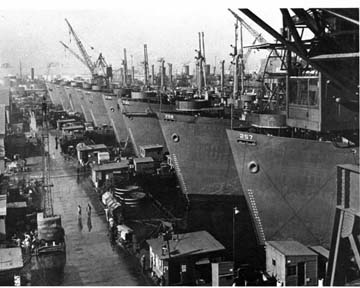
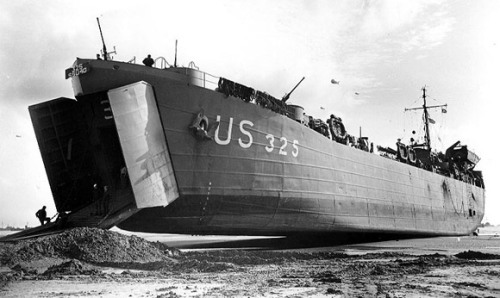
US Navy LST’s being loaded for the invasion

Planning and preparations for OMAHA were based around getting the 1st and 29th Infantry Divisions ashore and them securing a beachhead “twenty-five kilometers wide and eight or nine kilometers deep.”[xxii] American preparations were thorough and ambitious, but the American assault would go through the most heavily defended sector of German defenses in Normandy.  The landing beaches were wide and bordered by dunes which were nearly impassable to vehicles and “scrub covered bluffs thirty to fifty meters high…rough and impassable to vehicles even to tracked vehicles except at a few places.  The exits were unimproved roads running through four or five draws that cut the bluffs.”[xxiii] Dug in along those bluffs was the better part of the 352nd Division. The Americans compounded their selection of a difficult and heavily defended landing zone the Americans failed to take advantage of many of the “gadgets” that were offered by the British which in hindsight could have aided the Americans greatly.  The Americans made use of two battalions of DD (Dual Drive) tanks but turned down the offer of flail tanks, flamethrower tanks, and engineer tanks, the “funnies” developed by General Hobart and the British 79th Armored Division.[xxiv]

Dual Drive amphibious tanks were included as part of the US invasion package

Weigley believes that the American view of “tanks as instruments of mobility rather than of breakthrough power.” Likewise the Americans victories in the First World War were won by infantry with little tank support.[xxv] In this aspect the Americans were less receptive to utilizing all available technology to support their landings, something that when considering the fact that Americans were great lovers of gadgets and technology. The British use of the Armor, including the “Funnies” on the beaches to provide direct fire into German strong points lessened their infantry casualties on D-Day. Due to this lack of armor support on the beach American forces on OMAHA had little opportunity to exercise true combined arms operations during the initial landings.[xxvi]


Rommel with Artillerymen of the 21st Panzer Division in Normandy

German preparations for an Allied landing in Normandy were less advanced than the Pas de Calais.  However they had made great strides since late 1943. Field Marshal Rommel greatly increased defensive preparations along the front, including the Normandy beaches.  One of Rommel’s initiatives was to deploy Panzer Divisions near the coast where they could rapidly respond to an invasion.  However Rommel did not get everything that he wanted.  The OKW only allotted him two Panzer Divisions to be deployed near the Normandy beaches.  Only one of these the 21st Panzer Division was deployed near Caen in the British sector.  One wonders the result had the 12th SS Panzer Division been deployed behind OMAHA. [xxvii]

OMAHA: The Landings

The venerable USS Nevada, resurrected from the mud of Pearl Harbor bombarding German positions at Utah Beach

Like the rest of the Allied invasion forces the 1st and 29th U.S. Infantry Divisions set sail from their embarkation ports with the intent of landing on June 5th.  General Bradley, commanding the First Army until the American XII Army Group would be activated accompanied the invasion force.  The OMAHA landing was under the command of General Gerow and his V Corps while VII Corps led by the 4th Infantry Division landed at Utah supported by airdrops of the 82nd and 101st Airborne Divisions inland.  American command and control during the invasion was exercised from sea as in the Pacific, although General Officers were to go ashore with each of the American divisions.  A severe channel storm disrupted the plan to land on the 5th and Eisenhower delayed the invasion one day catching a break in the weather and electing to go on the 6th.[xxviii] This delay while uncomfortable for the embarked troops caused the Germans to believe that no invasion would take place until the next favorable tide and moon cycle later in the month.[xxix] The assumption that no invasion was possible ensured that a number of key senior German leaders, including Rommel were absent from the invasion front when the Allies landed.[xxx]

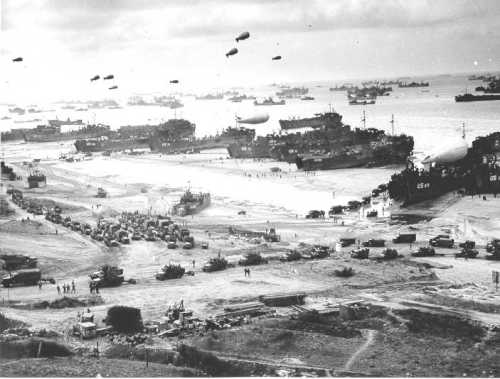
US Troops ride a LCVP toward Omaha 

The landing beaches at OMAHA stretched about 6500 meters from Colleville-Sur-Mer to Vierville-Sur-Mere in the west.  The beaches are wide with bluffs overlooking them and a seawall between the beaches and the bluffs.  Additionally several small towns dot the beach. To the west of the town of Vierville, a prominent height overlooked the entire beachhead.  Named Pont du Hoc, it was believed to house a 150mm battery sighted where it could enfilade the OMAHA landing zones.  The Americans assigned to the 2nd Ranger Battalion to make a seaborne assault to land, scale the cliffs and take the battery.  Companies from this battalion made a heroic landing and scaled the cliffs to capture the strongpoint only to discover that the guns had not been emplaced.  The Rangers took heavy casualties and held their isolated beachhead against German counterattacks until relieved by the 29th Division on the morning of June 8th.[xxxi]

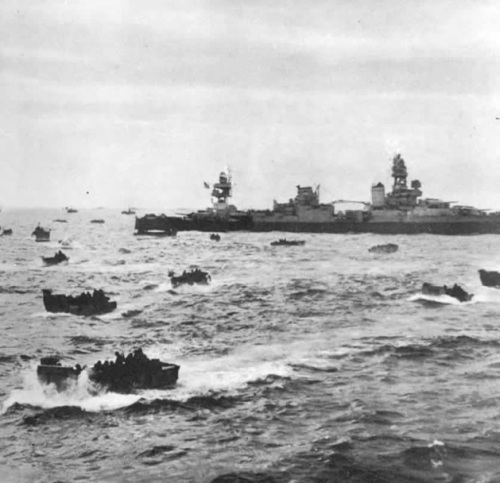
Landing craft passing the USS Augusta in heavy seas heading toward Omaha Beach

H-Hour for OMAHA was 0630.  Unfortunately the assault troops were transferred to their LCVP landing craft 16-20 kilometers from the beach.  The result was a long and dangerous ride in the small craft for the infantry.  Most of the infantry were completely soaked in sea spay and seasick before going ashore and they carried loads far above what they normally would carry into battle.[xxxii] The Armor support was one battalion of DD tanks, the 741stArmored Battalion, supporting the 16th Infantry Regiment of 1st Infantry Division. These were also launched too far out and nearly all of the tanks were swamped and lost before firing a shot in anger.[xxxiii] Other American support units needed to provide firepower on the beach were equally unfortunate. Weigley notes that at OMAHA “at least 10 of the LCVPs sank” as did “the craft carrying almost all of the 105mm howitzers that were to be the first artillery ashore after the tanks.”[xxxiv] The losses would cripple the assault on OMAHA and nearly cause its abandonment.

Bloody Omaha

As the soldiers of the American divisions on OMAHA came ashore they faced German defenders of the 352nd, 716th and a regiment of the 709th Infantry Division, the latter under the tactical command of the 352nd.   Without the bulk of their tanks artillery and lacking close air support the Americans struggled across the beaches and were cut down in large numbers before being pinned down behind the sea wall.[xxxv] With the Americans pinned down on the beach unable to advance, the time tables for the reinforcing waves became snarled amid the German beach obstacles which had not been cleared.  This was in large part due to 40% casualties among the Combat Engineers and the loss of all but five bulldozers.[xxxvi] Naval officers were frustrated in their attempts to provide naval gunfire support by the lack of identifiable targets on the beaches.  Yet German strongpoint’s were “knocked out by either by superbly directed vigorous gunfire from destroyers steaming as close as 800 yards offshore, or by determined action from Rangers or infantry.[xxxvii]


US Infantry struggles ashore at Omaha

Soldiers ashore discovered that they were not facing the static 716th Division but the veteran 352nd Division as well.[xxxviii] Only the leadership and actions of Brigadier General Norman Cota the 29th Division’s Deputy Commander and Colonel Charles Canham of the 116th Infantry kept the situation from complete collapse.  They were able to rally their troops. Under their leadership small units from the 116th which had its linage back to the “Stonewall Brigade” as well as elements of the 16th and 18th Infantry Regiments began to move forward.  Surviving junior leaders began to lead survivors through the dunes and up the bluffs to attack German defenders of the roads leading up from the beach from the flank and rear.  A mid-day break in the weather allowed some close tactical air support giving the troops badly needed support.

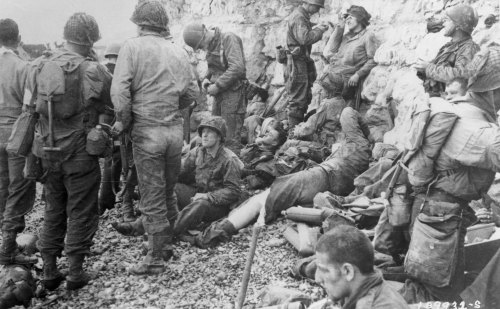
US 1st Infantry Division Troops at the Omaha sea wall

With the situation desperate General Bradley considered the evacuation of OMAHA.  At sea events were as confused as Bradley and his staff attempted to make sense of what was going on.  Even later in the evening there was discussion of diverting all further reinforcements from OMAHA to the British beaches.[xxxix]At 1330 hours “Gerow signaled Bradley: “Troops formerly pinned down on beaches…advancing up heights behind beaches.”[xl] By the end of the day Bradley’s aid Major Hansen noted Bradley’s comments to Collins: “They are digging in on Omaha beach with their fingernails. I hope they can push in and get some stuff ashore.”  And Montgomery: “Someday I’ll tell Gen[eral] Eisenhower just how close it was for a few hours.”[xli]

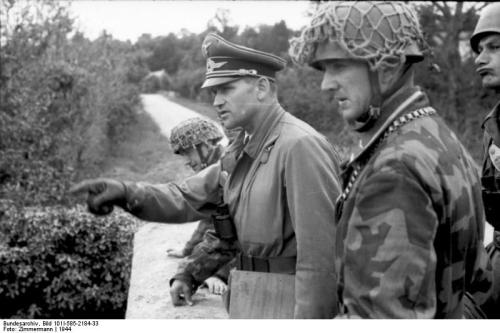
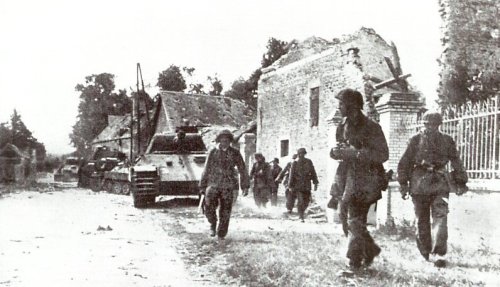
German Fallschirmjaeger Trüppen in Normandy, the German Parachute forces fighting in an infantry role were very effective in the Normandy campaign

The landings at OMAHA succeeded at a cost of over 2000 casualties.  Critical to the success of the landings were the German inability to reinforce their defending troops on the beach.  Likewise the weakness of the units available to mount the standard counterattack that was critical to German defensive plans on D-Day itself kept the Germans from driving the Americans back into the Channel. The 352nd Division fought superbly under the full weight of V Corps and the British XXX Corps on its right suffering heavy casualties as they contested every inch of ground.  The 716th Division composed of second rate troops melted under the onslaught.  Allied air supremacy played a key role as sorties by the 8th and 9th Air Forces helped keep German reinforcements from arriving and interdicted counter attacks inland.  Weigley credits the Allied air superiority with the success of the landings and with limiting casualties.[xlii]Von Rundstedt and other German commanders in France were limited by the delay and refusal of Hitler and OKW to release Panzer reserves when needed most early on June 6th.  By the close of D-Day allied forces had secured the five invasion beaches but not achieved their objectives of taking Caen and Bayuex.  Since the forces on the various beachheads had not linked up the beaches would have been extremely vulnerable had the Germans been able to mount a rapid counterattack by Panzers and strong infantry formations as they had at Salerno.

Major Battles to the Breakout at Avranches

Securing the Beachheads

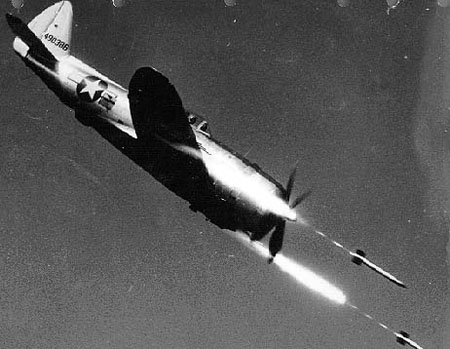
P-47 firing rockets at a ground target. Close air support was vital to Allied forces in Normandy

It took the V and VII Corps nearly a week to secure the beachheads. German forces including the stalwart 352nd Division resisted stubbornly and mounted sharp local counterattacks which kept the Americans off balance.  Elements of the 29th Division and the 90th Division began to push inland and to expand the beachhead toward UTAH. Opposed by the 352nd Division and elements of the 91st Airlanding Division and other non-divisional units the fighting revealed the inexperience of the American infantry formations and the uneven quality of their leadership.  As the Americans tackled the Germans in the labyrinth of the Bocage country the defensive skill of the Germans cost many American lives and delayed the joining of the beachheads. On the 13th the link up was solid enough to enabling the Americans to conduct the follow up operations needed to expand the beachhead, secure Cherbourg and clear the Cotentin.

A Panther tank of the Panzer Lehr Division in Normandy

In some American divisions the hard fighting triggered a leadership crisis.  The lack of success of the 90th Division led General “Lightening Joe” Collins of VII Corps relieve the division commander and two regimental commanders of command, a portent of things to come with other American units.[xliii] As the V and VII corps pushed into the “Bocage” they were followed by a massive build up of troops and equipment delivered to the beaches and to the artificial “Mulberry” harbors.  Despite their numeric superiority, air supremacy and massive Naval gunfire support and facing the weakened 352nd, 91st and the 6thParachute Regiment and other less than quality formations, survivors of the static divisions, the Americans made painfully slow progress as they moved off the beachhead and into the Bocage.[xliv]

The Capture of Cherbourg

US Soldiers of the 29th Division surrender to German Fallschirmjaeger in Normandy

Once the beachheads had been consolidated the Americans turned their attention toward Cherbourg. Cherbourg was the major naval port at the far northwest tip of the Cotentin.  D-Day planners counted on its swift capture and rehabilitation to serve as a supply port for the Allied forces. The 9th Division drove south to the coast near Barneville on the 18th of June cutting off the German forces covering the approaches to Cherbourg.[xlv] This put the Germans in a bind as the 7th Army “had to split its forces in the peninsula in order to hold the fortress a little longer and thus to gain time for the establishment of the southern front on the Cotentin peninsula.[xlvi] The German forces arrayed before Cherbourg waged a desperate defense centered around the 243rd Infantry Division and other assorted battle groups of LXXXIV Corps, whose commander General Marcks one of the best German Generals was killed in action on 12 June.[xlvii] The U.S. VII Corps under Collins with the 9th, 4th and 79th Divisions pushed up the peninsula capturing Cherbourg on June 29th.  Bradley pushed hard for the capture of the port as the Mulberries had been ravaged by a severe Channel storm the week prior. The port of Cherbourg was thoroughly demolished by German engineers and would not be fully operational for months. The loss of the Mulberries and delay in Cherbourg’s availability meant that few supplies were landed on the beaches would “hinder the escape from the constricting land of the hedgerows into which the Americans had come in search of a port.[xlviii]

The Battle of Caumont Gap

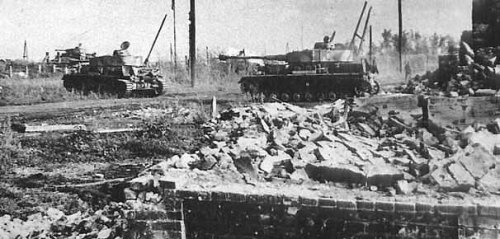
Panzer IV Tank in Normandy

V Corps under Gerow made a cautious advance by phase lines toward Caumont, St Lo and Carentan.  The deliberate advance by the Corps toward a line weakly held by the Reconnaissance battalion of the 17th SS Panzer Grenadier Division was directed by Bradley who did not want to divert attention from the effort against Cherbourg.   After capturing Caumont V Corps halted and continued aggressive patrolling to deceive the Germans while digging in.[xlix] The possibility existed that a strong push against the weak German line could have led to an opportunity to envelope the German line west of Caen. This was a missed opportunity that in part led to the bloody and controversial campaign to capture Caen.[l]

British efforts around Caen

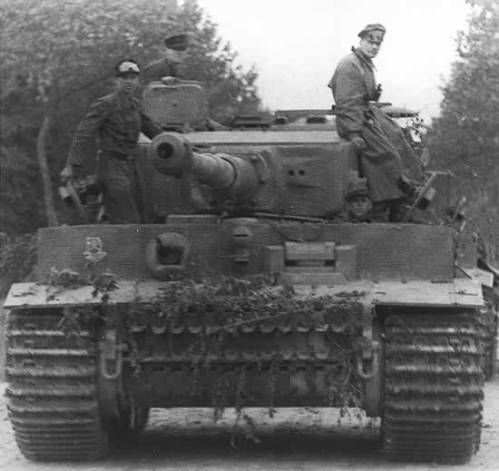
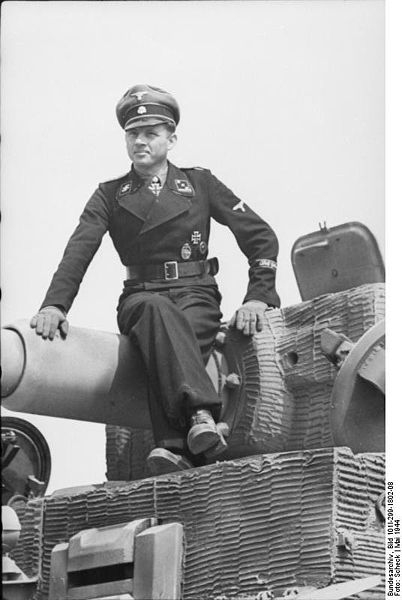
German Panzer Ace Waffen SS Captain Michale Wittman single handedly destroyed a British Battalion at Villers Bocage in his Tiger Tank

Montgomery had ambitious plans to break out of Normandy by capturing Caen on D-Day and driving toward Falaise and Argentan.  The British plans for this were frustrated by the rapid reinforcement of the sector by the Germans and the activities of 21st Panzer, Panzer Lehr, and the 12th SS Panzer Divisions.  A flanking maneuver at Villers-Bocage was frustrated by a few Tiger tanks led by the legendary Waffen SS Panzer commander Captain Michael Wittman whose tanks devastated a British Armored battalion.[li]

Wreckage of a British Battalion at Villers Bocage

A series of disastrous attacks toward Caen (EPSOM, CHARNWOOD and GOODWOOD) strongly supported by air strikes and Naval gunfire finally succeeded in taking that unfortunate city on July 18th but failed to take the heights beyond the town.[lii]

British operations like Operation Epsom met setback after setback against dug in German forces outside of Caen

Against crack well dug in German forces the British took heavy casualties in tanks and infantry seriously straining their ability to conduct high intensity combat operations in the future.[liii] The one benefit, which Montgomery would claim after the war as his original plan was that German forces were fixed before Caen and ground down so they could not be used against Bradley’s breakout in the west at St Lo.[liv]


Clearing the Bocage: The Battle of the Cotentin Plain

US M-5 Light Tank in Normandy

Other German forces arrived, and reinforced the Caumont gap which no longer “yawned invitingly in front of V Corps.” [lv] Bradley wished to push forward rapidly to achieve a breakthrough in the American sector.[lvi] Facing the most difficult terrain in France amid the Bocage and swamps that limited avenues of approach to the American divisions committed to the offensive.  The Americans now faced their old foe the 352nd division as well various elements of II Parachute Corps, the 17th SS Panzer Grenadier and Panzer Lehr Divisions.  American tanks and infantry made slow progress and incurred high losses as they dueled the Germans at close range.  In the VIII Corps sector alone the attack “consumed twelve days and 10,000 casualties to cross eleven kilometers of the Bocage…the achievements of the VII and XIX Corps were no better than comparable.[lvii]

St. Lo

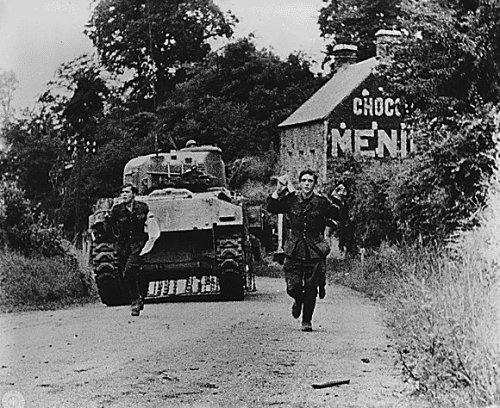
US Tanks advancing with German prisoners moving back to US lines at St Lo

St. Lo was a key to Bradley’s breakout efforts.  His Army had to capture it and the roads leading out of it to launch Operation COBRA along the coast.  The task of capturing St. Lo was assigned to GEROW’S V Corps and Corlett’s XIX Corps.  They faced opposition from the tough paratroops of the German 3rd Parachute Division of II Parachute Corps.  The 2nd, 29th, 30th and 83rd Divisions fought a tough battle advancing eleven kilometers again with high numbers of casualties especially among the infantry to secure St. Lo on 18 July.[lviii] They finally had cleared the hedgerows.  St Lo epitomized the struggle that the American Army had to overcome in the Bocage.  Hard fighting but outnumbered German troops in excellent defensive country exacted a terrible price in American blood despite the Allied control of the skies.[lix]

Operation COBRA

US 155mm Howitzers in Normandy, the Germans had profound respect for American Artillery, a respect that they did not share for American Infantry or Armor forces

With the Bocage behind him Bradley desired to push the Germans hard.  COBRA was his plan to break out of Normandy.  Bradley ably assisted by Collins they realized that the better terrain, road networks favored a breakout.  American preparations included a technical advance that allowed tanks to plow through hedgerows. This was the “Rhino” device fashioned by American troops which was installed on 3 of every 5 First Army Tanks for the operation.[lx] VII Corps was to lead the attack which was to begin on July 24th. American planning was more advanced than in past operations.  Collins and Bradley planned for exploitation operations once the breakthrough had been made. A massive air bombardment would precede the attack along with an artillery barrage by Collins corps artillery which was reinforced by additional battalions.   A mistake by the heavy bombers in the 24th resulted in the American troops being hit with heavy casualties and a postponement of the attack until the 25th.[lxi] The following day the attack commenced.  Another mistake by the bombers led to more American casualties[lxii] but VII Corps units pressed forward against the determined resistance of the survivors of Panzer Lehr and the remnants of units that had fought the Americans since the invasion began.  Although it was a “slow go” on the 25th Bradley and his commanders were already planning for and beginning to execute the breakout before the Germans could move up reinforcements.  The 26th of June brought renewed attacks accompanied by massive air strikes.

St Lo 

While not much progress was made on the 26th, the Americans discovered on the 27th that the German forces were retreating.  The capture of Marigny allowed VIII Corps to begin exploitation down the coastal highway to Coutances.  On the 27th General Patton was authorized to take immediate command of VIII Corps a precursor to the activation of his 3rdArmy.  COBRA ripped a hole in the German line and inflicted such heavy casualties on the German 7th Army that it could do little to stop the American push.[lxiii] As the American forces pushed forward they reinforced their left flank absorbing the local German counterattacks which were hampered by the Allied close air support.

Avranches and Beyond

US Forces advance through the ruins of St Lo

As the breakthrough was exploited the command of the forces leading it shifted to Patton and the newly activated 3rd Army. By the 28th VIII Corps led by the 4th and 6th Armored Divisions had reached Avranches and established bridgeheads over the See River with additional bridges being captured intact on the 30th.[lxiv] The capture of Avranches allowed the Americans to begin exploitation operations into Brittany and east toward the Seine. Weigley notes that for the first time in the campaign that in Patton the Americans finally had a commander who understood strategic maneuver and would use it to great effect.[lxv]

Conclusion

The American campaign in Normandy cost the U.S. Army a great deal. It revealed weaknesses in the infantry, the inferiority of the M4 Sherman tank to most German types, problems in tank-infantry cooperation and also deficiencies in leadership at senior, mid-grade and junior levels. Heavy casualties among infantry formations would lead to problems later in the campaign. Numerous officers were relieved including Division and Regimental commanders.  Nonetheless during the campaign the Americans grew in their ability to coordinate air and ground forces and adapt to the conditions imposed on them by their placement in the Cotentin.  The deficiencies would show up in later battles but the American Army learned its trade even impressing some German commanders on the ground in Normandy.[lxvi]

[i] See the alternative history of by Peter Tsouras Disaster at D-Day: The Germans Defeat the Allies, June 1944, Greenhill Books, London 1994. Tsouras describes the defeat of the Omaha landings and the effect on the course of the campaign leading to the overthrow of Hitler and a negotiated armistice in the west.  While this outcome could be rigorously debated other outcomes could have led to the fall of the Roosevelt and Churchill governments and their replacement by those not committed to unconditional surrender or a continuation of the war that brought about more German missile attacks on the U.K. and the introduction of other advanced German weapons that could have forced such a settlement. Another option could have led to the dropping of the Atomic Bomb on a German city vice Hiroshima.

[ii] Weigley, Russell F. Eisenhower’s Lieutenants: The Campaign of France and Germany, 1944-1945, Indiana University Press, Bloomington IN, 1981 p.33

[iii] Ibid pp. 34-35

[iv] Ibid p.35

[v] General Montgomery 21st Army group and Land Forces, Admiral Sir Bertram Ramsey as Allied Naval Expeditionary Force and Air Marshall Sir Trafford Leigh-Mallory as Commander in Chief Allied Expeditionary Air Force. Weigley p.43

[vi] Max Hastings in Overlord: D-Day and the Battle for Normandy Vintage Books, New York, 1984, comments that many in Britain wondered if Eisenhower with the lack of actual battle experience could be a effective commander and that Eisenhower was disappointed in the appointment of Leigh-Mallory and Ramsey, and had preferred Alexander over Montgomery, pp. 28-29.

[vii] Ibid. Weigley p.40.  Montgomery was the first to object to the 3 division narrow front invasion rightly recognizing that seizing Caen with its road junctions could provide a springboard for the campaign into open country.

[viii] Ibid. p.37

[ix] Hastings, Max. Overlord: D-Day and the Battle for Normandy Vintage Books, New York, 1984 p.29  Hastings finds the irony in the selection of the British officers to execute the plan that reflected the American way of thinking.

[x] The Germans agreed with this in their planning leaving Brittany very lightly defended.  See  Isby, David C. Ed. “The German Army at D-Day: Fighting the Invasion.” p.27 The report of General Blumentritt, Chief of Staff OB West noted that only 3 divisions were assigned to Brittany.

[xi] Ibid. Weigley, pp. 39-40

[xii] Ibid. p.73

[xiii] See Isby p. 69.  General Max Pemsel of 7th Army noted that “During  the spring of 1944, Seventh Army received only tow good photographs of British southern ports, which showed large concentrations of landing craft.”

[xiv] Ibid. Hastings p.63.  Hastings comments also about the success of using the turned Abwehr agents.

[xv] Warlimont, Walter. “Inside Hitler’s Headquarters: 1939-1945.” Translated from theGerman by R.H. Barry. Presidio Press, Novao CA, English Edition Copyright 1964 Wiedenfeld and Nicholson Ltd. Pp.422-423

[xvi] Ibid. Weigley pp. 53-54

[xvii] Ibid. p. 67

[xviii] Ibid. pp.57-64  Weigley spends a great deal of time on the wrangling between Eisenhower, Leigh Mallory and Spaatz on the nature of the plan, the allocation of forces both strategic and tactical assigned to carry it out and its success, or in the light of postwar analysis the lack of effect that it had on German operations.

[xix] Ibid. p.67-68.

[xx] Ibid. Hastings pp. 43-44 In large part due to the long range P-51 Mustang which accompanied the American bombing raids beginning in 1943.  Another comment is that the campaign drew the German fighters home to defend Germany proper and prevented their use in any appreciable numbers over the invasion beaches.

[xxi] Ibid. Weigley p.69

[xxii] Ibid. p.89

[xxiii] Ibid. pp. 88-89

[xxiv] Ibid. p.87

[xxv] Ibid. Weigley also talks about the rejection of General Corlett’s ideas to use Amtracks used by the Marines in the Pacific to land on less desirable, but less defended beaches to lessen casualties on the beaches and the need for additional support equipment even on smooth beaches.  One of Corlett’s criticisms was that too little ammunition was allotted to supporting the landings and not enough supporting equipment was provided. pp. 46-47

[xxvi] Hastings notes that with the strength and firepower of the German forces on OMAHA that many of these vehicles had they been employed would like have ended up destroyed further cluttering the beachhead. “Overlord” p.102

[xxvii] The battle over the deployment of the Panzer Divisions is covered by numerous historians.  The source of the conflict was between Rommel who desired to place the Panzer Divisions on the Coast under his command due to the fear that Allied air superiority would prevent the traditional Panzer counterthrust, General Gyer von Schweppenburg commander of Panzer Group West (Later the 5th Panzer Army) and Field Marshal Von Rundstedt who desired to deploy the divisions order the command of Rundstedt for a counter attack once the invasion had been launched, a strategy which was standard on the Eastern Front, and Hitler who held most of the Panzer reserve including the SS Panzer Divisions under his control at OKW.  Hitler would negotiate a compromise that gave Rommel the satisfaction of having three Panzer Divisions deployed behind coast areas in the Army Group B area of responsibility.  21stPanzer had those duties in Normandy.

[xxviii] Ibid. p.74-75

[xxix] Von Luck, Hans.  “Panzer Commander“ Dell Publishing, New York, 1989 pp. 169-170.  Von Luck a regiment commander in 21st Panzer noted that General Marcks of 84th Corps had predicted a 5 June invasion at a conference May 30th.

[xxx] Almost every D-Day historian talks about the weather factor and its effect on the German high command’s reaction to the invasion.  Rommel was visiting his wife for her birthday and planned to make a call on Hitler. Others including commanders of key divisions such as the 91st Airlanding Division were off to a war game in Rennes and the 21st Panzer Division to Paris.

[xxxi] Ibid. Weigley p. 96

[xxxii] See Cornelius Ryan, “The Longest Day” Popular Library Edition, New York 1959. pp. 189-193 for a vivid description of the challenges faced by soldiers going from ship to landing craft and their ride in to the beaches.

[xxxiii] Ibid. Weigley. p.78 Weigley talks about the order for the tanks to be carried ashore on their LCTs that did not get transmitted to the 741st.

[xxxiv] Ibid.

[xxxv] Ibid. Weigley  p. 87 The weather prevented the aerial bombardment from being effective. Because the bombers could not see their targets they dropped their bomb loads further inland, depriving the infantry of support that they were expecting.  Naval gunfire support had some effect but had to be lifted as the troops hit the beach leaving much of that support to come from Destroyers and specially equipped landing craft which mounted rockets and guns.

[xxxvi] Ibid. Hastings. pp. 90-91.

[xxxvii] Ibid. p.99

[xxxviii] Ibid. Weigley p.80

[xxxix] Ibid. p.101  Also see Weigley p.80

[xl] Ibid. p.99

[xli] Ibid. Weigleyp.95

[xlii] Ibid. p.94

[xliii] Ibid. p.99 Both Weigley and Hastings make note of the failure of both the Americans and British to train their troops to fight in the bocage once they had left the beaches.

[xliv] Ibid. Hastings. pp.152-153

[xlv] Ibid. Weigley p.101

[xlvi] Isby, David C., Ed. “Fighting in Normandy: The German Army from D-Day to Villers-Bocage.” Greenhill Books, London,  2001.  p.143

[xlvii] Ibid. Hastings p.173 Allied fighter bombers exacted a fearful toll among German commanders. The Commanders of the 243rd and 77th Divisions fighting in the Cotentin were also killed by air attacks on the 17th and 18th.   Further east facing the British the commander of the 12th SS Panzer Division, Fritz Witt on the 17th.

[xlviii] Ibid. Weigley. p.108

[xlix] Ibid. p.111-112.

[l] Ibid.

[li] The efforts of the 51st Highland Division and 7th Armored Division were turned aside by the Germans in the area and were dramatized by the destruction of  a British armored battalion by SS Captain Michael Wittman and his platoon of Tiger tanks.  See Hastings pp.131-135.

[lii] The British 8th Corps under General O’Connor lost 270 tanks and 1,500 men on 18 July attempting to crack the German gun line on the ridge beyond Caen. Weigley, pp.145-146.

[liii] Hastings comments about the critical British manpower shortage and the pressures on Montgomery to not take heavy casualties that could not be replaced. Overlord. pp.241-242.

[liv] Ibid. Weigley pp.116-120

[lv] Ibid. p.122

[lvi] Ibid. p121 Bradley told Eisenhower “when we hit the enemy this time we will hit him with such power that we can keep going and cause a major disaster.”

[lvii] Ibid. 134

[lviii] Ibid. Weigley. pp. 138-143.  Weigley notes of 40,000 U.S. casualties in Normandy up to the capture of St. Lo that 90% were concentrated among the infantry.

[lix] Weigley quotes the 329th Regiment, 83rd Division historian “We won the battle of Normandy, [but] considering the high price in American lives we lost. P.143. This is actually a provocative statement that reflects America’s aversion to massive casualties in any war.

[lx] Ibid. p.149

[lxi] Ibid. p. 152

[lxii] Ibid. pp. 152-153.  Among the casualties were the command group of the 9th Division’s 3rd Battalion 47th Infantry and General Leslie McNair who had come to observe the assault.

[lxiii] Ibid. pp.161-169. Weigley notes the advances in U.S. tactical air support, the employment of massive numbers of U.S. divisions against the depleted German LXXXIV Corps, and the advantage that the “Rhino” device gave to American tanks by giving them the ability to maneuver off the roads for the first time.

[lxiv] Ibid. pp.172-173.

[lxv] Ibid. p.172

[lxvi] Ibid. Isby, David C. “Fighting in Normandy,” p.184, an officer of the 352nd Division referred to the American soldier “was to prove himself a in this terrain an agile and superior fighter.”

Bibliography

Carell, Paul. “Invasion: They’re Coming!” Translated from the German by E. Osers, Bantam, New York 1964.

Hastings, Max. Overlord: D-Day and the Battle for Normandy Vintage Books, New York, 1984

Isby, David C. Ed. “The German Army at D-Day: Fighting the Invasion.” Greenhill Books, London 2004

Isby, David C., Ed. “Fighting in Normandy: The German Army from D-Day to Villers-Bocage.” Greenhill Books, London, 2001.

Ryan, Cornelius, “The Longest Day” Popular Library Edition, New York 1959

Tsouras, Peter. “Disaster at D-Day: The Germans Defeat the Allies, June 1944,”Greenhill Books, London 1994.

Von Luck, Hans.  “Panzer Commander“ Dell Publishing, New York, 1989

Warlimont, Walter. “Inside Hitler’s Headquarters: 1939-1945.” Translated from theGerman by R.H. Barry. Presidio Press, Novao CA, English Edition Copyright 1964 Wiedenfeld and Nicholson Ltd. Warlimont, Walter. “Inside Hitler’s Headquarters: 1939-1945.” Translated from theGerman by R.H. Barry. Presidio Press, Novao CA, English Edition Copyright 1964 Wiedenfeld and Nicholson Ltd.

Weigley, Russell F. Eisenhower’s Lieutenants: The Campaign of France and Germany, 1944-1945, Indiana University Press, Bloomington IN, 1981

5 Comments

Filed under History, Military, world war two in europe

The Danger of Believing Historical Myths: Hitler, the Stab in the Back and the United States

The are many times in history where leaders of nations and peoples embrace myths about their history even when historical, biographical and archeological evidence points to an entirely different record.  Myths are powerful in the way that they inspire and motivate people. They can provide a cultural continuity as a people celebrates the key events and people that shaped their past, even if they are not entirely true.  At the same time myths can be dangerous when they cause leaders and people to make bad choices and actually become destructive. Such was the case in Germany following the First World War.

After the war the belief that the German Army was not defeated but was betrayed by the German people, especially those of the political left.  Like all myths there was an element of truth in the “stab in the back” myth, there were revolts against the Monarchy of Kaiser Wilhelm II and even mutiny on elements of the German High Seas Fleet and Army units stationed in Germany. However the crisis had been brought about by General Ludendorff who until the last month of the war refused to tell the truth about the gravity of Germany’s position to those in the German government.  So when everything came crashing down in late October and early November 1918 the debacle came as a surprise to most Germans.  The myth arose because the truth had not been told by Ludendorff who was arguably the most powerful figure in Germany from 1916-1918.  In the looming crisis which included Ludendorff’s collapse and relief, General Wilhelm Groener presented the facts to the Kaiser and insisted on his abdication.  The Republic that was proclaimed on the 9th of November was saddled with the defeat and endured revolution, civil war and threats from the extreme left and right.  When it signed the Treaty of Versailles it accepted the sole responsibility of Germany for the war and its damages. Ordered to dismantle its military, cede territory that had not been lost in battle and pay massive reparations the legend of the “stab in the back” gained widespread acceptance in Germany.

Hitler and Many in Germany Doubted the War making Potential of the United States

Hitler always believed that the defeat of Germany in the First World War was due to the efforts of internal enemies of the German Reich on the home front and not due to battlefield losses or the entry of the United States.  This was a fundamental belief for him and was expressed in his writings, speeches and actions.  The internal enemies of Germany for Hitler included the Jews, as well as the Socialists and Communists who he believed were at the heart of the collapse on the home front.  Gerhard Weinberg believes that the effect of this misguided belief on Hitler’s actions has “generally been ignored” by historians. (Germany, Hitler and World War II p. 196)

Hitler believed that those people and groups that perpetrated the “stab in the back” were “beguiled by the by the promises of President Wilson” (World in the Balance p.92) in his 14 Points.  Thus for him Americans were in part responsible for undermining the German home front, something that he would not allow to happen again.  In fact Hitler characterization of Wilson’s effect on the German people in speaking about South Tyrol.  It is representative of his belief about not only the loss of that region but the war: “South Tyrol was lost by those who, from within Germany, caused attrition at the front, and by the contamination of German thinking with the sham declarations of Woodrow Wilson.” (Hitler’s Second Book p.221)

While others will note Hitler’s lack of respect for the potential power of the United States, no other author that I am familiar with links Hitler’s actions and the reaction of the German political, military and diplomatic elites to the entry of the United States into the war to the underlying belief in the “stab in the back.”   Likewise Hitler had little regard for the military abilities or potential of the United States. Albert Speer notes that Hitler believed “the Americans had not played a very prominent role in the war of 1914-1918,” and that “they would certainly not withstand a great trial by fire, for their fighting qualities were low.” (Inside the Third Reich: Memoirs by Albert Speer p.121)

Hitler not only dismissed the capabilities of the Americans but also emphasized the distance that they were from Germany and saw no reason to fear the United States when “he anticipated major victories on the Eastern Front.” (Germany Hitler and World War II p.92)   Hitler’s attitude was reflected by the majority of the military high command and high Nazi officials. Ribbentrop believed that the Americans would be unable to wage war if it broke out “as they would never get their armies across the Atlantic.” (History of the German General Staff, Walter Goerlitz, p.408).  General Walter Warlimont notes the “ecstasy of rejoicing” found at Hitler’s headquarters after Pearl Harbor and the fact that the he and Jodl at OKW caught by surprise by Hitler’s declaration of war. (Inside Hitler’s Headquarters 1939-1945 pp.207-209) Kenneth Macksey notes Warlimont’s comments about Hitler’s beliefs; that Hitler “tended to dismiss American fighting qualities and industrial capability,” and that he “regarded anyone who tried to show him such information [about growing American strength] as defeatist.” (Why the Germans Lose at War, Kenneth Macksey, p.153.)

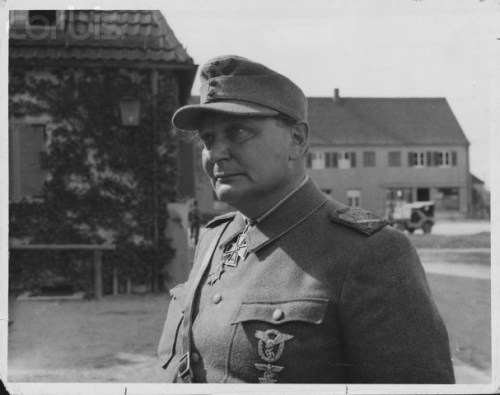
Others like Field Marshal Erwin Rommel record the disregard of senior Nazis toward American capabilities in weaponry.  Quoting Goering who when Rommel discussed 40mm anti-aircraft guns on aircraft that were devastating his armored forces Goering replied “That’s impossible. The Americans only know how to make razor blades.” (The Rommel Papers edited by B.H. Liddell-Hart p.295) Rommel was one of the few German commanders who recognized the folly of Hitler’s  declaration of war on the United States noting that “By declaring war on America, we had brought the entire American industrial potential into the service of Allied war production. We in Africa knew all about the quality of its achievements.” (The Rommel Papers p.296)

When one also takes into account the general disrespect of the German military for the fighting qualities of American soldiers though often with good reason (see Russell Weigley’s books Eisenhower’s Lieutenants and The American Way of War) one sees how the myth impacted German thought.  This is evidenced by the disparaging comments of the pre-war German military attaché to the United States; General Boeticher, on the American military, national character and capability. (See World in the Balance pp. 61-62)

The overall negative view held by many Germans in regard to the military and industrial power and potential of the United States reinforced other parts of the myth. Such false beliefs served to bolster belief in the stab-in-the back theory as certainly the Americans could not have played any important role in the German defeat save Wilson’s alleged demoralization of the German population.  This was true not only of Hitler, but by most of his retinue and the military, diplomatic and industrial leadership of the Reich. Hitler’s ultimate belief, shaped by the stab-in-the back and reinforced by his racial views which held the United States to be an inferior mongrel people. This led him to disregard the impact that the United States could have in the war and ultimately influenced his decision to declare war on the United States, a decision that would be a key factor in the ultimate defeat of Germany.

Myth can have positive value, but myth which becomes toxic can and often does lead to tragic consequences. All societies have some degree of myth in relationship to their history including the United States.  The myths are not all the same, various subgroups within the society create their own myth surrounding historic events.  It is the duty of historians, philosophers and others in the society to ensure that myth does not override reality to the point that it moves policy both domestic and foreign in a manner that is ultimately detrimental to the nation.  The lesson of history demonstrated by myths surrounding the German defeat and role of the United States in that defeat shows just how myth can drive a nation to irrational, evil and ultimately tragic actions not only for that nation and its people, but for the world.

Peace,

Padre Steve+

7 Comments

Filed under History, Military, philosophy

Lessons on Coalition Warfare: The Dysfunctional Coalition German and the Axis Partners on the Eastern Front

“The Dysfunctional Coalition: The Axis Powers and the Eastern Front in World War Two” by R. L. DiNardo. Published in The Journal of Military History October 1996, 60 Research Library pp. 711-730

A Romanian Renault 35 Light Tank Rather Than

The question of the German dominated European Axis alliance in the Second World War is one of the more neglected subjects of World War Two and has application to today’s multi-national campaign in Afghanistan. In most accounts of World War Two the relationship of the Germans to their coalition partners is minimal.  This includes the standard works on the subject of B.H. Liddell-Hart, Williamson Murray, Chester Wilmot and David M Glantz,   Of Germany’s Allies Italy usually receives some attention in the context of the campaign in North Africa and Mediterranean.  Its efforts on the Eastern Front are usually neglected except for how the Italian 8th Army was shattered during the Stalingrad campaign.  The efforts of Hungary, Rumania and Finland receive scant attention from anyone. Popular German memoirs provide little substantive help as most German commanders looked down on their military capabilities. Kesselring’s memoirs and Rommel’s papers give some views, mostly negative of the Italians and Manstein some mention on the Italians, Hungarians and Rumanians in the Stalingrad campaign.

Field Marshal Von Mannerheim of Finland Kept an Independent Course from Germany

In this badly needed essay Robert DiNardo examines the relationship of Germany to her allies on the Eastern Front where they came closest to fighting coalition warfare. This is a subject that he would expand on in his book “Germany and the Axis Powers: from Coalition to Collapse” (University of Kansas Press, 2005).  DiNardo believes that it is important to learn from the failure of Germany and its coalition just as we do from the success of the Allies.  This perhaps is his greatest contribution in an age where the United States must work with coalitions whose members have significant military weaknesses.  The situation in some ways places he United States in a similar position to Germany in the current wars on terror and campaigns in Iraq and especially Afghanistan.

Hungarian Soldiers on Obsolete CV-35 Tankettes at the Beginning of Barbarossa

DiNardo asserts “the way in which Germany conducted coalition warfare was reflective of the manner in which Hitler and the German military looked at the world, as well as the war in general” was a key factor in her defeat. German arrogance and hubris frequently kept them from gaining any advantage from their coalition partners. DiNardo believes that it was “a significant factor that contributed to the ultimate defeat of Nazi Germany.” (p.712)  He then notes the few successes of the coalition, particularly the German work with Rumanian air defense around the Ploesti oil refineries and the German-Finnish Winter Warfare School.  Apart from these he characterizes Axis coalition warfare on the eastern front as “poor” with “failures at every level.” (p.713)

DiNardo analyzes language barriers, the wide disparity between the modernity of the armies and the levels of technology and training of her coalition partners. He also deals with Germany’s failure to become the “arsenal of Fascism” as well as the lack of understanding of all the partners of the “relationship between national objectives, strategy and the morale of soldiers of officers and soldiers alike.” (p.713)  He provides a good description of the German liaison detachments allotted to the coalition armies, dealing with language, tactical communications weaknesses and the generally haughty attitude that the Germans displayed to their partners. He provides an excellent illustration of this in analyzing with the failure of XLVIII Panzer Corps at Stalingrad when the German Liaison to the Rumanian 1st Panzer Division was wounded and the division was destroyed for lack of German support.  So bad was the German attitudes toward their Allies at higher levels that DiNardo describes the German policies and attitudes as “imperialist.” (p.718)

Hungarian Withdraw from the Donets Bend

DiNardo also looks at the wide gap in transportation capabilities of the various armies and the failure of the Germans to better provide for the needs of their partners in contrast to the United States assistance to her allies.  In his analysis he notes how the Germans provided obsolete captured Czech and French weapons and vehicles to the allies instead of providing them with the plans to build German designs in Rumanian and Hungarian industrial concerns capable of their manufacture. (pp.718-719) The lack of modern equipment among the German allies impacted operations against the Red Army and was a factor the eventual defeat of the Germans the hands of the Red Army.

While even elite German formations often had significant equipment shortages and sometimes substandard equipment he does not note that the principle reason for this was that German did not go to a “total war” industrial production until Albert Speer took over as Armaments Minister.  This is perhaps the one weakness in the essay. The final part of the essay deals with the strategic goals and conflicts among the Axis coalition which were never worked out.  In this discussion he again goes to the relationships of the Germans at every level to their partners and how the Germans had a general distain for their allies’ capabilities. He discusses how various partners refused to cooperate with the Germans in different ways and times.

These problems impacted German efforts in significant way. The Finns never signed a formal alliance with Germany and pursued their own war goals, the underlying tensions between Hungary and Rumania over their own territory disputes meant that the Germans could not count on these key partners to work together in the campaign in Russia.  He finishes his essay by detailing the morale problems in the Hungarian, Italian and Rumanian armies as they fought on the Eastern front.

He sources this article well using histories, archival sources, operational orders and analysis by the various armies as well as interviews. Of particular note is that he goes to sources of the coalition partners and not just German sources.  This allows him to be far more nuanced and detailed in his discussion as opposed to others who simply ignore the contributions of the Axis partners.  His footnotes provide added detail and provide and lend support to his arguments.

The importance of this essay is twofold; first it provides a look at the relationship of German to her coalition partners on the Eastern Front.  This is important from a historic standpoint simply because it is such a neglected topic in most histories of the period and gives added depth to the reasons for Germany’s defeat.  One has to ask the “what if questions” in regard to had the Germans better treated, equipped and recognized their allies’ contributions to the war effort.

The second point of interest pertains to how history can inform the leaders of the United States and NATO in the Afghanistan campaign.  The lessons provided to any nation which has to engage in coalition warfare are important, especially of one of the partners enjoys significant military advantages over its allies.  This is the case in Afghanistan and the War on Terror where United States has found itself as the senior and vastly superior partner in a war which has multiple coalition partners in several theaters of operations.  Each coalition partner has certain military weaknesses in relationship to the United States as well as their own national interests, geo-political and economic relationships with competitors to the United States and internal political realities which impact their cooperation in the war.  As such the United States cannot allow itself to be cast in the role of a haughty imperialistic senior partner as did Germany and it must cultivate an attitude of assistance, respect and trust among its partners to assure their full cooperation and assistance in relation to U.S. goals in the war.  Failure to head the German lesson will ensure failure in the current campaigns.

1 Comment

Filed under History, iraq,afghanistan, world war two in europe

Can Anybody Spare a DIME: A Short Primer on Early Axis Success and How the Allies Won the Second World War

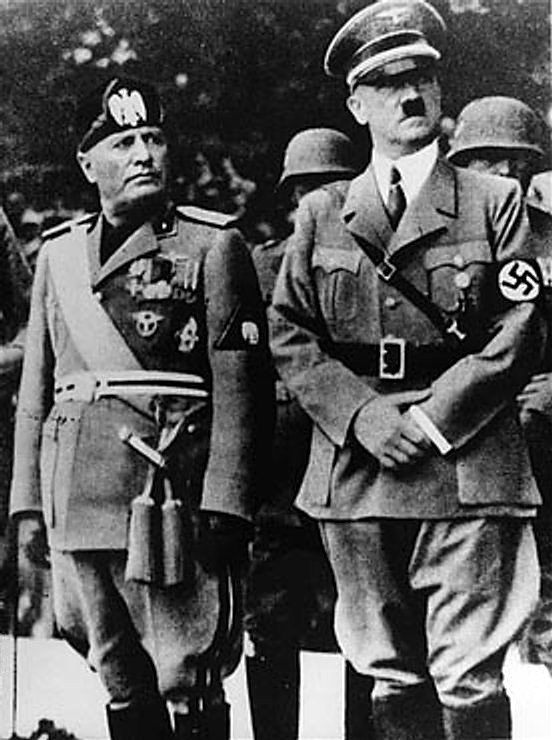
Hitler and Mussolini, the Axis Leaders Never Developed a Grand Strategy

All modern war is predicated on the full potential of a nation or alliance to fight a war.  This includes what is known in today’s parlance the DIME, or the Diplomatic, Intelligence, Military and Economic factors of national power. During the war the Axis powers almost exclusively fixated on the military dimension, especially at the operational and tactical level never coordinating a national or alliance grand strategy.  On the other hand the Allies were successful in doing so despite competing national interests of the British Empire, the Soviet Union and the United States.

Early German Success in France Changed the Face of Warfare

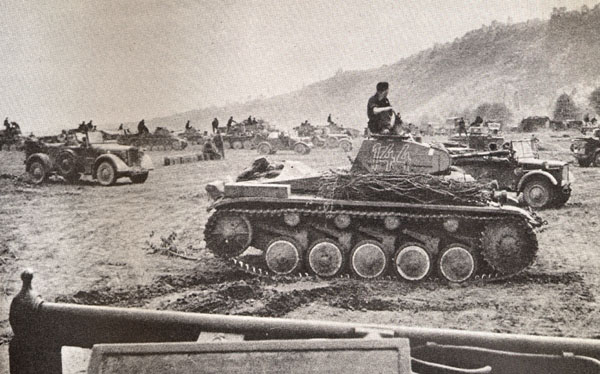
The Germans and Japanese were victorious in the early years of the World War Two due to their application of the most modern forms of warfare and ability to exploit weaknesses in their opponents.  For the Germans this entailed the use of the “Blitzkrieg” or lightening war which used the combined arms team of tanks, artillery, and mechanized infantry with close air support coordinated by commanders in mobile command posts who were able to adapt to tactical considerations on the ground and exploit enemy’s weaknesses.  This involved the classic forms of applied mass, speed and firepower to overwhelm enemy defenses at critical points and the encouragement of initiative by commanders, the Auftragstaktik. Led by men such as Heinz Guderian, Erich Von Manstein and Erwin Rommel to name but a few, the German commanders overcame allied opposition as well as the occasional hesitancy of their own senior leaders to defeat Allied forces throughout Europe.  The blitzkrieg involved risk, but the Germans for the most part, with key exceptions such as at Dunkirk during the French campaign took risks and exploited weaknesses in Allied political goals, military coordination and operational art. The Allies were hampered by weak political leadership, an aversion to risk, an outmoded strategy and poor coordination of a force which outnumbered the Germans and included more tanks than the Germans could field.  The German armaments were not necessarily superior to the Allies, but were better used for the most part.

German skill at the operational level was exemplified in Poland, France and the Low Countries, a daring Norwegian operation, which could be described as one of the first joint operations in military history, the Balkans and North Africa as well as the initial phases of Operation Barbarossa.  Each of these operations had flaws, the most glaring being at the strategic level and lack of a Grand Strategy.  The operations also exposed weaknesses in logistics and limits to what the mechanized and tactical air forces could do when stretched too far, North Africa and Russia as cases in point.  The Germans would always be outnumbered and fighting a multi-front war because of their limited naval capability, both in surface units and U-Boats, as well as the lack of a strategic air capability which kept them from eliminating Britain from the war.  Hitler’s desire for German domination in Europe excluded a true coalition effort to make allies with powers in Europe such as Vichy France which shared an aversion to the British especially after the attack of the British Navy on the French fleet in North Africa.  Likewise Germany’s alliance with Mussolini’s Italy was more of a strategic liability than a true partner. Hitler’s aversion to the Soviet State prevented any more than a brief cooperation with the USSR which was ended by the German invasion of the USSR. The Germans also failed in their war strategy by not going to a total war effort until 1943 after the ascension of Albert Speer as the Armaments Minister.  Thus German forces had to fight war “on the cheap” so to speak for the first part of the war, especially in North Africa and in Russia. In Russia the vast expanse of the front forced the Germans to thin out their forces to dangerous levels and whose pathetic road and rail network limited the already limited ability of the Wehrmacht to supply its forces as they advanced deep into Russia.

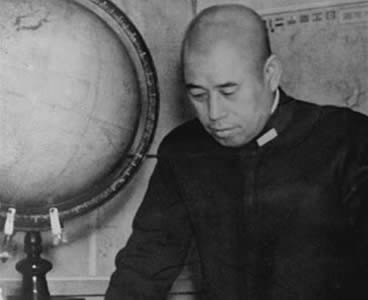
Admiral Yamamoto One of the Few Japanese Leaders to Understand what the Japanese Faced in Going to War with the United States

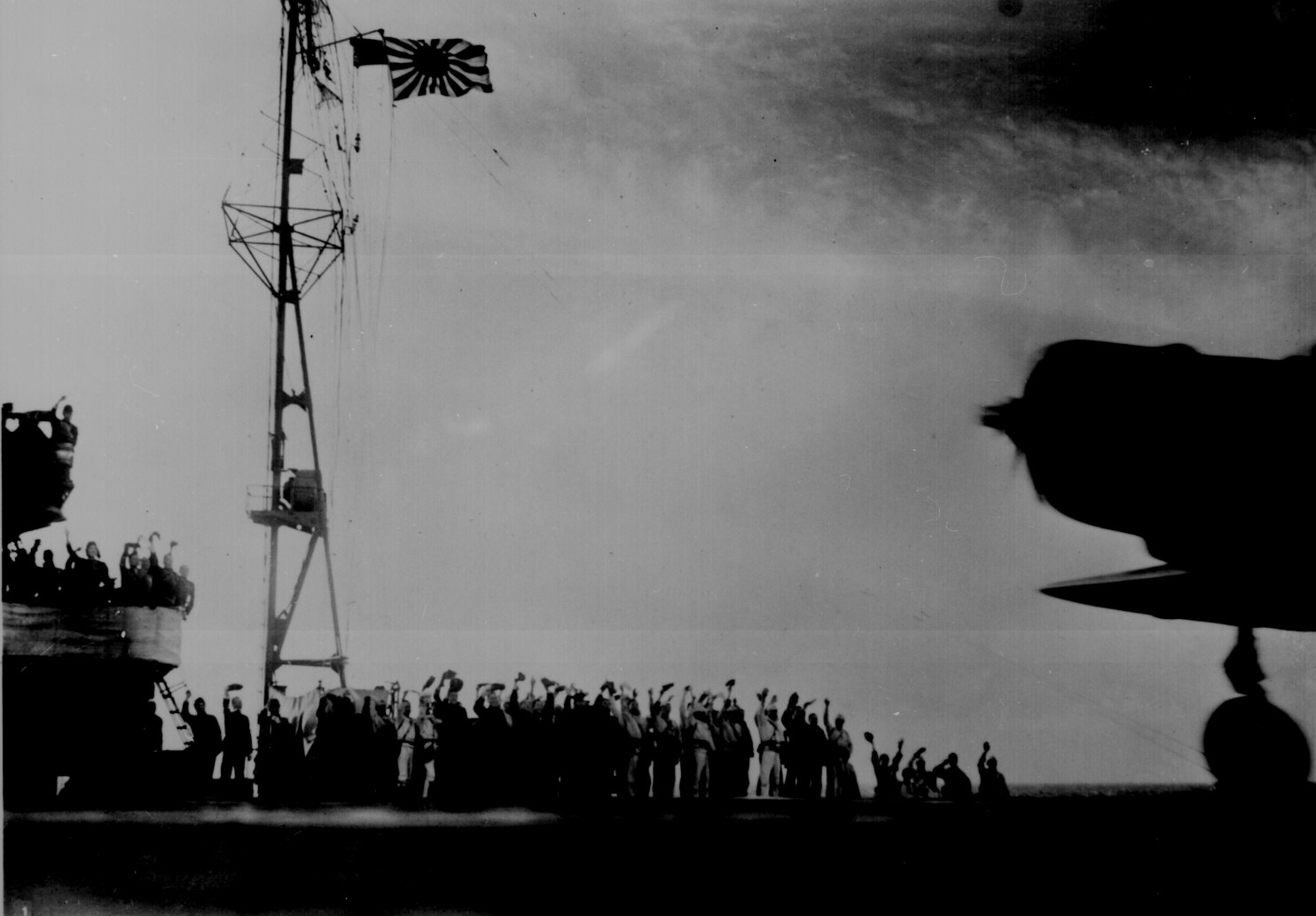
In the Pacific the Japanese used fast carrier task forces and naval air power coupled with superior surface warfare groups of fast battleships, cruisers and destroyers operating in conjunction with land based Army and Naval air units to isolate and destroy allied naval forces and outposts throughout the Pacific.   The Japanese exploited their superiority to conduct their own form of blitzkrieg.

Despite Inflicting Crushing Defeats on the Allies in late 1941 and early 1942 the Japanese period of Conquest would be Short Lived

At the same time the Japanese, even more so than the Germans lacked the ability to fight a long war; something that the best and most realistic of the Japanese strategists, Admiral Yamamoto understood and warned his government about before the attack on Pearl Harbor.  Likewise they like the Germans failed to develop a cohesive Grand Strategy in their war effort.  Competing priorities and inter-service rivalries between the Army and the Navy over resources, manufacturing priorities and war aims crippled Japanese efforts.  Despite this the Japanese used superior tactical application of forces, exploited Allied command and control weaknesses, numerical and qualitative superiority over dispersed and often obsolete Allied forces. The Allies in the opening phase of the war were often led by officers who had little respect for the Japanese and underestimated the Japanese skill at the tactical and operational level of warfare as well as the individual Japanese soldier and sailor, with tragic results.

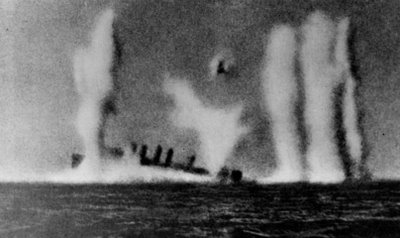
USS Pope Being Blown out of the Water at the Battle of the Java Sea

The Japanese were constrained by limited resources and intense competition between the Army and Navy for those resources as well as a long term war in China which drew off the larger part of the Japanese Army and Army Air Forces.  The Japanese effort stalled after they lost much of their carrier fleet and experienced naval aviators at Coral Sea, Midway and the Guadalcanal Campaign.  The Americans, who assumed the mantle of the Pacific Theater after the initial Japanese success and weakness of British and Dutch forces in the Pacific and demands of the war in Europe began an aggressive defense and opened an offensive against the Japanese long before the Japanese believed that they would at Guadalcanal.

At the heart of the early German and Japanese success lay their superior application of the techniques and weapons of modern warfare on the land, sea and air against opponents who were initially ill-prepared to meet their onslaught.  They both had glaring weaknesses but their weaknesses in the early years of the war were masked by Allied ineptitude at all levels, tactical, operational and strategic.   Thus they were successful and at times wildly so, but in their success lay the seeds of their defeat.

Stalin, Roosevelt and Churchill overcame Significant Conflicts of Interest to Build a Grand Strategy

The defeat of the Axis powers was in large part a combination of superior Allied strategy at the “grand strategy” level and lack of a corresponding Axis Grand Strategy; as well as the Axis powers inherent weaknesses in natural resources, manpower and industrial capabilities to fight multi-front wars, coupled with poor transportation and logistics capabilities for distant operations.

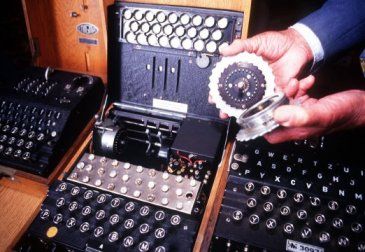
The US Navy Breaking of the Japanese Naval and Diplomatic Codes as well as the Cracking of the German Ultra Code and Capture of the Enigma Machine Greatly Enhanced Allied Intelligence

The cracking of Japanese Naval and diplomatic codes and the capture of the German Enigma code machine and code books aided Allied strategic planning, none or the Axis intelligence services rose to the challenges of the war. The Allied victory and Axis defeat was in fact a combination of what is called the DIME, the Diplomatic Intelligence Military and Economic factors which caused the Axis defeat.  While it is in part due to Allied strategy, Axis deficiencies in each of these areas played a part in their ultimate defeat.

Massive US Industrial Capacity Drove the Allied War Effort

On the Grand Strategic level there was no comparison. The Allies, even factoring in often conflicting national goals were able to coordinate a strategy to first defeat Germany and then Japan.  The Americans, British and Russians began such cooperation even prior to the American entry into the war through the Lend Lease, followed by the British and American Combined Chiefs of Staff, which helped coordinate often disparate British and American strategies in Europe and Asia. Murray and Millett assert and I agree with the thesis that the British and Americans “came closest to designing a global strategy that accommodated their war aims.” (War to Be Won p.584) While close coordination with the Russians was illusory at best, the Western Allies were able to help keep the Russians in war the by helping to supply them (War to Be Won p.388), and on occasion launching operations which assisted the Russians, such as the invasion of Italy. The Italian invasion, though the pipe dream of Churchill to crack the “soft underbelly” of Europe was a key factor in the German decision to quit the Kursk offensive and redeploy Panzer Divisions, including SS formations to Italy and the West. This weakened the Germans in the face of the Russian counter offensive following Kursk which aided Russian success. The Axis powers knew no such coordinated strategic thinking.

Poor Italian Technology, Training and Organization Made them More of  a Burden to Germany than a Help

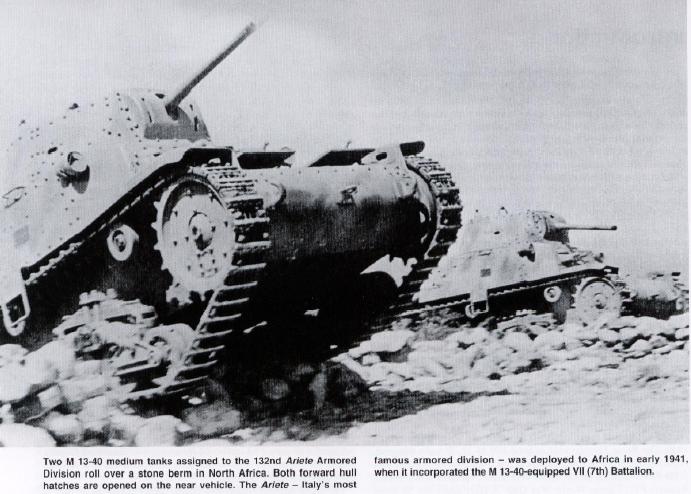
The Japanese, Germans and Italians ran separate wars based on their perceived national considerations at times which often ran contrary to the common needs of their coalition.  Italian actions in the Mediterranean caused a diversion in German efforts at key times, such as in Greece where the Germans had to save the Italians and delay the opening of Operation Barbarossa.  Italian incompetence forced the Germans to commit forces to North Africa, Greece, the Balkans and Italy upon its collapse which could have been used to great effect in Europe or Russia. The Japanese and Germans never coordinated their efforts to defeat either the western Allies or the Soviets.  The lack of a coherent Grand Strategy on the part of the Axis powers, especially in the early part of the war when Allied fortunes were at lowest ebb, was every bit as much a part of their ultimate defeat as was a coordinated or “superior” Allied strategy.

The lack of a coordinated Axis Grand Strategy was reflected in the way each fought its war, the Japanese were hindered by lack of natural resources, especially those most important in maintaining a war economy, fuels, metals, rubber and even foodstuffs for which they were dependant on foreign suppliers such as the United States.  They were also hindered by a war in China which consumed troops and supplies without a corresponding benefit.  (See Barnhart’s “Japan Prepares for Total War and Toland’s “Rising Sun.) Their inability to produce the machines of war in sufficient numbers to replace losses due to combat operations and their failure to keep up with advances in technology negated their initial success and superiority at sea and in the air.

US Naval Forces Would Dominate the Pacific

The Germans failed to mobilize their economy to a total war footing until after Stalingrad and the accession of Albert Speer to head Reich war production.   They also attempted to fight a multi-front war and were dependant on weak and unenthusiastic satellite states such as Romania and Hungary to hold what they deemed to be less important areas in order free up German units.  Likewise the Germans had not adequately prepared for the war at sea with sufficient surface, naval air or U-boat strength to win the battle of the Atlantic, nor had the Luftwaffe developed a strategic bombing capability with long range fighter escorts to win the Battle of Britain. German industrial efforts, even the great strides made after Speer took over war production were unable to keep pace with the massive production of the Americans and the Soviet Union.  The Red Army ground the Wehrmacht to dust on the Steppes of Russia, a key factor in that helped the American and British successfully invade Western Europe.

B-17s Over Europe

The preponderance of western Air, Naval, war production and natural resources enabled them to field Fleets, Armies and Air Forces which were unmatched in size or technical sophistication for their time in history.  The Japanese and the Germans had no way to win by 1944, short of developing and deploying Atomic weapons and delivery systems before the Americans and British did could defeat.  Murray and Millett note this in regard to Germany which had the Wehrmacht held out longer would have been the first target of the Atomic bombs. (War to Be Won p.483)

Atomic Bomb at Hiroshima, It could Have Been Berlin Instead

In summary the Axis powers were defeated by their own weaknesses in the diplomatic, intelligence, military and economic arenas as much as they were by superior Allied strategy.  This in no way negates the superior way in which the Allies marshaled their resources and coordinated a coherent Grand Strategy.  But even so the Allies by were running out of troops by the end of the European war.  Russian formations while still formidable were operating at greatly diminished strength by the end of the war and their losses “carried political and social consequences that were to burden the Soviet Union to its demise.” (War to Be Won p.483)  The British were bled dry and unable to keep up with losses suffered after Normandy. The Americans too suffered from a shortage of manpower, particularly in Army infantry forces, and had limited their Army to a mere 90 divisions of all types to fight a world war. They had diverted manpower to the Army Air Corps, Naval and Marine Corps leaving the Army chronically short infantry. The Americans were forced into emergency drafts of troops from the Air Corps and other ancillary formations and support units to fill out infantry formations during the winter of 1944-45.  (See Russell Weigley’s book Eisenhower’s Lieutenants.” and Max Hasting’s “Armageddon” for a good treatment of the manpower situation in 1944-45) This is one point were the Americans took a risk that almost backfired on them and could have cost them victory.

12 Comments

Filed under History, Military, world war two in europe, world war two in the pacific

The American Campaign in Normandy

Note: This is the first of a series of four articles dealing with the campaign in France and Germany in 1944-1945.  The second installment “Mortain to Market-Garden” was posted a couple of months back. The link to that article is here: https://padresteve.wordpress.com/2009/09/17/mortain-to-market-garden-a-study-in-how-armies-improvise-in-rapidly-changing-situations/

The others should be posted in the coming weeks.


Introduction

eienhower and 101stEisenhower and 101st Airborne

The American landings on Omaha Beach were critical to the success of the Allied invasion northwestern Europe in the overall Overlord plan.  Without success at Omaha there would have been a strong chance that the German 7th Army and Panzer Group West could have isolated the remaining beachheads, and even if unsuccessful at throwing the Allies into the sea could have produced a stalemate that would have bled the Allies white.  This quite possibly could have led to a political and military debacle for the western allies which would have certainly changed the course of World War II and maybe the course of history.[i] This is not to say the Germans would have won the war, but merely to state that a defeat on Omaha could have changed the outcomes of the war significantly.   Subsequent to the successful landing there were opportunities both for the Allies and the Germans to change the way that the campaign unfolded, thus the battles leading up to the breakout at Avranches are critical to its development and the subsequent campaign in France.

OVERLORD: The Preparations

The planning for the Normandy invasion began in earnest after the QUADRANT conference in Quebec in August 1943.  The timetable for the operation was established at the Tehran conference where Stalin sided with the Americans on the need for an invasion of France in the spring of 1944.[ii] Prior to this there had been some planning by both the British and Americans for the eventual invasion initially named ROUNDUP.  These preparations and plans included a large scale raid at Dieppe in 1942 which ended in disaster but which provided needed experience in what not to do in an amphibious assault on a heavily defended beach.        The failure at Dieppe also darkened the mood of the Allies, the British in particular to the success of such operations, bringing to mind the failed Gallipoli campaign of 1915 as well as the opposed landings at Salerno and the USMC experience at Tarawa.[iii] Despite this the Americans led by General Marshall pushed for an early invasion of northwest Europe. Churchill and the British due to their weakness in land power pushed for land operations in the Mediterranean, and even in Norway as an option to the assault in France. The conflicted mindset of the Allies left them in the position of planning almost exclusively for the success of the initial landings and build up to the near exclusion of planning for the subsequent campaign once they landed. This especially included what one writer described as “the maze of troubles awaiting behind the French shore.”[iv]

lst-325 at normandyLST-325 at Normandy, Specialized Landing Ships and Craft were in High Demand and Short Supply in June 1944

Despite conflicts between the Americans and British political and military leadership the planning for the Normandy landings detailed in NEPTUNE and OVERLORD moved ahead.  General Dwight Eisenhower was appointed as the commander of SHAEF with his major subordinates for Land, Air and Sea which caused consternation on both sides of the Atlantic.[v] [vi] The planned operation was expanded from the initial 3 division assault on a narrow front to a minimum 5 division assault on a broad front across Normandy[vii] supplemented by a strong airborne force.[viii] Overall the plan as it developed reflected a distinctly “American willingness to confront the enemy head-on in a collision which Britain’s leaders had sought for so long to defer.”[ix] It is ironic in a sense that the British avoidance of the head on attack was based on their known lack of manpower.  Britain had few infantry reserves to sustain the war effort and the Americans only late recognized their own deficiency in both quantity and quality of infantry forces on which their strategy depended.  That the western allies, so rich in material and natural resources would be so deficient in infantry manpower was a key constraint on the subsequent campaign in France and Germany.  The shortage of infantry forces would cause great consternation among the Allies as the campaign in France wore on. The Germans too faced manpower shortages due to the immense losses sustained on the Eastern front, those lost in Africa and those tied down in Italy, the Balkans and Norway as well as the drain caused by Luftwaffe Field Divisions and troops diverted into the Waffen-SS.   The German Army resorted to smaller divisions and the created many “static” divisions manned by elderly or invalid Germans to plug the gaps along the Atlantic wall. The Germans were also forced to recruit “Volksdeutsch” and foreign “volunteers” to fill out both Wehrmacht and Waffen-SS formations.

omaha_beach_low_tideOmaha Beach

Prior to the final decision to mount an invasion the Allied planners had contended with the location of the assault in northwestern France.  The Pas de Calais provided a direct route was rejected because it was where the Germans would expect the strike to occur and because it was where the German defenses were strongest.  The fiasco at Dieppe had provided ample proof of what could happen when making an assault into a heavily fortified port.  Likewise the mouth of the Seine near Le Harve was rejected because of the few beaches suitable for landing and because the forces would be split on both sides of the river.  Brittany was excluded due to its distance from the campaigns objectives in Germany.[x] This left Normandy which offered access to a sufficient number of ports and offered some protection from the weather. Normandy offered options to advance the campaign toward the “Breton ports or Le Harve as might be convenient.”[xi] Omaha beach, situated on the center right of the strike would be crucial to the success of the assault situated to the left of UTAH and the right of the British beaches.

Bild 101I-585-2184-33Outnumbered Paratroops of II Fallschirmjaeger Corps Delayed US Forces Considerably in Normandy

Once Normandy was selected as the location for the strike by the Allies, the planning sessions remained contentious.  This was especially true when the Allies debated the amount and type of amphibious lift that could be provided for the landings, particularly the larger types of landing ships and craft to support the Normandy invasion and the planned invasion of southern France, Operation ANVIL.  The increase in OVERLORD requirements for landing craft had an impact in the Mediterranean and resulted in ANVIL being postponed until later in the summer.

As part of their preparations the Allies launched a massive deception campaign, Operation FORTITUDE.  This operation utilized the fictitious First Army Group under the “command” of General George Patton. Patton was still smarting from his relief of command of 7th Army following slapping commanded an “Army Group” which incorporated the use of dummy camp sites, dummy tanks, aircraft and vehicles, falsified orders of battle and communications to deceive German intelligence.[xii] The success of this effort was heightened by the fact that all German intelligence agents in the U.K. had been neutralized or turned by the British secret service.  Additionally the Luftwaffe’s limited air reconnaissance could only confirm the pre-invasion build ups throughout England without determining the target of the invasion.[xiii] The German intelligence chief in the west, Colonel Baron von Roenne “was deceived by FORTITUDE’s fantasy invasion force for the Pas de Calais.”[xiv] Despite this Commander of the 7th Army recognized by 1943 that Normandy was a likely Allied target and efforts were made to shift 7th Army’s center of gravity from Brittany to Normandy.  The one potential German success in getting wind of when the Allied landings would occur was lost when German intelligence discovered two lines of Verlaine’s “Chason d’ Automme” in June 1944 which were to alert the French Resistance of the invasion.  The security section of 15th Army heard them transmitted on the afternoon of 5 June and notified General Jodl at OKW, but no action was taken to alert forces on the coast.[xv] Allied intelligence was aided by ULTRA intercepts of coded German wireless transmissions. However this was less of a factor than during the African and Italian campaigns as more German communications were sent via secure telephone and telegraph lines vice wireless.[xvi] Allied deception efforts were for the most part successful in identifying German forces deployed in Normandy. However they were uncertain about the location of the 352nd Infantry Division which had been deployed along OMAHA and taken units of the 709th Infantry Division under its command when it moved to the coast.[xvii]
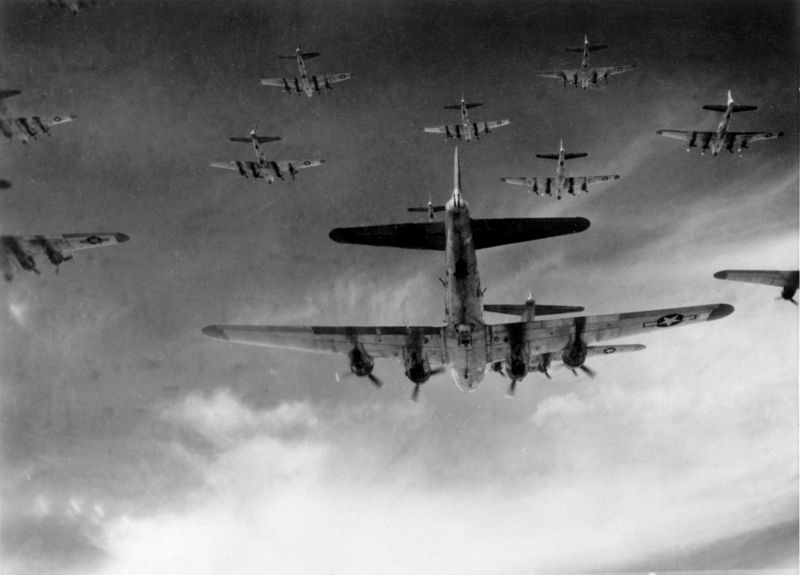
b-17_group_in_formation8th Air Force Bombers Helped Hit German Oil Production Facilities and caused the Luftwaffe to spend its fighter squadrons over Germany than France

The Allied air campaign leading up to the invasion was based on attempting to isolate the invasion site from German reinforcements. Leigh-Mallory the Air Chief developed the “TRANSPORTATION PLAN” which focused efforts on destroying the French railroad infrastructure.[xviii] A more effective effort was led by General Brereton and his Ninth Air Force which was composed of medium bombers and fighters.  Brereton’s aircraft attacked bridges and rapidly achieved success in crippling German efforts to reinforce Normandy.[xix] Max Hastings gives more credit to the American bombing campaign in Germany to crippling the German defense in the west. General Spaatz and the 8th Air Force destroyed German production capacity in oil and petroleum as well as the degraded the German fighter force.  The American daylight raids so seriously degraded the German fighter force that it could not mount effective resistance to the invasion.[xx] Russell Weigley also notes that Albert Speer the Reich Armaments Minister said that “it was the oil raids of 1944 that decided the war.”[xxi]
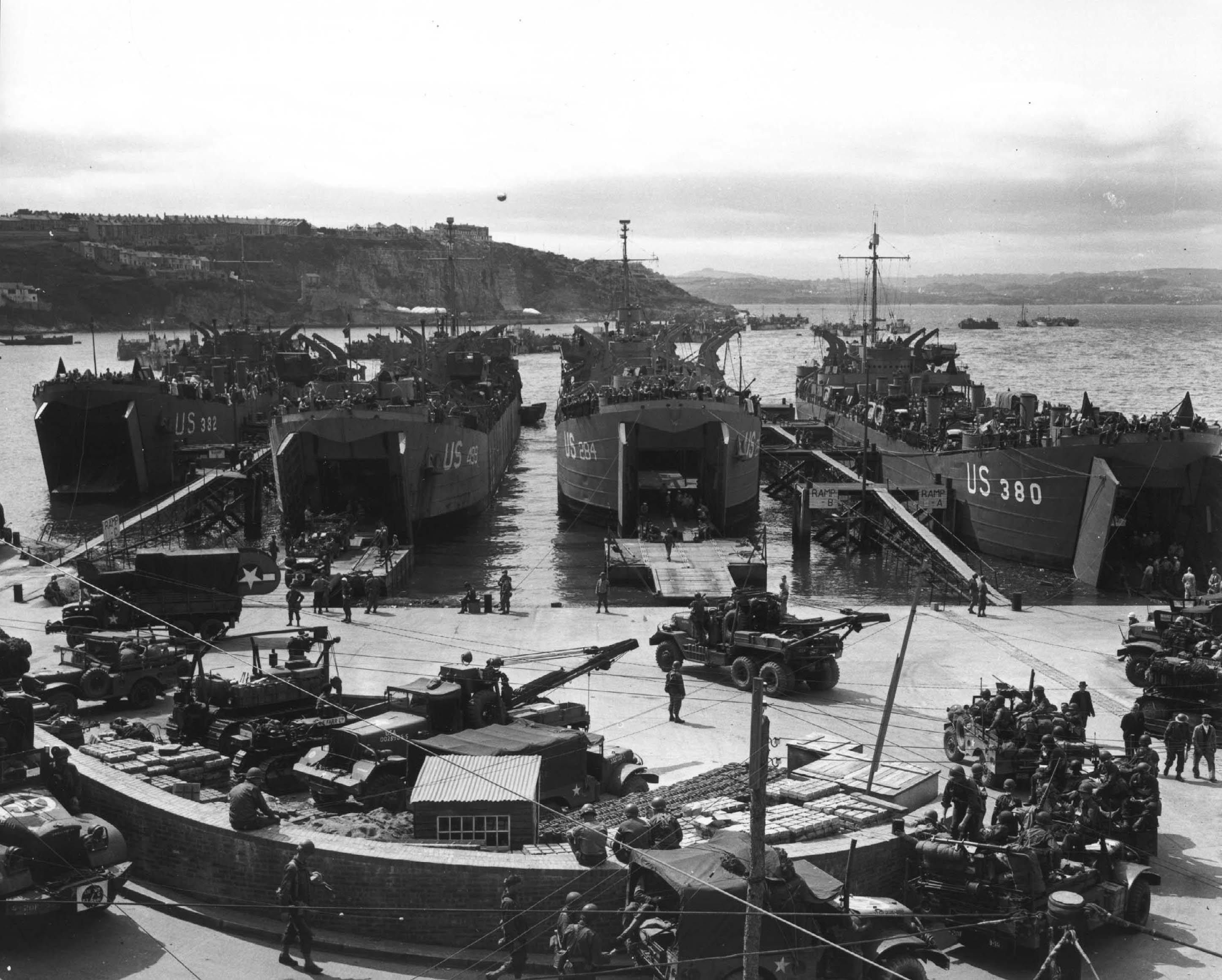
omaha_beach_uss_augusta1944Landing craft passing USS Augusta

Planning and preparations for OMAHA were based around getting the 1st and 29th Infantry Divisions ashore and them securing a beachhead “twenty-five kilometers wide and eight or nine kilometers deep.”[xxii] American preparations were thorough and ambitious, but the American assault would go through the most heavily defended sector of German defenses in Normandy.  The landing beaches were wide and bordered by dunes which were nearly impassable to vehicles and “scrub covered bluffs thirty to fifty meters high…rough and impassable to vehicles even to tracked vehicles except at a few places.  The exits were unimproved roads running through four or five draws that cut the bluffs.”[xxiii] Dug in along those bluffs was the better part of the 352nd Division. The Americans compounded their selection of a difficult and heavily defended landing zone the Americans failed to take advantage of many of the “gadgets” that were offered by the British which in hindsight could have aided the Americans greatly.  The Americans made use of two battalions of DD (Dual Drive) tanks but turned down the offer of flail tanks, flamethrower tanks, and engineer tanks, the “funnies” developed by General Hobart and the British 79th Armored Division.[xxiv] Weigley believes that the American view of “tanks as instruments of mobility rather than of breakthrough power.” Likewise the Americans victories in the First World War were won by infantry with little tank support.[xxv] In this aspect the Americans were less receptive to utilizing all available technology to support their landings, something that when considering the fact that Americans were great lovers of gadgets and technology. The British use of the Armor, including the “Funnies” on the beaches to provide direct fire into German strong points lessened their infantry casualties on D-Day. Due to this lack of armor support on the beach American forces on OMAHA had little opportunity to exercise true combined arms operations during the initial landings.[xxvi]

dd-tankDual Drive or DD Tanks took heavy Losses at Omaha

German preparations for an Allied landing in Normandy were less advanced than the Pas de Calais.  However they had made great strides since late 1943. Field Marshal Rommel greatly increased defensive preparations along the front, including the Normandy beaches.  One of Rommel’s initiatives was to deploy Panzer Divisions near the coast where they could rapidly respond to an invasion.  However Rommel did not get everything that he wanted.  The OKW only allotted him two Panzer Divisions to be deployed near the Normandy beaches.  Only one of these the 21st Panzer Division was deployed near Caen in the British sector.  One wonders the result had the 12th SS Panzer Division been deployed behind OMAHA. [xxvii]

OMAHA: The Landings

Like the rest of the Allied invasion forces the 1st and 29th U.S. Infantry Divisions set sail from their embarkation ports with the intent of landing on June 5th.  General Bradley, commanding the First Army until the American XII Army Group would be activated accompanied the invasion force.  The OMAHA landing was under the command of General Gerow and his V Corps while VII Corps led by the 4th Infantry Division landed at Utah supported by airdrops of the 82nd and 101st Airborne Divisions inland.  American command and control during the invasion was exercised from sea as in the Pacific, although General Officers were to go ashore with each of the American divisions.  A severe channel storm disrupted the plan to land on the 5th and Eisenhower delayed the invasion one day catching a break in the weather and electing to go on the 6th.[xxviii] This delay while uncomfortable for the embarked troops caused the Germans to believe that no invasion would take place until the next favorable tide and moon cycle later in the month.[xxix] The assumption that no invasion was possible ensured that a number of key senior German leaders, including Rommel were absent from the invasion front when the Allies landed.[xxx]

1st id normandy1st Infantry Divison Troops at the Omaha Beach Sea Wall

The landing beaches at OMAHA stretched about 6500 meters from Colleville-Sur-Mer to Vierville-Sur-Mere in the west.  The beaches are wide with bluffs overlooking them and a seawall between the beaches and the bluffs.  Additionally several small towns dot the beach. To the west of the town of Vierville, a prominent height overlooked the entire beachhead.  Named Pont du Hoc, it was believed to house a 150mm battery sighted where it could enfilade the OMAHA landing zones.  The Americans assigned to the 2nd Ranger Battalion to make a seaborne assault to land, scale the cliffs and take the battery.  Companies from this battalion made a heroic landing and scaled the cliffs to capture the strongpoint only to discover that the guns had not been emplaced.  The Rangers took heavy casualties and held their isolated beachhead against German counterattacks until relieved by the 29th Division on the morning of June 8th.[xxxi]

H-Hour for OMAHA was 0630.  Unfortunately the assault troops were transferred to their LCVP landing craft 16-20 kilometers from the beach.  The result was a long and dangerous ride in the small craft for the infantry.  Most of the infantry were completely soaked in sea spay and seasick before going ashore and they carried loads far above what they normally would carry into battle.[xxxii] The Armor support was one battalion of DD tanks, the 741st Armored Battalion, supporting the 16th Infantry Refiment of 1st Infantry Division. These were also launched too far out and nearly all of the tanks were swamped and lost before firing a shot in anger.[xxxiii] Other American support units needed to provide firepower on the beach were equally unfortunate. Weigley notes that at OMAHA “at least 10 of the LCVPs sank” as did “the craft carrying almost all of the 105mm howitzers that were to be the first artillery ashore after the tanks.”[xxxiv] The losses would cripple the assault on OMAHA and nearly cause its abandonment.

panzer111Panzers and Grenadiers in Normandy

As the soldiers of the American divisions on OMAHA came ashore they faced German defenders of the 352nd, 716th and a regiment of the 709th Infantry Division, the latter under the tactical command of the 352nd.   Without the bulk of their tanks artillery and lacking close air support the Americans struggled across the beaches and were cut down in large numbers before being pinned down behind the sea wall.[xxxv] With the Americans pinned down on the beach unable to advance, the time tables for the reinforcing waves became snarled amid the German beach obstacles which had not been cleared.  This was in large part due to 40% casualties among the Combat Engineers and the loss of all but five bulldozers.[xxxvi] Naval officers were frustrated in their attempts to provide naval gunfire support by the lack of identifiable targets on the beaches.  Yet German strongpoint’s were “knocked out by either by superbly directed vigorous gunfire from destroyers steaming as close as 800 yards offshore, or by determined action from Rangers or infantry.[xxxvii]

Soldiers ashore discovered that they were not facing the static 716th Division but the veteran 352nd Division as well.[xxxviii] Only the leadership and actions of Brigadier General Norman Cota the 29th Division’s Deputy Commander and Colonel Charles Canham of the 116th Infantry kept the situation from complete collapse.  They were able to rally their troops. Under their leadership small units from the 116th which had its linage back to the “Stonewall Brigade” as well as elements of the 16th and 18th Infantry Regiments began to move forward.  Surviving junior leaders began to lead survivors through the dunes and up the bluffs to attack German defenders of the roads leading up from the beach from the flank and rear.  A mid-day break in the weather allowed some close tactical air support giving the troops badly needed support.

With the situation desperate General Bradley considered the evacuation of OMAHA.  At sea events were as confused as Bradley and his staff attempted to make sense of what was going on.  Even later in the evening there was discussion of diverting all further reinforcements from OMAHA to the British beaches.[xxxix]At 1330 hours “Gerow signaled Bradley: “Troops formerly pinned down on beaches…advancing up heights behind beaches.”[xl] By the end of the day Bradley’s aid Major Hansen noted Bradley’s comments to Collins: “They are digging in on Omaha beach with their fingernails. I hope they can push in and get some stuff ashore.”  And Montgomery: “Someday I’ll tell Gen[eral] Eisenhower just how close it was for a few hours.”[xli]
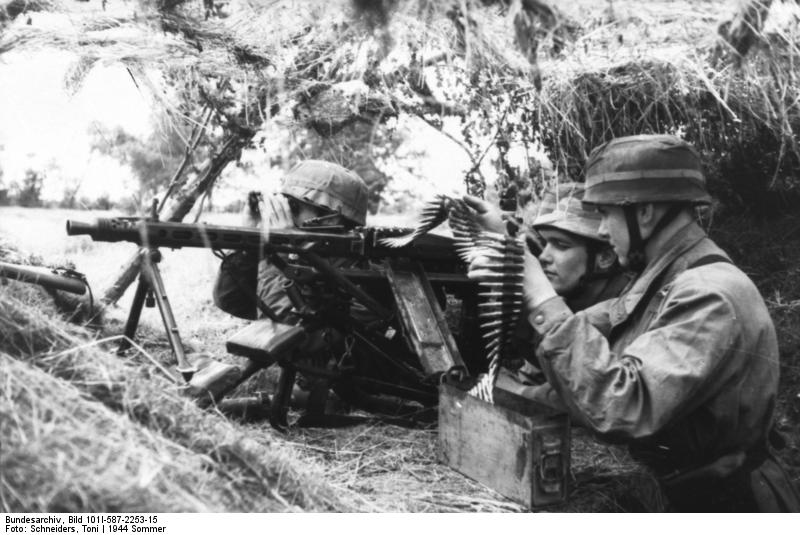
me-at-normandy

The Author Teaching at Point du Hoc in 2004

The landings at OMAHA succeeded at a cost of over 2000 casualties.  Critical to the success of the landings were the German inability to reinforce their defending troops on the beach.  Likewise the weakness of the units available to mount the standard counterattack that was critical to German defensive plans on D-Day itself kept the Germans from driving the Americans back into the Channel. The 352nd Division fought superbly under the full weight of V Corps and the British XXX Corps on its right suffering heavy casualties as they contested every inch of ground.  The 716th Division composed of second rate troops melted under the onslaught.  Allied air supremacy played a key role as sorties by the 8th and 9th Air Forces helped keep German reinforcements from arriving and interdicted counter attacks inland.  Weigley credits the Allied air superiority with the success of the landings and with limiting casualties.[xlii] Von Rundstedt and other German commanders in France were limited by the delay and refusal of Hitler and OKW to release Panzer reserves when needed most early on June 6th.  By the close of D-Day allied forces had secured the five invasion beaches but not achieved their objectives of taking Caen and Bayuex.  Since the forces on the various beachheads had not linked up the beaches would have been extremely vulnerable had the Germans been able to mount a rapid counterattack by Panzers and strong infantry formations as they had at Salerno.

Major Battles to the Breakout at Avranches


Securing the Beachheads:

It took the V and VII Corps nearly a week to secure the beachheads. German forces including the stalwart 352nd Division resisted stubbornly and mounted sharp local counterattacks which kept the Americans off balance.  Elements of the 29th Division and the 90th Division began to push inland and to expand the beachhead toward UTAH. Opposed by the 352nd Division and elements of the 91st Airlanding Division and other non-divisional units the fighting revealed the inexperience of the American infantry formations and the uneven quality of their leadership.  As the Americans tackled the Germans in the labyrinth of the Bocage country the defensive skill of the Germans cost many American lives and delayed the joining of the beachheads. On the 13th the link up was solid enough to enabling the Americans to conduct the follow up operations needed to expand the beachhead, secure Cherbourg and clear the Cotentin.
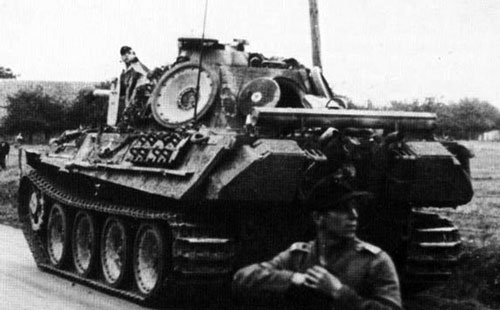
tiger-tank normandyTiger Tank and Crew in Normandy

In some American divisions the hard fighting triggered a leadership crisis.  The lack of success of the 90th Division led General “Lightening Joe” Collins of VII Corps relieve the division commander and two regimental commanders of command, a portent of things to come with other American units.[xliii] As the V and VII corps pushed into the “Bocage” they were followed by a massive build up of troops and equipment delivered to the beaches and to the artificial “Mulberry” harbors.  Despite their numeric superiority, air supremacy and massive Naval gunfire support and facing the weakened 352nd, 91st and the 6th Parachute Regiment and other less than quality formations, survivors of the static divisions, the Americans made painfully slow progress as they moved off the beachhead and into the Bocage.[xliv]

The Capture of Cherbourg

Once the beachheads had been consolidated the Americans turned their attention toward Cherbourg. Cherbourg was the major naval port at the far northwest tip of the Cotentin.  D-Day planners counted on its swift capture and rehabilitation to serve as a supply port for the Allied forces. The 9th Division drove south to the coast near Barneville on the 18th of June cutting off the German forces covering the approaches to Cherbourg.[xlv] This put the Germans in a bind as the 7th Army “had to split its forces in the peninsula in order to hold the fortress a little longer and thus to gain time for the establishment of the southern front on the Cotentin peninsula.[xlvi] The German forces arrayed before Cherbourg waged a desperate defense centered around the 243rd Infantry Division and other assorted battle groups of LXXXIV Corps, whose commander General Marcks one of the best German Generals was killed in action on 12 June.[xlvii] The U.S. VII Corps under Collins with the 9th, 4th and 79th Divisions pushed up the peninsula capturing Cherbourg on June 29th.  Bradley pushed hard for the capture of the port as the Mulberries had been ravaged by a severe Channel storm the week prior. The port of Cherbourg was thoroughly demolished by German engineers and would not be fully operational for months. The loss of the Mulberries and delay in Cherbourg’s availability meant that few supplies were landed on the beaches would “hinder the escape from the constricting land of the hedgerows into which the Americans had come in search of a port.[xlviii]

The Battle of Caumont Gap
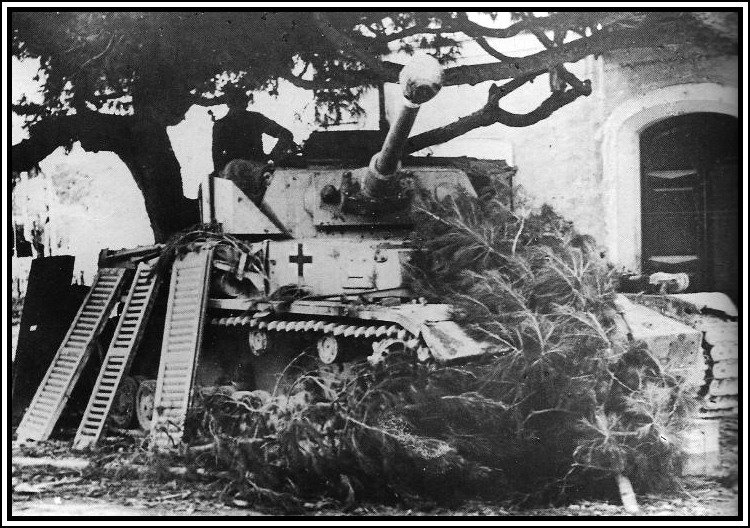
V Corps under Gerow made a cautious advance by phase lines toward Caumont, St Lo and Carentan.  The deliberate advance by the Corps toward a line weakly held by the Reconnaissance battalion of the 17th SS Panzer Grenadier Division was directed by Bradley who did not want to divert attention from the effort against Cherbourg.   After capturing Caumont V Corps halted and continued aggressive patrolling to deceive the Germans while digging in.[xlix] The possibility existed that a strong push against the weak German line could have led to an opportunity to envelope the German line west of Caen. This was a missed opportunity that in part led to the bloody and controversial campaign to capture Caen.[l]

British efforts around Caen

Montgomery had ambitious plans to break out of Normandy by capturing Caen on D-Day and driving toward Falaise and Argentan.  The British plans for this were frustrated by the rapid reinforcement of the sector by the Germans and the activities of 21st Panzer, Panzer Lehr, and the 12th SS Panzer Divisions.  A flanking maneuver at Villers-Bocage was frustrated by a few Tiger tanks led by the legendary Waffen SS Panzer commander Captain Michael Wittman whose tanks devastated a British Armored battalion.[li] A series of disastrous attacks toward Caen (EPSOM, CHARNWOOD and GOODWOOD) strongly supported by air strikes and Naval gunfire finally succeeded in taking that unfortunate city on July 18th but failed to take the heights beyond the town.[lii] Against crack well dug in German forces the British took heavy casualties in tanks and infantry seriously straining their ability to conduct high intensity combat operations in the future.[liii] The one benefit, which Montgomery would claim after the war as his original plan was that German forces were fixed before Caen and ground down so they could not be used against Bradley’s breakout in the west at St Lo.[liv]

Holding the line Michael_Wittmann_auf_Panzer_VI_(Tiger_I)Panzer Ace Captain Michael Wittmann on His Tiger Tank

Clearing the Bocage: The Battle of the Cotentin Plain

Other German forces arrived, and reinforced the Caumont gap which no longer “yawned invitingly in front of V Corps.” [lv] Bradley wished to push forward rapidly to achieve a breakthrough in the American sector.[lvi] Facing the most difficult terrain in France amid the Bocage and swamps that limited avenues of approach to the American divisions committed to the offensive.  The Americans now faced their old foe the 352nd division as well various elements of II Parachute Corps, the 17th SS Panzer Grenadier and Panzer Lehr Divisions.  American tanks and infantry made slow progress and incurred high losses as they dueled the Germans at close range.  In the VIII Corps sector alone the attack “consumed twelve days and 10,000 casualties to cross eleven kilometers of the Bocage…the achievements of the VII and XIX Corps were no better than comparable.[lvii]

St. Lo
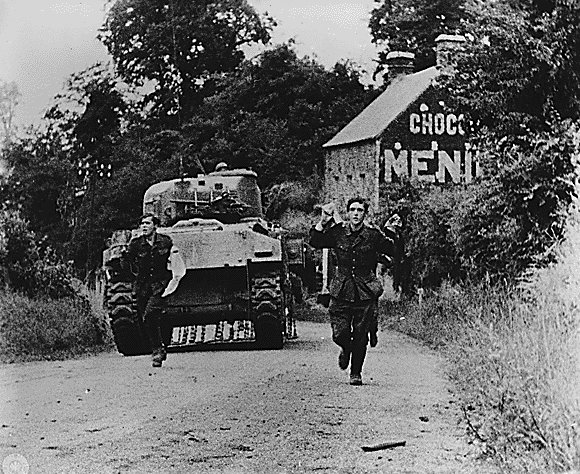
St. Lo was a key to Bradley’s breakout efforts.  His Army had to capture it and the roads leading out of it to launch Operation COBRA along the coast.  The task of capturing St. Lo was assigned to GEROW’S V Corps and Corlett’s XIX Corps.  They faced opposition from the tough paratroops of the German 3rd Parachute Division of II Parachute Corps.  The 2nd, 29th, 30th and 83rd Divisions fought a tough battle advancing eleven kilometers again with high numbers of casualties especially among the infantry to secure St. Lo on 18 July.[lviii] They finally had cleared the hedgerows.  St Lo epitomized the struggle that the American Army had to overcome in the Bocage.  Hard fighting but outnumbered German troops in excellent defensive country exacted a terrible price in American blood despite the Allied control of the skies.[lix]

st-loUS Tanks and German Prisoners at St Lo

Operation COBRA

With the Bocage behind him Bradley desired to push the Germans hard.  COBRA was his plan to break out of Normandy.  Bradley ably assisted by Collins they realized that the better terrain, road networks favored a breakout.  American preparations included a technical advance that allowed tanks to plow through hedgerows. This was the “Rhino” device fashioned by American troops which was installed on 3 of every 5 First Army Tanks for the operation.[lx] VII Corps was to lead the attack which was to begin on July 24th. American planning was more advanced than in past operations.  Collins and Bradley planned for exploitation operations once the breakthrough had been made. A massive air bombardment would precede the attack along with an artillery barrage by Collins corps artillery which was reinforced by additional battalions.   A mistake by the heavy bombers in the 24th resulted in the American troops being hit with heavy casualties and a postponement of the attack until the 25th.[lxi] The following day the attack commenced.  Another mistake by the bombers led to more American casualties[lxii] but VII Corps units pressed forward against the determined resistance of the survivors of Panzer Lehr and the remnants of units that had fought the Americans since the invasion began.  Although it was a “slow go” on the 25th Bradley and his commanders were already planning for and beginning to execute the breakout before the Germans could move up reinforcements.  The 26th of June brought renewed attacks accompanied by massive air strikes.  While not much progress was made on the 26th, the Americans discovered on the 27th that the German forces were retreating.  The capture of Marigny allowed VIII Corps to begin exploitation down the coastal highway to Coutances.  On the 27th General Patton was authorized to take immediate command of VIII Corps a precursor to the activation of his 3rd Army.  COBRA ripped a hole in the German line and inflicted such heavy casualties on the German 7th Army that it could do little to stop the American push.[lxiii] As the American forces pushed forward they reinforced their left flank absorbing the local German counterattacks which were hampered by the Allied close air support.

Avranches and Beyond

As the breakthrough was exploited the command of the forces leading it shifted to Patton and the newly activated 3rd Army. By the 28th VIII Corps led by the 4th and 6th Armored Divisions had reached Avranches and established bridgeheads over the See River with additional bridges being captured intact on the 30th.[lxiv] The capture of Avranches allowed the Americans to begin exploitation operations into Brittany and east toward the Seine. Weigley notes that for the first time in the campaign that in Patton the Americans finally had a commander who understood strategic maneuver and would use it to great effect.[lxv]

Conclusion

The American campaign in Normandy cost the U.S. Army a great deal. It revealed weaknesses in the infantry, the inferiority of the M4 Sherman tank to most German types, problems in tank-infantry cooperation and also deficiencies in leadership at senior, mid-grade and junior levels. Heavy casualties among infantry formations would lead to problems later in the campaign. Numerous officers were relieved including Division and Regimental commanders.  Nonetheless during the campaign the Americans grew in their ability to coordinate air and ground forces and adapt to the conditions imposed on them by their placement in the Cotentin.  The deficiencies would show up in later battles but the American Army learned its trade even impressing some German commanders on the ground in Normandy.[lxvi]


[i] See the alternative history of by Peter Tsouras Disaster at D-Day: The Germans Defeat the Allies, June 1944, Greenhill Books, London 1994. Tsouras describes the defeat of the Omaha landings and the effect on the course of the campaign leading to the overthrow of Hitler and a negotiated armistice in the west.  While this outcome could be rigorously debated other outcomes could have led to the fall of the Roosevelt and Churchill governments and their replacement by those not committed to unconditional surrender or a continuation of the war that brought about more German missile attacks on the U.K. and the introduction of other advanced German weapons that could have forced such a settlement. Another option could have led to the dropping of the Atomic Bomb on a German city vice Hiroshima.

[ii] Weigley, Russell F. Eisenhower’s Lieutenants: The Campaign of France and Germany, 1944-1945, Indiana University Press, Bloomington IN, 1981 p.33

[iii] Ibid pp. 34-35

[iv] Ibid p.35

[v] General Montgomery 21st Army group and Land Forces, Admiral Sir Bertram Ramsey as Allied Naval Expeditionary Force and Air Marshall Sir Trafford Leigh-Mallory as Commander in Chief Allied Expeditionary Air Force. Weigley p.43

[vi] Max Hastings in Overlord: D-Day and the Battle for Normandy Vintage Books, New York, 1984, comments that many in Britain wondered if Eisenhower with the lack of actual battle experience could be a effective commander and that Eisenhower was disappointed in the appointment of Leigh-Mallory and Ramsey, and had preferred Alexander over Montgomery, pp. 28-29.

[vii] Ibid. Weigley p.40.  Montgomery was the first to object to the 3 division narrow front invasion rightly recognizing that seizing Caen with its road junctions could provide a springboard for the campaign into open country.

[viii] Ibid. p.37

[ix] Hastings, Max. Overlord: D-Day and the Battle for Normandy Vintage Books, New York, 1984 p.29  Hastings finds the irony in the selection of the British officers to execute the plan that reflected the American way of thinking.

[x] The Germans agreed with this in their planning leaving Brittany very lightly defended.  See  Isby, David C. Ed. “The German Army at D-Day: Fighting the Invasion.” p.27 The report of General Blumentritt, Chief of Staff OB West noted that only 3 divisions were assigned to Brittany.

[xi] Ibid. Weigley, pp. 39-40

[xii] Ibid. p.73

[xiii] See Isby p. 69.  General Max Pemsel of 7th Army noted that “During  the spring of 1944, Seventh Army received only tow good photographs of British southern ports, which showed large concentrations of landing craft.”

[xiv] Ibid. Hastings p.63.  Hastings comments also about the success of using the turned Abwehr agents.

[xv] Warlimont, Walter. “Inside Hitler’s Headquarters: 1939-1945.” Translated from theGerman by R.H. Barry. Presidio Press, Novao CA, English Edition Copyright 1964 Wiedenfeld and Nicholson Ltd. Pp.422-423

[xvi] Ibid. Weigley pp. 53-54

[xvii] Ibid. p. 67

[xviii] Ibid. pp.57-64  Weigley spends a great deal of time on the wrangling between Eisenhower, Leigh Mallory and Spaatz on the nature of the plan, the allocation of forces both strategic and tactical assigned to carry it out and its success, or in the light of postwar analysis the lack of effect that it had on German operations.

[xix] Ibid. p.67-68.

[xx] Ibid. Hastings pp. 43-44 In large part due to the long range P-51 Mustang which accompanied the American bombing raids beginning in 1943.  Another comment is that the campaign drew the German fighters home to defend Germany proper and prevented their use in any appreciable numbers over the invasion beaches.

[xxi] Ibid. Weigley p.69

[xxii] Ibid. p.89

[xxiii] Ibid. pp. 88-89

[xxiv] Ibid. p.87

[xxv] Ibid. Weigley also talks about the rejection of General Corlett’s ideas to use Amtracks used by the Marines in the Pacific to land on less desirable, but less defended beaches to lessen casualties on the beaches and the need for additional support equipment even on smooth beaches.  One of Corlett’s criticisms was that too little ammunition was allotted to supporting the landings and not enough supporting equipment was provided. pp. 46-47

[xxvi] Hastings notes that with the strength and firepower of the German forces on OMAHA that many of these vehicles had they been employed would like have ended up destroyed further cluttering the beachhead. “Overlord” p.102

[xxvii] The battle over the deployment of the Panzer Divisions is covered by numerous historians.  The source of the conflict was between Rommel who desired to place the Panzer Divisions on the Coast under his command due to the fear that Allied air superiority would prevent the traditional Panzer counterthrust, General Gyer von Schweppenburg commander of Panzer Group West (Later the 5th Panzer Army) and Field Marshal Von Rundstedt who desired to deploy the divisions order the command of Rundstedt for a counter attack once the invasion had been launched, a strategy which was standard on the Eastern Front, and Hitler who held most of the Panzer reserve including the SS Panzer Divisions under his control at OKW.  Hitler would negotiate a compromise that gave Rommel the satisfaction of having three Panzer Divisions deployed behind coast areas in the Army Group B area of responsibility.  21st Panzer had those duties in Normandy.

[xxviii] Ibid. p.74-75

[xxix] Von Luck, Hans.  “Panzer Commander“ Dell Publishing, New York, 1989 pp. 169-170.  Von Luck a regiment commander in 21st Panzer noted that General Marcks of 84th Corps had predicted a 5 June invasion at a conference May 30th.

[xxx] Almost every D-Day historian talks about the weather factor and its effect on the German high command’s reaction to the invasion.  Rommel was visiting his wife for her birthday and planned to make a call on Hitler. Others including commanders of key divisions such as the 91st Airlanding Division were off to a war game in Rennes and the 21st Panzer Division to Paris.

[xxxi] Ibid. Weigley p. 96

[xxxii] See Cornelius Ryan, “The Longest Day” Popular Library Edition, New York 1959. pp. 189-193 for a vivid description of the challenges faced by soldiers going from ship to landing craft and their ride in to the beaches.

[xxxiii] Ibid. Weigley. p.78 Weigley talks about the order for the tanks to be carried ashore on their LCTs that did not get transmitted to the 741st.

[xxxiv] Ibid.

[xxxv] Ibid. Weigley  p. 87 The weather prevented the aerial bombardment from being effective. Because the bombers could not see their targets they dropped their bomb loads further inland, depriving the infantry of support that they were expecting.  Naval gunfire support had some effect but had to be lifted as the troops hit the beach leaving much of that support to come from Destroyers and specially equipped landing craft which mounted rockets and guns.

[xxxvi] Ibid. Hastings. pp. 90-91.

[xxxvii] Ibid. p.99

[xxxviii] Ibid. Weigley p.80

[xxxix] Ibid. p.101  Also see Weigley p.80

[xl] Ibid. p.99

[xli] Ibid. Weigley. p.95

[xlii] Ibid. p.94

[xliii] Ibid. p.99 Both Weigley and Hastings make note of the failure of both the Americans and British to train their troops to fight in the bocage once they had left the beaches.

[xliv] Ibid. Hastings. pp.152-153

[xlv] Ibid. Weigley p.101

[xlvi] Isby, David C., Ed. “Fighting in Normandy: The German Army from D-Day to Villers-Bocage.” Greenhill Books, London,  2001.  p.143

[xlvii] Ibid. Hastings p.173 Allied fighter bombers exacted a fearful toll among German commanders. The Commanders of the 243rd and 77th Divisions fighting in the Cotentin were also killed by air attacks on the 17th and 18th.   Further east facing the British the commander of the 12th SS Panzer Division, Fritz Witt on the 17th.

[xlviii] Ibid. Weigley. p.108

[xlix] Ibid. p.111-112.

[l] Ibid.

[li] The efforts of the 51st Highland Division and 7th Armored Division were turned aside by the Germans in the area and were dramatized by the destruction of  a British armored battalion by SS Captain Michael Wittman and his platoon of Tiger tanks.  See Hastings pp.131-135.

[lii] The British 8th Corps under General O’Connor lost 270 tanks and 1,500 men on 18 July attempting to crack the German gun line on the ridge beyond Caen. Weigley, pp.145-146.

[liii] Hastings comments about the critical British manpower shortage and the pressures on Montgomery to not take heavy casualties that could not be replaced. Overlord. pp.241-242.

[liv] Ibid. Weigley pp.116-120

[lv] Ibid. p.122

[lvi] Ibid. p121 Bradley told Eisenhower “when we hit the enemy this time we will hit him with such power that we can keep going and cause a major disaster.”

[lvii] Ibid. 134

[lviii] Ibid. Weigley. pp. 138-143.  Weigley notes of 40,000 U.S. casualties in Normandy up to the capture of St. Lo that 90% were concentrated among the infantry.

[lix] Weigley quotes the 329th Regiment, 83rd Division historian “We won the battle of Normandy, [but] considering the high price in American lives we lost. P.143. This is actually a provocative statement that reflects America’s aversion to massive casualties in any war.

[lx] Ibid. p.149

[lxi] Ibid. p. 152

[lxii] Ibid. pp. 152-153.  Among the casualties were the command group of the 9th Division’s 3rd Battalion 47th Infantry and General Leslie McNair who had come to observe the assault.

[lxiii] Ibid. pp.161-169. Weigley notes the advances in U.S. tactical air support, the employment of massive numbers of U.S. divisions against the depleted German LXXXIV Corps, and the advantage that the “Rhino” device gave to American tanks by giving them the ability to maneuver off the roads for the first time.

[lxiv] Ibid. pp.172-173.

[lxv] Ibid. p.172

[lxvi] Ibid. Isby, David C. “Fighting in Normandy,” p.184, an officer of the 352nd Division referred to the American soldier “was to prove himself a in this terrain an agile and superior fighter.”

Bibliography

Carell, Paul. “Invasion: They’re Coming!” Translated from the German by E. Osers, Bantam, New York 1964.

Hastings, Max. Overlord: D-Day and the Battle for Normandy Vintage Books, New York, 1984

Isby, David C. Ed. “The German Army at D-Day: Fighting the Invasion.” Greenhill Books, London 2004

Isby, David C., Ed. “Fighting in Normandy: The German Army from D-Day to Villers-Bocage.” Greenhill Books, London, 2001.

Ryan, Cornelius, “The Longest Day” Popular Library Edition, New York 1959

Tsouras, Peter. “Disaster at D-Day: The Germans Defeat the Allies, June 1944,” Greenhill Books, London 1994.

Von Luck, Hans.  “Panzer Commander“ Dell Publishing, New York, 1989

Warlimont, Walter. “Inside Hitler’s Headquarters: 1939-1945.” Translated from theGerman by R.H. Barry. Presidio Press, Novao CA, English Edition Copyright 1964 Wiedenfeld and Nicholson Ltd. Warlimont, Walter. “Inside Hitler’s Headquarters: 1939-1945.” Translated from theGerman by R.H. Barry. Presidio Press, Novao CA, English Edition Copyright 1964 Wiedenfeld and Nicholson Ltd.

Weigley, Russell F. Eisenhower’s Lieutenants: The Campaign of France and Germany, 1944-1945, Indiana University Press, Bloomington IN, 1981

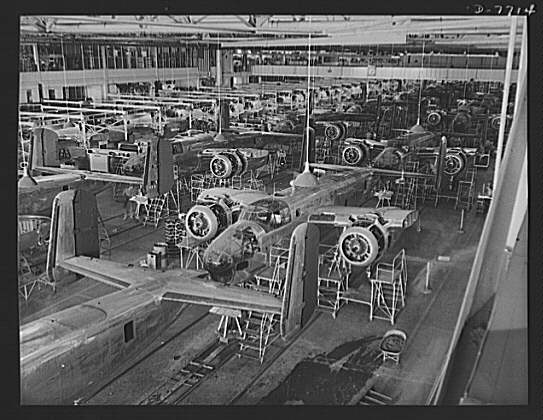
5 Comments

Filed under Loose thoughts and musings

Unequal Allies: Lessons from The German’s and Their Allies on the Eastern Front for Today

patton with french tankPatton with French Renault F1 Tank in WWI

One of the problems that any coalition of unequal partners as is the case in Afghanistan is the role of the lesser partners, their capabilities and limitations imposed on them by their own governments.  When NATO joined the US led effort in Afghanistan a number of NATO allies contributed troops to the effort.  The same was true of the “coalition of the willing” in Iraq.  While obviously the US appreciated and continues to appreciate the efforts of its allies in both theaters the unique problems associated with coalition warfare are often not appreciated until the strengths and weaknesses of each junior partner in the coalition are shown to include the effect of each nation’s choice of units sent, logistics capability and rules of engagement.  Thus when some Americans are critical of the contribution of some allies, or the limitations imposed by their governments they should remember that in the First World War the United States was dependant on France and Britain for the majority of the Artillery, all of the tanks and aircraft as well as instructors and training facilities for the rapidly recruited American Expeditionary Force.

RickenbackerUS Ace Eddie Rickenbacker with French Supplied Nieuport 28
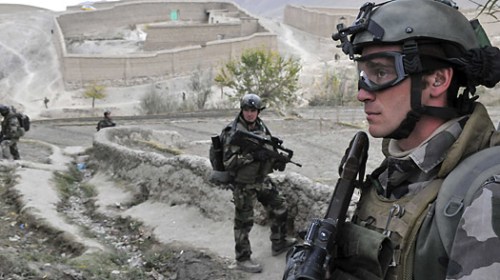
Every nation works within its own national interests and domestic political situation as well as its military capabilities. Unfortunately many people do not look at history to see how a coalition of a major power allied with a number of minor powers each with their own limitations as well as motivations for entering the war execute that war after the initial plan is foiled.  This is something that has happened in Afghanistan after the initial success disappeared with the corrupt and ineffective Afghan government, the resurgent Taliban and the resiliency of Al Qaida in their bases in the remote border areas of Afghanistan and Pakistan.

nato_france_a_0403French Troops in Afghanistan: The French, British and Canadians have the most Robust Rules of Engagement of Non US NATO Forces (Time Magazine Photo)
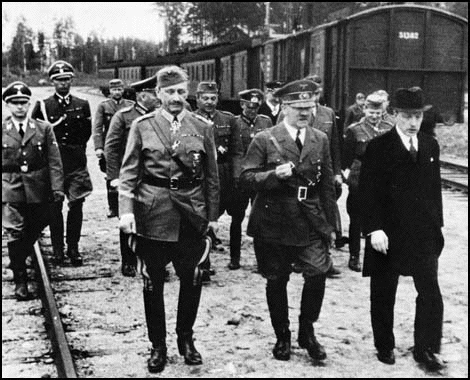
One of the best places to find such an example is the German relationship with their allies on the Eastern Front.  The question of the German dominated European Axis alliance in the Second World War is one of the more neglected subjects of World War Two II. In most accounts of the war, the relationship of the Germans to their coalition is minimal.  This includes the works of B.H. Liddell-Hart, Williamson Murray, Chester Wilmot and David M Glantz.   Italy usually receives some attention in the context of the campaign in North Africa and Mediterranean.  Hungary, Romania and Finland receive scant attention from anyone except as to how their armies were overrun during the Stalingrad campaign. Popular German memoirs provide little substantive help. Field Marshal Albert Kesselring’s memoirs and Erwin Rommel’s papers give some views of the Italian efforts in North Africa and the Mediterranean and Erich Manstein gives a limited amount of attention to the Italians, Finns, Hungarians and Rumanians in Russia.

Finland-HitlerConflicting War Aims: Hitler with Finland’s Field Marshal Von Mannerheim
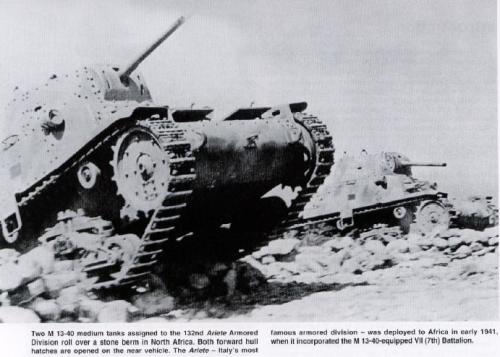
In his essay The Dysfunctional Coalition Robert Di Nardo examines the relationship of Germany to her allies on the Eastern Front where the Germans due to their own limitations were forced into a coalition war with weak allies of uncertain reliability. This is a subject that Di Nardo expanded on in his book Germany and the Axis Powers: from Coalition to Collapse (University of Kansas Press, 2005).  Di Nardo believes that there are important lessons to be learned from the failure of Germany and its coalition. Unfortunately we in the west are more often than not content to judge coalitions by the success of the Allies in the Second World War.  Di Nardo’s work on the subject is something that the United States must learn from as it works with coalitions whose members have significant military weaknesses often magnified by the domestic political climates in their own country. The situation, especially in Afghanistan places he United States in a similar position to Germany in relation to the current wars on terror and campaigns in Iraq and Afghanistan.

m 13-40 tankItalian M 13-40 tanks were the mainstays of Italian Armored Units, Slow, Undergunned and Poorly Armored they were No Match for Soviet T-34s

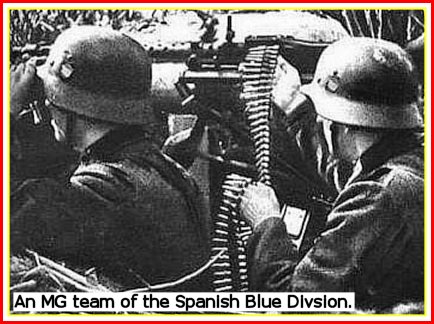
Di Nardo asserts “the way in which Germany conducted coalition warfare was reflective of the manner in which Hitler and the German military looked at the world, as well as the war in general.”  Germany often displayed a haughtiness toward its allies and even knowing their weaknesses was both unable and often unwilling to do much to strengthen them for the fight against the Soviet Union.  Di Nardo believes that the German attitudes were “a significant factor that contributed to the ultimate defeat of Nazi Germany.” (p.712)  In the essay Di Nardo notes the few successes of the coalition. In particular he looks at the German work with Rumanian air defense around the Ploesti oil refineries and the German-Finnish Winter Warfare School.  Apart from these instances he characterizes Axis coalition warfare on the eastern front as “poor” with “failures at every level.” (p.713)

italian troops stalino

Di Nardo analyzes the problems with language barriers, the wide differences of modernity of the armies and levels of technology and training of the coalition partners many of which are common to the war in Afghanistan. Germany’s failure to become the “arsenal of Fascism” which the United States became “the Arsenal of Democracy” for its allies hindered the Germans in their relationship to their poorly equipped allies.  Likewise, the lack of understanding of all the partners regarding the “relationship between national objectives, strategy and the morale of soldiers of officers and soldiers alike”(p.713) was a major obstacle.

finnish at gun

Di Nardo provides a good description of the German liaison detachments allotted to the coalition armies.  These teams functioned as advisors to their allies as well as liaisons between the German army and the allies. These teams dealt with language, tactical communications weaknesses and often displayed the generally haughty attitude that the Germans displayed to their partners. There is an excellent illustration of this in dealing with the failure of XLVIII Panzer Corps at Stalingrad when the German Liaison to the Romanian 1st Panzer Division was wounded.  At the operational and strategic levels Di Nardo describes the German policies and attitudes toward their allies as “imperialist.” (p.718)

He examines the wide gap in transportation capabilities of the various armies and the failure of the Germans to better provide for the needs of their partners in contrast to the United States assistance to her allies.   Germany provided obsolete captured Czech and French weapons and vehicles to her allies.  They refused to supply the Romanians and Hungary with the plans to build German tank and aircraft in Romanian and Hungarian industrial concerns capable of their manufacture. (pp.718-719) Di Nardo notes how this lack of modern equipment impacted the allies operations against the Red Army and their defeat at the hands of the Soviets.  Although Di Nardo alludes to how even elite German formations had substandard equipment he does not explain principle reason for this.   This was due to the fact that the Germans did not go to a “total war” footing in regard to industrial production until Albert Speer took over as Armaments Minister in 1943.

spanish blue divsion

The number of troops contributed by the German Allies was substantial. Hungary began Barbarossa with two corps, including its Mobile Corps and in 1942 supplied their 2nd Army which was composed of 1 Armored and 9 Infantry Divisions. 2nd Army was crushed by the Soviet offensive against Stalingrad. The Italians began with an expeditionary corps of 2 Semi-Motorized and 1 Light Infantry Divisions. In early 1943 they added 4 Infantry and 3 Alpine Divisions and a number of other smaller formations. This force became the 8th Army. It fought well during the advance toward Stalingrad but spread out over a wide front with little armored or air support was decimated by the Soviet offense against the city.  The remnants were no longer battle worthy and were evacuated to Italy.  Most of the Finnish Army was engaged in the war but after September 1939 made no major offensive contribution to the war. In 1944 following a major Soviet offensive which forced them to withdraw from the territory that they had captured in 1941 the Finnish government sued for peace. The Russians occupied a number of border provinces and islands and Finland was obliged to expel German Forces.  This resulted in the “Lapland War” between the Finns and the Germans with the Germans adopting a scorched earth policy as they withdrew from the country. The quality of the Finnish forces was generally higher than that of Germany’s other Allies.

romanian r35Obsolete French Built Romanian R-35 Light Tank
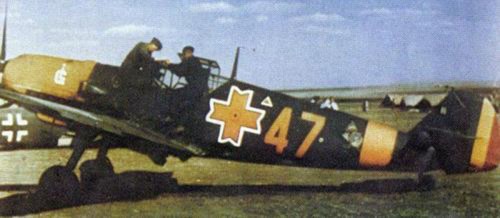
The Romanians contributed 19 divisions organized into 3 Armies to Barbarossa. They were limited by their equipment and logistics. The 3rd and 4th Romanian Armies were shattered at Stalingrad forcing a major reorganization as they continued the war.  In August 1944 with the Soviets pressing their border King Michael led a coup to overthrow the Fascist dictatorship of Antonescu. The Germans elected to fight and the Romanians changed sides and joined the Russian advance to the end of the war with their 1st Army taking part in the Prague offensive. Another contributor of troops was Franco’s Spain although it was a neutral country. Spain provided a division of volunteers which became the famous “Spanish Blue Division” or the 250th Infantry Division. It was outfitted as a German unit and received additional training from the Germans before it went into action. The division fought near Leningrad and was engaged in many tough fights.  A Spanish “Blue” Fighter squadron allotted to and equipped by the Luftwaffe also distinguished itself. In October 1943 Spain under allied pressure withdrew the division from the front although many soldiers volunteered to remain and fight on as smaller units attached to German formations. One volunteer company became part of the 11th SS Panzergrenadier Division Nordland at Berlin.  One thing that probably was a factor in the Spanish effectiveness as well as commitment to to German cause was their genuine loathing of the Soviets following the Spanish Civil War.

The final part of Di Nardo’s essay deals with the strategic goals and conflicts among the Axis coalition which were never worked out.  Examples of this include how the Finns never signed a formal alliance with Germany and how their national strategy did not allow them to deeper into the Soviet Union instead settling on recovering territory lost to the Soviets in 1939 with a few minor gains.  There was also the problem that the Romanians and Hungarians distrusted each other so much that they could not work together over their own territorial disputes.  The Italians joined the campaign late and their 8th Army participated in the German advance toward Stalingrad protecting the German flank.  While the Italians provided their own equipment including armor and aircraft they and their weapons were woefully suited for the war that they faced on the Eastern Front.  Di Nardo finishes his essay noting morale problems in the Hungarian, Italian and Romanian armies, the lack of understanding and general lack of motivation for the campaign.

Romanian_Me109-px800Romanian ME-109 E4, The Romanian Air Force Was One of the Axis Success Stories

This article is well sourced. Di Nardo uses histories, archival sources, operational orders and analysis by the various armies as well as interviews with participants. Of particular note is that he goes to sources of the coalition partners and not just German sources.  This allows him to be far more nuanced and detailed in his discussion as opposed to others who simply ignore the contributions of the Axis partners.  His footnotes provide added detail and provide and lend support to his arguments.

The importance of this essay is twofold.  First it provides a look at the relationship of German to her coalition partners on the Eastern Front.  This is important from a historic standpoint simply because it is such a neglected topic in most histories of the period and gives added depth to the reasons for Germany’s defeat.  One has to ask the “what if questions” in regard to had the Germans better treated, equipped and recognized their allies’ contributions to the war effort.

The second and probably more important for Afghanistan is that it provides lessons to any nation which has to engage in coalition warfare.  In particular it has lessons for the United States which has found itself as the senior and vastly superior partner in a war which has multiple coalition partners in several theaters of operations.  Each coalition partner has certain military strengths and weaknesses in relationship to the United States, national interests, geo-political and economic relationships with competitors to the United States and internal political realities which impact their cooperation in the war.  As such the United States cannot allow itself to be cast in the role of a haughty imperialistic senior partner as did Germany.  The US instead must cultivate an attitude of assistance, respect and trust among its partners to assure their full cooperation and assistance in relation to U.S. goals in the war. This is particularly important now was it appears that the Afghan war is reaching a point where the deteriorating situation on the ground could invite the early withdraw of allies and necessitate either the addition of more US troops or a strategic withdraw which would be for all intents and purposes a defeat for the US and NATO. The consequences would not be good and while the Taliban may be able to be contained they undoubtedly would invite Al Qaida back and provide them with a sanctuary just as Pakistan has stepped up its efforts on the border.

Leave a comment

Filed under History, iraq,afghanistan, world war two in europe

The Battle that Wasn’t Necessary: Kursk 1943

The Battle of Kursk was the climactic battle on the Eastern Front from which the Germans never recovered. It was a battle that should not have been fought, at least at the time that it was fought. It was high risk operation with minimal payoff should it succeed. A while back I posted an “alternative history” of this entitled “Operation DACHS.” I have also posted articles on events leading up to Kursk, one on Stalingrad and the other on Manstein’s counter-stroke.  In a sense this is a trilogy with an alternative scenario included.


The German Situation and Dilemma in April 1943

Battle_of_Kursk_(map)

The Germans faced a dilemma in April 1943.  Manstein’s brilliant counter-stroke had turned what could have been disaster into an opportunity to salvage prospects for the Eastern Front. The German action had “repaired its front, shattered the hopes of the Allies, and nipped the Russian spearhead.”[i] Unfortunately for the Germans the spring thaw meant that Manstein could not continue immediately and eliminate the Kursk bulge which had been formed by Rokossovky’s offensive and Manstein’s own counter-stroke.  With the Germans stalled by the weather Stavka cancelled “other significant planned offensives to dispatch reinforcements to the Kursk region.”[ii] Despite the weather Manstein pushed Kluge for an immediate attack on both sides of the bulge but was rebuffed by Kluge who “insisted that his troops needed to rest and refit.”[iii] This rebuff combined with the onset of the Russian mud meant that in “March 1943 the war on the ground came to an end….The front was immobilized.”[iv]

manstein with tanksManstein with Tiger I Tanks

Manstein’s offensive had “enabled the Germans to consolidate a firm position in the East, and build up strength afresh- not to its former level, but sufficient to provide a good prospect of holding the Russians at bay.”[v] As a result German armies in the south “held again nearly the same positions from which the Blau offensive had begun the previous spring.”[vi] Now the Kursk bulge some 250 Kilometers wide and 160 Kilometers deep[vii] protruded menacingly into the German lines and drew the attention of both sides, to the Germans it appeared to be designed for an encirclement battle.[viii] Thus it appeared that the Kursk bulge was the obvious place for the Germans to resume the offensive and maintain the initiative on the Eastern Front.

But was the Kursk necessary?  Was Operation ZITADELLE as obvious as it seemed to be to Hitler, Zeitzler and others?  The battle is the subject of many books and articles which often focus on tactical and operational details of the German offensive, particularly the battle on the southern side of the bulge and the clash of armor at Prokhorovka.  This essay will focus less on the battle and more on the strategic situation faced by the Germans in the spring of 1943. Key to this are the arguments for and against the operation, the operations timing and the option that the Germans had to conduct a mobile defense.   It is the strategic situation that must be looked at to determine whether Operation ZITADELLE was necessary at all. Manstein believed that had the offensive been launched early enough that it might have succeeded provided it “we launched it early enough we could hope to catch them in a state of unpreparedness.”[ix] Williamson Murray and Allan Millett agree with Manstein’s assessment but note that an early offensive was “riskier…but greater the prospect for a major success.”[x] Guderian on the other hand saw that nothing good could come of ZITADELLE and opposed it from the beginning.[xi] Glantz and House in their detailed study argue that “there is absolutely no basis for assuming that Citadel would have succeeded had it been launched in spring 1943.”[xii]

battle_kursk t 34The Soviets Reinforced and Fortified the Kursk Salient
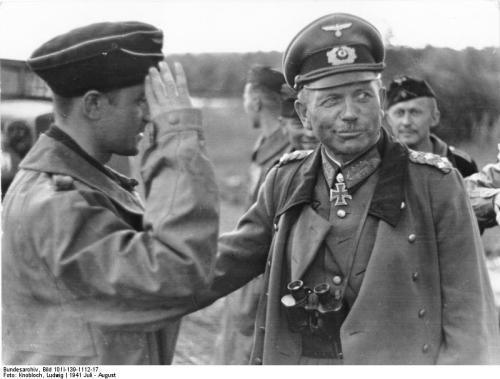
The Germans faced a number of major problems in early 1943.  First, among them was manpower.  The armed forces had been mauled on the Eastern Front, “after continuous operations from June 1942 to March 1943, most German units were worn out.”[xiii] Many infantry divisions “were reduced to two thirds of their original strength, with declining mobility and anti-tank defenses.”[xiv] Had the Germans only faced the Russians this might have been overcome, however they not only faced a rejuvenated Red Army, but challenges brought about by multi-theater operations and their weak, ineffective and reluctant allies.  The Allied air offensive which though it “did not decisively effect German arms production it nevertheless prevented a great deal of work from being carried on and had profound moral effects which communicated themselves to all the fronts.”[xv] Likewise the U-Boat campaign had been effectively defeated by May 1943 allowing for increasing numbers of American troops and supplies to reach Europe, including significant Lend-Lease aide for the Soviet Union.  Manpower became a major issue for the the German Army and industry.  Both the military and industryhad difficulty in getting the required number of personnel to meet their personnel needs, in January 1943 the German High Command “demanded 800,000 men-but even the most ruthless call-up was able to produce only 400,000” who were lost to the civilian war economy.[xvi] Even the “belated industrial mobilization of Germany, fueled by slave labor and directed by the organizational genius of men like Speer and Guderian, could do little beyond patching together existing units.”[xvii]

Bild 101I-139-1112-17General Heinz Guderian, Inspector of Panzer Troops was one of Few Senior German Officers to Oppose ZITADELLE from the Beginning

There were other challenges. The German and Italian armies in North Africa had surrendered, and about 330,000 Axis soldiers entered captivity.[xviii] Added to the heavy losses on the Eastern Front, the disasters in North Africa and Stalingrad had “effectively destroyed the Axis military alliance, such as it was.”[xix] Italy, Hungary and Romania all began to pull their forces out of the Eastern front after having them shattered by the Soviet Winter offensive.[xx] Italy, shaken by its losses in North Africa and the Russian front was wavering in its support for Germany; Mussolini’s government itself was on the verge of falling.  Likewise the Hungarian government sought contact with the Allies;[xxi] as did the Romanians.[xxii] Finland too was looking for a way out and limiting its participation in German offensive operations.[xxiii] As her allies looked for a way out, the British and Americans were about to open a new front in Southern Europe, while another had effectively been opened by partisans in Yugoslavia and Greece.[xxiv] The crisis in the south was great enough that OKW under General Jodl began to look at ways of shoring up those fronts in case Italy withdrew from the war including the use of units that would have to be withdrawn from the Eastern Front.[xxv] The Balkans drained German reserves such that the number of German divisions deployed there increased from 5 to 15 between July 1942 and July 1943.[xxvi] Additionally many units had to be created by the Replacement Army to build up the Western Front knowing that an Allied strike there would eventually take place, further depriving the Eastern Front of badly needed infantry replacements and divisions.

Benito_Mussolini_and_Adolf_HitlerHitler Felt Regaining the Initiative in the East was Critical to Keeping his Allies in the War
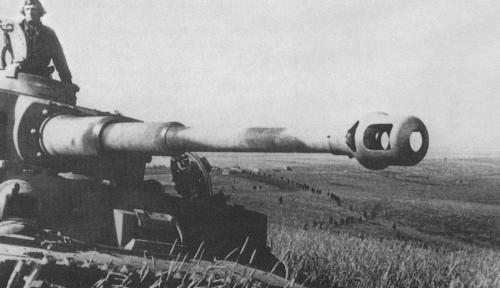
The German Options and Decision

The question for the Germans now was whether they “had any strategic options that would allow them to avoid defeat.”[xxvii] It is from this perspective that the necessity of Kursk must be examined. Most in the German High Command now realized that strategy in the east could no longer be “based on the illusion of conquering the vast Soviet Union.”[xxviii] As such the discussion turned to what direction the new strategy should take.  Political considerations came into play: Since the German allies were looking for ways to exit the war it was felt that “it was politically impossible for Germany to surrender the initiative on the Eastern Front.”[xxix] Realistically there were two options available: Wait and counterattack or launch a limited attack on the Kursk salient. The general impression among many German commanders in the East was that they had ended the last campaign “with a relative advantage over the Reds, an advantage that should be exploited as soon as the rasputitsa ended in April or early May.”[xxx] But the only strategy that looked feasible balancing the political and military goal of maintaining the initiative was what Manstein originally had in mind after Kharkov, to continue on, pinch out the Kursk bulge with the cooperation of Kluge’s Army Group Center.  As noted the opportunity to do so was lost with Kluge’s refusal and the onset of the spring thaw.  Yet this idea captured Zeitzler at OKH and Kluge at Army Group Center, though by April and May Manstein was more inclined toward “the ‘backhand’ stroke, which involved giving up the whole Donetz basin and staging a major Panzer offensive southeast from Kharkov.”[xxxi] However, this was too bold for Hitler who was “unwilling to give up the Donetz Basin with its industrial and mineral resources.”[xxxii]

battle_kursk_tiger advancingThe New Tiger Tanks Were to Play a Critical Role in the Attack
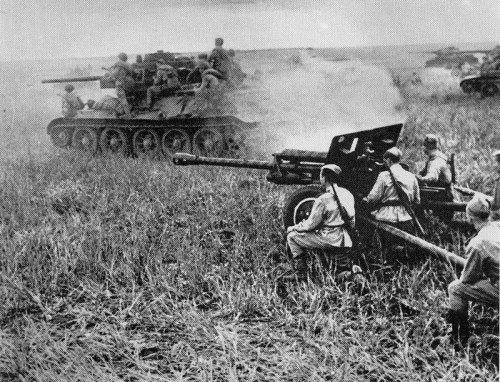
Manstein felt that the “moment of opportunity had passed, but his counterpart at Army Group Center…Kluge, was enthusiastic about the proposal.”[xxxiii] Zeitzler believed that an “attack at Kursk would be less risky”[xxxiv] than Manstein’s “backhand” and pushed the plan to Hitler.  There were advantages to this strategy if it could be carried out successfully. The Germans would encircle and destroy Russian forces in the salient and “shorten their own defensive lines after such an encirclement.”[xxxv] Yet the plan was opposed by others. Jodl at OKW argued against ZITADELLE “because he believed that it was dangerous to empty the strategic reserve when so many new crises threatened to develop in the Mediterranean.”[xxxvi] Zeitzler countered that because of German weakness in the east that they could not “wait to be hit.”[xxxvii] Guderian did not believe that either Army Group could be ready to mount the offensive that Zeitzler envisioned and “declared that the attack was pointless…if we attacked according to the plan of the Chief of the General Staff, we were certain to suffer heavy tank casualties, which we would not be in position to replace in 1943.”[xxxviii] Guderian asked Hitler at a separate conference “why he wanted to attack at all in the East in 1943.” When Keitel expressed that the reasons were political, Guderian asked Hitler “How many people do you think even know where Kursk is? It’s a matter of profound indifference to the world whether we hold Kursk or not…”[xxxix] Guderian and Speer both pointed out technical problems in producing the Tigers and Panthers but were overruled.[xl] Hitler himself reportedly had misgivings about the attack at one point reportedly stating that “the thought of the Zitadelle operation ‘made [his] stomach turn over’”[xli] In spite of Jodl and Guderian’s warnings, his own misgivings and those of Manstein and Model in April and May, Hitler “allowed himself to be tempted once more into taking the offensive. The Kursk salient…lured him into mounting his great pincer operation known as Citadel.”[xlii] Glantz and House maintain that he could “see no alternative politically and agreed to the plan.”[xliii]

The Facts on the Ground

Kursk_T34_and_Fieldgun-px800Soviet Forces Expected the Attack and Were well Prepared to Meet it
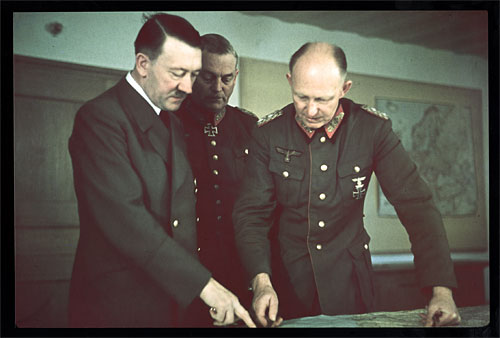
Once the decision to attack was made the question that remained was the timing of the attack. Manstein had preferred an early attack in May, but the operation was postponed to mid-June and then to July due to the request of Model who believed that his forces were too weak and needed reinforcements.[xliv] The attack was to be one of several “limited offensives designed to consolidate the German defenses while inflicting sufficient damage on the Red Army to delay any Soviet offensive.”[xlv] But the delays insisted on by Model and agreed to by Hitler were a fatal error.  The Germans failed to “factor into their decision was the unpalatable reality that Soviet strength in the Kursk salient was growing much faster than the Wehrmacht could muster forces to attack it.”[xlvi] Not only were the Soviet forces growing they knew about the German plans and could deploy their forces to counter them and for their own offensive.[xlvii] Stalin’s generals were able to convince him not to launch an attack and instead wait on the Germans so they could attack as the Germans exhausted their strength.[xlviii] They knew of it since April and reinforced the flanks of the salient with guns and armor at a faster pace than the Germans opposite them.[xlix] At Kursk “improved intelligence collection and analysis permitted the Red Army to predict almost exactly the strategic focal point of a major German offensive.”[l] Into the bulge “Vatutin and Rokossovsky crammed seven armies.”[li] The Russians deployed in depth in heavy fortified zones and minefields along the very sectors of the bulge that the Germans intended to attack, successfully masking their preparations from the Germans. It was “a measure of Soviet self-confidence that the senior commanders were looking beyond the German attack, beyond its failure, to the first major Soviet summer offensive.”[lii] Had the Germans succeeded in pinching off the salient “they would have faced several additional defensive belts constructed to the east of the salient.”[liii]

Typically when one launches an offensive it is desirable to have numeric advantage over the defender, 3:1 is normally assumed to be sufficient. At Kursk the Germans were outnumbered by the Russians 2.3:1 in men and 1.6:1 in tanks[liv] yet somehow the offensive had now morphed from a spoiling attack into a strategic offensive, albeit with more limited objectives attacking one of the strongest points in the Russian line.  General Raus, commanding a corps in Army Detachment Kempf noted: “Considering Russian dispositions, defenses and terrain, German strength could be considered only minimally sufficient for the assigned mission.”[lv] The Chief of Staff of XLVIII Panzer Corps called Kursk “the strongest fortress in the world.”[lvi]

Danger Signs: Requests for Cancellation

keitel-jodl-hitlerGeneral Alfred Jodl at OKW Protested the Offensive Verbally and in Writing
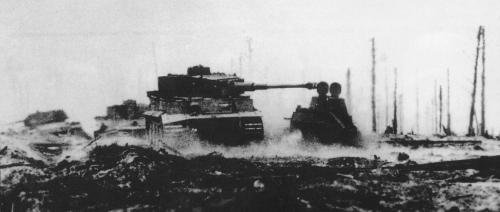
As more delays occurred Manstein “came out in the open and protested that the operation was no longer feasible and must be abandoned, but it was too late.  The united stand of orthodox General Staff opinion, Keitel, Zeitzler, Kluge, had persuaded the Führer, whose mind, once made up, was never altered.”[lvii] Manstein felt that the idea had been to “attack the enemy before the enemy had replenished his forces and got over the reverses of the winter.”[lviii] He felt there was great danger to the Mius line and to the northern Orel bulge with each delay; and the felt the threat of an attack by the Allies in Western Europe.[lix] On 18 June Jodl and the OKW Operations Staff “recommended to Hitler that he abandon Operation Citadel in order to free strategic reserves for defense in both East and West.”[lx] Warlimont writes that Jodl “raised empathic objection to the premature commitment of the central reserves to the East; he pointed out both verbally and in writing that a local success was all that could be hoped from Operation Citadel and that it could have no strategic significance for the overall situation.”[lxi] Hitler again refused the request.  “The doubts of certain Chiefs of Staff of the attacking armies were disregarded, and in the case of Colonel von Schleinitz, answered with dismissal.”[lxii]

The Battle

battle_kursk tigersTigers Advancing

The attacking forces for ZITADELLE involved units of Army Group Center and Army Group South.  Spearheading the assault for Army Group Center was Model’s 9th Army.  2nd Army from the same Army Group took a defensive role in the center of the bulge while Army Group South’s 4th Panzer Army under Hoth and Army Detachment Kempf composed the Southern attack force.  Von Mellenthin noted that to muster the necessary divisions for the attacking armies “neighboring fronts were to be thinned out beyond the limits of prudence” and from a strategic point of view likened Citadel “to be a veritable ‘death ride.’”[lxiii] Manstein worried about stripping the Mius-Donetz salient which “had to hand over all their available forces.”[lxiv] The Germans sent 17 panzer divisions against Kursk including the elite 2nd Panzer, Grossdeutschland, Leibstandarte, Das Reich and Totenkopf. Hoth’s army was the “strongest force ever put under a single commander in the German Army.”[lxv] While the Germans assembled the Russians waited, and beginning on 1 July the “Red Army defenders were on constant alert, waiting in their bunkers for the first sign of attack.”[lxvi]

battle_kursk_0020Panzers on the Advance

ZITADELLE began on 4 July with a reconnaissance in force, the main blow scheduled for 0300 5 July. The Russians learned of the timing from a prisoner and quickly launched an artillery counter-preparation an hour prior to the German attack, disrupting it while air strikes were ordered against Luftwaffe airfields.[lxvii] Model’s 9th Army on the northern flank attacked the Russian “13th and 70th Armies on a frontage of 50 kilometers”[lxviii] with the focus being a 16 kilometer front where he concentrated 6 infantry divisions, a panzer division and all his Tiger and Ferdinand units.[lxix] He intended to break the Soviet defensive system “by constantly feeding in new units to grind down the defenses.”[lxx] The attack stalled by the 9July making minimal progress of “8 to 12 kilometers into the massive Soviet defenses.”[lxxi] A good deal of his problem was due to limited infantry strength which was  “far below established strength….moreover, the Ninth Army’s infantry- even the veterans- lacked experience in conducting set-piece attacks against prepared positions.”[lxxii] The Russians defined the battleground and forced Model into a battle determined by superior firepower on a constricted battlefield, “a game that the Wehrmacht could not win.”[lxxiii] This nullified any advantage the Germans might have had in mobility for their panzer divisions.  In savage battles to take the high ground at Ponyri station and Ol’khovatka Model’s assaults faltered.  9th Army sacrificed about 50,000 men and 400 tanks to the god of war.”[lxxiv] Model continued to attack until 12 July when the Russians launched their offensive against the Orel bulge forcing him to redeploy to counter the Russian advance.  The battle in the north became “a savage defensive battle in which considerable parts of the offensive wing of Ninth Army were involved.”[lxxv] Model’s defeat made Hoth’s task “much more challenging.”[lxxvi]

battle_kursk_t-34s and infantryT-34’s and Infantry

The Fourth Panzer Army and Army Detachment Kempf made better progress, nearly breaking through the Russian defenses after hard fighting. They penetrated “into the third Soviet defensive belt, a depth of 35 kilometers, but were stopped by Katukov’s 1st Tank Army.”[lxxvii] The critical point was reached on 11 and 12 July at Prokhorovka station when 5th Tank Army collided with 4th Panzer Army. “Over 1200 tanks from both sides were engaged in this struggle.”[lxxviii] It was the largest tank engagement of the war, over 700 tanks were destroyed and “German losses were too great to allow a decisive breakthrough.”[lxxix] Both sides took heavy casualties but the Germans could not replace theirs while the Russians still had formidable uncommitted reserves.  On 13 July the battle in the south drifted into a stalemate as XLVIII Panzer Corps and Hausser’s II SS Panzer Corps failed to break the Soviet line[lxxx] as the Russians “kept on throwing in fresh troops, and their reserves seemed inexhaustible.”[lxxxi] Manstein desired to continue the offensive as he believed that for his Army Group “the battle was now at its culminating point, that to break it off at this moment would be tantamount to throwing victory away.”[lxxxii] Although Manstein and Hoth felt that they could continue on and break the Russian line, they were now not in a position to do so. Model’s forces were in no shape to assist in the north and Manstein and Kluge were called to the Wolfsschanze by Hitler who, now preoccupied with the Allied invasion of Sicily necessitating withdraws of strong panzer forces from the east to face the threat in the west.[lxxxiii] Hitler rejected Manstein’s counsel to continue and ordered him to withdraw II SS Panzer Corps,[lxxxiv] effectively ending the ZITADELLE as the Russians launched their offensive on 17 July.

battle_kursk_destroyed panzersDestroyed Panzers

Analysis of the Decision: Zitadelle Was Not Obvious, Necessary nor Well Executed

To Hitler and the supporters of ZITADELLE the operation seemed obvious.  In the two previous years the Germans had dealt punishing blows against the Red Army and the belief of Zeitzler and others was that the Wehrmacht was still qualitatively superior to the Soviets and that even a limited offensive would succeed in its objectives.  But the conditions on the ground had changed and the Germans failed to take the change into account.  The German Army did not have the resources for an offensive of the scope of Barbarossa or Blau. However this lack of resources did not lessen the optimism of some for ZITADELLE; particularly Zeitzler and Kluge. From their perspective the offensive to pinch out the Kursk salient seemed likely to succeed.  Yet as Clark notes the offensive was defined by a “lack of imagination and adaptability….Where the old Blitzkrieg formula….was fed into the computer, with little regard for the changed conditions….” [lxxxv] Von Mellenthin comments that by attacking Kursk, the “German Army threw away all their advantages in mobile tactics, and met the Russians on ground of their own choosing.”[lxxxvi] Glantz and House attribute this to the fact that the Germans “clung to outmoded assumptions about their own superiority over their opponents” due to their previous success. They point out that the Red Army had systematically reviewed its performance after every failure,” so that “Soviet doctrine, organization, and expectations were closer to battlefield reality than were those of the senior German leadership.”[lxxxvii] The German intelligence services failed them[lxxxviii] as they failed to detect the large strategic sized force that the Soviets had concentrated in the spring of 1943.  This was a force that Glantz and House believe would have caused ZITADELLE to fail even had it occurred in May, particularly in regard to the comparatively weak German forces fielded by Manstein.[lxxxix]

An offensive with what appeared to be reasonable objectives that were believed to be within the capabilities of the Wehrmacht failed.  Hitler according to Carell “gambled away not only victory but all hope of a draw.”[xc] Manstein categorized the offensive as a “fiasco.”[xci] Guderian called it “a decisive defeat” that made it “problematical” whether the armored formations could be “rehabilitated in time to defend the Eastern Front.”[xcii] Warlimont who served at OKW commented: “Operation Citadel was more than a battle lost; it handed the Russians the initiative and we never recovered it again right up to the end of the war.”[xciii] Guderian’s biographer Kenneth Macksey wrote that “the failure at Kursk was due to the employment of a faulty plan which lacked the element of strategic as well as tactical surprise.”[xciv] Raus lists several factors for this.  However, his argument is summarized: “once we learned in May and June that this was the area in which the Russians were prepared to offer their stiffest resistance, we should have modified our plans.  Either we should have refrained from attacking at all, or the operation should have been carried out to strike the enemy not at his strongest, but at his weakest point.”[xcv]

Hitler felt that a decisive victory was needed for political and propaganda reasons, yet even a significant victory was unlikely to keep Italy in the war, even if it swayed the lesser allies to stay the course.  ZITADELLE was conducted too late to save the Italians, success in May might have given German supporters in Italy some leverage but the invasion of Sicily and the failure at Kursk emboldened Mussolini’s opponents. The Fascist Grand Council “voted to have Mussolini removed as prime minister” and King Vittorio Emmanuaele “dismissed Mussolini” who was then placed under arrest.[xcvi] Finland refused to take offensive action that might have cut the Murmansk railway[xcvii] and engaged the Americans in a round of “abortive negotiation”[xcviii] while the Hungarians and Romanians provided little assistance to the Germans, partially due to the German reluctance to assist in modernizing and rebuilding their armies.[xcix]

Of the German Generals involved it was only Guderian as Inspector of Armored Troops and Jodl at OKW who consistently opposed ZITADELLE, citing realistic assessments of strengths, risks and dangers in other theaters.  Manstein opposed it when he felt the opportunity had passed, though it was unlikely to succeed had it been launched in May as he desired.  Guderian and Jodl’s arguments proved correct in every respect. ZITADELLE engaged German the preponderance of German forces in a battle that had at best chances of local success. The offensive itself weakened and endangered the German position on all fronts.  In the end, despite the belief and decision of Hitler, Zeitzler Kluge and others in the High Command, Operation ZITADELLE was neither obvious nor necessary and played out with the disastrous results expected by those who opposed it.


[i] Clark, Allan. Barbarossa:  The Russian-German Conflict 1941-45. Perennial, an Imprint of Harper Collins Books, New York, NY 2002. Originally published by William Morrow, New York, NY 1965. p. 306

[ii] Glantz, David M and House, Jonathan. The Battle of Kursk.  University Press of Kansas, Lawrence, KS. 1999. p.14

[iii] Ibid. Glantz and House, Jonathan. The Battle of Kursk.  p.14

[iv] Carell, Paul. Scorched Earth: The Russian German War 1943-1944. Translated by Ewald Osers, Ballantine Books, New York, NY 1971, published in arrangement with Little-Brown and Company. p. 335

[v] Liddell-Hart, B.H. The German Generals Talk. Quill Publishing, New York, NY. 1979. Copyright 1948 by B.H. Liddell-Hart. p.212

[vi] Wray, Timothy A. Standing Fast: German Defensive Doctrine on the Russian Front in World War II, Prewar to March 1943. U.S. Army Command and General Staff College, Fort Leavenworth, KS. 1986. p.163

[vii] Glantz, David M. and House, Jonathan. When Titans Clashed: How the Red Army Stopped Hitler. University Press of Kansas, Lawrence, KS. 1995. p.157

[viii] Ibid. Glantz and House. When Titans Clashed. p.157

[ix] Manstein, Erich von. Lost Victories. Translated by Anthony G. Powell, Zenith Press, an imprint of MBI Publishing Company, St Paul, MN. 2004. First Published as Verlorene Siege Athenaum-Verlag, Bonn, GE 1955, English edition Methuen & Company Ltd. 1958  p.447

[x] Murray, Williamson and Millett, Allan R. A War to Be Won: Fighting the Second World War.  The Belknap Press of Harvard University, Cambridge, MA. 2000. p.295

[xi] Macksey, Kenneth. Guderian: Creator of the Blitzkrieg. Stein and Day Publishing, New York, NY 1975 p.206

[xii] Ibid. Glantz and House. The Battle of Kursk. p.261

[xiii] Ibid. Glantz and House. The Battle of Kursk. p.14

[xiv] Ibid. Glantz and House. Clash of Titans. p.174

[xv] Goerlitz, Walter. History of the German General Staff 1657-1945. Translated by Brian Battershaw. Westview Press. Boulder CO and London. 1985 Originally published as Der Deutsche Generalstab, Verlag der Fankfurter Hefte, Frankfurt am Main.  First U.S. publication in 1953 by Preager Publishers. p.441

[xvi] Ibid. Carell. p.336

[xvii] Ibid. Glantz and House. Clash of Titans. p.174

[xviii] Warlimont, Walter. Inside Hitler’s Headquarters 1939-45. Translated by R.H. Berry, Presido Press, Novato CA, 1964. p.312

[xix] DiNardo, Richard L. Germany and the Axis Powers: From Coalition to Collapse. University Press of Kansas, Lawrence, KS. 2005. p.174

[xx] Ibid. DiNardo. p.174. By the summer all Italians units had been withdrawn, all but two Hungarian divisions which were used in anti-partisan operations and nine Romanian divisions.

[xxi] Ibid. Goerlitz. p.441

[xxii] Ibid. Glantz and House. Kursk. p.21

[xxiii] Ibid. DiNardo. p.180

[xxiv] Ibid. Goerlitz. p.441

[xxv] Ibid. Warlimont. pp.317-318

[xxvi] Dunn, Walter S. Jr. Heroes or Traitors: The German Replacement Arm, the July Plot, and Adolf Hitler. Praeger Publishers, Westport CT and London, 2003. p.53

[xxvii] Ibid. Murray and Millett. p.294

[xxviii] Ibid. Carell. p.339

[xxix] Ibid. Glantz and House. Kursk. p.21

[xxx] Ibid. Glantz and House. Kursk. p.21

[xxxi] Ibid. Clark. p.322

[xxxii] Liddell-Hart, B.H. Strategy. A Signet Book, the New American Library, New York, NY. 1974, Originally Published by Faber and Faber Ltd., London. 1954 & 1967. p.280

[xxxiii] Ibid. Glantz and House. When Titans Clashed. p.157

[xxxiv] Ibid. Clark. p.322

[xxxv] Ibid. Glantz and House. p.157

[xxxvi] Ibid. Clark. p.323

[xxxvii] Ibid. Clark. p.323

[xxxviii] Guderian, Heinz. Panzer Leader. (abridged) Translated from the German by Constantine Fitzgibbon, Ballantine Books, New York 1957. pp.245-246

[xxxix] Ibid. Clark. p.325.

[xl] Ibid. Glantz and House. When Titans Clashed. p.157.

[xli] Ibid. Clark. p.325

[xlii] Ibid. Carell. p.341

[xliii] Ibid. Glantz and House. When Titans Clashed. p.158

[xliv]Newton, Steven H. Hitler’s Commander: Field Marshal Walter Model, Hitler’s Favorite General. DeCapo Press, Cambridge MA 2005. pp.218-219

[xlv] Ibid. Glantz and House. When Titans Clashed. p.21

[xlvi] Ibid. Newton. p.219

[xlvii] Ibid. Murray and Millett. p.295

[xlviii] Ibid. Glantz and House. When Titans Clashed. p.158

[xlix] Ibid. Clark. p.326

[l] Ibid. Glantz and House. Kursk. p.63

[li] Overy, Richard. Russia’s War: A History of the Soviet War Effort: 1941-1945. Penguin Books, New York NY and London, 1997. pp.200-201

[lii] Ibid. Glantz and House. When Titans Clashed. p.159

[liii] Ibid. Glantz and House. Kursk. p.64

[liv] Ibid. Glantz and House. Kursk. p.65 This reference contains a listing of each sector and the force ratios of men, tanks and guns in each sector.

[lv] Raus, Erhard. Panzer Operation: The Eastern Front Memoir of General Raus, 1941-1945. Compiled and Translated by Steven H Newton. Da Capo Press a member of the Perseus Book Group, Cambridge, MA 2003. p.197

[lvi] Weingartner, James. J. Leibstandarte SS Adolf Hitler: A Military History, 1933-45. Battery Press, Nashville, TN.(no publication date listed)  p.81

[lvii] Ibid. Clark. p.327

[lviii] Ibid. Manstein. p.447

[lix] Ibid. Manstein. pp.447-448

[lx] Ibid. Glantz and House. Kursk. p.55

[lxi] Ibid. Warlimont. p.334

[lxii] Ibid. Goerlitz. p.445

[lxiii] Von Mellenthin, F.W. Panzer Battles: A Study of the Employment of Armor in the Second World War. Translated by H. Betzler, Ballantine Books, New York, NY, 1971. Originally Published University of Oklahoma Press, 1956. p.262

[lxiv] Ibid. Manstein. p.448

[lxv] Ibid. Clark. p.328

[lxvi] Ibid. Glantz and House. Kursk. p.78

[lxvii] Ibid. Glantz and House. Kursk. pp.81-84

[lxviii] Ibid. Glantz and House. When Titans Clashed. p.166

[lxix] Ibid. Erickson. P.99

[lxx] Erickson, John. The Road to Berlin. Cassel Military Paperbacks, London, 2003. First Published by Weidenfeld and Nicholson, 1983. p.99

[lxxi] Ibid. Glantz and House. When Titans Clashed. p.166

[lxxii] Ibid. Newton. p.222

[lxxiii] Ibid. Newton. 234

[lxxiv] Ibid. Glantz and House. Kursk. p.121

[lxxv] Ibid. Carell. p.342

[lxxvi] Ibid. Glantz and House. Kursk. p.121

[lxxvii] Ibid. Glantz and House. When Titans Clashed. p.166

[lxxviii] Ibid. Glantz and House. When Titans Clashed. p.166

[lxxix] Ibid. Overy. p.209

[lxxx] Ibid. Glantz and House. Kursk. pp.215-217

[lxxxi] Ibid. Von Mellenthin. p.274

[lxxxii] Ibid. Manstein. p.449

[lxxxiii] Ibid. Glantz and House. Kursk. pp.217-218.

[lxxxiv] Ibid. Glantz and House. When Titans Clashed. p.167

[lxxxv] Ibid. Clark. pp.329-330

[lxxxvi] Ibid. Von Mellenthin. p.264

[lxxxvii] Ibid. Glantz and House. Kursk. p.269

[lxxxviii] Macksey, Kenneth. Why the Germans Lose at War. Greenhill Books 1996, Barnes and Noble, New York,  2006. p.227

[lxxxix] Ibid. Glantz and House. Kursk. p. 261

[xc] Ibid. Carell. p.342

[xci] Ibid. Manstein. p.449

[xcii] Ibid. Guderian. p.251

[xciii] Ibid. Warlimont. p.334

[xciv] Ibid. Macksey. Guderian p.206

[xcv] Ibid. Raus. p.211

[xcvi] Ibid. DiNardo. p.178

[xcvii] Ibid. DiNardo. p.181

[xcviii] Ibid. Erickson. p.91

[xcix] Ibid. DiNardo. pp.182-188

Bibliography

Carell, Paul. Scorched Earth: The Russian German War 1943-1944. Translated by Ewald Osers, Ballantine Books, New York, NY 1971, published in arrangement with Little-Brown and Company

Clark, Allan. Barbarossa:  The Russian-German Conflict 1941-45. Perennial, an Imprint of Harper Collins Books, New York, NY 2002. Originally published by William Morrow, New York, NY 1965

DiNardo, Richard L. Germany and the Axis Powers: From Coalition to Collapse. University Press of Kansas, Lawrence, KS. 2005

Dunn, Walter S. Jr. Heroes or Traitors: The German Replacement Arm, the July Plot, and Adolf Hitler. Praeger Publishers, Westport CT and London, 2003

Erickson, John. The Road to Berlin. Cassel Military Paperbacks, London, 2003. First Published by Weidenfeld and Nicholson, 1983

Glantz, David M and House, Jonathan. The Battle of Kursk.  University Press of Kansas, Lawrence, KS. 1999.

Glantz, David M. and House, Jonathan. When Titans Clashed: How the Red Army Stopped Hitler. University Press of Kansas, Lawrence, KS. 1995

Goerlitz, Walter. History of the German General Staff 1657-1945. Translated by Brian Battershaw. Westview Press. Boulder CO and London. 1985 Originally published as Der Deutsche Generalstab, Verlag der Fankfurter Hefte, Frankfurt am Main.  First U.S. publication in 1953 by Preager Publishers

Guderian, Heinz. Panzer Leader. (abridged) Translated from the German by Constantine Fitzgibbon, Ballantine Books, New York 1957

Liddell-Hart, B.H. Strategy. A Signet Book, the New American Library, New York, NY. 1974, Originally Published by Faber and Faber Ltd., London. 1954 & 1967

Liddell-Hart, B.H. The German Generals Talk. Quill Publishing, New York, NY. 1979. Copyright 1948 by B.H. Liddell-Hart.

Macksey, Kenneth. Guderian: Creator of the Blitzkrieg. Stein and Day Publishing, New York, NY 1975

Macksey, Kenneth. Why the Germans Lose at War. Greenhill Books 1996, Barnes and Noble, New York, 2006

Manstein, Erich von. Lost Victories. Translated by Anthony G. Powell, Zenith Press, an imprint of MBI Publishing Company, St Paul, MN. 2004. First Published as Verlorene Siege Athenaum-Verlag, Bonn, GE 1955, English edition Methuen & Company Ltd. 1958

Murray, Williamson and Millett, Allan R. A War to Be Won: Fighting the Second World War.  The Belknap Press of Harvard University, Cambridge, MA. 2000

Newton, Steven H. Hitler’s Commander: Field Marshal Walter Model, Hitler’s Favorite General. DeCapo Press, Cambridge MA 2005

Overy, Richard. Russia’s War: A History of the Soviet War Effort: 1941-1945. Penguin Books, New York NY and London, 1997

Raus, Erhard. Panzer Operation: The Eastern Front Memoir of General Raus, 1941-1945. Compiled and Translated by Steven H Newton. Da Capo Press a member of the Perseus Book Group, Cambridge, MA 2003

Von Mellenthin, F.W. Panzer Battles: A Study of the Employment of Armor in the Second World War. Translated by H. Betzler, Ballantine Books, New York, NY, 1971. Originally Published University of Oklahoma Press, 1956.

Warlimont, Walter. Inside Hitler’s Headquarters 1939-45. Translated by R.H. Berry, Presido Press, Novato CA, 1964

Weingartner, James. J. Leibstandarte SS Adolf Hitler: A Military History, 1933-45. Battery Press, Nashville, TN.(no publication date listed)

Wray, Timothy A. Standing Fast: German Defensive Doctrine on the Russian Front in World War II, Prewar to March 1943. U.S. Army Command and General Staff College, Fort Leavenworth, KS. 1986.

10 Comments

Filed under History, Military, world war two in europe

Operation “Dachs” My First Foray into the Genre “Alternative History”

For a change of pace I have pulled up something that one of my professors allowed me to do in my Military History Masters Program.  This was my first foray into historical fiction, or as it is known sometimes as “Alternate History.”  This is actually a growing genre among military writers and others who have vivid imaginations as to what might have happened if….

I hope you enjoy.  Peace, Steve+

This is an alternative history of how the Germans might have avoided the disaster at Kursk. It looks at what might have happened if an actual assassination attempt on Hitler had succeeded in March 1943 and how Manstein might have been able to execute the “backhand” strategy that he favored using a mobile defense.  This is predicated by Hitler’s death, based on Hitler’s actions and control of operational decisions Manstein would never have been allowed the freedom to conduct operations in this manner.  In eliminating Hitler I have also included personnel changes and the overall strategy for the German High Command, and the probable response of Stalin to Hitler’s death had it occurred in the spring of 1943. I have tried to be faithful to known historical opinions and actions of the participants and likely reactions to such a situation although one cannot predict precisely what people would have done.  Thus I have documented the article with footnotes as if it were an actual history. It would have been interesting to be able to lengthen this and included sections on tactical actions based on memoirs of German and Russian soldiers.

hitlers fw-200Hitler’s FW-200 Prior to his Ill-fated vist to Army Group Center
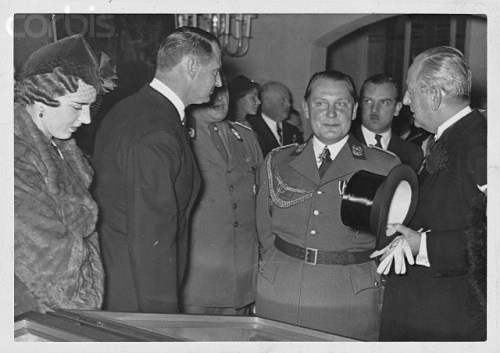
Background: The Strategic Situation Spring 1943

In April 1943 the German High Command faced a decision on which the fate of Nazi Germany would hinge, but for the first time in the war it was not under the thumb of Adolf Hitler. Following Manstein’s counter-stroke following the Stalingrad disaster there was considerable pressure to follow up with that success with a continued offensive. Manstein himself had proposed this but Field Marshal Von Kluge refused to agree to an immediate offensive because he felt his troops needed rest and refitting. On March 13th Hitler flew out to meet with Von Kluge at Army Group Center HQ at Smolensk.  On the flight back Hitler’s FW-200 was racked by an explosion crash landing near Minsk, taken down by a bomb planted on the plane by Colonel Henning Von Trescow of Kluge’s staff.[i] While Hitler survived, he remained in critical condition, barely alive at a SS hospital until his death on 20 April 1943, his 54th birthday. The crash landing was reported by the escorting ME-109s of JG-53, and a Alarm Company from a Security Division at Minsk rescued Hitler but were driven off the crash site by a large force of Soviet Partisans who destroyed the aircraft and any evidence to the cause which the escorting fighters attributed to mechanical problems.  There were no other survivors. Von Kluge, expecting to be implicated the Fuhrer’s death committed suicide after visiting troops on the front line, and was succeeded at Army Group Center by Field Marshal Model the commander of 9th Army. The other conspirators were frozen into inaction when Hitler survived the crash and made no attempt to take over the government, realizing that “our plans for seizing power in Berlin and other large cities were still not adequate to the task.”[ii] In the absence of Hitler Reichsmarschall Goering, Hitler’s designated successor, took action to secure his power and using contacts in the GESTAPO accused Himmler of treason for making contact with Neutral intermediaries in Sweden[iii] and replaced him with SS General Kurt Wolfe, and reappointed Rudolf Diels, the former head of the GESTAPO when it was still under his control[iv], to head it again.  Himmler attempted to flee and was caught near Luneburg when he committed suicide with a cyanide capsule before he could be interrogated. Other potential rivals were eliminated; Martin Bormann, who Goering hated, was arrested on charges of exceeding his authority, embezzlement, and harming the war effort and was executed.[v] Joseph Goebbels swore his loyalty to Goering even before Hitler’s death.  He and Albert Speer were directed to arrange the state funeral for the late Fuhrer. Berlin Radio announced the Fuhrer’s death on the 21 April, Hitler’s body was prepared and lay in state at the Chancellery.   A period of mourning was declared 21 April to 1 May on which the State Funeral took place. On 2 May Goering announced that Field Marshal Von Rundstedt was the new Chief of OKW and would coordinate strategy on all fronts. The next day Goering called together a meeting of the heads of OKH, OKW, the Inspector General of Panzer Troops, and the commanders of the Eastern Front Army Groups, Western Europe and Africa as well as Reichsfuhrer Karl Wolff, Admiral Donitz and Field Marshal Von Richthofen[vi] representing the Luftwaffe to decide on a course of action for the summer. It was the first time that all had been called together to discuss the overall situation since Barbarossa began in 1941, and the first true attempt to formulate a grand strategy during the war.

Options and Decision: The Zossen Conference 3 May 1943[vii]

HU010919Goering meeting Diplomats following Hitler’s State Funeral
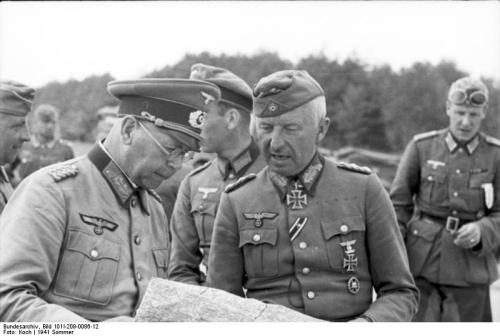
Herman Goering looked up from the maps spread out on the conference table.  He looked surprisingly fit, somehow between the crash of Hitler’s aircraft and his death he had pulled himself together and out of his drug induced malaise.  It was as if he again had a purpose. Field Marshal Von Rundstedt now Chief of OKW following Goering’s relief of Field Marshal Keitel, and General Jodl had just finished briefing the situation in western and southern Europe, following briefings by Colonel General Zeitzler of OKH, the Inspector General of Armored Troops, General Guderian and Field Marshal Von Manstein of Army Group South.  Albert Speer briefed tank and aircraft production numbers while the Chief of the Army personnel office noted the requirement for 800,000 replacements “but even the most ruthless call-up was able to produce only 400,000.”[viii] Looking from the table he spoke: “Gentlemen, the situation is critical and I have to admit that I have thought so for a number of months but have been unable to speak out.   Our political situation is perilous, the Italians are ready to abandon our cause. Our forces in North Africa will soon be unable to hold out as our Italian friends have let us down again.[ix] I expect that if Jodl and Kesselring are right about Allied intentions that we will have our hands full in the west shortly.  Kesselring and Arnim, you need to evacuate as many German soldiers from Africa as possible,[x] use all air and naval forces that you can, I know it will be difficult, especially with the heavy losses we have taken in transport aircraft and the pathetic Italian Navy.”  Goering paused, his gaze passing around the room.  “In the west we need to assume that the Allies will invade and the ‘very real danger that the enemy may turn against Brittany and Normandy,’ Field Marshal Rommel will take command of OB West to build up the Atlantic Wall in these sectors.”[xi] “Zeitzler, Manstein, we need to shore up the eastern front.”

“Herr Reichsmarschall, the Fuhrer had approved the plan called ZITADELLE, to attack the Russians here in the Kursk salient.” responded Zeitzler.[xii] “We should be ready to begin the offensive this month.”  Goering raised his hand stopping Zeitzler.  “I know, but I have considered that plan and I cannot support it. Richthofen briefed me on it prior to the Fuhrer’s death and general, we must have another plan, and an attack on Kursk is so obvious the Russians will be ready to meet it.  I have considered what the General Guderian and Minister Speer said regarding tank production and the state of the Panzer arm.  I cannot approve Zitadelle, but we must find a way to deal the Russians a defeat without squandering our strength attacking such an obvious target. Model too is dubious of the prospects; he believes that the Russians know our intentions and has requested a delay to strengthen his forces.”[xiii] “Reichsmarshall.” chimed in Jodl. “You are correct, the premature commitment of central reserves in such an offensive will not help our cause, in fact only local success is what can be expected from Zitadelle.”[xiv]

“But Reichsmarshall, we must recapture the initiative in the east, we must take the offensive!” retorted Zeitzler. “Our new units of Panthers and Tigers will give us a decisive technical advantage.”[xv] Guderian now joined in. “But the Panthers still have many technical problems, it would be better to wait until they are worked out before we commit them to a major offensive, and besides, how many people do you think even know where Kursk is?”[xvi]

“Zeitzler, I appreciate your zeal.” Interrupted Goering, “But Jodl and Guderian are correct, even a successful attack at Kursk will not alter the strategic situation. We must work to stave off defeat.  Manstein has a plan that may help, there is some risk, but I see no other way. An offensive at Kursk would require tanks and aircraft that must be used to combat the Allied bombing of the Reich and to safeguard withdraw of our units from Africa, it would force us to commit everything with little gain.” Goering paused and said to Manstein, “Go ahead Manstein.”

“Reichsmarshall, Gentlemen.  Our situation in the east is not hopeless, in March I felt that an immediate offensive would succeed in pinching off the Kursk bulge, but I think now that the moment of opportunity has passed for such an attack.  Instead we should fight a defensive battle of maneuver as called for by Truppenführung that we have developed from the days of the Reichswehr.  We should build up our forces; give ground where we can, and when we have the chance strike the enemy on the backhand, as we did at Kharkov.”[xvii]

Zeitzler jumped in. “But how can we do that? If we don’t strike now while we have the opportunity the Russians will grow stronger, and how can we know where they will strike?”[xviii]

“General Zeitzler, the Russians are already building up heavy armored forces in the area of Kursk, and diverting forces from other sectors of the front to that area.  The south offers them the best opportunity to finish what they started in the winter.  They will come and it will be in the south, they will want Kharkov and they will again attempt to envelop our forces in the south. If they succeed they will follow up and rapidly move into the Balkans, Romania and Hungary will turn on us and it will be a disaster, we cannot afford that.”  Manstein looked up, Jodl nodded and Model said “Once that is done they will push to Kiev and Poland.” Goering interjected “Thank you Model, you are right, Field Marshal Manstein; please go on with your plan.”

Bild 101I-209-0086-12Erich Von Manstein at the Front

Motioning to the map Manstein continued. “We will concentrate the majority of our Panzer forces here, just west of Kharkov and another group here west of Orel.  We will also build fall back positions for our infantry forces here along the Dnieper.  We should be ready to withdraw from the Crimea should the need arise, we cannot afford another encirclement.  When the Russians attack we will give ground, even Kharkov if needed. Our infantry divisions will fight a delaying action supported by Jagdpanzer and Sturmgeschutzen, the Luftwaffe will need to give us good close air support from Stukas and as the Russians outrun their supply depots and their offensive loses momentum we will attack, like a badger defending itself.  Our Panzers will cut off their spearheads west of Kharkov while we bleed them dry in the north; we will then roll them up, stabilize the line and prepare for the winter.”  Manstein sounded confident; those in the room began to sense that his plan could work.  Rundstedt spoke up: “That will give us the chance to transfer forces to other fronts and, maybe, since Hitler is dead there might be a chance for Reichsmarschall to negotiate a settlement,[xix] otherwise gentlemen the Allies will destroy our cities from the air and grind our armies down until we have no recourse but surrender.”

“Right” added Goering, making eye contact with each man in the room. “We must have success in the defense, we must buy time and we must work to end this war before Germany is destroyed. ‘We will have reason to be glad if Germany can keep the boundaries of 1933 after the war.”[xx] He paused and said “General Zeitzler, you are relieved of your duties at OKH, General Guderian, you are now the Chief of OKH.[xxi] Manstein, you will command the East, General Hoth will take your Army Group. You will work with Guderian and Model to flesh out this plan.  We must get the Panther, Tiger and Ferdinand units operational as soon as possible.  I believe that the Russians will attack by June. Richthofen, I need you to look to the Luftwaffe. We have not had a good year and we have to succeed in defending the Reich from Allied bombers and provide support to the ground forces. Of course flak needs to be built up. The Luftwaffe Field Divisions with the exception of the Fallschirmjaeger and Herman Goering Panzer Division need to be transferred to Army control.”  He looked at Speer: “Herr Speer, the Fuhrer entrusted you with our war production program, you must increase production of tanks and aircraft. Speed the production of the ME-262 and cancel all programs that take away from the panzers, fighters and ground support aircraft that we need now.” He put his hands on his hips and took a deep breathe. He looked at Wolfe, Himmler’s successor.  Wolff, the Reich needs the Waffen SS, the Panzer troops are exceptional, but I want all Waffen SS Formations, with including the Panzers turned over to Army control, we cannot keep dividing our resources. With the personnel from the Luftwaffe Field Divisions we should be able to provide the Army with excellent troops to rebuild experienced formations.”  Goering looked around the room; “Are there any questions Gentlemen?” Putting his arm across Manstein’s soldier and said: “I think that Badger is a fitting name for your plan. Our little Dachs will tear them to pieces.”   Later, Goering met with Foreign Ministry officials emphasizing the need to strengthen German Allies and seek peace with the west. He “admitted that he was worried about the future. ‘It’s not quite clear to me how we are going to end this war.’”[xxii] Those present could not believe how Goering had conducted himself, and all left the meeting thinking that it might be possible to stave off defeat.  It was an incredible performance. After Hitler’s crash he had secretly undergone a “systematic withdraw cure which had ended his drug addiction.”[xxiii] The change was marked.

STAVKA Headquarters Moscow: 7 May 1943

Josef Stalin was ecstatic.  His agents reported that Hitler was dead even before the announcement from Berlin.  Partisans had confirmed that it was Hitler’s aircraft that they found and recovered some of Hitler’s personal belongings, including his cap, which they presented to Stalin.  Intelligence reported that Goering had taken power, and Stalin was sure that his position was weak and many believed that Goering, was not up to the task, and that a renewed offensive could bring down the Nazi regime.  Now was the time to bring the Nazi terror to an end and Stalin called his key leaders together.  While Stalin wanted an immediate offensive his generals wanted to wait just in case the Germans attacked Kursk.  “Zhukov, Vasilevsky, and various General Staff officers urged caution and recommended that the Red Army remain on the defensive until the Germans expended their offensive strength.”[xxiv] Stalin supported by commanders, like Vatutin, “argued for a resumption of offensive action in early summer to preempt German action and regain the momentum lost in March 1943.”[xxv] In the end a compromise was reached and despite the temporary defensive stand “Russian strategic planning in the summer of 1943 was inherently offensive in nature.”[xxvi] The new offensive would be launched on 15 June if the Germans had not attacked before.  It would be named Operation Kutuzov[xxvii] and be aimed at the Orel salient and Kharkov.  The northern prong under Rokossovsky’s Central Front would destroy the Germans around Orel and drive west while Vatutin’s Voronezh and Konev’s Steppe Front would take Kharkov and drive toward the Dnieper.[xxviii] The Southwest Front and South Fronts would attack and destroy the German forces along the Mius, the goal: “collapse of the German defenses and an advance to the line of the Dnieper River from Smolensk in the north southward to the Black Sea.”[xxix]

German Preparations

sturmgeschutzSturmgechuten and SdKfw 251 APCs moving into position
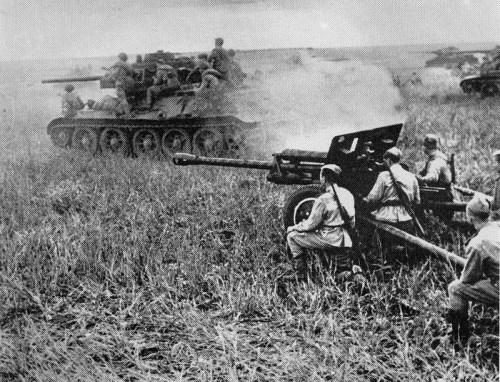
Manstein met with Model, Hoth and Guderian to develop DACHS. They had  to play for time and deceive the Russians as to their true intent so they could build up their forces.  Deception operations were mounted on both sides of the Kursk bulge to give the impression of attack preparations.  1st Panzer Army and Army Detachment Kempf  were to launch a diversion called Operations HABICHT and PANTHER southeast of Kursk  “designed to push the Soviets back from the industrial area of the Donets River.”[xxx] The defensive plan called for the infantry supported by tank destroyers, assault guns the heavy Ferdinands as well as mobile Pioneer units to conduct a withdraw to delay and disrupt the Russian attack.  Bridges were prepared for demolition, defensive positions constructed at choke points which would be defended and then abandoned when no longer defensible, and minefields laid to slow the Russian advance.  This was critical for 9th Army now commanded by General Henrici in the Orel salient north of Kursk.  Henrici, a defensive master constructed a series of defensive belts to allow his army to withdraw from the bulge without being cut off and inflict heavy casualties on the Russians through skillful deployment of anti-tank weapons, especially self propelled guns.[xxxi] In the south 4th Panzer Army, now commanded by SS General Paul Hausser[xxxii] and Army detachment Kempf made preparations to allow the Russians to advance past Kharkov using the same defend and delay tactics and then counterattack. As the armies prepared, Speer and Guderian’s efforts to rebuild the Panzer force were bearing fruit.  By 15 May the first brigade of Panther tanks was activated and began training west of Kharkov.[xxxiii] Two battalions of Ferdinands, one for 9th Army and one for 4th Panzer Army were activated.[xxxiv] Sturmgeschutz battalions were assigned to each infantry corps. Panzer divisions built up so that all had an average of 130 tanks, with the SS Divisions and Gross Deutschland receiving more.  Tiger battalions were assigned to each Panzer Corps.

The Summer Campaign

On 1 June Operations PANTHER and HABICHT hit the unfortunate Soviet 6th Army, which had been victimized by Manstein’s counter-stroke in March.  III Panzer Corps of Army Detachment Kempf supported by Corps Raus (IX Corps) linked up with 1st Panzer Army at Kupiansk on 3 June.  The Russian counterattacked with 8th Guards Army and the 2nd and 23rd Tank Corps. The battle of Kupiansk resulted in the destruction of 6th Army and the 23rd Tank Corps which was surprised by the 503rd Panzer Detachment’s Tigers. 2nd Tank Corps received a similar mauling at the hands of the 6th Panzer Division.  On 9 June the Germans returned to their start positions.

Kursk_T34_and_Fieldgun-px800Soviet Tanks and AT Guns at Kupiansk

The attack at Kupiansk surprised STAVKA which had been deceived by the build up of Panzers around the Kursk salient.  Stalin continued to hound his generals to begin Kutuzov on time, but the generals were “chastened” by the defeat at Kupiansk and “earlier experiences”[xxxv] and wanted to delay. Stalin forced them to begin Kutuzov on 22 June, the 2nd Anniversary of Barbarossa.  Manstein and his Eastern Front commanders held their breath.  Teams of Brandenburger commandos operating in the Soviet rear and Luftwaffe reconnaissance aircraft reported Russian units moving to advanced positions to the north and south of Kursk.  Vatutin commanding the Voronezh Front was ambushed and killed by a Brandenburger detachment supporting Ukrainian irregulars[xxxvi] as he returned from visiting 69th Army near Prokhorovka station on 19 June and was replaced by Lieutenant General Katukov of 1st Tank Army.  Katukov “was one of the Red Army’s most accomplished and experienced armor officers.”[xxxvii]

kursk_tanksMk IV Panzers

In the north Rokossovsky’s Central Front and Popov’s Bryansk Front supported by 11th Guards Army[xxxviii] began concentric attacks on the German 9th and 2nd Panzer Armies and ran into Henrici’s labyrinth on 22 June.  They hit the first line they found it empty, the Germans having repaired to secondary positions,[xxxix] German 88’s and self propelled guns took a heavy toll on the tanks of 2nd Tank Army.  The 3rd Tank Army under General Rybalko’s army committed after the initial assault “attempted a fresh penetration instead of exploiting the earlier efforts of the 3rd and 63rd Armies… Rybalko’s force included 698 serviceable tanks…but lacked the artillery and engineers for such a deliberate assault.”[xl] Popov telephoned Stalin at noon on 25 June “to report that Rybalko was practically stalled and suffering heavy losses in tanks.”[xli] The Germans committed the 5th and 8th Panzer divisions[xlii] against 3rd Tank Army. The fresh Panzers inflicted painful losses on Rybalko.  On 27 June Stalin called to complain about the handling of the army, demanding a direct assault.[xliii] The battle turned into a “grinding battle of armored attrition.”[xliv] After “a few bloody days bereft of any success, Rybalko’s tank formations had to be pulled out of the line into reserve.”[xlv] The “battle for the Orel salient ended three weeks later with a German defensive victory, as Army Group Center extricated its two armies from the box prepared for them while inflicting heavy casualties on three Soviet Fronts.”[xlvi] The Soviets lost over 629,000 men and 3,500 tanks.[xlvii] In comparison German losses were light and by falling back they shortened their line freeing units for other operations.  Stalin had Orel but failed to destroy the Germans and lost heavily in the attempt.

In the south Konev’s Steppe and Katukov’s Voronezh Fronts prepared their assault on Kharkov.  They attempted to deceive the Germans by simulating the massing of a “notional tank and combined-arms army” in the western side of the Kursk bulge.[xlviii] The deception was unsuccessful as reconnaissance by Luftwaffe aircraft and Brandenburgers failed to uncover any troop concentrations and Russian deserters, talked of a strike at Kharkov. The offensive “Rumiantsev” was opened by the 5th and 6th Guards armies supported by 53rd and 69th Armies on 21 June; a day later 7th Guards Army jumped off, two additional armies supported the west flank of the offensive.[xlix] The Russians in the two fronts began the operation with 980,000 men and 2,500 tanks.[l] Opposing them were 4th Panzer Army and Army Detachment Kempf’s 350,000 men and 1,750 tanks and assault guns including 100 Tigers and 192 Panthers.[li]

Sovietic_T34_battle_of_kurskT-34 towing disabled T-34 near Orel

STAVKA “chose to strike the strongest portion of Hoth’s defense head-on, to engage and defeat the German force and avoid the problems of flank threats.”[lii] Unfortunately they complicated the attack by focusing it at “precisely the boundary between the Voronezh and Steppe Fronts, causing increased coordination problems from the start of the operation.”[liii] The Germans used Ferdinands, Jagdpanzers and Sturmgeschutz in a mobile defensive role, as infantry fought delaying actions as they withdrew to successive defensive lines, inflicting brutal losses on the Russians.  Aided by massive artillery preparation the Russians broke through the weakened Army Detachment Kempf near Belgorad[liv] taking the city on 24 June.  Corps Raus’ 167th Infantry Division was taken on its exposed left flank forcing Raus to “fight a delaying action…until the withdraw reached Kharkov.” [lv] The Germans reacted to the threat by committing the “veteran 5th SS Panzer Grenadier Division Wiking” to reinforce Army Detachment Kempf.[lvi] Despite the success “the German defenses proved so tenacious that the leading brigades of the two tank armies had to enter the fray.”[lvii]

As the Russians advanced the German fell back.  Hoth directed Hausser to wait before counterattacking with XLVIII Panzer Corps and II SS Panzer Corps.  Katukov pushed the 1st and 5th Tank Armies into the hole in the German lines and moved toward Kharkov which was liberated by the 89th and 183rd Guards Divisions[lviii] on 2 July.  The liberation of Kharkov and Belgorad while exhilarating had cost Katukov over 250,000 casualties.  Skillful employment of mobile defense and local counterattacks by mixed Panzer battlegroups, such as one by Grossdeutschland on the flank of 5th Tank Army caused panic and some units withdrew “leaving behind masses of equipment of every description.”[lix] The tank armies had lost upwards of 50 percent of their tanks, infantry divisions were now down to half strength, some down to 3000 men.[lx] Yet the Soviets attempted to drive south to trap the Germans.  They were hit by XLVIII Panzer Corps and II SS Panzer Corps, both of which had seen little action thanks to Hoth’s conservation of strength. XLVIII Panzer Corps hit the 1st Tank Army at the “key road junction of Bogodukhov, 30 kilometers northwest” of Kharkov “severely mauling the leading three brigades”[lxi] forcing 1st Tank Army to withdraw towards Kursk. 5th Tank army moved to support but was taken in the flank by II SS Panzer Corps.  The SS Corps encircled the remainder of 5th Tank Army. Hunted by the SS on the open steppe the survivors slipped through gaps in the encirclement but both armies were ravaged.  By 15 June 1st Tank Army was down to 120 tanks and 5th Tank Army had “50 of its original 503 tanks and self-propelled guns serviceable.”[lxii] XLVII Panzer Corps took Kharkov on 18 July.

Totenkopf-Kursk-01SS Panzer Troops and Tigers prepping for battle

The victory paid dividends for the Germans. The Front held and the Russians had taken nearly a million casualties and lost almost 6000 tanks and self-propelled guns.  Three Tank Armies had been smashed, 5th Tank Army would not be fit for field duty for two months.[lxiii] 3rd Tank Army earned a Guards designation but was withdrawn from combat.[lxiv] 6th Army, victimized by PANTHER was destroyed while the 5th, 6th and 7th Guards Armies were shattered. Additionally, the Germans decimated two independent tank corps.  Stalin reacted by halting operations, cancelling follow on offensives and rebuilding the Red Army’s tank armies and mechanized forces.  He realized that his Generals had been right in not wanting to undertake offensive operations until the Germans had been weakened, but the German insistence on not going on the offensive caused him to ignore their arguments. He decided to wait until winter to launch his next offensive, but that offensive would never be launched as by the time he was ready the war was over.

Bild 101III-Zschaeckel-206-34German Tank Commader as Panzers mop up

The elimination of the Russian threat enabled Italy to be reinforced as well as the reinforcement of the Atlantic Wall.  The Salerno landings were a disaster, the Allies driven into the sea by Panzer Divisions released from the Eastern Front.  The disasters at Salerno and the Russian debacle brought overwhelming domestic political pressure on Roosevelt and Churchill to end the war. Clandestine talks began in Switzerland between Avery Dulles and Karl Wolff[lxv] while Walter Schellenberg met with Count Bernadotte.[lxvi] Despite the previous demand for unconditional surrender the Allies decided to negotiate with the new German leadership might end the war in Europe.  Goering surrendered power to General Beck and gave himself and other accused war criminals up to the Allies. Beck took power, withdrew to 1939 borders, dismantled the death camps and disbanded the Nazi Party, and its police apparatus.[lxvii] Peace came to Europe on 9 November 1943, 25 years after Kaiser Wilhelm’s abdicated his throne.

HU048801Goering Surrenders himself


[i] Clark, Alan. Barbarossa: The Russian German Conflict, 1941-45. Harper Collins Publishers, New York, NY 1965. Pp.307-311. There was an attempt on Hitler’s life on his return from Kluge’s headquarters.  Only the bomb did not go off, all components had worked but the detonator did not fire.  Clark notes that “the Devil’s hand had protected Hitler.” (p.311)

[ii] Galante, Pierre. Operation Valkyrie: The German Generals’ Plot Against Hitler. Translated by Mark Howson and Cary Ryan. Harper and Row Publishers, New York, NY 1981. Originally published as Hitler est il Mort? Librairie Plon-Paris-Match, France. 1981. p.167 

[iii] Padfield, Peter. Himmler. MJF Books, New York. 1990. p.474.  Himmler had a number of contacts and intermediaries who he used to attempt contact with the Allies as early as 1943.

[iv] Höhne, Heinze. The Order of the Death’s Head: The Story of Hitler’s SS. Translated by Richard Barry. Penguin Books, New York and London, 2000. First English edition published by Martin Secker and Warburg Ltd. London 1969. Originally published as Der Orden unter dem Totenkopf, Verlag Der Spiegel, Hamburg 1966.  Diels remained an ally of Goering even marrying his sister in 1943.

[v] Von Lang, Jochen. The Secretary: Martin Bormann: The Man Who Manipulated Hitler. Translated by Christa Armstrong and Peter White. Random House Inc. 1979. Originally published as Der Secretär. Deutsche-Verlags-Anstalt, Stuttgart. 1977 p.9.  At his trial Goering remarked to other defendants. “If Hitler had died sooner, I as his successor would not have had to worry about Bormann. He would have been killed by his own staff even before I could have given the order to bump him off.”

[vi] Irving, David. Göring: A Biography. William Morrow and Company, New York, NY 1989. Richthofen had succeeded Jeschonnek in March when Goering relieved him. Goering believed that Jeschonnek “was too pliable at the Wolf’s Lair.” Goering had actually considered this a number of times but postponed it several times. p.388

[vii] Guderian, Heinz. Panzer Leader. (abridged) Translated from the German by Constantine Fitzgibbon, Ballantine Books, New York 1957. pp.244  Hitler conducted a similar conference involving many of the same people in Munich.

[viii] Carell, Paul. Scorched Earth: The Russian German War 1943-1944. Translated by Ewald Osers, Ballantine Books, New York, NY 1971, published in arrangement with Little-Brown and Company. p. 336

[ix] Ibid. Irving. pp. 377-379.

[x] Ibid. Guderian. p.243

[xi] Ibid. Irving. p.378

[xii] Glantz, David M and House, Jonathan. The Battle of Kursk.  University Press of Kansas, Lawrence, KS. 1999. pp.21-25.  Operations order 5 had been approved by Hitler on and issued by OKH on 13 March. It was followed by Operations Order 6 on 15 April.

[xiii] Ibid. Clark. p.324.

[xiv] Warlimont, Walter. Inside Hitler’s Headquarters 1939-45. Translated by R.H. Berry, Presido Press, Novato CA, 1964. p.334 These objections of Jodl were from June, but indicate the feeling of Jodl for the Zitadelle as planned and when would have likely been his response in such a situation.

[xv]Glantz, David M. and House, Jonathan. When Titans Clashed: How the Red Army Stopped Hitler. University Press of Kansas, Lawrence, KS. 1995. p.157 Zeitzler had been a consistent advocate for Zitadelle since he heard Manstein’s initial proposal in March.

[xvi]Macksey, Kenneth. Guderian: Creator of the Blitzkrieg. Stein and Day Publishing, New York, NY 1975 p.206

[xvii] Ibid. Clark. p.322

[xviii] Ibid. Clark. p.323.  Zeitzler made this argument with Jodl during a briefing in April 1943.

[xix] Shirer, William L. The Rise and Fall of the Third Reich. A Touchstone Book published by Simon and Schuster, 1981, Copyright 1959 and 1960. p.1115.  Hitler had told Keitel and Jodl that “When it comes to negotiating [for peace]…Goering can do much better than I. Goering is much better at those things.”

[xx] Speer, Albert. Inside the Third Reich. Collier Books, a Division of MacMillan Publishers, Inc. New York, NY 1970. p.245.  From a conversation with Speer in late 1942.

[xxi] Ibid. Glantz and House. Clash of Titans. pp. 216-217. Hitler would replace Zeitzler with Guderian in June 1944.

[xxii] Ibid. Irving. p.379 From a conversation with State Secretary Ernst von Weizäcker 11 February 1943.

[xxiii] Ibid. Speer.  p.512. The ending of the addiction took place at Nurnberg and Goering surprised many of his co-defendants with his “remarkable energy.”

[xxiv] Ibid. Glantz and House. Kursk. p.28

[xxv] Ibid. Glantz and House. Kursk. p.28.

[xxvi] Ibid. Glantz and House. Kursk. p.264

[xxvii] Overy, Richard. Russia’s War: A History of the Soviet War Effort: 1941-1945. Penguin Books, New York NY and London, 1997. pp.211

[xxviii] Erickson, John. The Road to Berlin. Cassel Military Paperbacks, London, 2003. First Published by Weidenfeld and Nicholson, 1983. p.76

[xxix] Ibid. Glantz and House. Kursk. p.265

[xxx] Ibid. Glantz and House. Kursk. p.23.

[xxxi] Liddell-Hart, B.H. The German Generals Talk. Quill Publishing, New York, NY. 1979. Copyright 1948 by B.H. Liddell-Hart. p.215  Henrici describes the methods that he used in 1944 as Commander of 1st Panzer Army and as Commander of Army Group Vistula during the defense of Berlin.

[xxxii] Hausser would actually command 7th Army in Normandy in 1944.

[xxxiii] Ibid. Glantz and House Kursk. p.53 This was the 10th Panzer Brigade assigned to XLVIII Panzer Corps.  Additionally Clark notes production figures for Panthers from Speer that indicate that 324 Panthers would be available by 31 May. (Clark. p.325)

[xxxiv] Ibid. Glantz and House. Kursk. p.52.  At Kursk the two Ferdinand detachments were both assigned to 9th Army.

[xxxv] Ibid. Glantz and House. Kursk. p.28.

[xxxvi] Ibid. Carell. p.510.  Vatutin was killed by Ukrainian irregulars in April 1944.

[xxxvii] Ibid. Glantz and House. Kursk. p.62

[xxxviii] Newton, Steven H. Hitler’s Commander: Field Marshal Walter Model, Hitler’s Favorite General. DeCapo Press, Cambridge MA 2005. p. 256

[xxxix] Ibid. Liddell-Hart. p.215.

[xl] Ibid. Glantz and House. Kursk. p.236

[xli] Ibid. Erickson. p.113. At Kursk the call took place on 20 July when Rybalko was in this situation.

[xlii] Ibid. Newton. p.256

[xliii] Ibid. Erickson. p.114

[xliv] Ibid. Glantz and House. Kursk. p.236

[xlv] Ibid. Erickson. p.114

[xlvi] Ibid. Newton. p.256

[xlvii] Ibid. Glantz and House. p.345. The actual losses were 429,000 men and 2,500 tanks against a German force significantly weakened by Zitadelle.  Had the Russians attacked the Germans rather than receiving the German attack first their losses in men and machines would have been far higher.  I have reflected that in the alternative numbers.

[xlviii] Ibid. Glantz and House. When Titans Clashed. p.168  The Soviets did try this in their counter offensive following Zitadelle.

[xlix] Ibid. Glantz and House. When Titans Clashed. p.169

[l] Ibid. Glantz and House. Kursk. p.344. Actual figures for beginning of offensive.

[li] Ibid. Glantz and House. Kursk. p.338.  Figures from beginning of Zitadelle.

[lii] Ibid. Glantz and House. Kursk. p.244 The actual text reads “Manstein’s defense” not Hoth’s.

[liii] Ibid. Glantz and House. Kursk. p.244

[liv] Von Mellenthin, F.W. Panzer Battles: A Study of the Employment of Armor in the Second World War. Translated by H. Betzler, Ballantine Books, New York, NY, 1971. Originally Published University of Oklahoma Press, 1956. p.286

[lv] Raus, Erhard. Panzer Operations: The Eastern Front Memoir of General Raus, 1941-1945. Compiled and Translated by Steven H Newton. Da Capo Press a member of the Perseus Book Group, Cambridge, MA 2003. p.214

[lvi] Ibid. Glantz and House. Kursk. p.247

[lvii] Ibid. Glantz and House. When Titans Clashed. p.169

[lviii] Ibid. Erickson. p.121  These were the actual divisions that liberated Kharkov.

[lix] Ibid.  Von Mellenthin . p.287

[lx] Ibid. Glantz and House. p.252

[lxi] Ibid. Glantz and House. When Titans Clashed. p.170

[lxii] Ibid. Glantz and House. Kursk. p.252

[lxiii] Ibid. Glantz and House. Kursk. p.252

[lxiv] Ibid. Glantz and House. Kursk. p.237

[lxv] Ibid. Hohne. p.572

[lxvi] Ibid.  Hohne. p.570

[lxvii] Ibid. Galante. pp 69 and 207

Bibliography

Carell, Paul. Scorched Earth: The Russian German War 1943-1944. Translated by Ewald Osers, Ballantine Books, New York, NY 1971, published in arrangement with Little-Brown and Company

Clark, Alan. Barbarossa: The Russian German Conflict, 1941-45. Harper Collins Publishers, New York, NY 1965

Erickson, John. The Road to Berlin. Cassel Military Paperbacks, London, 2003. First Published by Weidenfeld and Nicholson, 1983

Galante, Pierre. Operation Valkyrie: The German Generals’ Plot Against Hitler. Translated by Mark Howson and Cary Ryan. Harper and Row Publishers, New York, NY 1981. Originally published as Hitler est il Mort? Librairie Plon-Paris-Match, France. 1981.

Glantz, David M and House, Jonathan. The Battle of Kursk.  University Press of Kansas, Lawrence, KS. 1999.

Glantz, David M. and House, Jonathan. When Titans Clashed: How the Red Army Stopped Hitler. University Press of Kansas, Lawrence, KS. 1995

Guderian, Heinz. Panzer Leader. (abridged) Translated from the German by Constantine Fitzgibbon, Ballantine Books, New York 1957

Höhne, Heinze. The Order of the Death’s Head: The Story of Hitler’s SS. Translated by Richard Barry. Penguin Books, New York and London, 2000. First English edition published by Martin Secker and Warburg Ltd. London 1969. Originally published as Der Orden unter dem Totenkopf, Verlag Der Spiegel, Hamburg 1966.

Irving, David. Göring: A Biography. William Morrow and Company, New York, NY 1989

Liddell-Hart, B.H. The German Generals Talk. Quill Publishing, New York, NY. 1979. Copyright 1948 by B.H. Liddell-Hart

Macksey, Kenneth. Guderian: Creator of the Blitzkrieg. Stein and Day Publishing, New York, NY

Newton, Steven H. Hitler’s Commander: Field Marshal Walter Model, Hitler’s Favorite General. DeCapo Press, Cambridge MA 2005

Overy, Richard. Russia’s War: A History of the Soviet War Effort: 1941-1945. Penguin Books, New York NY and London, 1997

Padfield, Peter. Himmler. MJF Books, New York. 1990

Raus, Erhard. Panzer Operations: The Eastern Front Memoir of General Raus, 1941-1945. Compiled and Translated by Steven H Newton. Da Capo Press a member of the Perseus Book Group, Cambridge, MA 2003

Shirer, William L. The Rise and Fall of the Third Reich. A Touchstone Book published by Simon and Schuster, 1981, Copyright 1959 and 1960.

Speer, Albert. Inside the Third Reich. Collier Books, a Division of MacMillan Publishers, Inc. New York, NY 1970.

Von Lang, Jochen. The Secretary: Martin Bormann: The Man Who Manipulated Hitler. Translated by Christa Armstrong and Peter White. Random House Inc. 1979. Originally published as Der Secretär. Deutsche-Verlags-Anstalt, Stuttgart. 1977

Von Mellenthin, F.W. Panzer Battles: A Study of the Employment of Armor in the Second World War. Translated by H. Betzler, Ballantine Books, New York, NY, 1971. Originally Published University of Oklahoma Press, 1956.

Warlimont, Walter. Inside Hitler’s Headquarters 1939-45. Translated by R.H. Berry, Presido Press, Novato CA, 1964.

2 Comments

Filed under alternative history, History, Military, world war two in europe