Tag Archives: carl von clausewitz

From Limited War to a People’s War

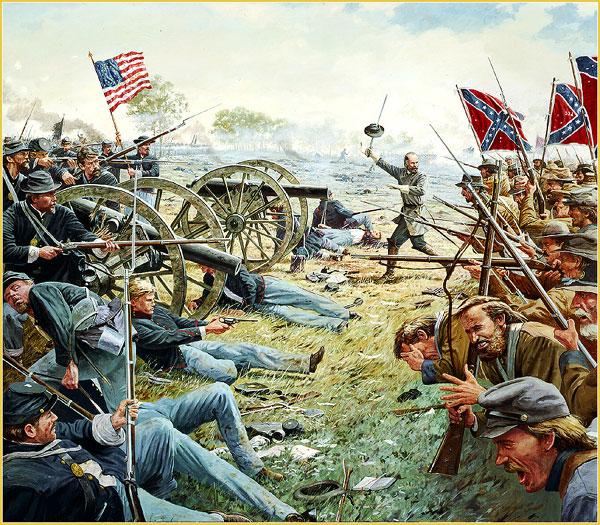
Gettysburg_General_Armistead_Picketts_Charge_small

Friends of Padre Steve’s World

Here is another reworked section of my Civil War and Gettysburg text. It deals with how the how the American Civil War changed from being a limited war to a people’s war, driven by a mutual hatred and hostility. It was the first war which came close to approximating Clausewitz’s definition of total war, and though it was ignored by world military leaders as an aberration over for fifty years, it prefigured the Wold Wars, as well as the civil wars of the 20th Century. It demonstrates that once the genie of war is out of the bottle, and the passionate hatreds of peoples are unleashed, that policy will will adjust itself. Most wars can and should be averted if leaders work to control the fear and passions of their people and not as so often the case stoke the fires of those fears and passions into an uncontrollable rage directed against the intended target. This is especially true in civil wars which are often waged with a ruthlessness unseat in most wars conducted by nation states against other nation states, unless those wars are driven by religion, ideology, or ethnic hatred.

So I hope that you find this interesting and informative.

Peace,

Padre Steve+

The Beginning: Limited War

At the beginning of the war President Lincoln attempted a strategy of conciliation in order to attempt to coax seceding states back into the Union and by conciliation to keep those considering seceding from doing so. However, Lincoln’s attempts were met with outright rejection, before, during, and after the secession crisis. He spoke directly to the Southern states in his First Inaugural Address, saying “We are not enemies, but friends,” [1] only to be accused of deliberately lying to the South by pledging to maintain control of Federal installations and forts in the South, like Fort Sumter which was now surrounded by massed batteries of Confederate artillery and demands that it surrender. Jefferson Davis wrote, “The Lincoln Administration deliberately lied to us, baiting us with false promises and pacific pledges all the while it was planning for war. Never in history has a government behaved with such malicious deceit and bad faith.” [2]

When the troops of South Carolina opened fire on Fort Sumter the die was cast, and Lincoln chose the path of war in order to restore the Union, “not because he wanted to, but because the South forced his hand.” [3] His proclamation calling for troops to suppress the rebellion described the kind of war that he foresaw, “the utmost care will be observed… to avoid any devastation, any destruction of, or interference with, property, or any disturbance of peaceful citizens in any part of the country.” [4]

Though he pursued the option of war to restore the Union, Lincoln initially adopted a soft-war strategy in which Confederate armies were the target. This was in large part due to the efforts of Secretary of State Henry Seward and General-in-Chief Winfield Scott. Though he adopted a strategy that required the North to conquest the South, initially he did so with the expectation that after battlefield defeats the Confederates would eventually return to the Union. It was a limited war strategy, “based on an assumption that a majority of the southern people were loyal to the Union and that eleven states had been swept into secession by the passions of the moment.” [5] In fact it was hardly a military strategy at all, “but more of a police action to quell a rather large riot.” [6]

After the defeat at First Bull Run, Congress passed a resolution defining Union war aims. It is notable in terms of how soft and its deference to the feelings of Southerners. Introduced by Senator John J. Crittenden of Kentucky, a key border that that had not seceded but had declared its neutrality, the resolution stated:

“Resolved by the House of Representatives of the Congress of the United States, That the present deplorable civil war has been forced upon us by the disunionists of the Southern States now in revolt against the constitutional Government and in arms around the capital; that in this national emergency Congress, banishing all feelings of mere passion or resentment, will recollect only its duty to the whole country; that this war is not waged upon our part in any spirit of oppression, nor for any purpose of conquest or subjugation, nor purpose of overthrowing or interfering with the rights and institutions of those States, but to defend and maintain the supremacy of the Constitution and to preserve the Union, with all the dignity, equality, and rights of the several States unimpaired; and that as soon as these objects are accomplished that the war ought to cease.” [7]

It was an incredibly weak statement of war aims based on the notion that most Southerners were actually Unionists and would come back to the Union. The feeling was increased by some early victories, particularly those of McClellan to secure West Virginia, and Grant and Flag Officer Foote in by the west in their capture of Forts Henry and Donaldson. For a brief time these victories seemed to confirm the validity of such an approach.

scott7d

Winfield Scott

But the issue was not just with the politicians. Many early Union commanders raised in the niceties of Jominian limited war, and sometimes restrained by their religious upbringings were averse to taking casualties. Winfield Scott believed that only a thin line separated war from murder, and before Bull Run the elderly general noted, “No Christian nation… can be justified in waging war in such a way as shall destroy five hundred and one lives, when the object of the war can be attained at the cost of five hundred. Every man killed beyond the number absolutely required is murdered.” [8] George McClellan was also casualty averse, he told his soldiers that he would watch over them “as a parent over his children…. It shall be my care, as it ever has been, to gain success with the least possible loss…” [9] But McClellan’s “fixation with avoiding casualties, revealed a deep sensitivity of nature admirable in most of life’s pursuits but crippling in war. Battle evokes the cruelest probing of the general in command: young men will die and be maimed, win or lose; and the hard choice must be made when opportunity offers, which may (or may not) save many more lives in the long run than will be lost in a day.” [10] Even George Gordon Meade who would command the Army of the Potomac during Gettysburg, which was the bloodiest battle of the war, and who under Grant would be involved in other costly battles “believed that to ensure minimal losses on both sides, the North should prosecute the war “like an afflicted parent who is compelled to chastise his erring child, and who performs the duty with a sad heart.” [11] The lack of resolve of many overly cautious generals, especially in the east to fight a hard war against the Confederates would lead to several bungled opportunities to destroy the Army of Northern Virginia, outside the gates of Richmond, at Antietam, and during the pursuit from Gettysburg.

But after series of defeats in the East in 1862 at the hands of a revitalized Confederate Army of Northern Virginia under the command of General Robert E. Lee served notice on Lincoln that the war would be more difficult than previously imagined, and that a hard war strategy was needed.

The Link Between War and Statecraft
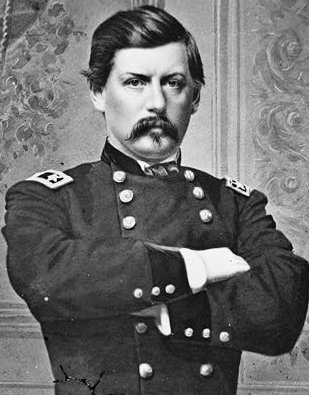
qf-mcclellan

George McClellan

The strategies and operational methods employed by commanders such as Robert E. Lee, Stonewall Jackson, and George McClellan embraces the tenants of Henri Jomini, the French military theorist and exponent of limited war, McClellan in his fixation with geographic places, Lee and Jackson in their love of the offensive. Each “failed to grasp the vital relationship between war and statecraft…. They might win victories – Lee won a series of spectacular ones – but they lacked the vision to win a mighty struggle between two societies.” [12] McClellan, told Lincoln “Woe to the general…who trusts in modern inventions, and neglects the principles of strategy.” But modern inventions, the railroad and the rifle, had conspired with mass citizen armies, themselves reflecting the ideologies of democratic society, to undermine the principles he espoused.” [13] McClellan, who had so deeply imbibed of the theories of Jomini, could not see that war had changed and the principles of Jomini could not win the war against the Confederacy, but others in the North would begin to see this.

But public sentiment in the North was beginning to shift, while there were still a good number of politicians willing to either let the South go its own way or to allow it to return with little substantive change, others were beginning to realize that the people of the South were serious about secession and were irreconcilable in their view that the break between them and the North was final. The New York Times which represented the views of moderate Republicans including Lincoln editorialized, “The country is tired of trifling…. We have been afraid of wounding rebel feelings, afraid of injuring rebel property, afraid of using, or under any circumstance, of freeing rebel slaves. Some of our Generals have fought the rebels – if fighting be it called – with their kid gloves on…” [14]

Lincoln was the political leader who first understood the connection, but militarily it was not until the “emergence of Grant and Sherman did Civil War military leadership break free of Jominian shackles to anticipate modern warfare.” [15] British military historian and theorist J.F.C. Fuller likened the change in the war to be a “return to barbarism,” and noted that “the more stubborn and indecisive became the fighting, and the more the outcome of the war was prolonged, the intenser grew the hatred, until frustration awakened a spirit of vengeance in the hearts of the Federals against the entire population of the South.” [16] Of course the hatred of the Confederacy came late as compared to much of the early nearly pathological and religious hatred of the Union by the radical secessionist, fire-eaters in Southern states even before the war began Thus, compared to the South, the hatred came slow, but when it boiled over the people of the South felt the pain of war as much as their armies did in the field.
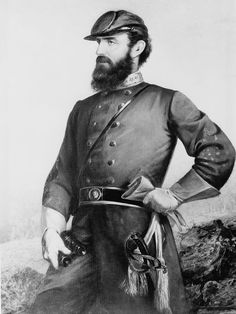
617290f829d510d794c5b03c613e5c26

Stonewall Jackson 

From Limited War to a People’s War

While those who planned for a limited war like Winfield Scott and his Anaconda plan failed to understand the changing character of war, it did provide “both an education for Lincoln, and a firm foundation for the Union’s strategic thinking.” [17] The hard experience of war would point others in the same direction, including both Ulysses S. Grant and William Tecumseh Sherman, and it would be these men who along with Lincoln provided developed a grand strategy that would defeat the Confederacy. It was a strategy which was in line with the political goals of the North, and which marshalled the might of the Union military, diplomatic, economic, industrial and informational strengths, against the Confederacy.

In the South one of the few proponents of this new type of warfare was a former Regular Army officer and professor at the Virginia Military Institute, General Thomas “Stonewall” Jackson. In May of 1861 he moved across the Potomac to occupy the heights that surrounded Harper’s Ferry. Chastised by Lee, then serving as Jefferson Davis’s military adviser, Jackson proposed a strategy of invading the North and “burning Baltimore and Philadelphia and making Northerners understand on a visceral level what the war was going to cost them.” Likewise, he explained to Virginia Governor John Letcher a “black flag” strategy in which meant all Union prisoners of war would be summarily executed. [18]

Later Jackson had the chance to expound on his strategy to another general and suggested that he be given an army to cross the Potomac to “cut of the communications with Washington, force the Federal government to abandon the capital… destroy industrial establishments wherever we found them, break up the lines of interior intercourse, close the coal mines, seize and if necessary, destroy the manufactories of Philadelphia and of other large cities within our reach…. Subsist mainly on the country we traverse, and making unrelenting war amidst their home, force the people of the North to understand what it will cost them to hold the South in the Union at the bayonet’s point.” [19]

The fact that his plan was unrealistic based on the South’s actual military situation and capabilities, as well as opposed by Jefferson Davis as well as Robert E. Lee, takes nothing away from its similarity to the strategy later developed by Grant and Sherman. The problem was as Jefferson Davis wrote in July 1862, “The time and place for invasion has been a question not of will but power,” and then proceeded to recount a conversation with an unnamed Brigadier General the previous fall that appears whose plans did not match the reality of the number of troops available for such an operation. [20] From this meeting Davis got “the not altogether inaccurate idea that Jackson was an offense crazed fanatic.” [21] However, it shows that the desire to take the war to the enemy citizenry was not confined to the North and had the South had the military means that it many have attempted a similar strategy to that later employed by Grant and Sherman.

Grant, who had scored impressive victories at Forts Donaldson and Henry changed his view on how the war should be pursued after being roughly handled in the near disaster at Shiloh. After that battle, Grant gave up on the idea of limited war. He now believed that it was necessary to seize or destroy any property or resources that could be used to sustain the Confederate war effort. Before the Confederate counteroffensive at Shiloh Grant had said that he had been “carful to “protect the property of the citizens whose territory was invaded;” and afterwards his policy became to “consume everything that could be used to support or supply armies.” [22]
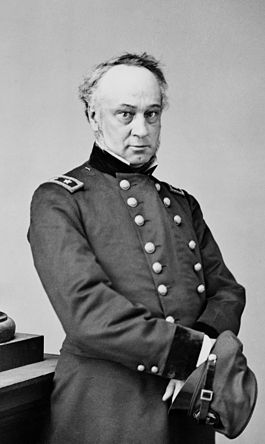
Henry_Halleck_by_Scholten,_c1865

Henry Wager Halleck

Henry Wager Halleck, who had long been a proponent of Jominian limited war in late 1862 under the influence of Francis Lieber. When Halleck heard complaints that General Horatio G. Wright was pursuing too soft of policy toward rebels in Kentucky, Halleck did not intervene, but offered strong advice to Wright. “Domestic traitors, who seek the overthrow of our Government, are not entitled to its protection and should be made to feel its power…. Make them suffer in their persons and property for their crimes and the suffering they have caused to others…. Let them feel that you have an iron hand; that you know how to apply it when necessary. Don’t be influenced by old political grannies.” [23]

Halleck also backed up Grant in August 1862 when Grant was beginning to pursue the hard war policy in the west by ordering Grant to “Take up all active [rebel] sympathizers… and hold them as prisoners or put them beyond our lines. Handle that class without gloves, and take their property for public use…. It is time that they should begin to feel the presence of the war.” [24]

As the war went on it became apparent to many people in the North, and in the armies on the front lines that harder measures were required, especially with the escalation of guerilla attacks behind Union lines, as well as the involvement of Southern civilians in attacking Union troops in occupied areas of the South. “Senator John Sherman wrote his brother William of a growing sentiment “that we must treat these Rebels as bitter enemies to be subdued – conquered – by confiscation – by the employment of their slaves – by terror – energy – audacity – rather than by conciliation.” [25]
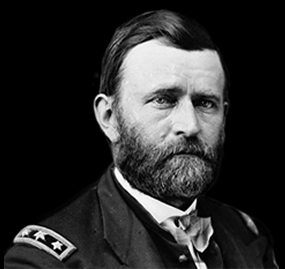
grant 1

Ulysses S. Grant

By early 1863 Grant was fully on board with the policy of the Union government, especially emancipation, and the need for the war to be carried through to a conclusion that would completely subjugate the Confederacy. He wrote to one of his generals, “Rebellion has assumed that shape now that it can only be terminated by the complete subjugation of the South or the overthrow of the Government. It is our duty, therefore, to use every means to weaken the enemy, by destroying their means of subsistence, withdrawing their means of cultivating their fields, and in every other way possible.” [26]  Some Union military commanders other than Grant became early exponents of a hard and brutal war, among them was Major General John Pope, who as commander of the Army of Virginia issued a “series of orders authorizing his officers to seize Confederate property without compensation, to execute captive guerillas who had fired on Union troops, and to expel from occupied territory any civilians who had sheltered guerillas or who had refused to take an oath of allegiance to the United States.” [27] Jackson, who himself had once proposed the “black flag” strategy against the North and its soldiers “considered Pope’s orders “cruel and utterly barbarous.” [28]

Henry Halleck wrote to Grant in April 1863 that “the character of the war has changed very much…. There is now no possible hope of reconciliation with the rebels. The Union party in the South is virtually destroyed. There can be no peace but that which is forced upon it.” In May he wrote another general in Memphis, “We must live upon the enemy’s country as much as possible, and destroy his supplies. This is cruel warfare, but the enemy has brought it on himself by his own conduct.” [29]

As late as 1862 there were some in the North, especially in the Democratic Party fought against any move toward a harder war strategy. One of these was Major General George McClellan who in a brazen attempt to be named General-in-Chief after his failed Peninsular campaign attempted to school President Lincoln in the ways of politics and strategy.

“The time has come when the Government must determine upon a civil and military policy, covering the whole ground of our national trouble…. This rebellion has assumed the character of a war: as such it must be regarded; and should be conducted upon the highest principles known to Christian Civilization. It should not be a War looking to the subjugation of the people of any state, in any event. It should not be, at all, a War upon the population; but against armed forces and political organizations. Neither a confiscation of property, political executions of person, territorial organization of states or forcible abolition of slavery should be contemplated for a moment.” [30]

Lincoln read McClellan’s letter in his presence and refused to comment upon it. One historian described Lincoln’s reaction to McClellan’s suggestion, “That policy had been pursued for over a year and Lincoln was convinced that it had failed. He was ready to move on.” [31]  Instead of complying with McClellan’s demands Lincoln infuriated McClellan by naming Henry Halleck as General-in-Chief, calling for more troops, and deciding on a strategy in which emancipation would play a key role. Since the leaders of the Confederacy to its dying day refused to countenance emancipation, these decisions would change the character of the war from a limited war to bring about political reunion to a war that would drastically change American politics, economics, and society.

While the nature of war remained unchanged, the American Civil war dramatically changed the character of war, as it had been known for centuries, since the Peace of Westphalia, and the end of the Thirty Years War. In the American Civil War the character of war changed from the emphasis of the limited wars of the 18th Century and the Napoleonic era where opposing armies dueled each other into a war that encompassed the entire population. The changes challenged a generation of military officers who had grown up with Jomini’s principles of war and his emphasis on limited war including McClellan and Lee, but Grant, who had never read Jomini and denied the validity of general principles of war that were valid in all times wrote, “There are no fixed laws of war which are not subject to the conditions of the country, the climate and the habits of the people. The laws of successful war in one generation would ensure the defeat in another.” [32]

The leading catalyst that convinced Lincoln and other Northern leaders of the need to abandon the strategy of limited war was the fact that the Confederates had “blurred the distinction between combatants and noncombatants in the parts of the Confederacy and border states occupied by Union forces. The crops and livestock of Southern civilians were feeding and clothing Confederate armies. Their slaves were the principle labor force in the Confederate War economy. Thousands of Southern civilians became guerillas who roamed behind Union lines destroying supplies and ambushing unarmed as well as armed Unionists.” [33]

The Union reaction to the Confederate actions would portent a change in the war. And soon, the war bordered on Clausewitz’s definition of absolute or total war, especially in Sherman’s march through Georgia and the Carolinas, and in the actions of Confederate irregulars who used terror against Unionist civilians. The actions of irregular Confederate forces to attack his troops and supply lines caused Sherman, who earlier in the war had taken a conciliatory attitude to Southern civilians, to change his views. They had blurred the lines between combatants and non-combatants, he noted that the Union army must act “on the proper rule that all in the South are enemies of all in the North….. The whole country is full of guerilla bands…. The entire South, man woman, and child, is against us, armed and determined.” [34]

Notes

[1] Weigley, Russell F. The American Way of War: A History of United States Military History and Policy University of Indiana Press, Bloomington IN, 1973 p.133

[2] Davis, Jefferson in Oates, Stephen B. The Approaching Fury: Voices of the Storm 1820-1861 University of Nebraska Press. Lincoln and London, 1997 p.413

[3] Stoker, Donald The Grand Design: Strategy and the U.S. Civil War Oxford University Press, Oxford and New York 2010 p.18

[4] Ibid. Weigley The American Way of War: A History of United States Military History and Policy p.133

[5] Ibid. McPherson Abraham Lincoln and the Second American Revolution p.75

[6] Ibid. McPherson Abraham Lincoln and the Second American Revolution p.75

[7] U.S. Congress The Crittenden Resolution of July 22, 1861 in The Civil War and Reconstruction: A Documentary Collection edited by William E. Gienapp, W.W. Norton and Company, New York and London 2001 p.117

[8] Faust, Drew Gilpin, This Republic of Suffering: Death and the American Civil War Vintage Books, a division of Random House, New York 2008 p.34

[9] Sears, Stephen W. To the Gates of Richmond: The Peninsula Campaign Houghton Mifflin Company, Boston and New York, 1992 p.21

[10] Sears, Stephen W. Landscape Turned Red: The Battle of Antietam Houghton-Mifflin Company, Boston and New York 1983 p.32

[11] Ibid. Faust This Republic of Suffering: Death and the American Civil War p.34

[12] Gallagher, Gary W. “Upon Their Success Hang Momentous Interests”: Generals in Why the Confederacy Lost edited by Gabor S. Boritt, Oxford University Press, New York and Oxford 1992 p.86

[13] Strachan, Hew European Armies and the Conduct of War George Allen and Unwin Publishers, Ltd. London 1983 p.73

[14] McPherson, James M. Tried by War: Abraham Lincoln as Commander in Chief Penguin Books, New York and London 2008 p.105

[15] Ibid. Gallagher “Upon Their Success Hang Momentous Interests” p.86

[16] Fuller, J.F.C. A Military History of the Modern World, Volume Three: From the Seven Days Battle, 1862,  to the Battle of Leyte Gulf, 1944  Minerva Press 1956 p.107

[17] Ibid. Stoker The Grand Design: Strategy and the U.S. Civil War p.411

[18] Gwynne, Samuel C. Rebel Yell: The Violence, Passion, and Redemption of Stonewall Jackson Scribner, a Division of Simon and Schuster New York 2014 p.45

[19] Ibid. Gwynne Rebel Yell: The Violence, Passion, and Redemption of Stonewall Jackson p.173

[20] Davis, Jefferson, Letter to John Forsyth July 18th 1862 in Major Problems in American Military History edited by John Whiteclay Chambers II and G. Kurt Piehler, Houghton-Mifflin and Company, Boston and New York 1999 pp.159-160

[21] Ibid. Gwynne Rebel Yell: The Violence, Passion, and Redemption of Stonewall Jackson p.172

[22] McPherson, James M. Drawn With the Sword: Reflections on the American Civil War Oxford University Press, Oxford and New York 1996 p.76

[23] Marszalek, John F. Commander of All of Lincoln’s Armies: A Life of General Henry W. Halleck The Belknap Press of Harvard University Press, Cambridge MA and London 2004 p.168

[24] Ibid. McPherson  Drawn With the Sword: Reflections on the American Civil War p.79

[25] Ibid. McPherson Tried by War: Abraham Lincoln as Commander in Chief p.103

[26] Catton, Bruce. Grant Moves South Castle Books, New York, 2000, originally published by Little Brown and Company, New York 1960 p.402

[27] Ibid. McPherson Drawn With the Sword: Reflections on the American Civil War p.79

[28] Ibid. Gwynne Rebel Yell: The Violence, Passion, and Redemption of Stonewall Jackson p.396

[29] Ambrose, Stephen E. Halleck: Lincoln’s Chief of Staff Louisiana State University Press, Baton Rouge and London 1960 and 1992  p.119

[30] McClellan, George B. Letter to Abraham Lincoln July 7, 1862 in Perman, Michael and Murrell Taylor, Amy editors Major Problems in the Civil War and Reconstruction: Documents and Essays Third Edition Wadsworth Cengage Learning Boston MA 2011 p.140

[31] Gallagher, Gary W. The 1862 Richmond Campaign as a Watershed in Major Problems in the Civil War and Reconstruction: Documents and Essays Third Edition Wadsworth Cengage Learning Boston MA 2011 p.157

[32] Ibid. Strachan European Armies and the Conduct of War p.73

[33] Ibid. McPherson The War that Forged a Nation: Why the Civil War Still Matters p.35

[34] Ibid. McPherson Drawn With the Sword: Reflections on the American Civil War p.81

Leave a comment

Filed under civil war, History, Military

From Limited War to Total War: The American Civil War Pt.2

Friends of Padre Steve’s World,

As always I continue to revise my Gettysburg and Civil War text and it looks like I will have to split the text into at least two volumes. I am posting the second half of a majorly revised section dealing the the nature of the war, and how it changed from a limited war to a total war. This subject may be uncomfortable to many readers, and I admit that. Truthfully I abhor war but I am a realist when it comes to human nature, politics, economics, ideology, religion, and even racism and race hatred play in the world. Truthfully, if the North had continued the war with limited force, and goals, the Confederacy would have either become independent, or it would have been re-admitted to the Union with slavery intact, no Thirteenth, Fourteenth, or Fifteenth Ammendments would have been passed and any concept of civil rights destroyed. You can be sure that with Southern States read mites without change that other things would not have occurred; Women’s sufferage, Native American citizenship, citizenship and civil rights for Asian immigrants, and most recently, LGBT people are directly tied to the constitutional amendments that the war made possible.  Sometimes, as distasteful and repugnant as that may sound, a hard war is necessary to prevent an unjust peace. 

From a point of realpolitik,  the fact is that leaders in the South and the North, like so many other leaders in history and even today, failed to understand what the war that they helped unleash would bring about. War is not to be entered into lightly without connecting the dots between the act of policy that guides the war, as well as having the policy’s ends supported by the ways and means necessary to fulfill it, and not all of those are military. Diplomacy, economic power, and  information all play a part. 

Abraham Lincoln and his advisors came to understand this, maybe better than any presidential administration in United States history. Sadly, Lincoln was assassinated before he could guide the country through reunion, and Andrew Johnson was not up to the task. By the time Ulysses Grant became President, the opportune moment for reunion had passed. Though the South succeeded in rolling back civil rights for another century, they never were able to repeal those three critical amendments. That is why the hard war pursued by the Lincoln administration still matters for everyone with a stake in civil rights. 

Think about that, and have a great weekend,

Peace

Padre Steve+

gburg dead1

While the nature of war remained unchanged, the American Civil war changed the character of war, as it had been known for centuries, since the Peace of Westphalia, and the end of the Thirty Years War changed dramatically. In the American Civil War the character of war changed from the emphasis of the limited wars of the 18th Century and the Napoleonic era where opposing armies dueled each other into a war that encompassed the entire population. It also challenged a generation of military officers who had grown up with Jomini’s principles of war and his emphasis on limited war.

The leading catalyst that convinced Lincoln and other Northern leaders of the need to abandon the strategy of limited war was the fact that the Confederates had “blurred the distinction between combatants and noncombatants in the parts of the Confederacy and border states occupied by Union forces. The crops and livestock of Southern civilians were feeding and clothing Confederate armies. Their slaves were the principle labor force in the Confederate War economy. Thousands of Southern civilians became guerillas who roamed behind Union lines destroying supplies and ambushing unarmed as well as armed Unionists.” [1]

The Union reaction to the Confederate actions would portent a change in the war. And soon, the war bordered on Clausewitz’s definition of absolute or total war, especially in Sherman’s march through the South, and in the actions of Confederate irregulars who used terror against Unionist civilians. The actions of irregular Confederate forces to attack his troops and supply lines caused Sherman, who earlier in the war had taken a conciliatory attitude to Southern civilians, to change his views. They had blurred the lines between combatants and non-combatants, he noted that the Union army must act “on the proper rule that all in the South are enemies of all in the North….. The whole country is full of guerilla bands…. The entire South, man woman, and child, is against us, armed and determined.” [2]

In response Henry Halleck, now backed with the legal authority of General Order 100, also known as The Lieber Code, which for the first time in American history defined the differences between partisans acting in the capacity as soldiers of the enemy army, and those who were not a part of a military unit, but rather men who blended back into the population after conducting armed attacks, [3] wrote to Sherman,

“I am fully of opinion that the nature of your position, the character of the war, the conduct of the enemy (and especially of non-combatants and women of the territory we have heretofore conquered and occupied), will justify you in gathering up all the forage and provisions which your army will require, both for a siege of Atlanta and for your supply in your march farther into the enemy’s country. Let the disloyal families of the country, thus stripped, go to their husbands, fathers, and natural protectors, in the rebel ranks; we have tried three years of conciliation and kindness without any reciprocation; on the contrary, those thus treated have acted as spies and guerillas in our rear and within our lines…. We have fed this class of people long enough. Let them go with their husbands and fathers in the rebel ranks; and if they won’t go, we must send them to their friends and protectors. I would destroy every mill and factory within reach which I did not want for my own use…..” [4]

The strategy of Sherman was to ensure that the Confederate heartland of the Deep South could no longer help to sustain Confederate armies in the field, it was military, economic, political, and diplomatic. He explained:

“I propose to act in such a manner against the material resources of the South as utterly to negative Davis’ boasted …promises of protection. If we can march a well-appointed army right through hiss territory, it is a demonstration to the world, foreign and domestic, that we have a power which Davis cannot resist.” [5]

Sherman was a pioneer of psychological warfare, he was “convinced that not only economic resources but also the will of Southern civilians sustained the Confederate War effort…. Sherman was well aware of the fear that his soldiers inspired among Southern whites. This terror “was a power,” he wrote, “and I intend to utilize it… to humble their pride, to follow them to their innermost recesses, and to make them dread and fear us…” [6]

When Confederate General John Bell Hood elected to fortify Atlanta, the largest and most important industrial city in the Confederacy against a Union attack, thereby making the population of the city a target, Sherman wrote to the Mayor of Atlanta to warn him of the consequences of allowing this:

“The use of Atlanta for warlike purposes is inconsistent with its character as a home for families. There will be no manufactures, commerce, or agriculture here, for the maintenance of families, and sooner or later want will compel the inhabitants to go…. You cannot qualify war in any harsher terms than I will. War is cruelty, and you cannot refine it; and those who brought war into our country deserve all the curses and maledictions a people can pour out…. You might as well appeal against the thunder-storm as against these terrible hardships of war. They are inevitable…” [7]

Sherman’s strategy worked, “it deprived Confederate armies of desperately needed supplies; it also crippled morale both at home front and in the army,” [8] His armies did more than destroy factories and farms in its path, wherever they went “they broke the power of the secessionist government, the slaveholder’s social order, and most of whatever fighting spirit remained among Confederate partisans.” [9] Jefferson Davis understood the effect that Sherman’s army was having, he wrote, “Sherman’s campaign has produced a bad effect on our people, success against his future operations is needed to restore public confidence.” [10] Mary Boykin Chesnut saw the clouds of doom approaching and confided in her diary, “Since Atlanta I have felt as if all were dead in me, forever,” she wrote. “we are going to be wiped off the map.” [11]

The effects of Sherman’s march through Georgia and the Carolinas were felt in the Confederate armies at the front as just as he had predicted. Lee’s artillery chief, Brigadier General Porter Alexander wrote, “The condition of the country at large was one of almost as great deprivation & suffering as that of the army itself; & in many localities even of much greater. North Carolina, South Carolina, & Georgia had been over-run by Sherman’s army carrying off many of the Negroes & most of the stock & destroying all accumulation of provisions which they could not use, & often burning barns & dwellings & all implements of agriculture…. Naturally, the wives & mothers left at home wrote longingly for the return of the husbands & sons who were in the ranks in Virginia. And, naturally, many of them could not resist these appeals, & deserted in order to return & care for their families.” [12]  A member of the 20th Maine noted the effect on Lee’s troops opposing them at Petersburg wrote, “Since Sherman’s victories… we see the affect it is having on Lee’s Army.” They were deserting in groups, “not only privates, but many officers with them.” [13] Lee was so frustrated and angry with the desertion problem that he resorted to summary executions of the men, occasionally without hearing their appeals.

The war was revolutionary in other ways, and brought about a host of social, philosophical, economic, and political changes which continue to impact the lives of people in the United States and around the world even today. Some of these, especially those regarding the abolition of slavery and emancipation, as well as the beginnings of the Women’s Rights movement have had a ripple effect in matters of political and social equality for other previously disenfranchised groups of citizens. One writer noted in regard to the social impacts that “The Civil War uprooted institutions, transformed our politics, influenced social relationships of half a continent, and wrought changes that echo down the generations.” [14] Mark Twain wrote in 1873 that the war “uprooted institutions that were centuries old, changed the politics of a people …and wrought so profoundly upon the national character that cannot be measured short of two or three generations.” [15]

In a sense, when Abraham Lincoln proclaimed  “a new birth of freedom” in his Gettysburg address it served as a watershed moment in American history because it brought to the forefront the understanding of Jefferson and the other signers of the Declaration of Independence that all men are created equal.  That statement, flowing from the Declaration was key to Lincoln’s understanding of human rights and dignity, and from it came the Emancipation Proclamation and the Thirteenth Amendment, which abolished slavery. Those would be followed by the Republican Congresses’ passage of the Fourteenth Amendment, which overturned the Dred Scott Decision, which denied all citizenship to blacks across the country, and by Ulysses S. Grant’s Fifteenth Amendment, which gave African American men to right to vote. These were all revolutionary ideas, and there was a counterrevolutionary backlash after the war “overthrew the fledgling experiment in racial equality” but “did not fully restore the old order. Slavery was not reinstated. The Fourteenth and Fifteenth Amendments were not repealed.” [16]  That is the human and political context by which we have to understand the American Civil War.

Thus it is important to study the Gettysburg campaign in the context of the Civil War because the campaign of 1863 in the east cannot be divorced from what was happening in the west at Vicksburg, nor the Union blockade, nor the diplomatic, economic and informational aspects of the war.  Likewise the Gettysburg campaign cannot be separated from its relationship to the broader understanding of the nature and character of war. To do this one must examine the connection between them and policies made by political leaders; to include the relationship of political to military leaders, diplomats, the leaders of business and industry and not to be forgotten, the press and the people. Likewise we must understand the various contexts of war, to include the social, political, ideological and even the religious components of war, how they impacted Civil War leaders and why civilian policy makers and military leaders must understand them today.

While the essential nature of war remains constant, wars and the manner in which they are fought have changed in their character throughout history, and this distinction matters not only for military professionals, but also policy makers. The changing character of war was something that military leaders as well as policy makers struggled with during the American Civil War much as today’s military leaders and policy makers seek to understand the character of warfare today. British military theorist Colin Gray writes “Since the character of every war is unique in the details of its contexts (political, social-cultural, economic, technological, military strategic, geographical, and historical), the policymaker most probably will struggle of the warfare that is unleashed.” [17]

That was not just an issue for Abraham Lincoln and Jefferson Davis, both of whom struggled with the nature of the war which had been unleashed, but it is an issue for our present and future political leaders, who as civilian politicians are “likely to be challenged by a deficient grasp of both the nature of war as well as its contemporary context-specific character.” [18] This is actually very important in our present context as since “the end of the Cold War, the tendency among civilians – with President Bush as a prime example – has been to confuse strategy with ideology. The president’s freedom agenda, which supposedly provided a blueprint for how to prosecute the global war on terror, expressed grandiose aspirations without serious effort to assess the means required to achieve them.” [19] Strategy is hard and mostly ignored until there is a crisis, “soldiers focus on their professional military duties, while politicians exercise their skill in policymaking. The strategy bridge between the two worlds, the two cultures, generally is left poorly guarded, if it is guarded at all.” [20] In the American Civil War, Abraham Lincoln and his administration as well as military advisers came to develop a realistic strategy to match his political goals, Lincoln understood the contexts of the war far better than his Confederate counterpart Jefferson Davis, whose administration and military leadership was never able to devise a coherent strategy because they did not fully grasp the contexts of the war, never seriously considered the ends, ways, and means to victory.

In addition to being the first modern war, or maybe I should say, the first war of the Industrial Age, the Civil War prefigured the idea of total war written about by Clausewitz that occurred in the World Wars of the Twentieth Century. The war combined a massive number of technological advances, which both preceded and occurred during it, in which the philosophical nature of the Industrial Revolution came to the fore.

Likewise, the enmity of the two sides for one another had been fostered by a half century of relentless and violent propaganda that ushered from the mouths of politicians, the press and even from the pulpit brought the element of hatred to the fore of the conflict; as Clausewitz correctly observed, “Even the most civilized of peoples, in short, can be filled with passionate hatred for each other.”  [21]

As the war went on the feelings of animosity and hatred often boiled over and were reflected in the words and sometimes the actions of the soldiers. A Confederate Captain wrote his wife to teach his children “a bitter and unrelenting hatred of the Yankee race” that had “invaded our country and devastated it… [and] murdered our best citizens…. If any luckless Yank should unfortunately come my way he need not petition for mercy. If he does I will give him lead.” A soldier from a Wisconsin regiment wrote to his fiancée after the assault on Resaca, Georgia that his unit had captured twenty-three Confederates and “or boys asked if they remembered Fort Pillow and killed them all. Where there is no officer with us, we take no prisoners…. We want revenge for our brother soldiers and will have it…. Some of the [rebels] say they will fight as long as there is one of them left. We tell them that is what we want. We want to kill them all off and cleanse the country.” [22]

While this was hatred was not universal and many times the combatants behaved with great chivalry on the battlefield, and Northern and Southern veterans led efforts at reconciliation after the war; such hatred was something that had not been a part of the American military experience.  The deep rooted enmity, especially in the South, would remain a constant over the next one hundred years. “White southerners who retained Confederate loyalties against Federal soldiers and northerners in general…. Confederates defiantly refused to forgive enemies who had inflicted such pain on their society.” [23] Likewise, many Union veterans felt that in their sacrifices to defeat the Confederacy and end slavery would be forgotten as time slipped by and the memory of the war subsided.

This very real hatred meant that there were many times when the American Civil War came close to Clausewitz’s understanding of absolute war in its in character, and it prefigured the great ideological wars of the twentieth century. J.F.C. Fuller noted “for the first time in modern history the aim of war became not only the destruction of the enemy’s armed forces, but also of their foundations- his entire political, social and economic order.” [24] It was the first war where at least some of the commanders, especially Ulysses S. Grant and William Tecumseh Sherman were men of the Industrial Age, in their thought and in the way that they waged war, in strategy, tactics even more importantly, psychologically. Fuller wrote:

“Spiritually and morally they belonged to the age of the Industrial Revolution. Their guiding principle was that of the machine which was fashioning them, namely, efficiency. And as efficiency is governed by a single end- that every means is justified- no moral or spiritual conceptions of traditional behavior must stand in its way.” [25]

President Lincoln, as well as Grant and Sherman realized in early 1864 that “the South was indeed a nation in arms and that the common European practice of having standing armies engaged each other in set-piece battles to determine the outcome of a war was not enough to win this struggle.” [26] Though neither man was a student of Clausewitz, their method of waging war was in agreement with the Prussian who wrote that “the fighting forces must be destroyed; that is, they must be put in such a position that they can no longer carry on the fight” but also that “the animosity and the reciprocal effects of hostile elements, cannot be considered to have ended so long as the enemy’s will has not been broken.”  [27]

Sherman told the mayor of Atlanta after ordering the civilian population expelled that “we are not only fighting hostile armies, but a hostile people, and must make the old and young, the rich and poor, feel the hard hand of war.” [28] Sherman was one of the first American military leaders to understand that a civil war could not be waged according to the limited war doctrines most American officers had been taught. He not only “carried on war against the enemy’s resources more extensively and systematically than anyone else had done, but he developed also a deliberate strategy of terror directed against the enemy’s minds.” [29] While some might find this troubling, the fact remains that it was Sherman’s Southern sweep of all that lay before him that broke the back of the Confederacy.

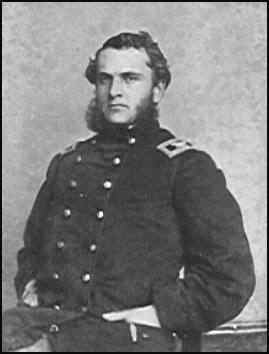
But Sherman and Grant were not alone in understanding the problem of fighting a limited war against the Confederacy. In the fall of 1862 a twenty-five year volunteer officer, Colonel Strong Vincent serving with McClellan’s army in Virginia understood what had to happen if the Union were to overcome the rebellion of the Confederacy. Vincent who would be instrumental in throwing back Hood’s assault on Little Round Top, and die leading the defense of that edifice, wrote to his wife about the need for harder measures.

“We must fight them more vindictively, or we shall be foiled at every step.  We must desolate the country as we pass through it, and not leave a trace of a doubtful friend or foe behind us; make them believe that we are in earnest, terribly in earnest; that to break this band in twain is monstrous and impossible; that the life of every man, yea, of every weak woman or child in the entire South, is of no value whatever compared with the integrity of the Union.” [30]

Abraham Lincoln came to embrace the eternal nature of war as well as the change in the character of the war over time. Lincoln had gone to war for the preservation of the Union, something that for him was almost spiritual in nature, as is evidenced by the language he used in both of his inaugural addresses and the Gettysburg Address. Instead of a war to re-unite the Union with the Emancipation Proclamation the war became a war for the liberation of enslaved African Americans, After January 1st 1863 when the Emancipation Proclamation went into effect, Lincoln “told an official of the Interior Department, “the character of the war will be changed. It will be one of subjugation…The [old] South is to be destroyed and replaced by new propositions and ideas.” [31] That too was a modern understanding of war.

Of course, the revolution in military affairs that characterized the Civil War took time, but it was the political and military leaders of the North who better adapted themselves and their nation to the kind of war that was being fought. “Lincoln’s remarkable abilities gave him a wide edge over Davis as a war leader, while in Grant and Sherman the North acquired commanders with a concept of total war and the determination to make it succeed.” [32]

At the beginning of the war the leaders and populace of both sides still held a romantic idea of war. The belief that the war would be over in a few months and that would be settled by a few decisive battles was held by most, including many military officers on both sides. There were some naysayers like the venerable and rather corpulent General Winfield Scott, but politicians and the press mocked Scott and those who even suggested that the war would be long, hard, and bloody. Of course those who predicted a short, easy, and relatively bloodless war who were proven wrong, and the war became the bloodiest war ever waged by Americans, and it was against other Americans.

Notes

[1] Ibid. McPherson The War that Forged a Nation: Why the Civil War Still Matters p.35

[2] Ibid. McPherson Drawn With the Sword: Reflections on the American Civil War p.81
[3] Lieber noted in Article 82 of the code that “Men, or squads of men, who commit hostilities, whether by fighting, or inroads for destruction or plunder, or by raids of any kind, without commission, without being part and portion of the organized hostile army, and without sharing continuously in the war, but who do so with intermitting returns to their homes and avocations, or with the occasional assumption of the semblance of peaceful pursuits, divesting themselves of the character or appearance of soldiers – such men, or squads of men, are not public enemies, and, therefore, if captured, are not entitled to the privileges of prisoners of war, but shall be treated summarily as highway robbers or pirates.” And in Article 85 that, “War-rebels are persons within an occupied territory who rise in arms against the occupying or conquering army, or against the authorities established by the same. If captured, they may suffer death, whether they rise singly, in small or large bands, and whether called upon to do so by their own, but expelled, government or not. They are not prisoners of war; nor are they if discovered and secured before their conspiracy has matured to an actual rising or armed violence.” Lieber, Francis, General Orders No. 100 : The Lieber Code INSTRUCTIONS FOR THE GOVERNMENT OF ARMIES OF THE UNITED STATES IN THE FIELD 24 April 1863 Retrieved from The Yale Law School, Lillian Goldman Law Library, The Avalon Project Documents in Law, History and Diplomacy http://avalon.law.yale.edu/19th_century/lieber.asp#sec4 1 June 2016

[4] Ibid. Weigley The American Way of War: A History of United States Military History and Policy p.148

[5] Guelzo Allen C. Fateful Lightening: A New History of the Civil War Era and Reconstruction Oxford University Press, Oxford and New York 2012 p.445

[6] Ibid. McPherson Drawn With the Sword: Reflections on the American Civil War p.82

[7] Sherman, William Tecumseh, Letter to James M. Calhoun, Mayor of Atlanta September 12, 1864 in Perman, Michael and Murrell Taylor, Amy editors The Civil War and Reconstruction Documents and Essays Third Edition Wadsworth Cengage Learning Boston MA 2011 pp.147-148

[8] Ibid. McPherson Drawn With the Sword: Reflections on the American Civil War p.83

[9] Levine, Bruce The Fall of the House of Dixie: The Civil War and the Social Revolution that Transformed the South Random House, New York 2013 p.233

[10] Goldfield, David. America Aflame: How the Civil War Created a Nation Bloomsbury Press, New York 2011 p.348

[11] McPherson, James. The Battle Cry of Freedom: The Civil War Era Oxford University Press, Oxford and New York 1988 p.775

[12] Alexander, Edward Porter. Fighting for the Confederacy: The Personal Recollections of General Edward Porter Alexander edited by Gary Gallagher University of North Carolina Press, Chapel Hill 1989 pp.508-509

[13] Ibid. Guelzo Fateful Lightening p.469

[14] Lowry, Thomas P. The Stories the Soldiers Wouldn’t Tell: Sex in the Civil War Stackpole Books, Mechanicsburg PA 1994 p.176

[15] Ibid. McPherson The War that Forged a Nation: Why the Civil War Still Matters p.48

[16] McPherson, James. The Second American Revolution in Perman, Michael and Murrell Taylor, Amy editors The Civil War and Reconstruction Documents and Essays Third Edition Wadsworth Cengage Learning Boston MA 2011 p.14

[17] Gray, Colin S. Fighting Talk: Forty Maxims on War, Peace, and Strategy Potomac Book, Dulles VA 2009 p.36

[18] Ibid. Gray Fighting Talk p.36

[19] Bacevich, Andrew J. The Limits of Power: The End of American Exceptionalism (The American Empire Project) Metropolitan Books, Henry Holt and Company, New York 2008 Amazon Kindle Edition, Location 2375 of 3875

[20] Ibid. Gray Fighting Talk p.49

[21] Ibid. Clausewitz On War p.76

[22] Ibid. McPherson The War that Forged a Nation pp.49-50

[23] Gallagher, Gary W. The Confederate War: How Popular Will, Nationalism and Military Strategy Could not Stave Off Defeat Harvard University Press, Cambridge MA and London 1999 p.34

[24] Fuller, J.F.C. A Military History of the Modern World, Volume Three: From the Seven Days Battle, 1862,  to the Battle of Leyte Gulf, 1944  Minerva Press 1956 p.88

[25] Ibid. Fuller  A Military History of the Modern World, Volume Three p.88

[26] Flood, Charles Bracelen, Grant and Sherman: The Friendship that Won the War, Harper Perennial, New York 2005 p.238

[27] Ibid. Clausewitz p.90

[28] Ibid. McPherson The Battle Cry of Freedom: The Civil War Era  p.809

[29] Ibid. Weigley  The American Way of War: A History of United States Military History and Policy  p.149

[30]Nevins, James H. and Styple, William B. What death More Glorious: A Biography of General Strong Vincent Belle Grove Publishing Company, Kearney NJ 1997 p.57

[31] Ibid. McPherson The Battle Cry of Freedom p.558

[32] Ibid. McPherson The Battle Cry of Freedom p.857

1 Comment

Filed under civil war, History, Military

Unlikely and Incredible: Victory at Midway

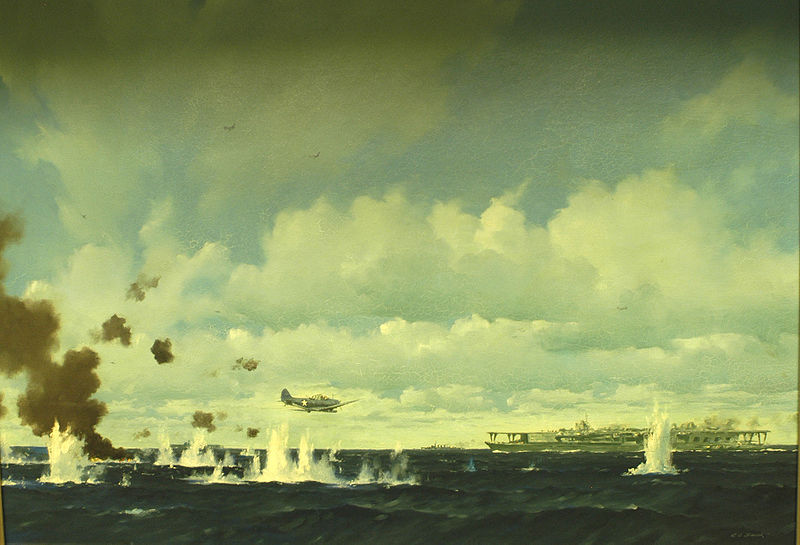
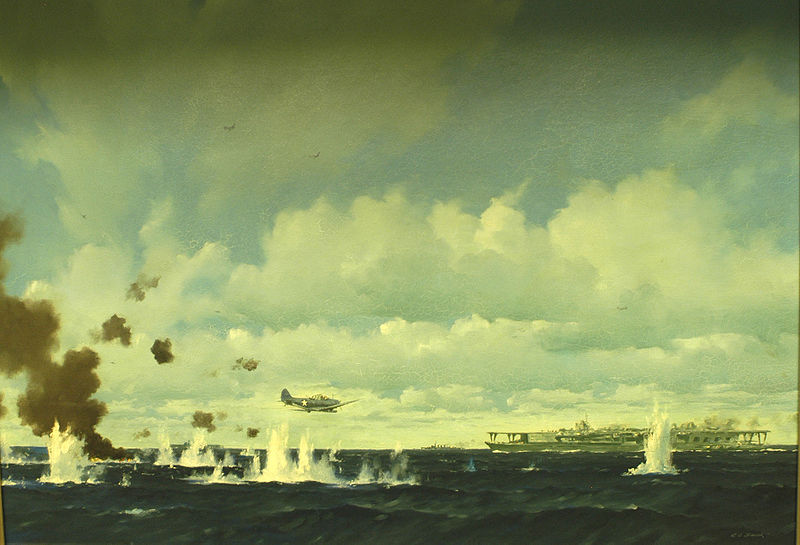
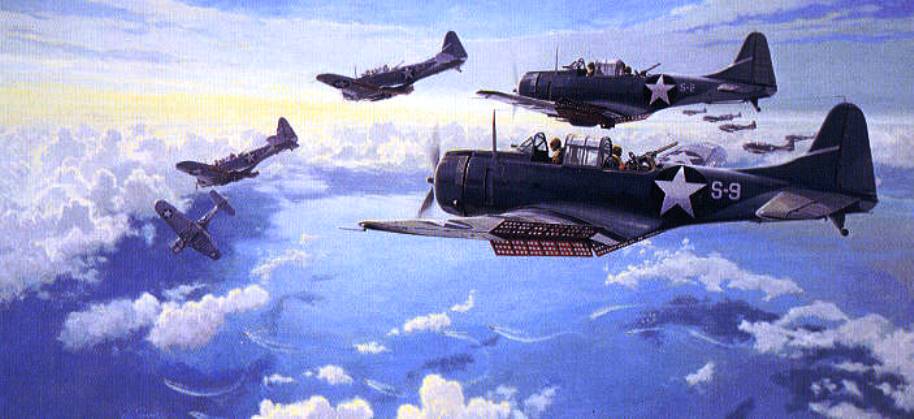
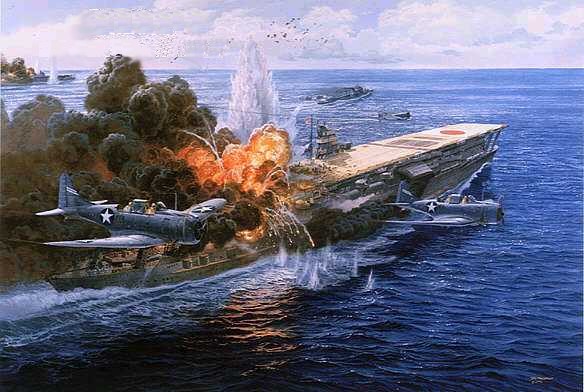
SBDstoastjapcarrier

Friends of Padre Steve’s World

As I mentioned that I would be writing about a number of watershed events this week. Today is the 74th anniversary of the beginning of the Battle of Midway. As a Navy officer and having grown up in a Navy family, this battle is still something that I find fascinating. It was a battle that could have easily been lost, and with it the war in the Pacific significantly lengthened, and which had the Japanese won, forced a change in strategy that might have allowed Hitler to strengthen his grip on Europe and maybe even defeat the Soviet Union.

It was a watershed event because it was the first real defeat that the Japanese Imperial Navy sustained in the war, and it ensured that the Japanese would not be able to win the war, except by exhausting the United States.

So it still remains important even today. If you are interested in books about Midway I recommend Walter Lord’s classic “Incredible Victory” and Gordon Prange’s “Miracle at Midway.

Peace

Padre Steve+

Prelude to Battle

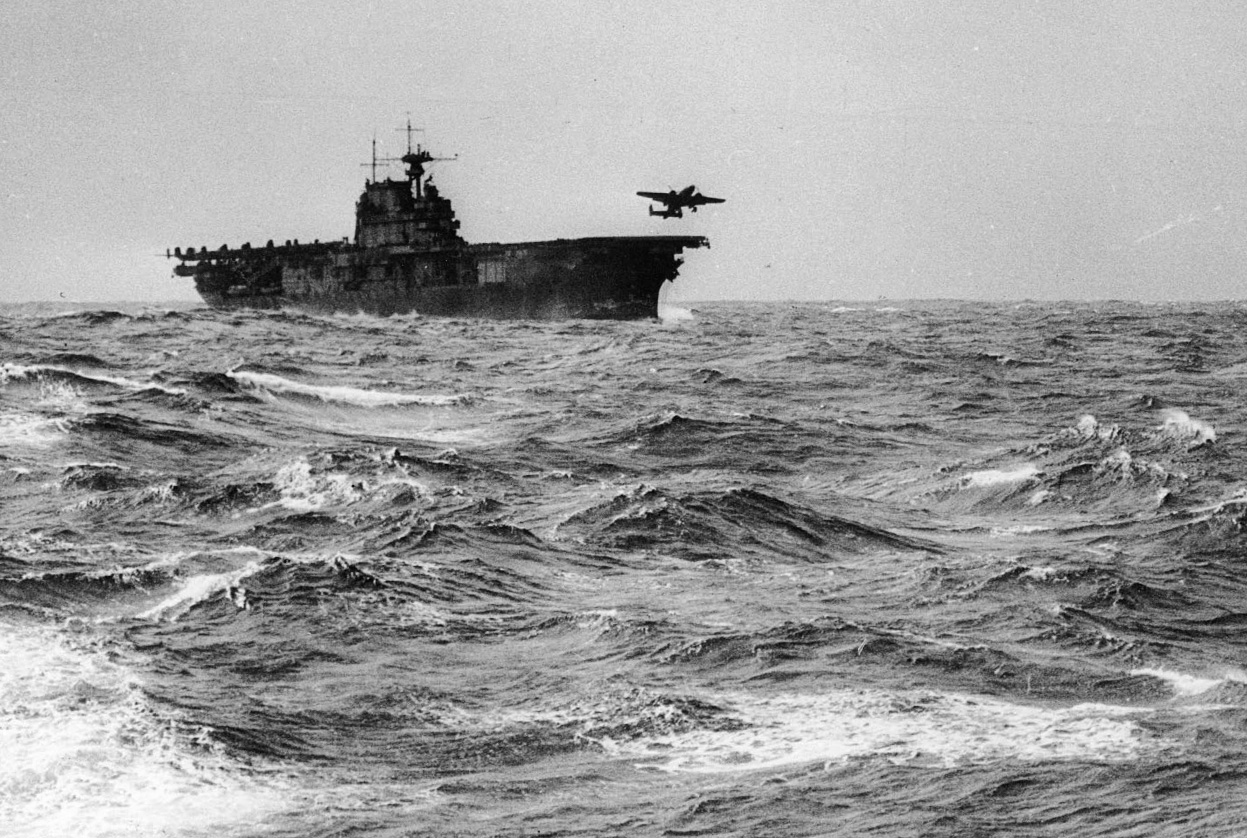
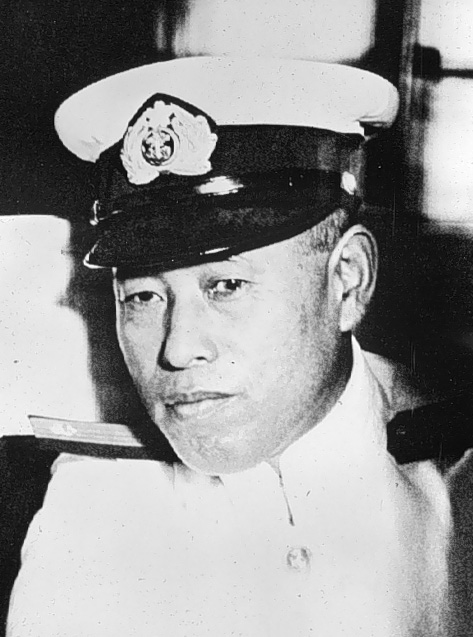
The Imperial Japanese Navy under the command of Admiral Isoruku Yamamoto had been humiliated. On April 18th 1942 16 B-25 bombers under the command of Colonel Jimmy Doolittle were launched from the deck of the USS Hornet and bombed Tokyo.  Though the physical damage was insignificant the psychological impact was massive on the Japanese military establishment. In response to the threat, Yamamoto was directed to bring the aircraft carriers of the U.S. Navy to battle and to destroy them.

Prior to the Doolittle Raid, Yamamoto and his deputy Rear Admiral Matome Ugaki had explored the possibility of attacking Midway. However, the Japanese armed forces were competing with each other to determine an overall strategy for the war effort. The Army was insistent on a China strategy while the Navy preferred expansion in the Western, South and Central Pacific.  Yamamoto’s idea envisioned seizing Midway and using it as a forward base from which an invasion of Hawaii could be mounted as well as the bait to draw the carrier task forces of the U.S. Navy into battle and destroy them. Until the Doolittle Raid shocked the Japanese leadership he was unable to do this.

“I Shall Run Wild for the First Six Months”

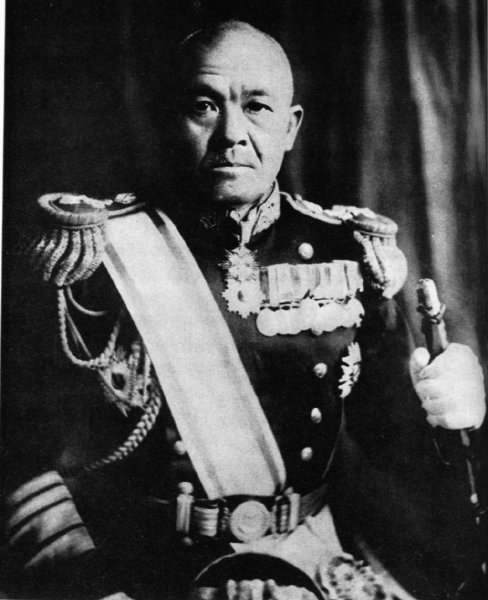
yamamoto-isoroku1

Admiral Isoruku Yamamoto

Yamamoto was one of the few Japanese military or political leaders who opposed war with the United States. He had lived in the United States, gotten to know Americans and recognized the how the massive economic and industrial power of the United States would lead to the defeat of Japan. He told Premier Konoye in 1941 “I shall run wild for the first six months or a year, but I have utterly no confidence for the second or third years of the fighting.”

It is hard to imagine now, but in June of 1942 it seemed a good possibility that the Americans and British could be on the losing side of the Second World War.

True to Yamamoto’s words in 1942 the Japanese onslaught in the Pacific appeared nearly unstoppable. The Imperial Navy stormed across the Pacific and Indian Oceans in the months after Pearl Harbor decimating Allied Naval forces that stood in their way.  The British Battleships HMS Prince of Wales and HMS Repulse were sunk by land based aircraft off of Singapore. A force of Royal Navy cruisers and the Aircraft Carrier HMS Hermes were sunk by the same carriers that struck Pearl Harbor in the Indian Ocean.  Darwin Australia was struck with a devastating blow on February 19th and on February 27th the Japanese annihilated the bulk of the American, British, Dutch and Australian naval forces opposing them at the Battle of the Java Sea. American forces in the Philippines surrendered on May 8th 1942 while the British in Singapore surrendered on February 15th.

In only one place had a Japanese Naval task force been prevented from its goal and that was at the Battle of the Coral Sea.  Between 4-8 May the US Navy’s Task Force 11 and Task Force 17 centered on the Carriers USS Lexington and USS Yorktown prevented a Japanese invasion force from taking Port Moresby. Their aircraft sank the light carrier Shoho, damaged the modern carrier Shokaku and decimated the air groups of the Japanese task force. But it was the unexpected raid by US Army Air Corps B-25 Bombers launched from the USS Hornet under command of Colonel Jimmy Doolittle on April 18th 1942 which embarrassed Yamamoto so badly that he ordered the attack to take Midway and destroy the remaining US Naval power in the Pacific.

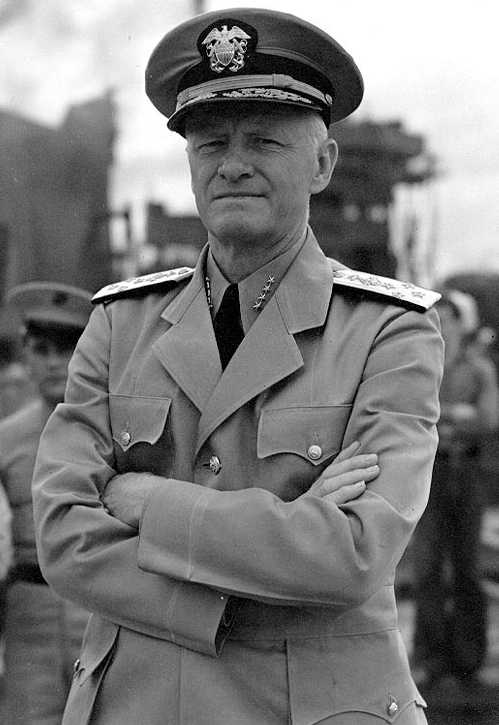
Cracking the Code

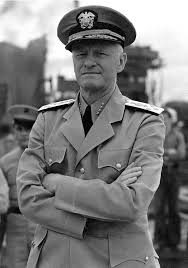
Chester-W.-Nimitz-militarymuseum.org_

Admiral Chester Nimitz

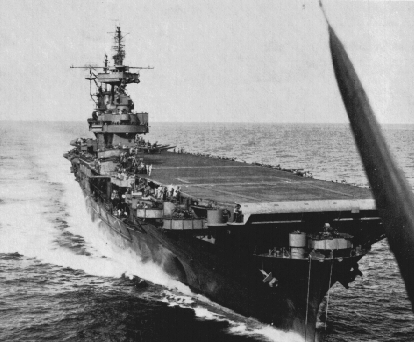
United States Navy codebreakers had broken the Japanese diplomatic and naval codes in 1941, and in May the Navy code breakers at Pearl Harbor discovered Yamamoto’s plan to have the Imperial Navy attack Midway Island and the Aleutian Islands.  Knowing the Japanese were coming, and that the occupation of Midway by Japanese forces would give them an operational base less than 1000 miles from Pearl Harbor, Admiral Chester Nimitz, commander of the U.S. Pacific Fleet committed the bulk of his naval power, the carriers USS Enterprise CV-6, USS Yorktown CV-5 and USS Hornet CV-8 and their 8 escorting cruisers and 15 destroyers to defend Midway.  This force of 26 ships with 233 aircraft embarked to defend Midway while a force of smaller force 5 cruisers and 4 destroyers was dispatched to cover the Aleutians.  The forces on the ground at Midway had a mixed Marine, Navy and Army air group of 115 aircraft which included many obsolete aircraft, 32 PBY Catalina Flying Boats and 83 fighters, dive bombers, torpedo planes and Army Air Force bombers piloted by a host of inexperienced but resolute airmen with which to defend itself. It also had a ground force of U.S. Marines, should the Japanese actually land on the island.

With the foreknowledge provided by the code breakers the US forces hurried to an intercept position northeast of Midway. They eluded the Japanese submarine scout line which the Japanese Commander Admiral Yamamoto presumed would find them when they sailed to respond to the Japanese attack on Midway.  Task Force 16 with the Enterprise and Hornet sailed first under the command of Rear Admiral Raymond A Spruance in place of the ailing William “Bull” Halsey. Task Force 17 under Rear Admiral Frank “Jack” Fletcher was built around the Yorktown which had been miraculously brought into fighting condition after suffering heavy damage at Coral Sea. Fletcher assumed overall command by virtue of seniority and Admiral Nimitz instructed his commanders to apply the principle of “calculated risk” when engaging the Japanese as the loss of the US carriers would place the entire Pacific at the mercy of the Japanese Navy.

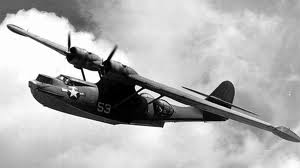
On June 3rd a PBY Catalina from Midway discovered the Japanese invasion force transport group.  US long-range B-17 bombers launched attacks against these ships but inflicted no damage.

“Our hearts burn with the conviction of sure victory.”

On the night of June 3rd 1942 Nagumo’s First Carrier Strike Force sailed east toward the tiny Midway Atoll. Nagumo had seen many of the risks involved in the plan and considered it an “impossible and pointless operation” before the Doolittle Raid on Tokyo, but even the reluctant Nagumo fell in line as Yamamoto relentlessly lobbied for the operation.

As the First Carrier strike force closed within 300 miles of Midway on the night of June 3rd 1942 Nagumo and his staff prepared for the battle that they and many others believed would be the decisive battle. Aircraft received their final preparations, bombs were loaded and as night faded into early morning air crew arose, ate their breakfast and went to their aircraft. The ships had been observing radio silence since they departed their bases and anchorages in Japan the previous week. Honed to a fine edge the crews of the ships and the veteran aircrews anticipated victory.

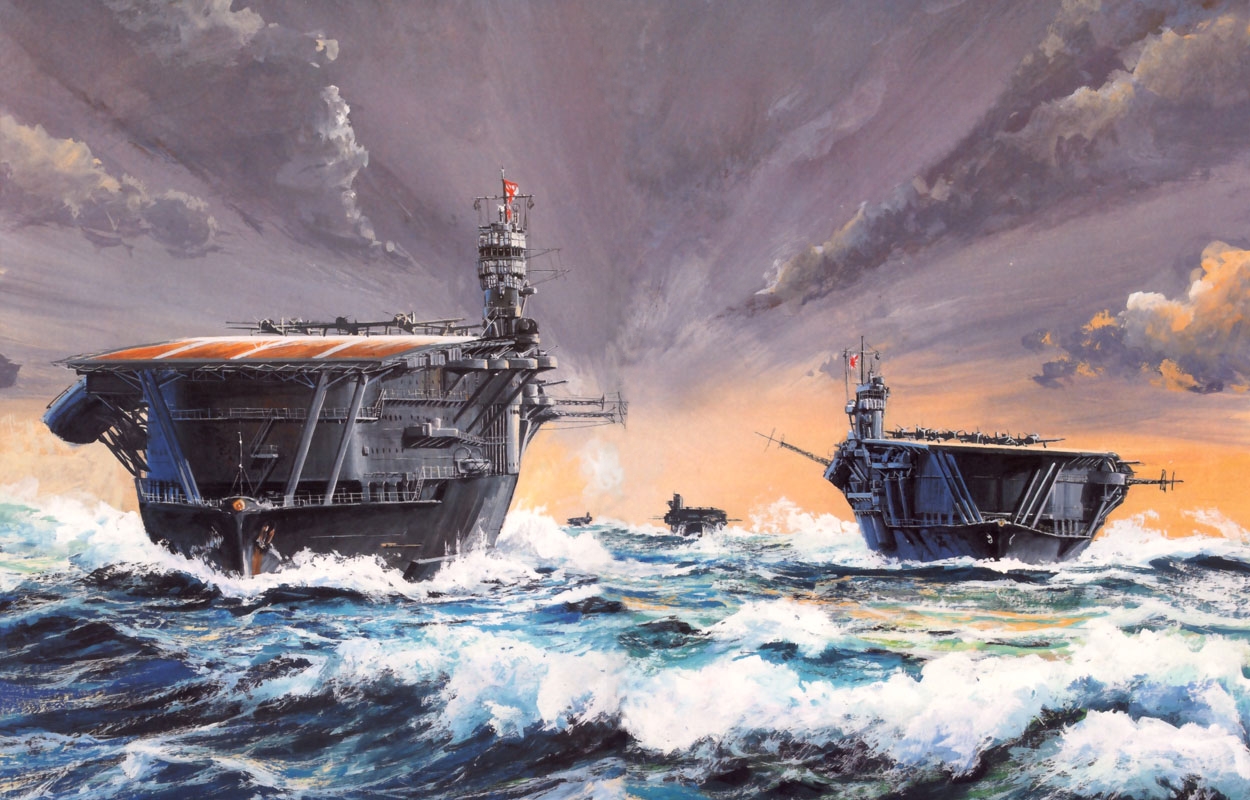
The crews of the ships of the task force and the air groups embarked on the great aircraft carriers Akagi, Kaga, Soryu and Hiryu as well as their escorts were confident. They had since the war began known nothing but victory. They had devastated the Pacific Fleet at Pearl Harbor and roamed far and wide raiding allied targets and sinking allied shipping across the Pacific and deep into the Indian Ocean. Commander Magotaro Koga of the destroyer Nowaki wrote in his diary “Our hearts burn with the conviction of sure victory.

PERSON JAP Nagumo1

Vice Admiral Chuichi Nagumo

However, Nagumo and his sailors had no idea that most of what they knew about their American opponents was wrong. Nagumo and Yamamoto were confident that the Americans could field no more than two operational carriers to defend Midway. They had no idea that the Yorktown, which they believed had been sunk at Coral Sea was operational and her air group reinforced by the aircraft of the damaged Saratoga which was being repaired on the West Coast. Unknown to the Japanese the Yorktown and her escorts had joined Enterprise and Hornet northeast of Midway.

The Japanese were going into battle blind. They had planned to get aerial surveillance of US Fleet dispositions at Pearl Harbor, but that had been cancelled because the atoll at French Frigate Shoals that the Japanese flying boats would operate from had been occupied by a small US force. Likewise a line of Japanese submarines arrived on station a day too late, after the US carrier task forces had passed by them. Those aboard the First Carrier Strike Force, including Nagumo or his senior commanders and staff had no idea that the Americans not only knew of their approach but were already deployed in anticipation of their strike.

Within a day all of the Japanese carriers would be sunk or sinking. Thousands of Japanese sailors would be dead and the vaunted air groups which had wreaked havoc on the Allies would be decimated, every aircraft lost and the majority of pilots and aircrew dead. It would be a most unexpected and devastating defeat stolen out of the hands of what appeared to be certain victory.

There is a lesson to be learned from the Japanese who sailed into the night on June 3rd 1942 and saw the sunrise of June 4th. There is no battle, campaign or war that goes according to plan. Thousands of Japanese sailors and airmen went to bed on the night of the 3rd expecting that the following night, or within the next few days they would be celebrating a decisive victory. Thousands of those sailors would be dead by the night of the 4th of June 1942, and as their ships slid beneath the waves, the ambitions of Imperial of Japan to defeat the United States Navy and end the war were dealt a decisive defeat from which they never recovered.

Hawks at Angles Twelve

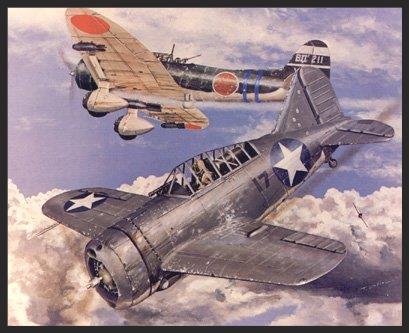
F2A-3+Buffalo

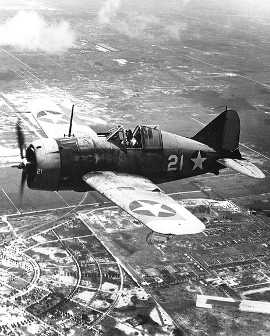
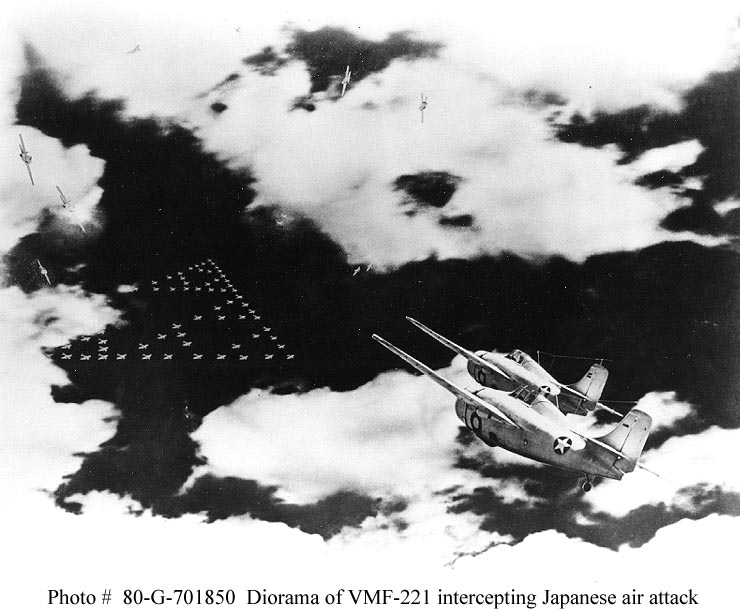
One of the more overlooked aspects of the Battle of Midway is the sacrifice of Marine Fighter Squadron 221 on the morning of June 4th 1942.   The Marine aviators flying a mix of 21 obsolescent Brewster F2A-3 Buffalos and 7 Grumman F4F-3 Wildcats engaged a vastly superior force of Japanese Navy aircraft as they vectored toward the atoll to begin softening it up for the planned invasion.

Led by Major Floyd Parks the squadron had arrived at Midway on Christmas day 1941 being delivered by the USS Saratoga after the aborted attempt to relieve Wake Island.  The squadron along with Marine Scout Bombing Squadron 241 (VMSB 241) formed Marine Air Group 22.  They fighter pilots of VMF-221 scored their first victory shooting down a Japanese Kawanishi H8K2 “Emily” flying boat. The squadron which initially was composed of just 14 aircraft, all F2A-3’s was augmented by 7 more F2A-3s and 7 of the more advanced F4F-3s before the battle.

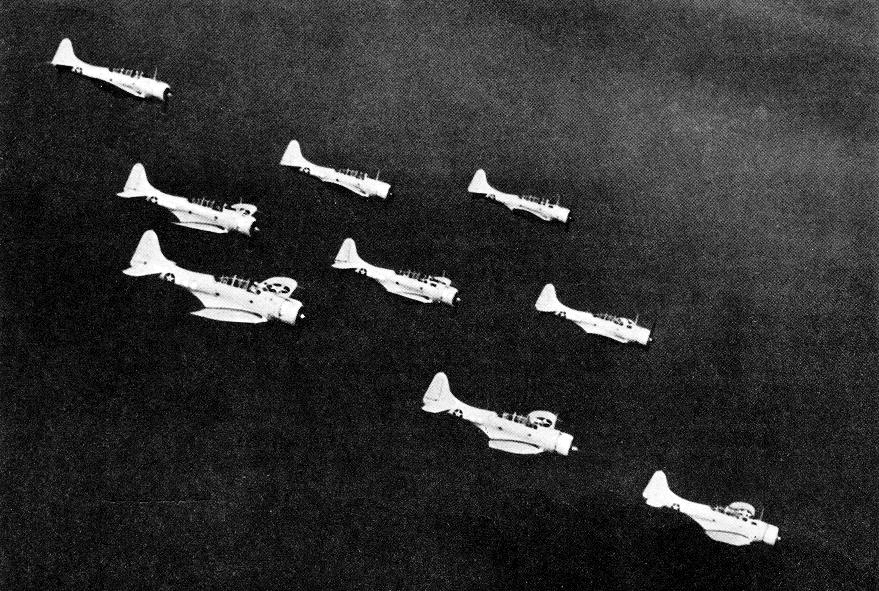
When the Japanese First Carrier Striking Group was spotted in the wee hours of June 4th the Marines and other aircrew aboard Midway scrambled to meet them.  The 18 SBD-2 Dauntless’ and 12 Vought SB2-U3 Vindicator dive bombers of VMSB-241, the 6 TBF Avengers of the Navy Torpedo Eight detachment, 4 Army Air Corps B-26 Marauders and 15 B-17 Flying Fortresses flew out to attack the Japanese carriers while the fighters rose to intercept the 108 aircraft heading toward Midway. The 72 strike aircraft, 36 Aichi 99 Val Dive Bombers and 36 Nakajima B5N Torpedo/ High Level Bombers were protected by 36 AM6-2 Zeros which thoroughly outclassed the Marine opponents in speed, maneuverability and in the combat experience of their pilots.

The Marine fighters audaciously attacked the far superior Japanese force, throwing themselves against the Japanese phalanx with unmatched courage.  Despite their courage the Marine fighters were decimated by the Japanese Zeros.  The Marines shot down 4 Val dive bombers and at least three Zeros but lost 13 Buffalos and 3 Wildcats during the battle.  Of the surviving aircraft only three Buffalos and three Wildcats were in commission at the end of the day. Among the casualties killed was Major Parks.  Of the surviving pilots of VMF-221, two became “Aces” during the war. Lieutenant Charles M. Kunz would later fly in VMF-224, adding six victories to end the war with 8 victories. Capt. Marion E. Carl would later fly in VMF-223 raising his score to 18.5 Japanese aircraft shot down.  Other pilots like 2nd Lieutenant Clayton M. Canfield shot down two additional aircraft while flying with VMF-223. 2nd Lieutenant Walter W. Swansberger won the Medal of Honor at Guadalcanal.

The last remaining Marine fighter pilot of VMF-221 from the battle of Midway, Williams Brooks died in January 2010 and was buried with full military honors, in Bellview, Nebraska. Brooks in his after action report described his part in the battle:

I was pilot of F2A-3, Bureau number 01523, Our division under Capt. Armistead was on standby duty at he end of the runway on the morning of June 4, 1942, from 0415 until 0615. At about 0600, the alarm sounded and we took off. My division climbed rapidly, and I was having a hard time keeping up. I discovered afterwards that although my wheels indicator and hydraulic pressure indicator both registered “wheels up”, they were in reality about 1/3 of the way down. We sighted the enemy at about 14,000 feet, I would say that there were 40 to 50 planes. At this time Lt. Sandoval was also dropping back. My radio was at this time putting out no volume, so I could not get the message from Zed. At 17,000 feet, Capt. Armistead led the attack followed closely by Capt. Humberd. They went down the left of the Vee , leaving two planes burning. Lt. Sandoval went down the right side of the formation and I followed. One of us got a plane from the right side of the Vee. At this time, I had completely lost sight of my division. As I started to pull up for another run on the bombers, I was attacked by two fighters. Because my wheels being jammed 1/3 way down, I could not out dive these planes, but managed to dodge them and fire a burst or so into them as they went past me and as I headed for the water. As I circled the island, the anti-aircraft fire drove them away. My tabs, instruments and cockpit were shot up to quite an extent at this time and I was intending to come in for a landing. 

It was at this time that I noticed that a important feature in their fighting. I saw two planes dog-fighting over in the east, and decided to go help my friend if at all possible. My plane was working very poorly, and my climb was slow. As I neared the fight both planes turned on me. It was then that I realized I had been tricked in a sham battle put on by two Japs and I failed to recognize this because of the sun in my eyes. Then I say I was out-numbered, I turned and made a fast retreat for the island, collecting a goodly number of bullets on the way. After one of these planes had been shaken, I managed to get a good burst into another as we passed head-on when I turned into him. I don’t believe this ship could have gotten back to his carrier, because he immediately turned away and started north and down. I again decided to land, but as I circled the island I saw two Japs on a Brewster. Three of my guns were jammed, but I cut across the island, firing as I went with one gun. But I could not get there in time to help the American flier and as soon as the Brewster had gone into the water I came in for a landing at approximately 0715 (estimated). 

As for VMF-221 it was re-equipped with the F4F-4 and later with the F4U Corsair during the course of two more deployments overseas.  VMF-221 finished the war with a score of 155 victories, 21 damaged and 16 probable kills, the second highest total of any Marine Corps Squadron during the war.

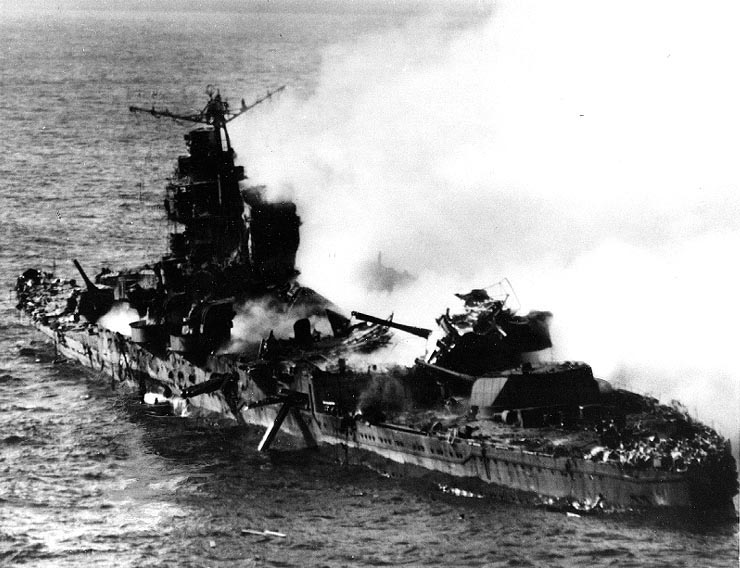
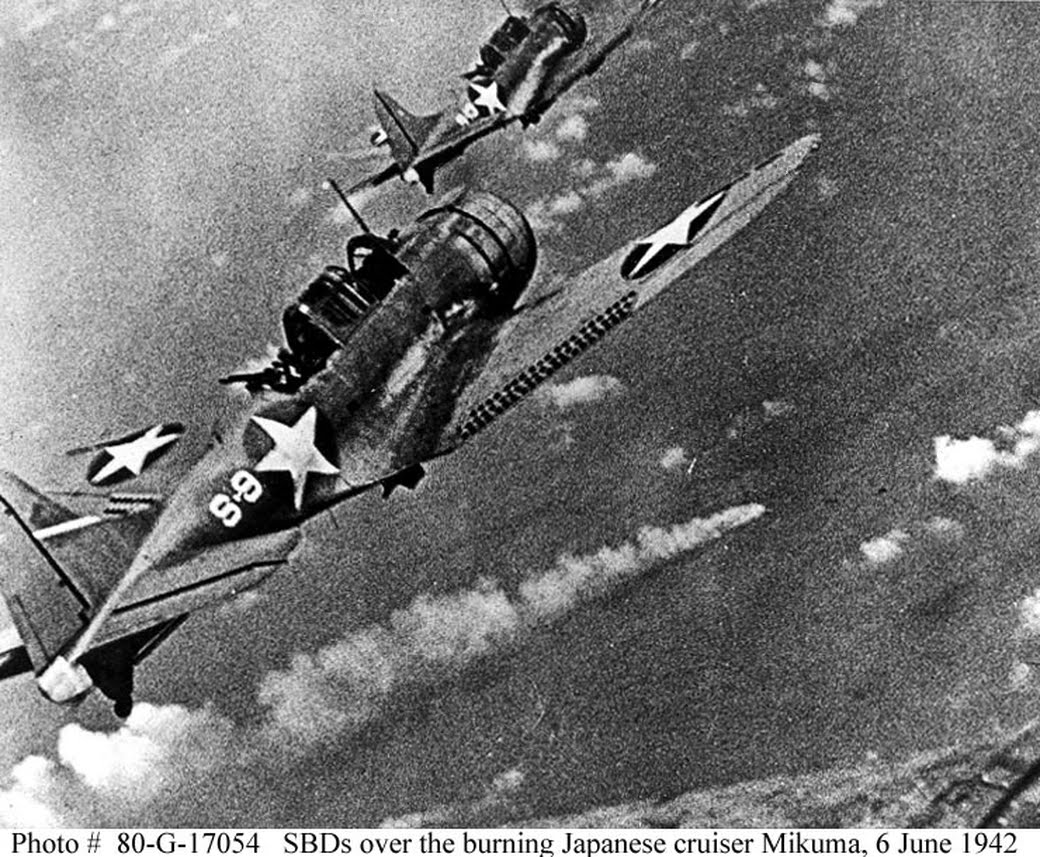
Their bomber counterparts of VMSB 241 attacked the Japanese task force on the morning of June 4th and scored no hits while losing 8 aircraft. The survivors were again in action later in the day as well as the following day where they helped sink the Japanese Heavy Cruiser Mikuma with their squadron leader Major Henderson diving his mortally wounded aircraft into the cruiser’s number 4 8” gun turret. While the Marines’ actions are not as well known or as successful as those of their Navy counterparts they were brave.  Fighter pilots had to engage some of the most experienced pilots flying superior machines while the bomber crews had little to no experience before being thrown into combat.

800px-tbd_attacking_at_midway_painting-1

Into the Valley of Death: The Last Ride of the Torpedo Bombers

Alfred, Lord Tennyson wrote in the Charge of the Light Brigade something that echoes to this day when we talk or write about men who charge the gates of death against superior enemies.

Half a league half a league,

Half a league onward,

All in the valley of Death

Rode the six hundred:

‘Forward, the Light Brigade!

Charge for the guns’ he said:

Into the valley of Death

Rode the six hundred.

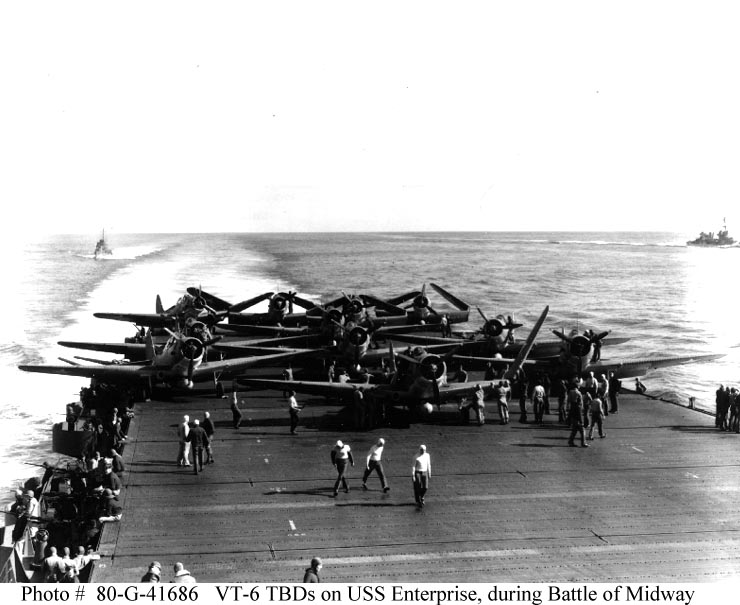
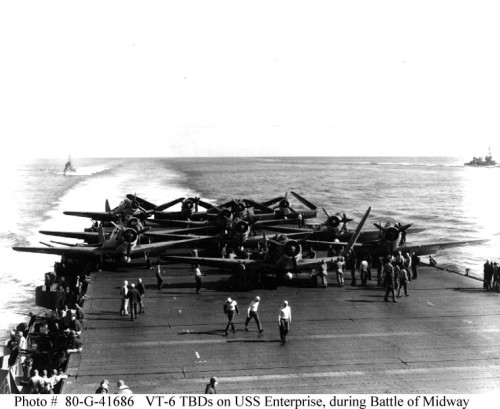
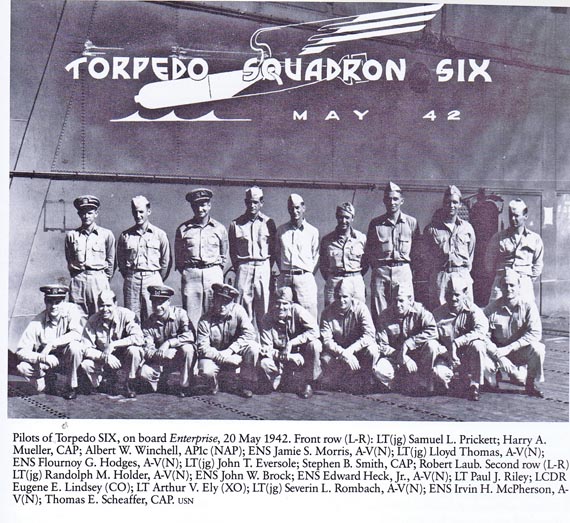
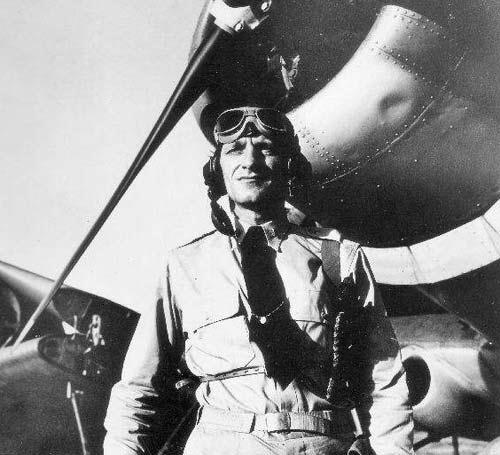
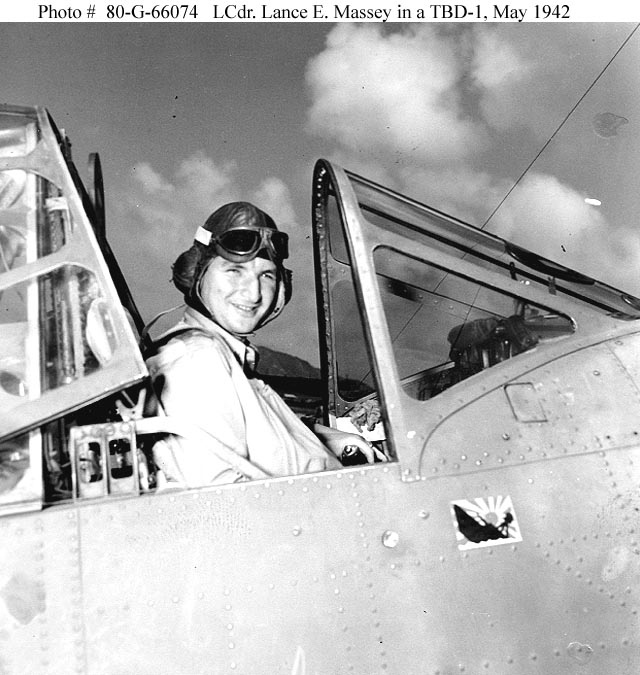
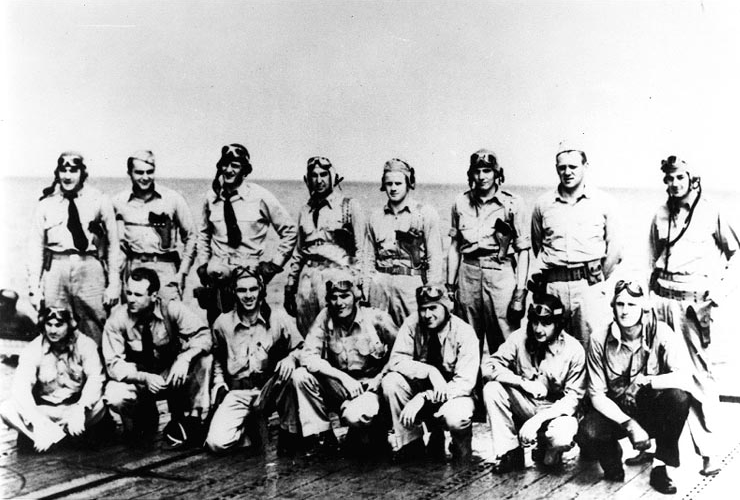
They were not six hundred and they were not mounted on horses, but the Naval Aviators of Torpedo Squadrons 3, 6 and 8 and their aerial steeds 42 Douglas TBD Devastators and 6 TBF Avengers wrote a chapter of courage and sacrifice seldom equaled in the history of Naval Aviation. Commanded by veteran Naval Aviators, LCDR Lance “Lem” Massey, LCDR Eugene Lindsey and LCDR John Waldron the squadrons embarked aboard the carriers flew the obsolete TBD Devastators. The young pilots of the Midway based Torpedo 8 detachment under the command of LT Langdon Fieberling flew in the new TBF Avengers.

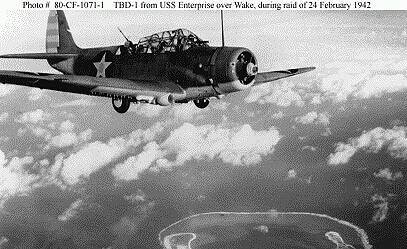
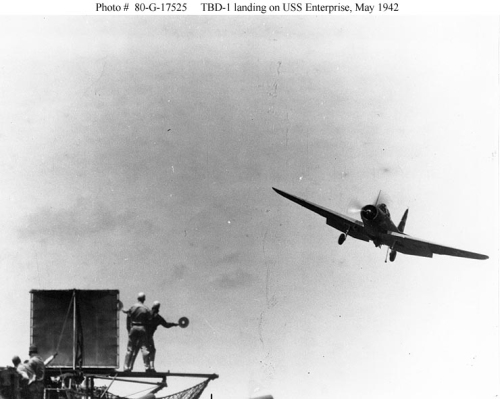
he TBD which first flew in 1935 entered service in 1937 and was possibly the most modern naval aircraft in the world when it entered service.  It was a revolutionary aircraft. It was the first monoplane widely used on carriers and was first all-metal naval aircraft.  It was the first naval aircraft with a totally enclosed cockpit, the first with hydraulic powered folding wings.  The TBD had crew of three and had a maximum speed of 206 miles an hour and carried a torpedo or up to 1500 pounds of bombs (3 x 500) or a 1000 pound bomb.  129 were built and served in all pre-war torpedo bombing squadrons based aboard the Lexington, Saratoga, Ranger, Yorktown, Enterprise and Hornet with a limited number embarked aboard Wasp. 

The Devastator saw extensive service prior to the war which pushed many airframes to the end of their useful service life and by 1940 only about 100 were operational by the beginning of the war.  They were still in service in 1942 as their replacement the TBF Avenger was not available for service in large enough numbers to replace them before Midway.  The TBDs performed adequately against minor opposition at Coral Sea and in strikes against the Marshalls but the squadrons embarked on Yorktown (VT3), Enterprise (VT-6) and Hornet (VT-8) were annihilated at Midway with only 6 of 41 aircraft surviving their uncoordinated attacks against the Japanese Carrier Strike Force.  They were too slow, had poor maneuverability, insufficient armor and defensive armament.

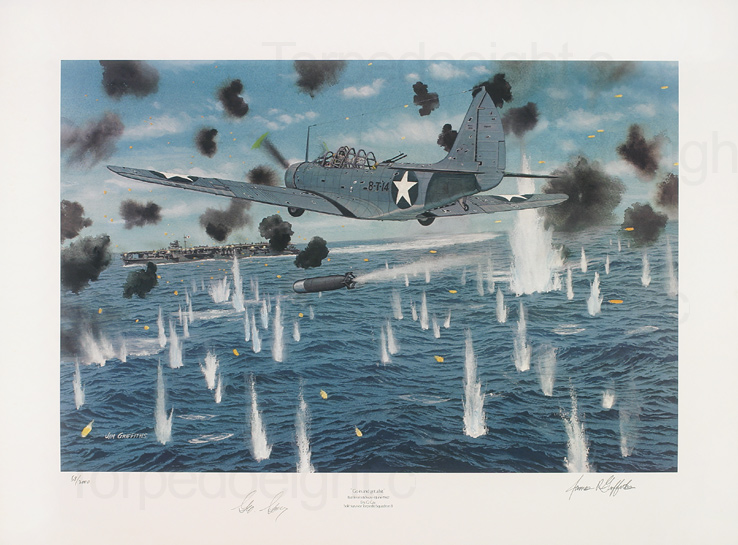
The Torpedo squadrons attacked independently of each other between 0920 and 1030 on June 4th 1942. The Japanese Combat Air Patrol ripped into the slow, cumbersome and under armed TBD Devastators as they came in low to launch their torpedoes.  Torpedo Eight from Hornet under the command of LCDR John C Waldron pressed the attack hard but all 15 of the Devastators were shot down.  Only Ensign George Gay’s aircraft was able to launch its torpedo before being shot down and Gay would be the sole survivor of the squadron to be picked up later by a PBY Catalina patrol plane.

Torpedo Six from the Enterprise under the command of LCDR Eugene Lindsey suffered heavy casualties losing 10 of 14 aircraft with Lindsey being one of the casualties.  The last group of Devastators to attack was Torpedo Three from the Yorktown under the command of LCDR Lem Massey losing 11 of 13 aircraft with Massey a casualty last being seen standing on the wing of his burning aircraft as it went down.  These aircraft were also decimated and Massey killed but they had drawn the Japanese Combat Air Patrol down to the deck leaving the task force exposed to the Dive Bombers of the Enterprise and Yorktown.  The six aircraft of the Torpedo Eight detachment from Midway under the command of LT Fieberling lost 5 of their 6 aircraft while pressing their attacks.  Only Ensign Bert Earnest and his aircraft survived the battle landing in a badly damaged state on Midway.  Four U.S. Army B-26 Marauder Medium Bombers were pressed into service as torpedo bombers of which 2 were lost.  No torpedo bomber scored a hit on the Japanese Task force even those torpedoes launched at close range failed to score and it is believe that this was in large part due to the poor performance of the Mark 13 aircraft torpedoes.

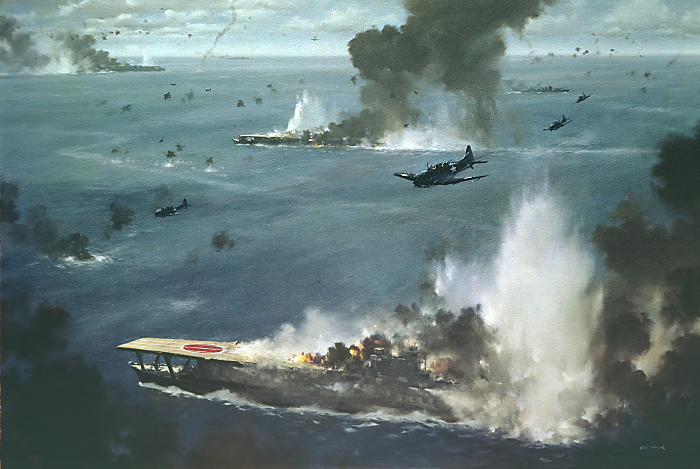
Despite the enormous losses of the torpedo squadrons their sacrifice was not in vain. Their attacks served to confuse the Japanese command and delay the rearmament of aircraft following the Japanese strikes on Midway. They also took the Japanese Combat Air Patrol down to sea level and opened the way for American Dive Bombers to strike the Japanese with impunity fatally damaging the Akagi, Kaga and Soryu in the space of 5 minutes.

eneterprise vt-6 midway

After Midway the remaining TBDs were withdrawn from active service and no example survives today. The TBF became the most effective torpedo bomber of the war and some remained in service in a civilian capacity to fight forest fires until 2012.

img_0064

The Provence of Chance: Five Minutes that Changed the War

The land based aircraft from Midway attacked the Japanese carrier force taking heavy casualties and failed to damage the Japanese task force. When the results of the first strike of the Japanese bombers that hit Midway was analyzed Nagumo readied his second wave.

As this was happening the American carriers launched their strike groups at the Japanese fleet leaving enough aircraft behind as for Combat Air Patrol and Anti-submarine patrol missions.  As the Americans winged toward the Japanese fleet the Japanese were in a state of confusion. The confusion was caused when a scout plane from the Heavy Cruiser Tone that had been delayed at launch discovered US ships but did not identify a carrier among them until later into the patrol. The carrier was the Yorktown and TF 17, but for Nagumo who first expected no American naval forces, then received a report of surface ships without a carrier followed by the report of a carrier the reports were unsettling.

Aboard the Japanese ships, orders and counter-orders were issued as the Japanese attempted to recover their strike aircraft and prepare for a second strike on the island, but when the Yorktown task force was discovered, orders were changed and air crews unloaded ground attack ordnance in favor of aerial torpedoes and armor piercing bombs. In their haste to get their aircraft ready to strike the Americans, the hard working Japanese aircrews did not have time to stow the ordnance removed from the aircraft. But due to their hard work at 1020 they had the Japanese strike group ready to launch against the US carriers. Aircraft and their crews awaited the order to launch, their aircraft fully armed and fully fueled.

There had been confusion among the Americans as to the exact location of the Japanese Carriers. Bombing 8 and Scouting 8 from Hornet made a wrong turn and not find the Japanese carriers. The squadrons had to return due to a lack of fuel and a number of bombers and their fighter escort had to ditch in the ocean and wait for rescue. The Enterprise group composed of Bombing-6 and Scouting 6 under CDR Wade McClusky was perilously low on fuel when they spotted the wake of a Japanese destroyer steaming at high speed to catch up with the Japanese carriers.  Taking a chance, McClusky followed it straight to the Japanese Task Force arriving about 1020. The Yorktown’s group under LCDR Max Leslie arrived about the same time.

When the American dive bombers arrived over the Japanese Carrier Strike Force they found the skies empty of Japanese aircraft. Below, aboard the Japanese ships there was a sense of exhilaration as each succeeding group of attackers was brought down and with their own aircraft ready to launch and deal a fatal blow to the American carrier wondered how big their victory would be. The war would soon be decided.

At 1020 the first Zero of the Japanese attack group began rolling down the flight deck of the flagship Akagi, aboard Kaga aircraft were warming up as they were on the Soryu.  The unsuspecting Japanese were finally alerted to the threat of the American dive bombers when lookouts screamed “helldivers.” The Japanese fighters assigned to the combat air patrol were flying too low as the mopped up the last of the doomed torpedo bombers and were not in a position to intercept the Americans.

Wade McClusky’s aircraft lined up over the Akagi and Kaga pushing into their dives at 1022. There was a bit of confusion when the bulk of Scouting 6 joined the attack of Bombing 6 on the Kaga. That unprepared ship was struck by four 1000 pound bombs which exploded on her flight deck and hangar deck igniting the fully fueled and armed aircraft of her strike group and the ordnance littered about the hangar deck.  Massive fires and explosions wracked the ship and in minutes the proud ship was reduced to an infernal hell with fires burning uncontrollably. She was abandoned and would sink at 1925 taking 800 of her crew with her.

LT Dick Best of Scouting 6 peeled off from the attack on Kaga and shifted to the Japanese flagship Akagi. On board Akagi were two of Japan’s legendary pilots CDR Mitsuo Fuchida leader of and CDR Minoru Genda the architect of the Pearl Harbor attack and subsequent string of Japanese victories. Both officers were on the sick list and had come up from sick bay to watch as the fleet was attacked. Seeing Kaga burst into flames they stood mesmerized until Akagi’s lookouts screamed out the warning “helldivers” at 1026.

Best’s few aircraft hit with deadly precision landing two of their bombs on Akagi’s flight deck creating havoc among the loaded aircraft and starting fires and igniting secondary explosions which turned the ship into a witch’s cauldron.  By 1046 Admiral Nagumo and his staff were forced to transfer the flag to the cruiser Nagara as Akagi’s crew tried to bring the flames under control. They would do so into the night until nothing more could be done and abandoned ship at 2000.  Admiral Yamamoto ordered her scuttled and at 0500 on June 5th the pride of the Japanese carrier force was scuttled.

VB-3 under LCDR Max Leslie from the Yorktown stuck the Soryu with 17 aircraft, however only 13 of the aircraft had bombs due to an electronic arming device malfunction on 4 of the aircraft, including that of Commander Leslie.  Despite this Leslie led the squadron as it dove on the Soryu at 1025 hitting that ship with 3 and maybe as many as 5 bombs. Soryu like her companions burst into flames as the ready aircraft and ordnance exploded about her deck. She was ordered abandoned at 1055 and would sink at 1915 taking 718 of her crew with her. A few hours later Hiryu, which had succeeded in launching strikes that seriously damaged Yorktown met the fate of her sisters. Yorktown would be sunk by a Japanese submarine, along with the destroyer Hamman a few days later as her crew attempted to get her to Pearl Harbor. In five pivotal minutes the course of the war in the Pacific was changed.

A Final Ignominy

Sinking_of_japanese_cruiser_Mikuma_6_june_1942

Admiral Yamamoto was still attempting to digest the calamity that had befallen Admiral Nagumo’s carrier task force. In the shocked atmosphere of the mighty Super Battleship Yamato’s command center the Staff of the Combined Fleet was hastily attempting to arrive at a solution which might reverse the disaster and bring victory.  Admiral Ugaki, Yamamoto’s Chief of Staff, despite strong personal doubts, ordered Vice Admiral Nobutake Kondo to prepare for a night surface engagement with the US Fleet and dispatched a strong surface force to bombard Midway in order to prevent the Americans from reinforcing it and to prevent its further use against his forces should the invasion move forward.  Kondo then organized his fleet to attempt to find the American carriers and bring them to battle before dawn.

Kondo detached Vice Admiral Takeo Kurita’s Close Support Group composed of Cruiser Seven, the fastest and most modern cruisers in the Imperial Navy proceed at full speed to attack Midway.  Kurita’s cruisers, the Kumano, Suzuya, Mikuma and Mogami were each armed with 10 8” guns and were escorted by the two destroyers.

Kurita’s force was 80 miles from Midway when Yamamoto realizing that his plan was unrealistic ordered Kondo’s forces to retreat and rendezvous with his main force shortly after midnight. The order was met with a measure of relief by most officers in the force and the force turned northwest and steamed at 28 knots to meet the Main Body.  At 0215 lookouts on Kumano sighted a submarine on the surface which turned out to be the USS Tambor which had been shadowing the group, and made a signal for the force to make a emergency 45 degree turn to port.

During the process Mogami’s Navigator took over from the watch to oversee the tricky maneuver. In doing so he thought that there was too much distance between him and the ship ahead, the Mikuma. So he adjusted his course to starboard and then realized his mistake. The ship he thought was Mikuma was actually Suzuya and Mikuma was directly ahead. As soon as he recognized his mistake Mogami’s Navigator ordered a hard turn to port and reversed the engines but it was too late. Mogami’s bow crashed into Mikuma’s port quarter. The impact caused minimal damage to Mikuma but Mogami was heavily damaged. She lost 40 feet of her bow and everything else was bent back to port at right angles to her number one turret.

Mogami’s damage control teams isolated the damage and worked the ship up to 12 knots. This was not fast enough for Kurita to make his rendezvous so he left Mikuma and the destroyers to escort Mogami while he steamed ahead with Kumano and Suzuya.

Tambor’s skipper LCDR John W Murphy sent a contact report at 0300 reporting “many unidentified ships.” He followed this with more detailed information and the Americans on Midway began to launch its remaining serviceable aircraft to attack the threat. A flight of B-17 Bombers launched at 0430 could not find the Japanese ships but at 0630 a PBY Catalina found the Japanese and radioed Midway “two Japanese battleships streaming oil.”  The remaining 12 aircraft of VSMB-241 under command of Captain Marshall Tyler a mix of SBD Dauntless and SB2U Vindicators took off at 0700. His force attacked at 0808 scoring no hits. However, Marine Captain Richard Fleming, his Vindicator on fire dropped his bomb and then crashed his aircraft into Mikuma’s after turret. Sailors aboard Mogami were impressed, the American had sacrificed himself in a suicide attack worthy of the Samurai. The fire was sucked down air intakes into the starboard engine room with disastrous results. The Mikuma’s engineers were suffocated by the smoke and fumes and Mikuma was greatly reduced in speed.

The two ships limped northwest at 12 knots escorted by the destroyers and were unmolested through much of the day with the exception of an ineffective attack by the B-17s at 0830. The following morning the Dive Bombers of Enterprise and Hornet were at work and found the crippled Japanese ships. Waves over US Dive Bombers attacked the cruisers throughout the morning and into the afternoon. Mikuma was hit at least 5 times and secondary explosions of ammunition and torpedoes doomed the ship. Mogami was also heavily damaged but remained afloat while both destroyers received bomb damage.  At sunset the tough cruiser rolled over to port and sank into the Pacific. Mogami whose damage control teams had performed miracles to keep their ship afloat helped the destroyers rescue survivors from Mikuma.  Only 240 were rescued with 650 officers and sailors going down with the ship.

The action against the cruisers ended the combat operations at Midway. The Japanese ships were doomed by Yamamoto’s decision to try to salvage victory from defeat and the error of Mogami’s Navigator during the emergency turn when Kumano sighted Tambor. The only thing that kept the result from being total was the efficacy of Mogami’s damage control teams.  Mogami was out of the war for 10 months following repairs and conversion to an Aircraft Cruiser in which her aft turrets were removed to increase the number of float plane scouts that the ship could carry. She rejoined the fleet in April 1943 and was sunk following the Battle of the Surigao Strait on 25 October 1944.

The Mogami and Mikuma proved to be tough ships to sink. Unprotected by friendly aircraft they fought hard against the unopposed American Dive Bombers. They suffered massive damage from 500 and 1000 pound bombs, both direct hits and near misses. Mogami was saved by the skill of her damage control teams and the foresight of her Damage Control Officer to jettison her torpedoes so that they did not explode and compound the damage wrought by the American bombs.

Epilogue

At Midway a distinctly smaller force defeated a vastly superior fleet in terms of experience, training and equipment. At the very moment that it appeared to the Japanese that they would advance to victory their vision disappeared. In a span of less than 5 minutes what looked like the certain defeat of the US Navy became one of the most incredible and even miraculous victories in the history of Naval warfare. In those 5 minutes history was changed in a breathtaking way. While the war would drag on and the Japanese still inflict painful losses and defeats on the US Navy in the waters around Guadalcanal the tide had turned and the Japanese lost the initiative in the Pacific never to regain it.

The Japanese government hid the defeat from the Japanese people instead proclaiming a great victory. The American government could not fully publicize the victory for fear of revealing the intelligence that led to the ability of the US Navy to be at the right place at the right time and defeat the Imperial Navy.

The American victory at Midway changed the course of the war in the Pacific. The Battle of Midway established the aircraft carrier and the fast carrier task force as the dominant force in naval warfare which some would argue it still remains. Finally those five minutes ushered in an era of US Navy dominance of the high seas which at least as of yet has not ended as the successors to the Enterprise, Hornet and Yorktown ply the oceans of the world and the descendants of those valiant carrier air groups ensure air superiority over battlefields around the world today.


1 Comment

Filed under History, Military, Navy Ships, US Navy, World War II at Sea, world war two in the pacific

From Limited War to Total War: The American Civil War Pt.1

fort-sumter-higher-res

Friends of Padre Steve’s World,

As always I continue to revise my Gettysburg and Civil War text and it looks like I will have to split the text into at least tow volumes. I am posting about half of a majorly revised section dealing the the nature of the war, and how it changed from a limited war to a total war. The fact is that leaders in the South and the North, like so many other leaders in history and even today, failed to understand what the war that they helped unleash would bring about.

Have a great weekend,

Peace

Padre Steve+

The American Civil War was the first modern war. It was waged between two peoples who shared much in common but were divided by different ideologies which encompassed politics, economics, society, law, and even religion. But even so, at the beginning of the war few people on either side anticipated what the war would entail, the sacrifices involved, or the change that would be wrought by it. Winston Churchill’s words of caution to leaders that embark on war, would have been good advice to leaders in the South and the North in early 1861: “Never, never, never believe any war will be smooth and easy, or that anyone who embarks on the strange voyage can measure the tides and hurricanes he will encounter. The statesman who yields to war fever must realize that once the signal is given, he is no longer the master of policy but the slave of unforeseeable and uncontrollable events.”

Likewise the American Civil War was a watershed event in an era of incredibly rapid change. It was an era which introduced changes in weaponry. New types of weapons were developed, more lethal versions of older weapons were introduced. Likewise, tactics, army organization, logistics, intelligence and communications, as well as social, and economic structures across the country evolved as the war progressed.

Though the war did not change the essential nature of war, which Clausewitz says is “is an act of violence to compel our opponent to fulfill our will” [1] it expanded the parameters of war and changed the character of the war by re-introducing the concept of “total war” to the world. As such, “because its aim was all embracing, the war was to be absolute in character” [2] it was a true revolution in military affairs.

The Civil War was truly a revolution in military affairs, but at the beginning of the war many people, including military leaders failed to understand this. It was a war that began as one type of “war and evolved into something quite different.” The conflict began as a limited war in which both sides imagined that small armies would fight a relatively quick war which would end with either a restored Union, or an independent Confederacy. But by late 1862 it had become a total war, involving massive armies, as well as the destruction of vast areas of civilian lands and properties. The miscalculation of Southern leaders about the will of the Northern leaders and population to pursue a war, their precarious assumption that Great Britain and France would enter the war, followed by their inept diplomatic efforts to be recognized by those nations, their lack of resources or an industrial base to produce the weapons needed for war, coupled with their inability to anticipate what would be needed to win the war, and to defend their territory ensured their eventual defeat. In marked contrast to the South the Federal government headed by Abraham Lincoln “developed a national strategy to give purpose to a military strategy of total war, and preserved a political majority in support of this national strategy through the dark days of defeat, despair, and division.” [3]

At the beginning of the war President Lincoln attempted a strategy of conciliation in order to attempt to coax seceding states back into the Union and by conciliation to keep those considering seceding from doing so. However, Lincoln’s attempts were met with outright rejection, before, during, and after the secession crisis. He spoke directly to the Southern states in his First Inaugural Address, saying “We are not enemies, but friends,” [4] only to be accused of deliberately lying to the South by pledging to maintain control of Federal installations and forts in the South, like Fort Sumter which was now surrounded by massed batteries of Confederate artillery and demands that it surrender. Jefferson Davis wrote, “The Lincoln Administration deliberately lied to us, baiting us with false promises and pacific pledges all the while it was planning for war. Never in history has a government behaved with such malicious deceit and bad faith.” [5]

When the troops of South Carolina opened fire on Fort Sumter the die was cast, and Lincoln chose the path of war in order to restore the Union, “not because he wanted to, but because the South forced his hand.” [6] His proclamation calling for troops to suppress the rebellion described the kind of war that he foresaw, “the utmost care will be observed… to avoid any devastation, any destruction of, or interference with, property, or any disturbance of peaceful citizens in any part of the country.” [7]

Though he pursued the option of war to restore the Union, Lincoln initially he adopted a soft-war strategy in which Confederate armies were the target. This was in large part due to the efforts of Secretary of State Henry Seward and General-in-Chief Winfield Scott. Though he adopted a strategy that required the North to conquest the South, initially he did so with the expectation that after battlefield defeats the Confederates would eventually return to the Union. Some early victories, particularly those of Grant in the west at Forts Henry and Donaldson seemed to confirm the validity of such an approach.

However, Grant, after being roughly handled in the near disaster at Shiloh, gave up on the idea of limited war. He now believed that it was necessary to seize or destroy any property or resources that could be used to sustain the Confederate war effort. Before the Confederate counteroffensive at Shiloh Grant had said that he had been careful to “protect the property of the citizens whose territory was invaded;” and afterwards his policy became to “consume everything that could be used to support or supply armies.” [8]

Henry Wager Halleck, who had long been a proponent of Jominian limited war, backed up Grant in August 1862 ordering Grant to “Take up all active [rebel] sympathizers… and hold them as prisoners or put them beyond our lines. Handle that class without gloves, and take their property for public use…. It is time that they should begin to feel the presence of the war.” [9]

As the war went on it became apparent to many people in the North, and in the armies on the front lines that harder measures were required, especially with the escalation of guerilla attacks behind Union lines, as well as the involvement of Southern civilians in attacking Union troops in occupied areas of the South. “Senator John Sherman wrote his brother William of a growing sentiment “that we must treat these Rebels as bitter enemies to be subdued – conquered – by confiscation – by the employment of their slaves – by terror – energy – audacity – rather than by conciliation.” [10]

Some Union military commanders other than Grant became early exponents of a hard war, among them was Major General John Pope, who as commander of the Army of Virginia issued a “series of orders authorizing his officers to seize Confederate property without compensation, to execute captive guerillas who had fired on Union troops, and to expel from occupied territory any civilians who had sheltered guerillas or who had refused to take an oath of allegiance to the United States.” [11]

Henry Halleck as well wrote to Grant in April 1863 that “the character of the war has changed very much…. There is now no possible hope of reconciliation with the rebels. The Union party in the South is virtually destroyed. There can be no peace but that which is forced upon it.” In May he wrote another general in Memphis, “We must live upon the enemy’s country as much as possible, and destroy his supplies. This is cruel warfare, but the enemy has brought it on himself by his own conduct.” [12]

As late as 1862 there were some in the North, especially in the Democratic Party fought against any move toward a harder war strategy. One of these was Major General George McClellan who in a brazen attempt to be named General-in-Chief after his failed Peninsular campaign attempted to school President Lincoln in the ways of politics and strategy.

“The time has come when the Government must determine upon a civil and military policy, covering the whole ground of our national trouble…. This rebellion has assumed the character of a war: as such it must be regarded; and should be conducted upon the highest principles known to Christian Civilization. It should not be a War looking to the subjugation of the people of any state, in any event. It should not be, at all, a War upon the population; but against armed forces and political organizations. Neither a confiscation of property, political executions of person, territorial organization of states or forcible abolition of slavery should be contemplated for a moment.” [13]

Lincoln read McClellan’s letter in his presence and refused to comment upon it. Instead he infuriated McClellan by naming Henry Halleck as General-in-Chief, calling for more troops, and deciding on a strategy in which emancipation would play a key role. Since the leaders of the Confederacy to its dying day refused to countenance emancipation, these decisions would change the character of the war from a limited war to bring about political reunion to a war that would drastically change American politics, economics, and society.

Notes

[1] Clausewitz, Carl von. On War Indexed edition, edited and translated by Michael Howard and Peter Paret, Princeton University Press, Princeton NJ 1976 p.75

[2] Fuller, J.F.C. The Conduct of War 1789-1961 Da Capo Press, New York 1992. Originally published by Rutgers University Press, New Brunswick N.J p.99

[3] McPherson, James M. Abraham Lincoln and the Second American Revolution Oxford University Press, Oxford and New York 1991 p.74

[4] Weigley, Russell F. The American Way of War: A History of United States Military History and Policy University of Indiana Press, Bloomington IN, 1973 p.133

[5] Davis, Jefferson in Oates, Stephen B. The Approaching Fury: Voices of the Storm 1820-1861 University of Nebraska Press. Lincoln and London, 1997 p.413

[6] Stoker, Donald The Grand Design: Strategy and the U.S. Civil War Oxford University Press, Oxford and New York 2010 p.18

[7] Ibid. Weigley The American Way of War: A History of United States Military History and Policy p.133

[8] McPherson, James M. Drawn With the Sword: Reflections on the American Civil War Oxford University Press, Oxford and New York 1996 p.76

[9] Ibid. McPherson  Drawn With the Sword: Reflections on the American Civil War p.79

[10] McPherson, James M. Tried by War: Abraham Lincoln as Commander in Chief Penguin Books, New York and London 2008 p.103

[11] Ibid. McPherson Drawn With the Sword: Reflections on the American Civil War p.79

[12] Ambrose, Stephen E. Halleck: Lincoln’s Chief of Staff Louisiana State University Press, Baton Rouge and London 1960 and 1992  p.119

[13] McClellan, George B. Letter to Abraham Lincoln July 7, 1862 in Perman, Michael and Murrell Taylor, Amy editors The Civil War and Reconstruction Documents and Essays Third Edition Wadsworth Cengage Learning Boston MA 2011 p.140

Leave a comment

Filed under civil war, History, Military

War What is it Good For? Sometimes Something: The Context of War

cropped-the_storming_of_ft_wagner-lithograph_by_kurz_and_allison_1890a.jpg

Friends of Padre Steve’s World,

Today something different. Yesterday I did a post about the Gettysburg Address and the importance of the proposition that of democracy that all men are created equal. It is a radical proposition that since the writing of the Declaration of Independence, the Emancipation Proclamation, the Gettysburg Address, the Thirteenth, Fourteenth, Fifteenth and Nineteenth Amendments, the Voting Rights Act of 1964 and Civil Rights Act of 1965, as well as Supreme Court decisions in Brown v. Board of Education and Obergfell v. Hodges, has grown in or country to encompass civil rights for African Americans and other racial minorities, Women, and Gays. But those liberties had to be fought for, and would most likely never happened had not Abraham Lincoln and others in the North understood that neither liberty or Union could survive if the South succeeded. In fact, all of us owe our continued freedom to that understanding and the necessity of total war to achieve it.

However, yesterday I had a Twitter troll snipe at me, this time a left-wing troll who claimed to be a “liberal progressive.” However, his remarks were so ignorant of history and reality that I am sure the the had no clue how his words betrayed his alleged beliefs. So in a few words I told him that he was basically ignorant and blocked him. Most of the time when this happens to me it comes from supposed “conservatives,” or “white nationalists” of various flavors, to include the KKK and Neo-Nazi types. But the fact that this came from a self-proclaimed “liberal and progressive” proves that ignorance is not confined to any ideology. That is a sad commentary on our time.

So what I am posting today is an updated and slightly edited portion of the first chapter of my Civil War and Gettysburg text. The entire chapter is close to 150 pages and is probably going to become a book in its own right, but I think it is important for my readers to understand, that sometimes liberty only comes with great sacrifice and the complete defeat of those who want to deny it. That does not matter if it was the Confederacy, Nazi Germany, or even the so-called Islamic State.

As a man who came back changed by war I can only say that I hate it. That being said, though I am a progressive and liberal, I am a realist and understand that as evil as war is, that surrendering liberty to those who believe in “liberty for the few, and slavery for all others.” 

The section of the book may seem a bit wonkish, but it is important. I understand that some of my readers will disagree, but one cannot escape reality.

So anyway, that being said I wish you a good day.

Peace,

Padre Steve+

Richard Evans wrote something in the preface to his book The Third Reich in History and Memory that those who study military history often forget. He noted: “Military history, as this volume shows, can be illuminating in itself, but also needs to be situated in a larger economic and cultural context. Wherever we look, at decision making at the top, or at the inventiveness and enterprise of second rank figures, wider contextual factors remained vital.” [1] Thus while this work is an examination of the Gettysburg campaign it is important to understand the various issues that were formative for the men who directed and fought the battle. One cannot understand the determination the determination of Robert E. Lee to maintain the offensive, the dogged persistence of Joshua Chamberlain or Strong Vincent to hold Little Round Top, what brought John Buford to McPherson’s Ridge, what motivated Daniel Sickles to move Third Corps to the Peach Orchard, and what motivated the men of Pickett’s division to advance to their death on Cemetery Ridge, without understanding the broader perspective of culture, politics, economics, religion, sociology, and ideology that shaped these men.

The American Civil War was the first modern war. It was a watershed event in an era, which introduced changes in new types of weapons, more lethal versions of older weapons, tactics, army organization, logistics, intelligence and communications. Though the war did not change the essential nature of war, which Clausewitz says is “is an act of violence to compel our opponent to fulfill our will” [2] it expanded the parameters of war and re-introduced the concept of “total war” to the world and “because its aim was all embracing, the war was to be absolute in character.” [3] In a sense it was a true revolution in military affairs.

The Civil War was truly a revolution in military affairs. The war changed the character of war, as it had been known for centuries, since the Peace of Westphalia and the end of the Thirty Years War. In the American Civil War, the character of war changed from a limited war waged between opposing armies into a war that at times bordered on Clausewitz’s understanding of absolute or total war. This conflict was waged between two people who shared much in common but were divided by an ideology which encompassed politics, economics, society, law, and even religion.

The war was revolutionary in other ways, and brought about a host of social, philosophical, economic, and political changes which continue to impact the lives of people in the United States and around the world even today. Some of these, especially those regarding the abolition of slavery and emancipation, as well as the beginnings of the Women’s Rights movement have had a ripple effect in matters of political and social equality for other previously disenfranchised groups of citizens. One writer noted in regard to the social impacts that “The Civil War uprooted institutions, transformed our politics, influenced social relationships of half a continent, and wrought changes that echo down the generations.” [4] Mark Twain wrote in 1873 that the war “uprooted institutions that were centuries old, changed the politics of a people …and wrought so profoundly upon the national character that cannot be measured short of two or three generations.” [5]

In a sense, when Abraham Lincoln proclaimed “a new birth of freedom” in his Gettysburg address it served as a watershed moment in American history because it brought to the forefront the understanding of Jefferson and the other signers of the Declaration of Independence that all men are created equal. That statement, flowing from the Declaration was key to Lincoln’s understanding of human rights and dignity, and from it came the Emancipation Proclamation and the Thirteenth Amendment, which abolished slavery. Those would be followed by the Republican Congresses’ passage of the Fourteenth Amendment, which overturned the Dred Scott Decision, which denied all citizenship to blacks across the country, and by Ulysses S. Grant’s Fifteenth Amendment, which gave African American men to right to vote. That is the human and political context by which we have to understand the American Civil War.

Thus it is important to study the Gettysburg campaign in the context of the Civil War because the campaign of 1863 in the east cannot be divorced from what was happening in the west at Vicksburg, nor the Union blockade, nor the diplomatic, economic and informational aspects of the war. Likewise the Gettysburg campaign cannot be separated from its relationship to the broader understanding of the nature and character of war. To do this one must examine the connection between them and policies made by political leaders; to include the relationship of political to military leaders, diplomats, the leaders of business and industry and not to be forgotten, the press and the people. Likewise we must understand the various contexts of war, to include the social, political, ideological and even the religious components of war, how they impacted Civil War leaders and why civilian policy makers and military leaders must understand them today.

While the essential nature of war remains constant, wars and the manner in which they are fought have changed in their character throughout history, and this distinction matters not only for military professionals, but also policy makers. The changing character of war was something that military leaders as well as policy makers struggled with during the American Civil War much as today’s military leaders and policy makers seek to understand the character of warfare today. British military theorist Colin Gray writes “Since the character of every war is unique in the details of its contexts (political, social-cultural, economic, technological, military strategic, geographical, and historical), the policymaker most probably will struggle of the warfare that is unleashed.” [6] That was not just an issue for Abraham Lincoln and Jefferson Davis, both of whom struggled with the nature of the war which had been unleashed, but it is one for our present political leaders, who as civilian politicians are “likely to be challenged by a deficient grasp of both the nature of war as well as its contemporary context-specific character.” [7]

In addition to being the first modern war, or maybe I should say, the first war of the Industrial Age, the Civil War prefigured the idea of total war written about by Clausewitz that occurred in the World Wars of the Twentieth Century. The war combined a massive number of technological advances, which both preceded and occurred during it, in which the philosophical nature of the Industrial Revolution came to the fore.

Likewise, the enmity of the two sides for one another had been fostered by a half century of relentless and violent propaganda that ushered from the mouths of politicians, the press and even from the pulpit brought the element of hatred to the fore of the conflict. A Confederate Captain wrote his wife to teach his children “a bitter and unrelenting hatred of the Yankee race” that had “invaded our country and devastated it…[and] murdered our best citizens…. If any luckless Yank should unfortunately come my way he need not petition for mercy. If he does I will give him lead.” A soldier from a Wisconsin regiment wrote to his fiancée after the assault on Resaca, Georgia that his unit had captured twenty-three Confederates and “or boys asked if they remembered Fort Pillow and killed them all. Where there is no officer with us, we take no prisoners…. We want revenge for our brother soldiers and will have it…. Some of the [rebels] say they will fight as long as there is one of them left. We tell them that is what we want. We want to kill them all off and cleanse the country.” [8]

As such there were many times the American Civil War came close to Clausewitz’s understanding of absolute war in its in character, and it prefigured the great ideological wars of the twentieth century. J.F.C. Fuller noted “for the first time in modern history the aim of war became not only the destruction of the enemy’s armed forces, but also of their foundations- his entire political, social and economic order.” [9] It was the first war where at least some of the commanders, especially Ulysses S. Grant and William Tecumseh Sherman were men of the Industrial Age, in their thought and in the way that they waged war, in strategy, tactics even more importantly, psychologically. Fuller wrote:

“Spiritually and morally they belonged to the age of the Industrial Revolution. Their guiding principle was that of the machine which was fashioning them, namely, efficiency. And as efficiency is governed by a single end- that every means is justified- no moral or spiritual conceptions of traditional behavior must stand in its way.” [10]

Both men realized in early 1864 that “the South was indeed a nation in arms and that the common European practice of having standing armies engaged each other in set-piece battles to determine the outcome of a war was not enough to win this struggle.” [11] Though neither man was a student of Clausewitz, their method of waging war was in agreement with the Prussian who wrote that “the fighting forces must be destroyed; that is, they must be put in such a position that they can no longer carry on the fight” but also that “the animosity and the reciprocal effects of hostile elements, cannot be considered to have ended so long as the enemy’s will has not been broken.” [12]

William Tecumseh Sherman told the mayor of Atlanta after ordering the civilian population expelled that “we are not only fighting hostile armies, but a hostile people, and must make the old and young, the rich and poor, feel the hard hand of war.” [13] Sherman was one of the first American military leaders to understand that a civil war could not be waged according to the limited war doctrines most American officers had been taught. He not only “carried on war against the enemy’s resources more extensively and systematically than anyone else had done, but he developed also a deliberate strategy of terror directed against the enemy’s minds.” [14] While some might find this troubling, the fact remains that it was Sherman’s Southern sweep of all that lay before him that broke the back of the Confederacy.

vincent

Strong Vincent

But Sherman and Grant were not alone in understanding the problem of fighting a limited war against the Confederacy. In the fall of 1862 a twenty-five year volunteer Colonel serving with McClellan’s army in Virginia who would be instrumental in throwing back Hood’s assault on Little Round Top, and die leading the defense of that edifice, by the name of Strong Vincent, understood what had to happen if the Union were to overcome the rebellion of the Confederacy.

“We must fight them more vindictively, or we shall be foiled at every step.  We must desolate the country as we pass through it, and not leave a trace of a doubtful friend or foe behind us; make them believe that we are in earnest, terribly in earnest; that to break this band in twain is monstrous and impossible; that the life of every man, yea, of every weak woman or child in the entire South, is of no value whatever compared with the integrity of the Union.” [15]

To most modern Americans who have no experience of war other than seeing it as a video spectator, the words of Vincent and Sherman seem monstrous and even inhuman. However, those who persist in such thinking fail to understand the nature and context of war. While some wars may be fought in a limited manner, others, especially ones driven by militant and uncompromising ideologies, often backed by fanatical religious beliefs cannot be limited, and those that fight such wars must, to paraphrase the words of Strong Vincent, “must fight them more vindictively, or be foiled at every step.” It would have been interesting to see what Vincent might have achieved had he not been cut down by Confederate bullets on Little Round Top.

Abraham Lincoln came to embrace the eternal nature of war as well as the change in the character of the war over time. Lincoln had gone to war for the preservation of the Union, and initially pursued the war in a limited way, seeking to defeat Confederate armies in the field while sparing the people of the Confederacy from total destruction.

But in his quest to preserve the Union, something that for him was almost spiritual in nature, as is evidenced by the language he used in both of his inaugural addresses and the Gettysburg Address, he found that Confederacy would only return to the Union if conquered, and he became convinced that the South’s peculiar institution, that of slavery, must be destroyed in the process. Thus, instead of a war to simply re-unite the Union and let bygones be bygones, Lincoln changed the narrative of the war when he signed the Emancipation Proclamation. When this happened the war not only became a war to restore the Union, but the a war for the liberation of enslaved African Americans, After January 1st 1863 when the Emancipation Proclamation went into effect, Lincoln “told an official of the Interior Department, “the character of the war will be changed. It will be one of subjugation…The [old] South is to be destroyed and replaced by new propositions and ideas.” [16] That too was a modern understanding of war.

Of course, the revolution in military affairs that characterized the Civil War took time, but it was the political and military leaders of the North who better adapted themselves and their nation to the kind of war that was being fought. “Lincoln’s remarkable abilities gave him a wide edge over Davis as a war leader, while in Grant and Sherman the North acquired commanders with a concept of total war and the determination to make it succeed.” [17]

At the beginning of the war the leaders and populace of both sides still held a misguided and unrealistic romantic idea of war. Most people in the North and the South held on to the belief that the war would be over in a few months and that would be settled by a few decisive battles and that casualties would be comparatively light. This included most politicians as well as many military officers on both sides. There were some naysayers who believed that the war would be long and costly, like the venerable and rather corpulent General Winfield Scott, but politicians and the press mocked Scott and other doubters who even suggested that the war would be long, hard, and bloody. Of course those who predicted a short, easy, and relatively bloodless war were the ones proven wrong, though it would take the leaders and the people of both sides over a year to understand. When it was done the American Civil War became the bloodiest war ever waged by Americans, and it was against other Americans.

Notes

[1] Evans, Richard J. The Third Reich in History and Memory Oxford University Press, Oxford and New York 2015 p.ix

[2] Clausewitz, Carl von. On War Indexed edition, edited and translated by Michael Howard and Peter Paret, Princeton University Press, Princeton NJ 1976 p.75

[3] Fuller, J.F.C. The Conduct of War 1789-1961 Da Capo Press, New York 1992. Originally published by Rutgers University Press, New Brunswick N.J p.99

[4] Lowry, Thomas P. The Stories the Soldiers Wouldn’t Tell: Sex in the Civil War Stackpole Books, Mechanicsburg PA 1994 p.176

[5] McPherson, James The War that Forged a Nation: Why the Civil War Still Matters Oxford University Press, Oxford and New York 2015 p.48

[6] Gray, Colin S. Fighting Talk: Forty Maxims on War, Peace, and Strategy Potomac Book, Dulles VA 2009 p.36

[7] Ibid. Gray Fighting Talk p.36

[8] Ibid. McPherson The War that Forged a Nation pp.49-50

[9] Fuller, J.F.C. A Military History of the Modern World, Volume Three: From the Seven Days Battle, 1862, to the Battle of Leyte Gulf, 1944 Minerva Press 1956 p.88

[10] Ibid. Fuller A Military History of the Modern World, Volume Three p.88

[11] Flood, Charles Bracelen, Grant and Sherman: The Friendship that Won the War, Harper Perennial, New York 2005 p.238

[12] Ibid. Clausewitz p.90

[13] McPherson, James. The Battle Cry of Freedom: The Civil War Era Oxford University Press, Oxford and New York 1988 p.809

[14] Weigley, Russell F. The American Way of War: A History of United States Military History and Policy University of Indiana Press, Bloomington IN, 1973 p.149

[15] Nevins, James H. and Styple, William B. What Death More Glorious: A Biography of General Strong Vincent Belle Grove Publishing Company, Kearney NJ 1997 p.57

[16] Ibid. McPherson The Battle Cry of Freedom p.558

[17] Ibid. McPherson The Battle Cry of Freedom p.857

Leave a comment

Filed under civil rights, civil war, ethics, History, Military, Political Commentary

Hard Truth, War, & ISIL

ISIS-MAP

The Imagined Caliphate of ISIL 

Friends of Padre Steve’s World,

Please know this is a difficult article to write. I have been to war, I have seen its devastation and heartache and I came back changed from the experience. I hate it. That being said, despite being a progressive who hates war I am also a realist. I am not one that finds any romance or glory in war, but I know that sometimes it becomes unavoidable and sometimes necessary. I have written about the nature of war, the kind of war we are now engaged in with ISIL and some of the ethical and moral compromises that could easily be made in such a war. Thus what I write here is a continuation of those thoughts and I encourage you to look at those articles. That being said, I do intend on adding some more thoughts to this in the coming days.

I do not expect that all of my readers will agree with me. In fact I had a reader who took exception to yesterday’s article because he could not agree with the fact that the Bush administration’s criminal war against Saddam Hussein’s Iraq was a major cause of today’s problem. He proceeded to lecture me that I was wrong, despite all of the evidence from Congressional hearings, the CIA, and other analysts that disproved his point. That is disheartening, but I expect that now.

That being said I know that there are people on the political right and the political left who will disagree with what I write today. All I ask is that people, regardless of their ideology actually read and take the time to think about what I write before they write me off.

I will be writing more on this subject in the coming days, including about the moral and ethical dangers, as well as the potential threat to our own civil liberties. 

Peace

Padre Steve+

Over the past two weeks elements of ISIL have brutally slaughtered nearly 400 civilians outside of areas that they control. The attacks on the Russian airliner, Beirut, and Paris were committed against innocent civilians going about their daily lives. In the areas that they control in Iraq and Syria, where their brutality is unmatched in modern times. This is disconcerting for those of us that would prefer a peaceful solution to the current conflict. But it is the truth.

Despite having served in the military for over thirty-four years, I am not a warmonger, and I am not enamored with the supposed glory of war, or American military superiority. I hate war, but I am a realist. I am a historian with a considerable background in ethics, philosophy, sociology, and political science. I have experience serving with American advisers in Iraq’s Al Anbar province.

Since 2012 ISIL has invoked a reign of terror in the areas of Syria and Iraq that they control. Massacres of opponents, videotaped executions of captives, including humanitarian aid workers and journalists, ethnic and religious cleansing, the forced conversion of female captives with the added element of rape, before and after their capture and enslavement, the execution of homosexuals, and the destruction or religious, cultural, and historic treasures. ISIL is not seeking peace, but rather to destroy everything that they find abhorrent. They are no different than Christians, Jews, Hindus, and even Buddhists that use the police and military power of the state to persecute those who do not believe just like they do.

We must recognize the significance of the attacks of the Islamic State in the past two weeks. These attacks have killed nearly 400 civilians and wounded close to 400 more. ISIL is not targeting military targets, but innocent people; as such their actions are nothing short of criminal. If they were a real nation state, their leaders would be war criminals.

Islamic scholar Reza Aslan understands ISIL better than many people. Aslan told CNN last year:

“Number one, you do have to respond militarily to ISIS soldiers and fighters. These guys are fighting a war of the imagination, a war that they think is happening between the forces of good and evil. There is no negotiation. There’s no diplomacy. There’s nothing to talk about with these guys. They have to be destroyed.”

Let that set in for a moment.

That is not the opinion of an American or Eurocentric scholar; it is not the ranting of an Islamophobic pundit or preacher, but it is the opinion of a learned, moderate, Moslem scholar. As such it needs to be given a lot of credibility. Aslan’s comment takes me back to the words of General William Tecumseh Sherman during the American Civil War. Sherman, who had to deal with insurgents and other Confederate sympathizers who attacked his supply lines and isolated garrisons noted, “This war differs from other wars, in this particular: We are not fighting armies but a hostile people, and must make old and young, rich and poor, feel the hard hand of war.”

President Obama came into office as a President determined to end the wars that the United States was engaged in and usher in an era of peace. That did not happen. The genie of war and chaos that was unleashed when President Bush stopped pursuing Al Qaeda and attacked Saddam Hussein’s Iraq refused to go back into its bottle. Obama, dealt with the situation with quiet diplomacy and soft power. One cannot blame him. He was hamstrung by the financial crisis of 2008 which blew up just as he became President, as well as the consequences of the Bush foreign policy, and the deal that the Bush administration made with the Shia Moslem regime of Maliki in Iraq for the withdraw of U.S. troops. Since Obama took office, new and more violent terrorist groups have been spawned from the loins of Al Qaeda Iraq. Now, the dogs of war that have been unleashed on the region, which threaten all of the peoples who live there, and now have reached out to other regions.

I know that many of my readers are liberals, and progressives who lean toward pacifism. I am okay with that, because at my heart I am a pacifist, I have been to war, and I hate it. Even the must just war, waged for the best of reasons, and with right motives, still can bring about evil. The well-respected ethicist and philosopher Michael Walzer understands the moral, ethical, and legal aspects of war. He wrote in his book Just and Unjust Wars:

“We don’t call war hell because it is fought without restraint. It is more nearly right to say that, when certain restraints are passed, the hellishness of war drives us to break with every remaining restraint in order to win. Here is the ultimate tyranny: those who resist aggression are forced to imitate, and perhaps even to exceed, the brutality of the aggressor.”

The Islamic State of Iraq and the Levant is different than Al Qaeda. It is a hybrid that will not be defeated by traditional means. ISIL is a terrorist group to be sure, but it is also an embryonic state, which is conquering territory, subduing people, butchering its enemies and murdering innocents in cold blood. The leaders of ISIL boast in their atrocities and honestly believe what they are doing is blessed by their God. They have grown up and been nurtured by a culture of victimhood which they believe that past or present oppression justifies their actions. Eric Hoffer wrote something that is quite poignant if we are to understand the mindset of ISIL:

“It is doubtful if the oppressed ever fight for freedom. They fight for pride and power — power to oppress others. The oppressed want above all to imitate their oppressors; they want to retaliate.”

The leaders and fighters of ISIL are 12th Century people living in the 21st Century. They make use of 21st Century communications technology to further their crusade against all opponents. As Reza Aslan noted, they are incapable of negotiation, seeing it as only weakness and a way to impose their will on those unable to, or unwilling to resist them. Hoffer described their mindset well in his book The True Believer:

“A doctrine insulates the devout not only against the realities around them but also against their own selves. The fanatical believer is not conscious of his envy, malice, pettiness and dishonesty. There is a wall of words between his consciousness and his real self.”

Thus this war will be something different, something that we in the west do not want to comprehend. We want war to be neat, fast and comparatively bloodless, but this will not be the case in the war against ISIL. Such wars may be possible against traditional nation states with weak militaries. But to believe that war with ISIL will be neat, fast, and bloodless is wrong headed and dangerous because it ignores the nature of that group. Carl Von Clausewitz noted that:

“Kind-hearted people might of course think there was some ingenious way to disarm or defeat the enemy without too much bloodshed, and might imagine this is the true goal of the art of war. Pleasant as it sounds, it is a fallacy that must be exposed: war is such a dangerous business that the mistakes which come from kindness are the very worst.”

Ultimately, despite the fact that I almost always counsel that war should be avoided and peaceful solutions found to resolve conflict, there are times that wars must be fought. If ISIL were a true nation-state with a conventional understanding of diplomacy and the relationship between nations it would be conceivable that the United Nations or perhaps the Arab League could help broker a deal. But ISIL is neither your father’s terrorist organization, nor a real nation-state. It is a hybrid that is not driven by realpolitik but rather a fanatical religious belief in their cause.  This allows them to dispense with diplomatic niceties and allows them no compromise with those they believe are the enemies of their God; including other Moslems.

Their war has been raging for some time in both Syria and Iraq. What they are doing is further destroying the mosaic of peoples who are part of the Arab heritage in both countries. The atrocities committed by ISIL against Shi’ite Moslems, secular Sunnis, Yidazi and Christians have been displayed around the world. Mass executions, beheadings and the destruction of historic sites, which are important parts of the Christian, Moslem, and Jewish heritage, are only part of their crimes.

The only condition for peace given by ISIL to those it considers the enemy is “convert or die.”  Whether we like it or not, war is now unavoidable, the attacks on the Russian airliner, the citizens of Beirut, and the people of Paris show that.

Some politicians and pundits seem to think that this will be easy, simply destroy ISIL where they stand. But that belief is illusory. ISIL and its sympathizers may seem to be concentrated in Iraq and Syria, which is enough of a problem for us, but their supporters, financial supporters and sympathizers are worldwide. Interestingly Pope Francis noted: “Even today, after the second failure of another world war, perhaps one can speak of a third war, one fought piecemeal, with crimes, massacres, destruction….”

That being said there is a warning that all must remember about this war. It is at its heart ideological and for ISIL is driven by a perversion of religion. The war will be long, brutal and most importantly, the Islamic State believes that it can and will win it.

Winston Churchill said:

“Never, never, never believe any war will be smooth and easy, or that anyone who embarks on the strange voyage can measure the tides and hurricanes he will encounter. The statesman who yields to war fever must realize that once the signal is given, he is no longer the master of policy but the slave of unforeseeable and uncontrollable events…. Always remember, however sure you are that you could easily win, that there would not be a war if the other man did not think he also had a chance.”

Thus in this war we cannot waver, and we must believe in our ideals of freedom, justice, equality and the value of a single human life. We must do this even though our own practice often makes a mockery of them. But they are still ideals that are worth fighting for, because without them we lose something of our already flawed humanity. Carl Clausewitz recognized this and wrote:

“If the mind is to emerge unscathed from this relentless struggle with the unforeseen, two qualities are indispensable: first, an intellect that, even in the darkest hour, retains some glimmerings of the inner light which leads to truth; and second, the courage to follow this faint light wherever it may lead.”

Barbara Tuchman said, “War is the unfolding of miscalculations.” For over a century the leaders of the West as well as Arab leaders throughout the region have miscalculated far too many times, and what is going on now is the tragic and bloody result of all of those miscalculations. The suffering and the human cost will be great. It was General William Tecumseh Sherman who wrote:

“You cannot qualify war in harsher terms than I will. War is cruelty, and you cannot refine it; and those who brought war into our country deserve all the curses and maledictions a people can pour out…

The young Union hero of Little Round Top at the Battle of Gettysburg, Colonel Strong Vincent wrote his wife about how he believed the Union had to defeat the Confederacy. His words were much like Sherman’s and in dealing with ISIL I would hope that the American, Iraqi and coalition forces will take them to heart in combating ISIL: Vincent wrote:

“We must fight them more vindictively, or we shall be foiled at every step.  We must desolate the country as we pass through it, and not leave a trace of a doubtful friend or foe behind us; make them believe that we are in earnest, terribly in earnest…” 

Sherman and Vincent’s words may sound unduly harsh, but ISIL knows no other kind of war.

Pray my friends for peace, but remember reality, peace is not possible when the kind of religious extremism that motivates ISIL is the driving force. That kind of ideology cannot be negotiated with it has to be defeated.

It has been a long time since we in the west have had to wage that kind of war and it will come at some cost to our psyche, and it will take some getting used to, if you can ever get used to the evil, the carnage, the suffering and the devastation that is the essence of war. As William Tecumseh Sherman said “War is Hell.”

To be continued…


7 Comments

Filed under Foreign Policy, History, middle east, Military, News and current events, Political Commentary, terrorism, War on Terrorism

Be Clear in Your Mind: The Lesson of 9-11’s Aftermath

IMG_2671

Friends of Padre Steve’s World

I have been reflecting about the attacks of September 11th 2001 and their aftermath, and today a final post on that subject for now. The great German military theorist Carl von Clausewitz wrote, “No one starts a war-or rather, no one in his senses ought to do so-without first being clear in his mind what he intends to achieve by that war and how he intends to conduct it.” Sadly, the leaders of nations seldom heed his sage advice.

Nations and peoples who suffer devastating attacks often respond out of deep anger and emotion, and many times. The United States did so after 9-11-2001, and while the initial response to attempt to kill Osama Bin Laden and destroy Al Qaeda in Afghanistan was considered justified by most of the world, what that war, and the subsequent war invasion of Iraq became can be best described as best ill-advised and at worst criminal. After over fourteen years of war, these wars are by no means over, and I have to use the words of T.E. Lawrence to describe the situation, “We have not reached the limit of our military commitments…”

The great Greek Historian Thucydides wrote words which pretty much describe how we got to where we are in this war without end:

“Think, too, of the great part that is played by the unpredictable in war: think of it now, before you are actually committed to war. The longer a war lasts, the more things tend to depend on accidents. Neither you nor we can see into them: we have to abide their outcome in the dark. And when people are entering upon a war they do things the wrong way round. Action comes first, and it is only when they have already suffered that they begin to think.”

Likewise, we, and I don’t just mean the former Bush administration, but many others today who think that war is always the first and best option. We forget the words of Winston Churchill who, despite his many blunders in both World Wars wrote:

“Never, never, never believe any war will be smooth and easy, or that anyone who embarks on the strange voyage can measure the tides and hurricanes he will encounter. The statesman who yields to war fever must realize that once the signal is given, he is no longer the master of policy but the slave of unforeseeable and uncontrollable events…. Always remember, however sure you are that you could easily win, that there would not be a war if the other man did not think he also had a chance.”

The imperial hubris of our actions following 9-11-2001, most notably the invasion of Iraq have opened the gates of Hell in the Middle East and it will take a lot, and not just military power to contain them. Let’s face it, as much as we don’t like to admit it, General James Mattis was right when he said, “No war is over until the enemy says it’s over. We may think it over, we may declare it over, but in fact, the enemy gets a vote.”

image.adapt.960.high

What is next, I do not know; but if history teaches us anything, people, especially the leaders of nations don’t learn from it. Barbara Tuchman said it so well:

When information is relayed to policy-makers, they respond in terms of what is already inside their heads and consequently make policy less to fit the facts than to fit the notions and intentions formed out of the mental baggage that has accumulated in their minds since childhood.”

Peace

Padre Steve+

1 Comment

Filed under History, iraq,afghanistan, Military, national security, Political Commentary

The Peril of Preventive War

Friends of Padre Steve’s World,

About this time of month one hundred and one years ago the armies of Europe were beginning a four-year bloodletting that killed over ten million soldiers and resulted in twenty million other deaths. That war spawned other wars and conflicts the world over, some of which still go on today. Since I have been to war in Iraq, a war that if we took international law and war crimes seriously would be considered illegal under the codes that we tried the major German and Japanese war criminals under at the end of the Second World War, I take war, and going to war very seriously.

The beginning of the First World War provides an example for us of how out of control things can get when leaders opt for war when doing the hard work to keep the peace is much more in their interests.

The Austrian Declaration of War against Serbia

One of the premier military and political theorist who has ever lived, Carl von Clausewitz “No one starts a war–or rather, no one in his senses ought to do so–without first being clear in his mind what he intends to achieve by that war and how he intends to conduct it.” Sadly, few political leaders take his advice.

It was a war that should never have happened. It was a war for which the belligerent powers could boast many causes but for which few had any real objectives. One hundred and one years ago this week the armies nations of Europe were beginning clashing on the frontiers of France, Germany, Belgium and Russia. Their leaders were hell bent on waging a war that all thought would be short, decisive and end in victory for their side. The leaders were wrong and nearly a century later the world still pays the price for their misplaced beliefs and hubris of those men.

It was a war in large part brought on by the declining Austro-Hungarian Empire’s fears. Fear of neighbors, ethnic minorities and its place among regional and world powers led the leaders of the Austro-Hungarian Empire to decide for war when the very unpopular heir to the throne Archduke Franz Ferdinand was assassinated in Sarajevo, the capital of the recently annexed province of Bosnia-Herzegovina on June 28th 1914.

Conrad von Hötzendorf: War was the only means of politics

It was a series of decisions by those in the government of the Empire that brought Europe and the world to war, a war which we still feel the effects of today. In particular it was the decisions of the Austrian Chief of the General Staff Conrad von Hötzendorf, the Foreign Minister Leopold Berchtold and the aging Emperor, Franz Joseph which plunged the world into a world war which spawned revolutions, regional wars, a second world war, a cold war and countless other wars. The decisions were based on the belief, still common today that war is the only means of politics.

Emperor Franz Joseph: “If we must go under, we better go under decently”

Hötzendorf had been a continual advocate of war in every situation. He lobbied for war in 1907 against Italy and Serbia, in 1908 against Serbia, Russia and Italy, in 1909 against Serbia and Montenegro, in 1910 against Italy and the list increased in the years leading up to the war. He fervently believed that “the use of armed force alone could retard the centrifugal forces of nationalism in the ‘multinational empire’; war was the only means of politics.” The Emperor, Franz Joseph was of the same mindset by 1914 and in the days following the assassination of Franz Ferdinand he gave his approval to the actions of Hötzendorf and the diplomacy of Berchtold that doomed the Austro-Hungarian Empire and would destroy and remake Europe within a span of four years.

Theobald von Bethmann-Hollweg: The Blank Cheque

 The leadership of the Empire had decided on war within days of the assassination. Berchtold dispatched an emissary to Kaiser Wilhelm who decided in counsel with his Imperial Chancellor Theobald von Bethmann-Hollweg gave the Austrians a “blank cheque” of unconditional support for war against Serbia. Berlin was confident that “the Balkan crisis could be localized” and “advised Vienna to “proceed with all means at its disposal” and that Germany would support Austria-Hungary “come what may.” In doing so they willingly ignored the wise counsel of Otto Von Bismarck who considered the Balkans “not worth the life of a single Pomeranian Grenadier.

800px-Bain_News_Service_-_The_Library_of_Congress_-_Kaiser_Wilhelm_(LOC)_(pd)

Kaiser Wilhelm II

After they received German support the Austrians did everything that they could to ensure that war would occur. Their demands of Serbia were intentionally designed to be unacceptable to that country and they held key information from their German allies in the three weeks after they received the unconditional German support.

Helmuth Von Molkte: “no alternative but to fight a preventive war…” 

German militarists, particularly the Chief of the General Staff Helmuth Von Molkte the younger saw the coming conflict in racial and cultural terms. Von Molkte said that the coming war   would come “sooner or later” and be a war “primarily a struggle between Germans and Slavs” and compared Serbia to an “abscess.”  As the war cloud built Von Molkte told the Foreign Secretary von Jagrow that there was “no alternative but to fight a preventive war so as to beat the enemy while we could still emerge fairly well from the struggle” ignoring the advice of the Iron Chancellor Otto Von Bismarck who counseled “Preventive war is like committing suicide out of fear of death.”


Austrian Reservists going to war

 The Austrians felt that the threat from Serbia combined with internal political factors related to the Hungarian and other Slavic regions of the Empire, and the increasing influence of Russia and Germany in the Balkans was an existential threat. At the same time they were poorly prepared for war. Their military was large but poorly trained and equipped.  Their national infrastructure, industry and railroads were ill prepared for the demands of war. Their German allies had not planned for war either and were critically short of the required stocks of ammunition needed for a general war in Europe.

Cheering crowds in Petersburg

The Russians were heavily invested in the Balkans linked to other Slavic people by culture, language and religion. The French were bent on revenge against the Germans for the debacle of 1870 and had no stake in what happened in the Balkans. The British a few years prior to the war had told the Belgians not to expect support if they were invaded by Germany, but declared war to “protect Belgian neutrality.”

German wives and girlfriends walking alongside the Landser…

 The Austrians thought that with German support that even if Russia intervened that the war could be limited to Serbia. They were wrong. Just as the Germans had given the Austrians a “blank cheque” the French, both officially and unofficially were giving the Russians their own blank cheque. French Ambassador Maurice Paleologue assured Russian Foreign Minister S.D. Sazonov of the “complete readiness” of France to fulfill her obligations as an ally in case of necessity.

French Soldiers being cheered

Austria declared war on July 28th, Russia followed by a partial mobilization to support Serbia on the 29th. Kaiser Wilhelm attempted to avert war at the last minute but Czar Nicholas II wrote, “An ignoble war has been declared on a weak country. The indignation of Russia, fully shared by me, is enormous. I foresee that very soon I shall be overwhelmed by pressure to which I am exposed and compelled to take measures which will lead to war.”  This was met with German mobilization on the 30th and the French on August 1st. Declarations of war were exchanged and on August 4th in response to Germany’s refusal to respect the neutrality of Belgium Great Britain declared war against Germany.

A final kiss from a British Soldier at Victoria Station

They were fateful days. Only the Austrians entered the war with any positive objectives, military or political goals. Every other power lurched into the war without clear objectives or end states. One writer noted that the war had “causes but no objectives.”

The world again finds itself perched at the edge of the abyss of war. There are people, smart and otherwise reasonable people who believe that they can wage “preventive wars” and rely on brute military force to solve nearly any problem. There are others that suggest that we should not criticize “allies” even when their decisions could be disastrous to them and the world, much as the Germans gave their Austrian brothers a “blank cheque.”  I wish that they would just look at the consequences before they commit nations and the world to more war that can only result in calamity and great suffering without benefit for anyone or any nation involved.

Those that counsel “preventive wars” need to remember the words of Otto Von Bismarck that “Preventive war is like committing suicide out of fear of death.”

Peace

Padre Steve+

3 Comments

Filed under Foreign Policy, History, leadership, Military, national security, Political Commentary, world war one

ISIL, the Caliphate and Manifest Destiny: Two sides of the Same Coin

Friends of Padre Steve’s World

Today another section of my Gettysburg Staff Ride text, taken from the second introductory chapter which deals with how religion and ideology plays a huge role in conflict and how it was used during the American Civil War.  This section discusses how a people’s worldview is strongly linked to culture and religion. It deals with the rather uncomfortable truth that the Islamic concept of the Caliphate differs little from the American idea of Manifest Destiny, a concept which may have created our nation as we know it but in practice was as barbaric and dishonorable as nearly conquering power has ever done, in fact there are many on the political right in this country, especially the Christian Right who are apologists for what occurred in the past and who advocate more of the same now. 

This might be an uncomfortable read for some people, and I hope that is the case. Of course in no way am I condoning anything that the Islamic State is doing in its quest to create a Caliphate, that needs to be condemned and fought wherever possible, preferably by the people most affected by it, the Arabs. 

But the truth is, religiously based imperialism, be it Manifest Destiny or the Islamic State’s dream of a Caliphate are two sides of the same coin of evil. 

So with that I bid you a happy Friday.

Peace

Padre Steve+ 

Manife4

One can never separate war and the means by which it is fought from its political ends. According to Clausewitz, war is an extension or continuation of politics. Of course Clausewitz understood the term politics or policy in the light of the concept of a “World View” or to use the German term Weltanschauung. The term is not limited to doctrine or party politics, but it encompasses the worldview of a people or culture. The world view is oft used by the political, media and religious leadership of countries and can be quite instrumental in the decision by a people to go to war; who they war against, their reasons for going to war, the means by which they fight the war, and the end state that they envision. This concept includes racial, religious, cultural, economic and social dimensions of a worldview.

One of the problems that modern Americans and Western Europeans have is that we tend to look at the world, particularly in terms of politics and policy, be it foreign or domestic, through a prism from which we cannot see the forest for the trees. We look at individual components of issues such as economic factors, military capabilities, existing political systems, diplomatic considerations and the way societies get information in isolation from each other. We dissect them, we analyze them, and we do a very good job in examining and evaluating each individual component; but we often do this without understanding the world view and ideological factors that link how a particular people, nation or party understand these components of policy.

Likewise policy makers tend to take any information they receive and interpret it through their own worldview. This is true even if they have no idea what their world-view is or how they came to it. Most often a worldview is absorbed over years. Barbara Tuchman wrote “When information is relayed to policy-makers, they respond in terms of what is already inside their heads and consequently make policy less to fit the facts than to fit the notions and intentions formed out of the mental baggage that has accumulated in their minds since childhood.” [1]

Policy makers often fail to see just how interconnected the most primal elements of the human experience are to the worldview of others as well as their own.

Because of this, many policy makers, be they military or civilian do not understand how critical the understanding of worldview is to designing effective polices. Likewise, many fail to see how the world view of others influence their application of economic, political, diplomatic and military power as well as the use and dissemination of information in their nation or culture. This is true no matter which religion or sect is involved, even if a people or nation is decidedly secular, or at least outwardly non-religious.

Perhaps this is because we do not want to admit that our Western culture itself is very much a product of primal religious beliefs which informed politics, philosophy, ethics, law, economics, views of race, and even the arts for nearly two millennia. Perhaps it is because we are justifiably appalled and maybe even embarrassed at the excesses and brutality of our ancestors in using religion to incite the faithful to war; to use race and religion justification to subjugate or exterminate peoples that they found to be less than human; or to punish and conquer heretics.

The United States Military made a belated attempt to address ideology, culture and religion in terms of counter-insurgency doctrine when it published the U.S. Army/Marine Counterinsurgency Manual. The discussion of these issues is limited to two pages that specifically deal with various extreme Moslem groups that use that religion as a pillar of their ideology, strategy and operations. But the analysis in the counterinsurgency manual of is limited because its focus is very general and focused at a tactical level.

Likewise the analysis of world view, ideology and religion in the counterinsurgency manual is done in an “us versus them” manner. While the manual encourages leaders to attempt to understand the cultural differences there is little in it to help leaders to understand why this understanding of religion and ideology is important at the strategic and operational levels of war.

ISIS-MAP

Commendably, the manual discusses how terrorist and insurgent groups use ideology, which is frequently based on religion to create a narrative. The narrative often involves a significant amount of myth presented as history, both Al Qaida and ISIL use the idea of the Caliphate as a religious and political ideal to achieve, because for many Moslems the idea of the Caliphate “produces a positive image of the golden age of Islamic civilization.” [2]

But Islam is not the only religion to do this. Most Americans are blind as to how previous generations Americans have used the Christian religion and race as a theological tool to justify subjugating other peoples and how that impacts us today. Beginning with the “landing of the Mayflower Pilgrims, the notion that the British colonies in the New World had been founded with divine assistance, in order to fulfill a providential mission, was commonly accepted.[3] The idea that it was God’s will for White Protestant settlers to push west, conquer and settle the continent of North America crystalized in the term Manifest Destiny. This concept was what motivated Americans to move into lands claimed by Britain as well as those which belonged to Mexico. The fact that the lands belong to other nations “was a small matter…Because most Americans considered it their “manifest destiny” to absorb these regions into the United States.” [4] There was a hunger in the land for more and Congressman John L. O’Sullivan, the inventor of the phrase proclaimed “Yes, more, more, more!….More…till our national destiny is fulfilled and…the whole boundless continent is ours.” [5]

mex_war_cam_1846_1847

The issue came to a head when American settlers moved into Mexican territory in what is not Texas. The Mexican government allowed the settlers on the provision that they would become Catholic and swear allegiance to Mexico. The settlers did this but had no intention of honoring their word for they believed that their race and the Protestant religion they had denied to settle in Mexico “made them naturally superior to the mestizos – people of mixed Indian and European blood – who governed in the name of Mexico.” [6] This caused serious issues. Especially when the settlers, many of who were Southerners refused to give up their slaves when Mexico abolished slavery in 1829. The American colonists disregarded every agreement they had made with the Mexican government, they flouted the Catholic Church, and they refused to learn Spanish and refused to obey Mexican law. Eventually “their numbers dwarfed the tiny Mexican population of Texas.” [7]

One of the most prominent of the early settlers, Stephen Austin declared “for fifteen years, I have been laboring to Americanize Texas” noting that his enemies were a “population of Indians, Mexican and renegados, all mixed together, and all the natural enemies of white men and civilization.” [8] Eventually General Santa Anna attempted to seal the border between Texas and Louisiana to forestall the movement of any new settlers into the territory, but the move backfired and the Texans revolted and in the ensuing war secured their independence. The agreement pledged that Texas would remain an independent nation and not become part of the United States, but this agreement was broken as well and in 1845 Texas was admitted to the Union as a Slave State, furthering the cries of those advocating Manifest destiny for more. One Congressman asserted that:

“When God crowned American arms with success in the Revolution…he had not “designed the original States should be the only abode of liberty on earth. On the contrary, He only designed them as the great center from which civilization, religion, and liberty should radiate and radiate until the whole continent shall bask in their blessing.” [9]

The year after Texas joined the Union the administration of President James K. Polk provoked a war with Mexico which secured most of the rest of what we now know as the United States. In the process the Americans decided to violate treaties they had made with Native American tribes, and the “manifest destiny that represent hope for white Americans thus spelled doom for red Americans,” [10] and through war and disease the Americans decimated the Indian populations over the next fifty years.

A few voices were raised against the war with Mexico, former President John Quincy Adams said in the House of Representatives that in a war with Mexico “the banners of freedom will be the banners of Mexico; and your banners, I blush to speak the word, will be the banners of slavery.” [11] Abraham Lincoln doomed his reelection prospects in 1848 by condemn the war and criticizing President Polk. Alexander Stephens, a Southern Whig and later Vice President of the Confederacy assailed the President:

“The principle of waging war against a neighboring people to compel them to sale their country, is not only dishonorable, but disgraceful and infamous. What. Shall it be said that American honor aims at nothing higher than land…..never did I expect to live to see the day when the Executive of this country should announce that our honor was such a loathsome, beastly thing, that it could be satisfied with any achievements in arms, however brilliant and glorious, but must feed on the earth – gross, vile, dirt!” [12]

Walt Whitman prophetically noted that “the United States may conquer Mexico, but it will be as the man who swallows arsenic, which brings him down in turn. Mexico will poison us.” [13] Whitman would be proven right as it was the territorial acquisitions gained in the war with Mexico which lit the fuse which ignited the Civil War.

images-4

The deeply Christian and imperialist civil-religious concept of Manifest Destiny of can still be seen in pronouncements of some politicians, pundits and preachers who believe that that this is America’s mission in the world. Manifest Destiny is an essential element of the idea of American Exceptionalism which often has been the justification for much American foreign policy from the time of President McKinley. Former President George W. Bush alluded to this in his 2003 State of the Union Address, “that freedom is the right of every person and the future of every nation. The liberty we prize is not America’s gift to the world, it is God’s gift to humanity.” [14] Throughout the Bush presidency the idea that God undergirded the policy of the United States led to a mismatch of policy ends and the means to accomplish them. Former Israeli Ambassador to the U.S. and historian Michael Oren wrote:

“Not inadvertently did Bush describe the struggle against Islamic terror as a “crusade to rid the world of evildoers.” Along with this religious zeal, however, the president espoused the secular fervor of the neoconservatives…who preached the Middle East’s redemption through democracy. The merging of the sacred and the civic missions in Bush’s mind placed him firmly in the Wilsonian tradition. But the same faith that deflected Wilson from entering hostilities in the Middle East spurred Bush in favor of war.” [15]

Policy makers and military leaders must realize that if they want to understand how culture and religious ideology drive others to conquer, subjugate and terrorize in the name of God, they first have to understand how our ancestors did the same thing. It is only when they do that that they can understand that this behavior and use of ideology for such ends is much more universal and easier to understand.

If one wants to see how the use of this compulsion to conquer in the name of God in American by a national leader one needs to go no farther than to examine the process whereby President McKinley, himself a veteran of the Civil War, decided to annex the Philippine in 1898 following the defeat of the Spanish. That war against the Filipinos that we had helped liberate from Spanish rule saw some of the most bloodthirsty tactics employed in fighting the Filipino insurgents, who merely wanted independence. It was a stain on our national honor which of which Mark Twain wrote: “There must be two Americas: one that sets the captive free, and one that takes a once-captive’s new freedom away from him, and picks a quarrel with him with nothing to found it on; then kills him to get his land. . .” [16]

A doubtlessly sincere McKinley sought counsel from God about whether he should annex the Philippines or not.

“He went down on his knees, according to his own account, and “prayed to Almighty God for light and guidance.” He was accordingly guided to conclude “that there was nothing left to do for us but to take them all, and to educate the Filipinos. And uplift and civilize and Christianize them, by God’s grace to do the very best we could by them, as our fellowmen for whom Christ died.” [17]

On the positive side the counterinsurgency manual does mention how “Ideology provides a prism, including a vocabulary and analytical categories, through which followers perceive their situation.” [18] But again it does so at a micro-level and the lessons of it are not applied at the higher levels of strategic thinking and policy. This is often due to the fact that American and other Western policy makers “as a set of theological issues rather than as a profoundly political influence in public life.” [19] Even after nearly a decade and a half of unremitting war against enemies for whom religion is at the center of their politics policy makers still misread or neglect the importance of religion and religiously based ideology in the political motivations of their opponents. In many cases the religion of a people is stronger part of their identity than that of the state. Nations which were created during the post-colonial era “continue to see religion, clan, ethnicity, and other such factors as the markers of community identity.” [20]

Thus when faced with cultures for which religion provides the adhesive which binds each of these elements, such as the Islamic State or ISIL we attempt to deal with each element separately, as if they have no connection to each other. But that is where we err, for even if the religious cause or belief has little grounding in fact, science or logic, and may be the result of a culture’s attempt to seize upon mythology to build a new reality, it is, in the words of Reggie Jackson the “straw that stirs the drink” and to ignore or minimize it is to doom our efforts to combat its proponents.

Perhaps that is because people do not like to look at themselves and their own history in the mirror. People tend to be uncomfortable when the face that they see in the mirror is face too similar to those they oppose, especially those who are perfectly willing to commit genocide in the name of their God. It really does not matter if one holds a predominantly secularist worldview and lives a secular lifestyle, or if one is religious yet embarrassed by the religiously motivated criminal actions of their forefathers, the result is strikingly and tragically similar; it makes them blind to the religious motivations of others and causes them to misread events in often tragic ways.

Notes

[1] Tuchman, Barbara W. Practicing History Alfred A. Knopf, New Your 1981 p.289
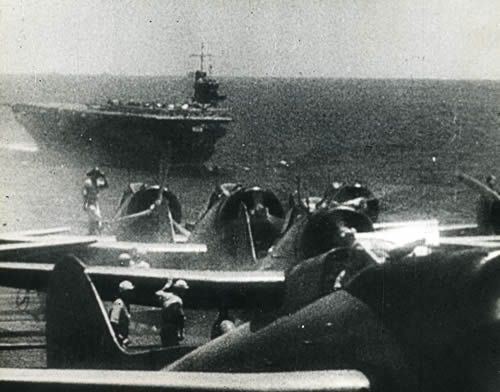
[2] ___________ U.S. Army/ Marine Counterinsurgency Field Manual FM 3-24 MCWP 3-33.5 15 December 2006 with and forward by General David A Petraeus and General James Amos, Konecky and Konecky, Old Saybrook CT 2007 p.26

[3] Gonzalez, Justo L. The History of Christianity Volume 2: The Reformation to the Present Day Harper and Row Publishers San Francisco 1985 p.246

[4] McPherson, James. The Battle Cry of Freedom: The Civil War Era Oxford University Press, Oxford and New York 1988 p.42

[5] Ibid. McPherson The Battle Cry of Freedom p.48

[6] Ibid. Gonzales The History of Christianity Volume 2 p.248

[7] Guelzo Allen C. Fateful Lightening: A New History of the Civil War Era and Reconstruction Oxford University Press, Oxford and New York 2012 p.59

[8] Ibid. Gonzales The History of Christianity Volume 2 p.248

[9] Ibid. McPherson The Battle Cry of Freedom p.48

[10] Ibid. McPherson The Battle Cry of Freedom p.48

[11] Ibid. Gonzales The History of Christianity Volume 2 p.249

[12] Ibid. Guelzo Fateful Lightening: p.63

[13] Ibid. McPherson The Battle Cry of Freedom p.51
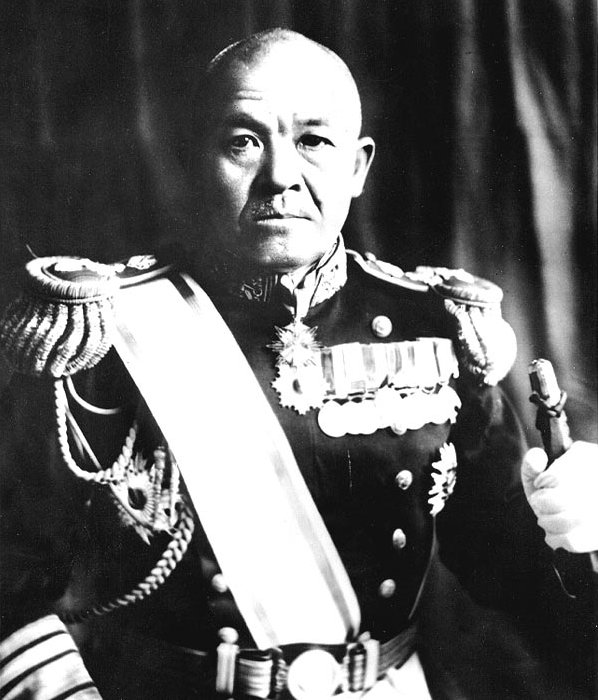
[14] Bush, George W. State of the Union Address Washington D.C. January 28th 2003 retrieved from Presidential Rhetoric.com http://www.presidentialrhetoric.com/speeches/01.28.03.html 10 June 2015

[15] Oren, Michael Power, Faith and Fantasy: America and the Middle East 1776 to the Present W.W. Norton and Company, New York and London 2007 p.584

[16] Twain, Mark To the Person Sitting in Darkness February 1901 Retrieved from The World of 1898: The Spanish American War The Library of Congress http://www.loc.gov/rr/hispanic/1898/twain.html 12 December 2014

[17] Ibid. Tuchman Practicing History p.289

[18] Ibid. U.S. Army/ Marine Counterinsurgency Field Manual p.27

[19] Rubin, Barry Religion in International Affairs in Religion: The Missing Dimension of Statecraft Oxford University Press, Oxford and New York 1994 p.20

[20] Ibid. Rubin Religion in International Affairs p.22

2 Comments

Filed under civil war, History, middle east, national security, News and current events, Political Commentary, Religion

Improbable and Unlikely: Victory at Midway

800px-tbd_attacking_at_midway_painting-1

Friends of Padre Steve’s World

As I mentioned earlier in the week I am publishing a number of articles on Greatest Generation as we remember the anniversaries of the Battle of Midway in 1942 and the D-Day landings in 1944.

This article is a compilation of a number of articles that I have done in the past with a bit of edition. It deals with the battle of Midway. I hope to do some really serious writing on the topic someday, but most of my writing and research time has been devoted to the Battle of Gettysburg and the American Civil War. Too bad I am not like LCDR Data in Star Trek the Next Generation. Image the productivity, but I digress…

I grew up in a Navy family when it was not popular for people to “support the troops” back during the Vietnam War and in the post-Vietnam era. That being said I developed a love for all things Navy and buried myself in the library, reading and checking out books. My friends probably remember he hauling armloads of books too and from class and too and from school  on the buses that we rode. One of those books was Walter Lord’s classic Incredible Victory about the Battle of Midway. Through it and other books I felt as if I had come to know the men who fought that battle, the men of both sides, gaining an appreciation for their bravery and humanity. As I have mentioned time and time again on this site, people matter the most in history, especially in war. In the intervening years I have spent over 34 years in the U.S. Army and U.S. Navy serving at sea and ashore in combat operations. As such I have a connection to these men, I can imagine what they were going through.

As we get further away from these events we have fewer people who even know about them, and that is really sad because they are so important, and the sacrifices of the men who fought those battles helped secure an opportunity freedom for so many. I know that after the war that the United States has not always lived up to the ideals set forth in the Declaration of Independence, nor how our founders believed that we should pursue relations with other countries. In fact, they would not recognize what we have become. Even so, it is important for us to reexamine these events, to remember the men and women who served, and to remember their sacrifice, even as we acknowledge the tragedy of war and all that it brings.

I hope that you enjoy this and trust that you will have a good day.

Peace

Padre Steve+

 538x362xNorth-American-Aviation-B-25B-Mitchell-launches-from-USS-Hornet-CV-8-18-April-1942-21.jpg.pagespeed.ic.fjuaPl49hb

The Doolittle Raid

Prelude to Battle

The Imperial Japanese Navy under the command of Admiral Isoruku Yamamoto had been humiliated. On April 18th 1942 16 B-25 bombers under the command of Colonel Jimmy Doolittle were launched from the deck of the USS Hornet and bombed Tokyo.  Though the physical damage was insignificant the psychological impact was massive on the Japanese military establishment. In response to the threat, Yamamoto was directed to bring the aircraft carriers of the U.S. Navy to battle and to destroy them.

Prior to the Doolittle Raid, Yamamoto and his deputy Rear Admiral Matome Ugaki had explored the possibility of attacking Midway. However, the Japanese armed forces were competing with each other to determine an overall strategy for the war effort. The Army was insistent on a China strategy while the Navy preferred expansion in the Western, South and Central Pacific.  Yamamoto’s idea envisioned seizing Midway and using it as a forward base from which an invasion of Hawaii could be mounted as well as the bait to draw the carrier task forces of the U.S. Navy into battle and destroy them. Until the Doolittle Raid shocked the Japanese leadership he was unable to do this.

“I Shall Run Wild for the First Six Months”

 893594c746

Admiral Isoruku Yamamoto

Yamamoto was one of the few Japanese military or political leaders who opposed war with the United States. He had lived in the United States, gotten to know Americans and recognized the how the massive economic and industrial power of the United States would lead to the defeat of Japan. He told Premier Konoye in 1941 “I shall run wild for the first six months or a year, but I have utterly no confidence for the second or third years of the fighting.”

It is hard to imagine now, but in June of 1942 it seemed a good possibility that the Americans and British could be on the losing side of the Second World War.

True to Yamamoto’s words in 1942 the Japanese onslaught in the Pacific appeared nearly unstoppable. The Imperial Navy stormed across the Pacific and Indian Oceans in the months after Pearl Harbor decimating Allied Naval forces that stood in their way.  The British Battleships HMS Prince of Wales and HMS Repulse were sunk by land based aircraft off of Singapore. A force of Royal Navy cruisers and the Aircraft Carrier HMS Hermes were sunk by the same carriers that struck Pearl Harbor in the Indian Ocean.  Darwin Australia was struck with a devastating blow on February 19th and on February 27th the Japanese annihilated the bulk of the American, British, Dutch and Australian naval forces opposing them at the Battle of the Java Sea. American forces in the Philippines surrendered on May 8th 1942 while the British in Singapore surrendered on February 15th.

In only one place had a Japanese Naval task force been prevented from its goal and that was at the Battle of the Coral Sea.  Between 4-8 May the US Navy’s Task Force 11 and Task Force 17 centered on the Carriers USS Lexington and USS Yorktown prevented a Japanese invasion force from taking Port Moresby. Their aircraft sank the light carrier Shoho, damaged the modern carrier Shokaku and decimated the air groups of the Japanese task force. But it was the unexpected raid by US Army Air Corps B-25 Bombers launched from the USS Hornet under command of Colonel Jimmy Doolittle on April 18th 1942 which embarrassed Yamamoto so badly that he ordered the attack to take Midway and destroy the remaining US Naval power in the Pacific.

Cracking the Code

 images-2

Admiral Chester Nimitz

United States Navy codebreakers had broken the Japanese diplomatic and naval codes in 1941, and in May the Navy code breakers at Pearl Harbor discovered Yamamoto’s plan to have the Imperial Navy attack Midway Island and the Aleutian Islands.  Knowing the Japanese were coming, and that the occupation of Midway by Japanese forces would give them an operational base less than 1000 miles from Pearl Harbor, Admiral Chester Nimitz, commander of the U.S. Pacific Fleet committed the bulk of his naval power, the carriers USS Enterprise CV-6, USS Yorktown CV-5 and USS Hornet CV-8 and their 8 escorting cruisers and 15 destroyers to defend Midway.  This force of 26 ships with 233 aircraft embarked to defend Midway while a force of smaller force 5 cruisers and 4 destroyers was dispatched to cover the Aleutians.  The forces on the ground at Midway had a mixed Marine, Navy and Army air group of 115 aircraft which included many obsolete aircraft, 32 PBY Catalina Flying Boats and 83 fighters, dive bombers, torpedo planes and Army Air Force bombers piloted by a host of inexperienced but resolute airmen with which to defend itself. It also had a ground force of U.S. Marines, should the Japanese actually land on the island.

20150122152242

The Japanese Fleet and was built around the elite First Carrier Striking Group, the Kido Butai composed of the Pearl Harbor attackers Akagi, Kaga, Soryu and Hiryu. Led by Vice Admiral Chuichi Nagumo its highly trained and combat experienced air groups composed of 273 aircraft. This force was escorted by 2 Battleships, 3 Cruisers 12 Destroyers. Yamamoto commanded a force of 2 light carriers, 5 Battleships, 11 cruisers and 27 destroyers.  Meanwhile a force of 4 battleships, 12 destroyers assigned screen to the Aleutian invasion force which was accompanied by 2 carriers 6 cruisers and 10 destroyers. The other carriers embarked a further 114 aircraft.  The Japanese plan was ambitious but it was so ambitious that the Japanese Task forces were scattered over thousands of square miles of the Northern Pacific Ocean from which they could not rapidly come to the support of each other.

uss-enterprise-cv-6-1

With the foreknowledge provided by the code breakers the US forces hurried to an intercept position northeast of Midway. They eluded the Japanese submarine scout line which the Japanese Commander Admiral Yamamoto presumed would find them when they sailed to respond to the Japanese attack on Midway.  Task Force 16 with the Enterprise and Hornet sailed first under the command of Rear Admiral Raymond A Spruance in place of the ailing William “Bull” Halsey. Task Force 17 under Rear Admiral Frank “Jack” Fletcher was built around the Yorktown which had been miraculously brought into fighting condition after suffering heavy damage at Coral Sea. Fletcher assumed overall command by virtue of seniority and Admiral Nimitz instructed his commanders to apply the principle of “calculated risk” when engaging the Japanese as the loss of the US carriers would place the entire Pacific at the mercy of the Japanese Navy.

images-43

On June 3rd a PBY Catalina from Midway discovered the Japanese invasion force transport group.  US long-range B-17 bombers launched attacks against these ships but inflicted no damage.

“Our hearts burn with the conviction of sure victory.”

 10-japanese-carriers-coral-sea-midway

On the night of June 3rd 1942 Nagumo’s First Carrier Strike Force sailed east toward the tiny Midway Atoll. Nagumo had seen many of the risks involved in the plan and considered it an “impossible and pointless operation” before the Doolittle Raid on Tokyo, but even the reluctant Nagumo fell in line as Yamamoto relentlessly lobbied for the operation.

As the First Carrier strike force closed within 300 miles of Midway on the night of June 3rd 1942 Nagumo and his staff prepared for the battle that they and many others believed would be the decisive battle. Aircraft received their final preparations, bombs were loaded and as night faded into early morning air crew arose, ate their breakfast and went to their aircraft. The ships had been observing radio silence since they departed their bases and anchorages in Japan the previous week. Honed to a fine edge the crews of the ships and the veteran aircrews anticipated victory.

The crews of the ships of the task force and the air groups embarked on the great aircraft carriers Akagi, Kaga, Soryu and Hiryu as well as their escorts were confident. They had since the war began known nothing but victory. They had devastated the Pacific Fleet at Pearl Harbor and roamed far and wide raiding allied targets and sinking allied shipping across the Pacific and deep into the Indian Ocean. Commander Magotaro Koga of the destroyer Nowaki wrote in his diary “Our hearts burn with the conviction of sure victory.

Chuichi_Nagumo

Vice Admiral Chuichi Nagumo

However, Nagumo and his sailors had no idea that most of what they knew about their American opponents was wrong. Nagumo and Yamamoto were confident that the Americans could field no more than two operational carriers to defend Midway. They had no idea that the Yorktown, which they believed had been sunk at Coral Sea was operational and her air group reinforced by the aircraft of the damaged Saratoga which was being repaired on the West Coast. Unknown to the Japanese the Yorktown and her escorts had joined Enterprise and Hornet northeast of Midway.

The Japanese were going into battle blind. They had planned to get aerial surveillance of US Fleet dispositions at Pearl Harbor, but that had been cancelled because the atoll at French Frigate Shoals that the Japanese flying boats would operate from had been occupied by a small US force. Likewise a line of Japanese submarines arrived on station a day too late, after the US carrier task forces had passed by them. Those aboard the First Carrier Strike Force, including Nagumo or his senior commanders and staff had no idea that the Americans not only knew of their approach but were already deployed in anticipation of their strike.

Within a day all of the Japanese carriers would be sunk or sinking. Thousands of Japanese sailors would be dead and the vaunted air groups which had wreaked havoc on the Allies would be decimated, every aircraft lost and the majority of pilots and aircrew dead. It would be a most unexpected and devastating defeat stolen out of the hands of what appeared to be certain victory.

There is a lesson to be learned from the Japanese who sailed into the night on June 3rd 1942 and saw the sunrise of June 4th. There is no battle, campaign or war that goes according to plan. Thousands of Japanese sailors and airmen went to bed on the night of the 3rd expecting that the following night, or within the next few days they would be celebrating a decisive victory. Thousands of those sailors would be dead by the night of the 4th of June 1942, and as their ships slid beneath the waves, the ambitions of Imperial of Japan to defeat the United States Navy and end the war were dealt a decisive defeat from which they never recovered.

Hawks at Angles Twelve

 f2 number mf 21

One of the more overlooked aspects of the Battle of Midway is the sacrifice of Marine Fighter Squadron 221 on the morning of June 4th 1942.   The Marine aviators flying a mix of 21 obsolescent Brewster F2A-3 Buffalos and 7 Grumman F4F-3 Wildcats engaged a vastly superior force of Japanese Navy aircraft as they vectored toward the atoll to begin softening it up for the planned invasion.

g701850

Led by Major Floyd Parks the squadron had arrived at Midway on Christmas day 1941 being delivered by the USS Saratoga after the aborted attempt to relieve Wake Island.  The squadron along with Marine Scout Bombing Squadron 241 (VMSB 241) formed Marine Air Group 22.  They fighter pilots of VMF-221 scored their first victory shooting down a Japanese Kawanishi H8K2 “Emily” flying boat. The squadron which initially was composed of just 14 aircraft, all F2A-3’s was augmented by 7 more F2A-3s and 7 of the more advanced F4F-3s before the battle.

douglas-sbd5-dauntless-dive-bomber-battle-of-midway-01

USMC Vought SB2-U3 Vindicators

When the Japanese First Carrier Striking Group was spotted in the wee hours of June 4th the Marines and other aircrew aboard Midway scrambled to meet them.  The 18 SBD-2 Dauntless’ and 12 Vought SB2-U3 Vindicator dive bombers of VMSB-241, the 6 TBF Avengers of the Navy Torpedo Eight detachment, 4 Army Air Corps B-26 Marauders and 15 B-17 Flying Fortresses flew out to attack the Japanese carriers while the fighters rose to intercept the 108 aircraft heading toward Midway. The 72 strike aircraft, 36 Aichi 99 Val Dive Bombers and 36 Nakajima B5N Torpedo/ High Level Bombers were protected by 36 AM6-2 Zeros which thoroughly outclassed the Marine opponents in speed, maneuverability and in the combat experience of their pilots.

The Marine fighters audaciously attacked the far superior Japanese force, throwing themselves against the Japanese phalanx with unmatched courage.  Despite their courage the Marine fighters were decimated by the Japanese Zeros.  The Marines shot down 4 Val dive bombers and at least three Zeros but lost 13 Buffalos and 3 Wildcats during the battle.  Of the surviving aircraft only three Buffalos and three Wildcats were in commission at the end of the day. Among the casualties killed was Major Parks.  Of the surviving pilots of VMF-221, two became “Aces” during the war. Lieutenant Charles M. Kunz would later fly in VMF-224, adding six victories to end the war with 8 victories. Capt. Marion E. Carl would later fly in VMF-223 raising his score to 18.5 Japanese aircraft shot down.  Other pilots like 2nd Lieutenant Clayton M. Canfield shot down two additional aircraft while flying with VMF-223. 2nd Lieutenant Walter W. Swansberger won the Medal of Honor at Guadalcanal.

F2A-3+Buffalo

VMF-221 Attacks

The last remaining Marine fighter pilot of VMF-221 from the battle of Midway, Williams Brooks died in January 2010 and was buried with full military honors, in Bellview, Nebraska. Brooks in his after action report described his part in the battle:

I was pilot of F2A-3, Bureau number 01523, Our division under Capt. Armistead was on standby duty at he end of the runway on the morning of June 4, 1942, from 0415 until 0615. At about 0600, the alarm sounded and we took off. My division climbed rapidly, and I was having a hard time keeping up. I discovered afterwards that although my wheels indicator and hydraulic pressure indicator both registered “wheels up”, they were in reality about 1/3 of the way down. We sighted the enemy at about 14,000 feet, I would say that there were 40 to 50 planes. At this time Lt. Sandoval was also dropping back. My radio was at this time putting out no volume, so I could not get the message from Zed. At 17,000 feet, Capt. Armistead led the attack followed closely by Capt. Humberd. They went down the left of the Vee , leaving two planes burning. Lt. Sandoval went down the right side of the formation and I followed. One of us got a plane from the right side of the Vee. At this time, I had completely lost sight of my division. As I started to pull up for another run on the bombers, I was attacked by two fighters. Because my wheels being jammed 1/3 way down, I could not out dive these planes, but managed to dodge them and fire a burst or so into them as they went past me and as I headed for the water. As I circled the island, the anti-aircraft fire drove them away. My tabs, instruments and cockpit were shot up to quite an extent at this time and I was intending to come in for a landing. 

It was at this time that I noticed that a important feature in their fighting. I saw two planes dog-fighting over in the east, and decided to go help my friend if at all possible. My plane was working very poorly, and my climb was slow. As I neared the fight both planes turned on me. It was then that I realized I had been tricked in a sham battle put on by two Japs and I failed to recognize this because of the sun in my eyes. Then I say I was out-numbered, I turned and made a fast retreat for the island, collecting a goodly number of bullets on the way. After one of these planes had been shaken, I managed to get a good burst into another as we passed head-on when I turned into him. I don’t believe this ship could have gotten back to his carrier, because he immediately turned away and started north and down. I again decided to land, but as I circled the island I saw two Japs on a Brewster. Three of my guns were jammed, but I cut across the island, firing as I went with one gun. But I could not get there in time to help the American flier and as soon as the Brewster had gone into the water I came in for a landing at approximately 0715 (estimated). 

As for VMF-221 it was re-equipped with the F4F-4 and later with the F4U Corsair during the course of two more deployments overseas.  VMF-221 finished the war with a score of 155 victories, 21 damaged and 16 probable kills, the second highest total of any Marine Corps Squadron during the war.

Their bomber counterparts of VMSB 241 attacked the Japanese task force on the morning of June 4th and scored no hits while losing 8 aircraft. The survivors were again in action later in the day as well as the following day where they helped sink the Japanese Heavy Cruiser Mikuma with their squadron leader Major Henderson diving his mortally wounded aircraft into the cruiser’s number 4 8” gun turret. While the Marines’ actions are not as well known or as successful as those of their Navy counterparts they were brave.  Fighter pilots had to engage some of the most experienced pilots flying superior machines while the bomber crews had little to no experience before being thrown into combat.

Into the Valley of Death: The Last Ride of the Torpedo Bombers

 eneterprise-vt-6-midway1

Alfred, Lord Tennyson wrote in the Charge of the Light Brigade something that echoes to this day when we talk or write about men who charge the gates of death against superior enemies.

Half a league half a league,

Half a league onward,

All in the valley of Death

Rode the six hundred:

‘Forward, the Light Brigade!

Charge for the guns’ he said:

Into the valley of Death

Rode the six hundred.

 VT-6

They were not six hundred and they were not mounted on horses, but the Naval Aviators of Torpedo Squadrons 3, 6 and 8 and their aerial steeds 42 Douglas TBD Devastators and 6 TBF Avengers wrote a chapter of courage and sacrifice seldom equaled in the history of Naval Aviation. Commanded by veteran Naval Aviators, LCDR Lance “Lem” Massey, LCDR Eugene Lindsey and LCDR John Waldron the squadrons embarked aboard the carriers flew the obsolete TBD Devastators. The young pilots of the Midway based Torpedo 8 detachment under the command of LT Langdon Fieberling flew in the new TBF Avengers.

tbd-devastator1

The TBD which first flew in 1935 entered service in 1937 and was possibly the most modern naval aircraft in the world when it entered service.  It was a revolutionary aircraft. It was the first monoplane widely used on carriers and was first all-metal naval aircraft.  It was the first naval aircraft with a totally enclosed cockpit, the first with hydraulic powered folding wings.  The TBD had crew of three and had a maximum speed of 206 miles an hour and carried a torpedo or up to 1500 pounds of bombs (3 x 500) or a 1000 pound bomb.  129 were built and served in all pre-war torpedo bombing squadrons based aboard the Lexington, Saratoga, Ranger, Yorktown, Enterprise and Hornet with a limited number embarked aboard Wasp. 

Go-in-and-get-a-hit


The Devastator saw extensive service prior to the war which pushed many airframes to the end of their useful service life and by 1940 only about 100 were operational by the beginning of the war.  They were still in service in 1942 as their replacement the TBF Avenger was not available for service in large enough numbers to replace them before Midway.  The TBDs performed adequately against minor opposition at Coral Sea and in strikes against the Marshalls but the squadrons embarked on Yorktown (VT3), Enterprise (VT-6) and Hornet (VT-8) were annihilated at Midway with only 6 of 41 aircraft surviving their uncoordinated attacks against the Japanese Carrier Strike Force.  They were too slow, had poor maneuverability, insufficient armor and defensive armament.

The Torpedo squadrons attacked independently of each other between 0920 and 1030 on June 4th 1942. The Japanese Combat Air Patrol ripped into the slow, cumbersome and under armed TBD Devastators as they came in low to launch their torpedoes.  Torpedo Eight from Hornet under the command of LCDR John C Waldron pressed the attack hard but all 15 of the Devastators were shot down.  Only Ensign George Gay’s aircraft was able to launch its torpedo before being shot down and Gay would be the sole survivor of the squadron to be picked up later by a PBY Catalina patrol plane.

Page500_163_6

g66074

LCDR John Waldron (above) LCDR Lem Massey (below)

Torpedo Six from the Enterprise under the command of LCDR Eugene Lindsey suffered heavy casualties losing 10 of 14 aircraft with Lindsey being one of the casualties.  The last group of Devastators to attack was Torpedo Three from the Yorktown under the command of LCDR Lem Massey losing 11 of 13 aircraft with Massey a casualty last being seen standing on the wing of his burning aircraft as it went down.  These aircraft were also decimated and Massey killed but they had drawn the Japanese Combat Air Patrol down to the deck leaving the task force exposed to the Dive Bombers of the Enterprise and Yorktown.  The six aircraft of the Torpedo Eight detachment from Midway under the command of LT Fieberling lost 5 of their 6 aircraft while pressing their attacks.  Only Ensign Bert Earnest and his aircraft survived the battle landing in a badly damaged state on Midway.  Four U.S. Army B-26 Marauder Medium Bombers were pressed into service as torpedo bombers of which 2 were lost.  No torpedo bomber scored a hit on the Japanese Task force even those torpedoes launched at close range failed to score and it is believe that this was in large part due to the poor performance of the Mark 13 aircraft torpedoes.

enterprise-tbd-landing1

Despite the enormous losses of the torpedo squadrons their sacrifice was not in vain. Their attacks served to confuse the Japanese command and delay the rearmament of aircraft following the Japanese strikes on Midway. They also took the Japanese Combat Air Patrol down to sea level and opened the way for American Dive Bombers to strike the Japanese with impunity fatally damaging the Akagi, Kaga and Soryu in the space of 5 minutes.

ts8

The men of Torpedo 8 only one survived 

After Midway the remaining TBDs were withdrawn from active service and no example survives today. The TBF became the most effective torpedo bomber of the war and some remained in service in a civilian capacity to fight forest fires until 2012.


The Provence of Chance: Five Minutes that Changed the War

 Battle%20of%20Midway%20flat_080817160843

The land based aircraft from Midway attacked the Japanese carrier force taking heavy casualties and failed to damage the Japanese task force. When the results of the first strike of the Japanese bombers that hit Midway was analyzed Nagumo readied his second wave.

As this was happening the American carriers launched their strike groups at the Japanese fleet leaving enough aircraft behind as for Combat Air Patrol and Anti-submarine patrol missions.  As the Americans winged toward the Japanese fleet the Japanese were in a state of confusion. The confusion was caused when a scout plane from the Heavy Cruiser Tone that had been delayed at launch discovered US ships but did not identify a carrier among them until later into the patrol. The carrier was the Yorktown and TF 17, but for Nagumo who first expected no American naval forces, then received a report of surface ships without a carrier followed by the report of a carrier the reports were unsettling.

Dauntless_dive_bombers

Aboard the Japanese ships, orders and counter-orders were issued as the Japanese attempted to recover their strike aircraft and prepare for a second strike on the island, but when the Yorktown task force was discovered, orders were changed and air crews unloaded ground attack ordnance in favor of aerial torpedoes and armor piercing bombs. In their haste to get their aircraft ready to strike the Americans, the hard working Japanese aircrews did not have time to stow the ordnance removed from the aircraft. But due to their hard work at 1020 they had the Japanese strike group ready to launch against the US carriers. Aircraft and their crews awaited the order to launch, their aircraft fully armed and fully fueled.

sbdpilot

CDR Wade McClusky 

There had been confusion among the Americans as to the exact location of the Japanese Carriers. Bombing 8 and Scouting 8 from Hornet made a wrong turn and not find the Japanese carriers. The squadrons had to return due to a lack of fuel and a number of bombers and their fighter escort had to ditch in the ocean and wait for rescue. The Enterprise group composed of Bombing-6 and Scouting 6 under CDR Wade McClusky was perilously low on fuel when they spotted the wake of a Japanese destroyer steaming at high speed to catch up with the Japanese carriers.  Taking a chance, McClusky followed it straight to the Japanese Task Force arriving about 1020. The Yorktown’s group under LCDR Max Leslie arrived about the same time.

4-17-106

When the American dive bombers arrived over the Japanese Carrier Strike Force they found the skies empty of Japanese aircraft. Below, aboard the Japanese ships there was a sense of exhilaration as each succeeding group of attackers was brought down and with their own aircraft ready to launch and deal a fatal blow to the American carrier wondered how big their victory would be. The war would soon be decided.

g701870

At 1020 the first Zero of the Japanese attack group began rolling down the flight deck of the flagship Akagi, aboard Kaga aircraft were warming up as they were on the Soryu.  The unsuspecting Japanese were finally alerted to the threat of the American dive bombers when lookouts screamed “helldivers.” The Japanese fighters assigned to the combat air patrol were flying too low as the mopped up the last of the doomed torpedo bombers and were not in a position to intercept the Americans.

2edd2yr

Wade McClusky’s aircraft lined up over the Akagi and Kaga pushing into their dives at 1022. There was a bit of confusion when the bulk of Scouting 6 joined the attack of Bombing 6 on the Kaga. That unprepared ship was struck by four 1000 pound bombs which exploded on her flight deck and hangar deck igniting the fully fueled and armed aircraft of her strike group and the ordnance littered about the hangar deck.  Massive fires and explosions wracked the ship and in minutes the proud ship was reduced to an infernal hell with fires burning uncontrollably. She was abandoned and would sink at 1925 taking 800 of her crew with her.

sbddauntless

LT Dick Best of Scouting 6 peeled off from the attack on Kaga and shifted to the Japanese flagship Akagi. On board Akagi were two of Japan’s legendary pilots CDR Mitsuo Fuchida leader of and CDR Minoru Genda the architect of the Pearl Harbor attack and subsequent string of Japanese victories. Both officers were on the sick list and had come up from sick bay to watch as the fleet was attacked. Seeing Kaga burst into flames they stood mesmerized until Akagi’s lookouts screamed out the warning “helldivers” at 1026.

SBDstoastjapcarrier

Best’s few aircraft hit with deadly precision landing two of their bombs on Akagi’s flight deck creating havoc among the loaded aircraft and starting fires and igniting secondary explosions which turned the ship into a witch’s cauldron.  By 1046 Admiral Nagumo and his staff were forced to transfer the flag to the cruiser Nagara as Akagi’s crew tried to bring the flames under control. They would do so into the night until nothing more could be done and abandoned ship at 2000.  Admiral Yamamoto ordered her scuttled and at 0500 on June 5th the pride of the Japanese carrier force was scuttled.

SBD_ditching_near_USS_Astoria_1942

LCDR Max Leslie ditches his aircraft near a cruiser 

VB-3 under LCDR Max Leslie from the Yorktown stuck the Soryu with 17 aircraft, however only 13 of the aircraft had bombs due to an electronic arming device malfunction on 4 of the aircraft, including that of Commander Leslie.  Despite this Leslie led the squadron as it dove on the Soryu at 1025 hitting that ship with 3 and maybe as many as 5 bombs. Soryu like her companions burst into flames as the ready aircraft and ordnance exploded about her deck. She was ordered abandoned at 1055 and would sink at 1915 taking 718 of her crew with her. A few hours later Hiryu, which had succeeded in launching strikes that seriously damaged Yorktown met the fate of her sisters. Yorktown would be sunk by a Japanese submarine, along with the destroyer Hamman a few days later as her crew attempted to get her to Pearl Harbor. In five pivotal minutes the course of the war in the Pacific was changed.

A Final Ignominy

mikuma_135889

IJN Mikuma 

Admiral Yamamoto was still attempting to digest the calamity that had befallen Admiral Nagumo’s carrier task force. In the shocked atmosphere of the mighty Super Battleship Yamato’s command center the Staff of the Combined Fleet was hastily attempting to arrive at a solution which might reverse the disaster and bring victory.  Admiral Ugaki, Yamamoto’s Chief of Staff, despite strong personal doubts, ordered Vice Admiral Nobutake Kondo to prepare for a night surface engagement with the US Fleet and dispatched a strong surface force to bombard Midway in order to prevent the Americans from reinforcing it and to prevent its further use against his forces should the invasion move forward.  Kondo then organized his fleet to attempt to find the American carriers and bring them to battle before dawn.

Kondo detached Vice Admiral Takeo Kurita’s Close Support Group composed of Cruiser Seven, the fastest and most modern cruisers in the Imperial Navy proceed at full speed to attack Midway.  Kurita’s cruisers, the Kumano, Suzuya, Mikuma and Mogami were each armed with 10 8” guns and were escorted by the two destroyers.

Kurita’s force was 80 miles from Midway when Yamamoto realizing that his plan was unrealistic ordered Kondo’s forces to retreat and rendezvous with his main force shortly after midnight. The order was met with a measure of relief by most officers in the force and the force turned northwest and steamed at 28 knots to meet the Main Body.  At 0215 lookouts on Kumano sighted a submarine on the surface which turned out to be the USS Tambor which had been shadowing the group, and made a signal for the force to make a emergency 45 degree turn to port.

During the process Mogami’s Navigator took over from the watch to oversee the tricky maneuver. In doing so he thought that there was too much distance between him and the ship ahead, the Mikuma. So he adjusted his course to starboard and then realized his mistake. The ship he thought was Mikuma was actually Suzuya and Mikuma was directly ahead. As soon as he recognized his mistake Mogami’s Navigator ordered a hard turn to port and reversed the engines but it was too late. Mogami’s bow crashed into Mikuma’s port quarter. The impact caused minimal damage to Mikuma but Mogami was heavily damaged. She lost 40 feet of her bow and everything else was bent back to port at right angles to her number one turret.

Mogami’s damage control teams isolated the damage and worked the ship up to 12 knots. This was not fast enough for Kurita to make his rendezvous so he left Mikuma and the destroyers to escort Mogami while he steamed ahead with Kumano and Suzuya.

72149d1361e15e9f1540c2b425c023c7

Tambor’s skipper LCDR John W Murphy sent a contact report at 0300 reporting “many unidentified ships.” He followed this with more detailed information and the Americans on Midway began to launch its remaining serviceable aircraft to attack the threat. A flight of B-17 Bombers launched at 0430 could not find the Japanese ships but at 0630 a PBY Catalina found the Japanese and radioed Midway “two Japanese battleships streaming oil.”  The remaining 12 aircraft of VSMB-241 under command of Captain Marshall Tyler a mix of SBD Dauntless and SB2U Vindicators took off at 0700. His force attacked at 0808 scoring no hits. However, Marine Captain Richard Fleming, his Vindicator on fire dropped his bomb and then crashed his aircraft into Mikuma’s after turret. Sailors aboard Mogami were impressed, the American had sacrificed himself in a suicide attack worthy of the Samurai. The fire was sucked down air intakes into the starboard engine room with disastrous results. The Mikuma’s engineers were suffocated by the smoke and fumes and Mikuma was greatly reduced in speed.

mogami

Mikuma shattered, note wreckage of Captain Fleming’s Vindicator on turret 

The two ships limped northwest at 12 knots escorted by the destroyers and were unmolested through much of the day with the exception of an ineffective attack by the B-17s at 0830. The following morning the Dive Bombers of Enterprise and Hornet were at work and found the crippled Japanese ships. Waves over US Dive Bombers attacked the cruisers throughout the morning and into the afternoon. Mikuma was hit at least 5 times and secondary explosions of ammunition and torpedoes doomed the ship. Mogami was also heavily damaged but remained afloat while both destroyers received bomb damage.  At sunset the tough cruiser rolled over to port and sank into the Pacific. Mogami whose damage control teams had performed miracles to keep their ship afloat helped the destroyers rescue survivors from Mikuma.  Only 240 were rescued with 650 officers and sailors going down with the ship.

Link15-Mikuma-damage

Survivors abandoning Mikuma

The action against the cruisers ended the combat operations at Midway. The Japanese ships were doomed by Yamamoto’s decision to try to salvage victory from defeat and the error of Mogami’s Navigator during the emergency turn when Kumano sighted Tambor. The only thing that kept the result from being total was the efficacy of Mogami’s damage control teams.  Mogami was out of the war for 10 months following repairs and conversion to an Aircraft Cruiser in which her aft turrets were removed to increase the number of float plane scouts that the ship could carry. She rejoined the fleet in April 1943 and was sunk following the Battle of the Surigao Strait on 25 October 1944.

The Mogami and Mikuma proved to be tough ships to sink. Unprotected by friendly aircraft they fought hard against the unopposed American Dive Bombers. They suffered massive damage from 500 and 1000 pound bombs, both direct hits and near misses. Mogami was saved by the skill of her damage control teams and the foresight of her Damage Control Officer to jettison her torpedoes so that they did not explode and compound the damage wrought by the American bombs.


Epilogue

At Midway a distinctly smaller force defeated a vastly superior fleet in terms of experience, training and equipment. At the very moment that it appeared to the Japanese that they would advance to victory their vision disappeared. In a span of less than 5 minutes what looked like the certain defeat of the US Navy became one of the most incredible and even miraculous victories in the history of Naval warfare. In those 5 minutes history was changed in a breathtaking way. While the war would drag on and the Japanese still inflict painful losses and defeats on the US Navy in the waters around Guadalcanal the tide had turned and the Japanese lost the initiative in the Pacific never to regain it.

h73065

The Japanese government hid the defeat from the Japanese people instead proclaiming a great victory. The American government could not fully publicize the victory for fear of revealing the intelligence that led to the ability of the US Navy to be at the right place at the right time and defeat the Imperial Navy.

The American victory at Midway changed the course of the war in the Pacific. The Battle of Midway established the aircraft carrier and the fast carrier task force as the dominant force in naval warfare which some would argue it still remains. Finally those five minutes ushered in an era of US Navy dominance of the high seas which at least as of yet has not ended as the successors to the Enterprise, Hornet and Yorktown ply the oceans of the world and the descendants of those valiant carrier air groups ensure air superiority over battlefields around the world today.

Leave a comment

Filed under aircraft, History, Military, Navy Ships, US Navy, World War II at Sea, world war two in the pacific