Tag Archives: dennis hart mahan

“If the Enemy is There Tomorrow, We Must Attack Him” Lee’s Decision to Continue his Attack and Failure to Appreciate Changing Technology


lee-and-longstreet-10709161246_9f5baf6452_o

One of the key issues that military leaders must face is how new and changing technology changes the shape of the battlefield and impacts operations at the tactical as well as the operational level. While some technological advances merely adjust how military organizations fight, others force military organizations to completely change the way they conduct war. Examples are found throughout history, but truly became more far reaching during the Civil War with their echoes redounding to the present day.

Those changes can include firepower, protection, mobility, communication and even the frontiers of war to what goes on underwater, in the air, in space and cyber-space. None of these advances are necessarily limited to how military professionals conduct war at any given time. In fact technological changes are often unwelcome by military professionals who have invested their professional lives and careers defending doctrinal traditions. Likewise those victimized by opponents who use new technology to their advantage sometimes accuse their opponents as being unfair, as if fairness counts in war.

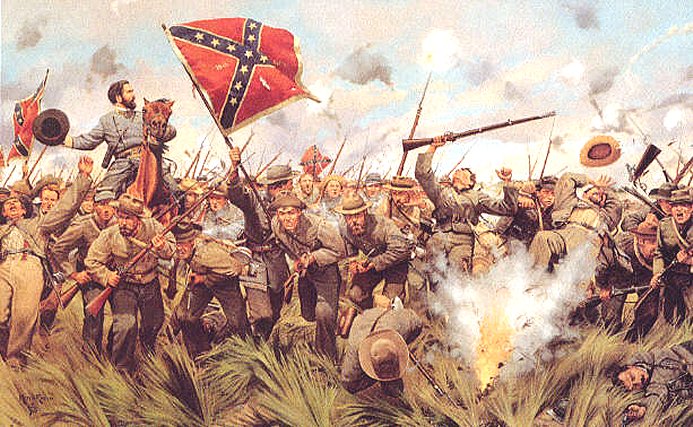
The development of the rifled musket just prior to the Civil War and its widespread usage on the battlefield brought about change that most leaders were slow to appreciate, including Robert E. Lee. The fact was that the rifled musket changed war even when military tactics were still rooted in Napoleonic tactics, which were built around the weaponry commonly employed in 1800, the smoothbore flintlock musket, with an effect range of barely 100 yards and smoothbore artillery. The artillery, even when firing grapeshot and canister was superior in range, lethality and as a result dominated the offense. [1] Thus Napoleonic tactics emphasized the artillery as an assault weapon, placed in advance of the infantry, breaking up enemy formations and allowing the infantry to close with the enemy and finish him with the bayonet charge.

The advent of the rifled musket, use of percussion caps and the Minie’ ball bullet by necessity changed how war had to be fought. Rifles firing the Minie’ ball “had an effective range of at least 500 yards” [2] and the new weapons outranged both grapeshot and canister, putting artillerymen exposed to the long range rifle fire in more danger on the battlefield. Not only did they do this but they allowed the infantryman to increase his rate of fire.

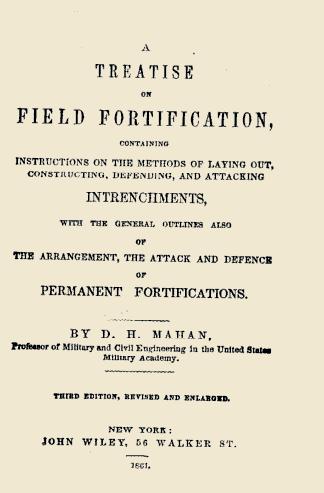
Prior to this the limitations of the smoothbore flintlock musket necessitated that the infantry form in dense formations where their firepower could be concentrated. Dennis Hart Mahan was one of the first to recognize how this would change warfare and in 1847 advocated that close line and columns be “replaced by the regular infantry advancing in the loose order of skirmishers” and “take advantage of available cover and close by rushing within about 200 yards.” [3] Even so both armies, as well as their European counterparts were restrained by their continued adherence to “a body of tactical doctrine with long roots back to the 1790s,” the debate between the virtues of line and column formations. [4] The effectiveness of the new weapons was seen by American observers to the Crimean War and despite this both the Union and Confederate armies insisted on employing the old tactics in massed infantry attacks.

This was in part because many of the senior leaders had last experienced combat in the Mexican War, where both sides still used smoothbore muskets and in which frontal attacks and bayonet charges were used effectively. However, as Bruce Catton so well noted:

“the generals had been brought up wrong. The tradition they had learned was that of close order fighting in the open country, where men with bayonets bravely charged a line of men firing smoothbore muskets. That used to work well enough, because the range at which defenders could kill their assailants was very short….But the rifle came in and changed all of that. The range which charging men began to be killed was at least five times as great as it used to be, which meant about five times as many of the assailants were likely to be hit…A few men, like young Colonel Upton, sensed that new tactics were called for, but most could not quite get the idea.” [5]

Lee was one of them.

This new technology changed the battlefield, although many leaders were slow to appreciate who. “The artillery now had to fall back behind the infantry and became a support instead of an assault weapon.” [6] The new firepower available to the infantry “reduced artillery to the defense and forced cavalry to fight dismounted beside the infantry,” [7] something that had been show in its best form in John Buford’s defense of McPherson Ridge on the morning of July first. “The devastating increase in firepower doomed the open frontal assault and ushered in the entrenched battlefield.” [8]

Despite the plentiful evidence which showed that the defense now had the advantage, including his own experience at Malvern Hill and at Fredericksburg, Lee as well as his “right arm” Thomas “Stonewall” Jackson were firm believers in the offense. In their vision of battle, the the close assault of infantry and the bayonet retained its Napoleonic prominence, in 1861 Jackson enunciated his tactical philosophy: “my opinion is that there should not be much firing at all. My idea is that the best mode of fighting is to reserve your fire until the enemy get- or until you get them- to close quarters. The deliver one deadly, deliberate fire- and charge [with the bayonet].” [9] In fact the more time that Lee worked with Jackson the more he became an adherent of the offense, requiring “large scale battles and large casualties” [10] in order to bring about a climactic victory that would secure Southern independence.

At Gettysburg, Lee was “counting on the fighting spirit- the élan, as it is called in the French army- of his officers and men to win the day.” [11] The war in Mexico had not prepared Lee for the advent of the rifle and its effect on the battlefield and despite the tactical preference for the bayonet, the use of that weapon proved rare in combat. Heroes Von Borcke, a Prussian who served under the command of Stuart wrote the “accounts of bayonet fights are current after every general engagement, and are frequently embodied in subsequent ‘histories,’ so called; but as my experience goes, bayonet-fights rarely occur, and exist only in the imagination.” [12] Russell Weigley noted that “bayonet and saber wounds combined accounted for only 922 of some 250,000 wounded treated in Union hospitals during the war.” [13] But as late as 1862 Jackson just before Second Manassas “urged the Light Division under attack to hold their fire and use their bayonets” while “Lee’s penchant for frontal attacks when flanking and enveloping maneuvers failed to secure the results he hoped for…suggests slowness on the part of this otherwise astute and even brilliant commander to appreciate the power of the new weaponry.” [14] However, that being said, in defense of Lee, Jackson and so many commanders of the Civil War, despite the predictions of Mahan 15 years prior, “had no precedent to guide them, for all intents and purposes this was a new weapon.” [15] However, that was before the war began and bitter experience and massive casualties had demonstrated the power of the new weapons, especially when used by troops in strong defensive positions.

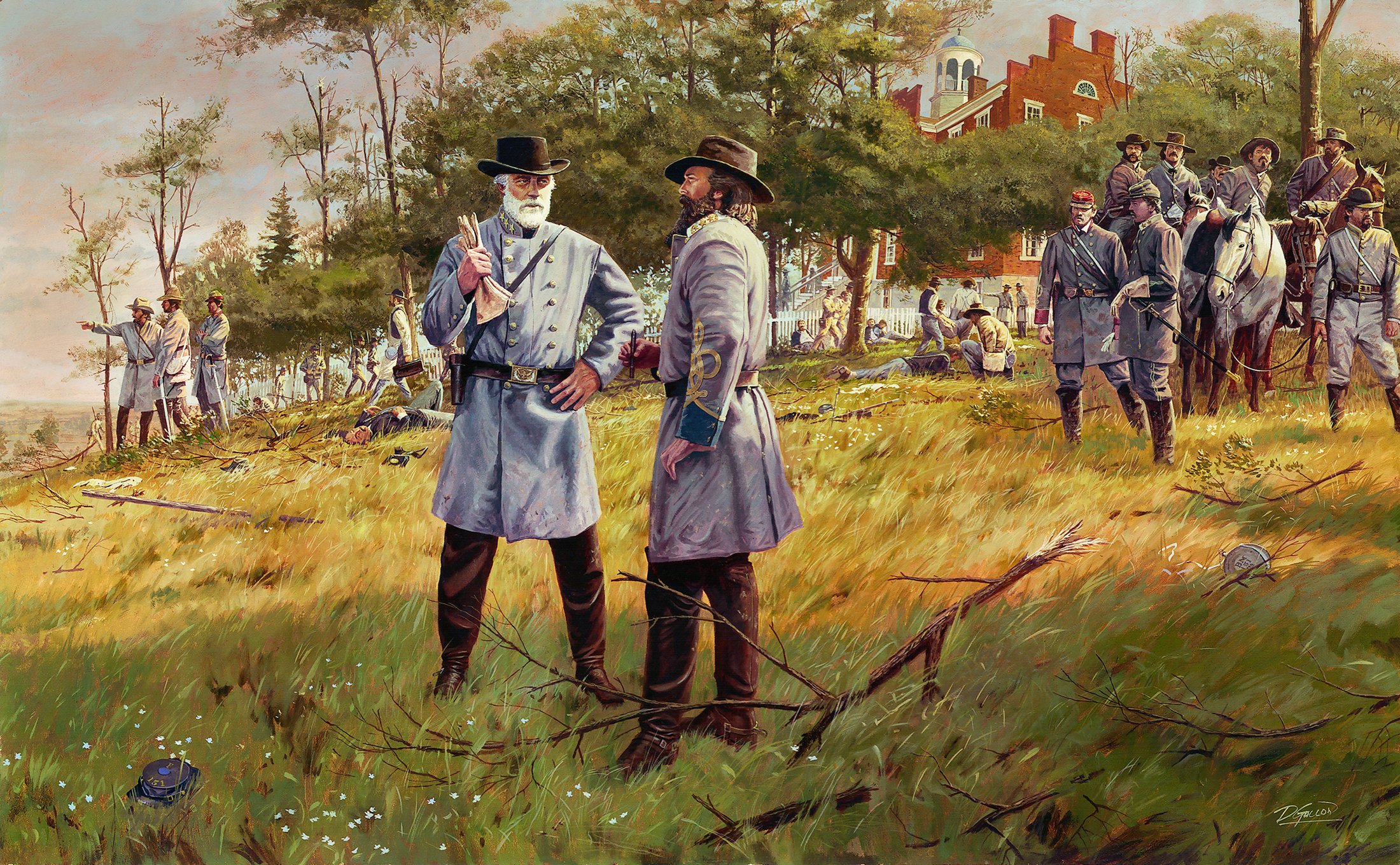
At about 5 p.m. on July 1st Lieutenant General James Longstreet reached the battlefield ahead of his corps, the closest division being still six miles away from the battle. He joined Lee on Seminary Ridge and commenced to survey the battlefield for a period of about ten minutes. While the scene before him gave the appearance of Confederate victory, Longstreet thought otherwise and believed that the Federal troop’s position on Cemetery Hill and Ridge “was a strong one.” [16] However, Lee despite his initial hesitancy to engage the Federal army was now certain that he could follow up the success of the day, and if the Union forces which he had driven back to the hill were still there the next morning “he had plenty of fresh troops to move in behind them and finish them off.” [17] Lee believed, even without any true idea of where the rest of the Federal Army was that he would be able to defeat it in detail as each Union corps arrived on the field. But Lee had misjudged Meade’s response and the movement of the Army of the Potomac to Gettysburg, and instead of a part of that army, almost all of it would be in place on ground of Meade and his commanders choosing.

The actions of Lee and his “Old Warhorse” on Seminary Ridge are part of much of the myth of Gettysburg, and the cause of endless debate between Lee’s supporters and Longstreet’s detractors. After Longstreet surveyed the ground he was pleased. The battlefield appeared to be set up for what he believed was a repetition of the Confederate victory at Fredericksburg, as he was under the assumption that Lee had promised to fight a defensive battle when contact was made. [18]

However, Longstreet was not aware of Lee’s though process on the march up. Lee had discussed the matter with Isaac Trimble on June 27th, before he discovered that Hooker had been relieved and was across the Potomac. Trimble recalled Lee’s words:

“Our army is in good spirits, not overly fatigued, and can be concentrated on any point in twenty-four hours or less….They will come up, probably through Frederick; broken down with hunger and hard marching, strung out on a long line and march demoralized, when they come into Pennsylvania. I shall throw an overwhelming force on their advance, crush it, follow up the success, drive on corps back and another, and by successive repulses and surprises before they can concentrate; create a panic and virtually destroy the army.” [19]

Trimble’s account of Lee’s state of mind is consistent with how Lee had conducted his operations over the previous year, Lee’s watchword in nearly every encounter with Union forces was “we must destroy this army” and the “aim of his maneuvers was always the battle of annihilation.” [20]

The only record of the conversation between the two men is that of Longstreet, written in his memoirs after years of being blamed by Lee’s supporters for the loss at Gettysburg. Without that knowledge and still under the impression, or “delusion” as Clifford Dowdey wrote, [21] that Lee had accepted his idea of fighting defensive battles in Pennsylvania. He “said that “he didn’t like the look of things, and he urged quite vehemently that the Confederates avoid any attack on the union position at Gettysburg.” [22] Longstreet commented: to Lee: “We could not call the enemy to position better suited to our plans. All we do is have do is to file around his left and secure good ground between him and his capital.” [23] Thus Longstreet was stunned by Lee’s impatience with the suggestion noting that Lee said “If he is there tomorrow I will attack him.” [24] Longstreet and Lee debated the matter for a while and Longstreet replied to Lee’s comment: “If he is there, it will be because he is anxious that we would attack him- a good reason, in my judgment, for not doing so.” [25]

That conversation has ignited a debate that continues today, but both Lee and Longstreet had sound arguments to support their positions, but both were hamstrung by the absolute lack of intelligence as to where the rest of the Federal army was and Meade’s intentions. Longstreet’s strategic and tactical concepts regarding employing the tactical defensive in the offense “grew out of an appreciation of the advantages Civil War military technology gave to the side having strong defensive positions.” [26] But the course of action that he suggested to Lee was vague and impractical, he did not specify at any time whether he meant a strategic sweeping move to the south or a shorter tactical move around the Round Tops, and “Lee rightly dismissed it at the time. Without Stuart’s cavalry he could not agree to a movement into the unknown.” [27]

Those that believe that if only Longstreet’s advice to move around the enemy was followed that the Confederates would have won a victory are mistaken. One of the key errors that many military history buffs make is that they assume that if one strategy failed and another had been suggested that the neglected course of action would have brought about victory. This is the case with those who assume that if only had lee followed Longstreet’s advice he would have won the battle. That neglects the understanding that the enemy too has a say in one’s plan. Several other factors have to be considered in this. First Meade had already prepared at strong position at Pipe Creek on the Maryland Pennsylvania border, this position was actually a stronger defensive position than Gettysburg. Likewise it neglects to account for the fact that any such maneuver would have exposed Lee’s army’s flank as it was strung out on the march in front of a now concentrated Federal army, and it ignores the logistics of the move deep in enemy territory without knowledge of the enemy’s positions. Additionally and possibly more important neither Lee nor Longstreet “had no idea where this “magic” good ground could be found, and no way to look for it until Stuart arrived with the cavalry.” [28]

But while rejecting Longstreet’s advice to move around the enemy what other choices did Robert E. Lee have on the evening of July 1st 1863? Lee obviously and with good reason rejected maneuver as a possibility, but there were other options, as Porter Alexander and others have noted. Freeman and others have discussed the concern that Lee had with forage, and his fear that if he remained in place that with supplies low that “the Federals could easily block the mountain passes and limit the area in which the Southern army could forage.” [29] But this need did “not require his renewal of the battle on July 1 any more than days following….” [30] Alexander noted that it was possible “for the Confederates to have abandoned Seminary Ridge on the night of July 1 or on July 2: “The onus of the attack was on Meade….we could have fallen back on Cashtown & held the mountain passes… & popular sentiment would have forced Meade to take the aggressive.” [31]

It seems that Lee’s decision to attack on July 2nd was mistaken, despite his appraisal that “A battle had, became in a measure unavoidable, and that the success already gained gave hope of a favorable issue.” [32] But Lee’s assertion is very much a matter of his framing life and actions in the context a nearly fatalistic understanding of Divine Providence and God’s will, it was not in accordance with the facts on the ground. Lee remarked “as soon as I order my army into battle, I leave my army in the hands of God…” [33] Porter Alexander later wrote “Not fully appreciating the strength of the enemy’s position, and mislead by the hope that a large fraction of the Federal Army was out of reach, Lee had determined to strike….” [34]

Lee elected to attack again, and even when he had the knowledge that most of the Federal army had come up he continued with his attack, committing his troops to fight an enemy who had strong defensive positions, high ground and interior lines from which they could shift troops and artillery to endangered sectors. Lee had taken heavy casualties on July 1st, three of the four divisions committed had been severely blooded and two division commanders wounded and he still did not have his entire army in position. As night settled on July 1st the only decision Lee had not made was where to make his attack.

Lee’s decision to attack, even when knowing the full Federal army was on the field was an exercise of both bad strategy, hubris and the refusal to acknowledge how the battlefield had changed with the advent of the rifled musket. It showed that even a great commander and a man associated with military genius was not infallible, despite the myth of the Lost Cause and its icon, General Robert E. Lee.

Peace

Padre Steve+

Notes

[1] Fuller, J.F.C. The Conduct of War 1789-1961 Da Capo Press, New York 1992. Originally published by Rutgers University Press, New Brunswick N.J p.104

[2] Ibid. Fuller The Conduct of War 1789-1961 p.104

[3] Hagerman, Edward. The American Civil War and the Origins of Modern Warfare. Midland Book Editions, Indiana University Press. Bloomington IN. 1992 p.10

[4] Guelzo, Allen C. Gettysburg: The Last Invasion Vintage Books a Division of Random House, New York 2013 p.38

[5] Catton, Bruce. A Stillness at Appomattox Doubleday and Company Garden City, New York 1953 pp.154-155

[6] Ibid. Fuller The Conduct of War 1789-1961 p.104

[7] Ibid. Hagerman The American Civil War and the Origins of Modern Warfare. p.xii

[8] Ibid. Hagerman The American Civil War and the Origins of Modern Warfare. p.xi

[9] Weigley, Russell F. American Strategy from its Beginnings to the First World War in Makers of Modern Strategy from Machiavelli to the Nuclear Age edited by a Peter Paret, Princeton University Press, Princeton New Jersey, 1986 p.428

[10] Weigley, Russell F. American Strategyp.426

[11] Korda, Michael Clouds of Glory: The Life and Legend of Robert E. Lee Harper Collins Books, New York 2014 p.593

[12] Fuller, J.F.C. Grant and Lee: A Study in Personality and Generalship Indiana University Press, Bloomington Indiana 1957 p.48

[13] Ibid. Weigley American Strategy p.428

[14] Ibid. Weigley American Strategy p.428

[15] Ibid. Fuller Grant and Lee p.48

[16] Ibid. Korda Clouds of Glory p.559

[17] Ibid. Guelzo Gettysburg: The Last Invasion p.215

[18] Freeman, Douglas Southall, Lee’s Lieutenant’s a Study in Command, One volume abridgement by Stephen W Sears, Scribner, New York 1998 pp.574-575

[19] Thomas, Emory Robert E. Lee W.W. Norton and Company, New York and London 1995 pp.293-294

[20] Ibid. Weigley American Strategy p.427

[21] Dowdy, Clifford. Lee and His Men at Gettysburg: The Death of a Nation Skyhorse Publishing, New York 1986, originally published as Death of a Nation Knopf, New York 1958 p.169

[22] Coddington, Edwin B. The Gettysburg Campaign: A Study in Command, A Touchstone Book, Simon and Schuster New York, 1968 p.360

[23] Longstreet, James From Manassas to Appomattox, Memoirs of the Civil War in Americaoriginally published 1896, Amazon Kindle Edition loc. 5059

[24] Ibid. Longstreet From Manassas to Appomattox loc. 5059

[25] Sears, Stephen W. Gettysburg. Houghton Mifflin Co. Boston and New York 2003 p.234

[26] Ibid. Coddington The Gettysburg Campaign: A Study in Command p.360

[27] Wert, Jeffry D. General James Longstreet The Confederacy’s Most Controversial Soldier, A Touchstone Book, Simon and Schuster, New York and London 1993 p.258


[28] Ibid. Korda Clouds of Glory p.561

[29] Ibid. Freeman Lee’s Lieutenants p.575

[30] Nolan, Alan T. R. E. Lee and July 1 at Gettysburg in the First Day at Gettysburg edited by Gallagher, Gary W. Kent State University Press, Kent Ohio 1992 p.24

[31] Ibid. Nolan R. E. Lee and July 1 at Gettysburg p.24

[32] Ibid. Freeman Lee’s Lieutenants p.575

[33] Ibid. Fuller Grant and Lee p.112

[34] Alexander, Edward Porter Military Memoirs of a Confederate: A Critical Narrative 1907 republished 2013 by Pickle Partners Publishing, Amazon Kindle Edition loc. 7517

 

1 Comment

Filed under civil war, leadership, Military

Gettysburg Day Two: The Complex Character of Gouverneur Warren and Little Round Top

gkwarren

Brigadier General Gouverneur Warren

Throughout this study we have been looking at how leaders at various levels in conduct of campaigns as well as battles make decisions. Likewise we examine the lives and character of those leaders as it applies to their actions at critical points of a battle. In this chapter we will examine three officers whose lives, character and actions at Gettysburg, specifically at Little Round Top exemplify two of the Chairman of the Joint Chiefs of Staff Desired Leader Attributes, “to anticipate and adapt to surprise and uncertainty” and the principle of Mission Command, to “operate on intent through trust, empowerment and understanding.” It is from those perspectives that we will look at this part of the battle, but we would be amiss if we did not address the nearly mythical status to which this action has risen.

The actions of three men at the Battle of Little Round Top; Brigadier General Gouverneur Warren, the Chief Engineer of the Army of the Potomac, Colonel Strong Vincent, commanding Third Brigade, First Division, V Corps and Colonel Joshua Lawrence Chamberlain, commanding the 20th Maine Infantry Regiment of Vincent’s brigade are very important to the outcome of the battle, but also for what they teach us about leadership and the profession of arms. This chapter focuses on Warren, in particular with his work with the Commander of the Army of the Potomac, George Meade and his actions to secure Little Round Top on July 2nd 1863, the next will deal with Chamberlain and Vincent.

The battle at Little Round Top is an iconic part of American History and in particular for the Army, a key element of how leadership has been studied. It has achieved nearly mythical status due to the actions of Colonel Joshua Chamberlain which have been told many times in history, fiction and in film, particularly Michael Shaara’s classic historical novel The Killer Angels and its film adaptation Gettysburg. While these accounts are certainly inspiring and allow us to experience the emotion and near spiritual quality of what Chamberlain writes, there is much more to learn.

That near spiritual quality and mythic status that we accord Gettysburg is important, for in large part it is why we come to the battlefield, and why we study. Chamberlain said it well many years after Gettysburg at the dedication of the Maine Monuments:

“In great deeds, something abides. On great fields, something stays. Forms change and pass; bodies disappear; but spirits linger, to consecrate ground for the vision-place of souls… generations that know us not and that we know not of, heart-drawn to see where and by whom great things were suffered and done for them, shall come to this deathless field, to ponder and dream; and lo! the shadow of a mighty presence shall wrap them in its bosom, and the power of the vision pass into their souls.” [1]

So as we endeavor to look at the actions of these leaders on that fateful day it is important to recognize that we cannot totally separate those actions that helped decide the battle from the mythos that surrounds the story. [2] Likewise, it important to acknowledge that we cannot separate their character and the totality of military leaders lives from their actions on a particular battlefield. Unlike Chamberlain Warren does not engender myth, and that is why he is often overlooked by many casual students and observers of the Battle of Gettysburg.

For the purposes of this study it is important to note that Warren was not a commander during this action, he was, like most senior officers today, a staff officer. Many times students of military history and theory are inclined to dismiss the contributions of staff officers because they do not have the overall responsibility of a battle, or the glamour of the limelight of the commanders that they serve under. However, for military professionals, especially those serving on senior staffs who prepare campaign plans, contingency plans and crisis plans the study of officers like Warren is essential.

The Federal Army at Gettysburg, like its Confederate opponent had a wide variety of officers serving in its ranks. Many of its senior officers were graduates of West Point. Many had served together in Mexico and in the various campaigns against Native American tribes. Those who stayed in the Army during the long “peace” between the Mexican War and the outbreak of the Civil War endured the monotony, boredom and often miserable conditions of isolated army posts, long family separations, as well as low pay, slow promotion and often low social status.[3] In light of such conditions, many resigned their commissions to undertake various professional, business or academic pursuits; in fact Samuel Huntington noted that in the years before the Civil War that “West Point produced more railroad presidents than generals.” [4] However, on the outbreak of the war returned to service whether in the service of the Union, or the Confederate States.

When the war began the Army underwent a massive expansion, which it met through and the call of up militia and raising new units from the various states. In the expansion many officers were appointed who had no prior military service, or if they did it was performed years or even decades before the war. Some of these men were simply patriots who rallied to the flag, others due to a sense of righteousness about their cause, while others were political opportunists or appointees. In the north this was a particular problem as “professional officers were pushed aside and passed over in the Union, the higher commissions going, in the first stages of the war at least to officers called back into service or directly appointed from civilian life, many of them “political” appointees.” [5]

At times the lack of experience, training and sometimes the poor character of these men was tragic. However, many of these men performed as well or better than some of their regular army counterparts at various levels of command. At the same time a good number of Regular Army officers were allowed to assist states in the formation and training of these new units, one of whom was Gouverneur Warren. Gettysburg would provide opportunity for the best and worst of all of these types of officers to succeed or fail. In this chapter we will look at one of the regular officers and two of the volunteer whose lives intersected on July 2nd 1863.

Brigadier General Gouverneur Warren was typical of the many professional officers of the old army. An 1850 graduate of West Point, Warren was a bright student who had absorbed the teachings of his professor, Dennis Hart Mahan as the core of his own military thought, both in his senior year in college and through reinforcement as a faculty member. [6] Warren was commissioned as a Brevet Second Lieutenant and because of his high standing in his class was assigned to Corps of Topographical Engineers. He spent his first seven years in a number of assignments which took him throughout much of the country.

Warren’s work involved exploring and mapping for various enterprises including the project to help tame the Mississippi River, and the exploration of the Great Plains and Black Hills where he developed a sympathy for the various Sioux tribes he encountered noting on completion of his mission in 1858, writing that He had never heard a Sioux chief express an opinion in regard to what was due them in which I do not concur and that many of them view the extinction of their race as an inevitable result of the operation of present causes, and do so with all the feelings of despair with which we should contemplate the extinction of our nationality. [7] Following his years in the west he returned as faculty to West Point where he as an Assistant Professor, shared mathematics instructional duties with Oliver O. Howard and resumed his relationship with his former professor Mahan. [8]

On the outbreak of war Warren was granted leave from his duties at West Point to serve as Lieutenant Colonel of Volunteers in the 5th New York Infantry Regiment, also known as Duryee’s Zouaves. Where Duryee was appointed as a Brigadier General, Warren became its Colonel, serving with it during the Peninsula campaign where he was eventually given command of a provisional brigade and promoted to Brigadier General, serving as a Brigade Commander in at Second Manassas, Antietam and Fredericksburg.

At Chancellorsville he was pulled from his brigade duties by Hooker who employed him with good effect to assist his engineering staff, first with mapping and then building the fortifications that stopped the ferocious Confederate storm on the second day of battle. [9] In less than 48 hours Warren’s troops threw up five miles of the most formidable entrenchments yet constructed under battlefield conditions. [10] Edward Alexander, Longstreet’s artillery officer noted that when the Confederates came upon the fortifications after Hooker’s withdraw that “they were amazed at the strength and completeness of the enemys fortifications. [11] Following the battle Warren was appointed as Chief Engineer of the Army of the Potomac on May 12th 1863 by Hooker. When Hooker was relieved of command and was replaced by Meade on June 28th 1863, he was kept in that position by his fellow engineer Meade rather than being promoted to a division or being assigned as Meade’s Chief of Staff. As this turned out it was a wise choice.

Warren along with Major General Winfield Scott Hancock arrived at Cemetery Hill on the night of July 1st. As Meade organized his defenses he not only depended on his advice about the ground, but “consulted him constantly at headquarters or sent him off on matters of highest importance.” [12] Meade respected Warren and had offered Warren the chance to serve as his Chief of Staff, a position that Warren, like Seth Williams, the Adjutant General declined that offer indicating that he had too much work in their departments to take on the burdens of a new job. [13] Lee appreciated Warren’s calm, absorbed, and earnest manner, his professional skill and sound judgment.[14] These qualities would serve both men and the army well on July 2nd.

When Sickles moved III Corps forward during the afternoon without permission moved his Corps forming a vulnerable salient at the Peach Orchard leaving the southern flank in the air, Meade was aghast. Warren who from his reconnaissance of the previous day and the morning knew the position better than anyone recognized that something was badly awry on Sickles Third Corps front matters there were not all straight. [15] He had sent an officer to discover to investigate Sickles’ front and that officer reported that the section of Cemetery Ridge assigned to III Corps was not occupied. [16]

Meade and Warren discussed the situation and realized that III Corps “could hardly be said to be in position” [17] and knowing VI Corps was now close at hand order V Corps, at the time his only reserve into the position vacated by Sickles. They went forward and seeing the empty spaces Warren told Meade “here is where our line should be” to which Meade replied: “It’s too late now.” [18] Warren, whose familiarity with the whole of the battlefield gave him concern about Sickles’ corps dispositions suggest that Meade send him to the Federal left, “to examine the condition of affairs.” [19]

Meade concurred with his Engineer and in dispatching him he also gave Warren the authority to take charge as needed saying “I wish you would ride over there and if anything serious is going on, attend to it.” [20] Again Meade’s choice of Warren for the task demonstrated the trust that is essential in command. The two officers worked together seamlessly and as Coddington described their relationship that day: “Meade chose him to act as his alter ego in crucial moments of the battle, and Warren rendered services for which Meade and the country were to be eternally grateful.” [21] Warren would not see Meade again “until the attack had spent its force.” [22]

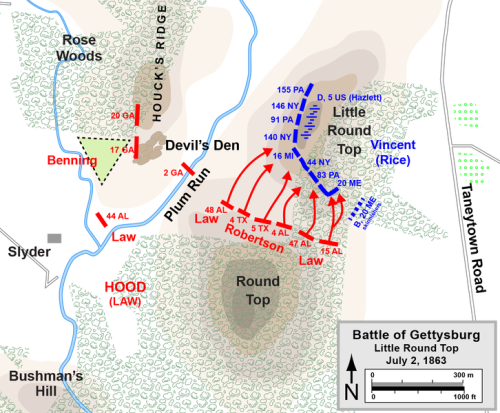
little round top map

Hunt noted that “The duty could not have been in better hands.” [23] When Warren arrived on Little Round Top he found it unoccupied save for a few signal corps soldiers. Warren immediately recognized the tactical value of Little Round Top and noted that it was “the key of the whole position.” [24] Warren saw that the Confederates were massing not more than a mile away and that there were no troops on the hill to stop them. He believed that an area “of woods on the near side of the Emmitsburg Road as “an excellent place for the enemy to form out of sight” [25] which was exactly what Major General John Bell Hood’s division was doing, as Henry Hunt noted “The enemy at the time lay concealed, awaiting signal for the assault…” [26] To test his suspicions Warren sent a messenger to Captain James Smith’s 4th New York artillery battery on Devil’s Den to fire a single shot into the woods. Warren described the situation:

“As the shot went whistling through the air the sound of it reached the enemy’s troops and caused every one to look in the direction of it. This motion revealed to me the glistening gun-barrels and bayonets of the enemy’s line of battle, already formed and far outflanking the position of any of our troops; so that the line of his advance from the right to Little Round Top was unopposed. I have been particular in telling this, as the discovery was intensely thrilling to my feelings, and almost appalling.” [27]

warren lrt

Upon confirming his fears Warren resorted to ruse and action. He order the “signalmen to keep up their wigwag activity, simply as a pretense of alertness, whether they had any real signals to transmit or not…” [28] He also sent messengers to Meade, Sickles and Sykes, the commander of V Corps asking Meade to “Send at least a division to me” [29] instructing the messenger, Lieutenant Randall Mackenzie to tell Meade “that we would at once have to occupy that place very strongly.” [30] Sickles refused on account of how badly stretched his lines were, however George Sykes of V Corps responded sending Captain William Jay to find Barnes commander of his 1st Division. The messenger could not find Barnes, but instead came across the commander of the division’s 3rd Brigade Colonel Strong Vincent. Vincent knew that Barnes was self-medicating his “pre-battle anxieties out of a black commissary quart bottle” and was already “hollow from skull to boots” and demanded “What are your orders? Give me your orders.” [31] Upon learning that Sykes wanted a brigade to proceed to Little Round Top Vincent responded immediately to take the initiative and ordered his four regiments up Little Round Top without waiting for permission. Vincent told Sykes messenger “I will take the responsibility myself of taking my brigade there.” [32]

Meade’s choice of Warren was demonstrated in how Warren continued to act with alacrity and decisiveness throughout the afternoon. “As the Union line began to crumble on Little Round Top, Warren, vested with the authority of Meade’s chief representative, emerged as the right man at the right place at the right time.” [33] Warren did not stop with sending messengers, but seeing the danger building he noted that the northwest face of the hill was still unoccupied and open to attack. Warren forgot “all about a general’s dignity” he “sprinted down the east slope of the hill like a rabbit.” [34] There he found Brigadier General Stephen Weed’s brigade which he had previously commanded. Since he did not see Weed, but he found Colonel Patrick O’Rorke of the 140th New York and ordered him to follow him up the hill, saying “Paddy…give me a regiment.” [35] When O’Rorke said that Weed expected him to be following him Warren took the responsibility telling O’Rorke “Bring them up on the double quick, and don’t stop for aligning. I’ll take responsibility.” [36] O’Rorke followed with his gallant regiment with the rest of the brigade under Weed following. Warren’s actions were fortuitous as the 140th New York and Lieutenant Charles Hazlett’s battery of the 5th Artillery arrived at the crest just in time to repulse the advancing Confederates. In the fight the brigade would take fearful casualties and by the end of the battle, Weed, O’Rorke and Hazlett would all be dead, but with Vincent’s brigade they held on and saved the Union line.[37]

Warren continued to urge on the Federal troops despite being wounded, in the words of a reporter who observed him in “a most gallant and heroic manner, riding with utmost confidence over fields swept by the enemy’s fire, seemingly everywhere present, directing, aiding, and cheering the troops.” [38] Once he was assured that Little Round Top was secure he proceeded to rejoin Meade “near the center of the battlefield where another crisis was at hand.” [39]

Warren distinguished as a Corps commander until he ran afoul of the fiery General Phillip Sheridan in 1865. Sheridan relieved Warren of command of V Corps following the Battle of Five Forks where Sheridan believed that Warren’s Corps had moved too slowly in the attack. The relief was brutal and ruined his career. Warren was a professional soldier and took the relief hard. Unfortunately as a topographic engineer he was an outsider to many in the army and not fully appreciated by Grant or Sheridan who in their haste at Five Forks destroyed his career.

After the war Warren resigned his commission as a Major General of Volunteers and returned to his permanent rank as a Major of Engineers. He served another 17 years doing engineeringduty and was promoted to Lieutenant Colonel in 1879, but his past always haunted him, even his sleep. He wrote his wife while supervising a major bridge construction project over the Mississippi River in 1867: “I wish I did not dream so much. They make me sometimes to dread to go to sleep. Scenes from the war, are so constantly recalled, with bitter feelings I wish never to experience again. Lies, vanity, treachery, and carnage.” [40]

He sought a Court of Inquiry to exonerate himself but this was refused until President Grant left office. The Court eventually exonerated him but he died three months before the results were published. Embittered he directed that he be buried in civilian clothes and without military honors. His funeral was attended by his friends Winfield Scott Hancock and Samuel Crawford, his oldest army friend and mentor Andrew Humphreys was called away before the service due to the sudden illness of his son. [41] The Washington Post noted that Warren “had gone “where neither the malevolence nor the justice of this world can reach him. He had enough of the former; and denial of the latter not only embittered his closing months of his life, but undoubtedly hastened his end.” [42]

Warren’s actions on that hot and muggy July 2nd exemplified the leadership qualities that we as an institution strive for, and from a leadership perspective demonstrate how the Chairman’s Desired Leader Attributes and the principles of Mission Command: “the ability to operate on intent through trust, empowerment and understanding” should work in a relationship between seniors and subordinates. But his life also serves to remind us of the ethics of our profession. Loomis Langdon, who served as the official recorder for the board of inquiry wrote of Warren:

“I had never met General Warren till he came before his Court of Inquiry…I learned to value his good opinion – and while I admired him for his great patience, his wonderful energy, habit of concentration, his vast learning and untiring application, I loved him for his tenderness, gentleness and charity, even to those whom he believed had combined to do him a cruel wrong; and I admired him for his nobleness of character and his courage and unselfish patriotism.” [43]

It is easy for military professionals to become totally focused in our profession, especially the details of planning and process to forget the humanity of those that we serve alongside. Warren is one of those complex figures who are not easy to categorize. His biographer Jordan wrote that:

“Warren was a man with fine intellect, widely read, and of keen sensibilities. He was also an excellent engineer, mapmaker, and scientist. He was a soldier who cared much for the safety and welfare of the men under him, and he was sickened by the appalling carnage of the war in which he took such a prominent part. He was arrogant and proud, and he hesitated hardly at all in putting down those of his colleagues he regarded as inferiors. His mind’s eye took in much beyond what was his immediate concern, but this gift worked against him in the hierarchical realm of military life. Warren was prone to long sieges of depression, and he himself agreed that others found him morose and unsmiling…” [44]

Warren

In reading military history is far too easy to isolate and analyze a commander’s actions in battle and ignore the rest of their lives. I think that this does a great disservice to the men themselves. In time of war gives up something of themselves and sometimes even heroes like Gouverneur Warren are destroyed by the actions of institutions that they serve.

Notes

[1] Chamberlain, Joshua Lawrence. Chamberlain’s Address at the dedication of the Maine Monuments at Gettysburg, October 3rd 1888 retrieved from http://www.joshualawrencechamberlain.com/maineatgettysburg.php 4 June 2014

[2] Note: My use of the terms myth, mythology or mythos should not be considered negative, and the use of the terms does not mean that there is not some degree of fact or truth in them. The definitions of the term mythos are important to understanding my use of the term here, first it denotes a traditional or recurrent narrative theme or plot structure of a story, and secondly a set of beliefs or assumptions about something. (See the Oxford American Dictionary.)

[3] Taylor, John M. Duty Faithfully Performed: Robert E Lee and His CriticsBrassey’s, Dulles VA 1999 pp.37-38.

[4] Huntington, Samuel P. The Soldier and the State: The Theory and Politics of Civil-Military Relations The Belknap Press of Harvard University Press, Cambridge MA and London 1957 p.199

[5] Ibid. Huntington. The Soldier and the State: The Theory and Politics of Civil-Military Relations p.213

[6] Jordan, David M. Happiness is Not My Companion: The Life of G.K. Warren Indiana University Press, Bloomington Indiana 2001 p.6

[7] Ibid. Jordan Happiness is Not My Companion: The Life of G.K. Warren p.30

[8] Ibid. Jordan Happiness is Not My Companion: The Life of G.K. Warren p.33

[9] Sears, Stephen W. ChancellorsvilleHoughton Mifflin Co. Boston and New York 1996 p.372

[10] Hagerman, Edward. The American Civil War and the Origins of Modern Warfare. Midland Book Editions, Indiana University Press. Bloomington IN. 1992 p.91

[11] Alexander, Edward Porter Military Memoirs of a Confederate: A Critical Narrative 1907 republished 2013 by Pickle Partners Publishing, Amazon Kindle Edition location 7007

[12] Coddington, Edwin B. The Gettysburg Campaign: A Study in Command, A Touchstone Book, Simon and Schuster New York, 1968 p.332

[13] Sears, Stephen W. Gettysburg. Houghton Mifflin Co. Boston and New York 2003 pp.129-130

[14] Ibid. Coddington, The Gettysburg Campaign: A Study in Command, p.332

[15] Ibid. Sears Gettysburg p.262

[16] Tredeau, Noah Andre. Gettysburg: A Testing of Courage, Harper Collins Publishers, New York 2002 p.319

[17] Ibid. Tredeau. Gettysburg: A Testing of Courage, p.319

[18] Ibid. Tredeau. Gettysburg: A Testing of Courage, p.320

[19] Ibid. Jordan Happiness is Not My Companion: The Life of G.K. Warren p.90

[20] Ibid. Tredeau. Gettysburg: A Testing of Courage, p.320

[21] Ibid. Coddington, The Gettysburg Campaign: A Study in Command, p.388

[22] Guelzo, Allen C. Gettysburg: The Last Invasion Vintage Books a Division of Random House, New York 2013 p.260

[23] Hunt, Henry. The Second Day at Gettysburg in Battles and Leaders of the Civil War Volume III, The Tide Shifts. Edited by Robert Underwood Johnson and Clarence Clough Buel Castle, Secaucus NJ p. 307

[24] Ibid. Jordan Happiness is Not My Companion: The Life of G.K. Warren p.92

[25] Ibid. Jordan Happiness is Not My Companion: The Life of G.K. Warren p.92

[26] Ibid. Hunt The Second Day at Gettysburg in Battles and Leaders of the Civil War Volume III, The Tide Shifts. p. 307

[27] Pfanz, Harry F. Gettysburg: The Second Day. University of North Carolina Press, Chapel Hill 1987 p.206

[28] Foote, Shelby, The Civil War, A Narrative. Volume Two Fredericksburg to Meridian Random House, New York 1963 p.503

[29] Ibid. Jordan Happiness is Not My Companion: The Life of G.K. Warren p.92

[30] Ibid. Guelzo Gettysburg: The Last Invasion Vintage p.261

[31] Ibid. Guelzo Gettysburg: The Last Invasion Vintage p.262

[32] Longacre, Edward Joshua Chamberlain: The Soldier and the Man Combined Publishing Conshohocken PA 1999 p.127

[33] Ibid. Coddington, The Gettysburg Campaign: A Study in Command, p.395

[34] Swanberg, W.A. Sickles the IncredibleStan Clark Military Books, Gettysburg PA 1957 p.214

[35] Ibid. Jordan Happiness is Not My Companion: The Life of G.K. Warren p.93

[36] Ibid. Foote The Civil War, A Narrative. Volume Two Fredericksburg to Meridian p.504

[37] Ibid. Jordan Happiness is Not My Companion: The Life of G.K. Warren pp. 93-94

[38] Ibid. Coddington, The Gettysburg Campaign: A Study in Command, p.388

[39] Ibid. Coddington, The Gettysburg Campaign: A Study in Command, p.396

[40] Ibid. Jordan Happiness is Not My Companion: The Life of G.K. Warren p.249

[41] Ibid. Jordan Happiness is Not My Companion: The Life of G.K. Warren p.309

[42] Ibid. Jordan Happiness is Not My Companion: The Life of G.K. Warren p.308

[43] Ibid. Jordan Happiness is Not My Companion: The Life of G.K. Warren p.309

[44] Ibid. Jordan Happiness is Not My Companion: The Life of G.K. Warren preface pp.x-xi

3 Comments

Filed under civil war, History, leadership, Military

The First Modern War: The American Civil War, its Lessons and Challenges for Today’s Military Planners

Note: This article is one that I am preparing for my Gettysburg Staff Ride in early March. It is more academic and theoretical in its emphasis being directed at those who will be involved in the planning of joint operations at the operational level of war. 

keith-rocco-hell-for-glory-picketts-charge

Pickett’s Charge Showcased the Futility of Napoleonic Tactics Against Modern Weaponry

The American Civil War was the first modern war. It was a watershed time which introduced changes in tactics, logistics, communications and the concept of total war to the world. Though it did not change the essential nature of war, which Clausewitz says is “is an act of violence to compel our opponent to fulfil our will.”  What the war did was add new dimensions to war, increased its lethality and for the first time since the 30 Years’ War saw opponents take war to civilian populations as part of a military campaign.

The Civil War was a precursor to the wars that followed. However, like all wars many of its lessons were forgotten by military professionals in the United States as well as in Europe. Thus 50 years later during World War One, British, French, German, Austrian and Russian wasted vast amounts of manpower and destroyed the flower of a generation because they did not heed the lessons of the Civil War.

The lessons of the war are still relevant today. Despite vast advances in weaponry, technology and the distances with which force can be applied by opponents, war remains an act of violence to compel an enemy to fulfill our will. War according to Clausewitz is a “chameleon” which changes its nature to some degree in each particular case, but it is always characterized by the violence of its elements, the province of chance and its subordination to the political objective.

The study of the Civil War can be helpful to the joint planner and commander because it so wonderfully shows the interplay of Clausewitz’s Trinity during an era of great technological change. It is my intent to introduce the reader to the manner in which the military theory and doctrine that dominated American military thought before was applied and changed as a result of the experience gained during the war.

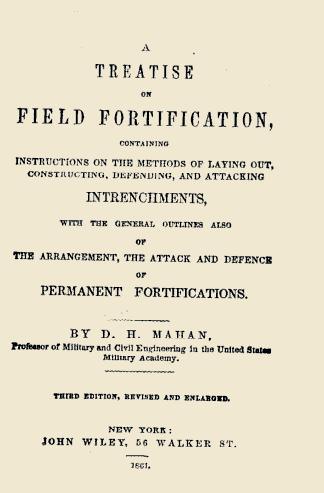
dmahan-treastise

Dennis Hart Mahan’s Book: The First American Book on Military Theory

The professional American army officers on both sides were educated at West Point, VMI or the Citadel. In these institutions they were taught Henri Jomini’s interpretation of Napoleonic warfare and the theories of Dennis Hart Mahan and Henry Halleck.

The war exposed the serious weaknesses in all of these theories which were challenged by advances in weaponry and the vastness of the American continent.  During the war both Union and Confederate armies learned to value field fortifications and the limitations of the artillery of the day during offensive operations.

Logistics influenced campaigning on the American continent much more than previous European wars.  An example can be found in Lee’s Gettysburg Campaign where he had to travel far from his railheads and bases of supply, meaning that he had to live off the land in enemy territory. The concept of total war found its first application in the campaigns of General William Tecumseh Sherman and Robert E. Lee’s use of defensive maneuver and fortifications in positional warfare heralded a new era in warfare.

These factors influenced and affected the Union and Confederate armies as they campaigned. Likewise, the advances weaponry particularly the rifled musket, posed a conundrum for officers educated in the Napoleonic tactics that both armies began the war. Those tactics were developed at a time when the maximum effective range of muskets was barely 100 meters. Yet by 1860 the rifled muskets had an effective range of about 400 meters, and the advent of the repeating rifle increased the firepower available to individual soldiers.  Yet despite the increase in range and accuracy that came with the rifled musket tactics were slow to change.

Ante-bellum US Army leadership was most influenced by the theories of Henri Jomini, Clausewitz had yet to make his appearance in America. Dennis Hart Mahan, a professor at West Point challenged Jominian orthodoxy and modified the current orthodoxy by rejecting its central tenants-primarily offensive assault tactics.”[i] Thus there was a tension in American military thought between the followers of Jomini and Mahan. Conservative Jominian thinking predominated much of the Army, and within the army “Mahan’s decrees failed to win universal applause.”[ii]

However, Mahan did influence many future leaders of both the Union and Confederate armies who participated in his “Napoleon Club,” a military round table at West Point. [iii] Mahan’s greatest contributions were his development of the active defense and emphasis on victory through maneuver. Mahan’s thought contrasted with that of Jomini who thought maneuver was risky and believed that purpose of war was the “defeat of the enemy’s army.” As we look the Gettysburg campaign it is important to note how much Lee was affected by the thought of Jomini as he attempted to defeat the Army of the Potomac, while ignoring the advice of Longstreet to use maneuver and active defense too his advantage.

Mahan emphasized the use of “maneuver to occupy the enemy’s territory or strategic points.” [iv] Edward Hagerman wrestles with the disjointed developments in infantry, artillery and cavalry tactics of the ante-bellum Army in his book The American Civil War and the Origins of Modern Warfare.  Hagerman surmised that “Military thinking, and even more strategic organization, remained essentially within the Napoleonic tradition filtered through an eighteenth-century world view….” He asserted that “A broader vision was necessary to pose an alternative to the mechanistic program.”[v]

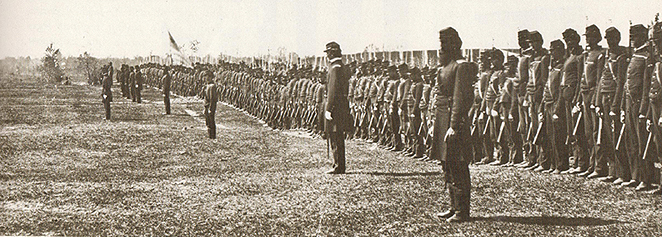
The leaders who organized the vast armies that fought during the war were influenced more than military factors. Social, political, economic, scientific and even religious factors influenced their conduct of the war. Commanders educated at West Point who had previously commanded small units were faced with the task of organizing, training and employing large armies made up primarily of militia units and volunteers. Most had little experience commanding such units and their experience with militia and volunteer formations during the Mexican War did not increase their appreciation for them or their leaders.

civil-war-2nd-michigan

The 2nd Michigan Regiment: Most Civil War Units on both sides were State Regiments

Both armies were changed by the war. Initially both sides sought to fight the war with volunteers. The South began a draft first followed by the Union in 1863. At the beginning of the war General George McClellan successful fought the break-up of the Regular Army. He helped keep it separate from the militia units organized by the States. This preserved a professional core in a time where the new volunteer units were learning their craft. The Confederacy did not have a Regular Army and all of its units were raised by the States and officered by a collection of professionals from the Ante-bellum Army, militia officers, political appointees or anyone with enough money to raise a unit. The draft laws created much consternation in both the Union and Confederate States and the efforts to enforce the draft were filled with controversy and sometimes violence as was evidenced during the New York Draft Riots of 1863 where Union Soldiers, recently victorious at Gettysburg were employed to end the rioting and violence.


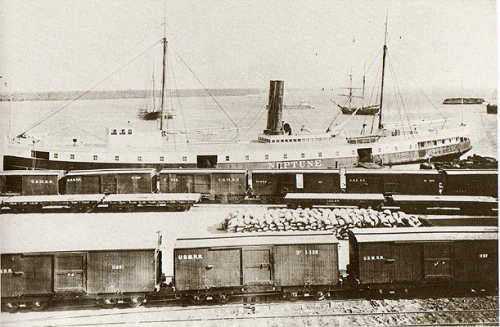
civil-war-city-point-dock

The Integration of Sea and Land Logistics Systems in the Civil War Revolutionized the Way that Modern War is Supplied

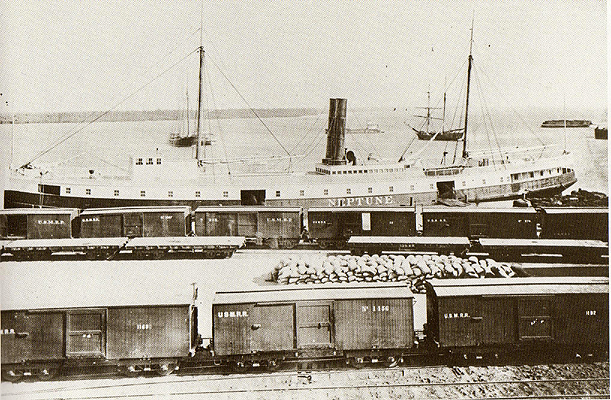
The Ante-bellum Army developed its logistic doctrine from Napoleonic examples. That doctrine had to be modified in light of the American reality of a less developed continent with far greater distances involved in the movement of troops. During the war, both armies learned to adapt their logistical support services to the reality of war.

civil-war-locomotive

Railways Meant the Ability to Move Troops and Supplies Great Distances very Quickly

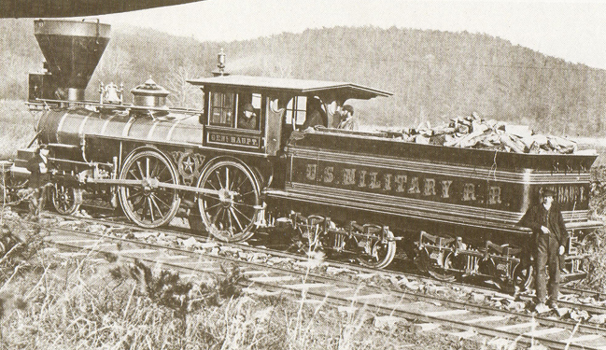
Where possible each side used railroads and maritime forces to move troops and supplies. The Confederacy, lacking in both was at a severe disadvantage. The Union however enjoyed a great advantage in modern rail networks, as well as ocean and river based maritime power. By late 1863 the Army of the Potomac, as well as forces in the West demonstrated “the close integration of operational planning and that of the general in chief and supply bureaus. In this one area, the development of a mature and modern staff was evident.”[vi]

In both armies commanders and their logisticians experimented with the number of wagons per regiment and how army commanders, modified that number at various points during the war based on their situation. Both armies experimented with the use of the “flying column” as a response to the dependency on wagons. The basic load of food and ammunition carried by each soldier in order to increase strategic maneuverability was adjusted to meet the operational need. Both armies often had to live off the land. The success and failure of forage operations and the requirements for people and animals in each theater of operations had a large impact on each army.

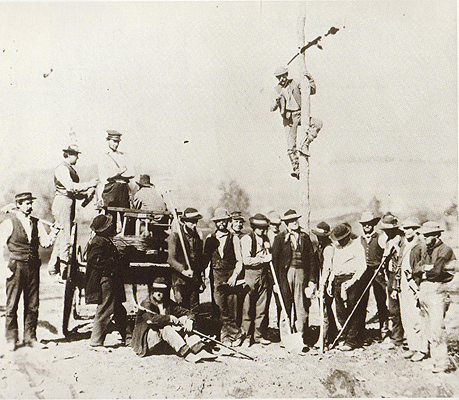
The size of the armies and the distances involved on the battlefield made command and control difficult.  As such communications became more important and each army experimented with new signals organizations that used both old and new communication technologies. At the beginning of the war both sides made extensive use of visual signals and couriers, but rapidly began to rely on the telegraph for rapid communications.

civil-war-us-signal-corps

Signal Corps Soldiers and Wire Communications

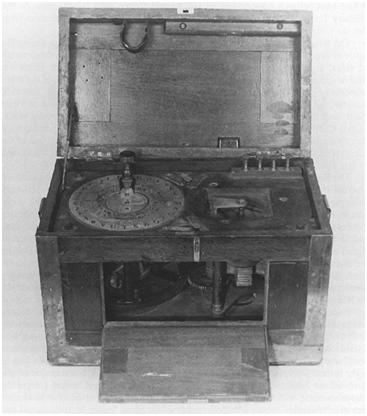
The organizational tension was particularly evident in the rivalry between the U.S. Army Signal Corps and the Military Telegraph Service.  The Signal Corps focused on wireless communications. It preferred the Beardslee wireless telegraphs which had the limitations of such early wireless technology. The Army command favored the traditional wire bound networks operated by the Military Telegraph due to better reliability and security. Though the Army rejected the Beardslee equipment some commanders requested it for their operations. [vii] As each Army became more dependent on the telegraph, each feared that their signals could be compromised through wiretapping and made efforts to encode their transmissions.

03-Beardslee-telegraph-US-Army-photo

The Beardslee Wireless Telegraph 

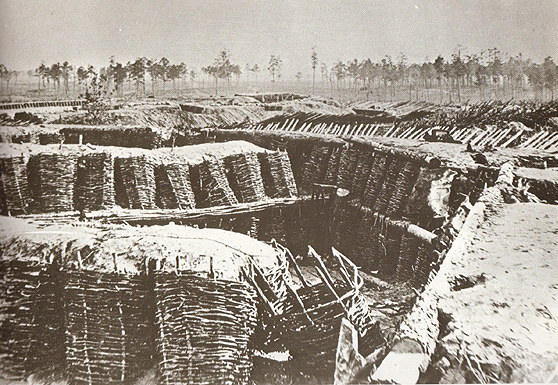
The evolution of how Union and Confederate armies used field fortifications is an interesting topic. McClellan made extensive use of them on the Peninsula in 1861 and Lee made sporadic use of them [viii] until 1864.  Lee made much more use of field fortifications during the Wilderness campaign, the battles around Richmond culminating in the defense of Petersburg.  The developments in field works and firepower gave the advantage to the defense. This was especially the case when opposing armies made the frontal attacks which were at the heart of Jominian offensive tactics.  Early in the war commanders including Grant at Shiloh and Lee at Antietam failed to dig in, but over time both the Union and Confederate armies learned to dig hasty field works as a matter of course.[ix]

dictator

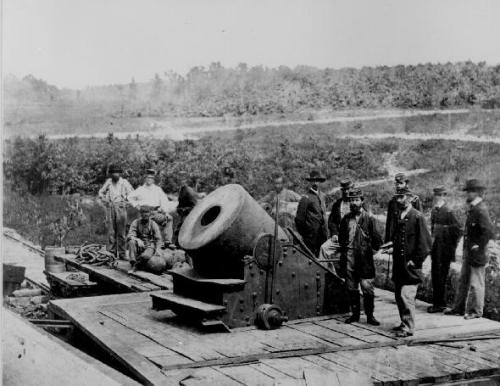
Massive Siege Mortar outside Petersburg

Both sides also learned to use maneuver in combination with positional warfare to force the enemy to battle. Hagerman examines the campaigns in the West of Grant, Sherman and Rosencrans, particularly Stone’s River, the Vicksburg Campaign, and the campaign in middle Tennessee.[x] The last two chapters of Hagerman’s book detail these issues in the context of the 1864-65 campaign around Richmond and Sherman’s campaigns in Georgia and the Carolinas. Of particular note is how Sherman’s forces routinely entrenched on the offensive [xi] and how Confederate forces under Joseph Johnston employed entrenchments on the defensive.

civil-war-earthworks-petersburg Petersburg Fortifications a Harbinger of World War One

Surprisingly, it was Confederate Cavalry commander Joe Wheeler toward the end of the war made use of entrenchments, something not seen before by an arm traditionally known fro maneuver. Hagerman noted that Confederate Cavalry “perhaps best displayed the growing intensity of trench warfare” [xii] by the latter part of the war.

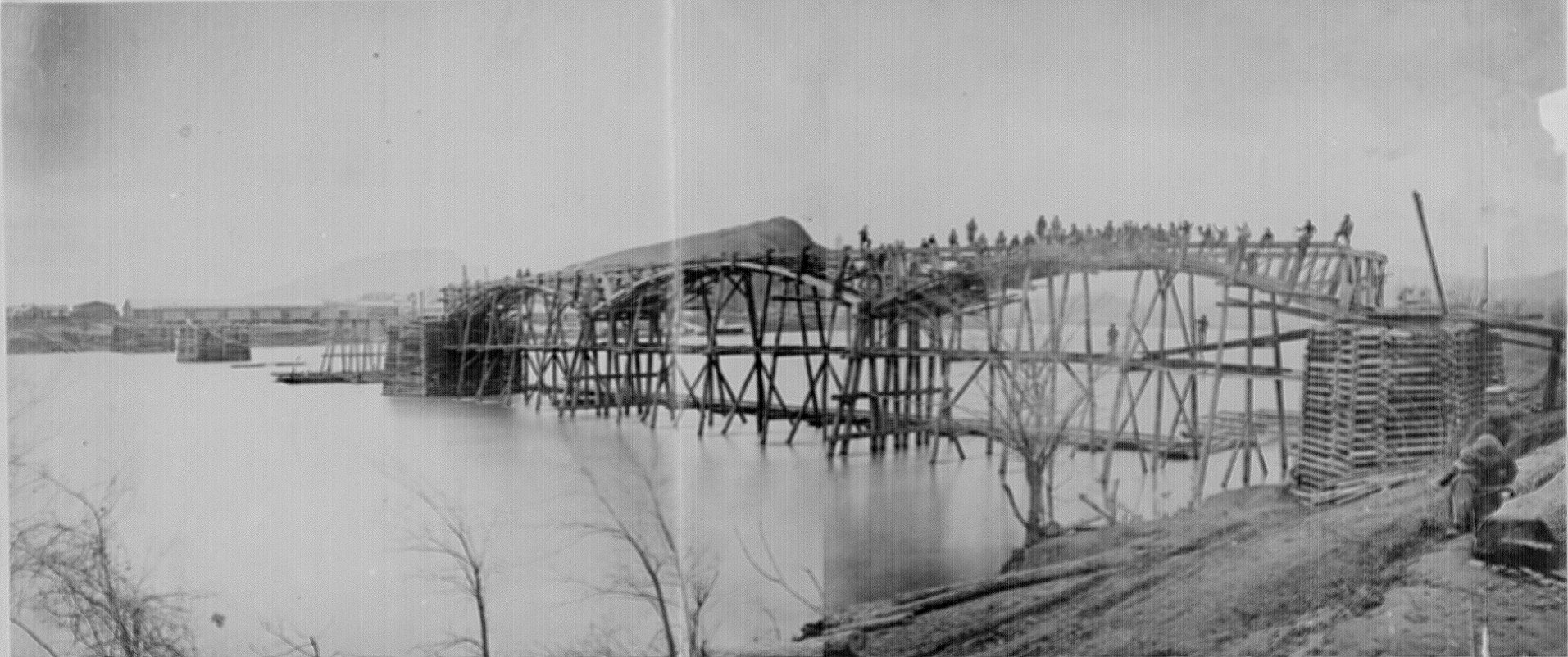
The Corps of Engineers in both armies adapted to the war. Prior to the war the Corps of Engineers was primarily responsible for building coastal fortifications and outposts in the west.  Both sides had to develop Engineer or Pioneer units from scratch in 1861.By the middle of the war organized units of Pioneers and Engineers were enhancing both offensive and defensive operations.

engineers-bridging-tenessee-river

Engineering Units were Built from Scratch and Accomplished Many Feats

The Corps of Engineers initially had a difficult time adapting to war. The dispersion of the Corps among the line and its civil duties were impediments to responding to the needs of war.  There was a hesitancy and resistance to creating engineering units by Congress, despite the pleas of McClellan and Lincoln for specialized engineering units.[xiii] When they were established it was ironic how the newly organized engineer units had few very few West Point trained Corps of Engineers officers. Most Union Engineer Units were primarily staffed and commanded by officers detailed from the line or who had come from civilian life. The effect was a “decline in the antebellum definition of professionalism embodied in the Corps of Engineers” [xiv] which prior to the war were considered the elite branch of the Army.

Strategy and operational level adapted to the new reality of war. Attrition and exhaustion became as important in relation to both positional and maneuver warfare. In 1864 in the East the “ascendancy of positional warfare” allowed Lee to hold out and force Grant into winter quarters at Petersburg.[xv] This demonstrated that “an army fighting on interior lines, even under nearly overwhelming conditions of deprivation and against vastly superior numbers, could sustain a prolonged existence by use of field fortification and defensive maneuver.”[xvi]

shermans-march-through-georgia

Sherman’s March to the Sea

Despite the increasing power of positional warfare in relation to fortifications in the East and around Atlanta, maneuver was not ignored. Sherman’s campaign in Georgia and the Carolinas demonstrated how an army could exploit “diversion, dispersion, and surprise to successfully pursue a modern total-war strategy of exhaustion against the enemy’s resources, communications and will.”[xvii] Sherman used maneuver to force his opponents out of their prepared positions and did not hesitate to target the key infrastructure and infrastructure needed by the Confederate armies. The same was true in Virginia where in 1864 General Phillip Sheridan laid waste to the Shenandoah Valley, the breadbasket of the Army of Northern Virginia.

The developments in tactics, maneuver, defense and logistics and how those were developed over the course of the war brought about a form of warfare that remained dominant of decades. In studying the campaigns, developments and tensions between the theories of Jomini and Mahan in the Civil War a student can begin to recognize them in future wars fought by the US Army including World War Two.

Russell Weigley picks up this theme in his book The American Way of War. Weigley  discusses Grant’s strategy of annihilation and its costs as well as Sherman’s campaign against Johnston and his attack upon Southern resources.[xviii] Weigley’s discussion of tactics used by both sides in the Civil War reflects the thought of British theoretician of J.F.C. Fuller. Fuller noted that “the tactics of this war were not discovered through reflection, but through trial and error.”[xix]

It is important for planners and commanders at the operational level to see the importance the developments of the Civil War on how we campaign today. While the technology is now antiquated, the ideas are not. The campaigns of Grant and Sherman in particular influence modern strategy.  This is reflected the Marine Corps which discusses the maneuver and attrition warfare continuum in MCDP 1 Warfighting.[xx] It is important for students of operational art to be able recognize the these developments and principles in what we do today, to see the logical development of each of these elements in modern war and to find new ways to apply them within the scope of the technologies we now use that those that will be available in the coming years.

traindes

The Destruction of Hood’s Ordnance Train Outside Atlanta

The important things that we learn from studying the various campaigns of the Civil War are timeless. If we only focus on the military aspects of the great battles we miss the really important lessons. The battles and leadership lessons that we learn from them are important. However it is the often arcane but important subjects such as transportation, logistics, communications and fortifications, as well as the diplomatic, economic and informational aspects of the war that are more important.

In his book Hagerman makes an astute observation on how change comes to military organizations. At the end of his discussion of the Corps of Engineers and the Army following the war, he notes “that change in war requires time for digestion before lessons are converted-if they are converted-into theory and doctrine.” [xxi] Such is true in every war.

When the United States entered ground combat operations in the First World War, General John Pershing’s strategy revisited some of the worst mistakes of the Civil War, as well as the bloody lessons learned by the Europeans during the first three years of that war. In light of this one wonders if the lessons were ever fully digested by the Army.

john-mosby-raid

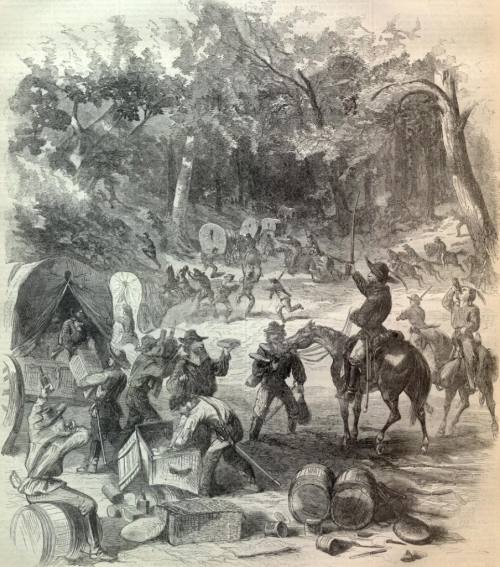
Irregular Formations Such as Mosby’s Raiders Would Create Problems Behind Union Lines, much Like Insurgents in Iraq and Afghanistan 

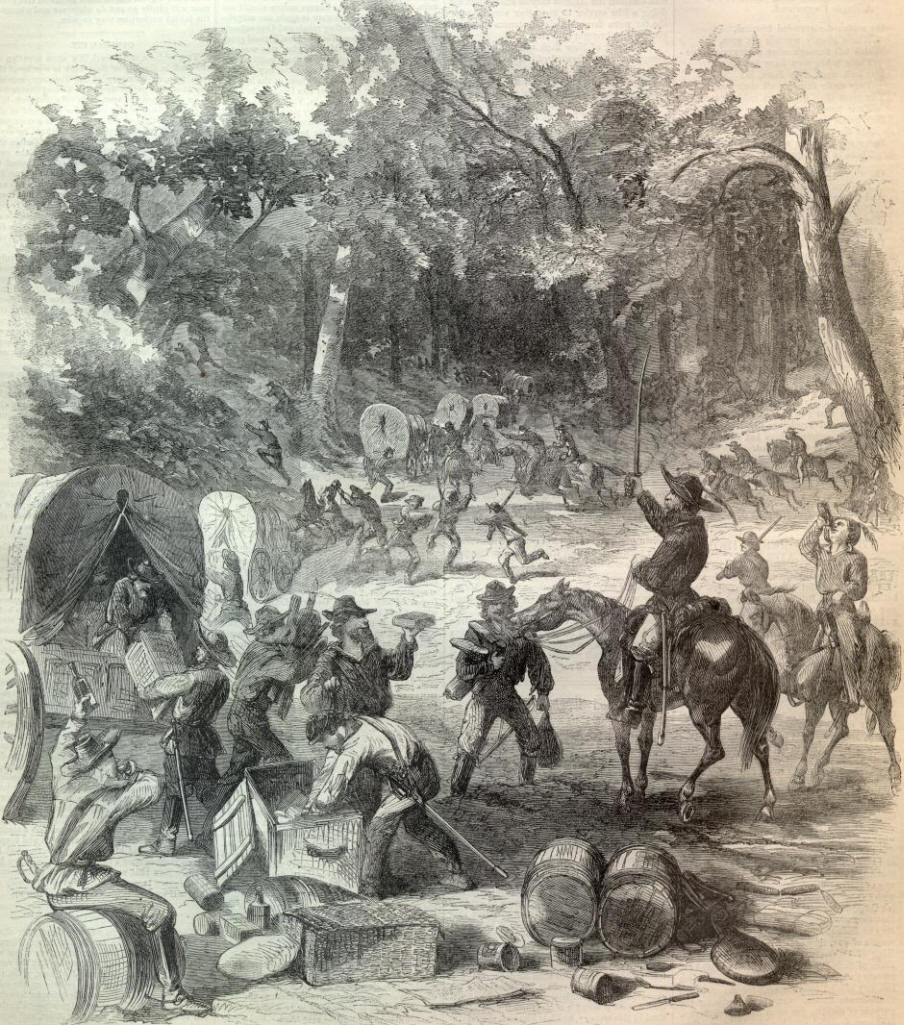
Such an observation can be made about our present wars. We need to ask if the lessons of previous insurgencies have been digested, even going back to the lessons of the Union Army operating in the hostile lands of the conquered Confederacy.[xxii] Likewise it is fair game for us to examine how our military adjusts to developments in weaponry, technology and tactics today in relation to past examples. Such studies must include regular and irregular warfare. Thus when we look at the Civil War, it is important to use those lessons to better understand the timeless aspects of military history, theory, doctrinal development, logistics, communications and experiential learning in war.

If we do not believe that we can learn from history we will in the words of historian George Santayana “be doomed to repeat it.”

Peace

Padre Steve+

Notes: 

[i] Hagerman, Edward. The American Civil War and the Origins of Modern Warfare. Midland Book Editions, Indiana University Press. Bloomington IN. 1992. p.9

[ii] Ibid. p.13.

[iii] Hagerman also notes the contributions of Henry Halleck and his Elements of Military Art and Science published in 1846 (p.14) and his influence on many American Officers.  Weigley in his essay in Peter Paret’s Makers of Modern Strategy would disagree with Hagerman who notes that in Halleck’s own words that his work was a “compendium of contemporary ideas, with no attempt at originality.” (p.14) Weigley taking exception gives credit to Halleck for “his efforts to deal in his own book with particularly American military issues.” Paret, Peter editor. Makers of Modern Strategy: For Machiavelli to the Nuclear Age Princeton University Press, Princeton NJ 1986 p.416.

[iv] Ibid.

[v] Ibid. p.27.

[vi] Ibid. p.79.

[vii] Ibid. p.87.

[viii] The most notable use of them between the Peninsula campaign and the Wilderness was at Fredericksburg by Longstreet’s Corps. Many wonder why Lee failed to entrench at Antietam.

[ix] Fuller, J.F.C. Grant and Lee: A Study in Personality and Generalship, Indiana University Press, Bloomington IN 1957.  Fuller comments “Thus over a year of bitter fighting was necessary to open the eyes of both sides to the fact that the trench was a by product of the rifle bullet, and like so many by-products, as valuable as the product itself.” (p.269) He calls it “astonishing that Lee, an engineering officer, made no use of entrenchments at the battle of Antietam.” (pp.269-270)

[x] Ibid. pp. 198-219.

[xi] Ibid. p.295.  Hagerman comments how Sherman’s troops outside Atlanta began to entrench both the front and rear of their positions.

[xii] Ibid. p.297-298.

[xiii] Ibid. p.238.

[xiv] Ibid.

[xv] Ibid. p.272

[xvi] Ibid. p.274.

[xvii] Ibid. p.293.  B.H. Liddell-Hart in comparing the campaigns of Grant and Sherman makes an important note that Sherman’s strategy is more “suited to the psychology of a democracy…” and “ he who pays the piper calls the tune, and that strategists might be better paid in kind if they attuned their strategy, so far as rightly possible, to the popular ear.” Liddell-Hart, B.H. Strategy Faber and Faber Ltd, London 1954 and 1967, Signet Edition, The New American Library, New York 1974 p.132

[xviii] Weigley, Russell F. The American Way of War: A History of United States Military History and Policy University of Indiana Press, Bloomington IN, 1973. pp.145-146.

[xix] Ibid. Fuller. P.269  A similar comment might be made of most wars including the current Iraq war.

[xx] ___________. MCDP-1 Warfighting. United States Marine Corps, Washington D.C. 1997. pp. 36-39

[xxi] Ibid. Hagerman. P.239

[xxii] Ibid. Fuller. Fuller’s comments on the situation of the Northern Soldier are eerily similar to our current conflict in Iraq : “Consequently, minor tactics were definitely against the Northern soldier, because his major tactics demanded the offensive; for without the offensive the South could not be brought to heel.  It was the problem which had faced the French in LaVendee and in the Peninsula of Spain, which faced Napoleon in Russia, and the British in South Africa during the Boer War of 1899-1902. Not only was the Northern soldier, through force of circumstances, compelled to fight in the enemy’s country, but he was compelled to devastate it as well as conquer it, in order to protect himself against the bands of irregular troops which were here, there and everywhere.” pp.247-248

Bibliography

Fuller, J.F.C. Grant and Lee: A Study in Personality and Generalship, Indiana University Press, Bloomington IN 1957

Hagerman, Edward. The American Civil War and the Origins of Modern Warfare. Midland Book Editions, Indiana University Press. Bloomington IN. 1992

Liddell-Hart, B.H. Strategy Faber and Faber Ltd, London 1954 and 1967, Signet Edition, The New American Library, New York 1974

Paret, Peter editor. Makers of Modern Strategy: From Machiavelli to the Nuclear Age Princeton University Press, Princeton NJ 1986

Weigley, Russell F. The American Way of War: A History of United States Military History and Policy University of Indiana Press, Bloomington IN, 1973

___________. MCDP-1 Warfighting. United States Marine Corps, Washington D.C. 1997

Leave a comment

Filed under civil war, History, Military

The American Civil War and the Origins of Modern Warfare

Hagerman, Edward. The American Civil War and the Origins of Modern Warfare. Midland Book Editions, Indiana University Press. Bloomington IN. 1992

Pickett’s Charge Displayed the Futility of Napoleonic Tactics Against Modern Weaponry

Edward Hagerman postulates in The American Civil War and the Origins of Modern Warfare that the American Civil War is the first modern war. He examines developments in tactics, logistics and the concept of total war and looks specifically how tactical and strategic thought impacted the war.  Specifically Hagerman examines how Henri Jomini’s interpretation of Napoleonic warfare and the theories of Dennis Hart Mahan and Henry Halleck which were the prevalent military thought in America were challenged by advances in weaponry and the vastness of the American continent.  He surveys how the Union and Confederate armies learned the value and application of field fortifications and the limitations of artillery in the offense.  Even more importantly Hagerman argues how logistics influenced campaigning on the American continent as opposed to earlier European wars. Likewise he examines how the 20th Century concept of total war found its first application in the campaigns of General Sherman and how Robert E. Lee’s use of defensive maneuver and fortifications in positional warfare heralded a new era in warfare.

Dennis Hart Mahan’s Book: The First American Book on Military Theory

Hagerman examines how these factors influence and affected the Union and Confederate armies.  His initial focus is the tactical conundrum posed by the advances weaponry particularly the rifled musket to the Napoleonic tactics that both armies began the war. Napoleonic tactics were developed at a time when the maximum effective range of muskets was barely 100 meters and how despite the increase in range and accuracy that came with the rifled musket how tactical formations and tactics were slow to change.

Hagerman spends the first part of his book examining how the ante-bellum US Army leadership was influenced by the theories of Henri Jomini. He discusses the challenge to Jominian orthodoxy by Dennis Hart Mahan, who modified “the current orthodoxy by rejecting its central tenants-primarily offensive assault tactics.”[i] He examines the tension in American military thought between the conservative Jominian thinking which predominated much of the Army, noting that within the army “Mahan’s decrees failed to win universal applause.”[ii] However, Mahan influenced many future leaders of both the Union and Confederate armies in his “Napoleon Club” a military round table at West Point.[iii] Hagerman notes that Mahan’s greatest contributions were his development of the active defense and emphasis on victory through maneuver. Unlike Jomini, who thought maneuver as risky with the purpose of the “defeat of the enemy’s army,” Mahan emphasized “maneuver to occupy the enemy’s territory or strategic points.”[iv] In the book Hagerman wrestles with disjointed developments in infantry, artillery and cavalry tactics of the ante-bellum Army which and surmises that “Military thinking, and even more strategic organization, remained essentially within the Napoleonic tradition filtered through an eighteenth-century world view….” He asserts that “A broader vision was necessary to pose an alternative to the mechanistic program.”[v]

The 2nd Michigan Regiment: Most Civil War Units on both sides were State Regiments

Hagerman then discusses wartime developments in strategy, tactics and organization as they developed in both the Eastern and Western theaters.  He focuses on the themes of organization, logistics, communications, weaponry, field fortifications and maneuver. In each chapter he weaves these themes to show how they affected campaigns or were modified during the war based on experience.  He deals with leadership, but mostly in the context of how leaders responded to challenges posed in these arenas.  Of particular interest to him are the early efforts of successive commanders of the Army of the Potomac including McClellan, Burnside and Hooker to deal with these problems as well as the responses of Grant, Sherman and Rosecrans in the West to the same issues.

Hagerman’s discussion of army organization focuses on how each army developed sociologically as well as professionally prior to and during the war. He examines the ways that commanders educated at West Point initially dealt with large armies made up of militia units and volunteers and how these armies would be changed by the war.  He includes in the discussion i the institution of the draft in both the North and South.  His discussion of how McClellan successful fought the break-up of the Regular Army keeping it separate from the militia units organized by the States was important to development of the Army. He notes their importance and points out the problems of the militia units raised by the various states particularly in the early part of the war.

The Integration of Sea and Land Logistics Systems in the Civil War Revolutionized the Way that Modern War is Supplied

More significant to Hagerman’s narrative is his emphasis on logistics, and how each Army responded to the challenges of supplying their armies in the field.  Hagerman examines how the ante-bellum Army developed its logistic doctrine from the Napoleonic examples and how that doctrine had to be modified in light of the American reality of a less developed continent with far greater distances involved.

Hagerman’s discussion of logistics is quite detailed.  He examines topics such as the number of wagons per regiment and how army commanders, modified that number at various points during the war based on their situation. He discusses the development of the “flying column” as a response to the dependency on wagons and basic load of food and ammunition carried by each soldier in order to increase strategic maneuverability.  He details the forage requirements for people and animals in each theater of operations and how each army responded to requirement of living off the land for much of their forage requirements and their relative successes and failures in supplying their soldiers in this fashion.

Railways Meant the Ability to Move Troops and Supplies Great Distances very Quickly

Hagenman discusses the use of railroads and the use of naval forces to both assist the ground forces and to move supplies and troops.  In each of these areas he provides a detailed examination of the effect of logistical considerations on each army.  He notes that of all the areas of development that the Army of the Potomac was successful at putting logistic theory into practice. By late 1863 the Army of the Potomac demonstrated “the close integration of operational planning and that of the general in chief and supply bureaus. In this one area, the development of a mature and modern staff was evident.”[vi]

Hagerman’s discussion of the development of communications in both armies focuses on the fact that the size of the armies and the distances involved on the battlefield made command and control difficult.  As such each army experimented with signals organizations that used tradition visual signals and couriers but began to rely on the telegraph for rapid communications.  He deals with the conflict in the North between the Signal Corps and the Military Telegraph Service.  He discusses the use of wire telegraph equipment and the new Beardslee wireless telegraphs by the Signal Corps and how the Army eventually favored the traditional wire bound networks operated by the Military Telegraph.  Though the Army rejected the Beardslee equipment some commanders requested it for their operations.[vii] As they became more dependent on such communications armies feared that their signals could be compromised through wire tapping and made efforts to encode transmissions.

Signal Corps Soldiers and Wire Communications

Hagerman’s discusses the evolution of the Union and Confederate armies use of field fortifications including their use in offensive campaigns.  He discusses their use by McClellan on the Peninsula in 1861 and Lee’s sporadic use of them[viii] until 1864 beginning in the Wilderness campaign and culminating in the defense and siege of Petersburg.  Hagerman’s thesis is that the developments in field works and firepower gave the advantage to the defense when armies made the frontal attacks which were at the heart of Jominian theory.  He notes how various commanders including Grant failed at Shiloh and Lee at Antietam failed to dig in, but how both the Union and Confederate armies learned to dig hasty field works as a matter of course.[ix]

Both sides also learned to use maneuver in combination with positional warfare to force the enemy to battle. Hagerman examines the campaigns in the West of Grant, Sherman and Rosecrans, particularly Stone’s River, the Vicksburg Campaign, and the campaign in middle Tennessee.[x] The last two chapters mention these issues in the context of the 1864-65 campaign around Richmond and Sherman’s campaigns in Georgia and the Carolinas.  Of particular note is how Sherman’s forces routinely entrenched on the offensive[xi] and how Confederate forces under Joseph Johnston employed entrenchments on the defensive. Hagerman notes how Confederate Cavalry “perhaps best displayed the growing intensity of trench warfare” noting General Joe Wheeler’s use of them at the close of the war.[xii]

Massive Siege Mortar outside Petersburg

A sidebar to Hagerman’s discussion of fortification is his examination of the Corps of Engineers.  He discusses the development of Engineering or Pioneer units from nothing in 1861 to organized units by the middle of the war.  He examines the problems of the Engineering Corps in adjusting to the war. He notes its dispersion among the line and its civil duties as impediments to responding to the needs of war and both the hesitancy and resistance to creating engineering units by Congress, despite the pleas of McClellan and Lincoln.[xiii] He then looks at the institutional irony of the how newly organized engineer units had few West Point trained Corps of Engineers officers, but were primarily staffed and commanded by officers detailed from the line. The effect was a “decline in the antebellum definition of professionalism embodied in the Corps of Engineers.”[xiv]

Engineering Units were Built from Scratch and Accomplished Many Feats

Petersburg Fortifications a Harbinger of World War One

Hagerman’s last two chapters focus on the developments in the strategies of attrition and exhaustion in relation to positional and maneuver warfare.  He examines how this was by Grant in Virginia and Sherman in Georgia and the Carolinas.  He discusses the “ascendancy of positional warfare” which allowed Lee to hold out and force Grant into winter quarters at Petersburg.[xv] This demonstrated that “an army fighting on interior lines, even under nearly overwhelming conditions of deprivation and against vastly superior numbers, could sustain a prolonged existence by use of field fortification and defensive maneuver.”[xvi] Sherman’s campaign demonstrated how an army could exploit “diversion, dispersion, and surprise to successfully pursue a modern total-war strategy of exhaustion against the enemy’s resources, communications and will.”[xvii]

Sherman’s March to the Sea

Hagerman’s book is particularly strong in the discussion of tactical developments and logistics and how those were developed over the course of the war.  It is strong because it allows the serious student to trace the developments in each of the areas he examines to future wars fought by the US Army.  Russell Weigley picks up the effect of what Hagerman describes in his books The American Way of War discussing both Grant’s strategy of annihilation and its costs, and in Sherman’s campaign against Johnston and attack upon Southern resources.[xviii] His discussion of tactics reflects that of J.F.C. Fuller notes that “the tactics of this war were not discovered through reflection, but through trial and error.”[xix] The events described by Hagerman, especially the campaigns of Grant and Sherman influence modern strategy including that of the Marine Corps which discusses maneuver and attrition warfare continuum in MCDP 1 Warfighting.[xx] Hagerman’s work is best at helping tie the elements of war often ignored by other Civil War historians into a coherent whole that allows the reader to see the logical development of each of these elements in modern war.

Irregular Formations Such as Mosby’s Raiders Would Create Problems Behind Union Lines

Hagerman’s value to the literature is that he fills a void among many Civil War writers who often focus simply on the battles and campaigns and not arcane but important subjects such as transportation, logistics, communications and fortifications.  Hagerman makes an astute observation on how change comes to military organizations at the end of his discussion of the Corps of Engineers and the Army following the war.  He notes “that change in war requires time for digestion before lessons are converted-if they are converted-into theory and doctrine.” [xxi] In the light of the Pershing’s strategy in the First World War One, which revisited some of the worst mistakes of the Civil War one wonders if those lessons were ever fully digested by the Army. Such an observation can be made about our present war.  We need to ask if the lessons of previous insurgencies in conquered areas have been digested, even going back to the lessons of the Union Army operating in the hostile lands of the conquered Confederacy.[xxii] Likewise how an Army adjusts to developments in weaponry, technology and tactics are fair game when one analyzes past campaigns in relation to current wars.  Thus when we look at Hagerman it is important to use his work to understand the timeless aspects of military history, theory, doctrinal development, logistics, communications and experiential learning in war that are with us even today.


[i] Hagerman, Edward. The American Civil War and the Origins of Modern Warfare. Midland Book Editions, Indiana University Press. Bloomington IN. 1992. p.9

[ii] Ibid. p.13.

[iii] Hagerman also notes the contributions of Henry Halleck and his Elements of Military Art and Science published in 1846 (p.14) and his influence on many American Officers.  Weigley in his essay in Peter Paret’s Makers of Modern Strategy would disagree with Hagerman who notes that in Halleck’s own words that his work was a “compendium of contemporary ideas, with no attempt at originality.” (p.14) Weigley taking exception gives credit to Halleck for “his efforts to deal in his own book with particularly American military issues.” Paret, Peter editor. Makers of Modern Strategy: For Machiavelli to the Nuclear Age Princeton University Press, Princeton NJ 1986 p.416.

[iv] Ibid.

[v] Ibid. p.27.

[vi] Ibid. p.79.

[vii] Ibid. p.87.

[viii] The most notable use of them between the Peninsula campaign and the Wilderness was at Fredericksburg by Longstreet’s Corps. Many wonder why Lee failed to entrench at Antietam.

[ix] Fuller, J.F.C. Grant and Lee: A Study in Personality and Generalship, Indiana University Press, Bloomington IN 1957.  Fuller comments “Thus over a year of bitter fighting was necessary to open the eyes of both sides to the fact that the trench was a by product of the rifle bullet, and like so many by-products, as valuable as the product itself.” (p.269) He calls it “astonishing that Lee, an engineering officer, made no use of entrenchments at the battle of Antietam.” (pp.269-270)

[x] Ibid. pp. 198-219.

[xi] Ibid. p.295.  Hagerman comments how Sherman’s troops outside Atlanta began to entrench both the front and rear of their positions.

[xii] Ibid. p.297-298.

[xiii] Ibid. p.238.

[xiv] Ibid.

[xv] Ibid. p.272

[xvi] Ibid. p.274.

[xvii] Ibid. p.293.  B.H. Liddell-Hart in comparing the campaigns of Grant and Sherman makes an important note that Sherman’s strategy is more “suited to the psychology of a democracy…” and “ he who pays the piper calls the tune, and that strategists might be better paid in kind if they attuned their strategy, so far as rightly possible, to the popular ear.” Liddell-Hart, B.H. Strategy Faber and Faber Ltd, London 1954 and 1967, Signet Edition, The New American Library, New York 1974 p.132

[xviii] Weigley, Russell F. The American Way of War: A History of United States Military History and Policy University of Indiana Press, Bloomington IN, 1973. pp.145-146.

[xix] Ibid. Fuller. P.269  A similar comment might be made of most wars including the current Iraq war.

[xx] ___________. MCDP-1 Warfighting. United States Marine Corps, Washington D.C. 1997. pp. 36-39

[xxi] Ibid. Hagerman. P.239

[xxii] Ibid. Fuller. Fuller’s comments on the situation of the Northern Soldier are eerily similar to our current conflict in Iraq : “Consequently, minor tactics were definitely against the Northern soldier, because his major tactics demanded the offensive; for without the offensive the South could not be brought to heel.  It was the problem which had faced the French in LaVendee and in the Peninsula of Spain, which faced Napoleon in Russia, and the British in South Africa during the Boer War of 1899-1902. Not only was the Northern soldier, through force of circumstances, compelled to fight in the enemy’s country, but he was compelled to devastate it as well as conquer it, in order to protect himself against the bands of irregular troops which were here, there and everywhere.” pp.247-248

Bibliography

Fuller, J.F.C. Grant and Lee: A Study in Personality and Generalship, Indiana University Press, Bloomington IN 1957

Hagerman, Edward. The American Civil War and the Origins of Modern Warfare. Midland Book Editions, Indiana University Press. Bloomington IN. 1992

Liddell-Hart, B.H. Strategy Faber and Faber Ltd, London 1954 and 1967, Signet Edition, The New American Library, New York 1974

Paret, Peter editor. Makers of Modern Strategy: For Machiavelli to the Nuclear Age Princeton University Press, Princeton NJ 1986

Weigley, Russell F. The American Way of War: A History of United States Military History and Policy University of Indiana Press, Bloomington IN, 1973

___________. MCDP-1 Warfighting. United States Marine Corps, Washington D.C. 1997

1 Comment

Filed under History, Military