Tag Archives: dietrich bonhoeffer

Advent 2013: God Loves the Real World

2004weihnachtsbrief-2

O come, thou Dayspring, come and cheer
our spirits by thine advent here;
disperse the gloomy clouds of night,
and death’s dark shadows put to flight.

(From O Come O Come Emmanuel) 

Introduction: This is an article that I wrote last year. I have updated with this introduction and made a few edits for this year for a couple of reasons. One reason is that I think that it is worth the read for those unfamiliar with the season and what it means. Secondly I see the observance of Advent as a way to actually discover something spiritual and eternal that can help us in the real world today, not just in the by and by, but today, in how we treat our neighbors and care for others. 

In a sense this very traditional observance can be counter-cultural in amid the usual din of the shopping orgy that began on Thanksgiving and will end as retailers squeeze out the last profits on Christmas Eve. The observance of Advent is also an antidote to the politically charged “the war on Christmas” emanating from certain Christian “conservatives” and Rupert Murdoch’s Fox News and Newscorp empire. The sad thing is that for all of their alleged “defense” of Christmas most of these culture warriors and their media allies have reduced the mystery of God’s great love at Christmas to a religious holiday so covered in consumerism that it is hard to find that tiny babe in the manger of Bethlehem. Finally, I write this in the hopes that discover the joy as we wait in the anticipation of the the message of the angel who said “Behold I bring you tidings of great joy….”

I think that each Sunday of the Advent Season I will write a short reflection on the various aspects of hope, expectation and love that is the heart of the season.

Today is the fist Sunday of what we in the liturgical Christian world know as the season of Advent.

Advent is the beginning of the liturgical year, in a sense the opening day of a new season of faith, as much as the Opening Day is in Baseball. It is a season of new beginnings, of hope looking forward and looking back. It is a season of intense realism. It is a season where the people of God look forward to their deliverance even as they remember the time when God entered into humanity.  It was not simply entering the human condition as a divine and powerful being inflicting his will upon people but deciding to become subject to the same conditions know by humanity. As Paul the Apostle, wrote about him: “though he was in the form of God, did not regard equality with God as something to be exploited,  but emptied himself, taking the form of a slave, being born in human likeness. And being found in human form, he humbled himself and became obedient to the point of death– even death on a cross.” (Philippians 2:5b-8) 

In the incarnation Jesus Christ shows his love and solidarity with people, humanity, the creation, reality. Dietrich Bonhoeffer wrote:

“God loves human beings. God loves the world. Not an ideal human, but human beings as they are; not an ideal world, but the real world. What we find repulsive in their opposition to God, what we shrink back from with pain and hostility, namely, real human beings, the real world, this is for God the ground of unfathomable love.” 

That simple fact is why Christ came.

He didn’t come to found a government or even for that matter a religion. He did not come to exemplify “Christian” virtues or to condemn people that religious people condemned as sinners. He came simply to save and redeem the world and people like us from themselves.

The meaning of the incarnation, and the hope of the season of Advent is that God loves people. Yes, even the people that the Christian culture warriors despise.

In the next few week there will be much written and said about Jesus. Much of it will not actually deal with Jesus or the people that he came to save but instead about the worldly power and influence of those who seek the profits of being “prophets.” Some of them will talk fervently about the “War on Christmas” as if somehow God and Christ are so small that they need government sponsored displays in the public square in order to be real, relevant or or for that matter important. What a small God they must have.

Somehow the message of Advent, the coming of Jesus is contradictory to the message of the for profit prophets. Certainly the early Christians had no government backing of any kind. They simply lived the life and showed God’s love to their neighbors, often at the cost of their lives and paradoxically the message was not crushed, but spread and overcame an empire. It was only when they became co-executors of government power that the message of reconciliation became a bludgeon to be used against those who did not agree with the theology of the clerics beholden to the Empire.

The Christ of the Season of Advent, the one who came and who promises to come again is not captive to the capricious message of the for profit prophets and their political and media allies. I would dare say that God is much bigger than them or those that they believe will somehow end the Christian faith as we know it. But then maybe the Christian faith “as we know it” is more a reflection of us and our culturally conditioned need for physical, economic and political power over others than it is of Jesus.Nativity-extr
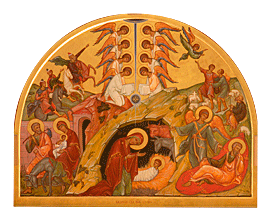
All I know is that the simplicity of the message that “God so loved the world that he gave his only begotten Son” is more powerful than any political-religious alliance.

The time of waiting in expectation during advent also helps us to focus on Jesus’ words to  “Love God with all your heart and love our neighbors as ourselves.” It also calls to mid the words of the Old Testament prophet Micah, who asked “what does the Lord require of thee? To love show justice, to love mercy and to walk humbly with thy God.”

Advent stands in stark contrast to the politically charged consumerism of the War on Christmas.  I think that the message that God loves the real world is worth repeating in such an environment. In fact I think that because the message of God’s great love for those deemed “repulsive” by so many supposedly “conservative Christians” is so amazing that it must be proclaimed. As distasteful as it is to the “for profit prophets” of our time that it is not only worth repeating, but actually believing and acting upon.

It is a good reason for me to during this season of Advent to look forward to our celebration of the mystery of the Incarnation, the coming of the God who “emptied himself” and took “the form of a slave” in order to save his people.

Peace

Padre Steve+
2 Comments

Filed under christian life, faith, News and current events, Political Commentary, Religion

The Season of Hope: Advent and PTSD

2004weihnachtsbrief-2

“Totally without hope one cannot live. To live without hope is to cease to live. Hell is hopelessness. It is no accident that above the entrance to Dante’s hell is the inscription: “Leave behind all hope, you who enter here.” Jürgen Moltmann

Advent and Christmas are my favorite times of the Church year. But that being said I don’t see them in isolation from the rest of the Church year, especially Holy Week, Good Friday and Easter. In fact they cannot be divorced from them. However for me the mystery of the incarnation and the season of waiting in hope is incredibly important in a world that mystery is unappreciated and waiting is an annoyance.

The beginning of Advent stands in stark contrast to the false God of Black Friday. Black Friday is marked by a materialistic rush for all that satiates our desires. Waiting takes a back seat to the throngs of shoppers lined up for a mad rush at retail outlets.

Now before anyone gets the wrong idea I am not against business making profits or people saving money. However that being said the stark contrast between the crass materialism exhibited by our consumerist culture that is blessed by many Christian Conservatives and the message of Advent and Christmas.

n671902058_1153794_4301

The starkness between the two really became apparent to me when I returned from Iraq in 2008 suffering from severe and chronic PTSD. It  something that still plagues me though not to the extent that it did for a long time. During that terrible time hope was hard to come by. In the midst of the madness I was for all intents and purposes an agnostic just praying that God still existed. Only my deep sense of calling as a Priest and Chaplain kept me going as I served in the ICUs of a major medical center working with people facing death and their families.

On Christmas Eve of 2008 I was doing so bad that I handed my wife the keys to our car at the Christmas Eve Mass where she was singing in the choir and walked home in the dark and cold. If there had been a bar within a few blocks I would have walked in and poured myself out. I understood the depth of hopelessness that Dante wrote about.

But a year later I experienced what I call my “Christmas miracle” while administering the last rites to a dying patient in our emergency room. It was a miracle and for the first time since Iraq I felt the mystery and wonder of Advent and the Incarnation.

Faith returned, albeit different. In place of the certitude that marked my previous faith I was now open to new possibilities as well as being okay with doubt. I rediscovered, or maybe better put discovered the importance of being human, something that the Gospel makes so clear when it comes to the humanity of Jesus. Jürgen Moltmann wrote of the incarnation:

“God became man that dehumanized men might become true men. We become true men in the community of the incarnate, the suffering and loving, the human God.” 

In a sense I was born again in that emergency room that Advent night. Dietrich Bonhoeffer wrote that “Advent creates people, new people.” That I agree with.

kcm_barton_judgement_131031c

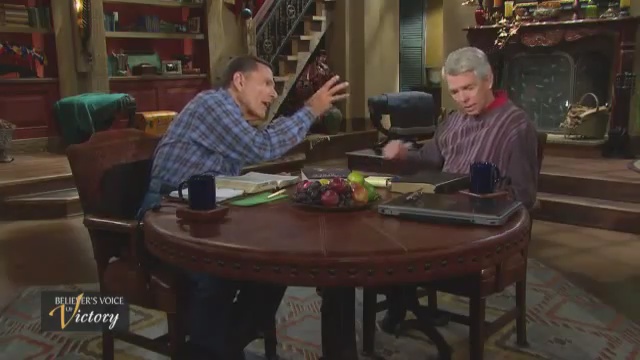
However there are some that profess to have a direct line to God who neither understand faith, life or humanity. On a Veteran’s day broadcast of The Believe’s Voice of Victory two of them made some incredibly ignorant comments about PTSD. Kenneth Copeland the host of the program a long time prosperity Gospel charlatan and huckster and the faux historian David Barton made the comments that real Bible believing Christians could not get PTSD. Copeland stated:

“Any of you suffering from PTSD right now, you listen to me. You get rid of that right now. You don’t take drugs to get rid of it, it doesn’t take psychology; that promise right there [in the Bible] will get rid of it.

But truthfully there is no promise in the Bible that says that you get rid of PTSD or any other neurological condition. The fact is that many Fundamentalist Christians believe that such conditions are a product of the sin of the individual. Something that they take from Douglas Adams’ “Nouthetic” or “biblical” counseling. Adams’ who believes that mental illness, including PTSD is not a “sickness” but due to the “sinfulness” of the afflicted person. This really is not much different than what Scientology preaches but it finds a home in many Evangelical and Fundamentalist Christian circles.

Barton added to Copeland’s ignorance showing that he is not only an ignorant pseudo historian but a danger to any person suffering from PTSD. Barton said:

“What we’re talking about, getting rid of the PTSD, guys who have been through battle, they need to understand that soldier’s promise, you come back guiltless before God and the nation…You’re on an elevated platform up here, you’re a hero, you’re put in the faith hall of fame if you take this [Bible],…We used to in the pulpit understand the difference between a just war and an unjust war. And there’s a biblical difference, and when you do it God’s way, not only are you guiltless for having done that, you’re esteemed.”

To cut to the chase these men believe that if you are a soldier suffering from PTSD it must be your sin causing it. Likewise if you are Barton you believe that if you kill in the name of Jesus it is not a sin, you are a hero of the faith. That sounds a lot like Al Qaeda’s understanding of killing in the name of Allah, and some people get mad at me when I call men like Barton “Christian Taliban.” But if the shoe fits they can eat it.

Barton, Copeland and their fellow travelers embody the worst of modern Evangelicalism and their type of Christianity is why young people in particular are leaving the church and not coming back. They are anti-science, anti-reason, anti-history and dare I say, Anti-Christ. Reducing the Bible to a technical manual they strip the mystery of faith and life out of the scriptures. Their certitude flows from a combination of arrogance and ignorance. Devoid of compassion, and love, consumed by the lust for power they are dangerous. Armed with money and air time they spread ignorance and hatred of others not like them and call it “the Gospel.”

Like Black Friday they too stand in stark contrast to the message of the Gospel proclaimed during Advent and Christmas as well as the week of the Passion.

For me, still suffering from PTSD I find great comfort and hope in the message of the season of Advent. It was during Advent that my faith and life returned.

barmherzigkeit

Paul wrote in his letter to the Galatians:

“But when the fullness of time had come, God sent his Son, born of a woman, born under the law, in order to redeem those who were under the law, so that we might receive adoption as children.” Gal 4:4-5

Now I look forward to the coming of Jesus, but on a daily basis, in the life I live in the real world where people like me struggle. It is the world that Jesus

I look forward to this time of hope and patient expectation.

Peace

Padre Steve+

Leave a comment

Filed under christian life, faith, ministry, Pastoral Care, PTSD, Religion, Tour in Iraq

God’s Unfathomable Love: The Antidote to the False God of Christian Dominionism

Bonhoeffer-194x300

“God loves human beings. God loves the world. Not an ideal human, but human beings as they are; not an ideal world, but the real world. What we find repulsive in their opposition to God, what we shrink back from with pain and hostility, namely, real human beings, the real world, this is for God the ground of unfathomable love.” — Dietrich Bonhoeffer

I find much inspiration from the past, especially in the lives of men and women who opposed evil, especially evil done by those who perverted the Christian message. One who always challenges and inspires me is the German martyr Dietrich Bonhoeffer.

Dietrich Bonhoeffer grew up in an era of world war, the collapse of Empires and social order, economic collapse, revolutions and the rise of the greatest evils that the world has ever seen. Bonhoeffer recognized evil in the world and the dangers of radicalism. He was a child when the First World War ended and the Kaiser abdicated and Germany went through a violent civil war, the humiliation of the Treaty of Versailles, economic calamity, Communist and Fascist coup attempts which finally led to the Nazi takeover by legal means. When the Nazis came to power Bonhoeffer was a young pastor.  He was one of the first to recognize the evil of the Nazi state and Nazism as well as its hold over Christians from all denominations who rushed to embrace Nazism.

We live in somewhat similar times. The times are unsettled and great evil exists, evil which seeks to destroy the world in order to make it in its own image. Some of these are materialist and secular while others are rooted in the Great Religions. Still others are found in the mysticism and individualistic spirituality people who see the world and for that matter humanity as the enemy.

However for me the most troubling are those who claim the mantle of Christian Dominionism, Reconstructionism or the Seven Mountains theology. I say this not because the others do not pose a danger but because this popular perversion of the Christian faith is little different from the Moslem extremists of the Taliban in its goal of establishing a theocracy. Something which if I recall was opposed by the founders of the United States and enshrined in our Constitution.

We are well acquainted with the extremism associated with Islamic terrorism. Likewise we know all too well the more politically based ideologies which have committed murder on a massive scale.  However Christians are not immune to radicalism. They see radicalism as a godly response to the evils of their time.

Bonhoeffer saw the danger of Christians who become radicalized in relationship to how such radicalization stands in antithesis to the Gospel which is about restoring fallen humanity to relationship God. The Apostle Paul put it well, that Christ has“given us the ministry of reconciliation; that is, in Christ God was reconciling the world to himself, not counting their trespasses against them, and entrusting the message of reconciliation to us. So we are ambassadors for Christ, since God is making his appeal through us; we entreat you on behalf of Christ, be reconciled to God. For our sake he made him to be sin who knew no sin, so that in him we might become the righteousness of God.”  2nd Corinthians 5:18b-21

Bonhoeffer penned wrote about Christian radicalism from inside a Nazi prison while awaiting his execution.

“Radicalism always springs from a conscious or unconscious hatred of what is established. Christian radicalism, no matter whether it consists in withdrawing from the world or in improving the world, arises from the hatred of creation. The radical cannot forgive God his creation. He has fallen out with the created world, the Ivan Karamazov, who at the same time makes the figure of the radical Jesus in the image of the Grand Inquisitor. When evil becomes powerful in the world, it infects the Christian, too, with the poison of radicalism. It is Christ’s gift to the Christian that he should be reconciled with the world as it is, but now this reconciliation is accounted to be a betrayal and denial of Christ. It is replaced by bitterness, suspicion and contempt for men and the world. In place of the love that believes all and hopes all, in the place of the love which loves the world in its very wickedness with the love of God (John 3:16), there is now the pharisaical denial of love to evil, and the restriction of love to the closed circle of the devout. Instead of the open Church of Jesus Christ which serves the world till the end, there is now some allegedly primitive Christian ideal of a Church, which in its turn confuses the ideal of the living Jesus Christ with the realization of a Christian ideal. Thus a world which is evil succeeds in making the Christians become evil too. It is the same germ that disintegrates the world and that makes the Christians become radical. In both cases it is hatred towards the world, no matter whether the haters are the ungodly or the godly. On both sides it is a refusal of faith in the creation. But devils are not cast out through Beelzebub.” (Letters and Papers from Prison p.386)

This Christian radicalism has become a very real part of the American religious-political landscape and it has managed to poison a generation through the theology of Dominionism and Reconstructionism. The man who can be called the founder of this movement was R.J. Rushdoony. Dominionism has become one of the loudest and most powerful voices in American Evangelicalism, the Charismatic and Pentecostal movement and other Christian groups spanning the denominational spectrum. This version of the Christian faith is an Old Testament militancy based upon Israel’s conquest of the Land of Promise.

Some examples of Rushdoony’s theological argument which is echoed by many American Christian conservatives are found here:

“Israel was attacked by Amalek. According to Deuteronomy 25:17, Amalek “feared not God.” Amalek’s attack on Israel, according to the “Midrashic lore,” was an obscene defiance of God and a contempt for God. Where men attack God’s people, there we often have a covert or overt attack on God. Unable to strike directly at God, they strike at God’s people. There is thus continual warfare between Amalek and Israel, between God’s people and God’s enemies. The outcome must be the blotting out of God’s enemies…. the covenant people must wage war against the enemies of God, because this war is unto death. The deliberate, refined, and obscene violence of the anti-God forces permits no quarter… this warfare must continue until the Amalekites of the world are blotted out, until God’s law-order prevails and His justice reigns.” R.J. Rushdoony, The Institutes of Biblical Law (Nutley, NJ: Craig Press, 1973), p. 318.

Rushdoony’s son in law Gary North is now the primary ideological and theological spokesman for the Dominionist movement. He is very popular and influential in many conservative and political circles and with the Tea Party movement. North makes the following comment in relation to the Christian’s relationship and attitude when dealing with the world:

“It occurs to me: Was Moses arrogant and unbiblical when he instructed the Israelites to kill every Canaanite in the land (Deut. 7:2; 20:16-17)? Was he an “elitist” or (horror of horrors) a racist? No; he was a God-fearing man who sought to obey God, who commanded them to kill them all. It sounds like a “superior attitude” to me. Of course, Christians have been given no comparable military command in New Testament times, but I am trying to deal with the attitude of superiority–a superiority based on our possession of the law of God. That attitude is something Christians must have when dealing with all pagans. God has given us the tools of dominion.” Gary North, The Sinai Strategy: Economics and the Ten Commandments (Tyler, TX: Institute for Christian Economics, 1986), p. 214n

This militancy has gained popular support since the 2008, 2010 and 2012 elections. It is reflective of the bitter and angry undercurrent which pervades many Christian political activists. Many of these people are very comfortable with using violence against those that they believe are their enemies.

However such words and actions often mirror those of their proclaimed enemies, radicals who have used similar words of violence and justification of brute force to achieve their goals. Those who do not agree with the theology or ideology of the Dominionist movement are the enemy. Dominionists are quite clear. Thy will stop until they conquer and destroy their opposition. The war between the “godless and the godly” to quote Bonhoeffer is actual a war against the creation and humanity that God through Christ seeks to redeem.

Bonhoeffer made a very poignant observation:

“There is a truth which is of Satan. Its essence is that under the semblance of truth it denies everything that is real. It lives upon the hatred of the real and the world which is created and loved by God. It pretends to be executing the judgment of God upon the fall of the real. God’s truth judges created things out of love. And Satan’s truth judges them out of envy and hatred. God’s truth has become flesh in the world and is alive in the real, but Satan’s truth is the death of all reality.” Bonhoeffer Ethics p. 366

As I look around and see the great conflict in our country with Christians determined to win at any cost and demonize any contrary opinion. I fear for what will overtake us as the “Satanic truth” proclaimed from all sides of the political and religious spectrum consumes the land.

barmherzigkeit

The antidote to this is simple but profoundly difficult. People of faith, especially those that claim to be Christians must demonstrate the love of God to all people no matter how vile their outbursts or prejudice. As Paul wrote to the Corinthians “God has entrusted the ministry of reconciliation to us.” It is this reconciliation of the real Incarnate Jesus Christ that must be made present in the midst of the current darkness. The Christian radicalism of the Dominionist movement is as poisonous as godless radicalism and it has no answers. It is time to cast it aside.

Peace

Padre Steve+
4 Comments

Filed under christian life, faith, History, Political Commentary

Would You Crucify Him? The Hard Question Christians Need to Ask Themselves Today

IMG_0643-726257

Would you crucify Him
Would you crucify Him…, my religious friend?
Would you crucify Him…, talking ’bout the sweet Lord Jesus
If He’d walk right here among you once again?

Well it’s another Jousting at Windmills Day at Padre Steve’s World and today we go back in history to a time the called the 70s.

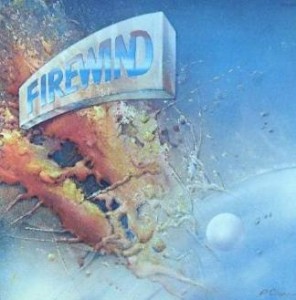
Back in the late 1970s John Michael Talbot, a former rocker turned early contemporary Christian music artist became a Catholic and a lay Franciscan. Around that time he participated in a recording with a number of other artists from that early part of the CCM era, Second Chapter of Acts, Keith Greene, Barry McGuire and his brother Terry to perform a musical about the book of Acts called Firewind. In it John Michael wrote and performed a song that has haunted me ever since. It is a song that forces me to look at my life and the way that I treat others in the light of the demands of the Gospel. It is called Would You Crucify Him?

It really is one of the most haunting, and to use Evangelical Speak “convicting” songs I have ever heard. Unfortunately I think that the message of the song is often unheard or ignored by most Christians. I think this is the case since the time of Constantine when the Church gained the political backing of the State. Since then in almost every clime and place that the Church has enjoyed that privileged status it is almost always used in ways that would so grieve Jesus.

One cannot read the Gospels nor many of the Old Testament Prophets and think anything else. The harshest condemnations found in Jesus’ message almost always were directed at the religious establishment which used its power for its own gain. It was they who quite often despised the those that Jesus showed the greatest compassion and love: the alien, the woman, the leper, the tax collector, the criminal, the hated Roman occupiers of Palestine and others on the margins of society who were looked upon with scorn by the religious people of his day.

The sad thing is scorn and distain for the people that Jesus reached out to the most that is so often the case today among the leaders of what has to be called the political Religious Right. Unfortunately that attitude is so widespread among those people’s disciples that hatred in the name of Jesus is the new normal. The attitude is one of entitlement and privilege that frankly is scary. Rather than reach out in love and care to those different and than them they viciously attack them supposedly to “obey God and follow the Bible.” It is sad to say that quite often that we are no different than the Pharisees of Jesus’ day.

I have felt the sharpness of those attacks. Though I am a Christian I have been called a Nazi, a Communist, a Socialist an apostate and even most recently “Hitler’s Love Child” by a Twitter Troll and worse. The invective that I have been exposed to after my return from Iraq suffering from PTSD and questioning faith and struggling to believe in God again even while trying to minister to people facing death in ICUs and ERs really changed me. When faith returned it was different and I am glad for that and now for that matter really don’t give a damn what “Conservative Christians” think of me.

Unfortunately those that call me these things are all self identified Conservative Christians, mostly Evangelicals but sometimes Catholics and Mainline Christians who also identify themselves as Patriots who believe in the Constitution, whatever that means. The fact that I have sworn an oath to defend that Constitution and their rights under it and have done so for 32 years in both the Army and Navy in peace and war is lost on them. Instead I am the Nazi because I dare criticize their practice of the faith and stand up for those that they hate.

As a historian who has spent much of my academic life studying Weimar and the Nazi regime I have to say that those that most resemble the Nazis today are Conservative Christians, the whole God and Country crowd. The same understanding of faith that allowed “Conservative Bible Believing” German Christians to wholeheartedly support the Hitler regime and for those Evangelicals that want to claim the Martyr Dietrich Bonhoeffer as a “Conservative” they had better think again. If they had actually read his books, writings and sermons they would find that he and most of the other leaders of the Confessing Church weren’t conservative at all, not in the sense that modern “Conservative Christians” understand the word.

Thus I have become a bit sensitive and when I see people who wrap themselves in the flag and claim the banner of the Cross mistreat others bothers me. There is a quote often misattributed to Sinclair Lewis that says “When Fascism comes to America it will be wrapped in the flag and carrying a cross.” The quote actually appears to be a condensation of his thoughts and writings but taken in the context of when it appeared in the 1930s is quite correct. Hitler, Mussolini, Franco all co-opted the conservative Christians of their nations by appealing to their fears of atheistic Communism and Socialism as well as minorities, Jews, homosexuals and any other group.

The fact that many justify their assaults on others not like them by claiming that “the other side is just as bad or just as hateful” miss the whole point of Jesus who was quite empathetic about telling his disciples to “turn the other cheek” and “repay evil with good.” The really sad thing is that there will be probably at least one person at some time that visits this site and comments on this article who either tells me that I have misunderstood Jesus or cites another Bible verse to justify hating and mistreating others.

I am appalled at the way self identified Christians rant at people they disagree with, disapprove of or simply hate. I am appalled when I see them make common cause with non-Christian ideologues like Glenn Beck, Rush Limbaugh, Mark Levin and others who spew venom at liberals, gays, women, blacks, Moslems, immigrants and others on a daily basis. Because of this I have taken up the causes a support the liberties of these people because they are the people that Jesus would have done the same for in his day.

But back to the song. Talbot and others like him came out of the 1960s and large parts of the Christian church condemned the whole youth revolution of the time. The things said by preachers of the hippies and the war protesters and those that were in the rock and roll music scene were and are shameful. So when a few churches began welcoming the “Jesus Freaks” who came out of it it was pretty cool.

The Talbots, Barry McGuire and others were among the first and they were quite revolutionary for their day. Barry McGuire’s song Don’t Blame God for the Sins of America is terrifying, especially when one sees just the incestuous relationship between much of the Christian Right, big business and the industries that promote war and violence.

Of course this was before established “Christian” record companies sensed the chance to make a fast buck by commercializing “Contemporary Christian Music” bought up the original small market Christian labels such as Sparrow, Birdwing and Maranatha! Music and turned it into a pile of very profitable slick rubbish. The fact is that there is not an Evangelical Christian entertainment conglomerate that would ever allow an artist to record a song like Don’t Blame God or Would You Crucify Him? today.

The first time I heard Would You Crucify Him? in 1979 on Firewind I cried. It struck my heart and I realized how easy it would be for me to be just like the Pharisees, Sadducees or the Imperial Church that used religion to keep power and crush the weak or those that questioned them.

Take the time to let the lyrics of the song set in. If you claim to be any kind of Christian please don’t blow them off.

3334856

http://www.youtube.com/watch?v=s5pAyKWbtOU

Sometimes, in the cool of the evenin’
Truth comes like a Lover in the wind
Sometimes, when my thoughts have gone misleadin’
She’ll ask that same old question once again…

Chorus:
Would you crucify Him
Would you crucify Him…, my old friend?
Would you crucify Him…, talking ’bout the sweet Lord Jesus
If He’d walk right here among you once again?

She’s askin’, How many times have you looked down to the harlot
Lookin’ through her tears, pretendin’ you don’t know?
For once you were just like her, how can you be now so self righteous
When in the name of the Lord you throw the first stone

So now I turn to you through your years of your robes and stained-glass windows
Do you vainly echo your prayers “to please the Lord?”
Profess the Marriage with your tongue, but your mind dreams like the harlot
But if the Judge looks to your thoughts can’t you guess your reward?

Would you crucify Him
Would you crucify Him…, my religious friend?
Would you crucify Him…, talking ’bout the sweet Lord Jesus
If He’d walk right here among you once again?

Yet how many times have you quoted from your Bible
To justify your eye for your eye and your tooth for your tooth?
You say that He didn’t mean what He was plainly sayin’
But like the Pharisee, my friend, you’re an educated fool!

Copyright John Michael Talbot 1979 from the Album Firewind

Peace

Padre Steve+

4 Comments

Filed under christian life, civil rights, faith, Political Commentary, Religion

The Uncomfortable Middle: The Challenge to the Certitude of Unprovable Doctrine

holy-saturday

“Man no longer lives in the beginning–he has lost the beginning. Now he finds he is in the middle, knowing neither the end nor the beginning, and yet knowing that he is in the middle, coming from the beginning and going towards the end. He sees that his life is determined by these two facets, of which he knows only that he does not know them”  Dietrich Bonhoeffer

I was watching an episode of Star Trek Voyager tonight, one called Distant Origin where a scientist of a race in the Delta Quadrant believes that genetic evidence indicated that their race originated on Earth. His thesis is challenged the doctrine of his species and he was accused of “heresy against Doctrine” for positing something different than his people believed. He ends up being persecuted and punished for his beliefs.

Now I want to be diplomatic about this. I am not someone who simply is a contrarian to established doctrines, be they theological, scientific or even military theories. That being said I think it is only right to question our presuppositions, as Anselm of Canterbury did through faith seeking understanding.

That understanding as a Christian is based on the totality of the message of the Christian faith. Hans Kung said it well:

“Christians are confident that there is a living God and that in the future of this God will also maintain their believing community in life and in truth. Their confidence is based on the promise given with Jesus of Nazareth: he himself is the promise in which God’s fidelity to his people can be read.” 

What we have to admit is that our belief is rooted in our faith, faith which is given to us through the witness of very imperfect people influenced by their own culture, history and traditions. Even scripture does not make the claim to be inerrant, and the Bible cannot be understood like the Koran or other texts which make the claim to be the infallible compendium of faith delivered by an angel or dictated by God himself. It is a Divine-human collaberation so symbolic of the relationship that God has with his people.

There is a certain sense of relationship between God and humanity within scripture and that relationship creates certain tensions between God and those people. The interesting thing is that Scripture is a collection of texts which record often in terrible honesty the lack of perfection of both the writers and their subjects. They likewise record the sometimes unpredictable and seemingly contradictory behavior of God toward humanity in the Old Testament. They bear witness to the weaknesses, limitations and lack of understanding of the people of God of the message of God but even in that those limitations and weaknesses that God is still faithful to humanity in the life death and resurrection of Jesus of Nazareth.

The real fact of the matter is that fixed doctrines are much more comfortable than difficult questions than honestly examining the contradictions that exist within Scripture, history and tradition. The fact is this makes many people uncomfortable and thus the retreat into the fortress of fixed and immutable doctrine. This is the magnetic attraction of funamentalism in all of its forms, not just Christian fundamentalism.  Yet for me there is a comfort in knowing that no matter how hard and fast we want to be certain of our doctrines, that God has the last say in the matter in the beginning and the end. We live in the uncomfortable middle but I have hope in the faith that God was in the beginning. Besides as Bonhoeffer well noted “A God who let us prove his existence would be an idol” 

Our doctrines, the way we interpret Scripture and the way we understand God are limited by our humanity and the fact that no matter how clever we think we are that our doctrines are expressions of faith. This is because we were not in the beginning as was God and we will not be at the end, at least in this state. We live in the uncomfortable middle.

We are to always seek clarity and understanding but know that it is possible that such understanding and the seeking of truth, be it spiritual, historical, scientific or ethical could well upset our doctrines, but not God himself. As Henri Nouwen wrote: “Theological formation is the gradual and often painful discovery of God’s incomprehensibility. You can be competent in many things, but you cannot be competent in God.”

Peace

Padre Steve+

1 Comment

Filed under christian life, faith, philosophy, Religion

Relearning Ministry Again For the First Time

198177_10151361204842059_1890411795_n

“Ministry means the ongoing attempt to put one’s own search for God, with all the moments of pain and joy, despair and hope, at the disposal of those who want to join this search but do not know how.” Henri Nouwen 

It was over 20 years ago that I graduated from seminary. I was a very good student and took every opportunity to learn, even when what I learned challenged my assumptions. Thus in a Southern Baptist seminary I basically came out as an Anglo-Catholic or progressive Vatican II type Catholic. But even so I was was still quite limited in my understanding of ministry.

My time in a Clinical Pastoral Education Residency a year after I graduated from seminary was filled with more discovery, much of it very painful as I confronted many of my own demons, But even what I learned there was just a chip off the top of the iceberg. While it was valuable it was something that took many more years to begin to fully grasp.

In each of these places and times of learning I discovered much, but like any novice my actual understanding of what I learned with limited by my own strengths as an analytical thinker and intuitive personality type. I was quite convinced of my competencies, skills and abilities, particularly in history and theology. I could wear people out picking apart arguments that I thought were flawed. Likewise on the occasions people came to me for advice I often would fall back on my strengths in analyzing their situation and giving them an answer. I was so obnoxious about it Judy would sometimes call me “the Great White One Who Knows it All.”

At various points in my life, seminary, preparation for the ordination to the Priesthood, during Clinical Pastoral Education and in the various military Chaplain school course that I have attended had to write and sometimes present a philosophy or theology of ministry. As I think about them most did talk about being present, but much more focus was on  programs and methods of teaching or even counseling from a cognitive behavioral theory method, but little to do with just being present and listening, presence was more about showing my face and being known that it was actually being with people. The changes in my “philosophy or theology of ministry” were honed in the crucibles of critical care ministry in hospital Trauma Departments and ICUs, and at war, deployed on ship or in Iraq. In those places I learned that between life and death that sometimes what matters most is just being there and not avoiding the pain by giving advice, offering a prayer, no matter how sincere and getting out of Dodge before the hard questions got asked.

I have found that young ministers or those new to ministry regardless of their age are often quite zealous and even when quite sincere often run roughshod over others. I think that is not so much a human failing but rather a result of our theological and ministerial training process. We focus on everything but being with real people, and among the professions we often are those among the least likely to truly listen to people before we diagnose a situation and give an answer. If we come from or are influenced by a tradition where what we believe that we are accurately discerning what the Holy Spirit is saying, or that we have the authoritative interpretation of Holy Scripture or that our theological premise is more correct than the others out there.

Please know this is not an attack on any particular denomination or theological school of thought. It just happens to be very common across the board in the way we do ministry as American Christians regardless of our denominational affiliation or whether we are liberal or conservative. It was bad enough when we all pretty much attended seminary in residence with other people and had to physically interact with other students or professors, some of whom challenged our views.

I believe that in the present reality of theological education in America, where online seminary programs are flourishing that an overall lack of contact and isolation is making the overall quality of ministry worse.  Simply put this is because we spend our time in a theological cocoon of our own making, deviod of relationships with people who really know us.  The result is that we become less attentive to others and more convinced of our own correctness and often suffer from a dangerous amount of narciscistic behaviors which are quite often displayed for the world to see.

 I wonder at times if the Jesuit formation process than anything that we do here.  While the 12 years long process done by the Jesuits is difficult and maybe even unworkable for some, I wonder if it is actually a better model for ministry.  I also wonder wonder if possibly we can learn from Buddhism. From what I see there appear many practices in it that are not antithetical to the Christian faith and may actually help us to be better spiritual directors, guides and care givers. I read a book by Wolfhart Pannenberg years ago about commonalities and where Christians and Buddhists could learn from each other. I still have it and when I return home I will have to take the time to re-read it. Part of my curiousity lies in the fact that I am also a military historian and theoritician and much as I see much complementary thought in the military theories of Sun Tzu and Carl Von Clausewitz, one who was Eastern in thought and the other a product of Classic Western Liberal thought and philosphy. Both understood the human dimension of life, war and statesmanship and as such their military theories are timeless. Could it be that Christians could learn from Buddhists. I know that some do and I wonder if because our God is bigger than our conception that his grace allows people outside the Christian tradition to understand his will better than us sometimes. I think of the encounters of Jesus with Roman officials who he complimented saying “I have not seen such faith in all of Israel.”

I know this because I lived my ministerial life in this manner for many years. In a sense I remained a novice so long as I thought that I knew everything. The late and great Hall of Fame Manager of the Baltimore Orioles, Earl Weaver said “It’s what you learn after you know it all that counts.” 

For me it took falling apart and feeling abandoned by peers, colleagues, the church institution and even God that took me to a new place ministry. Of course that came through the pain of loss, madness and abandonment that basically left me questioning everything, even the existence of God, I was for all practical purposes an agnostic. Coming back from war changed and suffering from PTSD and its effects makes more of an impact on faith than you can imagine. Since I have written about this part of my experience many times before so I won’t go into detail here.

295_27076762058_7573_n

Needless to say five years ago I began a journey that challenged my beliefs and changed me quite a bit as a Priest and Navy Chaplain. I won’t bore you with those changes either because I have written about them at length.

What I have learned and over the past five years is that Henri Nouwen who I quoted at the beginning of this article was correct. We as ministers frequently fail in this, instead we feel the need to say something, when often saying little or nothing but simply being with people and fully engaged in hearing them and whether through their words, expressions, tears or silence stay with them. Our words, suggestions and advice, even when theologically correct and in accordance with good counseling theory often are not heard by the suffering person because we are not listening and instead offering a diagnosis. Dietrich Bonhoeffer stated this Christian conundrum well:

“Christians, especially ministers, so often think they must always contribute something when they are in the company of others, that this is the one service they have to render. They forget that listening can be a greater service than speaking.”

I cannot tell you how many times that I have met people who have been hurt by well meaning ministers who simply cannot shut up and need to give advice. Let’s face it, the temptation is by virtue of our calling, our ordination or commissioning that we believe that words are essential. St. Francis of Assisi said “preach the Gospel at all times, use words when necessary.” Actions do speak louder than words and one of those actions is listening and maintaining a holy silence as we allow the Spirit of God to work in a life even as we remain present. Henri Nouwen wrote:

“Somewhere we know that without silence words lose their meaning, that without listening speaking no longer heals, that without distance closeness cannot cure.” 

n671902058_1153804_6925

For me though I have continued to evolve in ministry I do often feel like a novice. I have to fight the temptation to simply diagnose and give advice every day. That being said I am much more comfortable with listening and being present even more than I was a year ago. A lot of this credit goes to my Command Master Chief Ed Moreno, who I spend many hours a week with. He is a very spiritual person, a good listener and patient man who in a sense is a companion and fellow traveller on this spiritual journey.

For me it is almost as if I am relearning everything about ministry for the first time.

Well, that is enough for tonight. It is time that I shut up.

Blessings and Peace,

Padre Steve+

Leave a comment

Filed under christian life, faith, Pastoral Care, philosophy, PTSD, Religion

Writing My Way Home: Iraq, Faith PTSD and Life

295_26912012058_78_n

“Many people are looking for an ear that will listen. They do not find it among Christians, because these Christians are talking where they should be listening.But he who can no longer listen to his brother will soon be no longer listening to God, either; he will be doing nothing but prattle in the presence of God, too. This is the beginning of the death of the spiritual life, and in the end there will be nothing left but spiritual chatter and clerical condescension arrayed in pious words… never really speaking to others.” Dietrich Bonhoeffer

Since I returned from Iraq I have grown weary of Christians that have all the answers and are more interested in promoting their agenda than actually listening or caring for those wounded in spirit from various forms of trauma including war. I returned from Iraq and went through what amounted to a crisis in faith, belief and experienced what I felt to be abandonment by God and many Christians.

481801_10151367001287059_1003164983_n

As such I elected to travel down a path that has been one of paradox. I have benefited from this but the path has been filled with much difficulty and pain. I walked through the psychological, spiritual and physical effects of my time in Iraq as well as the moral injuries that I incurred.  Over the years I have seen the effects of these crisis on my life and relationships. It has become important to tell my story, in as sense as a Canadian Chaplain in our Pastoral Care residency said to “write my way home.”

After Iraq I began to write. I did so initially because it was therapeutic and helped me to begin to start sorting out what was going on with me. It also helped me, especially when I went public on this site about my experience to get outside of my normally severely introverted self. As I began to write regularly it became a part of my life as I struggled to deal with PTSD and the spiritual and emotional crises following my tour in Iraq.

I began to understand the importance of my stories, in fact all of our stories in the way that we understand reality what we believe to be true and what really is true about ourselves and the universe that we are a part.

I experienced this to some degree in my own pastoral care residency at Parkland Memorial Hospital in the 1990s. My supervisor challenged be to stop living in the past and begin to imagine a future that was not a prisoner of my past disappointments and failures. That was a watershed experience for me and I began to realize that I did not need to live my life in a constant repetition of the past. That realization did not always find a place in my life but in a gradual process I began to escape that past and begin to live in the moment with an eye to the future.

Iraq changed that to a large degree. What I experienced there and upon my return to the States shook many of my beliefs about the world, faith and life. The images of American Marines wounded by IED attacks, wounded children and destruction of vast areas of cities, towns and villages coupled with having HUMMVs and Helicopters that I traveled on shot at and having rockets fly over my head changed me.  That was magnified when I saw how the war was being covered by both the liberal and conservative media which bore little resemblance to my first hand observations.

Even worse was the feeling of being isolated and abandoned when I returned home.  I experienced a crisis in faith that left me a practical agnostic even as I desperately prayed for God to show up.  In fact my psychotherapist was the first person to even address my spiritual life after my return.

When Elmer Maggard asked me: “How are you and the big guy?” I could only say “I don’t know I don’t even know if he exists.”

For a priest and chaplain that was a harrowing admission. I had entered a world of darkness that I did not believe was possible. I would struggle for another year and a half until during Advent of 2009. It was then, after what I refer to as my “Christmas Miracle” that things began to change and I began to sense the presence of a loving God again.  My faith began to return but it was and is not the same as before I went to Iraq.  I still struggle at times, though not as much. I still question God, the Church and faith in general. I believe and often must pray “Lord help my unbelief.” My faith is still in the realm of Christian orthodoxy but more negotiable.

This might sound confusing so let me explain. I admit that I do not have the answers that I used to think that I had. The late great manager of the Baltimore Orioles, Earl Weaver once said “it’s what you learn after you know it all that counts.”

The fact is I know a whole lot less than I used to. This has made me more apt to actually listen to people when they tell their stories and when they ask questions that I can’t answer I say “I don’t know” or “I struggle with that too” people trust me with their faith struggles or even the existence of God.

dinner-w-bg-sabah

I refuse to pass judgment on someone’s faith journey, even if they question God’s existence because I have been there and it is not a comfortable place to live.  I am far more willing to walk with someone thorough that valley of doubt or unbelief because I lived in that valley for over a a long time and sometimes pay it a return visit.

I don’t like to attribute normal experiences in life to being “God’s will” or “an attack of the Devil.” I recognize that as human beings that we live in a fallen state and that sometimes things just happen. To put in in the vernacular “Shit Happens.”

That being said I believe that the real miracle is that God can give us the grace to go through the most difficult times even when we have no faith at all.  I think that the experience of Jesus on Good Friday and the testimony of many saintly people tells me that this is true. The miracle in my mind is not being “delivered” from crisis or unbelief but making it though the crisis and return to faith, even if that faith takes a different form.

For me the act of writing both about my experiences, writing about history, faith, ethics and even baseball has been therapeutic and forced me out of my comfort zone.  When I  began to tell my story my friend Elmer the Shrink asked me if I was really sure that I wanted to open up and become vulnerable.

I said that I thought that I needed to because people needed to know the reality of what many Iraq and Afghanistan veterans experience.  He told me that what I was doing was risky but let me make the call. Almost 1500 posts later, not all of course dealing with what I and other veterans have gone through I can say that it was the right decision.

295_26912097058_4309_n

My story is paradoxical. I am a man of faith, a Christian and Priest. I believe but I also question and doubt and sometimes still feel a twinge of agnosticism. I am much more prone to give the benefit of the doubt to people who struggle with life, faith and the existence of God. Andrew Greeley wrote that is was possible for a priest to lose their faith “no more often than a couple of times a day.” I figure that God is big enough to handle doubt and unbelief while still loving and caring for the person experiencing them, even those whose beliefs that may not fit the definition of Christian orthodoxy.

I am a passionate introvert in an extroverted world both in ministry and the military. I am an intuitive “out of the box” thinker and somewhat a rebel. Yet in spite of this I willingly volunteer to serve the church and the military. It is interesting because both institutions prize loyalty to the institution, obedience and staying within the lines of prescribed beliefs and traditions. I believe yet question.

I think that there is a healthy tension in this type of life. Though I fully subscribe to the Creeds, the first 7 Ecumenical Councils of the Church an Old Catholic understanding of the Christian faith tempered by some Anglican flavors, I am not a legalist when it comes to faith.

This also applies to the rest of life because I don’t think that faith should influence how we treat people, even in politics. I cannot allow any political ideology to hold my faith captive, nor can I cast aside the essence of the Christian faith even when I doubt. My political views could be described as a moderate progressive liberalism tempered with the demands of the Gospel, the top two commandments that Jesus talked about, the whole love God and love your neighbor thing.

I have discovered that for the most part I can comfortably live in this tension and actually believe that writing about it has been a big part of my recovery. The fact is that I think that it is okay to live life in balance and with a health appreciation of creative tension.

262_29132382058_5961_n

I continue to emerge from the darkness of my post Iraq experience and I know that I am still wounded. I still struggle but I now see this as a gift from God. My faith is not the same as it was and I am not satisfied with simplistic answers or the party lines of people that only care about their agenda especially when they decide that their agenda is God’s will, even if it has nothing to do with the Gospel. That may sound snarky but I really want to be an authentic Christian not some caricature that is more a picture of the American perversion of the faith than anything found in Scripture or the 2000 year history of the Church.

I believe but I struggle. I will listen to other points of view, including those of people that are not Christian. In fact when I was in Iraq I found that my Iraqi Muslim friends were much easier to dialogue with and have deep and respectful theological discussions with than many American Evangelicals. That was a watershed moment.  T. E. Lawrence wrote in Seven Pillars of Wisdom that “The Beduin could not look for God within him: he was too sure that he was within God.” After having been with the Bedouin I think that I understand.

This is the dialogue that has been going on in me since my return from Iraq. I know other Chaplains and other people of faith that have returned from Iraq or Afghanistan who have experienced similar feelings.

Unfortunately many do not have a safe place in their churches to heal and are afforded little time to do self care. I am concerned for our caregivers that care of veterans like me.  I wonder how many can be real in their faith community without having people run away from them as if they were radioactive, a feeling that many veterans and other trauma victims experience when they attempt to tell their story.

6095_128718117058_1466465_n

I just hope that I will be able to be there for others who are wounded and suffering as a result of what they experienced in war. T. E. Lawrence wrote: “The rare man who attains wisdom is, by the very clearness of his sight, a better guide in solving practical problems than those, more commonly the leaders of men, whose eyes are misted and minds warped by ambition for success….”

Maybe that is why I went through what I did in Iraq and after my return. If that is the case it is a good thing and I will continue to write.

That is all for tonight.  Blessings and peace my friends,

Padre Steve+

5 Comments

Filed under christian life, faith, iraq,afghanistan, Military, Pastoral Care, Tour in Iraq

Belief and Unbelief

198177_10151361204842059_1890411795_n

“Whether your faith is that there is a God or that there is not a God, if you don’t have any doubts you are either kidding yourself or you are asleep.” Frederick Buechner

I have always found that the story of the man who asks Jesus to heal his daughter in Mark 9:24 to resonate with me. The man cries out to Jesus “I believe, help my unbelief.”This has been part of my faith journey for decades. I think that it is one of the truest declarations of faith ever recorded. I know many people, believers of different faiths and unbelievers alike who believe with unrequited certitude. They outwardly proclaim what they believe as absolute and those who do mot believe like them are to be pitied or maybe even despised. While many will make that kind of proclamation I wonder how many believe with the certitude of their public statements be they a “believer” or an unbeliever.

Saint Anselm of Canterbury wrote “Faith seeks understanding. I do not seek to understand that I may believe, but I believe to understand.”

I confess that as much as I believe that I often doubt. Not that I doubt God, but rather that I doubt humanity’s capacity to truly understand the infinite possibilities of God or of human existence. I actually think that means that I believe in a pretty infinite kind of God. For me I have taken Anselm’s understanding of faith as any of us who profess to believe in God or something else as the closest thing to truth we will know in this present life. Our lives, our existence is shrouded in understanding that is at best “seen through a mirror darkly” in the words of Paul the Apostle.

Dietrich Bonhoeffer wrote “Man no longer lives in the beginning -he has lost the beginning. Now he finds himself in the middle, knowing neither the end or the beginning, and yet knowing that he is in the middle, coming from the beginning and going toward the end. He sees that his life is determined by these two facets, of which he knows only that he does not know them.

I love what some refer to as the Anglican Triad of belief, that the Christian faith is interpreted through Scripture, Tradition and Reason. But I also think that we as Christians also need to interpret it through our experience and humbly acknowledge that we do live in that “uncomfortable middle” neither knowing the beginning or the end.

This makes many if not most people uncomfortable. We want certainty. We want to be in control. However many no longer believe in themselves, much less a God that they cannot see and substitute an absolute belief in an “orthodoxy” of some movement, be it religious, philosophical, political or scientific and cling to it with unbridled fanaticism. That spirit is the genus of every mass movement and often the root of great evil. One only has to look at history to understand the truth of this.

Eric Hoffer wrote that “Even the sober desire for progress is sustained by faith- faith in the intrinsic goodness of human nature and the omnipotence of science. It is a defiant and blasphemous faith, not unlike that held by the men who set out to build “a city and a tower, whose top may reach into heaven” and who believed that “nothing will be restrained to them, which they imagined to do.”

Faith is important but regardless of what we put our faith in, God, humanity, science or materialism we have to own the limitations of our faith simply because of our existence in this uncomfortable middle. For me this limitation means that I believe in order to understand. My faith seeks understanding but understands that in this life I will not understand even the remotest amount of the vastness of creation, the spiritual aspects of life or even why there is the designated hitter rule, bats made of anything other than wood or artificial turf on a baseball diamond. But I digress…

My faith as it is as a Christian is in Jesus the Christ. It is stated in the Creeds and testified to in Scripture, tradition and history, but even those accounts are incomplete, John the Apostle says as much at the end of his Gospel as does Paul in Corinthians. Thus I believe that if Christians believe that we must honestly acknowledge the limitations that we have in understanding even what we claim to believe. We have to believe that there is in light of this limitation that we do not know “all truth” or even that we fully understand the limited amount that we actually can study or observe, or for that matter that we even correctly interpret those strongly held beliefs, be they religious, political, scientific or philosophical. That goes for the Christian, any other religious person, as well as the Pagan or the Atheist. Harry Callahan once said “a man’s got to know his limitations.”

Such a life does not lend itself to triumphalism of any kind, but rather in humility. Real faith in whatever we determine is truth is also is best demonstrated in our doubts and the honesty to admit our limitations. There is a prayer from Kenya that I found many years ago which says from the cowardice that dare not face new truth, from the laziness that is contented with half truth, from the arrogance that thinks it knows all truth, good Lord deliver us.

Peace

Padre Steve+

1 Comment

Filed under christian life, faith, philosophy, Religion

Sequester, Lent and Hope

198177_10151361204842059_1890411795_n

“As lousy as things are now, tomorrow they will be somebody’s good old days.” Gerald Barzan

Sequester is here and with it the era of mutual assured destruction by our political, economic and media elites continues in an unabated form.

At the same time sequester occurs during the season of Lent when Christians are called on to make voluntary sacrifices of things that are important to them in the forms of fasting and abstinence. Lent is a season of penitence which hopefully builds in the heart of the believer a new love for God and neighbor, a season that changes a person from a “me first” attitude to an attitude of thanksgiving, gratitude and service to those in distress. That being said, the season of Lent should be a season of hope.

However it is difficult at times to be hopeful when all around there is bad news. We seem to be living the ancient Chinese curse that says “May you live in interesting times.” The times are certainly interesting with lots going on of historic significance that may years from now be remembered as one of those tumultuous times where the world changed before our eyes.

History of course is replete with such times, the rise and fall of ancient empires, the age of exploration, the Reformation, the French and American Revolutions, the Napoleonic era, the American Civil War, the Industrial Revolution, the First and Second World War with the Great Depression sandwich, the 1960’s, the post Cold War era and the post-911 era just for a start.

I could go back further in history for other epochal periods, but I think that the reason that today’s crisis seem so much more dire is that we are both the beneficiaries and the victims of the instantaneous communication revolution in which common people have real time access to events that are impacting their lives.  This causes many a great deal of anxiety both real and imagined, anxiety which usually finds expression in a desire for the good old days as well as seeks solace and security from those who feverishly exploit that anxiety.  It does not matter if the security comes from religion, political ideology and matters neither if it comes from the left or the right so long as the call resonates with them they will follow it. They will faithfully follow even as the purveyors of the message drive up their worry and anxiety that they no longer can actually enjoy life or be thankful because they are so consumed with how “lousy” things are or “evil” their opponents are.

Thus even during the season of Lent it is hard for many people to grasp the meaning of it when all around them appears to be falling apart and in chaos.

It is in times like these that one has to take a deep breath, look around at all that they have to be thankful for and just really examine of the nostalgia that they feel for “better times” is that or an escape from an unpleasant present and fear of the future if the other side wins.

The fact is that we have seen such times before and somehow made it through.  I hear from friends and relatives who lived through the Great Depression and World War II that those were good times in spite of everything happening, much of which is present today but somehow things are worse now.  Even I fall into the trap about somehow thinking that the times that I grew up in were somehow better than the present, this may be true for music but overall things were not that good for a lot of people but somehow we made it through them.  Lent is a time to step back from the brink, take stock and renew our life with God and our neighbor.

When I returned from Iraq back in February 2008 I soon discovered that the bombardment of bad news and über-partisan political battles took its toll on me.  I was neither as resilient as I thought that I was nor as consumed by the need to continue to ratchet up rhetoric on one side or the other as the more extreme elements on the right or left were doing.  PTSD or not I realized that the purveyors of the 24/7 bad news cycle were driving people with legitimate ideological differences to extremes that I had never seen, but which I recognized from history have a lot of precedent and can lead to making things even worse.  One only has to look at Weimar Germany to realize how things can go so very wrong when extremes on both sides of the ideological spectrums squeeze out those in the middle or chance at mutually beneficial solutions and that was in the days before type of information overload that is the bedrock of the political and ideological landscape of today.

I am not attacking those who get caught up in this but I do question the politicians, pundits, “news-networks” and talk show hosts who continue to ratchet up rhetoric to the point that many feel that the only alternative is some kind of “revolution.”  Again those that call for “radical change” or revolt against those who are in favor of that kind of change are both calling for revolution when revolutionary talk reaches a point where one side or the other does not see a way to resolve things in a civil manner then the those alternatives slip away and the only recourse is violence.

It is not the fault of one side or the other as those that stoke this talk are found on both sides of the American as well as other nations political and ideological spectrum testify to daily.  In the United States we also have a long history of apocalyptic thought which presents the lousy state of current events in any generation as something that will certainly bring the end of life as we know it or the return of the Lord, the Great Tribulation or whatever you chalk it up to. There are those on both the religious and secular side of the spectrum who have apocalyptic visions related to their world view.  For some reason we Americans do the apocalyptic quite well whether we believe in God or not.

The thing that has been most on my mind this Lent, as it has been the past several years has been the idea of being reconciled both to God and to one another.  Lent is a season of self examination, repentance and forgiveness.  The call to “be reconciled to one another” is a never ending command and applies across the variety and spectrum of life.

cross-ash-wednesday

Lent reminds us that that “we are dust and to dust we shall return” but that we are also all made in the image of the God who created us, redeems us and sanctifies us who calls us to himself and reminds us that mercy triumphs over judgment and “not be conformed to this world, but be transformed by the renewing of your minds, so that you may discern what is the will of God—what is good and acceptable and perfect.” I am afraid that in times like these even the best intentioned of people can find themselves pulled into the orbit of those that in less stressful or trying times that they would never be involved with.

The German martyr Dietrich Bonhoeffer once wrote: “Our enemies are those who harbor hostility against us, not those against whom we cherish hostility… As a Christian I am called to treat my enemy as a brother and to meet hostility with love. My behavior is thus determined not by the way others treat me, but by the treatment I receive from Jesus.”

I know for some that call themselves “Christians” this message is lost. However, I believe that it is not because they are consciously rejecting the message of the Gospel but because that have become so deeply involved in whatever cause they endorese that they have lost the ability at least temporarily to see the good that may rest in their opponents and their ideas.

As Bonhoeffer also wrote “Judging others makes us blind, whereas love is illuminating. By judging others, we blind ourselves to our own evil and to the grace which others are just as entitled to as ourselves.”  Now of course Bonhoeffer knew the evil that was the Nazis and eventually gave his life by supporting the German resistance to Hitler.  Loving our enemies does not absolve us from public responsibility but in ensuring that we do not ensnare ourselves in ideology that restricts our ability to love them as Christ has commanded.

I think in the past few years that I have gained a new perspective on life that has changed the way that I look at the world.  I know that things are not good right now and that there are a lot of things to be legitimately concerned. That said I know too that somehow our country as well as much of humanity have weathered worse and like Barzan said that for some these will be the good old days someday.

That thought helps me to live in the present knowing that the future is not yet written and known only to God who in his grace condescends to love us and desires that we better love him and one another and not be conformed to any ideology that would prevent that. Sequestration and political division aside I do pray that we will both see better days as well as be reconciled to God and to one another.

It is in times like this that I think of Bonhoeffer’s words:

“God loves human beings. God loves the world. Not an ideal human, but human beings as they are; not an ideal world, but the real world. What we find repulsive in their opposition to God, what we shrink back from with pain and hostility, namely, real human beings, the real world, this is for God the ground of unfathomable love.”

That is my Lenten prayer.

Peace,

Padre Steve+

1 Comment

Filed under christian life, faith, History, News and current events, Political Commentary

The Painful Lessons of Looking in the Mirror of Social Media

orange-BloomCounty-morals

I had an encounter this last weekend on a leading social media site. It was not pleasant and I waited for a couple of days to think, pray and meditate on what happen in the encounter before I decided to write about it.

It occurred on a page which is pretty popular and deals with military issues and the man that runs that page I enjoy very much. He frequently brings up very pertinent issues dealing with military issues, strategy and tactics, foreign policy and national security policy as well as social aspects of current military life.

I got involved in an debate, probably not the best thing to do because the debate had already degenerated into a pretty vicious cesspool of recriminations between pro and anti-gay rights supporters. The subject was the actions of the Officers Wives Club at Fort Bragg North Carolina to initially reject the entry of the lesbian wife of a female Army Lieutenant Colonel for membership, the subsequent court battle and the wives club’s grudging issuance of a “guest pass” to the woman.

What got me to comment was the absolutely venomous tenor of the gay rights opponents, their often obscene comments about the lesbian couple and how many self identified as Christians or supporting Christian values. It wasn’t a matter of agreeing or disagreeing about policy and interpretation of law or even the validity or sincerity of their beliefs, it was the shameful way that they demonized and dehumanized the people involved as well as those that pointed out an opposing viewpoint.

I hesitated at first but then having seen such how such clubs deal with those different from their majority of their members I wrote this comment:

“in my experience of 30 years commissioned I have found many Officers Wives Clubs to be a cesspool of gossip and self-righteousness covered with a veneer of respectableness covering up their own vanity. Most often they are the domain of white women, who do not work and historically have shunned male spouses of female officers, wives that are working professionals whose identity is not built around their husband’s achievements as well as minorities, the physically disabled or wives of officers who spent years as enlisted men. The treatment of the Lesbian wife is another chapter in officially sanctioned discrimination. Chaplain wives organizations are similar, except you can toss in the stigma of not being a Evangelical or Conservative Protestant. Wives of Chaplains that don’t fit that mould are marginalized, be they Mainline Protestants, Jews or Mormons and of course wives whose faith is different then their husband, such as a Protestant Chaplain with a Catholic wife. My view, if they want to be a private membership that excludes those that they don’t think fit in, then meet off base…”

I don’t think that my comments were off base. They actually seem to describe the history of these organizations fairly well. However, my post attracted the ire of a relatively recent Army retiree and stupidly I shot back with a flippant comment. He had already been heavily engaged in the debate and the fact that I was a Chaplain gave him all that he needed to begin tThat comment was ill advised. A Marine Corps Lieutenant Colonel friend of mine noted that I shouldn’t wrestle a pig. I ignored his advice as well of the advice Judy also tried to warn me off.

My flippant comment elucidated an attack from the man that went well beyond dealing with policy, law or even faith, it became a personal attack. To him my arguments did not matter, it was a matter of not only attempting to defeat what I said but to discredit and destroy me in the process. When I attempted to build bridges to dialogue and invite him to actually get to know me, he attacked more vehemently and personally making accusations about me, my character and my beliefs. Instead of debating any of my defenses of my position, theological or constitutional he dismissed them. His characterizations and comments that were so off base and wrong that anyone who either knows me personally or reads this site regularly would know that they were absolutely false.

But the attacks wounded me and left me incredibly angry. But that was not a bad thing. They caused me they think back to a time early in my ministry when I did similar things to those whose doctrine, beliefs or practices that I believed were wrong. I was very good at it. My Chaplain Assistant who is now a relatively senior Army Chaplain used to call me a “Catholic Rush Limbaugh,” even though I was not a Roman Catholic. A very conservative and reactionary Roman Catholic journal called The New Oxford Review published two of my articles back in 1998 and 1999, which ended up getting me banned from publishing for years by my the second ranking bishop of my former church. I was accused of being “too Catholic” and the irony was that he left that church well before I was forced to leave becoming Roman Catholic and writing similar articles to mine for a major Catholic apologetics online website.

So as I said I was good at this. With precise logic I could devastate others. The man that attacked me was much like me. I was seeing my old self in a mirror and it was not a sight that I enjoyed and it tempered my remarks to the man that I made in my defense.

It seems to me that those that argue most strenuously and personally are not necessarily bad people. They are consumed with zeal. Jesus had to deal with such people during his earthly ministry and every time he left them perplexed. I am not that good at this point in doing that. I simply gave up and told my attacker to “pound sand.” Jesus was much better at ending debates like this one than me.

I felt like George Costanza of Seinfeld trying to get the last word. Not very Jesus like, but revealing to me. Revealing to the point that I was reminded of Bonhoeffer’s words that “nothing that we despise in other men is inherently absent in ourselves.” It is a hard lesson to learn and it seems that I have to learn it more times than I like. In a sense it was like looking in the mirror but seeing me more than a decade ago.

Peace

Padre Steve+

8 Comments

Filed under christian life, faith, News and current events, Political Commentary, Religion