Tag Archives: dominion war

What You Leave Behind: Thoughts on Leaving Iraq 12 Years Ago and Star Trek Deep Space Nine


Friends of Padre Steve’s World,

Tonight, Judy and I finished a several month marathon of Star Trek Deep Space Nine. The final episode was titled What You Leave Behind. It so happens that today is the twelfth anniversary of my last full day in Iraq. To me those memories are bittersweet. As Charles Dickens wrote: “It was the best of times, and the worst of times.”
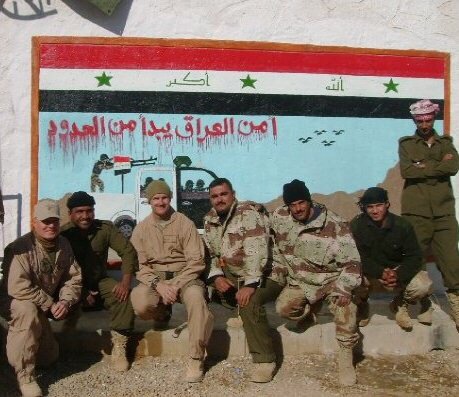
I left a significant part of my soul in Iraq, and truthful, only part of me came back. I don’t know what part, I am still trying to figure that out, maybe I’ll figure it out someday and maybe I won’t, but does it really matter? Honestly, after twelve years does it really matter? For me everything changed after Iraq, just like in an imaginary science fiction show everything changed for every character. I am not going to try to describe the entire two part episode, but the great folks at Memory Alpha have done that very well. If you like any Star Trek series you need to visit that sight.  https://memory-alpha.fandom.com/wiki/What_You_Leave_Behind_(episode)
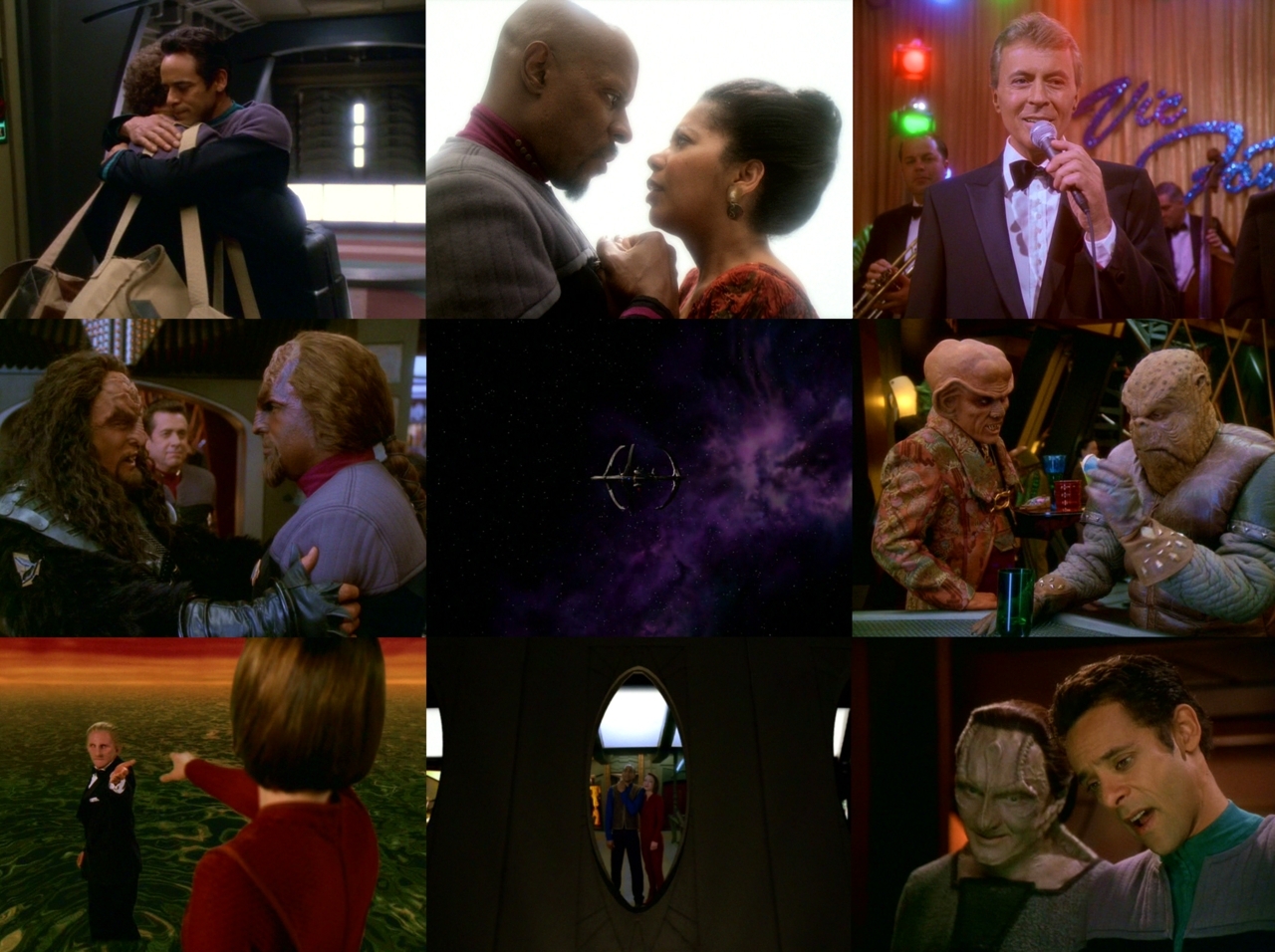
The episode is set at the end of great and costly war, political, and social change. In a sense DS9 is the perfect series for someone like me. It is my favorite Star Trek series, because it demonstrates the complicated nature and gray areas of life, faith, politics, relationships, alliances, power, and even love.

For the past week I have been having troubling nightmares and terrors, some of which almost seem like visions of the future. Some are directly related to my time in Iraq, evidently in one of them Judy had to deflect an attack from me. I have a neurological condition that when I am in REM sleep, my body still acts out my dreams and nightmares. I have had three incidents where I hurt myself bad enough to go to the ER, or medical clinic, including a broken nose.
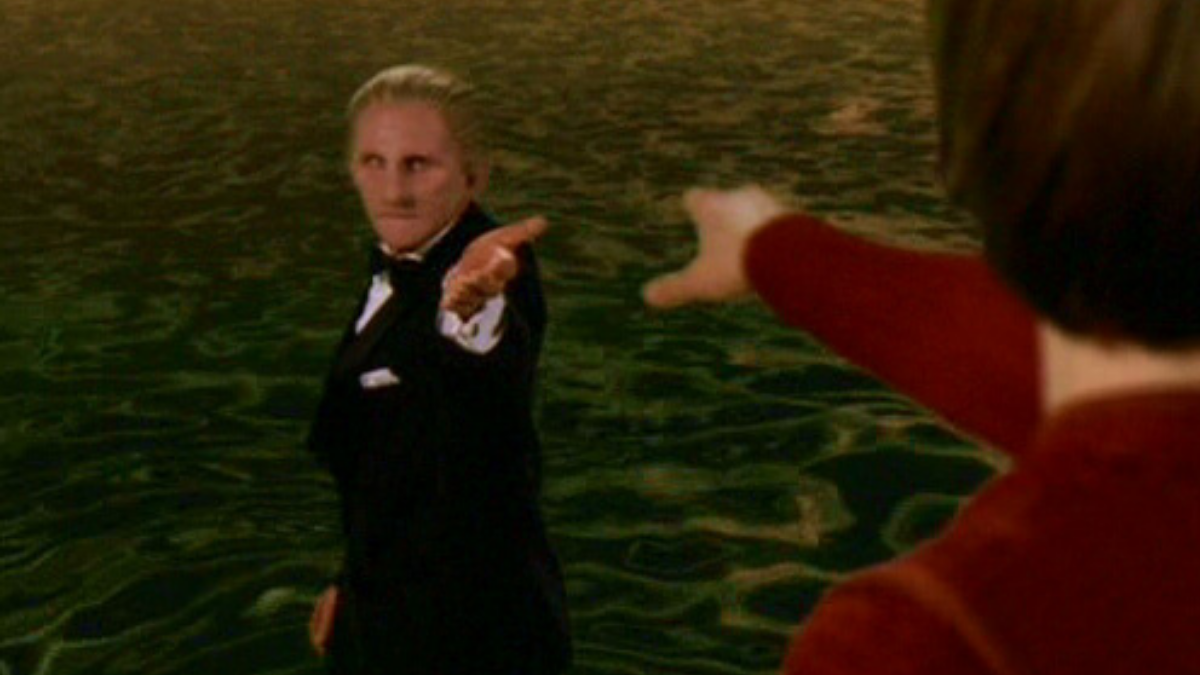
But these have been different from past ones. They are a combination of Iraq experienced transposed into the future, a future where I watch our military mobilizing and going to war, and the. evacuating bases, destroying computers, and burning or shredding documents, and I am there in the middle of it. In these nightmares I see cities burning, people dying by the millions, and the United States, like the Federation in DS9 is not entirely innocent, just like Vietnam and Iraq. Of course the Federation was fighting a superior power, the Dominion and tried to conduct genocide against the Founders of the Dominion; although the Dominion Founders had no problem with genocide either, including their allies in the Alpha Quadrant. But I digress, I am struggling, and vulnerable; and despite my attempts to be strong, and fight rather than resort to flight, I am pissing people off. I seem to be coming across as overly sensitive and defensive, ready to fight and unwilling to compromise when I see people who have helped me attacked by friends on the right and the left. It seems that there are very few safe spaces left, so given the choice of whether to run away, go underground, or fight, I usually choose the latter.

Near the end of the episode, Dr. Bashir, and the former Cardassian Intelligence Agent and exile Garak, stand victorious in the ruins of Cardassia Prime, Garak and Bashir have the following conversation:

Bashir: “Eight hundred million dead.”
Garak: “And casualty reports still coming in. Well, aren’t you going to congratulate me, Doctor? My exile is now officially over. I’ve returned home. Or rather, to what’s left of it.”
Bashir: “Listen, I know that this must seem bleak.”
Garak: “Some may say that we’ve gotten just what we deserved. After all, we’re not entirely innocent, are we? And I’m not just speaking of the Bajoran occupation. No, our whole history is one of arrogant aggression. We’ve collaborated with the Dominion, betrayed the entire Alpha Quadrant. Oh, no, no. There’s no doubt about it. We’re guilty as charged.”
Bashir: “You and I both know that the Cardassians are a strong people. They’ll survive. Cardassia will survive.”
Garak: “Please, Doctor. Spare me your insufferable Federation optimism. Of course it will survive, but as not the Cardassia I knew. We had a rich and ancient culture. Our literature, music, art were second to none. And now, so much of it is lost. So many of our best people, our most gifted minds.”
Bashir: “I’m sorry, Garak. I didn’t mean…”
Garak: “Oh, it’s quite all right, Doctor. You’ve been such a good friend. I’m going to miss our lunches together.”
Bashir: “”I’m sure we’ll see each other again.”
Garak: “I’d like to think so, but one can never say. We live in uncertain times.”

I have to say that I now really understand that conversation, especially when the President of the United States openly consorts with the enemies of the United States, defames long time allies, and treats his senior military and foreign policy advisors as traitors, and incompetents.

But that is enough for the night. I have learned not to trust ideologues of the far right or the far left who promote scorched earth policies with anyone who offends them without trying to understand their opposites. I try to understand, but then I see people who I thought were safe condemn me. By being me and attempting to retain a sense of honor All of my life, I might end up achieving a place in Sto’Vo’Kor, the Klingon afterlife for the honored dead.

But as the Ferengi bartender Quark noted: “It’s like I said: the more things change, the more they stay the same.” But the fact is that the world that we think we know is not linear.

Until tomorrow,

Peace,

Padre Steve+
3 Comments

Filed under ethics, faith, film, iraq, iraq,afghanistan, national security, Political Commentary, Religion, televsion, Tour in Iraq

Living in the National Security State

Patriot-Act-HR-3162

Inter Arma Enim Silent Leges, in time of war the law stands silent…

James Madison wrote that “A popular government, without popular information, or the means of acquiring it, is but a prologue to a farce or a tragedy; or, perhaps both.”

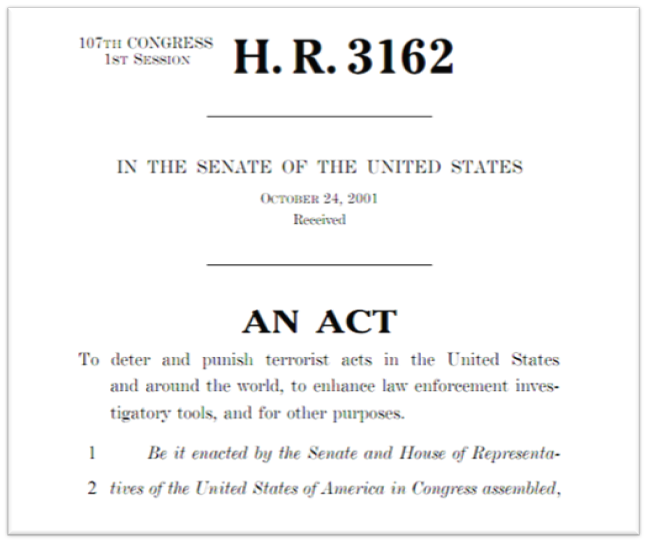
After September 11th 2001 the National Security State went into overdrive with the passage of the so called Patriot Act. That act opened the floodgates for an ever expanding national security state.

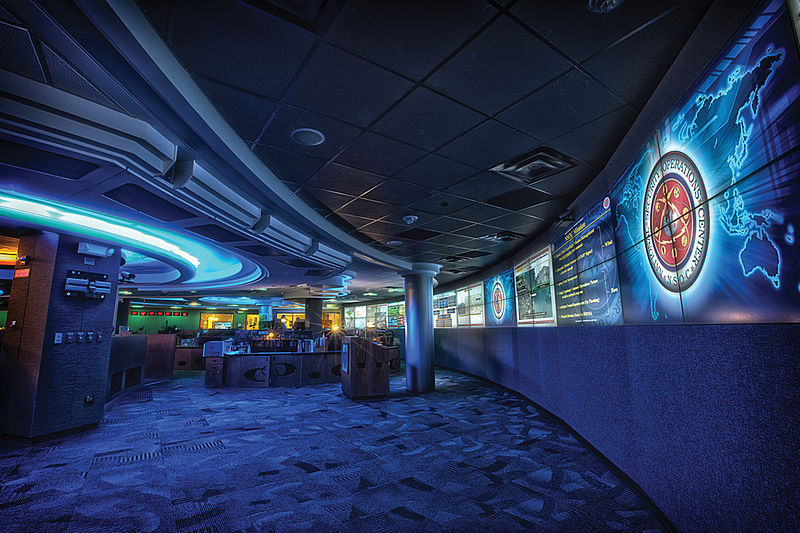
I have a lot of apprehension when I read the reports about the activities of the National Security Agency, other intelligence and police agencies at all levels of government and the pervasive erosion of civil rights.  The national security state and the seeming all pervasive security and surveillance apparatus which demolishes any sense of privacy, especially the protections enunciated in the Fourth Amendment and to some extent the First Amendment. Of course the use of similar methods by the private sector, often in conduction with government agencies is another concern, but that needs to wait for another day.

I also understand from history and empirical evidence that many others, many from unfriendly countries do not share those apprehensions. Many of these competitors are willing to use whatever openness that we have as a society against us, using similar technology and methods used by our intelligence, police, governmental and private sector. It makes for an ethical, legal and even constitutional conundrum. I know that I am not comfortable with this, and perhaps maybe none of us should be.

It is very easy on one hand in light of history, our Constitution and democratic process to condemn the NSA, the FISA courts and other lawfully constituted agencies and those that drafted the laws over the decades that allow the activities which they now conduct. The same can be said of foreign intelligence agencies which all engage in similar activities including the British GCHQ, the German Bundesnachrichtendienst and so many others including the Chinese and Russians.

Likewise it is equally easy in light of history, current events and national security concerns for people to jump to the other side of the fence and not only defend the activities of the NSA and agencies like it, and to demonize those that protest or expose such activities.

When I see the talking heads on cable news shows defending or condemning such activities and not agonizing over the complexity and issues involved I get worried. Because there are legitimate concerns voiced by critics as well as defenders. But since we live in an era of soundbites, gotcha and half-truths being portrayed as all truth I find it helpful to use either historical examples, literature or fiction, and even science fiction to wrestle with the fundamental truths. So I find looking at such issues through the prism of Star Trek sometimes more interesting and provocative than simply doing the whole moralizing pundit thing.

enimsilentleges_210

There was an episode of  Star Trek Deep Space Nine that aired well before the events of 9-11-2001, and the subsequent Global War on Terror, that I find fascinating. The episode deals with a secretive agency in Starfleet operating in the gray areas between the laws and ideals of the Federation and the threats that the Federation faces. Even when the Federation is a peace, Section 31, as it is called is engaged in activities against historic or potential enemies. In a way it is somewhat like the NSA or the Defense Intelligence Agency.

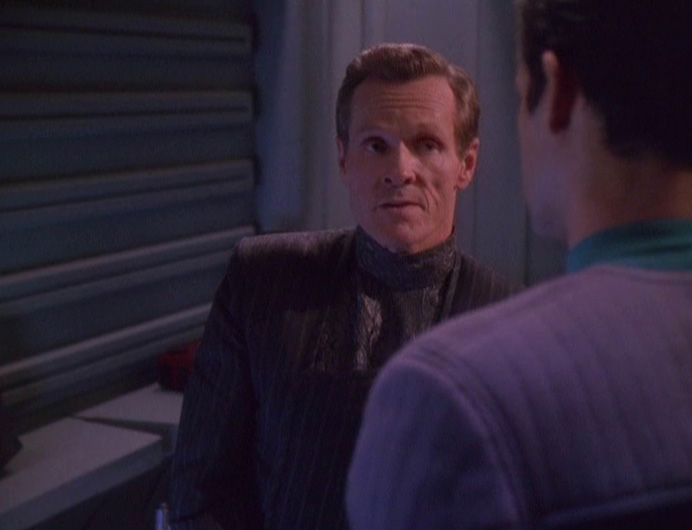
At the beginning of the Deep Space Nine Episode Inter Arma Enim Silent Leges the head of Section 31, a man only known as Sloan comes back Doctor Julia Bashir to involve him in an clandestine operation. An operation to on the Romulans who at this point are a Federation ally against the Dominion.

Sloan makes his approach and Bashir, who expresses his reservations:

BASHIR: You want me to spy on an ally.

SLOAN: To evaluate an ally. And a temporary ally at that. I say that because when the war is over, the following will happen in short order. The Dominion will be forced back to the Gamma Quadrant, the Cardassian Empire will be occupied, the Klingon Empire will spend the next ten years recovering from the war and won’t pose a serious threat to anyone. That leaves two powers to vie for control of the quadrant, the Federation and the Romulans.

BASHIR: This war isn’t over and you’re already planning for the next.

SLOAN: Well put. I hope your report is equally succinct.

BASHIR: How many times do I have to tell you, Sloan? I don’t work for you.

SLOAN: You will. It’s in your nature. You are a man who loves secrets. Medical, personal, fictional. I am a man of secrets. You want to know what I know, and the only way to do that is to accept the assignment.

I find the exchange both illuminating and riveting. The fact is that in the situation we face today the arguments of both sides should make us very uncomfortable.

Whether we like it or not or not, the incredibly rapid technical and communication advances of the past couple of decades have primed us for our present conundrum of liberty and privacy or security. That technology, as wonderful as it is  has enabled a generation to grow up in a virtual world in many ways detached from the moral and ethical balances between individual rights and liberties as well responsibility to community.

All the wonderful gadgets that we employ in everyday life, make it easy for enemies and “friends” to do things that were unimaginable to people other than science fiction writers even twenty to thirty years ago. Likewise they were certainly beyond the wildest imaginations of any of the founders who drafted Constitution.

The reality is, the things that make are lives so easy are also the things that have the potential to remove the very liberties that we treasure, either by our enemies using them, or those that defend us.

The truth is, that throughout history, even our own there have been operatives within the government in charge of secrets, as well as spies. In the Inter Arma Enim Silent Leges episode we see an operation that is full of duplicity and moral ambiguity all committed in the name of security. I won’t go into the details because it is too full of twists, and turns, you can read the plot of the episode at Memory Alpha.org http://en.memory-alpha.org/wiki/Inter_Arma_Enim_Silent_Leges_%28episode%29

There is an exchange between Dr. Bashir and Admiral Ross of Starfleet command which is very enlightening because it practically mirrors how many on both the civil liberties and the national security side of the current controversy feel about the War on Terror.

BASHIR: You don’t see anything wrong with what happened, do you.

ROSS: I don’t like it. But I’ve spent the last year and a half of my life ordering young men and young women to die. I like that even less.

BASHIR: That’s a glib answer and a cheap way to avoid the fact that you’ve trampled on the very thing that those men and women are out there dying to protect! Does that not mean anything to you?

ROSS: Inter arma enim silent leges.

BASHIR: In time of war, the law falls silent. Cicero. So is that what we have become? A twenty fourth century Rome driven by nothing more than the certainty that Caesar can do no wrong!

ROSS: This conversation never happened.

In light of the controversy of today regarding the NSA, FISA Courts, government secrecy and intelligence gathering information on its own citizens, as well as allies, friends and and enemies we face a growing tide of reporters and others seeking to reveal those secrets. Back in 1989 ethicist Sissela Bok wrote something very important in her book Secrets: Moral Choice in Public and Private Life:

“…as government secrecy expands, more public officials become privy to classified information and are faced with the choice of whether or not to leak … growing secrecy likewise causes reporters to press harder from the outside to uncover what is hidden. And then in a vicious circle, the increased revelations give government leaders further reasons to press for still more secrecy.”

As we wade through the continuing controversy surrounding these issues we will see people do exactly what Bok said. These are the exact arguments are being made by the people and officials directly involved in such activities, as well as former elected and appointed officials, and members of the press.

nsa-operations-center

The interesting thing to me is that very few of the people or agencies, past and present, Republican and Democrat involved have clean hands. It is amazing to see former champions of civil liberties defend the NSA actions and those that empowered the NSA in the Patriot Act now condemn it. I find it both fascinating and frightening.

At the end of the Inter Arma Enim Silent Leges episode the mysterious Sloan pops back in on Doctor Bashir who is in his quarters, asleep and depressed by what he experienced during the operation on Romulus and with Admiral Ross.

SLOAN: Good evening.

BASHIR: Are you expecting applause? Have you come to take a bow?

SLOAN: I just wanted to say thank you.

BASHIR: For what? Allowing you to manipulate me so completely?

SLOAN: For being a decent human being. That’s why we selected you in the first place, Doctor. We needed somebody who wanted to play the game, but who would only go so far. When the time came, you stood your ground. You did the right thing. You reached out to an enemy, you told her the truth, you tried to stop a murder. The Federation needs men like you, Doctor. Men of conscience, men of principle, men who can sleep at night. You’re also the reason Section Thirty one exists. Someone has to protect men like you from a universe that doesn’t share your sense of right and wrong.

BASHIR: Should I feel sorry for you? Should I be weeping over the burden you’re forced to carry in order to protect the rest of us?

SLOAN: It is an honor to know you, Doctor. Goodnight.

We live in this kind of world and maybe it is good to sometimes step back and look at issues using a different prism. I really don’t have the answers. I am a civil libertarian who places a high value on the openness of a government to its people. I also know that there are those that have no regard for such openness or, to quote Sloan don’t “share your sense of right and wrong.”

Maybe that is not a good answer. I really don’t know. All I know is that as uncomfortable as this all is that those on both sides of the issue have valid points and concerns. It is a debate that needs to happen if we are able to balance that a society needs to balance individual rights and responsibility to the community; openness and secrecy; civil liberties and national security.

But that being said. it is a debate that needs to happen, even if it makes us uncomfortable. I for one think that it is better that we be uncomfortable when looking at such an important debate than to be prisoners of our certitude.

Peace

Padre Steve+

2 Comments

Filed under History, laws and legislation, national security, Political Commentary, star trek