Tag Archives: french indochina

The Uncomfortable Legacy of Colonel General Ludwig Beck

“It is a lack of character and insight, when a soldier in high command sees his duty and mission only in the context of his military orders without realizing that the highest responsibility is to the people of his country.” Ludwig Beck

Bundesarchiv_Bild_183-C13564,_Ludwig_BeckLudwig Beck  Bundesarchiv Foto

This is one of those uncomfortable posts to write partially because I know that some people will take it completely wrong or ascribe meaning to it that I do not intend. I by training am a military historian, probably better at that than I am theology.  One thing that fascinates me in the study of military history is the actions of men in the face of evil and the meetings of such people at the intersections of where military and government policy intersect.  It is a timeless theme. The bulk of my study until the past few years was the German Army, particularly that of the Weimar Republic and the Wehrmacht to include policies, leaders, political attitudes and behavior in war and peace. Thus it makes sense for me to look at Colonel General Ludwig Beck who held the post of Chief of the German General Staff during the early part of the Nazi era.

Ludwig Beck is one of those characters in military history that makes professional military officers uncomfortable.  Beck is not the perfect example of righteousness nor was he always correct in things that he supported.  As an artillery regiment commander he defended the rights of soldiers and officers to be Nazi Party members though he himself was not one.  He, like many military officers was a conservative military officer by nature and became Chief of Staff of the Wehrmacht in 1935 two years after Hitler’s ascension to power.  Taking office Beck was troubled by some Nazi policies but not by the need for Germany to expand to areas that it had once controlled, he opposed the plan to attack Czechoslovakia not because of any love for the Czech state which he desired to be eliminated, but rather it being a war that Germany could not win. He resigned from his position a Chief of Staff in 1938 when he could not persuade the rest of the General Staff to resign in protest over Hitler’s plan which he felt would be disastrous for Germany.  Had the western powers led by Neville Chamberlain not caved at Munich it is likely that the Germans would have suffered badly against the Czech army and fortifications and with the entry of France into the war would have suffered a defeat that would have ended the Hitler regime.  In fact German officers who saw the extent of Czech preparations on the frontier following the Munich deal were greatly relieved that they did not have to fight their way into the Czech state.

After his resignation Beck played a key role in the resistance movement. He was involved in the planning for a number of attempts on Hitler’s life. Yet it was his leadership in the July 20th 1944 attempt on the life of Hitler that ensured his place in history.  With Colonel Klaus Von Stauffenberg and others in the General Staff at the Front and in Germany he acted to avert further destruction in Europe and the certain destruction of Germany.  The plot, Operation Valkyrie was marred by poor execution and failed to kill Hitler of seize power but for a few hours. The planners had left too much to chance and once Hitler had restored communications the coup attempted ended swiftly.  Had the attempt succeeded Beck was in line to become either the leader of Germany or the Head of the Army.  Instead while being interrogated after his capture he took his own life depriving Nazi leaders of the ability to put him up for a public trial at which he would have been humiliated and then executed.  The Kasserne in Sonthofen where the Bundeswehr MP School and Staff School as well as NATO and EU military schools are located is named for him.  It is there, ironically a former Adolf Hitler School that his memory and sacrifice is honored by the nation which emerged from the rubble of World War Two.  He is honored in a small museum and with a plaque recognizing his sacrifice.

492Ludwig Beck Kasserne Sonthofen

The reason that General Beck makes many of us in uniform uncomfortable (and I do include myself) is that he recognized that senior officers, especially those in high command who help set and execute policy cannot isolate themselves in the purely military aspects of the operations.  Instead he believed that officers have a higher duty to the constitution and people and not just the military mission that they have been assigned.  When he realized that he could not stop Hitler’s invasion of Czechoslovakia he resigned and worked in the obscurity of a small and often divided resistance movement against Hitler.  The bulk of the German high command, including many officers idolized in the United States did not recognize the higher duty. Many of these men were consummate professionals who did not support the evil of the Nazi regime and who conducted themselves honorably. Yet they effectively abetted its crimes by not opposing actions of their government that were against international law and morality as well as dangerous from purely a pragmatic military standpoint.

The problem is that military officers in any nation, including ours can face situations such as Beck faced.  A military’s character is demonstrated in how leaders deal with such situations.  Beck recognized the situation early, the bulk of his fellow officers did not recognize a problem until Germany was embroiled in a war that it could no longer win.  Even then most could not mount an opposition to Hitler because they did not want to be considered to be mutineers and violate their oath.  The potential to abet evil when military professionals bury their heads by planning and executing purely military aspects of a campaign is great.  If they ignore questionable policy or even policies that they know that have been judged by the international community to be illegal or immoral, such as torture of prisoners or waging wars of aggression against countries that have not attacked their nation they become complicit in their nations crimes.  This was the case with German Officers who may not have committed any personal crime and even tried to mitigate the evils of the Nazi regime were morally complicit in that evil.

In the United States the military shows its fidelity by remembering our oath to the Constitution and being faithful to it and the people that we serve.  As officers we represent all Americans and not just those of our political party, religious faith or social or economic interests, nor any political leader, faction or interest group within the nation. The Constitution, our military regulations, traditions and the Uniform Code of Military Justice are the standard by which we operate and by which we conduct ourselves and tools that protect us when policies or actions taken by the government or people within it violate those codes or international law.  The UCMJ makes it clear those officers who take part in, plan or a complicit in illegal actions in war are committing crimes.

When a nation become involved in wars which are non-traditional, revolutionary wars or insurgencies that barriers to professional conduct can be broken down. The Mai Lai massacre committed by 2LT William Calley’s platoon with the certain knowledge and maybe even approval of individuals in the chain of command is one example as were the uncontrolled chaos of prisoner abuse and torture at Abu Ghraib.

Times are difficult and we do not know what the future brings.  Stress in societies caused by economic conditions, natural disasters, lawlessness on the streets and divided and ineffective governments sometimes remove the moral restraints of the society and even affect the military.  One sees this in Weimar Germany as well as the 4th Republic in France which had to deal with post World War II economic difficulties, exacerbated by recriminations of political opponents for actions the others did during the war while France was occupied by Germany as well as the wars in Indo-China and Algeria which further divided the nation and the military.

It is in stressful and uncertain times that officers have to be men and women of principle who always uphold the highest traditions of their military as well as be the voice of conscience when governments, political parties, special interests or leaders begin to violate international norms in the conduct of war. Beck was not a perfect officer. He supported some of Hitler’s policies until after his resignation but like much of the resistance believed that the Nazi regime could only end up destroying Germany.  It is important to remember that like Ludwig Beck that officers do not need to sacrifice their honor to be faithful to their oath.

Peace, Steve+
16 Comments

Filed under History, leadership, Military, national security, world war two in europe

Brothers to the End…the Bond between those Who Serve Together in Unpopular Wars

This story shall the good man teach his son;
And Crispin Crispian shall ne’er go by,
From this day to the ending of the world,
But we in it shall be remembered-
We few, we happy few, we band of brothers;
For he to-day that sheds his blood with me
Shall be my brother; be he ne’er so vile,
This day shall gentle his condition;
And gentlemen in England now-a-bed
Shall think themselves accurs’d they were not here,
And hold their manhoods cheap whiles any speaks
That fought with us upon Saint Crispin’s day.

From the Speech of King Henry V at Agincourt in Shakespeare’s “Henry V” 1599

We have a new Greatest Generation whose accomplishments will likely go unheralded by history and unlike the “Greatest Generation” of World War Two not receive the full honors and accolades due them.  The brothers, and for that matter sisters as well who have served in the current War on Terror, Iraq and Afghanistan campaigns have now been serving in a war that is now twice as long as the American involvement in World War Two.  Many, like me have been in this since the beginning and many have made multiple deployments to the combat zones.  And many of us, if not most of us would go again; I know that I would because part of me is still in Iraq; for me this war is still un-won and un-finished.

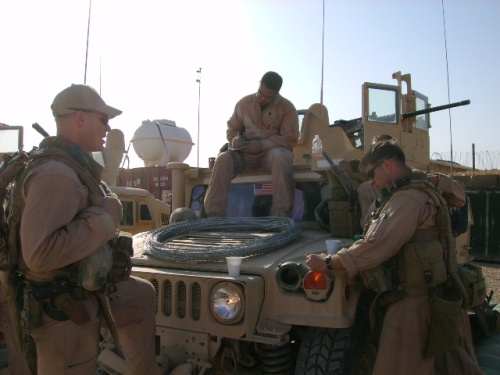
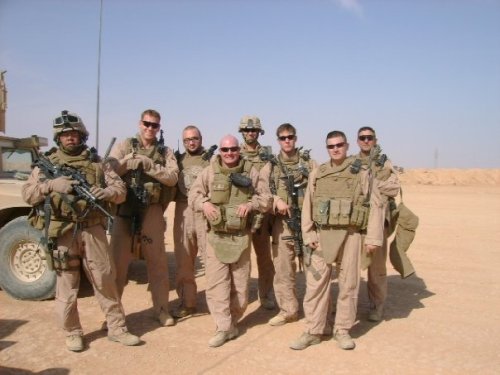
With MTT near SyriaAdvisers out on the Badlands of Al Anbar
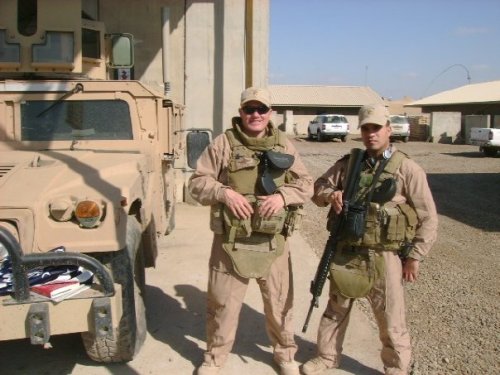
With no disrespect to the Greatest Generation of World War Two, all of the current Soldiers, Sailors, Marines, Airmen and Coast Guardsmen are volunteers, as are the members of the Reserves and National Guard.  Likewise this generation has for the most part fought the war alone as the vast bulk of the country has lived in peace untouched by any inconvenience to daily life such as gas and food rationing, requirements to work in war industries and the draft as were citizens in World War Two.  In the Second World War there was a sharing of the burden which in large part has not occurred in this war.  While many have pitched in to help and volunteered to help veterans and their families the vast majority of people in this country are untouched by the war, not that there is anything wrong with that.  This is simply a comparison of the situation that those who served in World War Two and the present conflicts faced.  So I have to say that our “Greatest Generation” is only a small part of the generation, as the line in Henry V “we few, we happy few who fought together….”

Dynamic DuoBrothers

These Soldiers, Sailors, Marines and Airmen from the United States as well as our Allies who serve alongside of us are my brothers and sisters.  I am friends with military personnel from the UK, Canada and Germany who have served in the various combat zones or at sea and met quite a few others from France, the Netherlands and Australia. Of course my Iraqi friends who I served with while with our advisers in Al Anbar province who are not only trying to bring peace and stability back to their country but have to worry about their families being targeted by terrorists.

There are a number of things that unite us in this relatively small brotherhood.  However, I think that this brotherhood could also be extended to our brothers who fought in Vietnam, French, Vietnamese, Australian, South Korean and American, the French who served in Algeria and the Americans and others that served in Korea.  All of these wars were unpopular, had little support on the home front and often left returning veterans found themselves isolated and their sacrifices either ignored or disrespected.  For those Americans who serve in the current wars I can say that at least to this point the public has been much more supportive than they were to our Vietnam brothers, many of who were even disrespected by World War Two vets who had fought in “a real war.”  I cannot count the Gulf War in this list as it was hugely successful and the returning vets were hailed as conquering heroes with ticker tape parades.

advisers convoy prepGetting Ready for A Mission

Our shared brotherhood includes our scars, physical, psychological, neurological and spiritual.  Those who served on the ground in Iraq and Afghanistan as well as those who served in Vietnam, French Indo-China and Algeria have the common shared experience of fighting people who don’t necessarily like foreigners no matter how noble our intentions and who have a long history of outlasting people that they believe to be invaders or occupiers.  We have had to fight wars with no front lines, no major units arrayed against us, but rather asymmetrical threats propagated by creatively devious foes who use low tech easily available technology and a willingness to sacrifice themselves and others to force attempt to kill us.  Thus we have cleverly designed and often quite powerful IEDs or Improvised Explosive Devices which can obliterate a HUMMV.

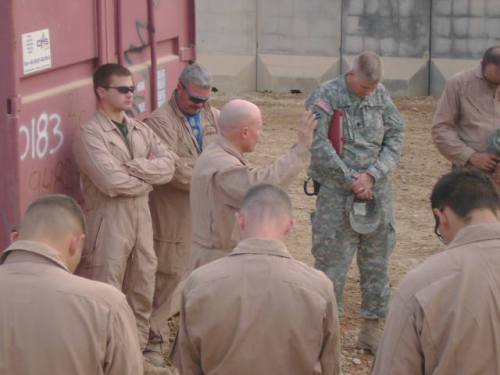
374Prayer Before a Mission

These threats create a situation where there is no front line and thus where every excursion outside of a FOB (Forward Operating Base) or COP (Coalition Outpost) is automatically a trip into a potential danger zone.  Enemies can infiltrate bases posing as local nationals in either military uniform or as workers, rockets and mortars can be lobbed onto even the largest and most secure bases at any time and any vehicle driving by you on the road could be loaded with explosives and just waiting to blow you up while insurgents with automatic weapons and Anti-Tank Rocket Propelled Grenades (RPGs) have taken down helicopters.  When you have taken fire on the road, in the air and had rockets whiz by you this becomes a reality that you never forget.

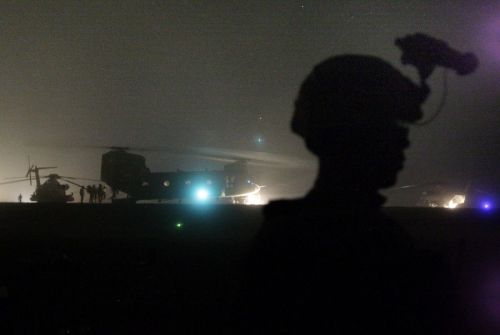
helos at nightA Familiar Sight to Me, Flying at Night AP Photo/David Guttenfelder
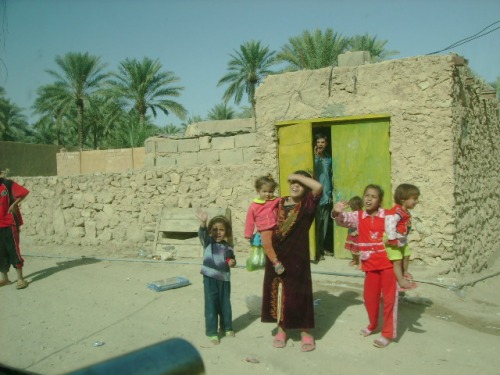
As a result we do not only have men and women with physical wounds, but wounds that have damaged the psyche or the soul.  PTSD is very common either from a direct encounter or the continual wear and tear of being in a danger zone wondering if you were to get hit that day every day of a tour.  I have lost count now of people that I know who have mild to severe symptoms of PTSD.  Traumatic Brain injury is another condition men and women attacked by IEDs, mortars and rockets experience. Likewise there are the injuries that shatter the soul.  These are the images of ruined buildings, burned out vehicles, wounded bodies, injured children, refugees and wars desolation that can leave a person’s faith in God, or ideals that he or she believes in weakened or even destroyed.  There are many idealistic and patriotic military personnel who because of what they have seen question God, their National Leadership and even themselves.  I cannot get the image of a refugee camp on the Iraqi Syrian border full of Palestinian refugees who have nowhere to go; they had been invited to Iraq under Sadaam and have been sitting on the border trying to get home for years now.  The Palestinian authority wants nothing to do with them.

237Iraqi Kids in War Torn Village on the Euphrates

These men and women are my brothers and sisters.   I have seen quite a few of my ICU staff deployed this year with more getting ready to go.  These are my friends and I do get concerned for them and pray earnestly for their safe return.  I wish that I could go with them because I know them and have already walked with them through the dark valley of the shadow of death in our ICU.  We already have a bond that will not be broken.

It is now two years since I was in the process of leaving for Iraq and a year since my PTSD crash.  However, I still would do it again in a heartbeat.  There is something about doing the job that you were both trained to do and called to do that makes it so.  Likewise the bonds of friendship and brotherhood with those who you serve are greater than almost any known in the human experience.  Shared danger, suffering and trauma bind soldiers together, even soldiers of different countries and sometimes with enemies.  I remember the conversation that I had with an Iraqi Merchant Marine Captain on a ship that we had apprehended for smuggling oil violating the United Nations sanctions.  The man was a bit older than me, in his early 60s.  He had been educated in Britain and traveled to the US in the 1960s and 1970s. He had the same concerns as any husband and father for his family and had lost his livelihood after Sadaam invaded Kuwait in 1990.   He was a gentleman who provided for his crew and went out of his way to cooperate with us.  In our last meeting he said to me: “Someday I hope that like the Americans, British and the German soldiers at the end of the Second World War can meet after the war is over, share a meal and a drink in a bar and be friends.”  That is my hope as well.

In the final episode of the series Band of Brothers there is a scene where one of the American soldiers, Joseph Liebgott who came from a German Jewish family interprets the words of a German General to his men in the prisoner compound.  The words sum up what the Americans had felt about themselves and likewise the bond that all soldiers who serve together in war have in common, if you have seen the episode you know how powerful it is, I ended up crying when I heard it the first time and cannot help but do so now that I have been to the badlands of Al Anbar Province.

“Men, it’s been a long war, it’s been a tough war. You’ve fought bravely, proudly for your country. You’re a special group. You’ve found in one another a bond that exists only in combat, among brothers. You’ve shared foxholes, held each other in dire moments. You’ve seen death and suffered together. I’m proud to have served with each and every one of you. You all deserve long and happy lives in peace.”

136A Chance Meeting with our EOD Mobile Uniit 2 Brothers

May God bless all of especially my brothers who served in with me in Iraq or have served or are serving in Afghanistan; as well as my brothers who fought in Vietnam, Indochina and Algeria.  We may never get a victory parade, but we have each other.

Peace, Steve+

5 Comments

Filed under History, iraq,afghanistan, Military, PTSD, vietnam